Abstracts From the CROI 2025 Conference on Retroviruses and Opportunistic Infections
Abstracts
Note: The data in these abstracts were current at the time they were submitted, which may have been months before the start of CROI. For the most up-to-date data, please view the posters and oral abstract presentations.
To search for specific keywords, presenters, or authors on this document, hold the “Ctrl” and press the “F” keys on your keyboard (or "Command" and "F" keys for some Apple devices) to prompt a word search.
CROI conference materials (including, but not limited to, the CROI Program Guide, Abstract eBook, electronic posters, CROI logo, etc) are protected by copyright. Permission to replicate or reproduce any part of CROI materials (such as an abstract as formatted in the CROI Abstract eBook) must be obtained from the CROI Conference Manager, the International Antiviral Society–USA (IAS–USA). However, study data are the property of the author(s) and study sponsors as relevant. For more information, please email CROIabstracts@iasusa.org.
How to cite the abstracts:
Purdy C, Viljoen L, Luke VN, et al. Maternal antiretroviral formulation preferences for neonates. [CROI Abstract 1044]. In Special Issue: Abstracts From the CROI 2025 Conference on Retroviruses and Opportunistic Infections. Top Antivir Med. 2025;33(1):332.
1. Session Overview for the Scott M. Hammer Workshop for New Investigators and Trainees
Invited Session Presentation Summaries
Page: 3
Katharine Bar1, Raphael J. Landovitz2, Serena S. Spudich3, Stuart J.D. Neil4, Lishomwa Ndhlovu5, Susan P. Buchbinder6, Judith S. Currier2, Joseph J. Eron7
Background
Over the past four decades, remarkable progress has been made in understanding HIV epidemiology, pathogenesis, treatment, and prevention from the combined efforts of community members, clinicians, investigators, and funding agencies worldwide. Yet more work and new approaches are needed to achieve the ambitious goal of ending the epidemic and ensuring optimal quality of life for those living with HIV. To encourage and stimulate the next generation of investigators, the CROI Program Committee organizes the Scott M. Hammer Workshop for New Investigators and Trainees comprised of expert and comprehensible talks to introduce key topics in basic, clinical, and public health investigation into HIV and related infections and to highlight relevant work to be presented over the ensuing days at CROI. This year, each presentation is preceded by a “Hearing Community Voices” testimonial focused on how the type of work impacts the community and how the community can impact the research. In the first talk, Stuart J. D. Neil will provide an accessible updated on Virology, and Lishomwa Ndhlovu will follow with a talk on Immunology. Susan P. Buchbinder will focus on the Prevention of HIV and STIs, followed by Judith S. Currier on Cardiovascular Complications of HIV. The session will end with a talk on HIV Cure Research by Joseph J. Eron, Jr. By completing the workshop, attendees will have achieved a head start toward maximizing the knowledge gained and research ideas as they navigate CROI 2025.
2. Breaking the HIV Capsid: Atomic Force Microscopy Visualization
Invited Session Presentation Summaries
Page: 3
Juan Perilla
Background
The genetic material of HIV-1 is packaged inside a cone shaped container that is called the viral core. To infect a cell, the viral core must pass through the cell’s nuclear pore. Using atomic force microscopy, a technique that uses a tiny needle to feel the surface of things at the microscopic level, and molecular dynamic simulations, we discovered that wild-type HIV-1 cores quickly revert to their normal shape after compression, while capsid mutants with impaired nuclear entry are brittle. Restoring elasticity in these mutants recovered their ability to infect. Treatment with capsid-targeting drugs also reduced core elasticity. These findings suggest that capsid elasticity is essential for HIV-1 nuclear entry and infection, offering new insights into HIV-1 mechanics and potential antiviral strategies.
3. Advances in Single-Cell Multiomic Profiling and Its Use in Virology and Immunology
Invited Session Presentation Summaries
Pages: 3-4
Alexander Marson
Background
We use the power of CRISPR-based gene editing technologies to decode and rewrite DNA programs that govern cells in the human immune system. Human immune cells, especially T cells, can be genetically engineered to target various cancers. Despite their utility for the treatment of hematological malignancies, chimeric antigen receptor (CAR) T cells have significant limitations, which are especially clear in the context of solid tumors. Mounting evidence suggests that for many clinical applications, engineering the T cell to recognize the target cancer cells will not be sufficient to cure disease. Major challenges to the utility of immunotherapy in cancer include overcoming immunosuppressive tumor microenvironments and maintaining the therapeutic cells’ functionality in the tumor over time. We are working to accelerate the design of genome modifications and synthetic DNA sequences that can be introduced into human T cells to program the enhanced functionality necessary to overcome these challenges.
4. Visualizing Tissues: State-of-the-Art Single-Cell 3D Spatial Transcriptomics
Invited Session Presentation Summaries
Page: 4
Nikolaus Rajewsky
5. Advances in CRISPR-Cas Editing Methods and Their Use in Virology and Immunology
Invited Session Presentation Summaries
Page: 4
Angela Wahl
Background
Humanized mouse models, immunodeficient mice transplanted with human cells/tissues, have been used by HIV researchers for over 30 years to study aspects of HIV infection (e.g. transmission, pathogenesis, and persistence) and to perform efficacy testing of novel prevention, treatment, and cure approaches. This presentation will introduce the most commonly used humanized mouse models for HIV research providing details on their construction, reconstitution with different human cell types, susceptibility to different routes of HIV transmission, and parameters of infection. The application of humanized mice for testing novel antivirals, biologics, and cell and gene therapy approaches will also be discussed as will practical considerations for working with these models. This presentation will highlight strengths of using humanized mouse models for HIV research, challenges, and areas for further refinement. A future outlook on the use of humanized mice for HIV research will also be provided.
6. Liver Steatosis: New Nomenclature, New Tests, and New Drugs
Invited Session Presentation Summaries
Page: 4
Mandana Khalili
Background
This case-based session will address the most common cause of liver disease namely metabolic dysfunction-associated steatotic liver disease (MASLD), alcohol-associated liver disease (ALD), and the overlapping entity MetALD. The audience will become familiar with the new nomenclature, epidemiology, clinical diagnosis, and risk-stratification using non-invasive tests. In addition, practical approaches to MASLD treatment including newly approved medications will be discussed. Join this session to: (1) gain insights into the spectrum of steatotic liver disease and (2) enhance knowledge of MASLD diagnostic and new therapeutic strategies in clinical practice.
7. Hepatitis B in the Gray Zone: Personalizing Treatment and Monitoring
Invited Session Presentation Summaries
Page: 4
Paul Kwo
Background
Hepatitis B remains a significant cause of liver disease and remains the leading cause of hepatocellular carcinoma worldwide. Effective therapy for hepatitis B is available, and nucleos(t)ide analogs (NAs) suppress hepatitis B DNA levels and normalize ALT levels. Long-term treatment can lead to reduction in necroinflammatory activity, with potential improvement in fibrosis or reduction in fibrosis progression, as well as a reduction in the risk of hepatocellular carcinoma. Treatment recommendations are guided by the degree of inflammation as reflected by ALT levels, HBV DNA levels and the degree of fibrosis. Current societal guidelines have recommended treatment during certain phases of hepatitis B infection in those who are HBeAg+ or HBeAg- with elevated HBV DNA levels and intermittently or persistently elevated ALT levels. However, approximately 30% of individuals with chronic hepatitis B remain in the gray zone including both HBeAg+ and HBeAg – infected individuals where HBV DNA and ALT levels do not fit into these well-described phases. Recent cohort studies have suggested that patients within the gray zone remain at risk for significant fibrosis and development of hepatocellular carcinoma. One limitation of gray zone patients has been the lack of histologic assessment of inflammation and fibrosis, rather relying on ALT and non-invasive measures of fibrosis. One recent study identified 242 individuals with chronic HBV infection in the gray zone, of whom 73% had significant histological disease. More recent treatment recommendations have suggested lower thresholds for treatment. Given the effectiveness of NA therapy and the recent data demonstrating improved functional cure rates with emerging therapies, patients in the gray zone should be assessed for treatment to reduce the incidence of advanced fibrosis, disease progression, and hepatocellular carcinoma in this highly prevalent disease. New biomarkers and risk models are needed to more accurately identify patients with significant inflammation and fibrosis who reside in the gray zones and would benefit from antiviral treatment and surveillance for hepatocellular cancer. Regardless, close follow-up of hepatitis B patients is required, given the highly dynamic interplay between the virus and the host.
8. Liver Cancer Surveillance: Who, How, When, and For How Long
Invited Session Presentation Summaries
Page: 4
Fasiha Kanwal
Background
Most liver cancer (also called hepatocellular cancer, or HCC) cases occur in patients with established risk factors for chronic liver disease, including hepatitis C virus (HCV) infection, heavy alcohol drinking, hepatitis B virus (HBV) infection, and metabolic dysfunction associated steatotic liver disease (MASLD). These HCC risk factors lead to cirrhosis, which is present in 90% of patients with HCC in the Western world. Two large randomized controlled trials in patients with HBV and several observational cohort studies in patients with cirrhosis have shown that patients who undergo HCC surveillance have earlier-stage HCC, are more likely to receive potentially curative treatment, and have improved survival than those who presented symptomatically or had HCC detected incidentally. Based on these data, professional societies recommend HCC surveillance every 6 months in at-risk individuals, including all patients with cirrhosis from any etiology and subgroups of patients with HBV in the absence of cirrhosis. Surveillance is not recommended in patients with Child–Pugh class C cirrhosis unless they are awaiting liver transplantation, given the low probability of treatment eligibility and limited benefits. Liver ultrasound has been long regarded as a standard surveillance test for HCC. Ultrasound is non-invasive and relatively inexpensive. However, the performance of ultrasound can be impacted by several patient-level factors, with particularly suboptimal performance in obese patients (such as those with MASLD) and those with more advanced cirrhosis. Addition of blood-based biomarkers to ultrasound increases the sensitivity of surveillance, particularly for early tumor detection. The best-studied biomarker to date is AFP, with a level of 20 ng/mL being the most used cutoff to trigger further evaluation in clinical practice. The pooled sensitivities of ultrasound with and without AFP for early-stage HCC are 63% (95% CI, 48%–75%) and 45% (95% CI, 30%–62%), respectively (P = .002).
HCC surveillance should be performed every 6 months. Once initiated, there is no consensus about when to stop surveillance. In general, surveillance can be stopped in patients who develop child C cirrhosis and who are not liver transplant candidates. Despite demonstrated benefits, including early tumor detection, <20% of patients with cirrhosis undergo surveillance.
9. Using Machine Learning to Focus HIV Prevention Interventions
Invited Session Presentation Summaries
Page: 4
Carlos S. Saldana
Background
This session explores the transformative impact of artificial intelligence (AI) across the HIV research continuum, from basic science to public health. Key highlights include AI's role in accelerating drug discovery, optimizing clinical trials, and enhancing HIV care and prevention strategies. Emphasis is placed on ethical considerations, community engagement, and implementation science to ensure equitable and effective integration of AI-driven innovations. The discussion aligns with the Ending the HIV Epidemic initiative, showcasing AI as a catalyst for precision medicine and public health advancements in the fight against HIV.
10. HIV Prevention Efficacy Trial Design: Lessons From Recent Trials
Invited Session Presentation Summaries
Page: 5
Holly Janes
Background
I will overview the state of the art in HIV prevention efficacy trial design and articulate lessons learned from recently conducted trials.
11. How Much Is Enough: The Importance of Pharmacokinetic Targets
Invited Session Presentation Summaries
Page: 5
Paolo Denti
Background
A pharmacokinetic (PK) target is a specific drug concentration range in the body that ensures maximum efficacy while minimizing toxicity. In HIV clinical trials, selecting the correct PK target is crucial for the success of the study and the interpretation of its results. This issue is particularly relevant when evaluating the treatment of understudied populations like pregnant women, children, or patients on treatments with potential drug-drug interactions, such as those for tuberculosis (TB). These studies are generally too small to assess efficacy and toxicity, but they rather aim to show that target concentrations are successfully achieved. This makes the choice of a suitable PK target even more crucial. This presentation emphasizes the importance of accurate and critical selection PK targets, highlighting the risks of relying on widely accepted values from literature, which are often based on surprisingly limited evidence.
12. Case Presentation With Panel Discussion, Plus Questions and Answers From the Audience
Invited Session Presentation Summaries
Page: 5
Pedro Cahn1, Jennifer F. Hoy2
Background
In this session, Drs. Pedro Cahn and Jenny Hoy will present cases to an expert faculty panel from around the world to highlight cutting-edge issues in the care of people with HIV. Topics will include the management of weight gain in the setting of ART, the approach to cardiovascular events in people with HIV, whether people who are elite controllers should be treated with ART, and ART considerations for people with drug-resistant HIV and adherence challenges. This stimulating interactive session will illustrate the current evidence-based approaches to managing people with HIV from different parts of the world.
13. How Integration Site Analyses Inform HIV Pathogenesis, Persistence, and Gene Therapy
Invited Session Presentation Summaries
Page: 5
Frederic Bushman
Background
Studies of HIV DNA integration provide a rich example of how basic research can inform new therapies, and how findings from translational implementation in turn can pose new questions. To replicate, a retrovirus such as HIV must integrate a DNA copy of the viral RNA genome into host cells. Establishing methods for analyzing HIV DNA integration in vitro helped launch the development of the integrase inhibitors, a pivotal class of antiretroviral drugs. Coming from another direction, studies of HIV integration target site selection have provided additional insights into mechanisms of replication and control of viral replication. Early studies showed that HIV favors integration in active transcription units, which makes sense for facilitating efficient HIV gene expression after integration. Further studies showed that tethering to cellular chromatin binding proteins contributed to targeting. Recent studies in people with HIV who effectively control virus show that distributions may be enriched in regions where the virus is poorly expressed due to aggressive selection by CD8+ T cells. These results have been recapitulated in various cell culture and animal models, allowing detailed mechanistic analysis. Studies of integration targeting also inform monitoring of human gene therapy, where insertional mutagenesis by gene transfer vectors is a concern. Recent studies suggest that HIV and retroviral vectors can carry out insertional mutagenesis in humans via four different mechanisms: enhancer insertion, promoter insertion, gene inactivation, and gene activation by mRNA 3’ end substitution. Stepping back, these mechanistic studies provide an overview of how basic research advances treatment of HIV, and contribute to the conceptual foundation for addressing many other disorders.
14. 40+ Years of HIV: What’s Changed, What Hasn’t, What Shouldn’t, What Must
Invited Session Presentation Summaries
Page: 5
Rebecca Denison
Background
We are gathering in a moment of tremendous challenges and opportunities. We have developed biomedical tools to prevent HIV transmission and support the wellbeing of over 38 million individuals living with HIV, yet a truly healthy world eludes us. Stigma, discrimination, preventable deaths, and inequitable access to resources and health care persist. Human rights that have progressed in some places are under attack in others. Across the U.S., and perhaps the world, we are more connected yet more lonely than ever before. Our greatest achievements in evidence-based science are undermined by misunderstandings and deliberate disinformation. While many young people in the U.S. have never heard of HIV, and many of their parents think “AIDS is over,” the internet offers newly diagnosed people a firehose of information at the expense of their privacy. Meanwhile, their elders — long-term and lifetime survivors — bear the weight of trauma, gratitude, and persistence in a world unprepared to meet the needs of people aging with HIV. The challenges we face call for creativity, collaboration, and courage. Please join 42-year HIV survivor Rebecca Denison — Bay Area writer, founder of WORLD, co-founder of ICW, and clinical research participant since 1985 — as she reflects on lessons from the past, challenges in the present, and opportunities for the future.
15. When Science Alone is Not Enough: The Intersection of Drug Use, Public Health, and Policy
Invited Session Presentation Summaries
Page: 5
Adeeba Kamarulzaman
Background
From the beginning of the pandemic, people who inject drugs (PWID) were identified as a key population at significant risk of HIV infection. However, despite evidence of the effectiveness of harm reduction, many countries failed to respond adequately or in a timely manner. Embedded in prohibition and punitive approaches, Malaysia’s initial resistance to harm reduction led to a large, concentrated epidemic amongst PWID. Although now more widely adopted, to date very few countries have achieved targets for opioid agonist therapy or met the recommended number of needles and syringes distributed per year. With less than 1% of total HIV spending allocated to programs for PWID globally, it is no surprise that PWID continue to be left behind in access to prevention and treatment programs. Far from its intended aim of protecting individuals and society from the harm of drug use, punitive drug laws and prohibition continue to result in diseases, deaths from drug overdoses, prison overcrowding, violence and a cycle of poverty. Drug use is often seen through a moral lens, with users stigmatized as criminals or morally deficient rather than individuals in need of help. This stigma makes it challenging to build public support for harm-reduction policies and programmes. Many fear that alternative approaches, such as legalization or decriminalization, could lead to unintended consequences, including increased drug use or addiction, despite evidence from countries like Portugal demonstrating otherwise. The “War on Drugs” relied on fear-based narratives and racialized rhetoric that continue to shape public opinion. This is compounded by global treaties, such as the 1961 Single Convention on Narcotic Drugs, which tie nations to prohibitionist policies and make reform on an international scale more difficult. Despite these challenges, there is a growing recognition of the failure of prohibition and increasing momentum for reform. The success of alternative approaches, such as decriminalization and harm reduction, highlights the potential for treating drug use as a public health issue rather than a criminal one. However, overcoming the entrenched political, economic, and cultural barriers to change requires sustained effort, evidence-based policymaking, and a shift in public perception toward compassion and practicality over punishment. By leveraging evidence, building partnerships, and engaging in public discourse, the scientific community can challenge outdated drug policies and push for reforms grounded in science, equity, and compassion.
16. HIV Cure: A Translational Research Perspective
Invited Session Presentation Summaries
Pages: 5-6
Ole Søgaard
Background
Antiretroviral therapy (ART) has transformed HIV-1 infection from a fatal disease into a manageable chronic condition. However, longitudinal studies reveal that the decay rate of the HIV-1 reservoir is so slow that ART alone cannot eliminate the reservoir within the lifetime of people living with HIV-1 (PLWH). This underscores the urgent need for safe and scalable strategies to achieve an HIV-1 cure. Most HIV-1 cure strategies fall into two main categories: (1) approaches aimed at eradicating or inactivating the reservoir and (2) approaches designed to induce immune-mediated control of the virus. Hematopoietic stem cell transplantation (HSCT) has demonstrated the potential to completely eradicate the HIV-1 reservoir, as seen in case reports of PLWH receiving HSCT for hematologic conditions. However, due to its inherent risks, HSCT is not a feasible cure strategy for otherwise healthy individuals. Consequently, most research has shifted toward strategies focused on immune-mediated control of HIV-1. Cytotoxic CD8+ T cells are strongly associated with spontaneous HIV-1 control, making the enhancement of CD8+ T cell immunity a promising avenue for clearing infected cells and achieving long-term viral suppression. Despite these prospects, therapeutic HIV-1 vaccines have so far failed to produce the desired results in clinical trials. Nevertheless, a range of other compounds - both those specifically designed for HIV-1 cure and repurposed drugs from fields such as oncology and hematology - have been investigated for their potential to impact HIV-1 persistence. While many of these interventions have not succeeded in significantly reducing the reservoir or inducing robust adaptive immune responses, recent trials have reported encouraging outcomes, with some individuals achieving partial or complete long-term control of HIV-1 after discontinuing ART. These findings raise the possibility that a functional cure for HIV-1 is achievable. In this talk, I will provide an overview of the most promising therapeutic strategies in the pursuit of an HIV-1 cure, including the use of broadly neutralizing antibodies. I will also discuss key populations that may have a higher likelihood of achieving a cure and address the critical barriers that remain in developing effective interventions. Additionally, I will review findings from in-depth studies of the biological mechanisms underlying sustained HIV-1 suppression in individuals who maintain control for years after stopping ART.
17. The Global HIV/AIDS Pandemic: Where Are We Now?
Invited Session Presentation Summaries
Page: 6
Chris Beyrer
Background
This "state of the pandemic plenary will review the current status of the global pandemic; interrogate recent available data on HIV incidence from placebo arms of RCT and PURPOSE trials; review data on mortality; elucidate the challenges of primary prevention in high HIV burden and lower HIV burden populations; explore the challenges of late diagnoses and advanced HIV disease; and suggest ways forward for an invigorated response using new prevention tools which could achieve epidemic control. The key themes and messages, supported by current evidence are that:
-
We did not meet the UNAIDS 2025 targets on HIV incidence or mortality and are not on track for 2030
-
HIV incidence remains too high to achieve pandemic control
-
The social determinants of HIV incidence remain formidable barriers to prevention, treatment, and care
-
Both MSM and Trans communities globally, and women and girls in SSA, remain at high lifetime acquisition probability in multiple countries
-
3 regions (E. Europe & Central Asia; Latin America, Middle East and North Africa) are in epidemic expansion in 2025. These regions have been underfunded, understudied, and uniquely challenged
-
Significant increases in primary prevention programs, access, coverage, and equity will be required to achieve epidemic control--treatment is necessary but insufficient Advances in primary prevention, including LA injectables, could markedly reduce HIV incidence but only if taken to scale for both high incidence density populations (MSM, SW, TGW, AWYG in high burden settings) AND lower incidence ones (general population reproductive age adults where incidence is above 1 and under 3/100 PY).
18. Utilizing a Barcoded Virus Model to Identify the Source of Viral Rebound
Invited Session Presentation Summaries
Page: 6
Brandon Keele
Background
Current ART has the capacity to drastically suppress but not abolish previously infected cells which can persist for the life of the host. This persistent rebound competent virus is the primary barrier to HIV cure. This long-term stable virus resides in multiple subsets of CD4+ T cells, particularly CD4+ memory T cells, and possibly macrophages that are widely distributed throughout the body. To mediate post-ART viral rebound, viruses must be genetically intact and replication competent, but viral rebound is not a wholesale resumption of viral replication from all replication-competent genomes but rather reflects an initial oligofocal outgrowth of virus from a limited subset of the total infected cell population that subsequently spreads throughout the body. Despite the importance of understanding the clonal origins of post-ART viral rebound, virtually nothing is known about these early local dynamic events, due to challenges with sampling, variability in time to rebound, and limited genetic diversity between individual rebounding lineages with previous work studying viral rebound only at later viremic stages or in limited numbers of tissues. To overcome these challenges, we developed and validated a barcoded virus model (SIVmac239M) that contains a short, unique nucleotide insert allowing for genetic discrimination of over 10,000 viral lineages. We used viral barcode analysis from a comprehensive collection of tissue samples in a large cohort of SIV-infected, ART suppressed rhesus macaque during both on-ART and post-ART cessation, to identify the initial sites of rebound and patterns of subsequent viral spread. Our results indicate that it is possible to identify the earliest stages of local tissue-level post-ART rebound and that this early rebound preferentially occurs in gut and gut-draining lymph nodes. Pinpointing the anatomic sites of viral rebound can facilitate the identification of the mechanisms that specifically mediate these reactivation events in these specific tissues. Together, these observations may have potential therapeutic implications for interventions designed to prevent or control viral rebound.
19. Cellular and Tissue Sources of Viral Persistence and Rebound
Invited Session Presentation Summaries
Page: 6
Linos Vandekerckhove
Background
Cellular and tissue sources of viral rebound primarily originate from long-lived reservoirs of HIV in individuals under antiretroviral therapy (ART). Key cellular reservoirs include CD4+ T cells, particularly memory subsets like central memory (Tcm), which harbor latent provirus. Tissue-specific sources include lymphoid tissues (lymph nodes, spleen, and gut-associated lymphoid tissue), where virus can persist despite ART. The central nervous system (CNS) acts as a sanctuary probably also due to limited drug penetration. Additionally, myeloid cells like macrophages and microglia may contribute to viral rebound. Gut tissue plays a significant role as it harbors high numbers of infected cells and provides a pro-inflammatory environment conducive to viral reactivation. In this presentation, we will explore methods used to characterize the persistent HIV reservoir across various cell subsets and tissues, highlighting their successes and limitations in identifying the viruses responsible for systemic rebound upon treatment interruption. Additionally, we will discuss how emerging technologies and multi-omics platforms can enhance our understanding of the viral reservoir and provide new insights into its dynamics and reactivation potential.
20. Immune Responses During Viral Rebound
Invited Session Presentation Summaries
Page: 6
Rachel Rutishauser
Background
The objectives of this talk are to: (1) define different patterns of HIV rebound (i.e., categories of post-ART control), (2) review examples of effective immune responses against HIV, focusing on immune mechanisms that have been implicated in post-ART control, and (3) discuss lessons learned about immune responses to rebound from recent ATI trials, including the UCSF-amfAR combination immunotherapy trial.
21. Advanced HIV Disease in Children
Invited Session Presentation Summaries
Pages: 6-7
Pablo Rojo
Background
In 2025, late diagnosis of HIV in children continues to be a significant global concern, with many presenting with advanced HIV disease (AHD). This issue contributes to a considerable number of hospital admissions, particularly among infants, due to acute conditions such as pneumonia, sepsis, and diarrhea. These acute illnesses are frequently accompanied by important by sometimes subtler health issues, including malnutrition, anemia, and HIV-related encephalopathy. As a result, there is an alarming mortality rate during hospital stays, coupled with notably high post-discharge mortality rates in the year that follows. The WHO STOP AIDS technical brief provides a vital framework of care for children with AHD, outlining clear intervention strategies; however, its implementation remains inadequate worldwide, especially in Sub-Saharan Africa. Furthermore, there is an urgent need for additional research to combat these unacceptably high mortality rates. Areas requiring investigation include the benefits of rapid PCR diagnostic confirmation in critically ill infants, enhanced strategies for both the prevention and treatment of malnutrition, clarification of the role of cytomegalovirus (CMV) in severe pneumonia and its management, and the formulation of effective prophylactic approaches for serious bacterial infections in the context of rising antibiotic resistance.
22. HIV Care Continuum in Children
Invited Session Presentation Summaries
Page: 7
Irene Njuguna
Background
Children aged 0-15 years lag behind adults in achieving HIV treatment goals across HIV testing, initiation of antiretroviral therapy and viral suppression. While early diagnosis of pediatric HIV has scaled up significantly, children continue to slip through the cracks and remain undiagnosed and untreated. For children living with HIV, challenges in adherence to treatment is hampered by family and caregiving structures leaving children prone to poor viral suppression. Recent advances in treatment including newer dolutegravir based regimens and easy to use treatment formulations have improved adherence and viral suppression in children but gaps remain in achieving optimal viral suppression. This talk will focus on the state of the HIV care continuum for children aged 0-15 years, focusing on current trends, gaps and advances to improve the cascade of care in children.
23. Sexual, Reproductive, and Pregnancy Health Among People With Perinatal HIV
Invited Session Presentation Summaries
Page: 7
Caroline Foster
Background
Since 1990 an estimated 11 million children have been born with HIV and with the successful global role out of paediatric antiretroviral therapy (ART) increasing numbers of young people are transitioning through adolescence and entering adult care. In resourced settings with earlier access to ART the oldest survivors are now entering their 5th decade of life but with a legacy of years of unsuppressed viraemia and/or exposure to older more toxic ART agents. However survivor bias means they represent a unique cohort who survived childhood without access to ART, with slower disease progression and likely favourable host genetics and immune responses. In contrast many of those born in more recent decades started ART in early childhood and are more likely reflective of the emerging adolescent perinatal cohorts globally, important in identifying the consequences of lifelong HIV and ART exposure throughout postnatal, childhood and adolescent development in the ART era. This talk will follow the journey of a young person living with perinatal HIV through the unique challenges of adolescence, a period of life encompassing complex biological and psychosocial changes that include sexual maturation, development of sexual identity and the onset of sexual activity, through to pregnancy and parenthood. We will examine existing data on sexual and reproductive health for this unique cohort, born into a family living with HIV and the challenges of negotiating adolescence with a potentially sexually transmissible infection for the first and every subsequent sexual encounter and that sharing your status potentially discloses the status of other family members. We will focus on biomedical prevention strategies including sexual health education, vaccination, contraception and screening for sexually transmitted infections and for anogenital cancers. Increasing numbers of young people born with HIV are choosing to start families with pregnancy data emerging, including the early infant outcomes for a unique cohort of “3rd Generation” HIV exposed uninfected infants born to people who themselves have lived with HIV their entire lives. Finally we will identify data gaps in sexual, reproductive and pregnancy health for this cohort, highlighting future research questions and the importance of the meaningful inclusion of youth in setting the research agenda to support them in fulfilling their potential as adults, partners and parents.
24. Immediate Challenges and Long-Term Goals of the HIV Response
Invited Session Presentation Summaries
Page: 7
Jeffrey Imai-Eaton
Background
Over the past 25 years, the global HIV response has made remarkable progress at controlling HIV epidemics, including reducing new infections and ensuring healthy lives for people living with HIV. However, progress has not been equal across epidemic settings or populations affected by HIV, and overall remains off track to achieve targeted 90% reductions in new infections and AIDS-related deaths by 2030. This presentation will review immediate challenges impeding attaingment of these goals, including sustaining high coverage of effective programmes in high HIV burden settings, regions and epidemiologic settings with lagging in progress, and population groups with distinct unmet needs. Moreover, whilst there are opportunities to accelerate progress toward Ending AIDS as a Public Health Threat by 2030, even with a successful response the global community will continue to live with HIV for decades to come. We will discuss long-term goals in responding to HIV and needs and priorities to sustain effective HIV responses that safeguard and continue epidemiologic gains.
25. Integration and Stainability of the Global HIV Response
Invited Session Presentation Summaries
Page: 7
Tsitsi Apollo
Background
This presentation will delve into the complexities of sustaining the global HIV commitment amidst evolving health priorities and funding landscapes. This session will explore the opportunities and risks of integrating HIV care and prevention into broader health services. From innovative service delivery models to community-driven solutions, we will highlight how integration can enhance health system efficiency, reduce patient burden, and improve access to services. Participants will gain insights from global examples of successful integration strategies, and the challenges of maintaining focus on HIV in the face of competing priorities and declining donor funding. This presentation will discuss the dual imperatives of sustaining HIV-specific commitments and leveraging integration to achieve broader health goals. Discover how a people-centered, multisectoral approach can navigate risks such as weakened prevention efforts, service quality compromises, and fragmented systems. By addressing these challenges, we can seize the opportunities of integration to build resilient health systems and accelerate progress toward ending AIDS as a public health threat by 2030.
26. Innovations in HIV Service Delivery: Building a Path Forward with Those Left Behind
Invited Session Presentation Summaries
Page: 7
Izukanji Sikazwe
Background
Over the last 40 years, remarkable achievements have been recorded in the HIV response, with service delivery models that have increased access to HIV testing, expansion of the HIV prevention toolbox, availability of newer and less toxic antiretroviral therapy resulting in fewer people acquiring HIV in 2023 than at any point since the late 1980’s and almost 31 million people on treatment. Despite advances in science, individuals and communities continue to not access HIV prevention, care and treatment services. This session explores HIV service delivery innovations to bridge the gap and reach individuals and communities left behind.
27. HIV Acquisition and Prevention During Pregnancy and Postpartum
Invited Session Presentation Summaries
Pages: 7-8
John Kinuthia
Background
This presentation will discuss HIV incidence during pregnancy and breastfeeding as well as factors (hormonal, immunological, behavioural, sexual and genital infections, and low male participation in antenatal care and HIV testing) that increase risk of HIV acquisition this period. In addition, we will look at the contribution of acute HIV infection to vertical HIV infection and underlying factors driving the increased risk of transmission. I will highlight existing HIV prevention interventions with focus on behavioural and biomedical interventions. Behavioural interventions discussed will include enhanced HIV counseling, use of lay community based workers to provide HIV prevention counselling and male partner referral for circumcision, sexually transmitted infections or HIV treatment implemented in several sub-Saharan African countries. The role of oral antiretroviral pre-exposure prophylaxis (PrEP) during pregnancy and breastfeeding, maternal and infant outcomes following PrEP use, importance of integrating PrEP delivery within maternal and child health clinics and whether a risk based approach is better compared to universal PrEP delivery model will be discussed. Barriers to oral PrEP uptake and continuation and perspectives of health providers on determinants that impact ability to deliver PrEP will be described. Strategies to promote PrEP use among pregnant and breastfeeding women including differentiated service delivery models will be discussed. The talk will also cover use of use of currently available long‐acting formulations that is carbotegravir, six-month injectable lenacapavir and dapivirine ring during pregnancy and breast feeding including efficacy, maternal and infant outcomes as well as effect of added choice of biomedical interventions on HIV prevention coverage. Potential challenges during implementation at scale and the role of all stakeholders including governments, donors, civil society, or manufacturers among others to ensure seamless and impactful rollout will be highlighted. There will be focus on requirements for provision of lenacapavir regarded as 2024 Breakthrough of the year by the Science Magazine. Lenacapavir represents a transformative opportunity to dramatically reduce the number of new HIV infections. Finally, we will deliberate on how to protect women through and NOT from research in order to reduce evidence gaps regarding safety and efficacy of new antiretroviral formulations during pregnancy and breastfeeding.
28. Systems Vaccinology
Invited Session Presentation Summaries
Page: 8
Bali Pulendran
Background
Although the development of effective vaccines has saved countless lives from infectious diseases, the basic workings of the human immune system are complex and have required the development of animal models, such as inbred mice, to define mechanisms of immunity. However, past results are not necessarily a reliable guide to the future, and a notable limitation of animal models has been their failure to accurately model some human diseases and their inability to predict human immune responses in many cases. In the past decade there has been an explosion of new approaches and technologies to explore the human immune system with unprecedented precision. Insights into the human immune response to vaccination, cancers, and viral infections such as COVID-19 have come from high-throughput “omics” technologies that measure the behavior of genes, mRNA, proteins, metabolites, cells, and epigenetic modifications, coupled with computational approaches. I will discuss how these “Systems Vaccinology” approaches are advancing our mechanistic understanding of the human system and its response to vaccines and infections and facilitating the development of vaccines against HIV and other infectious diseases.
29. How HIV Capsid Breaches the Nuclear Envelope Through Karyopherin Mimicry
Invited Session Presentation Summaries
Page: 8
David Jacques
Background
As a lentivirus, HIV is capable of infecting non-dividing cells. For decades it has been understood that HIV must be able to deliver its genetic material across the nuclear envelope in order to establish infection. As the gatekeeper between the cytoplasm and the nucleus, the nuclear pore complex (NPC) represents an obvious entry point. During normal cellular function, the NPC controls nucleocytoplasmic transport by establishing a ‘diffusion barrier’ at the centre of the pore. Often described as a ‘mesh’ or ‘filter’, the diffusion barrier is formed by intrinsically-disordered nucleoporin domains which project into the central pore. Critically, these domains are enriched for phenylalanine-glycine (FG) dipeptide motifs that cause them to form a liquid-liquid phase separation which typically prevents the passive diffusion of molecules greater than ~25 kDa. Larger cargoes can be escorted across the nuclear pore by the action of karyopherins – chaperone proteins which can cross the diffusion barrier by virtue of their weak, multivalent, and specific interactions with the FG motifs. Recent studies have shown that the HIV capsid also possesses a conserved FG-binding pocket on it surface. Indeed, it is this same site that is targeted so successfully by the first-in-class anticapsid drug, lenacapavir. This ‘FG-pocket’ grants the capsid similar biophysical properties to the karyopherins, thereby licensing the capsid for nuclear entry without the need of chaperones. The karyopherin mimicry model explains how a structure as large as the HIV core can penetrate the nucleus despite being greater than 10,000 times the diffusion limit of the nuclear pore.
30. How HIV Integrates Into the Genome
Invited Session Presentation Summaries
Page: 8
Alan Engelman
Background
The HIV Preintegration Complex (PIC) mediates the integration of the viral reverse transcript into host cell chromosomes. The HIV core is composed of a shell of capsid protein that encases the viral RNA together with reverse transcriptase and integrase enzymes. Reverse transcription occurs within the viral core, and nicking of the viral DNA ends by integrase converts the reverse transcription complex into the integration-competent PIC. After circumventing the nuclear pore complex, the core traffics to interior regions of the nucleus for uncoating and integration. Integration into host chromosomes is non-random, and interactions between the capsid and integrase proteins with cognate host factors guides the core to transcriptionally active chromatin. The interaction of capsid with alternative polyadenylation host protein CPSF6 is required for cores to move beyond the nuclear rim, where they eventually congregate with nuclear speckles for integration into nearby speckle-associated domains (SPADs) of chromatin. Interactions between integrase and transcriptional coactivator LEDGF/p75 direct integration into the mid-regions of active genes. Recent work has clarified that both CPSF6 and LEDGF/p75 possess liquid-liquid phase separation activity and that these activities can impact their roles as integration cofactors. Completion of reverse transcription can aid core dissolution or uncoating to reveal chromatin to the PIC for integrase-mediated integration of viral DNA.
31. Transcriptional and Epigenetic Regulation of HIV-1 Gene Expression
Invited Session Presentation Summaries
Page: 8
Melanie Ott
Background
Recent research underscored that HIV transcription remains a critical step in the viral life cycle. Especially the transition between active and latent infection is critically regulated by viral factors such as Tat and many host factors that either control the transcriptional activity of the virus directly or the epigenetic landscape around it. It has become apparent that during antiretroviral therapy 81% of the viral reservoir remains transcriptionally active while “true” latency mainly exists in viruses embedded in a very repressive chromatin environment especially near repetitive genomic elements. Reactivation of HIV transcription from latency involves a shift to a permissive chromatin state, driven by histone acetylation, recruitment of bromodomain-containing proteins, and the viral protein Tat, which recruits the positive transcription elongation factor b to release RNA polymerase II from pausing. Therapeutically, modalities targeting epigenetic proteins such as histone deacetylases, bromodomains, or histone methyltransferases as well as Tat are being studied to either reactivate latent proviruses for eradication or reinforce latency to suppress reactivation. Successfully suppressing transcriptional activity in the reservoir during antiretroviral therapy is promising as it decreases the chances of viral reactivation and is critical to alleviate chronic immune activation, which otherwise fuels early appearance of chronic diseases of aging. We speculate that suppressing transcription will also change the epigenetic landscape of the integrated proviruses in a durable way to long-term tune down reactivation potential. We will discuss the mechanisms of HIV transcription in the context of chromatin and our ongoing efforts to inhibit the transcriptionally active reservoir.
32. Landscape of Proviral Integration in HIV-1 Reservoir & Relationship to Latency & Reactivation
Invited Session Presentation Summaries
Page: 8
Mary Kearney
Background
HIV-1 persists in a mostly latent state within blood and tissues during suppressive ART. Proviral integration sites may play a critical role in the establishment and maintenance of this latent reservoir. Understanding the landscape of proviral integration is essential for deciphering the mechanisms behind HIV-1 latency and reactivation. Recent studies have shed light on the factors that regulate proviral latency, including host cell type, epigenetic modifications, and the influence of host immune responses. The interplay between viral and host factors in proviral integration and latency is complex, with integration site-specific transcriptional activity influencing the susceptibility to latency reversal agents. Continued exploration of this landscape offers promising avenues for therapeutic strategies aimed at eradicating HIV-1 through targeted interventions that either enhance immune responses or directly disrupt latent proviral genomes. Ultimately, a comprehensive understanding of proviral integration patterns is essential for designing therapies that could effectively eliminate the HIV-1 reservoir and achieve sustained viral remission without ongoing ART.
33. Beyond Hot Flashes: Women's Lived Experience of Menopause
Invited Session Presentation Summaries
Pages: 8-9
Bridgette Picou
Background
This presentation will explore the lived experience of women living with HIV (WLWH) as they navigate menopause and the intersections with HIV and aging stigma. As a woman living with HIV, I also intend to briefly touch on the clinical care experience from the patient perspective and its impact on engagement in care. WLWH have the double stigma that surrounds both HIV and aging. Feelings of shame, reduced sense of worth, loss of vitality, and reduction in sexual attractiveness and desire are common, and multiplied in both populations. The desired outcome of this talk is the intentional investment of clinicians and researchers in exploring the quality of life of the women they serve as it relates to menopause. There must be research in all aspects of women’s health as it relates to HIV and the transitions that women experience aging with the disease process. Quality of life can only be achieved when women are given the tools and information to make informed decisions about their health. Shared decision making which is a critical component of quality care can only be effective when comfortability and willingness to engage exist.
34. Clinical Management of Women With HIV in Menopause
Invited Session Presentation Summaries
Page: 9
Sara Looby
Background
Menopause represents a highly vulnerable time for women physically, mentally, and socially. The growing body of menopause research among women living with HIV (WLWH) demonstrates that this vulnerable population experiences greater mood and vasomotor symptom burden, which adversely impacts adherence to clinic visits and antiretroviral therapy. Estrogen loss associated with menopause may further enhance the risk for cardiometabolic, cognitive, and bone comorbidities in WLWH. Although there are still more questions than answers in the context of the clinical management of menopause in WLWH, research in this field is evolving, and clinical prevention along with clinician and patient education on this topic can enhance clinical outcomes and quality of life in WLWH globally.
35. Influence of Hormone Changes on Physiology, Virology, and Immunology
Invited Session Presentation Summaries
Page: 9
Eileen Scully
Background
Disentangling the unique impacts of aging and reproductive aging through menopause may identify novel features of the pathogenesis of HIV that will inform strategies to manage longterm complications and achieve an HIV cure. Early data indicate that menopause and declining levels of estradiol are associated with increased inflammation and changes in HIV viral dynamics. Further work is needed to define the mechanisms of estradiol impacts on both HIV and the immune system.
36. Long-Acting Treatments for Tuberculosis
Invited Session Presentation Summaries
Page: 9
Eric Nuermberger
Background
Long-acting injectable formulations are revolutionizing HIV treatment and prevention and have similar potential to improve the treatment and prevention of tuberculosis, including simpler, shorter regimens and expanded treatment options. This presentation will describe how long-acting injectable formulations could address important obstacles to ending the world’s oldest pandemic, review recent progress in the development of long-acting tuberculosis drugs, and discuss future research needs and priorities.
37. Post-Tuberculosis Disease: Opening Pandora's Box
Invited Session Presentation Summaries
Page: 9
Brian Allwood
Background
This talk will highlight the burden and spectrum of post-tuberculosis disease, focusing on the complexities of clinical presentation and pitfalls in assessment. We will give an overview of pathogenesis, and an update of recent work in post-tuberculosis lung disease (PTLD). We will highlight important knowledge gaps in the field, and will discuss ongoing work and needed efforts for both the future prevention and management of PTLD.
38. Game Changed: Navigating the Era of Long-Acting Therapies for HIV Prevention
Invited Session Presentation Summaries
Page: 9
Jonathan Li
Background
We are at the dawn of a new era of long-acting antiretroviral (ARV) agents that promises to revolutionize the prevention of HIV infection. The HPTN083 and 084 studies first demonstrated the promise of cabotegravir for HIV pre-exposure prophylaxis (PrEP), but its use needs to be balanced with frequent injections, risks of drug resistance and challenges in diagnosing breakthrough infections. Lenacapavir represents the next leap forward for HIV PrEP with every 6 month dosing and impressive efficacy in recently completed clinical trials that led to its designation as Science’s 2024 Breakthrough of the Year. We will review the promise and challenges of these and other long-acting ARV options, including dapivirine ring and other novel approaches in development.
39. Complexities of HIV Diagnosis: What Lies Beneath
Invited Session Presentation Summaries
Page: 9
Cheryl C. Johnson
Background
Is testing the key to unlocking PrEP scale-up? The use of antiretroviral drugs (ARVs) to prevent new HIV infections has been well-established for decades, particularly in the context of pre-exposure prophylaxis (PrEP). Yet, only an estimated 2.5 million people are currently using PrEP—far fewer than the 10 million needed to meet global HIV prevention goals by the end of 2025. A key barrier to PrEP scale-up is the challenge of HIV testing, which often requires frequent facility visits and relies on complex and costly testing technologies and algorithms. This session will present the latest evidence and best practices to ensure safe, accurate, and effective HIV testing, including self-testing, as part of PrEP delivery across various agents and service delivery models. It will also address emerging data on Long-acting Early Viral Inhibition (LEVI) with long-acting PrEP agents and propose a public health approach to testing that can support the implementation of these evolving PrEP tools.
40. Long-Acting Preexposure Prophylaxis: Why Can’t We Get to Scale?
Invited Session Presentation Summaries
Page: 9
Cissy Kityo
Background
In the past 12 years, 6.2 million individuals globally have been prescribed PrEP since its initial approval by the US FDA. The majority of these prescriptions, 1.4 million, have been issued in the past two years. However, oral PrEP's effectiveness is contingent on high adherence, posing challenges for certain high-risk groups. Research indicates that long-acting injectable PrEP (cabotegravir and Lenacapavir) surpasses oral PrEP in efficacy. LA PrEP offers a broader range of effective and acceptable prevention choices, overcoming oral tablet use challenges and enhancing prevention uptake. Despite LA Cabotegravir (CAB) being approved by the US FDA in 2021 and by the WHO in 2022, its rollout has been sluggish. Only approximately 11,000 prescriptions for CAB LA have been issued in the US since approval, compared to an estimated 382,000 annual PrEP users. Globally, especially in the global South, CAB-LA has seen limited uptake, primarily through implementation science projects in Africa and Asia. In the United States and high-income countries, the high cost of cabotegravir the intricate medication acquisition pathways for health centres delay national implementation. Healthcare organizations face intense staffing requirements for medication acquisition, insurance paperwork, process documentation, billing, injection administration, appointment scheduling, and client follow-up. Low- and middle-income countries (LMICs) face limited availability and access to cabotegravir. The production of generic medication is a lengthy process, with the first generic dose expected by 2027 for LMICs. PEPFAR's potential aggressive rollout in Africa, which involved purchasing and distributing the medication, faces setbacks. Global Fund, PEPFAR, and the Bill and Melinda Gates Foundation (BMGF) announced efforts to ensure two million people have equitable access to affordable Lenacapavir for three years. Recent termination of several PEPFAR grants further complicates these efforts. Overcoming the implementation challenges of cabotegravir, the first long-acting agent to market, will offer valuable lessons for future agents like Lenacapavir, administered every six months.The potential for LA PrEP to revolutionize HIV prevention is immense, but scaling it effectively requires addressing the aforementioned barriers and ensuring equitable access across different regions.
41. Long COVID: Causes, Consequences, and the Way Forward
Invited Session Presentation Summaries
Pages: 9-10
Roger Paredes
Background
Long Covid is a disabling post-viral disease state that impacts over 400 million people worldwide, with no effective treatment currently available. Despite incomplete mechanistic understanding, lack of clinically actionable biomarkers, and insufficient policymaker recognition, significant progress has been made in recent years, revealing a clear histological and pathophysiological basis for the condition. SARS-CoV-2 infection prompts a complex immune response involving both innate and adaptive responses and immunothrombosis mechanisms. The virus infects multiple cell types and tissues, primarily those expressing ACE-2, including enterocytes, cardiomyocytes, and vasculature. Tissues with lower ACE-2 expression, like the brain, might be affected indirectly via immune-mediated and microthrombotic events. ACE-2 expression varies with disease severity and immune activation, including macrophage infiltration and microthrombi. Following acute infection, viral antigens may persist in tissues for years, continuously modulating the immune system, although they are inconsistently found in plasma. Acute systemic tissue injury releases host cell antigens which trigger autoimmunity. Enterocyte infection, inflammation, and antibiotic therapy during early Covid-19 cause gut microbial dysbiosis, which parallels the disease course. Microvascular damage and thrombosis result from endothelial damage, platelet infection, and activation of complement and coagulation cascades, leading to tissular hypoxemia, apoptosis, necrosis, and organ dysfunction. Mitochondrial respiratory chain changes and altered glucose and tryptophan metabolism worsen tissue damage, contributing to exercise intolerance and muscle necrosis post-exercise. All these and additional factors, like cranial nerve, suprarenal, or pancreatic dysfunction, contribute to long Covid's diverse clinical presentation. Host tissue susceptibility, predisposition, and functional reserve, but also stochastic phenomena, influence individual clinical presentations. Long Covid affects individuals with over 150 potential symptoms impacting various organs and systems, often with a remitting-relapsing course. However, 10 to 15 core symptoms help identify symptom clusters, aiding targeted mechanistic studies and clinical trials. Despite its complexity, Long Covid is being understood at a pace never seen before. The recent NIH Recover-TLC initiative represents a unique opportunity to advance towards finding a cure for this disease.
42. Weight Gain in People With HIV
Invited Session Presentation Summaries
Page: 10
Jordan E. Lake
Background
People with HIV (PWH) are facing multiple challenges in the battle against weight gain, including the growing, worldwide obesity epidemic and its drivers, normal aging and HIV- and antiretroviral therapy (ART)-associated contributors. The worldwide obesity epidemic is beyond the scope of this talk but must be considered when assessing individual patient risk and treatment options. HIV itself appears to promote fat gain and lean mass loss greater than expected for age, creating additional challenges. Finally, while ART initiation is universally associated with generalized weight gain, some PWH experience excessive (>10%) weight gain following initiation of or switch to newer agents, particularly bictegravir, dolutegravir and tenofovir alafenamide. This presentation will review the available evidence on weight gain in PWH, discuss potential treatment options and highlight research questions important to optimizing weight for PWH.
43. Multiomics in the Brain
Invited Session Presentation Summaries
Page: 10
Howard Fox
44. The Central Nervous System Reservoir: Impact for Cure and Ongoing Neuropathology
Invited Session Presentation Summaries
Page: 10
Melissa Churchill
Background
HIV persists in the central nervous system (CNS), and a subset of PWH develop neurocognitive issues despite virally suppression. With a diverse set of infected cells comprising the CNS reservoir, along with the impact of both acute and chronic infection on local inflammation and blood brain barrier integrity, the CNS presents an important and unique challenge, not only for ongoing management, but importantly for cure strategies. Studies have demonstrated the CNS reservoir resides predominantly in resident microglia, the role of astrocytes, resident and circulating T cells is less clear. HIV genomes in the CNS are transcriptionally/translationally active despite viral suppression with transcriptional products and viral proteins detected. As reported for peripheral reservoirs, defective proviral genomes predominate in the CNS in both virally suppressed and viremic PWH. The function of these defective genomes remains unclear, but likely contribute to ongoing neuroinflammation. The frequency of infected cells within the brain is reported to be very low, however, in the cerebrospinal fluid (CSF), levels of cell free virus and HIV+ T cells have been associated with adverse neurological outcomes in PWH. The source of cell free CSF virus remains unclear.
With the advent of cure strategies involving activation of virus either by removal of ART or by the administration of latency reversal agents (LRAs) the ability of these strategies to access and impact the CNS is critical. Some LRAs can cross the blood brain barrier (BBB) with little toxicity observed and are capable of activating brain derived HIV in vitro, however, the impact of activating the brain reservoir on local inflammation is less clear. The restrictive nature of BBB may impact other current strategies including immunotherapy and gene therapy approaches; therefore, effectiveness and adverse CNS effects needs consideration. Currently, the development of cure strategies focuses primarily on effectiveness and impacts on the peripheral blood and tissue reservoirs. Clinical trials in both non-human primates (NHPs) and PWH have largely failed to include consideration and analysis of impacts on the CNS. It is critical that future cure strategies consider the CNS and include PWH with a greater predisposition for poor HIV associated neurological outcomes. In this presentation we will discuss the nature and impact of the CNS reservoir, its role in ongoing neuropathology and the potential impact of cure strategies.
45. Emerging Role of T Cells in the Central Nervous System
Invited Session Presentation Summaries
Page: 10
Lydie Trautmann
Background
This presentation will address how T cell and specific T cell subsets are revealing new insights in neuroHIV pathogenesis, specifically in HIV neuroinvasion, persistence, and neuroprotection. Recent data will show the establishment and maintenance of infected CD4 T cells in the brain from acute infection to ART-suppression, discuss the role of CD8 T cells in neuropathogenesis and mechanisms T cells play in both controlling HIV infection and the effects that lead to pathological consequences in the brain. Additional data will address the role of T cells during viral rebound after ART interruption and discuss how to harness T cells therapeutically to manage the consequences of HIV persistence in the brain.
46. Dolutegravir Resistance: How Frequent Is It and How Will It Evolve?
Invited Session Presentation Summaries
Pages: 10-11
Nicaise Ndembi
Background
Today's ART paradigm is characterized by the availability of potent drugs for HIV prevention and treatment, including second-generation integrase strand transfer inhibitors (INSTIs) like dolutegravir (DTG). INSTIs block the integration of viral DNA into the host genome, a critical step in HIV's life cycle. The integrase (IN) gene, a highly conserved region of the HIV genome, plays a key role in the virus's integration process and is targeted by INSTIs. Dolutegravir stands out for its superior efficacy, potency, high resistance barrier, and widespread use, particularly in resource-limited settings, making it a cornerstone of modern HIV treatment and a key contributor to achieving global epidemic control goals by 2030. The wide-scale adoption of DTG-based ART in RLS, coupled with limited treatment options in case of failure, highlights the need to closely monitor the emergence and spread of DTG resistance to ensure long-term and sustained efficacy. Furthermore, as the selection mechanism of drug resistance mutations (DRMs) is subtype-dependent, HIV-1 integrase resistance patterns as well as natural polymorphisms might display distinct pathways in the frame of a broad diversity of HIV-1 clades. We conducted a rapid review of recent literature (2023–2024) on global DTG resistance, analyzing 23 studies, including systematic reviews, scoping reviews, clinical trials, cohort studies, cross-sectional studies, and case reports. Overall, DTG resistance prevalence remains low: 0–1.9% in clinical trials, 0–14% in cohorts, and 0–27% in cross-sectional studies. Key mutations identified include R263K, G118R, N155H, and Q148H/R/K, with resistance influenced by prior treatment history and current formulations.
Six scenarios were associated with DTG resistance:
-
ART-naïve individuals on DTG w/ 2 NRTIs
-
ART-naïve individuals on DTG w/ lamivudine (dual therapy)
-
ART-experienced individuals w/ virological failure (VF) on DTG & 2 NRTIs
-
ART-experienced individuals w/ virological suppression on DTG & 2 NRTIs
-
ART-experienced individuals w/ suppression on DTG & another ARV
-
ART-experienced individuals w/ suppression on DTG monotherapy
Special considerations include (i) perinatally HIV-infected infants at risk of drug resistance from maternal ARVs or sub-therapeutic prophylaxis; and (ii) HIV/TB coinfected patients requiring careful regimen selection. DTG remains highly effective with a strong barrier to resistance. While resistance rates are encouragingly low, ongoing surveillance is crucial.
47. Dolutegravir Resistance: What Are the Implications for Antiretroviral Therapy Programs?
Invited Session Presentation Summaries
Page: 11
Jeremy Nel
Background
DTG-based regimens have simplified management for providers: 1. Resistance to 1st-line DTG-based regimens is still incredibly rare. Therefore limited role for resistance testing in this scenario; can mostly assume non-adherence if viral load elevated. Fewer resistance tests required; less unnecessary switching drug classes, esp. in LMIC. 2. “Blind” switching to DTG-based regimens without requiring a resistance test has also been feasible in many cases. This has allowed regimen simplification & better outcomes.
Implications for monitoring 1. More frequent resistance testing will be required. A. Will show an example from WHO/SA context of how thinking is changing. B. Cost implications (will show an estimate) 2. Could baseline InSTI test required if transmitted DR to DTG becomes more prevalent? A. Also relevant: problem of ART “initiators” actually being re-initiators, esp. in LMIC. This would further increase the prevalence of “pretreatment” resistance.
Implications for management algorithms 1. In most settings, DTG resistance will necessitate PI (DRV)-based therapy for the foreseeable future, which is: A. Not coformulated with full regimen as a single tablet B. More expensive C. More prone to side effects D. Associated with a worse metabolic profile and more drug-drug interactions 2. Paradoxical reduction in treatment options compared to situation before 1st line DTG rollout. Previously started with NNRTIs 1st, then had PIs and DTG (3 backbone class options in total), but if starting with InSTI, can really only move to PIs currently (i.e. 2 backbone class options in total) – most NNRTIs don’t do well with concomitant NRTI resistance, unlike PIs/DTG. 3. Potential to derail CAB injectable options via cross-resistance: G118R, Q148H/K/R, etc. [BIC almost always cross-resistant also] 4. Also derails oral dual therapy options: 3TC+DTG, DTG+RPV. 5. Accelerated need for other options: (doravirine), lenacapavir, islatravir, CAB/ RPV, VH-184. A. Huge problems with access in many settings though (cost, availability, coformulation, logistics). Not nearly as well studied either.
Conclusion
We’ve been here before! DTG-era was atypical – this is a return to business as usual for HIV community. Parallels to antimicrobial resistance problems/solutions.
48. Long-Acting InSTI Strategies: Understanding the Risks for Failure and Resistance
Invited Session Presentation Summaries
Page: 11
Saye Khoo
Background
Long-acting injectables (LAI) represents one of the most significant advances in antiretroviral therapy in recent years, offering durable suppression for PLWH who find daily oral medications challenging. Confirmed virological failure (CVF) is a low-incidence (1.4% over 152 weeks) but high-consequence event, with almost all developing drug-resistant mutations. This is in contrast to daily oral INSTI-based regimens. Risk factors for CVF with LAI therapy are well-characterised and include having 2 or more of the following risk factors: i) prior rilpivirine resistance associated mutations, ii) HIV subtype A1/A6 and iii) BMI ≥30kg/m2. In real-world deployment, CVF can be minimised through careful selection of patients for LAI. However this could exclude significant numbers of people for whom LAI would have the greatest benefit, since stigma, the need for treatment concealment and the psychological challenges of daily oral medications affects so many people. In combined analyses, 82% (18/22) of participants with CVF had low predicted plasma trough concentrations of cabotegravir or rilpivine (lowest quartile). LAIs are associated with considerable inter- and intra-patient variability. In the latter case, injection-to-injection variability is likely to be a dominant contributory factor. This pharmacokinetic variability has led to some calls for therapeutic drug monitoring but its availability, feasibility and the scope of actions that should follow are some of the many barriers to uptake. Is LAI therapy incremental or transformative ? In public health terms, pragmatic limits to delivery (based on current service models) and careful case-selection (to limit CVF) lean to the former, making this a valuable addition to the existing armamentarium of drugs. To be transformative, LAIs need to reach those who would not otherwise be treated, and to suppress those who would otherwise fail. These are generally populations explicitly excluded from pivotal trials. Recent clinical studies in these challenging populations provide important evidence that LAIs could be transformational, and this work will be reviewed.
49. Leveraging Private-Sector Pharmacies to Expand Reach of Biomedical HIV Prevention Interventions
Invited Session Presentation Summaries
Page: 11
Katrina Ortblad
Background
Private-sector pharmacies are ubiquitous in many African countries yet underutilized for delivery of HIV prevention services, including pre- and post-exposure prophylaxis (PrEP and PEP). This is a missed opportunity, as pharmacies are staffed by medical professionals (e.g., pharmacists, pharmaceutical technologists); are frequently accessed for sexual and reproductive health products (e.g., contraception, treatment for sexually transmitted infections); and—unlike many healthcare facilities—are open evenings and weekends. Additionally, research evidence suggests that some individuals prefer accessing PrEP/PEP at private pharmacies over public clinics because of their convenience, privacy, and lack of HIV stigma. Key barriers to pharmacy-delivered PrEP/PEP services, however, include gaps in enabling policy and guidelines (e.g., limitations to pharmacy providers’ scope of practice) and private pharmacies’ exclusions from pooled PrEP/PEP procurement mechanisms that are critical to keeping the cost of PrEP/PEP affordable to clients. In collaboration with the Kenya Ministry of Health, our research team developed a care pathway for pharmacy-delivered PrEP/PEP that enables trained pharmacy providers (working under remote clinician oversight) to deliver drugs procured from government stock to eligible clients. Pilot studies have found this delivery approach reaches demographics underrepresented in clinic-based PrEP/PEP programs (e.g., men, unmarried individuals) and is highly acceptable and feasible to pharmacy clients and providers. Implementation challenges, however, include heavy burden on provider time (particularly for conducting the requisite HIV testing and counseling) and evidence gaps around how government might subsidize pharmacy PrEP/PEP delivery in ways that incentivize pharmacy providers and keep services affordable for clients. To fill these gaps, our research team is conducting hybrid cluster-randomized controlled trials to test different pharmacy PrEP/PEP delivery models that vary client cost and cadre of staff involved in delivery. In this presentation, we will present key implementation insights from these trials to date and potential paths forward.
50. Empowering Communities: Peer-Based Model for Expanding Equitable Access to PrEP & PEP in Mexico
Invited Session Presentation Summaries
Page: 11
Alaín Pinzón
Background
In Mexico, stigma and inequality limit access to HIV prevention tools like PrEP and PEP. Alain Pinzón of VIHve Libre has developed a peer-based, technology-supported program to overcome these barriers. Participants connect via social media, enroll through a digital platform, and access testing and medication either in person or via courier services. Personalized counseling ensures informed use of PrEP (daily or on-demand), while PEP is made accessible even in underserved regions across the country. This model highlights the power of community-driven approaches to dismantle stigma, promote adherence, and scale equitable HIV prevention solutions while establishing a permanent community network nationwide.
51. We’ll Come to You: A Mobile Clinic Preexposure Prophylaxis Delivery Model
Invited Session Presentation Summaries
Page: 12
Elzette Rousseau
Background
Effective HIV prevention requires well-designed and well-targeted services tailored according to client characteristics and needs. PrEP biomedical product choice allows young people to select a formulation that works for them and their lifestyle, while HIV prevention impact may be even greater if PrEP service delivery models also match young people’s diverse lifestyles and unique needs. During this presentation, we will discuss how to link PrEP-interested young people to PrEP products (oral, dapivirine vaginal ring, and injectable cabotegravir) and services (including community-based models) most appropriate for their lifestyles and prevention needs. The talk will highlight effective PrEP choice frameworks for adolescents and young people; provide a detailed description of community-based mobile clinic delivery of a range of PrEP products (oral, dapivirine vaginal ring, and injectable cabotegravir) integrated into other sexual and reproductive health services; and describe how young people accessing PrEP from mobile clinics may be different than those seeking traditional healthcare.
100. 5’Leader Defects in HIV Plasma Clones Drive 80% of Persistent Viremia on Long-Term ART
Julia R. Box1, Filippo Dragoni1, Angelica Camilo-Contreras1, Feng Yun Yue2, Vitaliy Matveev2, Eileen Scully1, Joyce L. Jones1, Mario Ostrowski2, Colin M. Kovacs2, Francesco R. Simonetti1
Background
Residual viremia (RV) persists despite years of effective ART due to the daily activation of latently infected cells. Some people on long-term ART develop nonsuppressible viremia (NSV), characterized by persistently detectable HIV RNA that complicates clinical care, raising concerns for virological failure and HIV transmission. Recent work from our group and others showed that proviruses with defects in the 5’Leader (5’L) can also cause NSV. However, their overall contribution to persistent viremia remains unknown.
Methods
We enrolled 30 participants with intermittent or persistent plasma HIV RNA above the limit of quantification by clinical assays (20-1500 copies/ mL) despite no history of adherence issues. We isolated virus-associated RNA by plasma centrifugation and performed single genome sequencing covering the U5-gag and protease-reverse transcriptase (P6-RT) regions. Sequences were analyzed for drug-resistance mutations, clonality, and 5’L defects. To benchmark the frequency of major splicing donor (MSD) mutations pre-ART, we used 2238 5’L RNA sequences from the LANL HIV database. The impact of 5’L defects on viral infectivity was tested by site-directed mutagenesis of pNL4-3.
Results
We obtained 376 U5-gag and 358 P6-RT HIV RNA sequences from 29 participants with a median of 28 sequences per participant. No drug-resistance mutations relevant for current ART were detected. On average, 90% of sequences were identical, with a median of 2 unique variants per participant. Estimates of clonality by U5-gag and P6-RT strongly correlated (Spearman r=0.77, P<0.0001). We detected HIV RNA with 5’L defects in 27/29 participants, contributing to an average of 78% (sd±34%) of defective sequences per participant. Among 65 unique 5’L variants recovered, 22 were intact, 18 had deletions of 2-98 nucleotides involving the MSD, and 25 had single mutations in three conserved positions (HXB2 G744, T745, G748) necessary for MSD-spliceosome binding. These mutations abolished viral replication in vitro and were significantly enriched in participants with NSV compared to the pre-ART sequences (Chi-square, p<0.00001). Conversely, the polymorphic T742C substitution showed no significant difference in frequency (p=0.35).
Conclusions
HIV RNA contributing to NSV is highly clonal and enriched in narrowly focused 5’L defects that prevent de novo invention events. These findings can inform the clinical management of NSV and support the development of assays to distinguish intact from defective HIV RNA in plasma.
101. BACH2-Driven Tissue Resident Memory Programs Promote HIV-1 Persistence
Yulong Wei1, Haocong Katherine Ma1, Michelle E. Wong1, Liza Konnikova1, Pablo Tebas2, Ricardo Morgenstern2, Emmanouil Papasavvas3, Luis J. Montaner3, Ya-Chi Ho1
Background
Tissue resident memory T cells (TRMs) protect the gut mucosal barrier against microbial invasion by exerting rapid and localized effector functions while restraining excessive inflammation. Yet, pathogens can evade immune clearance and persist. The gut is a major HIV-1 reservoir in people living with HIV-1 (PLWH). However, given the rarity of HIV-1-infected cells (<0.1%) and the lack of selection markers, how HIV-1-infected cells survive and evade immune clearance in the gut remain unknown.
Methods
To determine mechanisms of HIV-1 persistence in the gut, we coupled single-cell DOGMA-seq and TREK-seq to simultaneously capture chromatin accessibility, transcriptome, 156 surface proteins, T cell receptor, HIV-1 DNA and HIV-1 RNA in the same cells from colon biopsy samples of ten PLWH under antiretroviral therapy (ART) and five uninfected donors.
Results
We identified 49,205 CD4+ T cells, including 99 HIV-1-infected cells, and 51,539 CD8+ T cells in the gut. Gene regulatory network analysis and multiomic profiling revealed BACH2 as the leading transcription factor that shaped gut T cell programs. While IRF drove effector T cell responses and clonal proliferation, BACH2 restrained effector programs and increased cytokine receptor expression to maintain long-term survival of tissue resident memory T cells (TRMs). TRMs accounted for half (55.1%) of gut CD4+ T cells, but the majority (80.81%) of HIV-1-infected CD4+ T cells were TRMs. HIV-1-infected cells had increased BACH2 and RORC transcription factor activity, TRM (CD49a, CD69, CD103) surface protein expression, Th17 (CCR6), and long-lived memory (IL7R) gene expression (q < 0.05, Wilcoxon rank-sum test). In vitro validation revealed HIV-1 preferential infection and persistence in CCR6+CD4+ TRMs (q < 0.05, Wilcoxon rank-sum test).
Conclusions
Overall, BACH2-driven TRM program restrained effector T cell functions and maintained long-lived TRMs. The long-lived nature of CD4+ TRMs allowed HIV-1-infected cells to upregulate survival cytokine receptors, escape activation-induced cell death, and persist in the gut. Our work identified BACH2-driven TRM program as a new therapeutic target for HIV-1 eradication strategies.
102. Longitudinal Co-Evolution of HIV-1 Reservoir Cells and Immune Effector Cells During Long-Term ART
Weiwei Sun1, Ce Gao1, Toong Seng Tan1, Ciputra A. Hartana1, Rebecca Hoh2, Melissa Buitrago2, Douglas Robbins2, Viva Tai2, Michael Peluso2, Steven G. Deeks2, Xu G. Yu1, Mathias Lichterfeld1
Background
Recent studies suggest that HIV-1 reservoir cells are subject to immune selection pressure, but the host immune responses that are able to engage and target viral reservoir cells are unknown. To infer mechanisms underlying immune selection activity against viral reservoir cells, we conducted a parallel, longitudinal phenotypic evaluation of HIV-1 reservoir cells and antiviral immune cells.
Methods
Longitudinal peripheral blood samples collected at ~1 year on ART (T1), at ~10 years on ART (T2), and at ~20 years on ART (T3) of 5 long-term ART-treated individuals were studied. Phenotypic and proviral sequencing (PheP-Seq) was used for the analysis of 73 markers on HIV-1 reservoir cells and CITE-seq was conducted for profiling of 177 markers on host immune cells.
Results
Using PheP-seq, we analyzed a total of 1,075,240 individual memory CD4 (mCD4) T cells from all three timepoints combined (2433 represented HIV-infected cells; 265 cells harbored genome-intact HIV-1 and 356 included clonally-expanded reservoir cells). Cells harboring clonal intact proviruses integrated into heterochromatin regions increased from 2.5% at T1 to 25% at T3. At the earliest timepoint, reservoir cells harboring intact proviruses showed few phenotypic alterations relative to HIV-uninfected cells. After 20 years of ART, the following markers were significantly (FDR-adjusted p<0.01) upregulated on mCD4 T cells containing intact HIV-1: CD127, HLA-G, 2B4, CD161, HLA-E, KLRG1, CD28, and CD48; all of these markers can be associated with reservoir persistence and resistance to immune-mediated killing. Correspondingly, CITE-Seq demonstrated statistically significant (FDR-adjusted p<0.01) downregulation of the activating markers Siglec-7, CD161, NKG2D, NKp46, DNAM1, NKp30 on NK cells on T3 relative to T1, while the inhibitory receptors KIR2DL2/3 were upregulated. Phenotypic changes in CD8 T cells over two decades of ART were more limited and included significant upregulation of activation (CD38, CD151) and immune inhibition (CD39, CD93) markers.
Conclusions
These data suggest a longitudinal evolution of viral reservoir cells with phenotypic features of resistance to immune-mediated killing, paired with a progressive increase of NK cells and, to a lesser extent, CD8 T cells with signs of immune inhibition and dysfunction. Phenotypic changes in reservoir cells and effector cells may jointly contribute to an immune microenvironment conducive to viral persistence.
103. AZD5582 and Venetoclax Reduce SIV Reservoirs in ART-Suppressed Macaques
Benedicth Ukhueduan1, Elizabeth Lampros1, Soham Sonawane1, Danielle Lin1, Kedan Endrias1, Zain Siddiqi1, Lakshita Lopez Lopez2, Amanda Schauer3, Lauren A. Tompkins3, Mackenzie Cottrell3, Jeffrey D. Lifson4, Brandon Keele4, Ann M. Chahroudi1
Background
We explored the potential of combining the cIAP inhibitor AZD5582 with the BCL-2 inhibitor Venetoclax (VTX) to reverse latency and clear reactivated infected CD4+ T cells in a nonhuman primate model of HIV.
Methods
Thirty SIVmac239M-infected rhesus macaques (RMs), 18 males and 12 female, began antiretroviral therapy (ART) at 4 weeks post-infection (wpi). At 68 wpi, they were divided equally into three groups: A) ART-only, B) ART + VTX, and C) ART + VTX + AZD5582. VTX was given either intramuscularly (15 mg/ kg) or orally (300 mg) in 3 cycles of 4 daily doses to Groups B and C. Group C also received weekly intravenous AZD5582 (0.1 mg/kg) for 10 weeks, followed by an analytical treatment interruption (ATI) 4 weeks after the final AZD5582 infusion. Additionally, plasma concentrations for AZD5582 and VTX were measured by HPLC MS/MS in a subset of RMs in groups B and C (N=5 RMs per group).
Results
AZD5582 effectively reversed latency, with on-ART viremia exceeding 60 copies/ml in 6/10 RMs in the ART + VTX + AZD5582 group. The level of intact SIV proviruses in mononuclear cells isolated from peripheral blood and bone marrow was significantly lower after intervention with ART + VTX + AZD5582 (p<0.0001 for both sites), while levels remained stable in ART-only controls. Despite this impact on the intact reservoir, RMs from all groups experienced viral rebound after ATI within a similar timeframe. Area under the curve of on-ART viremia in the ART + VTX + AZD5582 group was not associated with post-intervention reservoir size, suggesting that the decline in intact proviral DNA was due more to VTX than to AZD5582. Indeed, AUC of VTX concentrations was positively correlated with the fold decline in intact reservoir size in PBMCs (Spearman r=0.9, p=0.08). A weak negative association between VTX AUC and post-ATI rebound viremia AUC (Spearman r= -0.60, p=0.350) was also observed.
Conclusions
The combination of AZD5582 and VTX reduced the intact SIV reservoir in peripheral blood and bone marrow but did not delay viral rebound after ATI. These findings highlight the intricate relationship between latency reversal, reservoir size, and viral rebound.
The figure, table, or graphic for this abstract has been removed.
104. HIV GAG x CD3 Soluble TCR Bispecific Reduces the Active HIV Reservoir in a Phase I/II Trial
Lucy Dorrell1, Marta Boffito2, Santiago Moreno3, Julie Fox4, Borja Mora Peris5, Linos Vandekerckhove6, Alison Uriel7, Matthew Adam8, Frank Post9, Vicente Estrada10, Haseeb Rahman1, Adel Benlahrech1, Beatriz Mothe11, Sarah Fidler12, Sabine Allard13
Background
ImmTAV® are soluble bispecific T cell engagers that kill virus-infected cells presenting extremely low target peptide-HLA levels. IMC-M113V (GAGxCD3) is the first HIV ImmTAV in the clinic; a single dose study demonstrated safety and biological activity in antiretroviral therapy (ART)-suppressed PLWH. We investigated the effect of multiple ascending doses of IMC-M113V on HIV reservoir size and post-treatment viral control off ART.
Methods
HLA-A*02:01 positive PLWH on ART ≤7 years were enrolled in this open-label Phase 1/2 trial (EudraCT: 2021-002008-11). After step dosing during weeks (W) 1-2, escalating target IMC-M113V doses were administered IV Q1W to sequential cohorts during W3-12. Participants paused ART (analytical therapy interruption, ATI) during W13-W24. ART was resumed at W24 or earlier if plasma viral load (pVL) copies/ml exceeded 103 for >4 weeks or 105 x2 weeks, or CD4 count fell <350 cells/μl. Primary objectives were safety and tolerability; secondary and exploratory analyses include quantification of serum cytokines and cell-associated HIV RNA (CA-RNA), duration of pVL <103 during ATI and time to ART resumption. Change in CA-RNA from baseline to W13 was analysed by mixed effects models.
Results
Sixteen males were enrolled to 3 target dose cohorts of IMC-M113V: 60 μg, n=5; 120 μg, n=5; 300 μg, n=6. Doses were well tolerated and there were no serious adverse events or treatment-related discontinuations. Transient (<24 h duration) fever ≥38 °C was observed in 5/6 PLWH only after the first 300 μg dose, in tandem with a rise in serum IL-6, IFN-γ and CXCL10 (peak 16-, 4- and 264-fold respectively). At W13, IMC-M113V was not detectable in serum. During ATI (n = 13), post-rebound viremia control was observed in 3/13 PLWH: 0 at 60 µg; 1 at 120 μg (pVL <103 x7/12 weeks); 2 at 300 μg (1 with pVL <103 x10 weeks, enabling ATI extension to W28; 1 with rebound at W17, followed by a 3-log decline in pVL at W18-21). Of the remaining 3 at 300 mcg dose, 2 are due to start ATI and 1 withdrew prior to ATI. HIV CA-RNA (mean ±SD copies/106 TBP) was significantly reduced from baseline (2374 ±2733) to W13 (1175 ±1809), p = 0.019.
Conclusions
IMC-M113V was well tolerated with initial evidence of post-rebound viral control off-ART. We observed a reduction in the active reservoir (CA-RNA) during treatment, the most substantial reported to date. This study provides the first evidence of antiviral efficacy for this novel mechanism of action. Doses >300 μg and longer ATI duration will be evaluated.
The figure, table, or graphic for this abstract has been removed.
105. Evaluation of 2 bNAbs Plus Vesatolimod in Early-Treated South African Women With HIV-1 During ATI
Oral Abstracts
Pages: 14-15
Krista Dong1, Villeshni Asari2, Vaneshree Govender3, Vanessa Pillay4, Siphesihle Ngcobo5, Nasreen Ismail6, Lucio Gama7, Elena Vendrame8, Megha Mehrotra8, Xiang Liu8, Lisa Selzer8, Mary Wire8, Devi Sengupta8, Thumbi Ndung'u9
Background
Antiretroviral therapy (ART) can reduce morbidity and mortality but does not eradicate HIV. Developing new therapies that induce HIV remission is crucial to end the epidemic. African women bear a disproportionate burden of the global epidemic yet are rarely included in clinical trials. We conducted a phase 2a HIV cure study to evaluate the safety of a regimen of 2 broadly neutralizing antibodies (bNAbs), VRC07-523LS and CAP256V2LS, and a TLR7 agonist, vesatolimod (VES), in acutely treated women with HIV-1 in South Africa (NCT05281510).
Methods
Twenty women from the Females Rising through Education, Support, and Health (FRESH) acute HIV infection cohort, who were suppressed on ART for ≥12 months and sensitive to at least 1 bNAb, were enrolled. Participants received up to 10 oral doses of VES (6 mg, dose escalation to 8 mg) every 2 weeks starting on day 0 and IV infusions of VRC07-523LS (20 mg/kg) and CAP256V2LS (20 mg/kg) on day 7. Participants began an analytical treatment interruption (ATI) on day 35 and remained off ART until day 336 or until they met ART restart criteria (HIV-1 RNA ≥1000 copies/mL for 8 consecutive weeks and without a drop of 0.3log10; or confirmed HIV-1 RNA >100,000 copies/mL; or confirmed CD4 count <350 cells/µL). The primary endpoint was safety. Secondary endpoints included time to viral rebound (HIV-1 RNA >200 copies/mL), time to ART restart, and pharmacokinetics.
Results
As of September 18, 2024, all 20 participants had received study treatment and started ATI. There were no treatment-related serious adverse events. One participant experienced grade 1 cytokine release syndrome that led to discontinuation of VES. Eighteen experienced infusion-related reactions (16 grade 1; 2 grade 2); all resolved within 2 days. Five participants completed the 43-week ATI without meeting ART restart criteria, 2 of whom were completely suppressed (HIV-1 RNA <50 copies/mL); 14 met ART restart criteria; and 1 remained in ATI. Eight participants had evidence of partial virologic control with oscillating rebound, characterized by fluctuating levels of viremia with periods of undetectable viral load.
Conclusions
This first-in-Africa HIV cure trial demonstrates that complex cure studies can be successfully conducted in resource-limited settings with great unmet need. VES, VRC07-523LS, and CAP256V2LS were safe and well tolerated in acutely treated South African women. Potential mechanisms for the variable patterns of virologic control observed in this novel study are under investigation.
Table 1.
Interim Participant Disposition and Safety Findings
|
|
Participants (N = 20) |
| Median (range) VES doses received |
9 (3-10) |
| Participants completing 43-week ATI period without meeting ART restart criteria |
5 (25%) |
| Participants with complete viral suppression at the end of ATI period |
2 (10%) |
| Participants meeting ART restart criteria |
14 (70%) |
| Participants currently remaining in ATI period |
1 (5%) |
| Participants with oscillating rebound kinetics during ATI |
8 (40%) |
| Median (95% CI) time to viral rebound >200 copies/mL, weeks |
11 (7-18) |
| Median time to ART restart (95% CI), weeks |
24 (12-45) |
| Safety |
| Treatment-related serious AE |
0 (0%) |
| Treatment-emergent AEs that led to study drug discontinuation |
1 (5%) |
| Grade 1 cytokine release syndrome |
1 (5%) |
| Participants with any infusion-related reaction |
18 (90%) |
| Grade 1 |
16 (80%) |
| Grade 2 |
2 (10%) |
106. A Single Infusion of CCR5-/- CD4 Tscm Cells Promotes Control of SIV Upon ATI
Ashish A. Sharma1, Mojahidul Islam1, Justin Harper2, Joumana Zeidan1, Muhammad Bilal Latif1, Kevin Nguyen2, James Auger2, Hannah Flores2, Amelia C. Wilkes1, Rachelle L. Stammen1, Mirko Paiardini1, Steven G. Deeks3, Rafick P. Sekaly1, the RID-HIV Collaboratory
Background
ART suppresses HIV replication but fails to eliminate the virus, necessitating innovative strategies for curing HIV. CCR5-/- CD4+ T cells from CCR5Δ32 HSCT have eliminated HIV but are invasive and induce toxicity. Autologous CCR5 knockout (CCR5-/-) CD4 T cell therapy trials offer a safer alternative. We have shown that the persistence of CCR5-/- stem-like CD4 T (Tscm) cells post-infusion of CCR5 edited memory T cells was associated with reduced latent HIV and control of viremia upon Analytical Treatment Interruption (ATI). Here, we used a SIV-infection model to assess whether CCR5-/- CD4 Tscm can control viremia upon ATI.
Methods
20 non-human primates (NHPs) were infected with the stringent SIV SIV-mac239 for 4 weeks before being put on ART. 40 weeks post-ART, a single infusion of autologous CCR5-/- Tscm product (5M cells/kg) was infused after mild chemotherapy, along with B cell depletion using an anti-CD20 antibody (n = 10). Bi-allelic knockout of CCR5 in ~80% of the cells within the product was attained using CRISPR-Cas9 editing and Tscm phenotype was obtained using a cytokine mix. ATI was started 16 weeks after infusion and rebound was tracked for 12 weeks.
Results
Nine NHPs infused showed significant control of viremia at 4 weeks post-ATI and maintained control of viremia (<5000 copies/mL) at 12 weeks; anti-CD20 did not impact this virological outcome. The enrichment of CD28+CD95+TCF1+CD27+CCR7+ Tscm cells that were Ki67- in the infused product was associated with the control of viremia at the 4th week post-ATI (p-val=0.06). While high viremia at 4 weeks of ATI was correlated with plasma levels of IL-15 and IL-17 (p-val<0.05) before product infusion; this cytokine milieu likely promotes persistence of effector CD4 T cells that are permissive to infection. Importantly, an enrichment of CD4 Tscm phenotype was detected 6-days post-product infusion in the controllers, where sustained viral control was observed 12 weeks post-ATI.
Conclusions
We show that a single infusion of autologous CCR5 edited CD4 Tscm cells leads to sustained control of viremia for up to 12 weeks post-ATI. The efficacy of these cells is dampened if an effector cytokine milieu in the host, that promotes survival of virally permissive effector CD4 T cells, precedes the infusion of the product. These data show that the success of cell-based therapies depends on the stemness of infused product and an antiviral host environment that promotes innate and adaptive immune responses to control SIV dissemination.
107. RIO: A Randomised Placebo-Controlled Study of 2 LS-bNAbs in People Treated in Early HIV
Sarah Fidler1, Ming J. Lee1, Simon Collins2, Louise-Rae Cherrill1, Emanuela Falaschetti1, Penny Zacharopoulou3, Mohammed Altaf3, Timothy Tipoe3, Graham Taylor1, Marcilio Jorge Fumagalli4, Kelly Seaton5, Marina Caskey4, Michel Nussenzweig4, John Frater3, the RIO Trial Investigators
Background
The extent to which LS-broadly neutralizing antibodies (LS-bNAbs) maintain viral control off ART remains unknown. RIO tested the frequency and durability of viral control of LS-bNAbs compared with placebo in people with treated early HIV.
Methods
RIO is a double-blind randomised 1:1 placebo-controlled trial designed to investigate viral control in the absence of ART. Virally-suppressed participants (aged 18-60) who started ART during early HIV received up to two intravenous infusions >20 weeks apart of bNAbs (3BNC117-LS & 10-1074-LS) (Arm A) or placebo (Arm B), and undertook analytical treatment interruption (ATI). Participants were screened for resistance to 10-1074 based on HIV DNA env sequences. Viral rebound confirmed by an independent committee was based on the first date of 6 consecutive plasma HIV RNA >1,000 or two >100,000 copies/ ml. Primary outcome was time to viral rebound at Week 20 after stopping ART, assessed using a Cox proportional hazards model. Secondary outcomes included adverse events, longer term viral suppression, bNAb pharmacokinetics, anti-drug antibody levels, predicted bNAb resistance and T-cell immunity.
Results
Of 145 participants screened, 68 were enrolled. 63/68 had no predicted significant baseline 10-1074 resistance; 5 failed to amplify. By Week 20, 25/68 had not rebounded: 22/34 in Arm A and 3/34 in Arm B. Arm A participants were 91% less likely to rebound over 20 weeks compared to Arm B (HR: 0.09; 95% CI: 0.04, 0.21, p<0.0001). In Arm A 13/34 and 7/34 had not rebounded out to 48 weeks and 72 weeks respectively after ATI, compared to 2/34 and 2/34 in Arm B. Nine SAEs were reported including one death, all unrelated to study drugs, ATI or protocol. There was no evidence of anti-drug antibodies or ART in plasma during the ATIs. Modelled 10-1074-LS and 3BNC117-LS levels remained above 10 µg/ ml for 48 (±13 2SD) and 47 (±12 2SD) weeks after last bNAb dose, respectively; 6 participants in Arm A remained virally suppressed off ART beyond week 48 after last bNAb dose. HIV Gag-specific T-cell responses were enhanced following bNAb dosing in those remaining suppressed.
Conclusions
Two LS-bNAbs were safe and significantly improved viral control off ART compared to placebo. Sustained viral suppression after bNAb dosing associated with enhanced T cell immunity is consistent with an immunologically-driven post-bNAb effect.
Figure 1.
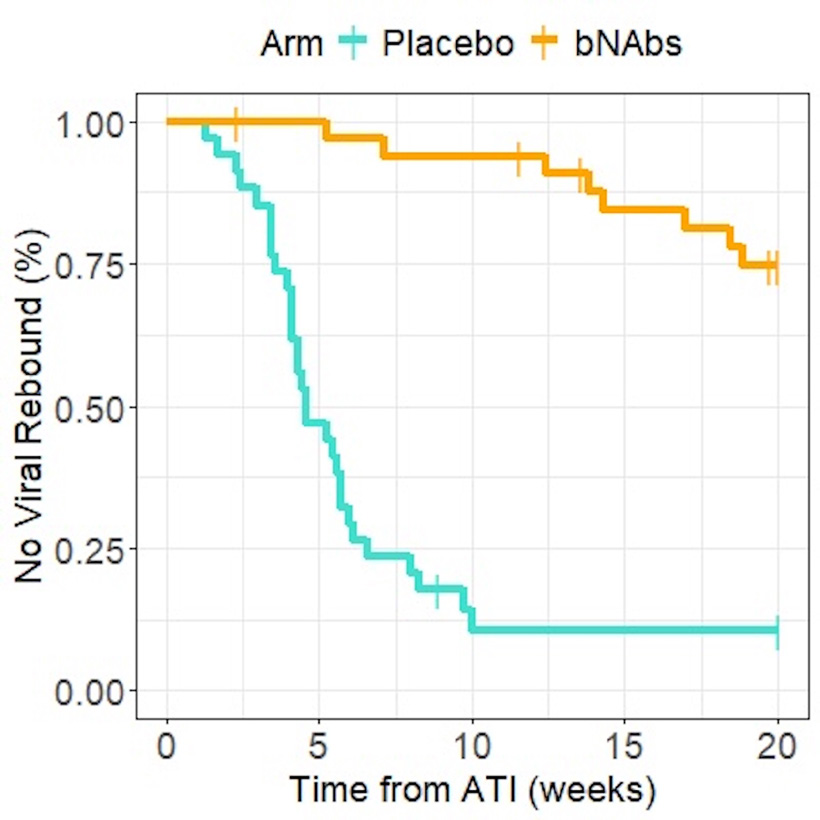
108. Trends in Hepatitis C Virus (HCV) Infection Incidence Among PWH Engaged in Care in the US: 1995-2023
Yotam Arens1, Laura Bamford2, Edward Cachay3, L. Sarah Mixson4, Joseph A. Delaney4, Mari Kitahata4, Claire Farel5, George Yendewa6, Kenneth Mayer7, Richard Moore8, April C. Pettit9, Robert Gross10
Background
Hepatitis C virus (HCV) incidence is high among people with HIV (PWH) and people who inject drugs (PWID). Sexual transmission may also contribute to a higher HCV incidence in PWH, mainly among men who have sex with men (MSM). We report epidemiologic trends of incident HCV infection among PWH engaged in care in the US, stratified by HIV acquisition risk factors.
Methods
This retrospective cohort study used data from the CFAR Network of Integrated Clinical Systems from 1995-2023. Included PWH had a negative HCV antibody at first measurement (baseline) and any HCV test (HCV antibody or RNA) at least 12 months later. Incident HCV infection was defined as newly reactive HCV antibody or plasma HCV RNA. Follow up time was censored at first positive HCV test, or last observed negative HCV test. Crude incidence rates (IR) with 95% CI stratified by HIV risk group were calculated using survival methods. Calendar time trends were analyzed in three periods: 1995-2005 (interferon era), 2006-2014 (early direct-acting antiviral [DAA] era), and 2015-2023 (highly active DAA era). We calculated adjusted incidence rate ratios (aIRR) using Poisson regression to estimate the association of baseline sociodemographic factors and detectable HIV RNA with incident HCV.
Results
In sum, 20,917 PWH met study criteria, with median age 37 years, 81% male sex assigned at birth, 41% Black, 61% MSM, and 6.4% with PWID/MSM-PWID. There were 1,276 (6.1%) incident cases of HCV infection, overall IR 7.1 (CI 6.7-7.5) per 1000 person-years (py). Crude IR was highest among persons with PWID (IR 28.2 per 1000 py, CI 23.4-34.1) and MSM-PWID (IR 20.4 per 1000 py, CI 17.3-24.0), but stable across calendar periods. Crude IR was higher among MSM without IDU history (6.7 per 1000 py, CI 6.2-7.2) than heterosexual PWH (4.8 per 1000 py, CI 4.2-5.4). The crude IR increased from 3.5 (CI 2.7-4.6) per 1000 py in 1995-2005 to 7.6 (CI 6.9-8.3) per 1000 py in 2015-2023 among MSM without IDU. Calendar periods 2006-2014 (aIRR 1.3, CI 1.1-1.7) and 2015-2023 (aIRR 1.9, CI 1.4-2.6) and HIV risk category MSM without IDU (aIRR 1.3, CI 1.1-1.6) were independent risk factors for incident HCV.
Conclusions
HCV incidence increased more than two-fold in MSM without IDU history from 1995-2005 to 2015-2023; rates in PWID/MSM-PWID were stable over this period. Further study of time-varying covariates such as substance use, incident STIs, and HCV testing frequency that may account for the rising HCV incidence among MSM in the highly active DAA era is needed.
Table 1.
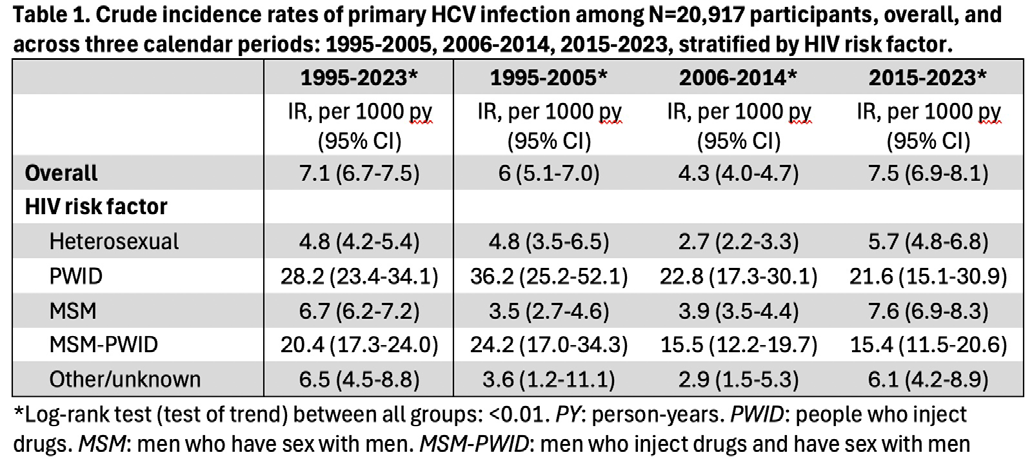
109. HIV Decreases Both Hepatitis B Antibody Titer and Neutralization After Spontaneous HBV Control
Che-Min Lo1, Maraake Taddese1, Ernesto Marques2, Mallory Witt3, Steven Wolinsky4, Eric Seaberg5, Justin Bailey1, Chloe Thio1, the MACS/WIHS Combined Cohort Study (MWCCS)
Background
HIV increases the risk of hepatitis B virus (HBV) reactivation after spontaneous HBV control (SC), which we hypothesized was due to differences in HBV-specific antibody responses between people with HIV (PWH) and people without HIV (PWoH).
Methods
We studied stored sera from 136 males (98 PWH, 38 PWoH) in the MACS/WIHS Combined Cohort Study with documented incident HBV and SC at their first HBsAg negative visit (v1), six months after v1 (v2), and 24 months after v2 (v3). Sera were assessed for (i) anti-HBs titer (EIA) and (ii) neutralization capacity using HepG2-NTCP HBV infection system. Neutralizing antibody (NAb) responses were quantified by area under the neutralization curve (AUC). Correlations were assessed using Spearman’s rank correlation. Comparisons were made using Generalized Estimating Equations model in R (geepack). Statistical significance p< 0.05.
Results
Age was similar in PWH and PWoH (median (yr); IQR) 31 (26-39) and 35 (30-43), respectively). Baseline CD4 count (cells/mm³) (median; IQR) was 506 (400-679) for PWH and 958 (766-1,210) for PWoH (P=2.2e-08). HIV viral load (VL) (copies/ml) (median; IQR) at v1 was 11,235 (1,386 -25,278) with 4 receiving ART. At v1, anti-HBs titers were similar between PWoH and PWH. However, at v2 and v3, titers were significantly higher in PWoH compared to PWH (p ≤ 0.001). In PWoH, titers increased from v1 to v2 and v3 (p = 1.6e-06) (mean increase of 0.31 units/yr) whereas titers in PWH declined (0.11 units/yr) (P comparing trends in PWH and PWoH = 5.1e-07). A cutoff of 10,000 HIV copies/ml was used to stratify PWH into high (H) and low (L) VL groups. Anti-HBs titers were significantly higher at v1 in the L vs H VL group (p < 0.001). Over time, a significant mean decrease in anti-HBs titers was only seen in the H VL (0.1 units/year (p = 0.04)) (Figure). In general, NAb AUC correlated with anti-HBs titers in PWH and PWoH with strongest correlation at v1 in both groups (PWoH rs = 0.79, PWH rs = 0.81, p < 0.001). The NAb AUC was significantly higher in PWoH than PWH at v1 (p < 0.01), v2 (p < 0.001), and v3 (p < 0.001). Amongst PWH, CD4 count and ART use did not affect titer or NAbs.
Conclusions
Over the first 30 months after HBV SC, PWoH have a stronger anti-HBs and HBV NAb response than PWH, which may explain the increased risk of HBV reactivation in PWH. Notably, rising anti-HBs titers in PWoH suggest ongoing sAg stimulation. The mechanism underlying the association of high HIV VL with declining anti-HBs requires further study.
Figure 1.
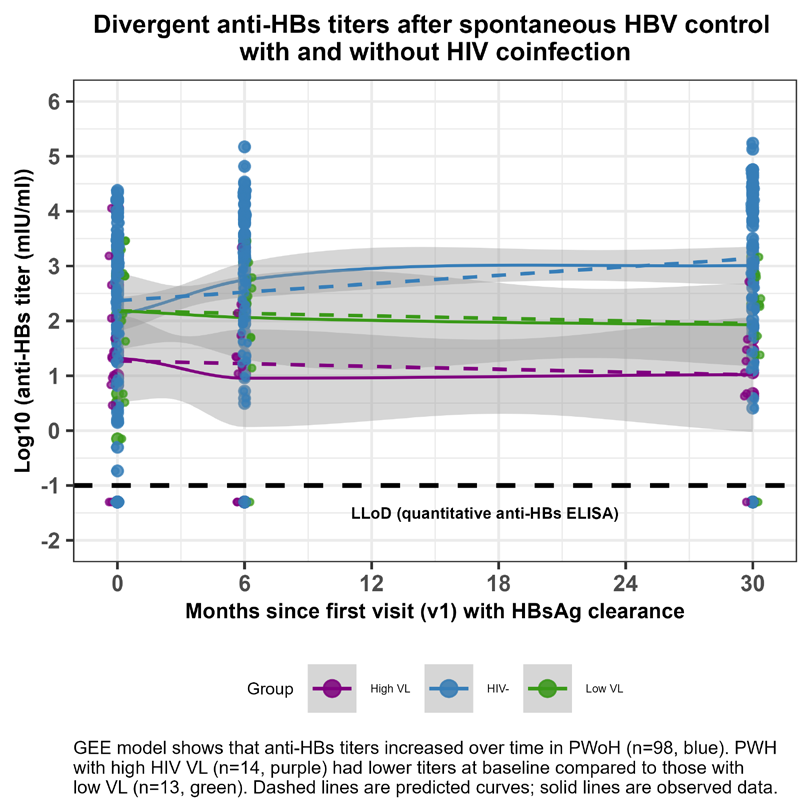
110. HBV Care Continuum and Associated Factors in Rwanda: A Population-Based Study From 2016-2023
Oral Abstracts
Pages: 16-17
Jean Damascene Makuza1, Dahn Jeong1, Michael Law1, Joseph Puyat1, Alnoor Ramji1, Phyumar Soe1, Richard L. Morrow2, Georgine Cua2, Héctor A. Velásquez García2, Marie Paul Nisingizwe1, Janvier Serumondo3, Albert Tuyishime3, Naveed Z. Janjua1
Background
The global burden of viral hepatitis B (HBV) is substantial, and monitoring progress across the care cascade is essential to plan elimination strategies. In Sub-Saharan Africa, data on the HBV care cascade are limited. We examined the HBV care cascade in Rwanda from 2016 to 2023.
Methods
In this population-based retrospective cohort study, we used routinely collected data from the District Health Information System 2, which included over 4.6 million people screened for HBV from January 2016 to June 2023. During this period, individuals were included if they were >2 years old. The HBV care cascade was analyzed across six stages: (1) lifetime prevalence, (2) diagnosis, (3) enrolled in care, (4) eligible to treatment, (5) treatment initiation, and (6) treatment continuation. Infection was defined as presence of at least one reactive hepatitis B surface antigen (HBsAg). Lifetime prevalence was estimated as the sum of diagnosed and estimated undiagnosed cases. Hierarchical logistic regression was used to identify progression-related factors through the different cascade stages.
Results
Among 4,604,468 individuals screened, 57,520 tested positive for HBsAg, of which 52,827 (91.8%) had HBV mono-infection and 4,693 (8.2%) were co-infected with HIV. Of those diagnosed, 21,247 (37.0%) were enrolled in care, and 6,429 (30.3%) of the enrolled individuals were eligible for treatment. Of those eligible, 4,893 (76.1%) initiated treatment, and 4,839 (98.9%) were retained on treatment at one-year post-initiation. Individuals aged 35–54 were more likely to engage in care (adjusted odds ratio [aOR], 1.19; 95% CI: 1.12–1.27), initiate treatment (aOR, 1.45; 95% CI: 1.14–1.86), and be retained on treatment (aOR, 2.88; 95% CI: 1.09–7.63) compared to those under 35. Individuals living 30 minutes to 1 hour from a health facility were less likely to engage in care or remain on treatment compared to those living closer to a facility.
Conclusions
Overall, engagement with care was low, which highlights the need to strengthen awareness among general population regarding HBV prevention and control. Younger individuals and those living farther from health facilities are less likely to engage in care and remain on treatment. Strengthening lower-level health facilities by expanding the number of trained healthcare providers and improving infrastructure is critical to enhance HBV prevention and treatment at the community level.
Figure 1.
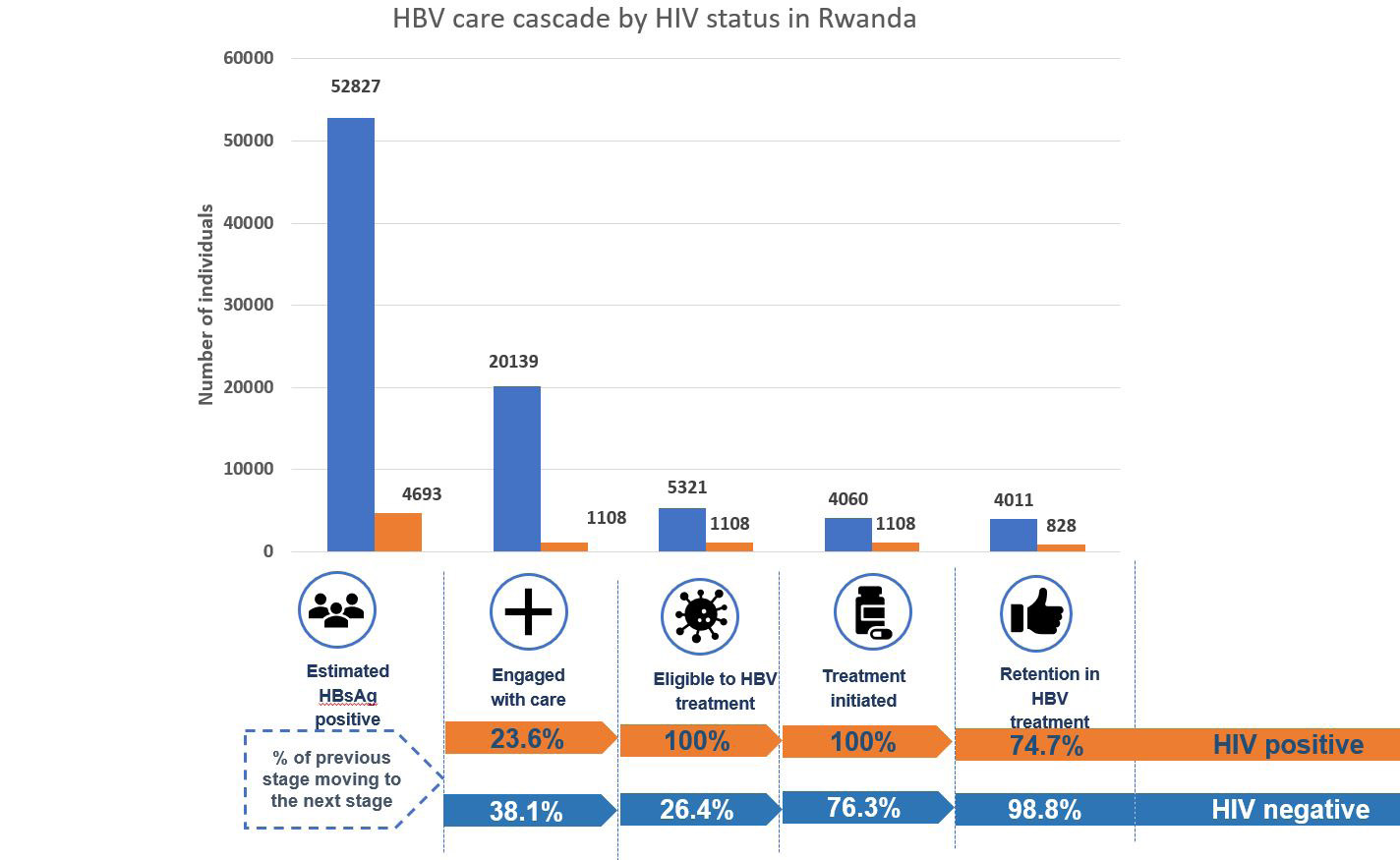
111. Intrahepatic Transcriptomics in HBV-HIV Co-Infection Uncover Host Responses to HBV Transcription
Che-Min Lo1, Ruzhang Zhao2, Wentao Zhan2, Hongkai Ji2, Chloe Thio1, Ashwin Balagopal1
Background
Liver disease due to viral hepatitis is a leading cause of mortality in PWH. Elucidating host genes that affect HBV transcription may accelerate hepatitis B virus (HBV) cure discovery. We hypothesized that host genes modulate HBV transcription during nucleos(t)ide analogue (NUC) therapy.
Methods
We used mRNA-capture slides (10X Genomics) on liver biopsies from 14 people with HIV and CHB (PWHHB) to sequence 100-250 million read-pairs per sample (Illumina NovaSeq 6000). Reads were mapped to a custom human+HBV reference. After quality control, we applied robust cell-type decomposition within gene expression spots to identify hepatocytes where HBV replicates and immune cell populations. We applied linear mixed-effects regression (LMER) using HBV RNA as a covariate to identify host genes associated with HBV transcription. Pathway analysis was performed.
Results
Among 7 HBeAg-positive (EP) PWHHB, median values were: HBV DNA (Log10 IU/ml) 4.1, HIV RNA <20 cp/ml, duration of NUCs 7 years (0.1 - 12.5); 1 participant was treatment-naïve and 1 underwent rapid HBeAg seroconversion (HBeSC) post-biopsy. Among 7 HBeAg-negative (EN) PWHHB, all but one had undetectable HBV DNA, all had HIV RNA <20 cp/ml, and NUC duration was 8.1 years (7.0 - 9.1). We analyzed 54,250 genes across 25,109 cell spots. LMER on HBV+ hepatocytes (spots) among EP identified 727 upregulated and 76 downregulated host genes (mean fixed effect + 6SD, adjusted p-value < 0.05). The expression pattern of the top 50 significant genes varied with NUC duration, showing higher expression in hepatocytes from EP with long-term NUC. These genes comprised several enriched pathways crucial to liver function, such as the lipid metabolic process (adjusted p-value = 1.6e-05, fold enrichment = 10.64). Furthermore, immune response pathways to viral infection were enriched, highlighted by 15 upregulated genes (e.g., C3, APOA1). Enriched lymphocyte markers surrounding HBV-transcribing hepatocytes were identified in EP with the longest antiviral treatment and in most EN compared to those EP with short-term treatment. Notably, the post-biopsy HBeSC EP with short-term NUC exhibited pronounced expression of these markers around HBV+ hepatocytes.
Conclusions
Spatial transcriptomics of liver from PWHHB reveals that HBV transcription was closely associated with host metabolic processes and immune responses. These findings underscore intricate dynamics between HBV and host cellular machinery, yielding putative genes and pathways affecting HBV transcription.
Figure 1.
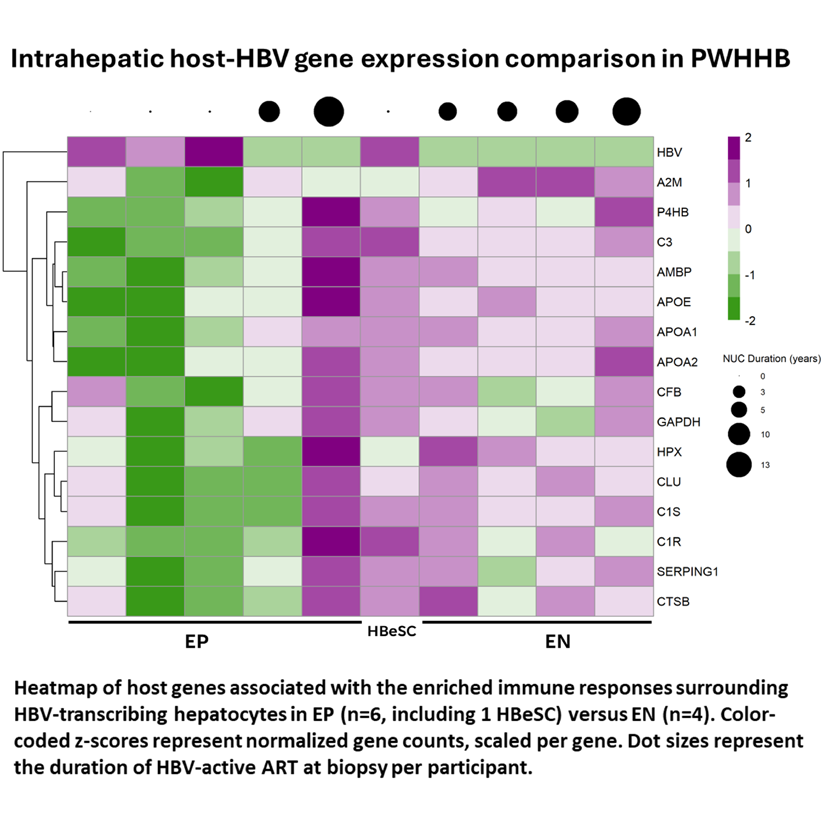
112. Highly Durable Seroprotection With HepB-CpG Vaccine in People With HIV (PWH): ACTG A5379 (BEeHIVe)
Oral Abstracts
Pages: 17-18
Kristen Marks1, Minhee Kang2, Triin Umbleja2, Andrea Cox3, Anchalee Avihingsanon4, Patcharaphan Sugandhavesa5, Leolin Katsidzira6, Josphat Kosgei7, Hugo Perazzo8, Jennifer Price9, Stephanie R. Caruso10, Kevin Knowles10, Beverly Alston-Smith11, Parita Rathod12, Kenneth E. Sherman13, the ACTG A5379 (BEeHIVe) Study Team
Background
A5379 primary analysis demonstrated that 2- and 3-dose HepB-CpG (2-CpG, 3-CpG) achieved superior seroprotective response (SPR defined as anti-HBs ≥10 mIU/mL) compared to 3-dose HepB-alum (3-alum) in PWH with prior HBV vaccine non-response (Group A), and 100% SPR was achieved with 3-CpG in vaccine-naïve PWH (Group B). SPR durability is now evaluated.
Methods
A5379 evaluated immunogenicity of HepB-CpG in PWH on ART with CD4 ≥100 cells/mm3 and HIV-1 RNA <1000 copies/mL. Group A was randomized 1:1:1 to: 2-CpG intramuscularly (IM) (20 mcg recombinant HBsAg, 3000 mcg CpG 1018® adjuvant) at Wks 0 and 4; 3-CpG IM at Wks 0, 4, 24; or 3-alum IM (20 mcg recombinant HBsAg) at Wks 0, 4, 24. All Group B participants received 3-CpG. End of study anti-HBs was assessed at Wk72 (48 wks after 3-dose, 68 wks after 2-dose) regardless of visit window. SPR proportion differences in Group A were estimated with two-sided 97.5% Newcombe CI, stratified by sex at birth and diabetes status. Otherwise, 95% Wilson CIs were used.
Results
Group A included 561 participants at 41 sites in 10 countries and Group B 74 participants at 13 sites in 3 countries. 95% of Group A and 100% of Group B completed study follow-up to Wk72. Group A: At end of study, 86.1% of 2-CpG (n=173), 97.2% of 3-CpG (n=177), and 57.5% of 3-alum (n=174) had SPR. SPR% difference was 28.6% (18.0%,38.4%) for 2-CPG v. 3-alum, 39.2% (30.0%,47.9%) for 3-CpG v. 3-alum, and 11.0% (4.3%,18.1%) for 3-CpG v. 2-CpG. The proportion who achieved SPR at any time on study but had anti-HBs <10 mIU/mL by study end was 2.1% for 3-CpG, 10.7% for 2-CpG and 22.0% in 3-alum. Among those with anti-HBs >1000 mIU/mL at the primary vaccine response time (Wk28 for 3-dose arms and Wk12 for 2-dose), 100% in all arms had SPR at study end. Overall, 73.3% (66.5%,79.1%), 77.7% (71.2%,83.0%), and 73.7% (66.9%,79.5%) of participants in 2-CpG, 3-CpG, and 3-alum reported AEs; two deaths unrelated to vaccines (TB, Wk43 2-CpG; and cardiac arrest, Wk36 3-CpG). Group B: At the end of study, 97.3% (90.7%,99.3%) of 74 participants had SPR. The 2 participants with anti-HBs <10 mIU/mL were among those with the lowest anti-HBs titers at time of primary vaccine response time. 87.8% (78.5%, 93.5%) reported AEs; no deaths.
Conclusions
In PWH, higher end of study seroprotection was achieved with HepB-CpG over HepB-alum, and 3 doses of HepB-CpG over 2 doses. HepB-CpG achieved durable seroprotection in both vaccine-naïve and prior vaccine non-response groups.
Figure 1.
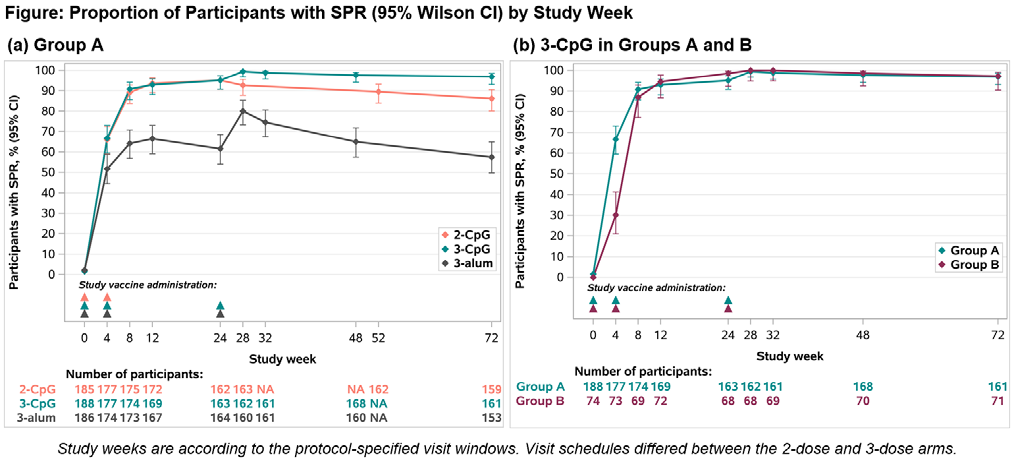
113. Epigenetic Age Predictors of Semaglutide-Related Liver Fat Changes in People With HIV
Michael J. Corley1, Alina Pang1, Doug Kitch2, Amy Kantor2, Fred R. Sattler3, Pablo Belaunzarán-Zamudio4, Todd Brown5, Alan Landay6, Kristine M. Erlandson7, Jordan Lake8
Background
In a recent pilot study (ACTG A5371, SLIM LIVER: NCT04216589), 24 weeks of low-dose semaglutide (1 mg sc weekly) reduced metabolic dysfunction-associated steatotic liver disease (MASLD) in people with HIV (PWH), with 58% having improved MRI-proton-derived fat fraction-quantified intrahepatic triglycerides (IHTG). Although trends suggested greater IHTG improvements in women and older participants, the role of biological age indicators was not assessed. We investigated whether epigenetic indicators incorporating physical fitness were associated with IHTG changes on semaglutide.
Methods
The SLIM LIVER study enrolled PWH ≥18 years on suppressive ART with central adiposity and MASLD. All participants received semaglutide for 24 weeks and PBMCs were available at weeks 0 and 24. Genome-wide DNA methylation profiles were analyzed in 41 participants with available PBMCs and used to calculate DNAm-based aging biomarkers, DNAmFitAge, that provides an estimate of biological age using DNAm-based estimates of three physical fitness measurements: maximal oxygen uptake (DNAmVO2max), maximal gripping force (DNAmGripmax), and gait speed (DNAmGaitspeed). R code was used calculate DNAm fitness biomarkers available at GitHub repository at https://github.com/ kristenmcgreevy/DNAmFitAge. Linear regression models evaluated relationships between relative percent (%) change in IHTG (PCHG) and DNAm indicators, controlling for sex at birth and age.
Results
At entry, the mean age of participants (n=41) was 49 years (39% female), CD4+ T cell count was 776 cells/mm3 and absolute IHTG was 12.7%. Relative IHTG decrease was -29% (95% CI: -37, -20). The mean epigenetic age estimate at entry for DNAmFitAge was 59.2 years (mean epigenetic age acceleration of 10.2 years). A less accelerated DNAmFitAge at entry was associated with greater IHTG improvements (β=-1.6, p=0.10) when controlling for sex and chronological age. Weaker DNAmGripmax was also associated with greater improvements in IHTG over 24 weeks (β=4.68, p=0.009) when controlling for sex and chronological age.
Conclusions
Epigenetic age indicators incorporating physical fitness, specifically worse DNAmGripmax and younger DNAmFitAge were associated with greater improvements in IHTG following 24 weeks of low-dose semaglutide treatment in PWH, suggesting a potential role for epigenetic biomarkers in predicting treatment responses.
Figure 1.
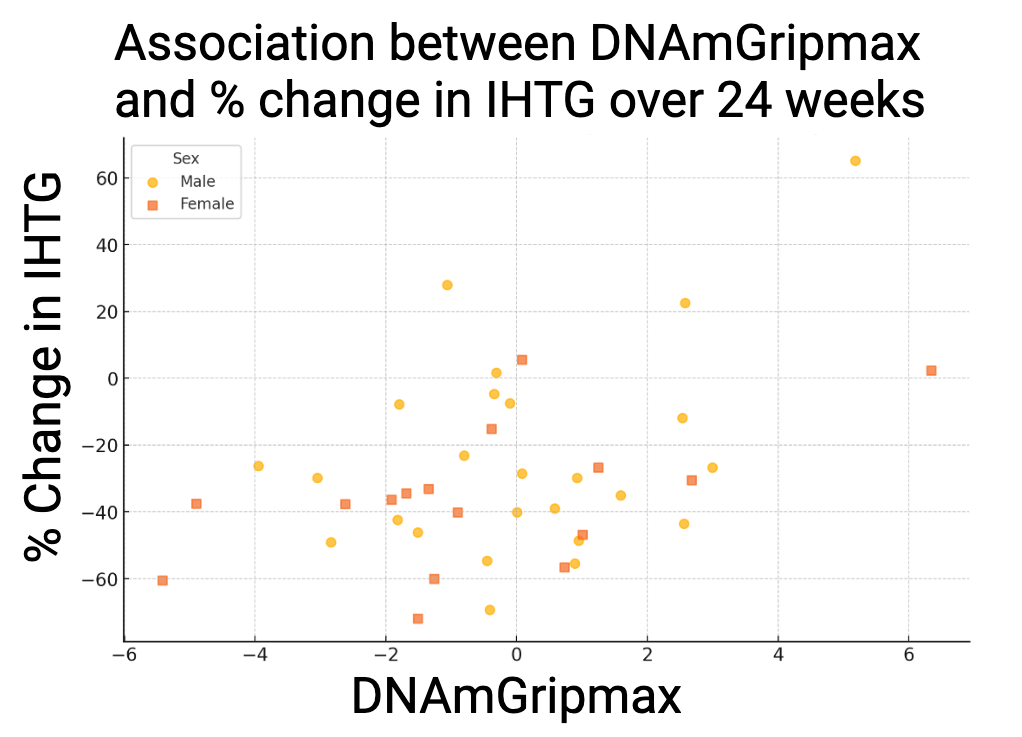
114. Supplemental High-Dose Rifampicin and Levofloxacin for Inpatients With Disseminated HIV-TB
Oral Abstracts
Pages: 18-19
Graeme Meintjes1, Phiona Namale1, David Barr2, Linda Boloko1, Marcia C. Vermeulen1, Bryony Simmons3, Andrew Hill4, Sean Wasserman5, Kate Haigh4, Freedom Gumedze1, Ayanda T. Mnguni1, Thomas Crede1, Yakoob Vallie1, Gary Maartens1, Charlotte Schutz1, the New Strat-TB Study Group
Background
Disseminated TB is a common cause of hospitalisation for people with HIV and has high early mortality.
Methods
The NEW STRAT-TB trial, conducted at 3 hospitals in Cape Town, South Africa, has a 2x2 factorial randomization to standard TB treatment versus intensified TB treatment (standard TB treatment with rifampicin dose increased to 35mg/kg/d plus levofloxacin) and prednisone (1.5mg/kg/d) versus identical placebo, for the initial 14 days, followed by standard TB treatment. Adults admitted to hospital with HIV-associated disseminated TB (one or more of urine Alere LAM, urine Xpert Ultra or blood Xpert Ultra positive) are eligible. The primary endpoint is 12-week mortality. The absolute difference between arms was estimated using the Kaplan-Meier method with bootstrapping to obtain 95% confidence intervals and associated p-values.
Results
On 6 June 2024, the intensified TB treatment arm was stopped by the DSMB due to higher 2-week mortality. Investigators remain blinded to prednisone versus placebo allocation. 580 participants (of planned 732) had been enrolled with 563 in mITT population. Median age was 36 years (interquartile range, IQR=30-43), 299 (53%) were female with median CD4 count 42 cells/μL (IQR=18-92), Hb 8.2 g/dL (IQR=6.9-9.6), venous lactate 2.1 mmol/L (IQR=1.6-2.9) and creatinine 70μmol/L (IQR=52-102). 113 (20%) had eGFR < 50mL/min. 83%, 67% and 31% were positive by urine Xpert Ultra, urine Alere LAM and blood Xpert Ultra, respectively. 55/548 participants (10%) had HIV RNA < 50 copies/mL. 14-day mortality was 31/283 (11.0%) in the intensified arm and 14/280 (5.0%) in the standard arm (difference 6.0%; 95%CI 1.6% - 10.4%; p=0.008). Mortality at 12 weeks was 55/283 (19.4%) in the intensified arm and 43/280 (15.4%) in the standard arm (difference 4.1%; 95%CI -2.2% - 10.4%; p=0.204). None of the early deaths were attributed to drug-induced liver injury. Clinical hepatitis events within 14 days occurred in 15 participants in the intensified arm and 21 in the standard arm.
Conclusions
Intensified TB treatment was associated with higher 2-week mortality, which has not been observed in prior trials of higher dose rifamycins and fluoroquinolones in TB. Reasons for higher 2-week mortality are currently unclear. Interaction with prednisone will be explored when that randomization is unblinded. Strategies involving higher dose rifamycins and fluoroquinolones should be used with caution in critically ill inpatients with HIV and disseminated TB.
Figure 1.
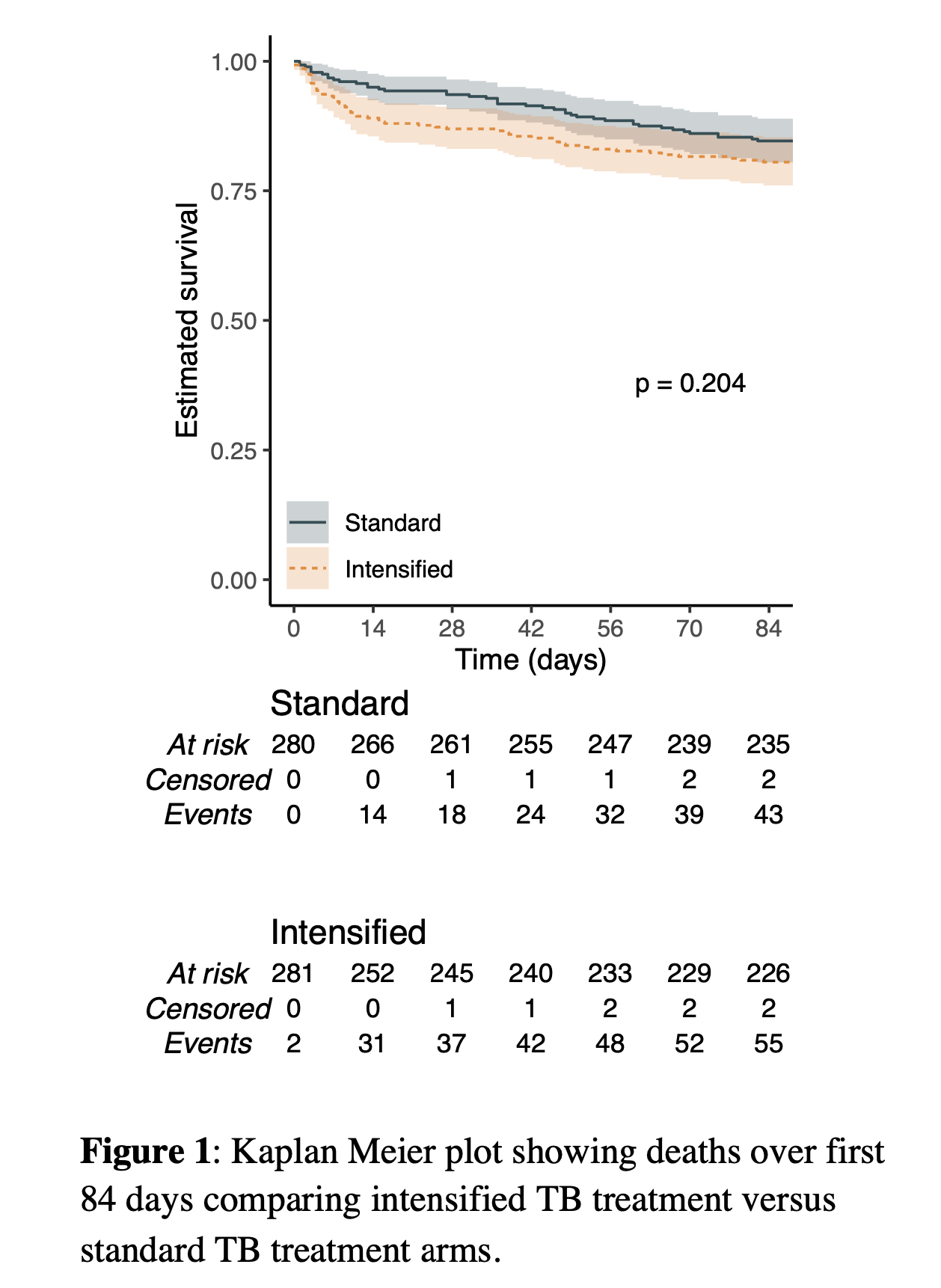
115. Casual Contact in Community Settings Explains Majority of TB Transmission in South Africa
Neel R. Gandhi1, Hikari Yoshii1, Kogieleum Naidoo2, Keeren Lutchminarain3, Linrui Tang4, Melanie Chitwood5, Shaheed V. Omar6, Fay Willis1, Angie Campbell1, Theodore Cohen5, Barun Mathema4, James C. M. Brust7, Sarita Shah8, the CONTEXT Study Team
Background
Transmission is the primary driver of drug-resistant (DR) TB epidemics; however, where and between whom spread occurs is poorly understood. Although TB is transmitted through shared air between individuals, numerous studies have demonstrated that <30% of genomically clustered individuals were household or other close contacts. We evaluated the role of casual contact in DR-TB transmission in the Durban metropolitan area in South Africa.
Methods
We conducted a prospective study of all XDR and pre-XDR TB patients diagnosed in 2019-2022. Participants were interviewed about homes, hospitals, clinics, and community locations visited regularly, in the 2 years before TB diagnosis. GPS coordinates were collected at all locations. TB isolates underwent whole genome sequencing; a SNP difference of ≤12 was considered genomically clustered. Person-to-person links and overlapping hospital admissions were defined as close contact. Casual contact was based on clinics or community locations named in common or proximate to each other (≤500 meters). Genomic, social network, and spatial analyses were performed to determine the proportion of transmission due to close versus casual contact.
Results
We enrolled 305 (80%) of 383 patients diagnosed with pre-XDR or XDR TB. Median age was 36 years (IQR 30-44), 137 (45%) were female, and 216 (73%) were HIV-positive. TB isolates were sequenced for 253 (83%) participants; 141 (56%) were genotypically linked. Only 13 (9%) genomically clustered participants were linked by close contact. An additional 81 (57%) were linked through casual contact, and 47 (33%) had no identifiable epi link. Casual contact links were found through same named outpatient clinics (n=56, 40%), proximate home or community locations (≤500 meters) (n=39, 28%), or a same named community location (n=10, 7.0%). Inclusion of casual contact in network analysis increased the median degree from 1 (IQR 0-2) to 10 (IQR 5-19) and reduced median shortest path length to 3 (IQR 2-3) among clustered participants.
Conclusions
Although a majority of participants were genomically clustered, close contact explained only 9% of links. Casual contact in community locations, including clinics and proximate locations, explained an additional 57% of potential transmission. Future efforts to curb TB transmission will require a greater understanding of unrecognized infectiousness and social mixing in community settings.
116. DOLPHIN-Moms: Pharmacokinetics of Dolutegravir and HIV Viral Suppression With 1HP or 3HP in Pregnancy
Oral Abstracts
Pages: 19-20
Jyoti Mathad1, Sylvia LaCourse2, Belen P. Solans3, Jayajothi Moodley4, Vaneshree Govender4, Tumelo Moloantoa5, Marije Van Schalkwyk6, Ethel Weld7, Letha Varughese7, Kelly E. Dooley8, Amita Gupta7, Radojka M. Savic3, Gavin Churchyard4, Richard E. Chaisson7, the DOLPHIN-Moms Study
Background
The World Health Organization endorses 3 months of weekly isoniazid and rifapentine (3HP) as TB preventive therapy (TPT) in people with HIV (PWH) on once-daily dolutegravir (DTG)-based antiretroviral treatment (ART). Optimal dosing of DTG to maintain HIV viral suppression in pregnancy while taking 3HP or 1 month of daily isoniazid and rifapentine (1HP) has not been studied.
Methods
DOLPHIN-Moms (NCT95122026) is an open-label phase II trial in South Africa investigating the safety and pharmacokinetics of DTG in pregnant PWH initiated on 1HP or 3HP. Pregnant PWH at 20-34 weeks’ gestation with HIV viral suppression on DTG-based ART were randomized 1:1 to receive 1HP or 3HP. All initiated twice-daily DTG prior to starting 1HP or 3HP on day 1. Twenty-five participants in each arm had sparse DTG PK sampling on days 1 (pre-HP) and 17 (11h and 12h post DTG dose). DTG dosing was considered acceptable if 5th percentile DTG troughs were >158 ng/mL. HIV viral load was measured at screening, delivery, and TPT completion (1HP: week 4, 3HP: week 12). We estimated population PK of DTG using non-linear mixed effects modeling and performed Monte Carlo simulations of daily DTG dosing with 1HP and 3HP.
Results
Among 50 pregnant PWH, at entry, the median age was 33 years (IQR 31–37), gestational age 26.8 weeks (IQR 23–30), and CD4 696 cells/mm3 (IQR 459–864). All had HIV viral suppression. On day 1, there were no significant differences in median DTG troughs between 1HP and 3HP (2730 vs 2890 ng/ mL, p=0.91). On day 17, median (5th-95th percentile) troughs were 871 ng/mL (391–1754) in the 1HP arm and 1890 ng/mL (843–4764) with 3HP (p<0.01). At day 17, one participant per arm had DTG troughs <64ng/mL (Fig 1A): both had documented nonadherence and received counseling; one had detectable viral load at delivery (6697 copies/mL) and viral suppression at 12 weeks postpartum (3HP arm); the other remained virally suppressed throughout. Excluding these two participants, simulations of once-daily DTG predicted median (5th–95th percentile) DTG troughs of 88ng/mL (28–212) with 1HP and 436ng/mL (209–781) with 3HP.
Conclusions
In pregnant PWH, 1HP and 3HP administered with twice-daily DTG yields therapeutic DTG troughs and viral suppression among participants with adherence. Simulations predict once-daily dosing will achieve target DTG concentrations with 3HP but not 1HP. The next phase of the trial (confirming PK and virologic outcomes of once-daily DTG with 3HP in pregnant PWH) is ongoing.
Figure 1.
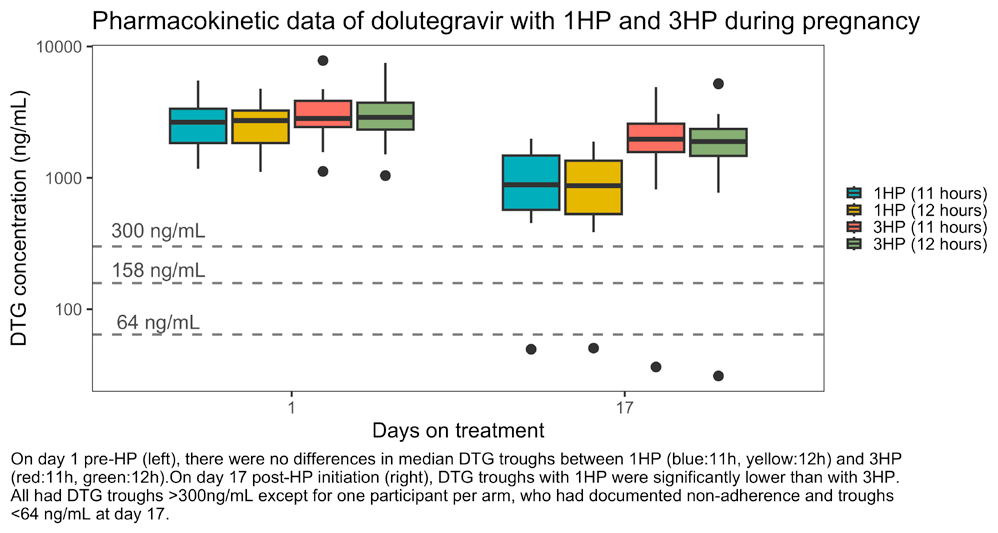
117. Maternal Tenofovir Prophylaxis With Active Immunization to Prevent Infant Hepatitis B
Gonzague Jourdain1, Nicole Ngo-Giang-Huong2, Camlin Tierney3, Nicolas Salvadori1, Mauricio Pinilla3, Touy Chanthalangsy4, Soukdalay Sengsilivanh5, Khamla Choumlivong6, Jullapong Achalapong7, Prateung Liampongsabuddhi8, Pra-Ornsuda Sukrakanchana1, Suriyan Tanasri1, Stanislas Pol9, Valy Keoluangkhot5, Suchada Jiamsiri10, the iTAP Study Group
Background
Hepatitis B (HB) vaccination starting with a birth dose and HB immune globulin (HBIg) are given to prevent HB in infants, but HBIg is not available in many settings. This trial aimed to assess whether the risk of infection is below 2% in infants born to HBeAg positive mothers prescribed tenofovir disoproxil fumarate (TDF) prophylaxis, with the infants receiving HB vaccination according to national guidelines without HBIg. This is the regimen recommended by the 2024 WHO Guidelines.
Methods
This prospective, single arm clinical trial was designed to enroll 499 pregnant women with positive HBsAg and HBeAg tests at 28 weeks gestational age (GA), no contraindications to TDF, and no HIV infection in 8 public hospitals in Laos and 12 in Thailand (NICHD R01 HD092527) . An HBV DNA load measurement was scheduled during pregnancy to assess adherence and consider infant HBIg if needed. The primary outcome was infant HBV infection (positive HBsAg test confirmed by HBV DNA PCR at 6 months of age). The primary analysis was performed in infants who had an HBsAg test at 6 months of age, who did not receive HBIg, and whose mothers had no evidence of an unsatisfactory virologic response after initiating TDF, defined as HBV DNA load measurement between 20 days after starting TDF and 36 weeks GA that had not decreased by >10-fold in IU/mL from baseline and was >200,000 IU/mL. The proportion of pregnancies with HBV infection at 6 months was estimated along with a two-sided 90% Clopper-Pearson confidence interval (CI).
Results
Baseline and follow up data are summarized in the Table. No safety concerns were identified. There were 6 infant deaths, none deemed related to TDF exposure. In the primary analysis, 4 singleton infants of 423 pregnancies were infected at 6 months, yielding an infection risk of 0.95% (90% CI: 0.32%-2.15%), with the upper limit above the 2% hypothesized. In addition, one infant had a first HBsAg positive test (confirmed by HBV DNA PCR) at 4 months but was then lost to follow up, and another was infected but with an unsatisfactory maternal response: both cases were part of those excluded from the primary analysis. Sensitivity analyses confirmed the findings.
Conclusions
Maternal TDF prophylaxis and active immunization was efficacious in preventing HBV infection but the risk of infection was not demonstrably below 2%. These findings highlight the level of efficacy achievable when adhering to the 2024 WHO guidelines in South East Asia.
Table 1.
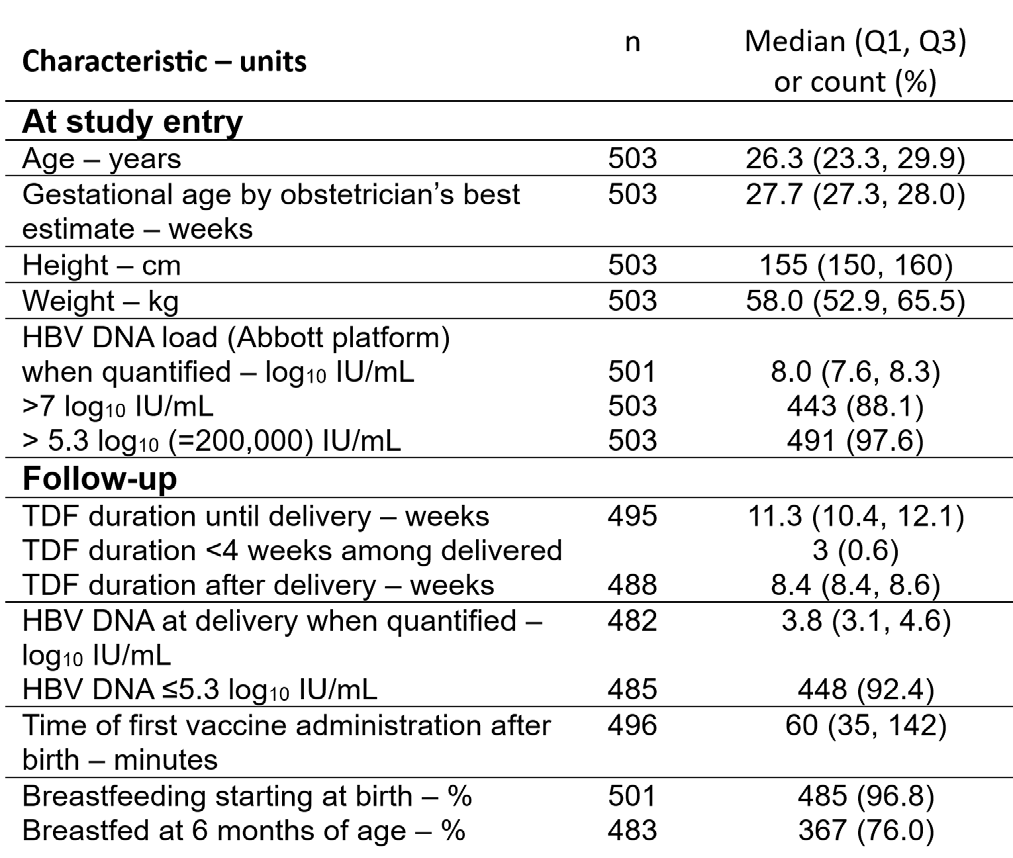
118. Efficacy of Home Visits for Pregnant Couples to Promote Couple HIV Testing and Family Health
Oral Abstracts
Pages: 20-21
Lynae Darbes1, Zachary A. Kwena2, Kevin Owuor3, Abigail Hatcher4, Anna Helova3, Thomas Braun1, Evelyne Owengah2, Moses Okombo5, Van Nghiem3, Harsha Thirumurthy6, Elizabeth A. Bukusi7, Janet M. Turan3
Background
Facilitating engagement from both partners of a pregnant couple has the potential to improve joint decision-making, healthcare utilization, and health outcomes. We tested the efficacy of a home-based couples intervention for improving Couples HIV Testing and Counseling (CHTC) and family health during pregnancy and postpartum.
Methods
In a 3-arm randomized controlled trial in southwestern Kenya (2019-2024), we recruited women attending antenatal care (2/3 with HIV), subsequently contacting the male partner. A total of 800 pregnant couples were randomized to the home visit intervention (HV, n=267), HIV self-test kits (HIVST, n=266), or standard care (SC, n=267). In the HV arm, lay health worker pairs (one female, one male) conducted 5 couple home visits during pregnancy and postpartum, including health education and couple relationship skills, with CHTC offered at home. Even when women knew their HIV status, CHCT was used to facilitate mutual HIV-status disclosure. In the HIVST arm, pairs of self-test kits were given to the woman to use independently with her partner. Interviews with both partners were conducted in pregnancy and at months 3 and 12 postpartum. Viral loads were abstracted from medical records. Outcomes were analyzed using general estimating equation models, adjusted for previous couple testing, education, wealth, couple age disparity, and length of relationship.
Results
Couples in the HV arm had a higher likelihood of engaging in CHTC compared to SC counterparts (adjusted risk ratio (aRR)=4.22, 95% confidence interval (CI)=2.88-6.18), as did those in HIVST arm (aRR=3.69, 95% CI=2.50-5.45). Home visits were associated with a greater number of male HIV+ diagnoses and identification of discordant couples. Measures of positive relationship dynamics (relationship satisfaction, trust, communication) were significantly higher in HV arm compared to HIVST and SC arms. Utilization of maternal and child health services was equally high across the three arms. Only 2 infant HIV infections were detected in the cohort. Women with HIV in HV arm had a significantly higher probability of achieving viral suppression at 18 months (aRR=1.07, 95%CI=1.03-1.12).
Conclusions
A home-based couples intervention led to measurable improvements in maternal viral suppression and was associated with increased couple HIV testing and better couple relationships. Addressing both members of a couple around the time of pregnancy is a highly promising strategy for achieving HIV prevention and family health.
Figure 1.
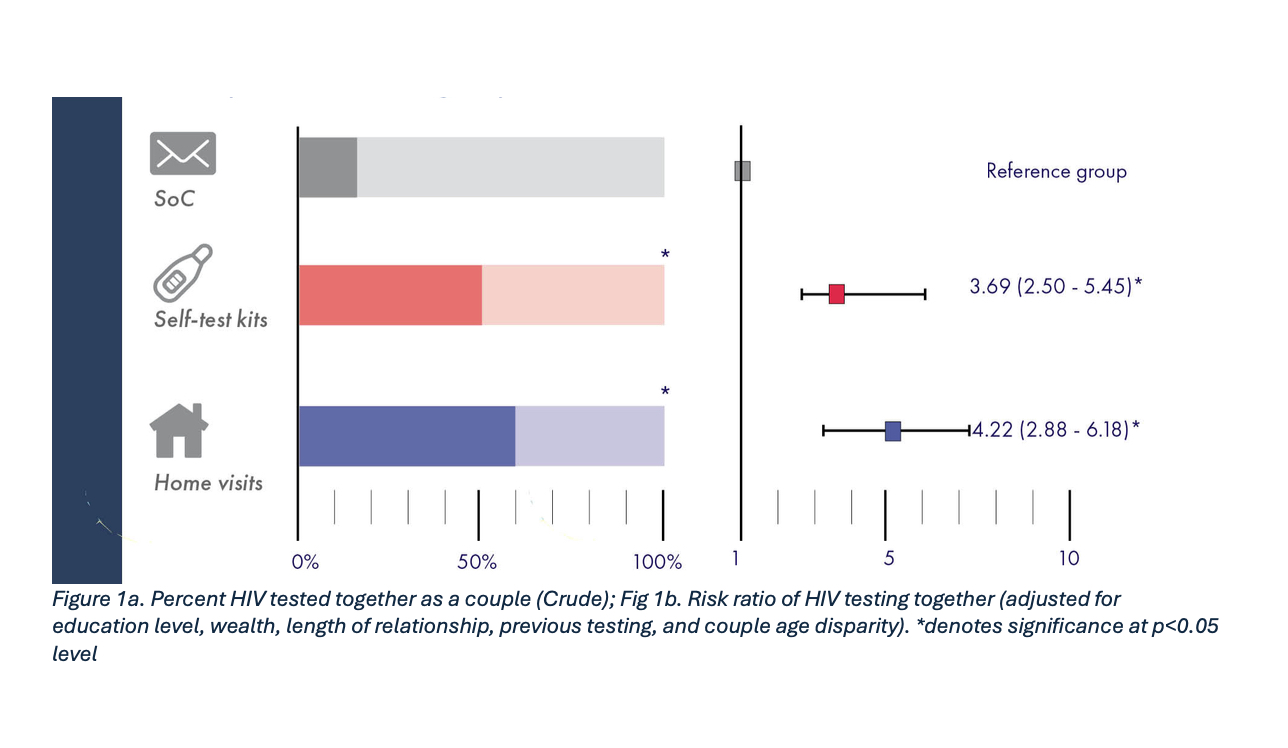
119. Dolutegravir Does Not Reduce Levonorgestrel or Medroxyprogesterone Acetate Concentrations in WLWH
Rebecca Ryan1, Bame Bame1, Aamirah Mussa1, Mbabi Bapabi1, Neo Moshashane1, Imogen Mechie1, Samuel Ensor1, Neo Ndlovu1, Laura J. Else2, Laura Dickinson2, Alieu Amara2, Andrew Davison3, Ava Avalos1, Saye Khoo2, Chelsea Morroni1
Background
Drug-drug interactions (DDIs) between contraceptives and antiretroviral therapy (ART) may increase the risk of unintended pregnancy and side effects. The levonorgestrel (LNG) implant and depot medroxyprogesterone acetate (DMPA) injectable are commonly used contraceptives in women living with HIV (WLWH), but pharmacokinetic (PK) data evaluating DDIs between dolutegravir (DTG) and LNG or MPA are lacking.
Methods
We conducted a phase 4 non-randomised, parallel-arm, open-label PK study among non-pregnant WLWH on DTG-based ART and HIV-negative, ART-naïve women in Botswana, who chose to initiate the LNG implant or DMPA injectable (n=140; 70 LNG, 70 DMPA; 35 WLWH per arm). Blood was sampled before contraceptive initiation and at 2-4 weekly intervals. A pregnancy test and data on safety and tolerability were collected each visit. Area under the concentration-time curves of LNG over 24 weeks (LNG AUC24weeks) and MPA over 12 weeks (MPA AUC12weeks) were compared between WLWH on DTG-based ART and HIV-negative, ART-naïve women using geometric mean ratios (GMR).
Results
Median (range) LNG AUC24weeks was 13732 (6252-46797) pg.week/ mL and 10157 (3922-36311) pg.week/mL in WLWH on DTG-based ART and HIV-negative women respectively; GMR 1.30, 95% CI 0.99-1.68. Median (range) MPA AUC12weeks was 10770 (4665-20005) pg.week/mL and 10212 (3018-18122) pg.week/mL in WLWH on DTG-based ART and HIV-negative women respectively; GMR 1.09, 95% CI 0.91-1.32. LNG Cmax was higher in WLWH on DTG compared to HIV-negative women (GMR 1.71, 95% CI 1.01-2.89), while MPA Cmax was similar between groups (GMR 1.16, 95% CI 0.92-1.47). There was no difference in median DTG concentrations before and after LNG (2155 vs. 2774pg/ml, p=0.09) or MPA (3358 vs. 3244pg/ml, p=0.46). Both contraceptive methods were well-tolerated, with no unintended pregnancies or serious adverse events. Endogenous progesterone was suppressed (<0.7 nmol/L) in 93% of WLWH on DTG vs. 78% HIV-negative women using LNG implant at 24 weeks, p=0.09; and 94% of WLWH on DTG vs. 87% HIV-negative women using DMPA injectable at 12 weeks, p=0.35.
Conclusions
There are no clinically significant DDIs between DTG-based ART and the LNG implant or DMPA injectable. DTG does not reduce LNG or MPA concentrations; and the LNG implant and DMPA injectable do not reduce DTG levels in WLWH. The LNG implant and DMPA injectable are both highly effective, safe and well-tolerated contraceptive options for WLWH on DTG-based ART.
Figure 1.
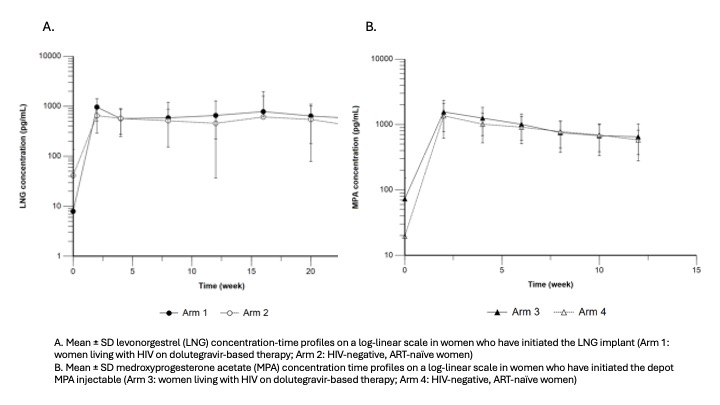
120. Lenacapavir Pharmacokinetics, Safety, and Efficacy in Adolescents and Adults in PURPOSE 1
Oral Abstracts
Pages: 21-22
Katherine Gill1, Nkosiphile Ndlovu2, William Brumskine3, Manjeetha Jaggernath4, Zwalethu Zwane5, Yang Zhao6, John Ling6, Priyanka Arora6, Renu Singh6, Alexander Kintu6, Christoph Carter6, Moupali Das6, Disebo Potloane7
Background
Despite having high HIV incidence, adolescents have historically been excluded from Phase 3 HIV trials; separate trials of ~25–50 adolescents are required, resulting in prolonged delays in access to pre-exposure prophylaxis (PrEP). The PURPOSE program is the first to intentionally include adolescents aged 16 and 17 years. PURPOSE 1 found twice-yearly lenacapavir (LEN) was highly efficacious in people aged 16–25 years. We describe our approach to adolescent inclusion and a comparison of the pharmacokinetics (PK), safety, and efficacy of LEN in adolescents vs adults.
Methods
The study team engaged with key stakeholders, such as adolescent medicine experts and community advocates, to ethically and responsibly include adolescents. Consistent with standard practice, most adolescents provided assent and parents/guardians provided consent for trial inclusion. Innovations for adolescent inclusion included a community consent process led by a site community advisory board, after which waivers for parental consent were issued and adolescents could consent for themselves at that site. In other locales, adolescents who had ever been pregnant were considered emancipated and could consent for themselves. Further, an independent data monitoring committee reviewed safety data from the first 300 adult participants prior to adolescent enrollment. We compared LEN PK at Weeks 4, 8, 13, 26, and every 13 weeks thereafter, adverse events (AEs), laboratory abnormalities, and HIV infections between adolescents and adults.
Results
We enrolled 124 adolescents; 56 were assigned to the LEN group. Preliminary observed LEN plasma concentrations were comparable between adolescents and adults; LEN Ctrough at Week 26 is shown (Fig). In both adolescents and adults in the LEN group, the most common AEs (excluding injection-site reactions [ISRs]) were headache, genitourinary chlamydia, and urinary tract infection; the most common ISRs were low-grade nodules, pain, and swelling. Laboratory abnormalities were mostly low grade and similar between adolescents and adults. There were no incident HIV infections among adolescents or adults receiving LEN.
Conclusions
LEN was safe and well-tolerated, with similar PK in adolescents aged 16 and 17 years versus adults, supporting extrapolation of efficacy in younger people. The intentional efforts to include adolescents resulted in robust enrollment ~2.5 to 5-fold higher than typical adolescent-dedicated studies, potentially accelerating access for adolescents who need or want PrEP.
Figure 1.
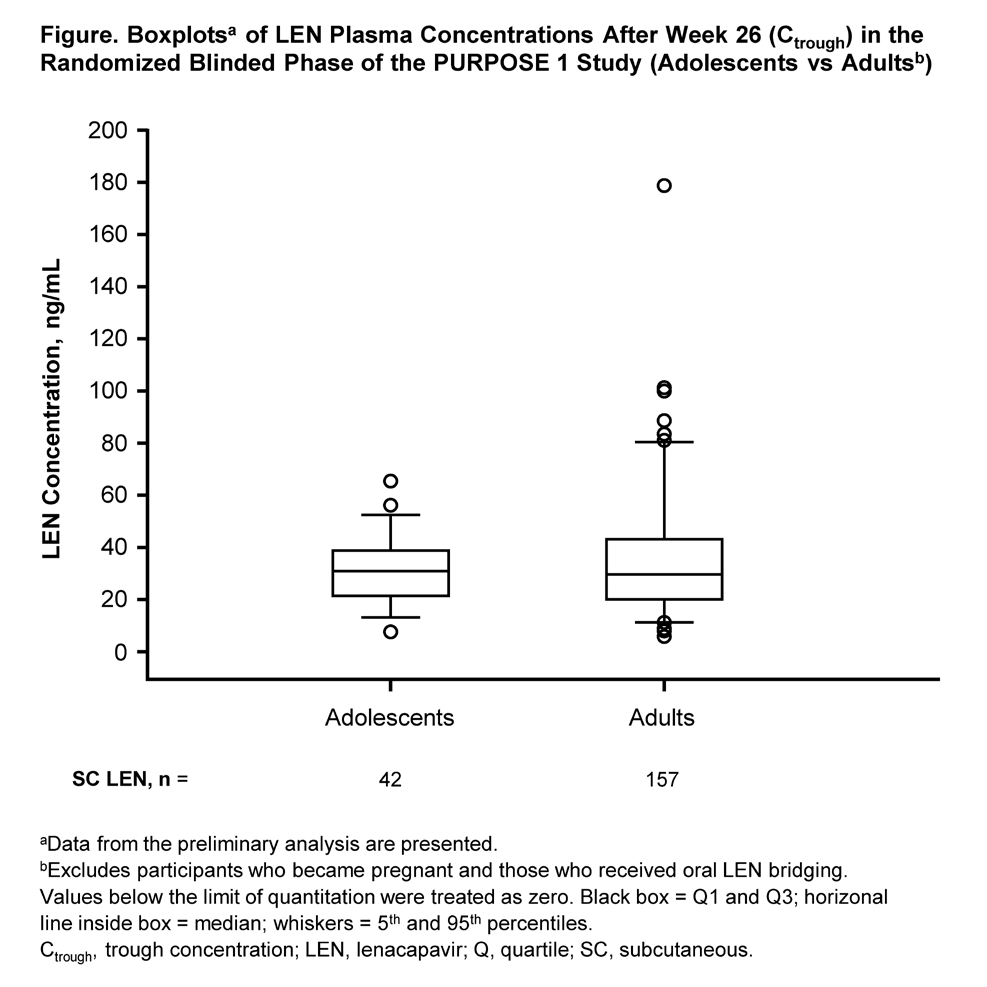
121. Assessing IIT and Mortality Among CLHIV <15 yo in PEPFAR-Supported Countries, FY21 - FY24
Michelle Yang1, Christine Toolin1, Rituparna Pati2, Hilary Wolf2, Emily K. Dokubo2, Stephanie Hackett1
Background
Despite accounting for 3% of all people living with HIV, children (<15 yo) represented 12% of all AIDS-related deaths globally in 2023. Interruptions in HIV treatment (IIT) have been associated with higher mortality among children living with HIV (CLHIV). To explore this association further, we analyzed IIT and mortality data among CLHIV in PEPFAR-supported countries in the last 4 fiscal years, FY21 – FY24.
Methods
We analyzed PEPFAR Monitoring, Evaluation, and Reporting data for all CLHIV <15 yo on ART with IIT between October 2020 and June 2024 (FY21-FY24) from 32 PEPFAR-supported country and regional programs. IIT was defined as having no clinical contact or ART pick-up for >28 days since the last clinical encounter. IIT data was disaggregated based on cause and included transferred out, refused treatment, unknown IIT after <3 months, 3-5 months, or 6+ months on ART, or died. Mortality data was further disaggregated by cause of death including HIV disease resulting in tuberculosis (TB), cancer, infectious or parasitic disease, or other HIV disease; other natural causes; non-natural causes; and not reported cause. Prevalence of these outcomes were calculated across quarters and by five-year age bands.
Results
Among 490,000 CLHIV on ART in PEPFAR-supported countries, 22,329 experienced IIT in FY24. IIT occurred most frequently after 6+ months on ART among all CLHIV, except for those <1 (Figure 1). Among CLHIV on ART, IIT due to death was highest among children <5 yo, ranging from 0.47% to 1.88% (Figure 1). In FY24, HIV-related mortality accounted for 43% of all reported causes. This proportion remained relatively unchanged across the analysis period, but TB-related deaths increased from 6% in FY21 to 9% in FY24 (Figure 2). Data completeness improved as 80% of deaths in FY24 included an identified reported cause compared to 65% in FY21.
Conclusions
CLHIV experienced notable rates of IIT and mortality, with CLHIV <5yo experiencing a disproportionate share of these outcomes, underscoring the importance of targeted interventions such as early diagnosis of HIV and differentiated service delivery models that support retention in care. Further analyses are needed to better understand the drivers of IIT and causes of mortality among CLHIV on ART. Improving pediatric data reporting is crucial to accurately determine HIV-related deaths (i.e. death audits), identify programmatic gaps and focus resources on reducing preventable deaths.
Figure 1.
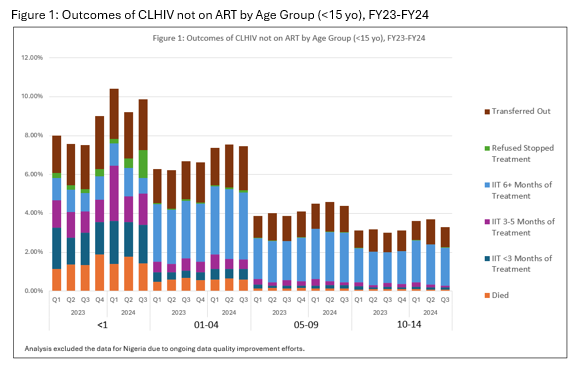
Figure 2.
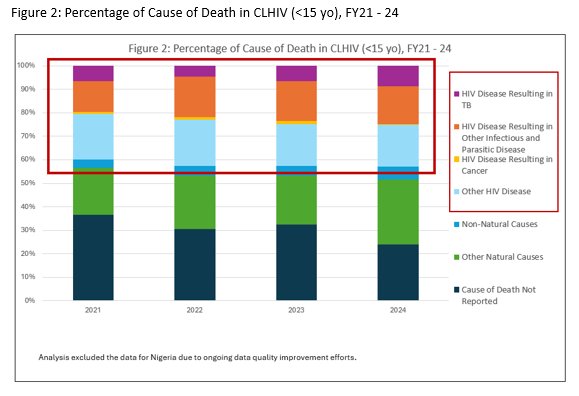
122. Multi-Dose PK/Safety of Dolutegravir Dispersible Tablets and Oral Films in Neonates: PETITE-DTG Study
Oral Abstracts
Pages: 22-23
Adrie Bekker1, Nicolas Salvadori2, Helena Rabie3, Samantha du Toit1, Kanchana Than-in-at2, Maria Groenewald1, Edmund Capparelli4, Andrew Owen5, Ratchada Cressey2, Marc Lallemant2, Mark Cotton6, Tim Cressey2, the PETITE-DTG Study Team
Background
Dolutegravir (DTG) is not recommended for neonates due to absence of dosing guidelines and safety information. We are evaluating the multi-dose pharmacokinetics (PK) and safety of two pediatric DTG formulations in neonates: a dispersible scored tablet (DTG-DT, 10 mg) and a novel oral dispersible film (DTG-OF, 5 mg).
Methods
PETITE-DTG is an ongoing phase I/II, open-label, single center, two-stage trial in South Africa for term neonates exposed to HIV (N=56, birth weights ≥2kg). Stage 1 single dose DTG data (n=16) informed the multi-dose strategy for Stage 2: 5 mg DTG every 48 hours (q48) from Day 1 to 14 of life, followed by 5 mg daily (q24) until Day 28. In Stage 2, neonates born to mothers on DTG-based ART are randomized to receive either DTG-DT or DTG-OF with zidovudine postnatal prophylaxis. Three PK visits are performed: sparse on Day 1, intensive after ≥3 DTG doses, and sparse during week 4. Safety assessments are performed through week 6 of life. We report the interim PK/safety analysis after the first 20 neonates completed Stage 2. Target DTG criteria: geometric mean (GM) Ctau>0.67 µg/mL, and Cmax<17.0 µg/mL in the majority of neonates; proportion of neonates with Ctau <0.5 μg/mL (EC95) was also assessed.
Results
Ten neonates on DTG-DT and 10 on DTG-OF were included. Overall median (range) birth weight was 3.2 (2.6-4.1) kg and 1st DTG dose given at 48 (28-60) hours of life. Median age at PK sampling visits were 3, 7, and 23 days of life. DTG GM concentrations prior to the 1st dose (placenta washout) was 0.98 μg/mL. Intensive DTG PK profiles were similar between DTG-DT and DTG-OF, with both formulations achieving a DTG GM Ctau >0.67 µg/mL (Figure 1a). Two neonates, one on DTG-DT and one on DTG-ODF, had an Ctau <0.5 µg/mL, but both remained >0.22 µg/mL (>3-fold higher than DTG IC90 of 0.064 µg/mL). All neonates had a DTG Cmax<17.0 µg/mL across PK visits. Our prior neonatal DTG population PK model was updated with the multi-dose data and adequately predicted DTG concentrations (Figure 1b). No grade ≥3 adverse events (AEs) were related to DTG. Two grade 3 AEs unrelated to DTG were observed in one neonate with pneumonia. All neonates were HIV negative at study exit.
Conclusions
The multi-dose strategy of 5 mg DTG q48 from Day 1 to 14 of life, followed by 5 mg DTG q24 through day 28, was safe and achieved target concentrations for both DTG-DT and DTG-OF. This is the first evidence in neonates supporting the extension of DTG dosing recommendations from birth through week 4 of life.
The figure, table, or graphic for this abstract has been removed.
123. Genotypic Resistance in the African Paediatric CHAPAS-4 Trial of Second-Line Antiretroviral Therapy
Alasdair Bamford1, Ellen White2, Cissy Kityo3, Mutsa Bwakura-Dagarembizi4, Chishala Chabala5, Abbas Lugemwa6, Wedu Ndebele7, Bwendo Nduna8, Mary Nyathi9, Veronica Mulenga5, Mwate Mwamabazi8, Anna Turkova2, Victor Musiime3, Alexander J. Szubert2, Diana M. Gibb2, the CHAPAS-4 Trial Team
Background
In the CHAPAS-4 trial of second-line antiretroviral therapy following NNRTI-based first-line, 96-week efficacy was superior for tenofovir alafenamide (TAF) vs standard-of-care (SOC: abacavir (ABC)/zidovudine (ZDV)), and for dolutegravir (DTG) vs ritonavir-boosted lopinavir (LPV/r)/atazanavir (ATV/r). We present data on emergent resistance and associations between baseline resistance and virological failure at week 96 (W96).
Methods
Randomisation was simultaneously to TAF vs ABC/ZDV, and DTG vs darunavir (DRV/r) vs LPV/r vs ATV/r. Baseline samples and those with viral load (VL)≥400c/ml at W96 were sequenced for resistance, defined using Stanford Algorithm (v9.6) with scores categorised into susceptible/low-/intermediate-/ high-level resistance.
Results
Of 919 children, age 10 (range:3-15) years, 5.6 (IQR:3.3-7.8) years on first-line, 713 (78%) had baseline sequencing: 665 (93%) had M184V/I; intermediate/high-level resistance to allocated NRTI was present in 30% ABC, 10% ZDV, and 15% TAF. At W96, 14% (124/908) had VL≥400c/ml: 17% SOC (12% ABC; 21% ZDV) vs 11% TAF and 19% LPV/r, 16% ATV/r, 12% DRV/r, and 8% DTG (Table). At W96, 0/17 ABC, 14% (5/36) ZDV, 9% (3/33) TAF had intermediate/high-level resistance to NRTI initiated; 59% ABC, 78% ZDV, 36% TAF, to FTC/3TC. Intermediate/high-level resistance to anchor was: 0/29 LPV/r, 4% (1/26) ATV/r (1 TAF/FTC), 0/18 DRV/r and 22% (2/9) DTG (2 ZDV/3TC). 54% (67/124) children with VL≥400c/ mL at W96 had reverse transcriptase sequencing at baseline and W96; resistance categorisation to allocated NRTI remained the same in all, although score worsened in 16. Three children on ZDV/3TC (2 DTG,1 LPV/r) developed new high-level emtricitabine/lamivudine (FTC/3TC) resistance (M184V). Odds ratios (95% confidence interval) of VL≥400c/ml at W96 in those with intermediate/high vs low/susceptible baseline resistance to allocated NRTI were 0.23 (0.05-1.03) on ABC, 1.61 (0.53-4.92) on ZDV, and 1.01 (0.37-2.76) on TAF.
Conclusions
TAF resistance at baseline was less common than ABC resistance, supporting TAF in second-line. No new intermediate/high-level resistance to allocated NRTI occurred. W96 intermediate/high-level anchor drug resistance was uncommon, and as in second-line adult and paediatric trials, resistance to DTG only occurred in children taking ZDV. These results will inform second-line treatment guidelines for children.
Table 1.
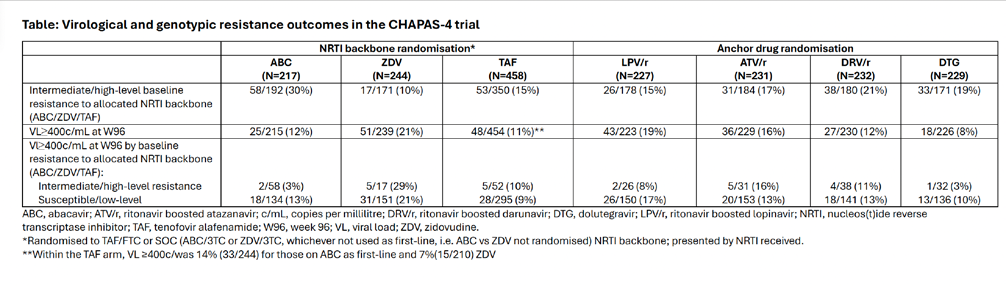
124. Abemaciclib, a CDK4/6 Inhibitor, in HIV-Associated and HIV-Negative Kaposi Sarcoma
Jose R. Mercado-Matos1, Kathryn Lurain2, Anaida Widell1, Irene Ekwede1, Ijeoma Agwu1, Margaret Namubiru1, Thomas Odeny1, Crystal Lu1, Seth Steinberg1, Denise Whitby3, Robert Yarchoan2, Ramya Ramaswami2
Background
Kaposi sarcoma (KS), caused by KS herpesvirus (KSHV), is a multicentric angioproliferative tumor seen in people with and without HIV. Abemaciclib (Abema) is an oral cyclin-dependent kinase (CDK) inhibitor that targets CDK4 (cyclin D1) and CDK6 (cyclin D3) that is FDA-approved for breast cancer. In vitro studies of KSHV-infected cells have shown that CDK4/6 inhibitors enhance T-cell activation and host immune cell surface expression, hindering immune evasion. Here, we investigate the safety and activity of Abema in participants (pts) with KS.
Methods
This is a Phase 1/2 study of Abema in pts with KS. Phase 1 evaluated safety and tolerability of Abema using a 3+3 dose de-escalation design to identify a maximum tolerated dose (MTD). Pts were treated at dose level 1 of 200mg twice daily in 28-day cycles. Phase 2 assessed overall response rate of Abema of all pts and stratified by previously treated (Arm 1) or untreated KS (Arm 2). Eligibility criteria included adherence to antiretroviral therapy in people with HIV (PWH) for > 8 weeks prior to enrollment and no concomitant strong CYP3A4 inhibitors. Dose de-escalation was permitted for pts who experienced toxicities. KS response was evaluated using the modified AIDS Clinical Trials Group criteria.
Results
Twenty-five cisgender men (18 PWH), median age of 47 years are enrolled in this ongoing study. Twenty pts had stage T1 KS. In Phase 1, 6 pts were enrolled at 200mg BID with no dose-limiting toxicities. In Phase 2, 12 pts (10 PWH) were enrolled to Arm 1, and 7 pts (4 PWH) enrolled to Arm 2. The most common grade 1/2 adverse events were anemia and diarrhea. Twelve pts had dose reductions for grade 3/4 neutropenia. Among 23 evaluable pts receiving >2 cycles, 18 pts had a partial response (PR) (78% [95% confidence interval: 56-93%]), 4 pts had stable disease and 1 pt had progressive disease. All 7 pts in Arm 2 with previously untreated KS had a PR. The median HIV viral load among PWH was <20 copies/ml. Among PWH, the median CD4 T-cell count was 279 cells/µL (interquartile range: 176-435 cells/µl) without significant changes prior to cycle 3 (P=0.23) or at the end-of-treatment (P=0.39, Figure 1).
Conclusions
Abema is a novel therapeutic option in KS, with notable activity among pts with previously untreated KS. Adverse events were managed with dose reduction and supportive measures. Unlike chemotherapies for KS, there was no impact on CD4 T-cell counts among PWH.
Figure 1.
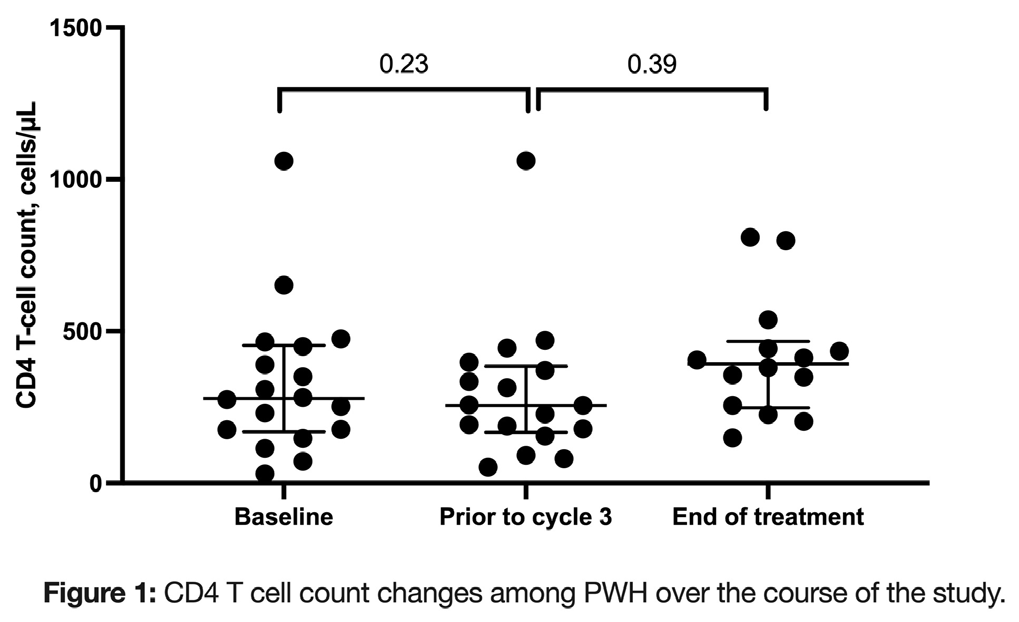
125. Differences in Treatment and Overall Survival in People With and Without HIV and Oropharynx Cancer
Elizabeth Chiao1, Christine M. Hartman2, Devesh Malgave3, Jennifer R. Kramer2, Adovich S. Rivera4, Wendy Leyden5, Katherine Pak4, Peter A. Richardson2, Efthalia Zafeiropoulou2, Yongquan Dong2, Rulin C. Hechter4, Donna L. White2, Angela Mazul6, Lori C. Sakoda5, Michael Silverberg5
Background
People with HIV (PWH) are at increased risk of oropharynx cancer (OPC) compared with people without HIV (PWoH). PWH and OPC also have poorer survival compared to PWoH and OPC. However, prior studies have not evaluated OPC treatment initiation and survival among cohorts of PWH and PWoH matched on demographic variables, stage, and HPV tumor status.
Methods
We conducted a matched retrospective cohort study of PWH and PWoH diagnosed with OPC between 2008-2019 utilizing data from the Veterans Affairs and Kaiser Permanente health systems. PWH and PWoH with OPC were matched 1:1 on sex, age (+ 1 year), race, year of OPC diagnosis (+ 1 year), stage, and HPV status. Patients were followed from OPC diagnosis until death, loss-to-follow-up, or December, 31, 2021. Treatment initiation (chemotherapy, radiation, or surgery) within 180 days, and HPV tumor status were assessed through chart review. Kaplan-Meier curves by HIV and HPV status were conducted. Cox regression was used to assess the association of HIV infection with overall survival adjusting for matching variables, co-morbidity score, alcohol and tobacco use, and time-dependent chemotherapy and radiation initiation within 180 days of diagnosis.
Results
Our analysis included 130 PWH and 130 PWoH OPC patients. There were no significant differences between PWH and PWoH on matched variables. Overall median age at OPC diagnosis was 57.8 years; 32.3% were non-Hispanic Black, 59% were non-Hispanic White, and 9% were Hispanic. The cohort included 20% diagnosed at stage 1 or 2, and 79.6% were stage 3 or 4a/b; 61.5 % were HPV positive. There was no significant difference in smoking history (82% vs 79% among PWH and PWoH, respectively). PWH and PWoH had comparable rates of chemotherapy and radiation uptake within 180 days (65.2% vs 72%, p= 0.166) and median time to treatment initiation (57 days vs 60 days, p=0.76). PWH had shorter restricted Mean Survival Time to PWoH (3.4 vs 3.9 years, p=0.04); HPV status was the largest predictor of survival regardless of HPV status (figure 1). In adjusted multivariable Cox survival analyses, HIV infection was associated with non-significant increase in mortality (HR 1.48, 95%CI: 1.00 to 2.28, p=0.063).
Conclusions
In a matched cohort of PWH and PWoH with OPC, the two groups had similar treatment rates and timing of treatment initiation. When adjusted for receipt of treatment, there was a trend for poorer survival among PWH compared to PWoH.
Figure 1.
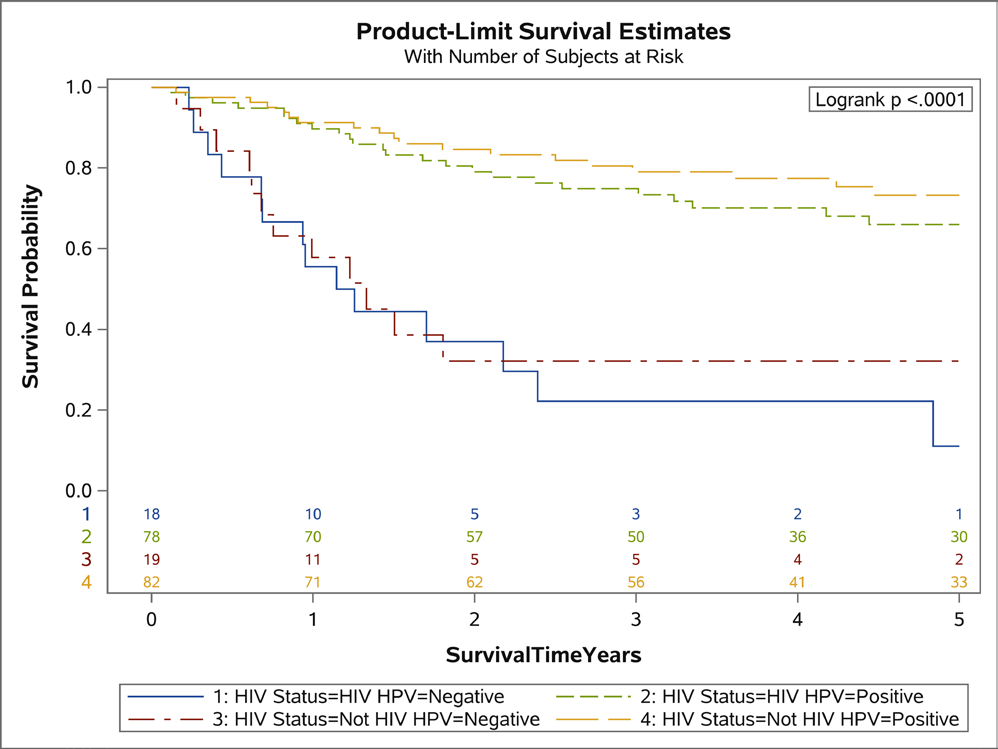
126. Comparing Empirical HIV Incidence With UNAIDS Estimated Incidence Declines in Sub-Saharan Africa
Oliver Stevens1, Elphas Okango2, Collins Iwuji3, Richard Hayes4, Daniel Kwaro5, Victor Ssempijja6, Louisa Moorhouse1, Sikhulile Moyo7, Ivan Kasamba8, Maya Petersen9, Sian Floyd4, M. Kate Grabowski10, Jeffrey Eaton11
Background
UNAIDS estimates, derived by fitting mathematical models to national surveillance data, indicate that HIV incidence in sub-Saharan Africa has declined substantially since 2000. We assessed whether the level and age distribution of HIV incidence from mathematical-model derived estimates, which are critical to guide epidemic response strategies, are consistent with empirical HIV incidence observations.
Methods
We matched empirical HIV incidence observations from cohort studies, control arms of intervention trials, and Population-Based HIV Impact Assessment household surveys in sub-Saharan Africa conducted 1990-2022 to UNAIDS HIV incidence estimates by study area, gender, age group, and year. Using two Bayesian mixed-effect Poisson regression models we estimated (1) incidence rate ratios (IRR) between all empirical observations and matched modelled incidence estimates with covariates for gender, year, and study type/population; and (2) temporal patterns in age-specific incidence from population-based cohort studies alone.
Results
Incidence data were included from 3479 observations from 148 studies conducted in 21 countries, comprising 20,000 infections and 2.3 million person-years. Across population cohorts in South Africa, Uganda, Zimbabwe, and Kenya, HIV incidence among adults aged 15-49 declined by 75-90% between 2010-2023, and declined 3% (95%CI 2-4%) faster per year among young adults 15-24 compared to age 25+ years. Modelled incidence declined similarly to cohort data, but did not reflect the different rates of decline by age group. Relative to matched modelled estimates, incidence observations from representative household surveys (IRR 1.15 95%CI 0.86, 1.54) and population-based cohorts/Universal Testing and Treatment trials (IRR 0.91 95%CI 0.52-1.60) were not significantly different. Studies among pregnant women (IRR 2.83 95%CI 1.56, 5.13) and control arms of intervention trials (IRR 2.54 95%CI 1.64, 3.96) had significantly higher incidence than modelled incidence estimates.
Conclusions
Incidence from modelled estimates were consistent for level and trend with population-representative studies, but significantly lower than studies with non-representative inclusion criteria, including those among pregnant women and most HIV prevention/vaccine efficacy trials. Incidence has declined steeply among population cohort studies and modelled estimates. The age pattern of incidence in modelled estimates should be revised to capture the aging of the epidemic indicated by cohort studies.
Table 1.
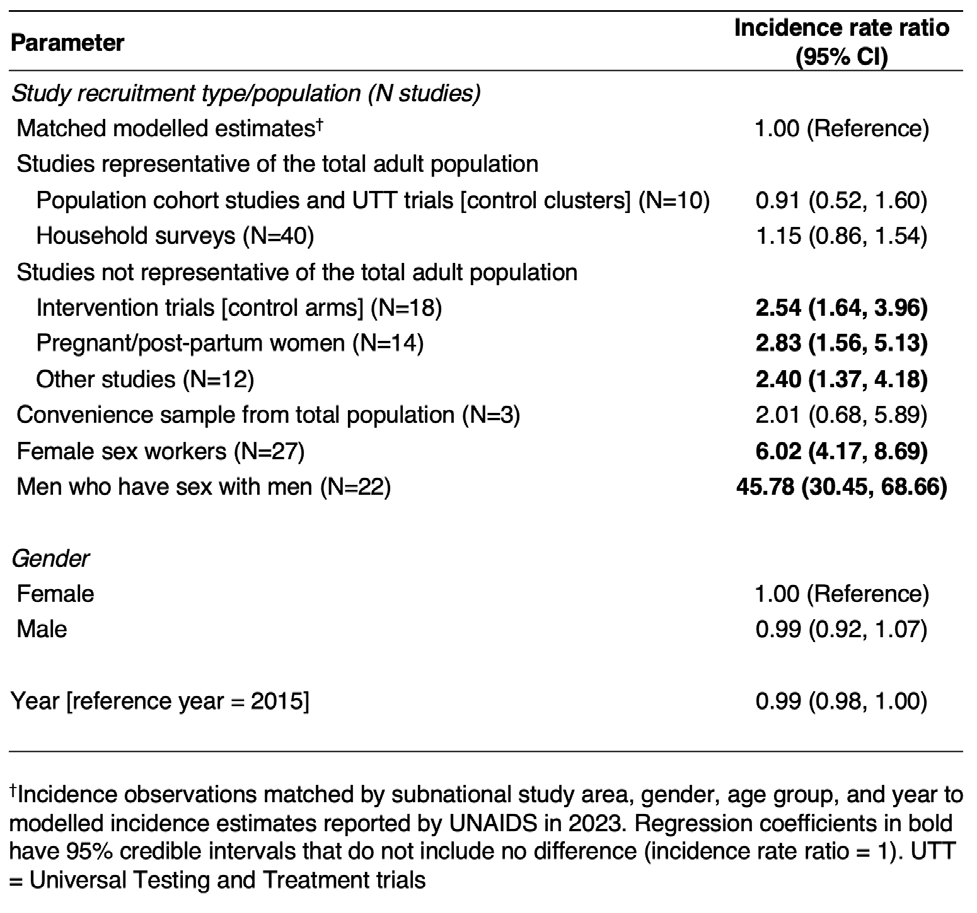
128. All-Cause and Cause-Specific Mortality Trends Among Persons With and Without HIV in Rural Tanzania
Julie Ambia1, Clara Calvert2, Emma Slaymaker3, Mark Urassa4, Milly Marston3, Suzanne M. Ingle1, Adam Trickey1
Background
Comparing cause-specific mortality among people with HIV (PWH) and people without HIV (PWOH) is important for tracking improved survival following increased antiretroviral therapy (ART) access. However, comprehensive data on cause-specific mortality rates in Sub-Saharan Africa remains inadequate. We estimated mortality trends in Tanzania.
Methods
Data were collected in a health and demographic surveillance system (HDSS) in Magu, rural Tanzania from 1994-2023, among individuals aged ≥15 years. For people who died, a verbal autopsy was conducted and the InSilicoVA statistical algorithm was used to ascertain the main cause of death. The duration of residency within the HDSS was utilized to estimate follow-up time in this open cohort. People could leave and re-enter the HDSS in this analysis and follow-up ended at the earliest of death date, out-migration or administrative censoring. To calculate cause-specific mortality rates, follow-up was censored for the other causes of death. Causes of death were grouped as: HIV/AIDS/tuberculosis, infectious diseases, non-communicable diseases (NCD), external causes, direct obstetric-related deaths, and missing. Standardized mortality ratios (SMRs) were calculated from the indirect standardization method by dividing observed by expected deaths with PWOH being the standard population.
Results
Among 99,380 adults contributing 425,004 person-years, median age at follow-up start was 27 years (interquartile range: 21-38) and 55% were women. During follow-up, 4,120 died, with 68% of deaths assigned a cause. Among PWH and those with unknown HIV status, crude all-cause mortality declined over the years, whilst for PWOH, crude mortality was relatively constant post-2000 (Figure). Compared to PWOH, overall mortality was 6 times higher among PWH. SMRs comparing PWH with PWOH for all-cause mortality decreased from 16.4 (95% confidence interval [CI]: 15.2-17.7) in 1994-1999 to 4.7 (95% CI: 4.1-5.3) in 2020-2023. The highest SMR, 109.2 (95% CI: 98.8-119.6), was of mortality due to HIV/AIDS/tuberculosis between 2015 and 2019. SMRs for mortality due to infectious diseases, external causes, and direct obstetrics declined in later years, while SMRs for mortality due to HIV/AIDS/tuberculosis and NCD increased.
Conclusions
There is continuing elevated mortality among PWH, compared with PWOH, with HIV/AIDS/tuberculosis remaining the leading cause of death, highlighting the need to address barriers to HIV treatment to capitalize on the benefits of increased ART coverage.
The figure, table, or graphic for this abstract has been removed.
Figure 1.

129. Associations of Dolutegravir and the COVID-19 Pandemic on Viral Suppression in South African Adults
Haroon Moolla1, Reshma Kassanjee1, Renee de Waal1, Patience Nyakato1, Jonathan Euvrard1, Gary Maartens1, Hans W. Prozesky2, Matthew P. Fox3, Catherine Orrell1, Geoffrey Fatti2, Gilles Wandeler4, Mary-Ann Davies1, Leigh F. Johnson1, the International Epidemiology Databases to Evaluate AIDS (IeDEA) Collaboration - Southern Africa
Background
Viral suppression estimates are essential for monitoring progress towards the UNAIDS 95-95-95 targets. We sought to generate updated estimates of viral suppression rates in South African adults on antiretroviral treatment (ART) to understand changes in viral suppression following the introduction of dolutegravir and the COVID-19 epidemic.
Methods
This retrospective cohort study included adults (15 years or older) starting ART between 2005 and 2023 from seven South African sites of the International epidemiology Databases to Evaluate AIDS collaboration. We excluded those with no recorded baseline CD4 count or who were virologically suppressed before starting ART. Participants were censored at the earliest of death, transfer to another facility, 180 days after the last recorded visit (“lost to follow-up”), or 31 December 2023. After starting ART, viral load testing was scheduled at 6 months, 1 year, and yearly thereafter. Missing viral loads were imputed using multivariate imputation by chained equations. Viral suppression was defined as less than 1000 copies/ml. Multivariable logistic regression was used to estimate associations with viral suppression.
Results
187 624 participants contributed 986 348 person-years of observation. The proportion virologically suppressed reached a low of 86.4% in the 2011 calendar year, and then increased steadily to 94.8% in 2022. Virological failure was less likely amongst those starting ART on dolutegravir-based regimens than those starting on other regimens (adjusted odds ratio [aOR] 0.45, 95% CI 0.42-0.50). The odds of virological failure was lower amongst females (aOR 0.80, 95% CI 0.78-0.82), and decreased with increasing baseline CD4 count, duration on ART, and age (Figure 1). The odds of virological failure during the height of the COVID-19 pandemic (2020-2021) did not differ from other years (aOR 1.03, 95% CI 0.99-1.07). Those with a history of previous care interruptions, defined as gaps in contact longer than 180 days, were more likely to be virally unsuppressed (aOR 1.88, 95% CI 1.82-1.95).
Conclusions
Viral suppression rates in South Africa are on a promising trajectory toward the 95% UNAIDS target. The introduction of dolutegravir has likely contributed positively to the ongoing success of the national HIV programme. Viral suppression was not adversely affected by the COVID-19 pandemic, highlighting the resilience of the health system.
Figure 1.
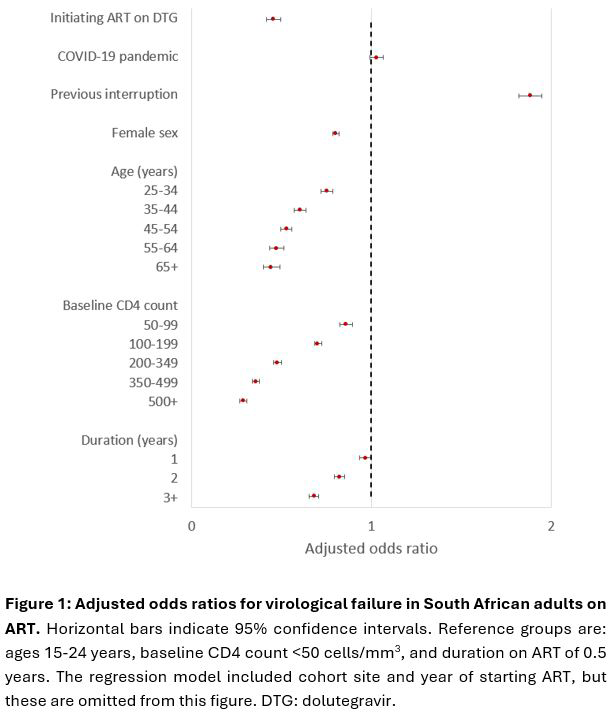
130. A Multistage Sampling Approach to Refine HIV Mortality Estimates in KwaZulu-Natal, South Africa
Alastair VanHeerden1, Franco Musiello1, Aaloke Mody2, Buyisile Chibi1, Kombatende Sikombe3, Alfred Keter4, Zaynab Essack1, Anjali Sharma3, Candice Groenwald1, Collins Iwuji5, Elvin H. Geng2, Lindsey Filiatreau2
Background
As the global response to HIV intensifies toward the goal of ending the epidemic by 2030, accurate estimates of mortality among people with HIV are needed to appropriately allocate limited resources. Standard patient monitoring approaches frequently lead to misclassification of patient outcomes, including vital status. In South Africa, the national HIV electronic health record system, TIER.net, fails to link patient-level outcomes across clinics, further complicating estimation of true patient outcomes. To address this, we used a multistage sampling strategy to systematically capture and verify vital status of people with HIV in KwaZulu-Natal Province (KZN).
Methods
We employed a stratified, multi-stage sampling approach to obtain representative estimates of vital status across all 11 districts in KZN. Clinics were selected from among all government-funded clinics providing HIV treatment services in KZN using probability proportional to size sampling. Random sampling was then employed to select up to 125 patients who had accessed HIV care in the prior two years but were 90+ days late for their most recent scheduled clinic visit using TIER.net. Trained teams conducted phone-based and in-person tracing to verify patient vital status. Inverse-probability weighting was used to obtain a provincial estimate of mortality among people with HIV with a current clinical lapse.
Results
Across 36 sampled clinics, a total of 4,482 individuals were randomly selected from 33,581 individuals who had at least one clinic visit in the prior two years but were 90+ days late for their most recent scheduled visit. Of the 33,581 individuals eligible for sampling,~4% had a documented death in TIER.net. Of sampled individuals, 3,156 (70.4%) were successfully traced; 2,737 (61.1%) were alive and 419 (9.3%) had died. Clinic-level estimates of mortality ranged from 5.0% to 19.3%. After weighting, an estimated 11.0% of the 33,581 individuals seeking HIV care in KZN who were late for their most recent scheduled clinic visit had died.
Conclusions
These findings indicate that relying solely on national health record data substantially underestimates mortality in people with HIV, emphasizing the importance of tracking efforts to obtain accurate estimates of HIV-related deaths. Moreover, our results underscore the potential of sampling-based approaches to refine mortality and other HIV care estimates, thereby informing strategies that bolster re-engagement pathways and mitigate overall mortality.
131. Genotypic Characterization of Mpox and a Tale of 2 Co-Circulating Viruses in Uganda
Oral Abstracts
Pages: 26-27
Nicholas Bbosa1, Stella E. Nabirye2, Hamidah S. Namagembe1, Ronald Kiiza1, Danstan D. K. Kabuuka2, Alfred Ssekagiri2, Henry K. Bosa3, Robert G. Downing2, Stephen Balinandi2, Julius Lutwama2, Moffat Nyirenda1, Pontiano Kaleebu2, Deogratius Ssemwanga2
Background
The Africa CDC and the WHO declared Mpox a Public Health Emergency of Continental Security and of International Concern respectively. The first Mpox-positive cases in Uganda were reported in July 2024 from Kasese District, Bwera Hospital by the Uganda Virus Research Institute (UVRI) and MRC/ UVRI & LSHTM Uganda Research Unit. In light of ongoing Mpox virus (MPXV) transmission and an increasing number of cases reported in the neighboring DRC, we heightened surveillance for MPXV infections in Uganda to mitigate against the increased public health risk of cross-border spillover.
Methods
In this cross-sectional study, we tested samples collected from suspected Mpox cases on real-time PCR using different platforms to increase accuracy. All Mpox-positive samples were subsequently genotyped using targeted enrichment next-generation sequencing (NGS) while unbiased metagenomic NGS was performed on the Mpox-negative samples from clinically suspected cases to characterize other pathogens. Phylogenetic analysis was performed using IQTREE.
Results
As of 24-09-2024, 24 specimens tested positive for Mpox virus (MPXV) on real-time PCR out of the 597 samples collected from clinically suspected cases. Twenty of the 24 positives (83%) were detected at UVRI and near full-length Mpox genomes were generated for 8 samples with a genome coverage of >99%. Phylogenetic analysis showed that Ugandan sequences were closely genetically related to clade Ib sequences from the DRC suggesting a close link to the Sudan-Kivu Mpox outbreaks (Figure 1). Differential testing using unbiased deep sequencing of suspected Mpox cases that tested PCR-negative (n=73) detected human herpesvirus 3 as the top viral hit present in the samples (genome coverage of 90-100%) (Figure 1).
Conclusions
The Mpox outbreak in Uganda suggests an epidemiologic link to clade Ib MPXV associated with recent South Kivu Mpox outbreaks in the Democratic Republic of Congo (DRC). An increase in Mpox positivity is likely due to increasing community transmissions and findings from differential testing of Mpox-negative samples suggests co-circulation of Mpox and Chickenpox viruses, highlighting the need for routine surveillance of other emerging and re-emerging infections.
The figure, table, or graphic for this abstract has been removed.
132. Characterization of Mpox Cases in Uganda: Diversity of the Confirmed Cases
Ritah Namusoosa, Susan N. Nabadda, Susan Nambozo Nambozo, Aidarayaan Namakula, Judith A. Kyokushaba, Viola Kasone, Godfrey Pimundu, Alisen Ayitewala, Linda Nabitaaka Kisaakye
Background
Mpox, a zoonotic disease caused by the Monkeypox virus (MPXV) within the Orthopoxvirus family, includes two major clades: Clade I, associated with severe disease and higher mortality, and Clade II. On August 14, 2024, the World Health Organization (WHO) declared Mpox a public health emergency of international concern following multi-country outbreaks since May 2022. Uganda declared a Mpox outbreak on August 2, 2024. With increasing case counts, sexually mediated clusters, and sustained human-to-human transmission, this study aimed to characterize the epidemiology, clinical presentations, and genetic diversity of Mpox cases confirmed in Uganda from July to October 2024.
Methods
This cross-sectional study analyzed data from the national Results Dispatch System (RDS) for Mpox cases reported between July 22 and October 31, 2024. Extracted data included patient demographics, symptom onset dates, symptoms, sample collection dates, sample types, test results, epidemiological exposure links, and whole-genome sequencing results.
Results
A total of 323 Mpox cases were confirmed from 1,991 samples tested (positivity rate: 16%) across 35 districts (24% of Uganda’s 146 districts), with Kampala reporting the highest case burden (41%). The median age was 24 years (IQR: 17), and 28% of cases involved children (0–17 years). Males accounted for 55% of cases. Symptom onset began on July 12, 2024, with a median delay of 4 days (IQR: 6) to sample collection. Common symptoms included rash (92%), fever (85%), and lymphadenopathy (78%). Atypical genital lesions were observed in 25% of cases within sexually mediated clusters. Close contact with infected individuals was reported in 60% of cases. Genomic analysis classified all positive samples as Clade 1b, with five distinct subclades, and no APOBEC3-like mutations were identified. No associations were found between clustering and variables such as district, gender, and collection batch.
Conclusions
The Mpox outbreak in Uganda was primarily driven by behavioral and environmental factors, emphasizing the importance of targeted interventions to address sexual transmission dynamics and protect vulnerable populations. While viral evolution resulted in five subclades, transmission was not linked to specific demographic or geographic factors, indicating widespread dissemination.
133. Replication-Competent HIV-Infected Cells Have Deoxyuracil-Containing Proviruses
Rodrigo Matus Nicodemos1, David R. Ambrozak1, Samuel Darko2, Amy Henry1, Farida Laboune1, Jianfei Hu1, Joseph P. Casazza1, Fernanda Torres Ruiz3, Yara Andrea Luna Villalobos3, Mauricio González Navarro3, Perla Mariana Del Río Estrada3, Santiago Avila Rios3, Michael Betts4, Daniel C. Douek1, Richard A. Koup1
Background
Persistence of the HIV reservoir during antiretroviral therapy is a major obstacle to curing the infection. This reservoir can be established in the hyperacute stage of the infection, and lymphoid tissue analysis of this stage revealed HIV infection of resting T cells. Given that the HIV reservoir resides in resting CD4 T cells, we investigated whether direct infection of resting CD4 T cells could be involved in its establishment.
Methods
We infected primary resting CD4 T cells with a CCR5-tropic replication competent GFP reporter virus. We co-measured GFP expression with activation and proliferation markers by flow cytometry over five days. We performed bulk and single-cell RNAseq of sorted GFP+ cells to measure host and virus mRNAs. We bioinformatically analyzed cellular dNTP pathways for HIV reverse transcription and read-through HIV transcripts for HIV integration. Lastly, we cross-validated our findings with peripheral and lymphoid tissue samples from people living with HIV (PLWH).
Results
We detected resting GFP+ cells 3 to 5 days after infection. These GFP+ cells lacked CD69, CD25, HLA-DR, and CD154 expression. They also did not express the proliferation markers Ki-67 and phospho-H3.3. Transcriptome analysis of resting GFP+ cells revealed that infected cells expressed a cell-cycle independent pathway for dNTP synthesis. This pathway lacked expression of the genes required to convert deoxyuracil (dU) to thymidine (dT), which resulted in incorporation of dU into the provirus. We observed that dU-containing (dU+) proviruses were integrated into the host genome. We designed and ran a qPCR assay that differentiated between proviruses with dU or dT on samples from PLWH. dU+ proviruses and dT+ proviruses were detected in different CD4 T cell populations in all donors tested. Finally, after performing viral outgrowth assays, we found that cell subsets with dU+ proviruses had replication-competent virus.
Conclusions
We conclude that HIV can directly infect primary resting CD4 T cells and establish the reservoir in these cells. A key feature of HIV infection of resting cells is dU incorporation during reverse transcription due to the absence of enzymes required for dT synthesis. Therefore, the HIV reservoir comprises integrated, replication-competent, deoxyuracil-containing proviruses.
134. Gag-Mediated Control Over CARD8 Activation During HIV-1 Assembly
Ivy K. Hughes, Andres Quinones-Molina, Hisashi Akiyama, Suryaram Gummuluru
Background
The CARD8 inflammasome is a key driver of innate immune responses to HIV-1. CARD8, containing HIV-1 protease (PR) cleavage sites, responds to PR upon enforced NNRTI-induced dimerization of the viral Gag-Pol polyprotein and premature PR activation. In the absence of antiretrovirals, the apparent lack of CARD8 activation during HIV-1 assembly along with the observation that PR activation is precisely timed during virus release strongly suggests the existence of HIV-1 encoded mechanisms that prevent premature PR activation and CARD8-mediated cell death. In this study, we determined how structural domains of Gag coordinate the timing of PR activity to evade cleavage of CARD8 and facilitate innate immune escape.
Methods
We established an overexpression system in HEK293T cells using transient transfection to assay CARD8 cleavage by wildtype HIV-1 (WT) or mutants with selective inactivation of MA (Δ6-125), CA oligomerization (VK181-2/P224A), NC (zinc-finger deletion, Δ15-49) or p6 (ΔPTAP) domains of Gag. We infected PMA-differentiated THP-1 cells (PMA/THP1) and primary monocyte-derived macrophages (MDM) with WT or Gag-mutant viruses and determined CARD8 inflammasome activation by measuring IL-1β secretion and LDH release. We also infected primary CD4+ T cells (CD4T) with WT or Gag-mutant viruses in the presence or absence of lopinavir (PR inhibitor) to assess efficiency of PR-mediated cell killing.
Results
We found that alteration of HIV-1 assembly site (MA/Δ6-125) or arrest of virus particle release (p6/ΔPTAP) but not RNA binding (NC/Δ15-49) dramatically induced CARD8 inflammasome by de novo assembling Gag in HEK293T, PMA/THP1, and MDM. In the context of MA-mutant infection, CARD8 activation was dependent on CA-CA interactions and MA myristoylation, consistent with a model where CARD8 is cleaved late in the viral life cycle if the assembly process is altered. In CD4T, NC deletion did cause enhanced PR-mediated cell death, but the effect remained less significant than infection with the MA or p6 mutants. Interestingly, replacement of the NC domain with a nonspecific RNA-binding leucine zipper domain (GagZip) was sufficient to abolish PR-mediated activation of CARD8 in CD4T.
Conclusions
This work reveals important structural regulators of PR activation during the assembly of HIV-1 particles, and identifies the MA and p6 domains of Gag as potential targets to pharmaceutically enact killing of myeloid and lymphoid cells productively infected with HIV-1.
135. Direct Visualization of HIV-1 Nuclear Import and Its Interplay With the Nuclear Pore
Zhen Hou1, Stanley Fronik1, Yao Shen1, Christopher Thompson2, Sarah Neumann2, Peijun Zhang1
Background
The nuclear import of HIV-1 into the host nucleus marks a milestone of the viral infection, making it a potential drug target for effective prophylaxis and treatment. However, understanding this process has been challenged by its dynamic nature and the scarcity of HIV-1 cores in infected cells.
Methods
To elucidate the mechanisms underlying the translocation of HIV-1 capsids into the nucleus and their interactions with nuclear pore complexes (NPCs), we developed a robust system that recapitulates the nuclear import of HIV-1 cores into intact nuclei using mechanically lysed or detergent permeabilized T cells with purified HIV-1 cores. We employed cryo-focused ion beam (cryo-FIB) milling and planar lift-out, guided by cryogenic correlative fluorescence light and electron microscopy (cryo-CLEM), to prepare thin lamellae of T-cell nuclei containing HIV-1 cores. These developments enabled the following correlative cryo-electron tomography (cryo-ET) analysis of HIV-1 core nuclear import in situ.
Results
By utilizing these technologies, we achieved a productive capture of HIV-1 cores at different stages of nuclear import, with an unprecedented correlation efficiency of over 52%. Among the 510 HIV-1 cores identified in our tomograms, 87% of cores were specifically associated with nuclei. Statistical analyses of core morphology and size revealed, intriguingly, that tube-shaped and small HIV-1 cores were more advantageous in nuclear import compared to larger cone-shaped cores. Moreover, some large HIV-1 cores appeared to undergo deformation during the passage. Interestingly, NPCs, on the other end, were observed to dilate and occasionally crack, upon the entry of HIV-1 cores. We further observed the surface of capsid is coated with distinct densities, potentially corresponding to FG meshes, when passing through the NPCs.
Conclusions
This work introduces a robust in situ system with a highly efficient correlative cryo-ET workflow and provides novel insights into the nuclear import of HIV-1, which not only advances HIV-1 research but also opens a new avenue for studies on nuclear import mechanisms.
136. Visualizing the Cell Biology of HIV Latency and Reactivation
Jonathan Karn, Frederick Kizito, Konstantin Leskov, Uri Mbonye, Muda Yang, Anna Agaponova, Kien Nguyen
Background
Studies using the Jurkat T-cell model have identified numerous factors crucial for initiating HIV-1 transcription. However, a significant limitation of transformed cells is their inability to replicate the transitions between active effector cells and quiescent memory T cells, which are the key drivers of HIV latency in vivo.
Methods
We use refined primary cell models for HIV latency that accurately replicate the transitions between active effector cells and quiescent memory T cells. Our approach combines an HIV Cas-FISH immunofluorescence assay to trace changes in HIV DNA localization and immunofluorescence to identify key transcription factors. In parallel, the cells were analyzed by single-cell (sc) RNA-Seq, snRNA-Seq, AB-Seq, and ATAC-Seq, ensuring a comprehensive understanding of the process.
Results
As activated effector cells transition quiescence, HIV proviral DNA moves from the nuclear Intermediate Euchromatic Compartment (IEC) to the perinucleolar compartment (PNC). Strikingly, the localization of proviruses to the PNC was blocked by integrase inhibitor raltegravir, which showed that this was due to spatial genome rearrangements. Dramatic changes in histone methylation, cellular metabolism, and transcriptome changes accompany the transition into quiescence. snRNA-Seq and scATAC-Seq show that the subset of genes that are known HIV integration sites become more inaccessible when cells enter quiescence. During the reactivation of latently infected cells through the T-cell receptor, nascent viral mRNA transcripts emanating from proviruses in the PNC were detected. There was the rapid accumulation of the viral trans-activator Tat and its proviral reactivation regulatory partners, P-TEFb and 7SK snRNA, and RNA processing factors in large interchromatin granule clusters, which assembled near the provirus, and a shift of the proviruses away from the nucleolus. For all latency reversing agens (LRAs), there is a strong correlation between the extent of P-TEFb biogenesis and their potency. HIV proviruses in latently infected memory T cells from patients also accumulated in the PNC and showed identical patterns of nuclear rearrangements after cellular reactivation.
Conclusions
In contrast to transformed cells where proviruses are found primarily at the nuclear periphery, in primary memory T cells, P-TEFb highly restricts HIV transcription, and the nuclear architecture undergoes rearrangements that shape the transcriptional silencing and reactivation of proviral HIV.
Figure 1.
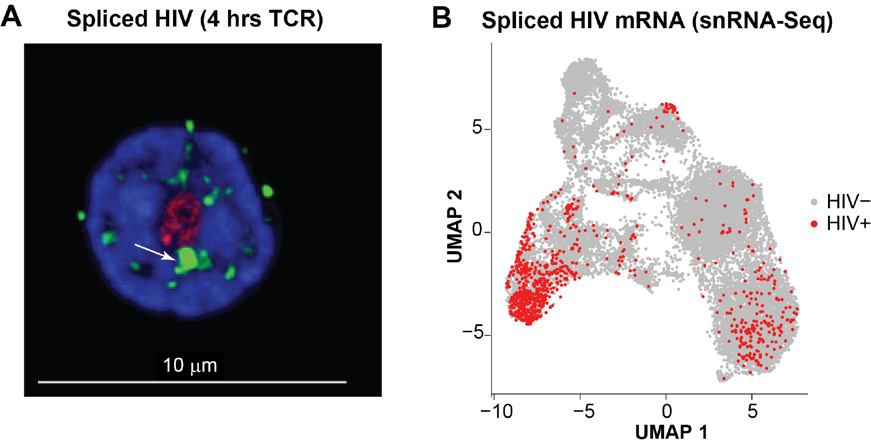
137. Single-Cell Spatial Profiling Identified Intact HIV+ Cells in Lymph Nodes
Amare Eshetu1, Nadejda Beliakova-Bethell2, Antoine Chaillon3, Davey Smith3, Ya-Chi Ho1, Sara Gianella Weibel3
Background
How HIV reservoir is established in lymphoid tissues remain elusive.
Methods
We obtained frozen lymph nodes from 2 viremic donors and 2 virally suppressed donors from the Last Gift Cohort. Lymph nodes from 2 uninfected donors served as negative controls. We performed single-cell spatial transcriptomic profiling (475 immune genes) of 11 tissue sections using 10x Genomics Xenium, which uses cell segmentation to identify bona fide single cells. To distinguish intact vs non-intact HIV RNA, we designed 5 sets of HIV probes targeting packaging signal, Rev-response element (RRE), unspliced HIV (gag-pol), splice junctions, and all HIV. A threshold of >2 HIV RNA reads/probe defines HIV RNA+ cells. Detection of both packaging signal and RRE defines cells having intact HIV. An adjusted P<0.05 with a log2 fold change >2 is considered significant.
Results
We found that nonspecific RNA detection was a major caveat of this platform. We identified 791,108 cells (162,326 from viremic, 129,754 from virally suppressed, and 499,028 from uninfected donors). In viremic samples, we identified 1,967 HIV+ cells (1.21%, 12,117.6/million), including 17 cells having intact HIV RNA (104.7/million). Comparing non-intact HIV+ cells vs HIV– cells in viremic samples showed no differentially expressed genes, indicating the robustness of intact HIV detection. Of note, HIV– cells in viremic (vs virally suppressed) samples already showed upregulated type I IFN response (IFI44L, MX1, IFIT1, IFIT2, IFIT3, ISG15, APOBEC3G), Th1 (EOMES, IFNG, TNF), cytotoxic (NKG7, CD8B, GZMH, GZMK, GZMB), and exhaustion (LAG3, TIGIT) genes, indicating immune responses to HIV in the tissues in uninfected cells. In viremic sample, HIV+ cells having intact HIV (vs uninfected cells) had higher levels of type I IFN response (ISG20, IRF8), cytotoxic (PRF1, GZMK, GZMH, NKG7), memory (SELL, CCR7, TCF7), activation (TNFRSF9, ICOS, CD40, CD74), exhaustion (TOX, PDCD1), Th1 (TBX21), Th17 (CCR6), homing (CD69, ITGB7), and HIV coreceptor (CCR5, CXCR4) genes. Of note, we found upregulation of BACH2 and BCL2A1 in intact HIV+ cells which may promote long-term survival. In contrast, in virally suppressed (vs uninfected donor) samples, IFITM3 and IL1B were the only upregulated type I IFN response genes, indicating minimal but detectable viral sensor expression.
Conclusions
We identified immune profiles of cells having intact HIV in lymph nodes and the lymph node microenvironment during viremia and viral suppression.
Figure 1.
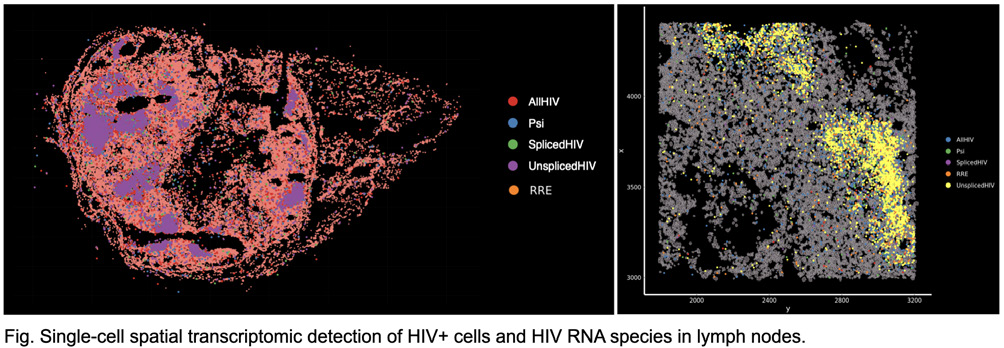
138. Lenacapavir Directs Specific Proteasome-Mediated Degradation of Gag Proteins in HIV-Infected Cells
Clayton Faua1, Serena Bernacchi2, Amélia Aeschelmann2, Axel Ursenbach1, Christine Cheneau1, Baptiste Hoellinger1, David Rey1, François Danion1, Christiane Moog3, Samira Fafi-Kremer1, Matteo Negroni2, Pierre Gantner1
Background
Due to its high binding affinity to HIV capsid (p24), the first-in-class capsid inhibitor Lenacapavir (LEN) might display a post-integration effect on capsid production. However, this effect and its underlying mechanism, as well as its clinical impact on LEN-treated individuals, have yet to be characterized.
Methods
The post-integration effect of increasing concentrations of LEN was measured in vitro (8E5, ACH2, U1, transfected 293T cells) and ex vivo (PBMCs from n=12 viremic HIV-infected participants enrolled in the APRIL study [NCT05752318]) by analysing HIV transcripts and proteins expression by flow cytometry and p24 and HIV RNA levels in supernatants.
Results
LEN induces a rapid dose-dependent decrease of intracellular p24 detection at therapeutic concentrations in HIV-1 infected cell lines (reaching top plateau within 15 minutes exposure of 50nM LEN), whereas HIV-2 infected cell line was less sensitive. The latently-infected cell line also displayed a p24 decrease on LEN independently of the activation pathway targeted. The intracellular matrix (p17), but not the envelope (Env), detection decreased with the same magnitude as p24, suggesting that LEN targets the Gag polyprotein (Pr55). These decreases further translated in lower levels of viral particle release in supernatants on LEN. Intracellular HIV Gag and Nef transcripts levels were unchanged, and maturation inhibition did not affect the LEN-induced p24 decrease, suggesting a post-transcription but pre-maturation effect. The p24 detection in oligomerization mutants (W184D+M185D, P38E+A42E+E45R) and LEN-resistant mutants (N74D and Q67H+N74D) was less affected by LEN, suggesting that LEN binding requires specific capsid oligomers and residues. Proteasome inhibition by bortezomib partially constrained the LEN-induced p24 decrease, suggesting a proteasome-mediated p24 degradation. LEN also impaired p24 detection ex vivo in productively-infected CD4+ T cells from viremic HIV-infected individuals (decreased intracellular p24 [but not envelope] detection associated with decreased viral particle release).
Conclusions
Altogether, LEN appears to be causing a rapid and specific proteasome-mediated degradation of not only the capsid but also other gag proteins in vitro and ex vivo, which echoes in virions production. Reduced Gag proteins expression by infected cells in LEN-treated individuals could impact recognition of these cells by the immune system and thus the dynamics of HIV reservoirs and should be further studied.
139. RhCMV Expands CCR5 Memory CD4 T Cells and Increases Acute-Phase Seeding of SIV DNA in the Gut Mucosa
Chrysostomos Perdios1, Naveen Suresh Babu2, Celeste Coleman1, Anna T. Brown1, Matilda Mostrom1, Carolina Allers1, Lara Doyle-Meyers1, Christine Fennessey3, Amitinder Kaur1, Brandon Keele3, Michael L. Freeman4, Joseph C. Mudd2
Background
Cytomegalovirus (CMV) is a prevalent beta-herpesvirus that persists asymptomatically in immunocompetent hosts. More than 90% of people with HIV are co-infected with CMV. During long-term ART, HIV-1/CMV-coinfection is associated with inflammatory-related co-morbidities and persistence of the HIV-1 reservoir, yet the precise degree to which CMV contributes to these pathologies remains unclear.
Methods
We utilized specific pathogen-free rhesus macaques (RMs) that are seronegative for rhesus CMV (RhCMV) throughout life. Adult RhCMV- RMs (n=8) were age and gender matched to animals that naturally acquired RhCMV in early life (n=10) through co-housing. Animals were infected intravenously with 5000IU SIVmac239M and after 28 days received daily suppressive ART for 2 years. Plasma RNA and cell-associated SIV DNA were quantitated by PCR, and immunophenotype by flow cytometry was assessed in blood, lymph node (LN), and gut tissues at baseline and acute SIV (14dpi).
Results
Overall, natural coinfection with RhCMV led to a more severe SIV burden. RhCMV+ RMs had higher peak viremia (p=0.016), and near log-fold increases in seeding of SIV DNA at 14dpi in the colon and duodenum (p<0.0001, p=0.0008, respectively; Fig. A). RhCMV+SIV+ RMs took significantly longer to fully suppress viremia following ART initiation (p=0.031). At 14dpi, RhCMV+SIV+ animals exhibited higher frequencies of activated (CD169+) monocytes in blood (p=0.003) and HLA-DR+CD4+ T-cells in LNs (p=0.033). Prior to SIV, RhCMV+ RMs had higher percentages of CCR5+CD4+ memory T-cells in the blood (p=0.012), LN (p=0.0014), and colon (p=0.01), suggesting that RhCMV systemically increases SIV target cells (Fig. B). At baseline, target cell frequencies in LNs, but not other anatomical sites, were associated with higher peak viremia (p=0.0016, R=0.673). Notably, in RhCMV+ RMs, most CCR5+CD4+ T-cells did not respond to an RhCMV lysate ex vivo (p=0.002), suggesting target cell expansion by antigen-independent mechanisms. We also observed that HIV-CMV+ human donors (n=6) exhibited higher CCR5 expression on terminal effector memory CD4+ T-cells when compared to those of HIV-CMV- donors (n=6; p=0.041).
Conclusions
RhCMV exacerbates SIV burden, and this is associated with body-wide expansion of CCR5+ target cells, most of which do not react to RhCMV peptides. RhCMV may promote seeding of the SIV reservoir in a diverse array of CD4+ clonotypes. Targeting CMV may be therapeutic during periods of active reservoir seeding.
The figure, table, or graphic for this abstract has been removed.
140. Differential Replication, Innate Immune Control, and Virulence of Global and Endemic Clade II MPXV
Rebecca P. Sumner1, Lucy Eke1, Bruno Hernaez2, Alasdair Hood1, Telma Sancheira Freitas1, Hannah Ashby1, Ailish Ellis1, Marine Petit1, Sian Lant1, Preetam Parija1, Bryan Charleston3, Geoffrey Smith4, David Ulaeto5, Antonio Alcami2, Carlos Maluquer de Motes1
Background
Monkeypox virus (MPXV) is a zoonotic virus endemic to Africa that has recently spread globally, becoming the first human orthopoxvirus (OPXV) since smallpox eradication. The MPXV global outbreak strain (Clade IIb, lineage B) derives from Clade IIb lineage A strains that circulate and remain endemic to Africa with limited human-to-human transmission. Clinically, lineage A-infected individuals exhibit more severe disease including substantial viral dissemination (>100 lesions per individual) relative to lineage B patients (<10 localised anogenital lesions). Lineages A and B differ by 51 nucleotides, most of which are compatible with host APOBEC3-mediated mutation. The consequences of these mutations to the biology of the virus remain unclear.
Methods
Here we used comparative virology to determine the phenotypic properties of MPXV lineage B relative to the closest ancestral lineage A and related OPXV.
Results
We found that both global and endemic MPXV replicated to the same extent in multiple cell types, but the global lineage B virus produced lower extracellular virus titres and showed defects in long-range spread. Both viruses had extensive capacity to suppress human innate antiviral responses, with a major role for the viral cGAMP nuclease (poxin). Consistent with this, RNAseq in infected fibroblasts and macrophages showed no significant induction of interferon (IFN) or antiviral-related KEGG pathways with either MPXV strain. Both viruses however induced strong inflammatory cytokine responses that have also been observed in patients and, interestingly, were absent with other OPXV. Importantly, comparative transcriptomics revealed defects in innate immune control by global MPXV, including IFNβ induction, increased innate immune signalling gene expression and enhanced MAP kinase activation. Furthermore, global MPXV had reduced capacity to suppress interleukin-1β-mediated immune responses. Consistent with the above, the global strain had reduced virulence in a mouse model of MPXV infection relative to the ancestral endemic strain.
Conclusions
Our findings reveal phenotypic differences between these two clade IIb viruses and demonstrate attenuation of globally circulating MPXV concomitant with human transmission. Our data may help explain clinical observations that lineage B is associated with milder disease. Finally, our work reveals that the APOBEC3-like mutational footprint is not only a signature of MPXV transmission amongst humans but also drives phenotypic changes.
141. Nef Modulates Actin to Prevent Post-Integration Sensing of HIV-1
Alexandre Laliberté1, Caterina Prelli Bozzo2, Dhiraj Acharya3, Maximilian Hirschenberger1, Meta Volcic1, Oliver T. Fackler4, Michaela Gack3, Konstantin M. J. Sparrer1, Frank Kirchhoff1
Background
HIV-1 replication is associated with the generation of various nucleic acid products that may act as ligands for cytosolic innate immune sensors including RIG-like receptors (RLRs). However, to induce an effective innate immune response, RLRs need to be primed by actin disturbances, sensed by R12C (Acharya et al., Cell 2022). While mounting evidence suggests that HIV-1 is sensed by RLRs, whether HIV-1 is capable of antagonizing this sensing mechanism is currently unclear.
Methods
Using wild-type and mutant clade B and C HIV-1 constructs, we quantified the impact of Nef-dependent actin remodeling on viral replication and the induction of antiviral and pro-inflammatory responses in macrophages, dendritic cells and CD4+T cells. The impact of immune sensing on viral replication was further examined by blocking IFN signaling. To define the key sensors and underlying mechanisms, we knocked-out MAVS in human primary macrophages (MDMs) and treated cells with HIV-1 inhibitors.
Results
We found that a single R191A or F191A mutation in the C-terminus of Nef, which specifically prevents Pak2-mediated phosphorylation of the actin modulator cofilin, doubled the level of MX1, CXCL10 and CCL5 induction in primary MDMs and dendritic cells (DCs) upon HIV-1 infection. Strikingly, infection of DCs with this mutant is also associated with an up to 10-fold increase in production of pro-inflammatory cytokines such as IP-10, IL-6 and IL-8. Using HIV inhibitors, we show that this response is dependent on integration. Furthermore, CRISPR-Cas9 KO of MAVS in primary human macrophages abrogated innate immune activation. We also support a role for the sensor MDA-5 as it is activated and ISGylated upon infection with the mutant virus. Finally, we show that Nef prevents recruitment of R12C to RLRs and thus maintains both MDA-5 and RIG-I in a phosphorylated, inactive state, similar to that of uninfected cells.
Conclusions
Our results present HIV-1 Nef as the first viral counter-mechanism of actin disturbances critical for effective immune sensing.
142. Profiling Therapeutic Vaccine-Driven HIV-Specific CD8 T Cells With Single-Cell TCR Sequencing Assays
Rafael Tiburcio1, Lily Zemelko1, George Gruenhagen1, Alaa Abdellatif1, Kara Chew2, David B. Weiner3, Steven G. Deeks1, Gabriela K. Fragiadakis1, Rachel Rutishauser1
Background
Generating robust virus-specific CD8+ T cell responses is the major objective of most HIV therapeutic vaccines. However, standard T cell assays fail to distinguish whether vaccine-expanded T cell populations are boosted pre-existing responses and/or newly-recruited clonotypes. Here, we utilized two single cell T cell receptor (TCR) sequencing approaches to characterize CD8+ T cell clonotypes expanded in the peripheral blood of five people living with HIV two weeks after receiving a multiclade consensus HIV gag/pol ± env DNA vaccine/IL-12 regimen (n=3) versus placebo (n=2) in the PENNVAX trial (NCT03606213).
Methods
First, we sequenced single paired TCR alpha and beta chains from enriched CD8+ T cells using the high-throughput Omniscope OS-T assay (per sample sequenced: median 1.3e6 [1.7e5-1.9e6] cells and 1.1e5 [6.1e4-1.6e5] unique clonotypes, defined as matching CDR3b amino acid [aa] sequence plus V/J usage). To investigate clonal dynamics between pre- and post-vaccination, expanded clones were defined as having a log2 fold change of ≥2 post- vs pre-vaccination (FDR adj. p-value <0.05, Fisher’s exact test). Clusters of clonotypes with similar CDR3 beta sequences were identified using TCRdist3. Additionally, we performed 10X single cell (sc)RNA/TCR sequencing from sorted MHC class I multimer+ HIV-specific CD8+ T cells from the same participants and timepoints.
Results
Among the three vaccinated individuals, we observed a significant expansion of 133 (15% newly detected), 415 (49% new), and 445 (12.5% new) CD8+ T cell clonotypes. Network graphs of the expanded clonotypes revealed hubs containing both boosted and newly detected clonotypes. The CDR3 beta aa sequence of 3.4% of boosted and 6.4% of newly detected clonotypes matched publicly available sequences reported to be HIV-specific. Expansion dynamics of clonotypes sequenced by 10X from multimer+ HIV-specific CD8+ T cells matched their expansion dynamics in the high-throughput assay.
Conclusions
By performing scTCRseq on approximately 1 million CD8+ T cells per sample, we successfully identified coordinated expansion following an HIV therapeutic vaccine of both boosted clonotypes as well as what appear to be newly expanded clonotypes with similar TCRs. Our data provide a benchmark for understanding how scTCRseq assays can be used to study vaccine-elicited HIV-specific T cells and lay the groundwork for future studies aimed at optimizing therapeutic strategies for HIV.
143. Efficacy of Bivalent Versus Monovalent COVID-19 Vaccines Among People With HIV, Ubuntu Trial, 2022-24
Oral Abstracts
Pages: 30-31
Sufia Dadabhai1, Bo Zhang2, Aaron Hudson2, Asa Tapley2, Taraz Samandari3, Penny L. Moore4, Ethel Kamuti5, Harriet Nuwagaba-Biribonwoha6, Nonhlanhla N. Mkhize4, Margaret Yacovone7, Phillip Kotze8, Yunda Huang2, Nigel Garrett9, Glenda Gray10, Lawrence Corey2, the CoVPN 3008 Ubuntu Study Team
Background
Prospective trials have not previously compared the efficacy of boosting with the ancestral/monovalent mRNA vaccine (WA-1) versus a bivalent ancestral plus BA.4/BA.5-targeted vaccine in African countries, with high HIV and SARS-CoV-2 seroprevalence.
Methods
The second phase of CoVPN 3008 (Ubuntu trial) was a double-blind randomized trial in 7 countries, among people with HIV (PWH) or another comorbidity linked to severe Covid-19. It activated during the BA.4/5 omicron wave, progressing through to XBB.1. At month 6 (M6), previously-vaccinated volunteers received 100 mcg of either a monovalent or bivalent boost (1:1), then monthly PCR testing until M18. We compared the risk of symptomatic Covid-19 between arms using cumulative incidences and Cox regression overall and by HIV status, SARS-CoV-2 serology (SARS+/SARS-), CD4 count and HIV viremia. We assessed neutralizing anti-Spike antibody ID50 titers against BA.4/5 and XBB.1.5 (dominant strain during the trial) before boost and 1-month after, in 100 PWH per arm.
Results
From 10/2022-03/2023, 3988 participants (3086 PWH; 3491 SARS+) received the monovalent (n=1976) or bivalent (n=2012) boost and were followed until 05/2024. At M6, characteristics were balanced by arm with 68% born female and median age 37 years overall; among PWH, median CD4 count was 653 cells/mm3, 18% had HIV viremia and 95.8% were on antiretroviral therapy. At M12 (6 months after boosting), we observed 113 Covid-19 cases (all Omicron) including 1 non-hospitalized severe case. Incidence was 5.58 per 100 person-years, with no difference in efficacy overall (HR=1.00, 95% CI [0.69,1.45], Fig 1); by HIV status (PWH HR=0.99 [0.64,1.51]; PWoH HR=1.03 [0.50,2.14]); by prior SARS-CoV-2 infection (SARS+ HR=0.98 [0.66,1.46]; SARS- HR=1.17 [0.42,3.47]); or by CD4 count or HIV viremia (not shown). HRs were similar at M18. Geometric mean titers to BA.4/5 increased from 835 at M6 to 2544 at M7 in the monovalent arm vs. 773 to 3639 in the bivalent; and to XBB.1.5 from 135 to 559 in the monovalent arm vs. 156 to 1191 in the bivalent (Fig 1). The <2 fold higher titers among bivalent recipients were not associated with discernable clinical benefit. Severe disease was rare based on daily O2 readings, temperatures and symptom checks following each positive PCR.
Conclusions
Among PWH, despite modestly higher neutralizing titers to circulating strains of Omicron after bivalent boosting, the bivalent boost provided no added protection against symptomatic Covid-19 over the monovalent boost.
The figure, table, or graphic for this abstract has been removed.
Figure 1.

144. T-Cell Responses Induced by GS-1966+GS-1144 Vaccines in Virally Suppressed People With HIV
Susie S. Y. Huang1, Anne-Maud Ferreira1, Constance A. Benson2, Cynthia Brinson3, Moti Ramgopal4, Anthony Mills5, Edwin DeJesus6, Karin Jooss7, Christiaan R. de Vries1, Devi Sengupta1, Pamela M. Odorizzi1
Background
Vaccination to enhance HIV-specific T-cell immunity may be important for HIV cure strategies. GS-1966+GS-1144 is a novel heterologous vaccine regimen comprising GS-1966 (chimpanzee adenovirus vector) and GS-1144 (self-amplifying mRNA-lipid nanoparticle), both encoding a novel conserved HIV-1 immunogen that spans Gag, Pol, and Nef. This regimen was safe and well tolerated in a phase 1b study in virologically suppressed people with HIV on antiretroviral therapy (ART). To better understand the impact of GS-1966+GS-1144 on antigen-specific T-cell quality, we assessed changes in breadth, T-cell phenotype, and polyfunctionality.
Methods
The study included 3 cohorts randomized 2:1 to receive GS-1966+GS-1144 or placebo. Two doses of GS-1966+GS-1144 were evaluated. Cohorts 1 (low dose) and 2 (high dose) received a monovalent HIV-1 immunogen; cohort 3 (high dose) received a bivalent version. Participants maintained ART. T-cell breadth was evaluated by interferon-γ ELISpot assay using 16 peptide mini-pools covering vaccine epitopes. Polyfunctionality was assessed by intracellular cytokine staining and cells were analyzed via LSR flow cytometer and CellEngine software. Antigen-specific polyfunctionality was evaluated for each participant at days 1 and 183 using COMPASS.
Results
Although no significant increase in breadth of the vaccine-specific T-cell response was observed over time or between cohorts, the median number of mini-pool responses was numerically highest for cohort 3 at day 183 (median of 3 for cohort 3 compared with 1.5, 1.0, and 2.0 for placebo, cohort 1, and cohort 2, respectively). GS-1966+GS-1144 induced a CD8+ T-cell dominant response; vaccine-specific CD4+ T cells were also detected. No changes in the frequency of effector memory subsets were observed. COMPASS analysis revealed an increase in polyfunctionality of Gag-specific CD4+ T cells in cohorts 2 and 3, and in Gag-specific CD8+ T cells in cohort 3 at day 183 compared with baseline.
Conclusions
Breadth of the vaccine-specific T-cell response was not significantly different over time or between cohorts. Significant differences in Gag-specific T-cell polyfunctionality were noted for both CD4+ and CD8+ T-cell responses in cohort 3, suggesting that GS-1966+GS-1144 is able to induce highly functional T-cell responses to a key vaccine region. These results expand our understanding of T-cell response quality induced by GS-1966+GS-1144, a novel vaccine regimen for HIV cure.
The figure, table, or graphic for this abstract has been removed.
145. Lymph Node HIV-Specific CD8 T Cells of HIV Controllers Harbour a Specific Transcriptomic Signature
Erica Lana1, Mathilde Foglierini-Perez1, Philippe Guillaume2, Riddhima Banga1, Francesco Procopio1, Matthias Cavassini3, Sébastien Déglise1, Alexandre Harari2, Giuseppe Pantaleo1, Matthieu Perreau1, Andrea Mastrangelo1
Background
Depletion studies in non-human primates demonstrated the crucial role of CD8 T cells in controlling SIV replication. However, the precise mechanisms underlying the control of HIV replication remain elusive. Lymph nodes (LN) are a primary site of HIV replication, and studying the CD8 T cell response at this level may provide additional insights.
Methods
We performed an in-depth characterization of HIV-specific CD8 T cells of matched blood and LN samples from 5 chronic HIV infected individuals (CHI) and 4 HIV controllers by scRNA-seq and scTCR-Seq. In addition, longitudinal blood samples collected from 3 HIV controllers were also evaluated over-time (median interval years=11).
Results
A total of 63’881 and 32’922 HIV-specific CD8 T cells were sequenced from blood and LN, respectively. Consistently with previous studies, HIV-specific CD8 T cells showing canonical cytotoxic functions (granzyme B, perforin) were rare ex vivo in LN of both CHI and controllers. However, blood and, to a greater extent, LN HIV-specific CD8 T cells of controllers were enriched (p<2-16) in cells characterized by stemness markers (i.e. TCF7, IL7R, BACH2). This population, representing up to 63% of HIV-specific CD8 T cells in controllers, expressed the receptor GPR183 (EBI2), responsible for cell positioning at the T:B border in LN, and the effector molecule granzyme K. Interestingly, follicular-homing CXCR5+ HIV specific CD8 T cells in LN of controllers were also enriched in stem-like markers such as IL7R and CCR7 (p<10-18), while LN CXCR5+ HIV specific CD8 T cells of CHI expressed more exhaustion markers (TIGIT, CD160, p<10-5). Finally, TCR repertoire analysis revealed that HIV-specific CD8 T cells of CHI were more oligoclonal (blood, p=0.03; LN, p=0.25), suggesting the selection and/or elimination of some clonotypes during chronic infection. Of note, longitudinal analyses revealed that the clonotypic distribution of HIV-specific T cells may evolve in controllers, with expansion of subdominant clonotypes associated with transcriptomic traces of recent TCR engagement.
Conclusions
This study suggests that LN HIV-specific CD8 T cells in controllers harbor a distinct “stem-like” transcriptomic profile, possibly underlying an enhanced proliferative potential, associated with an optimal positioning in the LN microenvironment. Interestingly, both the transcriptomic profile and the TCR repertoire of HIV-specific CD8 T cells of HIV controllers can evolve with time, suggesting a dynamic adaptation of the immune response.
146. HIV-Specific CD8+ T Cell Stemness Predicts Post-Intervention Control of Viremia
Oral Abstracts
Pages: 31-32
Zahra Kiani1, Mpho Olatotse1, Jonathan Urbach1, Mathias Lichterfeld1, Jesper D. Gunst2, Ole S. Søgaard3, Marina Caskey4, Michel Nussenzweig4, Bruce Walker1, David R. Collins1
Background
Durable post-intervention control of viremia (PIC) occurs in a subset of people with HIV (PWH) after broadly-neutralizing antibody (bNAb) therapy and analytical treatment interruption (ATI). While prior studies support a role for CD8+ T cells in PIC, precise determinants remain unclear. We hypothesized that CD8+ T cell stemness against autologous proviral epitopes may determine PIC.
Methods
We obtained longitudinal peripheral blood before and 6-12 weeks following ATI, prior to viral rebound, from post-intervention controllers (PICs, n=7) and non-controllers (PINCs, n=5) from the MCA-906, MCA-965, TITAN, and eCLEAR trials, in which participants received infusions of bNAbs 3BNC117 and/ or 10-1074 and underwent ATI. We mapped HLA-optimal HIV epitope-specific CD8+ T cell responses by interferon (IFN)-γ ELIspot using peptides matching participants’ autologous proviruses. We measured the proliferative capacities of detected responses by CFSE dilution and assessed HIV-specific CD8+ T cell phenotypes via flow cytometry.
Results
HIV-specific CD8+ T cells were significantly more proliferative at baseline in PICs than PINCs (p<0.001) despite similar epitope-specific breadth and IFN-γ production between groups and over time. HIV-specific CD8+ T cell proliferative capacities increased modestly after bNAb infusion in both PICs (p<0.01) and PINCs (p<0.05). Ex vivo HIV epitope-specific CD8+ T cells in PICs were enriched for a CD45RA+CD62L+ stem cell-like memory (TSCM) phenotype both at baseline (p<0.05) and after bNAb therapy (p<0.01), which was associated with proliferative capacity (Spearman ρ=0.67, p=0.001). In contrast, PINCs were enriched for a CD45RA–CD62L– effector-memory phenotype (p<0.01). TSCM frequency increased after bNAb infusion in PICs (p<0.01) without significant changes in ex vivo frequency or markers of activation, proliferation, or cytotoxicity.
Conclusions
The proliferative capacity and stem cell-like memory phenotype of pre-existing CD8+ T cell responses targeting autologous HIV epitopes were associated with subsequent PIC. Although PIC was not associated with the emergence of new responses or the in vivo activation or expansion of memory responses, modest increases in proliferative capacity and TSCM frequency after bNAb therapy were consistent with a potential vaccinal effect. These results identify functional determinants of PIC that may guide the development of effective immunotherapies to elicit durable ART-free control of viremia in a larger proportion of PWH.
147. Immunological Impact of Short-Term BCL2 Inhibition at ART Initiation on SIV-Infected Rhesus Macaques
Tomas Raul Wiche Salinas1, Justin Harper2, Kevin Nguyen2, James Auger2, Hannah Flores2, Laurence Raymond Marchand3, Greg Laird4, Gregory K. Tharp2, Steven Bosinger2, Andrew D. Badley5, R. Brad Jones6, Guido Silvestri2, Deanna A. Kulpa7, Mirko Paiardini1
Background
The anti-apoptotic molecule BCL-2 promotes the establishment, maintenance, and expansion of the CD4 T cell reservoir. In SIV-infected rhesus macaque (RMs), we found that BCL-2 inhibition at antiretroviral therapy (ART) initiation (ARTi) promotes a rapid and sustained reduction of the SIV reservoir in blood CD4 T cells. To determine mechanisms for reservoir decrease, we assess the immunological impact of a BCL-2 inhibitor, venetoclax (vtx), in SIV-infected RMs.
Methods
24 RMs were infected with barcoded SIVmac239M and initiated ART at 14 days post-infection (p.i.). 8 RMs received ART alone; 8 RMs received 10 daily doses of vtx starting at ARTi; and 8 RMs received vtx in combination with a single dose of the anti-CD8a depleting antibody MT807R1 at ARTi. RMs were followed until d294 p.i. Immunological signatures in purified CD4 T cells were assessed at the end of vtx treatment (d25 p.i.) and of the follow-up period (d294 p.i.) by flow cytometry and RNA-seq.
Results
At d25 p.i., we found a reduction of central and effector memory CD4 T cells in RMs treated with vtx alone or with MT807R1. The remaining CD4 T cells showed significant enrichment of the 'Regulation of apoptosis' gene set, consistent with BCL-2 inhibition. Additionally, pathways such as 'inflammasomes' and 'NOD signaling' were enriched, with upregulation of CARD9, PYCARD, caspase-1, and caspase-4—key mediators of pyroptosis, an alternative cell death process. Notably, there was also increased expression of anti-apoptotic molecules like clusterin, NOL-3 and BCL-2, which counteract pro-apoptotic Bax, indicating activation of pathways promoting resistance to cell death following BCL-2 inhibition in the remaining cells. Consistently, genes associated with vtx resistance in cancer patients, such as BCL-XL, CLEC7A, and CD14, were upregulated in blood CD4 T cells. At d294 p.i., gene and pathway expression had normalized, except for the T-cell receptor beta chain variable region, which remained suppressed, suggesting vtx may reduce clonotype diversity during ART.
Conclusions
BCL-2 inhibition via vtx promotes rapid changes in gene expression within CD4+ T cells, associated with reduced size of the SIV reservoirs. While key cell death mediators were upregulated, anti-apoptotic mechanisms also emerged, suggesting resistance to BCL-2 inhibition. These findings provide a rationale for targeting BCL-2 in people with HIV and identifying additional anti-apoptotic molecules to target in a combination approach to eradicate the SIV reservoir.
148. Bispecific Antibody VRC07/PGT121 Protects Against High-Dose Intravenous SHIV-BG505 Challenge
Matthew S. Parsons1, Decha Silsorn1, Jumpol Sopanaporn1, Panupat Nadee1, Dutsadee Inthawong1, Rawiwan Imerbsin1, Michelle Zemil2, Victoria Polonis3, Diane Bolton4, Manoj S. Nair5, Jian Yu5, Yaoxing Huang5, David D. Ho5, Sandhya Vasan2, Julie Ake4
Background
Non-human primate (NHP) and human clinical studies highlight the utility of broadly neutralizing antibodies (bNAbs) for immunoprophylaxis against HIV-1. Passively delivered bNAbs protect against viral strains susceptible to antibody-mediated neutralization. To protect against HIV-1 strains resistant to individual antibodies, endeavors to improve bNAb breadth are required. A key strategy to enhance the neutralization breadth of individual bNAbs is to generate designer bispecific bNAbs.
Methods
We implemented CrossMAb technology to generate a bispecific anti-HIV-1 Env bNAb with antigen-binding arms derived from the VRC07 and PGT121 bNAbs. We screened the antibody for viral neutralization in a pseudovirus neutralization assay and assessed for in vivo anti-viral activity in humanized NSG mice infected with HIV-1JRCSF (n=8). We then implemented an NHP high-dose intravenous viral exposure model to assess antibody-mediated immunoprophylaxis. This model mimics exposure via a large unscreened blood transfusion but is also relevant to lower-dose intravenous exposures such as through sharing drug injection equipment. Experimental (n=8) and control (n=8) Indian-origin rhesus macaques were infused with VRC07/PGT121 (30 mg/kg) or an equivalent volume of saline, respectively, one hour before intravenous challenge with SHIV-BG505 (40 X 106 viral RNA copies). Plasma bNAb concentration was monitored by ELISA. Starting at week eight post-challenge, anti-CD8 alpha antibody (45 mg/kg) was administered in animals lacking evidence of plasma viremia and with VRC07/PGT121 plasma concentrations <1 µg/ml for at least two weeks to reveal possible subclinical infections.
Results
The VRC07/PGT121 bispecific bNAb neutralized >90% of a panel of 64 global HIV-1 strains (geometric mean IC50=0.64 µg/ml) and reduced viremia in HIV-1-infected humanized mice (average viral load decline ~1.0-1.5 log10 for three weeks). The high-dose intravenous SHIV-BG505 challenge infected all eight control animals (peak log10 viral load range: 6.3-7.3 copies/ml). We have yet to observe evidence of viral replication in animals pre-treated with VRC07/PGT121 before SHIV-BG505 exposure, including during the post-CD8 depletion period (animals are currently between one- and five-weeks post-depletion).
Conclusions
Bispecific anti-HIV-1 bNAbs are potentially valuable biomedical interventions for ongoing efforts to achieve HIV-1 immunoprophylaxis, as evidenced in this very stringent IV challenge model.
149. Time-to-Rebound Measurements in ATI Trials With bNAb Intervention Are Confounded by Autologous NAbs
Oral Abstracts
Pages: 32-33
Mauro Garcia1, Junlin Zhuo1, Emmanouil Papasavvas2, Brianna Lopez1, Anthony Abeyta-Lopez1, Beril Aydin3, Joseph Varriale1, Jun Lai1, Livio Azzoni2, Kenneth Lynn4, Karam Mounzer5, Pablo Tebas4, Luis J. Montaner2, Robert F. Siliciano1, Janet M. Siliciano1
Background
Many HIV cure trials use time-to-rebound during an analytic treatment interruption (ATI) as a primary outcome measurement. In a previously described ATI study with no intervention, the fraction of replication-competent outgrowth viruses neutralized by contemporaneous autologous neutralizing antibodies (aNAbs) prior to ART interruption correlated with time to rebound. Therefore, aNAbs may also contribute to delayed rebound in trials that include a broadly neutralizing antibody (bNAb) intervention or other interventions. Participants in the NCT03588715 (BEAT2) clinical trial received six infusions of the bNAbs 3BNC117 and 10-1074, and thirty doses of IFNa2b. Following cessation of all immunotherapies, BEAT2 participants had variable times to rebound (4-25 weeks), and we hypothesized that aNAbs may be a critical contributing factor.
Methods
Inhibition of viral outgrowth by aNAbs was assessed at baseline using a modified quantitative viral outgrowth assay in which resting CD4+ T cells were activated by PHA and cultured in the presence of contemporaneous autologous IgG, HIV-negative donor IgG, or no IgG for 14 days. Viral outgrowth was measured by HIV-1 p24 ELISA and env genes sequenced.
Results
The fraction of replication-competent outgrowth viruses neutralized by contemporaneous aNAbs at baseline varied widely (0 to 100%) among participants and correlated significantly (p=0.0342) with time-to-rebound following cessation of all immunotherapies. HIV-1 env sequencing and phylogenetic analyses revealed critical differences between aNAb-sensitive and aNAb-resistant outgrowth virus. aNAb-resistant reservoir variants detected prior to the ATI may be genetically similar or identical to rebound virus.
Conclusions
The study participants had a variable fraction of inducible, replication-competent reservoir viruses neutralized by contemporaneous aNAbs prior to receiving immunotherapy (bNAbs and IFNa2b) and undergoing ART interruption. Higher proportions of replication-competent outgrowth viruses neutralized by aNAbs was associated with a more delayed time-to-rebound following cessation of all immunotherapies. ATI studies must consider the role of pre-existing aNAbs in potentially confounding time-to-rebound measurements.
150. Broad V2-Apex bNAb Activity in HIV-1 Through a Novel, K169-Independent bNAb
Maria C. Hesselman1, Daniel Schmidt1, Peter Rusert1, Merle M. Schanz1, Nikolas Friedrich1, Chloé Pasin1, Cyrille Niklaus1, Tandile Hermanus2, Mbali Mafu2, Dominique L. Braun3, Huldrych F. Günthard1, Roger D. Kouyos1, Penny L. Moore4, Alexandra Trkola1, the Swiss HIV Cohort Study
Background
Broadly neutralizing antibodies (bnAbs) targeting the V2-apex of the HIV-1 envelope glycoprotein (Env) are among the most potent, with potential utility for prevention and therapy. However, V2 bnAbs have low activity against Envs lacking K/R169, as in 88% of subtype B and 26% of recent subtype C Envs (Mkhize et al, 2023). Furthermore, subtype B infections rarely trigger prototypic V2 bnAbs (Rusert et al, 2016), suggesting K/R169 may be a key regulator of V2 bnAb induction. Increasing the coverage of resistance mutations at K169 is crucial to leverage the potential of V2 bnAbs.
Methods
The bnAb SHCS-0170 was isolated from the XbnAb cohort, comprising 304 bnAb inducers from the Swiss HIV Cohort Study (SHCS) (Pasin et al, biorxiv 2024). Neutralization activities of V2 bnAbs (N=28) and XbnAb plasmas (N=304) were assessed against a multi-clade Env pseudovirus panel (N=41). Epitope mapping included binding antibody multiplex assays with 16 Env targets, Env mutant neutralization and Cryo-EM structure analysis.
Results
Isolated from a subtype B donor with multispecific bnAb activity, SHCS-0170 had 80% breadth at a geometric mean IC50 0.43 µg/mL. Intriguingly, given the rarity of V2 bnAbs in subtype B, SHCS-0170 neutralization correlated strongly with V2 bnAb PGT145 (Spearman’s rho=0.72). SHCS-0170 neutralized 86% of subtype B viruses, outperforming other V2 bnAbs. Epitope mapping showed N160-dependent neutralization and binding but, consistent with its high breadth, SHCS-0170 tolerated variation at Env positions 164, 166, 167, 169 and 171. A 2.9Å structure in complex with BG505.SOSIP trimer confirmed that SHCS-0170 did not interact with K169. The long beta-hairpin CDRH3 reached an extreme trimer penetration depth of 24.6Å inserting a sulfated tyrosine residue between protomers that interacts with Env residues K121 (97% conserved across subtypes) and Q315 (Q315R/K in 84% of subtype B). Thus, SHCS-0170 reached K169-independence by targeting positive charges at positions 121 and 315. Clustering of Spearman correlations between neutralization fingerprints of XbnAb plasmas and V2 bnAbs suggested that K169-independent classes may be more commonly elicited by subtype B Envs than other prototype V2 bnAbs (mixed effects model p<0.001).
Conclusions
SHCS-0170 represents a novel K169-independent V2 bnAb that may be prevalent in subtype B infection. The complementarity of its epitope, relative to other V2 bnAbs, provides opportunities for combination bnAb therapy and vaccines across subtypes.
151. Efficacy and Safety of Lenacapavir, Teropavimab, and Zinlirvimab: Phase II Week 26 Primary Outcome
Kwadwo Mponponsuo1, James H. McMahon2, Linda Gorgos3, Javier Morales-Ramirez4, Kimberly Workowski5, Jason Brunetta6, Onyema Ogbuagu7, Sean E. Collins1, Laurie Vanderveen1, Hailin Huang1, Jared M. Baeten8, Joseph J. Eron9
Background
In a non-comparative pilot Phase 1b study (NCT04811040), the long-acting HIV-1 capsid inhibitor lenacapavir (LEN) in combination with broadly neutralizing antibodies (bNAbs) teropavimab (TAB, GS-5423) and zinlirvimab (ZAB, GS-2872) maintained virologic suppression (VS; HIV-1 RNA <50 copies/mL) for 6 months after dosing in 18/20 people with HIV-1 (PWH) highly susceptible to both bNAbs. In this Phase 2 study (NCT05729568), efficacy and safety of switching to LEN+TAB+ZAB (LTZ) every 6 months (Q6M) versus staying on stable baseline oral antiretroviral regimen (SBR) is being evaluated.
Methods
This open-label study enrolled virologically suppressed PWH (≥12 months on ART) with HIV-1 highly susceptible to both bNAbs (IC90 ≤2 µg/ mL [Monogram PhenoSense mAb DNA assay] at screening). Participants were randomized 2:1 to switch to subcutaneous (SC) LEN 927 mg Q6M (+ oral 600 mg on Days 1+2), plus intravenous (IV) TAB 2550 mg Q6M and IV ZAB 2550 mg Q6M, or SBR. Primary endpoint was the proportion of participants with HIV-1 RNA ≥50 copies/mL at Week (W) 26 per FDA snapshot algorithm. Secondary endpoints included change from baseline in CD4 cell count at W26 and adverse events (AEs).
Results
Fifty-three participants received LTZ and 27 SBR. Median (range) age was 51 (20–65) years, 15% were female, 36% were Black, and mean (SD) CD4 count was 749/μL (245). At W26, 1 of 53 (2%) receiving LTZ and none in the SBR arm had HIV-1 RNA ≥50 copies/mL in the analysis window; 51 (96%) and 26 (96%) remained virologically suppressed, respectively (Table). One participant in each arm withdrew; both had HIV-1 RNA <50 copies/mL. CD4 count increased from baseline to W26; mean change (SD): +23/μL (143) with LTZ; +69/μL (203) with SBR. Treatment-emergent AEs (TEAEs) were observed in 45 (85%) and 17 (63%) of participants in the LTZ and SBR arms, respectively. The most common TEAEs in the LTZ arm were Grade 1 (mild) injection site reactions related to SC LEN. No infusion-related reactions to TAB or ZAB, study drug-related Grade ≥3 TEAEs, serious TEAEs, or TEAEs leading to study drug or study discontinuation occurred in the LTZ arm. One participant in the SBR arm discontinued the study due to a serious TEAE.
Conclusions
Efficacy of Q6M LTZ was similar to that of daily oral ART through W26. LTZ was well tolerated. These results demonstrate high efficacy of LTZ through W26 and support further investigation of LTZ as the first Q6M combination treatment for PWH.
Table 1.
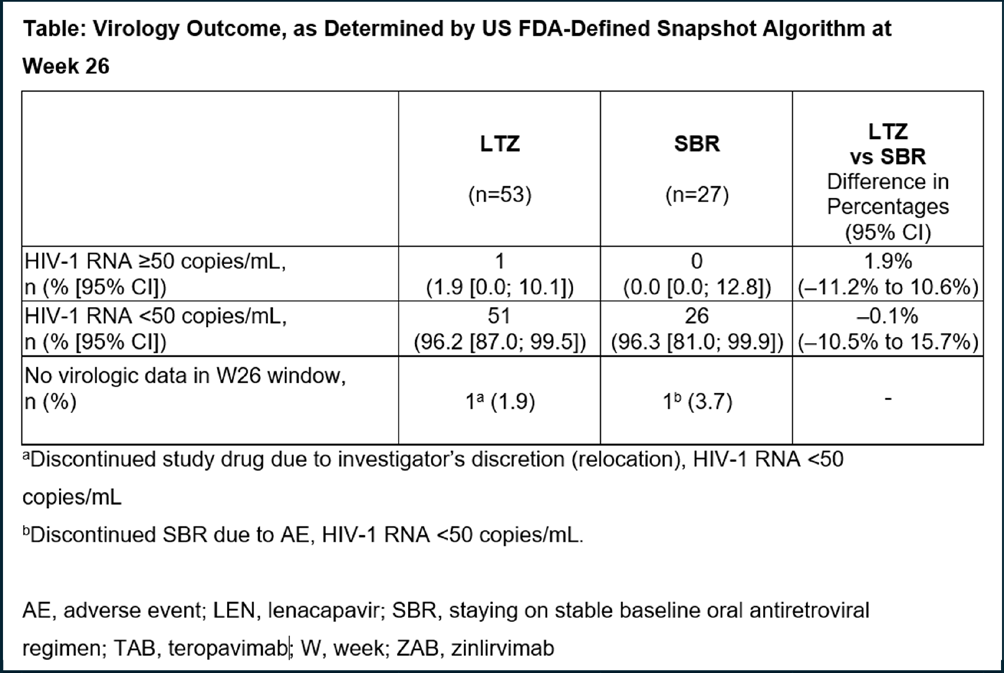
152. Proof-of-Concept Trial of VH4524184 (VH-184), a Third-Generation Integrase Strand Transfer Inhibitor
Luise Rogg1, Sebastián A. Núñez2, Maria Verónica Mingrone3, Pere Domingo4, Monica Lopez1, Nathan Hanan5, Gabriela L. Ghita5, Jerry L. Jeffrey1, Mark Underwood1, Jose Castillo-Mancilla6, Fiona Halliday7, Ebele Ezeadi7, Martin Gartland1
Background
New long-acting antiretroviral therapy (ART) regimens are needed to expand treatment choices for people living with HIV-1. VH4524184 (VH-184) is a third-generation integrase strand transfer inhibitor (INSTI) with an enhanced in vitro resistance profile compared with second-generation INSTIs being developed as a long-acting antiretroviral agent for the treatment of HIV-1. Here, we present data for VH-184 from a proof-of-concept, phase 2a trial in people living with HIV-1.
Methods
This randomized, double-blind, placebo-controlled trial evaluated oral VH-184 monotherapy in adults naive to ART with HIV-1 RNA ≥3000 c/mL. In the 10-day monotherapy period, participants received oral VH-184 10, 50, or 300 mg or placebo on Days 1 (baseline), 4, and 7. After monotherapy, participants initiated standard-of-care ART. The primary endpoint was maximum change from baseline in plasma HIV-1 RNA through Day 10. Secondary endpoints included safety, tolerability, exposure-response relationships, immunologic effects, and treatment-emergent resistance.
Results
Of 22 participants enrolled (VH-184, n=19; placebo, n=3), 86% were assigned male at birth, 68% identified as White, and 59% identified as Hispanic or Latin American; mean age was 34.1 years. Plasma HIV-1 RNA levels declined from baseline through Day 10 with all VH-184 doses (Figure). Mean maximum change from baseline in plasma HIV-1 RNA was −1.17, −2.15, and −2.31 log10 c/mL for VH-184 at 10, 50, and 300 mg, respectively. An exposure-response relationship was observed for plasma HIV-1 RNA decrease. During monotherapy, the only adverse event (AE) reported in >1 participant was vomiting (VH-184, n=2 [11%]). Each drug-related AE was reported in 1 participant. All AEs were grade 1 or 2 in severity. No AEs leading to withdrawal, serious AEs, or deaths were reported during monotherapy or follow-up. There were no clinically relevant changes in clinical laboratory parameters, electrocardiograms, or vital signs. No VH-184 genotypic or phenotypic resistance was detected at Day 10, the end of monotherapy.
Conclusions
VH-184 monotherapy demonstrated rapid and highly potent antiviral activity, with HIV-1 RNA declines of >2 log10 c/mL at the highest doses, and was well tolerated, with a favorable safety and tolerability profile. An exposure-response relationship was established comparable to the maximum effect with other INSTIs. These results support further development of VH-184 as the core agent in a complete long-acting regimen for the treatment of HIV-1.
Figure 1.
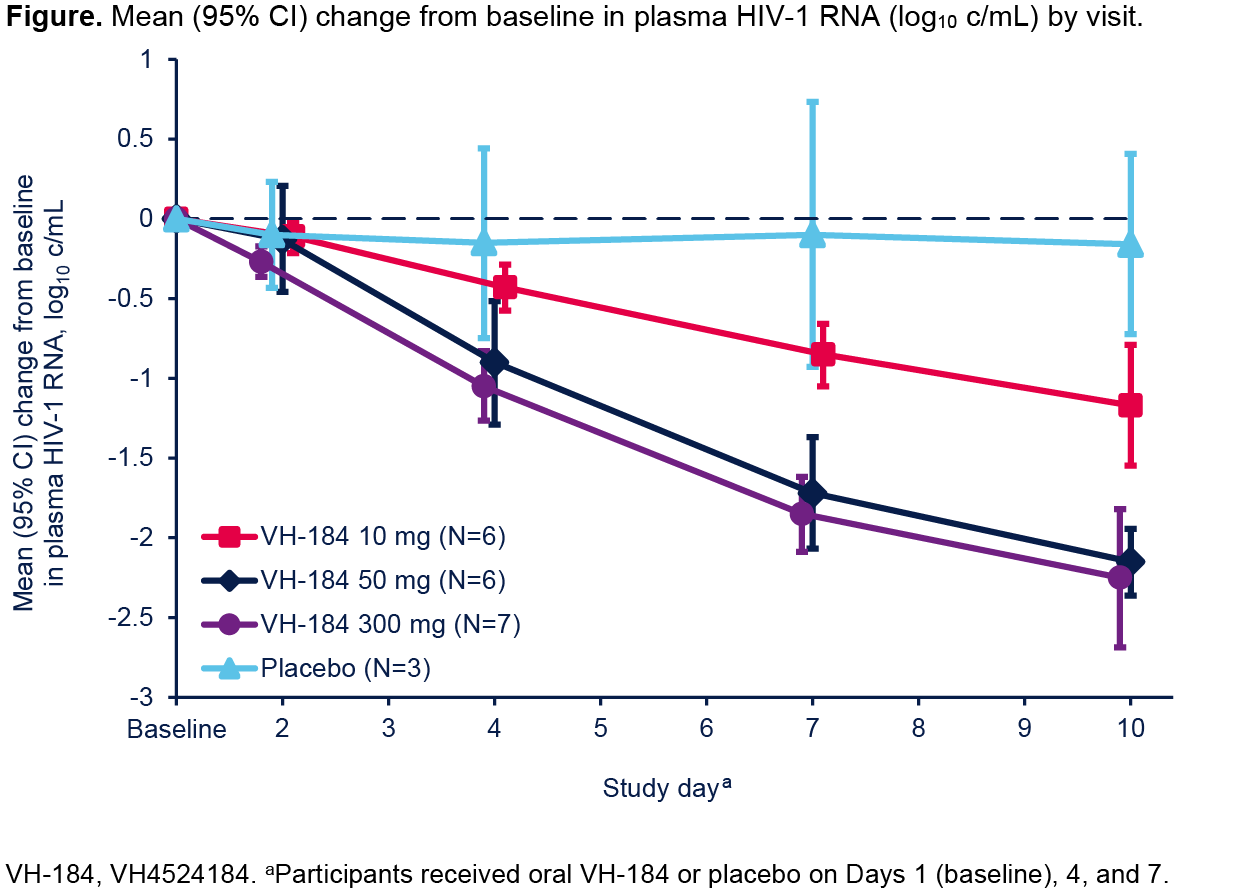
153. Proof-of-Concept Trial of Oral VH4011499 (VH-499), a New HIV-1 Capsid Inhibitor
Rulan Griesel1, Sebastián A. Núñez2, Alma Minerva Pérez Rios3, Clara Lehmann4, Carmen Busca5, Pedro Cahn6, Amy Pierce7, Jerry L. Jeffrey7, Nilay Thakkar8, Bronagh Shepherd9, Veronica Bainbridge9, Konstantinos Angelis9, Carlye McMillan10, Cynthia McCoig11, Paul Benn1
Background
New long-acting antiretroviral therapy (ART) regimens are needed to expand treatment choices for people living with HIV-1. VH4011499 (VH-499) is a new HIV-1 capsid inhibitor in development as a long-acting antiretroviral agent for the treatment and prevention of HIV-1. Here, we present antiviral effect, pharmacokinetics, safety, and tolerability data for VH-499 from a proof-of-concept, phase 2a trial in people living with HIV-1.
Methods
This randomized, double-blind, placebo-controlled trial evaluated oral VH-499 monotherapy in adults naive to ART with HIV-1 RNA ≥3000 c/mL. In the 10-day monotherapy period, participants received oral VH-499 25, 100, or 250 mg or placebo on Day 1 (baseline) and Day 6. After the monotherapy period, participants initiated locally sourced, standard-of-care ART. The primary endpoint was maximum change from baseline in plasma HIV-1 RNA through Day 11. Secondary endpoints included pharmacokinetics, exposure-response relationships, safety, and tolerability.
Results
A total of 23 participants were enrolled (VH-499, n=20; placebo, n=3), 83% were assigned male at birth, 65% identified as White, and 65% identified as Hispanic or Latin American; median (range) age was 31 (18-62) years. Plasma HIV-1 RNA levels for all VH-499 dose groups declined from baseline through Day 11 (Figure). The 250 mg dose group had a greater mean (SD) maximum change in HIV-1 RNA (−2.2 [0.43] log10 c/mL) than the 25 mg (−1.8 [0.51] log10 c/mL) and 100 mg dose groups (−1.8 [0.45] log10 c/mL). Increasing VH-499 exposures were associated with higher viral load declines. All adverse events (AEs) were grade 1 or 2 in severity, with no trends observed in types of AEs. Each drug-related AE was only reported once. No AEs leading to withdrawal, serious AEs, or deaths were reported. There were no clinically relevant changes in clinical laboratory parameters, electrocardiograms, or vital signs.
Conclusions
VH-499 monotherapy was well tolerated, had a favorable safety profile, and demonstrated highly potent antiviral activity in people living with HIV-1, with up to a mean maximum 2.2 log10 c/mL reduction in HIV-1 RNA over 10 days. A VH-499 exposure-response relationship was established. These results support further development of VH-499 as part of a complete long-acting regimen for the treatment of HIV-1.
Figure 1.
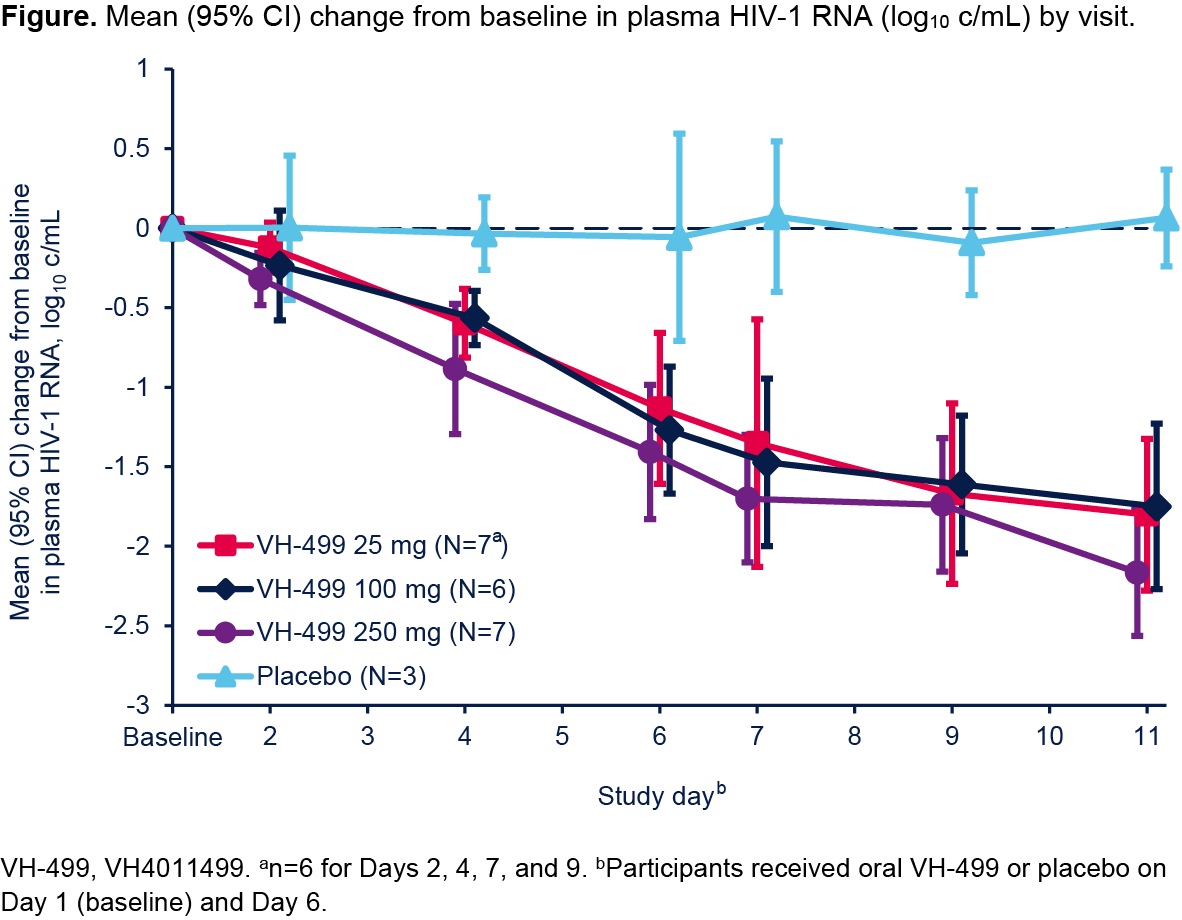
154. Pharmacokinetics and Safety of Once-Yearly Formulations of Lenacapavir
Vamshi Jogiraju, Pallavi Pawar, Jenna Yager, John Ling, Gong Shen, Anna Chiu, Ramesh Palaparthy, Christoph Carter, Renu Singh
Background
Long-acting injectables may address barriers to HIV pre-exposure prophylaxis (PrEP), such as stigma and pill burden. In a Phase 3 trial in cisgender women, twice-yearly (Q6M) subcutaneous (SC) lenacapavir (LEN) (927 mg, in two 1.5 mL injections) was safe and 100% efficacious as PrEP, with high adherence among participants. We assessed the pharmacokinetics (PK) and safety of two once-yearly (Q12M) LEN formulations.
Methods
This ongoing, open-label study in healthy participants (n=20/cohort) evaluated the PK, safety, and tolerability of two intramuscular (IM) single-dose 500 mg/mL LEN free acid formulations: formulations 1 and 2. Intensive PK sampling occurred from Days 1–15, and single anytime PK samples were collected at prespecified times through Day 449. LEN plasma concentrations were quantified using a validated liquid chromatography–tandem mass spectrometry method. LEN PK parameters (maximum observed concentration [Cmax], trough concentration [Ctrough]) were estimated using non-compartmental analysis. Safety and tolerability, including participant-reported pain scores, were assessed throughout.
Results
Peak concentrations of LEN formulation 1 were achieved ~12 weeks (W) post dose with mean (coefficient of variation [CV]) Cmax of 290 ng/mL (61.4%) (Fig). After 12 months (M) (52W, n=13), mean (CV) Ctrough was 62.2 ng/mL (42.8%), and its lower bound 90% CI was 49.1 ng/mL, which were above the target concentration (mean Ctrough following Q6M SC LEN: 21.1 ng/mL [Jogiraju et al, AIDS 2022]). Preliminary PK data for LEN formulation 2 (40W) showed similar LEN concentrations; mean Ctrough and the lower bound 90% CI are expected to remain above target concentration after 12M. Adverse events (AEs), including injection-site reactions (ISRs), were similar between the two cohorts; most were mild or moderate in severity. The most common ISR was pain (75%); pain scores were similar between cohorts. Most reported mild pain, which resolved within 1 week of injection. Pretreatment for approximately 3-5 minutes with an ice pack substantially reduced pain.
Conclusions
Following administration of IM LEN formulation 1, mean Ctrough after 12M was above mean SC LEN Q6M Ctrough, confirming the potential of Q12M dosing. Comparison with LEN Q6M Phase 3 PrEP will be conducted as PK data become available. Both formulations of Q12M LEN were safe and well tolerated. These data support future development of IM Q12M LEN for HIV PrEP, which has the potential to significantly improve PrEP uptake and persistence.
Figure 1.
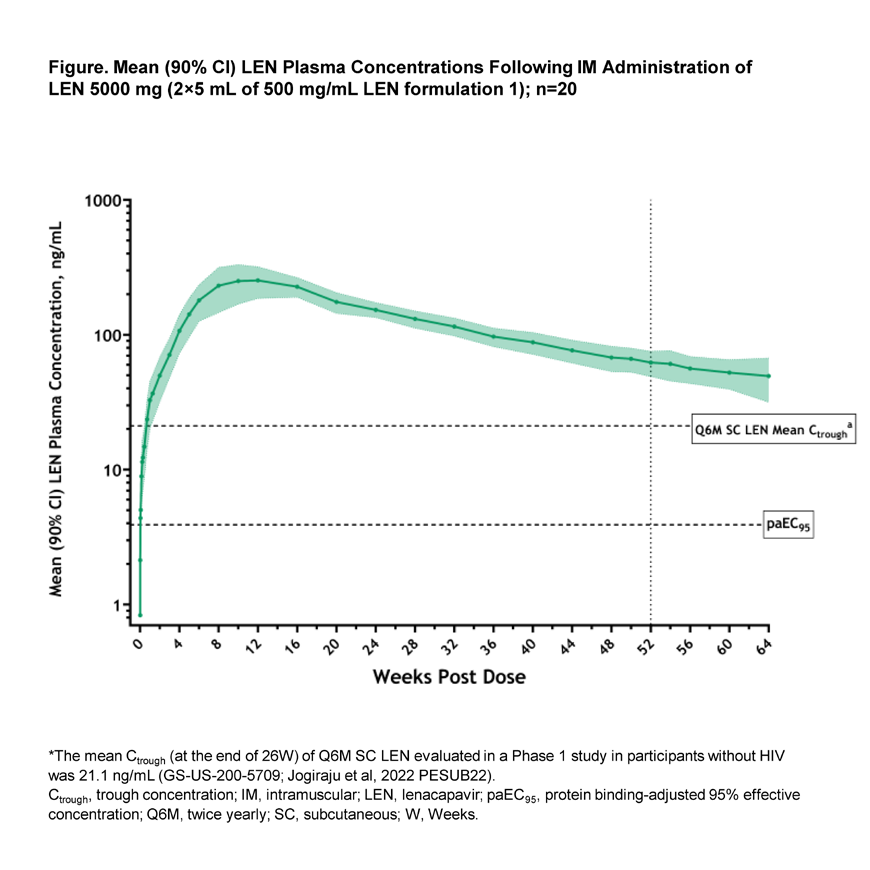
155. Elucidating the Mechanism by Which Nucleocapsid Mutations Confer Resistance to InSTIs
Yuta Hikichi1, Ryan C. Burdick1, Sean C. Patro2, Kerri J. Penrose3, Erin Clark1, Sherimay D. Ablan1, John W. Mellors3, Urvi M. Parikh3, Xiaolin Wu4, Vinay K. Pathak1, Eric O. Freed1
Background
People living with HIV (PLWH) receiving HIV integrase (IN) strand transfer inhibitors (INSTIs) have been reported to experience virological failure (VF) in the absence of resistance mutations in IN. To elucidate INSTI resistance mechanisms and pathways, we performed long-term (~ one year) passaging of several viral isolates with an escalating concentration of the INSTI dolutegravir (DTG). Independent of viral strain and cell type, HIV-1 became resistant to DTG by sequentially acquiring mutations in Env, nucleocapsid (NC), and, in some cases, IN. This study aims to elucidate the role of NC in HIV-1 resistance to INSTIs.
Methods
We evaluated the impacts of the selected NC mutations on DTG sensitivity and viral infectivity. qPCR and time-of-addition (TOA) assays were conducted to examine the impacts of mutations on post-entry events in the virus replication cycle.
Results
The NC mutations selected in the presence of DTG confer modest (3-5-fold) resistance to INSTIs, a level of resistance comparable to that observed with clinically relevant IN mutations. These NC mutations do not appreciably affect viral RNA packaging, viral assembly, virus release, or infectivity. qPCR and TOA analyses with RT inhibitors and INSTIs revealed that the NC mutations accelerate the kinetics of integration. Notably, the shortened time frame between reverse transcription and integration correlates with reduced sensitivity to DTG, suggesting that NC mutations limit the window of opportunity for INSTIs to bind intasomes and block integration. Examination of the sequence at 2-LTR junctions showed no significant difference, suggesting that NC mutants preserve viral DNA ends, which are important for integration and INSTI binding. During DTG selection in primary PBMCs, we identified NC-N27I and IN-S153Y, which conferred 2.5-fold and 3.4-fold resistance to DTG, respectively. We observed that mutations in NC and IN acted in concert to confer 8.5-fold resistance to DTG, suggesting that NC mutations engage in epistatic interactions with IN resistance mutations. Significantly, we identified some of the in vitro-selected NC mutations in PLWH who experienced VF with DTG-containing regimens.
Conclusions
These findings demonstrate that mutations in multiple regions in the HIV-1 genome – Env, NC, and IN – collectively contribute to INSTI resistance. These results further our understanding of INSTI resistance and support the need for genotypic analysis outside of IN in individuals failing INSTI-containing regimens.
156. Selection of Nucleocapsid Mutations With Virologic Failure of Tenofovir/ Lamivudine/Dolutegravir
Oral Abstracts
Pages: 35-36
Kerri J. Penrose1, Yuta Hikichi2, Rahil Sethi1, B. Jay Goetz1, Lauren O. Siffert1, Sujith A. Valiyaparambil3, Carole L. Wallis4, Caitlyn McCarthy5, Uma R. Chandran1, Cissy Kityo6, Charles W. Flexner7, Michael Hughes5, Eric O. Freed2, John W. Mellors1, Urvi M. Parikh1, the ACTG A5381 Study Team
Background
Tenofovir-lamuvidine-dolutegravir (TLD) is highly effective as ART but the causes of virologic failure (VF) in individuals on TLD without integrase (IN) resistance mutations are not well understood. Off-target mutations in nucleocapsid (NC) have been selected in vitro and are associated with decreased DTG susceptibility in vitro. Samples from ACTG study A5381 were examined to assess the potential contribution of NC mutations to VF in individuals on TLD.
Methods
A5381 was an observational cohort study enrolling individuals aged >10y with viral load >1000 c/ml at start of TLD as 1st, 2nd or 3rd-line ART. Paired study entry and VF samples from 57 participants with confirmed VF on ≥6 months of TLD were sequenced by whole genome Illumina MiSeq. Mutations were identified with HyDRA Web (IN) and a pipeline using reference alignment to HXB2 RefSeq (NC_001802.1) with BWA v0.7.17, LoFreq 2.1.5 and SNPeff 5.0 for putative variant calling (NC) with a mutation threshold of 20% frequency. Site directed NC and integrase (IN) mutants were phenotyped for DTG sensitivity with TZM-bl assays.
Results
Mutations in NC at a frequency of ≥20% of the virus population at VF but not before TLD start were detected in 10 of 57 (17%) participants (Table). Of these 10, two participants had both NC and IN mutations at VF but not at study entry, suggesting dual selection. Participant 1 selected A30T (57% frequency) and M46I (69% frequency) in NC and the accessory mutation H51Y (9% frequency) in IN. Participant 2 selected N27I (77% frequency) in NC and the major mutation R263K (100% frequency) and polymorphism M50I (100% frequency) in IN. Laboratory-generated infectious mutant clones of NC-N27I and IN-M50I/R263K show 1.8- and 2.4-fold resistance to DTG, respectively. When they are combined, the triple mutant showed 5.8-fold resistance. IN-M50I/R263K mutants show lower infectivity than wild-type (WT), but NC-N27I did not further affect viral infectivity in the context of IN-WT and or IN-M50I/R263K.
Conclusions
This work provides the first clinical evidence of selection of NC mutations with TLD failure and of decreased DTG susceptibility from the combination of NC and IN mutations. Our findings support further investigation of the potential contributions of mutations outside of IN to VF of TLD.
Table 1.
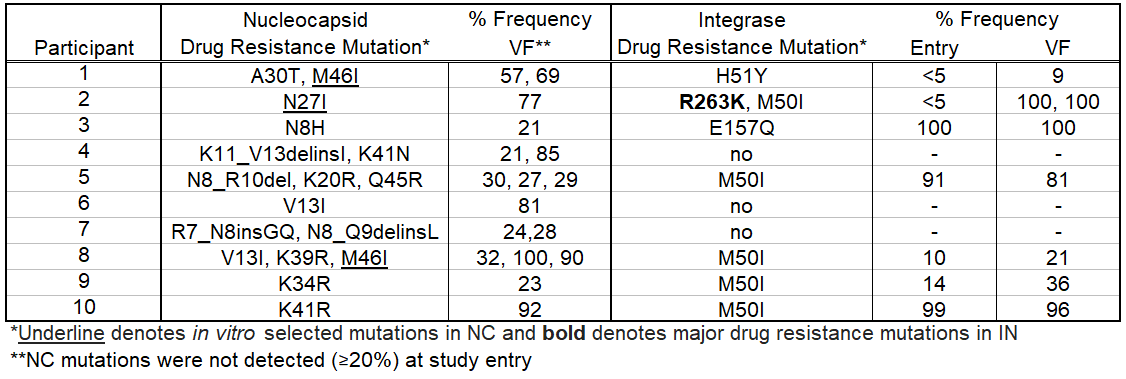
157. Optimizing On-Demand Tenofovir Disoproxil Fumarate/Emtricitabine Dosing in Women for HIV Prevention
Julie B. Dumond, Craig Sykes, Amanda Schauer, Angela Kashuba, Mackenzie Cottrell
Background
Despite availability of long-acting products for HIV pre-exposure prophylaxis (PrEP), some women may prefer on-demand oral PrEP. Using an existing PK/PD model (Cottrell JID 2016), we previously predicted protective drug exposure would be sustained in the female genital tract (FGT) for 5 days after sex for >80% of the population using the 2-1-1 IPERGAY regimen (#2 tenofovir disoproxil fumarate (TDF)/emtricitabine (FTC) tablets pre-sex then #1 tablet 24 and 48 hours after), and >90% of the population regularly taking 4 tablets/week on Tuesday, Thursday, Saturday, and Sunday. Here, we sought to identify the optimal on-demand TDF/FTC regimen to achieve protective drug exposure in the FGT over 5-10 days post-sex.
Methods
TDF/FTC tissue PK/PD predictions were generated via the aforementioned published in vivo/in vitro model with the EC90 derived from an in vitro synergy model of TDF/FTC’s active metabolites vs competing endogenous nucleotides. The proportions of 1000 predicted profiles achieving EC90 in the FGT at 5, 7, and 10 days post-sex were calculated for all simulated dosing scenarios. These were extensions of the 2-1-1 regimen and included: 2-2-1, 2-2-2, 2-1-1-1, 2-2-1-1, 2-2-2-1, and 2-2-2-2. PK modeling/simulation was performed in NONMEM v7.2, and R was used for synergy modeling and data management/ visualization.
Results
Table 1 shows proportion achieving EC90 in the FGT over time following sex. All regimens demonstrate >80% achievement of EC90 at 5 days. A 2nd double-dose increases the proportion achieving EC90 at 7 days by 20-30% compared to the IPERGAY regimen. Extending to 4 days of dosing increases the proportion achieving EC90 >80% at 7 days post-sex. No regimen sustained this high proportion achieving EC90 for 10 days post sex.
Conclusions
Our model suggests prevention of HIV acquisition via the FGT using on-demand TDF/FTC dosing with an initial double-dose is likely, with high (>80%) protection for 5 days after sex. Adding a 4th day of dosing is required to achieve >80% protection for 7 days, with 2-2-2-2 at 95% and 2-1-1-1 at 84% protection. While limited data suggest 2-2-2-2 dosing is safe for short-term use, the 2-1-1-1 regimen may better balance safety, efficacy, and tolerability while maintaining effectiveness comparable to 4 daily doses/week reported by recent analyses of PrEP clinical trial data. The 2-2-2, 2-1-1-1, and 2-2-1-1 regimens could be considered in future clinical studies of on-demand PrEP in cisgender women.
Table 1.
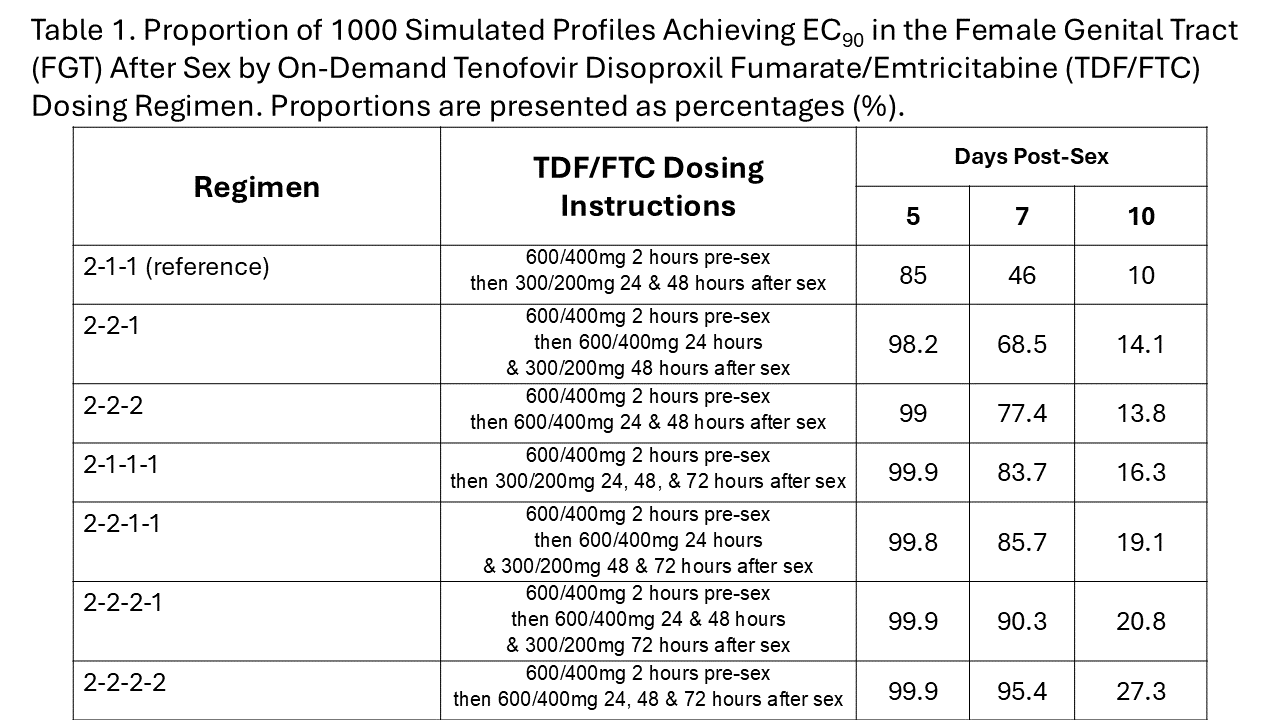
158. Safety and Antiviral Efficacy of a Broad-Spectrum siRNA SNS812 Targeting SARS-CoV-2: Phase II Trial
Sui-Yuan Chang1, Yi-Chung Chang2, Shey-Ying Chen3, Pan-Chyr Yang1
Background
The rapid emergence of immune-evasive SARS-CoV-2 variants poses a significant challenge, as current therapies and vaccines struggle to keep pace. SNS812, an aerosolized broad-spectrum antiviral siRNA, targets a conserved region of the RNA-dependent RNA polymerase gene, unchanged since the 2003 SARS outbreak, offering potential efficacy against diverse variants. In a 2023 Phase I trial (NCT05677893) in the U.S., SNS812 showed excellent safety. Here we present the Phase II trial results which shows SNS812 is safe and effective in treating COVID-19.
Methods
This double-blind, randomized, placebo-controlled Phase II trial (NCT05941793) involved 135 symptomatic, PCR-confirmed COVID-19 patients, all vaccinated at least three months prior. Participants were randomly assigned to receive either 100mg SNS812, 200mg SNS812, or placebo. The primary endpoint was the incidence of treatment-emergent adverse events; efficacy endpoints included viral variant analysis, time to viral clearance, viral load reduction, and symptoms improvement.
Results
Baseline characteristics showed no significant differences between the groups. No drug-related adverse events were observed in the SNS812 treatment groups. All 135 participants had their viral sequence confirmed and identified which revealed that 90% of patients were infected with highly immune-evasive variants, with the majority being JN.1 (49.6%), LB.1 (17.1%), and KP.2 (11.1%). Viral load analysis showed that in the SNS812 treatment groups, viral load significantly decreased by 0.4 log within one day of SNS812 200mg administration (P=0.029). Additionally, the median time to viral clearance was reduced from 3.6 days (control group) to 2.9 days (200mg group)(P=0.007). For clinically meaningful symptoms, 12 out of 14 COVID-19 symptoms showed improvements, with key symptoms such as shortness of breath (P=0.007), loss of smell (P=0.028), and loss of taste (P=0.006) achieving statistical significance. Furthermore, a dose-dependent relationship was noted, with more significant improvement in 200mg group compared to the 100mg.
Conclusions
The Phase II study demonstrates that SNS812 is a safe and effective treatment for COVID-19, especially in the context of immune-evasive variants. Its ability to significantly reduce viral load within one day, accelerate viral clearance, and improve symptoms positions SNS812 as a promising pan-coronavirus therapeutic solution, capable of addressing ongoing viral mutations.
Table 1.
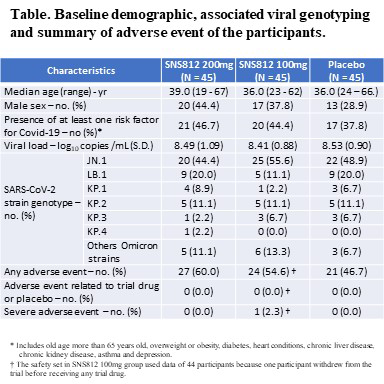
159. Host and Disease Factors Were Not Associated With Mpox Resolution in Participants Receiving Tpoxx
William A. Fischer II1, Pooja Saha2, Jason Zucker3, Caitlyn McCarthy2, Lu Zheng2, Arzhang Javan4, Alexander L. Greninger5, Kristina Brooks6, Matthew Hamill7, Davey Smith8, Rajesh T. Gandhi9, Joseph J. Eron1, Sharon Nachman10, Judith Currier11, Timothy Wilkin8, the ACTG A5418 (STOMP) Protocol Team
Background
ACTG A5418/STOMP is a phase 3 randomized placebo-controlled double-blind trial evaluating the efficacy of tecovirimat in people with mpox. It includes an open-label arm for people <18 years, pregnant or breastfeeding, with severe immune suppression, or protocol-defined severe disease. We analyzed host and disease factors associated with clinical mpox resolution and mpox DNA clearance from skin lesions in individuals receiving open-label tecovirimat for 14 days.
Methods
Time to clinical resolution was the time from treatment initiation until all skin lesions were scabbed, desquamated, or healed and all visible mucosal lesions were healed through 28 days. An index skin lesion chosen at enrollment was swabbed weekly; mpox DNA levels were measured by PCR. Associations between baseline characteristics and time to clinical resolution were explored using Kaplan-Meier plots and Cox proportional hazards models.
Results
Of 233 enrolled in the open-label arm, 107 had lab-confirmed clade II mpox (skin, oral or rectal swabs) who enrolled early enough to have completed 28-day follow-up and had baseline skin lesion mpox DNA available were included. Ninety-six (90%) were cisgender male, 3 (3%) were transgender female, median age was 34 years, 45 (42%) are living with HIV, including 11 with CD4 <200 cells/mm3 or HIV-1 RNA >1000 copies/ml, and 12 (11%) had previously received ≥1 dose of the smallpox/mpox vaccine. At enrollment, median skin lesion count was 26 (IQR: 13, 49), 78 (73%) had >5 days of symptoms at time of enrollment, and 11 (10%) had undetectable skin lesion mpox DNA. By Days 8 and 15, 47% (of 76) and 82% (of 77) had undetectable skin lesion mpox DNA. The cumulative probability of clinical resolution by 28 days was 86% (95% CI: 79, 92); median days to clinical resolution was 14 (Q1, Q3: 8, 22). While there were trends between faster clinical resolution, lower levels of mpox DNA, and younger age, no associations were found in multivariable modeling (Table 1). Similarly, there were no factors significantly associated with clearance of mpox DNA at day 8. Clearance of mpox DNA at Day 8 was not associated with faster clinical resolution.
Conclusions
This interim exploratory analysis of participants receiving open-label tecovirimat did not identify predictors of clinical mpox resolution. Compared to PALM007 participants with Clade 1 mpox, we found lower lesion counts and slower clinical resolution. Further investigation is needed.
Figure 1.
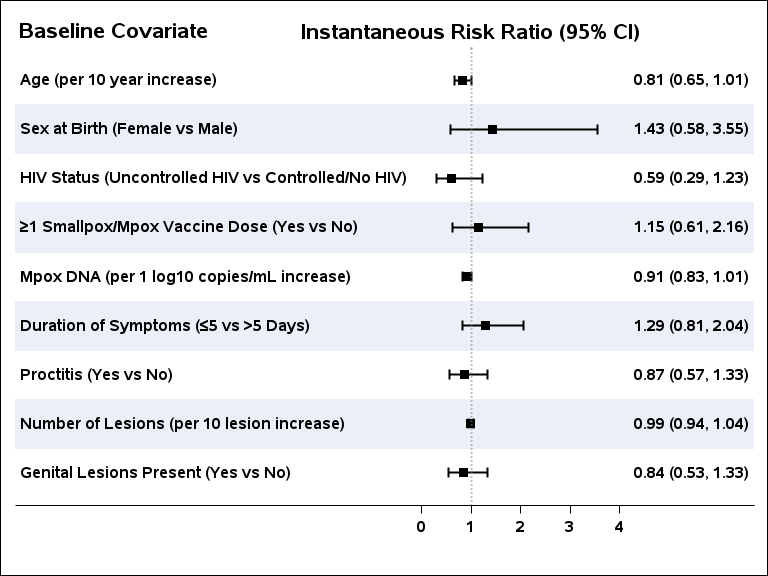
160. Missed Opportunities for Syphilis Diagnosis With Targeted Compared to Universal Screening
Kimberly A. Stanford1, Joseph Mason1, Eleanor Friedman1, Aniruddha Hazra1, John Schneider2
Background
As syphilis rates rise, emergency department (ED) screening has been proposed as an important opportunity for early diagnosis and treatment of syphilis, especially for communities with limited access to care, for whom the ED visit may represent their primary contact with the healthcare system. Given potential increased costs and resources needed for universal screening, models targeted to certain high priority groups have been proposed. However, it is unknown if these targeted screening models successfully detect the majority of syphilis cases.
Methods
In May 2019, a routine, opt-out, syphilis screening program for all ED patients under age 65 was implemented at a large, urban, tertiary care hospital in Chicago. This study retrospectively reviewed all ED encounters that included syphilis screening for the two-year period after implementation of the screening program. Syphilis cases were defined by a combination of positive serology, rapid plasma regain (RPR) titers, and clinical history derived from chart review. Descriptive statistics were used to evaluate the hypothetical sensitivity of screening models targeted to 1) only persons tested for gonorrhea or chlamydia, 2) women of reproductive age, 3) anyone receiving a blood draw, or 4) anyone receiving a complete blood count (CBC), compared to the cases detected with universal screening.
Results
A total of 37,289 individuals were screened for syphilis during the two-year study period, of whom 624 (1.7%) were considered active syphilis cases. Had syphilis screening been performed only in patients receiving testing for gonorrhea or chlamydia, only 147 cases would have been identified (23.6% sensitivity). Screening only women of reproductive age would have identified 142 cases (22.8% sensitivity). Notably, screening only patients undergoing an unrelated blood draw would have identified 516 cases (82.7% sensitivity), and screening only those receiving a CBC would have identified 472 cases (75.6% sensitivity).
Conclusions
This study found that targeted models of syphilis screening would miss a large proportion of syphilis cases. While implementation of universal ED screening may require additional resources and infrastructure, it may be the most effective strategy to address the syphilis epidemic in high prevalence communities facing major health care disparities.
161. Higher Odds of Congenital Syphilis With 9- vs 7-Day Prenatal Treatment Intervals for Late Syphilis
Oral Abstracts
Pages: 37-38
Kelly A. Johnson1, Eric Tang2, Robert E. Snyder2, Rosalyn Plotzker1, Kathleen Jacobson2, Nicole Burghardt2
Background
Congenital syphilis (CS) is an urgent threat; cases are at their highest rate (102.5/100,000 live births) since 1991. The only treatment (tx) for late latent syphilis (LLS) in pregnancy is 3 doses of benzathine penicillin G (BPGx3), given at 7-day (d) intervals. If intervals exceed 9d, US guidelines recommend restarting the full tx series, implying intervals up to 9d are acceptable. We previously demonstrated CS is not more likely with prenatal BPGx3 at 6-8d vs strict 7d intervals (OR 1.0, 95%CI 0.4-3.0), but there are no studies of 9d.
Methods
Using California surveillance data, we leveraged an existing cohort of all mother/infant dyads wherein the parent had LLS in pregnancy from 1/1/16-6/30/19. Since only 5 dyads in this cohort received BPGx3 with a 9d interval, we enriched the study population with additional dyads who received BPGx3 with at least one 9d interval (and no intervals outside 6-9d), from a later period (7/1/19-12/31/23). We divided all dyads into 3 groups: adequate tx (Atx: BPGx3 at strict 7 or 6-8d intervals, started 30+d before delivery); BPGx3 at 6-9d (at least one 9d interval, no intervals outside 6-9d, started 30+d before delivery), and no/inadequate tx (NAtx). We compared clinical/demographic characteristics and infant CS incidence proportions via chi-squared/Wilcoxon rank sum, then estimated odds of CS by group via logistic regression.
Results
We analyzed 1109 dyads: 677 Atx, 22 BPGx3 at 6-9d, and 410 NAtx. Comparing Atx vs 6-9d dyads, there were no differences (p>0.05) in maternal HIV (0.5 vs 0% positive), maternal RPRs 1:32+ (45.1 vs 40.9%), prenatal care (97.3 vs 95.5% received care), or gestational age at syphilis tx (median 16 vs 21 weeks). CS incidence proportions were 5.6% (38/677) for Atx, 18.2% (4/22) for 6-9d, and 36.8% (151/410) for NAtx (p=0.01 for 6-9d vs Atx). With Atx as reference, odds of CS were 3.7 (95%CI 1.2-11.6) for 6-9d and 9.8 (95%CI 6.7-14.4) for NAtx (Table 1).
Conclusions
Compared to Atx, odds of CS approached 4-fold higher among dyads who received BPGx3 with 9d interval(s). These findings question current guidelines, suggesting CS may be more likely when BPG intervals are extended to 9d. Limitations include small numbers (preventing controlling for confounders) and the fact that most 6-9d dyads were from a later period than the comparator dyads. Still, given lack of data otherwise and while awaiting larger studies with higher statistical power, clinicians should consider erring on the side of caution, avoiding intervals outside 6-8d.
Table 1.
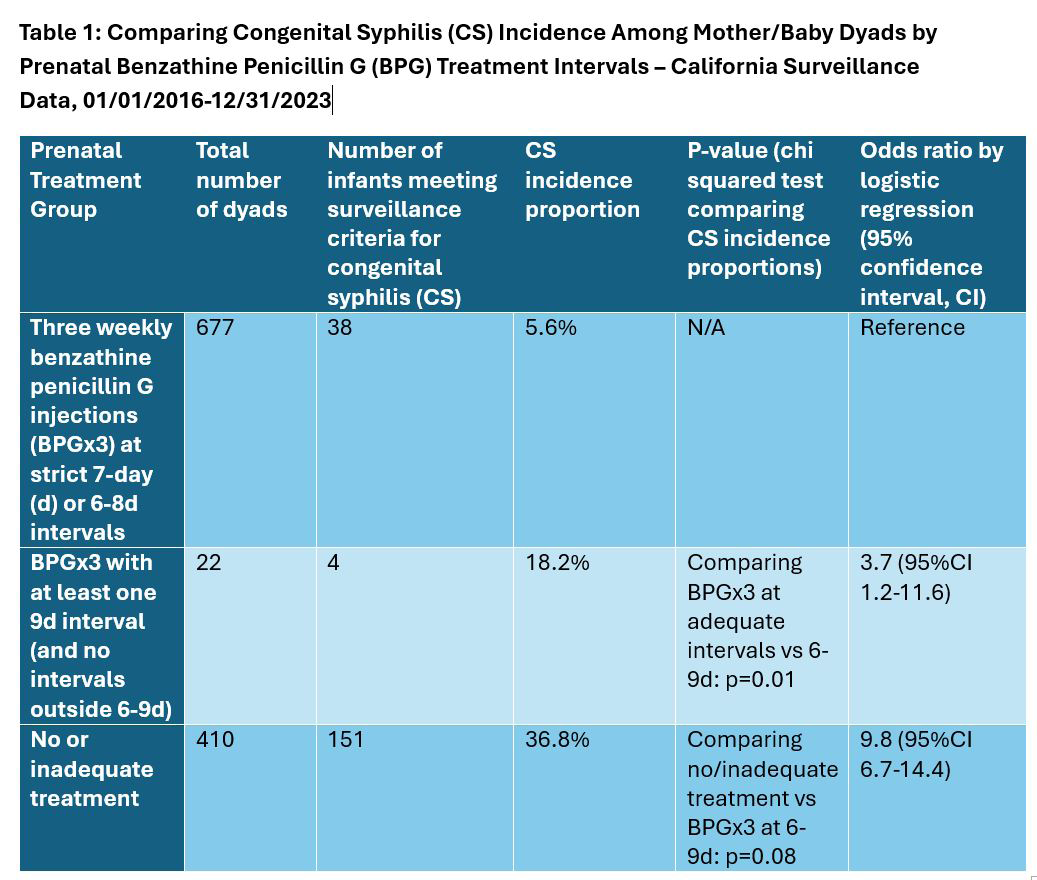
162. DoxyPEP Eligibility, Use, and Potential for STI Reduction in a Large HIV Cohort in Washington, DC
Yun Seong Ji1, Shannon K. Barth1, Amanda D. Castel1, Morgan Byrne2, Temi Oke3, Adedotun Ogunbajo3, Michael Horberg4, Anne Monroe1, the DC Cohort Executive Committee
Background
Doxycycline post-exposure prophylaxis (DoxyPEP) use can significantly reduce the incidence of bacterial sexually transmitted infections (STIs), yet uptake has been low among people with HIV (PWH). In Washington, DC, high rates of STIs have been observed among PWH. We assessed STI diagnosis rates, DoxyPEP eligibility, use, and the potential impact of DoxyPEP prescribing on STI incidence among a large cohort of PWH in Washington, DC.
Methods
DC Cohort longitudinal HIV cohort participants were considered DoxyPEP eligible per the CDC guidelines if they were men who have sex with men (MSM) or transwomen (TW) diagnosed with gonorrhea, chlamydia, and/or syphilis in a calendar year during the observation period (1/1/2019-12/31/2023). We assessed the number of DoxyPEP eligible PWH and DoxyPEP prescriptions. We conducted descriptive statistics on demographics, sexual behaviors, and HIV viral loads (VL). We calculated STI diagnosis rates and estimated the potential impact of DoxyPEP prescribing by assessing the proportion of diagnoses potentially averted based on efficacy trial results. Using the number needed to treat (NNT) with DoxyPEP for one year to avert one STI diagnosis, we estimated the efficiency of three prescribing strategies for PWH with 1) any STI, 2) a concurrent STI, or 3) ≥2 STIs in the past 12 months.
Results
From 2019 to 2023, among 1,403 participants with ≥1 STI diagnosis, only 13 (0.93%) were prescribed DoxyPEP (85% male, median age 43, 85% MSM HIV risk factor, 92% had a rectal STI, and 46% had ≥2 STIs within a 12-month period). In any given year 50%-56% of STI cases were DoxyPEP eligible. Overall, there were 3,581 STI diagnoses, of which 2,890 were among MSM/TW (63.4 STI diagnoses/100 person-years). Among the 1,077 MSM or TW who had ≥1 bacterial STI diagnosis, 10% had a VL >200 copies/mL, 68% reported >1 sexual partner in the prior 3 months. Strategies with the lowest NNT were prescribing DoxyPEP for 12 months to PWH with a concurrent STI diagnosis (NNT=2.99 for any STI); with ≥2 STIs (NNT=3.22 for any STI); and to PWH with any STI (NNT=3.89 for concurrent STI diagnoses)(Figure).
Conclusions
Among a large clinical cohort of PWH, despite high STI rates, early uptake of DoxyPEP was minimal, yet a majority of PWH were DoxyPEP eligible.
While the NNT varied based on the strategy, widespread DoxyPEP uptake could result in significant decreases in STI incidence among PWH. As DoxyPEP use rolls out, greater awareness of its use and prescribing efforts should be emphasized among PWH.
Figure 1.
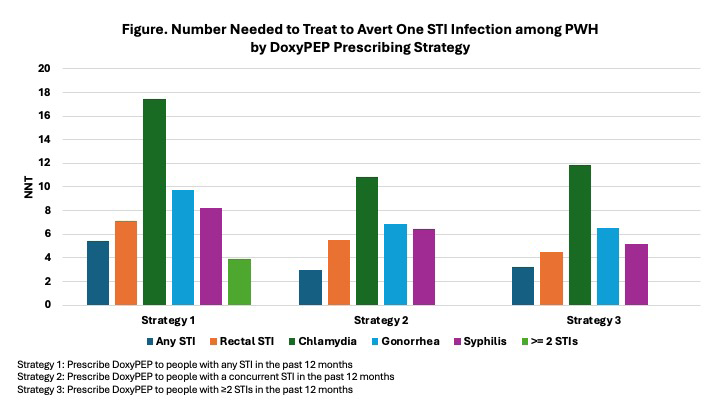
163. High Sustained Effectiveness of Doxycycline PEP for STI Prevention After Clinical Implementation
Oral Abstracts
Pages: 38-39
Hyman Scott1, Jorge Roman2, Matthew A. Spinelli3, Jason Bena2, Michael P. Barry2, Megan J. Heise3, Susan Buchbinder1
Background
Doxycycline for post-exposure prophylaxis (DPEP) is highly effective for preventing bacterial sexually transmitted infections (STIs) in clinical trials; however recent real-world data suggests lack of effectiveness for gonorrhea. We examined the impact of DPEP on STIs (syphilis, chlamydia, and gonorrhea) in clients at a large sexual health clinic in San Francisco, CA, US.
Methods
Starting in 11/30/2022 DPEP was offered to all clients receiving sexual health services. For clients who were prescribed DPEP (Users) for >90 days, we evaluated up to 5 quarters before and after the initial DPEP prescription through 09/24/2024. For clients who were never prescribed DPEP (Non-DPEP users), we evaluated up to 5 quarters before and after 4/2023 – the midpoint (median) quarter for the DPEP initiations across the evaluation period. We fit an interrupted time series (ITS) analysis in which STI rates, overall and by individual STI, were predicted by a three-way interaction between DPEP use, time (in quarters), and DPEP initiation (pre-post DPEP prescription for the DPEP Users, and pre-post median time for the non-DPEP users).
Results
Overall, 4,149 clients (2,419 DPEP users and 1,730 non-DPEP users) were included in the analyses with an average of 3.13 (SD=1.70) quarters of follow-up. The median age range was 30-39 years and most (89%) were cisgender men. Race/ethnicity included 33% White, 24% Hispanic/Latinx, 17% Asian, 13% multiracial, and 4% Black. Almost all (98.7%) were also prescribed HIV pre-exposure prophylaxis. Before initiating DPEP, the DPEP users had significantly higher risk of an STI than non-DPEP users [Odds Ratio (OR)=5.33, 95% Confidence Interval (CI) 4.11-6.90, p<.001); however, after initiation STI rates were similar (OR=1.21, 95%CI 0.86-1.68, p=.280). In a pre-post analysis among DPEP users, STI incidence declined significantly overall (OR=0.28, 95%CI 0.24-0.35, p<.001) and for each STI: chlamydia (OR=0.05; 95%CI 0.11-0.20, p<.001), gonorrhea (OR=0.45; 95%CI 0.39-0.53, p<.001), and syphilis (OR=0.16; 95%CI 0.12-0.21, p<.001). The ITS revealed a significant three-way interaction between DPEP use, time, and DPEP initiation, p<.001.
Conclusions
DPEP uptake continues to increase and bacterial STI incidence among DPEP users declined significantly overall and for each STI including gonorrhea demonstrating sustained high impact of this intervention in a real-world setting. Continued evaluation of DPEP uptake, use, and adherence will be essential as implementation expands.
Figure 1.
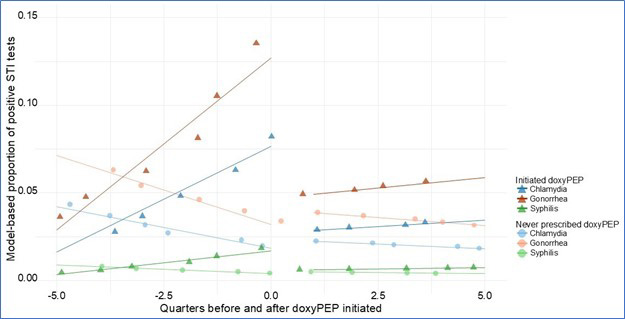
164. The Doxy-PEP Continuum Among Patients Receiving Care at a Sexual Health Clinic in San Francisco
Michael P. Barry1, Jason Bena1, Jorge Roman1, Hyman Scott2
Background
In 2024, San Francisco Department of Public Health released updated recommendations for prescribing doxycycline post-exposure prophylaxis (doxy-PEP). These matched CDC guidance and additionally encouraged shared decision-making between providers and patients with at least 2 sex partners in the last year who were assigned male sex at birth. San Francisco AIDS Foundation’s Magnet Clinic, a large, community-based clinic in San Francisco’s Castro neighborhood, provides doxy-PEP in line with these recommendations. We used Magnet Clinic patient data to define and produce population estimates for a doxy-PEP continuum among patients with indication for doxy-PEP overall and stratified by select demographics. At each stage of the continuum, we assessed whether characteristics were associated with drop-off.
Methods
Among patients seen from December 2022-December 2024, we restricted to those with (1) a doxy-PEP indication. We then estimated the proportion who (2) received a doxy-PEP prescription; (3) initiated (i.e. self-reported ever taking) doxy-PEP; and (4) adhered to doxy-PEP (i.e. self-reported consistent use within 72 hours after sexual exposures since their last clinic visit). We stratified these analyses by several sociodemographic and health characteristics. We conducted one-tailed tests of equal proportions in each stratified analysis, where the referent was the group most likely to reach a given stage in the continuum conditional on reaching the prior stage.
Results
In the study period, 7,436 patients with indication for doxy-PEP were seen at the Magnet Clinic. Among them, 4,369 (60%) were prescribed doxy-PEP. Among those prescribed, 2,651 (61%) reported using it at least once. Among those who used doxy-PEP, 1,627 (61%) reported high adherence at their most recent clinic visit (Figure). Among patients with indications, transgender women were more likely to be prescribed doxy-PEP compared with other gender identities. At each stage of the continuum, patients living with HIV had higher drop-off rates compared to HIV-negative patients.
Conclusions
Although doxy-PEP is a safe, low-cost biomedical intervention for bacterial sexually transmitted infections, only 36% of Magnet Clinic patients with indication ever used it, and less than 25% were adherent. To maximize the impact of doxy-PEP, clinicians should encourage increased uptake and adherence among those with indication.
Figure 1.
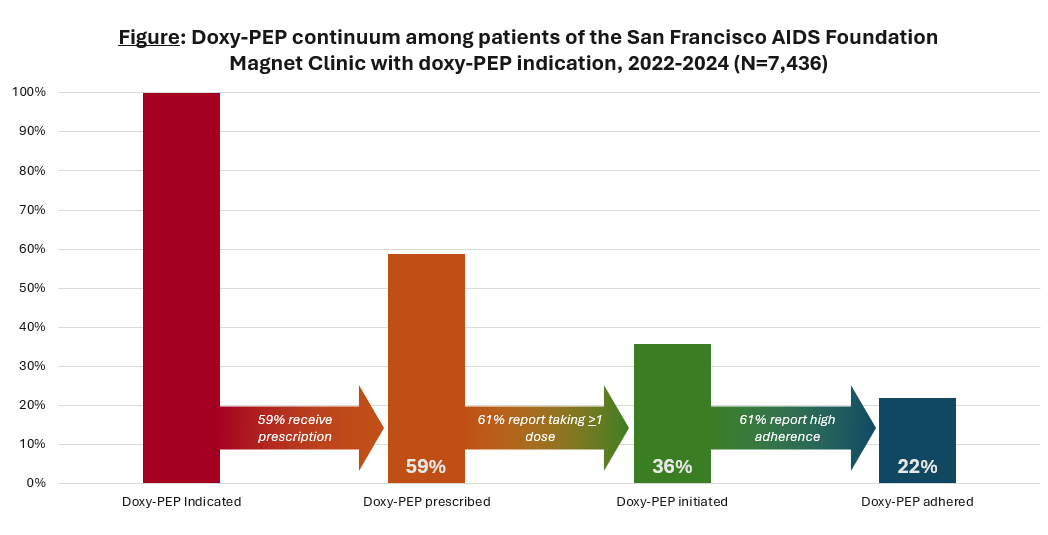
165. Global Modelling Analysis: Impact of Improved HPV Vaccination on Non-Cervical Cancers in PLWHIV
Namwa Wongkalasin1, Victoria Pilkington1, Jacob Levi2, Toby Pepperrell3, Anna Garratt4, Andrew Hill5
Background
HIV infection significantly increases carcinogenesis following HPV infection. The impact of this relationship on the cervical cancer burden is well documented. Less is known on HPV non-cervical cancers including anal, oropharyngeal, vaginal, vulvar and penile cancers. The World Health Organisation (WHO) aims to vaccinate 90% of girls under 15 against HPV, yet global vaccine coverage is low at 21% for girls and 7% for boys. Coverage is especially low in countries with a high HIV prevalence. We aimed to evaluate the burden of HPV non-cervical cancers in people living with HIV (PLWHIV) and model the potential impact of improved gender-neutral HPV vaccine coverage worldwide.
Methods
We collected epidemiological data on cancer incidence in 185 countries from the GLOBOCAN 2022 database. HIV prevalence was collected from UNAIDS 2022, which analyses country-specific rates using the SPECTRUM model. The number of cancer cases was combined with relative risks of developing each cancer and HIV prevalence data to generate a population attributable fraction, which estimates the number of cancers ‘attributable’ to HIV. Lastly, we modelled the impact of improved vaccine coverage using point vaccine efficacy estimates and country-specific HPV vaccine coverage levels from the WHO.
Results
Globally, this burden exhibited significant geographical variation; 29% of all HPV-related non-cervical cancer cases in Africa may be HIV-attributable, compared to 5% worldwide. For anal cancer, an estimated 35,719 cases occurred worldwide in 2022 and 12.4% of these may have been attributable to HIV. This attributable fraction ranged from 1.5% in Southeast Asia, to 10.6% in the Americas, to more than 41.8% in Africa. We show that out of the ten countries with the highest number of HIV-attributable cancers, only two had vaccine coverage rates over 50%. Globally, our model shows that if gender-neutral vaccine coverage increases to the WHO’s 90% target, we could prevent 6854 cancer cases in PLWHIV; reflecting more than double the number currently prevented.
Conclusions
This analysis adds to the consensus that PLWHIV warrant special consideration in HPV prevention. More research is needed on vaccine efficacy in PLWHIV to inform future analyses. HPV vaccination is particularly important in Southern Africa where a large concurrent burden of HIV-attributable cancers exists. Ultimately, in countries with high HIV/HPV coinfection rates, integrating these services could minimise disparities in the global HPV cancer burden.
Figure 1.
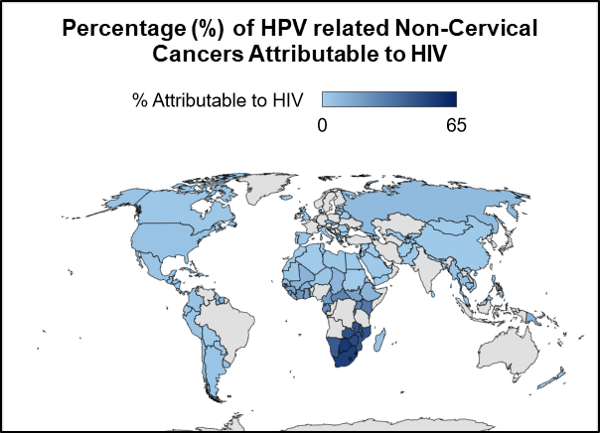
166. Impact of Urine TFV Testing on PrEP Adherence in South African Pregnant and Postpartum Women: An RCT
Oral Abstracts
Pages: 39-40
Dvora L. Joseph Davey1, Kalisha Bheemraj2, Rufaro Mvududu2, Sumaya Dadan2, Kathryn L. Dovel1, Susan Cleary2, Monica Gandhi3, Thomas Coates1, Landon Myer2
Background
Non-adherence to oral TDF/FTC PrEP reduces efficacy for HIV prevention, including in pregnant and postpartum women (PPW). Urine tenofovir (TFV) testing detects dosing in past 72 hours in people taking oral PrEP, but there are few insights into whether providing PPW with feedback on urine TFV test results can support PrEP adherence. We examined this as the primary outcome of Step 1 of the Stepped Care to Optimize PrEP Effectiveness in PPW trial (NCT05322629).
Methods
We enrolled pregnant women attending primary care antenatal services in Cape Town without HIV who were >15 years old, >20 weeks’ gestation, and initiating or taking PrEP in pregnancy. We block randomized women 1:1 to the intervention (Int; biofeedback counseling based on urine TFV test result) vs. standard of care control (SOC; PrEP counseling without biofeedback; urine collected and TFV testing performed without the participant). PrEP was delivered to all women through standard public health services. The primary outcome was the impact of the urine TFV biofeedback intervention on objective PrEP adherence measured at 6m (based on urine TFV test results in both arms). Primary analyses were via intention to treat and assumed that women who did not attend the 6m study follow-up visit were non-adherent to PrEP. Results are presented at risk ratios (RR) with 95% Confidence Intervals (CI).
Results
Among 750 HIV- women on or initiating PrEP in pregnancy randomised (375 Int; 375 SOC), median age was 26 years (IQR:22-32); median gestational age was 29 weeks (IQR:23-35); 38% were married or cohabiting. Overall, 54% of women attended the 6m primary outcome visit (Int=58%; SOC=51%) of whom 66% self-reported PrEP in the past week (Int=68%, SOC=64%). For the primary outcome, 32% of Int participants had urine TFV+ (n=120 of 372) vs. 25% in SOC (n=91 of 365) (RR=1.29; 95% CI=1.03-1.63; Table). Findings persisted after adjustment for socio-demographic and HIV risk factors and were consistent across subgroups of PPW age, timing of enrollment and follow-up, and HIV risk markers.
Conclusions
In this setting a large proportion of women initiating PrEP in pregnancy do not persist through 6m; however, biofeedback using urine TFV testing was associated with small but significant increases in PrEP adherence. These findings point to the urgent need for long-acting PrEP modalities for PPW, and among women who use oral TDF/FTC, the potential impact of biofeedback interventions to enhance adherence.
Table 1.
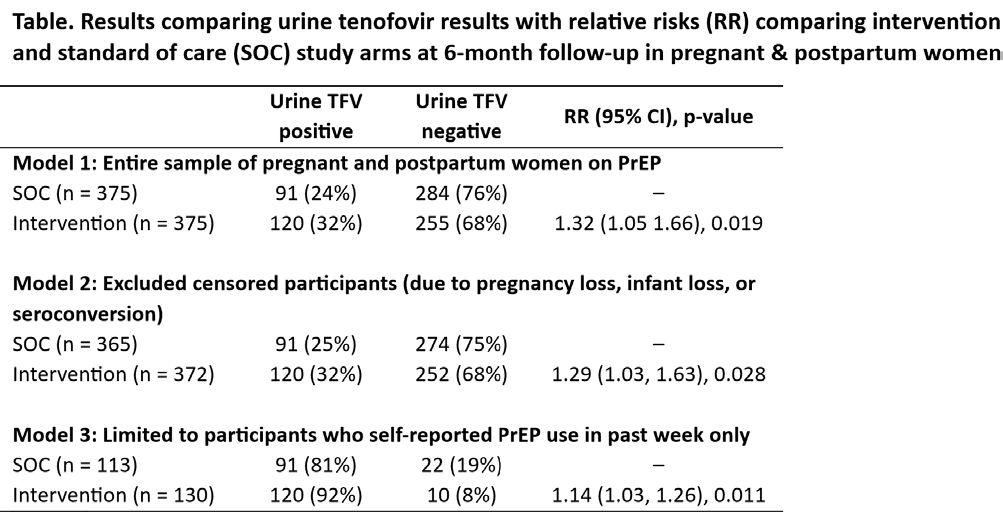
167. Brain Volume Normalization After 96 Weeks of ART Started During Acute HIV Infection
Robert Paul1, Jacob Bolzenius1, Phillip Chan2, Carlo Sacdalan3, Donn Colby4, Julie Mannarino1, Lydie Trautmann5, Serena Spudich2, Victor Valcour6, Somchai Sriplienchan3, the RV254/SEARCH 010 Study Team
Background
Previous studies on brain volumes in people with HIV (PWH) who initiated antiretroviral therapy (ART) during acute HIV infection (AHI) were limited by the absence of a control group or brief follow-up periods. A recent cross-sectional analysis revealed larger volumes in regions vulnerable to HIV during AHI. Here, we compared longitudinal brain volume changes over 96 weeks between RV254 AHI cohort participants and people without HIV (PWoH).
Methods
The study included 119 RV254 AHI cohort participants and 45 demographically matched PWoH from Thailand, all of whom underwent two 3T brain MRI approximately 96 weeks apart. RV254 participants underwent the 1st MRI and completed the Patient Health Questionnaire (PHQ-9) for depressive symptoms, and a 4-test cognitive battery during AHI and prior to ART initiation at week 0. AHI participants achieved HIV suppression by week 24, and underwent the 2nd MRI at approximately 96 weeks post-ART. Brain volumes were quantified using voxel-based morphometry and summed across hemispheres. Repeated measures compared volumes within and between the groups. Correlations examined associations between brain volumes with cognitive performance (NPZ-4) and the PHQ-9 score at week 0 for the PWH group, with adjustments for multiple comparisons.
Results
Both groups were similar in age, education, and comorbidities. All RV254 participants were male, with a median age of 28, median CD4+ T-cell count of 412 (IQR 277-664) cells/mm3, and median plasma HIV RNA of 6.66 (IQR 5.73-6.90) log10 cps/ml at week 0. Both groups exhibited smaller brain volumes in most regions at week 96 compared to week 0 with no evidence of accelerated volume loss among PWH. At week 0, larger volumes were observed among PWH compared to PWoH in the hippocampus and thalamus with no differences between groups at week 96, consistent with normalization after ART. Amygdala and nucleus accumbens volumes were lower among PWH at week 0 without progressive volume loss. Among the AHI participants, larger hippocampal and caudate volumes at week 0 correlated with worse depressive symptoms and lower NPZ-4 score (p<.05).
Conclusions
We observed no evidence of more rapid brain atrophy in these young, healthy AHI individuals who initiated ART during acute infection compared to healthy PWoH. Larger brain volumes in select regions at week 0 (pre-ART) correlated with worse neurobehavioral indices, with normalization in brain volumes following sustained viral control.
The figure, table, or graphic for this abstract has been removed.
168. Spinal Cord as a Distinct Site of HIV Persistence and Dispersal in the Brain
Oral Abstracts
Pages: 40-41
Mattia Trunfio1, Cheryl Dullano1, Stephanie Solso1, Gemma Caballero1, Pinyi Du1, Brady Lapke1, Caroline Ignacio1, Magali Porrachia1, Patricia K. Riggs2, Davey Smith1, Antoine Chaillon1, Sara Gianella Weibel1
Background
The HIV reservoir in the central nervous system (CNS) poses a significant challenge to cure efforts, mostly by our limited understanding and access to this compartment.
Methods
Tissue samples across 9 CNS regions, including 5 spinal cord (SC) segments (pons, medulla, cervical, lumbosacral, and thoracic spinal cord [TSC], frontal motor cortex [FC], basal ganglia [BG], hippocampus [HP], and occipital cortex [OC]), and peripheral blood mononuclear cells (PBMCs) were collected during rapid autopsies (≤6 hour from death) from people with HIV enrolled in the Last Gift cohort. For each tissue, we measured cell-associated HIV DNA and RNA by ddPCR. Adjusted mixed-effects models compared the HIV reservoir measures across tissues. Single genome HIV-1 env sequencing (SGS, Illumina) and T cell receptor repertoire (TCR) sequencing were performed in a subset of participants. Bayesian phylodynamic and generalized linear models evaluated viral dispersal and associated factors. Tree- and distance-based methods evaluated compartmentalization.
Results
Twenty participants were evaluated: mean age 63±13 years, 85% males, median current CD4+ T cells 193/µL, 85% with plasma HIV RNA <40 cp/ mL. While HIV DNA levels in all the SC segments were lower compared to those in PBMCs (p<0.0001), they did not differ from the other CNS regions, except for higher HIV DNA in TSC compared to OC (p=0.039). HIV RNA levels were also similar across the CNS, except for BG that had higher HIV transcriptional activity compared to all the other CNS tissues and PBMCs (p<0.05 all). HIV-1 env diversity (entropy) in TSC was higher compared to that in FC and HP (p<0.05 both). In the 8 participants with SGS and TCR sequencing (≥4 CNS regions including TSC), phylodynamic models revealed viral migration between the SC segments and across the other CNS regions in all participants (e.g., Fig.A). Viral diversity, divergence, and TCR overlap (Morisita index) between CNS locations were not associated with HIV migration. Clear evidence of compartmentalization of HIV in the SC compared to the virus in the rest of the CNS and in PBMCs was supported in 2 and 3 participants, respectively (e.g., Fig.B).
Conclusions
This study provides a comprehensive characterization of the HIV reservoir and its dynamics within the human SC. The SC contributes to HIV persistence and replenishment of brain reservoirs and can be a distinct site of compartmentalization within the CNS. Larger studies are needed to fully understand the SC's role in reseeding peripheral tissues.
Figure 1.
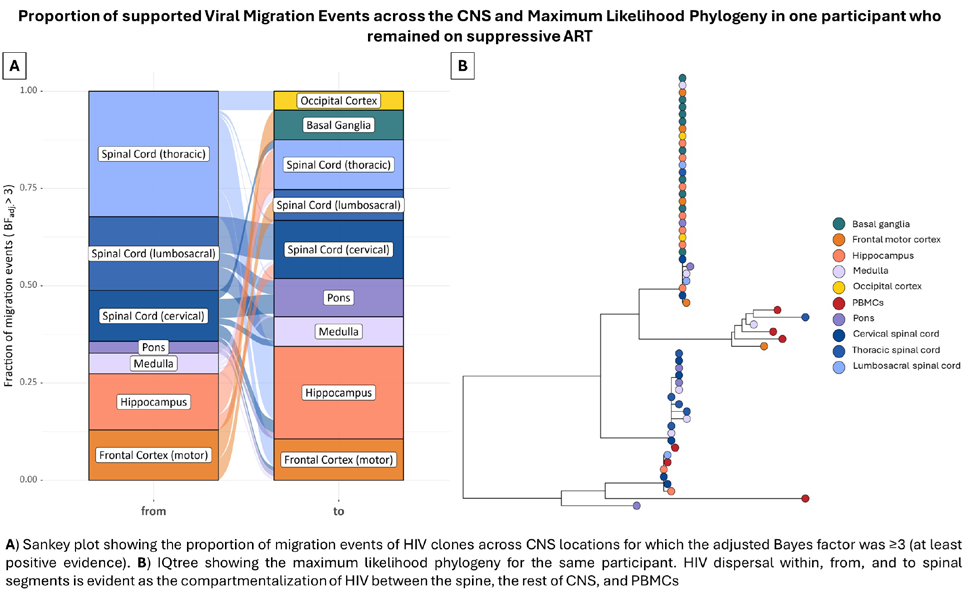
169. Longitudinal Persistence of HIV DNA in CSF Over 4 Years Despite Up to 20 Years of ART
Joshua C. Cyktor1, Evgenia Aga2, Asma Naqvi1, Dianna Hoeth1, Ronald J. Bosch2, Bernard J. Macatangay1, Joseph J. Eron3, Susan Koletar4, Deborah McMahon1, John W. Mellors1, Serena Spudich5, Rajesh T. Gandhi6, Constance A. Benson7, the ACTG A5321 Study Team
Background
The central nervous system (CNS) reservoir for HIV during ART has implications for both HIV cure and clinical outcomes. HIV DNA has been cross-sectionally detected in cerebrospinal fluid (CSF) cells but the longitudinal dynamics of HIV DNA in CSF during long-term suppressive ART are unknown.
Methods
16 participants in ACTG A5321/A5341s who started ART during chronic infection and had documented long-term suppression of plasma HIV RNA underwent 4-5 serial lumbar punctures (LP) over a span of 2.4-4.4 years. Cell pellets from ~13mL of CSF were assayed for total HIV DNA and cell-associated HIV RNA; cell-free HIV RNA by single copy assay was measured from CSF supernatant. Geometric means of longitudinal measurements were calculated using censored-data methods, analyzing both quantifiable and below assay limit values, and used for Spearman correlation analyses.
Results
The participants (100% male) had a median (IQR) age of 56 (50, 59) years, and were on ART for median 9 (range 6-16) years at their first LP. All participants had HIV DNA detected in CSF at one or more time points, and in total, 48/79 samples assayed had detectable HIV DNA. 11/16 participants (69%) had detectable HIV DNA in CSF at ≥ 3 timepoints, based on a median of 4,400 cells assayed. There was no evidence for a decay in CSF HIV DNA over time (Figure 1; p=0.8 from a censored-data model). The geometric mean of each participant’s CSF HIV DNA across time points correlated with the amount of HIV DNA in blood measured near the time of the first LP (r=0.45, p=0.09) but no correlations were evident with pre-ART plasma HIV RNA, pre-ART CD4 cell count, or duration of ART. Cell-free HIV RNA in CSF was only detectable in 2 participants, at 1 or 2 time points (3 of 77 assays performed, with levels 1-4 copies/mL). Cell-associated HIV RNA in CSF was detectable in 3 participants, each at a single time point.
Conclusions
In a longitudinal study in which 4-5 serial LP were obtained over 2-4 years in people on ART for 6-19 years, HIV DNA was found to persist in CSF in most participants with no evidence of decay. These findings highlight the ongoing exposure of the CNS to infected cells during long-term ART, and the need to further understand the characteristics and pathobiological relevance of cells harboring HIV DNA in the CSF compartment.
Figure 1.
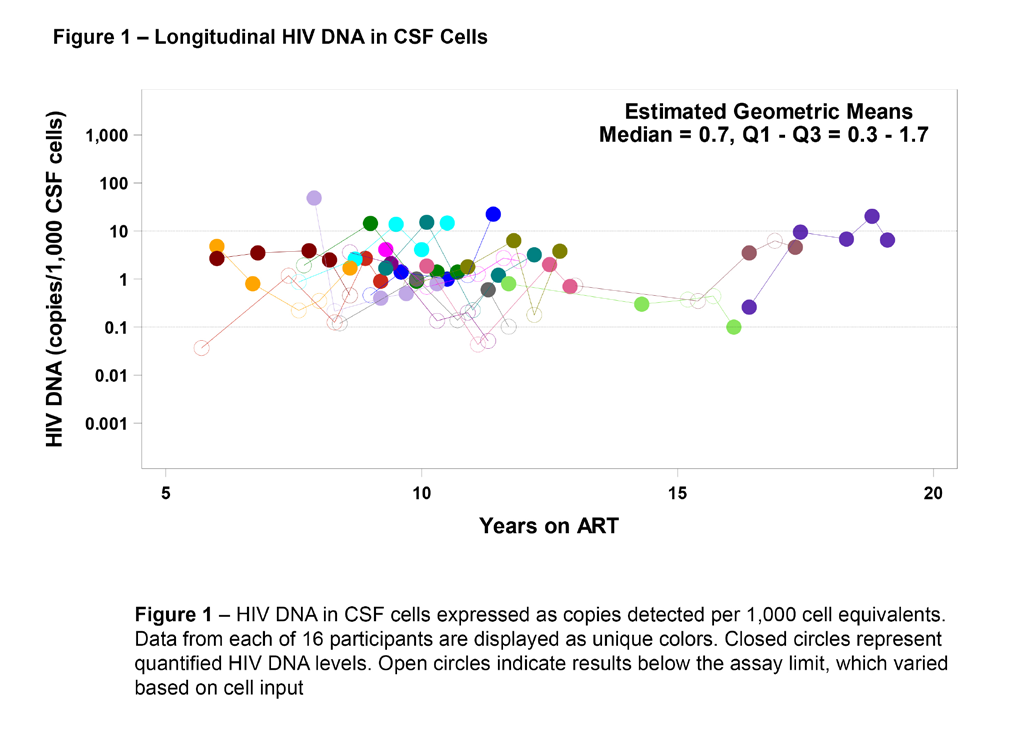
170. Single-Nuclei Multiome Analysis of CSF Cells Reveals Dendritic Cell Dysregulation Despite ART
Michael J. Corley1, Chang Lu2, Paraskevas Filippidis2, Benjamin Orlinick2, Alina Pang1, Bibhuprasad Das2, Jennifer Chiarella2, Allison Nelson2, Sameet Mehta2, Serena Spudich2, Yuval Kluger2, Shelli Farhadian2
Background
Neurologic consequences of HIV linger even after viral suppression, suggesting a molecular “scar” that persists despite antiretroviral therapy (ART). However, whether innate immune cells in the cerebrospinal fluid (CSF) are altered during HIV and how they contribute to neuropathogenesis are poorly understood, owing in part to difficulties in isolating these rare populations of cells before the advent of single cell technologies.
Methods
We enrolled 12 neurologically asymptomatic people with HIV (PWH) on suppressive ART and 11 demographically matched people without HIV (PWoH) for cross-sectional CSF single immune cell epigenome and transcriptome analyses. We utilized the 10X Genomics single nucleus multiome platform (ATAC-Seq + RNA-Seq), modified for low-cellular CSF, for 6 PWH and 5 PWoH (33,353 total nuclei). ATAC-seq data was used to identify open chromatin regions (peaks). We validated the single-nucleus transcriptomic data with additional data previously collected utilizing 10X 5’ single cell RNA-Seq from CSF of 7 PWH also on ART with features similar to the multiome participants and 6 PWoH (102,313 total cells).
Results
CSF of both PWH and PWoH consisted primarily of T cells (median=89.5%; IQR=6.2%), and secondarily of myeloid cells (median=5.9%; IQR=6.5%), including a small percentage of dendritic cells (DCs) (median=2.4%; IQR=1.7%). We identified 555 differentially accessible chromatin regions (DARs) across all cell types between PWH and PWoH. Despite comprising only a minority of CSF cells, DCs contained 32.8% of DARs, most of which were more open (more accessible) in PWH (130/182) (Fig. 1A). By annotating these DARs of DCs to their nearest genes, we identified 145 genes, including interferon-related genes IFI6 and GBP4, both of which exhibit differential RNA expression between PWH and PWoH in DCs. In our validation dataset of 5’ single cell RNA-Seq CSF transcriptomes, we observed a DC transcriptomic signature in CSF of PWH compared to PWoH (Fig.1B). Pathway analysis identified downregulation of antigen processing and presentation, and cytokine (mainly IL-1 and IL-12) signaling in DCs in PWH. Lastly, we detected extremely rare HIV RNA and chromatin-accessible provirus DNA in CSF cells.
Conclusions
Single-cell epigenome and transcriptome profiling of CSF suggests dysregulation of DCs in virally suppressed PWH. Further studies are needed to determine if these changes impair antigen presentation and antiviral responses, contributing to HIV persistence and neuropathogenesis.
The figure, table, or graphic for this abstract has been removed.
171. Plasma Phosphorylated Tau 217 and Cognitive Decline in Older Thai People With HIV
Akarin Hiransuthikul1, Poosanu Thanapornsangsuth2, Watayuth Luechaipanit2, Thanaporn Haethaisong2, Sasiwimol Ubolyam3, Chuleeporn Wongvoranet4, Tanakorn Apornpong4, Win Min Han5, Hay Mar Su Lwin4, Napon Hiranburana4, Stephen Kerr1, Anchalee Avihingsanon6, the HIV-NAT 006 and 207 Study Teams
Background
Alzheimer’s disease (AD) is the leading cause of dementia worldwide, and accurate diagnosis is crucial, including for people with HIV (PWH). Blood-based biomarkers for AD offer a promising, low-cost, non-invasive diagnostic alternative, but data are limited in PWH. Our study measured phosphorylated tau 217 (p-tau217)–the only blood-based biomarker currently recommended for diagnosing AD–and assessed its potential in predicting cognitive decline among virologically suppressed older Thai PWH.
Methods
Blood samples were collected at baseline from virologically suppressed PWH aged 50 years and older, who completed the Thai-validated Montreal Cognitive Assessment (MoCA) at baseline (2015–2017) and a follow-up visit (2021–2024). Cognitive impairment was defined as a MoCA score of less than 25. P-tau217 levels were measured and categorized by quartiles, with a binary comparison between quartile 4 (Q4) and quartile 1–3 (Q1–3). A multivariate linear mixed-effects model, adjusted for sex, education level, baseline MoCA score, HIV duration, nadir CD4 levels (<200 and ≥ 200 cells/ mm3), and exposure to efavirenz, with an interaction term for baseline p-tau217 quartile and age, was used to estimate the effect of baseline p-tau217 levels on the changes in cognitive performance overtime.
Results
A total of 255 PWH, with a median interval between MoCA of 5.9 years (IQR: 5.6–6.8), were included: 63.1% were male, median age was 54.3 years (IQR: 51.8–59.1), 76.1% had more than six years of education, median HIV duration was 18.7 years (IQR: 15.3–21.0), and 61.2% had cognitive impairment. There was no significant difference in the proportion of PWH with cognitive impairment at baseline between those in Q4 and those in Q1–3 of p-tau217. However, PWH in Q4 were significantly more likely to have a reduction in MoCA score at follow-up visit than those in Q1–3 (62.5% vs. 49.2%, P=0.01). In the adjusted model, PWH in Q4 showed a significantly greater decline in cognitive performance, with a MoCA score decrease of -4.3 (95% CI -5.8 to -2.7) compared to -1.7 (95% CI -2.6 to -0.8) for Q1–Q3 from age 50 to 80 years (Figure). The association between higher p-tau217 levels (Q4 vs. Q1-Q3) and greater decline in MoCA scores become more pronounced with increasing age (P-interaction=0.02).
Conclusions
Older virologically suppressed Thai PWH with higher baseline p-tau217 levels showed a greater cognitive decline. Measurements of biomarkers for staging and prognostication of AD are ongoing.
Figure 1.
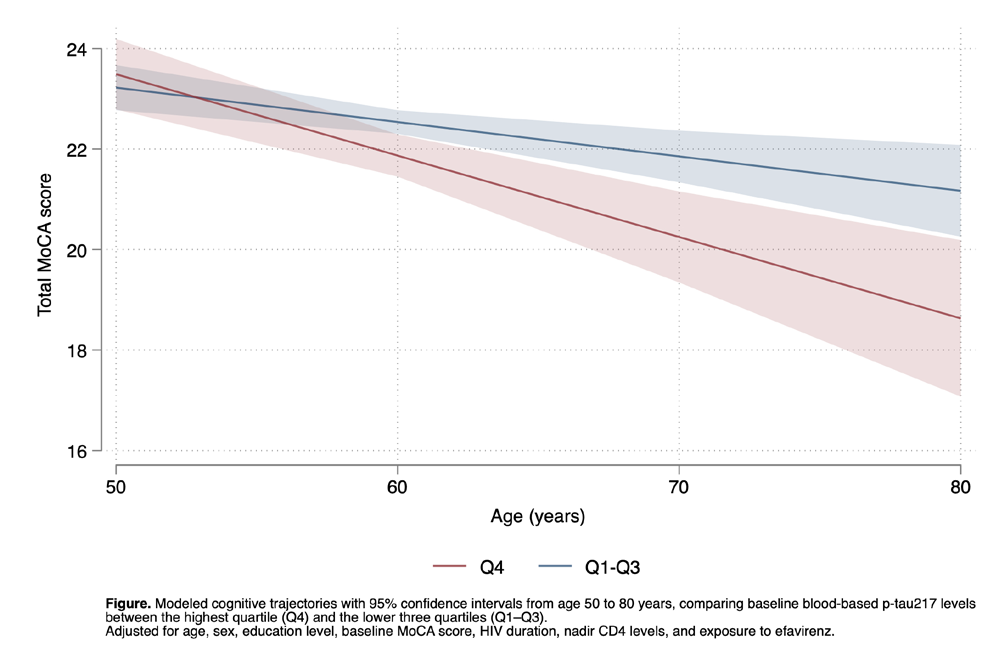
172. Semaglutide Improves Cognitive Function in HIV, Effect Mediated by Decrease in Inflammation
Ornina Atieh1, Jhony Baissary1, Qian Wu1, Abdus Sattar1, Danielle Labbato2, Allison Ross Eckard3, Christian Mouchati4, Grace A. McComsey1
Background
People with HIV (PWH) are at higher risk for visceral adiposity and enhanced inflammation, and lower neurocognitive function when compared to controls without HIV. In a recent randomized placebo-controlled clinical trial of the GLP1 receptor agonist semaglutide, we demonstrated that PWH with lipohypertrophy had a decrease in weight, visceral adipose tissue, and in several inflammatory markers including high sensitivity C-reactive protein (hs-CRP). This study aims to investigate the effect of semaglutide on neurocognitive function and the mediation of this effect by changes in adiposity and inflammatory markers in PWH.
Methods
This study is a randomized, double-blind, placebo-controlled phase 2b clinical trial conducted at University Hospitals of Cleveland, Ohio. We included adult PWH on ART with controlled HIV, BMI of ≥25 Kg/m2, and increased waist-to-hip ratio. Participants were randomized 1:1 to receive 32 weeks of subcutaneous Semaglutide or placebo. The Cognivue®, an FDA-approved computer-based test, was used to evaluate cognitive function at baseline and at 32 weeks. This comprehensive assessment encompassed multiple subdomains, including memory, visuospatial ability, attention, and executive function. Furthermore, a whole-body DEXA scan and a non-contrast helical CT scan were used to assess for changes in body composition, alongside the evaluation of inflammatory markers. We performed causal mediation analysis in examining association among various direct and indirect effects of semaglutide on the cognitive scores.
Results
108 participants were included (54 per arm); 62% non-white, 40% female, and median age of 53 years. Compared to placebo, PWH on semaglutide had a significant increase in visuospatial, naming/language, and delayed recall scores at 32 weeks (p = 0.01, 0.05, and 0.04, respectively). After adjusting for sex and CD4 count, only the visuospatial score remained statistically significant (p=0.05). The total natural direct effect (TNDE) of semaglutide maintained a positive effect on the visuospatial score while accounting for potential changes in hs-CRP levels (p=0.04). No correlations were observed between changes in cognitive scores on semaglutide and changes in total or central adiposity.
Conclusions
Semaglutide has shown a beneficial impact on cognitive function in people with HIV, particularly in relation to visuospatial cognitive function. This effect appears to be mediated by the effect of the drug on inflammation.
Figure 1.
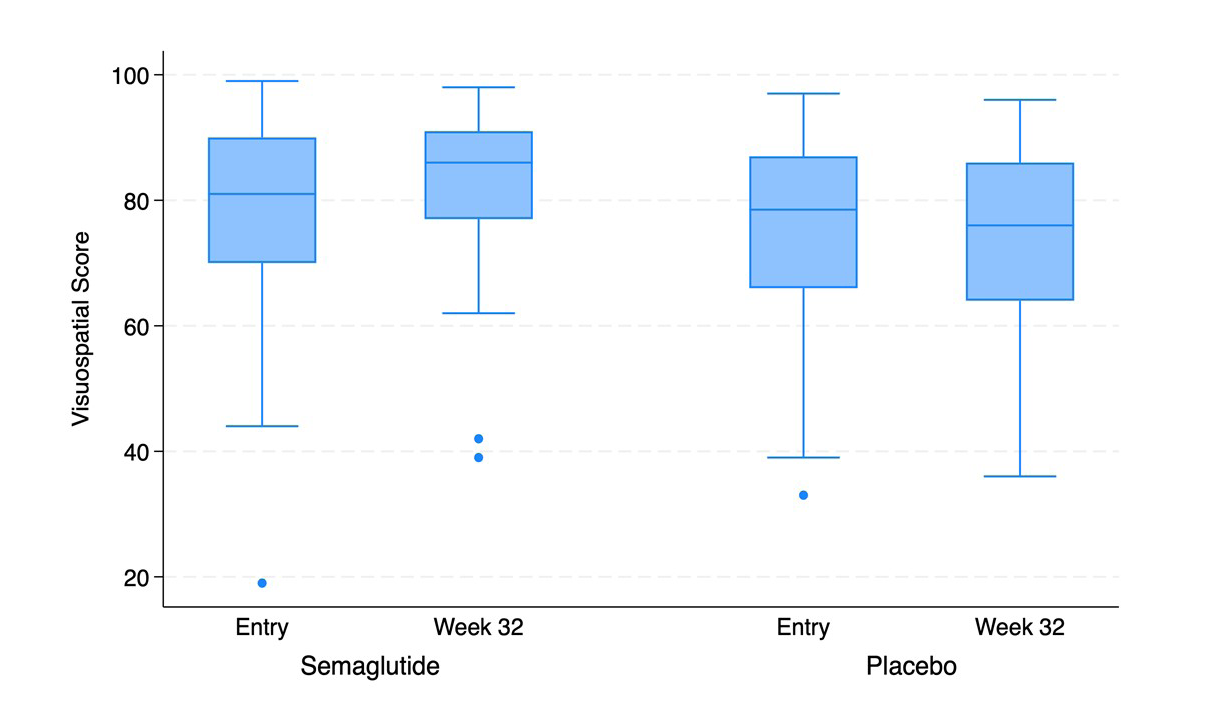
173. Brain Gray and White Matter Alterations in Cognitive Long COVID
Oral Abstracts
Pages: 42-43
Lindsay S. McAlpine1, Nuno Barros2, Allison Nelson1, Rafay Khan2, Cheryl Lacadie1, Shelli Farhadian1, Todd Constable1, Serena Spudich1
Background
Cognitive dysfunction is a common symptom of Long COVID (LC), but its underlying pathobiology is unclear. We hypothesized that multimodal structural brain MRI imaging in people with cognitive LC (c-LC) would demonstrate grey and white matter alterations in brain regions relevant to c-LC symptoms compared to no LC (n-LC) controls.
Methods
Individuals with c-LC (new self-reported cognitive symptoms >3 months after COVID) and n-LC (COVID >3 months prior and no LC) were prospectively enrolled for studies on a single Siemens 3T scanner. Sequences included 3D T1 MPRAGE (1mm) for cortical gray matter (CGM) volume, 3D FLAIR (1.2mm) for white matter hyperintensity (WMH) volume, and Diffusion Tensor Imaging (DTI) (2mm) for white matter integrity measures fractional anisotropy (FA) and mean diffusivity (MD). Post-processing used Icometrix AI-based software and Bioimage Suite. The Johns Hopkins atlas was used to generate FA and MD for regions of interest (ROI). Analyses used parametric statistics and FDR to correct for multiple comparisons.
Results
23 c-LC (median age 45 years [IQR 41–59], 73% female, 630 days [IQR 365–829] after COVID-19) and 19 n-LC (median age 38 [33 – 44], 73% female, 516 days [IQR 410-797]) were enrolled. The groups differed in age (p=0.03) but were similar in gender, race, and cardiovascular risk factors which were low in prevalence. CGM volumes were lower in the c-LC group in three key regions: right parietal lobe and supramarginal region (SM), right ventrolateral prefrontal cortex (VLPFC), and left posterior cingulate (for statistics, see Table). WMH lesion volume was similar between groups (c-LC: 0.65 mL n-LC: 0.65 p:0.90). In the fornix, FA and MD were both altered in the c-LC group compared to n-LC. In the c-LC group, MD was lower in the left posterior corona radiata and transverse pontine fibers compared to n-LC (Table). There was no difference between groups in the remaining ROIs.
Conclusions
Our finding of specific regional grey and white matter alterations aligns closely with c-LC symptomatology. The SM is intimately connected to the VLPFC and is involved in articulatory sequencing and language and executive processing; VLPFC is involved in speech production and emotional associations and regulation. Altered CGM in the left cingulate and left corona radiata and DTI measures in the fornix aligns with dysfunction of key memory circuits. These structural 3T brain MRI findings may serve as biomarkers for diagnostic and mechanistic understanding of c-LC.
Table 1.
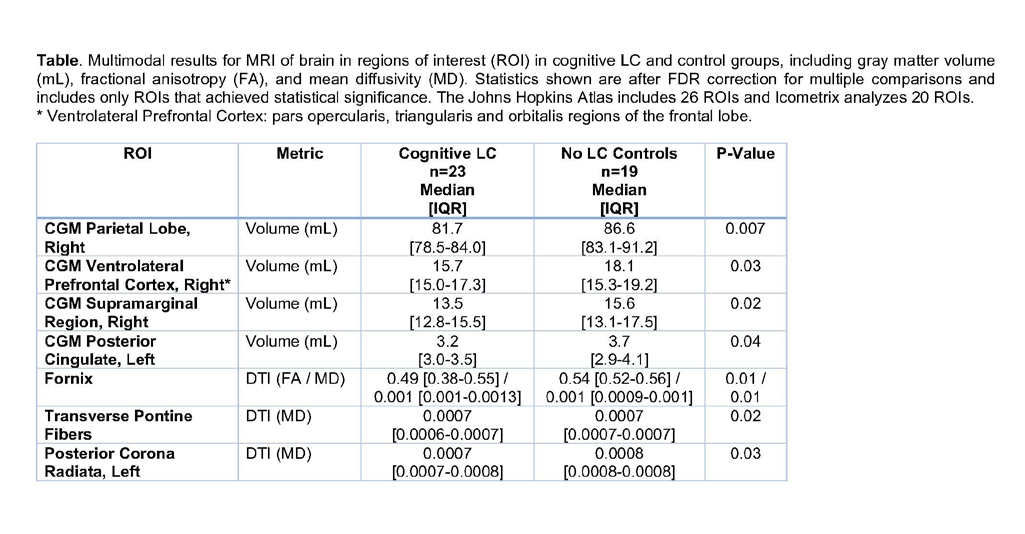
174. Structural Brain Volumes Decrease After SARS-CoV-2 Infection Among People With HIV
Jacob Bolzenius1, Ferron F. Ocampo2, Carlo Sacdalan3, Somchai Sriplienchan3, Luxe-Naree Poonpitak3, Napapon Sailasuta4, Julie Ake5, Donn Colby5, Phillip Chan6, Lydie Trautmann7, Sandhya Vasan7, Trevor Crowell5, Kilian Pohl8, Serena Spudich6, Robert Paul1, the RV254/SEARCH 010 Study Team
Background
Healthy individuals who contract SARS-CoV-2 exhibit structural brain changes after infection. To assess whether SARS-CoV-2 is associated with unique or additive brain effects among people with HIV (PWH), we capitalized on systematic longitudinal 3T MRIs captured in the RV254 acute HIV (AHI) Thai cohort to compare changes between PWH who did or did not acquire SARS-CoV-2 infection.
Methods
RV254 participants are enrolled and offered antiretroviral therapy (ART) during AHI. This analysis included PWH who underwent longitudinal 3T MRI, with the first scan acquired ≥5 months after ART initiation. Participants who then acquired SARS-CoV-2 (COVID+ PWH) between 2 scans were compared to those who completed >2 scans prior to 2020 and thus were SARS-CoV-2 naïve (COVID- PWH). Selected regions included those susceptible to SARS-CoV-2 (olfactory cortex, superior frontal gyrus, orbital gyrus, gyrus rectus, hippocampus, and amygdala), and HIV (caudate, pallidum, putamen, thalamus, nucleus accumbens). Volumes were summed across hemispheres and corrected for head size. Longitudinal differences were assessed using a repeated-measures MANOVA with a false discovery rate (FDR) correction for multiple comparisons.
Results
Fifty RV254 COVID+ PWH (pre-COVID scan at median=5.6 years after ART initiation) were compared to 16 COVID- PWH. Subgroups did not differ by age, CD4 count, or HIV RNA detection rate (overall median [IQR] baseline 27 [23-31] years, 632 [476-859] CD4+ cells/µL, 1.5% detectable); baseline CD4/ CD8 ratio was lower in COVID+ PWH (p=.031). Volumetric trajectories differed significantly by group in the superior frontal (p<.001), anterior orbital (p=.014), and medial orbitofrontal (p=.043) gyri, and nucleus accumbens (p=.037). Only the change between groups in the superior frontal gyrus remained significant after FDR correction (p=.002), where COVID+ PWH had volumetric decreases (-339 mm3) while COVID- PWH exhibited increases (+393 mm3).
Conclusions
In the longitudinal RV254 study, participants acquiring SARS-CoV-2 demonstrated evidence of structural brain changes over time compared to those followed prior to the COVID pandemic in regions susceptible to both conditions despite well-controlled HIV viremia. This implicates frontal gray matter in as a potential locus of SARS-CoV-2 impacts among PWH. Additional work will more fully evaluate temporal profiles and mechanisms of brain change relative to both conditions independently as well as their potential synergistic effect on brain integrity.
Figure 1.
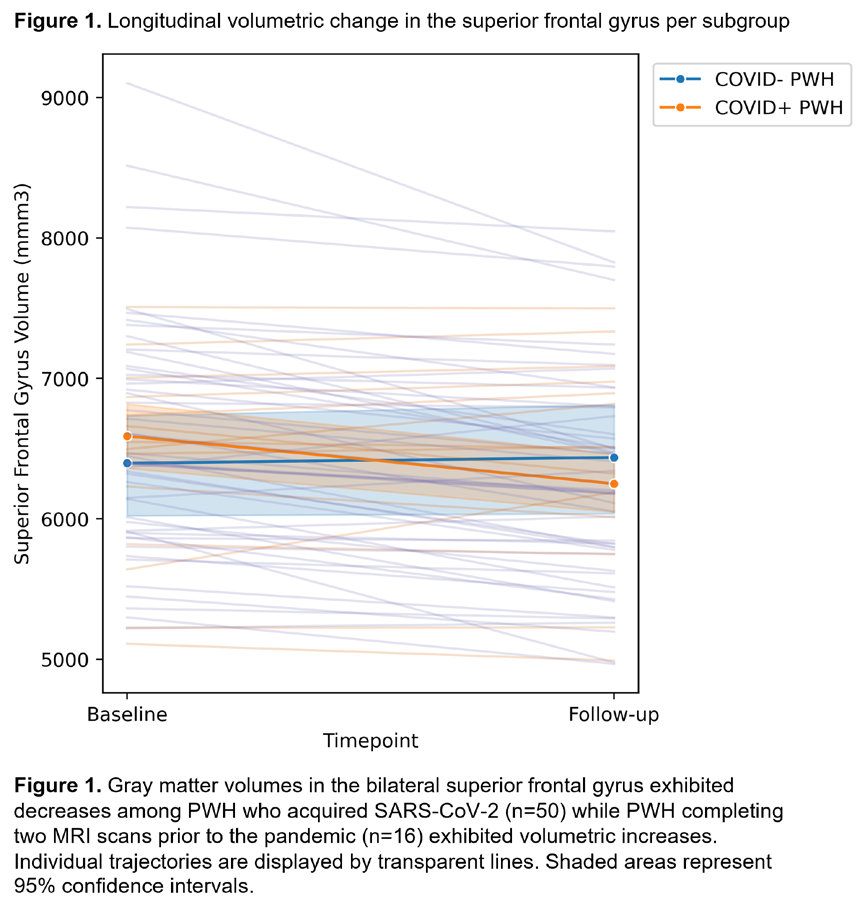
175. Major Improvement in Age-Related Health Outcomes in People Living With HIV: A 18-Year Cohort Study
Oral Abstracts
Pages: 43-44
Javier Martínez-Sanz1, Matilde Sánchez-Conde1, Jorge Díaz Álvarez1, Marta Rosas Cancio-Suárez2, Antoni Abdon Campins Rosselló3, Joaquim Peraire4, Juan Macias5, Xabier Camino Ortiz de Barrón6, María Saumoy7, Marta Herrero Romero8, Maria Jesus Perez Elias1, Santiago Moreno2, Alejandro Garcia1, Adrian Curran9, the Cohorte de la Red de Investigación en Sida (CoRIS)
Background
Antiretroviral therapy (ART) has transformed HIV from a life-threatening infection into a manageable chronic condition, allowing people living with HIV (PLWH) to have a significantly longer lifespan. However, as this population ages, they become increasingly susceptible to non-AIDS-related comorbidities typically associated with aging. Understanding the evolving patterns of these age-related conditions is essential to optimize care for this group. In this study, we analyzed trends in severe non-AIDS events (SNAEs) over different time periods to provide insights into how advances in HIV management have impacted the onset and frequency of these comorbidities.
Methods
Using CoRIS, a Spanish multicenter prospective cohort with more than 20,000 PLWH, we defined three six-year periods: 2006–2011, 2012–2017, and 2018–2023. The primary outcome was a diagnosis of a severe non-AIDS event (SNAE) during follow-up. SNAE was defined as a composite event, including major adverse cardiovascular events (MACE), non-AIDS-defining malignancies, and non-accidental deaths. MACE included nonfatal myocardial infarction, nonfatal stroke, and cardiovascular death. We used the Kaplan-Meier method to plot the cumulative probabilities of events for each defined period. We used Cox proportional hazard models to assess the hazard ratios (HR) of events by period adjusted for age, sex, educational level, risk practice, geographic origin, CD4 nadir, baseline CD4/CD8, and baseline VL. We used linear regression to predict the mean age at first event in each period, using the same covariates.
Results
A total of 18,659 ART-naïve participants were enrolled in the cohort between 2006 and 2023. The incidence of SNAEs in each period was 1.44 (95%CI 1.29-1.61), 0.95 (95%CI 0.83-1.08), and 0.67 (95%CI 0.57-0.79) per 1000 person-years, respectively (p<0.001; Figure 1A). The adjusted HR for SNAEs compared to period 1 was 0.81 (95%CI 0.66-0.99) in period 2 and 0.58 (95%CI 0.45-0.73) in period 3. The adjusted predicted age for the first event was 42.2 (95%CI 39.8-44.6), 45.6 (95%CI 43.5-47.8), and 48.3 (95%CI 45.4-51.3) years, respectively (Figure 1B).
Conclusions
The incidence of severe non-AIDS events among PLWH has decreased significantly over time, with a notable delay in the age of onset of these events. This could indicate that improvements in HIV treatment and care contribute to healthier aging in this population.
Figure 1.
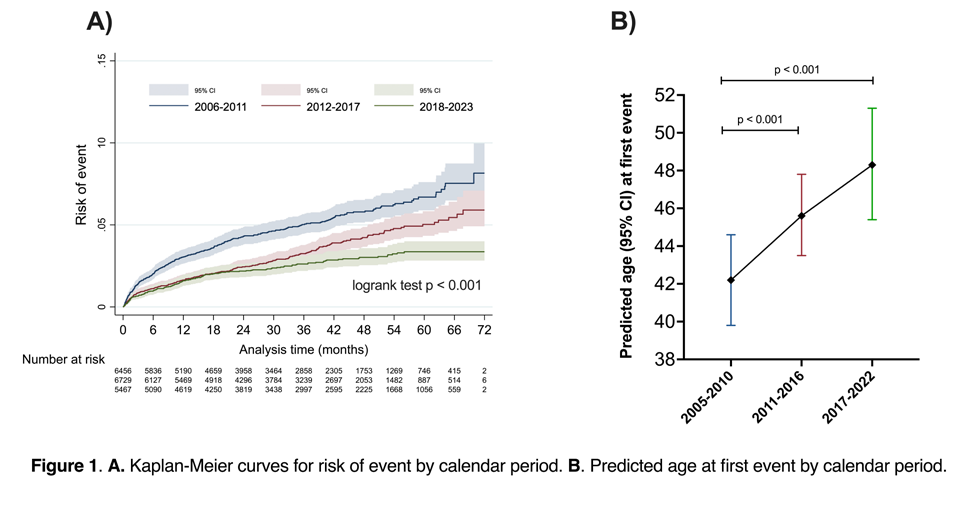
176. Early vs Deferred HIV Therapy and Cardiovascular Disease in People With HIV: The START Study
Nila J. Dharan1, Shweta Mistry2, Alejandro Arenas-Pinto3, Daniel Duprez2, Vicente Estrada4, Karen Ha5, Mariana Kundro6, Rosie Mngqibisa7, Henry Mugerwa8, Rakan Nassreddine9, Tess Peterson10, Irini Sereti11, Janine Trevillyan12, Jason Baker2, Gail Matthews13, the INSIGHT START Study Group
Background
Cardiovascular disease (CVD) risk is higher in people with HIV (PWH) than people without HIV. However, whether this elevated risk of CVD is present in antiretroviral therapy (ART)-naïve PWH with high CD4+ counts, and whether delayed initiation of ART worsens CVD outcomes is unknown.
Methods
The Strategic Timing of Antiretroviral Treatment (START) study randomized ART-naïve adults with HIV and CD4+ counts>500 cells/µL to immediate vs. deferred (until CD4 count <350/µL or AIDS developed) ART initiation. We report CVD event rates (composite of MI, stroke, coronary revascularization, or death from CVD) between treatment arms in three time periods: (i) pre-2016 (ART use differed by treatment arm); (ii) post-2016 (study was unblinded and continuous ART use was recommended for both groups, 2016-2021); and (iii) over the entire study. Subgroup analyses were performed according to baseline demographic, clinical characteristics and CVD risk factors. Time-to-event methods compared event rates between study arms.
Results
Overall, 4,684 participants were randomized (median age 36 yrs, 27% female, 30% Black race); 4436 (95%) had data available after 2016. At baseline, 32% were smokers, 17% had a BMI≥30 kg/m2, and the median Framingham 10-yr risk score was 1.9%. Comorbidities included hypertension (19%), dyslipidemia (8%), and diabetes (3%); 0.8% had prior CVD. Composite CVD event rates were similar between treatment arms during the pre- and post-2016 periods: 0.18 and 0.17 per 100 person yrs (PY) pre-2016 in the immediate and deferred arms, respectively, and 0.16 and 0.17 per 100 PY post-2016 in the immediate and deferred arms, respectively (Figure 1). Over the entire study (median follow-up of 9.3 yrs), 71 participants (35 immediate, 36 deferred) had a CVD event. There was no difference in events between arms (immediate/ deferred hazard ratio [HR] 0.98; 95% confidence interval [CI] 0.61-1.56) for the composite CVD outcome or its components. Immediate vs. deferred ART was associated with a reduced risk of CVD in women (HR 0.19; CI 0.04-0.86) but not in men (HR 1.33; CI 0.79-2.24), p-value for interaction=0.014; interpretation is limited by low numbers of events.
Conclusions
While immediate ART is known to reduce the risk of many clinical comorbidities and adverse outcomes among PWH, we did not find an effect of early ART initiation for reduction of CVD events among individuals at low CVD risk and moderate to high CD4 counts in the START study. The benefit found among women warrants further evaluation.
Figure 1.
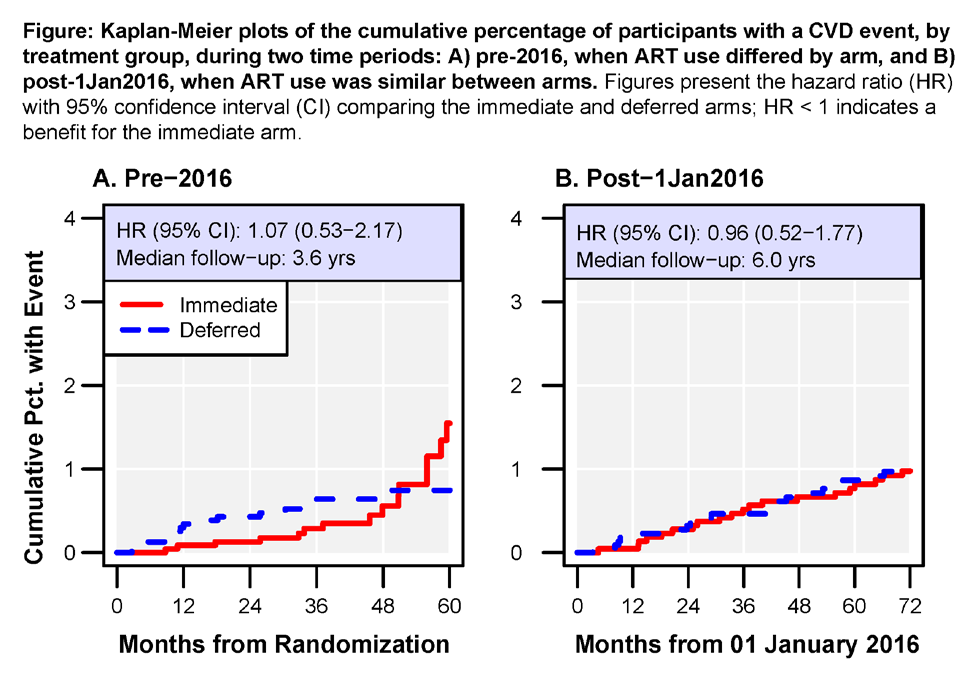
177. Epidemiology of Coronary Atherosclerosis Among People Living With HIV in Uganda
Oral Abstracts
Pages: 44-45
Mark J. Siedner1, Brian Ghoshhajra1, Geoffrey Erem2, Rita Nassanga2, Mangun Randhawa1, Moses Acan3, Zahra Reynolds1, Flavia Atwiine3, Edna Tindimwebwa4, Ntobeko Ntusi5, Alexander Tsai1, Susanne Hoeppner1, Chris Longenecker6, Samson Okello3, Stephen Asiimwe4, the Uganda CAD (Coronary Artery Disease) Study Team
Background
HIV is an established risk factor for coronary atherosclerotic disease (CAD) in the United States and Europe. However, data linking HIV infection with coronary atherosclerosis in the African region are lacking.
Methods
We enrolled people living with HIV (PWH) over 40 and on antiretroviral therapy (ART) for a minimum of three years from public-sector HIV clinics in Uganda. We then used population census data to recruit age-and sex-similar comparators without HIV (PWoH) from the same resident communities. Participants underwent cardiovascular disease (CVD) risk profiling and computed tomography (CT), including coronary artery calcium (CAC) scoring and coronary CT angiography (CCTA) for detection of CAD. Our primary outcome of interest was CAD, defined by presence of calcified or non-calcified plaque. Prespecified secondary outcomes were prevalence of non-calcified plaque, coronary artery segment involvement score, Agatston calcium score, and Coronary Artery Disease Reporting and Data System (CAD-RADS) Score. We fit multivariable regression models with HIV as the primary exposure of interest before and after adjustment for CVD risk factors or the atherosclerotic cardiovascular disease (ASCVD) risk score.
Results
Out of 627 eligible individuals recruited, 586 met inclusion criteria and had evaluable images for interpretation. 287 (49.0%) were PWH, of whom over half (52%) had a CD4 count >500 cells/µL and most of whom (272/287, 95%) were virologically suppressed. PWH and PWoH were similar in age (57 years), proportion female (49%) and median ASCVD 10-year risk scores (3.4 vs. 4.1, P=0.30). Prevalence of CAD was low overall (54/586, 7.7%) and similar between PWH (26/287, 9.1%) and PWoH (19/299, 6.4%; absolute difference 2.7%, 95%CI -1.6, 7.0%). Findings were similar in multivariable regression models adjusted for CVD risk factors (adjusted prevalence ratio for PWH vs. PWoH 1.57, 95%CI 0.90, 2.74, P=0.11). Among those with plaque, prevalence of non-calcified plaque was similar between groups (8/26, 30.8% vs 5/19, 26.3%, P=0.60). Only 3 (0.5%) participants had an Agatston calcium score >100. No participants had a CAD-RADS score >2.
Conclusions
We found no difference in the prevalence of CAD or non-calcified plaque between PWH and PWoH in Uganda in the ART era. Our observations confirm smaller hospital-based studies demonstrating extremely low of CAD compared to populations in the Global North and suggest that CAD may not be a major cause of morbidity in PWH in Uganda.
Figure 1.
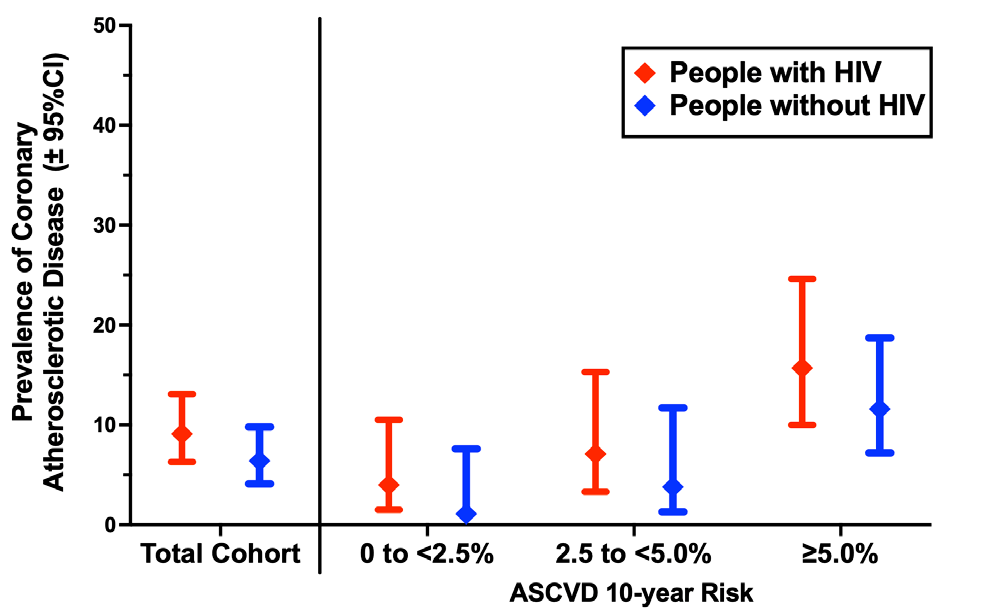
178. Plaque, Inflammation, Subclinical Myocardial Injury, and MACE in the REPRIEVE Mechanistic Substudy
Michael T. Lu1, Sara McCallum1, Heather Ribaudo2, Markella V. Zanni1, Christopher R. Defilippi3, Jana Taron1, Julia Karady1, Borek Foldyna1, Sarah Chu1, Carl Fichtenbaum4, Carlos Malvestutto5, Judith Aberg6, Thomas Mayrhofer1, Pamela Douglas7, Steven Grinspoon1, the REPRIEVE Study Team
Background
REPRIEVE established that pitavastatin prevents major adverse cardiovascular events (MACE) and reduces noncalcified coronary plaque (NCP) on coronary CT angiography, in low-moderate risk PWH. We leveraged the REPRIEVE Mechanistic Substudy to assess for the first time the relationship of coronary plaque and indices of inflammation and subclinical myocardial injury with MACE and the effects of pitavastatin on MACE.
Methods
REPRIEVE Mechanistic Substudy participants (N=804) enrolled from April 2015 to February 2018 at 31 US sites, randomized to pitavastatin 4 mg/day or placebo, were followed for incident MACE over median 5.9 yrs. We assessed the relationship of baseline NCP (n=755), markers of inflammation (hs-CRP, IL-6, and LpPLA-2) (n=790), as well as markers of subclinical myocardial injury (hs-cTnT) (n=750) with MACE and the modification of the statin effect by these parameters, using Cox proportional hazards models stratified by statin randomization.
Results
Of enrolled participants (17% female, 47% non-White, median age 51 yrs, LDL 105 mg/dL, 10-year cardiovascular risk 4.6%), MACE incidence was 7.26/1000 person-years (17 events) for pitavastatin and 9.15/1000 person-years (21 events) for placebo.
40% (302/755) of participants had NCP at baseline. NCP was present in 62% (23/37) of those with MACE compared to 39% (279/718) without MACE. The risk of MACE was greater in those with NCP vs. without (HR 2.5, [CI 1.3, 4.8], P=0.008 (Figure)). Elevated levels of hs-CRP (P=0.049) and hs-cTnT (P=0.003) and higher IL-6 (P=0.033) at study entry were associated with MACE (Figure). These trends persisted after adjusting for ASCVD risk.
The effect of pitavastatin to reduce MACE was higher in those with NCP (HR 0.56 (0.24, 1.31) vs. those without 1.28 (0.44, 3.68)). Likewise, a greater effect of pitavastatin was observed in those with elevated hs-cTnT (>7.5ng/L) vs. those without (HR 0.68 (0.30, 1.53) vs. 1.66 (0.40, 6.93)). However, confidence intervals overlapped given the small number of events in the substudy.
Conclusions
NCP and higher hs-cTnT, hs-CRP, and IL-6 are associated with MACE in asymptomatic low-moderate risk PWH. This analysis suggests that the benefit of pitavastatin to prevent MACE may be greater in persons with preexisting plaque and baseline levels of subclinical myocardial injury. Further investigation is needed to determine whether plaque and/or biomarkers can help identify PWH at highest risk who would most benefit from statin prevention.
Figure 1.
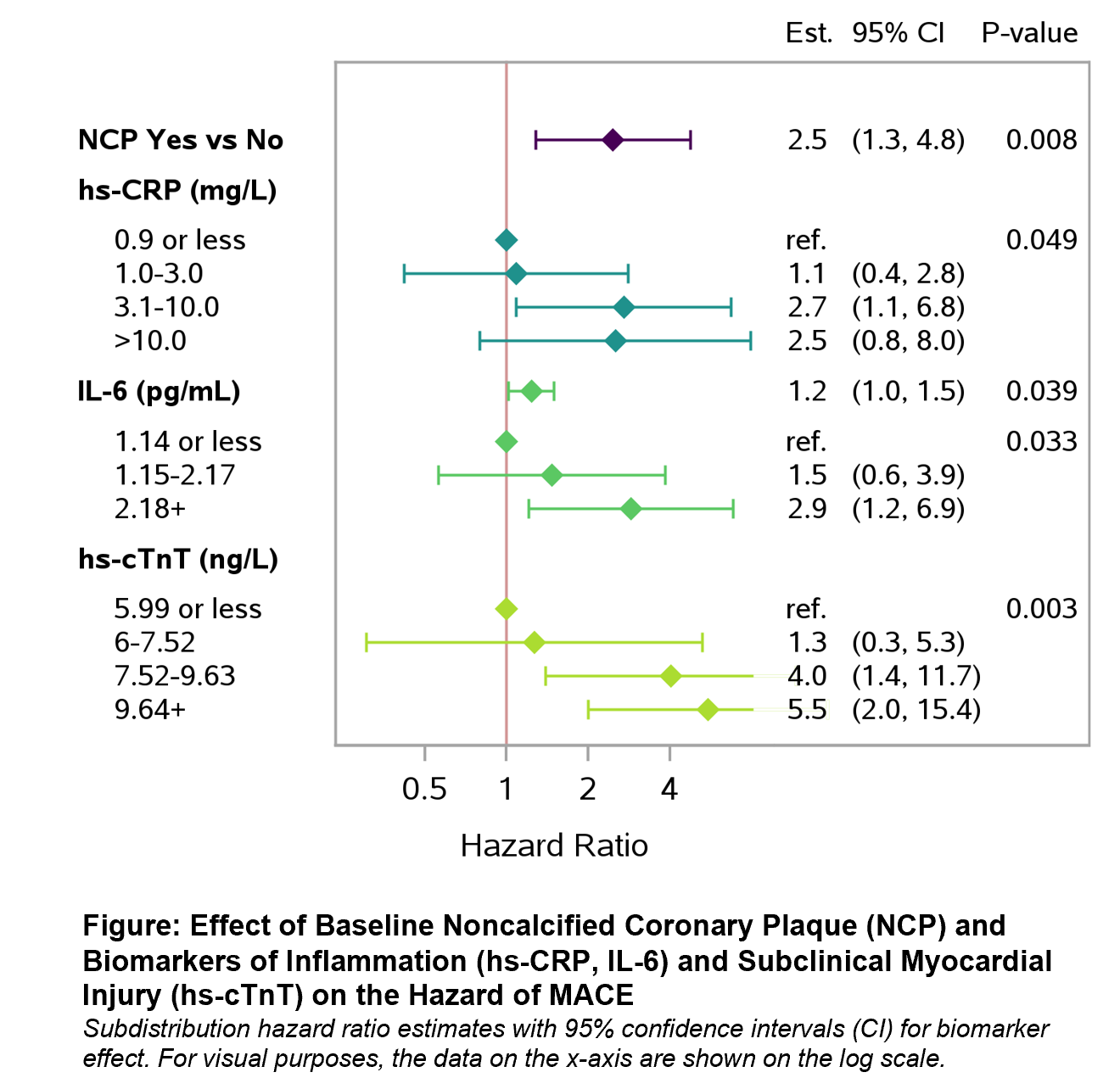
179. Frailty Is Associated With Higher MACE Incidence but Does Not Appear to Modify Pitavastatin Effects
Oral Abstracts
Pages: 45-46
Kristine M. Erlandson1, Ariela R. Orkaby2, Triin Umbleja3, Heather Ribaudo3, Todd Brown4, Kathleen V. Fitch5, Carlos Malvestutto6, Karen T. Tashima7, Marcus V. G. Lacerda8, Sonya L. Heath9, Alan Landay10, George A. Kuchel11, Pamela Douglas12, Steven Grinspoon5, the REPRIEVE Study Team
Background
People with HIV (PWH) are at increased risk for atherosclerotic cardiovascular diseases (ASCVD) and accelerated aging, including frailty. REPRIEVE demonstrated a 36% reduction in the hazard of major adverse cardiovascular events (MACE) for pitavastatin vs placebo among PWH, but little is known about statins for ASCVD prevention among PWH with frailty. The goal of this post-hoc analysis was to examine whether frailty is associated with MACE among PWH, and whether statins prevent MACE across a spectrum of frailty.
Methods
REPRIEVE randomized PWH aged 40-75 without ASCVD to pitavastatin 4mg vs placebo. Frailty was measured with a 32-item cumulative deficit frailty index (FI) and classified as non-frail (<0.1), pre-frail (0.1-0.2) and frail (>0.2-1) using Rockwood approach. Cox proportional hazards models were used to estimate cause-specific hazard ratio (HR) of MACE by frailty status, stratified by treatment group. Modification of pitavastatin effect by frailty was assessed via interaction with treatment. Fractional polynomials were used to evaluate pitavastatin effect continuously across the FI.
Results
Of 7769 REPRIEVE participants, 7740 (>99%) had sufficient data to calculate FI at study entry. Median age was 50 years (Q1, Q3: 45, 55), ASCVD risk score 4.5 (2.1, 7.0)%, 31% were female, and 65% non-White. FI ranged from 0 to 0.44, with 68% classified as non-frail, 28% pre-frail and 4% frail. Frailty status showed good predictive validity for mortality: adjusted for age and sex, HR of death was 1.63 (95% CI: 1.27, 2.09) among pre-frail, 1.47 (95% CI: 0.83, 2.60) among frail compared to non-frail participants (p=0.0005 for overall effect of frailty status). Over median 5.6 years of follow up, MACE incidence rate (IR) was 4.51/1000 person-years (PY) among non-frail, 9.88/1000PY among pre-frail, and 14.39 among frail participants (HR=1.72 among pre-frail, and 2.15 among frail compared to non-frail, adjusted for age, sex and ASCVD risk score; p<0.0001, Figure panel A). There was no evidence that pitavastatin effect differed by frailty status (p=0.39; Figure panel B), but with uncertainty in the frail category due to small numbers. Further analysis using continuous FI suggested consistent pitavastatin effect across the spectrum of frailty.
Conclusions
Frailty was associated with markedly higher incidence of MACE, but did not appear to modify the protective effects of pitavastatin seen in the REPRIEVE primary analysis.
The figure, table, or graphic for this abstract has been removed.
180. Prognostic Value of Epigenetic Age Acceleration in People With Well-Controlled HIV Infection
Patricia Martínez-Martín1, Andrés Esteban-Cantos2, Francisco Jurado3, Rocío Montejano Sanchez2, Lucía Gutiérrez4, Alejandro de Gea Grela4, Juan Carlos González4, Cristina Marcelo4, Alejandro Díez-Vidal4, María del Mar Arcos-Rueda1, Luis Ramos2, Rosa De Miguel Buckley4, María Jiménez-González4, Berta Rodés4, Jose R. Arribas4
Background
Epigenetic age acceleration has prognostic value in the general population. However, its role in predicting clinical outcomes in people with HIV (PWH) with long-term virological suppression remains unclear.
Methods
Retrospective cohort of PWH with long-term virological suppression, followed at a single HIV unit. Blood DNA methylation was assessed using the Illumina Infinium MethylationEPIC BeadChip, and six epigenetic biomarkers of aging were evaluated (Horvath´s and Hannum´s clocks, PhenoAge, GrimAge, DNAmFitAge, and DNAmTL). EAA was calculated as the residuals resulting from the regression of epigenetic age on chronological age. After a 10-year follow-up period, serious non-AIDS events (SNAEs), and aging-related events (diabetes, hypertension, osteoporosis, cataracts, dementia) were recorded. Multivariant adjusted Cox proportional hazards regression models were employed to assess the association between EAA and clinical events.
Results
120 participants, mostly male (76.6%). At the moment of blood sample collection median age 44.6 years (IQR: 45-55), median time since HIV diagnosis 16.7 years (IQR: 11.6-20.7), median duration of virological suppression 7.5 years (IQR: 7,9-6,3), CD4 count 740 cells/mm3 (IQR: 496-1000) and 77% were current or former smokers. During follow-up, virological failure occurred in 5 patients and 70 suffered an event: 23 age-related events, 20 SNAEs and 27 had both types of events. In adjusted Cox regression models, a one-year increase in GrimAge acceleration (GrimAA) and PhenoAge acceleration (PhenoAA) was associated with a 9% (HR: 1.09; 95% CI: 1.018-1.17; p=0.014) and a 6.7% increased hazard (HR: 1.07; 95% CI: 1.006-1.13; p=0.04) of SNAEs respectively. Specifically for non-AIDS-defining cancers (NADCs), having a positive PhenoAA or GrimAA was associated with an almost four-fold (HR: 3.73; 95% CI: 2.41-5.04; p=0.014) and more than six-fold increased risk (HR: 6.5; 95% CI: 4.63-8.37; p=0.003) respectively, whereas a positive GrimAA was linked to a five-fold increased risk of death (HR: 5.32; 95% CI: 3.75-6.88; p= 0.032) (Fig. 1). No significant associations were observed for any biomarker with all events combined or with age-related events alone. Horvath’s and Hannum’s clocks, DNAmFitAge and DNAmTL were not associated with the occurrence of any event.
Conclusions
GrimAA has significant prognostic value for SNAEs, NADCs and mortality in people with well-controlled HIV and high CD4 cell counts, highlighting its potential as a biomarker for long-term health risks.
Figure 1.
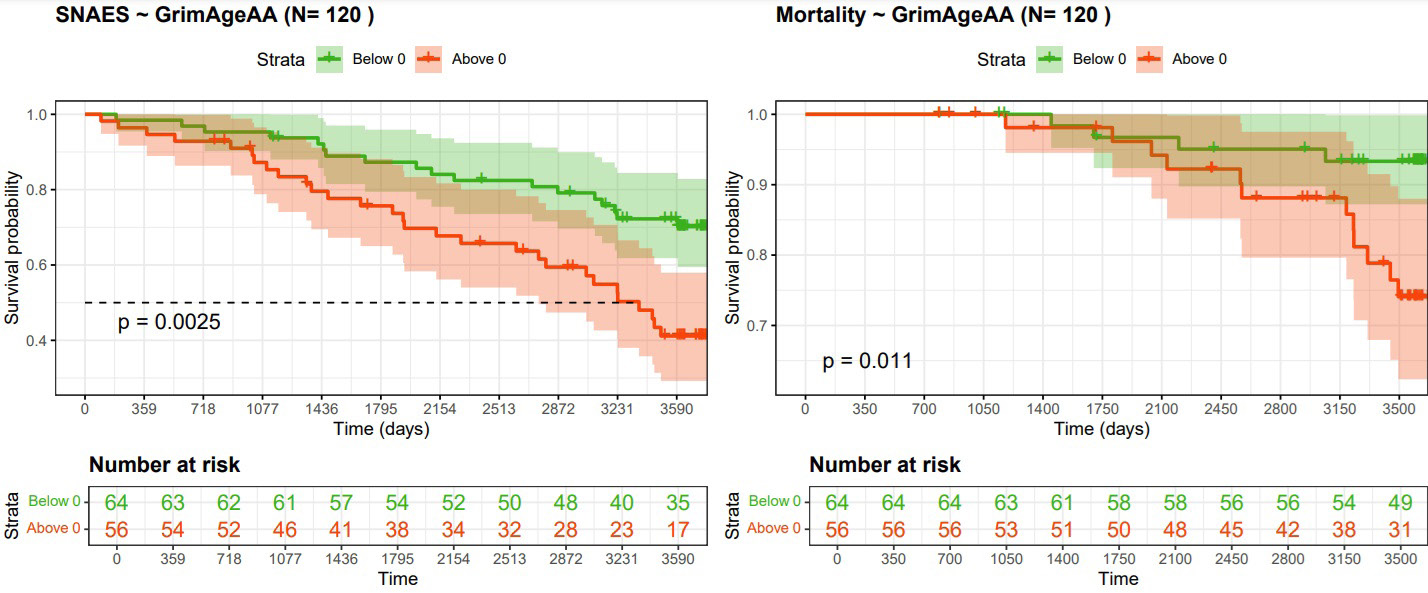
181. Semaglutide Stabilizes Epigenetic Aging in People With HIV-Associated Lipohypertrophy
Michael J. Corley1, Alina Pang1, Danielle Labbato2, Allison Ross Eckard3, Grace A. McComsey4
Background
Semaglutide, a GLP-1 receptor agonist, is known to reduce weight and improve cardiometabolic disease outcomes. In a recent randomized, double-blind, placebo-controlled phase 2b clinical trial, we observed significant effects of once-weekly semaglutide over 32 weeks on weight and visceral adiposity in people on stable antiretroviral therapy with HIV-associated lipohypertrophy. Semaglutide has been proposed to have pleiotropic benefits on biological aging; however, whether HIV-associated accelerated epigenetic aging is altered by semaglutide remains unknown.
Methods
We measured longitudinal genome-wide DNA methylation (DNAm) epigenetic profiles in peripheral blood mononuclear cells at baseline and 32 weeks from 84 study participants who were randomized to semaglutide (n=45) or matching placebo (n=39) for 32 weeks. 1st, 2nd, and 3rd generation epigenetic clock algorithms with a principal component-based approach were used to calculate epigenetic ages for participants at entry and 32 weeks. The annual rate of change in each epigenetic clock was calculated for each individual. Student’s t-test was used to compare groups.
Results
Overall, the mean age of participants was 49.2 years (35% female), BMI was 34.3 kg/m2, and CD4+ T cell count was 794 cells/mm3. Age, sex, BMI, and CD4+ T cell count did not significantly differ between participants randomly assigned to semaglutide versus placebo groups. The mean estimated annual rate of change in epigenetic age over 32 weeks was accelerated for the placebo group for PCHorvath1 (1.9 years), PCHorvath2 (1.9 years), PCHannum (2.3 years), PCPhenoAge (2.7 years), PCGrimAge (1.9 years). In contrast, the mean estimated annual rate of change in the semaglutide arm was: PCHorvath1 (0.25 years), PCHorvath2 (-0.07 years), PCHannum (-0.08 years), PCPhenoAge (-0.29 years), PCGrimAge (-0.58 years), and DunedinPACE (-0.04). The mean annual rate of change was significantly decreased in the semaglutide versus placebo arm for second-generation epigenetic clock PCGrimAge (p=0.02) and third-generation epigenetic clock DunedinPACE (p=0.02). An accelerated PCGrimAge at entry was associated with greater percent BMI change following semaglutide (β=-0.45, p=0.02) when controlling for sex.
Conclusions
Semaglutide attenuated the accelerated epigenetic aging in people with HIV-associated lipohypertrophy. The target population and durability of semaglutide’s effects upon long-term epigenetic aging in PWH warrants further investigation.
Table 1.
Mean Annual Rate of Change (Years) in Epigenetic Age
|
|
Placebo |
Semaglutide |
T-test (P value) |
| First Generation |
| PCHorvath1 |
1.9 (3.7) |
0.25 (5.6) |
0.12 |
| PCHorvath2 |
1.9 (5.2) |
-0.07 (5.8) |
0.10 |
| PCHannum |
2.3 (4.9) |
-0.08 (5.9) |
0.05 |
| Second Generation |
| PCPhenoAge |
2.7 (6.5) |
-0.29 (7.5) |
0.05 |
| PCGrimAge |
1.9 (3.1) |
-0.58 (6.1) |
0.02 |
| Third Generation |
| DunedinPACE |
0.04 (0.14) |
-0.04 (0.17) |
0.02 |
182. Letermovir for CMV Suppression Improves Immunologic and Functional Aging Outcomes in Treated HIV
Sara Gianella Weibel1, Kristine M. Erlandson2, Doug Kitch3, Shirley Qiu4, Yoshi Fukazawa5, Milenka V. Meneses1, Scott L. Letendre1, Michael P. Dube6, Lawrence Fox7, John Koethe8, Priscilla Hsue9, Davey Smith1, Michael L. Freeman10, Peter W. Hunt5, the ACTG A5383 Study Team
Background
People with HIV (PWH) and CMV face an increased risk of frailty and aging-related outcomes, yet the causal role of CMV remains untested.
Methods
A randomized trial assessed whether 48 weeks of letermovir, a CMV terminase inhibitor, reduced plasma sTNFR2 levels (primary endpoint) and other immunologic and functional aging-related outcomes in PWH seropositive for CMV on suppressive ART, compared to ART alone. Randomization was stratified by CD4 count (50% with <350 cells/mm³) and sex at birth (>30% female identity). A planned futility analysis was conducted after 40 participants (of a planned 180) reached week 8. Linear mixed models evaluated continuous outcome changes between arms.
Results
As previously reported, the trial stopped early as the futility analysis showed unexpected increases in sTNFR2 at week 8 in the letermovir arm (n=18) compared to the control arm (n=21). However, from weeks 8 to 48, sTNFR2 levels declined significantly in the letermovir arm (P=0.001), such that the reduction from baseline at week 48 was nominally greater in the letermovir than control arm (diff: -9%, P=0.20). IL-6 also transiently increased at week 8 (+27%, P=0.02) then declined by week 48 (-28%, P=0.003) in the letermovir arm. IL-6R and IL1b levels declined to a greater degree in the letermovir arm throughout the treatment period (diff: -10%, P<0.001 and -29%, P=0.005). At week 48, the letermovir arm had greater declines in CMV-specific IgG titers (-28%,P<0.001) and CD8 counts (-119 cells/mm3,P=0.024), and greater CD4/CD8 ratio increases (+14%,P=0.008,Panel A). By week 48, chair rise time improved by a mean -1.7 seconds (-15%) in the letermovir arm (P=0.002) and to a greater degree than the control arm (P=0.02, Panel B). Improved chair rise performance at week 48 was associated with reductions in IL1b (ρ=0.45, P=0.023) and IL6R (ρ=0.44, P=0.026), and increases in the CD4/CD8 ratio (ρ=-0.67, P<0.001). Although not statistically significant, other functional outcomes like grip strength, gait speed, and Fried frailty classification showed trends favoring letermovir.
Conclusions
Letermovir initially increased some inflammatory markers but ultimately resulted in sustained reductions in inflammation, improved CD4/ CD8 ratios, and enhanced physical function/leg strength in PWH with CMV on suppressive ART. These findings suggest that suppression of asymptomatic CMV with a CMV-specific inhibitor may improve aging-related outcomes. Larger studies are needed to establish the clinical significance of these results.
Figure 1.
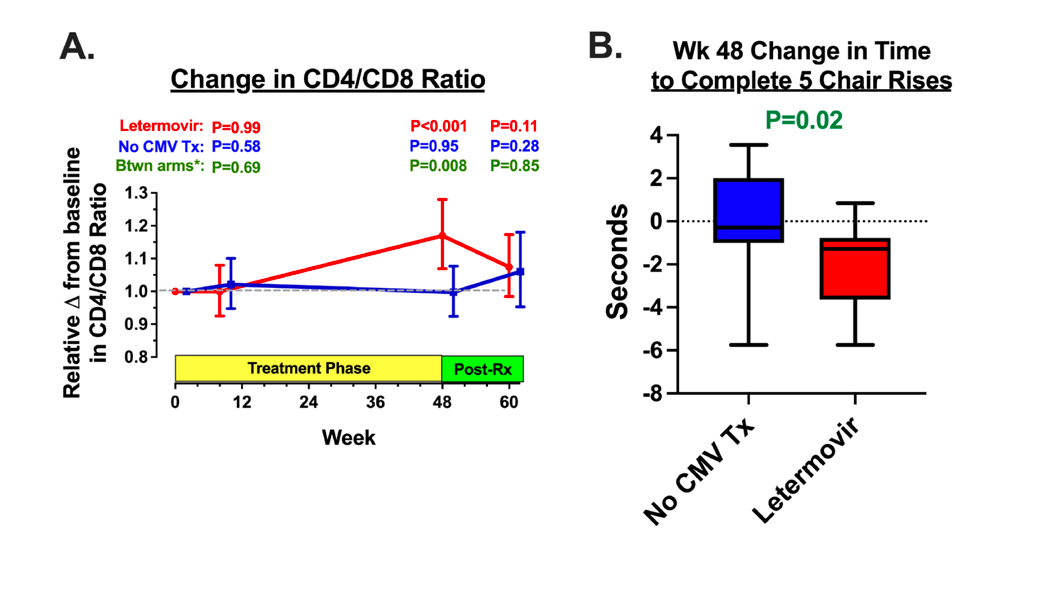
183. Preliminary Efficacy for HPTN 094: 26-Week RCT of Integrated Strategies for People Who Inject Drugs
Philip Andrew1, Nabila El-Bassel2, Steve Shoptaw3, Brett S. Hanscom4, David Goodman-Meza5, Irene Kuo6, Jordan E. Lake7, Ellen Morrison8, Jayla Harris1, Timothy Skalland4, Paul Richardson9, Melissa Cummings10, Dale Burwen11, Redonna Chandler12, David Metzger13, the HPTN 094 Study Team
Background
People who inject drugs (PWID) face high morbidity and mortality from addiction and HIV. This abstract reports findings from HPTN 094 on whether 26 weeks of “one stop” integrated health services delivered in a mobile unit, supported by peer navigation, improves use of MOUD, increases viral suppression among people with HIV (PWH), and increases use of pre-exposure prophylaxis (PrEP) among people without HIV (PWOH) compared to 26 weeks of peer navigation to local services.
Methods
HPTN 094 is a 26-week, HIV serostatus-neutral, randomized controlled trial with follow-up through 52 weeks conducted in Houston, Los Angeles, New York, Philadelphia, and Washington DC. Study arms: Experimental: Integrated services delivered in a mobile unit with peer navigation and transition to local services at 26 weeks; Active control: Peer navigation to existing local services throughout. Integrated services were: tenofovir-based PrEP for PWOH; antiretroviral therapy (ART) for PWH, MOUD, screening/treatment/referral for STIs and HCV, basic primary care, referrals for housing, food, and social services. Eligibility: reported HIV sexual/drug-related risks for PWOH with OUD; not on, but willing to start MOUD. Primary outcomes at 26 weeks: alive, taking HIV PrEP or ART (verified by blood), and being on MOUD (verified by urine plus evidence of being on MOUD). Generalized Linear Models estimated primary and certain secondary outcomes with arm and site as covariates; Cox proportional hazards modeled death outcomes.
Results
Table presents demographics, primary and secondary outcomes by serostatus and study arm. There were no significant differences in primary outcomes at 26 weeks, with low evidence of MOUD use across arms and serostatus. There was no difference in HIV-1 RNA suppression by study arm among PWH; no difference in PrEP use among PWOH at the 26-week visit. HIV seroincidence among PWOH was 0.92 per 100PY. Uptake of peer navigation was high in both arms. A 64% reduction in all-cause mortality was observed for experimental vs. active control arms but, did not reach statistical significance.
Conclusions
The strong reduction in all-cause mortality for the integrated services vs. control arm signals the likely value of delivering this care strategy to PWID using a mobile unit. Findings suggest that reaching and engaging PWID in need of comprehensive care “where they are at” may prevent deaths and highlights the potential power of the HPTN 094 mobile unit in addressing multiple health crises simultaneously.
Table 1.
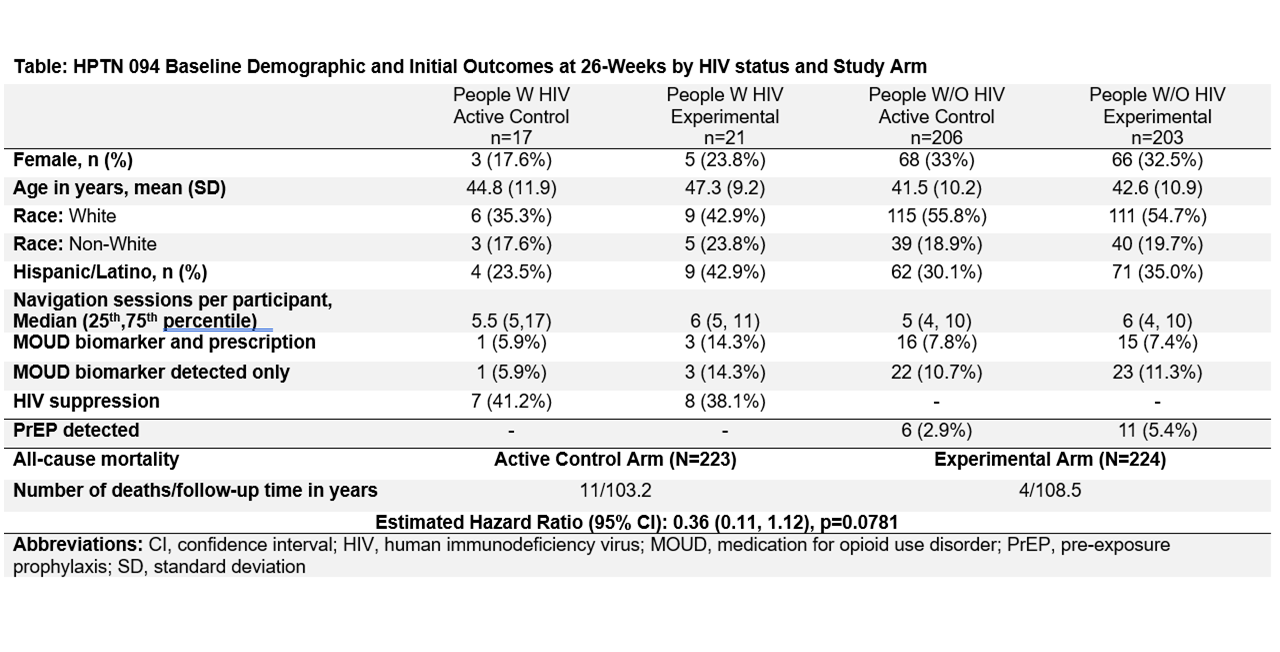
184. Most With HIV Viremia Are Not in Care Despite High ART Coverage: A Population-Based Study in Uganda
Silas Odiya1, Michelle Moffa2, Grace Kigozi1, Gertrude Nakigozi1, Joseph G. Rosen3, Larry W. Chang2, Caitlin E. Kennedy4, Anthony Ndyanabo1, Nakawooya Hadijja1, Thomas C. Quinn5, Godfrey Kigozi1, Ronald Galiwango1, Steven J. Reynolds6, Joseph Kagaayi1, M. Kate Grabowski4
Background
As ART coverage expands in Africa, a greater proportion of persons remaining with viremia are predicted to be HIV serostatus aware and treatment-experienced, potentially reducing the need for population surveillance and community outreach. However, population-level data on the care status of persons with viremia remains limited in African settings achieving “95-95-95” treatment targets.
Methods
The Rakai Community Cohort Study (2021–23), a population-based study in Uganda, was leveraged to assess the care status of persons with viremia (>1000 copies/ml) in an African epidemic achieving “95-95-95”. Residents aged 15-49 self-reported HIV testing, diagnosis, and ART use history. Among those HIV seropositive, viral load testing was conducted. Participants with viremia were initially classified as: 1) newly diagnosed; 2) previously diagnosed but never treated; 3) treatment-experienced but not in care; or 4) treatment experienced and in care. Those with viremia received their viral load results, underwent counselling and were asked to reconfirm their HIV testing history, ART use, and care location. Clinical records were also abstracted. Based on updated self-reports, clinical records, and plasma ARV drug screening, participants were reclassified. ART initiation for newly diagnosed and untreated individuals was tracked ~3 months post-survey.
Results
Of 17,841 participants, 3,170 (17.8%) were HIV seropositive. Among 3,134 persons with viral load results, 316 (10.1%; 95%CI: 9.1-10.1) exhibited viremia. As shown in the Figure, the care status of 102 (32.3%) persons was eventually reclassified, including 55% of those who self-reported being in care. Men were 1.67 times (95%CI: 1.18-2.55) more likely to misreport their care status than women. Among those previously in care, the median time from last clinic visit was 2.79 years [IQR: 1.80-4.61]. Overall, 82.9% (n=262; 95%CI: 78.2-86.8%) of persons with viremia were not actively in care at time of survey, and 64.6% (n=204; 95%CI:59.0-69.8%) were ART naïve. Only 55% (n=75/135) of newly diagnosed individuals and 39.1% (n=27/69) of naïve persons initiated ART by follow-up.
Conclusions
In this setting with high population HIV suppression, >80% of individuals with viremia were not in care, with frequent misreporting of care status. Ongoing population surveillance and novel outreach strategies are essential to understand and engage underserved populations with viremia and achieve epidemic control in evolving African epidemics.
Figure 1.
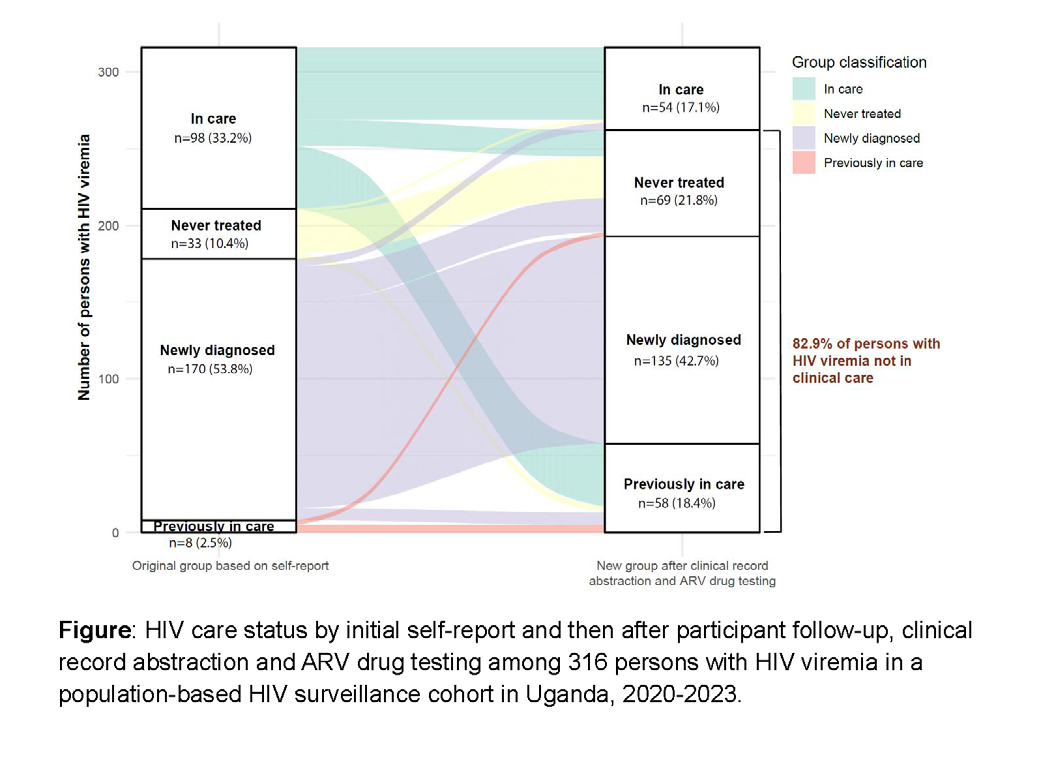
185. Low-Cost Counseling Achieves Positive Outcomes for Malawi Men Disengaged From Care: Randomized Trial
Kathryn L. Dovel1, Kelvin Balakasi2, Isabella Robson3, Bruce Larson4, Chi-Hong Tseng1, Khumbo Phiri2, Sam Phiri5, Stanley Ngoma6, Khumbo Namachapa6, Morna Cornell7, Thomas Coates1, Augustine T. Choko8
Background
Men's suboptimal HIV treatment outcomes hinder epidemic control efforts and jeopardize men's health. Interventions tailored to men’s unique needs are essential, although rarely tested. We tested the effect of person-centered care interventions on ART engagement among men living with HIV but not in care in Malawi.
Methods
We conducted an individually randomized control trial at 13 health facilities (IDEaL Study, NCT05137210). Adult (15y+) men living with HIV but never not in care were randomized (1:1:1) to: 1) male-specific counseling (MC) delivered in communities by male lay-cadre; 2) MC Arm + home-based ART initiation by trained nurses (HB); and 3) stepped intervention (Stepped) that increased in intensity overtime until ART initiation was achieved (chronological steps were MC Arm -> ongoing psychosocial support from high-level mental health professionals -> HB Arm). Primary outcome was composite: ART initiation <90days after trial enrollment and 6month retention in HIV care (i.e., <28days out of care at 6months). Secondary outcomes were cost effectiveness and days with ART coverage. Outcomes were measured via medical records and community tracing. At endline clients whose facility medical records showed they did not initiate ART within 90 days or were >28days out of care 6months after initiation were traced and personal records ascertained. Intention-to-treat analyses were conducted. We compared the lowest cost arm (MC) against the highest cost (HB) and Stepped arms.
Results
Of 743 men screened, 569 (77%) were enrolled between Sept 2021-May 2023. Arms were balanced. Overall mean age was 39y (SD:12), 393/569 (69%) were married, and only 49/569 (9%) were ART naïve. Outcome ascertainment did not differ by arm. Primary outcome (initiation and 6month retention) was met by 147/193 (76%) in MC, 132/183 (71%) in HB, and 154/181 (84%) in Stepped arms (Table1) – no difference by arm. MC arm was more cost effective compared to both the HB and the Stepped arms. ART initiation was high across arms 514/557 (92%). MC performed slightly better than HB for retention: 6month retention after initiation (aRR:0.90; CI 95%:0.81,0.98) and optimal days covered with ART (aRR:0.88; CI 95%:0.78,0.99) were significantly worse in HB vs MC arms.
Conclusions
Male-specific interventions can achieve positive ART engagement outcomes. Men's counseling provided by lay-cadres performed similar to more costly approaches, offering feasible solutions for men's HIV care at scale.
Table 1.
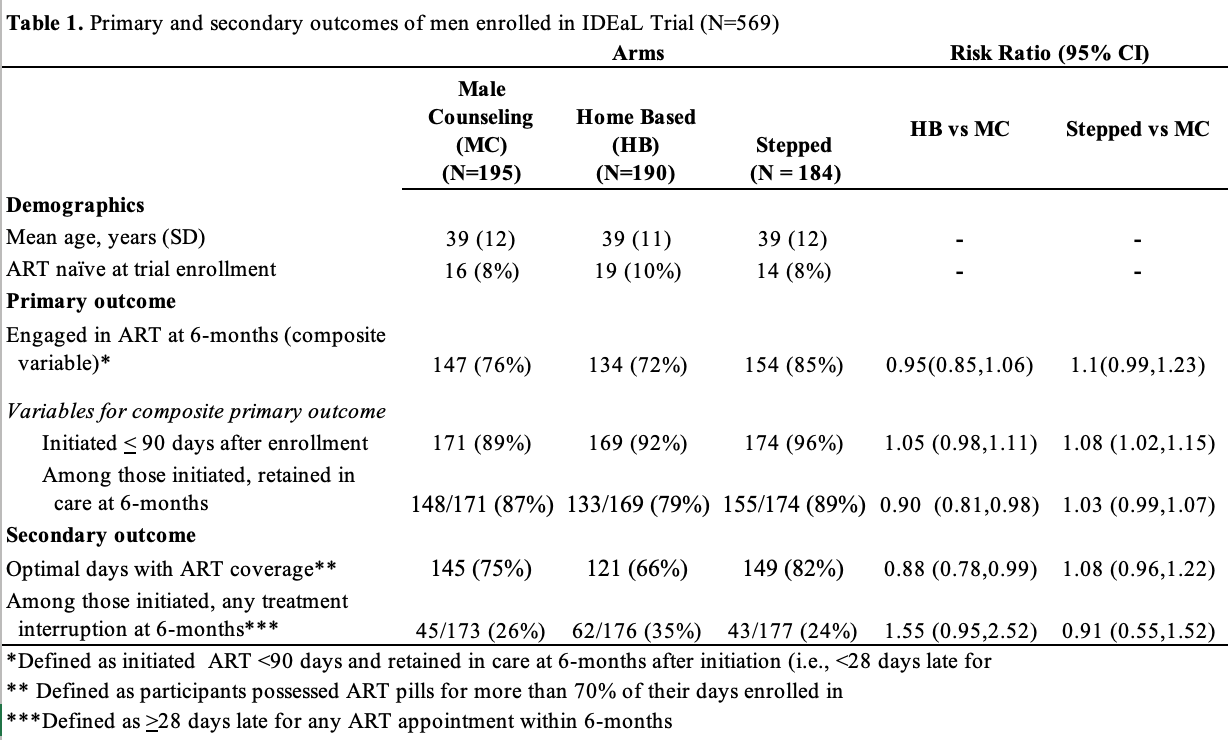
186. Clinic Switching and Elevated HIV Viral Load in 6 African Countries: A Population-Based Study
Joseph G. Rosen1, M. Kate Grabowski2, Robert Ssekubugu3, Caitlin E. Kennedy2, Larry W. Chang4, Gertrude Nakigozi3, Fred Nalugoda3, Ronald Galiwango3, Godfrey Kigozi3, Steven J. Reynolds5, Joseph Kagaayi3
Background
Clinic transfers in African countries with high HIV burdens are common, but nationally representative data on clinic switching are scarce, and the relationship between facility switching and HIV care engagement is poorly understood, especially at the population level.
Methods
We pooled data from six Population-based HIV Impact Assessment (PHIA) surveys (2020-21) in Eswatini, Lesotho, Malawi, Mozambique, Uganda, and Zimbabwe to estimate the prevalence and characteristics of past-year HIV clinic switching, as well as its association with HIV viral load (VL), in log10 RNA copies/mL, and past-month antiretroviral therapy (ART) non-adherence (missing 2+ doses). Using multistage cluster sampling, PHIA recruited nationally representative samples of persons completing structured bio-behavioral surveys, including serologic HIV status confirmation and plasma VL quantification. Multivariable weighted logistic regression with jackknife variance estimation, reported as adjusted odds ratios (aOR) with 95% confidence intervals (CI), quantified correlates and HIV care outcomes of clinic switchers relative to non-switchers—overall and stratified by sex and past-year mobility (spending 30+ days away from home), respectively.
Results
Of the 118999 participants across 56759 households, 12551 (10.5%) were living with HIV and reported current ART use (mean age: 41.0 years, 65.9% female, 12.7% mobile, 92.4% VL <1000 copies/mL). The prevalence of HIV clinic switching was 14.5%, ranging from 9.8% in Mozambique to 21.4% in Uganda. Clinic switching was more common in persons with depressive symptoms, past-year ART regimen changes, longer-term (12+ months) ART use, ART prescription duration <3 months, travel-related barriers to clinic visits, and past-year mobility (Figure). While observed multivariable correlations between clinic switching and HIV clinical outcomes were null overall ([elevated VL, per log10 unit-increase] aOR=1.02, CI: 0.97-1.08; [ART non-adherence] aOR=1.18, CI: 0.86-1.61), clinic switching was significantly associated with elevated VL in mobile persons (aOR=1.07, CI: 1.02-1.13) and females (aOR=1.06, CI: 1.01-1.11), as well as ART non-adherence in mobile persons (aOR=1.90, CI: 1.01-3.55).
Conclusions
We observed high frequencies of facility switching at population level and elevated odds of viremia in mobile persons and females with clinic transfer histories. Optimizing efficiency and ease of clinic transfers to prevent care disruptions is imperative for HIV epidemic control efforts in Africa.
Figure 1.
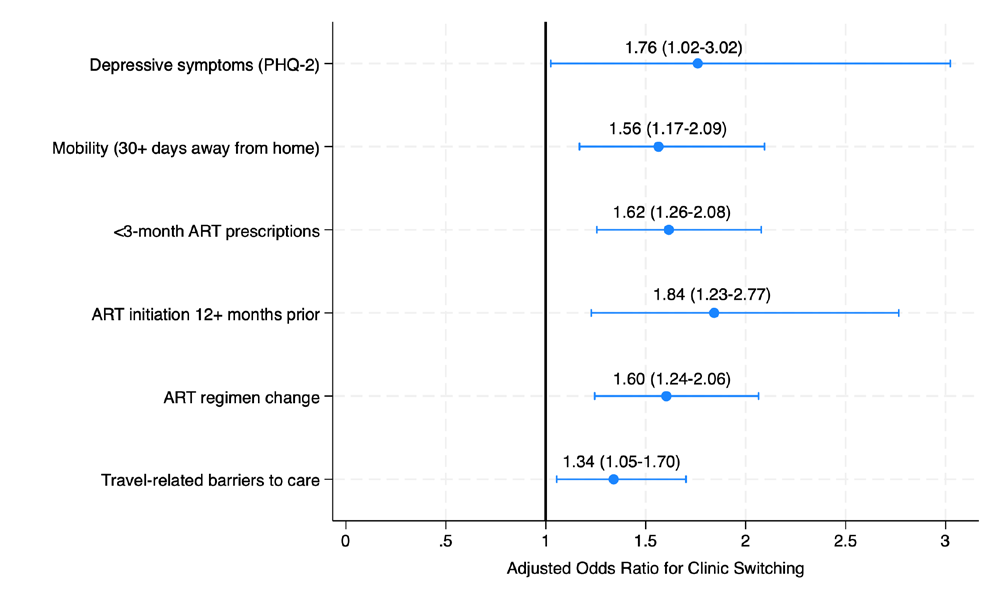
187. How Do Repeated Financial Incentives Affect HIV Care-Seeking Behaviors Over Time?
Solis Winters1, Emmanuel Katabaro2, Babuu Joseph2, Kassim Hassan2, Hamza Maila2, Janeth Msasa2, Amon Sabasaba2, Prosper Njau3, William Dow1, Sandra I. McCoy1
Background
Financial incentives are known to help initiate routine healthcare behaviors. However, a more nuanced understanding of behavioral responses to incentives over time, particularly after they are removed, could guide more effective interventions. In our study, we explore the dynamic effectiveness of small, short-term monthly financial incentives on HIV care-seeking behaviors during and after incentive removal.
Methods
We conducted a 32-site cluster randomized controlled trial (NCT04201353) among adult ART initiates (<30 days) in four regions of Lake Zone, Tanzania. HIV care and treatment clinics (CTCs) were randomly assigned 1:1 to the intervention or the standard of care. Participants at intervention clinics had the opportunity to receive up to six monthly (>=25 days apart) cash transfers of 22,500 TZS each (~10 USD), conditional on appointment attendance. Using time-to-event analysis, we assess the effect of incentives on three HIV-care seeking behaviors (missed appointment by >4 days, <90% ART adherence, and ART interruption of >28 days) over the entire study period, during and after incentive delivery, and for each month of the follow-up period.
Results
Among 1990 participants (mean age: 37, 60% female, mean days on ART: 3.5) included in the final sample, we found large and significant reductions in rate of missed appointments (adjusted hazard ratio (aHR), 95% CI: 0.51, 0.39-0.68), <90% ART adherence (aHR, 95% CI: 0.58, 0.41-0.83), and ART interruption (>28 days without ART) (aHR, 95% CI: 0.54, 0.35-0.83) during the six months of incentives, but no effects after their removal. Hazard ratios by month reveal similar findings, with dramatic and consistent reductions in risk concentrated in months two through six that disappear in month seven, immediately after incentives are discontinued.
Conclusions
Our study provides a detailed assessment of dynamic incentive effects that are often hidden in cross-sectional evaluations of incentive interventions. In this setting, financial incentives significantly improved HIV care-seeking behaviors over standard services while they were delivered, but effects returned to levels in the standard of care group immediately after incentives were removed. These results highlight the value of short-term incentives for initiating new care-seeking behaviors, and emphasize a need for innovative design choices, such as escalating rewards or incorporation of time- or context-based cues, that may help motivate sustained behavior change after their removal.
188. Effect of a Person-Centered Care Intervention on Reengagement After Care Interruptions in Zambia
Oral Abstracts
Pages: 49-50
Aaloke Mody1, Kombatende Sikombe2, Sandra Simbeza2, Laura Beres3, Jake M. Pry4, Njekwa Mukamba2, Anjali Sharma2, Jacob Mutale2, Alida Dube2, Musunge Mulabe2, Chuck Goss1, Carolyn Bolton-Moore2, Izukanji Sikazwe2, Elvin H. Geng1
Background
Poor client-provider interactions lead to reinforcing cycles of treatment interruptions (TIs) and fear of return, undermining sustained retention. We previously demonstrated a multicomponent person-centered care intervention (PCCi) targeting healthcare worker (HCW) behavior improved client experience and retention in care. To understand mechanisms of improved retention, we evaluated the effect of PCCi on return after TIs and sustained retention after return, hypothesizing that friendlier HCW attitudes enable successful reengagement into care.
Methods
We implemented PCCi at 24 clinics in Zambia in a stepped-wedge, cluster-randomized trial. PCCi targeted caring aspects of HCW behavior using 1) training and coaching on PCC practices, 2) measurement and feedback of client experience (via exit interviews), and 3) small facility-level incentives. We examined individuals who became >30 days late to a scheduled visit (i.e., TI) during the study, categorizing exposure to intervention vs. control based on the last visit prior to the TI (only first TI during study included). We used electronic health records to assess the effect of PCCi on 1) return to care after a TI, and 2) repeat TIs among those who returned. We used multistate analytic methods with bootstrapped confidence intervals to estimate incidence of return and prevalence of sustained reengagement after return. Individuals were censored at intervention crossover or database closure.
Results
From Aug 2019 to Nov 2021, 128,901 clients (n=69670 control, n=59231 intervention) became >30 days late (64.3% female, median age 38y [IQR 31, 45], median years in care 3y [IQR 1, 7]). PCCi led to an increased incidence of return after TI at 6-months (64.7% intervention vs. 61.7% control, risk difference [RD] +3.0 [CI 2.6–3.3%]) and 12-months (72.3% vs. 67.7%, RD +4.6% [CI 4.2–5.0%]). Among returners, PCCi decreased incidence of repeat TIs (44.3% vs. 55.6%, RD -11.4% [CI -12.2– -10.8%]) and increased the proportion in care (with or without repeat TIs) (82.7% vs. 73.4%, RD +9.3 [CI 8.7–10.0%]) at 12-months after return. Overall, PCCi increased the proportion of individuals in care 12-months after a TI from 51.5% to 60.1% (RD +8.7% [CI 8.2–9.1%]).
Conclusions
PCCi improved rates of return to care after TIs, sustained reengagement after return, and overall retention among individuals with TIs. Strategies targeting caring aspects of HCW behavior and client experience may help lower barriers to and address persistent challenges with reengagement in care.
189. Systems Analysis and Improvement Approach to Optimize Hypertension Care for People Living With HIV
Onei A. C. Uetela1, Ana Olga Mocumbi2, Kristjana Asbjornsdottir1, Orvalho Augusto1, Amanda Brumwell1, Amido Charama3, Maxinel Chidacua3, Joana Coutinho3, Ruth Etzioni4, Akash Malhotra1, Kenneth Sherr1, Sarah Gimbel1
Background
High blood pressure (≥90mmHg/140mmHg) is associated with ~35% of sub-Saharan Africa deaths. In Mozambique, 3% of hypertensive adults achieve controlled blood pressure (BP). Systems engineering strategies applied at the health facility level, like the Systems Analysis and Improvement Approach (SAIA), have been shown effective in improving quality and continuity of health service delivery in resource-constrained settings. We present results of a trial designed to assess SAIA’s application to optimize hypertension (HTN) care quality and continuity for HIV-infected individuals in Mozambique.
Methods
A hybrid type III cluster randomized controlled trial compared HTN outcomes between intervention and control facilities (n=16), where intervention sites implemented SAIA – a bundled, clinic-led strategy of cascade analysis, process mapping, and monthly continuous quality improvement cycles to identify, prioritize and iteratively test context-appropriate, low-cost solutions. Control sites delivered care as usual. All clinics received BP machines, batteries and educational tools reflecting national norms and used patient-level forms to report HTN care. A three-month baseline period (07-09/2020) preceded a 24-month intensive phase of the trial and a 12-month sustainment phase without study team support. Generalized Estimating Equations assuming an exchangeable correlation structure and a log-binomial regression model in R statistical package estimated the risk ratio of controlled BP between study arms, adjusting for study phase and whether clients were newly recruited or retained from a previous phase.
Results
The study included 65,625 unique clients (53% in intervention sites). HTN Screening rose from 34% at baseline to ~100% in intensive and sustainment phases in both arms. In intervention sites 74% (vs. 68 in control) HTN clients received a prescription, 81% (vs. 77%) accessed the prescribed medication and 21% (vs. 6%) attained controlled BP. The risk ratio of controlled BP was 1.88 (95% CI: 1,75 – 2.02) intervention:control sites, and was higher in intensive (2.7, 95% CI: 1.9 – 4.1) and sustainment (3.41, 95% CI: 2.38 – 5.16) phases, compared to baseline. Retained clients experienced 29% (95% CI: 1.18 – 1.42) higher risk of controlled HTN compared to newly recruited.
Conclusions
The SAIA-HTN strategy improved performance of integrated HIV-HTN services, resulting in a significant and sustained increase in controlled BP among PLHIV with HTN.
Table 1.
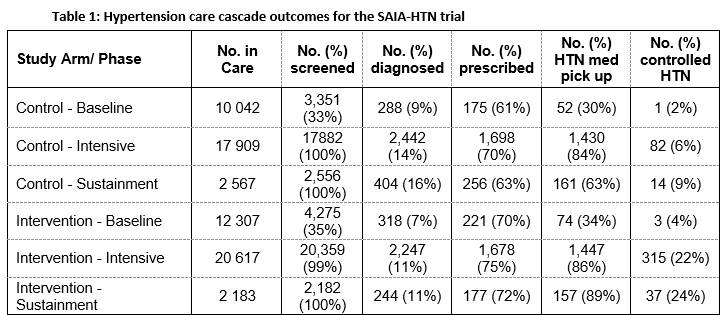
190. SEARCH Integrated HIV/Hypertension Community Health Worker-Led Intervention in Rural East Africa
Matt Hickey1, Asiphas Owaraganise2, Sabina Ogachi3, Colette Aoko4, Jane Kabami5, Elijah Kakande5, Wafula E. Mugoma3, Nicole Sutter1, Gabriel Chamie1, Maya Petersen6, Laura Balzer6, Diane V. Havlir1, Moses Kamya7, James Ayieko4
Background
Clinic-based hypertension screening and treatment for people with and without HIV depends on consistent clinic engagement. Retention is challenging in rural areas, especially for people with severe hypertension which typically requires more frequent visits than stable HIV. We hypothesized that Ministry of Health (MoH) community health workers (CHWs) could be leveraged to improve hypertension outcomes through an integrated hypertension/HIV intervention.
Methods
In rural Uganda and Kenya, we added HIV testing and a status-neutral hypertension intervention to CHW workflow in an ongoing cluster-randomized population-level study (SEARCH:NCT05768763). Trained CHWs screened all adults aged ≥40 years in intervention communities for hypertension, referring those with blood pressure (BP) ≥140/90mmHg to MoH HIV/primary care clinics. After initial in-clinic evaluation, adults with BP ≥160/100mmHg were offered choice of clinic-based or telehealth (CHW home visit, clinician telehealth evaluation, medication delivery) follow-up care. Telehealth used a MoH-compatible CHW smartphone app that syncs with electronic clinic records, prompts CHW follow-up visits, and facilitates clinician telehealth assessment/medication prescribing. We report i) hypertension control achieved through implementation of CHW-supported screening and telehealth and ii) resulting change in population prevalence of uncontrolled hypertension from baseline to 1 year.
Results
Across eight communities, 198 CHWs measured BP in 13,760/15,121 (91%) adults aged ≥40 yrs at baseline and 13,349/15,121 (89%) after 1 year; 55% were female and 19% living with HIV. Population prevalence of BP ≥140/90mmHg decreased from 17% at baseline to 7% at year 1 (p<0.001) and prevalence of BP ≥160/100mmHg decreased from 7% to 2% (p<0.001). Among people with HIV aged ≥40 yrs (n=2,643), prevalence of BP ≥140/90mmHg decreased from 11% to 4% (p<0.001) and prevalence of BP ≥160/100mmHg decreased from 4% to 1% (p<0.001). In the subset with BP ≥160/100 who enrolled in the telehealth intervention (n=958), 96% received hypertension medication, 94% had ≥1 follow-up visit, 81% were retained in care at 1 year, and 79% achieved BP control; people with HIV (n=111) had similar retention (84%) and BP control (82%).
Conclusions
Leveraging existing community health workers in an integrated HIV/hypertension model reduced population-level prevalence of uncontrolled hypertension by 59% among people with and without HIV, extending health services into the community at scale.
191. Long-Acting Cabotegravir PrEP Uptake and Persistence in a Large US Healthcare System
Oral Abstracts
Pages: 50-51
Michael Traeger1, Wendy Leyden2, Jonathan Volk3, Michael Silverberg2, Michael Horberg4, Teaniese Davis5, Kenneth Mayer6, Douglas Krakower1, Jessica Young7, Samuel Jenness8, Julia Marcus1
Background
Long-acting cabotegravir (CAB-LA) was approved as HIV preexposure prophylaxis (PrEP) in the U.S. in December 2021, but data are limited on use in clinical practice. We evaluated CAB-LA uptake and persistence in an integrated healthcare system and compared early CAB-LA adopters to individuals dispensed oral PrEP only.
Methods
We extracted electronic health records of adults receiving PrEP during December 2021-June 2024 in Kaiser Permanente Northern California. We compared characteristics of CAB-LA users and oral-PrEP-only users using chi-square tests. Among CAB-LA users still enrolled in the health plan at 28 and 60 weeks after initiation, we evaluated CAB-LA persistence, defined as the proportion with an injection within 10 weeks prior to each time point. We also assessed time to bimonthly CAB-LA injections after the lead-in injections (weeks 0 and 4) and HIV incidence following CAB-LA initiation.
Results
Among 19,676 individuals dispensed PrEP, 141 (0.7%) were administered CAB-LA during the study period. Among 141 CAB-LA users, 21.3% had no prior oral PrEP use; of those who had previously used oral PrEP, 21.6% had not been dispensed oral PrEP for >12 months prior to starting CAB-LA. Compared with oral-PrEP-only users, a lower proportion of CAB-LA users were commercially insured (82.3% vs 90.1%; P=0.002) and a higher proportion were female (9.2% vs 4.8%; P=0.049), Black (16.3% vs 6.1%; P<0.001), or Hispanic (36.2% vs 25.0%; P<0.001). There were no differences in history of diabetes or osteopenia/osteoporosis, but a higher proportion of CAB-LA users than oral-PrEP-only users had a history of hypertension (23.4% vs 13.4%; P=0.001) or bacterial sexually transmitted infection (44.7% vs 29.1%; P<0.001). Among CAB-LA users, 78.3% and 73.0% persisted on CAB-LA at 28 and 60 weeks after initiation, respectively. Of 450 non-lead-in injections, 92.2% were within 8 weeks + 7 days after the prior injection. Among 117 CAB-LA users with repeat HIV testing, there were zero HIV infections during 85.1 person-years of follow-up.
Conclusions
Uptake of CAB-LA was very low even in this insured setting, but persistence was high, with most CAB-LA users continuing to receive timely injections more than a year after initiation. CAB-LA is reaching populations who have been underserved by oral PrEP implementation, including individuals without private insurance, females, and racial and ethnic minority groups, as well as individuals who had not previously used oral PrEP or had used it but discontinued.
192. ImPrEP CAB Brasil: Enhancing PrEP Coverage With CAB-LA in Young Key Populations
Carolina Coutinho1, Brenda Hoagland1, Beatriz Grinsztejn1, Alessandro S. Farias2, Jose Valdez Madruga3, Josué Lima4, Maria Paula Mourão5, Roberta Pereira Trefiglio3, Marcos Benedetti6, Cristina Pimenta6, Ronaldo Ismério1, Raphael J. Landovitz7, Thiago Silva Torres1, Valdilea Gonçalves Veloso1, the ImPrEP CAB Brasil Study Group
Background
Long-acting agents hold promise for addressing challenges associated with adherence and persistence to daily oral PrEP. The ImPrEP CAB Brasil study aims to generate evidence to inform national policies about long-acting cabotegravir (CAB-LA) PrEP implementation within public health PrEP services in Brazil.
Methods
Study intervention consisted of person-centered choice of same-day delivery of oral TDF/FTC PrEP or CAB-LA (The Choice Cohort) for PrEP-naïve cis-MSM, non-binary and trans persons aged 18-30 years. Participants were enrolled from October 17, 2023 to October 31, 2024 and will be followed for 48-weeks, with the option to switching during follow-up. As comparison group, we assessed PrEP-naïve persons with the same demographics who initiated oral PrEP during the study period through the Brazilian public health system at ImPrEP clinics. PrEP coverage was defined as the proportion of persons covered by oral PrEP or CAB-LA during follow-up. We used pairwise comparisons with Bonferroni correction for PrEP coverage. We described injection visit coverage and HIV incidence.
Results
Of 1,447 participants enrolled in The Choice Cohort, 83% (N=1,200) chose CAB-LA. Most were cis-MSM (91%), 42% aged 18-24, 60% non-White. A total of 3,744 CAB-LA injections were administered, 95.7% (n=3,583/3,744) delivered on time (+/-7days|) and 29 persons (2.4%; n=29/1,200) had at least one reload. Among persons using CAB-LA, 4% (n=48/1200) were lost to follow-up, 20.8% (n=10/48) of these received only the first injection. To date, 47 (3.2%) participants switched regimens, 26 from CAB-LA to oral PrEP and 21 from oral PrEP to CAB-LA. There were 8 seroconversions in 408.52 person-years of follow-up in the comparison group (incidence rate 1.96 [95%CI 0.98-3.92] per 100 person-years) and no seroconversions in 798.4 person-years in The Choice Cohort.
A total of 2,263 persons initiated oral PrEP in the comparison group. PrEP coverage in The Choice Cohort was 96.2% for CAB-LA arm and 64.1% for oral PrEP arm, and 47.4% for the comparison group (Figure). Pairwise comparisons of coverage indicated differences between: CAB-LA vs oral PrEP, CAB-LA vs comparison group, and oral PrEP vs comparison group (p<0.0001 for all comparisons).
Conclusions
CAB-LA significantly improved PrEP coverage and protection, showing promise in addressing adherence challenges to daily oral PrEP, particularly among young key populations. Injection visit coverage was high and consistent during follow-up.
Figure 1.
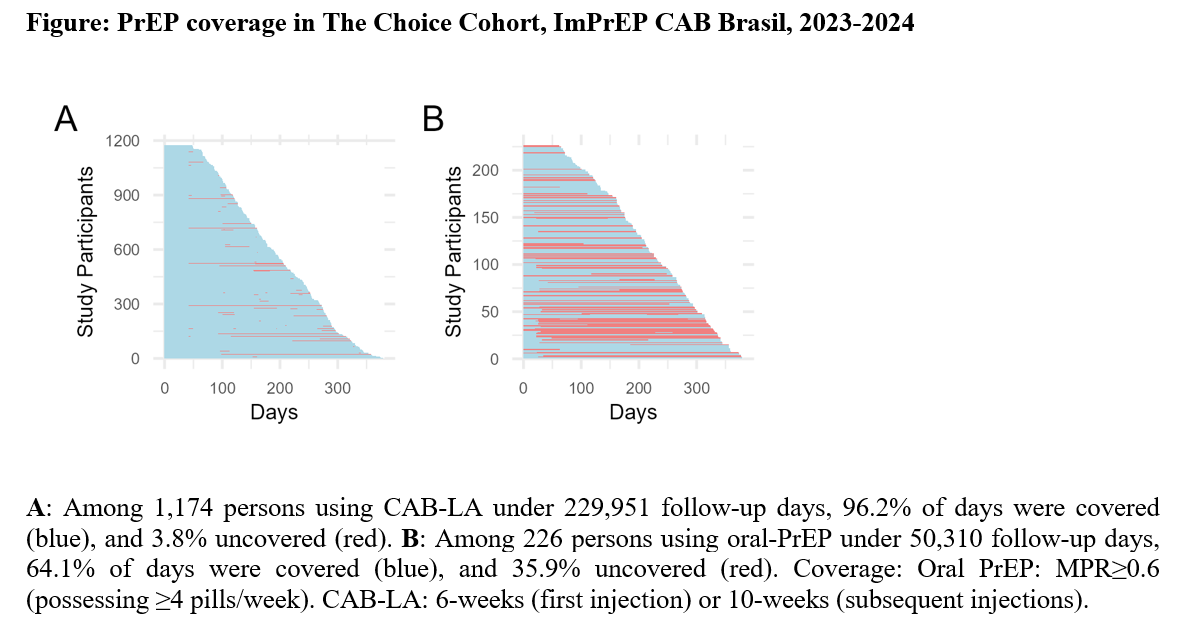
193. Estimation of Prevention-Effective CAB-LA Concentrations Among MSM/ TGW in HPTN 083
Oral Abstracts
Pages: 51-52
Brett S. Hanscom1, Mark A. Marzinke2, Robert R. Bies3, Deborah J. Donnell1, Craig Hendrix2, Xinnong Li3, Zhe Wang1, Carolina Acuipil4, Alex Rinehart5, James F. Rooney6, Lydia Soto-Torres7, Marybeth McCauley8, Beatriz Grinsztejn9, Raphael J. Landovitz10
Background
HIV Prevention Trials Network (HPTN) 083 Trial was a randomized controlled trial that demonstrated the superiority of long-acting injectable cabotegravir (CAB-LA) over daily oral TDF/FTC for HIV PrEP among cisgender men and transgender women who have sex with men. The threshold of plasma CAB concentrations ([CAB]) needed for HIV protection in humans is difficult to define due to limited numbers of incident infections, unknown HIV-exposure timing, and unknown [CAB] at HIV exposure. A nested case-control study was conducted among HPTN 083 participants randomized to the CAB arm to investigate the association between plasma [CAB] and HIV protection.
Methods
For each of the 25 CAB-arm participants with confirmed HIV during the randomized blinded study and the first year post-unblinding, four matched, HIV-negative controls were randomly selected; matching was based on region, gender identity, race, and duration of follow-up. Plasma [CAB] was assessed throughout follow-up, and a multicompartment PK model was used to estimate [CAB] concentration-time profiles. The analysis window for each case and their matched controls was defined as the time between the last-negative HIV test and the first-positive HIV test visits for HIV-positive cases, i.e., the period when HIV acquisition likely occurred. All participants were classified according to whether their minimum concentrations during the analysis window fell within [CAB] strata bounded by the protein adjusted inhibitory concentration 1x PA-IC90 and 4x PA-IC90. Conditional logistic regression was used to estimate the association between [CAB] and risk of HIV infection.
Results
During the analysis window, minimum plasma [CAB] was below 1x PA-IC90 for 64% of confirmed HIV cases, and above 4x PA-IC90 in 76% of matched controls (Table). Minimum [CAB] above the 4x PA-IC90 was associated with a 93% (95%CI: 77%, 98%) reduction in risk of HIV acquisition compared to participants with a minimum [CAB] < 1x PA-IC90. A minimum [CAB] between 1x and 4x had an estimated risk reduction of 79% (95% CI: -20%, 96%).
Conclusions
Plasma [CAB] above 4x PA-IC90 is estimated to provide >90% protection against HIV acquisition, consistent with the target Cτ for the selected dose derived from non-human primate models. Data are insufficient for a precise estimate for plasma [CAB] between 1x and 4x PA-IC90. Q2M dosing has been shown to achieve [CAB] above 4x PA-IC90. Novel formulations, dosing, and time-to-protection estimates may be informed by these results.
Table 1.
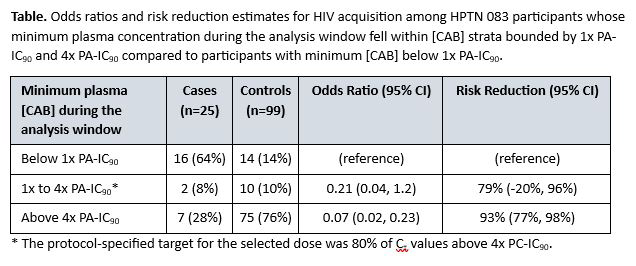
194. Adherence to F/TAF in Cisgender Women Prevents HIV With Low Risk of Resistance or Diagnostic Delay
Flavia M. Kiweewa1, Khatija Ahmed2, Gonasagrie Nair3, Stephanie Cox4, Alexander Kintu4, Christoph Carter4, Moupali Das4, Ravindre Panchia5
Background
PURPOSE 1 (NCT04994509) is a Phase 3, double-blind, randomized, controlled trial assessing the efficacy of lenacapavir (LEN) and emtricitabine plus tenofovir alafenamide (F/TAF) for pre-exposure prophylaxis (PrEP) in adolescent girls and young women. Although LEN was 100% efficacious at the primary analysis, F/TAF HIV incidence was similar to the background HIV incidence rate. Case-control analysis within the F/TAF group demonstrated a 9-fold lower likelihood of HIV acquisition in participants with medium or high adherence compared with those with low adherence. Here, we provide an in-depth laboratory analysis of incident HIV cases in the F/TAF group, including adherence, resistance, and timing of seroconversion.
Methods
HIV testing at each study visit included rapid and central laboratory 4th-generation antibody/antigen tests. HIV-1 RNA testing was conducted from the visit prior to seroconversion using archived samples. Adherence was assessed by measuring tenofovir diphosphate (TFV-DP) concentrations in dried blood spots (DBS). Genotypic resistance testing was performed for participants with HIV-1 RNA concentration > 200 copies/mL.
Results
DBS adherence data were available for 37/39 incident cases in the F/TAF group. Among these, 35/37 had DBS TFV-DP concentrations indicating suboptimal or nonadherence. Longitudinal adherence patterns are shown in the Figure. Of the participants with high adherence, one had no resistance-associated mutations (RAMs) at the time of diagnosis and the other had M184I reverse transcriptase (RT) inhibitor RAM, K65R RT inhibitor RAM, and Y188L non-nucleoside RT inhibitor RAM at diagnosis, consistent with transmitted drug resistance (TDR). HIV-1 RNA was positive one visit prior to seroconversion in seven F/TAF participants; DBS indicated suboptimal adherence at the time of RNA detection for six of these.
Conclusions
Nearly all incident HIV cases in participants receiving F/TAF in PURPOSE 1 were attributable to low oral PrEP adherence, with one additional case likely explained by TDR. Emergence of antiretroviral resistance was rare. A minority of participants had brief delays in seroconversion. Taken together, these results suggest that HIV infections in PURPOSE 1 occurred almost always in the context of nonadherence to F/TAF, with rare emergence of HIV resistance and low risk of HIV diagnosis delay. Thus, F/TAF could be important for women who prefer a daily oral HIV prevention option.
Figure 1.
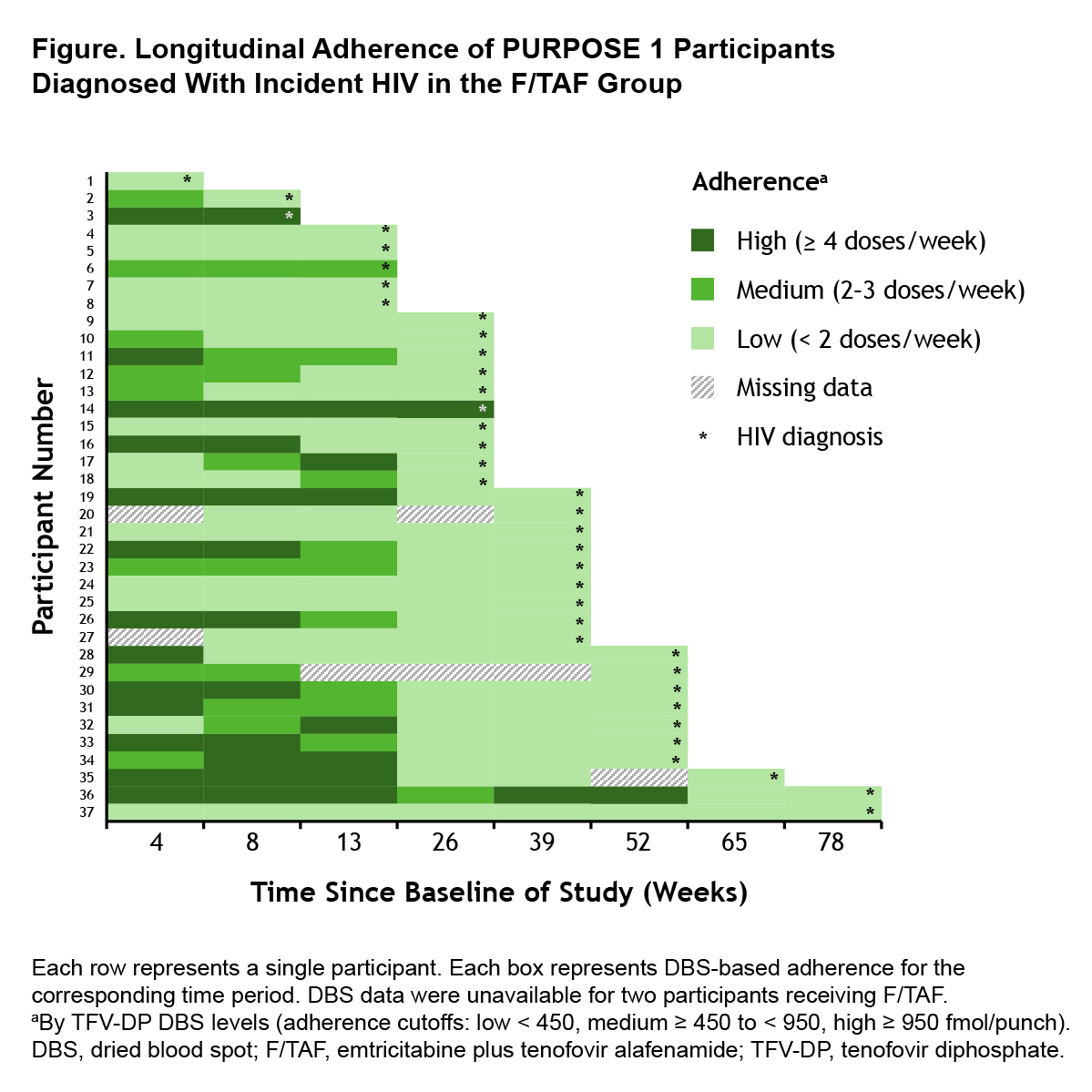
195. Performance of HIV RNA Screening in the Context of Long-Acting Injectable Cabotegravir in HPTN 084
Oral Abstracts
Pages: 52-53
Sinead Delany-Moretlwe1, Michael Holt2, Brett S. Hanscom3, Estelle Piwowar-Manning4, Aida Asmelash5, Nyaradzo Mgodi6, Patricia N. Ntege7, Jennifer Farrior5, Lydia Soto-Torres8, James F. Rooney9, Alex Rinehart10, Myron Cohen11, Mina C. Hosseinipour12, Susan H. Eshleman4, the HPTN 084 Study Team
Background
Long-acting injectable cabotegravir (CAB-LA) is highly effective as PrEP but may delay detection of HIV infection using conventional diagnostics. HIV RNA testing may assist with early detection of HIV infection and prevent the emergence of resistance. We evaluated the performance of HIV RNA screening in the HPTN 084 open-label extension (OLE).
Methods
HPTN 084 evaluated the effectiveness of long-acting injectable cabotegravir (CAB-LA) compared to daily oral TDF/FTC for PrEP in individuals born female aged 18-45 years in eastern and southern Africa. Sites performed one or two rapid tests, a laboratory-based antigen/antibody (Ag/Ab) test, and an HIV RNA test at each visit in the OLE. Final HIV status was adjudicated based on site-based test results and retrospective testing at a central laboratory. We calculated the sensitivity of RNA screening with other tests, and the positive predictive value (PPV) and false positive rate (FPR) of isolated positive HIV RNA results.
Results
Overall, 2,462 participants with 24,178 visits through November 30, 2023 were included in the analysis. HIV infection was confirmed in 8 (90.1%) of 88 participants with ≥1 reactive HIV test result (one at OLE entry, seven after OLE entry). Of these, 4/8 (50%) were detected by a positive isolated HIV RNA test (true positive cases). Fourteen additional participants had a positive isolated HIV RNA test but were adjudicated HIV negative (false positive cases). The overall sensitivity of RNA screening was 75% (34.9%-96.8%). The PPV and FPR for detection of HIV infection by isolated HIV RNA test were 22.2% (95% CI 6.4%-47.6%) and 77.8% (95% CI 52.4%-93.6%) respectively. When stratified by recent CAB use within the prior 6 months, the PPV was 20.0% (95% CI 4.3%-48.1%) with recent CAB compared to 33.3% (95% CI 0.8%-90.6%) without. False positive tests led to CAB injections delays of >70 days in 6 (42.9%) of 14 false positive cases.
Conclusions
HIV RNA testing performed poorly for detection of confirmed HIV infections. High CAB effectiveness and subsequent low prevalence of true infection in this population may explain the low PPV for HIV RNA screening. Although infrequent, most positive isolated HIV RNA tests were false positive with the potential for negative clinical consequences in some cases. Future HIV testing algorithm guidelines should consider the risks and benefits of HIV RNA screening in this setting.
196. PILLAR Month 12 Clinical Results: Zero HIV Acquisition and High Persistence With CAB LA for PrEP
Nanlesta Pilgrim1, Alison Gaudion2, Bo Li3, Julian A. Torres4, William Valenti5, Dima Dandachi6, Hadrian Holder7, Riya Moodley2, Todd McKeon1, Deanna Merrill1, Michael Aboud1, Kimberley Brown1, Maggie Czarnogorski2, Taimur Khan8
Background
In 2022, men who have sex with men (MSM) and transgender men (TGM) accounted for 67% and <1% of new US HIV diagnoses, respectively. Additionally, an estimated 15% of MSM, and 3% of TGM, were estimated to be living with HIV in the US. Long-acting (LA) cabotegravir (CAB) administered every 2 months via intramuscular injection is the first and only approved LA medication for HIV-1 pre-exposure prophylaxis (PrEP). We present clinical outcomes through Month (M) 12 with CAB LA in the PILLAR (NCT05374525) study.
Methods
PILLAR is a Phase 4 gender-concordant implementation science trial assessing integration of CAB LA at 17 clinics for MSM and TGM. Clinical assessments included HIV incidence, HIV diagnostic testing, persistence (duration for which an individual continued to receive injections), and safety and tolerability.
Results
From May 2022 to August 2023, 201 participants enrolled and initiated CAB LA; 6% were TGM, median age (interquartile range) was 35 (29–44) years, 26% were Black, and 38% were Hispanic. Most (78%) had taken oral PrEP in the last 6 months prior to CAB LA initiation. There were no cases of HIV acquisition through M12. At M6 and M12, persistence on CAB LA was 85% (n=171/201) and 72% (n=142/196; excludes 5 participants who completed the study post data cutoff), respectively. A total of 27 (13%; n=26 MSM, n=1 TGM) participants acquired a sexually transmitted infection that was identified through last on-study visit (gonorrhea, n=14; chlamydia, n=12; syphilis, n=7). Most study sites used HIV-1 antigen/antibody (Ag/Ab) testing during screening (94%, n=16/17), 71% (n=12/17) used HIV-1 RNA testing, and 65% (n=11/17) of clinics utilized both HIV-1 Ag/Ab and HIV-1 RNA testing (Table 1). Overall, 70% (n=141/201) of participants completed all injections within the study. Five (2%) participants missed an injection and received oral CAB (n=1) or alternative PrEP (n=4). Adverse events (AEs) related to CAB LA were rare, with injection site pain the most frequently reported (3%, n=6). A total of 11 (5%) participants had AEs leading to discontinuation, most commonly due to injection site pain (n=6).
Conclusions
These real-world data obtained from a diverse population support CAB LA as an effective PrEP option associated with high persistence. No cases of HIV acquisition were observed through 12 months irrespective of the testing method(s) used, potentially suggesting a less prescriptive testing guideline.
Table 1.
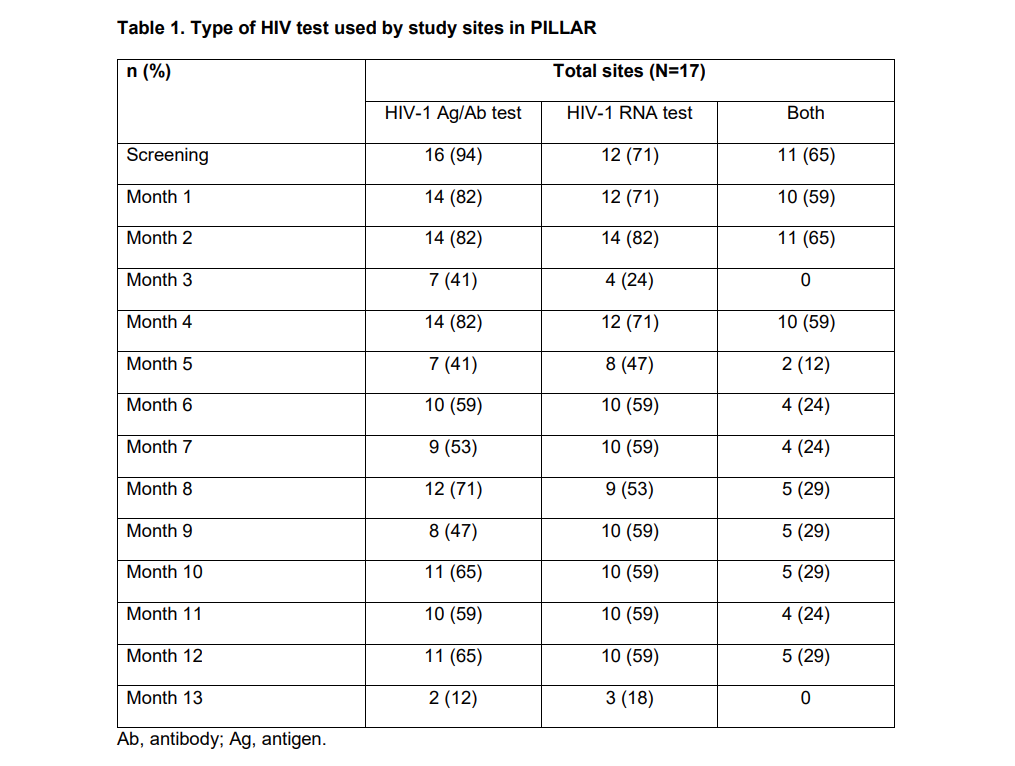
197. Response to HIV Treatment After Long-Acting Cabotegravir Preexposure Prophylaxis in HPTN 083
Raphael J. Landovitz1, Jessica M. Fogel2, Zhe Wang3, Estelle Piwowar-Manning2, Elias Konstantine Halvas4, Deborah J. Donnell3, Marybeth McCauley5, Robinson Cabello6, Keren Middelkoop7, Lydia Soto-Torres8, James F. Rooney9, Alex Rinehart10, Beatriz Grinsztejn11, Susan H. Eshleman2, the HPTN 083 Study Team
Background
Data on antiretroviral therapy (ART) outcomes in persons who acquire HIV with long-acting cabotegravir (CAB-LA) pre-exposure prophylaxis (PrEP) are limited. We evaluated ART outcomes in CAB-LA exposed cisgender men and transgender women who have sex with men (MSM/TGW) who acquired HIV in the HPTN 083 trial. ART regimens were selected at study sites; local genotyping results were available in some cases.
Methods
Participants diagnosed with HIV after ≥1 CAB-LA injection with >30 days follow-up on ART were included (1st HIV positive visit through 12/1/23). HIV viral load (VL) and HIV genotyping data reported here are from retrospective centralized testing.
Results
Response to an initial ART regimen was assessed for 47 participants (Table): 22 on integrase strand transfer inhibitor (INSTI)-based ART and 25 on other ART (14 on efavirenz [EFV]-based ART; 10 on PI-based ART; 1 on PI+INSTI ART). Those with no CAB-LA in the past 6 months were more likely to start INSTI-based ART and less likely to have pre-ART INSTI resistance. Median follow-up on ART was shorter for those on INSTI-ART than for those on other ART regimens. The proportion of persons with VL <50 c/mL at the last visit was similar for the two groups. Two participants with pre-ART INSTI resistance started INSTI-ART: one with N155N/H+R263R/K who had a VL of 52 c/mL after 77 days on ART; one with R263K who had VL <50 c/mL from day 112 through day 356 on ART. ART outcomes were also assessed in 7 participants who switched to INSTI-based ART (4 cases above + 3 other cases; 2 from EFV-based ART; 3 from PI-based ART, 2 from PI+INSTI ART; median 2nd regimen follow-up: 219 days, range 145-349). All 7 participants achieved a VL <50 c/mL on the second regimen including one with pre-ART INSTI resistance (Q148R).
Conclusions
Ideal PrEP product profiles consider the potential for emergence of resistance to first-line ART. Some persons who acquire HIV with CAB LA-PrEP develop INSTI resistance which could compromise response to INSTI-based regimens. We found similar short-term ART outcomes for MSM/TGW who acquired HIV with CAB-LA PrEP with INSTI-ART vs. other ART regimens. These results should be interpreted with caution, since site location, rationale for ART selection, availability of local resistance testing, and differences in duration of follow-up complicate interpretation of these data. More data are needed to determine optimal ART regimen selection in persons who acquire HIV in the setting of CAB-LA PrEP.
Table 1.
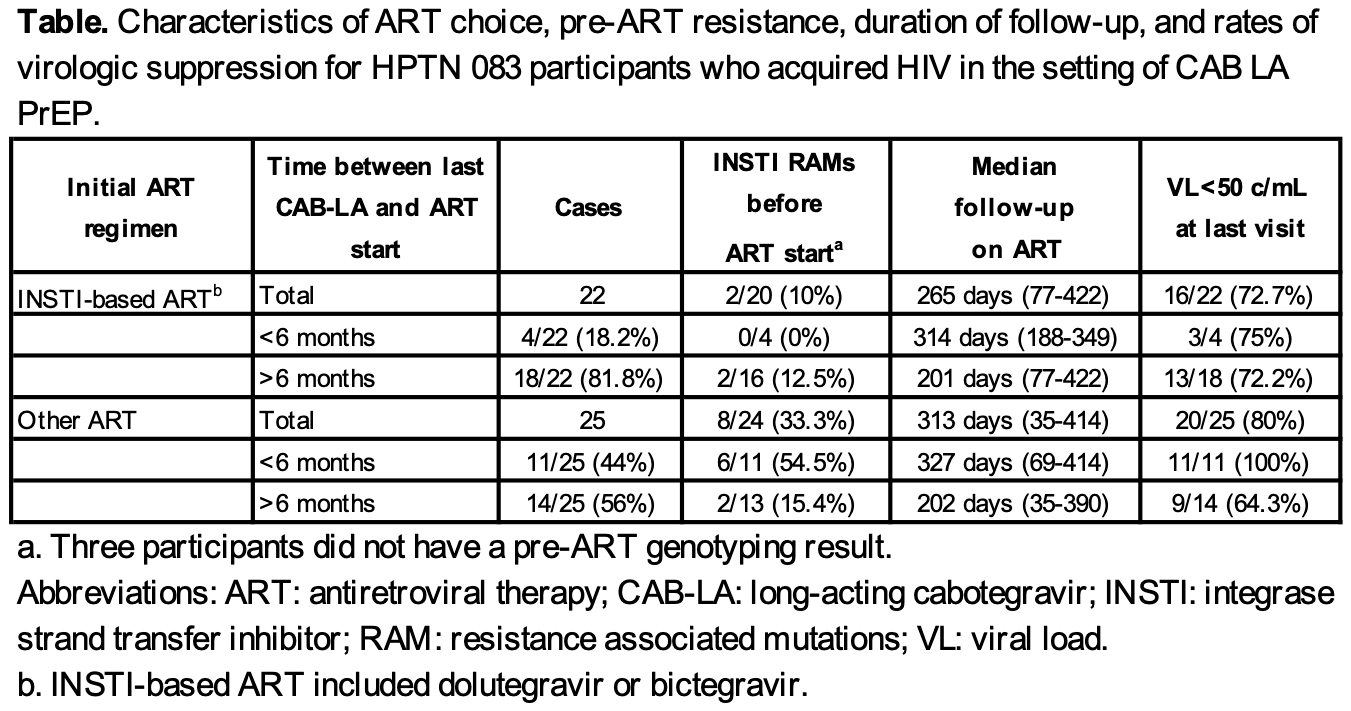
199. An Injectable Multipurpose Implant With CAB and MPA for Long-Acting HIV Prevention and Contraception
Ivana Massud1, Jasmine King2, Adam Vera1, Isabella Young3, Thy Le3, Jessica Levine4, James Mitchell1, Eric Edwards1, Mackenzie Cottrell3, Angela Kashuba3, Walid Heneine1, Gerardo Garcia-Lerma1, Rahima Benhabbour3, Charles Dobard1, Craig Sykes3
Background
Prevention of HIV and unplanned pregnancies is a leading public health priority for women’s health. Multipurpose prevention technologies (MPTs) capable of delivering long-acting (LA) contraception and HIV prevention are needed. We recently demonstrated in-situ forming implants (ISFIs) in macaques can deliver cabotegravir (CAB) above protective benchmarks (>4 PA-IC90) for more than 5 months. Here, we assessed in macaques an MPT CAB ISFI co-formulated with medroxyprogesterone acetate (MPA) and a contrast agent for in vivo visualization. We define long-term safety, PK, and efficacy on inhibiting ovulation and reversal of contraception by implant removal.
Methods
Two 1-mL injections of ISFIs containing CAB (530 mg/mL), MPA (35 mg/mL) and 10% Barium-sulfate (BaSO4) were administered subcutaneously to 6 cycling pigtailed macaques. Plasma CAB, MPA, and progesterone were measured weekly for up to 6 months. ISFIs were surgically removed from 3 macaques at 3 months to assess contraceptive reversion. Implant site reactions were monitored using a modified Draize scale (0-4) and migration of ISFIs was assessed by X-ray imaging.
Results
Only one animal showed injection site reaction at one implantation site (grade 3) that self-resolved within a week. Overall, CAB ISFIs co-formulated with BaSO4 elicited slightly lower CAB release in macaques, confirming in vitro and in vivo mouse data. Median (range) plasma CAB and MPA concentrations during the first 3 months were 668 (416-899) and 1.04 (0.43-2.58) ng/mL, respectively (Fig 1a). Progesterone was fully suppressed in all animals (Fig 1b). Removal of ISFIs in 3 animals at month 3 resulted in undetectable CAB and MPA concentrations within 1-2 weeks and return to ovulation within 3-5 weeks. In the 3 macaques that maintained ISFIs, plasma CAB and MPA concentrations at month 6 were 562 (421-1,046) and 0.33 (0.29-0.38) ng/mL, respectively, with no return to ovulation. None of the animals had evidence of implant migration by X-ray imaging.
Conclusions
We report safety and long-term contraceptive efficacy of the first LA injectable MPT implant releasing CAB and MPA in macaques. Our findings showing a lack of implant migration are reassuring and suggest a limited value of adding BaSO4, particularly given the reduction in CAB release. Long-term suppression of ovulation after implantation and rapid reversal following removal suggest ISFIs may provide a discrete and flexible MPT option for adolescent girls and women.
200. Ensitrelvir to Prevent COVID-19 in Households: SCORPIO-PEP Phase III Placebo-Controlled Trial Results
Akimasa Fukushi1, Masaharu Shinkai2, Tristan W. Clark3, Annie F. Luetkemeyer4, Paul Sax5, William Hanage6, Kelly Gebo7, Hideyuki Ikematsu8, Koichi Izumikawa9, Christopher C. Butler10, Frederick G. Hayden11, Safwan Kezbor12, Hiroki Sakaguchi1, Norio Ohmagari13, Takeki Uehara1, the SCORPIO-PEP Study Team
Background
Ensitrelvir is an oral SARS-CoV-2 3CL protease inhibitor, approved in Japan for the treatment of mild-moderate COVID-19. No approved antivirals have been proven efficacious as post-exposure prophylaxis (PEP) in household contacts (HHC) of index patients (IP) with COVID-19.
Methods
SCORPIO-PEP was a double-blind, placebo-controlled trial in HHC of IP with laboratory-confirmed COVID-19 conducted in the US, Japan, and other countries. HHC with negative local SARS-CoV-2 antigen or RT-PCR test were randomized 1:1 to receive either ensitrelvir (Day 1: 375mg, Day 2-5: 125mg), or placebo within 72 hours of symptom onset in the IP. The primary analysis population included HHC with central laboratory confirmed SARS-CoV-2 negativity by RT-PCR (mITT). The primary endpoint was the proportion of HHC who developed COVID-19 (RT-PCR positive and ≥1 of the 14 specified COVID-19 symptoms lasting for ≥48 hours) by Day 10. The secondary analysis population, which included HHC regardless of central laboratory RT-PCR results at baseline (ITT), was analyzed with the same endpoint.
Results
Between June 2023 and August 2024, 2,389 HHC were enrolled, of whom 2,041 constituted mITT (ensitrelvir n=1,030 vs. placebo n=1,011). In the mITT, the mean age was 42.4 years, 71.1% of HHC were randomized within 48 hours of IP symptom onset, and 37.0% had ≥1 high-risk factor (HR) for severe COVID-19. In the mITT population, the overall proportion of HHC developing confirmed COVID-19 was significantly lower in the ensitrelvir group (2.9%) than in the placebo group (9.0%), with a risk ratio of 0.33 (95%CI: 0.22-0.49; p<0.0001). In the ITT population (ensitrelvir n=1,194 vs. placebo n=1,193), similar ensitrelvir efficacy was observed with a risk ratio of 0.43 (95%CI: 0.32-0.59; p<0.0001). In the HHC with baseline SARS-CoV-2 positivity (ensitrelvir n=114 vs. placebo n=123), the risk ratio was 0.75 (95%CI: 0.46-1.23). In the ensitrelvir and placebo groups, the proportions developing treatment-emergent adverse events (TEAEs) (15.1% vs. 15.5%, respectively) or serious TEAEs (0.2% vs. 0.2%) were similar, as were the TEAEs observed in >1.5% of patients in either group: headache (2.9% vs. 2.5%), diarrhea (1.8% vs. 1.3%) and influenza (1.1% vs. 1.6%). There were no COVID-19 related hospitalizations or fatalities.
Conclusions
Administration of ensitrelvir to HHC <72 hours after the onset of IP symptoms was effective and generally well tolerated for PEP in HHC, including those with HR factors.
The figure, table, or graphic for this abstract has been removed.
Figure 1.
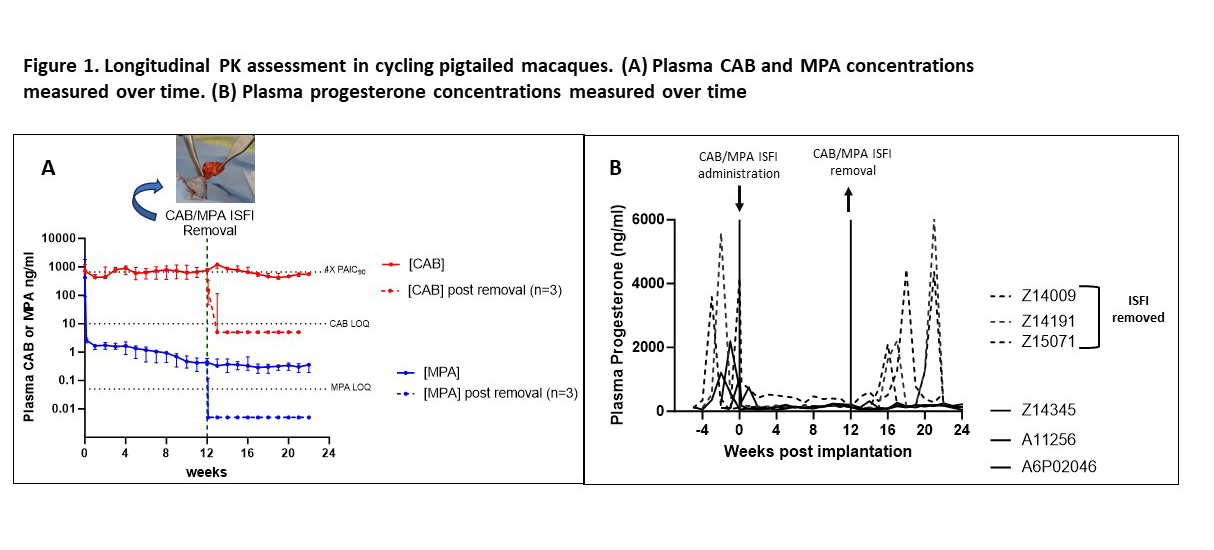
201. Tecovirimat Is Safe but Not Efficacious in People With Clade II Mpox
Timothy Wilkin1, William A. Fischer II2, Lu Zheng3, Caitlyn McCarthy3, Pooja Saha3, Arzhang Javan4, Alexander L. Greninger5, Kristina Brooks6, Rachel A. Bender Ignacio5, Annie F. Luetkemeyer7, Joseph J. Eron2, Rajesh T. Gandhi8, Sharon Nachman9, Judith Currier10, Jason Zucker11, the ACTG A5418 Study Team
Background
Mpox has caused two international public health emergencies; no therapies have established efficacy. ACTG A5418/STOMP is a phase 3 randomized placebo-controlled double-blind trial evaluating the efficacy of tecovirimat, an antiviral with animal data supporting its use for orthopox infections.
Methods
Participants ≥18 years with symptomatic laboratory-confirmed or presumptive mpox <14 days were randomized 2:1 to oral tecovirimat 600mg twice daily or placebo for 14 days. Participants with or at risk for severe disease, pregnant women and children were enrolled in an open-label arm. The primary outcome was time to clinical resolution (all skin lesions scabbed, desquamated, or healed, and visible mucosal lesions healed) by Day 29. The secondary outcome included mean pain score reduction over 5 days, and longitudinal mpox DNA changes from a representative skin lesion for those enrolled in person. In November 2024, the Data and Safety Monitoring Board recommended stopping randomization based on a futility analysis.
Results
Of 412 eligible participants randomized to tecovirimat (275) or placebo (137) at 50 sites in 7 countries, 24% were enrolled remotely, 98% were male, 97% were cisgender, and median age was 34 years; 53% white, 11% black, 45% Hispanic; 33% living with HIV; 22% had received ≥1 dose of mpox vaccine. At entry median symptom duration was 8 days (IQR 5,10), median lesion number was 9 (IQR 4, 19; max 242), 33% had severe pain (7-10 on 11-point scale); 68 (17%) did not have mpox diagnosed and were excluded. By Day 29, the estimated cumulative incidence of clinical resolution was 83% and 84%, respectively (instantaneous risk ratio 0.98, nominal 98.1% CI: 0.74-1.31; p=0.89) (Figure). Receipt of open-label tecovirimat due to disease progression or persistent severe pain was the same (7% in each arm). Adverse events were similar (11% vs. 9%). Among those with severe pain at baseline (a pre-specified analysis), mean [sd] pain score reduction was similar for tecovirimat (3.2 [2.1]) and placebo (3.1 [2.0]). More participants in tecovirimat arm had undetectable mpox DNA at Day 8 (48%) compared to placebo (33%) but no meaningful difference at Day 15 (83% and 78% respectively).
Conclusions
Tecovirimat did not reduce clinical resolution of mpox lesions or improve pain control among adults with clade II mpox. These results do not support the continued use of tecovirimat monotherapy for mpox.
Figure 1.
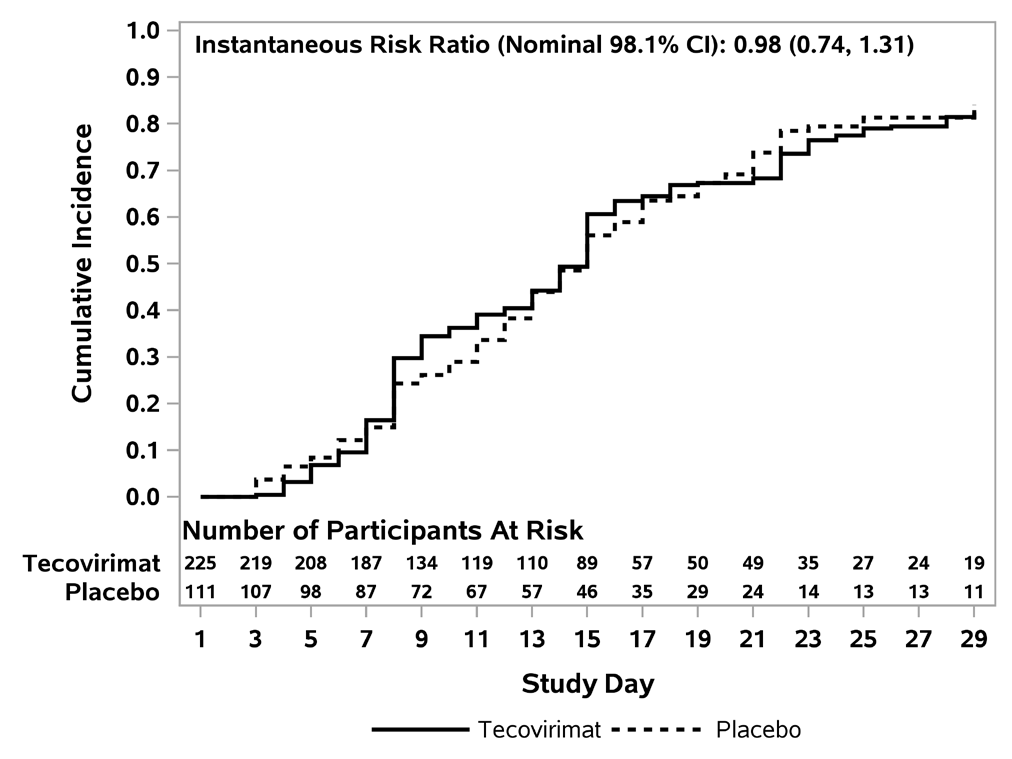
202. Randomized Trial of Long-Acting Cabotegravir and Rilpivirine in Africa (CARES): Week 96 Results
Cissy Kityo1, Ivan K. Mambule1, Simiso M. Sokhela2, Reena Shah3, Joseph Musaazi4, Caroline Otike1, Henry Mugerwa1, Fiona Cresswell5, Charity Wambui6, Ibrahim Yawe7, Josphat Kosgei8, Logashvari N. Naidoo9, Veerle Van Eygen10, Fafa A. Boateng11, Nicholas Paton5, the CARES Trial Team
Background
Evidence is required to support use of long-acting injectable therapy (LA) in Africa, where demographic factors, viral subtypes, prior treatment, archived drug resistance, and approaches to treatment delivery and monitoring differ from resource-rich settings. We previously reported non-inferior efficacy of LA versus oral antiretroviral therapy (ART) at 48 weeks, but longer-term data are needed to assess durability in program settings.
Methods
This randomized, multicentre, open-label trial evaluated efficacy, safety, and tolerability of switching from oral ART to LA. Adults with HIV-1, stable on first-line oral ART (TDF +3TC/FTC+EFV/NVP/DTG) with screening VL <50 copies/ml were enrolled at 8 African sites. Main exclusion criteria were past virologic failure, current pregnancy and HBV co-infection. Participants were randomized (1:1) to continue oral ART (OT group) or switch to cabotegravir (CAB)+rilpivirine (RPV) intramuscular injections every 8 weeks (LA group). VL was monitored every 24 weeks. Main outcome is % participants with VL <50 copies/ml at week 96 (FDA snapshot; non-inferiority margin 10%). Confirmed virologic failure (CVF, secondary outcome) was defined as 2 consecutive VL ≥200 copies/ml. Subtype and resistance mutations were determined at baseline in all (archived DNA, retrospective), and at CVF (real-time, RNA).
Results
512 participants were enrolled (median age 42y; 58% female; 92% on DTG-based ART; 74% with prior NNRTI exposure; 8% baseline archived RPV resistance mutations [in sequences without APOBEC mutations]; 57% viral subtype A1; 21% baseline BMI ≥30kg/m2). Seven withdrew (3 LA, 4 OT group) and two died (1LA, 1OT) by week 96. At 96 weeks, 247/255 (96.9%) in LA and 250/257 (97.3%) in OT group had VL<50 copies/mL (difference -0.4%; 95%CI -3.1 to 2.0%); demonstrating non-inferiority (Table). Four participants (1.6%) in LA group and none in OT group had CVF by week 96; 3 resuppressed on TDF/3TC/ DTG. Adverse events of grade ≥3 severity occurred in 41 (16%) in LA and 22 (9%) in OT group; only one treatment-related adverse event in the LA group led to treatment discontinuation (injection-site abscess).
Conclusions
At 96 weeks, CAB and RPV LA showed high efficacy, non-inferior to oral ART when used in the public health approach with sparse VL monitoring and without real-time baseline resistance testing. CVF and acquired resistance was uncommon. LA was effective with an acceptable safety profile and may be considered for use in treatment programs in sub-Saharan Africa.
Table 1.
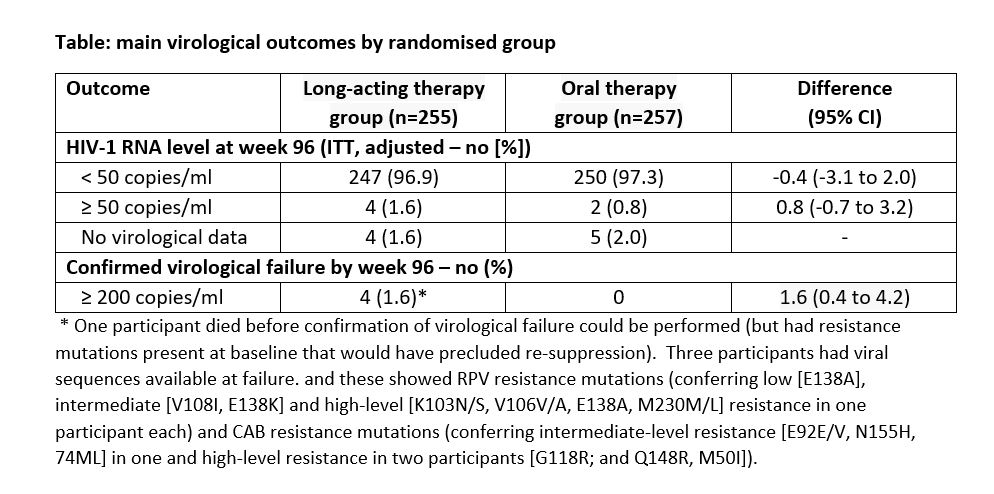
203. VH3810109 (N6LS) Efficacy and Safety in Adults Who Are Virologically Suppressed: The EMBRACE Study
Peter Leone1, Babafemi Taiwo1, Margaret Gartland1, Paul Wannamaker2, Annie F. Luetkemeyer3, Charlotte-Paige M. Rolle4, Christopher J. Bettacchi5, William Towner6, Michael Warwick-Sanders7, Riccardo D’Agostino7, Rulan Griesel2, Chelsea MacFarlane1, David Dorey8, Sherene Min1, Jan Losos1
Background
VH3810109 (N6LS) is a broadly neutralizing CD4-binding site antibody being developed for long-acting HIV-1 therapy. N6LS was well tolerated and efficacious in participants with HIV-1 naive to treatment when administered intravenously (IV) or subcutaneously (SC) in the proof-of-concept phase 2a BANNER study. In the phase 1 SPAN study, single-dose N6LS given IV (60 mg/kg) or SC (3000 mg) with recombinant human hyaluronidase PH20 (rHuPH20) showed a good safety profile in adults without HIV. Using the same doses from SPAN, the EMBRACE study evaluated the efficacy, safety, and tolerability of N6LS every 4 months + long-acting intramuscular cabotegravir (CAB LA) monthly for maintenance of HIV-1 suppression.
Methods
EMBRACE is a phase 2b, randomized, open-label, multicenter study (45 sites; US and Puerto Rico) in adults with screening HIV-1 RNA <50 c/mL and phenotypic sensitivity to N6LS (90% inhibitory concentration [IC90] ≤2.0 µg/ mL). Participants were randomized 2:2:1 to N6LS 60 mg/kg IV + CAB LA, N6LS 3000 mg + rHuPH20 SC + CAB LA, or to continue their pre-baseline standard-of-care (SOC) regimen. The primary endpoint was plasma HIV-1 RNA ≥50 c/mL at Month 6 (FDA Snapshot algorithm).
Results
Of 125 participants randomized, median (range) age was 53 (22-69) years and 83% were male; 63% identified as White, 28% as Black or African American, and 43% as Hispanic or Latin American. Proportions with plasma HIV-1 RNA ≥50 c/mL at Month 6 were 2/50 (4%) with N6LS 60 mg/kg IV, 3/49 (6%) with N6LS 3000 mg SC + rHuPH20, and 0/26 (0%) with SOC (Table). Through Month 6, confirmed virologic failure (CVF) occurred in 2 participants receiving N6LS 60 mg/kg IV, 2 receiving N6LS 3000 mg SC + rHuPH20, and 0 receiving SOC. Of 3 participants with data available at CVF, 1 had N6LS IC90 >2 µg/mL and none had integrase resistance mutations. N6LS was well tolerated when given IV or SC + rHuPH20, with AEs leading to withdrawal occurring in 3/49 receiving SC + rHuPH20 and no N6LS/CAB-related serious AEs reported. Grade ≥3 N6LS-related infusion site reactions (ISRs) were reported in 0/50 (0%) participants receiving N6LS 60 mg/kg IV and 7/49 (14%) receiving N6LS 3000 mg SC + rHuPH20; mean (SD) duration of all ISRs was 2.0 (0.8) and 6.4 (5.2) days with N6LS dosed IV or SC + rHuPH20, respectively.
Conclusions
N6LS administered IV or SC + rHuPH20 every 4 months in combination with monthly CAB LA maintained viral suppression in most adults who were sensitive to N6LS at baseline, with tolerability favoring IV N6LS.
Table 1.
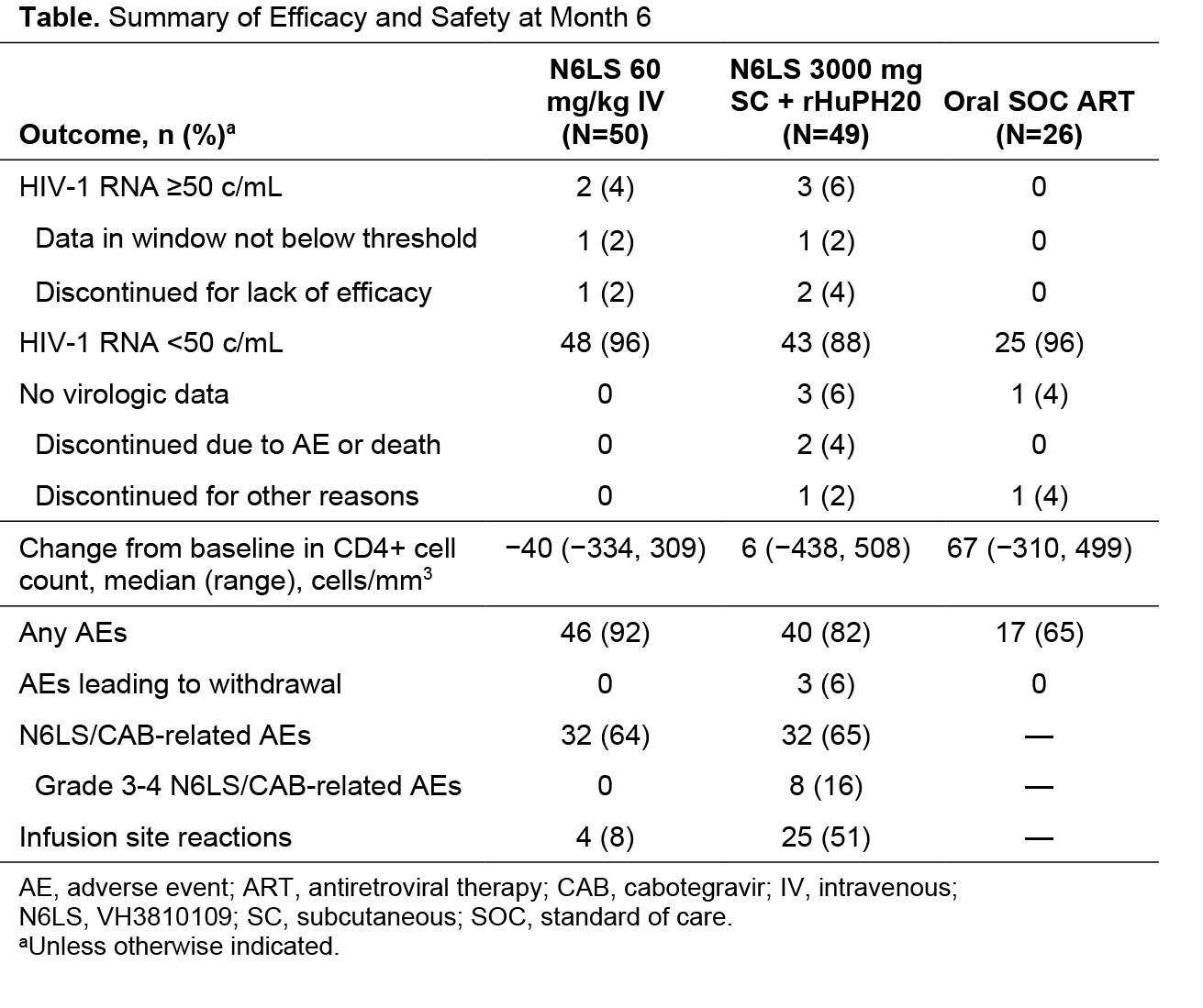
204A. Switch to DOR/ISL (100/0.25 mg) QD From BIC/FTC/TAF: A Blinded Phase III Study in Adults With HIV-1
Michelle Fox1, Anthony M. Mills2, Moti Ramgopal3, Christopher J. Bettacchi4, Olayemi Osiyemi5, Federico Hinestrosa6, Gordon E. Crofoot7, Harold P. Katner8, Hiroyuki Gatanaga9, Margaret Johnson10, Feng-Hsiu Su1, Alice Xu1, Luisa Stamm1, Amy E. Colson11, Rima Lahoulou12
Background
Doravirine (DOR), an NNRTI, and islatravir (ISL), an investigational nucleoside reverse transcriptase translocation inhibitor, have complementary mechanisms of action and resistance profiles. MK-8591A-052 is an ongoing phase 3 study evaluating the efficacy and safety of switching from bictegravir/ emtricitabine/tenofovir alafenamide (BIC/FTC/TAF) to DOR/ISL (100/0.25 mg), a once-daily single-tablet regimen. Declines in CD4 T-cell and lymphocyte counts were seen with higher ISL doses.
Methods
In this double-blind, non-inferiority study (NCT05630755) adults with HIV-1, virologic suppression for ≥3 months on BIC/FTC/TAF, and no history of treatment failure or known resistance to DOR were randomized (2:1) to switch to DOR/ISL (100/0.25 mg) or continue BIC/FTC/TAF. Primary efficacy endpoint was % of participants with HIV-1 RNA ≥50 c/mL at week 48 (FDA snapshot; non-inferiority margin 4%). Discontinuation was required for confirmed decline in total lymphocytes (≥30% and to <1.0 x 10⁹/L) or in CD4 T-cell count (≥30% and to <350 cells/mm3 from baseline ≥350 or to <200 from baseline ≤349).
Results
We treated 513 participants: 342 switched to DOR/ISL (100/0.25 mg), 171 continued BIC/FTC/TAF. Mean age was 47.6 (±12.9) yrs, 21.4% were female at birth, 60.8% were White, 30.8% were Black/African American, and 22.8% were Latine. At week 48, HIV-1 RNA was ≥50 c/mL in 5 (1.5%) participants on DOR/ISL and 1 (0.6%) on BIC/FTC/TAF (difference 0.9%, 95% CI -1.9, 2.9; CI upper bound <4%), demonstrating non-inferiority of DOR/ISL to BIC/FTC/TAF. HIV-1 RNA was <50 c/mL in 91.5% of participants on DOR/ISL and 94.2% on BIC/FTC/ TAF. One participant on DOR/ISL discontinued due to lack of efficacy with no on-treatment resistance detected at the time of viremia. Rates of AEs (74.6% DOR/ ISL, 71.3% BIC/FTC/TAF), drug-related AEs (10.2%, 9.4%), and discontinuations due to AEs (2.9%, 1.8%) were similar between groups. There were no between‑group differences in mean change in CD4 T-cell or total lymphocyte count at week 48. Two participants on DOR/ISL (0.6%) and one on BIC/FTC/TAF (0.6%) discontinued due to decrease in CD4 T-cell or total lymphocyte count.
Conclusions
DOR/ISL (100/0.25 mg) maintained viral suppression and was non-inferior to BIC/FTC/TAF at week 48. DOR/ISL was well tolerated with a similar safety profile to BIC/FTC/TAF and did not adversely affect lymphocytes.
Table 1.
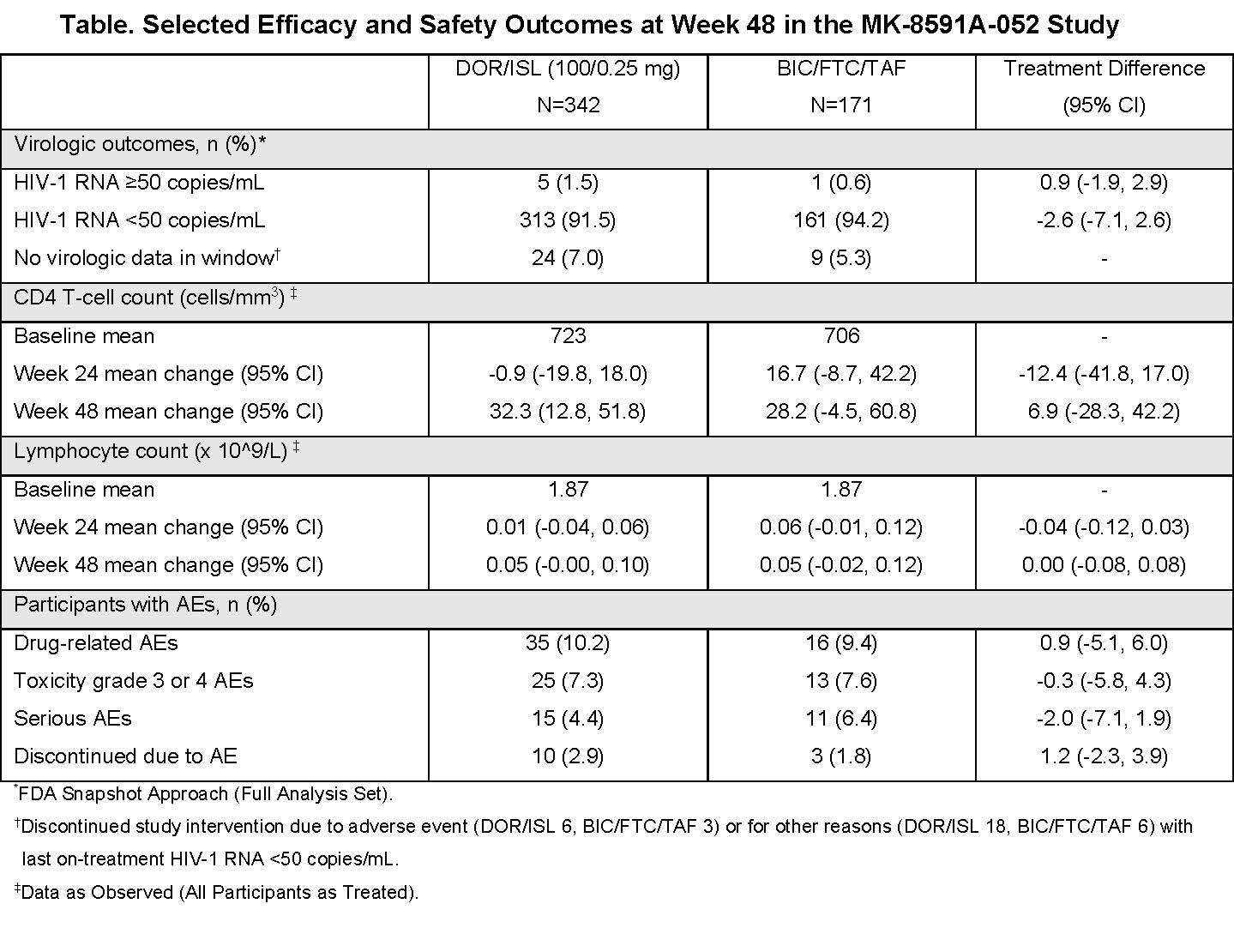
204B. Switch to DOR/ISL (100/0.25 mg) QD From Oral ART: An Open-Label Phase III Study in Adults With HIV-1
Michelle Fox1, Rosie Mngqibisa2, Juan Diego Velez3, Princy Kumar4, Dominique L. Braun5, Andrew Carr6, Mark Bloch7, Sharon Walmsley8, Pablo Tebas9, Anjana Grandhi1, Stephanie Klopfer1, Luisa Stamm1, Chloe Orkin10, Jason Kim1
Background
Doravirine (DOR), a NNRTI, and islatravir (ISL), an investigational nucleoside reverse transcriptase translocation inhibitor, have complementary mechanisms of action and resistance profiles. MK-8591A-051 is a phase 3 study evaluating the efficacy and safety of switching from oral ART to DOR/ISL (100/0.25 mg), a once-daily single-tablet regimen. Declines in CD4 and total lymphocyte counts were seen with higher ISL doses.
Methods
In this open-label, non-inferiority study (NCT05631093), adults with HIV-1 RNA <50 c/mL for ≥3 months on oral 2- or 3-drug ART, with no history of treatment failure or known virologic resistance to DOR, were randomized 2:1 to switch to DOR/ISL (100/0.25 mg) or continue baseline ART (bART), stratified by bART regimen. Primary efficacy endpoint was % of participants with HIV-1 RNA ≥50 c/mL at week 48 (FDA Snapshot; non-inferiority margin 4%). Discontinuation was required for confirmed decline in total lymphocytes (≥30% and to <1.0x10⁹/L) or CD4 count (≥30% and to <350 cells/mm3 from baseline ≥350 or to <200 from baseline ≤349).
Results
We treated 551 participants: 366 switched to DOR/ISL and 185 continued bART. Mean age was 49.8 (±12.3) yrs; 39.7% were female at birth, 45.4% Black and 14.5% Latino. Median time since HIV diagnosis was 13.3 (IQR 7.2-20.4) yrs. bART was InSTI-based (64.2%), NNRTI-based (30.3%), or PI-based (5.4%) with median duration 3.8 (IQR 2.0-6.3) yrs. At week 48, HIV-1 RNA was ≥50 c/mL in 5 participants (1.4%) on DOR/ISL and 9 (4.9%) on bART (difference -3.6%, 95%CI -7.8, -0.8; CI upper bound <4%), demonstrating non-inferiority of DOR/ISL to bART. HIV-1 RNA was <50 c/mL in 95.6% on DOR/ISL and 91.9% on bART. Two participants who discontinued DOR/ISL due to viremia had resistance-associated mutations affecting susceptibility to all major classes except InSTIs that were also present in baseline proviral DNA. Drug-related adverse events (AEs) were more common with DOR/ISL (12.0%) vs bART (4.9%); none were serious and one (diarrhea) led to discontinuation. Other AE rates were similar for DOR/ISL and bART. At week 48, mean changes from baseline in CD4 T-cell and total lymphocyte counts were similar between the treatment arms. No participants discontinued treatment due to decreased CD4 T-cell or total lymphocyte count.
Conclusions
Switching to DOR/ISL (100/0.25 mg) maintained viral suppression and was non-inferior to continuing bART at week 48. DOR/ISL was well tolerated with a similar safety profile to bART and did not adversely affect lymphocytes.
Table 1.
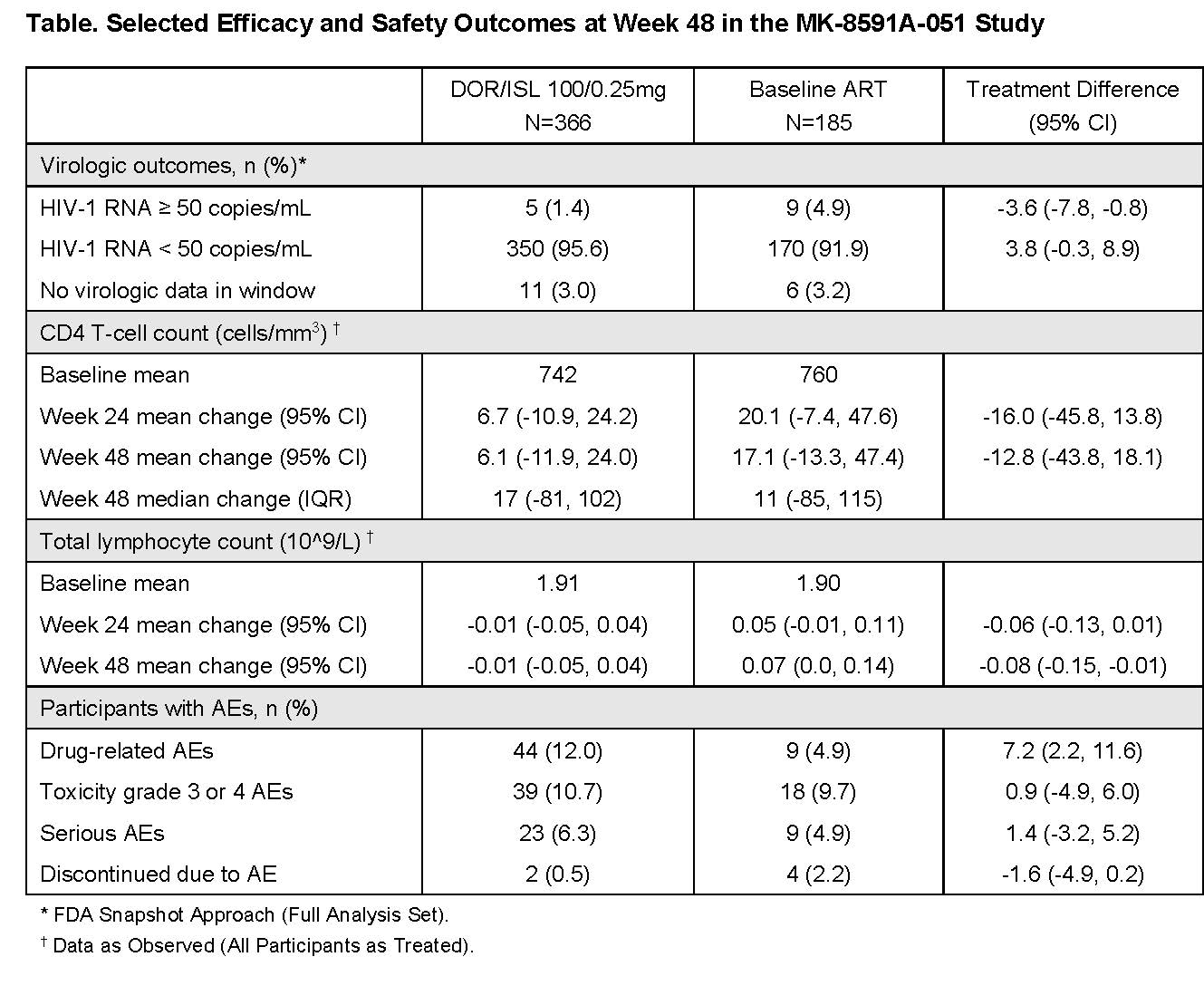
300. Understanding the Evolutionary Framework and Transmission Dynamics of Mpox in South Korea
Poster Abstracts
Page: 58
Minji Lee, Chihwan Choi, Sang Eun Lee, Gyuri Sim, Jin-Won Kim, Myung-Min Choi, Hwajung Yi, Yoon-Seok Chung
Background
The 2022 global mpox outbreak is characterized by the accumulation of APOBEC3(A3)-mediated mutations through human-to-human transmission, closely linked to behavioral epidemiological traits. This accumulation may have contributed to fluctuations in transmission dynamics. The virus underwent accelerated evolution through rapid transmission networks, with clustered transmission from sexual networks involving anonymous partners facilitating the buildup of A3-dependent variants and contributing to genetic drift.
Methods
Clinical samples were collected from 139 mpox patients in South Korea between 2022 and 2024 to investigate these aspects. Libraries for whole genome sequencing were prepared using probe-capture hybridization. The resulting high-quality sequences were utilized for phylogenetic and mutation analyses.
Results
In 2022, South Korea reported four imported mpox cases, including one involving a healthcare worker, all linked to sub-lineages B.1.1 and A.2.1. By 2023, cases surged to approximately 150, primarily associated with a group having significant epidemiological ties to Japan. The index case 2023 belonged to clade IIb sub-lineage C.1 and exhibited the unique L16F mutation, also found in genomes from Japan, Taiwan, and Belgium but absent in those from Germany, the USA, and Canada. South Korea then experienced sustained local transmission for about six months, with all patients showing the L16F mutation. Over 80% of cases involved close contact with anonymous partners, frequently through social media or visits to saunas, complicating contact tracing and leading to increased informal encounters and superspreading. Nearly all cases from 2023 to 2024 were dominated by a single virus lineage. To further understand transmission dynamics, we identified eight sub-clusters based on shared mutations, primarily linked to the activity of A3 deaminases with antiviral functions. The mutation hotspots are associated with structural integrity, such as ankyrin repeat/F-box proteins, while A3-dependent mutations act as barriers to cell-free transmission, promoting contact-dependent transmission. This shift enhances the virus's ability to establish localized infections, complicating containment efforts and driving molecular evolution characterized by low adaptation costs under natural selection pressure.
Conclusions
Continuous monitoring and analyzing these dynamics are essential for effective public health policy formulation and a suitable global response to mpox cases.
301. Fine-Tuning Viral Adaptation Through Genome Retraction: Insights From Mpox Outbreaks in South Korea
Poster Abstracts
Page: 58
Yoon-Seok Chung, Minji Lee, Chihwan Choi, Sang Eun Lee, Gyuri Sim, Jin-Won Kim, Hwachul Shin, Hwajung Yi
Background
Since 2022, the global population has experienced an unusual outbreak of mpox, characterized by the distinctive epidemiology of heavy-tailed sexual network partnerships within specific populations. These epidemiological characteristics resulted in an initial rapid outbreak driven by exclusive human-to-human transmission within specific populations, which facilitated a broader range of viral evolution than initially anticipated.
Methods
Genomic surveillance of mpox-positive cases in South Korea (2022–2024) employed hybrid whole-genome sequencing with long- and short-read methods. The high-quality genomes were used for phylogenetic and molecular evolution analyses.
Results
The key characteristic of the mpox outbreak in South Korea was transmission heterogeneity. The spread of the disease was significantly influenced by specific communities and environmental contexts, with particular populations playing a pivotal role in the transmission dynamics. In response to these localized transmission patterns, the virus underwent molecular evolution due to selective pressures from sustained outbreaks throughout 2023 and 2024. As transmission remained uneven, the virus accumulated genetic variations, including both mutations and genome retractions, which enhanced its adaptation to the host and optimized transmissibility. This study's genomic surveillance identified five cases of genomic deletions in key functional regions, including growth factors, apoptosis inhibitors, IL-18 binding proteins, BCL-2-like proteins, and NF-kB regulatory factors. These findings support the hypothesis that such deletions enable the virus to modulate host cell physiological processes, fine-tuning immune responses and cell survival to create optimal conditions for prolonged replication. Specifically, by adjusting the host transcriptome, the virus may induce a balanced immune response while regulating cell survival, thus promoting long-term infection. This transcriptome modulation could act as an evolutionary mechanism, facilitating the virus's transition to a chronic infection state.
Conclusions
Importantly, the genetic deletions identified in this study do not fully suppress the host’s immune response but rather maintain a moderate state, allowing for co-evolution between the virus and the host. Such a transition to chronic infection could have profound implications for the transmission dynamics and epidemiology of infectious diseases.
302. Discovery of Aberrant Genomic Rearrangement in an Mpox Virus Genome Observed in a Japanese Patient
Poster Abstracts
Page: 58
Hidetoshi Igari, Eiji Ido, Toshibumi Taniguchi, Takayuki Ishige
Background
The surge of Mpox outbreak (clade IIb) which initially started in Europe/America in May 2022 eventually reached Asia a little later, and the first patient in Japan was identified in July 2022. A total of 249 cases have been reported to date in the country. Three patients visited our hospital. As noteworthy news, clade I appears to be jumping out of Africa. Appearance of a new variant (clade Ib) can be part of the reasons of this rapid expansion of viral habitats. Thus, genetic analyses of Mpox should be conducted in light of viral evolution.
Methods
Three patients were all male and had typical lesions such as pustules and scabs on their body surfaces. The specimens (termed Mpox1-3 respectively) were collected from pustules and scabs on the first day of examination in 2023. DNAs were extracted and subjected to WGS using iSeq100 after long-range PCR. Virus isolation was attempted using VERO cells.
Results
The WGS has revealed that all of three Mpox viruses belonged to clade IIb, lineage B.1.3. Mpox2 had only several additional mutations compared to Mpox1. Surprisingly, Mpox3 was found to have a very long deletion (nearly 6kbp-long) spanning the genomic positions 6,500 to 11,000. In addition, a much longer genomic portion (30kbp-long, the positions 160,000 to 190,000 just in front of 3’-ITR) was invertedly inserted at the deleted position. It means that this inverted genomic fragment is existing as duplicated, although the direction is opposite. The copy number of this aberrant rearrangement was confirmed by digital PCR. The viruses were isolated from all 3 specimens. The growth-kinetics indicated that the Mpox3 maintained its robust replicative property showing with slightly fusogenic CPEs.
Conclusions
The WGS has revealed that all of three Mpox viruses belonged to clade IIb, lineage B.1.3. Mpox2 had only several additional mutations compared to Mpox1. Surprisingly, Mpox3 was found to have a very long deletion (nearly 6kbp-long) spanning the genomic positions 6,500 to 11,000. In addition, a much longer genomic portion (30kbp-long, the positions 160,000 to 190,000 just in front of 3’-ITR) was invertedly inserted at the deleted position. It means that this inverted genomic fragment is existing as duplicated, although the direction is opposite. The copy number of this aberrant rearrangement was confirmed by digital PCR. The viruses were isolated from all 3 specimens. The growth-kinetics indicated that the Mpox3 maintained its robust replicative property showing with slightly fusogenic CPEs.
303. Factors Associated With Detectable Viral Load Among PLHIV in Serodiscordant Partnerships in Tanzania
Poster Abstracts
Page: 59
Abbas Ismail1, Damian Damian1, Emilian Karugendo2, Fahima Issa3, Deogratias Kakiziba4, Ahmed Khatib5, Lilian S. Shija1, Rebecca Laws6, George S. Mgomella1, Alexander Kailembo1, Mahesh Swaminathan1, Sarah Porter1
Background
People living with HIV (PLHIV) with undetectable HIV viral load (VL) cannot sexually transmit HIV to others. Forthcoming clinical guidelines in Tanzania define full HIV VL suppression as <50 copies/mL. PLHIV with detectable VL (DVL) in serodiscordant (SD) marriages or cohabiting relationships (SD-PLHIV) are at increased risk of transmitting HIV to their partner without HIV. Using data from a Tanzania population-based survey, we report prevalence of, and factors associated with DVL among SD-PLHIV.
Methods
The Tanzania HIV Impact Survey (THIS) 2022-2023, completed March 2023, is a nationally representative, cross-sectional household survey. Consenting participants aged ≥15 years responded to a questionnaire including items on relationship status, sociodemographic data, and HIV risk behaviors, and were offered household HIV testing. HIV VL was measured for PLHIV. We defined DVL as HIV VL ≥50 copies/mL, and we defined SD-PLHIV as a participant with a positive THIS HIV test result, and whose most recent sexual partner had a recorded negative THIS HIV test result; and among those whose marital status was defined as married or cohabiting with a partner. Binary logistic regression accounting for complex survey design and sampling weights was used to assess prevalence and correlates of DVL among SD-PLHIV. Results are reported as weighted estimates (%) and adjusted odds ratios (aOR) with 95% confidence internals (CI).
Results
Among 1,850 PLHIV identified in THIS, 51.6% (48.6-54.7%) were married or cohabiting. Of those, 61.4% (57.0-65.5%) had a recent sexual partner with a recorded THIS HIV test result, and 46.1% (39.7-52.7%) of those partners had a negative HIV test result. Of 261 SD-PLHIV analyzed, median age was 39 years (interquartile range: 31-48), and 51.3% (42.9-59.5%) were female. Overall, 42.8% (35.2-50.9%) of SD-PLHIV had DVL (Table). Prevalence of DVL decreased by age). Sex, education, and residence were not associated with DVL.
Conclusions
We observed high prevalence of DVL among SD-PLHIV in our analysis. Programs focused on improving awareness of HIV prevention interventions for serodiscordant married or cohabiting partners and tailored interventions focusing on PLHIV 15-34 years might improve HIV viral load suppression among SD-PLHIV.
Table 1.
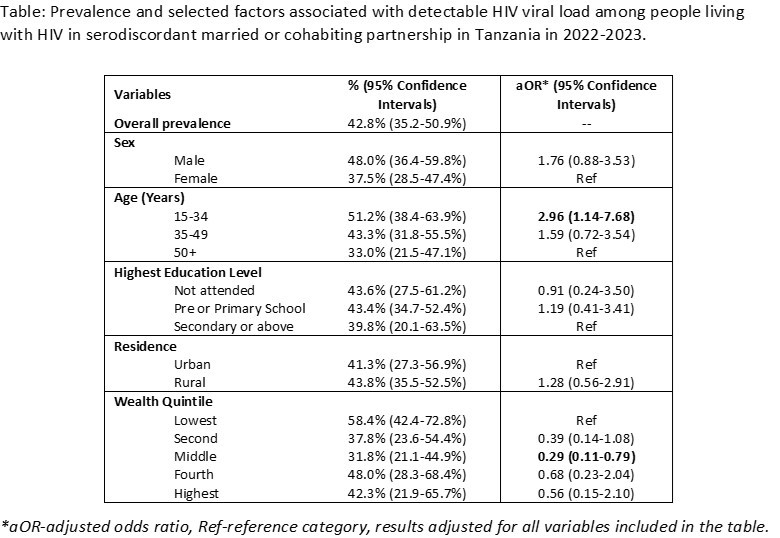
304. Enhanced Recognition of V3 bNAb Epitopes Induced by Fostemsavir on Cell-Associated Primary HIV-1 Env
Poster Abstracts
Page: 59
Raymond A. Alvarez, Eric Acosta, Svenja Weiss, Dania Figueroa Acosta, Benjamin Chen
Background
Fostemsavir (FTR), approved by the FDA in July 2020, is a first-in-class small molecule for treating multi-drug resistant HIV-1 infection. It is the prodrug of its active form, temsavir (TMR). TMR is classified as an attachment inhibitor and is thought to stabilize a native state of HIV Env, the state recognized by most broadly neutralizing antibodies, while also influencing Env glycosylation and proteolytic cleavage. However, the precise mechanism(s) by which TMR affects Env processing and conformation, particularly on cell-associated versus virus-incorporated forms of Env, remains unclear.
Methods
In this study, we measured the impact of FTR on antibody binding to Env using a cell-based assay in two systems: a tetherin-high system presenting Env on virus particles and a tetherin-low system presenting cell-surface Env. Using this system, we examined binding with and without TMR across various HIV-1 Env forms, including lab-adapted and primary strains, using several bNAbs targeting CD4, V2, and V3 regions. Additionally, we assessed bNAb binding to wildtype, hypercleavable (RR), and uncleaved (RS) Env mutants of QH0692 HIV-1 T/F strain over time.
Results
TMR increased V3 region recognition of bnAbs for wildtype viruses (YU2, T/F QH0692), with more pronounced effects on cell-associated (CA) versus virus-incorporated (VI) forms of Env. For the uncleavable Env QH0692 RS mutant an overall reduction of bnAbs binding was observed, whereas bnAb binding specifically to the V3 region, was dramatically enhanced. While this effect was observed for CA and VI forms of Env, enhancement was more marked on CA forms, suggesting a more pronounced effect on cell-associated forms of gp160 Env. Additionally, enhancement of V3 directed bnAb binding after 15 mins of TMR treatment with the RS mutant (gp160), suggests that TMR may directly influence Env conformation rather than indirectly affecting it through processing or glycosylation inhibition.
Conclusions
These data indicate that FTR does not primarily affect all strains by decreasing Env expression, and may be used in combination with certain V3 bnAb treatments to potentially enhance the effectiveness of bnAb-based therapies.
305. CXCR4-Using HIV-1 Variants Evolve in the Presence of and Co-Exist With CCR5-Using Variants
Poster Abstracts
Pages: 59-60
Shuntai Zhou1, Nathan Long1, Ean Spielvogel1, Michelle Floris-Moore1, Catalina Ramirez1, Andrew Edmonds1, Yijia Li2, Ighovwerha Ofotokun3, Seble Kassaye4, Kathryn Anastos5, Margaret Fischl6, Stephen Gange7, Christina Ochsenbauer8, Alan Landay9, Jack Dehovitz10
Background
HIV-1 uses either CCR5 (R5 virus) or CXCR4 (X4 virus) as a coreceptor to enter host cells. X4 variants, usually seen in the late stage of infection, are associated with more rapid disease progression. However, the triggering event that allows the evolution of X4 variants and the dynamics of X4 and R5 variants following the emergence of X4 variants are unclear.
Methods
We identified 21 women with HIV in the Women’s Interagency HIV Study (WIHS) whose: 1) CD4 T+ cell counts declined from >600 to <100 cells/ µl in the absent of effective antiviral therapy while in the study, and 2) plasma samples were available during the period of CD4+ T cell decline with HIV-1 RNA quantification. Multiplexed Primer ID NGS targeted HIV-1 gag, pol and env (V1/V3) of longitudinal specimens collected every 6 months. X4 variants were inferred using the Geno2Pheno coreceptor algorithm; X4 lineages were defined as having a false positive rate below 2% and comprising at least 0.3% of the intra-host viral population.
Results
A median of 4 years follow-up were studied for each participant. X4 variants were identified in 16 participants, with a median CD4+ T cell level of 620 cells/µL at the time of detection. At the time point when X4 first emerged, these variants constituted a median of 11% of the intra-host population. X4 variants co-existed with the R5 variants in longitudinal follow-up. At the final time point, the X4 population made up a median of 19% of the intra-host quasispecies. The emergence of X4 variants accelerated disease progression, evidenced by an increased CD4+ T cell decline rate of 206 cells/ µl/year (95% CI: 31 to 382, p=0.025) following their emergence. The X4 Env V3 sequences were linked with specific Env V1/V2 lineages, suggesting genetic compartmentalization of X4 variants. In some participants, multiple X4 lineages with distinct V3 sequences were identified at the same time point, suggesting diverse origins of X4 variants. X4 and R5 variants continued to evolve over time. The emergence of X4 did not increase the viral diversity in Env V1/V3.
Conclusions
X4 variants can emerge as minor variants early during the course of HIV-1 infection. X4 viruses co-exist with CCR5-using viruses, suggesting that the evolution of X4 variants is not driven by the lack of CCR5+ CD4+ T cells. We propose that the emergence of X4 viruses serves as a biomarker for a state of virus-specific immunodeficiency, allowing the virus to proliferate in inactivated CXCR4+ CD4+ T cells, leading to a more rapid loss of CD4.
306. Droplet Single Genome Amplification Allows for Characterization of Autologous HIV Envelope Sequences
Poster Abstracts
Page: 60
Joseph McWhirter1, Thomas Murphy1, Xianbao He1, Yan Mei Liang2, Frida Avila1, Stepan Levin2, Manish Sagar1
Background
Understanding and identifying HIV-1 neutralization escape requires isolating envelopes that have undergone antibody selection pressure. However, recombinant artifacts are generated during bulk reverse transcription (RT) and subsequent PCR, which can affect neutralization phenotype. To avoid this, amplification from a single genome is essential. We addressed this by developing a novel droplet-based one step RT-PCR method which can amplify full length envelopes with less recombination and significantly higher throughput than other single genome amplification methods.
Methods
Droplet-based genome amplification (DBGA) partitions starting templates into approximately 20,000 droplets, in which around 30% or less of the droplets contain a single genome. We validated our approach by generating a sequence pool containing either 6 different full-length HIV-1 RNAs or 8 HIV-1 DNA. Envelopes in these sequence pools were amplified using one-step DBGA, bulk RT followed by DBGA (bulk-RT-DBGA), or bulk RT followed by bulk PCR. Envelope sequences were obtained using single molecule PacBio technology. Recombination was quantified using Los Alamos Recombination Identification Program (RIP) and a genetic error quantification (GEQ) method. Differences were compared using Chi-square tests.
Results
Recombinant frequency was significantly lower in the RNA sequence pools amplified with our one-step DBGA (2.6% RIP) as compared to bulk RT followed by bulk PCR (25.5% RIP, p < 0.0001). Recombinant frequency was similar between one-step DBGA and bulk-RT-DBGA (2.6% and 1.5% respectively, RIP). Recombination rates in DBGA scaled with increased genomic input; as expected, because the frequency of droplets containing two or more templates increases with higher inputs amounts.
Conclusions
DGBA reduces recombinant artifacts similarly to established RT-SGA protocols while being high throughput and less laborious compared to SGA. Our approach provides a platform to characterize HIV-1 envelope sequences which have undergone antibody selection pressure with significantly more depth than previous methods.
307. High Resistance of HIV-1CH040 Envelope Glycoproteins to bNAbs Without Loss of Efficient Viral Entry
Poster Abstracts
Page: 60
Durgadevi Parthasarathy1, Alon Herschhorn1, Stephanie Pickthorn1, Shamim Ahmed1, Rajni Kant Shukla2, Jeffy Jeffy1, Amit Sharma2, Dmitrii Mazurov3
Background
A transmitter/founder (T/F) HIV-1 strain can establish a productive infection in healthy individuals. HIV-1 envelope glycoproteins (Envs) mediate viral entry and have to maintain a delicate balance between evasion from neutralizing antibodies and entry compatibility. Escape from broadly neutralizing antibodies (bnAbs), which target highly conserved regions in HIV Envs, pose significant challenges to HIV-1 Envs.
Methods
We evaluated the impact of the T/F HIV-1CH040 resistance to multiple bnAbs on efficient viral entry by comparing the infectivity of recombinant luciferase-expressing viruses that display CH040 Envs with the infectivity of recombinant viruses displaying Envs from different HIV-1 strains. We also introduced rationally designed engineered changes to disrupt bnAbs epitopes using Stratagene site-directed mutagenesis and tested the effects on susceptibility. We studied the efficiency of HIV-1 entry, mediated by engineered variants of CH040 Envs, by cell-cell fusion, western blotting analysis, cell-cell transmission, and cold sensitivity. We measured sensitivity to multiple bnAbs and known Env susceptibilities by neutralizing assays. In addition, viral replication kinetics and viral-cell fusion activity were tested in the context of recombinant simian-immunodeficiency viruses (SHIVs) in macaque lymphocytes.
Results
We identified high resistance of a transmitted/founding Envs CH040 to most bnAbs without a fitness cost associated with loss of efficient entry. HIV-1CH040, which mediates viral entry as efficiently as other primary Envs, represents a resistant viral strain of high public health concern. Unexpectedly, expression of CH040 Envs is relatively low, but HIV-1 CH040 replicates well in human T cells and HIV-1CH040 replicates well in vitro in pig-tailed macaque lymphocytes. These results highlight the potential ability of some T/F strains to evolve high bnAb resistance and replication fitness in parallel.
Conclusions
Our findings highlight several aspects of HIV strains of public health concern and provide additional considerations for the development of HIV-1 prevention and therapeutic strategies.
308. Sex Differences in Replication Kinetics of Primary HIV-1 Isolates in Monocyte-Derived Macrophages
Poster Abstracts
Page: 60
Jake Robinson, Gregory D. Whitehill, Hannah Schrader, Ryan Krause, Frederic Bibollet-Ruche, Katharine Bar
Background
Recent studies characterizing primary isolates of HIV-1 from acute timepoints, rebound after treatment interruption, chronic viremia, and the persistent reservoir have identified key phenotypic differences between these viruses when replicating in primary CD4 T cells. Here, we leverage these HIV-1 isolates to probe effects of virus clade, isolate origin, and cell donor sex on replication kinetics in peripheral monocyte derived macrophages (MDMs).
Methods
MDMs from 4 male and 5 female healthy donors were infected at an MOI of 0.1 with primary HIV-1 isolates: Clade B/C transmitted/founder (TF) viruses (n=4), Clade B/C rebound viruses (n=4), Clade B/C chronic viruses (n=5), and Clade D TF viruses (n=4). We assessed longitudinal area under the curve of HIVp24 (total HIVp24) for the 17 primary isolates in MDMs over 20 days of infection, segregating total HIVp24 into quartiles to compare replication kinetics.
Results
Across MDM from all donors, we found minimal differences in replication between Clade B/C TF viruses, Clade B/C rebound, and Clade B/C chronic viruses, except for the well-characterized brain-derived chronic virus YU2, which replicated in the highest quartile. All four Clade D TF viruses showed robust replication in MDMs, falling in the upper two quartiles. When infections in MDMs were segregated by cell donor sex, primary viruses replicated significantly better in male MDMs than female MDMs across all viruses (Two-way ANOVA, Interaction P=0.0013). In post-test comparison, the average percent difference in replication kinetics comparing male to female MDMs was 39.5% for 7 of 17 primary isolates (FDR, Q<0.05).
Conclusions
In MDM, the sex of cell donor was a significant determinant of HIV-1 replication, while virus origin (TF, rebound, or chronic) was not. As previously shown, brain-derived and Clade D viruses replicated efficiently in MDMs. Studies to better understand the mechanism of biological sex as a determinate of HIV-1 replication in myeloid cells are needed. Ongoing studies will build upon these results by characterizing growth kinetics of primary HIV-1 isolates in in vitro models of resident myeloid cells, such as tissue macrophages and microglia. Our results suggest biological sex should be considered in future translational studies of HIV persistence and cure strategies.
309. ScRNA-seq of HRSV/SARS-CoV-2 Co-Infection Reveals Unique Cellular Responses and lncRNA Signatures
Poster Abstracts
Pages: 60-61
Claudia Vanetti1, Luca Piacentini2, Lorenzo Citterio3, Micaela Garziano1, Irma Saulle1, Jacopo Aiello1, Martina Broggiato1, Claudio Fenizia1, Diego Bottan3, Daria Trabattoni1, Mario Clerici1, Mara Biasin1
Background
Respiratory co-infections caused by HRSV and SARS-CoV-2 often result in severe respiratory disease, but the underlying cellular/molecular mechanisms are poorly understood. Using an in vitro model of HRSV/SARS-CoV-2 co-infection, we investigated how individual cells respond to simultaneous or single infections, providing insights into synergistic/antagonistic viral interactions.
Methods
Single-cell RNA sequencing (scRNA-seq) data of the A549-ACE2-expressing cell line, co-infected with HRSV and SARS-CoV-2 (MOI: 0.01) were analyzed 72 hours post infection. The expression of SARS-CoV-2 and HSRV-specific genes was examined simultaneously with cellular genes to determine the presence or co-presence of the viruses in each profiled cell. Gene expression profiles of single/co-infected cells were used to identify specific cell markers and make functional inferences about the different cell states.
Results
ScRNA-seq data identified four distinct cell clusters: 1) uninfected, 2) SARS-CoV-2-infected, 3) HRSV-infected, and 4) SARS-CoV-2/HRSV co-infected cells. Within Cluster 4, two sub-clusters were further distinguished based on HRSV gene expression levels: 4a (low) and 4b (high). Marker analysis revealed molecular signatures of both protein-coding and long non-coding (lnc) RNA characterizing each of the four cell clusters. Specifically, co-infected cells showed altered expression of genes linked to viral defense (n=27; P=6.2×10-⁸), innate immunity (n=30; P=2.5×10-⁵) and type I IFN regulation (n=8; P=3.4×10-⁴). When analyzing sub-clusters, JAK-STAT (n=8; P=5.7×10⁻⁵) and ERK1/ERK2/MAPK (n=15; P=9.3×10⁻⁵) signaling pathways were specifically up-regulated in sub-cluster 4a and 4b, respectively. Co-infected cells also showed higher expression of at least 16 lncRNAs, some not yet functionally annotated, while others (e.g. AC011287.1) may be involved in trained immunity. As for the sub-clusters, lncRNAs NEAT1 and MALAT1 were downregulated in 4a compared to 4b (P=1.1x10⁻⁹ and P=2.3 x 10⁻¹⁶, respectively).
Conclusions
ScRNA-seq revealed transcriptionally distinct subpopulations of lung epithelial co-infected cells. Two sub-clusters of coinfected cells, characterized by different HRSV expression levels, are presumably associated with a competitive/cooperative interaction between HRSV and SARS-CoV-2 within the same cell. Further analyses will be mandatory to ascertain the functional role exerted by lncRNAs that may have therapeutic relevance in the context of HRSV/SARS-CoV-2 coinfection.
The figure, table, or graphic for this abstract has been removed.
310. Emergence of Divergent Spike Haplotypes in Individuals With Persistent SARS-CoV-2 Infections
Poster Abstracts
Page: 61
Luke Blagdon Snell1, Suzanne Pickering1, Adela Alcolea-Medina1, Rahul Batra2, Michael H. Malim1, Gaia Nebbia2, Jonathan Edgeworth2, Stuart Neil1, Rui Galao1
Background
Persistent infection with SARS-CoV-2 is hypothesised to give rise to new variants of concern (VoCs). However, sequencing methods to investigate intrahost variation are limited: short-read technology precludes haplotyping, and long-read technology has high error rates. We describe a new method for investigating SARS-CoV-2 quasispecies and apply it to identify divergent spike haplotypes arising during persistent infection.
Methods
A long-read nanopore sequencing workflow was developed to generate high-quality reads (99.9% accuracy) covering the entire spike gene sequence, along with a bioinformatic tool (HaploVar) to identify and quantify unique spike haplotypes at ≥1% frequency in samples. Respiratory samples were processed from patients with acute and persistent infection lasting longer than 4 weeks. Molecular-clock and divergence phylogenies were constructed using TreeTime v0.11.3 and IQTree v2.3.0, then displayed in ete v3.1.3. Haplotypes were screened for recombination using GARD v0.2.
Results
Sixteen patients with persistent infection were identified, ranging from 31-505 days and with a median of 7 longitudinal samples per patient. Infecting variants spanned the pandemic from B.1 until JN.1. Eighty-one samples from persistent infection and 75 samples from acute infection were successfully processed. Number of spike haplotypes identified in each sample was related to days post onset of symptoms (p<0.001) and being a persistent infection (p<0.001), but not viral load (Ct value) nor sequencing data yielded. During acute infection the median number of spike haplotypes was 1 (IQR 1-2). In persistent infection after 28 days the median number of spike haplotypes was 3 (IQR 2-7), compared to 7 (IQR 2-11) after 100 days. Many mutations were identical or at the same position to those seen in subsequent VoCs, including L18K and E484Q (Beta); K417T (Gamma); T19S, L452R (Delta); A570T (Alpha); H655Y (Omicron); G446S, Q954K (BA.1); S477N, D796H (BA.2); N460K (BA.2.75); Q493E (KP.3); and Y453F (Mink). Individuals treated with sotrovimab showed evidence of quasispecies with resistance mutations. Putative intra-spike recombination between haplotypes was identified in 3 persistent infections.
Conclusions
This novel workflow identifies intrahost spike haplotypes, and provides strong evidence for the emergence of variants of concern from persistent infection. We provide the first evidence of intrahost recombination from within a single individual as a mechanism of generating diversity of SARS-CoV-2.
The figure, table, or graphic for this abstract has been removed.
311. Evolving of Immune Evasion During a SARS-CoV-2 Chronic Infection: A Pathway to Variants of Concern
Poster Abstracts
Page: 61
Suzanne Pickering1, Luke Blagdon Snell1, Xiaohao Xu1, Helena Winstone1, Jeffrey Seow1, Carl Graham1, Rahul Batra2, Michael H. Malim1, Katie Doores1, Jonathan Edgeworth2, Gaia Nebbia2, Stuart Neil1, Rui Galao1
Background
Acute SARS-CoV-2 infections are mostly cleared within a few days but can become chronic in immunocompromised individuals. Impaired immune clearance is also thought to be a major factor in the evolution of new SARS-CoV-2 variants of concern(VOC). However, it is unclear how intra-host variation accumulates over the course of very long-term chronic SARS-CoV-2 infection, and how this reflects evolving mechanisms of adaptive and innate immune evasion.
Methods
A chronic infection (505 days) with SARS-CoV-2 B.1 virus of a 23yo male with an unknown immunodeficiency was followed in this study. Longitudinal samples of nasopharyngeal swabs, and corresponding full-length spike haplotypes sequencing, were obtained together with contemporaneous autologous sera. A live virus was isolated for day 329 of infection. Neutralisation assays were performed using FL-virus and lentiviral particles pseudotyped with spike proteins representative of viral quasispecies haplotypes, to assess evolution of immune evasion from autologous and heterologous sera, and a panel of mAb. Calu3 cells were infected with isolated FL-virus or VOCs for comparative studies on innate immune evasion.
Results
We observed that original B.1 virus carrying a D614G mutation in spike gradually accumulated 55 further spike mutations during the course of infection, mostly in key antigenic regions. Interestingly, 23 of those are defining of different VOCs such as Alpha and Omicron. Although this patient was not vaccinated or treated with antibody-based therapies, we demonstrated that accumulating mutations led to a virus universally resistant to wave 1 neutralising responses. We also observed that the virus isolate induced significantly lower proinflammatory gene expression in Calu3 cells than B.1 D614G virus. This correlated with a non-spike adaptation that appeared early in the infection, leading to higher expression of the viral innate antagonist protein orf9b. This same mutation has arisen independently in major VOC such as Alpha and Delta.
Conclusions
We characterised a pathway by which a wave 1 SARS-CoV-2 virus gradually evolved mechanisms of evasion from both adaptive and innate immune responses redolent of major VOC during a single chronic infection. This provides one of the strongest pieces of evidence for the involvement of long-term infections in the evolution of new variants that resist antibody-mediated immunity. We also suggest adaptations that resist innate immunity occur early in a chronic infection to promote viral persistence.
312. Genetic Mutation Differences Patterns of SARS-CoV-2 in Immunocompromised Patients Versus Controls
Poster Abstracts
Pages: 61-62
Karen Zafilaza1, Antoine Fauchois1, Valentin Leducq1, Quentin Le Hingrat2, Stephane Marot1, Theophile Cocherie3, Romane Guilbaud2, Valentine Marie Ferré1, Charlotte Charpentier2, Diane Descamps2, Eve Todesco1, Anne-Geneviève Marcelin1, Vincent Calvez1, Cathia Soulié4
Background
Although documented, the mutational dynamics of SARS-CoV-2 in immunocompromised patients remain relatively understudied. This study examined a cohort of immunocompromised patients hospitalized with SARS-CoV-2 infection to assess the distinct evolutionary trajectories of SARS-CoV-2 in these individuals compared to their immunocompetent counterparts. We compared the genetic diversity of SARS-CoV-2 between these groups over time.
Methods
87 immunocompromised hospitalized patients and 52 non-immunocompromised subjects from Pitié-Salpêtrière Hospital (Paris, France) diagnosed with SARS-CoV-2 infection by RT-PCR were enrolled. Samples were collected at the time of infection (D0) and during their follow-up. Whole genome sequencing was performed using Oxford Nanopore technology (ONT). Consensus sequences were generated using a pipeline including minimap2 and DeepVariant. We performed a sparse principal component analysis (sPCA) and a t-student stochastic neighbor embedding (t-SNE) to identify trends in longitudinal data. We used univariate analyses to catch differentially detected single mutations. We built a global and specific models on isolated mutation to measure the association with follow-up time and immunosuppression.
Results
The median follow-up time for immunocompromised patients was longer than for the controls (6 days vs. 4 days, respectively). Immunocompromised patients and controls were mainly infected by Omicron BA.1. Univariate analyses of the emergence of minor mutations showed an overexpression of 5 mutations in immunocompromised patients and the absence of minor mutations in the control group at the end of the follow-up period: N:R13C, ORF1ab:L896S, ORF1ab:N5591K, ORF1ab:P557T and the N:136delG deletion (see figure). Multivariate analyses confirmed the impact of immunodeficiency status on the emergence of these mutations (N:136delG p<0.01, N:R13C p<0.01, ORF1ab:L896S p<0.05, ORF1ab:N5591K p<0.01, ORF1ab:P5557T p<0.01). These mutations were observed in patients infected with clades BQ.1 and BA.5.
Conclusions
The univariate and multivariate analyses suggested a greater genetic diversity, which increased over time in immunocompromised patients. Isolated mutations in N and ORF1ab gene could affect protein structure therefore an in-silico and in-vitro approaches could be interesting to investigate the effect on protein structure.
Figure 1.
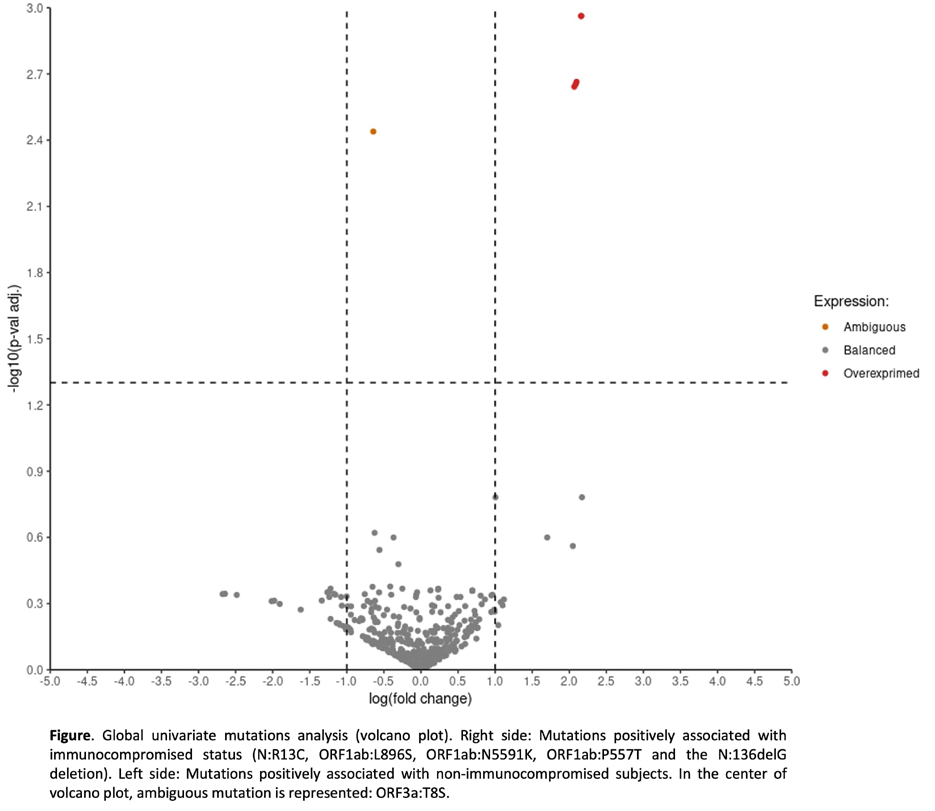
313. SARS-CoV-2 Intra-Host Evolution During Acute Infection in People With COVID-19
Poster Abstracts
Page: 62
Carla della Ventura1, Annalisa Bergna1, Cosmin L. Ciubotariu1, Haneen Chmes1, Mario C. Corbellino1, Agostino Riva2, Spinello Antinori2, Gianguglielmo Zehender1, Alessia Lai1
Background
Intra-host evolution reflects a general mechanism for the continued emergence of novel highly divergent SARS-CoV-2 variants. The intra-host evolution of SARS-CoV-2 was investigated with the aim of assessing conditions associated with the acquisition of new viral mutations through the sequencing of viral genomes.
Methods
58 cases of COVID-19 with 2 or more longitudinally positive SARS-CoV-2 swabs collected at intervals of at least 7 days from the first positive swab in the period 2021-2023 were analysed. All samples were subjected to whole genome sequencing with next-generation procedures.
Results
The median age was 83 years (IQR:73-88) and 55% were males.57 were hospitalized for a median of 23 days (IQR:16-32), and 12 died (21%) after a median of 25 days (IQR:19-34). No one reported previous SARS-CoV-2 infection; 79% were vaccinated.23% received more than one treatment for SARS-CoV-2 infection. Negativization period showed longer intervals in BQ.1 (39 days) and shorter in BA.1 infections (17 days,p=.04). No drug resistance mutations were observed over time.In T1 vs. T2 38% decreased/increased number of mutations and 24% maintained the same number. Subjects with constant numbers of mutations maintained the same pattern while 50% of the acquisitions and losses were confirmed. Acquired mutations at T2 were not present as minority mutations at T1, 50% of the lost mutations did not persist at T2.In T2 vs. T3, 67% and 33% increased or maintained the same number of mutations, respectively. 75% of subjects with constant number of mutations maintained the same pattern, 50% of the acquisitions were confirmed. New mutations at T3 were not present as minority mutations at T2.Globally total number of acquired mutations were higher than lost ones in all comparisons. In T1 vs. T2 the acquisitions were prevalent in the S gene and the losses in ORF1a, in T2 vs. T3 the opposite was observed.Significant mutations disappearing was observed in all genes in BA.1 (p<.0001), while in XBB variant a significant mutation emerging was detected in ORF1a, ORF1b and S genes (p=.016). Subjects with cardiovascular disease showed a significant acquisition of mutations over time (p=.048).
Conclusions
Our data suggested a mechanism of 2-step fitness selection of SARS-CoV-2 mutations. The first step indicated that genetic diversity increases during the first week of viral infection. In the second week a purifying selection process was observed. A further increase in new mutations was observed at week 3.
314. Prevalence, Spread, and Mutation of SARS-CoV-2 Variants in COVID-19 Testing in Salvador, Brazil
Poster Abstracts
Page: 62
Anna Carolina Dantas1, Hellen B. M. Oliveira1, Taiana Tainá S. Pereira2, Amanda F. Lima1, Janaína M. F. Matos1, Thais Aranha Rossi1, Laio Magno Santos de Sousa1, Fabiane Soares1, Ines Dourado1, Thiago Silva Torres3, Luciane A. Amorim Santos4, Danielle S. Medeiros1, Fernanda K. Barreto1, Guilherme G. Campos1, Lucas M. Marques1
Background
Genomic sequencing plays an essential role in the ongoing monitoring of SARS-CoV-2 genome evolution, as phylogenetic analyses can identify genomic signatures of circulating strains, thus helping to track transmission or spreading events. By understanding the spread of SARS-CoV-2, public health strategies can be deployed (at various levels) to reduce new infections and mitigate the impact of the pandemic. The study aimed to investigate the prevalence and genomic spread of SARS-CoV-2 variants in a study focused on expanding COVID-19 testing, quarantine, and telemonitoring strategies (TQT-COVID-19 Project).
Methods
A total of 177 samples collected between July 2022 and April 2023 from users of 17 Primary Health Care (PHC) units in Salvador, Bahia, were analyzed. The samples were sequenced using Oxford Nanopore MinION technology and analyzed through bioinformatics for variant typing and genomic spread assessment.
Results
The majority of participants were women (68.9%), under the age of 39 (50.6%), used public transportation (66.5%), and had no comorbidities (66.5%). Most presented mild COVID-19 symptoms (41.5%) and had received the second booster dose of the vaccine (40.6%). The most prevalent Omicron subvariants were BA.5 (32.57%), BA.4 (21.71%), B (18.86%), and BQ.1 (26.2%). However, other variants, such as XBB, were also identified. The virus spread predominantly in a controlled and localized manner, with low dissemination. However, sporadic events of rapid spread were identified, possibly linked to inter-municipal travel, superspreader events, or containment failures. Upon mutation analysis, vaccinated individuals presented a consistent accumulation of mutations in the spike protein, whereas unvaccinated individuals showed a different set of mutations.
Conclusions
This study observed the circulation of multiple lineages and several introduction events of new variants over time. Identifying and understanding these events may help develop more targeted intervention strategies to break the chain of transmission.
315. CPSF6 Regulates Cellular Permissivity to HIV-1 Infection Through Alternative Polyadenylation
Poster Abstracts
Pages: 62-63
Daphne Cornish1, Kathryn A. Jackson-Jones1, Ted Ling Hu1, Lacy M. Simons1, William J. Cisneros1, Edmund Osei Kuffour2, Francesca Agnes1, Yujin Lee1, Paul Bieniasz2, Ramon Lorenzo-Redondo1, Judd F. Hultquist1
Background
Cleavage and polyadenylation specificity factor 6 (CPSF6) is a host factor that is recruited to HIV-1 capsid cores and plays a multifaceted role in the viral replication cycle. CPSF6 knock-out phenotypes in cell lines are highly variable, leading to continued debate surrounding the role of CPSF6 in HIV-1 infection. Outside of HIV-1 infection, CPSF6 plays a role in mRNA processing and poly(A) site selection as a member of the CFIm complex. Disruption of CPSF6 function leads to altered poly(A) site selection through a process known as alternative polyadenylation (APA), resulting in usage of proximal poly(A) sites and shortening of 3’ UTRs. We hypothesize that disruption of CPSF6 function, either through knock-out or recruitment of CPSF6 by HIV-1 capsid cores, leads to changes in APA and altered cellular permissivity to HIV-1 infection.
Methods
To explore the role of CPSF6 in HIV-1 infection, we leveraged CRISPR-Cas9 gene editing to knock out CPSF6 in primary CD4+ T cells. Edited cells were used in spreading infection assays with HIV-1 NL4-3. We assessed the impact of CPSF6 knock-out on gene expression in primary CD4+ T cells using bulk RNA-sequencing. We analyzed RNA-sequencing data from CPSF6 knock-out and HIV-1 infected cells using an algorithm to determine changes in poly(A) site usage.
Results
CPSF6 knock-out cells were more permissive to HIV-1 NL4-3 infection as compared to non-targeting controls. RNA-sequencing of uninfected CPSF6 knock-out primary CD4+ T cells revealed broad transcriptional rewiring characterized by downregulation of the interferon signaling pathway and changes in expression of known HIV-1 host factors, including TRIM5α. CPSF6 knock-out triggered changes in APA and shortening of 3’ UTR lengths, particularly in genes related to regulation of the innate immune response. We observed that infection of primary CD4+ T cells with HIV-1 strains that bind CPSF6 led to changes in APA and shortening of 3’ UTRs. Furthermore, HT1080 cells, which exhibit a greater degree of relocalization of CPSF6 in cell nuclei in response to HIV-1 infection, undergo more extensive 3' UTR shortening following HIV-1 infection.
Conclusions
Together, these data suggest a model in which disruption of CPSF6 function in primary CD4+ T cells leads to transcriptional rewiring driven by changes in APA, resulting in enhanced permissivity to HIV-1 infection. Furthermore, recruitment of CPSF6 by HIV-1 cores or relocalization of CPSF6 during HIV-1 infection may trigger APA and transcriptional rewiring.
316. A Targeted CRISPR Screen Identifies ETS1 as a Regulator of HIV Latency
Poster Abstracts
Page: 63
Ashokkumar Manickam1, Terry Hafer2, Abby Felton2, Nancie Archin1, David M. Margolis1, Michael Emerman1, Edward Browne1
Background
Human immunodeficiency virus (HIV) infection is regulated by a wide array of host cell factors that combine to influence viral transcription and latency.
Methods
To understand the complex relationship between the host cell and HIV latency, we performed a lentiviral CRISPR screen that targeted a set of host cell genes whose expression or activity correlates with HIV expression.
Results
We investigated one of the identified factors - the transcription factor ETS1 and found that it is required for maintenance of HIV latency in a primary CD4 T cell model. Interestingly, ETS1 played divergent roles in actively infected and latently infected CD4 T cells, with knockout of ETS1 leading to reduced HIV expression in actively infected cells, but increased HIV expression in latently infected cells, indicating that ETS1 can play both a positive and negative role in HIV expression. CRISPR/Cas9 knockout of ETS1 in CD4 T cells from ART-suppressed people with HIV (PWH) confirmed that ETS1 maintains transcriptional repression of the clinical HIV reservoir. Transcriptomic profiling of ETS1-depleted cells from PWH identified a set of host cell pathways involved in viral transcription that are controlled by ETS1 in resting CD4 T cells. In particular, we observed that ETS1 knockout increased expression of the long non-coding RNA MALAT1 that has been previously identified as a positive regulator of HIV expression. Furthermore, the impact of ETS1 depletion on HIV expression in latently infected cells was partially dependent on MALAT1.
Conclusions
Overall, these data demonstrate that ETS1 is an important regulator of HIV latency and influences expression of several cellular genes, including MALAT1, that could have a direct or indirect impact on HIV expression.
317. HIV-1 Membraneless Organelles Orchestrate Viral Genome Maturation and Immune Evasion
Poster Abstracts
Page: 63
Francesca Di Nunzio1, Selen M. V. Ay1, Julien Burlaud Gaillard2, Anastasia Gazi1, Philippe Roingeard2, Fabrizio Mammano2, Yevgeniy Tatirovsky1, James Di Santo1, Celine Cuche1, Viviana Scoca1, Jean-Sebastien Diana1
Background
HIV-1 establishes unique biomolecular condensates known as HIV-1 membraneless organelles (HIV-1-MLOs) within the nucleus of infected cells. It has been observed that these organelles localize in some nuclear speckles during the early steps of HIV-1 infection. Despite their identification in vitro, questions remain regarding their persistence, composition, function, and formation in vivo.
Methods
We investigated HIV-1-MLO formation in vitro and in vivo during acute infection using an animal model. We used advanced imaging techniques such as double immunogold labeling, electron microscopy, and tomography to analyze viral core structures within HIV-1-MLOs. Functional assays were performed to assess the stability of HIV-1-MLOs under reverse transcriptase (RT) inhibitor treatment and to determine their role in viral genome maturation and immune evasion.
Results
Our study demonstrated that HIV-1-MLOs persist for several weeks in infected cells and are essential for canonical post-nuclear entry steps. Within HIV-1-MLOs, we identified distinct categories of viral cores, likely representing different stages of nuclear RT. Importantly, we investigated whether HIV-1-MLOs form in vivo during physiological infection. For the first time, our research using humanized mice revealed that HIV-1 induces biomolecular condensates during acute infection in vivo. HIV-1-MLOs play a critical role in viral genome maturation and immune evasion, either preserving viral infectivity or promoting dormancy in the presence of RT inhibitors by sequestering the viral RNA genome in a stable, inactive state that can later be reactivated. Notably, the restoration of nuclear RT occurs exclusively within these organelles. When HIV-1-MLOs are disassembled, there is a complete loss of viral infectivity, even after the removal of RT inhibitors. During canonical infection, in the absence of drugs, dismantling HIV-1-MLOs exposes newly synthesized vDNA, triggering innate immune responses.
Conclusions
HIV-1-MLOs play a critical role in viral genome maturation and immune evasion, maintaining viral infectivity and dormancy in the presence of RT inhibitors by holding the viral RNA genome in a stable, inactive state. These nuclear sites are essential for shielding the newly formed viral dsDNA from host immune responses, ensuring the virus’s ability to persist. Disrupting HIV-1-MLOs presents a potential therapeutic target that could alter latent HIV-1 reservoirs, which are established early during infection.
318. Design of SHIVs Encoding HIV-1 Recombinase Brec1 Recognition Site for Nonhuman Primate Cure Studies
Poster Abstracts
Page: 63
Ryan Krause, Edward Kreider, Amie Albertus, Kevin Newcombe, Suvadip Mallick, Weimin Liu, Yingying Li, Emily Lewis, Katharine Bar
Background
The Brec1 recombinase is a genomic engineering approach that shows promise in HIV cure, with in vitro and mouse studies showing efficient excision of HIV provirus. Brec1 recognizes a highly conserved sequence (loxBTR) found in the R region of the long terminal repeats (LTRs) that flank the integrated HIV-1 provirus. The loxBTR sequence is found in more than 90% of group M HIV-1, but is not encoded in the SIV strains used in the nonhuman primate (NHP) model of HIV. Here, we design and characterize 3 distinct chimeric SIV/HIV viruses (SHIVs) encoding loxBTR to enable nonhuman primate (NHP) studies of Brec1.
Methods
Molecular cloning was used to incorporate loxBTR in three ways into a previously validated SHIV infectious molecular clone (IMC), SHIV.C.CH505.v2: by replacing R (Replace-R), replacing the polyA stemloop within R (Replace-PolyA), or inserting loxBTR in U3 (U3-Insertion). loxBTR-IMCs were transfected and assessed for both virion content and infectivity compared to the parental SHIV.C.CH505.v2. Rhesus CD4+ T cells (rhCD4s) were infected and comparative growth kinetics over 15-45 days were captured measuring viral p27. Viral RNA harvested from culture supernatants were sequenced to assess for virus adaptation.
Results
All loxBTR-IMCs generated infectious virions. Replace-PolyA and U3-Insertion demonstrated substantial infectious particle production (43% and 52% of parental IU/µL, respectively), and viral fitness (66% - 75% of parental at day 12, respectively), whereas Replace-R showed minimal virion production and replication (2% and 4% at day 12, respectively). Long-term 45-day cultures led to peak p27 levels of 252ng (U3-Insertion), 212ng (Replace-PolyA), and 143ng (Replace-R) at day 42; no viruses demonstrated adaptation within the loxBTR sites.
Conclusions
loxBTR-SHIVs produce infectious, replication-competent viruses capable of retaining the Brec1 target site over many rounds of productive infection. To our knowledge, this is the first example of a primate lentivirus that is HIV/SIV chimeric in the essential, polyfunctional regulatory region of R. loxBTR-SHIVs offer a new platform for NHP studies investigating Brec1 recombinase-based HIV-1 cure strategies.
319. Convergence of NF-κB Pathways Increases HIV-1C Transcriptional Fitness
Poster Abstracts
Page: 64
Hrimkar B. Buch, Aboli Varunjikar, Udaykumar Ranga
Background
HIV-1 subtype C (HIV-1C) has a unique genetic characteristic of incorporating additional NF-kB binding motifs within its long terminal repeat (LTR) region, which enhances its transcriptional strength and replication fitness. Unlike other HIV-1 subtypes, HIV-1C demonstrates a subtype-specific interaction between its central NF-kB and Sp1III motifs. Our recent research identified nine emerging HIV-1C LTR variants from India, exhibiting co-duplication of NF-kB motifs along with upstream LEF and RBEIII sites, known to suppress transcription. This co-evolution of transcription-enhancing (NF-kB) and suppressive (LEF, RBEIII) motifs is novel and significant for understanding viral latency and transcription regulation. We hypothesize that the presence of both classical H-kB and unique C-kB motifs in HIV-1C LTR provides an advantage by optimizing receptivity to classical and alternative NF-kB signals. This adaptability is specific to HIV-1C, distinguishing it from other subtypes. Our study explores whether NF-kB motif polymorphisms in HIV-1C LTR allow efficient integration of these pathways and enhance latency reversal compared to other subtypes.
Methods
Jurkat cells were treated with AZD5582 to selectively activate the alternative NF-kB pathway. Activation was confirmed by p100 processing into p52, while IκBα levels confirmed no classical pathway activation. Jurkat cells infected with HIV-1B or HIV-1C LTR reporter viruses were treated with AZD5582 (Figure1-A). Additionally, primary CD4+ T cells infected with a dual-reporter HIV-1 virus were treated with AZD5582, TNF-α, or PMA.
Results
Flow cytometry showed a higher response in HIV-1C LTR to alternative NF-kB signaling than HIV-1B (Figure-1B). Immunoblotting confirmed p52 processing in CD4+ T cells treated with AZD5582, with increased reactivated cells observed via flow cytometry, indicating enhanced transcription and latency reversal potential in HIV-1C (Figure-1C).
Conclusions
In conclusion, our results suggest that HIV-1C LTR integrates both classical and alternative NF-kB signals more effectively than HIV-1B, contributing to its transcriptional superiority and replication fitness. Future research will assess clinical samples to further compare HIV-1B and HIV-1C LTR responses, potentially informing novel strategies for HIV-1 latency reversal and cure.
The figure, table, or graphic for this abstract has been removed.
320. Fatty Acid Synthesis Controls Both Cellular Susceptibility to HIV and New Particle Production
Poster Abstracts
Page: 64
Joshua A. Acklin, Erika Pontillo, Ming Ye, Bruce Walker, Alison Ringel
Background
As an obligate intracellular pathogen, HIV must hijack resources from infected host cells to support the viral lifecycle. While this includes a viral dependency on host metabolism, little is known about the specific metabolic networks that are essential for infection and viral replication. Previous work leveraging a single-cycle reporter virus has established that blocking the movement of carbon into the TCA cycle from either glucose or glutamine reduces HIV infectivity. In addition to its bioenergetic role, the TCA cycle also serves as a major biosynthetic hub for the synthesis of critical metabolites, like fatty acids. Here, we test the hypothesis that the synthesis of fatty acids is a metabolic dependency during HIV infection.
Methods
To identify the role of fatty acid synthesis during HIV infection, we conducted the following analyses: 1) We tested if the expression of the enzymes involved in synthesizing fatty acids is altered during infection using flow cytometry; 2) We tested the impact of blocking fatty acid synthesis on infection in primary T cells through in vitro perturbational studies; and 3) We have begun to mechanistically map the impact of inhibiting fatty acid synthesis on infection by studying the end product palmitate through metabolite tracing and other biochemical approaches. All experiments were conducted at minimum in technical triplicate and with three experimental replicates where possible.
Results
Through these studies, we identified that the expression of fatty acid synthetic enzymatic machinery is significantly increased during HIV infection of human T cells. Surprisingly, chemical inhibition of fatty acid synthesis increased the susceptibility to infection (3-to-4 fold). However, analysis of viral particle production by p24 ELISA revealed that particle production on a per-cell basis was significantly decreased. Mechanistic studies have demonstrated that this phenotype is dependent on palmitate, the product of fatty acid synthesis.
Conclusions
Our studies indicate that the ability to synthesize fatty acids is a critical metabolic process that can control the balance between infectivity and new viral particle production. While we have identified a role for palmitate in this process, future work will aim to determine the precise biochemical mechanism for this alteration in susceptibility, as well as how in vivo alterations to fatty acid synthesis may affect the clinical progression of HIV infections.
321. Direct Sequencing of Full-Length HIV-1 RNA Reveals the Functional Significance of Site-Specific m6As
Poster Abstracts
Page: 64
Ga-Eun Lee, Sarah Golconda, Sanggu Kim
Background
While the significance of chemical modifications on RNA has been well established, their specific roles in HIV-1 replication remain unclear and, at times, controversial. Previous studies have provided only low-resolution, type-specific RNA modification site mapping and have relied on indirect analyses of phenotypic effects through the overexpression or knockdown (knockout) of host effectors. These approaches fail to account for the site-specific and context-dependent functions of viral RNA modifications.
Methods
We conducted full-length, nucleotide-resolution mapping and characterization of chemical modifications on HIV-1 RNA using novel Nanopore direct RNA sequencing (DRS) and oligonucleotide LC-MS/MS methods, which we recently developed (Baek et al., Nature Microbiology, 2024; Baek et al., Methods & Protocols, 2024). Site-directed mutagenesis was employed to characterize the functional properties of HIV-1-specific chemical modifications.
Results
Our data revealed a surprisingly simple HIV-1 modification landscape, with three dominant site-specific N6-methyladenosine (m6A) modifications near the 3’ end, out of the 242 known m6A motifs (DRACH) on the HIV-1 RNA genome. Each of these three m6A marks up to 89% of HIV-1 RNAs, a level of stoichiometry exceptionally higher than that seen in typical cellular mRNAs (typically less than 20%). Knocking out one of these three m6As did not affect HIV-1 RNA production, isoform expression, viral protein expression, virion production, or infectivity. However, knocking out all three m6As (triple mutation) resulted in a significant reduction in full-length unspliced HIV-1 RNA and Gag expression, while increasing the fraction of completely spliced RNAs. Despite this apparent “over-splicing” phenotype, our single-RNA-level analysis revealed that the more m6As deposited in individual HIV-1 RNAs, the more splicing events occurred in those RNAs. These counterintuitive results can be explained by the additional role of these m6As in regulating the expression of HIV-1’s Rev protein, which is crucial for controlling unspliced RNA and Gag expression.
Conclusions
The potential HIV-1-specific and context-dependent roles of m6As have been overlooked in previous studies. Our data shed new light on the functional and evolutionary significance of m6As in HIV-1 biology. The technological innovations presented here will also serve as valuable tools for future exploration of the complex RNA biology of HIV-1.
322. Functional Study of N6-Methyladenosine (m6A) Machinery in HIV Infection of Primary CD4+ T Cells
Poster Abstracts
Pages: 64-65
Lacy M. Simons1, Kathryn A. Jackson-Jones1, Abolfazl Arab2, Albertas Navickas2, Aubrey M. Sawyer1, Hani Goodarzi2, Judd F. Hultquist1
Background
N6-methyladenosine (m6A) modification is the most prevalent post-transcriptional modification of cellular and viral RNA and is critical to the regulation of its localization, stability, and translation. The core m6A machinery consists of writers that deposit the modification, erasers that remove it and readers that respond to the presence of m6A on RNA. Previous studies on the role of m6A during Human Immunodeficiency Virus (HIV) infection have produced conflicting results, particularly in regard to which readers influence HIV replication. Due to the significant functional variation of m6A modifications between cell types, we aimed to characterize the role of m6A during HIV infection using primary CD4+ T cells.
Methods
The expression of the core m6A machinery in primary CD4+ T cells was assessed using qPCR assays. Systematic knockout of 46 genes implicated in m6a modification was carried out using a CRISPR-Cas9 system in primary CD4+ T cells. Edited cells were subjected to a spreading infection using a HIV-1 NL4-3 GFP reporter virus; and subsequently screened by flow cytometry to quantify infection levels. We then carried out m6A-methylated RNA immunoprecipitation sequencing (meRIP-seq) to map m6A sites transcriptome-wide in primary CD4+ T cells upon knockout of core writers.
Results
qPCR interrogation of core m6A machinery in primary CD4+ T cells found that all genes are expressed, and their expression is unaffected by interferon stimulation. Of the 46 genes investigated in the CRISPR-Cas9 knock-out system, only the writer complex, the core erasers, and the reader YTHDF2 significantly altered HIV infection. Analysis of the meRIP-seq data for knockouts of m6a writers resulted in a reduction in m6A sites across the transcriptome and lower amounts of m6A deposited on the HIV genome. The average position of m6a peaks over mRNA’s across the human genome was bias towards the 3’ end of the coding sequence. m6A peaks across the HIV genome were clustered at the 3’ end of env and nef across all conditions; and unique peaks were observed in gag and pol in the METTL3 and WTAP knock-out populations.
Conclusions
Taken together, these studies provide clarity regarding the role of m6A modification machinery in HIV-1 replication in primary CD4+ T cells. Understanding how these modifications are involved in HIV infection, latency, and pathogenesis may lead to the development of next-generation therapeutics targeting viral RNA.
323. Host Gene SLC35A2 Restricts CXCR4-Tropic HIV-1 Replication at the Stage of Viral Fusion
Poster Abstracts
Page: 65
Jamie Guenthoer, Hannah L. Itell, Julie Overbaugh
Background
Despite the diversity of HIV-1 variants in a chronically infected individual, during transmission, only a few variants seed new infections. These founder viruses predominantly utilize the CCR5 co-receptor to facilitate viral entry into CD4 T cells over the CXCR4 co-receptor. The host factors that contribute to this transmission bottleneck are not well understood. We have recently identified a host gene involved in glycosylation, SLC35A2, that restricts CXCR4-tropic (X4) viruses and enhances CCR5-tropic (R5) virus replication, which recapitulates the selection pattern observed in natural transmission. Preliminary data suggest SLC35A2 acts early in infection, but the exact stage is not known.
Methods
SLC35A2 was inactivated by CRISPR-Cas9 in primary CD4 T cells (SLC knockout, KO) and several early steps of viral replication were evaluated: (1) binding of HIV Gag-iGFP to cells by flow cytometry; (2) virus-cell fusion by the BlaM-Vpr fusion assay; (3) production of viral reverse transcription (RT) intermediates measured by qPCR. Unpaired t tests were used to determine significance of SLC KO compared to control cells.
Results
SLC35A2 inactivation resulted in an increase in iGFP virus binding of both the X4-tropic NL4-3 and the R5-tropic JRFL viruses as compared to control cells (log2FC = 2, p<0.05). Further, complementing SLC KO cells with exogenous SLC35A2 cDNA reduced binding to wildtype levels, suggesting this effect is specific to SLC35A2. We assessed fusion of the X4-tropic virus LAI and observed a 3.5-fold increase in fusion with SLC KO versus control cells across donors. Finally, after infection with Q23.BG505 (R5) virus, SLC KO cells had significantly reduced production of RT intermediates versus the control (log2FC = -4, p<0.05). Conversely, infecting with LAI (X4) led to an increase in RT intermediates in the SLC KO cells (log2FC = 3, p<0.05) compared to control cells.
Conclusions
Overall, these results suggest SLC35A2 acts early in viral replication. SLC35A2’s function alters binding of virions to the host receptor CD4, but that effect does not differ by tropism. The effect of SLC35A2 on viral fusion, which occurs through engagement with the CCR5 and/or CXCR4 co-receptors, is consistent with the differential infection we previously reported and might contribute to the HIV-1 transmission bottleneck.
324. Novel Strategy to Inhibit HIV by Targeting Integrase/INI1 Interaction Based on the TAR RNA Mimicry
Poster Abstracts
Page: 65
Swati Haldar1, Updesh Dixit1, Emilie Ernst1, Rajiv Pathak1, Xuhong Wu1, Dina Mofed1, Vinayaka R. Prasad1, David Cowburn1, Xiaohe Tong2, Asim Debnath3, Ganjam V. Kalpana1
Background
Targeting host-virus interactions is an attractive strategy to overcome the problem of HIV-1 drug resistance. INI1/SMARCB1 is an HIV-1 integrase (IN)-interacting host factor required for assembly and particle production. Studies from our laboratory has indicated that IN binding Rpt1 domain of INI1 (INI1-Rpt1) and viral TAR RNA structurally mimic each other and bind to the same surface on IN (Dixit et al. Nat. Comm. 2021). IN mutants defective for binding to INI1 are impaired for virion morphogenesis and infection. Because of the INI1-Rpt1 mimicry to TAR, we hypothesize that drugs that target IN-INI1 interaction will be “dual acting”, disrupt both IN-INI1 and IN-TAR interactions, and induce particle morphogenesis defects to inhibit HIV-1 replication.
Methods
We used structural information on INI1-Rpt1/IN-(C-terminal domain) CTD complex to generate hydrocarbon stapled peptides derived from interface α1 helix of INI1-Rpt1. These peptides were tested for their effect on IN-INI1, INI-RNA interactions using Alpha Assay and on HIV-1 replication using T-cell lines, PBMC and primary macrophages. The mechanism was tested by assessing their effect on late events and particle morphogenesis, using virology and transmission electron microscopy (TEM) analyses.
Results
One of the stapled peptides, SP38, inhibited both IN-INI1 and IN-RNA interactions both in vitro (IC50 of ~0.3 µM) and in cells. SP38 potently inhibited HIV-1 replication in T-cell line (by 4-5 logs), PBMCs and primary macrophages. SP38 was not cytotoxic and had no effect on expression, proteolytic processing of viral proteins or particle production. However, particles produced in the presence of SP38 were defective for infection, and were impaired for early and late reverse transcription, nuclear localization and integration. TEM analysis indicated that SP38 treatment resulted in morphologically defective “eccentric” virus particles. Furthermore, SP38 inhibited spread of the reactivated virus from latent cells.
Conclusions
INI1 α1 helix-derived stapled peptide SP38 dually targets IN-INI1 and IN-RNA interactions and potently inhibits HIV-1 replication by inducing defective particle morphology. These results validate our hypothesis, and provide a proof-of-concept for developing drugs derived from INI1 to simultaneously target IN/INI1 and IN/RNA interactions. SP38 represents a novel first-in-class HIV-1 inhibitor that targets host-virus interactions to inhibit HIV-1 particle morphogenesis.
325. Novel Functions of TRIM21: Post-Translational Regulation of Cytoplasmic Antiretroviral APOBEC3s
Poster Abstracts
Pages: 65-66
Aubrey M. Sawyer, Hannah E. Hudson, Isabelle Clerc, Chisu Song, Richard T. D'Aquila
Background
Apolipoprotein B mRNA editing complex 3 (APOBEC3; A3) enzymes are cytidine deaminases. If packaged into a virion assembling in an HIV-producing cell, A3G, F, and H render that virion non-infectious by hypermutating viral genomes during reverse transcription. HIV’s viral infectivity factor (Vif) recruits these A3s present in the cytoplasm to a Cullin RING ligase (CRL) for ubiquitination and proteasomal degradation, preventing their packaging into virions. Outside of this, little is known regarding A3 post-translational regulation. We sought cellular regulators of these A3s as targets for discovery of new agents to limit virion infectivity. Here we identify a novel function of TRIM21 as a post-translational regulator of these anti-HIV A3s.
Methods
Bottom-up proteomics was used to identify protein-protein interactors of anti-HIV A3s. Knock down and overexpression of an interactor in T cell lines (CEM, H9) defined effects on A3s. Transfection models were used to characterize the domains of TRIM21 required for activity and if a CRL was needed by using an inhibitor of cullin-activating neddylation (MLN4924) or monoubiquitination (TAK-243). T cell lines with modified interactor expression were infected with HIV to measure effects on replication competent viral production in vitro.
Results
A screen revealed tripartite motif containing 21 (TRIM21) as an interactor of the A3s. Co-transfection of A3 proteins with TRIM21 caused degradation of A3G, F, and H. Knockdown of TRIM21 resulted in increased A3G protein levels and overexpression reduced endogenous A3G protein in T cell lines. Treatment of TRIM21-transfected cells with inhibitors of either neddylation or monoubiquitination prevented degradation. Truncation of the TRIM21 c-terminal domains also resulted in loss of A3 degradation. Treatment of T cell lines with interferon and activation of primary T cells via TCR stimulation resulted in increased TRIM21 expression. Vif-positive, replication competent HIV infection of cell lines with TRIM21 knocked down resulted in a 40% reduction in supernatant p24 production compared to the parental cell line.
Conclusions
TRIM21 post-translationally regulates cytoplasmic antiretroviral A3s in a manner distinct from its canonical antiviral function. TRIM21 regulation of the A3s is present in physiologically relevant cell models and requires CRL ubiquitination. TRIM21 knockdown reduces HIV production, suggesting future efforts to discover a TRIM21 inhibitor that limits spread of HIV.
Figure 1.
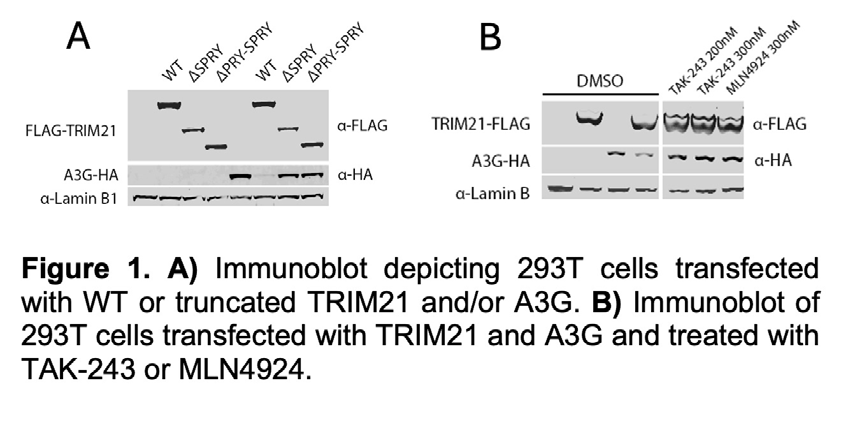
326. The Effects of Accessory Genes on T/F HIV Infection of Primary CD4+ T Cells From Tissues
Poster Abstracts
Page: 66
Harnoor Virk1, Guorui Xie1, Xiaoyu Luo1, Kailin Yin1, Jason Neidleman1, Ifeanyi Ezeonwumelu2, Julie Frouard1, Ashley F. George1, Daniel Sauter3, Frank Kirchhoff4, Nadia R. Roan1
Background
HIV transmission typically results from infection by a single a transmitted/founder (T/F) virus. Accessory genes of T/F HIV often exhibit functions lost in cell culture-adapted HIV strains. Understanding the effects of accessory proteins from T/F HIV on infected cells is important for understanding HIV pathogenesis. Previous work has established that accessory proteins Nef, Vpu, and Vpr are important for HIV fitness. Both Nef and Vpu are known to downregulate a variety of host proteins from the cell surface, including CD4. However, prior accessory gene studies were largely performed in cell lines or PBMCs, whereas in vivo HIV primarily replicates in tissues. Here, we compared by CyTOF primary tissue CD4+ T cells infected with wildtype T/F HIV CH077, to those infected with CH077 deleted individually for nef, vpu, or vpr.
Methods
A 34-parameter CyTOF panel was implemented on unstimulated tonsils from 9 donors, that each were mock-treated, infected with wildtype CH077, or infected with CH077 deleted for nef, vpu, or vpr (dNef, dVpu, and dVpr). HIV-infected cells were identified as p24+ CD3+CD8- cells.
Results
CH077 infection rates were similar between wildtype and accessory gene mutants. Overall, dVpu-infected cells exhibited the most phenotypic changes as compared to wildtype-infected cells. As expected, dNef and dVpu infected cells exhibited less cell-surface CD4 downregulation than wildtype-infected cells. Cells infected with wildtype CH077 also downregulated a4b7 and CD62L when compared to those infected with dNef and dVpu. Relative to dVpu-infected cells, those infected with wildtype CH077 additionally exhibited diminished expression of CD38, CXCR4, and CD127. No antigens were identified that were preferentially downregulated on cells infected with wildtype as compared to dVpr virus. However, dVpr-infected cells had diminished CCR4 and TIGIT relative to wildtype-infected cells.
Conclusions
We identify a4b7, CD62L, CD38, CXCR4, and CD127 as potential antigens downregulated by Vpu in the context of T/F HIV infection of primary tonsillar CD4+ T cells. Of these, a4b7 and CD62L may also be downregulated by T/F Nef. We did not find evidence for Vpr-mediated downregulation of cell-surface proteins; however, dVpr-infected cells expressed low levels of chemokine receptor CCR4 and checkpoint molecule TIGIT relative to their wildtype infected counterparts, suggesting a potential role for Vpr in regulating cell-surface expression levels of receptors commonly expressed on CD4+ T cells.
327. RhoA Restricts HIV-1 by Modulating IFN Signaling and Is Counteracted by Vpr
Poster Abstracts
Page: 66
Caterina Prelli Bozzo1, Alexandre Laliberté2, Aurora De Luna2, Meta Volcic2, Helene Hönigsperger2, Maximilian Hirschenberger2, Denise Clesle2, Annika Betzler2, Konstantin M. J. Sparrer2, Frank Kirchhoff2
Background
Cellular innate defense mechanisms govern the outcome of pathogen exposure. Numerous restriction factors (RFs) that may inhibit HIV-1 and other viral pathogens have been reported. However, it has also become clear that we are still missing important RFs. To uncover them, we recently established a virus-driven CRISPR/Cas9 system using replication-competent HIV-1 expressing sgRNAs to identify novel RFs as well as antiviral mechanisms (Prelli Bozzo, Laliberté et al. 2024). These studies revealed that targeting RHOA conferred replication advantage to primary transmitted-founder HIV-1.
Methods
To assess the role of RhoA and its putative counteraction by Vpr in vivo, we analyzed the RhoA signaling activity in rhesus macaques infected with WT SIVmac239 and a mutant lacking vpr. To determine whether RhoA impacts HIV-1 in human cells, we knocked out RHOA in primary CD4+ T cells by sgRNA/ Cas9 electroporation. To examine the interplay between Vpr and RhoA, we performed proximity ligation assays (PLAs), western blot, immunoprecipitation and analyses of type I IFN signaling activity using reporter cell lines and qRT-PCR.
Results
Lack of Vpr associated with significantly increased levels of RhoA signaling pathway in SIVmac239 infected macaques (n=3 animals, p value 0.0447). Similarly, vpr-deficient HIV-1 was more susceptible to inhibition by RhoA in primary human CD4+ T cells than WT HIV-1. PLA revealed that Vpr and RhoA are in close proximity. Our data further indicate that RhoA promotes IFN signalling by increasing pSTAT-1 levels and may be degraded by Vpr.
Conclusions
Altogether, we identified RhoA as novel antiviral factor that restricts HIV-1 by promoting IFN signaling and is counteracted by Vpr.
328. The Role of Capsid-Host Interaction on Lentiviral Evolution
Poster Abstracts
Page: 66
Clare Gill, Molly Ohainle
Background
Primate lentiviruses (SIVs) have been evolving with their hosts for millions of years. Capsid-interacting dependency and restriction factors are known to play a key role in HIV replication. Small changes in viral capsid sequence can alter these interactions for the benefit of the virus (e.g. to escape a restriction factor). Previous work has focused primarily on interactions between only a few primate lentiviruses and host proteins. We do not understand what host factors are important for lentiviral replication more broadly. Further we lack understanding of how differences in capsid sequence impact these interactions to influence outcomes of lentiviral infection more broadly.
Methods
I created a panel of capsid chimeric lentiviruses by synthesizing capsid sequences from 10 different SIV strains selected to represent much of the diversity of known SIV sequences and constructing chimeric molecular clones in an HIV-1 NL4-3∆envGFP proviral backbone. I infected HeLa and Jurkat cell lines with chimeric viruses pseudotyped with VSV-G and measured infectivity 2 days post infection. To identify unknown restriction factors, I used an unbiased screening approach, HIV-CRISPR in Jurkat cells.
Results
Of these chimeric viruses, six infect both Jurkat and HeLa cell lines but to varying degrees. All chimeric viruses have reduced infectivity compared to the wild type HIV-1 virus. Three chimeric viruses, SIVmac, SIVver, and SIVgrv, show reduced infectivity in Jurkat cells compared to HeLa cells. The restriction phenotype of SIVmac CA in Jurkat cells known as “Lv4” was previously described to be the result of a dominant-acting restriction factor. HIV-CRISPR screening in Jurkat cells with the SIVmac capsid chimeric virus revealed NFKBIA as a putative restriction factor specific to SIVmac CA compared to NL4-3 WT. NFKBIA is an inhibitor of NFKB, an immune transcription factor that also drives proviral transcription. This suggests that NFKBIA or NFKB differentially affect infection or transcription of the SIVmac capsid chimera.
Conclusions
We see reduced replication of SIVmac, SIVver, and SIVgrv capsid chimeric viruses in Jurkat cells. Using HIV-CRISPR screening of the SIVmac chimeric virus we identified a candidate gene, NFKBIA, that may be responsible for the restriction of SIVmac capsids in Jurkat cells. This demonstrates that HIV-CRISPR screening using capsid chimeric viruses can identify unique capsid-host factor interactions, that reveal new insights into HIV and SIV biology.
329. Capsid Mutant HIV-CRISPR Screens Reveal Mechanisms of TRIM5 Restriction
Poster Abstracts
Pages: 66-67
Isaiah Grant, Laura Gong, Molly Ohainle
Background
Upon entry into a cell, the HIV core plays a pivotal part in many of the interactions that lead to successful viral replication. The HIV core has evolved to interact with proteins necessary for replication and evade proteins that inhibit replication. We aim to characterize the mechanisms of capsid (CA) recognition by known and novel antiviral proteins.
Methods
Here we use poorly adapted CA mutant viruses to learn more about the mechanisms of capsid recognition by host antiviral proteins. N57A, A77V, and A105T CA mutant viruses that have altered interactions with host factors including CPSF6 and nuclear pore proteins. To identify host genes that contribute to reduced fitness of these mutant viruses we use HIV-CRISPR screening, a screening approach that allows us to uncover proviral and antiviral genes.
Results
TRIM5α was a top hit for the screens using the N57A and A105T CA mutants. While CA mutants that lack CypA binding are known to be hypersensitive to TRIM5α the N57A and A105T TRIM5α-sensitive viruses maintain CypA binding. Therefore, other mechanisms are implicated in their TRIM5α susceptibility.
Conclusions
Through screening of additional CA mutant viruses, we aim to map mutations and characteristics in CA that lead to changes in TRIM5α restriction. Additionally, we are determining the mechanism of TRIM5α recognition of the mutant viruses using depletion and binding assays. This insight into TRIM5α recognition of the CA will give us new understanding of how our host cellular defenses inhibit HIV.
330. A Virus-Packageable CRISPR Screen to Uncover Genes Underlying SIVcpz Replication in Human Cells
Poster Abstracts
Page: 67
Michael Young, Molly Ohainle
Background
Human immunodeficiency virus (HIV) is the result of the cross-species transmission of simian immunodeficiency viruses (SIVs) that endemically infect non-human primates. While pandemic HIV-1 M is the result of a chimpanzee lentivirus (SIVcpz) cross-species transmission to humans, lentiviruses from other non-human primates have also spilled over into humans. Since the emergence of HIV, the field has sought to characterize the cell-intrinsic determinants of primate lentivirus cross-species transmission. However, the factors that enable lentivirus zoonosis are not completely understood.
Methods
Our lab developed a high-throughput HIV-CRISPR screen to unveil cell-intrinsic proviral and antiviral factors in the context of HIV infection. The approach involves a uniquely engineered sgRNA and Cas9 vector which allows for packaging of the sgRNA sequence from progenitor cells. We are now implementing the HIV-CRISPR screening methodology to reveal barriers specific to pre-pandemic lentiviruses, such as SIVcpz, in human cells.
Results
We have screened 3 genetically diverse SIVcpz viruses using a genome-wide sgRNA library in THP-1 cells. Among our hits are genes involved in the tethering of virions at the cell surface and the inhibition of broadly important transcriptional machinery for lentiviral replication.
Conclusions
Our unbiased screening approach will help us better define the evolutionary barriers of SIV infection in human cells. We aim to identify key host factors that may underlie the evolutionary origins of HIV.
331. Impact of Pre-Existing Immune Activation on SARS-CoV-2 Incidence and Disease During the First Wave
Poster Abstracts
Page: 67
Diana S. Yang1, Cong Xie1, Suji Udayakumar1, Sanja Huibner1, Karen Colwill2, Anne-Claude Gingras2, Joshua Kimani3, Rupert Kaul1
Background
During the first wave of COVID-19 there was a relatively low burden of disease in many Sub-Saharan African (SSA) countries despite considerable SARS-CoV-2 transmission. Immune activation prior to pathogen challenge may protect against subsequent, unrelated infections. We hypothesized that female sex workers (FSWs) would experience frequent exposures to SARS-CoV-2 through social and physical contact early in the pandemic, and that pre-existing immune activation would protect against infection and/or symptomatic disease.
Methods
FSWs from the Sex Worker Outreach Program (SWOP) clinics in Nairobi, Kenya had pre-pandemic blood and other biological samples collected mid-2019 (pre-pandemic), with follow up samples collected approximately 1 year later. SARS-CoV-2 infection was defined by the presence of antibodies against >=2 of 3 SARS-CoV-2 antigens (RBD, Spike, N). Plasma levels of pro-inflammatory markers in pre-pandemic samples were quantified using the MSD V-PLEX proinflammatory panel 1. Immune activation was defined using a composite scoring system composed of the 7 pro-inflammatory markers: IL-1ß, IL-2, IL-6, IL-8, IL-12p70, IFNγ, and TNF. Cytokine levels were divided into quartiles and a score ranging from 1 (1st quartile) to 4 (4th quartile) was assigned to each marker and summed to generate the immune activation score. 100 cases who subsequently went on to acquire SARS-CoV-2, and 100 controls were matched 1 to 1 for age (±5 years), and visit date (±2 weeks).
Results
Pro-inflammatory cytokines were detected robustly in cryo-preserved plasma. There was no significant difference in immune activation score between cases and controls (mean, 17.42 vs. 17.53; p = 0.86); furthermore, levels of the 7 individual cytokines were not significantly different between cases and controls (p>0.05). When looking at symptoms after SARS-CoV-2 infection, there was no significant difference in immune activation score nor in the individual cytokines between symptomatic vs. asymptomatic cases (p>0.05).
Conclusions
Levels of preceding systemic immune activation, as defined by plasma inflammatory markers, did not predict SARS-CoV-2 infection nor symptomatic disease in those who did become infected. This suggests that the low burden of severe COVID-19 disease in many SSA countries was not due to increased immune activation in this region. Future studies should investigate the role of immune activation at mucosal infection sites more proximal to viral entry.
332. Unique SARS-CoV-2 Variants and Inflammatory Milieu in Urine of Severe COVID-19 Participants
Poster Abstracts
Page: 67
Aarthi Subramani1, Tatianna Travieso1, Zeguo Sun2, Danai Psaradelli1, Mary Klotman1, Weijia Zhang2, Maria Blasi1
Background
Acute kidney injury (AKI) is a common complication in people hospitalized with COVID-19. The etiology of AKI is likely multifactorial, with potential contributions from hemodynamic compromise, systemic inflammation, cytokine release, and local viral infection. People with COVID-19 and AKI have higher levels of systemic markers of inflammation than those with normal kidney function. To understand the pathophysiology of AKI in people with COVID-19, we investigated the presence of SARS-CoV-2 RNA in urine samples from participants with mild or severe disease and explored the associated inflammatory profiles.
Methods
Urine specimens were obtained from 66 people with COVID-19 hospitalized in the intensive care unit (ICU) and 26 with mild symptoms. We performed single genome amplification of viral RNA in urine and respiratory tract samples. We also performed scRNAseq and a multiplexed analysis of inflammatory markers in the urine to compare renal inflammatory signatures between people with mild symptoms and those with severe COVID-19 with or without AKI.
Results
Viral RNA was detected in urine samples from a small number of COVID-19 people hospitalized in the ICU. Single viral genome analysis demonstrated a predominant pattern of deletions and mutations at the furin-cleavage site of the SARS-CoV-2 spike gene, which provided a replicative advantage in renal podocytes but not in airway epithelial cells grown at the air-liquid interface. People with AKI showed elevated levels of IL-6, IL-8, IL-18, MCP-1, Renin, TIMP-1, and Clusterin, suggesting an association between these inflammatory markers and renal disease. scRNAseq analysis of urine-derived cells revealed a higher frequency of macrophages, T cells, podocytes, and tubular cells in people with severe COVID-19, AKI, and viral shedding in urine. Pathway analysis of tubular cells from people with AKI showed enrichment of DNA damage-responsive pathways compared to those without AKI.
Conclusions
We identified unique SARS-CoV-2 variants in urine samples from participants with severe COVID-19, which demonstrated a replicative advantage in renal podocytes, raising the possibility of organ-specific selection of viral variants. We also observed higher levels of inflammatory markers and inflammatory cells in urine samples of people with severe COVID-19 and AKI. Our data demonstrate the ability to use urine samples to noninvasively study renal infection, characterize cellular diversity, and identify altered pathways in the setting of COVID-19 AKI.
333. Bile Acids in the Modulation of Antiviral Immune Response
Poster Abstracts
Pages: 67-68
Eileen F. Serrano1, Diego A. Diaz-Dinamarca1, Paul Dawson1, Ali Muhammad1, Grace A. McComsey2, Rafael F. Medina1, Elias Haddad3, Nadine Rouphael1, Slim Fourati4, Jeffrey A. Tomalka1, Rafick P. Sekaly1
Background
Bile acids (BAs) are produced from cholesterol in the liver as primary BAs and modified by gut microbiota becoming secondary BAs. Besides their primary role in solubilizing fats, these metabolites have been shown to modulate innate and adaptive immune function, making BAs a link between host metabolism and immune response. BAs regulation of immunity is increased by the multiple modifications that BAs can undergo, like sulfation.
Methods
In this study, we used a multi-omic approach to identify mechanisms of pathogenesis during acute SARS-CoV-2 in a subset of 270 COVID-19 volunteers from the IMPACC cohort. To understand how BAs, and their modifications, modulate antiviral immune responses, untargeted global metabolomics using mass spectrometry was performed on plasma. We also stimulated full PBMC and purified monocytes with a panel of sulfated and non-sulfated BAs to measure cytokine production in supernatant and intracellularly with flow cytometry, and we tested the activation of surface (TGR5) and nuclear BAs receptors (FXR and VDR) with sulfated and non-sulfated BAs with a luciferase assay.
Results
From the earliest hospitalization time point, levels of non-sulfated BAs were higher in mild COVID-19 individuals while high levels of sulfated BAs were associated with increased viral load (VL), aberrant pro-inflammatory milieu and severe COVID-19, including mortality. We observed that full PBMC treated with non-sulfated BAs triggered significantly higher levels of IFN-a2a and immune regulators as TGF, compared to their sulfated version. Purified monocytes showed the same response in addition to higher levels of IL-10 and TNF-a. Notably, sulfated BAs didn’t activate any BAs receptors, which is relevant, since FXR is known to trigger type 1 IFN production. This was seen for primary and secondary BAs, suggesting a global role for sulfation, consistently with the findings at IMPACC. We made similar observations in flu infection where severe flu was characterized by heightened levels of Sulfated BAs.
Conclusions
Our results confirm the importance of BAs and their homeostasis during a viral infection. Myeloid cells are the main population expressing BAs receptors. Therefore, the main producers of type 1 IFN and modulate the antiviral innate immune response. Since sulfated BAs do not interact with BAs receptors in a way that enhances the anti-viral response, as non-sulfated bile acids do, the imbalance between these metabolites could potentially impact on the clinical progression of COVID-19.
Figure 1.
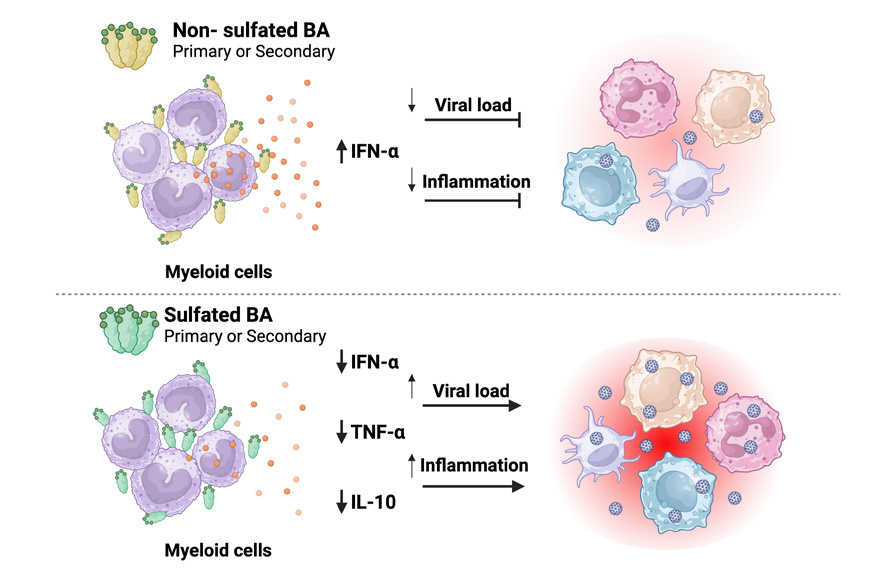
334. The Bile Acids Complexity Underlies an Antiviral Interferon Innate Signaling During COVID-19 Disease
Poster Abstracts
Page: 68
Diego A. Diaz-Dinamarca1, Slim Fourati2, Eileen F. Serrano1, Felipe Ten-Caten1, Valentino D'Onofrio3, Ali Muhammad1, Nadine Rouphael1, Grace A. McComsey4, Elias Haddad5, Jeffrey A. Tomalka1, Rafick P. Sekaly1, the IMPACC Network
Background
Bile acids (BAs), synthesized by hepatocytes (primary BAs) and modified by commensal bacteria (secondary BAs), are important regulators of immune cell function, particularly in innate immunity. While the role of BAs in influencing immune responses to various viral infections is established, the specific impact of nonsulfated BAs on immune cells remains underexplored. BAs can directly regulate the transcriptional responses of cells by binding to a range of BA receptors, including those expressed on immune cells such as TGR5.
Methods
We utilized integrated omics and single-cell RNA/DNA analysis from the Immunophenotyping Assessment in a COVID-19 Cohort (IMPACC), a prospective longitudinal study with detailed clinical, virological, and immunological data, to investigate the impact of BAs on the progression of COVID-19. Additionally, we employed flow cytometry and multiplex cytokine detection to evaluate the activation of BAs in peripheral blood mononuclear cells (PBMCs) from healthy donors.
Results
We found that serum levels of sulfated bile acids, as early as the day of hospitalization, correlated with disease trajectories leading to severe disease and death. In contrast, levels of nonsulfated bile acids were associated with mild disease, survival, and lower viral loads. PCA analysis of supernatants stimulated with sulfated and nonsulfated BAs reveals a dichotomy with nosulfated being associated with high levels of IFN-α2a and TGF-β. In myeloid cells, we demonstrate that unlike sulfated BAs, non-sulfated BAs induce type I interferon (IFN), pERK/pCREB and pSTAT1 in TGR5-positive populations. Single-cell RNA/DNA analysis identified monocytes as a critical population due to their upregulation in Gene Set Enrichment Analysis (GSEA) of IFN signaling, inflammation, and bile acid signaling, as well as TGR5 expression. GSEA revealed heightened IFN signaling, antigen-presentation pathways, and IRF motif enrichment in monocytes from mild COVID-19 cases. In contrast, severe COVID-19 cases exhibited more inflammatory pathways, including IL-6/STAT6 and apoptotic pathways, along with AP1 motif enrichment. Importantly, only TGR5 positive cells expressed IFN antiviral pathways.
Conclusions
Our findings highlight the critical role of BA sulfation in modulating immune responses and its potential as a prognostic biomarker for COVID-19 disease severity. Moreover, this study underscores the impact of the complexity of BAs on modulation of the antiviral immune response.
The figure, table, or graphic for this abstract has been removed.
335. The Influence of Chronic HIV Inflammation on Post-COVID Immune Activation
Poster Abstracts
Pages: 68-69
Skye Opsteen, Mildred Perez, Carson Norwood, Aoyjai Montgomery, Emily Levitan, Paul Goepfert, Nathan Erdmann
Background
People with HIV (PWH) appear to be 2-4x more likely to develop long COVID after SARS-CoV-2 infection than people without HIV (PWOH). This is potentially linked to the heightened immune activation and inflammatory state typical of chronic HIV despite effective antiretroviral therapy. Here, we evaluated whether the shifts in monocyte and T cell populations typical of chronic HIV are exacerbated in long COVID, and how the immune features of long COVID in PWH compare to PWOH.
Methods
We performed flow cytometric analyses on peripheral blood mononuclear cells from PWH with (n=9) and without (n=15) long COVID and groups of PWOH with (n=28) and without (n=36) long COVID. Participant clinical and demographic features were blinded prior to data collection, leading to a skewed racial and gender distribution. Samples were collected an average of 30 months after participants’ first reported COVID-19 infection. Cells were stained for surface markers of activation/exhaustion (with and without SARS-CoV-2-specific antigen stimulation) and for monocyte subsets (CD14+ classical, CD14+CD16+ intermediate, CD14-CD16+ nonclassical). Electronic health record data including acute COVID-19 infection history, SARS-CoV-2 vaccination history, and long COVID symptom burden were collected.
Results
PWH had increased expression of activation markers OX40 (p=0.034) and PDL1 (p=0.035) on CD4+ T cells as compared to PWOH who recovered from COVID-19. Regardless of long COVID status, PWH had increased CD14+CD16+ intermediate monocytes as compared to PWOH (p=0.048). When stimulated with a SARS-CoV-2 peptide pool containing membrane, nucleocapsid, and envelope proteins, the majority of PWH with long COVID had an antigen-specific CD4+ T cell response, whereas few responses were detected in PWOH with long COVID (p=0.016). When comparing post-COVID symptom burden, PWH with long COVID reported higher frequencies of shortness of breath (p=0.044), bladder incontinence (p=0.499), dry mouth (p=0.0475), excessive thirst (p=0.047), and problems with their teeth (p=0.031) as compared to PWOH with long COVID.
Conclusions
Our findings demonstrate that PWH with long COVID exhibit increased CD4+ T cell activation and an increase in intermediate monocyte frequencies as compared to PWOH with long COVID. Our research explores potential differences in long COVID pathogenesis and provides evidence for potential diagnostic markers and therapeutic targets for patients with inflammatory phenotypes of long COVID and other post-viral syndromes.
Table 1.
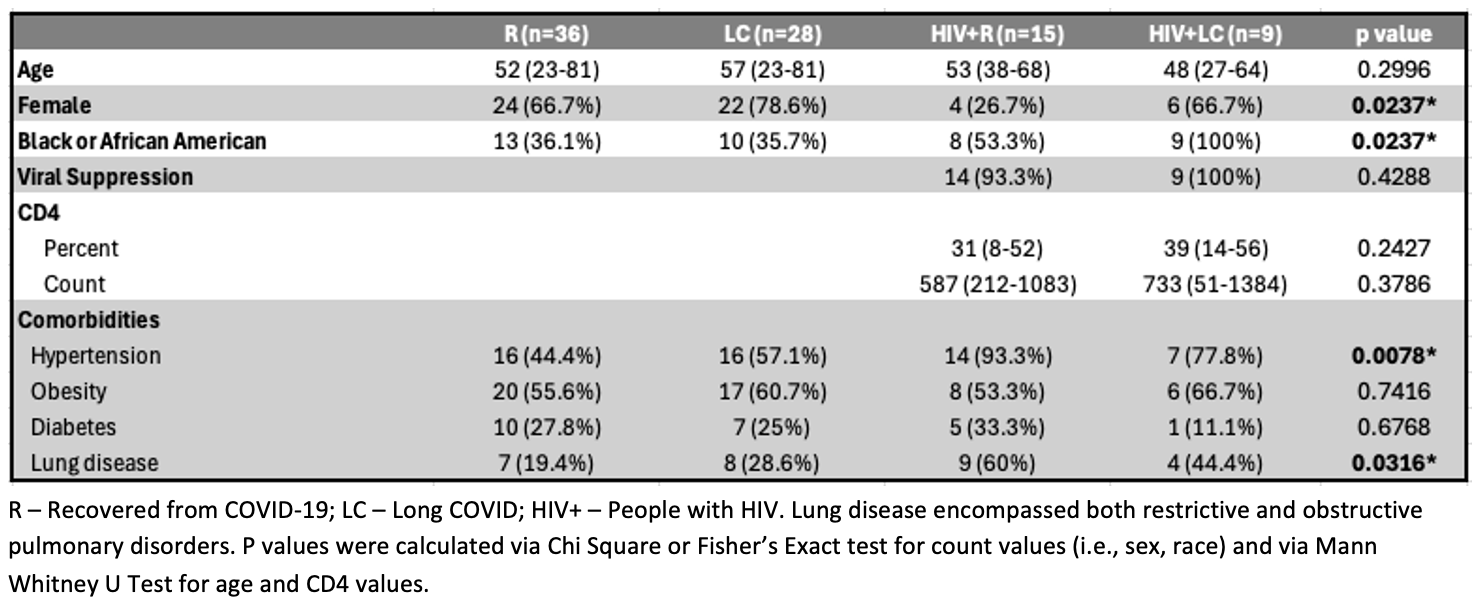
336. Lipid Nanoparticles Targeting Neutrophil and NETs to Mitigate Lung Injury in SARS-CoV-2 Mice
Poster Abstracts
Page: 69
Juwon Park1, Haeun Shin1, Stefanos Giannakopoulos1, Joo Dong Park2, Chun Gwon Park2, Saguna Verma1, Wooram Park2
Background
The need to understand key players driving pulmonary inflammation and fibrosis in COVID-19 patients leading to effective preventive strategies is imminent. Excessive neutrophil activation, including extracellular trap (NET) formation, is associated with severe COVID-19 and long-term pulmonary sequelae. However, the clinical applications of neutrophil-targeting therapies are challenging due to short bioavailability and lack of cell-type specificity.
Methods
The lipid nanoparticle (LNP) platform designed to deliver two NET inhibitors, DNase I and Sivelestat (Siv), referred to as DPNLNPs, specifically to lung neutrophils. The LNP design was optimized by incorporating the cationic lipid into a conventional LNP formulation to enhance lung-specific delivery. To enable neutrophil targeting, Ly6G antibodies were cleaved into F(ab’)2 fragments and conjugated to the LNPs. We evaluated the therapeutic efficacy DPNLNP in the K18-hACE2 mouse model.
Results
In vitro and in vivo experiments demonstrate that DPNLNPs preferentially accumulate in the lung neutrophils and degrade NETs as efficiently as the free DNase I and Siv. Additionally, administration of DPNLNPs in K18-hACE2 mice significantly inhibited SARS-CoV-2-induced NETs at a much lower dose than the free drugs and correlated with reduced lung and systemic inflammation, lung epithelium injury, and collagen deposition. Importantly, DPNLNP treatment only during the symptomatic phase of infection improved SARS-CoV-2 outcome revealing the complex role of NETs in COVID-19 pathogenesis.
Conclusions
Together, this study serves as a proof-of-concept for adapting the LNP platform to deliver more than one immunomodulatory drug in a cell-specific manner to manage NET-associated complications in COVID-19 and other respiratory diseases.
Figure 1.
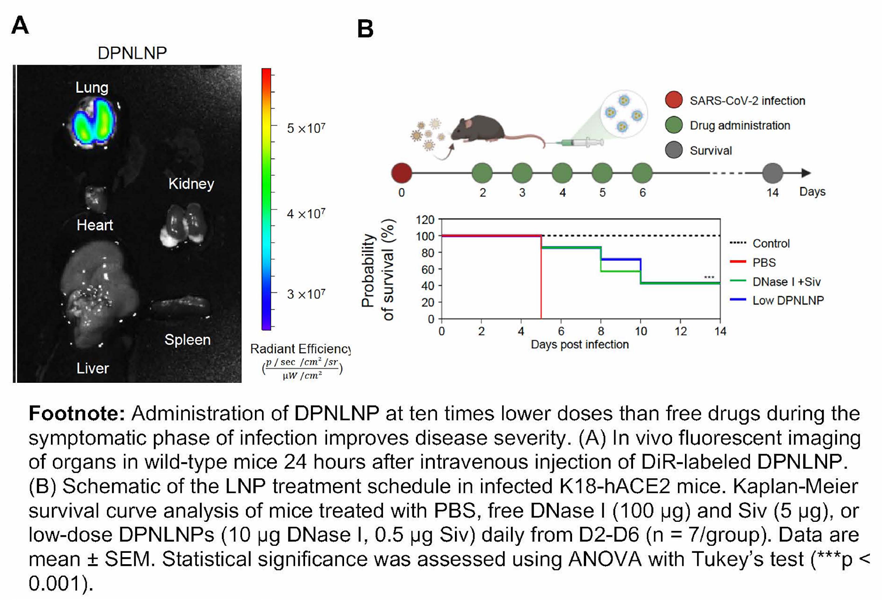
337. Vitamins K2 and D3 Improve Long COVID Index, Fungal Translocation, and Inflammatory Biomarkers
Poster Abstracts
Page: 69
Ornina Atieh1, Jhony Baissary1, Jared C. Durieux2, Danielle Labbato2, Marc Abboud3, Ziad Koberssy1, Joviane Daher1, Kate Ailstock4, Morgan Cummings4, Nicholas Funderburg4, Grace A. McComsey1
Background
Long COVID (LC) is characterized by recurrent, prolonged, and new symptoms of COVID-19 at least 3 months after a SARS-COV-2 infection.
LC was associated with fungal translocation, gut dysfunction, and enhanced inflammation. The anti-inflammatory vitamins K2/D3 were previously shown to reduce inflammation and help attenuate the course of acute COVID infection. This trial aims to investigate the effects of Vitamins K2/D3 on LC symptoms, gut markers and inflammatory markers in people with established long COVID.
Methods
This single-site randomized-controlled enrolled adults experiencing ≥2 moderate long COVID symptoms at least 3 months after COVID-19 infection. The RECOVER Long COVID index (JAMA 2023), number of LC symptoms, and resolution of symptoms were considered. Participants were randomized 2:1 to daily 240 µg K2 (pure MK-7 form) and 2000 UI Vitamin D3 or standard of care (SOC) for 24 weeks. Co-primary endpoints were changes in symptomatology and in select inflammatory markers at 24 weeks.
Results
We enrolled 151 participants (n=98 received vit K2/D3 and 53 standard of care). The median age was 46 years, 71% female and 29% non-white. Baseline demographics were balanced between groups. At 24 weeks, the active treatment group had a sharp increase in 25(OH) D indicating good treatment adherence, without change in the control arm. Vitamins K2/D3 arm showed a 3.2 (P=0.04) reduction in LC Index (P=0.04) and nearly two less (∆ = -1.7; P=0.02) total number of LC symptoms compared to the SOC arm. Additionally, larger reductions in oxidized LDL, sTNF-RI, CD163, and the fungal translocation marker (1, 3)-β-d-glucan (BDG) were observed in the vitamins K2/ D3 arm compared to the SOC arm (P<0.01). In adjusted models, vitamins K2/ D3 randomization was associated with decreases in LC Index, but decreases in inflammatory markers and BDG were not. Decreases in BDG were associated with K2/D3 randomization and with decreases in inflammatory markers.
Conclusions
Vitamins K2/D3 improved Long COVID Index, number of LC symptoms, fungal translocation and several inflammatory markers. Vitamins K2/D3 provide a promising safe intervention for people suffering from long-COVID. Larger and longer studies are needed to assess the impact of this safe anti-inflammatory strategy.
Figure 1.
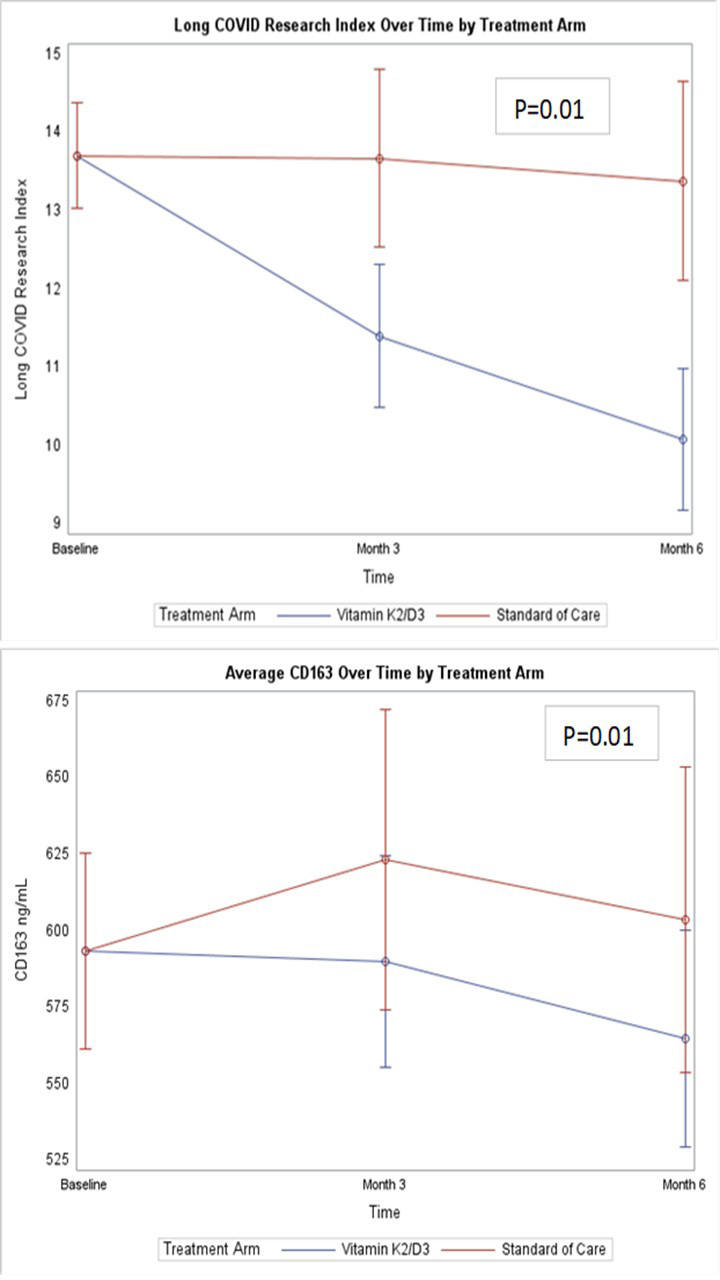
338. High-Fat and -Sugar Diet but Not SIV Coinfection Enhances SARS-CoV-2 Shedding in Infected Macaques
Poster Abstracts
Pages: 69-70
Kelsie Brooks1, Arvind Sivanandham2, Quentin Le Hingrat2, Anna Jasinska2, Delmy Ruiz1, Lilly Carson2, Lilas Tarnus2, Mohammed Daira2, Makheni Jean Pierre1, Cristian Apetrei2, Jason Brenchley1, Ivona Pandrea2
Background
Numerous risk factors for severe SARS-CoV-2 infection have been identified, including diabetes, obesity, and cardiovascular disease. These conditions often co-occur and may be influenced by diet. We sought to investigate the impact of diet directly on SARS-CoV-2 infection, as well as the understudied area of SARS-CoV-2 and HIV co-infection, which we modeled with SIV infection in macaques.
Methods
Three control pigtail macaques (PTM, 1F & 2M) were infected with 1x10⁶ TCID50 Delta strain SARS-CoV-2 and monitored following infection until euthanasia and necropsy (Nx) on day 30. Six additional PTM (3M, 3F) were fed a high fat and sugar chow (HFD) for 63 days prior to SARS-CoV-2 infection, then followed until euthanasia and Nx on days 30-32 SARS-CoV-2. A final six PTM (4M, 2F) were fed the HFD prior to SIV infection (IV SIVagm), then infected with SARS-CoV-2 on day 35 of SIV and monitored until euthanasia and Nx on days 30-32 of SARS-CoV-2.
Results
Macaques fed the HFD experienced significant shifts in stool bacteria Beta diversity from pre- to post-HFD time points before infection (Adonis testing, unweighted UniFrac distances). All three groups demonstrated significant shifts in Beta diversity from prior to SARS-CoV-2 infection and SARS-CoV-2 time points, though this did not remain significant for control animals with weighted UniFrac distances. HFD fed, SIV+ animals expressed significantly more MX1 transcript in Nx colon tissue and bronchioalveolar lavage (BAL) cells at day 28 of SARS-CoV-2 than HFD fed, SIV- animals, suggesting an enhanced inflammatory response with SIV infection. Three other immune-related transcripts were also significantly elevated in BAL cells of HFD, SIV+ animals vs. HFD, SIV-, while 72 immune-related transcripts were significantly elevated in BAL cells from HFD, SIV- animals vs. controls. SARS-CoV-2 RNA, including subgenomic RNA indicating viral replication, was shed at considerably higher levels and for longer durations in HFD fed, SIV- animals than controls in both the stool and nose swabs, while shedding was not markedly different in HFD fed SIV+ vs. SIV- animals.
Conclusions
Dietary change alone resulted in distinct alterations to the gut microbiome and SARS-CoV-2 shedding from the gastrointestinal as well as respiratory tracts, while SARS-CoV-2 shedding was not significantly altered by SIV co-infection. However, immune responses to SARS-CoV-2 appear distinct in SIV+ and SIV- animals, with a potentially heightened inflammatory state in SIV+ macaques.
339. Sustained Inflammation and Delayed Resolution of COVID-19 Disease in SIV-Infected Macaques
Poster Abstracts
Page: 70
Dhiraj K. Singh, Gayathri Ravichandran, Garima Arora, Xavier Alvarez, Ricardo Carrion, Shannan Hall-Ursone, Edward Dick, Deepak Kaushal
Background
COVID-19 continues to be a health challenge with critical knowledge gaps existing in the understanding of mechanisms driving severity in comorbid conditions. Clinical observations points to a higher susceptibility to COVID-19 in people living with HIV (PLHIV) but the precise mechanisms are still unknown.
Methods
Our group was amongst few that established the rhesus macaque model of COVID-19 infection early on during the pandemic. We are now leveraging this established NHP model of COVID-19 with the long-standing, highly validated, pathogenic AIDS NHP model to study a central hypothesis that underlying SIV infection and the resulting immune activation promotes severity of COVID-19 presentation by profiling the dynamics of viral titers (measured via molecular virology), induced tissue pathology (measured via live PET/CT imaging and conventional histopathology), and underlying immunological perturbations (measured via flow cytometry and single cell transcriptomics).
Results
Macaques infected with SIV develop acute immunodeficiency within 2-4 weeks and progress to chronic AIDS over 5-6 months. When infected with SARS-CoV-2 these macaques develop mild-to-moderate COVID-19 with an extended acute hyperinflammatory state. Co-infected macaques demonstrate higher etiology of either diseases, enhanced lung and brain involvement as measured by PET/CT. Post SARS-CoV-2 infection in SIV coinfected macaque, the F-18 FDG uptake increased in lymph nodes, brain and gut during the acute phase followed by a decline in the post-acute phase. Investigations of the underlying specific immune mechanisms revealed perturbations in the airway myeloid cell composition, T cell phenotypes, activation status and antigenic responsiveness.
Conclusions
Our study elucidates the dynamic immunological landscape and mechanistic interplays in the host coinfected with SIV and SARS-CoV-2. COVID-19 in SIV co-infected macaques is characterized by extended acute hyperinflammatory phase and delayed resolution of disease. Mechanistic insights developed by this study may inform future development of immunotherapeutic interventions for combating COVID-19 as well as PASC in PLHIV.
340. Monocyte Dysregulation in PASC With Ongoing Pulmonary Symptoms
Poster Abstracts
Page: 70
Thomas K. Awamura, Stefanos Giannakopoulos, Dominic C. Chow, Cecilia M. Shikuma, Gehan Devendra, Vedbar Khadka, Juwon Park
Background
As the number of COVID-19 survivors amongst the global population continues to rise, the rates of chronic sequelae after recovery known as post-acute sequelae of COVID19 (PASC), have increased, emerging as a significant public health concern. Studies have shown that excessive monocyte activation is involved in the development of a cytokine storm and subsequent acute lung injury induced by acute SARS-CoV-2 infection. However, long-term consequence of COVID-19 on monocyte dysregulation and its contribution to PASC development has not been fully understood. We characterized transcriptomic changes in circulating monocytes associated with PASC with persistent pulmonary symptoms (PPASC) and how it affects inflammation and persistence of pulmonary symptoms.
Methods
A total of 31 monocyte RNA samples were collected from blood of the study participants enrolled in three groups: individuals with PASC with pulmonary symptoms (PPASC, n=14), individuals who recovered from COVID-19 infection but no residual symptoms (Recovered, n=8), and healthy individuals with no COVID-19 infection confirmed by antibody test (Healthy, n=9). Transcriptomic profiling of monocytes was performed by bulk RNA sequencing to determine the relationship between monocytes states among the groups. Ingenuity pathway analysis (IPA) was used to identify relevant dysregulated cellular pathways and associated disease pathways.
Results
In comparison to Recovered and Healthy, PPASC had an enrichment of immune activation signatures, such as neutrophil degranulation, production of nitric oxide and reactive oxygen species in macrophages, and IL-8 and IL-6 signaling, while IL-10 pathway was down-regulated (Figure 1). Monocytes from PPASC displayed up-regulation of pathways associated with immune responses of macrophages and chronic inflammation. Disease pathway analysis showed genes associated with inflammation and pulmonary diseases, such as chronic inflammatory disorder, vasculitis, and interstitial pneumonia, were activated in PPASC compared to Recovered.
Conclusions
Transcriptomic analysis revealed that monocytes from PPASC individuals were continuously dysregulated with up regulation of pathways associated with immune activation, inflammation, and fibrosis. However, the gene signatures of monocytes from Recovered were comparatively similar to those of Healthy. Our data demonstrates that monocyte dysregulation persists after viral resolution, impacting the pulmonary sequelae in PASC individuals.
Figure 1.
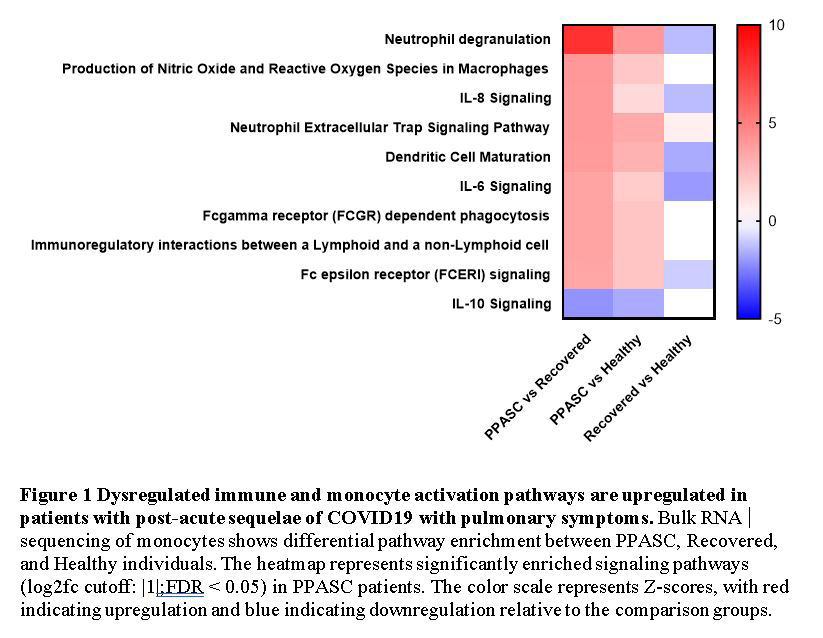
341. WITHDRAWN
Poster Abstracts
Page: 71
342. Untangling the Impact of CD101 on HIV-1 Transmission
Poster Abstracts
Page: 71
Phuong Vo1, German Gornalusse2, Shahrokh Paktinat1, Sean M. Hughes1, Matthew H. Ikuma1, Claire N. Levy1, Hannah L. Itell3, Adino T. Tsegaye1, Lucia N. Vojtech1, Julia Lemas1, Sachi Saxena1, Jairam Lingappa1, Florian Hladik1, the International Clinical Research Center
Background
Variants in the extracellular Ig-like domain of the CD101 gene are associated with increased HIV acquisition risk, but the biological mechanism is unknown. CD101 inhibits T cell activation and is mostly expressed on antigen-presenting cells (APCs) and T cells. Here, we tested the hypothesis that CD101 regulates inflammatory homeostasis in immune cells. We also explored the impact of CD101 genetic variation on this regulation and the risk of HIV-1 infection.
Methods
We evaluated the effect of Toll-like receptor agonists (TLR1 to TLR9) on CD101 mRNA levels in peripheral blood mononuclear cells (PBMC) and purified monocytes. We used flow cytometry to measure CD101 expression on PBMC subsets. We compared individuals with (n=14) and without (n=5) candidate CD101 variants to assess the effect of CD101 variation on PBMC responses to TLR8 stimulation. We also used CRISPR to knock out CD101 in primary CD4+ T cells to test its impact on HIV infectivity.
Results
TLR2, 4, 5, 7 and 8 stimulation reduced CD101 mRNA expression in PBMC and monocytes. The strongest effect was from HIV ssRNA (a TLR8 agonist) (-77.0% in PBMC, -90.9% in monocytes; n=4). Challenge with infectious HIV also reduced CD101 mRNA (-49.1%; n=4). CD25+ CD127low Tregs and HLA-DR+ APCs were most sensitive to CD101 downregulation upon TLR8 stimulation (-41.4% and -63.0%, respectively; n=4). However, CD101 downregulation was much weaker if Tregs were purified before stimulation (-8.1%; n=5). For PBMC genotyped for CD101, following TLR8 stimulation, we observed significant mRNA increases for IFNβ1 (mean 11.1-fold), IL-6 (644.4-fold), and IFIT1 (83.8-fold), and a significant decrease for CD101 (74.1% +/- 22.5%; n=17), in 17 out of 19 donors. Cytokine increases correlated strongly with CD101 reduction (e.g. for IL-6/CD101 Spearman’s r=0.67, p=0.0017; n=19). In an exploratory analysis, CD101 mRNA reductions upon TLR8 stimulation were greater in cells from people with a CD101 variant than reference (β=-32 vs. β=-19, interaction p=0.006).
Lastly, HIV replication in CD101 CRISPR-ablated CD4+ T cells was comparable to mock controls.
Conclusions
CD101 downregulation by HIV occurs primarily in monocytes and Tregs, is influenced by cell-to-cell interactions and CD101 genotype, and inversely correlates with the cells’ proinflammatory response. Our results suggest that CD101 may affect HIV infection risk indirectly, via effects on inflammation, rather than directly on HIV replication. Candidate CD101 alleles may accentuate this effect.
343. CD40L/IL-4 Stimulated B Cells as Efficient Mediators of HIV-1 Binding and Trans Infection
Poster Abstracts
Page: 71
Abigail Gerberick, Allison DePuyt, Peter Shoucair, Robbie Mailliard, Nicolas Sluis-Cremer, Charles Rinaldo
Background
Cell-to-cell HIV-1 transmission is a potent mechanism of HIV-1 pathogenesis. B and CD4+ T cells frequently interact in secondary lymphoid organs (SLO), thus potentially promoting B cell mediated HIV-1 trans infection. In SLO, B cells are stimulated through both stromal (BAFF) and CD4+ T cell (IL-4, IFN-g, CD40L) signals, however the impact of these signals on the efficiency of HIV-1 binding and trans infection remains unknown.
Methods
Human B and CD4+ T cells were isolated from blood of people without HIV. B cells were left unstimulated or stimulated with CD40L/IL-4, CD40L/IFN-g, BAFF/IL-4, or BAFF/IFN-g. For trans infection, B cells were incubated with HIV-1BaL (MOI 10-3) prior to culture with CD4+ T cells. HIV-1 infection was measured by HIV-1 p24 ELISA on co-culture supernatants. For HIV-1 binding, B cells were incubated with HIV-1 Gag-iGFP-JRFL (MOI 10-1) and analyzed by flow cytometry. ScRNAseq was performed via the BD Rhapsody and Illumina platforms and data were analyzed using the Seurat package in R.
Results
CD40L/IL-4 stimulated B cells efficiently bound HIV-1 (p<0.0001) and mediated HIV-1 trans infection of CD4+ T cells (p<0.0001) as compared to the other stimulation conditions. Exposure to CD40L was the main driver of HIV-1 binding by B cells, although IL-4 also contributed to some extent (p=0.01). Single cell transcriptomics of B cells stimulated for 10h provided unique insights into the gene expression profiles associated with these conditions. CD40L/IL-4 stimulated B cells exhibited significantly higher expression of activation markers CD80/CD86 as well as C-type lectin CD205 (p<0.01), which flow cytometry confirmed (p<0.0001). Antibody-mediated blocking of CD205 on CD40L/IL-4 stimulated B cells reduced HIV-1 binding. Biological processes analysis further highlighted that CD40L/IL-4 upregulates genes involved in actin pathways in B cells, including actin filament organization (p<0.01). When actin polymerization was blocked in CD40L/IL-4 stimulated B cells, HIV-1 binding was also reduced.
Conclusions
B:T cell interactions in SLO likely play a key role in HIV-1 pathogenesis by facilitating HIV-1 trans infection. This study identifies the signals (CD40L/IL-4) and gene/receptor expression (CD205/actin) that enable B cells to bind HIV-1 and transfer virus to CD4+ T cells. This information could lead to the development of treatments to reduce persistent HIV-1 infection and maintenance of the viral reservoir.
344. Feminizing Hormone Therapy and the Rectal Mucosal Immune Environment
Poster Abstracts
Pages: 71-72
Stacey Smith1, Mengyu He1, Phillip M. Murray2, Cassie G. Ackerley2, Suparat Khemnark4, Vin Tangpricha1, Yijuan Hu1, Colleen Kelley2
Background
Transgender women (TGW) have historically been grouped with cisgender men who have sex with men (CGMSM) in HIV prevention research. However, the effects of feminizing hormone therapy (FHT) on the rectal mucosal immune environment, a primary site of HIV exposure, remain insufficiently understood.
Methods
In Bangkok, Thailand, 100 TGW taking FHT for >6 months and 50 MSM without HIV were enrolled into a cross-sectional study with blood and rectal mucosal sampling. An additional 21 HIV-negative TGW were enrolled and underwent blood and rectal mucosal sampling before and 3-12 months after FHT initiation. Flow cytometry was performed on PBMC and rectal biopsies to quantify 30 and 31 immune cell subsets respectively. Three biopsies were challenged with HIV BaL ex vivo, and p24 production was quantified (Day 3-14). Cellular and p24 outcomes were compared between the groups with linear decomposition modeling controlling for multiple comparisons. Bulk transcriptomics (Illumina HiSeq3000) was performed on rectal biopsies and analyzed for differential gene expression and with gene set enrichment analysis (GSEA).
Results
Blood analyses revealed a significant global difference between TGW and CGMSM in cellular composition (p=0.002). Several individual blood cell subsets contributed to this difference, including an increase in activated memory CD4+ T cells (q=0.004), decreases in CD56+CD16+ NK cells (q=0.028) and perforin+ cells (q=0.004) among TGW. Analyses of rectal tissues also identified a significant global difference in cellular composition (p=0.0002) between TGW and CGMSM, and an increase in CCR5+ (q=0.01), Th17 (q=0.002), and Th1Th17 (q=0.02) memory CD4+ T cells among TGW. Ex vivo challenge assays revealed a higher slope of p24 production among TGW compared to CGMSM (p=0.04). Among TGW after FHT initiation, differences in cellular composition were apparent in blood, but not the rectal mucosa. GSEA identified several highly relevant immune pathways that were downregulated in rectal mucosa among TGW compared to CGMSM, while others were increased after initiation of FHT.
Conclusions
The rectal mucosal immune environment among TGW using FHT is distinct from CGMSM and may support higher HIV replication, underscoring the need for further study of this unique population. Our data suggest that cellular changes in blood, but not rectal tissues, are apparent after short-term FHT use. Understanding the effects of FHT on HIV acquisition risk in the context of rectal exposure merits urgent investigation.
Figure 1.
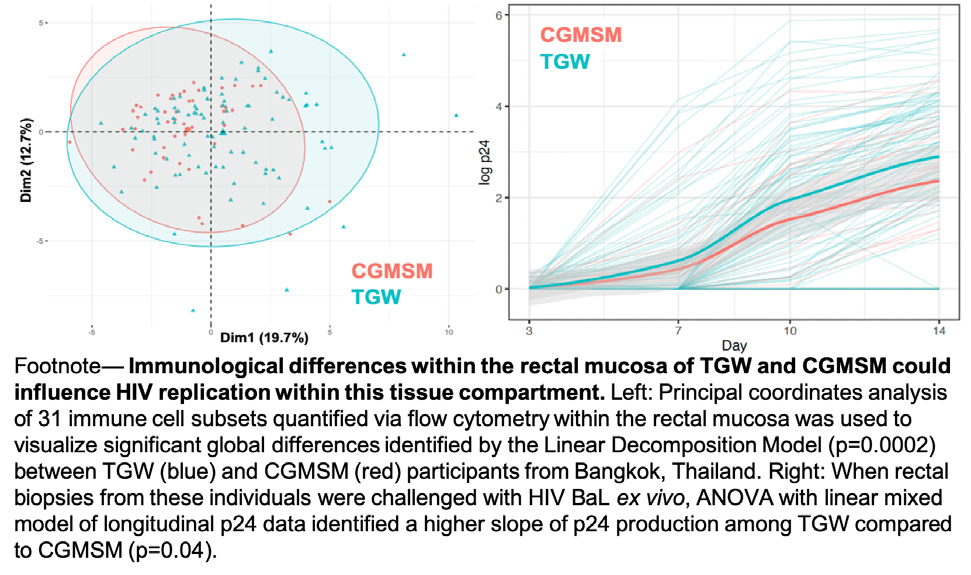
345. HIV-1 Vpr Promotes Viral Replication, Granzyme B Expression, and Death of Gut CD4 T Cells Ex Vivo
Poster Abstracts
Page: 72
Kaylee Mickens, Kejun Guo, Brad Barrett, Stephanie M. Dillon, Ashley Thompson, Cara C. Wilson, Mario L. Santiago
Background
In the gut, early HIV-1 (HIV) infection is associated with high HIV replication, CD4 T cell death, and microbial translocation. Among HIV proteins, Vpr remains enigmatic. In vitro, Vpr is linked to cell cycle arrest, DNA damage, apoptosis, and HIV replication in myeloid cells. Consistent Vpr phenotypes are lacking in CD4 T cells (CD4 Ts) when mitogen-activated blood cells or cell lines are utilized. These data are incongruous with Vpr being packaged in virions as it should exert influence early in infection, where CD4 Ts, particularly in the gut, are critical. To study interactions between primary gut T cells, transmitted/ founder (TF) HIV, and translocating enteric bacteria ex vivo, we developed the Lamina Propria Aggregate Culture (LPAC) model. We previously demonstrated bacteria enhance HIV infection and contribute to HIV-mediated CD4 T cell death by inducing Granzyme B (GZB). Here, we investigated if Vpr plays a role in HIV replication and death in gut CD4 Ts using the physiologically-relevant LPAC model.
Methods
Jejunal LP mononuclear cells (n=8 donors) were infected with TF HIV (CH040) wildtype (WT), Vpr-deleted (ΔVpr), or mock in the presence or absence of commensal Escherichia coli lysate (10μg/ml). At 4 dpi, infection (p24), GZB, and total CD4 T cell counts were determined by flow cytometry. Infectious titer in supernatants was determined by TZM-bl assay.
Results
In the absence of bacteria, ΔVpr replicated to significantly lower levels than WT, with an 8.3-fold (p<0.05) reduction in the frequency of p24+ CD4 Ts and 7.4-fold (p<0.01) reduction in infectious titer. The lack of ΔVpr replication significantly rescued CD4 Ts from HIV-mediated death, with 8.9% depletion for ΔVpr versus 38.5% for WT (p<0.05). In the presence of E. coli, WT and ΔVpr virus had no significant difference in cellular infection levels or infectious titers. However, ΔVpr induced significantly lower levels of CD4 T cell depletion relative to WT (20.8% versus 42.3%, p<0.05). Total and HIV p24hi CD4 Ts from ΔVpr-infected cultures had lower levels of GZB versus WT.
Conclusions
Our findings demonstrate that Vpr is critical for robust HIV replication and depletion of gut CD4 T cells. In the context of microbial exposure, Vpr was dispensable for gut CD4 T cell replication, but still contributed to death, possibly by upregulating GZB expression. These data underscore Vpr as an essential component of the HIV life cycle in gut CD4 T cells and highlight novel functional attributes of HIV-Vpr in gut pathogenesis.
346. Early HIV-1 Genetic Diversity Includes CTL and Drug Resistance Mutations
Poster Abstracts
Page: 72
Adam A. Capoferri1, Valerie F. Boltz1, Wei Shao2, Clarissa Halpern1, Rasmi Thomas3, Morgane Rolland3, Nittaya Phanuphak4, Lydie Trautmann5, Julie Ake3, Carlo Sacdalan6, Somchai Sriplienchan6, Jason W. Rausch1, John W. Mellors7, John Coffin8, Mary Kearney1, the RV254/SEARCH 010 Study Team
Background
Genetic analysis of HIV-1 during acute infection can reveal early drivers of diversity and evolution. Here, we used ultrasensitive single-genome sequencing (uSGS) on plasma virus collected from participants in the early weeks after transmission to determine the relative roles of mutation and selection in shaping the pol and env genes.
Methods
HIV-1 RNA was extracted from plasma of 10 participants with acute infection (Fiebig II-III) enrolled in the RV254/SEARCH010 Trial. Participant HLA types were previously determined. Our uSGS method used primer IDs and Illumina sequencing (234bp) to characterize the genetics of >10,000 pol (RT) and env (C2-V3) genomes per sample. We measured average pairwise distances (APD), substitution rates, transition/transversion ratios (Ti/Tv), non-synonymous/synonymous ratios (dN/dS), frequencies of amino acid reversions back to consensus CRF01AE (conAE), CTL mutations away from conAE, and drug resistance mutations.
Results
Sequences from an average of 11,733 pol and 12,096 env single genomes were obtained from each participant. In these 10 single transmitted founder (TF) infections, an average 93% of the genomes were identical. APD was a median of 0.07% in pol and 0.05% in env (p=0.10), or ~6-fold lower than expected from the HIV-1 mutation rate and time since transmission. A preference toward transitions was observed with a median Ti/Tv of 5.1 in pol and 3.8 in env (p=0.21). In pol, 52% of transitions were G>A and in env, 42% were G>A, with the split divided over the other 3 mutations. The average dN/dS was 0.38 in pol and 1.0 in env (p=0.02). Reversions to conAE were observed at 57% of sites that varied from the TF, but these mutations only comprised 0.3% of all amino acid changes in pol and 2.8% in env (p<0.0003). The remainder were mutations away from conAE, with 42% in pol and 51% in env falling within CTL epitopes that matched the participants’ HLA. Drug resistance mutations were detected in all participants (0.2-4.0% of genomes), but were not linked to one another.
Conclusions
Genetic diversity in Fiebig II-III was ~6-fold lower than expected from the HIV-1 mutation rate over the first 21.5 days of infection, implying purifying selection during acute infection. While many transmitted amino acid mutations reverted to conAE; these mutations were a small contribution to the overall genetic diversity. The main drivers of early HIV-1 diversity were synonymous mutations and amino acid changes in CTL epitopes, suggesting the possibility of early CTL escape.
347. Tuberculosis Promotes the Persistence of Genetically-Intact HIV in People With HIV and Tuberculosis
Poster Abstracts
Pages: 72-73
Samantha K. Cronin1, Andrea Pereyra Casanova2, Eunok Lee2, Katie Fisher2, Anthony D. Kelleher3, Natalia Laufer4, Gabriela Turk4, Maria Florencia F. Quiroga4, Christel Vérollet5, Luciana Balboa4, Sarah Palmer2, Gabriel Duette2
Background
The persistence of HIV-infected cells containing genetically-intact and replication-competent virus remains the main obstacle to achieving an HIV cure. Tuberculosis (TB) is the most prevalent opportunistic infection in people with HIV (PWH) but the impact of TB on the immune response to HIV, and the persistent HIV reservoir, is poorly understood. To address this issue, we studied the effect of TB/HIV coinfection on the persistence of cells infected with genetically-intact HIV. In addition, access to therapeutically aspirated pleural effusions (TB-PE) from persons living with HIV and TB allowed for a more in-depth analysis on the impact of the TB-microenvironment on HIV persistence and the functionality of anti-HIV CD8 T-cells.
Methods
We used full-length individual proviral sequencing (FLIPS) to quantify the frequency of genetically-intact HIV in peripheral blood mononuclear cells (PBMCs) from 3 PWH and 3 individuals with TB/HIV. In one participant with TB/HIV coinfection, mononuclear cells from TB-PE (PEMCs) and PBMCs were also sequenced using FLIPS to characterize the site of the co-infection. To evaluate the impact of the TB microenvironment on HIV-specific cytotoxicity, CD8 T-cells from 4 PWH were cocultured with autologous HIV-infected CD4 T-cells in the presence or absence of TB-PE. Moreover, the impact of TB-PE on the transcriptomic profile of CD8 T-cells was characterized by RNAseq in cells from 3 healthy donors.
Results
Our analysis revealed a 3.2-fold increase in the frequency of cells infected with genetically-intact HIV in individuals with TB/HIV coinfection compared to PWH. Notably, within the individual with TB/HIV, PEMCs exhibited a 15.5-fold increase of intact HIV-infected cells compared to PBMCs. Interestingly, CD8 T-cells exposed to TB-PE demonstrated a significantly diminished capacity to eliminate HIV-infected cells (p=0.0021). Transcriptomic analysis showed that TB-PE downregulated pathways related to T-cell activation and the inflammatory response.
Conclusions
These findings suggest that the TB-associated microenvironment hampers CD8 T-cell-mediated HIV control, promoting the persistence of genetically-intact HIV at the site of coinfection. This impaired cytotoxic response likely contributes to the persistence of the viral reservoir in the blood of individuals with TB/HIV coinfection. Our study underscores the significant challenge that TB poses to HIV curative strategies and highlights the need for targeted interventions for individuals living with HIV and TB.
348. Species-Specific Splicing of DNA Editing Enzymes: Implications in HIV and SIV Mutagenesis
Poster Abstracts
Page: 73
Diako Ebrahimi1, Armando Mendez2, Rachael Rodriguez1, Kathryn A. Jackson-Jones3, Margarita Rzhetskaya3, Nadeen Abdalla2, Luis Ferrández-Peral4, Fiona Carter-Tod3, Judd F. Hultquist3
Background
Humans and nonhuman primates (NHPs) possess seven APOBEC3 (A3) enzymes, which restrict various viruses, notably HIV in humans and SIV in NHPs. These antiviral proteins inhibit viral infection by inducing G>A mutations in viral genomes and/or through mutation-independent mechanisms. HIV and SIV counteract A3 enzymes via their virion infectivity factor (Vif), which promotes A3 proteasomal degradation. Despite this, G>A mutations remain prevalent in viral genomes. A3G mainly induces GG>AG mutations, which frequently generate stop codons, while other A3 enzymes induce GA>AA changes, are less mutagenic, and do not produce new stop codons.
Methods
We analyzed all HIV and SIV sequences available at the Los Alamos National Laboratory (LANL) databases and publicly available RNA-seq data from Sequence Read Archive (SRA). Sashimi plots were used to visualize mRNA splicing. Deaminase activity and dinucleotide substrate preferences were assessed via oligo-based deaminase assays. Oxford Nanopore Technologies (ONT) MinION Long-read sequencing incorporating adaptive sampling (AdS) was used to obtain full-length A3 isoforms.
Results
Our analyses revealed species-specific G>A hypermutation and mRNA splicing patterns of A3 enzymes. Specifically, we found mRNA splicing defects in Old-World monkey A3Gs resulting in a significantly reduced level of GG>AG mutations in SIV compared to HIV. Furthermore, a 48-hour ONT MinION sequencing run on rhesus macaque PBMCs using AdS depletion achieved 8x-302x coverage of A3 enzymes despite their low expression. This analysis identified novel variants of A3A, A3C, A3G, and A3H, and revealed additional splicing defects in these genes and many other genes across human and NHP models.
Conclusions
A3 and many other genes undergo species-specific splicing, highlighting the need for understanding the functional relevance of these molecular differences across animal models and humans to ensure that research findings in animal models are translatable. We are currently conducting functional assays to assess the role of A3 splice variants in species-specific anti-viral immunity. Our long-term goal is to extend this study to other immune genes.
349. Transcriptionally Active Defective HIV-1 Proviruses Persist in All CD4 T-Cell Subsets During ART
Poster Abstracts
Page: 73
Hiromi Imamichi1, Francesca Scrimieri2, Shweta Mistry3, Birgit Grund3, H. Clifford Lane1, Jason Baker3, the INSIGHT START Study Group
Background
More than 95% of HIV-1 proviruses detected are defective but often associated with RNA transcripts during antiretroviral therapy (ART). These transcriptionally active defective proviruses may contribute to persistent immune activation seen in people with HIV (PWH) receiving ART. The distribution and persistence of these transcriptionally active defective proviruses has not been described.
Methods
11 PWH originally enrolled in the Strategic Timing of Antiretroviral Therapy (START) trial were studied. Levels of HIV-DNA and total HIV-RNA in frozen whole blood were determined at the baseline and 6-11 years later by real-time PCR. Also, at the 2nd visit, CD4 cell subsets were isolated by flow cytometry sorting with CD45RO and CD27 antibody staining to identify naïve (NA), central memory (CM) and effector memory (EM) subsets. Sequences of HIV-DNA and cell-associated (CA) HIV-RNA in CD4 subsets were characterized by 5'LTR-to-3'LTR PCR single-genome amplification and direct amplicon sequencing. Levels of HIV-DNA and CA HIV-RNA in the CD4 subsets were determined per-cell as well as per 1mL of blood.
Results
All 11 participants (pts) were men, 55% white, 18% black, 9% Latino, median age 41 yrs, median baseline CD4 645 cells/µL. At the 2nd visit, after 4-11 yrs of suppressive ART, all 11 pts had ~2-log reduction in total HIV-RNA levels. While HIV-DNA levels also decreased, reductions were modest, at a median 0.5-log decrease. When analyzed on a per-cell basis, CA HIV-RNA levels were highest in EM, followed by CM and NA cells. In contrast, when analyzed based on total contribution per 1 mL of blood, CM cells had the highest median CA HIV-RNA levels, followed by EM and NA cells (Fig A). Of note, HIV-1 proviruses in the CD4 cell subsets were mostly defective, with median 9% of proviruses in a full-length intact form in NA cells, 4% in CM cells, and 2% in EM cells (Fig B). There was no evidence of transcription from these intact proviruses. Among 186 expanded provirus clones identified in 11 pts (2,473 seqs), 4% were shared among all CD4 cell subsets, with 43% of these being transcriptionally active.
Conclusions
Transcriptionally active “defective” HIV-1 proviruses were present in all CD4 subsets in a cohort of 11 pts after 4-11 yrs of ART. The majority resided in CM cells, identifying the CM cell pool as an important source for long-term HIV-1 transcriptional persistence on ART. This has implications for the mechanism of persistent immune activation among ART-treated pts.
The figure, table, or graphic for this abstract has been removed.
350. Utilizing Defective HIV-1 Provirus as a Novel “Barcode” for Studying T-Cell Dynamics
Poster Abstracts
Pages: 73-74
Vinie Kouamou1, Mindy Smith1, Brad T. Sherman1, Catherine Rehm1, Weizhong Chang1, H. Clifford Lane2, Hiromi Imamichi2
Background
Achieving an understanding of T-cell dynamics and distribution of proviral DNA within T cell subsets is of critical importance in achieving a better understanding of the relationships between effector memory, central memory and naïve CD4 cell subsets. In this study, we investigated the relationships between these subsets utilizing the natural “barcoding” provided by replication-incompetent defective HIV-1 proviruses. The provirus-barcode gives each single cell a unique identity, which is passed on to daughter cells without the signal being diluted during somatic cell division.
Methods
Cryopreserved cells were obtained from 2013 to 2023 from a 54-year-old white male with HIV-1 infection. During this time, his plasma HIV-RNA levels remained <20-40 copies/mL with transient viral blips below 454 copies/ mL, and his median CD4 count was 651 cells/µL (range: 434-756 cells/µL). CD4 cell subsets were isolated by flow cytometry sorting with a combination of CD45RO and CD27 antibody staining to identify naïve (NA, CD27+CD45RO-), central memory (CM, CD27+CD45RO+) and effector memory (EM, CD27-CD45RO+) subsets. HIV-1 proviruses in CD4 cell subsets and unsorted PBMCs were characterized by 5'LTR-to-3'LTR PCR single-genome amplification and direct amplicon sequencing.
Results
Sequencing of 1,174 HIV-1 proviruses in the three CD4 cell subsets and PBMCs identified 78 expanded defective HIV-1 provirus clones, each harboring distinct defective provirus barcodes. 23 of the 78 clones persisted for ≥3 yrs (median: 6 yrs, range: 3-10 yrs). The highest number of provirus-barcoded clones was found in the CM pool (n=28) followed by the EM (n=25) and NA (n=13) pools, corresponding to 61%, 79%, 30% of the total provirus sequences detected in CM, EM and NA cells, respectively (Figure). One of the dominant clones (the pink-colored sections of the bars in the figure) is a 6 kb HIV-1 provirus with hypermutations. It was first detected in CM cells and 3 yrs later in NA cells. In addition, clonal conversions from EM to CM (2 provirus-barcoded clones) and reversions from CM to NA (5 provirus-barcoded clones) were observed.
Conclusions
The strategy of using expanded defective HIV-1 provirus clones as a novel “barcode” enables high-resolution insights into T-cell dynamics and demonstrates the durability of clonal populations in each subset. In contrast to the current dogma of effector memory populations being short-lived, these data demonstrated that they are able to persist in vivo for several years or more.
Figure 1.
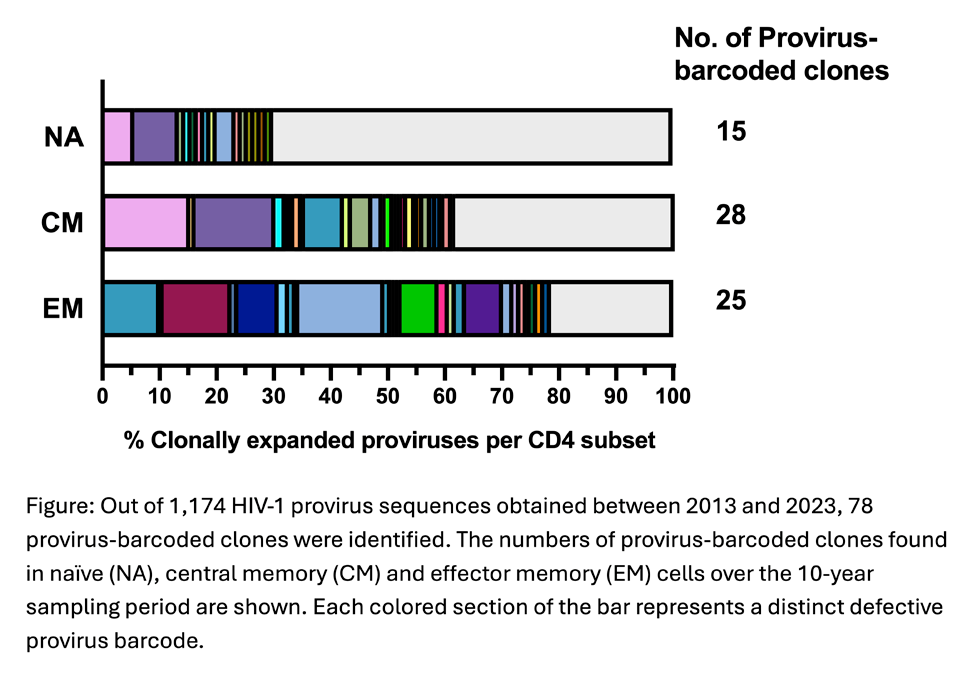
351. Similar Intact and Defective HIV Provirus Frequency in Suboptimal Immune Responders and Controls
Poster Abstracts
Page: 74
Arianna Romero1, Danielle Rigau2, Selin Akbas1, Richard Moore3, Joseph J. Eron4, John W. Mellors5, Deborah McMahon5, Rajesh T. Gandhi6, Michael M. Lederman7, Steven G. Deeks8, Ronald J. Bosch9, Robert F. Siliciano1, Janet M. Siliciano1, Annukka Antar1, Constance A. Benson10
Background
A significant percentage of PWH who start or restart antiretroviral therapy (ART) with low CD4+ counts fail to mount a robust CD4+ T cell response despite suppressive ART (suboptimal immune responders, SoIRs). A correlation between the frequency of infected CD4+ T cells and low CD4+ counts on ART has been reported. However, these studies did not control for CD4+ nadir nor time on ART, and it remains unclear whether SoIRs have a higher burden of HIV-infected CD4+ T cells.
Methods
We performed the intact proviral DNA assay (IPDA) to quantify estimated frequency of intact and defective HIV proviruses among CD4+ T cells isolated from cryopreserved samples from 62 SoIRs and 67 PWH controls at 1-4 yr post-ART initiation. All participants started/restarted ART with a CD4+ count <200 and maintained virologic suppression for 5+ years. SoIRs were defined as PWH with a CD4+ count <350 at 5 yr post-ART start, controls as PWH with a CD4+ count >500 at 5 yr post-ART start. Controls were selected to match SoIRs on age, race, sex, CD4+ nadir, hepatitis C (HCV) serostatus, ever-IV drug use, and time from ART start to sample collection. Samples and clinical data were obtained from 4 cohorts – ALLRT/ACTG (n=76), the SCOPE cohort (n=45), the Cleveland Immune Failure cohort (CLIF, n=7), and the Johns Hopkins HIV Clinical Cohort (JHHCC, n=1). The average of ~5 replicates per sample-timepoint was used. Mann Whitney U test or chi squared test were used for comparisons.
Results
Consistent with design, no significant differences were seen between SoIRs and controls by age at ART start/restart (median 45 vs 42, respectively), race, sex (10% vs 15% female sex), CD4+ nadir (median 29 vs 31), HCV seropositivity (15% each), or ever-IV drug use (21% vs 18%). The median time from ART start or restart to sample collection was 22 months in each group. The median CD4+ count 5 yr after ART start/restart was 265 among SoIRs vs 650 among controls. There were no significant differences between SoIRs and controls in the frequency of intact or defective proviruses among circulating CD4+ T cells (Figure).
Conclusions
We demonstrate here that the frequency of HIV-infected CD4+ T cells - whether harboring intact or defective HIV proviruses – in the first few years after ART initiation does not associate with future SoIR status. Further research is needed to understand the biological contributors to poorer outcomes in SoIRs.
Figure 1.
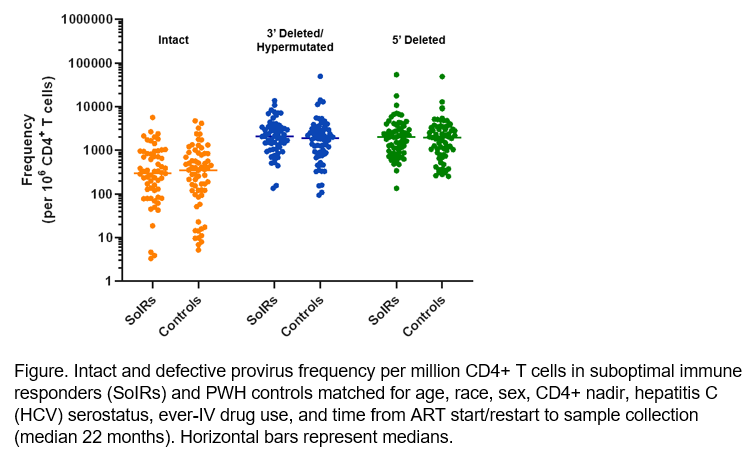
352. Impact of ART Initiation on HIV-1 Soluble gp120 Levels and CD4 Counts in PWH
Poster Abstracts
Pages: 74-75
Mehdi Benlarbi1, Jonathan Richard2, William D. Tolbert3, Marzena Pazgier3, Jean-Pierre Routy4, Madeleine Durand2, Andrés Finzi2
Background
While antiretroviral therapy (ART) suppresses viremia to undetectable levels, people with HIV (PWH) show signs of chronic inflammation and immune dysfunction. Persistent viral antigenic stimulation may contribute to this phenomenon. In a cross-sectional study of ART-treated PWH with undetectable viremia, we recently reported that soluble gp120 (sgp120) was associated with markers of inflammation and immune dysfunction. However, the dynamics of plasmatic sgp120 levels, its association over time with inflammation, immune dysfunction and how this is affected by ART remains unclear.
Methods
To evaluate the dynamics of sgp120, we performed a longitudinal assessment of sgp120, anti-Env antibodies (Abs) including those targeting the CD4 binding site (CD4BS), and inflammatory markers associated with HIV-1 infection. We evaluated the association between sgp120 and CD4 count, IL-6, TNF-alpha and Galectin-9. Measures of associations were modelled using generalized least squares (GLS) linear regression with random effects (for repeated measures), with interaction terms between sgp120 levels and i) time period pre/post ART and ii) presence/absence of CD4BS Abs.
Results
We included 151 longitudinal samples from 23 PWH taken during primo-infection and up to 4 years post-ART initiation. The mean age of participants was 36.8, 95% were males. 21/23 participants had detectable levels of sgp120 for at least one timepoint. We observed that sgp120 was inversely associated with CD4 cell counts post-ART initiation (beta; -52.17 95%CI -84.64 to -19.70, p=0.002). We did not observe this association pre-ART initiation (beta; -27.10 95%CI -73.93 to 17.94, p=0.23, p-value for interaction 0.38). Of note, anti-CD4BS Abs, known to prevent sgp120-CD4 interaction, modulated the association between sgp120 and CD4 cell counts. Absence of anti-CD4BS Abs strengthened this association (beta; -57.38 95%CI -89.63 to -25.13, p<0.001) while their presence abrogated this association (beta; -14.86 95%CI -69.34 to 39.62, p=0.59, p-value for interaction 0.18). Among inflammatory markers, sgp120 was positively associated with Galectin-9 (log beta; 0.07 95%CI 0.00 to 0.13, p=0.025).
Conclusions
Our study suggests that sgp120 is associated with immune dysfunction in PWH and raises the intriguing possibility that therapeutic approaches targeting sgp120 could provide immune benefits and mitigate HIV-associated immune dysfunction in PWH.
353. Genetic Associations With CD4 Recovery in People With HIV After Initiation of Antiretroviral Therapy
Poster Abstracts
Page: 75
Roxane Rohani1, Qin Hui2, Jennie T. Mather3, Lishomwa Ndhlovu4, Michael H. Chung2, Kris Ann K. Oursler5, Boghuma K. Titanji2, Todd Hulgan6, Brian Agan7, Yan V. Sun2, Vincent C. Marconi2
Background
CD4+ T-cell recovery varies among people with HIV (PWH) who are virologically suppressed on antiretroviral therapy (ART). Our objective was to identify the genetic predictors of CD4 recovery measured by the slope of longitudinal CD4+ T-cell counts within two years after ART initiation in PWH virologically suppressed on ART. We hypothesized that select single nucleotide polymorphisms (SNPs) would associate with CD4 slope in PWH initiating ART.
Methods
A genome-wide association study (GWAS) was performed on samples from PWH in the Million Veteran Program (MVP). HIV infection was defined by 1 inpatient or 2 outpatient HIV ICD codes, or a detectable HIV-1 plasma RNA viral load, or ART prescribed for > 31 days. Individuals had at least 2 CD4 counts: one at baseline (up to 6 months prior to ART) and others within 2 years after ART. We evaluated SNP associations with CD4 slope adjusting for age at ART initiation, sex, and 10 principal components using linear regression. After standard quality control procedures, the TOPMed-imputed SNPs were used in ancestry-specific GWAS of common variants (minor allele frequency>5%). A meta-analysis was conducted to evaluate multi-ancestry associations. We considered P-value of 5x10⁻⁸ as the genome-wide significance (GWS) threshold.
Results
A total of 4192 PWH (48% African Americans, 97% male) were included in the GWAS. Mean age at ART initiation was 49 years and mean nadir CD4 count was 358 cells/µl. Median intercept and slope were 394 cells/µl and 0.118 cells/ μL/year, respectively. Although no SNP meeting GWS was identified in the multi-ancestry GWAS of CD4 slope, three common variants were associated at P-value <1x10⁻⁶, with consistent directionality of association in all three ancestral groups: European, African and Hispanic Americans. One chromosome 7 locus, close to TRIM56 gene (rs7786422, β= -0.0456; p= 2.42 x 10⁻⁷), and one chromosome 9 locus, mapped to TOMM5 gene (rs10973430, β= -0.0532; p= 9.11 x 10⁻⁷) were associated with diminished CD4 recovery.
Conclusions
In the first study of PWH in MVP, we did not identify GWS associations with CD4+ T-cell slope after ART initiation, possibly limited by sample size. However, we found several sub-threshold genetic associations; TRIM56 has inhibitory effects on viral replication, while TOMM5 is part of a complex in mitochondrial outer membrane, acting as an entry point for viral proteins. Replication study in larger sample sizes is needed.
Figure 1.
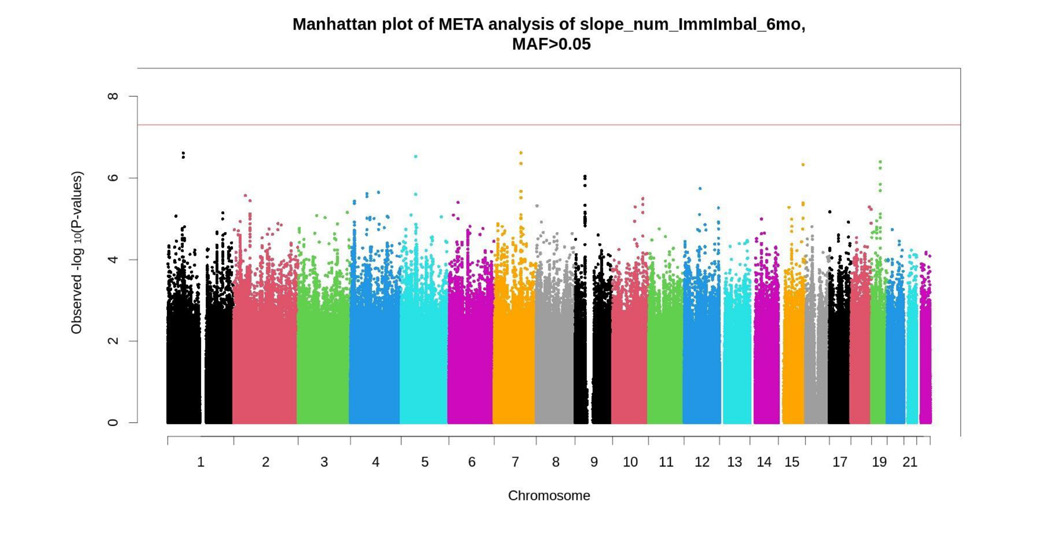
354. R5 Tropic HIV Restricts X4 Tropic Virus via Type I IFN Signaling, Limiting Pathogenesis
Poster Abstracts
Page: 75
Priya Pal, Bailey Quinn, Sara Nicholson, Hongbo Gao, Liang Shan
Background
X4-tropic viruses typically emerge in the late clinical stages of HIV, when the immune system is significantly impaired. As few as two amino acids changes can convert an R5-Tropic virus to an X4-Tropic virus. HIV has an error-prone reverse transcriptase and in the absence of therapy, spontaneous emergence of X4 tropic viruses is expected unless they were specifically restricted. We sought to understand what, if any, immune component was responsible for selective restriction of X4-tropic viruses.
Methods
Viral constructs were generated with an NL4-3 consensus background differing only in the envelope which confers tropism. We utilized the MISTRG 6-15 mouse model either transfused with primary CD4+ T cells to compare X4 and R5 tropic viral fitness in the absence of other immune components, or engrafted with CD34+ cells and reconstituted with a human immune system to assess immune mediated restriction of X4-tropic viruses. Using CRISPR Cas9 targeting the type I interferon (IFN) receptor we generated IFNAR KO humanized mice to assess the contribution of type I IFN signaling. Primary CD4+ T cells were cultured to quantify EC50s for type I IFN for both X4 and R5 tropic viruses. Primary plasmacytoid dendritic cells (pDCs) were cultured with various viral constructs and inhibitors to determine key components for IFN release.
Results
Using the engrafted MISTRG-6-15 humanized mouse model, we observed R5 dominance in mice infected with both viral tropisms, whereas an X4 dominance was observed in mice only transfused with primary CD4+ T cells, suggesting an innate arm of immunity was responsible for the tropism-specific suppression. Plasma cytokine analysis revealed that only R5 tropic viruses triggered detectable type I IFN levels in infected mice. Furthermore, primary pDCs displayed differential type I IFN release in the presence of R5 and X4 tropic viruses ex vivo. Humanized IFNAR KO MISTRG 6-15 mice infected with a mixture of X4 tropic and R5 tropic viruses lost selective X4 tropic restriction. As a consequence, mice with increased proportions of X4 tropic viruses displayed more rapid CD4 T cell decline.
Conclusions
Type I interferon signaling is responsible for selective X4-tropic viral suppression, and this signaling is driven by R5 tropic viruses. This underscores a novel evolutionary tradeoff whereby HIV allows for selective elimination of a subset of viruses, X4-tropic viruses, which would if unchecked result in rapid CD4 decline and host death.
355. Residual HIV Viremia Associates With Reservoir Size, but Not With Immune Activation or Inflammation
Poster Abstracts
Pages: 75-76
Twan Otten1, Mareva Delporte2, Nadira Vadaq1, Adriana Navas1, Wilhelm A. Vos3, Albert L. Groenendijk4, Marc J. T. Blaauw5, Jéssica dos Santos1, Vasiliki Matzaraki1, Olivier Richel1, Jan van Lunzen1, Mihai G. Netea1, Niels P. Riksen1, Linos Vandekerckhove2, Andre van der Ven1, the 2000HIV Human Functional Genomics Partnership Program
Background
Plasma viral loads (VL) in persons with HIV (PWH) taking antiretroviral therapy are generally below the limit of quantification. However, commercial PCR tests differentiate between unquantifiable low, but detectable VL (<40 c/ml, residual viremia, RV) and Target Not Detected (TND). Whether RV drives or is driven by systemic immune activation remains debated. Large studies are lacking, and results are conflicting. In two cohorts of PWH, we examined associations between RV, systemic immunologic effects, and reservoir composition and size.
Methods
The 2000HIV study (NCT03994835), enrolling 1895 virally suppressed PWH in the Netherlands, divided into a discovery and validation cohort, was used to compare participants with RV and TND. We performed extensive immunophenotyping of circulating immune cells, measured cytokine production after ex-vivo stimulation in PBMCs and plasma proteome using Olink Explore panel (~3000 proteins). Differential expression analysis between RV and TND was performed, followed by gene set enrichment analysis (GSEA) using Hallmark library on proteins expressed in the same direction in both cohorts. Additionally proviral Cell Associated-HIV-DNA (CA-DNA) in circulating CD4 T cells were analyzed, along with intactness ratio using the Rainbow assay.
Results
The discovery cohort included 474 PWH with RV and 1002 with TND, the validation cohort had 136 with RV and 190 with TND. No significant differences in immune cell populations, their activation markers and cytokine production capacity were found between RV and TND. There were no significant differentially expressed proteins, but GSEA identified 16 enriched pathways (Figure 1). PLHIV with RV had significantly higher total CA-DNA copies per 106 CD4-T cells in both the discovery (median [IQR]: RV 875 [387-1600] vs. TND 481 [191-1047], p<0.00) and validation cohort (RV 873 [331-1908] vs. TND 442 [200-1092], p<0.00). While the intactness ratio was similar, both intact and defective copies were higher in RV.
Conclusions
RV is associated with higher total viral reservoir size, without differences in intactness ratio. Remarkably in this large study in PWH no signs of systemic inflammation or immune activation were found in RV. GSEA reveals upregulation of epithelial mesenchymal transition, that links with impaired mucosal barrier function and human papillomavirus malignancies, suggeting RV could potentially play a role in these conditions, warranting further investigation into its clinical significance and therapeutic options.
Figure 1.
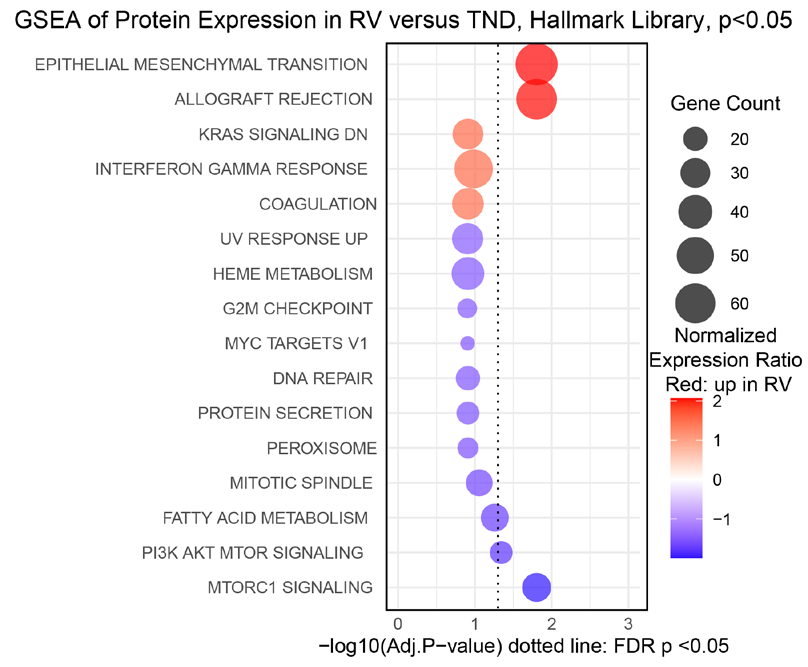
356. Relationship Between Gut Microbiome and Candida in PWH: Role of Bacterial Extracellular Vesicles
Poster Abstracts
Page: 76
Aya Ishizaka1, Michiko Koga1, Taketoshi Mizutani2, Tetsuro Matano2, Hiroshi Yotsuyanagi1
Background
Candida is an opportunistic pathogen that can cause a variety of infections, from superficial to systemic, where the immune system is weakened. It has been suggested that the intestinal tract is a source of Candida infection; however, the role of commensal bacteria and intestinal immunity in Candida colonization in the intestinal tract is unclear. This study aimed to understand the symbiotic relationship between gut bacteria and fungi in people with HIV (PWH).
Methods
A total of 96 PWH with immunological recovery (median CD4 count: 637 cells/μl) were recruited and DNA was extracted from their stools. We identified bacterial and fungal flora by examining bacterial 16S rDNA V3-V4 and fungal ITS1 regions using the MiSeq next-generation sequencer and QIIME2 analysis pipeline. Bacterial extracellular vesicles (BEVs) were isolated from Escherichia coli culture supernatants using ultracentrifugation and size-exclusion chromatography.
Results
Candida were detected in 25% (24/96) of PWH. The undetected group was associated with a higher titer of anti-C. albicans-IgG antibodies in the plasma. The Candida-detected group had significantly higher alpha diversity in the bacterial microbiome than the undetected group, with more short-chain fatty acid (SCFA)-producing Lachnospiraceae and less E. coli. Cell-free supernatant extracted from a laboratory strain of E. coli induced hyphal formation of C. albicans in vitro, while supernatants from Lactobacillus did not show such an effect. Purified BEV from E. coli induced the transactivation of hyphae-specific genes, such as Candida Als3 and Hwp1, and yeast-to-hyphal transition of C. albicans in a few hours.
Conclusions
Our results demonstrate the impact of BEVs secreted from specific commensal bacteria on Candida morphogenesis and clarify one of the mechanisms of Candida intestinal colonization. Normally, the host immune system, particularly soluble IgA, targets and eliminates Candida hyphae; however, under immunocompromised conditions, the hyphal invasion of Candida which has escaped the elimination process may promote systemic candidiasis. The effects of BEVs secreted by commensal bacteria are thought to be varied. Understanding the molecular basis of BEVs in hyphal formation of C. albicans in the intestinal tract may lead to new therapeutic strategies to prevent pathogenic overgrowth of C. albicans.
The figure, table, or graphic for this abstract has been removed.
357. The Mucosal Microbiome at Sites of HIV Acquisition Among Key Populations
Poster Abstracts
Pages: 76-77
Vanessa Van Doren1, Cassie G. Ackerley1, Robert A. Arthur2, Henry Claussen2, Suparat Khemnark5, Phillip M. Murray1, S. Abigail Smith1, Vin Tangpricha2, Colleen Kelley1
Background
Microbiome effects on mucosal HIV acquisition risk have received significant attention. Yet, little is known about mucosal microbiome variation between key populations, including cisgender men who have sex with men (MSM) and transgender women (TW) using feminizing hormone therapy (FHT) or across geographic locations.
Methods
We enrolled TW on FHT for ≥6 months [n=122; 25 in Atlanta, Georgia (ATL); 97 in Bangkok, Thailand (BK)] and MSM (n=83; 33 from ATL, 50 from BK) aged 18-59 years without HIV. We sequenced 16S rRNA in rectal secretions collected from all participants and neovaginal secretions from a subset of 13 TW in BK. We also collected rectal secretions from 21 TW before and median 4.7 months after FHT initiation. We used linear decomposition modeling (LDM) to compare the rectal microbiome between TW vs MSM, BK vs ATL, before/after FHT initiation, and to the neovagina.
Results
In ATL, we found no difference in rectal α diversity between TW and MSM, but microbiome composition differed (global LDM p=0.006, 17 genera FDR (false discovery rate) <5%). In BK, rectal global composition differed between TW and MSM (global LDM p=0.01), but there was no difference in α diversity or individual genera. We found no difference in rectal α diversity or microbiome composition among TW before/after FHT initiation. At both sites, the Prevotellaceae family was enriched over Bacteroidaceae among MSM but not TW (p<0.0001, Fig1A). Rectal α diversity did not differ in TW in BK vs ATL, but composition differed significantly (global LDM p=0.002, 24 genera FDR <5%). In MSM, rectal α diversity was higher in ATL than BK (p=0.008), and composition differed significantly (global LDM p=0.0004, 161 genera FDR <5%). Higher rectal α diversity and pronounced composition differences were seen in the neovagina vs rectum (global LDM p=0.0002, 125 genera FDR <5%: Fig1B) with neovaginal enrichment for anaerobic taxa such as Finegoldia, Prevotella, and Peptoniphilus.
Conclusions
Rectal microbiome differences were notable both between MSM and TW and by geography; however, we detected no effect of FHT initiation among TW. Lack of rectal enrichment for Prevotellaceae, as reported previously for MSM, and the distinct neovaginal microbiome typified by taxa previously associated with HIV acquisition in penile mucosa underscore the need to distinguish TW from MSM in HIV prevention research. Future studies examining microbiome impact on HIV acquisition should account for variations in composition among key populations.
Figure 1.
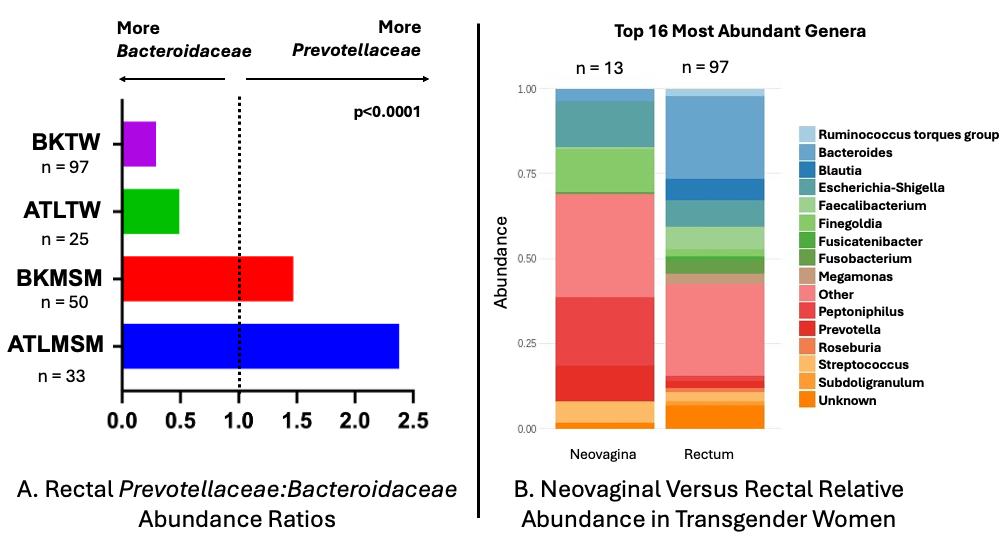
358. Virulent HIV-1B: Clinical Challenges and Proteomic Insights
Poster Abstracts
Page: 77
Kavita Mehta1, Mareva Delporte2, Victoria Rios Vazquez3, Marc J. T. Blaauw4, Louise E. van Eekeren3, Albert L. Groenendijk5, Wilhelm A. Vos6, Evy Blomme2, Sarah Gerlo2, Bram Vrancken7, Philippe Lemey7, Sofie Rutsaert2, Andre van der Ven3, Linos Vandekerckhove2, the 2000HIV Human Functional Genomics Partnership Program
Background
A virulent HIV-1 subtype B clade (VB) first reported in 2022 (Wymant et al. 2022), is linked to higher viral loads (VL), faster CD4+ T-cell decline, and greater transmissibility. This presents significant challenges for clinical management due to its faster disease progression. The study aims to elucidate the effects of VB on clinical outcomes and host proteomic profiles.
Methods
Viral genetic analysis was performed on 1,895 people living with HIV (PLWH) on ART from the 2000HIV cohort using partial env and pol sequencing of gDNA samples extracted from CD4+ T-cells. Phylogenetic analysis using IQ-TREE (subtype B), confirmed the presence of VB. The profiling of 2,367 proteins was assessed using proximity extension assay technology (OLINK proteomics). Associations of VB with clinical parameters were assessed using the Wilcoxon Rank-Sum Test. Differential protein expression analysis between VB and non-VB was performed using a linear regression model adjusting for covariates such as age, smoking status, and other factors that accounted for at least 3% of the variance in the plasma proteome.
Results
The VB was confirmed in 32 participants (male, diagnosed between 2004-2019, median ART duration before sampling: 9.93 years). Tropism profiles were R5 (n=22), X4 (n=3), and mixed-tropic (n=2) (Fig1A). VB participants had higher pre-cART VL(p=0.00099) and zenith VL (p =0.013), and more rapid CD4+ T-cell decline. Proteomic analysis revealed significant differential expression in 10 out of 2,376 proteins between VB and non-VB post-ART (Fig1B). Some of these proteins are already known to be involved in HIV progression. Notably, IDO1, an important player in tryptophan metabolism and immune regulation, was upregulated, potentially contributing to heightened immune dysregulation in VB. Additionally, IL-1B and ARF6 were upregulated, suggesting a more severe inflammatory response and modulation of crucial HIV life cycle processes, respectively. In contrast, TREH, a protein involved in carbohydrate metabolism, was downregulated which may indicate metabolic disturbances. Trehalose, TREH's substrate, was shown to inhibit HIV post-entry by modulating autophagy, possibly affecting viral replication.
Conclusions
VB is linked to more severe clinical outcomes and distinct proteomic changes, especially in immune response, inflammation, and metabolism, which may contribute to the clade's aggressiveness. Despite a decade of ART, proteomic profile changes persist in individuals with VB.
The figure, table, or graphic for this abstract has been removed.
359. Single-Cell Multi-Omics Uncovers the Immune Heterogeneity in HIV-Infected INRs
Poster Abstracts
Page: 77
Xiaosheng Liu1, Leidan Zhang2, Ling Chen2, Liyuan Zheng2, Jia Tang2, Fada Wang2, Yang Han2, Xiaojing Song2, Wei Cao2, Taisheng Li2
Background
Immunological non-responders (INRs) are people living with HIV-1 who fail to achieve full immune reconstitution despite long-term effective antiretroviral therapy (ART). This incomplete recovery of CD4+ T cells increase the risk of opportunistic infections and non-AIDS-related morbidity and mortality. Understanding the mechanisms driving this immune dysfunction is critical for developing targeted therapies.
Methods
We performed single-cell RNA sequencing (scRNA-seq) and single-cell VDJ sequencing (scVDJ-seq) on peripheral blood mononuclear cells (PBMCs) from INRs (n= 10), immune responders (IRs, n= 14), and healthy controls (HCs, n= 9). We developed scGeneANOVA, a novel mixed model differential gene analysis tool, to detect differentially expressed genes and pathways. We performed flow cytometry and bulk RNA-seq to PLWH cohort (23 INRs and 37 IRs) to validate the corelation. In addition, we developed the Viral Identification and Load Detection Analysis (VILDA) tool to quantify HIV-1 transcripts and investigate their relationship with host gene expression.
Results
We had identified 8 major clusters and 51 subclusters within 232,369 PBMC cells across 33 samples. The scGeneANOVA tool identified critical genes and pathways that were missed by traditional analysis methods, and revealed that INRs exhibit a dysregulated interferon (IFN) expression profile. RNA velocity and TCR tracing showed an increased tendency toward an exhaustion-prone differentiation trajectory in the CD4+ T cells of INRs, with fewer cells differentiating into effector cells. Transcriptional analysis on bulk RNA-seq cohort and public data validated the role of IFN in driving CD4+ T cell exhaustion. The VILDA tool showed higher levels of HIV-1 transcripts in INRs, suggesting that the size and transcriptional activity of the HIV-1 reservoir are closely linked to IFN signaling activation in INRs.
Conclusions
This study revealed that INRs exhibit a dysregulated IFN response, closely associated with CD4+ T cell exhaustion. This immune exhaustion was identified as a key factor contributing to immune recovery failure. These findings point to the central role of IFN signaling and HIV-1 reservoirs in INR-related immune dysfunction. The identification of key genes and pathways offers potential biomarkers and therapeutic targets for improving immune recovery in this vulnerable population.
360. Variability in Immunometabolic Signatures Among People w/ HIV Defines Immune Outcomes and Progression
Poster Abstracts
Pages: 77-78
Simon Gressens1, Mohamed R. Joma1, Rachelle Saleh1, Lara Tabet1, Cassiopée Adam1, Julien Pansiot1, Katia Bourdic2, Guislaine Carcelain2, Nicolas Noel2, Olivier Lambotte2, Mireille Laforge1
Background
HIV infection leads to significant loss of CD4 T lymphocytes (CD4TL), compromising immune function despite antiretroviral therapy (ART). People living with HIV (PLHIV) can be categorized as immune responders (IR) or immune non-responders (INR) based on their ability to achieve immune reconstitution. IR restore CD4TL counts >500 cells/mm³, while INR remain below this threshold despite ART. CD4TL subpopulations show distinct metabolic signatures based on their functions. Upon in-vitro activation, Glut1 expression rises supporting glycolysis along with the upregulation of the activation markers. Recent research has shown that CD4TL from PLHIV exhibit bioenergetic defects, particularly in INR, with a downregulation of TFAM, a regulator of mitochondrial biogenesis. In addition, the release of mitokines in the plasma is associated with mitochondrial stress. These mitochondrial dysregulations impair immune functions. We carried a study in PLHIV to describe mitochondrial defects in PLVIH to understand how IR despite those defects could achieve their immune reconstitution.
Methods
We included 30 PLHIV based on age, ART length, undetectable virus, CD4TL count and CD4/CD8 ratio. We performed a multiapproach immuno-metabolic profiling of CD4TL and their subpopulations using flow cytometry, biochemistry, and Seahorse analysis, combined with NMR metabolomics and secretome analysis on plasma.
Results
CD4TL from INR displayed reduced mitochondrial mass, increased non-mitochondrial oxygen consumption, lower TFAM, increased activation markers (CD25, CD69, HLA-DR, CD95, PD-1), less naive CD4TL (p=0.007), and more TEMRA (p=0.002) compared to healthy donors (HD) and IR. However, both groups exhibited bioenergetic defects; yet IR can compensate through enhanced mitochondrial biogenesis by increasing TFAM and functional mitophagy, maintaining immune integrity. Upon in-vitro activation, INR did not upregulate Glut1 despite elevated activation markers (compared to HD: ns for IR; p<0.001 for INR). Both groups had high GDF15 in plasma, but INR showing significantly higher levels (compared to HD: p=0.022 for IR; p<0.001 for INR).
Conclusions
IR compensate for bioenergetic and immunological defects via accelerated mitochondrial biogenesis, preserving immune function. In contrast, INR show inadequate compensation, contributing to their distinct immunological profile. Strategies to enhance mitochondrial biogenesis or repair autophagy defects may improve immune function in INR, potentially converting them into IR.
361. Effect of Delayed ART Initiation on Anti-CD4 Autoantibodies in ART-Naive People With HIV
Poster Abstracts
Page: 78
Brian P. Epling1, Andrea Lisco1, Shweta Mistry2, Birgit Grund2, Jason Baker2, Carlos Brites3, Julien Gras4, Sandy Pillay5, Blessing Uche6, Peter Burbelo7, Irini Sereti1, the INSIGHT START Study Group
Background
We previously identified autoantibodies to the CD4 molecule (anti-CD4 AAb) in antiretroviral therapy (ART)-naïve people with HIV (PWH) with CD4 counts <100 cells/µL by luciferase immunoprecipitation systems (LIPS). The influence of delayed ART initiation on these AAb and their impact on CD4 count after ART initiation is unclear.
Methods
In the Strategic Timing of Antiretroviral Treatment (START) trial, ART-naïve PWH with CD4>500 cells/µL were randomized to start ART immediately (immediate arm) or delay until CD4<350 cells/µL or development of AIDS (deferred arm). In a random subset of participants (pts), we measured anti-CD4 AAb at baseline and month 24 (M24) by LIPS, defining seropositivity (AAb+) as >25000 relative light units. We used logistic regression models to assess associations with baseline AAb+ and to compare treatment groups for AAb+ at M24. To assess the effect of AAb+ on CD4 recovery with ART use, we compared the mean change in CD4 count between baseline AAb+ vs AAb- pts within the immediate arm.
Results
Baseline characteristics were similar between arms in the random subset of 1199 pts (600 imm., 599 def.); median age was 36 yrs, median CD4 count was 648 cells/µL. Across all pts at baseline, AAb+ was 41%. AAb+ was independently associated with global region and recent (≤6 months) HIV infection, but not with age, sex, CD4 count, or HIV RNA level (Figure 1). By M24, all pts in the immediate and 33% in the deferred arms had started ART. Among all pts, AAb+ decreased from 41% to 26% in the immediate and from 40% to 31% in the deferred arm (M24 OR (def/imm) 1.91, p<0.001). In pts who were AAb- at baseline, 0.3% (imm) and 4.4% (def) became AAb+ at M24. In the immediate arm, AAb+ decreased from 59% at baseline to 15% at M24 in those with recent HIV infection, versus from 40% to 27% in other pts (p<0.001 for difference). In the immediate arm, there was no difference in CD4 recovery from baseline to M24 between AAb+ and AAb- pts (mean increase of 203 vs 202 cells/ µL respectively).
Conclusions
Among pts randomized to immediate ART initiation, anti-CD4 AAb+ was decreased at M24 compared to deferred ART, but AAb+ at baseline was not associated with the rate of CD4 recovery with ART. With immediate ART, AAb+ reverted to negative more commonly in those with recent HIV infection compared to those with longer duration of untreated HIV. These findings indicate that early ART initiation results in reductions in anti-CD4 AAb+, but their pathogenic role in this population remains uncertain.
Figure 1.
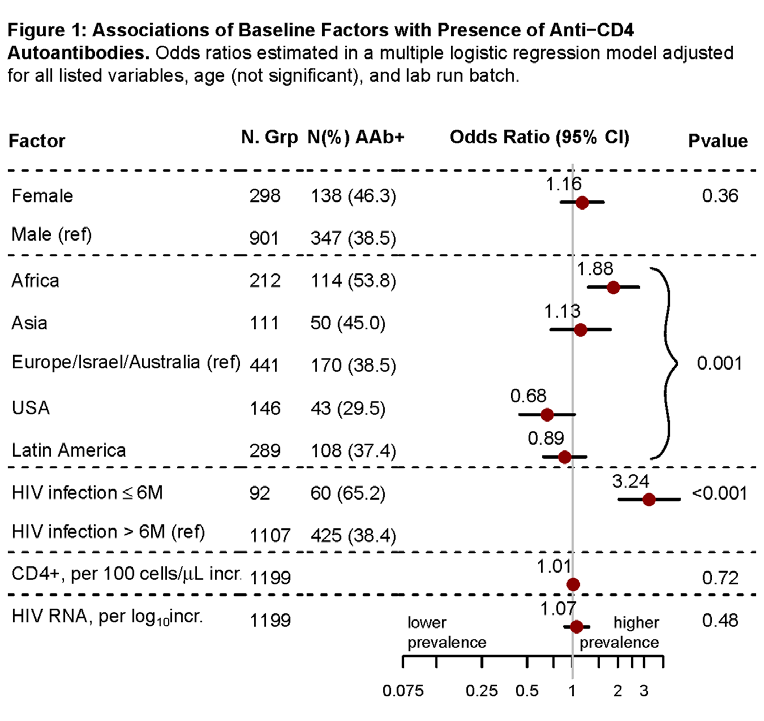
362. CD4-Binding Site Abs Modify the Negative Association Between Cluster A Abs and CD4 Count in PWH
Poster Abstracts
Page: 78
Mehdi Benlarbi1, Jonathan Richard2, Tommaso Clemente3, William D. Tolbert4, Marc Messier-Peet1, Marzena Pazgier4, Frank Maldarelli5, Antonella Castagna3, Madeleine Durand2, Andrés Finzi2
Background
Chronic inflammation and immune dysfunction persist in some people with HIV (PWH), even during antiretroviral therapy (ART). We previously observed that HIV-1 soluble gp120 (sgp120) and a family of gp120-specific anti-cluster A antibodies (Abs) are associated with chronic inflammation and immune dysfunction in aviremic participants of the Canadian HIV and Aging cohort. Here, we evaluated whether antibodies targeting the CD4 binding site of gp120 (CD4BS) could prevent CD4 depletion in vitro, and how their presence in the plasma of PWH could affect the negative association between anti-cluster A Abs and CD4 cell counts.
Methods
We first evaluated the capacity of CD4BS Abs or plasma from PWH to prevent CD4 depletion in vitro. We next performed a cross-sectional assessment of anti-cluster A Abs and anti-CD4BS Abs in three independent cohorts of PWH. We used generalized least squares linear regression models with random effects (considering clustering within cohorts) to estimate the association between anti-cluster A Abs and CD4 counts. Next, we assessed how this association was affected by the presence or the absence of anti-CD4BS Abs by adding an interaction term to the model.
Results
In vitro, we observed that CD4BS Abs blocked the coating of uninfected bystander CD4+ T cell by sgp120 and their elimination by ADCC mediated by plasma from PWH (p<0.0001). Plasma from participants with anti-CD4BS Abs also decreased the coating of CD4+ T cells with sgp120 (p=0.0089) and prevented their ADCC-mediated elimination (p=0.0001). We included 520 participants from three independent cohorts for measurements of anti-cluster A Abs and anti-CD4BS Abs. The mean age of participants was 56, 87% were males, and the median duration of HIV infection was 20.7 years. ~16% of PWH (82/520) had detectable levels of anti-CD4BS Abs. In the total study population, anti-cluster A Abs were inversely associated with CD4 cell counts (beta; -18.32 95%CI -32.85 to -3.79, p=0.013). The strength of this association was increased in those without anti-CD4bs Abs (beta; -26.74 95%CI -42.52 to -10.96, p=0.001). This association was not present in PWH with anti-CD4BS Abs (beta; 19.77 95%CI -19.42 to 58.95, p-value for interaction 0.02).
Conclusions
Our results suggest that sgp120-mediated immune dysfunction is associated with its capacity to interact with CD4, and that anti-CD4BS Abs negate this capacity, which could lead to novel therapeutic approaches to tackle residual immune dysfunction in PWH.
363. Prevalence and Activity of Anti-Interferon Auto-Antibodies in People Living With HIV
Poster Abstracts
Pages: 78-79
Olivia Payne1, Andrey Brodskiy1, Orest Idilli1, Sarah Griffith1, Laura McCoy1, Marc Lipman1, James Brown2, Dimitra Peppa1, Doug Fink1
Background
The interferon (IFN) cytokine family, encompassing subtypes 1-3, is fundamental to control of HIV replication. Anti-IFN auto-antibodies (auto-Abs) have emerged as key determinants of severe acute viral infection but data are limited in chronic virus infections. A single cohort study of people living with HIV (PLWH) has reported anti-Type 1 IFN (T1IFN) auto-Ab prevalence only without characterisation of auto-Ab function. We undertook the first multi-centre seroprevalence study of auto-Abs against all three IFN-types in PLWH, testing neutralisation and associations with clinical outcomes.
Methods
We conducted a longitudinal observational study using cryopreserved serum samples from two London clinical cohorts (Mortimer Market Centre and Royal Free Hospital). Serum, demographic and HIV-related clinical data were collected from HIV- control (n=75) and from PLWH (n=177) groups. Auto-Ab levels were measured using published GyroLab immunoassay against T1 (IFNα, IFNω), T2 (IFNγ), and T3 (IFNλ1) IFNs. Assay positivity cut-off defined as 2*S.D.+ mean of the control group. IFN neutralisation was tested by HEK293 cell IFN bioassay. Results graphed and analysed in Prism v10.3.1 using Spearman correlation and Mann-Whitney test.
Results
Age was comparable between controls (51 years, IQR43-57) and PLWH (50 years, IQR44-54). 52% control donors were male, compared to 85.7% PLWH. Overall, 4.0-5.3% of the control group had detectable auto-Abs across T1-3 IFNs, versus 27.6-48.0% of PLWH (Fig 1). Intriguingly, no individuals with detectable anti-IFNα auto-Abs demonstrated IFN neutralisation in vitro. Median auto-Ab levels were significantly higher (***p<0.001) in viraemic individuals compared to those with undetectable viral loads (<50 copies/ml), respectively, across IFNα2A (9.9, 95%CI 9.2-16.9 versus 5.4, 95%CI 5.2-7.8), IFNω (5.0, 95%CI 4.8-6.4 versus 8.4, 95%CI 7.6-13.8), IFNγ (4.8, 95%CI 4.6-7.0 versus 10.3, 95%CI 9.0-16.0), IFNλ1 (5.2, 95%CI 5.0-6.9 versus 10.8, 95%CI 9.0-15.9). Auto-Ab levels fell in longitudinal samples after initiation of anti-retroviral therapy (ART) in PLWH.
Conclusions
We detected high levels of non-neutralising anti-IFN auto-Abs in PLWH. Auto-Ab levels associated with HIV viraemia and were responsive to ART. Population-level longitudinal studies are needed to determine the impact of these auto-Abs on long-term HIV outcomes. The underlying immunopathogenesis of anti-IFN auto-Abs remains unknown and chronic virus infection provides opportunity for mechanistic studies.
The figure, table, or graphic for this abstract has been removed.
364. Secreted ORF8 Reprograms Macrophages to Enhance Lung Epithelial Cell Infection by SARS-CoV-2
Poster Abstracts
Page: 79
Yusuke Matsui1, Rahul K. Suryawanshi1, Mauricio Montano1, Taha Y. Taha1, Mir M. Khalid1, Kanika Khanna1, Jin Tang1, Yuan Zhou1, Xiaohui Fang2, Mazharul Maishan2, Robyn M. Kaake1, Michael A. Matthay2, Nevan J. Krogan1, Melanie Ott1
Background
ORF8 is an accessory protein encoded by SARS-CoV-2, containing an immunoglobulin-like domain of approximately 20 kDa, and is secreted extracellularly by infected cells. Serum levels of ORF8 have been shown to correlate with disease severity in COVID-19 patients, though its exact function and target cells remain unknown. We hypothesized that extracellular ORF8 influences COVID-19 pathogenesis through its effects on immune cells and investigated this mechanism.
Methods
We demonstrated that secreted ORF8 targets macrophages and alters their identity, inflammatory profile, and susceptibility to SARS-CoV-2 infection, thereby enhancing lung epithelial cell infection. This was shown using our primary macrophage SARS-CoV-2 infection models (SARS-CoV-2 virus-like particles and replication-competent ORF8+/− viruses) and proteomics analysis on ORF8-stimulated macrophages.
Results
Exposure to extracellular ORF8 enhances ACE2 expression on primary macrophages thereby promoting virion entry and macrophage pyroptosis. ORF8-exposed proinflammatory M1 macrophages exhibit a significant shift in protein expression toward an M2-like phenotype associated with immunosuppression. Importantly, efficient infection of macrophages depends on ORF8 expression, and co-culture of macrophages with primary human alveolar type 2 (AT2) cells reverses the negative effect of ORF8 on AT2 infection, enabling full viral replication. In animal experiments using mouse-adapted viruses, the addition of extracellular ORF8 enhances viral replication and increases IL-1β production.
Conclusions
This study highlights the role of extracellular ORF8 in modulating immunity and its contribution to the spread of infection. Our results demonstrate a paracrine function of ORF8 in targeting macrophages and promoting a proviral circuit between macrophages and lung epithelial cells in COVID-19 pathogenesis.
Figure 1.
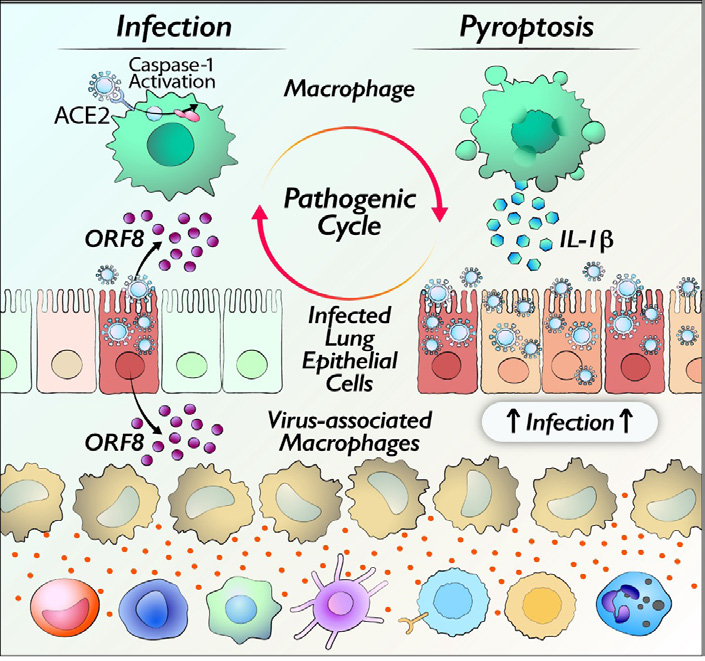
365. Occult CMV Replication Is a Persistent Driver of Effector T-Cell Expansion in PWH on Effective ART
Poster Abstracts
Page: 79
Nived Collercandy1, Camille Vellas1, Manon Nayrac2, Mary Requena1, Thomas Richarme3, Justine Latour1, Karl Barange1, Laurent Alric1, Guillaume Martin-Blondel1, Jacques Izopet1, Pierre Delobel1
Background
CMV infection is a driver of immune activation and senescence, with greater impact in the setting of HIV-1 co-infection, where it contributes to CD8 T cell expansion and low CD4/CD8 T cell ratios. CMV replication occurs primarily in people with HIV-1 (PWH) with low blood CD4+ T cell counts, but occult CMV replication may persist in some tissues due to incomplete CD4+ T cell reconstitution on antiretroviral therapy (ART), particularly in the gut, dissociated from restored blood CD4+ T cell counts. This occult CMV replication may drive CMV-specific antibodies and effector T cells even in PWH on successful ART.
Methods
In a sub-study of ANRS EP61 GALT, 15 PWH who were also CMV seropositive (CMV+), 15 controls without HIV but CMV+, 12 PWH without CMV (CMV-) and 12 double-negative controls were included for FACS immunophenotyping of circulating T cells. CMV viremia was assessed by PCR. Anti-CMV IgG titers were measured as a marker of immune stimulation by CMV.
Results
CMV viremia was negative in all CMV+ subjects. However, CMV+ PWH had significantly higher anti-CMV IgG titers than CMV+ HIV-negative controls (median 553 [277-933] vs 163 [122-245], P <0.01). While an inverted Vδ1/Vδ2 ratio among γδ T cells has been described as a hallmark of PWH, it was found only in CMV+ PWH. γδ T cell counts are increased in PWH, with the highest levels in CMV+ PWH compared to CMV- PWH and CMV- controls (P=0.0.1 and P<0.001, respectively) (Figure). Vδ1 subset counts and proportions were significantly increased in CMV+ PWH compared to other groups. The Vδ2 subset was not significantly changed in number, but was reduced in proportion. The effector cell receptor CX3CR1 was highly expressed on Vδ1 T cells, with the highest expression in CMV+ PWH. Conventional T cells showed the same results, with an expansion of CX3CR1+ TEMRA T cells in the same groups. CMV IgG titers correlated with CX3CR1+ CD8 and CD8 TEMRA, total CD8 count, and with the duration of HIV virological suppression.
Conclusions
Occult CMV replication during HIV-1 infection is involved in the expansion of several circulating T cell populations, particularly Vδ1 T cells, even in PWH on effective ART with restored circulating CD4 T cell counts and undetectable CMV DNA in their blood. CX3CR1 expression on T cells is associated with CMV status and is likely driven by occult CMV replication. CMV IgG titers may be used as a surrogate for occult CMV replication.
Figure 1.
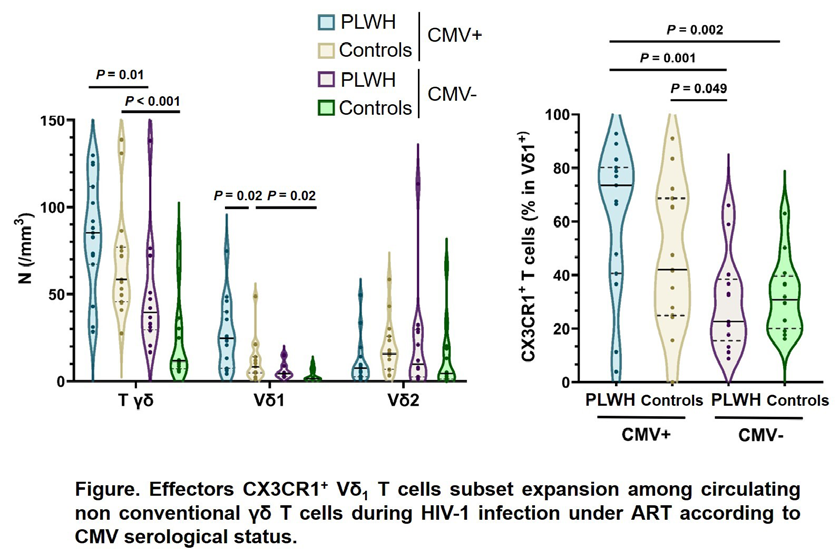
366. IL-10/PD-1 Blockade Leads to Enhanced BA Synthesis and Type I IFN Production
Poster Abstracts
Pages: 79-80
Khader Ghneim, Felipe Ten-Caten, Susan P. Ribeiro, Mirko Paiardini, Rafick P. Sekaly
Background
Elevated levels of IL-10 and PD1 contribute to HIV reservoir persistence, an impediment for HIV eradication. IL-10 contributes to the lack of effector function, antigen-presentation and promotes HIV reservoir survival. PD-1 expression is associated with T cell exhaustion and HIV latency. We hypothesized that the dual blockade of IL-10 and PD-1 could synergize and lead to viral rebound control post-ATI (Analytical Treatment Interruption) and to reduced SIV reservoir size.
Methods
28 rhesus macaques (RMs) infected with SIVmac239 started antiretroviral therapy (ART) 42 days post-infection, maintained for 14-months. Rhesusized aIL-10 (n=10), aIL-10/aPD-1 (Combo therapy - n=10), or vehicle (n=8), infused every 3-weeks was administered starting 12 weeks pre-ATI and stopped 14-weeks post-ATI (week 26). Here, we utilized transcriptomic and metabolomic data from PBMCs and LNs to decipher the mechanisms of VL control observed in aPD1+aIL10 treated RMs.
Results
Week 12 (pre-ATI) PBMC and LN transcriptomic profiling of aPD1+aIL10 treated RMs revealed a significant enrichment of Bile Acid (BA) metabolism and synthesis characterized by elevated FXR levels and enhanced BA and BA salt synthesis. Concordantly, elevated metabolites (tauro-litho-cholate sulfate, litho-cholate sulfate) mapping to primary and secondary BA metabolism were elevated in dual-treated RMs. Additionally, enhanced levels of Type I IFN production characterized by innate anti-viral restriction factors RFs (IRF1, IRF7, APOBECs, TRIMs) were elevated in aPD1+aIL10 treated RMs. Notably, we observed a positive correlation between BA synthesis and Type I IFN RFs. Importantly, both mechanisms were negatively associated with the magnitudes of SIV RNA/DNA and 2LTR circles measured in LN.
Conclusions
Our data highlight that administration of combo therapy drives innate Type I IFN signaling characterized by an intact anti-viral response downstream of BA synthesis. Of note, we also observed several pathways mapping to FGF signaling which were negatively correlated with week 36 (post-ATI) virological outcomes. FGF15 and its human ortholog FGF19 are gut-derived circulating hormone that represses hepatic BA synthesis. Combo (aIL10+aPD1) treated RMs inhibit FGF signaling. Altogether, these data highlight the interplay between FGF signaling, BA synthesis/signaling and IFN signaling/antiviral immunity. These data also demonstrate that inhibition of FGF signaling could be used as an effective therapy.
367. Activated Platelets Render Functionally Deficient Natural Killer Cells in People Living With HIV
Poster Abstracts
Page: 80
Brita Ostermeier1, Sanchita Pandey2, Carles Moreno Soriano1, Cheryl Clarkson-Paredes1, Tomas Raul Wiche Salinas3, Gregory Cresswell1, Anastas Popratiloff1, Mirko Paiardini3, Sanjay B. Maggirwar1
Background
Anti-retroviral therapy (ART) for people with HIV (PWH) is very effective in suppressing HIV replication and preventing disease progression. However, even while on ART, NK cells remain dysfunctional. Although the exact mechanism of this dysfunction is unknown, there is evidence of increased platelet-immune cell complex formation in PWH. These complexes alter immune cell functions, which could play a role in NK dysfunction. We propose another role of platelets during HIV infection through platelet-NK cell complexes (PNKCs). We predict that PNKCs are a key factor in promoting NK dysfunction during HIV infection.
Methods
PBMCs isolated from people without HIV (PWOH) and PWH (Table 1) and in vitro platelet-NK co-cultures were stained by flow cytometry with markers for platelets and NK cells. PNKCs were also identified in vitro via correlative light and electron microscopy (CLEM). We followed NK cells co-cultured with platelets or platelet factors over 14 days, testing the NK killing capacity against target cells. Furthermore, Rhesus macaques (RMs) were treated with vehicle (n=5) or inclacumab, (n=5) at week -1 and week 2 post-infection and infected with SIV on day 0. PBMCs from days -28, 7, and 21, and at necropsy (days 32-39) were co-cultured with K562 in flow-based killing assays. Statistical significance was determined using Mann-Whitney t-tests with a p-value of <0.05.
Results
Our studies indicate that PWH have increased levels of PNKCs compared to PWOH, which persists regardless of the NK subset, biological sex, or age. In PWH, PNKCs have higher expression of CD314 and CD25 compared to non-PNKCs, as well as higher expression of CD69, and lower expression of CD335 compared to PNKCs from PWOH. In vitro, NK cells exposed to platelet and platelet factors have increased effector function markers by day 7, which reverses by day 14. NK cells exposed to platelets also have altered killing capacities that vary depending on the target cell. In vitro data was validated by in vivo studies in RMs, where inclacumab treatment alleviated NK dysfunction.
Conclusions
This study identifies elevated PNKCs in PWH, which have altered phenotypes compared to non-PNKCs and PNKCs from PWOH. In vitro, platelet-NK co-cultures confirm the formation of PNKCs, and both in vitro and in vivo studies implicate platelets as drivers in NK dysfunction. These results have important consequences on future immune cell therapeutics in which the inclusion of platelet inhibitors may enhance cure outcomes.
Table 1.
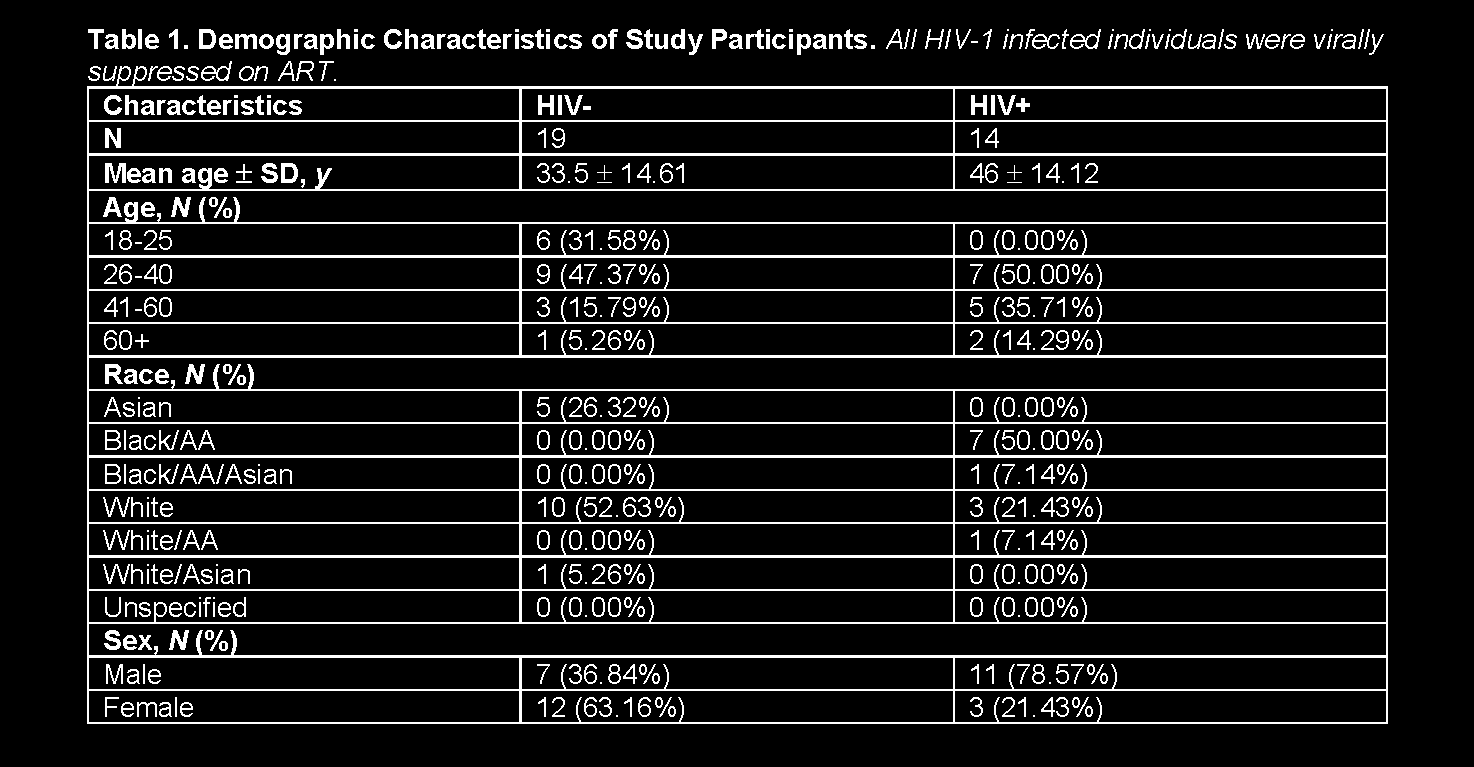
368. Elevated Lymph Node Metabolic Activity During Long-Term Antiretroviral Therapy
Poster Abstracts
Page: 80
Chuen-Yen Lau, Mahathir Khan, Jessica Earhart, Govind Nair, Esther Mena, Frank Maldarelli
Background
Increased immune activation during antiretroviral therapy (ART) is associated with morbidity and mortality in persons with HIV (PWH). Mechanisms of elevated inflammation are uncertain but may include expression from HIV proviruses or dysregulated immune responses. Immune activation is often associated with increased metabolic activity in lymphoid organs, and can be detected non-invasively by 18F-Fluorodeoxyglucose (FDG) positron emission tomography (PET)/computed tomography (CT). Early PET studies did not detect increased metabolic activity in lymphoid tissues during ART. We investigated whether new, more sensitive FDG PET/CT approaches detect metabolically active lymphoid tissues during ART.
Methods
Otherwise healthy PWH on ART with HIV RNA<20 c/ml for >3 years (y) underwent research time-of-flight FDG PET/CT using the Siemens Biograph mCT. Scans were analyzed using Medical Image Merge Software (MIM®). Cervical, mediastinal, axillary, and inguinal lymph nodes were identified manually and verified by a board-certified Nuclear Medicine radiologist. Metabolic activity in lymph nodes was quantified as standardized uptake value (SUV). Numbers of lymph nodes with 18F exceeding established threshold for normal uptake (SUVmax > 2.5) were quantified; SUVmax, total lesion glycolysis, and total lymph node volume were analyzed with descriptive parametric statistics.
Results
Four males (mean age 62, range 42-83) y, undergoing ART for mean 21 (range 5-31) y, with median CD4 560 (range 402-590) cells/µL), underwent PET/CT; 7-32 nodes/PWH were evaluated. Metabolically active lymph nodes were identified in cervical, mediastinal, axillary, and/or inguinal regions in all participants; ≥ 3 lymph nodes with SUVmax > 2.5 were identified per PWH. Mean SUVmax was 3.8 (0.9-11.2). Total lymph node volume was similar for nodes with SUVmax<2.5 [0.21 (0.004-0.9) mL] and SUVmax>2.5 [0.25 (0.01-1.13) mL] (p=0.2091). Mean total lesion glycolysis was lower for nodes with SUVmax<2.5 [0.26 (0.01-1.3)] vs SUVmax>2.5 [0.73 (0.03-3.4)] (p=0.0015). Anatomic locations of elevated activity varied among participants; no clinical or laboratory findings explained the abnormal uptake.
Conclusions
New PET imaging approaches localize elevated metabolic activity in lymph nodes of otherwise healthy PWH on long-term ART. While uptake varies significantly, nodal volumes do not. Non-invasive functional imaging will facilitate targeted evaluation of lymphoid tissues to determine mechanisms of immune activation during ART.
369. Immunometabolism of Innate Lymphocytes in People Living With HIV-1 Versus HIV-2
Poster Abstracts
Pages: 80-81
Maryam Khan1, Claire Pardieu1, Athavan Umaipalan2, Hafiza Rahman3, Helena Miras3, John Thornhill1, Sarah Rowland-Jones4, Jane Deayton1, Sian Henson1, Chloe Orkin1, Neil McCarthy1, the SHARE Collaborative
Background
HIV-2 is characterised by more indolent clinical progression than HIV-1, including decreased T-cell activation and limited immune exhaustion. However, it remains unclear how HIV subtypes impact the unconventional lymphocyte compartment, including mucosal-associated invariant T-cells (MAIT), invariant natural killer T-cells (iNKT), and Vδ2+ T-cells which mediate gut barrier defence and mucosal inflammation. To investigate whether the distinct clinical courses of HIV subtypes are associated with altered frequency and function of unconventional lymphocytes, we assessed mitochondrial and exhaustion profiles of these populations in HIV-1, HIV-2, and healthy controls (HC).
Methods
PBMCs from people with HIV-1 (n=6) people with HIV-2 (n=6) and HC (n=6) were analysed by 26 colour flow cytometry. In addition to conventional T-cell lineage markers, iNKT, MAIT, and Vδ2+ subsets were assessed for frequency and expression of exhaustion markers (PD1, TIGIT) and mitochondrial function (MTG, TMRM).
Results
Both HIV-1 and HIV-2 cohorts were virally suppressed (VL<50 c/mL) and on ART (clinical demographics summarised in Table 1). iNKT frequency did not differ between cohorts (p=0.6). HIV-1 was associated with increased MAIT cell frequency (p=<0.03) and expression of TIGIT (p=<0.02) relative to HIV-2, although mitochondrial profile of MAIT cells was comparable between HIV cohorts (p=0.4). Circulating Vδ2+ frequency was higher (p=<0.03) in HIV-1 than in HIV-2, but mitochondrial activity was markedly higher (p=<0.03) in HIV-2 relative to HIV-1 and HC.
Conclusions
Preliminary analysis suggests that MAIT and Vδ2+ T-cell frequencies are higher in HIV-1 than in HIV-2, but there is a higher proportion of functional mitochondria in MAIT cells in HIV-2. These data suggest that the innate lymphocyte pool is differentially impacted by HIV subtypes, which may influence gut reservoir size and clinical course of infection. Future work will focus on gut homing potential and add additional markers of mitochondrial function including mtDNA copy number, ROS generation, and cellular respiration.
Table 1.
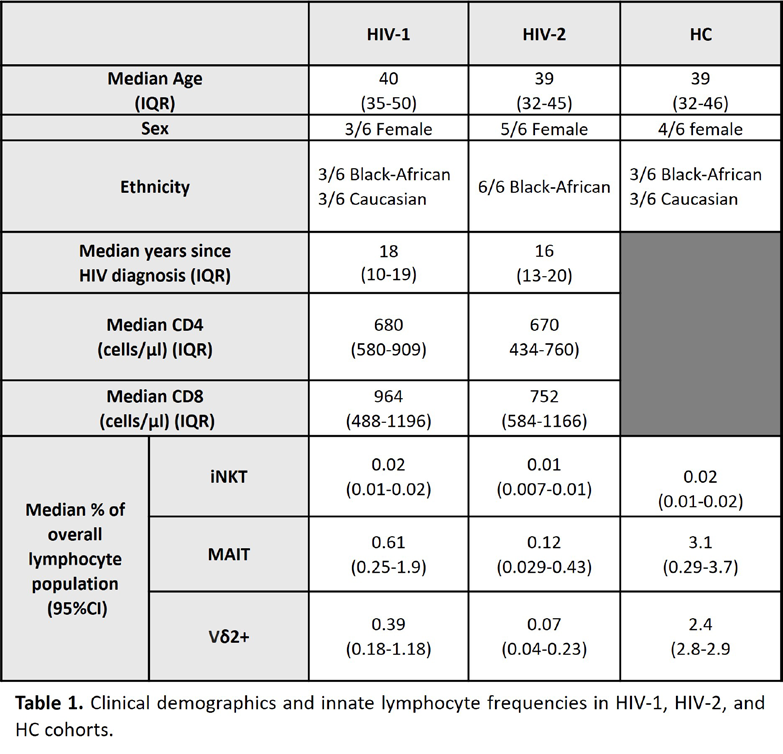
370. Non-HIV Chronic/Latent Viruses and Immune Aging: Sex Effects Comparable to Those of HIV and CMV
Poster Abstracts
Page: 81
Renying (Loulou) Cai1, Nancy Yi Yang1, Mel Krajden2, Amber Campbell3, Melanie Murray3, Helene Cote1, the Children and Women Antiretrovirals and Markers of Aging (CARMA) Study, CTN 277
Background
Non-HIV chronic/latent Viruses (NHV) such as CMV, EBV, HHV-8, HSV-1, HSV-2, HCV, and HBV are associated with markers of aging and/or age-related diseases and play a role in the accelerated cellular aging in people living with HIV (PLWH). We investigated association(s) between sex, HIV status, and NHVs, and selected markers of immune aging, in a cohort of PLWH and controls.
Methods
CARMA cohort participants (2-76y), balanced for sex, HIV status, and age were analyzed (Table 1). Seropositivity for the NHV were ELISA-based or self-reported (HIV, HCV, HBV). The CD4:CD8, CD8 proliferation competent:senescent (CD8+,CD28+:CD28-) and the naïve:effector CD4 and CD8 T cell ratios were determined via flow cytometry. Associations between number of NHV (0-1, 2-3, 4-6), HIV status, sex, and age were assessed using Mann-Whitney, Kruskal-Wallis, and Spearman’s tests. Multivariable linear regression determined independent associations (β= effect size) between the markers of aging, NHV, and sex, controlling for age and other potential confounders.
Results
Among 350 study participants, despite similar ages, females and PLWH had more NHV than males and controls, respectively (Table 1). By univariate analysis, a lower CD4:CD8 ratio was associated with male sex, HIV+ status, and having 2-3 or 4-6 vs. 0-1 NHV. The CD8+,CD28+:CD28- ratio decreased with increasing number NHV, and was lower among PLWH. For both CD4 and CD8 T cells the naive:effector ratio decreased with increasing number of NHV. Living with HIV, being male, and having CMV were all independently associated with a decreased CD4:CD8 ratio when controlling for age, ethnicity, smoking, and the six other NHVs (all β >0.22, p<0.001) . In a similar model for the CD8+,CD28+:CD28- ratio, HIV, CMV and HSV2 were independently associated with a decreased ratio (all β >0.21, p<0.01), but male sex was not (p=0.055). Finally, male sex and CMV were independently associated with lower naive:effector ratio in CD4 and CD8 T cells. In contrast, HSV1 was associated to a decrease in naive CD4 T cells, while HSV2 was associated with a decrease in naive CD8 T cells (all β >0.11, p<0.01).
Conclusions
Our findings suggest that NHV, including those that are typically asymptomatic such as CMV, HSV1 and HSV2, likely contribute to immune aging. Paradoxically, despite harbouring more NHV, female participants showed healthier immune cell profiles for all markers studied, a sex effect similar in size to that seen for HIV or CMV.
371. Sex Differences in Cytokine Responses and Genetic Regulation Thereof in People Living With HIV
Poster Abstracts
Page: 81
Suzanne D. E. Ruijten1, Nadira Vadaq1, Albert L. Groenendijk2, Louise E. van Eekeren1, Wilhelm A. Vos3, Marc J. T. Blaauw4, Mihai G. Netea1, Andre van der Ven1, Jéssica dos Santos1, Vasiliki Matzaraki1, the 2000HIV Human Functional Genomics Partnership Program
Background
Females living with HIV have improved viral control but increased immune activation compared to males. Some of these differences appear before puberty, suggesting a role of genetics, but this remains poorly understood. In this study, we assessed the effect of biological sex on circulating cytokine levels and cytokine production upon PBMC stimulation, and the genetic regulation of the latter.
Methods
The 2000HIV study (NTC03994835) included 1895 virally suppressed PLHIV, split into a discovery (1309 males, 233 females) and validation cohort (281 males, 52 females). Plasma levels of 54 cytokines were measured using Olink technology. PBMCs were stimulated with a range of stimuli to assess cytokine production across 77 cytokine-stimuli pairs. Associations with sex were assessed using (rank-based) linear regression. We investigated sex-specific genetic regulation of cytokine responses through sex-stratified cytokine QTL (cytQTL) mapping in individuals from European ancestry (discovery: 861M & 97F, validation: 221M & 26F). Suggestive cytQTLs were tested for sex-specific effects using a student’s t-test, and sex-specific QTLs (ssQTLs) were tested for association with other phenotypic traits using the OpenTargets database.
Results
Females showed significantly (FDRdis < 0.05 & Pval < 0.05) higher plasma levels of GM-CSF, G-CSF, and CCL22 and significantly lower levels of IL-18, IL-17C, CCL4, IL-16 and IL-22. Cytokine production upon PBMC stimulation was similar between sexes, except for significantly (FDRdis < 0.05 & Pval < 0.05) increased IL-22 production upon stimulation with S. pneumoniae in females. cytQTL mapping identified 40 independent suggestive (Pdis < 1E-5 & Pval < 0.05) cytQTLs in males and 20 in females, of which 22 were sex specific (P < 8.3E-4). Notably, we identified two SNPs regulating IL-22 responses to C. albicans conidia and E. coli, in females but not in males. Finally, we found that ssQTLs are linked with phenotypic traits related to autoimmune diseases, blood cell composition, and sex hormone levels.
Conclusions
In our study, the effect of sex seems more pronounced on plasma cytokine levels compared to cytokine production upon PBMC stimulation. Yet, sex differences in HIV immunopathogenesis may be driven by differences in cytokine signalling, such as IL-22, which regulates host defences at mucosal sites. We showed sex-specific genetic regulation of cytokine responses in PLHIV, which could be used to stratify PLHIV in immunological intervention studies.
372. Dynamic Changes in the Peripheral Blood Monocytes Following Long-Acting Injectable CAB/RPV in PLWH
Poster Abstracts
Page: 82
Maria Antonella Zingaropoli1, Eeva Tortellini1, Maria Silvia Guardiani1, Anna Carraro1, Federica F. D. Dominelli1, Cosmo Del Borgo2, Raffaella Marocco2, Giulia Mancarella1, Lorenzo Ansaldo2, Maria Rosa Ciardi1, Claudio Maria Mastroianni1, Miriam Lichtner1
Background
The advent of long-acting (LA) injectable ART has transformed the conceptualization of ART. However, there is a need for Real World Data on the impact of this novel approach on peripheral inflammation. The aim of this study was to investigate the dynamic changes in monocyte/macrophage subsets and their soluble activation markers in PLWH switching to LA injectable ART (CAB/RPV).
Methods
The present study investigated the percentages of peripheral blood monocyte/macrophage and dendritic cell subsets (HLA-DR, CD14, CD16, CD11c, CD123) in samples obtained from PLWH before CAB/RPV (T0) and after six (T6) and twelve months (T12) by flow cytometry. Moreover, a longitudinal evaluation of monocyte/macrophage activation markers (sCD14 and sCD163) was conducted. Subsequently, each time point was compared to a control group (healthy donors, HDs).
Results
A total of 30 aviremic PLWH switching to CAB/RPV, and 32 HDs were enrolled. All the enrolled PLWH were ART-experienced (12 dual/18 no dual) and 93.3% had a viral load of <50 copies/mL prior to initiating LA ART. At T12, no virological failure was observed. In comparison to HDs, PLWH exhibited higher percentages of intermediate monocytes (p=0.0037), non-classical monocytes (p<0.0001), M-DC8 (p=0.0007) and elevated plasma levels of sCD14 (p<0.0001) and sCD163 (p<0.0001) at each time point. The stratification of PLWH according to previous ART revealed no differences in the percentages of monocyte/ macrophage subsets or in the plasma levels of sCD14 and sCD163 between dual and no dual therapy. Overall, at both T6 and T12, a significant reduction in the percentage of non-classical monocytes compared to T0 was observed (p=0.0054 and p=0.0017, respectively). No significant differences were observed in the percentages of classical monocytes, intermediate monocytes, M-DC8, pDCs and mDCs. Furthermore, a reduction in sCD14 plasma levels was observed at both T6 and T12 in comparison to T0 (p=0.0006 and p=0.0237, respectively). No differences in sCD163 plasma levels were observed (see Table).
Conclusions
The significant reduction in inflammation and peripheral immune activation of the monocyte compartment observed after 12 months of LA injectable CAB/RPV underlines that the potential contribution of these cells to the viral reservoir and persistence may vary with therapy. The constant drug concentrations provided by CAB/RPV injections appear to be sufficient for sustained virological suppression and may affect the monocyte/macrophage compartment in PLWH.
Table 1.
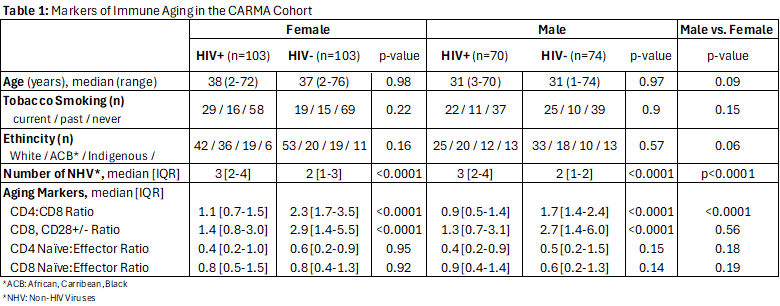
373. Changes in Serum Level of Cell-Free Mitochondrial DNA Fragments in Acute and Chronic HIV Infection
Poster Abstracts
Page: 82
Jing Sun1, Lolita S. Nidadavolu2, Hsing-Yu Hsu1, Jacquie Astemborski1, Jonah B. Sacha3, Paul Kievit3, Charles Roberts3, Gregory Kirk4, Todd Brown2, Peter Abadir2, the ALIVE and MWCCS Cohorts
Background
Circulating cell-free mitochondrial DNA (ccf-mtDNA) fragments are released into the bloodstream following cell death, can activate the innate immune system, and have been associated with aging-related outcomes, including frailty, in the general population. Data on ccf-mtDNA levels during both acute and chronic phases of HIV infection remain limited. We hypothesized that HIV infection is associated with higher ccf-mtDNA.
Methods
We measured ccf-mtDNA levels in the AIDS Linked to the Intravenous Experience (ALIVE) (N=890) and Multicenter AIDS Cohort Study (MACS)(N=427). Using ultrasensitive digital PCR, we quantified short and long ccf-mtDNA fragments in serum samples. Measurements were taken at intervals of 1, 3, or 5 years. Levels of ccf-mtDNA were compared by HIV serostatus and CD4 T-cell counts (<350 vs. ≥350 cells/mm³), using mixed-effect linear regression models that controlled for demographics, BMI, active injection drug use, and alcohol use. We also measured ccf-mtDNA levels in non-human primates (n=6) before and after SIV infection and following antiretroviral therapy (ART) initiation. Samples were drawn at baseline, peak viremia (2 weeks post-infection), pre-ART (5 weeks post-infection), and 3- and 6-months post-ART initiation.
Results
In both cohorts, PWH had significantly lower levels of both short and long ccf-mtDNA fragments compared to HIV-negative individuals. The difference was more pronounced in the ALIVE cohort (0.119 log scale units lower) than in the MACS cohort (0.094 units lower) (both p<0.05). Furthermore, individuals with lower CD4 T-cell counts (<350 cells/mm³) exhibited further reductions in ccf-mtDNA levels, with significant reductions in both short and long fragments in the ALIVE cohort and short fragments in the MACS cohort (Figure Panel A). In nonhuman primates, short ccf-mtDNA levels increased shortly after infection, peaking just before ART initiation (p=0.001), and subsequently declined, reaching levels below baseline after 6 months on ART. Long fragments remained stable during the early post-ART phase but declined significantly by 6 months (p=0.02, Figure Panel B).
Conclusions
Contrary to the initial hypothesis, ART-suppressed HIV infection is associated with lower levels of both short and long ccf-mtDNA fragments, following an initial increase during acute infection. These findings underscore the need for further investigation into the mechanisms regulating ccf-mtDNA in people living with HIV and its potential role in aging-related diseases.
The figure, table, or graphic for this abstract has been removed.
374. The Molecular Cargo of Exosomes Is Able to Discriminate Between PLWH With or Without NADCs
Poster Abstracts
Pages: 82-83
Jose M. Benito1, Asier Ureta1, Clara Restrepo1, Manuel Pedregal2, Héctor Callata2, Sara Nistal3, Alejandro Velastegui3, Edinson Caviedes4, Hector Peinado5, Manuel J. Gómez6, Fátima Sánchez-Cabo6, Alberto Alcázar7, Emma Martínez-Alonso7, Jesús García-Foncillas8, Norma Rallón1
Background
Non-Aids Defining Cancers (NADCs) are the main cause of morbidity and death from non-AIDS events (ENOS) in PLWH, whose death rate is higher than in the general population without HIV infection but who suffer from these same NADCs. However, the mechanisms that explain this are unknown. It has been suggested that exosomes derived from HIV infected cells can promote and enhance cancer in vitro. Herein, we have analyzed the proteomic and miRNA cargo of exosomes from PLWH with active NADC to identify a molecular profile associated to this condition.
Methods
Forty-two participants were included: 11 PLWH on cART (HIV+NADCs-), 11 on cART with NADC (HIV+NADCs+), 10 HIV-uninfected with NADCs (HIV-NADCs+), and 10 healthy volunteers (HC). Size Exclusion Chromatography was employed to isolate plasma exosomes. Protein and miRNAs content of exosomes isolated from plasma were analyzed by liquid chromatography coupled with mass spectrometry (proteins), and by RNAseq in a Miseq System (miRNAs). Canonical discriminant analysis (CDA) was used to identify the molecular profile (miRNA and/or proteins) in the exosome cargo from PLWH with NADCs compared to the other study groups.
Results
A total 599 miRNAs and 317 proteins were detected in the exosomes cargo of study groups. Only those proteins or miRNAs showing differential expression (DE) between the different study groups (130 miRNAS and 133 proteins) were included in the CDA. The CDA was able to completely (100%) discriminate between the four study groups. The CDA for pairs of groups (six different models) was also able to perfectly (100%) discriminate between participants in each group. Moreover, the profile of miRNAs and proteins included in each of the six CDA models was exclusive of each model, suggesting a specific profile of exosomes cargo associated to each study group. Interestingly, the CDA models discriminating between HIV+NADCs+ and HIV-NADCs+ or between HIV+NADCs+ and HIV+NADCs- included different miRNAs and proteins involved in the promotion and progression of cancer (i.e. hsa-miR-1298-5p, hsa-miR-135b-5p, glutathione peroxidase, retinol-binding protein, collagen alpha-1 chain, dermcidin).
Conclusions
Our results show the existence of a specific exosomes cargo associated to concomitant HIV infection and NADCs characterized by increased levels of pro-oncogenic and decreased levels of anti-oncogenic proteins and miRNAs. These results show the existence of a relevant role of HIV infection in the promotion and progression of cancer.
375. HIV-Encoded Proteins Induce Pulmonary Arterial Hypertension via Increases in Podocan-Like Protein 1
Poster Abstracts
Page: 83
Laszlo Kovacs1, Taylor C. Kress2, Rodger MacArthur2, Coleton Jordan2, Simone Kennard2, Eric J. Belin de Chantemele2
Background
Thanks to the advent of combination antiretroviral therapy (cART), life expectancy has dramatically increased in people with HIV (PWH), and the spectrum of diseases related to HIV has shifted towards non-infectious chronic illnesses, including cardiopulmonary disorders. Pulmonary arterial hypertension (PAH) is amongst the most devastating cardiovascular complications of HIV. Pulmonary artery smooth muscle cells (PASMCs) are primary cell types that contribute to the remodeling of pulmonary vascular walls, a critical structural alteration and pathological feature for PAH. However, the etiopathology of pulmonary vascular remodeling has yet to be determined.
Methods
Three mouse models of HIV and in vitro experimental studies were used to test whether HIV-derived proteins, which remain in circulation despite cART and well-controlled viremia, contribute to the development of PAH and identify the signaling pathways involved in PAH associated with HIV infection.
Results
The expression of HIV proteins in HIV-1 Tg26 mice promoted PAH in male and female mice with no sex differences. These cardiopulmonary alterations were also exacerbated with aging. Remarkably, bone marrow transplant (BMT) from Tg26 to wild-type (WT) mice fully recapitulated the cardiopulmonary phenotype of Tg26 mice, which supports a role for viral proteins derived from hematopoietic cells in PAH. RNA Sequencing identified a novel marker of PAH, Podocan-like protein 1 (Podnl1), whose levels are increased in both intact and BMT Tg26 mice lungs but, more importantly, in the lungs of PWH on cART. Overexpression of Podnl1 in PASMCs increased the levels of collagen-I and PCNA, markers of fibrosis and cell proliferation, respectively. Remarkably, HIV-Tat is the only viral protein detectable in peripheral blood mononuclear cells (PBMCs) obtained from PWH on cART and chronic treatment of mice with Tat reproduced the cardiopulmonary complications of intact and BMT Tg26 mice. In addition, treatment of PASMCs with HIV-Tat and exposure of discarded human pulmonary artery specimens to HIV-Tat elevated the Podnl1 expression.
Conclusions
Together, our data identify HIV-Tat and Podnl1 as major contributors to pulmonary vascular remodeling related to HIV infection and provide potential new therapeutic avenues for the prevention of HIV-associated cardiopulmonary complications.
376. Compromised Intestinal Barrier Resilience to Cytokine Disruption Causing Leakage in People With HIV
Poster Abstracts
Page: 83
Maliha W. Shaikh1, Shalini Singh2, Leila B. Giron2, Lijuan Zhang1, Shivanjali Shankaran1, Phillip A. Engen1, Michelle Villanueva1, Alan Landay3, Ali Keshavarzian1, Mohamed Abdel-Mohsen2
Background
People with HIV (PWH) experience compromised intestinal barrier integrity (gut leakage), which persists despite viral suppression by antiretroviral therapy (ART) and contributes to chronic inflammation. The mechanisms behind this ongoing disruption remain unclear and are likely multifactorial. We tested a novel hypothesis that living with HIV impairs the intestinal barrier’s ability to resist injurious agents, making it more susceptible to leakage when exposed to disruptors such as inflammatory cytokines, which are commonly elevated in PWH.
Methods
We generated 3D intestinal apical out organoids from the colon (colonoids) and ileum (enteroids) of 13 PWH on ART (<40 HIV copies/ml plasma) and 19 controls without HIV. Organoids were treated with or without a 3 ng/ mL IFNγ/TNFα cocktail for 3 hours. Organoid permeability was assessed using the 4kDa FITC-dextran diffusion assay, where higher fluorescence indicates increased permeability. RNA sequencing of baseline (pre-treatment) organoids was performed to identify molecular pathways involved in intestinal leakage.
Results
Colonoids, but not enteroids, from PWH on ART showed a non-significant trend toward higher baseline permeability compared to controls (p=0.077). However, both colonoids and enteroids from PWH exhibited significantly lower resilience to cytokine stimulation, with increased dextran diffusion compared to controls (p=0.041 for colonoids (Fig), p=0.006 for enteroids). Pathway analysis at baseline revealed disrupted epithelial integrity pathways in PWH organoids, including epithelial-mesenchymal transition (FDR=0.016) and DNA repair (FDR=0.0003). Downregulation of key genes within these protective pathways, such as P3H1 and POLD1, significantly correlated with increased permeability (P3H1: p=0.003, rho=-0.53; POLD1: p=0.02, rho=-0.47). PWH organoids also showed upregulation of pathways detrimental to intestinal barrier, such as oxidative stress-related pathways, including oxidative phosphorylation (FDR=0.03), reactive oxygen species pathway (FDR=0.00002), and fatty acid metabolism (FDR=0.0006).
Conclusions
Even with comparable baseline intestinal permeability, intestines of PWH on ART exhibit less resilience to disruption by inflammatory cytokines than those of controls, likely contributing to the ongoing intestinal dysfunction in PWH. Disruption of specific intestinal molecular pathways may contribute to this phenomenon, highlighting potential targets for novel strategies to prevent inflammation-associated comorbidities in PWH.
Figure 1.
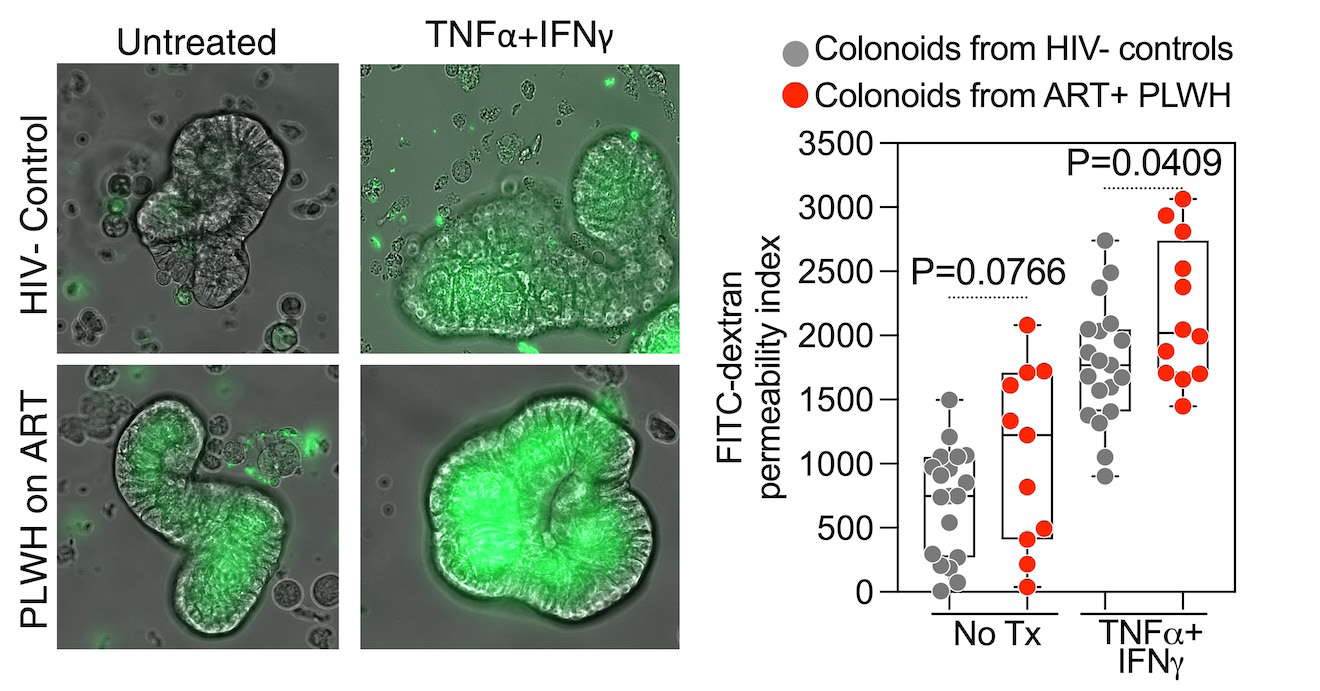
377. Acute HIV-1 Infection Triggers Myelopoiesis Suppression and Pancytopenia Through IFN-γ Signaling
Poster Abstracts
Pages: 83-84
Shuai Gao, Liang Shan
Background
HIV-1 infection commonly causes multiple hematopoietic abnormalities, known as pancytopenia, including lymphopenia, anemia, granulocytopenia, and thrombocytopenia, suggesting a central deficiency in bone marrow hematopoiesis. However, the mechanism by which HIV-1 infection leads to bone marrow hematopoietic defects remains unknown due to the lack of appropriate in vivo models. In this study, we established a humanized mouse model that successfully recapitulates the bone marrow cytopenia observed in people living with HIV (PLWH).
Methods
Newborn mice were transplanted with human cord blood-derived CD34+ cells. Mice were infected with HIV-1 9-10 weeks post-transplantation when sufficient levels of human CD45+ (huCD45+) cells were confirmed. Different R5-tropic strains (HIVBaL, HIVYU2, HIVJR-CSF, and transmitted virus HIVRejo) were utilized for HIV-1 infection. The changes of hematopoietic stem and progenitor cells (HSPCs) in the bone marrow were analyzed using flow cytometry, RNA-seq, and scRNA-seq e.t.c.
Results
Post 3-4 weeks of infection, HIV-1 infected mice showed a dramatic reduction in both the percentage and count of huCD45+, CD34+, and Lin-CD34+ cells in the bone marrow compared to uninfected controls. ScRNA-seq analysis of bone marrow CD34+ cells revealed that both lymphoid and myeloid progenitors were reduced, and myeloid progenitors had a more significant decrease. Using colony-forming unit assay and secondary transplantation, we demonstrated that bone marrow hematopoietic stem cells isolated from HIV-1 infected mice had reduced stemness and differentiation potency compared to uninfected controls. Since increased response to the IFNγ signaling was observed in myeloid progenitor cells via RNA-seq and scRNA-seq, we generated IFNγ receptor knocked out humanized mice. In these mice, hematopoietic suppression by HIV-1 infection was rescued, further supporting the role of IFNγ in HSPC suppression. Additionally, we identified activated CD8+ T cells as the primary source of IFNγ. Finally, IFNγ was found to trigger rapid HSPC proliferation, leading to the exhaustion of the HSPC pool over time.
Conclusions
Using this humanized model, we identified IFNγ signaling as a key factor in driving bone marrow failure post-acute HIV infection. Importantly, blocking IFNγ signaling rescued HSPC defects, thereby protecting the hematopoietic system during the early stages of infection. These findings offer valuable insights into the clinical management and treatment of PLWH.
378. HIV Drives CARD8 Inflammasome Activation and Proinflammatory Cytokine Release by Myeloid Cells
Poster Abstracts
Page: 84
Marilia R. Pinzone1, Francesco R. Simonetti2, Liang Shan1
Background
Inflammasome activation in response to “danger-associated stimuli” including HIV can lead to the release of inflammatory cytokines such as IL-1ß and IL-18 as well as pyroptotic cell death. The HIV-1 protease can activate the CARD8 inflammasome in CD4 T cells, resulting in T-cell loss during untreated HIV infection. Since myeloid cells are equipped to mount an inflammatory response upon inflammasome activation, we hypothesize that CARD8 activation in these cells might be driving IL-18 production upon HIV infection.
Methods
We tested our hypothesis using an in vitro, ex vivo, and in vivo model. In vitro, we cocultured monocyte-derived macrophages (MDMs) with HIV-infected autologous CD4 T cells (CD4s) or HIV viral particles. We used either CARD8 knockout (KO) or Cas9 control cells. Ex vivo, we co-cultured MDMs with autologous CD4s from people living with HIV (PLWH) in which latent HIV-1 was reactivated by CD3/CD28 antibodies. For in vivo experiments, humanized mice were engrafted with either Cas9 control or CARD8 KO CD34+ cells, and then infected with HIV at week 9. Plasma or supernatant levels of IL-18 were measured by ELISA. P values were calculated using t test or ANOVA test.
Results
Coculture of MDMs with autologous CD4s infected with CCR5-tropic HIV or from PLWH resulted in higher levels of IL-18 compared to controls. Cytokine release was not triggered by free viral particles or X4-infected CD4s. Coculture with CARD8 KO CD4s resulted in significantly lower levels of IL-18 compared to Cas9 only controls. In humanized mice, CARD8 KO did not affect overall human CD45 engraftment, CD4 development or HIV viral loads. CARD8 KO and Cas9 control mice had similar IL-18 at baseline. However, CARD8 KO mice had a blunted inflammatory response to HIV compared to controls. While IL-18 levels trended up after infection in both groups, this increase was significant only in the Cas9 control group.
Conclusions
CARD8 inflammasome activation drives the release of inflammatory cytokines from autologous myeloid cells in vitro and ex vivo. Moreover, CARD8 KO decreases IL-18 surge during untreated HIV infection in humanized mice. These findings offer novel insights into HIV pathogenesis since they provide a mechanism for myeloid cell activation during acute infection. Since inflammation appears to persist even during effective antiretroviral therapy, understanding the contribution of CARD8 activation in PLWH could offer new strategies to decrease chronic inflammation.
379. Genome-Wide Association of NLRP3 Inflammasome Plasma Cytokines in Virally Suppressed People With HIV
Poster Abstracts
Page: 84
Ryan Chung1, Sonia Savur2, Sannidhi Sarvadhavabhatla2, Alton Barbehenn2, Caroline H. Sheikhzadeh2, Maria Sophia Donaire2, Vivian Pae2, Xiuping Chu3, Daniel Winder4, Colin T. Maguire4, Rafick P. Sekaly5, Brian Agan6, Jeffrey A. Tomalka5, Nilah Ioannidis1, Sulggi Lee2
Background
Despite antiretroviral therapy (ART), people with HIV (PWH) experience higher rates of morbidity and mortality than people without HIV (PWoH), which may be driven by chronic inflammation due to persistent virus. Inflammasome activation leading to proinflammatory cytokine production may be a major driver of this risk. Identification of genes associated with signaling cytokines could advance our understanding of the role genetic variation plays in inflammatory activation.
Methods
We performed whole genome sequencing of 1000 PWH from the U.S. Military HIV Natural History cohort in relation to circulating plasma levels of NLRP3 (NOD-, LRR-, and pyrin domain-containing protein 3) inflammasome cytokines (IL-1β, IL-6, IL-18) during ART suppression. We performed genome-wide association (GWAS), rare variant association, and gene-based transcriptome-wide analyses (TWAS).
Results
After filtering for sequencing read depth and quality, a total of 993 participants and a total of 66,084,459 variants passed quality control. Participants were mostly of European (n=417) and African (n=387) ancestry. We identified 14 significant GWAS signals (p<5x10⁻⁸). Our GWAS and rare variant association signals including host genes involved in myeloid immune responses (ETV1), HIV replication (DDX17, DDX41, BCL11a), HIV cell-cell transmission (EEA1), HIV protease inhibitor transport (ABCC1), cardiovascular disease risk (KLHL29), angiogenesis (RNF213), and cholesterol metabolism (e.g., ABCA12, ABCA1, AGMO). Three GWAS loci were identified as expression quantitative trait loci (eQTLs) in coronary artery tissue (GTEx). Our TWAS identified several innate and adaptive immune related genes known to regulate the expression of NLRP3 cytokines.
Conclusions
In the first genome-wide and transcriptome-wide analyses of circulating NLRP3 inflammasome cytokines, we found several host genes involved in immune responses to HIV and cardiovascular disease pathogenesis associated with plasma IL-1β, IL-6, and IL-18 in PWH on ART. These data suggest that host genetics may contribute to the elevated risk of vascular events and inflammation in this population, even during suppressive ART; additional analyses are ongoing. Further studies are needed to validate these findings both within populations of people with and without HIV, and in relation to risk of incident vascular events.
380. Extracellular Vesicles From the Cells Harboring HIV Defective Provirus Initiate Inflammatory Cascade
Poster Abstracts
Page: 84
Hongyan Sui1, John G. Bernbaum2, Hiromi Imamichi3, H. Clifford Lane3, Tomozumi Imamichi1
Background
It has been demonstrated that over 95% of provirus present in the peripheral blood of people living with HIV on combination antiretroviral therapy are defective. Defective viruses have long been considered biologically irrelevant, as they cannot encode infectious viruses. However, recent studies have shown that these defective viruses are translationally active, raising potential concerns for current HIV therapies.Therefore, there is a need for a better understanding of the biological function of defective HIV proviruses.
Methods
Previously subcloned cell lines derived from H9MN were used in this study. The H9-FI harbored an intact full-length HIV-1 provirus, the H9-FD contained a full-length defective provirus with a 1-bp inserted frameshift, and the H9-SD possessed a 2.4-kb internal deletion. Cytopathic effect was determined using H9-FD or H9-SD cells co-culturing with MT-2 cells. Extracellular vehicles (EVs) were isolated from cell culture supernatants of H9-FD or H9-SD using ultracentrifugation. Transmission electron microscopy (TEM) and scanning electron microscopy (SEM) analysis were used to characterize the EVs. A CodePlex secretome proteomics workflow was used to measure cytokine inductions.
Results
SEM analysis confirmed 25% of viral particles budding from H9-FD cells, with 75% of these particles being fully released, a level similar to that observed in H9-FI. Additionly, TEM images confirmed that more than 90% of EVs from H9-FD were virus-like particles (VLPs), with the remainder being typical EVs. Of the VLPs, approximately 5 to 10% were mature, while 90 to 95% were immature particles. In contrast, no VLPs were identified in the EVs from H9-SD. Of interest, cell killing of MT-2 cells was observed only when co-cultured with H9-FD, not with H9-SD cells, indicating that VLPs are critical in causing the cytopathic effect. Stimulating human primary T cells with a mixture of EVs, but not with individual EVs, was found to induce the production of multiple cytokines, including IFN-γ, IL-10, IL-15, IL-17A, IL-2, IL-4, IL-5, IP-10, sCD137, and TNF-α.
Conclusions
The present study demonstrated that a mixture of EVs produced by cells harboring defective HIV provirus is a potent stimulator of human primary T cells and that even EVs without VLPs can still contribute to initiating inflammatory cascades in the human body. This finding provides new insight: HIV-1 defective proviruses are not silent and may play a critical role in stimulating innate immune responses.
The figure, table, or graphic for this abstract has been removed.
381. Extracellular Vesicles’ miRNAs Correlate With Inflammatory Markers in Tanzanians With HIV
Poster Abstracts
Page: 85
Mussa H. Bago1, Godfrey Barabona2, Doreen Kamori2, Lilian Nkinda2, Takamasa Ueno1
Background
Although antiretroviral therapy (ART) effectively improves the life expectancy among people living with HIV (PLWH), persistent chronic immune activation and inflammation remain a concern. Recent studies suggest that some miRNA species in extracellular vesicles (EVs) play a role in modulating inflammation. We thus hypothesized that dysregulation of EVs’ miRNAs during HIV infection may be associated with HIV-related inflammation.
Methods
We isolated EVs from plasma samples comprising 16 untreated and 12 treated HIV-infected patients and 10 healthy individuals in Tanzania, and the total RNA within the resultant EVs was isolated. The relative abundance of 20 immunomodulatory miRNAs was quantified using RT-qPCR and assessed for association with the serum levels of IL-6, IL-10, sCD14, CRP, baseline CD4+ T cell count, and viral load.
Results
We observed a significant decrease in expression levels of six miRNAs, including miR-16-5p, 20a-5p, 142-3p, 146a-5p, 382-5p, and 615-5p (>9-fold, p<0.05) in the HIV-untreated group compared to the healthy control group. Compared to the untreated group, four of the six miRNAs (miR-16-5p, 20a-5p, 146a-3p, and 615-5p) showed a marked increase in the treated group but remained below healthy levels (p< 0.05), whereas the remaining two (miR-142-3p and 382-5p) showed no restoration. In contrast, expression levels of the remaining 14 miRNAs showed no substantial difference between the groups. Moreover, the expression levels of miR-16-5p and 615-5p significantly correlated inversely with sCD14 and IL-6 (p<0.05) in the treated group, suggesting a potential link between the dysregulated miRNAs in EVs and inflammation. None of the analyzed miRNAs was associated with plasma viral load, baseline CD4+ T cell count, CRP, or IL-10.
Conclusions
Collectively, we identified six miRNAs showing substantial dysregulation in EVs in HIV infection. In particular, expression levels of miR-16-5p and miR-615-5p in EVs correlated with inflammation markers in the treated group. These results suggest the potential usefulness of miR-16-5p and miR-615-5p as surrogate markers of chronic inflammation during antiviral treatment in PLWH.
382. Pro-Inflammatory Markers in Persons Living With HIV, HCV, and/or Drug Use
Poster Abstracts
Page: 85
Wei-Wen Hsu1, Heidi L. Meeds1, Janani Madhuravasal Krishnan1, Krishna M. Roskin1, Matthew Juhascik2, John M. Cafardi3, Jennifer L. Brown4, Caroline Freiermuth1, Michael S. Lyons5, Kenneth E. Sherman6, Jason T. Blackard1
Background
The US is experiencing a major drug epidemic that is attributed in large part to synthetic opioids such as fentanyl. We previously reported that fentanyl enhanced the replication of several viruses including HIV. Here, we considered how fentanyl use impacted inflammatory markers in persons living with HIV.
Methods
Whole blood was collected from adults living with HIV, HCV, and/or opioid use, as well as non-opioid using controls. Plasma samples were screened for commonly abused drugs, pro-inflammatory cytokines/chemokines (IL-6, IL-8, SDF-1a, MIP-1a, MIP-1b, RANTES, TNFa), and the apoptosis marker M30 by Liquid Chromatography Mass Spectrometry, Luminex multiplex cytokine array, and the M30 Apoptosense ELISA, respectively. Median values were compared by HIV or HCV status using the Kruskal-Wallis test. Multiple regression models were used to explore the associations between the log10-transformed cytokine/ chemokine/M30 values and other covariates.
Results
37 of 98 (37.8%) individuals had a diagnosis of opioid use disorder (OUD), and 48 (53.9%) had ever injected drugs. Of those ever-having opioids, 95.9% (47/49) had used fentanyl. HIV-positive status indicated higher RANTES levels (363.1 vs. 174.9; p = 0.014) and lower M30 levels (84.4 vs. 114.7; p = 0.009) compared to HIV-negative status. Being HCV positive was linked to higher IL-8 (9.6 vs. 6.3; p = 0.023), MIP-1b (25.7 vs. 18.4; p = 0.029), TNFa (17.3 vs .10.7; p = 0.033), and M30 (105.7 vs. 90.0; p = 0.029) and lower RANTES (210.5 vs. 363.9; p = 0.044), compared to HCV-negative status. After adjusting for other covariates, IL-8 was associated with both HIV status and HCV status, SDF-1a with ever having injected drugs, and MIP-1b with HCV status. There were no significant associations between the number of drugs of abuse detected and cytokine/chemokine/M30 levels after controlling for covariates.
Conclusions
Drugs of abuse may alter the immune system and viral pathogenesis in several ways. Enhanced pro-inflammatory cytokine and chemokine production represent potential mechanisms by which opioids impact viral infection. Future research that antagonize these processes may provide new therapeutic interventions that reduce morbidity/mortality among persons with HIV and HIV/HCV co-infected with OUD.
383. The Systemic Inflammatory Profile Differs According to the Mechanism of HIV Control
Poster Abstracts
Page: 85
Norma Rallón1, Alejandra Manquillo1, Clara Restrepo1, Sara Nistal2, Aws Al-Hayani3, Alfonso Cabello3, Irene Carrillo3, Laura Prieto-Pérez3, Miguel Górgolas3, Juan C. López4, Ana Muñoz5, Vicente Estrada5, Jose M. Benito1
Background
Elite controllers (EC) are an exceptional group of people living with HIV (PLWH) able to control HIV replication without antiretroviral therapy and have been proposed as a model of functional HIV cure. However, significant evidence suggests that despite viral control, EC subjects may have altered levels of activation and systemic inflammation. We have characterized the systemic inflammation profile in EC compared to non-controllers PLWH with ART-mediated control of viral replication.
Methods
30 participants were included: 10 EC, 10 non-controllers PLWH on ART (ART), and 10 uninfected controls (UC) as reference. Plasmatic levels of markers of inflammation (sTNFR1, sTNF2, hsCRP), endothelial activation (sICAM1, sVCAM1), monocyte activation (sCD14), intestinal barrier permeability (FABP2) and coagulopathy (d-Dimer, PAI-1), were assessed using enzyme-linked immunosorbent assay (ELISA). Inter-group differences were tested by non-parametric tests (Kruskall-Wallis; Mann-Whitney) and a discriminant analysis was employed to ascertain the markers involved in discriminating between pairs of study.
Results
EC and ART groups were matched for CD4 counts, years since diagnosis, route of acquisition and gender. The profile of alterations (taking UC group as reference) of the markers analyzed was different in EC and ART. ART group presented increased levels of sVCAM1 (714[564-890] vs. 474[332-741] ng/mL in ART and UC; p=0.086), whereas EC group presented increased levels of sCD14 (1210[990-1944] vs. 965[574-1140] ng/mL in EC and UC; p=0.054). Moreover, sVCAM was increased in ART group compared to EC group (714[564-890] vs. 560[377-636] ng/mL; p=0.041). The discriminant models were able to separate between EC and UC groups (proportion of individuals correctly classified by the model was 70% and 80% for EC and UC respectively; sCD14 was the only variable in the model); and between EC and ART groups (proportion of individuals correctly classified by the model was 70% and 70% for EC and ART respectively; sVCAM was the only variable in the model).
Conclusions
Our results show the existence of a chronic inflammatory status in PLWH in spite of controlled viral replication. Interestingly the profile of inflammation differs according to the mechanism of HIV control and points to monocyte activation as a main driver in PLWH EC. Further studies are warranted to test the effect of differential biomarkers levels on the profile of morbidities observed in PLWH with different mechanisms of viral suppression.
384. Host Transcriptional Signatures Associated With Distinct Inflammatory Bioprofiles in People With HIV
Poster Abstracts
Pages: 85-86
Dana Alalwan1, Alejandro Abner Garcia Leon1, Willard Tinago1, Padraig McGettrick1, Aoife Cotter1, Eoin R. Feeney1, Jane A. O'Halloran1, Eoghan de Barra2, Obada Yousif3, Mary Horgan1, Corinna Sadlier4, Alan Landay5, Gabriel Gonzalez6, Mallon W. G. Paddy1
Background
Some people with HIV (PWH) exhibit high levels of inflammation despite effective treatment. In two independent cohorts of treated PWH, we previously demonstrated that PWH fall into three distinct inflammatory clusters: cluster 1 defined by lower inflammation, cluster 2 by high innate immune activation, gut microbial translocation, vascular inflammation, and cluster 3 by gut epithelial dysfunction, T-cell activation, systemic inflammation; cluster 3 phenotype being associated with a 7-fold increased risk of prevalent cardiovascular disease (CVD). We aimed to determine the transcriptional pathways associated with these distinct inflammatory phenotypes in PWH compared to a demographically similar HIV uninfected control group.
Methods
Within a cohort of treated PWH and HIV uninfected controls, the samples with the shortest Euclidean distance to the centroid of each of the above clusters were used to identify three PWH groups who were the most representative of each inflammatory cluster and an HIV uninfected control group matched in age (±5years), smoking status, sex, BMI, and ethnicity. We measured gene expression in peripheral blood mononuclear cells using the NanoString immune exhaustion 800 genes panel. Differential expression (DE) was defined as ±1.5 foldchange and P<0.05 was considered significant. HIV uninfected group was used as a baseline for DE gene analyses. Reactome Voronoi tool was utilised to show the overrepresented pathway topologies of DE genes.
Results
143 (87.4% PWH) participants were included in the analysis, median age of 45 years, 56% male, and 30% current smokers. After adjusting for multiple comparisons using the Benjamini-Hochberg to estimate the false discovery rate, 206 genes were DE in PWH compared to the HIV uninfected controls (Table 1), with 103 genes shared across the three inflammatory clusters. The overrepresented pathway topologies of adaptive immune system, cytokine signalling, and innate immune system were shown in cluster 1 (low-inflamed), programmed cell death topology was overrepresented in cluster 2, while the CVD associated cluster 3 unique gene list mapped to regulation of lipid metabolism, pyroptosis, and cellular immune senescence.
Conclusions
Distinct inflammatory profiles in PWH that are linked to altered risk of CVD, map to specific transcriptional pathways involved in lipid metabolism, pyroptosis and immune senescence. These insights suggest distinct pathways that may offer therapeutic targets to further reduce impact of CVD in PWH.
Table 1.
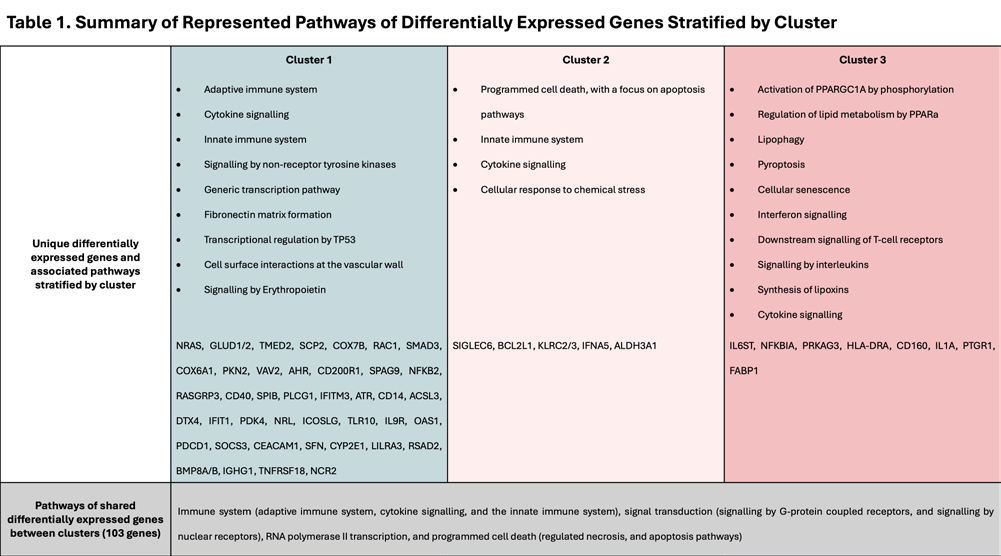
385. Intestinal CD4:CD8 Ratio and Systemic Inflammatory Parameters in Suppressed HIV-1 Infection
Poster Abstracts
Page: 86
Francesca Cossarini, Pablo Canales-Herrerias, Divya Jha, Michael Tankelevich, Alexandra E. Livanos, Saurabh Mehandru
Background
With successful antiretroviral therapy (ART), while peripheral CD4+ T cells may reconstitute in most people with HIV (PWH), CD8+ T cells often remain elevated. The resulting inversion of CD4:CD8 ratio (<1) is associated with adverse clinical outcomes including non-AIDS malignancies and cardiovascular disease. The gut-associated lymphoid tissue (GALT) endures significant CD4+ T cell depletion starting during acute HIV infection. Here we determined the heterogeneity in CD4:CD8 ratio in a well-characterized cohort of PWH and investigated the predictors of intestinal CD4:CD8 ratio reconstitution (CD4:CD8>1) and its impact on systemic inflammation.
Methods
We enrolled 52 PWH on ART and with peripheral HIV-RNA<20 copies/ ml, as well as 37 HIV-negative controls (HIV-NC) who underwent colonoscopy. T-cell subsets were analyzed via multiparameter flow cytometry. Peripheral inflammatory cytokines with a multiplexed proteomic inflammation panel (Olink®). Descriptive statistics are expressed as n(%) or Median(interquartile range (IQR)) as appropriate. Comparisons were performed with Mann-Whitney U test or Spearman correlation as appropriate. Multiple logistic regression was used to estimate odds ratio (OR).
Results
Overall, PWH had a lower CD4:CD8 ratio both in the peripheral blood [0.8 (0.5 – 1.28) vs 2.05 (1.6 – 3.7) p<0.001] and in the colon [0.9 (0.6-1.4 vs 1.7 (1.2-2.9)), p<0.0001] compared to HIV-NC. Among PWH, 26 (50%) individuals had colonic CD4:CD8 >1. This subset of PWH were more likely female (62% vs 38%, p=0.0158), diagnosed with HIV for a longer time [31 (18-32) vs 19(10-24) years, p=0.0347] have longer duration of most recent viral suppression [7(4-12) vs 4(2-8)years, p=0.0365] higher CD4+ T cells at enrollment [607 (453 – 947) vs 462 (294 – 664) p= 0.0262] and higher CD4+ T cell nadir [200 (92 – 306) vs 162 (39- 193)]. Multiple logistic regression showed that duration of HIV infection [OR 1.13 (95% C.I. 1.02-1.3)] and CD4= T cell nadir[OR 1.01 (95% C.I. 1.001-1.016)] were associated with colonic CD4:CD8 >1. Colonic CD4:CD8 ratio partially correlated with the peripheral blood CD4:CD8 ratio (r=0.274, p=0.068) and with the pro-inflammatory cytokines IL-20 (r= -0.413, p=0.036) and SLAMF-1 (r= -0.329, p=0.074).
Conclusions
In PWH, CD4:CD8 ratio<1 is associated with persistent elevation of inflammatory parameters. Nadir CD4+ T cells and longer duration of HIV infection are the best predictors of normalization of intestinal CD4:CD8 ratio.
386. Living With HIV Mimics the Pro-Inflammatory FUT2 Non-Secretor Phenotype in the Intestines
Poster Abstracts
Page: 86
Leila B. Giron1, Maliha W. Shaikh2, Shivanjali Shankaran2, Phillip A. Engen2, Michelle Villanueva2, Ceylan E. Tanes3, Kyle Bittinger3, Alan Landay4, Michael J. Corley5, Ali Keshavarzian2, Mohamed Abdel-Mohsen1
Background
The genetic FUT2 non-secretor status is phenotypically characterized by low levels of the glycan α1,2 fucose. Fucose in the intestines plays a crucial role in maintaining homeostasis between the gut and its microbiota, and loss of fucose can impair intestinal function and promote inflammation. While intestinal dysfunction and inflammation are well-documented in people with HIV (PWH), the potential link between the non-secretor genotype or phenotype and these pathological features remains unclear.
Methods
Ileum and colon biopsies, along with fecal samples, were collected from 25 PWH on antiretroviral therapy and 23 matched controls without HIV. Secretor genotype (based on rs516246 SNP) and FUT2 expression were determined by qPCR. Fucose levels in the ileum and colon were measured using a lectin array. Intestinal permeability was assessed by evaluating tight junction protein (ZO-1 and Occludin) expression through immunohistochemistry. Plasma markers of microbial translocation and inflammation were measured using multiplex arrays. Biological aging in the ileum, colon, and blood was assessed via epigenetic aging clocks. Fecal microbiota composition was analyzed using 16S rRNA sequencing.
Results
There was no difference in the frequency of the non-secretor genetic status between PWH and controls (p=0.3) or in FUT2 expression in the ileum or colon (p>0.5). However, phenotypically, α1,2 fucose levels were significantly reduced in the ileum (p<0.001; Fig. A) and colon (p=0.002) of PWH than controls. Lower fucose correlated (p<0.05) with increased intestinal permeability, elevated markers of microbial translocation (including Zonulin, LBP, sCD14), higher inflammatory markers (including CXCL9), and accelerated biological aging, as measured by the DunedinPACE and Horvath epigenetic clocks (Fig. B). Finally, lower fucose levels were linked to a dysbiotic microbiota, characterized by increased pro-inflammatory bacteria and reduced beneficial short-chain fatty acid producing bacteria (p<0.05).
Conclusions
Despite being genetically classified as secretors, PWH exhibit a non-secretor phenotype in their intestines, characterized by reduced levels of the anti-inflammatory fucose. This phenotype is associated with disrupted microbiota, compromised intestinal integrity, heightened inflammation, and accelerated biological aging. Understanding the mechanisms underlying this phenotype and its consequences may pave the way for developing novel strategies to prevent inflammation-associated comorbidities in PWH.
The figure, table, or graphic for this abstract has been removed.
387. Ultra-Low Level Soluble p24 Is Associated With Inflammation in People With HIV on Suppressive ART
Poster Abstracts
Page: 87
Matteo Augello, Alessandra Mingione, Valeria Bono, Roberta Rovito, Camilla Tincati, Filippo Martinelli Boneschi, Giulia Marchetti
Background
Despite suppressive ART, residual inflammation persists in people with HIV (PWH), thus driving higher risk of SNAEs and mortality. Circulating HIV proteins have been detected in some suppressed PWH, as an expression of the persistence of translation-competent proviruses. We therefore seek to investigate whether peripheral inflammation and mortality risk are associated with production of p24 in PWH on suppressive ART.
Methods
PWH on suppressive ART (HIV-RNA <20 cp/mL) and age/sex-matched healthy controls without HIV were enrolled. We cross-sectionally measured ultra-low level serum p24 (Simoa), 12 plasma markers of inflammaging (IP-10/TNF-α/IL-2/IL-4/IL-17A/IL-6/IL-8/sCD14/sCD163/TIMP-1/ GDF-15/ROMO-1) [Luminex], and activated (CD38+) CD8+ T-cells (flow cytometry). Mortality risk was estimated by VACS Index 2.0. Mann-Whitney test and linear regression were used for analysis.
Results
120 PWH and 20 controls were recruited. PWH (83.3% males) had a median age of 54 (IQR 47–59) years. They were on ART for 10 (6–19) years, with a current CD4 T-cell count of 725 (504–908) cells/μL. Compared to controls, PWH showed higher IP-10/TNF-α/IL-17A/IL-8/sCD14/ sCD163/TIMP-1/GDF-15. VACS Index 2.0 was positively associated with IP-10/TNF-α/sCD14/sCD163/TIMP-1/GDF-15/CD8+CD38+. Yet, by fitting a multivariable regression model including all these seven markers, only IP-10, GDF-15 and CD8+CD38+ confirmed independently associated with VACS Index 2.0. By setting the p24 positivity cut-off at 0.025 pg/mL based on the mean+3SD of controls, 25 (20.8%) PWH had detectable p24 (median 0.0516 pg/mL; range 0.0264–0.8280 pg/mL) (Fig.1A). When assessing inflammaging markers in PWH according to p24 detectability, p24+ PWH showed significantly higher IP-10 levels. Accordingly, soluble p24 was positively associated with IP-10 at both univariable and multivariable (adjusted for sex, age, CD4 T-cell count, ART duration) regression analysis (Fig.1B). Conversely, no association was found between soluble p24 and CD38+CD8+ T-cells.
Conclusions
Despite long-term suppressive ART, ultra-low level soluble p24 is detectable in ~20% PWH and associated with higher circulating IP-10, a pro-inflammatory chemokine involved in the recruitment of innate and adaptive immune cells into sites of inflammation. Given the positive association between IP-10 and VACS Index 2.0, a measure of physiologic frailty and risk of death, these data suggest that p24-driven inflammation may contribute to SNAEs and mortality in virologically-suppressed PWH.
The figure, table, or graphic for this abstract has been removed.
388. Inflammatory and Microbial Signatures Linked to Cardiovascular Outcomes in People With/Without HIV
Poster Abstracts
Page: 87
Rachel MacCann1, Gurvin Saini1, Jesvin Xavier1, Alejandro Abner Garcia Leon1, Manon Vanbellinghen2, Neeltje Koostra2, Junhui Li3, Padraig McGettrick1, Alan Landay4, Aoife Cotter1, Alan Winston5, Peter Reiss2, Paul W. O'Toole1, Sabin Caroline6, Mallon W. G. Paddy1
Background
Chronic inflammation in people with HIV (PWH) is linked to cardiovascular disease (CVD). We previously described distinct inflammatory clusters from 24 biomarkers that were associated with CVD. We aimed to validate these results in an independent cohort and assess whether additional biomarkers or gut microbiome signatures could enhance CVD prediction in PWH.
Methods
In plasma from people with and without HIV from three international cohorts we measured 55 biomarkers by quantitative immunoassays. Principal component analysis (PCA) and hierarchical clustering (HC) was performed on the original 24 biomarkers and a recursive feature addition (RFA) model used to assess the stepwise addition of 31 additional biomarkers, selecting those that enhanced the model for repeat PCA and HC. Stool microbiome was analysed by 16S rRNA sequencing, with differentially abundant species identified by Analysis of Compositions of Microbiomes with Bias Correction (ANCOM-BC) and correlated to biomarkers using Spearman correlation. Multinomial logistic regression explored associations between clusters and CVD outcomes. Data are median (IQR) unless stated.
Results
We included 408 participants (age 50 (43–58) years; 83% male; 68% White; 78% PWH). Consistent with previous studies, initial PCA of 24 biomarkers again revealed 3 clusters, with cluster 3 (n= 41) showing elevated markers of inflammation (IL1-β, IL-6, TNF-α), immune regulation (TSLP, MIP1-α), and T-cell differentiation (IL2, IL12, IFN-γ). Cluster 3 participants were older (51 (47-55) years), had higher BMI (27.5 (24.4–29.2)kg/m2), higher triglycerides (1.98 (1.23-2.62) mmol/L), and higher CVD prevalence (n= 6 (39%)). After RFA, 13 of the 31 additional biomarkers enhanced the PCA, with cluster 3 now including GM-CSF, IFN-α2a, TGF-α, and Thrombopoietin, with a stronger CVD association (OR: 2.13 (95% CI: 1.03, 4.4), p= 0.04). In cluster 3, ANCOM-BC revealed 5 enriched and 7 depleted microbial species . Within cluster 3, IFN-l2, MIP-1 α, MCP-1, CD40-ligand and TGF-α all correlated with depletion of short-chain fatty acid-producing species (B. coprocola, B. massiliensis, F. mortiferum, D. invisus, Figure) that are linked to regulation of inflammation and CVD.
Conclusions
This analysis again confirmed distinct inflammatory clusters associated with CVD in an independent cohort of PWH. Clusters enhanced with additional biomarkers better predicted CVD and identified lined gut microbiome signatures linked to CVD.
The figure, table, or graphic for this abstract has been removed.
389. Methamphetamine Use Disorder in ART PWH Is Associated With Elevated NLRP3 Inflammasome Activation
Poster Abstracts
Page: 87
Felipe Ten-Caten1, Fernanda C. Coirada1, Alexander L. Silva-Junior1, Caroline H. Sheikhzadeh2, Sannidhi Sarvadhavabhatla2, Alton Barbehenn2, Poonam Vohra2, Cassandra Yun2, Nitasha A. Kumar2, Paula J. Lum2, Kara L. Lynch2, Steven G. Deeks2, Rafick P. Sekaly1, Sulggi Lee2, Susan P. Ribeiro1
Background
Despite effective antiretroviral therapy (ART), people with HIV (PWH) experience higher morbidity and mortality rates than people without HIV due to ongoing inflammation from persistent HIV. Methamphetamine (MA) use disorder among PWH is linked to lower ART adherence, increased viral resistance and poorer clinical outcomes. We recently demonstrated that MA exposure during ART is associated with increased HIV transcription. Here, we performed single cell analyses to determine signaling pathways by which MA induces immune dysfunction, potentially driving viral transcription in PWH even during ART suppression.
Methods
Longitudinal inguinal lymph node (LN) samples were obtained from 10 ART-suppressed PWH with MA use disorder. Plasma MA concentrations were analyzed in relation to single cell gene (scRNA-seq) in LNs and protein (flow cytometry) expression from PBMCs. Linear regression models were used for comparisons.
Results
MA was associated with significantly higher expression of NLRP3 and IL-1β signaling genes from monocytes, dendritic cells (DCs), and neutrophils. Participants with high plasma concentrations of MA had significant upregulation of “TNF-α signaling via NF-κB” and “Inflammatory response” pathways in DCs, CD8 T cells, NKs, and granulocytes. B and plasma cells demonstrated significant upregulation of the “IFN alpha and gamma responses”. Higher plasma concentrations of MA was also associated to decreased expression of chromatin modifier genes in DCs, monocytes, and plasma cells, consistent with open chromatin state in these cell types. Flow cytometry data from CD4+ T cells demonstrated enhanced chromatin accessibility in participants with high MA concentrations.
Conclusions
Leveraging a unique cohort of PWH on ART with and without MA use disorder, we demonstrate that MA is associated with increased NLRP3 inflammasome activation, potentially driven by epigenetic changes to cell-specific subsets. Additionally, MA was associated with enhanced chromatin accessibility in CD4+ T cells, which, along with increased inflammatory signatures in all immune cell subsets, supports our prior findings that MA induces increased HIV residual transcription. Finally, we demonstrate that MA may induce humoral dysfunction, with clinical implications for decreased antibody responses in this population. These data highlight potential novel mechanisms by which MA may promote immune dysfunction in PWH, with implications for future strategies at reducing co-morbidities in this population.
390. Understanding NLRP3 Inflammasome Activation at the Intersection of HIV and Aging
Poster Abstracts
Page: 88
Heidi Zapata, Shanshan Du, Archit Kumar, Bill Lee, Christopher Radcliffe, Lydia Aoun-Barakat, Sui Tsang, Brent Vanderwyk, Albert Shaw
Background
With long-term survival of people living with HIV (PLH) increased rates of age-related diseases have been observed. Persistent immune activation in PLH and age-related chronic inflammation are hypothesized to be drivers for the development of such diseases. The NLRP3 inflammasome is a multiprotein complex that forms in response to stimulation of pattern recognition receptors by pathogen associated molecular patterns (PAMPs), or by Damage Associated Molecular Patterns (DAMPs). This complex mediates the cleavage of caspase-1, IL-1b and IL-18 to their active forms. Activation of the inflammasome requires a priming step (signal 1) that induces the TLR/NF-kB pathway, and a second step (signal 2), triggered by a PAMP/DAMP and leading to formation of the complex. There is evidence that the development of age-related diseases is related to dysregulated activation of the NLRP3 inflammasome and pathological production of IL-1b. However, significant knowledge gaps in the understanding of human NLRP3 function remain at the interface of HIV and aging.
Methods
We recruited young (21-40) and older (>60 years) HIV-positive and HIV-negative subjects (n=64). Blood was drawn and peripheral blood mononuclear cells were isolated for subsequent experiments.
Results
HIV-positive older subjects have increased inflammasome activation at baseline as demonstrated by higher levels of caspase-1, and higher levels of cleaved IL-1b, and IL-18 (flow cytometry). With LPS stimulation (signal one) we see decreased levels of cleaved IL-1b production via western blot in HIV-positive older adults as compared to HIV-negative older adults and HIV-positive young adults. When LPS stimulation (signal one) is examined via flow cytometry we see increased retention of cleaved IL-1b in the monocytes of HIV-negative young adults compared to HIV-negative and HIV-positive older adults. With signal two we see that HIV-positive older adults have decreased retention of cleaved IL-1b compared to HIV-negative young adults—suggesting differences in Gasdermin signaling. When inflammasome specks are examined (confocal microscopy) we see that HIV-positive older adults have increased number of specks when compared to HIV-negative young adults.
Conclusions
Overall, HIV-positive older adults have increased baseline activation of the inflammasome and subsequently a decreased ability to respond when exposed to PAMPs/DAMPs. The results noted allude to a dysregulation of Gasdermin signaling and inflammasome machinery in HIV-older adults.
391. Ex Vivo Isolation and Characterization of Live, Envelope Expressing, SHIV-Infected CD4 T Cells
Poster Abstracts
Page: 88
Joseph P. Casazza, Joana Dias, Bianca C. Ralph, David R. Ambrozak, Jianfei Hu, Amy Henry, Farida Laboune, Lucio Gama, Stephen D. Schmidt, Timothy S. Johnston, Giulia Fabozzi, Sabrina Helmold Hait, Daniel C. Douek, Richard A. Koup
Background
Fully mature SHIV envelope is transported to the CD4 T cell surface. Therefore, expressed envelope represents a means of identifying live SHIV-infected CD4 T cells.
Methods
CD4 T cells from Fiebig-staged SHIVAD8-EO-infected rhesus macaques were stained using 2 fluorescently labelled broadly neutralizing antibodies previously shown to identify in vitro SHIVAD8-EO-infected rhesus macaque CD4 T cells. SHIV-infected cells from 2 rhesus macaques were index sorted between Fiebig stages 1 and 6. For each animal lymph nodes (LNs) were longitudinally sampled 3 times, and blood was longitudinally sampled 5 times. SHIV infection was confirmed by measurement of single cell SHIV gag-RNA by RT PCR. SmartSeq NGS libraries were prepared, then sequenced using an Illumina NovaSeq 6000. Bcl2fastq2, STAR, Picard and HTSeq were used to demultiplex and map reads, sequence and calculate read number and analyze differentially expression for each gene. Benjamini Hochberg correction was used for multiple comparison correction.
Results
The frequency of SHIV-infected cells in both peripheral blood and LN CD4 T cells, intracellular SHIV RNA copy number and blood viral load all peaked between Fiebig stages 2 and 5, and then decreased in these macaques. During this time the frequency of SHIV infected cells increased in PD1 positive and CD28 dim CD4 T cells and then decreased. Intracellular SHIV RNA was inversely associated with CD3 and CD4 fluorescence intensity. Infection of germinal center CD4 T cells was discordant in these animals. One animal showed no germinal center CD4 SHIV infection, in the other most infection occurred in the germinal center. Envelope staining did not strictly identify SHIV infected CD4 T cells. In some populations the frequency of SHIV RNA in envelope stained CD4 T cells was close to 40%. This allowed the comparison of SHIV-infected and non-infected CD4 T cells in 57 Env+SHIV RNA+ and 80 Env-SHIV RNA- LN CD4 T cells from a single sample. The frequency of SHIV RNA was as high as 5% of the sequenced transcriptome. The frequency of HIV RNA reads increased with CD3 and CD4 down regulation. GSEA analysis suggests G2M arrest and decreased antiviral responses in SHIV-infected CD4 T cells.
Conclusions
Ex vivo isolation of acutely infected SHIV CD4 T cells using surface markers is possible. This enabled the identification of specific subsets of CD4 T cells with greatly increased frequencies of infection, allowing further characterization and transcriptome analysis of SHIV-infected CD4 T cells.
392. Lobule Zone-Dependent Accumulation of Vd1 and Vd2 gd-T Cells in the Livers of SIV+ Infant Macaques
Poster Abstracts
Page: 88
Nina Derby1, Brooke I. Johnson1, Kimberly A. Meyer1, Jeremy V. Smedley2, Don L. Sodora1
Background
Gamma-delta (gd) T cells are enriched in liver and barrier tissues compared to the peripheral blood and aid in the response to gut-derived antigens and tissue homeostasis. They are depleted from the blood during HIV infection, yet what happens to them and the importance of the effect are not well characterized. We hypothesized that gd-T cells may be involved in liver dysfunction during HIV infection.
Methods
Livers from uninfected infant rhesus macaques (SIV-, n=5) and infant macaques chronically infected with SIV (SIV+, n=5) were subjected to GeoMx digital spatial profiling (DSP) to evaluate SIV-associated transcriptional changes within distinct zones of the liver lobule, including changes that indicate enrichment of immune cell populations. Fixed tissue sections were immunostained for periportal (near portal tracts) and pericentral (near central veins) zones. Eighty segments were placed based on immunostaining, profiled using the whole transcriptome atlas and analyzed with linear mixed models, gene set enrichment analysis (GSEA), and mixed cell deconvolution with SpatialDecon algorithm.
Results
DSP identified >100 up and downregulated genes in SIV+ vs SIV-infant macaque livers as well as effects specific to periportal vs. pericentral zones. Genes upregulated in SIV+ livers were associated with inflammation, the type I interferon response and oxidative stress. Deconvolution identified increases in cholangiocytes, liver sinusoidal endothelial cells, non-inflammatory macrophages, and gd-T cells. gd-T cells were the most significantly altered immune cell subset in SIV+ infants. Stress-responsive gd-T cells-1 were increased only periportally while phosphoantigen-responsive gd-T cells-2 were increased periportally and even more so pericentrally. The pericentral zone also experienced strong downregulation of biological oxidation genes (NES -3.68), including those within the glutathione S transferase (eg. GSTP1 (FDR 0.0001)) and cytochrome P450 (eg. CYP39A1 (FDR 1.28E-06)) pathways.
Conclusions
gd-T cells are enriched in the livers of infant macaques infected with SIV and experiencing high viral loads. gd-T cells-1 and gd-T cells-2 are differentially affected by lobule zone, suggesting these subsets may respond to distinct stimuli or exert distinct effects in the SIV+ liver. Ongoing studies are investigating the relationship between accumulation of these cells and other zone-specific transcriptional changes.
393. IL-15, Type I Interferon, Fatty and Amino Acid Pathways Link to SIV Reservoir and Rebound in Infants
Poster Abstracts
Pages: 88-89
Tehillah Chinunga1, Giuliana X. Xavier1, Fernanda R. Bruno1, Felipe Ten-Caten1, Katherine Bricker-Holt2, Ann M. Chahroudi1, Susan P. Ribeiro1
Background
Inflammation persists under antiretroviral therapy (ART) in HIV infection. Soluble mediators of inflammation play major roles in immune function, reservoir persistence and rebound post-analytical treatment interruption (ATI). Interactions between cytokines/chemokines and/or metabolites with reservoir size and viral rebound dynamics are not fully known. We evaluated associations between host and microbial-derived metabolites or cytokines/chemokines and reservoir size on ART and post-ATI viral rebound in a pediatric HIV model.
Methods
Eight infant rhesus macaques (3 male, 5 female) were orally infected with SIVmac251 at 4 weeks of age, initiated on ART 4 weeks after infection, and underwent ATI after 60 weeks of ART. Plasma samples were collected at pre/early ART and late ART for cytokine/chemokine quantification using multiplex assay and untargeted metabolomics by high performance liquid chromatography and mass spectrometry. SIV reservoir was evaluated at late ART, and viral load was quantified post-ATI to determine area under the curve (AUC) of rebound.
Results
Longitudinal metabolite modulation was driven by lipid and amino acid pathways, with pre/early ART segregating from later timepoints. Cytokines clustered into two groups, with similar timepoint delineation. At pre/early ART, IL-15 and fatty acids were negatively associated while non-essential amino acids were positively associated with late ART levels of SIV DNA in CD4+ T cells. Comparing cytokines and metabolites at late ART with SIV DNA at late ART, we found a negative correlation with ITAC and a positive correlation with modified amino acids. Branched-chain amino acids (BCAAs) at late ART were positively associated with viral rebound AUC post-ATI, while a negative association was found between viral rebound AUC and interferons, interferon-induced cytokines/chemokines and IL-7 measured at late ART.
Conclusions
Cytokine modulation of CD4+ T cells and NK/CD8+ T cell effector function may explain the observed associations with reservoir size and viral rebound. While less studied, metabolites also influence immune cells; for example, the non-essential amino acids glycine/serine are associated with T cell proliferation and BCAAs similarly support proliferation of activated T cells. These effects may cause both reservoir expansion and fuel viremia off ART. Validation of a direct role of these pathways and immune modulators in seeding and maintenance of the SIV reservoir could lead to new approaches for HIV cure.
394. Immunometabolic Reprogramming by Caloric Restriction Leads to Protection From SIV in Rhesus Macaques
Poster Abstracts
Page: 89
Naveen Suresh Babu1, Chrysostomos Perdios2, Anna T. Brown2, Celeste Coleman2, Carolina Allers2, Matilda Mostrom2, Lara Doyle-Meyers2, Ricki Colman3, Anne Le4, Pratik Khare4, Clovis Palmer2, Joseph C. Mudd1
Background
Nutrient metabolism influences HIV-1 replication, immunity, and chronic inflammation but is difficult to target therapeutically. We hypothesized that regulating metabolism via caloric restriction (CR), a safe, anti-aging modality with anti-inflammatory effects could improve SIV disease outcome in rhesus macaques (RMs).
Methods
Healthy, non-obese, adult male and female RMs (n=6) were experimentally restricted to consume 30% fewer daily calories than ad-libitum (AL) intake. After 3 months of CR, animals were infected with SIVmac239, left untreated for 28 days, and given ART for 11 months while maintaining CR. Animals were compared to age, gender, and weight-matched AL-fed RMs (n=10). Immune phenotypic profiling by flow, plasma SIV load, and -omic classification of soluble proteins/metabolites in plasma were assessed during acute SIV (14 dpi) and 11 months of ART.
Results
CR was safe, well tolerated, and led to modest reduction in weight and fat/lean mass ratio. CR animals exhibited near log fold reductions in acute phase viremia (AUC) when compared to that of the AL-fed cohort (-0.8log, Fig. A). Viremic control in CR was characterized by more robust memory CD8 T cell proliferative response in lymphoid (p=0.008) and gut tissues (p=0.03). At 11 months of ART, CR animals had lower immune cell infiltration (Fig. B) and reduced levels of HLA-DR+ CD4 (p=0.0013) and CD8 (p=0.008) memory T cells in the colon. This was also associated with lower sCD14 (p=0.0002) and several TNF-related proteins (p=0.002). Of the 376 acute SIV metabolites, LASSO regression revealed a set of 3: Spermidine, ADP, and Glucose-1-phosphate (breakdown product of glycogen and galactose stores) that inversely predicted lower plasma SIV AUC. Indeed, ex vivo glycolytic flux and mTORC1 activity was higher in PBMCs (p=0.009) and memory CD8 T cells of CR animals during acute SIV (p=0.03). During ART, LASSO suggested a central role for glutamine metabolism, with 2-oxoglutarate (TCA intermediate promoting gut enterocyte proliferation), and cysteinylglycine (glutathione-derived antioxidant), as predictive markers of colonic reconstitution.
Conclusions
The data highlight that diet, in regulation of caloric content, can have a significant therapeutic impact on SIV disease outcomes. Pharmacologically reducing caloric intake by mimicking satiety with glucagon-like peptide-1 agonists, which are currently taken by 16 million US adults, warrants further investigation in the context of virologic control and residual inflammation in HIV-1.
The figure, table, or graphic for this abstract has been removed.
395. A New Mouse Model of HIV in Pregnancy: The EcoHIV Pregnancy Model
Poster Abstracts
Page: 89
Michelle M. Ranjbar1, Ingrid Hsieh1, Maud Collomb2, Shreya Dhumé2, Lena Serghides2
Background
Children who are born HIV-exposed but uninfected (HEU) are the fastest growing HIV-affected population, numbering at over 16 million children globally.There is a large gap in our understanding of how in utero exposure to HIV and antiretrovirals influence the development and long-term health of these children. A mouse HIV pregnancy model would greatly facilitate such research. EcoHIV is a chimeric ecotropic HIV virus that has been modified to express the envelope coding region from the murine leukemia virus gp80 instead of gp120 to allow HIV infection in mouse immune cells. EcoHIV infection parallels several major characteristics of HIV in humans including susceptibility to antiretrovirals, induction of anti-viral immune responses, and elevation of inflammatory markers. EcoHIV has not been used in the context of pregnancy before. Here we present a new EcoHIV infection model in a mouse pregnancy model.
Methods
7-week-old C57BL/6 mice were intraperitoneally injected with 2.5x10⁶ pg EcoHIV virus or mock infected with 500uL PBS, and were mated 1 week post infection. Pregnant dams were euthanized on gestational day (GD) 14.5 or 18.5 (N=5/group). Tissue and blood were collected to detect infection through HIV gag expression by qPCR. Fetal and placenta weights, fetal viability and number of resorptions were recorded. mRNA expression of neuroinflammatory markers were assessed in fetal brains (N=24/group) by qPCR. Mann-Whitney test was used for statistical comparisons.
Results
Injection with EcoHIV resulted in 100% maternal infection, confirmed by HIV gag detection in spleen tissue of all dams. No infection was detected in EcoHIV exposed fetuses. EcoHIV infection was associated with significantly lower fetal weights (Figure), lower placenta efficiency, and lower viability rates. TNFa mRNA levels were increased, and mRNA levels of synapsin 1 (SYN1) and synaptophysin (SYP), which are markers of neuronal health, were decreased in brains of EcoHIV exposed fetuses compared to controls (Figure).
Conclusions
The EcoHIV pregnancy model represents the first mouse pregnancy model that includes HIV. In utero EcoHIV exposure was associated with fetal growth restriction and placental insufficiency even in the absence of fetal infection, paralleling clinical findings. Neuroinflammation and neuronal toxicity in EcoHIV exposed uninfected fetuses, may represent a mechanism contributing to neurodevelopmental deficits seen in children who are HEU.
Figure 1.
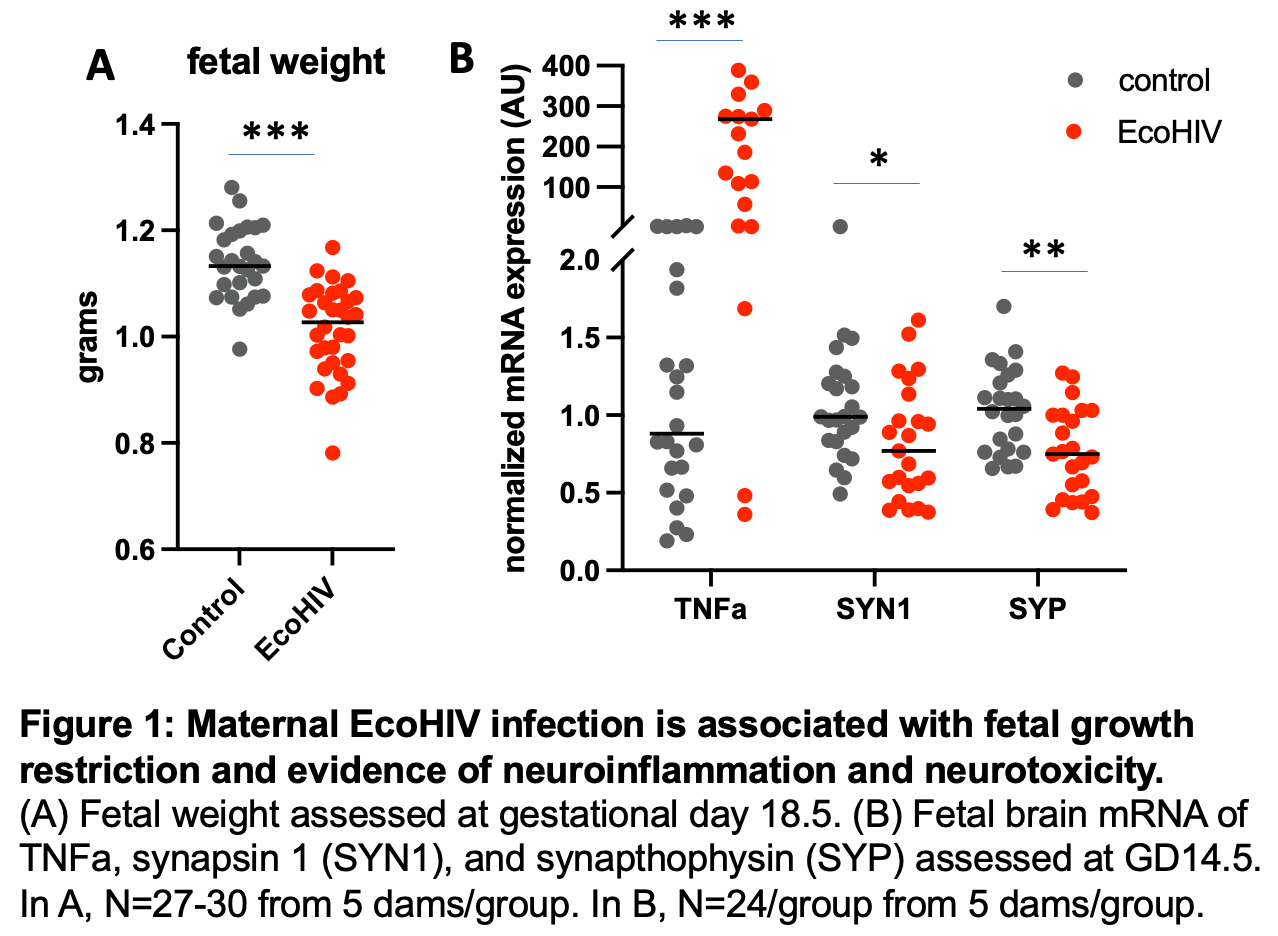
396. Clinical and Immune Characteristics of ART+SIV/P. fragile Infected Macaques With Persistent Viremia
Poster Abstracts
Page: 90
Sydney Nemphos1, Hannah Green1, James Prusak1, Sallie Fell1, Natalie Guy1, Matilda Mostrom1, Coty Tatum1, Kelly Goff1, Nicholas Maness1, Preston Marx1, Carolina Allers1, Brooke Grasperge1, Amitinder Kaur1, Berlin Londono-Renteria2, Jennifer Manuzak1
Background
Despite the efficacy of contemporary antiretroviral therapy (ART) regimens, some people with HIV (PWH) experience persistent low-level viremia (pLLV). pLLV risk factors include poor ART adherence, high viral loads (VLs) pre-ART, and co-infection. Importantly, HIV and malaria, caused by Plasmodium infection, are geographically co-endemic and both pathogens persist in the gastrointestinal (GI) tract. However, how HIV/Plasmodium co-infection influences pLLV is unknown. Furthermore, the impact of pLLV on the GI tract, particularly in the context of co-infection, is poorly understood. Here, we used a rhesus macaque (RM) model of SIV/P. fragile co-infection to characterize clinical and immunological differences between ART-treated RMs that were incomplete virologic responders (IVRs) with pLLV and ART-responders, with the goal of identifying biologic determinants of pLLV in the setting of ART adherence and co-infection.
Methods
Male (n=6) RMs were intravenously (i.v.) inoculated with SIVmac239 (TCID50=50); initiated ART at Week(W) 8 post-SIV infection (p.i.); were i.v. inoculated with P. fragile (20x10^6 infected erythrocytes) at W12 p.i.; and euthanized at W20 p.i. Plasma VL, anemia and peripheral parasitemia were monitored via qPCR, clinical blood counts, and Geimsa-staining, respectively. CD4+ T-cell absolute counts and GI immune cell frequencies were assessed using flow cytometry.
Results
All RMs exhibited clinical signs of malaria post-P. fragile co-infection. Prior to ART VLs were non-significantly higher (P=0.093) and significantly increased post P. fragile co-infection (P=0.034) in IVRs (n=3) as compared to ART-responders (n=3). Absolute CD4+ T-cell counts were similar between IVRs and ART-responders prior to ART, but were non-significantly higher (P=0.069) in IVRs as compared to ART-responders following P. fragile co-infection. In the duodenum, an SIV reservoir and site of P. fragile sequestration, neutrophil frequencies were significantly increased in ART-responders compared to IVRs following P. fragile co-infection (P= 0.046).
Conclusions
IVRs had elevated pre-ART and post-P. fragile VLs, higher CD4+ T cells post-P. fragile, and fewer GI neutrophils post-P. fragile as compared to ART-responders, suggesting an ineffective GI neutrophil response during P. fragile co-infection could influence the viral reservoir and contribute to pLLV during ART-treated SIV infection.
397. Analysis of SIV Envelope Diversity During Untreated Infection
Poster Abstracts
Page: 90
Haoyue Li1, Emily J. Fray1, Vivek Hariharan1, Dan H. Barouch2, Janet M. Siliciano1, Robert F. Siliciano1
Background
Viral diversification complicates immune-based cure strategies. SIV-infected Rhesus macaques (RMs) treated with antiretroviral therapy (ART) provide insights into viral dynamics and reservoir persistence in people with HIV-1. We previously described a shift in the composition of infected cell populations during ART, with recently infected cells harboring mutated proviruses decaying more rapidly, and ancestral variants seeded during early infection becoming more apparent over time (Fray et al, PMID: 36809762). Here we examine env sequences from pre-ART plasma virus to determine the full extent of viral diversification and identify sequence features that may be targeted in cure strategies.
Methods
We used single-genome sequencing (SGS) to collect env sequences from pre-ART plasma from 6 RMs inoculated with SIVmac251 and placed on ART 48 weeks after infection. We analyzed the extent of variation at individual amino acid positions and performed a rarefaction analysis to estimate the number of sequences required to capture the full diversity in a given individual.
Results
800-1400 Env sequences were collected from each animal, providing a comprehensive, longitudinal dataset of viral populations replicating prior to ART within each host. Env mutations became prominent approximately 24 weeks after infection, with accumulation of non-synonymous changes across multiple regions, including the variable loops V1, V2, V4, and V5, and distinct patterns of evolution in individual macaques were observed despite inoculation with a common stock. Even within the V regions, only certain amino acid positions accumulated mutations, whereas others were strikingly conserved, suggesting constraints on viral evolution and adaptation that limit the positions that can tolerate non-synonymous changes. Rarefaction analysis estimated that between >500 sequences are required to adequately sample the env diversity within a single host.
Conclusions
Extensive datasets including pre-ART plasma and on-ART proviral sequences from individual macaques allowed us to estimate the sequencing depth required to accurately estimate the full diversity in a single host. Within each host, we observed both vast diversity and notable conservation in the env gene, likely indicating evolutionary constraints on the env protein structure. These data may be useful to identify potential targets for therapeutic interventions, including personalized vaccine strategies.
398. STLV-1 in Chlorocebus aethiops as a Model for New Approaches to Human Retrovirus Research
Poster Abstracts
Pages: 90-91
Víctor Â. Folgosi1, Liliane A. Carneiro2, Felipe B. Freitas3, Mayara N. Santana da Silva3, Amanda Lopes Silva4, Gerlane N Noronha2, Ariela S. Farias2, Carlos Fernando Apoliano1, Sabri S. Sanabani1, Hebert F. Culler1, Igor Costa3, Luís Alberto de Pádua Covas Lage1, Camila Malta Romano1, Shirley V. Komninakis1, Jorge Casseb1
Background
An estimated 5 to 20 million people worldwide are living with HTLV-1. Even though many of them are asymptomatic, some may develop severe conditions such as adult T-cell leukemia/lymphoma (ATLL). Despite advances in research of this infection, there is a lack of in vivo models to study retrovirus cure approaches. STLV-1 remains poorly understood, particularly in terms of natural history of the disease, genetic diversity, and modes of transmission. The aim of this study was to fill these gaps and characterize STLV-1 infection in a captive population of C. aethiops at the National Primate Center in Belém do Pará, Brazil.
Methods
Blood samples were collected from 52 C. aethiops maintained in captivity, in early 2024. Serologic analysis for HTLV-1 antibodies was performed by Western blotting. STLV-1 provirus was analyzed by PCR of the LTR and tax genes, followed by genetic and phylogenetic analysis of the sequenced fragments. Clinical and hematological parameters, such as physical characteristics and white blood cell counts, were evaluated to assess immunologic effects.
Results
Of the 52 specimens, seven (13.4%) tested positive for STLV-1 infection by Western Blot. The LTR regions were amplified and sequenced for all animals. The phylogeny confirms that the viruses sampled from C. aethiops cluster with other STLV-1 strains, but form a distinct subgroup from those previously described in other primate isolates. Hematological analysis indicated a significantly increased number of white blood cells and lymphocytes in STLV-1+ samples (p = 0.009 and p = 0.039), suggesting the characteristic immortalization of these cells. We did not observe significant differences in terms of weight, mucosal alterations, lymphadenopathy, or palpation examinations. However, STLV-1+ specimens exhibited a predisposition to cutaneous dehydration (p = 0.050). In females, a p-value (p = 0.046) suggests a higher risk of STLV-1 infection, similar to that observed in humans. Crucially, atypical lymphocytes, the so-called "flower cells", typically seen in humans with HTLV-1, were present in all STLV-1+ specimens (figure 1).
Conclusions
Considering the great similarities in clinical and hematologic manifestations as well as the common natural course of infection and mechanisms of horizontal transmission with HTLV-1, our results suggest that STLV-1 can be used as a promising tool to validate or develop novel therapeutic or preventive strategies and represents a valuable resource for the evaluation of new antiviral drugs.
Figure 1.
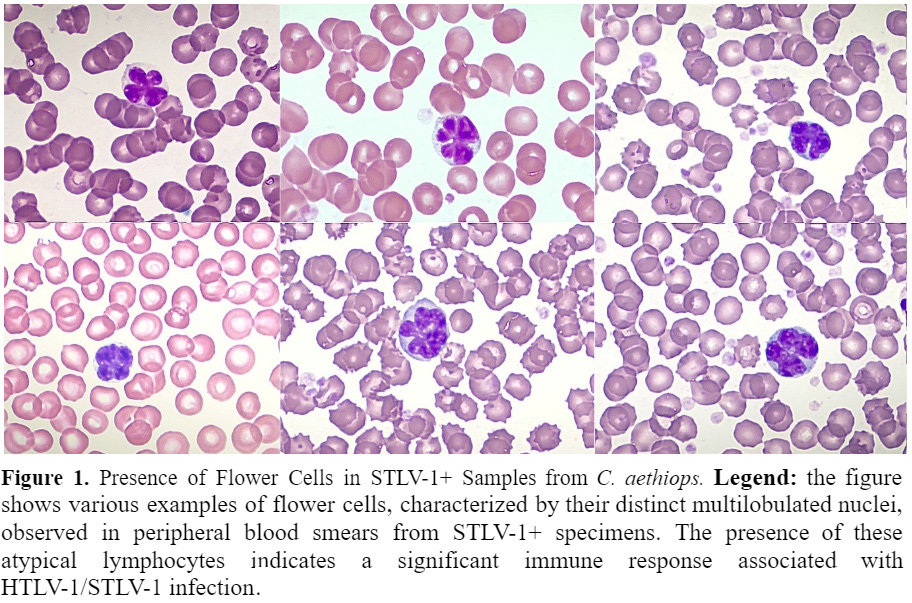
399. WITHDRAWN
Poster Abstracts
Page: 91
400. Duration of Viremia Modulates Antigen Sensitivity of HIV-Specific T-Cell Receptors
Poster Abstracts
Page: 91
Funsho Ogunshola1, Nishant K. Singh2, Vincent Butty2, Anurag R. Mishra1, Liza Vecchiarello1, Kate B. Juergens1, Zacharia Habte1, Alicja Piechocka-Trocha1, Kavidha Reddy3, Brandon J. Dekosky1, Gaurav D. Gaiha1, Krista Dong1, Thumbi Ndung'u3, Michael Birnbaum2, Bruce Walker1
Background
Virus-specific CD8+ T cells are important for controlling chronic viral infections such as HIV. However, it remains unclear how the cumulative duration of antigen exposure following acute infection before complete viral suppression via ART impacts the quality of the memory T cell repertoire. In this study, we investigated this relationship to better understand how antigen exposure duration influences the evolution of HIV-specific T cell receptors (TCRs).
Methods
This study included twelve female participants from the FRESH (Females Rising Through Education, Support, and Health) cohort, all of whom were identified in Fiebig stage I/II and had the protective HLA-B58:01 genotype and well-defined periods of detectable viremia before ART-mediated suppression. We defined the autologous HLA-B*58:01-epitope sequences and then used barcoded tetramer labeling to FACS-sort HIV-reactive T cells. Targeted V(D)J and CITE-Seq enrichment was performed using 10X Genomics, with data processed through Cell Ranger and Seurat. Statistical analyses, including dot plots, non-parametric correlations (Spearman), and Mann-Whitney U tests, were conducted using GraphPad Prism 8.0. All subjects were evaluated following complete viral suppression to define the T cell repertoire.
Results
We observed variability in T cell responses to HIV epitopes restricted by the HLA-B*58:01 allele during the acute phase of HIV-1 infection, with minimal detectable ex-vivo responses in individuals treated earliest during the acute phase. In each case, the immunodominant autologous epitope generated in participants was capable of stabilizing HLA-B*58:01 surface expression. Following complete suppression of viremia with ART, analysis of peripheral blood mononuclear cells revealed a significant enrichment of high-avidity HIV-specific TCRs in individuals with limited antigen exposure compared to those with prolonged exposure (p<0.0001). This enrichment was consistent across three immunodominant epitopes restricted by the HLA-B*58:01 allele. Importantly, these high-avidity TCRs were not enriched for specific V gene usage and demonstrated enhanced antigen sensitivity.
Conclusions
Our findings highlight the critical role of antigen exposure duration prior to ART-mediated viral suppression in shaping the avidity of virus-specific T cells. These insights are important for developing strategies to enhance immune responses against HIV-1 through vaccination and other therapeutic interventions, advancing efforts toward a functional cure for HIV.
401. Low Post-ART SIV Viral Load Set Point Associated With Enhanced Lymph Node CD8+ T-Cell Proliferation
Poster Abstracts
Page: 91
Gina Borgo1, George Gruenhagen1, Benjamin Bimber2, Shayleen Singh1, Steven G. Deeks1, Louis Picker2, Afam Okoye2, Rachel Rutishauser1
Background
Identifying immunologic features that correlate with control of HIV/SIV after antiretroviral therapy (ART) is stopped will inform the design of improved curative strategies for HIV. Here, we characterized features of lymph node (LN) CD8+ T cells in a cohort of 10 rhesus macaques infected i.v. with SIVmac239 that achieved a range of SIV plasma viral load (pVL) set points after analytic treatment interruption (ATI; range 65-225,000 c/mL).
Methods
To identify CD8+ T cell features that correlate with subsequent post-ATI pVL set point, we performed spectral flow cytometry including SIV-specific class I tetramers on peripheral LN mononuclear cells collected pre-ATI, and at 7/8 and 15 days post-ATI (median pVL 32 and 10,600 c/mL, respectively). We also performed single cell RNA/TCR (scRNA/TCRseq) sequencing on sorted total live LN cells from a subset of animals.
Results
Prior to stopping ART, animals with low pVL set points had a higher frequency of cycling (Ki67+) CD8+ T cells within the central memory (Tcm: CD95+CD28+CCR7+), transitional memory (Ttm: CD95+CD28+CCR7-), and follicular-like (CXCR5+PD-1+) subsets (10.4% vs 6.1% p=0.01, 7.2% vs 4.7% p=0.02, and 7.5% vs 4.0% p=0.01, respectively). Low pVL set point also correlated with a higher frequency of TCF-1+ Ttm pre-ATI (Spearman’s r=-0.77, p=0.01). After treatment interruption, the frequency of Ki67+ Tcm at d7/8 post-ATI was negatively correlated with the level of SIV RNA measured in the same LN (r=-0.83, p=0.02). By scRNA/TCRseq, animals that achieved low pVL set points had a higher frequency of naïve/early memory CD4+ and CD8+ T cells post-ATI, as well as a higher frequency of an effector-like cluster of CD8+ T cells expressing CCL5, CTSW, GZMM, GZMK, and NKG7 at d7/8 post-ATI.
Conclusions
We found that animals with lower post-ATI pVL set points both start out with and then continue to maintain into early rebound a larger fraction of actively cycling CD8+ T cells in the LN.
402. The Soft Escape: HIV Alters Host Cell Cytoskeleton as a Mechanism of Resistance to CTL Killing
Poster Abstracts
Page: 92
Louise Leyre1, Farah Mustapha2, Esther Lee1, Alberto Herrera1, Paul Zumbo1, Doron Betel1, Michael Galiano2, Nada Wahman2, Morgan Huse2, R. Brad Jones1
Background
HIV latency enables viral persistence during ART, but CTL pressure continues to shape the HIV reservoir. CD4+ T-cells exhibit varying susceptibilities to CTL attack, potentially leading to the selection of CTL-resistant HIV reservoir-harboring cells. Effective CTL-mediated killing requires the formation of an immune synapse through biophysical forces, with CTLs being more efficient at eliminating stiffer targets. HIV-Nef manipulates the host cell cytoskeleton, potentially influencing cell stiffness. Our research focuses on how cell-intrinsic heterogeneity in HIV-infected CD4+ T-cell stiffness affects susceptibility to CTLs, and the role of Nef in this process.
Methods
Central memory CD4+ T cells (Tcm) were infected with WT-JRCSF, DNef-JRCSF or TW10esc-JRCSF (CTL escape mutant) and exposed to HIV-Gag-TW10-specific CTL clones. Surviving HIV-Env+ cells were sorted and analyzed for membrane tension and stiffness using optical tweezers (OT) and atomic force microscopy (AFM). Flow cytometry assessed killing efficiency, while confocal microscopy imaged actin. Two additional mutants, NefDPAK2-JRCSF and NefDMHCI-JRCSF, were studied to differentiate Nef's effects on cytoskeleton versus MHC-I downregulation.
Results
Without CTL, WT, DNef, and TW10esc-infected Tcm showed similar levels of membrane tension, but WT-infected cells exhibited significantly lower stiffness and F-actin levels compared to DNef. After CTL coculture, WT 'survivors' displayed lower membrane tension (83pN vs 129pN and 132pN; n=75, 2-donors) and stiffness (767Pa vs 1047Pa and 1233Pa; n=92, 2-donors) compared to TW10esc 'bystanders' and DNef survivors. NefDPAK2 (cytoskeleton interaction mutant) and NefDMHCI (MHC-I interaction mutant) -infected cells, were both much more susceptible to killing than WT. NefDMHCI survivors resembled WT survivors in low membrane tension (80pN vs 83pN; n=52, 2-donors) and stiffness (867Pa vs 767Pa; n=77, 2-donors), while NefDPAK2 survivors resembled Nef survivors (1154Pa vs 1233Pa; n=82, 2-donors), showing no evident selection.
Conclusions
Our findings reveal a collaboration between host-cell biophysical heterogeneity and HIV-Nef in promoting immunevasion. Nef reduces infected CD4+ T-cell stiffness by altering the cytoskeleton, allowing the softest cells to evade CTL-mediated killing. Therapeutics targeting cell stiffness, either by inhibiting Nef's cytoskeletal effects or modulating host factors, may enhance elimination of CTL-resistant infected cells.
The figure, table, or graphic for this abstract has been removed.
403. CD8+ T-Cell Function During ART Is Associated With Provirus Suppression and Reduced Viral Rebound
Poster Abstracts
Page: 92
David R. Collins1, Mpho Olatotse1, Tyler Lilie2, Xianbao He3, Emanuele Mazzola4, Manish Sagar3, Bruce Walker1, Athe Tsibris2
Background
Antiretroviral therapy (ART) typically fails to restore the ability of HIV-specific memory CD8+ T cells to mount secondary cytotoxic effector responses upon antigen re-encounter, which may contribute to the poor control of rebound viremia observed in most individuals upon analytical treatment interruption (ATI). Dysfunctional HIV-specific CD8+ T cells occasionally become functionally rejuvenated after prolonged ART, but their impact on viral persistence remains unclear. We hypothesized that targeting of autologous provirus by highly functional CD8+ T cells may contribute to containment of HIV reservoirs during ART and control of rebound viremia during ATI.
Methods
We functionally mapped HIV-1 epitope-specific CD8+ T cell responses in 60 participants treated with ART for a median of 20 years using paired immunospot and proliferation assays. HIV-specific CD8+ T cell frequency, phenotype, recognition of autologous proviral epitopes, and ability to generate secondary cytotoxic effectors were assessed using flow cytometric assays. Total and intact HIV-1 DNA and cell-associated RNA (caRNA) were quantified. ATI with weekly monitoring of viremia and biweekly monitoring of HIV-specific CD8+ T cell responses was performed in one participant.
Results
In most participants, HIV-specific CD8+ T cells were poorly responsive to antigenic stimulation; however, 11 epitope-specific responses (5%) from 10 participants (17%) exhibited exceptional cytotoxic recall against autologous proviral epitopes. During ART, these participants harbored 2.5-fold lower median HIV DNA (p=0.05) and 8-fold lower median caRNA (p=0.03) than those with poor functionality. In the sole ATI participant, viremia rebounded after 4 weeks followed by a rapid decline in viral load before ART re-initiation. This decline was concurrent with recall expansion of immunodominant HLA-B*44-restricted Gag-specific T cells to more than 11% of total CD8+ T cells, a 59-fold increase in the proliferation marker Ki-67, and a 21-fold increase in co-expression of the cytotoxic effector proteins perforin and granzyme B among epitope-specific cells.
Conclusions
Highly functional, non-escaped HIV-specific memory CD8+ T cells during prolonged ART are infrequently observed but may contribute to suppression of persistent HIV reservoirs and of recrudescent viremia. Strategies to elicit cellular immune memory capable of robust cytotoxic recall against autologous proviral epitopes may hold promise toward achieving durable ART-free HIV remission.
404. TCR Convergence in HIV Controllers: Insights Into Natural Viral Suppression
Poster Abstracts
Page: 92
Alexandra Vujkovic1, Philipp A. Adams2, Kadrie Ramadan1, Nicky de Vrij1, Vincent Van Deuren3, Alexander Pasternak4, Maartje Vanfrankenhuijsen1, Wim Adriaensen1, Benson Ogunjimi3, Guido Vanham3, Kris Laukens3, Pieter Meysman3, Koen Vercauteren1, the PhenoCure Study Group
Background
HIV controllers are rare individuals who suppress viral replication without antiretroviral therapy (ART). We hypothesized that this might partly be driven by T-cell receptor (TCR) convergence, a phenomenon where different DNA sequences encode identical amino acids. TCR convergence may indicate antigen-driven selection, reflecting a more focused immune response. This study applies a novel method to calculate TCR convergence and its potential role in HIV control.
Methods
TCR RNA sequencing was performed on four subsets of CD8+ T-cells: naive, central memory (CM), effector memory (EM), and effector memory cells re-expressing CD45RA (TEMRA). Sample selection included 32 HIV-infected individuals (22 HIV controllers; 10 ART-treated) and 20 HIV-negative healthy donors (HDs). Sequencing reads from ~50,000 cells/subset were annotated using MiXCR. TCR diversity was expressed as Shannon diversity. TCR convergence scores were calculated by comparing TCR repertoires of HIV positive and HIV negative donors using an in-house method. Viral specificity was assessed using Immunewatch Detect (IMWD) and TCRs derived from a Gag activation assay in HIV controllers (n=14/22) and ART-treated individuals (n=7/10).
Results
HIV controllers, just as HDs, had a higher percentage of naive CD8+ T-cells compared to ART-treated individuals (p<0.01). TCR diversity was highest in naive subsets and declined through CM, EM, and TEMRA subsets across all groups. HDs showed greater TCR diversity in the TEMRA subset compared to ART-treated individuals (p<0.01), with no significant differences between HDs and controllers. Controllers displayed HIV-specific TCRs with high convergence scores, mainly in the EM subset. Clusters of Gag-associated TCRs were present in the convergent memory repertoires of controllers at a higher rate than in ART-treated individuals or HDs (p<0.001). About 75% of highly convergent HIV-specific TCRs in controllers were linked to the HIV Gag KRWIIMFLNK epitope, that has previously been associated with HIV control, validating the performance/ accuracy of our method to identify control-associated TCRs.
Conclusions
HIV controllers exhibit distinct TCR specificity, primarily in the EM subset. Our TCR convergence-based method identified control-associated TCRs. The heightened convergent TCR specificity toward control-associated HIV epitopes suggests a more efficient, antigen-driven, and targeted immune response. This novel approach produced valuable insights into immune mechanisms underlying HIV control.
405. Robust CD8+ T-Cell Proliferation and Stem-Like Memory Phenotype Linked to HIV Post-Treatment Control
Poster Abstracts
Page: 93
Charles Crain1, Behzad Etemad2, Prerana Shrestha2, Steven G. Deeks3, Jonathan Li2, Rachel Rutishauser3, Gaurav D. Gaiha1
Background
Post-treatment controllers (PTCs) of HIV control viremia to low or undetectable levels following discontinuation of ART. Previous studies have suggested a lack of association between ex vivo HIV-specific CD8+ T cell responses and post-treatment control. Here we extended beyond ex vivo evaluations to assess the proliferative capacity of HIV-specific CD8+ T cell responses in PTCs and the immune phenotypes of these responses.
Methods
We evaluated HIV-specific CD8+ T cell responses of 6 PTCs, in comparison to 6 previously ART-treated spontaneous controllers (TCs) and 11 non-controllers (NCs), both pre- and post-treatment interruption (TI). Both PTC and TC were defined as having plasma viral loads <10,000 copies/mL for at least 52 weeks post-TI, with TC additionally having a viral load <10,000 copies/ mL at the time of ART initiation. PBMC from each participant were stimulated with overlapping peptide pools to the HIV proteins Gag, Pol, Nef, and Env in two stimulation conditions – a short 6-hour stimulation to identify ex vivo reactive T cells (pre-expansion) and a similar 6-hour restimulation following a 6-day stimulation to identify expanded antigen-specific cells. Samples were analyzed by surface/intracellular cytokine staining and flow cytometry. HIV-specific CD8+ T cells were identified as those double-positive for interferon (IFN)-γ and CD107a.
Results
As with prior studies, there was no significant difference in the frequency of ex vivo pre-expansion HIV-specific CD8+ T cells between the three groups post-TI. However, evaluation of proliferative capacity revealed a significant and marked fold-expansion of HIV-specific cells in PTC following 6-day peptide stimulation compared to NC (P<0.01). Phenotypic analysis of pre-expansion HIV-specific CD8+ T cells revealed that PTC had a significantly higher proportion expressing the stem-like memory markers TCF1 and CD127 than NC (P<0.05). Conversely, HIV-specific CD8+ T cells from NC had higher expression of TOX as well as the inhibitory receptor PD-1 (P<0.01 and P<0.05). Notably, NC also displayed this exhausted HIV-specific CD8+ T cell phenotype pre-TI while ART-suppressed.
Conclusions
HIV-specific CD8+ T cells from PTC demonstrated enhanced proliferative capacity and exhibited a stem-like memory phenotype, whereas NC had responses characterized by immune exhaustion. These findings establish key correlates of post-treatment control which can be leveraged as biomarkers to evaluate therapeutic vaccines and immunotherapies for HIV cure.
406. HIV-Infection Does Not Generally Confer Higher Resistance to CTL-Mediated Lysis
Poster Abstracts
Page: 93
Niklas Bachmann1, Bailey Kim2, Steven G. Deeks3, Robert F. Siliciano1
Background
While current antiretroviral treatment regimens can reliably prevent new infection events in people living with HIV (PLWH), they cannot actively eliminate the persistent population of CD4 T cells harboring intact provirus that can give rise to viral rebound if treatment is interrupted. Various approaches to HIV cure rely on the elimination of this reservoir through cytotoxic T lymphocytes (CTLs). However, some studies have suggested that HIV-infection might confer some level of intrinsic resistance to CTL-mediated lysis through various mechanisms such as the upregulation of anti-apoptotic factors. Here, we show that the rate of lysis did not differ between primary CD4 T cells that are uninfected, harboring intact HIV provirus, or actively expressing an HIV reporter construct.
Methods
We performed co-culture killing assays using either primary CD4+ T cells of 7 aviremic PLWH or healthy donor CD4+ T cells that were spinoculated with different NL4-3 HIV GFP-reporter constructs, with autologous CD8+ T cells and CTL-engaging single-chain diabodies specific for a exogenous peptides in the context of HLA-A2 or HLA-E. CD4+ T cells were converted into target cells by pulsing them with saturating concentrations of the respective peptides. Following the co-culture, killing was assessed via flow cytometry. The frequency of HIV-infected cells before and after the co-culture was determined using the intact proviral DNA assay in the case of primary cells from PLWH, or by quantifying the frequency of GFP+ reporter cells for spinoculated CD4 T cells.
Results
In 6 of the 7 study participants, we did not see any enrichment for cells harboring intact provirus over the course of the co-culture. When testing healthy donor cells expressing NL4-3 reporter virus using an HLA-A2 antigen, we saw nef-dependent enrichment for actively infected cells. Surface HLA staining showed that in cells infected with nef-sufficient virus, HLA-A2, but not HLA-E, is downregulated. When we repeated the assay using an HLA-E antigen, GFP+ and GFP- cells were eliminated at the same rate for all three viral reporter constructs.
Conclusions
Our findings indicate that HIV-infection does not generally render CD4 T cells more resistant to CTL-mediated lysis. While some immune escape mechanisms, such as the downregulation of classical MHC class I molecules, can lower the antigen availability and therefore limit recognition by specific CTL clones, this does not affect their susceptibility to cell death.
407. HIV-Specific T and Humoral Response: Data From the First Pediatric Combined Therapeutic Vaccine Trial
Poster Abstracts
Page: 93
Arianna Rotili1, Chiara Pighi2, Giulio Olivieri2, Alessia Neri1, Sarah Moreland3, Elena Morrocchi1, Ellen Turk3, Shaun Barnabas4, Mark Cotton4, Mark de Souza5, Hans Spiegel6, Nicola Cotugno2, Merlin Robb7, Paolo Palma2, the HVRRICANE Study Group
Background
Therapeutic vaccines offer a promising approach to decrease HIV reservoirs, enhance immunity and enable ART-free remission. This study characterizes HIV-specific T and humoral responses following prime-boost vaccination of the HVRRICANE trial: HIVIS DNA and MVA-CMDR vaccines ± the TLR4 agonist with Cervarix HPV vaccine co-administration.
Methods
HVRRICANE enrolled 25 South African adolescents with perinatal HIV, virally suppressed (VL<200 copies/ml) on ART since 6 mo of age. The trial design is in Fig 1. Comprehensive evaluations included viral reservoirs and immunogenicity assements. HIV-specific T cells were longitudinally tested by IFN-γ/IL-2 Fluorospot assays, stimulating thawed PBMCs with GAG or ENV peptide pools. Activation Induced Molecules (AIM)/Intracellular Cytokine Staining (ICS) assays complemented these analyses, along with Western Blot (WB) serology for Abs against 10 HIV-1 antigens.
Results
Overall, we observed a sustained rise in HIV-specific T cell responses following vaccination, which remained high over time. At wk60, IFN-γ, IL-2 and combined IFN-γ/IL-2 responses to GAG and ENV stimulation increased from baseline (wk0). Comparisons among all time points within arms showed that in Arm 2, IL-2, IFN-γ and poly-functional T cells increased during the vaccination in response to GAG (p=0.0486, p=0.0057, p=0.0477). Arm 2 also exhibited higher IFN-γ production response to ENV (p=0.0012). Comparisons at each time point between arms revealed significant differences in IFN-γ response to GAG and ENV at wk0 across all arms (p=0.0133, p=0.0297) and between Arms 2 and 3 (3 > 2, p=0.0321, p=0.0085). Differences in IL-2-producing T cells to ENV were noted between Arm 2 and 3 (3 > 2, p=0.0433). IFN-γ-producing T cells showed significant differences between Arms 1 and 2 (1 > 2, p=0.0091) after GAG stimulation. At wk40 (after normalizing for wk0) IFN-γ responses differed between Arms 1 and 2 (2 > 1) to both GAG (p=0.0452) and ENV (p=0.0312), with further differences at wk48 between Arms 2 and 3 to ENV (2 > 3, p=0.0321). Significant differences in WB score were noted among groups at wk0 (p=0.0352). Increases in both p24 (p=0.0156) and WB (p=0.0391) scores over time were found in Arm 1. No variation in single copy viral load was detected among and within Arms.
Conclusions
Data show strong and lasting HIV-specific immunity from the vaccine regimens tested, paving the way for immunotherapy to reduce the viral reservoir in children and youths with HIV.
The figure, table, or graphic for this abstract has been removed.
408. HIV-1-Specific T Cells From Post-Treatment Controllers and Non-Controllers
Poster Abstracts
Pages: 93-94
Lisa L. Dietz1, Rikke Olesen1, Anna K. Juhl1, Jesper D. Gunst2, Miriam Rosás-Umbert3, Ole Søgaard1
Background
Understanding the immune response to HIV-1 in individuals maintaining long-term viral suppression after analytical treatment interruption (ATI) is crucial in the search for a functional cure. A subset of individuals, post-treatment controllers (PTCs), experience sustained virologic control following ATI, whilst non-controllers (NCs) require re-initiation of antiretroviral therapy (ART) to suppress rebounding viremia. We investigated the immune response in two PTCs (ID107 and 142) and two NCs (ID104 and 112) to uncover immunological mechanisms of PTC.
Methods
We characterized the distribution of CD8+ T subsets and HIV-1-specific memory T cells using a spectral flow cytometry-based intracellular cytokine staining assay on PBMCs from HIV-1 study participants collected pre-ATI and at either viral rebound (NCs) or at several time points during long-term ATI (PTCs). PBMCs were stimulated with HIV-1 peptide mix (Pol, Gag, Nef, or Env), negative control (DMSO), and secretion inhibitors. The spectral flow panel consisted of markers of differentiation (CD45RA, CCR7, CD27, CD95), cytokines/ degranulation (IFNγ, TNF, IL2, IL4/13, CD107a), proliferation, transcription, effector proteins, and immune checkpoints.
Results
In PTCs, the CD8+ transitional memory population was expanded compared to NCs (25-50 % and 10-20 %, respectively). Conversely, the naïve, effector memory, and terminally differentiated populations were contracted in PTCs. Both PTCs had high frequencies of HIV-1-specific polyfunctional CD8+ and CD4+ memory T cells. ID107 exhibited a Gag-specific CD8+ T cell response, which declined during 6-year ATI. ID142 exhibited a Pol- and Nef-specific response which remained stable during 2.5-year ATI. Both PTCs exhibited a broader CD4+ T cell response, mainly towards Gag, Pol and Nef, increasing from pre-ATI to follow-up during ATI. The CD8+ T cell responses were dominated by IFN+TNF+ responses, while the CD4+ T cell responses were predominantly IFN+TNF+IL2+ and IL4/13+ in ID142. NCs had fewer primarily monofunctional, HIV-1-specific CD8+ and CD4+ memory T cells (Figure 1). The response profile of the PTCs correlated with results from IFNγ ELISpot assay.
Conclusions
PTC was associated with higher proportions of CD8+ transitional memory populations and lower naïve, effector memory and terminally differentiated populations. Further, PTCs showed a CD4+ and CD8+ memory phenotype with better capacity for viral control by their higher frequency of HIV-1-specific polyfunctional CD8+ and CD4+ T cells.
The figure, table, or graphic for this abstract has been removed.
409. Impact of Gender-Affirming Hormone Therapy on T-Cell Phenotypes in Transgender Women With HIV
Poster Abstracts
Page: 94
Elizabeth Hastie1, Alan Wells1, Antoine Chaillon1, Stephen A. Rawlings2, Brendon Woodworth1, Vanessa Gomez-Moreno1, Megha S. Srivatsa1, Jill Blumenthal1, Marvin Hanashiro1, Jordan E. Lake3, Sarah LaMere1, Timothy Wilkin1, Jonathan Karn4, Eileen Scully5
Background
Understanding the impact of gender-affirming hormone therapy (GAHT) on immune regulation in transgender women living with HIV (TWH) is essential for improving HIV care and developing cure strategies.
Methods
TWH on suppressive ART initiating estradiol-based GAHT were recruited from HIV clinics in San Diego, CA, and Houston, TX. Blood samples were collected before and longitudinally 2, 4, 6, 9, 12, and 18-months post GAHT initiation. Historical samples from cisgender men with HIV were matched by age, CD4+ T cell count, duration of HIV and time on ART. Flow cytometry assessed markers of T cell activation (HLA-DR+CD38+), cytotoxicity (CD107a+), proliferation (Ki67+), and exhaustion (TIGIT+PD-1+) in CD4+ and CD8+ memory subsets. A partial least squares-discriminant analysis (PLS-DA) distinguished between transgender and cisgender groups using all flow cytometry features. Post-hoc analysis with generalized mixed-effects models examined markers with variable importance for projection (VIP) ≥ 1, adjusting p-values for multiple comparisons using the false discovery rate method.
Results
A total of 22 TWH were enrolled. Nine were lost of follow-up including one suicide, one homicide, and two imprisonments. 75 samples from TWH and 53 samples from 13 historical cisgender controls were analyzed. The PLS-DA model accurately predicted gender groups with an error rate of 17.2% (Figure). Four T cell phenotypes were significantly different between groups in post-hoc analysis: TWH had more cycling (Ki67+) effector memory and terminally differentiated CD8+ T cells (p=0.015, incidence rate ratio (IRR)=2.31 and p=0.021, IRR=2.16, respectively) but fewer exhausted (expressing TIGIT+) effector CD8+ T cells (p=0.027, IRR=0.45). TWH also had a significantly higher proportion of naïve CD8+ T cells (p=0.027, IRR=2.03). There were no significant differences in T cell phenotypes over time.
Conclusions
Immunophenotypic analysis of TWH compared to historical cisgender male controls revealed differences in the CD8+ T cell compartment, including increased cell cycling and lower TIGIT expression. Prior studies have shown disparities in activation and exhaustion markers (e.g., PD-1) between cisgender men and women living with HIV. Our findings indicate a unique immune profile for TGW, potentially influenced by chronic immune activation, pre-existing variations in TWH, or hormonal factors. Further investigation will determine underlying mechanisms and their relationship with virologic outcomes.
Figure 1.
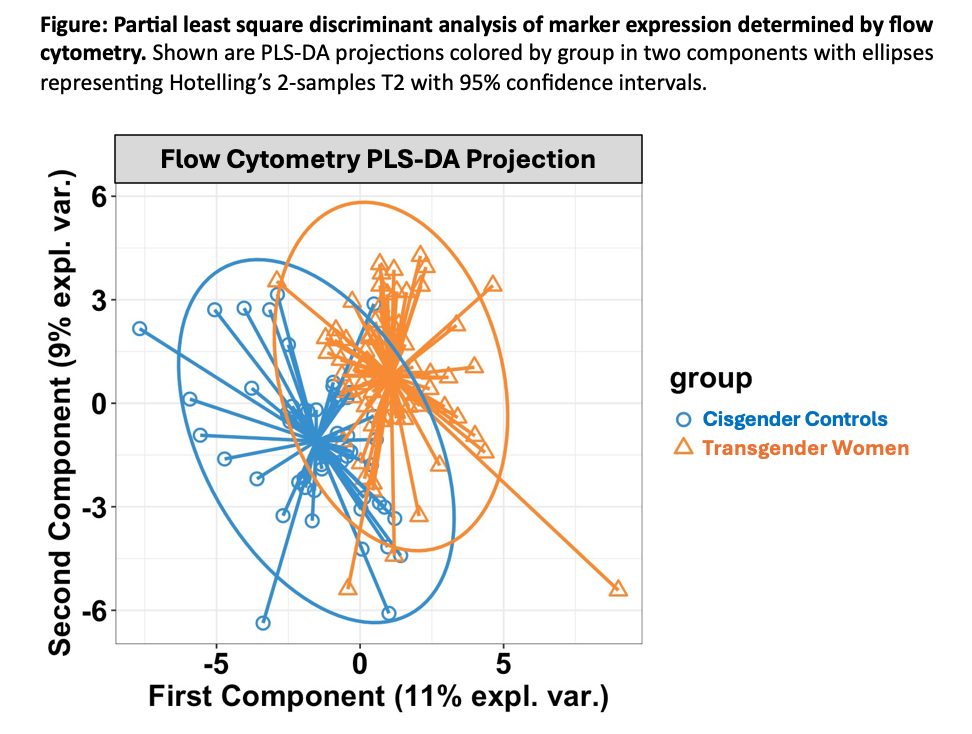
410. Differential Restoration of HIV-Specific CD8+ T Cells by Amino Acid and Lipid Metabolism Modulation
Poster Abstracts
Pages: 94-95
Ilya Tsukalov1, Marta Calvet-Mirabent2, Ildefonso Sánchez-Cerrillo1, María Agudo-Lera3, Lucio Jesús Garcia Fraile Fraile1, Paula Vera-Tome3, Alba Roca-Portoles4, Arantzazu Alfranca1, Ana Dopazo5, Aranzazu Rosado-Diez5, Ana Quintas5, Ignacio de los Santos1, Francisco Sánchez-Madrid1, Eduardo Balsa4, Enrique Martin Gayo3
Background
Priming of CD8+T cells with dendritic cells (DC) is a promising approach to reduce viral reservoirs in people with HIV (PWH). HIV-specific CD8+T responses in PWH are affected by PD-1, TIGIT and TIM3 expression in these cells. Here, we studied transcriptional, metabolic and functional characteristics of memory CD8+T cells differentially expressing these checkpoint receptors and identified new modulators potentially improving HIV-1 Gag-specific responses in PWH.
Methods
CD8+T cells were co-cultured with DC activated with STING and TLR3 agonists and PD-1-TIGIT-TIM3- (TN), PD-1+TIGIT+TIM3- (PD-1/TIGITDP) and PD-1-TIGIT-TIM3+ (TIM3SP) memory CD8+T cells were sorted for RNA-seq analysis (n=4). Relevant transcriptional metabolic and functional pathways were identified by IPA. Selected differentially expressed genes (DEG) were validated by FACS (n=13). Mitochondrial mass and Reactive oxygen specie (ROS) content was assessed using MitroTracker and MitoSOX probes, respectively. Dependence of OXPHOS on lipid metabolism was tested in CD8+T cell subsets by SeaHorse. Effect of lipid (LTC4) and aminoacid (Ornithine) metabolites in the polarization of HIV-1-specific CD8+T cells (n=9) was evaluated by analysis of IFNg, TNFa, IL-13, CD107a and Granzyme B and by elimination of autologous p24+CD4+T cells (n=8).
Results
1671 DEG identified in TIM3SP cells were associated with upregulation of modulators of OXPHOS, TCA cycle, and amino acid/lipid metabolism. In contrast, 866 DEG from PD-1/TIGITDP lymphocytes associated with immune function and mitochondrial dysfunction. PD-1/TIGITDP CD8+T cells exhibited higher (p=0.002) ROS accumulation than TIM3SP from PWH. In addition, TIM3SP CD8+T cells from PWH contained higher Arginase2+ (p=0.0002) and MGST2+ (p=0.0156) cells compared to TN cells. Consistently, maximal mitochondrial-dependent respiration in TIM3SP CD8+T cells was dependent on fatty acid b-oxidation (p=0.0156). Notably, an increase of Gag-specific IFNg+CD107a+CD8+T cells was observed after Ornithine (p=0.0034) and LCT4 (p= 0.0371) modulation. TNFa expression was also induced in the presence of Ornithine (p=0.0049). Finally, modulation of CD8+T cells with DC, TIGIT/PD1 blockade and Ornithine consistently and significantly reduced proportions of autologous HIV-1 infected cells in vitro (p=0.0156).
Conclusions
Modulation of lipid and aminoacid metabolism may represent a promising strategy to restore dysfunctional HIV-specific TIGIT+CD8+T cells in PWH.
The figure, table, or graphic for this abstract has been removed.
411. Unmodified mRNA Compared to Modified mRNA Induces Optimal CD8+ T-Cell Responses in Rhesus Macaques
Poster Abstracts
Page: 95
Sampa Santra1, Michelle Lifton1, Benjamin J. Mildenberg1, Georgeanna M. Morton1, Han Tran1, Laura L. Sutherland2, Robert Parks2, Bette T. Korber3, Tomas Hanke4, Persephone Borrow5, Drew Weissman6, Francois Villinger7, Barton Haynes2
Background
CD8+ T cells play a pivotal role in controlling replication of HIV-1/ SIV in vivo. Vaccine-elicited CD8+ T cell responses have been associated with reduced peak viremia and viral set points. Nucleoside-modified mRNA ionizable lipid nanoparticle (LNP) vaccines have been shown to induce particularly strong CD4+ T follicular helper cell and neutralizing antibody responses, whereas unmodified mRNA vaccines induce higher CD8+ T cell responses. In the present study, we compared the induction of CD8+ T cell responses in rhesus monkeys immunized with different ratios of unmodified vs modified mRNA-LNPs encoding a T cell immunogen, SIVconsv239, SIV239 analog of the most conserved regions of HIV proteome.
Methods
We immunized four groups of NHPs (n=5/group) intramuscularly with 50mg of mRNA-SIVconsv239 in LNPs on weeks 0, 4 and 8 as follows: 100% 1-methylpseudouridine modified mRNA (Group 1), 70% modified mRNA with 30% unmodified mRNA (Group 2), 30% modified mRNA with 70% unmodified mRNA (Group 3) and 100% unmodified mRNA (Group 4). Monkeys in Group 5 received ChAdOx1.SIVconsv239 at weeks 0 and 4 as a positive control. We analyzed CD8+ T cell responses by SIV gag p11C tetramer staining of whole blood of Mamu-A*01+ monkeys, and tested PBMC in ELISpot and intracellular cytokine assays using an immunogen-specific peptide pool (M3).
Results
On week 12 of the study, unmodified mRNA (group 4) elicited 24.7-fold higher tetramer-reactive CD8+ T cell responses than 100% modified mRNA (group 1). M3-specific IFN-g ELISpot responses were also significantly higher in group 4 than in group 1 (p=0.003; Unpaired t-test). ELISpot responses were comparable in groups 4 and 5 (p=0.66; Unpaired t-test). ICS assays performed at week 12, showed for IFN-g both CD4+ and CD8+ responses were significantly higher in group 4 than in group 1. Notably, IFN-g ELISpot assay performed 22 weeks after the last immunization showed that unmodified mRNA immunizations elicited more durable M3-specific T-cell responses than either modified mRNA or ChAdOx1.
Conclusions
Immunization with unmodified mRNA elicited higher magnitude CD8+ T cell responses than modified mRNA, which were comparable to responses induced by viral vector ChAdOx1. Moreover, unmodified mRNA immunizations elicited more durable T-cell responses than ChAdOx1. Thus, to induce both CD8+ T cell and neutralizing antibody responses, addition of unmodified mRNA to modified mRNA immunogens may be required.
412. The Impact of Protein Specificity on Function and Crosstalk Between the HIV-Specific T Cells
Poster Abstracts
Page: 95
Jernej Pusnik1, Falko Heinemann2, Andreas Heinold2, Enrico Richter1, Stefan Esser3, Heiko Jessen4, Julie Ake5, Trevor Crowell5, Merlin Robb5, Hendrik Streeck1
Background
HIV-specific CD8 T cells can control HIV replication but become increasingly exhausted and dysfunctional with progressing disease. It has been previously shown that this is caused by a lack of CD4 T cell help in addition to persistent antigenemia. However, the interplay between T cells and their functions and the role of protein specificity in the crosstalk between CD4 and CD8 T subsets during chronic HIV infection has not been investigated.
Methods
To determine the function of HIV-specific CD4 and CD8 T cell responses targeting different proteins we collected peripheral blood samples of 27 untreated individuals with HIV. Isolated peripheral blood mononuclear cells were labeled with fluorescently tagged HLA-peptide tetramers presenting immunodominant epitopes of the HIV proteome (Figure 1) and stimulated with soluble peptides. The expression of surface proteins and cytokines in response to peptide stimulation was monitored by flow cytometry.
Results
We observed comparable frequencies of cells recognizing immunodominant epitopes of the HIV proteome among the CD4 and CD8 T subsets. Their functional profiles, however, differed significantly even when targeting the same protein with CD4 T cells being less responsive to stimulation (p<0.0001) and expressing high levels of CXCR5 (p<0.001), CD40L (p<0.05), and IL-4/-13 (p<0.0001) while CD8 T cells expressed higher levels of PD-1 (p<0.001), CD107a (p<0.0001), IFN-γ (p<0.0001) and IL-2 (p<0.001). Intriguingly, protein specificity played an important role in the case of CD4 T cells where cells targeting epitopes within the p24 protein showed increased PD-1 expression (p<0.01), cytotoxicity (p<0.001), and responsiveness to stimulation (p<0.01) while cells specific for the gp120 showed increased CXCR5 (p<0.0001) expression. In comparison to CD8 T cells, more CD4 T cell functions were associated with viral load and IFN-γ-expression was inversely correlated with the viral load for both subsets (r=-0.49, p<0.001 for CD4 and r=-0.54, p<0.01 for CD8 T cells). No dependence on the protein specificity was observed when correlating different functions of the tetramer-specific CD4 and CD8 T cells.
Conclusions
Taken together our findings demonstrate distinct functional profiles of CD4 and CD8 T cells targeting the same HIV protein and stronger dependence of CD4 T cells on viremia and protein specificity. The interplay between the CD4 and CD8 T cells was not dependent on protein co-targeting.
Figure 1.
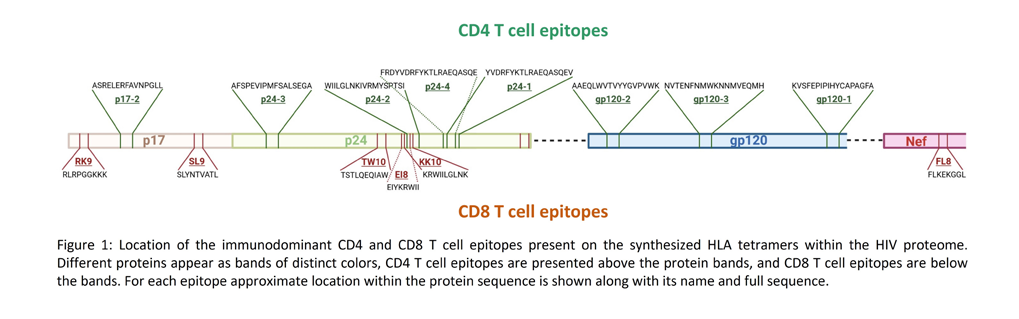
413. Provirus From Early-Treated HIV Reveals Earlier Variants Targeted by Initial Neutralizing Antibodies
Poster Abstracts
Pages: 95-96
Hunter M. Courtney1, Gregory D. Whitehill1, Ryan Krause1, Noah Beratan1, Sita Kottilil1, Francesco E. Marino1, Suvadip Mallick1, Rebecca Hoh2, Heather Hartig2, Vivian Pae2, Sannidhi Sarvadhavabhatla2, Maria Sophia Donaire2, Steven G. Deeks2, Sulggi Lee2, Katharine Bar1
Background
Antiretroviral therapy initiation (ARTi) halts HIV-1 replication but cannot clear persistent reservoirs. ARTi during acute (within 60 days of acquisition) and early (between ~60 and 120 days) HIV-1 limits reservoir size and diversity and can preserve nascent autologous neutralizing antibody (anAb) responses that target the transmitted/founder (TF) virus and then gain potency and breadth over viral suppression to target later variants. In a cohort of acute and early ART-treated people with HIV-1 (PWH), we compared viral sequences and anAb sensitivities of plasma and reservoir viruses.
Methods
Within a subset of the UCSF Treat Acute cohort (n=7 PWH [2 acute-, 5 early-treated; 7 male, 0 female]; NCT02656511), single genome sequencing (SGS) of gp160 env from plasma at ARTi and PBMC provirus from 24 weeks of ART was performed; sequences were analyzed by maximum-likelihood amino acid phylogenetic trees on a per-participant basis. Select Envs were tested for neutralization sensitivity to longitudinal plasma IgG by TZM.bl assays. Chimeric Envs encoding select regions were generated to map anAb responses at the molecular level.
Results
221 SGS-derived envs were sampled (n=134 plasma, n=87 proviral) across the 7 participants. Phylogenetic analyses of acute-treated participants showed co-alignment of plasma and reservoir sequences. In early-treated participants, however, proviral env persisting at 24 weeks of ART were generally enriched at tree roots while plasma env from the time of ARTi were biased toward branch tips. In some participants, reservoir envs revealed large branches no longer sampled in the plasma. Thus, reservoir env allowed inference of earlier variants no longer or less frequently replicating at the time of ARTi. In a subset of early-treated participants, plasma IgG from the time of ARTi potently neutralized archived reservoir Envs while plasma variants were resistant; IgG from later timepoints neutralized both reservoir and plasma Envs. Using chimeric plasma-PBMC Envs, early anAb targets were mapped to specific variable regions in gp120.
Conclusions
At early ARTi, viruses replicating in the plasma are anAb-escape variants while the proviral reservoir sampled 24 weeks later reveals envs archived from acute HIV-1 through ARTi including the targets of initial anAb responses. Together, phylogenetic and phenotypic testing of paired ARTi plasma and archived reservoir enables tracking of virus-host evolution that can be exploited in curative immunotherapy and vaccine strategies.
414. Structural Insight into the High- and Low-Affinity Alleles of Human and Macaque FcγRIIA (CD32A)
Poster Abstracts
Page: 96
William D. Tolbert1, Marek K. Korzeniowski1, Paula Nhan1, Madeleine Lee1, Haleigh Conley2, Julianna Veilleux1, Suneetha Gottumukkala1, Margaret E. Ackerman3, Justin Pollara2, Marzena Pazgier1
Background
Rhesus macaques (RM), Macaca mulatta, are one of the main nonhuman primate models for the testing of vaccines and antibody-based therapeutics. Macaques, like humans, have high and a low affinity alleles of FcγRIIA (CD32A) which is expressed on macrophages, dendritic cells and other antigen presenting cells. The polymorphism in FcγRIIA potentially influences the ‘vaccinal effect’ via FcγRIIA-Ab mediated phagocytosis (ADCP) and the functionality of the IgG2 subclass in humans. The high affinity allele has H131 in both species, while the low affinity allele has R131 in humans and P131 in macaques. We determined the structures of the receptor variants in complex with the IgG1 Fc for both species, as well as the complex of the RM high-affinity allele with RM IgG2 Fc. These studies have enabled us to elucidate the molecular mechanisms underlying the affinity differences and specificity of the FcγRIIA receptor for the IgG subclasses.
Methods
Human receptors were expressed in HEK 293 cells and purified on IgG sepharose and macaque receptors expressed in CHO cells and purified using nickel magnetic beads. IgG1 Fcs were generated by papain digest of IgG1 (human) or as Fc constructs (both IgG1 and IgG2, macaque) expressed in HEK 293 cells. IgG subclass binding to FcγRIIA was evaluated by surface plasmon resonance. Complexes were made with an excess of Fc, which was removed by purification by gel filtration, and were then used to grow protein crystals for x-ray structure determination.
Results
We determined the structures of the human hFcγRIIA-H131 and hFcγRIIA-R131 in complex with hIgG1Fc to 2.4 Å and 2.8 Å, the structures of the macaque mFcγRIIA-H131 and mFcγRIIA-P131 with mIgG1Fc to 3.5 Å and 2.7 Å, and the structure of the mFcγRIIA-H131 with mIgG2Fc to 3.2 Å. In both species H131 forms an H-bond to Fc monomer A and packs against G237 stabilizing the N-terminus similar to the analogous His in FcγRIIIA. P131 and R131 instead pack against G236; R131 also forms an H-bond to the carbonyl of G236. These differences can explain the low affinity allele’s reduced affinity for IgG2 in both species.
Conclusions
We show how a single amino acid polymorphism changes the FcγRIIA-Fc complex by modulating how the N-terminus of monomer A interacts with FcγR to not only affect affinity but also specificity. Our findings suggest that these structural changes can be leveraged to engineer novel variants of human and RM antibodies to modulate ADCP and thereby influence therapeutic strategies and vaccine efficacy.
415. Antigen Affinity Ceiling for Selection of Functional Mutations and HIV-1 Neutralization
Poster Abstracts
Page: 96
Ankita Singh, Kara Anasti, Amanda Newman, Advaiti Pai Kane, Maggie Barr, Robert Parks, Elizabeth Van Itallie, Sravani Venkatayogi, Kevin Saunders, Derek W. Cain, Rory Henderson, Kevin Wiehe, Barton Haynes, S. Munir Alam
Background
The mechanism by which B cells sense antigen affinity and initiate signaling that leads to full B activation and differentiation remains unclear. Understanding the relationship between antigen affinity/kinetic rates and selection of functional mutations is critical for HIV-1 Envelope (Env) protein immunogens designed to target broadly neutralizing antibody (bnAb) precursors. Previously, we had reported that B cell signaling strength is significantly associated with antigen binding kinetic on-rate and not affinity (KD). Here, we performed immunization studies in a CD4 binding-site specific bnAb (CH235) precursor knock-in (KI) mouse model to test the hypothesis that a prime immunogen with the optimal KD will favor germinal center (GC) selection of functional mutations and induction of autologous virus neutralization.
Methods
Affinity (KD) and kinetic rates of HIV Env (CH505M5 and CH505TF) trimers were measured by SPR. B cell activation was measured using calcium flux and phosphokinase signaling assays. Each group (6) of CH235UCA KI mice (expresses CH235 unmutated common ancestor BCRs) were immunized (4x) with each of 5 trimers of varying affinities (10.6nM-23.5µM). Sera antibody titer and the GC and memory B cells frequency were analyzed using ELISA and flow cytometric phenotyping, respectively. Neutralization titers by pseudovirus TZM-bl neutralization assay and NGS was done to identify frequencies of key functional mutations.
Results
Increasing sera IgG binding titers against each of the trimer immunogen was observed. The weaker/moderate affinity (KD=4.7/0.56µM) groups showed higher frequencies of Env-specific IgG+ GC B cells compared to the high affinity group (KD=16.7nM). Both the weaker/moderate affinity immunogens induced significantly higher ID50-neutralization titers when compared to either the high (KD=10.6-16.7nM) or the weakest (KD=23.5µM) affinity immunogens (p=0.0022). A significantly higher frequency of the key improbable mutation (K19T) was observed in the weaker affinity groups (p=0.0087; p=0.0043). Importantly, several previously defined key VH mutations (K19T+N52D+S57R) were significantly increased in the weaker affinity group (KD=4.7µM) (p=0.0022). Thus, selection of key functional mutations was favored by weaker over higher affinity immunogens.
Conclusions
A lower and an upper affinity threshold set boundaries for selection of key functional mutations and the induction of higher titers of autologous HIV-1 neutralizing antibodies.
416. Maturation of B-Cell Lineages During cART in Chronic SHIV-Infected Juvenile Rhesus Macaques
Poster Abstracts
Pages: 96-97
Wilton Williams1, Yue Chen2, Ryan Tuck2, Derek W. Cain2, Robert Edwards2, Taylor Keyes2, Mieke van der Mescht1, Katayoun Mansouri2, Taylor Spence2, Francesco E. Marino3, Seth Rohr2, Madison Berry2, Kevin Wiehe2, Katharine Bar3, Guido Ferrari1
Background
HIV-1 infection alters the frequencies and functions of B cell subsets, which may be restored by combined antiretroviral therapy (cART). There is still a gap in our knowledge that limits our understanding of the maturation of autologous HIV-1 neutralizing antibodies (NAbs) during cART. Our goal was to interrogate the dynamics of B cell lineages pre- and post- cART in a chronic Simian-HIV infection model of juvenile rhesus macaques (RMs).
Methods
Nine RMs were infected at birth with a pathogenic SHIV and untreated for ~3-4 years. Six RMs were treated with daily cART for 13 months, while 3 RMs remained therapy-naïve because viremia <1000 RNA copies/ml. Purified IgG from plasma was tested for HIV-1 neutralization in TZM-bl cells, and structurally mapped on autologous HIV-1 envelope (Env) trimer via electron-microscopy-based polyclonal epitope mapping (EMPEM). We quantified peripheral blood (PBMC)-derived antigen-reactive B cells via FACS using autologous Env trimer. We generated B cell receptor (BCR) and transcriptome sequences of negatively-enriched single cells from PBMCs (10X Genomics) of SHIV-infected (N=9; ~270K B cells) and SHIV-naïve (N=3; ~16K B cells) RMs.
Results
Pre-cART plasma IgG in SHIV infection mapped to NAb epitopes on autologous Env, including V3-glycan and V2-apex broadly-NAbs (bNAbs), and post-cART IgG neutralized autologous SHIV with varied potencies indicative of NAb persistence during cART. In 6/9 SHIV-infected RMs, we detected HIV-1 Env-reactive memory B cells, even at 13 months post-cART in RMs on therapy. We identified computationally-inferred clonally-related BCRs in SHIV-infected RMs (+/- cART), including persisting IgG clones and strictly expanding IgG clones with increased numbers of cells post- versus pre- cART. Transcriptomics revealed 16 unique B cell clusters, including 3 clusters with memory B cell gene signatures that had predominantly cells from SHIV-infected RMs on cART and SHIV-naïve controls, compared to therapy-naïve SHIV-infected RMs, suggestive of cART-restored functional memory B cell subsets in infection. Ongoing transcriptomics will further delineate the nature and activation states of B cell clusters.
Conclusions
In this study, B cell clonal expansion underlies their maturation under cART, suggestive of a similar process in PLWH that may be driven by residual viremia within germinal centers. Future studies will evaluate the capacity of Abs in these B cell subsets to develop polyfunctional antiviral activities.
417. Public Trimer-Specific IgHV4-34 Clonotype in bNAb Inducers Includes a Novel V3-Glycan bNAb Subclass
Poster Abstracts
Page: 97
Daniel Schmidt1, Merle M. Schanz1, Lisanne L. Hubregtse1, Borys Pedenko2, Piotr Szwedziak1, Nikolas Friedrich1, Chloé Pasin1, Cyrille Niklaus1, Winfried Weissenhorn2, Penny L. Moore3, Huldrych F. Günthard1, Roger D. Kouyos1, Peter Rusert1, Alexandra Trkola1, the Swiss HIV Cohort Study
Background
Several classes of HIV-1 broadly neutralizing antibodies (bnAbs) exhibit distinct immunoglobulin heavy chain variable (IGHV) gene usage, and many HIV vaccine strategies aim to elicit public bnAb clonotypes. Here, we performed a systematic analysis of HIV-1 envelope (Env) trimer reactive B cell receptor (BCR) repertoires in bnAb inducers to define public features of IGHV and IGLV/KV gene segment usage, enabling the discovery of novel bnAbs.
Methods
bnAb inducers (N=36) included in the XbnAb cohort (Pasin et al. biorXiv 2024) were analyzed by single cell BCR cloning (10X genomics with Libra-Seq) to identify Env-trimer reactive BCRs. Neutralization activity was measured against a 41-virus multi-clade Env pseudotype panel. bnAb epitopes were defined by Env mutant screens (mutational scanning, binding, neutralization) and Cryo-EM structure analysis.
Results
BCR repertoire analysis of 36 bnAb inducers identified a total of 1,218 individual IgG and IgA trimer-reactive BCRs assigned to 869 BCR lineages. IG gene segment usage was generally comparable between trimer-reactive and non-trimer BCRs. IGHV4-34/IGKV2-24 was rare in non-trimer (0.06% total Ig, 0.07%, IgA) but remarkably enriched in trimer-reactive BCR families (4.26% total Ig, 9.84% IgA). We identified IGHV4-34 bnAbs SHCS-0209 (IGKV2-24), SHCS-3L6 (IGKV2-24) and SHCS-3D14 (IGKV3-15) with 63%, 78%, and 88% breadth, respectively. IGHV4-34 usage is known to be associated with autoreactivity, and the autoreactive IGHV4-34 codon 26 was retained in SHCS-3L6 and SHCS-3D14 but mutated in SHCS-0209. Trimer-reactive IGHV4-34 BCRs were found in 30/36 bnAb inducers, and those with similarity to SHCS-3L6 (short CDR-H3/ IGKV2-24 usage) in 12/36 donors, suggesting the existence of IGHV4-34 public clonotypes. Cryo-EM structure analysis showed that SHCS-0209 has a clear silent face specificity. However, SHCS-3L6 targets V3-glycans (N301, N332) as well as glycans in the silent face (N262, N295). SHCS-3D14 targets the V3 (N301), V2-loop and CD4bs of the adjacent protomer. Neutralization correlation analyses with reference bnAbs and bnAb inducer plasmas (N=304) showed that SHCS-3L6 and SHCS-3D14 cluster distinctly from V3-glycan and silent face bnAbs, forming a novel subclass we termed V3-glycan type II.
Conclusions
The high frequency of trimer-reactive IGHV4-34 BCRs, and the identification of novel IGHV4-34 bnAbs suggests that, provided the autoreactivity associated with IGHV4-34 could be mitigated, targeting IGHV4-34 for bnAb vaccines could be valuable.
418. WITHDRAWN
Poster Abstracts
Page: 97
419. In Nonsuppressible Viremia, HIV Env Can Maintain Resistance to Autologous Neutralizing Antibodies
Poster Abstracts
Page: 97
Sang Hyeon Kim1, Behzad Etemad1, Ashley Roche1, Abbas Mohammadi2, Christy L. Lavine3, Prerana Shrestha1, Michael M. Lederman4, Sigal Yawetz1, Scott Sieg4, Athe Tsibris1, Steven G. Deeks5, Jose Castillo-Mancilla6, Peter Anderson7, Michael S. Seaman3, Jonathan Li1
Background
Nonsuppressible viremia (NSV) represent a subset of individuals with persistent low-level viremia due to a hyperactive HIV reservoir. Little is known about whether persistent antigenemia during NSV can induce a stronger immune response. Autologous neutralizing antibodies (aNAb) represent a key adaptive immune response for viral control and HIV rebound during treatment interruption has been linked to aNAb escape. We performed extended range plasma HIV RNA and near-full length (NFL) proviral sequencing at longitudinal timepoints from two participants with NSV. We evaluated the aNAb sensitivities of HIV env from both the plasma HIV (i.e., from producer proviruses) and intact proviruses that did not match any plasma sequences (i.e., non-producer proviruses).
Methods
We performed an in-house assay for the extended range single-genome amplification (pol-env) of low-level plasma viremia and NFL single-genome sequencing (SGS) to identify both producer and nonproducer proviruses from multiple timepoints. We then cloned the HIV-1 env using ABC cloning to create pseudoviruses. aNAb neutralization of plasma RNA and nonproducer proviral env were evaluated using purified IgG from plasma samples collected at longitudinal timepoints. Serial dilutions of IgG that neutralized 50% of viral infection (IC50) was determined.
Results
We compared the aNAb response for two NSV participants, LV8 and LV9, who demonstrated NSV with detectable viral loads of between 34-578 HIV-1 RNA copies/mL over 12 years for LV8 and 39-1270 copies/mL over 13 years for LV9. We evaluated aNAb activity in LV8 at 6 time points over 2 years and for LV9 at 5 timepoints over 3 years. Plasma env from both participants demonstrated relatively high levels of aNAb resistance over the entire period with IC50 of >101 ug/mL for LV8 and 57.5-94.9 ug/mL for LV9. This is despite no changes in LV8 plasma RNA env sequences over 2 years. HIV Env from non-producer proviruses demonstrated a range of resistance to aNAb activity.
Conclusions
During nonsuppressible viremia, plasma virus can show sustained resistance to aNAb activity over several years despite no changes in the plasma HIV env sequence. The underlying proviral reservoir demonstrated a wider range of aNAb sensitivity. Additional studies are needed to explore why detectable viremia may not stimulate a robust HIV-specific humoral response during ART.
420. Molecular Mechanisms Underlying Anti-HIV-1 Fc-Effector Functions of Human IgA Allelic Variants
Poster Abstracts
Page: 98
Marek K. Korzeniowski1, William D. Tolbert1, Haleigh Conley2, Cordelia Manickam2, Souradip Dasgupta3, Maurice Bukenya2, Andrew Hudson2, Robin Flinko3, Monika Chandravanshi1, George K. Lewis3, Georgia D. Tomaras2, Krishanu Ray3, R. Keith Reeves2, Justin Pollara2, Marzena Pazgier1
Background
IgA is the most abundant antibody in humans, yet its function in viral infections, including HIV-1, is elusive. Humans have two IgA subclasses: IgA1 (with 1 allelic variant) and IgA2 (with 3 allelic variants), differing in sequence, hinge length, and glycosylation, and expressed as monomers (mIgA), dimers (dIgA), or secretory forms (sIgA). Neutralization at mucosal surfaces is believed to be the primary anti-viral mechanism of IgA. Yet, while all IgA forms have an Fc region, only mIgA is known to bind FcαRI (CD89) and mediate Antibody-Dependent Cellular Phagocytosis (ADCP) and Antibody-Dependent Cellular Cytotoxicity (ADCC). dIgA and sIgA are believed to lack significant Fc-effector function due to steric hindrance of accessible CD89 binding sites. Here we aim to provide a comprehensive structure-anti-HIV-1 Fc-function analysis of all known variants of human IgA.
Methods
mIgA, dIgA and sIgA forms of IgA1 and IgA2 were generated using the variable regions of anti-HIV-1 IgG1 antibodies: the ADCC-potent A32 and the broadly neutralizing N49P9.6. CD89 binding was evaluated by surface plasmon resonance (SPR) and fluorescence correlation spectroscopy (FCS). CD89-mediated signaling through Syk and ERK kinases phosphorylation was analyzed using multiplex Luminex assay. ADCP of virions and ADCC of gp120-coated cells were measured using neutrophils or PBMCs as effector cells, respectively. Structures of the Fc-FcαRI complexes were solved using X-ray crystallography.
Results
We engineered and expressed all human IgA subclasses and allelic variants, along with their oligomeric forms using the variable regions of A32 and N49P9.6 IgG1. All IgA variants bound to FcαRI, with dissociation constants in the low uM range (2-5 x10⁻⁷M). All mIgA variants were capable of signaling through CD89 and mediating Fc-dependent effector functions, including ADCP and ADCC, with IgA1 showing slightly enhanced potency. Notably, we also observed evidence of ADCC activity with dimeric IgA2(m1) and ADCP activity for dIgA2(mn). Crystal structures of the Fc-FcαRI complex for mIgA1 and mIgA2(m1) revealed slight differences in the formation of the binding interfaces.
Conclusions
Monomeric IgA is not the only form of human IgA capable of binding to and signaling through the FcαRI (CD89) receptor. Our findings indicate that oligomeric forms of IgA can also interact with CD89 and mediate Fc-effector activities, providing new insights into biological roles of IgA, the most abundant Ab isotype in the human immune system.
421. Sensitivity of HIV-1 CRF01_AE Envelopes to Broadly Neutralizing Antibodies VRC07-523 and PGDM1400
Poster Abstracts
Page: 98
Gabriel Smith1, Sebastian Molnar1, Michelle Zemil1, Suteeraporn Pinyakorn2, Indie Showell-De Leon1, Diana Wasson1, Carlo Sacdalan3, Nittaya Phanuphak4, Sandhya Vasan1, Julie Ake2, Lydie Trautmann1, Morgane Rolland2, Victoria Polonis2, Shelly Krebs2
Background
Understanding the sensitivity of viral envelopes to broadly neutralizing antibodies (bNAbs) encoded within the reservoir is of major importance in evaluating efficacy in analytical treatment interruption (ATI) trials using bNAbs as an intervention in people living with HIV (PLWH). BNAbs have been shown to impact viral load setpoint during interruption of antiretroviral therapy (ART) for viruses sensitive to bNAb neutralization. In this study, we assessed the sensitivity of viral envelopes (Envs) sequenced from RV254 participants who started ART during acute infection for sensitivity to the bNAbs VRC07-523LS and PGDM1400LS. VRC07-523LS and PGDM1400LS target two separate sites on the HIV Env, the CD4 binding site and the V2 apex, respectively, increasing the likelihood of sensitivity of these viral Envs when they are combined together.
Methods
Following sequencing and cloning of 119 representative Envs from 116 RV254 participants, pseudoviruses (pSVs) harboring functional Envs were produced via transfection. Env sensitivity was measured in neutralization assays in which several concentrations of VRC07-523LS alone, PGDM1400LS alone, and a combination of VRC07-523LS and PGDM1400LS were tested against uniform volumes of each candidate-derived pSV. IC80s and IC50s of each mAb were determined and compared between the single mAbs and the combination of PGDM1400LS and VRC07-523LS. IC50s or IC80 <1mg/mL were considered sensitive to bNAb neutralization.
Results
Of the 119 Envs, 59% were sensitive to PGDM1400LS (potency=0.116μg/mL), 77% were sensitive to VRC07-523LS (0.324 μg/mL), and 87% were sensitive to the combination using IC50 <1mg/mL (Fig. 1a). When assessing IC80, 47% were sensitive to PGDM1400 (potency=0.202 μg/mL), 49% were sensitive to VRC07-523LS (0.483 μg/mL), and 63% were sensitive to the combination (Fig. 1b). The majority of Envs (85%) tested were CFR01_AE.
Conclusions
A key component evaluating efficacy in ATI trials using bNAbs is the sensitivity of the glycoprotein envelope to antibody neutralization. Combining VRC07-523LS and PGDM1400LS bNAbs provided increased coverage across viral Envs. Furthermore, PGDM1400LS demonstrated more potent neutralization across the screened candidates and required lower concentrations to achieve a higher level of viral inhibition in comparison to VRC07-523LS. These data provide evidence that CRF01_AE Envs sequenced from viral Env are sensitive to VRC07-523LS and PGDM1400LS and antibodies may be used as candidate bNAbs in future ATI trials.
Figure 1.
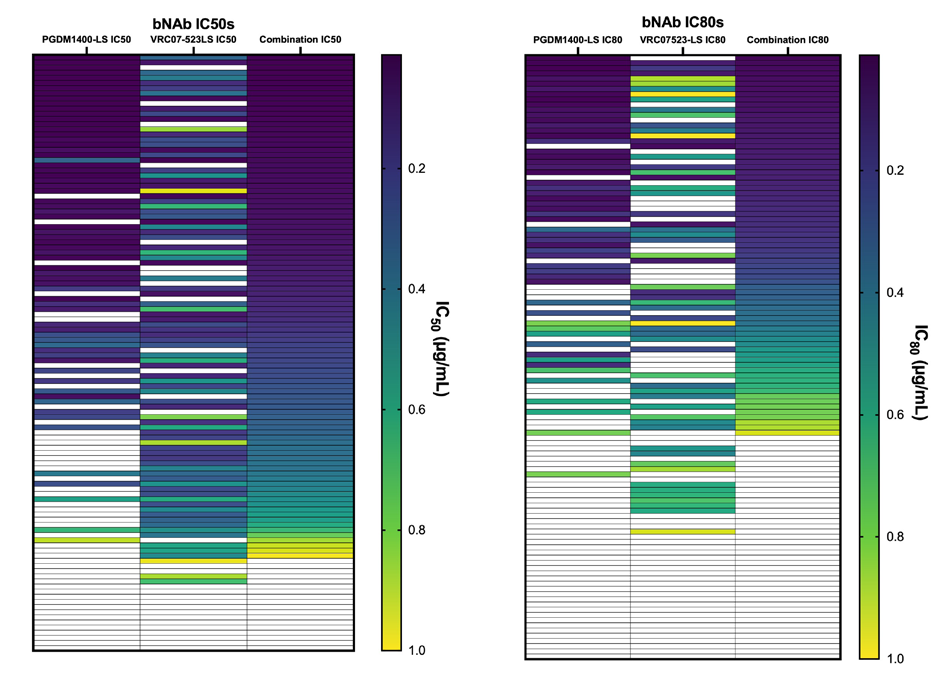
422. Transcriptional Analysis of Intestinal Immune Cells in People With HIV Receiving bNAbs
Poster Abstracts
Pages: 98-99
Connie A. Zhao1, Divya Jha1, Katrina Millard2, Darwin D'souza1, Vladimir Roudko1, Francesca Cossarini1, Marina Caskey2, Saurabh Mehandru1
Background
Much of the HIV reservoir resides in tissues such as the gut-associated lymphoid tissue (GALT). Broadly neutralizing antibodies (bNAbs) are under investigation for their potential to aid elimination of latently infected cells; however, little is known about their effect in key tissues such as the GALT. Here, we aim to study the effects of bNAbs on intestinal immune cells.
Methods
Study participants with suppressed HIV infection on antiretroviral treatment (ART) receiving a single infusion of two long-acting bNAbs (3BNC117-LS and 10-1074-LS) were prospectively enrolled and underwent colonoscopy at baseline and at 6-8 weeks post-infusion. Freshly processed ileal and colonic tissue biopsies were analyzed using single-cell RNA sequencing (scRNA-seq). The R-based package, Seurat, and the Enrichr platform were used for data analysis.
Results
Tissue samples were obtained from five study participants at baseline. Post-infusion tissue was available for two participants, yielding an aggregated dataset of 85,899 cells with 28,504 unique molecular identifiers (UMIs). Median (range) participant age was 55 (30-63) years old. Participants had been diagnosed with HIV for 17 (5-30) years with nadir and enrolment CD4+ T cell count of 249 (193-400) and 681 (440-1,113) cells/uL, respectively. Baseline CD4+ T cells in the ileum and colon were characterized by expression of pathways involved in regulatory T lymphocyte development (IL2, IL2RA, CTLA4, FOXP3) and tumor necrosis factor (TNF)/nuclear factor kappa B (NF-kB) signalling (LTA, LTB, TNFSF). Baseline CD8+ T cells were characterized by expression of pathways involved in chemokine receptor signalling (CCL4, CCR9) and lymphoid and non-lymphoid cell immunoregulatory interactions (CD247, ZAP70). Post-infusion CD4+ and CD8+ T cells showed significantly lower expression of pathways related to TNF/NF-kB and interferon signalling (NFKBIA, TNFAIP3, IFNG, STAT1).
Conclusions
In this pilot study, we identified transcriptional changes in GALT-resident immune cells of individuals with well-controlled HIV infection on ART following the infusion of 3BNC117-LS and 10-1074-LS bNAbs. These changes suggest that bNAb exposure may modulate TNF/NF-kB and IFN signalling in CD4+ and CD8+ T cells - pathways that have been linked to immune cell susceptibility to HIV infection, innate and adaptive immune response to HIV and reactivation of latent infection.
423. Identification of an Autoantibody Against FCHSD2 in Adipose Tissue of PLWH With Diabetes
Poster Abstracts
Page: 99
Laventa Obare1, Samuel Bailin1, Xiuqi Zhang1, Kisyua Nthenge1, Mona Mashayekhi1, Curtis L. Gabriel1, Simon A. Mallal1, John Koethe1, Wyatt J. McDonnell2, Celestine Wanjalla1
Background
Cardiovascular disease (CVD) risk is 1.5- to 2-fold higher in people living with HIV (PLWH). The heightened risk persists despite suppression of plasma viremia and control of traditional risk factors, partly due to chronic inflammation. Subcutaneous adipose tissue (SAT) regulates metabolic health, but inflammation and insulin resistance can shift its secretome to a pro-inflammatory, pro-atherogenic state. FCHSD2 is an adapter protein involved in insulin secretion and has been implicated in the pathogenesis of diabetes. B cells have been associated with cardiometabolic disease and are present in SAT.
Methods
B cell subsets in the SAT were characterized using single-cell RNA sequencing (CITE-seq) and B cell receptor (BCR) sequencing in a cohort of 91 PLWH and people without HIV (PWoH) with similar traditional CVD risk profiles. Plasmablasts, naïve cells, and memory B cells were compared across metabolic subgroups (diabetic and non-diabetic). The top ten clonal BCRs from PLWH were expressed as recombinant antibodies and tested for reactivity against CMV using ELISA and reactivity against human proteins using a human protein microarray with over 21,000+ unique human proteins (CDI Labs). We verified the specificity of a clonal antibody against FCHSD2 using transient transfection of 293K cells with plasmids expressing FCHSD2 (Figure A).
Results
SAT of diabetic PLWH and PWoH had significantly higher plasmablasts and fewer naïve B cells than non-diabetic PLWH (p<0.01). B cells from PWoH with diabetes had higher expression of genes with regulatory functions, including LGALS1, SPP1, and LNMA. In contrast, B cells from PLWH with and without diabetes expressed higher CD69, CD40, and CXCR4 (all, p<0.0001), consistent with an activated immune response. One of the ten clones was reactive against CMV. Another clone, identified initially as an IgA, was reactive against FCHSD2 (EC50 12.69 ng/ml). Out of 41 PLWH, ten had high titers of anti-FCHSD2 antibodies in plasma, six of which had diabetes (Figure B). Notably, the anti-FCHSD2 clone has undergone somatic hypermutation, resulting in an IgH sequence identity of 93.13% and an IgL sequence identity of 93.55 compared to its original germline sequence.
Conclusions
HIV infection and co-infections are associated with changes in B cells which have implications for cardiometabolic disease. Anti-FCHSD2 autoantibodies highlight a novel autoimmune mechanism in PLWH that links immune dysregulation and metabolic dysfunction, which has implications for CVD.
The figure, table, or graphic for this abstract has been removed.
424. Detection of Anti-Interferon Alpha/Omega Neutralizing Autoantibodies in PLWH
Poster Abstracts
Page: 99
Alessandra D'Auria1, Federica Frasca1, Matteo Fracella1, Roberta Campagna1, Luca Maddaloni1, Ginevra Bugani1, Letizia Santinelli1, Ivano Mezzaroma1, Caterina Fimiani2, Claudio Maria Mastroianni1, Guido Antonelli1, Ombretta Turriziani1, Gabriella d'Ettorre1, Carolina Scagnolari1
Background
Anti-type I interferon (IFN-I) neutralizing autoantibodies (NABs) have been associated with an increased risk of life-threatening viral infections, including SARS-CoV-2, influenza virus and more recently West Nile virus. Given the detrimental role of IFN-I in HIV-1 infection, it is imperative to investigate anti-IFN NABs and associated IFN pathway modulation in people living with HIV (PLWH). Therefore, we investigated the prevalence of anti-IFN-I NABs in a cohort of PLWH, and examined their specificity, fluctuation over time, biological significance and clinical implications.
Methods
Blood samples were collected from 280 virologically suppressed ART-treated PLWH at the Policlinico Umberto I, hospital of Sapienza in Rome, Italy.
Serum samples were tested for the detection of NABs against IFN-α, -β and -ω using an antiviral bioassay. Longitudinal measurements of NABs over a 1-year period were carried out in serum samples from those patients with anti-IFN-I NABs. Expression levels of the IFN induced antiretroviral restriction factors, APOBEC 3G/3F and ISG15, were measured by RT/real time PCR in PBMC from NAB-positive and age- and sex-matched NAB-negative PLWH (n=16).
Results
Anti-IFN-I NABs was detected in 3.9% of PLWH (11/280). The range of NAB levels against IFN-α was very wide (53-530000 tenfold reduction units [TRU/mL]). We found that 45% (5/11) of sera containing anti-IFN-I NABs were able to neutralize IFN-ω but not IFN-β. All NABs-positive PLWH were male, with a median age of 65 years (range 30-78) and median nadir CD4+ T cell counts (cells/µl) and CD4+ T cell counts of 190 and 500, respectively. Four PLWH had been hospitalized for severe SARS-CoV-2 infection (two requiring mechanical ventilation and one with a fatal outcome); two individuals had Kaposi's sarcoma and one had AIDS dementia complex with oropharyngeal candidiasis. Reduced levels of APOBEC3G/3F and ISG15 mRNA were observed in PBMC from anti-IFN NABs positive PLWH compared to negative PLWH (p<0.05). Longitudinal evaluation of anti-IFN NABs showed persistence of anti-IFN NABs, with titer fluctuation over time, in 27% (3/11) of PLWH.
Conclusions
These results indicate that anti-IFN-α/ω NABs can be detected in the serum of PLWH, reduce the expression of IFN induced retroviral restriction factors and persist in some patients in association with worsening disease, suggesting that assessment of anti-IFN -I NABs could be considered as a novel candidate disease determinant in PLWH.
425. Age Inversely Correlates With T-Cell Response to MVA.HIVconsvX Vaccination in PWH on ART
Poster Abstracts
Pages: 99-100
Cynthia L. Gay1, Yinyan Xu1, Ann Marie Weideman1, Joann Kuruc1, Fiona Shaw1, Shayla Conrad1, Alexis Sponaugle1, Carolina Kapper1, Greg Laird2, Joshua C. Cyktor3, Joseph J. Eron1, David M. Margolis1, Michael Hudgens1, Tomáš Hanke4, Nilu Goonetilleke1
Background
Durable antiretroviral therapy (ART)-free remission from HIV will likely require a robust and targeted T cell response to limit viral reactivation.
Methods
We report a double-blind, randomized trial in people with HIV (PWH) suppressed on ART. Participants, 21-60 years (median 41 years), received modified vaccinia Ankara (MVA)-vectored vaccines, MVA.tHIVconsv3 (M3), MVA.tHIVconsv4 (M4), alone or in combination (n=7/group) or saline placebo (n=3). M3 and M4 contain different HIVconsvX immunogens that each span the same regions in HIV Gag and Pol but differ at ~8% of amino acids. T cell immunogenicity was measured by ex vivo ELISpot and CD8 T cell virus inhibition assays. T cell phenotyping was performed using mass cytometry and HIV reservoir measured using single copy assay (SCA) and integrated proviral DNA assays (IPDA).
Results
Vaccination (all regimens) was well tolerated, significantly increased the magnitude and breadth of the HIV-specific T cell response, redirected T cells to conserved HIV regions for up to 10 weeks post vaccination and increased the ability of CD8 T cells to detect and clear participants’ autologous reservoir virus. T cell magnitude, breadth or shift in immunodominance were not statistically separable between vaccine regimens. Vaccination did not impact total memory CD4 T cell activation, low-level viremia or integrated HIV DNA. HIV-specific T cell responses to vaccination increased up to 24-fold over baseline (average >3-fold) with the contribution of new T cells to the total vaccine-specific response ranging from 0-80% (average 11%). Across timepoints, linear regression found that age was a significant negative predictor of fold T cell response to vaccination (Figure1). Slope analysis predicted a 0.05 decrease in log2 fold-change in T cell magnitude to HIVconsvX immunogens for every additional year of age suggesting the fold-change in magnitude to MVA.HIVconsvX vaccination would approximately halve over a 20-year period. Detection of new T cell responses following vaccination similarly inversely correlated with age. Conversely, years on ART correlated positively with the fold-change in T cell magnitude to vaccination.
Conclusions
MVA.HIVconsvX vaccines were safe and consistently immunogenic in PWH on ART. However, the strength of the T cell response to vaccination exhibited an inverse and linear association with age. Novel approaches are needed to improve HIV immunity in middle- to older-aged PWH.
Figure 1.
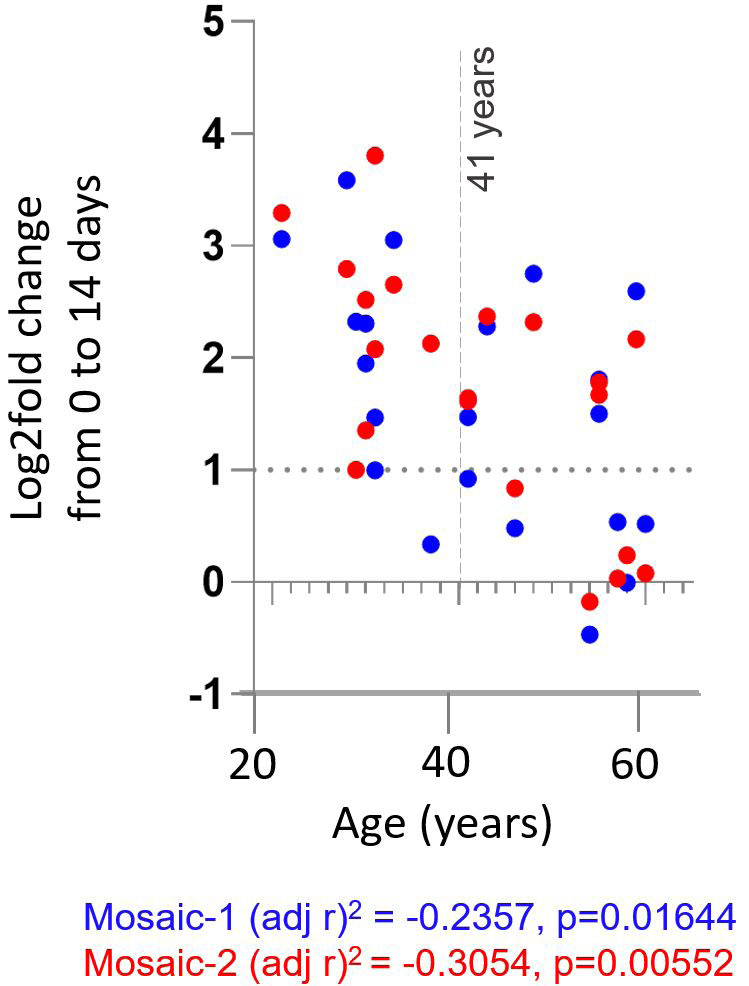
426. Unadjuvanted CD40.HIVRI.ENV Vaccine Late Boost Induces Durable Immune Responses: ANRS/VRI06 Trial
Poster Abstracts
Page: 100
Lucile Hardel1, Christiane Moog1, Aurélie Wiedemann1, Mélany Durand1, Odile Launay2, Fabio Candotti3, Véronique Rieux1, Yves Lévy4, Alpha Diallo1, Song Ding5, Mireille Centlivre4, Rodolphe Thiebaut6, Giuseppe Pantaleo3, Jean-Daniel Lelièvre7, Laura Richert6
Background
CD40.HIVRI.Env is a gp140 Env (Clade C 96ZM65) fused to an anti-CD40 mAb to target CD40-expressing dendritic cells. The ANRS/VRI06 phase I trial (NCT04842682) enrolled 72 non HIV-infected volunteers to receive either 0.3, 1.0, or 3.0 mg of CD40.HIVRI.Env (TLR3-Hiltonol® adjuvanted) alone or co-administered with DNA-HIV-PT123 at weeks (W) 0, 4 and 24, randomized 5:1 active vs. placebo. Results showed good safety and strong immunogenicity of vaccines until W48 regardless dose or combination (Y. Levy et al., eClinicalMedicine, in press).
Methods
Beyond W48 of the trial, active vaccine recipients were again randomized to receive one late boost (LB) of CD40.HIVRI.Env (SC, 0.3mg) either with Hiltonol® (1mg) (V+Adj) or not (V-Adj). Safety and immunogenicity (anti-Env and anti V1/V2 IgG, Neutralizing antibodies (Nabs), T-cell responses) were evaluated at 2 and 24W after LB (LB+02, LB+24).
Results
Forty-five volunteers (mean age 35 years, 56% male) were randomized. Demographics and immune responses were similar between groups at LB visit. LB interval (median; IQR) since VRI06 baseline was 80 W [75;104] in V+Adj (n=22) and 79 W [65;101] in V-Adj (n=23). LB vaccination was safe and well tolerated. IgG response rates (RR) against vaccine-matched (gp140 ZM96) and 9 heterologous gp120/gp140 antigens (Ags) were 50-100% at LB, and 100% and 82-100% at LB+02 and LB+24, respectively. Increases > 1 log10 in the magnitude of IgG responses (MFI) to Ags were observed at LB+02 relative to LB. RR to gp70 V1V2 Ags raised from 0-4% at LB to 45-55% (autologous 96ZM651), 26-27% (92TH02), 61-68% (CE1086), 61-77% (CaseA2) across groups at LB+02. NAb IC50 titers against Tier1 MW965.26 were detected in 14-22% at LB and 78-95% and 35-59% at LB+02 and +24. Frequencies (median [IQR]) of polyfunctional Env-specific CD4 T cells (IL-2+/-IFN-g+/-TNF) were 0.09 [0.05;0.18] at LB and raised to 0.26 [0.15;0.36] and 0.15 [0.11;0.20] at LB+02 and +24, respectively. No consistent substantial differences were noted between Adj+ and Adj- recipients.
Conclusions
Follow-up after initial CD40.HIVRI.Env vaccination showed persistence of immune responses more than one year after the last injection (W26 of the VRI06 trial). A single late boost of CD40.HIVRI.Env, even unadjuvanted, was sufficient to maintain humoral and cellular long-term responses. These results reveal the potency of CD40-DC targeting vaccines to induce durable responses.
Figure 1.
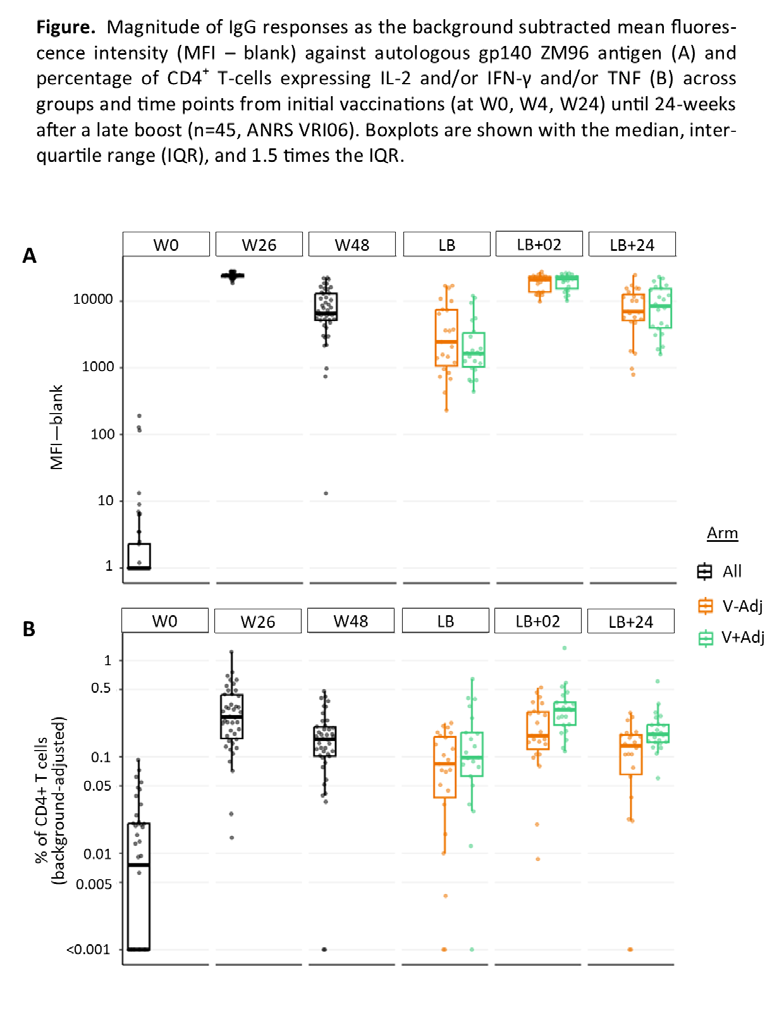
427. Augmenting HIV-Specific CAR-T Cell Functionality by Treatment With Novel Cytokine-Based Scaffold
Poster Abstracts
Page: 100
Sara Lamcaj1, Niraj Shrestha2, Zhongyu Zhu3, Ying Xiong3, Gregory Sowd3, Boro Dropulic3, Hing Wong2, Harris Goldstein1
Background
We previously described a bispecific CAR-T cell targeting two conserved gp120 epitopes (duoCAR-Ts) with potent anti-HIV activity, now in clinical trials. However, despite ART, many people living with HIV (PLWH) develop systemic inflammation associated with increased levels of TGF-β which may suppress the activity of infused duoCAR-Ts. We hypothesized that inhibiting TGF-β activity may unleash a more potent anti-HIV immune response mediated by our duoCAR-Ts, further amplified by treatment with an IL-15 based fusion molecule.
Methods
HCW Biologics developed bifunctional immunomodulatory proteins including HCW9218, composed of TGF-βRII and IL-15/IL-15Rα. TGF-βRII acts as a TGF-β sink, effectively neutralizing its activity and the linked IL-15/IL-15Rα activates NK and CD8+ T cells. As controls, we used HCW9228, composed of TGF-βRII with IL-15/IL-15Rα mutated to reduce activity and HCW9238 with a functional IL-15/IL-15Rα but inactivated TGF-βRII. TGF-β neutralizing activity of HCW proteins were evaluated by treating duoCAR-Ts with HCW proteins and TGF-β, followed by quantifying TGF-β induced-phosphorylation of SMAD2/3. IL-15 function was assessed by staining for IL-15 induced STAT5 phosphorylation in HCW protein treated T cells and measuring cell growth of duoCAR-Ts stimulated with HCWs and TGF-β after 5 days (Fig. 1A). Anti-HIV activity of duo-CAR-Ts in the presence of TGF-β and the HCW proteins was evaluated by cytotoxicity assays targeting 293T-gp120-Luc cells and HIV viral suppression assays using autologous HIV-LucR-infected CD4+ T cells (Fig 1B).
Results
TGF-β induced SMAD2/3 phosphorylation was inhibited by HCW9218 but not HCW9238 which lacks functional TGF-βRII. HCW9218 displayed robust IL-15 activity by phosphorylating STAT5 and stimulating proliferation of an IL-15 dependent cell line. HCW9218, but not HCW9228 treatment prevented TGF-β suppression of duoCAR-T cell proliferation (n=4 donors) and HCW9218 IL-15 activity stimulated significantly greater cell growth of duoCAR-Ts compared to HCW9228 treatment (Fig. 1A). duoCAR-Ts treated with TGF-β maintained cytotoxicity and HIV suppression (n=3 donors) in the presence of HCW9218 but not HCW9238 (Fig. 1B).
Conclusions
HCW9218 neutralizes TGF-β activity and thereby prevents TGF-β-mediated inhibition of duoCAR-T cell proliferation, cytotoxicity, and HIV suppression. HCW9218 may serve as an adjunct therapy to increase the anti-HIV activity of duoCAR-Ts in PLWH with elevated levels of TGF-β to enable sustained anti-HIV immune responses.
The figure, table, or graphic for this abstract has been removed.
428. ChAdOx1.HIVconsvX and MVA.HIVconsvX Vaccination Is Safe and Immunogenic in PWH on ART: The CM Study
Poster Abstracts
Page: 101
Cynthia L. Gay1, Yinyan Xu1, Ann Marie Weideman1, Shayla Conrad1, Fiona Shaw1, Sofia Mariano1, Melissa Mischell1, Susan Pedersen1, Alexander Bradley1, Ally Odom2, Michael Hudgens1, Mehri McKellar3, Emmanual Walter2, Tomáš Hanke4, Nilu Goonetilleke1
Background
Durable antiviral therapy (ART)-free remission from HIV-1 will likely require a robust and targeted T-cell response to limit viral reactivation. Serial vaccination with different viral vectors expressing the same immunogen has induced higher T-cell frequencies than homologous vaccination regimens.
Methods
The CM study is a double-blind, randomized, phase I vaccine trial which recruited people with HIV (PWH) suppressed on ART for >24 months. The study vaccines were ChAdOx1.tHIVconsv1 (C1) and ChAdOx1.HIVconsv62 (C62) followed by MVA.tHIVconsv3 (M3) and MVA.tHIVconsv4 (M4) at 28 days, all given intramuscularly. Vaccines expressed conserved Gag and Pol regions as mosaic 1 (C1 and M3) and mosaic 2 (C62 and M4), which differed in ~8% of amino acids. Participants were randomized to regimens C62-M4 (mosaic 1), C1C62-M3M4 (mosaics 1 and 2) or placebo (Table 1). Exclusion criteria included history of clotting disorders and prior vaccination with MVA-mpox and ChAdOx1 nCoV-19 vaccines. Immunogenicity endpoints were measured using IFN-γ ELISpot.
Results
Enrollment is complete with 18 participants 24-67 years of age, 16.7% female, 44% black/AA; but the blind is maintained. Thirteen of 18 participants completed all study visits. Remaining participants have completed vaccination visits and at least 28 days of safety follow-up after M3 or M3M4 boost vaccination. The final study visit is scheduled for Jan 2025. Adverse events (AEs) following vaccination were mostly Grade I and resolved within 48 hours. One AE of special interest possibly related to the products was observed. No serious AEs occurred. ELISpot assays have been completed for 12 participants. Ten of the 12 participants exhibited strong increases in T-cell responses (>2 to 16-fold) to mosaic-1/2 immunogens at two weeks post M4 or M3M4 boosting. In most participants, HIV-1-specific T-cell breadth and the proportion of the total HIV-specific T-cell response targeting the HIVconsvX conserved regions increased after M4 or M3M4 vaccination. HIV-1-specific T-cell proliferation (CSFE) also consistently increased following vaccination.
Conclusions
We present the first results following vaccination with C62-M4 and C1C62-M3M4 in PWH on ART. Vaccination was safe and immunogenic. Analysis of unblinded safety and immunogenicity data for all study participants will be presented.
Table 1.
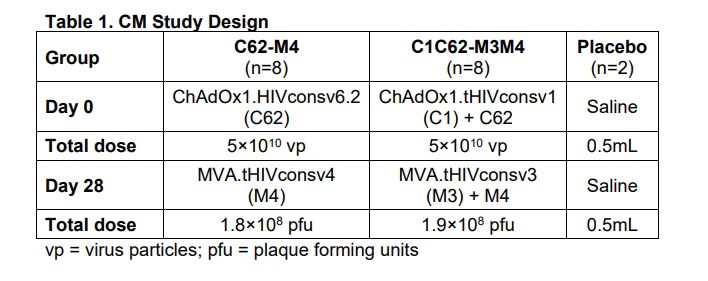
429. A Novel Immunotherapeutic Platform for Amplifying HIV, CMV, or SARS-CoV-2-Specific T-Cell Responses
Poster Abstracts
Page: 101
Marta Santos Bravo, Erin Cole, April Mueller, Christopher Hiner, Agnes Sydenstricker, Adilyn Voss, Jian Hua, Scott Gartforth, Steven Almo, Harris Goldstein
Background
While adoptive cell transfer of HIV-specific T cells is a promising immunotherapy to provide a functional cure for HIV, its development and broader application is limited by the cost, logistical complexity, and variability of current methods for ex vivo expansion of HIV-specific T cells. To address these needs, we describe a novel modular and highly scalable lentiviral-based immunotherapeutic platform, VirTac (Viral particle-based T cell Activator), which consist of lentiviral particles (LVP) containing integral membrane proteins for the ex vivo and in vivo expansion of viral-specific T cells recognizing highly conserved virus-derived peptide antigens.
Methods
We constructed plasmids encoding single chain HLA-A*0201 MHC molecules tethered to viral-derived peptides, either alone (modless) or in combination with an agonist αCD28 scFv, to generate non-infectious LVP that can mimic APC to activate and selectively expand HIV (SL9), CMV (NLV) or CoV-2 (YLQ)-specific CD8 T cells. Expansion of virus-specific CD8 T cells was determined by tetramer staining. Cytotoxicity against peptide-loaded T2 cells and cytokine production were determined by flow cytometry. Viral suppression assays were performed using HIV and CMV with luciferase gene reporters.
Results
In vitro treatment of PBMC (n=2-5 donors) with VirTac presenting HIV-, CMV- or CoV-2-peptide MHC constructs markedly expanded the fraction of CD8 T cells that were HIV-specific (up to 23%) CMV-specific (up to 87%) or CoV2-specific (up to 67%), respectively (Fig. 1A, upper panel). Intravenous infusion of HIV- or CMV-VirTacs expanded HIV- and CMV-specific T cells, respectively, by ~30-fold in NSG mice intrasplenically engrafted with donor PBMCs (Fig. 1A, lower panel). Inclusion of agonist αCD28 scFv in the HIV-, CMV- or CoV-2-VirTacs increased in vitro or in vivo expansion of HIV-, CMV- or CoV-2-specific CD8 T cells in some donors. Antigen-specific T cells expanded with VirTac were highly functional, displaying potent cytotoxic capacity (Fig. 1B), antigen-specific IFNg and TNFα production and suppression of in vitro HIV or CMV infections.
Conclusions
VirTac represents a flexible and robust platform for the ex vivo expansion of CD8 T cells targeting HIV and other viral-derived epitopes for adoptive cell transfer. This strategy may also support in vivo modulation to provide sustained anti-HIV activity and enable personalized antigen-specific strategies to achieve a functional cure for HIV.
The figure, table, or graphic for this abstract has been removed.
430. Therapeutic HIV Vaccine ± TLR4 Adjuvant Impact on Monocyte Subsets in Early-Treated Youths With HIV
Poster Abstracts
Pages: 101-102
Alessia Neri1, Giulio Olivieri2, Chiara Pighi2, Arianna Rotili1, Sarah Moreland3, Elena Morrocchi1, Suteeraporn Pinyakorn4, Glenna Schluck4, Ellen Turk3, Shaun Barnabas5, Mark Cotton5, Mark de Souza6, Nicola Cotugno2, Merlin Robb4, Paolo Palma2
Background
Monocytes (MO) play a crucial role in restricting HIV replication and spread. After HIV acquisition, MO show increased activation and differentiation, altering subset distribution despite ART. MO enhance vaccine induced immune responses and contribute to trained immunity, boosting protection. We here investigated changes in MO phenotype in a therapeutic vaccine study.
Methods
HVRRICANE is the 1st pediatric combined (HIVIS DNA + MVA-CMDR) therapeutic HIV vaccine ± Cervarix co-administration to provide TLR4 immunoadjuvant. 25 adolescents with perinatal HIV, suppressed on ART (since 6 months of age) were enrolled (Fig.1). Comprehensive phenotypic analysis of the MO populations was conducted across the entire cohort using a new gating strategy based on CD86, CCR2, HLA-DR, CD64, and CD33 expression. Data acquisition was performed using a BD Symphony A3 cell analyzer through multi-parametric approach. High dimensional analyses concatenating all participant events at baseline and weeks 16, 36, and 48 identified 8 cells clusters, analyzed via t-SNE for marker expression and temporal trends (Fig.1).
Results
Classical (CL, CD86+CD64highCCR2+HLADRlow) MO showed a significant longitudinal increase (p=0.034) only in Arm 1 (no TLR4 agonist) from a baseline median of 38.4%, peaking at wk 8 (51.6%), and remained elevated at wk 48 (44.3%). This increase was accompanied by a waning trend in the Intermediate (ITM; CD86+CD64highCCR2lowHLADRhigh), from a baseline of 2.57% and reaching 1.09% at wk 48. Arm 1 also showed significant (p=0.034) changes in CD93 geometric mean fluorescence intensity (gMFI) on CL MO over time. This subset presented lower CD49d gMFI at weeks 16 (p=0.045), 40 (p=0.031) and 48 (p=0.038) in Arm 1 than to Arm 2 (with TLR4 agonist), while CD11a gMFI was higher (p=0.037) in Arm 1 at wk 40. In contrast, Arm 3 (only TLR4 agonist) showed an increasing trend in non-classical (NC; CD86+CD64lowCD33low) MO, confirmed by higher (p=0.043) Ki67 gMFI at wk 36 than to Arm 1. Additionally, in the ITM subset, Arm 2 exhibited a substantial (p= 0.028) increase in CD11b gMFI, peaking at wk 48; while Arm 1 demonstrated a significant (p=0.009) decrease in CD11c gMFI above the on ITM MO over time.
Conclusions
We observed distinct MO subset distribution and integrin/ receptor expression following DNA prime and MVA boost vaccination regimens with Cervarix® co-administration.
The figure, table, or graphic for this abstract has been removed.
431. Enhanced HIV Antibody Precursor Development With Early-Life Germline Targeting Immunization
Poster Abstracts
Page: 102
Yasmine Issah1, Ashley N. Nelson1, Xintao Hu1, Xiaoying Shen2, Gabriel Ozorowski3, Leigh M. Sewall3, Shiyu Zhang3, Andrew B. Ward3, David Montefiori2, Rogier W. Sanders4, John P. Moore1, Koen K. Van Rompay5, Kristina De Paris6, Sallie Permar1
Background
HIV is a highly mutable virus, therefore a vaccine that induces protective, broadly-neutralizing antibodies (bnAbs) before sexual debut is critical to eliminate the ~410,000 new infections annually among adolescents worldwide. Recent work has established that children living with HIV develop bnAbs earlier and at a higher frequency than adults. In this study we compared the ability of a CD4 binding site (CD4bs) germline-targeting SOSIP trimer immunization strategy to induce precursor bnAbs in infant and juvenile rhesus macaques (RMs).
Methods
Infant (n=5) and juvenile (n=4) RMs received 3 immunizations of the germline-targeting BG505 GT1.1 SOSIP trimer (50mg) with the 3M-052-SE adjuvant 6 weeks apart. All RMs were then boosted 12 weeks later with the BG505.664 WT SOSIP trimer 3 times in 6-month intervals. After an over one-year follow-up, all animals received two boosts with a mosaic Clade B SOSIP nanoparticle. Vaccine-elicited antibody responses were monitored through 2.5 years after the 1st vaccination.
Results
BG505 GT1.1 SOSIP trimer immunization consistently induced higher magnitude vaccine-specific IgG binding in infants compared to juvenile RMs yet, plasma autologous tier 1 and 2 neutralization responses were similar between the groups. Additionally, analysis of circulating B cells at week 14 showed that the infants had higher frequencies of BG505 GT1.1-specific B cells than the juveniles following the last BG505 GT1.1 prime. Plasma nsEMPEM revealed 4 infants developed CD4bs targeting antibodies compared to 3 juveniles. Similarly 3 of 5 GT1.1 SOSIP-immunized infants exhibited a plasma neutralization signature indicating CD4bs bnAb precursor development, compared to only 1 of 4 juvenile RMs. Interestingly in the RMs, higher tier 1 neutralization titers showed a trend in predicting the likelihood of an animal to develop bnAb precursors. Following the nanoparticle boost, an additional infant developed the CD4bs precursor bnAb signature, while this response was not maintained in the one juvenile. Nanoparticle boosting also improved the breadth of heterologous neutralization in 4 out of the 5 infants and 2 out of the 4 juveniles.
Conclusions
Our data indicates that sequential immunization with germline-targeting BG505 SOSIP trimers may elicit CD4bs bnAb precursors more frequently in infants compared to juveniles. Our results highlight the potential for an HIV immunization strategy in early life to induce protective bnAb responses and can inform future human pediatric clinical trials.
The figure, table, or graphic for this abstract has been removed.
432. A VLP-Forming mRNA Vaccine Protects Macaques From Heterologous SHIV Infection
Poster Abstracts
Page: 102
Peng Zhang1, Vinay Gopan1, Mamta Singh1, Flavio Matassoli1, Parul Agrawal2, Shayne Andrew1, Kathryn Foulds1, Sunny Himansu3, Leonidas Stamatatos2, Andrea Carfi3, Paolo Lusso1
Background
The development of a protective vaccine remains one of the top priorities for the control of the HIV/AIDS pandemic on a global scale. Due to its versatility and ability to drive endogenous protein production, mRNA is emerging as a promising platform for an HIV vaccine. We previously reported that a virus-like particle (VLP)-forming HIV-1 env-gag mRNA vaccine elicited heterologous tier-2 neutralizing antibodies and protection from heterologous tier-2 SHIV (AD8) in rhesus macaques (Nat. Med. 27:2234, 2021). Here, we report further optimization of this vaccine platform.
Methods
In two separate studies, juvenile rhesus macaques were immunized repeatedly over the course of 12 months with mRNA expressing different HIV-1 Envs in combination with Gag and GagPol to produce mature VLPs. Immunized animals were longitudinally studied for trimer-binding and neutralizing antibodies, virus-specific T-cell responses and other immune parameters. After immunization, the animals were challenged with weekly low-dose intra-rectal inoculations of SHIV-AD8. Infection was monitored by plasma viremia using TaqMan PCR.
Results
We further optimized our mRNA vaccine platform by addition of the viral protease (using full-length gag-pol transcript) to produce mature VLPs, and by priming with the germline (gl)-engaging Env 426c-DG3, which in the VLP/mRNA formulation showed exceptional potency in VRC01-gl knock-in mice. In two pre-clinical studies in macaques, sequential immunization with VLP/ mRNA formulations expressing Envs from 3 clades (A,B,C) reproducibly elicited heterologous tier-2 neutralizing antibodies, along with strong Env- and Gag-specific CD4+ T-cell responses, including T-follicular helper cells, while CD8+ T-cell responses were less pronounced. Inclusion of the protease induced better protection from SHIV-AD8 compared to Env+Gag alone. Protection correlates included heterologous tier-2 neutralizing antibodies, as well as Env-specific antibodies present in mucosal secretions.
Conclusions
A VLP-forming mRNA vaccine supplemented with the viral protease and utilizing an optimized priming immunogen was effective in inducing broad-spectrum neutralization and protection in a relevant nonhuman primate model. A Phase-I clinical protocol (HVTN 310) is under development to evaluate the safety and immunogenicity of the VLP-forming mRNA vaccine in healthy human volunteers.
433. Cytoplasmic Tail Engineering of Stabilized mRNA Env Immunogens Enhances Neutralizing Response
Poster Abstracts
Page: 102
Edward Kreider1, Ashwin N. Skelly1, Weimin Liu1, Yuhong Xiao1, Wenge Ding1, Amie Albertus1, Natalia Perez Devia1, Barton Haynes2, Pamela J. Bjorkman3, George M. Shaw1, James Hoxie1, Beatrice H. Hahn1, Drew Weissman1
Background
Certain Env features, such as low cell surface expression and conformational lability, have hampered mRNA vaccine development for HIV. We previously found that ablation of Env endocytosis motifs and incorporation of a truncated HIV/SIV chimeric cytoplasmic tail (SIV.CT) increased surface expression on virions and cells transduced with vaccinia-vectored immunogens. Here, we incorporated this SIV.CT modification into mRNA immunogens and measured its impact on cell surface expression and immunogenicity.
Methods
mRNAs encoding prefusion-stabilized versions of Subtype A, AE, C, and D HIV-1 Envs, including germline targeting Envs RC1 and 11MUTB, were produced. Cell surface protein expression from mRNA was assessed following transfection of 293F cells and staining with conformationally-dependent antibodies (e.g., PGDM1400, 17b) using flow cytometry. To test immunogenicity, BALB/c mice were immunized intramuscularly at weeks 0 and 4 with 1 ug of mRNA-lipid nanoparticles encoding SIV.CT or gp160 variants of RC1 or 11MUTB. Serum drawn at weeks 2, 3, and 6 was evaluated using autologous antigen-specific ELISAs and neutralization assays.
Results
Properly folded, prefusion RC1 and 11MUTB trimers were expressed on the surface of mRNA-transfected cells as demonstrated by high PGDM1400 (V2-apex) signal and low 1393A (V2i) and 17b (CD4i) signals. Notably, DH270.6 (V3) and PGDM1400 signals were ~1 log higher for Envs containing the SIV. CT modification as compared to gp160 Envs. Application of our stabilization + SIV.CT approach to 8 additional HIV-1 strains yielded similarly high cell surface expression of properly folded trimers. Sera from RC1- and 11MUTB-vaccinated mice drawn 2 weeks post-prime demonstrated autologous binding antibodies in all animals, with SIV.CT-immunized animals showing consistently higher titers than gp160-immunized ones (RC1 SIV.CT- vs. gp160-primed geomean AUC: 59.2 vs 33.4; 11MUTB-primed: 67.7 vs 23.9). Further, SIV.CT variants elicited 10-28-fold greater neutralizing titers 3 weeks post-prime (geomean reciprocal ID50 RC1-primed animals: 2,155 vs. 219; 11MUTB-primed: 7,246 vs. 251) that remained 4.2-11.7-fold higher following homologous boost at week 6.
Conclusions
Engineering of the mRNA-encoded Env CT increases cell surface expression and, in combination with trimer stabilization, confers enhanced immunogenicity in mice. This strategy may be applied to generate mRNA vaccines from genetically diverse Env strains for preventative and therapeutic vaccine applications.
434. Improved Immunogenicity of a VLP-Forming mRNA Vaccine for HIV-1
Poster Abstracts
Page: 103
Mamta Singh
Background
The HIV-1 envelope (Env) is the sole target of broadly neutralizing antibodies and, therefore, the context in which it is presented to the immune system is critical for efficiently engaging responder B cells. We previously designed and tested in pre-clinical models a virus-like particle (VLP)-forming env-gag mRNA vaccine that elicited tier-2 neutralizing antibodies and protection against heterologous SHIV infection in rhesus macaques. Here, we further optimize this platform by inclusion of the viral protease to process Gag and produce mature, rather than immature, VLPs. We hypothesized that protease supplementation could impart mobility to membrane-anchored Env spikes, resulting in Env clustering and subsequent B-cell receptor (BCR) crosslinking.
Methods
Appropriately dosed and timed expression of the protease was achieved using a full-length gag-pol mRNA transcript. Mice immunizations were performed to investigate the immunogenicity of the improved vaccine platform. To elucidate the mechanisms underlying the increased effectiveness of protease-containing vaccine platform, we used cryo-electron tomography (cryo-ET) to visualize the structure and organization of Env spikes on the surface of mature and immature virus like particles (VLPs).
Results
We found that mRNA formulations both with and without the protease produce VLPs with high density of Env trimers on their surface. Immunization of mice with HIV-1 env mRNA in combination with SIV gag and gag-pol mRNAs induced higher titers of trimer-binding and neutralizing antibodies than env alone or env + gag mRNAs. By cryo-ET, immature VLPs featured a well-organized, assembled Gag lattice underneath the viral membrane and displayed infrequent Env spikes on their surface, which did not show clustering. In contrast, in mature VLPs an organized Gag lattice was not observed, while some particles showed initial core condensation; mature VLPs displayed a higher density of Env spikes, with apparent clustering of 3-4 spikes visible on some particles.
Conclusions
Clustering of Env spikes on the surface of mature SHIV gag VLPs may have enhanced BCR crosslinking and, thereby, imparted superior immunogenicity to our gag-pol supplemented VLP-forming mRNA vaccine. These results suggest that vaccines capable of generating mature VLPs may have an enhanced effectiveness.
435. An AI-Redesigned Contemporary HIV-1 Env Consensus Antigen Is More Immunogenic Than a Native Sequence
Poster Abstracts
Page: 103
Eric Lewitus1, Hongjun Bai2, Thujitha Thuraisamy2, Bonnie Slike2, Michelle Zemil3, Tanya Krubit2, Diane Bolton2, Gordon Joyce2, Shelly Krebs1, Victoria Polonis1, Mangala Rao2, Mohamad-Gabriel Alameh4, Julie Ake2, Sandhya Vasan3, Morgane Rolland1
Background
There is a need to design novel HIV-1 vaccine candidates that could elicit broadly neutralizing antibodies (bnAbs) and that reflect currently circulating viruses. Here we tested a subtype B envelope (Env) consensus designed in silico with shortened hypervariable loops and a native B Env to compare their Ab binding and neutralizing responses in rabbits.
Methods
A subtype B Env consensus sequence was derived from circulating viruses sampled since 2011. Env hypervariable loops were modeled using AlphaFold2. HIV-1 env sequences were designed as membrane-bound stabilized trimers and expressed as mRNA encapsulated in lipid nanoparticles (mRNA/ LNP). Rabbits were immunized at weeks 0, 4 and 8 with 20ug of mRNA/LNP encoding either a consensus or a native env (n=8/arm) and blood was collected every other week until week 12. Binding Abs were measured with a multiplex Luminex assay (using fold-change over baseline) and neutralization with a TZM-bl assay using tier 1 (n=5) and 2 (n=12) pseudoviruses.
Results
AI-models were used to compare different designs for the hypervariable loops V1, V2, V4 and V5 of the subtype B consensus Env. Modified loops were created to promote Ab accessibility, including by shortening V1, V2 and V5. A native subtype B sequence was selected because it was the Env most sensitive to bnAb neutralization among 32 persons living with HIV-1 in early infection. mRNA transfection showed that both proteins were well-expressed as transmembrane proteins and recognized by bnAbs targeting sites of vulnerability. The contemporary consensus B Env induced higher Ab binding responses than the native Env vaccine (average fold change against 10 heterologous Env-gp120s=1579.2 vs 917.2, p<0.001). Rabbits immunized with the consensus elicited broader and more potent neutralizing responses than those who received the native Env after the second or third immunization. At week 10, 3-4 rabbits in the consensus B vaccine group compared to 1-2 rabbits in the native Env group neutralized the 4 Tier 1 strains. Neutralization titers tended to be higher in the group that received the consensus B Env (p=0.081 against MN3; p=0.041 against SF162). Similar results were obtained when comparing consensus and native subtype C sequences.
Conclusions
Contemporary HIV-1 Env that are redesigned and optimized with AI tools are well expressed and immunogenic. They elicited superior antibody responses than native Env, warranting further testing as vaccine candidates.
436. Incidence and Predictors of STIs and Effect on Immune Activation in the HVTN 705/HPX2008 Trial
Poster Abstracts
Page: 103
Mitch M. Matoga1, Jin J. Kee2, Michal Juraska2, Susan Buchbinder3, Nigel Garrett4, Frank Tomaka5, Wouter Willem5, Alison C. Roxby6, Huub Gelderblom2, Lynda Stranix-Chibanda7, Mina Hosseinipour1, Ludo Lavreys8, M. Juliana McElrath2, Linda-Gail Bekker9, Glenda Gray10, the HVTN705/HPX2008 Research Group
Background
STIs are common among participants participating in HIV vaccine trials. STIs may lead to proliferated immune responses, which could affect immune responses induced by HIV vaccines.
Methods
We conducted a secondary analysis of HVTN 705/HPX2008, a phase 2b placebo-controlled efficacy trial of Ad26.Mos4.HIV and aluminum phosphate-adjuvanted clade C gp140 in preventing HIV-1 infection in cisgender women aged 18 to 35 in Malawi, Mozambique, South Africa, Zambia and Zimbabwe. We calculated the baseline prevalence and incidence of the first occurrence of gonorrhea, chlamydia, trichomoniasis and syphilis or any STI between enrolment and 36 months and explored predictors of incident STIs using a multivariate Cox proportional hazards model. Baseline immune activation markers (T-cell, NK/ILC and DC panels) were compared among participants with and without baseline chlamydia infection by calculating weighted geometric mean ratios (GMR).
Results
In the MITT cohort of 2630 women, 841 (32.0%) had an STI at baseline. Of these, median age was 22 years (range: 18, 35) and most (82.4%) had secondary education. In the month prior, the median number of sexual partners was 2 (range: 0, 600) and sexual acts was 8 (range: 0, 800), with minimal (10.0%) consistent condom use. About half (47.8%) of participants exchanged sex for money/gifts and used alcohol during unprotected sex (43.2%) but most (94.1%) reported no prior STI. The incidence of any STI was 27.5% (95% CI: 25.7, 29.4) [chlamydia 17.4% (95% CI: 16.2, 18.7), gonorrhea 9.0% (95% CI: 8.2, 9.8), trichomoniasis 6.7% (95% CI: 6.1, 7.4), and syphilis 1.8% (95% CI: 1.5, 2.2)]. The cumulative incidence of any STI was 52.7% (95% CI: 50.3%, 55.0%) over 36 months. Lower risk of incident STIs was associated with increasing age (hazard ratio (HR): 0.92, 95% CI: 0.90, 0.94) and higher likelihood was associated with recent anal sex (HR: 1.54, 95% CI: 1.07, 2.21) and prior STI (HR: 1.65, 95% CI: 1.16, 2.35). No differences were observed in weighted GMR for a battery of baseline immune markers from women with and without baseline chlamydia except for CD123+ pDCs (weighted GMR = 1.23, 95% CI: 1.06, 1.43).
Conclusions
STIs were common among participants in HVTN 705/HPX2008. Risk of incident STIs was higher among women with recent anal sex or prior STI. Generally, Chlamydia infection does not appear to result in differences in baseline immune activation and should not alter immune responses to vaccination.
437. 3-Step Heterologous Immunization Schema Results in Development of Cross-Neutralizing VRC01-Class Abs
Poster Abstracts
Pages: 103-104
Parul Agrawal1, Kelsey Salladay1, Arineh Khechaduri1, Julianna A. Rose1, Latha Kallur Siddaramaiah1, Todd Reese1, Xiaoying Shen2, David Montefiori2, Michael S. Seaman3, Marie Pancera1, Leonidas Stamatatos1
Background
HIV continues to be a major global public health issue with ~39.9 million people living with it at the end of 2023 (WHO). An effective vaccine is therefore needed, that can elicit diverse immune responses including broadly neutralizing antibodies (bnAbs). One such class of bnAbs that recognize the CD4-binding site on the HIV-1 Env are the VRC01-class of antibodies. They are derived from the pairing of VH1-2*02 antibody heavy chains with 5-amino acid long CDRL3 expressing light chains and have been isolated from several people living with HIV-1. They not only prevent infection of humanized mice by HIV-1 and of non-human primates by S(H)IV, but also prevented HIV-1 acquisition from susceptible viruses in two phase 3 clinical trials (HVTN 703/704). Hence, VRC01-class antibody elicitation is expected to be essential for an effective HIV-1 vaccine.
Methods
We sequentially administered three different Env-derived immunogens in a transgenic mouse model (engineered by the Fred Alt group). Post final immunization, Env+ CD4-BS+ B cells were isolated from spleens of immunized animals and their VH/VL genes sequenced. Selected VH/VL pairs were generated as IgGs, and their binding and neutralizing properties were determined.
Results
The elicited antibodies showed accumulated somatic mutations present in human VRC01-class bnAbs and several of them neutralized >30% of heterologous tier 2 viruses. Here, for the first time, we report on ‘prime-boost’ immunization regimens that lead to accelerated development of VRC01-class antibodies capable of neutralizing diverse heterologous, tier 2 HIV-1 viruses.
Conclusions
Our study based on the ‘germline-targeting’ vaccination approach, identifies an immunization strategy that rapidly guides the maturation of VRC01-class antibodies towards their cross-neutralizing forms. These efforts will inform the development of phase 1 clinical trials that are focused on the elicitation of broadly neutralizing HIV-1 antibody responses.
438. Evolution and Durability of Mpox-Specific Antibodies Among Vaccinated or Infected Individuals
Poster Abstracts
Page: 104
Wang-Da Liu1, Tai-Ling Chao2, Kai-Hsiang Chen1, Hsin-Yun Sun1, Guei-Chi Li1, Wen-Chun Liu1, Cheng-Hsin Wu1, Yi-Ching Su1, Chia-Yi Lin1, Chih-Hao Hung1, Sui-Yuan Chang2, Chien-Ching Hung3
Background
While two-dose vaccination using modified vaccinia Ankara-Bavarian Nordic (MVA-BN) vaccine has been shown to be effective in preventing Mpox among at-risk populations, data on the short-term durability of serological responses are scarce.
Methods
This prospective study enrolled participants planning to undergo 2-dose MVA-BN vaccination or having natural infection to investigate the serological responses after vaccination or infection. Blood samples were collected for determinations of anti-A29 and anti-H3L IgG. We randomly selected 40 participants who had undergone 2-dose vaccination, including 25 people with HIV (PWH) and 15 people without HIV (PWoH), who had completed one-year follow-up with confirmation of seroconversion for at least one of the IgG to determine the neutralizing ability with the use of a plaque reduction neutralizing test (PRNT).
Results
441 participants who had completed 2-dose MVA-BN vaccination were included, including 284 PWH and 157 PWoH. Among PWH, PWoH, and individuals with prior smallpox vaccination, the seroconversion rate for anti-A29 after the second dose of vaccination was 18.2% and 61.2%, 10.9%, respectively, and that for anti-H3L IgG was 65.0%, and 51.6% and 90.6%, respectively. Twelve (18.8%) of 64 and 41 (19.4%) of 211 participants seroreverted for anti-A29 and anti-H3L IgG, respectively, after a 7-month observation. Factors associated with loss of serologic response (seroreversion) included chronic HBV infection (aOR, 4.84; 95% CI, 1.02-23.11) and HCV seropositivity (aOR, 4.84; 95% CI, 1.02-23.11) for anti-A29 IgG, and participants with prior smallpox vaccination (OR, 0.32; 95% CI, 0.11-0.95) for anti-H3L IgG. Of the total of 150 samples examined by PRNT, 103 (68.7%) showed neutralizing ability. The titer of anti-H3L MPXV IgG was modestly correlated with the titer of PRNT (r = 0.38, p < 0.001), while that of anti-A29 MPXV IgG showed no correlation with the titer of PRNT (p=0.14). Of the 16 participants with recent Mpox, 3 (30.0%) and 9 (90.0%) of 10 remained seropositive for anti-A29 and anti-H3L IgG, respectively, at the end of 7 months of follow-up.
Conclusions
We found that the anti-A29 and anti-H3L antibodies waned quickly among those have undergone MVA-BN vaccination and even among those with natural infection. In addition, among those tested positive for Mpox-specific IgG, the titers of anti-H3L IgG might be a better index for predicting neutralizing ability compared with the titers of anti-A29 IgG.
439. Antibody Responses Decline Post-MVA Vaccination but Persist Following Mpox Infection
Poster Abstracts
Page: 104
Joanne Byrne1, Aisling Murphy2, Alejandro Abner Garcia Leon1, Gurvin Saini1, Alan Landay3, Liem Binh Luong Nguyen4, Cathal O'Broin2, Mary Horgan1, Carlos Mejia-Chew5, Corinna Sadlier6, Eoghan de Barra7, Jane A. O'Halloran1, Virginie Gautier1, Mallon W. G. Paddy1, Eoin R. Feeney1, the All Ireland Infectious Diseases Cohort Study
Background
Clade IIb mpox cases have declined globally, likely due to vaccine and post-infection immunity alongside behavioural changes. However, breakthrough infections in vaccinated individuals and reports of reinfections raise questions about immune durability and the need for vaccine booster doses. We aimed to assess the durability of antibody responses following mpox and Modified Vaccinia Ankara (MVA) vaccination.
Methods
In a prospective cohort study, we measured plasma IgG titres to Vaccinia virus (VACV) B5 antigen in adults with prior mpox infection, MVA vaccination and historical controls. We used ROC analysis to define the optimum threshold for seropositivity against previously identified true positive and negative samples. Antibody kinetics post-infection or vaccination were analysed with generalised additive mixed models (GAMMs). Multivariable logistic regression identified factors associated with retaining seropositivity post-vaccination. Results are median (IQR) unless specified.
Results
A total of 122 participants (100% male, age 36 [33–44] years, 93% Caucasian, 25% people with HIV [PWH], 11% with prior smallpox vaccination) were sampled at 652 (607–700) days post MVA vaccination (72 with a paired sample 378 [237–465] days prior), alongside 13 participants (100% male, aged 33 [31–40] years, 100% Caucasian, 23% PWH, 0% with prior smallpox vaccination) at 747 (677–865) days post mpox (12 with a paired sample 378 [248– 459] prior). Anti-VACVB5 IgG titres >3284 arbitrary units/ml offered 98% (95% CI: 90–100%) sensitivity and 84% (78–95%) specificity to distinguish seropositivity. Of those with prior mpox, 85% (11/13) remained seropositive at 747 (677–865) days (figure). In contrast, the mean predicted VACVB5 titres following MVA vaccination fell below the seropositive threshold at 472 (95% CI: 389–587) days (figure), with only 32% (39/122) remaining seropositive at 652 (607–700) days. PWH had significantly lower odds of retaining seropositivity post-vaccination (OR: 0.17 [95% CI: 0.04–0.54], p=0.01), an association that persisted when adjusted for time since vaccination, age and prior smallpox vaccination, (aOR: 0.19 [95% CI: 0.04–0.61], p=0.01).
Conclusions
Post vaccination mpox VACVB5 titres declined significantly over time, with the majority, particularly PWH, losing seropositivity two years post primary vaccination while seropositivity following mpox infection persisted. How these data relate to risk of reinfection or need for booster vaccination remains to be determined.
Figure 1.
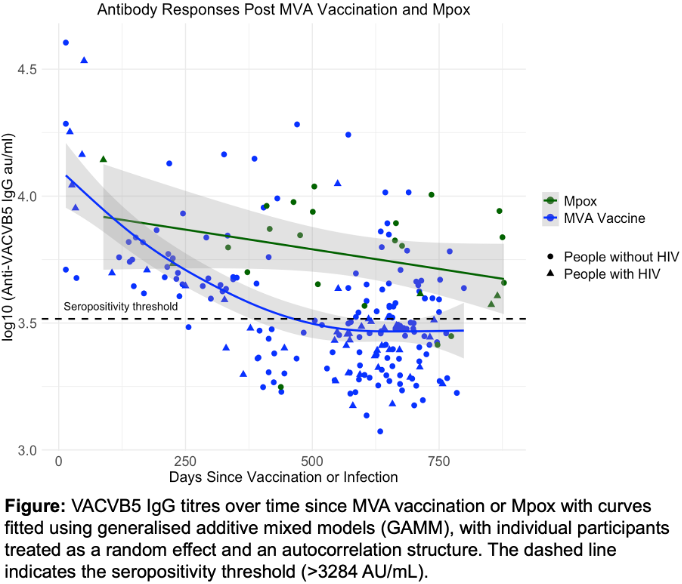
440. Immune Response to Mpox in PWH and PrEP Users After Infection, but Not in Response to Vaccination
Poster Abstracts
Page: 105
Olivia de la Calle-Jiménez1, Guiomar Casado Fernández1, Inés Armenteros-Yeguas2, Luis Fernando Lemus Aguilar1, Jorge Pérez-García2, Javier Rodríguez Añover3, Elena Mateos1, Reynaldo Homen3, Noemí Cabello-Clotet3, Anabel Negredo1, María Paz Sánchez Seco1, Jorge Del Romero4, Vicente Estrada3, Montserrat Torres1, Mayte Coiras1
Background
In May 2022, WHO considered the outbreak of mpox infection as a public health emergency of international concern (PHEIC). Vaccination was recommended for people living with HIV (PWH) and users of pre-exposure prophylaxis (PrEP). The need to vaccinate the population at risk worldwide, mainly PWH and PrEP users has increased. The immune response generated after infection was analyzed in comparison with vaccinated individuals.
Methods
We recruited mpox-infected persons (mpox+)(n=31), mpox-vaccinated persons (n=13;n=11 one and two doses) and persons who were not in contact with mpox and smallpox (non-exposed)(n=38). Mpox peptides were used to stimulate CD4+ and CD8+ T cells and the expression of different markers and cytokines was analyzed by flow cytometry.
Results
1)The mpox+ participants were infected a median of 258(IQR 254-285) days ago; those vaccinated with one dose a median of 339 days ago(IQR 288-349) and those who received two doses 126(IQR 72-169) days ago. The median age of the groups was 37(IQR 34-47), 34(IQR 32-40), 38(IQR 35-41) and 34(IQR 27-46) years respectively. All participants were male. There were 25 PWH mpox+(80.6%), 4 PWH vaccinated(32.2%) and 11 PWH in the non-exposed group (28.9%). 2)CD4+ T-cell stimulation induced a 1.5(p=0.0128) and 1.3(p=0.0486) fold decrease in lymphocyte levels in the mpox+ group compared to single dose vaccinated and non-exposed group. CD4 lymphocytes expressed 1.8(p=0.0439) times higher levels of IL-2 in mpox+ individuals compared to those vaccinated with two doses. 3)Naive CD4+ T cells in the mpox+ group expressed higher levels of CD25+ marker (1.5-fold;p=0.0155) compared to the non-exposed group and of IFNγ (2.5-fold; p=0.0265) compared to those vaccinated with two doses. 4)Central memory CD4+ CD4+ T cells were increased 3.1 (p=0.0118) and 2-fold (p=0.0183) more in mpox+ individuals compared to those vaccinated with two doses and the non-exposed group, respectively. 5)CD8+ T cells expressed 1.6 (p=0.0321) and 2.1 (p=0.0084) times more IFNγ and TNFα than those vaccinated with one dose respectively. 6)No difference was found between the response of HIV-infected and PrEP users.
Conclusions
People infected with mpox showed a potent and long-lasting immune response to mpox peptides. Vaccination against mpox did not produce significant changes in the capacity to response to mpox peptides compared to those not previously exposed to the virus.
441. MVA Vaccine Produces Potent Serological and Immunological Response to Mpox in People With HIV
Poster Abstracts
Page: 105
Maryam Khan1, Scott Jones2, Hafiza Rahman3, Helena Miras3, Ashley Otter2, John Thornhill1, Neil McCarthy1, Krishanthi Subramaniam4, Chloe Orkin1, the SHARE Collaborative
Background
People living with HIV (PLWH) comprised a large proportion of those who acquired mpox during the global outbreak. The predominant control strategy for mpox is the use of modified vaccinia virus Ankara (MVA), a smallpox vaccine. However, the efficacy and durability of this vaccine in PLWH is unclear. We investigated immune responses in PLWH with past mpox infection and those vaccinated with two doses of MVA to better understand mpox immunity in context of HIV.
Methods
Study participants were PLWH, male, virally suppressed (VL<50 c/ mL) on ART with no evidence of immunosuppression (median CD4:931, IQR:394-892, CD8:515, IQR:393-892). Plasma and PBMC samples from past-infection (PI) cohort (n=9, median age= 42, IQR=36-47) and vaccination (Vax) cohort (n=8, median age =41, IQR=41-53) were taken at single time-point at least three months post-infection or post-vaccination. IgG responses to 9 mpox (MPXV) recombinant antigens (A5L, A27L, A29L, A35R, B2R, B6R, E8L, H3L, M1R) and 3 Vaccinia virus (VACV) (VA27L, VA33R, VB5R) were measured using Luminex and reported as mean fluorescent intensity (MFI). IFN-γ CD4+ and CD8+ T-cell responses were measured in response to pools of MPXV-specific and orthopoxvirus (OP)-specific peptides using ELISPOT and reported as spot forming units (SFU)/106 PBMCs.
Results
15/17 participants produced potent serological responses to MPXV and VACV antigens. No difference in serological responses was observed for 8 MPXV antigens 3 VACV antigens between PI and Vax cohorts (p=0.6). MFI for A27L (median, 95%CI), an infection-specific antigen was significantly higher (p=<0.05) in PI (2819,1754-4537) compared to Vax (133,823-1230). Notably, two PLWH in Vax cohort produced no detectable IgG to any antigens, however, both produced potent OP T-cell responses. Overall, CD4+ and CD8+ T-cell responses (median, 95%CI) to OP peptides were significantly higher (p=<0.05) in Vax cohort (46,13-200) compared to PI cohort (22,13-54) (Fig1). MPXV T-cell responses were comparable in PI and Vax cohorts (p=0.07).
Conclusions
MVA vaccination and mpox infection produced potent serological responses in PWH. MVA resulted in higher CD4+ and CD8+ T-cell responses to OP peptides in the Vax cohort which has important public health implications on how vaccines should be prioritised. These findings also highlight the importance of monitoring how these responses are sustained in PLWH. This work is relevant to an immunocompetent virally suppressed cohort with no evidence of immune activation.
Figure 1.
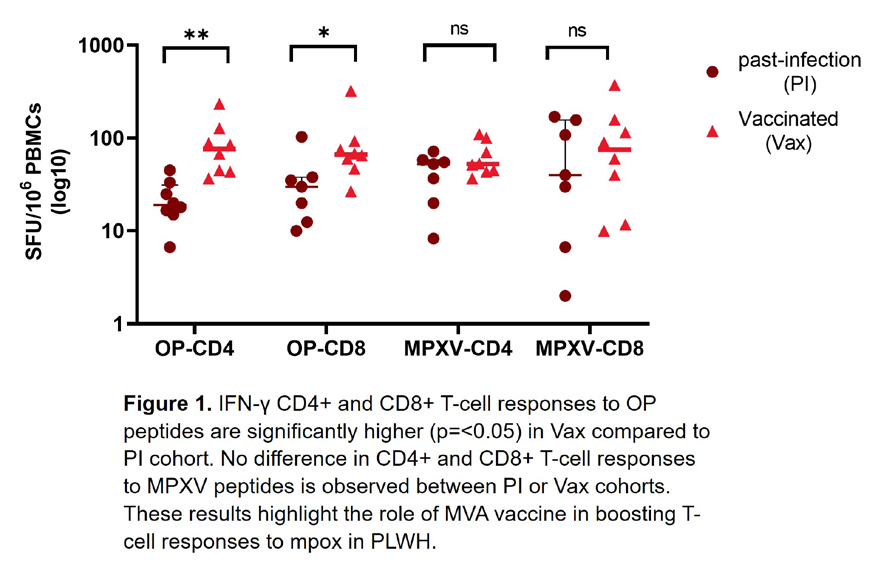
442. Mpox-Specific T-Cell Responses in Recovered and Vaccinated Individuals
Poster Abstracts
Pages: 105-106
Aideen S. Teeling1, Thomas C. Morningstar1, Antonio Estacio2, Feng Yun Yue1, Megan Buchholz2, Katerina Pavenski2, Patti Lou Cheatley2, Darrell H. S. Tan2, Annam Imran1, Suji Udayakumar1, Joseph De Fazio1, Mutian Wang1, Mario Ostrowski1
Background
In 2022, Clade IIb human monkeypox virus (MPXV) led to Mpox outbreaks in many non-endemic countries. Modified vaccinia Ankara vaccines (Imvamune®) are used to curb MPXV transmission. However, vaccine effectiveness is limited and Mpox immunity is not well characterized, especially in persons living with HIV (PLWH). We hypothesized that T cell responses to MPXV antigens produced early in infection may be effective in immune clearance.
Methods
Using the Immune Epitope Database, we created a panel of 46 peptides derived from proteins produced early in poxvirus infection also present in MPXV Clade IIb. 28 male participants from Toronto, Canada (mean age = 41 years; range = 21-75) were enrolled: 15 (53%) were PLWH all on anti-retroviral therapy (ART), 10 individuals recovered from Mpox (MPXV-R; median = 376 days post symptom onset), 9 received two doses of Imvamune® (MPXV-V; median time since second dose = 5 mo), and 9 were poxvirus-naïve individuals (MPXV-N). Peptide specific interferon gamma (IFN-g) and granzyme B (GB) responses were determined using ex vivo peripheral blood mononuclear cells (PBMC) by enzyme-linked immunosorbent spot assays in spot-forming cells per million PBMC (SFC/106 PBMC). Peptide responses were considered positive if SFC/106 PBMC were at least twice the average MPXV-N response and ≥ 20. We compared responses among MPXV-R, -V, and -N groups using Kruskal-Wallis tests, and HIV status with Mann-Whitney U tests.
Results
18/19 (95%) of MPXV-R and MPXV-V participants responded to at least 3 peptides, with IFN-g responses being more frequent than GB. The median total IFN-g responses using our peptides were 1794 vs 1078 vs 328 SFC/106 PBMC in MPXV-R, MPXV-V, MPXV-N, respectively (p<0.01). IFN-g responses tended to be greater in PLWH than people without HIV in MPXV-R (median = 2389 vs. 389 SFC/106 PBMC, p=0.067). Total GB responses were much lower than IFN-g responses (e.g. MPXV-R median = 185 SFC/106 PBMC) and significant differences were not observable between the 3 groups (p=0.53). 13 peptides failed to induce GB in any individual.
Conclusions
We find potent MPXV-specific IFN-g responses in MPXV-R and -V individuals. In PLWH who recovered from Mpox, we observed elevated IFN-g responses which suggests immune imprinting. The etiology of low GB responses in MPXV-R and -V is unclear but could suggest loss of circulating effector cytotoxic T cell responses after recovery of Mpox or vaccination. Further epitope characterization of these peptides will inform future MPXV vaccines.
443. Immune Response After 2 Years From MVA-BN Vaccination by HIV Infection and CD4 Cell Count
Poster Abstracts
Page: 106
Valentina Mazzotta, Giulia Matusali, Elelonora Cimini, Francesca Colavita, Jessica Paulicelli, Rozenn Esvan, Aurora Bettini, Alessandra Oliva, Flavia Cristofanelli, Giulia Micheli, Eleonora Tartaglia, Alessandro Caioli, Enrico Girardi, Fabrizio Maggi, Andrea Antinori
Background
The current mpox resurgence raised the question of the residual immune protection conferred by the MVA-BN vaccination received during the 2022 outbreak. Available data on long-term immune response after MVA-BN are scarce, especially in PWH with low CD4 count, who are at high risk of severe and prolonged mpox and a possible impaired vaccine immune response. We described humoral, and T-cell immune responses elicited up to two years from MVA-BN vaccination, stratifying results according to HIV infection and CD4 count to provide elements to establish the need for a vaccine boost.
Methods
Blood samples from people receiving a primary two-dose course of MVA-BN were prospectively collected at the time of each dose administration (T1-T2) and then after 1 (T3), 6 (T4), 12 (T5) and 24 (T6) months. Neutralizing antibodies (nAbs) were assessed by a 50% plaque reduction neutralization test and interferon-γ producing MVA-BN specific T-cells by ELISpot assay. Data at T6 were stratified according to HIV infection and CD4 count (<350 and >350). Kruskal-Wallis with Dunn tests, Wilcoxon, and Mann-Whitney tests were used for statistics.
Results
All the 40 people enrolled were MSM, not primed for smallpox during childhood, with a median age of 41.5 years (IQR 35-45). Among the 20 (50%) PWH, 9 (45%) had a CD4 count <350 mmc. After peaking one month from vaccination, nAb titers progressively dropped in the following time points, with less than 25% of sera reactive at two years (T6). The MVA-BN-specific T-cell response raised early after vaccination, remained stable until one year, and significantly decreased at two years (p=0.02). At that time, no evidence for a difference was detected between PWoH and PWH with CD4 count <350 or >350, both for cellular and neutralizing response.
Conclusions
Two years after receiving MVA-BN, regardless of HIV infection and CD4 count, a poor neutralizing response was detected, while T-cell response persisted despite being substantially diminished. A booster MVA-BN dose at least two years after the primary cycle seems necessary both to reactivate the humoral response and recall the residual cellular response, accounting for most of the clinical protection observed so far.
The figure, table, or graphic for this abstract has been removed.
444. RV550: IL-15 Superagonist N-803 With ART in Acute HIV Infection Enhances T and NK Cell Proliferation
Poster Abstracts
Page: 106
Hiroshi Takata1, Julian Pacheco1, Suteeraporn Pinyakorn2, Carlo Sacdalan3, Pathariya Promsena3, Somchai Sriplienchan3, Kiat Ruxrungtham4, Morgane Rolland2, Jeffrey Safrit5, Bobby Reddy5, Sandhya Vasan6, Lydie Trautmann6, Afam Okoye1, the RV550 and RV254/SEARCH010 Study Groups
Background
In the RV550 clinical trial, we hypothesized that IL-15 superagonist N-803 administration with ART during acute HIV infection (AHI) would limit HIV reservoir establishment and persistence. Here, we characterized the effects of N-803 on T cells and NK cells in peripheral blood (PBMC) and lymph nodes (LN).
Methods
Participants with AHI (Fiebig I-IV) were randomized in an open-label manner to receive N-803 (6ug/kg) subcutaneously at weeks 0, 3, and 6 post-ART (n=10) or no N-804 (n=4), with LN biopsies obtained at week 0 and 4 days after week 6. Immune cell dynamics in PBMC and LN were assessed by flow cytometry. Differences between groups were analyzed by Mann-Whitney U tests.
Results
N-803 induced proliferative expansion of T cells and NK cells, with a significant increase in Ki-67+ CD8+ T cells (Figure 1A) and Ki-67+ NK cells observed after the 2nd dose (p=0.003 and p=0.003, respectively) in PBMC, and after the 3rd dose in PBMC (p=0.004 and p=0.004, respectively) and in LN (p=0.006 and p=0.03, respectively) of participants who received N-803 + ART compared to ART alone. Perforin expression in Ki-67+ CD8+ T cells after the 1st and 2nd dose (p=0.01 and p=0.03, respectively) and EOMES expression in NK cells after the 1st, 2nd and 3rd dose (p=0.04, p=0.03, and p=0.02, respectively) in PBMC were also increased with N-803 treatment. N-803 also increased Ki-67+ CD4+ T cells after the 1st, 2nd and 3rd dose in PBMC (p=0.008, p=0.003, and p=0.002, respectively) and in LN (p=0.004) after the 3rd dose. Finally, we observed increased expression of the anti-apoptotic molecule BCL-2 in proliferating CD4+ T cells in PBMC after the 2nd (p=0.02) and 3rd dose (p=0.048) of N-820 (Figure 1B). Despite these effects, plasma viral loads were comparable between N-803-treated participants and controls.
Conclusions
N-803 induced the proliferation and effector differentiation of CD8+ T cells and NK cells, suggesting it may be effective at enhancing the cytolytic activity of antiviral lymphocytes. The effects of this on HIV reservoir dynamics is under evaluation. DISCLAIMER: The views expressed are those of the authors and should not be construed to represent the positions of the U.S. Army, the Department of Defense, the National Institutes of Health, the Department of Health and Human Services, or the Henry M. Jackson Foundation for the Advancement of Military Medicine, Inc. The investigators have adhered to the policies for protection of human subjects as prescribed in AR-70-25.
Figure 1.
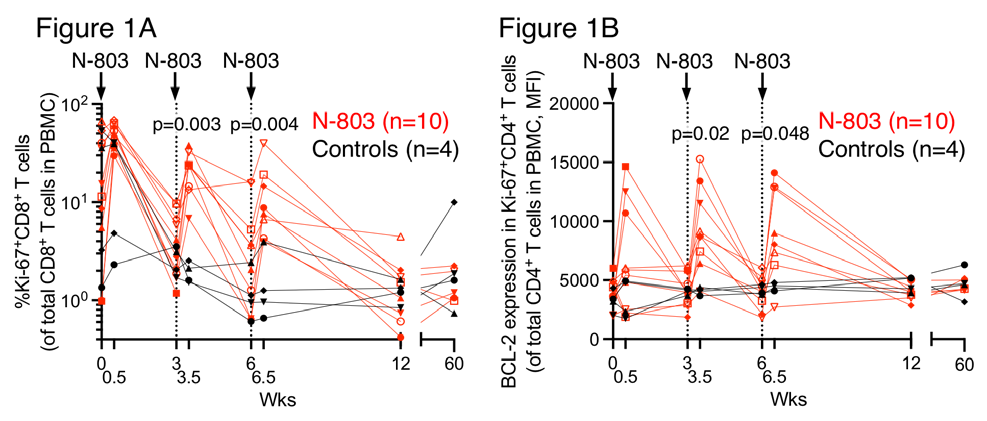
445. NF-kappa-B Signaling in Natural Killer Cells Predicts Post-Treatment HIV Control
Poster Abstracts
Pages: 106-107
Ashley F. George1, Tongcui Ma1, Natalie Elphick1, Kyrlia C. Young1, Reuben Thomas1, Julie Frouard1, Antonio Rodriguez2, Tony R. Figueroa2, Meghann Williams2, Rebecca Hoh2, Jonathan Li3, Katherine S. Pollard1, Steven G. Deeks2, Michael Peluso2, Nadia R. Roan1
Background
For most people with HIV (PWH) on antiretroviral therapy (ART), cessation of ART results in rapid rebound of viremia. However, in rare individuals, called post-treatment controllers (PTCs), HIV is controlled through poorly understood mechanisms. The objective of this study was to leverage multiomics single-cell sequencing approaches to assess the extent to which the transcriptomic and epigenetic features of immune cells in PTCs differ between those non-controllers (NCs).
Methods
A total of 6 PTCs and 7 NCs were identified from the UCSF OPTIONS cohort. PTCs were defined as PWH who upon ART interruption maintained viral loads ≤400 copies/mL for at least two-thirds of the time points while off ART for ≥24 weeks. NCs, by contrast, were defined as PWH who upon ART interruption experienced viral rebound to viral loads exceeding 400 copies/mL within 24 weeks. We performed multiomics single-cell assay for transposase-accessible chromatin (scATAC) and single-cell RNA (scRNA) sequencing on PBMCs collected from these individuals immediately prior to their undergoing treatment interruption. As prior evidence suggests that Natural Killer (NK) cells influence the timing of viral rebound, our analysis specifically focused on these cells.
Results
Analysis of scRNA-seq data revealed 447 genes that were differentially expressed (p<0.05; |log2(fold change)|>0.5) in NK cells from PTCs compared to NCs. Genes involved in the NF-kappa-B signaling pathway, including NFKB1 and RELB, were significantly elevated (p<0.05; |log2(fold change)|>0.5) in NK cells from PTCs, in both the cytolytic CD56dimCD16+ and cytokine-producing CD56brightCD16- NK cell subsets. scATAC-seq analysis revealed increased accessibility of NF-kappa-B transcription factor family binding motifs in NK cells from PTCs, particularly within the CD56brightCD16- NK cell subset. Given the critical role of NF-kappa-B signaling in NK cell effector functions, these findings suggest that CD56brightCD16- NK cells from PTCs may be primed for heightened immune responses, including increased IFN-gamma production.
Conclusions
Upregulation of genes within the NF-kappa-B signaling pathway among PTCs suggests that highly functional NK cells could play a critical role in mediating ART-free control of HIV. Further investigation of how NF-kappa-B influences NK cell function and recognition of HIV-infected cells may inform the development of therapeutic strategies aimed at enhancing immune-mediated control of HIV.
446. HLA-E Prevents Natural Killer Cell Inhibition of HIV-1 Replication in Peripheral Blood CD4+ T Cells
Poster Abstracts
Page: 107
Amanda M. Dudek, Alex T. H. Cocker, Fabian P. Suchy, Katie Han, Elena J. Sasu, Peter Parham, Matthew H. Porteus
Background
The HIV-1 Nef has been shown to alter MHC-1 presentation on infected T cells, and infection of cell lines suggest upregulation of non-canonical HLA-E may be advantageous for Natural Killer (NK) cell evasion. Conflicting clinical reports leave the role of NK cells in infection control unclear. True mechanistic understanding of HIV replication and control in primary T cells has been challenging due to technical limitations efficiently genetically modifying and infecting true primary cells ex vivo.
Methods
We recently developed a strategy for efficient knock-out (~99%) and knock-in (~80% of alleles) in purified human peripheral blood CD4+ T cells, and supports in vitro infection challenge with both CCR5-tropic and CXCR4-tropic HIV-1. We therefore generated HLA-E knock-out primary T cells, challenged them with NL4-3, and quantified spreading infection with or without donor-matched NK cells from 5 healthy human blood donors.
Results
HLA-E KO caused loss of cell surface HLA-E on T cells from all donors, without any alteration of CD4, CXCR4, or CCR5 protein levels. HLA-E knock-out cells from all 5 donors showed increased control of virus replication during co-culture, suggesting that NL4-3 uses HLA-E to inhibit NK-mediated killing of infected cells. Control knock-out cells demonstrated a slight drop (average ~3-fold) in infection during T:NK co-culture, while HLA-E knock-out cells demonstrated a 28-fold average drop in supernatant p24 concentration, with one donor showing as much as an 82-fold reduction in p24 concentration. The level of virus control directly correlated with the ratio of HLA-E cognate inhibitory/activating receptors (NKG2A/NKG2C) present on the NK cell surface in all donors except one donor containing a naturally occurring homozygous deletion in NKG2C. To identify additional pathways that facilitate HLA-mediated evasion in the absence of NKG2C, we did single-cell RNA seq to identify NK cell genes upregulated during infection co-culture after NKG2C knock-out in NK cells.
Conclusions
These data highlight that the ratio of NKG2A/NKG2C on individual patient cells may influence the level of HIV HLA-E mediated control, and redundant pathways exist for recognition of HIV infection in the absence of NKG2C. These data may explain discrepancies in previous studies on the role of NKG2C on viral load. Importantly, these data highlight a role for HLA-E in HIV-1 immune evasion, and highlight the potential of novel gene editing and infection models in true primary immune cells.
447. Differential CD8T/NK Cell-Mediated HIV-1 Control After TIGIT or KLRG1 Blockade and ART in hBLT Mice
Poster Abstracts
Page: 107
Ildefonso Sánchez-Cerrillo1, Ilya Tsukalov1, María Agudo-Lera2, Olga Popova1, Patricia Fuentes3, Lucio Jesús Garcia Fraile Fraile1, Ignacio de los Santos1, María Lazaro-Díez4, Vladimir Vrbanac5, María Luisa Toribio3, Francisco Sánchez-Madrid1, Julia G. Prado4, Meritxell Genescà6, María Jose Buzon6, Enrique Martin Gayo2
Background
The combination of antiretroviral therapy (ART) and checkpoint receptor blockade may be an attractive strategy and to enhance immune responses, reduce persistent reservoirs and promote control of viral replication in people living with HIV-1 (PWH). Expression of inhibitory receptors TIGIT and KLRG1 has been linked to dysfunctional natural killer (NK) and CD8+ T cells, limiting the capacity to eliminate HIV-infected CD4+ T cells from PWH in vitro. However, the potential benefits of specific targeting TIGIT and KLRG1 in HIV-1 infection have not been evaluated in vivo.
Methods
Reconstituted humanized Bone, Marrow, Liver and Thymus (hBLT) mice (n=15) were intravenously infected with 5,000 TCID50 HIV-1JRCSF and n=5 mice remained uninfected. After 7 days, oral ART was administered to all infected animals for two weeks in combination with a weekly intraperitoneal injection of either human IgG1 isotypic control, aTIGIT or aKLRG1 mAbs (n=5 mice per group). Upon ART interruption (ATI), immunotherapy was maintained for two additional weeks. HIV-1 plasma viral load (pVL) was quantified at 3, 6, 10 and 13 days after ATI. NK and CD8+T cell subsets were analyzed longitudinally in blood and in the spleen by FACS.
Results
HIV-1 pVL was more significantly reduced to undetectable levels after co-administration of ART with aTIGIT (83%; p<0.0001), aKLRG1 (67%; p=0.0147) than combination with Isotype Abs (50%). Further, mice treated with aTIGIT (median pVL 1.515x10³ copies/mL) and aKLRG1 (median pVL 1.562x10³ copies/mL ) mAbs showed control of viral rebound compared to mice receiving Isotypic control Ab (median pVL 7.18x10³ copies/mL; p<0.0001 in both cases) at 6 days post-ATI. Moreover, histological detection of HIV-1 p24 in the spleen was significantly associated with rebound pVL (p=0.0076) at 10 days post-ATI and these infected cells were restricted to the white pulp in the aKLRG1 group (p=0.0286). Notably, aTIGIT treatment was associated with a increased splenic IFNg+TNFa+CD107a- CD8+ T cells (40% Isotype vs 80% aTIGIT, p<0.0001) and higher CD107a+ NKG2C+ CD57- NK cells associated with lower pVL (3% Isotype vs 17.10% aTIGIT; p=0.01) in these mice. In contrast, lower pVL in the aKLRG1 group was associated with increased Granzyme B+ CD8+ T cells (p=0.0083) and higher CD107a+ TNFa+ NK cells (p=0.04) in the spleen.
Conclusions
Differential modulation of NK and T cell by ART and TIGIT or KLRG1 blockade may be relevant for future immunotherapies against HIV-1.
Figure 1.
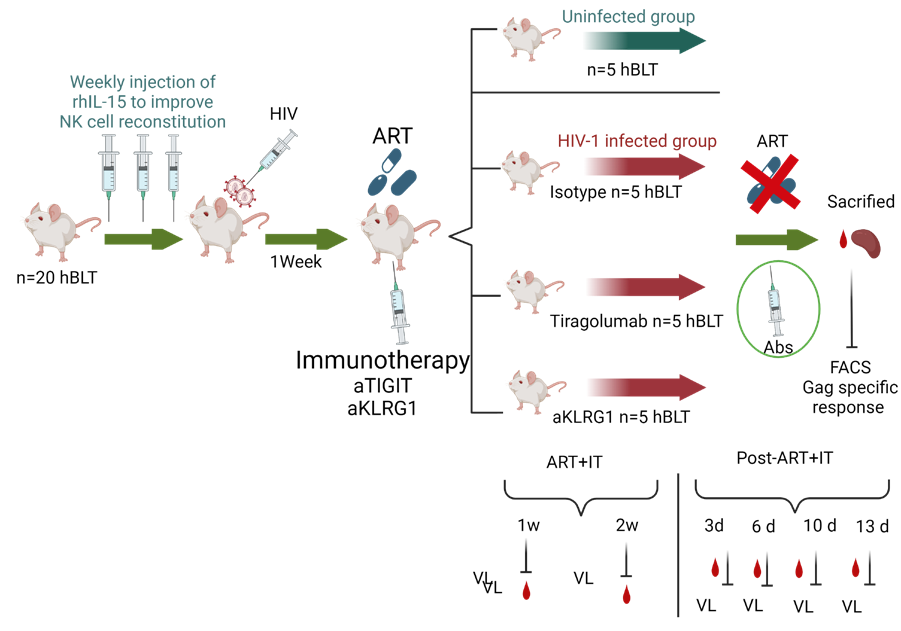
448. Elucidating the Role of Natural Killer Cells in Antibody Breadth During HIV Infection
Poster Abstracts
Pages: 107-108
Izumi de los Rios Kobara1, Uma Maheswari Mangalanathan1, Kishor Mandaliya2, Julie Overbaugh3, Catherine Blish1
Background
Natural Killer (NK) cells are underappreciated regulators of the antibody response to infection. In mice, NK cells can kill T follicular helper cells which decreases somatic hypermutation and vaccine response. In the context of HIV, dysfunctional NK cells are associated with broadly neutralizing antibodies. Understanding the temporal immune factors that influence breadth is an important component of developing a successful HIV vaccine.
Methods
For this project, we profiled subjects from a longitudinal cohort of HIV positive women in Mombasa, Kenya. This cohort was initiated in 1993 and HIV negative who enrolled were followed for seroconversion. Antiretroviral therapy was not available in Kenya at this time which gives us unique longitudinal samples of untreated HIV infection to understand factors that contribute to breadth development over the course of infection. We profiled 22 subjects with a range of neutralization breadth by scRNAseq and mass cytometry by time of flight (CyTOF).
Results
In our cohort, gene modules related to NK cell cytotoxicity were enriched in broad neutralizers in early infection, but enriched in narrow neutralizers in late infection. This indicates that although NK cell cytotoxicity may be associated with favorable immune responses in acute HIV infection, when antibody responses are forming and breadth is developing NK cell activity may be detrimental. This was validated by cyTOF data where, in early infection, broad neutralizers expressed higher levels of HLA-DR at baseline and IFNγ upon stimulation indicating early activation. In late infection NK cells from narrow neutralizers expressed higher levels of CCR7, CXCR3, CXCR5, CD107a and TRAIL, indicating NK trafficking to lymphoid tissue where they could limit antibody responses as well as cytotoxic potential.
Conclusions
Here we find that NK cells have differential phenotypes in broad and narrow neutralizers. In early infection NK cells from broad neutralizers are more activated, but by late infection timepoints, NK cells from narrow neutralizers show greater activation. This flip-flop in NK cell function during the course of HIV infection could indicate that NK cell responses may be favorable in the context of early untreated infection for their natural antiviral activity. However, as infection progresses, NK cell activity may be detrimental when it comes to antibody development, which could similarly affect vaccine responses.
449. Combination of eCD4-IgG1 Delivered by AAV9 and AZD5582 in SIV-Infected, ART-Suppressed Infant RM
Poster Abstracts
Page: 108
Jairo A. Fonseca1, Alexis C. King1, Omotayo Farinre1, Shan Liang2, Lucas Alves Britto Da Costa3, Adrian Khoei4, Stephanie Ehnert2, Jennifer S. Wood2, Matthew R. Gardner1, Koen K. Van Rompay5, Jeffrey D. Lifson6, Mackenzie Cottrell4, Mauricio A. Martins7, Ann M. Chahroudi1
Background
Latency reversal and immune-mediated clearance is a cure strategy based on eliminating HIV-infected CD4+ T cells during ART suppression. Here, we used AZD5582 to stimulate the non-canonical NF-κB pathway to reverse latency, as previously shown in adult rhesus macaques (RM). To target the reactivated reservoir via antibody-mediated cellular cytotoxicity, we used AAV9-delivered eCD4-Ig, a fusion protein comprising the CD4 ectodomain, an IgG1-Fc, and the TYR-sulfated regions of CCR5 that bind to HIV/ SIV Env on the cell surface.
Methods
20 infant RM (10 male, 10 female) with no/low levels of AAV9 neutralizing antibodies were selected after screening. At 4 weeks old, the animals were orally infected with SIVmac251 and started on ART 21 days post-infection. Half received an IM injection of AAV9-eCD4-IgG1 on the day of ART initiation. AZD5582 was administered at 40 weeks post-infection. The dose was based on a pharmacokinetic model as prior work showed reduced latency reversal in infants vs adults. On-ART viremia and viral rebound dynamics following ART interruption were monitored.
Results
eCD4-IgG1 expression was >10 µg/mL in 10/10 RM, with sustained levels for at least 59 weeks. One animal developed transient anti-drug antibodies, which did not affect long-term eCD4-IgG1 expression. During AZD5582 treatment, 8/10 infant RM had on-ART viremia >60 copies/mL, peaking at 5600. Of 67 viral load measurements taken, 47 (65.7%) were above baseline, with significantly higher on-ART viremia in the intervention group versus controls (p=0.0147). 6 RM from each group underwent ART interruption. Despite continued eCD4-IgG1 expression, all treatment RM rebounded between 6-11 days off ART. 2/6 RM in the intervention group experienced a ~4.5 log decline in viremia post-rebound, which was not observed in controls. Partial correlation analyses indicated a negative correlation between peak AZD5582-induced on-ART viremia and the AUC of the viremia during ART interruption (r = -0.870, p = 0.055)
Conclusions
This study is an important proof-of-concept, as it is the first to combine an AAV9-delivered biologic with an LRA in infants. AAV9's long-lasting transgene expression makes it a promising delivery platform for HIV-neutralizing molecules, including bNAbs. Peak levels of on-ART viremia during AZD5583 treatment surpassed those observed in prior studies of adult RM. Further research is needed to elucidate the mechanisms behind post-rebound viral control in the intervention group.
The figure, table, or graphic for this abstract has been removed.
450. Using Nanobodies as an Intracellular Biological to Block HIV-1 Through Innate Antiviral Mechanisms
Poster Abstracts
Page: 108
Florence M. Stel1, Esther M. Zijlstra-Willems1, Charlotte E. J. Verkuijlen1, Leanne C. Helgers2, Killian Vlaming1, Neeltje Koostra1, Theo B. H. Geijtenbeek1
Background
HIV-1 has been a global health problem for decades, and finding a cure remains a challenge. Recent studies have explored antibodies targeting various parts of HIV as alternative therapies. These antibodies bind the virus and enter the cell, where the complex is sensed and targeted for proteasomal degradation by the E3 ubiquitin ligase and antibody receptor TRIM21. Here we investigated the potential of this TRIM21 technology to develop intracellular immunity against HIV-1 infection. Our hypothesis is that intracellular recognition of HIV-1 by antibodies results in degradation of viral particles.
Methods
We designed nanobodies, based on llama antibodies, targeting the HIV-1 capsid protein p24, fused to the human IgG1 Fc domain. These p24 nanobody-Fc constructs were synthesized and produced by a mammalian expression system. Next, they were characterized by flow cytometry and tested for their functionality to bind p24 through an ELISA-based binding assay. Lastly, p24 nanobody-Fc constructs were stably expressed intracellularly in the U87-CD4-CCR5 cell-line. Engineered cells were infected with the HIV-1 strain NL4.3-BaL. Moreover, Fc-modified nanobodies were purified using column chromatography and transfected into cells previously infected with NL4.3-BaL. Quantification of p24 was done using ELISA and flow cytometry. Statistics were performed using two-way ANOVA.
Results
Our data show that our Fc-modified nanobodies recognize intact HIV-1 capsid and have a functional Fc domain. Notably, HIV-1 p24 capsid was neither detected intracellularly nor extracellularly after HIV-1 exposure in the p24 nanobody-Fc expressing cell-line, even though HIV-1 had integrated in the genome at levels comparable to control cells. These results demonstrate that the nanobodies are blocking production of new virus particles, rather than targeting HIV-1 during initial infection. In cells transfected with the purified nanobody a similar decrease of p24 was observed. These data strongly suggest that the Fc-modified p24 nanobody actively degrades p24 and thereby prevents new virus production.
Conclusions
To conclude, we have developed a novel p24 nanobody construct that efficiently prevents HIV-1 production. Intracellular production, as well as transfection of Fc-modified p24 nanobodies highly reduces p24 production levels in U87-CD4-CCR5 cells upon infection with HIV-1. This technology holds great promise for the engineering of therapeutic antibodies to prevent viral infections via targeting of host or viral proteins.
The figure, table, or graphic for this abstract has been removed.
451. Viral Genetic Traits of Durable Control in Dual Immunotherapy-Treated SHIV-Infected Rhesus Macaques
Poster Abstracts
Pages: 108-109
Manukumar Honnayakanahalli Marichannegowda1, So-Yon Lim2, Jina Lee2, Brandon Keele3, James Whitney2, Satish Pillai1
Background
A recent study demonstrated that combined administration of N-803 (IL15 agonist) and the 10-1074 and 3BNC117 broadly neutralizing antibodies (bNAbs) results in durable virologic remission following ART cessation in SHIV-infected, ART-suppressed rhesus macaques (RM). Here, we investigate the impact of this curative intervention on viral population genetics to identify SHIV genetic features associated with durable remission.
Methods
Plasma samples were collected during analytical treatment interruption (ATI) from SHIV-AD8-infected ART-suppressed RM treated with N-803 and the 10-1074 and 3BNC117 bNAbs (N=8) and SHIV-AD8-infected ART-suppressed RM control animals (N=8). Viral RNA was extracted, and multiple SHIV env gene sequences were obtained using single genome amplification (SGA). Phylogenetic reconstruction, pairwise distance calculations, entropy calculations, and highlighter plots were used to compare viral genetics and protein features between groups. Signatures of natural selection were analyzed using SNAP and HyPhy software (maximum likelihood method).
Results
A total of 306 SHIV env gene sequences (152 from controls and 156 from treated animals) were generated (Figure 1). Viral genetic diversity was higher in immunotherapy-treated animals with respect to controls (p<0.0001, t test). Genetic divergence from the SHIV-AD8 ancestral inoculum sequence was additionally higher in treated animals (p<0.0191) (Figure 1). Although the cumulative ratios of non-synonymous to synonymous substitutions (dN/dS) across the env sequence did not differ significantly between groups (p=0.4933), four codon sites (HXB2 positions 224, 260, 529, 593) were found to be under positive selection and 8 sites (30, 33, 71, 475, 539, 575, 813, 850) under purifying selection were identified in the treated group (none of these sites were under selection in control animals. Exclusively in the treated group, Shannon entropy was elevated at specific sites in V1, V3 and fusion peptide regions, and a loss of N-glycosylation at position 130 was observed.
Conclusions
Combined administration of N-803 and the 10-1074 and 3BNC117 bNAbs modulated SHIV population genetics, resulting in increased viral genetic diversity, divergence, and selection at specific sites within Env. Observed mutational patterns and glycosylation site disruption likely reflect evolutionary responses to pressure from neutralizing antibodies. Phenotypic characterization of the induced SHIV Env mutants will inform the development of HIV cure approaches.
The figure, table, or graphic for this abstract has been removed.
452. WITHDRAWN
Poster Abstracts
Page: 109
453. HIV-Induced Sialoglycans on Infected Cells Promote Immune Evasion From Myeloid Cell-Mediated Killing
Poster Abstracts
Page: 109
Shalini Singh1, Rui Liu2, Opeyemi S. Adeniji3, S. M. Shamsul Islam1, Han Xiao2, Mohamed Abdel-Mohsen1
Background
Many viruses evade innate immune surveillance by expressing high levels of sialoglycans (sialic acid-enriched glycans) that bind to Siglecs— glyco-immune checkpoint molecules on immune cells, primarily those of myeloid origin, such as monocytes and neutrophils. This interaction suppresses the cytotoxic activity of these immune cells. HIV infection increases sialoglycan expression on the surface of CD4+ T cells; however, whether this increase facilitates the binding of HIV-infected cells to specific Siglecs on myeloid cells, thereby aiding in evasion from myeloid cell surveillance, remains unclear.
Methods
Primary CD4+ T cells were infected with HIV strains (HIVTYBE or HIVDH12), with or without T cell activation. The expression of various Siglec ligands was analyzed using recombinant Siglec-3, -7, -9, and -10 chimeras. HIV-mediated alterations in glycosylation-associated gene expression were assessed via RNA-sequencing. The HIV-specific antibody 10-1074, conjugated with sialidase (Sia), was employed to disrupt the sialic acid-Siglec interaction specifically on HIV-infected cells. Monocyte- and neutrophil-mediated cytotoxicity against HIV-infected cell lines and autologous primary CD4+ T cells was measured using luciferase assays and p24 staining in the presence of either 10-1074 or 10-1074-Sia.
Results
HIV-infected CD4+ T cells exhibited increased expression of Siglec-3, -7, and -9 ligands, but not Siglec-10 ligands, regardless of activation status. This increase was abolished by the glycosylation inhibitor BADG (Fig. 1A; p<0.0001). Transcriptomic analysis showed that HIV infection induced the expression of several glycan-related genes involved in sialoglycan production, including GALNT6 (FDR<0.01), NANP (sialic acid biosynthesis; p<0.05), and ST8SIA4 (sialyltransferase; p<0.05). In vitro, removal of sialic acid from HIV-infected cell lines using 10-1074-Sia significantly increased the cytotoxic activity of monocytes and neutrophils by 6-fold and 19-fold, respectively (p<0.02). Ex vivo, 10-1074-Sia significantly enhanced monocyte cytotoxicity against autologous primary HIV-infected CD4+ T cells compared to 10-1074 (q=0.004) (Fig. 1B).
Conclusions
We have identified a novel, targetable glyco-immune mechanism through which HIV-infected cells may evade myeloid cell-mediated cytotoxicity by upregulating the expression of specific Siglec ligands. Targeting this interaction presents a promising opportunity for developing innovative immunotherapeutic strategies to eliminate HIV-infected cells.
The figure, table, or graphic for this abstract has been removed.
454. Sialidase Conjugation Enhances the Anti-HIV Activity of the 10-1074 Antibody in Humanized Mice
Poster Abstracts
Pages: 109-110
S. M. Shamsul Islam1, Leila B. Giron1, Rui Liu2, Ali Danesh3, Shalini Singh1, Paul W. Denton4, Han Xiao2, Mohamed Abdel-Mohsen1
Background
HIV infection causes overexpression of sialic acid on the surface of infected cells, which binds to Siglecs—immune inhibitory receptors on innate immune cells such as natural killer (NK) cells and monocytes. This interaction triggers inhibitory signals in these immune cells that contribute to the ability of HIV-infected cells to evade immune surveillance. To counter this, we developed a targeted immunotherapy by conjugating sialidase, an enzyme that removes sialic acid, to the HIV antibody 10-1074 (referred to as 10-1074-Sia). This approach directs sialidase to HIV+ cells expressing Env antigen, stripping sialic acid from the infected cell surface and enhancing their immune elimination. We tested this strategy in vivo using a humanized mouse model of HIV infection.
Methods
Five weeks old immunodeficient NSG mice (n=15) were humanized by engrafting memory CD4+ T cells from healthy donors. Mice were infected with HIV-1SUMA, and a week later, were treated weekly for 5 weeks with either: 1) PBS (control), 2) 10-1074 combined with autologous NK cells and monocytes, or 3) 10-1074-Sia combined with autologous NK cells and monocytes. Plasma viral load and CD4+ T cell counts were monitored longitudinally by qPCR and flow cytometry, respectively. Human cytokine levels (e.g., TNFα, IFNγ, IP10) were measured longitudinally using multiplex arrays.
Results
Mice treated with 10-1074-Sia did not experience significant weight loss compared to PBS-treated mice (q=0.87). While 10-1074 treatment alone was insufficient to significantly reduce viral load compared to PBS-treated mice (q=0.43), 10-1074-Sia demonstrated superior efficacy in reducing viral load (q=0.028 compared to PBS control and q=0.05 compared to 10-1074). CD4+ T cell depletion was reduced in mice treated with 10-1074 (p=0.028) or 10-1074-Sia (p=0.08) compared to controls. Finally, while 10-1074 was unable to reduce HIV-associated inflammation, 10-1074-Sia significantly reduced HIV-induced inflammation markers such as TNFα (p=0.02), IFNγ (p=0.001), IP10 (p=0.01), and MIP1α (p=0.03).
Conclusions
Conjugating sialidase to 10-1074 significantly enhanced the antibody's immune-potentiating effects, resulting in superior viral load control and improved inflammatory responses. These findings highlight 10-1074-Sia as a promising anti-HIV immunotherapeutic strategy. Further investigation into combining this approach with strategies such as shock-and-kill is warranted to explore its potential for eliminating infected cells during antiretroviral therapy.
Figure 1.
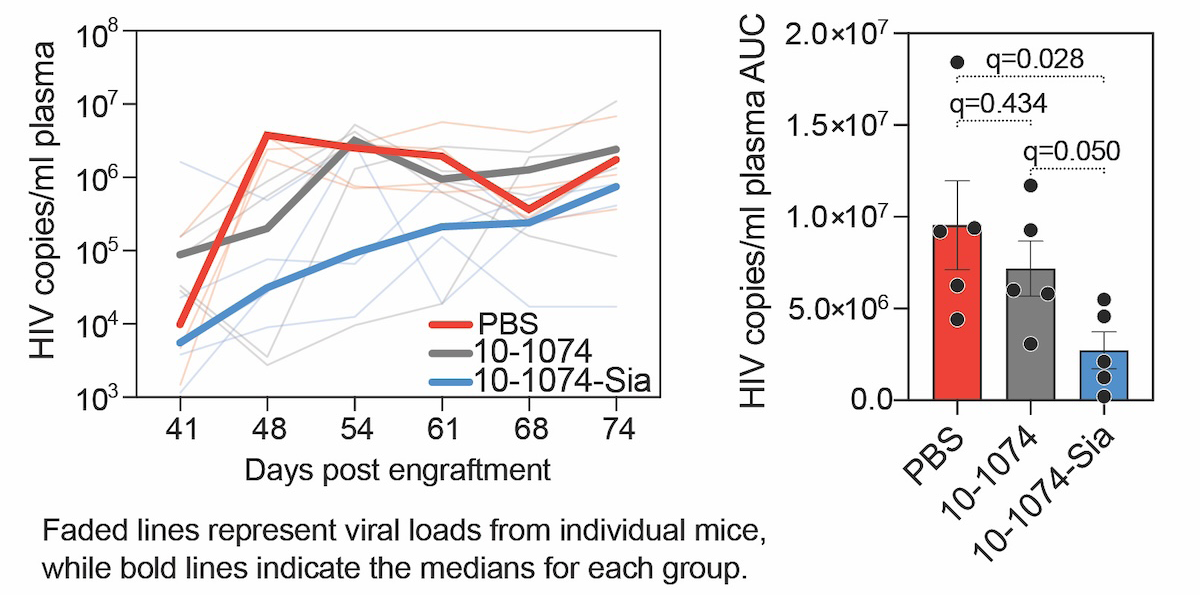
455. Cannabidiol Has Sex-Dependent Anti-Inflammatory Effects in Long-Term Suppressed HIV-1 Adults
Poster Abstracts
Page: 110
Clémence Couton1, Chloé Robin1, Valentin Beauvais2, Alicia Harry1, Kossi Ayena1, Barbara De Dieuleveult3, Helene Klein4, Elodie Villalonga-Rosso1, Sophie Robert2, Laurent Hocqueloux3, Thierry Prazuck3, Lucile Mollet1
Background
People with long-term HIV-1 suppression (PWH) suffer from inflammaging, characterized by chronic inflammation and immunosenescence. As cannabis smokers display immune beneficial effects such as lower inflammation levels we decided to investigate the anti-inflammatory properties of one of its major component, the cannabidiol (CBD) under a full-spectrum oil, on PWH.
Methods
Within the double-blind, randomized, placebo-controlled trial registered as NCT05306249 on ClinicalTrials.gov, we present herein encouraging results from the first 40 ART-treated PWH with undetectable viremia, encompassing 50% women (median time on efficient ART 20 years, median age 59-year-old). Half took 1 mg/kg twice a day of a full-spectrum, pharmaceutical grade, CBD oil for 12 weeks and the other half took a placebo medium chain triglyceride (MCT) oil. On enrolment and after 12 weeks, we analyzed 34 cytokine and chemokine levels in patients’ plasma using multiplex ELISA. In 16 women and 16 men, transcriptome from CD4+ and CD14+ cells were also evaluated using BRB-seq, followed by RT-ddPCR (droplet digital PCR).
Results
After 12 weeks of full-spectrum CBD, 12 out of 34 plasmatic proteins were less expressed in the whole cohort. Distinguishing the results by sex, we found that, while 12 out of 34 proteins were still downregulated in men, only 3 out of 34 were underexpressed in women. Regarding transcriptomic analyses in CD4+ cells, PWH from CBD arm displayed lower levels of pro-inflammatory cytokines. When analyzing men and women separately, 7 cytokines expression were reduced for men but only CXCL8 for women. In CD14+ monocyte transcriptome, CXCL8, IL1β, CCL3 and IL1α genes were less expressed in men whereas CCL5 was overexpressed. For women the only clear difference could be seen for the overexpressed CCL5 and underexpressed IL10. With ddPCR assays, men exhibited a lowered TNFα, IL6, IL1β and CXCL8 mRNA rate after CBD intake while only TNFα decreased in women.
Conclusions
Pharmaceutical grade full-spectrum CBD oil is associated with anti-inflammatory properties regarding mRNA and proteins. This suggests that CBD could help PWH mitigate their chronic inflammation but its effectiveness varies greatly according to sex. From a global perspective, this clinical trial opens the door to investigate full spectrum CBD intake potential for other diseases associated with chronic inflammation.
456. IFI16 Controls PVR and Gal-9 Expression and Its Targeting Improves Immunotherapy Against HIV-1
Poster Abstracts
Page: 110
Marta Calvet-Mirabent1, Ilya Tsukalov2, Ildefonso Sánchez-Cerrillo2, Olga Popova2, Ignacio de los Santos2, Lucio Jesús Garcia Fraile Fraile2, Sergio Serrano-Villar3, Santiago Moreno3, Francisco Sánchez-Madrid2, Arantzazu Alfranca2, Enrique Martin Gayo4
Background
Stimulation of HIV-1 specific CD8+ T cells with Monocyte-derived dendritic-cells (MDDC) in an attractive immunotherapy strategy against HIV-1. However, chronic inflammation in People with HIV (PWH) has been linked to low CD4/CD8 T cell ratios, activation of the inflammasome and may affect the expression of checkpoint ligands in Mo, limiting efficacy of MDDCs. Here, we studied the impact of specific innate inflammasome sensors modulating checkpoint ligands in Mo and MDDC from PWH and their ability to activate HIV-1 specific T cells.
Methods
PBMC of a total of n= 29 PWH on ART characterized by low (<0.8; LR; n=17) and normal (>1; NR; n=12) CD4/CD8 T cell ratios were recruited for the study. CD14+ Mo were isolated from PBMC and exposed to LPS or CL097 for 16h. Expression of CD40, PDL1, PVR and Galectin-9 was assessed by FACS. IL1β was analyzed in culture supernatants by ELISA. Inflammasome sensor mRNA expression was analyzed by qPCR. AIM2 and IFI16 silencing in Mo and MDDC from PWH was performed by specific siRNA and compared to cells treated with scramble controls. Finally, Caspase (Z-VAD-FMK), NLRP3 (MCC950) and AIM2/ IFI16 (ODN-TTAGGG) inhibitors were used to address modulation of checkpoint ligands in MDDC from PWH and their ability to activate polyfunctional HIV-1 Gag-specific CD8+ T cells.
Results
Expression of PVR (p=0.0002) and Galectin-9 (p=0.0078) was significantly increased in CD40hi Mo from LR PWH, compared to those with NR PWH after CL097 stimulation. Also, a higher increase in IL1β secretion upon LPS and CL097 (p<0.0001) was observed in Mo from LR PWH, indicating inflammasome overactivation. While NLRP3 expression increase after stimulation was similar in all study groups, DNA sensing inflammasome sensors such as AIM2 and IFI16, were specifically either induced in response to CL097 (AIM2; p=0.0214) or basally upregulated (IFI16) in the LR PWH group. Inhibition of caspases (p=0.0195) and AIM2/IFI16 (p=0.0039) but not NLRP3 prevented upregulation of PVR in CD40hi MDDC from PWH. IFI16 silencing in Mo and MDDC from LR PWH led to a significant reduction of PVR (p=0.0156) and Galectin-9 (p=0.0391) expression upon CL097 or STING agonist stimulation. Finally, inhibition of IFI16/AIM2 by ODN-TTAGGG potentiated polyfunctional IFNg+ TNFa+ CD107a+ HIV-1-specific CD8+ T cell responses in vitro.
Conclusions
IFI16 inflammasome regulates expression of ligands for checkpoint receptors and its targeting may be useful to enhance immunotherapies against HIV-1.
The figure, table, or graphic for this abstract has been removed.
457. Investigating the Effects of ADCC and CAR NK/T Cells on HIV-1 Cell-to-Cell Transmission
Poster Abstracts
Pages: 110-111
Tanvi Mathur1, Alon Herschhorn1, Dmitrii Mazurov2
Background
Despite the success of antiretroviral therapy in controlling HIV-1 replication, achieving a cure remains a significant challenge. One obstacle to blocking HIV-1 replication is the efficient cell-to-cell transmission (C-CT) of HIV-1, which is highly resistant to broadly neutralizing antibodies (bnAbs). Here, we studied the effects of immune-based strategies, including antibody-dependent cellular cytotoxicity (ADCC) and chimeric antigen receptor (CAR) NK/T cells, on HIV-1 transmission between cells.
Methods
We developed a highly sensitive assay for precise quantification of cell lysis using luciferase activity and built CAR-PBMCs based on the VRC01 and PGT121 bnAbs. We then utilized the assay to assess cellular cytotoxicity mediated by ADCC and CAR-PBMCs against target cells expressing HIV-1 envelope glycoproteins (Envs). We have previously developed an ultrasensitive HIV-1 C-CT assay, using a replication-competent HIV-1 vector and an activated nanoluciferase reporter system to assess viral transmission in primary T cells. Using our nanoluciferase reporter assay, we studied the effects of a) PBMCs and soluble IgGs, and b) CAR-PBMCs on HIV-1 C-CT.
Results
We detected cytotoxic activity of T and NK cells engineered to express VRC01 and PGT121 CARs against CEM.NKR cells that express Luciferase and HIV-1 AD8ΔCT Envs as initial targets. HIV-1 C-CT of the NL43(AD8) molecular clone, which contains all HIV-1 genes, exhibits significant resistance to bnAbs but could be efficiently blocked by ADCC. Moreover, CAR PBMCs exhibited increased specific killing efficiency across various effector: target cell ratios, particularly after 4-hour incubation. Among the CARs tested, the PGT121 bnAb-based CAR consistently outperformed others in mediating cellular cytotoxicity.
Conclusions
These results provide proof of the principle that targeting HIV-1 cell-to-cell transmission through ADCC and CAR NK/T cell therapies can overcome the limitations of bnAbs. This study offers the first evidence to test these approaches to effectively target HIV-1 C-CT, highlighting their potential in studying HIV-1 treatment strategies.
458. Natural Killer Cells Preferentially Kill HIV-Infected CD4 T Cells Using Death Receptors
Poster Abstracts
Page: 111
Lesley R. de Armas1, Akshay Iyer1, Suresh Pallikkuth1, Rajendra Pahwa1, Paula Vaz2, Maria G. Lain2, Savita Pahwa1
Background
Natural killer (NK) cells provide immune defense against virus infection via surveillance and recognition of virally infected cells. In people living with HIV (PWH) NK cell function has been associated with viral control and is being targeted for immunotherapeutic strategies.
Methods
To determine whether NK function is impaired in PWH, in vitro NK functional assays were performed in longitudinal samples from HIV-Exposed Infected (HEI, n=17) and Uninfected (HEU, (n=9) children from Mozambique. NK were enriched from PBMC and co-cultured with CellTrace™ labeled K562, HIV-infected HUT78/SF2 (HUT) and NK-resistant CEM.NKR (CEM) cell lines for 6 hours at 4:1 ratio. Death of target cells (viability stain), cytolytic proteins (CD107a, Perforin, GranzymeB, FasL) and cytokine secretion (IFNg, TNF, MIP1b) were assessed at pre-ART (1-2m) and post-ART (12m) by flow cytometry. Expression of activating and inhibitory receptors were evaluated on NK before and after co-culture (NKG2A/C/D, NKp30/46, KLRG1, TIGIT). Adults with and without HIV (n=10 each) at a single timepoint were assessed for comparison. Mixed-effects modelling was used to determine predictors of NK killing.
Results
Overall, NK exhibited increased killing of K562 and HUT targets compared to CEM but the magnitudes were not different when comparing HEI and HEU. Paired analysis showed that HEU NK increased killing from 1m to 12m whereas HEI stayed the same or decreased. At 12m only, plasma virus load (VL) had a negative linear relationship with HUT killing (R2=0.42, p=0.016) and this was not observed with K562. Expression of the inhibitory receptor, KLRG1 on NK prior to co-culture was associated with reduced killing of K562 and HUT. After co-culture, the expression of CD107a on NK, a marker of degranulation, was highly associated with K562 target cell death but showed no relationship with HUT killing. Meanwhile, expression of the death receptor, FasL, which was present on CD56dimCD16+ NK at 5-30% was positively associated with HUT killing but showed no relationship with K562 killing. Staining of target cells showed that HUT expressed higher levels of surface Fas receptor than K562 or CEM. FasL on NK cells from adults also had a positive association with HUT killing confirming this was not a unique feature of pediatric NK cells.
Conclusions
These results suggest that chronic HIV leads to impaired NK cytolytic function against HIV infected CD4 T cells and point to a role for Fas/FasL induced cell death in viral control mediated by NK cells.
459. Tri-Specific Killer Engagers in Macaques Potently Induce NK Cell Responses in Blood and Tissues
Poster Abstracts
Page: 111
Julien A. Clain1, Ross T. Cromarty2, Kevin Nguyen3, Hannah Flores3, Yvette Soignier2, Tumpa Dasgupta2, Emma Eungard2, Zachary Davis2, Timothy Schacker2, Justin Harper3, Mirko Paiardini1, Jeffrey Miller2
Background
Strategies to enhance immune responses towards HIV-infected cells are needed for eliminating HIV reservoirs. Natural killer (NK) cell-mediated antibody-dependent cellular cytotoxicity (ADCC) plays a key role in HIV protection. In cancer, Tri-specific Killer Engagers (TriKEs), consisting of a CD16-binding domain, an antigen-targeting domain, and an IL-15 moiety, enhance NK cell-mediated ADCC by forming immune synapses through CD16 and antigen engagement. Building on this strategy, we developed a gp120-targeting TriKE to activate NK cells toward targeting HIV-infected cells. A version specific for rhesus macaques (RMs) has been generated to conduct an in vivo dose-response study to evaluate TriKE safety and impact on NK cell responses.
Methods
TriKE was administered subcutaneously 5 times per week for 3 weeks in 3 uninfected RMs, with doses from 100 to 300 µg/kg (Figure 1). Complete blood counts and blood chemistry tests were performed; whole blood and lymph nodes (LNs) were collected longitudinally for immunophenotyping.
Results
TriKE treatment, even at the higher dose, was well-tolerated; blood biochemistry parameters remained normal throughout the study, with slight and transient increases in transaminases (AST/ALT) and creatine kinase levels following the first administration of each cycle. TriKe treatment significantly increases NK cell frequencies in blood and LNs. Specifically, CD16+CD56- and CD16+CD56+ NK cell subsets peaked in LNs on day 11, coinciding with the final administration in week 2. NK cell expansion was accompanied by increased NK cell activation (HLA-DR+CD69+) and proliferation (Ki-67+). Following the third week’s dosing (300 µg/kg, day 14), the frequency of NK cells and their activation and proliferation levels decreased. Interestingly, PD-1 expression significantly increased on day 4 (end of the first week’s dosing) in both blood and LNs, normalizing by day 11; this may reflect an immunological response to prevent excessive NK cell activation.
Conclusions
Our study demonstrates, for the first time, that the gp120-targeting TriKE safely and potently engages NK cell responses in RMs, with their substantial activation, proliferation, and expansion in blood and lymphoid tissues. Furthermore, blocking PD-1 upregulation could synergize with TriKE treatment to enhance TriKE-mediated NK cell function. These findings provide strong rationale to further characterize TriKE-based therapies as a strategy for targeting HIV/SIV reservoirs, including in lymphoid tissues.
Figure 1.
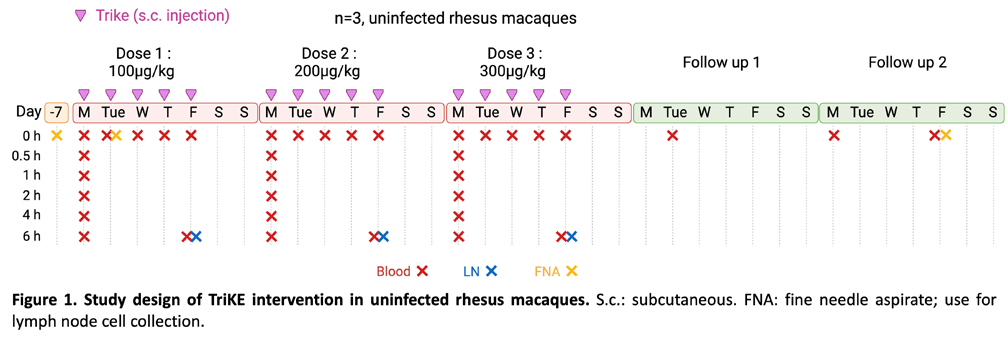
460. Extracellular Acyl-CoA-Binding Protein Prevents Autophagy and T-Cell Function in People With HIV
Poster Abstracts
Pages: 111-112
Stephane Isnard1, Nazanin Gharari2, Léna Royston1, Tsoarello Mabanga1, Carolina A. Berini1, Julien van Grevenynghe2, Guido Kroemer3, Jean-Pierre Routy1
Background
Through the degradation of cytosolic structures and proteins, autophagy generates macromolecules for energy production which allows efficient anti-HIV T-cell responses. Extracellular Acyl-CoA-Binding Protein (ACBP) inhibits autophagy, tricarboxyclic acid (TCA) cycle and oxidative phosphorylation in mouse models, mainly through binding to the GABAA receptor. Herein, we assessed the levels of circulating ACBP and its influence on T-cell function in people living with HIV (PLWH) on antiretroviral therapy (ART) and tested whether inhibition of ACBP-receptor binding could be used in preclinical models to improve the immune function in PLWH on ART.
Methods
Plasma ACBP and cytokines were quantified by ELISA in 50 PLWH on effective ART (mean duration of 14.7 years) and 30 controls with similar age. In vitro, recombinant ACBP (recACBP) was added at increasing concentrations up to 10µg/mL on PBMCs from PLWH on ART and controls, T-cell responses and autophagy levels were assessed by flow cytometry. A synthetic GABAAreceptorg2 chain peptide was used to prevent binding of ACBP to this receptor, as described by Dr Kroemer’s group.
Results
ACBP levels were higher in PLWH on ART compared to controls (median 127.5 vs 78.1 ng/mL, p=0.03), independently of age and sex. In ART-treated PLWH, plasma ACBP levels correlated with levels of pro-inflammatory Th1 and Th2 cytokines, angiogenesis and innate inflammation. Conversely, ACBP levels were inversely associated with plasma IL21 levels (r=-0.54, p<0.01). ACBP levels were associated with secretion of energy production intermediary macromolecules glutamate and α-ketoglutarate.
Addition of recACBP to PBMCs before stimulation with anti CD3 or HIV peptides prevented CD4 and CD8 T-cell cytokine secretion as well as cell proliferation. Also, recACBP addition decreased expression of autophagy markers Beclin1, p62 and ULK1 in both CD4 and CD8 T-cells stimulated with anti-CD3. Addition of GABAArg2 peptides had no influence on ACBP inhibiting T-cell cytokine production and proliferation upon anti-CD3 or HIV peptide stimulation.
Conclusions
Higher plasma ACBP levels in PLWH on ART were associated with inflammation, and markers of T-cell dysfunction. Extracellular ACBP directly inhibited autophagy and T-cell function. Our results indicate that another receptor than the GABAA receptor might be involved, compelling the assessment of ACBP inhibitory mechanism to develop new inhibitors aimed at improving anti-HIV T-cell responses in PLWH, towards an HIV cure.
461. Gut Microbiome Dynamics and Immune Responses in People With HIV Receiving N-803
Poster Abstracts
Page: 112
Ashma Chakrawarti1, Chris Basting1, Ross T. Cromarty1, Jodi Anderson1, Ty Schroeder1, Kevin Escandon1, Patrick Soon-Shiong2, Jeffrey Safrit2, Jeffrey Miller1, Joshua Rhein1, Timothy Schacker1, Nichole Klatt1
Background
The gut microbiota plays a crucial role in host immune modulation. N-803, an IL-15 superagonist primarily developed for cancer immunotherapy, has shown potential to enhance immune responses in people with HIV (PWH). This pilot study investigated the relationship between gut microbiota and immune responses during a clinical trial of N-803 in PWH.
Methods
N-803 was administered subcutaneously to 10 PWH at a dose of 6 mcg/kg on Days 0, 21, and 42. Stool samples were collected prior to day 0 (baseline), day 28, day 49-56 (postdrug) and day 137-141. Shotgun metagenomic sequencing was performed to analyze taxonomic composition and functional profiles of the gut microbiota bioinformatically. We also investigated associations between microbial diversity and immune markers, including NKG2A, viral (v)RNA levels, and CD8 T cell counts in lymph nodes (LNs), rectum, and ileum. Statistical analyses were conducted using R.
Results
Two distinct enterotypes were identified among the participants, which significantly differed in both alpha and beta diversity. A significantly positive correlation was observed between Shannon diversity and NKG2A cell counts in the LNs after treatment while a negative trend was seen with vRNA levels in the LNs. We split the individuals into two groups: viral responders (VRs) who had decreased vRNA levels in LNs from baseline to post-drug infusion and viral non-responders (VNRs) who had increased vRNA levels in LNs from baseline to post-drug infusion. VNRs had a notably higher abundance of Faecalibacterium sp. CYL33. Furthermore, microbial pathways that correlated positively with CD8 T cell counts often showed inverse correlations with vRNA levels, particularly in pathways related to lysine, colanic acid, and chorismate biosynthesis.
Conclusions
This pilot study shows that gut microbiota composition remains relatively stable during N-803 therapy in PWH. However, microbial and metabolic differences are apparent in individuals who have immune responses to N-803 therapy compared to those who do not. These differences suggest specific microbial functions may influence immune activity and/or virus control. The trends observed in this study highlight the intricate relationships between microbiota diversity and immune markers in HIV infection. Further research with larger sample sizes is necessary to better understand the role of the gut microbiome in modulating immune responses during N-803 therapy and its implications for HIV immunotherapy.
462. Heterogeneity of PD-1 Expression in PLHIV and Its Relationship With Host and Viral-Related Factors
Poster Abstracts
Page: 112
Adriana Navas1, Jéssica dos Santos1, Vasiliki Matzaraki1, Nadira Vadaq1, Maartje Jacobs-Cleophas1, Albert L. Groenendijk2, Wilhelm A. Vos3, Marc J. T. Blaauw4, Louise E. van Eekeren1, Mareva Delporte5, Mihai G. Netea1, Linos Vandekerckhove5, Leo Joosten1, Hans Koenen1, Andre van der Ven1, the 2000HIV Human Functional Genomics Partnership Program
Background
Anti-PD-1 immunotherapy (API) can potentially reverse T-cell exhaustion, reinvigorate HIV-specific T-cell responses, and reduce the HIV reservoir in people living with HIV (PLHIV). API responsiveness is not direct associated with PD-1 expression on T-cells, suggesting that receptor heterogeneity might influence therapeutic outcomes. Therefore, we aimed to assess 1. whether PD-1 expression varies among T-cells subsets, 2. which host factors contributed to PD-1 heterogeneity, 3. correlate PD-1 expression with cell functionality.
Methods
High-dimensional flowcytometric PD-1 measurements from viral suppressed PLHIV using ART of the 2000HIV cohort (NCT03994835) were analyzed, separated into discovery cohort (n=1147) and validation cohort (n=225). We assessed percentages and MFI of PD1 in 21 T-cell subsets (Tc). Participants were categorized into high, intermediate, and low consistent PD-1 expression groups when >75% of Tc had PD-1 values in one of the following tertiles of PD-1 distribution, T3, T2 and T1 respectively. We explored the relationship of PD-1 expression with clinical and HIV-related factors as well as ex-vivo PBMC cytokine production capacity after stimulation using Spearman-rank correlation analysis.
Results
Less than 40% of the participants had a consistent PD1 expression (both proportions and MFI) across Tc evaluated, regardless of the category. Lower percentage of exhausted CD4Tc was significantly correlated with female sex, high CD4 nadir, COVID-19 vaccination, and spontaneous HIV control (HIC) phenotype, while higher percentage of exhausted cells was significantly correlated with older age, immunological non-responders (INR) phenotype, CMV titers and larger HIV reservoir size (Fig.A). Exhausted CD8+ naïve Tc were linked to older age, CMV titers and intact HIV reservoir. Higher PD-1 expression on CD4 Tc was negatively correlated with IFN-γ, IL-17, IL-22, and IL-10 secretion upon microbial stimulation (Fig.B, FDR < 0.05, discovery; p < 0.05, validation).
Conclusions
PLHIV exhibited a heterogeneous PD-1 expression across all Tc subsets, which negatively impacted cytokines production, indicating immune exhaustion. Notably, our study suggests that PLHIV with higher CMV reactivity, higher HIV reservoir size, males and immunological non-responders show highest PD-1 expression and may react differently to API than other groups. A careful consideration of clinical host factors and functional immune response is crucial for an effective API in PLHIV.
The figure, table, or graphic for this abstract has been removed.
463. WITHDRAWN
Poster Abstracts
Page: 113
464. Distinct Signatures of Trained Immunity Reveal Heterogeneity Among Elite HIV Controllers
Poster Abstracts
Page: 113
Aarthi Talla1, Joao Lucas Lima Calandrini de Azevedo2, Michael Peluso3, Thomas Dalhuisen3, Rebecca Hoh3, Steven G. Deeks3, Sulggi Lee3, Ashish A. Sharma2, Rafick P. Sekaly2, the Pathology Advanced Translational Research Unit (PATRU)
Background
Elite Controllers (ECs) are individuals who suppress HIV replication without treatment. Understanding these mechanisms can provide insights for developing novel therapeutic strategies. By learning from their responses, we can identify key pathways and immune functions that could enhance viral control in the HIV-infected population. This study aims to investigate ECs using a multiomics approach to understand how they achieve viral suppression.
Methods
Samples from 13 ECs, 27 VCs, 10 Viremic Non-Controllers (VNCs), and 20 Healthy Donors (HDs) were collected. Plasma and PBMCs were analyzed for cytokine levels, plasma metabolites, and bulk RNAseq. A linear regression model was employed. Enrichment mapping identified transcriptomic modules, and K-means clustering unveiled heterogeneity among controllers. Bulk RNA modules were validated using an independent scRNAseq dataset and confirmed via in-silico deconvolution. Gradient boosting identified plasma cytokines and metabolites predictive of controller subgroups. Multiomics integration was performed using Diablo.
Results
Transcriptomic analysis revealed 2 EC clusters and 3 VC clusters. CD4 counts and viral load within cohort between clusters (esp cluster 1 vs 2) are not confounding factors. Cluster 1 included ECs and VCs whose profiles resembled HDs (Figure 1A), enriched in classical monocytes with trained immunity, inflammasome and epigenetic remodeling signatures. These individuals showed equal or higher expression of these signatures compared to HDs. Cluster 2 comprised ECs and VCs with distinct profiles, with higher proportions of effector CD8 T cells with antiviral responses (Figure 1B). Cluster 3 included VCs and VNCs with higher expression of effector CD8 and antiviral responses. IFN-γ was the best predictor of the two EC classes, being lower in ECs with trained immunity and higher in those with effector CD8 (84% accuracy). Ceramides, primary bile acids, and fatty acids were metabolite predictors, with the first two higher in ECs with effector CD8 signatures, and fatty acids higher in ECs with trained immunity signatures (100% accuracy).
Conclusions
The study reveals two distinct EC populations with differing immunological, metabolomic, and transcriptomic profiles. Recognizing this heterogeneity is crucial, as personalized therapeutic strategies could target specific pathways to enhance viral control. These findings suggest strategies to shift VCs and VNCs toward beneficial EC profiles, advancing efforts toward a functional HIV cure.
The figure, table, or graphic for this abstract has been removed.
465. Lymph Node Dendritic Cells Harbor an Altered Transcriptomic Profile Despite Years of Suppressive ART
Poster Abstracts
Page: 113
Riddhima Banga1, Erica Lana1, Francesco Procopio1, Mathilde Foglierini-Perez1, Matthias Cavassini2, Rafael Trunfio1, Sébastien Déglise1, Giuseppe Pantaleo1, Matthieu Perreau1, Andrea Mastrangelo1
Background
Despite significant advances in the efficacy of antiretroviral therapy (ART) and expanded access to people living with HIV, virologic suppression through ART alone is frequently insufficient to fully resolve the immune activation associated with HIV infection.
Methods
We evaluated the influence of HIV infection on the functional and transcriptomic profile of lymph node (LN) myeloid dendritic cells (DCs) subsets during both chronic infection and after >5 years of suppressive ART by single-cell RNAsequencing (scRNAseq).
Results
The cumulative data indicated that LN DC frequencies correlated with plasma viral load (r=0.875; P<0.05; N=10). LN DCs from viremic individuals harbored an immunostimulatory profile with the ability to secrete pro-inflammatory cytokines (IL-1β, IL-6), higher expression of co-stimulatory molecules (CD40, CD83, CD86) and were more potent stimulators of allogeneic CD4 T cell proliferation ex vivo (N=3; P<0.05) as compared to uninfected and ART-treated individuals, which was further increased upon TLR agonist stimulation. In-depth analyses of LN DC transcriptomic profile by scRNAseq further supported a specific and distinct transcriptomic profile of LN DCs during chronic infection associated with higher DC activation, Type I IFN and Type II IFN production, interferon-stimulated gene (ISG) signature, and activation of key STAT molecules (N=6). Interestingly, 18-26% of LN DCs from viremic individuals harbored detectable HIV transcripts. Notably, the comparison of HIV transcript+ versus HIV transcript- analyses further supported the enhanced expression of pathways involved in immune activation. While HIV transcripts were not detected after suppressive ART, LN DC gene expression profile still harbored markers associated with inflammation and immune activation (IL-1β-signaling, TNFα-signaling, NF-κB activation), while several genes involved in antigen processing and presentation were downregulated. The involvement of epigenetic modifications in this specific profile remains to be determined.
Conclusions
HIV-infected LN DCs harbor a specific gene signature associated with inflammation and immune activation, which is only partially restored after suppressive ART. These findings suggest that approaches targeting immune activation should consider the involvement of HIV-infected LN DCs.
466. Mapping the Spatial Landscape of Lymph Nodes With Undetectable Versus Active HIV Replication
Poster Abstracts
Page: 113
Candace Liu1, Marta Calvet-Mirabent2, Michael Angelo1, Enrique Martin Gayo3
Background
Despite its effectiveness in suppressing active HIV replication, antiretroviral therapy (ART) does not eliminate the long-lived pool of HIV reservoir cells. Lymphoid tissues are a major reservoir even in the context of ART, but most studies on latent reservoirs focus on peripheral blood. The complex interplay between immune cells and the mechanisms that maintain viral persistence in lymphoid tissue remain incompletely understood. Advances in tissue imaging offer a unique opportunity to characterize the reservoir. Here, we used a spatial proteomic method to map immune microenvironments in HIV infected tissue.
Methods
Lymph node (LN) tissue from 6 people with HIV (PWH; n=3 undetectable, n=3 viremic) were obtained from the Pathology Anatomy Unit from Hospital Universitario La Princesa. LNs from people without HIV (PWOH) were included as negative controls (n=5). We applied MIBI-TOF (Multiplexed Ion Beam Imaging by Time of Flight), to simultaneously image 42 proteins in these tissues. We profiled over 1.8 million cells and characterized the spatial relationships between 20 immune cell types in their native tissue context. The inclusion of the viral protein p24 allowed us to identify p24+ and p24-microenvironments and their functional signatures.
Results
As expected, LNs from PWH had fewer CD4+ T cells compared to PWOH (p= 0.0006), while there were higher numbers of CD8+ T cells in both the whole tissue (p=0.024) and specifically within follicles (p=0.021). These CD8+ T cells expressed higher levels of Granzyme B and were enriched in p24+ LN (p=0.011). Further characterization of p24+ regions revealed higher levels of markers associated with activation and exhaustion of memory and effector CD8+ T cells (CD45RO, ICOS, TIGIT, Galectin9, TIM3), as well as inflammasome markers Caspase1 (p=0.03) and NLRP3 (p=0.3, FC=1.90). Using a new spatial niche detection method, we found that LN from PWH were enriched for CD8+ T cells near antigen-presenting cells (CD11c+, HLADR+), fibroblasts (SMA+), and endothelial cells (CD31+).
Conclusions
Using spatial proteomics to map the immune landscape in LNs, we identified novel markers characterizing CD8+ T cell subsets enriched in PWH with different levels of viremia, implying that active viral replication confers long-term changes on the immune landscape in LNs. Collectively, these data provide new insights into complex cell networks associated with viral replication at an important tissue reservoir site, which could be relevant for future HIV cure strategies.
467. Longitudinal Phenotypic and Transcriptional Profiling of Immune Cells in Early-Treated Acute HIV
Poster Abstracts
Page: 114
Jozefien De Clercq, Sofie Rutsaert, Jolien Vermeire, Linos Vandekerckhove, Sarah Gerlo
Background
Despite early antiretroviral treatment (ART) initiation, persistent immunological alterations have been described in individuals treated during acute HIV infection (AHI). We performed longitudinal phenotypic and transcriptional profiling of peripheral blood mononuclear cells (PBMCs) after AHI to better understand the impact of early ART on cellular immune responses.
Methods
We conducted 26-color flow cytometry on matched PBMC samples (n=39) during AHI (T0, n=36), after a median of 0.76 years on suppressive ART (UD, n=36), and after a median of 1.99 years on ART (UD+1, n=26). Age-matched HIV-uninfected controls (HCs, n=21) were also included. Cells were clustered using FlowSOM. Cellular indexing of transcriptomes and epitopes by sequencing (CITE-seq) was performed on a subset of participants at T0 (n=7), UD+1 (n=7), and HCs (n=7), using unsupervised weighted-nearest neighbor (WNN) clustering based on RNA and protein data to accurately define cell identities.
Results
Flow cytometric analysis revealed 30 PBMC metaclusters of CD4 T cells, CD8 T cells, γδ T cells, MAIT cells, NK cells, B cells, and monocytes. During AHI (T0), there was a proportional expansion of highly activated T cells and plasmablasts and contraction of naïve cells. Despite early ART initiation, the CD8 T cell proportion remained elevated during viral suppression, compared to HCs, with persistent activation and relative enrichment of CD8 TEMRA cells. CITE-seq confirmed the expansion of CD8 T cells with an exhausted and effector memory profile. Additionally, the proportion of non-classical monocytes exhibited a decrease during AHI that did not normalize with ART. Principal component analysis demonstrated that terminal differentiation of T cells and residual immune activation defined individuals treated during AHI compared to HCs. Flow cytometry particularly showed profound alterations in γδ T cells, including the rapid relative accumulation of γδ TEMRA T cells and persistent upregulation of activation markers. Differential gene expression analysis of γδ T cells revealed upregulation of genes involved in ER stress-induced apoptosis, T cell activation/transmigration, and IFN-γ secretion in early treated individuals (UD+1) compared to HCs.
Conclusions
Early ART initiation during acute HIV infection (AHI) does not fully prevent phenotypic and transcriptional changes in PBMCs. These immunological alterations might be linked to ongoing antiviral responses or persistent inflammation, highlighting the need for further research.
The figure, table, or graphic for this abstract has been removed.
468. Markers of Immunological Control for Future Identification of HIV Post-Treatment Controllers
Poster Abstracts
Page: 114
Raniero Chimienti1, Elena Bruzzesi2, Gabriel Siracusano1, Camilla Volpi1, Matilde Certo1, Riccardo Lolatto1, Francesca Sironi1, Lucia Garbarino3, Michela Mazzocco3, Angelo Roberto Raccagni2, Raffaele Dell'Acqua1, Stefania Dispinseri1, Daniela Cesana1, Silvia Nozza2, Mauro Malnati1
Background
People with HIV (PWH) who initiate antiretroviral therapy (ART) during primary HIV infection (PHI) achieve a more favorable immunological profile. Aim of the study is to find predictive biomarkers of immunological control by comparing HLA-KIR matching among PWH who started ART in PHI who normalized the absolute count of CD4 and CD8 T cell count and the CD4/ CD8 ratio within 8-12 weeks [Rapid Responders (RR)] vs between 12-48 weeks [Classical Responder (CR)] vs at >48 weeks or never [Immunological Non-Responders (INR)].
Methods
Monocentric cross sectional cohort study enrolling PWH who started ART during PHI with HIV-1 plasma viremia < 1 copies/ml since ≥ 2 years, and with CD4 count >350 in care at IRCCS San Raffaele, Milan, Italy. The study is registered in CTIS (2024-515419-24-00). Kirotyping has been assessed using quantitative RT-PCR assays. HLA Class I typing has been performed by NGS sequencing (GenDx). Quantification of intact and defective provirus copies was assessed by intact proviral DNA assay. Non-parametric tests were used for assessing statistical significance.
Results
Among 92 PWH enrolled, 19 (21%) were classified as RR, 19 (21%) were CR and 54 (58%) as INR. At diagnosis, 91 were male with a median (IQR) age of 35.6 (28.4-44.1) years, starting ART in 18 (10-13) days in 2015 (2012-2017), with no difference among groups. Interestingly, 17/19 RR patients maintained the 3 immunological parameters within normal range for the extent of the follow-up (≥ 4years), whereas among INR only 15/54 recovered CD4/CD8 ratio after > 48 weeks, maintaining it for ≥ 96 weeks. A significant fraction of RR shared at least one of the protective combinations of HLA-C2 high expressed alleles and their cognate KIR 2DS receptors; on the other hand, this match was strongly reduced amongst INR patients (Figure A). No significant difference was found in intact and defective proviral load among the 3 groups (Figure B); of note, an inverse correlation was found between the load of intact DNA and the maintenance of the CD4/CD8 ratio (p<0.0001).
Conclusions
We identified specific HLA-KIR match related to immunological control which may pave the way to find post-treatment controllers and candidates for analytical treatment interruption studies.
The figure, table, or graphic for this abstract has been removed.
469. Impaired Antigen Presentation and TGFβ Signaling Fosters Th17 Differentiation in PLWH Under ART
Poster Abstracts
Page: 114
Valentino D'Onofrio1, Loïc Schrooyen2, Gonzalo Salgado-Montes de Oca3, Linos Vandekerckhove2, Ashish A. Sharma4, Rafick P. Sekaly4
Background
Innate Lymphoid Cells type 3 (ILC3), abundant in the gut, sense the microbiome and present antigens to naive T cells, promoting regulatory T cell (Treg) differentiation over Th17 cells, fostering immune tolerance. Disruption of this balance is linked to inflammatory bowel disease. While HIV alters the Treg/Th17 ratio in the gut, it’s unclear whether it results from the impairment of the ILC3-T cell interaction in the gut of people living with HIV (PLWH).
Methods
Single-cell RNA sequencing was performed on gut tissues from 4 compartments (duodenum, ileum, colon, rectum) of PLWH under ART (n=7) and PWoH (n=2) collected at CIENI (Mexico). To balance the number of participants, we merged the dataset of biopsies from 6 PWoH previously generated by the RID-HIV initiative (HCRC, Belgium) and publicly available gut data (Gut Reference survey). Using the Seurat (v5.0) and related packages in R, cells were processed and corrected for batch effects across datasets. Downstream analyses consisted of differential gene expression, gene set enrichment analysis (GSEA), and cell-cell communication.
Results
There was a reduction in Treg/Th17 ratio and ILC3 frequencies, including RORC expression, in PLWH, suggesting an alteration of the ILC3-T cell interplay that could contribute to the well-established imbalance of the Treg/ Th17 ratio and heightened inflammation observed in PLWH. TGFβ expression, critical for Treg differentiation, was lower in PLWH but was the most important signaling pathway upregulated in these cells (Figure). ILC3-Th17 interactions were more frequent than ILC3-Treg in PLWH. Cytokine signaling between ILC3 and Th17 was mainly mediated by TGFβ, targeting JUNB, IRF7 and NFKB2 in Th17. On the other hand, IFN-II signaling, which upregulates MHCII that presents bacterial antigens to naive T cells and promote their differentiation to Tregs, was most important in PWoH. TGFβ alone is insufficient for Treg differentiation, and decreased IFN-II signaling could impair MHCII expression in ILC3 leading to insufficient antigen presentation. Indeed, GSEA showed downregulation of key ILC3 effector functions in PLWH, including antigen processing cross presentation. We cannot rule out the importance of other antigen presenting cells.
Conclusions
Despite increased TGFβ signaling, these data suggest an impaired antigen presentation machinery that can foster Th17 differentiation. This likely contributes to intestinal inflammation and incomplete immune reconstitution in the gut despite ART.
The figure, table, or graphic for this abstract has been removed.
470. Females With HIV Favor Interferon Responses Over Inflammation Upon TLR7 Activation
Poster Abstracts
Page: 115
Alisa Huber1, Nadira Vadaq1, Albert L. Groenendijk2, Victoria Rios Vazquez1, Joost A. H. Martens3, Vasiliki Matzaraki1, Maartje Jacobs-Cleophas1, Jan van Lunzen1, Mihai G. Netea1, Leo Joosten1, Andre van der Ven1, Jéssica dos Santos1, the 2000HIV Human Functional Genomics Partnership Program
Background
Females have lower viral setpoints and are more likely to control HIV infection without ART than males, though the mechanisms remain unclear. The X-chromosome-encoded ssRNA receptor TLR7 may contribute to this difference as evasion of X-inactivation in females can increase TLR7 expression. TLR7 activation induces type-I Interferon (IFN) release and production of pro-inflammatory cytokines, but its role in HIV infection across sexes is not fully understood. We investigated cytokine production and gene expression in ART-treated females and males with HIV upon ex-vivo PBMC stimulation with the TLR7 agonist Imiquimod (IMQ).
Methods
The 2000HIV study (NCT03994835) was divided into a Discovery cohort (201 females, 1161 males) and a Validation cohort (46 females, 252 males). PBMCs were stimulated with 5 µg/mL IMQ for 24 h, and IL-1β, IL-1RA, IL-6, IL-8, MCP1, and MIP1α levels were measured by ELISA in supernatants. Cytokine production between sexes was compared using a rank-based regression model, adjusting for age, ethnicity, lymphocyte/monocyte ratio, COVID-19 vaccination, and time of inclusion. Bulk RNA sequencing was conducted on PBMCs from the 2000HIV-TRAINED cohort (27 females, 43 males) (NCT04968717), assessed differential gene expression (DEG), adjusting for age, ethnicity, and COVID-19 vaccination. Gene set enrichment analysis (GSEA) was performed using the HALLMARK gene sets.
Results
IMQ stimulation led to lower IL-1β production in PBMCs from females compared to males (p=0.002) and a trend towards lower IL-8 levels (p=0.054). DEGs included 43 up- and 40 downregulated genes in females compared to males. Downregulated genes in females included CRISP3, WNT5A, ARG1, and MMP8 (p=1.864x10⁻⁵, p=0.041, p=0.002, p=0.002, respectively), while upregulated genes included interferon-stimulated genes like IRF7, IFI6, IFIT3, ISG15 (p=0.004, p=0.004, p=0.018, p=0.015, respectively), and the anti-viral factor APOBEC3A (p= 0.042). GSEA revealed enriched "Interferon alpha response" and "Interferon-gamma response" pathways in females (p=1.195x10⁻¹⁹, p=1.194x10⁻¹⁹) compared to males.
Conclusions
Females with HIV show enhanced IFN pathway gene expression but lower pro-inflammatory IL-1β production upon TLR7 activation compared to males with HIV. This suggests TLR7 activation drives a stronger antiviral response in females, favoring IFN responses over pro-inflammatory pathways. Sex-biased immune response differences in people with HIV should be considered in the development of TLR7-agonist therapies.
The figure, table, or graphic for this abstract has been removed.
471. CITE-Seq and Single Cell αβ TCRseq Unravels HIV-1 Specific GZMB Subset in Post-Treatment Controllers
Poster Abstracts
Page: 115
Giacomo Schmidt Frattari1, Miriam Rosás-Umbert2, Mariane Høgsbjerg Schleimann1, Martin Tolstrup1, Jesper D. Gunst3, Ole Søgaard1
Background
Earlier studies have described a subset of clonally expanded, granzyme B (GZMB) Th1 memory CD4 T cells in people living with HIV. A deeper characterization of these cells in people that display ART-free virological control may contribute to our understanding of their role in anti-HIV-1 T cell responses.
Methods
We conducted single cell transcriptome, surface protein and T cell receptor (TCR) sequencing on longitudinally collected samples from 3 post-treatment controllers (PTCs). For participant ID107 (6 years off ART) we analyzed 5 time points: pre-ART, on ART and 3 times off ART. For each of ID142 and ID314 (both 2.5 years off ART) we analyzed 3 time points: on ART and 2 times off ART. In parallel, we sequenced 66,318 resting CD4 T cells and 39,429 HIV-1 specific T cells sorted using the activation induced marker (AIM) assay. We used paired TCR α- and β-chain sequences to identify clonotypes. Resting CD4 T cells that shared clonotype with AIM-sorted cells were identified as HIV-1 specific. We applied weighted gene co-expression network analysis (WGCNA) to investigate modules of correlated genes.
Results
In resting CD4 T cells, GZMB cells presented a terminally differentiated effector transcriptome and surface protein profile. Relatively few, expanded clones dominated the GZMB cluster (median clonality by Gini index 0.54–0.73) and persisted through time (median overlap across time points by Morisita-Horn index 0.82–0.96). Using the AIM dataset, we tracked 744 unique clonotypes back to 4,493 resting CD4 T cells. The median frequency of HIV-1 specific cells was 4% to 7%. Most of these HIV-1 specific cells belonged to the largest clones within the GZMB cluster. Therefore, most GZMB CD4 T cells were HIV-1 specific (median 55–65%) and HIV-1 specific GZMB CD4 T cells TCR repertoire showed high clonality (median Gini index 0.52–0.6) and overlap across visits (median Morisita-Horn index 0.84–0.96). By WGCNA, we identified a module of 66 correlated, highly expressed cytotoxic and effector genes (among these CX3CR1, FCRL6, GNLY, PRF1). Within the GZMB cluster, HIV-1 specific cells showed higher scores for this module than non-HIV-1 specific cells (average log2-fold increase 0.74, adjusted P value 3.5e-48, Wilcoxon test).
Conclusions
Among these PTCs, expanded clones of terminally differentiated, highly cytotoxic GZMB CD4 T cells, that were mostly HIV-1 specific, persisted unchanged over years. This subset might play a role in ART-free virological control.
472. Diminished Immune Imprinting at the Upper Respiratory Tract Following SARS-CoV-2 Breakthrough Infection
Poster Abstracts
Page: 115
Jian Zou, Jinyuan Liu, Mengping Chen, Chunyang Bai, Linlin Zhou, Jiajing Jiang, Xuan He
Background
Immune imprinting, also known as original antigenic sin, refers to the effects prior exposures have on subsequent immunity against antigenically related viruses. The immune imprinting of humoral immunity at anatomic sites of the respiratory tract following SARS-CoV-2 breakthrough infection is not well understood.
Methods
Ninety-six adult donors with COVID-19 vaccination and breakthrough infection (BTI) during the BA.5 wave were recruited for this study. Blood samples and paired swabs, including nasal swabs from the midpoint of the inferior turbinate (MT) and nasopharyngeal (NP) swabs were collected. Each sample was monitored via a pseudovirus-based virus neutralization assay to determine neutralizing antibody (NAb) titers against wild-type (WT), BA.5 and XBB variants. Blood (n=57), MT (n=26) and NP (n=33) samples with detectable NAb titers were included for further analyses on immune imprinting level. Antigenic cartography was generated based on the NAb data. B cell immunophenotyping was assessed by multiparameter flow cytometry.
Results
These vaccinated subjects with BTI showed significantly higher levels of circulating NAbs against WT (4.2-fold) and BA.5 (6.7-fold) than against XBB (P<0.0001 for both), while exhibiting roughly similar NAb titers against WT and BA.5 in circulation (<2-fold difference). Mucosal NAb responses from MT and NP samples were highly correlated (P=0.003), and displayed distinct profiles compared to circulating antibodies. Both MT and NP samples showed significantly higher mucosal NAb titers against BA.5 than that against WT (2.5-fold and 2.4-fold, respectively; P<0.001 for both), and against XBB (2.6-fold and 2.7-fold, respectively; P<0.0001 for both). Additionally, the antigenic distances from WT to BA.5 or to XBB were discernibly reduced in respiratory mucosal profile compared to that in circulation (P<0.05 for all). Germinal center B cells targeting BA.5 were detectable in the majority of NP samples but were barely observed in MT samples. There was also a trend of higher BA.5-specific memory B cells in NP samples, predominantly displaying a resting memory phenotype.
Conclusions
The distinct antibody profiles between the upper respiratory tract and the circulating system reveal diminished immune imprinting at the upper respiratory tract, evidenced by the enhanced BA.5-specific mucosal NAb response following BTI during the BA.5 wave. These findings have important implications for our understanding of respiratory mucosal immunity against evolving SARS-CoV-2.
473. Spike Ferritin Nanoparticle (SpFN) Recalls Memory B Cells in SARS-CoV-2-Experienced Donors
Poster Abstracts
Page: 116
Lauren Smith1, Kerri Lal1, Bonnie Slike2, Huy Nguyen3, Emilie Goguet1, Peifang Sun4, Allison Malloy5, Simon Pollett1, Edward Mitre5, Andrew Letizia3, Sandhya Vasan1, Julie Ake2, Nelson Michael6, Gordon Joyce2, Shelly Krebs2
Background
The FDA issued emergency use authorization (EUA) for mRNA-and protein-based vaccines that were effective in addressing the SARS-CoV-2 pandemic. The EUA is updated yearly to match the current circulating variants; XBB.1.5-based vaccination was recommended for 2023-2024. The Walter Reed Army Institute of Research (WRAIR) developed a SARS-CoV-2 vaccine candidate using a ferritin nanoparticle to display the SARS-CoV-2 Wu-1 D614G spike trimers (SpFN) incorporated in adjuvanted liposome, which elicits robust cross-neutralizing antibodies against SARS-CoV-2 variants and SARS-CoV-1 in SARS-CoV-naïve participants. In this study we aimed to determine the ability of the SpFN vaccine molecule to recall memory B cells in SARS-CoV-2-experienced participants compared to the recommended XBB.1.5 vaccine to evaluate the potential of SpFN as a vaccine boost.
Methods
Participants (n=10) with prior exposure to SARS-CoV-2 via either immunization(s) and/or natural infection were used to determine the frequency of memory B cells that engaged either SpFN or XBB.1.5 trimer (S2P) molecules through flow cytometry. Additionally, to confirm that the recalled B cells could differentiate into antibody-secreting cells (ASCs), B cell enzyme-linked immunosorbent spot (ELISpot) assays were used to compare the frequency of antibody secreting cells specific to SpFN or the XBB.1.5 trimer in samples from SARS-CoV-2-exposed participants (N=16), with and without prior XBB.1.5 exposure.
Results
A higher frequency of memory B cells from SARS-CoV-2-experienced participants bound to the SpFN molecule (median=0.87%) compared to XBB.1.5 S2P (median=0.58; p=0.009) (Fig. 1a). Similarly, in the presence of SpFN, antibody-secreting cells developed more spot-forming units (SFUs) (median=645) compared to the XBB.1.5 molecule (median= 420, p=0.001) (Fig 1b). The frequency of memory B cells binding to SpFN or XBB.1.5 was higher in participants with XBB.1.5 exposure within 2-3 months prior to sampling (m=0.69% and m=0.96%, p=0.05).
Conclusions
Here we show SpFN is able to engage SARS-CoV-2-specific memory B cells at levels higher than that of the recommended 2023-2024 vaccine immunogen, XBB.1.5, in samples collected cross-sectionally prior to 2024. These data demonstrate the ability of SpFN to recall memory B cells and differentiate into antibody secreting cells previously generated through SARS-CoV-2 infection and/or vaccination, underlining the potential of SpFN as a vaccine booster strategy.
Figure 1.
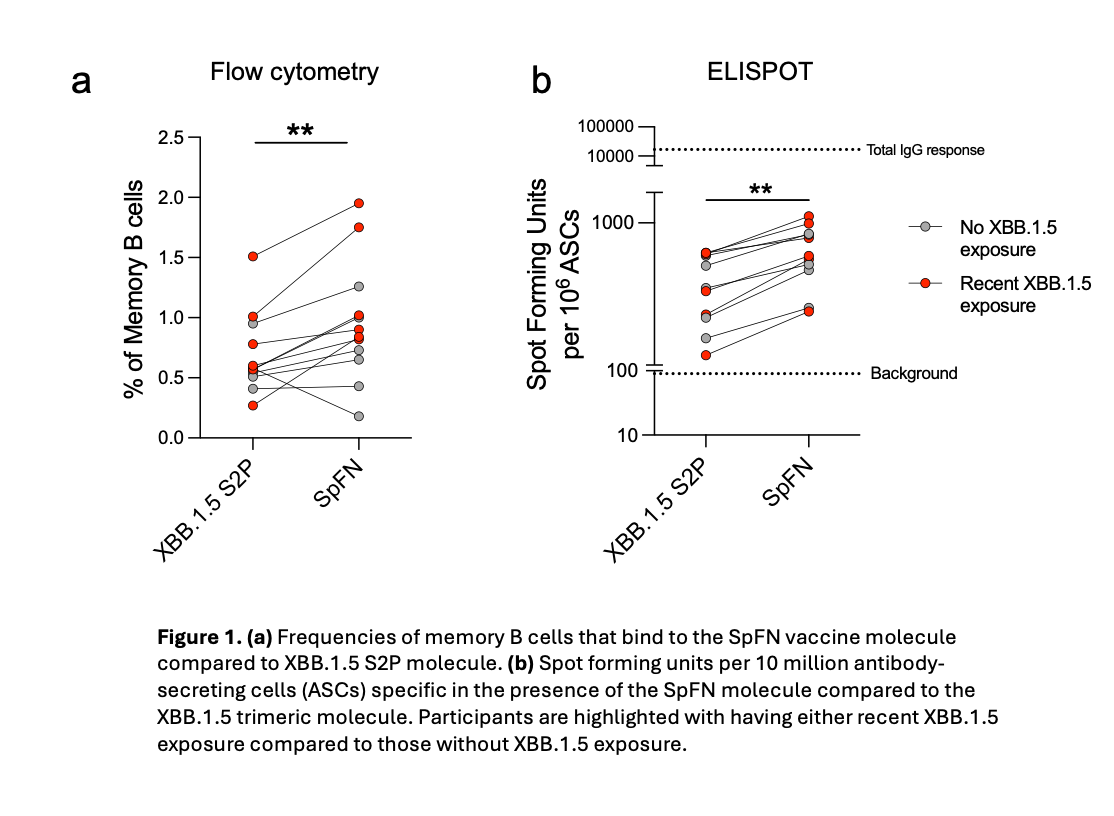
474. Optimized ACE2-Fc With Picomolar Pan-Neutralization of SARS-CoV-2 Variants, Including JN.1 and KP.2
Poster Abstracts
Page: 116
Ferran Abancó i Espuga1, Ferran Tarrés-Freixas2, Rosalba Lepore3, Elisa Molina1, Edwards Pradenas1, Dalia Raïch-Regué1, Bonaventura Clotet1, Alfonso Valencia3, Júlia Vergara-Alert2, Joaquim Segalés2, Jorge Carrillo1, Nuria Izquierdo-Useros1, Julià Blanco1, Benjamin Trinité1
Background
Many neutralizing monoclonal antibodies capable of providing sterilizing immunity against SARS-CoV-2 have been developed and temporarily approved for emergency clinical use as prophylactics. However, the rapid evolution of SARS-CoV-2 progressively renders these treatments obsolete. Several groups have been exploring the use of ACE2-based Fc fusion proteins to obtain a pan-variant neutralizing molecule. In this work we designed ACE2-Fc candidates effective (IC50<100pM) against all variant tested.
Methods
A catalytically inactivated ACE2 peptidase domain was fused to the N-terminal end of a human IgG1 Fc, either directly or via a flexible linker. In silico predicted point mutations were introduced into the ACE2 sequence to increase both spike receptor binding domain (RBD) affinity and protein stability. Using pseudovirus and full virus-based neutralization assays, all candidates were functionally validated and compared to the monoclonal antibody Sipavibart (AZD3152), against a large panel of pre-Omicron and Omicron-derived variants, including JN.1 and KP.2.
Results
We identified 3 points of improvement: (1) the addition of the flexible linker which systematically improved both the production (up to 10-fold) and neutralizing activity (5-fold); (2) a combination of four ACE2 mutations which, benefited the neutralizing activity (10-fold); (3) the addition of a second ACE2 at the Fc C-terminal end, to generate a tetrameric protein, greatly improved the potency (117-fold). The combination of the linker and binding mutations synergized to increase the neutralizing activity (27-fold) but did not improve the potency of the tetrameric molecule suggesting that its activity was already optimal. Finally, while Sipavibart showed loss of activity against JN.1 and KP.2 variants (IC50 of 660 pM and >3456 pM, respectively), our ACE2 molecules demonstrated increased potency against these latest variants (IC50 down to 12 pM and 4 pM, respectively).
Conclusions
Our results demonstrate the relevance of ACE2 recombinant proteins to neutralize all SARS-CoV-2 variants. While the development and validation of traditional monoclonal antibodies is long and costly. ACE2-Fc molecules could provide an off-the-shelf solution ready to protect the immunocompromised and other risk groups against the rapidly evolving SARS-CoV-2 variants and any coronaviruses using ACE2 as receptor.
475. Long COVID Is Associated With Lower Percentages of Mature, Cytotoxic NK-Cell Phenotypes
Poster Abstracts
Pages: 116-117
Tasha Tsao, Amanda M. Buck, Lilian Grimbert, Brian Lafranchi, Belen Altamirano Poblano, Dylan Ryder, Avery Eun, Kathleen Bellon Pizarro, Melissa Buitrago, Kofi Asare, Emily Fehrman, Peter W. Hunt, Michael Peluso, Oscar A. Aguilar, Timothy J. Henrich, the Long-term Impact of Infection with Novel Coronavirus (LIINC) Study Group
Background
Long COVID (LC) is associated with dysregulated adaptive immune function and inflammation, which may originate from or contribute to the persistence of SARS-CoV-2 in post-acute COVID-19. COVID-19 can also induce adaptive NK cell responses during the acute phase, but our understanding of NK cell phenotypes in the post-acute phase and their relationship to LC is unknown.
Methods
Using PBMCs cryopreserved 4 months after initial SARS-CoV-2 infection, we studied individuals with LC (n=21), defined as ongoing COVID-attributed symptoms >3 months post-COVID, in comparison to matched comparators who had fully recovered from COVID-19 (n=14). All samples were collected in the pre-Omicron era, prior to confounders like vaccination or reinfection. Most participants (74%) had been outpatients with mild/moderate COVID-19. We performed NK cell phenotyping using high-dimensional spectral flow cytometry and examined associations between NK cell parameters and clinical factors.
Results
The frequencies of CD56+/CD3- NK cells were similar across groups. However, in comparison to those who fully recovered, the mean percentage of mature, cytotoxic CD56dim/CD16+ NK cells was lower in those with LC (69% vs. 57.9%; P=0.037). An even lower percentage was seen in those with severe LC (>5 symptoms; 50.6%; P=0.004), and in participants reporting neurocognitive or gastrointestinal symptoms (P=0.037, P=0.04, respectively). Overall, the percentage of CD56dim/CD16+ NK cells negatively correlated with the number of LC symptoms (Spearman r=-0.5, P=0.022). Compared to those who recovered, participants with severe LC also had lower percentages of CD56dim NK cells expressing KIR2D(L1/S1/S3/S5) (23.7% vs 16.1%; P=0.036). In multidimensional analyses, we did not find significant differences in NK cell UMAP clusters with adaptive NK cell features, as have been described in acute COVD-19, between those with and without LC. However, we did observe a significant increase in percentage of adaptive NK clusters in CMV IgG+ participants versus IgG- participants (P=0.024).
Conclusions
We observed a lower percentage of NK cells of the canonical mature, cytotoxic phenotype in people with LC compared to those who recovered. Reduced cytotoxic killing and impaired clearance of SARS-CoV-2 infected cells could be related to the development of LC. Alternatively, these data could suggest chronic tissue redistribution in response to persistent viral triggers in people with LC.
476. The XBB.1.5 mRNA Booster Vaccine Does Not Significantly Increase XBB.1.5 Mono-Reactive T Cells
Poster Abstracts
Page: 117
Joel Sop, Alicia Mercado, Alexis Figueroa, Tyler Beckey, Caroline Traut, Li Zhang, Kellie Smith, Joel Blankson
Background
SARS-CoV-2 variants such as XBB.1.5 and BA.2.86 have emerged with mutations that allow them to evade neutralizing antibodies elicited by ancestral and bivalent mRNA vaccines. Despite the introduction of the XBB.1.5 monovalent booster to improve T cell immunity, it remains unclear whether this vaccine induces stronger XBB.1.5-specific T cell responses compared to the ancestral/BA.5 bivalent vaccines. We hypothesized that the XBB.1.5 booster would significantly increase the percentage of XBB.1.5 mono-reactive T cells.
Methods
We used the IFN-gamma ELISpot assay to determine the targeted epitopes and the functional expansion of specific T cells (FEST) assay to assess the percentage of CD4+ T cells that cross-recognized ancestral, BA.5, and XBB.1.5 spike proteins versus those that were mono-reactive. The FEST assay involves culturing antigen-specific T cells with spike peptides, followed by TCR sequencing to identify expanded clonotypes. 11 participants who received either the ancestral/BA.5 bivalent mRNA vaccine or the XBB.1.5 monovalent mRNA booster vaccine were included in the study.
Results
Our analysis revealed robust T cell responses to ancestral, BA.5, and XBB.1.5 spike proteins. However, the XBB.1.5 booster did not significantly increase the percentage of XBB.1.5 mono-reactive T cells. The percentage of spike-specific CD4+ T cell receptors that were XBB.1.5 mono-reactive did not increase significantly after the booster shot (7.6% pre-booster to 12.3% post-booster, p=0.4375). Instead, cross-reactive CD4+ T cells dominated the spike-specific T cell response. Furthermore, the percentage of T cell-targeted epitopes containing XBB.1.5 mutations did not significantly change after the booster (27.9% pre-booster to 23.75% post-booster, p= 0.6667).
Conclusions
Our findings suggest that the XBB.1.5 monovalent booster does not substantially enhance XBB.1.5-specific T cell responses, with cross-reactive T cells continuing to dominate the immune response. These results have important implications for future vaccine strategies targeting emerging variants.
477. Evaluation of Salivary Antibody in Protection From SARS-CoV-2 Infection
Poster Abstracts
Page: 117
Sharon Walmsley1, Majid Nabipoor1, Gary Chao2, Lesley Ward2, Rizani Ravindran1, Erik Lovblom1, Jennifer Gommerman2, the STOPCoV Research Team
Background
The primary route of infection for SARS Cov-2 is through inhalation. The virus can infect cells along the mucosal tract from nares and mouth to gut. The impact of the mucosal immune response in control of the infection and protection from reinfection unclear. It is unknown whether a nasal vaccine would provide better protection. Our objective was to determine the IgG and IgA antibody levels in the saliva of a subset of persons participating in a longitudinal observational study of COVID immunity and to compare responses in those with vaccine only and those with hybrid immunity.
Methods
A random sample of 180 persons participating in the STOPCoV study (n=1286, mean follow up 1.5 years, mean 5 vaccine doses) were invited to participate in a sub-study of mucosal immunity. Samples of saliva were collected in December 2022 and April 2023. We analyzed the levels of IgG and IgA to spike protein and receptor binding domain (RBD) to the Wuhan ancestral strain and Omicron variant in 51 participants. We excluded individuals who had a breakthrough infection or received a vaccine dose in the interval between testing periods. We selected those with hybrid immunity who had a breakthrough infection in the previous 6 months. Regression for continuous outcomes (antibody levels) and survival outcomes (subsequent breakthrough infection) was used.
Results
Participants with hybrid immunity were more likely to have detectable IgA antibody to RBD than those with vaccine only immunity to both the Wuhan ancestral strain (100%, 79%) p=.04 and the Omicron variant (93%, 74%) p=.11. Similar trends were seen with IgA antibody to spike to Wuhan (94%, 82%) p=.24 and all has positive IgA antibody to spike to Omicron . Significant decay was seen with IgA antibody to RBD protein to both Wuhan and Omicron between the two sampling periods. Neither salivary IgA positivity nor the relative level of IgA antibody to Omicron was predictive of protection from breakthrough infection over the subsequent year, although receipt of an additional COVID vaccine was.
Conclusions
Hybrid immunity was associated with higher proportions of individuals having positive mucosal IgA and IgG antibodies to spike and RBD proteins of SARSCo -2 but these decayed with time and were not associated with protection from a breakthrough infection in the following year.
Figure 1.
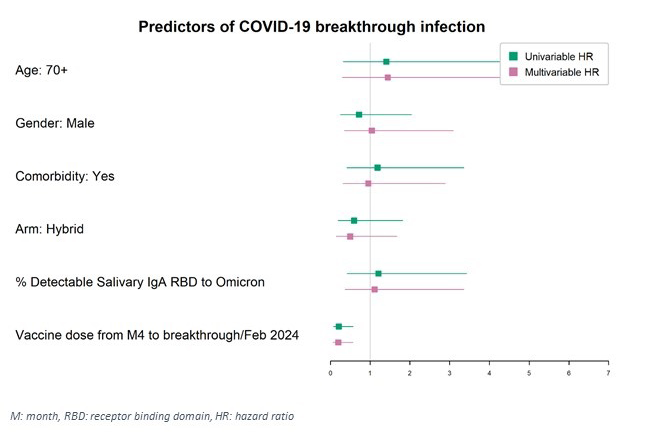
478. Evaluation of the PHH-1V COVID-19 Vaccine Induced T-Cell Responses in Adolescents: HIPRA-HH-3 Study
Poster Abstracts
Pages: 117-118
Ignasi Esteban1, Raúl Pérez-Caballero2, Elena Aurrecoechea3, Roc Pomarol1, Laia Bernad2, Ruth Peña2, Manuel Cañete4, Antoni Prenafeta4, Laura Ferrer5, Pere Soler-Palacín6, Borja Guarch7, Silvina Natalini Martínez8, Julia G. Prado2, Montserrat Plana3, the RBDCOV Study Group
Background
PHH-1V (BIMERVAX®) is an adjuvanted recombinant protein vaccine based on a dimeric RBD of the Alpha/Beta SARS-CoV-2 variants. In March 2023 PHH-1V received full marketing approval by EMA (European Medicines Agency) to be used as a heterologous booster for preventing coronavirus disease 2019 (COVID-19) in people aged 16 and older. The HH-3 study (Phase IIb, Open-label, Multi-center, Non-Inferiority, NCT06234956) aims to assess the safety and immunogenicity of PHH-1V in 300 healthy adolescents (pediatric population), with ages comprised 12 to 17 years, that had been previously vaccinated with mRNA-based SARS-CoV-2 vaccines. Here, we evaluate the T-cell immune response in a group of 16 study participants.
Methods
Cryopreserved peripheral blood mononuclear cells (PBMC) samples were obtained from participants (n=16) on baseline (D0) and day 14 (D14) after receiving the PHH-1V booster. PBMCs were isolated and stimulated with 15-mer overlapping peptides pools (84 peptides) covering the RBD region of the Spike protein from the RBD Omicron BA.1 and RBD B.1.351 (Beta) variants of the SARS-CoV-2 virus. T-cell responses were evaluated using ELISpot and Intracellular Cytokine Staining (ICS) techniques. We measured the magnitude of IFNγ T-cell responses by ELISpot assay (Spot Forming Units, SFU per million) after a 24-hour peptide stimulation. ICS measured percentages of IFNγ, IL-2 and IL-4 secreting CD4 and CD8 T-cells after 6 hours of peptide stimulation.
Results
ELISpot assay showed a significant increase in IFNγ-producing T cells at D14 after vaccination with both RBD peptide pools tested (RBD B.1.351 p<0.0001, RBD Omicron BA.1 p<0.0001). ICS assay demonstrated that most of the IFNγ secreting cells have a CD4+ T-cell phenotype (RBD B.1.351 p<0.0001, RBD Omicron BA.1 p=0.0002), although an increase of IL-4 secreting CD4+ T-cells was detected against peptides from the B.1.351 variant (p=0.0381).
A non-significant increase of IFNγ CD8 T-cell responses was detected against the B.1.351 variant. No increases in IL-2-producing CD4 and CD8 T cells were observed.
Conclusions
PHH-1V vaccine elicits a robust IFNγ T cell response in healthy pediatric adolescents when administered as a heterologous boost. Our findings are similar to those obtained in the heterologous boost study with healthy adults aged 18 to 65 years old (HIPRA HH-2). Noteworthy, the present study indicates a more pronounced IFNγ T cell immune response in adolescents than adults, potentially reflecting their maturating immune system.
479. T-Cell Immunity of PHH-1V COVID-19 Vaccine in PWH and Adults With Immunosuppressive Conditions
Poster Abstracts
Page: 118
Raúl Pérez-Caballero1, Ignasi Esteban2, Laia Bernad1, Elena Aurrecoechea3, Yovaninna Alarcón-Soto4, Ruth Peña1, Susana Benet4, Jorge Carrillo1, Nuria Izquierdo-Useros1, Julià Blanco1, Laura Ferrer5, Beatriz Mothe4, Montserrat Plana3, Julia G. Prado1, the RBDCOV Study Group
Background
Protective vaccines became an urgent need during the COVID-19 pandemic. People with immunodeficiencies particularly benefit from COVID-19 vaccination. PHH-1V (BIMERVAX®) is an authorized and adjuvanted recombinant vaccine based on a dimeric RBD of Alpha/Beta SARS-CoV-2 variants. HH-4 was a Phase IIb/III, open-label, single-arm, multi-center study (NCT05303402) to evaluate the humoral and cellular immune response elicited by PHH-1V booster in people with HIV-1 (PHW) and other immunodeficiencies considered to be at higher risk of adverse COVID-19 outcomes compared to the general population. Here, we evaluate cellular immune responses elicited by the PHH-1V booster in individuals with 5 different immunosuppressive conditions.
Methods
We analyzed the cellular immune responses after PHH-1V booster vaccination in cryopreserved PBMC samples at baseline (D0) and day 14 after vaccination (D14) in 5 immunosuppressed groups: people with HIV (PWH, n=30), kidney transplant (KTx, n=23), kidney disease on hemodialysis (HD, n=26), primary antibody deficiency disorders (PAD, n=18), and auto-immune disease on treatment with rituximab/ocrelizumab (AID, n=44). We measured total magnitude of T-cell responses and functionality by IFN-γ ELISpot and intracellular staining (ICS) assays, respectively, using 15-mer overlapping RBD 84-peptide pools of Omicron BA.1 and BA.2, Wuhan, B.1.351 (Beta, vaccine-matched) and B.1.617.2 (Delta). Mixed effects models were used on squared root transformed data stratified by sex.
Results
Total T-cell responses assessed by ELISpot significantly increased (p<0.05) in all the study groups, except for KTx, against the different SARS-CoV-2 pools. T-cell responses against Delta and Wuhan RBD pools were only found in PAD, PWH and AID groups, respectively. T-cell functionality also demonstrated a significant increase in IFN-γ secretion against SARS-CoV-2 peptides on CD4+ T-cells (RBD Omicron BA.1 in PWH and HD; RBD Omicron BA.2 in HD and PAD; RBD Beta in PWH and KTx, RBD Delta in AID; RBD Wuhan in PWH, HD and AID). Significant increases were observed in IL-2-producing CD4+ (RBD Omicron BA.2 in PAD) and in CD8+ T-cells (RBD Omicron BA.2 in HD and RBD Beta in PWH).
Conclusions
PHH-1V booster vaccination boosts cellular immunity against SARS-CoV-2 in PWH and a broad range of individuals with immunosuppressive conditions expanding specific IFN-γ+CD4+ T-cell phenotype across groups. The level of T-cell responses varies according to the underlying condition and/or its associated treatment.
480. Torque Teno Virus: A Predictive Biomarker for SARS-CoV-2 Vaccine Response in Immunosuppressed People
Poster Abstracts
Page: 118
Gonzalo Cabrerizo1, Nicolás Ducasa1, Cecilia Monzani1, Paula Benencio2, Ezequiel Mauro3, Fernando Cairo4, Milagros Acevedo1, Denise Giannone1, María Belén Vecchione1, Federico Remes Lenicov1, Manuel Barbero4, Margarita Anders5, Manuel Mendizabal6, Maria Florencia F. Quiroga1, Mirna Biglione1
Background
Solid organ transplant recipients (SOTRs) are highly susceptible to severe COVID-19 due to chronic immunosuppressive treatment aimed at preventing organ rejection, along with associated comorbidities. Their vaccine responses are often diminished compared to the general population. Identifying a biomarker that reflects immune status and predicts vaccination response is crucial for optimizing vaccination strategies. Torque Teno virus (TTV), a component of the human virome, has previously been identified as a marker of immune competence. Our objective was to develop an in-house qPCR assay to measure TTV viral load and evaluate its potential as a predictor of humoral response to SARS-CoV-2 vaccination.
Methods
We designed TTV-specific primers, optimized a Sybr Green qPCR, and created a standard using a topo cloning vector containing TTV isolated from a liver transplant recipient (LTR), which was subsequently sequenced for validation. We determined TTV viral load in plasma samples from LTRs and healthy donors (HD) after administering the initial vaccination regimen (first and second doses) and the booster dose (third dose) of the SARS-CoV-2 vaccine. The humoral response included the measurement of anti-Spike antibodies and neutralizing antibodies.
Results
The prevalence of TTV in LTRs was 91.4% (70/77), compared to 92.9% (13/14) observed in HD. LTRs exhibited a significantly higher TTV viral load after the initial vaccination regimen (median log10(copies/mL): 5.50) compared to HD (median log10(copies/mL): 4.10) (p=0.0001). Among LTRs, those who failed to develop a humoral response had a higher TTV viral load (median log10(copies/ mL): 5.94) than those with a successful response (median log10(copies/ mL): 4.59) (p<0.0001). This trend persisted after the booster dose, with LTRs showing a median TTV viral load of 5.76 compared to HD at 4.39 (p=0.0027). Non-responders exhibited an even higher TTV viral load (median log10(copies/ mL): 5.95) compared to responders (median log10(copies/mL): 5.53) (p=0.004). Notably, there was a correlation between total anti-spike IgG antibody levels in plasma and TTV viral load (p<0.05) in LTRs, both after the initial vaccination regimen and following the booster dose.
Conclusions
In conclusion, a high TTV viral load predicts a poor humoral response to SARS-CoV-2 vaccination. This biomarker should continue to be investigated as a predictor of overall immune status.
481. Limited Effectiveness of High-Dose Flu Vaccine in Augmenting Immunity in Older People With HIV
Poster Abstracts
Pages: 118-119
Jonah Kupritz, Sheldon Davis, Prabhsimran Singh, Tianhao Liu, Daniel Diaz-Pachón, Allan Rodriguez, Rajendra Pahwa, Savita Pahwa, Suresh Pallikkuth, the Miami Center for AIDS Research
Background
Chronologic aging has been reported to impair antibody responses to influenza (flu) vaccination with greater impairment in PWH occurring at a younger age than in people without HIV (PWoH). High-dose (HD) vaccine, with four times more antigen than standard-dose (SD), is recommended for people ages ≥65 years to improve effectiveness but has not been widely studied in PWH.
Methods
237 participants (PWH, virally suppressed, and PWoH) consisting of young (Y, 18-40 years; PWH, N=42 and PWoH, N=56) and old, (O, ≥60 years; PWH, N=67 and PWoH, N=72) were enrolled into the study (NCT04487041) and given SD vaccine during the 20-21, 21-22, or 22-23 flu seasons. The following season, HD vaccine was given to a subset of participants (OPWH: N=37; OPWoH: N=37; YPWH: N=15; YPWoH: N=18). Serum hemagglutination inhibition (HAI) titers to H1N1 (H1), H3N2 (H3), B/Yamagata (BYam), and B/Victoria (BVic) antigens were measured at 0-, 28-, and 180-days post-vaccination (dpv). As recent H3 viruses do not bind red blood cells, we could not assess H3 HAI responses to HD. Nonparametric tests and linear regression were performed in R. P values <0.05 were deemed significant.
Results
Baseline titers did not differ between PWH and PWoH but compared to Y, O had lower H3 (1:65 vs. 1:110, P<0.01) and BVic (1:100 vs. 1:134, P<0.01), higher BYam (1:58 vs. 1:45, P<0.05), and similar H1 titers. At 28 dpv-SD, although H1, H3, and BYam titers increased more than two-fold from baseline in all groups, log2 fold-change (FC) from 0 dpv to H1 was lower in O than in Y (1.7 vs. 2.3, P<0.05). Moreover, H1 titers (1:298 vs.1:425, P<0.01) and FC (1.7 vs. 2.1, P=0.06) were lower in PWH than in PWoH. After HD, at 28 dpv, H1 titers remained lower in O (1:306 vs. 1:430, P<0.05) and PWH (1:279 vs. 1:401, P=0.07) compared to Y and PWoH. On paired analysis at 28 dpv-HD, H1 titers did not differ from SD in OPWH (Table 1) and, unexpectedly, decreased in PWoH (1:504 vs. 1:341, P <0.05). At 180 dpv-HD, titers for all antigens dropped significantly from 28 dpv levels and no longer differed from the baseline, for all groups. In a regression model which controlled for age, race, HIV status, and vaccination history, HD was associated with improvements only in 28 dpv BVic responses (β=757, P<0.05).
Conclusions
SD and HD vaccination drive strong, transient responses to flu antigens. Old individuals and PWH have decreased H1 responses. Our data indicate that HD vaccine demonstrates limited efficacy in further enhancing immune responses of older PWH.
Table 1.
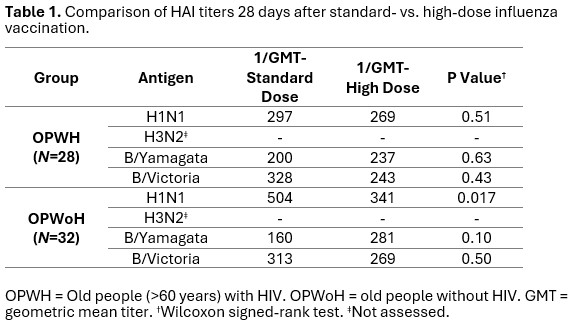
482. Herpes Zoster Reactivation in a Cohort of People Living With HIV Vaccinated With Recombinant Vaccine
Poster Abstracts
Page: 119
Stefania Arsuffi1, Luca Rossi1, Fabio Riccardo Colombo1, Elisa Mirovic2, Miriam Inverardi1, Davide Laurenda1, Ilaria Izzo2, Deborah Castelli2, Francesca Gaffurini2, Itala Polesini2, Giorgio Tiecco1, Francesco Castelli1, Stefano Calza1, Eugenia Quiros-Roldan2, Emanuele Focà1
Background
People living with HIV (PLWH) have a higher risk of herpes zoster (HZ) reactivation and postherpetic neuralgia (PHN) compared to general population. Our study aims to evaluate prevalence of HZ reactivation and PHN after vaccination with recombinant vaccine in a population living with HIV, and to identify risk factors associated with recurrence.
Methods
We conducted a prospective, observational, monocentric, cohort study, enrolling all the patients of at least 18 years of age who were vaccinated with recombinant vaccine for HZ (RZV) from January 2022 to December 2023. A questionnaire was proposed to all the subjects at least 6 months after vaccination, inquiring about previous history of HZ and PHN, and recurrence after vaccination. Moreover, we collected data regarding demographic characteristics, comorbidities, concomitant medication, viro-immunological status and antiretroviral (ARV) regimens. We performed a descriptive analysis and univariate logistic regressions to investigate associated risk factors.
Results
We included 223 subjects (population characteristics are described in Table 1). We estimated the prevalence of events in a subgroup of 145 subjects with complete data: in particular, we recorded 54 subjects with pre-vaccination HZ (prevalence 37.24% [95%CI: 29.36% - 45.65%]) and 13 with post-vaccination HZ (prevalence 8.97% [95%CI: 4.86% - 14.84%]). The prevalence of pre-vaccination postherpetic neuralgia was 19.23% [95%CI: 11.18% - 29.73%], with mean NRS 6.33 [95%CI: 4.9 - 7.76]; no case of postherpetic neuralgia was recorded after vaccination. Evaluating risk factors related to post-vaccination HZ, we didn’t find any association with current levels of HIV-RNA, CD4+ cell count, and CD4+/CD8+ ratio, duration of HIV infection, nadir of CD4+ cell count, previous AIDS-defining events or concomitant medications. We found a correlation between HZ and age (OR 1.06, 95%CI 1.01-1.13, p-value 0.031), hematological (OR 9.60, 95%CI 1.70-49.9, p-value 0.007), oncological (OR 5.36, 95%CI 1.04-22.8, p-value 0.028) and hepatic comorbidities (OR 3.67, 95%CI 1.10-12.0, p-value 0.030).
Conclusions
Overall, this is the first real-world study that highlights the excellent clinical response to HZ vaccination, with a low prevalence of HZ reactivation and complete resolution of postherpetic neuralgia after the vaccination. Moreover, we identified clinical conditions promoting the recurrence HZ after vaccination.
Table 1.
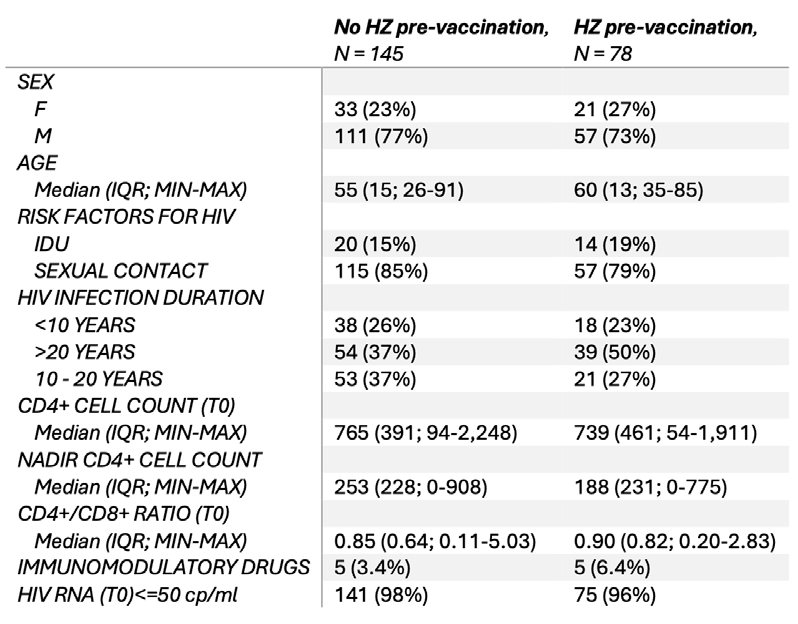
483. Persistence of Seroprotection After Modified Hepatitis B Vaccine Schedule in People Living With HIV
Poster Abstracts
Page: 119
Caroline Troccoli1, Denise V. Potsch1, Pietra S. Nascimento1, Cristina B. Hoffer1, Paulo F. Barroso1, Juliana Miguel2, Livia Villar2
Background
To evaluate the persistence of seroprotection, anti-HBs titers, and anamnestic response to challenge dose, following the Brazilian Ministry of Health's (MS) recommended HBV vaccination schedule in people living with HIV/ AIDS (PLHIV).
Methods
Intervention study in PLHIV followed up in the outpatient clinics of the Infectious disease department at Federal University Hospital in Rio de Janeiro, who achieved seroprotection (anti-HBs ≥ 10mIU/mL) with the primary anti-HBV vaccination (4 doses of 40µg), in the original study between 2006-2010. In the current study (2021-2022), a blood sample was obtained prior to immunization, and one dose (40 µg) of the anti-HBV vaccine was administered shortly thereafter. A second sample was taken between one and six months after immunization. Seroprotection and antibody titers were assessed in both samples using commercial eletrochemiluminescence assays for HBsAg, anti-HBc and anti-HBs. Individuals who received additional doses of HBV vaccine during the period were excluded.
Results
75 of the 148 PLHIV in the original study participated (51%), 44% men, median interval between studies 14 years, age 53 years (36-75) and CD4 774 cells/mm³ (257-1936), 100% on ART and 99% with undetectable HIV viral load. In the pre-immunization sample, seroprotection was demonstrated in 80% of individuals with anti-HBs titers between 10-99 mIU/mL (33%); ≥100-999 mIU/mL (37%) and ≥1000 mIU/mL (10%). In post-immunization samples, seroprotection was demonstrated in 96% of individuals with anti-HBs titers between 10-99 mIU/mL (4%); ≥100-999 mIU/mL (12%) and ≥1000 mIU/mL (80%) (p<0.01). A significant decrease in anti-HBs titers was observed between studies (baseline and current, p<0.01) and a significant increase in titers between pre- and post-immunization samples (p<0.01). The time interval between the challenge dose and the post-immunization sample did not affect anti-HBs titers (p=0.62). Markers of HBV infection (anti-HBc and HBsAg) were non-reactive in all participants.
Conclusions
The scheme recommended by the Ministry of Health for vaccinating PLHIV against HBV resulted in sustained seroprotection for more than a decade. Even with the natural decline of antibodies, the use of a challenge dose was able to restore anti-HBs titers to the values obtained in the previous study. This ensures that it is the best scheme in the primary response to vaccination, and important in the generation of lasting immunologic memory.
484. Delayed HIV-1 Rebound Correlates With Enhanced CD8+ T-Cell Activation in Human Trials
Poster Abstracts
Pages: 119-120
Rasmi Thomas1, Philip Ehrenberg1, Gautam Kundu2, Daina Eiser2, Timothy Ezebuiro2, Carlo Sacdalan3, Somchai Sriplienchan3, Nittaya Phanuphak4, Sandhya Vasan5, Ashan Dayananda5, the RV254 Study Team
Background
Antiretroviral therapy (ART) is an effective treatment for people living with HIV (PLWH) that can suppress the virus and prevent disease progression. However, the virus persists latently and rebounds in a majority of PLWH during analytical treatment interruption (ATI) with variation in time to rebound. Currently, there is a lack of unbiased identification of ‘omics’ biomarkers that predict viral rebound. The RV254 Thai cohort of PLWH who initiated ART during acute HIV-1 infection (AHI) then underwent ATI provided a unique opportunity for us to use multiomic profiling and machine learning (ML) with explainable AI to identify signatures that could predict viral rebound following ATI.
Methods
Peripheral blood cells and plasma were obtained from 27 PLWH from ATI studies with no other intervention in Thailand. Participants were diagnosed during AHI and were on ART for a median of 3 years. Covariates that affect viral load (VL) rebound were first evaluated using ML. Longitudinal multiomics data including proteomics, simultaneous single-cell transcriptomics, chromatin accessibility and surface protein expression at AHI (week 0), 60 weeks after ART initiation, and immediately prior to ATI were analyzed. Cell state identification, differential expression, and pathway analyses were performed to identify markers of rebound.
Results
ML approaches identified faster time to VL suppression upon ART initiation as the strongest predictor of time to delayed rebound which was then used as a covariate in our multiomics analyses. Single-cell CITE-seq differential expression analyses showed that CD8+ T cells had the highest number of genes associating with time to rebound at all three timepoints. Surface protein markers measured at the ART timepoints of delayed rebound were markers of T cell activation (CD2, CD48) and proliferation (CD45), while early rebound markers were related to inhibition of immune responses (CTLA-4, PD1, PD-L1).
Conclusions
Single-cell omics methods identified the immune population with the strongest effect on HIV-1 rebound. Specific markers of CD8+ T cell activation or inhibition measured during ART associated with time to rebound. Understanding the CD8+ T cell phenotype associated with time to rebound using pathway analysis and integration of other clinical and immunologic data could provide further insight into how natural variation can impact time to viral rebound and inform new intervention strategies focused on CD8+ T cell activation to advance HIV-1 remission.
485. Total HIV-1 Nucleic Acid Increases Precede Plasma RNA Rebound During Pediatric ATI
Poster Abstracts
Page: 120
Gabriela Z. L. Cromhout1, Nomonde Bengu1, Nicholas G. Herbert2, Thumbi Ndung'u1, Moherndran Archary1, Philip Goulder2
Background
In the absence of a reliable biomarker for HIV cure/remission, analytical treatment interruptions(ATIs) provide the only means for evaluating cure/remission interventions. Children who acquire HIV in utero are hypothesised to have higher cure potential due to immune ontogeny that restricts the ability of HIV to establish a large latent reservoir in the setting of very early antiretroviral therapy (ART). However, this limited immune exposure to HIV may increase the risk of acute retroviral syndrome (ARS) in children who later undergo ATI in studies designed to assess HIV cure/remission. To monitor for viral rebound, frequent plasma viral load testing is undertaken, but due to low blood sample volumes in children these samples are often diluted, and this reduces assay sensitivity. We hypothesised that Point-of-care (PoC) testing of total nucleic acid (TNA) in whole blood would detect increases in TNA prior to or at viral rebound as measured by standard HIV-1 RNA plasma assays.
Methods
To test this hypothesis, we monitored HIV-1 TNA via PoC testing using the Cepheid GeneXpert Qual XC assay, which requires 100ul of whole blood per test. At the same time, we measured plasma HIV-1 RNA via standard testing using the Aptima HIV-1 Quantitative assay which requires 1ml whole blood for 500ul of plasma needed. This monitoring was done in 15 study participants from a very early ART-treated cohort of children living with HIV who underwent ATI in KwaZulu-Natal, South Africa.
Results
Plasma viral rebound occurred in 11 of the 15 participants who underwent ATI. In several instances, HIV-1 TNA became detectable prior to the plasma RNA (Fig 1A&B). There were no cases of HIV-1 RNA being detectable without detection of TNA (Fig 1B). In this group of very early ART-treated children, who were aviraemic and had low total HIV-1 DNA loads prior to ATI, plasma viral load and GeneXpert TNA Ct were strongly inversely correlated during the ATI period (r=-0.88, p<0.0001).
Conclusions
These data indicate that PoC testing of TNA on whole blood would contribute to safety monitoring in pediatric ATI studies, as a biomarker of imminent plasma HIV-1 RNA rebound. This would enable clinicians to be alerted early to the possibility of ARS and, potentially, the need to reinitiate ART, depending on the study design. At the same time, the low volume of blood sample required for the TNA assay allows for the frequent screening needed during paediatric ATI studies without compromising sensitivity.
Figure 1.
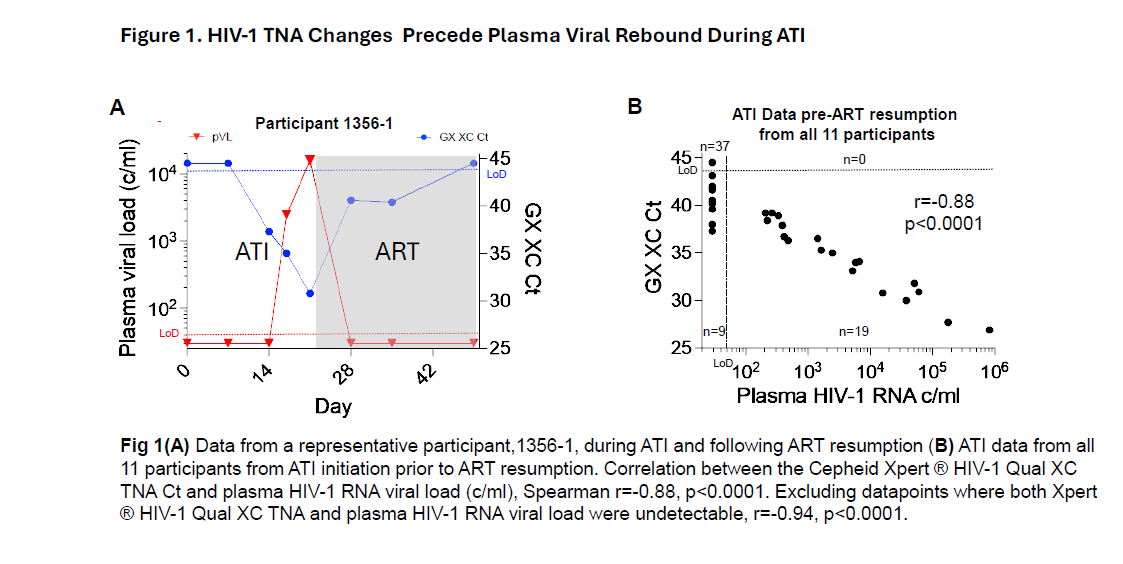
486. Consecutive Analytical Treatment Interruption Improves CD8 T-Cell Activity During Viral Control
Poster Abstracts
Page: 120
Gabriel Duette1, Josefina Marin-Rojas1, Samantha K. Cronin2, Eunok Lee1, Steven G. Deeks3, Anthony D. Kelleher4, Sarah Palmer1
Background
In the PULSE clinical trial, 68 people living with HIV underwent three consecutive analytical treatment interruptions (ATIs). Of note, 10% of the participants transiently controlled HIV rebound during the 3rd ATI. We investigated whether this virological control is associated with improved antiviral CD8 T-cell function and response to mutationally-constrained and highly-conserved HIV epitopes.
Methods
We obtained blood-derived mononuclear cells from four participants enrolled in PULSE: two non-controllers (NCs) with rapid viral rebound during all ATIs and two transient controllers (TCs) with virological control during the 3rd ATI. To evaluate CD8 T-cell functionality during the ATIs, CD8 T-cells were stimulated with HIV peptides to assess cytokine production (IFN-γ/TNF-α) and stained with CellTrace Far-Red to quantify proliferation by flow cytometry. To compare CD8 T-cell cytotoxicity across the ATIs, autologous CD4 T-cells were infected with HIV-NL4-3, co-cultured with CD8 T-cells from each ATI timepoint, and p24 levels were measured by ELISA. Using our novel Immunoinformatics Analysis Pipeline (IMAP), we identified 33 mutationally-constrained and unique Gag-derived HIV epitopes (Gag-IMAP-peptides). The response to these peptides was determined in NC- and TC-derived CD8 T-cells by measuring IFN-γ/TNF-α expression.
Results
For TCs, CD8 T-cell proliferation and cytokine production (3- to 34-fold) increased during the viral control timepoints. In contrast, the capacity for CD8 T-cells to proliferate and produce cytokines did not increase across the ATI timepoints for NCs. Moreover, TC-derived CD8 T-cells from the 3rd ATI, where viral rebound is delayed, eliminated HIV-infected CD4 T-cells more efficiently (2- to 5-fold p24 decrease) compared to CD8 T-cells from earlier ATI timepoints. In contrast, within NCs, we observed no consistent enhancement of CD8 T-cell cytolytic response. Both NC- and TC-derived CD8 T-cells responded to the Gag-IMAP-peptides, with a 49-fold higher response observed for TC-derived cells.
Conclusions
For some participants, repeated exposure to viral antigens during consecutive ATIs results in enhanced CD8 T-cell proliferation, cytokine production and cytotoxicity. The higher potential of CD8 T-cells from transient controllers to recognize mutationally-constrained HIV epitopes may also contribute to their virological control. Importantly, these results indicate that enhanced CD8 T-cell responses are pivotal for achieving viral remission after consecutive ATIs.
487. Mitochondrial Gene Variants Influence VARS2, HIV Reservoir, and CD4+ T Cells in HIV Controllers
Poster Abstracts
Page: 121
Victoria Rios Vazquez1, Vasiliki Matzaraki1, Suzanne D. E. Ruijten1, Mareva Delporte2, Wilhelm A. Vos3, Marc J. T. Blaauw4, Louise E. van Eekeren1, Albert L. Groenendijk5, Leo Joosten1, Mihai G. Netea1, Willem Blok3, Jan van Lunzen1, Jéssica dos Santos1, Linos Vandekerckhove2, Andre van der Ven1, the 2000HIV Human Functional Genomics Partnership Program
Background
Mitochondria are crucial for cellular energy metabolism and immune regulation, but their role in spontaneous HIV control remains unclear. We hypothesized that single nucleotide polymorphisms (SNPs) in mitochondrial-related genes influence HIV control.
Methods
SNP-set enrichment analysis was conducted to determine if SNPs in autosomal mitochondrial-related genes are enriched in HIV-control associated SNPs compared to the rest of the genome, using GWAS summary statistics from Europeans in the 2000HIV cohort (NCT03994835). This analysis included 67 HIV controllers and 1,176 non-controllers. Functionally relevant SNPs were prioritized using expression quantitative trait loci (eQTL) data. The effect of prioritized SNP genotypes on gene expression and total HIV reservoir DNA copies/million CD4+ T cells in PBMCs was tested using linear regression. Flow cytometry and single-cell expression data were used to explore immune activation and gene expression at single cell level. Co-expression network and pathway enrichment analyses were performed to explore relationships between prioritized genes and pathways.
Results
SNP-set enrichment analysis revealed significant enrichment in mitochondrial genes associated with HIV control (P<1e-5, Figure 1A). Prioritization with eQTLs identified six independent SNPs and four mitochondrial-related genes. Three independent SNPs near VARS2 (rs4713462, rs28436034, rs9266658) significantly associated with HIV control, higher VARS2 expression, and lower viral reservoirs (P<0.05, Figure 1B). VARS2 expression negatively correlated with total reservoir DNA (P<0.05, R2=0.01) and positively with CD4 counts (P<0.05, R2=0.14). Flow cytometry showed VARS2 expression positively associated with T cell activation (memory subsets) and negatively with granulocyte and monocyte activation. Single-cell expression data showed VARS2 highly expressed in T cells. Co-expression analysis revealed VARS2 co-expressed with genes enriched (P<0.01) in mitochondrial tRNA processing and suppression of pro-inflammatory pathways.
Conclusions
Our findings highlight the role of mitochondrial-related genetic variants affecting VARS2 expression, essential for mitochondrial protein synthesis, in HIV reservoir size and immune pathways in European HIV controllers. VARS2 expression linked to heightened T cell activation, reduced innate immune activation, and lower viral reservoirs. This suggests that higher VARS2 expression promotes effective viral control and a protective role in long-term HIV control.
The figure, table, or graphic for this abstract has been removed.
488. Clinical and Virologic Outcomes of an ART Interruption in Treated Controllers and Non-Controllers
Poster Abstracts
Page: 121
Isaac E. Avila-Vargas1, Antonio Rodriguez1, Tony R. Figueroa1, Thomas Dalhuisen1, Meghann Williams1, Marin Ewing1, Monika Deswal1, Elnaz Eilkhani1, Viva Tai1, Rebecca Hoh1, Rachel Rutishauser1, Amelia N. Deitchman1, Steven G. Deeks1, Lillian B. Cohn2, Michael Peluso1, the SCOPE-ATI Study Team
Background
The early host-virus interactions immediately post-ART (the “intercept”) likely determine how well the immune system can control HIV. Deep investigation of this early period may lead to novel cure strategies or a potential biomarker of future rebound versus control. Here, we explored the early viral dynamics of spontaneous and post-intervention control.
Methods
We conducted an intensive analytic treatment interruption (ATI) in 20 PWH: 13 ART-suppressed non-controllers and 7 ART-treated PWH known to be controllers prior to ART. HIV RNA was measured 3 times/week post-ART. ART was resumed for most when an HIV RNA >1000 cpm was confirmed. We also studied individuals who did or did not control HIV after a combination immunotherapy intervention (n=10). HIV control was generally defined as <1000 cpm. The viral load data were modeled using a linear mixed effects model.
Results
Within the ATI study, the median age was 59 years (range 32-75); 25% were cis- or trans-women. Among those starting ART when rebound was confirmed (“brief ATI”), CD4/CD8 ratio declined slightly (median 1.2 to 1.0, p=0.002), but this resolved with ART restart. No acute retroviral syndrome and no transmissions occurred; all participants re-suppressed within 1 month of ART restart. The median duration of viremia was 7 (range 3-13) days. Controllers exhibited a longer time-to-rebound than non-controllers (38 vs 15 days, p=0.0036), and longer duration between first detected signal and quantifiable rebound (21 vs 8 days, p=0.1). During rebound (Fig A), the daily increase in plasma HIV RNA level was significantly lower in controllers than non-controllers (0.03 log/day vs 0.24 log/day, p<0.0001, Fig B). The delay in rebound and the more gradual rate of viral load increase observed within these controllers was similar to that observed in the recent UCSF-amfAR combination immunotherapy trial in which 7 of 10 individuals achieved post-intervention control (0.02 log/ day).
Conclusions
Individuals destined to control HIV spontaneously or after immunotherapy exhibit evidence of control immediately post-ART, even before HIV RNA is detected. The delay in rebound and slow rate of increase suggest that for immune control to be achieved, the responses need to be present and functional just as the virus begins to spread. Intense studies on the biology of the intercept period could lead to novel cure strategies and the identification of a biomarker that might predict when virus will rebound and how well that virus will be controlled.
The figure, table, or graphic for this abstract has been removed.
489. HIV-1 Post-Treatment Control Occurs Despite HLA-Escape Mutations in the Intact Reservoir
Poster Abstracts
Pages: 121-122
Efthimios A. Deligiannidis1, Behzad Etemad1, Radwa Sharaf1, Prerana Shrestha1, Sofia Cohen1, Flavio Mesquita2, Yijia Li3, Jesse Fajnzylber1, Colline Wong1, Joseph J. Eron4, Ian Frank5, Jeffrey M. Jacobson6, Zabrina L. Brumme7, Jonathan Li1
Background
HIV-1 post-treatment controllers (PTCs) can maintain viral suppression despite stopping ART while having a detectable intact proviral reservoir. The mechanisms of post-treatment control remain unclear, but there’s evidence that cell-mediated immunity may play a role. The impact of HIV-specific T cell responses is reflected by evolving HLA-escape mutations within the proviral reservoir. In this study, we evaluated the evolution of HLA-escape mutations within the intact reservoir of PTCs and post-treatment non-controllers (NCs) during an analytical treatment interruption (ATI).
Methods
We extracted longitudinal PBMC DNA from PTCs and NCs from ACTG ATI trials from both the pre-ATI (on ART) and post-ATI (off ART) time points. Near full-length single-genome sequences were obtained at pre- and post-ATI time points (median 95 and 56.5 weeks for PTCs and NCs at the post-ATI time point). We performed HLA typing and determined the frequency of both adapted and possibly adapted HLA-escape mutations normalized to gene length and the proportion of HLA-escape mutations relative to the potential sites where such mutations could occur for all intact proviruses.
Results
We obtained more than 400 intact proviral sequences for longitudinal time points from 13 participants (5 PTCs, 8 NCs). Amongst intact proviruses across all participants, the numbers of adapted and possibly-adapted HLA-escape mutations normalized to gene length were more commonly identified in the accessory genes (highest in rev, tat, vpr) than structural genes (gag, pol) or env. PTCs were able to maintain viral control despite the presence of HLA-escape mutations both at the pre-ATI and post-ATI time points. The distribution of HLA-escape mutations across the various genes was similar between PTCs and NCs both when analyzed by the frequency of mutation normalized by gene length and by the proportion of HLA-escape mutations relative to the potential sites of escape.
Conclusions
PTCs can maintain viral control despite the presence of HLA-escape mutations within the intact proviral landscape, in contrast to NCs who exhibit virologic failure with similar HLA-escape mutation frequencies. Additional studies are needed to assess the strength of HIV-specific T cell response as well as the contribution of humoral and innate immunity in post-treatment control.
490. Time to Viremia and Frequency of Post-Treatment Control Among 382 “Placebo-Treated” ATI Participants
Poster Abstracts
Page: 122
Jesper D. Gunst1, Jesal Gohil2, Jonathan Li3, Tae-Wook Chun4, Beatriz Mothe5, Linos Vandekerckhove6, Timothy Schacker7, Luis J. Montaner8, Javier Martinez-Pìcado9, Ruxandra Calin10, Antonella Castagna11, Felipe Garcia12, Rob A. Gruters13, Ole Søgaard14, Sarah Fidler2
Background
There is a global need to explore novel interventions conferring sustained HIV control without antiretroviral therapy (ART). The only current strategy to test efficacy is through an analytical treatment interruption (ATI). Inclusion of ‘placebo’ controls in future clinical trials poses ethical, logistical, and economic challenges and might be unnecessary if sufficient up-to-date data exists from non-intervention cohorts of people with HIV (PWH) who stop ART. To understand viral rebound dynamics and rates of post-treatment control (PTC) in the absence of any intervention, we undertook an individual-level participant data meta-analysis on time to viremia after ATI.
Methods
We included data from clinical studies with ≥5 separate available plasma HIV RNA viral load (pVL) measurements within the first 84 days post-ATI in PWH receiving either placebo or no intervention. Eligible prospective studies were identified through literature search on PubMed. Early-ART was defined as ART initiation within 6 months of HIV acquisition; others were classified as late-ART or unknown. Our data was used as reference to calculate the number of participants needed in either a single arm or 2-group randomized controlled trial design with a power of 90% to detect specified prolonged time to viremia or proportion of PTC at a 5% significant level, one-sided.
Results
In total, 24 studies with 382 individuals were included. Median age was 42 years, 91% male, 75% white, 45% received early-ART. Median time to pVL >50, >400, and >10,000 copies/mL was 16 days (interquartile range [IQR]:13–25), 21 (IQR:15–28), and 32 (IQR:20–35), respectively. PTC defined as pVL <50 copies/mL at day 84 occurred in 4% (n=14) of participants (6% for early-ART and 1% for late-ART). If the expected outcome of an intervention is a frequency of 25% PTC among early-ART participants, 36 individuals would need to be included in a single arm design and 128 individuals in a 2-group randomized trial design.
Conclusions
Sustained control of pVL <50 copies/ml after 84 days off ART is rare in PWH who stop therapy, especially in those starting ART late. When designing future interventional HIV cure/remission trials, these findings help inform study size and design, potentially removing the need for a placebo arm thereby minimizing unnecessary risks to participants and their partners, while optimising resources.
491. Characterization of HIV Antibodies and p24 Antigen During Analytical Treatment Interruption
Poster Abstracts
Page: 122
Clara Di Germanio1, Brendan Balasko1, Patricia Villaflor1, George Noutsios2, Catalina Esteban-Christen2, Alfredo Villarreal2, Jonathan Li3, Davey Smith4, Steven G. Deeks5, Ronald J. Bosch6, Rajesh T. Gandhi7, Philip J. Norris1, Michael P. Busch1
Background
Characterization of HIV humoral immunity has provided insights into the role of HIV antibodies (Ab) in controlling HIV and as biomarkers of HIV replication during infection and antiretroviral therapy (ART) use. The aim of this study was to determine if HIV Ab and antigen (Ag) quantitation could detect anamnestic induction of humoral immunity prior to detectable plasma viral load (VL) rebound following analytical treatment interruption (ATI), and if longitudinal measurements of p24 Ag/Ab provide insights into post-rebound viral replication.
Methods
Longitudinal plasma samples from 41 ACTG A5345 study participants who started ART during chronic or early phase of infection and underwent ATI (88% males, 485 samples; mean 12/participant), previously characterized for plasma VL rebound kinetics and virological correlates of time to rebound, were analyzed using the Ortho Vitros HIV1+2 (p24/env Ab) and Combo (p24 Ag/env Ab), the Sedia Limiting Ag Avidity and the Bio-Rad BioPlex2200 HIV Ag-Ab (p24 Ag/HIV M/O/2 Ab)assays which discriminates p24 Ag and Ab signals, with and without a denaturation step to separate p24 Ag-Ab immune complexes (IC).
Results
Neither Ab nor Ag increased prior to VL rebound. 31 of 41 (76%) participants (both chronic and early treated) showed increased Ab levels (2 timepoints >10% from baseline) following RNA rebound peak and declined after restarting ART. The 8 participants who did not show increased seroreactivity had higher Ab levels at ATI initiation (mean Ortho Combo S/CO 237 vs 154, p<0.001 one-way ANOVA). Early-treated participants had lower Ab levels at ATI initiation (early vs chronic-treated S/CO 80 vs 173, p=0.0004), but larger fold increases during ATI (1.6 vs 1.2-fold, p=0.002) (Fig.1). Two participants with post-treatment control had progressive increase in seroreactivity that paralleled the slow/intermittent increases in VL. p24 Ag was not detectable without the denaturation step; however, after IC dissociation, p24 Ag reactivity became positive in samples with VL >104 RNA copies/mL and correlated with the VL levels across the longitudinal series (Spearman r=0.89).
Conclusions
Commercial HIV serological assays detected an anamnestic Ab induction following VL rebound after ATI in 76% of cases. p24 Ag was detectable at rebound VL>104 RNA copies/mL only following IC dissociation. Longitudinal p24 Ag/Ab quantitation provides insights into post-rebound viral replication and impact of ART reinitiation and could be useful for monitoring of ATIs.
Figure 1.
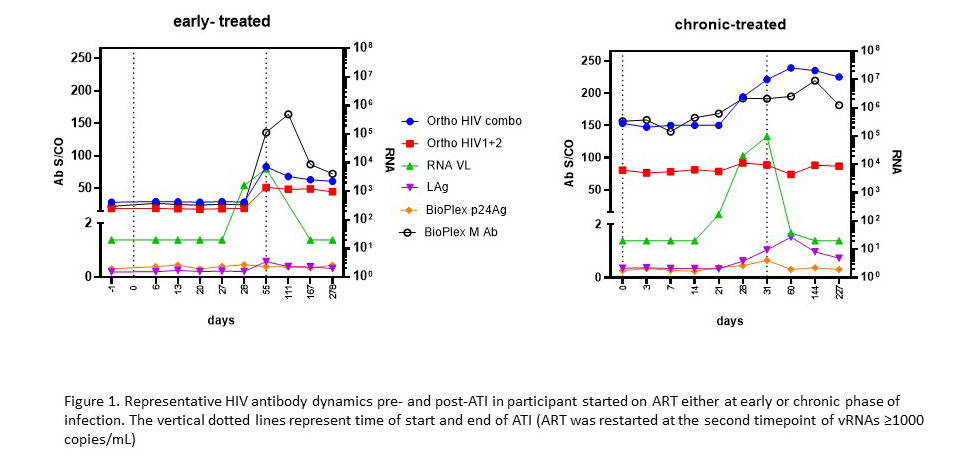
492. Post-Treatment HIV Controllers Exhibit Reduced Plasma Markers of Inflammation and Metabolic Stress
Poster Abstracts
Pages: 122-123
Leila B. Giron1, Qin Liu2, Jianyi Ding2, Xiangfan Yin2, Alan Landay3, Jeffrey M. Jacobson4, Jonathan Li5, Mohamed Abdel-Mohsen1
Background
A rare subset of people with HIV (PWH) on antiretroviral therapy (ART), known as post-treatment controllers (PTCs), can maintain viral suppression for extended periods after treatment interruption (TI). The mechanisms underlying this clinically valuable phenotype remain unclear and are likely multifactorial, necessitating further comprehensive analysis.
Methods
Pre-TI levels of 247 inflammation and immunomodulatory markers were measured in the plasma of 14 PTCs and 27 matched post-treatment non-controllers (PTNCs) using a multiplex Nucleic acid Linked Immuno-Sandwich Assay (NULISA). PTCs sustained virologic control for ≥24 weeks, maintained plasma viral loads ≤400 copies/ml for at least two-thirds of time points, underwent plasma drug level testing, and had no evidence of spontaneous control before ART initiation. The two groups were matched for sex (p=0.41), age (p=0.75), ethnicity (p=0.74), ART initiation timing (p=0.69), ART duration (p=0.5), and pre-TI CD4 count (p=0.92).
Results
A distinct set of pre-TI markers correlated with the likelihood of achieving the PTC phenotype. Notably, pre-TI levels of FGF21, a hormone regulating sugar and lipid metabolism with anti-inflammatory and anti-metabolic stress effects, was significantly higher in PTCs than PTNCs (p=0.004). FGF21 exhibited a significant odds ratio (OR=1.64; p=0.04) for predicting the PTC phenotype in a logistic model. A predictive model using FGF21 alone demonstrated 78% accuracy, 79% sensitivity, 78% specificity, and an area under the curve (AUC) of 0.77. In addition, CCL4, a chemokine promoting immune surveillance (OR=3.5; p=0.03); erythropoietin (EPO), which exhibits anti-inflammatory properties (OR=2.4; p=0.04), and CNTF, which supports neuronal health and maintains gut barrier integrity (OR=1.7; p=0.048), all predicted a higher likelihood of achieving the PTC phenotype. Conversely, markers associated with a lower OR (p<0.05) for PTCs included IL-27 (OR=0.5), a cytokine promoting chronic inflammation; IL-17A/F (OR=0.4), which drives intestinal inflammation via Th17 activation; PD1 (OR=0.24), a contributor to immune exhaustion; and AGRP (OR=0.16), linked to metabolic stress.
Conclusions
PTCs exhibit a distinct profile of host factors associated with balanced immune regulation and reduced metabolic stress. Future studies are warranted to investigate the mechanistic contributions of these factors to the PTC phenotype and to explore their predictive value in multi-marker models for accurate identification of potential PTCs.
The figure, table, or graphic for this abstract has been removed.
493. Population-Specific T-Cell Responses and Virologic Control After Analytical Treatment Interruption
Poster Abstracts
Page: 123
Shelly Karuna1, Pei-Chun Yu1, Doug Grove1, Jorge Gallardo Cartagena2, John MacRae Thays3, Fatima Laher4, Sufia Dadabhai5, Jorge Sanchez3, Catherine Orrell6, Myron Cohen7, M. Juliana McElrath1, Lawrence Corey1, Katharine Bar8, Allan Decamp1, Stephen C. De Rosa1, the AMP ATI Africa and Peru Study Teams
Background
Early ART initiation and broadly neutralizing anti-HIV antibodies (bnAbs) are associated with later ART-free HIV control more frequently in African women with clade C HIV compared to men with clade B HIV. T cells may mediate HIV control, but data among women are limited. We thus measured T cell responses in women and MSM+TG during analytical treatment interruption (ATI).
Methods
Eligible participants had acquired HIV within ~8wks of receiving VRC01 bnAb or placebo in the AMP HIV prevention efficacy trials, initiated ART early, and were virally suppressed ≥1 year. ART was paused under intensive monitoring (ATI), then reinitiated for CD4<250, VL>1000 for 4wks without 0.5log decline, or participant/clinician request. We assessed HIV-specific T cell responses (IFN-γ and/or IL-2 expression) by intracellular cytokine staining after stimulation with peptide pools to all HIV proteins. We calculated total response as the sum across responses to each protein.
Results
Eleven women in southern Africa and 17 MSM+TG in Peru stopped ART. Median time to confirmed VL>200 was 5.4 weeks (range 2.3-112) in women and 4.3 weeks (0.1-18) in MSM+TG. Maximum HIV-specific CD8+ & CD4+ T cell responses during ATI did not differ by VRC01 vs. placebo in either cohort, but in women, the increase in CD8+ from baseline was greater for Gag (10-fold; p=0.024) and Vif (4.6-fold; p=0.024) in those who received VRC01 in AMP. HIV-specific CD4+ responses were low (max <0.5%) compared to CD8+ responses (mainly 1-5%, max 15%) during ATI. Time to ART re-initiation did not correlate with CD8+ (Spearman r=0.5; p=0.18) or CD4+ (r=0.45; p=0.23) responses. Two of 11 women (18%; 95% CI 5.1-47.7%) maintained VL<200 off ART for ≥32 weeks (“controllers”); no MSM+TG (0/17; 95% CI 0.0-18.4%) exhibited control on ATI. Compared to non-controllers, both controllers had higher frequency CD8+ responses to Env (≥0.8% of CD8+ cells) & Pol (≥10%) and, for the VRC01-recipient controller, also to Gag (4%). Both controllers’ HIV-specific CD8+ responses preceded viral rebound; non-controllers’ CD8+ responses followed rebound. Both controllers & non-controllers had HLA alleles associated with protection (eg, B*14:02, B*44:03, B*58:01, DRB1*13-DQB1*06) &/or susceptibility (eg, B*58:02).
Conclusions
Differences in CD8+ (but not CD4+) responses may partly explain why the proportion of controllers differs between Peruvian MSM+TG (0%) and African women (18%) in this post-AMP ATI. Study of T cell responses may identify biomarkers that predict control on ATI.
494. Loss of Virological Control 32 Years After HIV-1 Diagnosis in an Exceptional Elite Controller
Poster Abstracts
Page: 123
Sara Frances1, Anna Pons-Grífols2, Carmen Gasca Capote3, Virginia Sandonís1, Edwards Pradenas2, Cristina Moral-Turón3, Ester Aparicio2, Mar Vera4, Jorge Del Romero5, Benjamin Trinité2, Ezequiel Ruiz-Mateos3, Julià Blanco2, María Pernas1, Concepción Casado1
Background
HIV-1 Exceptional Elite Controllers (EEC) maintain undetectable viremia and halt disease progression more than 20 years after infection in the absence of treatment and may be considered as functionally cured. However, loss of control in these individuals is unknown. In this study we performed a detailed, longitudinal characterisation of the HIV-1 reservoir, viral evolution and immune (B- and T-cell) response in an EEC that unexpectedly lost viral control 32 years after diagnosis.
Methods
The participant was HIV-1-diagnosed in 1985 and was clinically followed since 1990. A comprehensive virological and immunological study was performed on longitudinal available samples (n=16) between 19 and 37 years after diagnosis (Figure 1). We assessed reservoir integrity by IPDA and single genome amplification; evolution and dynamics of viral quasispecies; infectivity and fusogenicity of isolated Env clones; autologous neutralizing capacity and HIV-1-specific cellular immune response.
Results
This EEC (HLA: B39:01/B44:02 and heterozygous CCR5Δ32) had undetectable viral load (VL) for 31 years since diagnosis, except for four transient episodes ≤150 copies/mL. In December 2016, the EEC lost viral control and started ART in October 2021. During the control period, the DNA reservoir was dominated by defective virus (>95%) mainly in the 5'LTR, and by a homogeneous viral quasispecies consisting predominantly of sequences highly similar to the most recent common ancestor (MRCA). For all Env clones analysed (n=9), genetic distance to MRCA was positively correlated with functionality, defined by both infectivity and fusogenicity. Autologous neutralisation against this dominant ancestral Env was observed in all samples analysed (before and after loss of control), as well as an HIV-1-specific Gag immune response. Despite this, extensive sampling during the control period identified evident fluctuations in reservoir size and integrity, viral populations and signs of quasispecies evolution (estimated by env divergence and sequence diversity). These fluctuations were also reflected in the immune response analysed.
Conclusions
This large longitudinal characterisation of a case of loss of control after 32 years, suggests that persistent virological control is not necessarily associated with a steady-state scenario, but may be highly dynamic and involve both virological and immunological changes that will define the outcome of exceptional control.
The figure, table, or graphic for this abstract has been removed.
495. Effect of ART Start Time, ART Duration, and Elite Control on HIV Transcription
Poster Abstracts
Pages: 123-124
Cordelia M. Isbell1, Julie Janssens1, Sun Jin Kim1, Sonia Bakkour Coco2, Rebecca Hoh1, Jennifer A. Nichols3, Xutao Deng2, Mars Stone2, Janet L. Huie3, Steven G. Deeks1, Michael P. Busch2, Steven Yukl1, Adam Wedrychowski4, the RAVEN Study Group
Background
It remains unclear how HIV transcription varies with timing of ART initiation, duration of ART, and elite controller status.
Methods
To investigate these questions, we performed a blinded, cross-sectional analysis of 98 PBMC samples from 36 Reservoir Assay Validation and Evaluation Network (RAVEN) program participants, including 4 ART-naïve elite controllers and 32 ART-suppressed participants with HIV (PWH) stratified by timing of ART start (16 early, 16 chronic) and duration of ART suppression (10 short, 8 intermediate, 14 long). Cell associated (CA) initiated (TAR), 5’-elongated (R-U5-pre-Gag), mid-elongated (Pol), distal (Nef), completed (PolyA), and multiply spliced (Tat-Rev) HIV-1 RNAs were measured by RT-ddPCR and normalized to cellular transcription and HIV DNA.
Results
No differences were observed between the early and chronic treated PWH in CD4+ or CD8+T cell counts, HIV DNA, or plasma viral load (VL) on ART. Compared to early and chronic treated PWH, elite controllers tended to have higher CD8+T cell counts (P=0.0008 and 0.064, respectively), lower HIV DNA (P=0.076, 0.014), and higher VL (P=0.0072, 0.0031). In a cross-sectional analysis of all ART-treated PWH, VL was higher in the short and intermediate compared to long ART duration groups (P=0.0044, 0.042), while we did not detect significant differences in CA HIV RNA. Compared to chronic treated PWH, early treated PWH had lower levels of initiated HIV RNA (median 560 vs. 2348 copies/ug; P=0.029) and 5’ elongated HIV RNA (median 14 vs. 50 copies/ ug; P=0.0058) and tended to have lower levels of multiply spliced HIV RNA (P=0.062). These findings persisted after normalization to HIV DNA, with lower levels of initiated HIV RNA per provirus (P=0.054) and 5’ elongated HIV RNA per provirus (P=0.049) in early treated PWH. Compared to chronic treated PWH, elite controllers also tended to have lower levels of initiated HIV RNA (P=0.064) and had lower levels of 5’ elongated HIV RNA (P=0.0029), but these differences disappeared or reversed after normalization to HIV DNA.
Conclusions
Elite control was associated with lower infection frequencies but no decrease in HIV transcription per provirus. Early ART start was associated with lower levels of HIV transcriptional initiation but no differences in VL, while increasing duration of ART was associated with lower VL but no detectable changes in CA HIV RNA. Future studies towards HIV-1 cure should target the immune mechanisms that likely underlie these differences.
496. Viral Reservoir Characteristics in Lymphoid Tissues of HIV-1 Elite Controllers
Poster Abstracts
Page: 124
Samantha K. Marzi1, Chloe M. Naasz1, Leah Carrere1, Carmen Gasca Capote2, Mathias Lichterfeld1, Matthieu Perreau3, Xu G. Yu1, Andrea Mastrangelo3
Background
Elite controllers maintain undetectable levels of HIV replication in the absence of antiretroviral treatment and are considered as a model for a cure of HIV infection. Recent studies suggest distinct viral reservoir characteristics in blood in such persons, however, viral reservoirs in lymphoid tissues from elite controllers remain largely unexplored.
Methods
Paired samples of mononuclear cells from blood (PBMC) and from lymph nodes (LNMC) from two elite controllers (MP032 and MP083) who maintained undetectable viremia for over ten years were studied. Viral reservoir cells were evaluated using full-length individual proviral sequencing (FLIP-Seq) and matched integration site and proviral sequencing (MIP-Seq). Integration site loop amplification (ISLA) was performed to determine proviral integration sites.
Results
MP032 had a viral reservoir of 17.36 HIV copies per million PBMC versus 5.91 copies per million LNMC, and MP083 had a reservoir of 11.49 HIV copies per million PBMC versus 5.90 HIV copies per million LNMC. In MP032, a major clone of genome-intact proviruses was found in both the PBMC and the LNMC samples. This clone was integrated in the pericentromeric area of chromosome 10 and made up 67.9% of all intact sequences. In addition, two other intact clones were found in the PBMC, one in the pericentromeric region of chromosome X and the other in a gene desert in chromosome X. MP083 also had one major intact clone that was found in both the PBMC and LNMC samples in a non-genic pericentromeric area of chromosome 12. A smaller clone of intact proviruses was found in a gene desert of chromosome 22, and an additional intact sequence was integrated into the centromeric area of chromosome 19; both of these subdominant clones were detected in PBMC only. Despite this overlap between clonal sequences from PBMC and LNMC, we found that not every proviral sequence was found in both sample types; the majority of un-shared clones of intact proviruses were found in the PBMC, and very few LNMC-only intact viral sequences were detected.
Conclusions
Lymph node viral reservoir cells from elite controllers displayed an increased propensity for viral integration into heterochromatin regions of the human genome. Transcriptional repression of intact proviruses in heterochromatin regions in lymphoid tissues is likely to contribute to spontaneous viral control.
497. CD8+ T Cells Shape the HIV Integration Site Landscape According to the Degree of T-Cell Pressure
Poster Abstracts
Page: 124
Noemi L. Linden1, Alexander McFarland2, Ali Danesh1, Scott Sherrill-Mix3, John Everett2, Aoife Roche2, Chanson J. Brumme4, Zabrina L. Brumme5, Itzayana G. Miller1, Tan Thinh Huynh1, Dennis Copertino Jr1, Emma Cook2, Tianyu Lu2, Frederic Bushman2, R. Brad Jones1
Background
HIV elite control in the absence of therapy is marked by a highly clonal integration site landscape. However, the underlying mechanisms remain elusive, impeding the design of therapies that could replicate this exceptional HIV control. We previously demonstrated that elite controller CD8+ T cells reduced HIV integration site diversity, decreased genic integrations, and enriched for integrations in specific gene pathways in a xenograft mouse model. Here we deciphered how varying levels of CD8+ T cell pressure shape HIV integration site characteristics, hypothesizing that the strength of CD8+ T cell response correlates with latency-associated patterns of viral control.
Methods
NSG mice were engrafted with memory CD4+ T cells from three human HLA*B27:05 male elite controllers and injected with HIVJRCSF, and either kept untreated (control) or engrafted with autologous memory CD8+ T cells. After monitoring blood cell counts by flow cytometry and qPCR viral load for 8 weeks, spleens were harvested, and total DNA was subjected to linker-mediated PCR for integration site sequencing, analyzed via the AAvengeR pipeline, Reactome pathway analysis, and correlation analysis between integration distributions and immune response.
Results
In 57 xenograft mice, CD8+ T cell responses produced varied viral load and cell population outcomes. A strong positive correlation was observed between total CD8+ T cell counts, CD4+ T cell counts, and HLA*B27:05-KK10 tetramer-reactive cells (p.adj.<0.001). Elite controller CD8+ T cells reduced viral load by a median of three orders of magnitude. Decreases in viral load correlated with reductions in total and non-clonal integrations (p.adj.<0.05), while inversely correlating with integrations in repeats (p.adj.<0.05), indicating the preferential persistence of clonal integrations in repetitive genomic loci. The genic integrations persisting in the presence of CD8+ T cells were preferentially associated with functions in chromatin organization, SUMOylation, and transcriptional activation (p.adj.<0.05).
Conclusions
Inter- and intra-individual diversity in viral and immune trajectories and integration sites revealed key associations. Similar patterns, including increased HIV reservoir clonality and reduced genic integrations, have been observed in individuals on long-term antiretroviral therapy. These links between CD8+ T cell control and proviral landscape variables suggest the potential to use integration site patterns as a readout of CD8+ T cell strength over time.
498. Anti-IL-10/Anti-PD-1 Dual Blockade Leads to IFN-Related HIV Elite Control Signatures
Poster Abstracts
Pages: 124-125
Susan P. Ribeiro1, Felipe Ten-Caten1, Khader Ghneim1, Ana Carolina Santana1, Muhammad Bilal Latif1, Tamara C. Garcia1, Perla Mariana Del Río Estrada2, Jeffrey D. Lifson3, Mihai G. Netea4, Daniel M. Gorman5, Bonnie J. Howell6, Mirko Paiardini1, Hugo Soudeyns7, Rafick P. Sekaly1
Background
Elimination of latently HIV-infected cells remain the biggest challenge to reach a cure. Current immunotherapy approaches have focused on targeting the adaptive arm of the immune system, such as therapeutic vaccines and the passive transfer of broadly neutralizing antibodies. Recent studies showed that epigenetic reprogramming of innate myeloid cells triggered by adjuvants promoted protective interferon-induced antiviral immunity in vaccinees.
Methods
In this study, flow cytometry, cytokine array, and single-cell RNA-Seq/ ATAC-Seq were conducted on SIV-infected, virologically suppressed rhesus macaques (RMs) treated with anti-IL-10 and anti-PD-1 antibodies (combo-treatment) before analytical treatment interruption (ATI).
Results
Ninety percent of the combo-treated RMs (9/10) successfully controlled viremia to levels lower than 10,000 cps/mL for at least 6 months post-analytical treatment interruption (ATI), and 40% of these RMs had a significant decrease in the cell-associated viral DNA quantities in lymph nodes (so-called CA-vDNAlo <100cps/10^6 CD4 T cells). Integrative analysis revealed that CA-VDNAlo RMs presented increased chromatin accessibility for target genes of IRF7/3 and STAT1, which resulted in significantly higher expression of IFN-stimulated antiviral machineries in myeloid cells and CD4+ T cells. On the other hand, combo-treated CA-vDNAhi RMs showed increased chromatin accessibility for the SMAD2/SMAD3, AP-1, and NFKB1 target genes and consequently higher expression of its downstream pathways (i.e. TGF-b signaling), resulting in higher SIV reservoir and higher susceptibility to infection during ATI. Of note, CA-vDNAhi RMs, presented significantly higher TGF-b plasma levels pre-ATI, and significantly higher frequencies of TGF-b+ Tregs prior to the immune intervention, which contributed to the increased downstream TGF-b signaling in these RMs. In vitro assays confirmed the detrimental impact of TGF-b on IFN-signaling, by blocking STAT1 phosphorylation, while the abrogation of such upstream signal, by using anti-TGFb antibody, unleashed the IFN-signaling and blocked HIV-infection. Signatures of the CA-vDNAlo RMs were observed in HIV elite controllers, who maintain undetectable levels of virus in the absence of ART and who present a small HIV reservoir size.
Conclusions
Overall, these results highlight the critical role of the interplay between TGF-b and IFN in the development of epigenetically regulated innate antiviral immune responses that can impact the viral reservoir.
The figure, table, or graphic for this abstract has been removed.
499. Genetic Regulation of Immune Responses to CMV in Spontaneous HIV Controllers
Poster Abstracts
Page: 125
Suzanne D. E. Ruijten1, Jéssica dos Santos1, Adriana Navas1, Nadira Vadaq1, Alisa Huber1, Victoria Rios Vazquez1, Albert L. Groenendijk2, Louise E. van Eekeren1, Wilhelm A. Vos3, Marc J. T. Blaauw4, Mihai G. Netea1, Vasiliki Matzaraki1, Andre van der Ven1, the 2000HIV Human Functional Genomics Partnership Program
Background
HIV controllers (HICs) spontaneously control an HIV infection and are important to understand HIV immunopathogenesis. We previously showed that HIV-control associated genetic variants in the MHC locus downregulate IL-1β and TNF-α responses to CMV pp65 in PBMCs in people living with HIV (PLHIV) (CROI 2024, abstract 319). Here, we investigated how cytokine responses are organized in HICs versus non-controllers on cART (non-HICs), and how genetic factors regulate these responses.
Methods
1895 virally suppressed PLHIV were included in the 2000HIV study (NTC03994835), of which 114 were HICs. Cytokine production was measured upon PBMC stimulation with a range of stimuli, and co-regulation was assessed using unsupervised hierarchical clustering in HICs and non-HICs separately. Functional effects of HIV control and CMV response associated SNPs were assessed using gene expression QTL summary statistics from the 2000HIV cohort. Memory responses to CMV pp65 and HIVENV peptides were evaluated by measuring IFN-γ and granzyme B production upon 24-hour PBMC stimulation in 57 PLHIV (55 CMV+) and 41 healthy controls (HC) (23 CMV+) from the 2000HIV-TRAINED cohort (NCT04968717). Finally, we tested the association of imputed classical HLA alleles and amino acids with CMV serostatus using logistic regression in 87 CMV-seronegative (CMV-) and 1180 CMV-seropositive (CMV+) PLHIV.
Results
We observed that pro-inflammatory cytokine responses to CMV pp65 and HIVENV clustered more closely in non-HICs compared to HICs (Figure 1). The HIV-control associated SNPs regulating response to CMV were found to regulate the expression of HLA-B, HLA-C and long non-coding RNAs in the MHC locus, suggesting regulation of memory cell responses to CMV pp65. We confirmed the presence of memory IFN-γ responses to CMV pp65, which were stronger in CMV+PLHIV compared to CMV+HC, and more pronounced than responses to HIVENV in PLHIV. Since MHC variants regulate response to CMV, we tested their effect on CMV serostatus. We found suggestive associations (P < 0.05) with 7 classical HLA alleles and 14 HLA amino acids, of which only HLA-A*31:01 has been associated to HIV control.
Conclusions
HICs have a particular co-regulation of CMV-specific responses. HIV control associated SNPs in the MHC locus downregulate IL-1β and TNF-α responses to CMV pp65, presumably through modulating memory responses, which are stronger in PLHIV compared to healthy controls. The role of CMV-driven inflammation should be considered in functional cure efforts.
The figure, table, or graphic for this abstract has been removed.
500. The Asymmetric Opening of HIV-1 Env by a Potent CD4 Mimetic Enables Anti-CoRBS Abs to Mediate ADCC
Poster Abstracts
Page: 125
Jonathan Richard1, Michael W. Grunst2, Ling Niu3, Marco A. Díaz-Salinas4, Li Zhu2, William D. Tolbert3, Lorie Marchitto1, Derek Yang5, Joseph Sodroski6, Amos B. Smith III5, Priti Kumar2, Walther Mothes2, James B. Munro4, Marzena Pazgier3, Andrés Finzi1
Background
HIV-1 envelope glycoproteins (Env) from primary HIV-1 isolates typically adopt a "closed" conformation resistant to the binding of non-neutralizing antibodies (nnAbs). CD4-mimetic compounds (CD4mcs) “open-up” Env, sensitizing infected cells to antibody-dependent cellular cytotoxicity (ADCC) by CD4-induced (CD4i) nnAbs. Two CD4i nnAb families, anti-cluster A and anti-coreceptor binding site (CoRBS) Abs, are necessary for ADCC with the indane CD4mc BNM-III-170. While indane CD4mcs boost recognition of infected cells by anti-CoRBS Abs, these nnAbs alone mediate ADCC poorly. The combination of anti-CoRBS Abs, indane CD4mc and anti-Cluster A Abs mediates ADCC, reducing the HIV-1 reservoir and delaying viral rebound after ART interruption in humanized mice. New indoline CD4mcs with improved potency and breath over indane CD4mcs were recently described. Here, we investigate the mechanism behind their improved ADCC activity.
Methods
The ability of nnAbs to mediate ADCC with indane or indoline CD4mcs was tested in vitro, and their impact on viral rebound was evaluated in vivo in HIV-1-infected humanized mice. The impact of indoline CD4mc on Env conformation was evaluated by smFRET, cryo-EM and cryo-ET.
Results
Unlike indane CD4mcs, the lead indoline CD4mc CJF-III-288 enables anti-CoRBS Abs to mediate ADCC across multiple HIV-1 primary strains. Strikingly, CJF-III-288 exposes the CoRBS and sensitizes infected cells to ADCC by anti-CoRBS Abs or plasma from PLWH, at concentrations where indane CD4mcs fail. Masking the CoRBS with anti-CoRBS Fabs significantly reduced ADCC mediated by plasma from PLWH in the presence of CJF-III-288. In humanized mice, CJF-III-288 with a CoRBS Ab alone delays viral rebound after ART interruption. Structural and conformational analyses reveal that CJF-III-288 stabilizes an asymmetric “open” State-3 Env conformation that alters anti-CoRBS Ab binding orientation. Our analyses also reveal a variation in the Env’s tilting and the anti-CoRBS Ab binding angle, which likely facilitates Fc receptor engagement on effector cells.
Conclusions
Overall, functional and structural data support that CJF-III-288 induces an “open” asymmetric Env conformation modifying the binding orientation of anti-CoRBS Abs, boosting their ADCC activity. This highlights CJF-III-288's therapeutic potential to eliminate HIV-1-infected cells by ADCC.
501. TCR-Mimic ScDb Reduced HIV Provirus and Delayed the Viral Rebound in HLA Specific BLT Hu-Mice
Poster Abstracts
Pages: 125-126
Zhe Yuan1, Nathan L. Board2, Srona Sengupta3, Guorui Zu1, Janet M. Siliciano3, Robert F. Siliciano3, Luis J. Montaner1
Background
Despite the efficient suppression of HIV-1 replication with combined antiretroviral therapy, viral latency is a barrier to HIV cure. Bispecific antibodies against Env and CD3 have resulted in the ex vivo killing of HIV-containing cells from PLWH. However, the low level of Env expression on the cell surface and the sequence variation in the env protein highlight the need for alternative approaches. We previously generated bispecific TCR mimic (TCRm) reagents against CD3 and HIV-1 Pol region, capable of linking CTLs to infected cells and promoting target cell lysis. Based on this ex vivo killing capability, we investigated whether the TCR-mimic single-chain diabodies (ScDb) could reduce the provirus and delay viral rebound post ATI.
Methods
Novel BLT hu-mice generated from donors with the HLA-A*02:01 allele were infected with transmitted/ founder (T/F) virus HIVsuma. Viremia was suppressed on cART. ScDb HI12 against the Pol region and control ScDb H2 against a p53 epitope were used to treat the animals from 3 to 5 weeks post inoculation. ScDb in vivo kinetics were measured. HI12 or H2 were administered daily to animals with partially suppressed viremia. Weekly plasma viral load and proviral reservoir size by IPDA on cART and viral rebound after cART interruption were measured. CD4 depletion and T cell activation were also evaluated.
Results
With this HLA-A allele-specific BLT humanized mice, we found the in vivo half-life of TCRm ScDb post IP injection was 3.9 hrs, peaking at 2.4 ug/ml. TCRm ScDb was well tolerated in BLT hu-mice with stable bodyweight. TCRm ScDb HI12 added to early cART achieved suppression quicker than the H2 control group. CD38+HLA-DR+ double positive population was significantly elevated in CD4+ and CD8+ T cells during the HI12 treatment period. Intact (P=0.026), 3’ defective (p=0.002), and total (p=0.007) HIV proviruses in splenocytes were significantly decreased post HI12 treatment, whereas the 5’ (p=0.295) defective proviruses did not show a significant decrease. In an independent experiment, the viral rebound time was significantly delayed (p=0.0026) in HI12 treated animals over H2 control treated ones.
Conclusions
Using HLA-A matched BLT mice, the addition of TCRm ScDb targeting Pol epitope in corresponding HLA complexes during early ART increased T cell immune activation and reduced the intact provirus burden on ART resulting in a delay of viral rebound after cART interruption. The use of TCRm ScDb strategies warrants further clinical studies towards HIV cure.
The figure, table, or graphic for this abstract has been removed.
502. Targeting TCF-1 to Potentiate the Functional Capacity of HIV/SIV-Specific CD8+ T Cells
Poster Abstracts
Page: 126
Hiroshi Takata1, Benjamin D. Varco-Merth1, Shelby Hoffmeister1, Paula Armitage1, Lydie Trautmann2, Afam Okoye1
Background
The transcription factor T cell factor 1 (TCF-1) plays a critical role in maintaining functional memory CD8+ T cells and regulation of their proliferation capacity. TCF-1 expression in HIV-specific CD8+ T cells has been associated with viral control and may be important for promoting the functional activity of HIV-specific CD8+ T cells. Glycogen synthase kinase-3 (GSK-3) inhibitors prevent the degradation of β-catenin, which promotes TCF-1 expression and its transcriptional activity. In this study, we asked whether GSK-3 inhibitors can be used to induce TCF-1 expression in antiviral CD8+ T cells.
Methods
TCF-1 expression in SIV-specific CD8+ T cells from 5 SIV-infected rhesus macaques (RM) with pVL between 1,700-170,000 SIV RNA copies/mL and 7 SIV controllers (pVL < 15 SIV RNA copies/mL) were assessed by flow cytometry. CD8+ T cells from humans (n=13) and RM (n=21) were treated with 5 different GSK-3 inhibitors (BIO, CHIR99021, TWS119, Li2CO3, and LY2090314) for 16 hours to evaluate their potential to induce TCF-1 expression. PBMC from 5 SIV-infected RM on ART were treated with LY2090314 for 16 hours, followed by culture with IL-7 (50ng/mL) for 6 days to assess expansion of Mamu*A01 immunodominant Gag-CM9- and Tat-SL8-specific CD8+ T cells.
Results
TCF-1 expression was significantly higher in SIV-specific CD8+ T cells of controller RM compared with viremic RM (p=0.04), confirming data from human studies. Among the five GSK-3 inhibitors tested, LY2090314 induced the highest expression of TCF-1 in CD8+ T cells from humans (Figure 1A) and RM after overnight exposure. LY2090314 also induced TCF-1 expression in SIV-specific CD8+ T cells compared with DMSO control (p=0.004). To determine whether TCF-1 induction by LY2090314 can enhance the expansion of antigen-specific CD8+ T cells, PBMCs from SIV-infected RM on ART were cultured with IL-7 after LY2090314 exposure. After 6 days of culture, we observed an enrichment of total CD8+ central memory (TCM) (p=0.008) and Gag-CM9- and Tat-SL8-specific CD8+ TCM (p=0.008) (Figure 1B) compared with DMSO+IL-7 alone.
Conclusions
These data suggest that GSK-3 inhibitors can be used to induce TCF-1 in CD8+ T cells in both human and RM. In addition, LY2090314 was able to induce TCF-1 expression in SIV-specific CD8+ T cells of RM on ART. These data support the further evaluation of LY2090314 in SIV-infected RM on ART to determine whether TCF-1 induction can enhance the functional activity of CD8+ T cells and promote durable virologic control.
The figure, table, or graphic for this abstract has been removed.
503. CD4 T Cell-Targeting Lipid Nanoparticles in the Search for a Genetic HIV Cure
Poster Abstracts
Page: 126
Maaike De Cock1, Wojciech Witkowski1, Sarah Gerlo1, Bruno De Geest2, Linos Vandekerckhove1, Jolien Van Cleemput1, the HIV Cure Research Center
Background
Insights gained from successfully treated individuals demonstrate that a definite HIV cure must purge the replication-competent HIV reservoir, whilst making CD4+ cells resistant to HIV reinfection. Due to its versatility, the CRISPR-Cas9 genome editing tool holds great potential to eliminate latent proviral DNA and mutate the viral co-receptor CCR5. Still, its safety and effectiveness are hindered by the lack of precise delivery to infected cells. Here, we present CD4-targeted lipid nanoparticles (LNPs) for CRISPR-Cas9 delivery to achieve viral excision and CCR5 knockout with greater efficacy and precision.
Methods
As primary human CD4 T cells do not readily take up cargo, we first optimized T cell mRNA transfection efficiency. First, we screened a LNP library to identify a lipid formulation with optimal properties including particle size, surface charge and mRNA encapsulation efficacy. Selected LNPs were then administered to various primary and immortalized T cells to select LNPs that efficiently bind and transfect T cells. In order to target this optimal LNP to HIV susceptible cells, we conjugated it to anti-CD4 nanobodies using biorthogonal click chemistry. Finally, we packaged sgRNA and Cas9 mRNA into our optimal LNP formulation and delivered it to T cells. We designed sgRNAs for CCR5 and LTR, to genetically edit the viral co-receptor in SupT1 cells, and to achieve viral excision in J-Lat 10.6 cells, respectively.
Results
First, we identified a LNP formulation with optimal physiochemical properties that enabled up to 100% binding to and transfection of SupT1, Jurkat and J-Lat 10.6 cells. Moreover, we showed up to 95% transfection of activated, and up to 25% of non-activated primary human CD4 T cells. Interestingly, conjugating the optimal LNP to anti-CD4 nanobodies enhanced the binding to primary human CD4 cells with ten-fold, compared to LNP alone. Next, our results showed successful gene editing in T cell lines. These CRISPR LNPs were able to mutate CCR5 in SupT1 cells, with an indel (insertion and deletion) frequency of 46%. Lastly, delivery of LTR CRISPR LNPs to J-Lat 10.6 cells resulted in up to 100% proviral excision and up to 80% indels in the HIV LTR.
Conclusions
Our results, demonstrating successful gene editing of the CCR5 co-receptor along with full-length provirus excision through targeted LNP delivery, provide proof of concept for CD4-targeted CRISPR LNPs as a genetic cure for HIV.
Figure 1.
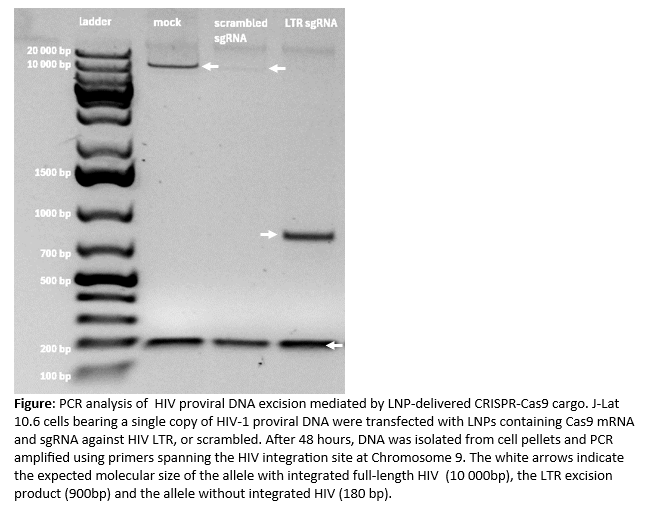
504. CD4 Mimetics Sensitize HIV-Infected Cells to ADCC Mediated by Plasma From Early-Stage HIV Infection
Poster Abstracts
Pages: 126-127
Andrés Finzi1, Alexandra Tauzin1, Delia Pinto-Santini2, Sayan Dasgupta2, Derek Yang3, William D. Tolbert4, Myriam Verly1, Marzena Pazgier4, Javier R. Lama5, Amos B. Smith III3, Shilei Ding1, Ann Duerr2
Background
The HIV-1 reservoir in long lived memory CD4+ cells is the main obstacle for a cure and is established in the early stages of infection. Some strategies being developed to target the reservoir rely on rendering HIV-1 envelope glycoproteins (Env) visible to the immune system. Small molecule CD4 mimetics (CD4mcs) expose vulnerable Env epitopes which can be targeted by non-neutralizing antibodies (nnAbs) that are abundant in the plasma of people with HIV (PWH) and can mediate antibody-dependent cellular cytotoxicity (ADCC). Treatment with CD4mcs in combination with plasma from PWH or nnAbs efficiently reduces the size of HIV reservoir and postpones viral rebound upon ART interruption in humanized mice. However, it remains unclear when these nnAbs are elicited after HIV infection.
Methods
2109 HIV-uninfected MSM and transgender women in Lima, Peru were followed for 2 years with monthly HIV testing by serology and RNA. Participants diagnosed with acute (HIV RNA+/ seronegative) or recent (seropositive with a negative test within 3 months) HIV infection were enrolled and followed for up to 10 years with frequent specimen collection. The time of HIV acquisition (estimated date of detectable infection [EDDI]) was estimated using a published algorithm based on the timing, results, and uncertainty windows of all HIV tests. We measured the ability of plasma samples from 12 participants, who initiated ART at 24 weeks after diagnosis, to mediate elimination of HIV-1 infected cells by ADCC in the absence and presence of the potent indoline CJF-III-288 CD4mc using a FACS-based ADCC assay. Finally, we analyzed the specificity of CD4-induced (CD4i) nnAbs present in these samples by ELISA.
Results
Longitudinal plasma samples, before acquisition, at diagnosis and at multiple time points up to 86 weeks after EDDI were examined. We found that plasma samples collected as early as 3 to 5 weeks after EDDI can mediate ADCC in presence of the CJF-III-288 CD4mc. Recognition HIV-1-infected cells and ADCC progressively increased over time, reaching a plateau by 14-29 weeks after EDDI. ADCC activity increased concomitantly with the elicitation of anti-gp120 CD4i Abs and improved over time with the appearance of anti-gp41 cluster I Abs.
Conclusions
Our results show that CD4i nnAbs able to eliminate HIV-1-infected cells are elicited within a few weeks after HIV acquisition and suggest that CD4mc might be used as an early intervention with potential utility to decrease HIV reservoir seeding and reduce reservoir size.
505. Sustained Post-Rebound HIV Remission With Enhanced T-Cell Immunity After LS-bNAbs: A Case Report
Poster Abstracts
Page: 127
John Frater1, Julie Fox2, Ming J. Lee1, Mohammed Altaf1, Marcilio Jorge Fumagalli3, Anna Kaczynska3, Timothy Tipoe1, Penny Zacharopoulou1, Carla Nel1, Louise Terry4, Mathias Lichterfeld5, Daniel Bradshaw6, Marina Caskey3, Michel Nussenzweig3, Sarah Fidler7, the RIO Trial Investigators
Background
Non-human primate (NHP) models of HIV cure using HIV-specific broadly neutralising antibodies (bNAbs) describe viral control after an initial period of rebound, attributable to HIV-specific T cell responses – a ‘vaccinal effect’. There are examples of viral control after bNAbs in human studies, but no cases of post-bNAb viral rebound followed by sustained suppression, which may indicate new immunity.
Methods
We report a 38-yr old male participant enrolled in the RIO trial. At HIV seroconversion in 2017 he had an initial HIV VL of 55,338 copies/ml before commencing ART 18 days later. Virally suppressed on ART until enrolling into RIO in 2021, he received a placebo infusion and stopped ART; his HIV VL rebounded 4 weeks later (peak 6225 copies/ml). He then received one dose of dual bNAbs (10-1074LS; 3BNC117LS) and ART for 6 months. ART was then stopped again 24 weeks later for a second TI. HIV VL rebounded within 5 weeks and viraemia was sustained for 20 weeks (peak 1893 copies/ml). He then spontaneously controlled (<20 copies/ml) and has maintained aviraemia for 80 weeks since (Figure). During this period bNAb PK levels were both <10ug/ml and ART agents were undetectable in plasma. We present HIV reservoir measures (Q4PCR), HIV Env sequencing and T cell responses measured by ELISPOT, proliferation, AIM and CBA to explore the mechanisms of remission.
Results
The participant showed relative sensitivity to 10-1074 at baseline (4/22 resistant SGA Env sequences; IC80s 0.31-2.2ug/ml) and rebounded during the 2nd TI with 100% resistant sequences (IC80s >50ug/ml) after bNAbs. He developed new T cell responses to a sub-dominant C*07:01 epitope in Nef (KRQDILDLWVY) and a dominant likely B42:01-restricted epitope in Gag p24 (GPAHKARVL) which peaked 37 weeks after TI (400 spots/106), but then waned. Control was associated with increased Gag-specific CD8 T cell proliferation (4.5% at peak vs 0.8% at baseline), Gag-specific CD4 AIM responses (0.4% at peak vs 0% at baseline) and Granzyme B, IL-2 and TNFa by CBA after Gag stimulation. We detected no autologous antibody neutralisation prior to bNAbs. Reservoir size decreased from 2.1 to 0.58 intact proviral DNA copies/million CD4 T cells at baseline versus 37 weeks post-2nd TI (Q4PCR). We will report analyses of integration sites, serology and viral outgrowth.
Conclusions
This is the first reported example of remission following a period of rebound after bNAb dosing and non-therapeutic bNAb levels, consistent with the vaccinal effect seen in NHP studies.
Figure 1.
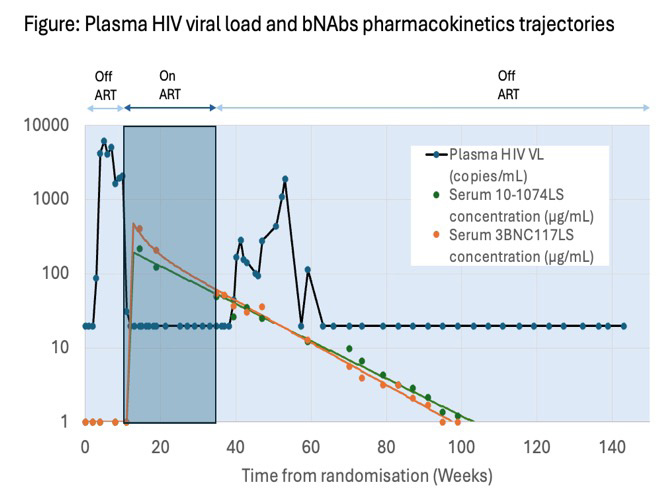
506. Sustained T-Cell Mediated Immunity After LS-bNAbs in the RIO Trial: A Vaccinal Effect
Poster Abstracts
Page: 127
Mohammed Altaf1, Timothy Tipoe1, Carla Nel1, Helen Brown1, Nicola Robinson1, Simon Collins2, Ming J. Lee3, Penny Zacharopoulou1, Louise-Rae Cherrill3, Emanuela Falaschetti3, Michel Nussenzweig4, Marina Caskey4, Sarah Fidler4, John Frater3, the RIO Trial Investigators
Background
T cell immunity may explain sustained viral control off ART after bNAbs in non-human primates, but evidence from human trials is limited. Proof of a bNAb-induced ‘vaccinal effect’ requires evidence of both enhanced HIV-specific immunity and associated viral control. The RIO trial facilitated analysis of participants receiving two LS-bNAbs (10-1074 & 3BNC117) followed by analytical treatment interruption (ATI).
Methods
68 participants (on ART within 3/12 of primary HIV) were randomised 1:1 to receive two LS-bNAbs (Arm A) or placebo (Arm B) and ATI. T cell immunity was measured by gamma-interferon ELISPOT with HIV full genome 15-mer overlapping peptides, proliferation (Cell Trace Violet) and Activation Induced Marker (AIM) assays (CD25, OX40, 41BB, CD69), the latter two using pooled peptides (Gag, Pol, Env, Nef). 32 Arm A participants were assayed at pre-bNAb baseline and then, if VL suppressed <200 RNA copies/ml, at 12 (n=25), 20-24 (n=18) and 36 (n=6) weeks after bNAb dosing. Assay data were compared using Wilcoxon matched-pairs signed rank analyses. Survival analyses split assay data at medians (log-rank test).
Results
BNAbs resulted in viral control for at least 20 weeks in 65% of participants in Arm A. After bNAb dosing and ATI, proliferation of HIV Gag specific CD4+ and CD8+ T cells increased between Weeks 0 and 12 (2.4 vs 4.1%; P=0.006 and 8.5 vs 13.1%; P=0.008, respectively), sustained to Week 36 (P=0.03 for both). HIV Gag-specific AIM+ CD4+ T cells significantly increased between Weeks 0 and 12 (0.13 vs 0.21%; P=0.05). Gag ELISpot responses significantly increased from baseline (134 sfu/106 PBMCs) through Week 12 (210 sfu/106 PBMCs; P=0.006) to Week 24 (235 sfu/106 PBMCs; p=0.024). Gag responses were dominant, with only weak evidence for shifts in responses to other major HIV proteins (Pol, Nef, Env). 12 weeks after dosing, there was enrichment for CD8+ effector memory cells, and inflation of Th1 cells (P=0.01) with associated increases in expression of both Th1 HLA DR/CD38 (P=0.04) and memory CD4+ and CD8+ T betHi/EomesLo (P=0.04 and P=0.008, respectively). At time of submission, there was evidence for an association between baseline CD8+ T cell proliferation to Gag and viral control (HR 1.92; P=0.097), most marked in participants who remained suppressed >15 weeks after bNAb dosing (HR 3.72; P=0.004).
Conclusions
In RIO, after dosing with two LS-bNAbs and an ATI, there was increased Gag-specific T cell immunity in aviraemic participants which was associated with viral control.
507. Temsavir Treatment Improves Recognition of HIV-1 Infected Cells by Broadly Neutralizing Antibodies
Poster Abstracts
Page: 128
Robert Ferris, James Schawalder, Cristin Galardi, Richard Dunham, Heather Madsen, Hangfei Qi
Background
HIV-1 envelope glycoprotein (Env) is expressed on the surface of infected cells, making it an attractive target for the clearance of these cells through antibody-mediated immune activities, such as antibody-dependent cellular cytotoxicity (ADCC). It was previously demonstrated that treatment with temsavir (TMR), a small molecule, can enhance the binding of the broadly neutralizing antibody (bnAb) N6, leading to improved clearance of HIV-1 infected cells. TMR is the active form of fostemsavir (FTR), a drug approved for use in heavily treatment-experienced adults with multidrug-resistant HIV-1 infection. TMR binds to and stabilizes Env in a 'closed' conformation, which facilitates better recognition of Env by N6 and potentially other bnAbs.
Methods
To investigate whether TMR can modulate Env binding on infected cells by bnAbs other than N6, we conducted flow cytometry studies using HIV-1 infected primary CD4+ T cells. CD4+ T cells that were isolated from healthy PBMCs were infected with HIV-1 and treated with TMR for 24h prior to measurement of antibody binding in flow cytometry.
Results
We found that TMR treatment enhances binding of most bnAbs, including antibodies targeting CD4bs, V1V2, V3 glycans and gp120/41 interface with the exception of 10E8, to HIV-1 infected cells, leading to increased clearance of infected cells through ADCC. The enhanced binding of bnAb by TMR treatment is most prominently observed on infected cells that maintain CD4 expression, the cells that are otherwise difficult to target by bnAbs alone. When tested with a panel of clinical isolate viruses, TMR was found to enhance bnAb binding at concentrations similar to its antiviral potency. This suggests that the mechanism of action (MOA) is on-target and that this synergistic effect could potentially be achieved in clinical settings with approved doses of FTR. In kinetics experiments, we found that effective enhancement of antibody binding was observed with a treatment duration of 6h and longer, but a treatment duration of 30min was insufficient to produce this benefit.
Conclusions
Our results demonstrate that TMR treatment enhances antibody binding to the infected cells that maintain CD4 expression with a majority of bnAbs, at concentrations similar to the antiviral potency of TMR. These suggest that combining bnAbs with TMR can broaden the range of HIV-1 infected cells susceptible to antibody-mediated clearance, potentially increasing the likelihood of reservoir reduction in clinical settings.
508. Maximizing Benefits to Participants in Analytic Treatment Interruption With Antibody Infusions
Poster Abstracts
Page: 128
Morgane Rolland1, Hongjun Bai1, Mélanie Merbah1, Gabriel Smith2, Elizabeth Comeau1, Matthew Lind1, Carlo Sacdalan3, Nittaya Phanuphak4, Kiat Ruxrungtham5, Sandhya Vasan2, Merlin Robb1, Donn Colby1, Lydie Trautmann2, Yifan Li1, the RV254/RV630 Study Group
Background
Analytic treatment interruption (ATI) studies utilizing broadly neutralizing antibody (bnAb) infusions are associated with delayed viral rebound if viruses found in the participants are sensitive to the bnAbs. Yet, viral sensitivity is typically evaluated only after the ATI has been conducted. For a future ATI that will enroll 35 participants from the RV254 Thai cohort, we screened HIV-1 sequences for sensitivity to the bnAbs that will be used in the ATI: PGDM1400LS and VRC07-523LS.
Methods
Plasma samples were sequenced via single genome amplification or the Pacific Biosciences single molecule real-time platform using unique molecular identifiers. Envelope (env) sequences were cloned and pseudoviruses with these Env were tested for neutralization sensitivity to bnAbs using IC80<1ug/mL as a cutoff.
Results
Among 649 participants enrolled during acute HIV-1 infection who initiated antiretroviral treatment (ART) within days of diagnosis, 168 (98% male) met study eligibility criteria and 39,907 env sequences were obtained from 160 participants. Most participants had CRF01_AE env (85%). Sequence analysis showed minimal diversity (average mean pairwise diversity=0.004) with a single HIV-1 lineage in most participants (61%). Half of the infections with multiple founder lineages showed rare lineages that represented <3% of the viral population. For each participant, in silico predictions of bnAb sensitivity were used to select representative env sequences for neutralization assays. Neutralization data from 116 participants showed 54 (46.5%) sensitive to PGDM1400LS, 55 (46.7%) sensitive to VRC07-523LS, and 25 (21.5%) sensitive to both. We also modeled the Instantaneous Inhibitory Potential (IIP) values; at week 20 post ATI, 75 participants had clones with IIP (PGDM1400 + VRC07)>3.5, allowing prioritization of participants for study enrolment.
Conclusions
We developed a strategy combining sequence analysis, in silico bnAb sensitivity predictions and neutralization assays to prioritize enrollment of participants with the most sensitive viruses to the bnAbs that will be used in an ATI. Our approach benefitted from the fact that participants initiated ART in acute infection and therefore had a typically homogeneous viral reservoir recapitulated by the limited number of distinct env sequences we sampled. While the benefits of this approach will only be ascertained after the ATI is conducted, these data provide the largest description of sensitivity to two potent bnAbs across CRF01_AE viruses.
509. Myeloid Targeted and Enhanced Endosomal Escapable LNPs Improve Latent HIV-1 Elimination Efficacy
Poster Abstracts
Page: 128
Soumya S. Dey, Sudipta Panja, Bharat N. Chaudhary, Mohammad Uzair Ali, Santhi Gorantla, Howard Gendelman
Background
A cure for HIV remains elusive as the excision of latent proviral DNA by adenovirus-based therapeutic systems has failed to date due to vector immunogenicity and limited targeting to viral reservoirs. In contrast, lipid nanoparticles (LNPs) are promising for targeting viral reservoirs, offering greater cargo-carrying capacity and reduced immune responses. However, limitations in endosomal escape remain a critical impediment. Therefore, the current system, must show sufficient cytoplasmic release of its cargo to impact clinical outcomes. Herein, disulfide-containing ionizable lipid-based LNPs were developed to leverage the high levels of reactive oxygen species (ROS) in myeloid phagolysosomes. The ROS-sensitive LNPs promote cleavage of disulfide bonds, leading to enhanced endosomal escape and improved cytosolic delivery of CRISPR guide RNAs (gRNAs).
Methods
A four-step synthetic procedure was used to synthesize a library of 20 ionizable lipids with cleavable disulfide linkages. Transfection efficacy was assessed by a FLuc reporter mRNA in human monocyte-derived macrophages (MDMs). FDA-approved ionizable lipids, MC3 and ALC-0315, were compactors against the lead candidate (DS-LNP). IVIS was used to evaluate biodistribution. The toxicity profile of the new ionizable lipid was tested via CTB assay. The lead candidate delivered CRISPR-Cas9 gRNAs targeting five HIV-1 exons (tat1-2/ rev1-2/gp41), and CRISPR-Cas9-mediated excision was validated by PCR and gel electrophoresis in HIV-infected MDMs.
Results
Our lead LNP formulation (DS-LNP), consisting of a novel disulfide-based ionizable lipid, DOPC, Cholesterol, and DMG-PEG2K, was nontoxic and demonstrated a 20-fold higher mRNA transfection efficiency in MDMs compared to MC3 and ALC-0315, which are limited by poor endosomal escape in myeloid cells. The DS-LNP biodistribution was specifically observed in the lymphoid and pulmonary viral reservoirs of humanized mice, marking a significant advancement over conventional formulations that inadequately target these reservoirs. CCR5-targeted DS-LNP improved MDMs targeting and endosomal escape, achieving 80% excision of HIV-1 proviral DNA, a clear advancement over conventional formulations.
Conclusions
Disulfide-based LNPs offer a significant advantage in overcoming endosomal escape barriers in MDMs, facilitating effective CRISPR-Cas9 delivery to HIV reservoirs. This approach potentially targets the lymphoreticular and pulmonary system and can improve viral DNA elimination.
The figure, table, or graphic for this abstract has been removed.
510. A Novel and Promising Strategy of HIV Eradication via LTR-LTR Recombination
Poster Abstracts
Pages: 128-129
Feng Li1, Guanhan Li1, Luke Kelley1, Robert Gorelick2, Frank Maldarelli1
Background
Long-lived HIV-infected cells persist and undergo clonal expansion, preventing viral eradication during antiretroviral therapy. The majority of infected cells contain defective proviruses with mutations, deletions, or insertions. Defective proviruses are also generated by LTR-LTR recombination, excising the entire coding sequence, leaving only a solo LTR at the integration site. Little is known regarding solo HIV LTR formation and understanding mechanisms driving their formation will inform efforts to eradicate expression of HIV proteins.
Methods
Cell lines containing HIV proviruses (ACH-2, 8E5) and uninfected control (CEM) were maintained in vitro and sub-cloned. HIV DNA and RNA were quantified using multiplexed droplet digital PCR. Proviruses were recovered from cell lines using enrichment through biotin-labeled probes targeting HIV sequence and characterized by long-read sequencing. To screen host proteins required for the solo-LTR formation, we used a yeast genetic system that introduced a suicide gene in a LTR-retrotransposon. The LTR-LTR recombination leads to the knockout of the suicide gene, which allows us to investigate the frequency of LTR-LTR recombination.
Results
Using an enrichment and long read sequencing technique, we captured and characterized HIV-containing DNA fragments in latently HIV-1 infected cell lines. In 8E5 cells, we identified a full-length HIV provirus and a solo-LTR with the exact same integration site, demonstrating formation solo-LTR in vitro. PCR analyses with provirus-flanking primers revealed that the 8E5 cell line is a mixture of cells with either intact or solo-LTR proviruses. Analyses of multiple single cell clones containing full-length or solo-LTR HIV, including growth competition assays, revealed cells with solo-LTR exhibit growth advantage over cells containing full-length provirus. With yeast genetic assay we have revealed that the frequency of solo-LTR formation is approximately 10 events per million cells, which is consistent with the findings in the human endogenous retroviruses. Knockout of homologous recombination (HR) genes rad50 and rad52, orthologs of Human RAD50 and RAD52, substantially downregulated the frequency of LTR-LTR recombination.
Conclusions
Our group have demonstrated that solo-LTR HIV formation occurs in vitro. New cell lines generated in this study are now available to elucidate mechanisms to excise LTR coding sequences. With yeast system, we have identified HR plays crucial role in the formation of solo-LTR.
511. Development and Delivery of Next-Generation Epigenome Editors for Long-Term HIV Silencing
Poster Abstracts
Page: 129
Francisco J. Zapatero Belinchon1, Valentina Pedrero-Classen1, Martin V. Hamann2, Zichong Li1, Katelyn Luo1, Ulrike V. Lange2, Melanie Ott3
Background
Although antiretroviral therapy (ART) has extended the lifespan of people living with HIV (PLWH), it cannot eliminate genome-integrated HIV reservoirs. Approximately 81% of the reservoir remains transcriptionally active, driving immune activation and rapid viral rebound. Silencing these transcriptionally active reservoirs is crucial. Recent studies highlight that DNA and histone methylation can effectively silence cellular transcription, keeping retroviruses in a “deep-latent” state. Leveraging these insights, we developed BrecOFF, a novel HIV-specific epigenome editor, to achieve durable silencing of transcriptionally active HIV.
Methods
BrecOFF is a 148 kDa HIV-specific epigenome editor that integrates the de novo DNA methylation machinery DNTM3A-3L with the KRAB transcriptional repressor domain KOX1. To improve targeting specificity and reduce size, the ~160 kDa dCas9 component of CRISPRoff was replaced with a ~38 kDa catalytically inactive version of Brec1 (dBrec1), an HIV-specific recombinase targeting a conserved 34-bp region in the HIV long terminal repeat (LTR). We evaluated BrecOFF’s ability to bind the HIV LTR and inhibit transcription both transiently and long-term. Additionally, enhanced versions of BrecOFF with alternative KRAB domains were developed, and virus-like particles (VLPs) were engineered for efficient delivery.
Results
Both dBrec1 and BrecOFF bound to the HIV LTR without inducing proviral cleavage. Transient expression of dBrec1 or BrecOFF repressed episomal HIV transcription, but only BrecOFF inhibited basal proviral transcription for over a month, indicating durable epigenomic silencing. Mutational analyses confirmed that DNA and histone methylation are essential for sustained repression. We further enhanced transcriptional silencing by substituting the KOX1 KRAB domain with ZIM2 or ZIM3. Finally, VLPs were validated as an efficient packaging and delivery system for BrecOFF, opening new opportunities to silence HIV in T cells.
Conclusions
BrecOFF represents a promising HIV-specific epigenome editor with significant therapeutic potential. Combining dBrec1’s HIV-specific targeting with the durable epigenomic silencing of CRISPRoff, BrecOFF offers an innovative next-generation gene therapy strategy for a functional HIV cure.
The development of the VLP delivery system further supports its translational feasibility for both research and clinical applications.
512. RV550: Safety and Virological Outcomes in Blood and Lymph Nodes of N-803 With ART in Acute Infection
Poster Abstracts
Page: 129
Carlo Sacdalan1, Eugène Kroon1, Meera Bose2, Shida Shangguan2, Nicole Dear2, Pathariya Promsena1, Nicha Tulmethakaan1, Anchalee Avihingsanon3, Jeffrey Safrit4, Somchai Sriplienchan1, Morgane Rolland2, Lydie Trautmann5, Kiat Ruxrungtham6, Sandhya Vasan5, the RV550 Study Group
Background
We conducted a Phase 2, open-label study to evaluate the safety of N-803 with ART in acute HIV infection (AHI) and evaluated the impact on HIV viral load (VL), levels of vDNA and vRNA in CD4 T cells and lymph nodes (LN).
Methods
We randomized 12 participants in AHI to receive immediate ART (n=4, Fiebig 1-2) or ART + N-803 (n=8, Fiebig 1-4) at 6 mcg/kg SC abdominally at weeks 0, 3, and 6 then followed to week 12. All participants had inguinal LN biopsy at wk 0 and week 6.5. Blood was drawn for VL, CD4 and CD8 count. Adverse events (AEs) were solicited every N-803 injection. CD4 T cells and LN vRNA and vDNA were compared using nonparametric Wilcoxon signed rank, Mann-Whitney U and Kruskal-Wallis tests and Spearman correlations.
Results
Median (IQR) age was 32(26-35) years in the N-803 arm, 24(21-28) years in the controls. All N-803 recipients reported injection site redness at all time-points (n=24) with 4 mild, 3 moderate and 17 severe. For injection site swelling (n=23), 6 were mild, 9 moderate and 8 severe. Despite this, injection site AEs resolved in 7 days and all participants consented to continued N-803 administration. There was no significant difference at baseline for CD4 (300 vs 548 cells/mm3), HIV VL (6.15 vs 5.73 log10) and CD4 count increase over time between groups. While VL were overall comparable across groups, VL significantly declined (p=0.008) after the first dose of N-803 compared to ART-only (FigA). vRNA and vDNA were obtained from CD4 T cells and LN from 7 ART + N-803 participants and 4 ART participants. vRNA (LTR-Gag, Tat-Rev) and vDNA (total, integrated, 2-LTR circles) levels declined for all participants in CD4 T cells in 12 weeks and LN in 6.5 weeks. There was no significant difference in the decline of vRNA and vDNA between groups for LN (adjusted p≥0.545) and CD4 T cells (adjusted p≥0.218) from baseline (FigB).
Conclusions
N-803 with ART was safe and resulted in a rapid plasma HIV VL decline from study baseline compared to ART alone. While there was some evidence of a faster decline in viremia immediately post N-803 injection, differences in reservoir measurements were overwhelmed by the large fluctuations that occur over the first weeks of ART in acute infection, inter-host variability, and the small number of participants. To further explore the impact of N-803 on viral reservoirs, all eligible and consenting study participants will receive an additional single dose of N-803 followed by ATI until HIV viral load >1,000 copies/ml for a maximum of 4 weeks.
The figure, table, or graphic for this abstract has been removed.
513. HIV-1 Reservoir Decay During Broadly Neutralizing Antibody Therapy in the RIO Trial
Poster Abstracts
Pages: 129-130
Marcilio Jorge Fumagalli1, Anna Kaczynska1, Marius Allombert1, Agata Lopes Ribeiro1, Mariangela Silva1, Brianna Hernandez1, Christy L. Lavine2, Cintia Bittar1, Thiago Y. K. Oliveira1, Anna Gazumyan1, Michael S. Seaman2, John Frater3, Sarah Fidler4, Marina Caskey1, Michel Nussenzweig1, the RIO Trial Investigators
Background
Antiretroviral therapy fails to eliminate a reservoir of HIV-1 infected cells wherein the provirus is transcribed at levels insufficient to induce cell death. Earlier studies of broadly neutralizing antibodies (bNAbs) administered during ART interruption (ATI) showed mixed results with some reporting accelerated reservoir decay. RIO enabled examination of reservoir dynamics in 32 individuals receiving 3BNC117-LS and 10-1074-LS during ATI or after ART restart.
Methods
Participants were randomized 1:1 to bNAbs or placebo and underwent ATI. After initial rebound, the placebo group received bNAbs at ART restart. Intact and defective reservoirs were measured by digital droplet PCR (ddPCR) and by full genome sequencing (Q4PCR) at baseline (before ATI) and after an average of 56 weeks after the initial bNAb dose at a time when HIV-1 was undetectable.
Results
Individuals in the 2 arms showed similar numbers of intact and defective proviruses. Consistent with early therapy, 5 out of 27 and 7 out of 21 individuals in bNAb and placebo arms respectively, had no measurable reservoir at baseline by ddPCR. The geometric mean number of intact proviruses/106 CD4+T cells was 8.4 by ddPCR and 0.28 by Q4PCR. There was no significant correlation between reservoir size and time to initial rebound in the placebo arm. 80% of the CD4+T cells carrying intact proviruses were members of expanded clones. 267 representative proviral Env genes from reservoir and rebound were produced as pseudoviruses, and subjected to sensitivity testing in TZM-bl assays. All individuals in the bNAb arm, and all but 1 in the placebo arm showed reservoir sensitivity to at least 1 of the 2 bNAbs. Despite low to non-measurable autologous antibody neutralizing activity to reservoir viruses in the placebo group, rebound sequences only corresponded to reservoir sequences in 2 of 9 individuals. Therefore, autologous antibody neutralizing activity cannot account for the disparity between intact proviruses found in the reservoir and rebound in these individuals. Reservoir half-life and log fold change after bNAb dose during ATI (bNAb arm) or at ART restart (placebo arm) were not significantly different. When all measurements for both arms are considered jointly (n=32) the half-life of intact and defective reservoirs were 33 and 424 weeks respectively.
Conclusions
Antibody therapy in the RIO trial was associated with an average intact reservoir half-life decay which is 7-8 fold faster than prior reports.
514. CD4+ T Cells Harboring Inducible HIV Genomes Display a Senescent-Like Phenotype
Poster Abstracts
Page: 130
Helene Roux1, Amélie Pagliuzza1, Remi Fromentin1, Jean-Pierre Routy2, Nicolas Chomont3
Background
Latently HIV-infected cells persist during antiretroviral therapy (ART) and these viral reservoirs inevitably trigger a viral rebound when treatment is interrupted. Identifying the mechanisms contributing to the persistence of these reservoirs is essential to the development of strategies aimed at eradicating them. In this study, we used a single-cell approach to measure multiple parameters that could contribute to the persistence of HIV-infected cells after prolonged ART.
Methods
Using a modified version of the HIV-Flow assay, we phenotypically analyzed the cells harboring inducible proviruses (p24+ cells) in blood samples from 10 participants who maintained undetectable plasma viral loads for 3-24 years. CD4+ T cells were stimulated for 24h with anti-CD3 and anti-CD28 antibodies, and cellular markers associated with T cell quiescence, senescence, cytotoxicity and immune functions were measured.
Results
The phenotype of 395 p24+ cells was determined from a total pool of 390 million CD4+ T cells. p24+ cells more frequently expressed the anti-apoptotic protein Bcl-2 (p=0.006, fold increase 1.1), the immunotoxins granzymes A and K (p<0.0001 for both, fold increase 7 and 3, respectively) and the immune checkpoint molecules PD-1 and TIGIT (p<0.0001, fold increase 1.8 and p<0.0001, fold increase 3.4). We also found that p24+ cells more frequently expressed the cytokines TNF-a, IFN-g, IL-2 and IL-17 (p<0.02 for all, fold increases 5, 9, 14 and 55 respectively). Intriguingly, simultaneous expression of multiple cytokines, a signature of senescent T cells, was much more frequent in p24+ cells than in p24- cells (p<0.0001, fold increase 10). Finally, p24+ cells co-expressed the senescence markers KLRG-1 and CD57 more frequently than p24- cells (p=0.0009, fold increase 2.5).
Conclusions
Our data indicate that immunosenescence is a signature of persistently infected cells after prolonged ART, suggesting that senolytic agents may be used to reduce the HIV reservoir.
515. Macrophage-Tropic TF SHIV D-Infected NHP Model of Reservoir Persistence and Decay on ART
Poster Abstracts
Page: 130
Suvadip Mallick1, Ryan Krause1, Alexander McFarland1, Hannah Schrader1, Richard W. Camp1, Gregory D. Whitehill1, Francesco E. Marino1, Rachel Podgorski2, Himanshu Garg1, Emily Lewis1, George M. Shaw1, Tricia Burdo3, Katharine Bar1
Background
Characterization of HIV-1 persistence in both CD4+ T cell and myeloid reservoirs within systemic tissues and the brain are goals of the cure field. Clade D HIV-1 infects both CD4+ T cells and macrophages. Thus, we have employed SHIV encoding a clade D transmitted/founder HIV-1 Env to study reservoirs in ART-suppressed rhesus macaques (RM).
Methods
Ten RM were infected with barcoded SHIV.D.191859, started on ART 10 weeks post-infection, and continued through necropsy at 9 (n=5) or 20 months (n=5) of ART. Blood and tissue samples were tested for viral load, barcode clonotype distribution, total and intact proviral HIV DNA, and RNA/ DNAscope.
Results
Plasma viremia peaked at week 2 post-infection (median 2.5 x 10⁶ copies/mL) with barcode sequencing indicating a multiplicity of infection between 45-400 unique clonotypes. At week 4, viral loads ranged from 105-107 copies/mL in plasma and 102-103 copies/mL in CSF. ART was initiated during setpoint viremia (median 2 x 10⁴ copies/mL) at week 10 and durably suppressed in plasma and CSF. Reservoir quantification at necropsy showed persistence of SHIV.D within CD4+ T cells and myeloid cells systemically (blood, 5 lymph nodes, spleen). In animals necropsied after 9 months on ART, total and intact proviral DNA in was ~10X higher in CD4+ T cells (median 3.5 x 10³ total copies, 1.3 x 10³ intact copies/106 cells) than in myeloid cells (median 1.2 x 10² total copies, 45 intact copies/106 cells) across compartments. Animals necropsied at 20 months showed similar ratios, with ~10X lower absolute measures. Within the brain, all necropsied animals had evidence of SHIV RNA and DNA by immunohistochemistry; 6/10 RM had detectable SHIV proviral DNA within purified brain myeloid cells. Sequencing of barcode clonotypes from plasma and CSF during viremia, and within the brain and systemic tissues at necropsy, showed substantial overlap between viruses infecting CD4+ T cells and myeloid cells systemically, and between the brain and systemic tissues.
Conclusions
The dual CD4+ T cell- and macrophage-tropic SHIV.D persists on ART in myeloid and CD4+ T cells within the brain and systemic tissues. With 10 weeks of virus replication prior to ART, there was no compartmentalization of viruses between the brain and systemic tissues, and none evolved on suppressive ART. Between 9 and 20 months of ART, brain and systemic reservoirs decrease in size but remain detectable. Together, these results inform the use of SHIV.D infected RM for persistence and cure studies.
516. Anatomical Sites in FIND 2.0 Decedents Harbor Compartmentalized, Transcriptionally Intact HIV-1 Env
Poster Abstracts
Pages: 130-131
Melanie Moodie1, Maria A. Papathanasopoulos1, Adriaan E. Basson1, Nadia Sabet1, Ebrahim Variava2, Neil Martinson3, Tanvier Omar1, Monique Nijhuis4, Annemarie M. J. Wensing4
Background
HIV-1 persistence poses a significant barrier to HIV eradication. Findings from the largest post-mortem study (FIND 2.0), which utilized minimally invasive tissue sampling in 38 virally suppressed individuals on antiretroviral therapy (ART) (VS; <400 copies/mL) and 22 unsuppressed (VU) untreated individuals showed the presence of proviral DNA in all 11 anatomically distinct compartments. We report detailed genotypic characterization of full length HIV-1 envelope glycoprotein (env) from this cohort.
Methods
Full length HIV-1 env was PCR amplified from extracted DNA from bone marrow aspirate (BM) and trephine (BMT), brain, bronchoalveolar lavage (BAL), cervicovaginal lavage, kidney, lymph nodes, liver, lung, spleen and whole blood (WB) from 60 FIND 2.0 decedents. Amplicons were sequenced (population-based) on Illumina MiSeq and analysed for subtype, minority variants, premature stop codons, hypermutations, intact rev response element (RRE), and coreceptor tropism. Viral compartmentalization was assessed by comparing sequence identity, coreceptor tropism prediction, V3 loop variants and phylogenetic clustering of each env per compartment/decedent.
Results
Of 521 DNA samples, 242 (46%) env amplified yielding 218 quality sequences: 127 from 36 VS, 91 from 19 VU. Phylogenetic clustering confirmed all were infected with HIV-1 subtype C, with sequences clustering by patient. Higher proportions of env sequences from VS were hypermutated (19%) as compared to VU (7%), with WB, BM, and BMT harboring most defective env. RRE was intact in 64% of VS and 52% of VU env sequences with most intact RREs detected in BAL. Premature stop codons were present in 24% of sequences, classifying them as defective. Minority variants were detected in 81% of env, with greater diversity in VU decedents. CCR5-tropic viruses predominated in both groups (92% VS; 80% VU), while CXCR4-tropic variants were more common in VU decedents, particularly in brain, liver and WB. Minor variant V3 loop sequence analysis showed mixtures of CCR5/CXCR4-utilizing viruses in some compartments, while single tropism sequences were found in others. Compartmentalization was observed in 40% VS and 63% VU decedents.
Conclusions
These findings offer new insights into the dynamic and complex proviral HIV-1 populations across distinct anatomical compartments, largely independent of ART status. We highlight the persistence of diverse, transcriptionally intact HIV-1 env in these anatomical sites with evidence of compartmentalization.
517. Biomarkers of HIV Latency in Tissues From People With HIV
Poster Abstracts
Page: 131
Xinlian Zhang1, Andrew Qazi2, Roni Lobato Ventura2, Antoine Chaillon1, Davey Smith1, Nadejda Beliakova-Bethell3, Sara Gianella Weibel1
Background
Identifying biomarkers of latently infected cells is essential for eliminating the HIV reservoir. Since HIV proviruses exhibit activity even during latency, single-cell (sc) RNA-seq can detect gene expression patterns in these cells. Our prior in vitro study (PMID 38156317) revealed that transcriptional profiles of latent HIV+ cells vary depending on the environment, though certain genes were consistently expressed across conditions. We now aim to validate these biomarkers in CD4+ T cells from people with HIV (PWH) and investigate their tissue specificity.
Methods
We collected lymph nodes, spleen, and liver via rapid research autopsy (<6h postmortem) from four PWH enrolled in the Last Gift cohort, all on ART with undetectable HIV RNA at death. CD4+ T cells were isolated by negative selection from dissociated tissues and subjected to scRNA-seq (10X Genomics). Reads were mapped to a combined human and autologous HIV genomic reference using CellRanger, and data were analyzed with Seurat v5 in Bioconductor R. Genes with a Bonferroni-adjusted p<0.05 were considered differentially expressed between HIV+ and HIV- cells. Gene set enrichment analysis was performed using the Database for Annotation, Visualization and Integrated Discovery v2024q2.
Results
Participants included three men and one woman, with a median CD4+ T cell count of 317 before death. Across tissues, a total of 78 CD4+ T cells with low-level HIV RNA were detected. Differential gene expression analysis between HIV+ and HIV- CD4+ T cells revealed 84 genes in blood, 217 in lymph nodes, 141 in spleen, and 129 in liver. Two of the markers identified in vitro, LGALS1 and S100A11, were differentially expressed in blood and all tissues (Figure). Proteins encoded by these genes, along with proteins encoded by CD2 and ITGAL, function in cell-cell adhesion. Tissue dependencies were also observed (Figure). For example, the previously reported marker CD2 and another transcript, ITGAL, were validated in all tissues but liver, and cytotoxic genes KLRD1, GZMA and HCST were validated in all tissues but lymph nodes.
Conclusions
This study validated biomarkers of HIV persistence in PWH using scRNA-seq, highlighting the influence of tissue microenvironments on latently infected CD4+ T cells. While several in vitro markers were confirmed, tissue-dependent variations underscore the complexity of HIV latency. These findings indicate that tissue-specific biomarkers must be considered when designing strategies to target and eliminate the HIV reservoir.
Figure 1.
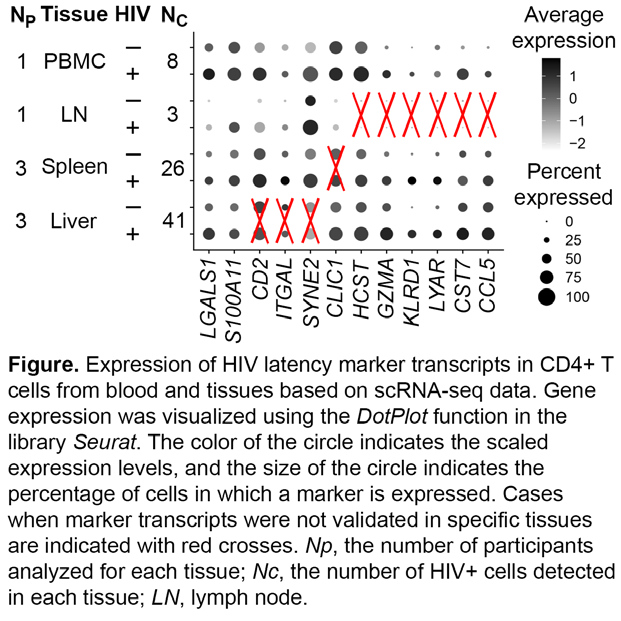
518. HIV Can Persist in Multiple Subsets of SARS-CoV-2-Specific CD4+ T Cells in Tissues During ART
Poster Abstracts
Page: 131
Xiaoyu Luo1, Julie Frouard1, Antoine Chaillon2, Sushama Telwatte3, Jason Neidleman1, Pavitra Roychoudhury4, Cheryl Dullano2, Stephanie Solso2, Robert Deiss5, Steven Yukl6, Nancie Archin7, Davey Smith2, Nadia R. Roan1, Sara Gianella Weibel2
Background
Transcriptionally-active cells (TAC) that produce HIV RNA persist during ART contribute to chronic inflammation and co-morbidities, and can lead to viral rebound upon ART interruption. However, our understanding of these cells – particularly within tissues – is limited. We implemented HIV-seq, a technique we established to efficiently identify HIV+ cells by scRNAseq, to characterize the transcriptional profiles and antigen specificities of TAC from tissues.
Methods
Our case study focused on participant LG34 enrolled in the Last Gift rapid research autopsy program. LG34 initiated ART during chronic HIV in 2016 and remained on ART with inconsistent intake until his death in 2022. Between 2021 and 2022, he experienced multiple low-level HIV blips (<75cp/ ml), received four COVID-19 vaccinations, and had a breakthrough SARS-CoV-2 infection. We hypothesized that blipping during active SARS-CoV-2-specific immune responses (from vaccination and breakthrough infection) could seed an HIV reservoir within SARS-CoV-2-specific CD4+ T cells. To investigate this, we processed LG34’s spleen and lymph nodes post-mortem, and performed multiomic HIV-seq to characterize HIV RNA+ cells through scRNAseq and VDJ-seq to evaluate SARS-CoV-2 specificities.
Results
We identified 49 and 37 TAC from 5162 and 5849 memory CD4+ T cells from spleen and lymph nodes, respectively. TAC were mainly found in Tregs with proliferative and survival transcriptional signatures, and terminally-differentiated Temra cells. Compared to uninfected Tregs, infected Tregs expressed higher levels of MHC-II and Foxp3. By contrast, compared to uninfected Temras, infected Temras expressed higher MHC-I and cytolytic effectors (granzymes B/H, perforin). VDJ-seq revealed greater clonal expansion in TAC than in uninfected cells, with some clones shared across tissues. Of all TCR matches identified by VDJMatch among HIV RNA+ cells, 83% were predicted to recognize SARS-CoV-2 antigens, and these cells resided primarily among Tregs.
Conclusions
HIV-seq enabled detection of high numbers of TAC from tissues of LG34 under ART. These TAC were predominantly Tregs and Temras. Infected Tregs upregulated Foxp3 and MHC-II which may increase immunosuppressive function and facilitate recognition by CD4+ T cells. Infected Temras expressed cytolytic molecules, and their increased MHC-I expression may facilitate recognition by CD8+ T cells. TAC exhibit shared clonotypes across tissues, and include Tregs with specificities for SARS-CoV-2 antigens.
519. Women With HIV Have a Lower Frequency of Monocyte Reservoir Reactivation Than Men With HIV
Poster Abstracts
Pages: 131-132
Celina Abreu1, Jordin Dixson1, Lily Pohlenz1, Ruoyu Wang1, Erin Shirk1, Hayley Romero1, Janice Clements1, Leah H. Rubin2, Rebecca Veenhuis1
Background
There are known sex differences in HIV infection, latency, and immune responses. Women are overrepresented in some cohorts of immune controllers of HIV, raising questions about whether sex differences in immune responses track with features like spontaneous viral control. Previous studies addressed sex differences in the CD4 T cell reservoir and report that though men and women have similar HIV DNA levels in CD4s, there are sex-based differences in latency and reactivation. Therefore, we sought to assess if there were sex-differences in latency and reactivation in the monocyte reservoir in a large cohort of people with HIV (PWH).
Methods
Viral reservoirs were assessed in 138 PWH (70% female[F], 74% Black, 98% viral load <200cp/mL). Monocytes and CD4 T cells were isolated from the same blood draw and used in cell specific intact proviral DNA (IPDA) and quantitative viral outgrowth assays (QVOA). Monocyte IPDAs were completed on 121 PWH (69%F) and monocyte-derived macrophage (MDM)-QVOAs completed on 75 PWH (49%F), 58 PWH(38%F) had cells available for both assays. A subset of participants had CD4 T cell IPDAs (n=118, 69%F) and QVOAs (n=27, 63%F) to determine if sex-based differences were specific to one cellular reservoir. T cell contamination was assessed by flow cytometry and TCRβ qPCR, and mathematically removed from the monocyte signal.
Results
92% of PWH had detectable provirus in monocytes in some form (median[md]= 42 copies[cp]/1e6) with 34% having detectable intact provirus (md=20cp/1e6). No sex differences were observed in the frequency of PWH that had detectable total or intact provirus or with the absolute quantities observed. 24% of PWH had reactivatable monocyte reservoirs as measured by MDM-QVOA. Notably, while the infectious units per million values did not differ between sexes, the frequency of reactivation was significantly lower in women compared to men with HIV (13% vs 32%, χ2=4.4, P=0.036). No sex differences were observed in HIV DNA levels or reactivation frequency in CD4 T cells.
Conclusions
Our data suggest that the monocyte reservoir is less likely to reactivate in women with HIV despite having equivalent levels of HIV DNA compared to men with HIV. Further work is needed to determine if tissue specific macrophage reservoirs are also less likely to reactivate in women or if this is specific to monocytes. This sex-related difference in HIV reactivation has significant implications for the design and measurement of curative interventions in women with HIV.
The figure, table, or graphic for this abstract has been removed.
520. Well-Seeded Reservoirs in Gut Are Associated With Tertiary Lymphoid Structures With Activated ISR
Poster Abstracts
Page: 132
Ramon Lorenzo-Redondo1, Muhammad S. Arif1, Christopher T. Thuruthiyil1, Sean Pascoe1, Maryam A. Shaaban1, Yanique S. G. Thomas1, Jenna M. Hasson1, Muhammad R. Haque1, Flora A. Engelmann1, Isabelle Clerc1, Michael D. Raven1, Mariluz Arainga-Ramirez2, Elena Martinelli1, Francois Villinger2, Thomas J. Hope1
Background
Despite effective antiretroviral therapy (ART), HIV-1 persistence is the major obstacle to a functional cure. Thus, understanding the tissue microenvironment during ART of the reservoirs that lead to a rapid viral rebound after treatment failure or analytical treatment interruption (ATI) is key.
Methods
We have developed immunoPET/CT-guided spatial transcriptomics, combined with immunofluorescence detection of viral proteins and viral sequencing using the SIV/rhesus macaque model. With this approach we can find and study foci of viral replication in tissues of all animals. Here we compare the local neighborhood of the rebound eclipse-phase foci (4-6 days post-ATI) from animals initiating ART 4-days (early-seeded reservoir with short lifespan) or 10-weeks (well-seeded reservoir) after high-dose challenge, as well as early-seeded tissues from animals on ART for 3-or-7-weeks. Additionally, we performed viral long-read deep sequencing and population dynamics analysis in the same tissue sections.
Results
Overall, SIV presence in every condition was associated with higher transcriptional levels and up-regulation of genes related to SIV infection. Activation of innate immune responses was observed only in the eclipse-phase of the rebound for both types of reservoirs and not during therapy indicating the specificity of the analysis. Notably, we also detected significant differences between early- and well-seeded reservoirs. Translation activation was associated with SIV presence in early-seeded but downregulated in well-seeded reservoirs, while mitochondrial translation was activated in all cases. This is consistent with integrated stress response (ISR) induced decreased protein synthesis in well-seeded reservoirs. Inference of cell type frequency per foci indicated that SIV presence was always associated with epithelial cells. SIV in well-seeded reservoirs was distinctly associated with IgA plasma cells, monocytes, and cycling gamma-delta T-cells. Analysis of intra-host viral population dynamics from the same “hot” tissues indicates that the highest viral diversity levels are consistently detected in GALT reservoirs where our spatial transcriptomics show activation of stress responses.
Conclusions
Our results indicate that persistent reservoirs are associated with gut tertiary lymphoid structures and might be characterized by a status of low translation consistent with ISR which could be favoring long-term viral persistence during ART and rapid rebound of robust viral populations post-ATI.
521. HIV-1 Clade C Reservoir Traits in Blood and Lymph Node Tissue in Acute and Chronic Treated Infection
Poster Abstracts
Page: 132
Kavidha Reddy1, Chantal Molechan2, Guinevere Lee3, Tatenda Chikowore1, Nicole Reddy1, Krista Dong4, Zaza Ndhlovu1, Thumbi Ndung'u1
Background
HIV-1 latently infected cells that persist in tissues during antiretroviral therapy (ART) are a barrier to HIV-1 cure, but these reservoirs are hard to reach and therefore poorly characterized. In this study we performed a comparative cross-sectional analysis of HIV-1 reservoir characteristics in paired blood and excised lymph node (LN) tissue.
Methods
We studied 12 individuals from South Africa identified with acute infection by virtue of being HIV-RNA positive and antibody negative with subsequent seroconversion. At the time of sampling 5 participants had initiated ART during chronic infection (CT) (median days after diagnosis =424, IQR 141-719; median days on ART =899, IQR 405-1567), 5 during acute infection (AT) (median days after diagnosis =1, IQR 0.5-1; median days on ART =428, IQR 64-843) and 2 remained untreated (UT). One AT was not virologically suppressed at the time of sampling (days after treatment initiation =8). We measured total proviral DNA by ddPCR (n=12) and sequenced viral genomes by full length individual proviral sequencing (FLIP-seq) (n=8) in paired PBMC and excised LN samples.
Results
In CT (n=5) and AT (n=5), LNs had 1.5 and 1.1-fold higher median total HIV DNA load than PBMCs (p=0.04). By FLIP-seq we obtained 65 single genome sequences from PBMCs and 159 from LN samples. Around 50% of participants well-suppressed on ART for more than 2 years had detectable intact HIV-1 DNA in LN but not in PBMC. Pooled analysis revealed that relative to PBMC, LN had higher proportions of intact viral genomes in both CT and UT individuals (CT: 5% vs 0% intact, sampling depth 66 and 20 genomes from 258 888 and 231 501 cells; UT: 54% vs 29% intact, sampling depth 22 and 21 genomes from 11 585 and 12 686 cells, in LN and PBMC respectively). In contrast, in AT, proportions of intact HIV-DNA were similar between compartments: LN and PBMC was 20% vs 25% intact respectively (sampling depth 64 and 24 genomes from 630 293 and 214 561 cells).
Conclusions
Genetically intact proviruses are found at higher frequencies in lymphoid tissues compared to PBMC in both chronic-treated and untreated infections but were similar in acute treated infections. These data suggest that depending on treatment status/stage, HIV DNA genome profiles in peripheral blood may not reflect those in tissue and that viral compartmentalization persists during suppressive ART. Design of HIV curative strategies should target all relevant organ systems.
522. HIV Burden Is Associated With Specific Bacteriome Profiles Relative to Specific Gut Segments
Poster Abstracts
Pages: 132-133
Mattia Trunfio1, Davey Smith1, Noah Gaitan1, Mina Awad1, Magali Porrachia1, Alan Wells1, Jesus Rivera-Nieves1, Elizabeth Hastie1, Patricia K. Riggs2, Antoine Chaillon1, Sara Gianella Weibel1
Background
We assessed whether the gut bacteriome affects the size and activity of HIV reservoir in the human gut. Since each gut segment has a different immune and bacteriome environment, we also aimed at identifying a core bacteriome that is associated with HIV reservoir consistently and similarly across all the segments.
Methods
Tissue samples of 5 segments (small bowel: duodenum, jejunum, ileum; large bowel: right colon, rectum) were collected during rapid autopsies (≤6 hour from death) from people with HIV (PWH). For each segment, we determined the bacteriome composition by 16SrRNA sequencing and measured cell-associated HIV DNA and RNA by ddPCR. The α and β diversity were analyzed (Phyloseq) after dimension reduction of taxa. Mixed-effect models assessing the associations between the relative abundance (RA) of taxa and HIV DNA and RNA were adjusted for relevant factors (e.g., age, CD4+ count, antibiotics) and performed at the gut level (models A adjusted for segments; Fig.1) and then within each gut segment (models B).
Results
Twenty-four participants were included (87.5% male, 63±13 years, median CD4+ T cells 194/µL, 87.5% virally suppressed). Main cause of death was cancer (66.7%; 4 of the gut). We observed a large heterogeneity in the bacteriome composition at each taxonomic level, even between anatomically adjacent segments. The large bowel had the highest α diversity, but significant differences were found also between segments within large and small bowel; β diversity showed divergence in bacterial communities between small and large bowel. HIV DNA levels (but not HIV RNA) were higher in small than large bowel segments (101 vs 40 cp/106 cells, p=0.003). In models A, 15 genera were associated with HIV burden (Fig.1). In segment specific models B, none of the taxa was consistently associated with HIV burden across all segments: e.g., Clostridium was associated with higher HIV RNA in duodenum, ileum, and rectum only (p≤0.03 all). Some taxa showed opposite associations across segments: e.g., Lachnospira was associated with lower HIV DNA in colon but higher in ileum (p≤0.01 both); Ruminococcus was associated with higher HIV RNA in duodenum but lower in rectum (p≤0.01 both).
Conclusions
The local bacteriome has an impact on the size and activity of HIV reservoir in the gut. However, the segment-specificity of the bacteriome and its relationship with local HIV burden suggest the lack of a core bacteriome that could be univocally targeted by therapeutic microbiome modulation across the whole gut.
Figure 1.
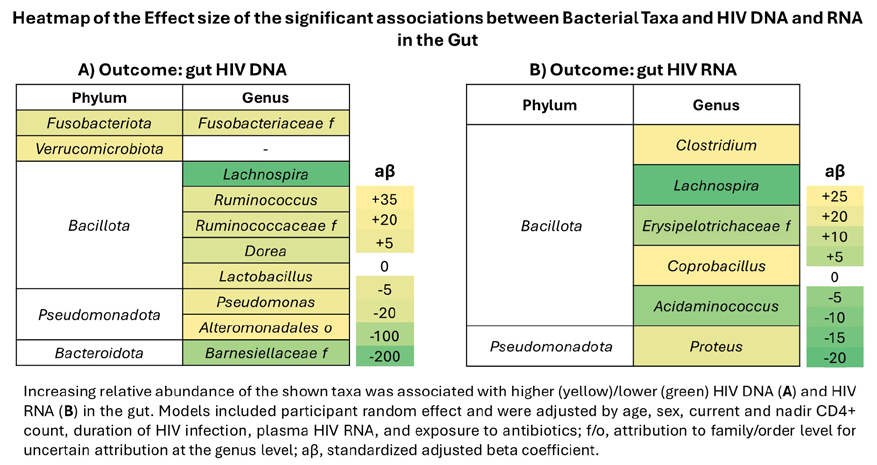
523. Viral and Microbial Environment in the Male Genital Tract of People Living With HIV
Poster Abstracts
Page: 133
Elizabeth Hastie1, Aleksander Georgian1, Mina Awad1, Magali Porrachia1, Alan Wells1, Gemma Caballero1, Brady Lapke1, Mattia Trunfio1, Sarah LaMere1, Stephen A. Rawlings2, Davey Smith1, Antoine Chaillon1, Sara Gianella Weibel1
Background
The male genital tract (MGT) is a crucial site for transmission of HIV and co-infecting viruses and functions as an immune-privileged area and key reservoir for HIV, where viral replication can persist despite suppressive ART. The MGT also hosts a distinct microbiota, which may influence viral dynamics and HIV persistence. While previous studies have used semen as a proxy for studying the MGT, here we focus on tissues to investigate the associations between HIV, CMV, EBV, and the genital microbiome.
Methods
Fresh MGT tissue (prostate, testes, epididymis, seminal vesicle) was collected during rapid autopsies (<6 hours of death) from PWH enrolled in San Diego’s Last Gift cohort between 2017 and 2024. CMV DNA, EBV DNA, and cell-associated HIV DNA and HIV RNA were quantified by ddPCR. Bacteriome composition was measured by 16SrRNA sequencing. Adjusted, mixed-effect and generalized linear models were used to assess the associations between CMV, EBV, and relative abundance of taxa (predictors) with HIV DNA and HIV RNA levels (outcomes). P-values were adjusted for multiple comparisons.
Results
A total of 69 MGT samples from 18 men were analyzed. At time of death, average age was 65 years (range 30-88) and average CD4+ T cell count was 203 cells/µL (range 20-513), with 88% of participants virally suppressed. HIV DNA was detected in 42 samples (61%, average 54.3 copies/106 cells), RNA in 27 (39%, average 0.067 copies/106 cells), CMV in 37 (54%, average 1624.9 copies/106 cells), and EBV in 58 (84%, average 608.6 copies/106cells). Viral levels did not differ significantly across tissue types. After adjusting for relevant covariates, levels of EBV DNA, but not CMV DNA, were positively correlated with both cellular HIV DNA and HIV RNA levels across all MGT tissues (Table 1). In the MGT microbiome analysis, Shannon diversity did not significantly vary across tissue types. Across all MGT tissues, two bacterial genera, Rhodospirillaceae (phylum Proteobacteria) and Pseudonocardia (phylum Actinomycetota), were significantly associated with higher cellular HIV RNA levels (but not HIV DNA).
Conclusions
The associations of Rhodospirillaceae and Pseudonocardia with elevated HIV RNA, alongside EBV’s link to higher HIV DNA and RNA, suggest that microbial and viral interactions may drive local inflammation, promoting HIV persistence in the MGT. These findings point to inflammation-driven mechanisms that could be targeted for novel therapeutic strategies aimed at disrupting HIV reservoirs in tissues.
Table 1.
Associations between EBV DNA, CMV DNA, and microbial genera (predictors) with cellular HIV DNA and RNA levels (outcomes) across all MGT tissues derived from mixed-effect and generalized linear models adjusted for age, duration of HIV infection, CD4+ nadir, latest viral load and CD4+ T cell counts at the time of death. P-values for microbiome were adjusted for multiple comparisons. Only significant genera shown for microbiome. Significant p-values are bold.
| Predictor |
Outcome |
Effect Estimate |
Adjusted p values |
| EBV DNA |
HIV DNA |
0.353 |
0.002
|
| EBV DNA |
HIV RNA |
0.009 |
0.049
|
| CMV DNA |
HIV DNA |
0.021 |
0.859 |
| CMV DNA |
HIV RNA |
0.002 |
0.694 |
| Genus Rhodospirillaceae
|
HIV RNA |
139.614 |
0.036
|
| Genus Pseudonocardia
|
HIV RNA |
29.504 |
0.036
|
524. Transcriptional Profiles of HIV RNA+ Cells in PWH on ART Differ From Those During Active Viremia
Poster Abstracts
Page: 133
Julie Frouard1, Sushama Telwatte2, Xiaoyu Luo1, Natalie Elphick1, Reuben Thomas1, Douglas Arneson3, Pavitra Roychoudhury4, Atul J. Butte3, Joseph K. Wong3, Rebecca Hoh3, Steven G. Deeks3, Sulggi Lee3, Steven Yukl3, Nadia R. Roan1
Background
While HIV RNA+ cells during untreated HIV infection in people with HIV (PWH) have been characterized by scRNAseq, “transcriptionally-active” reservoir cells (HIV RNA+ cells that persist in ART-suppressed PWH) remain poorly uncharacterized. This is due in part to the inefficiency of capturing HIV transcripts using droplet-based scRNAseq analytical approaches.
Methods
We developed HIV-seq as a method to increase scRNAseq-based detection of HIV RNA+ cells from PWH. HIV-seq incorporates HIV-specific primers alongside poly-dT during scRNAseq library preparation to enable more efficient capture of HIV transcripts, including non-polyadenylated ones. We performed HIV-seq on longitudinal blood specimens from 3 PWH before vs. after ART suppression, and compared transcriptomic signatures of HIV RNA+ vs. RNA- cells, before and after ART suppression.
Results
HIV-seq improved detection of HIV RNA+ cells from PWH by up to 44%, enabling identification of a total of >1,000 HIV RNA+ cells by scRNAseq. While HIV RNA+ cells from before and after ART suppression were both enriched among Tem cells, only those from viremic individuals exhibited a cytotoxic pro-inflammatory signature. Relative to their uninfected counterparts, HIV RNA+ cells during viremia exhibited low expression of antiviral factors SERPINA1 and APOBEC3A. Unlike HIV RNA+ cells during viremia, HIV RNA+ cells during ART suppression exhibited an anti-inflammatory signature characterized by elevated TGF-β signaling. These active reservoir cells also predominantly resided among a long-lived population of memory CD4+ T cells expressing high levels of CD127, a major driver of homeostatic proliferation, and BCL2, an anti-apoptotic effector that is a current target for HIV cure therapies.
Conclusions
We demonstrate that HIV-seq improves the efficiency of capturing HIV transcripts for scRNAseq analysis, enabling a comparative analysis of HIV RNA+ cells during viremia vs. after ART suppression. Gene signatures reflecting a cytotoxic pro-inflammatory but diminished anti-viral state were harbored by HIV RNA+ cells during viremia, whereas HIV RNA+ cells during ART suppression were defined by pro-survival, immunosuppressive, and homeostatic proliferative gene expression signatures. Hence, active reservoir cells are fundamentally distinct from HIV RNA+ cells during untreated infection.
525. Selective Decay of Different HIV Transcripts After ART Initiation in Chronic Infection
Poster Abstracts
Pages: 133-134
Julie Janssens1, Cordelia M. Isbell1, Sun Jin Kim1, Alton Barbehenn1, Rebecca Hoh1, Michael Peluso1, Sulggi Lee1, Satish Pillai2, Nadia R. Roan3, Steven G. Deeks1, Steven Yukl1, Adam Wedrychowski4, Timothy J. Henrich1
Background
In the first year after ART initiation in acute infection, completed and intact HIV RNA decay faster than incomplete or defective HIV RNA. It is unclear what happens after starting ART in chronic infection or after longer durations of ART. We hypothesized that completed and intact HIV RNA would decay faster than incomplete or defective HIV RNA but would reach a plateau.
Methods
CD4+ T cells were isolated from longitudinal blood samples from 10 PWH during untreated chronic infection (T1) and 4 timepoints on suppressive ART (median years after ART: T2=2.2; T3=4.5; T4=6.9; T5=10.5). HIV transcripts, including initiated (TAR), 5’elongated (R-U5/Gag), mid-transcribed (Pol), completed (U3-polyadenylated), multiply spliced (Tat-Rev), 5’defective (Psi-RRE+), 3’defective (Psi+RRE-), and intact (Psi+RRE+) RNA, were measured at each time by RT-ddPCR.
Results
Before ART, we observed an excess of initiated over 5’elongated HIV RNA (median elongated/initiated=0.16; P=0.01) and of 5’elongated over completed HIV RNA (median completed/elongated=0.03; P=0.002) but no difference between completed and multiply spliced HIV RNA. These differences persisted after normalization to HIV DNA. From T1 to T2, we observed reductions in 5’elongated (median T1/T2=6; P=0.01), mid-transcribed (2; P=0.03), completed (6; P=0.02), and multiply spliced (43, P=0.049) but not initiated HIV RNA. The ratio of elongated/initiated HIV RNA was lower at T2 than T1 (P=0.01). After normalization to HIV DNA, ART reduced completed (median T1/ T2=10; P=0.04) but not elongated or mid-transcribed HIV RNA/DNA. ART also reduced intact and 3’defective HIV RNA (median T1/T2=7.6 and 4.7; P=0.03 for both). From T2 to T3, multiply spliced HIV RNA declined further (P=0.02), and completed HIV RNA tended to decrease (P=0.08). After T3, no further changes were observed.
Conclusions
In untreated chronic HIV infection, we observed differences in levels of various HIV RNA regions that may result from blocks to transcription and/or immune selection. Most HIV transcripts declined during the first few years of ART (T1-T2), but with additional years on ART, only multiply spliced and possibly completed HIV RNA continued to decay from T2 to T3. Completed and multiply spliced HIV RNA may be selectively recognized by the immune system, leading to distinct clearance. Low levels of these mature HIV transcripts during long-term ART may present a challenge for latency reversal, while early HIV transcripts persist and might serve as targets for new therapies.
526. Nonsuppressible HIV Viremia May Harbor Replication-Incompetent Viruses With 5' Leader Deletions
Poster Abstracts
Page: 134
Zixin Hu1, Eva Soledad Piernas1, Behzad Etemad1, Andy Du1, Hieu Nguyen1, Abbas Mohammadi2, Trevor Tamura1, Nikolaus Jilg3, Daniel Worrall1, Peter Anderson4, Jose Castillo-Mancilla5, Steven G. Deeks6, Athe Tsibris1, Daniel Kuritzkes1, Jonathan Li1
Background
Individuals with nonsuppressible viremia (NSV) have persistent low-level viremia despite ART adherence and lack of drug resistance. A subset was reported to harbor deletions in the 5' end of the HIV-1 genome, specifically within the 5' PSI packaging element. We have previously reported three individuals with NSV and plasma variants harboring deletions in the 5’ leader region within otherwise genome-intact viruses. However, it is unclear whether these 5’ leader deletions lead to replication-defective virus. To investigate whether 5'Leader deletions affect HIV replication capacity fitness, we engineered a vector with a 5'Leader deletion and a unique enzyme site (pHIV-Δ5'Leader/PmeI) to study viral replication and infectivity.
Methods
We created an HIV-1 vector with 5' Leader deletions and introduced a Pme I site with NL4-3 as the backbone. 5'leader amplicons from three NSV participants harboring 5’ deletions were either PCR-amplified or synthesized. Recombinant viruses carrying patient-derived or synthesized 5'Leader deletions of varying sizes were generated via co-transfection in 293T cells. Infectivity was measured using β-galactosidase assays in TZM-bl cells, while relative fitness was evaluated through kinetic assays in MT-2 cells. The sequence integrity of the 5'Leader was confirmed using NGS sequencing of culture supernatants.
Results
Recombinant HIV-1 viruses carrying the 5'Leader deletions from three NSV participants harboring 22, 15 and 41 bp deletions (LV4, 8, and 9, respectively) were replication-incompetent. Among viruses carrying synthesized 5'Leader amplicons, all variants containing the LV4, LV8 and LV9 deletions were replication-incompetent. In addition, using viruses harboring 5’ Leader deletions of varying sizes, 5’ Leader deletions as small as 6 nucleotides rendered the virus replication-defective, as long as that deletion encompassed a portion of the major splice donor site (MSD). The replication activity of the viruses from these participants could be rescued by the introduction of an intact 5’ Leader sequence.
Conclusions
Deletions in the 5'Leader region, especially within the major splice donor site, significantly impaired viral replication capacity, these results demonstrate that persistent low-level viremia may be comprised largely of replication-defective virions, with minimal transmission risk.
527. HIV-1 Latency Reversal Augments Persistent HIV-1 Transcription During ART
Poster Abstracts
Page: 134
Rowan Hassman, Rachel Raymond, Sidra Wohlwend, Tyler Lilie, Hannah Jordan, Elise Courtney, Athe Tsibris
Background
Antiretroviral therapy (ART) reduces but does not eliminate intracellular HIV-1 transcription in people with HIV (PWH). While proximal virus transcripts can be detected in blood and tissue, the presence of unspliced distal transcripts is less well characterized. Qualitatively, the sequences of HIV-1 caRNA that are induced by latency reversal agents (LRA) are less well studied than their quantitative levels.
Methods
To understand if similar parts of the HIV-1 proviral landscape are transcribed during LRA exposure, we used cryopreserved PBMC from three PWH on ART to amplify near-full length (NFL) and env-specific HIV-1 proviral DNA and caRNA single genome amplicons (SGA) before and after a 24-hour exposure to PMA-ionomycin or the LRA boosting combination of low-dose bryostatin (1nM) and romidepsin 20nM. Amplicons were sequenced, assessed for hypermutation, trimmed, and aligned. Neighbor-joining trees with the Tamura-Nei model using HXB2 as an outgroup, 1,000 bootstrapped replicates, and a support threshold of 70% were generated. A convenience sample size of 20 SGAs each for HIV-1 NFL DNA, env-specific DNA, and env caRNA for each condition was used.
Results
An average of 100 SGA were generated per participant. HIV-1 DNA contamination was not detected in caRNA. HIV-1 env-containing caRNA were amplifiable from all three participants’ PBMC before LRA exposure; based on our primer locations, these SGA represent unspliced HIV-1 caRNA. These unspliced caRNAs were spread across the phylogenies and included hypermutated sequences. The choice of primers, NFL vs env-specific, affected the detection of hypermutated proviral DNA. We found that LRA boosting and PMAi can activate HIV-1 transcription from similar parts of the virus reservoir. LRA boosting stimulated hypermutated HIV-1 caRNA transcription in some participants, whereas PMAi did not. We found that LRA boosting and PMAi can induce identical HIV-1 mRNA transcripts as occurs when ART is interrupted.
Conclusions
Unspliced HIV-1 caRNA of 8-9kb in length, some of which were hypermutated, were detected during ART and were most likely from >1 transcriptionally active cellular clones. HIV-1 latency during treated infection is best described a period of inefficient, but not absent, virus mRNA production in blood. Hypermutants may contribute to HIV-1 caRNA quantifications. Treatment with HIV-1 LRA can induce virus RNA transcription identical in sequence to that produced during treatment interruptions.
Figure 1.
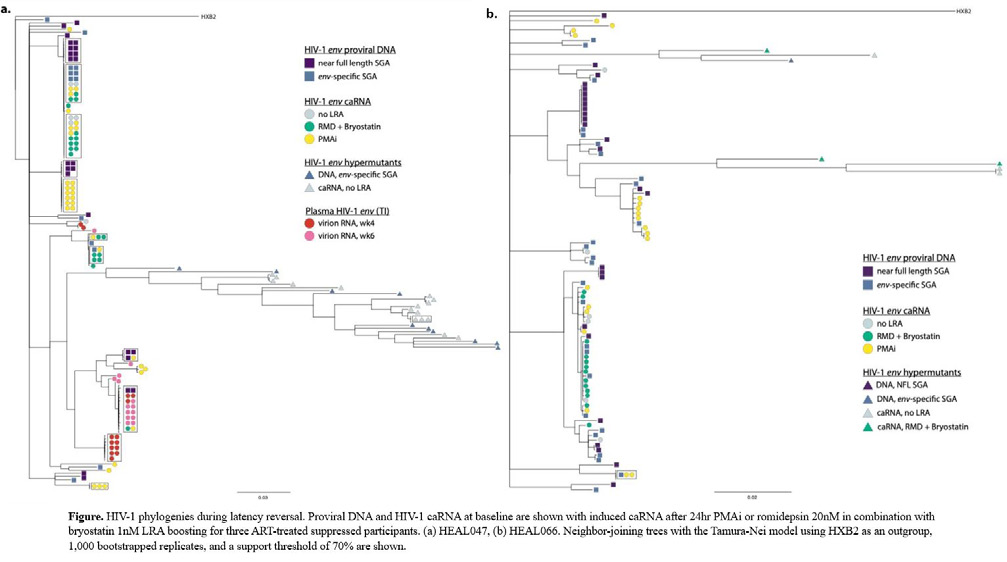
528. MLN4924 Reduces HIV Transcription, Cell Survival and HIV Infectivity After Latency Reversal In Vitro
Poster Abstracts
Pages: 134-135
Cristina C. Vaca, Hannah E. Hudson, Isabelle Clerc, Chisu Song, Richard T. D'Aquila
Background
Neddylation is essential for post-translational regulation of many cellular processes, including transcription and protein degradation. The NEDD8-activating enzyme inhibitor MLN4924 (MLN) can block degradation of HIV restriction factor APOBEC3G (A3G) in newly infected cells. Here we show that inhibiting neddylation via MLN reduces HIV reactivation from latency after treatment with latency reversing agents (LRAs).
Methods
Latently infected cell lines (ACH2, J-Lat 6.3) were treated with MLN prior to, and during, exposure to three mechanistically distinct LRAs: TNFa, PMA/ionomycin, and JQ1. Following LRA treatment +/- MLN, we quantified extracellular p24 via ELISA and assessed intracellular p24 and apoptosis levels via flow cytometry. To assess provirus transcription, HIV gag, TAR, and long LTR transcripts were quantified by RT-qPCR. Infectivity of virions reactivated from replication competent, Vif+, latent HIV was assessed via infection of TZM-bl cells and immunoblots revealed A3G virion incorporation levels. Lastly, tat/rev multiply-spliced RNA (msRNA) was measured in CD4 T cells from ART-suppressed people living with HIV (PLWH) stimulated ex vivo to assess MLN impact on reactivation in a primary cell model of HIV latency.
Results
In ACH2 cells treated with TNFa, 200nM MLN reduced: gag RNA 4.79-fold (p=0.0029, n=3), the percentage of cells expressing intracellular p24 by 44.3% (p=0.0012, n=4), and extracellular p24 production by 2.36-fold (p=0.0102, n=5) relative to DMSO. PMA/ionomycin and JQ1 stimulation of ACH2 yielded parallel results, as did TNFa treatment of J-Lat 6.3. MLN reduced TAR and long LTR transcripts in ACH2 and J-Lat 6.3, indicating decreased initiation of proviral transcription. ACH2 virion infectivity was reduced by 93.3% compared to DMSO (n=3), and Vif-positive virion A3G increased. MLN treatment also induced apoptosis in ACH2 and uninfected CD4 T cells (Fig. A). In CD4 T cells from three ART-suppressed PLWH, 200nM MLN following PMA/ionomycin stimulation reduced tat/rev msRNA by 35%, 67%, and 43% respectively (n=3) (Fig. B).
Conclusions
Neddylation inhibition limits provirus reactivation by reducing HIV transcription, antigen and virus production and infectivity after LRAs. Our work highlights neddylation as a targetable mechanism to modulate proviral reactivation by LRAs, and MLN as a method to diminish reservoir replenishment when combined with other HIV cure strategies during or after ART.
The figure, table, or graphic for this abstract has been removed.
529. Venetoclax Decreases Intact Proviral DNA Frequency in SIV-Infected, ART-Suppressed Rhesus Macaques
Poster Abstracts
Page: 135
Sydney N. Bergstresser1, Tomas Raul Wiche Salinas2, Diane Carnathan2, Hong Wang1, Yohannes M. Abraham1, George Pavlakis3, Barbara Felber3, Mario Roederer4, Christine Fennessey5, Brandon Keele5, Mirko Paiardini2, Deanna Kulpa2, Guido Silvestri6
Background
Understanding the mechanisms responsible for the persistence of the virus reservoir under ART is essential to develop novel HIV cure approaches. Upregulation of the anti-apoptotic protein B cell lymphoma-2 (BCL-2) has been observed in HIV-Gag+CD4+ T cells from ART treated people living with HIV, along with an enrichment for intact proviral DNA in cells with high BCL-2 expression. These data suggest high levels of BCL-2 may help HIV-Gag+CD4+ T cells with intact provirus to evade apoptosis and enter long-term survival. Here we used BCL-2 inhibition in ART-suppressed SIV-infected Rhesus macaques (RM) to promote reservoir clearance in vivo.
Methods
29 adult RMs were infected with SIVmac239M for 8 weeks followed by daily ART for >90 weeks. To induce SIV expression under ART, we employed the previously established model of CD8a+ T cell depletion combined with IL-15 treatment. 23 RMs were given the CD8a depleting antibody MT807R1 followed by 7 doses of heterologous IL-15 across 21 days. 17 CD8a depleted RMs were administrated 10 doses of Venetoclax (300 mg) in the same period. 9 Venetoclax treated RM were given 4 SIV env protein monoclonal antibodies (RhmAbs) one day prior to CD8a depletion. All RM were followed until elective necropsy at 84 days post CD8a depletion.
Results
On day 7, following the first full cycle of Venetoclax, RM were observed to have elevated frequency (p<0.0001) of Caspase-3+CD4+ cells. We observed a significant decrease in the frequency of intact proviral DNA from this same time point (p=0.0267), followed by a further reduction 35 days after the last intervention (day 56; p<0.0001). A decline in total CD4+ T cells was observed in all MT807R1 treated RMs by day 7 post depletion concurrent with a rise in plasma viremia, however the CD4+ T cell compartment fully reconstituted in venetoclax treated RMs and even expanded by day 56. Adjusting for changes in CD4+ T cell count in whole blood showed the decreased copy number of intact proviral DNA in venetoclax treated RMs was maintained (p=0.0129).
Conclusions
In summary, BCL-2 antagonism decreased the frequency of peripheral CD4+ T cells with intact provirus in ART-treated SIV-infected RM after induction of virus expression. The reservoir reduction was maintained after CD4+ T cell re-population at day 56 post CD8 depletion, suggesting preferential loss of SIV-infected cells. These data support further exploration of BCL-2 antagonism as a tool to reduce reactivated virus reservoir under ART.
530. AZD5582 Inhibits Vaccine-Elicited CD8+ T-Cell Responses in SIV-Infected Rhesus Macaques on ART
Poster Abstracts
Page: 135
Benjamin D. Varco-Merth1, Alejandra Marenco1, Omo Fadeyi1, Paula Armitage1, Robert W. Omange2, William Goodwin1, Derick Duell1, Manuel Medina1, Michael Axthelm1, Brandon Keele3, Jeffrey D. Lifson3, Janina Gergen4, Susanne Rauch4, Louis Picker1, Afam Okoye1
Background
At CROI 2024 (abstract 180), we reported that mRNA/SIV-Gag vaccination during ART and with boost prior to ART interruption (ATI) delayed time to rebound and induced early virologic control in SIV-infected rhesus macaques (RM). In this study, we explored whether the latency-reversing agent AZD5582 can be used to enhance efficacy of the mRNA/SIV-Gag vaccine.
Methods
All RM were intravenously (IV) inoculated with 5000 IU SIVmac239M and started ART 9 days post-infection (dpi). After ART suppression (>200 dpi), RM were divided into treatment groups: (A) mRNA/SIV-Gag alone (n=8), (B) mRNA/control alone (n=8), (C) mRNA/SIV-Gag + AZD5582 (n=6) and (D) mRNA/Control + AZD5582 (n=5). Vaccine was administered intramuscularly (100ug/dose) at weeks 0, 3, 6, 20, plus a final immunization 2 weeks before ATI (week 34+). AZD5582 was administered IV as 15 weekly doses of 100ug/kg each between weeks 10-19 and 24-28. SIV-specific T cell responses were assessed by intracellular cytokine stimulation (ICS) assay and plasma viral loads (pVL) were quantified by ddPCR.
Results
Prior to AZD5582, Gag-specific CD8+ T cells in bronchoalveolar lavage (BAL) peaked at week 6 (prior to AZD5582) to a mean of 18.1 ± 6% in group C and 25.0 ± 4.4% in group A (p=0.35) (Figure 1A). However, at week 15, after 5 doses of AZD5582, responses sharply declined to a mean of 0.2 ± 0.2% in group C compared to 7.2 ± 2.6% in group A (p=0.0013). By week 18, lymph node responses were also lower in group C compared to group A (mean 0.10 ± 0.09% vs 0.56 ± 0.03%, respectively, p=0.02). After the 4th vaccination, responses in BAL (AUC weeks 21-26) were lower in group C compared with group A (p=0.048). Upon ATI, viral rebound was delayed in group A compared to group B controls (median 20 vs 11.5 days, p=0.005) (Figure 1B). However, there was no difference in time to SIV rebound between groups C and D (median 13 vs 11.5 days, p=0.86). While post-ART peak pVL and viral burden (pVL AUC 0-8 weeks post-rebound) were lower in group A compared to group B (p=0.002 and p=0.049, respectively), no difference was observed between groups C and D (p=0.29 and p=0.55, respectively).
Conclusions
Collectively, these data suggests that AZD5582 diminished mRNA/SIV-Gag vaccine-induced CD8+ T cell responses and abrogated vaccine-enhanced early intercept of rebounding infections following ATI. This highlights the need for novel latency-reversal agents that do not disrupt the effector activity of CD8+ T cell responses.
Figure 1.
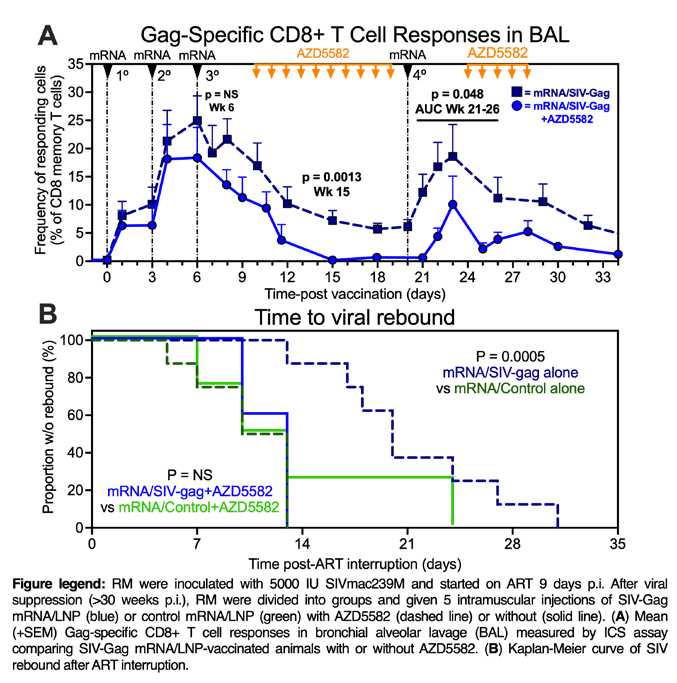
531. Sustained HIV Remission Despite Transient Rebound Viremia After a CCR5∆32/∆32 Stem Cell Transplant
Poster Abstracts
Page: 136
Paul Rubinstein1, Liliana Pérez2, Damiano Rondelli1, Hannah Shepard2, Karen Sweiss1, Shrihari Kadkol1, Habiba Sultana1, Christine Fennessey3, Brandon Keele3, Robert Gorelick3, Peter Burbelo4, Rick Novack1, Frank Maldarelli5, Eli A. Boritz2
Background
Five persons have been reported to achieve long-term HIV remission through CCR5∆32/∆32 allogeneic stem cell transplantation (SCT). Dynamics of HIV elimination after SCT are uncertain, and there are no data regarding timing of analytic treatment interruption (ATI) post SCT. Here we report sustained HIV remission despite HIV reactivation following CCR5∆32/∆32 SCT.
Methods
The HEME-17 protocol evaluates persons with HIV pre- and post-allogeneic CCR5∆32/∆32 SCT, with analysis of coreceptor tropism (Trofile), frequent single copy determination of HIV RNA in plasma and HIV RNA and DNA in peripheral blood mononuclear cells (PBMCs). Chimerism is monitored by standard assays, and persistence of wild-type (wt) CCR5 DNA post-SCT is assessed by PCR. HIV env sequences in plasma are determined by single-genome sequencing, and env tropism predicted using Geno2pheno. Plasma antibodies to HIV gp120, p24, RT, and MA are quantified by luciferase immunoprecipitation assays. Antigen-reactive T cells in PBMC were quantified by staining for activation induced markers and intracellular cytokines.
Results
A 67-year-old man with HIV and acute myeloid leukemia (AML) received reduced-intensity SCT from a 10/10 CCR5∆32/∆32 matched unrelated donor; SCT was successful, (100% engraftment by 1 month). Plasma HIV-1 RNA declined to <0.3 c/mL and HIV RNA/DNA in PBMC declined to <0.3 copy/ million cells (Fig.1). At 12 months, wt CCR5 DNA was undetectable in PBMC (Fig. 1). Anti-HIV antibodies declined to levels comparable to those of HIV-uninfected controls, and HIV-reactive CD8 and CD4 T cells were undetectable. HIV rebounded (780, 300 copies/ml at weeks 8 and 9 following ATI) and ART was reintroduced . Despite rebound, no cell-associated HIV-1 RNA or DNA was identified in PBMCs (< 0.14 copies/million), which remained 100% donor (Fig. 1). HIV env sequences in rebound HIV were predicted to be R5-tropic. HIV RNA/DNA and HIV-reactive CD8 and CD4 T cells were undetectable in PBMC at rebound or thereafter. A second ATI was initiated 24 months after ART re-initiation which resulted in 7-month and ongoing HIV remission.
Conclusions
We report the first known case of sustained HIV remission after documented HIV-1 reactivation on ATI following CCR5∆32/∆32 SCT. Rebound does not rule out eradication or the possibility of HIV cure post SCT. Understanding dynamics of host, virus, and treatment factors after CCR5∆32/∆32 allogeneic SCT is essential to advance CCR5-gene-based approaches in HIV cure research.
The figure, table, or graphic for this abstract has been removed.
532. HIV Remission After Allogeneic Hematopoietic Stem Cell Transplant From CCR5Δ32/Δ32 Sibling Donor
Poster Abstracts
Page: 136
Marius Trøseid1, Anders E. Myhre1, Hanne H. Gullaksen2, Ole Søgaard3, Martin Tolstrup3, Maria Salgado4, Javier Martinez-Pìcado4, Anne-Marte B. Kran5, Dag Henrik Reikvam1, Pål Aukrust1, Tobias Gedde-Dahl1, Tuva B. Dahl1, Mari Kaarbo1, Malin H. Meyer-Myklestad1, the Oslo HIV Cure Study Group
Background
To date, a few cases of HIV remission after allogeneic hematopoietic stem cell transplantation (HSCT) have been reported. While most involved CCR5Δ32/Δ32 donors, there have been recent reports of remission without this mutation, suggesting that factors beyond CCR5 might be sufficient for remission. Further reports of HIV remission are crucial to understand the factors that influence the transition to donor dominance and the loss of viral reservoirs. Here, we present the Oslo patient, who is in remission 48 months after HSCT from a CCR5Δ32/Δ32 sibling donor.
Methods
We examined HIV-specific T cell responses (proliferative and cytokine responses), serum avidity, western blot, donor chimerism, quantified the HIV reservoir (CD4+ cells from blood and CD45+ cells from ileum and colon) by intact proviral DNA assay (IPDA) and proviral HIV DNA by droplet digital PCR (ddPCR), and viral outgrowth assay (qVOA) up to 24 months post analytical treatment interruption (ATI). The patient was included in IciStem 2.0 (IciS2-56).
Results
A 58-year-old male with a 14-year history of HIV-1 clade B, CCR5 tropism, and suppressed viremia underwent HSCT for myelodysplastic syndrome. The graft came from his HLA-identical brother with CCR5Δ32/Δ32, whereas the patient carried CCR5Δ32/wt. He developed severe acute graft versus host disease (GvHD) of the gut and skin and was treated with the Janus kinase inhibitor (JAKi) ruxolitinib. T-cell reconstitution was achieved within a year. Complete donor chimerism in peripheral blood was documented by day 90 and later in gut-associated lymphoid tissues (GALT). Post HSCT, plasma HIV RNA remained undetectable, and at 24 months, ATI was initiated. Twenty-four months into ATI, HIV-specific CD4+ and CD8+ T cell responses were absent, serum HIV avidity showed weak functional affinity, and western blot showed waning HIV-1-specific antibody responses. Traces of HIV DNA were found in GALT, but no intact HIV DNA was detected in blood or GALT. Importantly, no replication competent virus was detected in 65 million CD4+ T cells by qVOA.
Conclusions
We report a novel case of HIV remission after HSCT from a sibling donor, confirmed by extensive translational work-up. The donor’s CCR5Δ32/Δ32 variant likely prevented reseeding of HIV to the allograft and prolonged GvHD possibly facilitated complete donor chimerism of GALT. Like the Geneva patient, he was treated with JAKi, which may reduce viral reservoirs. The Oslo patient adds valuable evidence to understanding HIV remission after HCST.
533. Tazemetostat Enhances CTL Killing of HIV-Infected Cells and Reduces Reservoirs In Vivo
Poster Abstracts
Page: 136
Andrea Gramatica1, Itzayana G. Miller1, Adam R. Ward1, Farzana Khan1, Tyler J. Kemmer1, Jared Weiler1, Tan Thinh Huynh1, Paul Zumbo1, Andrew P. Kurland2, Louise Leyre1, Colin M. Kovacs3, Doron Betel1, Jeffrey Johnson2, Ali Danesh1, R. Brad Jones1
Background
HIV reservoirs in CD4+ T cells may be selected for the ability to evade immune clearance, hindering HIV cure efforts. Overexpression of enhancer of zeste homolog 2 (EZH2) in HIV-infected CD4+ T cells that survive cytotoxic T lymphocyte (CTL) exposure suggests a putative mechanism of immune resistance. This study investigated whether inhibition of EZH2 with the FDA-approved drug tazemetostat (taz) can enhance immune-mediated elimination of HIV reservoirs.
Methods
We performed RNA sequencing on in vitro HIV-infected CD4+ T cells that survived CTL exposure to assess EZH2 expression. The impact of taz on MHC-I expression and CTL-mediated killing was also evaluated in vitro using primary CD4+ T cells from people with HIV (PWH) (n=6). Viral inhibition assays with or without taz treatment measured suppression of HIV replication over seven days. In a participant-derived xenograft (PDX) mouse model, we examined the effects of taz on MHC-I expression, reservoir seeding, and CD8+ T-cell phenotypes, including exhaustion markers.
Results
EZH2 was significantly overexpressed in HIV-infected CD4+ T cells that survived CTL exposure (p.adj. <0.05). In vitro taz treatment reduced H3K27me3 levels and increased surface MHC-I expression by 1.4-fold on CD4+ T cells, counteracting HIV Nef–mediated MHC-I downregulation. This enhancement improved CTL-mediated elimination of HIV-infected cells by up to 90% and significantly suppressed viral replication. In the PDX mouse model, taz increased expression of MHC-I and the pro-apoptotic protein BIM in CD4+ T cells, facilitating CD8+ T-cell–mediated reduction of HIV reservoir seeding. Mice treated with both taz and autologous CD8+ T cells showed a significant decrease in intact HIV proviruses compared to controls (p.adj <0.05). Additionally, taz promoted sustained skewing of CD8+ T cells toward less differentiated (increased TCF-1) and less exhausted (lower PD-1) phenotypes, persisting for at least 79 days post-treatment.
Conclusions
Our findings identify EZH2 overexpression as a novel mechanism of CTL-resistance in HIV-infected CD4+ T cells. Inhibition of EZH2 with tazemetostat enhances immune recognition and elimination of these cells by increasing MHC-I expression and modulating apoptotic pathways. The reduction in HIV reservoir formation and improvement in CD8+ T-cell phenotypes support tazemetostat as a therapeutic strategy to enhance clearance of HIV reservoirs. These results warrant clinical evaluation of tazemetostat in PWH towards a cure for HIV.
The figure, table, or graphic for this abstract has been removed.
534. CXCR4-Targeted CRISPR/Cas9 Lipid Nanoparticles for Excision of Latent Proviral DNA
Poster Abstracts
Page: 137
Sudipta Panja, Lubaba A. Zaman, Chen Zhang, Prasanta K. Dash, Milankumar Patel, Howard Gendelman
Background
A major challenge in curing HIV is eliminating latent integrated proviral DNA from CD4+ T and myeloid cells. Recent clinical studies (EBT-101) using adeno-associated viral (AAV) vectors to deliver CRISPR for HIV eradication remained unsuccessful likely due to the limitations of AAV vectors, highlighting the need for alternative delivery systems like lipid nanoparticles (LNPs). To this end, we created a lymphoid tissue-targeted LNP that includes a cyclic pentapeptide to selectively bind to CXCR4, a co-receptor that HIV uses to infect CD4+ T cells, aiming to eliminate HIV from latently infected tissue/cells reservoir more effectively.
Methods
CXCR4-targeting peptide decorated LNP (T-LNP) was formulated by using microfluidic mixing. The receptor specificity was shown by CXCR4 inhibition assay. IVIS was performed to demonstrate lymphoid tissue targeting on humanized mice (hu-mice). The intact proviral DNA assay (IPDA) assay was utilized to test CRISPR gRNA delivery and viral elimination efficiency in latently HIV-infected lymphocytic cell lines (JLat 8.4, Jurkat E6), human peripheral blood lymphocytes (PBLs), and lymphoid tissue from HIV-infected, ART-treated hu-mice.
Results
T-LNP and a control LNP without CXCR4 targeting (C-LNP) were tested in primary CD4+ T cells, cell lines, and hu-mice. Unlike C-LNP, T-LNP in humanized mice showed a significant shift in tissue targeting from the liver to the spleen, a primary HIV reservoir. T-LNP showed significantly higher viral excision efficiency in latently infected cells whose specificity was confirmed by a receptor inhibition assay through increasing concentrations of a CXCR4 inhibitor. T-LNP achieved nearly 80% viral DNA excision in HIV-1-infected PBLs, compared to ~7% with C-LNP. In HIV-1-infected, ART-treated humanized mice, T-LNP showed ~60% CRISPR efficacy in splenic tissue and blood, while C-LNP showed <5% efficacy, analyzed by the IPDA.
Conclusions
T-LNP demonstrated lymphoid cell-targeted CRISPR/Cas9 delivery. This delivery system was effective in eliminating HIV-1 from infected CD4+ T cells. Furthermore, T-LNPs have shown superior excision efficiency compared to C-LNP in eliminating HIV-1 DNA from hu-mice infectious reservoirs. These data suggest that T-LNP has the potential to achieve a functional HIV-1 cure.
The figure, table, or graphic for this abstract has been removed.
535. Efficient Generation of Anti-HIV TRAC-CAR T Cells to Enable High-Throughput Binder Screening
Poster Abstracts
Page: 137
Gabriella Kimmerly, Joseph Muldoon, Justin Eyquem, Rachel Rutishauser
Background
Following recent successes using chimeric antigen receptor (CAR) T cells for various cancer and autoimmune indications, there has been renewed interest in using CAR T cells to target the reservoir of HIV-infected cells. We have previously shown that CRISPR/Cas9 targeting of CAR constructs to the TCRa constant (TRAC) locus enables physiologic expression of the receptor, promotes CAR T cell persistence, and enables pooled screening of hundreds of different CAR binders. Here, we demonstrate the generation of functional TRAC-targeted anti-HIV CAR T cells with binders derived from either a broadly neutralizing antibody (bNAb; PGT128) or from CD4.
Methods
To produce TRAC-CAR T cells, CD3+ T cells isolated from human peripheral blood mononuclear cells were activated and electroporated with Cas9 ribonucleoprotein (RNP) targeting the first exon of the TRAC locus, followed by AAV delivery of a homology directed repair template (HDRt) encoding the CAR transgene. Edited T cells were assessed using flow cytometry to confirm both knock-out of the endogenous TCR (and CCR5 when targeted) and the knock-in rate via expression of a transduction marker (CXCR5), compared to mock- edited T cells receiving only the RNP. The in vitro killing capacity of the CAR T cells was assessed against an HIV-Env+ K562 cell line expressing the mKate fluorophore, at various effector to target (E:T) ratios over 80 hours, using an Incucyte live-cell imager to track the proliferation of the fluorescent target cells.
Results
We obtained high TRAC-CAR knock-in efficiency (77.4-84.3% receptor knock-in, 2 donors tested) as well as a high rate of knock-out of CCR5, simultaneously with receptor editing (range of dual knock-out/knock-in 64.1%-74.1%). While both the PGT128 and CD4-derived binder CAR T cells demonstrated in vitro the capacity to kill HIV-Env+ target cells compared to mock-edited T cells (TRAC-ko) over multiple E:T ratios, the PGT128 CAR T cells exhibited greater control than the CD4 CAR T cells at an E:T ratio of 1:4 (Figure 1).
Conclusions
Successful generation of TRAC-CAR T cells that can recognize and kill Env-expressing cells provides proof-of-concept for functional anti-HIV TRAC-CAR T cells, with the capacity to screen hundreds of binders both in vitro and in vivo in a pooled format due to the largely monoallelic expression of the TRAC locus. We hope to leverage this design to identify optimal engineered T cell receptors for recognizing and killing HIV-infected cells.
Figure 1.
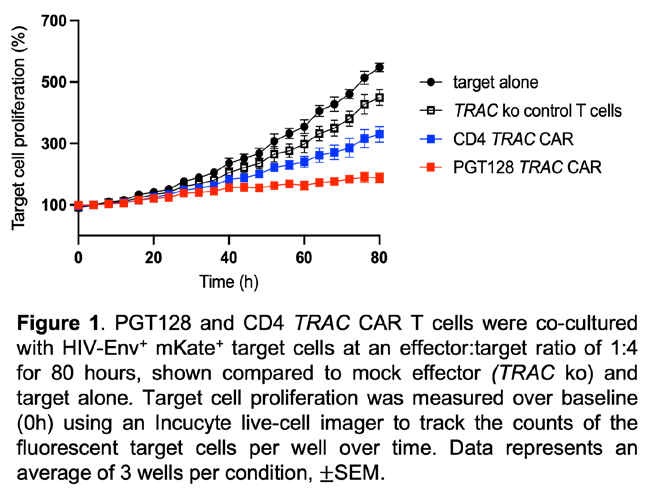
536. Infusion of Autologous CCR5-Deleted CD4 Cells Does Not Change the HIV Reservoir: The TRAILBLAZER RCT
Poster Abstracts
Pages: 137-138
Carl J. Fichtenbaum1, Ronald J. Bosch2, Hanna Mar2, Ashish A. Sharma3, Joumana Zeidan3, Steven G. Deeks4, Jeffrey M. Jacobson5, George Yendewa5, Jane Reese5, Joseph Puleo6, Rebeka Bordi3, Marthe Pauwels3, Gary Lee7, Michael M. Lederman5, Rafick P. Sekaly3
Background
TRAILBLAZER is a multi-center blinded, randomized trial of infusion of autologous zinc-finger endonuclease-modified CCR5-edited CD4+ lymphocytes (MC) compared to autologous infusion of unmodified CD4+ lymphocytes (UC). We hypothesized that abrogating CCR5 expression in CD4+ memory T cells would result in accelerated clearance of the replication competent HIV reservoir.
Methods
We enrolled PWH age 18-70 years on stable antiretroviral therapy (ART) with a CD4 count >350 c/mm3 and HIV-1 RNA < 50 copies/mL for ≥ 48 weeks. Participants were randomized (2:1) to receive a single intravenous infusion of 0.5 to 4x10¹⁰ ex vivo expanded autologous CD4+ memory T cells that have been transduced with a zinc finger nuclease designed to knock out the CCR5 gene or unmodified CD4+ T cells. All participants received cyclophosphamide conditioning (1 gm/M2). The frequency of cells harboring intact HIV was estimated using the intact proviral DNA assay (IPDA, Accelevir) at entry, week 48 and 96.
Results
30 participants were enrolled (19 MC, 11 UC). The median age was 55 years (min, max: 28, 69 years); all were male sex at birth; 30% non-white race; median duration of ART 14 years; and a median CD4 count 650 cells/mm3 (357,1105 cells/mm3). There were no significant unanticipated side effects from the cyclophosphamide conditioning or study product infusion, and no Grade ≥3 treatment-related adverse events. Four participants had unevaluable IPDA data due to amplicon signal failure (all in CCR5-modified arm), 1 participant had undetectable IPDA at all time points, and 1 participant prematurely discontinued the study for reasons unrelated to the study. In the remaining 24 participants (N=13 MC; N=11 UC), IPDA had minimal changes over time (Figure), with mean changes between -0.1 and +0.1 log10 in both treatment arms. There was no evidence the CCR5-modified arm had greater changes in IPDA than the unmodified arm (p=0.48 week 96, primary endpoint). Mean changes in total provirus were between -0.08 to -0.05 log10, with no differences in the treatment arms (p=1.0 at week 96).
Conclusions
In this blinded randomized controlled trial of re-infusion of autologous CCR5-gene edited CD4+ memory T cells, there was no significant reduction in HIV reservoir as measured by intact or total HIV proviruses using the IPDA assay at weeks 48 or 96. It will be important to determine the threshold of CCR5-edited memory CD4+ T cells and tissue HIV reservoir to understand these results.
Figure 1.
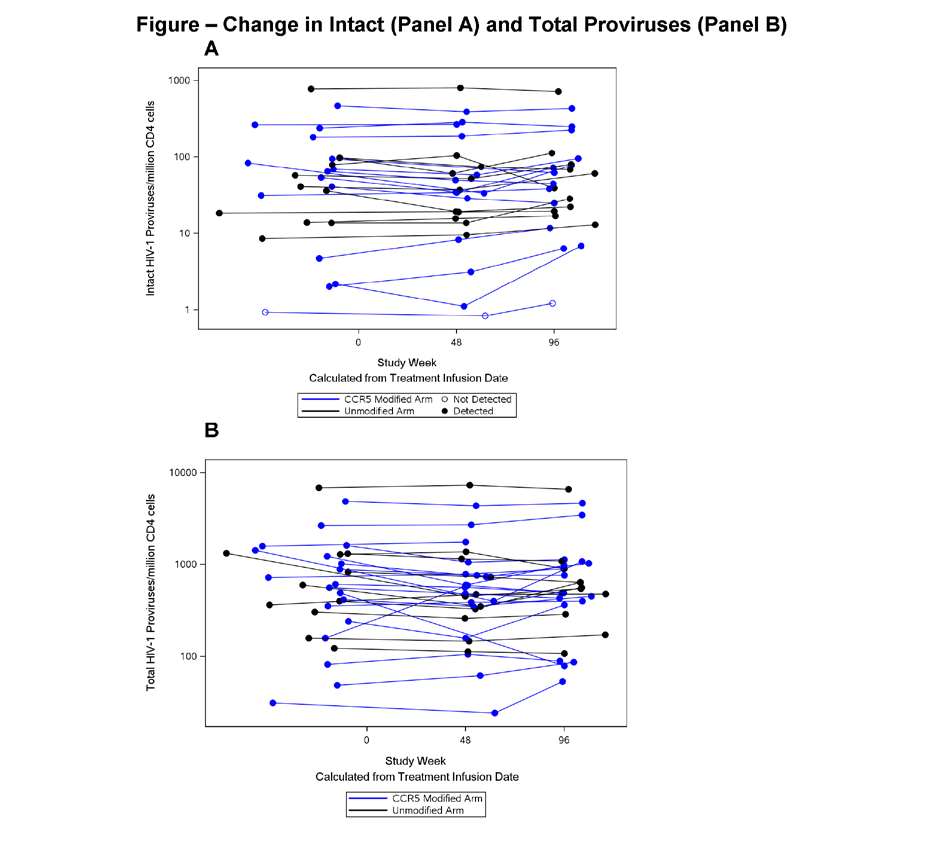
537. HIV-1 Reservoir Reduction in PWH Receiving ART and Dasatinib
Poster Abstracts
Page: 138
Mario Manzanares1, Guiomar Casado Fernández1, Alicia Simón Rueda1, Montserrat Torres1, Elena Mateos1, Christoph Wyen2, Kerstin Lammersmann2, Adam M. Spivak3, Vicente Planelles3, Christian Hoffmann4, Mayte Coiras1
Background
Long-term ART cannot change the reservoir landscape. We analyzed the reservoir composition and competency in two PWH on ART over 4 years of treatment with dasatinib.
Methods
Blood samples were collected periodically since 2019 from two PWH on ART and dasatinib to treat chronic myeloid leukemia (CML). Proviral composition was analyzed by ddPCR and IPDA in PBMCs. Proviral reactivation was assessed in CD4+ T cells by mini QVOA.
Results
First participant: 1) 50 year-old male on ART for 17 years and imatinib for 9 years that changed to dasatinib. He discontinued dasatinib after 3 years 4 months but was reintroduced after 4.3 months. 2) Median HIV-1 DNA copies per 106 PBMCs was 1724.0 on imatinib; it decreased to 219.3 after 3.5 months on dasatinib and 2.24 (IQR 0.45-25.12) from 9.5 months of treatment onwards. During discontinuation, proviral DNA was 0.63 (IQR 0.5-3.16). 3) Median intact proviruses was 158.0 after 3.5 months on dasatinib and undetectable from 9.5 months onwards. Median 3´-defective proviruses was 31.01 (IQR 13.53-48.49) after 9.5 months on dasatinib, and 8.52 (IQR 1.48-48.49) from 1 year 4 months onwards. Median 5´-defective proviruses was 8.41 (IQR 3.67-13.15) after 9.5 months on dasatinib and decreased to 6.76 copies (IQR 0.49-29.19) from this moment onwards. 4) Proviral reactivation was 2.49% (IQR 0.82-4.46) p24-gag in CD4+ T cells. Second participant: 1) 62 year-old male on ART for 25 years and dasatinib for 4 years. 2) HIV-1 DNA copies per 106 PBMCs was 20.95 after 5 months on dasatinib and 7.59 (IQR 2.0-10.0) from 1 year 4 months onwards. 3) Median intact proviruses was 43.33 on ART and undetectable from 1year 4months on dasatinib onwards. Median 3´-defective proviruses was 128.3 (IQR 18.0-310.0) when only on ART, and 31.42 (IQR 4.88-164.17) on dasatinib for 4years and 4months. Median 5´-defective provirus was 124.35 (IQR 50.0-232.3) on ART and 8.22 (IQR 3.88-29.19) on dasatinib for 4 years and 4 months. 4) Proviral reactivation was 4.29% (IQR 0.85-7.69) p24-gag in CD4+ T cells.
Conclusions
Dasatinib treatment changed the reservoir landscape towards a more favourable scenario in which there was a reduction in intact and defective proviruses. Detectable p24-gag during proviral reactivation may proceed from defective proviruses.
Figure 1.
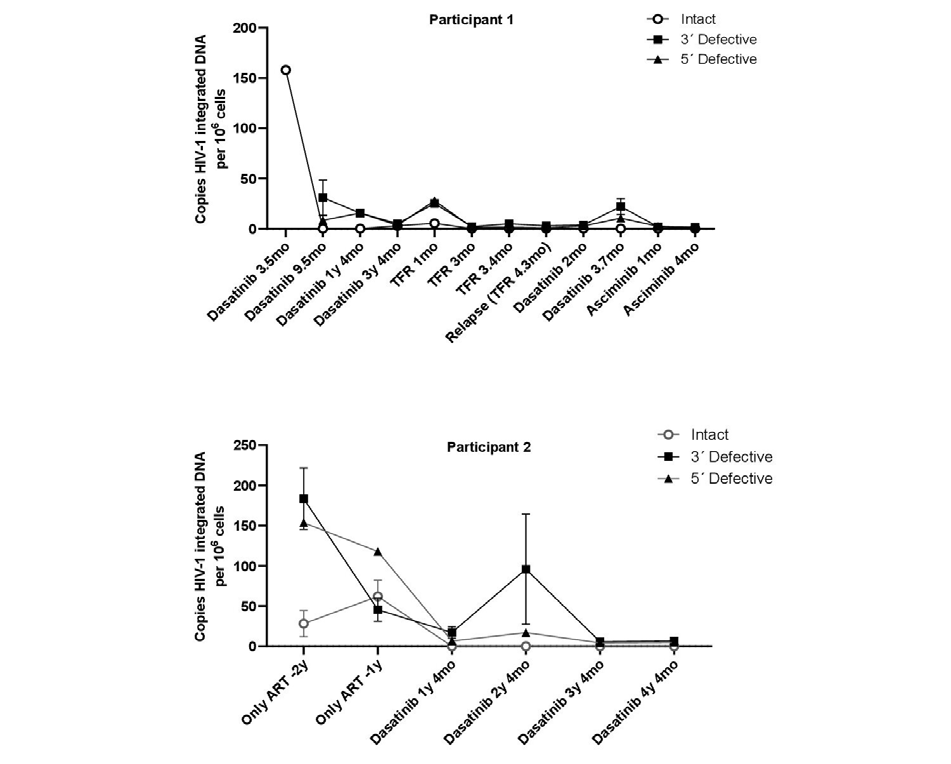
538. Phase I Clinical Trial AMC097 Evaluating Engraftment and HIV Resistance of Gene Modified Blood Cells
Poster Abstracts
Page: 138
Timothy J. Henrich1, Julie Beegle2, Deborah Stewart2, Christina Dyer2, Amanda M. Buck1, Joanna Donatelli1, Gunjun Shah3, David Asmuth2, Richard B. Pollard2, Joseph Anderson2, Ariela Noy3, Mehrdad Abedi2
Background
For HIV patients, there is currently no effective cure. Approaches involving stem cell and gene therapies aimed at mimicking the results of the Berlin Patient and others have been developed including ongoing human clinical trials. There is an urgent need for strategies that expand gene therapy beyond CCR5 modification to target multiple stages of HIV replication.
Methods
Thus, we completed a Phase I clinical trial, on behalf of the AIDS Malignancy Consortium (grant UM1CA121947), enrolling HIV-related lymphoma patients requiring an autologous transplant. Following BEAM conditioning, participants received autologous peripheral blood CD34+ cells transduced with a lentiviral vector containing three HIV-resistance genes, a CCR5 shRNA, a chimeric TRIM5alpha gene, and a TAR decoy. A fourth gene was included and used as a selectable marker to purify the gene modified cells prior to transplant. Three cohorts of participants (total N=11) each receiving the gene modified cells in a dose dependent ratio along with unmodified cells: 1:1, 2:1, 1:0 were enrolled.
Results
Safety of the vector transduced cells was determined by (1) predetermined engraftment timelines and (2) by average vector copy number in the peripheral blood post-transplant by quantitative PCR. Flow cytometry of immune cell reconstitution in the peripheral blood was also evaluated. In all participants, successful and steady engraftment was observed over the course of one to two years. One participant underwent an optional analytical treatment interruption (ATI) 42 months post-transplant. Criteria for ATI included CD4 >300 and undetectable plasma viral load. Upon analysis of vector copy number in the peripheral blood, an 8-fold increase in gene marking was observed at seven weeks post-ATI. An in-house single-cell droplet PCR method to evaluate HIV infection in this patient’s cells during the ATI estimated that approximately 75% of the gene modified cells were protected from de novo infection compared to cells without detectable lentiviral vector DNA. This protection of infection was similar at both early and late ATI timepoints. ATI was suspended on week 8, after the CD4 and plasma viral load safety thresholds were met. CD4 rose to >300 one week post-treatment resumption and viral load became undetectable by week 8.
Conclusions
Our results highlight both the safety and efficacy of our approach and warrants further assessment.
539. Resistance of Inducible, Infectious HIV-1 to Autologous Neutralizing IgG After Long-Term ART
Poster Abstracts
Page: 139
Natalie F. McMyn1, Joseph Varriale1, Hanna Wu1, Vivek Hariharan1, Jun Lai1, Anushka Singhal1, Kenneth Lynn2, Karam Mounzer3, Pablo Tebas2, Luis J. Montaner4, Colin M. Kovacs5, Rebecca Hoh6, Steven G. Deeks6, Janet M. Siliciano1, Robert F. Siliciano1
Background
The major barrier to HIV-1 cure is a small, stable pool of latently infected resting CD4+ T cells. Following cessation of antiretroviral therapy (ART), there is rapid, exponential viral rebound from this latent reservoir. Cure strategies aim to prevent viral rebound. Autologous neutralizing antibodies (aNAbs) have been shown to block outgrowth of a substantial but variable fraction of viruses in the latent reservoir of people with HIV (PWH). However, it is not known whether aNAbs can neutralize viruses persisting after long-term ART (>20 years).
Methods
We conducted TZM-bl neutralization assays with HIV-1 env pseudoviruses of inducible, replication-competent outgrowth viruses from 15 PWH on long-term ART (>14 years, mean 22 years). For comparison, we analyzed outgrowth viruses isolated from 12 PWH on intermediate ART (mean 7 years). Neutralization assays tested either contemporaneous aNAbs or one of three broadly neutralizing antibodies (bNAbs; VRC01, 10-1074, PGDM1400). To address waning antibody levels, neutralization assays were conducted with a tier 1 virus (SF162), and longitudinal IgG samples from study participants. In addition, antibody-dependent cellular cytotoxicity (ADCC) assays were performed with NK cells, participant pseudoviruses, and contemporaneous IgG.
Results
Most replication-competent viral isolates (76%) from PWH on long-term ART were resistant to neutralization by aNAb with IC50 values >100 ug/ml. The fraction of resistant isolates was significantly higher than that observed for PWH on intermediate ART (38%, p = <0.0001). In contrast, outgrowth viruses from both groups remained sensitive to bNAbs (median bNAb IC50: 0.9 to 1.5 ug/ ml). Autologous IgG from 94% of long-term ART participants neutralized SF162 virus, indicating long-term persistence of neutralizing antibody responses. Longitudinal analysis revealed aNAb maturation, stability, and waning over long-term ART in different participants. We also observed ADCC activity in antibodies from PWH on long-term ART.
Conclusions
Our findings demonstrated increased resistance of outgrowth viruses to aNAbs over long-term ART, which was not fully explained by a decline in neutralizing antibody concentrations. This increased resistance may be driven partially by ADCC-mediated elimination of infected cells carrying aNAb-sensitive viruses, leaving only aNAb-resistant viruses which can contribute to viral rebound.
540. High Networked CD8+ T-Cell Epitopes Exhibit Markedly Reduced Mutability in the Latent HIV Reservoir
Poster Abstracts
Page: 139
Fernando Senjobe1, Itai Muzhing2, Jonathan Urbach2, Anusha Nathan2, Rhoda Tano-Menka2, Clarety Kaseke2, Gaurav D. Gaiha2
Background
The persistent HIV latent reservoir is a major impediment to the eradication of HIV infection for people living with HIV (PLWH). CD8+ T cell-based approaches to control viral rebound have in part been unsuccessful due to the emergence of epitope escape mutations. Our laboratory identified a subset of epitopes, known as highly networked CD8+ T cell epitopes, that are constrained from mutation and are preferentially targeted by individuals who spontaneously control HIV. In this study, we assessed whether highly networked epitopes represent a set of mutationally constrained targets in the latent HIV reservoir for durable HIV suppression.
Methods
To determine mutational frequencies of highly networked and non-networked epitopes in the latent reservoir, we performed proviral and near full-length individual proviral (FLIP) sequencing on genomic DNA obtained from sorted latently infected CD4+ T cells derived from 22 PLWH on suppressive ART. Participants also maintained undetectable viral loads at the time of sample collection. Mutational sequence analysis of viral epitopes was performed using an established computational pipeline to quantify the quantity and quality of viral mutations. We subsequently investigated the extent to which CTLs can cross-recognize wild type (WT) and mutant (mt) networked and non-networked epitopes using cross-reactivity assays.
Results
Sequences analyses revealed that highly networked epitopes overall had a markedly reduced frequency of mutations than non-networked epitopes in integrated proviruses (P<0.0001), and when the analysis was limited to epitopes restricted by individual HLA class I haplotypes (P<0.0002). Moreover, non-networked epitopes exhibited a marked enrichment for either multiple mutations (>1) or non-conservative mutations. In addition, T cell responses to highly networked epitopes demonstrated preserved recognition of mutated epitopes from proviral sequences, whereas mutated non-networked epitopes had significantly reduced recognition.
Conclusions
These data demonstrate that highly networked epitopes have markedly fewer overall and non-conservative mutations in the latent reservoir from ART-suppressed PLWH. CD8+ T cells recognize mutants of high networked epitopes better than mutants of non-networked epitopes. These findings therefore suggest that highly networked epitopes represent a set of mutationally constrained targets for therapeutic T cell vaccine development that may enable durable viral suppression following ART cessation.
541. Autologous IgGs Mediate Log Reductions in HIV Infection in a PTC, Contributing to ART-Free Remission
Poster Abstracts
Page: 139
Junlin Zhuo1, Mauro Garcia1, Jesper D. Gunst2, Katarzyna Janowska3, Muralikrishna Lella3, Xiao Huang3, Donald Lubbeck4, Cayla Wilson3, Christy L. Lavine5, Michael S. Seaman5, Derek W. Cain3, Priyamvada Acharya3, Ole Søgaard6, Janet M. Siliciano1, Robert F. Siliciano1
Background
In people living with HIV on suppressive ART, the latent reservoir is composed of archived viral variants that are either sensitive or resistant to autologous neutralizing antibodies (aNAbs), with the latter capable of causing rebound following treatment interruption. We hypothesized ART-free virologic control might be achieved if aNAbs developed to neutralize all inducible, replication-competent reservoir variants. Study participant ID107 enrolled in the eCLEAR trial received broadly neutralizing antibody 3BNC117 and latency reversing agent romidepsin shortly after ART initiation, which was 2 months after HIV acquisition. He underwent an analytical treatment interruption 400 days after ART initiation and has maintained ART-free HIV remission for >6 years despite lacking protective HLA alleles. We characterized the aNAb response for this participant.
Methods
Quantitative viral outgrowth assays (QVOA) were conducted to obtain inducible, replication-competent reservoir viruses. Env sequences from outgrowth viruses were tested for sensitivity to aNAbs in pseudovirus neutralization assays with IgGs isolated from plasma collected at 12 longitudinal timepoints. Partial env sequences [HXB2: 827-1835] were obtained from plasma collected 5.4 years off ART. Soluble, stabilized Env trimers resembling autologous Env were purified for biochemical and structural analysis.
Results
The frequency of CD4+ T cells with inducible, replication-competent virus was 0.34 infectious units per million (IUPM), consistent with previous IUPM values obtained during ATI. Residual viremia env sequences were identical to most of the pre-ART viruses and many outgrowth viruses identified during the study. aNAbs from 11 timepoints readily neutralized autologous pseudoviruses (IC50 0.39- 5.2 μg/mL) but not heterologous viruses. To further characterize the aNAb responses, we calculated the instantaneous inhibitory potential (IIP), a measure of the number of logs of single round infection events inhibited at a given therapeutic dose. At average human serum IgG concentration (10 mg/mL), this participant’s aNAbs mediated a 5-7 log reduction in new infection events, comparable to many ART regimens. A 5.6 Å cryoEM structure of unliganded ID107 Env was obtained.
Conclusions
This participant has maintained ART-free remission for >6 years despite a reservoir size in the normal range. The aNAb responses that developed may contribute to the prolonged ART-free remission of study participant ID107.
542. Afucosylation of Broadly Neutralising Antibodies to Eliminate HIV+ CD4+ T Cells and Macrophages
Poster Abstracts
Page: 140
Morgane Brunton-O'Sullivan, Olivia Wilhelm, Christine Jordan, Hans Kek, Laura Rikard-Bell, Pradhipa Ramanathan, Amy Chung, Pantelis Poumbourios, Bruce Wines, Anthony Jaworowski, Anna C. Hearps
Background
The persistence of HIV reservoirs in T cells and myeloid cells precludes HIV cure. Some broadly neutralising anti-HIV envelope (Env) antibodies (bNAbs) can bind HIV-infected cells and elicit natural killer (NK) cell antibody-dependent cellular cytotoxicity (ADCC). Removal of core fucose from the Fc region of antibodies can increase NK cell ADCC, but remains to be fully explored in HIV. The aim of this study was to examine the utility of afucosylated bNAbs to enhance ADCC of multiple HIV-infected cell types by NK cells.
Methods
A panel of seven bNAbs were generated in the presence or absence of a fructosyltransferase inhibitor (2F-Peracetyl-Fucose) and purified using protein-G chromatography. Opsonisation of cell-surface Env on primary CD4+ T cells and monocyte-derived macrophages (MDM) infected with HIVBaL in vitro was evaluated by immunolabeling. NK cell ADCC responses to HIV Env-expressing targets in the presence of 5µg/mL of bNAbs was assessed via flow cytometry using a CD107a degranulation assay. Elimination of 8E5 cells was assessed as loss of HIV-expressing (p24+) cells after incubation with NK cells +/- unmodified and afucosylated bNAbs.
Results
The bNAbs NIH45-46, VRC01, CH103, PGT151 and 35O22 were able to bind Env expressed on the surface of all HIV-expressing cells including macrophages. 8ANC195 had limited ability to opsonise HIV-infected cells, while PGT135 non-specifically opsonised HIV-uninfected MDM. Afucosylated bNAbs demonstrated a significant reduction in core fucosylation compared to unmodified bNAbs (range 31.6 to 38.6% reduction). Afucosylated bNAbs significantly increased ADCC responses from NK cells in response to CD4+ T cells (average 2.1 fold-increase, p<0.05 for all) and MDM (2.6-fold increase, p<0.02 for all) when compared to unmodified bNAbs. A combination of afucosylated NIH45-46, CH103 and 35O22 induced a significant increase in the proportion of non-viable HIV-expressing 8E5 target cells following incubation with either peripheral blood mononuclear cell (2.4-fold increase, p=0.002) or NK cell (1.7-fold increase, p=0.02) effectors.
Conclusions
We have identified a panel of anti-Env bNAbs that opsonise HIV-infected CD4+ T cells and macrophages, and show proof of principle that afucosylation modifications of bNAbs can enhance NK cell mediated ADCC in vitro. Together, these findings support the use of anti-Env bNAbs with reduced core fucosylation as a promising immunotherapy tool to achieve ART-free HIV control.
543. Immune Dynamics During Reproductive Aging and Substance Use in Women With HIV
Poster Abstracts
Page: 140
Konstantin Leskov1, Anna Agaponova1, Kathleen M. Weber2, Elizabeth Daubert2, Antoine Chaillon3, Magali Porrachia3, Jennifer Kinslow4, Eileen Scully5, Alan Landay6, Saba Valadkhan1, Alan Wells3, Mary Ann Checkley1, Benjamin Luttge1, Jonathan Karn1
Background
Estrogen depletion during reproductive aging in women with HIV (WWH) affects HIV reservoir burden and activity. Estrogen inhibits HIV transcription and modulates the immune system. Understanding the impact of hormonal changes on the immune system requires single-cell resolution to capture immune heterogeneity. Substance use disorder, prevalent among WWH, can further impact immune function.
Methods
Plasma and PBMCs were evaluated across 3 reproductive stages (pre-, peri-, post-menopause) from 12 cisgender WWH in the Chicago Women’s Interagency HIV Study (WIHS), spanning 2009-2019. Participant’s average age at entry was 45 ± 5 years; 67% were Black and 58% reported substance use either close to the time of visit or in the past (e.g., crack/cocaine/ heroin). All participants had sustained viral suppression and CD4>200 cells/ µL. Reproductive stages were determined by sex hormones and self-report. Single-cell RNAseq and ABseq were performed using the BD Rhapsody platform to analyze CD4 and CD8 T-cells, monocytes, NK cells, DCs, B cells, and subpopulations. The inducible HIV RNA reservoir was measured by EDITS; integration site sequencing (Illumina) assessed HIV DNA clonal expansion in six women across reproductive stages.
Results
EDITS showed an 18% increase in the HIV RNA reservoir after menopause with evidence of increased clonally expanded HIV+ cells during perimenopause; these expanded clones persisted during postmenopause. Analysis of >900,000 single-cell transcriptome profiles identified a statistically significant ~5-fold enrichment in TNFα signaling via NFκB in premenopausal vs postmenopausal CD4 T-cells. In perimenopausal stages, IFNA and IFNG pathways were similarly enriched, indicating inflammatory responses. Ligand-receptor analysis predicted increased IFNA/IFNAR activity in CD4 T-cells as well as HLA-D/CD4 interactions between DCs and CD4 T-cells during the menopausal transition. Reported substance use was associated with unique transcriptomic changes, including the overexpression of MTRNR2L1 and other humanin paralogs in myeloid and T-cells. These markers decreased after reported substance cessation.
Conclusions
Reproductive aging in WWH shifts immune transcriptomes toward innate antiviral pathways, likely due to the rise in the inducible HIV reservoir and proviral clonal expansion. Substance use exacerbates immune dysregulation. The role of humanin paralogs in opioid response warrants further investigation regarding HIV persistence.
544. Latency Reversal Induced by CD4+ T-Cell Recognition of HIV-1 Alternate Reading Frame Proteins
Poster Abstracts
Page: 140
Joel Sop, Tyler Beckey, Joel Blankson
Background
CD8+ T cell responses to HIV-1 alternate reading frame proteins (ARFP) have been studied, but it is unclear whether CD4+ T cells can recognize these cryptic epitopes. We hypothesized CD4+ T cells in chronic progressors (CPs) would recognize ARFP peptides and that these peptides could be used to reverse latency.
Methods
We performed a 10-day expansion assay using CD8+ T cell-depleted PBMCs from 10 CPs and 6 healthy donors (HDs), stimulating with peptide pools derived from ARFP sequences in Gag (19 peptides), Pol (7 peptides), and Env (3 peptides). Flow cytometry was used to measure ARFP-specific CD4+ T cell responses. A positive response was defined by a stimulation index (SI) greater than 3, calculated by comparing the proportion of CD4+ T cells producing TNF and IFN-gamma in the peptide-stimulated wells to that in the untreated wells. Single peptide stimulations were conducted for responders to identify the most immunogenic peptides and HLA typing was conducted to predict MHCII binding to these peptides. HIV RNA was measured in culture supernatant over a 10-day stimulation period.
Results
Gag ARFP peptide stimulation in CPs resulted in significantly higher SI values compared to the untreated wells (P = 0.002, median SI = 3.9, range 1.0–16.0). In contrast, no significant difference was observed in HDs (P = 0.3125, median SI = 1.1, range 0.1–1.4). Among the 4 CPs who responded to Gag ARFP peptides, single peptide stimulations revealed variable immunogenicity with SIs that ranged from 3.3 to 43.0. One CP had a response to Env ARFP peptides with an SI of 10.3, and single peptide stimulation identified all 3 Env ARFP peptides as potential epitopes. HLA typing predicted strong MHCII binding to these peptides. A marked increase in HIV RNA was observed in the culture supernatant in 2 of the CPs stimulated with Gag ARFP peptides.
Conclusions
Our results provide evidence that ARFP-specific CD4+ T cells can recognize cryptic epitopes in CPs, with Gag and Env ARFP peptides inducing significant responses. The marked increase in HIV RNA during ARFP stimulation suggests that these peptides may contribute to HIV latency reversal. These findings highlight ARFPs as potential targets for future HIV-1 cure strategies.
545. Reduced Metabolic Flux Protects HIV-Expressing CD4+ T-Cells From CTL-Mediated Elimination
Poster Abstracts
Pages: 140-141
Alberto Herrera, Louise Leyre, Tan Thinh Huynh, Feng Wang, Paul Zumbo, Maider Astorkia Amiama, Doron Betel, R. Brad Jones
Background
HIV latency is a driver of persistence; however, cells expressing HIV RNA and proteins can still be detected after years of antiretroviral therapy (ART) and appear to drive ongoing stimulation of HIV-specific T-cells – indicating that some infected cells may be recognized by cytotoxic T lymphocytes (CTL) but are resistant to elimination. In this study, we use a primary in vitro infection model and cells from people living with HIV (PLWH) to evaluate mechanisms of resistance.
Methods
CD4+ T-cells were infected with either a WT HIVJRSCF strain (targets) or a variant containing an escape mutation in the Gag-TW10 epitope (bystanders), and co-cultured with TW10-specific CTLs. Infected, HIV-expressing target cells that survived CTL attack (survivors) and bystander infected cells were profiled by ECCITE-seq after sorting based on HIV-Env expression. SCENITH metabolic profiling and DCFH-DA tagging by flow cytometry were used to measure metabolic flux and reactive oxygen species. Killing assays were also performed with pre-treatment of infected cells with the hypoxia-inducing, FDA-approved drug Deferoxamine (DFO) to induce oxidative stress. Memory CD4+ T-cells from PLWH on ART were sorted based on ROS levels and assayed by IPDA.
Results
Survivors exhibited reduced expression of aerobic respiration and glycolysis gene-sets among the most differentially expressed pathways (Figure 1A). Markedly reduced bioenergetic capacity and glucose metabolism were confirmed in survivors by SCENITH profiling (Figure 1B). This reduced metabolic flux led to an enrichment of cells expressing lower levels of ROS (P=0.037). Pre-treatment of infected cells with DFO enhanced susceptibilities of infected cells to elimination by CTL. IPDA analysis of memory CD4+ T-cells from PLWH sorted based on ROS levels revealed a trend towards increased levels of total and intact HIV DNA in ROS-lo populations (n=4, P = 0.071 and P = 0.078), and this is being extended to additional donors.
Conclusions
Oxidative stress contributes to CTL-mediated killing. Our results identify a quiescent metabolic program with low production of ROS as a protective feature of infected, HIV-expressing cells to CTL attack. Treatment with DFO improves CTL-mediated elimination of infected cells. CD4+ T-cells with low oxidative stress are enriched for total and intact proviruses in PLWH on ART and may provide a sanctuary for HIV persistence. Targeting metabolic balance may be a strategy to enhance elimination of persistent HIV-infected cells.
The figure, table, or graphic for this abstract has been removed.
546. Engineering Natural Killer Cells With NKp30-Based Chimeric Antigen Receptors (CARs) to Target HIV
Poster Abstracts
Page: 141
Nancy Q. Zhao1, Ruoxi Pi1, Marion N. Santo1, David N. Nguyen2, Thanmayi Ranganath1, Christof Seiler3, Susan Holmes1, Alexander Marson2, Catherine Blish1
Background
Natural killer (NK) cells respond rapidly in early HIV-1 infection. HIV-1 suppression and functional cure strategies can be developed by exploiting the intrinsic function of NK cells in recognizing HIV-infected cells. In our previous work, we profiled the phenotype of human primary NK cells responsive to autologous HIV-1-infected CD4+ T cells in vitro. We characterized the patterns of NK cell ligand expression on CD4+ T cells at baseline and after infection with a panel of transmitted/founder HIV-1 strains to identify key receptor-ligand pairings for HIV recognition by NK cells. With CRISPR editing in CD4+ T cells to knockout the NKp30 ligand B7-H6, or the NKG2D ligands MICB or ULBP2, we observed reduction in NK cell responses to HIV-infected cells in some donors. We hypothesized that the function of human primary NK cells of targeting HIV can be enhanced by overexpressing NKp30 and NKG2D and further improved by expressing CARs that are designed based on these two activating NK cell receptors.
Methods
We transfected primary NK cells from peripheral blood of health donors with charge-altering releasable transporters (CARTs) to deliver mRNAs that encode unmodified NKp30 or NKG2D and a panel of CARs with the extracellular domain of NKp30. We also co-transfected NK cells with GFP mRNA to distinguish the cells that express the exogenous genes (GFP+) from the ones that naturally express NKp30 and NKG2D (GFP-). We evaluated the function of NK cells by co-culturing them with CD4+ T cells and detecting the degranulation marker CD107a and the production of cytokines IFNγ and TNFα in NK cells with flow cytometry and compared the function of GFP+ and GFP- NK cells.
Results
Overexpression of NKp30 or NKG2D in NK cells enhanced their function of targeting both HIV-infected cells and activated mock-infected autologous CD4+ T cells, but not resting CD4+ T cells, which do not express ligands of NKp30 and NKG2D. Multiple NKp30 CARs outperformed unmodified NKp30.
Conclusions
Together with our previous work, the results of our study indicate that receptor-ligand pairs including NKp30:B7-H6 and NKG2D:MICB/ULBP2 facilitate NK cell recognition of HIV-infected cells. Human primary NK cells can be engineered with NKp30-based CARs for improved function of targeting HIV.
Our work suggests that NK cell activation through NKp30 and NKG2D can be exploited for designing strategies of cell therapy in conjunction with HIV Env-targeting CARs to treat HIV infection.
547. Preclinical Evaluation of Effector Function-Enhanced Variants of N6 bNAb
Poster Abstracts
Page: 141
David Wensel1, Hossam Omar2, Charles Mazzucco1, Shreya Pal1, Robert Ferris3, James Schawalder3, Sarah Hindson2, Erik Meyer4, Lewis Hanham2, Hangfei Qi3, Allan Tenorio3, Umesh Hanumegowda1, Richard Dunham3, Mark Krystal1
Background
Effector functions of anti-HIV bnAbs may contribute to viral suppression as well as reservoir reduction via recruitment of immune cells and complement fixation to destroy HIV-infected cells. The contribution of native effector functions to the antiviral activity of N6LS has previously been explored (Wang, et al. PNAS. 2020. 117(30):18002-18009) and N6LS is currently in clinical trials (NCT05996471). We wished to determine if the effector functions of N6LS could be further enhanced through modification of the Fc region.
Methods
Sixty-one variants of N6 bnAb were expressed and purified. For effector function enhancement, combinations of amino acid substitutions in the Fc region (including S239D, I332E, G236A, A330L in varied combinations; H268F/ S324T; F243L/R292P/Y300L/V305I/P396L) were examined, as were alterations to the N297 glycan. For half-life extension, the M428L/N434S (LS) and L309D/ Q311H/N434S (DHS) substitution sets were tested, as were alterations to the surface charge distribution of the light chain (R18E/R42E/K45E). These bnAbs were assessed for developability properties, antiviral activity, effector functions, immunogenicity risk, and other drug-like characteristics.
Results
The R18E/R42E/K45E light chain substitutions generally resulted in poor expression and were not assessed further. The remaining variants all showed similar affinity for gp120 and direct antiviral activity in a pseudovirus assay. No functional difference between the LS and DHS half-life extension substitutions was observed. The S239D/I332E substitutions reduced thermal stability, which could be restored by the addition of T250V/A287F. SPR-based FcGR binding assessment allowed for the binning of variants by FcGR affinity profile; all showed enhanced affinity for the FcGR3a (7- to over 200-fold), which mediates ADCC activity of NK cells, but varied in their affinities for other FcGRs. ADCC assays indicated improved NK-mediated killing of gp160-expressing cells that roughly correlated with FcGR3a affinity improvement. The most potent variants showed both an increase in maximal cell killing capacity as well as ~100-fold greater potency relative to unmodified N6 bnAb.
Conclusions
Multiple variants of the N6 bnAb displayed suitable developability properties and varying degrees of effector function enhancement in vitro. Four variants were identified for continued in vitro and in vivo assessment, including initiation of stable cell lines for potential manufacture.
548. Long-Term ART Enhances Cytotoxic Response and Reduces the Reactivation Capacity of HIV-1 Reservoir
Poster Abstracts
Pages: 141-142
Alicia Simón Rueda1, Guiomar Casado Fernández1, Elena Mateos1, Mario Manzanares1, Virginia Víctor2, Noemí Cabello-Clotet2, Javier Rodríguez Añover2, Reynaldo Homen2, Juncal Pérez Somarriba2, María José Núñez Orantos2, José Sanz3, Montserrat Torres1, Vicente Estrada2, Mayte Coiras1, Clara Sánchez Menéndez1
Background
Long-term antiretroviral therapy (ART) in people with HIV (PWH) has been related to reduced levels of competent proviruses. We aimed to evaluate how time on ART affects reservoir size, reactivation capacity and cytotoxic response.
Methods
Cross-sectional study with 64 PWH who were on ART for <1 year (<1y)(n=11), 1 to 10 years (1-10y)(n=20), 10 to 20 years (10-20y)(n=16), and >20 years (>20y)(n=17). HIV-1 reservoir size was quantified by ddPCR in peripheral blood mononuclear cells (PBMCs). Proviral reactivation was analyzed by flow cytometry in purified CD4+ T cells using anti-p24-gag. Immune exhaustion markers, phenotype of cytotoxic cells, and CD4 memory subpopulations were also determined. Direct cell cytotoxicity (DCC) was assessed by measuring caspase-3 levels in TZM-bl cells infected with HIV-1 after co-culturing with participants' PBMCs (1:2).
Results
1) Most participants were male (83%, IQR 77-87). Median age was 30(IQR 24.5-35.5), 42.5(IQR 37.8-49.0), 49.5(IQR 45.8-54.3), and 56(IQR 54-60) years-old for <1y, 1-10y, 10-20y, and >20y cohorts, respectively. Time on ART was <1, 8(IQR 6-9), 15(IQR 13-19), and 28(IQR 25-31) years. Median nadir, CD4 and CD8 count were 219(IQR 153.8-379.8), 822(IQR 539-976), and 816(IQR 611-1227), respectively, for all cohorts. Median CD4/CD8 was 0.52(IQR 0.38-0.78), 0.76(IQR 0.53-1.20), 0.98(IQR 0.77-1.38), and 0.86(IQR 0.61-1.23), respectively. 2) CD4+ naive (TN) cells decreased with longer ART duration, while TCM and TEM increased. There were no differences in TEMRA between groups. 3) CD4 from <1y cohort showed significantly higher levels of LAG-3, PD1, and TIGIT than 10-20y and >20y cohorts, as well as CD57 and CD32, while KLRG1 was significantly higher in >20y. 4) HIV-1 reservoir was higher in <1y than cohorts with longer time on ART. 5) Proviral reactivation in CD4 (p24-gag+) was lower as time on ART progressed: 1.9-fold(p=0.0287) in 1-10y, 2.3-fold(p=0.0051), and 2.4-fold(p=0.0039), compared to <1y (Figure 1A). 6) Cytotoxic response against infected TZM cells was 2.4-fold (p=0.0417) and 2.4-fold (p=0.0396) higher in >20y compared to the <1y and 10-20y cohort (Figure 1B), which could be related to enhanced NKT subpopulations.
Conclusions
PWH on long-term ART showed reduced capacity for proviral reactivation and lower expression of exhaustion markers in CD4+ T cells, with improved cytotoxic response against HIV-1-infected cells. Time on ART should be considered for HIV cure interventions to achieve higher efficacy.
Figure 1.
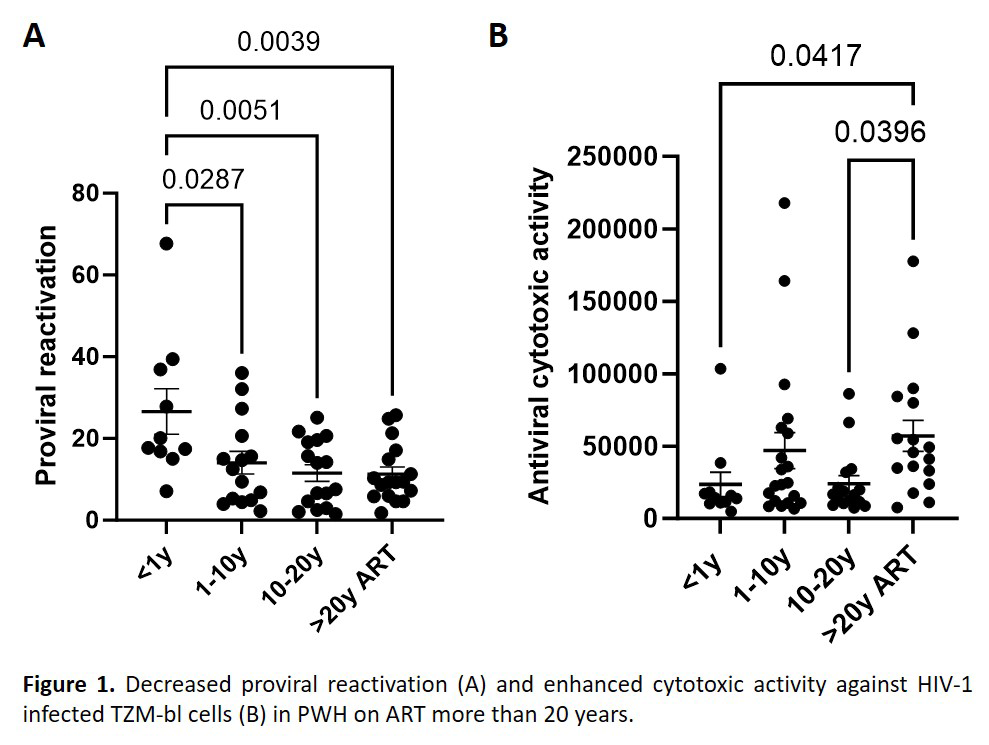
549. Plasma Cytokines and NF-κB Signaling Drive Transcriptomic Diversity in CD4+ T Cells From PWH on ART
Poster Abstracts
Page: 142
Yingfan Wang1, German Gornalusse2, David Siegel2, Alton Barbehenn2, Rebecca Hoh2, Jeffrey Martin2, Frederick Hecht2, Christopher Pilcher2, David Murdoch1, David M. Margolis3, Cynthia Rudin1, Florian Hladik4, Steven G. Deeks2, Sulggi Lee2, Edward Browne3
Background
Antiretroviral therapy (ART) is not a cure, and HIV rapidly rebounds upon ART interruption. Furthermore, people with HIV (PWH) on ART have elevated immune activation and inflammation which has been associated with increased risk of aging-associated diseases which may be driven by this viral persistence.
Methods
To identify the potential mechanisms by which HIV persistence may drive ongoing inflammation and immune activation, we leveraged published data from 154 PWH treated during early (<6 months) and later (>2+ years) HIV infection from the UCSF SCOPE and Options cohorts. These data included host gene and HIV reservoir measures (HIV total DNA, HIV unspliced RNA) from peripheral CD4+ T cells, as well as plasma cytokine levels.
Results
Using a novel dimensionality reduction tool (PaCMAP) that preserves both local and global data structure, we identified three distinct CD4+ T cell transcriptomic clusters. By analyzing differentially expressed genes between the clusters, we found that clustering was significantly associated with differential expression of genes that encode for members of the transcription factor NF-kB family (NF-ĸB1, NF-ĸB2, RelA, RelB and cREL), NF-kB inhibitor genes and downstream effector genes such as pro-inflammatory cytokines (IL-1A, IL-1B) or antiviral pathways (IFNG). Clustering was not associated with HIV reservoir size or HIV unspliced RNA but was associated with the timing of ART: early treated PWH (<6 months) were enriched in the cluster with the lowest NF-kB activity. Interestingly, distinct patterns of plasma IL-1b, TNF-a and GCSF were strongly associated with cluster membership.
Conclusions
Collectively, these results suggest that specific patterns of cytokine secretion and NF-kB signaling are major drivers of CD4 T cell transcriptomic diversity in PWH on ART. These findings demonstrate the power of dimensionality reduction and data visualization tools to define subgroups of PWH with distinct clinical or immunological characteristics which may serve to risk stratify PWH on ART for future HIV cure strategies.
550. TLRS Ligands and IL-15 Induce Trained Immunity in CD4 Cells and Limit HIV Infection and Persistence
Poster Abstracts
Page: 142
Muhammad Bilal Latif, Enoch S. Muyanja, Mojahidul Islam, Jeffrey A. Tomalka, Hilmi Al-Shakhshir, George N. Palakis, Susan P. Ribeiro, Ashish A. Sharma, Rafick P. Sekaly, the Pathology Advanced Translational Research Unit (PATRU)
Background
Despite effective HIV suppression by ART, the virus persists in latent reservoirs. Our single-cell data from human and primate studies show that individuals with better HIV control and smaller reservoirs have higher interferon stimulated gene (ISG) expression in CD4+ T cells, linked to greater chromatin accessibility and transcriptional activation. ISG expression could be induced by Toll-like receptors (TLRs) and IL-15. Thus, we hypothesize that; the activation of intrinsic innate antiviral immunity (IIAVI) in memory CD4+ T cells upregulates IRFs, enhancing ISG transcription. This "trained immunity" state will confer a poised antiviral response and limit reactivation of latent HIV upon exposure.
Methods
We established two co-culture systems: one using negative selection with immune cell markers and the other labeling cells with Cell Trace Violet (CTV). We evaluated HIV infection in these systems with Poly I:C (TLR3 agonist), R848 (TLR7/8 agonist), and IL-15 stimulation. Mechanisms of PRR and IL-15-mediated HIV protection were explored using high-dimensional flow cytometry.
Results
Activation of TLR3, TLR7/8, and the IL-15 pathway in the presence of macrophages, dendritic cells, and NK cells (first co-culture system) efficiently triggered intrinsic pathways, leading to both autocrine and paracrine IFN responses, conferring protection against HIV infection in memory CD4+ T cells. In the second system, memory CD4+ T cells induced and transferred IFN-mediated protection to neighboring bystander CD4+ T cells. We investigated the mechanisms of TLR3, TLR7/8, and IL-15-induced refractoriness, focusing on effector molecules of innate antiviral immunity i.e. pIRF3, pIRF7, IFNα, IFNγ, pSTAT1, and ISGs (e.g., IFIT1, APOBEC3G) using an optimized kinetic timeline. Results show TLR3 and TLR7/8 activation stimulates IRF3 and IRF7, inducing IFNs and ISGs, including HIV restriction factors in memory CD4+ T cells (Fig. 1A), promoting a poised innate antiviral immunity state or “trained immunity,” that contributes to HIV refractoriness (Fig. 1B). Similarly, IL-15 activation leads to IFN production, ISG induction, and HIV restriction (Fig. 1).
Conclusions
Our study shows that TLRs and IL-15-induced IFN responses, along with ISG expression in memory CD4+ T cells, create an antiviral innate memory state that protects against HIV infection and persistence upon re-exposure.
The figure, table, or graphic for this abstract has been removed.
551. Phenotypic and Functional Heterogeneity Contribute to the Persistence of the Clonal CD4 Reservoir
Poster Abstracts
Pages: 142-143
Isabella A. T. M. Ferreira1, Alberto Herrera1, Tan Thinh Huynh1, Emily Stone1, Noemi L. Linden1, Virender K. Pal2, Cintia Bittar2, Marie Canis2, Marina Caskey2, Paul Bieniasz2, Michel Nussenzweig2, R. Brad Jones1
Background
The HIV reservoir persists within clonally expanded CD4+ T cells carrying intact proviruses. We describe the isolation and long-term in vitro expansion of these ‘authentic reservoir clones’ (ARCs) and insights into functional characteristics that may underlie their persistence.
Methods
Authentic reservoir clones (ARCs) were derived from CD4+ memory T cells (n=4) using multiple rounds of limiting dilutions with irradiated feeder cells, anti-CD3, anti-CD28 stimulations, ARVs, and bNAbs. p24 ELISA was used to screen for wells containing clones. Proviruses were characterized through integration site analysis, intact proviral DNA assay (IPDA), and near full-length sequencing with clonality also verified by TCR sequencing. Flow cytometry based functional assays were performed, assessing proliferation (n=2), latency reversal (n=2), and susceptibility to CTL-mediated killing (n=3). Transcriptomic and immunophenotypic profiles were assessed by CITE-Seq, while antigen-specificities were queried by ELISPOT.
Results
Each of the four ARCs contained a single intact provirus integrated into either ZNF561, ZNF486, ZNF721, or ATPB4. The ZNF721 ARC was poorly proliferative, exhibiting minimal reactivation (0.2±0.1% Gag+) in response to anti-CD3/anti-CD28 stimulation. The ZNF486 ARC was deeply latent, with Gag expression of 0.04±0.3% upon reactivation with anti-CD3/CD28 (0% at baseline). The ZNF721 ARC, however, showed elevated basal Gag expression (1.16±1.18%) and modest reactivation with bryostatin-1 (3.27±1.22%). Distinct transcriptional and phenotypic profiles were revealed by CITE-Seq analysis, but shared features emerged: cytotoxicity and the expression of interferon-stimulated genes. CTL killing assays using peptide-pulsed targets demonstrated differential susceptibilities across the ARCs: the ATPB4 ARC resisted killing, ZNF486 was highly susceptible, and ZNF561 and ZNF721 showed moderate susceptibilities. Notably, the ZNF721 ARC had a proliferative advantage over autologous uninfected CD4+ T cells (Figure), was determined to be EBV specific, and killed EBV-transformed B cells.
Conclusions
Each ARC featured distinct mechanisms of persistence. The ATPB4 ARC was resistant to CTL-mediated killing, poorly proliferative, but displayed the highest HIV expression. In contrast, ZNF486 was deeply latent, while ZNF721 was highly proliferative. ZNF561 was intermediate for each of these properties. ARCs serve as valuable models for understanding HIV persistence mechanisms and may guide target interventions.
The figure, table, or graphic for this abstract has been removed.
552. Latent HIV Clonal Dynamics: Integration Sites and Their Role in Maintenance of Latency In Vivo
Poster Abstracts
Page: 143
Virender K. Pal1, Frauke Mücksch2, Ali Danesh3, Marie Canis1, Tan Thinh Huynh3, Thomas R. Dilling3, Itzayana G. Miller3, Theodora Hatziioannou1, R. Brad Jones3, Guinevere Lee3, Paul Bieniasz1
Background
There is a paucity of understanding of how HIV latent reservoirs survive and expand, escape immune clearance, and reactivate upon ART cessation. The integration site (IS) of proviral DNA into the host genome could (i) determine the transcriptional status of the provirus and (ii) influence the expansion of infected cells. In this study, we determined the proviral IS associated with clonal expansion and latency of HIV infected cells in an in vivo model.
Methods
Memory CD4+ T cells isolated from healthy human donors were infected with dual reporter- tagged, replication-defective HIV-1 to generate large populations (millions) of infected cells, each carrying a single transcriptionally active reporter provirus at a distinct IS. Clonal expansion and proviral reporter expression dynamics of infected cells was analyzed post-engraftment in NSG mice. HIV-1 IS were determined by PCR-based amplification of host-viral junction and next-generation sequencing.
Results
Following engraftment of HIV-1 infected CD4+ T cells in mice, the fraction of cells in which the HIV-1 reporter provirus was transcriptionally active decreased over time. HIV-1 IS analysis in long-term persistently infected cell clones led to the identification of 646 unique IS and the majority of IS were found in genic regions (82%) of human chromosomes. Comparison of genic IS in multiple animals led to the identification of recurrent integration in genes including NPLOC4, PACS1, NFATC3, NOSIP, and ATF7IP. Gene length and expression level correlated with increased frequency of integration, both in pre-engraftment cells and in expanded cell clones after engraftment. Sorting of cells into populations with active and latent proviruses at late time points after engraftment revealed that IS harboring transcriptionally latent proviruses were more likely to be found in non-genic, pericentric regions. To study and characterize cells with latent HIV-1 proviruses, we successfully generated and expanded single cell clones from engrafted cells, each carrying distinct proviral IS. Here, we observed that proviral reporter expression in latently infected clones was independent of cellular activation status and maintained during in vitro expansion.
Conclusions
HIV IS affects proviral transcriptional status, and latent proviruses were found more frequently integrated in non-genic regions. Current and future work involves studying the mechanisms underpinning individual IS-driven clonal survival of infected cells and proviral transcriptional status.
553. Targeting of HIV-Infected Clones by Cognate Peptide Stimulation and Antiproliferative Drugs
Poster Abstracts
Page: 143
Joel Blankson, Joel Sop, Tyler Beckey, Isha Gurumurthy, Kellie Smith, Francesco R. Simonetti, Filippo Dragoni
Background
Clonal expansion of HIV infected CD4+ T cells is a barrier to HIV eradication. Previous studies suggested that blocking cell proliferation can accelerate reservoir decay. We recently described a marked reduction in clonally expanded infected CD4+ T cells in a patient with elite control (ES24) after chemoradiation for lung cancer with paclitaxel and carboplatin. We tested the hypothesis that this phenomenon was due to a higher susceptibility of frequently proliferating CD4+ T cell clones to the chemotherapeutic drugs.
Methods
We studied a large CD4+ T cell clone with replication-competent provirus integrated into the ZNF721 gene (ZNF721i), which has been linked to the persistence of intact proviruses. We stimulated CD8-depleted PBMCs from ES24 with the cognate peptide for the ZNF721i clone (peptide 61: Gag 241-255) for 20 hours on day 1. On day 5, the cells were exposed to paclitaxel and/or carboplatin, or the antiproliferative drug, mycophenolate mofetil (MMF). The cells were harvested on days 7 to 9. The frequency of total HIV DNA and the ZNF721i cells was determined by LTR and integration site-specific digital PCR. Single-cell transcriptome analysis and T cell receptor sequencing was also performed on day 7 CD4+ T cells.
Results
There was a 25-to-30-fold increase in the frequency of ZNF721i cells after treatment of cells with peptide 61. The expanded ZNF721i cells had the phenotype of proliferating (MKI67, CDT1) cytotoxic (CCL5, GZMK, NGK7) CD4+ T cells. Both paclitaxel and MMF completely abrogated peptide induced expansion of ZNF721 cells, resulting in a transcriptome signature of cell cycle arrest in the G2 phase. In contrast, carboplatin had no effect. Other peptide-reactive clonotypes were similarly affected, but the drugs did not deplete expanded clones that were not specific for peptide 61.
Conclusions
This strategy of antigen-specific stimulation followed by treatment with an antiproliferative agent may lead to the selective elimination of clonally expanded HIV infected cells.
554. Sequencing of HIV-1 Proviruses in Large Infected T-Cell Clones Reveals a Predominance of Solo-LTRs
Poster Abstracts
Pages: 143-144
Dimiter Demirov1, Shahinur Akter2, Shadab Parvez2, Leah Danielle Brandt3, Elias Konstantine Halvas3, Sean C. Patro1, Jason W. Rausch2, John W. Mellors3, Xiaolin Wu4, Mary Kearney2
Background
Most methods of amplifying and sequencing proviruses do not capture the flanking long terminal repeats (LTRs) because of technical difficulties related to sequence identity between these elements. Consequently, defective HIV-1 proviruses consisting of a single LTR (solo-LTR), a common proviral structure across retroviruses, are not detected and thus their frequency and significance are poorly understood. Here we developed a new method able to detect solo LTRs and characterize their abundance in PBMC samples from PWH on ART.
Methods
Several established methods and a new approach were used to sequence full-length proviruses in the largest HIV containing T cell clones in 3 adult PWH with detectable viremia on long-term ART (9-23 years). The methods included integration site analysis (ISA), multiple displacement amplification single genome sequencing (MDA-SGS), integration site qPCR (IS-qPCR), and a new droplet-based PCR method in which HIV-host “junction” primers are used to amplify full-length proviruses by nested PCR.
Results
Full-length amplification and sequencing of proviruses in 24 of the largest infected T cell clones in three PWH revealed 2 intact and 22 defective proviruses, of which 7 contained large internal deletions and 12 were solo-LTRs. MDA-SGS and ISA identified a provirus with internal HIV sequence, which included Psi, that had the same integration site as a clone carrying solo-LTR proviruses. This finding suggests that the progenitors of proviruses that undergo recombination to become solo LTRs may persist at low levels on ART.
Conclusions
Our results reveal that solo-LTRs are the most common proviral structure found in large HIV-infected cell clones in three PWH on ART. Using droplet-based PCR with HIV-host junction primers, several solo-LTRs were characterized that would have otherwise been undetectable. One provirus with internal sequence was found to share an integration site with a large clone carrying a solo-LTR, suggesting that the solo-LTR clone originated from an ancestral cell or cells carrying the provirus with internal sequence that underwent homologous recombination to generate a solo-LTR in a daughter clone. Identifying and exploiting the mechanisms that promote the formation of solo- LTRs could enable inactivation of proviruses with internal sequences, including intact proviruses.
555. Chromosomal Integration Site Profile of HTLV-1-Infected Cells Is Distinct From HIV-1-Infected Cells
Poster Abstracts
Page: 144
Alex Hochroth1, Nicolás Ducasa2, Maxime Bellefroid1, Ce Gao1, Chloe M. Naasz1, Xu G. Yu1, Mirna Biglione2, Mathias Lichterfeld1
Background
Both HTLV-1 and HIV-1 cause a lifelong incurable infection, but mechanisms of viral persistence may vary. In HIV-1 infection, prior data demonstrated a progressive accumulation of intact proviruses in heterochromatin during long-term ART, likely as a result of immune-mediated selection that promotes viral persistence in repressive chromatin. Whether and how proviral integration site locations influence persistence of HTLV-1-infected cells remains less clear.
Methods
We analyzed DNA from 5 adult people living with HTLV-1, four with long-term asymptomatic infection and one with early-onset Adult T-cell leukemia (ATL). Proviral sequences and corresponding chromosomal locations were identified using adapted protocols of FLIP-Seq and MIP-Seq and compared to data from long-term ART-treated persons with HIV-1 or elite controllers (EC).
Results
Average proviral loads were 111,661 copies/million PBMC among asymptomatic carriers, and 749,554 viral copies in the participant with ATL. DNA analysis yielded 132 proviral sequences and 24 integration sites across all 5 participants. Approximately 77% of HTLV-1 proviruses showed no major structural defects and were likely replication-competent. The proportion of clonally expanded intact sequences was lower in HTLV-1 study participants, averaging only 34% of all intact sequences, compared to greater than 80% in persons long-term ART or EC. Observed integration sites in HTLV-1 study participants were mostly genic, representing 63% of all integration sites. Non-genic sites composed 30% of the remaining reservoir, while proviruses integrated in satellite or centromeric regions were only found in 7% of the reservoir cells. No integration sites were found in ZNF-family genes for HTLV-1, in sharp contrast to HIV-1 infection where ZNF genes represent hotspots for persistence of intact proviruses. There was no evidence for preferential persistence of intact HTLV-1 genomes in oncogenes or proliferation-associated genes in asymptomatic carriers and in the ATL case.
Conclusions
Integration sites of intact HTLV-1 genomes were markedly more diverse than in persons with HIV-1 on long-term ART or EC, and less likely to accumulate in heterochromatin regions. These data suggest that HTLV-1-infected cells are under more limited selection pressure and/or less dependent on the chromatin microenvironment for long-term persistence. Relative to HTLV-1 infection, HIV-1 reservoir cells seem more vulnerable to host immune pressure.
556. Reservoir-Harboring T-Cell Clones Have a Cytotoxic Immunophenotype That May Affect HIV Inducibility
Poster Abstracts
Page: 144
Alberto Herrera1, Isabella A. T. M. Ferreira1, Tan Thinh Huynh1, Emily Stone1, Noemi L. Linden1, Cintia Bittar2, Marina Caskey2, Michel Nussenzweig2, R. Brad Jones1
Background
The HIV reservoir is enriched for clonal CD4+ T-cells harboring intact proviruses after years of antiretroviral therapy (ART). In this study, we characterize the immunophenotypes of ‘authentic reservoir-harboring clones’ (ARCs) isolated and propagated from people living with HIV (PLWH) and aim to understand the contribution of these profiles to persistence.
Methods
Individual ARCs from PLWH on ART (n=3) were isolated by limiting dilution of memory CD4+ T-cells and propagated with irradiated feeders and anti-CD3/CD28 stimulation in media containing ARVs and bNAbs. Wells were screened for the presence of ARCs by Gag-p24 ELISA and infected cell purity was validated by IPDA and single-cell TCR-sequencing. Transcriptional, surface protein profiles and HIV-expression of ARCs were characterized by CITEseq and confirmed by flow cytometry. Latency reversal activity and granzyme release from ARCs were assessed using PMA/Ionomycin.
Results
ARCs exhibited robust expression of CD8-like cytotoxic programs, contrasting with autologous uninfected clones (Figure 1A; 3 donors; ARCs n=3; Uninfected clones n=10). ARCs also displayed higher expression of interferon response genes. >90% of cells within each ARC were confirmed to be GzmA+, TNFa+ Th1s (IFNg+). While most of the cells from ARCs had low to no expression of HIV transcripts, a subpopulation of cells from donor 1 ARC displayed high expression of HIV (Figure 1B). This HIV-hi population had markedly lower expression of cytotoxic and interferon response genes. LRA-treatment of ARCs resulted in limited latency reversal (Donor 2 ARC: 0.05% +/- 0.02, Donor 3 ARC: 2.12n%+/- 2.25 Gag+ cells after treatment). LRA-treated cells that released GzmA from 2 donor ARCs showed 2.2-3 fold lower Gag-expression compared to cells that did not release granzyme.
Conclusions
Each ARC was enriched for cytotoxic and interferon response programs and determined to be inflammatory-like Th1s expressing high levels of TNFa and granzyme. A small subset of cells expressing HIV transcripts within 1 ARC differed from the majority of cells by having significantly lower expression of cytotoxic and interferon response genes. LRA-treated cells from 2 other ARCs displayed increased latency reversal in cells that did not undergo degranulation, suggesting differential latency reversal capacity based on cell-intrinsic cytotoxic properties. Our results highlight the value of using ARCs to evaluate the contribution of the immunophenotypes of reservoir-harboring cells to HIV persistence.
The figure, table, or graphic for this abstract has been removed.
557. The Paucity of Clonal SIV Proviral Sequences During Early ART Treatment
Poster Abstracts
Page: 144
Margaret Hallmets1, Celeste Coleman1, Chrysostomos Perdios1, Anna T. Brown1, Clara Krzykwa1, Lori Rowe1, Brandon Keele2, Charles Goodman2, Joseph C. Mudd3
Background
The persistent HIV-1 reservoir is comprised of individual proviral clones with a corresponding integration site. The proviral landscape in the blood of long-term ART-suppressed persons with HIV-1(PWH) is often dominated by identical sequences, signifying antigen-driven proliferation. The clonal structure of the SIV reservoir during ART suppression is less well-characterized, particularly in the first 2 years of ART, which is commonly when HIV-1 cure strategies undergo pre-clinical testing.
Methods
We employed a linker-mediated PCR-based assay coupled with next-generation sequencing to longitudinally assess proviral integration sites in the blood of SIVmac239M-infected macaques (n=3) at 3 and 10 months of ART.
Results
We sampled a total of 357 SIV integration sites during both ART time points. Of these, we encountered predominantly single unique proviral sites (Fig. A). 39 (10.9%) proviral clones were found to be identical, with no statistical difference in the number of identical integration sites between the two timepoints (p = 0.9934). We also did not observe clonality increase from 3 to 10 months of ART, a phenomenon known to occur in PWH over long-term ART intervals. We observed a very low frequency of SIV integration sites shared between 3- and 10-month ART timepoints (1.1%) (Fig. B). Shared clones however had a high likelihood to be clonal at 3 or 10 months, confirming cellular proliferation as a driver of reservoir persistence. One animal was found to have 7 clones at 3 months, ~10% of integration sites sampled. This clone decreased to 2 clones (4.9%) at 10 months. This integration site was within the DDX49 gene; an RNA Helicase that has previously been associated with cellular proliferation.
Conclusions
Our data indicate an absence of dominating SIV proviral clones up to 10 months of ART. Suggesting the SIV reservoir during periods of pre-clinical therapeutic testing is polyclonal, and predominantly maintained by homeostatic rather than antigenic proliferation. At 3 months of ART, one animal displayed a highly expanded clone integrated into DDX49. Given that early ART reservoirs are orders of magnitude larger than those of long-term suppression, this clone is likely to be massive. The frequency of this clone contracted at 10 months, suggesting that large clones within genic regions may be under negative selection pressure during reservoir decay. Overall, the data suggest that the SIV proviral landscape is markedly distinct from that of long-term suppressed PWH.
The figure, table, or graphic for this abstract has been removed.
558. Longitudinal Analysis of HIV Reservoir Dynamics Using Q4ddPCR in Individuals Who Are ART-Treated
Poster Abstracts
Page: 145
Rachel K. Scheck1, Gregory Gladkov2, Adam R. Ward2, Mark Melzer1, Deborah McMahon3, Ronald J. Bosch4, Bernard J. Macatangay3, Joshua C. Cyktor3, Joseph J. Eron5, John W. Mellors3, Rajesh T. Gandhi6, Lisa Buchauer1, R. Brad Jones2, Christian Gaebler1, the ACTG A5321 Study Team
Background
Accurate, scalable methods for HIV reservoir quantification are crucial for cure studies. The Intact Proviral DNA Assay (IPDA) uses two targets in droplet digital PCR (ddPCR) and correctly identifies 90% of defective proviruses but can underestimate intact reservoir decline by misclassifying proviruses with genetic defects between target regions. Mathematical modeling predicts that adding more probes enhances accuracy in separating intact from defective proviruses. To address this, we developed Q4ddPCR, a high-throughput ddPCR, targeting 4 conserved regions in env, gag, packaging signal and pol, offering more specific quantification of intact HIV. Here, we describe reservoir characteristics of 42 PLWH using Q4ddPCR.
Methods
We compared Q4ddPCR and IPDA readouts of 93 longitudinal samples from virally suppressed ACTG A5321 participants (32 participants with ≥ 2 and 18 with 3 timepoints in the first 4 years of ART): 9 female, 33 male sex (9 F, 32 M, 1 unknown gender) with median age 39 years and ART duration 1.8 years at baseline.
Results
In participants with ≥2 timepoints, the majority showed reservoir decrease of ≥15% (24 by Q4ddPCR; 21 by IPDA). In some participants, reservoir increase or fluctuating reservoir size were observed. Over all longitudinal results, Q4ddPCR showed a larger decline in intact proviruses compared to IPDA (median 4.1-fold vs. 2.7-fold) over median 2.5 years (Fig.1A). The fraction of intact proviruses relative to total HIV-DNA was consistently lower in Q4ddPCR. Q4ddPCR revealed substantial differences in 72% of samples compared to IPDA, with a geometric mean ratio of 0.73 (range 0.2–1). Consistent with mathematical models predicting reduced specificity of 2-probe readouts after intact proviral decay, the greatest relative difference between both assays was observed at the latest timepoint (geometric mean ratio Q4ddPCR/IPDA 0.74 range 0.2-1; 0.74 range 0.3-1; 0.69 range 0.2-1 for timepoint 1, 2 and 3, respectively, Fig. 1B-D). While IPDA failed to quantify intact proviruses in 25% of samples, the use of additional and alternative probes in Q4ddPCR successfully rescued the quantification in 74% of these cases. Overall Q4ddPCR enabled the detection of intact proviral DNA in 94% of all samples.
Conclusions
As predicted by modeling, Q4ddPCR reveals a smaller fraction of intact proviruses and a steeper decline compared to IPDA. These findings suggest that Q4ddPCR more accurately reflects intact reservoir dynamics, providing a specific tool for assessing HIV reservoirs.
The figure, table, or graphic for this abstract has been removed.
559. Paucity of HIV Envelope Expressing Cells Upon Latency Reversal in ART-Suppressed PWH
Poster Abstracts
Page: 145
Jonathan Richard1, Mehdi Benlarbi2, Remi Fromentin1, Lorie Marchitto1, Amélie Pagliuzza1, Amie Albertus3, Derek Yang3, Jean-Pierre Routy4, Amos B. Smith III3, Drew Weissman3, Edward Kreider3, Daniel E. Kaufmann5, Marzena Pazgier6, Nicolas Chomont2, Andrés Finzi1
Background
Antiretroviral therapy (ART) effectively suppresses HIV-1 replication but fails to eradicate the virus, as HIV-1 persists in long-lived reservoirs. Therefore, novel strategies are needed to detect and eliminate them. The HIV-1 envelope glycoprotein (Env) is the only viral antigen expressed on the surface of infected cells, making it a prime target for immunotherapies. While current latency-reversing agents (LRAs) effectively induce p24 expression, their ability to stimulate Env expression remains unclear. Detecting Env on reactivated cells remains challenging. Broadly neutralizing antibodies (bnAbs) can recognize the native Env but so far failed to reliably detect it on reactivated cells. Some CD4-induced (CD4i) non-neutralizing antibodies (nnAbs) recognize highly conserved epitopes exposed upon Env interaction with CD4 or CD4-mimetic compounds (CD4mc). Stemming from these nnAbs and CD4mc properties and to inform future cure strategies, we developed Env-Flow, a novel flow cytometry-based assay designed to measure surface Env expression on CD4 T cells from PWH.
Methods
We combined CD4i nnAbs (A32, 17b and 246D) with a potent CD4mc (CJF-III-288) to detect Env at the surface of CD4 T cells from 7 ART-treated and 6 untreated PWH. Env+ cells were identified either as CD4lowEnv+ cells or using gp120 and gp41-specific CD4i nnAbs conjugated with distinct fluorochromes as Env+/+ cells. Alternatively, p24 expression was simultaneously measured using two anti-p24 mAbs (HIV-Flow).
Results
The frequency of Env+ cells in untreated PWH positively correlated with plasma viral load (p=0.02). In these viremic participants, the majority of p24+ cells co-expressed cell-surface Env (80.4% ± 13%). Sorted CD4lowEnv+ or Env+/+ cells from these participants confirmed the specificity of our assay as all Env+ cells harbored HIV-1 DNA. In ART-treated PWH, Env expression was observed upon reactivation with PMA/Ionomycin. Interestingly, only a fraction of reactivated p24+ cells displayed surface Env (36% ± 19.7%). These reactivated cells exhibited higher p24 levels and significantly lower surface Env expression compared to cells from viremic PWH, resulting in a reduced Env/p24 ratio (0.7 ± 0.5 vs 4 ± 2.3).
Conclusions
Our findings highlight the scarcity of surface Env on reactivated cells from ART-treated PWH. Overall, Env-Flow offers a robust tool to identify and better characterize Env-expressing cells, as well as to evaluate LRAs for their ability to induce surface Env.
560. Early ART Initiation Is Associated With Faster Decay of the Transcriptionally Active HIV Reservoir
Poster Abstracts
Page: 145
Julie Janssens1, Cordelia M. Isbell1, Sun Jin Kim1, Alton Barbehenn1, Rebecca Hoh1, Michael Peluso1, Satish Pillai2, Nadia R. Roan3, Steven G. Deeks1, Sulggi Lee1, Steven Yukl1, Adam Wedrychowski4, Timothy J. Henrich1
Background
While early ART initiation has been associated with smaller HIV reservoirs, it is not clear how the timing of ART initiation affects subsets of the “active” HIV-transcribing reservoir.
Methods
We compared temporal changes in various proviruses and HIV transcripts in CD4+T cells isolated from longitudinal blood samples obtained before ART (T1) and at two time points on suppressive ART (T2, T3) from 11 acute-treated PWH (median T2=119 days; T3=295 days) and 10 chronic-treated PWH (median T2=790 days; T3=1641 days). Initiated (TAR), 5’-elongated (R-U5-pre-Gag), mid-elongated (Pol), distal (Nef), completed (PolyA), and multiply spliced (Tat-Rev) HIV RNAs were measured by RT-ddPCR, normalized to cellular transcription and the corresponding HIV DNA levels, and expressed as the change in HIV levels divided by the change in time.
Results
During untreated infection (T1), the acute cohort tended to have higher levels of some HIV DNA regions (P=0.02 for TAR; P=0.07 for Pol) and HIV transcripts (P=0.003 for Pol; median 1296 vs 56 copies/ug; P=0.07 for initiated and P=0.08 for completed RNA). After normalization to HIV DNA, however, the acute cohort showed no difference in elongated, Pol, or completed HIV RNA/ DNA and a trend toward lower initiated HIV RNA/DNA (P=0.08). By the first timepoint after ART suppression (T2), levels of multiply spliced HIV RNA were lower in the acute than chronic-treated PWH (P=0.012; median 0 vs. 2.8 copies/ ug), while we did not detect differences in other HIV RNA or RNA/DNA levels. From T1 to T2, the decrease in HIV per unit time was greater in the acute than chronic cohort for all HIV DNA regions (all P<0.05) and most HIV transcripts (all P<0.05, except P=0.07 for multiply spliced HIV RNA). The ratio of completed HIV RNA/DNA also tended to decay faster in the acute cohort (P=0.06), while no difference was observed for initiated, elongated, or Pol HIV RNA/DNA.
Conclusions
Levels of TAR HIV DNA and Pol HIV RNA were higher in acute than chronic infection, but paradoxically, HIV transcription initiation tended to be lower in acute infection. After ART, acute-treated PWH showed faster declines in all HIV DNA regions and most HIV transcripts, as well as a trend towards faster decline in completed HIV RNA per provirus. These findings suggest that acute treatment preserves immune responses that are both better at killing infected cells and selectively reducing those that transcribe completed HIV transcripts.
561. In-Depth Evaluation of the Intact Proviral DNA Assay for the Quantification of HIV-1 Reservoir
Poster Abstracts
Page: 146
Thuy Nguyen1, Mary Zipparo2, Lindsey Adams2, Annie Glassey1, Afra Rahman1, Ulisses Santamaria3, Catherine Rehm2, Jessica Earhart2, Chuen-Yen Lau2, Frank Maldarelli2
Background
Accurate quantification of the HIV-1 reservoir is critical in understanding HIV-1 persistence and evaluating cure strategies. The Intact Proviral DNA Assay (IPDA), a droplet digital PCR assay that simultaneously targets the HIV-1 packaging signal (psi) and env, is widely used to quantify the intact or rebound-competent reservoir but has not been thoroughly evaluated. We assessed its precision in distinguishing intact from defective proviruses using genetically characterized single genome sequences (SGS).
Methods
gDNA was extracted from the peripheral blood of 16 persons with HIV (PWH) at pretherapy (n=10) and multiple time points on ART (n=29). Single genome proviruses were obtained via limiting dilution and amplified using primers targeting the 5’ and 3’ LTR. Only near-full-length proviruses (NFL,>7kb) were sequenced and classified as genetically intact or defective. Corresponding >7kb single genomes were submitted to real-time amplification (qPCR) using IPDA primers/probes. A subset of proviruses < 7kb was not sequenced but submitted for IPDA qPCR.
Results
For 13/16 PWH with successful IPDA, we obtained a total of 5782 proviruses by amplification and 1091 NFL SGS >7kb (479 intact and 612 defective) by sequencing. Per total amplified proviruses, a median (range) of 4.2% (0-14.8) of NFL defective proviruses at pretherapy was misclassified as intact while it was significantly lower during ART at 1.8% (0-9.4) (p<0.001). Medians (range) of 0% (0-23.3) intact proviruses at pretherapy and 0% (0-7.7) during ART were not detected by IPDA. Analysis of 158 defective misclassified as intact by IPDA showed mutations inside the psi (15.8%) or deletion/stop codons outside IPDA binding sites (19.6% in gag, 24.7% in pol, 29.7% in env). In one PWH, 50% of the intact populations harbored mutants in the psi leading to misclassification of these intact as defective. In 350 defective proviruses <7kb obtained on ART that were not sequenced, 31 (8.8%) were misclassified as intact with a median (range) of 5.5% (2.0-27.3) per sample.
Conclusions
IPDA is generally accurate in distinguishing intact from defective, but the error rate significantly varies from pretherapy to ART and across PWH. Of note, intact proviruses may heterogeneously harbor either matches or mismatches in the assay binding sites and still lead to a successful assay but erroneous quantification. Careful interpretation of IPDA results is essential, especially in evaluating interventions with minor changes in the intact proviral level.
562. Deciphering the HIV-2 Proviral Reservoir in Antiretroviral-Naive Individuals
Poster Abstracts
Page: 146
Fella Mazouz, Romane Guilbaud, Quentin Le Hingrat, Florence Damond, Thibault Saint-Joannis, Eddy Biesaga, Romain Coppee, Diane Descamps, Jade Ghosn, Charlotte Charpentier
Background
HIV-2 infection is considered as an attenuated viral infection. PBMC HIV-2 reservoir has been shown to be smaller than that of HIV-1 with a higher proportion of APOBEC3-induced defective proviruses. The aim of this study was to characterise the composition of the HIV-2 cellular reservoir by identifying the different forms of defective proviruses.
Methods
ARV-naive participants were recruited from the ANRS national HIV-2 cohort during 2020. Sequencing of protease, RT and integrase was performed using GridION (Oxford Nanopore Technologies, detection threshold: 5%). We considered all hypermutated pol sequences and those containing a stop codon as defective. We set up a specific HIV-2 Intact Proviral DNA Assay (IPDA), for both HIV-2 A and B groups, targeting the Psi and env to quantify 5’- and 3’-defective (due to large internal deletions), env APOBEC3-hypermutated and intact proviral DNA.
Results
Fifty-seven participants were recruited (median age: 56 years, 61% female), all with spontaneously undetectable viral load (<40 c/mL) except two (<200 c/mL). Among the 32 participants with successful prot-RT amplification, the median ratio of APOBEC3-induced mutations to the number of potential APOBEC3 mutation sites was significantly higher in RT than in protease (18% [IQR=17%-21%] vs. 11% [IQR=6%-16%], respectively; p=0.0001). Overall, five (16%) participants had APOBEC3-induced defective proviruses due to the presence of either hypermutations or stop codons in prot-RT. Of the 20 integrase sequences generated, only one participant was found to have APOBEC3-induced defective sequences. Of the 30 participants with IPDA results, 19 (63%) harboured env-hypermutated proviruses, 15 (50%) harboured proviruses defective at either the 5' or 3' end. Intact proviruses were detected in only one participant. Median HIV-2 total DNA level was 303 c/106 PBMC (IQR=189-764) consisting on average of 12% 3’-defective proviruses, 19% 5’-defective proviruses and 67% env-hypermutated proviruses.
Conclusions
In this cross-sectional analysis, we were able to describe the composition of part of the HIV-2 viral reservoir. This study describes for the first time the proportion of defective and intact HIV-2 proviruses within the viral reservoir and shows that a very small proportion of ARV-naïve individuals harbours intact proviruses and that most of the proviruses constituting the reservoir are hypermutated or carry large internal deletions. These findings are consistent with the attenuated profile of HIV-2 infection.
563. CCR5 Expression Is Critical for the Maintenance of HIV Control and Reservoir Size
Poster Abstracts
Page: 146
Jéssica dos Santos1, Zhenhua Zhang2, Adriana Navas1, Louise E. van Eekeren1, Mareva Delporte3, Hanneke Maas1, Vasiliki Matzaraki1, Albert L. Groenendijk4, Wilhelm A. Vos5, Hans Koenen1, Jan van Lunzen1, Mihai G. Netea1, Linos Vandekerckhove3, Yang Li2, Andre van der Ven1, the 2000HIV Human Functional Genomics Partnership Program
Background
Natural protection against CCR5-tropic HIV-1 variants is attributed to the presence of CCR5Δ32. We aimed to identify genetic and non-genetics and factors influencing CCR5 expression on CD4+ and CD8+ T cells and to assess the role of CCR5 expression in maintaining HIV control status and reservoir size in people living with HIV (PLHIV).
Methods
CCR5 expression on CD4+ and CD8+ T cell subsets was assessed using flow cytometry in PLHIV from the 2000HIV study (NTC03994835), divided into a discovery (n=1147) and validation (n=225) cohort. Part of inclusion were 114 HIV controllers (Elite controller (EC), viremic, (VC) and transient). The relationship of CCR5 expression with HIV- and non-HIV factors were assessed using Spearman’s rank correlation analysis. Genome-wide SNPs associated with CCR5 expression on CD4+ and CD8+ T cell subsets were analyzed using PLINK, with adjustments for age and gender. Significant associations were defined by a p-value < 5.32e-10 after multiple testing in the discovery cohort and a nominal P < 0.05 in the validation cohort. CCR5Δ32 was evaluated using RT-PCR. Viral reservoir size, measured as DNA copies/million CD4+ T cells, were also assessed.
Results
Percentages of CD4+ T cells subsets expressing CCR5 was positively correlated with age and CMV antibody titers and negatively with female sex and CD4 nadir. Fewer factors influenced CCR5 expression on CD8+ T cells subsets, with positive associations observed for age, CMV titers and ART duration (FDR < 0.05, discovery; p < 0.05, validation). In the 2000HIV study, 14.7% of the participants were heterozygous for the CCR5Δ32, with a higher prevalence in EC (25%) and VC (35.1%) than in transient (16.6%) and non-controllers (14.03%). The percentages of naïve and T regulatory cells expressing CCR5 was significantly lower in EC and VC than non-controllers. Genome-wide association analysis identified that rs113341849-A, located upstream CCR5 and CCR2, which co-occurs with CCR5Δ32, is linked to reduced CCR5 expression, both in terms of percentages and MFI, in a cell-type specific manner (Figure 1A). Finally, the presence of rs113341849-A and CCR5Δ32 was linked to a lower HIV reservoir size (Figure 1B) (p < 0.05 in both discovery and validation cohorts).
Conclusions
Our study shows that genetic and non-genetic factors contribute to CCR5 expression and subsequently to the maintenance of viral control and reservoir size. CCR5 blocking may be especially effective in older PLHIV, males and those with higher CMV reactivity.
The figure, table, or graphic for this abstract has been removed.
564. Ex Vivo Antigen Stimulation Induces HIV-1 Viral Outgrowth From a Pericentromeric Provirus
Poster Abstracts
Page: 147
Angelica Camilo-Contreras1, Francesco R. Simonetti1, Luis J. Montaner2, Stuart Ray1, Robert F. Siliciano1, Janet M. Siliciano1, Arturo Casadevall3, Daniel Smith3, Hao Zhang3
Background
HIV-1 persists despite effective ART due to a reservoir of latently infected CD4+ T cells. Previous studies suggest that intact proviruses integrated in heterochromatic regions are progressively enriched during long-term ART. These proviruses may evade immune recognition due to lower viral gene expression, but their clinical significance upon ART interruption is unclear. Given the recent findings that cognate antigen engagement increases HIV-1 RNA expression, we sought to determine if antigen-specific stimulation ex vivo could induce the viral outgrowth of proviruses in regions associated with deeper latency.
Methods
We isolated CD4+ T cells responsive to a protein lysate of the commensal fungus Candida albicans (CA) based on activation-induced markers (CD69, CD154, CD137). HIV-1 populations in CA-reactive cells were analyzed by IPDA, matched integration and proviral sequencing, and integrant-specific digital PCR. We then optimized an antigen-specific quantitative viral outgrowth assay (QVOA) by stimulating CD8-depleted PBMCs with CA lysate for 3 days, followed by co-culture with MOLT-4s for 21 days. To limit non-specific T cell activation, we used a basal culture medium (10% human serum, 10 U/mL IL-2) and omitted irradiated feeders. Phytohemagglutinin (PHA) combined with T-cell activation media was used as a non-specific positive control. Viral outgrowth was monitored via p24 ELISA assay, digital PCR, and full env sequencing.
Results
We identified a study participant on suppressive ART whose CA-reactive cells were highly enriched for intact HIV-1 DNA. A clonally expanded provirus representing 50% of env proviral sequences was confirmed to be genetically intact by full genome sequencing. Integration site analysis showed this provirus was located in a pericentromeric satellite repeat, previously linked to deeper latency. The provirus of interest (PeriC) had a frequency of 930 copies per million CA-responsive cells. In our modified QVOA, we observed exponential outgrowth from multiple wells, with 100% of the outgrowth sequences from the CA lysate condition matching PeriC, compared to 33% in the PHA arm.
Conclusions
Cognate antigen stimulation resulted in the reactivation of a provirus integrated in a pericentromeric region. Although limited to a model culture ex vivo, these findings suggest that CD4+ T cell recognition with ubiquitous antigens can reactivate proviruses in regions previously associated with deeper latency, potentially contributing to viral rebound if ART is discontinued.
565. Multiomics Clustering Reveals Distinct HIV Reservoir Profiles in the 2000HIV Cohort
Poster Abstracts
Page: 147
Victoria Rios Vazquez1, Mareva Delporte2, Vasiliki Matzaraki1, Wilhelm A. Vos3, Marc J. T. Blaauw4, Louise E. van Eekeren1, Albert L. Groenendijk5, Jéssica dos Santos1, Mihai G. Netea1, Andre van der Ven1, Linos Vandekerckhove2, the 2000HIV Human Functional Genomics Partnership Program
Background
Multi-omics data integration offers potential to uncover hidden patterns among people living with HIV (PLWH). This study aimed to identify clusters of individuals with distinct viral reservoir characteristics and multi-omics profiles in the 2000HIV cohort.
Methods
Multi-omics data from 1,236 PLWH in the 2000HIV cohort (NCT03994835) were analyzed, including gene expression (58,347 genes, bulk RNA-seq from PBMCs), DNA methylation (793,775 CpG sites, PBMCs), plasma proteins (2,367, Olink Explore), immune cell markers (355, flow cytometry from whole blood), and cytokine production capacity (90 markers, ex vivo stimulation assays from PBMCs). Total viral reservoir (DNA copies/million CD4 T cells) and intactness (intact reservoir DNA copies/million CD4 T cells) were assessed. Data preprocessing included normalization, filtering, and selection of top variable features. Multi-omics clustering was performed using moCluster.
Results
Three distinct clusters were identified: High Total Low Intact (HTLI, n=348), Low Total Low Intact (LTLI, n=421), and High Total High Intact (HTHI, n=467), each with distinct viral reservoir profiles and clinical characteristics.
LTLI exhibited the lowest total reservoir DNA and intactness. HTHI revealed high total reservoir DNA and highest intactness, while HTLI showed high total reservoir DNA but low intactness. These differences were statistically significant (P<0.05). Top 10 driver markers were identified in each omics layer, with bulk transcriptomics showing significant contributions to intercluster differences. Key driver genes included ACVR1C, AK5, LRP6, MMP28, SLC22A17, SLC16A10, OBSCN, MAN1C1, EDAR, and LEF1, which were highly expressed (P<0.05) in LTLI compared to HTLI and HTHI. These genes are involved in processes relevant to control HIV infection, including cell signaling, T cell development, immune response and apoptosis regulation, macrophage function, iron homeostasis, mitochondrial biogenesis, and HIV-1 transcriptional regulation.
Conclusions
Multi-omics clustering revealed distinct molecular signatures associated with viral reservoir size and intactness in PLWH, identifying three clusters with different characteristics, particularly distinct in the LTLI group. These findings suggest potential for personalized therapeutic strategies informed by biomarkers from distinct multi-omics profiles. Further investigation of these and other omics markers could provide insights into HIV reservoir dynamics and tailored interventions for HIV cure research.
The figure, table, or graphic for this abstract has been removed.
566. Sex-Specific Immune Responses Shape Proviral Landscapes in Individuals on Long-Term Suppressive ART
Poster Abstracts
Page: 147
Toong Seng Tan1, Ce Gao1, Aischa Niesar1, Chloe M. Naasz1, Samantha K. Marzi1, Alex Hochroth1, Sruthi Kalavacherla1, Mathias Viard2, Steven G. Deeks3, Michael Peluso3, Jeffrey M. Jacobson4, Mary Carrington2, Mathias Lichterfeld1, Xu G. Yu1
Background
Our previous work revealed sex-specific selection and evolution of HIV-1 reservoir cells in individuals on long-term suppressive ART (LT-ART), and demonstrated more efficient selection of intact proviruses in heterochromatin locations in females. However, immune mechanisms responsible for viral reservoir cell selection remain elusive.
Methods
We selected a total of 20 participants on LT-ART and categorized them into 4 study groups based on their HIV-1 integration site profiles: females and males with viral reservoirs dominated by genome-intact proviruses integrated in transcriptionally-repressed heterochromatin (HTC) sites (HTChigh; n=5 females, n=5 males) and those without evidence of selection for intact proviruses at HTC (HTClow/neg; n=4 females, n=6 males). We conducted global immunophenotyping studies using multidimensional spectral flow cytometry with 27 colors for innate immunity and 18 colors for T cell adaptive immune responses.
Results
A global linear discriminant analysis demonstrated distinct phenotypic signatures between males and females in innate immune cells, but not in adaptive HIV-specific T cell responses. In particular, we observed that proportions of CD64+PD-L1+ myeloid dendritic cells were higher in females (p < 0.05), specifically in the HTChigh group. In addition, NK cells in the HTChigh group were characterized by a more limited ensemble expression of inhibitory KIR receptors and TIGIT compared to other groups, particularly relative to the group of males from the HTClow/neg group (p < 0.01). Statistical correlations supported a negative association between expression levels of these NK cell markers and the frequencies of clonal intact proviruses (r = -0.46, p < 0.05) and the proportions of intact proviruses in HTC locations (r = -0.71, p < 0.001). Cytokine-producing HIV-1 specific T cells were detectable in most LT-ART individuals albeit at a relatively low level (< 1% of both total CD4 and CD8); however, T cell responses did not significantly differ between males and females, and statistical analyses failed to demonstrate any associations between HIV-specific T cell responses and the clonality or HTC locations of intact proviruses.
Conclusions
These data suggest that innate immune responses may drive efficient immune selection of intact proviruses in heterochromatin locations and suggest that females may be better candidates to explore innate-immunity-dependent strategies for targeting HIV-1 reservoir cells.
567. Female Sex Is Associated With Continuous Decline in Intact HIV-1 Proviruses
Poster Abstracts
Page: 148
Yijia Li1, Nadia R. Roan2, Tom Medvec1, Sharon Riddler1, Greg Laird3, Albine Martin3, John W. Mellors1, Charles Rinaldo1, Bernard J. Macatangay1, Phyllis Tien4
Background
Despite antiretroviral therapy (ART), HIV infection is not curable in most cases due to persistent HIV-1 reservoirs. Understanding the factors associated with long-term dynamics of intact HIV-1 proviruses during suppressive ART is critical for developing HIV-1 cure strategies. In this study, we aim to evaluate the association between sex assigned at birth and HIV-1 reservoir dynamics in people with HIV (PWH) on long-term suppressive ART.
Methods
We leveraged a digital droplet PCR (ddPCR)-based platform, intact proviral DNA assay (IPDA), to measure intact and defective HIV-1 proviruses. Adult male and female participants from MWCCS cohort with ≥10 years of suppressive ART (HIV-1 viral load <50 copies/ml or contemporary level of detection) were included. Patterns of intact proviruses decline were categorized as continuous declines (D_C), decreasing initially then rising later (D_LR), and non-decline (ND). Correlation was evaluated using Spearman's rank correlation test.
Results
Seventeen male and 18 female PWH were included, with a median follow-up duration of 12 years. Median age at ART initiation was 38 years. Median nadir CD4 cell count was 218 cells/μl. Sixteen participants demonstrated continuous decline in intact proviruses (D_C), while 8 had late increase (D_LR) and 11 had non-decline (ND) patterns (Figure 1). In the D_LR group, the inflection of proviral DNA took place approximately 10 years after viral suppression. There was no significant difference in follow-up duration, nadir intact proviral levels, and nadir CD4 cell count among the three groups. However, female sex was associated with a higher proportion of continuous decrease than male (66.7% vs. 23.5%, p=0.04). In contrast to intact proviral DNA, total and defective proviral DNA levels were not significantly different among the three groups throughout follow-up. Estradiol levels in female PWH were negatively correlated with interleukin 6 (IL6, rho=-0.53, p=0.001), and IL6 was negatively correlated to intact proviruses (rho=-0.38, p=0.01). In male PWH, D-dimer rather than IL6 was positively associated with intact proviruses (rho=-0.34, p=0.02).
Conclusions
Among PWH with long-term suppressive ART, less than half of them had sustained proviral decline. Female sex is associated with the continuous decline pattern. Different proinflammatory pathways are related to HIV-1 intact proviral levels between male and female participants.
The figure, table, or graphic for this abstract has been removed.
568. A Virology Quality Assurance Program to Assess Inter-Lab Reproducibility of HIV-1 Reservoir Assays
Poster Abstracts
Page: 148
Maria Blasi1, Darin Weed1, Salvatore Scianna1, Bhavna Hora1, Thynn Thane1, Miranda Carper1, Raul Louzao1, Wes Rountree1, Mars Stone2, Michael P. Busch2, Elizabeth R. Wonderlich3, Keith Crawford3, Thomas Denny1
Background
In recent years there have been significant advances in the development of assays to quantify and characterize the HIV-1 reservoir. As these assays are incorporated into HIV-1 cure clinical trials, ensuring the reliability and reproducibility of assay results across different laboratories becomes crucial. This study aimed to evaluate the inter-laboratory performance of assays measuring intact proviruses (AMIP) as part of the National Institute of Allergy and Infectious Disease (NIAID) Virology Quality Assurance (VQA) program at Duke (contract # 75N93019C00015).
Methods
We conducted a multi-site study involving seven laboratories routinely performing AMIP. A panel of standardized samples comprising serial dilutions of HIV-1 infected cell lines with known proviral DNA levels were distributed blinded to the participating sites. Each laboratory performed the AMIP following their standard operating procedures. Results were collected and analyzed to establish the degree of concordance among laboratories and to identify discrepancies and potential sources of variability in assay outcomes.
Results
We observed significant variability in AMIP results across laboratories, with several labs exhibiting discrepancies for both experimental and biological replicates. For some laboratories the reported results differed from the expected values by 3 to 10-fold. Factors such as sample handling, assay reagents, and differences in analytical protocols were identified as potential contributors to this variability. Recommendations for standardization and training are currently being evaluated to mitigate these issues.
Conclusions
The establishment of a virology quality assurance program is essential in harmonizing inter-laboratory performances of assays to measure the size and expression of the HIV-1 reservoir. Enhanced quality assurance measures are necessary to ensure consistent and accurate results across laboratories, thereby strengthening the utility of these assays in clinical and research applications. Further investigations will focus on rigorous inter-laboratory training and the development of standardized protocols to minimize variability and improve assay performance and data comparability.
569. The Cross Subtype Intact Proviral DNA Assay Detects 97% of Proviruses From Diverse HIV Clades
Poster Abstracts
Page: 148
Morgan Litchford1, Carolyn Fish1, Noah Cassidy1, Pavitra Roychoudhury2, Ethan Nunley3, Agnes Langat4, Helen Moraa4, Daniel B. Reeves1, Elizabeth M. Obimbo4, Grace John-Stewart3, Dalton Wamalwa4, Julie Overbaugh1, Dara A. Lehman1
Background
Intact proviral DNA assays (IPDA) are high-throughput methods to quantify intact and defective HIV proviruses during ART, with the former providing estimates of rebound-competent HIV reservoir. However, most IPDAs have been designed for subtype B and have ~28% false negative rate due to polymorphisms in the primer/probe sites1. The cross-subtype IPDA (CS-IPDA) was designed to tolerate diversity across subtypes A, B, C, D and CRF01_AE,2 but has not yet been validated on large cohorts.
Methods
CS-IPDA is a multiplex droplet-digital PCR assay that targets 3 genomic regions (gag, pol and env) of HIV. The number of triple-positive droplets is used to estimate intact proviruses, while single- and dual-positive droplets are indicative of defective proviruses. We used the CS-IPDA on PBMCs collected during ART from 191 children living with HIV from 2 cohorts in Kenya, where subtypes A, C and D are prevalent. Each sample was tested in 3 or more replicates and included here if >1e5 cell equivalents (median 4.2e5, range 1e5 - 4.3e6) were tested and if the shearing index was <40% (median 3%, range 2% - 31%).
Results
Across all 696 samples collected longitudinally from 191 ART-treated participants, there was a median 1.4e3 defective (range: 0 – 6.8e4) and 145 intact (range: 0 – 5.2e4) HIV DNA copies per million T cells. In 91 (13.1%) samples there were no intact proviruses detected, which could indicate intact levels truly below detection, or false negatives due to primer/probe mismatches. In 75 (10.7%) samples intact HIV DNA was undetectable, however all 3 genomic targets were detected in the defective proviral population (in single- or dual-positive droplets), suggesting the negative intact result was not due to polymorphisms causing failure of the PCR to detect a region of the provirus. In only 16 (2.3%) of the 696 samples tested, the CS-IPDA failed to detect any signal for one of the targets, likely due to polymorphisms in the primers and/or probe binding sites.
Conclusions
The CS-IPDA has a very low (<3%) false-negative rate due to PCR failure in samples from Kenya, where the most prevalent global subtypes circulate, suggesting it effectively tolerates diversity across multiple subtypes. References: 1. Kinloch, NN, et al. (2021) HIV-1 diversity considerations in the application of the Intact Proviral DNA Assay (IPDA). Nat Commun 12, 165. 2. Cassidy, NAJ, et al. (2022) HIV reservoir quantification using cross-subtype multiplex ddPCR. iScience 25, 103615.
570. Impact of Early ART Initiation With BIC/FTC/TAF on HIV-1 Reservoir Decay During Primary Infection
Poster Abstracts
Pages: 148-149
Sònia Vicens-Artés1, Elisa Moraga1, Juan Ambrosioni1, Elisa De Lazzari2, Lucía Bailón3, Paula Suanzes4, Carmen Busca5, Beatriz Mothe6, Jorge Del Romero7, Vicenc Falco4, Anna Cruceta1, Josep Mallolas1, Jose Alcami1, José M. Miró2, Sonsoles Sánchez-Palomino1, the BIC-PHI Study Group
Background
Viral reservoir is established early during primary HIV infection (PHI). Early antiretroviral therapy (ART) is essential to limit reservoir development. The aim of this work was to evaluate the impact of rapid bictegravir/emtricitabine/tenofovir alafenamide (BIC/FTC/TAF) treatment on intact and defective proviral HIV-1 DNA in people with PHI.
Methods
Multicenter, single-arm clinical trial in confirmed PHI individuals (<3 months) starting BIC/FTC/TAF. Reservoir was quantified at baseline (w0) and 48 weeks (w48) after ART initiation. Intact Proviral DNA Assay was used to measure intact and defective HIV-1 proviral DNA in patients’ CD4+ T cells. Fiebig stages were categorized in 2 groups, II-IV and V-VI, respectively. Changes over time in DNA reservoir and comparisons between baseline characteristics were estimated using a mixed-effects linear regression model considering as covariates calendar visit (w0 and w48), Fiebig stage, baseline HIV-1 RNA viral load (VL), subtype (B/non-B) and the interaction between visit and each of the other three variables, and with random effects at participant level.
Results
48/66 (73%) participants with paired samples were included, 92% male, median (IQR) 31.5 (26-41) y.o.; 88% MSM; 62% subtype B and median (IQR) VL was 503500 (155000-1385000) cp/mL. At ART initiation, 13 patients were at Fiebig stages II-IV (27%) and 25 at V-VI (73%). Intact and defective proviral DNA significantly decreased (p<0.001) after 48 weeks of treatment in Fiebig II-IV (from 7376 to 95 and from 13497 to 157 cp/106 CD4+ T cells respectively) and in Fiebig V-VI (from 8899 to 458 and from 2119 to 233 cp/106 CD4+ T cells respectively) (figure 1). Decay between w0 and w48 was higher in Fiebig II-IV (98.71% in intact and 98.83% in defective viruses) than in Fiebig V-VI (94.86% in intact and 89.01% in defective viruses). Intact/defective ratio in Fiebig II-IV is lower than in Fiebig V-VI both in w0 (0.54 and 4.2 respectively) and in w48 (0.60 and 1.9 respectively). Total proviral DNA decrease was more pronounced in participants with higher VL at w0 (p=0.014), subtype B (p=0.049) and Fiebig stages II-IV (p=0.002); however, these differences were not statistically significant for intact proviral DNA.
Conclusions
Reservoir, including intact DNA, significantly decreases at w48, after controlling for Fiebig stage, viral subtype or baseline VL. Starting ART at Fiebig II-IV results in a more pronounced reservoir decay and a lower intact/ defective ratio at both timepoints than at Fiebig V-VI.
Figure 1.
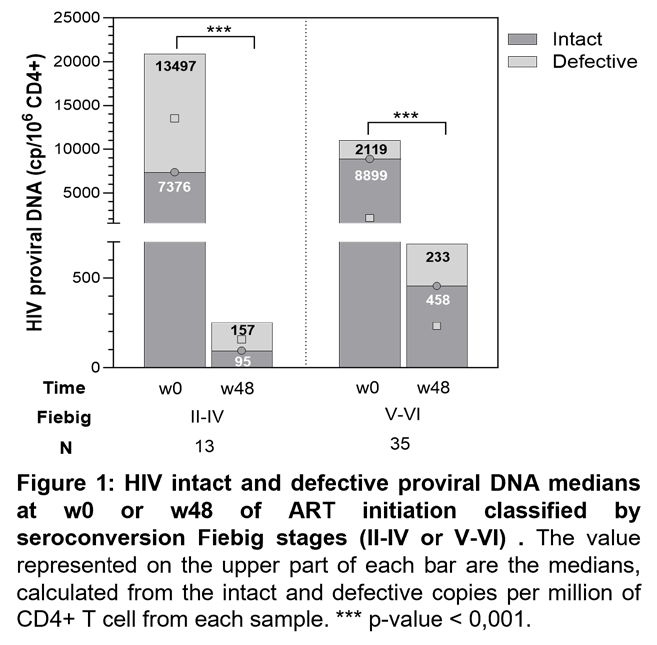
571. Rapid Clearance of the Inducible HIV-1 Reservoir After Initiation of Antiretroviral Therapy
Poster Abstracts
Page: 149
Maria C. Puertas1, Lucía Bailón2, Victor Urrea1, Maria C. Garcia-Guerrero1, Yovaninna Alarcón-Soto3, Angel Rivero2, Beatriz Mothe3, José Moltó2, Javier Martinez-Pìcado1, the DUALITY Study Group
Background
Despite the cumulative expansion of the viral reservoir during untreated HIV-1 infection, it has been recently observed that the intact variants dated close to time of ART initiation predominate in the replicative-competent reservoir. This observation indicates that there is a critical window period immediately following ART initiation that significantly shapes the composition of the proviral reservoir. Still, deeper understanding of the dynamics of the latent reservoir and the factors modulating its composition is needed.
Methods
In this prospective study, we evaluated the decay dynamics of the different compartments of the HIV-1 reservoir in a group of 40 ART-naive individuals initiating dolutegravir-based regimens as part of the DUALITY study (Eudra-CT number 2019-002733-10). All participants were male, with most identifying as men who have sex with men (88.6%), and the median age was 31 years [IQR=23-35]. After starting ART, blood sampling was performed at baseline, at weeks 1, 2 and 4, and at months 3, 6 and 12. We quantified proviral DNA in peripheral CD4+ T cells by ddPCR. The inducible reservoir was measured by the VIP-SPOT assay. Reservoir decay was fitted to 2-phase biexponential decay dynamics using nonlinear mixed effects models.
Results
By the first week after ART initiation viral load had decreased by 2 logs, and beyond week 12, all participants remained virally suppressed except for a single blip in one individual. Over the first year on ART, both total and intact proviruses exhibited a similar overall decrease, representing the 81.6% and 83.7% reduction from the initial pool, respectively. This contrasts with the massive depletion of 96.6% of cells containing inducible proviruses. Furthermore, the half-life of the inducible reservoir after ART initiation was 2.6 days (95%CI=2.2-3.1 days), while the decay of the proviral reservoir was much slower, with a half-life of 5.1 weeks (95%CI=4.2-6.6).
Conclusions
Our findings demonstrate a rapid and specific clearance of cells harboring inducible proviruses within the first days after ART initiation. During this period, the interplay of opposing factors such as the expansion of CD4+ T cells and the restoration of host immune status collectively influences the composition of the long-lived HIV-1 reservoir. These findings support the idea that interventions focused on enhancing CTL responses or modulating viral latency may yield more significant benefits if implemented during this specific timeframe or just before ART initiation.
572. HIV Proviral Populations Differ by Sex and Immune Activation Levels During Antiretroviral Therapy
Poster Abstracts
Page: 149
Chuen-Yen Lau1, Thuy Nguyen2, Matthew A. Adan1, Jessica Earhart1, Danielle Konlian1, Lindsey Adams1, Mary Zipparo1, Jeanette Higgins1, Catherine Rehm1, Robert Gorelick3, Brian Luke3, Frank Maldarelli1
Background
Understanding mechanisms driving persistence and clonal expansion of HIV infected cells during antiretroviral therapy (ART) is critical to control of HIV. Most infected cells contain proviruses that are defective for replication, but can express RNA and HIV proteins, including Gag, that may contribute to pathogenesis on ART. Roles of sex, age, and immune status in persistence, and expression of HIV proviral populations during ART are not well understood. To investigate determinants of persistence and expression of HIV proviruses, we analyzed levels of total and gag-deleted proviruses and their RNA expression in the context of clinical and immune parameters in male and female persons with HIV (PWH) undergoing long-term ART.
Methods
Clinical information and peripheral blood mononuclear cells (PBMC) were obtained from PWH undergoing ART with HIV RNA <50 c/ml for >3 years (y) in protocols at NIH Clinical Center, Walter Reed, and Womens Interagency HIV Study. Cell-associated HIV LTR and gag RNA and DNA were measured by multiplexed droplet digital PCR, and >20 lymphocyte subsets and activation markers measured by FACS. Univariable analyses were used to select clinical, immunologic, and virologic variables for multivariable modeling of drivers of HIV DNA and RNA levels. Multivariable models were identified based on Bonferroni corrected Pearson p-values and significance.
Results
Among 103 PWH, the median age was 50 (range 27-80) y, 37% were female, median CD4 was 674 (range 250-1765) cells/µl, and median ART duration was 14.5 (3-31) y. Total levels of HIV proviruses were not significantly different in males and females, but females had a higher proportion of gag-deleted proviruses (p=0.017). HIV gag expression (gag RNA/gag DNA levels were >3-fold higher in females (p=0.0004). In males, age positively correlated with total provirus levels, but negatively with total and gag RNA. CD16+CD56+ NK cells positively correlated with levels of LTR and gag RNA per provirus. Regression identified levels of CD8Ro+ cells as strong correlates of levels of proviruses in males and females; roles of other factors (age, NK cells, CD8DR+) in HIV LTR and gag RNA expression were more complex in men and women.
Conclusions
Levels of HIV proviruses and CD8 memory cells correlate in all PWH, but relative contributions of other immune and demographic charateristics to HIV persistence and expression in males and females are complex. Sex and age are important considerations for HIV eradication and control strategies.
573. BACH2 Controls Seeding and Establishment of Long-Lived HIV-1 Reservoir in Memory CD4+ T Cells
Poster Abstracts
Page: 150
Hongbo Gao, Yuhao Li, Liang Shan
Background
Antiretroviral therapy (ART) is not a cure for HIV-1 infection due to the formation of latent reservoirs. Most long-lived viral reservoir cells are infected by the virus near the time of therapy initiation. A better understanding of the early events in viral reservoir seeding may help prevent latent reservoir formation. Unlike quiescent reservoir cells, CD4+CCR5+ T cells as the primary targets in HIV-1 infection present an activated Th1 and Th17 effector phenotype. This discrepancy suggests phenotypic and functional changes occur in CCR5+effector cells after HIV-1 entry, necessitating further elucidation.
Methods
We profiled CD4+CCR5+ T cells and evaluated in-vitro re-differentiation of activated CCR5+ cells to explore how terminal effectors reprogram into quiescent memory cells. We revealed that BACH2 is a key transcription factor in memory-precursor (MP) conversion of CCR5+cells which was validated through BACH2-knockout and overexpression assays. To investigate the impact of BACH2 on the HIV-1 latent reservoir, BACH2 knockout humanized mice were infected with R5-tropic virus and treated with ART. The measurement of HIV-1 DNA frequency in tissues and viral rebound analysis were performed.
Results
Upon TCR stimulation, CCR5 was upregulated predominantly in cells committed to terminal differentiation. Furthermore, the majority of CCR5+ cells became functionally impaired, characterized by elevated activation or exhaustion markers and increased apoptosis susceptibility. However, a small subset of these cells undergoes re-differentiation into memory precursor (MP) cells, a process regulated by BACH2. BACH2 deficiency prevents MP cell formation and reduces TCF1 expression, weakening recall response and cell proliferation. In humanized mice, BACH2 knockout did not affect plasma viral load or HIV-1 DNA frequency in tissues compared to controls. However, after ART, the knockout group had a lower frequency of HIV-1 DNA. Viral rebound occurred in 90% of control mice (9/10) but only in 29% of BACH2-knockout mice (4/14).
Conclusions
Our study shows that BACH2 reverses CCR5+cells from terminal differentiated cells to memory precursors. The absence of BACH2 abrogates the seeding of latent reservoirs, revealing the essential role of BACH2 in the seeding and establishment of long-lived HIV-1 reservoir in memory CD4+ T cells. Our finding identifies a potential avenue for targeted interventions.
574. Blockade of HIV Latency Reversal in CD4+ T Cells From ART-Suppressed PLWH by the Antisense RNA AST
Poster Abstracts
Page: 150
Rui Li1, Fabio Romerio1, Kaveh Daneshvar2, Xinjie Ji1, Michelle Pleet3, Grace Igbinosun1, Mohd Shameel Iqbal1, Fatah Kashanchi3, Alan Mullen4
Background
Cure strategies that seek to permanently block reversal of HIV-1 latency remain largely unexplored. We previously showed that the HIV-1 antisense transcript AST induces a closed chromatin state at the HIV-1 5’LTR that blocks transcription and promotes latency in cell line models. Here, we assessed the ability of AST to prevent latency reversal in CD4+ T cells from PLWH, and its potential application in “block and lock” cure strategies. We also elucidated the underlying molecular mechanisms.
Methods
AST or a control RNA were expressed by nucleofection in CD4+ cells from PLWH under suppressive ART. Cells were then treated with SAHA, Panobinostat, or anti-CD3/CD28, and cell-associated HIV-1 gag RNA levels were evaluated by RT-qPCR. Identification of AST structural domains and sequence motifs was performed in the Jurkat E4 latency model. RIP and ChIRP assays were used to study the interaction of AST with chromatin factors and the 5’LTR, respectively. ChIP assays were used to assess epigenetic modifications at the 5’LTR.
Results
We found that ectopic expression of AST in CD4+ T cells from ART-suppressed PLWH blocks latency reversal in response to the HDAC inhibitors, SAHA and Panobinostat, and to TCR stimulation, enforcing HIV-1 transcriptional silencing. The ability of AST to promote HIV-1 latency requires a quadruplex forming G-rich motif of AST that interacts with and recruits the suppressive epigenetic complex, PRC2 to the 5’LTR. Replacement of this motif with an unrelated sequence disrupts AST binding to PRC2 and reversed latency. Two pyrimidine-rich motifs in the 5’ terminus of AST facilitate its interaction with the 5’ LTR via sequence homology. Targeted nucleotide substitutions in these two pyrimidine-rich motifs abolish the interaction of AST with the 5’ LTR and its latency-promoting activity. An unbiased proteomics screen of AST interactors revealed an array of previously known and potential new HIV-1-suppressive factors, including the SWI/SNF complex, TDP-43, PTBP1, MATR3, and hnRNPK.
Conclusions
Ectopic expression of AST inhibits HIV-1 transcription in PLWH-derived CD4+ T cells and locks proviruses in a state of permanent latency. AST functions as a scaffold for the recruitment and assembly of a biomolecular complex at the 5’ LTR leading to epigenetic silencing of HIV-1 transcription. Overall, our studies identify AST as a first-in-class biological molecule capable of enforcing latency in PLWH-derived cells, showing that AST has potential applications in cure strategies.
Figure 1.
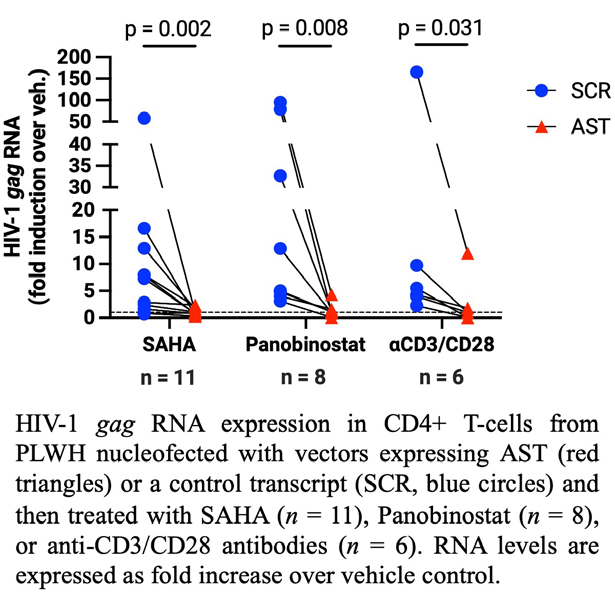
575. HIV Reactivation Potential Evaluated by RNA-Seq and DNA Methylation Following LRA Stimulation
Poster Abstracts
Pages: 150-151
Giuseppe Rubens Pascucci1, Elena Emili2, Alessia Neri2, Elena Morrocchi2, Nicole Colantoni1, Arianna Rotili2, Chiara Pighi1, Giulio Olivieri1, Stefania Bernardi1, Giovanna Leone1, Ann M. Chahroudi3, Mathias Lichterfeld4, Benjamin Reece Bone4, Nicola Cotugno1, Paolo Palma1
Background
Latency-reversing agents (LRAs) have shown promise in reactivating HIV reservoir within “shock and kill”approaches. However, molecular mechanisms underlying HIV reactivation within CD4+ T cells as well as predictors of LRA efficacy remain partially unknown. Here, we investigated the transcriptomic and whole genome DNA methylation profile of CD4+ T cells cultured in vitro with or w/o two LRAs and assessed for associations with HIV viral reservoir inducibility.
Methods
Large-scale samples (2,5 – 9,4x10⁹ PBMCs) were collected through leukapheresis from 9 study participants (10 – 27 years old, 7 female and 2 male) with perinatally acquired HIV who initiated ART within the first year of life and maintained viral suppression for several years (IQR: 13-22 years). The HIV reservoir was characterized by Flip-Seq, IPDA and QVOA. HIV inducibility was calculated as infectious units/106 cells (by QVOA) divided by the number of intact proviruses/106 cells. Purified CD4+ T cells were cultured in-vitro for 20h with two LRAs: fimepinostat (CUD) and Ingenol-3-angelate (PEP), left unstimulated (UNS) or cultured with PMA+ionomycin+IL2 as positive control (CTR). After stimulation, RNA and DNA were extracted and sequenced using the long-reads Oxford Nanopore. DNA methylation was analyzed for both 5-methylcytosine (5mC) and N6-methyladenosine (6mA). An algorithm was developed to identify genes and genomic sites potentially associated with HIV inducibility. Transcriptome and epigenome were integrated using 4 public databases by intersecting the methylated sites with the genomic position of enhancer binding sites.
Results
The analysis of 3 distinct OMIC layers revealed 2743 Features Associated with Inducibility (FAI) upon four distinct experimental conditions: UNS, CUD, PEP, and CTR vs UNS. CUD showed the highest number of FAI at RNA and 5mC level (see Fig 1). The intersection of FAI informed by RNA-Seq and 5mC showed that Vacuolar Protein Sorting 8 (VPS8) and Phosphodiesterase 8 (PDE8A) genes were associated with HIV inducibility at both OMIC layers. These proteins are involved in HIV replication mechanisms, potentially representing important in vitro correlates of the potential of HIV reactivation by LRAs.
Conclusions
MultiOMIC analysis of CD4+ T cells upon LRA stimulation revealed molecular features associated with HIV inducibility. These features may shed light on mechanisms of latency reversal and could guide the selection of new and more effective LRAs.
The figure, table, or graphic for this abstract has been removed.
576. Activation of Latent HIV-1 by Retinol Binding Protein 4
Poster Abstracts
Page: 151
Chiara Pastorio1, Khumoekae Richard2, Luis J. Montaner2, Konstantin M. J. Sparrer1, Frank Kirchhoff1
Background
The persistence of HIV-1 in a transcriptionally silent latent form in long-lasting memory CD4+ T cells remains one of the main barriers to cure AIDS. One strategy to eradicate HIV-1 reservoirs is the so-called “shock and kill” approach. It aims to reactivate latent HIV by administration of latency reserving agents (LRAs) to render infected cells vulnerable to elimination, while preventing de novo infections by cART. Thus far, however, it failed to clearly reduce the majority of latently HIV-infected cells. Thus, novel LRAs are urgently needed.
Methods
To discover novel endogenous compounds that reactivate latent HIV-1 proviruses, we screened a human hemofiltrate-derived peptide library containing essentially all the peptides and small proteins circulating in blood. To this purpose, we used J-Lat cells, a very well-established model system for HIV-1 latency involving Jurkat-derived T cell lines containing an integrated HIV-R7/E-/ GFP genome. Viral protein induction in cART-suppressed PBMCs was assessed using HIV-1 Gag-p24 Simoa (PMID: 33796087), following 72 hours treatment with the test agent (RBP4) or anti-CD3/CD28 positive control.
Results
Multiple rounds of peptide separation and screening revealed that the human Retinol Binding Protein 4 (RBP4), a small protein that transports vitamin A (retinol) in blood, potently reactivates latent HIV in a variety of Jurkat T cell lines (p<0.001). Carrier-free RBP4 as well as free forms of retinoids (all-trans retinal, retinol and retinoic acid) do not reactivate HIV. Thus, the complex retinol-RBP4 (Holo-RBP4), which is very abundant in the circulation, seems essential for its activity as LRA. Notably, RBP4 significantly reactivates latent HIV-1 in primary T cells isolated from infected individuals under effective cART at physiological concentrations (p<0.05). Finally, JNK signalling pathway was identified to be relevant for RBP4-mediated activation of latent reservoirs.
Conclusions
We identified RBP4 as an endogenous and abundant circulating HIV-1 latency reversing agents that may modulate the size of the viral reservoirs in vivo.
577. Zaprinast Reprogrammes Resting CD4+ T-Cell Metabolism and Induces HIV Latency Reversal Ex Vivo
Poster Abstracts
Page: 151
Valentin de Masson d'Autume1, Valentin LeDouce1, Sophie O'Reilly1, Nathan François1, Matthew Angieladis1, Tara McGinty2, Jose Carlos Valle Casuso3, Alan Macken2, Olivier Rohr4, Carine Van Lint5, Asier Sáez-Cirión3, Aoife Cotter1, Eoin R. Feeney1, Mallon W. G. Paddy1, Virginie Gautier1
Background
Accumulating evidence supports that the establishment and persistence of HIV latent reservoirs despite suppressive ART are intricately linked to the quiescent metabolism of CD4+ memory T cells. We investigated whether reprogramming T cell metabolism towards aerobic glycolysis could facilitate HIV latency reversal from circulating viral reservoirs. We used Zaprinast, a Mitochondrial Pyruvate Carrier inhibitor, to block pyruvate entry into mitochondria and examined its latency reversal capacity on circulating HIV reservoirs from ART-suppressed individuals and its impact on primary CD4 T cells metabolism.
Methods
HIV latency reversal was performed ex vivo on CD4+ T cells or CD8-depleted PBMC from ART-suppressed individuals. HIV gene expression and viral production were measured by RT-qPCR targeting the HIV tat-rev msRNA or HIV gag RNA respectively. Mitochondrial respiration and ATP production were assessed using the Mitostress test and ATP real-time kits (Agilent). Aerobic glycolytic activity was measured using pH Xtra assay (Agilent) and glucose uptake with 2-NBDG. Flow cytometry was used to evaluate mitochondrial mass (MitoView Green, Generon), membrane potential (MitoTracker Red CMXRos, Invitrogen), ROS production (MitoSOX Red, Thermofisher), viability (Viobility 405/452, Miltenyi) and activation (CD69 and CD25 antibodies, Biolegend).
Results
Zaprinast induced viral particles release in 65% (11/17) of CD8-deplected PBMCs isolated from ART-suppressed individuals, achieving 69% of maximal HIV reactivation following TCR activation. Zaprinast also triggered HIV gene reactivation in 50% (4/8) of CD4+ T cell samples isolated from ART-suppressed individuals, confirming that Zaprinast targets CD4+ T cells HIV reservoirs. Metabolic analyses revealed that Zaprinast re-programmed CD4 T cell metabolism in two steps. Initially, Zaprinast transiently inhibited mitochondrial respiration before enhancing both aerobic glycolysis and mitochondrial respiration. This effect was reversible with CD4+ T cells returning to a quiescent metabolism upon removal of the drug. The treatment did not impact cell viability, ROS production, or CD4 T cells activation and proliferation.
Conclusions
This study demonstrates for the first time that MPCi represents a potent new class of LRAs capable of inducing robust HIV latency reversal from circulating viral reservoirs ex vivo. This strongly supports the potential of targeting the quiescent metabolism of CD4+ T cells as a promising approach for Shock and Kill strategies.
The figure, table, or graphic for this abstract has been removed.
578. Anti-HIV Gene Editing Is Inhibited in Active HIV Provirus Through Long-Terminal Repeat Demethylation
Poster Abstracts
Page: 151
Mohamed Bouzidi, Li Du, Prerna Dabral, Manukumar Honnayakanahalli Marichannegowda, Satish Pillai
Background
CRISPR-Cas9 excision of the HIV genome is a promising strategy for an HIV cure. However, epigenetic features, including DNA methylation at the HIV integration site, may impede anti-HIV gene editing. In this study, we investigated the impact of an FDA-approved DNA methyltransferase inhibitor, 5-Aza-2'-deoxycytidine, on genome demethylation and provirus reactivation in latently infected CD4+ T cells, followed by anti-HIV CRISPR-Cas9 editing.
Methods
Primary CD4+ T cells were isolated from three healthy donors and activated using CD3/CD28 activation beads. Cells were then infected with a VSV-G pseudotyped HIV NL4-3 GFP strain, and infected (GFP+) cells were purified using fluorescence-activated cell sorting (FACS). After 7 days of culture, infected CD4+ T cells were sorted again to separate GFP-negative cells (latently infected) from GFP-positive cells (productively infected). Both populations were nucleofected with anti-HIV CRISPR-Cas9 ribonucleoproteins (RNPs) targeting the viral long-terminal repeat (LTR) promoter region. After 48 hours, DNA was extracted, and the LTR region was PCR-amplified, purified, and subject to Sanger sequencing. Sequences were analyzed using Tracking of Indels by DEcomposition (TIDE) to infer editing efficiency. Additionally, HIV-latently infected J-Lat clones 6.3 and 11.1 were treated with DMSO (control) or 5-Aza-2'-deoxycytidine for 72 hours. DNA was then extracted, and the LTR region was PCR-amplified, sequenced, and analyzed using TIDE.
Results
Editing efficiency was 1.6-fold higher in latently-infected CD4+ T cells as compared to productively-infected CD4+ T cells (N=3 donors, p<0.05, paired t-test) (Fig.1A). J-Lat 11.1 and 6.3 clones treated with 6.25nM 5-Aza-2'-deoxycytidine showed modest HIV reactivation (~15% GFP-positive). Editing efficiency was 4.8-fold and 3.8-fold lower in 5-Aza-2'-deoxycytidine-treated J-Lat 11.1 and J-Lat 6.3 cells, respectively, compared to their DMSO-treated counterparts (p<0.0001 and p<0.0005, respectively, paired t-test) (Fig.1B).
Conclusions
Anti-HIV gene editing efficiency is higher in latently-infected cells as compared to productively-infected cells, and anti-HIV editing is impeded by demethylation of the HIV genome. Our data suggest that the active HIV reservoir may be refractory to excision approaches, warranting investigation into the impact of epigenetic states on anti-HIV gene therapy. Hypermethylating drugs in clinical use, such as budesonide, should be explored in combination with anti-HIV gene editing approaches.
579. Macrophage Training Reactivates Latent HIV-1 From HAART-Suppressed PBMCs of PLWH
Poster Abstracts
Pages: 151-152
Sinu P. John, Heera James, Christine Perritano, Iain D. C. Fraser
Background
HIV virus persists in a latent but activatable chronic state, predominantly through epigenetic modification of resting CD4+ T-cells and other immune cells such as macrophages. This necessitates lifelong combination antiretroviral therapy (cART) for people living with HIV (PLWH). Trained immunity is a myeloid specific phenomenon where chromatin is relaxed to a less condensed state at select immune gene loci, facilitating rapid and robust transcription from these loci upon exposure to an immune stimulus. We hypothesized that trained immunity could be a viable approach to reactivate HIV from myeloid HIV reservoirs and possibly facilitate reactivation from CD4 T cell reservoirs.
Methods
We used the established innate training stimuli MDP and β-glucan, along with Syk kinase inhibitors, to train the THP89GFP cell line (an experimental monocytic model for latent HIV-1), whole PBMCs of virally suppressed PLWH under ART, and macrophages derived from these PBMCs. We used qPCR and viral outgrowth assays to detect the presence of viral gene expression and viral production. We also performed single cell RNA sequencing and single cell ATAC seq on trained PBMCs of ART suppressed PLWH to study the cross talk between the myeloid and lymphoid cells and its effect on the reactivation of the CD4 T cell HIV genome.
Results
All 3 trained immunity stimuli activated transcription of HIV-1 from THP89GFP cells. Consistent with the increased transcription of viral genes, we observed that multiple regions of the HIV-1 LTR had increased deposition of H3K27Ac in the trained THP89GFP macrophages. A viral outgrowth assay identified four out of 17 PBMC samples with detectable counts of HIV upon training with Syk inhibitors, MDP and β-glucan. Training of whole PBMCs of ART suppressed PLWH enhanced HIV specific viral gene expression. scRNA sequencing showed PBMC training-induced expression of HIV genes from CD4 T cells and hyper activation of T cells in response to PMA activation.
Conclusions
Our studies show that induction of trained immunity is a viable and novel approach to the reactivation of latently infected HIV-1 from both T cell and macrophage reservoirs. Our data also shows beneficial cross talk between trained myeloid cells and T-lymphocytes in PBMC mixtures, resulting in the reactivation of HIV from T cell reservoirs. Collectively our data shows that the trained immunity strategy could be developed as a novel therapeutic approach for the reactivation of latently infected HIV.
Figure 1.
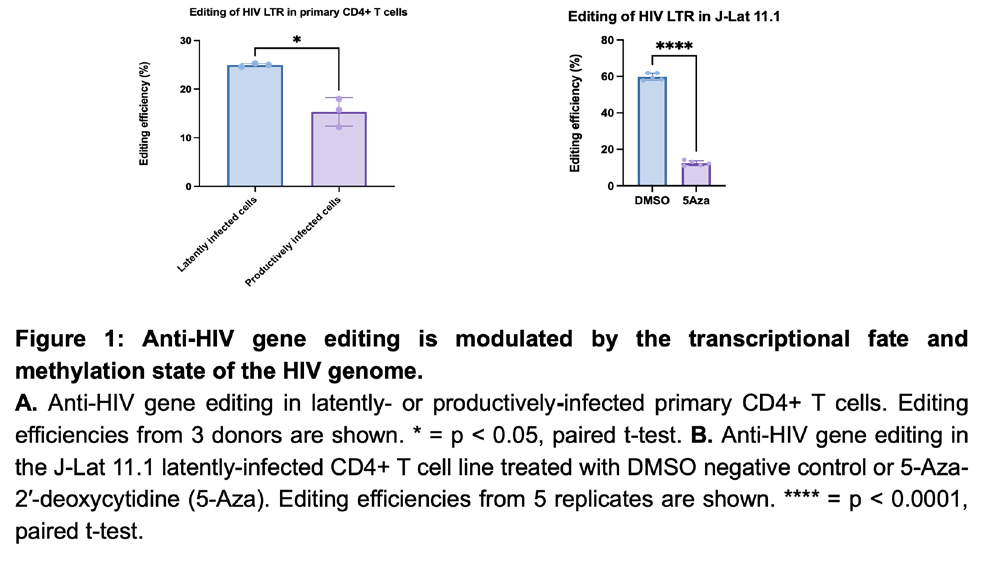
580. Interference of HIV Integration via Changes in CPSF6 and SC35 Expression Due to TKIs in Macrophages
Poster Abstracts
Page: 152
Mario Manzanares1, Juliana Manosalva Perez1, Elena Mateos1, Alicia Simón Rueda1, Diego Megías1, Montserrat Torres1, Vicente Planelles2, Adam M. Spivak2, Mayte Coiras1, Clara Sánchez Menéndez1
Background
Despite the efficacy of ART, HIV-1 persistence in reservoirs, mostly formed by CD4 and macrophages hinders eradication. Nuclear import of pre-integration complex is assisted by proteins from mRNA processing pathways like CPSF6 (3´RNA-cleavage and polyadenylation factor 6) and SRSF2/SC35 (Serine/Arginine-rich splicing factor 2). Dasatinib and ponatinib are tyrosine kinase inhibitors (TKIs) that interfere with HIV-1 proviral integration in both CD4 and macrophages by preserving the antiviral activity of SAMHD1. Our objective was to determine if dasatinib and ponatinib may also interfere with proviral integration in MDMs via CPSF6 and/or SC35.
Methods
Blood samples were obtained from healthy donors (n=15). CD14+ cells were isolated from PBMCs and differentiated into monocyte-derived macrophages (MDMs). In vitro infection of MDMs with JR_FL_Renilla and DHIV3-GFP was monitored in presence/absence of dasatinib and ponatinib by time-lapse microscopy. Influence of TKIs on HIV-1 early and late reverse transcription (RT), formation of 2-LTR circles, and proviral integration was analyzed by ddPCR. Subcellular localization and expression levels of CPSF6 and SC35 were analyzed by confocal microscopy.
Results
1)Time-lapse of dasatinib- and ponatinib-treated MDMs infected with DHIV-3-GFP revealed that GFP was nearly undetectable for 50 hours post-infection and the scarcely detectable infected cells were observed by 22h after infection of untreated samples (p=0.0032). 2)No differences were observed in early and late RT in MDMs pretreated or not with dasatinib after infection with JR_FL_Renilla. However, 2-LTR circles and proviral integration were 3.9- (p=0.0259) and 1.6-fold (p=0.0467) lower in dasatinib-treated MDMs 48h post-infection, respectively. Similar results were obtained with ponatinib. 3)MDMs treated with dasatinib showed higher expression of CPSF6 in both nuclear (p<0.0001) and cytoplasmic regions (p<0.0001) than untreated MDMs, while ponatinib-treated MDMs also showed higher expression in both regions (p<0.0001) than untreated MDMs, and higher nuclear expression than dasatinib-treated MDMs (p=0.0110). 4)Ponatinib-treated MDMs had 5.8- and 5.4-fold lower expression of SC35 than dasatinib and untreated MDMs (p<0.0001).
Conclusions
Dasatinib and ponatinib modified the expression and subcellular localization of CPSF6 and SC35, which are essential for HIV-1 proviral integration and transcription in MDMs. This is a new potential mechanism of action for TKIs to interfere with HIV-1 infection.
581. Thymosin α1 Enhances IL-15 Pathway Between MoDCs and CD8+T Cells and Restrains HIV Latency In Vitro
Poster Abstracts
Pages: 152-153
Chaoyu Chen1, Jingna Xun2, Jiangrong Wang1, Renfang Zhang2, Tangkai Qi1, Li Liu1, Xinyu Zhang1, Zichen Song1, Yinzhong Shen1, Hongzhou Lu3, Jun Chen2
Background
Viral reservoir presents a significant challenge in HIV-1 cure. Studies indicate that dendritic cells may limit HIV-1 reservoir by bolstering CD8+ T cell function via the IL-15 pathway and facilitating the expansion of virtual memory CD8+ T cells (TVM). We previously observed that Thymosin α1 (Tα1) may restrict the reservoir through the IL-15 pathway, however, the precise mechanism remains to be fully elucidated.
Methods
Peripheral blood mononuclear cells (PBMCs) were obtained from individuals living with HIV-1 (PLWH). In vitro, THP-1 cells were differentiated into mature monocyte-derived dendritic cells (MoDCs) and co-cultured with PBMCs under various conditions in a two-layer transwell model. To assess the levels of reservoir reactivation and CD8+ T cell functionality, flow cytometry was employed to measure changes in HIV-1 p24 protein levels in CD4+ T cells, cytokine/chemokine levels in CD8+ T cells, TVM subpopulation proportions, and IL-2Rβ receptor expression on TVM cells. Fluorescence quantitative PCR measured changes in HIV-1 integrated DNA levels to assess reservoir size.
Results
In vitro, Tα1 stimulation of MoDCs resulted in significant secretion of IL-15/RA complexes (p<0.001). This interaction with IL-2Rβ/γ receptors on T cells enhanced the intracellular secretion of CCL3/5, IFNγ, and TNFα in CD8+ T cells (p<0.05), as well as proliferation of TVM subpopulation (p=0.013), inhibited p24 levels in CD4+ T cells (p=0.004), and reduced HIV-1 integration DNA levels (p=0.012). The decreased degree of p24 level was negatively correlated with the secretion of intracellular cytokines in CD8+ T cells and the increase of TVM proportions (p<0.05). However, these effects were observed in PBMCs from immunological responders rather than nonresponders (INR). Neither Tα1 nor rhIL-15 stimulation altered the frequency of TVM cells in INR (p=0.126) or the expression of surface IL-2Rβ receptors (p>0.05), indicating impaired responsiveness of these subsets to IL-15 signaling.
Conclusions
This study demonstrate that Tα1 enhances CD8+ T cell function, promotes TVM proliferation, and suppresses reservoir size and reactivation via IL-15 pathway activation in dendritic cells. Impaired IL-15 signaling responsiveness in INRs may contribute to poor reservoir control, highlighting a potential therapeutic target.
581.5 Cyclic Adenosine 3',5'-Monophosphate Agonist Prevents Establishment and Reversal of HIV Latency
Prerna Dabral, Li Du, Mohamed Bouzidi, Satish Pillai Vitalant Research Institute, San Francisco, CA, USA
Background
Cyclic adenosine 3',5'-monophosphate (cAMP) is a secondary messenger involved in the regulation of diverse cellular, metabolic, and immunologic processes. Ex vivo and in vitro studies have shown that cAMP levels are elevated in the setting of HIV infection, with T cells from PLWH harboring twice the cAMP level as uninfected individuals. In our previous studies, we identified the adenosine signaling pathway which leads to production of cAMP as a host determinant of HIV latency. Here, we used forskolin, a cell-permeable diterpene that activates adenylyl cyclase, and SCH-58261, an adenosine receptor antagonist, to investigate the impact of cAMP modulation on the establishment, maintenance, and reversal of HIV latency.
Methods
Intracellular cAMP in primary CD4+ T cells and cell lines was quantified using a colorimetric enzyme-linked immunosorbent assay (ELISA). To determine the impact of forskolin and SCH-58261 on latency, HIV latently-infected J-Lat 5A8 cells, J-Lat NFkB.RFP cells (reporting NFkB activation via RFP), and HC69.5 microglia were pretreated with varying drug doses followed by phytohaemagglutinin (PHA) or PMA/ionomycin treatment; GFP-positive cells (reflecting viral expression) were enumerated by flow cytometry. To determine the impact of cAMP modulation on initial establishment of latency, Jurkat cells were infected with a dual-reporter virus construct, Duo-Fluo HIV BFP/GFP, which enables enumeration and isolation of HIV latently-infected, productively-infected, and uninfected cells by flow cytometry. Data were analyzed using unpaired t tests.
Results
Forskolin treatment increased cAMP levels in J-Lat (p=0.0071) and primary CD4+ T cells (p=0.0071) (Fig.1A). Treatment with SCH-58261 reversed the phenotype (p=0.0011). Forskolin exerted a dose-dependent inhibitory impact on PHA- (p=0.0286) and PMA/Ionomycin- (p=0.0011) mediated latency reversal in J-Lat cells (Fig.1B), and NFkB activation was suppressed in parallel (p<0.0001). Forskolin suppressed HIV transcription in HC69.5 microglia (p=0.0046). Forskolin also inhibited the initial establishment of latency in Jurkat cells, increasing the ratio of productively-infected to latently-infected cells as compared to DMSO negative controls (p=0.0036).
Conclusions
Elevated cAMP levels block HIV transcription and prevent viral reactivation in T cells and microglia, in an NFkB-dependent manner. cAMP induction also prevents initial establishment of HIV latency. cAMP modulators including forskolin should be explored in HIV cure strategies.
Figure 1.
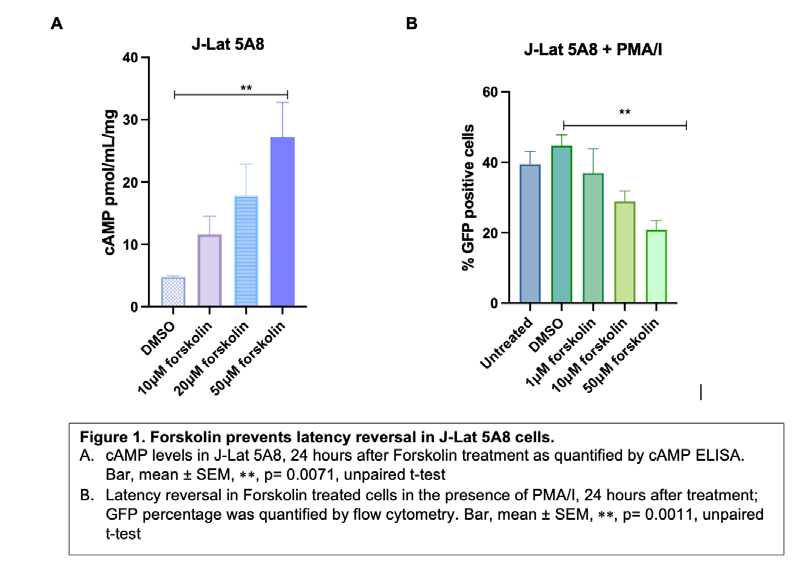
582. Predominance of Non-T Follicular Helper Cell Subsets in the Lymph Node Viral Reservoir During ART
Poster Abstracts
Page: 153
Vincent H. Wu1, Jayme Nordin1, M. Betina Pampena1, Perla Mariana Del Río Estrada2, Fernanda Torres Ruiz2, Mauricio González Navarro2, Yara Andrea Luna Villalobos2, Santiago Avila Rios2, Gustavo Reyes-Teran3, Michael Betts1
Background
HIV-1 cure strategies require a comprehensive understanding of cellular phenotype of HIV tissue reservoirs for effective and selective targeting. While recent data have demonstrated the highly heterogeneous nature of peripheral blood CD4+ T cells subsets comprising the HIV reservoir of antiretroviral therapy (ART) treated people with HIV (PWH), CD4+ T follicular helper (Tfh) cells are generally considered as the predominant cellular reservoir of virus within lymphoid tissue. However, there are limited data supporting this during ART. Here, we re-examined this notion in lymph nodes of viremic and ART-treated PWH using unbiased multiomic analysis.
Methods
To define the cellular signature of infected cells in the lymphoid tissue compartment, we profiled memory CD4+ T-cells from lymph node samples of PWH during viremia (n = 9) and ART treatment (n = 10) using single-cell DOGMAseq (scDOGMAseq) for the simultaneous assessment of epigenetics, transcriptomics, and surface antigen levels.
Results
Using the presence of transposed HIV-1 DNA during the epigenetic profiling and/or HIV RNA during transcriptomic profiling, we found HIV-1 infected cells (n = 1388 during viremia; n = 398 during ART) and determined their cellular phenotype. HIV-1 infected cells were found to be distributed between many CD4+ T-cell subsets, including central, effector, regulatory and resident memory subsets. Importantly, the reservoir during ART or viremia was not predominantly associated with T follicular helper (Tfh) cell phenotypes during viremia (16.9% of HIV DNA+ cells; 13% of HIV RNA+ cells) or during ART treatment (8.1% of HIV DNA+ cells; 5.3% of HIV RNA+ cells). HIV DNA+ cells were instead found in two different memory populations: a non-activated and non-resident central memory T subset (34.7% and 15.6% of HIV+ DNA+ cells during viremia and ART, respectively) and a phenotypically resting but recently activated NR4A1/NR4A2 high subset (16.8% of HIV+ DNA+ cells; 18.1% of RNA+ cells) during ART.
Conclusions
Our scDOGMAseq atlas of transcriptionally inactive and active HIV-1 infected CD4+ T cells from the lymphoid tissue highlights the predominance of non-Tfh cell subsets in the HIV tissue reservoir during ART. We find the HIV+ cells to be more concentrated in resting/recently activated cells that have not been previously described. These data altogether demonstrate that HIV cure strategies primarily targeting the B cell follicles during ART may miss out on a large portion of the HIV reservoir in lymphoid tissues.
583. Lymph Node Immune Landscape Reveals the Role of Innate Immunity on HIV Reservoir in ART-PLWH
Poster Abstracts
Pages: 153-154
Michail Orfanakis1, Spiros Georgakis1, Jolien Vermeire2, Susan P. Ribeiro3, Vincent C. Marconi3, Linos Vandekerckhove2, Khader Ghneim3, Ashish A. Sharma3, Rafick P. Sekaly3, Constantinos Petrovas1
Background
The LN factors regulating HIV reservoir maintenance, particularly in antiretroviral treated people living with HIV (cART PLWH), are not defined. Presumably, the interplay between innate (e.g. monocytes, dendritic cells) and adaptive immune cells, particularly TFH cells, a main HIV reservoir component, is critical for this maintenance. We have applied complementary methodologies to delineate the LN landscaping and search for possible associations between in situ factors and HIV viral DNA content.
Methods
LN tissue sections from viremic (n=12) and cART (n=9) PLWH were analyzed by multiplex immunofluorescence imaging (7- and 12-plex panels) and spatial transcriptomic (GeoMx) methodologies while LN-derived cells were investigated by multiparametric flow cytometry and scRNA-10X. The blood HIV DNA content was measured by the Rainbow platform that quantifies intact HIV DNA. Computational tools (Histocytometry, R and python algorithms) were used for data analysis.
Results
Our imaging analysis revealed that i) contrary to viremic LNs, no association was found between TFH cell prevalence and HIV DNA in cART LNs, ii) the cell densities of follicular and extrafollicular total and GrzB+CD8T cells were negatively associated with HIV DNA, both in viremic and cART LNs, iii) follicular and extrafollicular prevalence of IL10+cells (similar contribution by CD163hiCD68lo and CD163loCD68hi cells) were positively associated with HIV DNA and v) follicular and extrafollicular prevalence of IFNb+ cells (higher contribution by CD163loCD68hi) were negatively associated with HIV DNA, suggesting a negative role for HIV persistence. Flow cytometry analysis of single cell suspensions showed a similar phenotypic clustering profile (relative expression of cell subsets) of Tregs cells among the donors regardless of their HIV DNA. The in situ transcriptomic analysis showed a significant overexpression of genes associated with Bile Acid metabolism and induced signaling in cART vs viremic follicles/LNs.
Conclusions
We provide a multilevel assessment of PLWH LN immune dynamics, particularly in follicular/germinal center areas. The data point to a network of soluble factors produced by innate immunity cells and Tregs (TGFb, IL10 and IFNb) (Figure 1) as potential mediators for viral reservoir regulation. Furthermore, Bile Acids that can trigger the production of TGFb and Interferons (shown by members of RID HIV) could represent a crucial triggering factor for the aforementioned network.
Figure 1.
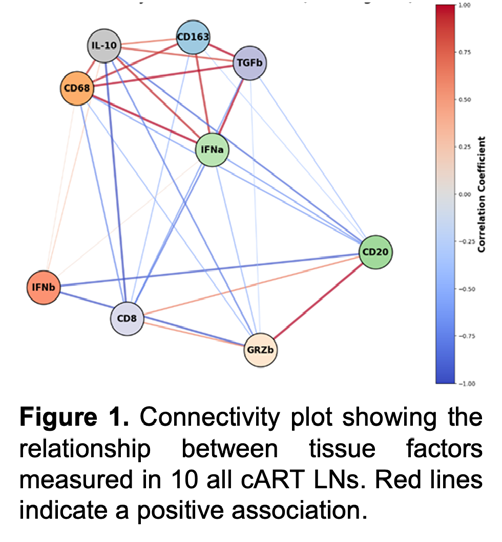
584. Depletion of CX3CR1+ Effector CD8 TRM Cells Is Associated With HIV-1 Reservoir in the Colon on ART
Poster Abstracts
Page: 154
Nived Collercandy1, Camille Vellas1, Manon Nayrac2, Mary Requena1, Justine Latour1, Karl Barange1, Laurent Alric1, Guillaume Martin-Blondel1, Jacques Izopet1, Pierre Delobel1
Background
The identification of host immune factors involved in the persistence of tissular HIV-1 reservoirs is crucial for the development of remission strategies. The intact HIV-1 reservoir is higher in the colon compared to other intestinal compartments at the chronic stage on ART, which may be related to the local loss of tissular resident memory CD69+CD103+ CD8+ T cells (TRM).
Methods
Immunologic and virologic analysis of the intestinal mucosa was performed in 42 virologically suppressed people living with HIV-1 (PWH) on ART and 42 uninfected controls (ANRS EP61 GALT study) using colonic endoscopic biopsies. Characterization of the phenotype and function of T cells within the lamina propria was performed by FACS. Total HIV-1 DNA and residual HIV-1 RNA were quantified in gut samples.
Results
Effector CX3CR1+ CD8+ T cells were globally increased in the colonic mucosa of PWH on ART compared to uninfected controls (median 15.1% [13.4-17.7] of CD3+ cells vs. 8.4% [6.2-10.5], respectively; P<0.001), but CD69+CD103+ TRM among CX3CR1+ CD8+ T cells were decreased (median 32.7% [24.5-42.7] of CX3CR1+ CD8+ vs. 46.3% [36.4-55.3], respectively; P<0.001). The increased proportion of CX3CR1+ non-TRM (CD69-CD103-) correlated with total HIV-1 DNA (ρ=0.42 ; P=0.02) and residual HIV-1 RNA (ρ=0.38 ; P=0.02) in the colon, whereas CX3CR1+TRM were associated with lower HIV-1 DNA levels (ρ=-0.41 ; P=0.02). CX3CR1+ CD8+ TRM showed a distinct phenotype from non-TRM with higher expression of CD39, CD101, CD127, and lower expression of CD57, KLRG1, PD-1, TIGIT and TIM-3 (Figure). CX3CR1+ CD8+ TRM were predominantly CD27-effector memory cells (median 60%), whereas non-TRM were predominantly CD27+ cells. CD39, CD101, CD127 expression on CX3CR1+ CD8+ TRM all negatively correlated with total HIV-1 DNA in the colon. Treg frequency was also increased in the colon of PWH, and negatively correlated with CD39 expression on CX3CR1+ CD8+ TRM.
Conclusions
Effector CX3CR1+ CD69+CD103+ TRM CD8+ cells are associated with a reduced HIV-1 reservoir in the colon, but appear to be depleted in favor of CX3CR1+ CD69-CD103- non-TRM CD8+ T cells with a more exhausted (TIGIT+TIM-3+LAG-3+PD-1hi) and senescent (CD57+) phenotype. Increasing cytotoxic effector CD8+ TRM cells may be an axis to reduce the tissular viral reservoir and achieve HIV-1 remission.
Figure 1.
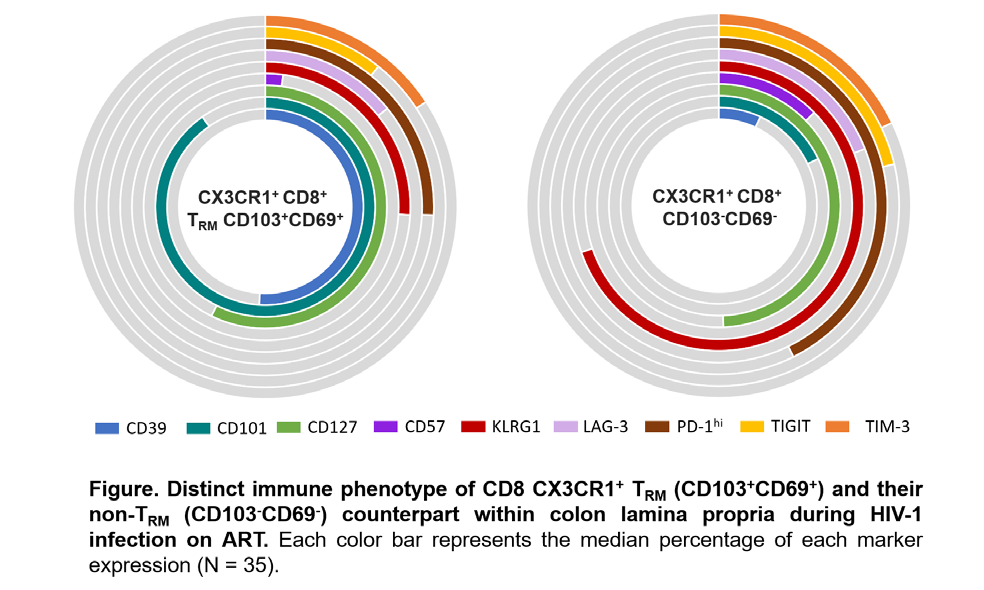
585. HIV Reservoir in Jejunum Exhibits 5 Distinct Phenotypic Features and Evokes 5 Innate Cell Redistribution
Poster Abstracts
Page: 154
Marta Calvet-Mirabent1, Monet Yuan1, Xiaoyu Luo1, Julie Frouard1, Jason Neidleman1, Ashley F. George1, Stan Tamaki2, Antoine Chaillon3, Elizabeth Hastie3, Davey Smith3, Collin Kieffer4, Nadia R. Roan1, Sara Gianella Weibel3
Background
The human gut has a high burden of HIV, but little is known about the phenotypes of HIV reservoir cells at this site or the influence of the local microenvironment. Here, we used standard and 40-parameter multiplexed ion beam imaging by time of flight (MIBI-TOF) microscopy to study the HIV reservoir and their associated environments from 5 different regions of the gut of ART-suppressed PWH (ART-PWH).
Methods
Fresh tissue specimens from duodenum (DDM), jejunum (JJM), ileum (ILM), colon (CLR) and rectum (RCT) were obtained through the Last Gift rapid autopsy program from n=6 ART-PWH and n=2 people without HIV (PWOH). Slices from FFPE tissues were prepared for multiplexed RNAscope (to detect HIV RNA) and confocal immunofluorescence imaging (to detect HIV p24). A subset of the samples was used for MIBI-TOF imaging.
Results
While on average 85% [range 74-100%] of the HIV RNA+CD4+ T cells in the DDM, CLR, and RCT expressed p24, only 45% [range 25-79%] in the JJM and ILM were p24+. To test the hypothesis that immune-mediated recognition and depletion of p24+CD4+ cells may be occurring in the JJM and ILM, we used MIBI-TOF to assess phenotypic features of the p24+CD4+ cells and their local environment in JJM of an ART-PWH. Relative to uninfected CD4+ T cells, p24+CD4+ T cells expressed higher levels of HIV coreceptor CCR5 (p=0.0056), checkpoint receptors (PDL1 (p<0.0001), TIGIT (p=0.0009)), Tfh marker CXCR5 (p=0.0018), inflammatory/cytolytic markers (Galectin-9 (p<0.0001), Granzyme B (p=0.0006)), proliferation marker Ki67 (p<0.0001), and differentiation marker AIOLOS (p<0.0001). These p24+ cells were in closer proximity to NK cells and dendritic cells (DCs) than to other subsets including B cells, CD8+ T cells, monocytes and macrophages (M0; p<0.0001). The overall numbers of macrophages were significantly decreased (p=0.0072) in the JJM of ART-PWH compared to the JJM of PWOH.
Conclusions
Our data suggest that p24+CD4+ T cells are distributed throughout the entire gut of ART-PWH, but that JJM and ILM may possess distinct mechanisms that preferentially eliminate these cells. p24+CD4+ cells in JJM of ART-PWH exhibit distinct phenotypic features including evidence of recent proliferation (Ki67). Their spatial localization suggests they may be recruiting subsets of innate cells (NK cells and DCs), which can help eliminate infected cells, while M0 may be depleted. Overall, our results point to active crosstalk between HIV-infected cells and innate immune effector cells in the gut of ART-PWH.
586. Single Cell Characterization of the Gastrointestinal HIV Reservoir
Poster Abstracts
Pages: 154-155
Jackson Peterson, Elizabeth Bennett, Shipra Chandel, Katherine James, Brigitte Allard, Matthew Clohosey, Taylor Whitaker, Caroline Baker, Susan Pedersen, Anne Peery, Cynthia L. Gay, David M. Margolis, Nancie Archin, Edward Browne
Background
Human gastrointestinal (GI) tissues are a major site of HIV-1 viral replication and persistence, but the nature of the persistent HIV-1 reservoir in the GI remains poorly described. Previous study has identified higher levels of viral DNA but lower levels of transcriptional initiation in the colon as compared to the peripheral blood.
Methods
To characterize HIV infected cells in GI tissues from people with HIV (PWH), we developed a protocol to isolate and sequence GI-associated human lymphocytes with 10x Genomics scRNAseq. We analyzed 433,655 high-quality single-cell transcriptomes from GI-associated cells and matched PBMC from eleven PWH on ART.
Results
We identified expected patterns of compartment-specific gene expression in GI tissue resident T cells. Non-stimulated GI resident T cells differentially express surface factors including ITGA1/CD103 and CD69 whereas non-stimulated peripheral blood T cells express SELL/CD62L, CCR7, and S1PR1. Non-stimulated GI resident T cells express distinct transcriptional regulators like RUNX3 and STAT4 whereas non-stimulated peripheral blood T cells express KLF2, LEF1, and TCF7/TCF1. We identified 103 HIV RNA positive cells from the GI samples which exclusively clustered with T cells. We observed that the HIV+ cells from PWH were heterogeneous, but nevertheless, we could observe distinct transcriptomic differences between HIV+ and HIV- T cells. Across all T cells (gut and blood), the HIV+ cells exhibited elevated expression of a set of cytokines including IL-2, IL-21 and CCL20, while the HIV-regulating long non-coding RNA MALAT1 was downregulated. NFKBID and JARID, which encode proteins that repress HIV expression, were also upregulated in HIV+ T cells. Within the HIV+ gut T cells, MTRNR2L1, a negative regulator of apoptosis, was upregulated, suggesting a mechanism by which GI resident HIV+ cells can persist.
Conclusions
By identifying molecular mechanisms of differential transcriptional regulation in GI tissue resident T cells, we generate testable hypotheses that may lead to a better understanding of HIV latency and persistence.
587. HIV Transcriptional Regulation in the CNS of ART-Suppressed People With HIV
Poster Abstracts
Page: 155
Janna Jamal Eddine1, Emily Chalmers1, Jingling Zhou1, Sarah Byrnes1, Sushama Telwatte2, Bruce Brew3, Michael Roche2, Thomas Angelovich1, Melissa Churchill4
Background
We and others have previously demonstrated that intact, transcriptionally competent HIV genomes persist within the brain of virally suppressed people with HIV (PWH). Long terminal repeats (LTRs) isolated from the brain of non-virally suppressed PWH are genetically distinct from those isolated in matched peripheral tissue and have a reduced responsiveness to select latency reversing agents (LRAs) in brain cell lines. Whether promotors isolated from the brain of virally suppressed individuals are functional, genetically distinct and responsive to LRAs is unclear.
Methods
Autopsy frontal cortex brain tissue and matched peripheral tissue (spleen, lymph node, gut) from virally suppressed PWH (n=6; undetectable plasma viral load for a median of 3.41 years) were provided by the National NeuroAIDS Tissue Consortium. HIV LTRs were isolated using triple nested single genome amplification. Phylogenetic compartmentalisation and transcription factor binding site analyses was performed. Transcriptional activity of isolated LTRs transfected into astrocyte and microglia cell lines was assessed in the presence and absence of LRAs.
Results
66 LTR sequences, including 45 unique sequences, were isolated from the brain and matched peripheral tissue of 6 virally suppressed PWH. In contrast to our previous findings in non-virally suppressed PWH, phylogenetic compartmentalisation was not observed between brain and peripheral sequences in virally suppressed PWH. Identical LTR sequences were isolated from frontal cortex brain, gut and lymph node of two participants. Most of the sequences isolated from the frontal cortex of virally suppressed PWH retained intact core promotor regions (TATA, Sp1, NF-κB). Some promotors had additional sites, including Sp1 and TCF-α. Hypermutated sequences within frontal cortex and gut tissue were also isolated. Promoters were demonstrated to be active under basal and tat-activated conditions, with activities heterogenous across the compartments analysed.
Conclusions
Promotors isolated from virally suppressed PWH appear to be regulated differently to those isolated from the CNS of non-virally suppressed PWH. Compartmentalization of LTR sequences characteristic of non-virally suppressed promotors was not observed in LTR sequence isolated from virally suppressed PWH.
588. Association of CSF Viral Compartmentalization and Macrophage Tropism With Neurosymptomatic HIV
Poster Abstracts
Page: 155
Laura P. Kincer1, Sarah B. Joseph1, Natalie M. Bowman1, Chris Evans1, Alyssa Vecchio1, Ameet Dravid2, Serena Spudich3, Magnus Gisslén4, Prema Menezes1, Joseph J. Eron1, Richard W. Price5, Ronald I. Swanstrom6
Background
HIV-1 can be detected in cerebrospinal fluid (CSF) throughout untreated infection but it is unknown how often this is due to local replication in the CNS. In people with HIV-associated dementia (HAD), local replication can generate genetically distinct viral populations in the CNS (compartmentalized) with the unique ability to efficiently infect myeloid lineage cells (macrophage- or M-tropic; see panel A). Little is known about the frequency of compartmentalized and/or M-tropic HIV-1 in the CNS of people with HIV (PWH) who are neuroasymptomatic or have less severe symptoms.
Methods
Partial HIV-1 env genes were sequenced from viral RNA in plasma and CSF samples collected from a cross-sectional cohort of ART-naïve PWH (N=109). For a subset of PWH (N=45), full-length env genes were also generated and analyzed for the ability to efficiently enter cells expressing a low CD4 density (M tropism); distinguishing them from T-tropic HIV-1 which requires high CD4. Phylogenetic analyses identified compartmentalized viral populations in CSF and a modified CSF viral load was calculated to represent the amount of virus produced by replication in the CNS (CSF compartmentalized viral load, CCVL). Inflammatory biomarkers were measured in plasma and CSF. Standardized questionnaires were used to determine if PWH were neurosymptomatic (NS) or neuroasymptomatic.
Results
In PWH who were NS (53%), CSF HIV-1 RNA was higher (p<0.01), but plasma HIV-1 RNA, CD4+ T cell count, nadir CD4+ T cell count, and CSF WBC count were similar. CSF compartmentalization was more common in PWH who were NS (44% vs 16%, p<0.01), but was detected in both groups (panel B). Overall, compartmentalization (48% vs 18%, p<0.01) and M tropism (85% vs 38%, p=0.02) were more frequent when blood CD4+ T cells were <200/ml. M tropism was only detected with compartmentalization (62% vs 0%, p<0.01). Increasing CCVL was correlated with greater CSF neopterin, NFL, IP10, MMP9, sCD14 and sCD163 (p<0.05).
Conclusions
In this ART-naive cohort, compartmentalized HIV-1 replication in the CNS was more common in participants who were neurosymptomatic, but also occurred in the absence of symptoms and in PWH lacking severe immunosuppression. Compartmentalized viral replication in either myeloid-lineage or T cells in the CNS associates with active brain injury and inflammation. Longitudinal studies are needed to determine whether neuroasymptomatic individuals with viral replication in the CNS are at risk of developing neurologic symptoms over time.
The figure, table, or graphic for this abstract has been removed.
589. Humanized Glia Mice Show HIV-Induced Behavioral, Neuro, and Metabolic Changes as in Clinical Disease
Poster Abstracts
Pages: 155-156
Amanda Fernandes, Ed Makarov, Matthew Thiele, Yutong Liu, Mystera Samuelson, Santhi Gorantla
Background
Effective ART has lessened the severity but not the frequency of HAND, defined as a spectrum of cognitive, mood, and/or motor deficits affecting the quality of life of PLWH. We recently developed a novel humanized glial mouse reconstituted with the human immune system and glia to study HAND pathology and behavioral phenotype during ART suppressed HIV-infection, to understand the human disease.
Methods
Humanized glia mice were infected with HIV-1ADA at 20w age and treated with ART. Magnetic resonance spectroscopy (MRS) and diffusion tensor imaging (DTI) were performed to measure brain metabolic and structural abnormalities. Corresponding neuropathology was analyzed using immunofluorescence. Mood disorders like depression and cognitive deficits in memory and learning were analyzed by sucrose anhedonia test and novel object recognition test. Uninfected, HIV-infected and HIV+ART mice were used in the study (n=6/group).
Results
DTI results showed changes in fractional anisotropy (FA) and apparent diffusion coefficient (ADC) in the whisker barrel (FA p=0.02; ADC p=0.02), frontal cortex (FA p<0.001), and corpus callosum (ADC p=0.02) with HIV infection and ART suppression demonstrating altered white matter integrity in the brain. This was further co-represented in neuropathological analysis, where demyelination was significant in the cc and cerebellum (p<0.0001). MRS analysis yielded a significant increase in the concentration of different metabolites like phosphocholine (p<0.0001), choline (p<0.0001), and glutamine (p=0.02) in the hippocampus as well as a significant decrease in glucose levels (p=0.0047) and altered myoinositol levels (p=0.0047) in the cortex of HIV infected and ART-treated mice which could in turn lead to increased depression, memory loss and altered astrocytic function as observed in human patients. This was confirmed by both neuropathology and behavior analysis, where a significant decrease in sucrose preference as a measure of anhedonia (p=0.0039), recognition index for memory (p<0.05), and increased astrocytic activation (p<0.05) was observed in the brains of infected mice.
Conclusions
The new humanized glia mouse mirrors HIV brain disease as seen in humans with significant neuropathological, behavioral, and brain structural changes that persist even with ART. Thus, this model is the best platform to study HIV neuropathology, viral reservoirs and to develop therapeutic strategies.
590. Evaluating White Matter Integrity in Relation to HIV Severity and Cognitive Impairment
Poster Abstracts
Page: 156
Owen Guo, Kalen J. Petersen, Sarah Cooley, Babatunde Adeyemo, Beau Ances, Jeremy Strain
Background
Though incurable, HIV has become widely treatable with combination antiretroviral therapy (cART), significantly extending the lifespan of people living with HIV (PLWH). This has resulted in an aging PLWH population facing growing concerns for age-associated HIV comorbidities such as cognitive impairment (CI), which remains equally prevalent and relevant for PLWH in the cART era. The mechanisms connecting HIV and CI are unknown, though HIV is associated with reduced white matter (WM) integrity. Additionally, previous studies often have not separated PLWH into those with undetectable and detectable viral loads. Here, we investigate WM integrity's relation to HIV severity and CI status using diffusion tensor imaging (DTI).
Methods
HIV severity was obtained through viral load measurements, and CI status was obtained through neuropsychological testing. Brain imaging data was processed following the diffusion processing pipeline provided by the FMRIB Software Library (FSL). We generated scalar maps for four different DTI metrics using tract-based spatial statistics (TBSS). T-tests were compared between controls and HIV individuals with or without viral suppression on whole-brain voxel-wise group statistics using FSL's randomise function. All analyses incorporated age and gender as covariates and corrected for multiple comparisons.
Results
A total of 111 non-HIV participants and 193 HIV individuals were included into this study with 54 showing detectable levels of viral load. The results showed a statistically significant decrease in WM integrity via decreased fractional anisotropy for detectable and undetectable groups compared to control groups (p<0.05 corrected). Additionally, elevated diffusion was present for individuals with detectable viral loads compared to undetected for mean diffusivity (p<0.05 corrected) and elevated radial diffusivity compared to controls (p<0.05 corrected). No significant findings in white matter decline were observed when comparing between groups based on cognitive impairment.
Conclusions
This study evaluated a large cohort of HIV individuals with and without viral load suppression on metrics of white matter integrity. These findings suggest that WM integrity may worsen with increasing HIV severity with increased demyelination for individuals with detectable levels of viral load. However, no association was found between HIV severity and CI status, indicating a need for further investigation into their mechanistic link.
The figure, table, or graphic for this abstract has been removed.
591. Interaction Between Age, Brain Volume, and HIV Status in Predicting Cognition
Poster Abstracts
Page: 156
James T. Kennedy, Sarah Cooley, Kalen J. Petersen, Beau Ances
Background
Aging and HIV infection are independently associated with worse cognitive performance and decreased brain volume. It is unknown if the relationship between brain volumes, cognition, and aging differs in people with HIV (PWH) relative to people without HIV (PWoH) or if poor viral suppression affects these relationships.
Methods
Cognitive tests and T1 MRI scans were collected in PWoH and PWH from the St. Louis area from ongoing longitudinal studies. PWH were split into undetectable (≤50 viral load/ml; PWHU) and detectable (PWHD). Four cognitive tests (Category Fluency, Hopkins Verbal Learning Test – Learning scale, Trails A, and Trails B) were administered. Performance was converted to an uncorrected Z-score and averaged (reversing timed tests) to form a cognitive composite. Scans were processed through FreeSurfer 5.3 to generate regional brain volumes corrected for intracranial volume. Nonlinear age (A), regional brain volume (V), cognition (C), and HIV group (H) relationships (C~AxH, V~AxH, C~VxH, and C~AxVxH) were explored using generalized additive mixed models. ID was treated as a random variable and sex, education, scanner, and time since baseline as parametric. We applied a false discovery rate correction for significance at p<.05.
Results
Participants consisted of 259 PWoH, 260 PWHU, and 84 PWHD who had 841 total sessions. The sample was 71% male and 68% African American with a mean baseline age of 40.2 years old and 13.5 years of education. The cognitive composite significantly differed amongst all groups (PWoH>PWHU>PWHD), brain volumes were larger in PWoH relative to PWH in most regions; PWHU had greater volumes than PWHD in the lateral orbital frontal cortex, superior temporal, precuneus, and putamen. For both PWoH and PWH, cognition, age, and volume were significantly associated with each other. Slopes were identical for PWoH and PWHU across analyses but significantly differed compared to PWHD for age and cognition, cognition and volume, age and volume in the lentiform, and for the interaction of age, volume, and cognition. Slope interaction analyses found that low volumes at older ages were more deleterious to cognitive function in PWHD compared to PWHU or PWoH.
Conclusions
HIV legacy effects are observed for cognition and brain volume, with similar aging trajectories for PWHU and PWoH. Detectable viral load was associated with steeper aging slopes for cognition and lentiform volume. Lower brain volumes at older ages contributed to poor cognitive performance in PWHD only.
The figure, table, or graphic for this abstract has been removed.
592. Plasma Inflammation Is Associated With Brain Cellularity in Diffusion-Based Spectral Imaging in HIV
Poster Abstracts
Pages: 156-157
Advika Srinivas1, Sarah Cooley1, Jeremy Strain1, Tricia Burdo2, Stephen Baak3, Julie Wisch1, Sheng-Kwei Song1, Beau Ances1
Background
Elevated levels of inflammation and neurodegeneration in the brain and periphery are associated with worse brain health outcomes in persons without HIV (PWoH). People with HIV (PWH) may have greater peripheral inflammation and neurodegeneration that may cause elevated brain inflammation and white matter changes. Brain inflammation can be measured using diffusion-based spectral imaging (DBSI) derived global cellularity (GC) which is associated with activated microglia. This study examines the association between plasma measures of inflammation and neurodegeneration and brain measures of inflammation in PWH.
Methods
227 PWH (77% male) and 45 PWoH (56% male) age≥30 underwent brain imaging and blood draw for inflammatory and neurodegeneration markers. The isotropic portion of the diffusion weighted signal attributed to cellularity was extracted globally and processed using established pipelines. Plasma (sCD163, sCD14, glial fibrillary acidic protein [GFAP], and neurofilament light chain [NfL]) biomarkers were quantified. CD14+CD16-, CD14+CD16+ and CD14-CD16+ monocyte cell populations were also quantified. GC was first compared with age. GC was then compared to plasma markers and monocytes using regression models with age and sex included as covariates.
Results
PWH had a significantly higher GC (p<0.001) than PWoH. Increasing age was significantly associated with increased GC in PWH (p<0.001) but not PWoH. Higher plasma sCD163 was associated with lower GC (p<0.05) in PWH. In PWoH, elevated CD14+CD16+ monocytes were associated with lower GC (p<0.001) while elevated plasma sCD163 was associated with higher GC (p<0.01). Both plasma GFAP and NfL were not associated with any changes in GC.
Conclusions
Altered levels of plasma inflammatory marker sCD163 and inflammatory CD14+CD16+ monocytes were associated with changes in brain inflammation in PWH and PWoH. However, plasma markers of neurodegeneration (NfL and GFAP) showed no association with central inflammation. The results for PWH align with the CD14+CD16+ monocytes being inflammatory and the sCD163 being anti-inflammatory while the results in PWoH display opposite trends. This suggests that DBSI GC may be sensitive to detecting central inflammatory processes happening specifically in PWH, but not PWoH. This could also suggest that plasma sCD163 and CD14+CD16+ monocytes may have different inflammatory process in PWH than PWoH. Peripheral markers of inflammation and monocytes may provide better insight into or predict brain inflammation in PWH.
Figure 1.
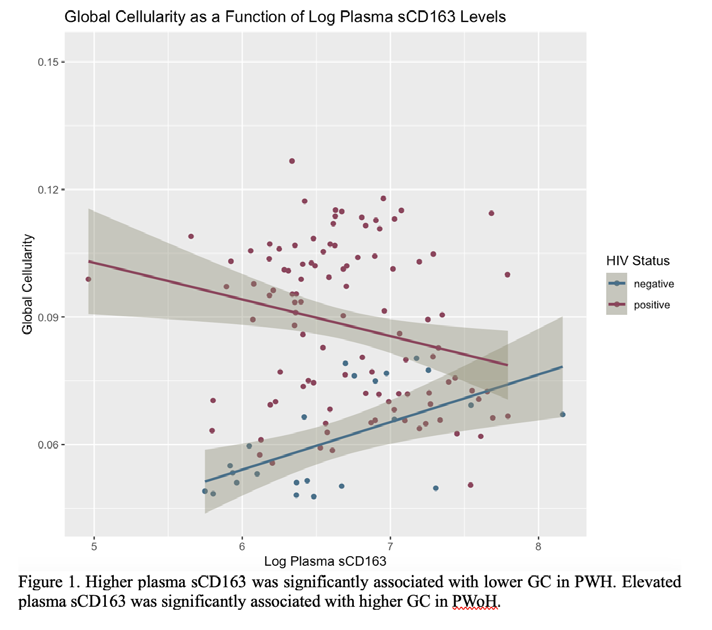
593. The Effects of Depression and Antidepressants on Cognition and Brain Volume in PWH and PWoH
Poster Abstracts
Page: 157
Sophie A. Sims, Beau Ances, Kalen J. Petersen, June Roman, Sarah Cooley
Background
A high rate of depression is seen in persons with HIV (PWH) and may contribute to cognitive impairment (CI) and reductions in brain volume. However, there are gaps in research on the relationship of depression severity and prescribed anti-depressants on CI and brain volumetrics in PWH. We compared the relationship between cognition and brain volume and severity of depression in PWH and persons without HIV (PWoH) and the potential effects of anti-depressants.
Methods
A total of 353 PWH (with an undetectable viral load of <200 copies/mL) and 302 PWoH, from a single site were evaluated. All participants completed a full cognitive battery, questionnaires, and structural magnetic resonance imaging (MRI). Brain volumes were evaluated using Freesurfer 5.3 with particular focus on structures commonly affected by depression: frontal lobe (FLV), amygdala, and hippocampus. Raw cognitive test scores were converted into demographically-adjusted Z-scores for five cognitive domains: Learning, Delayed Recall, Executive Functioning (EF), Psychomotor (PM), and Language. Depression was measured using the BDI-ii scale and anti-depressants were recorded at study visit.
Results
A greater proportion of the PWH were male, older, had less education, and were African American compared to PWoH (p’s <0.05). Overall, PWH had a significantly higher rate of depressive symptoms compared to PWoH (p<0.05). Within PWH, a higher BDI score was associated with worse performance in each of the cognitive domains except Delay Recall, while PWoH only had negative associations between BDI and EF or PM (Figure 1A). In a model that included all participants, neither FLV, amygdala, nor hippocampus volumes showed association with BDI scores. In general, a greater proportion of depressed PWH were on anti-depressants medications compared to depressed PWoH (p<0.05). Those PWH on anti-depressants had significantly smaller FLVs (Figure 1B). There was no effect of anti-depressants on cognitive performance in PWH.
Conclusions
PWH have a higher prevalence of depressive symptoms compared to PWoH. Those PWH with higher depression scores had worse cognitive performance and smaller FLV. Within PWH, a higher proportion of PWH who were depressed were on anti-depressants. Furthermore, PWH who were depressed and on antidepressants had significantly smaller brain volumes but not cognitive performance. This data highlights a need for higher attention to depression and depression medications due to their negative effects on brain volumes.
The figure, table, or graphic for this abstract has been removed.
594. Analyzing Neuroanatomical Heterogeneity in HIV-Associated Cognitive Impairment
Poster Abstracts
Page: 157
Audrey Chun, Sarah Cooley, Gordon Zhaoqi An, Beau Ances, Aristeidis Sotiras
Background
Central Nervous System (CNS) complications among people living with HIV (PWH) are common, but treatments remain elusive, likely due to underlying heterogeneity. Here, we aim to characterize neurobiological heterogeneity in PWH by leveraging machine learning and neuroimaging data in a large, well-characterized cohort.
Methods
We analyzed structural Magnetic Resonance Imaging (sMRI) data from 610 participants: 244 persons without HIV (PWoH) and 366 PWH. Freesurfer-derived region of interest (ROI) volumes were input to a machine learning technique termed HYDRA (Heterogeneity through Discriminative Analysis) to identify homogeneous patient subgroups. HYDRA clusters cases based on differences from controls, accounting for confounders such as age, sex, and race. The optimal clustering solution was determined by varying the number of clusters from 2 to 8 over 100 realizations of 10-fold cross-validation. The solution with the highest adjusted Rand index (ARI) was selected for further analysis. We then examined subtype differences in demographics, clinical measures, cognition, and imaging features (i.e., ROI volumes, resting state functional connectivity (RSFC), and cortical thickness). Demographic differences were assessed with analysis of variance and t-tests. Clinical, cognitive, and imaging differences were assessed using regression, controlling for age, sex, and race. Global Deficit Scores (GDS) were calculated by averaging cognitive domain deficit scores.
Results
We identified 3 reproducible subtypes (ARI=0.42): Cluster 1 (N=103; 78.6% male), Cluster 2 (N=93; 78.5% male) and Cluster 3 (N=170; 76.5% male). Cluster 1 displayed atrophy in the lateral occipital and paracentral regions, with increased corpus callosum volume (p<0.0001) compared to PWoH. Cluster 2 had widespread cortical volumetric increases, while Cluster 3 exhibited widespread cortical and subcortical atrophy and enlarged ventricles. Similar patterns were observed in cortical thickness. Cluster 3 had significantly reduced RSFC within the dorsal attention network compared to Cluster 2. Importantly, clusters differed in clinical and cognitive aspects. PWH in Cluster 2 had a significantly lower nadir CD4 count, while Cluster 3 had the highest viral load, lowest psychomotor speed, and highest (worst) GDS.
Conclusions
The identification of neurobiologically grounded biotypes of PWH may facilitate clinical trial enrichment and stratification, as well as uncover actionable features to guide development of targeted treatments.
The figure, table, or graphic for this abstract has been removed.
595. Preliminary Analysis of Longitudinal Synaptic Density Change in Virally Suppressed People With HIV
Poster Abstracts
Pages: 157-158
Phillip Chan, Nakul Raval, Mika Naganawa, Jennifer Chiarella, Allison Nelson, Henry Huang, Lindsay S. McAlpine, Shelli Farhadian, Richard Carson, Ansel Hillmer, Serena Spudich
Background
Cerebral synaptic degeneration is a key pathological feature of cognitive impairment in people with HIV (PWH) on antiretroviral therapy (ART). Synaptic vesicle protein 2A (SV2A) positron emission tomography (PET) can non-invasively assess in vivo synaptic density (SD). In a prior cross-sectional study, PWH on stable ART showed lower SV2A binding and thus lower SD in multiple grey matter (GM) regions of interest (ROIs) compared to people without HIV (PWoH). This preliminary analysis examines longitudinal SD changes in the PWH group of that study.
Methods
PWH on suppressive ART underwent SV2A PET with [11C]UCB-J ligand, 2.7 (IQR 2.6-2.9) years apart, using a Siemens HRRT scanner. SD was determined by the non-displaceable binding potential (BPND) of [11C]UCB-J in GM ROIs, using the simplified reference tissue model 2 (SRTM2). The centrum semiovale and frontostriatothalamic area (FST) were used as the reference tissue and primary ROI. Longitudinal BPND change (∆BPND) at the ROIs, defined by the fractional change between the two scans (i.e., (2nd BPND – 1st BPND) / 1st BPND), and its potential clinical correlates, were analysed using non-parametric tests.
Results
Participants included 8 PWH (all male, median age 56 (IQR 53-59) years) who have been on 22 (IQR 11-24) years of ART. At the 1st scan, their CD4+ and CD8+ T-cell counts were 631 (IQR 412-831) and 576 (IQR 442-840) cells/mm3, respectively. Median BPND in the FST declined between the two scans (∆BPND -11 (IQR -26 to -4)%, p=0.012), as well as in other GM ROIs including frontal, occipital, hippocampus, pallidum, and cerebellum (p≤0.036), with a trend in parietal and temporal GM (p=0.069). The median ∆BPND across ROIs ranged from -7% in the parietal and temporal cortices to -18% in the pallidum (Table). In univariate analysis, CD4+ & CD8+ T-cell counts, CD4/CD8 ratio, duration of HIV and ART, body mass index, education years, smoking, and substance or alcohol use disorder at the 1st scan were not associated with ∆BPND in FST. Lower CD4/CD8 ratio was associated with greater BPND decline in hippocampus (p=0.028, r=0.76) and was consistently associated with a trend of greater BPND decline in all GM ROIs.
Conclusions
In this preliminary analysis of 8 PWH, a significant and widespread decline in BPND was observed in GM ROIs over 2.7 years despite suppressive ART. A larger sample size, plus a longitudinal analysis of PWoH, cognitive assessments and neuronal injury markers will further validate and help understand the nature of BPND reduction.
Table 1.
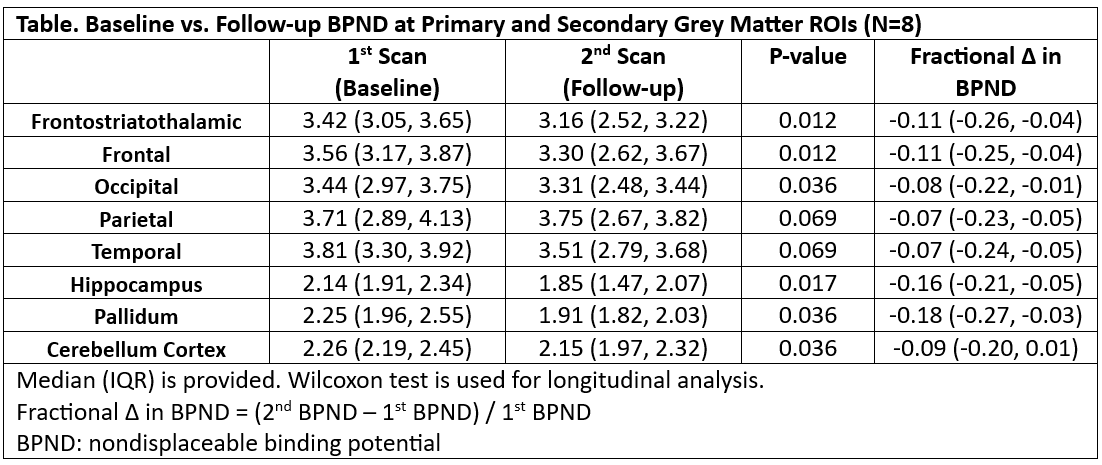
596. Cannabis Use Is Associated With Reduced Brain Integrity in Persons With HIV
Poster Abstracts
Page: 158
Sarah Cooley1, Patricia Reid1, June Roman1, Kalen J. Petersen1, Robert Paul2, Jodi Gilman3, Tricia Burdo4, Beau Ances1
Background
Cannabis (CB) use is increasing nationwide due to legal changes and commercialization. People with HIV (PWH) are more likely to use CB versus people without HIV (PWoH). Data on the effects of CB use on brain structure and cognition in PWH are mixed, with few studies including measures of structural brain integrity.
Methods
In a 2x2 design, participants were classified as CB user (CB+; PWH n=49;PWoH n=37) or non-user (CB-; PWH n=38;PWoH n=49) based on self-report (CB+=average of ≥3 days/week for past ≥12 months; CB-=no use ever, or <10 times total). Participants completed questionnaires assessing lifetime and recent (past 30 days) CB use, cognitive testing, a urine sample to measure metabolites of CB, and a magnetic resonance imaging scan to get regional brain volumes and cortical thickness (CT). Effects of HIV status and CB use, and their interaction, were assessed for cognition, brain volumes, and CT. Regression analyses assessed relationships between lifetime (LT) or recent use, urine metabolites, cognition, and imaging metrics in PWH compared to PWoH. Analyses were adjusted for age, sex, race, education, and other substance use.
Results
PWoH/CB- were younger, more educated, and had less LT use of alcohol and tobacco compared to other groups. CB use amount, duration, and frequency did not differ between PWH/CB+ and PWoH/CB+. Frontal lobe volume was significantly smaller in both CB+ groups compared to CB- (p=.01). HIV and CB significantly interacted in the frontal lobe (Figure 1), temporal lobe, cingulate, and global CT; CB use was associated with cortical thinning in PWH but not PWoH (all p<.01). Regression analyses indicated that greater LT CB use associated with worse delayed recall across all participants (p=.02); smaller frontal, temporal, hippocampal and gray matter volumes in only PWH; and globally reduced CT in only PWH (p<.05). Greater recent use associated with reduced volume and CT in multiple cortical regions, particularly in the frontal lobe, in only PWH (p-values<.05). Higher urine levels of THC-COO-gluc associated with reduced frontal volumes for all participants (p=.03).
Conclusions
LT and recent CB use were detrimental to structural brain integrity, particularly in frontal and temporal regions, with greater changes observed in PWH compared to PWoH. While recent CB use did not impact cognitive performance, greater LT use was associated with worse recall regardless of HIV status. PWH should be cautioned about the potential long-term effects of CB use on brain health.
Figure 1.
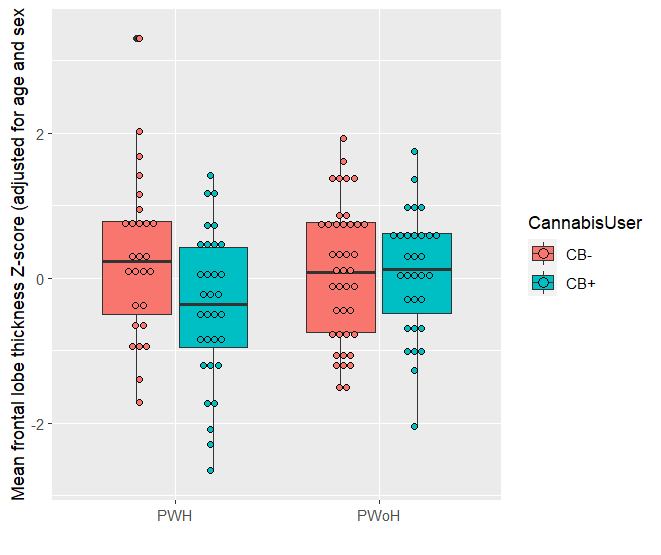
597. Inflammatory Biomarker Profiling to Predict Neuroinflammation and Depression in Adolescents With HIV
Poster Abstracts
Page: 158
Shalena Naidoo1, Arish Mudra Rakshasa-Loots2, Kaylee van Wyhe1, Frances Robertson3, Ernesta Meintjes3, Mark Cotton4, Barbara Laughton1, Richard Glashoff1
Background
Despite early antiretroviral therapy (ART), individuals with perinatally acquired HIV often show neuroinflammation and a heightened risk of depression as they approach early adulthood. Longitudinal monitoring of inflammatory markers may provide insights into these outcomes, aiding in the prediction of neuroinflammatory processes and mental health risks. We examined these associations longitudinally in cohorts from birth to early adulthood.
Methods
Thirty-nine adolescents with HIV (56% female) from the Children with HIV Early Antiretroviral Therapy (CHER) trial were included. The median age was 16 years (IQR: 15–16), with 89.4% achieving virological suppression. Depression was assessed using the nine-item Patient Health Questionnaire (PHQ-9). Magnetic resonance spectroscopy (MRS) measured brain metabolites (choline, myo-inositol) in the basal ganglia (BG), midfrontal gray matter (MFGM), and peritrigonal white matter (PWM). Plasma immune biomarkers (41 total) were measured at six time points: pre-ART, 1, 2, 3-4, 4-5 years post-initiation, and at 8 years. A subset was also assessed for integrase cell-associated HIV-1 DNA (iCAD), a marker of HIV-1 persistence. Correlations between biomarkers, brain metabolites, and depression scores were explored using Pearson and Spearman correlations.
Results
Pre-ART hsCRP levels positively correlated with depression scores in adolescence (r = 0.56, p < 0.01). One year post-ART, MCP-1 (CCL2) (r = -0.65, p=0.01), IL-2 (r = -0.62, p=0.02) negatively correlated with depression, while CD4 levels showed a positive correlation (r = 0.59, p=0.03). At two years, sCD163 (r = -0.57, p=0.04) and TGF-β2 (r = 0.63, p=0.02) correlated significantly, and RANTES/CCL5 (r = -0.93, p=0.02) at 4-5 years. iCAD levels correlated with YKL-40 at 16 years (r = 0.91, p=0.03). Brain metabolites pre-ART and neuroimaging at 16 years revealed Choline in the BG positively correlating with IL-17F, TNF-β, and MFGM choline. CD40L, FGF showed positive, while IL-18 and IL-8/CXCL8 showed negative relationships with immune markers. Myo-inositol exhibited similar complex associations across brain regions.
Conclusions
Our findings underscore a dynamic interaction between immune biomarkers and brain metabolites over time, linking inflammation to depression in adolescents with perinatal HIV. Early hsCRP was notably predictive of depression risk at 16 years. Further investigations, including cerebrospinal fluid biomarker analysis and advanced multi-parameter predictive models, are warranted.
598. No Decline in CSF or Plasma Neurofilament Light Chain Levels Post-Early ART Initiation
Poster Abstracts
Page: 159
Nametso Kelentse1, Yunshan Xu1, Yanhong Deng1, Jennifer Chiarella1, Allison Grubman1, Sebastian Romero1, Shelli Farhadian1, Richard W. Price2, Serena Spudich1
Background
Signs of CNS injury in PWH can be detected as early as primary HIV infection (PHI = lab-confirmed HIV acquisition <12 months) prior to ART. It is unknown whether neuronal injury is ongoing during early untreated HIV, and/ or declines post-ART. In a longitudinal CNS study of participants enrolled in PHI, we modeled longitudinal trajectories of CSF and plasma neurofilament light chain (NfL), a sensitive biomarker of active neuronal damage, and examined associations with lab and neuropsychological (NP) parameters in early infection.
Methods
NfL concentrations were measured using single molecule array (SIMOA) assay in longitudinal CSF and plasma samples from the observational PISCES PHI study (2004-2014, San Francisco), in which some participants chose to delay ART. Linear-mixed models were employed to determine CSF and plasma NfL trajectories pre- and post-ART, adjusting for longitudinal HIV RNA levels and baseline age. Associations were assessed in pre- and post-ART longitudinal NfL levels between CSF and blood, and parameters including age, CSF viral load (VL), and NPZ-11, a total summed z-score from an 11 test NP battery done at each visit.
Results
At baseline PHI participants (n=42, 100% male) were median 39 years of age (IQR:31-46) and had estimated duration of infection 126 (75-184) days; 97.6% were ART-naïve. The 166 CSF and 208 plasma samples assayed reflected data from >2 (range:1-8) visits pre- and post-ART with >6 months follow-up intervals. 98% of participants had suppressed plasma VL post-ART. Overall CSF NfL increased with age (p=0.003) while plasma NfL increased with both age and plasma VL (p=0.004 and p=0.019). Plasma NfL strongly correlated with CSF NfL (p=0.002). CSF NfL tended to increase pre-ART, but this was not statistically significant (slope=0.02, p=0.44). There was no significant change in CSF NfL post-ART, nor difference between these pre- and post-ART slopes (see Figure). No significant changes in NfL levels were observed in plasma. CSF and plasma NfL levels did not associate with NPZ-11 scores pre-ART, while plasma NfL associated with a 5.1 decrease in NPZ-11 score (p<0.001) post-ART.
Conclusions
In this longitudinal data from a PHI cohort, CSF NfL did not decline over time either pre- or post- ART. These findings suggest the presence of ongoing neuronal injury throughout early infection. Further studies with longer follow-up are needed to understand the clinical significance of neuronal injury observed in PWH in early infection.
The figure, table, or graphic for this abstract has been removed.
599. Polypharmacy Is Associated With Neuronal Injury in PWH
Poster Abstracts
Page: 159
Priya Kosana1, Allison Grubman2, Kunling Wu3, Katherine Tassiopoulos3, Qing Ma4, Scott L. Letendre5, Kristine M. Erlandson6, Shelli Farhadian2, the ACTG A5322 (HAILO) Study Team
Background
Polypharmacy, or the use of five or more non-ART prescription medications, promote neurologic disorders and geriatric syndromes. However, it is unknown if this is mediated by neuronal damage incurred by multiple medications, by inflammation, or by high comorbidity burden necessitating the use of multiple medications. To better understand how polypharmacy influences neurologic disorder in people with HIV (PWH) we compared polypharmacy, biomarkers of neuronal injury and inflammation, and gait speed and recurrent falls.
Methods
Data and specimens from 600 PWH of the longitudinal AIDS Clinical Trials Group (ACTG) A5322 (HAILO) study were included. Inclusion criteria were plasma HIV RNA below 200 cps/mL at study entry. Neurofilament light chain (NfL) levels were quantified using a single-molecule array assay in duplicate. Neopterin was quantified by ELISA and soluble CD14 (sCD14) was assessed using a bead-based assay (Eve Tech). Multivariable logistic regression analysis was utilized to assess the relationship between polypharmacy and NfL, sCD14, and neopterin (biomarkers of monocyte/microglial cell activation). All biomarkers were analyzed as continuous variables.
Results
Six hundred HAILO participants were included, with median age of 54 years (range 40 to 78); 81% were male sex, 33% were Black Non-Hispanic race, 20% were Hispanic, and 39% with polypharmacy. Higher NfL was associated with male sex (OR 1.18 [1.06, 1.31]), older age (OR 1.52 [1.16, 2.01]), and comorbidity burden (OR for 2 comorbidities: 1.3 [1.13, 1.48]; OR for 3 comorbidities: 1.96 [1.61, 2.39]; OR for 4 comorbidities: 3.23 [2.17, 4.80]). Analyzed comorbidities are CVD, T2 diabetes mellitus, liver disease, kidney disease, and peripheral neuropathy. In multivariable analysis, after adjusting for age, sex, and comorbidity burden, polypharmacy had a modest but significant association with elevated plasma NfL (OR 1.16 [ 1.07, 1.26]), but not with sCD14 or neopterin. Elevated plasma NfL (OR 1.24 [1.05, 1.46]) and plasma sCD14 (OR 1.11 [1.01, 1.22] were associated with recurrent falls (more than one fall in 6 months), but not with slow gait speed.
Conclusions
In older PWH, both polypharmacy and recurrent falls associate with elevated levels of NfL after accounting for comorbidities that could influence the outcomes. These results support other data that polypharmacy contributes to neurologic disorders in older PWH. Medication management may improve brain health and geriatric syndromes in PWH.
Table 1.
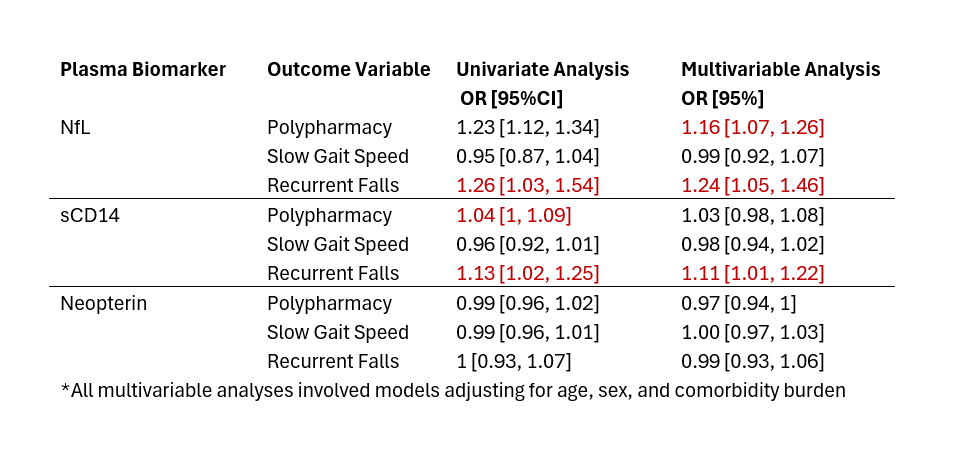
600. Plasma CNS Tissue Markers in Heavily Treatment-Experienced PWH in the PRESTIGIO Registry
Poster Abstracts
Pages: 159-160
Andrea Calcagno1, Martina Strano2, Riccardo Lolatto3, Riccardo Vercesi2, Alessandra Mandelli4, Miriam Antonucci5, Vincenzo Spagnuolo3, Tommaso Clemente3, Daniela Francisci6, Giovanni Cenderello7, Ornella Schiopppa8, Laura Comi9, Roberto Furlan4, Antonella Castagna3, Paola Cinque2, the PRESTIGIO Study Group
Background
Heavily treatment-experienced (HTE) persons with HIV (PWH) are characterized by long infection and treatment history, resistant viruses, and a significant burden of concomitant diseases. Since these features may be associated with HIV replication in the Central Nervous System (CNS), this study aimed to assess plasma CNS tissue markers in HTE versus controls.
Methods
HTE cases were selected from the PRESTIGIO registry (Italian multicenter cohort enrolling PWH with documented four-class drug resistance) and stratified according to HIV RNA below (VS) or above 50 c/mL (VF) in their first sample in 2021-2023. Controls were consecutively treated > 50-year-old PWH with VS. PWH with ongoing CNS disorders were excluded. Plasma samples were analyzed by SIngle MOlecule Array (SIMOA SR-X, Quanterix Corp., Boston, MA, USA) for neuronal damage markers (neurofilament-light chain, NFL and total Tau protein), astrocyte activation (Glial Fibrillary Acidic Protein, GFAP) and ubiquitin-proteasome involvement (Ubiquitin C-terminal Hydrolase, UCH-L1).
Results
We included 84 controls, 106 HTE/VS and 32 HTE/VF (Table). NFL, tau and GFAP levels were significantly lower in HTE than in controls, with significant correlations between the four markers (all p<.001). Higher age correlated to higher NFL (p<.001), GFAP (p<.001) and UCH-L1 (p=.040); male sex with lower GFAP (p=.018) and tau (p<.001); and HIV acquired at birth with lower GFAP (p=.012). In HTE, lower tau was associated with fostemsavir (p=.049) and doravirine use (p=.037) and lower GFAP with darunavir (p=.009). In HTE/ VF plasma HIV RNA inversely correlated to NFL (p=.048). Multivariate linear regression, corrected for age, sex, study group, body mass index (BMI) and significant variables at bivariate analyses, was performed to identify predictors of high levels of each marker. BMI (p=.040, 95%CI 0.045-1.814) and GFAP (p<.001; 95%CI 0.057-0.181) were independent predictors of NFL; CD4 nadir (p=.002; 95%CI 0.001-0.003), current CD4 (p=.009; 95%CI -0.002-0.000) and male sex (p=0.003; -1.199-0.255) of tau; age (p<.001; 95%CI 3.634-6.015), BMI (p=.009; 95%CI -4.904-0.704), male sex (p=.011; 95%CI -40.852-5.336) and HIV acquisition at birth (p<.001; 95%CI 36.643-135.900) of GFAP; and higher GFAP (p=.014, 95%CI 0.014-0.122) of UCH-L1.
Conclusions
Plasma CNS tissue marker levels do not support higher CNS injury risk in HTE-PWH. Several other variables seem independently and variably associated with higher levels of each marker.
The figure, table, or graphic for this abstract has been removed.
601. Comprehensive Study of CSF Fluid β2-Microglobulin, a Marker of CNS Immune Activation in HIV
Poster Abstracts
Page: 160
Birgitta Anesten1, Henrik Zetterberg1, Staffan Nilsson1, Magnus Gisslén1, Aylin Yilmaz2
Background
HIV-1 invades the central nervous system (CNS) during acute infection and thereafter persists in the CNS. This leads to chronic intrathecal immune activation which can be measured by various biomarkers in cerebrospinal fluid (CSF). β2-microglobulin (β2M) is a marker of cellular immune activation that has previously been studied in CSF in people with HIV (PWH), but mainly in smaller cohorts. The aim of this study was to describe CSF β2M levels in a large cohort of PWH.
Methods
In this retrospective study, we determined levels of β2M, neopterin, HIV RNA, albumin ratio, IgG index, CD4+ T cell count, neurofilament light chain protein (NfL), and leukocyte counts (WBC), in CSF and blood in PWH with and without ART. Participants were divided into seven groups: 1) neuroasymptomatic HIV (NA), 2) NA CSF escape, 3) symptomatic CSF escape, 4) secondary CSF escape, 5) HIV-associated dementia (HAD), 6) opportunistic CNS infections (CNS OI), and 7) elite controllers.
Results
We included 638 individuals: NA (N = 556); NA CSF escape (N = 33); symptomatic CSF escape (N = 4); secondary CSF escape (N = 5); HAD (N =16); CNS OI (N = 18); and elite controllers (N = 6). In addition, 59 HIV negative controls were included. Highest CSF β2M levels were found in HAD and symptomatic CSF escape (figure 1). In 112 longitudinally followed NA participants, increased CSF β2M levels (90%) were found at baseline, compared with 96% for CSF neopterin. After initiation of ART CSF β2M levels decreased by 9% per month and CSF neopterin with 16%. Still, 68% had CSF β2M and 80% had CSF neopterin levels above the reference values after six months.
Conclusions
In this extensive cohort of PWH with various stages of disease, CSF β2M was shown to be a robust marker of intrathecal inflammation, with the highest levels found in HAD and in symptomatic CSF escape. ART decreases β2M levels, but, 68% still had increased levels after six months, despite having achieved viral suppression.
Figure 1.
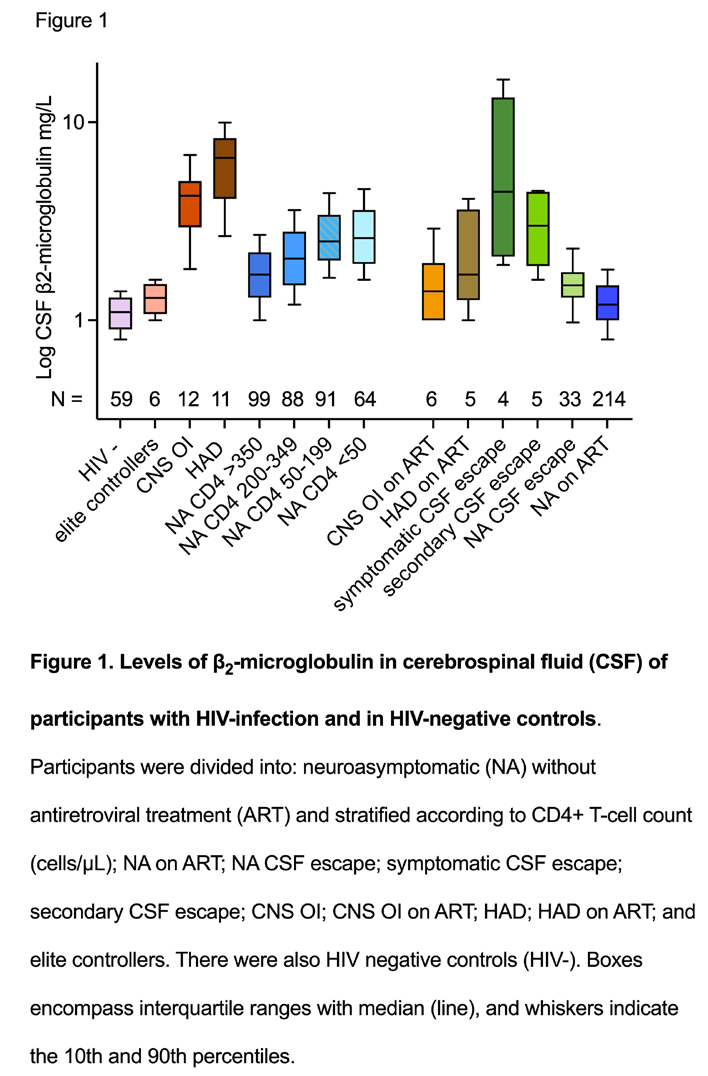
602. Higher suPAR Relates to Domain-Specific Cognitive Function in Virally Suppressed Women With HIV
Poster Abstracts
Page: 160
Hemil Gonzalez1, Eran F. Shorer2, Raha M. Dastgheyb3, Eunsil Hahm1, Yanxia Cao1, Kathleen M. Weber4, Leah H. Rubin5, Audrey L. French6, the MACS/WIHS Combined Cohort Study (MWCCS)
Background
Chronic inflammation plays a role in cognitive function in people with HIV (PWH). Soluble Urokinase Plasminogen Activator (suPAR) is a biomarker of chronic inflammation previously associated with cognitive impairment in a small study of men with HIV. Our study aimed to examine whether elevated suPAR levels are associated with domain-specific cognitive function in virally suppressed women with HIV (VS-WWH), potentially providing a pre-clinical indicator for cognitive complications.
Methods
suPAR levels were assessed in duplicate via ELISA (ViroGates; Denmark) from stored (-80C) plasma in a sample of 188 VS-WWH (all participants had VL <200 copies/mL, 50% with impairment in ≥2 cognitive domains) participating in the Chicago Cook County site of the MACS-WIHS Combined Cohort study. Blood samples were collected between November 2004 and September 2017 at either the same visit as the cognitive assessment for 179 (95%) participants or from the visit immediately prior (within 90 days of assessment) from the remainder. Participants completed biennial cognitive testing. Cognitive domains included attention, executive function, processing speed, verbal memory, verbal learning, verbal fluency, and motor function. Domain-specific cognitive impairment was defined as demographically adjusted T-scores ≤40. Multivariable linear regression models assessed associations between log-transformed suPAR and cognitive domain T-scores adjusting for age.
Results
VS-WWH had a mean age of 52, a mean CD4 of 693, 72% were Black, and 67% had completed high school education. The mean suPAR level was 3.23 ng/mL (variation coefficient 56.8%). Higher log suPAR levels were associated with poorer processing speed (β=-0.18, 95%CI -0.31, -0.04, P=0.01), verbal learning (β=-0.15, 95%CI -0.29, -0.02, P=0.029), verbal fluency (β=-0.14, 95%CI -0.27, -0.01, P=0.038), and motor function (β=-0.13, 95%CI -0.26, -0.00, P=0.045)(see Table). There were no associations with other cognitive domains.
Conclusions
These findings suggest that suPAR offers potential as an indirect biomarker for systemic chronic inflammation, verbal abilities, and psychomotor speed in this population. Although the effect sizes were small, further exploration of this molecule is warranted as it may be helpful as part of a larger pre-clinical predictive model of cognitive changes in this population. Elucidating the mechanisms of suPAR production in this context will contribute to our overall understanding of its applicability.
Table 1.
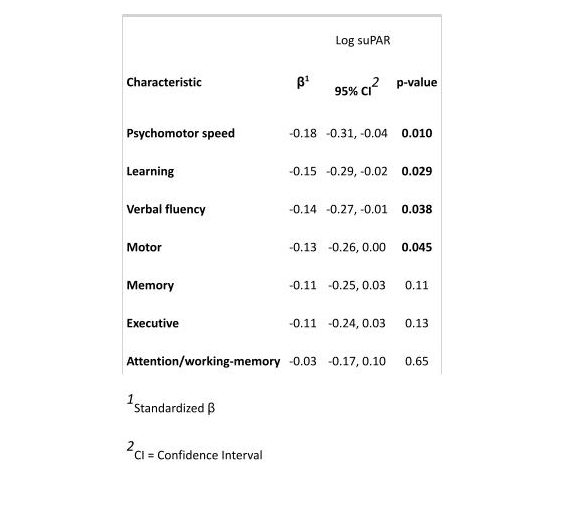
603. Cognitive Intra-Individual Variability Predicts IADL Function in the Women’s Interagency HIV Study
Poster Abstracts
Page: 161
David E. Vance1, Yanxun Xu2, Raha M. Dastgheyb3, Pauline Maki4, Jiayue Zhang2, Gayle Springer5, Kathryn Anastos6, Deborah Gustafson7, Kathleen M. Weber8, Monica M. Diaz9, Mirjam-Colette Kempf1, Deborah Konkle-Parker10, Karl Goodkin11, Matthew Wright12, Leah H. Rubin5, the MACS/WIHS Combined Cohort Study (MWCCS)
Background
Cognitive intra-individual variability (IIV) refers to the variation observed in cognitive performance when various cognitive tests are administered within the same person (i.e., dispersion). In people with HIV, greater cognitive IIV has been associated with poorer cognitive performance and decline over time, cortical brain atrophy, and increased mortality risk. In this study, we calculated cognitive IIV from cognitive test performance in women with HIV (WWH) and without HIV (WWoH) and examined its relationship to everyday functioning items (i.e., cooking).
Methods
This study examined the association between cognitive IIV and self-reported everyday functioning among 1,086 (WWH) and 494 socio-demographically similar WWoH. Objective cognitive performance across 7 domains and the self-rated modified Lawton and Brody scale of Instrumental Activities of Daily Living (IADL) were assessed among participants of the Women’s Interagency HIV Study. Two types of cognitive IIV were calculated by taking the standard deviation across 7 cognitive domains to calculate dispersion: 1) intra-individual standard deviation (denoted as sdIIV) and 2) coefficient of variation (denoted as covIIV). To account for the longitudinal nature of the data, generalized linear mixed effect models were conducted to examine the associations between the dispersion coefficient of cognitive IIV (predictor (sdIIV or covIV)) and functional status outcomes (item level scores). Models were constructed in the overall sample (WWH + WWoH), WWH only, virally suppressed (VS)-WWH, and WWoH.
Results
sdIIV and covIIV were not associated with any of the IADL items among WWoH but were for WWH and VS-WWH. At p<.05 (see Table), WWH cognitive IIV was predictive of poorer functional performance on 10 IADL items with covIIV and 5 items with sdIIV (indicated with asterisks; money and bills, buying groceries, work, getting where you need to go, using the phone, home repairs*, dressing*, laundry*, taking/keeping track of medications*, taking care of children*).
Conclusions
Several findings emerged. This study found that cognitive IIV was slightly greater among WWH compared to WWoH and predictive of everyday functioning. This study is unique in comparing two different mathematical formulae of cognitive IIV, indicating covIIV to be more sensitive of predicting impairment in various IADLs. This means cognitive IIV, especially covIIV, may be a predictive tool for other HIV-related behavioral phenomena.
Table 1.
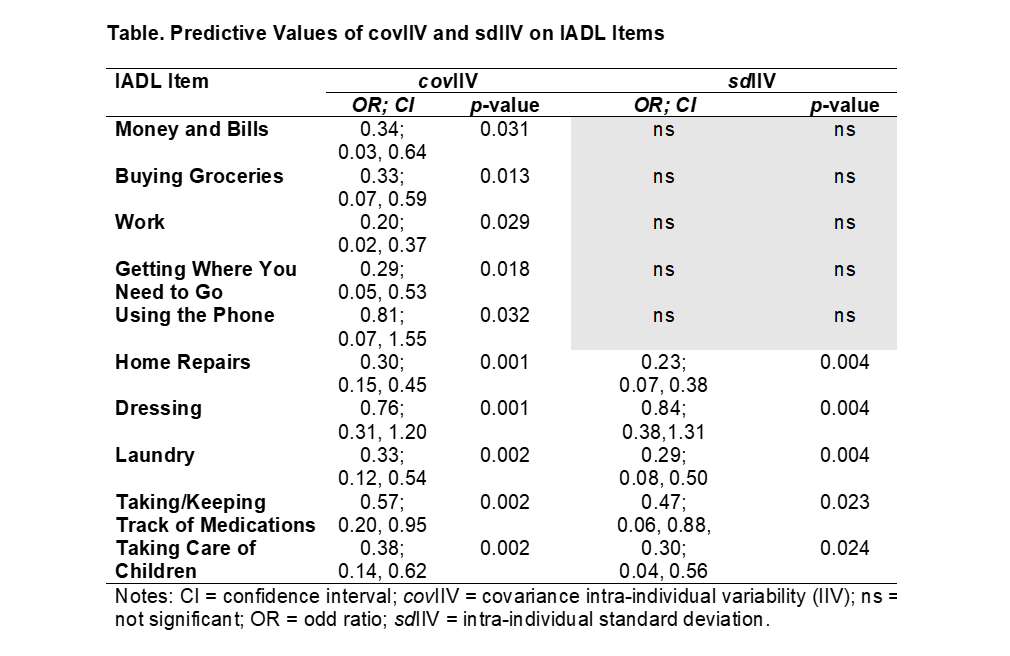
604. Influence of an Exercise Intervention or Dynamic Stretching on Cognition and Gut Microbiome in PWH
Poster Abstracts
Page: 161
Sarah Cooley, Aura Ferreiro, Brittany Nelson, Kimberley Sukhum, June Roman, Chistopher Sorensen, Phillip Tarr, Gautam Dantas, Beau Ances
Background
Gut microbiome (GM) composition and diversity is linked to cognitive performance in persons without HIV (PWoH) and can be modified with exercise. These relationships have not been examined in persons with HIV (PWH), despite PWH exhibiting a higher rate of sedentary behavior and cognitive deficits. This study examines cross-sectional relationships between physical fitness, cognition and GM; and changes in these measures after completion of a six-month aerobic and resistance exercise (EXS) or dynamic stretching (DS) intervention in PWH aged ≥40.
Methods
62 previously-sedentary PWH (77% male) completed assessments of physical fitness (cardiorespiratory testing, one-week actigraphy to measure time spent in moderate-to-vigorous physical activity [MVPA], six-minute walk test [SMWT]), cognitive testing, and a stool sample before being randomized to six months of EXS(n=44) or DS(n=18). Assessments were repeated after intervention completion. Principal coordinates analysis (PCoA) on the UniFrac distances of stool samples generated two profiles of GM composition (PCoA1, PCoA2). Faith’s phylogenetic diversity of GM was also determined. Regression analyses adjusted for sex examined baseline relationships between fitness, cognition, and GM measures. Mixed-effects linear regression models examined longitudinal change in outcomes by intervention group.
Results
No significant baseline relationships were observed between fitness measures and cognition (p’s>.05). However, greater time spent in MVPA significantly correlated with GM PCoA1 (p=.03), and better cardiorespiratory fitness associated with greater phylogenetic diversity (p=.03). PCoA1 correlated with learning and delayed recall (p’s<.05), while PCoA2 correlated with executive functioning (p=.02). Longitudinally, better SMWT, psychomotor speed, executive functioning, and global cognitive performance were observed for all participants. A significant longitudinal increase in phylogenetic diversity and change in GM composition was also observed for all participants, regardless of intervention group.
Conclusions
Baseline GM composition and diversity associated with cognitive performance and fitness. Longitudinally, both EXS and DS improved physical fitness, cognitive performance, and GM composition and diversity in previously sedentary PWH, indicating that even low-impact physical activities may be beneficial. This change in GM signifies its importance as a potential therapeutic target for enhancing cognitive function or slowing cognitive decline.
Table 1.
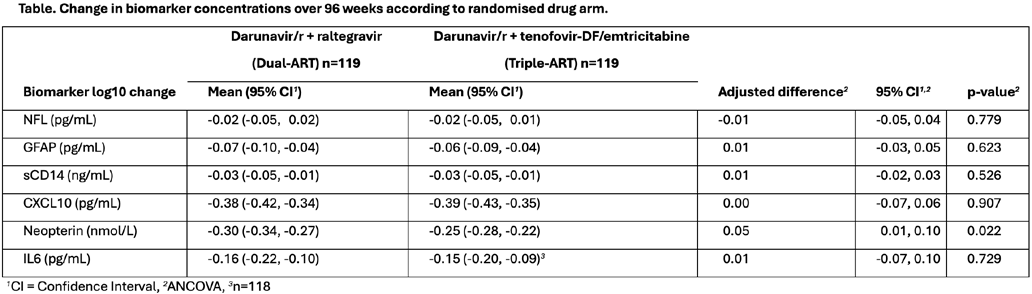
605. Longitudinal Changes in Neuronal Markers and Associations With ART Initiation and Cognitive Function
Poster Abstracts
Pages: 161-162
Merle Henderson1, Peter Dutey-Magni2, Wolfgang Stohr2, Alejandro Arenas-Pinto3, Amanda Heslegrave2, Henrik Zetterberg4, John Tregoning5, Andrea Calcagno6, Ab Babiker2, Alan Winston5
Background
Improvement in cognitive function is described in persons with HIV commencing ART for the first time. We assessed the impact of initiating either dual or triple ART on longitudinal changes in biomarkers of neuronal inflammation and injury, and their associations with cognitive function.
Methods
Biomarker concentrations were assessed at baseline (W0) and after 96 weeks (W96) in individuals randomised to commence darunavir/r and either tenofovir-DF/emtricitabine (triple-ART, n=119) or raltegravir (dual-ART, n=119) in a previously reported cognitive sub-study of NEAT-001/ANRS143. Plasma biomarkers assessed included neurofilament light protein (NfL), glial fibrillary acidic protein (GFAP), sCD14, CXCL10, neopterin and IL-6. Multivariable linear regression models, adjusted for age and sex, examined the association between W0 and W96 changes in biomarker concentration with baseline characteristics (CD4 count, composite cognitive test score (NPZ) across 7 domains, duration of known HIV, and smoking status) and randomised treatment arm (longitudinal analysis only).
Results
In 238 individuals median age was 38 (IQR 31, 46) years, 87% male and 83% of Caucasian ethnicity. Baseline median log10 HIV RNA was 4.73 (IQR 4.23, 5.11) copies/mL and CD4 count 350 (IQR 285, 412) cells/µL. At W96, most individuals had plasma HIV RNA <50 copies/mL (96% triple-ART, 91% dual-ART, p=0.06) and NPZ score increased by 0.15 (triple-ART) vs 0.27 (dual-ART) (p=0.80). At W0, greater concentrations of age-adjusted NfL, GFAP and CXCL10 were statistically significantly associated with lower CD4+ count (all p<0.01) but no other baseline characteristics. At W96 biomarker concentrations decreased (mean change log10 GFAP -0.07 pg/mL, IL-6 -0.15 pg/mL, CXCL10 -0.38 pg/mL, sCD14 -0.03 ng/mL, neopterin -0.28 nmol/L (all p<0.01), NfL -0.02 pg/mL (p=0.08)). A greater decline in neopterin concentration was observed in those randomised to dual-ART compared to triple-ART (mean change log10 -0.30 vs -0.25 nmol/L, respectively. p=0.022; Table). Biomarker changes were statistically significantly associated with CD4 increase (GFAP, CXCL10, sCD14, neopterin, NfL; p<0.002) but not NPZ-score.
Conclusions
Improvements in biomarkers of neuronal health following 2 years of ART were associated predominantly with improvements in CD4 count and partly by randomised drug arm, but not with cognitive function changes.
606. Single-Nucleus Multiomics Reveals Dysfunction in Multiple Glial Cell Types in Brain Tissue of PWH
Poster Abstracts
Page: 162
Kriti Agrawal, Junchen Yang, Jay S. Stanley, Chang Lu, Nicholas Jacobs, Haowei Wang, Declan Clarke, Le Zhang, Anita Huttner, Mark Gerstein, Yuval Kluger, Serena Spudich, the Y-SCORCH
Background
Central nervous system (CNS) dysfunction is a recognized complication in some people with HIV (PWH). As part of SCORCH (a large-scale, consortium-wide effort examining transcriptional and epigenetic alterations in the brains of PWH), we aim to identify key cell populations and pathways affected by HIV that may be targeted in therapies for HIV-associated CNS dysfunction in insular cortex (INS), prefrontal cortex (PFC), and ventral striatum (VST).
Methods
Nuclei were isolated from frozen post-mortem tissue from INS, PFC, and VST of 20 PWH and 13 donors without HIV (PWoH). We profiled 88 transcriptomes and 86 chromatin accessibility profiles of samples that passed quality control using 10x Genomics Single Cell Multiome ATAC+Gene Expression. Reference atlases were used to identify major cell types (Fig. A). We performed individual-level pseudobulk differential expression (DE) analysis between PWH and PWoH within cell types and regions using EdgeR. ATAC-seq data were processed using Signac for all cell types.
Results
PWH and PWoH donors were similar in age (median: 47 vs. 43 years) and gender (20% vs. 23% female). In total, we analyzed transcriptomes of 384,858 cells from PWH and 289,135 cells from PWoH. We identified granular neuronal and glial populations in both groups. Cross-regional DE analysis revealed significant changes in glial populations including oligodendrocytes (Oligo), astrocytes (Astro), and microglia (Micro) in all regions. In PWH Astro, we observed upregulation of complement activation genes (CFI,C4A,C1RL,C1R,C4B) indicative of reactive Astro. Relative to PWoH, there was an increase in the relative abundance of Astro in all three brain regions in PWH, but only the INS was significantly different. SERPINA3, a gene linked to poor prognosis in many neurological diseases, was upregulated in PWH Astro transcriptionally and epigenetically (Fig. B). Micro in PWH exhibited signatures of inflammatory responses and activation. Downregulated genes in PWH Astro, Micro, and Oligo were enriched in synaptic signaling and organization pathways, suggesting functional dysregulation of glial cells.
Conclusions
We observed substantial transcriptional and epigenetic alterations in multiple glial cell types, revealing broader glial dysfunction in PWH. The epigenetic nature of these changes helps to elucidate disease etiology and suggests potential targets for therapeutics to suppress these dysfunctional and activated glial cells.
The figure, table, or graphic for this abstract has been removed.
607. CSF Memory B Cells Exhibit Distinct Molecular Footprints in Treated PWH
Poster Abstracts
Page: 162
Paraskevas Filippidis1, Michael J. Corley2, Serena Spudich1, Meng Wang1, Jennifer Chiarella1, Allison Nelson1, Bibhuprasad Das1, Steven H. Kleinstein1, Shelli Farhadian1
Background
Neutralizing B cell responses are critical for sustained viral control in people with HIV (PWH). However, whether B cell alterations contribute to viral persistence in the central nervous system is unknown. To address this gap, we profiled the single B cell receptor (BCR) repertoire and transcriptomes in cerebrospinal fluid (CSF) and blood of PWH and people without HIV (PWoH) to examine B cell molecular phenotypes and trafficking in the context of antiretroviral therapy (ART).
Methods
We enrolled asymptomatic, virally suppressed PWH (n=7) and demographically matched PWoH (n=6) for single cell RNA and BCR-seq from paired CSF and peripheral blood mononuclear cells (PBMC), using 5’ V(D)J 10x Genomics. This “discovery set” comprised 102,313 CSF cells and 186,397 PBMC. We subsequently validated the single cell transcriptomic data by performing 10X single nucleus sequencing in a second, independent cohort of 6 PWH on suppressive ART and 5 PWoH, with features similar to the first cohort, comprising of 43,403 CSF nuclei and 76,974 PBMC nuclei.
Results
19,380 high quality B cells were included in the discovery set. These were sub-clustered into naive, atypical, memory B cells (MBC), and plasmablasts. Clonal diversity was similar between PWH and PWoH in both CSF and blood. Shared clonotypes between blood and CSF were detected in only 1/7 PWH and 2/6 PwoH, accounting for <1% of the total number of clonotypes in each individual. Both IgM and IgG MBC showed reduced V gene mutation frequencies in the blood of PWH compared to PWoH (1.74% v 3.97%, p=0.004 for IgM; 5.43% v 7.65%, p=0.004 for IgG), consistent with previous reports. However, IgG MBC exhibited a higher difference in mutation frequency across tissues (CSF minus blood) between PWH and PWoH (1.46% v -1.45%, p=0.008), suggesting potential antigen-driven BCR selection or altered B cell trafficking in the CSF of PWH. Differential gene expression in CSF revealed a distinct MBC transcriptional signature in PWH (Fig 1), with pathway analysis highlighting downregulation of antigen presentation and cytokine signaling. These transcriptomic changes were confirmed in a validation set of 10,711 B cell nuclei, where the top downregulated pathways in CSF MBC from PWH included MHC-I and MHC-II presentation, and interferon signaling.
Conclusions
Single cell BCR and RNA analyses suggest persistent immune alterations in MBC within the CSF of PWH. Further studies may elucidate the role of B cells in HIV CNS persistence and neuropathogenesis.
Figure 1.
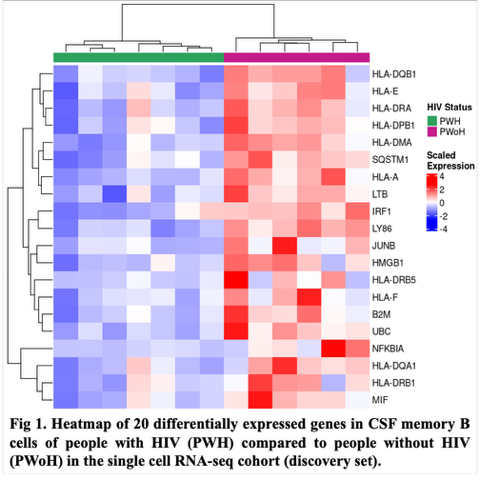
608. T-Cell Receptor Repertoire and Cognitive Performance in People With HIV
Poster Abstracts
Pages: 162-163
Mattia Trunfio1, Davey Smith1, Gemma Caballero1, Vanessa Gomez-Moreno1, Magali Porrachia1, Ben Gouaux1, David Moore1, Ronald Ellis2, Scott L. Letendre1, Antoine Chaillon1, Sara Gianella Weibel1
Background
The T cell receptor repertoire (TCR) plays a key role in immune surveillance and regulating inflammation. Alterations in TCR are linked to cognitive decline in Alzheimer's Disease. In animal models, TCR affects neuronal plasticity and memory through T helper 2-mediated responses. By disrupting immune homeostasis, HIV can affect TCR and cognition. We assessed whether TCR is involved in cognitive performance among PWH.
Methods
Bulk TCR sequencing (IMMUNOVerse TCR) and cell-associated HIV DNA (ddPCR) were performed on samples from 5 central nervous system (CNS) regions (basal ganglia BG, occipital cortex OC, frontal motor cortex FC, hippocampus HC, thoracic spinal cord SC) and peripheral blood mononuclear cells collected ≤6 hours post-mortem from 9 PWH enrolled in the Last Gift cohort. TCR data were analyzed using MIXCR for richness, diversity, and clonality. Cognitive function was assessed within a year of death. Associations between TCR, cognition, and HIV DNA were explored through generalized linear models adjusted for age, HIV RNA, CD4+ count and nadir. Bonferroni correction was applied.
Results
Participants were aged 65±8 years, with median CD4+ count 330 cells/µL, and 8/9 were white, male, with plasma HIV RNA<40 cp/mL. Cognitive assessment occurred within a median of 5 months of death. While HIV DNA and TCR richness/diversity did not differ across CNS regions, TCR clonality did (p=0.038): the highest clonality in SC and PBMCs and the lowest in FC. HIV DNA levels were not associated with TCR characteristics. Higher TCR richness/ diversity in FC, HC, OC, and SC was linked to poorer performance in learning, verbal, executive, and motor domains (adj.p<0.01 all). Higher TCR clonality in HC was associated with worse executive function (adj.p<0.01; Fig.1). No associations were found between TCR in the blood and cognitive performance. Higher HIV DNA correlated with slower processing speed (BG, HC, and OC) and poorer verbal function (HC), but also with improved executive and motor functions (FC, OC, and SC; Fig.1). Removing the single participant with detectable HIV RNA did not change the findings.
Conclusions
This is the first evidence of an interaction between TCR in the CNS and cognitive performance in PWH. The absence of associations between HIV reservoir and TCR, along with the different relationships of TCR and HIV DNA with cognition highlight the complexity of the CNS viroimmune environment and suggest drivers other than HIV behind the link of TCR with cognition (e.g., co-infections).
Figure 1.
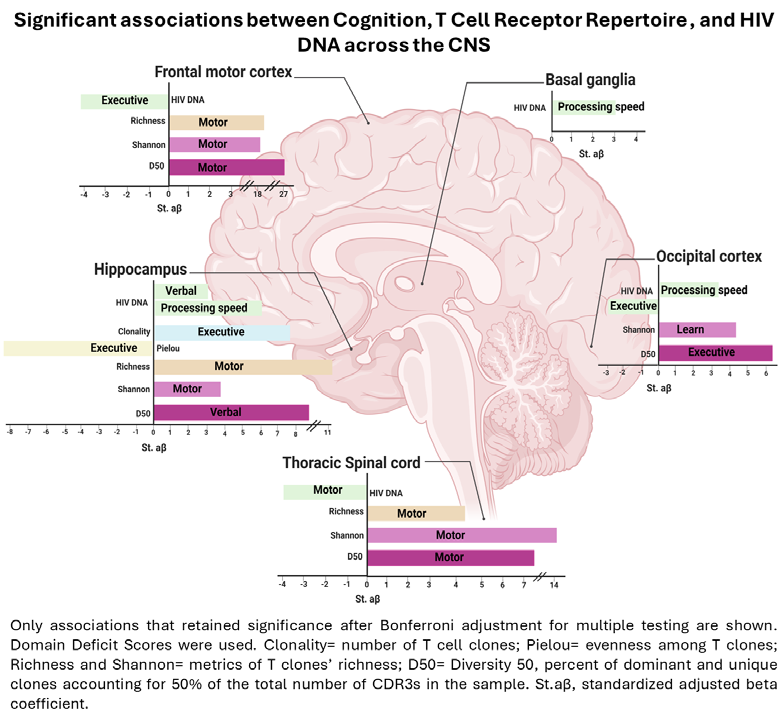
609. A Transcriptional Signature of Induced Neurons Differentiates PWH on cART From People Without HIV
Poster Abstracts
Page: 163
Philipp N. Ostermann1, Youjun Wu2, Scott A. Bowler1, Mohammad A. Siddiqui3, Alberto Herrera1, Mega Sidharta2, Kiran Ramnarine2, Samuel Martínez-Meza1, Leslie Ann St Bernard1, Douglas Nixon1, R. Brad Jones1, Masahiro Yamashita3, Lishomwa Ndhlovu1, Ting Zhou2, Teresa H. Evering1
Background
Neurocognitive impairment (NCI) is a prevalent and important co-morbidity in virologically suppressed people living with HIV (PWH), yet the underlying mechanisms remain elusive and effective treatments lacking. Given the limitations in models adequately replicating neuronal biology and injury in PWH, we explored the use of participant-derived directly induced neurons (iNs) for this purpose. iNs have been shown to retain age- and disease-related features of the donors, providing a unique opportunity to reveal novel aspects of neurodegenerative disorders. We hypothesized that the application of this system would allow us to determine potentially dysregulated genes in iNs derived from PWH compared to persons without HIV (PWOH).
Methods
Primary dermal fibroblasts were obtained from six PWH on suppressive cART (median age 53 years (range: 27 – 64); 83% Male; 50% White) and seven demographically matched PWOH (median age 55 years (range: 27 – 66); 71% Male; 57% White). Participant fibroblasts were transduced with two lentiviral vectors for the doxycycline-dependent expression of neuronal pioneer transcription factors NGN2, and ASCL1. Transdifferentiation into iNs was accomplished by treatment with doxycycline and a cocktail of small molecules. At day 21, live iNs were isolated by FACS sorting based on the neuronal marker PSA-NCAM. Neuronal identity was validated by immunocytochemistry and scRNA analysis. Bulk-RNAseq was performed to compare gene expression between iNs from PWH vs. PWOH.
Results
Transcriptomic analysis identified 29 (p-adj. < 0.05, log2fc ± 0.5) differentially expressed genes between iNs derived from PWH and PWOH. Of these, 16 genes were downregulated and 13 upregulated in PWH iNs (Fig 1). Protein-protein interaction network mapping suggests PWH iNs exhibit differences in extracellular matrix organization and synaptic transmission. Amongst our findings, IFI27 has previously been shown to be upregulated in the post-mortem brain samples of PWH compared to PWOH. In contrast is our novel finding that expression of the FOXL2NB-FOXL2-LINC01391 genome locus is reduced in PWH iNs and associated with the degree of NCI in the PWH cohort (p<0.05).
Conclusions
We have identified an iN gene signature of HIV through direct reprogramming of skin fibroblasts into neurons. Comprising 29 DEGs, this signature supports previous findings of HIV-1-related neuroinflammation while revealing additional, potentially novel mechanisms of NCI in PWH.
The figure, table, or graphic for this abstract has been removed.
610. Cerebrospinal Fluid Proteomic Patterns Vary With Neurobehavioral Characteristics
Poster Abstracts
Pages: 163-164
Scott L. Letendre1, Bin Tang1, Mattia Trunfio1, Donald R. Franklin2, Michael Potter2, Melanie Crescini2, Jennifer Iudicello2, Robert K. Heaton1, Ronald Ellis2, Patricia K. Riggs2
Background
Current classification methods of neurobehavioral (NB) disorders in people with HIV (PWH) do not reflect their underlying biology well. We compared cerebrospinal fluid (CSF) proteomics between current classification methods and novel, multidimensional NB phenotypes (NBPs) to determine their biological associations.
Methods
We assayed CSF from 286 virally suppressed participants with the Olink Target-96 Inflammation panel. 32 proteins had >75% of values below detection and were excluded. NB measures included global and domain deficit scores (GDS and DDS), Beck Depression Inventory (BDI)-II and subscales, and four NBPs derived from these features along with cognitive symptoms and daily functioning. NBP1: healthy, NBP2: depression-dominant, NBP3: unhealthy in all features, and NBP4: cognitive impairment-dominant. Analysis methods included linear regression, multiple testing correction (Benjamini-Hochberg), analysis of variance, Tukey highly significant difference test, and enrichment analysis such as pathway analysis.
Results
Cohort characteristics: mean age 45 years, 21% female sex, 46.5% Black, median CD4+ T-cells 473/µL. 44 proteins associated with at least 1 NB measure, with some in common and others distinct (the Figure shows a subset of 7). CD40 and MMP-10 were the most common across all measures. Recall and motor domains (but not others) associated with multiple proteins, while GDS associated with fewer. BDI-II affective subscale associated with 32 proteins, the most of all NB measures, and apathy with fewer. Total BDI-II and other subscales did not associate with any protein. Each NBP associated with at least one unique protein compared to the healthy NBP. NBP3 was the most distinct. Biological process ontology analysis identified T-cell activation, chemotaxis, and B-cell and monocyte activation as the most represented.
Conclusions
Cross-sectional analyses identified distinct profiles of CSF inflammation-related proteins for different NB characteristics. Overall, the most common biological pathways support the importance of persistent immune activation and migration across vascular barriers. Traditional composite variables (e.g., GDS, total BDI-II) had limited associations with inflammation, while associations with NBPs and subscale metrics were stronger. Current composite variables have value for clinical classification, but subscales and data-driven NBPs may better reflect biological mechanisms and may better support new therapeutic strategies.
Figure 1.
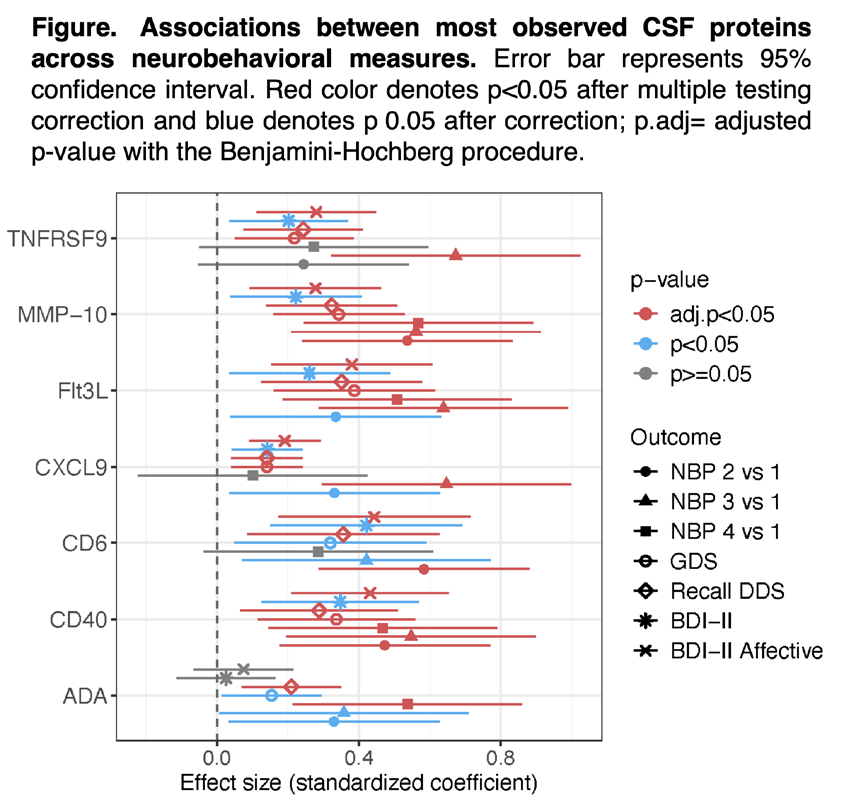
611. DNA Methylation Clocks Are Altered in Persons With Undetectable HIV and Correlate With Brain Aging
Poster Abstracts
Page: 164
Kalen J. Petersen1, Sarah Cooley1, Brittany Nelson1, Maurizio Caocci2, Tricia Burdo3, Beau Ances1
Background
DNA methylation (DNAm) clocks are quantitative markers of biological aging. The first-generation Horvath and Hannum clocks closely track actual age, second-generation clocks such as PhenoAge and GrimAge are sensitive to morbidity and mortality, and the third-generation DunedinPACE model estimates individual longitudinal “pace of aging.” Multiple studies have linked HIV infection with increased DNAm age; however, the clinical relevance of these clocks to brain health in virally suppressed persons with HIV (PWH) is unclear. We hypothesized that second-generation DNAm clocks would be significantly associated with HIV serostatus and would correlate with brain age acceleration (BAA), a machine learning model of overall brain health derived from structural MRI.
Methods
PWH and people without HIV (PWoH) underwent phlebotomy and 3-Tesla brain imaging. DNA was extracted from peripheral blood mononuclear cells, and DNAm levels were quantified using MethylationEPIC 2.0 microarrays (Illumina). The R packages EWAStools, minfi, FlowSorted.Blood and methylclock were used for quality control, normalization, cell type inference, and DNAm age calculation. DeepBrainNet was used to calculate BAA from MRI. Hypotheses were tested using multiple linear regression, with age, sex at birth, and blood cell proportions as co-variates.
Results
Participants included PWH (n=61; sex=39/22 M/F; 34/27 Afr. Amer./ White; age=51.7±11.1 yr.) and PWoH (n=50; 22/28 M/F; 28/20/2 A.A./W/ other; age=51.3±13.9 yr.). The Horvath and Hannum clocks were not different by serostatus (p=0.51, p=0.053). PhenoAge showed a 4.8-year increase in PWH (p=0.02; left panel), but GrimAge and DunedinPACE did not (p=0.82, p=0.16). A consensus clock averaging all models showed a 1.9-year increase in PWH (p=0.02). The Hannum, PhenoAge, and consensus clocks were positively associated with older brain-predicted age across serostatus (p=0.002, p=0.008, p=0.005; right panel).
Conclusions
These findings indicate that HIV infection is associated with increased DNAm age even in PWH with viral suppression. However, the Dunedin ‘pace of aging’ measure was not faster in these individuals, suggesting that biological aging is stabilized by antiviral therapy. Several DNAm clocks were correlated with older-appearing brain structure, suggesting that DNAm age reflects neurological health. More research is needed to understand the mechanisms linking altered DNAm in leukocytes to brain structural phenotypes, and potentially to neurocognitive impairment.
The figure, table, or graphic for this abstract has been removed.
612. Epigenetic Age Advancement Predicts Cognitive Performance in Older People With HIV
Poster Abstracts
Page: 164
Carrie Johnston1, Raha M. Dastgheyb2, Leah H. Rubin3, Eran F. Shorer4, Eugenia Siegler1, Alina Pang1, Marshall Glesby1, Michael J. Corley1
Background
Epigenetic studies have shown an accelerated epigenetic age phenotype in people with HIV (PWH). Accelerated epigenetic age has been linked to various disease outcomes including cognitive dysfunction. However, whether epigenetic age estimates predict cognitive measures in PWH remains understudied.
Methods
PWH age 50 and older were recruited at an urban academic medical. Participants provided a blood sample at the baseline visit between 2016-2019, and epigenetic age was calculated from dried blood spots using first, second, and third generation epigenetic clocks. Participants then completed a follow-up visit including cognitive testing between 2022-2023. Timed outcomes were log transformed and reverse scored, so higher scores equated to better performance. We conducted dimension reduction on the cognitive outcome measures using Principal Components Analysis (with varimax rotation) which resulted in the following Rotated Components(RCs): learning and memory, verbal fluency, visual search, processing speed, executive function/working memory, and cognitive control/inhibition. Associations between epigenetic age and RCs were examined using partial correlation analyses accounting for sex, education, and CD4:CD8 ratio.
Results
In total, 87 participants had measurement of baseline epigenetic age and completion of a follow up cognitive battery a median of 58 months [IQR: 53-63] later. The study population had a median age of 60 years (IQR:57.0,65.0), 39% female, and 42% identified as Black. First generation Horvath1 (r=0.30, p<0.01) and Horvath 2 (r= 0.31, p<0.01) residuals were associated with better processing speed. Second generation epigenetic clocks showed that greater PhenoAge (r= -0.23, p= 0.04) and GrimAge (r= 0.30, p=0.007) residuals were associated with poorer learning and memory. GrimAge residuals were also associated with better processing speed (r=0.24, p=0.026). The third generation epigenetic clock DunedinPACE was associated with poorer learning and memory (r= -0.26, p= 0.02) [Figure].
Conclusions
In this longitudinal study of a diverse cohort of older PWH, first generation clocks were associated with processing speed, second and third generation epigenetic aging clocks associated with poor learning and memory performance a median time of 5 years later. Epigenetic clocks may be a key predictive biomarker of cognitive performance spanning multiple domains in older PWH and warrant further study.
Figure 1.
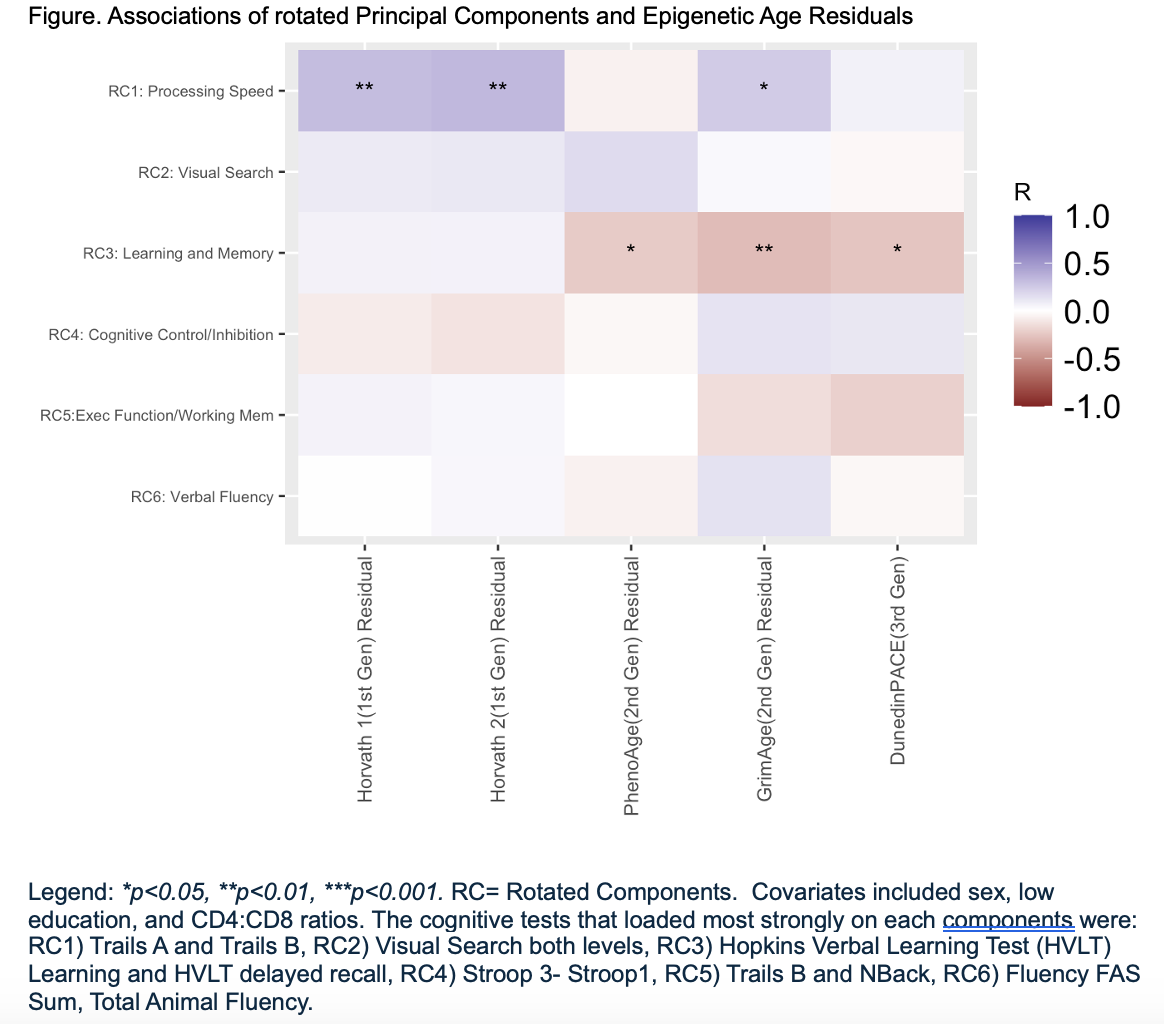
613. Epigenetic Modifications Predictive of Cognitive Frailty in Cocaine-Using People Living With HIV
Poster Abstracts
Page: 165
Marianna Baum, Leonardo Acuna, Haley Fonseca, Manuel Barbieri, Raul Gonzalez Jr, Steven Black, Matthew Sutherland, David Brown, Paolo Chaves, Edgar Vieira, Francisco Fernadez Lima, Qingyun Liu, Samantha Gonzales, Xuexia Wang, Stephanie Gieseken
Background
People living with HIV (PLWH) are disproportionately burdened by neurocognitive impairment (NCI) and physical frailty. Cognitive frailty, the combination of both, results in poorer outcomes than physical frailty or NCI alone. While epigenetic modifications are linked to each of these conditions separately, cognitive frailty remains understudied, and HIV and cocaine use may worsen outcomes. We investigated epigenetic profiles to identify methylation patterns predictive of cognitive frailty in people living with and without HIV and cocaine use.
Methods
We conducted a preliminary epigenome-wide association study (EWAS) with a subset of participants from the Miami Adult Studies on HIV (MASH) cohort. DNA samples from PBMCs of a random sample were stratified by HIV serostatus and cocaine use and analyzed using the Illumina MethylationEPIC_v-2-0 beadchip. HIV serostatus was confirmed with medical records and cocaine use with urine toxicology. Cognitive frailty was defined with the IANA/IAGG criteria, combining physical frailty (Fried criteria), and neurocognitive impairment (Mini Mental State Examination). Linear regression models examined associations between methylation patterns, cognitive frailty, HIV status, and cocaine use, adjusting for confounders. Significant CpG were identified with F test for the overall model (p< 0.01) and t-test for cognitive frailty (p<0.05).
Results
Average age (n=31) was 63.35 ±3.2SD, 100% were male, non-Hispanic Black, and 61.3% had a high school education or less. All were virally suppressed with an average CD4 cell count of 564.44±295.6SD. One CpG site (cg08287344) in EWAS had significant differential methylation patterns among the HIV/ COC groups associated with cognitive frailty (p=2.64x10⁻⁷ of F test; p=0.05 for cognitive frailty, p=3.52x10⁻⁷ for HIV/COC). DNA methylation levels were lower in PLWH using cocaine who had cognitive frailty compared to HIV-negative participants not using cocaine and without cognitive frailty (Fig.1).
Conclusions
PLWH with cocaine use and cognitive frailty show greater epigenetic dysregulation compared to HIV-negative counterparts who do not use cocaine. Lower DNA methylation levels indicate changes in gene expression related to inflammation, neurocognitive decline, or drug-related stress. This suggests cocaine use may exacerbate epigenetic effects of HIV, potentially contributing to worsening health and cognitive outcomes. Further research is needed to explore these mechanisms.
Figure 1.
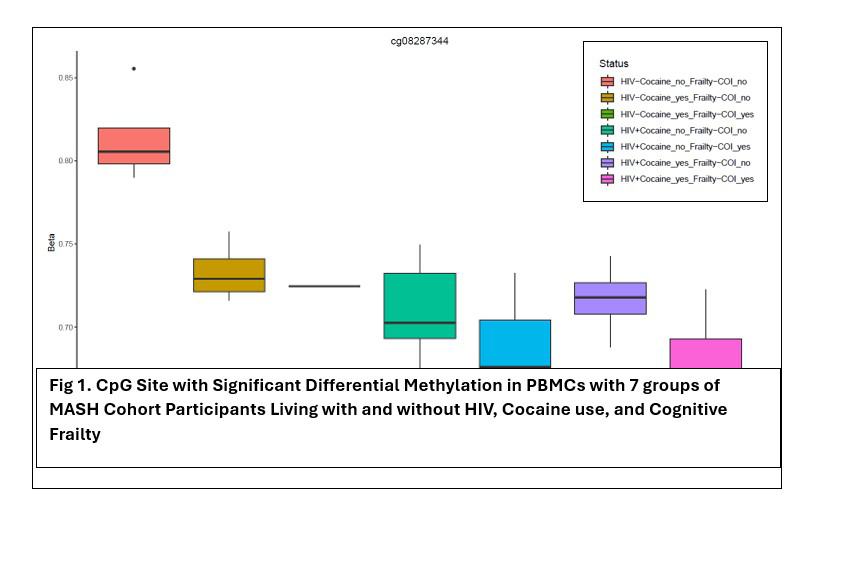
614. Differential Effects of CB2 Agonism on HIV Replication and Inflammatory Activation in Myeloid Cells
Poster Abstracts
Page: 165
Alexander Starr1, Sara Rathore2, Marzieh Daniali3, Peter J. Gaskill3, Cagla Akay-Espinoza1, Kelly L. Jordan-Sciutto1
Background
Evidence indicates that brain-resident myeloid cells, including perivascular macrophages and microglia, provide a reservoir for HIV infection in the central nervous system (CNS). Data also suggest that the inflammatory activity of these cells is associated with HIV-associated cognitive impairment. We investigated whether cannabinoid receptor (CB) 2 (CB2), an immunomodulatory receptor expressed in myeloid cells, regulates viral replication and inflammation in HIV-infected macrophages and microglia.
Methods
In primary human monocyte-derived macrophages (hMDM) and human induced pluripotent stem cell-derived microglia (iMg), changes in gene expression and cytokine/chemokine secretion following infection with 1 ng/mL HIVADA were evaluated using RNA sequencing and Bio-Plex® 48-Plex Pro Human Cytokine Screening Panel, respectively. To mitigate the potential dual-receptor activity at both CB1 and CB2, cultures were exposed to the CB2-specific JWH-133, a synthetic cannabinoid (Ki, 3.4 nM; >200-fold selectivity for CB2 over CB1) during the 24-h initial inoculation with HIV, and cultures were maintained for 9 days post-infection (DPI). To confirm that the observed effects were CB2-specific, SR-144,528, a CB2-selective inverse agonist (Ki, 0.6 nM; >600-fold selectivity for CB2 over CB1) was added 1 h prior to JWH-133 to ensure saturation of receptors.
Results
JWH-133 reduced HIV replication in primary hMDM and iMg at differing doses and timepoints (~50% reduction on DPI7 with 10 µM JWH-133 in hMDM, ~35% on DPI5 with 1 µM JWH-133 in iMg); these effects were abrogated with SR-144,528 pretreatment. In both hMDM and iMg, the effect of JWH-133 corresponded to the basal expression level of CNR2, which encodes CB2, and related endocannabinoid transcripts in each cell type. JWH-133 broadly reduced cytokine release from HIV-infected hMDM but not iMg. RNA-seq revealed that CB2 agonism primarily altered interferon and integrated stress response pathways in hMDM while altering homeostatic pathways, including synapse maintenance and phagocytosis, in iMg. Further analyses in iMg revealed that NLRP3 inflammasome activation, but not priming, was reduced by CB2 activation, which did not inhibit HIV-induced NF-kB activation.
Conclusions
This study identifies key differences in CB2 response between myeloid lineage cell types and implicates CB2-specific agonists as promising candidates for the regulation of HIV-associated neuroinflammation.
615. Neuronal Injury in a Subset of PWH During Acute HIV Infection and Up to 5 Years After Immediate ART
Poster Abstracts
Pages: 165-166
Phillip Chan1, Suteeraporn Pinyakorn2, Carlo Sacdalan3, Eugène Kroon3, Pathariya Promsena3, Donn Colby2, Somchai Sriplienchan3, Nittaya Phanuphak4, Sandhya Vasan5, Robert Paul6, Magnus Gisslén7, Henrik Zetterberg7, Victor Valcour8, Lydie Trautmann5, Serena Spudich1, the RV254/SEARCH 010 Study Team
Background
Neurofilament light chain (NFL) is a sensitive neuronal injury marker, with levels elevated in both neuroinflammatory and neurodegenerative diseases. Cerebrospinal fluid (CSF) NFL is elevated in up to 40% of people with HIV during the 1st year of infection and has been reported as normalizing after antiretroviral therapy (ART). We measured CSF NFL cross-sectionally during acute HIV infection (AHI) and at longitudinal time points up to 5 years after immediate initiation of ART in an observational study.
Methods
RV254 AHI cohort participants completed optional lumbar punctures during pre-ART AHI (week 0, n=136) and at post-ART visits (weeks 24, 48, 96 & 240, n=201). All post-ART sample donors had plasma HIV RNA ≤50 cps/ml. RV254 participant CSF NFL measurements were compared to 44 people without HIV (PWoH), both adjusted to an age of 30 (see footnotes in Figure), and also to age-based upper normal limits (UNL) based on published data. Chi-square test or non-parametric tests were used for statistical analysis.
Results
Among the 136 week 0 CSF samples, 135 (99%) were from males, with median age of 27 (IQR 23-32) years. The median plasma and CSF HIV RNA were 5.99 (IQR 5.08-6.78) and 3.22 (IQR 1.91-4.24) log10 cps/ml; median CD4+ T-cell counts were 379 (IQR 263-543) cells/mm3. At pre-ART week 0, RV254 participants had higher CSF NFL levels than PWoH (p<0.001, see Figure), and also had a higher rate of abnormal CSF NFL (>age-based UNL) than PWoH (20 (15%) vs. 1 (2%), p=0.029). Among AHI at week 0, CSF NFL positively correlated with CSF HIV RNA (r=0.206, p=0.016), CD8+ T-cell (r=0.249, p=0.004) and negatively correlated with CD4/CD8 ratio (r=-0.242, p=0.005). During post-ART visits (ART initiation 20 (IQR 15-26) days of estimated infection), AHI CSF samples consistently showed higher NFL levels than controls (p<0.001), with 5/62 (8%) and 10/139 (7%) samples from week 24 and week 48 or later exceeding the age-based UNL. Only one CSF sample at week 24 and one at week 240 with abnormal NFL had detectable HIV RNA (316 & 20 cps/ml, respectively).
Conclusions
CSF samples collected cross-sectionally from pre-ART AHI and post-immediate ART time intervals in RV254 participants exhibited higher NFL levels than PWoH. Abnormal NFL levels were present in 7% of CSF samples collected at week 48 or later, most without detectable HIV RNA, suggesting ongoing neuronal injury in the absence of CSF viral escape. The clinical significance of this finding requires assessment of long-term outcomes in this group.
Figure 1.
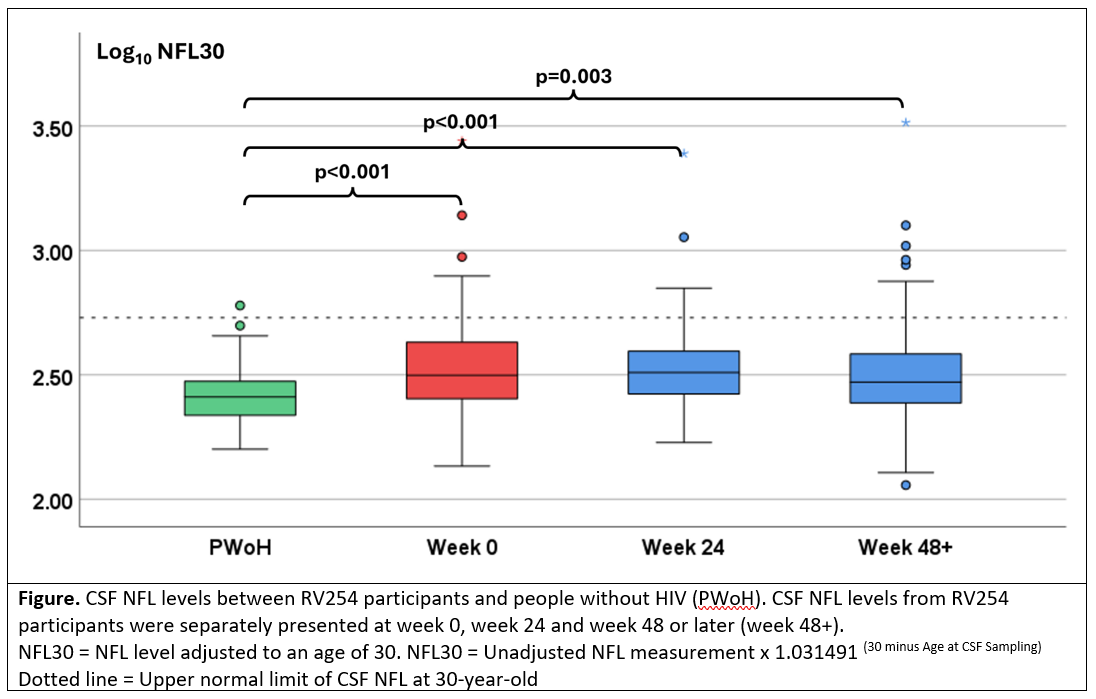
616. Plasma Microbiome Composition Among Neurobehavioral Phenotypes (NBPs) in People With HIV (PWH)
Poster Abstracts
Page: 166
Mohammadsobhan Sheikh Andalibi1, Lora Khatib1, Bin Tang1, Donald R. Franklin2, Robert K. Heaton1, Rob Knight1, Scott L. Letendre1, Ronald Ellis2
Background
Neurobehavioral disorders and gut dysbiosis continue to occur in treated PWH, but the relationship between the plasma microbiome and NBPs has not been investigated. Plasma microbiome analysis offers unique insights into systemic microbial translocation and immune responses. This study aimed to investigate the association between plasma microbiome composition and neurobehavioral phenotypes in PWH.
Methods
410 PWH who were taking antiretroviral therapy and had plasma HIV RNA ≤ 200 copies/mL underwent comprehensive neuromedical and neurobehavioral assessments and provided plasma for 16S rRNA amplicon sequencing. As previously described, 17 neurobehavioral features, including cognitive domains, depression subscales, and daily functioning, defined 4 NBPs using dimension reduction with a self-organizing maps (SOM) followed by k-means clustering methods: NBP1: healthy (n=187), NBP2: depression-dominant (n=94), NBP3: unhealthy in all features (n=55), and NBP4: cognitive impairment-dominant (n=74). Alpha and beta diversity were measured using diversity metrics. Differential species abundance was analyzed using Bayesian Inferential Regression for Differential Microbiome Analysis (BIRDMAn), adjusting for age and gender.
Results
Cohort characteristics: mean age 42.7 ± 8.9 years, 16.3% female, 44.9% Black, 59.3% AIDS, mean CD4+ T-cells 467.5/µL. Alpha diversity was lower in NBP2, than in either NBP4 or NBP1 (each p < 0.05). Beta diversity also differed between NBP2 and NBP4 using weighted (p = 0.03) and unweighted UniFrac metrics (p = 0.01). Genus Actinomycetospora and Mycobacterium, Flavobacteriaceae family, and species mucilaginosa were more abundant in people with NBP4 than NBP2, potentially contributing to the observed clinical differences (Figure 1).
Conclusions
These findings support a role for the plasma microbiome in modulating brain health in PWH. This may occur in part by modulating immune responses: Mycobacteria can induce proinflammatory immune responses and Flavobacteriaceae produce anti-inflammatory short-chain fatty acids. These results are provocative, but the cross-sectional design limits causal inference. Understanding these complex interactions support development of personalized, microbiome-based interventions to improve brain health in PWH.
Figure 1.
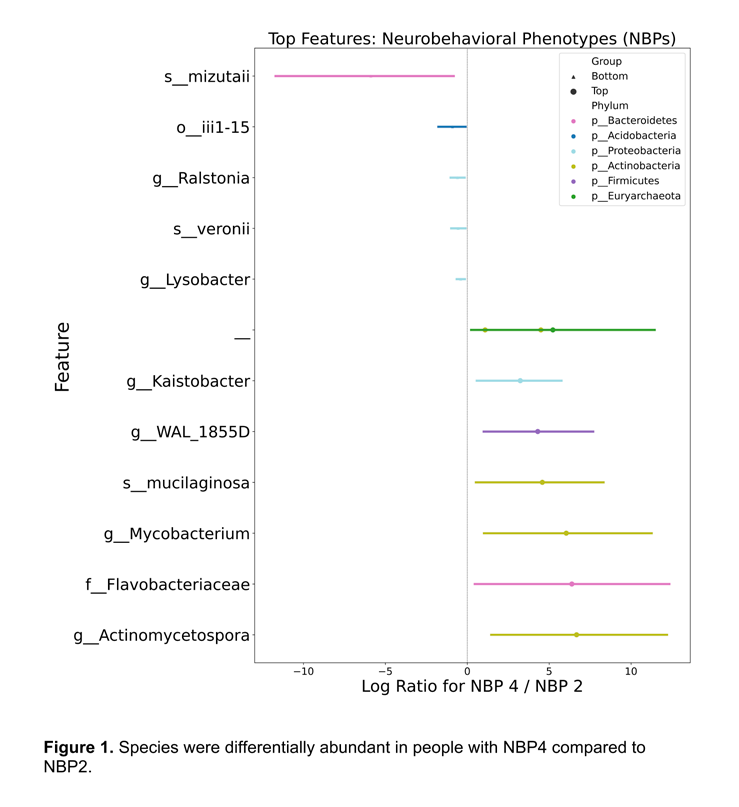
617. High Anticholinergic Burden and Poor Sleep Quality in People With HIV
Poster Abstracts
Pages: 166-167
Maria Mazzitelli1, Mattia Trunfio2, Vincenzo Scaglione1, Anna Tozzo1, Lolita Sasset1, Davide Leoni1, Anna Favaro3, Anna Maria Cattelan, MD3
Background
Anticholinergic burden (ACB) and related effects affect the quality of life of people with HIV (PWH) through a broad range of mechanisms: e.g., increased risk of falls, pleomorphic symptoms, and cognitive decline. To date, no study has investigated whether ACB influences also the quality of sleep (SQ) in PWH.
Methods
Cross-sectional single-centre multidimensional assessment of the relationship between sleep metrics (Pittsburgh Sleep Quality Index, PSQI, ≥5 for poor SQ; Insomnia Severity Index, ISI, score ≥15 for moderate/ severe insomnia; Epworth Sleepiness scale, ESS, ≥13 for daily sleepiness) and ACB (ACB scale, ACBS) in 1200 PWH on antiretroviral therapy. Comorbidities, comedications, and mood disorders (General Anxiety disorder-7, GAD7, and Patient Health Questionnaire-9, PHQ9) were also considered. Generalized linear models to investigate these associations were adjusted for relevant factors (e.g., psychiatric diagnoses and treatments, comorbidities).
Results
Among the 1200 participants (age 52±12, 74.7% male, 95.5% undetectable viremia, CD4+ T cells 642/µL [483-823]), 11.9%,50.9% and 5.8% had ISI, PSQI, and ESS scores suggesting clinically relevant insomnia, poor SQ, and significant daily sleepiness. Two hundred two (16.8%) participants were on at least one AC drug: 11.0% ACBS=1 and 5.8% ACBS≥2. Increasing ACBS was associated with worsening in all the sleep metrics: the correlations are shown in Fig.1. Polypharmacy (20.4%), multimorbidity (63.7%), depressive mood (13.2%) and anxiety symptoms (20.4%) were also prevalent and associated with both sleep metrics and ACB (Fig.1). In models adjusted by these and other confounding variables (e.g., age, sex, HIV acquisition route, GAD7, PHQ9, use of benzodiazepines, antidepressants), higher ACBS was independently associated with worse scores at both ISI (aβ 0.35 [0.17-0.54], p<0.001) and PSQI (aβ 0.28 [0.16-0.41], p<0.001).
Conclusions
These results highlight the complex network between ACB, polypharmacy, multimorbidity, mood and sleep disorders in PWH. However, ACB revealed to be a factor that could disrupt SQ and increase risk of insomnia independently from the underlying clinical indications and other confounding factors in PWH.
Figure 1.
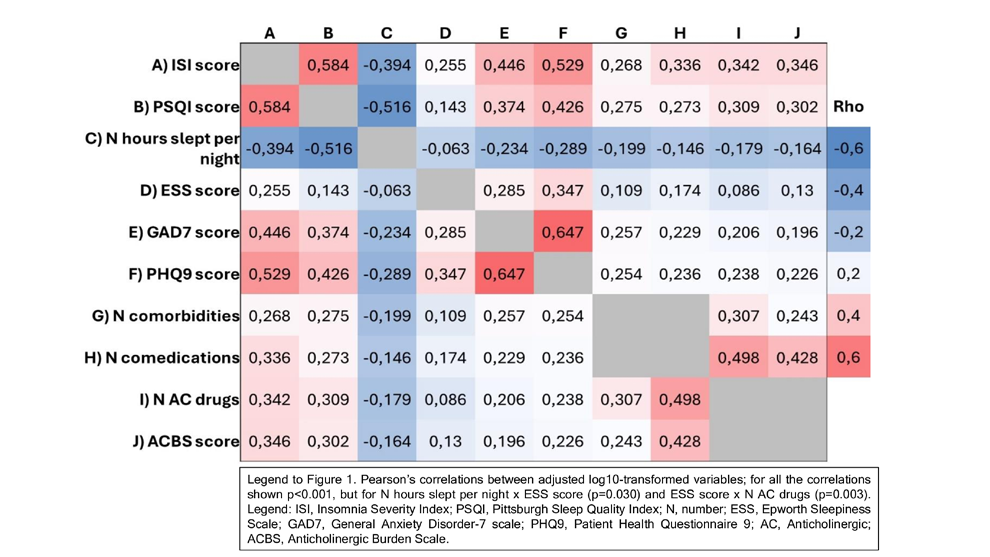
618. WITHDRAWN
Poster Abstracts
Page: 167
619. Cognitive and Sensorimotor Difficulties in Well-Controlled People With HIV Living in Uganda
Poster Abstracts
Page: 167
Leah H. Rubin1, Kathleen Ridgeway2, Rebecca E. Easter2, Raha M. Dastgheyb3, Jonathan H. Ye2, Eran F. Shorer2, Aggrey Anok4, Stephen Tomusange4, Julie Mannarino5, Deanna Saylor3, Noeline Nakasujja6, Gertrude Nakigozi4, Robert Paul5
Background
Individual differences in early life experiences (e.g., trauma), behaviors (e.g., substance use), the immune response of the body-brain, and HIV treatment contribute to a range of brain health complications (BHCs) in people with HIV (PWH). In sub-Saharan Africa, particularly in Rakai, Uganda, these individual factors are often less pronounced; substance use is low, and ART initiation and types are similar among this typically virally suppressed, middle-aged population. We aimed to investigate BHCs in virally suppressed, middle-aged PWH compared to people without HIV (PWoH) in Rakai, Uganda.
Methods
Participants enrolled through the Rakai Community Cohort Study (338 PWH with HIV RNA <200cp/ml, 249 PWoH) were administered a Research Domain Criteria (RDoC) battery focused on cognitive, sensorimotor, and social processing systems that included: Auditory Verbal Learning Test [AVLT], Symbol Digit, Color Trails, Grooved Pegboard (GPEG), Flanker, affective Go/No-Go, Figure-8, and Facial Emotion Perception Task. Timed outcomes were log transformed and reverse scored, so higher scores reflect better performance. Demographically-adjusted norms were computed (using PWoH) for all outcomes. Multivariable logistic regressions were used to examine serostatus differences in impairment (>1 standard deviation) in RDoC outcomes. Benjamini-Hochberg Procedure was used to control the false discovery rate (FDR). Analyses controlled for sensory smptoms (tingling, burning, numbness in hands or feet) and childhood sexual abuse (Childhood Trauma Questionnaire subscale) as they differed by serostatus and related to outcomes. No other confounders were identified.
Results
Participants had minimal self-reported medical comorbidities and PWH were similar to PWoH in age (43.9[20-65] vs. 43.5[28-68]yrs), sex (male, 54 vs. 46%), and education (6.1 vs. 5.8yrs). Compared to PWoH, PWH reported more sensory symptoms (29 vs. 21%, P=0.03) and greater experience of any childhood sexual abuse (27 vs. 15%, P=0.002). In adjusted analyses, PWH were more likely to be impaired than PWoH on Color Trails, Symbol Digit, GPEG, Figure-8, and AVLT recognition (Figure 1). Notably, there were no differences on AVLT learning and memory.
Conclusions
Cognitive and sensorimotor difficulties are significant concerns in PWH living in Rakai, Uganda with minimal confounding conditions common in Western cohorts. These difficulties merit clinical attention and further investigation to determine mechanisms and treatment options.
Figure 1.
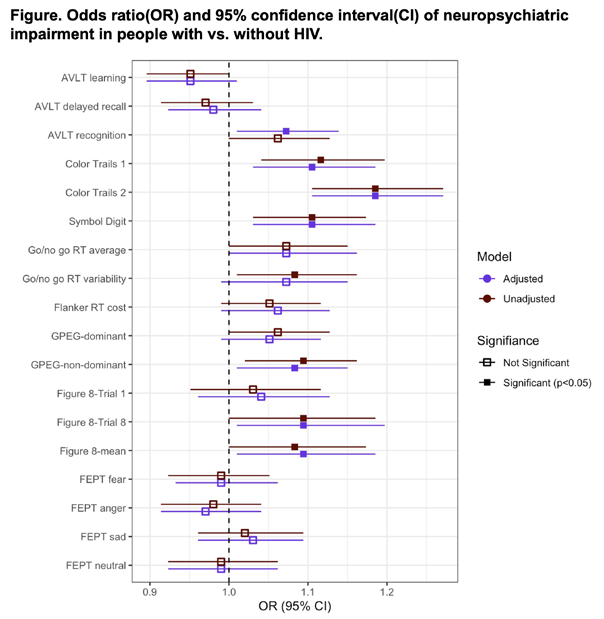
620. No Impact on the CNS After Switching to Dolutegravir/Lamivudine From a 3-Drug Regimen
Poster Abstracts
Page: 167
Linn Renborg1, Aylin Yilmaz2, Kristina Nyström1, Staffan Nilsson1, Henrik Zetterberg1, Magnus Gisslén1
Background
Dual-drug therapy with dolutegravir/lamivudine (DTG/3TC) is effective in achieving viral suppression in the blood, but its impact on HIV infection in the central nervous system (CNS) remains insufficiently explored. In this study, we aimed to investigate its effect in the CNS through assessment of cerebrospinal fluid (CSF) in individuals switching to DTG/3TC from a three-drug regimen.
Methods
The Gothenburg HIV CSF Study Cohort comprises a longitudinal study investigating HIV infection in the CNS. From this cohort, we retrospectively included all adult individuals who were on suppressive antiretroviral therapy and who switched to DTG/3TC and who also had undergone lumbar punctures up to one year before and up to two years after. CSF NfL levels were measured by ELISA, HIV RNA quantitative PCR was performed using Cobas 6800. ß2-microglobulin was measured using nephelometry, IgG using immunoturbidimetry. Other analyses were performed using standard laboratory methods.
Results
Lumbar punctures were performed in 20 of the 119 individuals with HIV who switched to DTG/3TC between 2017 and 2023. All were virally suppressed (< 50 HIV RNA copies/mL) in blood and CSF at the time of switch. Fifteen were on a regimen containing an integrase inhibitor at baseline. Seven participants were female. Median age at switch was 55 years. All participants remained suppressed in blood throughout the follow-up period, mean 384 days, while one patient had an asymptomatic minor increase of CSF HIV RNA to 70 copies/ml without elevation of CSF white blood cell count or NfL. When age adjusted to 50 years, mean CSF NfL levels were 528 ug/ml at baseline and 520 ug/ml at follow-up. The small difference was not significant. Neither were any significant differences observed in albumin ratio, IgG index, CSF ß2-microglobulin, CSF white blood cell count, between baseline and follow-up.
Conclusions
In this study, we observed no evidence of neuronal injury, as measured by NfL, or any other marker of CNS injury or inflammation following the switch to DTG/3TC. The results will be further explored by investigating additional injury and inflammatory biomarkers in CSF, as well as NfL and other CNS injury markers in plasma, in the entire cohort who switched to DTG/3TC.
621. WITHDRAWN
Poster Abstracts
Page: 167
622. Greater Cognitive Decline in Cognitively Unimpaired Older Thai PWH at Baseline
Poster Abstracts
Pages: 167-168
Akarin Hiransuthikul1, Tanakorn Apornpong2, Stephen Kerr1, Chuleeporn Wongvoranet2, Win Min Han3, Hay Mar Su Lwin2, Napon Hiranburana2, Sasiwimol Ubolyam4, Anchalee Avihingsanon5, the HIV-NAT 006 and 207 Study Teams
Background
Cognitive impairment remains a crucial health issue among people with HIV (PWH). However, the course of cognitive impairment has shifted considerably since the introduction of combined antiretroviral therapy. We aimed to determine the differences in cognitive decline between PWH with and without cognitive impairment at baseline in a cohort of virologically suppressed older PWH.
Methods
Virologically suppressed Thai PWH aged 50 years or older were enrolled between 2015 and 2017. Cognitive performance was assessed at enrollment using the Thai-validated Montreal Cognitive Assessment (MoCA), with a score of <25 indicating cognitive impairment. Follow-up MoCA assessments began in 2021. A multivariate linear mixed-effects model, with an interaction term between baseline cognitive status and follow-up time, was used to estimate differences in cognitive performance changes over time between those who were cognitively impaired and unimpaired at baseline.
Results
Among 287 PWH included (38.0% female, median age 54.5 [IQR: 52.0–59.4] years, 25.4% with six years or less education, median HIV duration of 18.1 [IQR: 14.9–20.9] years), 61.3% had cognitive impairment at baseline. PWH with baseline cognitive impairment were significantly older, more likely to be female, and had less education. The median interval between the two MoCA was 5.9 (IQR: 5.6–6.8). After adjusting for age, sex, body mass index, education, smoking, alcohol consumption, diabetes, hypertension, low-density lipoproteins, depression, HIV duration, nadir CD4 levels, and exposure to efavirenz, cognitively unimpaired PWH at baseline showed a greater decline in cognitive performance compared to those with baseline cognitive impairment, with a difference in MoCA score of -2.4 (95%CI -2.9 to -1.9) for the cognitively unimpaired group, compared to +0.3 (95%CI -0.1 to 0.7) for the cognitively impaired group over 6 years (P-interaction<0.001) (Figure). Notably, delayed recall was the only MoCA subdomain where the cognitive trajectory differed significantly between the two groups (P-interaction<0.001).
Conclusions
Despite initially better cognitive performance, virologically suppressed older Thai adults with HIV who were cognitively unimpaired at baseline showed greater cognitive decline compared to those with baseline cognitive impairment. Investigating the potential role of dynamic lifestyle factors and underlying causes of cognitive impairment could help explain these unexpected findings.
Figure 1.
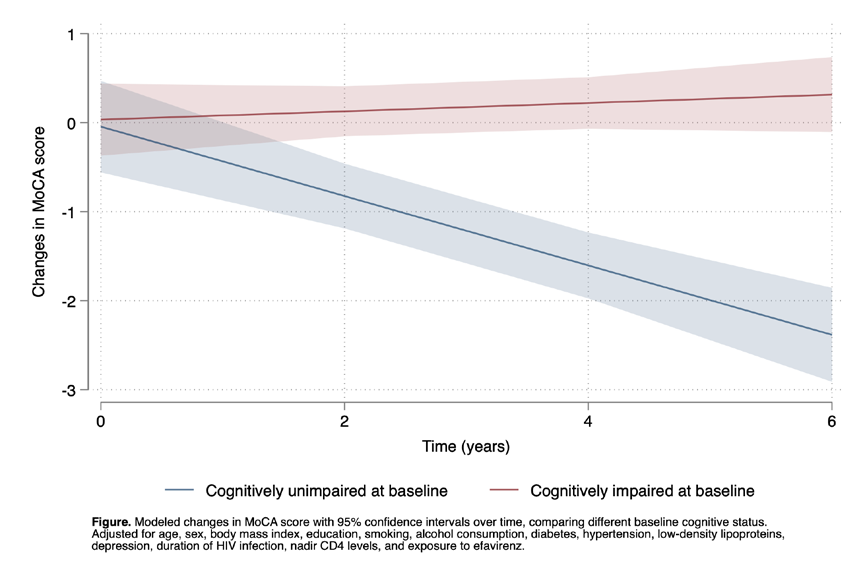
623. Hypertension: A Major Factor in Low Verbal Fluency Among People Aged 50+ Living With HIV in Senegal
Poster Abstracts
Page: 168
Caroline Couturier1, Hèlène Font2, Marie Kerbie Plaisy2, Ababacar Niang3, Judicaël Malick Tine3, Jean-François Dartigues1, Nathalie De Rekeneire4, Moussa Seydi3, Ndeye Fatou Ngom3, Antoine Jaquet2, Charlotte Bernard1
Background
Decline in verbal fluency, observed both in aging and HIV infection, is associated with reduced quality of life. The association of cardiometabolic diseases with verbal fluency is well described in Western Countries, not in Sub-Saharan Africa, especially in older people living with HIV (PLWH). This study aims to identify the factors associated with verbal fluency performance in older PLWH in West Africa.
Methods
PLWH aged ≥50 years and on antiretroviral therapy since ≥6 months were enrolled as part of a prospective, longitudinal, multicenter study conducted at two HIV-clinics (SMIT, CTA) in Dakar, Senegal. Sociodemographic characteristics, depressive symptoms and cardio-metabolic disorders including hypertension, diabetes and dyslipidemia were measured at enrollment. Verbal fluency was assessed with the Isaacs Set Test (IST) which consists in giving as many words as possible from a specific semantic category (« animals ») in 15 seconds. Factors associated with verbal fluency performance at enrollment were evaluated with multivariate linear regressions (backward selection, significance p<0.05). Age, gender, education level and HIV clinics were retained due to their importance, independently of significance.
Results
The median age of the 290 PLWH included in this study was 58 years (IQR: 53-62), 67% were female, 68% had a low education level, 50% had hypertension, 63% had dyslipidemia, 14% were diabetic, 6.5% had depressive symptoms, 9.5% had a detectable viral load (<50 copies/ml) and the median CD4 was 690 cell/mm3 (IQR: 500-900). In the final model, low IST-15-seconds scores were significantly associated with hypertension (β=-0.3, p=0.01), female sex (β=-0.8, p= <0.001), low educational level (β=-0.3, p=0.05) and HIV-clinics (β=-0.6, p=<0.001). No association was observed in this final model with other sociodemographic characteristics (i.e. age, marital status or professional activity), cardiometabolic disorders (i.e. diabetes or dyslipidemia) and specific HIV clinical outcomes (i.e. CD4 count or viral load).
Conclusions
Among older West African PLWH, after adjusting for usual socio-demographic determinants, low verbal fluency performance was associated with hypertension. This underscores the urgent need for effective hypertension monitoring and treatment in this population, given the high prevalence of hypertension.
Table 1.
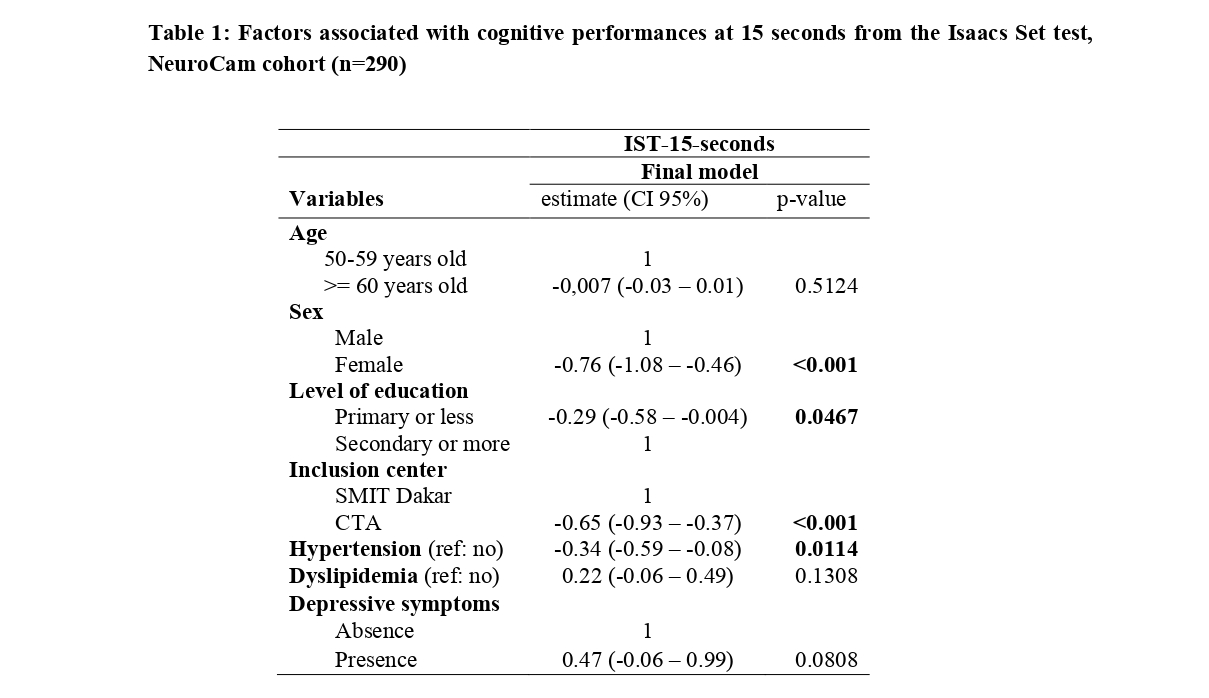
624. No Evidence of a Detrimental Effect of Pitavastatin on Neurocognitive Function Among People With HIV
Poster Abstracts
Pages: 168-169
Kristine M. Erlandson1, Ashley McKhann2, Doug Kitch2, Frank Palella3, Ronald Ellis4, Beau Ances5, Markella V. Zanni6, Marissa Diggs6, Gerald Bloomfield7, Carl Fichtenbaum8, Judith Aberg9, Pamela Douglas7, Heather Ribaudo2, Steven Grinspoon6
Background
Equipoise exists regarding the effect of statins on cognitive function, with some observational studies suggesting harm and others suggesting benefit. Limited data among people with HIV (PWH) may be biased by indication for statin prescription.
Methods
To assess statin effects on neurocognitive function among PWH, we leveraged data from participants co-enrolled in REPRIEVE (RCT of statin therapy vs. placebo) and HAILO (observational study including serial assessments of neurocognitive function). All co-enrolled participants with ≥1 measure of neurocognitive function before (median 7) and after enrollment (median 3) into REPRIEVE were included. Neurological function was determined by NPZ-4, the average of the Z scores from: Hopkins Verbal Learning Test Revised (HVLT-R), Trailmaking A and B (TrA, TrB), and Digit Symbol Test (DST) every 48 weeks. NPZ-4 and its component tests were analyzed with general estimating equation models using an exchangeable working correlation structure, with trajectories before and after REPRIEVE randomization estimated separately.
Results
Of 181 co-enrolled participants (pitavastatin 88, placebo 93), the mean (SD) age was 50.3 (5.0) years, 19% female at birth, 31% Black, 23% Hispanic, and 24% had current cigarette use. Characteristics were balanced between randomized groups. Changes in overall and individual neurocognitive scores were small, not meeting threshold for clinically relevant (<0.5), and similar in the placebo and pitavastatin arms (Table). In bivariate analyses adjusting for demographics, comorbidities, and cardiovascular risk factors, the effect sizes were minimally changed and remained non-significant. Although subgroup analyses were limited by a small sample size, we observed trends towards improved TrA in participants with baseline impairment randomized to pitavastatin (Z score [95% CI]: 0.075 [0.024, 0.127]) vs placebo (-0.05 [-0.123, 0.023]), p=0.018 and towards worsened NPZ-4 in females randomized to pitavastatin (-0.061 [-0.133,0.011]) vs placebo (0.033 [-0.023, 0.089]), p=0.068 that similarly did not reach threshold for clinical relevance. Other subgroup effects were minimal and not statistically or clinically significant.
Conclusions
We found no evidence to suggest a detrimental effect of pitavastatin on a limited battery of neurocognitive assessments among people with HIV at low to moderate cardiovascular risk, even among those with baseline impairment.
Table 1.
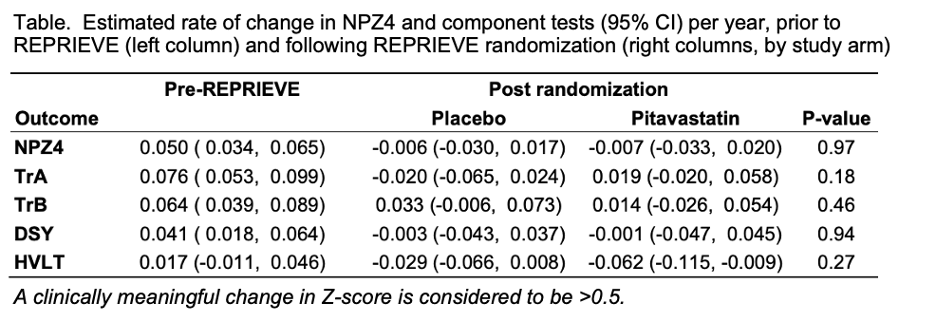
625. Number and Effectiveness of Antihypertensives Are Associated With Cognitive Performance in PWH
Poster Abstracts
Page: 169
Azin Tavasoli1, Bin Tang2, Scott L. Letendre2, Robert K. Heaton2, Ronald Ellis1
Background
People with HIV (PWH) experience age-related health problems, including cardiovascular disease and cognitive decline. Some medications used to treat hypertension exhibit anticholinergic properties. This study investigated the effects of cognitive performance on antihypertensive use and mean arterial pressure (MAP) in hypertensive PWH and people without HIV (PWoH), focusing on whether worsening cognitive function influenced antihypertensive use and blood pressure control.
Methods
This longitudinal analysis spanned up to seven follow-up visits in multisite, observational cohort studies over five years. Participants were included if they reported hypertension or used antihypertensive medications. Analyses examined the relationship between cognitive performance (global T-score) and the number of antihypertensives reported over time, including a linear mixed effects model with random intercepts and slopes, stratified by HIV status and adjusted for confounding variables such as age, sex, ethnicity, body mass index (BMI), and HIV disease markers. We also analyzed the relationship between summary regression change score (sRCSs) and MAP.
Results
The 1158 PWH with hypertension were mostly middle-aged, white, and male. 79.9% were on antiretroviral therapy (ART); 59.7% had plasma HIV RNA ≤ 50 copies/ml. PWoH (n=272) were older than PWH and more likely to be female. In PWH, a significant association between MAP and sRCSs suggested those with greater cognitive improvement had lower MAP (multivariable analysis p=0.0498). In PWH, a 10-unit decrease in global T-score (worsening cognitive performance) was associated with an 8.7% increase in the number of antihypertensives over time (univariable analysis RR=0.916, p=0.027; multivariable analysis RR=0.907, p=0.014). lagged effects of global T-score on antihypertensives were not significant in both PWH and PWoH. A higher number of anticholinergics correlated with the number of antihypertensives (β= 0.45, p=0.001). PWH taking more anticholinergics were more likely to have worse cognitive performance over time (p<0.001).
Conclusions
Our findings suggest that healthcare providers may prescribe more antihypertensives to PWH whose cognitive performance declines over time, possibly due to inadequately controlled high blood pressure. Antihypertensives can have anticholinergic effects that may worsen cognitive decline. Conversely, PWH with cognitive improvement had lower MAP, suggesting better blood pressure control may be linked to enhanced cognitive function.
626. Reduced Cerebral Arterial Transit Time in Obese Females With HIV and Metabolic Syndrome
Poster Abstracts
Page: 169
Eric Decloedt1, Md Nasir Uddin2, Chantel Schreuder3, Lauren Jennings3, Roland van Rensburg1, Ankia Coetzee1, Abrar Faiyaz2, Nhat Hoang2, Catherine Orrell4, Giovanni Schifitto2
Background
The prevalence of obesity, and subsequent metabolic syndrome (MetS), is increasing in persons living with HIV (PLWH) on antiretroviral therapy (ART), with nearly 1 in 4 meeting MetS criteria. African females with HIV are at particular risk of developing obesity complicated by MetS. Obesity increases the risk of cardiovascular and cerebrovascular disease. There is limited data on the association of obesity and MetS in PLWH with biomarkers of cerebrovascular function such as cerebral blood flow (CBF), arterial transit time (ATT), cerebrovascular reactivity (CVR) and microcirculation as measured by intravoxel incoherent motion (IVIM) metrics (diffusion, D; pseudo-diffusion, D*; and perfusion fraction, f).
Methods
We conducted a cross-sectional study of PLWH at a primary care clinic in Cape Town, South Africa, suppressed on ART and newly diagnosed with MetS using the Harmonized criteria. Our primary outcome was to assess CVR, derived from resting state functional magnetic resonance imaging, CBF, ATT and water exchange rate Kw assessed via diffusion-prepared multi-delay arterial spin labelling. Brain volumetrics were assessed via T1 weighted imaging, processed with FreeSurfer. Using linear regression, we correlated our imaging findings with a composite MetS severity z-score and body fat composition quantified using dual-energy X-ray absorptiometry (DEXA).
Results
We enrolled 27 female participants aged 45.2±10 years with a body mass index (BMI) of 41.9±7.8 kg/m2. We found no association between CVR, ATT, Kw, CBF or brain volume in gray and white matter and the MetS z-score based on BMI or waistline. ATT in both gray and white matter was significantly increased with higher body mass indices. Both gray and white matter ATT increased with higher waist circumference, body fat mass, body fat percentage and visceral adipose tissue mass, with body fat percentage most striking (β=16.4, p = 0.012 and β=16.3, p = 0.009, respectively). D* in gray matter was associated with MetS severity z-score based on BMI and waistline (r=0.57, p = 0.005 and r=0.42, p = 0.047, respectively) and body fat mass (r=0.47, p=0.026 in white matter, r=0.44, p=0.035 in gray matter).
Conclusions
ATT is an index of vascular resistance that increases in the presence of cerebrovascular disease. We found that in obese African females with HIV and MetS suppressed on ART, ATT increases in proportion to body fat percentage. This finding is also reflected in alterations of the microcirculation, as measured by the IVIM metric D*.
627. HIV Transcripts in Blood May Identify Patients at Lower Risk of Brain Injury in Cure Research
Poster Abstracts
Pages: 169-170
Kazuo Suzuki1, Angelique Levert1, Emma Yoo1, Lucette A. Cysique2, Takaomi Ishida3, Nicholas Olsen4, Louise Evans5, Bruce Brew6, John Zaunders
Background
Suppressed HIV patients’ PBMC have residual cell associated HIV-1 RNA transcripts (HRT). Elevated HRT, despite ART, associate with viral blips and with brain injury. Most cure studies aim to reduce HIV DNA reservoir but may require initial viral reactivation, risking brain injury from viral blips due to reservoir activity. Under ART, blips are believed to reflect reservoir size, but whether they could be independently due to reservoir activity is unclear. Current understanding of blips does not allow prediction of viral blips. We hypothesized that HRT levels measured by the Double R assay may predict risk of blips, helping identify low risk patients for cure studies.
Methods
RNA and DNA were extracted from cells from 5 ml blood samples from 64 patients on suppressive ART at baseline and sequentially for 4y. Of these, 32 had 1 or 2 blips (isolated detectable pVLs <200 cp/ml in the 2y prior to baseline), 29 had no blips, and 3 were Elite Controllers (to serve as benchmarks of functional cure). HRT was measured by the Double R assay. Multivariable mixed-effects logistic regression was used to predict any future blip over 4y. A cut-off value of HRT was determined using Youden’s index with Receiver Operator Characteristic (ROC) curves.
Results
Baseline HRT levels in the “blip” group were significantly higher than for the “non-blip” group: median 168 vs 22 copies/106 cells; p<0.001. Multivariable mixed-effects logistic regression showed HRT was strongly associated with increased risk of blip within 4y [OR 3.2, CI=2.1-5.1, p<0.001] per 10-fold increase in HRT. ROC area under the curve was 0.73, (CI 0.66-079) using cut-off of 91 copies/106 cells, showing 71% sensitivity and 67% specificity for future blips. Baseline HIV-1 DNA copies were associated, unadjusted, with increased odds ratio of a future Blip (3.6, CI 2.4-6, p<0.001), but HIV-1 DNA did not significantly predict blips after adjustment for HRT (p=0.60). PBMC from 3 Elite controllers were negative for HRT, but in vitro stimulation of their CD4+ T cells for 1 week with anti-CD3/CD28/CD2 +IL-2 resulted in 1/10, 3/10 and 0/16 replicate cultures being positive for HRT. We also identified those with extremely low-levels of HRT had no significant brain injury in our previous dataset.
Conclusions
HRT detection by the Double R assay is a scalable tool to quantify reservoir activity, independent of reservoir size, to identify potential patients with low risk of brain injury during cure research.
Figure 1.
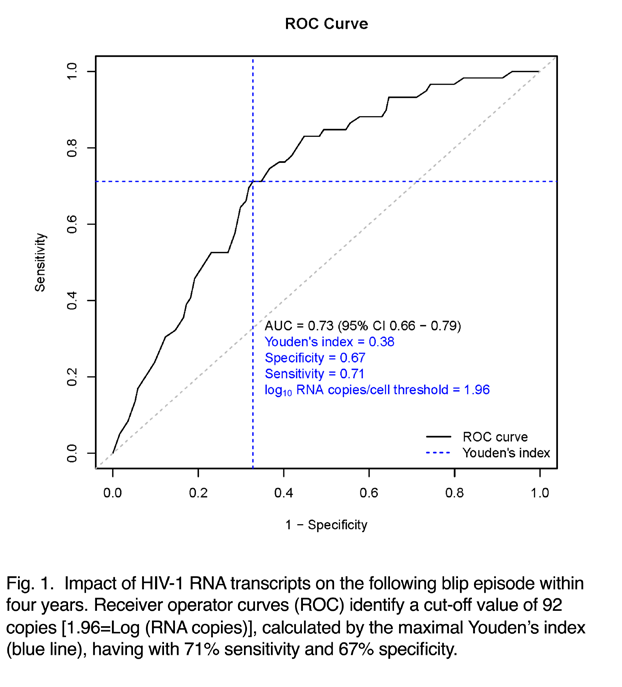
628. Unmasking the Independent Role of CSF HIV RNA Dynamics by Single Copy Assay in Neurobiotypes
Poster Abstracts
Page: 170
Lucette A. Cysique1, Natasha Hills2, Sarah O'Donnell2, Kurt Lancaster1, Lauriane Jugé3, David Jakabek1, Thomas M. Gates4, Caroline Rae3, Sarah Palmer5, Bruce Brew6
Background
In the current study, we test whether low level HIV replication is important in the pathogenesis of neurocognitive and neuroimaging biotypes, and independent of comorbidity and legacy effects.
Methods
43 virally-suppressed clinically stable men with HIV (age 53±14 years, plasma and CSF <20-50 cp/mL) were included. Neurocognition, CSF neopterin, plasma and CSF HIV RNA were measured (HIV RNA by single copy assay- SCA detection limit <0.3 cp/mL, RNA thereafter) at baseline, 6-, 12-, 18 and 24-month. Magnetic resonance spectroscopy (MRS) was conducted at baseline and 24month. Non-HIV medical, psychiatric, disability, and lifestyle history was integrated into a comorbidity score. Legacy effects were defined as historical HIV-associated neurocognitive disorder (HAND) and nadir CD4 <200. Our previous analyses had shown four neurobiotypes by neurocognitive and MRS changes. In this dataset the neurobiotypes’ prevalenc and profile were: stable=30% (mild inflammation, bioenergy abnormalities), incident decline=16.5% (increasing inflammatory activity), progressive=11.5% (axonal and neuronal injury), and cognitively-normal=42% (subclinical bioenergy abnormalities). Mixed effect models tested main effect and time-association between the neurobiotypes and the CSF biomarkers with comorbidity or legacy as covariate.
Results
A pattern of intermittent RNA or lack of detectable RNA was most common (Plasma: 81%, CSF: 87%). Plasma and CSF RNA showed a transient dissociation at 6-month (p<.005). Unlike plasma, CSF RNA was significantly increased in the progressive neurobiotype, and slightly in the stable neurobiotype (Fig 1a). The inclusion of comorbidities or legacy effects did not alter these results. Relative to cognitively-normal cases (50%), nadir CD4<200 was less frequent in incident decline (14%, p=.005). Historical HAND was more frequent in progressing (60%, p<.04) and stable cases (61%, p=.02) versus cognitively-normal cases (11%). There were no nadir CD4 differences. Comorbidities correlated modestly with baseline neurocognition (Rho=-.23; p<.08) but not with the neurobiotypes, although progressing cases had the greatest burden. CSF RNA was associated with CSF neopterin with time variations (Fig 1b). Only CSF neopterin was associated MRS abnormalities (axonal injury and neuroinflammation).
Conclusions
Partially compartmentalized CSF HIVRNA as measured by SCA links to neurobiotypes independently and despite comorbidities and legacy effects. Replication in larger and more diverse samples is needed.
The figure, table, or graphic for this abstract has been removed.
629. Adenosine, Guardian of the Brain: Possible Role in Protecting From HIV Neuropathogenesis
Poster Abstracts
Page: 170
Yoelvis Garcia-Mesa1, Fengchun Ye1, Sheetal Sreeram1, Wilber Romero-Fernandez2, Jonathan Karn1
Background
Due to its regulatory properties, adenosine has been recognized as a guardian molecule with many protective functions in and out of the brain. For example, HIV silencing in T-cells has been associated with upregulating the adenosine-producing ecto-5’-nucleotidase Nt5e (known as CD73). We hypothesized that under HIV-induced inflammatory conditions in the brain extracellular ATP/adenosine would increase and it will lead to reduce microglial activation and silence HIV in infected microglia cells.
Methods
Our studies were performed using iPSC-derived astrocytes (iA), neurons (iN), microglia iMG, and the immortalized microglia cell line HC69, a clone latently infected with a single round HIV-1 containing a short-lived GFP. Commercially available iPSC-microglia from Tempo (iMGT), which lack expression of the adenosine receptor 3 (A3), were infected with the single round reporter and used as control. HC69 monoculture and iA+HC69 coculture were used in the initial evaluation of A3 agonists and antagonists. iMG were added to the co-/tri-cultures on day 12 of differentiation, allowing them to differentiate fully. The cultures were then infected with the macrophage-tropic HIV-1 AD8 virus on day 26. The cultures were treated 24 h post-infection with 2 mM NECA (A3 agonist) or adenosine receptor antagonists (1 mM) for four days. Untreated cells were used as control. RNA and DNA were extracted and analyzed by qPCR. A decrease in the RNA-to-DNA ratio was used to measure the extent of viral suppression. Flow cytometry and microscopy were also used to evaluate HIV expression and latency.
Results
Co- and tri-cultures with HIV-infected iMG showed a significant reduction of HIV expression compared to iMG/HIV monocultures. Cocultures of iA + control iMGT/HIV did not decrease HIV expression. NECA potently induced HIV latency in all cultures of HC69 and iMG/HIV but not in control iMGT/HIV. As expected, when co-cultures of iA+iMG/HIV were treated with adenosine receptor antagonists, HIV replication was not reduced. Staining of the iA+HC69 cocultures showed increased expression of CD73 in HC69 cells.
Conclusions
The potent suppression of HIV expression by NECA strongly suggests that the anti-inflammatory properties of adenosine can be exploited to reduce HIV expression in the brain. This approach, which mimics the natural regulatory/homeostatic mechanisms that play a role in reducing inflammation and HIV expression in microglia cells, suggests new avenues for HIV treatment in the CNS.
630. Neuroinflammation Associated With Levels of HIV DNA in the Frontal Cortex of Virally Suppressed PWH
Poster Abstracts
Pages: 170-171
Sarah Byrnes1, Janna Jamal Eddine1, Jingling Zhou1, Emily Chalmers1, Michael Roche2, Bruce Brew3, Jacob D. Estes4, Thomas Angelovich1, Melissa Churchill5
Background
Currently ~30% of people with HIV (PWH) who are virally suppressed with antiretroviral therapy (ART) develop a form of HIV-associated neurocognitive disorders. The presence of a viral reservoir (and associated neuroinflammation) in the brain and ongoing systemic inflammation penetrating the brain are thought to play crucial roles. However, the precise effects of viral mediated and/or independent pathways on the brain remain ill-defined.
Methods
Neuroinflammation in frontal cortex brain tissue from non-virally suppressed (nVS; median plasma viral load [pVL]: 4.59 log HIV RNA copies/mL; n=19) or virally suppressed PWH (VS; undetectable pVL > 2 years; n=20) was characterized at a cellular level using spatial multiplex immunofluorescence analyses. Levels of total, intact and defective HIV DNA and HIV RNA transcripts in frontal cortex tissue were quantified using digital PCR-based intact proviral DNA assay and transcriptional profiling.
Results
VS PWH had undetectable plasma viral loads for a median of 5.3 years and were predominately men (86.6%). Frontal cortex tissue from VS PWH had similar levels of total and intact HIV proviral DNA compared to nVS PWH, reflecting a stable CNS reservoir of HIV that persists despite viral suppression. Frontal cortex tissue from PWH had an elevated frequency of Mx1+ or tumour necrosis factor alpha (TNFα)+ cells relative to HIV-seronegative individuals (P<0.05 for all). A higher frequency of activated myeloid cells in VS PWH was also observed. Importantly, total Mx-1 expressing cells were associated with levels of intact HIV DNA in VS PWH (P<0.001; ρ=0.658). Sub-analysis further demonstrated that both Mx-1 expressing astrocytes and CD68+ myeloid cells were both associated with levels of intact proviral DNA (P<0.01 for both), reflecting broad cellular activation in response to intact proviral genomes in frontal cortex brain tissue despite viral suppression with ART.
Conclusions
Together, these findings support a role of local viral persistence and/or activation in the brain in contributing, at least in part, to neuroinflammation in virally suppressed PWH which may drive HAND pathogenesis.
Figure 1.
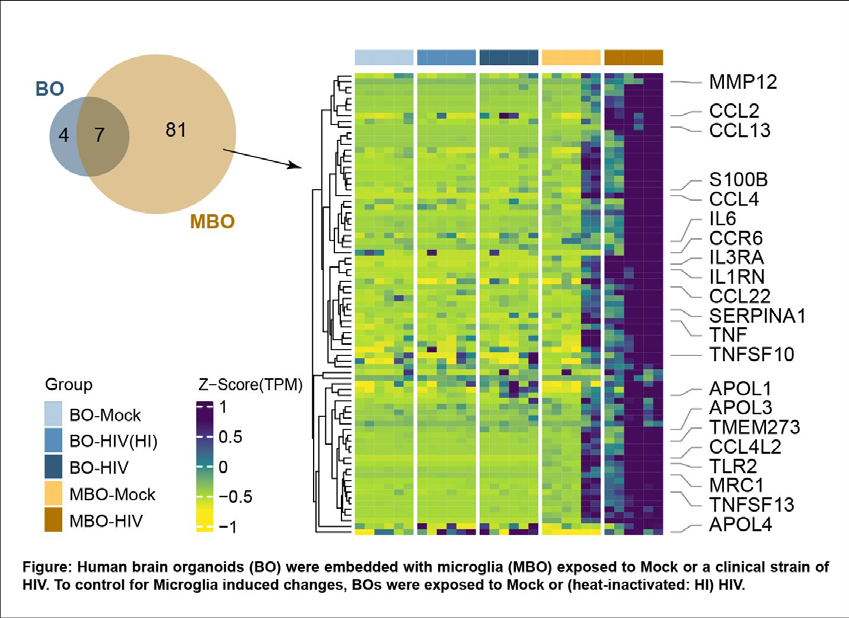
631. HIV-Infected Microglia Drive Transcriptional and Metabolic Changes in Complex Human Brain Organoids
Poster Abstracts
Page: 171
Leanne C. Helgers1, Pamela C. Capendale1, Anoop T. Ambikan2, Renata Vieira de Sa1, Theo B. H. Geijtenbeek3, Adithya Sridhar1, Ujjwal Neogi2, Dasja Pajkrt1
Background
HIV enters the central nervous system early after infection which can result in HIV-associated neurocognitive disorder (HAND), affecting as many as 50% of people living with HIV (PWH). HIV-induced neuroinflammation plays a critical role in HAND. Here, we investigated the impact of HIV infection on brain inflammation and metabolism using an advanced 3D human brain organoid model embedded with HIV-infected microglia.
Methods
We developed a complex human brain organoid model infused with HIV-infected microglia to capture the in vivo complexity of HIV infection in the human brain. We employed transcriptomics, coupled with genome-scale metabolic modeling to delineate metabolic and neuroinflammatory responses elicited by HIV-infected microglia in the brain.
Results
Microscopy confirmed successful integration of HIV-infected microglia in human brain organoids. Expression of HIV-p24 protein was observed co-localizing with microglia and astrocytes, indicating the transfer of HIV or HIV-proteins from infected microglia to astrocytes. Moreover, HIV-induced transcriptional changes in brain organoids were abundant as illustrated by the upregulation of several inflammatory pathways, as validated by RT-qPCR. Genome-scale metabolic modeling using transcriptomic data showed impaired polyamine and tryptophan metabolism, marked by elevated spermidine levels—a metabolite previously linked to neurological impairment in clinical studies.
Conclusions
We observed that HIV-induced inflammation in brain organoids is mediated by HIV-infected microglia and associated with changes in polyamine and tryptophan metabolism. These metabolic changes may contribute to the neuronal dysregulation observed in HAND.
633. Plasma Neopterin as a Potential Biomarker for Neurocognitive Impairment in Aging People With HIV
Poster Abstracts
Page: 171
Anna Prats1, Tuixent Escribà2, Sonia Villanueva-Hernández2, Sandra González3, Meritxell Cucurell3, Ainhoa Yoldi3, Montserrat Alegret4, Mercè Boada4, Eugènia Negredo1, Bonaventura Clotet2, Christian Brander2, Roger Paredes2, Marta Ruiz-Riol2, Jose A. Muñoz-Moreno1
Background
Neopterin, a biomarker of immune activation, has been widely studied in cerebrospinal fluid as a correlate of neuroinflammation and neurocognitive impairment (NCI) in people with HIV (PWH). Recent evidence suggests that plasma neopterin could be useful in identifying PWH at risk of developing NCI. This study explores neopterin as a potential plasma biomarker for NCI using 3 different cognitive screening measures in aging PWH.
Methods
One hundred PWH attended at Germans Trias i Pujol Hospital, Spain, aged ≥50 years, on ART, with plasma HIV-1 RNA levels <50 copies/ml (≤6 months), were randomly selected to participate in the ALI Study (Exploring Suggestive Symptoms of Preclinical Alzheimer's Disease in People with HIV; IRB approval: PI-21-003). A control group of 50 HIV-negative volunteers, matched for age, sex, and education level, was also enrolled. All participants were cognitively assessed using 3 screening tools: Mini-Mental State Examination (MMSE), FACEmemory, and NEU Screen. Plasma neopterin levels were measured by ELISA and were compared between groups and according to cognitive screening classifications. Statistical tests included the Chi-square test for categorical variables and the Mann-Whitney U test for continuous variables.
Results
Most participants were men (73%), with a mean age of 60 (±8) years, and 11 (±4) years of formal education. Positive screening for NCI was more prevalent in PWH than in controls according to the 3 screening methods, reaching statistical signification only with the NEU Screen: MMSE: 14% vs 6%, p=0.145; FACEmemory: 70% vs 56%, p=0.095; and NEU Screen: 37% vs 16%, p=0.009. Neopterin levels were higher in PWH compared to controls: 6.21 ng/ml (IQR: 3.26 - 9.14) vs 3.54 ng/ml (IQR: 2.99 - 4.82), p=0.001. Neopterin levels were also significantly higher in participants with suspected NCI compared to those without, only when using the NEU Screen classification (see Figure).
Conclusions
The higher levels of plasma neopterin observed in aging PWH compared to HIV-negative individuals suggest persistent immune activation despite effective ART. Elevated neopterin levels were significantly associated with suspected NCI as measured by the NEU Screen. These results reinforce the NEU Screen as a useful NCI screening test in HIV infection, and, additionally, underscore the potential utility of neopterin as a plasma biomarker for cognitive decline in aging PWH.
The figure, table, or graphic for this abstract has been removed.
634. A Blip or a Trend? Interpreting Fluctuations in Cognition Over Time in Older Adults With HIV
Poster Abstracts
Pages: 171-172
Marie-Josée Brouillette1, Marianne Harris2, Graham Smith3, Fiona Smaill4, Réjean Thomas5, Shariq Haider4, Scott L. Letendre6, Susan Scott7, Lesley K. Fellows8, Nancy E. Mayo7
Background
Little is known about variations in cognitive performance over the long term among older adults with HIV (OAWH) and the risk of progressive cognitive decline may be overstated based on transient decline between two assessments. This analysis aimed to characterize visit-to-visit and overall evolution of cognition over up to 10 years in OAWH.
Methods
268 participants (87% men; mean duration of HIV 17.3 years, SD: 8.0; 95% undetectable) of the multisite Canadian + Brain Health Now study were followed for ≥ 5 years (mean 6 visits over 7.7 years). They were on average 53.7 years of age (range: 35.1 to 81.2). Cognition was assessed every 9-12 months using the B-CAM, a computerized battery assessing multiple domains. 1) to identify distinct groups of individuals with a similar evolution over time, we used Group-Based Trajectory Analysis of B-CAM scores, using absolute (sensitive to initial value) and centered (more sensitive to change) values 2) to assess if shorter term decline predicted longer term decline, for each pair of visits of a given participant, we assessed meaningful change (≥ 0.5 SD difference), and compared proportions of episodes of such change in the stable and declining trajectories, and 3) among those with at least one episode of decline between visits, Poisson regression was used to compare those on a declining versus stable trajectory on personal characteristics.
Results
Two trajectories of centered B-CAM were present: stable (68.7%) and declining (31.3%). Uncentered B-CAM had 5 patterns: low (intercept: 0.0, 4.9%), medium-low (0.7, 34.2%), intermediate (1.3, 41.9%), medium-high (1.9, 14.1%) and high (2.6, 4.9%). Trajectories of intermediate and higher uncentered B-CAM were less likely to follow a declining trajectory. Experiencing at least one episode of meaningful worsening between visits was common, 50% in the stable group and 100% in the overall declining group, and was associated with an increasing likelihood of a declining trajectory in older participants (RR 2.0 per decade).
Conclusions
Over 10 years, more than half of OAWH had at least one meaningful worsening in cognitive performance which did not reliably predict long-term decline as only a quarter had sustained cognitive decline. Older individuals and those with worse overall performance were at higher risk. These findings suggest that shorter-term worsening need not portend longer-term decline, although it may be more worrisome in older people.
635. Obstructive Sleep Apnea Contributes to Cognitive Difficulties Among Older Adults With HIV
Poster Abstracts
Page: 172
Marie-Josée Brouillette1, Mahra Aldahbashi2, Réjean Thomas3, Marianne Harris4, Graham Smith5, Fiona Smaill6, Shariq Haider6, Scott L. Letendre7, Susan Scott8, Lesley K. Fellows9, Nancy E. Mayo8
Background
Brain health disorders continue to occur in older adults with HIV (OAWH), underscoring the importance of addressing reversible causes. We sought to determine if obstructive sleep apnea (OSA) is associated with cognitive difficulties among OAWH.
Methods
The + Brain Health Now cohort study enrolled 856 individuals aged 35 or older with HIV for ≥ 1 year from 5 HIV clinics in Canada between 2013-2016. Participants were assessed every 9-12 months for up to 10 years. We screened for the presence of OSA with the Berlin (low/high risk) and the STOP-Bang (low/intermediate/high risk) questionnaires. Self-reported cognitive difficulties (SRCD) were assessed with the Patient-Deficit Questionnaire and the HIV-specific Communicating Cognitive Concerns. Rasch analysis was used to combine items to create a harmonized measure of Self-Reported Cognitive Difficulties (range -5.74 to 6.17, SD: 1.66). Performance-based cognition was measured with the B-CAM, a computerized battery of multiple domains (range -2.57 to 4.03, SD: 0.76). Generalized linear models analyzed associations between OSA screening, cognition, age, and sex.
Results
1881 assessments in 707 participants, who were mostly men (84.7%) with mean age 55.0 years (SD: 8.2). The proportion of visits with a positive OSA screen were 35.7% for the Berlin and, for the STOP-Bang, 35.5% with intermediate and 33.0% with high risk. More self-reported cognitive difficulties were associated with a positive screen on the Berlin (-0.38, 95% CI: -0.53 to -0.23) or positive screen in the high-risk category on the STOP-Bang (-0.35, -0.52 to -0.17), this latest also being associated with worse performance on the B-CAM (-0.11, -0.22 to -0.01). The presence of loud snoring, nearly daily breathing interruptions, and fatigue were predictive of cognitive difficulties.
Conclusions
Among OAWH, over 1 in 3 individuals screened positive for OSA, which was associated with higher self-reported cognitive difficulties and worse performance-based cognition, although the impact was lower than the 0.5 SD generally considered clinically meaningful. Validation of the screening questionnaires and impact of treatment in HIV would be next steps. In the meantime, since the treatment of OSA has several health benefits, screening and treatment should be considered.
636. Association of Delayed HIV Diagnosis or ART Initiation With Risk of Age-Associated Dementia
Poster Abstracts
Page: 172
Jennifer O. Lam1, Catherine Lee1, Craig Hou2, Dongjie Fan3, Haihong Hu4, Errol Lopez5, William Towner5, Michael Horberg4, Michael Silverberg1
Background
Recent studies have reported that older adults with HIV infection are at elevated risk of age-associated dementia despite antiretroviral therapy (ART). We investigated the hypothesis that delayed HIV diagnosis or initiation of ART could contribute to greater risk of developing dementia later in life.
Methods
We conducted a retrospective cohort study of people with HIV who received care at Kaiser Permanente healthcare systems in Northern California, Southern California, and Mid-Atlantic States (Maryland, Virginia, Washington DC) between 1/1/2000 and 12/31/2023. Included individuals were aged ≥50, had at least 1 documented ART prescription fill, at least 1 year of continuous health plan enrollment, and no prior diagnosis of dementia. Low CD4 count (i.e., <200 cells/µl) at 1st documented ART prescription fill was used as a proxy for delayed HIV diagnosis or ART initiation. The outcome of interest was incident dementia, identified using ICD codes in the electronic health record. The association of low CD4 count at 1st ART prescription with incident dementia was evaluated using Cox regression, with age as the time scale and adjustment for the following covariates: HIV RNA level at 1st ART prescription, calendar year of 1st ART prescription (to account for temporal trends in ART prescription), sex, race/ethnicity, neighborhood-level education, smoking, substance use disorders, depression, cardiovascular disease, diabetes, hepatitis C infection, obesity, and number of outpatient visits in the year before study inclusion. To account for the competing risk of death, a sensitivity analysis was done using a Fine-Gray subdistribution hazard model.
Results
The study included 23,201 people with HIV with documented ART prescriptions (mean age at study inclusion: 54.0 years, 87.1% men, 46.1% White, 22.7% Black, 20.7% Hispanic, 3.1% Asian or Pacific Islander, 6.6% other or unknown race/ethnicity). During follow-up (mean 6.8 years, SD: 5.8), we observed 748 cases of incident dementia. Low CD4 count at 1st ART prescription was associated with greater risk of developing dementia (adjusted hazard ratio: 1.24, 95% CI: 1.03-1.49; see Table). After accounting for deaths during follow-up, results were similar (adjusted hazard ratio: 1.23, 95% CI: 1.02-1.49).
Conclusions
Findings suggest that delayed HIV diagnosis and ART initiation are associated with risk of developing age-associated dementia. These findings emphasize the importance of continuing assertive HIV screening in the community.
Table 1.
Hazard ratio for incident dementia (95% CI)
|
|
Unadjusted |
Adjusted |
| CD4 count (cells/µl) at ART initiation |
| ≥200 |
Reference |
Reference |
| <200 |
1.38 (1.17-1.62) |
1.24 (1.03-1.49) |
637. Incidence and Risk Factors for Neurocognitive Disorders Among Persons With HIV in Washington, DC
Poster Abstracts
Pages: 172-173
Shannon K. Barth1, Yun S. Ji2, Ellen Yeung1, Morgan Byrne1, Michael Horberg3, Anne Monroe1, Amanda D. Castel1, the DC Cohort Executive Committee
Background
Development of neurocognitive disorders (ND) remains a concern among persons with HIV (PWH), despite advances in antiretroviral treatments (ART) which have aided in reducing ND incidence. Studies have indicated increased risk for ND among PWH with comorbidities such as obesity, cardiovascular disease (CVD), Hepatitis C, and toxoplasmosis. The purpose of this analysis was to determine the incidence, trends, and comorbidities associated with electronic health record (EHR)-based documented NDs among a longitudinal cohort of PWH in Washington, DC.
Methods
Using EHR data from the DC Cohort, an ongoing longitudinal study of PWH in Washington, DC, from 1/12/11 through 6/30/24, we identified PWH with ICD codes indicative of NDs, classified as mild (e.g., mild cognitive impairment, delirium) or advanced (e.g., dementia, neurogenerative disorder), and medical comorbidities. We conducted bivariable analyses comparing those with and without ND. We calculated temporal trends for ND. Logistic regression analyses examined associations between ND and pre-diagnosis comorbidities, adjusting for demographic (e.g., age), socioeconomic, and HIV-related factors. ART utilization prior to ND diagnosis was also explored.
Results
There were 796 unique cases (6.1%) of ND identified (157 mild and 732 advanced). Differences in ND cases vs. non-cases were found by age (57 vs. 46, p<0.01), race/ethnicity (non-Hispanic white=15.6% vs 12.7%, p<0.01), insurance status (private=23.1% vs. 30.7%, p<0.01), and viral load (not suppressed <200 copies/mL=17.8% vs. 21.0%; p<0.05). Incidence decreased slightly for mild ND and increased for advanced (p<0.001) over the study period. Pre-ND diagnoses of DM and CVD were highly prevalent for both mild ND (40.3%, 67.5%, respectively) and advanced ND (29.1%, 56.6%). In adjusted logistic regression models, PWH with ND were more likely to have major depressive disorder (MDD), diabetes mellitus, CVD, chronic kidney disease, toxoplasmosis, opportunistic infections, and anxiety (Table). Of those with available ART data prior to ND diagnosis, the greatest prevalence of utilization was INSTI-based (32.9%), Dual class (22.8%), and PI-based (22.1%) ART.
Conclusions
While the prevalence of PWH with ND in our analysis was low, the incidence of advanced ND is increasing. PWH with ND were more likely to have several comorbidities, indicating increased burden of disease. Identification of prevalent pre-ND disorders may help elucidate ND development among aging PWH.
Table 1.
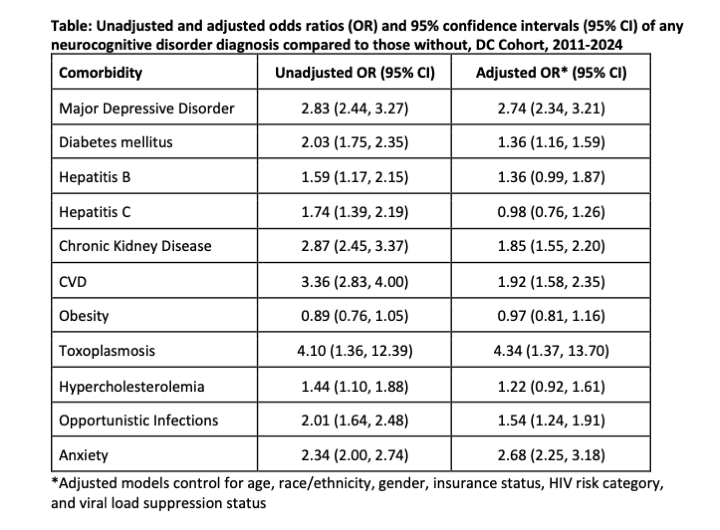
638. Systemic Immune-Inflammation Index Links to Slower Psychomotor Speed in Older People With HIV
Poster Abstracts
Page: 173
Crystal Wang1, Raymond Jones2, Evelyn Iriarte3, Jun Yeong Byun2, Kristen Krause4, Casey Xavier Hall5, Ronald Ellis6, Mariana Cherner1, Suzi Hong1, David Moore1, Scott L. Letendre1, Jennifer Iudicello6
Background
Persistent inflammation and immune activation are hallmark features of HIV disease, and associated with long-term brain health disorders, such as neurocognitive impairment even in treated people with HIV (PWH). As PWH age, the interactions between aging, inflammation, and brain health are important to understand. The Systemic Immune-Inflammation Index (SII) has prognostic value as an indicator of immune activation and systemic inflammation in clinical conditions, but few studies have examined its utility in PWH. The current study examined the hypothesis that inflammation, measured by the SII, would have worse effects on neurocognition for older than younger PWH.
Methods
Participants were 1,867 PWH enrolled in studies affiliated with the HIV Neurobehavioral Research Program from 2003-2023. Neurocognition was assessed using demographically adjusted T-scores across 7 domains. The SII was calculated from cell counts ([neutrophils X platelets]/lymphocytes). Multiple linear regressions tested the effects of inflammation, age (dichotomized as older [>50] or younger [<50]), and their interaction on neurocognition, adjusting for covariates (e.g., sex, nadir and current CD4, antiretroviral therapy (ART) use, viral suppression, and estimated duration of HIV).
Results
Across all participants (80% male; 46% older; 35% White; 66% AIDS; 61% virally suppressed; 81% on antiretroviral therapy [ART]), the SII was associated with lower global neurocognition, verbal fluency, processing speed, learning, and recall (p<.05). Although there was no difference in SII by age (p>.10), there was a significant age x SII interaction for psychomotor speed (β=-.73, SE=.316, p=.022), such that inflammation was associated with worse psychomotor functioning for older PWH (β=-1.51, SE=.470, p=.001) but not younger PWH (p>.10). The SII-psychomotor functioning association remained significant in a subgroup of virally suppressed older PWH (N=606; β=-1.15, SE=.525, p=.029).
Conclusions
The SII was associated with poorer performance in multiple neurocognitive domains and globally in PWH. Most of these effects were not modified by age, except for psychomotor speed, highlighting domain specific sensitivity to inflammation among older PWH and treatment-related implications (e.g., anti-inflammatory medications). Findings also highlight the utility of the SII in identifying psychomotor functioning in older PWH, that should be further examined for its prognostic value in future studies.
Figure 1.
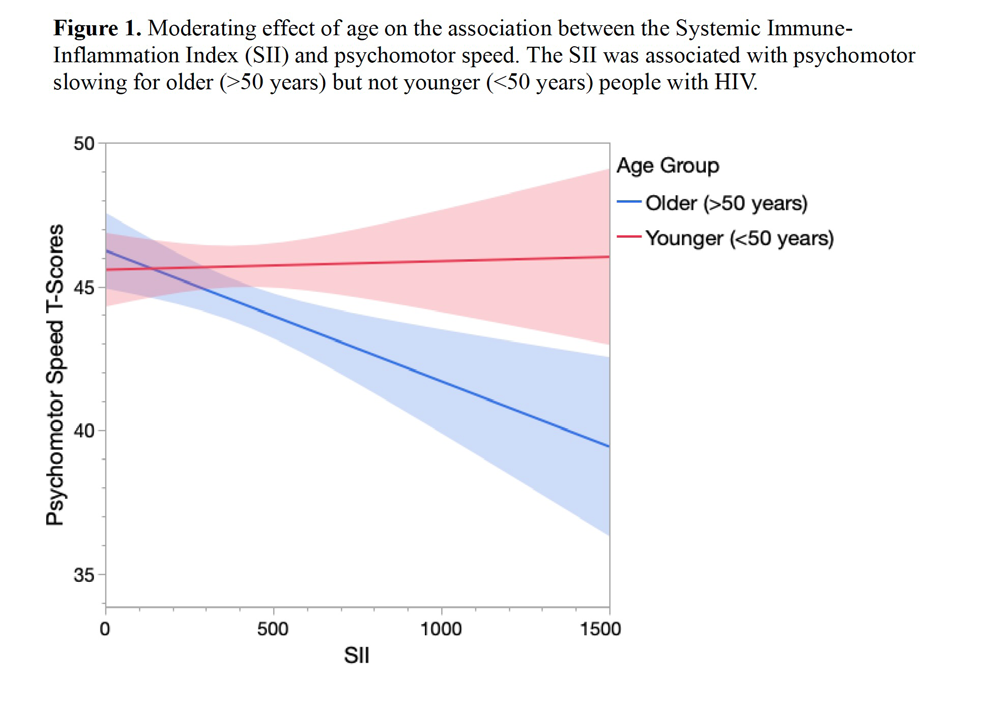
639. First-in-Human Study of a Long-Acting Injectable 3 Antiretroviral Drug Combination Nanoparticle
Poster Abstracts
Pages: 173-174
Rachel A. Bender Ignacio1, Christine Johnsson1, Matthew Hartman1, Simone Perazzolo1, Eli P. Burnham1, Phoebe Bryson-Cahn1, Claborne Youngblood1, Pablo Belaunzarán-Zamudio2, Keith Crawford2, Edward P. Acosta3, Zachary R. Stephen1, Brett S. Hanscom4, Ann Melvin5, Ann C. Collier1, Rodney J. Y. Ho1, the Targeted Long-Acting Combination Antiretroviral Therapy (TLC-ART) Program
Background
Long-Acting antiretroviral therapy (LA-ART) is considered an integral tool to improve adherence and decrease stigma, but its global implementation has met barriers, including cost and resources for administration. The TLC-ART program, a public-private partnership, engineered a novel 3-drug combination nanoparticle (DcNP) for subcutaneous injection containing lopinavir (LPV), ritonavir (RTV), and tenofovir (TVF) “TLC-ART 101” bound with DSPC and mPEG-DSPE lipid excipients. We report safety and pharmacokinetics (PK) from the completed first-in-human (FIH) study, NCT06850728.
Methods
This open-label FIH study with pharmacologically guided adaptive design allowed for dose escalation or de-escalation between cohorts. TLC-ART 101 DcNP contains 10.4mg of LPV, 2.7mg RTV, and 6.1mg of TFV per ml. Participants were healthy and without HIV. The LOW Dose cohort received 1.5ml; MID-Dose received 2x 1.5ml each; HIGH Dose received 2x 2ml each as subcutaneous peri-umbilical injection(s) on Day 0 as a single dose. Participants were evaluated over 24hrs and on days 1, 2, 3, 7, 10, 14, 21, 28, 35, 49, 57, and 63. Blood was collected for plasma PK analysis and safety.
Results
We enrolled 8 men and 4 women, (mean age 37; 50% non-white). Injection site reactions (ISR) included 7 Grade 1 ISRs and 3 Grade 2 ISRs (erythema). A HIGH Dose participant experienced anaphylaxis 6hrs after dosing, recovering after intervention including epinephrine. The dose was then decreased by 25% and the final 3 participants (MID) experienced no systemic AEs. Additional AEs: Gr 2 Lip swelling (LOW), Gr 2 erythematous rash (HIGH), Gr 1 generalized pruritis (n=2, LOW, HIGH); no gastrointestinal side effects occurred. No participants had increases in IgE or tryptase after dosing. Each drug average Cmax was within the safety parameters of oral dosing. Average T1/2 was 33 days for LPV, 1 day for RTV, and 4 days for TFV. Drug components were detectable on average at 63 days (LPV), 4 days (RTV), and 20 days (TFV).
Conclusions
A single subcutaneous dose of LPV/RTV/TFV-in-DcNP resulted in the first known long-acting HIV protease inhibitor; boosting by RTV was not apparent. TFV half-life was extended but not to the degree expected from primate models. Systemic hypersensitivity was not Type I (non-IgE) and is under mechanistic exploration. This FIH trial will support development of complete subcutaneously administered LA-ART regimens, including TLC-ART 301 [dolutegravir/lamivudine/TFV (LA-TLD)], currently in pre-clinical studies.
Figure 1.
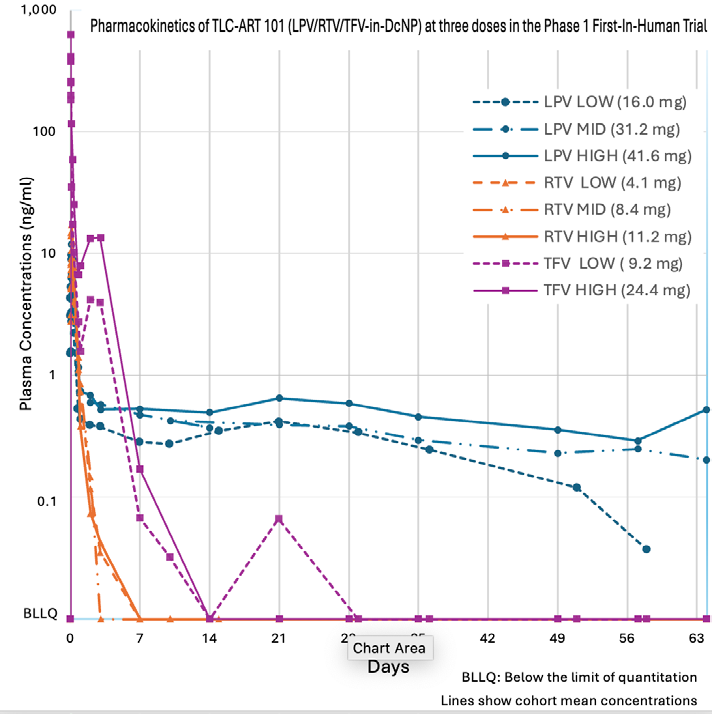
640. Preclinical Pharmacokinetic Assessment of a Long-Acting Solid Injectable for Hepatitis C Virus
Poster Abstracts
Page: 174
Usman Arshad1, Henry Pertinez1, Joanne Sharp1, Joanne Herriott1, Edyta Kijak1, Helen Cox1, Jonathan Massam1, Andrew B. Dwyer1, Alison C. Savage1, James J. Hobson1, Catherine Unsworth1, David Thomas2, Paul Curley1, Steve Rannard1, Andrew Owen1, the Centre of Excellence for Long-acting Therapeutics (CELT)
Background
Approximately 58 million people are chronically infected with HCV globally, with approximately 1.5 million new infections per year and a disproportionate burden in low- and middle-income countries. Approved oral treatments, administered over 8 – 12 weeks, are highly effective demonstrating >98% sustained virological response (SVR) in RCTs. However, in some populations intention to treat analyses have indicated SVR rates <50%. Long-acting drug delivery in HCV holds promise to reduce loss of patients to follow-up, mitigate resistance and adherence challenges, and facilitate test and cure strategies. Surveys of patient and provider groups have consistently demonstrated high potential acceptability of such an approach.
Methods
Glecaprevir and pibrentasvir were formulated using a spray drying technology and processed to form a 11 mm x 2 mm solid using vacuum compression moulding. Resultant solid injectable formulations were administered to Male Sprague Dawley rats (n = 4, 250-300g) within each flank of the scapular region using a 12-gauge needle. Each solid consisted of 30 wt% glecaprevir, 30 wt% pibrentasvir, and 40% excipient. Total dose was 27mg for each drug. Whole blood was collected from the tail vein over 13 weeks and following processing, drug concentrations were quantified in plasma using a validated LC MS/MS assay.
Results
Following administration, Cmax concentrations of 2490 ± 500 ng / mL glecaprevir and 248 ± 46 ng / mL pibrentasvir were achieved. Tmax occurred at ~2 hours post dose for glecaprevir and ~10 hours post dose for pibrentasvir. AUC0-8weeks was 169 ± 69 μg·h/ml for glecaprevir and 47.3 ± 6.6 μg·h/ml for pibrentasvir. Both drugs remained detectable within plasma for the full 13 weeks. No behavioural issues were encountered, animals gained weight throughout and no overt injection site issues were visible upon inspection.
Conclusions
Preclinical data for a novel glecaprevir / pibrentasvir solid injectable demonstrated sustained concentrations of both drugs in rats for greater than 8 weeks. High concentrations were achieved rapidly after administration possibly mitigating the need for oral lead-in which would be sub-optimal for treatment of chronic infection. Further work is required to understand variability in pharmacokinetic exposure of solid injectables relative to their liquid counterparts, and acceptability of the solid injectable approach to patients.
641. Fixed Dosing Versus Body-Weight-Based Dosing of HIV-1 Prophylactic Monoclonal Antibodies in Adults
Poster Abstracts
Page: 174
Yunda Huang1, Lily Zhang1, Huub Gelderblom1, Kelly Seaton2, Nicole Yates2, Carmen Paez1, Julie Ledgerwood3, Stephen Walsh4, Magdalena E. Sobieszczyk5, Sri Edupuganti6, Colleen Kelley7, Michael Pensiero8, Peter Gilbert1, Richard A. Koup3, Georgia D. Tomaras9
Background
Body-weight-based dosing has been typically used in phase 1 trials of therapeutic and prophylactic monoclonal antibodies (mAbs). In recent years, pharmacokinetics (PK) modeling and simulations aided label changes of multiple marketed mAbs for alternative fixed dosing regimens that reduce inter-individual PK variability while maintaining the same average mAb concentrations. We aimed to evaluate fixed dosing versus weight-based dosing for 3 IgG1-based HIV-1 mAbs, VRC07-523LS, PGT121.414.LS and PGDM1400LS, that are planned for HIV-1 prevention efficacy testing, based on data from earlier clinical trials of these mAbs in people without HIV-1.
Methods
For each mAb, we used a 2-compartment population PK model to describe the overall trend and inter-individual variabilities in serum concentrations over time post mAb administration from 251 individuals for VRC07-523LS, 113 for PGT121.414.LS and 95 for PGDM1400LS. We evaluated the effect of body weight on each PK parameter. Using the final best-fitting PK model, we performed simulations of mAb serum concentrations to compare inter-individual variabilities in concentrations at 1 day, 12 weeks and 24 weeks post IV infusion and in area under the time-concentration curve (AUC) between the two dosing regimens. To mirror real-world populations, the simulations were based on sex-specific weights observed in 1302 females-at-birth and 1779 males-at-birth in a recent HIV-1 mAb efficacy study.
Results
For all 3 mAbs, we observed a significant but generally modest effect of body weight on PK parameters -- clearance rate, volume of central compartment, and volume of peripheral compartment -- with an estimate of ~5% increase of each PK parameter per 10% increase in body weight. Correspondingly, overall magnitude and variability in the time-specific concentrations and in AUC were comparable between the two dosing regimens for both females- and males-at-birth. Consistent with the PK models, the relationship between body weight and concentrations differs between the 2 dosing regimens with a generally positive correlation for weight-based dosing but a negative correlation for fixed dosing (Figure). For individuals with body weight below the 15th or above the 85th percentiles, fixed dosing results in < 3% difference in median AUC compared to the overall population.
Conclusions
Given the advantage of fixed dosing in reducing vial wastage and increasing operational efficiency, fixed dosing is recommended for these 3 HIV-1 mAbs in future clinical testing.
Figure 1.
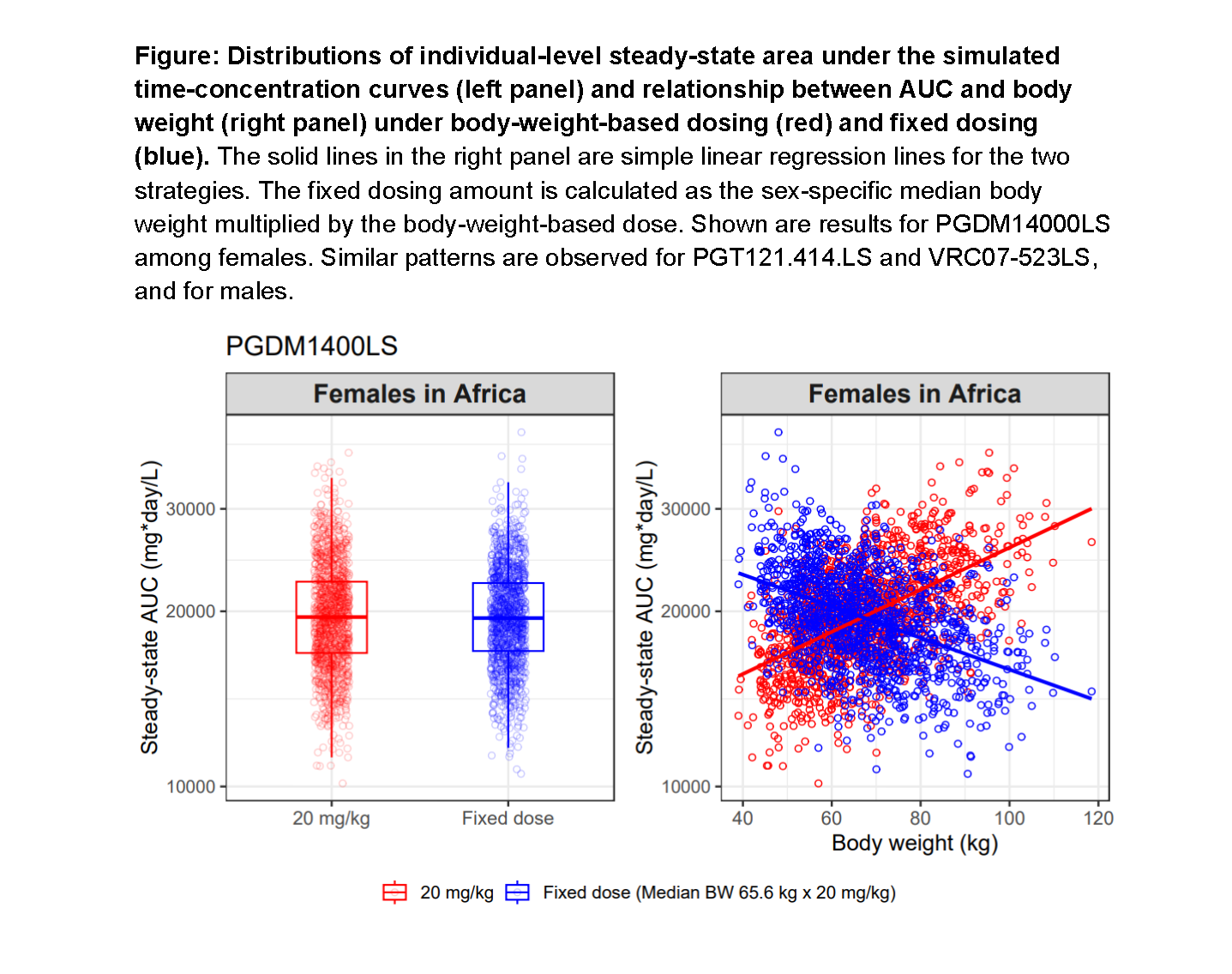
642. Pharmacokinetic Modeling of Missed Dose Scenario of Oral Weekly Islatravir Plus Lenacapavir
Poster Abstracts
Page: 175
Dhananjay Marathe1, Diane Longo2, Haeyoung Zhang1, Nieves Velez de Mendizabal1, Ryan Vargo2, Hadas Dvory-Sobol1, Randolph Matthews2, Martin Rhee1, Cyril Llamoso2, Gillian Gillespie2, Marjorie Imperial1
Background
In a Phase 2 study, oral once-weekly (QW) islatravir (ISL) plus lenacapavir (LEN) maintained high rates of viral suppression at 24 weeks in people with HIV-1 who were virologically suppressed (NCT05052996; Colson et al. CROI 2024; Abstract 208). To maintain high rates of viral suppression, it is important to ensure optimal drug concentrations in the event of missed doses.
Methods
ISL-triphosphate (ISL-TP) simulations used an existing population pharmacokinetic (PK) model developed using oral ISL PK data from ISL Phase 1–3 studies. Similarly, LEN simulations used an existing single-agent model developed with intravenous, oral, and subcutaneous LEN PK data. The reference scenario was dosing with 1 mg ISL and 600 mg LEN on Day (D)1 and D2 (corresponding to two tablets of ISL/LEN 0.5/300 mg fixed dose combination [FDC] on each day), followed by 2 mg ISL and 300 mg LEN (corresponding to one tablet of ISL/LEN 2/300 mg FDC) QW starting on D8 as a maintenance dose. Simulations under steady state conditions were performed to estimate the impact of various durations of missed doses and make-up dose strategies. These were compared against the reference scenario as well as efficacy and clinically established safety exposure thresholds, as appropriate, to guide missed dose recommendations for Phase 3 studies. For ISL-TP, the target was to ensure that the 90% prediction interval (PI) for ISL-TP exposures remained above the inhibitory quotient (IQ)5 (1.25 µM) for M184V/I variants and IQ5 (0.25 µM) for wild-type HIV-1, and below exposures associated with decreases in total lymphocyte and CD4+ T-cell counts. For LEN, the target was to ensure the 90% CI for mean plasma concentration projections was consistently above the 4-fold in vitro protein binding-adjusted 95% effective concentration (IQ4; 15.5 ng/mL).
Results
Simulations demonstrated that both ISL-TP and LEN maintained optimal concentrations one week after a missed dose at steady state (Figure). After one full missed dose (14 days after last dose), the simulated median trough concentration for ISL-TP was 2.16 µM (90% PI: 1.45–5.15), and the simulated mean trough concentration for LEN was 20.7 ng/mL (90% CI: 19.4–22.9), well above the target concentrations of 1.25 µM and 15.5 ng/mL, respectively.
Conclusions
The analysis showed that people with HIV-1 who miss one dose of 2/300 mg ISL/LEN FDC can continue treatment and maintain optimal drug concentrations, allowing for a one-week forgiveness window.
Figure 1.
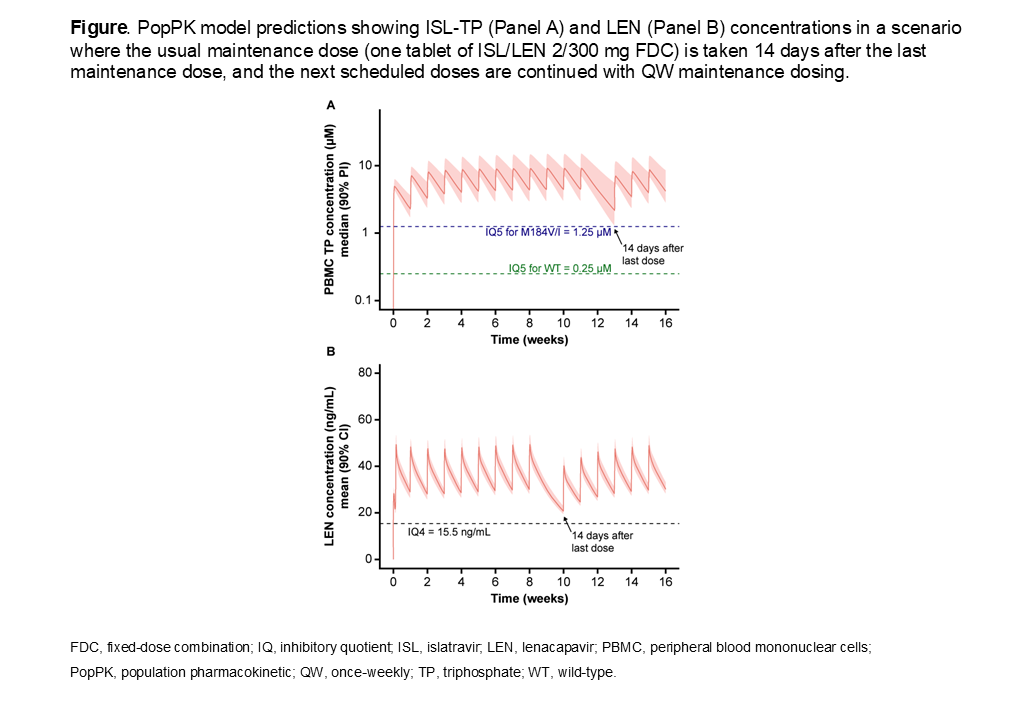
643. Modeling Accurately Predicts Efficacious Islatravir QW Dose With No Lymphocyte and CD4 Changes
Poster Abstracts
Page: 175
Diane Longo1, Michelle Pham1, Marjorie Imperial2, Gillian Gillespie1, Stephanie Klopfer1, Randolph Matthews1, Cyril Llamoso1, Elizabeth Rhee1, Martin Rhee2, Dhananjay Marathe2, Ryan Vargo1
Background
Islatravir (ISL) is a nucleoside reverse transcriptase translocation inhibitor (NRTTI) being studied for HIV-1 treatment. Exposure-related decreases in total lymphocyte and CD4+ T-cell counts were observed across ISL clinical trials, with greater changes observed in ISL higher-dose regimens. Models that describe changes in lymphocytes and CD4+ T-cells in relation to intracellular ISL-triphosphate (TP) concentrations were used to optimize the QW dose for HIV treatment. ISL 2 mg QW was predicted to achieve efficacy thresholds and similar lymphocyte and CD4+ T-cell dynamics compared to standard antiretroviral therapy (ART). Subsequently, a Phase 2 study was initiated (GS-US-563-6041, N=104) with virologically suppressed (VS) people with HIV-1 randomized 1:1 to switch from once-daily (QD) oral bictegravir/emtricitabine/tenofovir alafenamide (B/F/TAF) to oral QW ISL 2 mg + lenacapavir (LEN) 300 mg.
Methods
Simulations were performed using a previously developed ISL PopPK model, with observed ISL plasma PK for Phase 2 participants as input, to predict ISL-TP exposures in Phase 2 participants. Previously developed ISL PK/PD models were used to simulate lymphocyte and CD4+ T cell counts using PopPK-predicted ISL-TP exposures for Phase 2 participants as input.
Results
Observed ISL plasma PK exposures for Phase 2 participants were consistent with exposures predicted for 2 mg QW in simulations performed prior to the Phase 2 study (Figure 1A). Simulations performed using the ISL PopPK model with observed ISL plasma PK for Phase 2 participants as input demonstrated that all Phase 2 participants achieved ISL-TP exposures above the inhibitory quotient (IQ)5 (1.25 µM) for M184V/I variants and IQ5 (0.25 µM) for wild-type (WT) HIV-1 (Figure 1B). As predicted, achieving these exposures resulted in high rates of participants maintaining virologic suppression through Week 24 in the Phase 2 study. ISL-TP exposures achieved in Phase 2 were below levels predicted by the PK/PD models to have lymphocyte and CD4+ T cell effects. No between-group differences in lymphocyte and CD4+ T cell changes were observed in Phase 2.
Conclusions
Phase 2 efficacy and lymphocyte and CD4+ T-cell results are consistent with predictions that QW 2 mg ISL in combination with LEN is highly efficacious and there were no between-group differences in lymphocyte or CD4+ T-cell changes from baseline to Week 24. ISL/LEN 2/300 mg is proceeding into Phase 3 with the potential to be the first oral QW treatment option.
Figure 1.
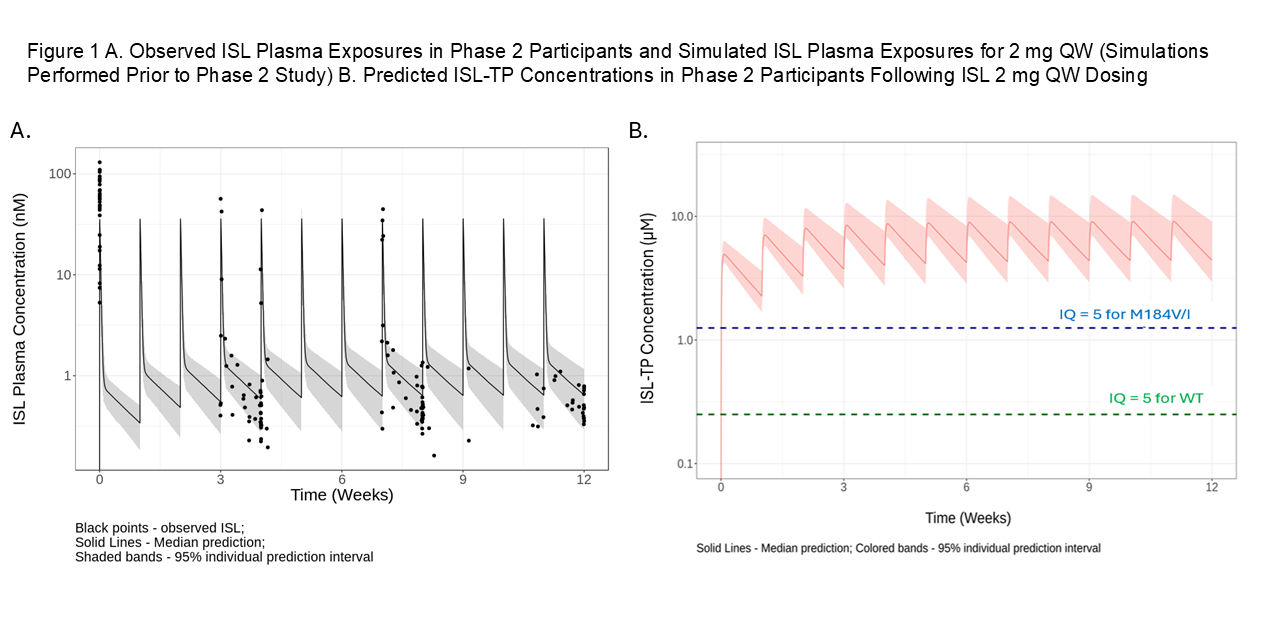
644. Can “Equivalence” of a Generic Cabotegravir LA Be Inferred From a Shortened Pharmacokinetic Study?
Poster Abstracts
Pages: 175-176
Henry Pertinez1, Rajith Rajoli1, Andrew Lloyd1, Charles W. Flexner2, Andrew Owen1
Background
Long acting injectable (LAI) antiretrovirals hold enormous potential for treatment and prevention of HIV in low- and middle-income countries (LMIC) but significant access challenges exist. One obstacle for generic LAIs is the assessment of “equivalence” with originator products. Accepted standards of bioequivalence for oral generic products may be sub-optimal because small differences may be accentuated over long dosing intervals, and the need for phase III studies would present major funding and timeline obstacles to access. Partial AUCs and/or truncated pharmacokinetic (PK) assessments have been postulated as possible approaches to accelerate approval of generic LAIs. The current study sought to assess potential feasibility of such an approach through re-analysis of published PK for cabotegravir (CAB) LAI.
Methods
A single 800 mg dose CAB LAI plasma PK profile (32 week duration) from the literature was fitted with an empirical PK model. A 1-compartment disposition model was used, and profile shape warranted a 2-fraction 1st order input depot release. Repeated fits successively truncating the last timepoint of the profile from the dataset were undertaken. PK model parameter estimates for truncated profiles were then compared to those from the full profile.
Results
Adequate fitting of the model was obtained. With the dataset truncated up to the first 12 weeks, parameter estimates remained within 10% deviation from those obtained using the full profile (Table 1). Truncation to 10 weeks resulted in 14% and 16% deviation in estimates of CL/F and AUC0-inf relative to estimates from the full profile. Subsequent truncation resulted in significant deviation of estimates from those achieved with the full profile for all parameters (>26% deviation) with poorer precision of estimates reflected in higher relative standard errors.
Conclusions
Analysis was undertaken using a single dataset for CAB LAI, which represents a best-case scenario for a generic product by mimicking an identical product given to the same recipients. Despite this low bar, truncation of the profiles to below 10 weeks for 800mg fittings was unable to accurately predict parameters determined from the full profile. The analysis sheds light on the complexity of the challenge and may be useful to inform further development of strategies for accelerated “equivalence” evaluation for generic LAI.
Table 1.
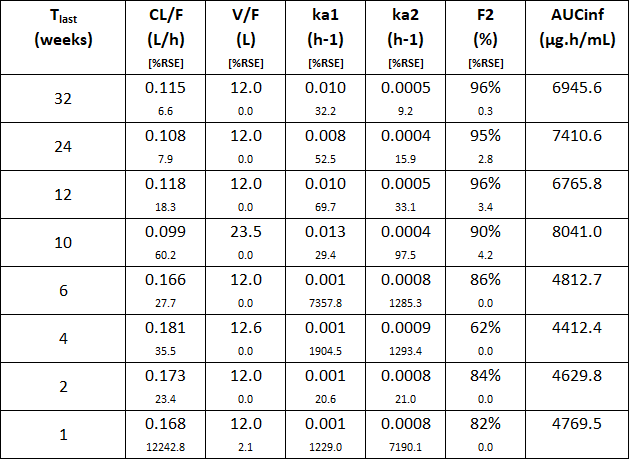
645. Drug Interactions Between Dolutegravir (DTG) and Escalating Doses of Rifampicin (RIF): DORIS Study
Poster Abstracts
Page: 176
Yashna Singh1, Jerome R. Semakula2, Peter Chodacki1, Sheetal Kassim1, Lucy Read3, Laura Dickinson4, Laura J. Else4, Helen E. Reynolds4, Jim Read3, Duolao Wang3, Catriona Waitt4, Catherine Orrell5, Saye Khoo4, the DoRIS Study Group
Background
Evidence suggests higher RIF doses may be more effective for tuberculosis (TB) treatment. It is unclear if incremental RIF doses will increase risk of drug interactions through more potent induction of CYP3A4 enzymes and drug transporters. Some data suggest induction may be at maximum with standard dose (10mg/kg). Using standard, medium and high RIF doses, we characterised the impact of UGT1A1 induction on the pharmacokinetics (PK) of DTG, and induction of CYP3A4 on midazolam (MDZ) and the transporter P-gp on digoxin (DIG).
Methods
DoRIS was an open-label, fixed-sequence, 4-phase study in TB-infected HIV-negative adults nearing the end of the continuation phase of standard anti-TB therapy (ATT). DTG (50mg BID for 1 week) exposure from intensive sampling was compared when dosed with RIF at 10mg/kg (Day 14), 20mg/kg (Day 28) and 35mg/kg (Day 42), and ≥4wks post-ATT (at 50mg OD). Single dose MDZ (0.025mg/kg) and DIG (0.25mg) were given on PK sampling days. Changes in PK parameters were evaluated by geometric mean ratio (GMR) and considered statistically significant if the 90% CI did not cross 1.0.
Results
Of 36 participants from South Africa and Uganda [11% female at birth, median (range) age 35years (18-62), weight 61kg (50-93), DTG and RIF PK were available from 33 individuals (Figure 1). Geometric mean (GM) DTG Ctau were 665, 660, 657ng/mL on Day 14, Day 28, Day 42 vs. 687 ng/mL post-ATT (GMR, 90%CI: 1.01 [0.75-1.36]; 0.97 [0.75-1.27]; 0.87 [0.71-1.07], respectively). DTG Cmax and AUC0-12 were significantly lower with RIF on Day 14: 0.59 [0.52-0.67] and 0.72 [0.64-0.81], Day 28: 0.60 [0.51-0.69] and 0.71 [0.62-0.81], Day 42: 0.59 [0.53-0.65] and 0.72 [0.65-0.80]. Proportion of Ctau above DTG EC90 (342 ng/mL) was 79, 88, 90 and 83% on Day 14, Day 28, Day 42 and post-ATT, respectively. RIF increased supraproportionally with dose, AUC0-12 GMR, 90%CI: 2.93 [2.35-3.66] (20mg/kg) and 4.60 [3.65-5.79] (35mg/kg). Preliminary MDZ and DIG data showed little change with higher RIF doses (D28, D42) compared to standard dose (MDZ Cmax 0.99 [0.58-1.69]; 0.99 [0.73-1.34] and DIG Cmax 1.11 [0.84-1.47]; 0.97 [0.74-1.26]; n=5).
Conclusions
Despite significant reductions in DTG exposure with RIF, Ctau was reduced to a similar extent with higher RIF doses, suggesting maximum induction at standard 10mg/kg. This is supported by preliminary probe data. Additionally, most individuals remained above the DTG EC90. Further DTG dose adjustment may not be necessary with high dose RIF.
Figure 1.
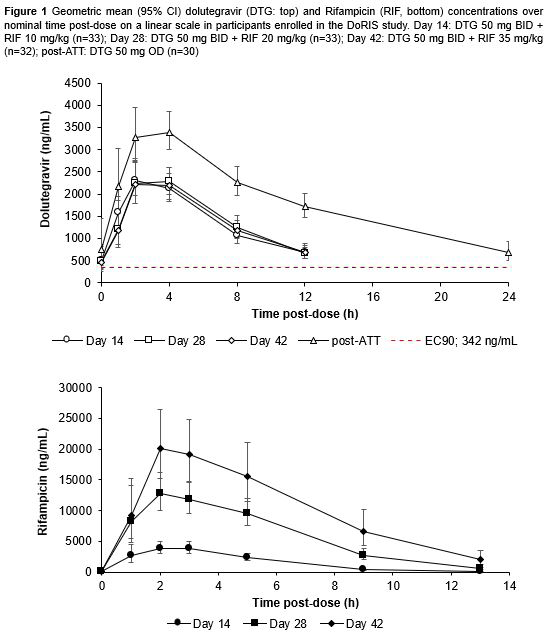
646. TAF Achieves Adequate Intracellular Tenofovir-DP Concentrations With Rifampicin-Based TB Therapy
Poster Abstracts
Pages: 176-177
Rephaim Mpofu1, Nomathemba Chandiwana2, Simiso M. Sokhela2, Michelle Moorhouse2, Francois Venter2, Peter Anderson3, Lubbe Wiesner1, Marta Boffito4, Gary Maartens1, Phumla Sinxadi1
Background
Co-administration of rifampicin with tenofovir alafenamide fumarate (TAF) significantly reduces plasma tenofovir and intracellular tenofovir diphosphate (TFV-DP) concentrations. Standard dose TAF with rifampicin (RIF) was associated with TFV-DP concentrations that were markedly higher than those observed with tenofovir disoproxil fumarate (TDF) without rifampicin in healthy volunteers, however, data from people with TB/HIV-1 are needed to inform guidelines.
Methods
An open-label, three-period sequential PK study was conducted in participants with HIV-1 that were on antiretroviral therapy (ART) and virally suppressed, and who were also in the maintenance phase of therapy for RIF-sensitive TB. Steady-state TFV‑DP and plasma tenofovir concentrations were measured during three treatment periods: 1) TDF+RIF during the maintenance phase of TB therapy; 2) TAF+RIF after one month of treatment during the maintenance phase of TB therapy, and 3) TDF one month after completion of TB therapy. TAF and TDF were dosed at the standard daily doses (25 mg and 300 mg respectively) and were combined with efavirenz (600 mg), and either emtricitabine (200 mg) or lamivudine (300 mg). Area under the concentration-time curve over 24 hours (AUC0-24h) were estimated, and AUC0‑24h geometric mean ratios (GMR) with 95% confidence intervals (95% CI) were calculated to compare concentrations across periods.
Results
Eighteen participants were enrolled: median age of 41 years; 56% male. TAF+RIF was associated with a TFV-DP AUC0-24h GMR of 5.58 (95% CI 4.34, 7.17) and 5.43 (3.90, 7.55) when compared with TDF+RIF and TDF-only, respectively (Figure). The plasma tenofovir AUC0-24h GMR was 0.07 (0.06, 0.09) when treatment with TAF+RIF was compared with both TDF+RIF and TDF-only periods.
Conclusions
TAF and RIF co-administration was associated with higher TFV-DP concentrations than TDF, both with and without RIF. This study confirms previous findings among healthy volunteers and supports the co-administration of standard-dose TAF with RIF in the management of people with TB/HIV-1 co-infection.
Figure 1.
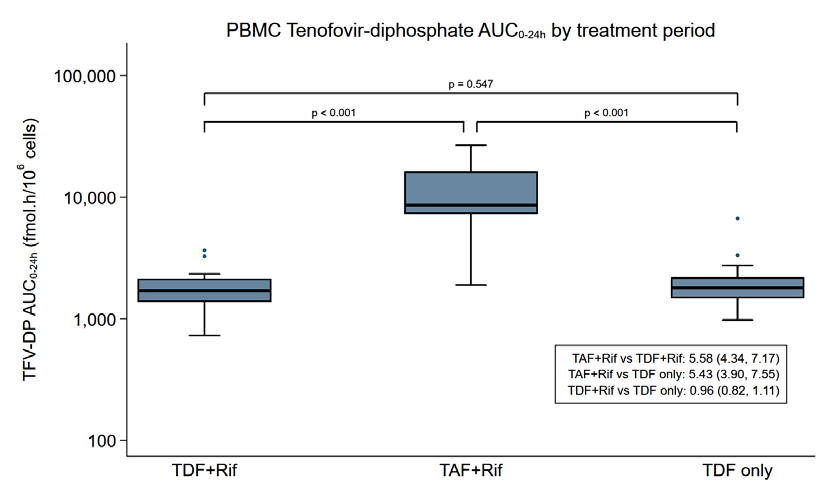
647. Pharmacokinetics of Twice-Daily TAF in Adults With HIV-Associated TB on BIC/FTC/TAF and Rifampicin
Poster Abstracts
Page: 177
Emmanuella C. Osuala1, Ivan N. Nkuhairwe2, Marothi P. Letsoalo1, Kogieleum Naidoo1, Rubeshan Perumal1, James F. Rooney3, Roeland Wasmann2, Paolo Denti2, Kelly E. Dooley4, Anushka Naidoo1, the INSIGHT Study Team
Background
Tenofovir alafenamide fumarate (TAF) is a pro-drug of tenofovir (TFV) with less renal and bone toxicity than tenofovir disoproxil fumarate (TDF). However, unlike TDF, it has been shown to interact with rifampicin (RIF) in healthy volunteers. The pharmacokinetics (PK) of TAF with RIF in people with HIV (PWH) and tuberculosis (TB) have not been evaluated.
Methods
A PK sub-study nested within the INSIGHT trial (NCT04734652) evaluated the plasma and intracellular PK of TFV and TFV-diphosphate (TFV-DP) in adults with HIV and TB initiated on a bictegravir(BIC)/emtricitabine(FTC)/TAF regimen dosed twice-daily (BD) until 2 weeks post RIF-based TB treatment and once-daily (QD) thereafter until 48 weeks. Plasma and dried blood spot (DBS) samples (3mm punches) were collected at weeks 4 and 12 (pre-dose, 1, 2, 4, 6, and 8-12h post-dose) during first-line TB treatment and at week 32 (pre-dose, 1, 2, 4, 6-8, and 24-25h post-dose) after TB treatment. Non-compartmental PK analyses were conducted using the PKanalix2024R1 software. Participants underwent regular clinical and safety monitoring during study follow-up visits. We report the preliminary PK data for TFV and intracellular TFV-DP when TAF is dosed with or without RIF.
Results
Forty-three participants were enrolled in the PK sub-study in the BIC arm; median (IQR) age and weight were 35 (30-39) years and 57 (52-64) kg; 77% were male, and all were black. A total of 79 PK profiles were evaluable for TFV on TAF BD+RIF (20 PK profiles for TFV-DP during RIF) and 40 PK profiles for TAF QD alone (10 PK profiles for TFV-DP off RIF). Geometric mean ratio (GMR) (90% CI) AUC0-24 for TFV was 1.24 (1.06, 1.45) and 1.21 (1.03, 1.42) at weeks 4 and 12 on TAF BD with RIF relative to week 32 on QD TAF. GMR (90% CI) AUC0-24 for TFV-DP was 0.97 (0.79, 1.19) at weeks 12 versus week 32 with and without RIF, respectively (Table 1). Overall, 95% of participants achieved viral suppression at week 24 in the BIC arm. TAF BD+RIF did not result in higher TFV-DP intracellular concentrations than for QD dosing, there were no BIC/FTC/TAF related drug toxicity events in the study including no treatment discontinuations.
Conclusions
Twice-daily TAF achieved sufficient exposures to overcome RIF enzyme-inducing effects in adults with HIV and TB, achieving TFV-DP intracellular concentrations above those previously reported with TDF. These data support the use of TAF in a fixed dose combination of BIC/FTC/TAF in PWH and TB.
Table 1.
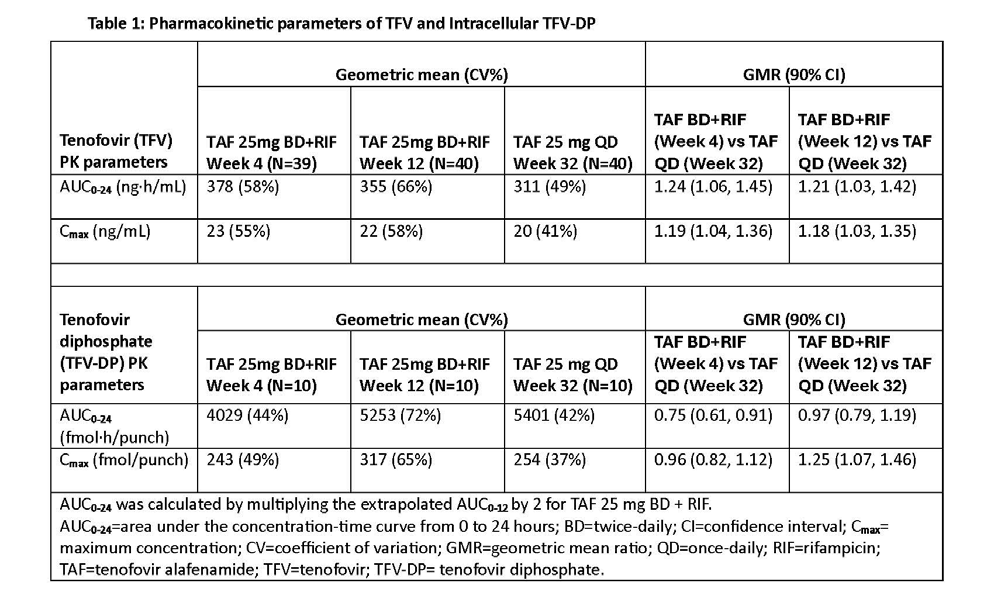
648. Estradiol Concentrations in Trans Women on BIC/FTC/TAF Compared to Those Without HIV
Poster Abstracts
Page: 177
Alice Tseng1, Mona Loutfy2, Ashley Lacombe-Duncan3, Yasmeen Persad2, Raymond Fung4, Ian Armstrong5, Louie L. Y. Chan6, Quang Nguyen7, Suza Hranilovic8, Darrell H. S. Tan8, Roberta Halpenny5, Nirubini Jeyarajah5, Jennifer McCully5, V. Logan Kennedy2, Kimberly K. Scarsi9
Background
Accessing feminizing hormone therapy (FHT) is essential to many trans women. Concern around drug-drug interactions between FHT and antiretroviral therapy (ART) can be a barrier to acceptance of ART for trans women with HIV. We measured serum estradiol concentrations in trans women with HIV taking FHT and BIC/FTC/TAF versus trans women without HIV taking FHT and no ART.
Methods
This was a single-center, parallel group, clinical study of adult trans women with HIV taking ART and without HIV not taking ART. Participants were taking at least 2 mg/day of oral 17-beta estradiol plus an anti-androgen therapy, with no FHT medication changes for at least 3 months prior to entry. Women with HIV were on suppressive ART for at least 6 months, either taking or switched to BIC/FTC/TAF at entry. At the month 2 visit, blood was collected prior to ART and FHT dosing and then at 1, 2, 3, 4, 6, 8, and 24 hours post-dose. Estradiol concentrations were measured from serum using chemiluminescent microparticle immunoassay (CMIA). Area under the concentration-time curve (AUC) over 24 hours was calculated by noncompartmental methods. Median estradiol maximum concentration (Cmax), time to Cmax (Tmax) and AUC were compared between groups using Wilcoxon rank-sum tests. Data are reported as medians (IQRs).
Results
Participants (n=25) were enrolled from November 2022 to June 2024 and the 10 participants on ART had a median age of 36.5 (30, 45.25) years compared to 29 (27, 37.5) years for the 15 control participants (p=0.173). The median oral estradiol dose was 4 mg (range 2-8 mg) overall and 4 (4, 4) for the ART group and 4 (3, 4) for the control (p=0.232). Anti-androgen therapy included spironolactone (n=12), cyproterone (n=8), orchidectomy (n=4), and hypogonadism (n=1). Estradiol Cmax and Tmax for the ART group were 357.5 pmol/L(257, 512.25) and 1.5 hours (2, 2.75), respectively and 262 pmol/L (151.5, 312) (p=0.115) and 4 hours (2, 7) (p=0.130) for controls (Figure). AUCs were not different between groups: 5827 mg*h/L (4488, 8352) for the ART group and 4808 mg*h/L (2952, 6281) for controls (p=0.235). Overall, 64% had estradiol C4h within the target of 200-750 pmol/L[80% among women on ART and 53% among those not on ART (p=0.229)].
Conclusions
Among trans women on FHT, estradiol concentrations were similar between trans women on BIC/FTC/TAF and controls. This suggests a low probability of clinically relevant drug-drug interactions between FHT and BIC/ FTC/TAF.
Figure 1.
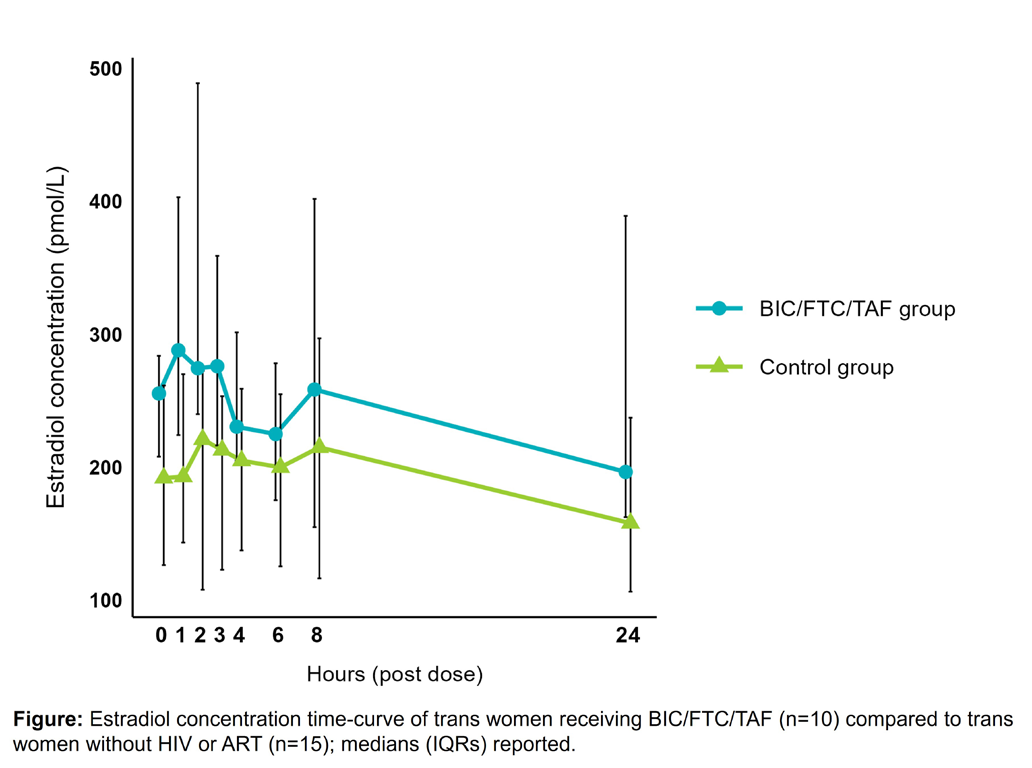
649. Reduced Metformin Concentrations in Obese Women With HIV Treated With Dolutegravir
Poster Abstracts
Page: 178
Roland van Rensburg1, Tracy Kellermann1, Veshni Pillay-Fuentes Lorente1, Christiena du Plessis1, Catherine Orrell2, Innocent Maposa1, Gert van Zyl1, Giovanni Schifitto3, Eric Decloedt1
Background
The prevalence of obesity among women with HIV (WWH) is nearly 2-fold higher than in men with HIV, especially in sub-Saharan Africa. Obesity is closely associated with dysglycemia, and in the context of HIV frequently necessitates the co-administration of the first-line antiretroviral dolutegravir (DTG) and the insulin sensitizer metformin. However, a drug interaction exists whereby DTG inhibits the exclusive renal clearance of metformin. A pharmacokinetic study determined that DTG increased the overall metformin plasma exposure by 79%, prompting regulatory and guideline recommendations to limit the maximum metformin dose to 1000 mg/day when co-administered with DTG. The study was conducted in 15 white, male, non-obese healthy volunteers, in contrast to the largest target population of black African, obese WWH. Importantly, obesity has been linked to lower metformin exposures, and our study aimed to verify the metformin pharmacokinetic exposure in the specific target population of obese WWH.
Methods
We conducted intensive plasma sampling over 8 timepoints in virally-suppressed WWH receiving metformin 1000 mg and DTG 50 mg daily at steady-state. Both drugs were administered with a moderate-fat meal under observation. Dual-energy X-ray absorptiometry (DEXA) was performed to quantify body fat composition. Non-compartmental analysis of metformin and DTG concentrations was performed, and our findings compared to the reference study. Linear regression was used to identify covariates associated with metformin exposure.
Results
We enrolled 15 participants with a mean body mass index of 45.6 kg/m2 (range 35.6–56.7). Metformin and DTG exposures in obese WWH were approximately half of that in the non-obese healthy volunteers (Table 1). Metformin and DTG clearance were 1.7- and 2.2-fold higher, respectively. We did not detect an association between body fat composition and metformin or DTG exposures.
Conclusions
Limiting metformin to 1000 mg daily is likely to lead to subtherapeutic exposures in obese WWH on DTG. Lower metformin exposures appear to be due to the reduced inhibitory effect of the lower DTG exposure on metformin clearance. Increased volume of distribution due to obesity may also contribute to lower exposures. Our study included obese patients only, and we could therefore not establish an association of body composition with pharmacokinetic exposures. Future studies should include the full range of body mass indices, and determine optimal metformin dosing when co-administered with DTG.
Table 1.
Metformin and dolutegravir pharmacokinetic exposures
|
|
Reference study |
Current study |
Difference (current vs reference study) |
| Metformin |
| AUC0-24, mcg.h/mL (%CV) |
24.4 (23.1) |
14.42 (33.35) |
↓40.9% |
| Clearance, L/h (%CV) |
40.9 (23.1) |
69.33 (33.35) |
↑69.5% |
| Dolutegravir |
| AUC0-24, mcg.h/mL (%CV) |
54.6 (25.7) |
24.9 (39.9) |
↓54.4% |
| Clearance, L/h (%CV) |
0.91 (26.7) |
2.01 (39.88) |
↑120% |
650. Pharmacokinetics of Switching to B/F/TAF in PWH Post-Renal Transplant: BIK Switch Study
Poster Abstracts
Page: 178
Corwin Coppinger1, Stanley Cooper2, Britta Witting2, Ryan P. Coyle1, Alexandra Dunbar1, Lucas Ellison1, Lane Bushman1, Kristina Brooks1, Peter Anderson1, Catherine Small2
Background
The impact of antiretroviral therapy (ART) on renal preservation is critical for persons with HIV (PWH) post-renal transplant. Clinical trials have demonstrated B/F/TAF is safe and efficacious, with low risk of renal toxicity. Little is known about its pharmacokinetics (PK) in PWH post-renal transplant.
Methods
Single arm, open-label, switch study among virally suppressed (HIV VL < 50 c/mL) PWH post renal transplant, switched from baseline ART to B/F/ TAF and followed for 72 weeks. Baseline and monitoring of renal function (CrCl), viral efficacy (HIV VL), and tacrolimus (TAC) trough concentrations were collected. At week 12, intensive PK samples were collected at hrs 0, 0.5, 1, 2, 4 and 24, and analyzed for plasma BIC, FTC, TAF, and TFV; samples at 0, 4, and 24 hrs were analyzed for TFV-DP and FTC-TP in PBMC and DBS. Plasma AUC, Cmax, and Ctrough were determined with non-compartmental methods; Css was calculated for TFV-DP and FTC-TP. Plasma PK values were compared with PWH with similar renal function [package inserts]; TFV-DP and FTC-TP were compared with PWH values from QUANTI-TAF [NCT04065347; controls].
Results
Final results included 19 subjects, 18 with evaluable PK, mean age 56 [range 38 – 69] yrs; 13 male; 17 Black; 8 transplanted in Hope in Action initiative. There were no statistical differences observed in the means of renal safety parameters. Mean CrCl day 1 vs week 72: 54.9 vs 60.9 mL/min, p=0.11. Tacrolimus (TAC) trough concentrations remained stable, without need for dose adjustment. HIV viral suppression was maintained in all (< 50 c/mL). Plasma PK AUC were comparable to historical data in PWH with similar renal function (CrCl 30-59ml/min; Table), which were approximately 2-fold higher than values in PWH with normal renal function, as expected. The CrCl was higher in QUANTI-TAF controls (mean >60ml/min) than study. Geometric mean for TFV-DP in DBS was 5775 (study) and 3386 (controls) fmol/punches, and PBMC was 1637 (study) 570 (controls) fmol/106 cells and that for FTC-TP in PBMC was 15.4 (study) and 5.6 (controls) pmol/106 cells.
Conclusions
BIC, TAF, TFV, and FTC AUCs were comparable to historical data for PWH with CrCl between 30-60ml/min for which B/F/TAF is indicated. The higher concentrations for TFV-DP and FTC-TP were commensurate with plasma increases for CrCl of 30-60ml/min. CrCl and TAC doses remained stable throughout and HIV remained suppressed at 72 weeks. B/F/TAF demonstrated a high safety margin and was efficacious in PWH status post-renal transplant.
Table 1.
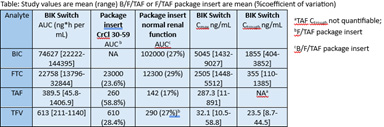
651. Tenofovir Diphosphate in Dried Blood Spots and HIV-1 RNA Suppression Among PWH on TAF (ACT Study)
Poster Abstracts
Pages: 178-179
Ryan P. Coyle1, Mary Morrow1, Sarah C. Mann1, Nicholas Barker1, Erin Garst1, Vincent A. Mainella1, Stefanie Schwab1, Corwin Coppinger1, Lucas Ellison1, Jia-Hua Zheng1, Lane Bushman1, Kristina Brooks1, Samantha Mawhinney1, Jose Castillo-Mancilla2, Peter Anderson1
Background
ACT (NCT05335590) is an ongoing observational study that aims to evaluate tenofovir-diphosphate (TFV-DP) concentrations in dried blood spots (DBS) among persons with HIV (PWH) receiving tenofovir alafenamide (TAF)-based antiretroviral therapy (ART) with suppressed compared with detectable HIV-1 RNA. Previously, QUANTI-TAF (NCT04065347) reported a pharmacokinetic (PK)-based TFV-DP in DBS benchmark of ≥1800 fmol/punches for PWH with ≥85% adherence using digital pills to objectively quantify adherence. We investigated the relationship between this concentration threshold and HIV-1 RNA suppression (<200 c/mL) in the ACT Study.
Methods
PWH prescribed TAF-based ART (25mg ± booster or 10mg + booster) for ≥3 months were prospectively enrolled and completed up to three convenience-based visits within 48 weeks during which HIV-1 RNA and DBS were collected. Results through July 18, 2024 were included in analysis. We reported TFV-DP in DBS mixed model estimates as geometric mean (GM [95% CI]) and used generalized linear mixed effects models with a logit link to estimate the odds ratio (OR [95% CI]) for HIV-1 RNA suppression (<200 c/mL) according to dichotomized TFV-DP in DBS (<1800 or ≥1800 fmol/punches).
Results
Paired TFV-DP in DBS and HIV-1 RNA results were available in 69 participants (205 person-visits): 61 (88%) males, 6 (9%) females, and 2 (3%) transgender persons; 63 (91%) were receiving unboosted TAF 25mg or boosted TAF 10mg. Median (IQR) age was 55 (42-61) years. HIV-1 RNA was <20, 20-199, and ≥200 c/mL at 141 (69%), 51 (25%), and 13 (6%) visits, respectively. GM (95% CI) TFV-DP in DBS for PWH with HIV-1 RNA <20, 20-199, and ≥200 c/mL was 3583 (3102, 4138), 3314 (2413, 4551), and 898 (565, 1428) fmol/punches, respectively (Figure). For TFV-DP in DBS ≥1800 fmol/punches, the OR for an individual to have HIV-1 RNA <200 c/mL was 39.2 (95% CI: 2.4, 471.2; P=0.003) compared with TFV-DP in DBS <1800 fmol/punches.
Conclusions
Our previously established PK-based TFV-DP in DBS benchmark of ≥1800 fmol/punches was associated with HIV-1 RNA suppression (<200 c/mL) among PWH receiving TAF-based ART, while TFV-DP in DBS was similar in those with HIV-1 RNA <20 and 20-199 c/mL. Given the small number of visits with HIV-1 RNA ≥200 c/mL, additional data will confirm the additional benchmark(s) to predict viral breakthrough.
Figure 1.
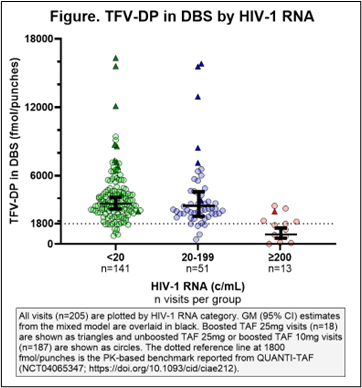
652. WITHDRAWN
Poster Abstracts
Page: 179
653. TFV-DP Is Associated With Baseline Virologic Suppression in PWH on TAF: Results From ACTG A5359
Poster Abstracts
Page: 179
Stefanie Schwab1, Mary Morrow1, Samantha Mawhinney1, Raphael J. Landovitz2, Chanelle Wimbish3, Lu Zheng4, Madison Green5, Pablo Belaunzarán-Zamudio6, Paul Wannamaker7, Kati Vandermeulen8, Jose Castillo-Mancilla7, Jennifer J. Kiser9, Peter Anderson1, Kristina Brooks1, Aadia Rana10, the ACTG A5379 (BEeHIVe) Study Team
Background
Tenofovir (TFV)-diphosphate (TFV-DP) concentrations in dried blood spots (DBS) demonstrate strong associations with adherence, virologic suppression (VS) and future viremia in persons with HIV (PWH) but data are limited to the older TFV prodrug or PWH with VS on TFV alafenamide (TAF). We examined TFV-DP in DBS and its association with VS at baseline among PWH on TAF enrolled in ACTG A5359/LATITUDE, which is a unique clinical trial population with psychosocial challenges to ART adherence.
Methods
LATITUDE is an ongoing phase III, prospective, randomized, open-label study comparing long-acting CAB/RPV to oral ART in PWH with a history of adherence challenges (NCT03635788). This analysis focused on baseline results from PWH on TAF-containing regimens prior to entry. Health and behavioral instruments were used to assess psychosocial factors. TFV-DP in DBS (2x7mm punches) were quantified via LC-MS/MS (LLOQ 31.3 fmol/punches). For participants with quantifiable TFV-DP, logistic regression was used to model the probability (95% CI) of VS (<200 copies/mL) by ln(TFV-DP) and boosted PI use, as TFV-DP concentrations are increased by ~2.5 fold with boosters. Probabilities at select values from very low to very high adherence based on historical TFV-DP data were estimated. Exact confidence intervals were used for TFV-DP below limit of quantification (BLQ).
Results
Baseline data were available in 193 participants (71% male at birth; 4% transgender; 64% Black, 28% white, 20% Hispanic/Latino; median age 39 [IQR 31, 52] years). ART prior to entry contained either an INSTI or NNRTI (72%) or boosted PI (28%); 37% were VS and median CD4 count was 287 (IQR 126, 540) cells/mm3. Participants reported moderate to severe depression (22%), anxiety (27%), hazardous drinking (33%), drug dependence (4%) and prior/current IV drug use (10%). For TFV-DP concentrations of BLQ, 250 (very low), 450 (low), 950 (moderate), 1800 (high) and 3600 (very high) fmol/punches, the probability of VS in INSTI/NNRTI participants was 0 (0, 0.12), 0.33 (0.22, 0.46); 0.44 (0.34, 0.55), 0.60 (0.50, 0.70), 0.72 (0.61, 0.81) and 0.82 (0.70, 0.90) (Figure). The odds of VS were 5.7 (2.4, 13.2) times higher for regimens containing INSTIs/NNRTIs vs boosted PIs (p<0.001).
Conclusions
VS occurred from very low to very high adherence on TAF-containing regimens, with increased probabilities of VS as TFV-DP concentrations increased. Differential adherence-forgiveness is suggested between INSTI/NNRTI- and PI-containing ART among PWH.
Figure 1.
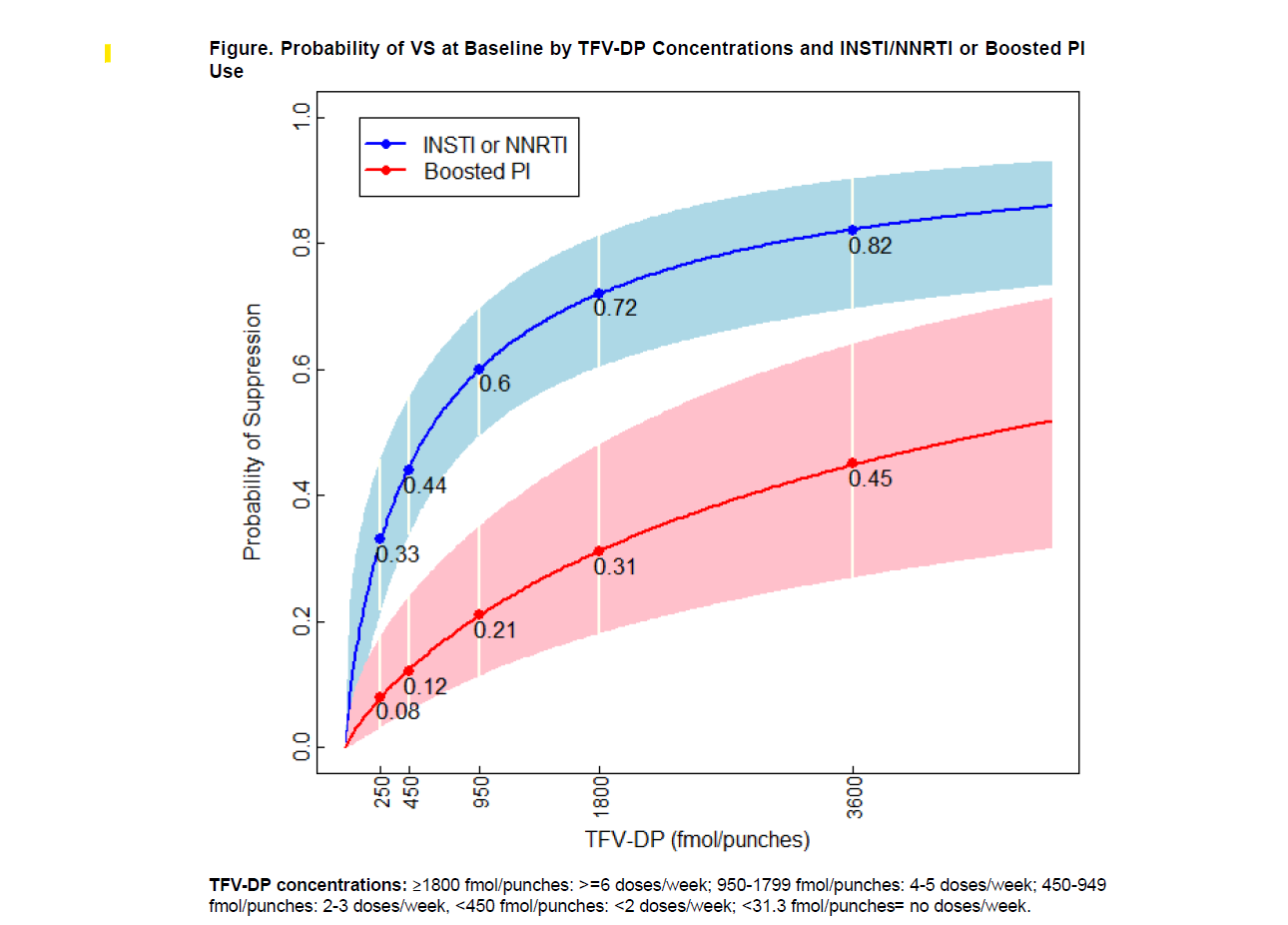
654. Association of Trough Concentrations of Cabotegravir and Rilpivirine and HIV-1 RNA
Poster Abstracts
Page: 180
Sebastian Noe, Arlette Baxmann, Farhad Schabaz, Ariane von Krosigk, Carmen Wiese, Eva Wolf, Celia Jonsson-Oldenbüttel
Background
The relevance of plasma (trough) concentrations of cabotegravir (CAB) and rilpivirine (RPV) with regard to sustained virologic suppression in people with HIV (PWH) on long-acting treatment (LA) is an ongoing matter of debate. We aimed to add to the currently available data by analyzing the association between CAB and RPV trough concentrations and viral suppression in a real-world setting.
Methods
Retrospective single-center analysis of clinical routine data from PWH receiving CAB and RPV LA intramuscular every eight weeks. Concentrations of CAB and RPV measured within a week prior to (the planned) application of the next injection were considered for analysis; multiple measurements were allowed per person. People with laboratory signs of intercurrent infections were excluded from the analysis. Lower limits of normal for CAB and RPV were 800 ng/mL and 0.038 µg/mL, respectively. The quantification limit of the essay (HIV-1 RNA <20 cps/mL) was used to define viral suppression. Medians and interquartile ranges were used for descriptive statistics. Mann-Whitney and Fisher’s exact test were used for comparisons of continuous and binary variables between two groups, respectively. α=0.05 was used as level of significance. The use of monocentric clinical routine data did not require ethics approval.
Results
Overall, 350 samples from 165 PWH were included. Concentrations for CAB and RPV were 1,460 (1,120; 1,940) ng/mL or 1,160 (879; 1,560) ng/ mL (p=0.009) and 0.073 (0.051; 0.101) µg/mL or 0.064 (0.037; 0.075) µg/mL (p=0.027) for PWH with HIV-1 RNA <20 cps/mL or ≥20 cps/mL, respectively. Proportions of samples with HIV-1 RNA ≥20 cps/mL were 8.2% and 21.9% (p=0.027) among samples with normal and low plasma concentrations of CAB, and 7.9% and 18.8% (p=0.035) among samples with normal and low plasma concentrations of RPV, respectively. Odds ratios for HIV ≥20 copies/mL were 3.1 (1.0; 8.4) and 2.7 (1.0; 6.5) for samples with low concentrations of CAB and RPV, respectively.
Conclusions
Our data indicate that low concentrations of CAB and/or RPV are associated with a higher odds of quantifiable viral load (≥ 20 copies/mL) and that, on a population level, lower levels of both drugs are found in people with HIV-1 RNA ≥20 cps/mL. It is unclear if this is also predictive of virologic failure. Based on our findings, however, it warrants further investigation if dosing can be indivualized taking trough concentrations into account.
Figure 1.
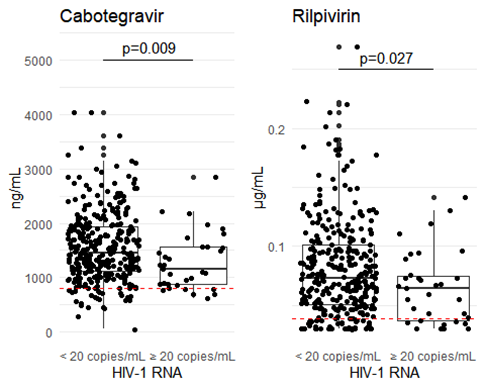
655. Inter- and Intraindividual Variability of LA CAB/RPV Pharmacokinetics After 1 Year of Continuous Use
Poster Abstracts
Page: 180
Shawnalyn W. Sunagawa, Josh P. Havens, Sara H. Bares, Maureen Kubat, Jennifer O'Neill, Elizabeth Lyden, Timothy Mykris, Lee C. Winchester, Sean Avedissian, Anthony T. Podany, Courtney V. Fletcher, Kimberly K. Scarsi
Background
Low plasma concentrations of LA CAB/RPV are associated with increased risk of virologic failure. However, trough LA CAB/RPV demonstrates high interindividual variability (CAB 31%, RPV 35%), and intraindividual variability (CAB 52%, RPV 29%) during the first 12 months of use. We sought to characterize the variability in trough plasma concentrations of CAB and RPV in PWH receiving LA CAB/RPV after 1 year of use.
Methods
We conducted a prospective PK study in virologically suppressed PWH who had received >12 months of continuous LA CAB/RPV (600mg/900mg) given IM every 2 months. All doses were administered by the same 4 nurses. Plasma samples were collected pre-injection at three consecutive visits and CAB/RPV concentrations were quantified via LC-MS/MS. The primary outcomes were inter- and intraindividual CAB and RPV trough concentration variability reported as % coefficient of variation (CV), Fleiss Kappa, and intraclass correlation coefficient (ICC). Secondary outcomes were proportion of participants with CAB or RPV concentrations below 4x PA-IC90 (CAB=664 ng/ mL; RPV=48 ng/mL) and associated laboratory or clinical characteristics. We performed descriptive statistics (median; range, unless noted) and compared participants with troughs above vs. below 4x PA-IC90 with Fisher’s exact and Wilcoxon rank sum tests.
Results
Overall, 90 trough samples were obtained from 30 participants receiving LA CAB/RPV for 71 weeks (55-97) at entry. Most participants were male (80%) and White (70%) with a median age of 45 years (IQR 33-59). Geometric mean CAB and RPV concentrations were 1661.3 ng/mL and 83.1 ng/mL, respectively (Figure). Interindividual CV for CAB was 44% (38-44%) and 45.8% (40-49%) for RPV. CAB and RPV Fleiss Kappa was -0.01, indicating poor interindividual agreement. Intraindividual CV for CAB was 26.3% (6-53%) and 32% (10-68%) for RPV. ICC was 0.75 and 0.63 for CAB and RPV, respectively, indicating moderate intraindividual agreement. There were 11 (12%) RPV and 2 (2%) CAB concentrations below 4x PA-IC90. Five participants had 9 HIV-RNA results >20 copies/mL (26-75 copies/mL). All subsequently re-suppressed (HIV-RNA <20 copies/mL) and none had CAB or RPV <4x PA-IC90. No demographic or laboratory factors were associated with concentrations below 4x PA-IC90 (all p>0.05).
Conclusions
After achieving proposed steady state concentrations, inter- and intraindividual variability persists for CAB and RPV. Despite this variability, there was no association between CAB/RPV concentrations and viremia.
Figure 1.
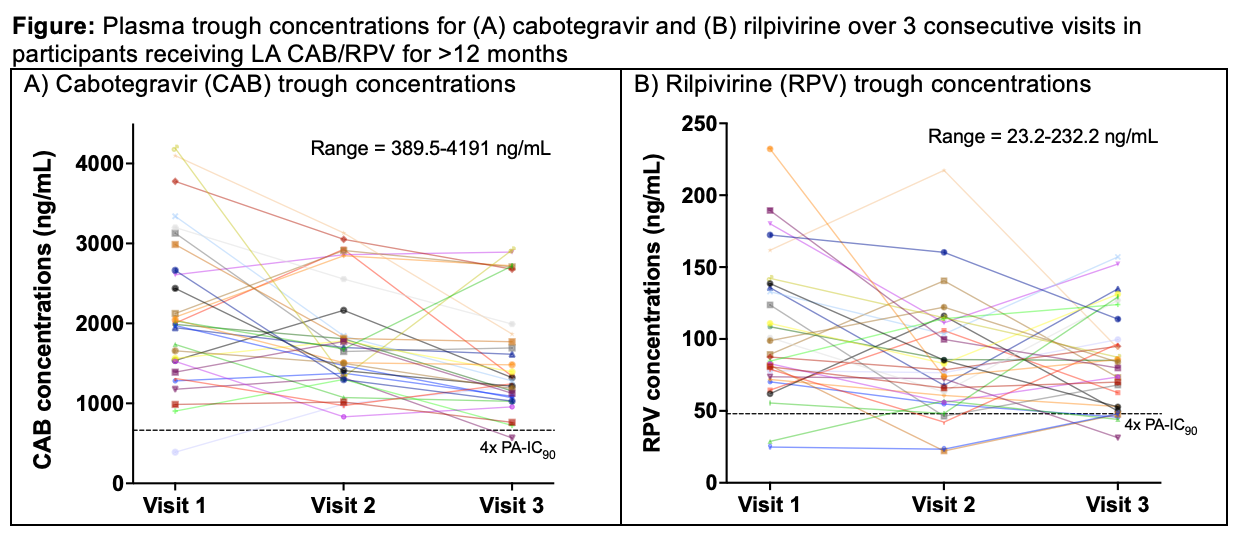
656. Plasma Concentrations of Lenacapavir in People Living With Multidrug-Resistant HIV: Real-Life Study
Poster Abstracts
Pages: 180-181
Minh Le1, Quentin Le Hingrat1, Marc-Antoine Valantin2, Claudine Duvivier3, Charlotte Charpentier1, Sidonie Lambert-Niclot4, Anne-Geneviève Marcelin2, Valerie Pourcher2, Jade Ghosn1, Gilles Peytavin2
Background
Lenacapavir (LEN) is a potent first-in-class, long acting, capsid inhibitor recently approved for the treatment of multidrug-resistant HIV, in combination with other antiretroviral agents, in heavily treatment-experienced (HTE) people with HIV (PWH). PWH initiated usual or simplified regimen combining oral loading tablets and subcutaneous (SC) dose then SC maintenance dose (927 mg) every 6 months. The objective of this analysis was to describe the plasma concentrations (Cpl) of LEN in HTE adults.
Methods
A multicenter, cross-sectional, cohort was conducted from 2020 to 2023. PWH who were receiving LEN containing regimen were enrolled. Basic demographic data were recorded using NADIS database (NCT#02898987). Blood samples were collected during the routine clinic visits between week 2, every each 6 months, and month 24 if available. LEN Cpl were determined by UPLC-MSMS (Waters Acquity) with LOQ<5 ng/mL and interpreted using a cutoff of 15 ng/mL corresponding to 4-fold protein-adjusted 95% effective concentration on WT HIV-1. Results are presented as median (IQR).
Results
A total of 61 PWH (57% male; age 56 (43-60) years old) were enrolled. All were receiving LEN as an add-on to their antiretroviral regimen. Among them, 28 received both CAB long-acting intramuscular injection q8w with an associated daily oral antiretroviral backbone. A total of 191 LEN Cpl were measured in these PWH. Over all PWH, median (IQR) LEN Cpl were 50 (28-74) ng/mL with a number of samples per PWH of 2 (1-5). The intra-individual coefficient of variation was 30%, while the inter-individual variability was 69%. LEN Cpl were 44 (15-95) ng/mL, 28 (23-67) ng/mL, 45 (27-63) and 47 (29-73) ng/mL at W2, M1, M6, M6 and M12, respectively. Among our PWH, only one presented a LEN Cpl below the cutoff of 15 ng/mL. Of note, 5 patients presented LEN Cpl above 150 ng/mL, corresponding to PWH with acute or chronic kidney disease and/or receiving ritonavir-boosted atazanavir containing regimens. To date, no specific adverse events have been reported in these PWH, except some injection site reactions.
Conclusions
In our population of HTE HIV patients, PWH had adequate LEN Cpl. No drug-drug interaction was reported and tolerance of antiretroviral multitherapy was acceptable.
Figure 1.
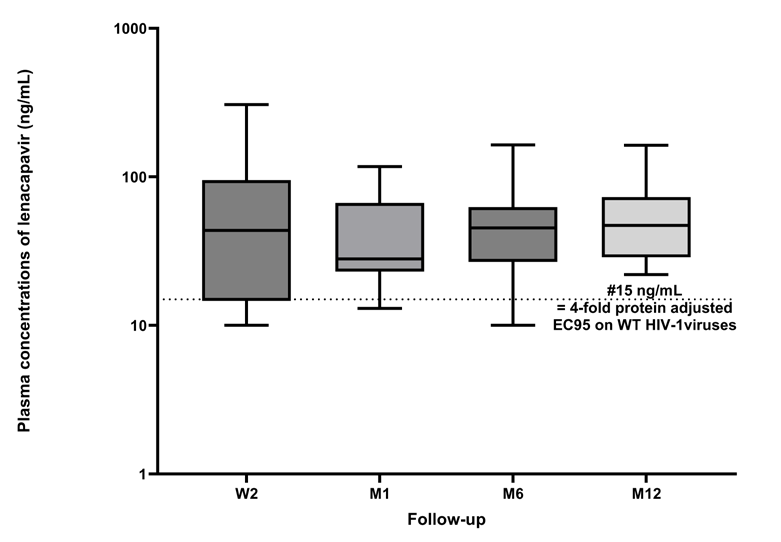
657. Intracellular Pharmacokinetics of Favipiravir-5’-Ribofuranosyl Triphosphate in People With COVID-19
Poster Abstracts
Page: 181
Elizabeth Challenger1, Laura J. Else1, Laura Dickinson1, Tim Rowland2, Colin Hale3, Rebecca Lyon3, Helen E. Reynolds1, Justin Chiong1, Beth Thompson1, Richard Fitzgerald3, Henry Pertinez1, Andrew Owen1, Tom E. Fletcher2, Saye Khoo1, the AGILE CST-6 Study Group
Background
Favipiravir (FVP) is an anti-influenza agent but preclinical data support broad spectrum antiviral activity against RNA viruses including SARS-CoV-2 and haemorrhagic fevers. Pharmacokinetic (PK) data on the active form, favipiravir ribofuranosyl-5’-triphosphate (FRTP), are lacking in humans. We measured liquid plasma (LPL) FVP and intracellular FRTP measurements in PBMC and compared this with HemaSep filter cards that separate cells (HC) and plasma (HPL) upon contact.
Methods
AGILE CST-6 (NCT04746183) is a phase Ib dose escalation study to evaluate intravenous FVP for treatment of COVID-19. Patients (n=6/cohort) with SARS-CoV-2 were randomised 2:1 to receive FVP (600 mg, 1200mg, 1800mg, 2400 mg BD) or standard of care. LPL and HemaSep were collected on Day (d) 1, 3 and 5 over 0-12 hours post-completion of infusion and PBMC at 6-12 hours. FVP was quantified in LPL and HPL, and FRTP from HC and PBMC using validated LC-MS/MS methods. FRTP concentrations were expressed as pmol/ sample (12mm punch, HC) and pmol/106 cells (PBMC). PK parameters were calculated using WinNonlin.
Results
16 patients [7 female at birth; median (range) age, weight: 77 years (52-93), 79kg (52-125)] were enrolled. Analysis included 153 HemaSep|38 PBMC, of which 47 (31%)|25 (66%) had quantifiable FRTP. In PBMC, there was high interindividual variability and limited evidence for accumulation of FRTP from d1-d5, confounded by sampling issues (26% haemolysed). PBMC FRTP ranged from 20.8-141.4 pmol/106 cells. In HC, all d1 samples were <LLQ and FRTP accumulation was observed from d3-d5 [C6-12 GMR (95% CI) 1.71(1.07,2.74)]. FRTP exposures were dose linear (r2= 0.83). Median FRTP AUClast on d3 were 74.6|209.7|228.1|618.9 h*pmol/sample for 600|1200|1800|2400mg, respectively. FRTP d3 exposures were correlated with both LPL (r2= 0.816,p<0.005) and DP (r2=0.750,p=0.001). The ratio of peak-to-trough (P:T) FVP concentrations in HPL on d3 was 1.0-5.1 while for FRTP HC the ratio was 1.0-2.2.
Conclusions
This is the first report of FRTP PK in humans. Formation of FRTP increased with escalating doses but appeared to saturate at doses beyond 1800 mg. P:T ratios support an extended intracellular half-life of FRTP compared to the parent form, in line with prior in vitro studies. Correlation between plasma FVP and FRTP was better using HC compared to PBMC indicating that dried filter spots may be more robust than PBMC for the purpose of intracellular FRTP quantitation and offer a pragmatic alternative to venepuncture in field settings.
The figure, table, or graphic for this abstract has been removed.
658. Integrase Inhibitor- Versus Protease Inhibitor-Based Therapy for People With Advanced HIV-Disease
Poster Abstracts
Page: 181
Georg M. N. Behrens1, Lambert Assoumou2, Geoffroy Liegeon3, Andrea Antinori4, Rafael Mican5, Stephane De Wit6, Frank Post7, Juergen K. Rockstroh8, Lisa Hamzah9, Pere Domingo10, Adrian Curran11, Montserrat Laguno12, Carl Fletcher13, Jack Moody13, Anton Pozniak13, the LAPTOP Study Team
Background
To date clinical trials have been underpowered to assess the preferred antiretrovirals in therapy-naïve people with advanced HIV disease (PWAH). We investigated the efficacy and safety of an integrase inhibitor (INI) versus a boosted protease inhibitor (PI) containing regimen in PWAH.
Methods
In this open-label, randomised, multicentre, non-inferiority trial, therapy-naive people with HIV aged ≥18 years, a viral load >1000 copies/mL, and either AIDS at any CD4 cell count, severe bacterial infection (BI) with a CD4 cell count <200/µL, a CD4 cell count <100/µL, or currently being treated for opportunistic infections (OI), were randomised 1:1 to receive bictegravir or darunavir/cobicistat, each co-formulated with tenofovir alafenamide/ emtricitabine for 48 weeks. The time to first occurrence of the primary outcome, which was a composite of specified virological failure (insufficient virological response was defined as HIV-1 RNA reduction <1 log 10 copies/mL at week 12, or viral load >50 HIV-1 RNA copies/mL at week 48) or clinical events plus the individual components were evaluated by Kaplan Meier and Cox regression analyses, with a non-inferiority margin of 1.606 in the hazard ratio.
Results
442 participants were randomised and well matched for baseline characteristics with a median age of 43 years, 81% male, and 62% white. 85.8% had CD4 T cell counts <100/µL and 44.6% viral loads >500,000 HIV-1 RNA copies/mL. In intention-to-treat analyses, the primary composite outcome event occurred in 49/220 patients in the INI group versus 70/222 patients in the PI group by 48 weeks (adjusted hazard ratio [aHR] 0.70; 95% confidence interval [CI] 0.48-1.00; p=0.05, noninferiority demonstrated). The per-protocol analysis gave a similar estimated aHR of 0.69 (95% CI 0.48-1.00). Kaplan-Meier estimates for virological failure was significantly lower in the INI versus PI group (aHR 0.54; 95% CI 0.33-0.88, p=0.013); however, clinical events were similar between groups (Figure 1). Incidence of drug-related AE (grade ≥2) was 13.7 in the INI group versus 21.7 per 100 person-years in the PI group (p=0.04). The incidence of grade 3-4 drug-related AEs (p=0.99), AE leading to study drugs interruption (p=0.92), and serious AEs (p=0.82) did not differ between groups.
Conclusions
In PWAH the bictegravir containing regimen was non-inferior to the darunavir containing regimen in terms of the composite outcome but had a better virologic response at week 48 and fewer overall AE.
Figure 1.
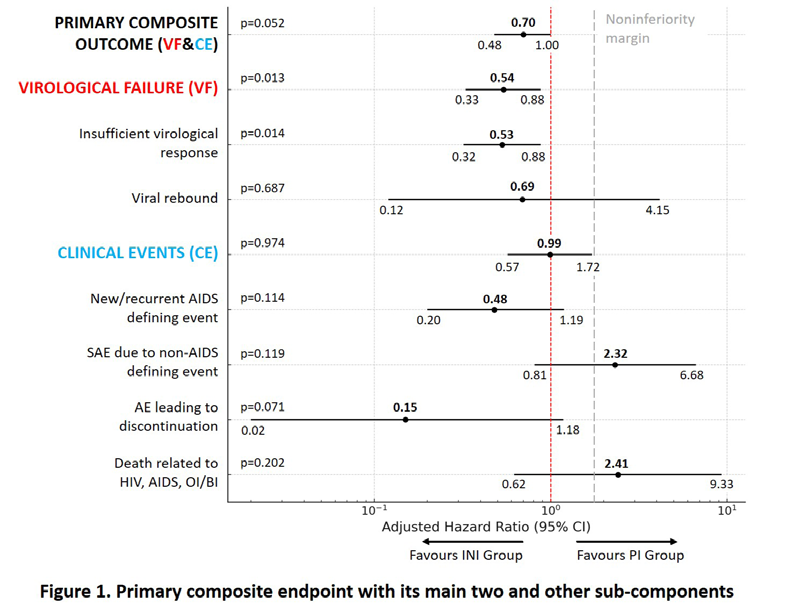
659. Safety, Tolerability, and Efficacy of a BIC/FTC/TAF Dose Reduction Strategy
Poster Abstracts
Page: 182
Ivan Chivite1, Elisa De Lazzari1, Abiu Sempere1, Berta Torres1, Esther Fagundez1, Pilar Callau1, Sònia Vicens-Artés2, Cristina Rovira1, José Alcamí1, Maria Mar Mosquera-Gutierrez1, Amedeo De Nicolò3, Sonsoles Sánchez-Palomino2, Antonio D'Avolio3, Jose L. Blanco1, Esteban Martinez1, the BETAF-RED Study Team
Background
The high potency and genetic barrier of BIC/TAF/FTC (BETAF), and the long-half lives of their components could allow for longer than once-daily dosing (OD) with low risk of developing resistance mutations. We assessed the feasibility of reducing BETAF OD to 3 (3W), 2 (2W), or 1 (1W) doses per week.
Methods
Pilot randomized controlled trial (Clinicaltrials.gov NCT05602506). Consecutive PWH on BETAF OD ≥6 months with plasma HIV RNA (VL) <50 c/ mL, CD4 cells >350/µL, no resistance mutations to BETAF drugs, and no active hepatitis B or C were randomized (n=10 per arm) to: OD, 3W (Mon-Wed-Fri), 2W (Tue-Fri), or 1W (Wed) with visits at baseline, 4, 12, 24, 36, and 48 weeks. Primary endpoints were VL <50 c/mL (Snapshot ITT-exposed population) at 12 and 48 weeks. Individuals with viral failure (confirmed VL ≥50 c/mL) underwent genotypic resistance testing and were switched to OD up to 48 weeks. We measured ultrasensitive VL; total, defective and intact HIV reservoir (IPDA); CD4 and CD8 cells; hsCRP and IL-6; and plasma and intracellular trough drug levels at baseline, 12, and 48 weeks. The stopping rule was >30% viral failure in any of the dose reduction arms.
Results
One person withdraw consent at baseline (OD). Two persons prematurely discontinued the study due to their own decision, both at 12 weeks (OD, and 1W). Three persons had confirmed VL >50 c/mL: 2 in 1W (both at 4 weeks, VL 780 and 29800 c/mL, no resistance mutations); and 1 in 3W (at 12 weeks, VL 60 c/mL, not amplified) but all returned to <50 c/mL on switching to OD as pre-scheduled. PWH with VL <50 c/mL (Snapshot ITT-exposed population) at 12 and 48 weeks were: OD, 9 (100%) and 8 (89%); 3W, 9 (90%) and 10 (100%); 2W, 10 (100%) and 10 (100%); 1W, 10 (100%) and 9 (90%). There were no significant differences in ultrasensitive VL, HIV reservoir, CD4 or CD8 cells, and hsCRP or IL-6 among arms. Although trough plasma and intracellular drug levels significantly decreased in 3W, 2W, and 1W relative to OD at 12 and 48 weeks, mean trough levels at 12 and 48 weeks in 3W and 2W, but not in 1W, were generally above the known inhibitory concentrations (Table).
Conclusions
In virally suppressed PWH on BETAF OD, the strategy of reducing the BETAF OD dose to 3W, 2W, or 1W for 48 weeks was safe, well tolerated, and effective as compared with continuing OD. Consistent with subtherapeutic drug levels, the risk of viral failure was higher with 1W than with 2W or 3W; there was no emergent resistance and viral control was regained upon switching to OD.
Table 1.
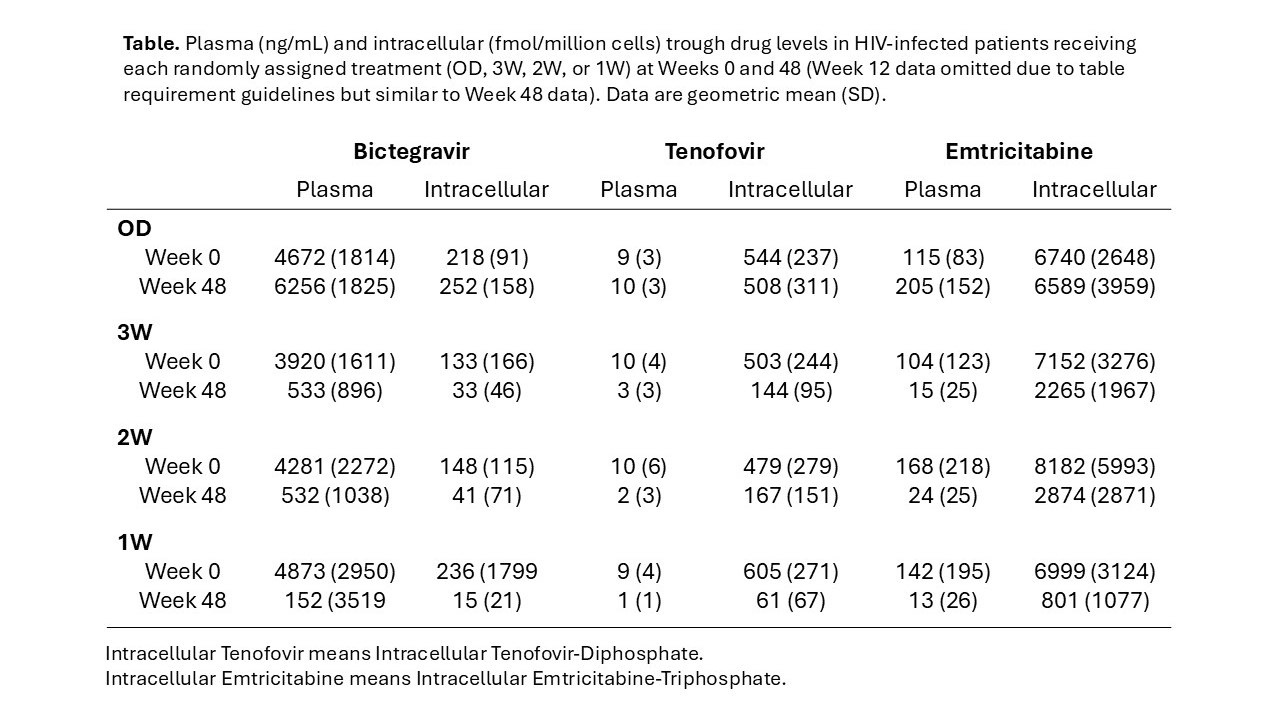
660. Switch of Virally Suppressed Adults ≥ 60 Years From First-Line ART to B/F/TAF: Week 96 Results
Poster Abstracts
Page: 182
Loice Ombajo1, Jeremy Penner2, Joseph Nkuranga1, Victor Mbewa1, Edwin Otieno1, Jared Mecha1, Simon Wahome3, Florentius Ndinya4, Rose Wafula5, Anton Pozniak6, the B/F/TAF-Elderly Study Group
Background
Antiretroviral options for older adults are limited by age-related co-morbidities and drug toxicities. We evaluated whether a first line switch strategy in older adults maintains viral suppression while minimizing contribution to comorbidities.
Methods
The bictegravir/emtricitabine/tenofovir alafenamide (B/F/TAF)-elderly study was an open-label, randomized, non-inferiority trial conducted at two sites in Kenya. HIV-1 positive adults ≥60 years old with HIV viral load (VL) <50 copies/mL for at least 12 weeks prior to enrollment while on any first line regimen were randomized 1:1 to switch to B/F/TAF or continue current ARV regimen (CAR). We report the key secondary outcomes at week 96 including proportion of participants with VL ≥50 copies/mL using the FDA snapshot algorithm with a 4% non-inferiority margin, the mean percentage change in lumbar spine BMD, safety and incident co-morbidities. ClinicalTrials.gov NCT05243602.
Results
Between Feb and May 2022, 520 participants were randomized (260 B/F/TAF, 260 CAR) and a subset of 296 had BMD monitoring (143 B/F/ TAF, 153 CAR). All participants were black African, 267 (51%) were female and the median age was 64 years (range 60-79). Baseline characteristics were balanced between arms. At enrollment, 495 (95%) participants were on tenofovir disoproxil fumarate (TDF) and 179 (60%) of the BMD population had osteoporosis. At week 96, 7/260 participants (2.7%) in each arm had VL ≥50 copies/mL (difference [95% CI], 0% [-2.8 to 2.8]), meeting non-inferiority (Figure). The mean percentage change in lumbar spine BMD was +3.98% (SD 6.10) on B/F/TAF and +2.29% (SD 6.02) on CAR (difference [95% CI], 1.70 [0.25 to 3.14], p=0.021). There were no treatment-related serious adverse events (AEs) in either arm. Participants discontinuing study drug due to any AE were 1 (0.4%, due to Tuberculosis) on B/F/TAF and 30 (11.5%, due to declining kidney function) on CAR. Percentage change in creatinine clearance was 1.7 on B/F/ TAF and -3.5 on CAR. Percentage change in weight was 0 on B/F/TAF and -2.6 on CAR, 13.4% and 6.4% of participants on B/F/TAF and CAR respectively had >5% weight gain, 60/166 (51.7%) on B/F/TAF and 46/100 (49.1%) on CAR had incident hypertension, 69/207 (33%) on B/F/TAF and 58/218 (26.6%) on CAR had incident dyslipidemia.
Conclusions
A first line switch strategy to B/F/TAF was effective and safe in a population of older African adults and associated with less requirement for treatment modification due to declining kidney function compared to CAR.
The figure, table, or graphic for this abstract has been removed.
661. Switch to DTG/3TC vs B/F/TAF (PASO-DOBLE Study): Efficacy & Weight Changes by Predefined Subgroups
Poster Abstracts
Pages: 182-183
Juan Tiraboschi1, Maria J. Crusells2, Pere Domingo3, Roberto Guerri-Fernandez4, Enrique Bernal5, Boris Revollo6, Maria-Jesus Vazquez7, Marta De Miguel8, Pablo Ryan9, Lucio Jesús Garcia Fraile Fraile10, Mar Masiá11, Jose L. Blanco12, Belen Alejos13, Esteban Martinez12, Adrian Curran14, the PASO-DOBLE Study Team
Background
The PASO-DOBLE study (ClinicalTrials.gov NCT04884139) demonstrated non-inferior efficacy and less weight gain when switching to DTG/3TC vs BIC/FTC/TAF in virologically suppressed people with HIV (PWH). We planned to assess subgroup analyses of efficacy (HIV RNA <50 copies/mL at 48 weeks) and clinically meaningful weight changes (>5% from baseline) by predefined baseline demographic, clinical and treatment characteristics.
Methods
Clinically stable, virologically suppressed PWH on regimens containing ≥1 pill/day, boosters, or drugs with cumulative toxicity such as EFV or TDF were randomized (1:1) to switch to DTG/3TC or BIC/FTC/TAF stratifying by sex at birth and TAF at baseline. According to the statistical analysis plan, we calculated unadjusted differences with 95% confidence intervals DTG/3TC minus BIC/FTC/TAF in the proportions of PWH with: 1) HIV RNA <50 copies/mL, and 2) weight gain >5% in the exposed intention-to-treat population between study arms at 48 weeks according to sex at birth, age, race/ethnicity, previous AIDS, CD4 cells, and antiretrovirals at baseline.
Results
Between 14-July-2021 and 24-March-2023, 553 PWH switched to DTG/3TC (n=277) or BIC/FTC/TAF (n=276), including 147 (27%) women and 155 (28%) with TAF at baseline. In general, there were consistent effects on efficacy across major subgroups. Significant differences in viral suppression favored DTG/3TC vs BIC/FTC/TAF in the following subgroups: age 35-50 years (9.6%, 95%CI 0.3 to 18.9), Latin-American ethnicity (11.8%, 95%CI 1.0 to 22.7), and TDF at baseline (8.2%, 95%CI 0.1 to 16.2). There were significant lower proportions of PWH with >5% weight gain with DTG/3TC vs BIC/F/TAF in the following subgroups (Figure): females (-22.5%, 95%CI -37.9 to -7.1), age 35-50 years (-15.5%, 95%CI -29.0 to -2.1), Latin-American ethnicity (-16.9%, 95%CI -33.3 to -0.4), no prior AIDS (-9.5%, 95%CI -17.9 to -1.1), and pre-switch CD4 cells ≥500/mm3 (-10.4%, 95%CI -18.9 to -1.8), TDF- (-21.1%, 95%CI-34.2 to -8.0), FTC- (-13.0%, 95%CI-22.0 to -3.9), and NNRTI-containing regimens (-16.9%, 95%CI-27.8 to -6.0).
Conclusions
Although these results should be interpreted with caution as analyses were unadjusted, non-inferiority of DTG/3TC vs BIC/FTC/TAF and the difference in favor of less weight gain with DTG/3TC were generally consistent across all subgroups analyzed.
Figure 1.
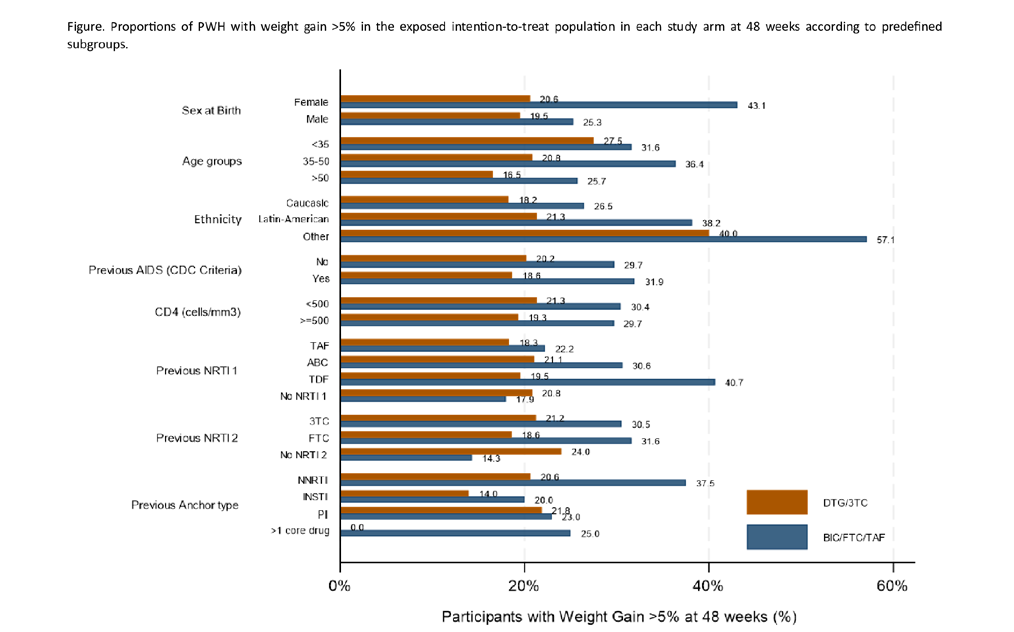
662. Inflammatory Signatures Among People With HIV Initiating DTG/3TC vs BIC/F/TAF in the CoRIS Cohort
Poster Abstracts
Page: 183
Claudio Díaz-García1, Sergio Serrano-Villar1, Laura Luna1, Adriana Pinto Martínez2, Cristina Diez3, Luz Martín-Carbonero4, Miguel Angel Goenaga5, Manuel Sánchez Robledo6, Sergio Reus7, Santiago Moreno1, Elena Moreno del Olmo8, Javier Martínez-Sanz8, the Cohorte de la Red de Investigación en Sida (CoRIS)
Background
Persistent immune activation underlies the increased risk of comorbidities during HIV treatment. Limited evidence exists on whether initiating treatment with two drugs differs from three-drug regimens in this regard. Here, we investigated the effects of DTG/3TC vs. BIC/F/TAF on inflammatory signatures in a large prospective cohort of ART-naive people living with HIV (PWH).
Methods
We included PWH who initiated DTG/3TC or BIC/F/TAF within the Spanish CoRIS cohort and had available plasma samples at month 0 (before ART initiation) and month 24 (±6). We matched participants starting each regimen 1:1 by propensity score (PS). The covariates included age, sex, and baseline CD4/CD8 ratio and HIV-1 RNA. Proteomic profiling was performed by Proximity Extension Assay using an inflammation-specific panel (Olink Target 96 Inflammation). Differences between treatment groups and timepoints were analyzed by Welch two sample t-test and paired t-test, respectively. Gene Set Enrichment Analysis (GSEA) was performed to investigate differential pathways between groups. P-values were adjusted by false discovery rate (Benjamini & Hochberg).
Results
We analyzed 148 PS-matched participants and 78 proteins. The median age was 37 years, 92% male, 74% MSM, with a median baseline CD4 of 380 cells/μL and CD4/CD8 of 0.5. Differential expression analysis showed overexpression of 11 proteins in the BIC/F/TAF group at baseline. Notably, after two years of ART, these signals were no longer detectable. When compared separately, the expression of different sets of inflammatory proteins strongly decreased in both groups. Proteins such as CXCL9, CXCL11, and CD6 —associated with pathogen response— were underexpressed in both groups after two years of ART. Functional evaluation of differentially expressed proteins supported the relevance of biological processes such as cell adhesion, activation of T cells, and general activation of immune response.
Conclusions
After two years, the expression of different sets of inflammatory proteins significantly decreased in both ART groups. These molecules are involved in relevant functions related to inflammation. The higher baseline inflammation in the BIC/F/TAF group, which resolved after two years, suggests that factors associated with greater inflammation may influence regimen selection and that this therapy effectively neutralized the initial disparity.
The figure, table, or graphic for this abstract has been removed.
663. Effectiveness and Inflammatory Markers After 144 Weeks of Switch to DTG/3TC in a Randomized Trial
Poster Abstracts
Page: 183
Evy Blomme1, Evelien De Smet1, Elianne Burg1, Loïc Schrooyen1, Sophie Degroote2, Sophie Vanherrewege2, Els Caluwe2, Linos Vandekerckhove1, Sarah Gerlo1, Marie-Angélique De Scheerder2
Background
Reducing the number of active compounds for lifelong HIV treatment is of interest, especially to reduce potential long-term side effects. The Rumba study is the first randomized clinical trial evaluating the impact on the viral reservoir, inflammation and metabolic parameters of switch from a 2nd generation integrase inhibitor (INSTI)-based triple ART regimen towards DTG/3TC vs. B/F/TAF. Results at 48 weeks confirm the effectiveness and safety of switch to DTG/3TC. Here, we quantified the mean change in inflammatory markers and immune cell counts between baseline and week 144 as an exploratory objective.
Methods
In this phase 4, prospective controlled switch trial, participants with HIV-1 RNA<50 copies/ml plasma at least 3 months on any stable 2nd generation INSTI-based triple ART were randomized 2:1 to switch to DTG/3TC (N=89) or to switch or stay on B/F/TAF (N=45). Plasma viraemia was quantified via the Cobas AmpliPrep-Cobas TaqMan HIV-1 test, D-dimers via immunoturbidimetry, cytokines via Meso Scale Discovery and immune cells via Sysmex/flow cytometry. Statistical analysis was performed with linear regression on log-transformed data, adjusted for baseline responses, CD4/CD8 ratio, smoking status and age.
Results
Baseline characteristics were well balanced between the treatment groups, except for peak viral load (Table 1). Data were available for 103 participants at W144 (73 DTG/3TC; 30 B/F/TAF), no discontinuation was reported due to virological failure. Virological success was high, with all participants having a viral load <50 copies/ml at W144. The relative changes from baseline of inflammatory markers sCD14, sCD163, TNF-α, IL-8, IL-10, IL-21, CXCL-1, IP-10, VCAM-1, CRP and D-dimer did not differ between the treatment groups, both in the complete case and multiple imputation analyses. sCD14 decreased by 17% [CI 9-17%] in DTG/3TC and 10% [3-17%] in B/F/TAF. Furthermore, we observed no significant differences between the groups for CD4, CD8 and monocyte counts/µl whole blood.
Conclusions
The Rumba W144 data confirms that switch to DTG/3TC does not appear to have a negative impact with regard to viral suppression, inflammatory markers and immune cell counts. We did not observe significant differences in these exploratory outcomes between B/F/TAF and DTG/3TC.
Table 1.
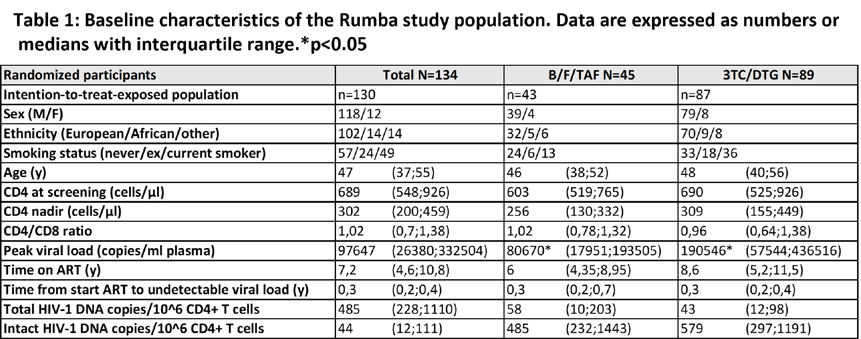
664. Impact of ART Simplification With Dolutegravir and Lamivudine on the HIV Reservoir
Poster Abstracts
Pages: 183-184
Céline Fombellida-Lopez1, Ellen Östling2, Diego Aguilar Ortmans1, Patricia Dellot3, Nicole Maréchal3, Céline Vanwinge1, Aurélie Ladang3, Etienne Cavalier3, Fabrice Susin3, Dolores Vaira3, Marie-Pierre Hayette3, Catherine Reenaers3, Michel Moutschen3, Alexander Pasternak2, Gilles Darcis3
Background
Antiretroviral therapy (ART) suppresses HIV replication and prevents the development of AIDS. However, ART is not curative. Persistence of viral reservoirs forms the major obstacle to an HIV cure. HIV reservoirs persist mainly through cellular longevity and proliferation, but replenishment by residual virus replication despite ART has been proposed as a potential mechanism of HIV persistence. In recent years, there has been a clear trend towards ART regimens that include fewer drugs (e.g., dual instead of triple therapy). In this study, we evaluated the possible increase in viral replication and reservoir replenishment in blood and tissue upon ART simplification and the impact of simplification on chronic immune activation and inflammation.
Methods
Thirty-six people living with HIV, who received a triple therapy consisting of Dolutegravir (DTG), Abacavir (ABC) and Lamivudine (3TC) and had been fully suppressed for at least 2 years, were enrolled in a phase 3 randomised clinical trial. Half of them were switched to a dual therapy (DTG/3TC). Peripheral blood mononuclear cells (PBMCs), plasma and rectal biopsies were longitudinally collected over 1 year. We quantified total HIV DNA and cell-associated unspliced (US) HIV RNA in PBMCs and rectal tissue. Ultrasensitive single-copy HIV RNA assay was performed to determine residual plasma viremia. Expression of immune activation (HLA-DR, CD38) and exhaustion (PD-1, TIGIT) markers and the levels of inflammatory plasma biomarkers including sCD14, IL-6, IL-1β, IL-17α, IFN-γ, and TNF-α were quantified.
Results
There were no significant differences in the longitudinal dynamics of total HIV DNA and unspliced HIV RNA in PBMCs between the two groups. In the simplified group, we observed a transient increase in residual viremia at month 9 of the study that returned to baseline by month 12. Similarly, we observed a transient decrease in the CD4/CD8 ratio that returned to baseline by the end of the study. A significant reduction in the percentages of CD4+TIGIT+ T cells and in levels of 5 plasma inflammation markers was also observed. In the control group, we observed a significant decrease in the total HIV DNA in tissue and a significant decrease in CD4+TIGIT+ T cells.
Conclusions
Switching to DTG/3TC maintained plasma viral load suppression, didn’t measurably impact HIV persistence markers in blood or tissue, and reduced systemic inflammation. These findings support the use of DTG/3TC in people living with HIV.
665. Effect of 12-Month Switch to Dual cART on T-Cell Homeostasis, Gut and Mitochondrial Damage
Poster Abstracts
Page: 184
Valeria Bono, Camilla Tincati, Matteo Augello, Roberta Rovito, Sabrina Marozin, Chiara Orlandi, Anna Casabianca, Giulia Marchetti
Background
Residual immune activation/inflammation is a hallmark of treated HIV. Dual (2DR) regimens are efficacious in maintaining viral suppression, however, their effect on T-cell homeostasis and mitochondrial damage, is ill-defined.
Methods
PLWH switching from viro-suppressive, three drug (3DR) cART to an INSTI-based 2DR with sample availability (at switch and approximately 12 months from switch) were studied. We evaluated T-cell surface maturation (CD127/CD45RA) and activation (CD38/CD45RO) by flow cytometry, plasma gut barrier dysfunction (E-cadherin, I-FABP) and microbial translocation (sCD14, LBP, ELISA;16S rDNA, qPCR). In an unselected subgroup of 16 PLWH, we also assessed total intracellular HIV DNA, and circulating cell-free mitochondrial DNA (ccf-mtDNA, qPCR). Wilcoxon test for statistics.
Results
We enrolled 60 PLWH (Table1). Switching to 2DR led to significant CD4 increases (32% [27-39] vs 35% [30-40]; p=0.0001), reduction in CD8 (40% [34-45] vs 37% [30-42]; p<0.0001) and rise in CD4/CD8 (0.83 [0.65- 0.91] vs 0.96 [0.76-1.3]; p=0.0007). Moreover, switch to 2DR resulted in a decrease of naïve T cells (CD4/CD45RA: 11% [8-17] vs 10% [6-13], p<0.0001; CD8/CD45RA: 18% [15-22] vs 17% [12-20], p=0.002), and significant expansion of central memory phenotypes (CD4/CD127: 28% [24-33] vs 32% [26-37], p<0.0001; CD8/CD127: 30% [24-34] vs 32% [26-36], p=0.01). We also observed a marked reduction in activation (CD8/CD38: 5% [4-8] vs 3% [2-5], p<0.0001, Fig1A; CD8/CD45RO: 7% [4-11] vs 6 [3-8], p=0.03); CD8/CD38/CD45RO: 1% [0-1] vs 0% [0-1], p<0.0001). No changes in markers of intestinal damage, microbial translocation, bacterial 16S rDNA and total HIV DNA were detected, whereas a significant increase in ccf-mtDNA was noted after the switch (Fig.1B). The same trend was observed when the two ccf-mtDNA genes were analysed separately (ND-1 gene: 5,87E+06 cp/ ml [8,52E+05-3,18E+07] vs 2,55E+07 cp/ml [2,75E+06-9,90E+07], p=0.03; D-Loop gene: 6,21E+06 cp/ml [8,75E+05-3,16E+07] vs 2,80E+07 cp/ml [3,46E+06-7,97E+07], p=0.03). No correlations were found between ccf-mtDNA and T-cell activation (pre-switch: r=0.02, p=0.9; post-switch: r=0.03, p=0.8).
Conclusions
By maintaining the control over viral reservoir and microbial translocation, 12-month switch to INSTI-based dual cART contribute to T-cell activation containment, and yet fails to revert cellular stress as measured by circulating mitochondrial DNA. The effects of longer 2DR to contain the enduring HIV-driven cell stress needs further investigation.
The figure, table, or graphic for this abstract has been removed.
666. ALLIANCE OLE: Switch to B/F/TAF in People With Both HIV-1 and HBV
Poster Abstracts
Page: 184
Anchalee Avihingsanon1, Chee Loon Leong2, Chien-Ching Hung3, Sasisopin Kiertiburanakul4, Man-Po Lee5, Khuanchai Supparatpinyo6, Sharline Madera7, Hongyuan Wang7, Jason T. Hindman7, Taisheng Li8
Background
In treatment-naïve adults with HIV-1 and hepatitis B virus (HBV) co-infection, the ALLIANCE study showed that bictegravir/emtricitabine/ tenofovir alafenamide (B/F/TAF) was noninferior for HIV-1 RNA suppression and superior for HBV DNA suppression compared to dolutegravir + emtricitabine/ tenofovir disoproxil fumarate (DTG+F/TDF) at Week [W] 48. Suppression rates were maintained through W96, after which DTG+F/TDF participants switched to B/F/TAF for an additional 48W of open-label extension (OLE). Here, we report efficacy and safety of those who switched.
Methods
ALLIANCE (NCT03547908) was a randomized, double-blind, active-controlled Phase 3 study of B/F/TAF vs DTG+F/TDF in adults with HIV-1 and HBV. This analysis presents data from OLE baseline (BL) through OLE W48 for participants who switched to B/F/TAF from DTG+F/TDF after the 96W randomized phase. We report: OLE BL demographics/characteristics; HIV-1 RNA <50 copies (c)/mL, HBV DNA <29 IU/mL, HBV e-antigen/surface antigen (HBeAg/HBsAg) loss/seroconversion, alanine aminotransferase (ALT) normalization per 2018 American Association for the Study of Liver Diseases (AASLD) criteria at OLE W48 (missing=excluded [M=E]); and study drug– related treatment-emergent adverse events (TEAEs) up to OLE W48.
Results
At OLE BL (N=89), 97.8% of participants were male at birth, 94.4% were Asian, median (range) age was 34 (22-61) years, 30.3% had ALT levels above the upper limit of normal (ULN), 58.4% were HBeAg positive, 96.6% had HIV-1 RNA <50 c/mL, and 83.1% had HBV DNA <29 IU/mL. In total, 88 participants (98.9%) who switched to B/F/TAF completed 48 W of OLE. At OLE W48, 95.4% had HIV-1 RNA <50 c/mL and 86.6% had HBV DNA <29 IU/mL (Table). HBeAg loss/seroconversion was 17.0%/12.8%; HBsAg loss/ seroconversion was 4.3%/0%; ALT normalization was 52% (Table). Up to OLE W48, 17 (19.1%) participants experienced a study drug-related TEAE (none serious), of which 3 (3.4%) were Grade 3 or 4; no participants experienced a TEAE that led to discontinuation and none died.
Conclusions
B/F/TAF maintained high rates of HIV-1 and HBV viral suppression following switch from DTG+F/TDF, with further improvements in key clinical outcomes including HBeAg loss/seroconversion, HBsAg loss, and ALT normalization through 48W of open-label B/F/TAF treatment. Overall, B/F/TAF was well tolerated, with no study drug discontinuations due to TEAEs. These results demonstrate the efficacy and safety of B/F/TAF in people with both HIV-1 and HBV who switched from DTG+F/TDF.
Table 1.
Virologic and Immunologic Outcomes at OLE W48 in Participants Who Switched to B/F/TAF After 96W of Initial Treatment With DTG+F/TDF (M=E)
| n/N (%) |
Switch From DTG+F/TDF to B/F/TAF; N=89
a
|
| HIV-1 RNA <50 c/mL |
83/87 (95.4) |
| HBV DNA <29 IU/mL |
71/82 (86.6) |
| HBeAg loss/seroconversion |
8/47 (17.0) / 6/47 (12.8) |
| HBsAg loss/seroconversion |
3/70 (4.3) / 0/70 (0) |
| ALT normalization (2018 AASLD)
b
|
13/25 (52.0) |
667. Transaminase Decrease Upon Switch From TDF to TAF in PWH Is Modulated by HBV Status
Poster Abstracts
Page: 185
Alessandro Soria1, Giuseppe Lapadula2, Nicola Squillace3, Elisa Colella1, Francesca Sabbatini1, Alban Rugova1, Luca Mezzadri2, Silvia Limonta1, Anna Cappelletti1, Alice Ranzani1, Paolo Bonfanti2
Background
Switching from tenofovir disoproxil fumarate (TDF) to tenofovir alafenamide (TAF) has been associated with a reduction in transaminase level among people with hepatitis B virus (HBV) and in people with HIV (PWH), with or without HBV. It is unclear whether such reduction is due to a lower hepatotoxicity of TAF or to an enhanced suppression of HBV in people with overt or occult HBV.
Methods
We conducted a longitudinal study on PWH switching from TDF to TAF between 2016 and 2023, whose HBsAg/HBcAb status was known. A mixed-effects model with random intercepts at the patient level was used to assess the effect of the switch on transaminase levels. An interaction term between the switch and HBV status was included to evaluate whether the effect of the switch varied across three mutually exclusive HBV categories: chronic hepatitis B (CHB), defined by HBsAg+; occult HBV infection (OBI), defined as HBsAg-/HBcAb+; no HBV infection, defined as HBsAg-/HBcAb-.
Results
Among 648 PWH switching from TDF to TAF, 7.4% had CHB and 34.9% OBI. Table 1 summarizes other patient characteristics. Switching to TAF was associated with a significant transaminase (ALT) decrease (beta [b] -3.2 UI/ml, 95%CI -4.9 to -1.5, P<0.001). Compared with patients without HBV, a significantly steeper ALT decrease upon switch was observed among those with CHB (b -7.6, 95%CI -12.3 to -2.8; P=0.002), while OBI was associated with a non-significant reduction (b -1.6; 95%CI -4.3 to 1.1; P=0.252). In the final multivariable model, male gender (b +10.3, 95%CI 6.4 to 14.2, P<0.001) and diabetes (b +5.1, 95%CI 0.2 to 10, P=0.042) were associated with higher ALT, while older age (b -0.2 per year increase, 95%CI -0.3 to -0.1, P=0.021) and later calendar years (versus 2016-2017, b -7.1, 95%CI -13 to -1.5, P=0.012 for 2020-2023 and b -3.7, 95%CI -7.2 to -0.2, P=0.037 for 2018-2019) were associated with lower ALT. Again, a significant interaction was found between the switch and CHB versus no HBV infection (b -7.6, 95%CI -12.4 to -2.9, P=0.002) but not for OBI (b -1.5, 95%CI -4.2 to 1.2, P=0.276). Consistent results with AST were obtained.
Conclusions
Switching from TDF to TAF is associated with significant transaminase decrease in PWH. Such effect is partially dependent of HBV status, suggesting that, among those with CHB, enhanced viral suppression, not captured by plasma HBVDNA measurement, plays a role. Further studies are warranted to explore the underlying mechanisms and the long-term clinical implications of these findings.
Table 1.
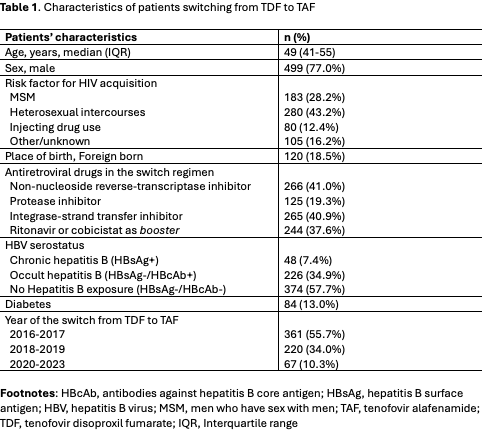
668. Impact of Switching From DTG/3TC to BIC/FTC/TAF on Weight, Cholesterol, and Inflammation in HIV
Poster Abstracts
Page: 185
Sergio Serrano-Villar1, Laura Martín Pedraza1, Daniel Podzamczer2, José Sanz3, Luis López-Cortés4, Alfonso Cabello5, Carmen Busca6, Miguel Torralba7, Maria J. Crusells8, Carmen Hidalgo-Tenorio9, Vicente Estrada10, Alberto Díaz De Santiago11, Ana del Amo1, Marta De Miguel12, Santiago Moreno1
Background
DTG/3TC and BIC/FTC/TAF are recommended ART regimens in major HIV guidelines. However, data on the metabolic and inflammatory effects of switching from DTG/3TC to BIC/FTC/TAF are scarce. We investigated the impact of this switch on metabolic parameters and systemic inflammation in virologically suppressed individuals.
Methods
This randomized, open-label, multicenter INSTINCT study (GESIDA10918) assessed the impact of switching from DTG/3TC to BIC/FTC/TAF vs. continuing DTG/3TC on weight, cholesterol and systemic inflammation up to 96 weeks. Adults with virologically suppressed HIV, stable on DTG/3TC for at least 48 weeks were enrolled. Exclusions included previous virological failure, drug resistance, and autoimmune conditions. For inflammation, we focused on IL-6 changes from baseline to week 96 using high-sensitivity ELISA. We estimated treatment effects using linear mixed models in Stata v.18.
Results
We included 141 participants, with 135 completing follow-up; 14% women, mean age 45 ± 11 years; 78% were white; 58% MSM; 11% had a previous AIDS diagnosis, and the median nadir CD4 was 368 cells/uL. Baseline CD4 count was 789/uL, the mean duration of HIV suppression 6.5 years, mean weight at baseline 77 kg, and mean IL6 levels within normal range (1.72 pg/mL 95% CI [1.46-1.99]). No differences were observed in baseline characteristics between groups. At 96-week, there were no differences in the rates of virological efficacy between DTG/3TC and BIC/FTC/TAF (risk difference 0.01%, 95% CI -0.07 to 0.04). The overall mean weight gain of 1.22 kg, (95% CI 0.31-2.13), with no significant differences between regimens (Fig. A). Changes in total cholesterol (-4.7 mg/dL), HDL cholesterol (0.9 mg/dL), and LDL cholesterol (-2.3 mg/dL) were similar in both groups. Adjusted IL-6 changes were not significantly different (median fold change: DTG/3TC 2.0 [1.3-2.7]; BIC/FTC/TAF 1.2 [1.0-1.4], P = 0.106)(Fig. B).
Conclusions
Switching from DTG/3TC to BIC/FTC/TAF in virologically suppressed individuals showed comparable effects on weight, cholesterol levels, and systemic inflammation (IL-6) compared to continuing DTG/3TC. Ongoing analyses of additional inflammatory markers are needed to determine if either regimen may lead to differential effects on systemic inflammation.
Figure 1.
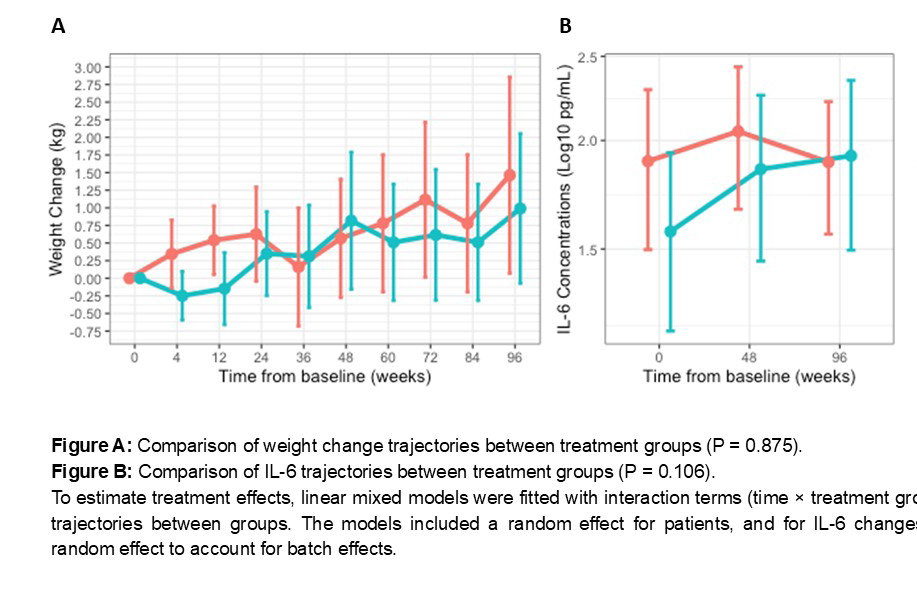
669. 24-Month Outcomes on Second-Line Antiretroviral Therapy in South Africa: A Target Trial Emulation
Poster Abstracts
Page: 186
Jennifer A. Brown1, Lara Lewis1, Yukteshwar Sookrajh2, Lungile Hobe3, Thulani Ngwenya4, Johan van der Molen1, Kwabena Asare1, Kwena Tlhaku1, Mlungisi Khanyile1, Thokozani Khubone2, Nigel Garrett1, Jienchi Dorward1
Background
The WHO recommends dolutegravir (DTG) instead of ritonavir-boosted lopinavir (LPV/r) in second-line antiretroviral therapy (ART), and recycled tenofovir disoproxil fumarate (TDF)/emtricitabine or lamivudine (XTC) instead of zidovudine (AZT)/XTC as backbone. However, there is little long-term data from routine, low-resource settings, where DTG resistance may be emerging. We compared 24-month outcomes with these 3 regimens.
Methods
We analysed routinely collected, de-identified data from people with HIV at 125 public primary care clinics in KwaZulu-Natal, South Africa. We emulated a target trial among adults switching to second-line AZT/XTC/LPV/r, AZT/XTC/DTG, or TDF/XTC/DTG between December 2019 and February 2021 after viral failure with TDF/XTC/efavirenz. The co-primary endpoints were i) loss to follow-up (LTFU) including death through 24 months (time-to-event) and ii) viraemia >50 copies/mL at 24 months. We used logistic regression with inverse probability of treatment weights in intention-to-treat (ITT) analyses and with inverse probability of censoring weights in per protocol analyses, with bootstrapped confidence intervals (CIs).
Results
Of 2144 people, 917 (42.8%) switched to AZT/XTC/LPV/r, 343 (16.0%) to AZT/XTC/DTG, and 884 (41.2%) to TDF/XTC/DTG. Median age was 36 years (IQR 30-43), 1245 (58.1%) were female and median time with viraemia ≥1000 copies/ mL was 371 days (IQR 235-588). ART changed during follow-up for 24.2%, 24.5%, and 15.4% of those switched to AZT/XTC/LPV/r, AZT/XTC/DTG, and TDF/ XTC/DTG, respectively. In ITT analysis of LTFU (N=2144), the standardised risk was higher with AZT/XTC/LPV/r (33.5%; adjusted risk difference [aRD] 6.7%, 95% CI 0.2 to 12.3; strong evidence) and with TDF/XTC/DTG (32.4%; aRD -5.7%, 95% CI -11.3 to 1.4%; weak evidence) than with AZT/XTC/DTG (26.7%), and similar between AZT/XTC/LPV/r and TDF/XTC/DTG. The standardised risk of viraemia in those retained in care with a VL result (N=1190) was higher with AZT/XTC/LPV/r (48.0%) than AZT/XTC/DTG (39.6%; aRD 8.4%, 95% CI -0.2 to 16.9; weak evidence) or TDF/XTC/DTG (39.0%; aRD 9.0%, 95% CI 2.9 to 15.1; strong evidence), and similar for AZT/XTC/DTG and TDF/XTC/DTG. Per protocol analyses gave similar results (Table).
Conclusions
Compared with AZT/XTC/LPV/r, people on second-line DTG had less viraemia, with no evidence of worse viraemia with recycled TDF. Interventions to improve LTFU and viraemia with second-line therapy are needed, and drug resistance surveillance remains essential.
Table 1.
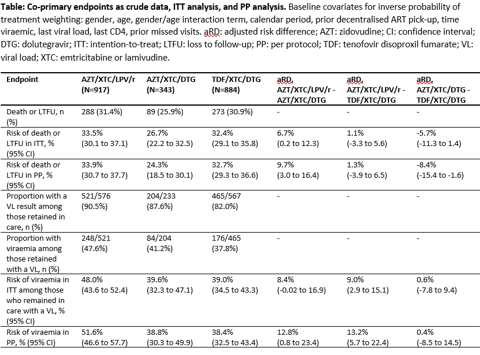
670. Dolutegravir With Either Doravirine or Rilpivirine: Two-Drug Antiretroviral Therapy Outcomes
Poster Abstracts
Page: 186
Rachel Denyer1, Morgan Byrne2, Clayton Nance II1, Daniel Seeger1, Natella Rakhmanina4, Anne Monroe2, Debra Benator1, the DC Cohort Executive Committee
Background
Dual nucleos(t)ide reverse transcriptase inhibitor (NRTI)-free regimens are an attractive choice for simplification of antiretroviral therapy (ART) in treatment-experienced patients. Fixed-dose formulation of rilpivirine (RPV) plus dolutegravir (DTG) is recommended for ART optimization, while Doravirine (DOR) plus DTG is a more recent NRTI-free option. We aimed to compare virologic suppression (VS) in treatment-experienced persons with HIV following switch to DTG+DOR versus DTG+RPV.
Methods
We analyzed DC Cohort study participants ≥18 years during the period Jan 2017-June 2024. Participants with at least 1 year of DC Cohort enrollment were included if prescribed either DTG+DOR or DTG+RPV for ≥60 days. We collected demographics (age, sex, gender, race/ethnicity), chronic kidney disease (CKD) diagnosis, insurance type and viral load data. CD4 count and VS (HIV RNA<200 copies/mL) at regimen initiation was defined as the lab closest to regimen start date (within prior 12 months). In participants with VS pre-switch, Kaplan-Meier curves were used to show the probability of continued VS (HIV RNA<200 copies/mL) from 7 days post-switch until the earliest of 24 months post-switch or regimen cessation.
Results
A total of 466 participants were included in the analysis (DTG+DOR group: N = 31; DTG+RPV group: N = 435) with median regimen duration 2.1 years (IQR: 1.0-4.1). The median age was 58.3 years (IQR: 50.5–64.5), and the majority were male (75.8%) and identified as Black (78.8%), with 40.1% with a prior CKD diagnosis. At regimen initiation, VS was observed in 77.4% of the DTG+DOR group versus 86.2% of the DTG+RPV group and median CD4 count was 634 cells/mm³ (IQR: 481–812) in the DTG+DOR group and 595 cells/mm³ (IQR: 432–853) in the DTG+RPV group. DTG+DOR recipients more frequently had public insurance (87.1%) and received care at academic sites (83.9%) than the DTG+RPV group (60.0% and 55.2%, respectively). Among 347 participants with VS at regimen initiation and post-switch VL data, a higher proportion maintained VS on DTG+RPV (308 of 327, 94.1%) compared to DTG+DOR (14 of 20, 70.0%). Log-rank testing indicates a significant difference between Kaplan-Meier curves for each regimen (Figure; p= 0.0001).
Conclusions
Observed differences in VS following switch to DRG+RPV and DTG+DOR may be due to differences in participant characteristics, adherence, viral resistance patterns, and the dual regimens. Further studies are needed to evaluate efficacy of dual NRTI-free regimens in real-world settings.
Figure 1.
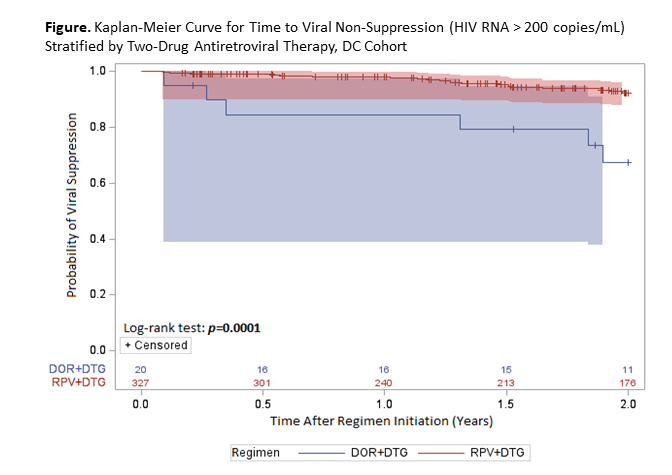
671. Is It Effective to Switch Regimen in PWH With Low-Level Viremia in the Current Era?
Poster Abstracts
Pages: 186-187
Tommaso Clemente1, Pierluigi Reali1, Riccardo Lolatto1, Girolamo Piromalli1, Rebecka Papaioannu Borjesson1, Flavia Passini2, Diana Canetti1, Elena Bruzzesi2, Emanuela Messina1, Silvia Nozza2, Antonella Castagna1, Vincenzo Spagnuolo1
Background
Antiretroviral treatment (ART) management during HIV low-level viremia (LLV) is still unclear. Our aim was to evaluate outcomes after LLV in people with HIV (PWH) according to ART switch.
Methods
Cohort study on PWH on ART with ≥1 episode of LLV since 2014. LLV defined as ≥2 consecutive viral loads (VLs) between 50 and 199 copies/mL ≥30 days apart, following a previous VL <50 copies/mL. In case of multiple LLV episodes, only the first was considered. In case of multiple ART switch during LLV, only the first was considered. Follow-up accrued from first VL 50-199 copies/mL [baseline (BL)] to VS (≥1 VL <50 copies), virological failure [VF (≥2 consecutive VLs ≥200 or ≥1 VL ≥1000 copies/mL)], second ART switch or last available VL measurement. Cox regression model applied to assess predictors of VS; ART switch considered as time-dependent variable.
Results
Among 6794 PWH in care, 451 (6.6%) developed LLV and were included in the analysis: at BL, 380 (84.3%) males assigned at birth, median age 52.6 (interquartile range 45.8-57.9) years, on ART since 14.2 (6.1-20.9) years, virosuppressed since 3.4 (1.3-8.2) years, CD4+/CD8+ 0.7 (0.4-1.0), 347 (76.9%) on a triple therapy, 296 (65.6%) on a high genetic barrier regimen (including bictegravir, dolutegravir, and/or a boosted PI). After a median follow-up of 0.8 (0.4-1.1) years, 366 (81.2%) individuals achieved VS [303/366 (82.8%) maintained stable VS for ≥2 VL determinations] and 16 (3.5%) had VF. ART was switched in 176 (39.0%) PWH after 0.3 (0.1-0.6) years [136/176 (77.3%) achieved VS (stable in 87.5% of them), 4/176 (2.3%) had VF]. Risk of VS was significantly higher after ART switch [unadjusted hazard ratio (uHR)=2.1, 95% confidence interval (95%CI)=1.7-2.6, p<0.001]. This result was confirmed in sensitivity analyses on PWH on high [uHR=2.3, 95%CI=1.7-3.0, p<0.001] or low [uHR=1.9, 95%CI=1.3-2.7, p=0.001] genetic barrier regimens. At multivariable analysis, a higher risk of VS was significantly associated with ART switch, pre-BL history of VF, and resistance to ≥2 drug classes (Table 1). According to RNA-based genotyping, resistance-associated mutations might have been selected during LLV in 7 (1.6%) PWH.
Conclusions
Low-level viremia during ART has a non-negligible prevalence in PWH and could be responsible for the emergence of resistance-associated mutations. Switching ART seems to be beneficial in achieving virological suppression, even in the case of high genetic barrier regimens.
Table 1.
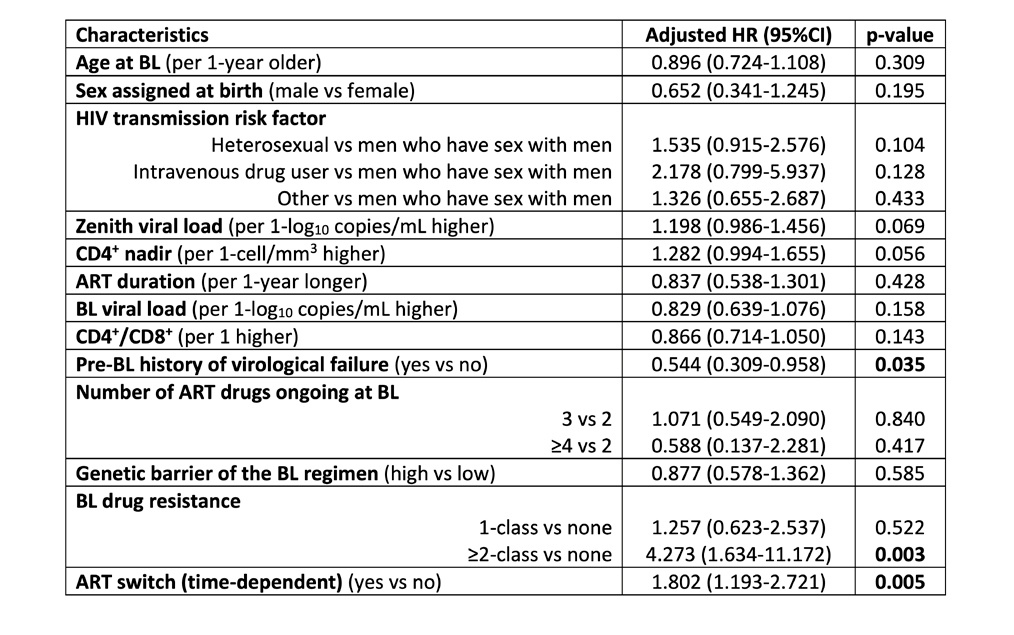
672. Impact of Antiretroviral Therapy (ART) Intensification on HIV-1 Virologic Markers (ACTG 5324)
Poster Abstracts
Page: 187
Jonathan Reed1, Luke Hall2, Ashley McKhann2, Ginger Kwak1, Erin A. Goecker1, Huichao Chen2, Eric S. Daar3, Peter W. Hunt4, Christina M. Marra1, Qing Ma5, Gene D. Morse5, Robert W. Coombs1, Scott L. Letendre6, Serena Spudich7, Alexander L. Greninger1, the ACTG A5324 Study Team
Background
The A5324 trial investigated intensification with dolutegravir (DTG) +/- maraviroc (MVC) on neuropsychological performance (NP) in persons with HIV (PWH) and neurocognitive impairment (NCI) on suppressive ART. Intensification with these drug classes does not reduce the reservoir size or residual viremia, but changes in other virological parameters have been observed. For example, intensification with integrase strand transfer inhibitors (INSTIs) may increase early (2-4 week) cell-associated 2-LTR circle (CA-2LTR). MVC intensification may also increase CA-2LTR as well as cell-associated unspliced RNA (CA-RNA). We investigated the impact of the first 12 weeks of intensification with DTG +/- MVC versus dual placebo on these virologic measures in the large randomized, double-blind, placebo-controlled A5324 study.
Methods
Eligibility criteria for the A5324 included PWH with plasma HIV RNA < 50 copies/mL, ART regimens without INSTI or MVC, and with NCI on NP screening. This analysis focused on samples collected at baseline and weeks 2, 4, and 12, after randomization. HIV-1 virological markers were measured by ddPCR from total PBMC: cell-associated DNA (CA-DNA), CA-RNA, CA-2LTR. Residual plasma HIV RNA was measured by a low copy assay (LoD of 7 copies/mL).
Results
168 participants (70% assigned male sex at birth; 64% non-White) were enrolled and randomized to dual placebo (n=58), DTG+placebo (n=57), or DTG+MVC (n=53). CA-DNA and CA-RNA were detectable at both baseline and 12 weeks in 97% and 77% of participants, respectively, and did not differ between arms in change over 12 weeks (Wilcoxon rank-sum, P values > 0.2). In contrast, HIV-1 CA-2LTR was only detectable at both baseline and 12 weeks in 49% of participants. CA-2LTR was less frequently detected post-baseline in the DTG+MVC arm (58.5%) compared to placebo (29.3%) or DTG+placebo (31.6%) (Figure, Chi-square; vs. DTG, P = 0.03; vs. placebo, P = 0.02).
Conclusions
Unlike some prior studies of INSTI intensification, we did not observe an early increase in CA-2LTR with DTG intensification. Unexpectedly, DTG+MVC intensification appeared to decrease CA-2LTR detection without affecting other virologic measures. One limitation of this finding is that the DTG+MVC arm exhibited a lower percentage of CA-2LTR detectable at baseline, despite randomization (Figure). The reduction of CA-2LTR detection with DTG+MVC may indicate suppression of residual replication, but other mechanisms are possible like altered migration of CA-2LTR-postive CD4+ T cells.
Figure 1.
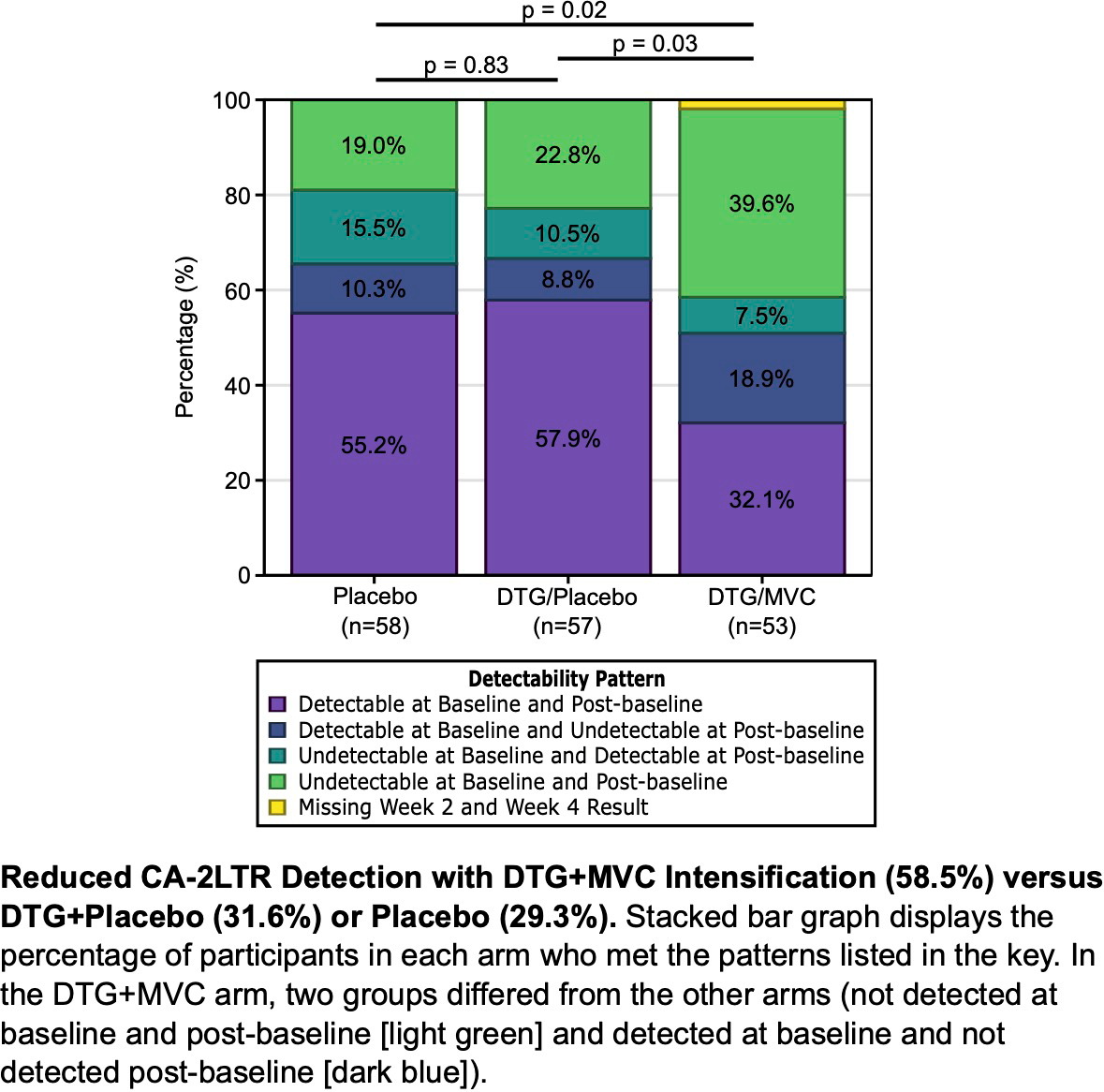
673. Factors Affecting Long-Term Trends of Immunologic Markers After ART: Results From the START Trial
Poster Abstracts
Pages: 187-188
Christos Thomadakis1, Giota Touloumi1, Birgit Grund2, Ab Babiker3, Irini Sereti4, Karen Rogstad5, Rocío Montejano Sanchez6, Thomas Benfield7, Claudia P. Cortes8, Simon Collins9, Anthony D. Kelleher10, Mauro Schechter11, the INSIGHT START Study Group
Background
The START trial randomized ART-naïve individuals with CD4 counts>500 cells/μL to immediate ART initiation (Immediate group) or deferring ART until CD4 declined to 350 cells/μL or AIDS development. In 2015, all participants were recommended to start ART; extended follow-up continued through 2021. We assessed long-term immunologic responses over 10 years (CD4 count, CD4%, CD4/CD8 ratio), and identified factors influencing immune recovery.
Methods
Linear mixed models with natural splines were used to model trajectories of the 3 markers post-ART initiation, which were compared across 4 groups defined by timing and CD4 count at ART initiation: (1) Immediate group, (2) Deferred >500 cells/μL, (3) Deferred 351-500 cells/μL, (4) Deferred ≤350 cells/μL. Although these comparisons are not protected by randomization, models allowed for different baseline levels and trends over time by demographic/clinical factors. Based on fitted models, estimates of marker levels and changes since ART initiation were compared across factor groups at 8&10 years post-ART initiation.
Results
Of 4486 participants initiating ART, 2305 (51%) were in the Immediate and 943 (21%), 694 (16%), and 544 (12%) in the three Deferred groups, respectively. All 3 markers rose steeply in the first year post-ART, then plateaued around 5-6 years. Deferred groups starting ART with ≤500 CD4 cells/μL had lower levels of all 3 markers and remained below the Immediate group levels through 10 years. CD4 counts at 10 years were 997 cells/μL in the Immediate and 734 cells/μL in the Deferred <350 CD4 cells/μL subgroup. Key factors influencing long-term marker trends included treatment group, HIV transmission mode, randomization region, HIV-RNA, first ART class, BMI, and age. Multivariable analyses showed no significant differences in 8&10-year CD4 count between the Immediate and the Deferred >500 CD4 cells/μL group, though moderate differences were seen for CD4% and CD4/CD8 ratio (Figure). In the Deferred ≤350 CD4 cells/μL group, 40% of those on INSTI-based regimens achieved a CD4/CD8 ratio >1 at 8 years compared to 45% for NNRTI-based regimens.
Conclusions
The extent and trajectory of immune recovery, judged with any of the 3 markers, is consistently greater in those with earlier ART initiation; those starting with CD4 ≤500 cells/μL do not catch up over 8&10 years on ART. While there are differences by sex, region and comorbidity, the improved long-term outcomes associated with earlier initiation are consistent across the markers measured.
Figure 1.
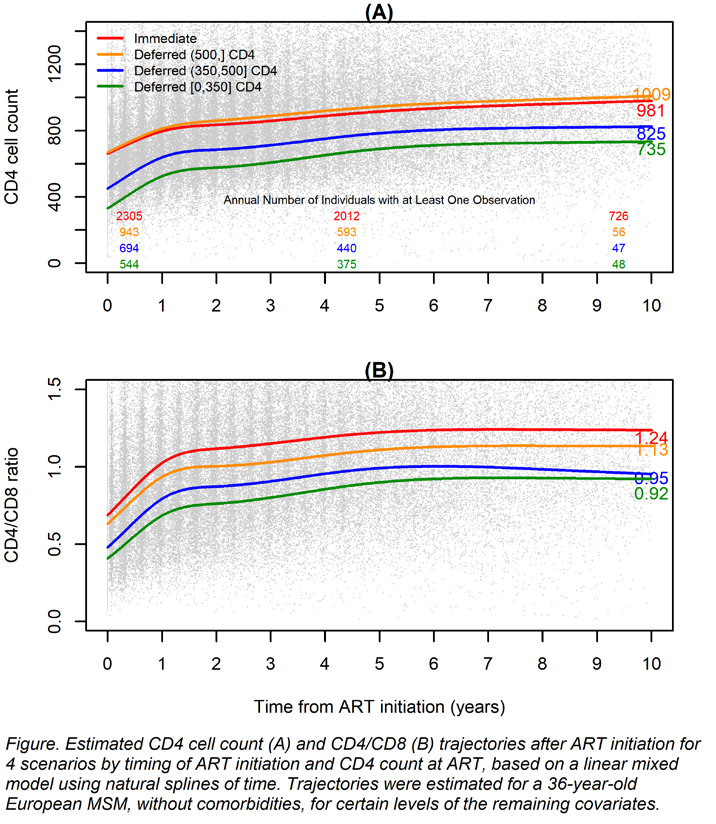
674. Long-Term CAB+RPV LA Effectiveness in Virologically Suppressed Individuals in the OPERA Cohort
Poster Abstracts
Page: 188
Brooke Levis1, Ricky K. Hsu2, Jennifer S. Fusco1, Michael Sension3, Laurence Brunet1, Quateka Cochran4, Gayathri Sridhar5, Vani Vannappagari5, Jean van Wyk6, Michael B. Wohlfeiler7, Gregory P. Fusco1
Background
Cabotegravir + rilpivirine long-acting (CAB+RPV LA) injectable was FDA approved for treatment experienced, suppressed (viral load [VL] <50 c/ mL) people with HIV (PWH) on a monthly (Q1M; 2021) or every 2 months (Q2M; 2022) schedule. We assessed CAB+RPV LA use in a real-world setting over its first 3 years of availability.
Methods
Suppressed adults with HIV switching to CAB+RPV LA (21JAN2021-31DEC2023) were followed through 29FEB2024 in the OPERA Cohort. Among complete initiators (first 2 injections ≤67 days apart), on-time injections (23-37 days after last Q1M injection, 53-67 days after last Q2M injection) and discontinuation (no injection for ≥68 days [Q1M] or ≥128 days [Q2M]) were described. Confirmed virologic failure (CVF; 2 VLs ≥200 c/mL or 1 VL ≥200 c/mL + discontinuation) was assessed among those with ≥1 follow-up VL. Virologic outcomes were assessed overall and stratified by body mass index (BMI) at initiation (<30 vs. ≥30 kg/m2).
Results
There were 2,858 suppressed CAB+RPV LA users (median age: 39 [IQR: 31, 51], 84% male, 42% Black, 30% Hispanic, 55% in the US South, median years since HIV diagnosis: 6 [IQR: 2, 13], 24% with history of an AIDS defining event, 30% with BMI ≥30 kg/m2, median CD4 count: 698 cells/µL [IQR: 519, 912], 78% on an INSTI prior to CAB+RPV LA). Among 2,626 (92%) PWH who completed initiation, median follow-up time was 11 months (IQR: 6, 18; Table) and 2,182 (83%) were on CAB+RPV LA at time of analysis; 83% received their second injection on-time, and all maintenance injections were on-time in 60% of the 2,401 PWH with maintenance injections. Most PWH maintained virologic suppression (95% <50 c/mL at last VL and 83% had no virologic blips [all VLs <50 c/mL]). Of those with 6, 12, and 24-month VLs, virologic suppression was observed in 954/1,015 (94%), 511/538 (95%), and 85/89 (96%), respectively. CVF was observed in 32 (1%) PWH, with 17 CVFs occurring within the first 6 months. Across BMI categories (<30 kg/m2 vs. ≥30 kg/m2), neither virologic suppression <50 c/mL (all VLs: 83% vs. 84%; last VL: 95% vs. 94%) nor CVF (1% vs 1%) differed.
Conclusions
In this large cohort of suppressed CAB+RPV initiators with long-term follow-up, most individuals were able to remain on the regimen and adhere to the dosing schedule over the first 3 years of availability. Suppressed PWH on CAB+RPV LA had favorable virologic outcomes as most maintained VLs <50 c/mL and CVF was infrequent. Further, virologic suppression was maintained regardless of BMI category at initiation.
Table 1.
Virologic outcomes among suppressed PWH who completed initiation of CAB+RPV LA (N=2,626)
|
|
n (%) or median (IQR) |
| Months on CAB+RPV LA regimen, median (IQR) |
10.9 (6.4, 18.0) |
| N with ≥1 VL during follow-up, n |
2,489 |
| All VLs <50 copies/mL, n (%) |
2,077 (83.4%) |
| Last VL <50 copies/mL, n (%) |
2,359 (94.8%) |
| Confirmed virologic failure, n (%) |
32 (1.3%) |
| Months to virologic failure, median (IQR) |
4.9 (2.3, 8.0) |
675. Outcomes on Cabotegravir + Rilpivirine in Suppressed People With HIV (PWH) in TRIO Health US Cohort
Poster Abstracts
Pages: 188-189
Andrew Frick1, Paul Sax2, Supriya Sarkar3, Janna Radtchenko1, Gayathri Sridhar3, Leigh Ragone3, Joseph J. Eron4, Steven Santiago5, Moti Ramgopal6, Karam Mounzer7, Charles Walworth8, Jean van Wyk9, Richard A. Elion1, Vani Vannappagari3
Background
Cabotegravir+Rilpirivine (CAB+RPV) is the first complete long-acting injectable antiretroviral therapy (ART) for the treatment of HIV for ART-experienced PWH with undetectable viral load (VL <50 copies/mL [cpm]). This study examined the utilization and effectiveness of CAB+RPV in real-world settings in the US.
Methods
ART-experienced adults with undetectable VL at initiation who received ≥1 CAB+RPV injection between Feb 2021-Mar 2024 were identified from electronic health records in the Trio Health Cohort. Discontinuation of CAB+RPV was defined as 2 consecutive missed injections or an ART regimen switch, while confirmed virologic failure (CVF) was defined as 2 consecutive VLs >200 cpm or 1 VL >200 cpm with discontinuation within 4 months (mo) of the first elevated VL; delayed injections were defined as occurring >7 days after target date (Q1M or Q2M). ART resistance based on HIV genotype results prior to baseline and at CVF was available for a subset of PWH and analyzed using the Stanford HIVdb algorithm.
Results
Analyses included 1198 PWH who initiated CAB+RPV; median age was 43 years (IQR: 34-54), predominately male (77%), non-Black (52%), and treated in the US South (52%). Median follow-up time after the first injection was 12 mo (IQR 5-19). At the end of follow-up, 923 (77%) PWH remained on CAB+RPV; among 275 PWH who discontinued CAB+RPV, 24 (9%) re-initiated CAB+RPV, 4 (1.5%) experienced injection site reactions. Among all CAB+RPV initiators, 928 (77%) individuals had ≥1 follow-up VL; among these, 882 (95%) had last VL < 50 cpm. CVF was observed in 15 (1.6%) individuals, of whom, 8 (53%) had >2 mo follow-up on a subsequent regimen, with re-suppression observed in 6 individuals (75%). Injection delays were observed in 4 (27%) individuals with CVF (delay range: 2-11 days). Of 314 PWH with HIV genotype data prior to initiation, 6 (2%) had resistance to ≥1 INSTIs, and 61 (19%) had resistance to ≥1 NNRTIs. Among 15 PWH with CVF, HIV genotype at CVF was available for 5 (33%); RPV resistance was identified in 3 PWH (Y181C + G190S; K101E; Y181C), 1 of whom also had CAB resistance (S147G + N155H).
Conclusions
High rates of viral suppression were seen among PWH initiating CAB+RPV, including those with prior NNRTI/INSTI resistance. CVF with emergent INSTI resistance was rare. These results are consistent with previous studies reporting low rates of emergent INSTI resistance and higher rates of NNRTI resistance among failures.
Table 1.
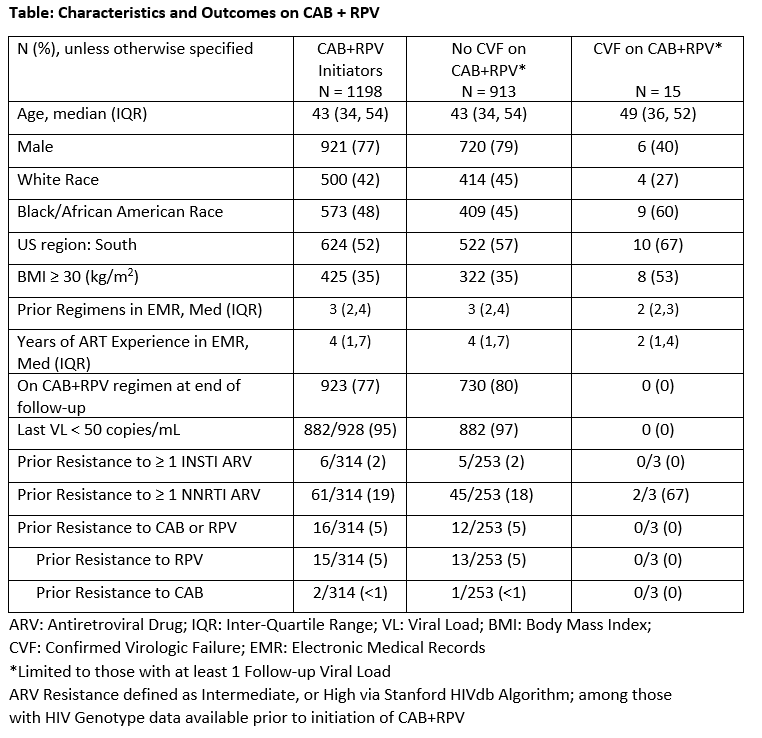
676. Clinical Outcomes Among Virologically Suppressed Women Receiving CAB+RPV LA in the OPERA Cohort
Poster Abstracts
Page: 189
Brooke Levis1, Jessica A. Altamirano2, Cindy Markarian3, Quateka Cochran4, Courtney Sherman5, Mona-Gekanju Toeque3, Laura Armas6, Gayathri Sridhar7, Vani Vannappagari7, Kimberley Brown7, Jennifer S. Fusco1
Background
Women represent ~20% of people with HIV in the US and may experience unique challenges with HIV treatment. Cabotegravir + rilpivirine long-acting (CAB+RPV LA) injectable, indicated for treatment experienced individuals with viral loads (VL) <50 copies/mL, is the first complete LA antiretroviral regimen approved for HIV-1 treatment. This study assessed clinical outcomes among virologically suppressed women receiving CAB+RPV LA in the OPERA cohort.
Methods
Women ≥18 years old with HIV who were virologically suppressed (VL <50 copies/mL) and received ≥1 CAB+RPV LA injection between 21JAN2021-31AUG2023 were followed from first injection until discontinuation, death, loss to follow-up or study end (29FEB2024). Individuals on monthly (Q1M) or every 2-month (Q2M) injection schedules were included. Complete initiation was defined as first 2 injections received ≤67 days apart. For Q1M schedules, on-time maintenance injections were 23-37 days after last injection, delayed were 38-52 days, missed were 53-67 days, and discontinuation was ≥68 days. For Q2M schedules, on-time maintenance injections were 53-67 days after last injection, delayed were 68-112 days, missed were 113-127 days, and discontinuation was ≥128 days. Confirmed virologic failure (CVF) was defined as 2 consecutive VLs ≥200 copies/mL or 1 VL ≥200 copies/mL followed by discontinuation within 4 months.
Results
Of 415 women observed, 264 (64%) were Black, 81 (20%) were Hispanic, 52 (13%) were transgender, 200 (48%) had a BMI of ≥30 kg/m2, median age was 43 (IQR: 34, 54), and median years since HIV diagnosis was 9 (IQR: 4, 18). A total of 381 (92%) completed initiation (293 [77%] on Q2M injections and 75 [20%] on Q1M injections at initiation) and were followed for a median of 12.4 (IQR: 7.2, 19.0) months (Table). At study end, 297 (78%) were on CAB+RPV LA. Among 340 women (89%) with known dosing schedules and ≥1 maintenance injection, 148 (43%) received all maintenance injections on-time, while 125 (37%) had ≥1 delayed maintenance injection and 42 (12%) had ≥1 missed maintenance injection. Among 372 women (98%) with ≥1 VL over follow-up, most maintained suppression (94% at last VL, 82% at all VLs) and 7 (2%) experienced CVF. Median absolute change in CD4 cell counts over follow-up was 40 cells/µL (IQR: -91, 152).
Conclusions
A diverse population of women with HIV was able to receive CAB+RPV LA on-time and remain suppressed in this real-world study. Confirmed virologic failure was infrequent in these antiretroviral experienced women.
Table 1.
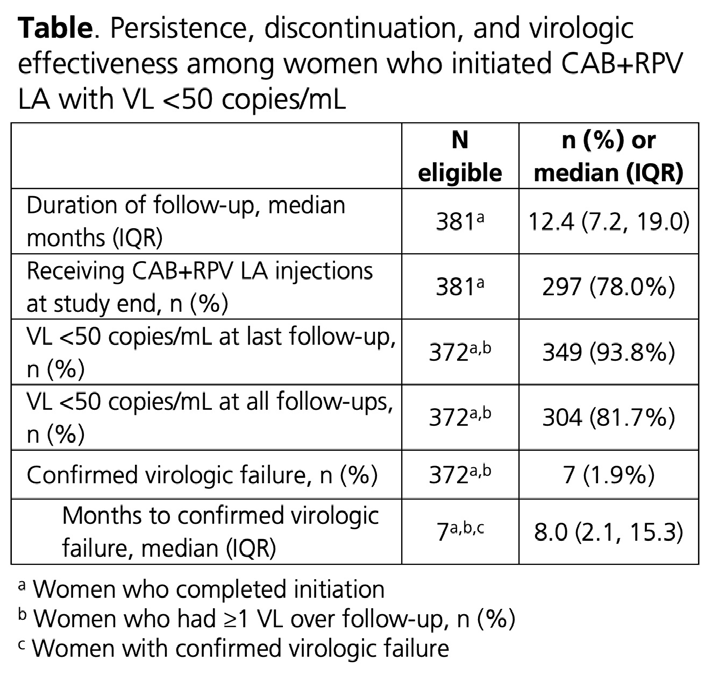
677. Long-Acting Cabotegravir and Rilpivirine in Older People With HIV in the GEPPO Cohort
Poster Abstracts
Pages: 189-190
Andrea Calcagno1, Maria Vittoria Cossu2, Samuele Gardini3, Stefania Arsuffi4, Stefano Calza4, Jovana Milic5, Benedetto Maurizio Celesia6, Giancarlo Orofino7, Andrea De Vito8, Giuseppe Vittorio De Socio9, Federica Barrera1, Maria Mazzitelli10, Agostino Riva2, Emanuele Focà4, Giovanni Guaraldi5, the GEPPO Study Group
Background
The association of intramuscularly administered Long-acting cabotegravir and rilpivirine (LA CAB+RPV) has been proven to be effective and safe in the maintenance treatment of people with HIV (PWH). The study aimed to assess LA CAB+RPV efficacy and safety in Older PWH (OPWH).
Methods
PWH in the GEPPO cohort (age >65 years) who started LA CAB+RPV were included. Duration of LA CAB+RPV administration, reasons for drug preference and discontinuation, and HIV RNA/CD4 cell count at the last available observation were recorded together with geriatric variables, including multimorbidity (defined as the presence of ≥3 comorbidities) and polypharmacy (defined as the use of ≥5 medications other than antiretroviral therapy). Baseline (BL) was defined as the time when participants started LA CAB+RPV.
Results
Seventy-eight PWH were included. They were mostly male (75.9%) and aged 66.7 years (65-70) at BL. A long time since HIV diagnosis [20 (14-28.5) years] and of ART [19 (13-22) years] as well as moderately low nadir CD4+ T cells [270 (105-410) cell/mm3] were observed. Only three participants had an HIV RNA >50 copies/mL (55, 234, and 945 copies/mL) at the time of the switch. The pre-switch regimen was mainly based on a three-drug combination in 53.5% of study participants (mostly bictegravir or rilpivirine-based) or two-drug combinations by 45.1% (mostly dolutegravir/rilpivirine and dolutegravir/ lamivudine). Multimorbidity (61.9%) and polypharmacy (31.9%) were prevalent. A history of NNRTI resistance-associated mutations, an A1/A6 genotype, and a body mass index >30 Kg/m2 were observed in 2 (2.7%), 6 (19.3%), and 10 (14.3%) participants, respectively. After a median follow-up of 17.4 months (14.1-18.9), 72 participants (92.3%) were still receiving LA CAB+RPV. No virological failure was observed, and HIV RNA remained <50 copies/mL in all PWH; CD4 cell count at the last available observation was 656 (519-964) cells/mm3. The reasons for discontinuation were adverse events (2 subjects: 1 fever/muscular pain and 1 palpitations/ paresthesias), patient’s choice (1), death (1), HBV flare in occult B hepatitis (1), and physician’s choice (1).
Conclusions
Our results suggest that the LA CAB+RPV combination is effective and safe in OPWH despite a long history of ART and a high prevalence of multimorbidity and polypharmacy. Older age should not be a barrier to the LA regimen: this study paves the way to evaluate the risk of an ageism attitude when clinicians consider ART choices in older PWH.
678. Long-Acting Cabotegravir/Rilpivirine in Real-Life: Sex-Based Characteristics, PROs and Effectiveness
Poster Abstracts
Page: 190
Ana González-Cordón1, Berta Torres1, Leire Berrocal1, Maria Martínez-Rebollar1, Ivan Chivite1, Alexy Inciarte1, Paula Arreba1, Juan Ambrosioni2, Lorena de la Mora1, Alberto Foncillas1, Jose L. Blanco1, Esteban Martínez1, José M. Miró1, Josep Mallolas2, Montserrat Laguno1, the Cabotegravir-Rilpivirine Research Group
Background
This study aimed to focus on sex-based characteristics, patient reported outcomes (PROs) and effectiveness in people with HIV switching to long-acting cabotegravir-rilpivirine (LA-CAB/RPV) administered Q2M in Hospital Clínic of Barcelona, Spain.
Methods
People starting LA-CAB/RPV were invited to participate in an observational, prospective study approved by the local Ethical Committee. Clinical information was routinely collected, PROs were self-administered through electronic questionnaires. Participant characteristics, treatment effectiveness [HIV-RNA <50 copies/mL by on treatment (OT), modified intention-to-treat (mITT), and intention to-treat (ITT)], and PROs were analyzed focusing on sex-at-birth based differences.
Results
From 2Feb2023 to 2Jul2024, 611 participants of 6477 in active follow up (9%) started LA-CAB/RPV, and 587 accepted to participate, 547 (93%) men and 40 (7%) women at birth, compared to 4862 (84%) men and 909 (16%) women that continued with other ART (p < 0.001). Women were older, had longer time since HIV diagnosis, longer time on ART, had higher last-CD4 count but lower nadir-CD4, and were more frequently Spanish-born than men both in LA-CAB/RPV group (Table) and in general cohort (not shown). Women had more previous virological failures but no differences in number of historical mutations. Effectiveness by OT, mITT and ITT in the 373 participants on LA-CAB/ RPV who reached week28 of follow up was 100%, 92%, and 90% in women and 97%, 93%, and 90% in men without significant differences. Injections were administered on time in 96% (men) and 97% (women). There were 5 (1%) confirmed virological failures, all in men, and all but one with low level viremia (VL <200 cp/mL). No significant differences in reason for switching to LA-CAB/RPV nor in treatment acceptance (ACCEPT questionnaire) were observed between men and women. No differences in life satisfaction and HIV medication relationship domains of HIV/AIDS-Targeted Quality of Life (HAT-QoL) questionnaire were noted, nonetheless women expressed more frequent disclosure issues than men (p <0.001). No relevant differences were observed in injection site reactions nor in Perception of Injection questionnaire.
Conclusions
Compared to our general cohort, proportionally less women than men switched to LA-CAB/RPV. Baseline characteristics could partially explain this difference, although we cannot exclude prescription biases or other barriers.
Table 1.
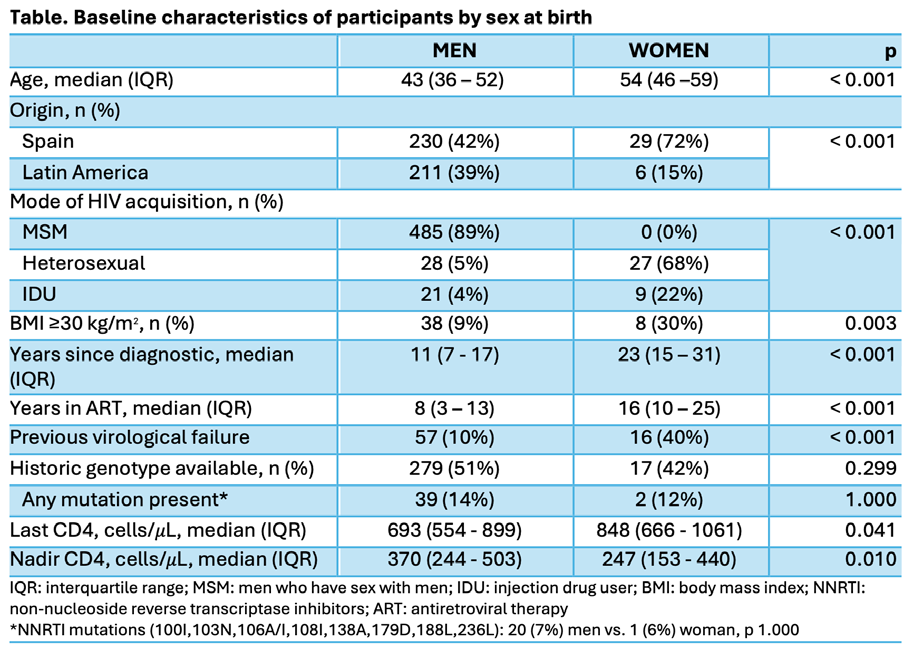
679. Interim Week 48 Results in Young South Africans on Long-Acting Injectable ART: The AFINAty Study
Poster Abstracts
Page: 190
Lauren Jennings1, Chantel Schreuder1, Nyiko Mashele1, Metsekae Madimabe1, Millicent Atujuna1, Linda-Gail Bekker1, Catherine Orrell2
Background
Adolescents and young adults living with HIV (YLHIV) are a population who face antiretroviral therapy (ART) adherence challenges. Long-acting injectable (LAI) formulations have the potential to address some of these challenges, including pill fatigue, stigma and disclosure. We conducted a study to determine the acceptability and feasibility of delivering LAI ART to YLHIV in a community setting in Cape Town, South Africa.
Methods
We enrolled YLHIV, on or starting first-line ART, aged 12-24 years in 3 cohorts: 1) those who are virally suppressed (<50 copies/mL) and adherent to ART; 2) those who are virally unsuppressed or have evidence of recent adherence challenges, and 3) those who are ART naïve. We allowed for up to 24 weeks of screening during which viral suppression (<50 c/mL) could be achieved on first-line oral ART. When virally suppressed, YLHIV were offered a switch to cabotegravir and rilpivirine LAI administered every 8-weeks, with an optional oral lead-in. Viral load was measured at Week 24 and Week 48 after switching. Qualitative assessments were made through serial individual interviews.
Results
We enrolled 179 YLHIV across the 3 cohorts. 134 were switched to LAI (59 in cohort 1 who were virally suppressed at baseline and 75 in cohorts 2 & 3 who achieved viral suppression during screening). The median age was 20 years (IQR 18-22) and 85 (63.4%) identified as female. As of 31 August 2024, 70 participants were expected to have reached Week 48. Sixty-eight of the 70 (97%) attended the Week 48 visit, with one lost to follow-up and one participant transferring out of the study area. Three (4%) participants had a viral load >50 c/mL at Week 48 (60, 251, and 254 c/mL). All re-supressed within 4 weeks, prior to their next injections. There have been no drug-related severe or serious adverse events to date. Qualitative assessments have confirmed this regimen is highly acceptable to YLHIV.
Conclusions
High retention and high viral suppression rates at Week 48 have been demonstrated in this community-based cohort of YLHIV in Cape Town, South Africa. Long-acting cabotegravir and rilpirivine LAI are an effective, acceptable and feasible treatment option and should be considered as a priority in national ART programs for adolescents and young adults living with HIV.
680. Impact of Oral Lead-In on PK and Virologic Outcomes in People With HIV Transitioning to CAB+RPV LA
Poster Abstracts
Pages: 190-191
Marta Fernández-González1, Christian Ledesma1, María Losada-Echeberría2, Guillermo Telenti1, Javier Garcia-Abellan1, Sergio Padilla Urrea1, Melissa Bello-Perez1, Enrique Barrajón Catalán2, Paula Mascarell1, Angela Botella1, Daria De Stefano1, Daniela D’Urso1, Leandro López1, Mar Masiá1, Felix Gutierrez1
Background
For people with HIV (PWH) on antiretroviral therapy (ART), transitioning to bimonthly long-acting (LA) injectable cabotegravir (CAB) plus rilpivirine (RPV) can be done either directly (non-OLI) or after an optional one-month oral lead-in (OLI). Recent data suggest lower CAB trough concentrations (Ctrough) with non-OLI initiation. This study aimed to assess pharmacokinetics (PK) and virological outcomes based on OLI use in a real-world setting.
Methods
We conducted a prospective cohort study of PWH on stable oral ART transitioning to bimonthly CAB+RPV LA. Participants were sequentially assigned to non-OLI (01-04/2023) or OLI (05-12/2023) groups. Plasma HIV-1 viral load (VL) and CAB and RPV plasma levels were measured before each injection over a 9-month follow-up. Virological failure (VF) was defined as 2 consecutive VL≥200 cp/mL or one VL≥1000 cp/mL. Non-sustained viral suppression (non-suppression) was defined as any VL≥20 cp/mL. Statistical analyses were conducted using R v4.2.3 with linear mixed-effects models adjusted for OLI use, age, sex, BMI and smoking status. Models included a random intercept and slope for each patient.
Results
A total of 707 plasma samples from 176 PWH were analyzed. The median age was 48 years (IQR: 38-56) with 14.8% female and 77.3% Spanish. The median time since HIV diagnosis was 12 years (IQR: 5-23). Of the participants 46.6% initiated LA therapy directly, while 53.4% used OLI. Baseline characteristics, including age, sex, BMI, CD4 count and smoking status were similar between groups (p>.1). Over the 9-month follow-up, no significant differences were observed in non-suppression rates between non-OLI and OLI groups (43.2% vs 38.5%, p=.633) or VF (1.2% vs 3.2%, p=.624). CAB and RPV Ctrough levels, regardless of OLI use, remained well above the 4xPAIC90 threshold from clinical trials (see Figure). In multivariable models, lower CAB Ctrough was significantly associated with higher BMI (p=.017), and showed trends towards lower levels in males (p=.067) and smokers (p=.055), with no influence of OLI use. Lower RPV levels were significantly associated with smoking (p=.011) and younger age (p=.047). Secondary analyses of participants with baseline VL<20 cp/mL (N=147) showed similar trends.
Conclusions
In conclusion, the use of an oral lead-in did not result in significant differences in pharmacokinetics or virological outcomes for PWH transitioning to CAB+RPV LA over 9 months.
Figure 1.
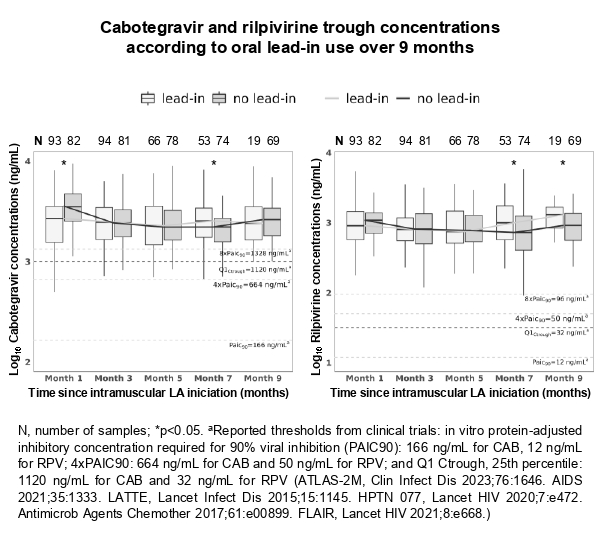
681. Low-Level Viremia & Risk Factors for Failure on Long-Acting Cabotegravir/Rilpivirine (LA CAB/RPV)
Poster Abstracts
Page: 191
Natalie Nielsen1, Bradley Taranto2, Mohammad Mahdee Sobhanie1, Ashley Lipps1, Joy Lehman1, Susan Koletar1, Carlos Malvestutto1, Yesha Patel1
Background
LA CAB/RPV has transformed the HIV treatment paradigm as an alternative to daily oral antiretroviral therapy (ART). Potential challenges with CAB/RPV include therapeutic failures characterized by virologic failure and/or the development of resistance-associated mutations (RAMs).
Methods
This was a single-center, retrospective cohort study of adults with HIV on LA CAB/RPV at the Ohio State University Wexner Medical Center (OSUWMC) from 3/1/22 to 12/31/23. We describe clinical outcomes among LA CAB/RPV recipients and investigated associations with HIV-specific factors.
Results
115 participants were referred for initiation of LA CAB/RPV and 91 received at least one dose (79.1%). Reasons for not starting treatment varied and included insurance issues, participant decision, unable to follow up, labs not completed, and prior RPV resistance. 69/115 (60%) had a genotype (next-generation sequencing assay or proviral assay) available for review prior to CAB/RPV initiation. 1/91 had a detectable viral load between 40 and 200 copies/mL at treatment start with all other participants undetectable prior to CAB/RPV start. 8/91 (8.8%) had detectable HIV-1 viral load (VL) (range 42-445 copies/mL) after initiating CAB/RPV. 4/8 (50%) experienced low-level viremia (LLV) (≥2 VL >40 copies/mL but <200 copies/mL) and 4/8 (50%) had at least one blip (isolated VL >40 copies/mL but <200 copies/mL). The duration of LLV ranged from 1 to 5 months. 6/8 (75%) of those that experienced LLV or blips subsequently experienced them again at another point within the study period. 1/4 (25%) with LLV was temporarily transitioned from 8 to 4-week dosing with subsequent viral suppression. Notably, all participants with LLV or blips received on time LA CAB/RPV, had a genotype available prior to treatment initiation without CAB or RPV RAMs, and none subsequently developed therapeutic failure. Apart from body mass index ≥30kg/m2, our study population lacked other risk factors for virologic failure with LA CAB/RPV (Table 1).
Conclusions
Clinicians should have awareness of and develop monitoring processes for the early detection of LA CAB/RPV therapeutic failures. This study is the first to report that low-level viremia was not associated with virologic failure in clinical practice. Further research is needed to identify those at risk of virologic failure and to develop optimal prevention strategies.
Table 1.
Recognized Risk Factors for Virologic Failures on LA CAB/RPV
|
|
Referred for CAB/RPV N(%) |
Started CAB/RPV N(%) |
| Total # of Participants |
115 |
91 |
| HIV Subtype A |
1 (1%) |
0 (0%) |
| Rilpivirine Resistance Associated Mutations |
1 (1%) |
0 (0%) |
| Body Mass Index ≥30 kg/m² |
35 (30%) |
26 (29%) |
| >1 Risk Factor |
1 (1%) |
0 (0%) |
682. Outcomes of LAI ART for People With Detectable HIV Viremia in the NYC Public Healthcare System
Poster Abstracts
Page: 191
Anthony Gerber1, Eunice Casey2, Ofole Mgbako3, Emma Kaplan-Lewis4
Background
Long-acting injectable cabotegravir/rilpivirine (LAI CAB/RPV) has changed the landscape of antiretroviral therapy (ART) by creating an alternative to daily oral ART. While FDA approval is currently limited to individuals with viral load suppression (VLS), there is growing evidence that CAB/RPV may also benefit virally unsuppressed patients who face adherence challenges taking oral ART. Our study evaluated LAI use in the country’s largest municipal health system and compared patient characteristics and viral load outcomes of people starting LAIs with unsuppressed viral loads to those starting LAIs with baseline VLS.
Methods
From 1/2021-6/2024, electronic medical record data was extracted for all NYC Health+Hospitals patients with HIV who had at least 1 HIV primary care visit in the preceding 12-months and who received at least 1 dose of LAI CAB/RPV. Baseline viral loads were obtained prior to the initial order for LAI CAB/RPV, and descriptive statistics were used to compare individuals whose baseline viral load prior to LAI initiation was not suppressed (>/=200 cp/mL) to those whose baseline viral load was <200 cp/mL.
Results
325 patients received at least 1 dose of LAI CAB/RPV during the study period. 14 individuals had unsuppressed viral loads and 311 were virally suppressed at the time LAI CAB/RPV was initially ordered. Those starting LAI CAB/RPV when viremic were more likely to be female (64% vs. 36%), have baseline CD4 <200 cp/mL (71% vs. 5%) and to screen positive for a social determinants of health (SDOH) need (36% vs. 15%). The most common SDOH needs identified those patients were financial insecurity (21%), housing insecurity (21%) and un/under-employment (14%). VLS at the end of the study period using the most recent available viral load was expectedly lower in the baseline viremic group (79% vs. 98%) (Table 1).
Conclusions
CAB/RPV initiation in patients with baseline viremia led to high rates of VLS in a population with low baseline CD4 and high rates of unmet social needs. This supports the growing body of evidence that LAIs are a vital option for patients with adherence challenges on oral ART. One limitation of our study is that the period of observation for follow up VLS varied for each patient, (e.g. our assessment included most recent viral load). Addressing barriers to LAI access, including expanding current FDA labeling to include certain patients with baseline viremia, is crucial to achieve VLS and improved health outcomes in this population.
Table 1.
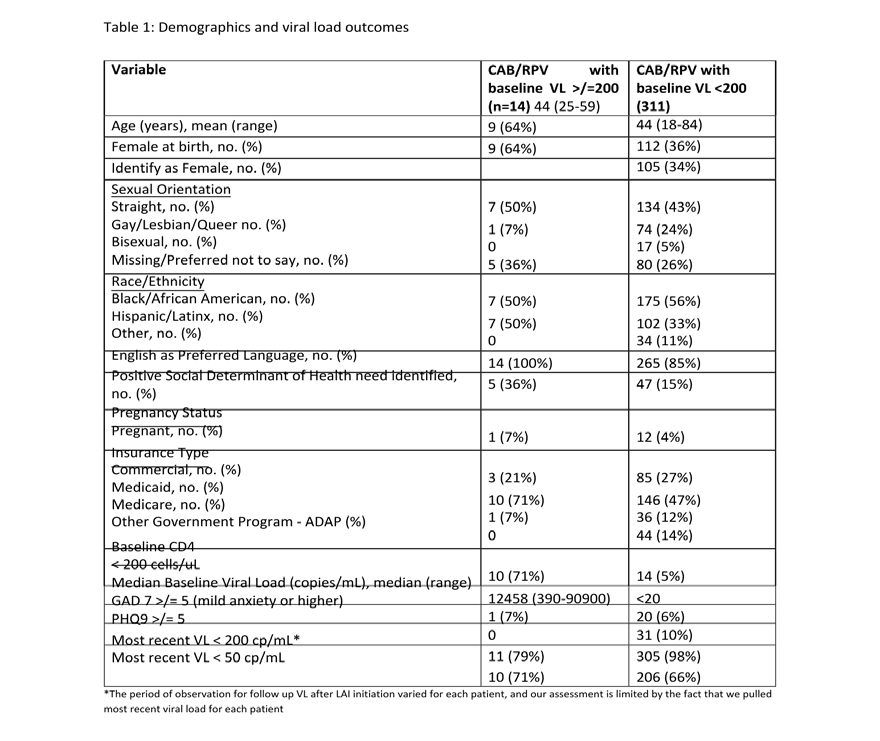
683. Why Do People With HIV Stop Long-Acting Injectable Cabotegravir/ Rilpivirine and What Happens?
Poster Abstracts
Page: 192
Katerina Christopoulos, Matt Hickey, Janet Grochowski, Francis Mayorga-Munoz, Xavier Erguera, Samantha Dilworth, Elizabeth Imbert, Ayesha Appa, Matthew A. Spinelli, Chesa Cox, Mary Shiels, Jon Oskarsson, Monica Gandhi
Background
We sought to examine reasons for discontinuation of long-acting injectable cabotegravir/rilpivirine (LA-CAB/RPV) and subsequent clinical outcomes in a cohort of people with HIV (PWH) in routine care.
Methods
We conducted a retrospective chart review of PWH who initiated LA-CAB/RPV at Ward 86 in San Francisco through April 2024, censoring data on September 23, 2024. We coded free text notes using content analysis and summarized demographic and clinical characteristics overall and stratified by viral suppression (VS) vs. viremia, defined as HIV viral load (VL) < vs. ≥30 copies/mL) at LA-CAB/RPV initiation. We defined discontinuation as intended cessation of LA-CAB/RPV without documented plan to resume or loss to follow-up (LTFU). VS post-discontinuation was defined as VL<200 copies/mL.
Results
Of 346 PWH, 50 (14%) discontinued, of whom 17 (34%) initiated LA-CAB/RPV with viremia. Median age was 44, 92% male, 30% Latine, 22% Black, 44% unstably housed, and 35% using stimulants. Median number of injections at discontinuation was 5 (min 1, max 20), with 82% on q4 week dosing. Discontinuation occurred after the first injection for 7 (14%) and for 11 (22%) after ≥10 injections. All were prescribed alternate antiretroviral therapy (ART). Median time from discontinuation to database closure was 379 days (IQR 277, 642). Of the 33 PWH initiating LA-CAB/RPV with VS, the most common reason for discontinuation was injection site pain, with or without another side effect/concern (Table). All 28/28 with VL measured after discontinuation had continuous VS while 5 had no VL measurement (2 LTFU, 1 relocation, 1 incarcerated, 1 adherent per provider). Of the 17 PWH initiating with viremia, reasons for discontinuation were pain (n=5), virologic failure (n=4), LTFU (n=3), lateness leading to provider discontinuation (n=2), declined ART (n=1), injection site abscesses (n=1), and relocation (n=1). Of 15 with measured VL after discontinuation, only 3 had continuous VS, however, at last observation, 11 had VS and 4 had viremia off ART (including 1 who died). NNRTI and/or INSTI resistance mutations developed in 3/16 while on injections, 3/16 with missed/late injections, and 1 with VS for 3 months after discontinuation who subsequently discontinued alternate ART.
Conclusions
Overall, discontinuation was low, and injection site pain was the most common reason. For PWH initiating LA-CAB/RPV with viremia, VF and missed/late injections accounted for over half of discontinuations, although most ultimately attained VS.
Table 1.
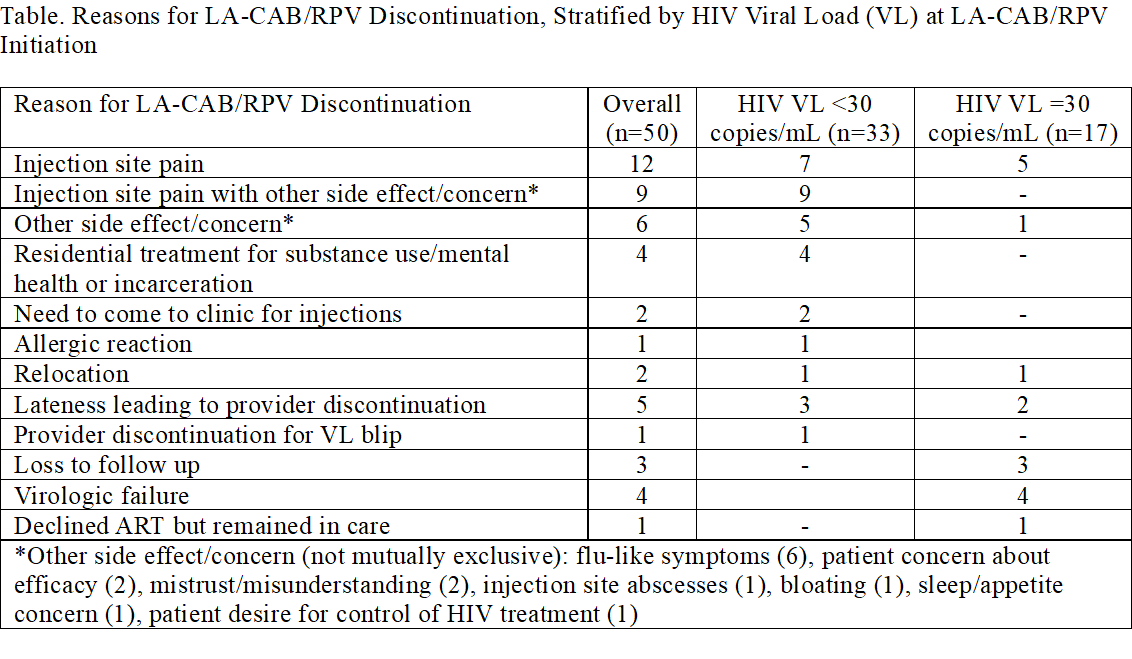
684. What Do Early Adopters of Long-Acting Injectable Cabotegravir/ Rilpivirine Think About It?
Poster Abstracts
Page: 192
Katerina Christopoulos1, Moira McNulty2, Lauren F. Collins3, Matt Hickey1, Mallory O. Johnson1, Aaloke Mody4, Kimberly Koester1, Geoffroy Liegeon5, Jorge Salazar1, Samantha Dilworth1, Sophie Plotkin2, Kaylin Dance3, Xavier Erguera1, Elizabeth (Liz) Montgomery3, Jonathan Colasanti, the MODERN ART Study Team
Background
Little is known about experiences with long-acting injectable cabotegravir/rilpivirine (LA-CAB/RPV) in underserved people with HIV (PWH), particularly PWH initiating with viremia due to adherence challenges.
Methods
In a cross-sectional survey of PWH with ≥3 injections at Ward 86 (San Francisco), Grady Ponce de Leon (Atlanta), and the University of Chicago, we assessed treatment satisfaction (HIVTSQ), burden compared to oral ART, and interest in alternate delivery locations and modalities. We summarized responses overall and stratified by viral load (VL) < vs. ≥50 copies/mL at LA-CAB/RPV initiation, using chi-square tests to assess for differences by viremic status. Multivariable logistic regression investigated characteristics of PWH who experienced reduction in effort to remember to take LA-CAB/RPV vs. oral ART (reduction from somewhat/very/extremely difficult to not/a little bit difficult).
Results
From 9/2023–7/2024, we surveyed 206 PWH (30% initiating with viremia) with median age 46, 23% cis/trans women, 47% Black, 21% Latine, 36% with housing instability, and 22% with substance use. Median number of injections was 9 (IQR 5,14). Mean (SD) satisfaction using LA-CAB/RPV was 61.5/66 (5.3), and 74% reported mental well-being as better with LA-CAB/RPV. Worry about inadvertent HIV disclosure on oral ART existed for 66% compared to 13% with LA-CAB/RPV. While 35% found remembering both treatment modalities low effort, 62% experienced a substantial reduction in effort with LA-CAB/RPV. In adjusted analyses, unstable housing (AOR = 2.33, 95% CI 1.18, 4.60) and substance use (AOR = 2.42, 95% CI 1.13, 5.19) were associated with reduced effort. Among all PWH surveyed, only 4% found clinic visits more of a problem with LA-CAB/RPV. Preferences for injection location (not mutually exclusive) were their HIV clinic (91%), place where they sleep (32%), community pharmacy (19%), mobile clinic (15%), and community organization (12%). A majority (63%) were at least moderately interested in self-injection and 55% at least moderately interested in injection from someone in their personal life. About half (47%) would prefer another LA modality, e.g. oral, patch. Results were similar stratified by VL at initiation.
Conclusions
In a diverse sample of early LA-CAB/RPV adopters, satisfaction was high and treatment burden reduced compared to oral ART, particularly among PWH with unstable housing or substance use. The HIV clinic was the preferred location. However, ~50% would opt for a different LA modality.
685. Outcomes in Those Who Discontinued Injectable Cabotegravir/ Rilpivirine and Resumed Oral ART
Poster Abstracts
Pages: 192-193
Tali Faggiano1, Jeffrey Yin2, Nimish Patel1, Afsana Karim2, Laura Bamford2, Lucas Hill2
Background
Real world data continues to accumulate regarding the efficacy of long acting injectable (LAI) cabotegravir/rilpivirine (CAB/RPV); however, limited data exists regarding virologic outcomes in those returning to oral therapy after discontinuing LAI CAB/RPV.
Methods
Single-center cohort study at the UC San Diego Owen Clinic in those who initiated LAI CAB/RPV but discontinued treatment between 4/2021 and 3/2024. Included were those that received at least 1 injection, with discontinuation prior to 3/2024 to allow for at least 24 weeks of follow up. Excluded were those on LAI CAB/RPV who transferred care out of the clinic as it was often unknown if LAI CAB/RPV was continued. Baseline characteristics and reasons for discontinuation, pre- and post-switch oral antiretroviral (ART) regimens, and virologic outcomes after discontinuation of LAI CAB/RPV were collected. Viral load (VL) time points after discontinuation included the most recent in the range of 1-24 weeks, 24-48 weeks, and the most recent documented viral load through 9/2024.
Results
A total of 92 patients were included who discontinued LAI CAB/RPV during the study period. The median age (IQR) was 38 (34-50), 52.2% were non-White race, 37% were Hispanic, 20.7% were female sex assigned at birth, and 33% had active substance use. The majority (78.2%) were on an integrase inhibitor (INSTI) based regimen pre-switch and 90.2% had an HIV VL<50 copies/mL (cpm) prior to starting LAI CAB/RPV with a median CD4 count of 706 cells/mm3. The median (IQR) number of CAB/RPV injections received before discontinuation was 4 (2-6) and the median (IQR) time on LAI CAB/RPV was 164 (59-305) days. Table 1 includes the reasons for discontinuing LAI CAB/RPV. The majority of patients (76.6%) switched to an INSTI based regimen after stopping LAI CAB/RPV, with 75.3% returning to the same pre-switch regimen, and 80.4% had a last VL<50cpm at the time of stopping LAI CAB/RPV (9 patients had no VL data on LAI CAB/RPV). A total of 58 patients had VL data available at 24 weeks, 53 at 48 weeks, and 74 with at least one VL after discontinuation (median time to last VL 342 days). The percentage of those with HIV VL <50cpm and <200cpm up to 24 weeks was 91.4% and 94.8%, up to 48 weeks was 90.6% and 96.2%, and using the most recent documented VL was 91.9% and 95.9%, respectively.
Conclusions
In those who discontinued LAI CAB/RPV, returned to oral ART, and remained engaged in care, a high rate of ongoing viral suppression was observed.
Table 1.
Reasons for discontinuing injectable cabotegravir/rilpivirine (n=92)
|
|
n (%) |
| Injection site reaction (ISR) |
26 (28.3) |
| Side effect other than ISR |
11 (12.0) |
| Difficulty coming in for injections |
8 (8.7) |
| Lost to follow up but returned to care |
7 (7.6)
*
|
| Lost to follow up and did not return |
6 (6.5) |
| Insurance challenges |
10 (10.9) |
| Virologic failure |
6 (6.5) |
| Concern about HBV reactivation |
2 (2.2) |
| Deceased |
5 (5.4) |
| Pregnancy |
2 (2.2) |
| Other/Not documented |
9 (9.8) |
686. Implementation of LA-CAB/RPV in US Clinic Settings: A Survey of Front-Line Clinicians
Poster Abstracts
Page: 193
William R. Short1, Michelle Ogle2, Eric Farmer3, Angela Kapalko4, Bruce Packett5, Angela Riley5, Amanda Binkley1
Background
Long-acting Cabotegravir and Rilpivirine (LA-CAB/RPV), approved in January 2021, is the first complete injectable regimen for virologically suppressed patients with HIV-1 without a history of resistance. The availability of LA-CAB/RPV offers a significant opportunity to expand the landscape of care for people with HIV. However, data on its implementation outside of early phase clinical trials remain limited, often excluding adolescents. The objective of our survey was to assess implementation strategies, barriers, and practices with LA-CAB/RPV among front-line HIV clinicians who are members of and/or credentialed by the American Academy of HIV Medicine (AAHIVM).
Methods
A 25-question survey was distributed electronically to 5223 members and/or credentialees of AAHIVM through the weekly newsletter as well as two standalone emails sent out biweekly from July 8 to August 1, 2024. Data was collected using Research Electronic Data Capture (RedCap) and statistical analysis was conducted with Stata 17.
Results
A total of 325 responses were received. Respondents included physicians (37 %), pharmacists (29%), nurse practitioners (24 %), and physician assistants (10%). Most (91%) had implemented LA-CAB/RPV and worked primarily in Academic Health Centers (33%) and Federally Qualified Health Centers (34%). The main barrier to implementation was insurance and third-party approval processes. Of the clinicians caring for adolescents (62%), half had prescribed LA-CAB/RPV in this population, with just 26% prescribing it to cis-gender females. For patients with resolved Hepatitis B (defined by anti-HBs, anti-HBc, HBsAg -), 77% of clinicians would prescribe LA-CAB/RPV; however, if the patient had isolated anti-HBc, only 54% would prescribe it. For cis-gender females of child-bearing age not on contraception, half of clinicians would not use LA-CAB/RPV. Regarding patients with elevated BMI, clinicians were comfortable (91%) using LA-CAB/RPV for patients with a BMI of > 30 kg/ m2 but that decreased to 65% and 42% with BMI ≥40 kg/m2 and > 50 kg/m2, respectively.
Conclusions
While most clinicians surveyed have incorporated LA-CAB/RPV into their practices, key challenges remain, particularly among adolescents, cis-gender female patients, those with resolved Hepatitis B, and those with higher BMIs. Addressing barriers related to insurance and approval processes, along with continued education, is crucial to expanding access and optimizing the use of LA-CAB/RPV.
687. Distance to Care Measures Predict Injection Visit No-Shows Among Cabotegravir/Rilpivirine Recipients
Poster Abstracts
Page: 193
Nimish Patel1, Lucas Hill2, Jeffrey Yin2, Inmaculada Hernandez1, Kari Abulhosn2, Elvia Suarez2, Afsana Karim2, Laura Bamford2
Background
Various distance to care (DTC) measures exist. It is unclear which most accurately predicts injection visit adherence for persons with HIV receiving long acting injectable (LAI) cabotegravir/rilpivirine (CAB/RPV). Objectives were to: i) identify which DTC measures were associated with injection visit no-shows (IVNS) and ii) compare the strength of association of each DTC measure when evaluated as an independent predictor of IVNS among recipients of LAI CAB/RPV.
Methods
A retrospective cohort study was performed among recipients of LAI CAB/RPV between 05/2021 and 08/2023 at an urban HIV medicine clinic. Inclusion criteria were: i) age ≥18 years, ii) received CAB/RPV for ≥6 months, and iii) availability of address in electronic medical record. Individuals with a post office box as their address were excluded. Five measures were estimated to measure distance between home address and clinic address: i) door-to-door mileage, ii) driving time, iii) public transit time, iv) walking time and v) biking time. All analyses were restricted to those with a door-to-door mileage of <15 miles as the non-driving DTC measures would not be realistic without a motor vehicle. Classification and regression tree (CART) analyses were performed to identify breakpoints in each of these continuous DTC measures associated with no shows. Each of these DTC variables were entered into a Cox proportional hazards regression model to determine the strength of association after controlling for other potential predictor variables.
Results
Among the 202 individuals evaluated, median age (interquartile range, IQR) was 43 (34 – 54) and median (IQR) time on CAB/RPV was 451 (356 – 552) days. Most (91%) were assigned male sex at birth. The Table displays the CART-derived breakpoints for each DTC variable. For each DTC measure, there was a significantly higher proportion of IVNS for persons above the breakpoint than below. In multivariate analyses (Table) adjusting for other potential predictor variables, each DTC measure was independently associated with IVNS with the exception of driving time ≥ 19 minutes. Walking time ≥ 117 minutes (Hazard ratio, HR: 2.33) had the strongest measure of association with IVNS.
Conclusions
Several DTC measures with CART-derived breakpoints were independently associated with IVNS among recipients of LAI CAB/RPV. Future studies should consider incorporating CART into the DTC measure used to predict injection visit adherence.
Table 1.
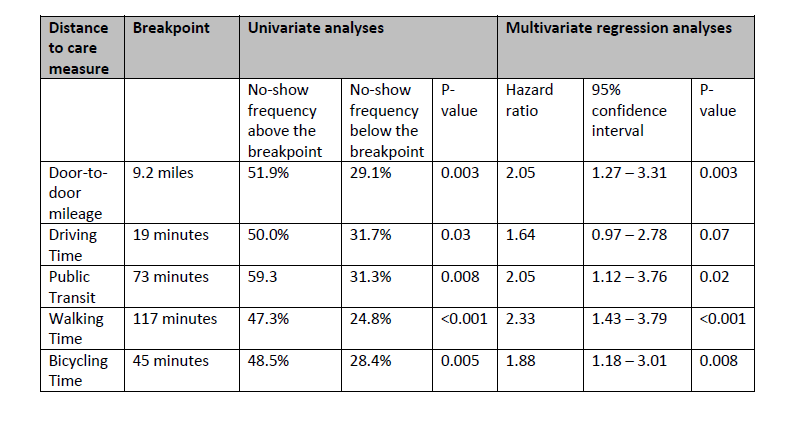
688. First Year of Lenacapavir Long-Acting Injectable Use in the OPERA Cohort
Poster Abstracts
Pages: 193-194
Laurence Brunet1, Karam Mounzer2, Ricky K. Hsu3, Philip C. Lackey4, Michael Sension5, Michael B. Wohlfeiler6, Joshua Gruber7, Megan S. Dunbar7, Seojin Park7, Jennifer S. Fusco1, Gregory P. Fusco1
Background
Lenacapavir (LEN), a first in class capsid inhibitor approved by the FDA (22DEC2022) as a twice yearly long-acting injectable used with an optimized background regimen (OBR), is indicated for heavily treatment-experienced individuals with multidrug resistant HIV-1 infection who are failing their current antiretroviral therapy (ART) regimen due to resistance, intolerance, or safety concerns. We describe LEN use during its first-year post-approval in a US-based cohort using electronic health record data.
Methods
Patterns of LEN uptake (prescriptions [Rx] and injections received) and characteristics of all ART-experienced adults with HIV-1 who were prescribed LEN from 22DEC2022-31DEC2023 in the OPERA cohort were described. Antiretrovirals (ARV) in the background regimen (BR) at LEN initiation were compared to ARVs in the prior regimen and classified as a continuation (all ARVs maintained), simplification (fewer ARV agents and/or fewer ARV classes and/or fewer pills/days), or change without simplification. Subsequent BR changes during LEN use were assessed through 31DEC2023 in those with ≥1 month of follow-up.
Results
Of 104 individuals with a LEN Rx, 37 (36%) had no injection, with a median of 21 weeks (IQR: 9, 27) between Rx and study end (31DEC2023) or death. Among the 67 (64%) with ≥1 LEN injection visit (1 visit: 63%; 2 visits: 37%), the median time from Rx to 1st injection was 21 days (IQR: 8, 44), and the median time from 1st injection to study end or death was 24 weeks (IQR: 12, 35). The median age of LEN users was 55 years (IQR: 44, 62), 25% were women, 78% were Black, 15% were Hispanic, and 91% had ≥1 comorbidity. At LEN start, 68% had well controlled HIV viral loads (VL <50: 52%; VL ≥50 to <200: 16%). At the time of the 1st LEN injection, 38 (57%) continued the prior regimen and 13 (19%) simplified their regimen (Table). Among 61 individuals with ≥1 month of follow-up, 18 (30%) experienced ≥1 change in their BR while on LEN (median: 1.5; IQR: 1, 2). Of those 18 with a BR change after starting LEN, 15 (83%) experienced a BR simplification (Table).
Conclusions
While LEN is indicated for individuals who are failing their current regimen, this overview of the first year of LEN use in a large US cohort showed a varied but small group of people with HIV receiving LEN injections, most of whom had well-controlled HIV before LEN initiation. A subset of LEN users were able to simplify their ART regimen at LEN initiation or during follow-up in this real-world setting.
Table 1.
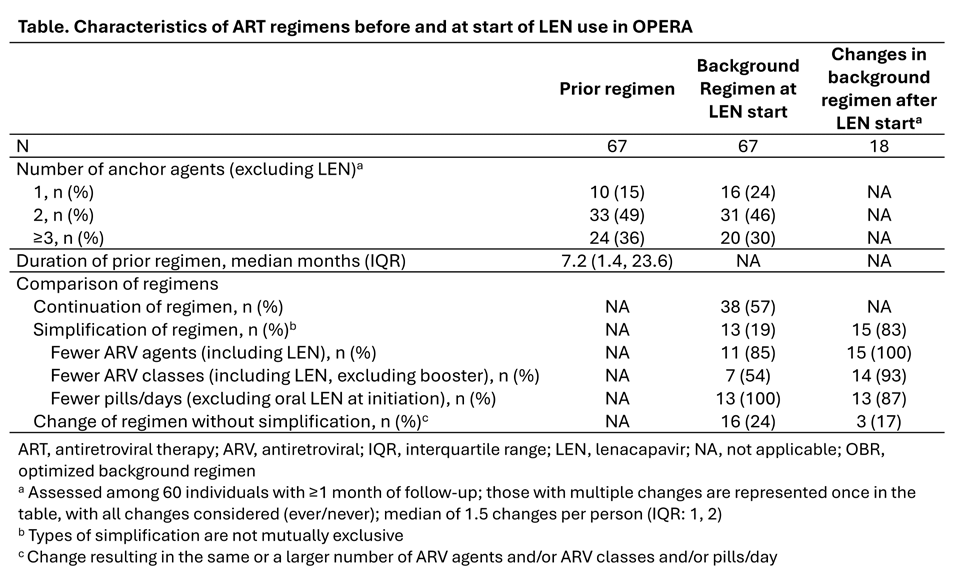
689. Long-Term Virologic Suppression Rates in the Ward 86 HIV Clinic’s Long-Acting ART Program (SPLASH)
Poster Abstracts
Page: 194
Nathanael L. Gistand1, Matthew A. Spinelli2, Megan J. Heise2, Jon Oskarsson2, Katerina Christopoulos2, Matt Hickey2, Mary Shiels2, Francis Mayorga-Munoz2, Janet Grochowski2, David Glidden2, Monica Gandhi2
Background
The Ward 86 HIV Clinic in San Francisco serves publicly-insured people with HIV (PWH) living with multiple concomitant challenges. With the approval of long-acting (LA) cabotegravir/rilpivirine in 2021, Ward 86 started using LA antiretroviral therapy (ART) for those with adherence challenges to oral ART. More than 3.5 years into the program, we now report on and compare the long-term virologic suppression (VS) rates in those who started LA ART with or without initial VS.
Methods
Using electronic medical record data verified by clinician review, we compared outcomes in the Special Programs to Stop HIV Using Long-Acting ART (SPLASH) program for those starting LA ART with or without VS. For those starting with initial viremia, the time to VS was calculated by Kaplan-Meier. Chi-squared testing compared VS and logistic regression compared characteristics between those starting LA ART with and without viremia.
Results
Overall, 370 participants (mean=46.3 years, SD = 11.6) starting LA ART from January 2021-September 2024 were included in the analyses; 80% cisgender male, 14% cis/transgender female, 6% non-binary/ other; 41% White, 28% Latino/a, 23% Black, 8% Asian; 40% housing instability; 46% substance use. Among the 130 PWH (35%) starting LA ART with HIV RNA >30 copies/mL, the rates of current or past substance use (OR = 1.22, 95% CI 1.11-1.34, p < .001) and unstable housing (OR = 1.11, 95% CI 1.01-1.23, p = .031) were higher than in those with initial VS. PWH with viremia were more likely to have CD4 counts <200 cells/mm3 (OR = 1.22, 95% CI 1.09-1.36, p < .001) at initiation. The median time to achieve VS (<=30 copies/ml) in those with viremia was 32 days (95% CI 30-45; Figure). At 24 weeks, 98.3% of those who started with VS remained suppressed and 94.5% of those with initial viremia achieved VS. The probability of achieving/maintaining VS did not significantly differ between the two groups at 24 weeks (χ² 3.12, p = .077).
Conclusions
In a cohort of PWH in San Francisco with high rates of housing instability and substance use, LA ART worked well with high rates of VS either maintained (98.3%) in those initiating ART with VS or achieved (94.5%) in those starting with viremia. CD4 counts were lower in those with initial viremia. There was no difference in the probability of VS at 24 weeks among those who started LA ART with and without VS. This data supports the DHHS and IAS–USA guidelines on using LA ART in those with viremia and adherence challenges at high risk of HIV progression.
Figure 1.
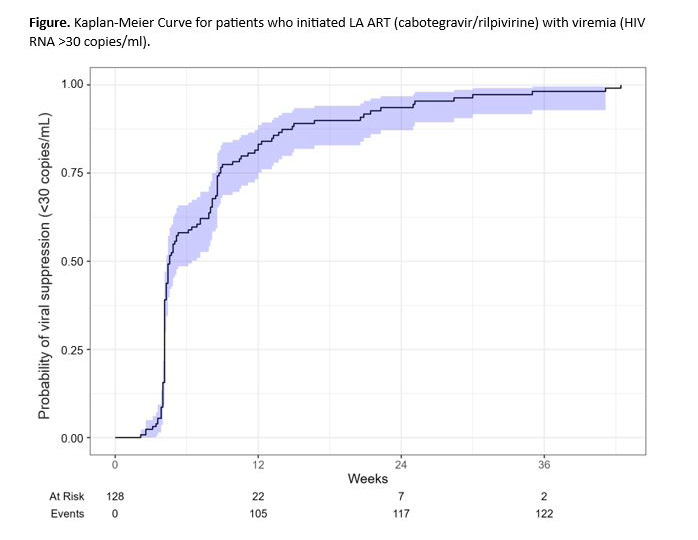
690. Long-Acting Injectable ART in Persons With HIV-1 Viremia in the South: A Tool to End the Epidemic
Poster Abstracts
Pages: 194-195
Jonathan Colasanti1, Amalia Aldredge1, Larisa Niles Carnes2, Bradley L. Smith2, Eudiah Ochieng2, Erica Anderson2, Vickie Robinson2, Melissa Washington2, Jeri Sumitani2, Eric Leue2, Della Corbin-Johnson2, Priyasha Pareek1, Meredith Lora1, Wendy Armstrong1, Lauren F. Collins1
Background
Treatment with long-acting antiretroviral therapy (LA ART) with cabotegravir/rilpivirine (CAB/RPV) +/- lenacapavir (LEN) holds promise to achieve viral suppression (VS) in people with HIV (PWH) for whom oral ART fails. Although supported in certain scenarios by guidelines, scaling this approach in viremic PWH has lagged.
Methods
We performed a retrospective review of PWH cared for at a large Ryan White-funded program in the urban South who initiated LA ART (CAB/RPV, LEN, and/or ibalizumab [IBA]) between 4/14/2021–8/31/2024 with follow-up through 12/31/2024. PWH were included if HIV-1 RNA was >50 c/mL (viremia) at time of first LA ART injection with at least 3 months of follow-up time. Primary outcome was achieving HIV-1 RNA <50 cp/mL.
Results
Of 361 total PWH receiving LA ART, 81 (22%) initiated with viremia, among whom regimens were CAB/RPV only (n=56), CAB/RPV+LEN (n=23), and CAB/RPV+LEN+IBA (n=2). Of those initiated with viremia, median (IQR) age was 38 (30-49) yrs, median years since HIV diagnosis was 15.5 (8.8-20.5), and nine (11%) had perinatal acquisition. Seventy-five (93%) identified as Black race, 29 (36%) were cis-women (including four initiated in pregnancy) and three (3.6%) were trans-women. Median BMI was 24 (22-30) kg/m2. Median income was $25K ($20-33K) and social determinants of health were highly prevalent: 72% had unmet transportation needs, 51% had food insecurity, and 27% had high-risk of financial resource strain. Thirty-six (44%) had prior opportunistic infections, many recent due to ongoing viremia. At LA ART initiation, median VL was log10 3.97 (2.91-4.80) c/mL and median CD4 was 186 (62-420) cells/mL. A total of 75 PWH (93%) achieved VS after a median of 1 (1-2) injections, resulting in median CD4 rise to 330 (172-483) cells/mL. Of 9 PWH who did not achieve VS, one was lost to follow-up; two had virologic failure with drug resistance; four have ongoing low-level viremia (<200 c/ml); and two have long-standing viremia despite CAB/RPV+LEN without resistance to RPV or CAB. Of 645 CAB/RPV injections administered (500 q4wk; 145 q8wk), 99% were on-time (within 7-day window). CAB/RPV were covered by medical benefits (n=54), ADAP (n=22) and pharmacy benefits (n=5). Five discontinued LA ART in follow-up.
Conclusions
This is the largest reported single cohort of PWH to initiate LA ART with viremia and 93% achieved VS despite significant barriers to care and burden of disease, underscoring the potential of LA ART to help achieve Ending HIV Epidemic goals.
691. Long-Acting Injectable Versus Oral HIV Antiretroviral Therapy for People Experiencing Homelessness
Poster Abstracts
Page: 195
Kathleen O'Connor1, Sarah Strieff1, Alexandra Strough1, Stephen Matzat1, Barry Zevin1, Joanna Eveland1, Nicky Mehtani2
Background
People experiencing homelessness (PEH) face higher rates of HIV-related morbidity due to structural barriers that impede adherence to HIV antiretroviral therapy (ART) adherence, challenges compounded by co-occurring substance use disorders and severe mental illness. Long-acting injectable ART (LA-ART) formulations offer a promising solution to these adherence challenges, yet their use in PEH remains understudied. We conducted a retrospective analysis to compare HIV virologic suppression between patients receiving LA-ART and those on oral ART at a status-neutral, low-barrier public health clinic designated to serve PEH in San Francisco.
Methods
Data were abstracted from the electronic medical records of patients receiving HIV care between January to December 2023. Descriptive statistics were used to assess differences in HIV virologic suppression, care engagement, demographics, and co-morbidities between those prescribed LA-ART and oral ART. Patients who attended only one visit or received HIV care elsewhere were excluded.
Results
Among 94 unique patients, 87 were on oral ART and 20 received LA-ART during the 2023 calendar year. While 62% of oral ART patients achieved HIV virologic suppression (<30 copies/mL) at least once and 48% remained suppressed at the latest follow-up, 100% of LA-ART patients achieved and maintained virologic suppression, including 16 who initiated injections with detectable viremia. LA-ART regimens included intramuscular cabotegravir/ rilpivirine (CAB/RPV) alone (n = 14), CAB/RPV with subcutaneous lenacapavir (LEN) (n = 5), and CAB with LEN (n = 1). LA-ART patients had more clinic visits per person-year than those on oral ART (mean 27.6 vs. 11.2 visits), were more likely to identify as transgender or non-binary (30% vs. 16%), and had higher rates of psychotic disorders (40% vs. 27%) and other mental health conditions (60% vs. 48%) (p < 0.001). The groups were otherwise comparable in terms of age (mean 43.5, SD 11.6), race/ethnicity (71% non-White), sex (64% cisgender male), and the prevalence of stimulant (71%) and opioid use disorders (30%).
Conclusions
At a status-neutral community-based clinic, LA-ART was associated with significantly higher rates of virologic suppression and clinic visits compared to oral ART among PEH engaged in low-barrier HIV care. These findings underscore the potential of LA-ART to improve HIV outcomes in this population and advocate for increased public health investment in LA-ART implementation.
692. A5359: Decreasing Oral Induction Duration in Support of LAI ART Use With Hardly-Reached Populations
Poster Abstracts
Page: 195
Aadia Rana1, Lu Zheng2, Sara Sieczkarski3, Jordan E. Lake4, Carl Fichtenbaum5, Pablo Belaunzarán-Zamudio6, Jonathan Li7, Paul Wannamaker8, Jose Castillo-Mancilla8, Kati Vandermeulen9, Chanelle Wimbish10, Karen T. Tashima11, Raphael J. Landovitz12, the ACTG A5359 Study Team
Background
Large randomized clinical trials of investigational agents in people with HIV (PWH) routinely exclude participants with adherence challenges. ACTG 5359, a phase III, prospective, randomized, open-label trial comparing long acting cabotegravir + rilpivirine (LAI) vs. oral standard of care (SOC) ART in PWH with a history of suboptimal adherence (persistent HIV-1 RNA >200 c/mL or loss to follow-up), successfully enrolled 437 participants in the US when an independent Data and Safety Monitoring Board recommended to stop randomization and offer LAI to all eligible participants at an interim review. Here we present transition status from induction phase to randomization with successive refinement of randomization eligibility.
Methods
Enrolled participants received conditional cash incentives for viral suppression along with a menu of adherence support strategies on SOC for up to 24 weeks prior to randomization (Step 1). Participants who achieved HIV-1 RNA ≤200 c/mL in Step 1 were eligible for randomization to monthly LAI vs. continuation of SOC ART for 52 weeks (Step 2). After study initiation (March 2019), the HIV-1 RNA threshold for Step 2 was increased from <50 c/mL to <200c/mL, and the minimum duration of Step 1 was progressively shortened from 20 weeks to 12 weeks (Dec 2021) and then to 4 weeks (Jan 2023).
Results
As of 3 Jan 2024, 878 participants screened and 437 eligible were enrolled. The most common screen failure reasons include HIV-1 RNA ≤200 c/ mL (106, 25%), ineligible genotype/exclusionary mutations (93, 22%), and failure to return to clinic (48, 11%). Among those enrolled: median age 40 years, 70% male, 64% Black/African American, 17% Hispanic, 5% transgender, median CD4+ cells 270/mm3, and median HIV-1 RNA 3.55 log10 c/mL. Twenty percent had less than a high school education, 44% reported income of <$10k/ year, and 10% were unstably housed/homeless. One-quarter screened positive for moderate/severe depression, 27% for moderate/severe anxiety, 32% for hazardous drinking, and 45% for drug use related problems. Of the 411 eligible for transition at the interim analysis, 61%, 77%, and 89% transitioned successfully to Step 2 with progressively shorter duration of viral suppression in Step 1(Table).
Conclusions
A5359 successfully enrolled a population not generally included in studies of investigational ART strategies and demonstrated that in-stream shortening of the required duration of virologic suppression significantly increased enrollment for the randomized strategy comparison.
Table 1.
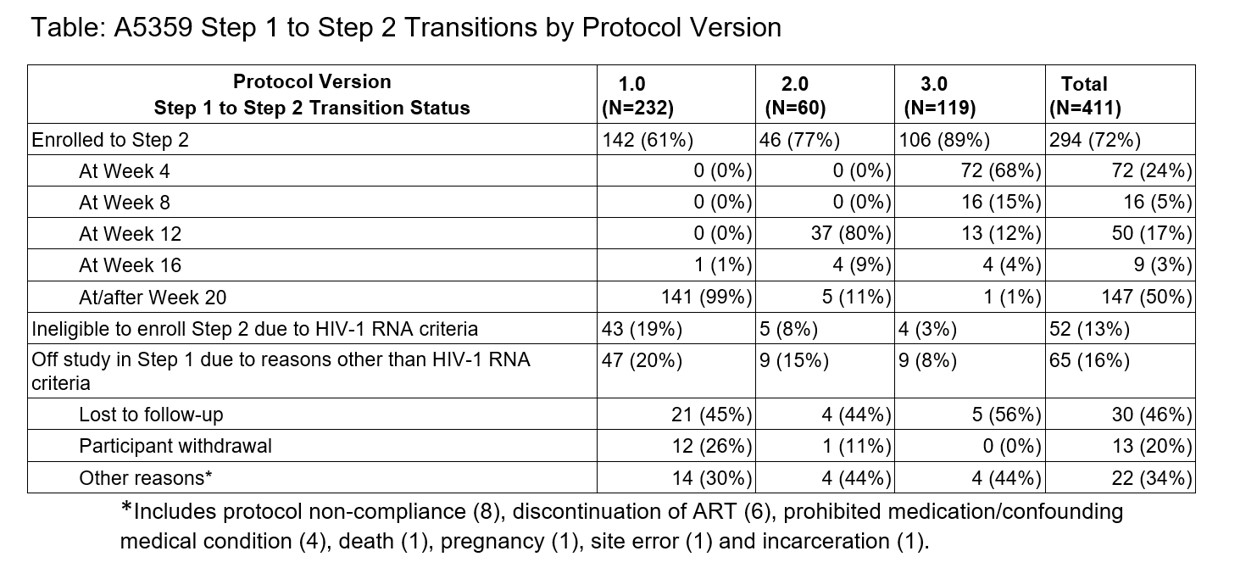
693. Simplified Access and Retention Model for Vulnerable People With HIV: SIMPLIFIED Study Results
Poster Abstracts
Pages: 195-196
Pablo Ryan1, Guillermo Cuevas1, Pedro Alfonso Torres1, Laura Laguna Garcia1, Beatriz Brazal2, Marta De Miguel2, Mariano Matarranz1, Samuel Manzano1, Juan Torres-Macho1, Laura Martin-Gonzalez3, Samuel Estevez1, Victor De La Fuente1, Lucia Serrano2, Jorge Valencia1
Background
HIV virological suppression in vulnerable populations is influenced by various social determinants of health that affect access to healthcare. This study evaluates the feasibility and efficacy of a “test, treat, and retain” strategy implemented via street teams and a mobile unit using BIC/FTC/ TAF.
Methods
A clinical trial conducted in Madrid/Spain in 2023-2024 that included vulnerable individuals >18 years with HIV, both ART-naive and pre-treated participants who had discontinued ART. Recruitment occurred in non-hospital settings, primarily on the streets by NGO street teams and a mobile unit. Participants-initiated ART at the same day and were followed for 48 weeks. During this period, they received social support to encourage attendance at follow-up visits and collect ART at the pharmacy.
Results
101 participants were included, median age of 34 years, 86.1% male, and predominantly Hispanic (73.3%). Sixty-three percent had unstable home, with 25% being homeless. 44% had problematic drug use in the last year. Thirty percent had never taken ART, and 70% had discontinued it (average of 6.9 months), with 9% showing previous virological failure). The prevalence of at least one resistance mutation at baseline was 32.9% (26/79) (2.5% NRTI, 24.1% NNRTI, and 3.8% PI). The median CD4 nadir was 352 (236-500). Retention rate at week 48 was 64.4%, with main reasons for non-retention being loss to follow-up (19.8%), relocation to another city (5.9%), and incarceration (5%). ART adherence was incomplete in 57.3% of participants, and 10.1% had interrupted ART more than 20 days during at least one of their visits. In the per-protocol analysis, by week 48, 96.9% of patients achieved a viral load < 50 copies/ml. Of these, two patients had discontinued ART by the time of their 48-week visit; however, no virological failures were observed during the study. In the multivariate analysis, acquisition of HIV through injection drug use was associated with lower retention in HIV care [ORa 6.1 (95% CI 1.75-21.3) p = 0.005]. Adverse events were reported in 68.3% of patients, though none required drug withdrawal, and 95.3% were of mild intensity.
Conclusions
The feasibility of a “test, treat, and retain” strategy, combined with BIC/FTC/TAF, proved to be effective in achieving and maintaining viral suppression, despite challenges related to adherence and interruptions in ART. New models of HIV care should emphasize social support to improve retention in care for people with HIV from injection drug use.
694. Forgiveness of Dolutegravir-Based Regimens Using Medication Possession Ratio: Andhra Pradesh, India
Poster Abstracts
Page: 196
Ramesh Allam1, Manjula Thogarucheeti2, Nalini Chava3, Ramesam Ganti3, Jayakrishna Kurada3, Vijay V. Yeldandi3, Rajendra Prasad3, Sreeramu S. Chakravarthy2, Steven Y. Hong1
Background
Adherence to antiretroviral therapy (ART) is independently associated with viral load (VL) suppression among people living with HIV (PLHIV). Previous studies have demonstrated that dolutegravir-based regimens (DBR) have forgiveness for strict adherence to achieve VL suppression (VLS) as measured by pharmacy refill and electronic drug monitoring, where 75% and 80% adherence, respectively, can achieve VLS for 90% of PLHIV. We sought to investigate forgiveness to DBR in a programmatic setting in India using medication possession ratio (MPR).
Methods
We analysed program data of PLHIV transitioned from non-nucleoside reverse transcriptase inhibitors (NNRTI) or protease inhibitors (PI) to DBR or initiated on DBR (as a fixed dose combination) in Andhra Pradesh, India for at least 12 months during November 2020-September 2023 with a VL result. MPR was calculated by dividing the number of days of ART dispensed by 365 days multiplied by 100. MPR was calculated back from the date of the latest VL. We further ordinally categorized MPR (<50%, 50-79%, 80-84%, 85-89%, ≥90%). Bivariate and multivariable binomial regression analyses were used to determine factors associated with VL suppression (HIV RNA <200 copies/mL) after adjusting for all covariates and within Pearson correlations. We used Probit regression models to create dose-response plots and to estimate the adherence required to achieve VL suppression in 90% of HIV VL tests.
Results
Of the 120,397 PLHIV included in the analysis, 75.8% were aged <50 years, 56.2% were women, 94.3% had VL <200 copies/mL, 58.2% had MPR ≥90% and 84.6% had been transitioned to DBR. PLHIV aged ≥50 years (adjusted odds ratio [aOR] 1.36; 95% CI: 1.28 to 1.45), female (aOR 0.91; 0.87, 0.96), and transitioned to DBR (aOR 1.17; 1.10, 1.25) had greater odds of being virally suppressed compared with persons aged <50 years, men, and initiated ART with DBR, respectively. All four categories of MPR >50% had increasing significant aOR compared to <50%. The MPR level required to achieve viral suppression in 90% of HIV viral load tests was 60% (figure).
Conclusions
DBRs achieved >90% of VLS even at MPR of 60%, indicating high durability of DBRs across variable MPR levels. However, effectiveness was highest for adherence >90%.
Figure 1.
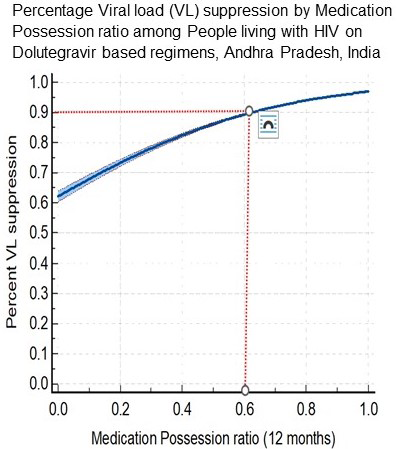
695. Less Frequent Clinical and Viral Load Assessments During COVID-19 Did Not Increase Virologic Failure
Poster Abstracts
Page: 196
Andrew Carr1, Modest Nwanbila2, Lena Ktorza3, Kaitlyn McCann3, Goran Likevic2, Tara Suchak4, Rachael Jones4, Anton Pozniak2, Andrew Hill5, Marta Boffito4
Background
Antiretroviral (ARV) guidelines (WHO, DHHS, IAS–USA, EACS, BHIVA) suggest HIV viral load (VL) monitoring every 3 to 6 months. No trial has evaluated intervals >6 months. There are few recommendations regarding the interval between patient assessments. During the COVID lockdown, clinical assessment and VL monitoring were less frequent in the Chelsea-Westminster (C-W) HIV cohort (3 London clinics, 5 regional clinics) and more clinical assessments were by phone. The primary aim of this analysis was to see if this less intensive HIV care during the COVID pandemic resulted in more virological failure (VF) than pre or post-pandemic.
Methods
We compared VF rates (VL>200 cp/mL after VL<50 cp/mL) in three periods: pre-COVID (Jan 2018-March 2020, 26 months), COVID pandemic (April 2020-December 2021, 21 months) and post-pandemic (Jan 2022-October 2023, 22 months) in the C-W cohort, which prospectively records patient assessments and VLs. Survival analysis compared times to VF between periods, and Cox proportional hazards model to examine the impact of covariates (sex, age, born in UK, clinic area, ARV anchor class) on time to VF.
Results
14,897 adults (mean 47.0 yrs, 14.2% female, 39.6% UK-born, 87% HIV RNA <50 cp/mL) were included. The most common ARVs were TDF, FTC and an integrase inhibitor (INSTI). Mean intervals between VL tests were 30.8 weeks pre-COVID, 39.6 weeks during the pandemic and 27.9 weeks post-pandemic. The mean intervals between clinical assessments were 25.4, 32.5 and 23.8 weeks, respectively. Time to VF in the COVID period was similar to the pre-COVID period (OR 0.98, p>0.2) and longer than in the post-COVID period (OR 1.073, p=0.001; Figure 1). Clinical factors independently associated with VF in the pre-COVID period included CD4 count >600 (OR 0.51, p<0.001) and UK-born (OR 0.86, p=0.042), in the pandemic period were male (OR 0.66, p<0.001), age >45 (OR 2.14, p<0.001) and in the post-pandemic period were male (OR 0.61, p<0.001), age >45 (OR 1.52, p<0.001), care in London (OR 1.11, p=0.02) and face to face consultation (OR 0.15, p<0.001). For anchor class, the greatest risk of VF in all three periods was with a non-nucleoside reverse transcriptase inhibitor.
Conclusions
In this population, less frequent VL monitoring and less frequent clinical assessment during the COVID pandemic were not associated with more VF. Less frequent VL monitoring and less frequent clinical assessment (provided they are face-to-face) may be possible for those with undetectable viral loads.
Figure 1.
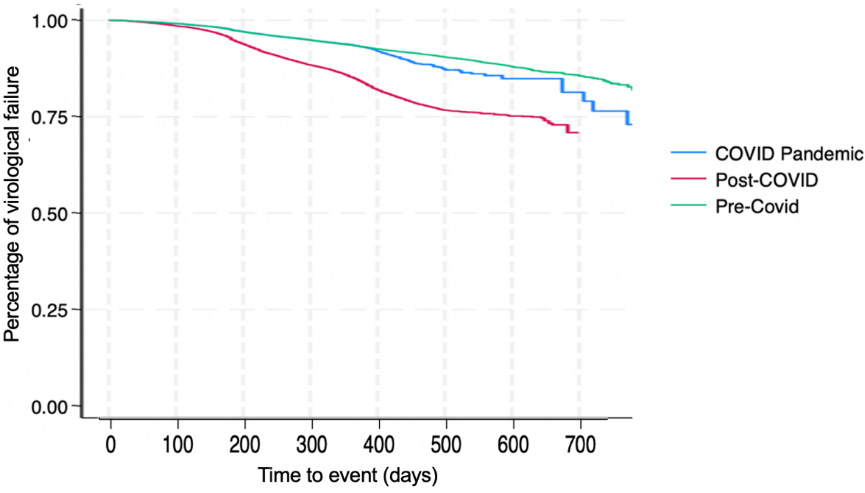
696. Predictive Factors of Virological Failure After Switching to B/F/TAF (ANRS-CO3-AquiVIH-NA)
Poster Abstracts
Page: 197
Alaric Peyrouny-Mazeau1, Olivier Leleux1, Pantxika Bellecave2, Mojgan Hessamfar2, Gwenael Le Moal3, Didier Neau2, Laure Alleman4, Charles Cazanave2, Estibaliz Lazaro2, Pierre Duffau2, Marie-Anne Vandenhende2, Bernard Castan5, Camille Tumiotto2, Fabrice Bonnet2, the ANRS-CO3-AquiVIH-NA Cohort
Background
Bictegravir/Emtricitabine/Tenofovir alafenamide (B/F/TAF) is a simple highly potent antiretroviral (ART) regimen with a high genetic barrier to resistance. However, real-world evidence in the presence of drug resistance mutations (DRMs) remains limited. We investigated virological factors associated to virological failure (VF) after switching to B/F/TAF in individuals with pre-existing DRMs.
Methods
We performed a retrospective study in participants from the French regional prospective cohort ANRS-CO3-AquiVIH-NA. We included individuals treated with B/F/TAF between 2018/01/01 and 2021/12/31. Two groups were identified at B/F/TAF initiation: virologically suppressed (VS; Viral load (VL)<50cp/ml) and virologically unsuppressed (VU; VL>50 cp/mL). DRMs prior to B/F/TAF initiation were identified using cumulative genotypic resistance tests (GRT) according to the current ANRS algorithm. Factors associated with VF, defined as either two consecutive VL>50 cp/mL or a single VL>1000 cp/mL over 60 months of follow-up, were analyzed using a Cox proportional hazards model and survival curves.
Results
Among the 636 participants with available GRT results, 82.7% were VS at B/F/TAF initiation. In the VU group, median [min; max] VL was 222 cp/ ml [51-2,574,903 cp/mL] at baseline. DRMs to at least one component of B/F/ TAF were present for 23.1% of participants (20.9% in VS and 33.6% in VU), with the M184I/V mutation identified in 89.1% of cases (88.1% in VS and 91.9% in VU). The occurrence of VF differed between VS and VU groups with an increased risk of VF (HR 9.9 ; CI 95% 5.7-16.9) in VU, and between participants with pre-existing DRMs (20/147; 13.6%) and those without (35/489; 7.2%). In VS participants, VF rates were: 4.5% (5/110) and 4.1% (17/416) among those with and without pre-existing DRMs, respectively. In VU participants, VF rates were 40.5% (15/37) and 24.7% (18/73) among those with and without pre-existing DRMs, respectively.
Conclusions
This study highlights the good effectiveness of B/F/TAF in real-world settings. Indeed, B/F/TAF maintained virological suppression in VS participants regardless of pre-existing DRMs. In VU participants, the risk of VF was significantly higher compared to VS participants. These findings suggest that close medical monitoring of VU individuals should always be applied, even in those initiating B/F/TAF.
697. Achievement of Undetectable HIV RNA in the PROMISE-US Study in Subjects Viremic at Baseline
Poster Abstracts
Page: 197
Kaitlin Anstett1, Princy Kumar2, Charlotte-Paige M. Rolle3, Christina Harbison4, Namrata P. Shah5, Smitha Gudipati6, the PROMISE-US Investigators
Background
It is estimated that there are over 1.2 million people with HIV (PWH) in the United States. Of these, ~1% are heavily treatment-experienced (HTE) with multidrug resistant (MDR) HIV infection. MDR HIV is found most often in PWH with extensive prior exposure to antiretrovirals (ARVs). For these underrepresented HTE patients with MDR HIV-1, it can be challenging to establish and maintain virologic control, due to fewer active ARVs available for constructing a fully suppressive regimen. The PROMISE-US registry is dedicated to evaluating the efficacy of regimens used in this specific, complex patient population struggling with high unmet needs in the real-world.
Methods
PROMISE-US (ClinicalTrials.gov Identifier: NCT05388474) is a phase 4 multicenter, retrospective and prospective, observational, non-interventional registry study. The primary objective is to evaluate the long-term efficacy and durability of ibalizumab in combination with other ARVs by comparing the clinical outcomes of patients receiving ibalizumab treatment (Cohort 2; C2) vs. matched patients not receiving ibalizumab (Cohort 1; C1). This abstract reports a sub-analysis from the first interim analysis, focusing on subjects who were viremic (>50 RNA copies/mL) at baseline and for whom matching has not yet been performed.
Results
By 8-Nov-2023, a total of 112 subjects were enrolled; 70 in C1, 42 in C2. Of these, 27 subjects in C1 and 25 in C2 were viremic at baseline (39% and 57%, respectively; p=0.0279); 84% of subjects in C1 had CD4+ T-cell counts above 200 cells/mm3 at baseline, compared to 50% of subjects in C2 (p=0.0002). Table 1 describes the sub-population of viremic subjects in this study. Subjects in C2 had statistically significantly higher mean viral loads (1060 vs. 12101 copies/ mL; p=0.0424) and lower mean CD4 T-cells counts (417 vs. 259 cells/mm3, p=0.0386) compared to C1. However, similar rates of undetectability (<50 RNA copies/mL) are achieved in those on ibalizumab compared to subjects on non-ibalizumab containing regimens at 6 (50% for C1 vs. 47.3% for C2) and 12 months (42.9 for C1 vs. 42.1% for C2).
Conclusions
Despite displaying characteristics indicative of more severe HIV disease, subjects on ibalizumab-containing regimens have similar measures of undetectability at 6 and 12 months in the PROMISE-US registry compared to controls without ibalizumab in their regimens. Limitations of this analysis include small sample size, and unmatched disease severity between the two treatment groups.
Table 1.
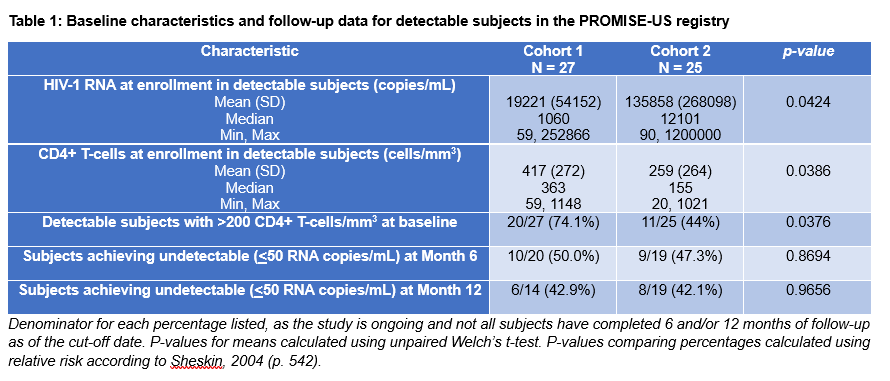
698. Outcomes for Persons With Triple-Class Resistant HIV and a History of Virological Failure
Poster Abstracts
Pages: 197-198
Suzanne M. Ingle1, Fabrice Bonnet2, Linda Wittkop3, Alexandra Calmy4, Ramon Teira5, Timothy Sterling6, Heidi M. Crane7, Christoph Stephan8, Marc van der Valk9, Janne Vehreschild10, Giota Touloumi11, M. John Gill12, Adam Trickey1, Jonathan A. C. Sterne1, Mojgan Hessamfar2, the Antiretroviral Therapy Cohort Collaboration (ART-CC)
Background
The ANRS 139 TRIO trial provided evidence for the safety and efficacy of an antiretroviral therapy (ART) regimen containing raltegravir (RAL), etravirine (ETR), and darunavir/ritonavir (DRV/r) (combination called TRIO) for heavily treatment-experienced (HTE) people with HIV (PWH) with multidrug-resistance. Due to improved options for treatment simplification with 2nd generation integrase inhibitors, questions remain on how HTE PWH are managed in real-life settings. However, data on long-term outcomes are lacking.
Methods
The Antiretroviral Therapy Cohort Collaboration (ART-CC) combines European and North American cohort studies of PWH. Eligible adults had: prior viral failure (1 viral load>200cp/ml) on nonnucleoside reverse-transcriptase inhibitors (NNRTI)-containing ART; ≥3 primary protease inhibitor and nucleoside reverse transcriptase inhibitor (NRTI)-mutations; and ≤3 darunavir and NNRTI mutations. Included PWH switched to the TRIO regimen between 2007-18 without prior exposure to TRIO drugs, and with viral failure. We examined viral suppression (<50cp/ml) while on TRIO, AIDS/mortality after starting TRIO, simplification (defined as switching to a 1 or 2 drug regimen) post-TRIO in those virally suppressed, and viral failure after simplification. We used competing risks to estimate cumulative incidence of outcomes after TRIO.
Results
Of 126 eligible PWH, 24% were female; median age was 46 years (Interquartile range [IQR]: 41-50). Median follow-up duration 7.9 years (IQR: 5.1-9.3): total follow-up time 859 years. By end of follow-up, 23 (18%) had died, 12 (10%) were still on TRIO and 91 (72%) had stopped TRIO. 20/91 had no record of a switch to another regimen, 31/91 switched to a simplified regimen and the remaining 40/91 stopped TRIO to switch to another ≥3-drug regimen. The 5-year cumulative incidence of competing outcomes following TRIO was: stop TRIO and start another regimen with ≥3 drugs 32%; simplify 15%; stop TRIO without switch 17%; died on TRIO 7% (see graph). The rate of first AIDS/death event after starting TRIO was 5.8 per 100 person-years (95% CI: 4.3-7.8). 94 (75%) PWH were virally suppressed while on TRIO. Of these, 56 switched during subsequent follow-up (29 to a simplified regimen, most commonly DRV/ETV, 25 of whom remained virally suppressed).
Conclusions
The most common outcome after starting TRIO was to switch to another ≥3 drug regimen. These patients had few options to switch to less burdensome regimens.
Figure 1.
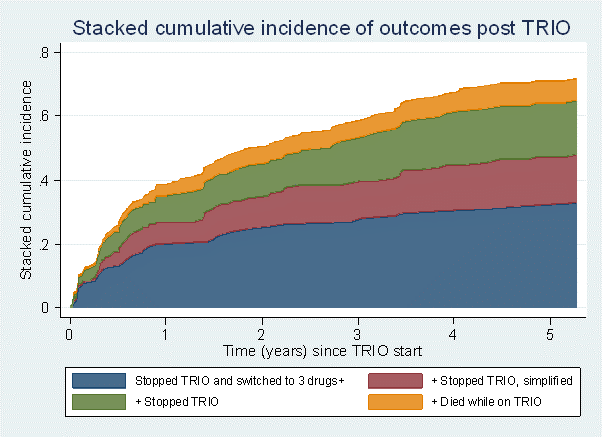
699. Characteristics and Treatment Outcomes of People With HIV Prescribed Fostemsavir in The Trio Cohort
Poster Abstracts
Page: 198
Andrew Frick1, Cassidy E. Henegar2, Moti Ramgopal3, Janna Radtchenko1, Isobel McEwen1, Valeria Duran1, Leigh Ragone2, Michael Aboud2, Steven Santiago4, Greg Huhn5, Karam Mounzer6, Charles Walworth7, Richard A. Elion1, Vani Vannappagari2
Background
Fostemsavir [FTR] is approved for use with other active antiretrovirals [ARVs] for treatment of heavily treatment-experienced people with HIV [PWH] and multi-drug resistance [MDR]. We described characteristics and treatment outcomes among PWH prescribed FTR in a real-world setting in the US.
Methods
PWH initiating FTR from July 2020 (FDA approval) to June 2023 identified from electronic health records in the Trio Health HIV Cohort were followed for 12 months [mo] from first FTR prescription (baseline [BL]). Analyses were stratified by viral load [VL] at BL (suppressed: VL <50 copies/mL [cpm]; viremic: VL ≥50 cpm). Outcomes included suppression (VL <50 cpm), virologic failure ([VF]: 2 consecutive VL ≥200 cpm or 1 VL ≥200 cpm + FTR discontinuation within 4 mo), and CD4 recovery (CD4 > 350 cells/µL or +50 cells/ µL per 6 months on FTR). We defined BL ARV class resistance as intermediate/ high resistance to ≥ 1 ARV in a class by Stanford HIVdb algorithm, and MDR HIV as resistance to ≥ 3 ARV classes.
Results
Of 82 PWH initiating FTR, 46 (56%) were viremic at BL, 31 (38%) suppressed, 5 (6%) with unknown BL VL; 79% received FTR with an integrase inhibitor. Among viremic PWH, 54% initiated FTR as part of a new ARV regimen, while 70% suppressed PWH added FTR to an existing regimen. Compared to suppressed PWH, viremic PWH receiving FTR were younger (48% < 50 yrs vs. 10%), more likely to be female (26% vs. 10%), Black race (54% vs. 23%), and BL CD4 <350 cells/µL (62% vs. 52%). BL resistance data was available for 63% viremic and 39% suppressed PWH: 76% viremic had resistance to ≥ 1 ARV class (vs. 67% suppressed) and 31% had MDR HIV (vs. 17%). Of 82 PWH, 69% were on FTR at the end of follow-up (65% viremic; 71% suppressed), 16% discontinued FTR (11% viremic; 23% suppressed), and 16% were lost to follow-up (24% viremic; 6% suppressed). Of PWH with VLs on FTR, 36% (14/39) of BL viremic became suppressed during the study period; 77% (20/26) of BL suppressed maintained suppression and 12% (3/26) had VF. Median (IQR) CD4 increase was 24 (0-55) cells/µL in BL viremic vs. 58 (24-106) in BL suppressed. Among PWH with BL CD4 < 350 cells/µL, CD4 recovery was similar (36% BL viremic vs. 38% BL suppressed).
Conclusions
In routine clinical care, FTR was prescribed to a heterogeneous population. Most BL suppressed PWH maintained suppression over follow up.
While only 36% of BL viremic PWH fully suppressed, most remained on FTR at end of follow up. CD4 recovery was similar between suppressed and viremic PWH.
Table 1.
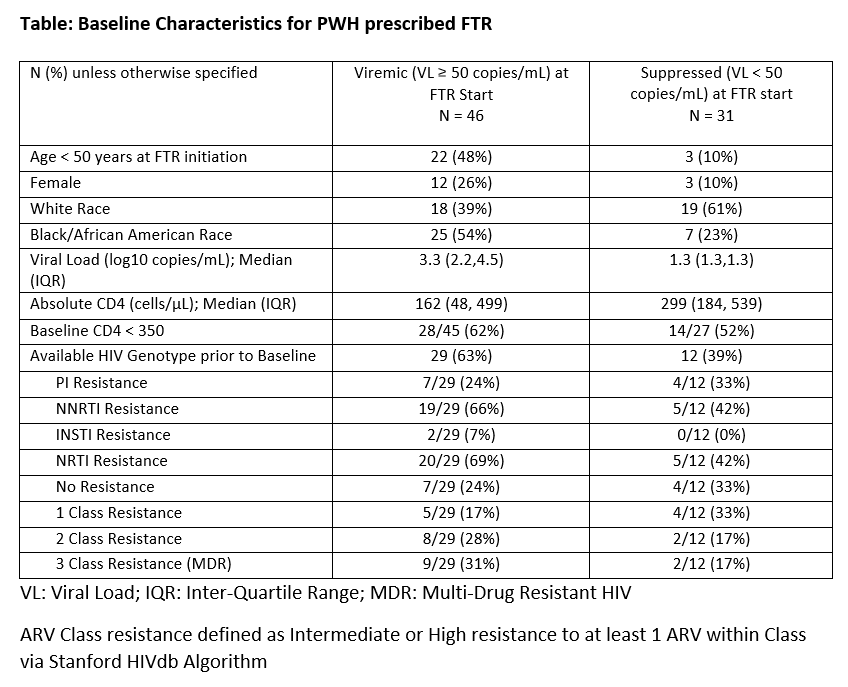
700. Effectiveness of Antiretroviral Therapy in People With and Without TB in the IeDEA Cohort
Poster Abstracts
Pages: 198-199
Lea Faure1, Eugène Messou2, Oliver Ezechi3, Marcel Yotebieng4, Kathryn Anastos4, Pélagie D. Babakazo5, Dominique M. Nsonde6, Antoine Jean-Juste7, Eduardo Gotuzzo8, Timothy Sterling9, Carina Cesar10, Olivier Marcy1, Nathalie De Castro11, the International Epidemiology Databases to Evaluate AIDS (IeDEA) Collaboration
Background
The efficacy of antiretroviral therapy (ART) regimens used to treat people with HIV (PWH) on concomitant tuberculosis (TB) treatment has been evaluated in few clinical trials or programmatic data. We sought to assess virologic response 1 year after ART initiation in ART-naïve PWH with and without TB within the International epidemiology Databases to Evaluate AIDS (IeDEA).
Methods
We conducted a retrospective analysis of individual data collected between January 2013 and November 2022. Concomitant TB was defined as TB reported at ART initiation or after ≥1 visit during the first 6 months on ART. Data from 15 sites from the Caribbean, Central and South America, Central and West African IeDEA regions were analyzed to evaluate the proportion of participants with virologic response defined as HIV-1 RNA <1,000 copies/mL 1 year after ART initiation.
Results
54,276 ART-naïve PWH started ART, 3,944 with and 50,332 without concomitant TB. Overall, median age was 35.4 (IQR 28.5-43.7) years; 54% were females. At ART initiation, median CD4 count and HIV-1 RNA were 211 (IQR 35–392) cells/mm3 and 4.9 (IQR 4.3 – 5.5) log10 copies/mL, respectively. People with TB had lower CD4 and higher HIV-1 RNA at ART initiation (table 1). Overall, 10,036 (18%) started dolutegravir, 40,481 (75%) efavirenz, and 3,759 (7%) other ART regimens. One year after ART initiation, 21,084 (39%) achieved HIV-1 RNA <1,000 copies/mL and 3,703 (7%) had HIV-1 RNA ≥1,000 copies/ mL, 29,489 (54%) had no virologic data, including 1,346 (3%) who died, 8,900 (16%) who had no HIV-1 RNA available and 19,243 (35%) who were lost-to follow-up. Characteristics of participants with and without virologic data were similar. Of the 24,245 participants with HIV-1 RNA available, the proportion of participants achieving HIV-1 RNA <1,000 copies/mL were 1,238/1448 (85%; 95% CI: 84%-87%) and 19,846/22,797 (87%; 95% CI: 88%-87%) people with and without concomitant TB, respectively. Virologic response rates were 90% (95% CI 90%-91%) on dolutegravir and 86% on efavirenz (CI 85%-86%).
Conclusions
Virologic response and non-response rates 1 year after ART initiation were similar among PWH with or without TB. Dolutegravir and efavirenz-based ART provided high virologic response rates. However, more than 50% of people starting ART had no virologic data available, including large numbers lost to follow-up, which is a concern to properly identify virological failure and prevent HIV related morbidity and mortality.
Table 1.
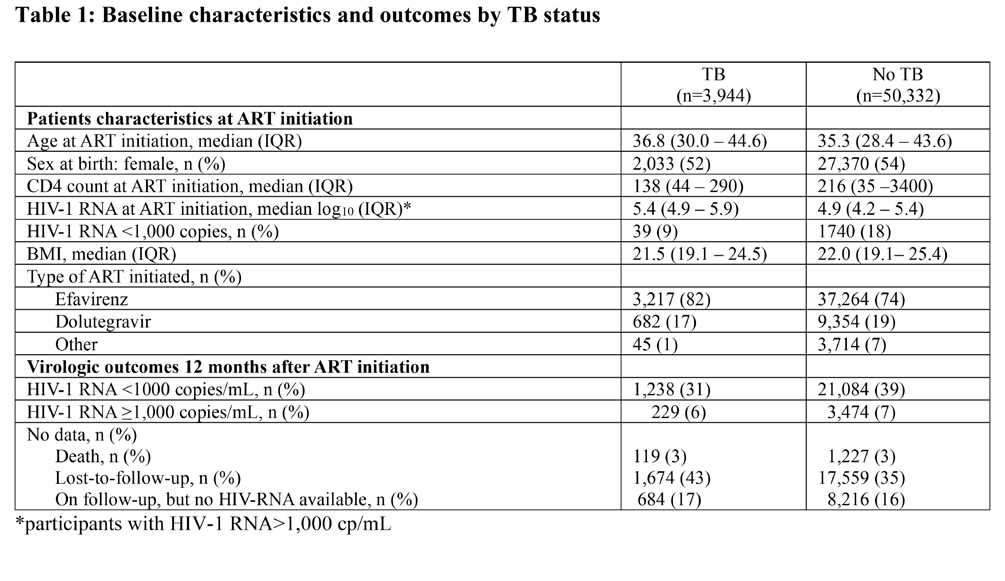
701. A 24-Week Phase II Maintenance Study of TMB-365/TMB-380 Q8W in People With Suppressed HIV-1 Infection
Poster Abstracts
Page: 199
YingAn Lai1, Edwin DeJesus2, Michael Sension3, Gordon E. Crofoot4, Moti Ramgopal5, Mezgebe Berhe6, Kuei-Ling Kuo1, Jacob P. Lalezari7, Chin-Ming Chang, PhD1, Martin H. Markowitz1
Background
TMB-365, a second-generation post-attachment bNAb binds to the second domain of CD4 and displays improved PK, antiviral activity, and breadth of coverage when compared to ibalizumab. TMB-380 (VRC07-523LS) is a bNAb that binds to the CD4 binding site of HIV Env and has potent antiviral activity and favorable safety and PK profile. Here we present results of a 24-week phase 2 maintenance study of the combination with complementary MOA in people with suppressed HIV-1 infection (NCT05275998).
Methods
Participants suppressed (VL<50 c/mL) with continuous oral cART for at least 6 months, clinically stable, and had no history of virologic failure (VF) were enrolled (target N=20). After screening, oral cART was discontinued and 4800 mg of TMB-365 and TMB-380 were infused every 8 weeks for 3 doses (baseline, week 8, week 16). Oral cART was restarted at the week 24 visit. All infusions were performed over 60 minutes in outpatient clinics with vital sign determinations every 15 minutes during and up to 60 minutes post-infusion. VF was defined as 2 consecutive HIV-RNA values >50 c/mL at least 2 weeks apart. Efficacy was evaluated as % participants with VL<50 c/mL at week 24.
Results
21 individuals were enrolled; 1 developed a GI bleed (before dosing, unrelated) between screening and day 1 and was replaced. 18 of 20 completed the study. Age range was 24 to 67 years; 1/21 were female; 10/21 were White (non-Hispanic); and median CD4 count was 706 cells/µL. Two participants did not complete the study. One participant developed a generalized rash 32 days after the first infusion and participation was terminated. One participant developed an atypical papular eruption 7 days after infusion #1 and withdrew. No SAEs, Grade 3 or 4 adverse events or acute infusion reactions were observed. Treatment-emergent AEs (N=48) were mild to moderate. 16 were attributed to infusions with bNAbs; rash (4), fatigue (4), headache (3), flushing (2), fever (1), chills (1), aches (1). No cases of protocol-defined VF were observed. At week 24, 16/17 (94%) with plasma VL below 50 c/mL, one had VL of 59 c/mL, N=2 early D/C, N=1 no data. The preliminary mean TMB-365 and TMB-380 concentrations at week 24 are 29 and 107 μg/mL, respectively.
Conclusions
Every 8-week infusions of TMB-365 and TMB-380 with complementary MOA at 4800 mg each are safe and effective as a complete maintenance therapy in people with suppressed HIV-1 infection. No confirmed VF was observed. Results support the development of TMB-365/TMB-380 into phase 2b.
702. A Multicenter Study of Albuvirtide Combined With 3BNC117 in Multidrug-Resistant HIV-1 Infection
Poster Abstracts
Page: 199
Yihong Zhou, Yaokai Chen, Vijay Harypursat, Yuanyuan Qin
Background
For some individuals with HIV-1 infection who have failed multiple antiretroviral regimens and have limited treatment options, there is an urgent need for new antiretroviral drugs with novel mechanisms of action. Albuvirtide (ABT) is an HIV-1 fusion inhibitor and 3BNC117 is an HIV-specific, broadly neutralizing monoclonal antibody. We aimed to assess the efficacy and safety of ABT+3BNC117 combined with an optimized background regimen (OBR) in adults with multidrug-resistant (MDR) HIV-1.
Methods
In this ongoing phase 2 trial in two countries, we enrolled patients with MDR HIV-1 infection who had failed multiple antiretroviral therapies. All participants had a viral load over 1000 copies of HIV-1 RNA per mL. After a control period (day 0 to day 6) during which participants continued their current therapy, ABT+3BNC117 was infused on days 7, 8, and 9, and the viral load was then measured at week 2 (treatment period). On day 14, all eligible participants were randomly assigned in a 1:1 ratio to Group A (receiving ABT weekly and 3BNC117 biweekly) or Group B (receiving both ABT and 3BNC117 biweekly), combined with an OBR that included at least one fully active agent for the same 24-week maintenance period. The primary endpoint was the proportion of participants who experienced a reduction in viral load of at least 0.5 log10 RNA copies/mL between day 7 and day 14.
Results
A total of 16 participants completed the study. The mean baseline viral load was 4.45 log10 RNA copies/mL. Of the 16 participants in the intention-to-treat population, 10 (62.5%) had a decrease in viral load of at least 0.5 log10 RNA copies/mL from baseline (p<0.001 for the comparison with the control period). At the end of treatment (EOT), participants who had received ABT+3BNC117 plus OBR had a mean decrease in viral load of 2.52 log10 RNA copies/mL from baseline, with 87.5% achieving levels below 50 RNA copies/mL. At week 26, 75% of Group A and 100% of Group B had a viral load below 50 RNA copies/mL. 2 participants had virologic failure. No participants died from causes related to underlying illnesses and no serious adverse events related to ABT+3BNC117 were identified. In the eight-week analysis after ABT+3BNC117 cessation in 14 participants, 92.8% had a viral load below 50 RNA copies/mL.
Conclusions
In patients with MDR HIV-1 infection who have advanced disease and limited treatment therapeutic options, the combination of ABT+3BNC117 had significant antiviral activity during a 34-week study period.
The figure, table, or graphic for this abstract has been removed.
703. WITHDRAWN
Poster Abstracts
Page: 200
704. Evaluating Efficacy of Crushed Bictegravir/Emtricitabine/Tenofovir Alafenamide Administered via Tube
Poster Abstracts
Page: 200
Joshua T. Mercure1, Kayla Bey1, Eric Gillett2, Jeffrey C. Pearson2, Suzanne McCluskey1, Alex Rock1
Background
Bictegravir/emtricitabine/tenofovir alafenamide (B/F/ TAF) is a single-tablet regimen (STR) with no recommendations from the manufacturer regarding crushing or dissolving tablets for adult use. However, oral ingestion may be impractical for hospitalized individuals requiring enteral feeding. Despite some healthcare institutions administering B/F/TAF in crushed or dissolved form in such cases, there is limited clinical evidence regarding the efficacy of this approach.
Methods
Electronic health records from Massachusetts General Hospital and Brigham and Women’s Hospital were reviewed from December 2016 to December 2023 to evaluate the virologic outcomes of people living with HIV who received crushed or dissolved B/F/TAF administered via enteral tube for at least 7 days during inpatient hospitalization. The primary end point was continued or achieved viral suppression (<200 copies/mL) after administration of crushed or dissolved B/F/TAF within a 12 month follow up period. Secondary endpoints included the development of antiretroviral resistance and change in antiretroviral therapy (ART).
Results
From the initial cohort of 54 patients, 22 were excluded for having less than 7 days of B/F/TAF via tube and 13 were excluded for not having a follow-up viral load available within 12 months. A total of 19 patients (84%M) were included in the study and received crushed or dissolved B/F/TAF for a median of 19 days (IQR = 7.5, 64). The need for tube administration was characterized as intubation in 74% (n = 14) of the study cohort. Of the 19 patients for which a follow-up viral load was available, 89% (n = 17) were found to be undetectable. A total of 8 patients had a detectable viral load at the time of admission, and 6 of them showed an undetectable viral load within a year of receiving B/F/TAF via tube. Both patients with a detectable viral load at baseline showed a 2.8 and 3.3 log reduction in viral load at follow-up.
Conclusions
The ability of B/F/TAF to garner or maintain viral suppression when given via tube was demonstrated in our study population. Although this study is limited by its retrospective nature and lack of therapeutic drug monitoring the absence of emergent resistance or virologic failure following crushed B/F/TAF remains reassuring and suggests that providing the STR via tube while patients are NPO is a reasonable alternative to changing ART altogether.
Figure 1.
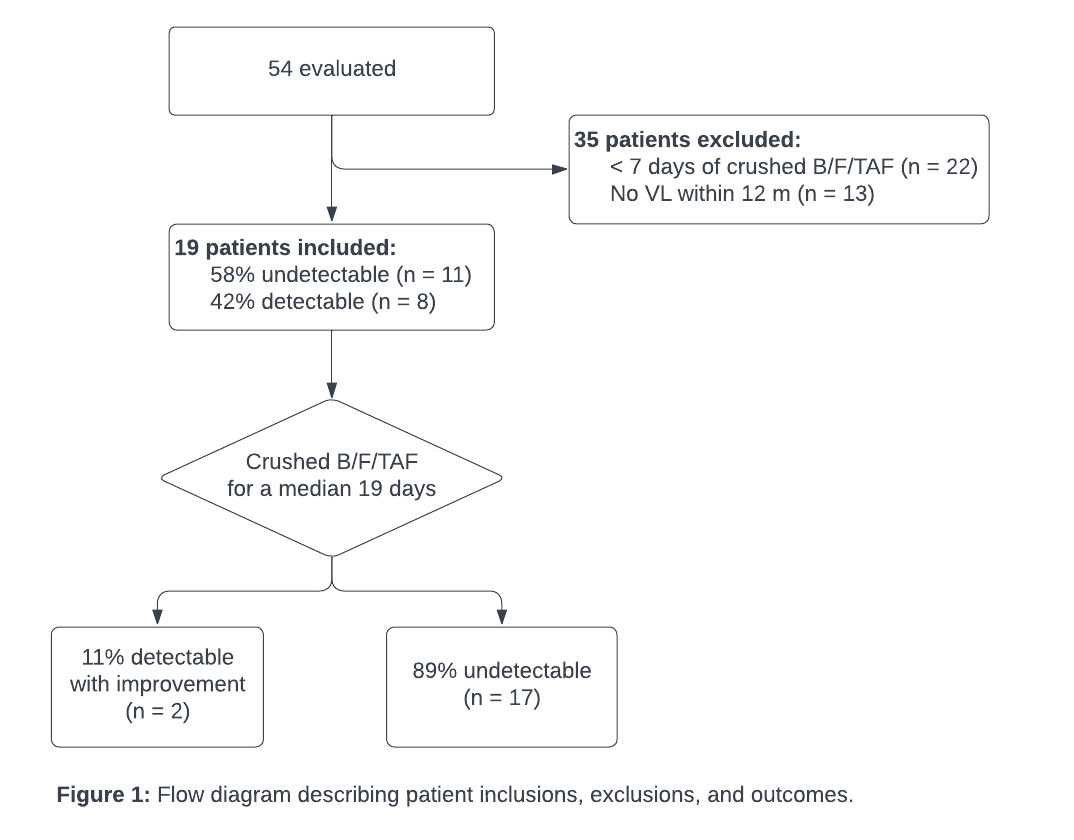
705. Creating an Ultralong-Acting Dolutegravir Prodrug Homodimer
Poster Abstracts
Page: 200
Bhoomika Gowda1, Suyash Deodhar1, Nam Le1, Samiksha S. Raut1, Brandon Hanson1, Brady Sillman1, Brian Kearney2, Alborz Yazdi2, Howard Gendelman1, Benson Edagwa1
Background
Dolutegravir (DTG) is a widely used effective integrase strand transfer inhibitor with a high barrier to resistance. It is a recommended first-line treatment regimen for HIV-1-infected adults and children. However, DTG’s impact is limited by its daily dose requirements and suboptimal adherence. Long-acting formulations would improve optimal usage and reduce the emergence of drug resistance. To these ends, we focused on developing ultra-long-acting (ULA) prodrugs. One was a DTG monomeric ester prodrug formulation (NM2DTG). NM2DTG safely extended the drug’s apparent half-life [Nat. Commun., 3226 (2022)]. To further improve NM2DTG’s pharmacokinetic (PK) profile, DTG prodrug homodimers were synthesized and screened. An ULA DTG injectable dimer prodrug formulation (NM7DTG) was then identified, with the potential for or beyond a four-month dosing interval.
Methods
A library of DTG homodimers was synthesized and nanoformulated by high-pressure homogenization. Parent DTG formulations (NDTG) were prepared in parallel and used as a control. Cellular uptake and retention, antiretroviral efficacy, and cytotoxicity were evaluated in primary human monocyte-derived macrophages (MDM). The PK profile of a single intramuscular injection (IM) of 50 mg DTG equivalents/kg was then tested in Sprague Dawley (SD) rats.
Results
The DTG homodimers demonstrated distinct physicochemical properties compared to the native drug. NM7DTG formulations showed increased intracellular drug uptake, retention, and antiretroviral activities. NDTG demonstrated a suboptimal PK profile at four months, with plasma DTG levels declining rapidly below 4x the PA-IC90 at four weeks. In contrast, NM7DTG sustained therapeutic drug levels throughout this observation period and was tolerated well.
Conclusions
A single IM injection of a novel homodimeric NM7DTG formulation sustains plasma DTG levels above 4x PA-IC90 for > four months. Loading more DTG molecules per prodrug unit mass in NM7DTG could also reduce drug injection volumes.
Figure 1.
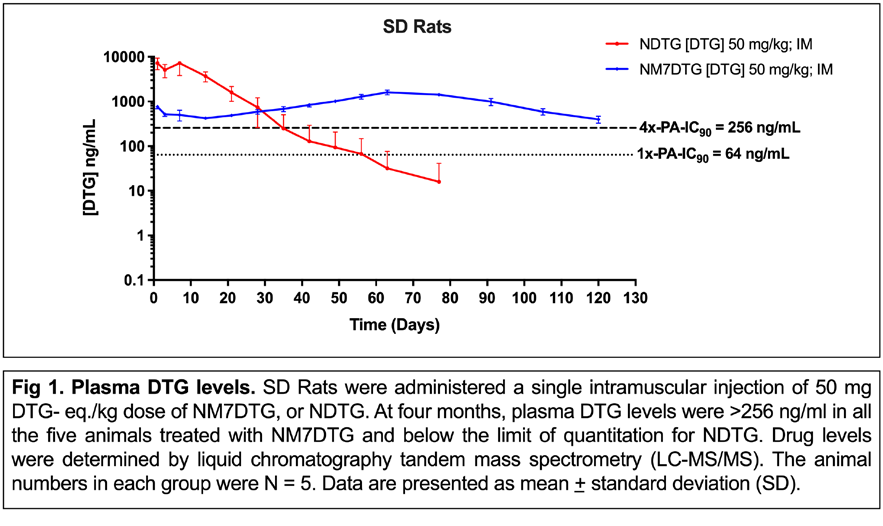
706. Development of a 2-Drug Long-Acting Removable Formulation for HIV Suppression
Poster Abstracts
Pages: 200-201
Martina Kovarova1, Sarah Wessel1, Rae Ann Spagnuolo1, Nurjahan Begum1, Lijun Ling2, Diana Battaglia2, Katie Mollan1, Amanda Schauer1, Jose Victor Garcia Martinez2, Manse Kim2
Background
Non-adherence to HIV treatment increases the risk of viral rebound and the development of drug resistance. Long-acting formulations have shown improved compliance compared with conventional regimens requiring frequent dosing, leading to better outcomes and treatment continuation. Here, an in situ forming implant system (ISFI) was used to develop a long-acting (LA) formulation that can co-deliver two drugs post-administration of a single formulation. These ISFI formulations are injectable and solidified to implants after subcutaneous injection. If there is a risk of adverse effects from the implant, the implant can be safely removed to stop drug delivery.
Methods
First, an injectable LA formulation of the non-nucleoside reverse transcriptase inhibitor doravirine (DOR-ISFI) was developed. The second drug, an integrase strand transfer inhibitor dolutegravir (DTG), was incorporated into the same formulation using co-solvent optimization. The pharmacokinetics of developed formulations were evaluated in BALB/c mice, and the pre-clinical efficacy of HIV suppression was assessed in humanized mice.
Results
The DOR-ISFI delivered DOR plasma concentrations >10×IC95 for 140 days and efficiently protected against multiple vaginal HIV challenges in humanized mice. The two-drug formulation DTGDOR-ISFI co-delivered DTG and DOR in serum for 9 months above the IC90. Drugs penetrated tissues relevant for HIV infection including lymph nodes, brain, spleen, gut, and genital tracts of male and female humanized mice. During preclinical evaluation of HIV maintenance therapy, this DTGDOR-ISFI effectively suppressed HIV for at least 4 weeks after discontinuation of antiretroviral therapy (ART). Removal of the implant successfully stopped the delivery of both drugs.
Conclusions
DTGDOR-ISFI is an important advance in managing HIV suppression by reducing the number of injections and simplifying LA drug delivery.
707. Identification and Characterization of Novel Chemical Scaffolds With Anti-HIV Activities
Poster Abstracts
Page: 201
Ryan Jeep1, Liangqun Huang1, Tram A. Ngo2, Fu-Yue Zeng2, James Boehlke1, Luke Bennett1, Ian Pass2, Ashootosh Tripathi3, Pamela Schultz3, Pankaj Kumar3, Thomas D. Y. Chung2, David H. Sherman3, Chaoping Chen1
Background
HIV-1 protease (PR) is initially synthesized as part of the Gag-Pol polyprotein precursor, which undergoes regulated autoprocessing to produce free mature PR, essential for viral particle maturation and infectivity. We previously demonstrated that precursors and mature PRs have distinct enzymatic properties, as precursors are up to 1,000-fold less-sensitive to protease inhibitors (PIs) compared to the mature PR. Thus, we established a cell-based functional assay for high-throughput screening (HTS) campaigns targeting precursor autoprocessing in the pursuit of first-in-class drug discovery.
Methods
We screened approximately 350,000 small molecule compounds at a single dose (20 µM), along with about 2,000 natural product extracts (NPEs) and subfractions (each containing 5 to 25 diverse chemicals) at ~ 2 µg/ml apparent concentrations. Positive hits were further verified using the primary HTS assay and/or an orthogonal TR-FRET assay. Additionally, we assessed several confirmed hits using a newly established highly sensitive infectivity assay to evaluate their antiretroviral activities against the WT and mutant HIV strains known to be resistant to multiple protease inhibitors (PIs).
Results
We identified several small molecule hits and NPE subfractions that exhibited partial activities in the primary HTS assay. The small molecule hits represented four scaffold groups, differing from known FDA-approved PIs. Notably, these confirmed compounds or NPE subfractions suppressed virus infectivity with single digit micromolar EC50 values. Encouragingly, the top small molecule hit (C7, attached Figure, panel A) and an NPE subfraction (H2_11, attached Figure, panel B) showed comparable potency against WT and multi-PI resistant mutants, suggesting that these hit compounds may inhibit HIV-1 PR through mechanisms different from those of current PIs.
Conclusions
This study establishes the feasibility of discovering novel autoprocessing inhibitors through HTS using a cell-based functional assay. The validated hits seemed to operate through mechanisms distinct from existing PIs, presenting a new treatment strategy for targeting a vital enzyme (HIV-1 PR) at two distinct functional states (precursor and mature PR), thereby addressing drug resistance challenges.
Figure 1.
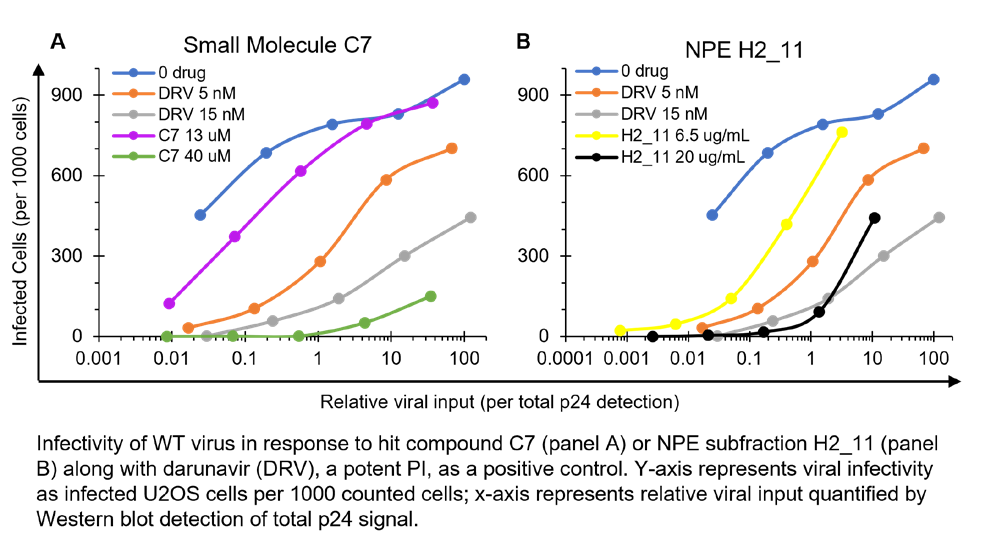
708. A Strategy for Durable AAV-Vectored bNAb Expression in Adult Rhesus Macaques
Poster Abstracts
Page: 201
Michael Kuipa, Peter Koroma, Isai Leguizamo, Priya Dhole, Matthew R. Gardner
Background
Sustained expression of adeno-associated virus (AAV)-vectored anti-HIV-1 broadly neutralizing antibodies (bNAbs) could prevent and treat HIV-1 infection. However, durable expression of AAV-vectored bNAbs in vivo is limited by host immune responses, impeding efficacy studies in preclinical nonhuman primate (NHP) models. Programmed cell death protein (PD)-1 is an immune checkpoint protein on T cells that inhibits T-cell activity upon binding to programmed cell death protein ligand (PD-L)1. We hypothesized that PD-L1 co-expression on AAV.bNAb-transduced cells maintains bNAb expression by suppressing host anti-bNAb antibodies and T-cell responses. The goal of this research is to develop a model for prolonged AAV-vectored bNAb production in NHPs and possibly advance AAV-delivery of bNAbs for human clinical trials.
Methods
Five groups of six rhesus macaques each received the following vectors: 1) AAV9.PD-L1; 2) AAV9.10-1074; 3) AAV9.PD-L1 and AAV9.10-1074; 4) AAV9.3BNC117; and 5) AAV9.PD-L1 and AAV9.3BNC117. Serum antibody concentrations were determined by gp120 ELISA and B and T cell reactivity were assessed by anti-drug antibody ELISA and by ELISpot assay, respectively. Beginning at 20- or 30-weeks post AAV9 administration, all animals were challenged biweekly via low-dose, intrarectal challenge using SHIV-AD8. Protection from SHIV challenge was determined by monitoring plasma viremia by qPCR. Additionally, to assess the safety of our approach, we have ongoing studies to determine the immunomodulatory effect of AAV9.PD-L1 in PBMCs by RNASeq and off-target AAV transduction by ddPCR post necropsy.
Results
All six macaques that received AAV9.10-1074 and AAV9.PD-L1 had sustained concentrations of 10-1074 throughout the study compared to four of six macaques that only received AAV.10-1074. Similarly, five of six macaques that received AAV9.3BNC117 and AAV9.PD-L1 compared to three of six macaques that only received AAV9.3BNC117 had sustained expression of 3BNC117. We observed a negative correlation between bNAb serum titers and both host anti-bNAb antibodies and T cell reactivity. All macaques that achieved sustained expression of 10-1074 were significantly protected from SHIV challenges. Macaques that received AAV9.3BNC117 and AAV9.PD-L1 were significantly protected against SHIV challenge.
Conclusions
We have developed a strategy for sustained bNAb expression in NHPs. This will allow the prophylactic and therapeutic efficacy of AAV-delivered bNAbs to be studied in preclinical NHP models.
709. Trosunilimab Safety, Pharmacokinetics, and Pharmacodynamics in People With and Without HIV-1
Poster Abstracts
Pages: 201-202
Manal Abunimeh1, Cynthia Brinson2, Olayemi Osiyemi3, Ana Pires1, Mong-Jen Chen1, Preethi Krishnan1, Franco Antonio Felizarta4, Harsh Sharthiya1, Heide Betman1, Nael Mostafa1, Veronica Wangsadipura1, Daniel Cohen1, Moti Ramgopal5
Background
ART-free HIV viral control remains an unmet need for people with HIV (PWH). Trosunilimab, an anti-α4β7 integrin antibody with preserved Fc functionality, is expected to induce immune responses to control viral replication, and was evaluated in a phase 1 program in healthy volunteers (HV) and PWH.
Methods
The double-blind, placebo (PBO) controlled phase 1 studies evaluated single-ascending doses (SAD) ranging from 50 to 1800 mg IV, and 800 mg SC in healthy volunteers (Study M19-968) and 800 mg and 1600 mg IV (SAD) in viremic PWH off ART (Part A) and multiple ascending doses of 800 mg IV and SC and 1600 mg IV in aviremic PWH on ART (Part B) (Study M19-966). Safety analysis included adverse events (AEs) and lab abnormalities. Pharmacodynamic (PD) analysis included α4β7 integrin receptor target engagement. α4β7 integrin expression on HIV virion was assessed in viremic PWH.
Results
In M19-968, 55 HV received either trosunilimab or PBO. In M19-966, 9 participants received trosunilimab in Part A, and 45 received either trosunilimab or PBO in Part B. Demographics of PWH are reported in Table 1. In M19-966 Part A, no subject had significant sustained decline in HIV RNA (>0.5 Log 10) in the absence of ART. No serious AEs or drug-related AEs Grade ≥3 or leading to discontinuation of study drug occurred in either study and the frequency of drug-related AEs was low. One HV (1800 mg IV dose) had drug-related elevated transaminases which were also considered possibly related to recent passage of a gallstone. In M19-968, linear pharmacokinetics (PK) was observed from 400 to 1800 mg IV with terminal half-life ranging from approximately 12 to 25 days. The concentration required to achieve nearly complete (>90%) α4β7 receptor saturation in healthy volunteers was 3 µg/mL. Trosunilimab-mediated β7 internalization followed a U-shaped relationship with drug concentration. In M19-966 Part A, circulating HIV virions expressed α4β7 indicating potential for Fc-mediated immune responses. Expression of α4β7 on virion was found to be inversely correlated with internalization of the receptor.
Conclusions
The phase 1 studies showed that trosunilimab was well-tolerated in healthy volunteers and in PWH. The safety, PK/PD, and immunogenicity data from phase 1 studies allowed dose selection for the ongoing phase 2 study, M19-965, evaluating combinations of trosunilimab and budigalimab in PWH undergoing analytic treatment interruption.
Table 1.
Select Demographics and Baseline Characteristics (Study M19-966)
|
|
Part A: Trosunilimab; Total N=9 |
Part B: Trosunilimab or PBO; Total N=45 |
| Age (years) |
| Mean (min, max) |
46.6 (24,64) |
45.5 (24,65) |
| Male, N (%) |
8 (89) |
40 (89) |
| Race, N (%) |
| White |
5 (56) |
35 (78) |
| Black or African American |
3 (33) |
5 (11) |
| Asian |
0 |
1 (2) |
| American Indian or Alaskan native |
0 |
2 (4) |
| Native Hawaiian or other Pacific Islander |
0 |
1 (2) |
| Multiple |
1 (11) |
1 (2) |
| Duration of HIV-1 infection (years) |
| Mean (min, max) |
11.6 (0,28) |
14.3 (2,37) |
| Baseline CD4 count, N (%) |
| <750 cells/mm³ |
7 (78) |
21 (47) |
710. Preclinical Evaluation of an Ultra-Long-Acting Tenofovir Prodrug Nanosuspension
Poster Abstracts
Page: 202
Samiksha S. Raut, Srijanee Das, Grace Bybee, Haritha Chava, Mojisola Ogunnaike, Weimin Wang, Anup Pathania, Nam Le, Howard Gendelman, Larisa Poluektova, Natalia Osna, Benson Edagwa
Background
Effective treatment of hepatitis B (CHBV) infection requires adherence to long-term daily antiviral therapies. These include oral tenofovir (TFV) prodrugs [TFV disoproxil-/TFV alafenamide-fumarate - TDF/TAF] or entecavir. Treatment cessation leads to HBV reactivation and disease progression. This underscores the need for long-acting formulations to improve treatment outcomes. Considering these needs, we developed a scalable amino acid-free hydrophobic and lipophilic crystalline phosphonate TFV prodrug (M5TFV). Surfactant-stabilized aqueous nanosuspensions (NM5TFV) were produced at a >300 mg/ml drug concentration. The formulation was stable at room temperature. We now report on possible mechanisms by which NM5TFV sustains suppression of HBV replication in hepatocytes. NM5TFV is well tolerated at the injection site. These promising data support further development and translation of NM5TFV formulation.
Methods
Scalable M5TFV was formulated into aqueous nanosuspensions using Tween 20 and PEG 3350 as the stabilizing surfactants. In vivo efficacy was evaluated in transgenic (Tg05) mice administered a single intramuscular injection of NM5TFV at either 200 or 400 mg/kg TFV equivalents. NM1TFV, an injectable TFV prodrug shown to be longer acting than TAF (Sci Adv, 2023), was used as a control. HBV viral load in blood was tested biweekly until rebound. At the time of animal sacrifice, liver tissues were collected to evaluate treatment-mediated activation of interferon (IFN)-stimulated genes (ISG) and inflammasomes. For in vitro studies, HepAD38 cells were treated with NM5TFV for eight hours, followed by incubation in drug-free media for 48 hours. HBV DNA and cccDNA were determined by qPCR.
Results
Treatment of HepAD38 cells with NM5TFV led to a two-fold reduction in HBV DNA and cccDNA levels. In HBV-infected mice, low and high-dose single injections of NM5TFV exhibited comparable and >2.5 logs 10 reductions in HBV DNA, lasting over two months (Fig. A). Similar observations were recorded for NM1TFV. However, unlike NM5TFV, NM1TFV induced the expression of APOBEG3G and activation of inflammasome receptors, including, NLRP3 and AIM2, and IL1β gene, suggesting divergent antiviral mechanisms of action (Fig. B).
Conclusions
A single dose of NM5TFV sustained suppression of HBV DNA in mice for over two months without activating ISGs and inflammasome. These promising findings support further development of NM5TFV as an ultra-long-acting formulation candidate.
The figure, table, or graphic for this abstract has been removed.
711. Potent, Pan-Coronavirus Antiviral Activity of the Novel 3CLpro Inhibitor ALG-097558
Poster Abstracts
Page: 202
Cheng Liu1, Ching-Wen Chang2, Dirk Jochmans3, Antitsa Stoycheva1, Sarah K. Stevens1, David McGowan4, Neelam Oswal2, David B. Smith1, Julian A. Symons1, Lawrence Blatt1, David Perlin2, Arnaud Marchand5, Johan Neyts3, Stanley Wang1, Andreas Jekle1
Background
Despite widespread immunity from SARS-CoV-2 vaccination and/ or past infection, safe, effective, and convenient treatments for acute infection are still needed for individuals who remain at high risk for disease progression. Moreover, the risk of another coronavirus pandemic is an ongoing threat to global health. In this context, the development of pan-coronavirus therapeutics is a critical component of pandemic preparedness to avoid a repeat of the immense public health and societal costs caused by COVID-19.
Methods
The 3-chymotrypsin like protease (3CLpro) from SARS-CoV-2 and other human and bat coronaviruses was used in enzymatic assays to assess the inhibitory activity of ALG‑097558. The antiviral activity was tested in cell-based assays with SARS-CoV-2, SARS-CoV-1, MERS-CoV and other α- and β-coronaviruses. Bioinformatics analysis was performed to assess sequence conservation in currently circulating SARS-CoV-2 strains and predict susceptibility to ALG-097558.
Results
ALG-097558 is a potent inhibitor of the SARS-CoV-2 3CLpro (Wuhan strain) with an IC50 of 0.22 nM in enzymatic assays. ALG-097558 retained strong inhibitory activity when tested against the 3CLpro derived from SARS-CoV-2 Omicron, MERS-CoV, human α- CoVs NL63 and 229E and β-CoV HKU-1 as well as 3CLpros derived from several bat CoVs with the potential to infect human cells. In cell-based experiments, ALG-097558 demonstrated pan-coronavirus activity with a narrow EC50 range of 7-40 nM against 8 different SARS-CoV-2 isolates including the Omicron subvariants BA.2, BA.5, BQ.1 and XBB1.5, as well as other human coronaviruses including SARS-CoV-1, MERS-CoV, 229E, the human β-CoV OC43 and a feline CoV. Against Omicron subvariants, ALG-097558 is 3- to 9-fold more active than nirmatrelvir (the 3CLpro inhibitor in Paxlovid™). Other 3CLpro inhibitors in clinical development such as ensitrelvir and ibuzatrelvir demonstrated greatly reduced antiviral activity against α-CoVs. Bioinformatics analysis predicts that ALG-097558 will retain antiviral activity against currently circulating SARS-CoV-2 strains.
Conclusions
ALG-097558 demonstrates potent, pan-coronaviral activity in preclinical experiments and is uniquely positioned as a treatment option for SARS-CoV-2 infection and potential future coronavirus pandemics. After having demonstrated a favorable clinical safety and PK profile in Phase I, including ritonavir-free dosing, ALG-097558 warrants further evaluation in patients with COVID-19.
712. Novel Class of Small Molecules Inhibits SARS-CoV-2 PLpro Through Molecular Glue-Induced Dimerization
Poster Abstracts
Pages: 202-203
Teresa Ng, Orville A. Pemberton, Thomas E. Frederick, Emily Nicholl, Myron Srikumaran, Jun Chen, Alla Korepanova, Vincent S. Stoll, Andrew M. Petros, Sujatha M. Gopalakrishnan, Justin D. Dietrich, Liliam Rios Cordero, David Hardee, Amanda M. Nevins, Chaohong C. Sun
Background
SARS-CoV-2 papain-like protease (PLpro) represents a promising target for novel COVID-19 therapeutics due to its essential roles in viral replication and dysregulation of host innate immunity. PLpro is a domain of SARS-CoV-2 non-structural protein 3 (Nsp3) and is one of two cysteine proteases encoded by the virus. Currently, there are no SARS-CoV-2 PLpro inhibitors in clinical development.
Methods
A novel class of PLpro-binding small molecules containing a diarylmethanol substructure was identified from a DNA-encoded library (DEL) screen. The original PLpro DEL binders and their analogs were evaluated in biochemical assays to assess inhibition of PLpro enzymatic function, and in virological assays to characterize antiviral potencies. Lead molecules were also studied in biophysical assays including X-ray crystallography and 2D-NMR to determine their mechanisms of action for viral intervention.
Results
This chemical series demonstrates activity in biochemical and virological SARS-CoV-2 assays in vitro, with the most potent compound having a biochemical IC50 of 271 nM and antiviral EC50 of 33 nM. Two X-ray co-crystal structures revealed that these compounds engaged PLpro through a novel binding mode distinct from that of GRL0617, a known SARS-CoV/SARS-CoV-2 PLpro inhibitor that binds to the BL2-loop region of monomeric PLpro protein. Specifically, these compounds simultaneously engage the BL2-loop region of one PLpro monomer and a cryptic pocket between the Ubl/Thumb domain of another monomer inducing dimerization. This dimer-inducing mechanism of action was verified to be concentration-dependent in solution using analytical SEC and 1D-NMR suggesting these inhibitors act as molecular glues.
Conclusions
There is a great interest in the discovery of inhibitors for SARS-CoV-2 PLpro to complement currently available SARS-CoV-2 therapeutics. In this study, we report the discovery of a class of small molecule inhibitors that targets SARS-CoV-2 PLpro through the novel mechanism of PLpro dimerization. These compounds are proposed to mediate inhibition through the molecular glue-induced self-association of PLpro. This mechanism is different from those of other PLpro inhibitors which mediate inhibition through a single interaction with monomeric PLpro near the substrate binding pocket of the enzyme. Taken together, this class of inhibitors represents a novel and attractive chemical series for potent SARS-CoV-2 inhibition.
713. SARS-CoV-2 Ensitrelvir Resistance-Associated Mutations in Phase III Randomized Clinical Trial
Poster Abstracts
Page: 203
Manish C. Choudhary1, Rinki Deo1, Annie F. Luetkemeyer2, Kara Chew3, Michael Hughes4, Linda J. Harrison4, Eric S. Daar3, Joseph J. Eron5, Simon Portsmouth6, Takeki Uehara7, Davey Smith8, Judith Currier3, Pavitra Roychoudhury9, Alexander L. Greninger10, Jonathan Li1, the SCORPIO-HR/ACTIV 2d (ACTG A5407) Study Team
Background
Ensitrelvir, an oral main protease inhibitor targeting SARS-CoV-2, demonstrated robust antiviral activity in the phase 3 SCORPIO-HR/ACTIV-2d trial with a significant reduction in viral RNA levels and a higher percentage of negative viral cultures at Day 4 compared to placebo. In this exploratory analysis, we investigated emergence of resistance-associated mutations with ensitrelvir treatment.
Methods
A total of 1,888 mITT participants (945 in the ensitrelvir group and 943 in the placebo group, all with Omicron infection) from the SCORPIO-HR/ ACTIV-2d trial who received ≥1 dose of study intervention within 3 days of symptom onset were included. Nasopharyngeal (NP) swabs were collected on days 1, 4, 8, and 16 for SARS-CoV-2 RNA levels by quantitative RT-PCR. Whole viral genome and targeted nsp5 gene sequencing were performed. Ensitrelvir resistance-associated mutations were defined as changes that reduced susceptibility by three-fold or more, or if found within 5 Angstroms of the active site. For the calculation of the frequency of treatment-emergent mutations, the denominator included all mITT participants regardless of sequence availability. Comparisons were by Wilcoxon rank sum tests.
Results
Treatment-emergent mutations were more frequent in the ensitrelvir-treated group compared to the placebo group (T25A/N: 0.4% (4/945) vs. 0% (0/943), p=0.12; M49L/I: 1.5% (14/945) vs. 0% (0/943), p<0.001). We also compared pre- and post-treatment SARS-CoV-2 RNA levels in those with successful sequencing at baseline and at least one follow-up time point. Ensitrelvir-treated participants with emergent mutations (n=18) showed higher RNA levels than ensitrelvir-treated participants without emergent mutations (n=255) both before treatment and on days 4 and 8: median (Q1, Q3) SARS-CoV-2 RNA levels pre-treatment: 8.2 (7.2, 8.3) vs. 7.3 (6.1, 8.1) log10 copies/mL; day 4: 5.1 (4.4, 5.8) vs. 4.6 (3.9, 5.4) log10 copies/mL; day 8: 5.4 (4.0, 6.1) vs. 1.7 log10 copies/mL (detected below lower limit of quantification [LLoQ]) (0.0, 2.7).
Conclusions
Resistance-associated mutations emerged with ensitrelvir treatment, but was relatively infrequent and associated with higher pre-treatment RNA levels. Protease inhibitors represent an important treatment modality for COVID-19, but can be vulnerable to treatment-emergent mutations and additional monitoring is warranted.
714. Patterns of Remdesivir Initiation in Immunocompromised Patients Hospitalized With COVID-19
Poster Abstracts
Page: 203
Mark Berry1, Eunyoung Lee1, Valentina Shvachko1, Carrie Nielson1, Kathleen Hurwitz2, Nuvan Rathnayaka2, Rachel Faller2, Mazin Abdelghany1, M. Alan Brookhart2, Anand P. Chokkalingam1
Background
Immunocompromised patients who are hospitalized with COVID-19 and initiate remdesivir (RDV) within the first 2 days of hospitalization have a lower risk of all-cause mortality than those who do not initiate RDV. However, it is unknown what proportions of patients with immunocompromising conditions (when stratified by age or the SARS-CoV-2 variant period) initiate RDV at different stages of hospitalization (ie, early, intermediate, late, or never).
Methods
This was a retrospective observational cohort study using HealthVerity data, which includes US hospital chargemaster data and hospital, medical, and pharmacy claims. Patients with immunocompromising conditions aged ≥12 years who were hospitalized between May 2020 and December 2023 with a primary diagnosis of COVID-19 were evaluated by time of RDV initiation after hospital admission: 1-2 days (early), 3-7 days (intermediate), ≥8 days (late), or never; day 1 = day of admission. Analyses were stratified by age and variant period (initial wave: May 1, 2020-May 31, 2021; Delta: June 1, 2021-November 30, 2021; Omicron: December 1, 2021-December 3, 2023).
Results
Among the 154,850 eligible patients identified, median (Q1, Q3) age was 71 (60, 80) years. Among the 54,238/154,850 (35%) patients who initiated RDV during hospitalization, 46,198/54,238 (85%) patients started RDV within 1-2 days of admission (Table 1). Among those who received RDV in the hospital, the proportion of patients who initiated RDV within 1-2 days of hospitalization was comparable between those aged 12-64 and >65 years (15,767/17,992 [88%] and 30,431/36,246 [84%], respectively), as well as across the variant periods (initial wave: 18,359/22,261[82%]; Delta: 8608/9533 [90%]; Omicron: 19,231/22,444 [86%]). However, most (100,612/154,850 [65%]) patients never initiated RDV; this was also true among the subset of patients aged >65 years (65,926/102,172 [65%] did not initiate RDV) and those who had COVID-19 during the Omicron period (50,307/72,751 [69%] did not initiate RDV).
Conclusions
While most patients with immunocompromising conditions who received RDV were treated within 1-2 days of hospital admission, the majority were never treated, suggesting an opportunity to prevent disease progression in one of the highest risk groups.
Table 1.
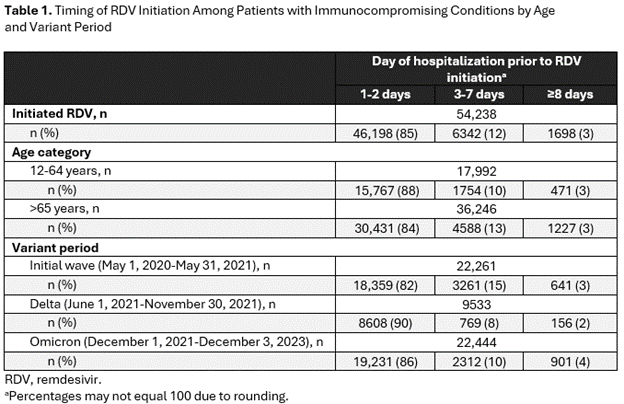
715. Machine Learning Identifies Predictors of Delayed Remdesivir Use in Hospitalized COVID-19 Patients
Poster Abstracts
Pages: 203-204
Anne-Maud Ferreira1, Cole Campton1, Zanthia Wiley2, Mark Berry1, Celine Der-Torossian1, Anand P. Chokkalingam1, Bryan Downie1, Rikisha Gupta1
Background
COVID-19 remains a public health concern despite availability of effective interventions. Clinical studies have shown that remdesivir (RDV) reduces mortality, hospitalization, disease progression, and recovery time in individuals hospitalized with COVID-19. Current NIH guidelines recommend RDV treatment for patients at high risk of disease progression. This study of patients hospitalized for COVID-19 aimed to identify attributes linked with the likelihood of receiving delayed or no RDV treatment during the Omicron period.
Methods
This retrospective observational cohort study was conducted using the Optum database (study period: May 2020-December 2023), with a combination of self-reported and imputed race data. The study sample included 88,416 hospitalizations by patients in the US aged ≥18 years who were hospitalized with a COVID-19 primary diagnosis and enrolled in the database ≥6 months prior to hospitalization. Patients could have >1 hospitalization, with a washout period of 4 months between hospitalizations. 3456 patient attributes associated with higher risk for COVID-19 diagnosis as defined by the CDC were identified in the dataset and grouped into 46 risk factor categories. Recursive Feature Elimination was applied over different variant periods (pre-Delta: May 2, 2020-May 31, 2021; Delta: June 1- November 30, 2021; Omicron: December 1, 2021-December 31, 2023) to select the most informative risk factor categories associated with delayed (≥3 days after admission) or no RDV treatment in each variant period. Multivariate logistic regression was then utilized to estimate the risk of delayed or no RDV treatment for each risk factor category.
Results
During the Omicron variant period, patients with chronic kidney disease, type 1 or 2 diabetes, or limited activities of daily living, and those who were Black showed significantly greater risk of receiving delayed or no RDV treatment. Patients who were diagnosed as bipolar or as smokers were more likely to receive timely RDV treatment.
Conclusions
Using machine learning, we showed that select patient attributes influenced the likelihood of receiving delayed or no RDV treatment upon hospitalization for COVID-19; this methodology has the benefit of allowing near real-time analysis of treatment patterns in the context of a pandemic. These results identified factors that have influenced treatment practices, which can help guide future efforts to reduce healthcare disparities and enhance health equity.
Table 1.
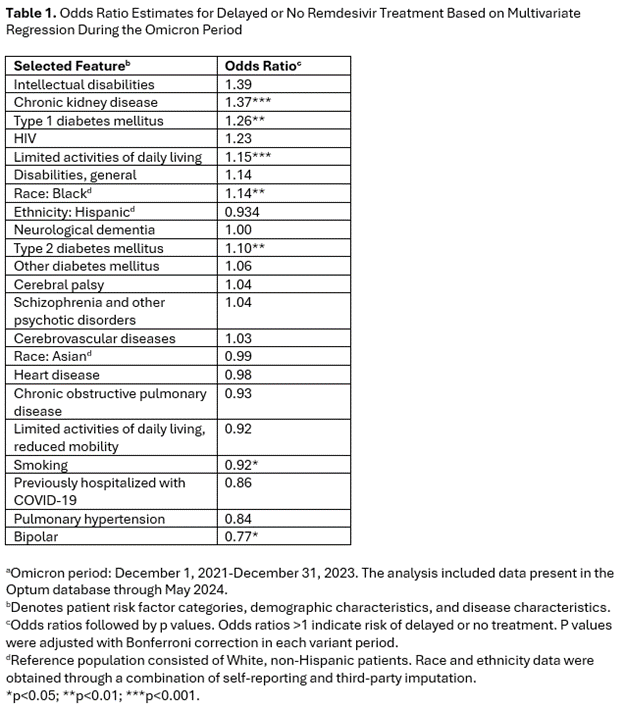
716. Tracking Key Remdesivir Resistance Mutations in SARS-CoV-2 Using GISAID Data (2020-2024)
Poster Abstracts
Page: 204
Toshibumi Taniguchi, Misuzu Yahaba, Hiroshi Yoshikawa, Hidetoshi Igari
Background
The emergence of remdesivir (RDV) resistance mutations poses a potential challenge in treating SARS-CoV-2 infections, especially as the virus continues to evolve globally. GISAID data provides an extensive resource for tracking such mutations. This study aims to investigate the temporal trends and incidence rates of RDV resistance-associated mutations, specifically those conferring a >2.5-fold reduction in susceptibility, to understand their prevalence and patterns over time.
Methods
Genomic surveillance data from GISAID, covering the period from January 2020 to August 2024, were analyzed. The focus was on nine mutations associated with RDV resistance which confers > 2.5-fold reduction in susceptibility per The Stanford Coronavirus Resistance Database (CoV-RDB): A376V, E802D, C799F, D484Y, E802A, C799R, E796G, V792I, and S759A. Monthly incidence rates were calculated by dividing the number of samples carrying each mutation by the total number of samples sequenced each month. Descriptive statistics were used to summarize trends, and the mean, standard deviation, and quartiles of the incidence rates were calculated to characterize mutation frequency patterns over time.
Results
The mutation with the highest peak incidence was E802D, with a maximum of 0.0315% of total sequenced samples in one month. V792I also demonstrated a significant peak incidence of 0.0367%. Mutations such as C799F, D484Y, and C799R exhibited lower but consistent incidences, with means ranging from 0.0020% to 0.0031%. Notably, A376V and S759A exhibited very low incidence rates, with means of 0.00007% and 0.00003%, respectively, indicating rare occurrences. The data showed periodic surges in certain mutations, particularly E802D and V792I, which could indicate selective pressures or shifts in viral fitness during the study period (Fig).
Conclusions
The study highlights that while RDV resistance mutations remain relatively rare, specific mutations such as E802D and V792I have demonstrated transient increases in prevalence. This suggests potential adaptive advantages in certain populations or during specific time frames. Continued genomic surveillance is critical to monitor these mutations, assess their clinical significance, and guide therapeutic strategies for SARS-CoV-2 treatment, especially in the context of antiviral resistance. Further research should explore the underlying mechanisms driving these periodic surges and evaluate the clinical implications of RDV resistance in treatment outcomes.
Figure 1.
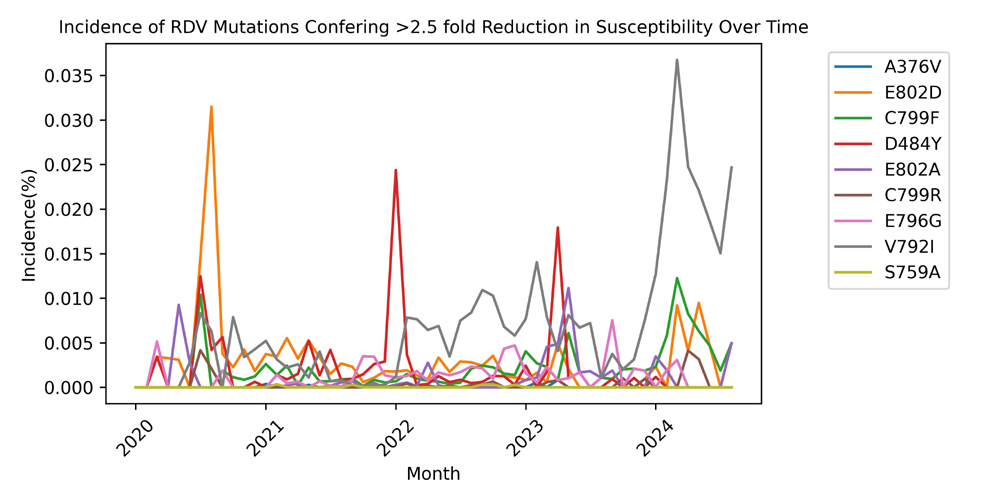
717. Nirmatrelvir/Ritonavir for Chronic COVID-19: Outcome in 16 Severely Immunocompromised Patients
Poster Abstracts
Pages: 204-205
Hanne Lamberink, Sammy Huygens, Hannelore Bax, Corine Geurtsvankessel, Bart Rijnders
Background
Nirmatrelvir/ritonavir (N/r) is approved for the outpatient treatment of COVID-19 within 5 days of symptom onset and is typically used in patients at increased risk for severe disease. In severely immunocompromised patients, COVID-19 occasionally evolves into a chronic infection. The potential value of N/r in this context including optimal treatment duration is unknown. We describe the off-label use of N/r in severely immunocompromised patients with persistent COVID-19 related symptoms and viremia.
Methods
Data from patients in care at Erasmus University Medical Center in Rotterdam, the Netherlands, were collected when 1. immunocompromised, 2. SARS-CoV-2 PCR positive (>10.500 IU/ml) with persisting symptoms ≥7 days and 3. treated with N/r. Viral clearance (VC) was defined as a viral load <10,500 IU/ml without occurrence of viral rebound. Underlying immunocompromising condition, time from symptom onset, time to confirmed VC, percentage of patients with VC 28 days after treatment initiation, additional antiviral therapies and mortality were registered.
Results
Between November 2022 and March 2024, 16 immunocompromised patients with persistent COVID-19 were treated with off-label N/r with a median symptom duration of 53 days (IQR 31-75). 12/16 received N/r for 5 and 4/16 for 10 days. In 10/16, N/r was combined with COVID-19 convalescent plasma. 7/16 were hospitalized at N/r initiation (1 at ICU). Despite the long-lasting infection, the median time to confirmed VC was very short at 7 days (IQR 6–23). VC was observed in 12/16 within 28 days after treatment initiation and in 13/16 within 60 days. 2/4 patients with a viral rebound successfully received a second course of N/r at day 20 (10-day course) and 77 (5-day course), followed by VC at day 23 and 98, respectively. One of the 16 patients died from COVID-19-related ARDS on day 4 post-treatment; all others were alive at day 60. Figure 1 illustrates virological treatment response of all 16 patients.
Conclusions
In severely immunocompromised patients with non-resolving COVID-19, off-label treatment with N/r resulted in prompt viral clearance in 75%. Whether the simultaneous use of CCP in 10 of 16 patients contributed to this result needs further study. Well-designed studies in this patient group are urgently needed to compare watchful waiting with different (combinations) of drugs as well as treatment durations.
Figure 1.
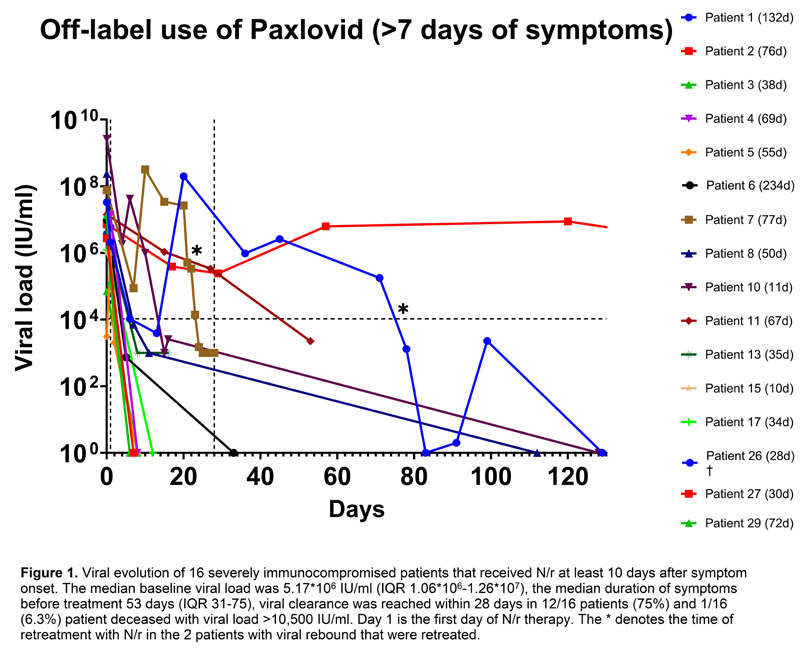
718. Synergistic Effect of NMV/r and Acquired Immunity in Reducing Severe COVID-19
Poster Abstracts
Page: 205
Warren Bao1, Wayne Wisemandle2, Heidi Leister-Tebbe3, Romina Quercia4, Jennifer Hammond3
Background
Both immunization and nirmatrelvir-ritonavir treatment (NMV-r) are known to lower the risk of severe COVID-19 including hospitalization or death. However, it is unclear whether the effect of NMV-r and acquired immunity (via vaccination or prior viral exposure indicated as serologic positivity) are additive or synergistic.
Methods
Non-hospitalized symptomatic adults infected with COVID-19 were enrolled into two similarly designed double-blind clinical trials, EPIC-HR and EPIC-SR, and randomized (1:1) to receive NMV-r or placebo for 5 days. All participants with risk factors for severe COVID-19 from these two published trials were included to evaluate synergy between NMV-r and acquired immunity, with synergy assessed as Relative Excess Risk due to Interaction (RERI) and Attributable Proportion (AP).
Results
2572 participants were divided into 4 groups based on acquired immunity (vaccinated/sero-positivity) and NMV-r (or placebo). Relative to the group with no acquired immunity and treated with placebo, the risk of COVID-19 related hospitalization or all-cause death was reduced (95% CI) by 83% (71-90%) with acquired immunity alone, 85% (69-93%) with NMV-r alone, and 96% (88-98%) when both were present. To assess the presence of synergistic effect, comparisons were made with reference to the group with greatest risk prevention, participants with both acquired immunity and NMV-r. The risk increased significantly (p<0.0001) to 3.4-fold without acquired immunity, 3.82-fold without NMV-r, and to 22.73-fold in the absence of both (Figure 1). This indicated that 16.5-fold risk increase was due to synergy (RERI), accounting for 72.7% of total risk (AP). The synergy was seen both in men and in women, and regardless of whether immunity was acquired through vaccination or due to prior viral exposure. Furthermore, the synergistic effect was reflected in the clearance pattern of SARS-CoV-2 and was supported by similar synergy observed in the proportion of participants with any COVID-related medical visits or in the proportion with severe COVID-19 symptoms post treatment.
Conclusions
Among participants at high risk to develop severe COVID-19, NMV-r and acquired immunity provided incremental protection against severe COVID including hospitalization or death in the presence of each other. More significantly, because of the synergistic effect between NMV-r and acquired immunity, participants with neither immunization nor treatment saw a deleterious risk increase in severe COVID of more than 20-fold.
Figure 1.
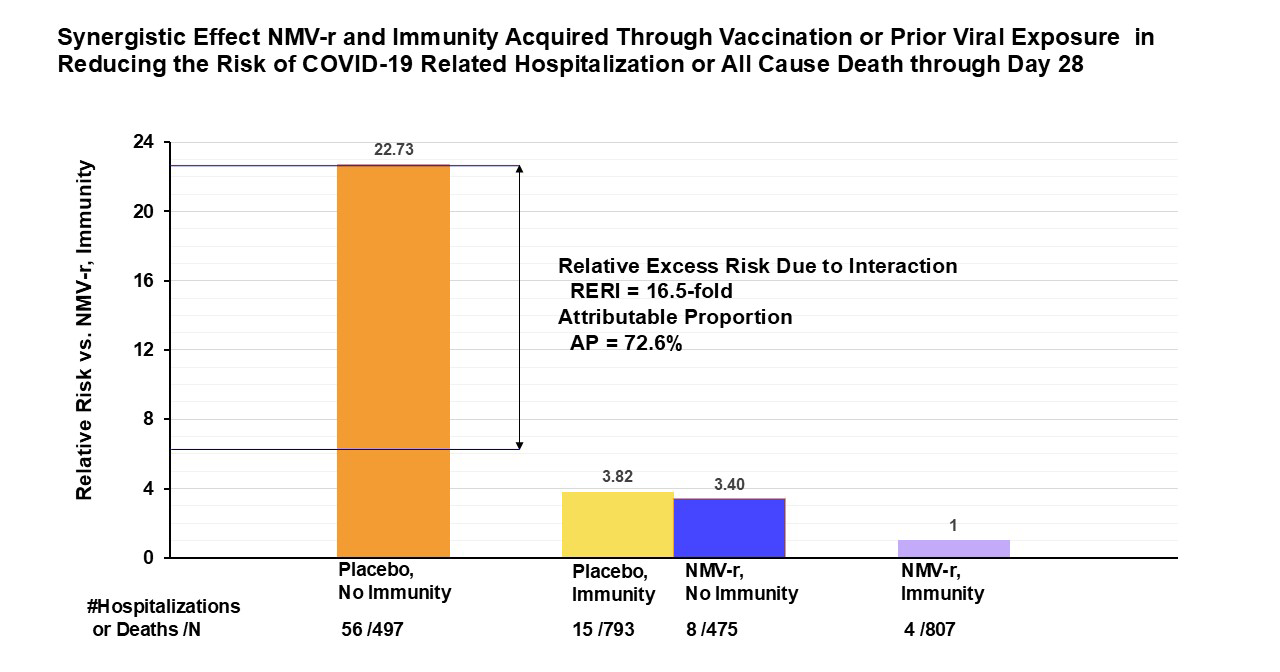
719. Metformin on Time to Sustained Recovery in Adults With COVID-19: ACTIV-6 Randomized Clinical Trial
Poster Abstracts
Page: 205
Carolyn Bramante1, Thomas Stewart2, David R. Boulware1, Matthew McCarthy3, Russell Rothman4, Ahmad Mourad5, Florence Thicklin6, Yue Gao4, Michael Felker7, Sean Collins4, Sarah Dunsmore8, Stacey Adam9, Christopher Lindsell7, Adrian Hernandez7, Susanna Naggie7, the ACTIV-6 Study Group
Background
The effect of metformin on reducing symptom duration among low-risk, outpatient adults with mild to moderate coronavirus disease 2019 (COVID-19) has not been studied. Our objective was to test metformin compared to placebo for symptom resolution during acute infection with SARS-CoV-2.
Methods
The ACTIV-6 platform clinical trial evaluated repurposed medications for mild to moderate COVID-19. Between September 19, 2023 and May 1, 2024, 3,214 participants were enrolled at 110 US sites to evaluate metformin. Participants were age ≥30 years with confirmed SARS-CoV-2 infection and ≥2 COVID-19 symptoms for ≤7 days. Participants were randomized to receive 14 days of metformin (titrated to 1,500mg daily) or placebo. The primary outcome was time to sustained recovery (3 consecutive days without COVID-19 symptoms) within 28 days of receiving study drug. Secondary outcomes included healthcare utilization (clinic visit, emergency department visit, hospitalization or death). Safety events of special interest included hypoglycemia and lactic acidosis.
Results
Among randomized participants who received study drug, the median age was 47 years (IQR 38-58); 63.4% were female, 46.5% identified as Hispanic/Latino, and 68.4% reported ≥2 doses of a SARS-CoV-2 vaccine. Among 1,443 participants who received metformin and 1,548 who received placebo, differences in time to sustained recovery were not observed (adjusted hazard ratio [aHR], 0.96 [95% credible interval, 0.89-1.03; P(efficacy) = 0.11]). The median time to sustained recovery was 9 days (95% CI 9 to 10) in the metformin group and 10 days (95% CI 9-10) in the placebo group. No deaths were reported; 111 participants reported a clinic visit, emergency department visit, or hospitalization: 58 in the metformin group and 53 in the placebo group (HR 1.24; 95% CrI 0.81, 1.75; P(efficacy)=0.135). There were no episodes of lactic acidosis, and 5 participants in each group reported that they had hypoglycemia. Prespecified analyses support hypotheses about early initiation and use with current variants.
Conclusions
Metformin was not shown to shorten the time to symptom resolution in adults with mild to moderate COVID-19; the median days to symptom resolution was numerically but not significantly lower for metformin than placebo. Emergency department visits and hospitalizations were too infrequent to draw conclusions. This was the first phase 3 trial to randomize adults without chronic disease or disease risk to metformin, and there were no safety concerns.
Figure 1.
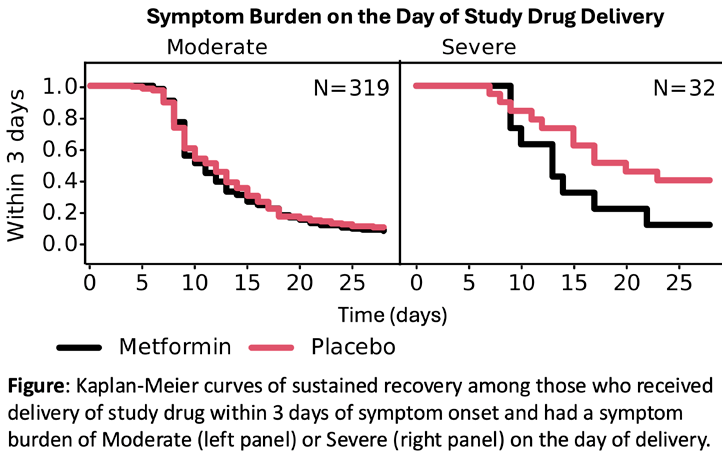
720. Optimal Timing and Immunogenicity of COVID-19 Booster Vaccination: The EU-COVAT-2 BOOSTAVAC Trial
Poster Abstracts
Page: 206
Elena Alvarez1, Lukas Bütikofer2, Alejandro Abner Garcia Leon1, Virginie Gautier1, Jordi Cano Ochando3, Katherine Loens4, Amelie Michon5, Helena H. Askling6, Julia Jakobs7, Ilse De Coster4, Eoin R. Feeney1, Sven Trelle2, Pierre Van Damme4, Oliver Cornely8, Mallon W. G. Paddy1, the VACCELERATE Consortium
Background
Currently, optimal timing and/or number of booster COVID19 vaccinations remains unclear. We compared immunogenicity and safety of mRNA booster vaccination at different time intervals.
Methods
In a randomised, controlled, multicentre, phase II trial, adults with >3 prior mRNA COVID19 vaccines, with last vaccine 3 to 7 months (M) prior, were randomized to one of five arms; no booster vaccine (control) or Comirnaty mRNA booster vaccine at M0, 2, 4 or 6. Plasma receptor binding domain (RBD) antibodies (IU/mL) were measured at each visit and 2 weeks post booster, along with solicited adverse events (AE). Composite primary endpoint was a two-fold increase in RBD titre at 2 weeks post boost and/or RBD titre ≥500IU/mL in those with pre-boost RBD<500IU/ml. Efficacy was met if >50% subjects in a booster arm met the primary endpoint using a 1 sample proportion test (adjusted 1-sided alpha 0.0125). We explored optimal booster vaccine timing by logistic regression with best fitting fractional polynomial. Data are mean (SD) unless specified.
Results
Of 255 subjects, mean age 52 (14) years, 154 (60%) female, 249 (98%) white, 130 (51%) with prior COVID19, time from last vaccine was 154 (44) days and baseline RBD was 15143 (16088) IU/mL. Arms were well matched. In the trial, 39 (20%) received Original, 125 (62%) Original/Omicron BA4-5 and 32 (16%) Omicron BXX.1.5 specific Comirnaty vaccines. Two weeks post boost, RBD titres increased in all four vaccine arms but then declined rapidly (Fig a). Only M2 booster arm achieved efficacy and no dose-response for time to booster vaccination was found (Fig b). 32 (13%) reported incident COVID19, with no difference in infection rates between vaccine arms and controls. Neither age nor prior COVID-19 were associated with the primary endpoint. However, those with a longer time since last pre-study vaccine and lower pre-boost RBD were more likely to reach a primary endpoint (P=0.005 and P<0.001), regardless of study arm (P=0.79 and P=0.16 for interaction). 144/169 (85%) subjects reported AE post-booster with tiredness, headache and muscle pain each reported in ≥20%. Of 7 serious AE, none causally linked to booster vaccine.
Conclusions
Booster COVID19 vaccination provided only short-lived increases in RBD titre but with systemic side effects commonly reported. Lower pre-booster RBD and time since last vaccine but not age was associated with greater likelihood of booster immune responses. These data suggest a saturable humoral response to repeated COVID-19 vaccinations.
Figure 1.
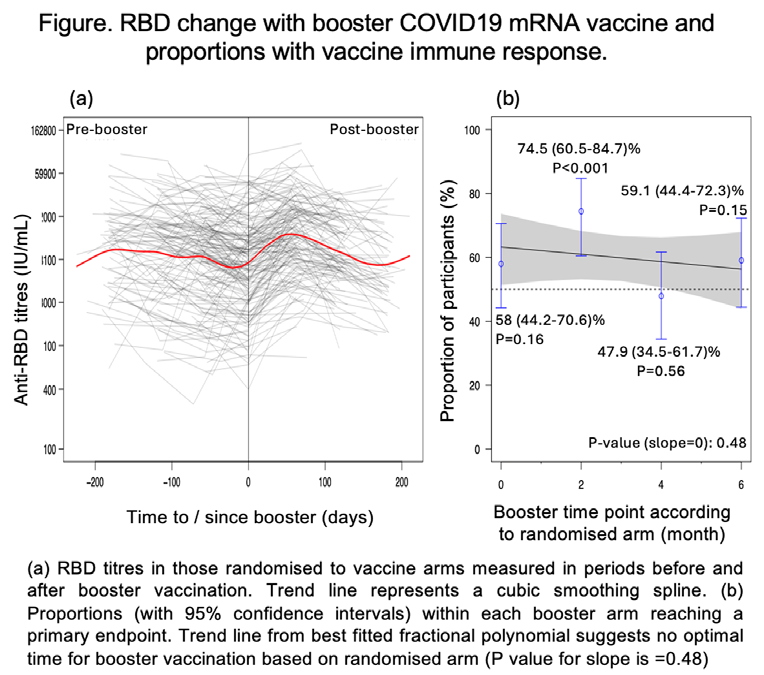
721. The Genetic Barrier to Resistance to LEN Is Not Affected by Non-B Subtypes or Treatment Exposure
Poster Abstracts
Page: 206
Chiara Paletti1, Niccolò Bartolini1, Federica Giammarino2, Francesco Saladini1, Ilaria Vicenti1, Lia Fiaschi1, Camilla Biba1, Ilenia Varasi1, Federico Garcia3, Anne-Geneviève Marcelin4, Maurizio Zazzi1, Vincenzo Spagnuolo5, Emanuele Focà6, Stefano Rusconi7, the PRESTIGIO Registry
Background
Lenacapavir (LEN) is a HIV-1 capsid inhibitor approved for heavily-treatment experienced (HTE) people with HIV (PWH). This in vitro study aimed to evaluate LEN susceptibility and genetic barrier in B and non-B subtypes derived from therapy naïve (TN) and HTE PWH.
Methods
Thirty-one NL4-3 based recombinant viruses harbouring clinically derived GAG-PR region were generated from plasma samples collected from TN (n=20) and HTE (n=11) PWH enrolled in the Italian PRESTIGIO registry. LEN IC50 was measured through a TZM-bl cell-based assay and fold-change (FC) values were calculated with respect to the NL4-3 strain. In vitro resistance selection (IVRS) experiments were performed by exposing MT-2 cells infected with recombinant viruses and the NL4-3 control to increasing concentrations of LEN. Cultures were stopped when viral breakthrough (VB) was observed at approximately 100X LEN IC50 (2.56 nM) or after 105 days from the start of IVRS. Sanger sequencing of the p24 coding region was performed at each VB to detect emerging mutations. Statistical analyses were performed with GraphPad Prism version 9.0.0.
Results
None of the viruses harboured known LEN resistance mutations. Baseline susceptibility to LEN was comparable between HTE vs. TN (median FC 0.9 [IQR 0.3-1.6] vs. 2.0 [0.8-3.2], p=0.101, Mann-Whitney test) and between B (n=14) vs. non-B (n=19; 3 each F1 and CRF02_AG, 2 each C, D, CRF01_AE and CRF06_cpx, 1 each A1, A6, G, CRF40_BF, URF D/B) subtypes (median FC 1.1 [0.3-3.0] vs. 1.8 [0.9-3.0], p=0.171). By Kaplan-Meier survival analysis, the time to VB was comparable among HTE vs. TN PWH but not B vs. non-B subtypes at approximately 10X (p=0.284 and p=0.047, respectively, log-rank test) and 100X LEN IC50 (p=0.131 and p=0.026, respectively), with lower time to VB observed with B viruses (figure 1). Known LEN resistance mutations emerged in 27/32 cultures including Q67H/R/K+N74D (n=7), Q67H/K+T107N/S (n=6), N74D (n=5), N74D+T107N/D (n=3), Q67H+K70R+T107N (n=2), Q67H+K70R (n=2), and Q67H (n=2), while in 5 cases no emergent mutations were identified. Non-polymorphic substitutions F169L (with Q67H+T107TN), V86M (with Q67H+K70R) and E213D (with Q67H+T107N) were detected in three distinct cases each.
Conclusions
The in vitro genetic barrier to resistance to LEN was generally low but not affected by long-time exposure to antiretroviral therapy. Viruses harbouring non-B GAG-PR showed delayed breakthrough compared to fully subtype B viruses.
The figure, table, or graphic for this abstract has been removed.
722. Structural and Mechanistic Insights Into Cabotegravir Resistance in HIV-1 Integrase
Poster Abstracts
Pages: 206-207
Indrani Choudhuri1, Tao Jing1, Avik Biswas1, Steven J. Smith2, Eric O. Freed3, Terrence Burke2, Stephen H. Hughes2, Ronald M. Levy4, Dmitry Lyumkis1
Background
HIV-1 infection requires the integration of viral DNA into host chromatin, a process mediated by the viral enzyme integrase (IN). This step is effectively blocked by IN strand transfer inhibitors (INSTIs), a key class of antiretroviral drugs. However, resistance to even the most potent INSTIs is becoming more of a clinical problem and the underlying mechanisms of resistance are not fully understood.
Methods
Using cryo-electron microscopy (cryo-EM), we solved new high-resolution structures of WT and drug-resistant HIV-1 IN assemblies with Cabotegravir (CAB) bound. We also performed hybrid quantum mechanics molecular mechanics (QM/MM) and high-resolution molecular dynamics-based (MD) simulations and free energy calculations to delineate the mechanism of resistance.
Results
Here, we investigated the resistance mechanism caused by combinations of mutations at positions E138K, G140A/S, and Q148H/K/R of IN, which affect the efficacy of all known INSTIs. We found that viruses harboring the complex IN mutant E138K/G140A/Q148R led to the largest decrease in EC50 compared to WT viruses. Both the available INSTIs, and new compounds currently in pre-clinical trials, are less effective against the complex IN mutant E138K/G140A/Q148R, indicating that, with the increasing therapeutic use of INSTIs, the prevalence of this variant is likely to increase. Notably, Cabotegravir (CAB), which was approved by the US Food and Drug Administration in 2021 as a long-acting injectable, potently inhibits WT IN, but is particularly susceptible to this complex IN mutant. Using cryo-electron microscopy (cryo-EM), we solved new high-resolution structures of WT and drug-resistant HIV-1 IN assemblies with CAB bound. We also performed molecular dynamics-based free energy calculations to delineate the mechanism of resistance. Our study shows that the E138K/G140A/Q148R mutations disrupt the drug's efficacy by altering the DDE-Mg (D64+D116+E152-Mg) network at the active site of integrase. The δ+ charge on Arg148 forms a salt bridge with D64, E152, and D116. The mutations cause rearrangements in the active site that reduce the binding of CAB and, by extension, other INSTIs.
Conclusions
Our combined virology, structural biology, and molecular dynamics analyses provides a detailed mechanistic understanding of CAB/INSTI resistance, yielding a foundation for the development of next-generation INSTIs capable of overcoming problematic complex resistant IN variants.
The figure, table, or graphic for this abstract has been removed.
723. The Barrier to Escape From Broadly Neutralizing Antibodies Varies Between Different HIV-1 Isolates
Poster Abstracts
Page: 207
Alex C. Stabell1, Debby Park2, Christy L. Lavine3, Sebastian Mejia Espinosa4, Viren Baharani5, Songhee Lee5, Michel Nussenzweig5, Marina Caskey5, Michael S. Seaman3, Paul Bieniasz5, Theodora Hatziioannou5
Background
Broadly neutralizing antibodies (bNAbs) against HIV-1 have re-invigorated research into antibody therapies and vaccination strategies for prevention, treatment, and cure of HIV-1 because of their unique ability to neutralize diverse HIV-1 strains. While many HIV-1 isolates are initially susceptible to bNAbs, their ability to acquire resistance is unknown. Understanding the evolutionary barriers to bNAb resistance will inform the feasibility of using bNAbs as HIV-1 prevention, treatment, and cure.
Methods
We developed a cell-culture based system to understand the evolutionary barriers to escape from neutralization by the bNAb 3BNC117. We performed numerous parallel selection experiments to capture the array of escape pathways available to a range of HIV-1 strains. We isolated 375 viruses that replicated in the presence of 3BNC117 from 16 starting viral strains. Each viral variant isolated by our assay was confirmed to be resistant to 3BNC117 and sequenced using Illumina-based short read sequencing. We developed a statistical model to distinguish mutations conferring bNAb resistance from passanger mutations and confirmed these predictions using a pseudotype neutralization assay. We performed this procedure on numerous group M HIV-1 isolates of various subtypes that capture the worldwide diversity of HIV-1.
Results
3BNC117-resistant variants were isolated from all HIV-1 strains tested. Some viral strains demonstrated many different mutational escape pathways, while others demonstrated only a single dominant escape mutation that was selected in several different resistant isolates. The vast majority of HIV-1 strains required only a single nucleotide substitution to escape 3BNC117 neutralization. These resistance mutations existed in the viral quasispecies prior to selection at variable frequencies, ranging from 1 in 102 viruses (common) to less than 1 in 106 viruses (rare). Each resistance mutation was tested in a pseudotype assay against a panel of bNAbs, demonstrating that some, but not all 3BNC117 escape mutations were able to confer resistance to additional CD4 binding site bNAbs.
Conclusions
This study demonstrates that various pathways exist for escape from a CD4 binding site bNAb 3BNC117 among divergent HIV-1 isolates. Understanding the pathways enabling escape from bNAb neutralization as well as the frequency at which they are maintained in the population will help to tailor these antibody-based therapies and inform the design of vaccines that aim to elicit bNAb-like antibodies.
724. In Vitro Resistance Profile for GS-1720, a Potent Once-Weekly Oral InSTI in Clinical Development
Poster Abstracts
Page: 207
Derek Hansen, Matthew R. Hendricks, Joseph Campbell, Brie Falkard, Gregg Schwarzwalder, Ana Z. Gonzalez, Tomas Cihlar, Stephen R. Yant
Background
Integrase strand transfer inhibitors (INSTIs) are the cornerstone of current HIV therapies, but their oral dosing remains limited to once-daily administration. Herein we describe the in vitro resistance profile for GS-1720, a potent and selective investigational INSTI with Phase 1 clinical pharmacokinetic, safety and antiviral efficacy data supportive of once-weekly oral dosing.
Methods
GS-1720 activity against HIV-1 reporter viruses containing integrase (IN) substitutions associated with INSTI class resistance was assessed at Monogram Biosciences. In vitro resistance barrier was studied by serial passage of HIV-1 IIIb- and HXB2-infected MT-2 cells in the presence of increasing concentrations of GS-1720. GS-1720 was also evaluated in a 35-day fixed-dose viral breakthrough assay in HIV-1 BaL-infected human PBMCs. Emergent viral variants were characterized genotypically and phenotypically.
Results
GS-1720 retained potent antiviral activity, defined as an EC50 fold-change (FC) < 10, against 91% of INSTI-resistant isolates tested (n=55), as compared to 96% and 75% for bictegravir (BIC) and cabotegravir, respectively. Reduced virus susceptibility to GS-1720 (FC>10) required 3 IN mutations (G140A/S+Q148H/K+L74I, T97A or E138A/K) previously defined as primary or secondary drivers of INSTI class resistance. In vitro dose escalation resistance selections with GS-1720 against IIIb virus progressed at a rate comparable to BIC and significantly slower than elvitegravir (EVG), with the emergence of IN variants S153F (GS-1720), S153S/Y (BIC) and P145S (EVG) after >300, 140 and 119 days in culture, respectively. The S153Y variant also emerged in two dose escalation selections with HXB2 virus at GS-1720 concentrations equal to 16-fold its EC50 after 112 days in culture. Site-directed mutants of S153 variants showed high susceptibility to GS-1720 and all 5 approved INSTIs (FC<2.7). In a fixed-dose viral breakthrough assay, clinically relevant concentrations of GS-1720 or BIC prevented viral breakthrough while EVG and raltegravir, when tested at their equivalent clinical trough plasma concentrations, showed breakthrough with resistance in 45% and 18% of PBMC cultures (n=44-48/condition), respectively.
Conclusions
GS-1720 exhibits an in vitro resistance profile comparable to the best-in-class INSTI bictegravir, including high barrier to resistance and minimal cross-resistance within the INSTI class. These observations support the ongoing clinical development of GS-1720 as a novel once-weekly oral INSTI.
725. Effect of SNG001, Inhaled IFN-β1a, on SARS-CoV-2 Diversity and Evolution
Poster Abstracts
Pages: 207-208
Gregory E. Edelstein1, Tatum N. Sass1, Rinki Deo1, Prasanna Jagannathan2, Kara Chew3, Mark J. Giganti4, Michael Hughes4, Carlee Moser4, Joseph J. Eron5, Judith Currier3, Upinder Singh6, Davey Smith7, William A. Fischer II5, Manish C. Choudhary1, Jonathan Li1, the ACTIV-2/A5401 Study Team
Background
Interferon resistance has been implicated in SARS-CoV-2 escape from innate immune responses, but interferon’s specific impact on viral evolution is unknown. SNG001 is an inhaled interferon-β1a treatment for COVID-19 which was evaluated in the ACTIV-2/A5401 randomized placebo-controlled trial. Although SNG001 did not accelerate viral decay, there was a trend towards fewer hospitalizations in the treated group. Sequence analysis of samples collected in ACTIV-2 provide a rare opportunity to investigate SARS-CoV-2 evolution and diversity in response to exogenous interferon treatment.
Methods
The study population included 220 adult outpatients with COVID-19 enrolled in ACTIV-2/A5401 and randomized to receive either SNG001 (n=110) or placebo (n=110). Participants collected nasal swabs on days 0, 3, 7, 14, and 28 for SARS-CoV-2 viral load (VL) testing. Whole genome sequencing was performed on specimens with VLs ≥2 log10 copies/mL. Viral sequences were analyzed for diversity using average pairwise distance (APD) and for the emergence of amino acid polymorphisms by gene and treatment arm. Results were analyzed using Wilcoxon Rank Sum Tests.
Results
Overall, 187 participants (SNG001 n=99; placebo n=88) had a quantifiable baseline VL which could be used to generate a variant call. The Alpha, Delta, and other variants comprised 28%, 40%, and 32% of infections, respectively. The viral diversity analyses included 136 participants with quantifiable baseline VL and ≥1 follow up timepoint (SNG001 n=75, 180 timepoints; placebo n = 61, 150 timepoints). There was lower amino acid diversity in the inhaled interferon recipients (SNG001 vs placebo, median APD 7.03x10⁻⁵ vs 10.40x10⁻⁵, p=0.056). Individuals receiving SNG001 had significantly lower numbers of emerging mutations than the placebo group for the ORF1a (SNG001 vs placebo, median 1.51x10⁻⁴ vs 4.54x10⁻⁴ mutations per Kb, p=0.04), ORF3a (1.21x10⁻³ vs 2.42x10⁻³ per Kb, p=0.03), and Spike (5.23x10⁻⁴ vs 11.77x10⁻⁴ per Kb, p=0.04) genes. No specific emerging SARS-CoV-2 amino acid changes were enriched in the SNG001 recipients.
Conclusions
Treatment with inhaled SNG001 was associated with lower viral sequence diversity and less frequent emerging amino acid polymorphisms in SARS-CoV-2 isolated from nasal swabs. These results provide some of the first in vivo data on the virologic effects of exogenous interferon exposure in COVID-19 and provide intriguing evidence that interferon may prevent SARS-CoV-2 diversification and escape.
726. HIV-1 Env Exhibits Distinct Conformations and Neutralization Profiles in CSF and Blood
Poster Abstracts
Page: 208
Madeline M. Broghammer, Aaron N. Gillman, Cassian K. Birler, Rohith R. Vujjini, Samuel A. McCarthy-Potter, Hillel Haim
Background
HIV-1 replicates in different body compartments and sub-compartments characterized by distinct compositions of small solutes and proteins. It is often assumed that virus proteins maintain the same conformation, function and sensitivity to inhibitors in different molecular environments, in vivo and in vitro. The protein albumin shows remarkable variability in concentration between the blood and brain compartments – 35-50 mg/mL in blood versus 0.2 mg/mL in cerebrospinal fluid (CSF) and interstitial fluid of the brain. Given such differences, and the promiscuous interactions of albumin with other molecules, we examined the effects of this protein on conformation of Env and HIV-1 sensitivity to antibodies.
Methods
Pseudoviruses and replicative HIV-1 that contain the Env of strain AD8 were produced and tested for their sensitivity to antibodies in whole CSF and serum from HIV-negative donors. To determine the isolated effects of albumin, viruses were also tested in media containing CSF- or serum-like levels of this protein, and in albumin-supplemented CSF. Antibodies that target the major neutralizing and non-neutralizing epitopes of gp120 and gp41 were tested. Conformation of Env was determined by binding of the antibodies to the membrane-bound form of Env expressed on HOS cells. Structural stability of Env was analyzed in a ligand-independent manner by virus sensitivity to cold inactivation in the different fluids.
Results
The interaction between HIV-1 and specific antibodies was markedly affected by the nature of the fluid. In low-albumin fluids, including CSF, Env exhibited a unique open-at-the-base conformation, with increased exposure of epitopes at the gp120-gp41 interface and membrane-proximal external region. Epitopes in the gp120 ectodomain were unaffected by composition of the fluids. Neutralization assays of HIV-1 in the different synthetic and whole biological fluids confirmed that albumin reduces exposure of epitopes at the trimer base. Interestingly, sensitivity of HIV-1 to cold inactivation was increased in the high-albumin fluids, indicating a more closed but structurally unstable form of this protein.
Conclusions
These studies suggest that Env assumes unique conformations in different body compartments. Such changes result in distinct exposure profiles of epitopes that are considered as targets for therapeutics and vaccine development. These understandings may contribute to tailoring therapeutics to the conformational properties of HIV-1 proteins in each compartment.
727. Modifying PF74 Improves Anti-HIV-1 Activity Against the Resistance-Associated Capsid Mutation N74D
Poster Abstracts
Page: 208
William M. McFadden1, Karen A. Kirby1, Lei Wang2, Haijuan Du1, Zachary C. Lorson1, Huanchun Zhang1, Andres Emanuelli Castaner1, Savannah Brancato1, Atsuko Hachiya3, Shreya M. Ravichandran1, Carolyn M. Highland4, Philip R. Tedbury1, Robert A. Dick1, Zhengqiang Wang2, Stefan G. Sarafianos1
Background
Lenacapavir (LEN) is an FDA-approved drug for highly treatment-experienced individuals living with multidrug-resistant HIV-1 infection. LEN inhibits HIV-1 replication with sub-nanomolar potency by targeting the capsid protein (CA) at the “FG-binding pocket” (FGBP). Clinical trials report the emergence of CA mutations like M66I and N74D after LEN treatment. N74D is also selected by PF74, the first reported antiviral to bind the FGBP with sub-micromolar potency. PF74 contains three aromatic moieties, R1, R2, and R3; our structure-based studies have developed improved compounds with unique chemistry at R1 and R3.
Methods
The EC50s of FGBP-targeting compounds ZW-1260, ZW-1261, ZW-1514, ZW-1517, and ZW-1559 were determined against N74D NL4-3 HIV-1 in TZM-bl cells and compared to reported wild-type (WT) potency. X-ray crystallography solved novel structures of FGBP compounds complexed with a native WT CA (PDB: 9DTM) or with only the N74D mutation (PDB: 9DTN, 9DTO) and these were compared to reported WT or N74D structures (PDB: 4XFZ, 7M9F, 7MKC). Thermal shift assays, analyzed with TSAR, determined the melting temperature (Tm) and biolayer interferometry determined binding kinetics to disulfide-stabilized CA hexamers (CAHEX). Transmission electron microscopy and in vitro assembly assays determine the compounds’ effects on WT or N74D CA lattice.
Results
While N74D virus caused 6-fold PF74 resistance, modifications at R1 and R3 improved inhibition (Table 1). Compounds with a para-Cl on R1 and/or N-ethyl on R3 decreased N74D resistance; the R1 p-Cl of ZW-1261 interacts with N74 while R3 N-ethyl of ZW-1514 interacts with Q67. Additional interactions between modified R1 and/or R3 with CAHEX increase the Tm for both WT and N74D CAHEX, more so than PF74. CA rapidly polymerized in vitro, even in the absence of salt, after the addition of compounds with R3 C5-OH modifications, likely due to a H-bonding network involving the modified indole and the adjacent CA monomer of CAHEX.
Conclusions
Understanding the interactions responsible for increased potency and decreased resistance is essential for improved drug design. We report modifying R1 and R3 of PF74 as distinct strategies to overcome N74D resistance. One modification, R3 C5-OH, forms intermolecular interactions within and between CA subunits, which, unlike PF74, enables rapid lattice assembly in vitro. Overall, these data provide a structure-guided approach to improve antiviral activity and the resistance profile of FGBP-targeting compounds.
Table 1.
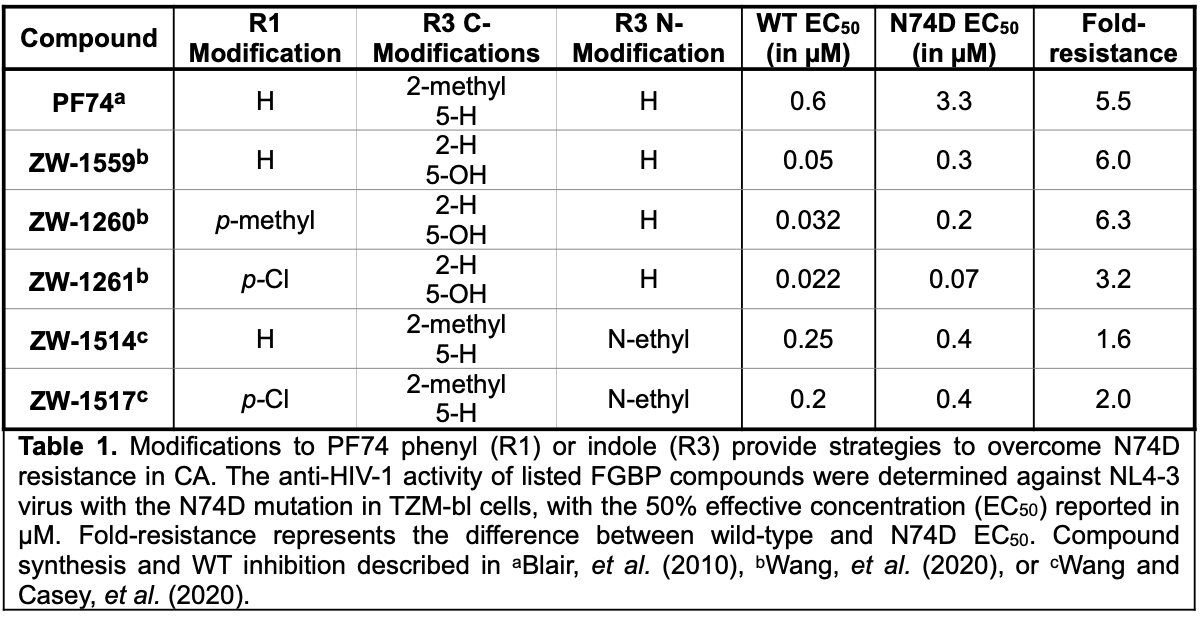
728. Viral Escape From Broadly Neutralizing Antibodies in Non-Subtype B Viruses
Poster Abstracts
Pages: 208-209
Teresa Murphy1, Dennis Copertino Jr2, Gabriel Galeotos1, Neha Shah3, Julie Ake4, Ajay P. Parikh4, Abdulwasiu Tiamiyu5, Zahra Parker6, Hannah Kibuuka7, Valentine Sing’Oei8, John Owuoth8, Jonah Maswai9, Rebecca M. Lynch1, the African Cohort Study (AFRICOS) Study Group
Background
Broadly neutralizing antibodies (bNAbs) provide a useful tool for HIV cure strategies because of their ability to target conserved regions on the envelope (Env) protein in the context of both virions and infected cells. Multiple clinical trials of single and combination bNAb therapies in people living with HIV demonstrated transient viral suppression after infusion. The ease of viral escape, however, is a major obstacle to durable suppression by bNAbs. We are investigating common escape pathways from bNAbs to inform future bNAb combination trials.
Methods
We designed an in vitro viral escape assay to test bNAb and Env combinations in a high throughput manner. From PBMC, we isolated single non-subtype B viruses from Nigerian, Ugandan and Kenyan participants in the African Cohort Study (AFRICOS). Each virus stock was sequenced, subtyped and characterized for sensitivity to 9 bNAbs. Virus E01-0085.V2 was a subtype AG virus sensitive to VRC01.23 and 10E8v4-5R+100cF. To test the ability of this virus to escape bNAb neutralization, ex vivo CD4+ T cells were infected in the presence of varying bNAb concentrations in duplicate. Cultures were maintained for 60 days with increasing suboptimal concentrations of bNAbs to induce escape. Replication kinetics were monitored by p24 every 3 days. Every 14 days, target cells were replenished and cultures were tested for genotypic and phenotypic measures of bNAb resistance. This was accomplished by single genome sequencing env genes and using the remaining supernatant to spinoculate new CD4+ cells to propagate the escape assay. The remaining infected cells were washed and replenished with bNAb-free media for virus production, which was then tested by neutralization assay for bNAb resistance.
Results
Nine non-subtype B viruses were tested against 8 bNAbs, and we observed CD4bs bNAbs to have the greatest breadth, but less potency than V2-apex or V3 bNAbs. In our experiments with E01-0085.V2, complete neutralization resistance to both bNAbs was observed by day 56 of the assay, but sequence signatures begin by day 28. Fixed escape mutations were observed within the epitopes of both antibodies by day 42 and possible compensatory mutations were observed by day 56.
Conclusions
Our data reveal escape from both bNAbs was achieved by single non-synonymous nucleotide changes. This in vitro bNAb escape assay will lead to a deeper understanding of viral escape to better inform the design of highly effective bNAb cocktails targeting multiple conserved sites.
Figure 1.
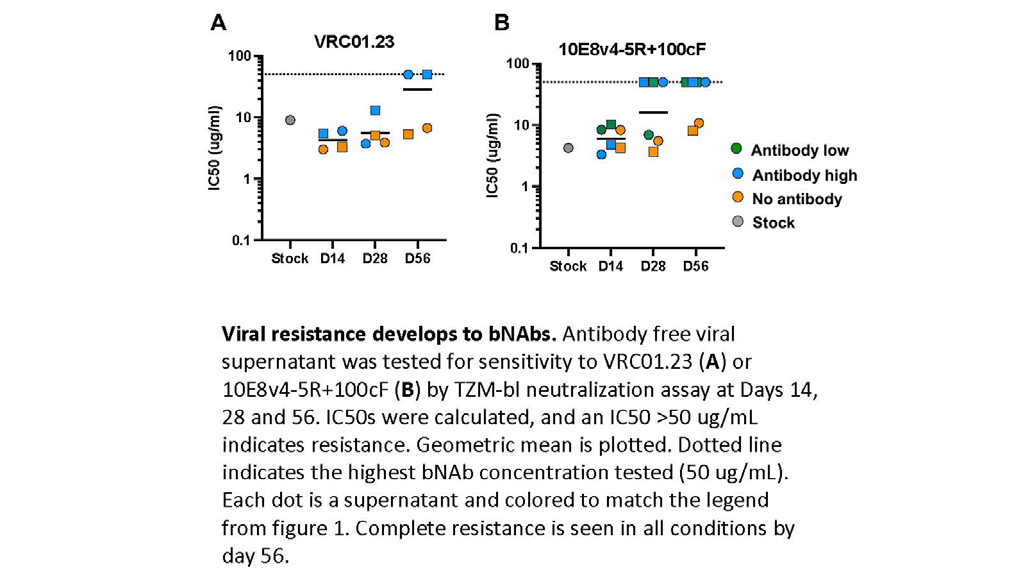
729. High Prevalence of Baseline NRTI Resistance in PWH Switched From Second-Line PI/r to B/F/TAF
Poster Abstracts
Page: 209
Jean Bernard Marc1, Samuel Pierre1, Paul Sax2, Johnny Wu3, Sean E. Collins4, Emelyne Dumont1, Fabienne Homeus1, Santiago Avila Rios5, Claudia Garcia-Morales6, Vanessa Rivera1, Dennis Israelski4, Bernard Liautaud1, Jean W. Pape1, Serena Koenig2, Patrice Severe1
Background
Patients on PI/r-based regimens in resource-limited settings have high rates of NRTI resistance, but testing is rarely available.
Methods
In this open-label prospective trial conducted at GHESKIO in Haiti, virologically suppressed adults on second-line PI/r-based ART were randomized to continue current regimen vs. switch to B/F/TAF. The primary endpoint was the proportion with HIV-1 RNA ³200 copies/mL at week 48 using the FDA snapshot algorithm. Proviral DNA genotype testing (GenoSure Archive, Monogram Biosciences) was performed on baseline samples for all participants randomized to B/F/TAF, HIV RNA genotyping was done for participants with virologic failure (VF), and results were interpreted using IAS–USA resistance mutations (RAMs) and Stanford HIVdb version 9.6.
Results
Between October 2020 and April 2023, of 436 patients screened, 301 were randomized and treated (B/F/TAF: 153; PI/r: 148); median age 48 years (IQR 40, 56) and 173 (58%) were women. At enrollment, 180 (60%) were taking LPV/r and 121 (40%) ATV/r; 234 (78%) were taking TDF, 54 (18%) AZT, and 13 (4%) ABC; all were taking lamivudine or emtricitabine. At week 48, the proportion with HIV-1 RNA ³200 copies/mL was 0.7% (1/153) and 4.1% (6/148) in the B/F/ TAF and PI/r groups, respectively, 145 (95%) and 132 (89%), respectively had 48-week HIV-1 RNA <200 copies/mL. Of 153 participants randomized to B/F/ TAF, 149 had baseline proviral genotype results. NRTI RAMs were common; 76 (51%) had M184V/I conferring resistance to FTC, 3TC and ABC, 24 (16%) had K65R/E/N conferring resistance to TDF, and 21 (14%) had M184V/I + K65R/E/N (Table). There were 108 (72%) with RAMs to at least one major ARV class (NRTI, NNRTI, PI or INSTI) at baseline, of which 67 (45%) had 2-class resistance and 9 (6%) had 3-class resistance. One participant on B/F/TAF met criteria for VF at Week 48; baseline and at failure genotypes had no RAMs. In the PI/r group, 3 of 4 participants who met criteria for VF at Week 48 had successful genotyping, one with NRTI and NNRTI RAMs (D67D/G, M184V, K103S, P225H) and two with NNRTI but no NRTI RAMs (K103N; V179V/D).
Conclusions
Switching virally suppressed adults with or without NRTI resistance from a second-line PI/r regimen to B/F/TAF was non-inferior to continuing a PI/r regimen. These results suggest it can be done without baseline or historical drug resistance testing in regions where INSTI resistance is uncommon.
Table 1.
NRTI RAMs at baseline in participants randomized to B/F/TAF
| RAM or RAM pattern |
Number (n=149) |
Prevalence |
| M184V/I |
76 |
51% |
| K65R/E/N |
24 |
16% |
| M184V/I + K65R/E/N |
21 |
14% |
| M184V/I + ≥3 TAMs |
14 |
9% |
| L74I/V |
7 |
5% |
| K70E |
5 |
3% |
| M184V/I + M41L + L210W + T215Y |
3 |
2% |
730. HIV-1 Drug Resistance Trends in the Era of Modern Antiretrovirals: 2018-2024
Poster Abstracts
Page: 209
Ron M. Kagan1, John D. Baxter2, Taekkyun Kim1, Elizabeth M. Marlowe1
Background
Transmitted or acquired antiretroviral (ARV) drug resistance limits treatment options for people living with HIV-1 and may reduce the effectiveness of preexposure prophylaxis (PrEP). Novel treatment options with enhanced effectiveness and more convenient formulations have become available from 2016 to 2021. This study assessed the prevalence of plasma RNA and proviral DNA ARV drug resistance in the US from 2018 to 2024.
Methods
We retrospectively analyzed plasma RNA (N>50,000) or proviral DNA (N>25,000) deidentified specimens submitted to a large reference laboratory for Sanger or next generation sequencing between January 2018 and May 2024. Specimens were limited to US patients aged 1-90 with complete genotypic results for the reverse transcriptase, protease and integrase genes. We analyzed the annual prevalence of drug resistance mutations (DRMs) with a Stanford HIV database score of ≥30 for nucleoside reverse transcriptase inhibitors (NRTI), nonnucleoside reverse transcriptase inhibitors (NNRTI), protease inhibitors (PI) and integrase strand transfer inhibitors (INSTI).
Results
From 2018 to 2024, the prevalence of resistance declined for both RNA and DNA specimens (Figure 1; p<0.0001). Single-class NRTI and NNRTI and dual-class NRTI+NNRTI resistance declined for both specimen types but was higher for DNA than RNA (NRTI+NNRTI: 6.1% to 3.5% [RNA] and 12.1% to 7.8% [DNA]). Doravirine and rilpivirine DRMs remained low, with respective 2024 prevalences of 2% (RNA) and 2.9% (DNA) and 6.3% (RNA) and 10.1% (DNA). While INSTI and dual-class NRTI+INSTI resistance also declined, the prevalence was higher for RNA than DNA. Cabotegravir DRM prevalence in 2024 was 3.8% (RNA) and 2.5% (DNA). Although low, prevalence of R263K increased over time in RNA and DNA. PI resistance remained below 3% for RNA and declined from 5.3% to 2.1% for DNA. Prevalence of triple-class resistance was <0.2% for RNA but slightly above 1% for DNA. Resistance prevalence did not differ by gender but was higher for patients in the 60-90 age group.
Conclusions
Prevalence of NRTI and NNRTI resistance declined which is consistent with increased use of regimens with higher resistance barriers, improved tolerability, and more convenient dosing, resulting in better adherence. Prevalence of INSTI DRMs was low, supporting US guidelines for limiting INSTI resistance testing to cases of treatment failure, suspected transmitted resistance, or infection during INSTI-based PrEP.
Figure 1.
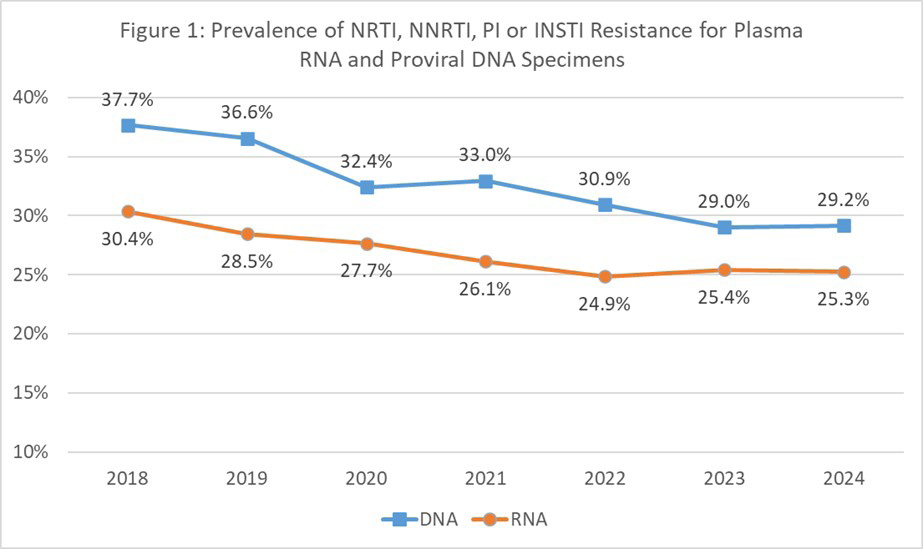
731. Rilpivirine Drug Resistant Mutations in Experienced Patients in Mexico: Impact on Long-Acting ART
Poster Abstracts
Page: 210
Angel J. Granados-Gomez, Elsa Y. Vidal Laurencio, Juan P. Ramírez-Hinojosa, Gilbert Perez-Rodriguez, Juan J. Calva-Mercado, Luis E. Soto-Ramirez
Background
Baseline rilpivirine drug resistance mutations (DRMs) are a risk factor for virological failure in patients treated with long-acting cabotegravir and rilpivirine (CAB/RPV LA). We investigated rilpivirine cross-resistance in experienced patients in Mexico, where Efavirenz (EFV) was the preferred initial ARV drug for more than 10 years.
Methods
Genotypic sequence data from 2442 patients experiencing at least two treatment failures were included for analysis. Pol sequences were submitted to Stanford HIVdb v9.6 to identify rilpivirine DRMs. The following mutations were included as rilpivirine DRMs (Stanford HIVdb penalty score ≥10): A98G, V100IV, K101EPH, V106I, E138AGKQR, V179DEFL, Y181CFGISV, Y188FL, G190ACEQSTV, H221Y, F227C, and 230IL. Resistance profiles were categorized as susceptible (including potential low-level resistance), intermediate (including low-level resistance), or high-level resistance.
Results
Patients failing two or more ART combinations (n = 2442) were included, all belonging to subtype B virus. All patients have experienced one treatment failure to NNRTIs, mostly to EFV. Of those, 1644 (67.3%) presented with at least one NNRTI DRM, including 619 (25.3%) with at least one rilpivirine DRM and 361 (21.9%) with at least two rilpivirine DRMs. Rilpivirne DRMs or combinations with more than 5% frequency are presented in Figure. DRMs related to EFV failure were the most frequent found. More than three quarters of patients with NNTRI-DRMs, showed intermediate (25.3%; n = 416) and high-level rilpivirine resistance (44.2%; n = 727). Considering all the genotypes studied (n=2442), we found intermediate rilpivirine resistance in 415 cases (17.0%) and high-level resistance in 728 (29.8%).
Conclusions
This retrospective analysis indicates that rilpivirine DRMs are common in a setting wherein NNRTI-based treatment was widely implemented, and has implications for operational implementation of CAB/RPV LA. Screening for existing DRMs is logistically and technically challenging in Mexico and could be a barrier to use of CAB/RPV LA.
Figure 1.
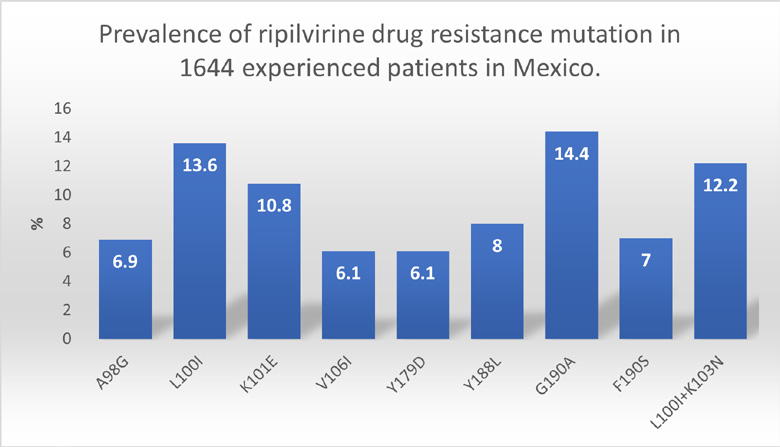
732. Despite Increasing Use of INIs to Treat HIV Infection, Resistance to This Class Remains Stable
Poster Abstracts
Page: 210
Vincent Calvez1, Rachid Agher1, Basma Abdi1, Marc Wirden1, Elisa Teyssou1, Karen Zafilaza1, Christine Katlama1, Marc-Antoine Valantin1, Roland Tubiana1, Luminita Schneider1, Antoine Faycal1, Romain Palich1, Valerie Pourcher1, Anne-Geneviève Marcelin1, Cathia Soulié2
Background
Since the beginning of HIV treatment, changes in the use of antiretroviral (ARV) drugs have often led to changes in HIV resistance mutation patterns. The integrase inhibitor (INI) class has benefited from many developments: first raltegravir (RAL) and elvitegravir (EVG), followed by dolutegravir (DTG), cabotegravir (CAB) and bictegravir (BIC). The aim of this study was to evaluate changes in resistance levels and profiles to INIs in relation to changes in the use of different INIs over 17 years in people living with HIV (PLWHIV) treated with ARVs and in virological failure.
Methods
We analyzed in parallel the use of the different INIs in ARV-treated PLWHIV in an academic center (Pitié Salpêtrière Hospital, Paris, France, 2007-2023) and the HIV INI resistance profiles in RNA (2008-2023; analyzed using the latest ANRS-MIE algorithm v33).
Results
The total number of PLWHIV on ARV treatment was 3 100 people in 2007 and has increased to 4 364 people in 2023. During this period (2007-2023), the proportion of INI users among the total number of ARV-treated PLWHIV increased from 3.3% (n=102/3 100) to 72.2% (n=3 152/4 364). For the whole cohort, there was an increase (3.2% in 2007 to 21.5% in 2013) followed by a decrease (to 4.4% in 2023) in the use of RAL (Figure 1A). The same usage profile was observed for EVG (0.03% in 2007 to 15.7% in 2019 and 2.4% in 2023). Over the period of their use, DTG and BIC continued to increase (0.03% in 2007 to 39.3% for DTG and 2.0% in 2019 to 28.1% in 2023 for BIC). The use of CAB is reported in 2017 (0.07%) and represents 3.8% in 2023. The number of HIV RNA integrase genotypic resistance tests increased from 97 at the start of testing in 2008 up to 365 in 2023. During the first 3 years of INI use, a dramatic level of resistance was observed. The resistance rate decreased significantly over time from 45-50% in 2008 for all INIs, with similar resistance rates in 2023 for DTG, CAB and BIC (5.1%), but remained high for RAL (10.3%) and EVG (11.0%), respectively (Figure 1B).
Conclusions
The INI class of ARVs is now widely used and, finally, large increase in use within this class do not increase the resistance over time in ARV-treated PLWHIV with virological failure. The very high level of INI resistance at the beginning of INI use was probably due to the use of RAL in combination with other ARVs that were not fully sensitive during the first 3 years. The INIs used today have a higher genetic barrier that limits the emergence of resistance mutations.
The figure, table, or graphic for this abstract has been removed.
733. Molecular Epidemiology of HIV-1 Transmitted Drug-Resistance Among Subtypes Circulating in Italy
Poster Abstracts
Pages: 210-211
Daniele Armenia1, Claudia Alteri2, Valeria Micheli3, Bianca Bruzzone4, Isabella Bon5, Celestino Bonura6, Tiziano Allice7, Romina Corsini8, Federica Novazzi9, Marialinda Vatteroni10, Ada Bertoli11, Gabriele Ibba12, Antonia Bezenchek13, Maurizio Zazzi14, Maria Mercedes M. Santoro15, the Italian NGS Network
Background
The aim of this study was to characterize subtypes circulation and transmitted drug resistance (TDR) in Italy by next-generation sequencing (NGS).
Methods
Routine plasma HIV-1 RNA NGS genotyping data were collected from newly diagnosed individuals over 2021-2024. TDR for PI, NRTI, NNRTI and INI, and genotypic susceptibility were evaluated through HIVdb (ver.9.6) with NGS set at 10% and 20%. Subtype and transmission clusters (TC) were determined through the Maximum Likelihood phylogeny based on the GTR+F+R9 model.
Results
473 PLWH (median age 41 [31-51], 77.6% males) were included; 56.2% of them harboured non-B strains (CRF02_AG [15.6%]; CRFs BF [13.1%]; F1 [5.1%]; A1/A6 [7.4%]; Others [15.0%]). TDR prevalence to any class was 12.3% at Sanger like NGS-setting (>20%) and slightly increased (15.9%) at 10% setting. PI-TDR was low regardless of NGS-settings (2.7% and 2.3%); NRTI-TDR and NNRTI-TDR was 4.0% and 6.8% at 20% NGS-setting and slightly increased at 10% NGS-setting (5.9% and 7.6%). INI-TDR was very low at both NGS-setting (20%: 0.2%; 10%: 1.1%). TDR was higher in B compared to non-B subtypes, particularly for NRTI (Figure 1A). Concerning genotypic susceptibility, the currently recommended first-line regimens based on high genetic barrier drugs showed full activity in >97% of individuals, regardless of NGS-setting and subtypes. These proportions were lower for rilpivirine- (≥86%) and raltegravir-based (≥95%) regimen regardless NGS-setting. Rilpivirine susceptibility was lower in the B-subtype subset, while raltegravir was predicted less active in non-B subtypes (Figure 1B). Concerning transmission networks, a total of 35 TC were detected: 27 pairs, 7 small clusters (3-8 sequences), and 1 large cluster (9 sequences). Among them, 23 were found in non-B subtypes (60%). Six TC had RTI-TDR including: 3 subtype B and 2 CRF02_AG TC with thymidine analogue mutations; 1 CRF31_BC TC with the NNRTI mutation K103N. Of note, TDR was detected as minority mutations in three out of six TC.
Conclusions
A high proportion of HIV-1 non-B subtypes circulate in Italy. TDR prevalence is around 16% using NGS set at 10%. However, the impact of the detected TDR on the susceptibility to currently recommended first-line regimens is negligible. NGS genotyping can improve the characterization of transmission networks of resistance, allowing the detection of TC harbouring minority-resistant species not detectable with Sanger.
The figure, table, or graphic for this abstract has been removed.
734. No Virological Failure in Patients Switched to Doravirine Treatment With Past Resistance Mutations
Poster Abstracts
Page: 211
Basma Abdi1, Sanaa Saliba2, Marc Wirden1, Antoine Faycal1, Theophile Cocherie2, Romain Palich1, Luminita Schneider1, Sophie Seang2, Marc-Antoine Valantin1, Valerie Pourcher1, Vincent Calvez1, Anne-Geneviève Marcelin1, Christine Katlama1
Background
Doravirine (DOR) is licensed in patients living with HIV (PWH) harboring no prior resistance to any NNRTIs. We aimed to evaluate in real life the efficacy of DOR-containing regimen in PWH with prior NNRTIs virological failure and selected NNRTI resistance-associated mutations (RAMs).
Methods
This observational single center study included all PWH who have switched to a DOR-containing regimen (two-drug [2-DR] or three-drug regimen [3-DR]) between 30-09-2019 and 01-05-2022, with an HIV-1 RNA ≤50 cp/ mL at the time of switch and the presence of past NNRTI-RAMs identified on cumulated RNA and/or DNA genotypes interpreted using the latest ANRS and Stanford algorithms. Main outcome was the proportion of participants with virologic failure at week 48 and week 96. Secondary outcomes evaluated the rate of viral suppression, the rate of transient virologic blip, RAMs in case of virologic failure, the occurrence of side effects and the rate of DOR-containing regimen discontinuation.
Results
A total of 102 patients was analyzed, mostly men (63%), with a median age of 59 years (IQR 51-63). The median time since HIV-1 diagnosis was 26 years (IQR 16-31), and they had been on ART for 22 years (IQR 14-26). Median viral suppression duration was 7 years (IQR 1-11), and the median CD4 T cell count/mm3 was 544 (IQR 352-753). Most PWH were infected with non-B subtype virus (51%). Of the patients analyzed, 25 of 102 (25%) had documented historical RAMs to DOR, with 9 of these 25 cases (36%) showing possible resistance and 16 cases (64%) showing major resistance to this molecule (Table 1). This resistance profile consisted mainly (21/23) of the K103N, Y181C and/or G190A/E reverse transcriptase substitutions. Median time since the last detection of NNRTI-RAMs was 12 years (5-17). Over 2 years follow-up, no virologic failure occurred neither at week 48 (0/87, 0%) nor 96 (0/86, 0%). All 86 patients maintained virologic success either in DOR-3-DR or 2-DR.
Conclusions
Our study provides the first large real-world data on the use of DOR-containing regimens with up to 96 weeks of follow-up. NNRTIs drugs are often compromised by cross-resistance within the class, but with the introduction of DOR, which offers protection even in the presence of some resistant variants in the past, there is still hope for the use of this molecule as an option in salvage regimens for patients with a history of specific NNRTIs-RAMS, provided they have been virologically suppressed for a long time.
The figure, table, or graphic for this abstract has been removed.
735. HIV-1 Resistance Analysis of Treatment-Naive People With HIV and HBV Receiving B/F/TAF or DTG+F/TDF
Poster Abstracts
Page: 211
Michelle D'Antoni1, Archana V. Boopathy1, Kristen Andreatta1, Silvia Chang1, Jason T. Hindman1, Anchalee Avihingsanon2, Laurie Vanderveen1, Christian Callebaut1
Background
In the ALLIANCE study (GS-US-380-4458; NCT03547908), bictegravir/emtricitabine/tenofovir alafenamide (B/F/TAF) was noninferior to dolutegravir + emtricitabine/tenofovir disoproxil fumarate (DTG+F/TDF) at achieving HIV-1 RNA suppression at Week (W) 48 in treatment-naïve adults with HIV-1/hepatitis B virus (HBV) coinfection, with high rates of suppression maintained through End of Study (EoS). We present HIV-1 resistance analyses through EoS for the B/F/TAF group (through the ≥96W randomized phase and 48W of open-label extension [OLE]) and the DTG+F/TDF to B/F/TAF group (switched from DTG+F/TDF to B/F/TAF at OLE start); additionally, we report data for the DTG+F/TDF group through the randomized phase.
Methods
Population sequencing of HIV-1 protease (PR) and reverse transcriptase (RT) was performed at screening. Historical PR, RT, and integrase (IN) genotypes were also collected, if available. Participants with virologic failure (VF; rebound in HIV-1 RNA ≥50 copies (c)/mL after achieving <50 c/mL or >1 log10 increase from nadir, subsequently confirmed and ≥200 c/mL; or HIV-1 RNA ≥200 c/mL at last visit) underwent genotypic/phenotypic resistance analyses for PR/RT/IN. Participants who did not resuppress (<50 c/mL) were included in the final resistance analysis population (RAP).
Results
Preexisting primary resistance-associated mutations (RAMs) were detected in PR (1-3%) and RT (2-10%) across treatment groups, including M184I (n=1), M41L (n=2), and K219N (n=1) in RT, and did not affect virologic suppression through EoS. The final RAP consisted of 14 participants: DTG+F/ TDF group, 7/122 (6%); B/F/TAF group, 6/119 (5%); and DTG+F/TDF to B/F/TAF group, 1/89 (1%). No participants developed primary RAMs, including 6 who had multiple (2-4) confirmed VFs. Another 8 participants who did not qualify for the final RAP had resistance testing during the study. Of these, 1 from the DTG+F/TDF group with reported nonadherence developed K70E in RT at W24 (conferring low-level resistance to TDF) and M184V/I in RT at W36 (conferring resistance to emtricitabine); no others developed resistance to study drugs.
Conclusions
Treatment outcomes were not affected by the presence of preexisting nucleos(t)ide reverse transcriptase inhibitor (NRTI) RAMs, and no participant in the final RAP developed resistance to study drugs. One participant in the DTG+F/TDF group with reported nonadherence developed primary NRTI RAMs. Through EoS, B/F/TAF or DTG+F/TDF maintained high rates of HIV-1 virologic suppression.
736. Resistance Analysis of Weekly Islatravir Plus Lenacapavir in People With HIV at 48 Weeks
Poster Abstracts
Pages: 211-212
Laurie Vanderveen1, Silvia Chang1, Lisa Selzer1, Tracy Diamond2, Ernest Asante-Appiah2, Cyril Llamoso2, Martin Rhee1, Christian Callebaut1
Background
Islatravir (ISL), a nucleoside reverse transcriptase (RT) translocation inhibitor, and lenacapavir (LEN), a capsid (CA) inhibitor, have pharmacokinetic profiles supportive of once-weekly (QW) oral dosing. GS-US-563-6041 (NCT05052996) is a Phase 2, open-label study evaluating QW ISL+LEN in virologically suppressed people with HIV-1. At Week (W) 48, ISL+LEN maintained high rates (94.2%) of viral suppression (VS; HIV-1 RNA <50 copies/ mL [c/mL]). Here, we report W48 interim HIV-1 resistance analyses.
Methods
Participants received either ISL (2 mg QW from Day [D] 1) + LEN (600 mg D1 and D2; then 300 mg QW) orally (n=52) or remained on once-daily oral bictegravir/emtricitabine/tenofovir alafenamide (B/F/TAF; n=52). Proviral DNA sequencing of HIV-1 protease (PR), RT, and integrase (IN) was performed at screening, and historical genotypes were collected if available. Absence of known primary nucleoside RT inhibitor (NRTI) or non-NRTI (NNRTI) resistance (-R) by genotype was required for eligibility. Genotypic (HIV-1 CA, PR, RT, and IN) and phenotypic resistance analyses were performed at virologic failure (VF; HIV-1 RNA ≥50 c/mL, subsequently confirmed and ≥200 c/mL, or HIV-1 RNA ≥200 c/mL at study drug discontinuation or last visit).
Results
Pre-existing primary resistance-associated mutations were detected in the study population, including five participants who enrolled based on historical genotype and were found to have pre-existing resistance on screening archive genotype after enrollment: 4 (3.8%) participants with NRTI-R, 2 (1.9%) with NNRTI-R, 6 (5.8%) with PR inhibitor-R, and 2 (2.0%) with IN strand transfer inhibitor-R (Table). Of those with VS at W48 (ISL+LEN: 49/52; B/F/TAF: 48/52), two had pre-existing M184V/I in RT (one per arm). Three participants in the ISL+LEN arm had missing data at W48 and did not meet resistance analysis criteria; all three had VS at their last visit. One participant without archived genotypic resistance (including M184I/V) receiving ISL+LEN with HIV-1 RNA ≥50 c/mL at D1 met criteria for resistance analysis, but did not have treatment-emergent drug resistance, and subsequently resuppressed by W30 while maintaining ISL+LEN. No participants in the B/F/TAF arm met criteria for resistance testing.
Conclusions
ISL+LEN maintained high rates of VS, including one participant with pre-existing M184V. No participants with VF developed study drug resistance. These findings support the ongoing evaluation of ISL+LEN as an oral, QW treatment for HIV-1 infection.
Table 1.
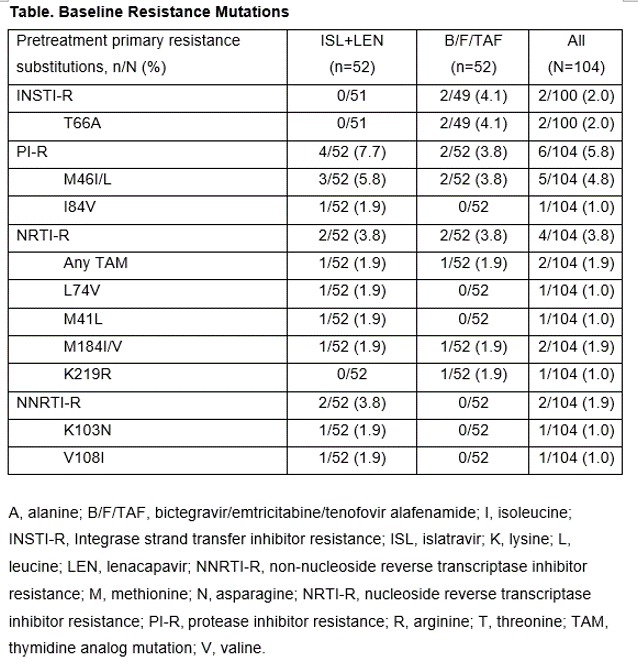
737. Virological Success on InSTI-Based ART Despite Archived InSTI DRMs
Poster Abstracts
Page: 212
Yanis Merad1, Alice-Andrée Mariaggi2, Marina Karmochkine2, Jean-Paul Viard2, Caroline Charre3
Background
The relevance of drug resistance mutation (DRM) detection in HIV-1 proviral sequencing for the prediction of virological success on antiretroviral therapy (ART) remains unclear. In this retrospective study, we examined archived INSTI DRMs in people with HIV (PWH) virologically suppressed on INSTI-based regimens.
Methods
PWH with at least one HIV-1 integrase proviral sequencing were screened for inclusion. HIV-1 DNA integrase was sequenced using the Sentosa SQ HIV Genotyping Assay. Genotypic resistance was analyzed using the Stanford HIV Drug Resistance algorithm. Inclusion criteria were (i) at least one DRM conferring full-class INSTI resistance (T66K, E92Q, G118R, E138A/K/T, G140A/C/S, Q148H/K/R, N155H or R263K) on proviral sequencing and (ii) virological suppression on an INSTI-based regimen at the time of sequencing. Mutational load was calculated as the product of DRM frequency and the amount of total HIV-1 DNA. Proviral defectiveness was presumed based on the detection of stop codons or APOBEC-induced G-to-A hypermutation (using the Los Alamos HIV Database’s Hypermut 2 algorithm).
Results
From 883 screened PWH since March 2022, 26 were included for analysis (sex assigned at birth: 69% male; median age: 53.6 [IQR 40–61.8]; subtype B: 58%). Identified DRMs were G140S (n=8), R263K (n=8), E138K (n=7), N155H (n=4), G118R (n=2) and E138A (n=1). Individuals were successfully treated with ART containing DTG (n=17), BIC (n=10), CAB (n=1), EVG (n=1) or RAL (n=1) as shown in figure 1A. DRMs were found in presumably defective proviruses in 18 individuals (69%). A history of virological failure on an INSTI-based regimen was reported for 10 individuals. DRMs previously detected in plasma RNA (n=2) were harbored in presumably intact proviruses. Median total HIV-1 DNA was 2,36 log10 copies/106 leukocytes (IQR 2,24–2,65, n=17). Mutational loads are represented in figure 1B. No virological failure on an INSTI-based regimen was reported after proviral DRM detection (median follow-up: 202 days [IQR 105–366]).
Conclusions
In virologically suppressed PWH, we found a low frequency of archived INSTI DRMs. They were not accountable for any virological failure on INSTI-based regimens during follow-up, even though some of the mutational loads were notably high. This finding is consistent with the detection of DRMs mostly in presumably defective proviruses. Together, our results suggest that archived INSTI DRMs should be cautiously interpreted and do not preclude virological success on INSTI-based regimens.
The figure, table, or graphic for this abstract has been removed.
738. Bictegravir + Lenacapavir: Baseline and Week 48 Resistance in ARTISTRY-1 Phase II
Poster Abstracts
Page: 212
Nicolas Margot, Nina Pennetzdorfer, Vidula Naik, Mauricio Montezuma, Peter Sklar, Christian Callebaut
Background
ARTISTRY-1 is a Phase 2/3 study evaluating the safety and efficacy of the complete regimen of the capsid inhibitor lenacapavir (LEN) given with the integrase strand-transfer inhibitor (INSTI) bictegravir (BIC) compared to remaining on a complex multi-tablet regimen. Virologically suppressed participants with no known INSTI resistance mutations were enrolled in the Phase 2 portion. At Week 48, BIC+LEN showed high efficacy in maintaining viral suppression. Here we describe the resistance profile of participants at baseline and Week 48.
Methods
The presence of HIV-1 resistance-associated mutations (RAMs) was assessed using historical genotypic reports (HGR) and retrospective proviral DNA analysis of Day 1 samples (GenoSure Archive, Monogram). The impact of baseline RAMs on response at Week 48 was evaluated. Post-baseline resistance was assessed in participants with rebound (confirmed HIV-1 RNA ≥ 50 c/mL or last visit ≥ 50 c/mL; analyzed if ≥ 200 c/mL) using assays from Monogram or Seq-IT. Phenotypic assays were also conducted.
Results
Baseline HIV-1 genotypic resistance from HGR and/or proviral DNA analyses were obtained from 98% of participants (125/128). Resistance to NRTI, NNRTI, and PI was present in 81%, 65%, and 46% of participants, respectively; 11% of participants had primary INSTI RAMs (proviral DNA analysis only). The presence of baseline RAMs did not affect efficacy at Week 48. A single participant met the criteria for resistance testing; no INSTI mutation was observed, and sequencing of CA identified a novel substitution at CA N74 (N74T) as treatment-emergent, with 2.1-fold decrease in LEN susceptibility. This participant had known NRTI, NNRTI, and PI resistance. Though he had viral load (VL) <50 c/mL at screening, VL was detectable at baseline. He had been on a complex regimen of DRV/r bid+DTG bid+MVC prior to switching to BIC+LEN. Data on prior INSTI use or VL/genotype while on INSTI were not available. On study, he experienced viral load blips and confirmed virologic rebound (VL 305 c/mL at Week 48). This participant resuppressed on a regimen of LEN SC+DTG bid+MVC.
Conclusions
The frequency of baseline drug resistance in ARTISTRY-1 was high, but did not affect the efficacy of BIC+LEN in virologically suppressed participants. On-treatment low-level LEN resistance was observed in 1 participant who resuppressed on a LEN-containing regimen. These data underscore the potential of the use of once-daily BIC and LEN to optimize therapy in people receiving a complex ART regimen.
739. Real-World Robustness of B/F/TAF at Virologic Failure in the ANRS-CO3-AquiVIH-NA Cohort
Poster Abstracts
Pages: 212-213
Pantxika Bellecave1, Alaric Peyrouny-Mazeau2, Olivier Leleux2, Mojgan Hessamfar3, Gwenael Le Moal4, Didier Neau1, Laure Alleman5, Charles Cazanave1, Estibaliz Lazaro1, Pierre Duffau1, Marie-Anne Vandenhende1, Bernard Castan6, Fabrice Bonnet1, Camille Tumiotto1, the ANRS-CO3-AquiVIH-NA Cohort
Background
Bictegravir/emtricitabine/tenofovir alafenamide (B/F/TAF) is a high potent and simplified antiretroviral therapy (ART) regimen as shown by clinical trials. However, real-world evidence in individuals experiencing a virologic failure (VF) remains limited. We investigated the virological outcomes in participants who experienced VF after switching to B/F/TAF.
Methods
We conducted a retrospective study using data from the French regional prospective cohort ANRS-CO3-AquiVIH-NA. Participants who switched to B/F/TAF between 2018/01/01 and 2021/12/31 with a follow-up (FU) up to 65 months and with a genotypic resistance test (GRT) available before B/F/ TAF initiation were included. VF was defined as either 2 consecutive HIV-1 viral loads (VL)>50 cp/mL or 1 VL>1000 cp/mL. GRTs were performed using Sanger sequencing and interpreted using the v34 ANRS resistance algorithm. We described the virological outcomes at the last FU visit or at treatment discontinuation.
Results
Of 636 participants with available GRT at B/F/TAF initiation, 55/636 (8.6%) experienced VF during the study period. Among those, 22/55 were unsuppressed at baseline; with a median [min; max] VL of 140 cp/ml [55; 599,503]. GRTs were performed in 46/55 (83.6%) participants at the time of VF.
Resistance associated mutations (RAMs) were detected for 14 of them (30.4%), including 8 with RAMs already documented in a previous GRTs before B/F/TAF initiation. Among the 6 participants without previous RAMs, M184I/V was the only selected mutation. An emergent integrase mutation (R263K) was detected for one individual after 9 months of B/F/TAF. He had an unsuppressed baseline viremia (273,000 cp/mL) and documented M184V + 2 TAMs (D67N T215I) in historical GRTs. After VF, B/F/TAF was maintained in 47/55 (85.5%) participants of whom 28/47 (59.6%) achieved viral suppression, 19/47 (40.4 %) remained unsuppressed; 1/55 (1.8%) was lost of FU, ART regimen was changed in 5/55 (9.1%), and 2/55 (3.6%) died.
Conclusions
The low prevalence (8.6%) of VF confirmed the real-world effectiveness and robustness of B/F/TAF in this study. Emergence of resistance in case of VF occurred rarely (RAMs selected at VF for 6 participants: mostly M184I/V, only one R263K). Poor or inconsistent adherence may explain most of VF cases, as 59.6% of participants in VF achieved viral suppression post-VF with B/F/TAF. This emphasizes the importance of adherence counselling in improving outcomes.
740. Shifting Paradigms: Doravirine's Potential in Treating Non-Group M HIV-1, the DORAVI-O study
Poster Abstracts
Page: 213
Boris Derman1, Jeanne Pfister1, Fanny Lermechain1, Caroline Goudin1, Jean-Christophe Plantier2, Elodie Alessandri-Gradt2
Background
Non-group M HIV-1 (O, N, and P) are known as genetically divergent and mainly found in Cameroon. Due to the prevalent Y181C mutation in 75% of non-M strains, current treatment guidelines has not recommended the use of Non-Nucleoside Reverse Transcriptase Inhibitors. However, the specific resistance profile of Doravirine (DOR) challenges this recommendation. The DORAVI-O study aims to assess the phenotypic sensitivity of non-M HIV-1 clinical isolates to DOR and explore potential genotypic patterns associated with resistance.
Methods
Twenty eight HIV-1 non-M clinical isolates (26 O, 1 N, 1 P) were tested. Two millions human mononuclear cells from healthy donors were infected with 100 TCID50 of viral supernatant for 2 h and exposed to 5 concentrations of DOR (0.1 to 1,000 nM) in quadruplicates at 37°C with 5% CO2 for 3 to 4 days. Viral RNA was extracted (EZ1 Qiagen) and analyzed by qRT-PCR to determine the inhibitory concentration 50 (IC50), maximum percentage inhibition (MPI) and Fold Change (FC). Sanger sequencing (CEQ8000 Beckman) of RT region was performed and sequences compared with the updated french ANRS resistance algorithm.
Results
The DOR phenotype was identified in 34% yield on the whole panel, according to internal standardization procedures. Of the 28 exploitable phenotypes 3 isolates (2 O, 1 P) exhibited IC50s>100,000 nM and 4 HIV-1/O had IC50s between [1,000; 10,000 nM], with FC > 100. For the remaining 21 isolates (0 < FC < 50), the mean and median IC50s (+-SD) were 133 nM and 37.4 nM (+- 181 nM) respectively, with IC50s ranging from 0.204 nM to 597 nM. The mean and median MPI were 79.25% and 78.73% respectively. Resistant strains generally displayed lower MPIs, like RBF168, P isolate (MPI 34.4%; IC50 > 100,000 nM) but except for BCF008 (IC50 1260 nM; MPI 90.4%). Most of the panel was classified as DOR intermediate sensitivity (french ANRS algorithm) due to A98G (96%) and Y181C (75%). However, resistant strains (IC50s > 100,000 nM), showed conflicting genotypic interpretations: RBF168 was genotypically sensitive while BCF108 was considered resistant (A98G, Y181C, G190A, and H221Y pattern).
Conclusions
The DORAVI-O study revealed a broad phenotypic sensitivities of non-M HIV-1 to DOR, despite the natural Y181C mutation. Phenotypic resistance was observed in 6O, 1P (25%) whereas only 1O isolate has resistance mutations to DOR, suggesting the potential existence of non-M virus specific genotypic pattern not covered by the french ANRS algorithm designed for M variants.
741. Impact of Resistance to Antiretroviral Therapy Among Veterans With Human Immunodeficiency Virus
Poster Abstracts
Page: 213
S. Scott Sutton1, Joe Magagnoli1, Tammy Cummings1, Chase Williams2, Mary J. Christoph2, Cassidy Trom2, Woodie Zachry2, Michelle D'Antoni2, Uche Mordi2, Amy Weinberg2, James W. Hardin1
Background
Despite significant progress made in antiretroviral (ARV) therapy for human immunodeficiency virus-1 (HIV-1) treatment, one of the major challenges facing the efficacy of ARV is drug resistance. The objective of this study was to evaluate clinical outcomes associated with resistance to ARV among people with HIV (PWH).
Methods
This national retrospective cohort study was conducted using data from the United States Department of Veterans Affairs. The Veterans Affairs Informatics and Computing Infrastructure (VINCI) was utilized to obtain individual-level information of structured claims data on demographics, medical claims, and pharmacy dispensation. Study cohorts were created by resistance testing results (non-resistance cohort, those with any resistance associated mutation (RAM) and those with ≥1 major RAM). The resistance cohorts had ≥1 documented RAM in integrase, protease or reverse transcriptase genes as defined by the International Antiviral Society-USA.
Results
A total of 7,746 veterans had an interpretable resistance test with 1,875 with no detectable resistance, 4,466 with ≥1 minor RAM detected and 1,405 patients having ≥1 major RAM, and. Median CD4 counts within 60 days of index were higher among those without RAMs (358 cells/mm3) compared with those with any RAM (294 cells/mm3) or major RAMs (285 cells/mm3). Opportunistic infections occurred during follow up for 3.8% of the non-resistance cohort compared to 5.6% of those with ≥1 minor RAM (p=0.005) and 5.1% of those with major RAMs (p=0.07). The number of hospitalizations post index was also greater in both the resistance and major RAM cohorts compared to those without resistance (p<0.001 for both). Among veterans who did not have an active ARV prescription at the time of the resistance test and who then initiated ARV (n=3,522), those with no resistance were more likely to persist on therapy at one year compared to those with resistance, with differences being even more pronounced in those with major RAMs (Figure), both p<0.0001. Among those with resistance taking complete ARV regimen at index who switched therapies, veterans generally switched to INSTI- or PI-based regimens.
Conclusions
HIV drug resistance was associated with a more complex patient profile in both clinical and therapy outcomes. Patients harboring major RAMs exhibited lower CD4 counts, more frequent hospitalizations, and reduced ARV persistence. Interventions to prevent resistance development may reduce patient complexity and burden.
Figure 1.
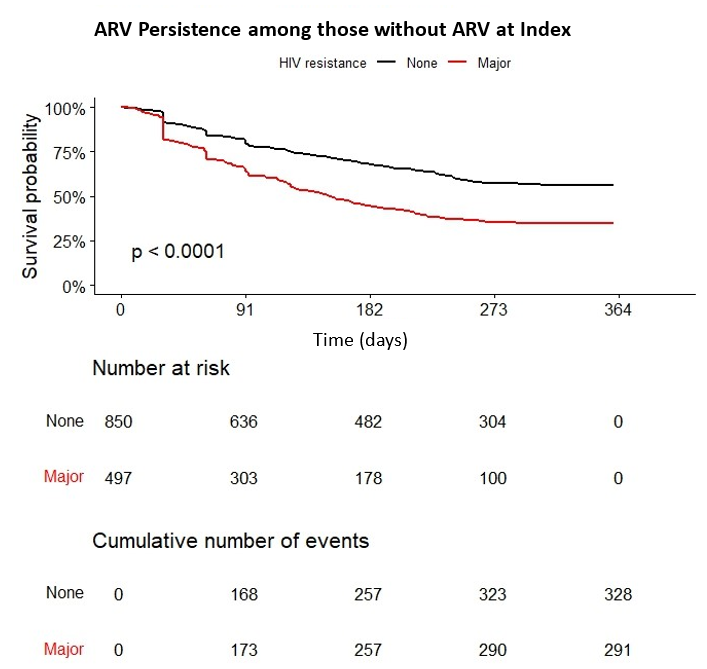
742. Population-Based Longitudinal Dynamics of HIV Drug Resistance During Dolutegravir Roll-Out in Uganda
Poster Abstracts
Pages: 213-214
Michael A. Martin1, Steven J. Reynolds2, Brian Foley3, Fred Nalugoda4, Thomas C. Quinn5, Godfrey Kigozi4, Robert Ssekubugu4, Joseph Kagaayi4, Oliver Ratmann6, Christophe Fraser7, Ronald Galiwango4, David Bonsall7, M. Kate Grabowski8
Background
African countries have shifted to dolutegravir (DTG)-based first-line HIV treatment. However, population-based studies of resistance trends through DTG roll-out in sub-Saharan Africa are extremely limited.
Methods
We analyzed data from the Rakai Community Cohort Study, an open population-based cohort, during five survey rounds between 2012 and 2022. Consenting people aged 15-49 years were interviewed and provided samples for HIV testing, viral load quantification, and virus deep-sequencing. Sequence data from viremic samples (≥1000 copies/mL) were used to predict intermediate/ high-level resistance and identify resistance mutations. The prevalence of resistance was estimated using robust Poisson regression with general estimated equations to account for repeated visits by some participants.
Results
109,328 participant visits were contributed, including 20,383 (26.9%) from PLHIV. Using deep-sequencing data from 4,253 visits, we estimated that the prevalence of NNRTI resistance among pre-treatment viremic participants increased 3.51 (95% CI 2.1–5.9)-fold between the 2012 and 2022 surveys, reaching 16.9 (11.8%–24.2%, Figure 1A). INSTI, NRTI, and PI resistance among pre-treatment viremic participants remained stable and below 2.5% throughout the study. We observe a 3.6 (2.2–6.0)-fold and 7.1 (3.2–15.5)-fold decrease in the prevalence of NNRTI and NRTI resistance among treatment-experienced viremic PLHIV, falling to below 25% in the 2022 survey (Figure 1B). The majority (80.2%, 69.3%–87.3%) of treatment-experienced viremic PLHIV were not resistant to any drug classes in the 2022 survey. INSTI resistance among treatment-experienced viremic PLHIV was minimal throughout, including the 2022 survey (2.9%, 1.0%–8.9%). We observe the inS153Y mutation, which confers 2-fold resistance to DTG, in 5.8% (n=8/139) and 7.4% (n=6/81) of pre-treatment and treatment-experienced viremic participants in the 2022 survey. This mutation was not observed previously.
Conclusions
The roll-out of DTG has not yet reduced the prevalence of NNRTI resistance among pre-treatment PLHIV. However, NNRTI and NRTI resistance among treatment-experienced viremic PLHIV has decreased significantly, potentially due to DTG initiation. Most viremia among treatment-experienced PLHIV is not due to resistance, owing to the importance of engaging PLHIV in care. The sudden recent emergence of inS153Y is concerning and warrants continued monitoring to ensure sustained efficacy of DTG-based therapy.
Figure 1.
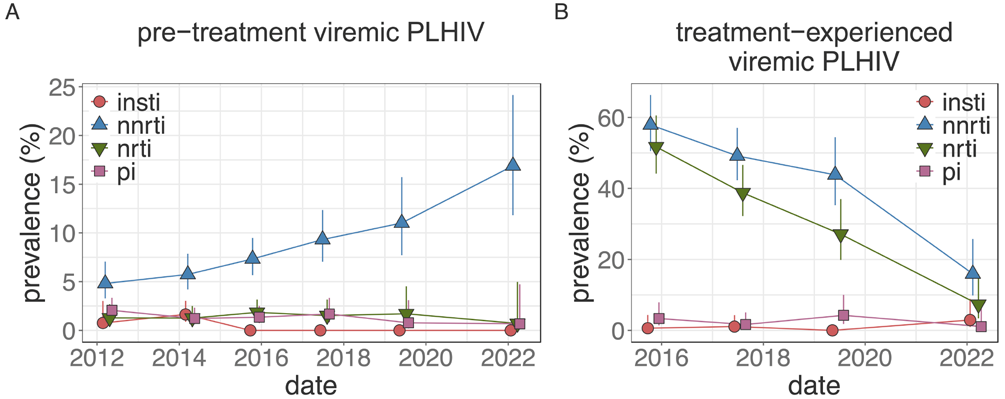
743. Plasma DTG Exposure Test as Objective Tool to Identify People With HIV at Highest Risk of Resistance
Poster Abstracts
Page: 214
Kim Steegen1, Jeremy Nel2, Chijioke N. Umunnakwe3, Karabo Mophiring4, Erin H. Smeijsters5, Wouter M. Tiel Groenestege5, Matthijs van Luin6, Sean Currin1, Lucas E. Hermans7, Hugo A. Tempelman3, Lucia Hans1, Francois Venter8, Monique Nijhuis5, Annemarie M. J. Wensing5
Background
Second-generation integrase inhibitors are the cornerstone of antiretroviral therapy (ART) worldwide. Recently, WHO reported higher levels of dolutegravir (DTG) resistance in some low and middle-income countries compared to clinical trial data. As resources for resistance testing remain limited, we implemented a prospective reflex testing strategy (ITREMA-2) to prioritize resistance testing to those most likely to benefit.
Methods
All individuals with viral loads (VL) ≥400 c/mL from two hospitals in Johannesburg were offered participation. Plasma DTG (pDTG) levels were determined using a semi-quantitative enzyme immunoassay (ARK Diagnostics). Samples with pDTG ≥20 ng/mL were classified as detectable. Resistance testing was performed on all samples with detectable pDTG levels and on a random subset with undetectable pDTG. Mutations were assessed with Stanford HIVdb v9.6.
Results
Between April 2023 and September 2024, 208 out of 210 eligible individuals with ≥12 weeks DTG exposure and VL≥400 cp/mL participated (288 samples). Most were female (57%), mean age of 42 years (SD +/- 13), median log10 VL of 4.1 cp/mL (IQR: 3.1-4.9), median duration of ART was 89 months (IQR: 46-155), including DTG for 11 months (IQR: 6-24 months). pDTG was below detection limits in 175 samples (60%), indicating non-adherence. Only 33% of individuals with VL≥1000 c/mL had detectable pDTG levels versus 64% of those with VL 400-1000 c/mL (p<0.001). Detectable pDTG levels were not associated with sex, age, regimen, facility, duration of DTG, total ART duration, prior PI or NNRTI exposure. As part of the reflex strategy, 96 sequences were generated from 75 individuals with detectable pDTG levels. DTG resistance was detected in 13% (10/75) of individuals showing diverse mutation profiles. Accumulation of integrase mutations was observed in 3 individuals within 7 months of follow-up (Table). At least eight individuals with DTG resistance had prior NNRTI and/or PI exposure. DTG resistance was not detected in the 17 randomly selected virally unsuppressed individuals with undetectable pDTG levels.
Conclusions
Prevalence of DTG resistance in virally unsuppressed individuals with detectable pDTG levels was 13%; higher than reported from unselected individuals in routine care. Reflex pDTG exposure testing offers an objective and easily implementable measure to identify virally unsuppressed individuals with non-adherence, optimizing the allocation of limited resources for those most likely to benefit.
Table 1.
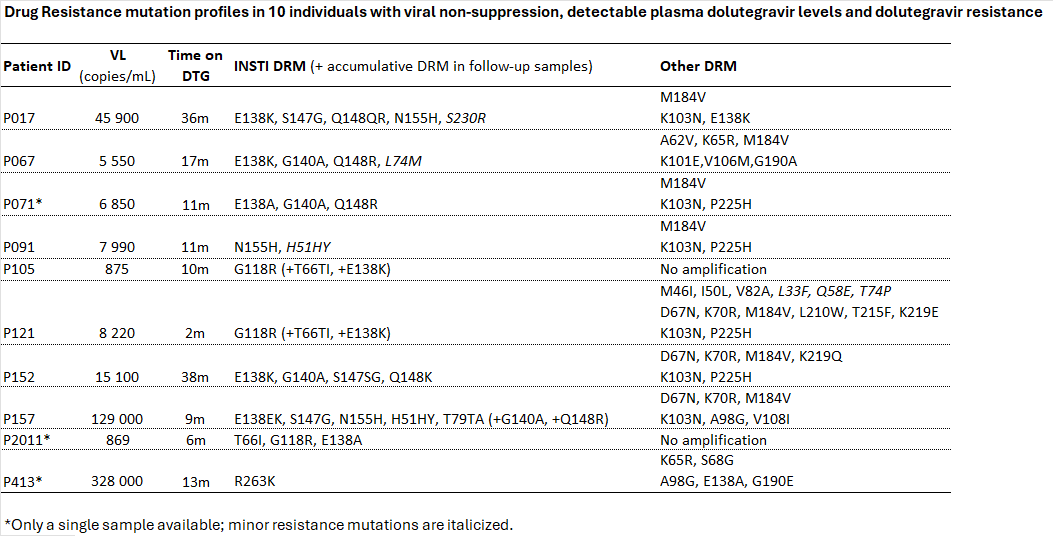
744. Plasma Dolutegravir Exposure as a Triaging Tool for HIV Drug Resistance Testing by ONT Sequencing
Poster Abstracts
Pages: 214-215
Hendrik J. Coetser1, Dieketseng Magubane2, Lucinda Gaelejwe2, Esrom Letsoalo3, Derryn Legg-E’Silva4, Lucia Hans2, Sean Currin2, Kim Steegen2
Background
South African antiretroviral therapy (ART) guidelines recommend dolutegravir (DTG) based regimens. Although DTG resistance is infrequently reported, it is paramount to identify individuals at risk for resistance. We assessed the use of plasma DTG (pDTG) drug-exposure (DE) testing as a triaging tool to identify individuals at highest risk for DTG resistance. Additionally, we assessed the use of Oxford Nanopore Technologies (ONT) sequencing in a public health setting for HIVDR testing.
Methods
Sanger sequences were available for 97 individuals who had resistance tests requested when failing DTG-based treatment in South Africa. Remnant specimens were used to qualitatively assess pDTG DE using an LC-MS/ MS method. Nanopore sequences were obtained for 55 specimens using the ONT native barcoding kit for amplicons (SQK-NBD114.96). Nanopore and Sanger sequences were analysed with NanoRecall and Recall respectively at a 25% threshold and submitted to Stanford HIVdb V9.6.
Results
Most individuals were female (70.1%) with a median age of 35 (IQR: 20-44) and log10 viral load of 4.8 (IQR: 3.2-5.7). The median time of DTG treatment was 13.8 months (IQR: 6.1-26.3). DTG resistance was detected in 19.5% (19/97) individuals by Sanger sequencing (Table). Individuals with detectable pDTG (45.4%), were more likely to have DTG resistance (OR: 9.01; 95% CI 2.41 – 35.59, p=0.001). Undetectable pDTG predicted the absence of DTG resistance with high accuracy (NPV: 94.2%, 95% CI: 85.1-97.9). Multivariate logistic regression demonstrated there was no association between pDTG DE results and VL, sex, duration on DTG, and prior PI exposure. However, individuals with prior ART (OR: 15.9; 95% CI: 1.8-141.7, p=0.013) and specially NNRTI exposure (OR: 0.14; 95% CI: 0.03-0.59, p=0.008) were more likely to have detectable pDTG, as were older individuals (OR: 1.04; 95% CI: 1.0-1.1, p=0.019). Resistance mutations detected by Sanger and ONT had a 96.4% (95% CI: 98.3-100) and 97.1% (95% CI: 98.3-100) pairwise identity for integrase and protease-reverse transcriptase respectively.
Conclusions
We demonstrated that pDTG DE testing can accurately predict the absence of DTG resistance and can therefore be considered an adequate screening method to identify individuals who do not require HIVDR testing, decreasing the financial burden associated with HIVDR testing. Additionally, nanopore sequencing may be a suitable alternative to conventional HIVDR testing with excellent concordance between mutation detection by both technologies.
Table 1.
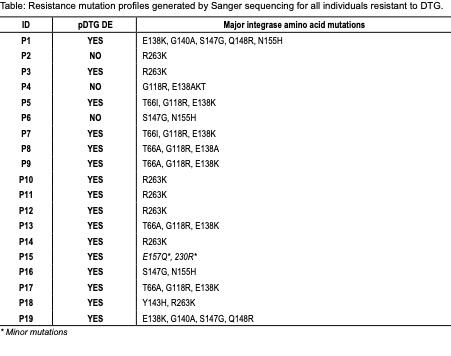
745. HIV Drug Resistance by Next-Generation Sequencing After Transition to TLD in Uganda and South Africa
Poster Abstracts
Page: 215
Suzanne McCluskey1, Winnie Muyindike2, Gugulethu Shazi3, Victoria Nanfuka2, Taing Nandi Aung1, Jennifer Giandhari4, Daniel Omoding2, Bethany Hedt-Gauthier5, Vincent C. Marconi6, Mahomed-Yunus S. Moosa7, Deenan Pillay8, Richard Lessells9, Ravindra K. Gupta10, Mark J. Siedner1
Background
Studies have identified an increased risk of dolutegravir (DTG) resistance in people with nucleos(t)ide (NRTI) resistance after transitioning from non-nucleoside reverse transcriptase inhibitor (NNRTI)-based antiretroviral therapy (ART) to tenofovir/lamivudine/dolutegravir (TLD). However, the frequency of this occurrence in programmatic settings, as well as the impact of NRTI resistance on emergence of DTG resistance minority variants, is not known.
Methods
We conducted a prospective cohort study in Uganda and South Africa of adults with HIV (age ≥18) who were in care at public-sector clinics and were transitioned from NNRTI-based ART to TLD. Participant HIV-1 RNA viral loads (VL) were measured on the date of TLD transition and again 24 and 48 weeks later. Illumina next-generation sequencing (NGS) of pol was performed on all specimens with a VL>500 copies/mL. We examined the frequency of HIV-1 resistance mutations at 2%, 5%, and 20% thresholds. Genotypic susceptibility scores (GSS) were calculated using the Stanford algorithm, ranging from 0 (resistant) to 1 (susceptible). We defined resistance as GSS≤0.5.
Results
We enrolled 999 participants (median age 44 years (IQR 36-51 years), 61% female) who had been on ART for a median of 7 years (IQR 5-11 years) prior to TLD transition. At TLD transition, 3% of participants (n=27/999) had a VL>500 copies/mL of which 25 (93%) were successfully sequenced, and 15 had resistance to both tenofovir (TDF) and lamivudine (3TC) at the 2%, 5% and 20% thresholds. Of these 15 with confirmed resistance, ten (67%) achieved viral suppression (<50 copies/mL) by 48 weeks (compared to 90% among those with viral suppression at transition, (P=0.015)), two never suppressed, and three were lost to follow-up. At 24 weeks, 1% of participants (n=11/999) underwent NGS, of whom 10 were successfully sequenced. Of these 10, one participant had resistance to both TDF and 3TC at 2-20% thresholds and resuppressed by 48 weeks. At 48 weeks, 2% of participants (n=20/999) had a VL>500 copies/ mL and underwent NGS. However, no study participants, including those with resistance to TDF and 3TC at the time of TLD transition or 24 weeks later, had resistance to DTG at the 2-20% thresholds after one year on TLD.
Conclusions
In a cohort of approximately 1,000 people who transitioned from NNRTI-containing ART to TLD in public sector clinics in Uganda and South Africa, resistance to TDF and FTC at transition was not associated with emergent DTG resistance, including minority variants.
746. HIV Drug Resistance Among Individuals on Dolutegravir With Low-Level Viremia in Malawi
Poster Abstracts
Page: 215
Newton L. Kalata1, Barbara Bighignoli, PhD2, Sherri Pals3, Alinune Kabaghe1, Jonathan Mkungudza2, Loise Panje2, Grace Kusakala2, Andreas Jahn4, Joep J. van Oosterhout5, Bianca Alvarez3, Elfriede Agyemang3, George Bello2, Nellie Wadonda1, Juliana D. Da Silva3, Duping Zheng3, the Malawi HIV Drug Resistance Team
Background
The clinical consequences of a low-level viremia (LLV) result (HIV-1 RNA 50-999 copies/mL) after a high viral load (VL) result (≥1,000 copies/ mL) and intensive adherence counseling (IAC) are uncertain. The probability of future virological failure may be determined by the presence of drug resistance mutations (DRMs), but WHO does not recommend HIV drug resistance (HIVDR) testing for individuals with LLV. We determined the prevalence of major DRMs among Malawian adults and children on dolutegravir (DTG)-based antiretroviral therapy regimens (DBR) who had LLV following a high VL.
Methods
Between November 2022 and March 2023, we enrolled participants at 19 randomly selected high-volume ART clinics in all geographical regions of Malawi. Eligibility criteria were being on a DBR for ≥9 months; return visit after a previous unsuppressed VL; and completing ≥1 IAC session per guidelines. From second plasma samples obtained for VL retesting, specimens with LLV (150-999cps/mL) and high VL (≥1000cps/mL) were genotyped for the protease reverse transcriptase (PRRT) and integrase (IN) regions, using the ThermoFisher® HIV-1 Genotyping kit with Integrase. Results were interpreted using Stanford University HIVDR Database Algorithm (9.5). We present prevalence of major DRMs by drug class and to DTG.
Results
Of 74 samples with LLV, 54 were from adults, 20 from children aged 2-14 years. We successfully amplified PRRT and IN in 59.5% and 75.6% of the LLV samples following a high VL, respectively. Amplification success increased with higher VL, with rates for PRRT and IN reaching 79.2% and 87.5%, respectively from ≥300cp/mL. Prevalence of major DRMs to any nucleotide reverse transcriptase inhibitors (NRTI) was 28% (95%CI:14%-42%) and to any non-NRTIs (NNRTI) was 49% (95%CI:33%-64%). Prevalence of major DRMs to DTG was 9% (95%CI:1%-17%). No DRMs to protease inhibitors were observed. The prevalence of major DRMs to any NRTIs, NNRTIs and to DTG in LLV samples was like samples with two consecutive VL ≥1,000 copies/mL (figure).
Conclusions
Amplification of PRRT and IN regions was successful in the majority of LLV samples when VL was ≥300cps/mL. Prevalence of major DRMs to DTG among Malawian adults and children with LLV, after a high VL and IAC adherence counselling, was 7% and 13% respectively, comparable to rates observed among adults and children with confirmed virological failure in the same survey. Prospective studies may help explain the clinical relevance of DTG resistance in LLV samples in this setting.
Figure 1.
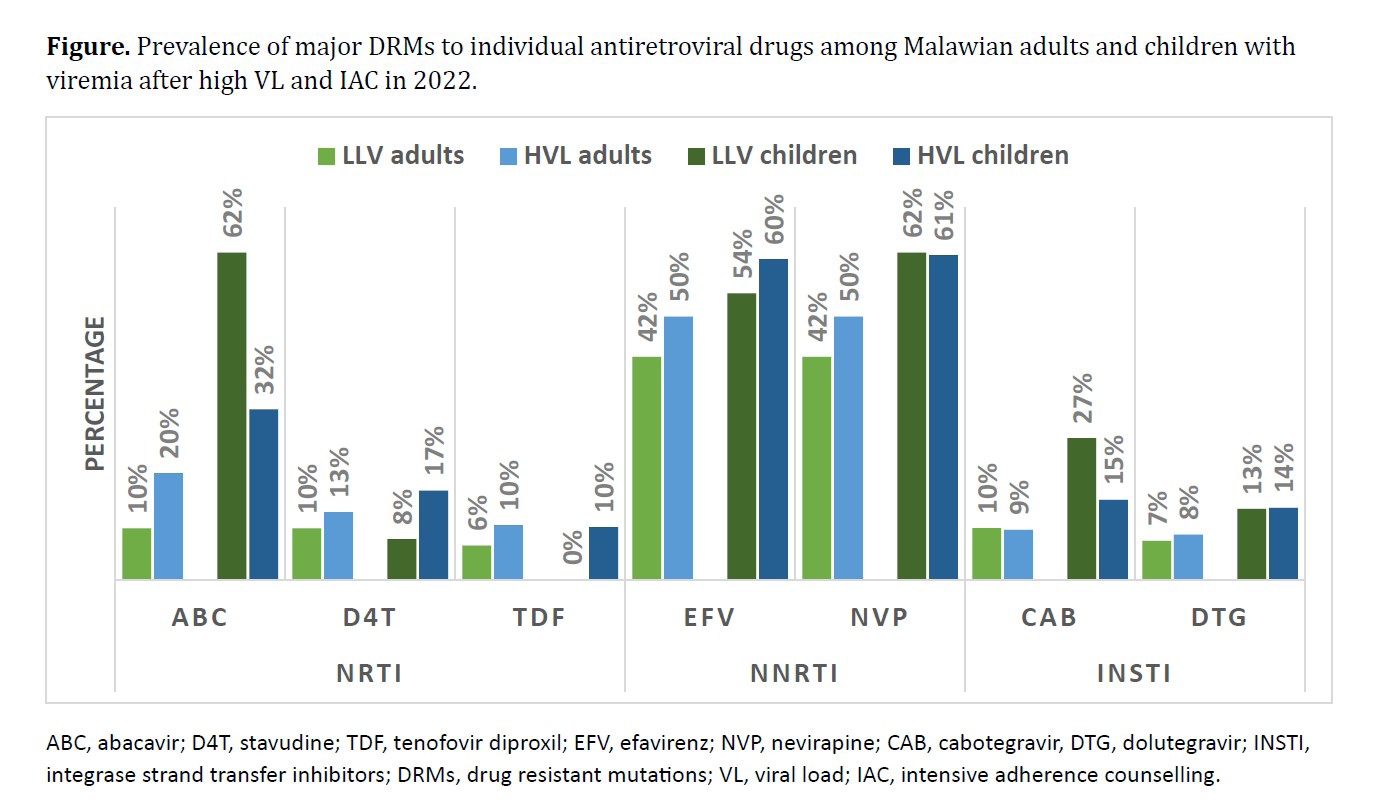
747. Predictors of HIV Drug Resistance to Dolutegravir in 4 PEPFAR-Supported Countries
Poster Abstracts
Page: 216
Juliana D. Da Silva1, Sherri Pals1, Newton L. Kalata2, Nellie Wadonda2, Mariama Tejan1, Clement Zeh1, Maria Liulchuk3, Nalia Ismael4, Nilesh Bhatt5, Gillian Massamha1, Christine Watera6, Grace Namayanja7, Elliot Raizes1, the CADRE Surveillance Network
Background
Dolutegravir-based regimens (DBR) represent >92% of drugs dispensed in PEPFAR-supported programs. Monitoring emergence of and characterizing the risk factors for dolutegravir (DTG) drug resistance (DR) acquisition is a key priority to ensure the continued efficacy and durability of these regimens. We report risk factors for DTG DR identified in a large cohort of patients conducted in four PEPFAR-supported programs.
Methods
Adults on a DBR in Malawi, Ukraine, Mozambique, and Uganda whose remnant viral load (VL) samples were successfully genotyped from 2020-2022 were included in the analysis. We defined DTG DR as levels 3-5 (low, intermediate, or high) by Stanford HIV Drug Resistance Database. We fit an exact logistic regression model with DTG DR as the outcome and clinical and sociodemographic variables as covariates. SAS was used to fit the model and produce adjusted odds ratios (aOR) and 95% confidence intervals (CI).
Results
A total of 965 specimens were included; 83 had DTG DR. About 9 in 10 individuals were transitioned to DBR from another regimen. Median age was 36.2 years (95%CI 28-43), median time on a DBR was 1.5 years IQR:0.80-2.14), and nearly 60% of individuals in the cohort were female. Male sex [aOR 1.90 (95% CI 1.30, 2.78)]; age 30-39 years [aOR: 2.43 (95%CI 1.41, 4.20)] and 40 to 49 years [aOR: 2.44 (95%CI 1.38, 4.31)]; time on DTG 1-2 years [aOR: 3.09 (95%CI 1.64, 5.82)] and above 2 years [aOR: 3.85 (95%CI 2.02, 7.33)]; VL between 10,000 and 100,000 copies/ml [aOR 1.93 (95%CI 1.13, 3.30)]; any nucleoside reverse transcriptase inhibitor (NRTI) [aOR: 51.6 (95%CI 9.42, 282.2)]; or non- nucleoside reverse transcriptase inhibitor (NNRTI) resistance [aOR: 2.57 (95%CI 1.32, 4.99)] were identified as risk factors to DTG DR.
Conclusions
In this multicounty cohort, male sex, ages 30-49 years, VL between 10,000 and 100,000 copies/ml, time on DTG of >1 year and presence of NRTI or NNRTI DR were risk factors for DTG DR. Notably, the duration on DTG showed a dose-response effect, with longer use linked to higher DR rates. The presence of NRTI DR had a large effect that has been previously observed; although NRTI recycling in 2nd-line is supported by data, the presence of NRTI DR may make DTG more vulnerable to DR emergence. In settings where genotypic testing is not widely available, these findings could help programs develop screening algorithms to correctly identify, test and switch those with DR to an effective regimen.
Table 1.
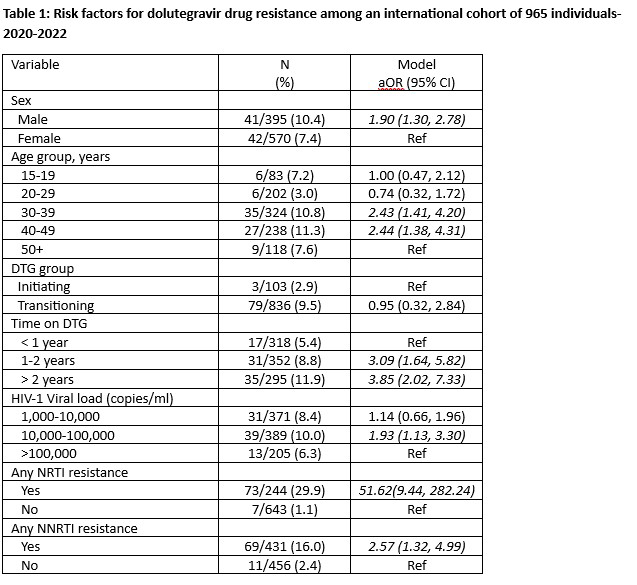
748. Safety and Efficacy of 8 Week Glecaprevir/Pibrentasvir for Acute HCV in People Living with HIV
Poster Abstracts
Page: 216
Barbra Cave1, Kimberly Workowski2, Pablo Ryan3, John Smith4, Thomas Lutz5, Patrick Lank1, Linda Fredrick1, Anne Welhaven1, Dimitri Semizarov1, John Marcinak1, Joseph S. Doyle6
Background
Globally there are up to 2.3 million people living with HIV (PLHIV) and hepatitis C virus (HCV) co-infection. PLHIV with HCV co-infection are at high risk for liver-related morbidity and mortality. There are currently no approved direct acting antivirals (DAA) for acute HCV infection; however, glecaprevir/pibrentasvir (G/P) has been well studied in chronic HCV infection. Treating acute HCV could reduce onward transmission, accelerating the path to HCV elimination. The objective of this analysis was to examine the efficacy and safety of G/P in PLHIV with acute HCV, and to explore the safety of co-administration of HIV therapies with G/P.
Methods
M20-350, a phase 3b, multicenter, single-arm, open-label study, evaluated the efficacy and safety of 8-weeks of G/P for acute HCV infection in people who had not previously been treated for the current infection. Efficacy endpoints included the proportion of subjects achieving sustained virologic response 12 weeks after the last dose of G/P (SVR12) evaluated in the intention-to-treat (ITT) set (all subjects receiving ≥1 doses of G/P) and the modified ITT (mITT) set (excluding those who did not achieve SVR12 for reasons other than virologic failure). Safety endpoints included changes from baseline in alanine aminotransferase (ALT) and total bilirubin during treatment, treatment-emergent (TE) hepatic decompensation, TE serious adverse events (TESAE), and TEAE leading to G/P discontinuation. Exploratory analysis described the concomitant HIV medications taken with G/P.
Results
Of 286 subjects, 144 had acute HCV mono-infection and 142 had HIV/acute HCV infection. Table 1 provides demographics and baseline characteristics. The co-infection group SVR12 rate was 97.2% (138/142) in ITT and 100% (138/138) in mITT, with no virologic failures or virologic relapses, and one reinfection (0.7%). All PLHIV and HCV were receiving HIV medication, and 87.3% had HIV-1 RNA <20 copies/mL at baseline. No PLHIV and HCV experienced on-treatment ALT>3x ULN that worsened from baseline, hepatic decompensation, a TESAE that was deemed related to G/P, or a TEAE leading to G/P discontinuation. There were no deaths. The most common HIV treatment contained bictegravir (59/144, 41.0%). No PLHIV had two consecutive HIV-1 RNA levels ≥200 copies/mL while on G/P.
Conclusions
An 8-week treatment with G/P was safe and effective in PLHIV with acute HCV infection. Concomitant HIV antiretrovirals maintained HIV suppression and were safe to use with G/P.
Table 1.
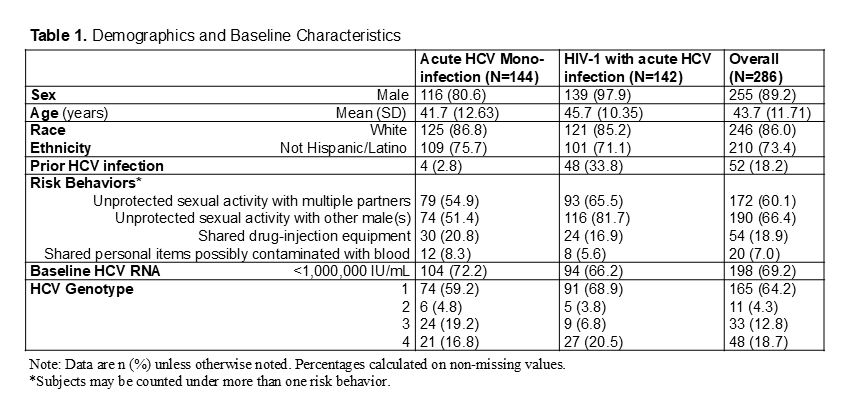
749. AA Initiation Among People With HIV and HCV in North America: Factors Driving the Treatment Gap
Poster Abstracts
Pages: 216-217
Raynell Lang1, Leila Borowsky2, Brenna C. Hogan3, Elizabeth Humes4, Asya Lyass5, Arthur Y. Kim2, Gregory Kirk3, Frank Palella6, Michael Silverberg7, Edward Cachay8, Hyang Nina Kim9, Catherine Lesko4, Richard Moore4, Virginia Triant2, Keri N. Althoff4, the North American AIDS Cohort Collaboration on Research and Design (NA-ACCORD) of IeDEA
Background
People with HIV (PWH) are at increased risk of coinfection with worse outcomes from hepatitis C virus (HCV) and are a key group targeted for treatment with direct-acting antivirals (DAA). Not all PWH eligible for DAA receive it. We estimated DAA uptake among PWH with HCV coinfection in the NA-ACCORD to identify factors associated with DAA initiation.
Methods
U.S. and Canadian PWH 18-years or older with untreated HCV in NA-ACCORD clinical cohorts were followed from their latest date of: 1) detectable HCV viremia, 2) ART initiation, 3) enrollment date, or 4) 1/1/2014 until the first of: 1) DAA prescription (event), 2) clearance of HCV viremia (ineligible for DAA), 3) loss to follow-up, 4) death or 5) 12/31/2021. A competing risk approach estimated the cumulative incidence of DAA initiation while accounting for both death and HCV clearance. Cox proportional hazard models estimated crude and adjusted hazard ratios (aHR) and 95% confidence intervals to identify factors associated with DAA initiation including sex, age, HIV risk group, race/ethnicity, FIB-4 score, HBV coinfection, alcohol use, smoking status, HIV viral load and a history of AIDS, hypertension, diabetes, and chronic kidney disease.
Results
Among 6,300 PWH with HCV, 3,672 initiated DAA. The 8-year cumulative incidence of DAA initiation was 65% [63%-66%]. Accounting for the competing risks of death and HCV clearance, 6% of eligible PWH did not initiate DAA (Figure). PWH reporting heterosexual (aHR=0.79 [0.68, 1.92]) or injection drug use (aHR=0.84 [0.75, 0.95] HIV risks initiated DAA at a lower rate compared with men who have sex with men. A reduced rate of DAA initiation was identified among non-Hispanic Black (aHR=0.83 [0.76, 0.90]) and Hispanic (aHR=0.88 [0.77, 1.00]) PWH compared with non-Hispanic white PWH. DAA initiation was significantly lower among PWH with at-risk alcohol use, smoking, detectable HIV viremia, and a history of AIDS. A higher FIB-4 score was associated with increased DAA initiation. Other assessed factors were not associated with differences in DAA initiation in multivariable models.
Conclusions
Accounting for death and HCV clearance the treatment gap among PWH eligible for, and those initiating DAA has narrowed over time. We identified factors associated with disparities in DAA uptake including HIV risk, race/ethnicity, smoking, alcohol use and HIV viremia. Targeted approaches are needed to increase equity in DAA initiation by addressing these disparities to achieve the goal of HCV elimination among PWH.
Figure 1.
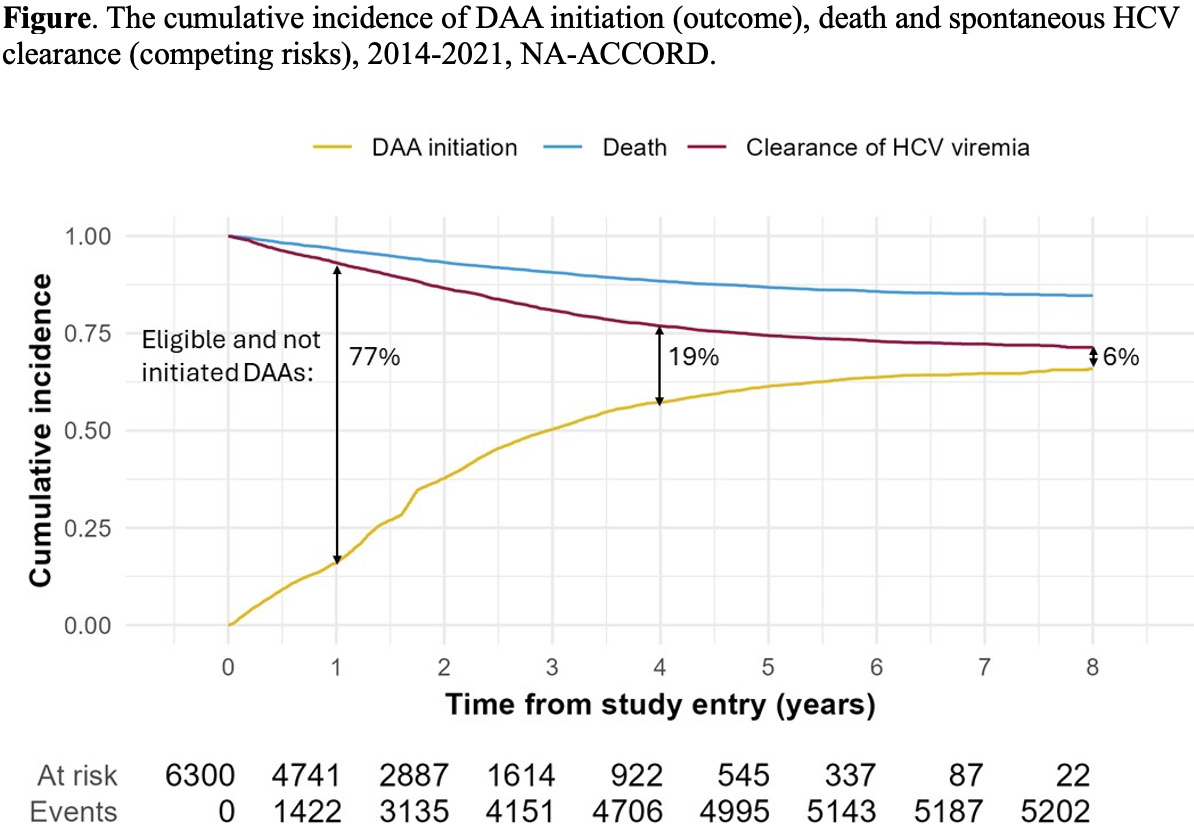
750. High HCV Re-Infection Rates May Mask “True” Sustained Virologic Response in People Who Inject Drugs
Poster Abstracts
Page: 217
Sunil S. Solomon1, Jiban J. Baishya1, A. K. Srikrishnan2, Mihili Gunaratne3, Ashwini Kedar2, Pradeep Amrose2, Allison M. McFall3, Mark Sulkowski1, Boobalan Jayaseelan2, Gavin Cloherty4, Gregory M. Lucas1, David Thomas1, Shruti H. Mehta3
Background
Eliminating HCV requires curing people and ensuring they remain free of re-infection. People who inject drugs (PWID) are particularly vulnerable to re-infection, but few re-infection estimates are available from resource-limited settings. We evaluate HCV re-infection rates among PWID treated in community-based centers in 7 Indian cities.
Methods
From 2021-2022, 3000 PWID ≥18 years with active HCV infection were enrolled in a randomized trial of HCV treatment support strategies. For all, treatment was delivered from community-based centers that provided HIV and harm reduction services including medication for opioid use disorder. 1749/2994 (58%) achieved sustained virologic response (SVR), defined as undetectable HCV RNA ≥12 weeks after end-of-treatment (EOT), and were followed semi-annually using HCV core antigen (ARCHITECT) to assess re-infection rate (number of re-infections/person-time at risk). Due to the potential for re-infection between EOT and SVR visit, we performed HCV RNA testing on EOT samples (907/1245 with detectable RNA at SVR had EOT samples). Participants with EOT HCV RNA<LLOQ and high estimated treatment adherence (> 90% medication possession) were reclassified as achieving SVR. Poisson regression was used to identify predictors of re-infection after SVR.
Results
Median age of 1749 participants who achieved SVR was 30 yrs; 98% were cisgender men, 6% reported homelessness, and 41% reported injection in the 3 months before the SVR visit. There were 232 HCV re-infections between SVR and the first semi-annual visit (500 person-years [PY]) resulting in a overall re-infection rate of 46.4 per 100 PY, ranging from 23.3 to 73.6 per 100 PY across sites. Younger age, HIV co-infection, higher injection frequency, and needle sharing were associated with higher re-infection risk after SVR (p<0.01). Among 907 EOT samples, 412 had HCV RNA<LLOQ, of which 315 had >90% adherence increasing the SVR in the overall sample from 58% to 69%. Re-infection rate between EOT and SVR was 56.9 per 100 PY. From EOT to 12-months after SVR, re-infection rates declined over time (Figure).
Conclusions
In this large trial in a resource-limited setting, comprised mostly of young actively injecting men, we observed an alarmingly high re-infection rate. Our findings suggest that in the most vulnerable, true SVR may be masked by high re-infection, even between EOT and SVR. Innovative harm reduction and treatment strategies are needed to sustain the impact of HCV treatment by minimizing re-infection.
Figure 1.
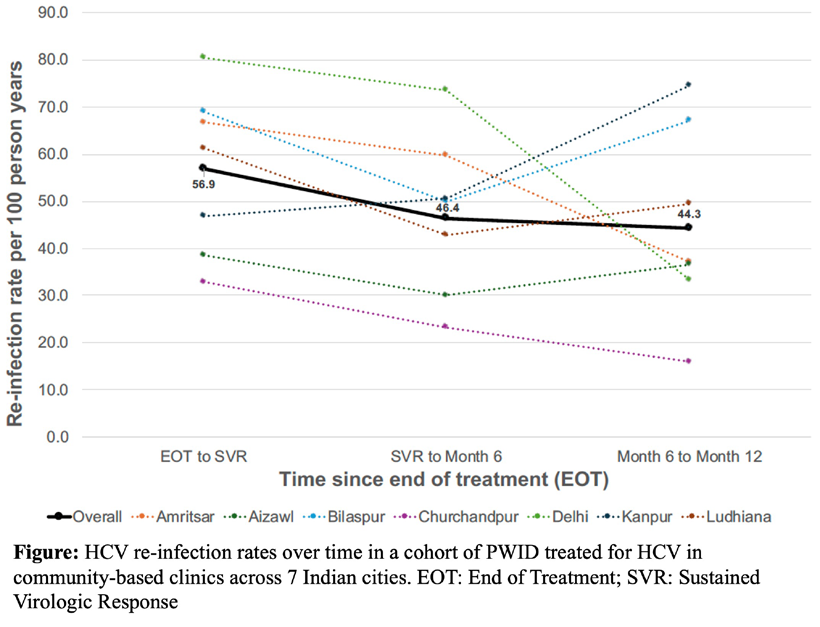
751. Increasing HCV Prevalence Among People Who Inject Drugs in India Despite Improved Treatment Uptake
Poster Abstracts
Pages: 217-218
Shruti H. Mehta1, Mihili Gunaratne1, A. K. Srikrishnan2, Ashwini Kedar2, Allison M. McFall1, Jiban J. Baishya3, Muniratnam S. Kumar2, Pradeep Amrose2, Boobalan Jayaseelan2, Gregory M. Lucas3, David Thomas3, Sunil S. Solomon3
Background
HCV elimination targets for 2030 require that 90% of people with HCV (PWHCV) are diagnosed, and 80% of those diagnosed are treated, alongside measures to reduce primary infection and reinfection in groups like people who inject drugs (PWID) who bear a disproportionate burden. We characterize changes in HCV burden, awareness of HCV status, treatment uptake, and aviremia among PWID across 6 Indian cities over 12 years.
Methods
We conducted 3 population-based surveys in each of 6 Indian cities using respondent-driven sampling (RDS) to recruit 750-1000 PWID/city/survey in 2012-2013, 2016-2017 and 2023-2024. In 2017, we scaled community-based integrated care centers in each city that delivered HIV and harm reduction services alongside rapid HCV antibody testing; HCV RNA testing and on-site treatment with direct-acting antivirals were integrated in 2021. In 2016, the government launched free HCV treatment in government centers. We characterize temporal trends in HCV prevalence, treatment uptake among diagnosed, and aviremia (no detectable HCV RNA at survey visit) among treated. Correlates of diagnosis and aviremia were explored. All analyses incorporated RDS-2 weights.
Results
Across 3 periods, the median age was 28, 30 and 29 years with 91%, 91% and 99% reporting injection in the prior 6 months. 18%, 24% and 42% were living with HIV. HCV antibody prevalence increased from 40% to 56% to 82% with increases in all sites. Among those with current or prior chronic infection (detectable HCV RNA or self-reported treatment), the proportion diagnosed increased from 5% to 6% and 32% and the proportion initiating treatment among those diagnosed from 43% to 33% and 80% (Figure). The proportion aviremic among those treated increased initially from 23% to 42% but then decreased in 2023-2024 to 33%. In 2024, only 8% of those with prior chronic infection were aviremic. Among PWHCV, correlates of diagnosis were older age, higher education, recent HIV testing, suppression on ART and MOUD use. Among those treated, correlates of aviremia were higher education, stable employment and suppression on ART.
Conclusions
Despite increases in diagnoses and achieving WHO targets in HCV treatment uptake among those diagnosed, we observed no change in aviremia among those treated or at the population level. These findings, alongside concerning increases in HCV antibody prevalence, suggest that this level of treatment scale up was not sufficient to prevent primary infection or reinfection among actively injecting PWID.
Figure 1.
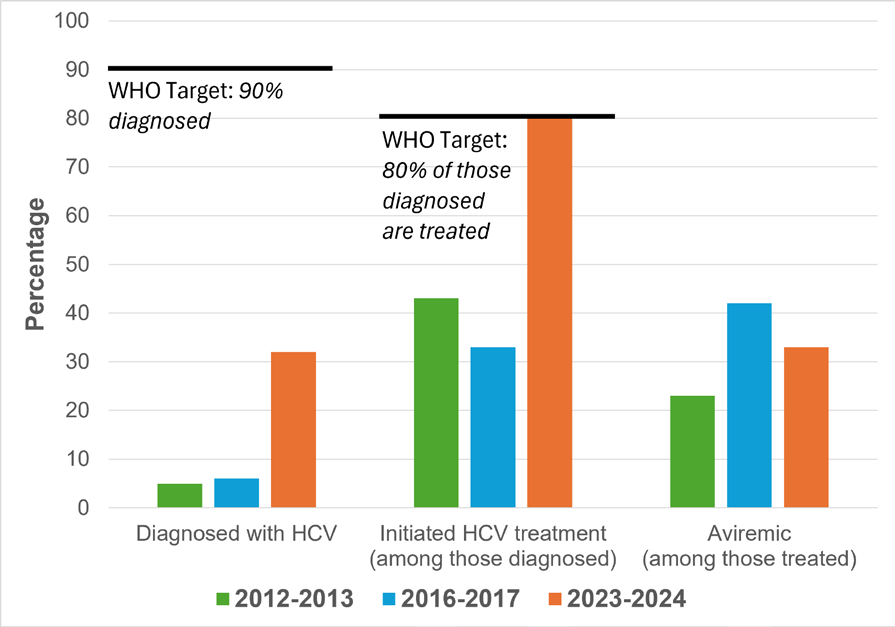
752. Impact of an HCV Test and Treat Campaign on Hepatitis C Incidence in the ANRS PREVENIR PrEP Study
Poster Abstracts
Page: 218
Geoffroy Liegeon1, Constance Delaugerre2, Lydie Beniguel3, Salima Barkat3, Jade Ghosn4, Sarah Maylin5, Romain Palich5, Gilles Pialoux6, Laurence Slama5, Mohamed Ben Mechlia7, Dominique Costagliola8, Lambert Assoumou5, Jean-Michel Molina1, the ANRS PREVENIR Study Group
Background
Men who have sex with men (MSM) on HIV pre-exposure prophylaxis (PrEP) have an increased risk of hepatitis C virus (HCV) infection. We assessed the impact of a test-and-treat campaign using HCV nucleic acid (NAT) and core antigen (cAg) testing in reducing the HCV incidence among MSM in the French ANRS PREVENIR study.
Methods
The ANRS PREVENIR study, launched in 2017, is an ongoing prospective cohort study of PrEP users in the Paris region, where participants are annually tested for HCV antibodies. From January 2020, all participants were offered HCV NAT and Ag testing in an initial 3-month campaign extended to June 2021 due to the COVID-19 pandemic. All participants with positive HCV NAT were immediately treated by direct-acting antiviral (DAA). We compared HCV incidence (95% confidence interval) and time to treatment initiation during the testing campaign (January 2020-June 2021) with the pre-campaign (May 2017– December 2019) and post-campaign (July 2021–May 2024) periods.
Results
From May 2017 to May 2024, 3050 participants contributed to the pre-campaign period, 2286 to the testing campaign, and 1824 to the post-campaign period, for a total of 4184, 2960, and 3709 person-years of follow-up per period, respectively. Most were MSM (98%), median age 36, and 14% reported chemsex. During the HCV testing campaign, 1567/2286 (69%) of participants were tested with HCV NAT, 1387/2286 (61%) with cAg, and 1578/2286 (69%) with HCV serology. HCV incidence significantly declined over the study periods: 7.9 (5.4, 11.1), 5.1 (2.8, 8.4), and 3.0 (1.5, 5.3) per 1000 person-years, pre-, during, and post-campaign, respectively (P=0.01). Among the 59 incident HCV infections (including 3 reinfections) reported during the study, 4 of the 15 diagnosed during the testing campaign were only detected by NAT. Of the 59 HCV infections, 50 (85%) were treated with DAA (48 cured, 2 unknown outcomes), 8 (14%) cleared without treatment, and 1 had missing treatment data. The median time from HCV diagnosis to DAA initiation was 47, 30, and 15 days during the pre-campaign, campaign, and post-campaign periods, respectively (Logrank P=0.06).
Conclusions
We observed a significant reduction in HCV incidence among MSM using PrEP following an HCV test and treat campaign. Additional factors, such as concurrent epidemics (COVID-19, monkeypox), changes in sexual behavior, and new recommendations for diagnosis and treatment of acute HCV infection in MSM, may also have contributed to this trend.
753. Impact of HIV Infection on the Dynamics of Liver Stiffness After HCV Cure
Poster Abstracts
Page: 218
Jesica Martín-Carmona1, Anaïs Corma-Gómez1, Jose M. Moyano2, Francisco Tellez3, Dolores Arenga-Barrios3, Miriam Serrano-Fuentes4, Aitana Carla Morano Vázquez5, Diana Corona-Mata6, Miguel Nicolás Navarrete Lorite7, Francisco Jesús Vera-Méndez8, Isabel Barroso9, Rosario Palacios10, Juan A. Pineda2, Juan Macias2, the GEHEP-011 Study Group
Background
During HCV active chronic infection, HIV co-infection promotes liver fibrogenesis and accelerates the progression towards cirrhosis. After sustained virological response (SVR), liver stiffness (LS) usually decreases, regardless of HIV co-infection. However, information related to the impact of HIV co-infection on LS dynamics in this subset is scarce.
Methods
Multicenter prospective study conducted in the GEHEP-011 cohort (ID NCT04460157), including patients with chronic HCV infection, with and without HIV co-infection, fulfilling: 1) SVR with direct-acting antivirals based regimens; 2) pre-treatment LS ≥9.5kPa; 3) available measurement of LS at SVR. Pre-treatment (baseline), SVR and then, annual post-treatment LS were assessed by vibration-controlled transient elastography. The primary outcome was the time to LS normalization achievement (≤7.2kPa). To control confounding biases between the two subgroups, a propensity score (PS) for HIV was calculated. Two Fine-Gray regression models for competing risks (death was the competing event) were performed: i) using the PS as a covariate; ii) matching individuals whit and without HIV co-infection by PS. ChatGPT (version GPT-4) was used for assistance with statistical coding.
Results
1,138 patients were included, 678 (60%) people living with HIV (PLWH). Median LS value at baseline (Q1-Q3) was 17.3 kPa (11.8-27.0) in PLWH and 15.4 kPa (11.8-26.4) in persons with mono-infection (p=0.170). The median time between the first to the last measure was 35 (17-69) months. LS dynamics are shown in Fig. 1. LS dynamics differed between patients with and without HIV co-infection (p < 0.001). In total, 456 (40.1%) patients achieved LS normalization (Fig. 2), 192 (42%) individuals with HCV mono-infection and 264 (21%) PLWH (p=0.003). In the multivariate analysis regression adjusted by HIV, PS and diabetes, HIV was associated with a lower probability of achieving normalization [sHR=0.70 (95% CI, 0.56-0.88), p=0.001]. Matching by closer PS was performed. In this subset, the probability of achieving LS normalization was again lower in PLWH [sHR=0.74 (95% CI, 0.60-0.92), p=0.006].
Conclusions
After SVR, the probability of reaching LS normalization is significantly lower and later in PLWH, even after an extensive adjustment for multiple potential confounders. Factors as inflammation and immunosenescence associated with HIV may be relevant in the impairment of fibrosis reversal. This could have implications on the development of long-term clinical events.
The figure, table, or graphic for this abstract has been removed.
754. Comorbidities Among Medicaid Enrollees With Chronic Hepatitis C, 2016-2020
Poster Abstracts
Pages: 218-219
Angela T. Estadt, Hasan Symum, William W. Thompson, Taiwo Abimbola, Michelle T. Van Handel
Background
To achieve hepatitis C elimination in the United States (US), understanding comorbidities among people living with chronic hepatitis C is crucial to inform prevention and treatment approaches. We aimed to quantify and characterize the prevalence of HIV, sexually transmitted infections (STIs), mental health disorders, substance use disorders, and drug overdose among Medicaid enrollees diagnosed with chronic hepatitis C in the US.
Methods
We used CMS Transformed Medicaid Statistical Information System (T-MSIS) data to identify a cohort of Medicaid enrollees with chronic hepatitis C. We defined enrollees with chronic hepatitis C as persons with an HCV RNA code (CPT 87520, 87521, or 87522) index date during 2016 to 2020, with an ICD-10 chronic hepatitis C code (B18.2) ≥1 day after the index date. Persons aged 18-64 years enrolled in Medicaid for at least 12 months after their index date and not dually enrolled in Medicare were included. We estimated the prevalence of comorbidities documented within 12 months of the index date: HIV, chlamydia, syphilis, mental health disorders, substance use disorders, and drug overdose. Due to two distinct age-based chronic hepatitis C distributions, we stratified results by age group (18-44 and 45-64) using bivariate log-binomial regression to generate prevalence ratios (PR).
Results
Among Medicaid enrollees from 2016 to 2020, 498,497 persons met the inclusion criteria for chronic hepatitis C. A higher percentage (53%) of those aged 18-44 (n=229,820) were female compared to (39%) of those aged 45-64 (n=268, 677). In unadjusted models, enrollees aged 18-44 were less likely to have an HIV diagnosis (PR=0.49, 95% CI: 0.48, 0.51) compared to older enrollees. In contrast, younger enrollees were more likely to be diagnosed with a comorbidity than those aged 45-64, including chlamydia (PR=5.41, 95% CI: 4.83, 6.05), drug overdose (PR=1.78, 95% CI: 1.74, 1.81), and mental health disorder (PR=1.65, 95% CI: 1.65, 1.66).
Conclusions
We found that STIs, drug overdose, and mental health disorders are common among persons with chronic hepatitis C enrolled in Medicaid and observed distinct patterns by age group. The higher prevalence of comorbidities, excluding HIV, among the younger cohort may indicate a need for targeted services to support hepatitis C treatment and care, as well as linkage for mental health disorder treatment, substance use treatment, and other infectious disease prevention services.
Table 1.
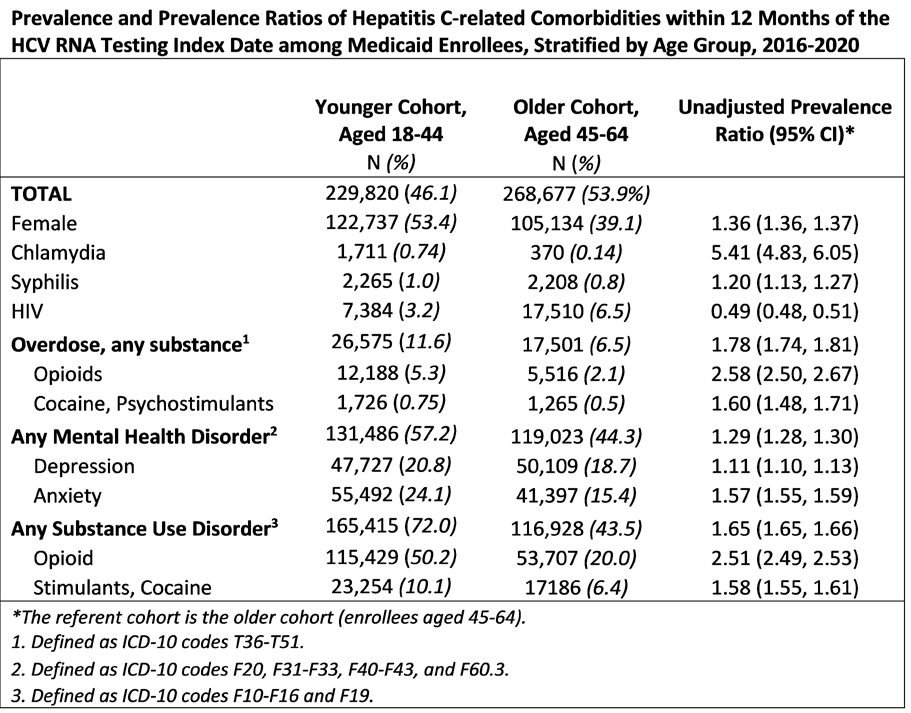
755. Cost-Effectiveness of Interventions to Reduce HCV Among People Who Inject Drugs in Haiphong, Vietnam
Poster Abstracts
Page: 219
Adam Trickey1, Pham Minh Khue2, Nicolas Nagot3, Nguyen Thanh Binh2, Vu Hai Vinh4, Tran Thi Hong2, Catherine Quillet3, Roselyne Vallo3, Khuat Thi Hai Oanh5, Duong Thi Huong2, Todd Pollack6, Vo Thi Tuyet Nhung7, Don Des Jarlais8, Didier Laureillard3, Peter Vickerman1
Background
In Vietnam, including Haiphong, many hepatitis C virus (HCV) infections occur among people who inject drugs (PWID). In 2016, there were an estimated 10,000 people with a history of injecting drug use (IDU) in Haiphong. Multiple respondent-driven sampling (RDS) surveys tested for HCV among PWID in Haiphong, and a survey intervention (ANRS 12380 DRIVE-C) provided HCV testing and treatment; treating 979 current and former injectors in 2019. HCV testing and linkage-to-treatment in centres providing opiate agonist treatment (OAT) or antiretroviral therapy (ART) was provided in 2021/22 (831 treated), but no other HCV treatment has been available. We aimed to model the impact and cost-effectiveness of providing HCV testing and treatment to PWID through RDS surveys and/or OAT and ART centres in Haiphong.
Methods
A model of HCV transmission among PWID was calibrated in a Bayesian framework using data from Haiphong, mainly RDS surveys. The model included current and former injectors. A status quo (SQ) scenario modelled historical interventions, with no future HCV treatment. Future scenarios modelled the additional impact of providing from 2025-2030 HCV-testing and linkage-to-treatment in OAT and ART centres, and/or HCV testing and treatment in annual survey interventions of 1400 people with history of IDU, like DRIVE-C. We estimated the incremental cost-effectiveness ratio (ICER) per disability adjusted life-year (DALY) averted for the future scenarios compared to SQ over a 30-year time horizon (2025-2054; 3% annual discount rate).
Results
In the SQ, HCV incidence among injectors decreased from 7.0 (95% credibility interval 2.8-13.7) per 100 person-years (/100pyrs) in 2016, fitting well against validation data, to 4.6/100pyrs (1.6-9.1) in 2023 and 4.5/100pyrs (1.6-9.0) in 2030. For the future scenario with RDS surveys and HCV-testing and linkage-to-treatment in OAT and ART centres, HCV incidence decreases to 2.1/100pyrs (0.6-4.7) by 2030, or 2.8/100pyrs (0.9-5.7) with just annual RDS surveys. The mean ICER was €658/DALY averted for the scenario with HCV testing and treatment in both annual RDS surveys and in OAT and ART centres, whilst it was €762/DALY for annual RDS surveys with HCV testing and treatment; both cost-effective at a willingness-to-pay threshold of €2,334/DALY averted (50% of Vietnam’s 2023 GDP per capita).
Conclusions
Using RDS surveys and/or other care settings to scale-up HCV-testing and treatment are cost-effective strategies to reduce HCV incidence among PWID in Vietnam.
756. CC-Genotype (IFNL4) in HCV/HIV Coinfection: Cellular Exhaustion but Balanced Inflammatory Profile
Poster Abstracts
Pages: 219-220
Sonia Arca De Lafuente1, Violeta Lara-Aguilar1, Manuel Llamas-Adan1, Sergio Grande García1, Cristina Gonzalez-Diaz1, Andrés Deza de la Casa1, Luz Martín-Carbonero2, Pablo Ryan3, Ignacio de los Santos4, Mariano Matarranz3, Amanda Fernández Rodríguez1, Verónica Briz1
Background
CC genotype of the rs12979860 polymorphism on the lambda 4 interferon (IFNL4) gene has been related to spontaneous resolution of Hepatitis C virus (HCV) infection. The role of CC genotype in those who develop chronic HCV infection is still unknown, particularly notable during Human Immunodeficiency Virus (HIV) coinfection. To study its role in HCV/HIV coinfection, immunological characterization of rs12979860 genotypes (CC vs CT/ TT) has been conducted.
Methods
Observational study in 118 people with HIV (PWH): 45 with HCV-chronic infection (CHC); 38 who spontaneously clarified HCV (SC); and 35 controls (HIV). rs12979860 was genotyped by real time PCR, expression of surface markers was evaluated in CD4+ and CD8+ memory T cells by flow cytometry, oxidative stress markers were quantified by ELISA, and 45 immune plasma markers by Luminex. Differences among genotypes were evaluated by generalized linear model (GLM), or generalized additive model for location, scale, and shape (GAMLSS), adjusted for the most significant variables and corrected by FDR.
Results
CC-carriers presented a higher frequency of SC (47.54%), as expected. Significant differences among rs12979860 genotypes in the cellular immune profile were mainly observed within CHC group. In this group, CC-carriers showed higher levels of cellular immune exhaustion in CD8+T cells, specifically middle activation (CD25) in total effector memory (EM), EM1 and EM4 subpopulations; late activation (CD38) in EM and TEMRA; and senescence (PD1/ CD57) in EM, EM2, EM3 and TEMRA (pE2). Opposite, their resting CD8+T cells significantly decreased, including EM and TEMRA (total and pE2) (Fig.1a). Within SC group, CC-carriers showed significantly reduced senescence levels only in CD8+ TEMRA subpopulations. As for plasmatic markers, all CC-carriers showed a general increase in cytokines IL-2, IL-4, IL-10, IL-13 and IL-15. Also, among CHC, CC-carriers had higher levels of IL-1beta, IL-6, IL-17A, IL-27, IL-31, TNF-α, IL-1RA and GM-CSF, while oxidative stress slightly decreased (Fig.1b). No significant differences were found in HIV group.
Conclusions
The favourable rs12979860-CC genotype is associated with increased levels of exhausted CD8+T cells among the PWH with chronic HCV infection, that may be masked during clinical monitoring by the general altered levels of soluble immune markers. CD8+T cell exhaustion relates to tumorigenesis, indicating that CC carriage is unfavourable along HCV/HIV coinfection and should be considered during clinical management.
Figure 1.
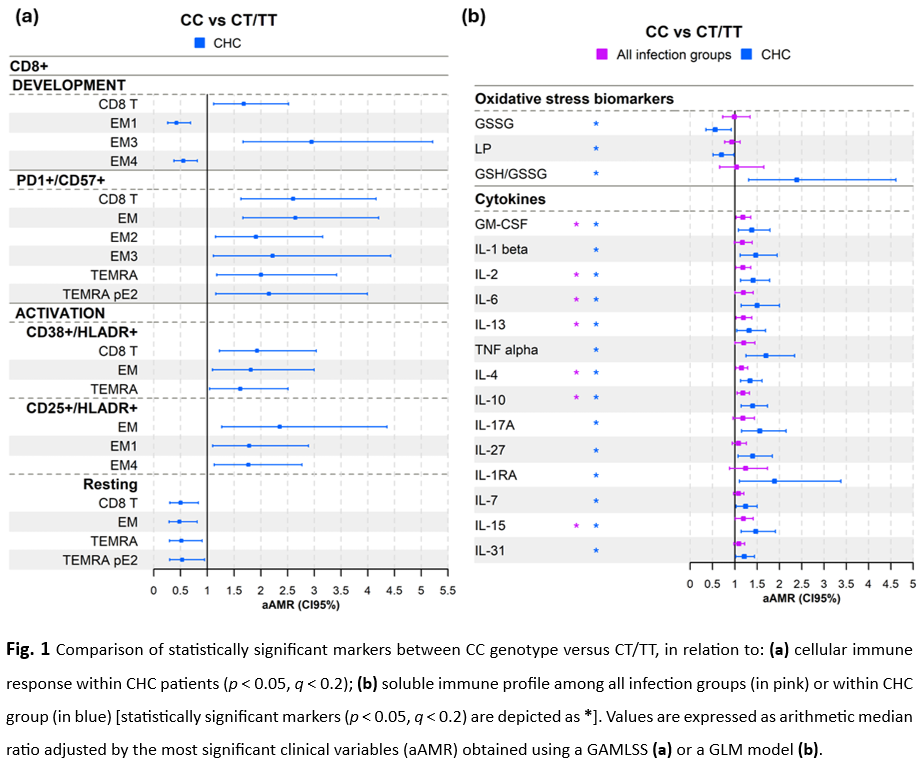
757. Semaglutide Improves Steatohepatitis in People With HIV: The SLIM LIVER Study
Poster Abstracts
Page: 220
Jordan E. Lake1, Doug Kitch2, Amy Kantor2, Rebeca Mayo3, Pablo Belaunzarán-Zamudio4, Carl Fichtenbaum5, Todd Brown6, Kathleen Corey7, Fred R. Sattler8, Kristine M. Erlandson9, the ACTG A5371 Protocol Team
Background
In general population adults with metabolic dysfunction-associated steatotic liver disease (MASLD) and non-cirrhotic liver fibrosis, the glucagon-like peptide-1 receptor agonist semaglutide (SEMA) improves steatohepatitis (MASH) but not liver fibrosis. The OWLiver metabolomics algorithm is validated against liver biopsy in general population cohorts and uses serum profiling to distinguish MASLD from No MASLD. Among persons with MASLD, it can also distinguish MASH and MASH with significant fibrosis (at-risk MASH) from No MASH. We previously reported that 24 weeks (W) of SEMA reduced magnetic resonance imaging (MRI)-quantified liver fat in people with HIV (PWH) that correlated strongly with weight loss. Here we report metabolomic profiles before and after SEMA.
Methods
In ACTG A5371, PWH >/= 18 years old on suppressive antiretroviral therapy (ART) with MRI-defined MASLD received SEMA 1mg sc weekly for 24 W. Of 51 participants, 36 US PWH with clinical response (>5 lb weight loss) to SEMA had serum analyzed by ultra-high performance liquid chromatography-mass spectrometry at OWL Metabolomics for OWLiver disease staging.
Results
Participants had: median age 52 years, BMI 34 kg/m2, 39% Hispanic ethnicity, 28% Black/African American race, 45% cis/trans female and 77% INSTI-based ART. At W0, OWLiver defined 69% as MASLD without MASH, 22% MASH and 3% at-risk MASH. Two PWH were re-classified as No MASLD (does not exclude early steatosis). After 24 W of SEMA, 31% of PWH and MASLD improved their disease severity category: 11% MASLD without MASH to No MASLD, 6% MASH to No MASLD, 11% MASH to MASLD without MASH and 3% at-risk MASH to MASH. However, 61% had no change in disease category and 8% worsened (latter despite steatosis improvement on MRI): 1 MASLD without MASH to at-risk MASH, 1 MASLD without MASH to MASH and 1 No MASLD to MASLD without MASH (Table).
Conclusions
Among PWH and MRI-defined MASLD, 24 W of low-dose SEMA led to significant improvement in MASLD disease severity in nearly 1/3 of participants and across all disease severity categories. While 61% did not change disease category, improvements within a category (such as from severe to mild MASLD) may have occurred. Studies of longer duration and higher dose SEMA for MASLD are needed to determine if additional benefit can be gained. Importantly, use of the OWLiver metabolomics algorithms provided evidence of improvement in predicted histology without a requirement for liver biopsy and should be considered for disease staging in PWH.
Table 1.

758. Evaluation of Different Noninvasive Models in Assessing Lean MAFLD Among PLWH
Poster Abstracts
Page: 220
Wei Xu1, Yinzhong Shen2
Background
This study aimed to investigate prevalence of lean metabolic associated fatty liver disease (lean MAFLD) in people living with HIV(PLWH) and the value of ten diagnostic models in MAFLD among PLWH.
Methods
Transient Elastography (Fibroscan), Controlled attenuation parameter (CAP) and ultrasonography were performed among PLWH. MAFLD was defined by the 2024 revised edition of the Chinese guidelines for prevention and treatment of MAFLD. Lean MAFLD was defined as a BMI<24kg/m2 in patients with MAFLD. The SteatoText (ST), fatty liver index (FLI), NAFLD-liver fat score (NAFLD-LFS), hepatic steatosis index (HSI), index of NAFLD(ION), ZJU index, NAFL screening score (NSS), K-NAFLD, visceral adiposity index (VAI) and Lipid Accumulation Product (LAP) were evaluated. The area under the receiver operating characteristic (AUROC) curve was used to evaluate the performance of them for diagnosing MAFLD.
Results
Among the 361 PLWH, 141 were diagnosis with MAFLD, with a prevalence of 39.05%. Out of these 361 patients, 111 were overweight (BMI≥24kg/m2), and 250 were non-overweight(BMI<24kg/m2). MAFLD affect 58(23.2%) in 250 lean PLWH. Among the overall population, the NSS had the highest AUROC of 0.887, followed by FLI (AUROC =0.880), ZJU (AUROC = 0.873), LAP (AUROC = 0.849), and ST (AUROC = 0.847). ION had the lowest AUROC with value of 0.744. In the non-overweight population, the AUROC of NSS was 0.868, suggesting moderate diagnostic value. However, among overweight or obesity population, it showed limited diagnostic value with AUROC of 0.736.
Conclusions
We found a non-negligible prevalence of MAFLD in lean PLWH. Models established on chemical and metabolic indicators provide no advantage for MAFLD diagnosis in PLWH, especially for overweight patients. PLWH should be prioritized for inclusion in global trials of MAFLD management.
Figure 1.
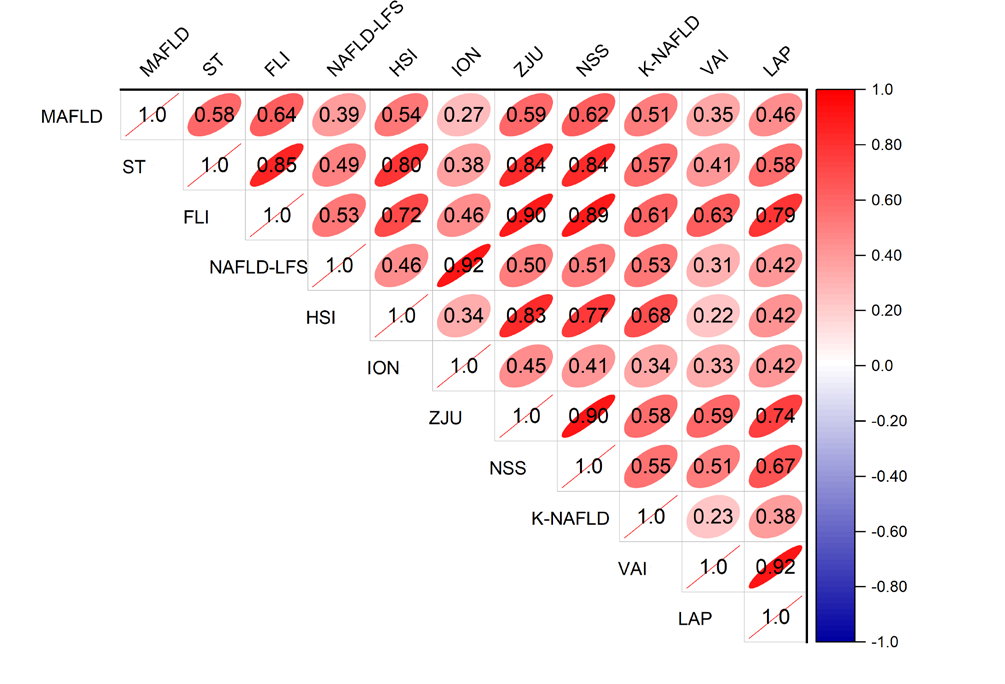
759. Effects of Semaglutide on Gut Microbiota in People With HIV: The SLIM LIVER Study
Poster Abstracts
Pages: 220-221
Stephanie M. Dillon1, Daniel N. Frank1, Charles E. Robertson1, Jennifer M. Kofonow1, Cara C. Wilson1, Alan Landay2, Todd Brown3, Fred R. Sattler4, Jordan E. Lake5, Kristine M. Erlandson1
Background
Metabolic dysfunction-associated steatotic liver disease (MASLD) is a prevalent comorbidity in people with HIV (PWH). Gut microbiota profiles such as lower diversity and/or alterations in microbiota community structure, have been variably associated with MASLD in people with and without HIV. Recent murine models of metabolic diseases, including MASLD, demonstrated beneficial effects of semaglutide on gut microbiota profiles and improved disease outcomes, though the effects on human gut microbiota are unknown. We previously demonstrated that semaglutide was highly effective in improving MASLD for PWH. Here we investigated the effects of semaglutide on the gut microbiome within that cohort.
Methods
SLIM LIVER, a single-arm, pilot study enrolled PWH ≥18 years old on suppressive antiretroviral therapy (ART) with MASLD. Participants received semaglutide 1 mg/week subcutaneously for 24 weeks. 16S rRNA and shotgun metagenomic sequencing was performed on stool collected at Weeks (W) 0 and 24. The treatment effects on microbiota were analyzed using generalized linear mixed modeling accounting for age, race/ethnicity, and gender identity (other demographic/clinical variables were not associated with microbiota at W0).
Results
51 people were enrolled; paired W0 and 24 stool samples were available from 42 participants (mean age 49 years, [SD 11]; BMI 35.4 [5.9] kg/m2; 35% cis and 7% trans female; 31% Black; 38% Hispanic/Latino; 79% on INSTI-based ART). Overall microbiota composition (β-diversity; GLMM-MiRKAT) differed between W0 and 24 at genus (P=0.002) and species levels (P=0.011). α-diversity increased (Shannon H, P=0.0075) over 24 weeks. Relative abundances of bacterial genera Clostridium and Enterococcus increased significantly (FDR<0.05). Anaerostipes, Ruminococcus-torques-group, and Lachnoclostridium significantly decreased. Metagenomic analysis identified an increase in Methanobrevibacter sp. (domain Archaea) over time (nominal p<0.05).
Conclusions
We provide first-in-human evidence that use of semaglutide alters gut microbiota profiles in PWH with MASLD. Potentially beneficial effects included increasing diversity and abundance of genera (e.g. Methanobrevibacter) where low abundance was associated with MASLD pathogenesis in people without HIV. However, we observed decreases in some bacteria (e.g. Lachnoclostridium) where low abundance was previously associated with MASLD in other populations. Thus, semaglutide treatment in PWH with MASLD had a range of impact on microbiota abundance.
760. Distinct Metabolic Perturbations Link Liver Steatosis and Incident CVD in Lean but Not Obese PLHIV
Poster Abstracts
Page: 221
Nadira Vadaq1, Louise E. van Eekeren1, Marc J. T. Blaauw2, Albert L. Groenendijk3, Wilhelm A. Vos4, Erni Nelwan5, Janneke Stalenhoef4, Marvin Berrevoets2, Mihai G. Netea1, Gert Weijers1, Joost Rutten1, Quirijn de Mast1, Eric Tjwa1, Leo Joosten1, the 2000HIV Human Functional Genomics Partnership Program
Background
Metabolic dysfunction-associated steatotic liver disease (MASLD) is a key risk factor for cardiovascular disease (CVD), potentially driven by shared metabolic mechanisms. However, the metabolic perturbations linking MASLD and CVD remains unexplored in people living with HIV (PLHIV).
Methods
We investigated subjects from the longitudinal multicenter 2000HIV study (NCT03994835), which included 1895 virally suppressed PLHIV on antiretroviral treatment. Of these, 970 participants had liver measurements. Liver steatosis (CAP > 263 dB/m) and fibrosis (LSM ≥ 7.0) were assessed using transient elastography with the controlled attenuation parameter (CAP). CVD history and new incidents within a two-year follow-up, including myocardial infarction, stroke, peripheral arterial disease, and angina, were extracted from medical records, while carotid artery plaques were assessed via ultrasonography. Mass spectrometry-based untargeted metabolomics (n=500 metabolites) and nuclear magnetic resonance spectroscopy for targeted lipoproteomics (n=246 metabolites) were used to analyze metabolic perturbations linked to MASLD and CVD.
Results
PLHIV with liver steatosis were more likely to have arterial plaques (47% vs. 36%; P-value = 0.003) and CVD history (11% vs. 6.8%; P-value = 0.021) than PLHIV without liver steatosis. These associations were more pronounced in lean PLHIV compared to those with BMI ≥ 25 kg/m2. Metabolic pathways associated with liver steatosis and fibrosis primarily involved lipid and amino acid metabolism (Figure 1); a finding validated by targeted lipoproteomic measurements. Notably, metabolomic pathways and lipoproteomic signatures associated with MASLD were mostly distinct from those associated with CVD parameters. However, several pathways were shared, especially in lean PLHIV (Figure 1), including arachidonic acid metabolism and formation of prostaglandin, purine metabolism, cholecalciferol metabolism, and glycine, serine, alanine- and threonine metabolism.
Conclusions
Metabolic disturbances linked to liver steatosis and CVD differ across BMI categories in PLHIV. Lean PLHIV with liver steatosis, unlike their overweight/obese counterparts, show common metabolic perturbation with future CVD events. This suggests a heightened CVD risk in lean PLHIV with liver steatosis, potentially opening avenues for interventions targeting the arachidonic acid metabolism, such as aspirin therapy, to mitigate this risk.
The figure, table, or graphic for this abstract has been removed.
761. Incidence and Impact of Hepatic Steatosis in People With HIV: Insights From the NA-ACCORD Cohort
Poster Abstracts
Page: 221
Jennifer Price1, Nina Kim2, Marina Klein3, Vincent Lo Re4, M. John Gill5, Michael Horberg6, Jennifer O. Lam7, Catherine Lesko8, Angel Mayor9, Richard Moore8, George Yendewa10, Giada Sebastiani3, the North American AIDS Cohort Collaboration on Research and Design (NA-ACCORD) of IeDEA
Background
Hepatic steatosis is an increasingly important comorbidity in aging people with HIV (PWH). Population-representative estimates of incidence, risk factors and association with liver-related events are not well understood. We evaluated the incidence of hepatic steatosis and its association with liver-related events and overall mortality within the NA-ACCORD.
Methods
Hepatic steatosis was defined using the hepatic steatosis index (HSI), a biomarker based on sex, liver aminotransferases, diabetes status, and body mass index. Steatosis was defined as an HSI >36. Adult PWH without viral hepatitis coinfection from 11 cohorts were followed from first HSI measurement after 1/1/2000 until first occurrence of a liver-related event (ascites, encephalopathy, variceal bleeding, or hepatorenal syndrome confirmed by adjudication), death, one year after last CD4 or HIV RNA, or 12/31/2015. We reported the incidence of and risk factors for hepatic steatosis and is association with liver-related events and overall mortality.
Results
20,903 PWH without viral hepatitis (mean age 39 yrs, 81% males) were included. The incidence rate (IR) of hepatic steatosis was 180 per 1000 person-years (PY) (95% CI 173-185). The IR was 188/1000 PY (95% CI 177-201) from 2000-2004, 206/1000 PY (95% CI 196-217) from 2005-2008, and 168/1000 PY (95% CI 162-174) from 2009-2015 (Figure). After adjusting for age, ethnicity, smoking, alcohol use, and dyslipidemia, hypertension was independently associated with a higher risk of hepatic steatosis (adjusted hazard ratio [adjHR] 1.41, 95% CI 1.22-1.62) as was antiretroviral therapy exposure (adjHR 1.09, 95% CI 1.02-1.16), and higher CD4 cell count was protective against hepatic steatosis (CD4 204-386: adjHR 0.85, 95% CI 0.78-0.93; CD4 387-585: adjHR 0.80, 95% CI 0.73-0.87; CD4 >585: adjHR 0.75, 95% CI 0.68-0.82). The IR of hepatic steatosis on liver-related events was 1.7/1000 PY (95% CI 1.5-2.0) and on death was 15.2/1000 PY (95% CI 14.4-15.9). Hepatic steatosis was not associated with liver-related events but was associated with overall mortality (adjHR 1.02, 95% 1.01-1.04), after adjusting for age, ethnicity, smoking, alcohol use, CD4 cell count, dyslipidemia, and hypertension.
Conclusions
Hepatic steatosis was prevalent among PWH in this large North American cohort but did not increase the risk of liver-related events. However, its association with overall mortality underscores the need for further research into the long-term health implications of hepatic steatosis in PWH.
Figure 1.
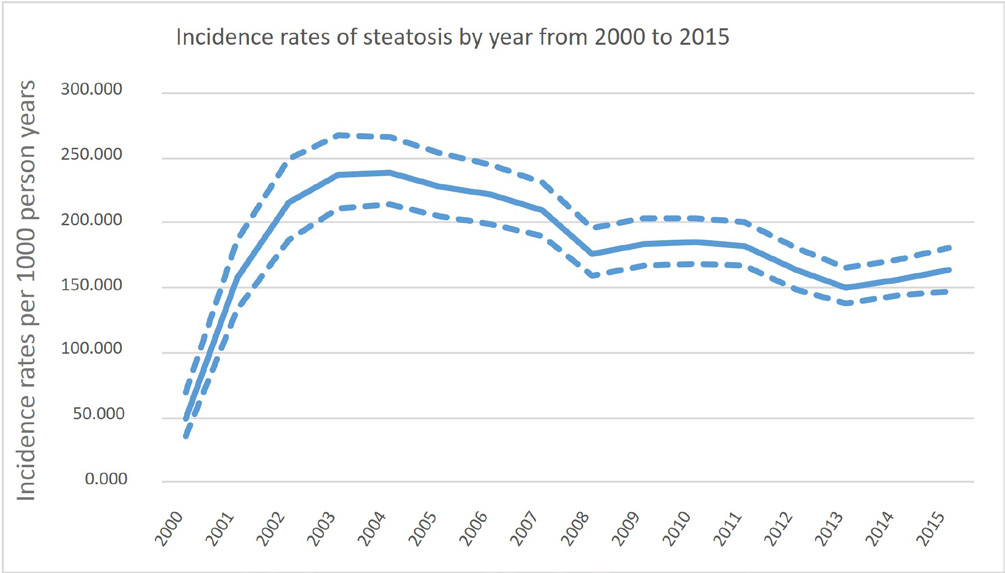
762. Determinants of Steatotic Liver Disease Among People With HIV in Europe and Australia
Poster Abstracts
Page: 222
Carlotta Riebensahm1, Wendy Bannister2, Josep M. Llibre3, Gilles Wandeler4, Lars Peters5, the RESPOND Study Group
Background
Given the increased prevalence of steatotic liver disease (SLD) in people with HIV, understanding its natural course and progression to liver fibrosis is crucial for guiding clinical management.
Methods
We assessed SLD and liver fibrosis in RESPOND participants from January 2012 to December 2022 using serological scores validated for people with HIV, excluding those with viral hepatitis and pregnant women. The Hepatic Steatosis Index (HSI) was calculated using gender, BMI, AST, ALT, and diabetes, and the Fibrosis-4 (FIB-4) Index using age, AST, ALT, and platelet count. Presumed SLD was indicated by a HSI of ≥36 as pre-established, and liver fibrosis by two consecutive FIB-4 scores of ≥3.25. We used multivariable logistic regression to evaluate factors associated with HSI ≥36 at first assessment. Incidence rates (IRs) of HSI ≥36 were calculated for participants with an initial HSI <36, and IRs of two consecutive FIB-4 ≥3.25 for those with HSI ≥36.
Results
Among 16,327 eligible participants, median age was 45 years (interquartile range [IQR] 36-53), with 3,935 (24.1%) being female, and 11,438 (70.1%) white. Median CD4+ count was 549cells/μl (IQR 379-741), 6,473 (39.6%) had a BMI ≥25kg/m², and 841 (5.2%) diabetes. The prevalence of HSI ≥36 at the first measurement was 31.9%, with 1.2% showing two consecutive FIB-4 ≥3.25. In multivariable analyses, the odds of having an HSI ≥36 increased with age up to 60 years and higher CD4 counts (Figure 1). Black participants had higher odds (adjusted odds ratio [aOR] 1.42; 95% CI 1.27–1.60) and Asian participants lower odds (aOR 0.56, 95% CI 0.44-0.72) compared to white. Hypertension (aOR 1.92, 95% CI 1.78–2.07), dyslipidemia (aOR 1.59, 95% CI 1.45–1.73), and current use of integrase strand inhibitors (InSTI) (aOR 1.22, 95% CI 1.05-1.41, vs. non-nucleoside reverse transcriptase inhibitors) were associated with higher odds of HSI ≥36. Among 11,114 participants with HSI <36 at first assessment, the median follow-up was 8 years (IQR 4.3-10.1), with a 6-months interval (IQR 4.3-8.1) between assessments. During 63,161 person-years of follow-up (PYFU), the IR for HSI ≥36 was 13.3 per 100 PYFU (95% CI 13.1-13.6). For those with HSI ≥36, the IR of subsequently having two consecutive FIB-4 ≥3.25 was 0.5 per 100 PYFU (95% CI 0.5-0.6).
Conclusions
Participants aged 50-59 years, black participants, and those with higher CD4 counts, metabolic comorbidities, or exposure to InSTI were more likely to have HSI ≥36. The progression to liver fibrosis was rare.
Figure 1.
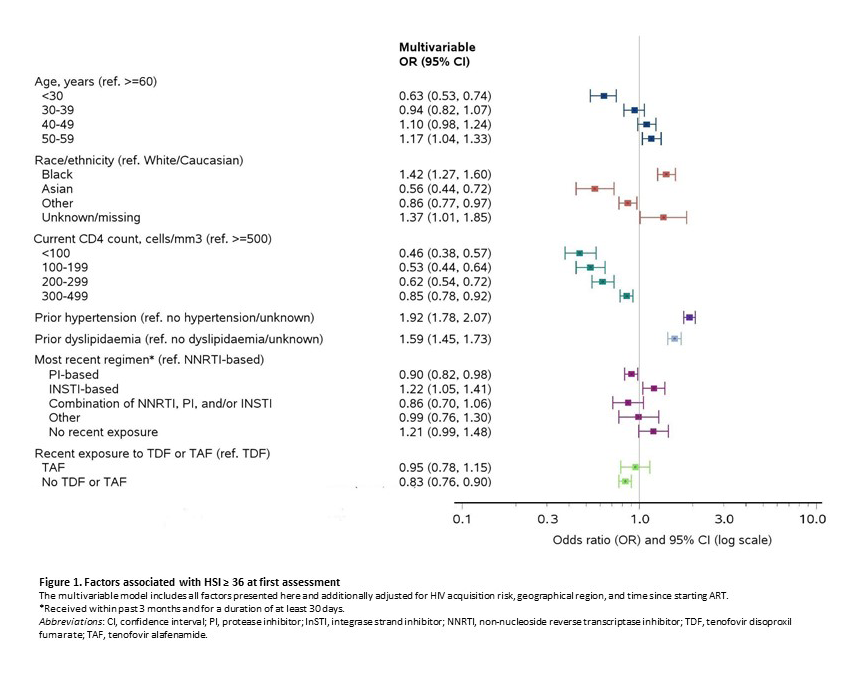
763. Diabetes Mellitus and Liver Disease Progression in PWH With Metabolic-Dysfunction Associated SLD
Poster Abstracts
Page: 222
Win Min Han1, Tanakorn Apornpong2, Natthaya Chuaypen3, Thin Phyu Phyu Aung4, Hein Minn Kyaw2, Porntep Amornritvanich5, Napon Hiranburana2, Hay Mar Su Lwin2, Akarin Hiransuthikul3, Stephen Kerr3, Pisit Tangkijvanich3, Anchalee Avihingsanon6, the HIV-NAT 006 Study Team
Background
We investigated the risk of liver stiffness progression and advanced liver fibrosis (LF) by diabetes mellitus (DM) status among people with HIV (PWH) and metabolic-dysfunction associated stetotic liver disease (MASLD).
Methods
PWH who had MASLD at their first vibration-controlled transient elastography or VCTE with both liver stiffness measurement (LSM) and controlled attenuation parameter (CAP) available (defined as baseline) and had >1 LSM over follow-up were included. MASLD was defined as the presence of liver steatosis (CAP ≥248 dB/m) with at least one cardiometabolic condition. Change in LSM from baseline (ΔLSM) was evaluated using a linear mixed-effects model, adjusting for age, sex, duration since DM diagnosis, body mass index (BMI), ALT and AST all fixed at baseline, time since first VCTE and time-varying exposure to INSTIs. An interaction term between time and baseline DM was included to assess the effect of DM on ΔLSM. Multivariable Poisson regression was used to evaluate the association between baseline DM and the incidence of LF (defined as LSM ≥8kPa).
Results
Among 345 PWH with MASLD included (35% female), median age was 48 (IQR, 43-54) years, median BMI was 25 (23-28) kg/m2 and median CD4 was 662 (500-826) cells/µL at baseline. 94% had HIV RNA <50 copies/mL and median antiretroviral therapy (ART) duration was 15 (7-18) years. Ninety-seven (28%) had DM at baseline, with a median DM duration of 16 (13-18) years. PWH with DM at baseline had higher FIB-4 (0.92 [0.69-1.26] vs. 0.76 [0.59-1.01]) and LSM (6.6 [5.4-8.2] vs. 5.5 [4.6-7.2] kPa). The median duration between the first and last VCTE measurements was 47 (42-61) months. In adjusted analysis, LSM declined over time with an average of -0.15 kPa/year (95%CI -0.28, -0.01, p=0.035). The ΔLSM over time was not associated with baseline DM (P-interaction=0.40). However, among 260 PWH-MASLD without LF at baseline, the risk of LF (incidence rate 3.7 [2.6-5.2]/100 person-years) was more than three times higher in those with baseline DM (adjusted incidence risk ratio [aIRR]: 3.35, 95%CI 1.67-6.75, P=0.001). There was no strong evidence suggesting the association between baseline DM and advanced LF risk differed by INSTI exposure (P-interaction=0.54).
Conclusions
Despite small decreases in LSM during follow-up, PWH with both MASLD and DM have a significantly higher risk of liver fibrosis. Prioritizing this population for treatments interventions may help mitigate liver disease progression.
Figure 1.
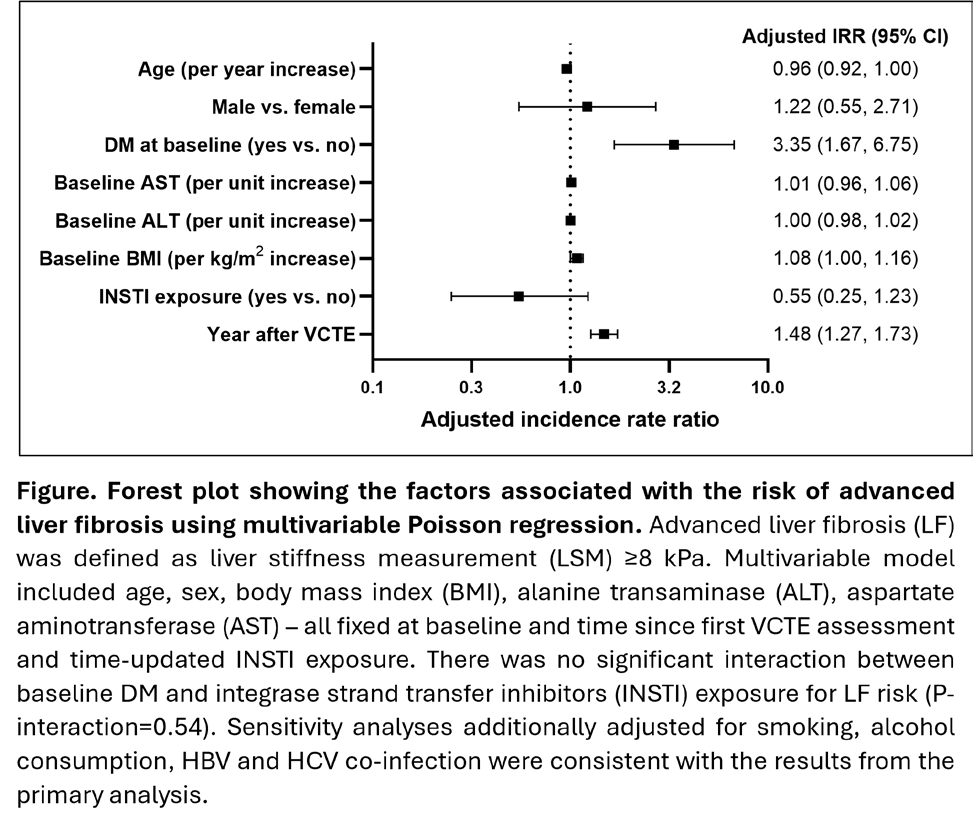
764. Switching to DTG/3TC vs BIC/FTC/TAF and Steatotic Liver Disease: A Sub-Study of PASODOBLE Trial
Poster Abstracts
Page: 223
Juan A. Pineda1, Jose L. Blanco2, Pere Domingo3, Mar Masiá4, Juan Tiraboschi5, Pilar Rincón6, Alexy Inciarte2, Paula Prieto3, Jordi Navarro Mercade, MD, PhD7, Luis M. Real6, Maria-Jesus Vazquez8, Marta De Miguel9, Esteban Martínez2, Juan Macias1, Adrian Curran10, the PASO-DOBLE Study Group
Background
Steatotic liver disease (SLD) is a common condition in PLWH, linked to overweight and associated metabolic disorders. Both INSTIs and TAF have been associated with weight gain in clinical trials and real-life studies. Likewise, TAF has also been associated with SLD. Controversial results have been reported regarding INSTIs and SLD. In virologically suppressed PLWH, switching to DTG/3TC is non-inferior to BIC/FTC/TAF and leads to less weight gain1. Therefore, switching to 3TC/DTG and to BIC/FTC/TAF could have different impacts on SLD. Our aim was to compare the effect of switching to 3TC/DTG vs. BIC/FTC/TAF on SLD in PLWH.
Methods
Patients from the open-label, randomized clinical trial PASODOBLE1 were analyzed in this sub-study if: 1) were recruited by centers equipped with a vibration-controlled transient elastography (VCTE) device including CAP, and 2) measurements fulfilling quality criteria were obtained. SLD was defined as a CAP≥248 dB/m. Analyses were planned at wks. 48 and 96. Continuous variables are expressed as median (Q1-Q3).
Results
Fifty-nine patients received DTG/3TC and 56 BIC/FTC/TAF. Baseline data of the patients are shown in table. At wk. 48, weight had increased by 0.45 (-1.5-3.1) kg in patients on DTG/3TC and by 1.20 (-1, 4) kg (p=0.356) in those on BIC/FTC/TAF. The corresponding figures for CAP changes were 5 (-17-24) dB/m and 6 (-12-31) dB/m (p=0.544). Among patients on DTG/3TC, 36% and 44% (p=0.225) showed SLD at baseline and at wk. 48, respectively. For those receiving BIC/FTC/TAF the corresponding data were 36% and 43% (p=0.248). Thirty-three (56%) PLWH on DTG/3TC and 32 (57%) on BIC/FTC/TAF (p=0.896) gained weight; in 12 (20%) and 18 (32%) (p=0.150), respectively, the increase was ≥5%. Among patients who gained weight, CAP rose by 5 (-21-25) dB/m in those who were on DTG/3TC and by 24 (-5-39) dB/m (p=0.192) in the BIC/FTC/ TAF arm. In this subset, the frequency of SLD increased from 30% at baseline to 36% at week 48 (p=0.564) in patients on DTG/3TC. The corresponding figures for those on BIC/FTC/TAF were 31% and 50% (p=0.034).
Conclusions
Switching to DTG/3TC or BIC/FTC/TAF is associated with a trend towards an increase in the frequency of SLD. Overall, no difference exists between both regimens after 48 wks. of therapy. However, in the subset of patients who gain weight after switching, those treated with BIC/FTC/TAF show a greater increase in the frequency of SLD compared to those receiving DTG/3TC.
1Martínez E, et al. 25th IACS. Munich 2024. Abstr OAB3606LB
Table 1.
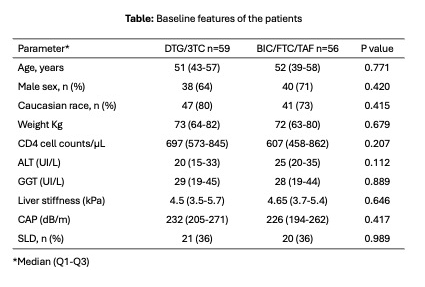
765. Liver Steatosis Progression With Integrase Inhibitors in HIV Adults in Low-/Middle-Income Countries
Poster Abstracts
Page: 223
Marie Kerbie Plaisy1, Thierry Tiendrebeogo1, Carlotta Riebensahm2, Mark Kuniholm3, Abert Minga4, Gilles Wandeler5, Rodrigo Moreira6, Ephrem Mensah7, Gad Murenzi8, Ardele Mandiri9, Sandra Wagner Cardoso6, Jean Paul Mivumbi8, Hugo Perazzo10, Antoine Jaquet1, the International Epidemiology Databases to Evaluate AIDS (IeDEA) Collaboration
Background
Integrase strand transfer inhibitor (INSTI)-based antiretroviral therapy (ART) regimens are widely used and linked to weight gain in some patients, potentially contributing to liver steatosis in people living with HIV (PWH). We assessed predictors of liver steatosis progression over 24 months in PWH from Low-and Middle-Income Countries (LMICs).
Methods
The Sentinel Research Network (SRN)-IeDEA is a multi-regional cohort of PWH ≥40 years, on ART for ≥6 months at enrollment. Participants from Brazil, Côte d’Ivoire, Rwanda, Togo and Zimbabwe with Controlled Attenuation Parameter (CAP) measured at baseline and at month 24 by transient elastography were included. Those with viral hepatitis co-infection or hazardous alcohol intake were excluded. Liver steatosis progression was defined as the development of steatosis (≥S1, CAP ≥248 dB/m) or transition to a higher grade (moderate, CAP ≥268 dB/m; severe, ≥280 dB/m) for those with a lower stage at baseline. Generalized linear mixed regression models assessed the association between INSTI exposure and liver steatosis progression. Confounding variables such as age, sex, BMI, and Type 2 diabetes (T2DM) were adjusted based on literature and directed acyclic graphs for optimal model adjustment. INSTI exposure and confounding factors were included as fixed effects, with participating country modeled as a random effect.
Results
A total of 883 participants (63% female, median age 50 years, IQR: 45–56) were included. At baseline, 56% had a BMI ≥25 kg/m², 11% had T2DM, 94% had HIV RNA <1,000 copies/mL, and 51% were on INSTI-based ART, with 84% for <2 years. Baseline liver steatosis prevalence ranged from 15% (95% CI, 10–21) in Togo to 49% (95% CI, 37–62) in Brazil. Over 2 years of follow-up, the incidence of progression was 10.2 (95% CI, 8.6–11.7) per 100 person-years. No association was found between INSTI exposure and liver steatosis progression (Table), while a positive association was noted with T2DM (aOR 1.87, 1.08-3.21) and a BMI ≥25 kg/m² (aOR 4.54, 2.94 –7.02) at baseline.
Conclusions
INSTI exposure was not associated with liver steatosis progression over 24 months. Preexisting metabolic disorders, including T2DM and overweight/obesity, were predictors of liver steatosis progression, emphasizing the need for targeted prevention strategies. While INSTIs can enhance health outcomes for many PWH, long-term monitoring is crucial, particulary for those at risk for metabolic disorders.
Table 1.
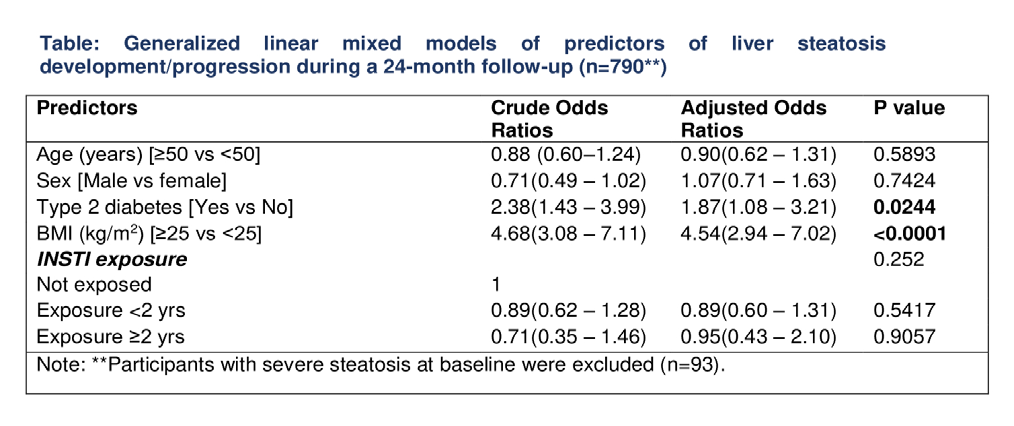
766. Lipidomics of Metabolic Dysfunction-Associated Steatotic Liver Disease Post-HCV Eradication in PWH
Poster Abstracts
Pages: 223-224
Juan Berenguer1, Rubén Martín-Escolano2, Belén Paula Fernández Requena2, Ana Virseda-Berdices2, Juan González-García3, Carolina González-Riano2, Cristina Diez1, Victor Hontañón3, Teresa Aldámiz-Echevarría1, Coral Barbas2, Salvador Resino2, María Angeles Jiménez-Sousa2
Background
Although sustained virologic response (SVR) following direct-acting antiviral (DAA) therapy is a key goal in treating hepatitis C, some patients continue to experience liver disease progression despite HCV clearance. Metabolic dysfunction-associated steatotic liver disease (MASLD) may contribute to this progression. This study aims to characterize the lipidomic profiles linked to MASLD in HIV/HCV-coinfected patients with advanced fibrosis or cirrhosis at 1 and 6 years (yrs) after DAA-induced SVR.
Methods
Fifty-two HIV/HCV-coinfected patients with advanced fibrosis or cirrhosis who achieved SVR following DAA therapy were included. Untargeted lipidomic profiling was performed on plasma samples collected at 1 yr (n=52) and 6 yrs (n=29) post-SVR using liquid chromatography-mass spectrometry. The primary outcome was MASLD, defined by a Hepatic Steatosis Index ≥36 and the presence of at least one adult cardiometabolic risk factor. Statistical analyses included orthogonal partial least squares discriminant analysis (oPLS-DA) and generalized linear models (GLM), with corrections for multiple comparisons.
Results
MASLD prevalence was 28.9% at 1 yr and 44.8% at 6 yrs post-SVR. oPLS-DA models showed that lipid profiles successfully differentiated patients based on MASLD status, identifying 225 plasma lipids at 1 yr and 167 at 6 yrs, with a variable importance in projection (VIP) score ≥1. Adjusted GLMs confirmed significant associations between MASLD and 116 lipids at 1 yr and 49 at 6 yrs. At 1 yr, over 75% of significant lipids were glycerophospholipids (GP), with increased phosphatidylcholines (PC) and phosphatidylethanolamines (PE) and decreased lysophosphatidylcholines (LPC) and lysophosphatidylethanolamines (LPE) in MASLD patients. By 6 yrs, LPC remained the most abundant differential lipid within the GP category. Additionally, LPE, lysophosphatidylinositols, and fatty acids decreased, while triglycerides significantly increased at 6 yrs.
Conclusions
MASLD was common during follow-up in this cohort, with lipidomic profiles indicating significant changes over time. Increases in PCs and triglycerides, alongside decreases in LPCs and LPEs, suggest ongoing metabolic disturbances that may contribute to liver disease progression despite SVR. These findings highlight the potential role of lipid dysregulation in the pathogenesis of post-SVR liver disease, emphasizing the need for long-term metabolic and liver health monitoring in HIV/HCV-coinfected patients with advanced fibrosis or cirrhosis.
Figure 1.
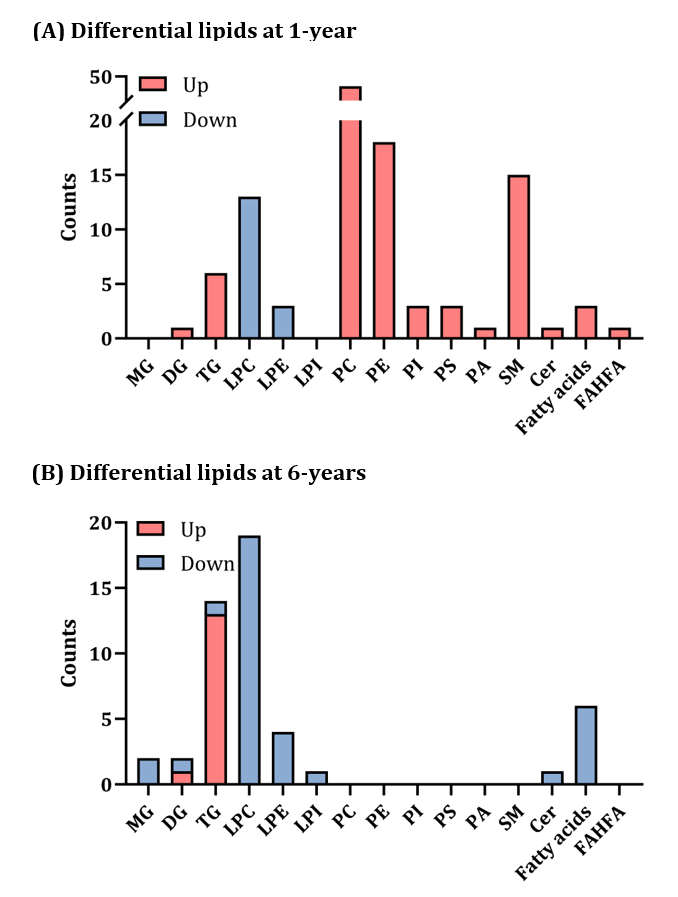
767. Changes in Antiviral Treatment Eligibility With the New WHO 2024 Guidelines in Senegal
Poster Abstracts
Page: 224
Bruce Shinga S. Wembulua1, Judicaël Malick Tine1, Ndeye Fatou Ngom1, Ousseynou Ndiaye2, Melissa Sandrine Pandi2, Messan Akotia2, Moussa Seydi1, Gilles Wandeler3, Adrià Ramírez Mena3
Background
The updated Word Health Organization (WHO) 2024 guidelines are expected to significantly increase the proportion of people living with HBV (pwHBV) eligible for antiviral treatment (AVT) compared to the WHO 2015 guidelines. We compared AVT eligibility under both guidelines at enrollment and assessed the proportion of pwHBV who became eligible during the first year of follow-up in SEN-B, a prospective general population cohort of pwHBV in urban Senegal.
Methods
We analyzed all treatment-naïve pwHBV with negative HIV antibodies from the SEN-B cohort. We compared liver stiffness measurement (LSM)-based AVT eligibility (LSM-E) and AST to Platelet Ratio Index (APRI)-based eligibility (APRI-E) between WHO 2024 and WHO 2015 guidelines at time of enrollment. Furthermore, we assessed the proportion of pwHBV who were ineligible at enrolment but who became eligible during the first year of follow-up under WHO 2024 criteria. The proportion of participants eligible under different guidelines were compared using McNemar's chi-squared test.
Results
Of 748 treatment-naïve SEN-B participants, 396 (52.9%) were men, 734 (98.1%) had a negative HBe antigen test, and the median age was 31years (IQR: 25–38). At enrollment, LSM-E was 6.3% for WHO 2015 and 34.8% for WHO 2024 criteria (p<0.001), whereas APRI-E was 5.1% for WHO 2015 and 29.8% for WHO 2024 criteria (p<0.001, Figure 1). Whereas with WHO 2015 guidelines only 2.6% of pwHBV were eligible for AVT due to liver cirrhosis (LSM >12.5 kPa), this proportion increased to 11.1% with the new WHO 2024 cut-off (LSM >7 kPa). Using APRI-based criteria, eligibility rose from 0.8% under WHO 2015 (APRI >2) to 4.5% under WHO 2024 (APRI >0.5). With the WHO 2024 guidelines, 64 (8.6%) pwHBV became newly eligible based on family history of hepatocellular carcinoma, and 61 (8.1%) on comorbidities, including 3 (0.4%) due hepatitis delta virus infection, 18 (2.4%) due to diabetes, and 40 (5.3%) due to liver steatosis. Among 535 participants ineligible for AVT at enrolment, 52 (9.7%) additional pwHBV became eligible based on LSM-E under WHO 2024 guidelines during the first year of clinical follow-up.
Conclusions
Treatment eligibility increased under WHO 2024 guidelines compared to WHO 2015 but remained well below the projected 50%. Monitoring AVT eligibility during the first year of follow-up should be planned for those who are ineligible the first time.
768. Continuum of Hepatitis B Surface Antigen Expression Among PWID and MSM Living With HIV in India
Poster Abstracts
Pages: 224-225
Talia A. Loeb1, Mihili Gunaratne1, Hussain Syed Iqbal2, Mark Anderson3, A. K. Srikrishnan2, Allison M. McFall1, Gregory M. Lucas4, Mary Rodgers3, Muniratnam S. Kumar2, David Thomas4, Ashwin Balagopal4, Shruti H. Mehta1, Sunil S. Solomon4, Gavin Cloherty3, Chloe Thio4
Background
Functional hepatitis B virus (HBV) cure is defined by clearance of HBV surface antigen (HBsAg) from blood and occurs more often in people with HIV and HBV (PWHHB) taking tenofovir-based antiretroviral therapy (ART) than people with HBV mono-infection on tenofovir. This suggests that HBsAg “clearance” is not binary but occurs across a continuum of immunological control that is reduced by HIV and restored by ART.
Methods
We tested stored baseline plasma specimens from a cohort of 2314 people who inject drugs (PWID) and men who have sex with men (MSM) living with HIV enrolled as part of a cluster-randomized trial. Specimens were tested for HBV biomarkers using the ARCHITECT platform including core antibody (anti-HBc) and surface antibody (anti-HBs) and HBV DNA (Abbott RealTime HBV viral load). HBsAg was measured using the ARCHITECT HBsAg Next Qualitative assay, which at a signal-to-cutoff (S/Co) of 1 has a sensitivity of 0.005 IU/ml (compared to ~0.05 IU/ml in most commercially available assays). We examined the association of HBsAg above (S/Co >10) and below (S/Co 1-10) the threshold with detection of anti-HBs and HBV DNA. Multivariable logistic regression identified correlates of detectable HBV DNA.
Results
Overall, 257 participants of 2198 tested had a positive anti-HBc and an HBsAg Next S/Co ≥1, of whom median age was 31 years; 28% were initiated on ART (for a median of 137 days), and 16% had undetectable HIV RNA (<150 c/mL). Median CD4+ T cell count was 379 cells/µl. 34% (n=87) had an HBsAg Next S/Co 1-10 and may have been classified as negative by most commercially-available HBsAg assays. 73/87 (84%) had HBV DNA results available; 37% (n=27) had detectable HBV DNA (Figure). Prevalence of anti-HBs in those with S/Co 1-10 was 23% vs 5% in those with S/Co of ≥10 (p<0.001). In the group with S/Co 1-10, compared to undetectable HBV DNA, those with detectable DNA had higher S/Co values for anti-HBc (aOR 1.57, 95% CI 1.26-1.95) and were less likely to be on ART at baseline (aOR 0.10, 95% CI 0.02-0.64). There was no association with anti-HBs or CD4+ T cell count.
Conclusions
These data support the paradigm that functional cure of HBV is not binary but represents a continuum of the quantity of HBsAg in plasma. This may partially explain why functional cure is gained (and lost) more often in PWHHB and that the phenomenon of occult HBV (in which HBV DNA is detected in plasma without HBsAg) may actually represent low level expression of HBsAg.
Figure 1.
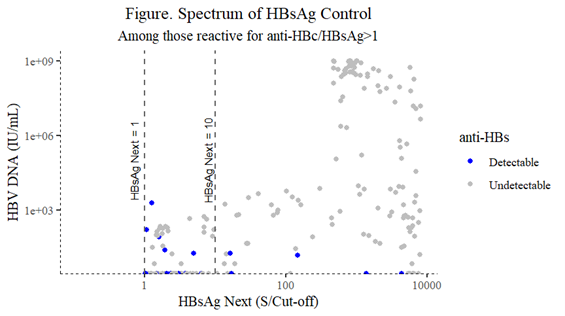
769. HBsAg Seroclearance in HBV-Coinfected People With HIV in the Era of Tenofovir-Containing Therapy
Poster Abstracts
Page: 225
Chien-Ching Hung1, Yu-Shan Huang2, Hsin-Yun Sun2, Li-Hsin Su2, Yi-Ching Su2, Wen-Chun Liu2, Sui-Yuan Chang3
Background
Long-term tenofovir-containing antiretroviral therapy (ART) achieves durable suppression of HIV and HBV, but its effect on functional cure of HBV infeciton in people with HIV (PWH) remains unclear. We aimed to determine the incidence of and factors associated with hepatitis B surface antigen (HBsAg) loss after treatment with tenofovir-containing ART in HBV-coinfected PWH.
Methods
Between 2011 and 2023, antiviral-naïve HBV-coinfected PWH seeking HIV care at the National Taiwan University Hospital and receiving tenofovir-containing ART as their initial antiretroviral regimen were retrospectively reviewed. HBV serologic markers and plasma HBV DNA were measured annually after ART initiation. Factors associated with HBsAg seroclearance were analyzed using the Kaplan-Meier method and Cox proportional hazards models. Clinical outcomes were compared between PWH with and those without HBsAg seroclearance.
Results
A total of 161 HBV-coinfected PWH were enrolled. The median age of the included PWH was 36 years (range 31-41) and 142 (88.2%) were men who have sex with men. Sixteen (9.9%) PWH were born in the era of nationwide, universal neonatal HBV vaccination that has been implemented since July 1986. After a median of 7.8 years (range, 3.7-9.6) of follow-up, 15 (9.3%) PWH achieved HBsAg loss. Kaplan–Meier estimates showed that the cumulative incidence of HBsAg seroclearance was significantly higher in PWH born in the era of universal neonatal HBV vaccination and those with HBsAg ≤250 IU/mL (Figure). Using multivariate Cox proportional hazards models, being born in HBV vaccination era (adjusted hazard ratio [aHR] 14.756; 95% confidence interval [CI] 2.953-73.735, p=0.001) and havinr a baseline HBsAg level ≤250 IU/mL (aHR 9.027; 95% CI 2.640-30.871, p<0.001) were associated with HBsAg seroclearance after adjusting for age at enrollment, baseline CD4 count, plasma HBV DNA load, and HBeAg serostatus. None of the PWH with HBsAg seroclearance developed cirrhosis of the liver or hepatocellular carcinoma (HCC), while 7.8% and 1.4% of PWH without HBsAg seroclearance developed cirrhosis and HCC, respectively.
Conclusions
In the era of tenofovir-containing ART, HBsAg seroclearance was uncommon in HBV-coinfected PWH. The statistically significant association between neonatal HBV vaccination history and HBsAg loss suggested that PWH who acquired HBV infection through horizontal transmission route may have a higher probability for functional cure of HBV infection.
The figure, table, or graphic for this abstract has been removed.
770. Hepatitis B Reactivation PWH With Isolated Anti-Core Pattern on Therapies Excluding Tenofovir
Poster Abstracts
Page: 225
María del Mar Arcos-Rueda1, Alejandro de Gea Grela2, Luis Ramos3, Carmen Busca2, Rafael Mican2, Rocío Montejano Sanchez3, Maria Luisa Montes2, Jose Ignacio Bernardino2, Rosa De Miguel Buckley2, Jose R. Arribas2, Juan González-García3, Luz Martín-Carbonero3
Background
The isolated anti-core pattern (antiHBc+, antiHBs-, HBsAg-) is more frequently observed in people living with HIV (PWH). It suggests a past hepatitis B virus (HBV) infection; however, it can also indicate an occult HBV infection, which implicates a risk of viral reactivation. Historically, antiretroviral (ART) regimens containing tenofovir (TXF) have effectively suppressed HBV replication, reducing the risk of reactivation. However, dual HIV therapy regimens now commonly exclude TXF or other drugs with direct anti-HBV activity. The aim of this study was to evaluate the incidence of HBV reactivation in PWH with isolated anti-core pattern who are treated with dual ART regimens lacking TXF: DTG+3TC, DTG+RPV, or CAB+RPV-LA.
Methods
Cross-sectional, single-center study including PWH with a history of isolated anti-core pattern who attended the HIV clinic between April and September 2024. All participants were on dual ART regimens without TXF. HBV serologies (antiHBc, antiHBs, HBsAg) and HBV-DNA levels were measured. Informed consent was obtained from all participants, and the study was approved by the Hospital La Paz Ethics Committee for Medical Research. Results are presented as absolute numbers (%) or medians (interquartile range, IQR).
Results
Of 4219 PWH in our cohort, 9.8% (417) had an isolated anti-HBc pattern, and 32.6% (136) of them were on TXF-free ART regimens. The isolated anti-core pattern was confirmed in 77 of the 123 participants enrolled in the study (56 DTG+3TC; 13 DTG+RPV; 8 CAB+RPV-LA). The median age was 59 years (56-62), and 80% were male. The majority (96.7%) were Caucasian, and 81.6% had a history of cured hepatitis C infection. The median nadir CD4 count was 200 cells/mL (45-301), and the median duration on ART was 24 years (18-27). Among the 21 participants on regimens without HBV-active drugs, no cases of HBV reactivation were observed after a median time on the regimen of 3.6 years (1.1-4.6). The median duration of therapy with DTG+3TC was 3.6 years (2.4-4), and no HBV reactivation was detected in any participant. Only one participant (1/56) on DTG+3TC exhibited a transient HBV-DNA blip (29 IU/mL), which was not confirmed in a follow-up sample.
Conclusions
Our findings suggest that the risk of HBV reactivation in PLHIV with isolated anti-core patterns who are treated with TXF-free dual ART regimens is extremely low after more than 3 years of follow-up. This holds true even for regimens that do not have direct anti-HBV activity, such as DTG+RPV and CAB+RPV-LA.
Figure 1.
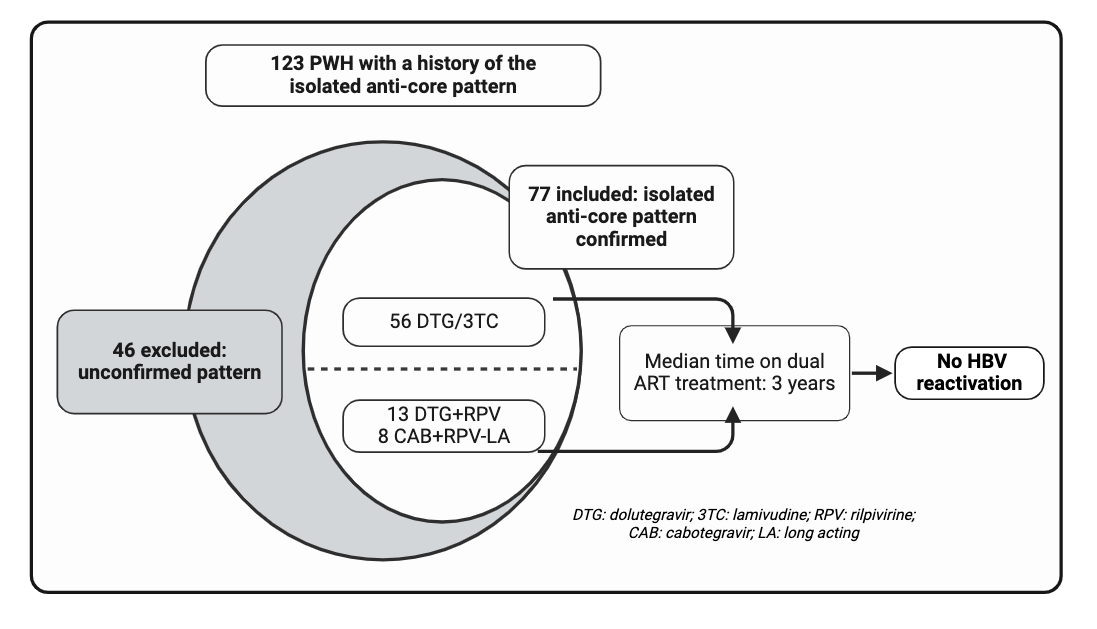
771. HBV Reactivation Post-Switch to HBV-Inactive ART: A Scoping Review
Poster Abstracts
Pages: 225-226
Kyle Ring1, Chloe Orkin1, Milosz Parczewski2, Marta Boffito3, Federico Garcia4, Anna Maria Geretti5
Background
HBV reactivation in people living with HIV and evidence of past HBV infection is an important consideration when evaluating the risk/benefit of discontinuing HBV-active ART in favor of other treatment regimens. We aimed to summarize available evidence on reactivation risk after switching to HBV-inactive regimens, and to identify predictors that may guide clinical practice.
Methods
We searched electronic databases (PubMed, Embase, 1996-2024) and conference abstracts (2021-2024) for studies and case reports describing HBV reactivation in treated people switching to tenofovir-free ART. Reactivation was defined as HBsAg and/or HBV DNA detection by routine diagnostic assays in individuals who tested HBsAg negative and anti-HBc positive pre-switch. Reactivation in the context of ART interruption was excluded.
Results
We identified 7 studies and 8 case reports. Pre- and post-switch HBV investigations were variable in routine care. Studies reported 133 reactivations among 11731 switches (1.1%), with two US cohorts contributing most data; 2854/11731 allowed post-switch use of 3TC/FTC and only one reported accordingly, noting no reactivations over 144 weeks among 71 people on DTG/3TC. There were 99 reactivations among 6093 switches to HBV-inactive ART (1.6%), with proportions ranging from 1.5% to 10% across studies (Table 1). In studies and case reports, the earliest detection of HBsAg and/or HBV DNA ranged from 1 month to 14 months post-switch. Reactivations were typically less commonly with pre-switch anti-HBs ≥10 IU/L (range 0-11%) compared with lack or loss of anti-HBs (3.2-14%). Reactivations occurred across a wide range of CD4 counts and HIV viral loads. The risk was higher with HIV viremia, lower CD4 counts, nadir CD4 counts <100 cells/mm3, and HBV DNA detection by ultrasensitive PCR pre-switch. Reactivations were variably associated with ALT increases. Acute hepatic flares typically resolved after re-introduction of HBV-active agents, with HBsAg and/or HBV DNA loss documented within 2-5 months.
Conclusions
Moderate-to-low quality evidence indicates that HBV-inactive ART carries a low but notable risk of HBV reactivation in people with a past HBV infection. Risk factors include lack or loss of anti-HBs, low current or nadir CD4 counts and detectable HBV DNA pre-switch, while detection of HBsAg and/or HBV DNA post-switch signals a heightened risk of hepatic flares. Standardization of pre- and post-switch HBV monitoring practices remains a critical need.
Table 1.
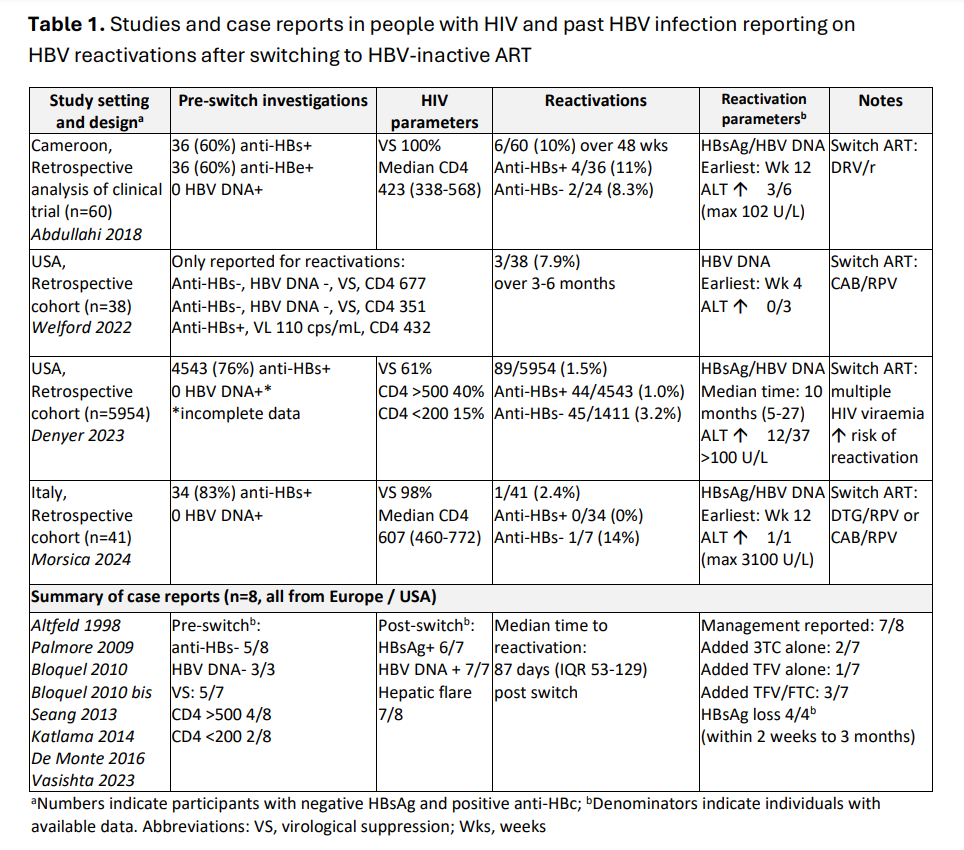
772. Outcomes in HIV-Hepatitis B Coinfection Without Tenofovir-Containing Antiretroviral Therapy
Poster Abstracts
Page: 226
Amir Mohareb1, Patrick Miailhes2, Julie Bottero3, Caroline Lascoux-Combe4, Julie Chas5, Sarah Maylin6, Audrey Gabassi7, Hayette Rougier8, Emily Hyle1, Constance Delaugerre4, Karine Lacombe9, Anders Boyd10
Background
As two-drug antiretroviral therapy (ART) and long-acting injectable ART become more commonly prescribed forms of HIV treatment, some people with HIV-hepatitis B virus (HBV) coinfection may soon be transitioned off tenofovir-containing ART. We characterized HBV virological and serological outcomes in people with HIV-HBV who discontinue or never initiate tenofovir.
Methods
We conducted a secondary analysis of data from the prospective French HIV-HBV Cohort Study of participants with a minimum of 6 years of follow-up. We divided participants into three treatment groups: (1) continuous tenofovir; (2) discontinued tenofovir; (3) never initiated tenofovir. We examined virological and clinical characteristics during follow-up, including virological relapse (HBV DNA >2000 IU/mL) and aminotransferase elevation (ALT >2x upper limit of normal). We determined factors associated with these clinical endpoints during the follow-up without tenofovir using univariable logistic regression with generalized estimating equations.
Results
Among 192 participants, 161 (83.9%) were on continuous tenofovir, 22 (11.5%) discontinued tenofovir, and 9 (4.7%) never initiated tenofovir during a median follow-up of 14.5 years (IQR=10.5-14.8). The median proportion of within-participant visits with undetectable HBV DNA was 96.0% (IQR=75.0-100) in the continuous group (while on tenofovir), 100% (IQR=84.0-100) in the discontinued tenofovir group (while off tenofovir), and 100% (IQR=95.2-100) in the never initiated tenofovir group. Determinants of HBV DNA >2000 IU/ mL among people off tenofovir were detectable HIV RNA (p=0.041), lower CD4+ T-cell count (p=0.027), HBeAg-positive serology (p=0.004) and positive anti-hepatitis D antibody (p=0.001). ALT elevation was associated with positive anti-hepatitis C antibody (p=0.012). HBV surface antigen loss occurred in 5 of 22 (23%) participants who discontinued tenofovir and 5 of 9 (56%) participants who never initiated tenofovir.
Conclusions
This proof-of-concept study shows that select people with HIV-HBV coinfection may not necessarily lose virological control of HBV when off tenofovir, and some of them achieve HBV surface antigen loss. HBV virological activity while off tenofovir may be associated with uncontrolled HIV infection and positive HBeAg serology.
Figure 1.
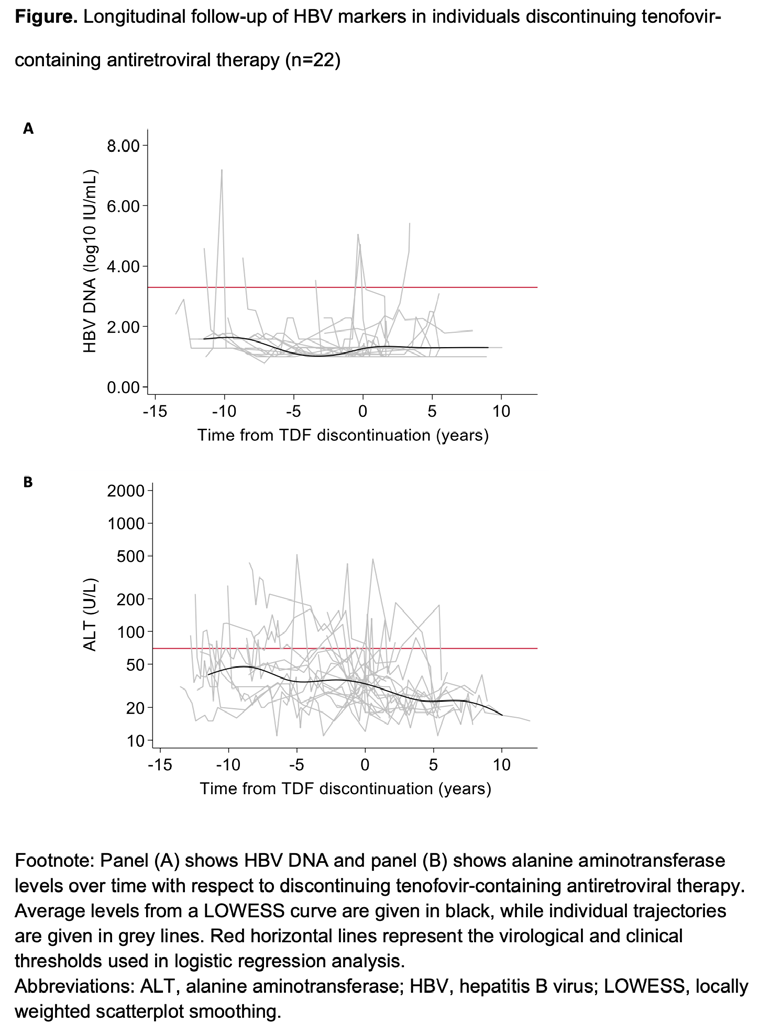
773. WITHDRAWN
Poster Abstracts
Page: 226
774. Increased Detection of HBV DNA and Mutational Analysis in HBsAg Negative Specimens at NHLS/DGM
Poster Abstracts
Page: 227
Nondumiso A. Nkosi1, Omphile E. Simani2, Gloria S. Selabe2
Background
The disease burden associated with Hepatitis B (HBV) necessitates accurate diagnosis and it is important for effective disease management and prevention. The standard approach to HBV diagnosis is hepatitis B surface antigen (HBsAg) screening. However, the rising detection of HBV DNA in HBsAg negative specimens indicates a challenge. The underdiagnosis of HBV due to reliance on HBsAg screening poses a significant public health risk, as individuals with undetected HBV infection unknowingly transmit the virus. Moreover, these individuals remain at risk of liver disease progression without appropriate intervention. Addressing this diagnostic gap is critical for improving patient outcomes, enhancing the accuracy of HBV surveillance, and reducing the overall disease burden associated with HBV. The aim of this study was to investigate HBV DNA and mutations in HBsAg negative specimens at Dr George Mukhari National Health Laboratory Services (NHLS/ DGM).
Methods
The study included 444 stored residual serum samples that tested negative for HBsAg during routine diagnosis, from March 2021 to May 2022 at National Health Laboratory Services, Dr George Mukhari (NHLS/DGM). Majority (33%) of the samples were from the 20-29 age group. Two hundred and fourteen (68%) were females. HIV status was known in 158 of 320 samples, of which 92% (146/158) were HIV positive and 8% (12/158) were HIV negative. HBV DNA was detected using real-time polymerase chain reaction (rt-PCR) with a 45 IU/ml (252 copies/ml) detection limit. Subsequently, conventional PCR was performed to amplify and sequence the surface region.
Results
Sixty-nine of 444 (16 %) samples tested positive for HBV DNA. Of these, 28 (41%) had viral loads (VL) below 200 IU/ml with a median VL of 80 IU/ ml [61 IU/ml -129 IU/ml], while the remaining 41 (59%) had VL above 200 IU/ml with a median VL of 688 IU/ml [383 IU/ml -7101 IU/ml]. Sequences mutational analysis identified L209V as the most prevalent mutation in 61.3% of sequences, along with D144A causing epitope conformational changes. Immune escape mutations, influencing HBsAg antigenicity such as D144A, Y100C, P142L, N131S and P120T were identified. Genotyping identified six sequences as genotype A1, 20 genotype A2, and four genotype G.
Conclusions
These findings suggest revising HBV diagnostic criteria, recommending that diagnosis should not solely rely on HBsAg screening. Alternatively diagnostic assays, as cost effective as HBsAg screening but with more sensitivity are needed.
775. HBV Seroconversion in People With HIV: Relevance of Clinical History and Viral Markers Monitoring
Poster Abstracts
Page: 227
Marianna Menozzi1, Adriana Cervo, MD2, Gianluca Cuomo1, Mattia Simion2, Alessandra Soffritti2, Lorenzo Piermatteo3, Stefano D'Anna3, Romina Salpini3, Valentina Svicher3, Cristina Mussini2
Background
Treatment including tenofovir disoproxil (TDF) or alafenamide (TAF) is the standard of care in people living with HIV/HBV infection. Serum HBV-RNA is an emerging biomarker reflecting the activity of intrahepatic HBV reservoir. The aim of the study was to describe HBV seroconversion (HBV-S) rate in HIV/ HBV subjects on HBV-active therapy and to analyse markers of HBV activity after achieving HBsAg loss.
Methods
HIV/HBV individuals attending Modena HIV Clinic since 1985 with at least two HBV serology measurements and a follow-up (FU) of at least 6 months were included. Anti-HBV regimens during FU were collected. HBV-S was defined as HBsAb>10UI/ml in presence of HBsAg loss. HBV-DNA and -RNA were quantified in subjects with HBsAg loss by highly-sensitive assays based on digital droplet PCR (LLOQ: 1IU and 2IU/ml, respectively) at last available FU. Subjects were compared according to HBV-S using univariate analysis and multivariate logistic regression.
Results
Overall, 163 HBV/HIV subjects were included (77% males, 31% intravenous drug users, HIV and HBV duration of 16 [IQR 9-25] and 10 [IQR 5-19] years, respectively) (Table 1): 32 (20%) had HBsAg loss and 19 (12%) had HBV-S (incident rate: 0.26 per 10,000 PYFU). HBV-S occurred more frequently if positive HCV-Ab (p=0.004), in liver transplant recipients (p=0.016) and on TDF-based regimen (p=0.013). Individuals without HBV-S had shorter exposure to TAF (p=0.025) and more frequently past AIDS events (p=0.011). HBV-DNA and –RNA were available for 15(47%) subjects with HBsAg loss (8 with also HBV-S): of those, 12(80%) had residual HBV activity. In detail, 4(33%) had a positivity to both HBV-DNA and -RNA and 8(67%) to HBV-RNA alone. Notably, higher rate of positive HBV-RNA was found in subjects with HBV-S (8/8 [100%] vs 4/7 [57%], p=0.038). HCV co-infection was associated with HBV-S (adjusted OR 6.4, 95% CI 2.2-19.1, p=0.001), while history of AIDS reduced the probability of HBV-S (aOR 0.1, 95%CI 0.01-0.61, p 0.016). No association with any HBV active regimen was found.
Conclusions
One out of 10 individuals with HIV/HBV co-infection in our cohort reached HBV seroconversion, in line with literature. Previous AIDS-related events did not favour seroconversion, while HCV co-infection seemed to be associated with the outcome. A residual HBV activity persisted despite HBsAg loss during active HBV therapy: tenofovir discontinuation should be carefully evaluated in those patients and, if pursued, a proper monitoring of HBV markers should not be missed.
Table 1.
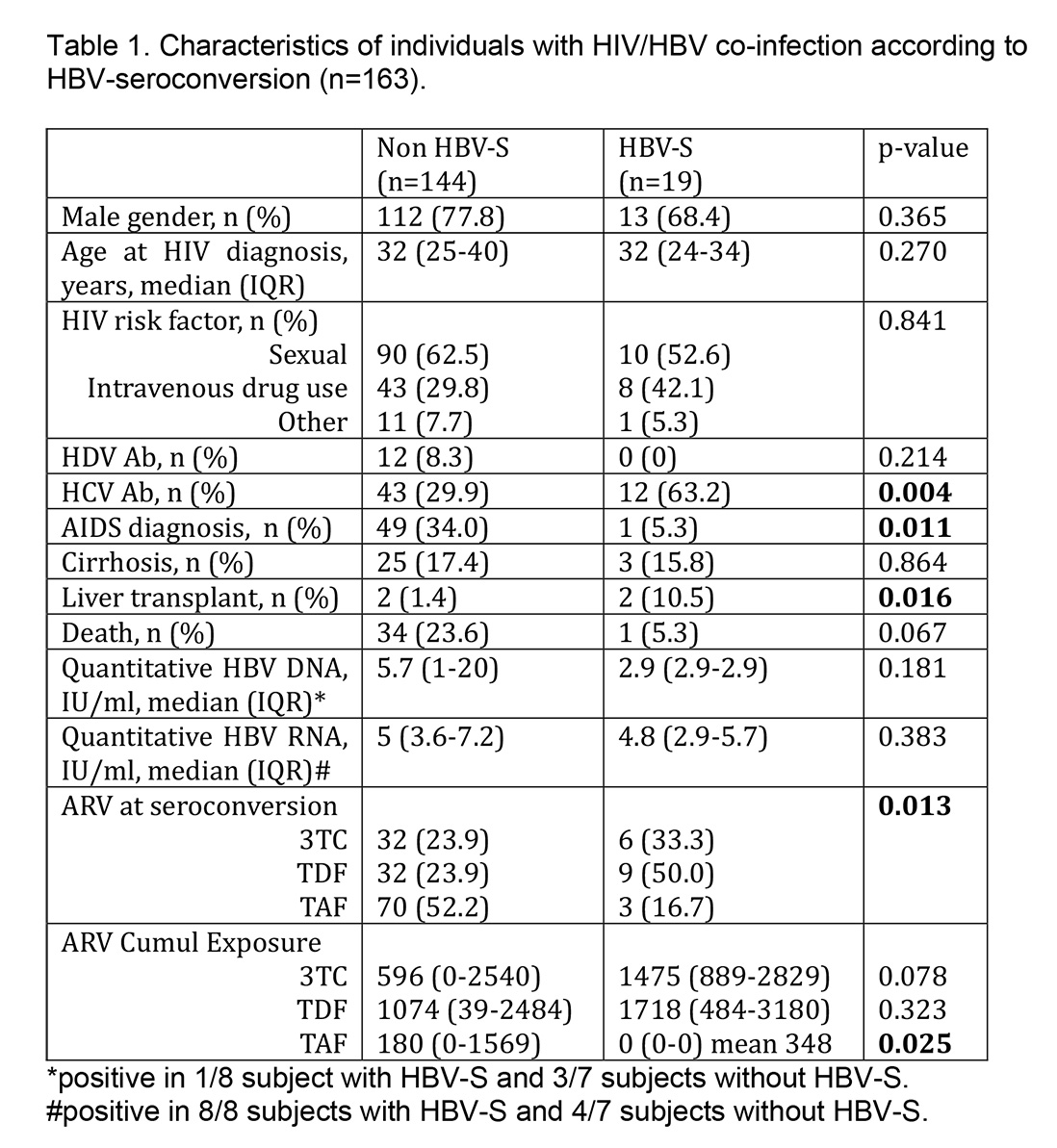
776. Performance Evaluation of the Xpert Hepatitis B Molecular Test Among Pregnant Women in Uganda
Poster Abstracts
Page: 228
Viola Kasone, Judith A. Kyokushaba, Proscovia Namuwenge
Background
To prevent child-mother-to-child transmission of hepatitis B (HBV PMTCT), the World Health Organization recommends HBV screening among pregnant women, testing for HBV DNA, prophylactic antivirals, and hepatitis B birth dose vaccination to newborns. Uganda is utilizing its existing HIV platforms to integrate Hepatitis B services as part of the triple-elimination strategy. While HBV screening has improved, from 12% in 2020 to 57% in 2023, there are critical gaps in subsequent steps. Limited access and long Turn Around Time for Hepatitis B Viral load testing results is a barrier to PMTCT in Uganda. The 2024 HBV guidelines recommend the use of point-of-care HBV viral load assays as an alternative approach to centralized testing. This study aims to assess the performance and operational characteristics of Xpert® HBV Viral Load as a point-of-care assay among HBV-positive pregnant women in Uganda.
Methods
We assessed the use of the Xpert® HBV assay for HBV by comparing the accuracy of the Xpert® HBV test to the standard COBAS TaqMan, using 50 archived samples, comparing levels of agreement, sensitivity, and specificity between the two platforms. Then, we implemented the Xpert® HBV test in 10 clinics in Uganda to evaluate operational characteristics, the turnaround time from sample collection to when treatment is offered. Stata 17 was used for this data analysis.
Results
The Xpert® assay showed perfect agreement with the COBAS TaqMan, achieving a sensitivity of 100% (95% CI: 90%-100%) and a specificity of 100% (95% CI: 78.2%-100%), with a coefficient of R=0.99. Currently, 71 pregnant women have tested positive for HBV and all have received Xpert® HBV test. The median viral load results turnaround time from sample collection to results release is less than 1 hour. 20% (14/71) of women had a viral load above 200,000IU/ml and were started on Tenofovir (TDF) prophylaxis on the same day, 3% (2/71) had between 20,000 IU/ml and 200,000 IU/ml, 77% had <20,000 IU/ ml including target not detected. All the women with high viremia >200,000 IU/ml are being followed for adherence to TDF prophylaxis until 12 weeks post-delivery. All babies receive HBV birth dose as part of universal vaccination.
Conclusions
Using Xpert® HBV could be a valuable tool for improving linkage to HBV prophylaxis in pregnant women. The success of this study could lead to a wider use of this test in Uganda, and optimizing HBV PMTCT service delivery.
777. The Impact of HIV Infection on All-Cause Mortality Among Individuals Treated for HBV in Rwanda
Poster Abstracts
Page: 228
Jean Damascene Makuza1, Dahn Jeong1, Richard L. Morrow2, Prince A. Adu2, Marie Paul Nisingizwe1, Alpamys Issanov1, Georgine Cua2, Héctor A. Velásquez García2, Janvier Serumondo3, Albert Tuyishime3, Joseph Puyat1, Alnoor Ramji1, Michael Law1, Naveed Z. Janjua1
Background
Chronic hepatitis B virus (HBV) infection increases the risk of severe liver diseases such as cirrhosis, hepatocellular carcinoma, non-liver complications, and mortality. HIV co-infection contributes to the acceleration of liver disease progression, leading to greater mortality risk compared to HBV mono-infection. We evaluated the crude all-cause mortality rates among people with chronic HBV on treatment and assessed the impact of HBV/HIV co-infection on all-cause mortality.
Methods
A retrospective cohort study was conducted using data extracted from the Rwandan District Health Information System 2, which includes information on HBV screening, diagnosis, treatment, follow-up, and treatment outcomes. Rwandans diagnosed with HBV infection, age ≥ 2 years, who received treatment between January 2016 and June 2023 were considered in the analysis. Individuals were followed from the HBV testing date until death or end of the study period (June 30, 2023). We computed crude mortality rates and used multilevel Cox proportional hazard regression accounting for clustering by hospital adjusting for socio-demographic, and clinical characteristics to assess the impact of HBV/HIV co-infection on all-cause mortality.
Results
Overall, 4,849 people received HBV treatment during the study period (4,011 with HBV mono-infection and 838 with HBV/HIV co-infection) and were followed for a median of 3.8 (interquartile range 2.8) years. During follow-up, 58 deaths occurred, yielding an overall crude mortality rate of 2.76 per 1,000 person-years (PY). The mortality rate for people with HBV/HIV co-infection was higher than that for those with HBV mono-infection (4.30 vs 2.30 per 1,000 PY, respectively). In the multilevel model, HBV/HIV co-infection was associated with a higher hazard of all-cause mortality (adjusted hazard ratio 2.00, 95% confidence interval: 1.02, 3.92).
Conclusions
Among people in Rwanda who received HBV treatment, HBV/ HIV co-infection was associated with mortality risk. Moreover, HIV co-infection was associated with increased mortality risk. These findings underscore the critical importance of closer follow-up of individuals with HBV/HIV co-infection. Further studies could explore the role of HIV viral load suppression on all-cause mortality among individuals with HBV/HIV co-infection.
Figure 1.
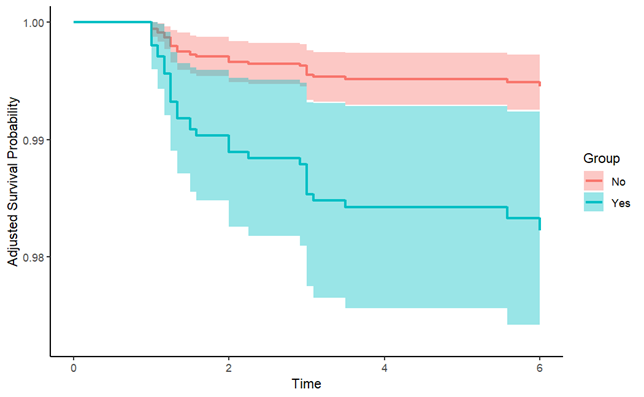
778. HeCaPred: An AI-Based Algorithm for HCC Prediction in Patients With HCV Chronic Infection After SVR
Poster Abstracts
Pages: 228-229
Anaïs Corma-Gómez1, Jose M. Moyano2, Francisco Tellez3, Miriam Serrano-Fuentes4, Luis Enrique E. Morano Amado5, Diana Corona-Mata6, Miguel Nicolás Navarrete Lorite7, Francisco Jesús Vera-Méndez8, Isabel Barroso9, Rosario Palacios10, Ignacio de los Santos11, Olga Belinchon12, Juan A. Pineda2, Juan Macias2, the GEHEP-011 Study Group
Background
Achieving sustained virological response (SVR) reduces the risk of liver decompensation and hepatocellular carcinoma (HCC) in patients with chronic hepatitis C virus (HCV) infection and advanced liver disease. Life-long HCC surveillance is recommended after HCV cure, but its cost-effectiveness is uncertain, especially in the context of HIV co-infection, where data remain scarce.
Methods
Multicenter prospective study conducted in the GEHEP-011 cohort (17 hospitals) in Spain. Inclusion criteria: patients with HCV chronic infection with and without HIV co-infection who: 1) Liver stiffness (LS) pre-DAA≥9.5 kPa; 2) SVR with DAA-based therapy; 3) LS measurement at SVR. Individuals with HBsAg positive, active alcohol consumption (>50g/day) and those with prior hepatic complications were excluded. The main endpoint was the occurrence of de novo HCC. The population was split as follows: 67% for model discovery, 33% for validation. A novel ad-hoc AI algorithm was developed to identify patients at low risk of HCC. Such an algorithm builds a binary tree model, where the best feature and its respective value for the cut-off at each tree node was automatically chosen by maximizing a trade-off between the sensitivity (Se) and negative predictive value (NPV), regarding only the classification made by that node.
Results
1.033 patients were included, 597 (58%) were living with HIV. The median (Q1-Q3) follow-up was 91 (69-102) months. Variables included in the model were: i) At SVR time-point: age, LS, FIB-4, GGT, albumin; ii) At 12 months post-SVR: fasting plasma glucose, GGT and LS. In the discovery population (n=691) the diagnostic performance of the model was: Se=100% (85%-100%), VPN=100% (99%-100%). No HCC were diagnosed in patients classified in the low-risk group. In this subset, HCC surveillance could have been stopped in 370 (53%) individuals. The Harrell's C index (HCI) was 0.834. In the validation set (n=341) these figures were: Se=91% (59%-100%) and VPN=99% (97%-100%). 183 (54%) individuals were classified in the HCC low-risk subgroup. One of them developed HCC [incidence=0.08 (95% CI, 0.01-0.58) per 100 person-year]. The HCI was 0.857.
Conclusions
A simple model, based on accessible parameters measured at SVR time-point and 12 months afterwards, can identify patients, living or not with HIV, with very low risk of HCC emergence after HCV cure. The incidence of HCC in subjects considered at low risk falls below the threshold of 1.0%, for which HCC surveillance is considered not cost-effective.
Table 1.
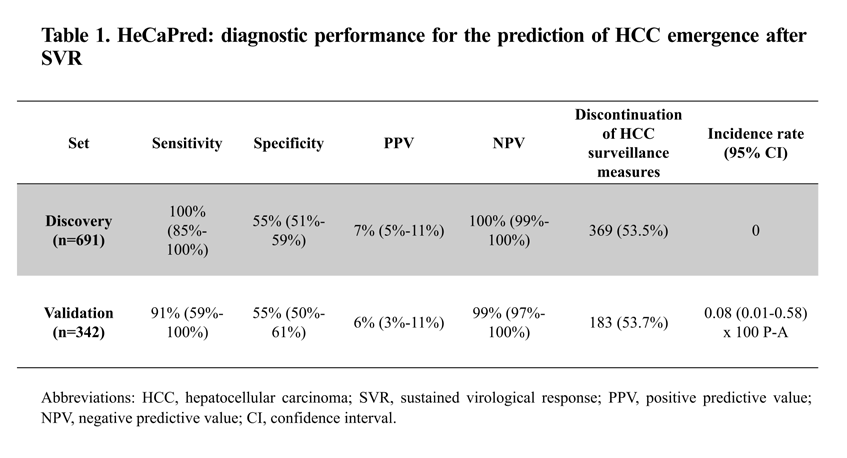
779. A New Point-of-Care Ultrasound Protocol for Chronic Hepatitis B and HBV/HIV Coinfection in Zambia
Poster Abstracts
Page: 229
Antonella Castagna1, Annie Kanunga2, Edford Sinkala3, Enock Syabbalo4, Helen Chitundu4, Carolyn Chibundi2, Guy K. Muula5, Samuel Bosomprah2, Giulia Morsica1, Costanza Bertoni6, Claudia Wallrauch7, Tom Heller7, Michael J. Vinikoor2
Background
Point-of-care ultrasound (POCUS) has emerged globally as inexpensive tool used by various healthcare professionals. We evaluated the accuracy of a novel point-of-care liver ultrasound protocol for hepatitis (PUSH) in detecting significant fibrosis, cirrhosis, and suspicious liver lesions in Zambia.
Methods
We performed a real-world validation of the PUSH at University Teaching hospital in Lusaka, Zambia, from March to June 2024. Four nurses and 6 physicians with no experience in ultrasound (US) were trained over 3 days to visualize 3 liver windows (epigastric, subcostal, and right transverse), identify 4 cirrhosis-suggestive features (enlarged caudate lobe, nodular liver surface, coarse echotexture, tortuous vascularity), and liver lesions suspicious for hepatocellular carcinoma. Post-training, consecutive adult participants (PTs) with chronic hepatitis B (CHB) alone or HBV/HIV underwent PUSH. We excluded PTs with currently/recently pregnancy or known hepatitis C. Paticipants underwent reference standard tests (RST, transient elastography, fibroscan) for significant fibrosis or cirrhosis: liver stiffness, LS>7.0 kPa and LS>12.5 kPa, respectively. Reference standard for lesions was abdominal US by an experienced radiographer. Nonparametric analysis of ROC curve for PUSH was adjusted for operator type (doctor vs. nurse), sex, and HIV status.
Results
202 PTs were included in the study including 57 (28%) with HIV (see Table 1 for characteristics). According to RSTs, 30% of PTs had significant fibrosis, 12% had cirrhosis, and 4% had liver lesions. PUSH had low accuracy in detecting significant fibrosis, with sensitivity of 28.3% (17.5 – 41.4), specificity of 99.3% (96.1 – 100), and an overall ROC area under the curve (ROC-AUC) of 0.64 (0.57 – 0.70), and moderate accuracy for cirrhosis, with sensitivity of 56% (34.9 – 75.6), specificity of 97.7% (94.3 – 99.4), and ROC-AUC of 0.77(0.70 – 0.82). Higher accuracy was seen for liver lesions, with 85.7% (42.1–99.6) sensitivity, 93.5% (88.9 - 96.6) specificity, ROC-AUC of 0.90 (0.84 - 0.94).
Conclusions
Newly-trained nurses and physicians in Zambia were able to use PUSH to diagnose cirrhosis with moderate accuracy and liver lesions with high accuracy in people with CHB with and without HIV coinfection. PUSH could be a useful, inexpensive tool to rapidly assess advanced liver disease and eligibility for HBV treatment in low-income settings where laboratory systems are lacking.
Table 1.
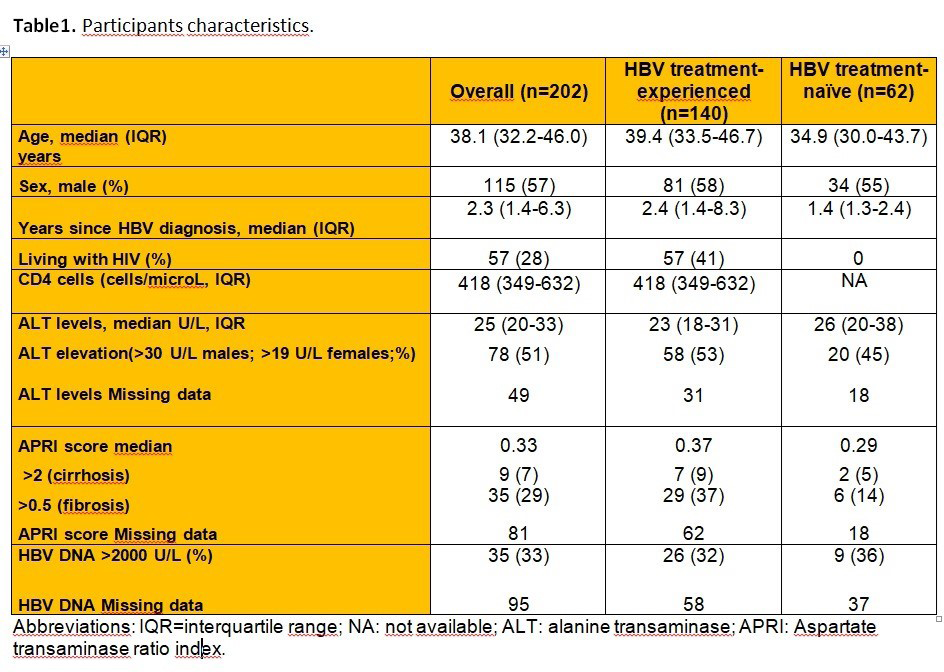
780. High Prevalence of Triple Infection (HIV/HBV/HDV) Among Key Populations With HIV in India
Poster Abstracts
Page: 229
Hussain Syed Iqbal1, Talia A. Loeb2, Mark Anderson3, Mihili Gunaratne2, A. K. Srikrishnan1, Mary Rodgers3, David Thomas4, Allison M. McFall2, Rifa T. Khan1, Ashwin Balagopal4, Gregory M. Lucas4, Shruti H. Mehta2, Chloe Thio4, Gavin Cloherty3, Sunil S. Solomon4
Background
Globally, ~ 9% of people with HIV (PWH) are co-infected with hepatitis B virus (PWHHB). Mortality, particularly liver-related mortality, is several-fold higher among PWHHB compared to PWH despite being on antiretroviral therapy (ART). Hepatitis D virus (HDV) further accelerates disease progression and hepatocellular carcinoma risk among PWHHB. Limited data exist on the burden of HDV in PWHHB, especially in key populations such as people who inject drugs (PWID) and men who have sex with men (MSM) who bear a disproportionate burden of HIV and HBV.
Methods
We tested stored baseline specimens among PWID and MSM living with HIV who were recruited as part of a 16-city cluster randomized trial in India (~150 PWH per city). For inclusion, all participants needed evidence of HIV and ≥50% of the cohort was ART naïve at baseline. All specimens were screened for evidence of HBV infection (ARCHITECT HBsAg Next) and positives reflexed for anti-HDV (Research Use Only ARCHITECT HDV Total Ig). Prevalence of HIV/ HBV co-infection and triple infection (HIV/HBV/HDV) were calculated overall, by population and city. Chi squared and Kruskal Wallis tests were used to compare variables including the Signal/Cutoff (S/Co) of HBsAg between participants with triple vs. co-infection.
Results
2304 participants (PWID=1195 and MSM=1109) were enrolled between 2017-2018. Median age of PWID and MSM participants was 30 and 32 years; 13% of PWID were women. Overall, HIV/HBV co-infection prevalence was 12% and higher in PWID vs. MSM (14% vs 9%; p<0.01). In PWID with HIV/HBV co-infection, prevalence of anti-HDV was 16%; prevalence by city ranged from 0 to 36%. More frequent injection, needle sharing, and heroin injection were associated with triple infection compared to HIV/HBV co-infection; there was no association with HIV RNA or ART use. The S/Co of HBsAg was significantly higher among those with triple infection (median: 1880 vs. 107; p<0.01). In MSM with HIV/HBV infection, prevalence of triple infection was 4% (city range: 0-10%). There were no correlates associated with triple infection vs. co-infection in MSM
Conclusions
The high prevalence of HDV infection among PWHHB, especially PWID, is particularly alarming given its role in accelerating liver disease. The correlation with HBsAg levels supports the dependence of HDV on HBsAg to replicate. These data underscore the importance of routine screening for anti-HDV, and HBV vaccine scale-up in high burden settings to avert not only HBV infection, but also HDV infection.
781. WITHDRAWN
Poster Abstracts
Page: 229
782. Simulation Modeling of Hepatitis B Virus Disease Progression, Hepatitis Flares, and Functional Cure
Poster Abstracts
Page: 230
Amir Mohareb1, Virginia Talbot1, Arthur Y. Kim1, Maya Hajny Fernandez1, Anders Boyd2, Kenneth A. Freedberg1, Emily Hyle1
Background
Nearly 300 million people have chronic hepatitis B infection (HBV), which can result in hepatic complications (e.g., cirrhosis and hepatocellular carcinoma [HCC]) and mortality. Our objective was to develop and validate an HBV simulation model to examine disease progression, treatment, and cure.
Methods
We developed an HBV simulation model with nine health states: HBV-uninfected; no fibrosis; moderate/severe fibrosis; cirrhosis; HCC; end-stage liver disease; hepatitis flare (ALT >3x upper limit of normal); HBV surface antigen (HBsAg) loss; and death. We incorporated anti-HBV effects of tenofovir as lowering incidence of fibrosis, cirrhosis, HCC, and hepatitis flare. Input parameters included: progression to fibrosis or cirrhosis (0.3-2.5/100 person-years [PYs]), incidence of HCC (0.05-0.42/100 PYs), hepatitis flares (2.0-10.0/100 PYs), and functional cure (1.0/100 PYs). We modeled the risk reduction with tenofovir for fibrosis/cirrhosis (0.37), HCC (0.59), and hepatitis flares (0.15). Model outcomes included the cumulative incidence of fibrosis, cirrhosis, HCC, HBsAg loss, and survival. We simulated the benefits of tenofovir therapy and the effects of tenofovir cessation for a cohort with HBV genotype B or C and mean starting age of 40 years. We also validated the model to simulate HCC incidence in a population of African origin.
Results
Consistent with data from the Western Pacific region, 10-year cumulative incidence of fibrosis, cirrhosis, and HCC in untreated HBV would be 27.5%, 7.3%, and 1.0%, respectively. Uninterrupted tenofovir therapy would reduce liver-related complications and improve 10-year survival for an adult cohort with genotype B or C (97.7% v. 95.1% without treatment). After tenofovir cessation, people would have an increased risk of hepatitis flares (53% over 12 months) but a higher rate of HBsAg loss (1.9% at 12 months), consistent with HBV treatment cessation studies. Model validation produced equivalent HCC projections to a published cohort of people of African origin (10-year cumulative incidence 2.33% v. 2.45%, root-mean-square error 0.126).
Conclusions
We developed and validated an HBV simulation model that incorporates the impact of treatment and its cessation on clinical outcomes; when used in conjunction with established HIV models, it can also be used to simulate HIV-HBV coinfection. This model will help to address clinical and policy questions such as HBV cure, the risks and benefits of tenofovir cessation, and pre-exposure HIV prophylaxis.
Table 1.
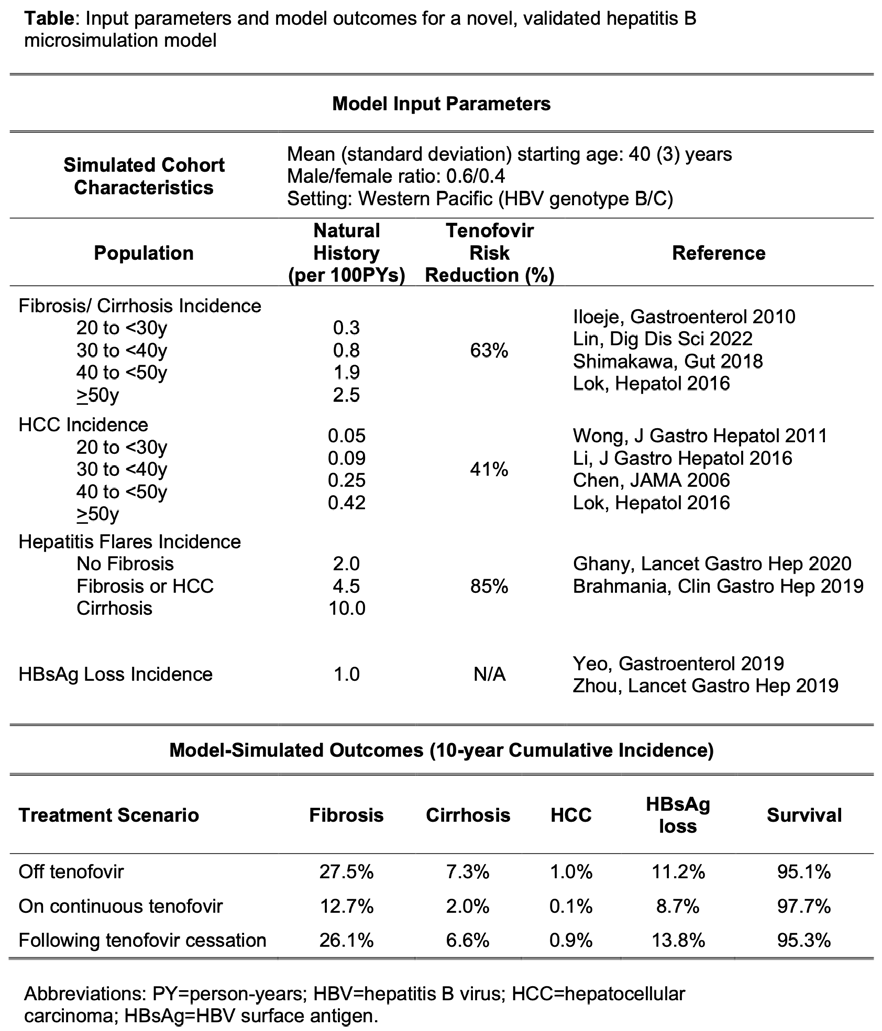
783. HIV/HCV Coinfection: Extracellular Vesicles Modulate NK Functionality in Relation to Liver Fibrosis
Poster Abstracts
Page: 230
Ariel A. Osegueda1, Alan Adamczyk1, Luz Leicaj1, Leonel Cruces1, Lucía Baquero1, Paula Benencio2, Tomas Langer1, Virginia Gonzalez Polo1, Matías Ostrowski1, Natalia Laufer1
Background
Plasma extracellular vesicles (pEV) play a role modulating the immune response. In HIV/HCV coinfection, NK cells are crucial in eliminating activated hepatocellular stellate cells, responsible for progression to liver fibrosis (LF). We previously showed that in individuals with advanced LF (F4), NK cells presented an exhausted phenotype and impaired functionality even after elimination of HCV by direct-acting antivirals (DAA). Here, we aimed to characterize the effect on NK cell functionality of pEV from individuals with HIV/ HCV and mild (METAVIR score F0/F1) or advanced LF (F4). We hypothesized that F4 pEV will have a negative impact on NK cells functionality.
Methods
pEV were purified by size exclusion chromatography from 2 mL of plasma from F0/F1 (n=5) and F4 (n=5) individuals at baseline (before DAA), EoT (end of treatment) and >= 1 year after successful treatment and from healthy controls (n=4). pEV were resuspended in 60 uL of PBS. PBMC were isolated from healthy donors and incubated for 1 hour with 30 uL of pEV suspension from each condition before conducting the NK cell functionality assay. After pEV incubation, PBMC (1x10⁶) were cocultured with K562 at a 10:1 ratio (1:1 NK:K562) for 2 hours. NK cell degranulation was evaluated by FACS analysis of CD107a, CD3, CD56 expression and a cell viability marker. We report NK relative degranulation as the ratio between NK CD107a+ in each condition and NK CD107a+ in absence of pEV. Data was analyzed using nonparametric statistics.
Results
We found that pEV from all participants, including healthy donors, consistently reduced NK CD107a expression, compared to NK cells in the absence of pEV. However, pEV from individuals with advanced liver fibrosis exhibited a higher suppressive effect on NK cell functionality than those from healthy donors (0.70 vs 0.88; p=0.03) and individuals with mild fibrosis at baseline (0.70 vs 0.85; p=0.03). The inhibitory effect of pEV on NK cell cytotoxicity was lower at EoT and at >= one year after EoT than baseline, for both groups.
Conclusions
We show evidence that pEV from individuals with advanced LF could play a role in the overall exhausted phenotype observed in NK cells from this group. This context could be one of the factors associated with little or no improvement of LF in individuals with F4 LF after eliminating HCV by DAA treatment. Further characterization of the composition of pEV could reveal therapeutic targets to reverse NK cell dysfunction and mitigate fibrosis in individuals with F4 LF.
784. In Vitro and In Vivo Immunogenicity of a Dendritic Cell-Based Vaccine Targeting HBV Epitopes
Poster Abstracts
Pages: 230-231
Nour Ghazzaui1, Mathieu Surenaud1, Guillaume Hypolite1, Florence Picard1, Émile Foucat1, Anaïs Kembou1, Marie-Laure Plissonnier2, Mireille Centlivre1, Fabien Zoulim2, Aurélie Wiedemann2, Véronique Godot1, Yves Lévy1, Sylvain Cardinaud1
Background
Persistent chronic HBV infection is associated with impaired functional T-cell specific responses and a lack of memory T-cells against core (C), polymerase (P), and envelope proteins (S). Therapeutic vaccination is aimed to relieve exhausted T-cells and to stimulate recall memory T-cells. We have developed an antigen-presenting cell (APC)-targeting approach allowing the delivery of specific antigens through a mAb targeting the CD40 receptor.
Methods
HBV C, P, and S proteins (genotype Dayw) were screened in silico to identify immunogenic and conserved epitopes. Six selected peptides were fused to a humanized anti-CD40 IgG4 mAb. The immunogenicity of the resulting CD40.HBV vaccines was evaluated in hCD40 transgenic mice in a prime/boost regimen (10mcg/mouse with 50mcg of Poly-ICLC). IgG binding to S and C was measured via Luminex assay, while T-cell immunity was assessed using IFN-γ ELISpot. Additionally, PBMCs from NUC-treated chronically infected donors (CHB, n=19) were stimulated in vitro with 1nM to 10nM of the vaccine, and the expansion of functional CD4+ and CD8+ memory T-cells was analyzed by FACS.
Results
Two peptides from S and 2 from C were selected and successfully conjugated with the CD40 mAb (CD40.HBV(S/C)), or the non-targeting IgG4 control mAb (IgG4.HBV(S/C)) while 2 peptides from P were associated with a second vaccine (CD40.HBV(P)). The co-injection of CD40.HBV(S/C) and CD40.
HBV(P) induced significant serum HBs and HBc IgG responses (P<0.0001 and P<0.01, respectively), and S/P-specific IFN-γ ELISpot responses (p<0.01, p<0.0001, respectively) compared to mock injection. We confirmed in vivo the advantage of the CD40 targeting in eliciting specific T-cell responses by comparing the CD40.HBV(S/C) with IgG4.HBV(S/C). Both vaccines activated human polyfunctional (IFN-g±IL-2±TNF) CD4+ T-cells specific to S, C, and P in vitro, with significantly enhanced responses compared to equivalent amounts of non-targeted antigens (3 ng/mL of peptide pools). CD8+ T-cell responses against HBc and HBV P were amplified in vitro in 40% of NUC-treated CHB patients.
Conclusions
Two CD40-targeting vaccine candidates, incorporating 6 highly immunogenic HBV peptides, were produced with high quality and demonstrated immunogenicity in vivo, and were able to recall memory T-cell responses from PBMCs of NUC-treated CHB patients. These vaccines are promising candidates for further testing in humanized mice and for assessing their therapeutic potential.
785. WITHDRAWN
Poster Abstracts
Page: 231
786. Lung Cancer Screening Eligibility and Uptake Among People With HIV: A Decade of Missed Opportunities
Poster Abstracts
Page: 231
Subhashini A. Sellers, Lindsay Browne, Heather Henderson, Claire Farel, Sonia Napravnik
Background
Lung cancer is the leading cause of malignancy-related death among PWH in the US, is diagnosed at younger ages, and with fewer pack-years (p-y), and is associated with shorter survival compared to those without HIV. Lung cancer screening (LCS) with low-dose chest CT in PWH may reduce lung cancer mortality by 19%. We evaluated LCS eligibility among PWH in the Southeastern US from 2014-2023 and contrasted annual prevalence of screening by patient characteristics.
Methods
We identified PWH with ≥1 HIV clinic visit from 01/01/2014-12/31/2023 in the University of North Carolina CFAR HIV Clinical Cohort. For years 2014-21, we applied the 2013 USPSTF guidelines (age 55-80, ³30 p-y, active smoking, or quit £15 years). For years 2022-23, we applied the revised 2021 guidelines (ages 50-80, ³20 p-y, active smoking or quit £15 years). We estimated annual prevalence differences (PD) and 95% confidence intervals (CI), by patient characteristics.
Results
Among 3,461 PWH, the median age at most recent clinic visit was 49 (IQR 36-59), with 64% reporting a smoking history with a median of 12.5 p-y (IQR: 5-25). From 2014-2021, LCS eligibility rose from 3 to 6% (p-trend <0.001, Figure), further rising to 11% in 2022 and 12% 2023, following updating of USPSTF guidelines. Of the 2,215 ever-smokers, 15% (N=342) were eligible for LCS in at least one calendar year during the study period. The median age of eligible PWH was 62 years (IQR: 57-66), with median p-y of 40 (IQR 27-50), and 51% (N=173) received ≥1 CT during follow-up. Annual screening rates increased from 9 to 33% between 2014 and 2021 (p-trend <0.001), and decreased from 30% to 29% between 2022 and 2023. In 2023, for every 5-year increase in age, the likelihood of screening increased by 6% (95% CI: 1.4, 10.1), and for every 5 p-y increase in smoking, by 2% (95% CI: 0.2, 3.3). Screening was not associated with patient HIV characteristics, including HIV RNA <200 copies/mL and CD4 <200 cells/mm³.
Conclusions
From 2014 to 2023, the proportion of PWH eligible for LCS has risen steadily, alongside increased screening for those at risk. Despite this growth, fewer than one-third of eligible PWH are receiving LCS. Alarmingly, the gap in screening has widened since the introduction of the 2021 USPSTF guidelines, likely due to delayed adoption. As PWH continue to age and face heightened comorbidity risk, early and consistent screening for lung cancer is vital to reducing mortality in this vulnerable population.
Figure 1.
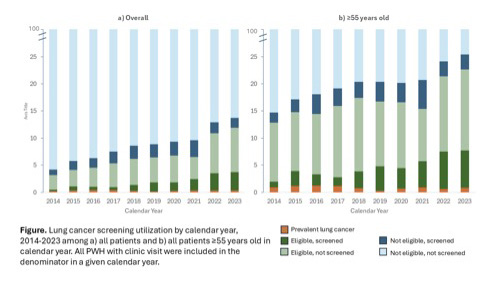
787. Immune Tumor Microenvironment of HIV-Associated Lung Cancer Reveals Immunoregulatory Features
Poster Abstracts
Pages: 231-232
Syim Salahuddin1, Ramsey Yusuf2, Shruti Desai3, Lais Osmani3, Kishu Ranjan3, Jianlei Gu3, Insoo Kang3, Hongyu Zhao3, Yuval Kluger3, Kurt Schalper3, Brinda Emu3
Background
Lung cancer is the leading cause of cancer mortality among people with HIV (PWH), with increased incidence and poor outcomes.
Methods
We explored whether HIV-associated non-small cell lung cancers (NSCLC) harbor an immunoregulatory tumor microenvironment (TME) that limits tumor-specific responses. A tissue microarray was constructed with tumors from 18 PWH and 19 people without HIV (PWOH), matched for histological subtype, stage, year of diagnosis, age, sex and smoking status.
imaging mass cytometry was employed with 40 immune cell markers for TME characterization. Linear mixed effects model, AI-based pageRank mathematical algorithm based on spectral graph theory, and neighborhood enrichment analysis were employed.
Results
NSCLC from PWH demonstrated differential distribution of tumor-infiltrating CD8+ T cell clusters defined by marker expression patterns, enriched for the expression of PD-1 and Lag-3, as well as activation and proliferation markers, compared to tumors from PWOH. Several clusters of T cells were significantly elevated in tumors from PWH, with the strikingly the finding of significant increased proportion of “Exhausted burned out CD8+ T cells” that have high levels of PD-1, Lag-3, Tbet and Ki67 (Fold change increase of 4.21 in PWH, p<0.0001). We also demonstrate higher expression of immunoregulatory molecules (PD-L1, PD-L2, B7-H3, B7-H4, IDO1 and VISTA), among tumor-associated macrophages, confirmed by the expansion of three unique TAM clusters comprising 58.8% of TAMs vs. 17.8% in tumors from PWH vs PWOH respectively (p<0.0001). An unsupervised and cell segmentation-independent signature associated using spectral graph theory methodology discriminated cells between HIV-associated and non-HIV tumors with 84.6% accuracy, with confirmation of the cell segmentation approach. Furthermore, we noted differences in spatial orientation of immune cells within the TME of PWH compared to PWOH, with evidence of increased Euclidean distance between each immune cell subtype (CD8 and CD4 T cells, and TAM) and CK+ tumor cells among PWH (p<0.0001 for each pair of cell types).
Conclusions
Our study demonstrates that the TME of PWH is characterized by a unique immune landscape with evidence of expansion of immune cells with enhanced immunoregulatory phenotypes, associated impaired anti-tumor responses, and altered spatial distribution of immune cells compared to PWOH. These findings have significant implications for response to immune checkpoint blocker therapies.
788. Viral and Host Proteins Carried by Exosomes From PLWH Could Play a Role as Triggers of NADCs
Poster Abstracts
Page: 232
Asier Ureta1, Clara Restrepo1, Manuel Pedregal2, Héctor Callata2, Sara Nistal3, Hector Peinado4, Alberto Alcázar5, Emma Martínez-Alonso5, María L. García-Gil6, Alfonso Cabello2, Vicente Estrada7, Miguel Górgolas2, Jesús García-Foncillas8, Jose M. Benito1, Norma Rallón1
Background
A higher incidence and more rapid progression of several types of non-AIDS-defining cancer (NADC) have been reported in people living with HIV (PLWH). However, the exact mechanism linking HIV-1 infection to the development of NADCs is not yet fully understood. In vitro studies have suggested that viral molecules carried by exosomes derived from HIV-1-infected cells can promote and exacerbate cancer. Herein, we analysed the proteomic (viral and host) profile of exosomes from patients with active NADC, stratified according to the presence or absence of HIV infection.
Methods
4 study groups were included: 15 PLWH on ART with NADC (HIV+NADC+ group), 15 people with NADC without HIV-1 (NADC+ group), 15 PLWH on cART without NADC (HIV+ group) and 15 healthy volunteers (HC group). A non-targeted label-free quantitative proteomic by LC-MS/MS, parallel reaction monitoring, and western blot analyses were performed in purified exosomes from plasma of all study subjects.
Results
gp120, RT and IN HIV-1 proteins were detected in the exosomes of HIV+NADC+ group and HIV+ group. Interestingly, gp120 protein was increased in HIV+NADC+ group compared to HIV+ group (p<0.05), the IN protein was decreased in HIV+NADC+ group compared to HIV+ group (p<0.05) while the RT protein did not show differences between both groups. Of note both gp120 and RT proteins, have been previously associated with cancer events. Additionality, 40 human proteins were found differentially expressed (DE) in the exosomes of HIV+NADC+ group compared to NADC+ group. Remarkably, among these proteins, five pro-oncogenic (QSOX1, COMP, FTL, OIT3, KRT6B) were upregulated and three anti-oncogenic (HGFAC, GPX3, and SPARCL1) were downregulated in HIV+NADC+. Moreover, six of these eight proteins were also DE in HIV+ group compared to the NADC+ in the same direction as the HIV+NADC+ versus NADC+ groups.
Conclusions
The presence of oncogenic HIV-1 proteins and several other cancer-related proteins from the host carried by exosomes in people living with both HIV and NADCs implies that HIV infection might be a significant factor in the dysregulation of “onco-proteins” influencing a poorer prognosis in those patients with NADCs.
789. Validation of Quantification of Lesional KSHV DNA Content for Diagnosis of Kaposi Sarcoma in Africa
Poster Abstracts
Page: 232
Aggrey Semeere1, Jeffrey Martin2, Racheal A. Ayanga1, Andrea Gardner3, Juan Boza4, Miranda McGaskey3, Jason Manning4, Megan Wenger2, Charles Kasozi5, Robert Lukande6, Tim McCalmont2, Phil LeBoit2, Toby Maurer7, Ethel Cesarman3, David Erickson4
Background
Inaccessibility and inaccuracies limit histopathologic diagnosis of Kaposi sarcoma (KS) in Africa. We hypothesized that quantification of KSHV DNA from suspicious skin lesions could distinguish KS from non-KS lesions, thus eventually enabling creation of a diagnostic test that would limit need for histopathologic interpretation. In our earlier training population, quantification of lesional KSHV DNA by qPCR (using sub-optimally transportable Ct values) had high sensitivity and specificity for the diagnosis of KS. We now assess diagnostic accuracy of qPCR in an external validation population and using a more transportable KSHV copy number readout.
Methods
Using identical processes for both the training (N=506 participants) and validation populations, we performed skin punch biopsies among consecutive patients referred for suspected KS in Uganda. One-half of the biopsy had histopathology performed, and the other half was stored in RNAlater and later underwent DNA purification in the U.S. and testing for KSHV ORF 26 DNA in two replicates by qPCR. With histopathology as gold standard and ROC curves, we assessed the performance characteristics of the mean of the replicates for the diagnosis of KS. An optimal KSHV DNA copy number cutoff that was earlier derived in the training population was assessed in the validation population.
Results
The validation population consisted of 427 participants with skin biopsies; 34% were women, and 91% were HIV-infected. Histopathology revealed that 338 biopsies were KS and 89 were not. Using the previously-derived threshold of 161 copies of KSHV DNA per 5 µl input into the reaction, which in our training population yielded 91% sensitivity and 91% specificity for KS diagnosis (accuracy=91% and area under the curve (AUC) = 0.96), qPCR in the validation population yielded 93% sensitivity, 93% specificity, 93% accuracy and an AUC of 0.93 (Figure).
Conclusions
In an external validation population in Uganda, qPCR of lesional KSHV DNA had high sensitivity and specificity for diagnosis of KS, performing similarly to our training population. Because of ambient endemic KSHV infection, mere qualitative detection of KSHV DNA in skin lesions is non-specific for KS diagnosis. Instead, precise quantification of KSHV DNA is needed, and a KSHV DNA copy number threshold that balances sensitivity and specificity is now established. This validation of qPCR performance motivates a point-of-care nucleic acid-based diagnostic test for KS, which we are currently developing.
Figure 1.
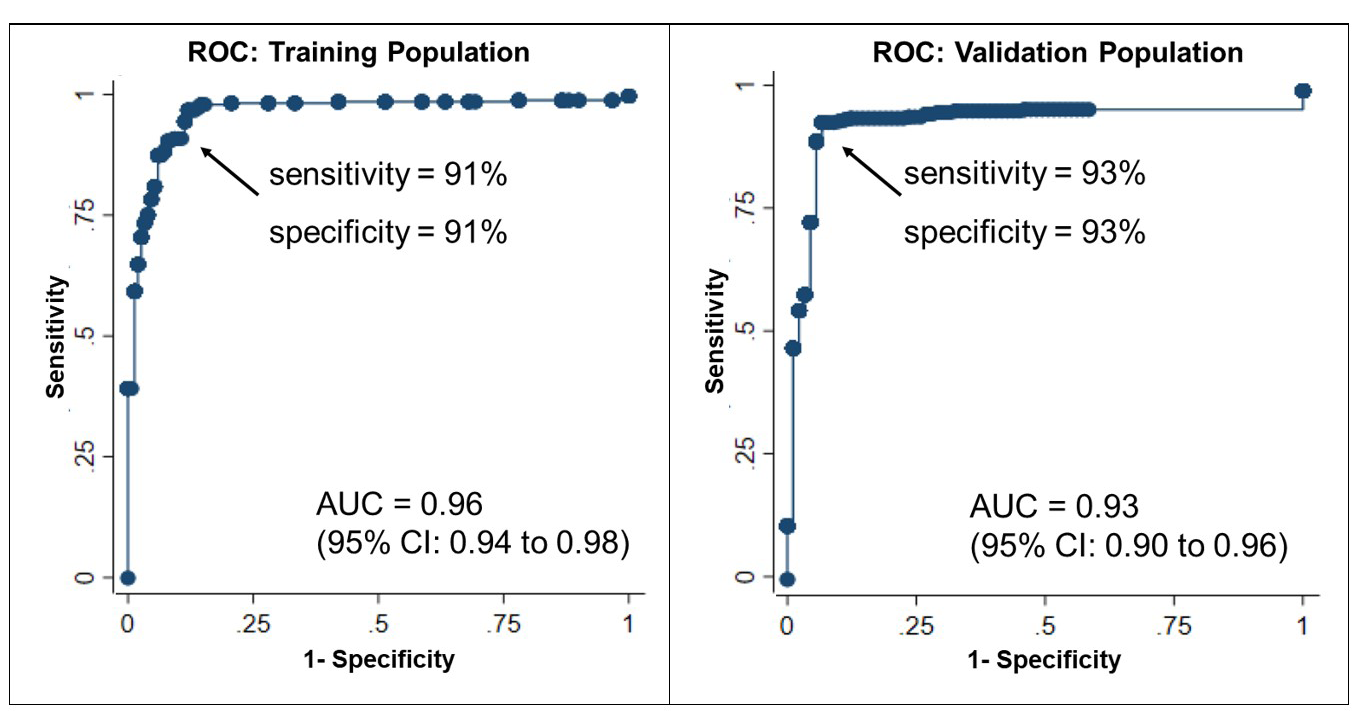
790. Kaposi Sarcoma in Relation to HIV Diagnosis: Which Comes First in East Africa in the Treat All Era?
Poster Abstracts
Page: 233
Racheal A. Ayanga1, Aggrey Semeere1, Linda Chemtai2, Micheal Kanyesigye3, Mathew Ssemakadde4, Hilda Muwando1, Zainab Illonga5, Emmanuel Ochola6, Charles Kasozi4, Winnie Muyindike7, Elia J. Mmbaga5, Samson Kiprono2, Miriam Laker-Oketta1, Jeffrey Martin8, Helen Byakwaga1
Background
In 2015, the WHO recommended initiation of ART in all persons living with HIV, regardless of CD4 count or clinical stage, the dawning of the “Treat All” era. The intention of “Treat All” is to detect and treat HIV infection in its earliest stages. At the most macroscopic level, “Treat All” has been successful in most resource-limited settings, diminishing all-cause death related to HIV. What is less understood is whether all individual severe HIV-related complications have benefitted equally. We investigated how one oncologic complication — Kaposi sarcoma (KS) — has fared by examining when it develops in relationship to diagnosis of HIV infection.
Methods
We identified adults (aged ≥ 18 years) with a new diagnosis of KS made between October 2022 and June 2024 in both inpatient and outpatient settings at several sites in East Africa that offer free-of-charge skin biopsy services: Uganda (Infectious Diseases Institute, Masaka and Mbarara Regional Referral Hospitals, and St. Mary’s Hospital Lacor); Kenya (Academic Model Providing Access to Healthcare network); and Tanzania (Muhimbili Univ. of Health and Allied Sciences). KS was confirmed by histopathology except in those with lesions that were deemed unsafe to biopsy. We used interviewer-administered questionnaires to collect data on HIV diagnosis and KS history. Using the date that patients reported to have first noticed KS lesions and the date they reported HIV diagnosis was made, we describe the timing of KS lesion development in relation to HIV diagnosis.
Results
Among 501 adults with a new diagnosis of HIV-related KS, 67% were men and the median (IQR) age was 36 (30-42) years. Median monthly household income was <$100 US. Among 482 patients with evaluable dates, 50% first noticed KS lesions ≥ one month prior to HIV diagnosis, 13% noticed lesions within ± 1 month of HIV diagnosis (the exact sequence could not be determined), and 37% noticed lesions ≥ 1 month after HIV diagnosis
Conclusions
Amongst adults with newly diagnosed KS in East Africa in the ‘Treat all’ era, half developed KS prior to the health care system’s diagnosis of HIV infection. This indicates a need to improve HIV screening strategies in order to have HIV diagnosis made earlier, thus preventing progression to KS. The large proportion of patients developing KS after HIV diagnosis represents another research priority — why is this occurring and how can it be prevented?
Figure 1.
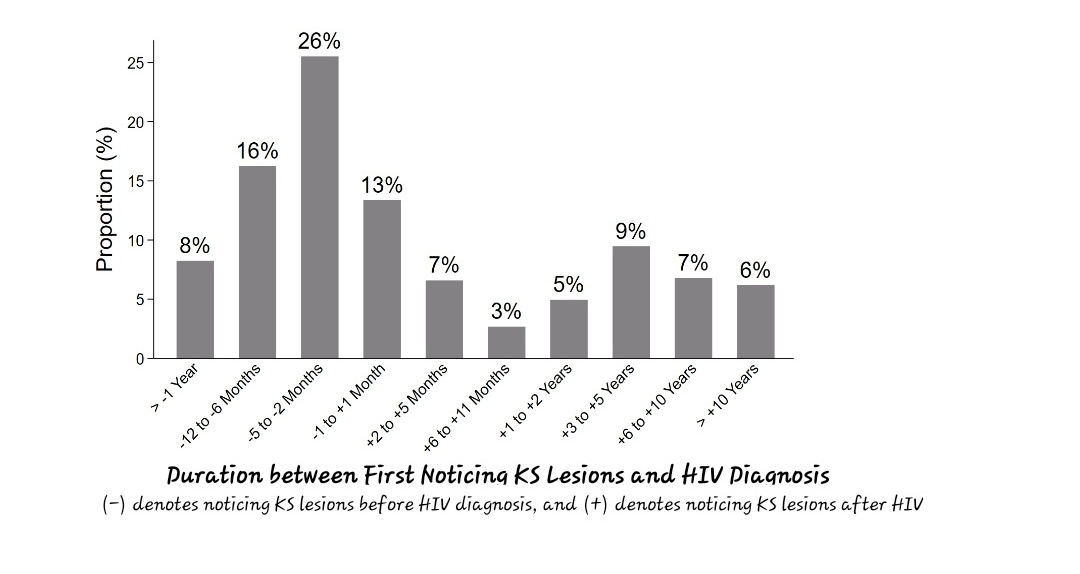
791. Immunologic Responses to Pomalidomide and Liposomal Doxorubicin for Kaposi Sarcoma Treatment
Poster Abstracts
Page: 233
Matthew Witterholt1, Romin Roshan2, Kathryn Lurain3, Anaida Widell1, Irene Ekwede1, James Glassbrook1, Ralph Mangusan1, Thomas Uldrick1, Laurie Krug3, Denise Whitby2, Robert Yarchoan3, Ramya Ramaswami3
Background
Kaposi sarcoma herpesvirus (KSHV) is the causative agent of Kaposi sarcoma (KS), multicentric Castleman disease (MCD), and KSHV-associated inflammatory cytokine syndrome (KICS). In people with HIV (PWH), KS can occur alone or with MCD or KICS. Liposomal doxorubicin (DOX) and pomalidomide (POM) are FDA-approved therapies for KS alone. A phase I/II study combining POM/DOX identified varying KS response rates (RR) by group. In participants (pts) in Group 1 (G1: KS alone) the RR was 71%, in pts in Group 2 (G2: KS with MCD or KICS), the KS RR was 45%. Evaluating the immunologic response may further our understanding of the RR differences.
Methods
51 pts (49 PWH, G1- 37 pts, G2- 14 pts) were enrolled in the POM/ DOX study. Pts received intravenous DOX at 20 mg/m2 on day 1 combined with oral POM once daily on days 1 to 21 of a 28-day cycle. After adjusting for quality control aspects, we analyzed T-cell subsets among 23 participants using flow cytometry of peripheral blood mononuclear cells (PBMCs) at baseline and cycle 1 day 28 (C1D28). We evaluated markers of T-cell activation (CD38 and HLA-DR), exhaustion (PD-1), and senescence (CD57). Wilcoxon rank sum and signed rank tests were used to analyze significant differences between groups and paired changes across time points for flow cytometry, respectively.
Results
Among all pts, there was an increase from baseline to C1D28 in the percentage of CD4 T-cells (P=0.0004) and a decrease in the percentage of CD8 T-cells (P=0.0009). The percentage of PD-1+ CD4 T-cells and PD-1+ CD8 T-cells were higher at baseline in G2 than in G1 (P=0.01, P=0.007, respectively, Figure 1). Among the effector memory (CD45RO+CD27-) T-cell population, G2 had higher percentages of PD-1+ CD4 T-cells (P=0.03), CD38+HLA-DR+ CD4 T-cells (P=0.02), and CD38+HLA-DR+ CD8 T-cells (P=0.02) than G1 at baseline. Among the naïve (CD45RO-CD27+) T-cell population, G1 had higher levels of CD38+HLA-DR- CD4 T-cells (P=0.007) compared to G2. On assessing baseline to C1D28 changes between the groups, only the percentage of CD38+HLADR- central memory (CM, CD45RO+CD27+) CD4 T-cells increased and CD38-HLADR+ CM CD4 T-cells decreased in G1 compared to G2 (P=0.05, P=0.02).
Conclusions
Patients with KS and MCD or KICS had increased expression of exhaustion markers on their effector memory CD4 and CD8 T-cell subsets. Thus, phenotypic differences at baseline in T-cells may inform differences observed in treatment response by group.
Figure 1.
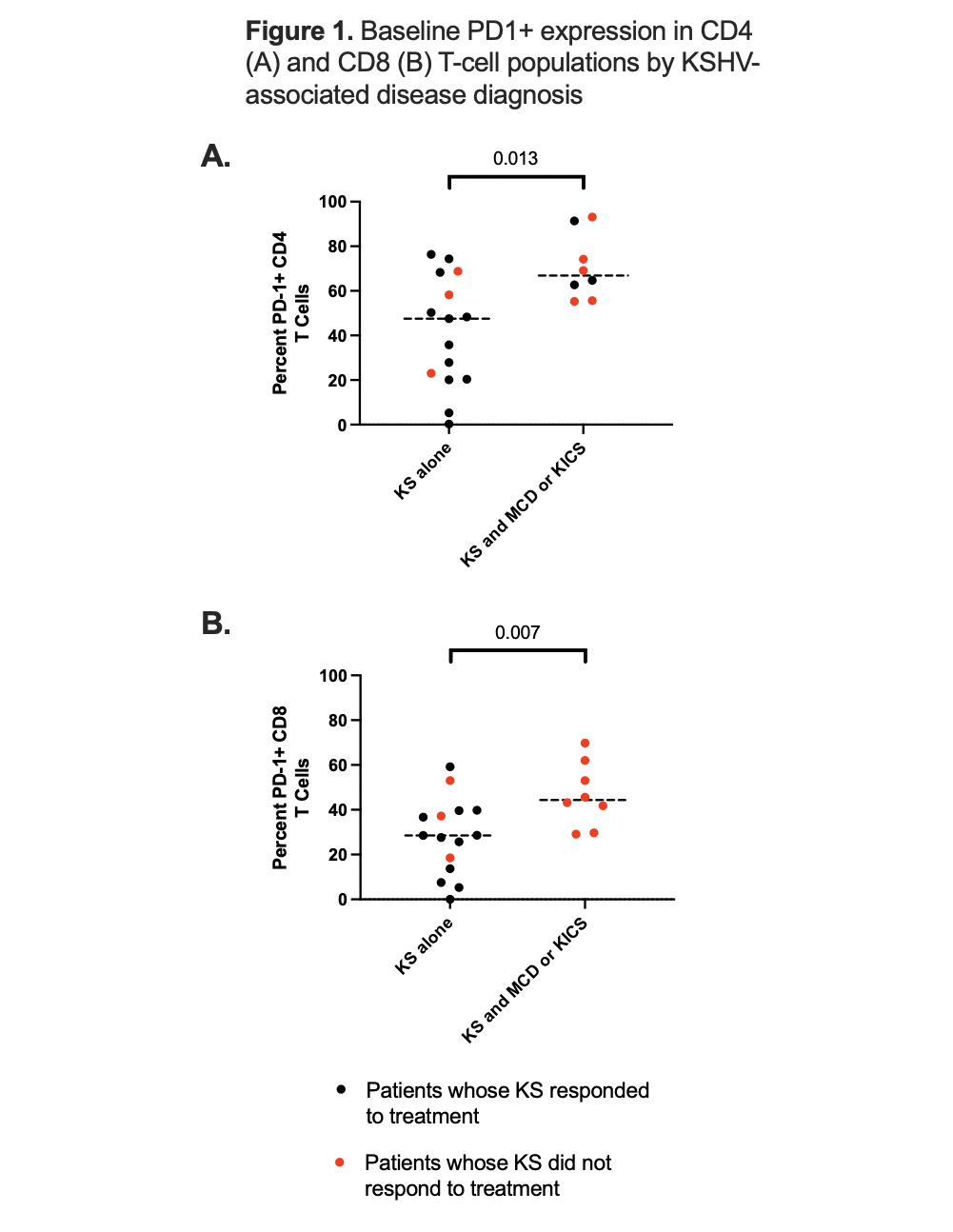
792. Impact of Low-Dose Intra-Lesional Nivolumab for Kaposi Sarcoma on T-Cell Proliferation and Function
Poster Abstracts
Pages: 233-234
Chia-Ching Wang1, Amanda M. Buck1, Lilian Grimbert1, Cassandra Thanh2, Kieron Leslie1, Tyler-Marie Deveau1, Rebecca Hoh1, Michiko Ametani Shimoda1, Amelia N. Deitchman1, Steven G. Deeks1, Jeffrey Martin1, Paul Couey2, Toby Maurer3, Timothy J. Henrich1
Background
PD1 antagonists are on the forefront of HIV curative strategies, but systemic treatment doses have led to limiting autoimmune toxicities. As such, there is interest in using subcutaneous low-dose delivery, but data are lacking. We recently completed a trial to evaluate low dose (10 mg or ~1.4 mg/kg) intra-lesional nivolumab in 6 males with HIV on ART and 6 HIV- males for cutaneious Kaposi sarcoma (KS) and demonstrated that the drug was safe without major adverse effects or autoimmune complications. Treatment also led to partial remission in 2 participants without HIV. Here, we studied the longitudinal impact of intra-lesional nivolumab on systemic PD-1 expression, T cell cycling, virus-specific immune responses, and HIV reservoir size.
Methods
High-dimensional spectral flow cytometry was used to assess circulating T cell phenotypes, PD1 expression/receptor occupancy, and HIV and HHV8-specific immune responses prior to nivolumab therapy, following the 2nd dose and 26 weeks after the last of a total of 4-8 injections. HIV-1 reservoirs were measured in participants with HIV.
Results
The percentage of circulating CD4+ and CD8+ T cells expressing PD-1 decreased from 23.8% and 19.2%, respectively, prior to treatment, to 10.9% and 9.4% before the third intra-lesional nivolumab injection across all participants (all P<0.05) not including nivolumab-bound cells which accounted for ~5-10% of residual PD1+ T cells while on treatment. The frequency of PD-1 expressing lymphocytes returned to baseline level 26 weeks after the last injection. A significant increase in the frequency of Ki67+ (cell cycling) terminally differential CD8+ T cells was observed from baseline to on therapy (P=0.04) and trend which was observed across all other memory CD8+ T cell subsets (Fug 1). HIV serostatus did not impact PD-1 expression or T cell proliferation. The frequency of CD4+ and CD8+ central memory and effector phenotypes also significantly increased on therapy compared to baseline (all P<0.05). No changes in HIV-1 or HHV8-specific CD4+ or CD8+ T cell frequencies or in cell-associated HIV-1 DNA or RNA were observed prior to, during and after treatment.
Conclusions
Low dose locally delivered nivolumab was safe and led to marked PD1 downregulation and increases in T cell cycling and memory expansion in participants with and without HIV while receiving treatment. Given these promising data, larger studies will be needed to assess the impact on HIV-1 persistence and virus-specific immune responses.
Figure 1.
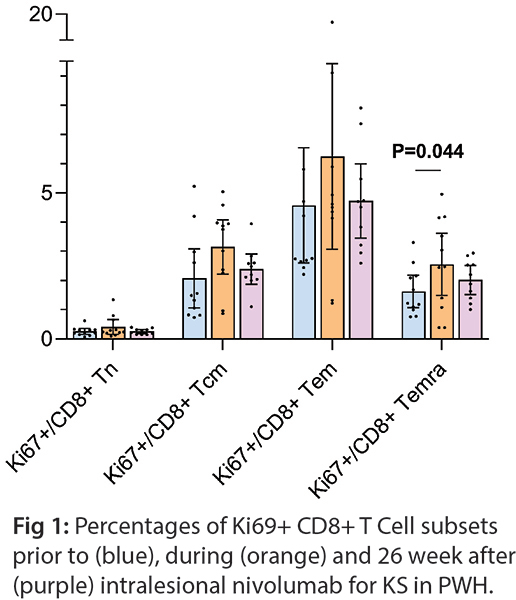
793. High Prevalence of Clonal Hematopoiesis Among Older People With HIV and Kaposi Sarcoma
Poster Abstracts
Page: 234
Ramya Ramaswami1, Ryan M. Putney2, Yi-Han Tang2, Robert Yarchoan1, Kathryn Lurain1, Nancy Gillis2, Anna E. Coghill2
Background
Clonal hematopoiesis (CH) is the presence of somatically mutated hemopoietic progenitor cells without overt signs of hematologic abnormalities. CH is an age-related phenomenon that is associated with increased mortality. High prevalence of CH has been separately described in cohorts of people with HIV (PWH) with varying CD4 T cell counts and in patients (pts) with cancer. In a recent cross-sectional analysis of PWH and solid organ cancer types, CH prevalence was 23%. We investigated the CH prevalence and methylation assessment among older PWH and Kaposi sarcoma (KS), a virus-associated malignancy, before and after KS-directed therapy.
Methods
Peripheral blood DNA was extracted from pts samples and used for CH detection and epigenetic methylation assessment. CH detection was performed using a custom Agilent SureSelectXTHS2 library preparation and target enrichment kit, which captured whole exons of 76 genes commonly mutated in CH and hematologic malignancies. Germline variant filtering included consideration of variant allele frequency (VAF) and recurrent presence in reference noncancer populations. The 850 K MethylationEPIC v1 BeadChip was used to capture genome-wide methylation status. DNA methylation–based biological age acceleration was calculated using epigenetic clocks including Hovarth, PhenoAge, Frailty, epiTOC, and DunedinPACE (estimates pace of aging).
Results
Seventeen men with HIV and KS with a median (med) age of 55 years (range: 52-67 years), med CD4 T cell count of 126 cells/µL and med HIV viral load <20 copies/ml were included. The med time from HIV diagnosis and KS diagnosis to CH analyses was 14.9 years and 1.8 years, respectively. CH was detected in 10 of 17 (59%) pts before KS-directed therapy; 6 pts (35%) harbored CH mutations with >2% VAF. Fourteen pts had data on CD4 T-cell count before KS-directed therapy; CH was detected in 43% of pts with low CD4 T cell counts (<200 cells/µl) as compared to 21% in pts with CD4 >200 cells/µl (p=0.60). The DunedinPACE epigenetic measure was significantly higher among pts with low CD4 T cell counts (Figure 1). All 7 pts who had CH present at baseline and received KS-directed therapy had CH detectable after treatment initiation as well. There were no changes in the epigenetic clock measurements between the two treatment timepoints.
Conclusions
Among older PWH and KS, there was a high prevalence of CH and evidence of an association between low CD4 T cell counts and pace of aging in this population.
Figure 1.
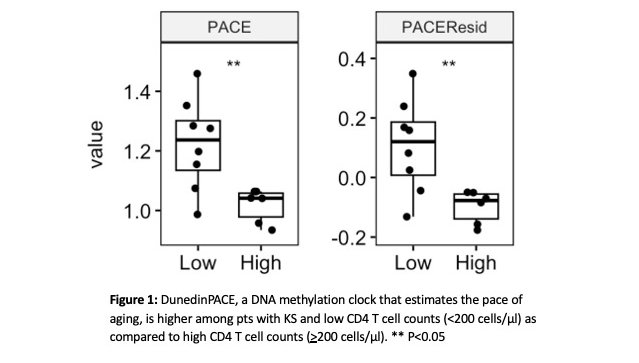
794. Causes of Death Among Adults With HIV-Associated Kaposi Sarcoma in East Africa in the Treat All Era
Poster Abstracts
Pages: 234-235
Hilda Muwando1, Helen Byakwaga2, Aggrey Semeere1, Miriam Laker-Oketta1, Jeffrey Martin2, Racheal A. Ayanga1, Samson Kiprono3, Elia J. Mmbaga4, Winnie Muyindike5, Charles Kasozi6, Pendo Ibrahim4, Celestine Lagat3, Bronia Mwiine5, Elyne Rotich3, Philippa K. Makanga1
Background
In East Africa, one-year mortality following a diagnosis of HIV-associated Kaposi sarcoma (KS) in the Treat All era was recently estimated, in a community-derived sample, to be 41%. To date, there is limited information on why these patients die. Understanding causes of death among adults diagnosed with KS might improve management and, hence, survival or suggest other strategies.
Methods
We identified adults (age ≥ 18 years) who died after a new diagnosis of HIV-associated KS between October 2022 and June 2024 and who were receiving care at one of 5 clinical sites in Kenya, Tanzania and Uganda. KS was confirmed by histopathology except where lesions were unsafe for biopsy. Adjudication of each death was performed using information obtained, when possible, from review of medical records and interview of attending clinicians and next of kin. A contributing cause of death was defined as suspicion that the condition mechanistically/causally contributed to death as guided by Rothman’s sufficient component cause (“causal pie”) model. Certainty of contribution to death was defined as highly (95%-100% certainty), likely (80%-95%) or possibly (50%-80%).
Results
Of 163 deaths that were adjudicated, 63% were men, the median (IQR) age was 36 (29-42) years, and duration from diagnosis to death was 4 (1-14) weeks. Many (40%) deaths occurred outside a health facility, and only 4% had an autopsy. KS was deemed to have at least possibly contributed to all deaths. Other potential causes of death, especially tuberculosis, were also present (Table). In 6% of cases, an unexplained sudden onset of malaise occurred following improvement of KS on chemotherapy, often with fever and respiratory symptoms, which was followed shortly thereafter by death.
Conclusions
Among adults who died after a new diagnosis of HIV-associated KS in East Africa in the Treat All era, KS was deemed to be at least possibly contributing in all cases. Other causes of death were also suspected, especially TB. Some scenarios beg the question regarding non-KS KSHV-related disease that is difficult to diagnose. Yet, without autopsy, it is impossible to know all causes or sequence of events. The prominence of the contribution from KS per se, combined with the inherent difficulty treating KS, imply that early detection of KS may be the most feasibly achievable intervention to reduce KS mortality.
Table 1.
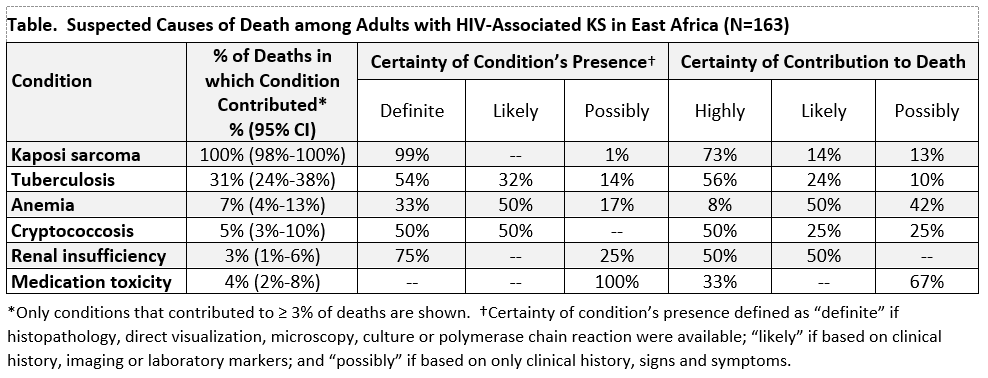
795. WITHDRAWN
Poster Abstracts
Page: 235
796. Genome Evolution of Kaposi Sarcoma-Associated Herpesvirus (KSHV) in PLWH
Poster Abstracts
Page: 235
Dirk P. Dittmer, Razia Moorad, Alec Peng, Justin Landis, Patricio Cano, Linda Pluta, Angelica Juarez
Background
Kaposi Sarcoma (KS) is the most common cancer in people living with HIV (PLWH), particularly in countries where Kaposi Sarcoma herpesvirus (KSHV) is endemic. Here, the overall survival of KS patients has changed little over the past twenty years despite increased access to cART. We had previously published the clinical data associated with a prospective study of HIV+ KS patients in Malawi. Here, we describe KSHV stains of additional tumor biopsies and plasma samples from Sub-Saharan Africa. (1) An analysis of currently available (n > 150) full-length viral genomes identifies two different virus lineages that co-circulate in KSHV endemic regions today. The KSHV strains circulating in PWLH today differ from the reference sequence in GenBank and those of common laboratory strains, which originated in the 1990s in the US and Europe. (2) Unbiased long-read sequencing of viral and cellular DNA resolved the terminal repeat structures of the circular KSHV plasmids persisting in several lymphoma cell lines. Also, it yielded the complete human genome for these.
Methods
Library preparation and sequencing were performed using a fully automated approach on the Ion Torrent Genexus Integrated Sequencer (Life Technologies) with a 24-hour turnaround. This used custom primers to enrich KSHV. Targeted short-read sequencing accuracy was validated by PacBio-based long-read sequencing to resolve repeats. Analysis was conducted in CLC Genomics Workbench v23.0.2 (Qiagen Inc.) and BEAST. Structures of wild-type and variant proteins were predicted using AlphaFold2.
Results
The average coverage for the KSHV genomes isolated from FFPE biopsies was 12,206-fold. We identified over one thousand non-synonymous single nucleotide variants (SNV) relative to the current reference strain NC_009333. Most were private, i.e., specific to one individual’s virus. Within each of the two lineages, KSHV continues to evolve over time and across national borders by genetic drift and recombination. Analyses of shared SNVs by AlphaFold2 predicted that some SNVs change the conformation of viral proteins essential in replication, pathogenesis, and infection.
Conclusions
These findings may help our understanding of KSHV evolution and inform KSHV vaccine design. It fills the gap of fully sequenced KSHV genomes of 300 (as compared to 6,000,000 for SARS-CoV-2). Integrating structural AI with conventional phylogenetic analyses pinpoints evolutionary pivots as the target for vaccine and drug susceptibility design.
Figure 1.
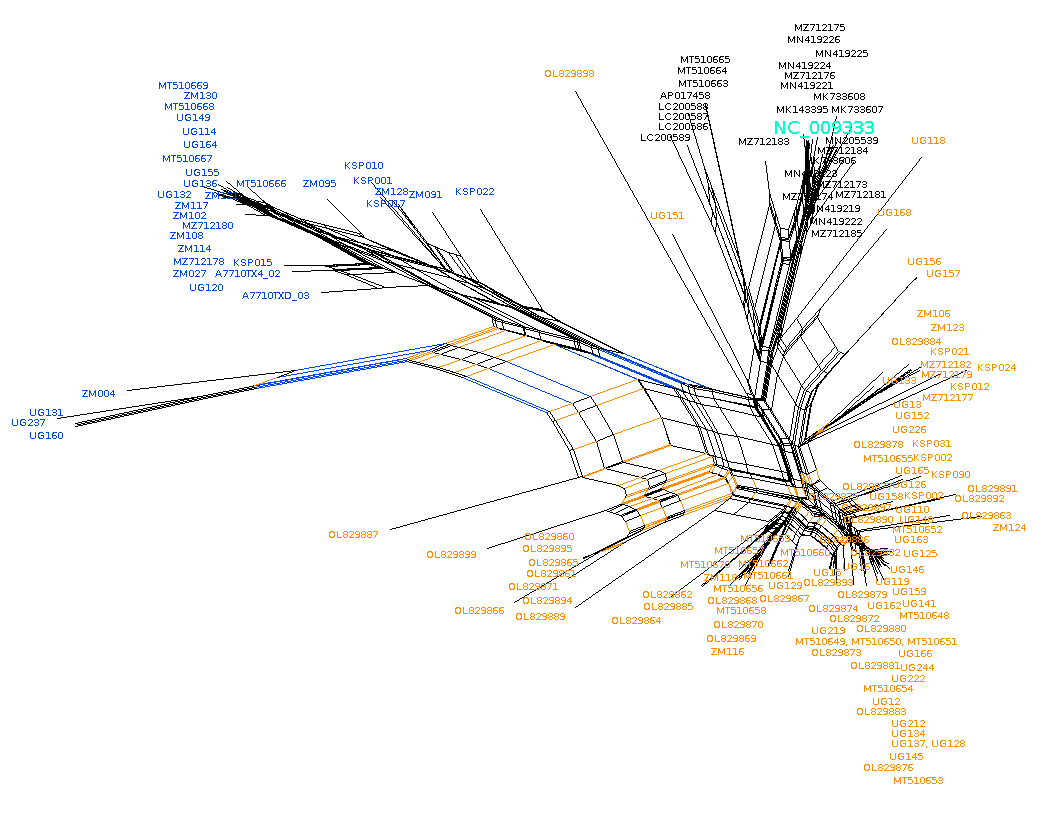
797. Vascular Endothelial Growth Factor Receptor 3 (VEGFR3/FLT4) Regulates the KSHV Replication Cycle
Poster Abstracts
Pages: 235-236
Ameera Mungale1, Joseph Ziegelbauer2
Background
Kaposi sarcoma-associated herpesvirus (KSHV) is the etiologic agent of the AIDS-defining cancer Kaposi sarcoma (KS). Despite widespread use of antiretroviral therapy, KSHV seroprevalence remains at 40% in HIV+ individuals in the US. HIV infection promotes KS development via angiogenic and pro-inflammatory factors and KSHV infection drives angiogenesis as observed in highly vascularized KS lesions and in vitro infection. In our previously published RNA-Seq data from cancerous skin KS versus matched normal tissue (n=10 patients) we found the pro-angiogenic vascular endothelial growth factor receptor-3 (VEGFR3/FLT4) significantly upregulated 7-fold ± 1.2. This induction was more pronounced in cell culture with a 50-fold increase after KSHV lytic reactivation. FLT4 signaling pathways promote cell proliferation, migration, and angiogenesis, and dysregulated expression is linked to various cancers, but it’s role in KSHV infection remains unknown.
Methods
To probe the role of FLT4 in infection, we performed siRNA depletion of FLT4 in primary lymphatic endothelial cells (LEC) prior to KSHV infection (MOI ~1). We measured viral replication by transcript and protein expression, genome replication, and virion production. We determined significance by paired T-tests between a non-targeting control and the siRNA targeting FLT4. We also performed RNA-sequencing of knockdown samples to interrogate the host transcriptional landscape upon VEGFR3 depletion.
Results
We observed significant increases in lytic replication upon FLT4 depletion with increases in viral genome replication (2-fold), viral transcripts and protein (1.5-fold), infectious progeny (4-fold), and nascent particles (10-fold) with no change in viral entry. RNA-sequencing of FLT4-depleted samples revealed enrichment for host genes involving cell contact and communication. Pathway analysis showed inhibition of angiogenic and tumor progression signaling, including FAK signaling and Molecular Mechanisms of Cancer.
Conclusions
These data suggest that FLT4 may be suppressing lytic infection yet promoting tumorigenesis. We propose a model in which FLT4 is impeding lytic replication such that KSHV preferentially enters latency where it can more favorably drive pro-angiogenic processes. As such, we are investigating the use of FDA-approved VEGFR inhibitors on the viral life cycle and plan to assess effects on host proliferation and pro-angiogenic processes as a new potential strategy to inhibit KSHV-driven disease.
798. Trends in Common Cancer Diagnoses Among People With HIV in North America, 2006-2020
Poster Abstracts
Page: 236
Sally B. Coburn1, Elizabeth Humes1, Michael Horberg2, Michael Silverberg3, Jeffrey Martin4, Raynell Lang5, Chad Achenbach6, Lesley Park7, Minh Ly T. Nguyen8, Mari Kitahata9, Maile Karris10, Heidi M. Crane9, Joseph J. Eron11, Keri N. Althoff1, Richard Moore1, the North American AIDS Cohort Collaboration on Research and Design (NA-ACCORD) of IeDEA
Background
Cancer burden among people with HIV (PWH) has shifted from cancers associated with immunodeficiency to cancers common in the general population. Trends in common cancer diagnoses by sex have not been adequately characterized following the introduction of Treat-All policies and modern ART regimens. We examined incidence trends by sex for common cancers in a consortium of PWH in care from 2006-2020 in the US and Canada.
Methods
We estimated sex- and period-specific cancer incidence rates (2006-10; 2011-15; 2016-20) per 100,000 person-years (PY) among PWH participating in the North American AIDS Cohort Collaboration for Research and Design (NA-ACCORD) in cohorts contributing validated cancer diagnoses. We report on the 5 most common cancer diagnoses (excluding non-melanoma skin cancer) by sex: Non-Hodgkin lymphoma (NHL), lung, anal; head/neck and prostate for men; and breast and cervical for women. We age-standardized incidence rates to the US 2000 population.
Results
Among 112,757 PWH (86% men, 14% women) in 20 NA-ACCORD cohorts, we included 4,634 incident cancer diagnoses. Median age at first cancer diagnosis was 60 years (IQR 54, 66) for men and 51 (IQR 44, 58) for women. NHL declined over time in men (111-55 cases per 100,000 PY, p<0.05) and women (80-41 cases per 100,000 PY p <0.05). Head/neck cancers were stable in men (mean: 54 cases per 100,000 PY, p>0.05). Cervical cancer was stable (mean: 53 cases per 100,000 PY, p>0.05) over time. Lung cancer declined in men (151-92 cases per 100,000 PY, p<0.05) but was stable in women (90-95 cases per 100,000 PY, p>0.05). Anal cancer was stable in men over time (65-76 cases per 100,000 PY, p>0.05) but increased in women (11-27 cases per 100,000 PY, p<0.05). Breast and prostate cancers were stable or declined from 2006-10 to 2011-15 but had non-significant (p>0.05) increases from 2011-15 to 2016-20.
Conclusions
Declines in NHL may be due to improved immunity at HIV diagnosis, earlier ART initiation and greater effectiveness over time. Declining lung cancer is observed in other studies of PWH, but drivers for this and sex differences remain unclear (though possibly related to greater decline in smoking rates in men versus women). Increasing breast/prostate cancer merits continued monitoring at the population/individual-level and to further investigate the impact of screening, aging and other factors driving burden of these cancers. Cancer trends in women underscore the need to clarify cancer etiology and improve screening for women with HIV.
Figure 1.
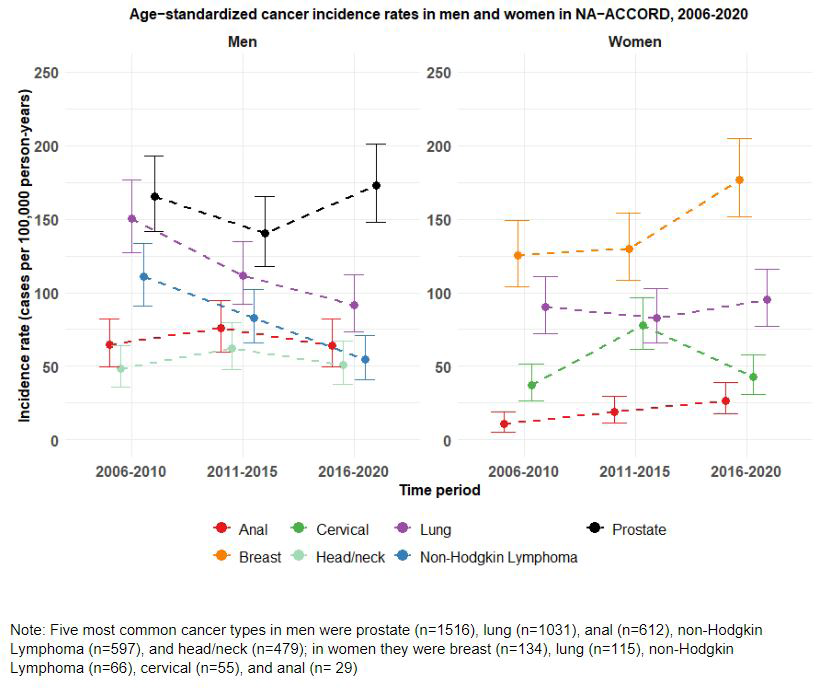
799. Cancer Risk of People With HIV Younger Than 50 Years: Italy, 1997-2023
Poster Abstracts
Pages: 236-237
Camilla Muccini1, Pierluca Piselli2, Claudia Cimaglia2, Alessandra Bandera3, Giulia Marchetti4, Valentina Mazzotta2, Luca Pipitò5, Alessandro Tavelli6, Stefano Rusconi4, Carlo-Federico Perno7, Enrico Girardi8, Antonella d'Arminio Monforte6, Diego Serraino9, Antonella Cingolani10, the Icona Foundation Study Group
Background
People with HIV (PWH) have an increased risk of cancer compared to the general population, even under antiretroviral therapy (ART); however, specific data in young PWH are lacking. Aim of the study was to assess the cancer risk of PWH aged <50 years in Italy.
Methods
Observational study in the Icona cohort enrolling ART-naïve PWH. All participants <50 years at enrolment (Jan1997/Dec 2023) were included. Incident cancers (excluding non-melanoma skin cancers) were categorized as AIDS-defining (ADMs: Kaposi's sarcoma, KS; non-Hodgkin's lymphoma, NHL; invasive cervical cancer, ICC) or non AIDS-defining (NADM: virus and non-virus related). Standardized incidence ratios (SIRs) as risk estimate were calculated by multiplying the person-years (PYs) at risk in PWH by the corresponding specific incidence rates from all Italian cancer registries. SIRs were standardized by sex, age, residence, calendar period.
Results
14,060 PWH were included, contributing to 94,607 PYs of follow up. Overall, 78.7% were men, with a median age of 35 years (interquartile range, 29-41). Overall, 400 (2.8%) PWH developed at least one de novo cancer (229 ADMs, 177 NADMs) during follow-up. PWH had a 2.9-fold increased risk for all cancers compared with the general population (95% CI: 2.6-3.2, Table 1; SIR=3.5 in males and 1.7 in females). Significantly elevated SIRs were observed for ADMs overall (SIR=20.8) and for individual cancer: KS (SIR=186.9), NHL (SIR=6.6), and ICC (SIR=9.3). A 9.4-fold risk increase was noted for virus-related NADMs, particularly for anal cancer (SIR=71.7) and Hodgkin lymphoma (SIR=9.2). No evidence for a difference in risk was observed for non virus-related NADMs overall (SIR=0.9, 95% CI: 0.7-1.1), with decreased risks for leukaemia, bladder (SIR=0.5), skin melanoma, and thyroid cancer (SIR=0.6); a significant risk reduction was reported only for breast cancer (SIR=0.5). Conversely, a significant increased risk was observed for trachea/bronchus/lung cancer (SIR=3.2).
Conclusions
In PWH <50 years old, cancer risk is almost 3-times higher than in the comparable general population. Higher frequencies of coinfections, smoking and HIV-related chronic inflammation might explain these findings.
A patient-centered approach that considers cancer risk factor common in PWH should guide the age cut-off when to start cancer screening, in order to reduce risk gap between young people with and without HIV.
Figure 1.
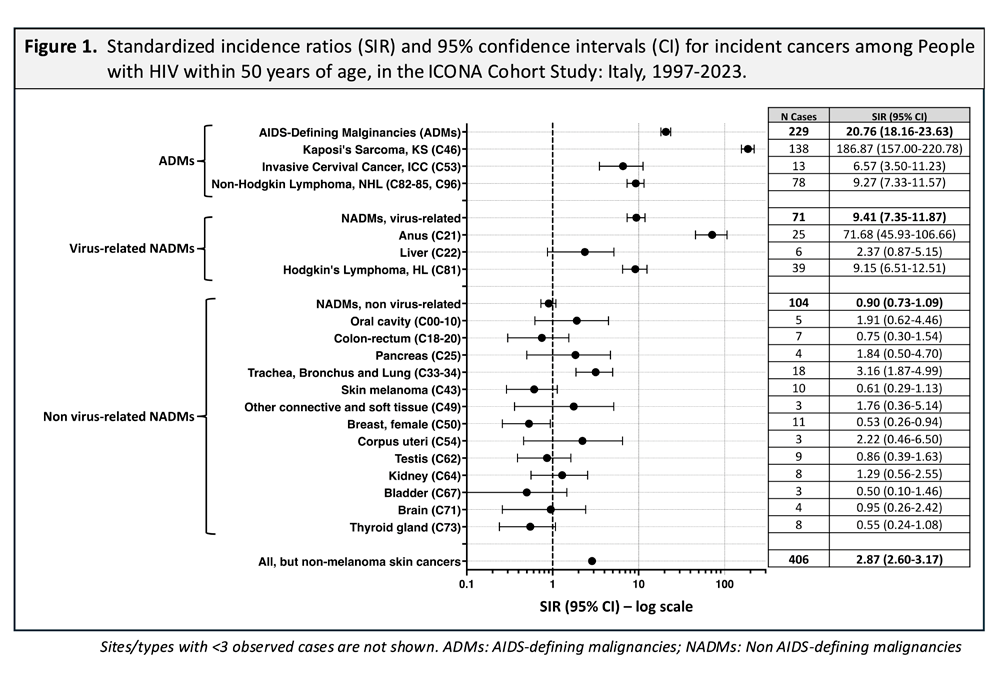
800. Predictors of Mortality Among Patients With Virus-Associated Cancers in a High HIV-Prevalence Region
Poster Abstracts
Page: 237
Thomas Odeny1, Dorothy Mangale1, Phiona A. Adagi2, Everlyne Nyandieka3, Harriet F. Adhiambo4, Kevin Owuor5, Betsy Abente1, Donella Atieno6, Sharon Ouma7, Caroline Wafula8, Angela A. McLigeyo2
Background
Virus-associated cancers cause significant mortality in Africa. Understanding risk factors for mortality is crucial for effective prevention and treatment. We analyzed demographic and clinical characteristics of people with virus-associated cancers in Kisumu County, western Kenya – a region with a high HIV prevalence of 14.5% – and evaluate factors associated with mortality.
Methods
We conducted a retrospective cohort study of adult patients who presented for cancer care at Jaramogi Oginga Odinga Teaching and Referral Hospital (JOOTRH) in western Kenya between January 2014 and December 2023. We included cases where viral infection is either causally associated with cancer (cervical, anal, Kaposi sarcoma) or is the strongest risk factor for cancer (penile, vaginal, vulvar). Data were extracted from paper-based patient records. We used Kaplan-Meier analysis and competing risk regression to assess survival and mortality risk factors, with loss to follow-up (LTFU, defined as >6 months late for the last appointment) and transfer-out considered as competing events.
Results
Among 3,437 patients, 1,073 (31%) met eligibility criteria. Median age at diagnosis was 47 years (inter-quartile range 39-59), with 933 (87%) female, and 553 (51.5%) people with HIV. Cervical cancer was the most prevalent (n=823, 76.7%), followed by Kaposi sarcoma (n=112, 10.4%), penile (n=57, 5.3%), vulva (n=48, 4.5%), anal (n=28, 2.6%), and vaginal (n=5, 0.5%). One year after enrolling in cancer care, 538 (62%) were LTFU. Median overall survival was 6% (95% CI: 5%-7%). In multivariable analyses, age <20 years and advanced stage at diagnosis (stage III and IV) were associated with increased risk of death. HIV status was not significantly associated with mortality (subhazard ratio 1.29, 95% CI: 0.83-2.01; p=0.3).
Conclusions
Virus-associated cancers are highly prevalent in western Kenya, with high LTFU and low survival. Older age and early-stage diagnosis (but not HIV status) were associated with lower mortality. Urgent strategies are needed to encourage early cancer detection and referral to treatment, and improve retention in care. Future research should consider testing for viral infections to attribute carcinogenicity for cancer types excluded in this analysis, such as Epstein-Barr virus (nasopharyngeal carcinoma; gastric cancer; Burkitt, Hodgkin, and diffuse large B-cell lymphoma), human papillomavirus (other head and neck cancers), and hepatitis B and C viruses (hepatocellular and intrahepatic bile duct cancers).
801. WITHDRAWN
Poster Abstracts
Page: 237
802. Cancer Risk Among People Who Inject Drugs With HIV in the United States, 2010-2019
Poster Abstracts
Pages: 237-238
Jennifer K. McGee-Avila1, Cameron B. Haas1, Eric A. Engels1, Carol-Ann Swain2, Tabassum Insaf2, Colby Cohen3, Jennifer Hayes4, Tyler Adamson4, Meredith S. Shiels1, Qianlai Luo1
Background
People with HIV who inject drugs (PWHWID) experience unique cancer risks. We aim to identify cancers that are elevated and to evaluate racial/ ethnic disparities among this historically marginalized (social and economic) group.
Methods
We used data from the HIV/AIDS Cancer Match (HACM) Study, a population-based linkage of 13 HIV and cancer registries in the U.S. for the years of 2010-2019 to calculate rates of 10 cancer types among Black, Hispanic, and White PWHWID. Other racial/ethnic groups could not be included due to the limited number of PWHWID with cancer in our study. We estimated age-standardized rates (ASR) and rate ratios using Poisson regression, with Black PWHWID as the reference.
Results
There were 3,252 incident cancers from 2010-2019 among 151,669 PWHWID. Among PWHWID, the largest racial/ethnic group was Black PWHWID (41.6%), followed by Hispanic (35.7%), and White (17.3%) PWHWID. Among Black PWHWID, the highest incidence rates were for lung, liver, and prostate cancers, and among both Hispanic and White PWHWID, Non-Hodgkin lymphoma, lung, and liver cancers had the highest rates. Cancer rates varied substantially among PWHWID across racial/ethnic groups. Compared to Black PWHWID, White PWHWID had a 23% increase in lung cancer incidence, and Hispanic PWHWID had a 34% decrease in lung cancer incidence. Compared to Black PWHWID, prostate cancer rates were 61% lower in White PWID and 47% lower in Hispanic PWID. Rates of anal cancer were elevated among Hispanic PWHWID, a 67% increase compared to Black PWHWID.
Conclusions
PWHWID, are at a particularly high risk of certain cancer types, especially cancers of the lung and liver, likely reflecting the high prevalence of smoking and hepatitis C in PWID compared to other HIV risk groups. Significant differences in incidence rates between racial/ethnic groups exist and more work is warranted to better understand targeted interventions (e.g., prevention efforts in HPV, reduction in HCV, and removing barriers to care) to reduce the disparities by cancer type among PWHWID.
Table 1.
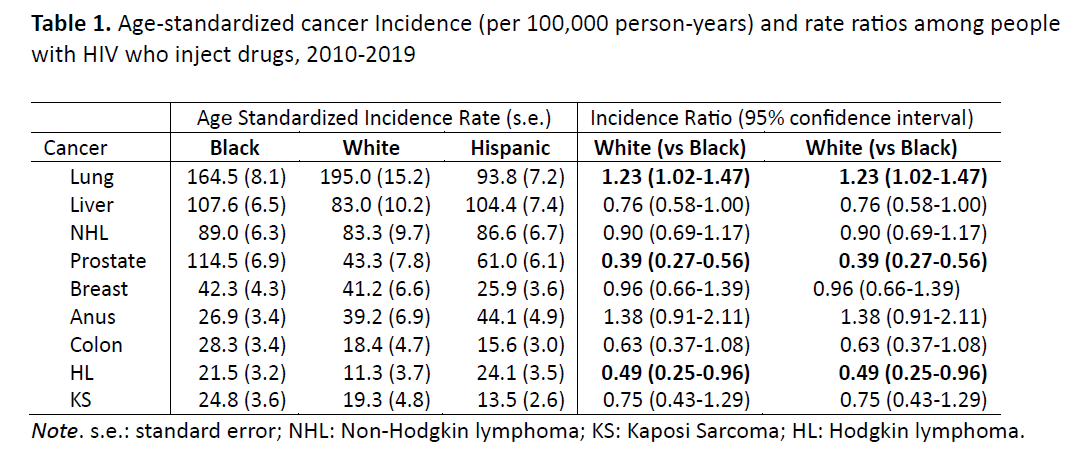
803. Cancer Incidence in Women With HIV in Europe and Australia: A Combined D:A:D and Respond Analysis
Poster Abstracts
Page: 238
Win Min Han1, Lauren Greenberg2, Alisa Timiryasova2, Lene Ryom2, Bastian Neesgaard2, the D:A:D and RESPOND Collaborations
Background
Data are limited on the incidence of cancers and associated risk factors among women with HIV and were hence investigated in two large international HIV cohort collaborations – D:A:D and RESPOND, between 2006 and 2022.
Methods
We included all women (sex assigned at birth) ≥18 years and investigated the incidence and risk factors of the most common cancers combined (i.e., lung, breast, non-Hodgkin’s lymphoma, cervical, anal, head & neck and other non-cervical gynecological cancers), specifically for women (breast, cervical and other gynecological cancers) and HPV-related cancers (cervical, head & neck, other non-cervical HPV-related gynecological and anal cancers). Baseline was defined as the latest of the date into a local cohort enrolment, or 1st January 2006 for the D:A:D cohort, and 1st January 2012 for the RESPOND cohort. Crude incidence rates (95% confidence intervals, CI) of each cancer group were determined and multivariable Poisson regression with robust standard errors was used to assess factors associated with incident cancers.
Results
Among 17,512 women included, median age was 39.5 years at baseline, most were from cohorts in Western Europe (45%), with 27% being ART-naïve overall. Median (interquartile range, IQR) baseline and pre-ART nadir CD4 count was 458 (306-654) and 223 (110-363) cells/µL and 21% had prior AIDS diagnosis. During 141,404 person-years (PY) and a median 9.2 (5.5-10.1) years of follow-up, 539 had one of the common cancers (149 breast, 91 lung and 83 cervical, 70 NHL, 58 non-cervical gynecological, 46 head & neck and 42 anal cancers); incidence rate 3.8 [95%CI, 3.5-4.2]/100 PY, 291 had a women-specific cancer (2.1 [1.8-2.3]/100 PY) and 163 had a HPV-related cancer (1.1 [1.0-1.3]/100 PY) (Figure). In adjusted analyses, age 45-55 and >55 (vs. <45) years, history of injecting drug use, Southern Europe (vs. Western Europe) and current smoking were associated with an increased risk of the most common cancers. Lower pre-ART nadir CD4 count, time-updated CD4 count, and AIDS events were associated with an increased risk of the most common cancers, HPV-related and lung cancers.
Conclusions
The most common incident cancers in women with HIV in the combined D:A:D and RESPOND collaborations were breast, lung and cervical cancers. Our study suggests that particularly immunosuppressed women with HIV older than 40 years who have a history of injection drug use and are current smokers should be considered for intensified cancer prevention measures and cancer screening.
Figure 1.
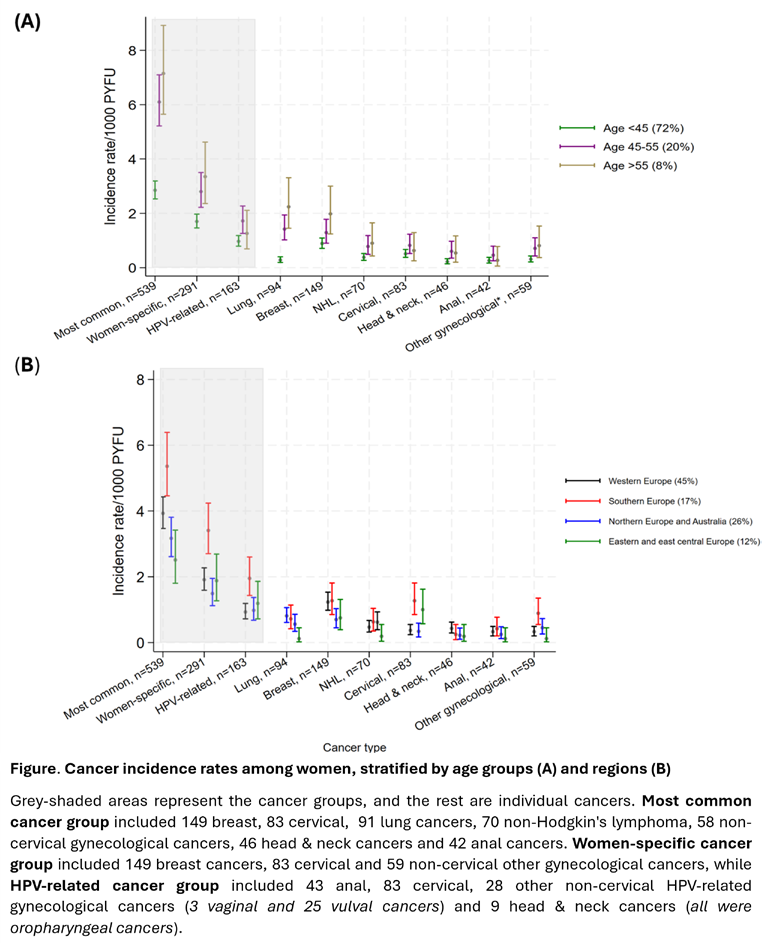
804. Low-Level HIV Viremia Increases Immunosuppressive Markers Elevating Cancer and CVD Risk in InSTI Era
Poster Abstracts
Pages: 238-239
Violeta Lara-Aguilar1, Óscar Brochado-Kith1, Manuel Llamas-Adan1, Sergio Grande García1, Sonia Arca De Lafuente1, Ignacio de los Santos2, Coral Sainz-Pinós1, Mario Alía1, Carmen Prado1, Amanda Fernández Rodríguez1, Ricardo Madrid1, Luz Martín-Carbonero3, Verónica Briz1
Background
We previously reported that low-level viremia (LLV) (50-200 copies/mL) increases cellular activation and senescence in people with HIV (PWH), phenomena closely related to the development of cancer and cardiovascular diseases (CVD). However, data on the clinical consequences of LLV remain limited, especially in the integrase strand transfer inhibitors (INSTI) era. Our aim was to explore how LLV impacts on soluble and cellular markers related to these pathologies.
Methods
Cross-sectional observational study in 81 matched participants: 27 PWH with LLV, 27 PWH with suppressed viremia (SV) and 27 non-HIV controls (NHC). 28 immune checkpoints (ICs) and 18 cardiometabolic markers were evaluated in plasma by immunoassays. Tregs cells were characterized by spectral flow cytometry. Differences between groups were adjusted by age, sex at birth and antiretroviral therapy (ART). P-values were corrected by FDR.
Results
The cohort consisted mainly of males (95%) with a mean age of 53 years. The main ART was INSTIs-based (74% in LLV and 48% in SV). PWH groups showed a generalized higher level of soluble ICs over NHC, highlighting the IDO and Arginase-1 enzymes, as well as the members of the B7 (CD80 and PD-L1), CD28 (PD1 and BTLA), TNF/RSF (TNFRSF9), MHC-I (MICA and ULBP4), MACPF (Perforin-1) and Ig (LAG-3) superfamilies (Fig.1). They also revealed higher levels of the cardiometabolic markers NGAL, P-selectin, vWF and ST2. Compared to SV, LLV group showed a significant increase of sIDO, an immunosuppressive enzyme that inhibits effector T-cell functions and facilitates cell death through tryptophan degradation. They also showed a 1.4-fold increase of highly suppressive Treg FoxP3+Helios+ cells, targets also used for immune-oncology therapy. LLV also revealed higher levels of the subclinical atherosclerosis markers sICAM-1 and an upward trend of sCD14 (Fig.1).
Conclusions
PWH aged 50 years undergoing long-term ART showed increased soluble ICs, endothelial inflammation and hypercoagulable state, increasing the risk of cancer and CVD in the INSTI era. LLV favored an even more exacerbated immunosuppression environment, characterized by a marked increase in sIDO. This inhibitory molecule has been proposed as a prognostic marker for cancer and has also been linked to CVD, consistent with the elevation of Treg cells, sICAM-1 and sCD14 in LLV group. Our findings suggest that IDO could be a promising marker for early detection of future pathologies especially important in LLV population allowing rapid intervention.
The figure, table, or graphic for this abstract has been removed.
805. HPV Detection by Vaginal Self-Sampling and Urine Collection in Women Living With HIV: AUTOCol Study
Poster Abstracts
Page: 239
Morgane Mailhe1, Mélanie Bertine1, Romane Guilbaud2, Pauline Manchon1, Aline-Marie Florence1, Cécile Kedzia1, Agnes Villemant1, Marie-Aude Khuong3, Laurent Blum1, Manuella Mireille Onambele Guindi1, Cindy Godard1, Diane Descamps2, Charlotte Charpentier2, Jade Ghosn2, Valentine Marie Ferré1
Background
Vaginal self-sampling (VSS) has been implemented as the primary cervical cancer screening tool in several countries around the world. Urine collection (UC) can be an alternative if women are uncomfortable with genital sampling. Women living with HIV (WLHIV) are at increased risk of cervical intraepithelial lesions.
Methods
AUTOCol is a multicentre prospective study enrolling WLHIV for cervical cancer screening in 4 hospitals from COREVIH IDF Nord. Both VSS (FLOQSwab in Mswab medium, Copan, Italy) and UC (Colli-pee, Novosanis, Belgium) were offered. High-risk human papillomavirus (HR-HPV) were detected with AnyplexII (Seegene, South Korea) by semi-quantitative PCR.
Results
Between June 2023 and January 2024, 201 WLHIV with a median age of 51 years (IQR=43-58) were enrolled in the study. Among the 199 WLHIV with available HIV viral load (VL), 91% (n=182) were undetectable (<50 c/mL). Median CD4 T-cell count was 770/mm3 (IQR=560-990) with 5 WLHIV <200/ mm3. The acceptance rate to carry out self-sampling was 87% (n=175). The main reason for refusal was the fear of failing (n=14/26). Patients felt no pain during the UC in 98% of cases (n=156/160) compared to 83% of cases for the VSS (n=140/169), which was uncomfortable for 10% of patients (n=17/169). Patients preferred the UC (n=129/162, 80%) and the VSS (n=128/173, 74%) to the cervical smear performed by a health professional.
A total of 174 VSS and 169 UC were collected resulting in 167-paired samples. Both VSS and UC were suitable for HPV detection, with only one unsatisfactory sample in each. On VSS, 75 WLHIV (43%) harbored at least one HR-HPV and of these, 33% (n=25) had multiple infections. HPV68 was the most prevalent type (n=18/174, 10%) and 5% of WLHIV (n=8/174) were positive for HPV16.
VSS and UC HR-HPV results showed good agreement (83%, kappa=0.64). Regarding discrepancies between paired samples, 39 HR-HPV from 34 WLHIV were detected in VSS and negative in UC while only 8 HR-HPV in 7 WLHIV were positive in UC and negative in VSS (Fig.1). HR-HPV VL estimation was low for 37 of these 47 discordant HR-HPV (79%).
Conclusions
VSS and UC are well accepted by patients and preferred to cervical smear. They are both suitable for HR-HPV detection, but VSS appears to be more sensitive when HR-HPV VL is low. VSS is a good alternative for women who need frequent cervical cancer screening or are reluctant to undergo gynecological examination. UC should only be proposed if women refuse any genital sampling.
Figure 1.
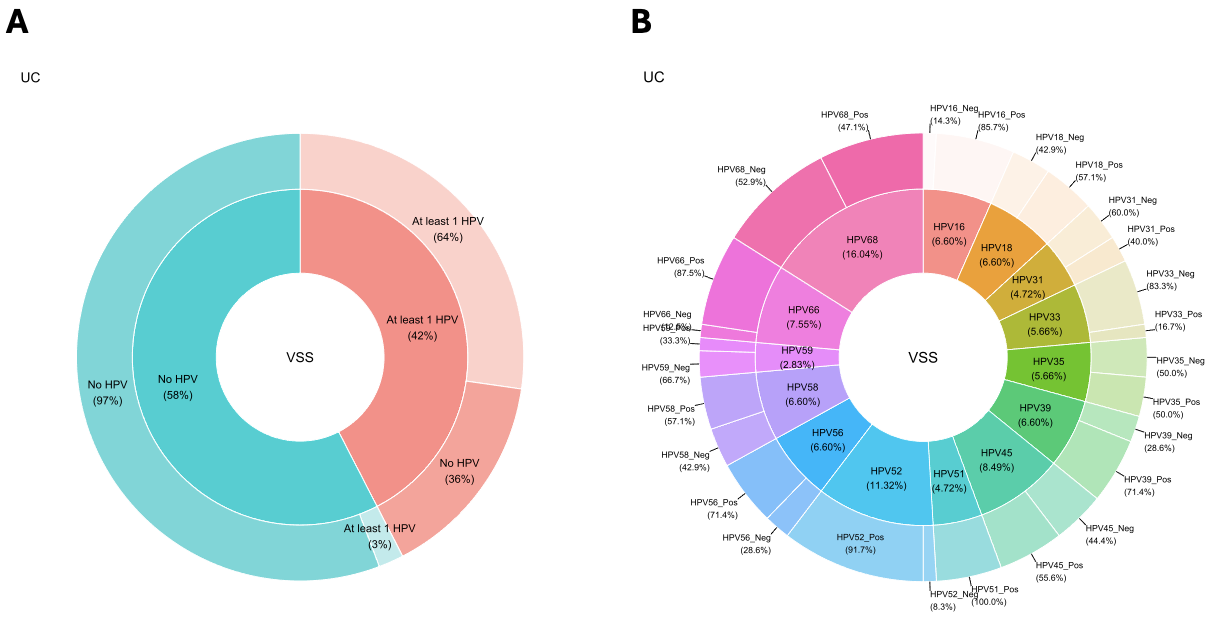
806. The Ivorian Cervical Cancer Screening Cascade: A 10-Year Program Evaluation According to HIV Status
Poster Abstracts
Page: 239
Simon Boni1, David Goore2, Franck Gnahatin3, Mesmin Adie3, Denise Kpebo4, Apollinaire Horo5, Innocent Adoubi3, Antoine Jaquet2, the International Epidemiology Databases to Evaluate AIDS (IeDEA) Collaboration - West Africa
Background
The 2030 global cervical cancer (CC) elimination strategy recommends to achieve a 70% coverage for CC screening and 90% of precancerous lesions treated in eligible women. We evaluated progress towards these WHO CC elimination targets according to HIV status in Côte d’Ivoire over the 2010-2021 period.
Methods
A CC screening registry was initiated in Cote d’Ivoire since 2010, collecting standardized individual-level data from all health facilities offering visual inspection with acetic acid (VIA). Initially restricted to the economic capital (Abidjan), the registry progressively expanded to the three most populated administrative regions accounting for almost half of nationwide eligible women. The CC screening coverage was estimated based on the 2021 population census and Spectrum 2023 (HIV national database) in women aged 25-49 years from the general population and in women with HIV (WHIV). CC screening and care cascade indicators were compared according to HIV status, using Chi-square test. Access to same-day cryotherapy/thermal ablation and associated factors were analyzed through a logistic regression model.
Results
A total of 66,268 women aged 34 years [IQR: 28-41] in median were screened for CC, 17.0% being WHIV. Overall, the estimated CC screening coverage was 4.4% [95%CI (2.6-5.2)] and 14.8% [95%CI (14.6-15.1)] in WHIV. Among the 4,210 VIA-positive women, 3,500 (83.1%) were eligible for same-day cryotherapy/thermal ablation (83.9% in WHIV). Overall, access to same-day treatment was 59.1% (57.1% in women without HIV and 65.2% in WHIV, p<0.001) but declined over time, particularly in WHIV (Figure) and was higher in those screened in HIV specialized clinics (81.6%) versus HIV-integrated facilities (53.2%), p<0.001). In multivariate analysis, access to same-day treatment was higher in WHIV [aOR= 1.55 [CI: (1.32-1.84)] and women screened in secondary level [aOR=1.82 (CI: 1.49-2.23)] or tertiary level facilities [aOR=1.79 (CI: 1.54-2.09)] compared to primary level facilities.
Conclusions
In 2021, CC screening program performances remained particularly low regarding the 2030 CC elimination goals. Access to treatment was unacceptably low, particularly in WHIV, raising the need to improve/ expand integration of cryotherapy/thermal ablation in integrated HIV services and primary healthcare facilities. Overcoming delivery gaps and implement monitoring/tracing strategies for positively screened women is a priority as HPV-based primary screening in being scaled-up in the country.
Figure 1.
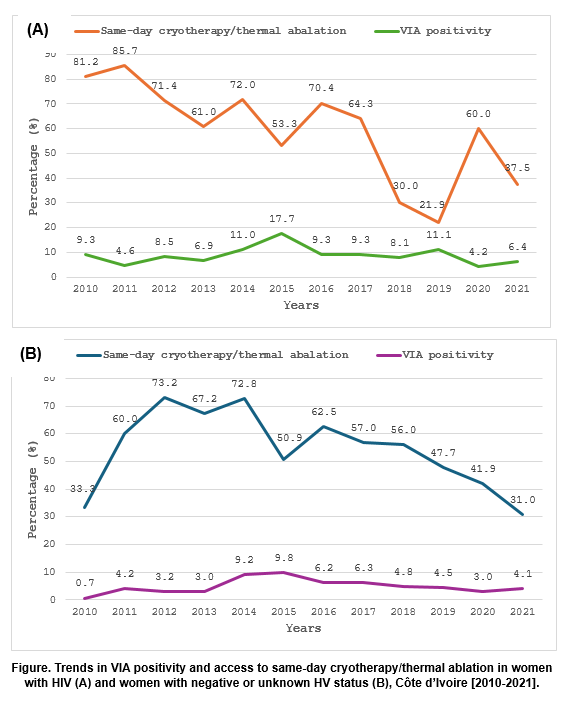
807. 2 vs 3 Doses of HPV9-Valent Vaccine in Women With HIV: Safety & Immunogenicity From Randomized Trial
Poster Abstracts
Page: 240
Debora R. Konopnicki1, Christine Gilles1, Yannick Manigart1, Patricia Barlow1, Anca Reschner1, Coca Necsoi1, Marc Delforge1, Davy Vandenbroeck2, Nicolas Dauby1, Stephane De Wit1
Background
WHO recommends 2 doses of human papillomavirus (HPV) vaccine for adults without HIV and 3 doses among persons with HIV. There are currently no immunogenicity data on 2 doses schedule in women with HIV (WWH).
Methods
This monocentric prospective study (NCT03391921) compares 2 (month 0,6) versus 3 (month 0,2,6) doses of 9-valent (9v-) vaccine (Gardasil9®MSD) in WWH aged 15-40 years, on antiretrovirals (ART) with HIVRNA<400cp/ml; enrollment 2018-2021. An initial open-label phase assessed safety in 45 participants receiving 3 doses. As no safety signal was identified, we further randomized participants between 2 or 3 doses. Primary outcome was non-inferiority of 2 doses (=at least 80% of seroconversion against all vaccine-genotypes at Month7, alpha=0.05, 1-beta=0.8) compared to 3 doses (expected seroconversion rate: 90%). Due to COVID-19 pandemic, 102 WWH, instead of initially planned 120, were randomized. Due to budget constraints, the trial was further amended to give 2 doses to all participants enrolled thereafter Feb 2021 (n=22). Results were analyzed in intention-to-treat (ITT, missing = failure) on the randomized (n=100; 2/102 consent withdrawals) and on-treatment (OT) on the whole cohort (n=151; 16/167 missed Month7 visit) according to number of doses received.
Results
Among 167 WWH enrolled, 81% were from sub-Saharan Africa, median age 35 years, median CD4 count 649/µL. Before vaccination among the 167 participants, the mean antibody titers against each of the 9 vaccine genotypes were below the detectable cutoff and detectable antibodies were found in respectively 26% for HPV6, 8% for HPV11, 7% for HPV16, 12% for HPV18, 13% for HPV31, 14% for HPV33, 9% for HPV45, 7% for HPV52 and 10% for HPV58. After vaccination, rates of seroconversion against all vaccine genotypes were non-inferior for 2 doses in both ITT (84% versus 94% for 3 doses, p=0.19) and OT (96% versus 98.8% for 3 doses, p=0.57). In both ITT and OT analysis, GMCs significantly increased after vaccination with 2 doses (p<0.0001) or 3 doses (p<0.0001) with a magnitude of increase 17 to 259 times (1.2 to 2.4 log10) compared to baseline. There was no serious adverse event; most reactions were local and mild but significantly more frequent with 3 doses in ITT (82% versus 60% for 2 doses, p=0.027) and OT (80% versus 61% for 2 doses, p=0.016).
Conclusions
In women with well-controlled HIV under ART, 2 doses of HPV 9v-vaccine is non-inferior to 3 doses in terms of seroconversion rate and is associated with less reactogenicity.
808. Optimizing Anal Cancer Screening in PWH: The Role of ADAR1 mRNA in Predicting High-Grade Lesions
Poster Abstracts
Page: 240
Melissa Bello-Perez1, Paula Mascarell1, Marta Fernández-González1, Jose Alberto Garcia1, Christian Ledesma1, Ana Gutiérrez-Ortiz de la Tabla2, Isabel Valencia1, Angela Botella1, Miguel Bardellini1, Marta Inclán1, Nieves Gonzalo-Jimenez1, Javier Garcia-Abellan1, Sergio Padilla Urrea1, Felix Gutierrez1, Mar Masiá1
Background
The incidence of anal squamous cell carcinoma is significantly increased in people with HIV (PWH). Early detection of high-grade squamous intraepithelial lesions (HSIL) through high-resolution anoscopy (HRA) in individuals with abnormal anal cytology can prevent over half of these cases. However, the poor specificity of anal cytology leads to a high number of unnecessary HRAs. This poses significant challenges to anal cancer screening, considering the scarce availability of HRA. Overexpression of adenosine deaminase acting on RNA 1 (ADAR1) has been reported in several cancers, including cervical cancer. This study aimed to determine whether quantifying ADAR1 mRNA levels could improve the selection of candidates for HRA.
Methods
A prospective cohort study was conducted between 2022 and 2023, involving consecutive HIV-positive adults with abnormal anal cytology (atypical squamous cells of undetermined significance or worse). All patients underwent HRA to collect anal swabs and biopsies. ADAR1 mRNA expression levels were quantified using RT-qPCR in anal swabs. The diagnostic performance of ADAR1 mRNA to discriminate HSIL from low-grade squamous cell intraepithelial lesions (LSIL)/normal biopsies was analyzed using receiver operating characteristic (ROC) curves.
Results
HSIL was confirmed by anal biopsy in 40/171 participants (23.4%) with abnormal anal cytology. Participants with HSIL had a higher median [IQR] number of HPV genotypes compared to those without HSIL (5 [4-8] vs 3 [1-5], p<0.001). ADAR1 mRNA levels were significantly higher in the HSIL group compared to the non-HSIL group (49.4 vs 4.1, p<0.001). The ROC curve for ADAR1 mRNA showed an area under the curve of 0.83 (95% CI: 0.75-0.92). Using a threshold of ≥24.8 relative units to endogenous control, the test achieved 73% sensitivity, 92% specificity, 74% positive predictive value and 92% negative predictive value. This threshold would reduce the need for HRA to 22.8% of participants with abnormal anal cytology. Among the 132 (73%) participants with ADAR1 levels <24.8, incorporating HPV genotype quantification with a threshold of >4 improved HSIL detection rates to 95%, though it would require 40 (23%) additional HRAs.
Conclusions
ADAR1 mRNA quantification helps mitigate the limited availability of HRA by more accurately identifying PWH who need the procedure. By increasing specificity and reducing unnecessary HRAs, ADAR1 mRNA presents a more efficient, targeted and less invasive strategy for detecting HSIL.
809. Anal Cancer Incidence Among Privately Insured People With and Without HIV in South Africa
Poster Abstracts
Pages: 240-241
Eliane Rohner1, Nathalie Veronica Fernandez Villalobos1, Yann Ruffieux1, Chido Chinogurei2, Andreas D. Haas1, Morna Cornell2, Nicola Low1, Gary Maartens3, Jenni Noble4, Naomi Folb4
Background
People with HIV (PWH) have a higher anal cancer incidence than the general population. Although most PWH live in sub-Saharan Africa, data about the association of HIV and anal cancer in this region are scarce. We examined anal cancer incidence rates among privately insured people with and without HIV in South Africa.
Methods
We did a retrospective cohort study using reimbursement claims data from a South African medical insurance scheme (01/2011-07/2020) to assess anal cancer rates among people with and without HIV aged ≥18 years. We defined anal cancer diagnoses as ≥2 claims with ICD-10 codes for anal cancer (C21). Using proportional hazards survival models, we estimated adjusted hazard ratios (aHRs) for the association of HIV and incident anal cancer. The multivariable model included sex, HIV status, age, population group, calendar year, history of genital warts, and history of other sexually transmitted infections (STIs). Among women, we also estimated aHRs for the association of past cervical precancer and an incident anal cancer diagnosis.
Results
We included 1,068,915 people of whom 557,717 were women (52%) and 69,985 (7%) were PWH. The median age at the start of time-at-risk was 39.7 years (interquartile range [IQR] 33.4-47.3) in PWH and 36.3 years (IQR 26.1-49.9) in people without HIV. Over 3,933,145 person-years, 122 incident anal cancers were diagnosed for a crude incidence rate of 3.1/100,000 person-years (95% confidence intervals [CI] 2.6-3.7). PWH had a four-fold higher risk of an incident anal cancer diagnosis than people without HIV (Table). Anal cancer rates increased with older age, and they did not differ by sex. A history of genital warts was associated with a substantially higher risk of an incident anal cancer diagnosis, but we did not find a clear association with a history of other STIs. Among women, a prior diagnosis of cervical precancer was associated with an almost six-fold increased risk of developing anal cancer (aHR 5.70; 95% CI 1.75-18.58).
Conclusions
We found that PWH in South Africa had considerably higher anal cancer rates than people without HIV. Older individuals, people with a history of genital warts, and women with a prior diagnosis of cervical precancer were also at increased risk of developing anal cancer - these groups may benefit from risk-targeted anal cancer screening, as recommended by the International Anal Neoplasia Society's consensus guidelines for anal cancer screening.
Table 1.
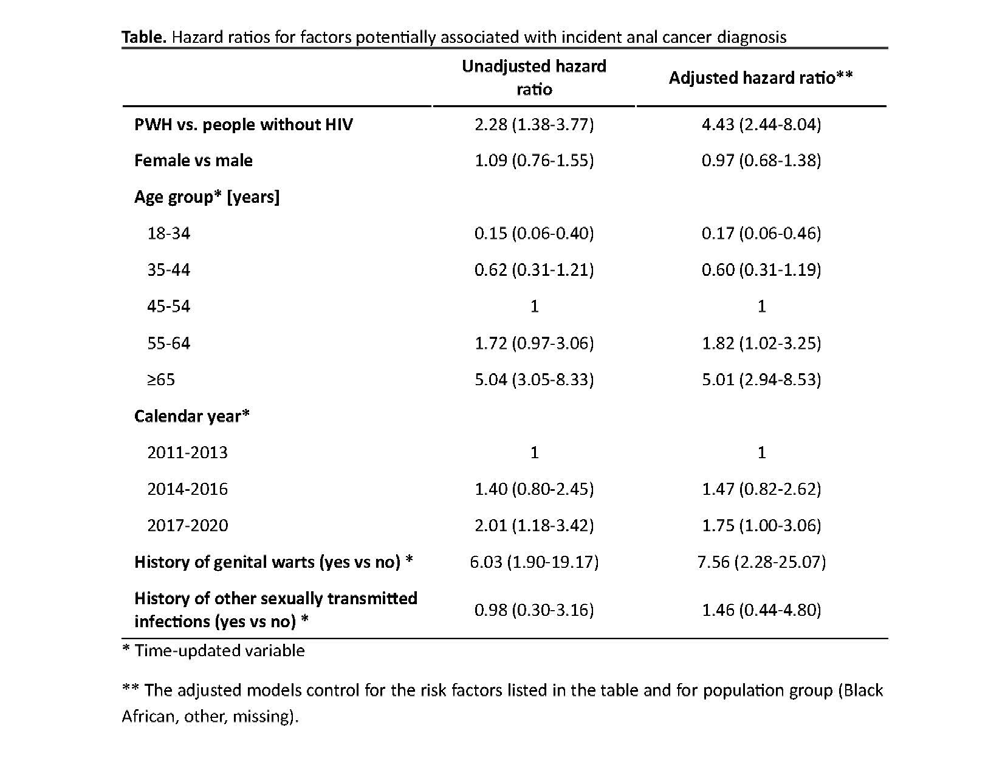
810. Evaluation of Anal Cancer Screening in 18–34-Year-Old Men Who Have Sex With Men Living With HIV
Poster Abstracts
Page: 241
Serina S. Applebaum, Elizabeth Chan, Lydia Aoun-Barakat, Michael Virata, Ritche Hao, Amit C. Achhra
Background
New anal cancer screening guidelines recommend annual anal cytology (PAP) for men who have sex with men (MSM) living with HIV (LWH) aged ≥35 years. Historically our center had offered screening to even younger (>18 years) MSM LWH. There is a growing interest in expanding age-based cancer screening thresholds, including for anal cancer. We assessed the prevalence and outcomes of anal cancer screening among MSM LWH under 35 to better characterize this age threshold.
Methods
We performed a retrospective study (2013-2023) of MSM LWH <35 years at our academic HIV center. We recorded the date and result of each anal PAP and high-resolution anoscopy (HRA; referral criteria were any abnormal PAP) performed between ages 18-34, as well as sociodemographic and HIV-related metrics. We compared characteristics between screened and unscreened cohorts and we report prevalence of high-grade dysplasia and anal cancer in the cohort.
Results
We identified 216 eligible MSM LWH (median [IQR] age 26.7 [23.9, 30.6] years); 24% were White, 44% non-Hispanic Black, 26% Hispanic; >90% were on antiretroviral therapy and 88% had viral load <1000 copies/mL, and 95% CD4 T-cell count >200 cells/mm3 at last visit. Of these, 127 (59%) had anal PAP at least once. There were no significant differences between screened and unscreened cohorts, except longer follow-up in the screened group (median 3.8 vs 1.6 years). Of those screened, 58 (46%) had ≥2 PAPs and 58 (46%) had ≥1 HPV vaccine dose. HPV vaccination was not associated with abnormal PAP (p=0.26) or HRA biopsy (p=0.59). Of 246 total PAPs, 19% were unsatisfactory, none showed high-grade dysplasia, and overall 76 (31%) were abnormal, only 23 of which were followed by HRAs of which 11(48%) reported high-grade dysplasia on biopsy (Table-1). In those receiving both PAP and HRA, positive predictive value (PPV) of any PAP abnormality for high-grade dysplasia was 47.8%. We identified 2 cases of anal cancer (diagnosed at ages 29 and 30): both had CD4 nadir <20, were diagnosed symptomatically with local disease and had received screening in the preceding year.
Conclusions
Over 10 years, uptake of anal cancer screening among young MSM LWH was variable. Anal PAP had a high rate of ‘unsatisfactory’ samples and poor PPV for high-grade dysplasia. Despite high prevalence of high-grade dysplasia in those undergoing HRA, the rarity of anal cancer, which was diagnosed early due to symptoms, supports excluding younger (<35 years) MSM LWH from asymptomatic screening.
Table 1.
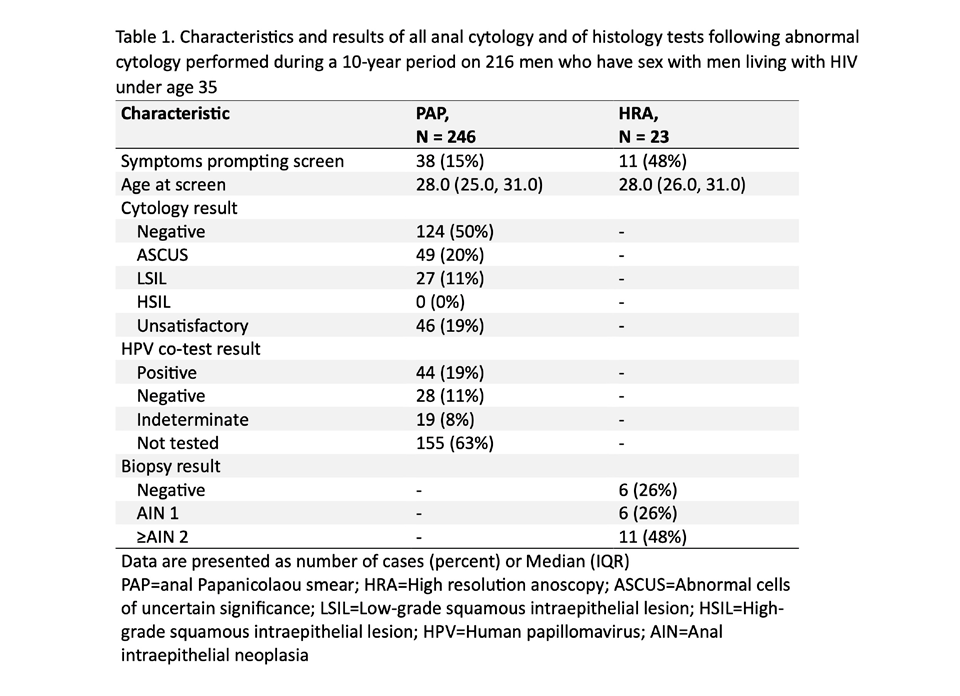
811. Sex Differences in Myocardial Steatosis in South African Youth With Perinatally-Acquired HIV
Poster Abstracts
Page: 241
Morne Kahts1, Mothabisi Nyathi1, Lidia S. Szczepaniak2, Petronella Samuels1, Stephen Jermy1, Matthew J. Feinstein3, Justine Legbedze4, Nana Asafu-Agyei1, Emma Carkeek1, Nomawethu Jele1, Grace A. McComsey5, Landon Myer1, Heather Zar1, Ntobeko Ntusi6, Jennifer Jao3, the CTAAC-Heart Study
Background
Despite studies demonstrating an increase in myocardial steatotic burden in adults with HIV on antiretroviral therapy (ART), no studies have evaluated this phenomenon in youth with perinatally-acquired HIV (YPHIV).
Methods
The Cape Town Adolescent Antiretroviral Cohort (CTAAC)-Heart study enrolled youth to assess myocardial fibrosis and inflammation using cardiovascular magnetic resonance (CMR). A magnetic resonance proton spectroscopy (1H-MRS) sub-study was conducted among YPHIV to assess myocardial triglyceride (mTG) content. 1H-MRS was acquired by means of an ECG-triggered, respiratory-gated sequence using a 6x16x18mm voxel placed within the intra-ventricular septum. Fibrosis was assessed using pre-and post-contrast T1 mapping with Siemens MyoMapsTM modified Look-Locker inversion recovery sequence and post-contrast T1-weighted phase sensitive inversion recovery sequences with mean extracellular volume fraction (ECV%) calculated. T2 mapping was performed using a T2-prepared fast low angle shot sequence to assess for inflammation. Pathologically elevated mTG content was defined as >0.5%. Logistic regression models were fit to assess the association of sex with mTG content >0.5% adjusting for confounders.
Results
Overall, 72 YPHIV [median age (interquartile range (IQR)) 18 years (17-19), 44% females] were included. Females had a higher BMI [24 vs. 20kg/ m2, p=0.002] and waist to height ratio [0.48 vs. 0.43, p<0.001] compared to males. There were no differences in serum lipid levels, viral load (VL), CD4 count or current integrase inhibitor (INSTI) use; 28% of participants were on INSTI-based ART and 63% had CD4 counts >500 cells/mm3 with a median VL of 3.91 log10 copies/ml (IQR 3.66-6.02). In addition to higher mean ECV% and native T1, females were noted to have higher mTG content [0.34 vs. 0.13%, p=0.003]. (Table 1) A higher proportion of females had mTG content >0.5% (42 vs. 17%). This relationship persisted even after adjusting for age, BMI, VL, and INSTI-based ART use [unadjusted odds ratio (OR)=3.67, 95% confidence interval (CI): 1.14-11.84, p=0.03; adjusted OR=3.78, 95%CI: 0.98-14.63, p=0.05].
Conclusions
In the first study of 1H-MRS among YPHIV on ART, we report elevated mTG in YPHIV, with females found to have increased myocardial steatosis and fibrosis compared to males. Based on these findings, we propose there is a role for early screening, prevention, and possible intervention in YPHIV, particularly females.
Table 1.
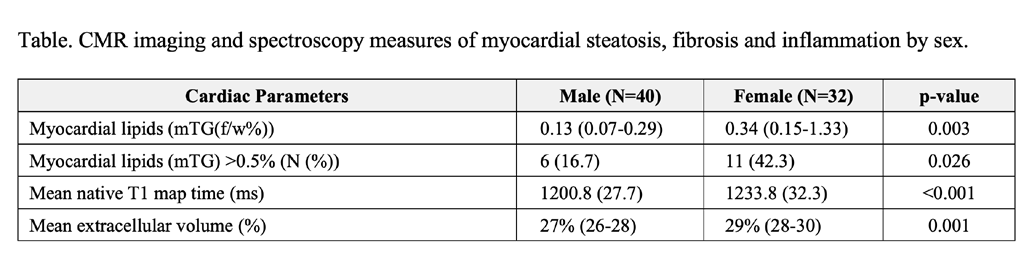
812. Heart Failure Among People With HIV: Prescription of Guideline-Directed Medical Therapy
Poster Abstracts
Page: 242
Melissa K. Cutshaw1, Robert M. Clare2, Karen Chiswell2, Paul Hofmann2, April C. Pettit3, Chris Longenecker4, Matthew S. Durstenfeld5, Gerald Bloomfield2, Nwora L. Okeke1
Background
People with HIV (PWH) have an increased risk of heart failure (HF), and HF outcomes among PWH are worse than in persons without HIV. Guideline-directed medical therapy (GDMT) is the cornerstone of HF management but is often suboptimally prescribed. Despite poor HF outcomes in PWH, little is known about GDMT prescription among PWH with HF.
Methods
We conducted retrospective analyses of the PATHWAYS study, a multi-institutional observational study of underrepresented racial and ethnic groups in the Southern U.S. from 2014-2020. Adult patients with a systolic HF ICD-9 or ICD-10 code on or after the first date of HIV diagnosis were included. A composite 3+ pillar GDMT score was constructed using dosage-weighted prescription of GDMT drugs (beta-blockers [BB], renin-angiotensin system [RAS] inhibitors, mineralocorticoid receptor antagonists [MRA], and hydralazine [for Black patients only]), with a maximum score of 100% indicating optimal GDMT (Table 1). Covariates of interest included age, sex, social deprivation index [SDI], rural address, insurance type, HIV characteristics, ambulatory clinic visits, and select comorbidities. Among patients with systolic HF, associations between covariates and the maximum GDMT score within one year of HF diagnosis were estimated using unadjusted means ratios.
Results
Among 451 PWH with systolic HF, the median age was 54 years (interquartile range [IQR] 47-62), 34.6% were female, 96.6% were Black, and 3.6% were Hispanic. The median CD4 count was 332 (IQR 173-618). Prescription of any GDMT occurred in 85.8% of patients. Overall, 74.5% of patients were prescribed BB, 58.8% were prescribed RAS inhibitors, 22.2% were prescribed MRA, and 21.4% of eligible patients were prescribed hydralazine. The mean GDMT score was 30% (standard deviation [SD] 22%). Lower average GDMT scores occurred in patients with higher SDI scores (0.97, 95% CI: 0.94-0.99) and severe renal disease (0.84, 95% CI: 0.72, 0.99). Higher average GDMT scores occurred in patients with diabetes mellitus (unadjusted mean ratio 1.25, 95% confidence interval [CI] 1.09-1.44), hypertension (1.39, 95% CI: 1.14-1.69), elevated LDL cholesterol (1.34, 95% CI; 1.06-1.69), obesity (1.16, 95% CI: 1.00-1.35), and prior myocardial infarction (1.18, 95% CI: 1.02-1.36).
Conclusions
People with HIV and HF had low GDMT scores, indicating suboptimal intensity of HF care. Further studies are needed to investigate potential disparities in GDMT prescription among people with and without HIV.
Table 1.
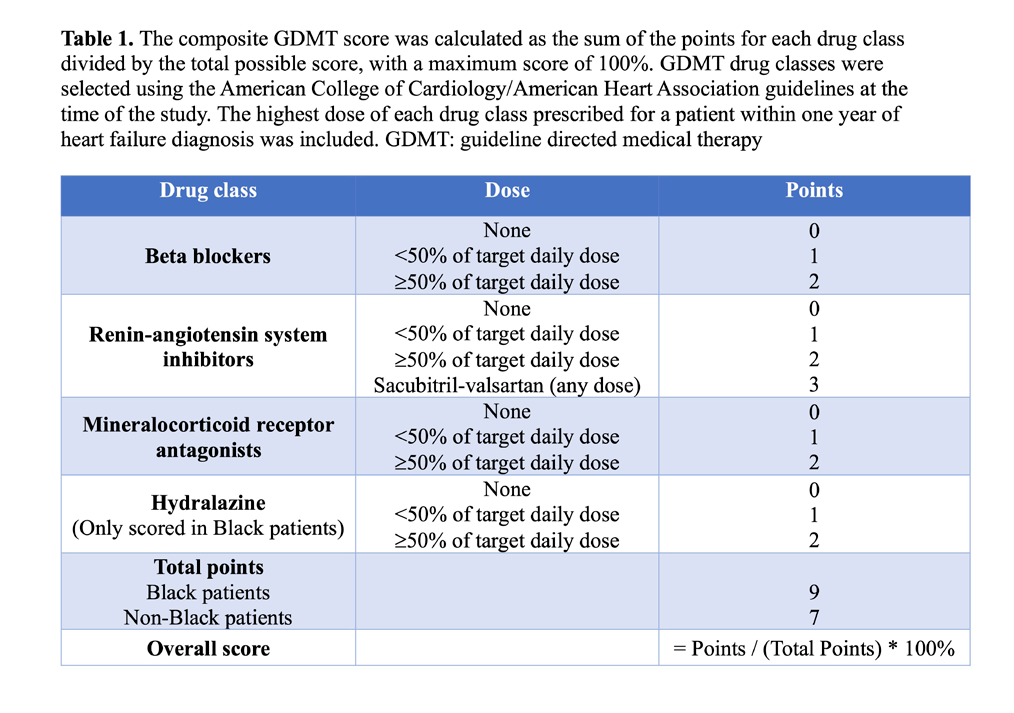
813. Mitochondrial Haplogroups and Left Ventricular Dysfunction in People Living With and Without HIV
Poster Abstracts
Page: 242
Craig Cronin1, Jing Sun2, Jorge R. Kizer3, Katherine C. Wu1, David Samuels4, Frank Palella5, Shehnaz Hussain6, Jeremy Martinson7, Nicole Armstrong8, Claudia Martinez9, Caitlin A. Moran10, Yasmeen Golzar11, Federico M. Asch12, Jason Lazar13, Todd Brown14
Background
Mitochondrial dysfunction is implicated in the development of heart failure, which is more common in people with HIV (PWH) than those without HIV (PWoH). Whether genetic variations in mitochondrial DNA (mtDNA) are related to cardiac dysfunction, specifically left ventricular diastolic dysfunction (LVDD), has not been well studied in PWH.
Methods
We included men from the Multicenter AIDS Cohort Study (MACS) and women from the Women’s Interagency HIV Study (WIHS) who participated in standardized echocardiographic studies. LVDD was defined using the Characterizing Heart Function on Antiretroviral Therapy (CHART) study criteria, which excludes individuals with reduced LV ejection fraction. mtDNA haplogroups were inferred from genotyping data using HaploGrep. We used multivariable logistic regression to examine the sex- and race-stratified association between LVDD and common African haplogroups (L0L1, L2, L3, or “other”) for males and females or European haplogroups (H, UK, JT, or “other”) for males. We further evaluated for interactions between HIV serostatus and haplogroups. The model controlled for principal components of nuclear genetic ancestry, age, BMI, educational level, alcohol intake, hepatitis C status, and clinical characteristics relevant for LVDD (hypertension, diabetes mellitus, dyslipidemia, and eGFR).
Results
Among 842 men (455 PWH and 387 PWoH), 574 self-identified as White and 268 as Black with a median age of 59 [IQR: 46, 72] and prevalence of LVDD of 24.2% (24.2% PWH and 24.3% PWoH). All 591 women (397 PWH and 194 PWoH) self-identified as Black with a median age of 52 [IQR: 40, 64] and prevalence of LVDD of 26.9% (27.0% PWH and 26.8% PWoH). For men with HIV, the odds of LVDD were 48% lower in European haplogroup H than for men in non-H haplogroups (OR, 0.52; 95% CI, 0.28-0.97; Figure). There were no significant associations between haplogroups of African origin and LVDD in men. For women with HIV, the odds of LVDD were 57% lower in African haplogroup L2 (OR, 0.43; 95% CI, 0.22-0.81; Figure). HIV status significantly modified the association of haplogroup L2 and LVDD in women (Pinteraction=0.025). For PWoH, there were no significant associations between haplogroups and LVDD.
Conclusions
Common mitochondrial haplogroups (i.e. H, L2) are significantly associated with lower odds of LVDD among PWH, but not among PWoH. Mitochondrial genetic variations may protect against cardiac diastolic dysfunction in the setting of HIV infection, particularly among Black women.
Figure 1.
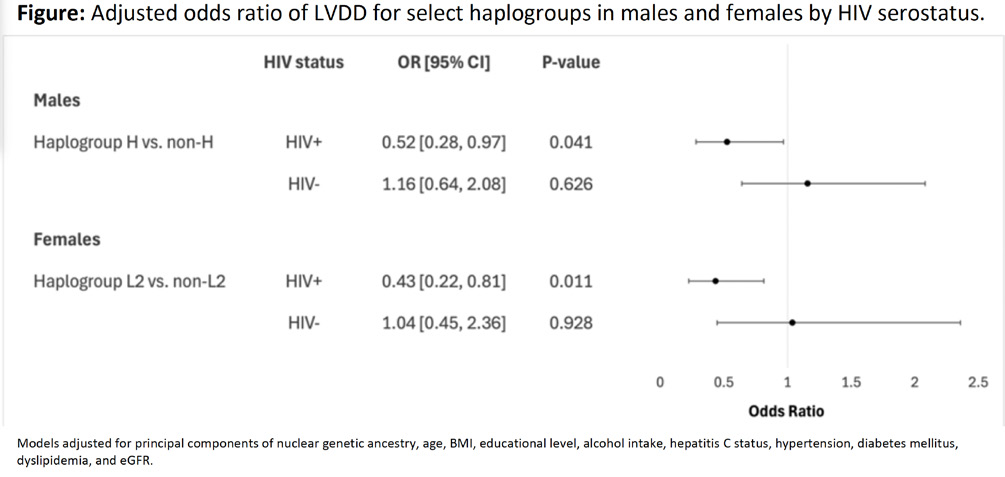
814. Physician-Confirmed Incident Heart Failure Phenotypes and Etiologies Within CNICS
Poster Abstracts
Page: 243
Nour Beydoun1, Robin M. Nance2, Alexander P. Hoffmann2, Matthew S. Durstenfeld3, Bridget M. Whitney2, Greer Burkholder4, Priscilla Hsue5, Joseph A. Delaney2, Chris Longenecker2, Heidi M. Crane2, Matthew J. Feinstein1
Background
People with HIV (PWH) have elevated risk for heart failure (HF). However, limited multi-center data exist on presentations and etiologies of HIV-associated HF.
Methods
We adjudicated incident HF events occurring between January 1, 2010 and December 31, 2023 at University of Washington (UW) and University of Alabama-Birmingham (UAB), which are two centers within the CFAR Network of Integrated Clinical Systems (CNICS). PWH in CNICS with possible HF were first identified by a screening protocol incorporating administrative codes and biomarkers of cardiac congestion. Individuals with HF prior to baseline were excluded. Two independent physician adjudicators reviewed clinical records to adjudicate events, with confirmed HF diagnosis requiring a combination of symptoms, physician diagnosis, and HF medication use. Adjudicators also determined: (1) HF subtypes (by left ventricular ejection fraction, LVEF) based on echocardiography closest in time to HF onset, and (2) presumed etiologies (e.g., ischemic and/or non-ischemic) based on review of physician notes, procedure notes, and comorbidities present at HF onset. Using Cox proportional hazard regression, hazard ratios and 95% CIs were used to examine associations of risk factors with incident HF.
Results
After excluding 50 PWH with confirmed HF at baseline, there were 212 PWH with incident adjuciated HF, of whom 106 (50%) had HF with reduced LVEF (HFrEF, LVEF<40%), 75 (35%) had HF with preserved LVEF (HFpEF, LVEF≥50%), 28 (13%) had HF with midrange LVEF (HFmrEF, LVEF ≥40% and <50%), and 3 (1%) had unknown LVEF classification. Regarding physician-determined HF etiology, 115 (54%) had nonischemic etiology, 36 (17%) had mixed ischemic and nonischemic etiology, 24 (11%) had ischemic etiology only, and 37 (17%) had unknown etiology. The most common nonischemic etiologies of HF were hypertensive and substance use, with hypertensive etiologies more common at UAB and substance use related etiologies more common at UW. Higher HIV viral load and lower CD4 count were associated with significantly higher incidence of adjudicated HF (Table) as were older age, smoking, hypertension, diabetes mellitus, history of myocardial infarction, and renal insufficiency.
Conclusions
Nonischemic etiologies of HF are common among PWH. HIV viremia, low CD4 T cell count, traditional CVD risk factors, and renal insufficiency were associated with higher risk of incident HF. Efforts to define HIV-specific presentations and etiologies of HF are needed.
Table 1.
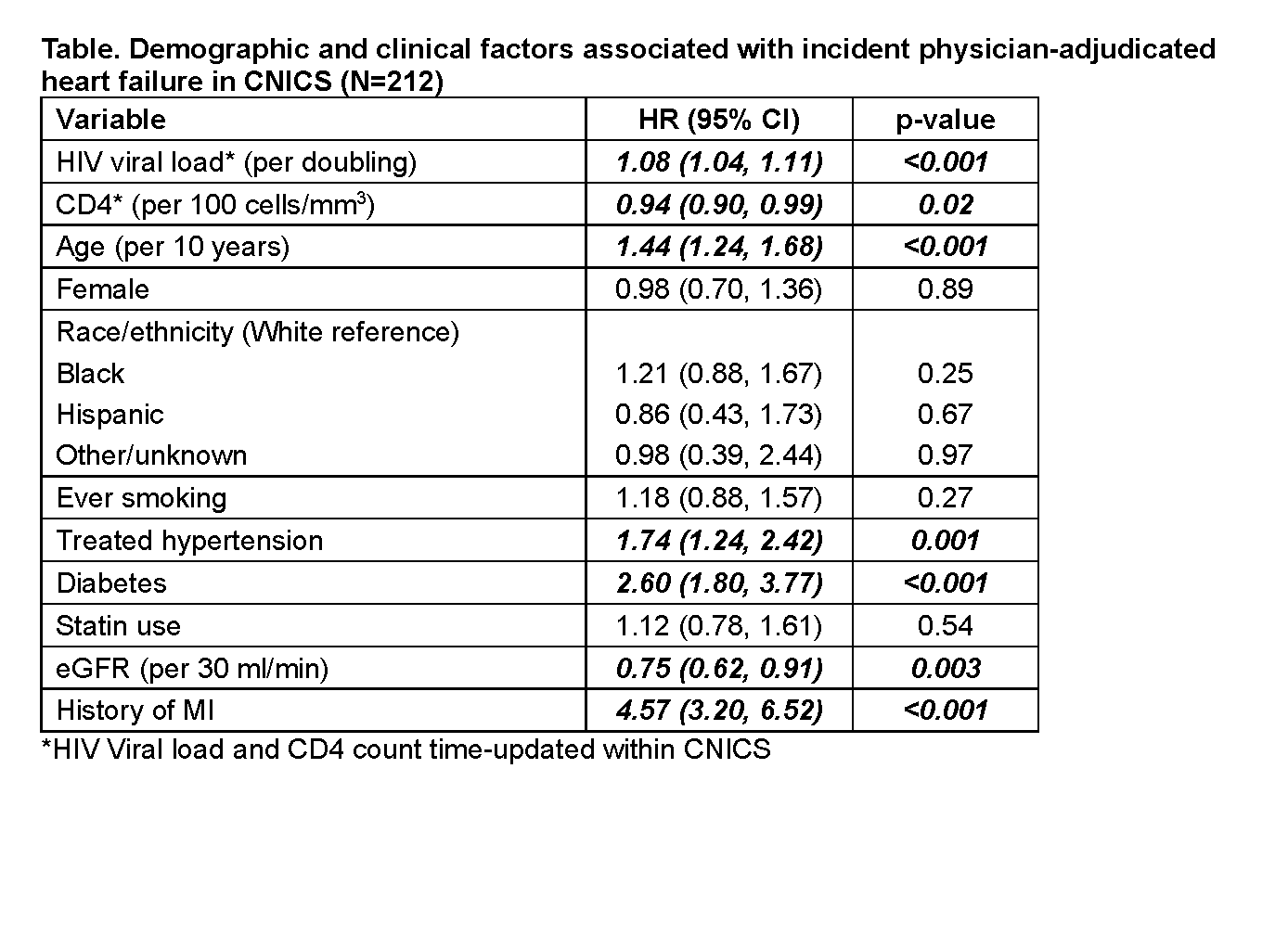
815. Readmission Risk for Adults With HIV Hospitalized for Heart Failure or Acute Myocardial Infarction
Poster Abstracts
Page: 243
Ping Yang1, Xianming Zhu2, Eshan U. Patel2, Wendy Post2, M. Kate Grabowski3, Thomas C. Quinn2, Stephen A. Berry2, Kelly Gebo1, Aaron A. R. Tobian1
Background
People with HIV (PWH) have a higher incidence of cardiovascular disease, including heart failure (HF) and acute myocardial infarction (AMI) than people without HIV (PWoH). In the general population, 30-day readmissions following hospitalizations for HF and AMI are common, and reducing these readmissions is a national quality of care priority. This study compares the 30-day readmission risk between adult PWH and PWoH hospitalized for HF or AMI in the US.
Methods
We conducted a retrospective cohort analysis using the 2021 Nationwide Readmissions Database. Using International Classification of Diseases, Tenth Revision, Clinical Modification codes, we identified adults admitted for HF or AMI. The primary outcome was 30-day all-cause unplanned readmission. We estimated age-adjusted risk ratios (aRR) of readmission by HIV status using random-effects logistic regressions with marginal estimates. Subgroup analyses were conducted stratified by age and sex. All analyses used survey weights to generate national estimates.
Results
We included 1,055,524 (weighted) adult index (initial) hospitalizations for HF and 475,514 for AMI. In both HF and AMI populations, PWH were more likely than PWoH to be male (HF: 69% vs. 53%; AMI: 80% vs. 64%) and to reside in low-income areas (HF: 53% vs. 32%; AMI: 45% vs. 29%). Among HF index hospitalizations, PWH had a significantly higher readmission risk (32%) compared to PWoH (22%), (aRR=1.37; 95%CI=1.30-1.44). Similarly, for AMI hospitalizations, PWH had a significantly higher readmission risk (18%) than PWoH (12%), (aRR=1.67; 95%CI=1.47-1.88). For HF, the most common diagnostic categories for both PWH and PWoH readmissions were cardiovascular (57% vs. 55%), infectious (15% vs. 14%), and respiratory (7% vs. 6%). For AMI, the leading reasons for readmission among PWoH were cardiovascular (57%), infectious (13%), and digestive (7%), while in PWH, the top categories were cardiovascular (42%), infectious (15%), and both digestive and respiratory (6%). In age- and sex-stratified analysis, PWH consistently had higher readmission risks than PWoH for both HF and AMI, with the largest disparities observed in younger males and older females (Figure).
Conclusions
For hospitalizations due to HF and AMI, PWH had significantly higher 30-day readmission risks than PWoH. Targeted interventions are needed to reduce readmission risks among PWH with HF and AMI, especially as the burden of these comorbid conditions grows.
The figure, table, or graphic for this abstract has been removed.
816. Long-Term Outcomes in People With HIV Who Survive a Major Adverse Cardiovascular Event
Poster Abstracts
Pages: 243-244
Rebecka Papaioannu Borjesson1, Pierluigi Reali1, Riccardo Lolatto1, Caterina Candela2, Alessia Siribelli2, Tommaso Clemente1, Girolamo Piromalli1, Martina Ranzenigo1, Hamid Hasson1, Camilla Muccini1, Antonella Castagna1, Vincenzo Spagnuolo1
Background
Major adverse cardiovascular events (MACEs) are now a leading cause of morbidity and mortality in people with HIV (PWH). Data on the long-term outcomes of PWH who have survived a MACE are lacking. Our aim was to evaluate overall survival and its predictors in PWH who survived a MACE.
Methods
Retrospective cohort study on PWH followed at IRCCS San Raffaele, Milan, who experienced at least one MACE between 1st/Jan/2008 and 31st/ Dec/2023. Follow-up (FU) accrued from the first MACE (baseline, BL) until death/last visit. To evaluate the outcomes of MACE survivors, we excluded from the analysis those who died within 30 days of baseline. MACEs included: myocardial infarction; hospitalization for unstable angina; stroke; transient ischemic attack; peripheral arterial ischemia; arterial revascularization; cardiovascular death. Survival curves estimated using Kaplan–Meyer method. Univariate Cox regressions and Mantel-Haenszel method estimated the mortality hazard ratio (HR) and 95% Confidence Interval (95%CI) of continuous and nominal variables, respectively. Factors associated with mortality evaluated by multivariate Cox regression.
Results
Among 7719 PWH, 358 (4.6%) had a MACE and 39/358 (11%) died within 30 days after BL. Characteristics of the 319 MACE survivors are shown in Table 1. During a median FU of 5.6 years (IQR=2.7-9.3), the overall probability of survival at 5 and 10 years in MACE survivors was 89% (95%CI=0.90-0.96) and 80% (95%CI=0.74-0.86), respectively. Survival probabilities were lower in PWH with diabetes (HR=3.0, 95%CI=1.3-6.8), hypertension (HR=2.7, 95%CI=1.5-4.9), and active smoking (HR=2.0, 95%CI=1.1-3. 6) at BL and in those who had a new MACE diagnosis (HR=4.6, 95%CI=2.3-9.4), used protease inhibitors (HR=4.1, 95%CI=2.0-8.4) or did not use integrase inhibitors (HR=4.8, 95%CI=2.4-9.6) during FU. After adjustment for age, sex, and CD4+ cell count at BL, as well as PI use, LDL cholesterol levels, and last available HIV RNA during FU, diabetes [AHR: 2.4 (95%CI=1.0-5. 5)], hypertension [AHR: 2.5 (95%CI=1.1-5.4)], and smoking at BL [AHR: 3.1 (95%CI=1.4-7.0)] together with lack of use of INSTI during FU [AHR: 4.3 (95%CI=1.9-9.5)] were associated with mortality.
Conclusions
Among PWH who survive a MACE, the five-year mortality is 11%. In our cohort, classic cardiovascular risk factors at BL and an antiretroviral regimen without INSTIs during FU were associated with a worse prognosis. For this population, implementation of preventive approaches and careful reassessment of ART are needed.
Table 1.
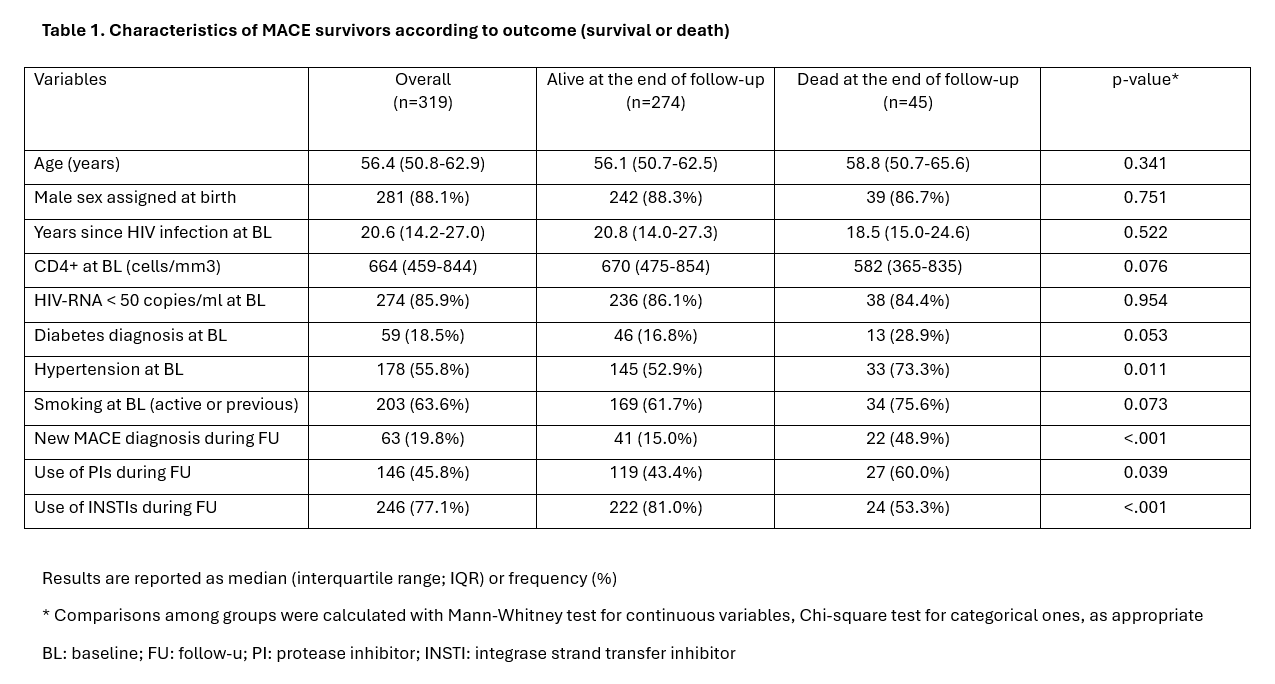
817. Epicardial Fat as a Predictor of Diastolic Dysfunction in Older People With HIV
Poster Abstracts
Page: 244
Tanakorn Apornpong1, Sarawut Siwamogsatham2, Win Min Han3, Sudarat Satitthummanid2, Monravee Tumkosit2, Hay Mar Su Lwin1, Sasiwimol Ubolyam4, Hein Minn Kyaw1, Porntep Amornritvanich5, Napon Hiranburana1, Stephen Kerr6, Pairoj Chattranukulchai2, Anchalee Avihingsanon7, the HIV-NAT 006 and 207 Study Teams
Background
Diastolic dysfunction (DD) is increasingly prevalent among people with HIV (PWH) and is associated with a heightened risk of subsequent heart failure (HF). Key mechanisms of HF include left ventricular hypertrophy (LVH), left atrial abnormalities and cardiac fibrosis. Additionally, soluble suppression of tumorigenicity 2 (sST2) has emerged as a potential biomarker for cardiac stress and fibrosis. However, the roles of epicardial fat (EAT), coronary calcium, and sST2 in predicting DD, particularly in older PWH, remain poorly understood.
Methods
We conducted a cross-sectional study in Thai PWH aged ≥50 years. Transthoracic echocardiography, and non-contrast cardiac computed tomography were performed to assess diastolic function, coronary calcium (CAC) and epicardial adipose tissue (EAT), respectively. Serum ST2 and other lab parameters including HIV-related parameters were measured. DD was defined using the PWH specific Characterizing Heart Function on Antiretroviral Therapy (CHART) criteria. Multiple linear and logistic regression were used to assess associations between EAT, CAC score, and sST2 level with relevant echocardiographic parameters and DD.
Results
Among 283 PWH (male 62%, median [IQR] age 54 years [52-59]) included, 27% had body mass index (BMI) >25 kg/m2, while 41 and 17% had hypertension and diabetes mellitus (DM), respectively. Median duration of antiretroviral therapy (ART) was 16 years, with current CD4 and CD4/CD8 ratio at 617 (IQR 477-797) cells/µL and 0.96 (IQR 0.68-1.27), respectively. DD was detected in 40%; Mean (SD) EAT was 101 (40) cm3. After adjusting for age, sex, BMI, hypertension and DM, only increased EAT was positively associated with DD (OR 1.49; 95%CI 1.11-1.99 per 1 SD increase; p=0.007). No association was observed between DD and CAC score (OR 0.55-2.71) or sST2 (OR 0.51-1.06). Increasing EAT was significantly associated with increasing left ventricular mass index (LVMI) and average E/e’, and decreasing lateral e’. Although CAC score ≥100 was associated with LAVI after adjusting for age and sex, but the association attenuated after adjustment for BMI, hypertension and DM. (figure).
Conclusions
Increased EAT, but not CAC or sST2, is an independent predictor for DD providing enhanced benefit over established echocardiogram parameters. EAT levels also correlated with LVMI and average E/e’ among older PWH. Assessing EAT could be useful for identifying PWH at high risk of DD and prioritizing care delivery.
Figure 1.
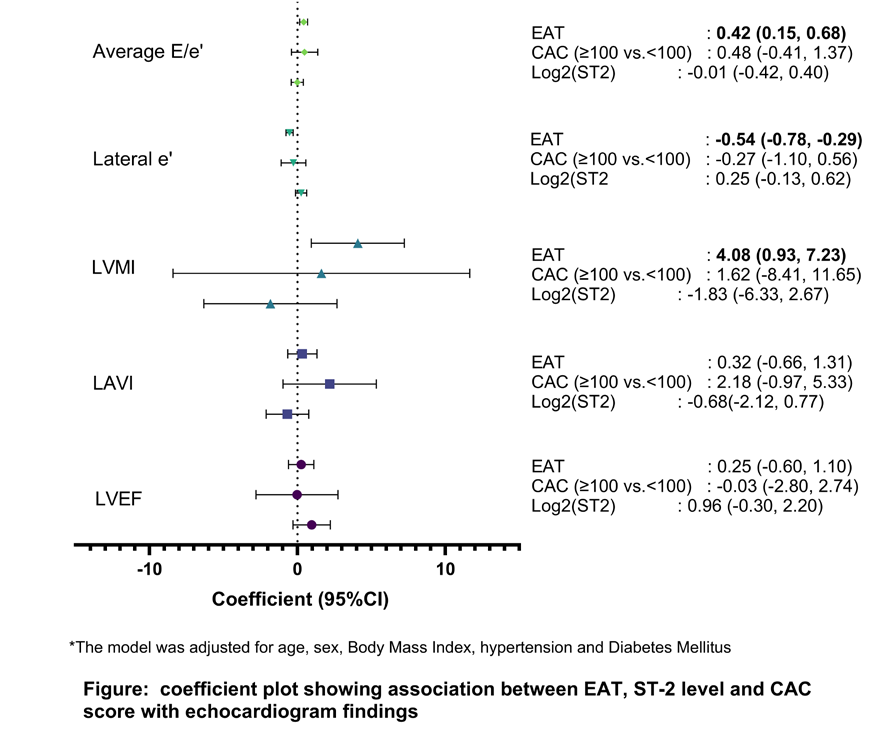
818. Heart Failure Risk and Events in People With HIV in the REPRIEVE Trial
Poster Abstracts
Page: 244
Maya Watanabe1, Gerald Bloomfield2, Sara McCallum3, Heather Ribaudo1, Judith Aberg4, Aya Awwad3, Sarah Chu3, Judith Currier5, Carl Fichtenbaum6, Michael T. Lu3, Carlos Malvestutto7, Sophia Zhao1, Markella V. Zanni3, Steven Grinspoon3, Pamela Douglas2, the REPRIEVE Study
Background
People with HIV (PWH) have higher risk of heart failure (HF) due to traditional and HIV-related factors. Risk prediction of HF in PWH is not well characterized.
Methods
We calculated the PREVENT (Predicting Risk of Cardiovascular Disease Events) 10-year risk of HF for all REPRIEVE participants. HF incidence (events/1000 person years) was described overall and by demographic, HF and HIV-specific factors. Confirmed HF events included adjudicated HF hospitalization and adverse events identified via a standardized Medical Dictionary for Regulatory Archives query.
Results
We analyzed 7,769 REPRIEVE participants from five global regions (median 50 years, 31% female, 22% Black of those from high-income region). Median (Q1, Q3) PREVENT HF score was 1.66% (1.01, 2.62). HF incidence was 1.65/1000 person years (95% CI 1.30-2.09) with similar rates by randomized arm. Expected number of HF events by PREVENT HF (73) was similar to observed (67). Median PREVENT HF risk was higher at baseline in those with vs without confirmed HF events (2.22 vs 1.39%). HF incidence was higher in women, among Black or African Americans in high-income regions, participants in sub-Saharan Africa, and among those with pre-existing hypertension and elevated body mass index compared to absence of these factors (Figure).
Conclusions
In PWH, observed number of HF events aligned with the low estimated PREVENT HF risk rates. Demographics, clinical factors, and global region may contribute to a higher incidence of HF events among PWH.
The figure, table, or graphic for this abstract has been removed.
819. Effect of the Transition to Dolutegravir on Blood Pressure in People Living With HIV in West Africa
Poster Abstracts
Page: 245
Antoine Jaquet1, Thierry Tiendrebeogo1, Oliver Ezechi2, Armel Poda3, Abert Minga4, Karen Malateste5, Didier Ekouevi1, Ighovwerha Ofotokun6, Romain Millot5, the International Epidemiology Databases to Evaluate AIDS (IeDEA) Collaboration - West Africa
Background
Dolutegravir (DTG) has been increasingly linked to metabolic disorders including significant weight gain in people living with HIV (PLHIV) but to which extend these metabolic disorders translate into cardiovascular diseases is still debated. As West Africa bears a particularly high burden of hypertension (HTN) and as PLHIV have regionally transitioned to DTG since 2018, there is a need to document its impact on cardiovascular diseases. This study evaluates the effect of switching to DTG on changes in blood pressure (BP) and incident HTN among West African PLHIV on antiretroviral treatment (ART).
Methods
Adult PLHIV with routinely available BP and contributing to the IeDEA West Africa cohorts during the 2016-2023 period were included. We first analyzed the evolution of BP in PLHIV who switched to DTG. BP changes before and after initiating DTG was assessed using a two-slope mixed linear model. A second analysis was conducted to evaluate the risk of HTN in patients receiving DTG versus patients not receiving DTG from the date of site introduction of DTG until 2023. This analysis employed a target trial emulation approach with weighted logistic regression to compare the incidence of HTN between patients on DTG and those on other treatments.
Results
Among 15,485 patients actively followed in 3 HIV programs in Burkina Faso, Cote d’Ivoire and Nigeria; 11,482 transitioned to a DTG-based regimen and were eligible for the first analysis. Before DTG initiation, systolic and diastolic BP increased by 0.38 mmHg/year [0.26-0.50] and 0.39 mmHg/year [0.32-0.47], respectively, compared to 1.56 mmHg/year [1.34-1.78] and 1.20 mmHg/year [1.06-1.35] after initiation. Changes in BP were different according to sex and ART regimen prior to switch [Fig 1]. For the second analysis, 9,730 patients were eligible. Switching to DTG was associated increased risk of HTN with incidence rate ratios of 1.31 [1,26 – 1,35] and 1.85 [1,72 – 1,99] in the intention-to-treat and per-protocol analyses, respectively.
Conclusions
A significant impact of DTG on BP progression and HTN risk was reported in West African PLHIV. These findings support the integration of HTN screening and management into HIV care programs in West Africa and question the need of alternative first-line regimens such as Doravirine-based regimen in PLHIV at high-risk of cardiovascular diseases. Further analyses are needed to better understand the interplay between DTG, sex, prior ART regimen and BP.
Figure 1.
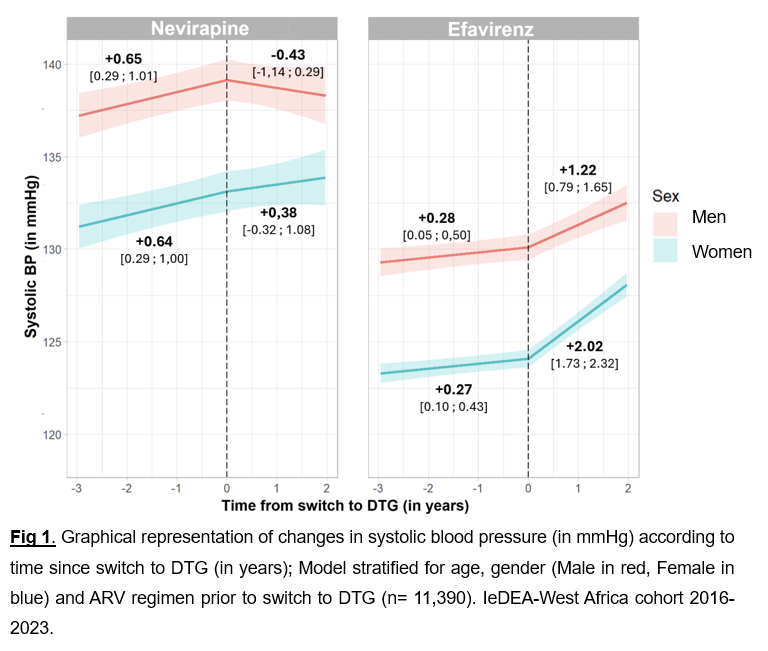
820. No Increased Risk for Hypertension With CAB-LA Compared to TDF/FTC for PrEP: Results From HPTN 084
Poster Abstracts
Page: 245
Sinead Delany-Moretlwe1, Heather Ribaudo2, Younjung Choi2, Brett S. Hanscom3, Nyaradzo Mgodi4, Joseph Makhema5, Harriet Nuwagaba-Biribonwoha6, Scott Rose7, Lydia Soto-Torres8, James F. Rooney9, Alex Rinehart10, Raphael J. Landovitz11, Mina Hosseinipour12, the HPTN 084 Study Team
Background
Several studies have suggested an increased risk for hypertension (HTN) associated with initiation of integrase strand transfer inhibitors (INSTIs) for HIV treatment that may be mediated by weight gain. We investigated whether CAB-LA was associated with an increased incidence of HTN in a post-hoc analysis of the HPTN 084 trial.
Methods
HPTN 084 evaluated the effectiveness of long-acting injectable cabotegravir (CAB-LA) compared to daily oral TDF/FTC for PrEP in individuals born female aged 18-45 years in eastern and southern Africa. Of 3224 participants enrolled, 3071 (1543 CAB, 1528 TDF/FTC) with study drug exposure and without pre-existing HTN were analyzed. Incident HTN was defined as a new diagnosis of HTN or new initiation of anti-HTN treatment through 161 weeks of follow-up. Cox regression was used to estimate the hazard ratio (HR) for incident HTN by study arm, unadjusted and adjusted for age, baseline BMI, enrolment region (South Africa, southern or east Africa). Modelling also evaluated time-updated risk factors including percent weight change from baseline (TUWC), incident pregnancy and contraceptive method.
Results
Study arms were balanced with 51% of participants <25 years of age, 55% with a BMI ≥ 25 kg/m2, and 41% from South Africa. Median BMI increase was similar across both groups (2.2 kg/m2 CAB and 2.1 kg/m2 TDF/FTC). Over 8252 person-years of follow up, 234 (8%) had incident HTN (127/1543 CAB, 107/1528 TDF/FTC). Cumulative HTN incidence over 3 years was 8.6% for CAB and 7.2% for TDF/FTC. In unadjusted analyses, incident HTN was higher with CAB compared to TDF/FTC use (HR 1.20, 95% CI 0.93-1.55, p=0.16) and largely unchanged (HR 1.17, 95% CI 0.91-1.50, p=0.26) after adjustment for enrolment region, age, and baseline BMI. The hazard for HTN increased with >10% weight gain (HR 1.58, 95% CI 1.05-2.38), pregnancy (HR 2.20, 95% CI 1.14-4.25), enrolment from the southern Africa region (Botswana, Eswatini, Zimbabwe) (HR 2.24, 95% CI 1.58-3.19), pre-existing obesity (HR 2.35, 95% CI 1.63-3.36), and older age (HR per 10 years 2.50, 95% CI 2.03-3.08).
Conclusions
Overall, HTN incidence in this population without HIV was low. Observed HTN incidence was numerically higher with CAB compared to TDF/FTC PrEP use, but this was not statistically significant and slightly diminished with adjustment for key risk factors. Incident HTN is more likely explained by other risk factors like age, BMI, weight gain, pregnancy and enrolment region.
821. Low Hypertension Knowledge Among Clinicians Prescribing Antihypertensive Medications in Malawi
Poster Abstracts
Pages: 245-246
Risa Hoffman1, Pericles Kalande2, Christine Hagstrom1, Khumbo Phiri2, George Talama2, Jiyoung Lee1, Joep J. van Oosterhout2, Joseph Njala2, Corrina Moucheraud3, Sam Phiri4
Background
Hypertension is among the most common non-communicable disease comorbidities in people living with HIV (PLHIV) in Malawi. In a previous study, we found that ~80% of PLHIV with hypertension had uncontrolled hypertension (consistently ≥140 and/or ≥90 mmHg). We therefore sought to understand barriers to hypertension control from the perspective of clinical providers.
Methods
We deployed an online survey at 14 facilities in central and southern Malawi, which were involved in our prior study of hypertension control in PLHIV. Clinical providers were eligible if they had at least one year of experience prescribing antihypertensive medications. Surveys were informed by the Capability, Opportunity, Motivation, Behavior model for behavior change; and were self-administered in Qualtrics. We describe clinical providers’ knowledge of hypertension (based on nine questions, including clinical vignettes), barriers to providing hypertension care, and self-efficacy for managing clients with hypertension.
Results
Between July-September 2024 we surveyed 140 clinical providers (66% male): 104 clinical officers (74%), 14 medical assistants (10%), 12 nurses (9%), 4 physicians (3%), and 6 other cadres (4%). Two-thirds of respondents had 5+ years of experience providing hypertension care. Clinical providers had high self-efficacy for hypertension care, with 85% feeling capable of managing antihypertensive medications (Table). However, the average knowledge score was 4.1 (SD 1.6) out of a total possible score of 9. Only half of clinical providers correctly identified the stages of hypertension and only 3% correctly answered all three guideline-based clinical vignette questions about when to start or escalate antihypertensive therapy. Providers reported that the most challenging aspects of delivering hypertension care were antihypertensive medication stock outs; lack of refresher trainings; shortages of lay staff to help with lifestyle counseling; and non-functional blood pressure machines.
Conclusions
Clinical providers in our sample had high self-efficacy for delivering hypertension care, but many had low knowledge, including about when to start and escalate antihypertensive medications. Given the high rates of uncontrolled blood pressure among PLHIV at these same sites, interventions that focus on improving clinical provider knowledge and targeting specific barriers, like medication supply and functional equipment, will be important for improving outcomes.
Table 1.
Self-efficacy for hypertension care among clinical providers prescribing antihypertensive medications at 14 facilities in Malawi
*
(n=140)
|
|
Agreed/strongly agreed n (%) |
| I believe my clients’ blood pressure control will improve as a result of my care. |
136 (97.1%) |
| I am confident that I can successfully provide hypertension care for clients when I follow the Malawi guidelines. |
133 (95.0%) |
| I know which lifestyle changes are beneficial for managing hypertension. |
131 (93.6%) |
| I believe it is my role to add blood pressure medication(s) to the treatment regimen when a patient’s blood pressure is not well controlled. |
125 (89.3%) |
| I understand the Malawi treatment guidelines for managing hypertension. |
121 (86.4%) |
| I am capable of making decisions about a client’s hypertension treatment plan. |
119 (85.0%) |
| I feel supported by leadership at this facility to give my clients’ quality hypertension care. |
108 (77.1%) |
| I have access to the equipment I need to provide quality hypertension care. |
90 (64.3%) |
| Time constraints and competing priorities prevent me from providing quality hypertension care. |
82 (58.6%) |
| There is adequate space and privacy at this facility to provide quality hypertension care. |
77 (55%) |
| This facility usually has the medications I need to provide quality hypertension care. |
67 (47.9%) |
| I find it difficult to explain to patients why they need medications for hypertension. |
18 (12.9%) |
822. Social Determinants of Health and the Hypertension Care Cascade in a National HIV Cohort
Poster Abstracts
Page: 246
Puja Van Epps1, Lewis Musoke2, Nadine Harris3, Elizabeth Strawbridge4, Sandra Woolson5, Hayden Bosworth5, the V-Extra CVD Study
Background
HTN remains a leading modifiable risk factor for cardiovascular, cerebrovascular, and chronic kidney diseases, all disproportionately affecting people with HIV (PWH). Disparities in HTN care have been described in the general population, though such data is limited in PWH. We apply the care cascade framework to HTN to evaluate the association between personal and neighborhood level social determinants of health (SDH) and HTN outcomes in a nationwide cohort of Veterans with HIV.
Methods
We queried the Veterans Health Administration (VHA) databases to identify PWH who received care across any VHA facility nationwide during calendar year (CY) 2023. HTN care cascade was defined as: diagnosis - HTN ICD-10 codes associated outpatient encounters; treatment - active prescription of ≥1 antihypertensive drugs; HTN monitoring at least 2 recorded blood pressure (BP) readings at least 90 days apart; control - last BP recording less 140/90 in CY 23. Patient zip codes were used to derive the area deprivation index (ADI) and rurality. Summary statistics are used describe the groups and comparisons were tested using Chi-square statistic and Kruskal-Wallis.
Results
Of the 33,569 PWH in care, 42% had a HTN diagnosis in CY 23. HTN diagnosis was more common in birth sex males than females (38% vs. 42%, p=0.0002), Blacks compared with Whites (48% vs. 38%, p<0.0001), and those living in more deprived compared to better resourced neighborhoods (median ADI national rank 57 vs. 52, p<0.0001). Of those with a diagnosis of HTN, 87% of PWH in care were on treatment in CY23, birth sex males more likely to be treatment than females (87% vs. 81%, p=0.0001) and those on treatment being older than those not receiving treatment (65 v 63 p = 0.0001). Of the patients with a diagnosis, 54% were monitored, without significant differences across groups. Of those who were monitored, 64% were controlled, with Blacks having the lowest proportion of control at 58%, Whites highest at 67% (p=0.0086).
Conclusions
HTN is common among PWH and associated with male sex, Black race, and lower resourced neighborhoods. While most PWH who have a diagnosis of HTN are receiving treatment, monitoring, and control steps in the HTN care cascade need strengthening. Differences along SDH groups appear to mostly disappear after the diagnosis step, except for Black race.
823. Risk of Incident Hypertension With Common Antiretroviral Agent Combinations in the OPERA Cohort
Poster Abstracts
Page: 246
Laurence Brunet1, Philip C. Lackey2, Jennifer S. Fusco1, Gerald Pierone Jr3, Michael B. Wohlfeiler4, Douglas T. Dieterich5, Cassidy E. Henegar6, Vani Vannappagari6, Bryn Jones7, Annemiek de Ruiter7, Gregory P. Fusco1
Background
The literature on the association between classes of antiretrovirals (ARV) and hypertension (HTN) is conflicting, and very little has been published at the agent level. We compared the rates of incident HTN across combinations of common ARVs among people with HIV in routine clinical care in the US-based OPERA cohort.
Methods
Adults with HIV in the OPERA cohort starting a new 2- or 3-drug regimen (DR) between 01JAN2016 and 31DEC2022 were included if they had no evidence of HTN (no HTN diagnosis or prescription for antihypertensive) and either normal blood pressure (BP) (nBP; systolic BP [SBP] <120 mmHg, diastolic BP [DBP] < 80 mmHg) or normal & elevated BP (n+eBP; SBP <140 mmHg; DBP <90 mmHg) at regimen start. Incident HTN was defined as (a) two consecutive SBP ≥140 mmHg or DBP ≥90 mmHg, (b) new HTN diagnosis or (c) new antihypertensive prescription. We estimated adjusted incidence rate ratios (aIRR; multivariate Poisson regression) comparing regimens of dolutegravir (DTG) 3DR with or without tenofovir alafenamide (TAF), DTG/lamivudine (3TC) 2DR, bictegravir/emtricitabine/TAF (B/F/TAF), or boosted darunavir (bDRV) 3DR with or without TAF. Analyses were conducted among those with n+eBP and the subset with nBP, stratified by prior ART experience.
Results
There were 7572 ART-naïve people with n+eBP (3220 nBP); 4% aged 55+, 13% female, 53% Black, 14% obese, 83% eGFR ≥90, 6% viral load ≥1M. There were 3428 ART-experienced people with n+eBP (1142 nBP); 14% aged 55+, 18% female, 39% Black, 19% obese, 61% eGFR ≥90, 58% viral load <50. Incidence rates of HTN approximately doubled in those with n+eBBP for both ART-naïve and ART-experienced individuals (Figure). However, there was no statistically significant association between regimen and rate of HTN in ART-naïve or ART-experienced individuals, regardless of baseline BP (Figure).
Conclusions
In this real-world assessment of people with HIV with either n+eBP or nBP at regimen start, no statistically significant difference was observed between common core ARV agents with or without TAF and the rate of incident HTN in ART-naïve or ART experienced individuals. Among commonly used modern ART regimens, specific antiretroviral combinations do not appear to be a driving factor in the development of HTN in this large and diverse cohort of people with HIV in the US.
Figure 1.
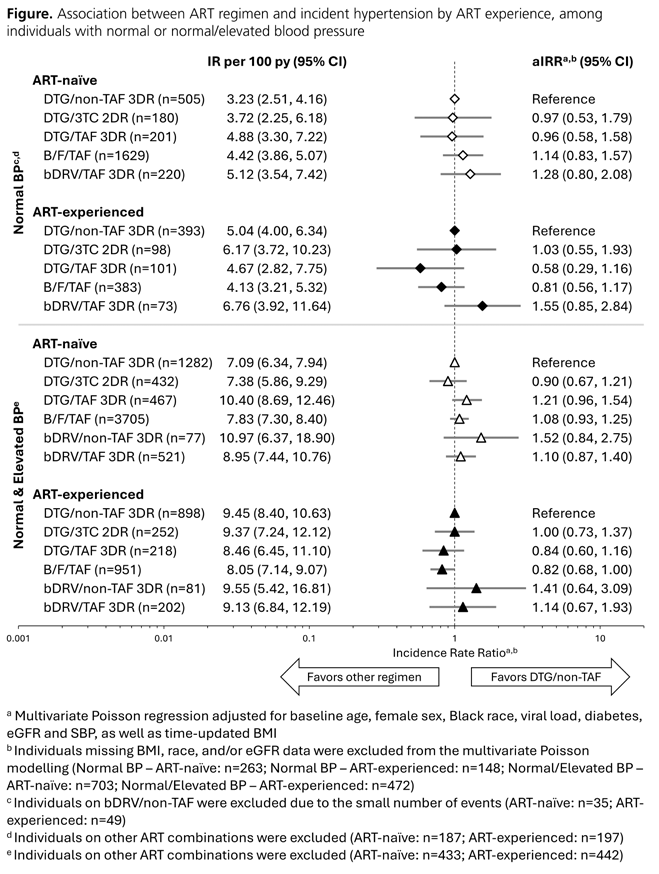
824. Change in Cardiometabolic Risk Markers Following Switch to Integrase Inhibitors Differs by Sex
Poster Abstracts
Page: 247
Cecile D. Lahiri1, Cyra C. Mehta1, Qian Yang1, Julie B. Dumond2, Maria L. Alcaide3, Frank Palella4, Jordan E. Lake5, Leah H. Rubin6, Audrey L. French7, Seble Kassaye8, Michael Augenbraun9, Anjali Sharma10, Ighovwerha Ofotokun1, Anandi N. Sheth1, Jessica A. Alvarez1
Background
Integrase strand-transfer inhibitor (INSTI)-associated weight gain among people with HIV (PWH) is greater in women than men. We assessed sex differences in cardiometabolic markers up to 5 years following INSTI initiation.
Methods
We used data collected between 2007-2020 in INSTI-naïve PWH on antiretroviral therapy (ART) for ≥2 years with viral suppression (<200 c/ mL) and persons without HIV (PWOH) enrolled in the MACS/WIHS Combined Cohort Study. We compared PWH who switched/added an INSTI to those who stayed on non-INSTI ART and to PWOH. Follow-up time was years since switch visit or comparable visit in controls. Outcomes included changes in systolic and diastolic blood pressure (SBP, DBP) and fasting lipids (total cholesterol, TC, high density lipoprotein, HDL, low density lipoprotein, LDL, and triglycerides, TG). Linear regression mixed effect models assessed the effects of natal sex, study group, and time on outcomes, adjusted for time-varying age, race/ ethnicity, socioeconomic status, smoking, alcohol, hypertension or cholesterol medications, and body mass index.
Results
3464 participants contributed 3.2 (±1.5) years of data, including 1938 women (411 INSTI, 709 Non-INSTI, 818 PWOH) and 1526 men (223 INSTI, 412 Non-INSTI, 891 PWOH). Pre-switch, women were younger (47 vs 55 years), more likely to be non-Hispanic Black (65 vs 23%) and had higher BMI (32 vs 27 kg/m2), compared to men. Among women, the INSTI group had greater SBP increase versus non-INSTI and PWOH up to 3 years post-switch: +6.7 mm Hg (95% CI +4.7, +8.7) vs +3.0 (+1.3, +4.8) and +3.0 (+1.6, +4.4), and greater DBP increase up to 2 years post-switch: +1.9 mm Hg (+0.9, +3.0) vs -0.4 (-1.2, +0.5) and +0.5 (-0.5, +1.0), respectively, Figure 1A. Women on INSTIs had greater decline in HDL within 1 year of switch versus non-INSTI and PWOH: -2.4 mg/ dL (-4.6, -0.1) vs -0.7 (-1.0, 2.4) and +1.6 (0.1, 3.1), respectively, Figure 1B. Sex and study group modified change over time in HDL (sex*years*study group, p=0.007) but not BP. BMI was significant in BP and HDL models, p<0.001. There were no sex differences in TC, TG, or LDL change by group.
Conclusions
INSTI initiation (vs non-initiation) was associated with greater increases in BP and decreases in HDL for women but not for men, possibly consequent to greater INSTI-associated weight gain in women. Research is needed to understand the implications of INSTI-induced changes on cardiovascular outcomes in PWH.
The figure, table, or graphic for this abstract has been removed.
825. Dolutegravir-Based Antiretroviral Therapy and Cardiometabolic Health Risk in Persons With HIV
Poster Abstracts
Page: 247
Katuku Aizire1, Antonio Bandala-Jacques1, Sara K. Nsibirwa2, Ponsiano Ocama2, Gregory Kirk3, the HIV and Hepatocellular Carcinoma in Uganda (H2U) Consortium
Background
Dolutegravir (DTG) based antiretroviral therapy (DTG-ART) is preferred first-line for persons with HIV (PWH), and yet implicated with weight gain. We compared cardiometabolic health risk by DTG-ART.
Methods
ART-experienced PWH enrolled via Makerere University IDI-ART clinic in Uganda (2021), cross-sectional comparisons of DTG-ART and age-and sex-matched controls (group A), and pre- and 6-months post-DTG-ART switch comparisons (group B). We used gold-standard measures of liver fat (Fibroscan controlled attenuation parameter (CAP)), and DEXA for body fat composition (group B only). Modified Poisson regression with robust variance estimated adjusted prevalence risk (aPR), and 95% confidence intervals (CI) for cardiometabolic risk, adjusting for age, ART duration, education, viral load and CD4 count, additionally for women, parity and obesogenic contraceptives use.
Results
For group A (n=500), 65.2% were women, median age (IQR), 39 (34-46) years compared to men, 45 (38-50) years; 50.2% DTG-ART, 67.1% tenofovir ART backbone, 86.2% virally suppressed (<20 copies/ml). In adjusted analyses stratified by sex, null associations with DTG-ART were observed for anthropometric measures, blood pressure (BP), blood sugar, liver fat CAP >270 dB/m, dyslipidaemia and metabolic syndrome, see figure 1, and similarly in separate analyses stratified by age (≥50 years), DTG-ART duration (>12 months), and ART pre-DTG switch, respectively. Notable exceptions include high BP (≥130/85 mmHg) in men within normal range BMI, aPR (95% CI), 1.98 (1.22, 3.19), pre-DTG ART sans efavirenz, 1.64 (1.10, 2.46); DTG-ART ≥12 months was protective against hypertriglyceridemia ≥150 mg/dl, in women, aPR (95% CI), 0.47 (0.26, 0.83), and men, 0.53 (0.32, 0.87); but associated with HDL<50mg/dl in women (<50 years, 1.44 (1.12, 1.87), overweight/obese, 1.41 (1.10, 1.80) and when compared to NNRTI-ART controls, 1.66 (1.10, 2.56)). For group B (n=50), there were no differences 6 months after DTG-ART switch regarding body fat DEXA measures, liver fat CAP scores, BP, blood sugar, while lipid measures improved significantly in both men and women.
Conclusions
Apart from BP in men and HDL in women, DTG-ART use in virally suppressed Ugandan PWH appeared to be lipo-protective or neutral regarding cardiometabolic health risks. Interpretation of these data is complex given concurrent use of potentially weight-attenuating TDF or efavirenz (controls or pre-DTG), considerations for future studies.
Figure 1.
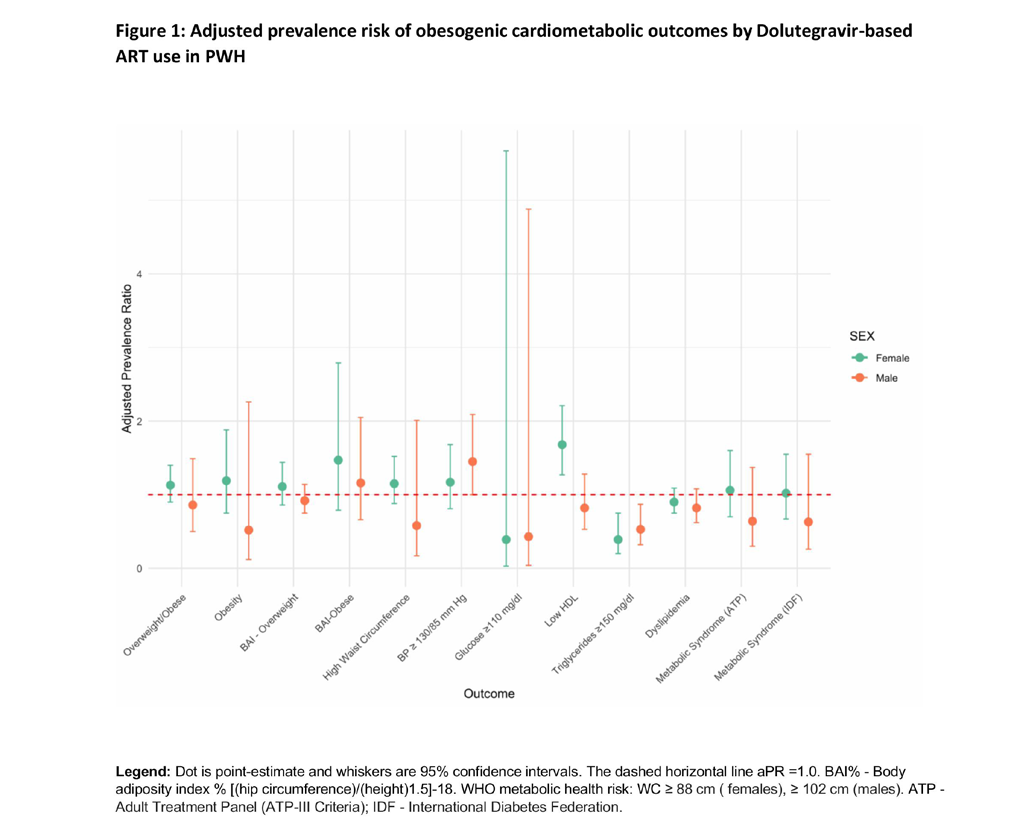
826. Changes in Cardiometabolic Parameters After ART Initiated Within 1 Year of HIV Acquisition
Poster Abstracts
Pages: 247-248
Nikos Pantazis1, Sabin Caroline2, Sophie Grabar3, Marc van der Valk4, Laurence Meyer5, Mar Masiá6, Christina Carlander7, M. John Gill8, Fiona Burns2, Shema Tariq2, Giota Touloumi1, Kholoud Porter2, the CASCADE Collaboration
Background
Integrase strand transfer inhibitors (INSTIs) have good lipid profiles but some studies have reported increased risk of dyslipidaemia and hypertension, particularly when combined with tenofovir alafenamide (TAF). Studying seroconverters on early antiretroviral therapy (ART) minimizes the potential confounding impact of long-term HIV infection on cardiometabolic parameters.
Methods
Included individuals from CASCADE seroconverted 2007-2022, were ≥16 years, initiated ART ≤12 months from seroconversion (SC), had body mass index, CD4 count, and viral load measurements at baseline (ART initiation) and total cholesterol (TCHOL) or triglycerides (TG) or arterial blood pressure (BP) measurements at baseline and post-ART. Evolution of lipid levels was modelled through piecewise linear mixed models with 1 knot at 6 months (based on exploratory analyses) and risk of hyperlipidaemia (TCHOL>240 mg/dL or TG>200 mg/dL or antilipidemic treatment) and hypertension (systolic≥140, or diastolic≥90mmHg or initiation of antihypertensives) using time-to-event methods.
Results
Of 1,555 individuals included in the lipid analyses, 590 initiated INSTI without TAF, 285 INSTI+TAF, 382 protease inhibitor (PI), and 298 non-nucleoside reverse transcriptase inhibitor (NNRTI) regimens. Most (86%) were men who have sex with men, 76% originating from Europe/N. America with median (IQR) age at SC 36 (28-44) years. Median (IQR) baseline TCHOL and TG were 161 (139, 186) and 109 (80, 156) mg/dL, respectively. In multivariable models, INSTI+TAF was associated with the fastest TCHOL increase after month 6 of treatment (p<0.001), and faster TG increase only during the first 6 months (p=0.038) compared to NNRTIs. INSTIs without TAF were only associated with a relatively slow increase in TCHOL after month 6 (p=0.027) compared to NNRTIs. In 1189 individuals with no baseline hyperlipidaemia, only PIs were significantly associated with increased hazard of developing hyperlipidaemia (aHR=1.75 vs. NNRTIs; 95% CI:1.26-2.43; p=0.001). Risk of developing hypertension in 1417 hypertension-free at baseline individuals was elevated in those on INSTI+TAF but not INSTI without TAF (aHR=1.51; 95%CI:1.07-2.13; p=0.019 and aHR=1.14; 95%CI:0.85-1.53; p=0.392, respectively).
Conclusions
Lipid levels and BP appear to rapidly increase even at this early stage of infection. Our findings stress the importance of informed ART regimen decisions, acknowledging the potential for different effects on cardiometabolic parameters.
The figure, table, or graphic for this abstract has been removed.
827. Potential of the Short Chain Fatty Acid Caproic Acid in Protection Against CVD in HIV Infection
Poster Abstracts
Page: 248
Florent Bertrand1, Minh Tran1, Rémi Bunet1, Hardik Ramani1, Sylla Mohamed1, Madeleine Durand1, Carl Chartrand-Lefebvre2, Petronela Ancuta2, Nicolas Chomont2, Alan Landay3, Mohamed El-Far1, Cécile Tremblay2
Background
We have recently shown that the proinflammatory cytokine IL-32 is associated with arterial stiffness and cardiovascular disease in people with HIV (PWH). We also demonstrated that IL-32 induces coronary artery endothelial cell (CAEC) inflammation and dysfunction and that IL-32 alterations in PWH with subclinical atherosclerosis are associated with a deficit in the short-chain fatty acid (SCFA) caproic acid. In this study, we investigated the beneficial effect of the intestinal microbiota-driven SCFAs acetic, butyric, propionic, valeric and caproic to alleviate the IL-32-mediated CAEC dysfunction.
Methods
Human primary CAEC from Creative Bioarray are isolated from human coronary artery and used between passage 3 to passage 12. CAEC were conditioned with the different SCFAs at similar concentrations (1mM) before being stimulated with IL-32γ (the longest and most inflammatory IL-32 isoform) at 500ng/ml. The impact of SCFAs on upregulation of the CAEC typical dysfunction markers IL-6, CCL-2, ICAM-I and VCAM-I was measured in cell supernatants by ELISA. Differences in the potential of SCFAs to protect against the upregulation of the dysfunction markers were calculated with one-way ANOVA test. Cell viability of SCFA-treated cells was carried by measuring the cell release of the Lactate dehydrogenase LDH enzyme by ELISA.
Results
Caproic acid was the only SCFA that diminished the impact of IL-32γ on coronary artery endothelial cells dysfunction by simultaneously downregulating the expressions of IL-6, CCL-2, ICAM-I and VCAM-I (2.4±0.6, 1.2±0.1, 2±0.5, and 2.5±0.9 fold, p=0.0003, p=0.02, p=0.03, and p<0.0001, respectively) without impacting cell viability. In contrast, acetic acid inhibited CCL-2 (p=0.02) and VCAM-I (p=0.015) while propionic, butyric, and valeric acids only inhibited V-CAM-I (p=0.0003, p<0.0001 and p<0.0001, respectively) but not IL-6, CCL-2 or ICAM-I. These results suggest that caproic acid has a dominant positive effect in restoring endothelial cell functions, which are dysregulated by the inflammatory cytokine IL-32.
Conclusions
Our results uncover the potential benefits of caproic acid (a short chain fatty acid that we recently shown to be diminished in stool samples collected from PWH with subclinical atherosclerosis) in reversion of the endothelial cell dysfunction mediated by the inflammatory cytokine IL-32. These results warrant further investigations to the therapeutic potential of caproic acid in PWH with risk of cardiovascular disease.
828. Genomic Analyses of Cardiovascular Risk in People With HIV From the MVP Cohort
Poster Abstracts
Page: 248
Boghuma K. Titanji1, Amonae Dabbs-Brown1, Jennie T. Mather2, Qin Hui1, Suyu Zhang1, Catherine Mezzacappa3, Roxane Rohani4, Matthew S. Freiberg5, Evelyn Hsieh3, Brian Agan6, Julie A. Womack3, Ke Xu3, Rafick P. Sekaly1, Yan V. Sun1, Vincent C. Marconi1
Background
Cardiovascular disease (CVD) is the third leading cause of death among people with HIV (PWH) globally. Despite effective antiretroviral therapy, PWH have twice the CVD risk of the general population. Genome-wide association studies (GWAS) and polygenic risk scores (PRS) studies have been conducted in the general population to demonstrate the important genetic contribution to CVD risk, but genomic studies of CVD in PWH remain limited.
Methods
We performed a GWAS in adult PWH from the Million Veteran Program (MVP) to identify any genetic loci associated with CVD outcomes among PWH of African (AFR), European (EUR), and Hispanic (HIS) ancestry. We also assessed the performance of an established PRS of coronary artery disease (CAD) for predicting CVD outcomes in MVP PWH. HIV infection was defined using validated ICD codes for the MVP cohort, detectable viral load, or antiretroviral use for >30 days. Incident CVD outcomes included myocardial infarction (MI), ischemic stroke (IS), peripheral arterial disease (PAD), cardiovascular death, and a composite CVD outcome (any of the above). After standard quality control, TOPMed-imputed SNPs were used for ancestry-specific GWAS of common variants (minor allele frequency >5%), followed by a multi-ancestry meta-analysis adjusting for sex and age. Statistical significance was defined at the conventional GWAS threshold of p < 5 ×10-⁸ with Bonferonni correction and alpha = 0.05
Results
The cohort included 7,951 PWH (94.2% male, 43.9% AFR, 10.5% HIS) with a mean age of 51.7 years. Incident outcomes included 330 (4.15%) MI, 337 (4.24%) IS, 845 (10.63%) PAD, and 79 (0.99%) CVD deaths. Multi-ancestry GWAS identified a significant association between the composite CVD outcome in PWH and a locus on chromosome 2 near the NAT8 gene (rs4852953; β=0.3; p=4.26×10-⁸). The CAD PRS was predictive of MI and composite CVD outcome in AFR (MI: p=1.89×10-²; composite: p=4.12×10-²) and EUR (MI: p=1.48×10‑⁴; composite: p=4.26×10-²) but less robust in HIS PWH (MI: p=2.73×10⁻²; composite: p=6.51×10-¹).
Conclusions
In a multi-ancestry cohort of PWH, a CAD PRS validated in Europeans predicted MI and composite CVD outcomes. Polymorphisms in the NAT8 have potential associations with CVD through their influence on oxidative stress, blood pressure and kidney function. NAT encodes for N acetyl transferase 8 an enzyme that is crucial in regulatory pathways of cellular oxidative stress. Loci identified in GWAS of PWH, warrant replication in larger studies with refined phenotyping
Figure 1.
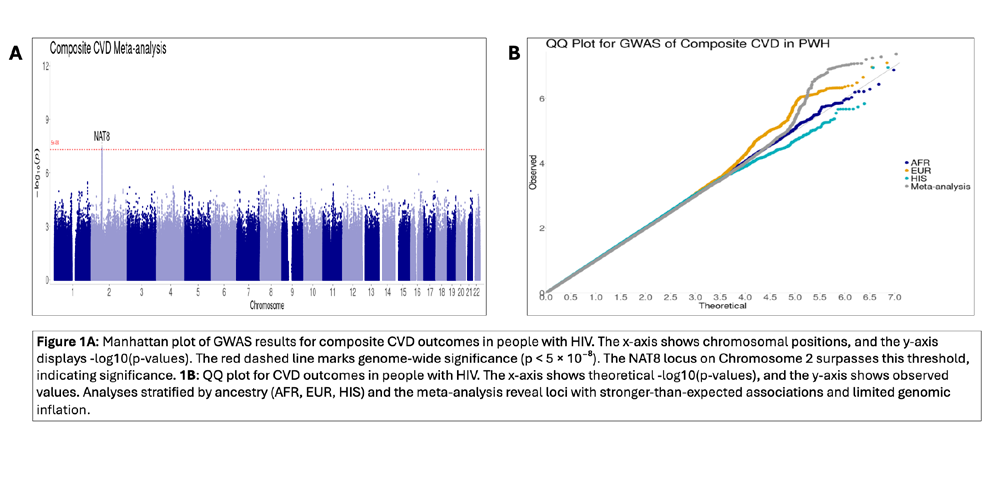
829. The Additive Value of Coronary Calcium in Identifying Cardiovascular Risk in Ageing People With HIV
Poster Abstracts
Pages: 248-249
Maithili Varadarajan1, Ruth Byrne2, Abtehale Al-Hussaini2, Brian Halliday3, Edward Nicol3, Alan Winston4, Marta Boffito2
Background
In people without HIV, high Coronary Artery Calcium Scores (CACS) correlate with an increased risk of major cardiovascular and cerebrovascular events (MACE). HIV is independently associated with raised CACS, however data on factors associated with increased CACS and MACE (except smoking and diabetes) in HIV are scarce. Although knowledge on the importance of statin use to prevent MACE is clear (REPRIEVE), cost-effective investigations and interventions to identify and manage MACE in ageing people with HIV is vital.
Methods
Data were collected on all individuals with HIV, at a single centre in London, UK, who underwent a CACS between 2009-2019, including demographics, laboratory and clinical information at the time of CACS, and MACE assessed over 15 years. Descriptive statistics, univariate and multivariate regression analyses using logistic regression were performed using STATA15.
Results
Of 779 individuals with a CACS, median (IQR) age at the time of CACS was 55 years (52-59), 93% were male, median number of years since HIV-diagnosis was 16 (10-21), CD4 count was 639 (473-826), 5% had a detectable viral load (VL), 34% were current smokers, 12% reported alcohol intake >14 units/week, Qrisk2 was 9.6% (6.5-14.8), BMI was 25.5 (23.3-28.0) and systolic BP was 129 (120-140). Median (IQR) CACS was 2 (0-54) with median centile 25th-50th.
MACE occurred in 95 individuals (10.7%): 2.7% (n=21) myocardial infarction (MI), 2.3% (n=18) stroke and 3.6% (n=28) heart failure, 5.4% (n=42, of which 8 underwent coronary artery bypass grafts) revascularisation. Other outcomes included death from any cause in 6.4% (n=50). Predictors of MI, stroke or heart failure are shown in Table 1.
Conclusions
In this cohort, CACS rather than cardiovascular risk calculated by Q-risk was the strongest predictor of MACE. CACS is a useful tool in stratifying persons who would most benefit from aggressive risk factor modification and further investigation. Future understanding on whether total plaque burden on coronary CT angiography, peri-coronary fat analysis, or cardiac MRI can refine risk prediction further is needed.
Table 1.
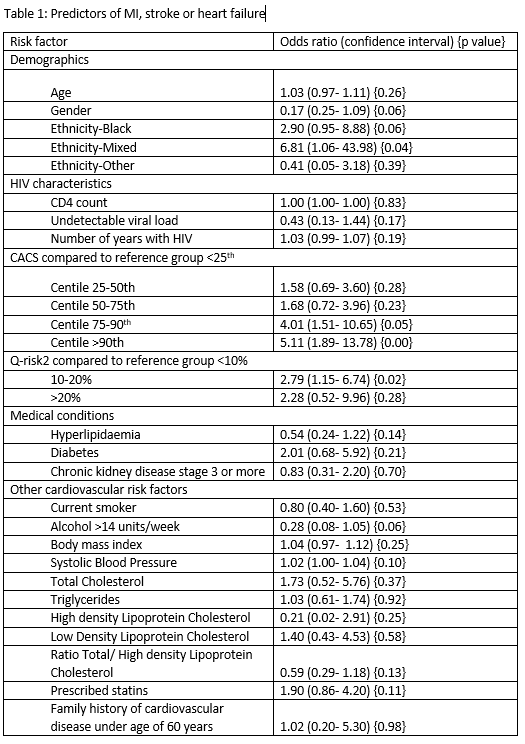
830. BMI Is a Poor Surrogate for Excess Visceral Adiposity and Cardiovascular Risk in Persons With HIV
Poster Abstracts
Page: 249
Mohammed Zogheib1, John Koethe2, Jordan E. Lake3, Karam Mounzer4, Christian Caldji1, Brandon Cash1, Colleen McGary1
Background
Recent studies demonstrate substantial weight gain among people with HIV (PWH) starting modern antiretroviral (ART) regimens, as well as a high prevalence of obesity among those on long-term treatment. As a result, routine body mass index (BMI) measurements have been proposed to assess cardiovascular (CV) and other comorbid illness risk. However, prior studies show substantial variability in visceral abdominal fat accumulation among PWH. We sought to investigate the relationships between BMI, excess visceral abdominal fat (EVAF), and cardiovascular risk factors in PWH in the modern ART era.
Methods
The Visceral Adiposity Measurement and Observations Study (VAMOS) is a multi-center observational study in PWH with long-term viral suppression and BMI ranging from 20 to 40 kg/m2. Participants completed study visits, labs and an abdominal computed tomography scan in the overnight fasting state. Visceral fat was quantified by a single slice at L4-L5, with EVAF defined as a visceral adipose tissue (VAT) surface area ≥130 cm2. CV risk was evaluated by 10-year ASCVD risk scores. Kruskal-Wallis and Dunn’s tests were performed to determine how cardiovascular risk factors differed by BMI and EVAF classifications.
Results
Among the 170 participants, median (IQR) visceral fat area was 148 cm2 (94, 218) with an EVAF prevalence of 58%. While individuals with BMI>35 kg/m2 group had the highest prevalence of EVAF (66.7%), EVAF was present in 56.6% and 43.2% of participants with overweight (25-29.9 kg/m2) and normal BMI (<25 kg/m2), respectively. To explore relationships between BMI, EVAF and CV risk factors, four distinct groups were created (Table 1). A statistically significant difference in CV risk scores was found across the groups (χ²(3)=14.87, p=0.0019). Importantly, individuals with EVAF and low BMI had the highest CV risk scores among the groups, with significantly higher scores not only compared to those with low BMI without EVAF (Z value = 3.39; p=0.0039), but also to those with high BMI without EVAF (Z value = 2.75; p=0.0301). The presence of EVAF also was associated with higher HOMA-IR levels among those with low BMI (Z value = 2.85; p=0.0224).
Conclusions
These data highlight the limitations of utilizing BMI alone in assessing CV risk among PWH, particularly given the high CV risk seen in participants with low BMI but high EVAF. Incorporating tools to assess EVAF, such as waist circumference, could provide critical information in identifying PWH at risk of CVD.
Table 1.
Mean 10-year ASCVD risk scores seen across participants grouped by BMI and Visceral Fat areas
|
|
ASCVD risk scores (mean): Without EVAF (n) |
ASCVD risk scores (mean): With EVAF (n) |
Test-Statistic (Chi-Square) |
| Normal/Overweight (“Low”) BMI (BMI 20-29.9 kg/m²) |
12.8% (63) |
20.0% (12) |
14.87; p-value = 0.0019 |
| High BMI (BMI 30-40 kg/m²) |
8.4% (52) |
19.7% (46) |
831. Investigating the Predictive Role of NLR and PLR in Cardiovascular and Neurologic Outcomes in PWH
Poster Abstracts
Pages: 249-250
Jonathan N. Tobin1, Yiqi Tian1, Megha Arora2, Takreem Ahmed3, Mariam A. Siyanbola3, Alondra Torres Gonzalez3, Kevin Fiscella4, Teresa H. Evering3
Background
People living with HIV (PWH) are at an increased risk for cardiovascular disease and cerebrovascular outcomes (CVD). The Neutrophil-to-Lymphocyte Ratio (NLR) and Platelet-to-Lymphocyte Ratio (PLR), derived from the complete blood count (CBC) commonly measured in clinical care, are emerging biomarkers of systemic inflammation. This study assesses whether adding NLR and PLR to the Atherosclerotic Cardiovascular Disease (ASCVD) risk score improves 10-year CVD prediction in PWH.
Methods
This retrospective cohort study examined data from the Bronx Regional Health Information Organization, an electronic health records exchange. ASCVD risk scores, NLR, and PLR were calculated for all participants. Blood pressure, cholesterol, and CBC were aligned using the cholesterol test date as the anchor for risk score calculation. Individuals with pre-existing CVD were excluded. The primary outcome was combined incident CVD identified via ICD-9/10 codes. Logistic regression models assessed associations between HIV status, ASCVD risk, NLR, and PLR with CVD outcomes. Model performance was compared using chi-square deviance tests, with stepwise inclusion of predictors to assess improvement in predictive power.
Results
The analysis cohort included 10,767 PWH and 30,296 demographically matched adults without HIV (1:3 ratio) between 2009–2019. Median age was 49 years, 45% were female, 65% Black/African American, 38% Hispanic/Latino. At baseline, compared to individuals without HIV, PWH had 15% higher odds of combined CVD (OR: 1.15, 95% CI: 1.09-1.21), increasing to 26% after adjusting for ASCVD risk (OR: 1.26, CI: 1.19-1.33). Each 1% increase in ASCVD risk increased the outcome odds by 8.3% (OR: 1.08, CI: 1.08-1.09). NLR was a significant predictor of CVD (OR: 1.07, CI: 1.06-1.08). PLR had no significant independent effect on outcomes (OR: 1.00, CI: 1.00-1.00). The full model (HIV status, ASCVD risk, NLR, PLR) demonstrated the strongest predictive ability for combined CVD (OR: 1.28, CI: 1.21-1.35; OR: 1.08 for NLR, CI: 1.06-1.10), with chi-square deviance showing significant improvement compared to the model using HIV status and ASCVD risk alone (p<0.001).
Conclusions
Adding NLR and PLR to ASCVD risk scores significantly improves 10-year prediction of combined CVD in PWH, highlighting their potential utility as clinical tools for enhancing risk stratification in this population. Future research should examine the interaction of NLR and PLR and evaluate their contributions to inflammatory mechanisms.
832. Cardiovascular Risk Assessment in Women Living With and Without HIV Using the PREVENT Model
Poster Abstracts
Page: 250
Tetiana Povshedna1, Renying (Loulou) Cai1, Marcela A. P. Silva2, Elizabeth King3, Shelly Tognazzini3, Angela Kaida3, Melanie Murray2, Helene Cote1, the British Columbia CARMA-CHIWOS Collaboration (BCC3; CIHR CTN 335)
Background
Cardiovascular disease (CVD) risk in women living with HIV (WLWH) is shaped not only by traditional risk factors, but also by HIV-specific and women-specific factors. Primary prevention of CVD utilizes risk assessment models that show varying performance in WLWH. Predicting Risk of cardiovascular disease EVENTs (PREVENT) is a novel race/ethnicity-free sex-specific calculator that estimates 10y and 30y atherosclerotic cardiovascular disease (ASCVD), heart failure (HF), and composite CVD risks based on cardiovascular-metabolic-kidney disease risk factors and optional incorporation of social deprivation index (SDI, US only). Here, we describe PREVENT-based CVD risk in women living with and without HIV.
Methods
British Columbia CARMA-CHIWOS Collaboration (BCC3) is a prospective cohort study enrolling women ≥16y living with and without HIV in British Columbia, Canada since 2020. Participants aged 30-79y with no history of coronary heart disease, stroke, or HF, were included. The base PREVENT model was used (without SDI) to calculate 10y and 30y risks of ASCVD, HF, and CVD, with the 30y risk offering a long-term preventative estimate among women aged 30-59y only. Data were self-reported, or based on the study visit clinical blood tests. Groups were compared by Chi-Squared or Mann-Whitney tests.
Results
A total of 164 WLWH and 187 women without HIV were included (25 WLWH and 33 controls excluded due to prior history). WLWH and controls had similar socio-demographic characteristics and shared many risk factors for CVD: age (median [IQR] 49 [43-57] vs 50 [41-58] years, p=0.50), current smoking (40% vs 36%) diabetes (both 8%), antihypertensive medication use (16% vs 12%), current substance use (21% vs 25%), BMI, blood pressure, and total cholesterol (all p>0.05). WLWH were more likely to report a history of hepatitis C (38% vs 15%) and use of lipid-lowering medication (16% vs 5%), but had lower HDL and eGFR compared to women without HIV (all p<0.01). The PREVENT base model revealed no difference in 10y risk of ASCVD, HF, or CVD between the groups, but a higher 30y risk for ASCVD and CVD in WLWH compared to women without HIV (Table 1).
Conclusions
Despite similar 10y ASCVD, HF, and CVD risk estimates, WLWH showed higher 30y risk of CVD outcomes. This could reflect long-term implications of HDL/eGFR differences between the groups, or the impact of factors not captured by PREVENT, including higher exposure to adverse life events, chronic immune activation, and non-HIV chronic/latent viruses.
Table 1.
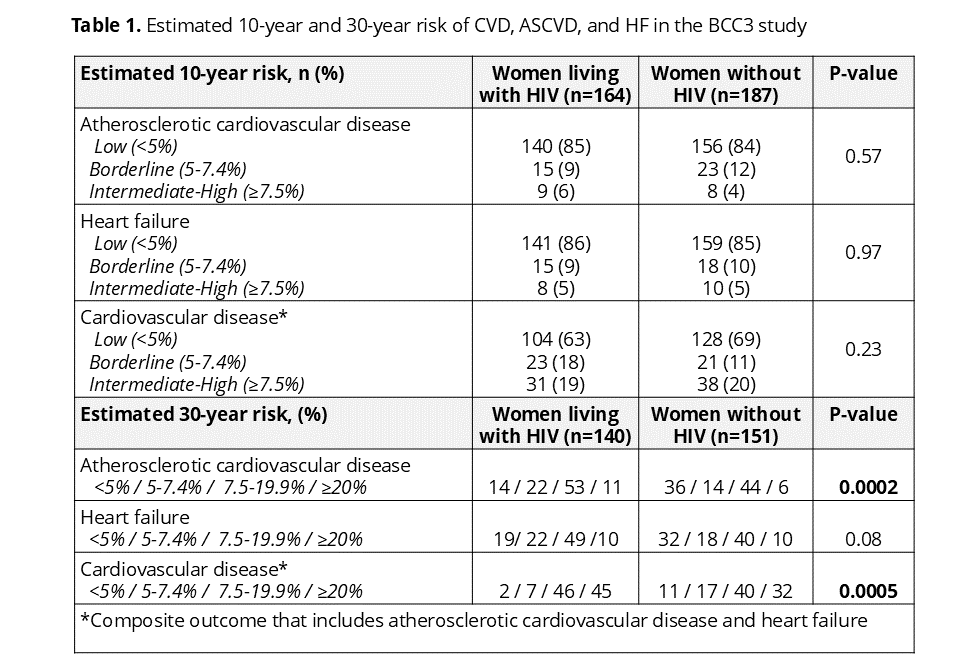
833. Prediction of Cardiovascular Risk Among PWH: Comparing the PREVENT and Pooled Cohort Equations
Poster Abstracts
Page: 250
Matthew S. Durstenfeld1, Megan M. McLaughlin1, Monica Gandhi1, Alexis Beatty1, Priscilla Hsue2
Background
People with HIV (PWH) are at elevated cardiovascular disease (CVD) risk. Traditional risk prediction tools underestimate CVD risk among PWH and do not predict risk of heart failure (HF). The American Heart Association (AHA) developed new risk prediction equations, Predicting Risk of cardiovascular disease EVENTs (PREVENT), which include risk of HF and has not been studied among PWH.
Methods
Using a real-world, electronic health record cohort of PWH over age 40 without known atherosclerotic cardiovascular disease (ASCVD) at two healthcare systems in San Francisco from 2019-2024, we calculated predicted CVD risk using PREVENT, including 10-year ASCVD, heart failure (HF), and total CVD. We compared predicted 10-year ASCVD risk using the pooled cohort equations (PCE) and PREVENT (full equations) both overall and across demographic categories.
Results
Among 837 PWH, the median age was 57 years old (IQR 48, 63); 67% were male, 17% were female, and 8% were transgender or nonbinary; 29% identified as Black and 25% as Latino; 88% were on antiretroviral therapy and 89% had virologic suppression. Using PREVENT, the median 10-year predicted risk of ASCVD, HF, and CVD were 2.76% (IQR 1.18, 5.61), 12.80% (9.46, 16.7), and 5.28% (2.76, 8.98), respectively, compared to the PCE predicted risk of ASCVD of 7.55% (3.56, 14.5). Among 574 PWH with complete data to calculate 10-year ASCVD risk using both equations, predicted risk was lower for 95% of individuals using PREVENT (Panel A). Using a 10-year ASCVD risk threshold of 5% for statins, 56% fewer PWH would be strongly recommended for statins with the PREVENT equations compared to the PCE. The difference in predicted risk between the two equations varied across sex and race/ethnicity groups (Panel B). Adjusted for traditional risk factors, the PREVENT equations predicted lower ASCVD risk than the PCE among those with older age (P<0.0001), male sex (p<0.0001), Black race (P<0.002), and Latino ethnicity (P=0.03).
Conclusions
The new PREVENT calculator was associated with a lower predicted ASVCD for PWH as compared to the PCE, which was already known to underpredict risk for PWH especially among women and Black individuals. Underprediction of CVD risk, which may translate to lower use of statins and blood pressure treatment, has the potential to increase CVD and worsen healthcare disparities among PWH.
The figure, table, or graphic for this abstract has been removed.
834. Lipidomic, Metabolomic, and Immune Profiles Precede Cardiovascular Events in People With HIV
Poster Abstracts
Pages: 250-251
Joana Vitalle1, Alberto Perez-Gomez1, Silvia Chafino-Aixa2, Carmen Gasca Capote3, Laura Tarancon-Diez4, María Reyes Jimenez-Leon1, Sara Bachiller1, Isabel Gallego1, María Angeles Muñoz-Fernandez5, Joaquim Peraire2, Anna Rull2, Francesc Vidal2, Luis López-Cortés6, Ezequiel Ruiz-Mateos1, Adrian Curran7
Background
People with HIV (PWH) have an increased risk of cardiovascular disease (CVD), driven by persistent immune activation and metabolic disturbances, despite successful antiretroviral therapy (ART). Alterations in some immune parameters and metabolites have been associated with the CVD onset. However, specific lipidomic, metabolomic, and immunological biomarkers preceding CVD in PWH are still unknown.
Methods
A retrospective case-control study was performed, analyzing 35 PWH on ART 3-18 months before experiencing acute myocardial infarction or acute coronary syndrome and 35 PWH as controls who did not suffer any non-AIDS event, matched by sex, age, active HCV infection, nadir and CD4+ T-cell levels, time since HIV diagnosis, and Framingham Risk Score (FRS), commonly used to predict CVD. 236 lipids and 102 metabolites were detected in plasma by LC-QTOF and GC-qTOF respectively. We performed T cell, monocyte and dendritic cell (DC) deep immunophenotyping by flow cytometry from PBMCs. Mann-Whitney test was used for two group statistic (p>0.05) and ROC curve analysis to determine the predictive potential for CVD of the studied parameters. Enrichment and Pathway analysis was performed by MetaboAnalyst 5.0 software.
Results
Lysophosphatidylcholines (LPC-16:0e, -16:1p, and -O18:1p) were less abundant in PWH before CVD, while 29 lipids, mainly triacylglycerols, were more abundant. Pyruvic acid and d-fructose levels were significantly increased in CVD group. Pyruvic metabolism was the pathway with major impact. We observed increased levels of regulatory and senescent T cells, higher percentages of more differentiated monocyte subsets and lower percentages of myeloid and plasmacytoid DCs in PWH before suffering CVD, comparing with controls. An integrative predictive model combining LPC-O 18:1p, d-fructose, myeloid DCs, and non-classical monocytes achieved high predictive accuracy (AUC 0.831, PPV 0.762, NPV 0.824). The introduction of this combination increased the predictive accuracy of FRS (FRS, AUC 0.742, PPV 1.000, NPV 0.630; FRS + LPC-O 18:1p + d-fructose + myeloid DCs + non-classical monocytes, AUC 0.975, PPV 0.949, NPV 0.919).
Conclusions
Significant alterations in lipidomic, metabolomic and immune profiles precede CVD in PWH. Moreover, the integration of these parameters increase the predictive accuracy of a common risk score for CVD in PWH. These findings underscore the potential for early identification of CVD risk in PWH using a multi-biomarker approach.
835. Patterns of Social and Biological Risk Factors in People With HIV and Risk of Cardiovascular Disease
Poster Abstracts
Page: 251
Cynthia N. Ramirez1, Stacey Alexeeff1, Andrea Altschuler1, Nicola Bulled2, Michael Horberg3, Alexandra Lea1, Tory Levine1, Elise Riley4, Haihong Hu3, Alan Go1, Derek Satre4, Michael Silverberg5
Background
Despite extensive research, it is unclear why the high cardiovascular disease (CVD) burden in people with HIV has endured for decades. One potential explanation is that elevated CVD risk is the result of the combined effects of social and biological factors in people with HIV which has received limited attention.
Methods
We identified all adult (≥18 years) people with HIV with at least 1-year of continuous membership enrolled in Kaiser Permanente (KP) Northern California and KP Mid-Atlantic between 2000 – 2022. The study sample excluded people with HIV with prior history of a Major Adverse Cardiovascular Events (MACE). We used latent class analysis (LCA) to identify classes of people with HIV with similar patterns of healthcare access, social vulnerability (census-based CDC social vulnerability index themes), mental health (MH) (depression or anxiety) and substance use (SU) (smoking status and SU disorders), and CVD risk factors (see Figure for individual risk factors). Bayesian information criterion was used to determine model complexity and fit. We then used Cox proportional hazard models to estimate the hazard ratio (HR) of incident MACE by LCA class, adjusting for age, race, sex, start of follow up year, years of prior enrollment, and KP region.
Results
The study sample included 25,510 people with HIV separated into 6 classes (Figure). Probabilities for individual risk factors from LCA were used to qualitatively name the 6 classes (see labels in Figure). In adjusted models, Class 5 (high CVD risk) [HR: 1.90; 95% CI 1.57-2.30] and Class 6 (high CVD and social vulnerability risk) [2.62; 1.94-3.52] had a higher risk of incident MACE compared with Class 1 (low overall risk). Class 2 (mixed social vulnerability risk) [1.11; 0.95-1.31], Class 3 (high social vulnerability risk) [1.16; 0.99-1.36], and Class 4 (high MH/SU risk factors) [1.22; 0.99-1.51] also had a higher, but not statistically significant, risk of incident MACE compared with the low overall risk class.
Conclusions
We identified 2 classes with increased risk of MACE, both of which included people with HIV with a higher prevalence of CVD risk factors. What distinguished these classes was that one had a high prevalence of social vulnerability risk factors while the other did not, suggesting distinct targeted efforts may be needed to close the CVD gap among people with HIV.
The figure, table, or graphic for this abstract has been removed.
836. Agrarian Diet Intervention Improves Metabolic Health in Men With HIV Who Have Sex With Men
Poster Abstracts
Page: 251
John O'Connor, Jennifer Fouquier, Charles Neff, Amy Noe, Catherine Lozupone
Background
People living with HIV (PLWH) suffer from increased incidence of metabolic disease and chronic systemic inflammation, even with effective Antiretroviral therapy (ART). Prevotella-rich, Bacteroides-poor (PRBP) microbiomes are commonly found in men who have sex with men (MSM), which make up a large portion of PLWH in the United States. A high-fiber agrarian diet (AD) has been found to be metabolically beneficial in PRBP microbiomes and is also seen in agrarian populations. Furthermore, a high-fat western diet (WD) can exacerbate disease in HIV animal models. There is thus potential for high-fiber/low-diets diets to have health benefits in HIV positive MSM (HIV(+)MSM).
Methods
We conducted a 4-week diet intervention in HIV(+)MSM and HIV(-) control groups, with subjects randomized to an AD or WD arm. Blood samples were collected for measurement of plasma inflammatory markers, as well as low-density lipoprotein cholesterol (LDL-C), high-density lipoprotein cholesterol (HDL-C), and triglycerides. Fecal and colonic biopsy samples were collected for 16S rRNA sequencing and cytometry by time-of-flight mass spectrometry (CyTOF). Additional host and microbial RNA sequencing was performed on biopsy samples.
Results
Individuals randomized to the AD had reductions in levels of both HDL-C and LDL-C, with the sustained reductions in LDL-C being strongest in HIV(+)MSM. The AD was also associated with reduced PD1+ and CD40+ T cells and reduced monocytes in the blood, independent of HIV or MSM status. While the fecal microbiome did not significantly change on the AD, a baseline microbiome with higher Prevotella and lower Bacteroides abundance (lower Weighted Unifrac Axis 2) was observed in MSM groups (Figure 1A and B). Prevotella richness and Bacteroides poorness predicted greater decreases in LDL-C with the AD (Figure 1B). Analysis of host transcriptional changes in biopsy samples of individuals highly compliant to the AD-intervention showed an increase in immune activation and changes in small RNA signaling molecules with the AD.
Conclusions
Our findings suggest that matching PRBP microbiomes to an AD has the power to reduce dyslipidemia and immune activation and exhaustion in PLWH, providing clinical utility in HIV-associated metabolic disease.
The figure, table, or graphic for this abstract has been removed.
837. Decreased Anti-Inflammatory Tryptophan Metabolites Correlate With Higher CVD Risk in PWH
Poster Abstracts
Pages: 251-252
Manuela Ceccarelli1, Alejandro Abner Garcia Leon2, Eoin R. Feeney2, Mary Horgan2, Aoife Cotter2, Eoghan de Barra3, Corinna Sadlier4, Padraig McGettrick2, Giuseppe Nunnari5, Jane A. O'Halloran2, Mallon W. G. Paddy2, the All-Ireland Infectious Diseases Cohort Study
Background
Distinct inflammatory profiles have been associated with increased prevalence of cardiovascular disease (CVD) in people with HIV (PWH). Alterations in tryptophan metabolism through the kynurenine pathway (KP) have also been observed in PWH and are associated with CVD. We aimed to explore relationships between KP metabolites and inflammatory profiles of PWH.
Methods
In the All-Ireland Infectious Diseases (AIID) cohort, we previously identified 3 distinct inflammatory clusters using principal components analysis and hierarchical clustering on 38 plasma biomarkers. Cluster 3 (C3), denoted by higher markers of T-cell inflammation and gut endothelial dysfunction, was associated with 7-fold increased prevalence of CVD. Within this cohort, we matched (1:1:1) participants in C3 to Cluster 1 (C1) (non-inflamed) and Cluster 2 (C2) (systemically inflamed) by sex-at-birth, age and ethnicity using propensity score with the nearest neighbor method. We measured the relative concentrations of ten KP metabolites (AU/mL) in plasma by UHPLC-MS/MS. We used Kruskall-Wallis to identify differences between groups followed by Dunn's multiple comparison test (with correction) to determine specific pairwise differences between clusters. Data are median (IQR) unless specified.
Results
We included 87 PWH, 29 from each cluster. Overall, 34.5% were female, 52.3% Caucasian, age 45 (39.5-49) years, time since HIV diagnosis 10 (5-16) years. Jaccard index was 0.9. Clusters did not differ on age, sex or ethnicity. Compared to C1, PWH in C3 had significantly higher CD4/CD8 ratio and lower total and LDL cholesterol. Of the 10 KP metabolites, four anti-inflammatory metabolites of the kynurenic acid branch of the KP were significantly downregulated in C3; specifically kynurenate [C3; 0.82 (1.26 - 0.6) vs. C1; 1.22 (1.41 - 1.04), p=0.01], 8-methoxy-kynurenate [C3; 0.68 (0.91 - 0.42) vs C1; 1.22 (1.98 - 0.61), p=0.03], xanthurenate [C3; 0.63 (1.09 - 0.4) vs C1; 1.19 (1.79 - 0.77), p=0.03], involved in vitamin B3 synthesis, and N-acetyl-kynurenine [C3; 0.68 (0.98 - 0.49) vs C1; 1.47 (2.4 - 0.67), p=0.004], an intermediate of NAD+ synthesis (Figure). All four downregulated KP metabolites correlated closely (all p<0.02).
Conclusions
Proinflammatory profiles associated with higher prevalent CVD in PWH link to coordinated downregulation in anti-inflammatory metabolites in the KP, providing insights into the pathogenesis of CVD in PWH and supporting a role for precision medicine to identify those PWH most at risk of CVD.
The figure, table, or graphic for this abstract has been removed.
838. Risk of Obesity, Cardiometabolic Disease, and MACE After Switch to Integrase Inhibitor in REPRIEVE
Poster Abstracts
Page: 252
Emma M. Kileel1, Carlos Malvestutto2, Markella V. Zanni3, Carl Fichtenbaum4, Judith Aberg5, Esteban Martinez6, Aya Awwad3, Sara H. Bares7, Daniel Berrner8, Marek Smieja9, Matthew P. Fox1, Alana T. Brennan1, Pamela Douglas10, Heather Ribaudo11, Steven Grinspoon3, the REPRIEVE study
Background
Integrase strand transfer inhibitor (INSTI)-based antiretroviral therapy (ART) has been associated with disproportionate weight gain among people with HIV (PWH), primarily in treatment-naïve populations. Few studies have explored weight and cardiometabolic outcomes beyond two years and even fewer have examined effects on major adverse cardiovascular events (MACE).
Methods
Using target trial emulation, we estimated the causal effect of switching to an INSTI-based regimen, versus remaining on a non-INSTI-based regimen, on incident obesity, diabetes, hypertension, metabolic syndrome and MACE in an ART-experienced population in the REPRIEVE cardiovascular primary prevention trial. We designed a series of sequential target trials and used inverse probability of treatment weights estimated at the start of each trial to adjust for key confounders including sex, age, race, enrollment region, ASCVD risk score, statin use, ART duration and BMI. Participants not on an INSTI at REPRIEVE entry were eligible and followed until the event of interest, loss to follow-up, death (competing event) or censoring at 5 years. Hazard ratios were estimated using weighted cox-proportional cause-specific hazard models, with data pooled across all trials (N=73) and 95% confidence intervals (CI) obtained via non-parametric bootstrapping (500 samples).
Results
Among 5174 participants eligible for at least one trial, 2686 (52%) switched to an INSTI-based regimen, predominantly dolutegravir (82%). Average follow-up time was similar among switchers and non-switchers (3.8 years) and average time to event following a switch to an INSTI ranged from 3.5 – 4 years depending on the outcome. Among those who switched, 7% developed obesity, 4% diabetes, 6% hypertension, 12% metabolic syndrome and 2% experienced a MACE event. Comparing those who switched to an INSTI to those who did not, we estimated an increased hazard of developing obesity (HR: 1.34, 95% CI: 1.14-1.52), diabetes (HR: 1.41, 1.13-1.70), hypertension (HR: 1.44, 1.17-1.65), and metabolic syndrome (HR: 1.18, 1.04-1.33) but not MACE (HR: 1.06, 0.67-1.53). Adjustment for NRTI choice did not meaningfully impact results.
Conclusions
Leveraging a longitudinal global cohort of PWH, we found an increased risk of weight gain and cardiometabolic complications following a switch to an INSTI over 5 years of follow-up. Given the observed elevated risk profile, long-term observation of PWH switching to INSTIs will be critical to assess for future development of MACE.
Figure 1.
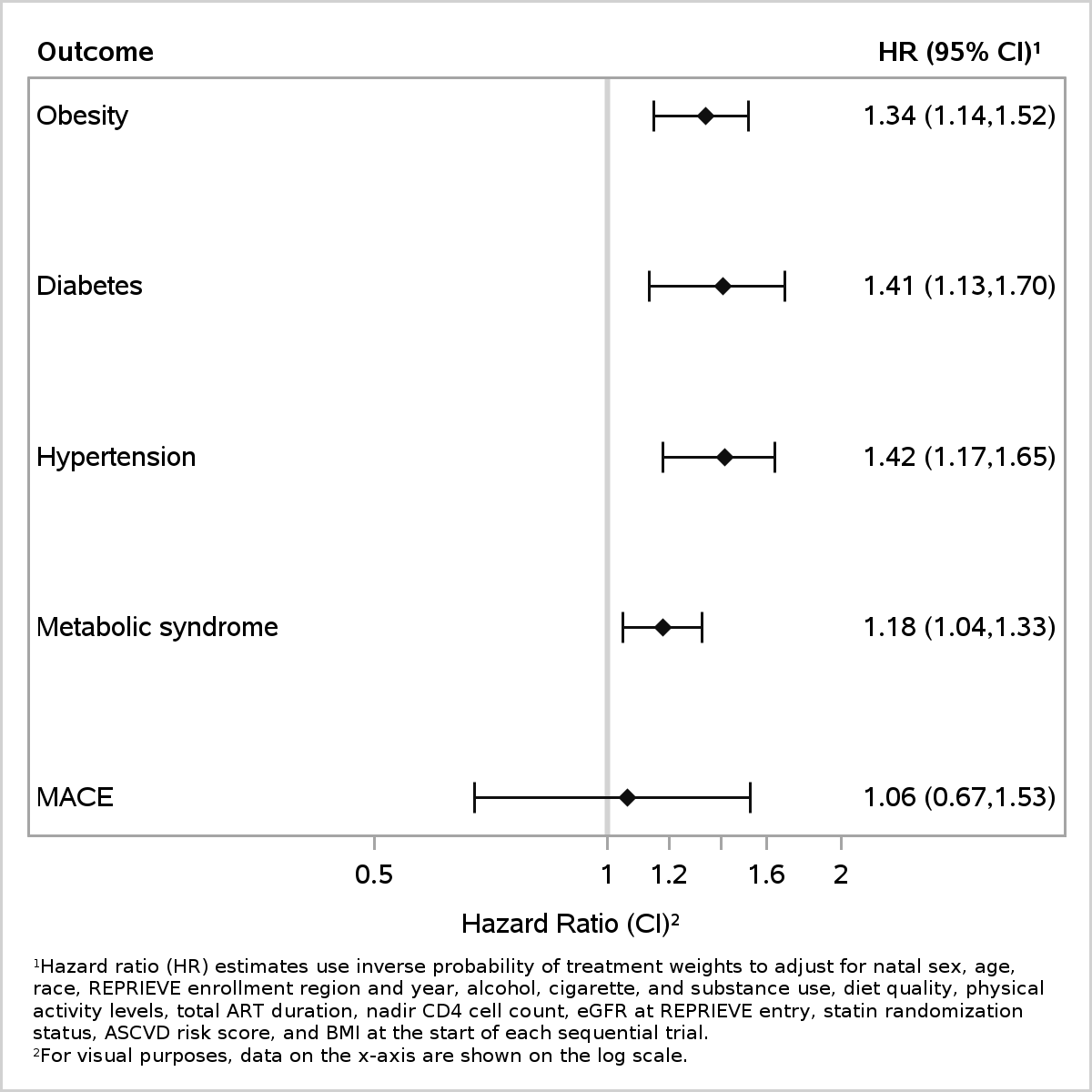
839. Determinants of De-Novo High-Risk Carotid Ultrasound Features in Middle-Aged People Living With HIV
Poster Abstracts
Pages: 252-253
Napon Hiranburana1, Waratchaya Walailaksanaporn2, Aurauma Chutinet2, Tanakorn Apornpong1, Stephen Kerr3, Porntep Amornritvanich4, Anchalee Avihingsanon5
Background
People living with HIV (PLWH) are at an elevated risk for cardiovascular and cerebrovascular events, often underestimated by traditional CVD risk scores. Identifying factors driving the progression of high-risk carotid ultrasound features, indicative of subclinical atherosclerosis, is essential for improving preventive strategies and outcomes in this population.
Methods
This cohort study enrolled PLWH aged ≥50 years at HIV-NAT in Bangkok. Baseline data included 10-year ASCVD risk, HIV-related parameters including duration of infection, viral load, and CD4 count, antiretroviral treatment history, metabolic profiles, inflammatory markers, and statin use. Baseline carotid ultrasound was performed between 2015 and 2018 and repeated in 2023-2024 to assess development of new high-risk features, including carotid intimal-medial thickness (CIMT) >0.9 mm, and thick (>0.4 mm) or echolucent plaques. Logistic regression was used to identify the factors associated with progression to high-risk carotid features over the study period.
Results
A total of 229 participants were analyzed after excluding those with baseline CVD events or high-risk carotid features. Over a median follow-up period of 6.9 (IQR 6.6-7.4) years, 87 participants (38%) developed high-risk carotid features. Participants with progression had significantly higher baseline 10-year ASCVD risk (7.8% vs. 4.9%, p<0.001), coronary artery calcium scan (CAC) score ≥100 (18.6% vs 5%, p<0.001), diabetes (37.9% vs. 22.5%, p=0.016) and hypertension (49.4% vs. 28.9%, p=0.002). Baseline CAC score ≥100 (OR 4.5, 95% CI 1.6-12.4, p=0.016), Intermediate to high ASCVD score (OR 2.6, 95%CI 1.3-5.1, p=0.008), and protease inhibitor use (OR 2.1, 95% CI 1.2-4.0, p=0.016) were independently associated with an increased risk of developing high-risk carotid features, after adjusting for nadir CD4 count and statin use. (Figure) No association was found with Inflammatory markers (hsCRP, IL-6) and development of high-risk carotid features.
Conclusions
Baseline intermediate to high 10-year ASCVD risk, use of protease inhibitors, and a CAC score ≥100 were associated with the progression of high-risk carotid features, suggesting PLWH with these factors are particularly vulnerable to future high-risk atherosclerosis and cerebrovascular events. Early identification and intensive targeted interventions, are essential to mitigate further cardiovascular complications in this population.
Figure 1.
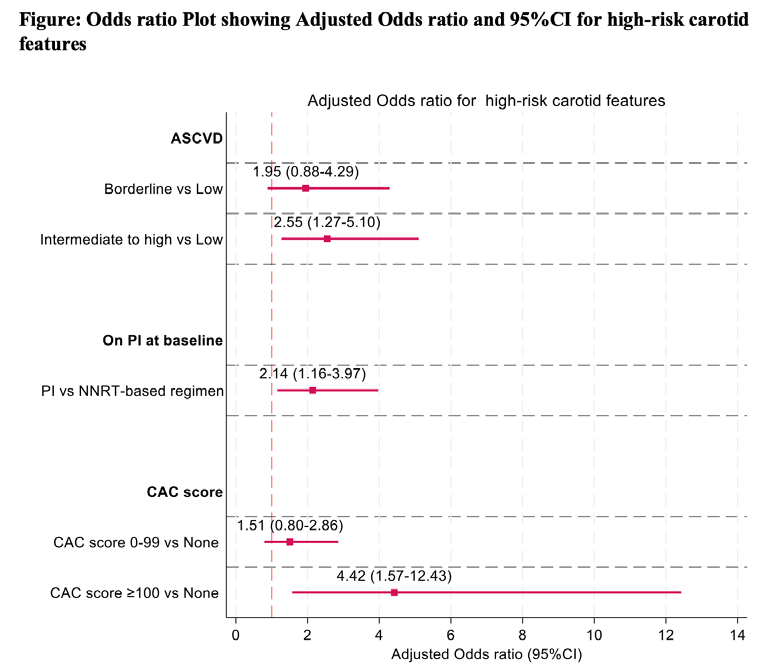
840. Seven-Year Progression of Coronary Artery Calcium Score in Middle-Aged Thai People Living With HIV
Poster Abstracts
Page: 253
Napon Hiranburana1, Sarawut Siwamogsatham2, Pairoj Chattranukulchai2, Monravee Tumkosit2, Yanisa Jarusyingdumrong1, Thanawat Nochaiwong1, Tanakorn Apornpong1, Stephen Kerr3, Porntep Amornritvanich4, Anchalee Avihingsanon5
Background
People living with HIV (PLWH) face an elevated risk for atherosclerotic cardiovascular disease (ASCVD). Coronary artery calcium (CAC) scores, a marker of subclinical atherosclerosis, strongly predict ASCVD. Identifying drivers of CAC progression can guide more aggressive preventive strategies for this at risk population.
Methods
This cohort study enrolled Thai PLWH aged 50-60 years without established ASCVD from HIV-NAT, Thailand. Baseline data collection included 10-year ASCVD risk, smoking and alcohol consumption status, HIV-related parameters, metabolic profiles, inflammatory markers, and statin use. For this analysis, we included only participants who underwent two CAC assessment: at baseline (2015-2018) and during follow-up (2023-2024) to assess progression across CAC score categories (0, >0-99, 100-399, ≥400). Multivariable logistic regression was used to identify associations with CAC score progression.
Results
Of 220 participants, 112 (51%) experienced CAC progression over a median follow-up of 6.9 years (IQR 6.6-7.4). Progressors were more likely to be male (69.6% vs. 45.4%, p<0.001), current smokers (15.2% vs. 7.4%, p<0.001), drink alcohol (25.9% vs. 9.3%, p=0.001), have intermediate to high 10-year ASCVD risk (45.5% vs. 26.6%, p=0.001), high triglycerides (57.1% vs. 41.5%, p=0.02), and were more likely to use protease inhibitors (PI) (43.8% vs. 30.6%, p=0.04). In participants with a baseline CAC score of 0 (n=125), 44% progressed to >0-99, 4.8% to 100-399, and 0.8% to ≥400. Among those with a baseline score of >0-99 (n=73), 43.8% progressed to 100-399, and 11% to ≥400. For participants with baseline CAC 100-399 (n=11), 91% progressed to ≥400. All participants with baseline scores ≥400 (n=11) remained in this category at follow-up. In a multivariable model, BMI ≥25 kg/m² (OR 2.1, 95% CI 1.1-4.2, p=0.03) smoking (OR 2.8, 95% CI 1.6-6.0, p=0.01) and high triglyceride-glucose (TyG) Index (OR 1.8, (95%CI 1.1-3.2), p=0.03) were independently associated with CAC progression. Compared to those taking NNRI, PI or intergrase inhibitor-based regimens were not statistically significant but were associated with increased risk (Figure).
Conclusions
More than 50% of participants showed worsened subclinical atherosclerosis, with greater progression rates in those with higher baseline CAC scores. In addition to statin use, prioritizing smoking cessation and weight management is essential to prevent CAC progression and reduce cardiovascular risk in high-risk PLWH populations.
The figure, table, or graphic for this abstract has been removed.
841. Markers of Arterial Stiffness in People Living With HIV and Echocardiographic Outcomes
Poster Abstracts
Page: 253
Karl Reis1, Ponsiano F. Stephano2, Salama Fadhil2, Megan Willkens3, Julie Karand4, Eliaz Nyanza5, Grace Ruselu2, Ayubu Garubindi5, Benson Issarow2, Myung-Hee Lee3, Cody Chicowitz6, Rob N. Peck3
Background
Cardiovascular disease is a growing cause of morbidity and mortality in people living with HIV (PLWH). Arterial stiffness may be an intermediary between HIV-infection and CVD, necessitating holistic assessment of arterial stiffness and correlation with cardiac outcomes. We conducted a cross-sectional study of PLWH and HIV-uninfected community controls using multimodal assessment of arterial stiffness and echocardiographic outcomes.
Methods
We performed ankle-brachial index (ABI) and pulse-wave velocity (PWV) to characterize arterial stiffness in a cohort of PLWH and HIV-uninfected community controls in Mwanza, Tanzania. Simultaneous echocardiograms were performed to define cardiac outcomes including left-ventricular mass index (LVMI), left-ventricular hypertrophy, average e’, and average E:e’. Multivariable logistic regression analysis was used to determine differential risk factors for ABI vs PWV and to determine associations between arterial stiffness and echocardiographic outcomes.
Results
We enrolled 848 participants; 398/848 PLWH (46.9%) and 450/848 community controls (53.1%). Age and sex distributions were similar between the two groups. All PLWH were on anti-retroviral therapy (ART) with a mean treatment duration of 2.46 years (SD 0.92). In multivariable models, elevated ABI was associated with HIV infection (3.26 (1.48, 7.16), p=0.003), male sex (3.09 (1.40, 6.82), p=0.005), and BMI (1.08 (1.01, 1.16), p=0.026), whereas elevated PWV was associated with age (1.11 (1.06, 1.17), p<0.001) and systolic blood pressure (1.64 (1.27, 2.10), p<0.001) (Figure 1). After adjusting for confounders, ABI was associated with LVMI (7.06 (0.23, 13.91), p=0.043) and average E:e’ (0.75 (0.19, 1.31), p=0.009), while PWV was associated with LVMI (10.52 (2.47-18.57), p=0.010). No significant interactions with HIV-status were found between arterial stiffness measures and echocardiographic outcomes.
Conclusions
Differential associations between HIV and multiple measures of arterial stiffness suggest that HIV is associated with peripheral but not central arterial stiffness. Arterial stiffness was correlated with cardiac hypertrophy and impaired cardiac filling, suggesting a mechanistic pathway for HIV-related CVD that includes peripheral arterial stiffness. Young, male PLWH in similar settings are at risk for sub-clinical and undetected vascular aging.
Figure 1.
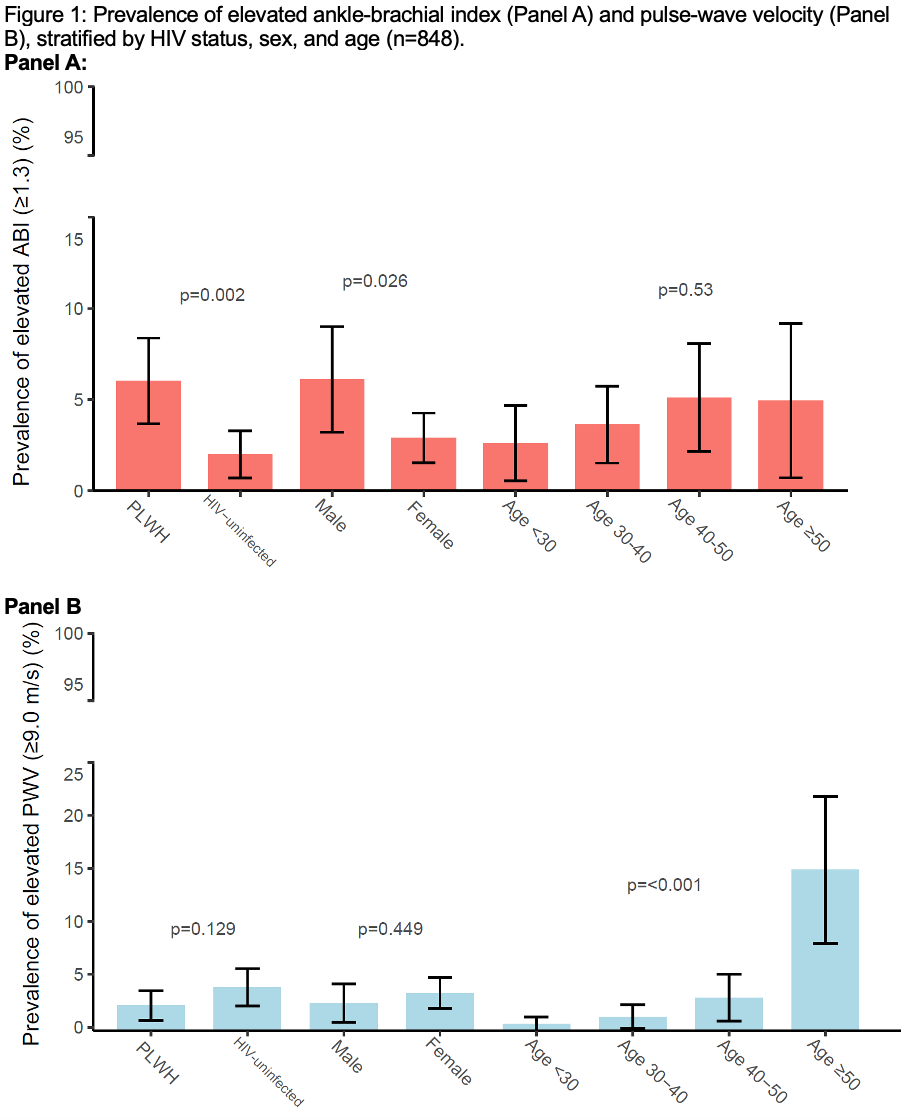
842. Multiomics Profiles of SHBG Are Associated With Subclinical Atherosclerosis in Men With HIV
Poster Abstracts
Page: 254
Yi Wang1, Wendy Post2, Howard Hodis3, Zheng Wang1, Mallory Witt4, Todd Brown5, Mark Kuniholm6, Patrick Caron7, Clary B. Clish8, Chantal Guillemette7, Robert D. Burk1, Robert C. Kaplan1, Qibin Qi1, David B. Hanna1, Brandilyn A. Peters1
Background
Sex hormones and HIV infection both influence cardiovascular health. However, the relationship between sex hormones and subclinical atherosclerosis is not fully understood, especially in the context of HIV.
Methods
Among 321 men (65% with HIV) from the MACS/WIHS Combined Cohort Study, we measured 14 serum sex hormones and sex hormone-binding globulin (SHBG), assessed carotid artery plaque using B-mode ultrasound, and performed shotgun metagenomic sequencing on stool samples. In 312 men, we measured 986 plasma metabolites via liquid chromatography-tandem mass spectrometry and 2883 plasma proteins using the Olink Explore 3072 platform. Separately in men with and without HIV (MWH, MWOH) and with adjustment for covariates, we (1) examined associations of sex hormones with plaque; (2) characterized multi-omics profiles related to sex hormones; and (3) explored whether identified multi-omics signatures mediate the relationship between sex hormones and plaque (Fig. 1a).
Results
Mean age was 63.0±7.4 years, and 31.5% had carotid artery plaque. Sex hormones were differentially associated with plaque in MWH and MWOH. In MWH, SHBG was associated with lower odds of plaque (OR=0.60, 95% CI: 0.41, 0.90), overall gut microbial composition, lower abundance of species from Prevotella, Fibrobacter and Coprococcus, higher levels of certain metabolites (mainly lipid and carnitine metabolites) and proteins enriched in the cell-cell adhesion pathway. Some SHBG-related species (e.g., Mediterranea massiliensis), metabolites (e.g., Hex2Cer 42:2;O2) and proteins (e.g., enriched in immune response) were also associated with plaque in MWH. We then generated SHBG-related microbiome, metabolite and protein scores via linear combination of related species, metabolites and proteins, respectively. All SHBG-related -omics scores were inter-correlated and inversely associated with plaque in MWH (Fig. 1b). Mediation analysis suggested that the metabolite and protein scores, but not the microbiome score, could mediate the protective association of SHBG with plaque (mediated proportions: 43.2% and 39.0%). In MWOH, estrone-sulfate was positively associated with plaque (OR=3.80, 95% CI: 1.41, 10.22) but not with any species, metabolites or proteins.
Conclusions
Higher SHBG was associated with lower odds of carotid artery plaque in MWH, possibly explained by alterations in lipid metabolites and proteins involved in immune response and cell function regulation. SHBG may play a protective role in cardiovascular disease in MWH.
Figure 1.
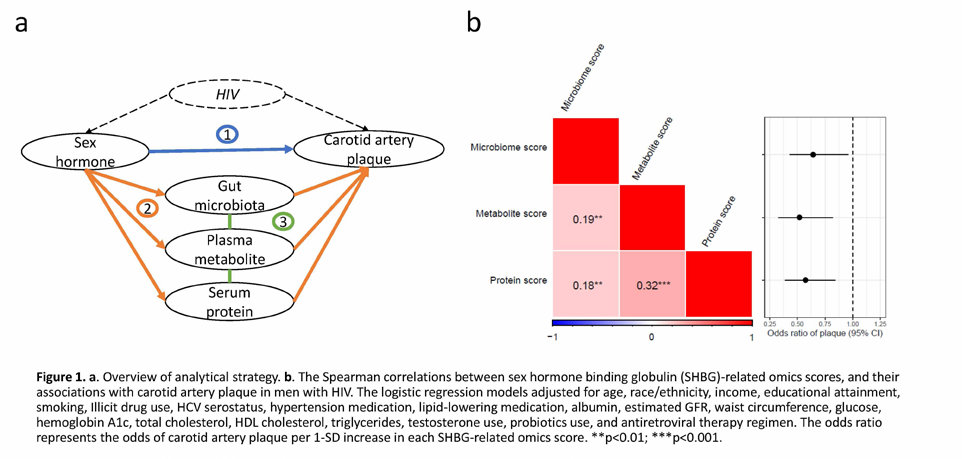
843. Multiomics Analysis of Gut Microbiome and Carotid Artery Atherosclerosis in Men With and Without HIV
Poster Abstracts
Page: 254
Zheng Wang1, Yi Wang1, Brandilyn A. Peters1, Wendy Post2, Todd Brown3, Frank Palella4, Mallory Witt5, Mark Kuniholm6, Natalie Chichetto7, Robert D. Burk1, Kathryn Anastos1, Howard Hodis8, Robert C. Kaplan1, Qibin Qi1, David B. Hanna1
Background
Alterations in gut microbiota have been implicated in HIV infection and cardiovascular disease (CVD). However, how gut microbial alterations may lead to host inflammation and changes in metabolomics profiles affecting atherosclerosis is not fully elucidated, especially in the context of HIV.
Methods
We examined associations of gut microbial species and functional components measured by shotgun metagenomics with carotid artery plaque (focal intima-media thickness >1.5 mm) assessed by B-mode carotid artery ultrasound in 359 men (65% HIV+, mean age 63) from the MACS/WIHS Combined Cohort Study. We measured 822 plasma metabolites using liquid chromatography-tandem mass spectrometry and 2866 circulating proteins by Olink platform. We further integrated plaque-associated microbial features with proteomics and metabolomics profiles in relation to plaque.
Results
Carotid artery plaque was detected in 115 of 359 men (32%). The gut microbial species Adlercreutzia equolifaciens and Eubacterium sp3131 were associated with lower odds of plaque, while the potentially pathogenic bacterium Coprococcus sp13142 was positively associated with plaque, after adjusting for demographic and behavioral factors. Results were consistent in both men with and without HIV. We examined correlations between these plaque-associated species and conventional CVD risk factors, and found that A. equolifaciens correlated with HDL cholesterol (r=0.26, P<0.001) and inversely correlated with systolic blood pressure (r=-0.17, P=0.009). These plaque-associated microbial species were also associated with a range of circulating metabolites and inflammatory proteins. For example, A. equolifaciens correlated with metabolites palmitoyl-EA (known for antihypertensive and anti-inflammatory properties) and mesobilirubinogen (a metabolic product of bilirubin with antioxidant properties), and inversely correlated with the pro-inflammatory chemokines CXCL9, immune regulator CD160 and IL-24, which promotes cell apoptosis. Associations between bacterial species and plaque were attenuated after further adjustment for specific microbial associated circulating metabolites and proteomic inflammatory markers.
Conclusions
We identified gut microbial features associated with carotid artery atherosclerosis, with certain microbiota-related metabolites and inflammatory markers partially explaining these associations. This work, if validated, suggests potential gut microbiota-related targets for cardiovascular prevention in men with and without HIV.
Figure 1.
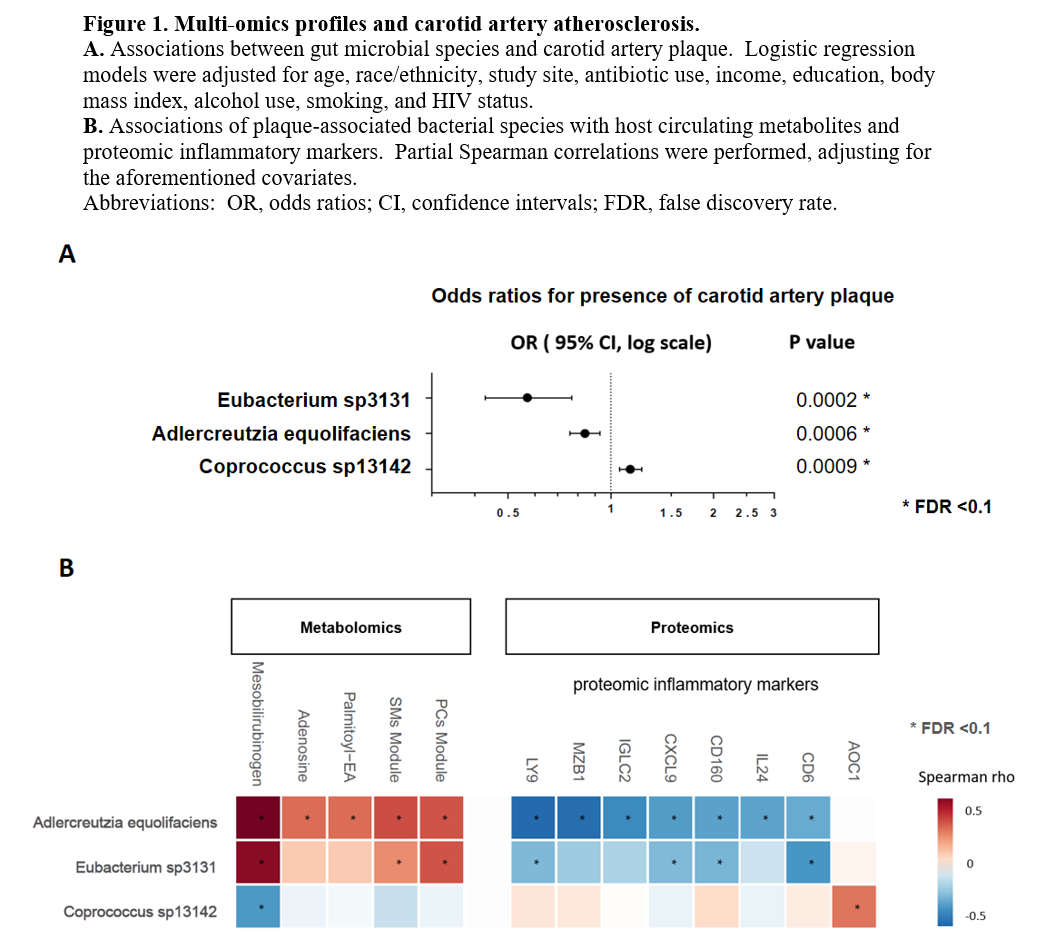
844. PLHIV Exhibit a COVID-19 Independent Increase of Cardiovascular Mortality in Brazil, 2019-2023
Poster Abstracts
Pages: 254-255
Rodrigo Moreira1, Valdilea Gonçalves Veloso1, Beatriz Grinsztejn1, Antonio G. Pacheco2
Background
Cardiovascular disease (CVD) is a leading cause of morbidity and mortality among PLHIV. The COVID-19 pandemic exacerbated existing health disparities, particularly affecting vulnerable populations. This study aims to investigate the impact of the COVID-19 pandemic on death rates due to CVD in Brazil.
Methods
All data were sourced from Brazilian Mortality Information System (SIM) from 2018 to 2023 through the DATASUS open-access database. Population data were obtained from the Brazilian Census Bureau (IBGE) for the same period The analysis included all causes of death recorded on death certificates (DC), coded according to the International Classification of Diseases, 10th edition (ICD-10) as follows: COVID-19: B342, U071, U072. HIV: B20-B24 Acute Myocardial Infarction (AMI): I20-I25; Stroke: I60-I69; CVD: I00-I99 (excluding I46). We compared two scenarios: one including all deaths and one excluding those in which DC mentioned COVID-19. Mortality ratios (MRs) were calculated relative to 2018. Adjusted MRs were computed using Poisson models with population size as an offset, accounting for state of residence, age group, and sex. Mixed-effect models with random intercepts (GLMM) were applied to control for state variations. We also tested the interaction of HIV and year among those without COVID-19. All analyses were conducted with R 4.2.3.
Results
A total of 9,063,805 deaths were recorded in Brazil from 2018 through 2023. Among HIV negative individuals (HIVN), the MRs for CVD slightly increased in 2020, peaking in 2021 [1.26 (1.25-1.26)], but remained close to 1, when COVID-19-related deaths were excluded, as was the case of Stroke and AMI. In PLHIV, the scenario differed significantly. The MR for CVD in PLHIV (excluding COVID-19) increased from 1.07 (0.99-1.15) in 2019 to 1.32 (1.24-1.42) in 2023. For CVD, Stroke, and AMI, the annual effect (slope) was significantly different in PLHIV compared to the HIVN (p<0.001), consistently increasing. In contrast, non-HIV deaths either decreased or remained stable when COVID-19 was excluded.
Conclusions
Unlike HIVN, PLHIV in Brazil are experiencing a sustained and progressive rise in CVD mortality, independent of COVID-19, that may be linked to broader, underlying factors of worsening cardiovascular health.
Table 1.
Average annual effect of interaction between HIV and year
| Disease |
HIV |
HIVN |
Interaction-p-value |
| CVD |
1.06-(1.05-1.07) |
1.00-(1.00-1.00) |
<0.001 |
| Stroke |
1.05-(1.05-1.06) |
0.98-(0.98-0.98) |
<0.001 |
| AMI |
1.06-(1.05-1.06) |
0.97-(0.97-0.98) |
<0.001 |
845. Effect of Treatment for Opioid Use Disorder on Endothelial Function in People With and Without HIV
Poster Abstracts
Page: 255
Jared C. Durieux1, Ann K. Avery2, Corrilynn O. Hileman2
Background
Medication-assisted treatment (MAT) with buprenorphine/ naloxone (BUP) or methadone (MET) is an effective harm reduction strategy for people with opioid use disorder. Whether there is a benefit of one over the other on cardiovascular disease (CVD) risk is unknown and is especially important for people with HIV (PWH) where we have shown that use of illicit fentanyl/heroin results in heightened vascular inflammation.
Methods
People with and without HIV initiating MAT were enrolled in a 48-week prospective cohort study. Measures of endothelial function (reactive hyperemic index [RHI]) and arterial elasticity (augmentation index standardized at 75 beats per minute [AI] and pulse wave velocity [PWV]) were assessed at entry, week 12, 24, and 48. Constrained longitudinal mixed models with random intercept were used to assess changes in these outcomes. Adjusted models included age at baseline, sex, race, and time-on-MAT.
Results
82 participants (28 MET; 54 BUP) were enrolled. Overall, median (IQR) age was 39 (33, 52) years; 33% were female; 62% were White not Hispanic, 15% were Black not Hispanic, and 21% were Hispanic regardless of race. 21 (26%) participants had HIV; entry current and nadir CD4 counts were 651 and 271 cells/mm3 and 78% had HIV-1 RNA <200 copies/ml. PWH were more likely to receive BUP. Entry median (IQR) RHI was 2 (1.5, 2.5), AI was 9% (-4, 31), and PWV was 6.8 (6.1, 7.9) m/s without differences between groups. Overall, 33% had abnormal RHI (<=1.67) at entry. In adjusted models, at 48 weeks, the marginal mean difference in RHI decreased from 1.8 to 1.6 [D -0.2 (95% CI: -0.2, 0.6)] among MET treated and nominally increased from 2.09 to 2.1 [D 0.01 (95% CI: -0.3, 0.3)] among BUP treated [adjusted mean difference at 48 weeks MET vs BUP = -0.48 (95% CI: -0.88, -0.08; P=0.03)]. There were no differences in change in AI or PWV over 48 weeks between groups.
Conclusions
While measures of arterial stiffness did not differ by MAT used, endothelial function as measured by RHI was better in participants treated with BUP than MET. Medications that bind opioid receptors including MAT have immunomodulatory potential which could alter downstream CVD risk. Buprenorphine based MAT may be a better choice for PWH given heightened CVD risk in this population.
Figure 1.
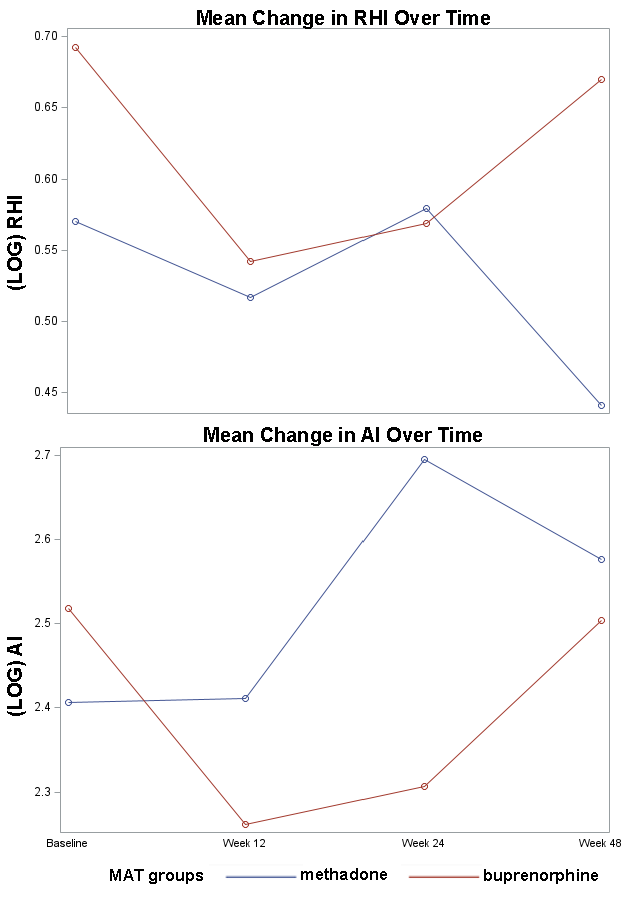
846. Cholesterol Synthesis Pathways in Monocyte-Derived Macrophages Link CMV and HIV to Atherosclerosis
Poster Abstracts
Pages: 255-256
Katelyn O'Hare1, Brian Richardson1, Emily Bowman2, Banumathi Tamilselvan1, Vargab Baruah3, Christine O'Connor3, Cheryl Cameron1, Mark Cameron1, Nicholas Funderburg2, Michael L. Freeman1
Background
Cytomegalovirus (CMV) is a widespread herpesvirus associated with inflammation and inflammation-related disorders, including cardiovascular disease (CVD). Among people with HIV (PWH), who have a two-fold increase in CVD risk compared to people without HIV (PWoH), latent CMV is nearly universal, and CMV reactivation from latency occurs more frequently, but if and how CMV reactivation contributes to elevated CVD risk in PWH is unclear.
Methods
Bulk RNA sequencing was performed on monocyte-derived macrophages (MDMs) that were differentiated from monocytes of CMV-seropositive (CMV+) PWoH (n=3M,2F), CMV-seronegative (CMV-) PWoH (n=4M,2F), or CMV+ PWH (n=11M,2F), using autologous serum, a model that preserves the influence of systemic biomarkers found in vivo. Pathway and gene set enrichment analyses were used to compare the MDM transcriptomes with previously published datasets from CVD or in vitro CMV infection. Transcription of CMV genes in MDMs was measured by PCR.
Results
When compared to MDMs of CMV- PWoH, we found that over 30% of the differentially upregulated genes in MDMs of CMV+ PWH overlapped with the differentially upregulated genes of MDMs from CMV+ PWoH, indicating a strong influence of CMV in the HIV-associated MDM transcriptome. CMV-related genes were significantly enriched for lipid and cholesterol synthesis pathways and included FDFT1. In datasets of in vitro CMV infection, FDFT1 expression was associated with productive CMV infection. Despite no clear evidence of viral reactivation in the MDMs, consistent with the low prevalence of latent CMV in circulating monocytes of PWoH, the expression of known CMV activators was enriched while the expression of known CMV repressors was reduced in CMV+ MDMs, suggesting that MDMs from people with CMV are transcriptionally permissive for CMV replication. Finally, a gene set of the top 100 most significantly upregulated genes in MDMs from CMV+ PWoH was enriched in bulk tissue from atherosclerotic plaques compared to peripheral blood cells (NES=1.943, Padj=1.31x10⁻³) and among macrophages isolated from ruptured atherosclerotic plaques compared to those from stable plaques (NES=1.644, Padj=3.79x10⁻⁵), consistent with a proatherogenic role for MDMs in people with CMV.
Conclusions
Our findings link an enrichment in cholesterol biosynthesis pathways in MDMs to CMV infection, HIV, and CVD, and suggest that PWH with CMV may have more atherosclerosis in part due to increased CMV activity in macrophages that infiltrate vascular tissues.
Figure 1.
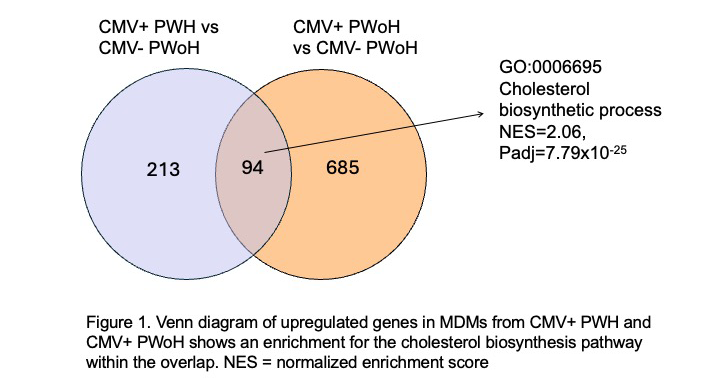
847. Endothelial Colony-Forming Cells From People With HIV Display an Interferon Gene Signature
Poster Abstracts
Page: 256
Akif A. Khawaja1, Robert Maughan1, Ishrat Jahan1, Lida Kabir2, Koralia Paschalaki1, Mark Nelson3, Ruth Byrne3, Anna Randi1, Graham Taylor1, Charis Pericleous1, Marta Boffito3, Michael Emerson1
Background
People with HIV (PWH) have an increased risk of cardiovascular disease (CVD), however, the underlying mechanisms are not fully understood. Endothelial dysfunction is central to CVD pathology. Endothelial colony-forming cells (ECFC) arise from endothelial progenitors isolated from whole blood and retain the donor’s phenotypic characteristics ex vivo. ECFC are increasingly used to study disease-specific mechanisms in patient cohorts but have been largely overlooked in HIV research. We therefore isolated ECFC from PWH and people without HIV (PWoH) either with or without Pre-Exposure Prophylaxis (PrEP) exposure, to explore differences in ECFC biology.
Methods
Whole blood was obtained from PWH on fully suppressive antiretroviral therapy, PWoH accessing PrEP or not on PrEP attending HIV care or prevention clinics at Chelsea and Westminster Hospital. ECFC were isolated from peripheral blood mononuclear cells (PBMC). DNA and RNA was extracted from ECFC at passage 4. Proviral HIV DNA was measured by qPCR using primers and probes for the integrase gene. mRNA expression of interferon (IFN) signalling (e.g. IFI44, ISG15, MX1), thromboinflammation (e.g. F3, EDN1,VCAM1) and mitochondrial-metabolic (e.g. MTDN1, IDH1) markers was quantified by RT-PCR using SYBR Green.
Results
ECFC were isolated from PWH (PLWH-ECFC; n=8, 75% male, 87.5% white), PWoH accessing PrEP (PrEP-ECFC; n=9, 100% male, 88.9% white) and PWoH not on PrEP (NP-ECFC; n=3, 100% male, 66.7% white). A higher frequency of ECFC colonies were recovered from PLWH compared to people on PrEP when normalised to number of PBMC seeded (0.53 vs 0.13 vs colonies/1x106 PBMC, p=0.0085). In PLWH, proviral HIV DNA was detected in matched PBMC but not in ECFC (1.7 vs 0.0 copies/104 cells, p=0.0002). Elevated IFN, thromboinflammatory, mitochondrial and metabolic associated gene expression was seen in PLWH-ECFC relative to NP- and PrEP-ECFC. IFN gene expression strongly correlated with inflammatory and metabolic genes.
Conclusions
PWH displayed higher ECFC frequencies, although the clinical significance of this is unclear. Despite the absence of proviral HIV DNA, PLWH-ECFC displayed an IFN gene signature which positively correlated with elevated inflammatory and metabolic markers. Collectively, our observations indicate endothelial dysfunction in PLWH-ECFC despite fully suppressive ART, that may be driven by IFN signalling. Further investigation is required to fully define mechanisms of endothelial dysfunction and to identify therapeutic targets in PWH.
848. CHIP Is Associated With Plasma Inflammatory Biomarkers and Vascular Events in People With HIV on ART
Poster Abstracts
Page: 256
Caroline H. Sheikhzadeh1, Alton Barbehenn1, Stephanie Kuang1, Sonia Savur1, Danny Li1, Xiuping Chu2, Colin T. Maguire3, Rafick P. Sekaly4, Jeffrey A. Tomalka4, Brian Agan5, Anuradha Ganesan6, Joseph Yabes7, Alexander Bick6, Priscilla Hsue8, Sulggi Lee1
Background
CHIP (clonal hematopoiesis of indeterminate potential) mutations (hereafter ‘CHIP’) are acquired somatic DNA mutations that are associated with increased risk of cancer, mortality, and vascular disease. People with treated and suppressed HIV (PWH) have higher frequencies of CHIP than people without HIV (PWoH), but the underlying mechanisms linking CHIP and clinical events remains unclear among PWH or PWoH.
Methods
We sampled 1000 PWH on ART from the U.S Military HIV Natural History Study using a case-cohort design: 200 PWH with incident vascular events (VE) and 800 PWH without VE. CHIP (e.g., DNMT3A, TET2, ASXL1) were quantified by PCR from PBMCs and cytokines were measured from plasma (MesoScale). We analyzed two composite clinical outcomes: atherogenic VE (AVE: coronary artery disease, myocardial infarction, cerebrovascular accident, or peripheral arterial disease) and VE (deep vein thrombosis, pulmonary embolus, or AVE). Cox proportional hazard models were performed to estimate the risk of AVE/VE, including covariates for traditional vascular risk factors and HIV disease progression (Fig 1). Linear mixed effects models were fit to estimate 2-fold changes in cytokines associated with CHIP.
Results
The median baseline age was 39, and 92% of participants were male. 56 of 975 sequenced participants (5.7%) had detectable CHIP (3 participants had >1 CHIP mutation). The most common CHIP variant was in DNMT3A. CHIP was associated with incident AVE (HRAVE=2.24, 95%CI=1.19-4.24) and VE (HRVE=2.21, 95%CI=1.24-3.91), even after adjustment for hyperlipidemia and hypertension (aHRAVE=1.81, 95%CI=0.99-3.31; aHRVE=1.82, 95%CI=1.07-3.10). However, this effect was largely driven by the middle age tertile and did not meet statistical significance after age adjustment (Figure 1A). This may be due to lower incidence of CHIP and VE in the lowest age tertile and competing risks in the highest tertile. CHIP was associated with several cytokines (IL-6, IP-10, MCP-3, MIP-3a) of which IP-10 remained statistically significant after adjustment for age (Fig 1B).
Conclusions
CHIP mutations were associated with incident VE/AVE in PWH on ART. These data are the first to highlight circulating immune pathways potentially involved in CHIP-mediated pathogenesis, especially in PWH (e.g., IP-10 is a critical proinflammatory factor responding to IFN-γ in HIV disease). Further studies are needed to compare the risk of CHIP in PWH vs. PWoH and determine whether the identified cytokine pathways are unique to PWH.
The figure, table, or graphic for this abstract has been removed.
849. ALDH Activity as a New Marker of Subclinical Atherosclerosis During ART-Treated HIV-1 Infection
Poster Abstracts
Pages: 256-257
Jonathan Dias1, Etiene Moreira Gabriel2, Tomas Raul Wiche Salinas3, Abdelali Filali-Mouhim4, Sylla Mohamed4, Marc Messier-Peet2, Julie Moreaux4, Madeleine Durand4, Carl Chartrand-Lefebvre2, Jean-Pierre Routy5, Nicolas Chomont2, Mohamed El-Far4, Cécile Tremblay2, Petronela Ancuta2
Background
Antiretroviral therapy (ART) controls viral replication in people with HIV (PWH), but viral reservoirs (VR) persist and represent a cause for the occurrence of age-related comorbidities, e.g. cardiovascular disease (CVD). We demonstrated that retinoic acid (RA, a vitamin A derivative) increases HIV-1 outgrowth from VR and that microbiota components (e.g., Staphylococcus aureus) promote ALDH (aldehyde dehydrogenase that converts vitamin A into RA) activity in myeloid cells. We hypothesized that ALDH activity is a novel functional marker of immune activation that predicts subclinical atherosclerosis in ART-treated PWH.
Methods
This study was conducted on PBMCs of ART-treated PWH (HIV+ART; n=42) and uninfected subjects (HIV-; n=40) from the Canadian HIV and Aging Cohort Study (CHACS), with/without subclinical coronary artery atherosclerosis visualized as total (TPV) and low attenuated plaque volume (LAPV), and coronary artery calcium (CAC) score by computed tomography angiography. Flow cytometry was used for ALDH activity monitoring on immune cells identified based on the expression of lineage markers as dendritic cells (DC, CD3-HLA-DR+CD1c+), monocytes (CD3-HLA-DR+CD1c-) subdivided in classical (CD14+CD16-), intermediate (CD14+CD16+), and non-classical (CD14-CD16+) monocytes, and CD4+/CD8+ CD3+ T cells.
Results
Groups were similar in age, sex, statins, and smoking, but median TPV values were higher in HIV+ART (851 mm3) vs. HIV- (143 mm3). There was an expected decrease in the frequencies of CD4+ T cells and DC, and an expansion of CD8+ T cells and classical monocytes in HIV+ART vs. HIV-. ALDH activity was predominant in cells with high granularity [side scatter high (SSChigh), i.e., DCs, monocytes] compared to SSClow (i.e., CD3+ T, CD3-). The frequency of ALDH+ DC and monocytes was significantly increased in HIV+ART vs. HIV- (Figure 1A), with the highest ALDH activity in intermediate monocytes. ALDH activity was also detected in SSClow CD4+ and CD8+ T-cells, as well as CD3- cells, at levels that were significantly increased in HIV+ART vs. HIV- (Figure 1B). Among HIV+ART with subclinical CVD, the CAC score, and at lower extend TPV and LAPV, positively correlated in a linear regression model with the frequency of ALDH+ SSCHigh (p=0.02, r2=0.24) and SSCLow (p=0.03, r2=0.22).
Conclusions
The increased ALDH activity in myeloid and lymphoid cells during HIV-1 infection may represent a new functional marker, associated to immune activation and calcified atherosclerotic plaque in ART-treated PWH.
Figure 1.
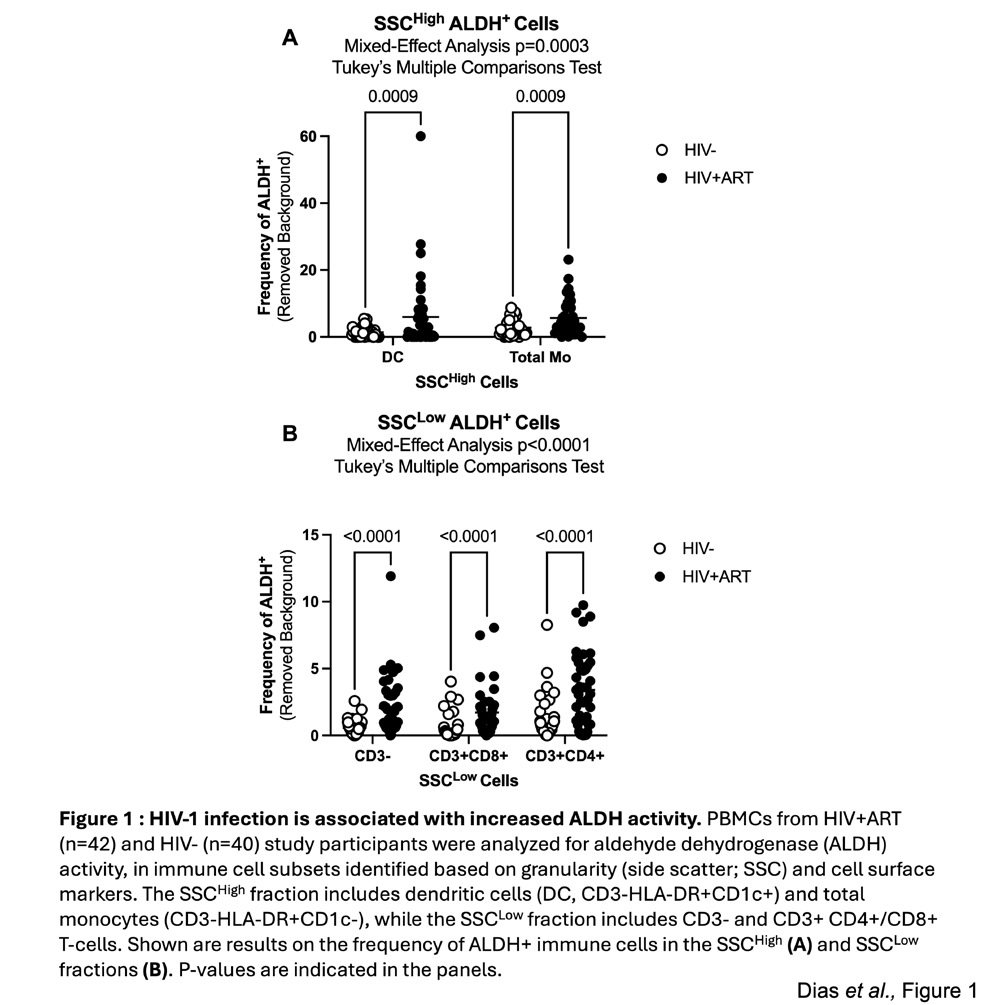
850. Statin Effect Heterogeneity on Plaque Volume & Composition in the REPRIEVE Mechanistic Substudy
Poster Abstracts
Page: 257
Borek Foldyna1, Xiner Zhou2, Thomas Mayrhofer1, Julia Karady1, Jana Taron1, Marton J. Kolossvary1, Kayla Paradis1, Sara McCallum1, Markella V. Zanni1, Carl Fichtenbaum3, Judith Aberg4, Pamela Douglas5, Heather Ribaudo2, Steven Grinspoon1, Michael T. Lu1, the REPRIEVE Study Team
Background
REPRIEVE and its Mechanistic Substudy established that pitavastatin prevents major adverse cardiovascular events and reduces noncalcified coronary plaque (NCP) on coronary CT angiography (CTA) among PWH with low-to-moderate traditional ASCVD risk. Here we assess heterogeneity of pitavastatin effects on NCP (density <350 HU) volume and plaque composition, categorized by density (<130HU fibrofatty, 130-350 HU fibrous, >350 HU calcified).
Methods
In 273 REPRIEVE Substudy participants randomized to pitavastatin calcium 4mg/day (N=140) or placebo (N=133) with preexisting coronary plaque on CTA, we evaluated the effect of pitavastatin on plaque composition, and effect modification by risk factors, including demographic and behavioral characteristics, ASCVD risk score, cardiovascular/metabolic factors, and HIV-related health history. Log-linear models, incorporating interactions between risk factors and treatment group, were used to analyze relative changes from baseline over 24 months. Heterogeneity of treatment effects were identified via interaction tests with P<0.10. All effects described are geometric mean ratio (GMR) between the pitavastatin and placebo groups, adjusting for risk factors and baseline plaque volumes.
Results
Participants were median age 52, 90% male, 61% white, 28% black or African American. The relative change from baseline in NCP with pitavastatin was 9% lower, indicating a greater reduction, than with placebo (GMR 0.91, 95% CI[0.82,1.02]). Pitavastatin showed a greater volume-reducing effect on fibro-fatty plaque (0.69 [0.49, 0.96]), with a marginal effect on fibrous plaque (0.92 [0.78, 1.08]) and a trend towards increased volume of calcified plaque (1.29 [0.85, 1.96]). Some heterogeneity in pitavastatin effects on NCP volume was observed. The volume-reducing effect of pitavastatin on NCP was greater among females (0.49[0.25, 0.96]), Hispanic or Latinos (0.55[0.38, 0.79]), those with systolic blood pressure >140 mmHg (0.38[0.20,0.72]), and those using non-statin lipid-lowering therapy (0.50[0.28, 0.92]). HIV-related and other factors did not relate to plaque composition changes.
Conclusions
These exploratory results suggest pitavastatin effects on NCP vary by demographic and cardiovascular risk factors; modification of statin effects by HIV risk factors was not apparent. The effect of pitavastatin appears greatest in reducing volume of fibrofatty plaque, which is thought to be the most biologically active component, and may increase plaque density.
851. People With HIV at High Cardiovascular Risk Were Undertreated With Statins
Poster Abstracts
Pages: 257-258
Stefan Esser1, Lukas Schipper2, Sarah Albayrak-Rena1, Stefanie Sammet1, Felix Maischack1, Laven Mavarani1, Anja Potthoff3, Martin Hower1, Boerge Schmidt1, Sebastian Dolff4, Dirk Schadendorf1, Maximilian Platte4, the HIV HEART Aging Cohort Study Group
Background
Recent studies highlight the importance of statin therapy in people with HIV (PWH), even with moderate overall cardiovascular (CV) risk. Our study aims to assess CV risk management in a cohort of PWH in Germany.
Methods
The HIV-HEART Ageing (HIVH) cohort is a prospective study assessing CV risk of PWH in the German Ruhr area since 2004. PWH without prior major adverse CV events were examined at the 10 years follow-up and stratified into four risk groups based on the 2019 German guidelines for dyslipoproteinemia using the SCORE-risk table (very high: ≥10%, high: 5–<10%, medium: 1–<5%, low: <1%). Statin therapy indication was determined by LDL cut-off values for each risk group. PWH with statin therapy indications, those treated, and achievements of therapy goals were assessed. The results were compared using the ASCVD score for risk stratification.
Results
818 PWH were included in the analysis (basic characteristics see table 1). 64 participants had a reported statin therapy. Participants were classified according to SCORE risk groups, with 8.6% in the highest risk group, 19.1% in “high risk”, 49.9% in “medium risk”, and 22.5% in the “low risk” group. Of the 754 participants without statin intake, 179 (23.7%) had an indication for statin therapy according to German guidelines based on SCORE risk groups. In higher-risk groups the proportion of PWH with indication for statins was especially high (95.7% in “high risk” and 83.3% in the highest risk group). Among the 64 patients on statins, only 8 (12.5%) achieved the German guidelines recommended, risk adapted LDL therapy targets after 2.5 years. Less than 50% of all PWH with statin use have a sufficient reduction of LDL (by 40% of the baseline values). Using the ASCVD score for risk stratification, even 57.1% of those not treated had an indication for statin therapy.
Conclusions
This cohort demonstrates high CV risks and concerning low rates of statin therapies in PWH with elevated CV risk according to SCORE. If the ASCVD score was used for indicating statin therapy, the deficit of statin therapy was even more prevalent. Moreover, LDL therapy targets in those receiving statins were rarely met. Even though LDL targets are often described as idealized, a more consistent therapy of hypercholesterolemia is essential in high-risk patients with regular medical consultations such as PWH.
Table 1.
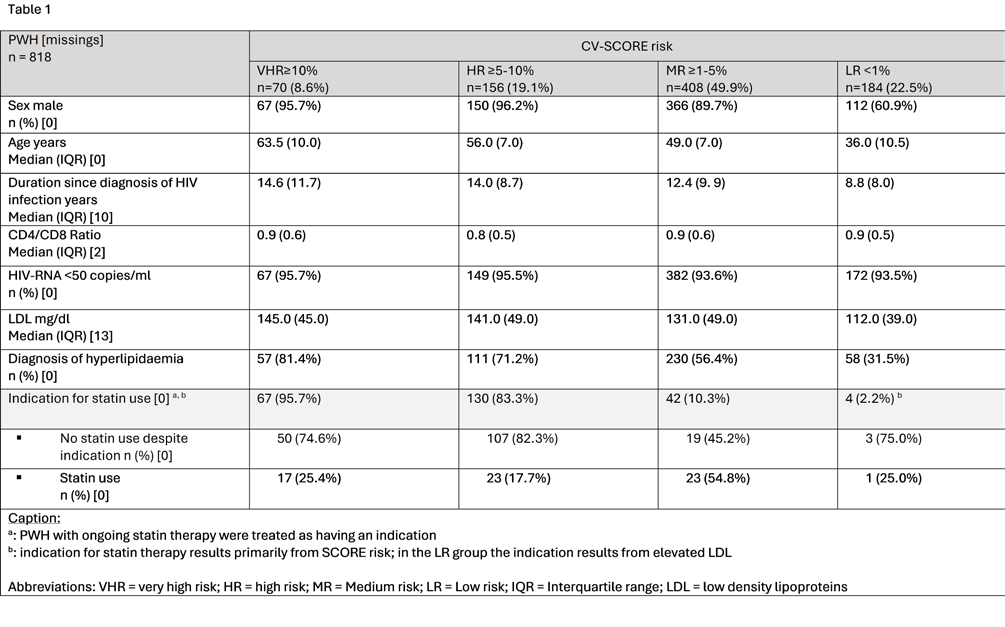
852. Low-Density Lipoprotein Changes in People With HIV Initiating Statins for Primary Prevention
Poster Abstracts
Page: 258
Thibaut Davy-Mendez1, Sonia Napravnik1, Carol E. Golin1, Joseph J. Eron1, Stephen A. Berry2, April C. Pettit3, Greer Burkholder4, Joseph A. Delaney5, Mari Kitahata5, Edward Cachay6, George Yendewa7, Kenneth Mayer8, Richard Moore9, Katerina Christopoulos10, Ross J. Simpson1, the Centers for AIDS Research Network of Integrated Clinical Systems (CNICS)
Background
Statin use will likely increase in persons with HIV (PWH) at low-to-moderate CVD risk given the cardiovascular disease (CVD) prevention benefit demonstrated by the REPRIEVE trial. However, real-world benefit of statins may be lower than expected with insufficient low-density lipoprotein (LDL) reductions. Older studies reported that few PWH on statins experienced timely LDL reductions, but more recent evidence is needed. We examined LDL changes among PWH initiating statins for primary prevention in a clinical cohort at 8 US sites.
Methods
We included PWH without CVD who had a first statin prescription between 2014 and 2022 (baseline). In intention-to-treat analyses ignoring statin therapy changes and discontinuations, we estimated (1) the mean 1-year change (absolute and relative) in LDL from baseline using generalized estimating equations, and (2) the 1-year cumulative incidence of an LDL reduction ≥30% from baseline using Kaplan Meier curves. Secondary analyses were stratified by baseline LDL and statin intensity. Person-time was censored at death, loss to follow-up (12 months with no HIV visit or lab), or data end date, whichever occurred first. We used multiple imputation for PWH missing baseline LDL values (17%).
Results
We included 4334 PWH (80% men, 46% Black, 41% white). At baseline, median age was 54 years (IQR 47, 59), median CD4 count 638 cells/µL (417, 905), median LDL 125 mg/dL (97, 153), 25% had diabetes mellitus, and 92% had a viral load <200 copies/mL. The most commonly prescribed initial statins were atorvastatin (64%), pravastatin (16%), and rosuvastatin (16%). At 6 sites with dosage data (N=2979), 8%, 72%, and 21% initiated low-, medium-, and high-intensity statin therapy, respectively. After 1 year, among all PWH, the mean absolute change in LDL was -33.5 mg/dL (95% CI -35.2, -31.9), or a relative change of -21.8% (95% CI -23.0%, -20.6%), and 35.5% (95% CI 34.0%, 37.0%) of PWH had an LDL reduction ≥30% (Table 1). PWH with higher baseline LDL and those initiating higher-intensity statin therapy had greater LDL reductions and cumulative incidence of LDL reduction ≥30% at 1 year (Table 1).
Conclusions
In this US sample of PWH initiating statins, about one-third overall and 60% of those with high baseline LDL had a 1-year LDL reduction ≥30%. Efforts are needed to elucidate and address drivers of inadequate LDL reductions among PWH, which may include patient non-adherence, lack of statin dose up-titration, and true statin non-response despite adherence.
The figure, table, or graphic for this abstract has been removed.
853. Time-Updated Win Ratio Aligns With Primary REPRIEVE Findings and Suggests Early Pitavastatin Benefit
Poster Abstracts
Page: 258
Emma Davies Smith1, Pamela Douglas2, Sara McCallum3, James Troendle4, Marissa Diggs3, Sarah Chu3, Michael T. Lu3, Markella V. Zanni3, Steven Grinspoon3, Heather Ribaudo1
Background
REPRIEVE demonstrated a 36% reduction in the hazard of major adverse cardiovascular (CV) events (MACE) among those randomized to pitavastatin vs placebo using a time-to-first-event (TTFE) analysis. TTFE results can be difficult to interpret with CV composite endpoints, as “less severe” events (MI and stroke) are likely to precede “more severe” events (death). Win ratio analysis is gaining traction in CV trials as an intuitive alternative that incorporates event severity, but has been criticized for dependence on follow-up time, as more severe events occur with longer follow-up. We performed a win ratio analysis of REPRIEVE and assessed trends over time.
Methods
All pairs consisting of one participant from each arm are constructed. MACE components are then compared in order of severity until it can be determined which participant did better. Here, a participant “wins” if their event/censor time is greater than their comparator’s event time. The ratio of pitavastatin to placebo wins estimates the win ratio (WR), with WR > 1 suggesting pitavastatin benefit. The WR was estimated for MACE (event tier 1: Death due to CV or undetermined causes > 2: stroke > 3: MI > 4: other CV event including transient ischemic attack, unstable angina and peripheral arterial ischemia > 5: CV procedure), and Hard MACE (1: CV death > 2: stroke > 3: MI). To investigate time-dependence, administrative censoring was performed at each of 8 follow-up years.
Results
At year 1, arms contributed equally to ordered wins on CV death and procedures (Figure). Pitavastatin had an apparent advantage on stroke and MI, while placebo had an apparent advantage on less severe CV events. As a result, the WR for Hard MACE (1.59) was larger than that of MACE (1.18). After year 1, pitavastatin steadily gained advantage over placebo on all events. Event tier contributions stabilized by approximately year 4, and the WR for MACE and Hard MACE were consistently estimated as 1.55 (95% CI: 1.20 to 1.99) and 1.65 (95% CI: 1.20 to 2.27) respectively, for years 6 through 8.
Conclusions
Time-updated win ratios suggest effects of pitavastatin are early and persistent for CV death, stroke, and MI. Less severe CV events and procedures contributed little to win effects. The reciprocal of the win ratio at 8 years (WR=1.55) is approximately the TTFE hazard ratio (HR=0.64). Our win ratio analysis agrees with REPRIEVE’s primary findings, and provides more insight into the protections of pitavastatin against severe CV events among people with HIV.
Figure 1.
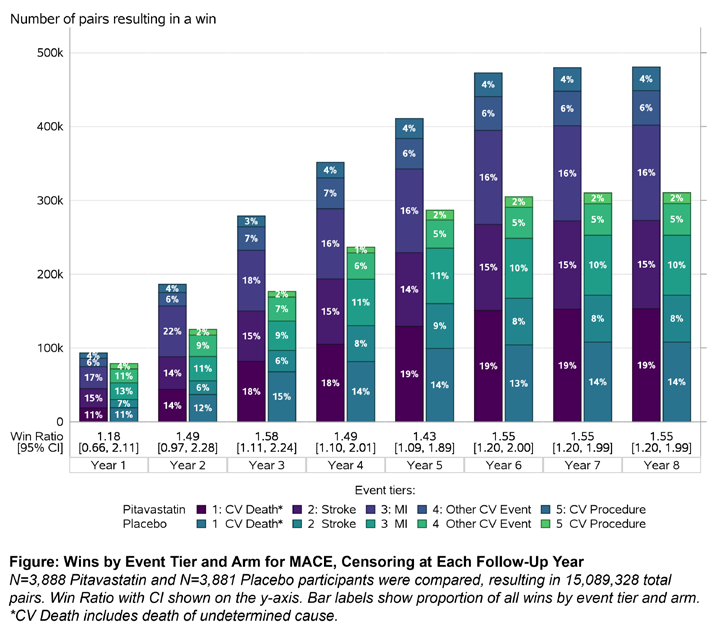
854. HIV-Superinfection in Kidney Transplant Recipients With HIV Who Received Organs From Donors With HIV
Poster Abstracts
Pages: 258-259
Grace Rozek1, Yolanda Eby1, Diane Brown1, Darin Ostrander1, Craig Martens2, Sarah E. Benner1, Feben Habtehyimer1, Dorry L. Segev3, Christine M. Durand1, Aaron A. R. Tobian1, Andrew D. Redd2, the HOPE in Action Investigators
Background
The HIV Organ Policy Equity (HOPE) Act allows for transplantation of kidneys from donors with HIV to recipients with HIV (HIV D+/R+) in the United States. It has been recently shown these transplants are safe and effective, but a possible unique risk of HIV D+/R+ transplantation is the potential for the recipient to become HIV superinfected with the donor HIV strain. Previous studies have shown HIV-superinfection may rarely occur, but only a limited number of transplant recipients have been evaluated.
Methods
In a multicenter observational HIV D+/R+ study in the US, we evaluated recipients for HIV-superinfection. Recipient peripheral blood mononuclear cells (PBMCs) were collected pre-transplant and at 13, 26, 52, 104, 156, and 208 weeks post-transplant. Recipients were eligible for this analysis if they had a pre-transplant PBMC sample and at least one follow-up sample available. Donor and recipient proviral genomic DNA was extracted from PBMCs and sequenced using a site-directed next-generation sequencing assay targeting two regions of the genome (gp41 and pol, Illumina). If successful amplification occurred in at least one region at two time points for a recipient, the corresponding donor was then sequenced to exclude the possibility of cross-contamination. Sequences were analyzed phylogenetically to assess for donor-derived HIV-superinfection.
Results
Twenty-three kidney transplant recipients were followed from June 2021–May 2024. Of these, 18 had both baseline and follow-up samples that successfully amplified in at least one region of interest. Three recipients had newly observed distinct viral populations 26 weeks post-transplant. One of the three was confirmed as a case of donor-derived superinfection, with the new viral population matching the donor’s (Figure 1). The other two were classified as potential cases of donor-derived superinfection/dual infections because the donor sequence data was not available. Among these three recipients there were no clinically significant changes in viral load or CD4 count.
Conclusions
Among recipients screened for HIV superinfection in this study, three cases of HIV superinfection/dual infection were identified, with one being a confirmed donor derived superinfection case. Although HIV superinfection in organ transplants is possible, the clinical ramifications appear negligible among individuals on well-maintained ART regimen.
Figure 1.
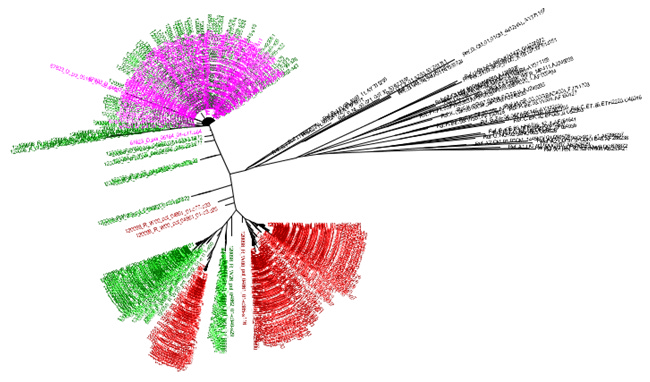
855. APOL1 Genotype and Graft Function in South African HIV+-to-HIV+ Kidney Transplant Recipients
Poster Abstracts
Page: 259
Robert Freercks1, Kathryn Manning2, Swetha Ashokkumar3, Miruthula T. Selvan4, Savania Nagiah1, Jurgen Heymann5, Jeffrey B. Kopp5, Elmi Muller6, Andrew D. Redd3
Background
APOL1 gene risk variants (G1: S342G and I384M; and G2: del N388 and Y389) significantly contribute to genetic risk of chronic kidney disease (CKD), particularly in people living with HIV (PLWH). Shorter renal allograft survival has been demonstrated in kidney transplant recipients (KTR) without HIV where either donor or recipient kidney genotype included a high-risk phenotype (two APOL1 risk alleles).
Methods
Genomic DNA was extracted from Peripheral blood mononuclear cells (PBMC) from deceased kidney donors with HIV, as well as KTR with HIV that were transplanted as part of the seminal HIV+-to-HIV+ transplant study in Cape Town, South Africa. APOL1 genotypes were genotyped by TaqMan probe assays (ABI, Foster City, California) specific for APOL1 G1 SNPs (rs73885319 and rs60910145) and the G2 deletion (rs717185313).
Results
Genomic DNA was available for 21 donors and 43 recipients. Recipients were older (median age=37; IQR=33-48), evenly split between male (51%) and female (49%), and were black African (91%) or mixed ethnicity (9%). Donors were significantly younger (Age=31; IQR=26-40; p=0.006), primarily male (76%), and had a significantly more diverse ethnicity (57% black African, 33% mixed ethnicity, 10% white; p=0.004). Donors had relatively low rates of APOL1 high-risk alleles with seven (33.3%) possessing 1 risk allele, and zero with two risk alleles. Conversely, KTR had significantly higher rates of high-risk alleles, with 17 with two risk alleles (39.5%), and 5 with one risk allele (11.6%). HIV associated nephropathy (HIVAN) was the original cause of native kidney failure in 15 of the 17 (88.2%) KTR with two APOL1 variants. 38 KTR had donor APOL1 typing available of whom 12 (31.6%) received kidneys from donors with one risk allele. Over five years of follow-up post transplantation, a composite outcome of graft failure, development of HIVAN, or rejection in the graft was significantly higher in KTR whose donor had one versus zero APOL1 risk alleles [9/12, (75%) versus 9/12 (35%) respectively, p=0.03; Figure 1]. This composite outcome was not associated with recipient APOL1 status [composite outcome 8/15, (53%) in those with 2 risk alleles versus 10/23, (43%) in those with 0/1 risk allele, p=0.55].
Conclusions
Dual APOL1 risk variant status is frequent in South African PLWH undergoing kidney transplantation. In addition, graft outcomes were worse in those who received kidneys from donors with HIV and one high-risk APOL1 allele.
Figure 1.
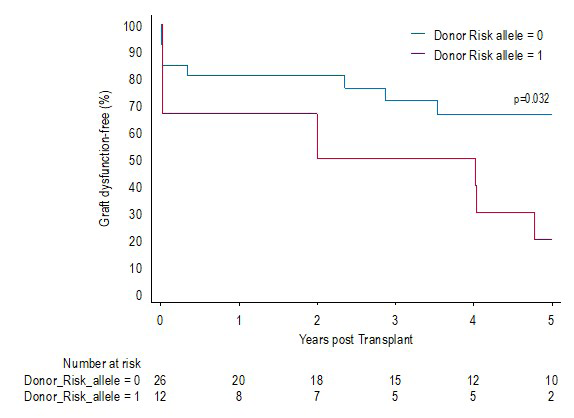
856. Human Antibody Repertoire and Allograft Rejection Among Kidney Transplant Recipients With HIV
Poster Abstracts
Pages: 259-260
Xianming Zhu1, William R. Morganlander1, Christine M. Durand2, Dorry L. Segev3, Andrew D. Redd4, Jonah Odim4, Diane Brown2, Yolanda Eby2, Serena M. Bagnasco1, Benjamin Larman1, Aaron A. R. Tobian2, the HOPE in Action Investigators
Background
Kidney transplantation (KT) between donors and recipients with HIV is promising. However, allograft rejection risk among recipients with HIV (R+) is higher than recipients without HIV (R-). This study evaluated predictive antibody markers of KT allograft rejection among R+.
Methods
The HOPE in Action Multicenter Kidney Trial performed KT in R+ between 2018-2021 from donors with HIV (D+) and without HIV (D-) and followed KT R+ for adverse events and survival. Targets of plasma antibody reactivity in donors and recipients were quantified using phage immunoprecipitation sequencing (PhIP-Seq). Antibody targets with 5%-95% reactivity were included: 4667 viral peptides and 130 viral species, 667 toxin peptides, and 1427 human peptides. We used continuous Viral Aggregate Reactivity score (VARscore) to integrate the intensity and breadth of response to all antibody peptides for each viral species. Fisher’s exact tests and wilcoxon rank sum tests were used to evaluate the association between pre-KT antibodylevels and rejection after KT. We used the Bonferroni method to correct multiple comparisons. Analyses were additionally stratified by sex.
Results
There were 64 D+ and 82 D-, and 198 R+ (99 D+/R+ and 99 D-/R+). Most donors (69%) and R+ (82%) were male. Seven female and 31 male R+ had either antibody or cellular mediated rejection after KT. The median total hits of human peptides was higher in D+ (127 [IQR=103-144]) than D- (111 [IQR=78-130]) (p=0.006). Donor HIV status was associated with reactivity to cytomegalovirus, Epstein-Barr virus, and herpesvirus antibody peptides (p<0.05). Among D+ and D-, pre-KT antibody peptides of viruses (adenoviruses and cytomegalovirus), toxins (Mycoplasma pneumoniae), and human (glucocorticoid receptor isoform gamma, and melanophilin isoform 1) were associated with rejection in R+ (p<0.05), but the association was not significant after adjusting for multiple comparisons. The median VarScore of Adenovirus A12 was significantly higher among donors whose R+ had rejection, than donors whose R+ did not have rejection (p=3.7×10⁻⁵) (Figure). Donors’ HIV viral antibodies were not associated with rejection in R+ (p>0.05). Sex stratified analysis gave similar but non-significant results with smaller sample size.
Conclusions
Reactivity of donor HIV antibodies was not associated with rejection among R+, adding the evidence of the safety of D+/R+ KT. However, pre-KT adenoviruses infection for both donors and recipients might require special attention.
Figure 1.
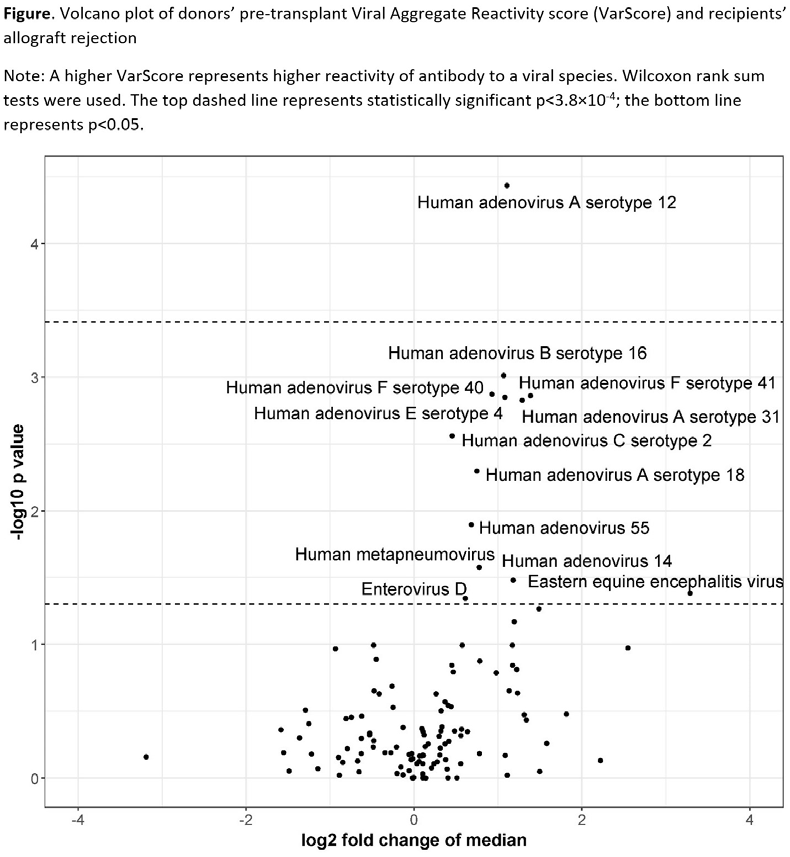
857. Acute Drop in eGFR When Initiating SGLT2 Inhibitors vs Other Antihyperglycemic Medications Among PWH
Poster Abstracts
Page: 260
Lara Haidar1, Robin M. Nance2, L. Sarah Mixson2, Bridget M. Whitney2, Carolyn A. Fahey2, Stephanie A. Ruderman2, Greer Burkholder3, Laura Bamford4, Robert Kalayjian5, Katerina Christopoulos6, Alexander Commanday7, April C. Pettit8, Joseph A. Delaney2, Heidi M. Crane2, Sherif Eltonsy1, the Centers for AIDS Research Network of Integrated Clinical Systems (CNICS)
Background
Sodium-glucose co-transporter 2 inhibitors (SGLT2i) have demonstrated cardiorenal benefits in the general population but can cause an acute dip in estimated glomerular filtration rate (eGFR), raising safety concerns, particularly in people with HIV (PWH) who may be more vulnerable to renal complications. Due to limited data in PWH, we aimed to assess the risk of acute eGFR decline with SGLT2i vs. other antihyperglycemic classes.
Methods
We conducted an observational study using data from 9 sites from the Centers for AIDS Research Network of Integrated Clinical Systems (CNICS) cohort. PWH initiating SGLT2i, glucagon-like peptide-1 receptor agonists (GLP-1RA), dipeptidyl peptidase-4 inhibitors (DPP4i), or sulfonylureas between 1996 and 2023 were included if they had ≥2 eGFR measurements: 1 at baseline and 1 within 6 months of antihyperglycemic initiation. Outcomes evaluated were time to ≥30% eGFR decline and ≥10 mL/min/1.73m² eGFR decrease within 6 months of initiation. We used Cox proportional hazards models, adjusted for age, sex, race/ethnicity, CNICS site, diabetes and hypertension diagnoses, baseline eGFR, viral load, CD4 count, use of tenofovir disoproxil fumarate, statins, insulin, and metformin at baseline, to compare SGLT2i with other antihyperglycemic classes combined and with each individual class.
Results
Among 2111 PWH included, 299 were new users of SGLT2i and 1812 of other antihyperglycemic classes (600 GLP-1RA, 225 DPP4i, 987 sulfonylurea). Mean age at baseline was 52 years (SD:10), with 75% male, 47% Black, 85% with diabetes, and a mean eGFR of 81 (SD:26). Among 221 events of ≥30% eGFR decline, rates were 15% in SGLT2i, 6% in GLP-1RA, 12% in DPP4i, and 11% in sulfonylureas. In adjusted models, SGLT2i were associated with a significantly higher risk of ≥30% eGFR decline compared to other antihyperglycemic classes (aHR=1.66, 95%CI:1.16-2.38) and GLP-1RA (aHR=2.03, 95%CI:1.30-3.17) but not significantly different from DPP4i or sulfonylureas. SGLT2i also showed a significantly higher risk of eGFR decline of ≥10 mL/min/1.73m² compared to all other antihyperglycemic classes.
Conclusions
Among PWH, SGLT2i were associated with a higher risk of acute eGFR decline compared to other antihyperglycemic classes, with the risk most pronounced vs. GLP-1RA. A ≥30% eGFR decline was more common in PWH than in studies from non-HIV populations, highlighting the need for careful monitoring, particularly after SGLT2i initiation. Further research is needed to evaluate long-term renal effects.
Figure 1.
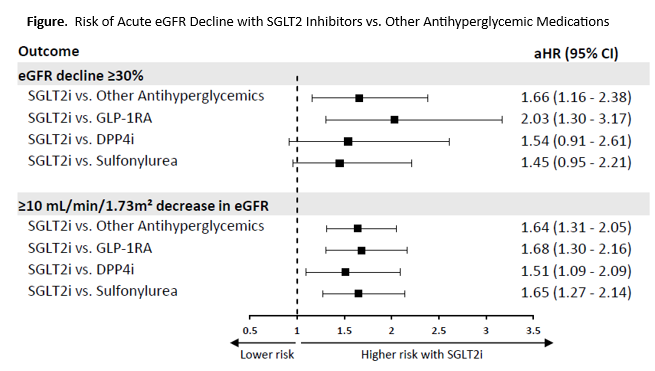
858. Associations Between Antiretroviral Therapy Use, Vitamin C Renal Leak, and Vitamin C Deficiency
Poster Abstracts
Page: 260
Ifechukwude Ebenuwa1, Pierre-Christian Violet1, Thom Greene1, Irene Rozga1, Razi Berman1, Nicholas Munyan1, Kenneth Wilkins1, Seble Kassaye2, Mark Levine1, Stephanie Teng1, the MACS/WIHS Combined Cohort Study (MWCCS)
Background
Reduced vitamin C concentrations (vitC) in HIV are associated with abnormal urinary loss: a renal leak. Renal leak indicates an underlying disease-related nutritional dysregulation independent of dietary intake. While ART use is associated with renal tubular dysfunction, there is insufficient understanding of the relationships between ART class, renal leak and reduced vitC concentrations.
Methods
Women in the DC Women’s Interagency HIV Study and NIH (N=96, 40 HIV+, 56 HIV-), were enrolled in a cross-sectional outpatient study to investigate antiretroviral therapy effects on VitC concentrations. To assess vitC renal leak, participants fasted overnight, and matched urine and fasting plasma samples were collected the following morning. Clinical history was obtained using structured questionnaires. VitC was measured by HPLC with coulometric electrochemical detection. VitC renal leak was defined as presence of urinary vitC at fasting plasma concentrations below 43.2µM, the vitC Minimum Elimination Threshold (MET) in women. Multivariable regression analysis was used to assess outcomes.
Results
Among women with HIV (WWH), 32 (86%) were on ART, 32 (86%) were on nucleoside reverse transcriptase inhibitors (NRTIs), 11 (30%) on non-nucleoside reverse transcriptase inhibitors (NNRTIs) and 13 (35%) on protease inhibitors (PIs). The most common ART medication was Tenofovir (N=19, 48%), including Tenofovir alafenamide (TAF, N=4) and Tenofovir disoproxil (TDF, N=15). Overall, ART use was significantly associated with increased odds of renal leak (OR=12, p<0.001) and reduced plasma vitC concentrations (p<0.001). Renal leak was associated with NRTIs (OR=12, p<0.001) and NNRTIs (OR=22, p<0.022) but not PIs (OR=4.4, p=0.08). The strongest association with reduced plasma vitC was observed with NRTIs (p<0.001), followed by PIs (p=0.011) and NNRTIs (p=0.027). Tenofovir-use incurred 3-fold higher odds of renal leak when adjusted for HIV status and other ART use but did not reach statistical significance (p=0.21). Users of the newer pro-drug TAF had reduced odds of renal leak vs TDF, although this did not reach statistical significance (OR=0.5, p=0.5).
Conclusions
All classes of ART assessed are associated with renal leak and/or reduced vitC concentrations in HIV, with the strongest association observed with NRTIs such as Tenofovir. Longitudinal studies with larger cohorts are needed to study mechanisms and implications of ART-induced vitC dysregulation.
859. Renal Outcomes in People With HIV-1 and Renal Impairment Treated With B/F/TAF in Randomized Trials
Poster Abstracts
Page: 261
Frank Post1, David Wohl2, Geoffroy Liegeon3, Indira Brar4, Debbie Hagins5, Yazdan Yazdanpanah6, Anchalee Avihingsanon7, Hui Liu8, Keith Aizen8, Jason T. Hindman8, Samir K. Gupta9
Background
Chronic kidney disease is common in people with HIV (PWH), with prevalence likely to rise as this population ages. Compared with tenofovir disoproxil fumarate–based antiretroviral regimens, tenofovir alafenamide (TAF)–based regimens have shown a superior renal safety profile, improving treatment options for PWH with renal impairment. Using pooled trial data, we assessed renal outcomes in PWH with mild to moderate renal impairment receiving bictegravir/emtricitabine/TAF (B/F/TAF).
Methods
Participant data from nine Phase 3/3b trials (NCT02607930, NCT02607956, NCT03547908, NCT02603120, NCT02603107, NCT02652624, NCT03110380, NCT03405935, NCT03631732) were pooled. Treatment-naïve or virologically suppressed adult PWH with Cockcroft-Gault estimated glomerular filtration rate (eGFR) ≥30–<90 mL/min at treatment initiation who received B/F/TAF for up to 5 years were included. We evaluated absolute eGFR and eGFR change from baseline, renal treatment-emergent adverse events (TEAEs), and treatment discontinuations due to renal TEAEs.
Results
Of 1069 participants, 975 had eGFR ≥60–<90 mL/min (Stage 2 eGFR), 86 had eGFR ≥45–<60 mL/min (Stage 3a eGFR), and 8 had eGFR ≥30–<45 mL/ min (Stage 3b eGFR). Overall, 31% of included participants were female, 51% were White, and 8% were treatment naïve. Median (Q1, Q3) age was 53 (44, 60) years. Median (Q1, Q3) B/F/TAF exposure duration was 83.4 (52.4, 101.9) weeks, with 46 participants exposed for ≥240 weeks. Absolute eGFR remained stable from baseline to Week 96 for those with Stage 2 eGFR and Stage 3a eGFR (Figure, panel A). Median (Q1, Q3) eGFR (mL/min) change from baseline at Week 96 was 0.6 (-5.4, 6.6) overall; Stage 2, 0.1 (-5.8, 6.6); Stage 3a, 2.0 (-3.6, 5.7) (panel B). Absolute eGFR for Stage 2 participants was largely stable, with minimal change in eGFR from baseline to Week 240. Data for Stage 3b participants, and past Week 96 for those with Stage 3a eGFR, were limited by low participant numbers. Renal TEAEs occurred in 28 (2.6%) participants (most frequent: acute kidney injury [AKI] [n=10], decreased creatinine renal clearance [n=6], and proteinuria [n=5]). One participant with Stage 2 eGFR discontinued B/F/TAF treatment following AKI; the discontinuation was judged as unrelated to the study drug.
Conclusions
Among PWH with mild to moderate renal impairment, stable kidney function was observed in participants receiving B/F/TAF for up to 5 years. The overall rate of renal TEAEs was low, with only one discontinuation due to renal TEAEs.
Figure 1.
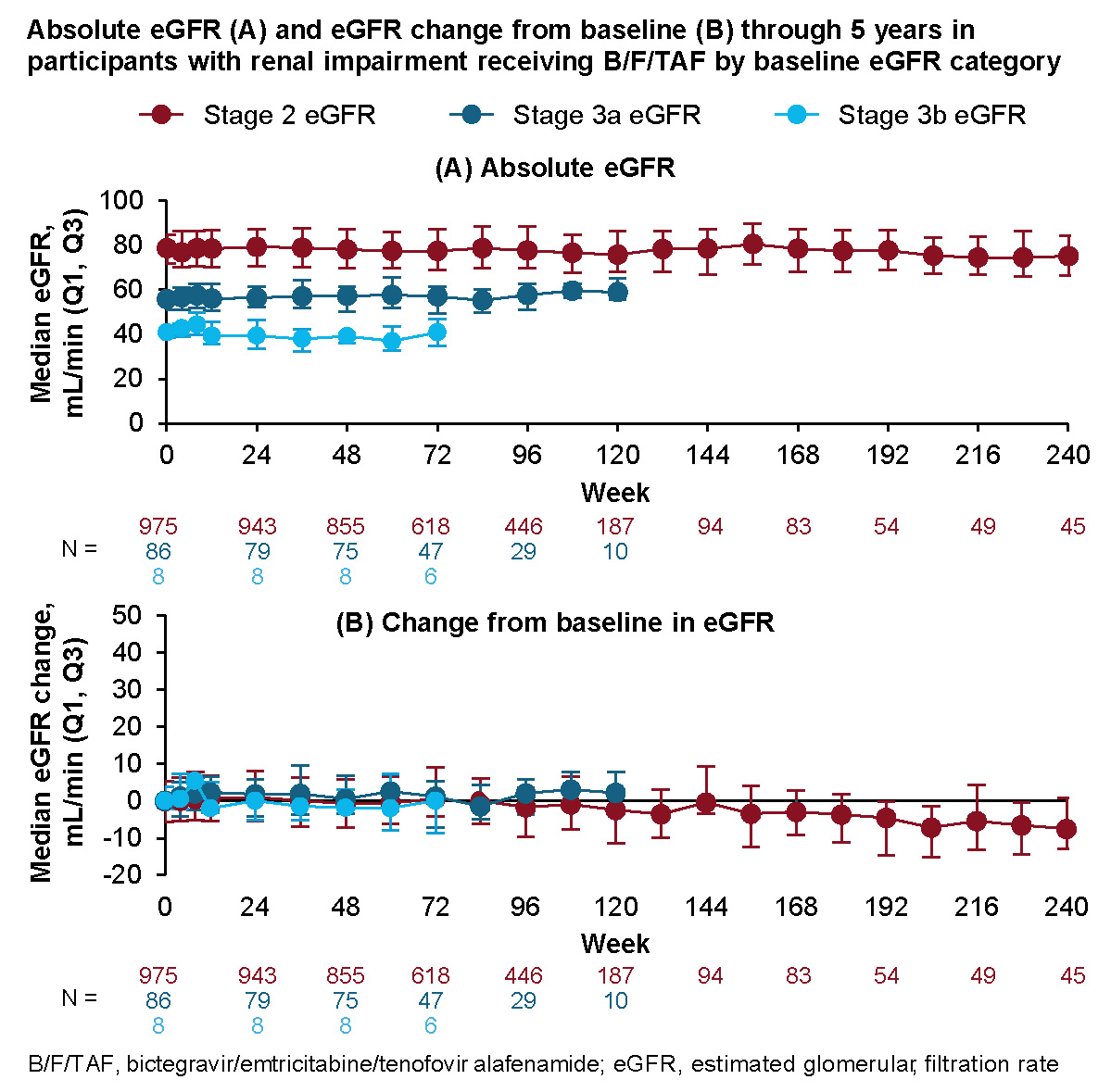
860. Racial Inequity in Initiation of Semaglutide Therapy Among People With HIV in Care Across the US
Poster Abstracts
Page: 261
Stephanie A. Ruderman1, Andrew W. Hahn1, Lara Haidar2, Sherif Eltonsy2, Lydia N. Drumright1, Jimmy Ma1, Conall O'Cleirigh3, Sonia Napravnik4, Katerina Christopoulos5, Edward Cachay6, George Yendewa7, Amanda Willig8, Geetanjali Chander1, Heidi M. Crane1, Rob Fredericksen1, the Centers for AIDS Research Network of Integrated Clinical Systems (CNICS)
Background
Antiretroviral therapy has resulted in a reduction in HIV-associated wasting among people with HIV (PWH) and a concomitant rise in overweight and obesity. Semaglutide has been difficult to obtain for some populations, we therefore evaluated use of semaglutide among PWH with medical indications assessing for potential disparities based on race/ethnicity.
Methods
Our study is set in the Centers for AIDS Research Network of Integrated Clinical Systems (CNICS) cohort at 9 sites. We identified PWH in CNICS eligible for semaglutide therapy, with either a body mass index (BMI) ≥30 or hemoglobin A1c (HbA1c) ≥6.5. The outcome was having been prescribed semaglutide between 2019-2023. We evaluated differences in semaglutide receipt by race/ethnicity using relative risk regression with robust standard errors to estimate the association between demographic/clinical characteristics and receipt of semaglutide including age, sex, site, maximum BMI and race/ ethnicity defined as a four-level variable: non-Hispanic White, non-Hispanic Black, Hispanic, and Other. We repeated models stratifying by indication for semaglutide therapy (BMI or HbA1c).
Results
Among 11,617 people who met at least one criterion for semaglutide, 774 (6.7%) received it with higher rates in the later part of the time period. Of those who received semaglutide, 92% had a BMI ≥30, 62% had an A1c ≥6.5, and 54% met both criteria. A lower proportion of eligible Black PWH received semaglutide compared to White PWH (279 [36%] vs. 315 [41%]), despite making up a larger proportion of PWH qualifying for therapy (48% Black and 35% White). In adjusted models, Black PWH were 20% less likely to receive semaglutide therapy compared with White PWH with similar indications (Prevalence Ratio [PR]: 0.80, 95% Confidence Interval [CI]: 0.67,0.95). Hispanic PWH showed a non-significant trend towards lower initiation overall and for BMI ≥30 (Table). The lower rate of semaglutide use for Black PWH (PR: 0.66, 95%CI: 0.53-0.83), as well as for Hispanic PWH (PR: 0.70, 95%CI: 0.53,0.93), was even more pronounced among those with poorly controlled A1c (≥8.0) (Table).
Conclusions
We describe inequitable semaglutide use among PWH, with lower initiation rates in eligible Black PWH despite more frequent indication. Given our evidence that baseline diabetic severity at diagnosis is similar across race/ethnicity in PWH, this underscores the urgent need to improve equitable care for marginalized PWH and address potential implicit bias among providers.
Table 1.
Association between race/ethnicity and adjusted relative risk of receiving semaglutide therapy adjusted for maximum BMI, age, sex, and site, using robust standard errors, overall and by BMI and hemoglobin A1c indications.
| Model |
Race/ethnicity |
N |
Prevalence Ratio (95% CI) |
P-value |
| Overall |
White |
315 |
Ref |
|
| Overall |
Black |
279 |
0.80 (0.67,0.95) |
0.01 |
| Overall |
Hispanic |
136 |
0.84 (0.69,1.02) |
0.08 |
| BMI ≥30 |
White |
287 |
Ref |
|
| BMI ≥30 |
Black |
259 |
0.82 (0.69,0.99) |
0.03 |
| BMI ≥30 |
Hispanic |
124 |
0.81 (0.66,1.00) |
0.049 |
| HbA1c ≥8.0 |
White |
147 |
Ref |
|
| HbA1c ≥8.0 |
Black |
148 |
0.66 (0.53,0.83) |
<0.001 |
| HbA1c ≥8.0 |
Hispanic |
53 |
0.70 (0.53,0.93) |
0.02 |
861. Cardiometabolic Effects of Semaglutide in People With HIV: The SLIM LIVER Study
Poster Abstracts
Page: 262
Jordan E. Lake1, Doug Kitch2, Amy Kantor2, Raja Muthupillai3, Pablo Belaunzarán-Zamudio4, Carl Fichtenbaum5, Hugo Perazzo6, Sonya L. Heath7, Todd Brown8, Alan Landay9, Jennifer Kinslow10, Fred R. Sattler11, Kristine M. Erlandson12, the ACTG A5371 Protocol Team
Background
The glucagon-like peptide-1 receptor agonist semaglutide (SEMA) reduces weight and inflammation in the general population. We previously reported reductions in weight (mean -7.8 kg, 95% confidence interval, [CI, -9.5, -6.1]), insulin resistance (IR), serum triglycerides and liver fat in people with HIV (PWH) receiving SEMA in ACTG A5371, the SLIM LIVER study. Here we report additional metabolic, fat imaging and inflammatory marker endpoints, including follow-up after SEMA discontinuation.
Methods
ACTG A5371 enrolled PWH >/=18 years old on suppressive antiretroviral therapy (ART) with metabolic dysfunction-associated steatotic liver disease. All received low-dose, subcutaneous (sc) SEMA 1mg weekly for 24 weeks (W) followed by 24 W off SEMA. Biomarker/immune profiles and magnetic resonance imaging (MRI) were available at W 0 and 24, and other measures at W 0, 24 and 48. Mean (95% CI) changes were estimated using linear regression and risk estimates by a log link GEE model (a=0.05)
Results
PWH (n=49) had: median age 52 years, BMI 35 kg/m2, 39% Hispanic ethnicity, 33% Black/African American race, 43% cis/trans female and 82% INSTI-based ART. 24 W of SEMA was associated with a 25% reduction in metabolic syndrome risk and reduced visceral (-13%) and abdominal sc (-12%) fat by MRI (all p<0.05). A trend towards improvement in the frequency of elevated alanine aminotransferase (ALT, a steatohepatitis surrogate) occurred in women (women: 68% to 42%, p=0.06; men: 43% to 41%). Significant changes in adiponectin (↑), leptin (↓) and CRP (↓) were observed, with no change in IL-6 or monocyte/T cell profiles (data not shown). After 24 W off SEMA (Fig.), absolute weight regain was +2.9 kg (1.5, 4.3), with women, White non-Hispanics and PWH <40 years of age regaining more. Among those who lost and regained weight (n=31), 75% of lost weight was regained. Weight regain was accompanied by significant increases in waist circumference (2.0 cm [0.9, 3.1]) and fasting glucose (5.1 mg/dL [0.9, 9.3]) without significant short-term changes in blood pressure, total or LDL cholesterol, triglycerides or metabolic syndrome. Elevated ALT frequency increased (women: 42% to 59%; men: 41% to 54%).
Conclusions
Short-term, low-dose SEMA was associated with cardiometabolic benefit in PWH. Rapid weight regain and some loss of cardiometabolic benefit occurred off SEMA, similar to the general population. Further study of higher-dose SEMA and strategies to maintain benefits of SEMA following initial therapy are needed in PWH.
The figure, table, or graphic for this abstract has been removed.
862. Durability of Semaglutide Effects After Drug Discontinuation in HIV-Associated Lipohypertrophy
Poster Abstracts
Page: 262
Allison Ross Eckard1, Qian Wu2, Abdus Sattar2, Kianoush Ansari-Gilani3, Danielle Labbato3, Corrilynn O. Hileman4, Aaron A. Fletcher3, Grace A. McComsey2
Background
Lipohypertrophy (central adipose tissue (AT) accumulation) and AT abnormalities are common in people with HIV (PWH) and are key drivers of cardiometabolic co-morbidities. In a recent randomized, double-blind, placebo-controlled phase 2b clinical trial, we observed significant effects of the glucagon-like peptide-1 receptor agonist (GLP-1 RA), semaglutide, over 32 weeks on key outcome measures, including reductions in weight, total body fat, and visceral adiposity in people with HIV-associated lipohypertrophy. The current analysis investigates the durability of semaglutide effects 24 weeks after drug discontinuation.
Methods
Virologically-suppressed PWH without known diabetes on stable antiretroviral therapy with body mass index ≥25 kg/m2 and increased waist circumference/waist-to-hip ratio were included. Participants were randomized 1:1 to 32 weeks semaglutide (8-week titration + 24 weeks 1.0 mg weekly nurse-administered subcutaneous injection) or matching placebo (intervention phase). Drug discontinuation occurred at week 32; outcome measures were reassessed at week 56 (post-interventional phase). Analyses were performed with intention-to-treat principles using sex-adjusted multiplicative regression modeling.
Results
108 participants (N=54 semaglutide) were enrolled (median age: 53 years; 60% male); 16 and 12 participants withdrew before week 32 and 56, respectively. Some residual semaglutide effects remained but were no longer statistically significant at week 56 (24 weeks after discontinuation) in key outcome measures (Figure 1). Semaglutide effects for weight, total body fat, abdominal visceral AT, and abdominal subcutaneous AT showed decreases from baseline of -5%, -12%, -16%, and -3% at week 56 (all p>0.05) vs. -10%, -20%, -32%, and -12% at week 32 (all p≤0.01), respectively. Improvements in glucose metabolism observed at 32 weeks were no longer evident at week 56 (0% and -1% at week 56 vs. baseline for hgbA1c and fasting glucose, respectively). Among 24 of 39 (62%) participants in the semaglutide group who lost ≥5% body weight during the intervention phase and completed week 56, 12 (50%) regained half to all the weight.
Conclusions
Much of the positive semaglutide effects achieved over 32 weeks was reversed after 24 weeks off drug. Apparent lack of durability with GLP-1 RA treatment in PWH raises concern for prolonged treatment requirements. Larger trials, particularly those assessing safety with higher doses and longer GLP-1 RA use, are needed in HIV.
The figure, table, or graphic for this abstract has been removed.
863. Impact of Antidiabetic Medications on Weight Change Among People With HIV
Poster Abstracts
Pages: 262-263
Lara Haidar1, Robin M. Nance2, Bridget M. Whitney2, Stephanie A. Ruderman2, Allison Webel2, Geetanjali Chander2, Amanda Willig3, Edward Cachay4, Kenneth Mayer5, Jeffrey M. Jacobson6, Richard Moore7, Lydia N. Drumright2, Heidi M. Crane2, Joseph A. Delaney2, Sherif Eltonsy1, the Centers for AIDS Research Network of Integrated Clinical Systems (CNICS)
Background
While novel antidiabetic medications like glucagon like peptide-1 receptor agonists (GLP-1RAs) and sodium-glucose co-transporter 2 inhibitors (SGLT2is) have demonstrated weight loss in the general population, data on their impact on weight loss in PWH remains limited.
Methods
We identified adult PWH in the Centers for AIDS Research Network of Integrated Clinical Systems (CNICS) cohort who initiated GLP-1RAs, SGLT2is, dipeptidyl peptidase-4 inhibitors (DPP4is), or sulfonylureas between 1996-2023 who had ≥2 weight measurements available, including 1 prior to and ≥1 post medication initiation. The primary outcome evaluated was percent weight change at 1 year, analyzed using a linear mixed model. We also assessed whether the effect of GLP-1RAs and SGLT2is on weight change varied by diabetes status. The secondary outcome evaluated, time to ≥5% weight loss, was analyzed using a Cox proportional hazards model. Both models were adjusted for relevant demographic and clinical characteristics.
Results
Overall, 2086 patients met inclusion criteria, with 638 on GLP1-RA, 295 on SGLT2i, 219 on DPP4i, and 934 on sulfonylureas. Mean age at baseline was 52 years (SD: 10), 25% were female, and 47% were Black. At baseline, average weight was 98 kg (SD:25), 83% had diabetes, and 92% were on antiretroviral therapy. In adjusted analyses, percent weight change was significantly greater for GLP-1RAs (-4.13; 95%CI: -4.99, -3.28) compared to SGLT2is (-2.50; 95%CI: -3.72, -1.28), DPP4is (-0.57; 95%CI: -1.49,0.35), and sulfonylureas (-0.49; 95%CI: -1.11,0.13) (interaction p values all <0.05; see Figure). Among PWH on GLP-1RAs, those without diabetes experienced greater percent weight loss (-5.39; 95%CI: -7.20, -3.58) compared to those with diabetes (-3.56; 95%CI: -4.50, -2.62), although the interaction p-value was not significant (p=0.08). Conversely, SGLT2is trended towards a greater percent weight loss for those with diabetes (-3.23; 95%CI: -4.45, -2.00) compared to those without (-0.86; 95%CI: -3.53,1.80), however this interaction p-value was also non-significant (p=0.1). New users of GLP-1RAs were significantly more likely to achieve ≥5% weight loss compared to sulfonylureas (adjusted hazard ratio [aHR]=2.06; 95%CI: 1.69–2.52) and DPP-4i (aHR=1.64; 95%CI: 1.25–2.14), but not compared to SGLT2is (aHR=1.09; 95%CI: 0.86–1.38).
Conclusions
Among PWH, both GLP-1RAs and SGLT2is significantly reduced weight, with GLP-1RAs showing the greatest percent change overall compared to other antidiabetic medications.
Figure 1.
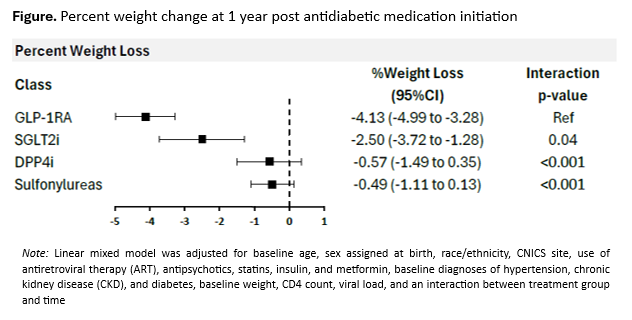
864. Liraglutide for Obesity in HIV (LIROH): A Single-Arm, Open-Label Clinical Trial in South Africa
Poster Abstracts
Page: 263
Ngundu Behuhuma1, Gugulethu Gasa1, Anne Derache1, Buhle Nhlapo1, Sfundo Khumalo1, Nomathemba Chandiwana2, Megan Lam3, Kristien Bird1, Henrik Kloverpris1, Janet Lo3, Mohammed K. Ali4, Francois Venter2, Mark J. Siedner3, Limakatso Lebina1, Jennifer Manne-Goehler5
Background
Obesity is a common complication of treated HIV, especially among Black Women. Yet, perceptions of optimal body weight among people living with HIV (PLWH) may influence interest in anti-obesity medical therapies. We conducted a pilot clinical trial to assess the acceptability, tolerability, and preliminary efficacy of liraglutide for obesity management in virologically suppressed PLWH in rural KwaZulu-Natal, South Africa.
Methods
In this open-label, Phase IV trial, single arm clinical trial of liraglutide in PLWH (n=40) in South Africa (NCT06438146), we enrolled people ≥18 years old, virologically suppressed on dolutegravir-based ART for ≥6 months, with a BMI ≥30 kg/m2. We excluded individuals on another weight loss agent and those with a history of diabetes. All participants received liraglutide for 12 weeks, with dose escalation from 0.6mg SC daily to 3.0mg daily over the first 4 weeks, plus diet and exercise counseling. The primary outcome is acceptability, assessed by enrollment fraction and retention at 12 weeks. The secondary outcomes include changes in weight, blood pressure, lipids, HbA1c, and key safety measures. Depressive symptoms are being assessed using the Patient Health Questionnaire-9 (PHQ-9).
Results
We screened 51 PWH from May 5, 2024 to September 17, 2024. Of these, 43 (84%) were eligible and among those, 40 (93%) consented for enrollment. Baseline characteristics of the enrolled population are shown in Table 1. As of September 30, 2024, 12 (30%) had completed treatment, 1 (2%) person had discontinued participation in the study, and 27 (68%) were still on-treatment. Among those who completed treatment, there was a 2.5 kg (95% confidence interval [CI]: 0.98-4.09] decrease in mean body weight [100.9 kg to 98.4 kg, p=0.002]. There have been 26 reports of gastrointestinal side effects (Grade 1-2) in 14/40 participants, 2 of which required a pause in dose escalation, and one injection site reaction (Grade 1) to date. The mean depressive symptom score as assessed by the PHQ-9 decreased by 1.33 (CI: 0.02-2.64) points among those who completed treatment to date [1.75 to 0.42, p=0.023].
Conclusions
These preliminary results indicate that liraglutide is highly acceptable and well-tolerated among PLWH with comorbid obesity in South Africa. The findings demonstrate the potential of anti-obesity medications as a treatment strategy in PLWH and motivate larger trials for efficacy in diverse populations with HIV.
Table 1.
LIROH trial population, May – September 2024
| Baseline characteristic (n=40) |
|
| Age (years, mean ± SD) |
38.3 (5.4) |
| Female (n, %) |
39 (97.5%) |
| Body weight (kg, mean ± SD) |
100.9 (17.7) |
| Body Mass Index (kg/m², median ± IQR) |
39.4 (33.2, 42.5) |
| Systolic blood pressure (mm Hg, mean ± SD) |
123.3 (15.2) |
| Diastolic blood pressure (mm Hg, mean ± SD) |
81.0 (9.3) |
| Depressive symptom score (mean ± SD) |
0.6 (1.2) |
865. The Projected Impact of Post-ART BMI Maintenance on Diabetes Risk: A Modeling Study
Poster Abstracts
Page: 263
Parastu Kasaie1, Yao Zhao1, Kendall Reid1, Elizabeth Humes1, Katherine Kurgansky1, Lucas Gerace1, Yanxun Xu2, Catherine Lesko1, Kelly Gebo3, Kristine M. Erlandson4, Keri N. Althoff1
Background
Weight gain following ART initiation has been linked to an increased risk of diabetes among persons aging with HIV (PAH). We aimed to assess the impact of a hypothetical BMI maintenance program, implemented in the first 2 years after ART initiation, on cumulative diabetes risk over 7 years post-ART initiation.
Methods
The PEARL model is an agent-based simulation of comorbidities burden among PAH who have initiated ART in the US. We simulated the effects of a BMI maintenance intervention, where BMI remained stable for those who would otherwise gained it. Individuals starting ART between 2013–2017 with a normal or overweight BMI (18.5–30) and no prior diabetes diagnosis were eligible. The study was implemented at ART initiation via two arms: (1) a hypothetical intervention arm where eligible agents participated in the BMI maintenance program, and (2) a control arm receiving a placebo. Both arms were followed for five years after the intervention. Incidence of diabetes was estimated as new diagnoses per 1,000 person-years (pys) at risk over 7 years post-ART initiation, with effects analyzed by sex, race/ethnicity, and HIV risk factor categories.
Results
The model estimated a median of 171,000 PAH initiating ART in the US between 2013–2017, with 73% (n=126,000) meeting the study’s eligibility criteria. In the control arm, 66% of participants were expected to experience BMI increases, with 12% becoming obese within two years post-ART initiation. The projected diabetes risk was 10.7 (per 1,000 pys), resulting in a median of 9,500 new diagnoses over 7 years. The intervention (vs. placebo) reduced diabetes risk by 19%, preventing an estimated 1,800 new diagnoses over 7 years post-ART initiation. The number needed to treat to avert one diabetes diagnosis was 71. In subgroup analyses, the largest relative risk reduction was projected among Hispanic heterosexual men, and the greatest absolute reduction in diagnoses was among Black MSM and Black heterosexual women (Figure).
Conclusions
Maintaining BMI in the first two years post-ART initiation could significantly reduce diabetes risk among PAH in the 7 years post-ART initiation, indicating an urgent need for effective weight maintenance programs to be implemented at ART initiation and continued through the subsequent two years. The projected heterogeneity in impact of such intervention across subgroups underscores the importance of tailoring such interventions to address disparities in diabetes risk among PAH.
Figure 1.
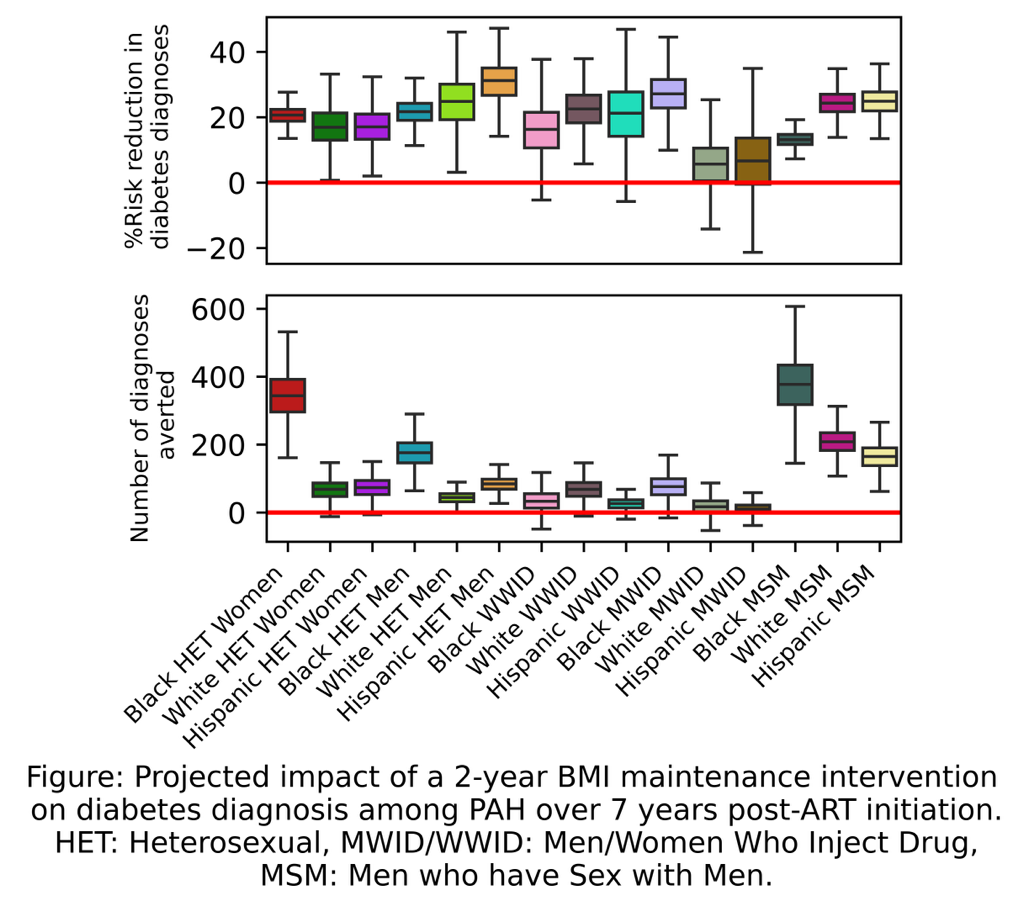
866. ART Exposure and Accelerated Aging in PLHIV: Insights From Proteomic and Methylation Clocks
Poster Abstracts
Page: 264
Nadira Vadaq1, Victoria Rios Vazquez1, Louise E. van Eekeren1, Adriana Navas1, Jéssica dos Santos1, Wilhelm A. Vos2, Albert L. Groenendijk3, Marc J. T. Blaauw4, Erni Nelwan5, Leo Joosten1, Jan van Lunzen1, Cheng-Jian Xu6, Vasiliki Matzaraki1, Andre van der Ven1, Mihai G. Netea1, the 2000HIV Human Functional Genomics Partnership Program
Background
People living with HIV (PLHIV) using antiretroviral therapy (ART) are exposed to persistent low grade of inflammation, which may accelerate aging. However, the impact of various ART regimens on residual inflammation and accelerated aging remains largely unclear. This study investigates the relationship between cumulative ART exposure and age acceleration in virally suppressed PLHIV on ART.
Methods
Data from 1,875 PLHIV in the 2000HIV cohort (NCT03994835) were used to analyze cumulative ART exposure (in years), categorized by regimen and drug class, with detailed treatment data available for each participant. Age acceleration was assessed using biological clocks based on targeted proteomics (proteomic clock) and genome-wide methylation data (epigenetic clocks: Horvath, Hannum, PhenoAge, and GrimAge). Plasma protein levels (n=3072) were measured via proximity extension assay, and genome-wide DNA methylation was profiled using the Illumina MethylationEPIC array. We first examined the relationship between cumulative ART exposure and age advancement score using five biological clocks. We then performed differential expression analyses (DEA) and pathway enrichment analyses of proteomic data to elucidate underlying mechanisms.
Results
Proteomic and methylation clocks were strongly correlated. Participants aged 36–60 showed faster epigenetics age acceleration compared to both younger (18–35) and older (60+) participants (P<0.05). Longer cumulative exposure to dolutegravir (DTG), rilpivirine (RPV) and nelfinavir (NFV) was associated with lower age advancement scores on at least a biological clock. In contrast, longer exposure to tenofovir disoproxil fumarate (TDF), emtricitabine (FTC), darunavir (DRV), atazanavir (ATV), and dideoxynucleoside analogues (d-drugs) was related to higher age advancement scores (Figure 1; P<0.05, adjusted for chronological age). The effect of cumulative drug exposure on proteomic and methylation clocks was largely consistent. In participants exposed to DTG and RPV, DEA revealed significant downregulation of innate immune pathways, including cytokine and chemokine response, apoptotic process, and neutrophil chemotaxis, while exposure to DRV, ATV was associated with upregulation of these pathways.
Conclusions
Cumulative ART exposure influences age acceleration in PLHIV, with distinct effects across regimens and drug classes. Innate immune pathways appear to be key drivers of these effects and are promising therapeutic targets to mitigate accelerated aging.
Figure 1.
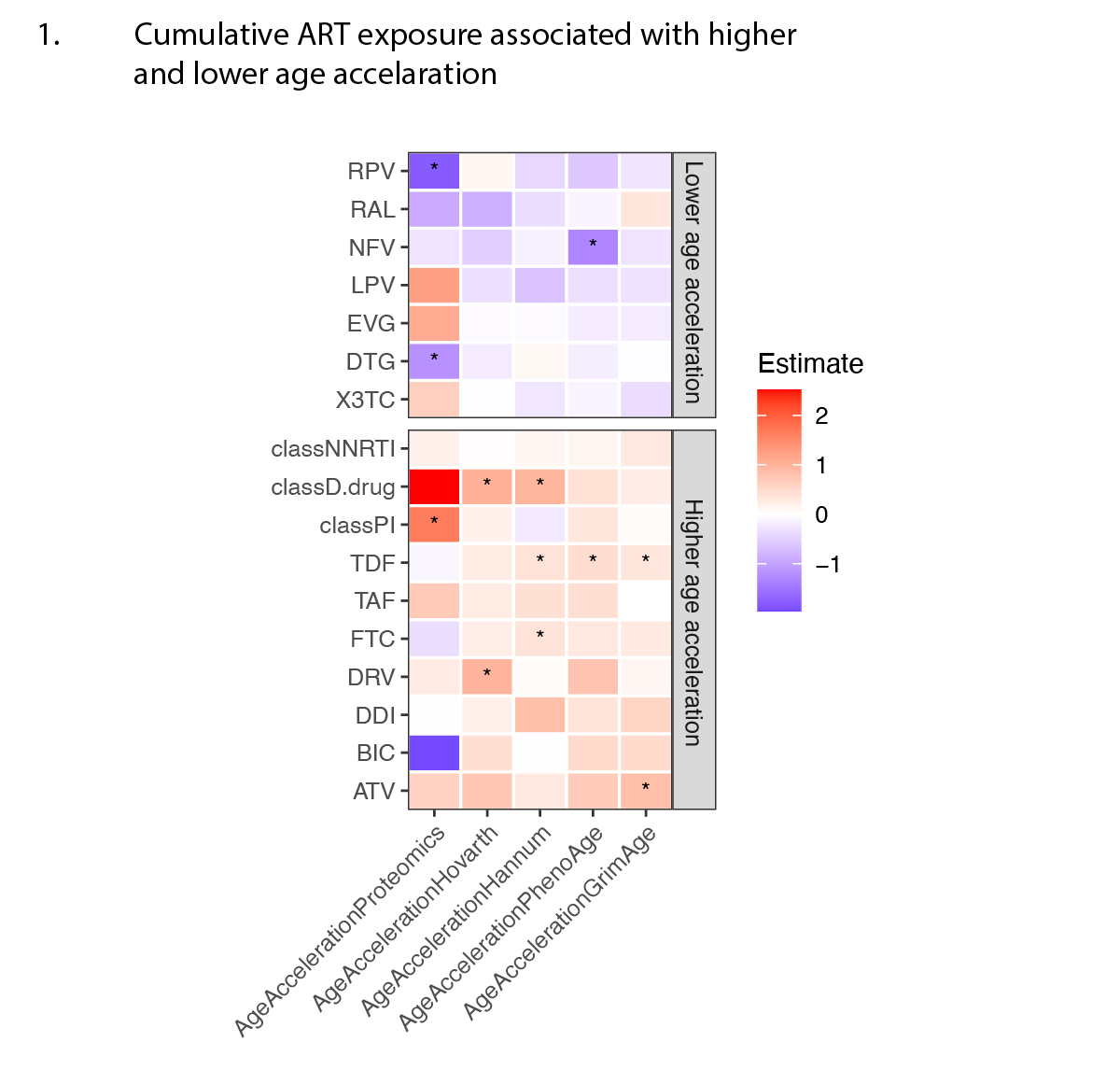
867. Epigenetic Age Acceleration and CD4/CD8 Ratio in People With Well-Controlled HIV Infection
Poster Abstracts
Page: 264
Alejandro de Gea Grela1, Andrés Esteban-Cantos2, Francisco Jurado3, Lucía Gutiérrez1, Patricia Martínez-Martín2, Cristina Marcelo1, Juan Carlos González1, María Jiménez-González1, Alejandro Díez-Vidal1, María del Mar Arcos-Rueda2, Luis Ramos2, Juan Miguel Castro1, Berta Rodés1, Jose R. Arribas1, Rocío Montejano Sanchez2
Background
In people with HIV infection (PWH), epigenetic age acceleration (EAA) markers are associated with physiologic frailty and mortality. However, the relationship between these epigenetic biomarkers and the CD4/CD8 ratio, another key prognostic marker in people with well controlled HIV infection, remains unexplored.
Methods
Cross-sectional study of long term aviremic PWH. Whole blood DNA methylation was assessed using the Illumina Infinium Methylation EPIC BeadChip microarray. We evaluated 5 epigenetic clocks (Horvath and Hannum’s clocks, PhenoAge, GrimAge and SkinBlood clock) and the DNA methylation-based estimator of telomere length (DNAmTL). EAA was calculated as the residuals from the regression of epigenetic age on chronological age. We defined a low CD4/CD8 ratio as ≤0.5 and compared EAA with ratios below or above this cutoff. Multivariate linear and logistic regression models were employed to assess the association between CD4/CD8 ratio and EAA.
Results
62 participants with a median CD4/CD8 ratio of 0.39 (n=45; IQR: 0.3–0.44) in the CD4/CD8 ≤ 0.5 group and 1.32 (IQR: 0.68–1.67) in the CD4/ CD8 > 0.5 group were included. They were predominantly male (79%), with a median age of 57.9 years (IQR: 51.8-63), time since HIV diagnosis of 24.5 years (IQR: 15.8-30.2) and duration of viral suppression of 17 years (IQR: 10-21). Both groups were balanced in terms of age, body mass index, alcohol and tobacco intake, HIV transmission route, antiretroviral regimen and viral suppression time. However, those with a CD4/CD8 ratio ≤ 0.5 showed a significantly lower CD4+ cells nadir and shorter delay until ART initiation.
Participants with a CD4/CD8 ratio ≤0.5 have significantly lower EAA-DNAmTL (p=0.036), indicating telomere shortening (Figure 1, Panel A), and a trend to higher EAA in the Hannum clock (p=0.088). No significant differences were observed in EAA measured by other epigenetic clocks, such as Horvath, PhenoAge, SkinBlood or GrimAge. In an adjusted linear regression model, EAA-DNAmTL was positively associated with the CD4/CD8 ratio (p < 0.01) (Figure 1, Panel B), while AIDS diagnosis showed a marginal negative trend (p = 0.079). Other covariates were not significant.
Conclusions
A lower CD4/CD8 ratio was associated with accelerated epigenetic aging measured by DNAmTL, indicating telomere shortening, but not with other epigenetic clocks. This suggests that DNAmTL may capture specific aspects of immune aging not reflected by other clocks.
The figure, table, or graphic for this abstract has been removed.
868. Inflammatory Markers and Frailty, Cognitive Impairment, Clinical Outcomes, and Mortality in PWH
Poster Abstracts
Pages: 264-265
Win Min Han1, Kunling Wu2, Katherine Tassiopoulos2, Kate Ailstock3, Morgan Cummings4, Stephen Kerr5, Anchalee Avihingsanon6, Ponego Ponatshego7, Mosepele Mosepele7, Netanya Utay8, Nicholas Funderburg3, Kristine M. Erlandson9, the ACTG A5322 (HAILO) Study Team
Background
The associations among inflammatory markers and prevalent or incident frailty, cognitive impairment (CI), clinical events and all-cause mortality in older people with HIV are poorly understood.
Methods
Participants from the HAILO study ≥50 years were included. Frailty was evaluated using the Fried Frailty assessment (4-meter walk speed, grip strength, unintentional weight loss, exhaustion, low activity) and CI with the Neuroscreen (Trail Making A, Trail Making B, and Digit Symbol and Hopkins Verbal Learning Test). Included clinical events combined non-AIDS defining cancers, diabetes and cardiovascular, liver and kidney diseases. Baseline inflammatory markers included hsCRP, TNFR1, IL-6, CXCL-9 and inflammatory index score (1/3log(IL-6)+2/3 log(TNFR1)). Multivariable logistic regression and Poisson regression were used to examine associations among inflammatory markers and prevalence and incidence of frailty, CI, clinical events and all-cause mortality. Lastly, we used 10-fold cross validation to examine whether addition of inflammatory markers to frailty improve ability to predict incident clinical events.
Results
Among 484 participants included (17% assigned female at birth, 25% Black and 20% Hispanic), median age was 56 years. Median BMI was 27 kg/m2, median CD4 and nadir CD4 were 627 and 189 cells/µL, and 95% had HIV RNA <200 copies/mL. 8% (38/484), 32% (144/453) and 43% (210/484) participants had frailty, CI and major clinical events at baseline. IL-6, TNFR1, CXCL-9 and inflammatory index score were associated with increased risk of prevalent frailty and clinical events, but not CI, at baseline (Figure). Incident rates (95%CI) of frailty, CI and clinical events were 3.72 (2.93-4.64), 9.58 (7.93-11.49) and 6.28 (5.02-7.75) per 100 person-years, respectively. CXCL-9 (Q4 vs. Q1) and TNFR1 were associated with an increased risk of incidence of both frailty and clinical events; inflammatory index was associated with only clinical events in the quartile analysis (Q4 vs. Q1), and higher inflammatory markers included (except CXCL-9) were also associated with an increased risk of all-cause mortality. The addition of TNFR1 or inflammatory index to baseline frailty increased the predictability of incident clinical events and mortality.
Conclusions
Increased inflammation was associated with increased risk of prevalent and incident frailty and major clinical events/all-cause mortality, but not CI. Inflammatory markers and frailty together may better predict clinical events and mortality.
The figure, table, or graphic for this abstract has been removed.
869. Novel Biomarkers Link Inflammation, T-Cell Exhaustion, Bone Health, and Frailty in People With HIV
Poster Abstracts
Page: 265
Michael L. Freeman1, Wendy Fitzgerald2, Brian Clagett1, Leonid Margolis3, Kristine M. Erlandson4, Carey Shive5
Background
Chronic inflammation is a critical driver of morbidities and mortality in normal aging. In people with HIV (PWH), inflammation can lead to increased incidence and earlier onset of non-AIDS comorbidities and aging syndromes, such as frailty. Here, we measured plasma markers of inflammation and T cell phenotypes from PWH with and without frailty to investigate immunologic parameters associated with frailty in PWH.
Methods
Inflammatory markers in blood plasma and T cell phenotypes in peripheral blood mononuclear cells (PBMCs) from PWH without frailty (0 Fried score, n=60, 20% female, median age 58 years) and with frailty (≥3 Fried score, n=60, 30% female, median age 59.5 years) were measured by Luminex assay or flow cytometry, respectively. All participants were enrolled in the longitudinal observational HAILO study performed by the ACTG (A5322). Multiple least-squares linear regression analysis was used to determine the association of each marker with frailty when adjusting for age, sex at birth, and race. Spearman correlations were used to determine the association of plasma markers with CD4 T cell phenotypes.
Results
We found that 19 (25.3%) of 75 markers measured in plasma were significantly associated with frailty in adjusted analyses (Figure), most of which are downstream of NF-kB signaling and include IL-6, IL-15, IFNg, and the chemokines IL-8, CCL3, CCL11, and CCL19. In adjusted analyses, the proportion of CD4 T cells with a naïve phenotype was significantly reduced in frail individuals and the proportion of CD4 T cells expressing the activation/exhaustion marker PD-1 was significantly elevated in frail individuals. Of the 19 markers associated with frailty, we found that only osteoprotegerin was significantly correlated with both percent naïve (rho=-0.266, P=0.042) and percent PD-1+ (rho=0.409, P=0.001) CD4 T cells among PWH with frailty.
Conclusions
We found a strong association of NF-kB related inflammation with frailty in PWH. Osteoprotegerin, which may be elevated in PWH and has been linked to frailty in people without HIV, is a TNF-receptor superfamily member that acts as a soluble decoy receptor for receptor activator of NF-kB ligand (RANKL) to inhibit osteoclast formation and prevent bone resorption via the RANKL/RANK pathway. Low proportion of naïve CD4 T cells and increased PD-1 expression was associated with both osteoprotegerin levels and frailty in PWH, suggesting a link between inflammation, T cell activation, bone health, and frailty in PWH.
Figure 1.
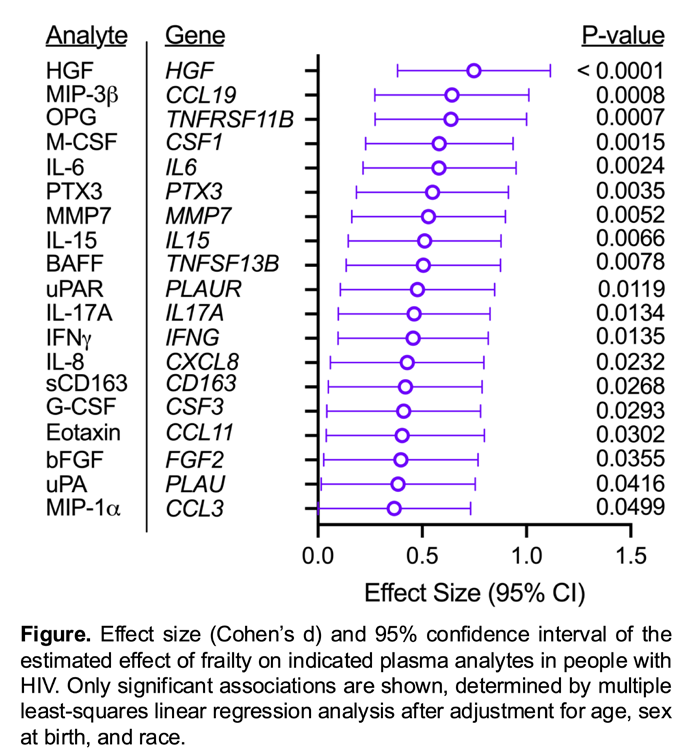
870. The Association of Cytomegalovirus Serostatus on Immune Recovery Among People With HIV
Poster Abstracts
Pages: 265-266
Raynell Lang1, Joshua Quisias2, Sally B. Coburn3, Hartmut Krentz1, Brenda Beckthold4, Kevin Fonseca1, Michael Parkins1, M. John Gill1
Background
Cytomegalovirus (CMV) infection is common among people with HIV (PWH) and may contribute to immune activation and inflammation, which could hinder immune recovery with antiretroviral therapy (ART). Within the Southern Alberta HIV Clinic (SAC) in Calgary Canada, we aimed to identify the seroprevalence of CMV and its association with CD4 T-cell and CD4/CD8 ratio recovery among PWH who maintain HIV viral suppression.
Methods
PWH 18 years or older accessing care at SAC between 01/01/1998-01/06/2022 with at least one CMV serologic test and initiated on ART were included at the first HIV viral load result of <200 copies/mL (study entry). Study exit was defined as the first date the patient reached the study outcome [CD4 cell count of >499 cells/mm3 (model 1) or CD4/CD8 ratio >1 (model 2)], had a viral load measurement of >200 copies/mL (as a proxy for ART adherence), lost-to follow up, death, or 01/06/2022. PWH were excluded if they had <2 measurements for CD4 or CD4/CD8 ratio during the study period. Continuous time-to-event Cox proportional hazard models estimated crude and adjusted hazards ratios (aHR) and 95% confidence intervals for CD4 count recovery to >499 cells/mm3 and CD4/CD8 ratio of >1 at 10 years by CMV serostatus. Models were adjusted for calendar year, age, sex, race/ethnicity, HIV acquisition risk, HCV, HBV, renal disease, diabetes, cardiovascular disease, and CD4 nadir. 10-year cumulative incidence of CD4 and CD4/CD8 ratio recovery by CMV serostatus was estimated using Kaplan-Meier methods.
Results
Among 2,538 PWH, 2,310 (91%) were CMV seropositive, 787 (31%) had initial CD4 counts of >499 cells/mm3 and 369 (15%) had initial CD4/CD8 ratios >1 and were excluded from the analyses. Over 10 years, 84% of CMV seropositive and 85% of CMV seronegative PWH achieved a CD4 count of >499 cells/mm3 and 53% of CMV seropositive and 72% of CMV seronegative PWH achieved a CD4/CD8 ratio of >1 (figure). CMV seronegativity was not associated with CD4 recovery to 500 cells/mm3 (aHR 1.08 [0.84-1.40]), however, was associated with a greater likelihood of a CD4/CD8 ratio of >1 (aHR 2.32 [1.80-3.00]) at 10-years of follow-up.
Conclusions
CMV coinfection is common among PWH. CMV is associated with a reduced CD4/CD8 ratio recovery, however, not with CD4 T-cell recovery among PWH who maintain HIV viral suppression. This suggests CMV may contribute to chronic infection-mediated immune activation and inflammation among PWH.
Figure 1.
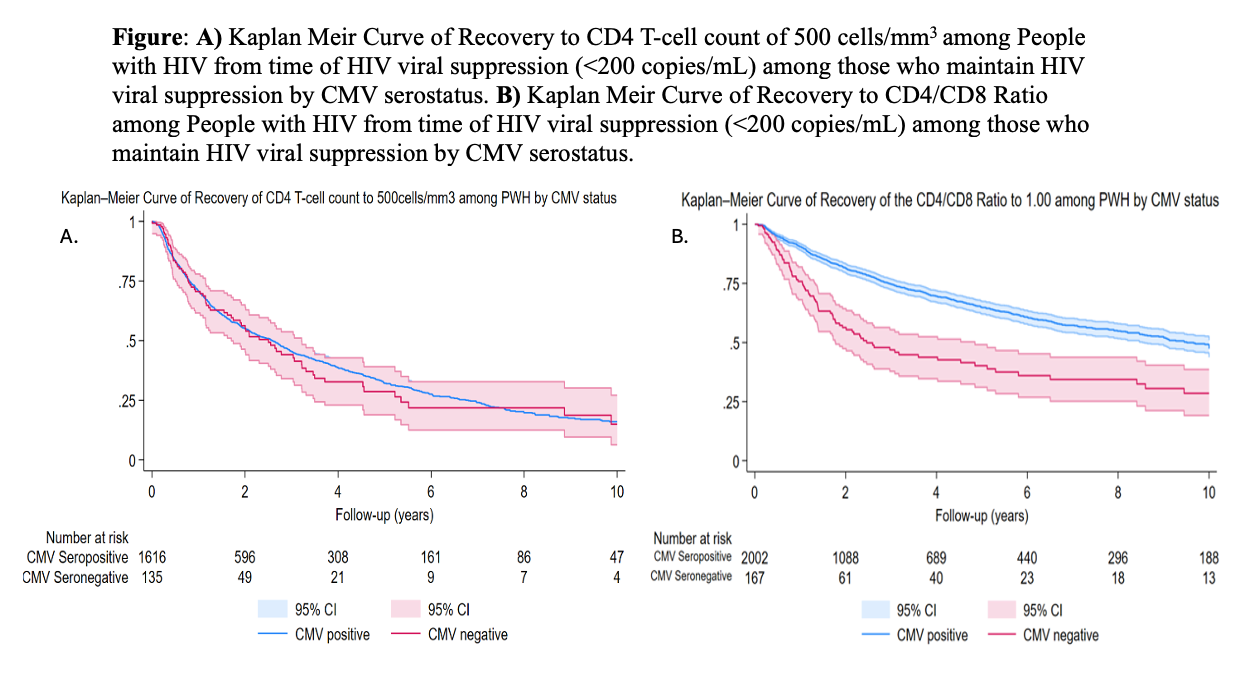
871. Validation of SARC-F Tool for Sarcopenia Screening in People Aging With HIV
Poster Abstracts
Page: 266
Joselito Malca Hernandez1, Noah Brazer1, Ahmed Abdeen2, Daniel Granda3, Yvett Pinedo Ramirez4, Flor Gonzales5, Miguel Tapia5, Patricia Garcia3, Evelyn Hsieh1
Background
Prior studies have shown that persons aging with HIV are at higher risk for sarcopenia. Several consensus definitions have been developed for sarcopenia based upon combined muscle mass, performance and strength assessments. Because these approaches are not practical for routine clinical settings, the 5-item SARC-F questionnaire was validated to screen for sarcopenia in the general population (GP) but has not yet been validated for people living with HIV (PLWH).
Methods
We conducted a cross-sectional study of PLWH aged ≥45 years at three HIV clinics in Lima, Peru between March 2022 to August 2023. Patients completed demographic and clinical surveys, the validated Spanish language SARC-F (score range: 0-10, score ≥4 indicating a high likelihood of sarcopenia or severe sarcopenia), the Short Physical Performance Battery, grip strength, and a dual-energy x-ray absorptiometry body composition scan for appendicular skeletal muscle index. Sarcopenia spectrum (presarcopenia, sarcopenia, and severe sarcopenia) was classified based on the European Working Group on Sarcopenia in Older People (EWGSOP 2019) and the Asian Working Group on Sarcopenia (AWGS) reference standards. Sex-based differences in presence of sarcopenia spectrum were analyzed using χ2 or Fisher’s exact tests. Validity of SARC-F to identify individuals with sarcopenia or severe sarcopenia, compared to EWGSOP 2019 and AWGS, was assessed with sensitivity, specificity, positive and negative predictive values (PPV/NPV), and area under the receiver operating curve (AUC).
Results
We enrolled 210 PWH, including 105 women, 105 men, with mean ages of 55.2±7.1 and 54.8±7.6, respectively. Sarcopenia spectrum prevalence was higher amongwomen compared with men based upon EWGSOP 2019 and AWGS. 22.7% of participants had a SARC-F score ≥4. Table 1 shows the validity results of SARC-F compared to each criterion.
Conclusions
In our study, using a cutoff of 4, SARC-F showed acceptable specificity, low sensitivity and low-moderate discrimination. Given sarcopenia spectrum was present in 30-35% of participants, further research is warranted to evaluate how SARC-F or other tools can support detection of sarcopenia in settings where multi-component tests are not feasible.
Table 1.
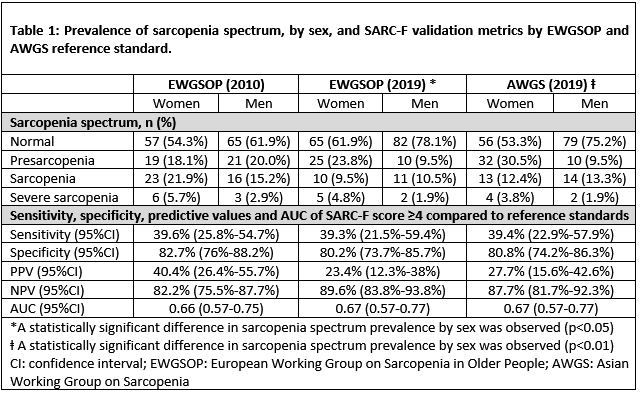
872. Mitochondrial DNA Variation and Physical Function Among Men With and Without HIV
Poster Abstracts
Page: 266
Jing Sun1, Weiqun Tong1, Wen Shi2, Kristine M. Erlandson3, Beth Jamieson-Karavodin4, Frank Palella5, Jennifer Schrack1, Todd Hulgan6, Dan E. Arking2, Todd Brown2, the MACS/WIHS Combined Cohort Study (MWCCS)
Background
Mitochondrial DNA variation is associated with multiple aging-related comorbidities among people with HIV (PWH). Data on the effect of inherited mitochondrial DNA variants on physical function among PWH are limited.
Methods
We included men with ≥2 visits from the Multicenter AIDS Cohort Study. Gait speed and grip strength were evaluated twice annually using standard methods beginning in 2006. Gait speed was defined as the fastest of 2 attempts over a 4-meter distance. Grip strength was the average across three measures with the dominant hand. We categorized all participants into 7 distinct functionally informed mitochondrial DNA (mtDNA) haplotypes, previously validated in the UK Biobank, annotated based on mtDNA SNPs: MT73, MT7028, MT10238, MT12612, MT1317, and MT15257. Less than 5% of the participants were categorized in the other haplotypes and were not included in the analysis. Mixed effect linear regressions evaluated the association of haplotypes with gait speed and grip strength. Models controlled for principal components of ancestry, common mtDNA haplogroups, baseline age, time, BMI, socioeconomic status, risk behavior (smoking, alcohol, injection drug use), and number of comorbidities.
Results
Of 2314 men (1277 PWH) with 38,913 person-years of follow-up, 26% were Black, 59% White; median age at baseline was 47 years [IQR: 40, 54]. Compared to the reference haplotype (2_2_2_2_2_2 based on the listed mtDNA SNPs), haplotype I was associated with slower gait speed (-0.03 m/s [95% CI: -0.05, -0.01]) and haplotype II, III, IV, and V were associated with faster gait speed (all p<0.05). Compared to the reference haplotype, haplotypes I, IV, and VII were associated with greater grip strength (1.22 kg [95% CI: 0.15, 2.29], 1.16 kg (95% CI: 0.11, 2.21), and 1.70 kg [95% CI: 1.13, 2.28]). The association of haplotypes and gait speed differed by HIV serostatus in haplotype III and VII (Figure, panel A). All haplotypes except haplotype I and VII differed by HIV status for grip strength (Figure, Panel B). Results were consistent in the stratified analyses among European ancestry men.
Conclusions
Functionally informed mtDNA haplotypes were associated with gait speed and grip strength in men. But the direction of these associations varied based on HIV status, indicating that each haplotype has distinct functional implications. Further investigation into the underlying mechanisms of mtDNA variation and its impact on physical function in the context of HIV status is warranted.
Figure 1.
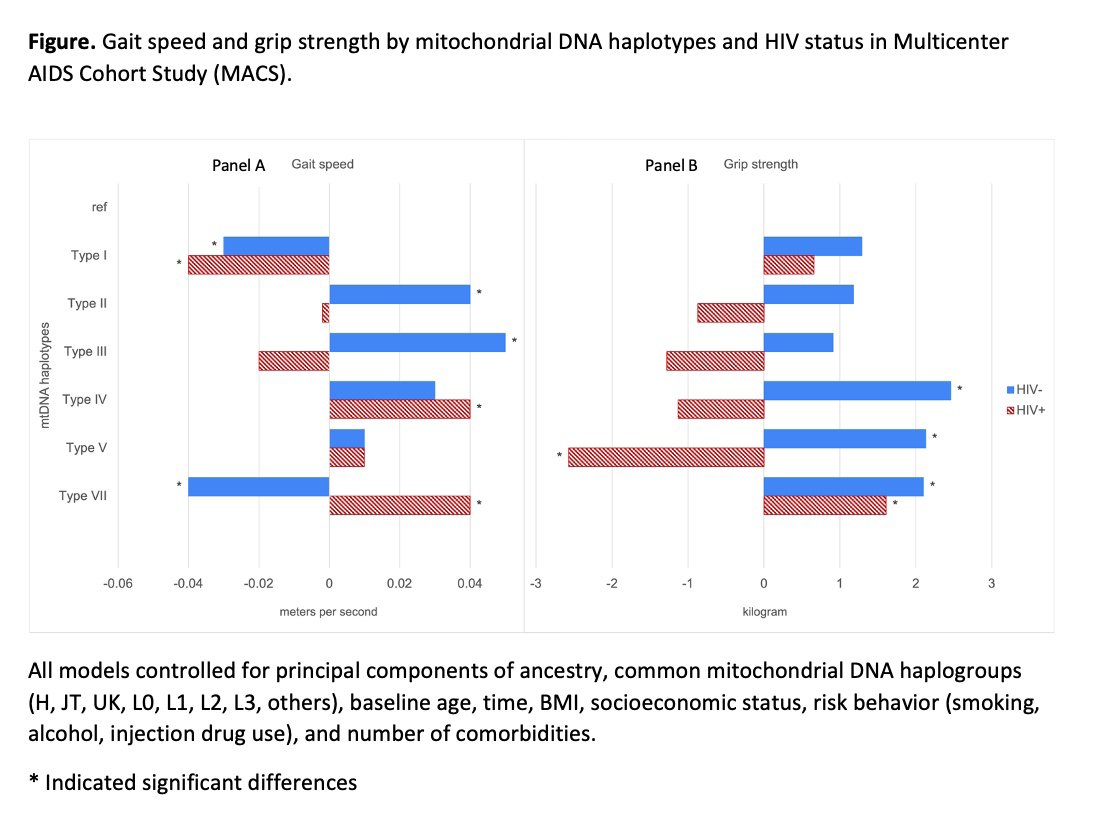
873. Senescence-Associated Secretory Phenotype Biomarker Profiles of Age-Related Outcomes in PWH
Poster Abstracts
Page: 267
Mary C. Masters1, Janeway Granche2, Raha M. Dastgheyb3, Katherine Tassiopoulos2, Alan Landay4, Carrie Johnston5, Susan Koletar6, George A. Kuchel7, James L. Kirkland8, Tamar Tchkonia8, Kristine M. Erlandson9, Frank Palella10, the ACTG A5322 (HAILO) Study Team
Background
Cellular senescence is associated with age-related disease and has been a proposed mechanism in aging people with HIV (PWH) who may experience accelerated aging. We sought to characterize associations between pro-inflammatory signals secreted from senescent cells (the senescence-associated secretory phenotype [SASP]), and age-associated outcomes.
Methods
Clinical aging outcomes of frailty, cognitive impairment (CI), diabetes mellitus (DM), and cardiovascular disease (CVD) were collected at entry in the observational ACTG A5322 (HAILO) study of PWH ≥40 years old. There were 71 soluble SASP biomarkers measured from 450 HAILO participants at study entry. Sample selection prioritized participants with prevalent or incident outcomes for the current and ongoing analyses. Cross-sectional logistic models adjusting for age group (40-49, 50-59, 60+), sex, and race/ethnicity were run for each normalized SASP biomarker with each age-related outcome. False discovery rate (FDR) correction was performed to adjust for multiple comparisons.
Results
Of the 450 participants, 59 (13%) met criteria for frailty, 104 (23%) CI, 94 (21%) DM, and 52 (12%) CVD at study entry. Participant ages: 36% were 40-49, 45% were 50-59, 19% were 60+; 78% were men; 48% were White non-Hispanic, 27% Black non-Hispanic, 24% any race. The Figure summarizes the 31 SASP biomarkers significantly associated with at least one outcome after FDR correction. Higher levels of TNFR1 were associated with higher odds of all outcomes; higher MMP-7, IL-6, TNFR2 and MCP-3b with higher odds of frailty, CI, and DM; higher levels Cystatin C with higher odds of frailty, DM, and CVD. After FDR adjustment, no biomarkers were associated with frailty alone. Higher levels of sVCAM-1, MMP1, TIMP-2, IP-10, activin A, and IL-18 were associated with higher odds of CI; higher levels of IGF-1 with lower odds of CI; higher levels of PAI1, and osteoactivin with higher odds of DM; higher levels of adiponectin and ACRP30 HMW with lower odds of DM; and higher levels of MMP-9, suPAR, and VEGF-A with higher odds of CVD.
Conclusions
Unique SASP profiles exist in association with specific aging outcomes in PWH, with some overlap between conditions apparent; this may indicate shared pathophysiologic mechanisms among the outcomes. Additional studies will determine whether such biomarker profiles also predict subsequent development of age-related outcomes, offering insights into premature aging mechanisms and therapeutic targets to improve healthspan among older PWH.
Figure 1.
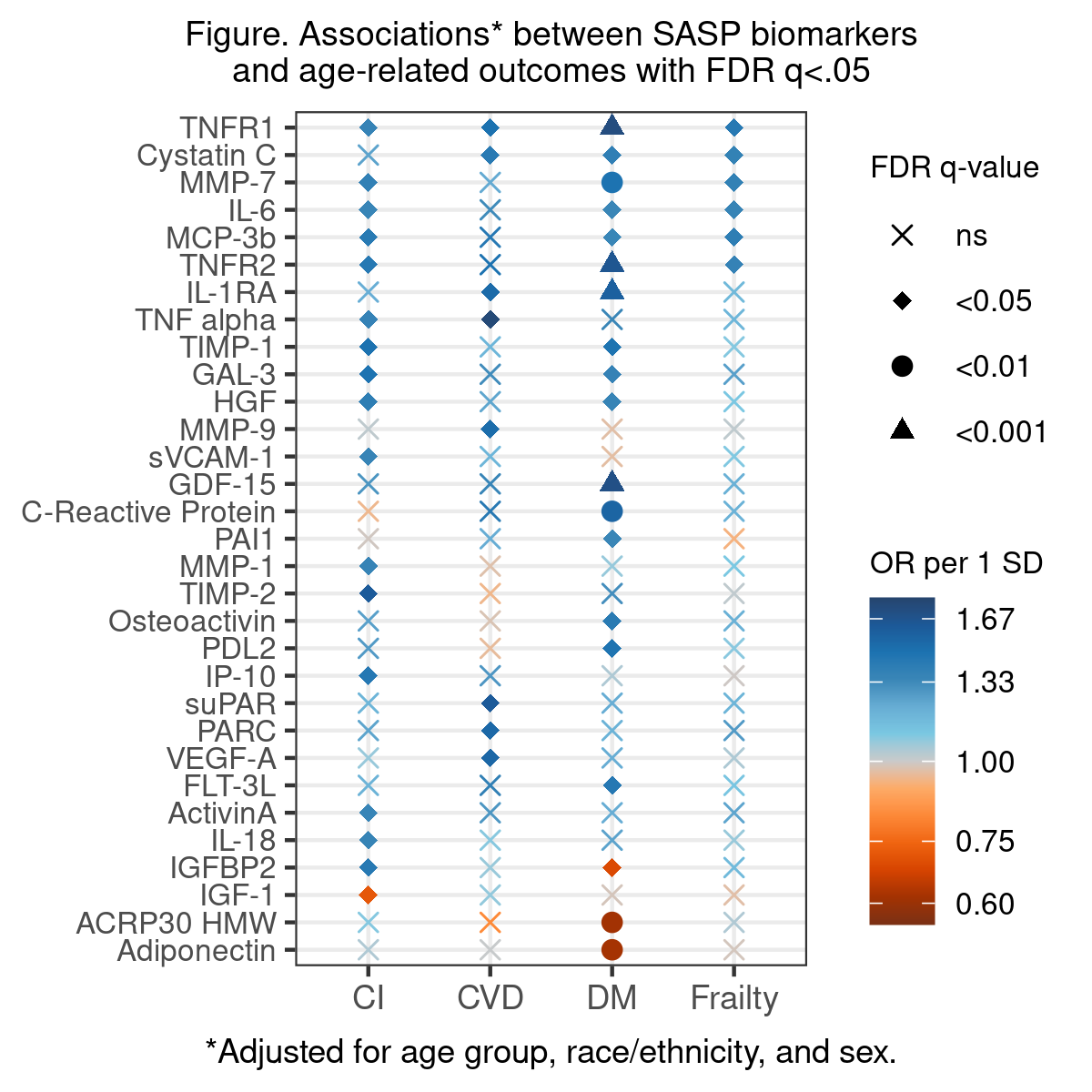
874. Multicomponent Exercise Associated With a Healthier Gut Microbiota Profile in Older Adults With HIV
Poster Abstracts
Page: 267
Laura Martín Pedraza1, Fátima Brañas2, Fernando Dronda1, Laura Luna1, Pablo Ryan2, Santiago Moreno1, Marta Martínez2, Matilde Sánchez-Conde3
Background
Multicomponent Exercise has been shown to modulate the gut microbiota leading to changes that may contribute to a less inflammatory and more eubiotic microbial profile. However, there is limited evidence on the effects of exercise on the gut microbiota in older adults living with HIV (OAWH). In this 48-week longitudinal study, we evaluated the changes in the gut microbiota through metagenomic whole genome shotgun (mWGS) sequencing of participants after undergoing 48 weeks of a Multicomponent Exercise Program (MEP).
Methods
Sedentary adults aged 50 and over, with and without HIV, were included in a prospective longitudinal study with intervention, a MEP, and with 12-, 24- and 48-week follow-up. Clinical variables were obtained as well as adherence to the MEP defined as good (>50%) or poor (<50%). Stool samples were collected at each visit. We performed mWGS sequencing of 129 faeces DNA and analysed the taxonomy and functional annotation by Metastats and LEfSe analysis.
Results
We included 60 participants, 40 OAWH. Median age was 56.5 years. 23.3% were women. All participants with HIV were virologically controlled. At baseline, significant differences in the gut microbiota composition were observed when comparing different groups: a relative abundance of Firmicutes, Prevotella, and Dialister was significantly higher in men compared to women (p<0.05) and similarly, Catenibacterium was found to be increased in older adults with HIV (OAWH) (p<0.05). Furthermore, we globally observed high relative abundance of some genus related with inflammation and obesity as Collinsella spp. (p<0.05) (Figure 1A). Finally, according to changes of relative abundances, differences after 48 weeks of MEP highlighted a significant increase in bacterial genus such as Bacteroides, Prevotella, and Bifidobacterium and significant decrease of Coriobacteriaceae (Figure 1B). These genera play a crucial role in the production of short-chain fatty acids and immune regulation.
Conclusions
A MEP could positively modulate the gut microbiota in OAWH potentially promoting a healthier and less inflammatory microbial environment. This highlights the potential role of regular physical activity as a strategy to improve gut health and overall well-being in older populations, regardless of HIV status.
The figure, table, or graphic for this abstract has been removed.
875. Muscular Markers for Early Identification of Sarcopenia and Frailty States in Older People With HIV
Poster Abstracts
Pages: 267-268
Eugènia Negredo1, Irini Sereti2, Ana Martinez1, Sandra González3, Jordi Puig1, Gemma Monté-Rubio4, Adam Rupert5, Patricia Echeverria1, Anna Bonjoch1, Josep Puig4, Diana Hernandez6
Background
Considering the critical need to identify people with HIV (PWH) at risk of frailty and sarcopenia, we present the results of the Functional substudy of the IMAGING study, a study aimed to identify image aging markers by whole-body magnetic resonance imaging (WB-MRI) in 50 PWH aged 50 years or older and 25 matched controls.
Methods
The Functional substudy is an exploratory study that evaluates WB-MRI muscle markers (intramuscular fat content in glutes, psoas, iliac, and total muscle) and specific muscular (irisin and myostatin) and mitochondrial (coenzyme Q10) plasma biomarkers for diagnosing pre-frailty/frailty or sarcopenia in PWH. Imaging, from the WB-MRI data collected in a Vantage Galan 3T (Canon Medical Systems, Japan) at the CMCiB, and muscle biomarkers were compared between PWH and controls, and correlated with functional evaluations (Barber, Barthel, Lawton, Fried phenotype, SPPB and grip strength) and DXA scan. Statistical analyses were performed using R software (https:// www.r-project.org/). The protocol was approved by the Ethics Committee [Reference no. PI-20-035].
Results
Median duration of HIV infection was 29 years; all had undetectable viral loads. PWH had more comorbidities (median 5 vs. 3); 50% of PWH and 28% of controls had over 5 comorbidities. Malnutrition risk was higher in PWH (31% vs. 13.6%). A higher prevalence of dependency, prefrailty/frailty and low bone mineral density (BMD) were observed among PWH, as well as higher plasma levels of myostatin and lower levels of irisin (Table 1). Higher Coenzyme Q10 levels were associated with poorer health (dependency, frailty, osteopenia/ osteoporosis); high irisin levels with frailty and dependency; and lower myostatin levels with poorer health, though some contradictory data were noted. Lower intramuscular fat fractions were observed in malnutrition and less so in conditions like dependency. Associations were found between higher intramuscular fat content and time of infection, time on antiretroviral therapy and time until therapy; while a better immunological status was associated with lower fat content.
Conclusions
In summary, PWH showed overall more dependency and frailty compared to controls with more unfavorable accompanying plasma markers. Thus, specifically irisin and Coenzyme Q10, might be potential diagnostic markers for dependency and frailty, if larger studies support their clinical utility potential. These results encourage us to continue assessing these markers for their predictive and diagnostic potential.
Table 1.
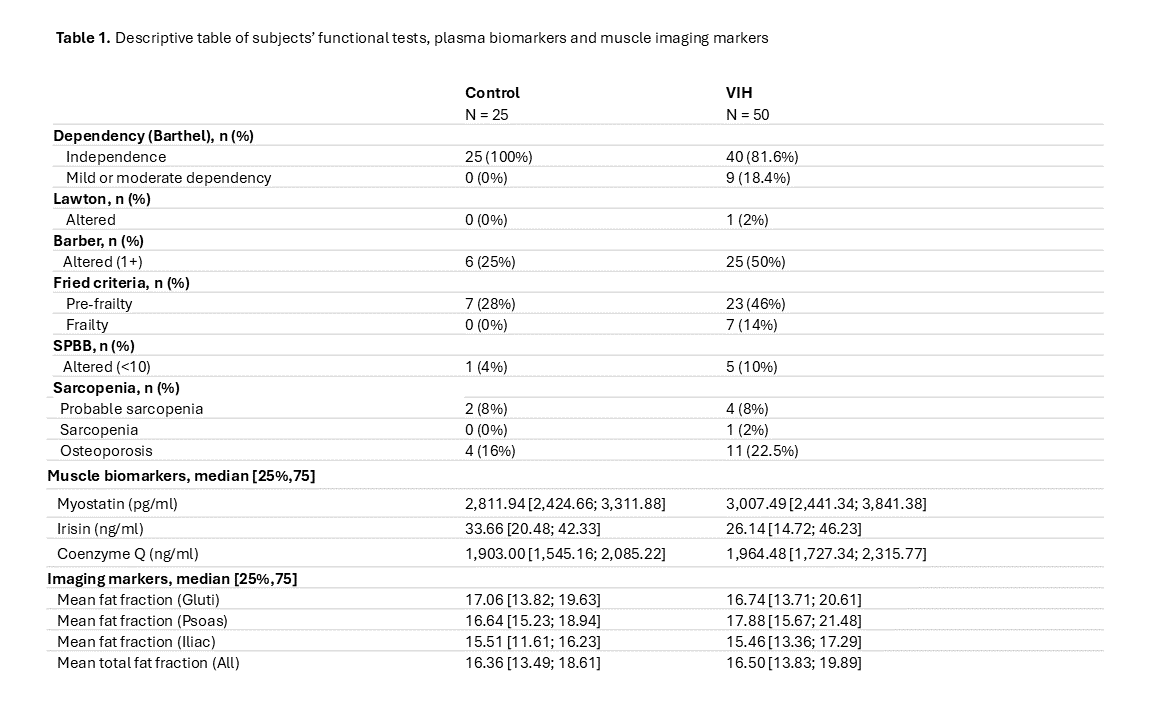
876. Metformin for Reversal of Accelerated Biological Aging in Persons With HIV: A Pilot Clinical Trial
Poster Abstracts
Page: 268
Cristina Marcelo1, Andrés Esteban-Cantos1, Francisco Jurado2, Javier Rodríguez-Centeno3, Rocío Montejano Sanchez1, Lucía Gutiérrez3, Alejandro de Gea Grela3, Patricia Martínez-Martín1, Juan Carlos González3, Luz Martín-Carbonero1, Jose Ignacio Bernardino3, Berta Rodés3, Jose R. Arribas3
Background
There is interest in metformin as a drug to delay aging in the general population. This is the first trial to evaluate the impact of metformin on biological aging measured by epigenetic clocks with prognostic value in PWH.
Methods
Phase II randomized, double-blind, pilot clinical trial comparing metfomin 850 mg BID vs placebo. Main inclusion criteria included age ≥ 50, HIV viral load < 50 for ≥ 1 year, CD4 > 500, HOMA-IR ≤ 2.6, BMI <30, and normal B12 vitamin levels. Key exclusion criteria included diabetes, comorbidities (stroke, heart failure, dementia, cancer or renal impairment) and pregnancy. Objectives were to assess metformin safety, changes in Epigenetic Age Acceleration (EAA) measured by Horvath, Hannum, PhenoAge, GrimAge, and DNAmfitAge epigenetic clocks in whole blood, and changes in blood telomere length measured by DNA methylation (DNAmTL) after 96 weeks of follow-up. EAA was calculated as the residuals from the regression of epigenetic age on chronological age. We compared changes between treatment groups using both linear mixed models with random intercepts and slopes and Wilcoxon signed-rank test.
Results
We included 40 participants, of whom 35 (17 metfomin and 18 placebo) maintained their randomized treatment until week 96. Discontinuations were not attributed to adverse events related to the study medication. At baseline, groups were balanced, with a mean chronological age of 57 years, 30% female, BMI of 24.1, HOMA IR of 1.39, CD4 counts (current/ nadir) of 855/291 cells/µl, CD4/CD8 of 1.3, and with no differences in EAA measures and DNAmTL. Participants receiving metformin demonstrated a significant increase in serum GDF15, confirming metformin adherence. At week 96, there were no significant differences between groups in CD4 counts, and renal function, and all participants remained virologically suppressed. Median decreases in EAA were numerically larger in metformin for 3 of the 5 clocks, without statistically significant differences. Linear mixed models showed a similar evolution between groups in EAA. A trend towards a potential effect on DNAmTL was observed with Wilcoxon (p = 0.077), although this was not confirmed by linear mixed model.
Conclusions
In this pilot trial, metformin treatment for 96 weeks was safe and well-tolerated in PWH without diabetes. While no trend favoring metformin was observed across the epigenetic clocks analyzed, the trend in DNAmTL suggests a potential positive biological effect, warranting further investigation in larger studies.
Figure 1.
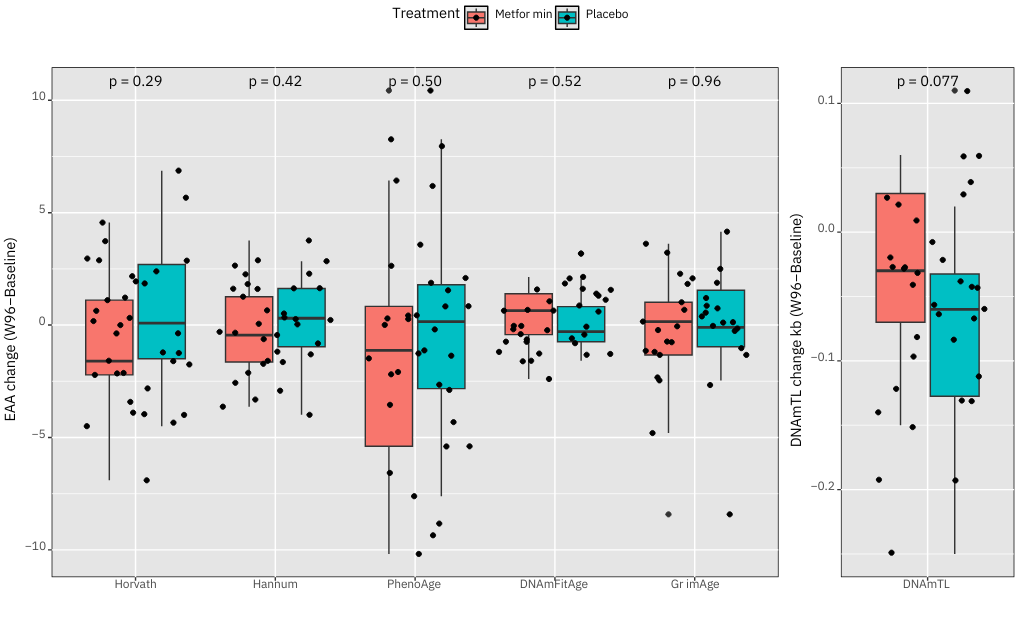
877. Statins Reduce Frailty in People With HIV
Poster Abstracts
Pages: 268-269
Jovana Milic1, Alessandra Carrobbio1, Marianna Menozzi2, Giuseppe Mancini1, Gianluca Cuomo2, Federico Motta1, Chiara Mussi1, Cristina Mussini1, Paolo Raggi3, Giada Sebastiani4, Giovanni Guaraldi1
Background
Statins have pleiotropic effects beyond lowering LDL cholesterol, offering benefits in multiple cardiometabolic conditions and reducing chronic inflammation. These effects have the potential to also influence biological aging trajectories, reflected by frailty. The objective of this study was to compare frailty trajectories, in people with HIV (PWH) who used statins for primary cardiovascular prevention with those who did not.
Methods
This was an observational longitudinal study including antiretroviral therapy (ART)-experienced PWH attending the Modena HIV Metabolic Clinic (Italy) who had no prior statin exposure at baseline (BL) and with at least 3 frailty assessments during follow-up. PWH with a history of cardiovascular events were excluded. BL was defined as the first visit with available FI, and follow-up was defined as the last visit with available FI. Statin users and non-users were matched based on median time between BL and initiation of the statin therapy in the first group. Time 0 was defined as the initiation of the statin therapy. Frailty was assessed using a validated 37-item frailty index (FI), ranging from 0 to 1. Frailty trajectories were analysed using a linear mixed model (LMM) adjusted for statin use, age, sex, follow-up time, diabetes, hypertension, smoking (pack year), and BL LDL cholesterol.
Results
A total of 3,543 PWH were included, 1,100 (31%) were women. The median age at BL was 44.7 yrs, median time since HIV diagnosis was 14 yrs, median current CD4 cell count was 558.5/microL with 88.6% having undetectable HIV viral load. At BL, PWH who started statin were older (48.4 vs 43.6 yrs, p<0.001), had a higher: FI (0.3 vs 0.2; p<0.001), BMI (23.9 vs 23 kg/ m2; p<0.001), LDL cholesterol (129 vs 109 mg/dL; p<0.001), prevalence of hypertension (31.8 vs 15.4%; p<0.001), diabetes (11.5 vs 4.7%; p<0.001). In LMM, statin use (β= -0.0171, 95% confidence interval (CI): -0.0345, -0.0009) was a significant predictor of FI reduction (Figure 1). Other factors associated with FI were: female sex (β= -0.0123, 95% CI: -0.0194, -0.0052), diabetes (β= 0.0305, 95% CI: -0.0248, 0.0362), hypertension (β=0.0389, 95% CI: 0.0349, 0.0429).
Conclusions
Statin use significantly reduces frailty over time. Although PWH who started statins had a higher FI at baseline, they were able to reverse the BL difference, reaching a lower FI compared to the control group by the end of follow-up. These findings suggest that statins may have a geroprotective effect in PWH.
Figure 1.
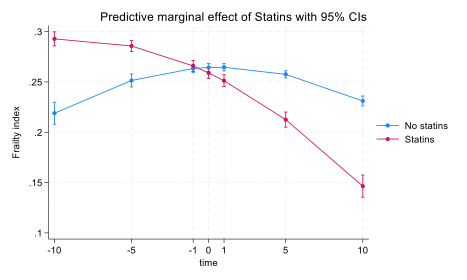
878. Frailty and All-Cause Mortality Among People With HIV Engaged in Clinical Care in the United States
Poster Abstracts
Page: 269
Stephanie A. Ruderman1, Carolyn A. Fahey1, Ryan P. Kyle1, Edward Cachay2, Joseph A. Delaney1, Sonia Napravnik3, Allison Webel1, Kenneth Mayer4, George Yendewa5, Lydia N. Drumright1, Laura Bamford6, Charles Kamen7, Michael Saag8, Mari Kitahata1, Heidi M. Crane1, the Centers for AIDS Research Network of Integrated Clinical Systems (CNICS)
Background
Frailty is an aging-related risk factor for poor outcomes in the general population, conferring up to 2.5 times higher risk of mortality compared with those without frailty. Frailty is a growing concern among people with HIV (PWH) as this population faces chronic immune activation, high rates of comorbidities, and polypharmacy. Frailty in PWH occurs up to a decade earlier than in those without HIV; therefore, it is important to understand the impact of frailty among PWH of all ages.
Methods
We assessed frailty status and all-cause mortality among PWH in the Centers for AIDS Research Network of Integrated Clinical Systems (CNICS) cohort between 1/2015-3/2024. The CNICS data repository harmonizes information on demographic, clinical, and behavioral factors, and self-reported outcomes. Frailty was defined using a validated frailty phenotype of four components (i.e., fatigue, weight loss, activity, mobility). All-cause mortality was ascertained using multiple approaches including state death certificate data and national death indexes. We used Cox proportional hazards models to estimate the association between time-updated frailty status (robust, prefrail, frail) and all-cause mortality. Models were restricted to PWH with complete case data and adjusted for age, sex, race/ethnicity, site, HIV viral load (time-updated), current CD4 count (time-updated), diabetes status, treated dyslipidemia, treated hypertension, hepatitis C virus, hepatitis B virus, liver function (FIB-4), kidney function (eGFR), body mass index, illicit drug use, smoking status, and alcohol use.
Results
Among 6,737 PWH at baseline, average age was 50 (SD: 12), 15% were female, 45% were non-Hispanic White, 33% were non-Hispanic Black, 44% were prefrail, and 11% were frail. Over an average of 5.5 years of follow-up (median: 5.8), there were 360 deaths recorded, yielding an incidence rate of 9.7 per 1000 person-years (95% CI: 8.8-10.8). In adjusted models, frailty was associated with 2.48 times greater risk of death (95% CI: 1.85-3.33) and prefrailty was associated with 1.42 times greater risk of death (95% CI: 1.10-1.83). Prefrailty and frailty were consistently associated with an increased risk of death in models stratified by age (<50 vs. ≥50) and sex (male vs. female) (Table).
Conclusions
In a large cohort of PWH in care, frailty and prefrailty were associated with a greater risk of death; notably, this was true for PWH under 50. Understanding and preventing frailty in this high-risk population remains a priority.
Table 1.
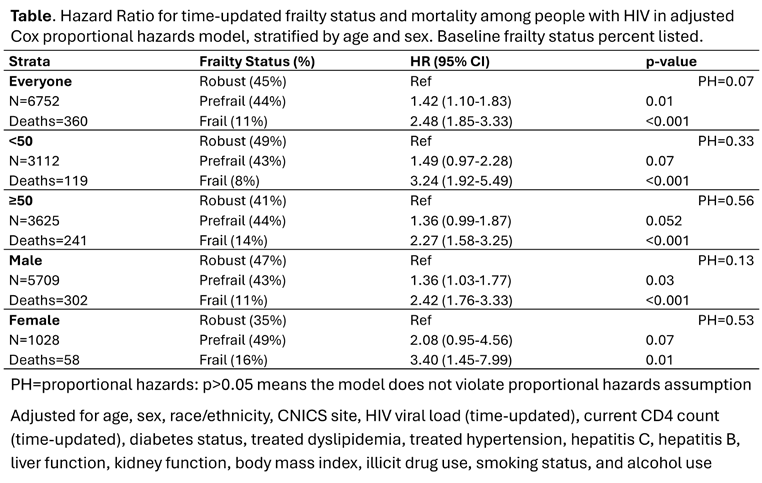
879. Clinical and Economic Benefits of Preventing Physical Frailty and Falls Among PWH in the US
Poster Abstracts
Page: 269
Karen C. Smith1, Cathryn Brown1, Emily Hyle2, Michael Paskewicz1, Reyhaneh Zafarnejad1, Todd Brown3, Kenneth A. Freedberg2, Kristine M. Erlandson4, Elena Losina1
Background
Over 50% of people with HIV (PWH) in the United States (US) are older than 50 years and are at risk for a high lifetime burden of physical frailty, falls, and fall-related fractures. However, data on the long-term clinical and economic consequences of these events are sparse. We projected the survival gains and economic benefits of preventing physical frailty, falls, and fall-related fractures among aging PWH in the US.
Methods
We developed and validated a microsimulation model (FraPol) to project survival outcomes and costs associated with preventing physical frailty, falls, and fall-related fractures in people with virologically suppressed HIV in the US age 40+ (519,640 people). We used data from HAILO, MACS, WIHS, and published literature to inform model parameters. Fall risk (18% average annual risk) and risk of injury or fracture after a fall (17% and 8%, respectively) were estimated from HAILO. Costs and effects of frailty and fractures on mortality were from published literature. We compared the status quo with three scenarios, removing: (1) physical pre-frailty/frailty, (2) falls without fracture, and (3) fall-related fractures. For each scenario, we calculated survival gains and impact on remaining lifetime frailty-, fall-, and fracture-related costs (non-discounted) as the difference in outcomes compared to the status quo.
Results
We projected that people with virologically suppressed HIV aged 40+ (mean age 56y) in the US would have a remaining life expectancy of 20.5 years, with an average of 11.8 years, or ~60% of their remaining lifespan, with pre-frailty or frailty. There would be an average of 11.0 lifetime falls and 0.4 fall-related fractures per person. Preventing pre-frailty and frailty would increase survival by 5.6 years, on average, and preventing fall-related fractures would increase survival by 0.4 years. Among PWH in the US age 40+, we projected that preventing pre-frailty and frailty would result in 2.9 million life-years gained and $16.2 billion saved. Preventing falls without fracture would save $2.3 billion, and preventing fall-related fractures would result in 221,600 life-years gained and $2.5 billion saved.
Conclusions
The burden of frailty, falls, and fall-related fractures among PWH in the US will be substantial. Effective interventions to prevent frailty, falls, and fractures may improve survival, and savings could in part offset other health-related spending.
Table 1.
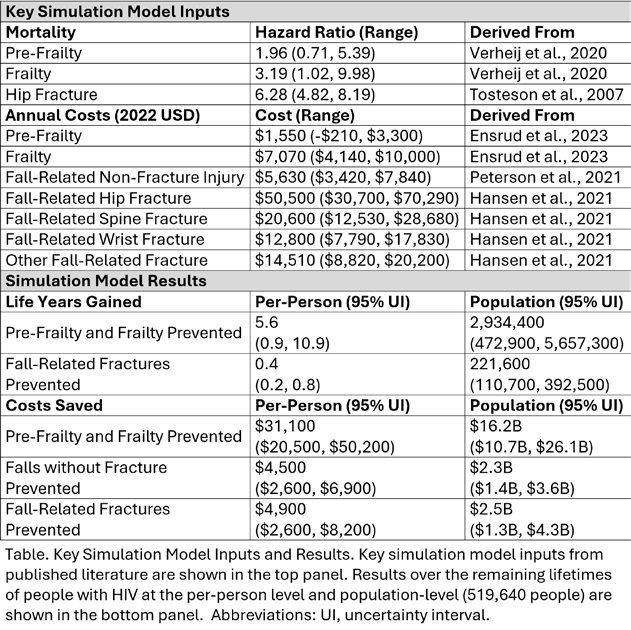
880. Housing Instability and Frailty Among People With HIV Engaged in Clinical Care in the United States
Poster Abstracts
Page: 270
Carolyn A. Fahey1, Stephanie A. Ruderman1, Bridget M. Whitney1, Joseph A. Delaney1, Rob Fredericksen1, L. Sarah Mixson1, Sonia Napravnik2, Allison Webel1, Kenneth Mayer3, Edward Cachay4, George Yendewa5, Lydia N. Drumright1, Laura Bamford6, Michael Saag7, Heidi M. Crane1
Background
Living with HIV infection and experiencing housing instability are both independently associated with early onset of aging-related comorbidities including frailty. However, few studies have examined the relationship between housing status and frailty among people with HIV (PWH).
Methods
We analyzed data from PWH engaged in care at 6 sites across the US within the Centers for AIDS Research Network of Integrated Clinical Systems (CNICS) between 2019-2024. Data were collected during routine clinical visits, including self-administered surveys. We measured frailty using a previously validated approach based on having at least 3 of 4 components (fatigue, weight loss, immobility, inactivity) vs. less than 3 components. Housing status was based on self-reported living situation in the last month, comparing PWH reporting “Homeless” or “Unstable” vs. “Stable.” We estimated the association between most recent housing status and frailty with prevalence ratios (PR) from generalized linear models using complete-case data. Primary models adjusted for site, demographic characteristics, year, HIV clinical indicators (viral load, CD4 count), and substance use (alcohol, illegal substances). Sensitivity analyses removed potential mediators from the adjustment set (HIV clinical indicators and substance use).
Results
This analysis included 6,587 PWH (84% male, 16% female; 87% virally suppressed) with a median age of 52 years (IQR: 40-60). Overall, 8% of PWH (n=505) had unstable housing (3% homeless, 5% unstable), and 11% (n=700) were frail. In the primary analysis, housing instability was associated with 2.2 times higher prevalence of frailty (95% CI: 1.8, 2.6) compared to stable housing. This association was similar in models not adjusted for substance use (PR=2.4, 95% CI: 1.9, 2.8) or HIV clinical indicators (PR=2.5, 95% CI: 2.1, 3.0). In stratified analyses, we observed a stronger association among virally suppressed PWH (PR=2.5, 95% CI: 2.1, 3.1) compared to unsuppressed (PR=1.5, 95% CI: 1.1, 2.2; interaction p=0.04) due to a lower prevalence of frailty in stably housed, virally suppressed PWH (9%) than stably housed, unsuppressed PWH (13%), while 22% of unstably housed PWH were frail in both viral load strata (Table).
Conclusions
Housing instability and frailty were both prevalent and strongly associated in PWH, including among younger and virally suppressed groups. These findings highlight the importance of social determinants of health, such as housing status, for clinical outcomes among all PWH.
Table 1.
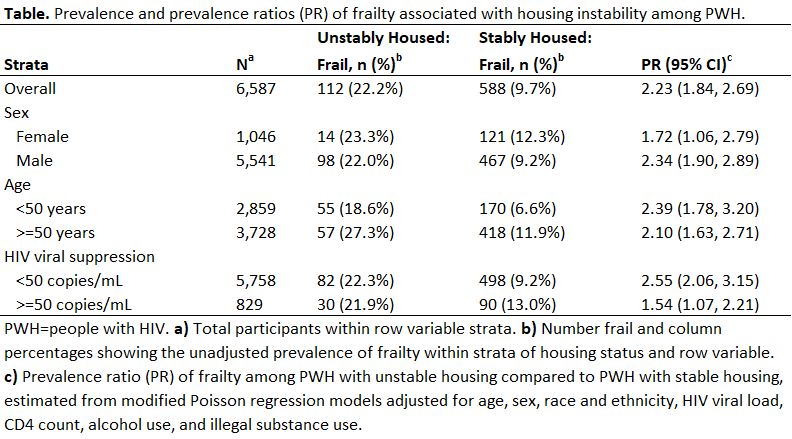
881. Prognostic Factors of Physical Function Decline in the PREPARE Study
Poster Abstracts
Page: 270
Grace Ditzenberger1, Triin Umbleja2, Todd Brown3, Heather Ribaudo2, Steven Grinspoon4, Jennifer Schrack5, Markella V. Zanni4, Judith Aberg6, Carl Fichtenbaum7, Carlos Malvestutto8, Sarah Chu4, Judith Currier9, Pamela Douglas10, Gerald Bloomfield10, Kristine M. Erlandson1
Background
The Pitavastatin to REduce Physical Function Impairment and FRailty in HIV (PREPARE) substudy of REPRIEVE found small declines in physical function, and no evidence of pitavastatin effect. However, there was substantial individual variability, with some participants experiencing considerable declines. The purpose of this pre-specified exploratory analysis was to identify participants at a greater risk for physical function decline.
Methods
PREPARE conducted physical function assessments annually for up to 5 years. Participant-specific annualized rates of change in chair rise rate, gait speed, the modified Short Performance Physical Battery (mSPPB, composite of the latter two plus balancing time), and grip strength were estimated from linear mixed effect models. Physical function decline was defined as an annualized rate of change below the 20th percentile (P20) of the study population in at least one of the measures. Associations between baseline factors and physical function decline were evaluated with log-binomial regression models.
Results
Of the 569 participants, 81% were male and 52% white. The median age was 51 (Q1, Q3: 47, 55) years. The P20 participant-specific annualized rates of change were -0.354 rises/minute/year in chair rise rate, -0.028 meters/ second/year in gait speed, -0.032/year in mSPPB and -0.70 kg/year in grip strength. 52% had a decline in at least one physical function measure: 1% had a decline in all four, 7% in two, 11% in three, and 33% in one. We found a higher risk of physical function decline among females (relative risk: 1.32, 95% confidence interval: 1.12-1.55), non-whites (1.23, 1.05-1.45), and a trend of higher risk with increasing age (1.04, 0.86-1.26 in 50-55 and 1.17, 0.98-1.39 in 55+ vs. 40-<50 years). In models adjusted for age, sex, and race, we found greater risk of decline among those with history of depression treatment, higher BMI, pre-existing functional impairment, frailty (by index), and higher baseline hs-CRP and IL-6 levels (Fig.1). The sex difference was attenuated in models adjusted for BMI, history of depression treatment, and inflammatory markers, which were higher/more prevalent among females (1.16, 0.98-1.38 in females vs. males, when including hs-CRP).
Conclusions
PWH with history of depression, high BMI or levels of inflammation and those showing signs of impairment may benefit from early intervention strategies to preserve function with aging.
Figure 1.
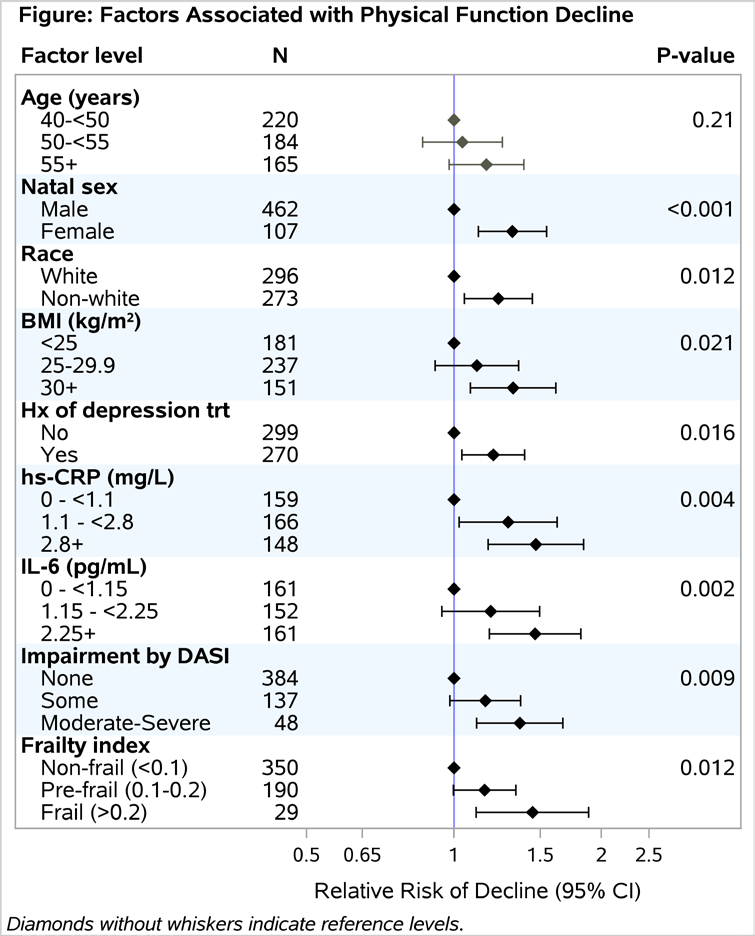
882. Understanding the Life Expectancy Sex Gap: Disparate Patterns in Non-Communicable Disease Mortality
Poster Abstracts
Pages: 270-271
Katherine Kooij1, Wendy Zhang2, Jason Trigg2, Erin Ding1, Nance Cunningham1, Michael Budu2, Megan E. Marziali2, Viviane D. Lima2, Kate Salters1, Rolando Barrios1, Julio S. G. Montaner1, Robert S. Hogg3
Background
We have previously shown lower life expectancy among females with HIV in British Columbia (BC), Canada, compared to males and an increasing sex gap in life expectancy from 1996 to 2020 (CROI 2024, Abstract #1053). To better understand the underlying drivers for this finding, we aimed to establish whether female sex is associated with higher mortality from two broad categories of non-communicable disease: (1) cardiovascular disease (CVD) and non-AIDS defining cancer (NADC), and (2) liver, renal, and chronic respiratory disease.
Methods
We used clinical and administrative health data from a population-based cohort study that included virtually all people with HIV in BC. We assessed cause-specific non-communicable disease mortality between April 1, 1996 and March 31, 2020, distinguishing mortality from (1) CVD and NADC, and from (2) liver, renal, and chronic respiratory disease (defined using ICD 9 and 10 codes). Using competing risk Cox regression, we modelled the association between female sex and mortality rates from each of these categories. We adjusted for baseline age and socio-structural factors: history of injection drug use, residence in Vancouver’s inner city, living in a rural area, and area-level income. We also adjusted for CD4 count at antiretroviral therapy (ART) initiation.
Results
A total of 11,738 males (baseline age 38 [IQR 32-46]) and 2,534 females (baseline age 34 [IQR 28,42]) with HIV were included; 92% and 88%, respectively, ever initiated ART. Over the study period, 587 males (5.0%) and 99 females (3.9%) died of CVD and NADC; 117 males (1.0%) and 53 females (2.1%) died from renal, liver, and respiratory disease. After age-adjustment, female sex was associated with a higher hazard ratio for mortality from CVD and NADC (1.18, 95% CI 0.95-1.47), but not significant, and significantly from renal, liver, and respiratory disease (2.84, 95% CI 2.05-3.97). After adjusting for socio-structural factors and CD4 count at ART initiation, female sex remained significantly associated with mortality from renal, liver, and chronic respiratory disease (Table 1).
Conclusions
The higher hazard for mortality from liver, renal, and chronic respiratory disease among females with HIV in BC could not be explained by socio-structural disparities and immune status at ART initiation. Our findings highlight the need for directed public health efforts, including preventive strategies and screening, for these diseases among females with HIV. These results should be explored in other settings.
Table 1.
Association between female sex and mortality from selected non-communicable grouped causes between April 1, 1996 – March 31, 2020 (N=14,272).
|
|
Female sex, adjusted for baseline age; HR (95% CI) |
Female sex, adjusted for age and socio-structural factors; HR (95% CI) |
Female sex, adjusted for age, socio-structural factors and CD4 count at ART initiation; HR (95% CI) |
| Mortality from cardiovascular disease and non-AIDS defining cancer |
1.18 (0.95-1.47) |
1.04 (0.84-1.29) |
1.02 (0.82-1.27) |
| Mortality from renal, liver, and chronic respiratory disease |
2.84 (2.05-3.97) |
2.31 (1.66-3.22)§
|
2.31 (1.66-3.22)§%
|
883. 10-Minute Targeted Geriatric Assessment Identifies Vulnerable and Frail Older Persons With HIV
Poster Abstracts
Page: 271
Marilia Bordignon Antonio1, Jessica Castilho2, Paridhi Ranadive2, Thiago Silva Torres3, Vanessa Gama3, Sandra Wagner Cardoso3, Roberta Schiavon Nogueira4, Jose Valdez Madruga4, Carlos Brites5, Estela Luz6, Bryan Shepherd2, Vivian I. Avelino-Silva7, Marlon Aliberti1, the ELEA-Brasil Cohort
Background
Geriatric assessments are becoming increasingly important in HIV clinical practice as the population of older persons with HIV (PWH) expands. However, traditional instruments are often complex and time-consuming. The 10-minute geriatric assessment (10-TaGA) is a rapid, comprehensive assessment developed to screen geriatric syndromes in healthcare settings. We investigated the validity of 10-TaGA among PWH in Brazil.
Methods
The Longitudinal Study of HIV & Aging in Brazil (ELEA-Brasil) enrolled PWH ≥50 years old on antiretroviral therapy for comprehensive clinical, social, and demographic data collection. Participants also completed 10-TaGA, a 10-minute assessment of domains: social support, recent hospitalization, falls, medications, ability to perform self-care activities, cognition, self-rated health, depressive symptoms, nutritional status, and mobility. 10-TaGA performance of individual domains were compared with traditional assessments using Kruskal Wallis tests.Total 10-TaGA score was correlated with Fried Frailty Phenotype (FFP) using the Spearman test. Sensitivity and specificity by 10-TaGA was measured using receiver operating characteristic (ROC) curves analyses and Youden index to define the optimal threshold for frail/prefrail discriminations.
Results
We enrolled 703 PWH with a median age 62 years; 63% were males, 49% were pre-frail and 6% frail. The median time to complete the 10-TaGA was 7.53 minutes (IQR:5.72-9.48). Overall, 10-TaGA scores in the domains of social support, functionality, cognitive status, depressive symptoms, nutritional status, and gait speed had significant association with traditional assessments (p value for all <0.05). Total 10-TaGA scores significantly correlated with FFP (Spearman’s Rho 0.42, 95% confidence interval [CI] 0.35-0.47) and was highly predictive of frailty (area under the ROC curve = 0.94; Figure). Total 10-TaGA score ≥0.3 presented the best balance between sensitivity (93%) and specificity (82%) to detect PWH who are frail.
Conclusions
The 10-TaGA is an efficient, valid instrument for rapid comprehensive geriatric assessment and frailty/prefrailty determination among PWH. Highly applicable in HIV clinical practice, 10-TaGA warrants further investigation as a tool to identify prefrailty/frailty and to prevent adverse health outcomes in older PWH.
Figure 1.
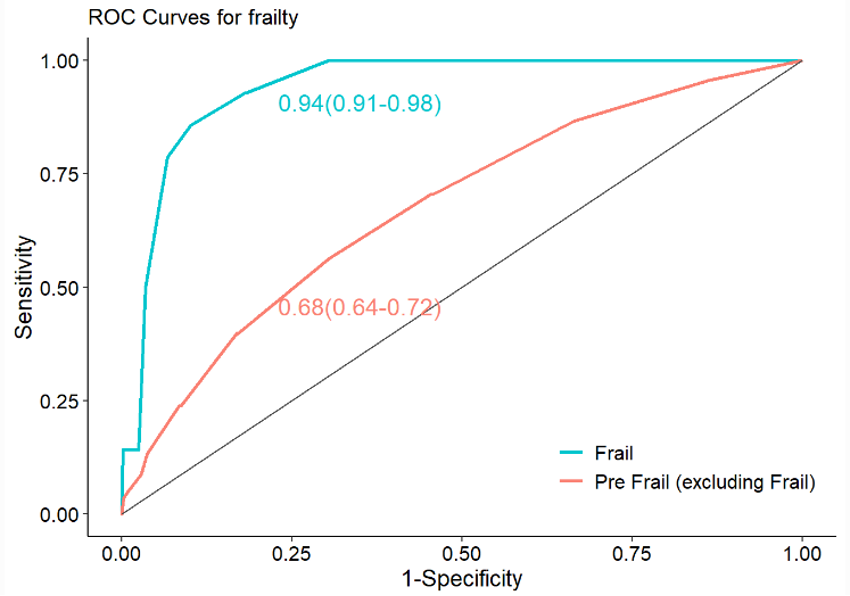
884. The 10-Year Prevalence of Hearing Loss and Dementia Among People With HIV in the United States
Poster Abstracts
Pages: 271-272
Ethan D. Borre1, Anjali Srinivasan1, Julie Deleger1, Lauren K. Dillard2, John Giardina1, Juliessa M. Pavon3, Sachin J. Shah1, Judy R. Dubno2, Sherri L. Smith3, Shibani Mukerji1, Kenneth A. Freedberg1, Howard W. Francis3, Christine S. Ritchie1, Gillian D. Sanders Schmidler3, Emily Hyle1
Background
Hearing loss (HL) and age-associated dementia (AAD) are prevalent and have considerable detrimental effects on quality of life; HL is a leading preventable risk factor for dementia worldwide. As persons with HIV (PWH) age, they are at particular risk for sensorineural HL and AAD. We used simulation modeling to estimate the prevalences of HL and AAD among PWH in the US over the next 10 years.
Methods
We developed the CHARMED microsimulation model of HIV and aging comorbidities in the US, including HL and AAD. We simulated a cohort of PWH engaged in HIV care and on ART at age 65 years throughout their remaining lifetimes. CHARMED includes HL prevalence at model start (28.5% for males, 12.2% for females) and age- and sex-specific annual probabilities of incident HL for persons without HL (0.1-10.4% [NHANES]). We incorporated incident AAD (0.3-10.8%) from the Adult Changes in Thought cohort. For PWH, we assumed no increased risk of HL to project conservative estimates, but included a 1.8-fold increased risk of dementia based on observational data from a Kaiser Permanente cohort. We estimated AAD incidence with and without the proportion attributable to HL by removing the estimated proportion attributable to HL (adjusted incidence risk ratio, 2.0 [95% CI, 1.5-2.8] calibrated from NHATS). For PWH, we adjusted lifetables to reflect this population’s sociodemographic characteristics. We projected age- and sex-stratified prevalences of HL and AAD, which we applied to model-projected numbers of PWH over age 65y across the next 10 years.
Results
From 2023-2033, the numbers of PWH aged 65y or older would increase substantially, and most would be living with HL, AAD, or both (Figure). By 2033, of PWH aged 65y or older in the US we project that 189,300 will be males and 63,100 will be females. Of 189,300 males, 75,700 will have HL alone, 9,700 will have AAD alone, and 32,900 will have both HL and AAD. Among 63,100 females, 17,700 will have HL alone, 3,400 will have AAD alone, and 7,400 will have both HL and AAD.
Conclusions
The number of PWH over 65y with HL and AAD in the US will increase substantially over the next decade. Prevention and treatment efforts, as well as increasing support services for the hearing impaired, potentially through programs like Ryan White, should become higher priorities.
Figure 1.
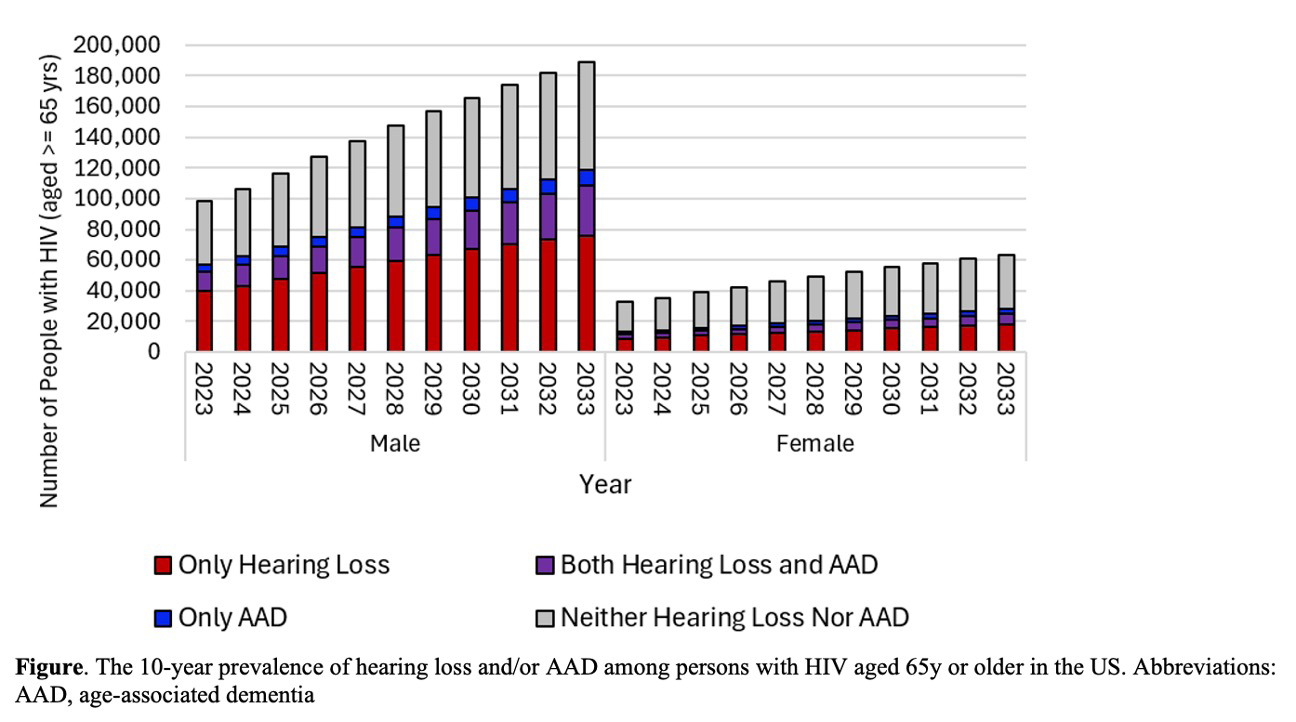
885. Clinical Outcomes of Immune Nonresponse Among Virally Suppressed Adults Living With HIV in Thailand
Poster Abstracts
Page: 272
Sirawit Suteetamrong1, Vasin Vasikasin1, Yanisa Kanjanavithayakul2, Monchai Duangpraphat2, Tanin Apiyangkool3, Worapong Nasomsong1
Background
Despite effective antiretroviral therapy (ART) and achieving virological suppression, a minority of adults living with HIV/AIDS (PLWHA) experience poor CD4+ T cell recovery, known as immune non-response (INR). The clinical outcomes for this population, particularly in relation to serious non-AIDS-related events (SNAE), remain poorly understood due to the challenges in controlling confounding factors across multiple cohorts. This study assessed INR clinical outcomes, focusing on SNAE in PLWHA on ART with virological suppression.
Methods
We conducted a multicenter, retrospective cohort study across three tertiary hospitals in Thailand. PLWHA aged ≥ 20 years, who received ART, had at least two consecutive HIV-1 viral load tests, and were followed for at least 24 months between January 1997 and March 2023 were included. The primary outcome was the incidence of SNAE between the INR group (CD4 < 350 cells/ µL after sustained viral suppression (VS) < 50 copies/mL for ≥ 2 years) and a control group with adequate immune recovery.
Results
Between January 1997 and March 2023, 1,596 PLWHA met the eligibility criteria. After excluding cases with a follow-up period of less than two years, 1,457 PLWHA were included in the analysis. Demographic data indicated that male sex, older age, lower body mass index (BMI), lower CD4 count at diagnosis, earlier treatment era, and the presence of underlying diseases were significant risk factors for INR. The incidence of SNAE was 34 (7.9%) in the INR group compared to 61 (6.0%) in the control group (crude HR 1.20, 95% CI 0.79-1.82, p=0.406). Significant risk factors for SNAE included older age, underlying diseases, male sex, smoking, and a longer time to achieve virological suppression. However, after adjusting for these factors, INR was not significantly associated with SNAE (adjusted HR 1.14, 95% CI 0.74-1.76, p=0.541). The Kaplan–Meier curves demonstrated the time to incident SNAE after sustained VS as cumulative incidence, stratified by immune response status, age at ART initiation, and CD4 level at the time of sustained VS. Age over 50 years at ART initiation revealed a significantly increased incidence of SNAE, while immune response status and CD4 level did not show significant differences.
Conclusions
INR was not associated with an increased incidence of SNAE. This suggests that while INR is an important immunological marker, it may not independently predict serious non-AIDS-related outcomes in PLWHA with sustained virological suppression.
Table 1.
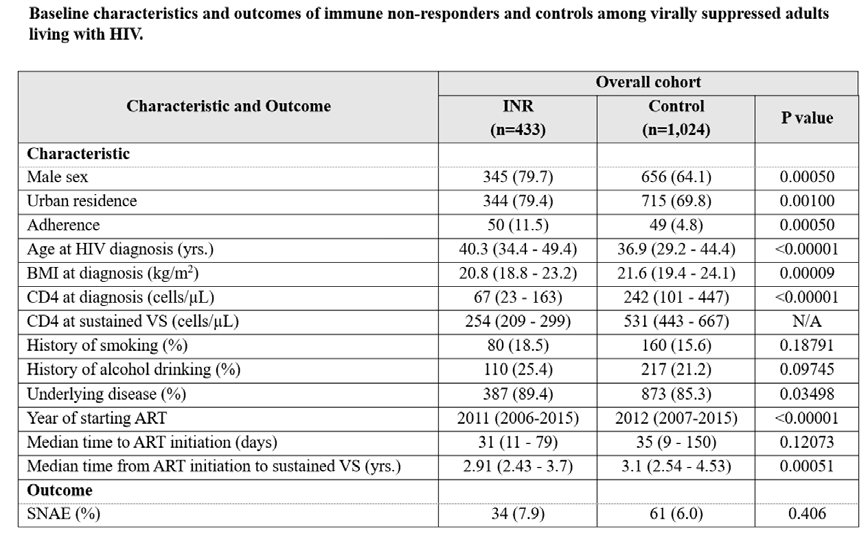
886. Falls Associated With High Medication Regimen Complexity in People With HIV
Poster Abstracts
Page: 272
Yunhan Chen, Archana Asundi, Samantha Roche
Background
Polypharmacy (≥5 non-ART medications) is associated with falls. People with HIV (PWH) have higher polypharmacy prevalence due to comorbidity burden, but data is still lacking on its association to falls, particularly compared in non-PWH. We retrospectively examined whether high polypharmacy was associated with fall risk in PWH and non-PWH using a novel measure for both polypharmacy and regimen complexity known as the medication regimen complexity index (MRCI).
Methods
We retrospectively abstracted data from randomly selected PWH from the Boston Medical Center (BMC) HIV clinic. Inclusion criteria were age ≥40, ≥2 visits in ID clinic post-3/1/22, and HIV diagnosis for ≥1 year. Non-PWH participants from BMC Geriatrics aged ≥40 and with ≥2 geriatric visits post-3/1/22 were also randomly selected as a comparator. MRCI and polypharmacy were calculated using University of Colorado’s MRCI tool. Past year’s falls were manually abstracted. We stepwise and forward selected multivariable logistic regression models predicting fall occurrence by MRCI and polypharmacy. Chi-square tests assessed how MRCI and polypharmacy relate to fall category (0/1/>1 fall).
Results
Of the combined PWH and non-PWH cohort (N=600), 268 (44.7%) were male, 476 (81.2%) were minorities (non-White and/or Hispanic), 58 (10.1%) had recent substance use, and 215 (35.8%) were prescribed psychotropics (Table 1). Non-PWH (80.5) tended to be older than PWH (59.0). Overall MRCI was 35.8 indicating high regimen complexity (>15). 556 (92.7%) had ≥5 medications, 151 (25.2%) had fall occurrence, and 66 (11.0% had >1 fall. MRCI was significantly associated with fall occurrence in PWH (OR=1.03, 95% CI 1.01-1.05) and worse fall category in PWH and combined cohorts (p<0.05). Polypharmacy by medication count was not associated with fall occurrence. Prescribed psychotropic (OR=2.34, 95% CI 1.03-5.32) and recent substance use (OR=2.92, 95% CI 1.24-6.89) were also strongly associated with falls in PWH.
Conclusions
PWH with high MRCI have higher risk for fall occurrence and multiple falls, highlighting need for fall monitoring and polypharmacy interventions. MRCI was significantly associated with falls whereas polypharmacy by med count was not, possibly due to its high prevalence in both cohorts, implying MRCI may be a more sensitive screener. Overall, these data indicate the need for geriatric care approaches to screen for and manage polypharmacy and fall risk.
Table 1.
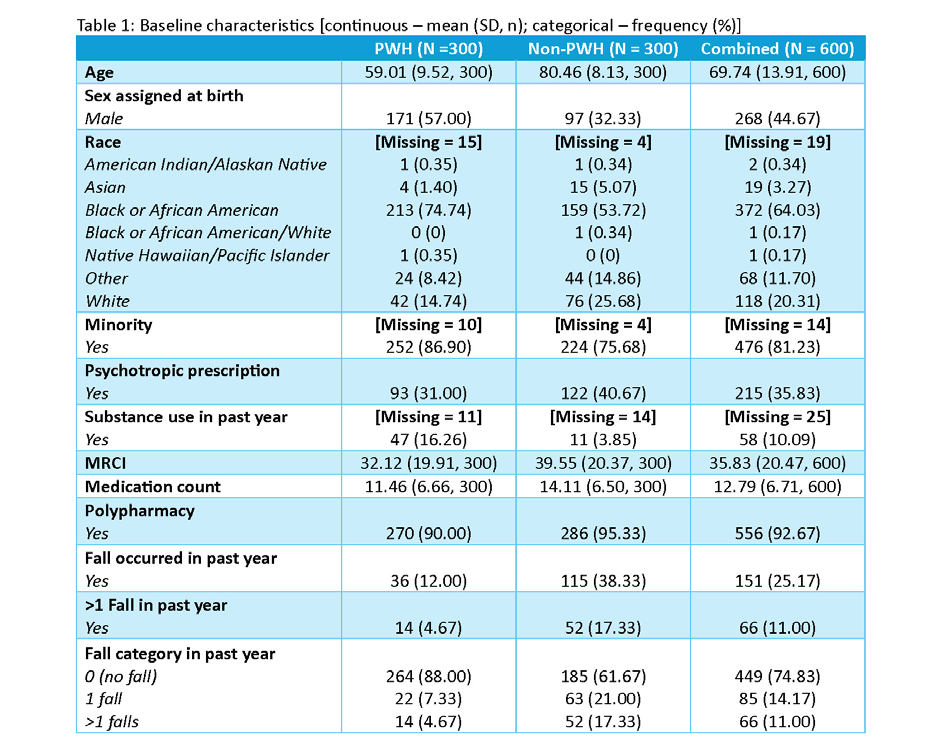
887. Integrated Digital Strategy for Stigma Evaluation in Routine Care for PWH
Poster Abstracts
Pages: 272-273
Alfonso Cabello, Patricia Torres, Ana Cortés, Beatriz Alvarez, Irene Carrillo, Aws Al-Hayani, Laura Prieto-Pérez, Marta López De Las Heras, Gema Fuensalida, Ainara Durán, Raúl Córdoba, Marta Del Olmo, Javier Arcos, Miguel Górgolas
Background
The "fourth 90" assessment of people with HIV (PHIV) is recommended in international guidelines, but it is no defined who and how is the best way to implement in routine care. The aim of this study is to describe the main findings after a standardized assessment of stigma in PHIV.
Methods
Retrospective observational study of the results obtained after an assessment of stigma using a validated 30-item HIV-stigma questionnaire (four-point Likert-type scale) in PHIV attended in a tertiary hospital. As part of routine care, 2,270 PHIV were invited to complete (online) the questionnaire from 2019 to 2024, through an application of the center itself, integrated into the electronic medical record. A multivariate analysis was performed to assess the four dimensions of stigma: personalized stigma, concerns about disclosure, negative self-image, and concerns regarding public attitudes.
Results
1,296 PHIV completed the questionnaire, most of them were men (1,261 - 97%) with a mean age of 46.7 ± 10.4 years (range 25 - 81); 34.4% of them were > 50 years old. The highest degree of stigma was observed in relation to concerns about disclosure and concerns about public attitudes (table 1), with scores on several items ranging from 70% to 90%. In these stigma domains, we could observe statistically significant differences between PHIV >50 years old versus people <=50 years old on several concerns (losing their jobs when employers learn that they have HIV, telling someone about they have HIV is risky, worry that people may judge them when they learn about their HIV status). Regarding personalized stigma and negative self-image, several items have rates ranging from 20 to 46%. In these domains we also see significant differences between PHIV >50 years old versus people <=50 years old (feeling guilty or feeling as if their body were dirty because they have HIV, feeling hurt by how people react to learning I have HIV).
Conclusions
Assessing stigma in routine follow-up can be a useful strategy to measure the needs of PHIV and determine how concerns about disclosure and public attitudes are the main concerns of PHIV. Its implementation through digital tools can facilitate its use, although it requires strategies to achieve results in underrepresented groups such as women or older adults.
Table 1.
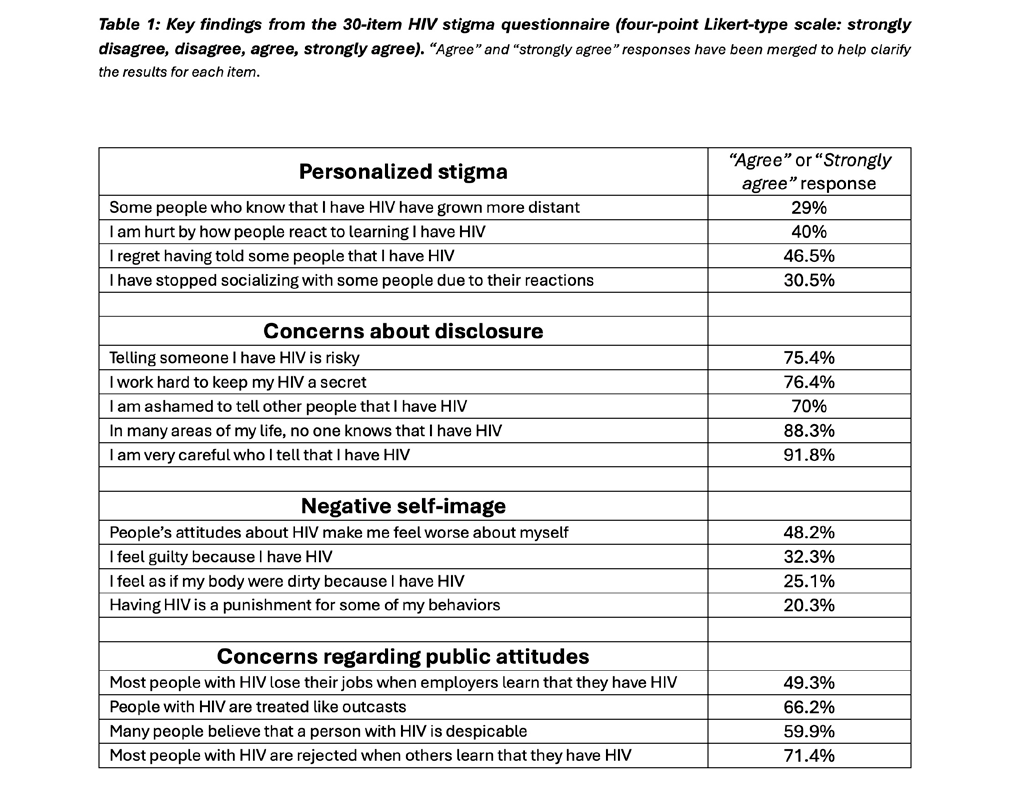
888. Latent Class Analysis Identifies Distinct Comorbidity Profiles in Older (>65 Years) People With HIV
Poster Abstracts
Page: 273
Fabrizio Drago1, Kylie Getz1, Luke Soshnik-Schierling2, Stephen Crystal1, Chintan V. Dave1, Mackey Friedman1, Henry F. Raymond1, Jason Roy1, Markella V. Zanni3, Michael T. Yin4, Stephanie Shiau1
Background
Advances in HIV treatment have resulted in a growing population of older (≥65 years) people living with HIV (PWH) in the U.S. However, the health profiles of this aging population have been poorly delineated. Our objective was to characterize comorbidity patterns among older adults comparing PWH to those without HIV (HIV-).
Methods
We constructed a cross-sectional cohort (2016) using a sample of older (≥65 years) Medicare beneficiaries in the U.S. Beneficiaries with HIV (n=13,080) were matched to HIV- beneficiaries (n=39,240) using propensity scores based on age, sex, race/ethnicity, state, and dual eligibility status. Latent class analysis (LCA) was used to define comorbidity profile classes using 63 comorbidities, pre-coded using the Chronic Condition Warehouse algorithm. Logistic regression was used to estimate the odds of belonging to each comorbidity profile class comparing matched HIV+ and HIV- beneficiaries.
Results
The overall cohort was predominantly male (71.9%), White (46.5%) or Black (37.0%), and had a mean age of 71.3 (SD=5.36). LCA identified five comorbidity profile classes, which we named as: Cardiometabolic (12.3% – of study cohort), Pre-Cardiometabolic (39.5%), Substance-Hepatic (8.4%), Neuro-Psychiatric (7.5%), and Minimal (32.3% – reference). Compared to the other classes, the Cardiometabolic class was characterized by a high prevalence of hypertension, ischemic heart disease, anemia, and hyperlipidemia. The Pre-Cardiometabolic class exhibited a similar profile. The Substance-Hepatic class had elevated prevalence of tobacco use and drug use disorder and viral hepatitis. The Neuro-Psychiatric class was characterized by the highest prevalence of depression, dementia, and Alzheimer’s disease. The Minimal class had the lowest prevalence of most conditions relative to the others. Beneficiaries with HIV had significantly increased odds of belonging to the Pre-Cardiometabolic (OR=1.06, 95% CI [1.01; 1.11]), Cardiometabolic (OR=1.61, 95% CI [1.51; 1.72]), and Substance-Hepatic (OR=2.43, 95% CI [2.27; 2.61) classes compared to their matched HIV- counterparts (Figure 1).
Conclusions
The findings demonstrate that older PWH (≥65 years) have specific comorbidity patterns compared to their HIV- counterparts. These results offer a valuable analytic tool for defining clinically meaningful subgroups and their associated treatments and outcomes, which may inform efforts on prevention, screening, and comprehensive management of comorbidities for older PWH in the U.S.
Figure 1.
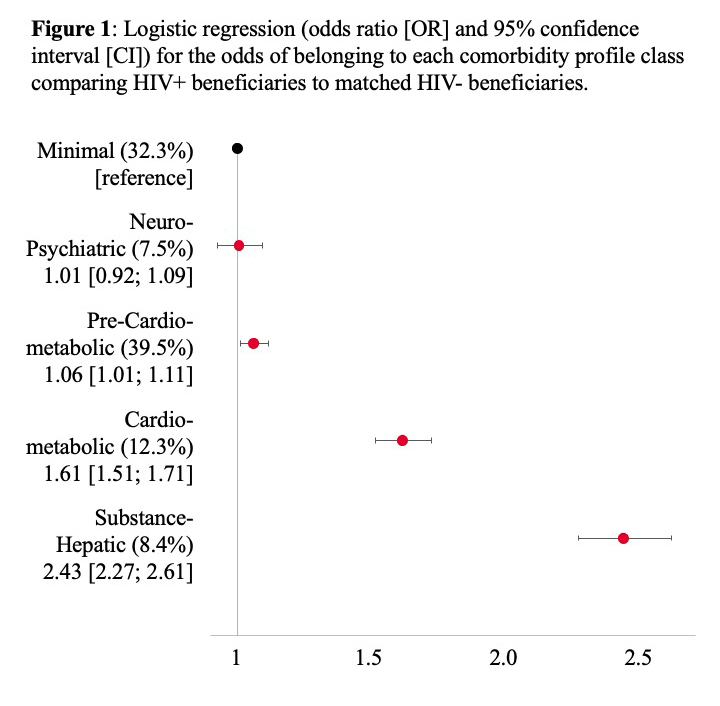
889. Multimorbidity and Quality of Life Among Older People Living With HIV in Urban Tanzania
Poster Abstracts
Pages: 273-274
Theresia A. Ottaru1, Christopher H. Mbotwa1, Joan Rugemalia1, Sylvia Kaaya1, Lisa R. Hirschhorn2, Pilly Chillo1, Dannielle Grayer2, Edith Tarimo1, Mary C. Masters3, Claudia Hawkins2
Background
Approximately one-third of Tanzanians living with HIV are aged ≥50. Aging persons living with HIV (PLWH) are at a higher risk of multi-morbidities compared to older persons without HIV. Multi-morbidities can have a significant negative impact on quality of life (QOL). This study assessed the distribution of geriatric and medical comorbidities and their association with quality of life in older PLWH in Tanzania. These results are important to understand the growing complexities of care needs in this population and inform future strategies to improve health and well-being.
Methods
This cross-sectional study was conducted among PLWH at seven HIV clinics in Dar es Salaam, Tanzania. Participants were included if they were aged ≥50 years, on ART ≥3 years, and in HIV care ≥12 months. Geriatric comorbidity screening included Fried’s Frailty phenotype score (frailty), PHQ-9 (depression), community screening interview for dementia (CSI-D), and WHODAS 2.0 (ADLs). QOL was assessed using the WHOQOL-HIV-BREF. Fasting blood glucose, lipid profile, and serum creatinine were also measured. Multivariable linear regression was used to examine the association between geriatric and medical comorbidities and QOL scores.
Results
A total of 400 older PLWH were enrolled [mean age (SD): 58.6 (±6.9) years; 50% female; mean (SD) duration on ART: 11.8 (±1.8) years]. Among these, 86% were on Dolutegravir (DTG)-based ART, and 73% were virally suppressed (<50 copies/mL). The prevalences of geriatric and medical comorbidities are given in Table 1. Dyslipidemia, hypertension, and pre-frailty/frailty were observed in over 50% of PLWH. The mean (SD) QOL score was 74.2 (±12.2), with the highest scores in physical, spiritual, and social relationships domains. Pre-frailty (β=-4.70, 95% CI:-7.31,-2.07, p<0.01) and frailty (β=-5.52, 95% CI: -9.81,-1.23, p=0.01); ≥1 impaired ADLs (β=-6.34, 95% CI:-9.04,-3.64, p<0.01); mild depression (β=-9.06, 95% CI:-11.90,-6.21, p<0.01) and moderate/severe depression (β=-16.67, 95% CI:-21.39,-11.94, p<0.01) were associated with worse QOL.
Conclusions
A high prevalence of geriatric and medical comorbidities in aging PLWH in Tanzania was observed, several of which were associated with lower QOL. These findings highlight the need to implement the screening and prevention of geriatric clinical and psychosocial conditions in PLWH aged ≥50 into routine care.
Table 1.
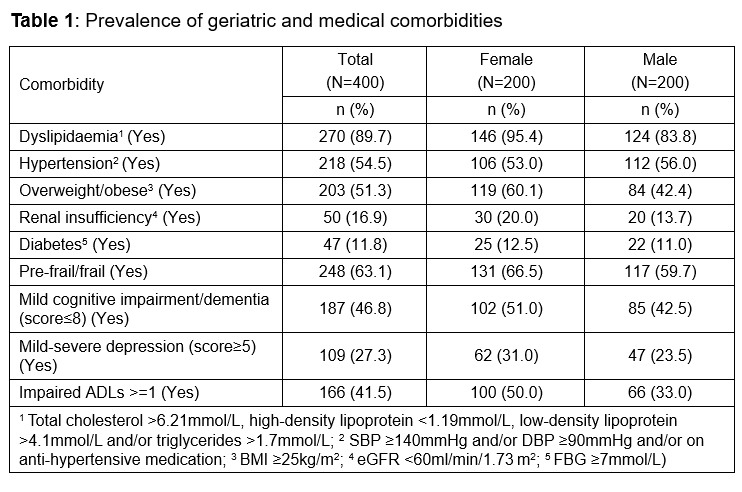
890. Weight and Body Composition After Switch to DTG/3TC From DTG/3TC/ ABC: A Randomized Open-Label Trial
Poster Abstracts
Page: 274
Karen Brorup Heje Pedersen1, Magnus Soeltoft Lindhardt1, Andreas Knudsen2, Gitte Kronborg1, Nina Weis1, Anne-Mette Lebech3, Ole Kirk3, Jannik Helweg-Larsen3, Christian Philip Fischer1, Ann-Brit Eg Hansen1, Søren Møller1, Hartwig R. Siebner1, Jens Dahlgaard Hove1, Jan Gerstoft3, Thomas Benfield4
Background
Antiretroviral therapy in people with HIV (PWH) can be associated with weight gain. Knowledge on the association of nucleoside reverse transcriptase inhibitors such as abacavir (ABC) and weight change in PWH is sparse. Here we conducted a randomized controlled parallel open-label AVERTAS trial to prospectively examine if a 48-week period of discontinuation of ABC would lead to a change in weight or body composition in PWH.
Methods
Adult PWH receiving triple antiretroviral therapy with dolutegravir/ abacavir/lamivudine (DTG/ABC/3TC) were randomized 2:1 to switch to 2-drug DTG/3TC or continue their treatment. Data were collected at baseline, week 24 and week 48. The trial was powered to show a difference in weight change of 2 kg between groups. Secondary outcomes included body composition evaluated by dual-energy x-ray absorptiometry and fat distribution evaluated by visceral and subcutaneous adipose tissue by computed tomography scan, liver elastography, coronary artery calcium score, and metabolic parameters. Primary and secondary outcomes were statistically analysed using a linear mixed model in an intention-to-treat analysis (ITT) and a modified ITT analysis including complete cases who adhered to the protocol.
Results
Of 81 participants, 79% were white and 86% male with a mean age of 45 years. Mean duration of HIV infection was 13.7 ± 8.2 years and (DTG/3TC: 14.5 ± 8.6 years vs. DTG/ABC/3TC: 12.2 ± 7.3 years). Treatment with DTG/ ABC/3TC prior to randomization was 4.8 ± 2.6 years (DTG/3TC: 4.9 ± 3 years vs. DTG/ABC/3TC: 4.5 ± 1.5 years). Switching from DTG/ABC/3TC to DTG/3TC had no statistically significant effect on weight at week 48 (mean difference in weight change -0.5 kg 95% confidence interval (CI): -2.5 to 1.5, p= 0.599) in the ITT analysis or -0.1 kg 95% CI: -1.7- 1.5, p=0.914) in the modified ITT analysis. In the ITT analysis the DTG/3TC group gained 0.4 kg ± 5.1 standard deviation (SD), p=0,589; and the DTG/ABC/3TC group 0.9 kg ± 2.3 SD, p= 0.054). In the modified ITT analysis weight change was 0.9±3.2 kg (p=0.054) for the DTG/ABC/3TC group and 0.9±3.6 kg (p=0.071) for the DTG/3TC. None of the secondary outcomes showed any between-group difference.
Conclusions
Switching to a 2-drug antiretroviral therapy by discontinuing abacavir for 48 weeks did not change body weight, fat distribution, or metabolic parameters in PWH.
Figure 1.
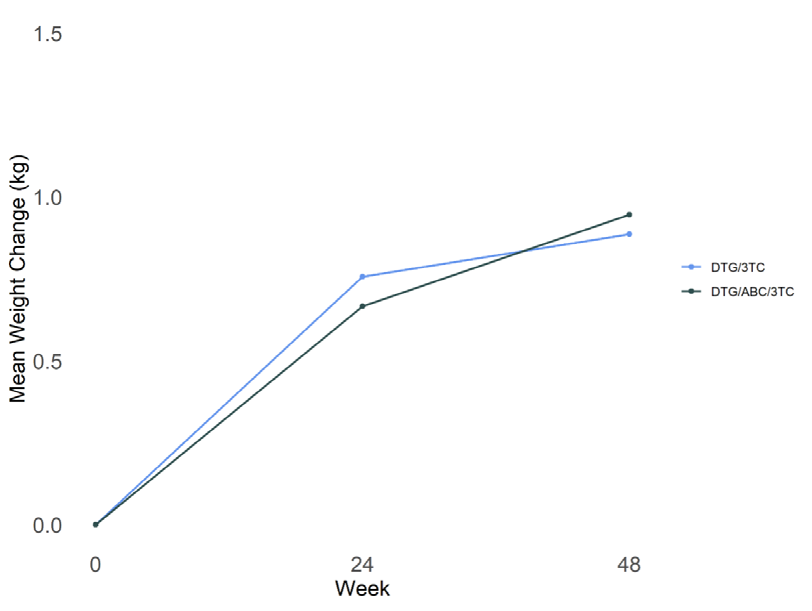
891. Re-Examining InSTI Effects on Weight Gain Among Treatment-Naive People With HIV in North America
Poster Abstracts
Pages: 274-275
Kassem Bourgi1, Peter F. Rebeiro2, Lakeisha Boyd3, Samir K. Gupta4, Cal Cohen5, Jean C. Lee5, Jordan E. Lake6, Frank Palella7, Amy Justice8, George Yendewa9, Jennifer O. Lam10, Michelle Floris-Moore11, Marina Klein12, Timothy Sterling2, John Koethe2, the North American AIDS Cohort Collaboration on Research and Design (NA-ACCORD) of IeDEA
Background
Prior analyses highlighted the association between starting INSTI-based antiretroviral therapy (ART) and weight gain among treatment-naïve people with HIV (PWH) in the North American AIDS Cohort Collaboration on Research & Design (NA-ACCORD). However, it is unclear whether observed relative weight gain after INSTI initiation reflected weight-suppressive effects of older NNRTIs or confounding due to differences in NRTI backbones.
Methods
Adult (≥18 years old), treatment-naïve PWH in NA-ACCORD initiating INSTI, PI, or NNRTI-based ART with dual-NRTI backbone from 01/01/2007 to 12/31/2021 were included. We used multivariable linear mixed-effects models to estimate marginal predictions of weight change over time, adjusted for age, sex assigned at birth, race/ethnicity, cohort site, ART initiation year, HIV acquisition risk, NRTI backbone, baseline HIV-1 RNA and CD4+ count, and weight at treatment start. Continuous variables were fitted using restricted cubic splines with 4 knots. Additional analyses were stratified by NRTI backbone.
Results
Among 32,962 included individuals, median baseline age and BMI were 41 years and 25.4 kg/m2, respectively; 84% were male, and 45% were Black; 10,406 started an INSTI, 13,500 an NNRTI, and 9,056 a PI; and 72% initiated on TDF/FTC, 12% ABC/3TC, and 11% TAF/FTC. At year 2, persons on NNRTIs gained less weight (2.0 kg) than those on PIs and INSTIs (both 4.1 kg). Notably, a similar difference was observed when the analysis was limited to regimens incorporating TDF/FTC and when EFV was excluded from the NNRTIs (Fig 1A). Among INSTIs, persons starting DTG (4.7 kg) and BIC (6.1 kg) had greater weight gain at year 2, while the change for those starting EVG/c (3.5 kg) and RAL (4.0 kg) was lower. In regimens incorporating TAF/FTC, those starting EVG/c still gained less weight—though the difference was not statistically significant— compared to those on DTG or BIC (Fig 1B).
Conclusions
Treatment-naïve PWH who initiated INSTI- or PI-based regimens gained more weight than those starting NNRTI-based regimens, even after adjusting for the NRTI backbone and excluding EFV. Among INSTI users, those on EVG/c with TAF/FTC gained less weight than those on DTG or BIC. These findings suggest that the previously reported differences in weight gain between ART regimens may not be entirely explained by EFV's weight-suppressive effects or its coformulation with TDF. Additionally, other agents, such as non-EFV NNRTIs and EVG/c, may also have weight-suppressive properties.
Figure 1.
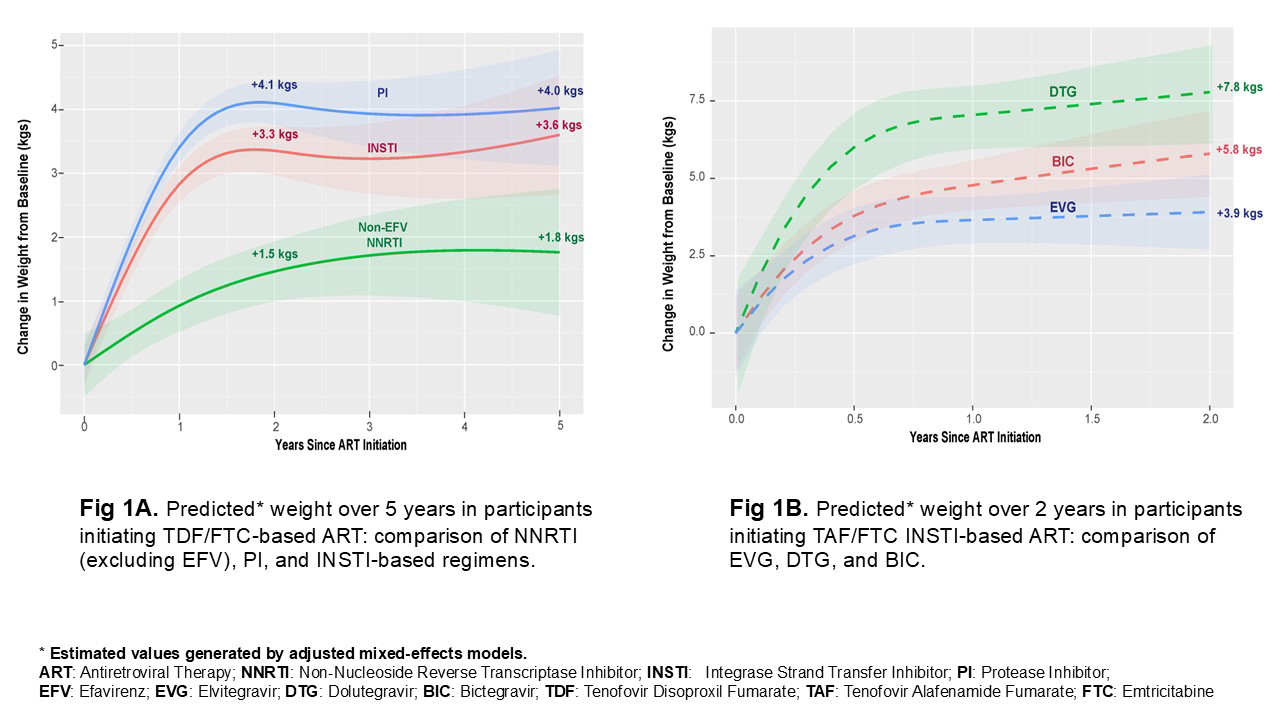
892. Weight Change on F/TAF vs Placebo: Using Common F/TDF Groups to Bridge Data Across Clinical Trials
Poster Abstracts
Page: 275
David Glidden1, Andrew Whiteman2, Yuan Tian2, Joshua Gruber2, Cal Cohen2, Andrea Marongiu
Background
The impact of antiretrovirals on body weight in people with HIV is unclear. Reversible weight-suppressive effects of emtricitabine/tenofovir disoproxil fumarate (F/TDF) have been demonstrated, while effects of emtricitabine/tenofovir alafenamide (F/TAF) are debated. Comparison of F/TAF with placebo in people without HIV may give valuable insight into F/TAF’s effect on weight. We used data from pre-exposure prophylaxis efficacy studies to compare weight gain with F/TAF vs placebo among people without HIV.
Methods
Data from 2 randomized clinical trials were used: iPrEx (NCT00458393; F/TDF vs placebo; N=2499) and DISCOVER (NCT02842086; F/ TAF vs F/TDF; N=3573). Weight was measured during regular study visits. The common F/TDF groups were used to bridge studies and compare mean weight change on F/TAF to placebo. Participants from countries not represented in the iPrEx placebo sample were excluded from this analysis (European sites from DISCOVER). Sensitivity analyses were limited to participants from North America and DISCOVER participants who used F/TDF at baseline (BL).
Results
DISCOVER participants were older, more likely of White race, had higher body mass index at BL, and more frequently used medication associated with weight change vs iPrEx participants. After adjusting for differences in demographics across trials, estimated mean weight change with F/TDF was similar between studies (Figure). Weight change from BL in participants on F/ TAF with no prior F/TDF use (n=1422) was similar to placebo (Figure); there were no statistically significant differences in mean (95% CI) weight change at Week (W) 48 (+0.44 [-0.04, 0.92] kg) and W96 (+0.53 [-0.28, 1.34] kg). Among DISCOVER participants who switched from F/TDF to F/TAF (n=360), differences in mean weight change vs placebo were larger: +1.15 (0.53, 1.77) kg at W48 and +1.74 (0.78, 2.70) kg at W96. Results were consistent when restricted to North American participants and when using different model and sample weighting approaches.
Conclusions
This is the first analysis comparing changes in weight with F/ TAF vs placebo. The observed weight trajectories in the 2 study samples with F/ TDF were nearly overlapping, supporting the general validity of our cross-trial comparison. Greater weight gain among those who switched from F/TDF was consistent with a reversible weight-suppressive effect of F/TDF. Similar observed weight change with F/TAF and placebo in people without HIV suggests no clinically meaningful effect of F/TAF on weight gain.
Figure 1.
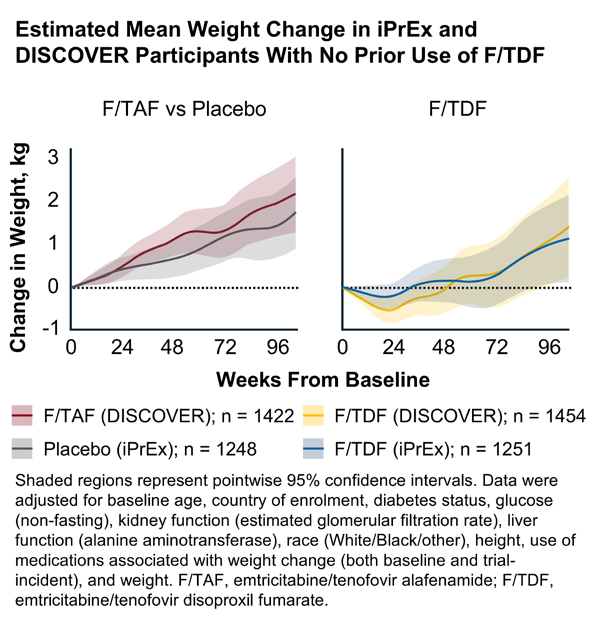
893. Body Composition Changes in People With HIV Switching From or Maintaining TDF-Based Regimens
Poster Abstracts
Page: 275
Jovana Milic1, Stefano Calza2, Stefano Renzetti2, Federico Motta1, Gianluca Cuomo3, Marianna Menozzi3, Giuseppe Mancini1, Cristina Mussini1, Giovanni Guaraldi1
Background
Weight gain might occur in people with HIV (PWH) switching from tenofovir disoproxil fumarate (TDF) to tenofovir alafenamide (TAF)-based antiretroviral therapy (ART), but data regarding body composition are missing. The objective of the study was to explore body composition (BC) changes in PWH switching from or maintaining TDF-based ART.
Methods
This was an observational longitudinal study including ART-experienced PWH attending the Modena HIV Metabolic Clinic (Italy) from 2004 to Feb 2024 with at least 3 assessments for BC, measured by dual energy X-ray absorptiometry (DEXA). BC comprised total lean and fat mass, including trunk fat. Baseline (time 0, T0) was defined as the first available DEXA in which TDF-based ART was recorded. In the switching groups, time 1 (T1) was the date of switching to TAF (group 2) or abacavir (ABC) and/or lamivudine (3TC)-based ART (group 3), while in PWH who maintained TDF (group 1) was the closest date to other two groups. Groups were matched for median time duration between T0 and T1. Time 2 (T2) was defined as 2 years after the switch in all groups. The effect of switching from or maintaining TDF on BC changes was explored in the linear mixed model (LMM) adjusted for age and sex.
Results
A total of 1235 PWH were included (29.5% women). At T0, median age was 45 yrs, median BMI was 23.4 kg/m2, median CD4 cell count 590 c/microL. At T1, groups 2 and 3 were older (Group 1, 2, 3: 48, 53, 50 yrs) and had higher: BMI (Group 1, 2, 3: 23.6, 24.5, 23.4 kg/m2), total fat (Group 1, 2, 3: 15, 21, 16 kg) and trunk fat (Group 1, 2, 3: 8, 8.6, 11 kg) compared to Group 1 (all p<0.001). No differences were observed in total lean mass among the groups at T1. After a follow-up of 2 years, differences were observed in BMI (Group 1, 2, 3: 23.6, 24.5, 23.5 kg/m2), total (Group 1, 2, 3: 16, 21, 17 kg) and trunk (Group 1, 2, 3: 8.4, 10.8, 9.1 kg) fat mass (all p<0.001). In LMM, at T2, trends for BMI and lean mass increase were significantly higher in PWH switching to TAF or ABC and/or 3TC when compared to PWH maintaining TDF (Table 1). Conversely, trends for total fat and trunk increase were higher in PWH maintaining TDF when compared to switching to TAF (Table 1). Trends over time for BC changes among the groups is shown in Table 1.
Conclusions
After 2 years of follow-up, maintaining TDF was associated with decrease in BMI and total lean mass, suggesting that weight loss observed with TDF regimens might be related to unhealthy lean loss.
Table 1.
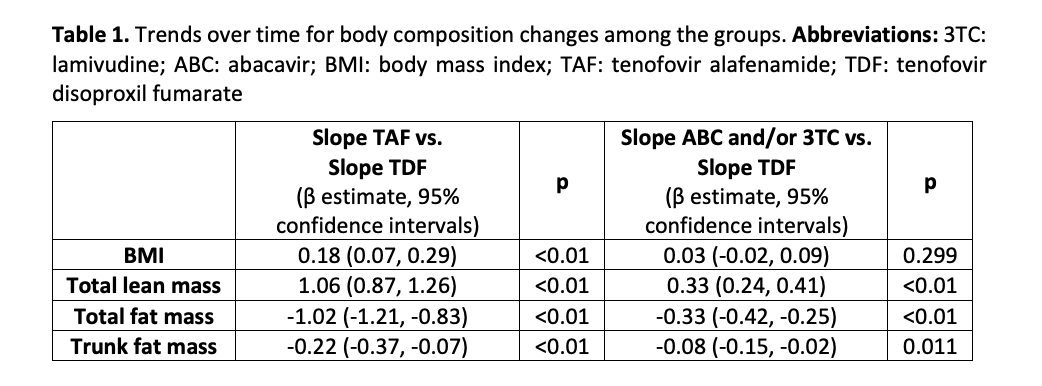
894. Risk Factors Associated With Extreme Weight Gain in People With HIV
Poster Abstracts
Pages: 275-276
Laven Mavarani1, Sarah Albayrak-Rena1, Stefanie Sammet1, Felix Maischack1, Anja Potthoff2, Martin Hower1, Andreas Schoenfeld1, Dirk Schadendorf1, Boerge Schmidt1, Stefan Esser1, the HIV HEART Aging Cohort Study Group
Background
Increasing prevalence of obesity has been observed among people with HIV (PWH). Weight gain is a multifactorial process. This study evaluates potential factors for weight gain over 5 years in PWH.
Methods
The HIV-HEART (HIVH) cohort is a prospective study assessing cardiovascular risk of PWH in the Ruhr area of Germany since 2004. PWH with weight measurements at two different time points in 5 years were included in this analysis. To assess risk factors for weight gain, logistic regression adjusted for baseline age, sex, and duration of HIV was used to compare participants with a weight gain of ≥10% (group A, N=212) versus a stable weight from 0 to ±5% (group B, N=974) within 5 years. Odds ratios (OR) and corresponding 95% confidence limits (Cl) were presented. For continuous factors, the OR was shown per standard deviation (SD). Variables were considered at baseline (BL). For the antiretrovirals (ARV), dummy variables were created, with no ARV taken at BL and 5-year follow-up (5YFU) as reference.
Results
1186 participants (mean age 49.4±11.3 years, 87% Caucasian, 16.9% females, 2% ART naïve) were included in the analysis. Mean weight increased from 77.2±14.8 to 89.8±17.2kg and from 79.2±15.7 to 79.5±15.8kg within 5 years in groups A and B, respectively. Regression models are shown in Figure 1. Increasing age showed associations with a decreased risk for weight gain (OR 0.970 [95%Cl 0.954-0.985] per SD). Prevalent lipoatrophy was associated with a lower risk of weight gain (OR 0.547 [95%Cl 0.286-0.980]). An increase in CD4/ CD8 ratio was associated with increased risk of weight gain (OR 1.281 [95%Cl 1.101-1.489]). PIs taken at BL and 5YFU compared to no PIs taken at BL and 5YFU were associated with less weight gain (OR 0.479 [95%Cl 0.293-0.756]). Overall, NNRTI, NRTI, and INSTI were not associated with increased or decreased risk. Among specific ARVs analysed ), switch to TAF after BL was associated with an increased risk for ≥10% weight gain (OR 1.550 [95%Cl 1.088-2.204]), while TDF taken at BL and 5YFU shows a decreased risk (OR 0.673 [95%Cl 0.413-1.068]).
Conclusions
Younger age and increasing CD4/CD8 ratio were associated with ≥10% weight gain over 5 years. Continuous use of PIs was associated with a lower risk of weight gain, while no significant association of NNRTI or INSTI intake with ≥10% weight gain was observed over 5 years. Switching off TDF showed a trend towards increased weight gain. Switching to TAF after BL was associated with an increased risk for ≥10% weight gain.
The figure, table, or graphic for this abstract has been removed.
895. Serum Metabolomic Signatures Associated With InSTI-Related Weight Gain in Women With HIV
Poster Abstracts
Page: 276
Chin-An Yang1, Young-Mi Go1, Brahmchetna Bedi1, Cyra C. Mehta1, Ighovwerha Ofotokun1, Anandi N. Sheth1, Mohammed K. Ali1, Maria L. Alcaide2, Frank Palella3, Jordan E. Lake4, Leah H. Rubin5, Deborah Konkle-Parker6, Anjali Sharma7, Cecile D. Lahiri1, Jessica A. Alvarez1
Background
Initiation of integrase strand-transfer inhibitors (INSTIs) is associated with body weight gain in women with HIV (WWH); however underlying mechanisms are unclear. Leveraging samples from the Women’s Interagency HIV Study (WIHS) cohort, we performed serial high-throughput untargeted metabolomics to determine metabolic signatures associated with INSTI-related weight gain.
Methods
This study included virologically suppressed (<200 c/mL) WWH on antiretroviral therapy (ART) and women without HIV (WWoH) enrolled in WIHS. We compared weight change among WWH who switched/added an INSTI with those who remained on non-INSTI ART and with WWoH (weight gain, defined as ≥5% change from baseline, versus weight maintenance, defined as <5% change). Serum samples were collected from three time points: 6-12 months prior to switching to or adding an INSTI (baseline), 1-6 months post-switch/ addition, and 1-2 years post-switch/addition, with equivalent time points for the non-INSTI and WWoH. Samples were analyzed with liquid chromatography-mass spectrometry-based high-resolution metabolomics (HRM). Differences between weight change groups were assessed using linear mixed-effect models, adjusted for baseline age and body mass index (BMI) and stratified by ART exposure. Metabolic pathway enrichment analysis was performed on significant metabolites using the mummichog algorithm.
Results
N =191 women, aged 25-70 years, were included (n=37 INSTI, n=88 non-INSTI, n=66 WWOH; 70% Black; 30% White or other ethnicities). In the INSTI group, 830 metabolites enriched within 12 metabolic pathways differed between weight gainers and maintainers (p<0.05). INSTI-specific pathways included n-3 polyunsaturated fatty acid (PUFA), linoleic acid (LA) oxylipin, and leukotriene metabolism (p<0.05, Table), wherein most of metabolites were higher at baseline in weight maintainers and remained elevated. Eicosapentaenoic acid metabolism differed by weight gain in the non-INSTI group. In WWOH, no PUFA or oxylipin-related metabolism was found, except for LA, which was enriched in de novo fatty acid biosynthesis.
Conclusions
Untargeted HRM identified pathways related to anti- and pro-inflammatory lipid metabolism that were specific to INSTI-related weight gain, indicating a metabolic profile that may be vulnerable to weight gain after INSTI switch/addition for WWH. Further research is needed to reveal underlying biological mechanisms of INSTI-related weight gain.
Table 1.
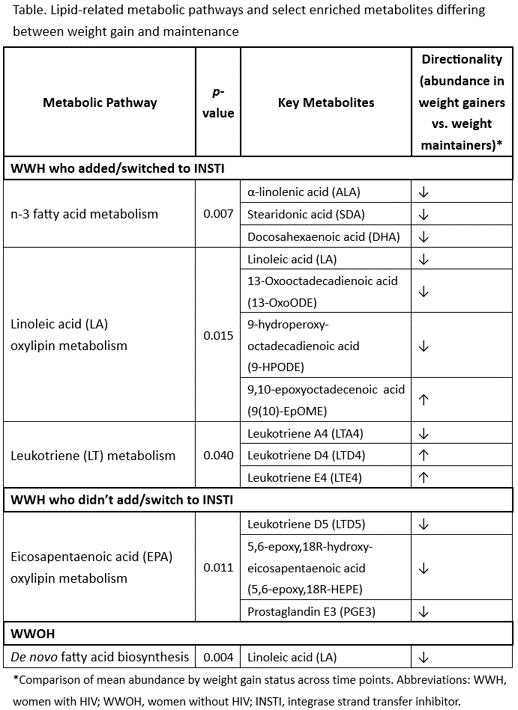
896. Weight Change in Trial of Switching From Second-Line bPI to B/F/TAF in a Context of Food Insecurity
Poster Abstracts
Pages: 276-277
Fabienne Homeus1, Samuel Pierre1, Jean Bernard Marc1, Jodany Bernadin1, Vanessa Rivera1, Sean E. Collins2, Letizia Trevisi3, Abigail Zion4, Adina Zhang4, Elizabeth Fox5, Jean W. Pape1, Serena Koenig3, Vanessa Rouzier1
Background
Data are limited on weight gain after switching from second-line boosted PI-based regimens to B/F/TAF in low and middle-income countries (LMICs). We assessed weight in a clinical trial that compared continuing boosted PI + NRTIs vs. B/F/TAF during a period of severe civil unrest in Haiti.
Methods
The parent study was a prospective, open-label trial conducted at GHESKIO in Port-au-Prince, Haiti. Adults (³18 years) with viral suppression on second-line PI/r-based ART were randomized to continue their current regimen vs. switch to B/F/TAF. In this secondary analysis, we assessed weight gain and food insecurity.
Results
Between October 2020 and April 2023, 301 participants were enrolled and randomized (B/F/TAF: 153; bPI: 148). Median age was 49 years (IQR 42, 56), 173 (57%) were women, the median BMI was 23.3 kg/m2 (IQR 20.8-27.1) and 28 (9%) had BMI <18.5. At enrollment, 175 (60%) were taking lopinavir/r and 115 (40%) atazanavir/r; 226 (78%) were taking tenofovir disoproxil fumarate, 51 (18%) zidovudine, and 13 (4%) abacavir; all were taking lamivudine or emtricitabine. At Week 48, the median change in weight was +1.7kg (IQR: -0.6, +5.1) in the B/F/TAF and -1.1kg (IQR: -2.9, +1.1) in the bPI group (p<0.001). In the B/F/TAF group, median weight gain was higher in females than males (+2.9 kg vs. +0.6 kg; p<0.001), and 21.7% of females vs. 8.2% of males (p<0.001) gained ³10% body weight (Table 1). In contrast, the bPI group had median weight loss of -0.8kg in females and -1.7 kg in males. In the total cohort, the proportion of participants with severe food insecurity increased from 40.1% at enrollment to 49.2% at 48 weeks (p<0.001). There was no difference in the proportion with severe food insecurity at enrollment or 48 weeks by group.
Conclusions
Weight gain was common among females who switched from PI/r-based regimens (78% included TDF) to B/F/TAF, in the context of high rates of food insecurity. This is consistent with findings of similar drug switches in other settings. In contrast, we observed weight loss in the standard of care group, which may have different clinical implications in settings with high rates of food insecurity. Understanding the implications of weight gain after stopping TDF is essential to guide global policies on TDF-sparing regimens.
Table 1.
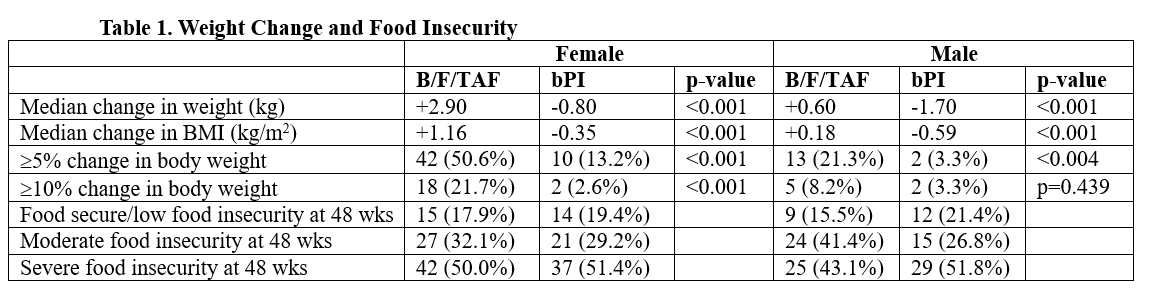
897. Body Composition Changes in People With HIV Switching to DTG/3TC or BIC/TAF/FTC
Poster Abstracts
Page: 277
Silvana Di Gregorio1, Lucas R. Brun2, Santiago Mourelo3, Mar Masiá4, Lucio Jesús Garcia Fraile Fraile5, Maria J. Crusells6, Pere Domingo7, Adrian Curran8, Roberto Güerri9, Pablo Ryan10, Jose L. Blanco11, Maria-Jesus Vazquez12, Marta De Miguel13, Belen Alejos14, Esteban Martinez11, the PASO-DOBLE (GeSIDA 11720) Randomized Trial Team
Background
Switching to DTG/3TC (DOV) or BIC/FTC/TAF (BIK) in the PASO-DOBLE trial (ClinicalTrials.gov NCT04884139) showed noninferior efficacy of DOV vs. BIK and weight gain in both groups, which was significantly greater for BIK at 48 weeks. We aimed to know how switching to DOV or BIK affects body composition and whether there are differences between the two regimens.
Methods
Participants in the PASO-DOBLE trial underwent whole-body DXA scans to assess total mass (TM), fat mass [total (FM) and regional, including abdominal (ABFM), visceral (VFM), and appendicular (LFM)], and lean mass [total (LM), and appendicular (ALM)] and a single abdominal CT scan at L4 level to measure subcutaneous (SAT), visceral (VAT), and total (TAT) fat area at baseline and 48 weeks. Mean changes in the pooled population were used to estimate the impact of switching to DOV or BIK on body composition. Linear regression adjusted by sex, TAF at baseline, age and race was used to assess differences in compartments between DOV or BIK. DXA-defined obesity (FM >25% men; >32% women) was assessed at baseline and 48 weeks.
Results
Out of 553 participants in the trial, 447 (81%) (DOV, n=223; BIK, n=224) had paired DXA and CT scans available and were analyzed. At baseline, mean (IQR) age was 50 (40-57) years, 27% were women, 35% on TDF, and 26% on EFV. In the pooled population, there were significant mean (95% CI) increases in DXA-derived TM +1.2% (0.7, 1.7), FM +17.9% (14.6, 21.2), ABFM +23.9% (18.6, 29.2), VFM +82.4% (29.7, 135.3), LFM +21.7% (17.9, 25.5); decreases in DXA-derived LM -2.6% (-3.2, -2.0), and ALM -2.8% (-3.6, -2.1); and increases in CT-derived VAT +21.2% (14.5, 27.8) and TAT +1.5% (0.0, 2.9), but no changes in SAT 0.0% (-1.4, 1.4). Adjusted mean treatment differences (95% CI) BIK minus DOV in changes from baseline are shown in the table; in general, total and fat mass increased more and lean mass decreased less with BIK vs. DOV. DXA-defined obesity increased from baseline (DOV 57.7%, BIK 57.0%) to 48 weeks (DOV 71.3%, BIK 73.5%) [adjusted OR (95% CI) for treatment difference 1.31 (0.76; 2.23)] in both arms. Changes in all fat compartments were positively correlated with changes in insulin resistance (p<0.04).
Conclusions
Switching to DOV or BIK was associated with fat gain, which was relatively greater at the visceral compartment, and lean mass loss. Increases in TM and LFM were significantly greater with BIK than with DOV. Fat gain in any compartment was associated with insulin resistance.
Table 1.
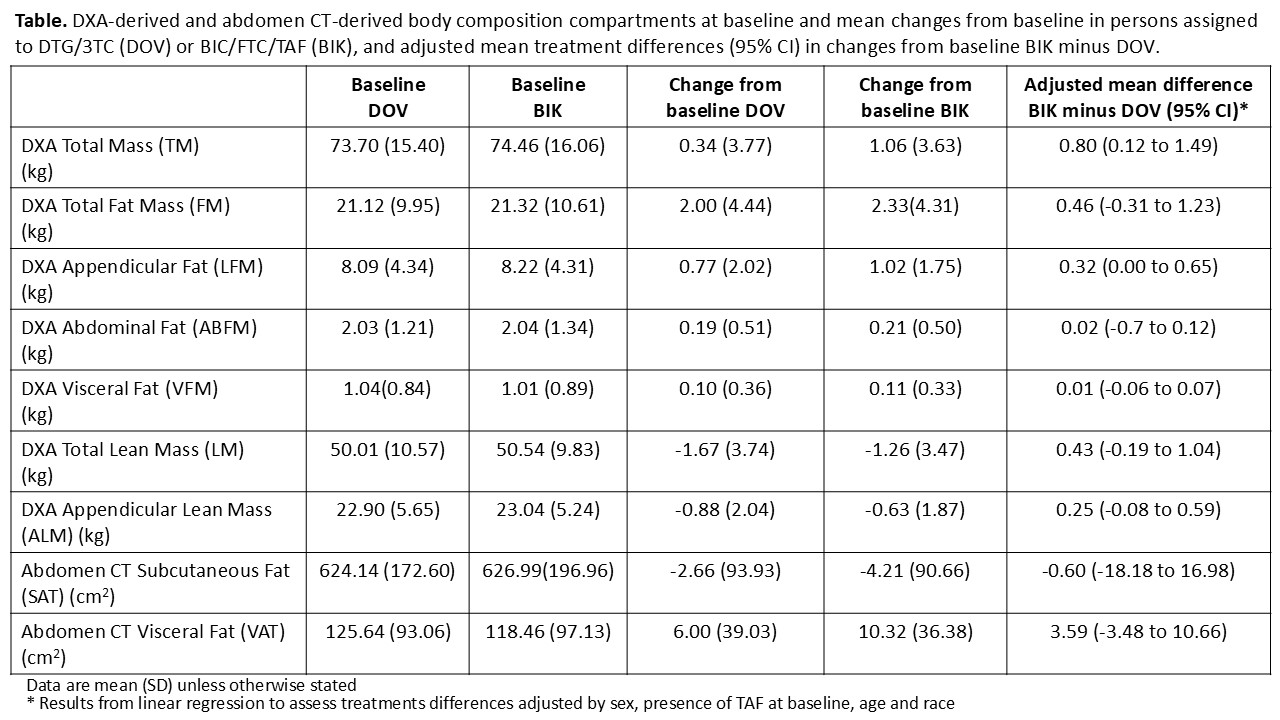
898. Incident Diabetes Among People With HIV After Switching to Integrase Strand Transfer Inhibitors
Poster Abstracts
Page: 277
Y. Joseph Hwang1, Catherine Lesko2, Todd Brown1, G. Caleb Alexander1, Lauren Zalla2, Jarratt Pytell3, Seun Falade4, Richard Moore2, Keri N. Althoff2, Jonathan Colasanti5, M. John Gill6, Vincent C. Marconi5, Michael Horberg7, Maile Karris8, Anthony Todd Fojo1, the North American AIDS Cohort Collaboration on Research and Design (NA-ACCORD) of IeDEA
Background
Initiation of integrase strand transfer inhibitor (INSTI)-based antiretroviral therapy (ART) is associated with weight gain and diabetes mellitus (DM) among ART-naïve people with HIV (PWH). However, most are ART-experienced and may switch to an INSTI-based ART from a different antiretroviral regimen. We aimed to estimate the risk of incident DM associated with switching from a non-nucleoside reverse-transcriptase inhibitor (NNRTI) or protease inhibitor (PI) to an INSTI in a large, diverse cohort of ART-experienced PWH.
Methods
We studied PWH aged ≥18 years in the North American AIDS Cohort Collaboration on Research and Design who did not have DM history and had used NNRTI or PI for ≥180 days between 2007 and 2021. Our study design emulated a trial with multiple baselines: at each HIV clinic visit, participants were eligible to either continue NNRTI or PI or switch to INSTI (bictegravir, dolutegravir, elvitegravir, or raltegravir). We followed participants from each eligible index visits until incident DM, death, loss to follow-up, or administrative censoring at the end of study period or 10 years follow-up. We used inverse probability of treatment weights to balance treatment groups on demographics, body mass index, viral suppression status, comorbidities, and comedications (including tenofovir formulations). We additionally censored follow-up time if people switched to INSTI after the index visit and used weights to mitigate potential bias from informative censoring. We estimated hazard ratios (HRs) using weighted Cox regression with robust variance estimator.
Results
We included 58,971 PWH who attended 727,053 visits where they continued NNRTI or PI and 12,976 visits where they switched to INSTI. The median age was 51 years and 86% were male at birth. Switching to an INSTI was associated with a higher risk of incident DM (weighted HR, 1.53; 95% confidence intervals [CI], 1.27–1.85) compared to continuing an NNRTI or PI. Switching to specific INSTIs also conferred increased DM risk (weighted HRs 1.47–1.91; Table). In a post-hoc analysis of index clinic visits from 2016 onwards, switching to an INSTI was associated with weighted HR of 1.19 (95% CI, 0.92–1.54).
Conclusions
Switching from an NNRTI or PI to an INSTI was associated with an increased risk of incident DM in this diverse cohort of PWH from multiple sites across North America. These findings inform antiretroviral prescribing and tailored risk-benefit approach for PWH, especially those with clinical concern for new-onset DM.
Table 1.
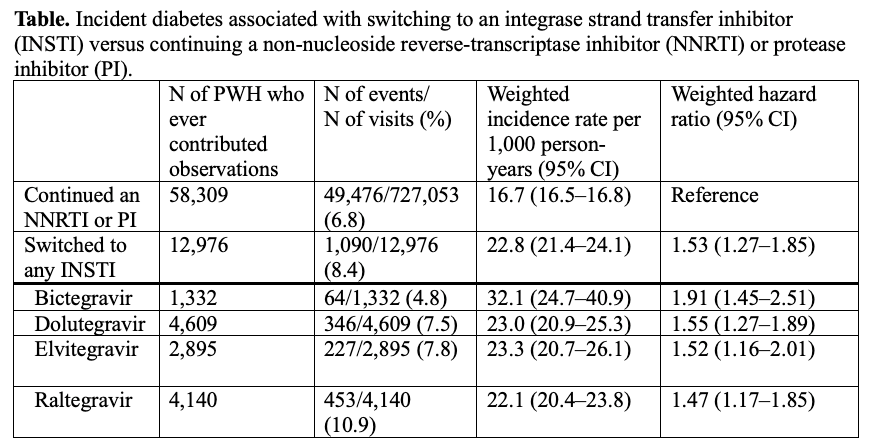
899. Decreased Adipose Tissue Gene Expression After a 48-Week Switch From an InSTI Regimen to TDF/3TC/DOR
Poster Abstracts
Pages: 277-278
Christine Katlama1, Antoine Faycal1, Kenza Ngono-Ayssi2, Luminita Schneider1, Marc-Antoine Valantin1, Claudine Duvivier3, Zineb Ouazene4, Christia Palacios5, Aissata Didine Kaba2, Yasmine Dudoit2, Claire Lagathu2, Veronique Béréziat2, Lambert Assoumou1, Jacqueline Capeau2, Jennifer Gorwood2, the ADDORE Study Group
Background
INSTIs are known to induce weight/fat gain, the pathogenesis and reversibility of which remain unclear. The ongoing ADDORE study aimed to evaluate the evolution of adipose tissue (AT) between baseline and W48 in PWH with INSTI-associated weight gain switched to TDF/3TC/DOR. We present here preliminary adipocyte gene expression results.
Methods
PWH underwent two surgical AT biopsies from subcutaneous fat in the central abdominal area at inclusion and W48 following switch to TDF/3TC/ DOR. AT samples were homogenized using a TissueLyser and RNA was isolated using the Macherey-Nagel method. 14 pairs of samples had a quality level that allowed mRNA quantification by RT-PCR. We evaluated the expression of 14 genes by RT-PCR in comparison with the expression of two reference genes (HPRT and PPIA).
Results
Of the 22 enrolled participants, 14 pairs of samples had a quality level that allowed mRNA quantification by RT-PCR. In these 14 PWH (median age: 46 years (IQR 42-57), FTM ratio: 3/11, median BMI: 30.4 kg/m2 (29.3-35.3) at baseline), weight was significantly reduced by 2.0 kg from 100.6 ± 4.1 to 98.6 ± 4.0 kg (p=0.03) after W48 corresponding to corresponding to a weight loss of 2.3 ± 1%. At inclusion, as expected, the expression of the two genes involved in lipid accumulation, FASN, encoding the lipid storing enzyme fatty acid synthase, and SREBF1C, encoding the transcription factor Srebp-1c, were related (R=0.729, p=0.003). As well, the expression of ADIPOQ, encoding adiponectin, was related to that of PPARG encoding the adipogenic transcription factor PPAR-gamma (R=0.790, p=0.0008), as expected since ADIPOQ transcription is activated by PPAR-gamma. After 48-week on TDF/3TC/DOR, we observed a reduction in the expression of PPARG (1.42 ± 0.11 to 1.23 ± 0.13 p=0.02) and of the two genes involved into lipid accumulation (SREBF1C 1.41 ± 0.18 to 1.03 ± 0.15 p=0.049 and FASN 1.36 ± 0.18 to 1.02 ± 0.14p=0.085). This suggests reduced adipocyte hypertrophy and lipid accumulation whereas the expression of genes involved in fibrosis, adipokines (leptin adiponectin) and macrophage infiltration was not modified.
Conclusions
These results suggest that switch from INSTI to TDF/3TC/ DOR allowed a partial reversal of the INSTI-induced gene expression profile associated with adipocyte hypertrophy and lipid accumulation. Larger clinical pathogenesis studies are needed to better understand the underlying mechanisms of INSTI-induced weight gain and its reversibility by doravirine.
900. In Vitro Modulation of Adipocyte Differentiation by TAF/TDF After Challenge With New ARV Regimens
Poster Abstracts
Page: 278
Maria Aurora Carleo1, Paolo Maggi2, Emiliano Del Genio2, Alfonso Baldi2, Antonio De Luca2, Vincenzo Esposito1
Background
We previously demonstrated in a 3T3L1cells in vitro model of adipogenesis, that Integrase Strand Transfer Inhibitors (INSTI) increase adipogenesis, while, tenofovir alafenamide fumarate (TAF) and tenofovir disoproxil fumarate (TDF), displayed an inhibitory effect, counteracting increased adipogenesis caused by INSTIs [dolutegravir (DTG), bictegravir (BIC)]. Deregulation of the expression levels of two families of adipocyte differentiation transcription factors, the CCAAT/enhancer-binding proteins (C/ EBPs) and the peroxisome proliferator-activated receptors (PPARs), was also confirmed with a different degree of expression according to different antiviral drug. Morphological changes were also detected in cells treated by TDF/TAF with increased expression of E-TR7 a well-known fibroblastic marker. Presently it is not clear the effect of nucleoside reverse transcriptase inhibitors (NNRTIs), alone or in combination with TDF/TAF or INSTIs on adipocyte differentiation. Aim of the study was to evaluate in vitro these last potential activities as in routine clinical practice.
Methods
We used a 3T3-L1 cells in vitro model of adipogenesis to study the effects on adipocyte differentiation of the NNRTIs doravirine (DOR) and rilpivirine (RPV), alone or in combination with the previously evaluated DTG and the newer INSTI cabotegravir (CAB), or TDF or TAF. Expression levels of PPARγ and C/EBPα, and the intracellular lipid accumulation by Red Oil staining, were used to monitor adipocyte differentiation (fig. 1). Immunoistochemistry for E-TR7 was also performed on terminally differentiated cells.
Results
CAB, DOR and RPV were all able to increase adipogenesis, compared to control, while cells showed some morphological changes. This last effect was more evident with CAB and DOR, and less with RPV. When used in combination, NNRTIs were able to increase the adipogenic effects of CAB and DTG, while TAF and TDF respectively combined with RPV and DOR displayed an inhibitory effect. Furthermore, NNRTIs and CAB enhanced the expression levels of ER-TR7 compared to control, being the combination DTG+DOR less effective in this activity.
Conclusions
Our data support the evidence that in-vitro challenge of 3T3-L1 cells with INSTIs and NNRTIs is able to increase adipocytic differentiation and to drive a number of these cells toward the expression of fibroblastic features, whereas TAF and TDF when combined to different ARV have an antagonistic role on this phenomenon confirming our previous report.
Figure 1.
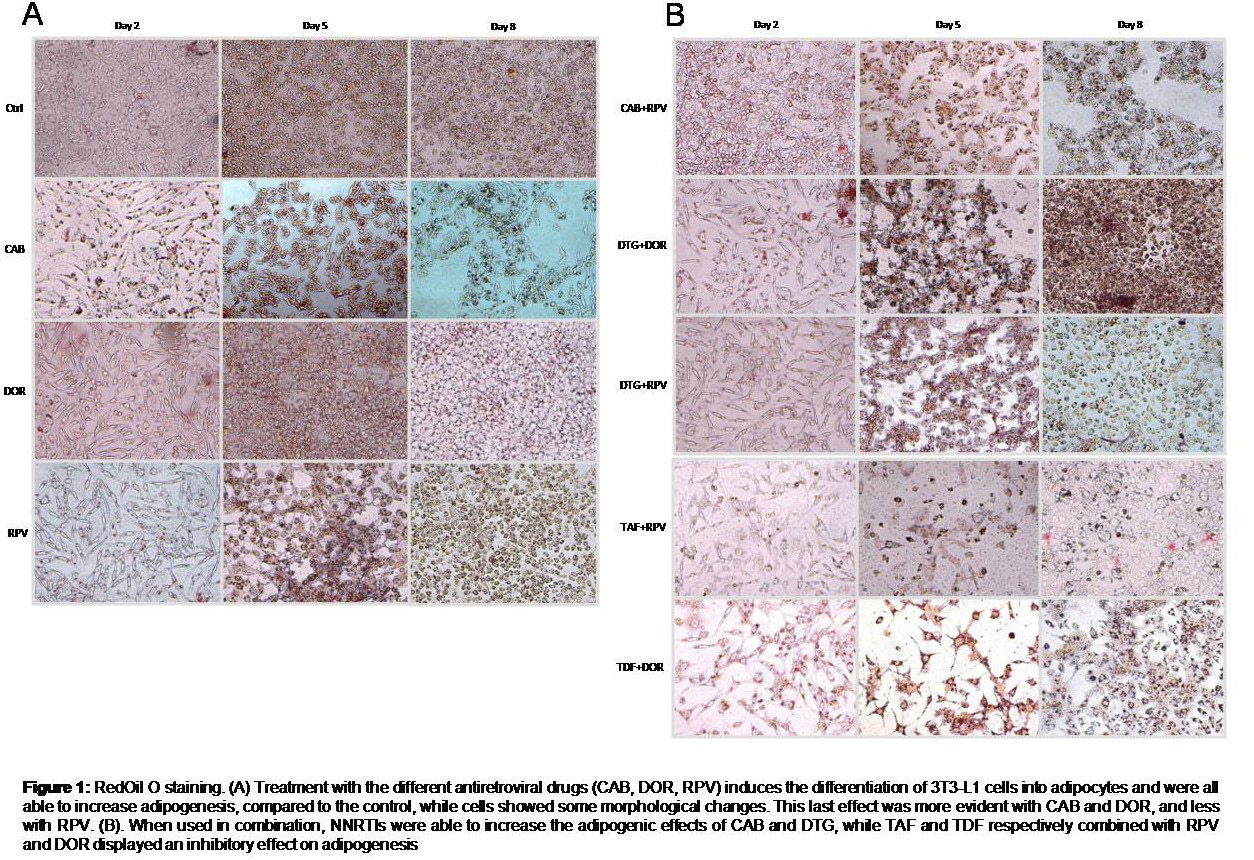
901. HIV-Induced Immunomodulation and Cardiometabolic Disease Development in Mice on High-Fat Diets
Poster Abstracts
Page: 278
Victoria R. Stephens1, Laventa Obare1, Xiuqi Zhang1, Kisyua Nthenge1, Eseoghene Ogaga1, Joshua Simmons1, Mona Mashayekhi1, Antentor Hinton Jr2, David Harrison2, Annet Kirabo1, Celestine Wanjalla1
Background
The development of therapies to treat people living with HIV (PLWH) has significantly increased their life expectancy, nearing that of people without HIV (PWoH). ART leads to aviremia; however, chronic inflammation persists, increasing the risk of comorbidities such as cardiometabolic diseases. Our understanding of how HIV-related inflammation leads to cardiometabolic disease is associative without precise mechanisms. We hypothesize that subsets of immune cells in peripheral blood mononuclear cells (PBMCs) are involved in the pathways leading to HIV-associated cardiovascular disease.
Methods
To interrogate this hypothesis, we reconstituted the immune system of immune deficient (NSG) mice also lacking MHC I and II with PBMCs from patients with or without HIV. Recipient mice were placed on either a standard chow diet (LFD/SCD) or a high-fat diet (HFD) and then assessed for weight gain, metabolism using a glucose tolerance test and metabolic cages, and immune cell composition changes by flow cytometry.
Results
By day 30, mice with HIV on a high-fat diet (HFD-PLWH) experienced an 11.5-fold increase in weight compared to a 5.7-fold increase in non-HIV mice on the same diet (HFD-PWoH). By day 114, the rate of weight gain in both groups was comparable. Glucose tolerance tests revealed that mean plasma insulin levels after 10 minutes were notably higher in HFD mice (3.2ng/ml in HFD-PLWH and 2.4ng/ml in HFD-PWoH), compared to those on a SCD (0.3ng/ml LFD-PLWH and 0.1ng/ml LFD-PWoH), indicative of metabolic syndrome in the high-fat diet mice. Interestingly, we observed a strong correlation between the proportion of CGC+ CD4+ T cells in PBMCs and weight gain in HFD-PLWH mice (r=0.78, p=0.05). This correlation was not observed in the LFD-PLWH group (r=0.28, p=0.57). Similarly, no such correlation was seen in HFD-PWoH (r=0.21, p=0.66) or LFD-PWoH groups (r=0.17, p=0.76). At the end of the experiment (day 120), we examined immune cells in various organs, including the spleen, liver, kidney, and intestines. Findings revealed significantly more human CD3+ PD1+ CD57+/- CX3CR1+ CD4+ T cells in HFD-PLWH mice compared to CD3+ PD1+ CD57- CX3CR1- CD4+ T cells in HFD-PWoH mice.
Conclusions
HFD-PLWH had the worst metabolic outcomes by all measures, implicating a causal role in immune cell changes in metabolic outcomes. Collectively, these data suggest that HIV, in concert with a HFD, mediates immunomodulatory effects that promote the development of phenotypes indicative of cardiometabolic disease in mice.
The figure, table, or graphic for this abstract has been removed.
902. HIV and Antiretrovirals Have Unique In Vivo Effects on Insulin Resistance in HIV
Poster Abstracts
Page: 279
Theodoros Kelesidis1, Ravikanth Nanduri1, Leila Fotoohabadi1, Arnaud Kombe Kombe1, Pratik Lama Tamang1, Philip Hamid2, Athanassios Kossyvakis2, Shubhendu Sen Roy2, Alka Khaitan3, Emily Sims3, Samir K. Gupta4
Background
Diabetes mellitus (DM) is more common in antiretroviral drug-treated (ART) people with HIV (PWH) compared with people without HIV(PWOH), even without obesity. Emerging epidemiologic data suggests that PWH not on ART has a lower DM risk than PWOH. We have shown that measures of pancreatic beta cell function were higher (i.e., better function) and markers of beta cell stress were lower (i.e., reduced stress) in ART-naive PWH compared with ART-treated PWH and PWOH in PWH who have not initiated ART (PMID: 35134838). However, in vivo data on the role of HIV-1 per se versus ART in chronic HIV infection are lacking because observational human studies cannot dissect the differential effect of HIV-1 versus ART on signatures of insulin resistance (IR) in tissues not readily accessible. To address these gaps in knowledge, we used a mechanistic humanized mouse model of chronic HIV infection to dissect in vivo the direct impact of HIV-1 versus ART on IR.
Methods
TKO C57Bl6 humanized mice that are not prone to Graft versus Host disease (GVHD), were infected with HIV-1 (that infects only human immune cells) and treated with FTC/TDF/RAL (that impacts both mouse and human cells) for 3 months, as previously (PMID: 33306550). Plasma glucose, insulin (I), proinsulin (pro-I) and Pro-I to I ratio (high ratio indicates IR) were determined in the plasma of mice from 3 groups: A) HIV uninfected (HIV-, n=8), B) HIV+: HIV-1 viremic not on ART (n=5), C: infected but treated with ART (HIV+/ART+, n=15).
Results
Compared to HIV- mice, HIV-1 consistently tended to decrease plasma glucose levels (p=0.07) and reduced plasma levels of the mouse (m) insulin (I), Pro-I, and Pro-I/I ratio (p<0.05 for all comparisons). Compared to HIV+ and HIV- mice, ART per se in the HIV+/ART+ mice increased plasma levels of glucose, I, Pro-I, and Pro-I/I ratio (p<0.05 for all comparisons) (Figure).
Conclusions
Our study dissected in vivo complex effects of HIV-1 per se versus ART on IR in vivo. We confirmed that HIV-1 per re reduces rather than increases IR in vivo. We have hypothesized that the protective effect against DM may be related to the inherent immune dysregulation associated with untreated HIV. ART rather than HIV increased IR and compromised murine pancreatic beta cell function. Large longitudinal studies of PWH with molecular signatures of immune dysregulation and IR before and after ART initiation are needed to clarify further the role of HIV, ART, and immune dysregulation on diabetes mellitus in PWH.
Figure 1.
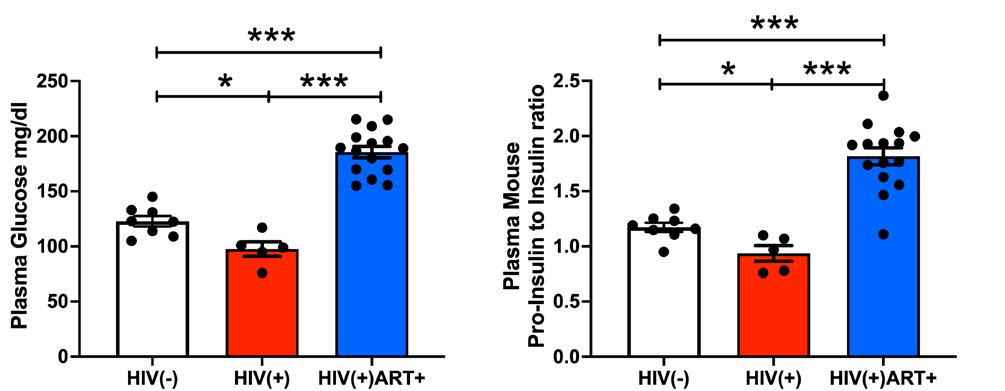
903. Menopause Is Associated With Faster Increases in Insulin Resistance in Women With HIV
Poster Abstracts
Page: 279
Rebecca Abelman1, Yifei Ma1, Cyra C. Mehta2, Qian Yang2, James B. Brock3, Maria L. Alcaide4, Anjali Sharma5, Michelle Floris-Moore6, Elizabeth F. Topper7, Kathleen M. Weber8, Seble Kassaye9, Deborah Gustafson10, Cecile D. Lahiri2, Phyllis Tien1
Background
Women with HIV (WWH) are at increased risk for developing diabetes mellitus (DM) compared to women without HIV (WWOH). In WWOH, the transition to menopause is associated with metabolic changes that increase DM risk. Whether HIV and menopause are associated with faster increases in insulin resistance, and whether switching to an integrase strand transfer inhibitor (INSTI) modifies this association, is unknown.
Methods
From 2006-2019, 373 virally suppressed WWH and 300 WWOH from the Women’s Interagency HIV Study who were non-pregnant and did not have hepatitis C virus infection or DM at baseline were included in the analysis. Participants were WWH who switched to an INSTI (INSTI+), WWH who did not switch (INSTI-), and WWOH from a similar time window, or index visit. Linear mixed effect models first evaluated the change in insulin resistance estimated through log HOMA-IR across five years of follow-up by HIV status and time-varying menopausal phase. We then compared trajectories by INSTI group. We used anti-Müllerian hormone, a biomarker of ovarian reserve, to categorize women into premenopause, early peri-, late-peri-, and postmenopause. Models were adjusted for demographics, time-varying waist circumference, socio-behavioral factors, comorbidities, and HIV-related factors.
Results
At the index visit, 67% identified as Black and 37% were premenopausal, 11% early peri-, 25% late peri-, and 27% postmenopausal. Compared to WWOH, WWH were older (median age: 47 vs. 44 years) and had higher median HOMA-IR (1.9 vs 1.7 mg/dL), respectively. Among WWH, 76% were on tenofovir DF at the index visit. Figure shows HOMA-IR trajectories by HIV and INSTI status in late peri- and postmenopause. When adjusted for waist circumference, there was little difference in HOMA-IR trajectories by HIV status in premenopausal women. By contrast, in late perimenopause and menopause, WWH had 6.0% (95%CI:-0.2,12.6) and 8.6% (95%CI:1.8,15.8) faster increases in HOMA-IR/year, respectively, compared to WWOH. When compared to INSTI-, the percent change in HOMA-IR/year for INSTI+ was -3.1 (95%CI:-11.5,6.1) and -1.3 (95%CI:-9.1,7.2), in late perimenopause and postmenopause, respectively.
Conclusions
WWH in late perimenopause and menopause have faster increases in insulin resistance when compared to WWOH, even after adjustment for waist circumference. Switching to an INSTI did not further accelerate increases in insulin resistance. Our findings suggest that DM screening and prevention in midlife WWH is imperative.
Figure 1.
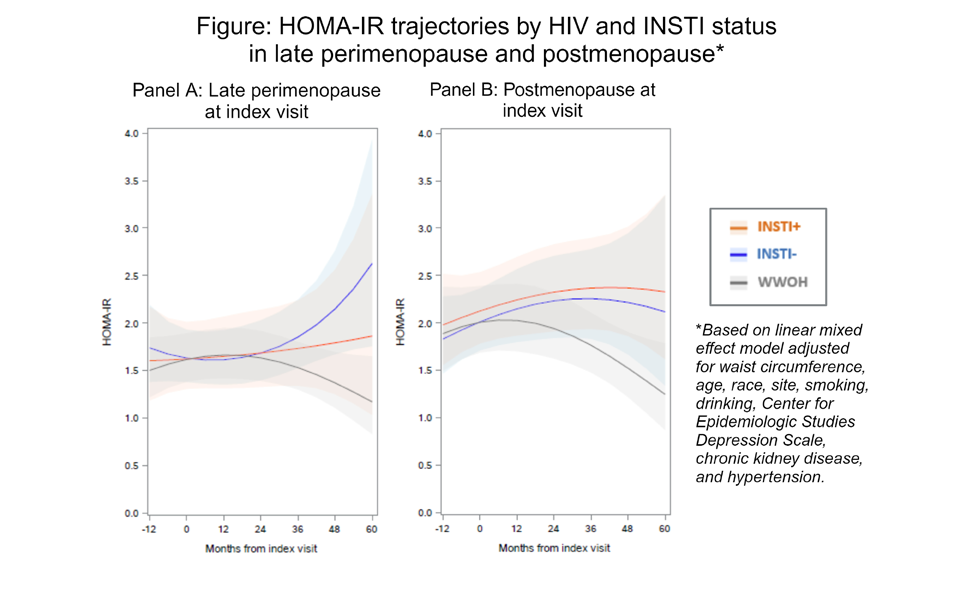
904. Obstructive Sleep Apnea and Prevalent Diabetes Mellitus in the Multicenter AIDS Cohort Study
Poster Abstracts
Pages: 279-280
Wassim A. Bouhsane1, Naresh M. Punjabi2, Sanjay R. Patel3, Valentina Stosor4, Joshua H. Cho5, Gypsyamber DSouza6, Joseph Margolick7, Todd Brown7, the MACS/WIHS Combined Cohort Study (MWCCS)
Background
Obstructive sleep apnea and diabetes are common among people with HIV (PWH). Cardinal features of obstructive sleep apnea such as intermittent hypoxia and sleep fragmentation have been associated with the development of diabetes in the general population. Among PWH, HIV-associated inflammation and the use of certain ART medications have also been associated with the development of diabetes. We examined whether HIV status modifies the association between obstructive sleep apnea and diabetes in a cohort of men with HIV (MWH) and without HIV (MWOH).
Methods
Obstructive sleep apnea was assessed using in-home polysomnography in 779 men participating in the Multicenter AIDS Cohort Study (438 MWH, 341 MWOH). The apnea-hypopnea index (AHI), the number of apneas and hypopneas per hour of sleep, was used to classify participants by obstructive sleep apnea severity (none: < 5 events/h; mild: 5 - 15 events/h; moderate: 15 - 30 events/h; severe: > 30 events/h). Diabetes was defined as meeting at least one of the following criteria: (1) a fasting blood glucose ≥ 126 mg/dL after ≥ 6 hours of fasting; (2) a self-reported diagnosis of diabetes; or (3) a self-reported use of anti-diabetes medications. Associations between HIV status, sleep apnea severity, and prevalent diabetes were assessed using multivariable logistic regression models adjusted for age, race, BMI, and family history of diabetes.
Results
MWH were younger (median age: 56 years vs. 62 years; p < 0.001) and more likely to be non-white (43.9% vs. 23.1%; p < 0.001); BMI was similar by HIV status (median: 27 kg/m2). MWH and MWOH had similar crude prevalences of sleep apnea (52.7% vs. 54.0%, respectively; p = 0.74) and diabetes (21.5% vs. 19.4%, respectively; p = 0.47). The adjusted prevalence of diabetes was significantly greater among men with severe sleep apnea and HIV than among men with severe sleep apnea and no HIV (41.2% vs. 23.7%, respectively; p = 0.046). No significant interaction between HIV status and sleep apnea severity on prevalent diabetes was observed. In models restricted to MWH, duration (years) of protease inhibitor use was independently associated with prevalent diabetes (aOR: 1.05; 95% CI: 1.01 - 1.09; p = 0.014).
Conclusions
Among men with severe obstructive sleep apnea, living with HIV was associated with a higher prevalence of diabetes. These data suggest that the metabolic impact of obstructive sleep apnea is more pronounced among PWH.
905. Impact of HIV Infection on Adipose Tissue Fibrosis and Its Association With Insulin Resistance
Poster Abstracts
Page: 280
Diana L. Alba1, MoonKyung Choi1, Alaa Abdellatif1, Stephen Brown Mayfield1, Thuy Pham1, David Berrios1, Judy Gonzalez-Vargas1, Antonio Rodriguez1, Marin Ewing1, Tony R. Figueroa1, Dawei Bu2, Steven G. Deeks1, Philipp E. Scherer2, Suneil K. Koliwad1, Peter W. Hunt1
Background
People with HIV (PWH) are at elevated risk for type 2 diabetes (T2D), despite viral suppression. While obesity is a well-known driver of T2D in the general population, HIV-specific factors, such as chronic inflammation and antiretroviral therapy (ART), may contribute to risk in PWH. While subcutaneous adipose tissue (SAT) fibrosis promotes insulin resistance in obesity, less is known about its role in HIV, and whether it has a distinct tissue transcriptomic profile in this setting.
Methods
We studied 112 participants (43 ART-suppressed PWH and 69 without HIV) matched for BMI, age, sex, and hemoglobin A1c, from UCSF cohorts, stratified by %body fat (%BF) by DEXA (high: >35% women, >25% men). SAT fibrosis was assessed with tissue hydroxyproline (HP) levels, insulin resistance by HOMA-IR, and plasma endotrophin (a collagen VIalpha3 posttranslational cleavage product with potent pro-fibrotic activity) by ELISA. Transcriptomic analysis of SAT was performed using a Nanostring panel of 772 fibrosis-related genes.
Results
PWH had more SAT fibrosis (by HP levels) than those without HIV (P<0.01), particularly among those [n=17] with normal %BF (median 68 vs 439, P=< 0.01), suggesting that the excess SAT fibrosis in PWH is not solely due to increased adiposity. In PWH, SAT fibrosis correlated more strongly with HOMA-IR in those with normal %BF (r=0.70, P<0.01) than in those with high %BF (r=0.38, p=0.07). Plasma endotrophin levels were also higher in PWH than controls (p<0.05), and positively correlated with HOMA-IR (r=0.35, p<0.01) and HP levels (r=0.34, P=0.03) in PWH. In transcriptomic analysis, PWH had a unique obesity-independent upregulation of genes such as COL14A1, which stabilizes collagen, and CSF1R, which supports myeloid cell differentiation and whose ligand (CSF1) is associated with increased mortality in treated HIV (Figure 1). In contrast, both HIV and high %BF induced upregulation of inflammatory mediators like CCL4 and NLRP3, highlighting some shared transcriptional pathways between obesity and HIV.
Conclusions
PWH have increased SAT fibrosis, even at normal %BF, which is characterized by obesity-independent transcriptional changes. Upregulation of COL14A1 in PWH may play a pivotal role in promoting SAT fibrosis and associated metabolic dysfunction while CSF1R upregulation may suggest an important role of macrophage differentiation. Furthermore, SAT fibrosis in PWH is predictive of insulin resistance at normal %BF and can be assessed noninvasively via plasma endotrophin levels.
Figure 1.
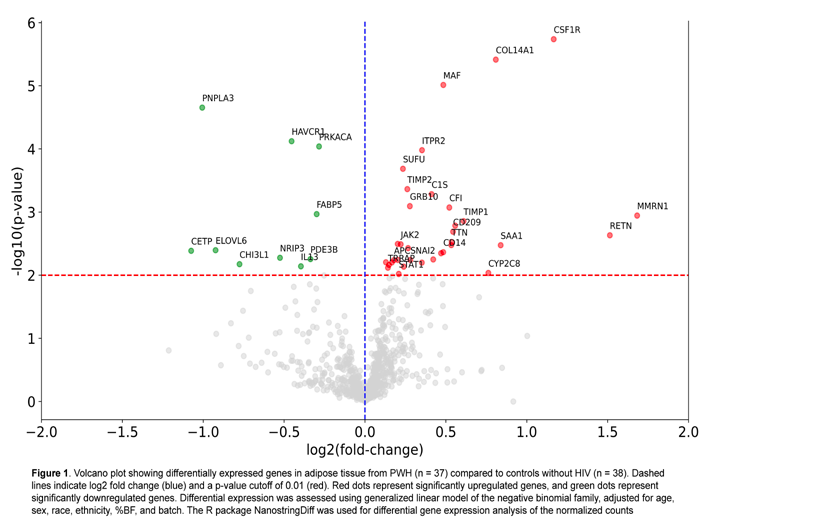
906. Early Pregnancy Insulin Dynamics in South African Women With HIV on Dolutegravir: The ORCHID Study
Poster Abstracts
Page: 280
Julia Goedecke1, Georgia Roussos2, Kristina Utzschneider3, Elton Mukonda2, Justine Legbedze4, Allison Zerbe5, Landon Myer2, Elaine Abrams6, Hlengiwe Madlala2, Sandisiwe M. M. Matyesini2, Jody Rusch2, Jami Josefson7, Patrick Catalano8, Jennifer Jao7, the ORCHID Study
Background
Little is known about glucose regulation by insulin in early pregnancy in women with HIV (WWH) receiving tenofovir/lamivudine/ dolutegravir (TLD). We assessed differences in insulin dynamics in early pregnancy in WWH receiving TLD.
Methods
The ORCHID study enrolled WWH initiating/receiving TLD and HIV-seronegative (HIV-) women >16 years old and <18 weeks gestational age (GA) in South Africa. Pregnant women known to have diabetes or hypertension were excluded. For this analysis we included women who enrolled at <14 weeks GA. Participants underwent a 75g oral glucose tolerance test (OGTT) to estimate insulin sensitivity (Matsuda index), 1st phase insulin response (Stumvoll equation), beta-cell function (oral disposition index, DIo), and Mari model-derived measures of beta-cell function (glucose sensitivity) and postprandial insulin clearance. TLD duration was categorized as <15 (TLD<15) vs 15-90 (TLD15-90) vs >90 (TLD>90) days prior to enrollment. Quantile regression was used to assess the association of 1) HIV status and 2) duration of TLD with insulin parameters, adjusting for confounders.
Results
894 women were included (357 WWH, 537 HIV-); among WWH 109 were TLD<15, 34 TLD15-90, and 214 TLD>90. WWH were older than HIV- women (median 29 vs 26 years), but their median (interquartile range) BMI [29.8 (25.0-35.0 kg/m2)], GA [10 (9.0-12.7 weeks)] and rates of gestational diabetes or frank diabetes at OGTT did not differ. Among WWH, 7% had CD4 <200 cells/ mm3 and 25% HIV RNA >50 copies/mL at enrollment. After adjusting for age, BMI and socioeconomic status, WWH had higher Matsuda, Stumvoll, DIo, and Mari-derived glucose sensitivity & postprandial insulin clearance than HIV-women (all p<0.004). (Table). Compared to HIV- women, TLD<15 and TLD>90 were associated with higher Matsuda, Stumvoll, and mean postprandial insulin clearance (all p<0.05), whereas only TLD>90 was associated with higher DIo and glucose sensitivity (p<0.001 for both).
Conclusions
WWH receiving TLD have higher insulin sensitivity and beta-cell function than HIV-women, with higher duration on TLD having a more favorable effect on beta-cell function in early pregnancy. Our findings suggest that pregnant WWH receiving TLD may be at reduced risk for diabetes in early pregnancy compared to HIV- women. Longitudinal studies in pregnant WWH will be useful to understand whether this favorable profile persists.
Table 1.
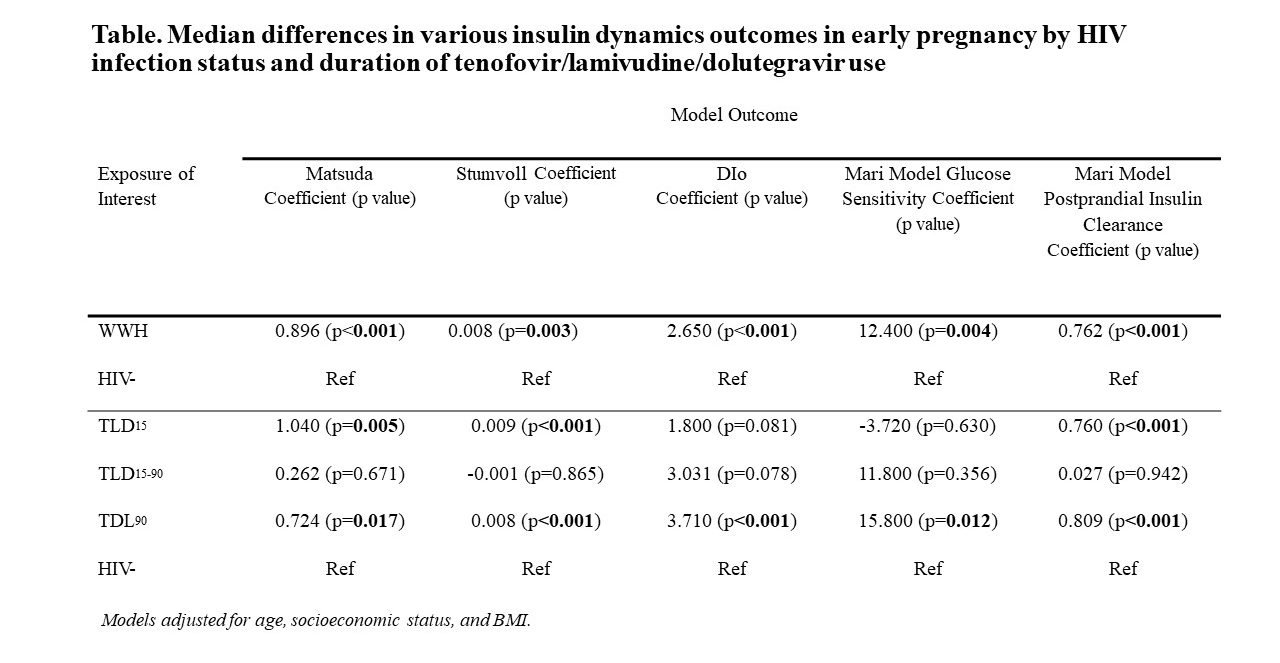
907. Noncommunicable Diseases: A Significant Cause of Death Among People Living With HIV in Nigeria
Poster Abstracts
Page: 281
Chiamaka H. Onuoha, Kehinde Balogun, Olaposi Olatoregun, Uchechukwu Chinedu, Chinenyenwa Henshaw
Background
Antiretroviral therapy (ART) has significantly reduced AIDS-related deaths, yet death rates remain higher among people living with HIV (PLHIV) compared with individuals without HIV. This has been partly attributed to a higher risk of non-communicable diseases (NCDs) among PLHIV. Providing insights into NCDs’ contribution to the cause of death among PLHIV will guide priority setting for the reduction of mortality amongst them.
Methods
Between August 2021 and October 2024, verbal autopsy (VA) data for 11,239 deceased PLHIVs from 657 ART facilities in 33 states was collected from the Nigeria HIV Mortality Surveillance database. Causes of death (COD) were determined using the SmartVA-Analyze (Tariff 2.0 algorithm), and descriptive data analysis was performed in Microsoft Excel.
Results
VA data determined the COD for 11,239 PLHIVs, comprising 6,245 (55.6%) females and 4,994 (44.4%) males. The leading COD was AIDS, accounting for 3,313 deaths (29.5%), followed by non-communicable diseases at 2,136 (19.0%). The most common NCDs were stroke (551; 25.8%), acute myocardial infection (424; 19.9%), diabetes (356; 16.7%), malignancy (265; 12.4%), and chronic kidney disease (235; 11.0%). Among (204: 17.1%) women with malignancies, breast cancer 131; 6.1%) and cervical cancer (26; 1.2%) were the most common. In men, prostate cancer (18; 0.8%) and stomach cancer (6; 0.3%) were most prevalent. For adults aged 15+, the leading NCDs included stroke (550; 25.3%), acute myocardial infection (423; 19.4%), diabetes (356; 16.4%), chronic kidney diseases (229; 10.5%), breast cancer (131; 6.0%) and cirrhosis (126; 5.8%). In the pediatric group (<15), the main causes were digestive diseases (38; 82.6%), childhood cancer (33; 71.7%), chronic kidney disease (6; 13.0%) and other non-communicable diseases (2; 4.3%).
Conclusions
This work highlights the importance of closely monitoring the causes of death among PLHIV. Information on mortality trends for PLHIV would guide the implementation of fit-for-purpose interventions to prevent avoidable deaths. Ultimately, these targeted interventions can support the provision of appropriate standards of care, thereby improving their treatment outcomes and reducing mortality rates amongst HIV-positive individuals.
The figure, table, or graphic for this abstract has been removed.
908. Risk Factors for Osteonecrosis Among People With HIV in Care Across the US in the Current ART Era
Poster Abstracts
Page: 281
Heidi M. Crane1, Robin M. Nance1, Stephanie A. Ruderman1, Bridget M. Whitney1, Paola Nicoletti2, Edward Cachay3, Lydia N. Drumright1, Richard Moore4, George Yendewa5, Kenneth Mayer6, Geetanjali Chander1, Michael Saag7, Mari Kitahata1, Inga Peter2, Joseph A. Delaney1, the Centers for AIDS Research Network of Integrated Clinical Systems (CNICS)
Background
The risk of osteonecrosis (ON), or bone death due to inadequate vascular supply, is estimated to be 3-100 fold higher in people with HIV (PWH) compared to the general population. However, most information on ON in PWH is from older case reports or small case control studies and cohort studies limited by small numbers of ON cases. This leaves critical gaps in our understanding of ON risks in the current HIV treatment era as the population of PWH continue to age.
Methods
We examined ON among PWH in routine clinical care at 8 sites in the CNICS cohort from ~2012-2023 (dates vary slightly by site). ON cases were identified using diagnoses codes; with one site validating diagnoses through clinical documentation and radiology reports. We used adjusted Cox proportional-hazards models to estimate the association between demographic and clinical characteristics and time to ON, with censoring at the time of event, loss to follow up, death, or study end. Covariates included age, race/ethnicity, sex, CD4 count, viral load, history of AIDS-defining illnesses (ADIs), corticosteroid use, co-infection with hepatitis C virus, liver function (FIB-4), kidney function (eGFR), hypertension, dyslipidemia, diabetes, and use of marijuana, tobacco, and alcohol. CD4 count and viral load were time-updated, while other factors were measured at study baseline. We analyzed Pneumocystis jirovecii pneumonia (PJP) separately from other ADIs due to steroid treatment considerations.
Results
Among 18,658 PWH, the mean baseline age was 44 years, 37% were Black, 15% Hispanic/Latine, and 17% were female. During follow up, 276 PWH (1.5%) developed ON. In adjusted analyses, factors associated with increased ON risk included older age (hazard ratio HR 1.21 (1.05-1.39 per 10 years), lower CD4 cell count (0.95: 0.91-0.99 per 100 cells/mm3), ADI without PJP (1.66: 1.28-2.16), PJP (2.03: 1.50-2.76), steroid use (1.73: 1.35-2.22), tobacco use (1.52: 1.18-1.95), and alcohol use (1.40: 1.12-1.76) (see table).
Conclusions
In the current treatment era, HIV-related factors such as lower CD4 cell count and ADIs continue to be significant predictors of ON risk among PWH as well as known risk factors in the general populations such as age and corticosteroid use. Behavioral factors, including tobacco and alcohol use, highlight actionable prevention targets reinforcing the importance of early antiretroviral therapy initiation and lifestyle interventions.
Table 1.
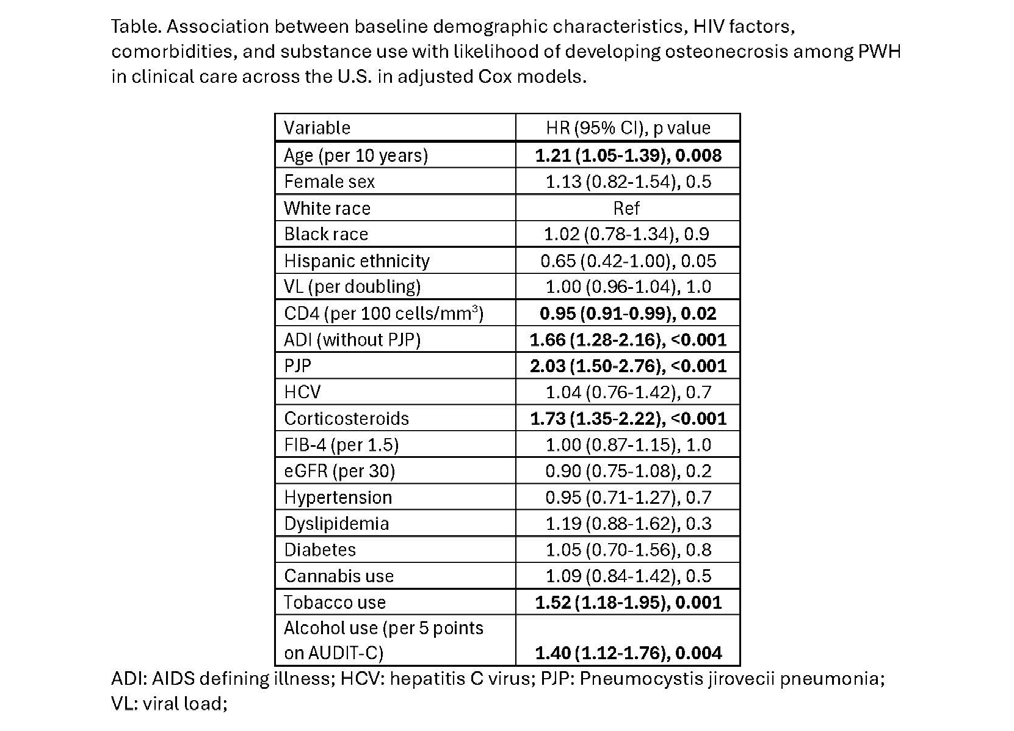
909. Validation of SCORE and OST for Osteoporosis Risk Estimation in People Aging With HIV in Peru
Poster Abstracts
Pages: 281-282
Joselito Malca Hernandez1, Ahmed Abdeen2, Daniel Granda3, Yvett Pinedo Ramirez4, Flor Gonzales5, Miguel Tapia5, Patricia Garcia3, Evelyn Hsieh1
Background
The life expectancy of people living with HIV (PLWH) has improved notably since the advent of antiretroviral therapy (ART). However, studies have shown that persons aging with HIV are disproportionately impacted by comorbidities associated with aging, including osteoporosis. The gold standard tool for diagnosing osteoporosis is dual-energy X-ray absorptiometry (DXA), however its availability in low-resource settings is limited. To address this barrier, low-cost screening tools for osteoporosis, such as the Simple Calculated Osteoporosis Risk Estimation (SCORE) and the Osteoporosis Self-Assessment Tool (OST), have been developed. However, these tools have only been validated for the general population, not for PLWH.
Methods
We recruited PLWH (men ≥50 years and postmenopausal women) at three HIV clinics in Lima, Peru between March 2022 to August 2023. Participants completed a survey regarding osteoporosis risk factors, demographics, and clinical characteristics. Osteoporosis was assessed via DXA. SCORE (based upon age, sex, race, weight, rheumatoid arthritis diagnosis, history of non-traumatic fracture and estrogen use) and OST (based upon age and weight) values were calculated as described in the literature. Since OST does not include sex as a predictor, results were analyzed separately for men and women. Sensitivity (S), specificity (Sp), and predictive values (NPV/PPV) with their 95% confidence intervals were calculated for SCORE and OST using the DXA results as the gold standard.
Results
A total of 166 PLWH were enrolled (89 women, 77 men), mean age 56.9±6.3. The prevalence of osteoporosis by DXA was 27.1% (43% for women, 9% for men). For SCORE, at the general population recommended threshold of 6, we found a S=97.8% (88.2%-99.9%), Sp=19.8% (13.1%-28.1%), PPV=31.2% (23.7%-39.5%), and NPV=96% (79.6%-99.9%). For the OST among women, we used the recommended general population threshold of -1, resulting in a S=28.9% (15.4%-45.9%), Sp= 84.3% (71.4%-93%), PPV= 57.9% (33.5%-79.7%), and NPV= 61.4% (49%-72.8%). For the OST among men, the same threshold of -1 yielded a S= 28.6% (3.67%-71%), Sp=97.1% (90.1%-99.7%), PPV= 50% (6.76%-93.2%), and NPV= 93.2% (84.7%-97.7%).
Conclusions
This is the first study validating two screening tools for osteoporosis among PLWH.SCORE showed acceptable S and NPV, while OST showed greater Sp. Consequently, in low-resource settings such as Peru, SCORE may be more suitable for identifying high-risk patients for further evaluation and management of osteoporosis.
910. Prevalence, Incidence, and Correlates of Autoimmune Diseases in People With HIV From 1997 to 2023
Poster Abstracts
Page: 282
Emanuela Zappulo1, Alessandro Tavelli2, Giulia Micheli3, Cristina Seguiti4, Sara De Benedittis2, Adriana Cervo, MD5, Giordano Madeddu6, Giuseppe Lapadula7, Roberta Gagliardini3, Miriam Lichtner8, Andrea Gori9, Giulia Marchetti10, Antonella Castagna11, Antonella d'Arminio Monforte2, the Icona Foundation Study Group
Background
The combination of immune dysfunction in PWH and the development of inflammatory-autoimmune diseases (IADs) are apparently paradoxical yet very intriguing. Prevalence data on IADs in ART era are diverging. Multiple systemic immune-inflammation scores have emerged as novel predictive markers of IADs.
Methods
We led a retrospective study on PWH followed in 1997-2023 in the ICONA cohort. We investigated the prevalence at enrolment and in follow-up and incidence of IADs. Adjusted Cox regression model (including age, calendar ART period, sex, CD4) was used to explore baseline determinants of time to IADs from ART start. We used a nested case-control study comparing PWH with new diagnosis of IADs post-ART with up to 5 age-, sex- and ART duration-matched controls to investigate the roles on IADs onset of indirect markers of inflammation (divided by tertiles of distribution), current CD4, CD4/CD8, HIV-RNA and cumulative exposure to ART classes by adjusted conditional logistic models.
Results
A total of 466 IADs were diagnosed in 449/20.495 PWH (2.2%,multiple IADs in 15 individuals). Psoriasis was the most commonly reported (38%), followed by autoimmune thyroiditis (16%), ulcerative colitis (14%) and Crohn’s disease (7%). Most PWH showed this comorbidity at enrolment(60%). During follow-up, the prevalence of IADs among PWH increased from 1.4% in 1997-2002 to 2.5% in 2017-2023(p<.001). 143 new IADs occurred post-ART, with an incidence rate of 1.21/1000PYFU [95%CI:1.02-1.43]. In the adjusted Cox model, females (aHR 1.59, 95%CI:1.12-2.27) and PWH aged 50-59 years at ART start (vs<50, aHR 1.77, 95%CI:1.16-2.70) had a higher risk of IAD. In the adjusted case-control analysis, concentrations in the highest tertile of monocyte/lymphocyte ratio (MLR, aOR 1.82) and exposure to PI class (per 1-year more,aOR 1.09) were significantly related to IADs, whereas INSTI was inversely associated (per 1-year more,aOR 0.84); low current CD4 count and CD4/CD8 ratio were marginally associated (Table 1).
Conclusions
IAD is a relatively rare comorbidity in PWH yet increasing in recent years. Females and PWH aged 50-59 have higher risk, as occurring in general population. High current MLR and -marginally- low current CD4 and CD4/CD8, as indicative of residual inflammation and immune dysregulation, are associated with IAD post-ART. The impact of different ART classes on IADs onset might be related to complex interplays between drug potency and toxicity and the persistent immune activation triggered by chronic HIV infection.
Table 1.
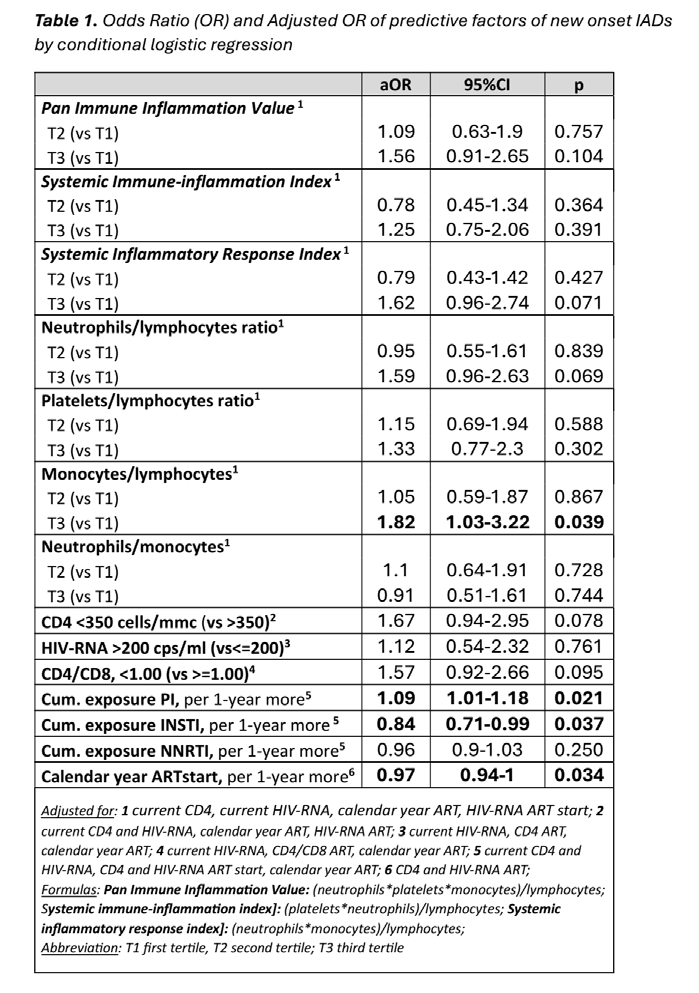
911. Disparities in Hospitalization Among People in the HIV Outpatient Study, United States 2008-2022
Poster Abstracts
Page: 282
Jun Li1, Qingjiang Hou2, Frank Palella3, Rick Novack4, Alexander Ewing1, Ellen Tedaldi5, Cynthia Mayer6, Cynthia Frinhaber7, Kalliope Chagaris2, Kimberly Carlson2, Kate Buchacz1, the HIV Outpatient Study
Background
Hospitalization rates are an important clinical indicator to monitor treatment effectiveness and the complications of antiretroviral therapy and advanced HIV disease, and provide an endpoint for morbidity among people with HIV (PWH). We examined sociodemographic and clinical disparities in hospitalization rates among PWH in the HIV Outpatient Study (HOPS), a demographically diverse, multi-city cohort across the United States.
Methods
We analyzed medical records data from HOPS patients with ≥ 2 clinical encounters from 2008-2022. We assessed all-cause, HIV/AIDS-related, and non-HIV/AIDS-related hospitalization rates over time. Multivariable Poisson regression with generalized estimating equations examined sociodemographic and clinical differences in all-cause hospitalization rates.
Results
Of 5434 eligible patients, 2502 (46.0%) were non-Hispanic (NH) White, 1917 (35.3%) NH Black, and 802 (14.8%) Hispanic persons. Most were ≤50 years old (73.4%) at baseline (the later of either 1/1/2008 or the first HOPS visit), privately insured (51.4%), and men who have sex with men (MSM 59.1%). During a median follow-up of 5.5 years, 5261 hospitalizations occurred, with a rate of 14.8 per 100 person-year (PY), largely with non-HIV/AIDS-related causes (87.6%). The all-cause hospitalization rates (95% confidence interval) per 100 PY declined from 12.7 (11.0,14.7) in 2008 to 9.7 (8.2,11.4) in 2010, increased to 16.9 (14.6,19.5) in 2014 (peak), then slightly decreased to 13.9 (11.8,16.3) in 2018 and leveled off and measured 14.1 (11.3,17.4) in 2022. Non-HIV/AIDS related hospitalization rates showed a similar temporal pattern. Multivariable factors positively associated (P <0.05) with hospitalization included NH-Black and Hispanic race/ethnicity (vs. NH White), MSM (vs. heterosexual HIV risk group), public, self-pay, and other insurances (vs. private), higher HIV viral load and lower CD4 cell count prior to hospitalization, and certain comorbid conditions including cancer, liver and cardiovascular diseases; however, sex was not associated (Figure).
Conclusions
While hospitalization rates have declined for HOPS PWH in the past fifteen years, they continue to disproportionately affect persons who are Black, Hispanic, with more advanced HIV disease, and without private insurance. Addressing disparities by ensuring equitable access to services for the prevention and management of HIV disease and comorbidities can improve health outcomes for PWH.
The figure, table, or graphic for this abstract has been removed.
912. Uncovering Differential Disparities at the Intersection of Race, Sex, & HIV in Patients With Sepsis
Poster Abstracts
Page: 283
Gwenyth L. Day1, Anuj B. Mehta2, Kristine M. Erlandson1, Joshua A. Barocas3
Background
Sepsis, often due to pneumonia, is a leading cause of death among people hospitalized in the US. HIV was a clear risk for death from pneumonia/sepsis in the pre-antiretroviral therapy (ART) era, but the impact of HIV in the current era is less clear. Sepsis mortality may be impacted by non-physiologic factors associated with an HIV diagnosis. We investigated whether a diagnosis of HIV along with race and sex has an impact on pneumonia/sepsis mortality.
Methods
We used the Healthcare Cost and Utilization Project State Inpatient Databases to create a cohort of adults with and without HIV hospitalized with pneumonia and/or sepsis from 7 states from 2018-2020. ICD-10 codes defined disease states and exposure characteristics. We calculated crude in-hospital mortality based on race and an intersectional variable of race and sex (Table 1), stratified by HIV status. Risk adjusted odds of death were calculated in multivariable models with the hospital as a random intercept and adjusted for pertinent variables. We tested the interaction between race and intersectional category with HIV status.
Results
We identified 2,922,295 encounters with pneumonia and/or sepsis (42,646 with vs 2,879,649 without HIV). Those with HIV were younger (mean age 51.3 vs 66.7), more likely male (67.6 vs 51.6%), and had lower mean predicted mortality (6.7 vs 12.8) than those without HIV. Those with HIV had mostly lower crude in-hospital mortality rates than those without. Overall, non-White groups had higher adjusted odds of death than Whites in both those with and without HIV. Across all intersectional groups, there was qualitatively a trend toward higher odds of death in non-White groups with HIV, with the largest statistically significant increase in Asian females. We detected significant interactions between race and HIV (p=0.0031) and race/sex and HIV (p=0.008).
Conclusions
In this large retrospective cohort study, crude mortality rates from pneumonia/sepsis differed by race and race/sex within each HIV status strata. The effect of HIV with race/sex was notable in Asian females. These findings highlight the differential impact of race, sex and HIV on sepsis mortality, and suggests that established patterns of racial and intersectional disparity in patients without HIV may not apply to those with HIV. Understanding differential experiences of access to care, ART rates, discrimination and bias across groups is critical to untangling clinical determinants of disease outcomes from social and structural ones.
Table 1.
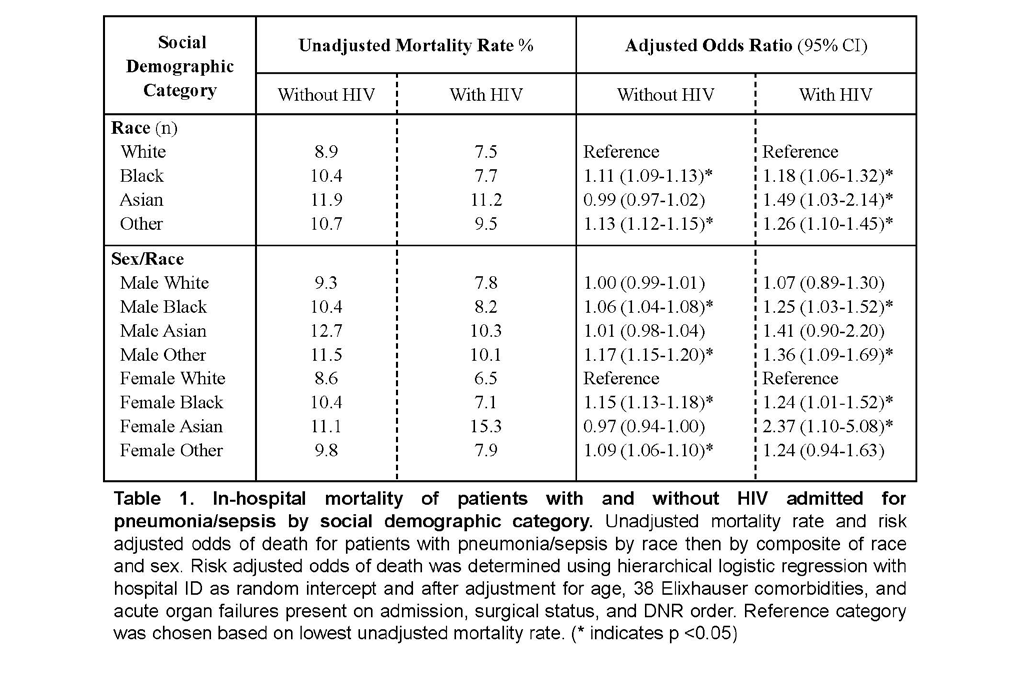
913. HIV Status and Psychiatric Diagnoses Among Transgender and Gender Diverse Individuals
Poster Abstracts
Page: 283
Fanghui Shi, Xueying Yang, Ruilie Cai, Jiajia Zhang, Sayward Harrison, Shan Qiao, Xiaoming Li
Background
Transgender and gender diverse (TGD) people with HIV may experience high prevalences of psychiatric diagnoses due to the convergence of two marginalized social identities, HIV infection and gender minority. Utilizing multi-sourced data from the All of Us (AoU) Research Program, the current study aimed to examine the impact of HIV status on psychiatric diagnoses among TGD individuals and the potential moderating effect of sex assigned at birth and race/ethnicity.
Methods
This study used AoU controlled tier data, version 7, which covers individuals enrolled in AoU from May 31, 2017, to July 1, 2022. A comprehensive computational phenotyping algorithm incorporating both electronic health records (EHRs) and survey data was used to identify suspected TGD participants in AoU. Then, four broad clusters of psychiatric disorders, including “Any mood disorder,” “Any anxiety disorder,” “Any substance use disorder,” and “Any stress-related disorder,” were identified based on ICD codes from EHR data. Multinomial logistic regression models were used to explore the association of HIV status with the number of psychiatric diagnoses clusters while also exploring the potential moderation effect of race/ethnicity and sex assigned at birth.
Results
Among 4,899 TGD individuals identified, 1,439 (29.37%) had a diagnosis in at least one cluster of psychiatric disorders, and 211 (4.31%) were with HIV. Significant correlations were observed across four clusters of disorders, with the values of correlation coefficients ranging from 0.60 to 0.92. TGD individuals with HIV had higher odds of having diagnoses in at least two clusters (Adjusted Odds Ratio [aOR] = 4.48, 95%CI: 3.13~6.49)) or one cluster (aOR = 2.36, 95%CI: 1.42~3.94) compared to TGD individuals without HIV. In addition, sex assigned at birth moderated the effect of HIV status on the likelihood of having one cluster of psychiatric diagnoses. The negative impact of HIV status on the diagnosis in at least one cluster of psychiatric disorders was more pronounced for TGD individuals who were assigned as female than those who were assigned as male at birth (aOR = 0.20, 95%CI: 0.04~0.89).
Conclusions
Comprehensive healthcare support that integrates HIV treatment and psychotherapy is needed for TGD people with HIV, and gender-affirmative approaches are needed when conducting mental health intervention for individuals with HIV who were assigned female at birth, considering their unique experience.
Figure 1.
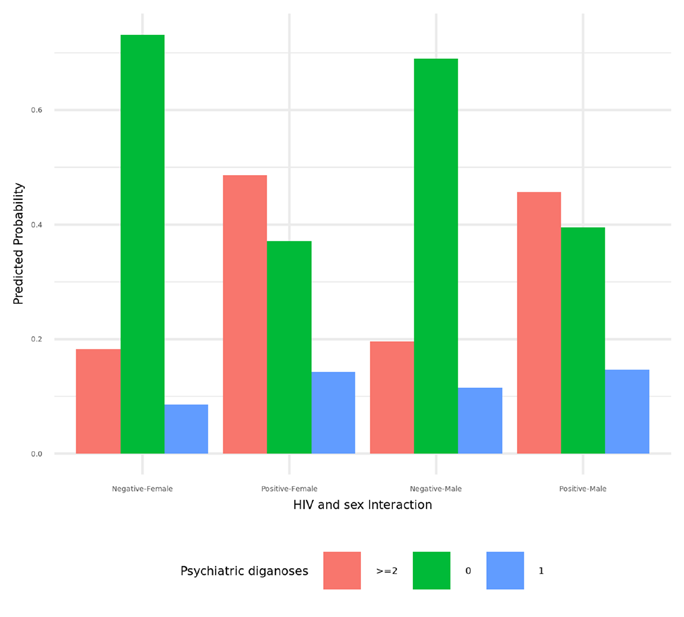
914. Kynurenine-Tryptophan (KT) Ratio and Inflammatory Biomarkers Associated With COPD in People With HIV
Poster Abstracts
Pages: 283-284
Stephanie A. Ruderman1, Kristina Crothers1, Engi F. Attia1, Lydia N. Drumright1, Kenneth Mayer2, George Yendewa3, Sonia Napravnik4, Laura Bamford5, Edward Cachay6, Michael Saag7, Richard Moore8, Heidi M. Crane1, Joseph A. Delaney1, Peter W. Hunt9, the Centers for AIDS Research Network of Integrated Clinical Systems (CNICS)
Background
The prevalence of chronic obstructive pulmonary disease (COPD) is higher and more severe among people with HIV (PWH) compared to those without HIV. Chronic inflammation, immune dysfunction, and pulmonary and other infections associated with HIV may contribute to accelerated COPD among PWH, especially given the high prevalence of smoking in PWH.
Methods
We determined associations between a panel of 13 biomarkers and prevalent COPD among PWH in the Centers for AIDS Research Network of Integrated Clinical Systems (CNICS) cohort at eight sites. CNICS data included demographic information, clinical inpatient and outpatient data, and self-reported smoking and substance use behaviors. COPD was defined by a validated algorithm using international classification of disease diagnoses plus >90 days on a COPD inhaler medication. Plasma biomarkers were measured at a single timepoint between 2010-2018 among a subset of virally suppressed PWH; substance use data were collected through November 2023. Biomarkers were log-transformed and scaled by standard deviation. We used relative risk regression to estimate associations between biomarker levels and COPD, adjusted for age, sex, CD4 count, and smoking status (never, ever, missing) with sampling weights to account for the sampling design of the biomarker study.
Results
Among 1425 PWH, average age was 47 (SD: 11), and 17% were female. Nearly half (48%) of PWH were non-Hispanic Black and 39% were non-Hispanic White. There were 242 (17%) cases of COPD, and PWH with COPD were older on average and reported more substance use, including smoking. Higher kynurenine/tryptophan [KT] ratio was associated with a 21% greater likelihood of having COPD (Prevalence Ratio [PR]: 1.21; 95%CI: 1.06-1.37). Additional markers of generalized inflammation were associated with COPD including suPAR (PR: 1.23; 95%CI: 1.06-1.42), ICAM-1 (PR: 1.18; 95%CI: 1.04-1.35), sTNFR1 (PR: 1.14; 95%CI: 1.02-1.29), and IL-6 (PR: 1.15; 95%CI: 1.00-1.33) (Table). These findings were consistent with additional adjustment for cannabis use and illicit drug (methamphetamine, cocaine, opioid) use.
Conclusions
We found a novel association between elevated levels of KT ratio and COPD in PWH. Markers of generalized inflammation were also increased in PWH with COPD. An elevated KT ratio has been linked with infections including active tuberculosis and SARS-CoV-2, suggesting chronic inflammatory and microbial stimuli may contribute to the pathogenesis of COPD in PWH.
Table 1.
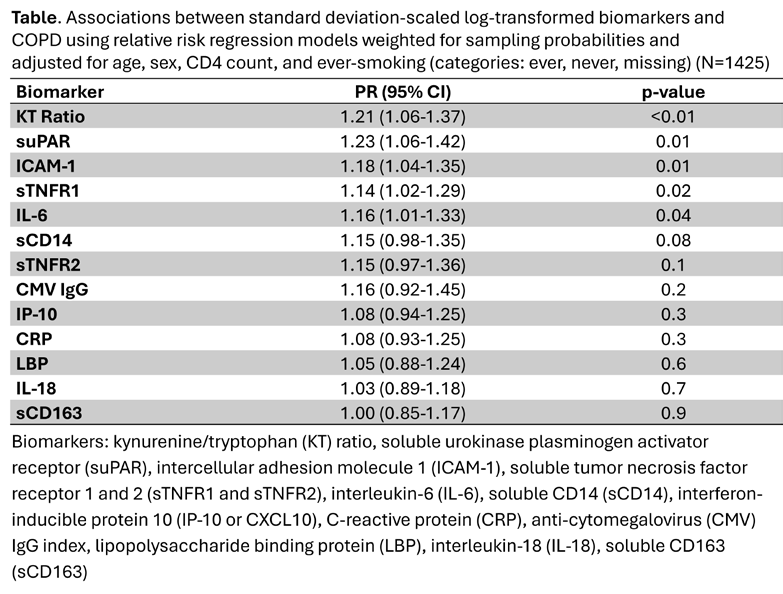
915. Characteristics of Secondary Hemophagocytic Lymphohistiocytosis in People Living With HIV/AIDS
Poster Abstracts
Page: 284
Xavier A. Flores-Andrade1, Amy B. Peralta-Prado1, Alvaro López-Iñiguez2, Gonzalo Salgado-Montes de Oca1, Jesús Delgado-de la Mora3, Andrea Cárdenas-Ortega1, Alberto Magallanes-López4, Angel G. Vargas-Ruiz1, Ana P. Rodriguez-Zulueta4, Ethel Cesarman3, Santiago Avila Rios5
Background
Hemophagocytic lymphohistiocytosis (HLH), commonly known as hemophagocytic syndrome, is a rare and serious disease triggered by a myriad of stimuli. HLH is characterized by an uncontrolled cytokine production and persistent lymphocyte and macrophage activation which results in hemophagocytosis. Since people living with human immunodeficiency virus (PLWH) have an increased risk of coinfections, HLH has great relevance in the clinical field as it worsens patient's prognosis.
Methods
We conducted a descriptive retrospective study to elucidate the main characteristics of secondary HLH in PLWH. This study included 23 participants with more than 90% probability for HLH by HSCORE, enrolled from three HIV reference centers in Mexico City from January 2019 to December 2023. Clinical and microbiological data were collected from clinical records, as well as bone diagnostic biopsies to perform Epstein–Barr virus–encoded small RNAs (EBER) by in situ hybridization, and to confirm infectious or neoplastic diseases.
Results
From 23 participants, 4 (17%) were cisgender women, 3 (13%) transgender women, and 16 (70%) cisgender men. Median HIV viral load (VL) was 5.48 (IQR=2.69-6.47) log copies/mL, and the median CD4 T cell count was 24.50 (IQR=15-65) cells/mL. Immune reconstitution inflammatory syndrome was presented in 5 (22%) individuals, and 8 (35%) died. Fungal diseases were the most common trigger (n=14 [61%] individuals) which included H. capsulatum or Cryptococcus spp. infections. Viral (n=6 [26%], including influenza and SARS-CoV-2) and mycobacterial infections (n=6 [26%]) were the second most common trigger, followed by neoplastic processes (n=4 [17%]) such as Hodgkin lymphoma and non-Hodgkin lymphoma. CMV and EBV VL were positive in 5 (22%) and 6 (26%) subjects respectively. Multiple coinfections were presented in 16 (70%) participants with 11 (48%) having two coinfections and 5 (22%) having more than two. In bone biopsies, erythrophagocytosis was confirmed in 9 (39%) individuals. EBER was performed in 4 bone marrow biopsies, all being positive (Figure 1).
Conclusions
HLH confers high risk of mortality. In this study, HLH was presented in a context of high HIV VL, low CD4 count, and multiple coinfections. Since mortality was a common outcome, HLH should be considered in critically ill HIV patients.
The figure, table, or graphic for this abstract has been removed.
916. Safety of Full-Spectrum Cannabidiol for PWH: A Double-Blind, Randomized, Placebo-Controlled Study
Poster Abstracts
Page: 284
Clémence Couton1, Mathilde Wanneveich2, Barbara De Dieuleveult2, Elodie Pougoue Touko2, Chloé Robin1, Helene Klein3, Kossi Ayena1, Alicia Harry1, Elodie Villalonga-Rosso1, Laurent Hocqueloux2, Lucile Mollet1, Thierry Prazuck2
Background
People with long-term controlled HIV (PWH) suffer from inflammaging, characterized by chronic inflammation and immunosenescence. As cannabis smokers display immune beneficial effects such as lower levels of inflammation and as the popularity of cannabidiol (CBD) products increases, we evaluated the safety of a full-spectrum cannabidiol drug for the first time on PWH. The new results presented herein are in direct link with our previously published analyses showing limited impact on health-related quality of life.
Methods
This double-blind, randomized, placebo-controlled trial was registered on ClinicalTrials.gov as NCT05306249. Eighty ART-treated PWH with undetectable viremia (median time on efficient ART 14 years, median age 54-year-old), were included, encompassing 30% women. Half took 1mg/kg twice a day of a full-spectrum, pharmaceutical grade, CBD oil for 12 weeks and the other half took a placebo medium-chain triglyceride oil. An additional follow up was done at week 16. We evaluated the treatment impact on hemodynamic with electrocardiograms, HIV follow up and both liver and kidney functions were assessed with whole blood dosages.
Results
No significant difference in adverse events, whether mild or serious, were detected between the CBD arm (58) and the placebo one (57). We highlighted that there was also no change in plasmatic viral load, DNA proviral levels and CD4/CD8 ratio. Systolic and diastolic blood pressure (SBP and DBP) were not impacted by the treatment as well. Interestingly, for men but not for women, median heart rate was lowered from 71.1 to 64 bpm after 12 weeks of CBD treatment, and persisted until at least 4 more weeks. Moreover, the safety of the full-spectrum drug on kidney and liver was evidenced with no significant effect on creatininemia, ASAT, ALAT and conjugated bilirubin levels. Yet, a mixed model, considering time and group, showed that total bilirubin rate was lowered after 12 weeks of CBD intake.
Conclusions
To conclude, pharmaceutical grade full-spectrum CBD oil, at 1mg/ kg twice a day, is not associated with any impaired function or adverse events but other studies found that, at high doses, hepatic deleterious effects can occur. This suggests that, at a low dose, it could be safe for PWH with potential beneficial effects on total bilirubin and men heart rate.
917. Higher Mortality Following SARS-CoV-2 Infection in Rural Dwellers Persists 2 Years After Infection
Poster Abstracts
Pages: 284-285
Jerrod Anzalone1, Michael T. Vest2, Makayla E. Schissel1, Brad Price3, Lucio Miele4, San Chu5, Sally L. Hodder3, the National COVID Cohort Collaborative (N3C)
Background
Rural regions in the U.S. have unique health challenges, including higher socioeconomic inequalities, greater comorbidity prevalence, and limited healthcare access. Previous work has demonstrated that these challenges extend to COVID-19, with rural residents having worse acute outcomes after SARS-CoV-2 infection. However, the longer-term impact of COVID-19 on rural residents remains uncertain. This study analyzed post-COVID-19 short- and long-term mortality by rural residency in a large U.S. cohort.
Methods
This retrospective cohort study utilized the National COVID Cohort Collaborative (N3C), a longitudinal EHR repository. We analyzed 2-year mortality among patients infected with SARS-CoV-2 between April 2020 and June 2022, with follow-up until June 2024. Patients were categorized into urban, urban-adjacent rural (UAR), and nonurban-adjacent rural (NAR) groups based on residential ZIP codes using Rural-Urban Commuting Area codes. Mortality differences were assessed using Kaplan-Meier analysis and weighted multivariable Cox regression, adjusting for demographic differences and background risk, including obesity, hypertension, substance use, tobacco use, individual comorbid conditions included in the Charlson Comorbidity Index, COVID-19 vaccination status, residential social vulnerability (independent of rural residency using the CDC’s Social Vulnerability Index), U.S. Census Division, and SARS-CoV-2 variant-dominant strain at the time of infection.
Results
Among 2,658,202 SARS-CoV-2-infected patients, Kaplan-Meier curves revealed a significant association between rurality and 2-year mortality post-infection (p<0.001). Cox regression exhibited higher mortality among rural residents at 1-, 3-, 12-, and 24-months post-infection (Figure 1). Compared to urban dwellers, the adjusted hazard ratios for 2-year mortality for UAR and NAR were 1.27 (1.25-1.28) and 1.31 (1.30-1.32).
Conclusions
We demonstrated that rural dwellers have significantly higher mortality than urban dwellers after SARS-CoV-2 infection, and this worse prognosis persists for at least 2 years, with an approximate 27% increased risk of 2-year all-cause mortality risk for rural-dwelling patients following COVID-19, even after adjusting for background risk and demographic differences. The COVID-19-exacerbated rural mortality penalty persists beyond the immediate acute period after infection, highlighting a need for continued public health prioritization of rural communities.
The figure, table, or graphic for this abstract has been removed.
918. HIV Infection and Long COVID: A RECOVER Program, EHR-Based Cohort Study
Poster Abstracts
Page: 285
Kellie L. Hawkins1, Dima Dandachi2, Colby Lewis3, M. Daniel Brannock4, Zoe Verzani3, Saajjad Abedian3, Sohrab Jaferian5, Shannon Wuller6, Jennifer Truong6, Margot Gage Witvliet7, Kristen Marks3, Edward M. Gardner8, Ighovwerha Ofotokun9, Roy M. Gulick3, Kristine M. Erlandson10, the RECOVER Consortium
Background
Studies show that people with HIV (PWH) may be prone to post-acute sequela of SARS-CoV-2 infection (PASC), or Long COVID (LC). We investigated the association between HIV status and LC utilizing the National Patient-Centered Clinical Research Network (PCORnet) and the NCATS National COVID Cohort Collaborative (N3C) databases.
Methods
PCORnet and N3C cohorts were queried from 1/1/2018 to 4/30/2024, limited to age ≥21 with COVID (ICD10 diagnosis codes, positive test, use of nirmatrelvir/ritonavir), and stratified by HIV status and sex at birth. Covariates included age, race, COVID severity (hospitalization), variant, pre-pandemic health utilization, and Charlson Comorbidity Index (CCI) score. Uni/multivariable models compared LC development after COVID diagnosis by HIV status. Odds ratios (OR) of LC defined based on the ICD10 code or computable phenotype (CP, symptoms post COVID) in relation to HIV status for each cohort are presented. CP was distinct in PCORnet and N3C.
Results
PCORnet included 11,964 with and 1,357,932 without HIV and N3C 23,931 with and 3,288,424 without HIV. In both cohorts, PWH were more likely to be male, identify as Hispanic or Black, have higher CCI score (irrespective of HIV), and higher pre-pandemic healthcare utilization compared to people without HIV. There were more patients in both cohorts assigned long COVID using the computable phenotype than ICD10 code (19 vs. 1.7% in PCORnet and 8.1 vs. 1.4% in N3C). By computable phenotype, a small increased odds of developing long COVID was seen among people with compared to without HIV in both cohorts (PCORnet adjusted OR 1.09 [CI 1.04-1.14] and N3C adjusted OR 1.18 [CI 1.13-1.23]). By ICD10, there was no association between long COVID and HIV in either cohort (adjusted OR 1.01 [CI 0.88-1.16] and 1.07 [CI 0.97-1.18]), respectively.
Conclusions
Data from two large cohorts support an increased risk of long COVID development in people with HIV, and highlights challenges and possible disparities in recognizing and diagnosing long COVID.
Figure 1.
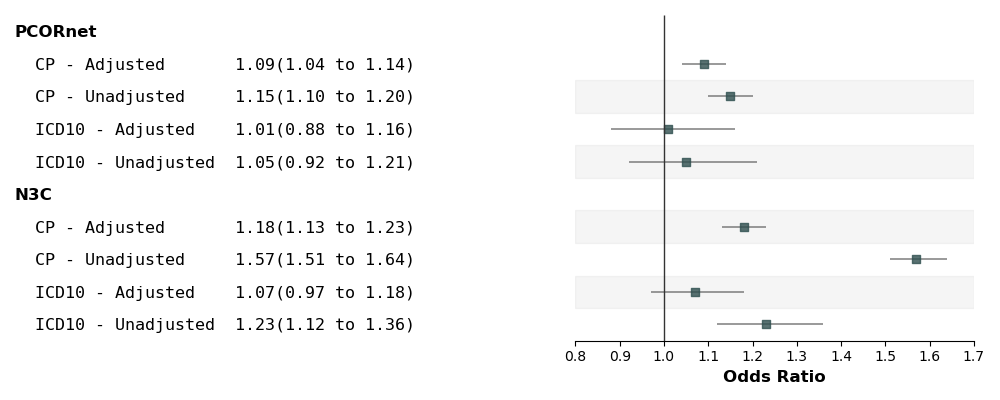
919. Putting the PASC Score to the Test: Clinical vs Statistical Accuracy in Long COVID
Poster Abstracts
Page: 285
Alba M. Azola1, Leah H. Rubin2, Rebecca E. Easter3, Rebecca Veenhuis1, Hannah Parker1, Christina Della Penna1, Holly Schultz1, Isabel Santiuste1
Background
Long COVID (LC) is a mass disabling event affecting millions worldwide. Given the broad definitions and lack of biomarkers, there is an urgent need for diagnostic tools to identify those affected. Here we aimed to validate the RECOVER Post-Acute Sequelae of SARS-CoV-2 Infection (PASC) Score in a cohort of SARS-CoV-2 infected patients with LC and fully recovered individuals while iteratively improving the tool’s sensitivity and specificity.
Methods
Participants included 100 LC patients from LC clinics in Baltimore, MD between August 2023 and July 2024 who met the National Academy of Medicine(NAM) 2024 LC definition, and 18 SARS-CoV-2 infected but fully recovered individuals. LC participants were required to have least one neuropsychiatric symptom (e.g., brain fog). Exclusion criteria included history of psychosis, recent substance misuse(nicotine, cannabis excluded), and lack of English proficiency. Participants completed comprehensive surveys and questionnaires assessing symptoms based on the methods of the PASC score publication. Using the NAM 2024 LC definition as the ‘true’ condition, we compared evaluation metrics for the REVOVER PASC score cutoff(PASC Total >12) as well as comparing the presence of individual, pairs, and triplets of symptoms. Evaluation metrics(e.g., sensitivity, specificity, F1) were calculated based on these classifications for the overall PASC score and symptom combinations.
Results
The LC cohort(n=100) had a mean age of 47.7 years, was predominantly female(73%), White(78%), and well-educated(76% >16 years). Controls(n=18) had similar demographic characteristics. LC diagnosis and PASC scores were significantly associated(χ2=44.72, P<0.001). The PASC score showed excellent specificity(100%) and positive predictive value(PPV; 100%) albeit limited sensitivity(80%), missing approximately 20% of the patients with LC. The negative predictive value(NPV) was 47.37%, indicating that only 47% of those who tested negatively via PASC score did not have LC. When examining whether combinations of symptoms performed better than the total PASC score cutoff, we found that the presence of loss of smell/taste, post-exertional malaise, or brain fog demonstrated 93% sensitivity, 100% specificity, and PPV, 72% NPV, and an F1 score of 0.964.
Conclusions
Validation of the RECOVER PASC supports its utility and highlights the need for ongoing refinement of the LC definition. We call for national efforts to create and validate a readily implementable clinical tool for LC diagnosis.
Table 1.
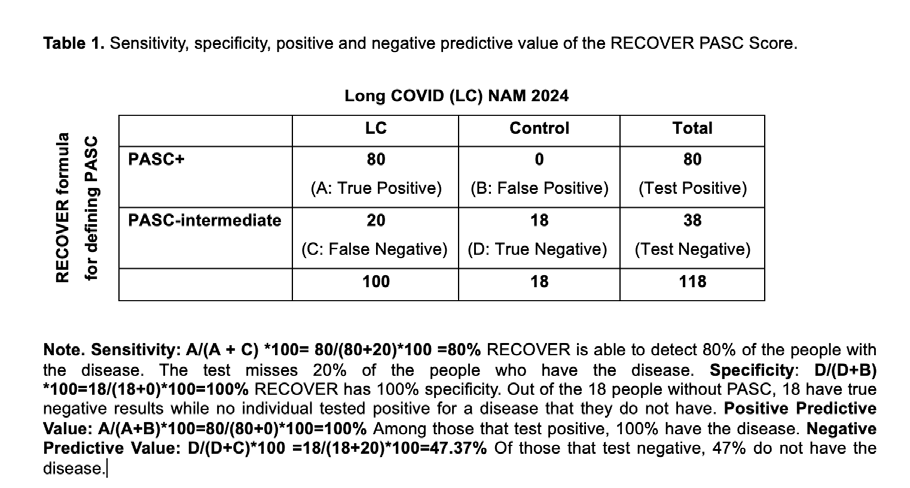
920. WITHDRAWN
Poster Abstracts
Page: 286
921. Assessing the Burden of Long COVID in Persons With HIV Using the RECOVER Scoring System
Poster Abstracts
Page: 286
Kamaria Dansby1, Cyra C. Mehta1, Tsungirirai Maramba1, Lauren F. Collins1, Caitlin A. Moran2, Brad Aouizerat3, Joseph Margolick4, Michelle Floris-Moore5, Kara Chew6, Valentina Stosor7, Gypsyamber DSouza8, Kathryn Anastos9, Ighovwerha Ofotokun1, Phyllis Tien10
Background
Some individuals recovering from COVID-19 experience persistent symptoms after initial infection, a condition known as Long Covid (LC). Persons with vs without HIV (PWH; PWoH) are hypothesized to be at greater risk of LC due to chronic immune dysregulation. However, existing data are sparse and conflicting due to inconsistent definitions of LC. We used the RECOVER Scoring System (RSS) to define and assess the burden and pattern of LC presentation in PWH vs PWoH who had prior COVID-19 in the MACS/WIHS Combined Cohort Study (MWCCS).
Methods
We included MWCCS participants who self-reported a positive COVID-19 test between 04/2020 and 11/2023. Participants who completed the prospectively administered COVID-19 survey including symptom type and duration between 30 and 365 days after COVID-19 infection date were evaluated for LC. LC was defined using the RSS, which weights 12 common LC symptoms according to strongest association with LC in and sums the weights for a total score. Participants with total scores ≥12 met criteria for LC. Among those with LC, we characterized LC symptom type by HIV serostatus, sex, and COVID-19 vaccination status using chi-square tests.
Results
Of 4,970 participants, 1,616 (33%) reported a positive COVID test during the study period, of whom 153 (10%) met RSS criteria for LC. Among PWH who reported having COVID, 97/1010 (9.6%) had LC, compared to 56/606 (9.2%) of PWoH (p=0.89). Among persons with LC, half were female, 63% were PWH (median CD4 758 cells/mm3; 91% had HIV RNA <200 cp/ml), and most (93%) had received 1 dose of COVID vaccine at time of survey. Overall, the most common LC symptoms were chronic cough (94%), post-exertional malaise (93%), and loss of smell/taste (88%), while the least common were brain fog (28%), dizziness (19%), and palpitations (13%). There was no significant difference in LC symptom type by HIV serostatus (Figure). Neither sex nor vaccination status had measurable impact on LC prevalence or symptom type in the study population.
Conclusions
Using the highly specific yet conservative RSS to define LC, PWH and PWoH were similarly likely to develop LC after an acute COVID-19 infection. LC symptoms were similar in both PWH and PWoH. Our study is limited by the relatively small number of individuals with LC. These findings will inform work on assessing the trajectory of LC symptoms over time and by comorbidity status to better understand their progression and implications.
The figure, table, or graphic for this abstract has been removed.
922. Long COVID Is a Multisystem Disorder: Assessment of the National Academies Definition
Poster Abstracts
Pages: 286-287
Lawrence Huang1, Amitabh Gunjan2, Anudeep S. Appe2, Paul A. Mckelvey3, Heather A. Algren4, Mark Berry5, Essy Mozaffari5, Bill J. Wright3, Jennifer J. Hadlock1, Jason D. Goldman4
Background
Long COVID is an infection-associated chronic condition occurring after SARS-CoV-2 infection that can manifest as one or multiple symptoms or diagnosable conditions, as newly defined by the National Academies. We evaluated this new Long COVID definition.
Methods
We reviewed hospital admissions from 5/1/20 – 9/30/22 in electronic health records (EHR) from a multistate healthcare system. The COVID+ group had first SARS-CoV-2 lab test or encounter diagnosis between 30 days before to 5 days after admission, and the non-COVID group was admitted with no prior or current SARS-CoV-2 test or diagnosis. The populations were balanced with overlap weights based on a high-dimensional propensity score of pre-specified variables and the top 100 comorbidities differing between the groups. Hazard ratios (HR) were calculated for the combined primary outcome including any of the individual secondary outcomes or U09.9 (Post-Covid Conditions). Secondary outcomes included 29 individual incident diagnoses 90 to 360 days after admission. To account for multiplicity on the secondary outcomes, a Bonferroni-corrected p-value < 0.0017 was considered significant.
Results
Admissions included 45,065 persons with and 417,268 persons without COVID-19 during the study period. Mean age was 58 years, 62% were female, 25.4% were non-white, and 13% were Hispanic. After weighting, standardized difference was < 0.01 for age, sex, race, ethnicity, insurance, vaccination, variant era, WHO ordinal scale, steroid use, immunocompromised status and 100 clinical features. In the COVID+ and non-COVID groups 16,945 (37.6%) and 122,201 (29.3%) met the combined primary outcome, respectively. The HR for the primary outcome after weighting was 1.29 (95%CI 1.27, 1.32), p < 0.00001. Of the individual secondary outcomes, all but one outcome (post-exertional malaise) had significantly elevated HR in the COVID+ vs. non-COVID groups, after adjustment for multiplicity (Figure). Incident diagnoses with strong associations (HR > 2) included thromboembolism, hair loss, diabetes mellitus, obesity, and hypoxia. Anosmia/dysgeusia was associated with prior COVID admission, but wide confidence intervals reflected few charted diagnoses.
Conclusions
Manifestations of Long COVID at population scale as defined by the National Academies are detectable as part of routine symptoms and clinical diagnoses in the EHR after admissions for COVID-19, compared with all other hospital admissions. Some features of Long COVID are not well coded in the EHR.
The figure, table, or graphic for this abstract has been removed.
923. Completeness of COVID-19 Outcomes Among People With HIV Receiving Care in New York City in 2020
Poster Abstracts
Page: 287
Jenny Shen1, Keith M. Sigel2, Joseph P. McGowan3, Daniel Bertolino4, Kathryn Anastos5, Uriel R. Felsen5, Denis Nash1, Viraj V. Patel5, Mckaylee M. Robertson1, Miguel A. Hernan6, Sarah L. Braunstein4, Heidi E. Jones1, David B. Hanna5
Background
Many early COVID-19 outcome studies were based exclusively on electronic health record (EHR) data from single health systems. However, many people in 2020 who would have ordinarily received care in the same system experienced outcomes at other hospitals or at home – 2 common scenarios when COVID-19 temporarily transformed usual practice. We assessed completeness of COVID-19 outcomes among people with HIV (PWH) receiving HIV care in 3 New York City health systems, comparing EHR data alone to the gold standard of public health surveillance data.
Methods
We included adult (18+) PWH treated with antiretroviral therapy from 1/1/2019-3/1/2020 in the Montefiore, Mount Sinai and Northwell health systems. We obtained PCR-confirmed COVID-19 infections, hospitalizations (via diagnosis codes), ICU admissions and all-cause deaths from health system EHRs through 12/31/2020, before COVID-19 vaccines were widely available. We linked data with the New York City HIV and COVID-19 Surveillance Registries, which contain city-wide data on legally mandated reporting of HIV, COVID-19 and deaths. We compared numbers of COVID-19 outcomes identified between data sources. To assess potential bias when limiting analyses of COVID-19 outcomes to EHR data alone, we compared associations of selected characteristics with COVID-19 outcomes by source.
Results
Among 19833 PWH (73% men, 42% Black, 39% Latino, 16% white, median age 53), we identified 1372 (7%) COVID-19 infections, 435 (2%) hospitalizations, 70 (0.3%) ICU admissions and 460 deaths (2%) (Table). Using EHR data alone resulted in a 3-fold underestimation of COVID-19 infections, hospitalizations and ICU admissions and 5-fold underestimation of all-cause mortality. Among those who died, younger PWH were more likely to be missing from EHR after adjusting for site, race/ethnicity, sex, HIV transmission category and HIV viral suppression. In relation to pre-COVID HIV viral suppression, the adjusted odds ratio of all-cause mortality for pre-COVID HIV viremia (200+ cp/ mL) was 1.62 (95% CI 0.96-1.70) using EHR data only and 2.20 (95% CI 1.76-2.75) using surveillance data. Adjusted associations of race/ethnicity differed by source across all 4 COVID-19 outcomes.
Conclusions
In 2020, analyses limited to EHR severely underestimated COVID-19 outcomes and resulted in important biases in outcome estimates and measures of association. Interpretation of estimates from EHR-based studies during public health emergencies should require careful consideration of ascertainment bias.
Table 1.
Under-ascertainment of COVID-19 outcomes and mortality among PWH in care at three New York City health systems, 2020 (N=19,833)
| COVID-19 outcome |
EHR only: N |
EHR only: % |
Surveillance (gold standard): N |
Surveillance (gold standard): % |
Combined (either source): N |
Combined (either source): % |
Ratio of combined to EHR only |
| PCR-confirmed COVID-19 infections |
422 |
2.1 |
1233 |
6.2 |
1372 |
6.9 |
3.3 |
| COVID-19 hospitalizations |
128 |
0.6 |
421 |
2.1 |
435 |
2.2 |
3.4 |
| COVID-19 ICU admissions |
21 |
0.1 |
62 |
0.3 |
70 |
0.3 |
3.3 |
| Deaths due to any cause |
94 |
0.5 |
455 |
2.3 |
460 |
2.3 |
4.9 |
924. COVID-19 Symptoms, Vaccination and Long COVID Between Cancer Survivors and the US General Population
Poster Abstracts
Page: 287
Jincong Q. Freeman1, Victoria Umutoni2, Xinyi Li1, Olivia Zou3, Ted O. Akhiwu4
Background
COVID-19 can have lasting symptoms that may vary in different populations. Cancer survivors face many health challenges and may be more vulnerable to COVID-19. This study examined differences in COVID-19 symptoms, vaccination status, and long COVID between cancer survivors and the general population in the US.
Methods
We conducted a secondary data analysis of the 2022 National Health Interview Survey that used multi-stage probability sampling, accounting for complex survey design. Adults aged ≥18 years with a cancer history were cancer survivors, and the general population included those without a cancer history. Long COVID was defined as having any symptoms lasting ≥3 months that were absent before having SARS-CoV-2 or COVID-19. Participants were also asked to describe their level of symptom severity and whether they received ≥1 dose of COVID-19 vaccination. Weighted proportions (95% CIs) were compared using Rao-Scott Chi-squared tests. Weighted logistic regression was used to assess differences in long COVID between cancer survivors and the general population, controlling for sociodemographics and vaccination status. Adjusted odds ratios (AOR, 95% CI) were computed.
Results
The unweighted sample was 8,936 (weighted n=89,331,130, mean age=44 years); of whom, 7.6% (95% CI: 7.0-8.2%) were cancer survivors and 63.4% identified as White, followed by 19.2% as Hispanic, 9.6% as Black, 4.8% as Asian, and 3.0% as Other. Compared with the general population, significantly higher proportions of cancer survivors experienced severe COVID-19 symptoms (17.9% [95% CI: 15.4-20.4%] vs. 14.3% [95% CI: 13.5-15.2%], p=.019) (Figure) and received a COVID-19 vaccine (88.6% [95% CI: 87.3-89.9%] vs. 78.6% [95% CI: 77.8-79.5%], p<.001). Overall, 19.7% (95% CI: 18.7-20.7%) experienced long COVID. The weighted percentage of long COVID was significantly higher in cancer survivors than in the general population (23.6% [95% CI: 20.3-27.0%] vs. 19.4% [95% CI: 18.3-20.4%], p=.009). After covariate adjustment, the odds of long COVID between the two populations were not statistically significant (AOR 1.05, 95% CI: 0.85-1.31, p=.635).
Conclusions
In this US national sample, cancer survivors experienced more severe COVID-19 symptoms than the general population, with no differences in long COVID. Strategies are needed to address COVID-19 symptom severity in cancer survivors while ensuring equitable COVID-19 care access. Future research should also consider other factors beyond cancer history when assessing long COVID.
Figure 1.
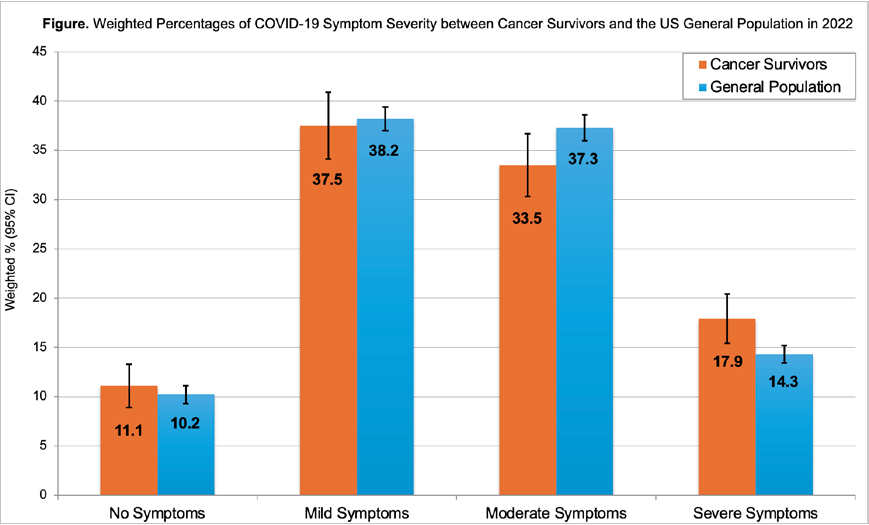
925. A Population-Based Study of Functional Disability, COVID-19 Symptoms, and Long COVID Among US Adults
Poster Abstracts
Pages: 287-288
Jincong Q. Freeman1, Xinyi Li1, Victoria Umutoni2, Ted O. Akhiwu3, Heather J. Hoffman1
Background
COVID-19 can have long-term effects on health. People with disabilities may bear a heavier burden of COVID-19 and be more susceptible to severe and prolonged symptoms. This study assessed relationships between functional disability, COVID-19 symptoms, and long COVID in US adults.
Methods
We obtained population-based data from the 2022 National Health Interview Survey using multistage probability sampling to interview adults aged ≥18 years. Any disability (yes/no) was defined by the Washington Group Composite Disability Indicator measuring self-reported levels of difficulty in 6 functional domains: vision, hearing, mobility, communication, cognition, and self-care. Long COVID was defined as having symptoms lasting ≥3 months that individuals did not have before COVID-19. We also assessed symptom severity and receipt of ≥1 vaccine dose. Weighted proportions (95% CI) were compared using Rao-Scott Chi-squared tests. We performed weighted logistic regression, controlling for sociodemographics and vaccination status, and calculated adjusted odds ratios (aOR; 95% CI). All analyses accounted for complex survey design.
Results
In this unweighted sample of 8946 adults (weighted n=89437918), the mean age was 44 years and 63.4% were White, followed by 19.2% Hispanic, 9.6% Black, and 7.8% Asian or Other. Overall, 7.6% (95% CI, 7.0-8.3%) had a disability and 19.7% (95% CI, 18.7-20.7%) experienced long COVID. The percentage of long COVID was higher among adults with a disability than those without (33.7% [95% CI, 29.7-37.8%] vs 18.5% [95% CI, 17.5-19.6%]; P<.001). We observed a similar pattern across specific functional domains (Figure). When adjusting for covariates, adults with a disability had significantly greater odds of long COVID than those without (aOR, 2.01; 95% CI, 1.62-2.49; P<.001). Furthermore, adults with a disability were more likely than those without to have experienced severe COVID-19 symptoms (26.3% [95% CI, 22.8-29.8%] vs 13.6% [95% CI, 12.8-14.5%]; P<.001). The proportion of having received ≥1 COVID vaccine dose was similar between adults with a disability (21.0%; 95% CI, 19.1-23.0%) and those without (20.4%; 95% CI, 19.5-21.2%) (P=.518).
Conclusions
Long COVID was more prevalent in US adults with a functional disability, and disability was associated with long COVID. Adults with a disability also experienced more severe COVID-19 symptoms. Findings suggest that screening for symptoms and improving care access may help address long COVID disparities in populations with disabilities.
Figure 1.
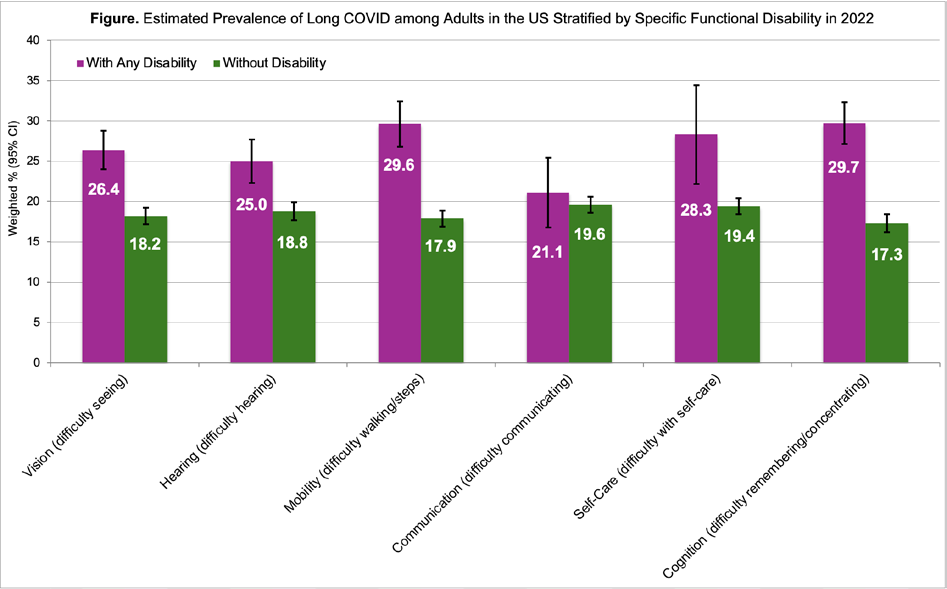
926. Cognitive Trajectories 1 Year Before and After COVID-19 in an Early-Treated HIV Cohort
Poster Abstracts
Page: 288
Ferron F. Ocampo1, Tyler Hamby2, Luxe-Naree Poonpitak3, Carlo Sacdalan3, Suwanna Puttamaswin3, Somchai Sriplienchan3, Nittaya Phanuphak4, Phillip Chan5, Trevor Crowell2, Lydie Trautmann6, Sandhya Vasan6, Robert Paul7, Serena Spudich5, the RV254/SEARCH 010 Study Team
Background
There is accumulating evidence that SARS-CoV-2 infection may have lasting effects on cognition in a subset of individuals. However, there is scarce data on the impact of COVID-19 on cognitive performance in people with HIV (PWH), who may experience cognitive impairment despite viral suppression by antiretroviral therapy (ART). We examined the trajectory of cognitive parameters 1 year pre- and post-COVID-19 in PWH on stable ART initiated during acute HIV infection (AHI).
Methods
RV254 participants are enrolled during AHI (Fiebig I-V), initiated ART within days, and longitudinally followed with a 4-test cognitive battery that evaluated executive function (Color Trails 1 & 2, CT1 & CT2), processing speed (Trail Making A, TMA), and fine motor speed/dexterity (non-dominant hand Grooved Pegboard, GPB). Raw scores were standardized and averaged to determine an overall performance (NPZ-4) score. In participants on ≥ 48 weeks of stable ART with documented COVID-19, cognitive test z-scores 1 year pre- and post-COVID-19 were regressed on time using linear mixed models. Time in years since COVID-19 diagnosis was entered as a linear spline with knots at the time of COVID-19 diagnosis and 0.25-year intervals thereafter; each time point after diagnosis was compared with the value at diagnosis.
Results
Between April 2021 and September 2022, 269 participants on ≥ 48 weeks of stable ART (97% males, median age 32 [interquartile range 29-37]) were diagnosed with COVID-19. Of these, 221 (82%) were diagnosed with COVID-19 during the Omicron wave; 229 (85%) received ≥2 doses of COVID-19 vaccines prior to diagnosis; 4 (1.5%) required supplemental oxygen, 1 required intensive care, and there were no fatalities. Compared with values at the time of COVID-19 diagnosis, there were significant declines in the TMA z-score at 3 months (0.90 vs 0.55, p=0.02) and the NPZ-4 score at 6 months (1.02 vs. 0.89, p=0.03) after diagnosis (Figure 1). CT1, CT2, and GPB z-scores remained stable over this period.
Conclusions
In this cohort of young, mostly male PWH with HIV suppression after early ART, we observed modest but significant changes in processing speed and overall neurocognitive performance up to 6 months after acute COVID-19. Longer follow-up and monitoring of post-acute cognitive sequelae of SARS-CoV-2 infection together with longitudinal assessments of soluble immune markers in cerebrospinal fluid and brain MRI are ongoing to determine the long-term impact of COVID-19 on cognitive outcomes in PWH.
Figure 1.
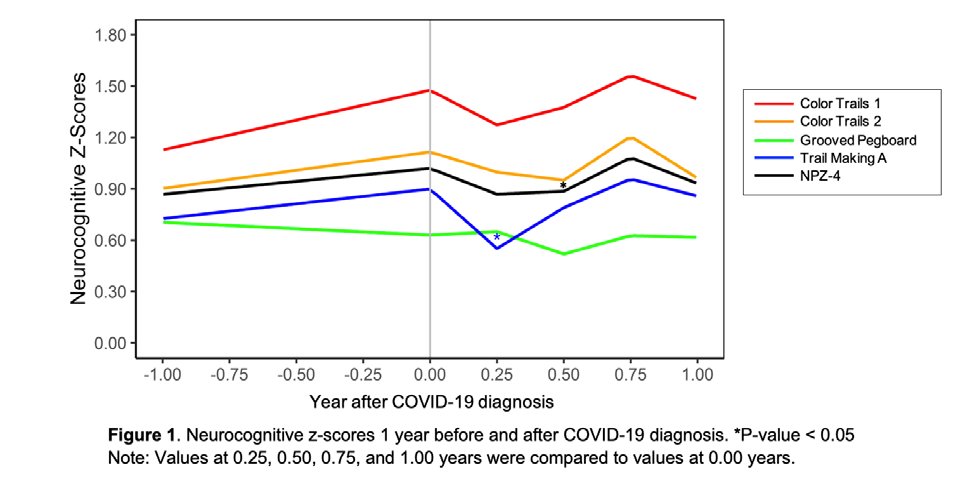
927. Hormonal Dysregulation in Long COVID: Exploring the Salivary Cortisol Profile
Poster Abstracts
Pages: 288-289
Marta Camici1, Marta Franco1, Lorenzo Talamanca2, Manuela Petino3, Jessica Paulicelli1, Liliana Scarnecchia4, Alessandra Vergori1, Stefano Curcio4, Roberto Baldelli4, Paolo Zuppi4, Andrea Antinori5
Background
While reduced morning serum cortisol (SC) is common in long COVID (LC) patients, measuring salivary cortisol throughout the day better reflects dynamic secretion and may offer greater sensitivity than SC. This study investigates this relationship, alongside hormonal dysregulation and LC predictors.
Methods
This prospective, single-center, case-control study at a LC-clinic in Rome included 96 participants assessed at least 28 days post-positive SARS-CoV-2 PCR test. LC was defined as at least one new or persisting symptom, with severe LC defined as four or more of fatigue, concentration/memory deficits, poor exercise tolerance, dyspnea, arthralgia, or dysautonomia. Fatigue, assessed using the Fatigue Assessment Scale (FAS) at baseline and 12 weeks, was defined as FAS ≥ 22 (severe: FAS ≥ 35). Two weeks post-BL, blood samples for hormonal assessment and salivary cortisol samples (8:00 AM, 3:00 PM, 11:00 PM) were collected. Patients with SC <15 µg/dL underwent a 1 µg ACTH stimulation test to assess for adrenal insufficiency. Salivary cortisol data from a control group (healthy, COVID-19-free for 4+ months) were also analyzed.
Results
Of 96 patients, 60% were female, all white, mean age 58 ± 15 yrs, 61% had >3 comorbidities, 42% had prior COVID-19, and the mean SARS-CoV-2 vaccine doses received was 2.9 ± 1. 62.5% exhibited FAS scores ≥ 22. LC was present in 86% of participants, with 80% experiencing moderate and 20% severe symptoms. 13.5% were asymptomatic post-COVID (APC). Altered FAS was strongly associated with both LC presence and severity (p<0.0001), and negatively impacted daily life (p<0.001). Vaccination was found to be protective (p=0.03), while psychiatric comorbidities increased LC risk (p=0.04). One LC patient (1.2%) had adrenal insufficiency requiring replacement therapy. Morning salivary cortisol was higher in controls than in both APC and LC groups (p=0.005), while afternoon/evening cortisol was lower (Figure 1). Although morning SC did not differ between groups, median ACTH was higher in LC than APC (26 pg/ml vs 13 pg/ml; p<0.001). No differences were observed between groups for testosterone, DHEAS, TSH, ft3, or ft4. Median TSH was higher in the pathological FAS group (2.07 mU/L vs 1.58 mU/L; p=0.004).
Conclusions
This study reveals a disrupted circadian cortisol rhythm in individuals post-COVID-19, marked by lower daytime and higher evening/ nighttime cortisol levels, potentially correlating with disease severity. Elevated ACTH levels in LC may suggest adrenal impairment.
The figure, table, or graphic for this abstract has been removed.
928. In Vitro Modeling of the Effects of Impaired HDL on Atherogenesis in Long COVID Syndrome
Poster Abstracts
Page: 289
Michael Wong1, Madhav Sharma1, Theodoros Kelesidis2
Background
The mechanisms that drive SARS-CoV-2-related cardiovascular complications of Long COVID (PASC) such as atherosclerotic cardiovascular disease (CVD) remain unclear. Prior studies have shown alterations of HDL function in infections and SARS-CoV-2 infection, persistent oxidative stress, lipid abnormalities and macrophage dysfunction post COVID-19 that may contribute to HDL dysfunction and CVD. However, the effect of dysfunctional HDL on atherogenesis in PASC remains unknown. To address these gaps in knowledge, we used an established model of atherogenesis to assess ex vivo the role of impaired HDL on early atherogenesis in PASC.
Methods
Our in vitro model of atherogenesis can dissect the impact of HDL from patients with PASC on key mechanisms of early atherogenesis such as transendothelial migration of monocytes (TEM) and monocyte-derived foam cell formation (MDFCF). ApoB depleted serum was isolated from healthy participants (n=15 males, 18-40 years old) and patients with PASC (n=15, 40-55 years old, 7 females, 8 males) with no risk factors for CVD or inflammatory comorbidities other than SARS-CoV-2 infection >12 weeks prior to study participation. Study participants were recruited within UCLA CTSI. PBMCs from healthy donors (n=15) or PASC patients were added to activated endothelial cells monolayers (HUVECs) on collagen gels and flow cytometry assessed % TEM of monocytes and MDFCF (BODIPY signal compared to staining control in the presence of ApoB depleted serum as previously (PMID: 28926407).
Results
When media-containing PACS+ ApoB depleted serum was added to HUVECs and autologous PASC PBMC, a significantly increased proportion of monocytes underwent TEM(median migrated cells 19.04 vs. 7.5%, respectively) and CD33+ macrophages inside the collagen gel had increased lipid content per cell (median ∆MFI BODIPY 351.9 vs. 149.7, respectively)(P<0.001) compared to control ApoB depleted serum and healthy PBMCs, respectively (Figure).
Conclusions
ApoB depleted serum from patients with PASC with no CVD and CVD risk factors directly induces key mechanisms of early atherogenesis (TEM and MDFCF) in a mechanistic ex vivo assay of atherogenesis in the presence of autologous PBMCs from the same PASC patients, suggesting that impaired HDL interacts with impaired monocytes to potentially contribute to atherogenesis in the setting of PASC. Further large studies in patients with PASC are needed to validate the role of dysfunctional HDL in Long COVID and recurrent SARS-CoV-2 infections.
Figure 1.
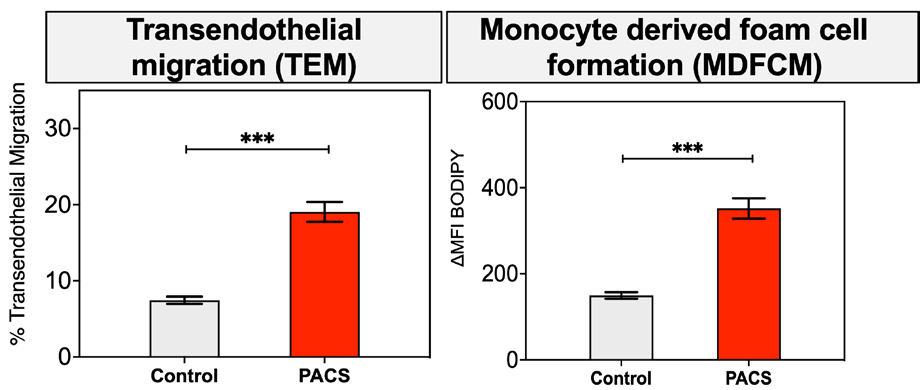
929. Age-Dichotomous Associations of Long COVID With Frequency of Public SARS-CoV-2 Memory TCRs
Poster Abstracts
Page: 289
Selin Akbas1, Shuai Li2, Hao Zhang2, Tamilore Adeagbo1, Ni Zhao2, Alan Landay3, Michael Peluso4, Elizabeth Thompson1, Andrea Cox1, Yukari Manabe1, Hongkai Ji2, Annukka Antar1
Background
Despite its prevalence, the pathobiological mechanisms of long COVID (LC) remain unknown. Persistent SARS-CoV-2 viral antigen may cause LC, and so we sought indirect evidence of persistent viral antigen by assessing for frequency of memory T cells specific for SARS-CoV-2 after SARS-CoV-2 infection in people with and without LC.
Methods
We obtained 122 T cell receptor (TCR) β chain repertoires from sorted memory CD4+ and CD8+ T cells from longitudinal samples drawn at 1- and 4-6-months post-first SARS-CoV-2 infection from people who went on to develop LC (n=17) and those who experienced a full and rapid recovery (n=14, FR). ImmuneCODE-MIRA-Release002.1, a database of 160,000 public SARS-CoV-2-specific TCRβ sequences with linked antigen specificity, was used to determine the frequencies of public SARS-CoV-2-specific TCRs within memory CD4+ and CD8+ TCRβ repertoires. The frequencies of resting naïve and memory CD4+ & CD8+ T cells, activated CD4+ & CD8+ T cells, and monocyte subsets were also determined using flow cytometry. The sample was stratified into 'young' and 'old' groups based on age greater than or less than the median age (50) at time of infection.
Results
The frequency of public SARS-CoV-2-responsive TCRs in memory CD4+ (p=0.54) and memory CD8+ (p=0.83) TCRβ repertoires did not differ between individuals with LC and FR at either 1- or 4-6-months post-infection, nor did they significantly change over time from 1 to 4-6 months post-infection. Immune cell frequencies did not differ, except that LC had lower frequencies of CD4s among all T cells at 4-6-months post-infection compared to FR (58.5% vs 66.6%, p=0.038). When stratified by age, older LC had significantly lower frequency of public SARS-CoV-2-responsive TCRs in memory CD4+ TCRβ repertoires than older FR (p=0.016), including public non-spike-(p=0.017) and spike-(p=0.04) specific TCRs compared to FR. Conversely, younger LC trended towards having a higher frequency of public SARS-CoV-2 TCRs among their memory CD4+ TCRβ repertoires than younger individuals with FR (p=0.088); this trend persisted when exclusively considering overlap with public non-spike, ORF7b, and ORF8-associated TCRs (p=0.055, 0.057, 0.063).
Conclusions
Older individuals with LC had fewer public SARS-CoV-2-specific TCRs in their memory CD4+ T cell repertoires than their peers with full recovery. While these results warrant confirmation by other means, this work suggests that LC may not be associated with persistent antigen in older individuals.
Figure 1.
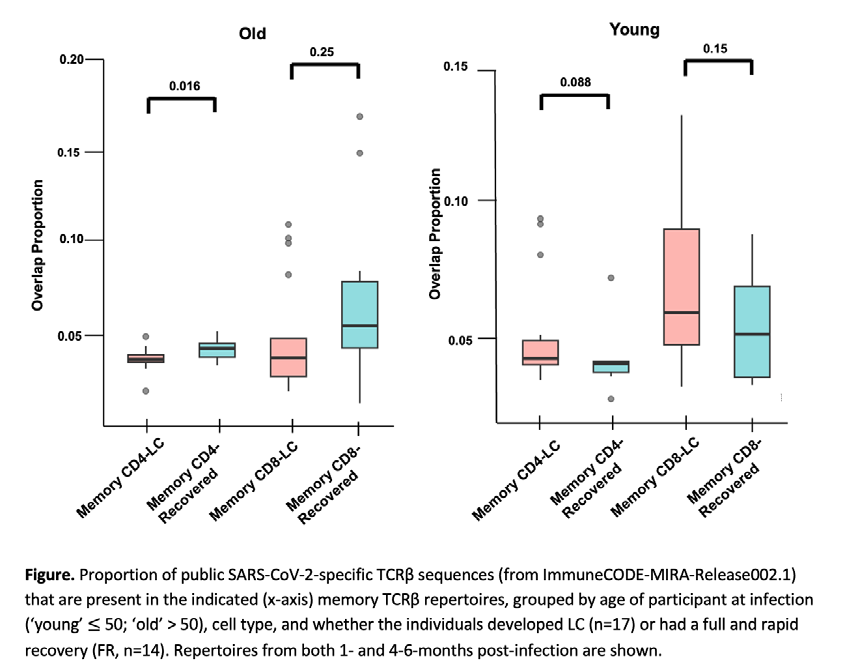
930. Persistent Immune Dysregulation and Metabolic Alterations Following SARS-CoV-2 Infection
Poster Abstracts
Pages: 289-290
Silvia Lucena Lage1, Katherine Bricker-Holt2, Joseph Rocco1, Adam Rupert3, Eduardo Pinheiro Amaral2, Gabriel Rosenfeld2, Thomas Dalhuisen4, Avery Eun4, Emily Fehrman4, Jeffrey Martin4, Steven G. Deeks4, Michael Peluso4, Irini Sereti1, Timothy J. Henrich4
Background
SARS-CoV-2 infection can lead to medical comorbidities (eg, autoimmunity, vascular complications) as well as Long COVID (LC), a multisystem disease encompassing a wide range of symptoms. The biological drivers of these conditions are incompletely understood.
Methods
We performed an in-depth immunometabolic screen with multidimensional flow cytometry and plasma measurements of inflammatory biomarkers and metabolites. We compared SARS-CoV-2-naïve controls (NC, N=30) and individuals who had COVID-19 4 months prior to sampling (COVID, N=96). The post-COVID participants included those who had WHO-defined LC (LC, N=58) or had fully recovered (RC, N=38).
Results
Compared to NC, those with prior COVID-19 had an altered metabolic and inflammatory profile at 4 months post-COVID, mostly irrespective of LC symptoms. Post-COVID, we observed sustained caspase-1/4/5 activity (NC:0.95 vs COVID:1.05, p=0.0026, expressed as median of the fold change) and mitochondrial superoxide production (NC:0.9 vs COVID:1.24, p=0.005) in monocytes, indicative of inflammasome activation and oxidative stress, respectively, along with an enrichment in HLA-DRlo/p16INK4alo immature monocytes. This was accompanied by elevated inflammatory plasma biomarkers, including lipid mediators such as high arachidonic acid (NC:138 µg/ mL vs COVID:268.5, p<0.0001), decreased tryptophan levels (NC:11.85 µg/mL vs COVID:9.34, p<0.0001), and alterations in the frequency of peripheral immune cell subsets. In comparison to RC participants, we identified a distinct subset of senescent effector CD8 T-cells in those who developed LC, characterized by lower expression of CD57 (RC:2311 vs LC:1344, p<0.004), an indicator of cytotoxic capacity, and higher levels of p16INK4a, a cellular senescence marker (p<0.03). Finally, a principal component analysis with the most differentiating markers demonstrated unique immunometabolic profiles in NC vs COVID groups (Figure 1A), while differences between RC and LC groups were more subtle (Figure 1B).
Conclusions
SARS-CoV-2 infection can have a profound and sustained immunometabolic effect, which could contribute to post-acute morbidity. A combination of disjointed innate and adaptive immune recovery with metabolic alterations may contribute to LC. Our data suggest an ongoing perturbation of immunometabolic homeostasis for months following COVID-19, and could guide evaluation of treatments focused on modulating immune or metabolic pathways involved in persistent LC symptoms.
The figure, table, or graphic for this abstract has been removed.
931. Immune & Virologic Trajectories 1.5 Years Before and After COVID-19 in an Early-Treated HIV Cohort
Poster Abstracts
Page: 290
Ferron F. Ocampo1, Tyler Hamby2, Luxe-Naree Poonpitak3, Carlo Sacdalan3, Suwanna Puttamaswin3, Somchai Sriplienchan3, Nittaya Phanuphak4, Phillip Chan5, Trevor Crowell2, Lydie Trautmann6, Sandhya Vasan6, Robert Paul7, Serena Spudich5, the RV254/SEARCH 010 Study Team
Background
SARS-CoV-2 infection can be associated with immunologic dysfunction and might serve as a ‘second hit’ to immune function in people with HIV (PWH) despite suppression with antiretroviral therapy (ART). We leveraged the RV254 Thai cohort to examine the trajectory of immunologic and virologic parameters 1.5 years pre- and post-COVID-19 in PWH on stable ART initiated during acute HIV infection (AHI).
Methods
RV254 participants are enrolled during AHI (Fiebig I-V), initiated ART within days, and undergo serial longitudinal blood (CD4+ & CD8+ T-cell counts, HIV RNA) tests. In participants on ≥ 48 weeks of stable ART with documented COVID-19, immunologic measures 1.5 years pre- to post-COVID-19 were regressed on time using linear mixed models. Time in years since COVID-19 diagnosis was entered as a linear spline with knots at the time of COVID-19 diagnosis and 0.25-year intervals thereafter; each time point after diagnosis was compared with the value at the time of diagnosis. Rates of detectable viral load (> 50 copies/ml) before and after COVID-19 diagnosis were compared using Poisson regression generalized estimating equations.
Results
Between 4/2021 and 9/2022, 262 participants on ≥48 weeks of stable ART (97% males, median age 32 [interquartile range 29-38]) were diagnosed with COVID-19. Of these, 213 (82.1%) were diagnosed during the Omicron wave; 224 (85.5%) received ≥2 doses of COVID-19 vaccines prior to diagnosis; 4 (1.5%) required supplemental oxygen; 1 (0.4%) required intensive care and there were no fatalities. Compared with values at the time of COVID-19 diagnosis, there were significant declines in estimated CD4+ T-cell count (from 710.77) at 6 (679.62, p=0.030) and 9 (668.14, p=0.008) months and the CD4+/CD8+ T-cell ratio (from 1.13) at 3 (1.09, p=0.019), 9 (1.07, p<0.001), and 12 (1.08, p=0.006) months after diagnosis (Figure 1). CD8+ T-cell count was stable over this period. Estimated rates of detectable viral load per year decreased post-COVID (5.6% vs. 2.2%, p=0.04).
Conclusions
In this cohort of young, mostly male PWH with viral suppression after early ART, we observed mild but significant changes in the trajectory of CD4+ T-cell count and CD4/CD8 ratio up to one year after COVID-19. Detectable viral load rates decreased post-COVID-19 but CD8+ T-cell count remained stable. Longer follow-up and additional studies to disentangle the effects of COVID-19 vaccination and reinfections are ongoing to determine the impact of COVID-19 on the immunologic and virologic outcomes in PWH.
Figure 1.
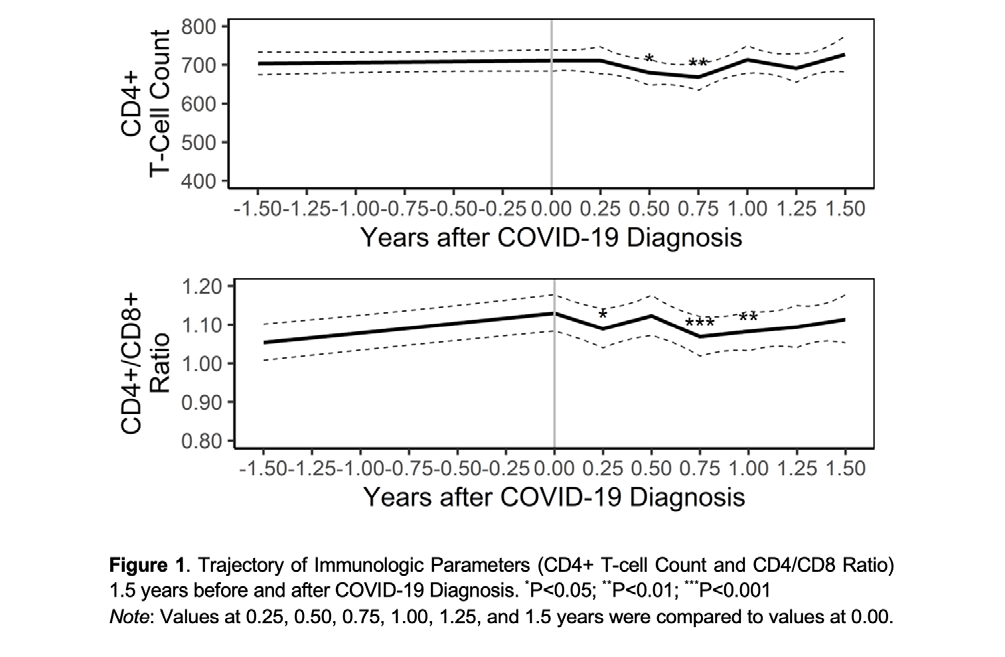
932. Longitudinal Changes in Arterial Stiffness and Inflammation From Pre- to Post-COVID-19 Infection
Poster Abstracts
Page: 290
Jhony Baissary1, Ornina Atieh1, Jared C. Durieux2, Alexander Merheb3, Danielle Labbato2, Theresa Foster2, Michael Rodgers2, Grace A. McComsey1
Background
We have previously shown in cross-sectional studies that COVID-19 infection was associated with arterial stiffness and increased oxidized LDL (oxLDL). In this study, we assess changes in these cardiovascular parameters after COVID infection in a group of individuals who have documented pre-COVID assessments. Having pre-COVID assessments has been a limitation of current studies.
Methods
This prospective cohort study used FDA-approved EndoPAT2000 to measure the Augmentation Index (AI; arterial stiffness) and Reactive Hyperemic Index (RHI; endothelial function) in a group of individuals with available pre-pandemic measurements and a documented COVID-19 infection. A detailed medical and COVID-19 history were collected, and inflammatory and metabolic markers were measured. Linear mixed models with random intercept were used to estimate the effects of COVID-19 infection on markers of endothelial function, inflammation, gut permeability, and monocyte activation.
Results
Among the 78 participants (53% non-white race, 40% female), median age was 47 years and BMI 28 kg/m2. The median duration between pre-pandemic and post-COVID infection was 3 years, and between COVID infection and post-COVID assessment 451 days. At the pre-pandemic visit, 34% of participants had RHI ≤1.67 and the median AI was 2.0. At follow-up, the proportion of participants with abnormal RHI did not change, but the proportion of participants with elevated arterial stiffness (AI≥2.0) increased by 15.3% (P<.0001), and significant increases in ICAM (P=0.02), sCD14 (P=0.01), sCD163 (p=0.001), and OxLDL (P= 0.03) were observed. Non-HDL cholesterol improved, without change in HbA1C or weight. After adjustment, female sex had more than six times [aOR: 6.2 (95% CIs: 1.5, 25.7); P=0.01] higher likelihood of having higher AI compared to male sex. Changes in arterial stiffness were not correlated with metabolic (weight, hbA1c, lipids) or inflammatory markers.
Conclusions
COVID infection is associated with arterial stiffness; female sex seems mostly affected. Long term cardiovascular effects of arterial stiffness are very concerning in this population and should be investigated.
933. [18F]F-AraG PET Imaging Reveals Increased Gut T-Cell Activation in People With Long COVID
Poster Abstracts
Pages: 290-291
Timothy J. Henrich1, Michael Peluso1, Robert Flavell1, Dylan Ryder1, Kofi Asare1, Emily Fehrman1, Thomas Dalhuisen1, Rebecca Hoh1, Badri Viswanathan1, Youngho Seo1, Jelena Levi2, Jeffrey Martin1, Steven G. Deeks1, Henry VanBrocklin1, Emilio De Narvaez1, the UCSF LIINC Study Team
Background
We previously demonstrated increased T cell activation across many tissue types in people months to years following SARS-CoV-2 infection compared to participants imaged prior to the COVID-19 pandemic using a novel PET imaging tracer of T cell activation ([18F]F-AraG). The relationships between persistent whole-body T cell activation and various Long COVID (LC) clinical phenotypes, however, is not known. Thus, we performed PET imaging on 65 individuals months to years following initial COVID-19 infection and analyzed [18F]F-AraG distribution across the whole body.
Methods
Whole-body PET/CT imaging was performed ~50 minutes following [18F]F-AraG IV injection (5mCi) . Standardized uptake values (SUV) across tissue regions of interest in people with LC (n=50) at the time of imaging was compared to those who recovered rapidly after initial infection (n=15). Comparisons between LC phenotypes and SUV were performed adjusting for false discovery within tissue groups.
Results
We observed significant higher rectosigmoid wall mean SUVs in people with LC versus fully recovered (0.78 vs 0.51, P=0.019) and in people reporting cardiopulmonary (CP) symptoms (n=37; i.e., cough, shortness of breath, heart rhythm abnormalities, chest pain) vs the 28 participants that did not report CP symptoms (0.84 vs 0.57, respectively; P=0.013). Whereas we identified a non-significant trend to higher gut tracer uptake in people reporting fatigue vs those not reporting fatigue (SUVmean 0.78 vs 0.61) there were no trends or visualized differences across tissues in other LC phenotypes (including fatigue, sleep disturbances, musculoskeletal, gastrointestinal, neurocognitive). [18F]F-AraG uptake was similar for all other tissue regions of interest in those with LC and various LC clinical phenotypes.
Conclusions
Non-invasive PET imaging revealed increased uptake of T cell activation in colorectal tissue in those with Long COVID versus those who were fully recovered, and was specific for those reporting cardiopulmonary, but not other LC symptoms. These findings, however, may be confounded by subclinical re-infections, vaccinations or other factors. Nonetheless, these data support a hypothesis of ongoing GI mucosal dysfunction and potential viral persistence driving LC. Our data also suggest that the etiology of various LC clinical phenotypes is likely heterogeneous and may need to be considered as different etiologic entities.
934. Evidence of B-Cell Dysfunction in Individuals With Long COVID-Associated Dysautonomia
Poster Abstracts
Page: 291
Montserrat Torres1, Clara Sánchez Menéndez1, Alicia Simón Rueda1, Ana García-Casas2, Jaime Bartolomé1, Luis Fernando Lemus Aguilar1, Elena Mateos1, Jose Aguareles2, Guillermo Santamaria Corral2, Aránzazu Murciano Anton3, Pablo Guisado Vasco, MD, MPH, PhD2, Mayte Coiras1
Background
Long COVID (LC) can trigger dysautonomia or dysfunction of the autonomic nervous system (ANS) similar to some autoimmune diseases. Dysautonomia has been related with autoantibodies produced by activated non-specific B-cell clones that may interfere with the ANS normal function. Our objective was to analyze alterations in the humoral immunity with a specific focus on the BLyS/APRIL signalling pathway, which is essential for B-cell activation and regulation, to elucidate potential molecular mechanisms underlying dysautonomia in LC.
Methods
Comparative, observational, cross-sectional study comprising people with LC exhibiting dysautonomia (LCD; n=26) and healthy donors (HD; n=42). Peripheral blood mononuclear cells (PBMCs) were immunophenotyped by flow cytometry. Plasma cytokines were measured by multiplex immunoassay. Total IgG and autoantibodies were quantified by ELISA.
Results
LCD had a median age of 46 years (IQR 42-52) while HD had 45 years (IQR 39-52); most participants were female (89 and 86%, respectively). 2) Total B cell levels (CD3-CD19+) were increased 1.6-fold in LCD compared to HD (p=0.0396). However, the levels of total B cells and activated memory B cells (CD10-CD27+CD21low) expressing APRIL (A-PRoliferation-Inducing Ligand) on the cell surface were significantly lower in LCD (p=0.0014 and p=0.0021, respectively). 3) Similarly, LCD showed reduced plasma levels of both APRIL (-1.2-fold; p=0.0342) and BLyS (B-Lymphocyte Stimulator) (-1.3-fold; p=0.0287). 4) According to this reduced B-cell activation, total IgG levels and specific against SARS-CoV-2 were 1.6-fold (p=0.0172; and p=0.0153, respectively) lower in LCD. 5) The analysis of several autoantibodies in plasma revealed positive results only for antiphospholipid IgG and IgM in some participants with LCD. 6) LCD had 2.4 times more breakthrough infections than HD (p=0.0291).
Conclusions
Our findings showed a distinct humoral immunological profile in LCD. Increased levels of antiphospholipid autoantibodies may interact with the central and peripheral nervous systems, leading to neuropathies and possibly dysautonomia. Additionally, our LCD cohort had reduced plasma levels of total IgG despite higher total B-cell levels, coupled with decreased BLyS and APRIL expression, indicating a potential B-cell dysfunction and lower protection against SARS-CoV-2 reinfections. These results provide novel insights into the immunopathological mechanisms of LC-related dysautonomia and potential therapeutic targets.
935. Long COVID Associates With Slow Viral Clearance and Viral Rebound During Acute SARS-CoV-2 Infection
Poster Abstracts
Page: 291
Carly Herbert1, Nisha Ramdeep2, Annukka Antar2, John Broach1, Colton Wright1, Pamela Stamegna1, Katherine Luzuriaga1, Nathaniel Hafer1, David McManus1, Yukari Manabe2, Apurv Soni1
Background
SARS-CoV-2-host dynamics during acute infection appear to be important in the development of long COVID. However, prior studies were limited by cohort size and infrequent sampling during acute infection, and no study has addressed the association of viral rebound and long COVID. Here we present data from a large cohort study that tested people without COVID-19 on a daily or every-other-day basis to catch the onset and clearance of SARS-CoV-2 RNA from the upper respiratory tract with unprecedented resolution, facilitating a more definitive investigation of early virus-host dynamics and their association with long COVID.
Methods
Between Oct. 2021 and Feb. 2022, 7,361 people self-collected nasal specimens for SARS-CoV-2 RT-PCR testing every 24 or 48 hours for 10 or 14 days in the Test Us At Home studies. In August 2023 (18-22 months after enrollment), 244 participants with first SARS-CoV-2 infection and >1 positive test were asked whether they had ever had long COVID, defined as new COVID-associated symptoms present for 3+ months post-infection. The relative risk of developing long COVID was calculated using a log binomial model with modeled viral clearance slopes as the exposure adjusted for age, number of symptoms, and SARS-CoV-2 variant. Viral rebound was defined as testing positive, then negative, then positive again. In the viral rebound analysis, only participants with ≥3 tests were included (n=215). Logistic models were used to examine associations among symptoms, demographics, viral rebound, and long COVID.
Results
Slopes of viral clearance were able to be modeled for 172 participants, of whom 59 (34%) ever had long COVID. Participants who developed long COVID had significantly longer times from peak viral load to viral clearance than those who never developed long COVID (10.0 days [95% CI: 9.25-10.8] vs 8.7 [95% CI: 8.28-9.01]). Slopes were significantly associated with four post-acute symptoms: fatigue (aRR: 2.9), brain fog (aRR: 4.94), shortness of breath (aRR: 5.05), and gastrointestinal symptoms (aRR: 54.6) (Figure). Of the 215 participants assessed for viral rebound, 77 (36%) ever had long COVID and 75 (35%) experienced viral rebound. The development of long COVID was associated with 13-fold higher odds of having experienced rebound during acute infection (OR: 13.1; 95% CI: 6.79-26.2).
Conclusions
We demonstrate here that slow viral clearance and viral rebound during acute infection are associated with long COVID.
The figure, table, or graphic for this abstract has been removed.
936. Preserved Adrenal Function in People With Long COVID
Poster Abstracts
Pages: 291-292
Annukka Antar1, Armaan Jamal1, Zoe O. Demko1, Elizabeth Pasetes1, Tamilore Adeagbo1, Selin Akbas1, Cherie Marvel1, Andrea Cox1, Michael Peluso2, Alan Landay3, Neal Fedarko1, Amir Hamrahian1, Tracy Vannorsdall1, Alba M. Azola1, Yukari Manabe1
Background
Low serum cortisol has been associated with long COVID (LC) in some but not all studies. However, these studies examined untimed cortisol levels, which may not adequately assess adrenal function. Here we assessed untimed, timed, and stimulated cortisol levels and tested their association with LC.
Methods
Untimed total cortisol levels were quantified in 711 serum samples obtained 1-12 months post-SARS-CoV-2 infection in 381 participants enrolled in two cohort studies between 2020-2022. LC at the time of blood draw was defined as reporting at least one symptom and not having returned to pre-COVID health status. Additionally, we prospectively enrolled 44 adults with moderate-to-severe LC and 48 adults matched on age, sex, BMI, years of education, and months since acute COVID-19 who recovered fully from COVID-19 within 6 weeks (controls). In this third cohort, we excluded those with recent use of any type of corticosteroids including oral, inhaled, topical, or injectable. The cortisol awakening response was assessed in saliva (Salimetrics) at 5, 30, and 60 minutes after morning awakening in all, and diurnal cortisol was assessed after awakening, before lunch, before dinner, and before bedtime in half. The high-dose adrenocorticotropic hormone (ACTH) stimulation test with blood sampling before, 30-, and 60-minutes post-injection was used to assess adrenal function in 16 LC and 16 controls. Mann Whitney U test was used to test differences between groups.
Results
No significant differences in serum cortisol were observed between LC and never-LC participants among 381 participants with untimed blood draws, even if segregated by 2-hour time window of blood draw (example in Figure). The morning cortisol awakening response and diurnal pattern of cortisol secretion were preserved and not significantly different between LC and controls at all time points. Peak morning salivary cortisol trended lower in LC than controls (p=0.11). Neither LC nor controls had abnormal ACTH stimulation test results, and no differences were observed in post-stimulation cortisol levels. There was a trend towards higher pre-stimulation endogenous ACTH in LC (p=0.06).
Conclusions
In people with LC not taking exogenous corticosteroids, we observed no abnormalities in serum total cortisol or salivary cortisol levels, with or without exogenous adrenal stimulation, suggesting that adrenal function is preserved in people with long COVID.
The figure, table, or graphic for this abstract has been removed.
937. Lack of Association of SARS-CoV-2 N- and S-Antigenemia With Long COVID
Poster Abstracts
Page: 292
Annukka Antar1, Perrine Lallemand2, Zoe O. Demko1, Armaan Jamal1, Nuria Gallego Marquez1, Tamilore Adeagbo1, Selin Akbas1, Elizabeth Pasetes1, Paul Blair1, Katy Shaw-Saliba3, Andrea Cox1, Michael Peluso4, Robin Dewar5, Alan Landay6, Yukari Manabe1
Background
The pathobiology of long COVID (LC) remains unknown, and many hypothesize that persistent viral antigen sustains long COVID. While there have been reports documenting viral protein and RNA many months after SARS-CoV-2 infection, it is not yet clear whether persistent viral antigen is associated with long COVID.
Methods
SARS-CoV-2 nucleocapsid (N) antigen levels were quantified from a cohort of 214 individuals (cohort 1) aged 15 and older with first SARS-CoV-2 infection confirmed by RT-PCR between April 2020 and April 2022. A total of 466 plasma samples from 1 month (n=149 individuals), 3 months (n=44), 6 months (n=76), 12 months (n=80), 18 months (n=59), and 24 months (n=58) post infection were assessed. Plasma SARS-CoV-2 N antigen levels were determined using the quantitative Simoa SARS-CoV-2 N Protein Advantage kit and HD-X instrument (Quanterix). 90 µL of plasma were run in duplicate. In a nonoverlapping cohort of 214 different individuals (cohort 2, n=147 with first SARS-CoV-2 infection between June 2021 and August 2022, n=67 with no prior COVID-19), SARS-CoV-2 spike (S) and N antigen were assessed using antigen-capture immunogenicity assay (Meso Scale Discovery, MSD). Plasma from 1- and 4-months post-infection was assessed for those with recent infection. In both cohorts, LC was defined as reporting any symptom and also reporting not returning to usual pre-COVID health at 3+ months. Mann Whitney U test was used to assess group differences.
Results
Over 97% of participants in each cohort did not require hospitalization for acute COVID-19. All 466 plasma samples assessed for N antigen by Quanterix assay were negative (<3 pg/mL), except at 1-month post-infection in one individual with severe immunosuppression, despite half of participants with surveys completed 3+ months post-infection having LC. Levels of S and N antigen assessed by MSD in the second cohort did not differ at 1- or 4-months post-infection in people who ever vs never had LC (medians, S antigen: M1 LC 0.089 pg/mL vs M1 quick recovery [QR] 0.081; M4 LC 0.082 vs M4 QR 0.099; N antigen: M1 LC 0.027 vs M1 QR 0.034; M4 LC 0.024 vs M4 QR 0.026), nor did levels of S and N antigen differ at 1-month post-infection between people who never had COVID-19 vs LC (never COVID S antigen: 0.086, N antigen: 0.024).
Conclusions
Using two assay methodologies and longitudinal samples from two cohorts of people with mild to moderate acute SARS-CoV-2, we did not identify a relationship between persistent plasma antigenemia and LC.
938. Exploring the Molecular Pathways of Long COVID With Post-Exertional Fatigue: A Multiomic Approach
Poster Abstracts
Page: 292
Silvia Chafino-Aixa1, Maria Nevot2, Cora Loste3, Francisco Muñoz-López4, Gemma Lladós3, Cristina Lopez Rodriguez5, José Ramón Santos3, Bonaventura Clotet2, Roger Paredes2, Francesc Vidal1, Joaquim Peraire1, Lourdes Mateu3, Anna Rull1, Marta Massanella2, the KING Cohort Study Group
Background
Post-exertional malaise (PEM) is a disabling condition characterized by worsened symptoms after mental or physical exertion, commonly seen in Long-COVID (LC). While its underlying pathophysiology is unclear, potential mechanisms include oxidative stress, and metabolic derangements. We conducted a multiomic analysis to identify changes in energy metabolism, immune function and cellular stress responses in patients with LC affected by PEM (LC-PEM).
Methods
We included 25 LC-PEM and 25 COVID-19 survivors without persistent symptoms (Recovered) matched by sex, age and COVID-19 severity. We detected the levels in plasma of 6 short-chain fatty acids (SCFA) by GC-MS/MS, 95 metabolites by GC-qTOF and 795 proteins in the proteomic analysis by nanoLC-MS/MS. Statistical analyses included t-tests, partial-least square discriminant analysis (PLS-DA), Random Forest, Joint-Pathway analyses (KEGG database) and ROC Curve.
Results
Acetic acid was the only SCFA with lower levels in the LC-PEM group (p=0.001). Metabolomics revealed 29 differentially expressed metabolites (23 increased, 6 decreased in LC-PEM, all p<0.04), while proteomics showed 51 differentially expressed proteins between groups (39 increased and 11 decreased, p<0.01 in all cases). In a multiomic analysis, the PLS-DA of the identified 81 significant compounds demonstrated clear separation between groups (Fig1A). The enrichment pathway analysis identified 25 affected pathways, including complement and coagulation cascades, glucagon signalling pathway, TCA cycle, pyruvate metabolism, fatty acid biosynthesis, different amino acid metabolisms, glycolysis/gluconeogenesis, HIF-1 signalling pathway, butanoate metabolism and glyoxylate and dicarboxylate metabolism. Random Forest highlighted glyceraldehyde-3-phosphate dehydrogenase, Protein S100-A9, Fumaric acid and Galectin-3-binding protein as most associated with LC-PEM. The ROC curve analysis of the combination of 4 compounds yielded an AUC of 0.978 (95% CI: 0.942–1.013, p<0.001, Fig1B), indicating an excellent discriminatory ability between the LC-PEM and recovered groups.
Conclusions
Coagulation and inflammatory problems linked to metabolic changes, such as upregulated glycolysis and fatty acid synthesis, are associated with LC-PEM. These findings highlight the need for a multifaceted approach addressing both metabolic and immunological factors. Future research should validate these biomarkers in larger cohorts and explore targeted treatments to address these imbalances.
The figure, table, or graphic for this abstract has been removed.
939. Distinct Proinflammatory/Proangiogenetic Signatures Distinguish Children With Long COVID
Poster Abstracts
Pages: 292-293
Danilo Buonsenso1, Nicola Cotugno2, Paolo Palma2
Background
Recent proteomic studies have documented that Long Covid in adults is characterized by a pro-inflammatory signature with thromboinflammation. However, if similar events happen also in children with Long Covid has never been investigated.
Methods
We performed proteomics analyses of blood plasma from pediatric patients younger than 19 years of age Long Covid and sex- and age-matched control groups of children with acute COVID-19, MIS-C, and healthy controls. Children were classified as Long Covid if symptoms persisted for at least 8 weeks since the initial infection, negatively impacted daily life and could not be explained otherwise.
Results
112 children were included in the study, including 34 children fulfilling clinical criteria of Long Covid, 32 acute SARS-CoV-2 infection, 27 MIS-C and 19 healthy controls. Compared with controls, pediatric Long Covid was characterized by higher expression of the proinflammatory and pro-angiogenetic set of chemokines CXCL11, CXCL1, CXCL5, CXCL6, CXCL8, TNFSF11, OSM, STAMBP1a. A Machine Learning model based on proteomic profile was able to identify LC with an accuracy of 0.93, specificity of 0.86 and sensitivity of 0.97.
Conclusions
Pediatric Long Covid patients have a well distinct blood protein signature marked by increased ongoing general and endothelial inflammation, similarly as happens in adults.
The figure, table, or graphic for this abstract has been removed.
940. Plasma Biomarkers in Children and Young People With Long COVID
Poster Abstracts
Page: 293
Jon Izquierdo-Pujol1, Victor Urrea1, Maria C. Puertas1, Judith Dalmau1, Alba González-Aumatell2, Clara Carreras-Abad2, Maria Méndez2, Carlos Rodrigo2, Javier Martinez-Pìcado1, Sara Morón-López1
Background
Although most patients infected with SARS-CoV-2 recover, 10-20% can develop long-term persistent symptoms after the acute infection, a condition known as long COVID or Post-Acute Sequalae of SARS-CoV-2 (PASC). In this study we aim to compare autoantibodies, cytokines and neuronal and vascular damage biomarkers in plasma from \ children and young people (CYP) with and without PASC.
Methods
We analysed 130 EDTA plasma samples from the pediaCOVID cohort (Hospital Germans Trias i Pujol), which includes 108 CYP diagnosed with PASC and 22 controls (11 infected and 11 uninfected) at 3 months after acute infection. Autoantibodies against the M2 muscarinic and β2 adrenergic G-protein coupled receptors (GPCRs) and the vascular damage biomarkers endothelin-1, angiopoietin-2 and von Willebrand’s Factor were measured using ELISA; 42 inflammatory markers were measured by Luminex (HCYTOMAG-60K, Milliplex® Map Kit) and ELISA (Gal-9), and neuronal damage markers glial fibrillary acidic protein (GFAP) and neurofilaments (NfL) were measured by SIMOA® Technology.
Results
CYP with PASC had increased levels of autoantibodies against the β2 adrenergic receptor (p=0.007), a trend towards increased levels of autoantibodies against the M2 muscarinic receptor (p=0.065), and increased levels of the inflammatory markers eotaxin and PDGF-AB (p=0.018 and p=0.047 respectively) while showed decreased levels of RANTES (CCL5) (p=0.010) compared to the infected group. Moreover, CYP from the PASC and infected controls had higher levels of both GM-CSF and IL10 compared to the uninfected group (GM-CSF p=0.014, p=0.020; IL10 p=0.021, p=0.037 respectively). Finally, there were no significant differences in both vascular and neuronal damage biomarkers between CYP with and without PASC.
Conclusions
These results demonstrates that CYP with PASC have inflammatory dysregulation and increased levels of autoantibodies, suggesting a potential role of the immune system in pediatric PASC. Interestingly, the β2 muscarinic GPCRs autoantibodies has already been shown to be increased in adults with PASC, suggesting a common link between pediatric and adult PASC physiopathology not shown before. Moreover, our results on vascular and neuronal damage biomarkers suggests that CYP with PASC had no vascular nor neuronal damage at 3 months after the acute infection. More comprehensive studies must be done to decipher if this immune dysregulation is a consequence or a cause of PASC.
941. Key Inflammatory Biomarkers Differentiate MIS-C From Convalescent COVID-19 and Kawasaki Disease
Poster Abstracts
Page: 293
Tetyana Pidkova1, Rosa Maria Pino Ramirez2, Victor Urrea3, Marta Vidal4, Ruth Aguilar4, Gemma Moncunill4, Jordi Antón2, Carlota Dobaño4, Claudia Fortuny Guash2, Julià Blanco3, Benjamin Trinité3
Background
SARS-CoV-2 infections in children are generally mild or asymptomatic. A significant concern is the post-infectious immune response, particularly multisystem inflammatory syndrome in children (MIS-C). This is a severe complication usually developing 4-6 weeks after infection, likely triggered by a hyperinflammatory response to SARS-CoV-2. This study analyzed the inflammatory profile in children with acute MIS-C, convalescent COVID-19 children without MIS-C, and acute Kawasaki disease (KD), aiming to differentiate these conditions and understand the immune responses involved.
Methods
Serum was collected from Convalescent Control COVID-19 (17 participants, 4-6 weeks post-infection), MIS-C (22 patients, including follow-ups at 2 months [n=11] and 18 months [n=15]), and KD (10 acute pre-pandemic patients) and assayed for 92 inflammatory markers using the Olink Target 96 Inflammation panel. Data normalization and statistical analyses, including random forest, PCA, and unsupervised clustering, were performed using R v4.3.
Results
The MIS-C and Control COVID-19 groups were balanced by age (median 7.8 and 9.8 years) and gender (females 45.5% and 47%). KD patients had a median age of 3.2, with 30% female. We identified eighteen key cytokines and chemokines differentiating MIS-C from Control COVID-19 , including increased levels of IL-6, IL-10, IL-18, IL-18R, TNF, CXCL9, CXCL10, CXCL11, PD-L1, MCP-3, CDCP1, CCL3, and CD40 and decreased levels of TRANCE, TWEAK, SCF, and NT.3 in acute MIS-C. These markers were consistent across sex, but better classified males (100%) than females (89%). Our cohort had 50% of severe MIS-C cases, and 81.8% of these were males. Six markers (high IL-2, IL-33, and low CD8A, TNFRSF9, CD244, SCF) were linked to severe MIS-C cases. Over time, longitudinal analysis showed inflammatory markers normalazing post-treatment, reaching levels comparable to the Control COVID-19 group. Finally, MIS-C was also distinguished from KD by lower levels of TNFRSF9, TWEAK, and TRAIL.
Conclusions
This study offers critical insights into the inflammatory mechanisms of MIS-C, distinguishing it from convalescent COVID-19 and KD, indicating a distinct hyperinflammatory response. Identifying cytokines that predict MIS-C severity or differentiate MIS-C from KD are crucial for improving early diagnosis and treatment. Longitudinal analysis show fast normalization (2 months) of the inflammatory profile post-treatment, suggesting immunological recovery.
942. Immune Profile of Children With Post-COVID-19 Cardiac Contractility Alterations: A Prospective Study
Poster Abstracts
Pages: 293-294
Costanza Di Chiara1, Anna Cantarutti2, Jolanda Sabatino3, Domenico Sirico4, Francesco Bonfante5, Daniele Donà1, Anita De Rossi1, Carlo Giaquinto1, Maria Raffaella Petrara1, Giovanni Di Salvo1
Background
Myocardial injuries have been observed after COVID-19 in previously healthy children, regardless of COVID-19 severity. Immune dysregulation may play a role in post-COVID cardiac alterations but remains unexplored in children. This study evaluated the immune response in children with or without asymptomatic cardiac contractility alterations after mild SARS-CoV-2 infection.
Methods
A prospective, observational study was conducted at the University of Padua (Italy) from May-September 2020 on children aged 0-<18 years after mild COVID-19. Three months post-COVID-19, speckle-tracking echocardiography assessed cardiac function, and blood samples were collected for immunological analysis. Children with cardiac contractility alterations (C-ACC) were defined by a regional peak systolic strain <-16% in at least two segments. Immune activated and regulatory T (Tregs) cells were analyzed via flow cytometry, while neutralizing antibody (NAb) titers were assessed via the Plaque Reduction Neutralization Test (PRNT). Geometric mean titers (GMTs), 95% confidence intervals (95%CI), medians, and interquartile ranges (IQRs) were compared between C-ACC and children without cardiac contractility alterations (C-NACC). Spearman correlation was assessed between immune activation, Tregs, and NAbs.
Results
Sixty-seven children were studied (mean age: 7±4.8 years; male/ female: 28/39), including 16 C-ACC and 51 C-NACC. All C-ACC children had asymptomatic cardiac contractility alterations with normal left ventricular ejection fraction. No differences in systemic symptoms were found between C-ACC and C-NACC (11/16 [68.8%] vs 31/51 [60.8%]; p=ns). Notably, C-ACC exhibited lower Treg frequencies (3.17 [IQR: 1.26-5.6] vs 6.96 [IQR: 3.55-11.57]) and shorter telomeres (4.82 [IQR: 3.57-5.81] vs 6.28 [IQR: 4.03-7.69]) compared to C-NACC. At similar activated CD8 cell frequencies between the two groups, an inverse correlation between Tregs and activated CD8 cells was observed in C-NACC (r=-0.476) (Figure). NAb titers were higher in C-NACC than in C-ACC (4.61 [95% CI: 4.17-5.10] vs 3.85 [95% CI: 3.10-4.77]), with a positive correlation observed between NAb titers and Tregs in C-NACC (r= 0.709).
Conclusions
Higher frequencies of Tregs contributed to reduced T cell activation, resulting in a more specific response to SARS-CoV-2 in C-NACC. Conversely, prior immune activation led to significant cell replication, as evidenced by greater telomere shortening, which may have contributed to cardiac contractility alterations in C-ACC.
The figure, table, or graphic for this abstract has been removed.
943. Autoantibody Prevalence After SARS-CoV-2 Infection: Comparing Baltimore, USA, and Rakai, Uganda
Poster Abstracts
Page: 294
Adam Epstein-Shuman1, Joanne H. Hunt1, Xianming Zhu2, Reinaldo Fernandez3, Grace Rozek3, Patrizio Caturegli3, Ronald Galiwango4, Godfrey Kigozi4, M. Kate Grabowski5, Larry W. Chang3, Andrew D. Redd1, Yu-Hsiang Hsieh3, Steven J. Reynolds1, Oliver Laeyendecker1
Background
Autoantibodies (AAbs), particularly those targeting type 1 interferon subtype alpha (aIFNα), nuclear antigens (ANAs), cardiolipin (aCL), and beta 2 glycoprotein 1 (aβ2GP1), have been associated with the severity of acute COVID-19. Whether SARS-CoV-2 induces these AAbs, however, and whether there are differences across settings, remains underexplored. We investigated AAbs prevalence and induction in individuals from the Johns Hopkins Hospital Emergency Department (JHHED) in Baltimore Maryland and the Rakai Community Cohort Study (RCCS) in Uganda.
Methods
Serum samples were derived from 224 JHHED and from 150 RCCS unique individuals before and after SARS-CoV-2 infection. Pre-infection samples were collected between July 2020 - February 2022, for JHHED and between June 2018 - October 2020 for the RCCS. Post-infection samples were collected between September 2020 - December 2022 for JHHED, and February 2021 - March 2023 for RCCS. aIFNα, aCL, and aβ2GP1 AAbs were assessed using commercially available ELISAs. ANAs were measured using a line immunoassay. McNemar’s tests assessed within-cohort changes, and Fisher’s exact tests compared prevalence across cohorts, with significance set at p<0.05 after Benjamini-Hochberg correction.
Results
For both cohorts, no differences in AAb prevalence were observed before and after SARS-CoV-2 infection. Additionally, individuals were as likely to see the appearance of an AAb as have one resolve. The prevalence of AAbs for the JHHED were: aIFNα (2% vs 2%); ANAs (25% vs 25%); aCL (3% vs 4%,); aβ2GP1 (6% vs 4%). For the RCCS: aIFNα (1% vs 2%); ANAs (45% vs 45%); aCL (1% vs 3%); aβ2GP1 (5% vs 10%). Pre-SARS-CoV-2 infection, there was a significantly higher prevalence of six ANAs in Ugandan individuals compared to their Baltimore counterparts: aPCNA (10% vs 0%, p<0.001); aSS-B/LA (13% vs 2%, p<0.001); aCENPB (4% vs 0%, p=0.01); aU1snRNP (10% vs 1%, p=0.001); aPM-Scl (12% vs 4%, p=0.01); and aKu (22% vs 3%, p<0.001). There was no effect of age or sex on AAb prevalence.
Conclusions
We found no evidence that SARS-CoV-2 induced the examined AAbs in either the US or Ugandan population. Compared to the JHHED, we observed a significantly higher prevalence of several ANAs in the RCCS. Given ANA's association with various autoimmune disorders, this disparity warrants further investigation.
944. Novel Plasma Biomarkers for the Detection of Long COVID Defined by Multiapproach Analysis
Poster Abstracts
Page: 294
Mohamed R. Joma1, Gildas Bertho2, Cédric Caradeuc2, Samuel Samuel Lebourgeois3, Julien Pansiot4, Lara Tabet4, Rachelle Saleh4, Wiem Bouchneb5, Isabelle Pellegrin6, Pierre Gressens1, Esaïe Marshall1, Agathe Goumbard7, Dominique Salmon-Ceron8, Luc De Chaisemartin8, Mireille Laforge4, the NeuroDiderot Research Group
Background
Long COVID (LC) is a newly defined syndrome linking COVID infection with an umbrella of long-lasting symptoms. Due to this variety of presentation and lack of understanding of the mechanism involved, no reliable biomarkers have been found so far, and diagnostic uncertainty remains high. In the prospect of personalized medicine, there is a dire need for diagnostic and prognostic markers. To address this issue, we designed a multi-approach exploratory study on a well characterized cohort of LC patients using Resolved COVID infections (RC) and Uninfected Controls (UC).
Methods
Plasma samples from 100 LC, 60 RC and 60 UC were analyzed by using state-of-the-art IVDr NMR allowing to harvest detailed lipidomic and metabolomic data and immune and mitochondrial stress markers explored by several multiplex ELISAs and electrochemiluminescent assays. On these data, we performed multivariate dimensionality reduction models (PCA, OPLS-DA) to visualize data distribution and discriminant variables between groups. Candidate biomarkers were validated with univariate analysis and ROC curve analysis, and then used to construct a machine deep learning model able to sort patients into diagnostic groups. Finally, LC symptoms were correlated with the most significant variables.
Results
We identified several potential biomarkers related to platelet and neutrophil activation, inflammation, TCA cycle, vascularization, lipoproteins. Models fed by those biomarkers alone were sufficient to cluster the LC group from the two other groups. We also found that both previously infected groups (RC and LC) had a specific signature distinguishing them from UC. SARS-CoV-2 infection induced host immuno-metabolic signatures that persisted after full recovery (RC group). However, this signature was different in the LC group and was associated with LC pathophysiology. We created several machine learning models to test whether these biomarkers along with the other variables are enough to predict LC patients. Our model was able to correctly predict 99% of LC patients and had about 70% accuracy in distinguishing RC from UC patients.
Conclusions
In this study, we identified potential biomarkers sufficient to diagnose LC with 99% accuracy. These biomarkers were associated with immune and metabolic dysregulation, as well as content symptoms, providing clues to future therapeutic targets. We are now testing these markers in a prospective setting to validate their use in clinical practice.
The figure, table, or graphic for this abstract has been removed.
945. ACE2 Autoantibodies in Post-Acute Sequelae of SARS-CoV-2 Infection
Poster Abstracts
Pages: 294-295
Melissa Agsalda-Garcia, Alan F. Garcia, Tiffany Shieh, Gehan Devendra, Dominic C. Chow, Cecilia M. Shikuma, Juwon Park
Background
Post-Acute Sequelae of SARS-CoV-2 infection (PASC) or Long COVID describes the occurrence of persistent, relapsing, or new symptoms that are present after acute infection. SARS-CoV-2 entry occurs through its receptor-binding domain to angiotensin converting enzyme 2 (ACE2), which regulates the renin angiotensin system (RAS). It has been shown that ACE2 shedding is associated with the development of autoantibodies (AA) that can cause RAS dysregulation and lead to pro-fibrotic sequelae seen in PASC. This study evaluated the levels of AA directed against ACE2 in the context of PASC.
Methods
Participants were enrolled in the study following guidelines approved by the University of Hawaii Institutional Review Board into PASC (n=13), recovered from COVID-19 (n=15), and no history of COVID-19 (n=13) groups. ACE2 autoantibody levels were quantified in plasma (1/50 dilution) using a Luminex bead-based platform with recombinant ACE2 protein (Sino Biological, Wayne, PA) coupled to polystyrene microsphere beads (Luminex Corporation, Austin, TX). Antibodies were measured with the MagPix System using a 1/200 dilution of R-PE conjugated goat anti-human IgG (Jackson ImmunoResearch, West Grove, PA) in PBS. A standard curve was generated with an ACE2 monoclonal antibody (Sino Biological, Wayne, PA). A custom immunoassay kit (R&D Systems, Minneapolis, MN) was used for the detection and quantification of multiple soluble protein biomarkers. Statistical analyses were done with Prism Software (GraphPad, Boston, MA) using Wilcoxon rank sum and Kruskal-Wallis tests to compare between the groups.
Results
A significant difference in AA levels were observed in the PASC group compared to the recovered from COVID-19 and no history of COVID-19 groups (p=0.02), Figure 1A. Additionally, significant MMP-9 level differences occurred between all groups with the PASC group having the highest levels (p<.001), Figure 1B.
Conclusions
This is the first report of elevated ACE2 AA in relation to PASC. ACE2 AA likely affects the enzymatic activity of ACE2 which causes an accumulation of Ang II and decreased conversion to Ang (1-7) that may be responsible for pro-fibrotic activity. MMP-9 upregulation has been associated with both PASC along with the development of AA, and thus may be driving ACE2 AA development and subsequent inflammation. Future studies are planned to assess the correlation of ACE2 AA with circulating levels of soluble ACE2 and RAS peptides.
Figure 1.
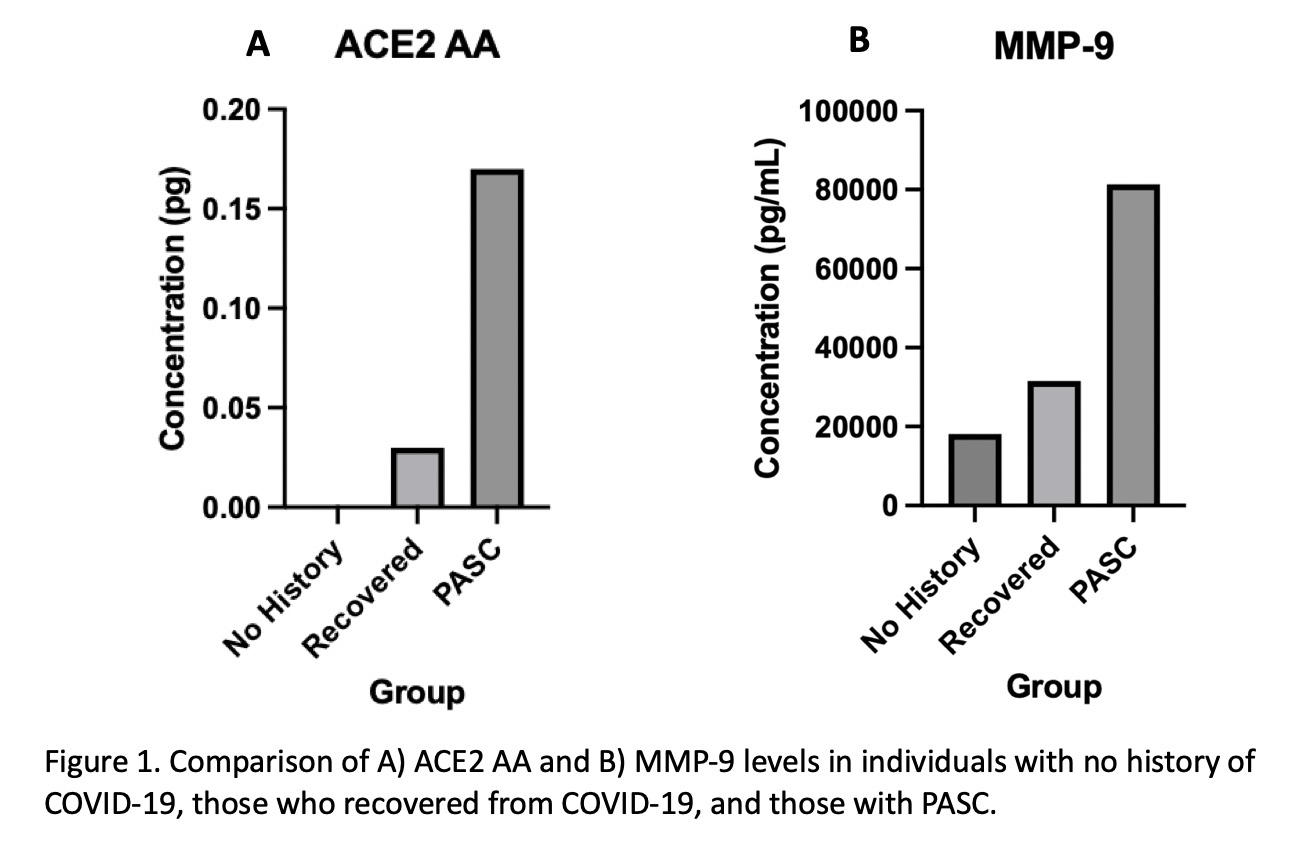
946. Shared Autoantibody Signature Is Not Identified in CSF During Long COVID
Poster Abstracts
Page: 295
Debanjana Chakravarty1, Thomas Ngo1, Lindsay S. McAlpine2, Jennifer Chiarella2, Allison Nelson2, Iris Tilton1, Ravi Dandekar1, Vishal Lashkari1, PeiXi Chen1, Kelsey Zorn1, Shelli Farhadian2, Serena Spudich2, Samuel Pleasure1, Michael Wilson1
Background
A subset of people who recover from acute COVID-19 develop a range of emergent or persistent symptoms lasting months to years, collectively termed Long COVID (LC). We investigated whether autoimmune antibodies in the CNS associate with neurologic Long COVID symptoms (n-LC).
Methods
Participants with LC (WHO criteria) and cognitive symptoms or headache enrolled in The COVID Mind Study (n-LC, n=38). Controls (n=16) were healthy pre-pandemic participants (n=13) or post-COVID without any LC symptoms (n=3). Cerebrospinal fluid (CSF) was collected for research. Mouse brain sections were immunostained with CSF from n-LC and controls at 1:4 dilution and visualized with anti-human IgG to screen for anti-neural autoantibodies. CSF IgG was incubated with a human proteome-wide phage display library (PhIP-Seq) to identify candidate antibody targets enriched in n-LC compared to controls (enrichment threshold of sum rpk>100, fold change>10, z-score>3). We orthogonally validated candidate autoantigen by split-luciferase-binding assay (SLBA) and HEK293T cell overexpression.
Results
14/38 n-LC samples showed positive staining on mouse brain sections, with moderate to strong cytoplasmic and nuclear staining, specifically in the thalamus, cortex, hippocampus, and brainstem. 6/13 never-COVID and 3/3 post-COVID controls displayed similar cytonuclear staining patterns in mostly all brain regions. Using PhIP-Seq, we identified human peptides bound to antibodies present in n-LC CSF. Only the top 40 peptides that enriched in positively stained n-LC samples above negatively stained n-LC and control CSF are plotted in the heatmap (Figure1a). We chose Sox5 for further validation because, only Sox5 peptides showed enrichment in the highest number of participants (n=3), while most other peptides enriched in only one participant. Moreover, unlike other top peptides, Sox5 has CNS-specific functions involving neuronal signaling. Also, logistic regression showed SOX5 as the most discriminatory gene between positive and negatively stained n-LC samples. However, enriched SOX5 autoantigens did not validate with SLBA and cell-based overexpression assay.
Conclusions
Whole human proteome antigen discovery with CSF from individuals with and without n-LC did not identify a shared autoantigen in n-LC. There was no difference in the frequency and pattern of immunostaining on rodent brain slices between n-LC and controls. Our preliminary work did not identify a unified autoantibody signature in the CSF of patients with n-LC.
The figure, table, or graphic for this abstract has been removed.
947. Post-Acute SARS-CoV-2 Antigenemia Is Associated With Some But Not All Long COVID Symptoms
Poster Abstracts
Page: 295
Michael Peluso1, Thomas Dalhuisen1, Zoe Swank2, Sarah Goldberg1, Scott Lu1, Samuel Han2, Jessica Chen1, Emily Fehrman1, Khamal Anglin1, Rebecca Hoh1, Timothy J. Henrich1, Dan Kelly1, Steven G. Deeks1, David Walt2, Jeffrey Martin1, the UCSF LIINC Team
Background
SARS-CoV-2 (SCV2) RNA and antigens can be found in several tissues many months after infection, but whether SCV2 persistence causes Long COVID (LC) is unproven. The scant data in favor of causation has related persistent SCV2 to non-specific LC definitions. It is unknown whether persistent SCV2 is associated with all, or only some, of the different symptoms of this heterogenous condition.
Methods
Sampling from UCSF’s LIINC cohort, we defined 5 LC case groups and 1 non-LC control group. Consistent with the NASEM definition, LC groups had ≥1 symptom in a given grouping that was rated “very bothersome” at ≥2 visits 3-14 months after the first confirmed SCV2 infection. LC case groups were: a) neurologic (headache, brain fog or dizziness); b) cardiopulmonary (cough, dyspnea, chest pain or palpitations); c) gastrointestinal (GI; nausea, vomiting, diarrhea, constipation, belly pain or appetite loss); d) musculoskeletal (back, joint or muscle pain); and e) fatigue. The non-LC group was those whose acute symptoms resolved within 30 days of infection and who had no symptoms 3-14 months post-infection. SCV2 spike, S1, and nucleocapsid (N) antigens were measured in plasma by single molecule array (Simoa) assay. Odds ratios (OR) were used to relate antigenemia at any visit 3-14 months post-infection to concurrent symptoms.
Results
Spike antigenemia was found in 7.5% (3/40) of the non-LC group. In unadjusted analyses, spike antigenemia was associated with neurologic, cardiopulmonary, and musculoskeletal symptoms but not GI or fatigue (Table). After adjustment for confounding, associations endured for neurologic (OR 4.5, p=0.037), cardiopulmonary (OR 4.8, p=0.08), and musculoskeletal (OR 5.5, p=0.049) symptoms. After exclusion of timepoints within 1 month of known SCV2 vaccination or reinfection, point estimates were similar but confidence intervals widened slightly. No significant associations were seen with S1 or N antigens.
Conclusions
Among adults with prior SCV2 infection, we found evidence for an association between SCV2 spike antigenemia 3-14 months post-infection and some but not all LC symptoms. This work highlights the need for well-characterized participants, with and without a variety of symptoms, to yield associations, and it suggests that different mechanisms might contribute to the variable presentation of LC. Nonetheless, given the novelty of the system, more work is needed (including intervention studies) to confirm the findings and exclude confounding before causation is inferred.
Table 1.
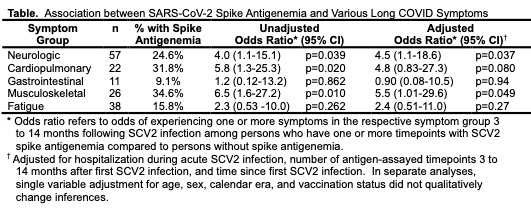
948. Modelling the Contribution of Incarceration to TB Transmission in Ukraine
Poster Abstracts
Page: 296
Jack Stone1, Adelina Artenie1, Frederick Altice2, Peter Vickerman1
Background
People who inject drugs (PWID) experience high incarceration rates, with prior incarceration associated with HIV and TB infection. We evaluated the contribution of incarceration to TB transmission in Ukraine and the impact of reductions in incarceration since probation was introduced in 2015.
Methods
A dynamic model of incarceration, HIV and TB transmission was developed for PWID and the general population. The model was parameterized and calibrated using national TB data and 7 bio- behavioural surveys among PWID or incarcerated persons from 2011-2019. The model incorporates different HIV and TB transmission risks in prison than the community, increased injecting risk following prison release, increased TB activation and transmission among PWID, and greater TB activation with HIV infection which is reduced by ART. We projected the proportion of new TB infections averted over 10 years (‘contribution’) from 2000/2010/2020 if the forementioned effects of injecting drug use (IDU), incarceration or HIV were removed. We also evaluated the impact of probation, which has substantially reduced the prison population size since 2015, on new HIV and TB infections.
Results
Model projections suggest TB incidence in 2024 was 15.4 (95% credibility interval: 11.6-20.3) and 42.9 (22.8-86.0) times higher among PWID and prisoners than national levels. Over 2020- 2029, 3.9% (1.7-8.6) of all new TB infections can be attributed to incarceration, 15.1% (6.4-29.7) among PWID. Due to recent large reductions in incarceration, its contribution to new TB infections has reduced from 25.3% (15.0-36.6) of all new TB infections over 2000-2009 and 56.0% (38.9-64.1) among PWID. The introduction of probation is estimated to have averted 10.1% (5.4-17.0) and 10.0% (5.0-17.2) of all new TB and HIV infections, respectively, over 2015-2024; 29.9% (19.8-39.9) and 23.3% (17.1-29.8) among PWID.
Conclusions
Incarceration can contribute substantially to TB transmission, particularly amongst PWID. Findings emphasise the potential public health impact of decarceration policies such as probation.
949. Mental and Physical Health of People With TB in Southern Africa at the Start of Treatment and Beyond
Poster Abstracts
Page: 296
Guy K. Muula1, Nicolas Banholzer2, Denise Evans3, Jacqueline Huwa4, Idiovino Rafael5, Marie Ballif2, Cordelia Kunzekwenyika6, Carolyn Bolton-Moore1, Gunar Günther7, Andreas D. Haas7, Annika Sweetland8, Matthias Egger7, Lukas Fenner2, the International Epidemiology Databases to Evaluate AIDS (IeDEA) Collaboration - Southern Africa
Background
Tuberculosis (TB) affects psychological, physical, and social well-being. We determined how changes in mental and physical components of quality-of-life (QoL) affect specific patient groups.
Methods
We recruited and followed-up people with TB aged ≥15 years between October 2022 and August 2024 in five ongoing cohorts in Malawi, Mozambique, South Africa, Zambia, and Zimbabwe. At the beginning (baseline), at the end, and six months post TB treatment, we measured mental and physical QoL scores (SF12-MCS, SF12-PCS), depressive symptoms score (PHQ-9-S), physical fitness (6-minute walk test distance, 6MWT-D; sit-to-stand test repetitions, STST-R), and overall health, daily life and well-being (St. George’s respiratory questionnaire, SGRQ-TS). Using multivariate imputation by chained equations, we imputed QoL outcomes and estimated their association with patient characteristics using Bayesian multivariable regression models.
Results
We enrolled 1,424 participants; 986 (69%) completed treatment, and 629 (44%) had a post-treatment visit. Median age was 39 years (interquartile range [IQR]: 30–50), 471 (33%) were female, 557 (39%) living with HIV, 245 (17%) with a history of TB, and 493 (35%) were smokers. At baseline, 19% of participants screened positive for depression (PHQ-9 ≥10). Mental and physical SF-12 scores were 44 (IQR 38–50) and 35 (IQR 27–42) out of 100, respectively, with scores below 42 and 50 suggesting impairments. Physical fitness in participants was lower than in healthy adults (6MWT 322, IQR 150–407 and STST 15, IQR 10–19). SGRQ-TS was 39 (IQR 27–52) out of 100, with scores above 25 suggesting impairment. The proportion of patients with impaired QoL decreased until end of treatment for all outcomes (Figure). Mental outcomes remained low post-treatment and physical outcomes improved further. Female sex and TB history were overall associated with lower QoL scores (86% and 88% probability). Age<30 was associated with higher QoL scores (82% probability). Living with HIV was overall associated with lower QoL scores at baseline (95% probability), but not at the end of treatment (62%) and post-treatment (24%).
Conclusions
QoL in people with TB was often impaired at baseline, but both physical and mental outcomes improved during treatment and tended to improve only slightly thereafter. QoL should be monitored and integrated into the clinical management of people with TB, especially for groups more likely to have impaired mental and physical health.
Figure 1.
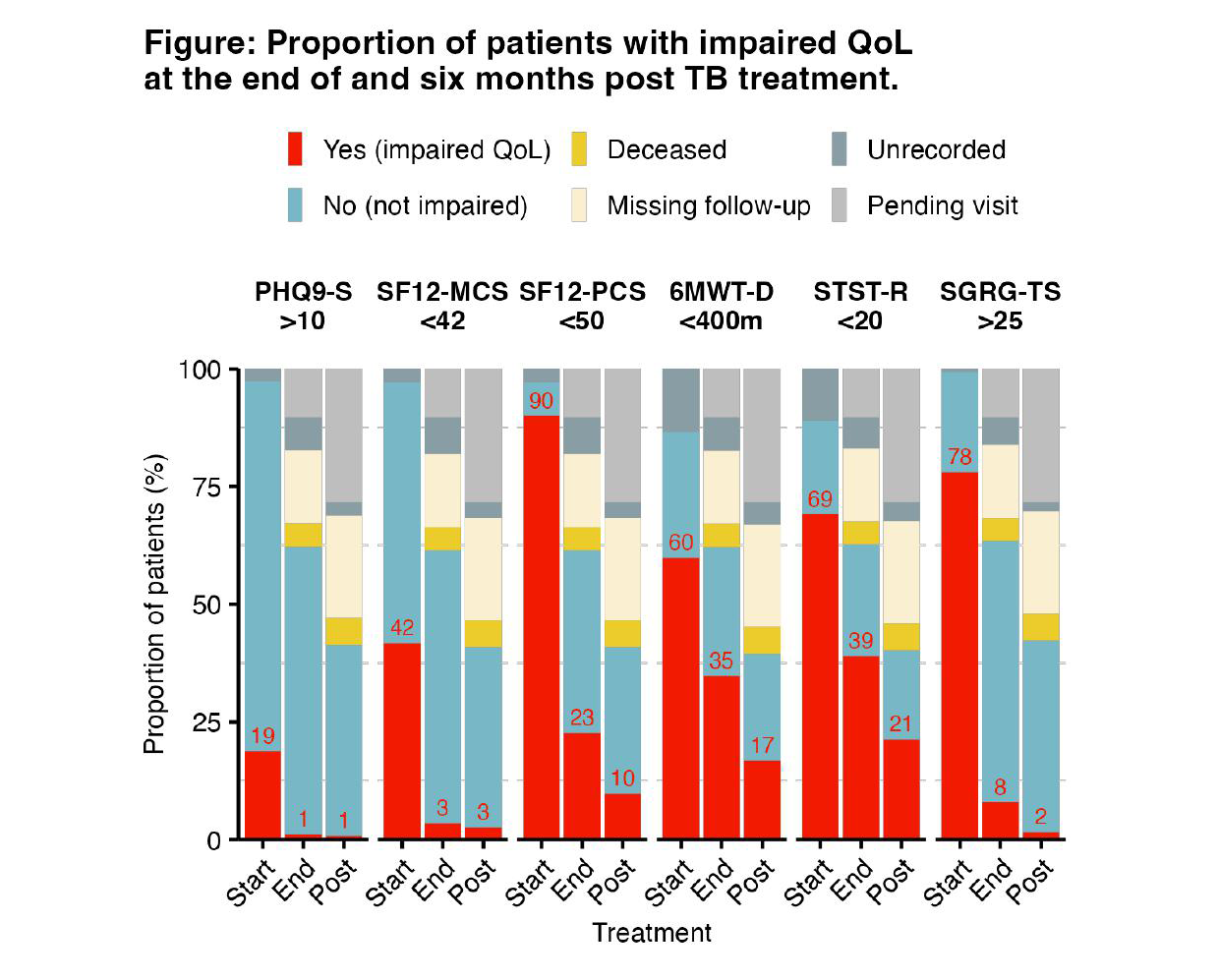
950. HIV and Tuberculosis Stigma Affecting Individuals With Pulmonary Tuberculosis in East Africa
Poster Abstracts
Pages: 296-297
Kirsten K. Prabhudas-Strycker1, Lameck Diero2, Winnie Muyindike3, Helen Byakwaga4, Neelima Navuluri5, Sylvia Kitur6, Joseph Mining'wo6, Bob Ssekyanzi7, Alexis Byaruhanga7, Suzanne Goodrich1, Harold Kooreman1, Constantin T. Yiannoutsos8, Aggrey Semeere9, Kara K. Wools-Kaloustian1, Leslie A. Enane1, the International Epidemiology Databases to Evaluate AIDS (IeDEA) Collaboration - East Africa Region
Background
HIV and TB stigma may undermine TB care and outcomes. We investigated HIV and TB stigma and reported influences of TB stigma on care access among individuals with pulmonary TB in Eldoret, Kenya, and Mbarara, Uganda.
Methods
The Tuberculosis Sentinel Research Network of the International epidemiology Databases to Evaluate AIDS is a global prospective study of people aged ≥15 with pulmonary TB, with and without HIV. East Africa sites conducted stigma questionnaires (adapted from Van Rie and the Stop TB stigma assessment) 1 month into TB treatment, March 21-September 12, 2023. We described responses for stigma domains (felt HIV, community HIV, and TB) and influence of TB stigma on care access. HIV stigma scales employed third-person phrasing for use regardless of HIV status. Standardized domain scores (mean score among all items) ranged 0-4 (0=strong disagreement, 2=no opinion, 4=strong agreement with stigma statements). We assessed stigma scores for associations with sociodemographic/clinical variables in multivariable regression analysis.
Results
Among 177 participants—118 (67%) male, median age 33 years (IQR 25 to 44), 58 (33%) with HIV, and 36 (20%) with recurrent TB—standardized scores for felt HIV stigma were higher than for community HIV stigma and TB stigma (Table). For TB stigma, respondents agreed with, “I am afraid to tell those outside my family I have TB” (54%); “I choose carefully who I tell about having TB” (77%); and “I keep my distance from others to avoid spreading TB” (80%). Among 85 (49%) who endorsed felt TB stigma, none reported it inhibited TB care access. Among 26 (15%) who experienced TB stigma, few reported that experienced TB stigma in the community (15%), at work (8%), in the hospitals/ clinics (0), or at home (0) inhibited TB care access. In multivariable analyses, felt HIV stigma was associated with younger age (p=0.004), HIV co-infection (p=0.019), and rural residence (p=0.049). Community HIV stigma was associated with younger age (p=0.001), rural residence (p=0.023), and HIV co-infection (p=0.057). There were no significant predictors of TB stigma, except for HIV status in univariate analyses (Table).
Conclusions
Individuals with TB in East Africa endorsed substantial felt HIV stigma, particularly among younger individuals, those in rural areas, and those living with HIV. TB stigma was comparatively lower, with little self-reported impact on TB care access. Further work is needed to evaluate stigma impacts on TB care outcomes and wellbeing.
Table 1.
Median scores with IQR in each stigma domain, for individuals with TB with and without HIV.
|
|
All (N=177
1
) |
PLHIV (N=58) |
HIV-negative (N=119) |
p-value
2
|
| Felt/anticipated HIV stigma |
2.9 (2.6-3.1) |
3.0 (2.6-3.4) |
2.8 (2.5-3.0) |
0.003 |
| Perceived community HIV stigma |
1.8 (1.3-2.5) |
1.9 (1.4-2.5) |
1.7 (1.2-2.5) |
0.193 |
| TB stigma |
1.6 (1.2-2.1) |
1.8 (1.3-2.3) |
1.5 (1.2-1.9) |
0.026 |
951. Neuropsychiatric Outcomes in Adults With HIV and TB on Twice-Daily BIC/FTC/TAF With Rifampicin
Poster Abstracts
Page: 297
Gillian L. Dorse1, Rubeshan Perumal1, Kogieleum Naidoo1, Marothi P. Letsoalo1, Kelly E. Dooley2, Anushka Naidoo1
Background
Integrase strand transfer inhibitors (INSTI), such as dolutegravir and bictegravir, may be associated with neuropsychiatric symptoms in people living with HIV. Due to drug-drug interactions during co-treatment with rifampicin-based TB treatment, the dose of the INSTI is often doubled. However, the neuropsychiatric outcomes in people with TB/HIV during bictegravir double-dosing has not been evaluated.
Methods
We conducted a secondary analysis of the INSIGHT study (NCT04734652) and assessed neuropsychiatric outcomes in participants randomized to receive bictegravir/emtricitabine/tenofovir alafenamide (BIC arm) or tenofovir, lamivudine, dolutegravir (DTG arm).The bictegravir or dolutegravir regimens were dosed twice daily during TB treatment and once daily thereafter. Participants underwent regular follow-up, including neuropsychiatric assessments, at baseline and weeks 4, 8, 12, 24, 32,40 and 48. Self-reported anxiety, depression and sleep were assessed using the General anxiety disorder screener (GAD-7), Patient Health Questionnaire(PHQ-9) and a study modified Global Sleep Assessment Questionnaire (GSAQ) tools, respectively.
Results
A total of 122 adults with HIV and TB were enrolled, 80 in the BIC arm and 42 in the DTG arm. Median age was 35 years, 65% were male, and 60% had baseline CD4 < 200 copies/ml . Mild anxiety and depression were observed in 3% and 18% of individuals on BIC arm, and 10% and 17% on DTG (Table 1). Moderate depression was observed in 1% and 5% of BIC and DTG groups, respectively. One event of severe anxiety and depression occurred two days into treatment in the BIC arm, with full symptom resolution after five days with no drug intervention or study treatment discontinuation. Self-reported sleep disruption was noted with a sleep score of ≥ 6 and was reported in 73% of individuals in the BIC arm and 88% in the DTG arm.
Conclusions
The use of double-dose bictegravir was not significantly associated with a greater number of neuropsychiatric events than double-dose dolutegravir, and none of the identified events required neuropsychiatry interventions , treatment disruption or dose modifications in this study.
Table 1.
Neuropsychiatric assessment per arm
| Neuropsychiatric assessment |
Modified Intention-to-Treat (N=122): BIC arm (N=80) |
Modified Intention-to-Treat (N=122): DTG arm (N=42) |
| Anxiety |
| Minimal |
77 (96%) |
38 (90%) |
| Mild |
2 (3%) |
4 (10%) |
| Moderate |
0 (0%) |
0 (0%) |
| Severe |
1
*
(1%) |
0 (0%) |
| Depression |
| Mild |
14 (18%) |
7 (17%) |
| Moderate |
1 (1%) |
2 (5%) |
| Severe (includes moderate severe and severe) |
1
*
(1%) |
0 (0%) |
| Sleep disruption
#
|
| Sleep Score ≥6 |
58 (73%) |
37 (88%) |
| Median (IQR) |
7 (5,9) |
7 (6,9) |
| Range |
5,16 |
5,14 |
952. High Incident TB Among Individuals Switched to Dolutegravir or Protease Inhibitor Based 2nd Line ART
Poster Abstracts
Page: 297
Claudia Danielle Minkoulou Engamba1, Sivile Suilanji1, Lameck Chirwa1, Chitalu Chanda1, Nyuma Mbewe2, Lloyd Mulenga3, the VISEND Study Team
Background
Antiretroviral therapy (ART) is known to reduce active tuberculosis (TB) incidence among people living with HIV (PLWH). The introduction of Dolutegravir (DTG) based ART regimen has led to higher and sustained viral suppression. However, due to DTG associated rapid viral load (VL) drop and CD4 increase, the risk of immune reconstitution syndrome (IRIS) maybe anticipated with possible increased in Unmasking TB IRIS. There is however, very limited data on incident TB among those switched to DTG based second line ART and who were screened negative for TB prior to switch. We, therefore, evaluated incident TB cases and associated risk among individuals enrolled under the VISEND clinical study, a 144 week clinical trial which evaluated virological outcomes among individuals switched from failing NNRTI based ART to DTG or boosted protease inhibitor (bPI) (lopinavir or atazanavir) based second line ART while recycling the NRTIs.
Methods
We conducted an analysis of PLWH aged ≥ 18 years enrolled in the VISEND trial and screened negative for TB prior to regimen switch. Participants were followed and reviewed at 4, 8,12, 24, 48, 64, 72, 92 and 144 weeks, for routine HIV care. They were further routinely prescribed Isoniazid as TB Preventive Therapy (TPT). Participants who developed clinical features of TB underwent laboratory evaluation (sputum for AAFB, Gene Xpert, Culture) and/or imaging (chest X-ray, CT scan, ultrasound). Time to the TB event model was used to derive the TB cumulative incidence after ART switch, and factors associated with incident TB cases were evaluated.
Results
Of 1,201 PLHIV enrolled in the study, 4% developed incident TB contributing for an incidence of 1,276 cases per 100,000 persons-year of follow up (PYFU). TB infected individuals had a median age of 42 (±12 SD) years; 55% female; 30% severely immunocompromised (CD4 < 200 cells/mm3) and 47% with BMI < 18 kg/m2; on DTG regimen (61%) and on bPI (39%). 20/46 (44%) developed incident TB within 4 weeks of switching ART. Individuals switched to DTG had a 3.54 log drop from time of switch to TB diagnosis (P<0.001) whereas those switched to bPI had 3.62 log drop (P<0.001).
Conclusions
In the VISEND trial, incident TB was high especially in the first month of switching to DTG or bPI regimen and was associated with rapid viral decline, low baseline CD4 and malnutrition. There is need to intensively screen for TB among those individuals failing and switched to DTG second line ART.
953. Unmasking and Tracking Tuberculosis Risk During HIV Acquisition and Antiretroviral Therapy
Poster Abstracts
Pages: 297-298
Fatoumatta Darboe1, Alaa Abdellatif1, Shaista Afzal1, Delia Pinto-Santini2, Siavash Pasalar2, Gabriela K. Fragiadakis1, Ann Duerr2, Peter W. Hunt1, Sara Suliman1
Background
The risk of progression from Mycobacterium tuberculosis (Mtb) infection to active TB disease is estimated to be up to 20 times higher in people living with HIV (PLWH), with fatality rates of 16 – 35%. We have previously shown that blood transcriptional biomarkers can predict risk of TB progression in PLWH. We use transcriptional TB risk scores to explore risk of TB associated with HIV in a unique acute infection cohort of PLWH with longitudinal sample collection before and after HIV acquisition
Methods
We utilized stored whole blood collected in RNAlater from the MERLIN cohort: a longitudinal cohort of transgender women and men who have sex with men. Uninfected participants were followed from 2013-2016 with monthly testing for HIV; 216 participants with acute or recent HIV infection (by serology or RNA) and a documented HIV-negative test within 90 days were enrolled and randomized to begin ART immediately or to defer for 6 months. Participants (~50%) have remained in follow up with viral suppression for 8-10 years after ART initiation. We sequenced RNA from two pre-HIV samples (enrolment and last sample before diagnosis), at the first post-diagnosis timepoint, months 3, 6, 12, 24, and 48 after HIV diagnosis. TB risk scores were calculated at each timepoint using the Risk6 TB signature that we previously developed, consisting of three upregulated and three downregulated genes. The risk scores were computed as follows: geometric mean of log2 (GMlog2) counts of upregulated genes – GMlog2 counts of downregulated genes
Results
Prior to HIV infection, there was no difference in TB risk between enrollment and last timepoint before HIV-infection. TB risk increased at diagnosis (p<0.0001), and then decreased by month 3 (p = 0.0008) and month 6 (p<0.0001). At six months after diagnosis, TB risk scores had decreased to enrollment (baseline) levels in both the immediate (treated) and deferred (untreated) arms.
Conclusions
TB risk increased soon after HIV acquisition. Our preliminary data suggests that the risk decreases in PLWH who show at least some virologic control, as scores decreased at 6 months even in untreated participants. We previously showed that TB risk scores (derived from interferon inducible genes) are associated with viremia, suggesting viremia contributes to the signature. Thus, decrease in TB risk scores may reflect VL reductions due to treatment or progression to set point in untreated participants.
Figure 1.
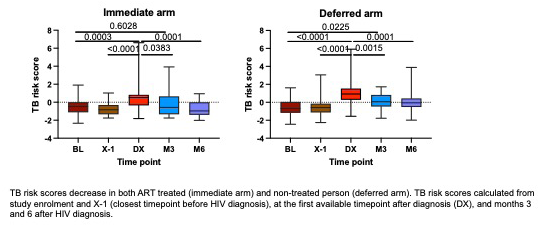
954. Impact of Cytomegalovirus Infection on the Progression of TB Disease in People With HIV on ART
Poster Abstracts
Page: 298
Sivaporn Gatechompol1, Sasiwimol Ubolyam2, Thitiporn Somjit2, Chavachol Setthaudom1, Anchalee Avihingsanon3, Stephen Kerr4, Frank van Leth5, Frank Cobelens6
Background
Emerging evidence suggests that human cytomegalovirus (HCMV) infection is associated with the progression of tuberculosis (TB) disease. This study aimed to evaluate the temporal relationship of HCMV infection on TB progression in people with HIV (PWH).
Methods
In a case-control study nested within a Thai HIV cohort, stored plasma samples from PWH who developed active TB after stable ART (cases) were assessed for HCMV infection. For controls, we selected stored samples from PWH in the same cohort who did not develop TB disease, matched in a 1:2 ratio by ART duration. HCMV DNA, HCMV IgM, and IgG were measured at 3 timepoints: (1) 6-24 months before TB diagnosis (pre-TB visit), (2) at TB diagnosis (TB visit), and (3) 6-24 months after TB diagnosis (post-TB visit). HCMV viremia was defined as detectable CMV DNA in plasma. Conditional logistic regression with backwards selection was used to investigate associations with TB disease.
Results
A total of 34 TB cases and 68 control PWH were enrolled. The majority (58.8%) were male with median (interquartile range: IQR) time of ART duration of 10.6 (6.5-17.4) years. The age was 42 (34-51.) and 44 (38-52) years for cases and controls, respectively. 100% of participants were HCMV seropositive. At the pre-TB visit, we observed no significant differences in the proportion of HCMV viremia (21% vs 18%, p=0.719), HCMV IgM geometric mean concentration (GMC) (0.13 (95%CI 0.10-0.16) vs 0.12 (95%CI 0.10-0.13), p=0.402) and HCMV IgG GMC (225.6 (95%CI 210.2-242.1) vs 206.6 (95%CI 190.2-224.6), p=0.179) among TB cases and controls. We found the proportion of HCMV viremia was higher among TB cases at TB visit (35% vs 14%, p= 0.028) and post-TB visit (32% vs 5%, p=0.006) compared to controls. The HCMV IgM GMC at the TB visit was higher in the TB group than control (0.17 (95%CI 0.12-0.23) vs 0.12 (95%CI 0.10-0.14) AU/ml, geometric mean ratio (GMR)=1.38 (95%CI 1.01-1.87, p=0.039). In an adjusted model, the odds of TB in those with middle and high tertile HCMV IgG at the TB visit was 5.45 times higher (p=0.044) compared to the lowest tertile (Table).
Conclusions
We found no evidence suggesting HCMV viremia and HCMV serology were associated with the progression of TB disease in 6-24 months. At the time of TB diagnosis, HCMV IgG levels show an association with TB disease, possibly reflecting HCMV reactivation due to TB disease or another, common cause.
Table 1.
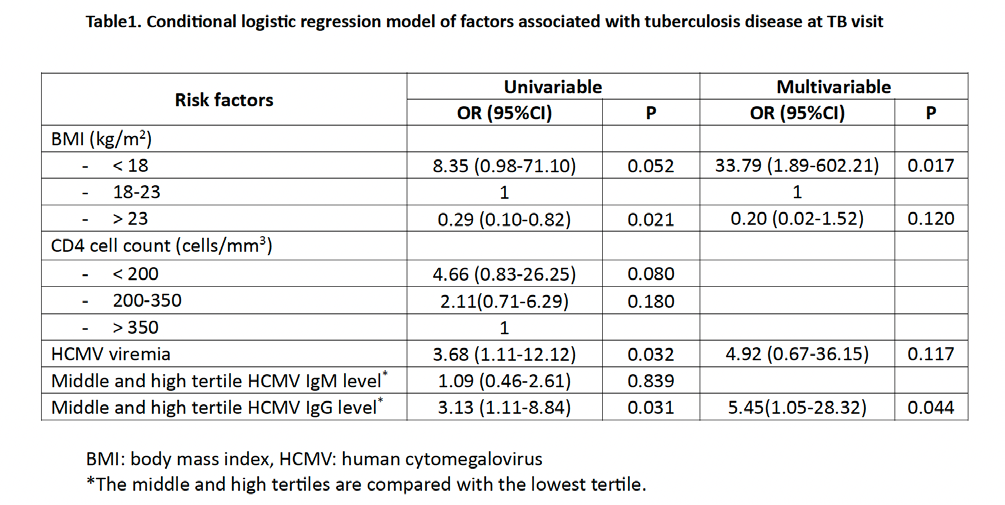
955. Immune Profiles Can Differentiate Mycobacterial and KSHV Inflammatory Syndromes in Advanced HIV
Poster Abstracts
Pages: 298-299
Silvia Lucena Lage1, Joseph Rocco1, Ramya Ramaswami2, Kathryn Lurain2, Maura Manion1, Brian P. Epling1, Elizabeth Laidlaw1, Logan Cook1, Frances Galindo1, Denise Whitby3, Andrea Lisco1, Robert Yarchoan2, Irini Sereti1
Background
Mycobacterial immune reconstitution inflammatory syndrome (myco-IRIS) and Kaposi sarcoma herpesvirus (KSHV) associated diseases (KAD) remain common in people with advanced HIV in resource-constrained settings. These syndromes can be difficult to differentiate clinically, and optimal treatments remain unknown, highlighting the importance of determining their pathogenesis. We have previously shown greater IFNγ production in myco-IRIS whereas IL18 levels are more prominent in KAD. To expand on these findings, we performed high-dimensional flow cytometry on peripheral blood samples from people with myco-IRIS or KAD to determine key cell subsets and signaling pathways involved in their pathogenesis.
Methods
Samples were obtained from people with HIV (PWH) and active myco-IRIS or KAD (Kaposi sarcoma multicentric Castleman disease, KSHV inflammatory cytokine syndrome). All participants were enrolled in a NIH-IRB approved protocol and were on antiretroviral therapy (ART). A 29-marker flow panel including monocyte and T-cell/NK-cell markers of differentiation, activation, and function was run on all samples at diagnosis. Wilcoxon test, unsupervised clustering, and differential abundance analyses were performed.
Results
Overall, 22-PWH were included (median age 39-years [IQR: 29-46]) with 17-cisgender men (77%). Thirteen-PWH had myco-IRIS (tuberculosis, n=4; nontuberculous, n=9), and 9 had KAD (7 [78%] with concomitant Kaposi sarcoma). Patients with myco-IRIS had a greater percentage of activated (CD38hiHLADR+) CD8 T-cells with greater EOMES+ positivity compared to KAD (p<0.01). Activated CD4 T-cells were similar between the groups, however KAD had greater caspase-1 activation in monocytes (p<0.05) vs myco-IRIS. Unsupervised clustering analysis identified two uniquely expanded activated T-cell populations (Figure-1: CD4s [violet cluster] and CD8s [dark green cluster]) in myco-IRIS compared to KAD with increased cell cycling (Ki-67hi), IL18R+ expression, and mTOR signaling (pS6+) (p<0.01). Patients with KAD had a significant expansion of classical/intermediate monocyte populations (gold clusters) with increased CD163+ and HLADR+ expression as well as greater caspase-1 activation (p<0.01) (Figure-1).
Conclusions
Although clinically indistinguishable, myco-IRIS and KAD demonstrate unique immune profiles with differential activation of signaling pathways within T-cell and monocyte subsets. These different pathways may represent novel treatment targets for future interventional clinical trials.
Figure 1.
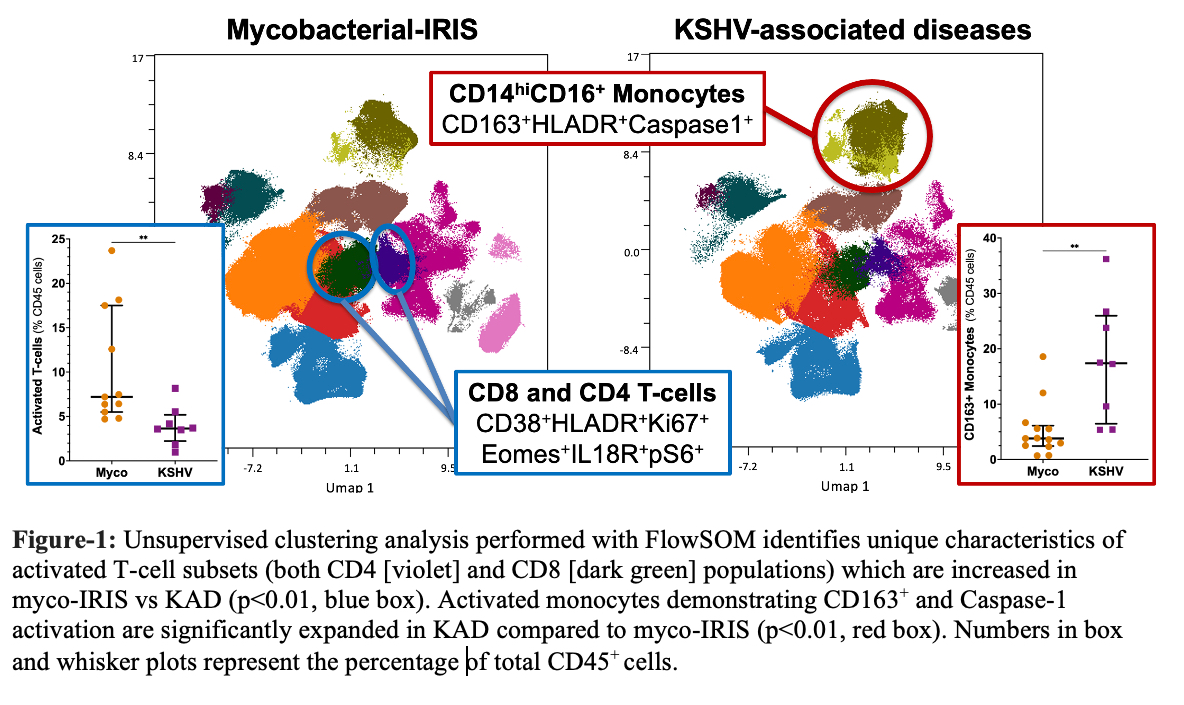
956. NAT-2 Polymorphism and Risk of Antituberculosis-Induced Hepatotoxicity in Thai People With HIV
Poster Abstracts
Page: 299
Napon Hiranburana1, Warat Usawakidwiree2, Sasiwimol Ubolyam3, Jiratchaya Sophonphan1, Stephen Kerr4, Gompol Suwanpimolkul2, Pattama Torvorapanit2, Pajaree Chariyavilaskul4, Weeraya Phaisal2, Anchalee Avihingsanon5
Background
The NAT2 slow acetylator phenotype is associated with a higher risk of isoniazid-induced hepatitis. There is a high prevalence of slow acetylators in the Thai population. This study aimed to explore the link between NAT2 genotypes and hepatitis risk in Thai people living with HIV (PLWH) after initiating isoniazid containing regimens for TB preventive therapy (TPT) or TB treatment.
Methods
A prospective cohort of 500 Thai PLWH receiving isoniazid with rifapentine (1HP/3HP) for TPT or HRZE for active TB were genotyped for six NAT2 single nucleotide polymorphisms (SNPs). Hepatotoxicity (Grade 2 or higher) was assessed across NAT2 phenotypes (rapid, intermediate, slow acetylator). Multiple logistic regression adjusting for HIV-related factors, viral hepatitis co-infection and antituberculosis regimen were used to assess associations between NAT2 genotypes/phenotypes and hepatotoxicity.
Results
Among the 500 participants, 440 (88%) received TPT, while 60 (12%) underwent treatment for active TB. Classified by phenotypes, 209 (41.8%) were slow, 154 (30.8%) intermediate, and 137 (27.4%) rapid acetylators. Age, BMI, HBV or HCV co-infection, liver enzyme levels were comparable between the acetylator phenotypes. However, the slow acetylator group had the shortest ART duration before anti-TB drug initiation (30 vs. 58 vs. 60 days; p < 0.001). Hepatotoxicity (grade 2-4) occurred in 53 participants (10.6%) overall: 29 (54.7)% slow, 19 (35.8%) intermediate, and 5 (9.4%) rapid acetylators (p < 0.001). As a percentage of each acetylator group, hepatotoxicity was observed in 13.9% of slow, 12.3% of intermediate, and 3.6% of rapid acetylators (p < 0.001). The NAT2 *6A/*6A genotype was associated with a significantly increased risk of hepatotoxicity (adjusted OR 2.6 (95%CI 1.3-5.5), p = 0.01), whereas NAT2 *4/*4, the wild-type fast acetylator genotype and the most common (24.0%), provided a protective effect (adjusted OR 0.14 (95%CI 0.03-0.6), p = 0.01). Slow acetylators had a markedly higher risk of hepatotoxicity compared to rapid acetylators, with an adjusted OR of 8.7 (95%CI1.9-38.1, p = 0.004). (Table)
Conclusions
This cohort of Thai PLWH demonstrates that the NAT2 *6A/*6A genotype and slow acetylator phenotype significantly increase the risk of isoniazid-induced hepatitis. Incorporating NAT2 genotyping an theraputic drug monitoring into clinical practice could help optimize isoniazid dosing and reduce the risk of hepatotoxicity, especially in populations with a high susceptible to hepatotoxicity.
Table 1.
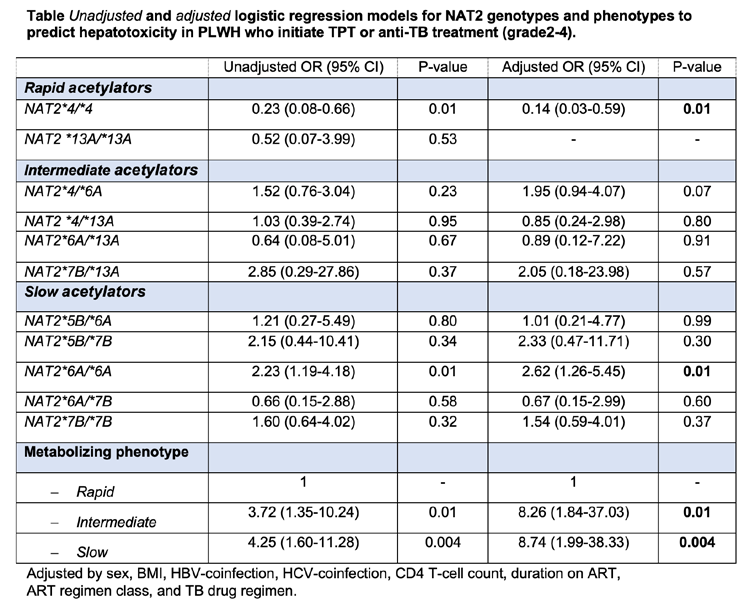
957. Isoniazid Exposure Among Patients With Tuberculosis and Diabetes in Brazil
Poster Abstracts
Page: 299
Felipe Ridolfi1, Gustavo Amorim1, Cody Staats1, Marcelo Cordeiro-Santos2, Afrânio L. Kritski3, Marina C. Figueiredo1, Bruno B. Andrade4, Timothy Sterling1, Valeria C. Rolla5, the Regional Prospective Observational Research in Tuberculosis (RePORT) - Brazil Consortium
Background
We previously demonstrated that individuals with tuberculosis (TB) and uncontrolled diabetes mellitus (DM) had a lower risk of TB-treatment related adverse drug reactions. Hypothesizing that this could be related to low TB drug levels, we correlated isoniazid (INH) plasma concentrations with glycated hemoglobin (HbA1c) levels.
Methods
We included culture-confirmed, drug-susceptible, pulmonary TB participants from the RePORT-Brazil cohort, who received standard TB treatment between 2015-2019. We considered baseline HbA1c as both a continuous and categorical variable (HbA1c<5.7% was considered normal, HbA1c ≥5.7%-<6.5% was pre-DM, and HbA1c ≥6.5% was DM). Plasma samples were collected within 8 hours of the previous TB drug dose at two time points (months 1, 2) and drug concentrations for INH were quantified by liquid chromatography-mass spectrometry (SCIEX6500 Qtrap, Redwood City, CA). We log-transformed the INH concentration (log-INH) and we considered the time since last dose in hours. We built time-to-concentration curves, and we used Spearman correlation to compare the INH according to HbA1c levels and categories.
Results
There were 657 samples available from 379 participants who met the inclusion criteria. The median baseline HbA1c was 5.9 (Interquartile Range [IQR] 5.5-6.4); and the median time since last dose was 3 hours (IQR 2.1-3.9). There were 131 (34%) participants with normal HbA1c, 154 (41%) had pre-DM, and 94 (25%) had DM. The correlation between HbA1c level and log-INH revealed a coefficient of -0.099 (p=0.01); whereas for the HbA1c categories, the coefficient was -0.117 (p=0.003), indicating lower INH concentration among participants with pre-DM and DM (Figure 1).
Conclusions
Our study identified an inverse relationship between HbA1c and INH plasma concentration in individuals with TB and DM. Despite the weak explanatory power of the model, the significant negative association suggests that individuals with pre-DM and DM may have reduced INH exposure, which potentially contributes to the lower risk of adverse drug reactions observed in this population.
Figure 1.
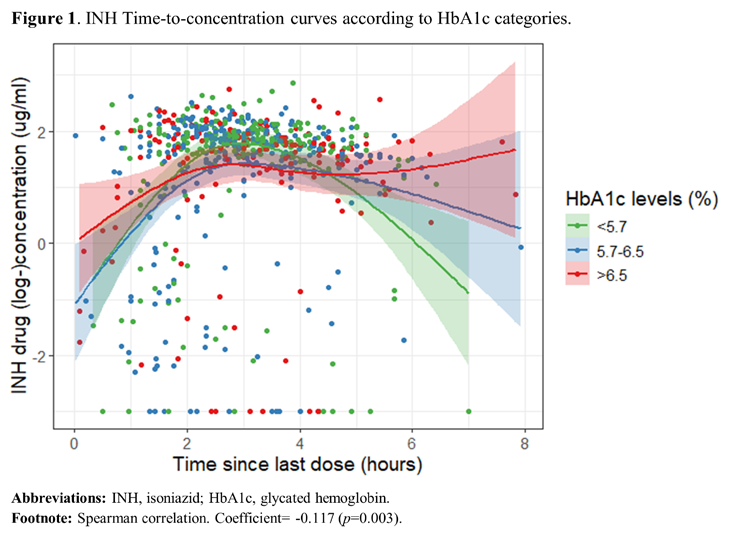
958. Genetics of Plasma Rifapentine Clearance During Pulmonary Tuberculosis Treatment in Study 31/A5349
Poster Abstracts
Page: 300
Ava Y. Xu1, Yuki Bradford2, Gustavo E. Velásquez1, Vincent K. Chang1, Marjorie Imperial3, Ekaterina V. Kurbatova4, Kia Bryant4, Phumla Sinxadi5, Marylyn Ritchie2, John A. Capra1, David W. Haas6, Radojka M. Savic1, the Tuberculosis Trials Consortium (TBTC) Study 31/ACTG A5349 Study Team
Background
Optimizing rifapentine (RPT) dosing is critical for improving tuberculosis (TB) treatment response. Study 31/A5349 (NCT02410772) compared two 4-month RPT-containing regimens — one with and one without moxifloxacin (MFX) — to the standard 6-month regimen. A key determinant of unfavorable TB outcomes in this trial was RPT exposure, with large interindividual variability. We hypothesized that host genetics contributed to variability in clearance (CL) of RPT and its metabolite, 25-O-desacetyl-RPT (des-RPT) and evaluated an arylacetamide deacetylase (AADAC) variant rs1803155 reported to affect RPT exposure.
Methods
Participants received 1200 mg RPT daily, with plasma samples collected for RPT and des-RPT assays between weeks 2 and 8. We imputed genetic variants from low-coverage whole-genome sequence data using GLIMPSE2. Associations with RPT and des-RPT CL were studied genome-wide, adjusting for 8 genetic principal components and NAT2 acetylator status. We assessed the impact of selected variants on RPT CL by pharmacokinetic (PK) modeling using NONMEM.
Results
A total of 1094 participants had both PK and genetic data (560 in the RPT/MFX arm, 534 in the RPT arm), with a median age of 30 years (IQR 24, 41) and median weight of 53 kg (IQR 48, 59). There were 29% female, 75% Black, and 12% Asian participants. AADAC rs1803155 was associated with RPT CL in all participants (p=1.1E-11), the RPT/MFX arm (p=1.1E-9), and the RPT arm (p=4.3E-4). The GG genotype was associated with more rapid RPT CL and lower exposure. PK modeling showed that RPT CL increased by 0.266 L/h with AADAC GG and 0.059 L/h with AG compared to AA. AADAC rs1803155 was not associated with des-RPT CL. UGT1A1 rs887829 was associated with both RPT and des-RPT CL in all participants (p=6.3E-19 and p=3.7E-26), the RPT/MFX arm (p=4.5E-16 and p=6.2E-14), and the RPT arm (p=6.8E-6 and p=1.5E-14, respectively). Despite genome-wide significant associations of the UGT1A1 poor metabolizer T allele with more CL of both RPT and des-RPT CL, UGT1A1 only impacted des-RPT CL in PK modeling.
Conclusions
In participants receiving 1200 mg RPT daily, the AADAC rs1803155 G allele was associated with increased RPT CL but not des-RPT at genome-wide significance, especially with concomitant MFX, and improved prediction of RPT CL in PK modeling. This helps to explain interindividual variability of RPT PK. Host genetics should be considered when evaluating the efficacy and safety of RPT-containing regimens.
Figure 1.
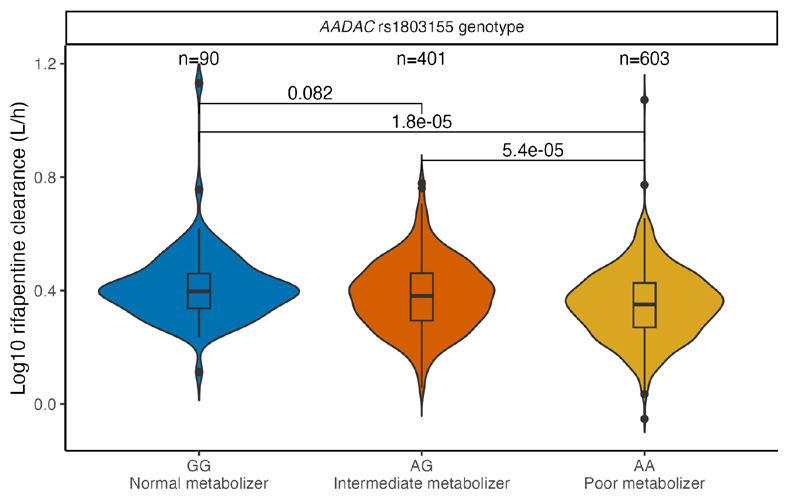
959. High Diagnostic Yield of a Novel HIV-TB Case Finding Strategy at Social Drinking Venues in Zambia
Poster Abstracts
Page: 300
Andrew Kerkhoff1, David Singini2, Solomon Chifwamba2, Lawrence Kushukila2, Benson Njobvu2, Minyoi Maimbolwa2, Mary Kagujje2, Monde Muyoyeta2
Background
The high prevalence of alcohol use disorder (AUD) in sub-Saharan Africa is strongly associated with HIV acquisition and a greater risk of tuberculosis (TB) disease. An integrated HIV and TB case finding strategy targeting persons with AUD at social drinking venues (SDVs) could be an efficient and scalable approach for bolstering the detection of both diseases in high-prevalence settings, but the potential effectiveness is unproven.
Methods
A prospective, cross-sectional pilot study was conducted to evaluate a systematic HIV and TB case finding strategy among individuals at SDVs in two high HIV/TB burden communities in Lusaka, Zambia. Persons were eligible if they were age ≥18 years, an SDV patron or employee, not currently receiving TB treatment, willing to get tested for TB, and were without signs of intoxication. All participants underwent rapid HIV testing if they had a negative or unknown status and were evaluated for TB regardless of symptoms using sputum Xpert Ultra and culture. The diagnostic yield and associated number needed to test (NNT) were determined for new HIV and TB diagnoses.
Results
Of 582 screened, 448 met eligibility criteria, and 443 had complete data and were included (median age 37 [IQR, 30-44], 71.8% male, 88.3% patrons, 96.8% had AUD (median AUDIT-C 8 [IQR, 8-12]). Overall, 95.9% (n=425) had been previously tested for HIV - 31.8% (n=135) reported being a person living with HIV (PWH), of which 94.1% (n=127) were currently receiving ART. Of 308 participants with an unknown or previously negative HIV status, 10 (3.2%) tested newly positive for HIV (NNT=31); thus, the overall HIV prevalence was 32.7% (n=145). 39.1% (n=173) of participants had previously been tested for TB, 16.3% (n=72) had a prior history of TB disease, and 4.7% (n=21) had newly microbiologically confirmed pulmonary TB (NNT=21). There was a trend toward a higher yield of new HIV diagnoses among patrons compared to employees (3.7% vs. 0%;p=0.29), while there was a higher yield of new TB diagnoses among employees compared to patrons (11.5% vs. 3.8%;p=0.026). Overall, 99.3% (n=443) were willing to participate in a similar program in the future if periodically offered by the Ministry of Health.
Conclusions
A novel, integrated case finding strategy at social drinking venues shows substantial promise for increasing HIV and TB detection by delivering services directly to where people with alcohol use disorder gather. Larger studies are needed to confirm its effectiveness and implementability.
960. Effectiveness of Portable Digital X-Ray Machine in Tuberculosis Case-Finding in Nigeria
Poster Abstracts
Page: 300
Ademola Adelekan, Aderonke Agbaje, Olugbenga Daniel, Babatunde Pedro, Patrick Dakum
Background
The high tuberculosis (TB) burden in Nigeria, particularly in hard-to-reach and underserved areas, has called for innovative approaches to enhance case-finding. The portable digital X-ray (PDX) machines offer an opportunity to improve TB detection in regions with limited resources and access to more complex diagnostic tools. This paper presents the effectiveness of PDX machines in TB case-finding in Nigeria under the USAID-funded TB-LON 3 project.
Methods
This PDX intervention was carried out in purposively selected two (Oyo and Osun) States, Nigeria, from January 2022 to March 2024. The AI-enhanced Fujifilm’s Xair and Delft Light Backpack PDX machines were deployed to screen the population of people in communities, schools, correctional centres and orphanages. Presumptive were evaluated using bacteriological laboratory tests and clinical radiology reviews. Data on screening coverage, presumptive TB identification, confirmed diagnoses and treatment initiation were collected and analysed.
Results
Overall, 98,863 people were screened within the implementing period, and 52.57% of those screened were from Osun state. Oyo State, however, had a higher presumptive identification (53.07%) and TB diagnoses (53.17%) rate. The PDX machine identified 13.79% (13,630) of those screened as TB presumptive, and almost all (99.4%) were evaluated with other TB diagnostic methods. TB was diagnosed in 14.91% (2,020) of those evaluated, and 94.11% of them were started on treatment. Although more females (57.51%) were screened, the males had a higher proportion (54.11%) of TB diagnosed. Almost all clients screened were relatively distributed among those aged 5 to 65+ years; nonetheless, presumptive identification and case-finding were highest among those aged 65+.
Conclusions
Implementing PDX machines significantly improved TB case identification and diagnoses in Osun and Oyo States. The machines effectively identified presumptive TB cases and enhanced TB diagnostic yield. Although AI-enhanced PDX machines have not shown effectiveness in this location as a diagnostic tool, the findings support that it should be adopted as a screening tool on a large scale, especially in resource-limited settings.
961. Machine Learning-Based Prediction of Active Tuberculosis in People With HIV Using Clinical Data
Poster Abstracts
Page: 301
Lena Bartl1, Marius Zeeb2, Marisa Kälin2, Tom Loosli2, Matthias Hoffmann3, Katharina Grabmeier4, Michael Knappik5, Alexandra Calmy6, Jose Damas7, Niklaus D. Labhardt8, Huldrych F. Günthard2, Roger D. Kouyos2, Katharina Kusejko2, Johannes Nemeth1, the Swiss HIV Cohort Study
Background
Coinfections of Mycobacterium tuberculosis (MTB) and human immunodeficiency virus (HIV) represent a significant global health challenge. Patients infected with MTB are at elevated risk of progressing to active tuberculosis (TB), a risk that can be mitigated by preventive therapy. However, current testing methods frequently fail to identify individuals who will later develop active TB, particularly among people with HIV (PWH).
Methods
We developed random forest models to predict progression to active TB using clinical data collected at the time of HIV-1 diagnosis. The model was developed using a training and test set approach within the Swiss HIV Cohort Study (SHCS), which included 55 PWH who developed active TB within six months of enrollment and 1432 matched controls without active TB, enrolled between 2000 and 2023. After internal validation within SHCS, external validation was performed using data from the Austrian HIV Cohort Study (AHIVCOS), comprising 43 incident TB cases and 1005 controls.
Results
The model predicted active TB with an area under the receiver operating characteristic (ROC) curve (AUC) of 0.83 (95% CI 0.8-0.86) in the SHCS. After adjusting for demographic variables and re-fitting the model with fewer parameters, the AUC was 0.72 for Swiss PWH and 0.67 for Austrian PWH. Demographic parameters, particularly region of origin and ethnicity, significantly influenced model performance, likely due to varying TB incidence rates. Socioeconomic factors, such as profession and education, along with mode of HIV transmission, also impacted the model’s predictions. Additionally, laboratory metrics such as CD4 cell count and HIV RNA levels, which reflect immune system status, were critical in predicting TB progression. Overall health markers, such as BMI, creatinine, and hemoglobin, also affected model accuracy. The model outperformed standard diagnostic tools (tuberculin skin test and interferon-gamma release assay) in identifying high-risk individuals, demonstrated by a lower number needed to diagnose (1.96 vs. 4).
Conclusions
Machine learning-based models show considerable potential to improve care for PWH, as they require no additional data collection, incur minimal costs, and enhance the identification of those who could benefit from preventive TB treatment.
Figure 1.
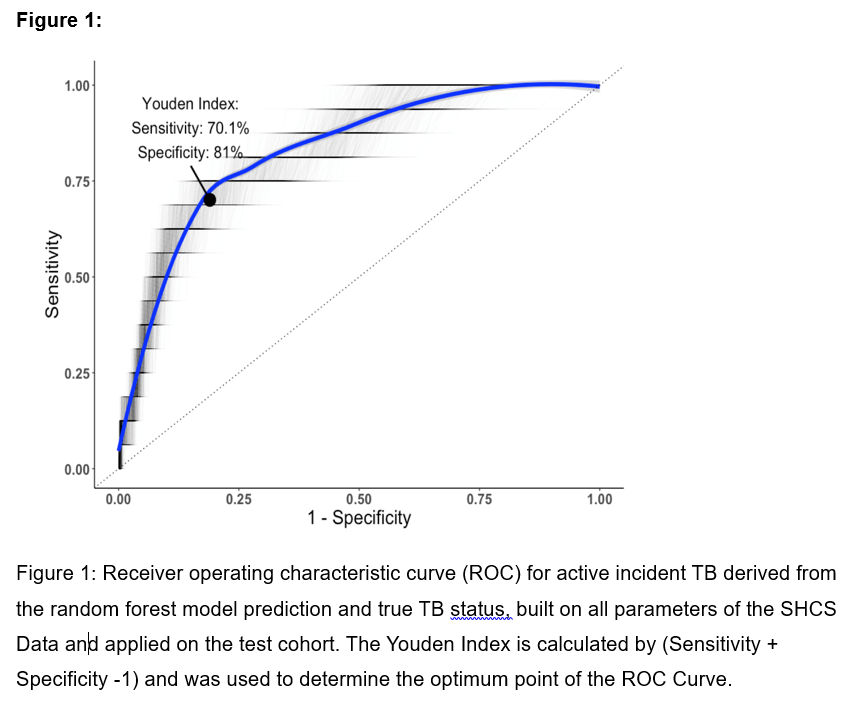
962. Genome-Wide Meta-Analysis Identifies Genetic Associations With Resistance to Mtb Infection
Poster Abstracts
Page: 301
Matheus Fernandes Gyorfy1, Neel R. Gandhi1, Qin Hui1, Bruno B. Andrade2, Neil Martinson3, Mandar Paradkar4, Senbagavalli Prakash5, Kamakshi Prudhula Devalraju6, Marina C. Figueiredo7, Marcelo Cordeiro-Santos8, Nombuyiselo Mofokeng3, Fay Willis1, Timothy Sterling7, Amita Gupta9, Yan V. Sun1, the TB GWAS Collaboration
Background
Tuberculosis (TB) is the leading infectious cause of death worldwide, including among people living with HIV. The WHO End TB goal of reducing TB incidence to <10 cases per 100,000 will not be achieved without a greater understanding of host mechanisms that mediate susceptibility to Mycobacterium tuberculosis (Mtb). A genetic basis for “resistance” to Mtb infection has been postulated, but the relationship between host genetics and Mtb infection is underexplored. We conducted a genome-wide association study (GWAS) to identify loci associated with Mtb resistance and infection among close contacts of TB patients in Brazil, India, and South Africa.
Methods
Among 4,370 close contacts of microbiologically-confirmed, active pulmonary TB patients, we categorized contacts as “resisters” if they had: high exposure (slept in the same room or >4 hours indoors), to a highly infectious index case (cavitary or high smear grade), and negative tuberculin skin tests (TST) and/or interferon-gamma release assays (IGRA). Contacts with positive TST and/or IGRA were categorized as Mtb infected. After quality control at sample and variant levels, we conducted country-specific GWAS and meta-analysis of the resister and infected phenotypes, adjusted for age, sex, population structure, and relatedness using TOPMed-imputed data.
Results
Among the contacts enrolled, we identified 457 individuals with resistance to Mtb infection, 1,903 with positive TST and/or IGRA; 361 with discordant or missing TST/IGRA results, and 1,168 with negative TST/IGRA but low or medium exposure to the TB index patient. In the meta-analysis for resistance to Mtb infection, we identified two genome-wide significant (GWS) loci associated with resistance: a chromosome 13 locus, close to MYO16 gene (rs1295104126, OR = 0.92 [95%CI: 0.89, 0.94]; p = 1.60x10⁻¹⁰), and a chromosome 2 locus, mapped to PARD3B gene (rs888091, OR = 0.83 [95%CI: 0.78, 0.89]; p = 4.64x10⁻⁹). In the meta-analysis for Mtb infection, we identified one GWS locus close to HLA-DQA1 gene on chromosome 6 (rs28752534, OR = 0.92 [95%CI: 0.89, 0.94], p = 6.58x10⁻¹²).
Conclusions
Our robust methods uncovered multiple statistically significant associations. Further investigation into the functional roles of these genetic loci is warranted. Consistent results from diverse ancestral groups may help us better understand the molecular mechanisms underlying Mtb resistance and infection, thus improving the generalizability of our findings across global populations with high TB burden.
963. Healthcare-Worker Versus Self-Collected Tongue Swabs for Mycobacterium tuberculosis Detection
Poster Abstracts
Pages: 301-302
Anura David1, Gregory P. Bisson2, Salome Charalambous3, Lesley E. Scott1, Griffiths Kubeka3, Lyndel Singh1, Pedro Da Silva4, Wendy S. Stevens4, Yeonsoo Baik2
Background
Most studies have focused on either healthcare worker collected (HCWC) or self-collected (SC) tongue swabs (TS) for detecting Mycobacterium tuberculosis, but rarely on both. We assessed this, on TS collected from the same participant, using the Xpert MTB/RIF Ultra (Ultra) (Cepheid, Sunnyvale, CA, USA) along with participant acceptability of the collection procedure.
Methods
In this cross-sectional study, 669 participants who met eligibility were consented and enrolled at eight healthcare facilities in the Ekurhuleni District of Johannesburg, South Africa. Sputum was tested on Ultra and mycobacterial growth indicator tube (MGIT) culture and two TS (HCWC and SC) tested on Ultra. A total of 314 participants used a short-shaft (4 cm) spun polyester XpressCollect™ swab (Steripack), while 355 participants used a longer-shaft (15 cm) Copan FLOQ swab (Copan Italia S.p.A.). Sputum and swabs (dry) were transported at 2-8°C to the laboratory and TS results were compared to MGIT. Participant observations on TS feasibility and usability were noted.
Results
Valid results on all assays were available from 520 participants for statistical analysis. The median age was 41 years (54% male), 47% were HIV-positive and 7% bacteriologically confirmed using MGIT. In comparison to MGIT, test sensitivities for both HCWC and SC TS were 68.3% (95% CI: 51.9%-81.9%), with specificities of 99.4% (95% CI: 98.2%-99.9%) and 99.8% (95% CI: 98.8%-100%), respectively. Test error rates for the HCWC and SC TS were 21/666 (3.2%) and 23/669 (3.4%), respectively. Most participants (89%) were comfortable with TS collection and confident with self-collection, however participants using XpressCollect™ reported difficulty with collection due to the short swab shaft. Preferences among participants for swab collection were: 149/668 (22%) preferred SC and 230/668 (34%) preferred HCWC, while 289/668 (43%) had no preference.
Conclusions
Both HCWC and SC TS showed comparable sensitivity and high specificity compared to MGIT with low error rates, demonstrating that TS is a viable specimen type for TB detection in clinical settings. Majority participants expressed comfort with TS collection and confidence in self-collection, highlighting the acceptability of this method, although swab design was shown to affect usability. The preference data suggests that both self-collection and HCW-collection are suitable options, offering flexibility for patient-centered care.
964. Evaluating the Accuracy of Standard F TB-Feron FIA for TB Infection Diagnosis in Vietnam
Poster Abstracts
Page: 302
Han Thi Nguyen1, Luan Vo1, Andrew Codlin1, Tom Wingfield2, Rachel Forse1, Emily Maclean3, Jacob Creswell4, Kristi Sidney1, Beatrice Kirubi4, Hoa Binh Nguyen5, Luong Van Dinh5, Ha Thu Doan5, Lina D. Forsman1, the TBI Testing Team
Background
In Vietnam, national guidelines require a Tuberculosis (TB) infection test before TB preventive therapy can be administered. However, Interferon Gamma Release Assays (IGRAs) require advanced laboratories for processing, resulting in limited access. The Standard F TB-Feron fluorescent immunoassay (TB-Feron) is a simplified IGRA which requires less manual handling and no specialized laboratory staff.
Methods
This cross-sectional diagnostic accuracy study was conducted between June and August 2024 and enrolled participants in three groups: 1) people with bacteriologically-confirmed (Bac(+)) pulmonary TB; 2) household contacts (HHCs) of people with TB; and 3) people with a recent negative IGRA test and no known prior exposure to TB. At baseline visits, participants underwent clinical assessment and provided blood for the TB-Feron and QuantiFERON-TB Gold Plus (QFT-Plus) assays, with the latter serving as the TB infection reference standard. Primary endpoints included TB-Feron's sensitivity and specificity. To evaluate secondary endpoints on inter-test agreement and intra-test reproducibility, 15 blood samples were collected and tested with a second TB-Feron assay.
Results
We included 345 participants in the analysis, after excluding four with indeterminate TB-Feron and/or QFT-Plus results and two from Group 3 with positive QFT-Plus results. Among the 95 individuals from Group 1 with Bac(+) TB, TB-Feron demonstrated a sensitivity of 88.4% (95% CI: 80.2-94.1). Among 200 HHCs in Group 2, TB-Feron showed a sensitivity of 89.2% (79.8-95.2) and a specificity of 75.4% (66.9-82.6). Among the 50 participants in Group 3 with no prior TB exposure, specificity was 70% (55.4-82.1). Across all groups, TB-Feron's sensitivity and specificity were 90.2% (84.5-94.3) and 73.9% (66.7-80.2), respectively. The concordance between TB-Feron and QFT-Plus was 81% (Cohen’s κ = 0.6167; p<0.001). No systematic differences were observed between the 30 TB-Feron tests performed by two different laboratory staff (Bland Altman plot, p=0.206).
Conclusions
This study indicates that TB-Feron has high sensitivity, yet moderate specificity for diagnosing TB infection. Future studies may further evaluate the assay’s diagnostic performance, particularly among key populations, to better understand its potential as a near-point-of-care clinical tool to rapidly indicate TB preventive therapy.
Table 1.
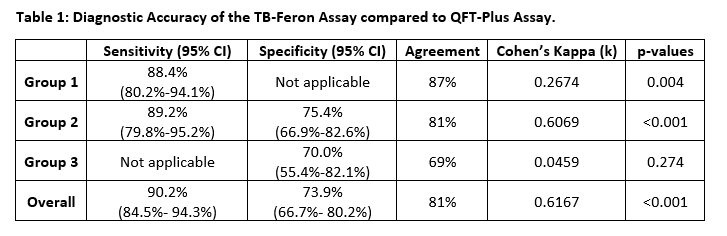
965. Diagnostic Accuracy of the FujiLAM Assay to Detect Tuberculosis in Advanced HIV
Poster Abstracts
Page: 302
Tessa Adzemovic1, Radha Rajasingham2, Elizabeth K. Nalintya3, Ann M. Fieberg2, Emmanuel Mande1, George Katende1, Spencer Yueh1, Olive Namakula1, Patricia Nerima1, Biyue Dai2, David B. Meya1, David R. Boulware2
Background
An urgent need exists for non-sputum based point-of-care diagnostics to detect tuberculosis (TB) among people with advanced HIV disease. The Fujifilm SILVAMP TB LAM (FujiLAM) is a novel point-of-care assay that detects mycobacterial lipoarabinomannan (LAM) antigen in urine to identify TB. We present a validation of the updated FujiLAM assay on prospectively collected urine samples from outpatient adults with advanced HIV disease in Uganda.
Methods
We performed a prospective diagnostic accuracy study of the FujiLAM TB assay among 617 outpatients with advanced HIV disease at 16 clinics in the Kampala and Wakiso districts of Uganda. We prospectively performed urine Alere LAM testing. Participants with symptoms of TB underwent additional testing including sputum Xpert MTB/Rif (Cepheid, Sunnyvale CA) and sputum culture as per the Ugandan Ministry of Health guidelines. FujiLAM was subsequently run on cryopreserved urine. We determined diagnostic performance for the FujiLAM test against the cases of confirmed TB (defined as Xpert or mycobacterial culture positive) versus negative controls. We additionally assessed the diagnostic performance of the FujiLAM assay for confirmed TB among pre-specified subgroups: people with CD4<100 cells/µL vs. CD4 100-200 cells/µL, antiretroviral therapy (ART) naive vs. ART experienced, and serum C-reactive protein (CRP) <5 mg/L vs. CRP ≥5 mg/L.
Results
Overall, we performed FujiLAM testing on 617 participants with Advanced HIV disease. The FujiLAM assay demonstrated 49% (27/55) sensitivity to identify confirmed TB and 97% (172/178) specificity to identify the absence of TB (Figure 1). The positive predictive value was 82%, and negative predictive value was 86%. Among those with CD4 cell counts <100 cells/µL, FujiLAM sensitivity was 61% and specificity was 95%. Among participants with serum CRP >5 mg/L, the FujiLAM assay exhibited a sensitivity of 58% and specificity of 96%.
Conclusions
In this diagnostic accuracy study performed on urine samples collected from ambulatory patients with advanced HIV disease in Uganda, the new iteration of the FujiLAM test exhibited moderate sensitivity at 49% and excellent specificity of 97% in identifying confirmed TB. Sensitivity to identify confirmed TB was maximal at 61% in the subgroup of participants with a CD4<100 cells/µL.
Figure 1.
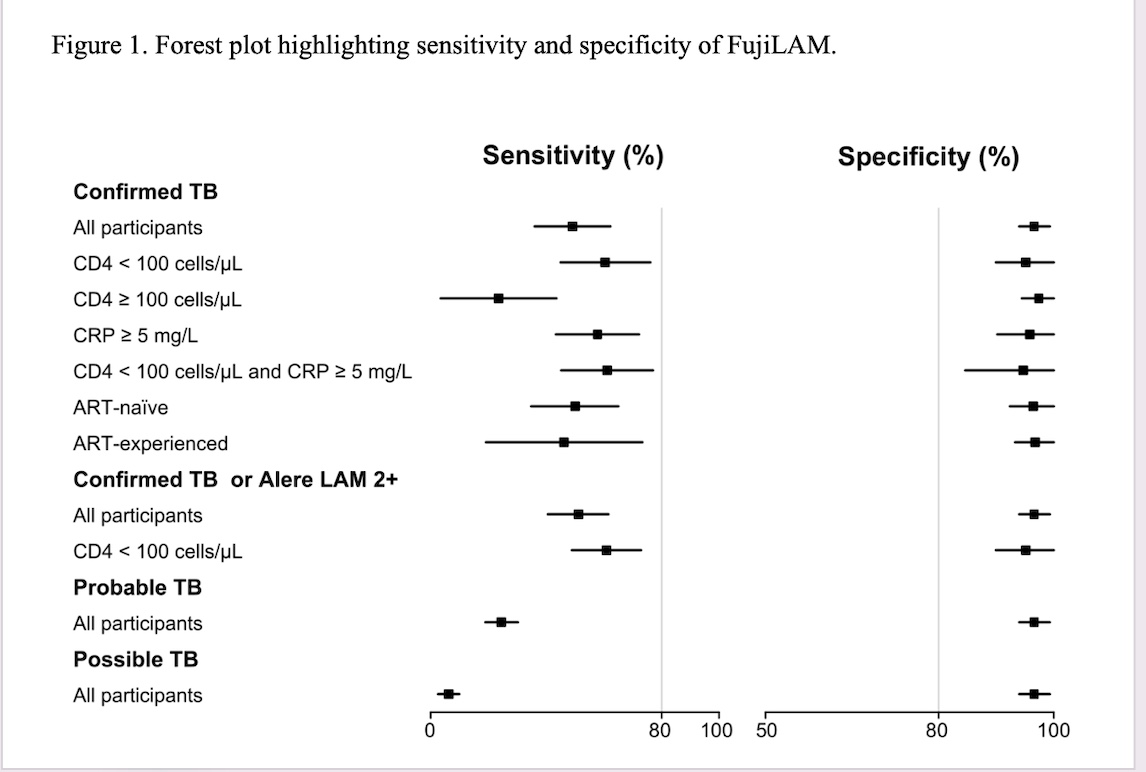
966. Diagnosis and Prognosis of Blood XpertUltra and Myco/F Blood Culture for TB in Advanced HIV Disease
Poster Abstracts
Page: 303
Phuong Le Trinh1, Dieu Quang Nguyen1, Thu Dang Anh Do1, Emily Evans2, Ly Trieu Vo3, Dung Thanh Nguyen4, Thach Ngoc Pham5, Quang Le Nguyen1, Khanh Hoang Dang1, Trang Van Dinh5, Cuong Do Duy6, Dat Quoc Vu7, Thuong T. T. Nguyen8, H. Rogier van Doorn8, Thuy Le9
Background
Current TB diagnostics are suboptimal to detect TB in patients with advanced HIV disease (AHD) who are at high risk for disseminated TB and mortality. Blood has been overlooked as a compartment for TB diagnostics in AHD. We determined the diagnostic yield of routine screening for TB in blood using Xpert Ultra (UXpert) and Myco/F Lytic (MFL) culture, and the utility of blood UXpert cycle threshold (Ct) and time to positivity (TTP) of MFL blood culture in predicting mortality.
Methods
We prospectively recruited adults with AHD (CD4 ≤100 or WHO stage 3 or 4) who were hospitalized for any reason at 3 hospitals in Vietnam. In addition to standard TB diagnostics (microscopy, UXpert and MGIT culture of non-blood specimens performed when clinically indicated), we screened all patients for TB in blood using UXpert and MFL culture. Patients were followed monthly over 6 months to determine TB outcome. We assessed the association of blood UXpert Ct value of the IS6110-1081 gene (CtIS) and TTP of MFL blood culture on 24-week mortality using Cox hazard models.
Results
Among 901 patients recruited between February 2021 and July 2023, 72 patients on active TB therapy were excluded. Among 829 patients, 83% were men. Median age was 36 years (IQR: 29-44). Median CD4 cell count was 18 (IQR: 8-43). 208 of 829 patients (25.1%) had microbiologically confirmed TB during the index hospitalization, and 10 developed TB during follow-up. Of these 208 TB patients, blood UXpert and MFL blood culture identified 151 cases (72.6%). This included 62 (30%) additional TB cases that were missed by the standard non-blood approach (Fig. 1A). Blood UXpert alone identified TB (and MDR TB) within 3 hours, enabling rapid initiation of TB therapy in 102 (49%) of 208 TB patients. The Cox models adjusted for sex, age, CD4 count identified the following independent predictors of 24-week mortality: (1) Positive TB in blood (mortality 32% vs. 12%, HR: 3.1, 95% CI:1.4-7, p <0.01) (Fig. 1B); (2) Blood UXpert CtIS ≤21 (mortality 50% vs. 24%, HR: 2.5, 95% CI: 1.2 – 5.1, p=0.016); (3) Faster TTP MFL blood culture (by one day) (HR: 1.06, 95% CI: 1.02–1.11, p= 0.01).
Conclusions
Among hospitalized patients with AHD, screening for TB in blood using currently available diagnostics of blood UXpert and MFL blood culture increased TB diagnostic yield by 30%. UXpert in blood alone made a rapid diagnosis of disseminated TB in 49% of TB patients, allowing rapid treatment and prognosis of patients.
The figure, table, or graphic for this abstract has been removed.
967. Gaps in Latent Tuberculosis Infection Testing Practices: A 15-Year Serial Cross-Sectional Study
Poster Abstracts
Page: 303
Jorge R. Ledesma1, Yuching X. Ni1, Jacek Skarbinski2
Background
In the US, untreated latent tuberculosis infection (LTBI) is the primary driver of new tuberculosis (TB) cases. Tracking real-world levels and trends in LTBI testing is therefore critical for assessing TB elimination efforts. However, many studies suggest that LTBI testing among people with high TB risk is suboptimal. To evaluate this practice gap, we conducted a serial cross-sectional study using 15 years of electronic health record data from an integrated health system to assess trends in LTBI testing.
Methods
In this serial cross-sectional study we included all Kaiser Permanente Northern California (KPNC) members aged ≥18 years with at least 6 months of continuous enrollment between January 2008 and December 2023. The primary outcome was LTBI testing with either a tuberculin skin test (TST) or an interferon gamma release assay (IGRA). The secondary outcome was ever receiving an IGRA among persons tested for LTBI. Using multivariable modified Poisson regression, we assessed factors associated with testing, including TB risk factors (born in TB-endemic country, immunosuppressed, close contact with TB, homelessness) specified in US CDC and California-specific screening guidelines.
Results
Among 6,572,839 persons in the study, 1,405,768 (21.4%) were tested for LTBI; 76% of all testing during the study period was among people without any TB risk factors. Of all people tested, 373,659 (26.5%) received an IGRA. The overall LTBI testing rate did not increase substantially during the study period: the rate per 100 population was 5.2 in 2008 and 6.7 in 2023. People born in a TB-endemic country had the lowest rate of LTBI testing with a rate of 3.3 in 2008 and 5.0 in 2023 (Figure). Persons born in a TB-endemic country had a 25.2% (24.8-25.5%) lower prevalence of LTBI testing compared to US-born persons. Persons with TB risk factors including close contact with TB case (PR=2.66 [2.62-2.70]), homelessness (PR=1.29 [1.26-1.32]), and HIV (PR=3.58 [3.53-3.63]) were more likely to receive LTBI testing. Among persons who received any LTBI testing, persons born in TB-endemic countries were 61.7% (60.5-62.9%) more likely to have been tested with an IGRA than US-born persons.
Conclusions
We identified a substantial gap between evidence and practice. Despite data indicating that 82% of all TB cases in California are among persons born in TB-endemic countries, current LTBI testing practices are disproportionately undertesting this population while over testing persons without any TB risk factors.
The figure, table, or graphic for this abstract has been removed.
968. Effect of Alcohol Use on Active TB Incidence Among PWH With Prior Receipt of TB Preventive Therapy
Poster Abstracts
Pages: 303-304
Judith A. Hahn1, Robin Fatch1, Sowmya R. Rao2, Adah Tumwegamire3, Christine Ngabirano3, Julian Adong3, Nneka Emenyonu1, Gabriel Chamie1, Winnie Muyindike3, the International URBAN ARCH Center
Background
High-risk alcohol use is associated with increased risk for active TB, the leading cause of death among persons with HIV (PWH). We hypothesized that the incidence rate of active TB after receipt of TB Preventive Therapy (TPT) would differ by level of alcohol use among PWH.
Methods
We conducted a review of HIV/TB clinic charts to find active TB diagnosis among 988 PWH with prior positive tuberculin skin tests in a sample enriched for persons with high-risk alcohol use in South-western Uganda. These persons engaged in our prior research and received 6 months of TPT, with electronic pill-cap monitoring. We used person-time methods and defined time at risk as months from 6-months after TPT start to date (t0) until TB diagnosis, last known TB-free clinic or study visit, or death not known to be due to TB. We conducted Cox modeling to obtain the hazards ratio (HR) and 95% confidence intervals (CI) of high-risk alcohol use at t0, defined as Alcohol Use Disorders Identification Test – Consumption (AUDIT-C, modified to cover 3 months) ≥6 or the alcohol biomarker, phosphatidylethanol (PEth) ≥200 ng/mL, versus not high-risk, adjusting for gender and age. We further adjusted for the following variables if they were individually associated (in models with alcohol use, gender, and age) with active TB (p<0.10): HIV viral non-suppression (≥200 copies/ml), ART regimen, CD4 count, smoking, TPT non-completion (<90% pills taken), body mass index, and number of people/household room.
Results
968 (98%) persons had total follow-up of 3229 person-years (py). There were 21 cases of TB, confirmed by Gene Expert (n=13) or lipoarabinomannan (LAM, n=8), for a TB incidence rate of 0.65% (95% CI: 0.42-1.00%) per py (ppy). 410 (42.4%) had high-risk alcohol use, 634 (65.5%) completed TPT, and 32 (3.3%) were HIV non-suppressed. The TB incidence rate was 1.28% (95% CI: 0.79-2.09%) ppy among those with high-risk alcohol use, and 0.25% (95% CI: 0.11-0.61%) ppy among those without high-risk alcohol use (Figure). The adjusted hazard ratio (aHR) for high-risk alcohol use yes versus no was 3.74 (95% CI: 1.29-10.79). Cigarette smoking (aHR: 2.42, 95% CI: 0.99-5.92) and HIV non-suppression (aHR: 5.58, 95% CI: 1.64-18.98) were also independent predictors of active TB. There was no interaction by gender.
Conclusions
These results suggest ongoing TB acquisition and/or reactivation despite high rates of viral suppression and receipt of TPT among PWH, particularly among those with high-risk alcohol use and cigarette smoking.
Figure 1.
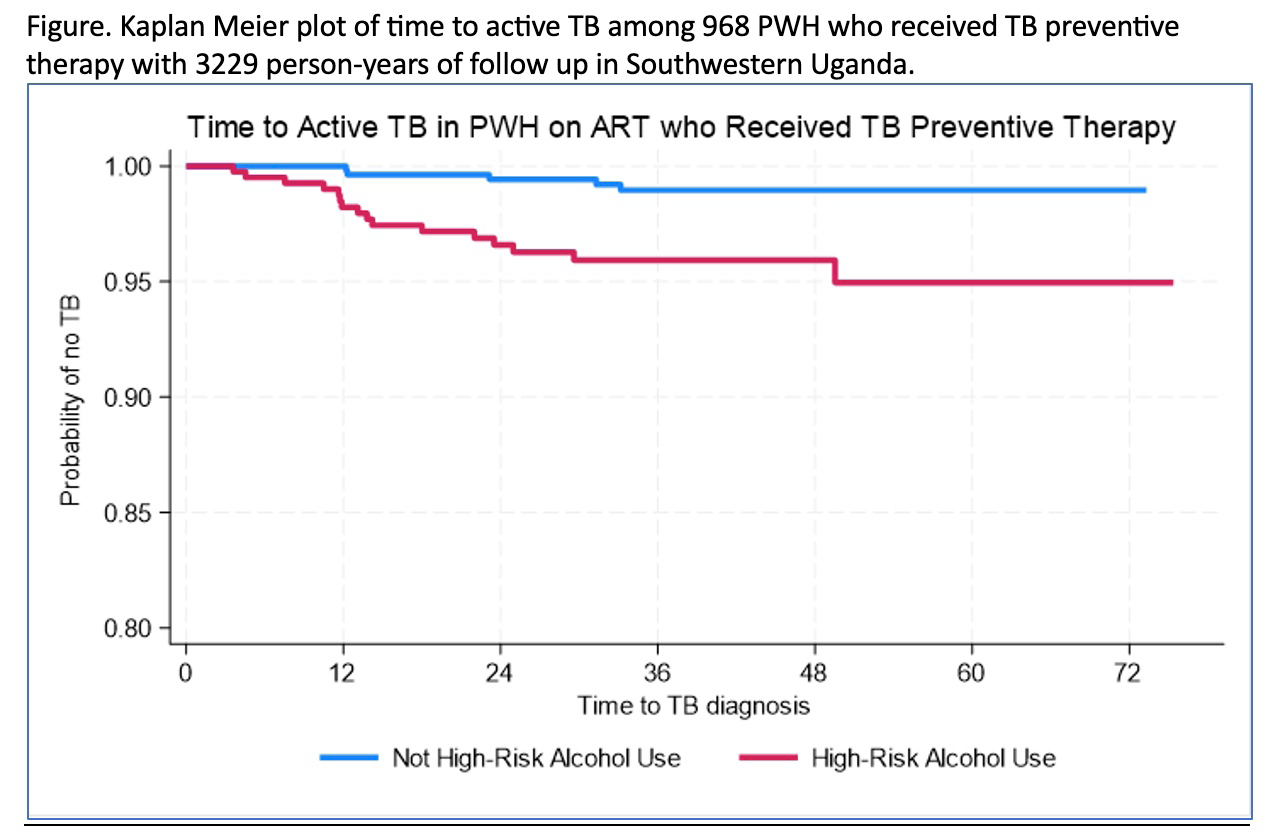
969. The Impact of Rifampin Drug Interactions on TPT Completion and Safety Using High-Dose vs Standard
Poster Abstracts
Page: 304
Jinell White1, Federica Fregonese2, Rachel Lim1, Nancy Bedingfield1, Victoria Cook3, Fajri Gafar2, Diana Gibson2, Dina Fisher1
Background
Tuberculosis preventive treatment (TPT) has been recognized by the World Health Organization as a critical intervention to eliminate tuberculosis. Rifampin TPT is critical to this goal, given high completion rates, short treatment lengths, and low side-effects. However, rifampin treatment has limitations by drug-drug interactions (DDI) with multiple medications.
Methods
A post-hoc data analysis from the 2R2 trial (Ruslami,R Lancet Resp Med 2024) on comorbidity and concomitant medications of all participants was obtained before starting TPT. Information on side effects and concomitant medication adjustments were asked at each study visit. The study population was classified as taking at least one “essential” concomitant medication or not. Essential medications were defined as 1) prescribed by a doctor; 2) could not be interrupted for the treatment duration with Rifampin 3) if interrupted would have caused potentially life threatening or debilitating consequences. We then analyzed essential medications in categories B to X, by mechanism of action for Rifampin DDI, using Lexi-drugs database.
Results
1368 participants were in the 2R2 study; 282 (21%) were classified as taking at least one concomitant “essential” medication with possible interaction with rifampin, almost half (n=128, 45%) took > 2 essential medications. 198 participants (70%) in the DDI population completed TPT treatment, with no significant differences in completion compared to the non-DDI population. Participants who took at least one dose of TPT, an adverse event (AE) resulting in permanent treatment discontinuation (protocol-defined AE) was reported for 27 (9.9%) participants in the DDI population and 58 (5.6%) in the non-DDI population. Most frequent AE, rash/allergy had similar distribution in the two populations (3%), while GI intolerance was more common in DDI population (3% vs. 1%). At follow-up, the proportion of participants who required additional unscheduled visits was higher in the DDI population and the time to the first additional visit was significantly shorter. More participants in the DDI population reported more than one symptom at the second scheduled follow-up visit (GI intolerance was most reported).
Conclusions
This demonstrates that DDI(s) with rifampin can be managed safely without impacting TPT completion rates of standard and high dose. Participants taking concomitant medications with possible rifampin DDI required increased clinical monitoring to achieve similar outcomes to the non-DDI population.
Table 1.
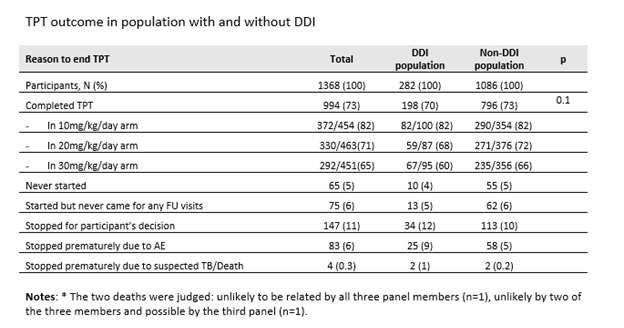
970. Weekly Rifapentine and Isoniazid (3HP) vs Isoniazid Preventive Therapy (6H) Among People With HIV
Poster Abstracts
Page: 304
Dickens Onyango1, Jerphason Mecha2, Lilian N. Njagi2, Samson Aoro3, John Kinuthia3, Grace John-Stewart4, Sylvia LaCourse4
Background
People with HIV (PHIV) have a 30% lifetime risk of developing tuberculosis (TB) disease, which TB preventive therapy (TPT) reduces by 60%. Six-month daily isoniazid (6H) regimens are challenged by non-adherence and suboptimal completion. Shorter regimens such as 3-month weekly rifapentine and isoniazid (3HP) were introduced in Kenya in October 2022. There is a lack of programmatic data comparing the 3HP and 6H cascades.
Methods
We evaluated the TPT cascade among PHIV in western Kenya, January to September 2022, when only 6H was implemented, and October 2022 to September 2023, when 3HP was the preferred regimen. Both regimens were self-administered, with monthly refills. Data were abstracted using standardized report forms for PHIV aged >15 years newly enrolled in HIV care with at least six months of follow-up. We assessed symptom screening, TPT eligibility, initiation, and completion. TPT outcomes by regimen were compared using Chi-square tests. Poisson regression was used to assess correlates of TPT non-completion.
Results
Data was abstracted for 1930 PHIV with median age of 33 years (IQR=27-41). 65.8% were female (n=1269) and 19.5% (n=374) were in WHO stage 3 or 4 (advanced HIV disease [AHD]) at enrolment. Overall, 99.6% (n=1922) underwent TPT eligibility screening, of whom 6.9% (n=132) were diagnosed with TB disease; 97.5% (n=1970) were eligible for TPT. Among 1970 eligible PHIV, 88.1% (n=1577) initiated TPT, 55.4% [n=873] 3HP and 44.6% [n=704] 6H. TPT initiation was significantly higher for 3HP than 6H (89.8% vs. 84.2%; p<0.001). 3HP completion was similar to 6H (89.2% vs. 88.8%, p=0.77). Discontinuation of 3HP due to adverse effects was similar to 6H (3.1% vs. 2.3%, p=0.70). Non-completion of 6H was nearly five-fold higher (adjusted risk ratio [aRR]=4.89; 95%CI 1.91-12.48) among PHIV with AHD than those without AHD. Non-completion of 3HP was over twice higher among PHIV with AHD than those without AHD (aRR=2.36; 95% CI 1.04-5.37) and among PHIV in formal employment (aRR=2.42; 95% 1.12-5.21).
Conclusions
3HP implementation significantly increased TPT initiation. Overall, completion rates were high, adverse events leading to discontinuation were low and similar for both regimens. TPT non-completion was substantially higher among PHIV with AHD. 3HP non-completion was higher among PHIV in formal employment. While 3HP is a promising alternative to 6H, interventions are needed to support treatment completion among PHIV with AHD and those in formal employment.
Figure 1.
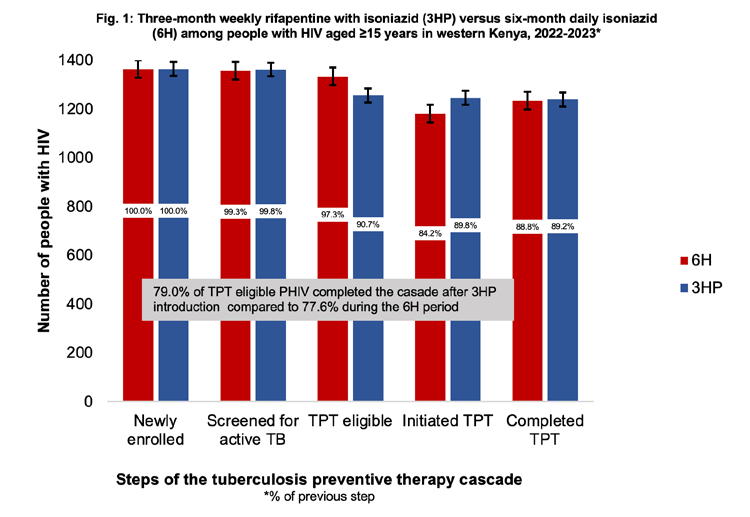
971. Patient and Provider Preferences for Long-Acting Tuberculosis Preventive Therapy
Poster Abstracts
Pages: 304-305
Marcia C. Vermeulen1, Renae Furl2, Harlan Sayles2, Shahanara Valawalkar3, Abhay Kadam3, Samyra R. Cox4, Vidya Mave3, Charlotte Schutz1, Amy Ward1, Joelle Dountio Ofimboudem5, Kimberly K. Scarsi2, Graeme Meintjes1, Susan Swindells2, the Longevity Consortium
Background
Tuberculosis preventive therapy (TPT) is a key intervention for tuberculosis (TB) elimination. The introduction of long acting (LA) TPT has the potential to enhance adherence, minimize treatment interruptions, improve completion rates, and extend protection against tuberculosis.
Methods
We conducted a cross-sectional in-person survey among patients in two high-burden TB countries to evaluate preferences, and concerns about LA formulations for TPT. The survey compared oral medication to long-acting injections; implants; and microneedle patches. An online survey of healthcare providers (HCP) in low- and middle-income countries (LMIC) assessed attitudes toward and perceived feasibility of implementing LA formulations of TPT. Data are summarized by descriptive statistics.
Results
We recruited 409 patients (India, n = 209; South Africa, n = 200) and 94 HCPs from 25 LMIC. Mean age of patient respondents was 40; 35% were male, and 26% reported a history of TPT. Injectable TPT was the most preferred modality, followed by pills, implants, and lastly microneedle patches (Figure 1a). Notably, 304 patients (75%) expressed a strong willingness to try injectable TPT, particularly among those with prior use of injectable medication compared to those without (73% versus 27%; p <0.001). 207 (68%) of patients thought injectable TPT would be the most effective. Among parents and guardians, 75% (132 of 176) of those with children <12 years and 79% (127 of 161) of those with children ≥12 years were willing to have their child receive injectable TPT. For adults, the perceived benefits of injectables compared to pills included ease of administration (79%) and perceived efficacy (75%). However, 45% of patients expressed concern about the potential ineffectiveness and prolonged side effects of injections (40%). 90% (73/81) of providers were willing to prescribe LA TPT if efficacy, safety, and cost are comparable to oral medication. Among providers, 43% (34/79) favoured injectables, while 18% (14/79) favoured implants and 13% (10/79) patches (Figure 1b). Cost emerged as a significant factor influencing providers’ willingness to adopt LA TPT, with 75% willingness if cost is comparable to oral medication compared to 25% if cost were doubled.
Conclusions
Injectable TPT was the preferred LA TPT formulation among patients and providers in our survey. At scale, injectable TPT may be highly acceptable and feasible if concerns of cost and safety are addressed.
Figure 1.
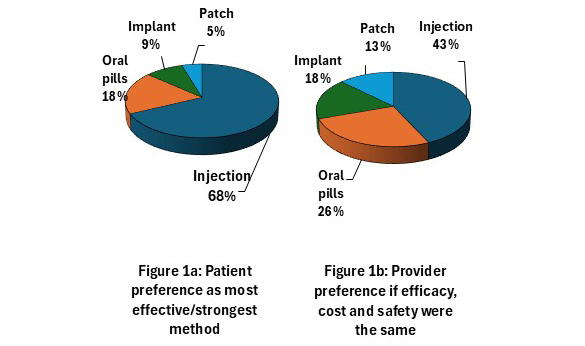
972. Effect of Tuberculosis Preventive Therapy on Mtb-Specific T-Cell Profile in the A5279/BRIEF TB Trial
Poster Abstracts
Page: 305
Pablo C. Alarcon1, Xinyu Du2, Manuel G. Feria1, Ashley McKhann2, Michelle A. Kendall2, Michael L. Freeman3, Susan Swindells4, Amita Gupta5, Gavin Churchyard6, Richard E. Chaisson5, Cheryl Day7, Moises Huaman1
Background
People with HIV (PWH) have impaired Mycobacterium tuberculosis (Mtb)-specific T cell responses, making induction of effective immunity challenging. Whether TB preventive therapy (TPT) modifies Mtb-specific T cell profile in PWH is unknown. We interrogated Mtb antigen-specific T cell responses in PWH with latent TB infection (LTBI) pre- and post-TPT within the ACTG A5279 clinical trial, a phase III trial of PWH comparing 4 weeks of daily isoniazid/rifapentine (INH/RPT) to 9 months of daily INH.
Methods
Cryopreserved PBMCs were obtained pre-TPT (week 0) and post-TPT (week 48) from A5279 participants with LTBI (TST+ or IGRA+) on stable antiretroviral therapy, HIV viral load <200 copies/mL, and CD4 count >100 cells/mm3 at study entry. PBMCs were thawed and stimulated overnight with CMV pp65 peptide pool, Mtb ESAT-6/CFP-10 peptide pool, and whole cell Mtb lysate (WCTBL). Cells incubated in media alone served as a negative control.
PBMCs were stained for markers of T cell lineage (CD3, CD4, CD8), activation, and differentiation (PD1, CD45RA, HLA-DR, Ki-67, TIM3, CD38, CD153, CD95). Intracellular cytokine staining for TNF-α, IFN-γ, and IL-2 was performed to assess function. Samples were then analyzed via flow cytometry. Primary analyses investigated changes (Δ) in Mtb-specific T cell phenotype and cytokine responses from pre-TPT to post-TPT. We also explored these changes by TPT treatment arms.
Results
Samples in 27 participants from 4 countries were included. Overall, Mtb-specific CD4 and CD8 T cell phenotype, differentiation, and functional attributes were similar pre- and post-TPT. The frequency of WCTBL-specific TNF-α+ CD8 T cells increased post-TPT, compared with pre-TPT (n=27, median Δ +0.17%, p=.006). Compared to pre-TPT, the percentage of activated (CD38-HLA-DR+) WCTBL- and ESAT-6/CFP-10-specific CD8 T cells decreased post-TPT (n=16, Δ -3.8%, p=.044; n=9; Δ -8.1%, p=.039, respectively). The percentage of CD153+ ESAT-6/CFP-10-specific CD8 T cells also decreased post-TPT (n=9, Δ -5.9%, p=.012). Pre- and post-TPT comparisons between INH/RPT and INH treatment arms showed no consistent differences.
Conclusions
TPT had little effect on Mtb-specific CD4 and CD8 T cell phenotypic and functional profiles, although modest changes were observed in CD8 T cell activation and TNF-α production post-TPT. Our results suggest that TPT does not substantially modify TB-specific T cell responses in PWH and LTBI, thus supporting a need for novel TB vaccine strategies to boost TB immunity regardless of TPT.
973. Uptake of New Guidelines for Cryptococcal Meningitis in Botswana, Malawi, Uganda, and Zimbabwe
Poster Abstracts
Page: 305
Jane Gakuru1, Eltas Nyirenda Dziwani2, Tshepo Leeme3, Constantine Mutata4, David B. Meya1, Mosepele Mosepele5, Henry Mwandumba2, Chiratidzo Ndhlovu4, Síle Molloy6, Thomas S. Harrison6, Joseph N. Jarvis7, David S. Lawrence7
Background
WHO guidelines for HIV-associated cryptococcal meningitis were updated in June 2022 recommending single, high-dose liposomal amphotericin with 14 days of flucytosine and fluconazole. The AMBITION team who defined that regimen lead the Single High-dose AmBisome to Reduce Mortality from CM (SHARE-CM) project aiming to maximise the impact of the regimen in routine care. The project engages key stakeholders, trains healthcare workers, increases patient health-related literacy, and undertakes M&E of impact. We report progress after the first 3 years of this 5-year project.
Methods
We identified personnel at Ministries of Health and a purposively selected sample of healthcare facilities in Botswana, Malawi, Uganda and Zimbabwe. We administered national level surveys to understand current treatment guidelines, drug registration status, and drug availability. We administered facility level surveys to determine the availability of key commodities and ascertain which treatment regimens are most administered to patients. Surveys were completed online and data described.
Results
Four national surveys and 60 facility surveys (Botswana: 13, Malawi: 13, Zimbabwe 14, Uganda: 20) were completed between June 2023 - July 2024. The AMBITION regimen was first-line in each country guideline; timing of guideline dissemination varied. Key antifungals were available in each country, initially via Unitaid/CHAI funding and recently via the Global Fund. CD4 testing was available all or most of the time in 88% (53/60) of facilities; cryptococcal antigen 100% (60/60); lumbar puncture needles 63% (38/60) and manometers 25% (15/60). Liposomal amphotericin was available all or most of the time in 68% (41/60) of facilities; flucytosine 55% (33/60) and fluconazole 82% (49/60). The AMBITION regimen was the most administered regimen overall in 47% (28/60) of facilities with significant intercountry variability ranging from 15% (2/13) in Botswana to 75% in Uganda (15/20).
Conclusions
In the two years since WHO guidelines were updated, there has been rapid adoption of the AMBITION regimen in high-incidence settings. Antifungals are available in country but not always at facility level, highlighting the need to improve in-country supply chains. The AMBITION regimen was the most administered overall, with intercountry variability likely explained by different timing of guideline dissemination. Ongoing monitoring and evaluation can support improved uptake of the AMBITION regimen.
The figure, table, or graphic for this abstract has been removed.
974. Clinical Outcomes of People With HIV-Cryptococcal Meningitis on the New Treatment Regimen in Uganda
Poster Abstracts
Page: 306
Olivie C. Namuju1, Richard Kwizera2, Lillian Tugume1, David R. Boulware3, David B. Meya1
Background
Cryptococcal meningitis (CM) remains the second most lethal opportunistic infection among People Living with HIV in sub-Saharan Africa. CM is managed on single high-dose liposomal amphotericin B and flucytosine. However, there is no sufficient data on whether the new treatment regimen has an effect on reducing inpatient mortality and length of hospital stay in the real-world setting. We aimed to investigate the proportion of inpatient mortality, length of hospital stay (LOS), and factors associated with mortality among patients with HIV-associated CM receiving liposomal amphotericin B-flucytosine regimen.
Methods
This was a cross-sectional study conducted to review medical records of patients admitted between December 2022 and May 2023 at 11 tertiary hospitals in Uganda. Medical records of 173 HIV-CM patients were reviewed. Univariate descriptive statistics were used to summarize the background characteristics. Modified Poisson regression was used to ascertain factors associated with mortality at bivariable and multivariable levels. Associations were presented through adjusted prevalence ratios with their 95% confidence intervals. Data were analyzed using STATA v15.
Results
Of the 173 patients’ medical records reviewed, the majority (58.4%), were males with a median age of 38 years (IQR= 30, 48) and over half (55.5%) were married. Forty percent of the patients had altered mental status (GCS<15) on admission. Overall, inpatient mortality for liposomal amphotericin B was 35.8% (compared to 42% of amphotericin B deoxycholate) and this significantly varied by health facility (range 7.1-100%). The median LOS was 7 days (IQR = 3, 12). Factors associated with mortality were male sex [adjusted prevalence ratio (APR); 1.87, 95%CI (1.21-2.87)], p-value=0.005), admission with a convulsion [APR, 1.86, 95%CI (1.21-2.86), p-value=0.005)], altered mental status [APR; 1.66, 95%CI (1.07-2.57), p-value=0.023], and presence of a comorbid condition [APR, 2.26 95%CI (1.44-3.53), p-value=0.006]. Therapeutic lumbar punctures were significantly associated with reduced mortality [APR; 0.47, 95%CI (0.29-0.73), p-value=0.001].
Conclusions
Liposomal amphotericin B regimen has lower mortality in the real-world setting. Patients on average spend more than a week in hospital. Male sex, admission with a convulsion, altered mental status, and comorbid conditions were independently associated with mortality. Therapeutic LPs significantly reduced inpatient mortality.
975. Trends in Cryptococcal Meningitis Mortality Using Routine Longitudinal National Data From Botswana
Poster Abstracts
Page: 306
James Milburn1, Ookeditse Ntwayagae2, Jodie Russell1, Tony Chebani3, Tshepo Leeme4, David S. Lawrence5, Daniel Grint5, Mark Tenforde6, Ava Avalos7, Dinah Ramaabya3, Justus Ogando8, Margaret Mokomane9, Madisa Mine10, Joseph N. Jarvis5
Background
Cryptococcal meningitis (CM) remains a frequent opportunistic infection among individuals with advanced HIV disease, causing significant morbidity and mortality. CM incidence has fallen in high HIV-prevalence settings with expansion of ART. Few countries other than South Africa collect reliable data on CM; robust longitudinal data describing the impact of HIV programme interventions and changes in management of CM on mortality in the rest of Africa are lacking.
Methods
National mortality estimates from CM in Botswana were described using 8 years of national meningitis surveillance data (2015-2022) from electronic health records. All laboratory records from CSF samples analysed in government healthcare facilities in Botswana were extracted from a central online repository. CM case frequency was enumerated using a case definition. Mortality data were manually extracted from the national registry in duplicate using national identification numbers with arbitration by a third reviewer in discrepant cases. Outcomes were stratified as short-term (2 weeks), medium-term (10 weeks), long-term (1 year) from lumbar puncture date, and analysed by calendar year. Repeat presentation and cases without a national identification number were excluded.
Results
Outcome data from 1259 first presentations of CM between 2015-2022 were analysed. Mortality at 2 weeks was 19% (95% CI 0.14-0.25, 37/193) in 2015 and 23% (95% CI 0.16-0.33, 24/103) in 2022, at 10 weeks 27% (95% CI 0.21-0.34, 52/193) and 32% (95% CI 0.23-0.42, 33/103) and at 1 year 32% (95% CI 0.25-0.38, 60/193) and 38% (95% CI 0.28-0.48, 39/103), respectively, with no clear temporal trend (fig 1). Early mortality was significantly higher in older patients and those with positive CSF India ink, or lower CSF protein, glucose, or white cell count. Early mortality was higher in district or primary hospitals (21.5%, 165/767) compared to referral hospitals (19.8%, 111/561), OR 1.6 (CI 1.3-1.9, p<0.01).
Conclusions
Mortality from CM in Botswana remains high with no evidence of decline in 8 years of observation despite excellent ART coverage and improved diagnosis and management strategies. Increased mortality was observed in 2020, likely either directly attributable to COVID-19 or indirectly from disruptions to healthcare services. Treatment for CM has been simplified in updated WHO guidelines but access to effective antifungals including flucytosine in resource-limited settings remains restricted and must be addressed to reduce mortality.
Figure 1.
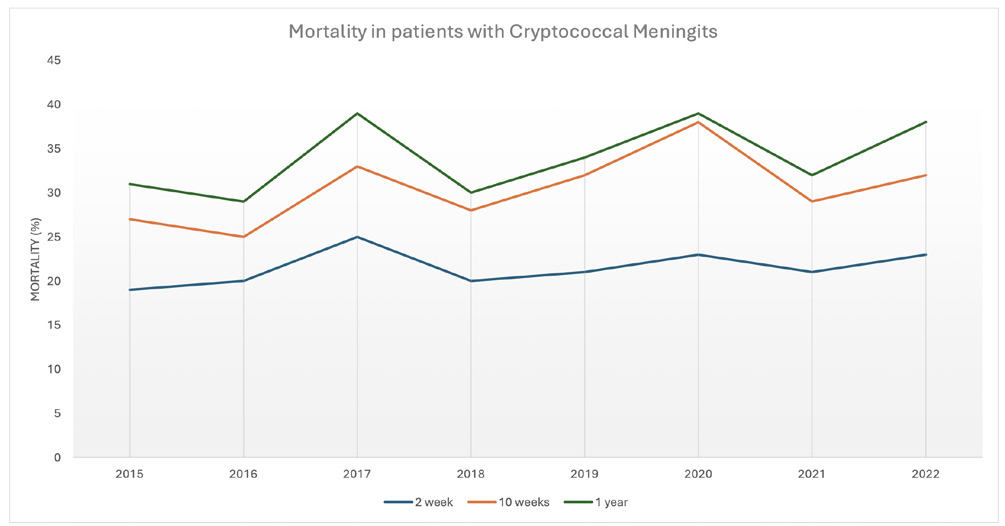
976. Pathway to Care Among Inpatients With Symptomatic Cryptococcal Meningitis in Johannesburg, SA
Poster Abstracts
Pages: 306-307
Lia F. Edkins1, Raphaela Berghammer-Bohmer2, Asha MK Thombrayil MBChB2, Jeremy Nel2, Merika Tsitsi2, Susan T. Meiring3, Rudzani C. Mashau3, David S. Lawrence4, Kennedy Mupeli5, Joseph N. Jarvis4, Thomas S. Harrison6, Tom Boyles7, Nelesh P. Govender2, Rachel Wake8, Síle Molloy6, the IMPRINT Research Group
Background
Cryptococcal antigen (CrAg) screening and pre-emptive treatment reduces risk of HIV-associated cryptococcal meningitis (CM) and death. Understanding the pathway to care following serum CrAg (sCrAg) screening is crucial for improving screening practices for people with advanced HIV disease.
Methods
We conducted structured interviews and collated hospital and laboratory data about patients with HIV-associated symptomatic CM at two tertiary-level hospitals in Johannesburg in South Africa, following informed consent. If done, prior sCrAg results were obtained from the Laboratory Information Management System. Participants were asked about their pathway to care prior to presentation.
Results
Among 126 participants with symptomatic CM (median CD4 count 24 cells/uL, IQR 9 – 52), 33% (41/126) of participants had ever undergone sCrAg screening prior to hospital admission, of whom 59% (24/41) had a positive result. Of those with available data, 74% (17/23) had no CM symptoms at the time of sCrAg testing and the average delay until symptom onset was 22 days (range 1 – 509). Of those without symptoms, 93% (13/14) visited a healthcare provider following testing, however only 22% (2/9) were known to receive any fluconazole prior to hospitalisation. Of those who did not take fluconazole, 17% (1/6) declined fluconazole, 17% (1/6) were referred for LP without fluconazole, and 67% (4) were seen by a healthcare provider but neither fluconazole nor LP were offered.
Conclusions
Around a third of participants had sCrAg screening prior to presentation with symptomatic CM and almost two thirds of these results were positive. The majority of participants who were sCrAg positive did not have any symptoms of meningitis at the time of sCrAg testing. Overall, 14% of all patients presenting with symptomatic crypotococcal meningitis had previously had asymptomatic cryptococcal antigenaemia. Most asymptomatic sCrAg-positive patients did not receive fluconazole or have a LP, despite accessing healthcare services. This study highlights missed opportunities for reducing the incidence of CM and death in patients with advanced HIV disease, despite the reflexive CrAg screening programme in South Africa. Efforts to improve health worker and patient understanding around CrAg screening and recommended management are essential.
Figure 1.
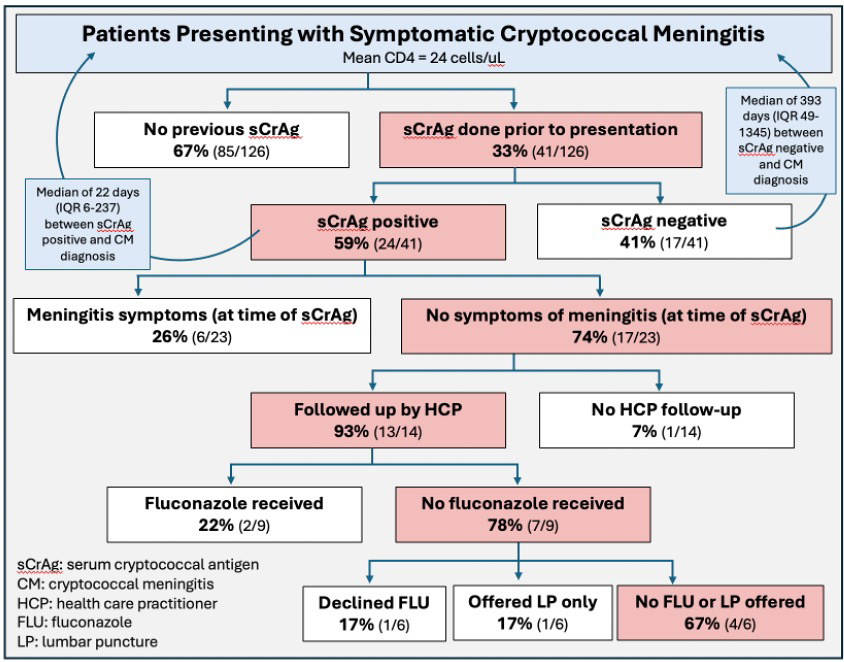
977. CMV and EBV Coinfections and Mortality Risk in Patients With HIV-Associated Cryptococcal Meningitis
Poster Abstracts
Page: 307
Jayne P. Ellis1, Elisabetta Groppelli2, Ronan Doyle1, David S. Lawrence1, David B. Meya3, David R. Boulware4, Henry Mwandumba5, Cecilia Kanyama6, Mina Hosseinipour7, Graeme Meintjes8, Conrad Muzoora9, Mosepele Mosepele10, Chiratidzo Ndhlovu11, Thomas S. Harrison2, Joseph N. Jarvis1, the AMBITION Study Group
Background
Cryptococcus is the most common cause of HIV-associated meningitis globally, accounting for 19% of all AIDS-related deaths. Case fatality is 24-45%, even in the context of clinical trials. Co-prevalent infections – including Cytomegalovirus (CMV) and Epstein–Barr virus (EBV) - may contribute to poor outcomes.
Methods
We measured CMV and EBV viral load by qPCR in baseline plasma and CSF samples collected prospectively as part of AMBITION-CM, a multi-site, randomized trial which investigated the use of single high dose liposomal amphotericin B for the treatment of HIV-associated cryptococcal meningitis. The AMBITION-CM trial was conducted in Uganda, Botswana, South Africa, Malawi and Zimbabwe. We described the prevalence of CMV- and EBV-viraemia (in plasma), and CNS co-infections (CSF qPCR positivity), and associations of any detectable CMV- or EBV-viremia or viremia >1000 IU/ml with 2- and 10-week mortality using logistic regression modelling.
Results
825 AMBITION-CM participants were included: 61% male, median age 37 years (IQR 32-43), median baseline CD4 count 33 cells/μL (IQR 12-67). EBV plasma viraemia was present in 73% (600/825), and CMV viraemia in 49% (418/825). CNS co-infections were less common; 27% had detectable EBV in CSF, and 5% had detectable CMV. CMV plasma viraemia was significantly associated with lower CD4 counts, less CSF inflammation, and higher CSF fungal burdens. Conversely, EBV plasma viraemia was positively associated with higher CD4 counts and more CSF inflammation. CMV plasma viraemia (>1000IU/ml) was associated with double the odds of both 2-week (aOR 1.98 95%CI 1.01-3.88) and 10-week mortality (aOR 2.15, 95%CI 1.22-3.78) after adjustment for age, sex, CD4 count and study site. CMV CNS co-infection was associated with a non-significant increase in mortality. EBV viraemia, and EBV CNS co-infection, were weakly associated with improved survival (Table 1).
Conclusions
EBV co-infections were associated with a pro-inflammatory cryptococcal phenotype known to be associated with improved survival (suggesting that EBV is a probable by-stander infection), whilst CMV viraemia was associated with a pauci-inflammatory response, higher fungal burdens and increased mortality. CMV viremia >1000IU/ml represents a potentially modifiable risk factor to improve survival amongst adults with cryptococcal meningitis. Interventional trials are required to understand how treatment of CMV impacts immune-modulation in advanced HIV disease.
Table 1.
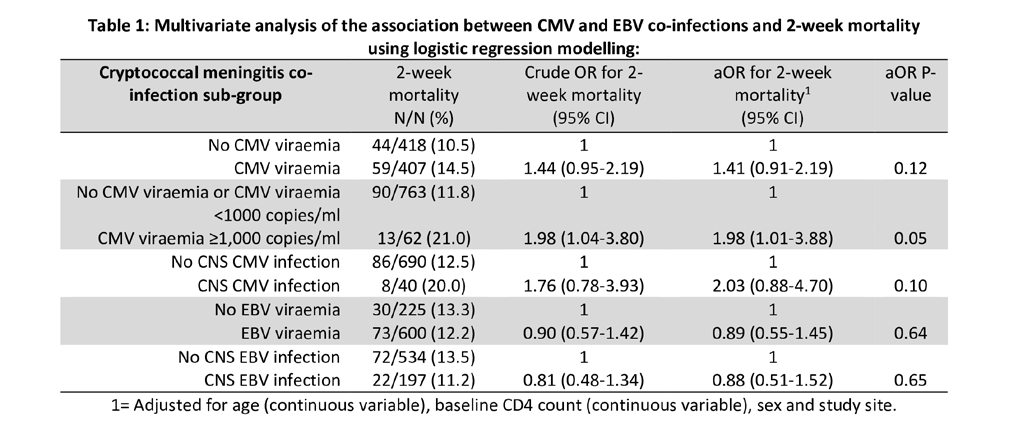
978. Catastrophic Healthcare Expenditure From Cryptococcal Meningitis in Eastern and Southern Africa
Poster Abstracts
Page: 307
David S. Lawrence1, Charles Muthoga2, Jack Adams3, Buhle Ndweni4, Cecilia Kanyama5, Graeme Meintjes4, David B. Meya6, Mosepele Mosepele2, Henry Mwandumba7, Conrad Muzoora8, Chiratidzo Ndhlovu9, Síle Molloy3, Thomas S. Harrison3, Lucy Cunnama4, Joseph N. Jarvis1, the AMBITION Study Group
Background
HIV-associated cryptococcal meningitis is the second leading cause of AIDS-related mortality. Cryptococcal meningitis is a poverty-related disease and the majority of cases occur in settings where resources are limited and access to quality care is often linked to an individual’s ability to pay for services. We have previously demonstrated the efficacy, safety, and cost-effectiveness of a single, high-dose liposomal amphotericin-based treatment regimen within the AMBITION-cm trial. Here we present a five-country, within-trial analysis exploring the individual economic impact of cryptococcal meningitis.
Methods
810 participants were recruited into this sub-study in Botswana, Malawi, South Africa, Uganda and Zimbabwe. We collected data on annual household expenditure, direct costs and indirect costs incurred prior to enrolment and during the ten-week trial period. Costs were inflated and converted to 2022 USD. We calculated out-of-pocket expenditure, lost income, and catastrophic healthcare expenditure. We defined catastrophic healthcare expenditure as costs exceeding 20% of annual household expenditure.
Results
The average total out-of-pocket expenditure plus lost income prior to enrolment was $132. By the point of enrolment 18% (145/810) of participants had already experienced catastrophic healthcare expenditure. Among the 592 participants who survived to ten-weeks, combining out-of-pocket expenditure and lost income, the average individual cost was $516, ranging from $230 in South Africa to $592 in Zimbabwe. More than half (51%, 296/581) experienced catastrophic healthcare expenditure by the end of the trial, ranging from 16% (13/81) in South Africa to 68% (156/229) in Uganda.
Conclusions
This is the first study exploring the individual economic impact experienced by individuals diagnosed with cryptococcal meningitis. The personal economic impact of cryptococcal meningitis is high and more than half of individuals who survive experience catastrophic healthcare expenditure. It is likely these figures are higher outside of the research setting. This highlights the profound financial impact of this devastating infection and provides a rationale to offer financial and social protection to those affected.
The figure, table, or graphic for this abstract has been removed.
979. Epigenetic Changes With T. gondii in Brains of People With HIV and Their Possible Link to Gliomas
Poster Abstracts
Page: 308
Megha S Srivatsa BS1, Momtahina Tahmida1, So Youn Shin2, Sara Gianella Weibel1, Ajay Bharti1, Scott L. Letendre1, Ronald Ellis1, David Moore1, Sarah LaMere1
Background
Toxoplasma gondii, a zoonotic parasite, poses risks for people with HIV (PWH). Although its clinical impact is minimal in immunocompetent hosts, U.S. seroprevalence studies show a 20-30% infection rate. The parasite forms bradyzoites in brain and muscle tissue that can reactivate when CD4+ T cell counts drop in PWH, leading to severe disease. Additionally, T. gondii alters epigenetic pathways in brains of rodents, causing behavioral changes, and its seropositivity in humans is associated with neurobehavioral disorders and adult glioma development.
Methods
To investigate the epigenetic effects of T. gondii in the brains of PWH, we conducted a pilot case-control study comparing DNA methylation of CpG dinucleotides in the frontal cortex and basal ganglia of four PWH with confirmed latent T. gondii infection (via ELISA, histopathology, or quantitative PCR) to four IgG seronegative PWH without documented infection. Two of the participants self-reported prior T. gondii encephalitis. Brain tissues were obtained from the California NeuroAIDS Tissue Network (CNTN). We performed reduced representation bisulfite sequencing and assessed differential DNA methylation after deconvolution using Limma. Genes of interest were further analyzed for expression changes and correlation with survival in glioblastoma (GBM) using the Gene Expression Profiling Interactive Analysis (GEPIA).
Results
Participants were all virally suppressed non-hispanic caucasian cisgender men with an average age of 50 years (range 30-75) and average CD4+ T cell count of 56 cells/uL (range 27-87) at time of death. In basal ganglia, we identified 63 differentially methylated (DM) sites, with 13 up and 50 down, and in frontal cortex, we found 71 DM sites, with 37 up and 34 down (FDR <0.1, mean difference ≥ ±15%). 70% of DM sites were located in gene bodies, where DNA methylation is positively correlated with gene expression. Notably, approximately half of these genes are associated with gliomas, and expression changes in several of them correlate with decreased survival in GBM (Figure 1).
Conclusions
The epigenetic changes in human brains infected with T. gondii suggest that the parasite may influence DNA methylation as in other mammals. The correlation between differentially methylated genes and expression changes linked to GBM points to a potential connection between T. gondii infection and brain tumor development. These findings underscore the need for comprehensive prevention strategies against T. gondii for at risk populations.
The figure, table, or graphic for this abstract has been removed.
980. Factors Associated With Virologic Suppression in People Living With HIV and Tuberculosis in Brazil
Poster Abstracts
Page: 308
Ronaldo Coelho1, Lara E. Coelho2, Célia L. Szwarcwald2, Cristina Pimenta2, Sandra Wagner Cardoso3, Valdilea Gonçalves Veloso3, Beatriz Grinsztejn3, Draurio Barreira1, Nathalie De Castro4
Background
Data from national programs are key to evaluate antiretroviral therapy (ART) virologic effectiveness in real-life settings, especially in people with HIV (PWH) receiving treatment for tuberculosis (TB) . The objective of the present study was to evaluate factors associated with virologic suppression within the Brazilian national HIV/TB program.
Methods
A retrospective cohort study was conducted from January 2016 to June 2022, including all adult Brazilian PWH who started ART within 5 months before and 6 months after TB diagnosis. We excluded participants without HIV-1 RNA available. Virologic success was defined as HIV-1 RNA< 50 copies/mL 1 year after ART initiation (window 9-18 months). We assessed determinants of virologic suppression using a multivariate logistic regression analysis.
Results
13,997 PWH treated for tuberculosis were included in the present analysis. At ART initiation, median age was 36 (IQR: 29-45) years and 21.7% were females; median CD4+ T-cell count and HIV-1 RNA were 125 (IQR: 48-278) cells/mm3 and 5.1 (IQR 4.2-5.7) log10 copies/mL, respectively. 6,531/13,997 (46.7%) participants started dolutegravir, 2,439/13,997 (17.4%) raltegravir, 4694/13,997 (33.5%) efavirenz. One year after ART initiation, 8,206/13,997 (58.6%) participants achieved virologic suppression overall. In the multivariate analysis, TB diagnosis before ART initiation (OR=1.37; 95%CI:1.06-1.77), higher CD4+ T-cell count (CD4≥350/mm3) (OR=1.81; 95%CI:1.55-2.13), HIV-1 RNA <100,000 copies/mL (OR= 1.57; 95%CI:1.38-1.79) and dolutegravir use (OR=1.25; 95%CI:1.11-1.40) were all positively associated to virologic suppression. Factors that were negatively associated to virologic suppression were younger age (18-24 years) (OR=0.79; 95% CI: 0.68-0.93), male sex (OR=0.86; 95%CI: 0.76-0.97) and lower educational level (less than 9 years of schooling) (OR=0.71; 95%CI: 0.64; 0.79).
Conclusions
In this analysis from the Brazilian national HIV/TB program, we found that initiating dolutegravir-based regimen was associated with virologic suppression 1 year after ART initiation in PWH treated for TB. Markers of HIV advanced disease and social vulnerability were negatively associated with ART effectiveness, which emphasizes the need to offer person-centred interventions to most vulnerable populations.
981. Recent Trends in Opportunistic Infections at ART Initiation in the NA-ACCORD of IeDEA, 2017-2021
Poster Abstracts
Pages: 308-309
Jonas Kulakauskas1, Kate Buchacz2, John T. Brooks2, Jennifer O. Lam3, M. John Gill4, Michael Horberg5, Maile Karris6, Emily C. Williams7, Kathleen McGinnis8, Catherine Lesko1, Richard Moore1, Keri N. Althoff1, the North American AIDS Cohort Collaboration on Research and Design (NA-ACCORD) of IeDEA
Background
Understanding the prevalence and consequences of opportunistic infections (OIs) at antiretroviral therapy (ART) initiation remains critical for informing HIV testing and care strategies that reduce the likelihood of late presentation for care. We assessed trends in OIs at ART initiation and their association with 1-year survival in the North American AIDS Cohort Collaboration on Research and Design (NA-ACCORD)
Methods
We included adults (≥18 years) with detectable viral loads (>200 copies/mL) initiating ART in the NA-ACCORD from Jan 2017 to Dec 2021. OIs at ART initiation were defined as diagnoses six months prior to two weeks after ART initiation. Annual trends in prevalence of OIs were examined. We estimated the 1-year cumulative incidence of death by OI at ART initiation (with 95% confidence intervals [CI]), and calculated crude (HR) and adjusted hazard ratios (aHR) with 95% CI using Cox proportional hazards models. The adjusted model included age, sex, race and ethnicity, HIV acquisition risk group, HIV viral load, and CD4 count at ART initiation.
Results
Among 6,923 people with HIV (PWH) starting ART, 25% were >50 years, 15% female, 71% non-White or Hispanic, 41% men who have sex with men, 27% with CD4 <200 cells/mm3 and 91% used integrase inhibitors). The prevalence of OIs ranged from 4.7%-6.5% from 2017-2021 (Figure). Among those with an OI at ART initiation (n=374), Pneumocystis pneumonia was most common (44%) followed by esophageal candidiasis (23%). We observed 94 deaths in the first year after ART initiation. The 1-year cumulative incidence of death in those with (vs. without) an OI was 5.5% [CI 3.5%, 8.3%] vs. 1.3% [CI 1.0%, 1.6%]. There was a 4.5-fold increase in the risk of death among those with vs. without an OI at ART initiation in crude models (HR=4.55 [CI 3.09, 7.10]), and in the adjusted model (aHR=1.85 [CI 1.03, 3.34]).
Conclusions
From 2017 to 2021, a low (≈5%) but persistent proportion of PWH in the US and Canada are starting ART with an OI, reflecting delayed ART initiation. There is substantially increased mortality risk in the first year after ART initiation among those with (vs. without) an OI. Test and treat strategies focusing on those at highest risk for delayed ART initiation may assure optimal care for persons presenting with OIs to minimize mortality.
Figure 1.
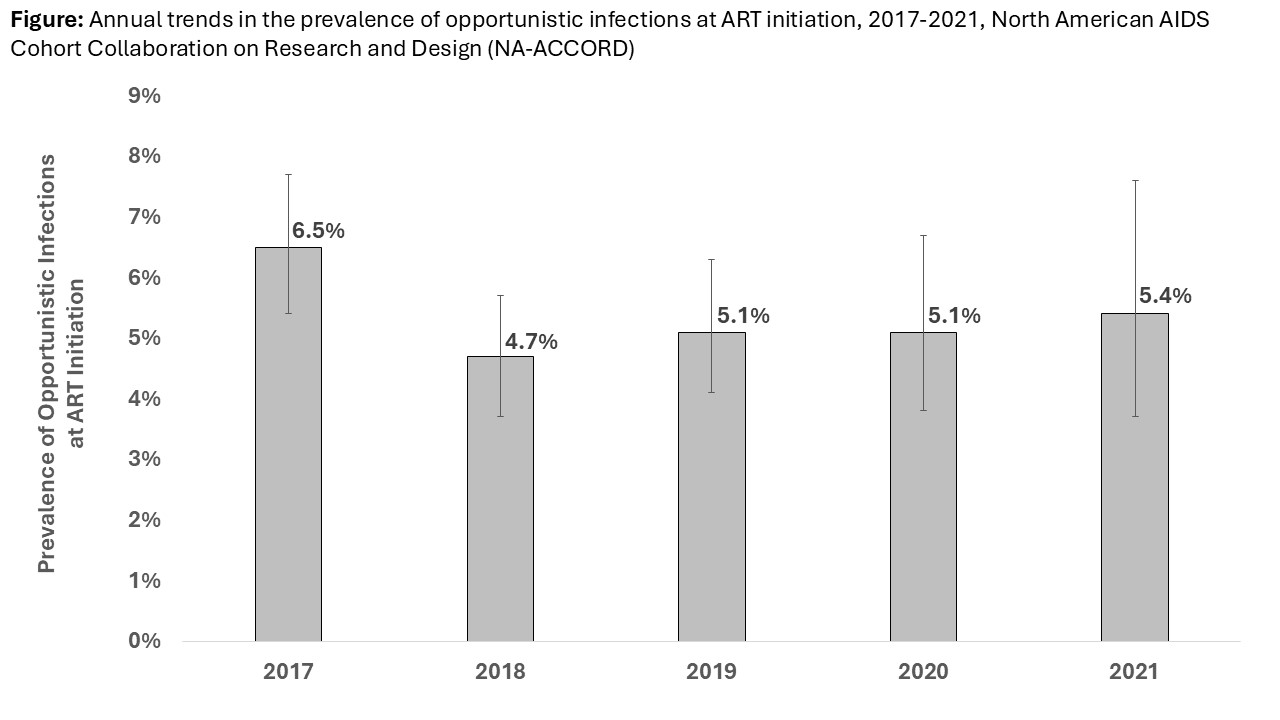
982. Ceftriaxone or Aqueous Penicillin for Neurosyphilis: A Mexican Multicentric Retrospective Study
Poster Abstracts
Page: 309
Rodrigo Ville Benavides1, Hector O. Rivera-Villegas1, Luz A. Gonzalez-Hernandez2, Pamela Alatorre-Fernández3, Rafael Franco-Zendejas4, Estefanía Sienra-Iracheta5, Juan Carlos Rodríguez-Aldama6, Edgar Pérez-Barragán6, Jezer I. Lezama-Mora7, Norma Eréndira Rivera-Martínez8, Andrea Cárdenas-Ortega9, Paulina Carreño-Pérez10, Obed Ocampo-Valdez1, Jaime F. Andrade Villanueva2, Brenda E. Crabtree Ramírez11, the ANTS (Alternative Neurosyphilis Therapy Studies) Group
Background
Global syphilis rates are rising, with neurosyphilis (NS) affecting around 4% of syphilis cases. NS is conventionally treated with intravenous penicillin (IV-P) for 10-14 days. However, with global penicillin shortages and limited access to hospital beds in resource-limited settings, timely and adequate treatment is challenging. Alternative treatments like ceftriaxone (C) may be cost-effective, but evidence is scarce. This study aims to compare the efficacy of IV-P versus C in treating NS across multiple sites in Mexico.
Methods
In this retrospective multicenter study, we included adult patients treated for NS from 2015-2023 at 9 sites in Mexico (7 in Mexico City, 1 in Oaxaca and 1 in Guadalajara). NS diagnosis required (+) serum RPR or VDRL (≥1:4) with expert confirmation of ocular or otic syphilis, or alternatively, (+) cerebrospinal fluid (CSF) VDRL, pleocytosis or neuropsychiatric (NP) symptoms of NS, excluding other causes. Patients were treated with IV-P (16-24 million U/day) or C (1-2 gr/day IM or IV). We evaluated 2 outcomes at 6 months: early serological response (ESR), defined as a fourfold or greater reduction in serum VDRL or RPR titers, and early clinical response (ECR) as the resolution of ophthalmic, otic, or NP symptoms or pleocytosis. We performed a multivariate LASSO regression analysis to adjust for potential confounders.
Results
A total of 201 patients were included: 144 (72%) in the IV-P group and 57 (28%) in the C group. 195 (97%) were male and 191 (95%) had HIV. 92 (48%) had an undetectable HIV viral load (<200c/mL), and the median CD4 was 270 cells/μL. Baseline characteristics were similar between groups. 57 (28%) participants were diagnosed via ophthalmic evaluation alone, 55 (27%) via CSF-VDRL alone, and 108 (53%) by a combination of methods. In univariate analysis, ECR was significantly lower in the C group compared to IV-P: 28% vs 58% [OR:0.27, (95%CI:0.13-0.53), p<0.01]; ESR was more likely in the C group compared to IV-P: 47% vs 42% [OR:1.22,(95%CI:0.65-2.27), p<0.01]. In the LASSO regression model, people with HIV or pleocytosis had a lower likelihood of achieving ESR (AUC 0.65). Similarly, ECR was less likely in patients with advanced HIV or those without ophthalmic evaluation (AUC 0.68).
Conclusions
Ceftriaxone was less effective than penicillin for ECR but showed a higher likelihood of ESR. In settings where penicillin is not feasible, ceftriaxone remains a viable alternative, though close clinical monitoring is required. Further studies are warranted.
983. Burden of Opportunistic Infections and Causes of Death in Hospitalized Patients With AHD in Vietnam
Poster Abstracts
Page: 309
Nam Xuan Ha1, Dat Quoc Vu2, Dieu Quang Nguyen3, Ly Trieu Vo4, Thach Ngoc Pham5, Cuong Do Duy6, Hao Thi Nguyen1, Men Thi Trinh1, Dao Thi Hong Phan1, Chau H. T. Tran1, Phuong Le Trinh3, Khanh Hoang Dang3, Thu Nguyen7, H. Rogier van Doorn8, Thuy Le7, the Talaromycosis Study Group
Background
Most global AIDS deaths occur in hospitalized patients with advanced HIV disease (AHD), yet data on the major killers among this population are lacking. We investigated the burden of opportunistic infections (OIs) and causes of death in hospitalized patients with AHD in Vietnam to inform policy and intervention strategies.
Methods
In this multi-center prospective cohort study, we enrolled patients aged ≥18 years, CD4 count ≤100 cells/ mm3 or WHO stage 3 or 4 disease from 3 hospitals in Vietnam. In addition to BACTEC blood culture (incubated 5 days) and standard methods to diagnose OIs based on WHO guidelines, we performed the following diagnostics for all patients: 1) Mycobacterial and fungal Myco/F Lytic blood culture (incubated 42 days); 2) Xpert Ultra in blood, and in other clinical specimens as clinically indicated for TB; 3) Fungal antigen tests for cryptococcosis, histoplasmosis, and talaromycosis. Patients were followed up monthly over 6 months to ascertain OI incidence and outcomes.
Results
901 patients were enrolled from 2021 to 2023. The median age was 36.0 years (IQR: 30.0–44.0). 748 (83.0%) were male. The median CD4 count was 19.0 cells/mm3 (IQR: 9.0-45.0). 847 (94.0%) had at least one OI; 217 (24.1%) had two OIs; 439 (48.7%) had greater or equal to three OIs. The leading OIs were: 1) Invasive fungal infections (505, 56.0%), including PCP (37.1%), talaromycosis (19.5%), cryptococcosis (4.7%), histoplasmosis (3.0%); 2) Mycobacterial infections (449, 49.8%), including microbiology confirmed TB (31.7%), clinical TB (16.2%), and non-TB mycobacteria (NTM) (6.3%); 3) Severe bacterial infections (316, 35.1%), including bacterial pneumonia (26.4%) and sepsis (14.2%). The 6-month mortality was 24.2%, with the highest mortality in patients with severe bacterial infections (37.0%), followed by mycobacterial infections (29.4%), and invasive fungal infections (23.2%). The leading causes of death were mycobacterial infections (125, 13.9%), severe bacterial infections (111, 12.3%), and invasive fungal infections (93, 10.3%). 174/218 (79.8%) of deaths occurred within the first 2 months; median time to death was 26 days (IQR: 11.0-58.8).
Conclusions
Mycobacterial, bacterial, and invasive fungal infections are the leading causes of AIDS death in Vietnam, claiming lives of 25% of hospitalized patients with AHD. Our data highlight the need for a package of screen and treat strategy targeting these pathogens, and post-discharge interventions to reduce AIDS mortality.
The figure, table, or graphic for this abstract has been removed.
984. Patterns of Adiposity and Gestational Weight Gain in Pregnant South African Women Living With HIV
Poster Abstracts
Pages: 309-310
Mustafa Shuaib1, Jennifer Jao2, Hayli Geffen1, Helene C. Theunissen1, Hlengiwe Madlala1, Sandisiwe M. M. Matyesini1, Elton Mukonda1, Elaine Abrams3, Landon Myer1
Background
There are concerns that dolutegravir (DTG) may be associated with excess gestational weight gain (GWG) in pregnant women living with HIV (WLH) but there are few data, including from Africa.
Methods
The Obesogenic oRigins of maternal and Child metabolic Health Involving Dolutegravir (ORCHID) study is evaluating metabolic outcomes of pregnant WLH receiving tenofovir+lamivudine+DTG (TLD) and HIV-negative (HIV-) pregnant women seeking antenatal care at a primary healthcare facility in South Africa. For this analysis, we included 949 pregnant women (388 WLH, 572 HIV-) enrolled with gestational age (GA) <13 weeks (w) and age >16 years (y). Body composition was assessed using air displacement plethysmography (ADP) and serial standardised anthropometry including triceps, subscapular, and suprailiac skinfold thicknesses to distinguish visceral versus subcutaneous fat distributions. We used latent profile analysis (LPA) to identify adiposity patterns and examined whether these patterns varied by HIV status or duration of DTG use. Finally, we used linear regression to examine whether GWG (change in weight between first and third trimester in kg/week) varied by HIV/DTG.
Results
At enrolment, median age was 27y [Interquartile range (IQR), 24-32]; GA 10w [8-12]; BMI 30 kg/m2 [25-35]; fat-mass index (FMI) 13kg/m2 [9–17]; centripetal fat ratio (CPFR) 52 [47-56]. In WLH median duration of DTG use was 219 days [10-646] and 21% of women who initiated TLD were DTG naïve. LPA identified five distinct adiposity patterns: (i)normal weight/normal central fat, (ii)overweight/high central fat, (iii)obese/normal central fat, (iv)obese/low central fat, and (v)morbid obese/high central fat. While women in pattern (i) were significantly younger, neither HIV status nor DTG duration were different across adiposity patterns after adjusting for maternal age. Among 798 women (84%) with third trimester GWG assessment, GWG patterns varied by HIV and BMI (figure 1): WLH experienced 0.03 kg/week lower rate of GWG compared to HIV- women after adjustment for age, parity, education, GA and BMI at enrolment (95% CI: -0.06 to -0.01, p = 0.02). Restricted to WLH, GWG did not vary by TLD duration (not shown).
Conclusions
These reassuring data suggest that DTG is not associated with GWG in this setting. While the patterns of adiposity identified are specific to this population, these are not associated with HIV/DTG.
The figure, table, or graphic for this abstract has been removed.
985. Genome-Wide Association With Postpartum Weight Change in Mothers on DTG or EFV in DolPHIN-2
Poster Abstracts
Page: 310
Rebecca Jensen1, Ray Monk1, Thokozile R. Malaba2, Eunice Zhang1, Duolao Wang3, Sylvia Nassiwa4, Catriona Waitt1, Lucy Read3, Jim Read3, Helen E. Reynolds1, Catherine Orrell2, Landon Myer2, Daniel Carr1, Saye Khoo1, the DolPHIN-2 Study Group
Background
DolPHIN-2 (NCT 03249181) randomised mothers initiating ART in late pregnancy to efavirenz (EFV)- or dolutegravir (DTG) based regimens. We previously reported no significant differences between arms in weight change post-delivery to 48w postpartum (PP), but observed heterogeneity with numerically greater weight gain in women from South Africa. Here, we undertook a genome-wide association study (GWAS) to identify genetic variants associated with weight change from delivery to 48w PP.
Methods
159 participants were genotyped using the Illumina Infinium™ H3Africa Consortium Array v2 (2.27million variants) and after quality control of the genotyped data, 129 mothers (62 EFV, 67 DTG) were included with 1.8 million variants analysed to identify genes related to weight change, with adjustments for age and the first four principal components. Weights were recorded using standardised procedures at enrolment, <14 days of delivery and at 6, 12, 24 and 48 weeks PP. Weight change was calculated as a percentage from delivery to 48w PP.
Results
Analysis identified 21 loci which reached the suggestive genome-wide threshold (p < 1 x 10⁻⁵). The top three associated loci were EMB (p, 2.4 x10⁻⁷), LINC02710 (p, 4.0 x10⁻⁷), and AL365440.2 (p, 6.3 x10⁻⁷). One of the statistically significant loci associated with weight gain was related to the HK1 gene (p, 9.7 x10⁻⁶; 95% CI 0.24-0.60; β 0.42) which encodes hexokinases that are involved in the first step of glucose metabolism pathways and could offer a possible explanation for weight changes.
Conclusions
These findings suggest that there are genetic variants which may be associated with changes in postpartum weight in women receiving DTG- or EFZ-based treatments. Further work is underway to undertake genotype imputation across the whole human genome which will allow us to identify potential causal variants associated with DTG- or EFZ-induced postpartum weight change. Data stratification by treatment group will also be carried out to see if any genes are specifically related to DTG- or EFZ-based treatment.
986. Depression, Sleep, and Anxiety Among Pregnant and Postpartum Women Using Dolutegravir and Efavirenz
Poster Abstracts
Page: 310
Danni Wu1, Kristin Baltrusaitis1, Teacler Nematadzira2, Malinda Kaiyo-Utete2, Anne Coletti5, Katie McCarthy6, Chelsea Krotje7, Lameck Chinula8, Shahin Lockman1, Lynda Stranix-Chibanda9, the IMPAACT 2010 (VESTED) Study Team
Background
Dolutegravir (DTG) and Efavirenz (EFV) have been associated with neuropsychiatric symptoms, which may impact adherence to antiretroviral therapy (ART) in pregnant and postpartum people living with HIV. However, their impact on postpartum mental health remains insufficiently understood. We compared depression, sleep disturbances and anxiety between DTG and EFV treatment in pregnant and postpartum people living with HIV in nine countries.
Methods
In IMPAACT 2010, pregnant people with HIV were randomized to DTG + emtricitabine (FTC)/tenofovir alafenamide (TAF), DTG+FTC/tenofovir disoproxil fumarate (TDF), or EFV/FTC/TDF arm at 14-28 weeks’ gestation and were followed through 50 weeks postpartum. Depression was assessed using the Edinburgh Postnatal Depression Scale (EPDS) at Postpartum (PP) Weeks 6 and 50. Sleep disturbances and anxiety were evaluated using the Pittsburgh Sleep Quality Index (PSQI) and Generalized Anxiety Disorder 7-item Scale (GAD-7) at Entry, Antepartum (AP) Week 8 and PP Week 38. Statistical modeling methods are detailed in Table 1.
Results
643 participants were randomized (432 to DTG and 211 to EFV), with a mean (standard deviation) age of 27.4 (6.0) years and 91.0% (585/643) as Black African. The depression proportion at PP Week 6 and/or 50 was 19.6% (82/419) in DTG and 17.6% (36/205) in EFV, with a difference (DTG - EFV) of 2.01% (95% confidence interval [CI]: -4.44%, 8.46%). The mean difference in EPDS scores was 0.33 (95% CI: -0.34, 1.01) at PP Week 6 (primary) and 0.06 (95% CI: -0.63, 0.74) at PP Week 50. The anxiety proportion at AP Week 8 and/or PP Week 38 was 4.7% (19/406) in DTG and 3.5% (7/198) in EFV among participants without anxiety at Entry. For GAD-7 scores, the mean difference was 0.18 (95% CI: -0.20, 0.57) at AP Week 8 and 0.41 (95% CI: -0.02, 0.85) at PP Week 38. The sleep disturbance proportion at AP Week 8 and/or PP Week 38 was 23.3% (62/266) in DTG and 24.8% (34/137) in EFV among participants without sleep disturbances at Entry. The mean difference in PSQI scores was 0.40 (95% CI: 0, 0.80) at AP Week 8 and 0.02 (95% CI: -0.41, 0.44) at PP Week 38.
Conclusions
This study showed a similar proportion of depression, anxiety, and sleep disturbances between DTG and EFV, with roughly one in five women experiencing postpartum depression across all ART regimens. These findings highlight the importance of screening for mental distress in pregnant people living with HIV and considering postpartum well-being.
Table 1.
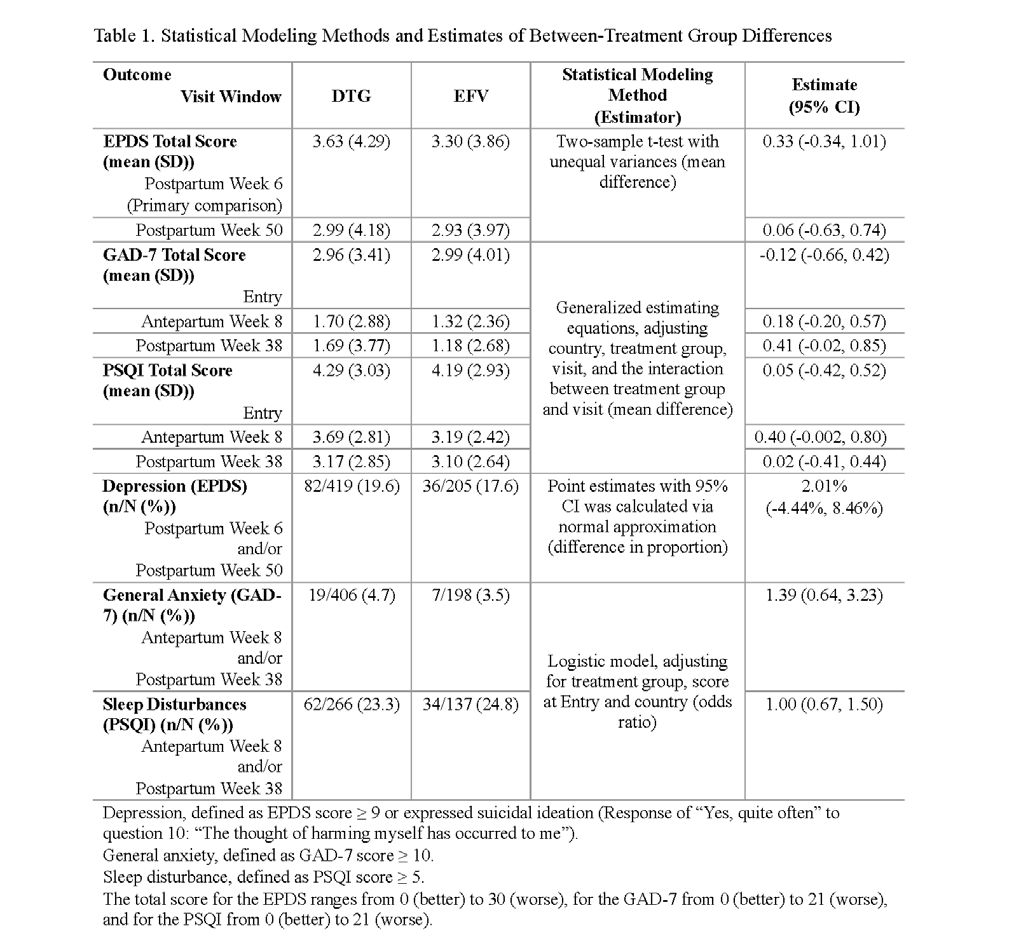
987. Sleep Patterns in South African Pregnant Women Living With HIV on Dolutegravir: A Prospective Study
Poster Abstracts
Page: 311
Hayli Geffen1, Jennifer Jao2, Hlengiwe Madlala1, Sandisiwe M. M. Matyesini1, Elton Mukonda1, Landon Myer1, Elaine Abrams3
Background
Adverse sleep patterns are common in people living with HIV generally and have been associated specifically with dolutegravir (DTG) use in studies from high-income countries. Pregnancy and obesity are both known to adversely affect women’s sleep, however there are few data assessing the impact of HIV/DTG on sleep patterns among pregnant women in Africa.
Methods
The ORCHID cohort follows pregnant women recruited from primary care clinics from the beginning of antenatal care, including women living with HIV (WLH) on tenofovir/lamivudine/DTG (TLD) and HIV-seronegative (HIV-) women. Sleep patterns were assessed at 24-28w gestation using the Pittsburgh Sleep Quality Index (PSQI). Sleep apnoea risk was assessed using the Berlin Questionnaire. Anthropometric data were collected and gestational dating was via research ultrasound. PSQI global and subscale scores were calculated for: good sleep (PSQI ≤5), recommended onset latency (≤20mins), duration (≥7hrs), efficiency (>85%), good quality and daytime dysfunction. Apnoea risk was defined as Berlin score=2. Logistic regression assessed the associations between (i) HIV and (ii) TLD duration (either initiating <28d before study enrolment or continuing for ≥28d before enrolment) and sleep patterns, adjusted for age and employment, and stratified by body mass index (BMI) (under/normal weight [BMI<25] and overweight/obese [BMI≥25]).
Results
Overall 1746 women were included: 1010 HIV- women and 736 WLH (197 initiating TLD, 539 continuing TLD; mean age 28y, mean BMI 31kg/m2; 29% employed). Compared to HIV- women, WLH had similar overall PSQI scores, and similar sleep latency, duration and efficiency. However WLH reported significantly better sleep quality (aOR: 1.27, 95%CI: 1.04,1.54) and significantly reduced daytime dysfunction (aOR: 0.78, 95%CI: 0.61,0.99) compared to HIV-women. These associations were most marked in WLH who were overweight/ obese (Figure). Among WLH, women initiating TLD had higher sleep efficiency than women continuing TLD (aOR: 1.45; 95%CI:1.04,2.05) but similar sleep patterns on all other measures.
Conclusions
In this novel investigation of sleep in pregnant WLH, adverse sleep patterns during the second trimester of pregnancy appeared less common in WLH receiving TLD compared to HIV- women in this setting. Ongoing follow-up is required to understand how sleep patterns vary in WLH over time and the implications of sleep patterns for their long-term health.
Figure 1.
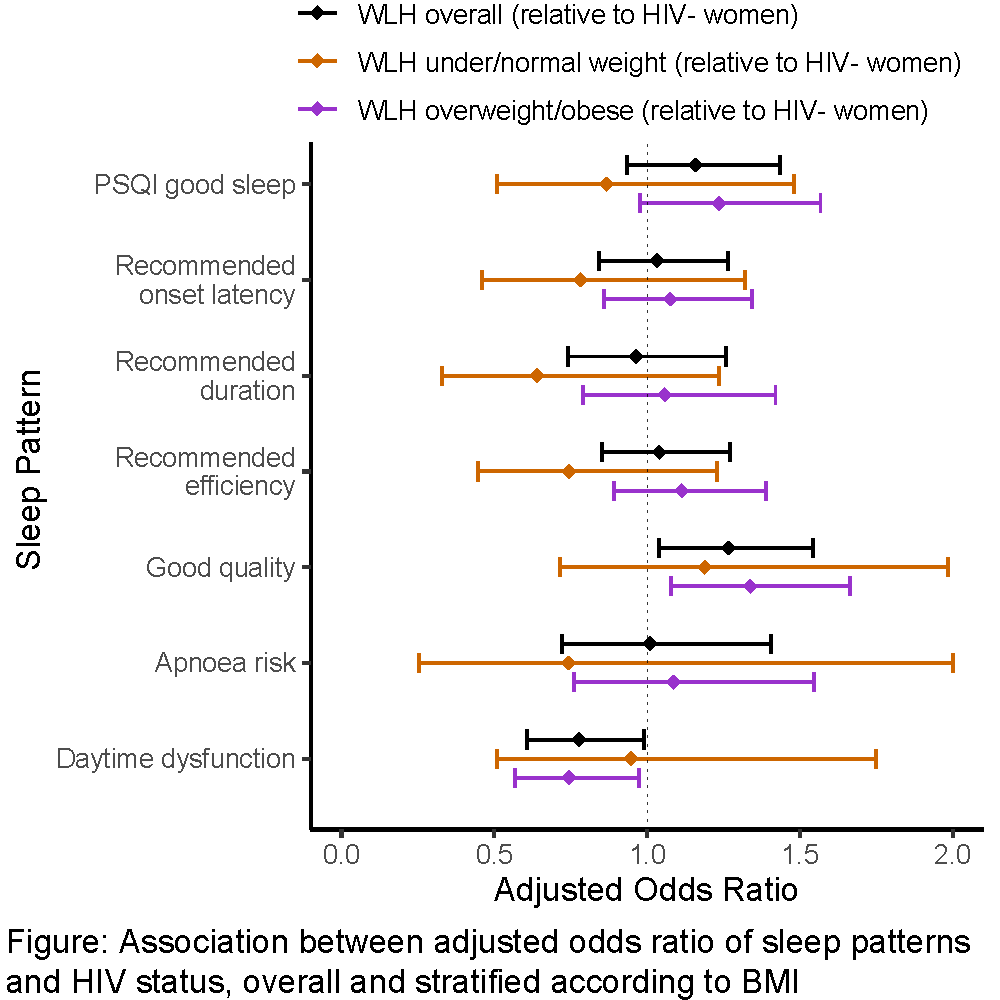
988. Prior Pregnancy Affects Aging-Related Non-AIDS Comorbidity Burden in US Women With and Without HIV
Poster Abstracts
Page: 311
Lauren F. Collins1, Cyra C. Mehta1, Jordan E. Lake2, Seble Kassaye3, Kathryn Anastos4, Tonya N. Taylor5, Elizabeth F. Topper6, Michelle Floris-Moore7, Margaret Fischl8, Mirjam-Colette Kempf9, Audrey L. French10, Frank Palella11, Ighovwerha Ofotokun1, Anandi N. Sheth1, Phyllis Tien12
Background
Women vs men with HIV have a higher burden of aging-related multimorbidity, which may be related to reproductive transitions including pregnancy history.
Methods
We evaluated longitudinal data collected from women with and without HIV (WWH; WWoH) enrolled in the Women’s Interagency HIV Study and in follow-up on/after 2009 (when >80% of WWH consistently used antiretroviral therapy). We ascertained maternal age, number of prior live births (parity) and non-AIDS comorbidity (NACM) burden (of 10 assessed) at end of observation (latest 3/30/2020). Two-sample t-test compared NACM burden by HIV serostatus. Linear regression evaluated the association of parity with NACM burden. Within each age group, separate linear regression models assessed for synergistic effects of HIV and parity on NACM burden, adjusting for race/ ethnicity, body mass index (BMI), and smoking.
Results
Among 3234 women, 71% were WWH, median age was 51 (Q1-Q3 44-57) years, 65% identified as Black race, median BMI was 30.2 (Q1-Q3 25.5-36.2) kg/m2 and 68% reported ever smoking cigarettes. At end of observation, 19%, 40%, and 41% of women reported 0, 1-2 and ≥3 prior live births; parity did not significantly differ by HIV serostatus (p=0.13). Median NACM burden was 4.0 vs 3.0 among WWH vs. WWoH (p<0.001). Among all women, the most prevalent NACM were hypertension (69%), psychiatric illness (55%) and dyslipidemia (42%). The estimated median NACM burden among women with 0, 1-2, ≥3 prior live births was 3.0, 3.0, and 4.0, respectively. In unadjusted analysis, parity was significantly associated with NACM burden (p for trend=0.02), regardless of HIV serostatus. In adjusted models, HIV modified the effect of parity (HIV*parity interaction) on NACM burden in certain age groups: <40yrs (p=0.29), 40-49yrs (p=0.02), 50-59yrs (p=0.39), ≥60yrs (p=0.93) (Figure).
Conclusions
In a large cohort of U.S. women with and without HIV, who had a high burden of aging-related comorbidities and >80% reporting ≥1 prior live birth, greater parity was associated with NACM burden. This effect was significantly modified by HIV among women aged 40-49 years, with some evidence of modification by HIV as women age. Our findings suggest parity may be a potential risk factor for aging-related multimorbidity and highlight the need for comorbidity screening and novel prevention strategies for persons with HIV using across-the-lifespan approaches that are tailored by sex and gender.
The figure, table, or graphic for this abstract has been removed.
989. Characteristics and Outcomes of Pregnant Women With HIV Undergoing Tuberculosis Screening in Uganda
Poster Abstracts
Pages: 311-312
Christina Yoon1, Lelia H. Chaisson1, Shafic Makumbi2, David W. Dowdy3, Patrick Phillips1, Henry Ssenyondo4, Suzanne Dufault1, Sylvia LaCourse5, Annettee Nakimuli4, Fred C. Semitala4
Background
Systematic screening for tuberculosis (TB) may be particularly important for pregnant women with HIV (PWWH), as pregnancy increases TB risk independent of HIV. However, little is known about PWWH undergoing TB screening. We describe characteristics and pregnancy outcomes of PWWH enrolled in an ongoing trial evaluating the impact of two WHO-approved TB screening strategies on prevalent TB detection and TB preventive therapy (TPT) uptake.
Methods
From Nov 2020 to Jan 2023, we enrolled consecutive ART-naïve adults presenting to 4 HIV clinics in Uganda in a randomized trial comparing outcomes of different TB screening strategies (NCT04557176). All participants were randomized to either symptom- or C-reactive protein (CRP)-based TB screening. Screen-positive participants (≥1/4 symptoms or CRP≥5mg/L) underwent confirmatory TB testing. Screen-negative participants initiated 3HP (3-months of weekly isoniazid+rifapentine), unless contraindicated (e.g., pregnant). All women <50 years underwent baseline urine pregnancy testing. For women <50 years, we compared baseline characteristics (including TB screening status, TB prevalence, TPT uptake), by pregnancy status at enrollment and abstracted antenatal characteristics and birth outcomes from medical records for PWWH.
Results
Of 1018 women <50 years, 270 (27%) were pregnant at enrollment. Compared to non-pregnant women, PWWH (median gestational age 22.6 weeks, IQR 16.7-28.6) were younger (25 vs. 29 years), had less advanced HIV (CD4 284 vs. 255 cells/µl), higher BMI (25.0 vs. 22.7 m2/kg), and were less likely to screen positive for TB (34 vs. 45%) (p<0.01 for all). Among women who screened-positive, TB prevalence was lower among PWWH than non-pregnant women (4 vs. 10%, p<0.01). Among women who screened-negative, 0/178 (0%) PWWH and 343/376 (91%) non-pregnant women initiated 3HP and 0 PWWH were offered traditional preventive therapy. Birth outcomes were available for 246 (91%) PWWH and included 225 infants from 220 (89%) live births, 4 (2%) stillbirths, and 9 (4%) spontaneous abortions. Of the 225 infants, 5 (2%) were preterm, and 18 (21%) were low birthweight.
Conclusions
In our trial, 1 in 4 women initiating ART were pregnant. Although pregnancy is associated with increased TB risk, TB prevalence among PWWH was less than half that of non-pregnant women, suggesting differences in care-seeking behavior and/or TB screening test sensitivity, and PWWH were less likely to receive TPT, highlighting gaps in TPT coverage with novel and traditional regimens.
Table 1.
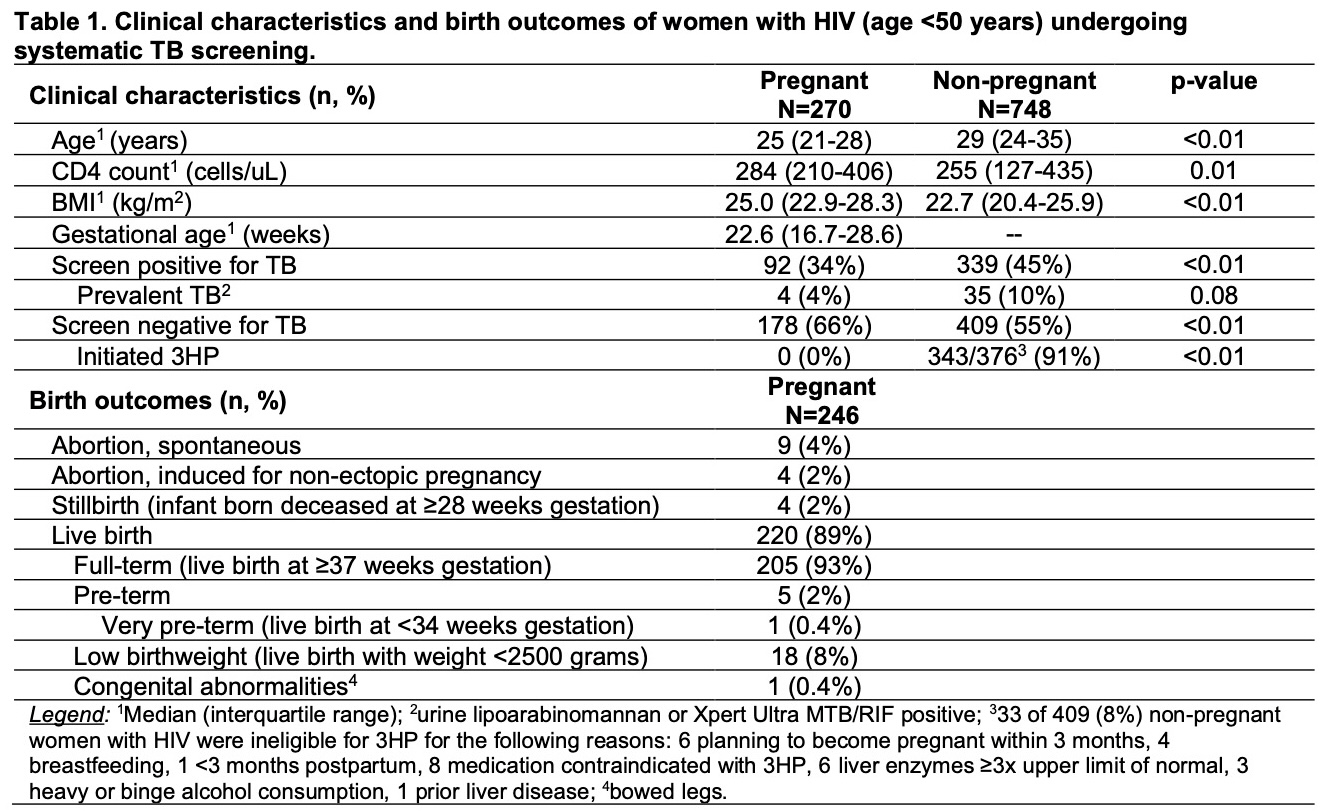
990. Incidence of Tuberculosis in South African Women Living With HIV During Pregnancy and Postpartum
Poster Abstracts
Page: 312
Jasantha Odayar1, Mustafa Shuaib1, Jennifer Jao2, Molebogeng Rangaka3, Hlengiwe Madlala1, Sandisiwe M. M. Matyesini1, Elton Mukonda1, Landon Myer1, Elaine Abrams4
Background
Tuberculosis (TB) causes considerable morbidity and mortality in pregnancy and postpartum, particularly in women living with HIV (WLH), but there are few data from cohorts of women on dolutegravir (DTG). In addition, while risk of active TB generally decreases with increasing body mass, there are few insights into this association during pregnancy and postpartum.
Methods
Consecutive WLH and HIV seronegative women (HIV-) aged >18y and <20w gestational age (GA) attending routine antenatal primary care in Cape Town, South Africa were enrolled in the Obesogenic oRigins of maternal and Child metabolic Health Involving Dolutegravir (ORCHID) study. All WLH were on tenofovir+lamivudine+DTG. Body mass index (BMI) was calculated and categorised as underweight (<18.5 kg/m2), normal (18.5–24.9 kg/m2) or overweight/obese (>25 kg/m2). A correction factor was applied to weight based on GA to estimate pre-pregnancy weight. Follow-up through 24m postpartum included assessment of active TB diagnoses and treatment from routine public sector services based on symptom screening +/- bacteriologic confirmation. GA was by ultrasound; TB events were classified as prevalent (already on treatment at conception) or incident (newly diagnosed during pregnancy or postpartum). TB incidence rates (IRs) were calculated and mixed effects Poisson models were used to assess the association between pre-pregnancy BMI and TB IRs.
Results
Among 1920 women (mean age 28y, median GA at enrolment 13w), 42% were WLH (median duration on ART 58m, IQR 26–98); among WLH 7% had a CD4 <200 cells/uL and 89% had a VL <1000 copies/mL. TB prevalence was 0.4% at conception. TB IRs in WLH and HIV- women were 1,658 (95% CI 942–2920) and 99 (95% CI 14–704) per 100,000 person years, respectively (Table). Adjusting for age, HIV status and CD4 count, education and pregnancy status, TB IRs were higher in WLH with CD4 >200 cells/uL (incidence rate ratio [IRR] 5.0; 95% CI 1.1–22.4) and in WLH with CD4<200 cells/uL (IRR 26.9; 95% CI 2.5–293.9) vs HIV- women. TB IRs were significantly increased if pre-pregnancy BMI was <18.5 kg/m2 vs 18.5–24.9 kg/m2 (IRR 32.6; 95% CI 2.34-455.2). IRs for pre-pregnancy overweight/obese were higher than for normal BMI women but this was not statistically significant (IRR 2.42; 95% CI 0.43–13.53).
Conclusions
TB IRs remained high in WLH despite ART in this setting. Rates appeared higher in underweight vs normal weight women and may also be increased in overweight/obese women however this requires further investigation.
Table 1.
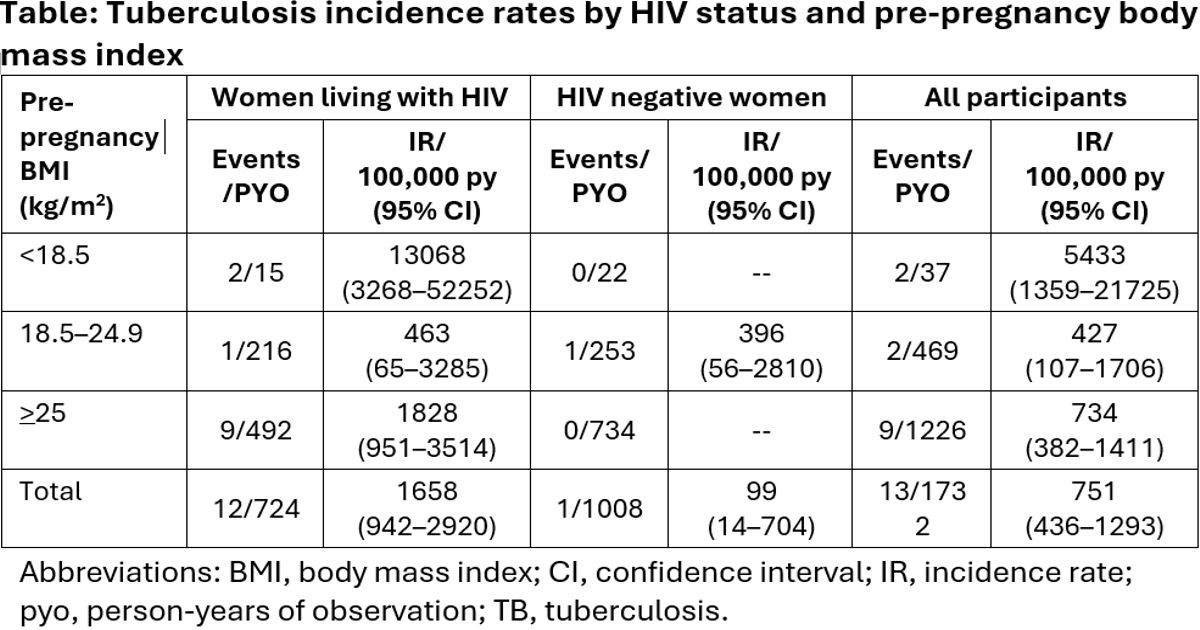
991. High Viral Suppression in Pregnant/Postpartum Women With HIV in a Couples-Based Behavioral Trial
Poster Abstracts
Pages: 312-313
Karen Hampanda1, Lisa Abuogi2, Brenda Muluka3, Margaret Kasaro4, Janet M. Turan5, Lynae Darbes6, Benjamin H. Chi4
Background
Couples’ relationship dynamics can affect outcomes among pregnant and postpartum women living with HIV (PPWH). We conducted a randomized controlled trial of a couples-based intervention to improve postpartum HIV and maternal and child health (MCH) outcomes in Zambia.
Methods
We adapted a couples-based behavioral intervention to improve maternal HIV-related health behaviors by enhancing theoretically-informed relationship skills (e.g., communication, trust, support) through three counseling sessions. We recruited PPWH attending routine antenatal care at a district hospital in Lusaka. PPWH with a willing male partner were enrolled and randomized 1:1 to enhanced standard of care or the intervention. We tested the efficacy of the intervention to improve maternal postpartum viral suppression (<400 copies/ml; primary outcome) and other outcomes (ART adherence; pediatric HIV testing; exclusive breastfeeding). Descriptive statistics and chi-squared tests were performed.
Results
From 2020 to 2023, we screened 502 PPWH and enrolled 239 eligible couples. Of the 262 ineligible PPWH, 59% did not have a partner willing to participate (n=154). At baseline, 26% of enrolled PPWH reported male controlling behavior; 3% reported intimate partner violence, 14% reported depression symptoms, and 3% reported PTSD symptoms. Among intervention couples, 93% received at least one counseling session and 60% received all three sessions. Overall, 52 couples (22%) were lost to follow up. We found no differences by intervention group in our primary or secondary outcomes. Nearly all PPWH in the control and intervention arms were virally suppressed at baseline (96% and 94%, p=0.6) and 6 months postpartum (99% and 94%, p=0.2). All (100%) PPWH in both groups reported daily ART adherence and pediatric HIV testing. Exclusive breastfeeding was common in the control (96%) and intervention (97%) arms (p=0.5).
Conclusions
We observed high rates of baseline and endpoint viral suppression among PPWH enrolled with their male partners in a couple-based intervention trial. Although we did not detect differences between study arms, the positive MCH and HIV outcomes throughout the study were encouraging. Future work should focus on identifying PPWH at-risk or experiencing poor treatment or mental health outcomes, as well as less stable couples affected by HIV, who may require more targeted support.
Figure 1.
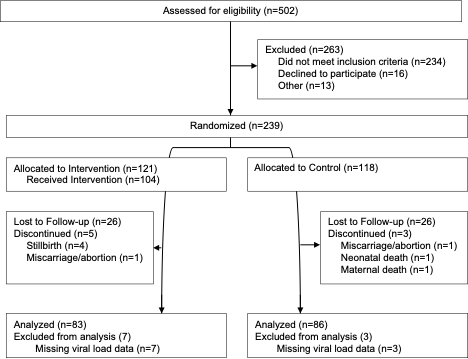
992. Childhood Exposure to Violence and Pregnancy-to-Postpartum Viral Load of US Women With HIV
Poster Abstracts
Page: 313
Deborah Kacanek1, Jessica Lee1, Carly Broadwell1, Claire A. Berman1, Emily Barr2, Ellen Chadwick3, Mariam Davtyan4, Toinette Frederick4, Kathleen Powis5, Jennifer Jao6, Liz Salomon1, Kimbrae Sanders7, Renee Smith8, Lynn Yee6, Kathleen M. Malee6, the Pediatric HIV/AIDS Cohort Study (PHACS)
Background
Experiences of childhood physical and sexual assault are prevalent in people living with HIV, yet relationships to antepartum and postpartum viral load (VL) are understudied. We evaluated the relationship of childhood physical or sexual assault (CPA/CSA) to VL during pregnancy and postpartum among participants in the Women’s Health Supplement to the Surveillance Monitoring for ART Toxicities (SMARTT) study.
Methods
In this prospective study, women at 21 SMARTT sites in the US and Puerto Rico who were >18 years old, living with HIV and pregnant or up to five years postpartum in 2013-2018 were eligible. CPA/CSA, assessed at one-year postpartum via interview, was defined as an affirmative response to having been physically and/or sexually assaulted in childhood. VL measures from 3 months before the last menstrual period (LMP) date until 15 months after delivery were abstracted from medical records. Pregnancy through postpartum log10 RNA trajectories by CPA/CSA were visualized with LOESS plots. Unsuppressed VL (≥50 copies/mL) at LMP, delivery, and 1 year postpartum and unsuppressed VL during pregnancy and postpartum (any measure ≥50 copies/ mL in these periods) were compared in those with vs. without CPA/CSA. Log binomial regression models with generalized estimating equations were fit to estimate crude and adjusted relative risks and 95% confidence intervals (CI) for unsuppressed VL in those with vs. without CPA/CSA.
Results
Among 518 pregnancies (among women mean age: 29 years), 34% were among participants who reported experiencing CPA/CSA (CPA: 23.4%, CSA: 27.6%, CPA and CSA:17.0%). In pregnancies of women with vs. without CPA/CSA the frequency of unsuppressed VL was similar at LMP (49% vs 46%) and delivery (21% vs 18%), but higher at the 1-year postpartum time point in pregnancies of women with CPA/CSA (39%) than in those of women without CPA/CSA (29%). A visual summary of log10VL stratified by CPA/CSA is displayed in the Figure. The frequency of unsuppressed VL during pregnancy was similar among pregnancies of women with vs. without CPA/CSA. However, unsuppressed VL at any point in the first year postpartum period was more frequent in postpartum periods of women with (53%) than in those without (43%) CPA/CSA (aRR:1.22, 95% CI:1.00, 1.50).
Conclusions
CPA/CSA was prevalent among women living with HIV and associated with elevated risk of postpartum unsuppressed VL. Trauma-informed approaches are needed and may help sustain care engagement and viral suppression postpartum.
Figure 1.
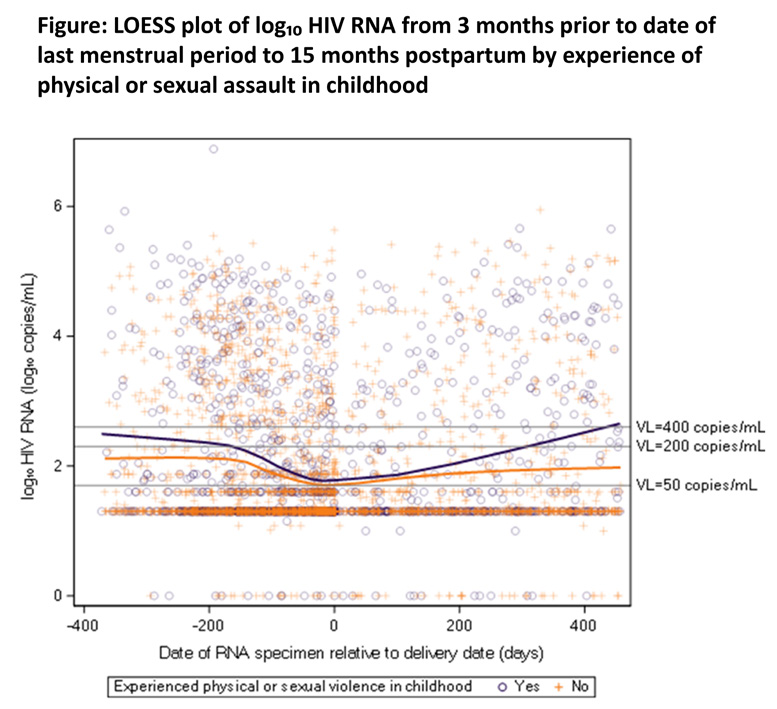
993. Rapid Return of Viral Load (VL) Results to Pregnant/Postpartum Women via Mentor Mothers in Kenya
Poster Abstracts
Page: 313
Pam Murnane1, Sharon Ouma2, Raphael Onyango2, Nita Mukand1, Francesca Odhiambo2, Jane Kabami3, Elizabeth A. Bukusi2, Craig R. Cohen1, James Ayieko2
Background
Perinatal HIV transmission has not meaningfully declined in Kenya since 2015. VL monitoring can both reinforce good adherence and enable timely intervention if viremia is detected early. However, in routine care in Kenya, time from sample collection to results to patients is often weeks when VL is detected and months when suppressed. We assessed the feasibility of engaging Mentor Mothers (peer counselors) in rapid return of VL results and factors associated with time required for this approach.
Methods
From May-Dec 2023 we enrolled women between 27 weeks gestation and 6 months postpartum from 4 facilities in Kisumu Kenya. We tested VL via GeneXpert at 1-2 time points. Mentor Mothers returned results to participants and were reimbursed for phone minutes. We tracked times of sample collection, delivery to lab, test resulted, and result return to study team, mentor mother, and participant. Participant VL histories were collected from records. We assessed factors associated with time from sample collection to result return to participants, via unadjusted and adjusted generalized estimating equations with log-transformed time as the outcome. We exponentiated coefficients to report geometric mean ratios (GMR).
Results
From 273 participants (47% pregnant), we tested 422 blood samples of which Mentor Mothers delivered 414 (98%) VL results via phone and 2% in person. VL was ≤40, 41-999, and ≥1000 copies/mL in 90%, 6%, and 4% of samples, respectively. Median time from collection to result return to participants was 27 hours (interquartile range [IQR] 23-55). The slowest step was lab result to study team (median 15 hours, IQR 13-17), as processing was often done after hours. The step with the greatest time variability was Mentor Mother to participant (median 5 hours, IQR 1-25). Study VL results were not associated with time (collection to participant), though VL ≥1000 copies/mL trended towards faster return (GMR 0.8, 95% CI 0.6-1.1; Table). However, viremia in the past year was associated with longer times (GMR 1.3, 95%CI 1.1-1.5). Samples collected on Fridays took 2.0 times (95%CI 1.6-2.6; Table) longer than Monday-Thursday (which were comparable to each other); clinics without GeneXpert on site took 1.8 times longer than when the lab was co-located (95%CI 1.6-2.0).
Conclusions
Mentor Mothers delivered VL results to pregnant and postpartum women in just over 1 day on average. This low-cost approach could complement other strategies to enhance VL monitoring and support optimal adherence.
Table 1.
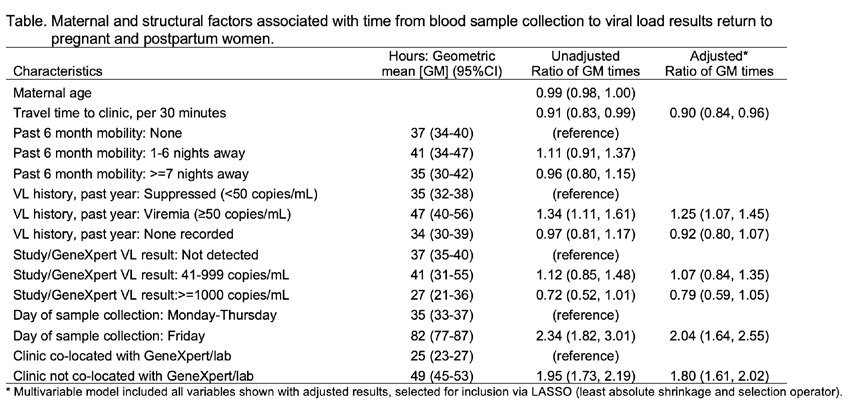
994. Evaluating and Revising an Adapted Scale for Antiretroviral Therapy (ART) Adherence Self-Efficacy
Poster Abstracts
Page: 314
Lauren Sheu1, Austin Wesevich2, Maganizo B. Chagomerana3, Wiza Kumwenda3, Jacob N. Phulusa3, Madalitso Maliwichi3, Kate Burrows1, Mina Hosseinipour3
Background
Adherence to anti-retroviral therapy (ART) is essential for HIV management, and self-efficacy (i.e., one’s confidence in adhering to their medication regimen) correlates to adherence and viral load (VL) suppression. We developed ASES-Chichewa, a 10-item adherence self-efficacy scale (ASES) for Malawi, where lifelong ART is provided to pregnant/breastfeeding women living with HIV to reduce vertical transmission; ASES-Chichewa was created through formal translation and adaptation of the HIV Treatment Adherence Self-Efficacy Scale (HIV-ASES). We aimed to evaluate ASES-Chichewa’s ability to estimate ART adherence and VL suppression for its target population.
Methods
ASES-Chichewa measured the antenatal ASES of 1470 pregnant women living with HIV at Bwaila Hospital in Lilongwe, Malawi from 2015-19, 399 of which were enrolled and followed for 3 years (NCT02249962). The proportion of participants achieving VL suppression by 6-month follow-up was compared between perfect (100%) and imperfect (<100%) self-efficacy survey scores using chi-square tests.
Results
VL suppression did not differ between ASES-Chichewa self-efficacy groups. 79% and 81% of participants with ASES-Chichewa perfect and imperfect self-efficacy, respectively, achieved VL suppression by 6-month follow-up (p = 0.6). Principal components analysis identified one item of ASES-Chichewa as a major contributor to ASES variance; this item, ASES-Chichewa-1, asked participants: “How confident are you that you can continue with your treatment (ART) even when your daily routine is disrupted?” When using ASES-Chichewa-1 to define perfect and imperfect self-efficacy, significant differences in VL suppression were found between self-efficacy groups. 82% and 52% of participants with ASES-Chichewa-1 perfect and imperfect self-efficacy, respectively, achieved VL suppression by 6-month follow-up (p = 0.02).
Conclusions
After reducing ASES-Chichewa from a 10-item questionnaire to single-item self-efficacy screener (ASES-Chichewa-1), there were significant associations between self-efficacy and VL suppression at 6 months for pregnant women living with HIV. Further study on prospective screening with ASES-Chichewa-1 is warranted to identify Malawian women at risk for not achieving VL suppression prior to delivery. Interventions to improve ART self-efficacy and adherence are critical to achieve VL suppression and prevent vertical transmission.
995. The Impact of Care Transitions on Pregnant Youth Living With HIV in Kisumu, Kenya
Poster Abstracts
Page: 314
Rabbia Imran1, Arnold Muhinji2, Dorothy Mangale3, Edwin Nyagesoa2, Gladys Ontuga2, Elvin H. Geng3, Lisa Abuogi4
Background
Pregnant adolescents and young adults living with HIV (AYALWH) in low-middle-income countries (LMIC), where the transition from HIV to antenatal care (ANC) is required, have poor clinic attendance and retention in HIV care. Little is known about the impact of this pregnancy-associated transition (PAT). This sub-study of the Adapt for Adolescents (A4A) trial evaluates the impact of PAT in AYALWH on HIV care engagement.
Methods
In the A4A study, AYALWH aged 14-24 years were enrolled at three public facilities in Kisumu Country, Kenya, between April, 2021—March, 2022. Female participants with a PAT included those who were pregnant at enrollment (excluding new diagnoses of HIV) and those who became pregnant during the study. Those with PAT were compared to female participants without a PAT during two years of study follow-up. This analysis explored care engagement, defined as missed clinic visit (at least 14 days late for a scheduled visit) or viral suppression (viral load <200 copies/ml). The pre-post transition condition for the pregnant group was compared. A chi-square test was used to compare viral suppression at year two for both groups, with subsequent multivariable logistic regression analysis to identify any cofounders.
Results
Of the 591 female AYALWH, we identified 130 (22.0%) experiencing a PAT, while 238 (40.3%) did not. The median age of participants with PAT was 21 years (interquartile range 19-23) compared to 17 years (interquartile range 15-22) for those without (Table 1). Among participants with a PAT, 78 (60.0%) had sustained viral suppression before transition, which increased to 119 (91.5%) after transition. Visit attendance declined post-transition, with 80 (61.5%) transitioned participants having no missed visits pre-transition, decreasing to 50 (38.5%) post-transition. Comparison of viral suppression at year 2 between those with PAT and those without transition was not statistically significant (adjusted odds ratio [aOR: 1.07, 95% confidence interval (CI) 0.45 - 2.55]. Increasing age was independently associated with increased viral suppression at two years (aOR 1.216, 95% CI 1.029, 1.438, p = 0.022).
Conclusions
This preliminary analysis indicates that pregnancy among AYALWH may be a motivating factor in achieving viral suppression. However, AYALWH with PAT show an increased number of missed visits post-transition. Further evaluation of the effect of transition due to pregnancy on HIV care engagement in AYALWH is needed.
Table 1.
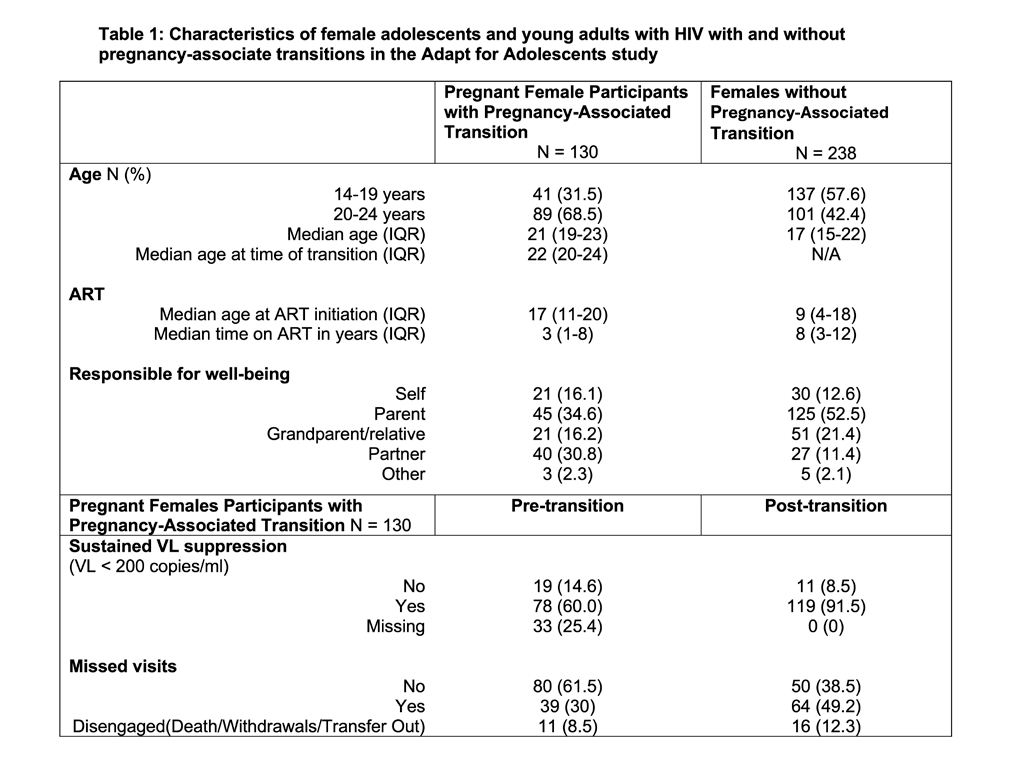
996. HIV Drug Resistance Patterns Among Pregnant Women After Dolutegravir Scale-Up in Sub-Saharan Africa
Poster Abstracts
Pages: 314-315
Linda Stoeger1, Maria Casadellà2, Anete Mendes-Muxlhanga3, Ghyslain Mombo-Ngoma4, Johannes Mischlinger5, Michael Ramharter5, Meral Esen6, Mariona Parera2, Antía Figueroa-Romero1, Sergi Sanz1, Roger Paredes2, Tacilta Nhampossa7, Clara Menéndez1, Raquel González1
Background
In sub-Saharan Africa (SSA), rates of HIV drug resistance (HIVDR) among patients with antiretroviral treatment (ART) failure are high for non-nucleoside reverse transcriptase inhibitors (NNRTIs), with implications for the risk of HIV mother-to-child transmission among pregnant women. Since 2019, the WHO recommends dolutegravir (DTG), an integrase strand transfer inhibitor (INSTI), in first-line regimens due to its high barrier to resistance. We aimed to describe HIVDR mutations among pregnant women living in SSA at the time of DTG scale-up.
Methods
This observational study is nested in a malaria prevention clinical trial among pregnant women with HIV conducted between 2019 and 2023 in Gabon and Mozambique. Available samples from women with virological failure (HIV viral load >400 copies/mL) at the first antenatal care (ANC) visit were analysed for HIVDR mutations using Illumina MiSeq®. Drug susceptibility was predicted using the Stanford HIVdb scoring system. Characteristics of participants were compared by the presence of HIVDR.
Results
A total of 99 women contributed to this study and 39 had at least one HIVDR mutation at their first ANC visit. Participant’s median age was 25 years [IQR 22-31], which was higher in women with HIVDR mutations compared to those without (29 vs 24 years; p=0.009). At the time of the first ANC visit, 38 (38.4%) women were on ART, with a higher proportion in the group with HIVDR mutations compared to the group without (64.1% vs 21.7%; p<0.001). NNRTI mutations were detected in 36 (36.4%) women and INSTI mutations in 6 (6.1%) women. In one ART-experienced but INSTI-naïve participant two INSTI mutations, H51Y and R263K (at frequencies of 17.8% and 99.8% respectively), were detected, indicating intermediate resistance to DTG. Another participant receiving a DTG-based regimen had a high-level resistance mutation, G118R, which is associated with a 5-10-fold reduced susceptibility to DTG.
Conclusions
The prevalence of INSTI mutations was low in the early phases of DTG scale-up. Nonetheless, a mutation against DTG was detected in an INSTI-naïve pregnant woman from Mozambique. This finding calls for continued surveillance of HIV drug resistance in vulnerable and high-risk populations from SSA.
997. Perinatal and Infant Outcomes After Bictegravir Exposure in Pregnancy: A Canadian Surveillance Study
Poster Abstracts
Page: 315
Jeffrey Man Hay Wong1, Rosa Balleny1, Terry Lee2, Ari Bitnun3, Isabelle Boucoiran4, Jason Brophy5, Jeannette Cormeau6, Fatima Kakkar4, Athena McConnell7, Laura Sauvé1, Joel Singer8, Alena Tse-Cheng9, Deborah Money1, the Canadian Perinatal HIV Surveillance Program
Background
In January 2024, bictegravir (BIC) was upgraded to an alternative antiretroviral therapy in pregnancy in the United States despite limited data. Our study aimed to examine the perinatal and early infant outcomes following BIC exposure in pregnancy in Canada.
Methods
Data was obtained from the Canadian Perinatal HIV Surveillance Program, which is a prospective cohort of infants born to women living with HIV across 23 Canadian centers. Liveborn infants from July 28, 2018 to December 31, 2023 were included in the analysis. Using univariate analyses, BIC-exposed infants were compared to infants born within the same timeframe with exposure to other integrase strand transfer inhibitors (INSTIs). To identify whether preterm births were independently associated with BIC exposure, a logistic regression analysis adjusting for relevant preterm birth risk factors.
Results
In our included cohort, 161 infants were exposed to BIC in pregnancy, and 723 infants were exposed to non-BIC INSTIs. In the BIC-exposed group, 81 (52%) had pre-conception BIC with continued use in pregnancy, 34 (22%) had pre-conception BIC with discontinuation in pregnancy, and 41 (26%) were started on BIC in pregnancy. Infants exposed to BIC were more likely to be born to mothers identified as Indigenous (38% vs. 21%; p < 0.001) and with a mode of transmission associated with intravenous drug use (28% vs. 14%; p<0.001). Infants exposed to BIC in pregnancy were more likely to be born preterm (19.4% vs 11.7%; p=0.008), and their mothers were more likely to discontinue antiretroviral therapy until delivery (1.9% vs. 0.1%; p=0.021) and in the postpartum period (5.0% vs. 2.0%; p=0.037). After adjusting for ethnicity, maternal mode of HIV transmission, and viral load at delivery, preterm birth was not associated with BIC exposure (OR: 1.47; 95% CI: 0.80-2.71; p=0.214). There were no differences in maternal HIV viral load at delivery, mode of delivery, rate of small for gestational age, rate of perinatal transmission, or rate of congenital anomalies.
Conclusions
BIC was not independently associated with adverse perinatal and early infant outcomes compared to other INSTIs in the Canadian cohort. Indigenous populations and people who use injection drugs were disproportionately exposed to off-label BIC use in pregnancy prior to guideline updates, highlighting a gap in preconception counselling in these populations.
Figure 1.
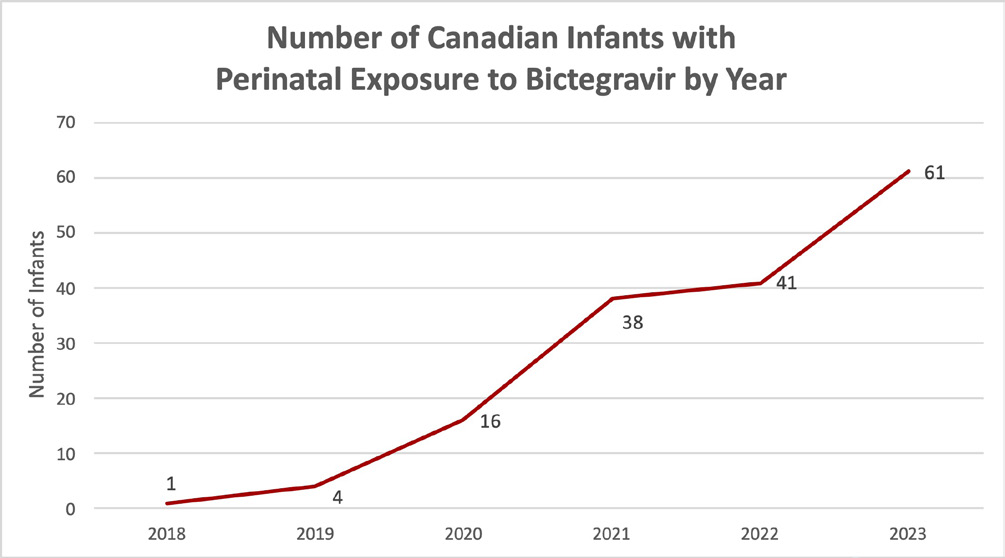
998. Prematurity and Low Birth Weight in Children Born to Mothers Living With HIV in Spain
Poster Abstracts
Page: 315
Blanca Bravo Queipo de Llano1, Talía Sainz1, Carlos Grasa1, Marta Illán2, Arantxa Berzosa2, Asuncion Diaz3, Inma Jarrin3, Luis Prieto Tato4, Rosa Polo3, Maria Luisa Navarro5, Jose Tomás Ramos Amador4, Luis Escosa1, the Cohorte Nacional de Mujeres Embarazadas con VIH y sus hijos expuestos y Cohorte Nacional de VIH pediátrico (CoRISpe)
Background
Children uninfected but exposed to HIV intra-utero (CHEU) are at higher risk of prematurity and low birth weight (LBW), factors associated with long-term growth impairment. Data is scarce regarding the effects of integrase inhibitor regimens during pregnancy in non-limited resource settings.
Methods
Descriptive retrospective study of mother-child pairs from 62 Spanish hospitals in the National Cohort of Pregnant Women with HIV and their Children. All children born between January 2020 and December 2023 were included. Data on obstetric, virological, immunological, and antiretroviral treatment (ART) variables were analyzed for association with premature birth or LBWGA via univariate logistic regression models.
Results
We included 502 pregnant women living with HIV and their 516 newborns. 32.6% were Caucasian and 44% had a first pregnancy. The median maternal age was 36 years [IQR 32-40]. At the last prenatal checkup, the median CD4 count was 631 cells/mm³ [IQR 435-835] and 88.4% of women were under viral suppression (<50 copies/mL). Regarding maternal ART, 59.7% were on integrase inhibitors (INSTIs), of which 17.9% (49/274) were on bictegravir. Prematurity incidence was 11.6%, with a median gestational age of 34.5 weeks [IQR 32-36]. An 8.7% of newborns were diagnosed with LBG, with a median weight of 2380 g [IQR 2250-2600]. Singleton pregnancies were associated with a 79% lower probability of prematurity (OR 0.21, 95%CI 0.06-0.66; p=0.007) and LBW (OR 0.21, 95% CI 0.06-0.71; p=0.012) than multiple pregnancies. Additionally, having at least one prenatal checkup each trimester was associated with a 69% lower likelihood of LBW (OR 0.31, 95% CI 0.14-0.68; p=0.003). We found no association between CD4 count or viral load at the last prenatal checkup and prematurity or LBWGA. Regarding ART, there were no significant differences in the clinical characteristics of mothers treated with INSTI-based regimens compared to those on protease inhibitors or non-nucleoside reverse transcriptase inhibitors. However, regimens including bictegravir were associated with a higher incidence of LBW (OR 2.5, 95%CI 1.08-5.84; p=0.03).
Conclusions
Optimizing regimens during pregnancy is key for the prevention of poor outcomes, including impaired growth, in the expanding population of CHEU. Larger cohorts and long-term follow-ups are needed to identify optimal treatments, adjust for potential confounders, and inform future prevention and intervention strategies.
999. Birth Outcomes and HIV-1 Transmission in a Contemporary HIV Pregnancy Cohort, Washington State
Poster Abstracts
Pages: 315-316
Jane Hitti1, Ann Melvin2, Heather Jaspan2, Alison C. Roxby1, Jennifer E. Balkus3, Lilian Manahan4, Ronit Katz1
Background
People living with HIV (PLWH) receiving contemporary treatment may have increased risk for low birth weight (LBW) or preterm birth (PTB). We hypothesized that LBW and PTB rates among PLWH in an HIV Pregnancy cohort (HP) would not differ from Washington State (WA) birth registry data. We also evaluated perinatal HIV-1 transmission among births to PLWH in WA, comparing those who participated in HP with those who did not.
Methods
This observational retrospective cohort study compared LBW and PTB rates for 292 HP and 1,173,408 WA live births, 2009-2022. The proportion of all PLWH births in WA that received care with HP was calculated from WA HIV surveillance data. HP participants received prenatal and HIV care and delivered at the University of Washington Medical Center (UW). HP birth outcomes were abstracted from the UW HP Cohort Registry, while WA outcomes were obtained from public birth registry data, subtracting HP births to avoid counting them twice. Rates of LBW(<2500g) and PTB(<37 weeks) among singleton HP and WA were assessed in 2-year blocks. Perinatal HIV-1 transmission among all live births for PLWH in HP was compared to WA HIV surveillance data for births to PLWH not in HP. Odds ratios (OR), 95% confidence intervals (CI), chi-square (Χ2) and Fisher’s exact test were used to assess statistical significance.
Results
Of 519 live births to WA PLWH, 292 (56.26%) were included in HP (284 singletons, 8 twins). Among singletons, LBW occurred more frequently among HP (35/284 (12.32%)) compared to WA (59,228/1,173,408 (5.05%); OR 2.64, 95% CI 1.86-3.76). PTB rates did not differ significantly between HP (9.15%) and WA (8.53%; OR 1.08, 95% CI 0.72-1.62). WA rates increased over time for LBW and PTB (Χ2 test for trend P<0.001 for both). HP LBW and PTB time trends were not evaluable due to small sample size. Among all live births including twins, there were 0/292 HIV-1 transmissions among HP (0%, 95% CI 0-1.03%) and 6/244 among PLWH not in HP (2.46%, 95% CI 1.21-3.71%; Fisher’s exact 2-tail P =0.0086). Birth parent HIV diagnosis occurred before or during pregnancy for 5 of 6 affected infants; 4 infants were diagnosed with HIV at ≤ 1 month of age, and 2 diagnosed at > 1 year of age with probable breastfeeding transmission.
Conclusions
PLWH receiving prenatal and HIV care in a contemporary HP program had an increased risk of LBW but not PTB compared to WA birth registry data. Perinatal HIV-1 transmission occurred only among PLWH not in HP, suggesting missed prevention opportunities.
Figure 1.
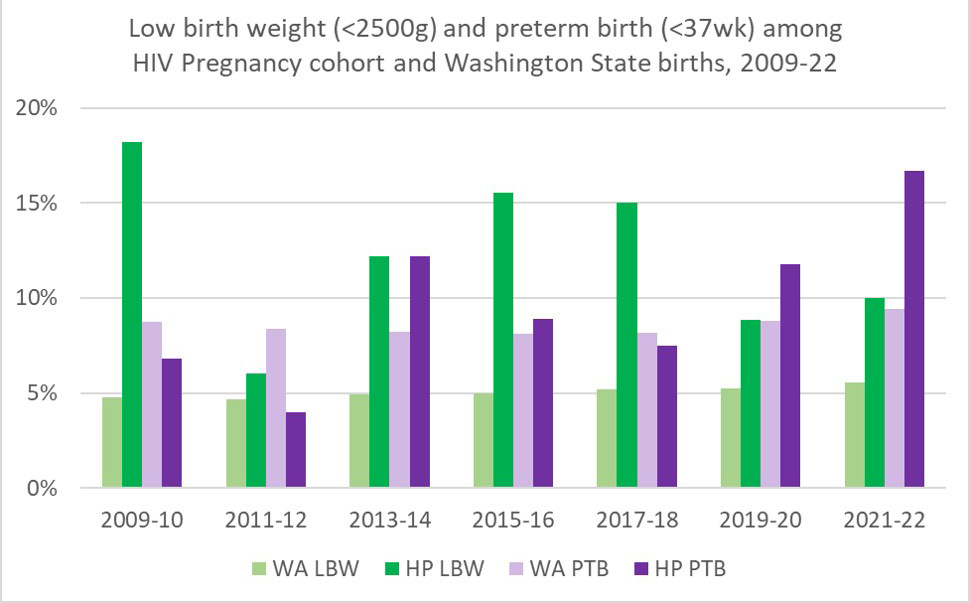
1000. Impact of TLD on Birth Outcomes in South African Women: The ORCHID Cohort
Poster Abstracts
Page: 316
Jamie E. Meyer1, Thokozile R. Malaba1, Hayli Geffen1, Hlengiwe Madlala1, Sandisiwe M. M. Matyesini1, Elton Mukonda1, Jennifer Jao2, Elaine Abrams3, Landon Myer1
Background
The global shift to tenofovir+lamivudine+dolutegravir (TLD) has improved viral suppression in women living with HIV (WLH) in pregnancy but there are limited data on birth outcomes with TLD use. In addition, despite increases in obesity in settings where HIV is prevalent, little is known about how body composition may impact associations between HIV/TLD and birth outcomes.
Methods
We enrolled WLH on TLD and a comparison group of HIV-negative women seeking antenatal care at primary health facilities in Cape Town. Gestational age (GA) was via research ultrasound; behavioural and demographic data were from questionnaires; anthropometry was through clinical examination. Birth outcome data abstracted from medical records, including pregnancy loss (miscarriage and stillbirth), prematurity (<37w GA), low birthweight (LBW) (<2500g) and size for GA [including small- (SGA) and large-for-GA (LGA) from Intergrowth estimates]. Logistic regression models assessed the association between HIV/TLD and birth outcomes adjusting for maternal age, BMI, alcohol use and education; results are reported as adjusted odds ratios (AOR).
Results
We followed 1908 women (804 WLH, 1104 HIV-; mean age 28y, median GA at enrollment, 14w; median BMI at enrollment, 31kg/m2 [IQR, 25-35]. Birth outcomes were known for 1869 women (98%) including 65 miscarriages (3.4%), 35 stillbirths (1.9%) and 1769 live births (1735 singletons). Overall rates of prematurity, LBW, SGA and LGA were 9.4%, 12%, 13% and 12%, respectively, and did not differ between WLH and HIV- women (Figure 1). BMI did not affect the association between HIV/TLD and any birth outcome. Independent of HIV/ TLD, higher BMI was associated with reductions in prematurity, LBW and SGA. For example, compared to women with normal BMI, women with class 1 obesity (BMI 30-35) experienced decreased odds of prematurity (AOR 0.59, 95% CI 0.36-0.96), LBW (AOR 0.49, 0.31-0.77), and SGA (AOR 0.52, 95% CI 0.33-0.80); Obesity classes 2&3 (BMI >35) decreased the odds of LBW (AOR 0.57, 95% CI 0.37-0.88), and SGA (AOR 0.38, 95% CI 0.23-0.61), and increased the odds of LGA (AOR 4.51, 95% CI 2.70-7.74).
Conclusions
These results suggest few meaningful differences in birth outcomes between WLH on TLD and HIV-negative women in this setting where both HIV and obesity are prevalent, while maternal BMI appears to be the major driver of birth outcomes in this cohort.
Figure 1.
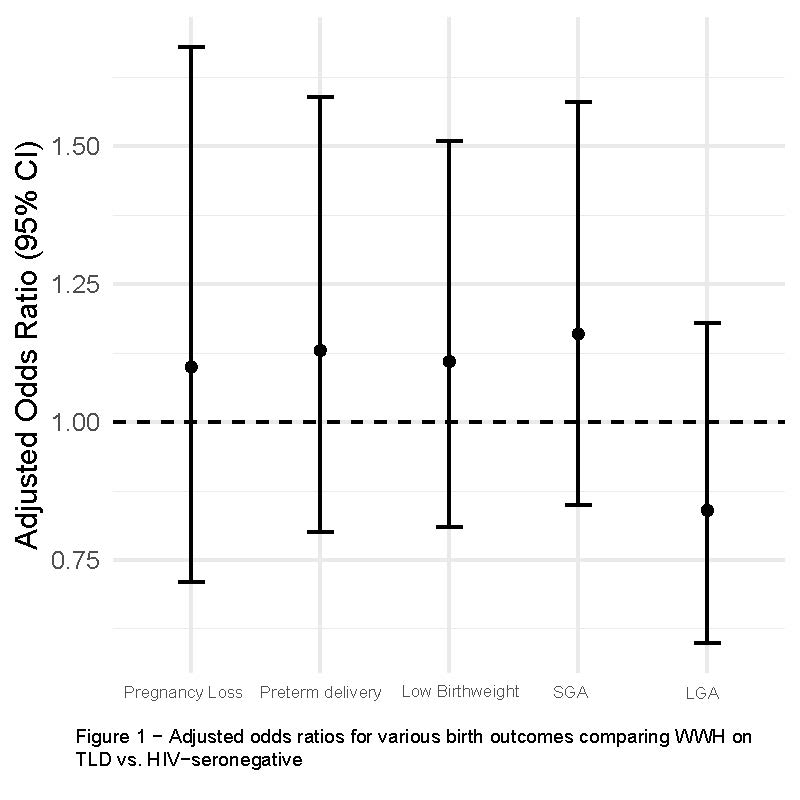
1001. Impact of Gestational Diabetes on Pregnancy Outcomes in South African Women Living With HIV
Poster Abstracts
Pages: 316-317
Elton Mukonda1, Jamie E. Meyer1, Elaine Abrams2, Thokozile R. Malaba1, Hayli Geffen1, Hlengiwe Madlala1, Sandisiwe M. M. Matyesini1, Landon Myer1, Jennifer Jao3
Background
The prevalence of gestational diabetes (GDM) is increasing globally, including in settings where HIV is prevalent. GDM is associated with pregnancy loss and large-for-gestational age (LGA) deliveries but there are no data on whether these associations are altered by maternal HIV and/or antiretroviral therapy.
Methods
The ORCHID study enrolled pregnant women with HIV (WLH) receiving tenofovir+lamivudine+dolutegravir and a comparison group of HIV-seronegative (HIV-) women (eligibility: age >16y, <18w gestational age (GA) at enrollment, not known with diabetes or hypertension) in Cape Town, South Africa. Pregnancy dating was from research sonography. A 75g oral glucose tolerance test was administered at enrollment and at 32-34 weeks GA; GDM was defined according to WHO 2013 criteria or by clinician diagnosis. In analysis, LGA was based on Intergrowth reference standards. Separate logistic regression models were fit to assess the interaction between GDM and HIV with pregnancy loss (>20w GA) and LGA deliveries, adjusting for known confounders.
Results
A total of 1817 women (1044 HIV-; 773 WHIV; mean age 28y; median GA at enrollment, 14 weeks) were included in this analysis. 7.8% of WLH and 9.1% of HIV- women were diagnosed with GDM during the study. Birth outcomes were known for 98% of women and included 3.6% with pregnancy loss and 9% LGA live births. Overall women with GDM had increased odds of pregnancy loss (aOR 2.07, 95% CI: 0.97, 4.04), and LGA (aOR 3.17, 95% CI: 1.96, 5.01) compared to women without GDM. These associations were driven by the outcomes of HIV-women (Table). Among HIV- women, rates of pregnancy loss (7.4% vs 3.2%) and LGA (30% vs 7.4%) were significantly higher in women with GDM compared to women without. In contrast, among WLH rates of pregnancy loss (5% vs 3.6%) and LGA (14% vs 8%) were similar between women with and without GDM. In separate multivariable models testing the interaction between HIV and GDM on birth outcomes (not shown) there was evidence for a weaker association between GDM and LGA in WLH compared to HIV- women (interaction odds ratio, 0.36, p=0.061) but no such evidence involving pregnancy loss (interaction odds ratio, 0.59, p=0.5).
Conclusions
These novel findings suggest that maternal HIV infection may attenuate the known effects of GDM on LGA deliveries. Further research is required to understand what mechanisms may drive such an attenuation, and more generally to the long-term implications of GDM diagnoses for WLH and their infants.
Table 1.
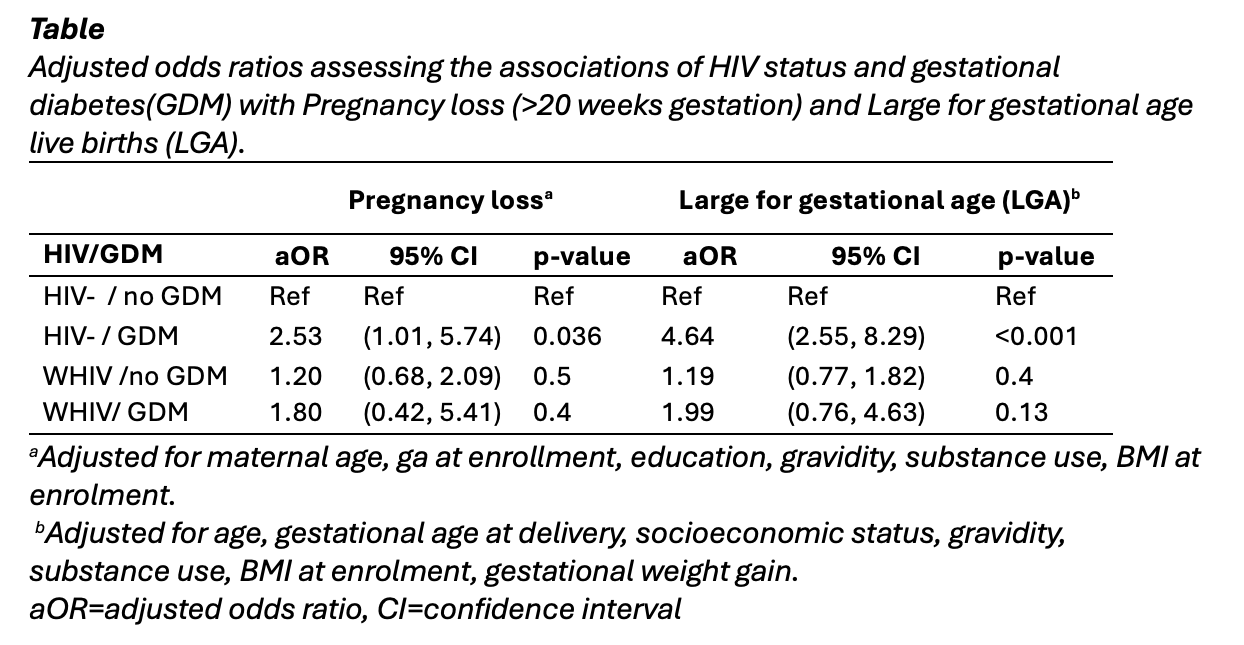
1002. Immune Markers During Pregnancy and Birth Outcomes in South African WLH
Poster Abstracts
Page: 317
Thokozile R. Malaba1, Clive Gray2, Tariq Webber2, Hlengiwe Madlala1, Berenice Alinde1, Landon Myer1, Marie-Louise Newell3, the PIMS Study Group
Background
There are few insights into the immunological predictors of pregnancy outcomes, including preterm delivery (PTD) and small-for-gestational age (SGA), in women living with HIV (WLH).
Methods
We followed ART-eligible pregnant WLH attending primary care in Cape Town from their first antenatal visit through to delivery. C-reactive protein (CRP), interferon gamma-induced protein 10 (IP10), and serum amyloid A (SAA) levels were measured at ≥3 antenatal time points: baseline (<24 weeks [visit 1]), 2 weeks post-ART initiation (if starting ART during pregnancy [visit 2]), 28w [visit 3] and 34w [visit 4]gestation. Group-based trajectory modelling (GBTM) identified distinct biomarker trajectories throughout pregnancy. Modified Poisson regression assessed associations between these trajectories and PTD (<37 weeks) and SGA (<10th percentile for gestational age [GA]), adjusting for age, BMI and ART timing (before vs during pregnancy).
Results
In 505 women (median age 30y; median GA 14w; 23% nulliparous) with a livebirth, 48% (n=241) initiated ART preconception (84% TDF+XTC+EFV, 8% PI-based regimen) and 52% (n=264) initiated during pregnancy (97% TDF+XTC+EFV, 1% PI-based regimens). Median CRP and SAA levels over time did not differ by ART status, but IP-10 levels were higher in women initiating ART during pregnancy than in preconception ART initiators (Fig1a). We identified 4 distinct IP-10 trajectories, with one group (6.5% of women) showing an atypical pattern, with IP-10 levels steadily increasing throughout pregnancy (traj 2) compared to stable (traj 1) or decreasing (traj 3 and 4) (Fig1b). Those with atypical IP-10 trajectories had significantly higher PTD risk (ARR2.08, 95% CI1.03-4.19) than other groups. No associations were observed between CRP and SAA with PTD, and none between the three biomarker trajectories and SGA.
Conclusions
Atypical increases in IP-10 during pregnancy which would indicate increasing inflammation were associated with an increased risk of PTD, but not SGA. Findings suggest IP-10 could be used as a biomarker identifying pregnant women with HIV at higher risk for PTD and inform clinical management.
The figure, table, or graphic for this abstract has been removed.
1003. Antiretroviral Drugs Disrupt Macrophage Function and Vascular Development
Poster Abstracts
Page: 317
Doty B. A. Ojwach1, Daniel Simpkin2, Justin Duruanyanwu2, Tariq Webber1, Portia Manngo1, Berenice Alinde3, Paola Campagnolo2, Siamon Gordon4, Fernando Martinez Estrada2, Clive Gray1
Background
We previously reported in the Prematurity Immunology in Mothers living with HIV and their infants Study (PIMS), that antiretroviral treatment in pregnant individuals living with HIV is associated with a 2-fold increased risk of maternal vascular malperfusion. We also found lower levels of coagulation factor XIIIA1 (FXIIIA1) in placental Hofbauer cells, which correlated with pre-term birth, particularly when HIV antiretroviral treatment was initiated pre-conception. We hypothesize that HIV antiretroviral treatment disrupts Hofbauer cell function through FXIIIA1, impairing placental vascularization.
Methods
We employed a primary Human Umbilical Vein Endothelial Cells (HUVEC) angiogenesis assay to investigate FXIIIA1 and its inhibitor ZED1301.
Placenta-like macrophages were generated by stimulating primary human monocytes with M-CSF and IL-10. We tested HIV antiretroviral drugs cytotoxicity, determining IC50 and physiological concentrations for co-culture experiments with HUVECs and placenta-like macrophages.
Results
Activated FXIIIA1 (5 µg/ml) enhanced branching and tubular formation in the HUVEC model (p=0.04). Inhibition of FXIIIA1 with ZED1301 reduced branch thickness in a dose-dependent manner. The important role of placental macrophages in this process was confirmed when placenta-like macrophages promoted vascular growth without conventional endothelial growth factors (p=0.0016). However, when pre-treated for 24h with dolutegravir or a Tenofovir + 3TC + Efavirenz combination, these macrophages no longer supported angiogenesis, showing reduced tube formation and network connectivity (p=0.0013). A similar effect was observed when antiretroviral drugs were added directly to the HUVEC model. Exogenous FXIIIA1 partially rescued impaired angiogenesis by HIV antiretroviral drugs.
Conclusions
These findings suggest that pre-conception HIV antiretroviral treatment may impair placental vascularization by disrupting placental macrophage function through FXIIIA1. This provides a potential mechanism by which long-term antiretroviral treatment elevates the risk of maternal vascular malperfusion and placental insufficiency. This highlights the need for adjunctive therapies to counteract the long-term effect of HIV antiretroviral treatment on placental vascularization.
1004. Antiretroviral Drugs Affect the Placental Vasculature
Poster Abstracts
Page: 317
Micah Summerlin1, Christine A. Adalikwu1, Aida M. Jemal1, Baojin Yao1, Emma G. Foster1, Surendra K. Shukla2, Nicole Liu1, Anushka Sajja1, Balasrinivasa R. Sajja1, Yutong Liu1, Lynda K. Harris1, Benson Edagwa1, Howard Gendelman1
Background
The number of HIV-1-exposed uninfected (HEU) children remains on the rise. Studies showed that HEU children are at increased risk for preterm delivery, infectious morbidity, immune abnormalities, and impaired growth; yet there are gaps in understanding of how in utero HIV-1 and antiretroviral drug (ARVs) exposures may impact HEU children’s health across their lifespan. ARVs effects on maternal health or gross structural fetal outcomes have been widely studied. However, there is a critical knowledge gap of the effects of ARVs on placental health, a key regulator of fetal development and pregnancy outcomes. Herein, the effects of dolutegravir (DTG) on placenta were evaluated as the drug’s association with abnormal vasculature was previously reported. As hypoxia-inducible factor 1-alpha (HIF-1α) is a key regulator of vascular development, we investigated whether genetic deficits in HIF-1α could influence DTG-linked placental vascular abnormalities in heterozygous HIF-1α knockout mice.
Methods
Placenta specific heterozygous HIF-1α (HIF-1αf/-) conditional knockout (Cre/LoxP) mice were generated. C57BL/6J mice served as controls. Pregnant mice were administered daily with DTG (50 mg/kg) or vehicle (control) starting at gestation day (GD) 0.5 using oral gavage. Pregnant mice were scanned at GD 16.5 by 7T MRI to generate T2 relaxation time maps of placentas. At GD 17.5, placenta tissues were harvested for pharmacokinetic (PK) and pathological tests.
Results
PK tests showed an average of 5005 ng/gm of DTG levels in placentas of both HIF-1αf/- and C57BL/6J mice. In HIF-1αf/- pregnant mice, significant increase in T2 relaxation times was quantified in placentas exposed to DTG compared to placentas exposed to vehicle, indicating vasculature alterations. In parallel, compared to the vehicle exposed group, histopathological tests confirmed enlargement of the placental labyrinth region in DTG exposed animals. Increased HIF-1α protein expression in DTG-exposed placenta tissues cross-validated both T2 maps and histology data. Furthermore, a significant decrease in weights and crown-rump lengths of embryos was noted in the DTG-exposed group. In contrast, in C57BL/6J pregnant mice, DTG-exposure did not lead to alterations in T2 maps, HIF-1α levels, and placental or embryo morphology.
Conclusions
An association between HIF-1α and DTG-induced placental vascular changes was observed. Genetic or co-morbidities-inducing HIF-1α deficiency may increase the risk for DTG-regimen-affected placental development.
The figure, table, or graphic for this abstract has been removed.
1005. Incident HIV Infection Among Pregnant Women in Botswana Has Decreased Since 2022
Poster Abstracts
Page: 318
Aamirah Mussa1, Gloria K. Mayondi1, Modiegi Diseko1, Judith Mabuta1, Mompati Mmalane1, Joseph Makhema1, Shahin Lockman2, Jeffrey W. Imai-Eaton2, Sikhulile Moyo1, Chelsea Morroni1, Rebecca Zash1, Roger Shapiro2
Background
Women who acquire HIV during pregnancy are at increased risk for vertical HIV transmission. Major intervention efforts have sought to rapidly reduce HIV incidence in Botswana over the past decade. The Tsepamo Study captures data on ~70% of all deliveries in Botswana including HIV test dates and results during antenatal care. We assessed whether HIV incidence among pregnant women in Botswana is declining by comparing data collected 2017-2021 and 2022-2024.
Methods
We used data collected from women who gave birth at 16 public maternity wards. HIV seroconversion was measured as having an initial negative/indeterminate HIV test in pregnancy followed by a positive test during the same pregnancy or at delivery. To calculate the HIV incidence rate, seroconversion date was approximated as the mid-point between last negative/ indeterminate test and first positive HIV test. Logistic regression was used to identify factors associated with incident HIV during pregnancy.
Results
Among 51,013 women who delivered September 2022-September 2024 and had an initial negative/indeterminate test in pregnancy, 45,110 (88%) had ≥2 known HIV test dates in the same pregnancy and were included in this analysis. There were 75 seroconversions (1.67/1000 pregnancies, 0.17%) among 45,110 women with ≥ 2 known HIV test dates during pregnancy, yielding an incidence rate of 0.43/100 person-years (38% lower than 0.69/100 person-years among women who delivered May 2017-August 2021). Infections were highest among the 20–24-year age group with an incidence rate of 0.61/100 person-years. Factors associated with greater risk for seroconversion during pregnancy included being aged 20-24 (unadjusted odds ratio [uOR] vs. age >35 = 3.09, 95% CI 1.09-8.79), being unmarried (uOR = 4.32: 95% CI 1.06-17.62), not having salaried/self-employment (uOR = 1.91, 95% CI 1.11-3.29) and having less than a tertiary level of education (uOR = 2.16, 95% CI 1.11-4.21). There were no significant differences in risk for seroconversion by geographic region or by urban vs. rural delivery site.
Conclusions
Compared with 2017-2021, the rate of seroconversions during pregnancy among pregnant women in Botswana between 2022-2024 has declined. However, HIV incidence remains high among younger women with less education and without salaried employment, presenting opportunities for targeted PrEP. Long-acting injectable options, which can prevent both maternal and subsequent infant infection, could strengthen HIV prevention efforts in this critical population.
1006. Social Determinants Associated With Recent HIV Infection in Treatment-Naive Pregnant Women in Malawi
Poster Abstracts
Page: 318
Shuntai Zhou1, Rachel Burdorf1, Nathan Long1, Gerald Tegha2, Maganizo B. Chagomerana2, Allan Jumbe2, Madalitso Maliwichi2, Shaphil Wallie2, Yijia Li3, Ronald I. Swanstrom4, Mina Hosseinipour2
Background
Young women in sub-Sahara Africa face a high risk of acquiring HIV. Antiretroviral therapy (ART) is prioritized for pregnant women with HIV to treat the infection and prevent transmission to newborns. Assessing recency of infection in women who initiated ART during pregnancy and the associated social determinants are pivotal to monitor the epidemic in this vulnerable population.
Methods
ART-naïve participants were enrolled through an antenatal clinic in Lilongwe, Malawi, between 2015-2019. We used a multiplexed Primer ID next generation sequencing based recency assay to predict recent HIV infection on entry plasma specimens by measuring intra-host diversity on pol (RT) and env (V1V3). Both the qualitative recency using a 9-month cutoff and the quantitative days post infection (DPI) were reported for each participant. Demographics characteristics, clinical characteristics and social determinants were collected at study entry.
Results
A total of 203 participants were successfully analyzed by the recency assay; 8.9% were considered recent infection by 9-month cutoff, 15.3% were considered as borderline recent infection, and 75.9% were considered as chronic infection. In the quantitative assessment of DPI, 5% were within 6 months of infection at study enrollment, 18% within one year of infection, and 45% within two years of infection. A majority (76%) of the participants were in their 2nd trimester of pregnancy at enrollment. Recent and borderline recent infections were combined for the following analyses. Participants with recent infection were younger (median age 23 y/o vs. 27 y/o in chronic group, p<0.01), had higher CD4+ T cell counts (median 482 cells/uL vs. 307 cells/uL in the chronic group, p<0.01), had lower income (p=0.04), were more likely to be in their first pregnancy (p=0.002), and more likely to have a partner with confirmed HIV positive status (p=0.03). In the multivariant analysis, participant’s age (OR: 0.9 per year, 95%CI: 0.83-0.97) and partner with HIV (OR: 3.3, 95%CI: 1.24-8.79) were associated with recent infection at ART initiation. We also identified a significant association between self-reported domestic violence and recent HIV infection (p=0.01).
Conclusions
A majority of study participants acquired HIV before the current pregnancy and did not initiate ART until second trimester. Our data suggest that increasing access to HIV testing for the women and their partners, and initiating ART early in the pregnant women are pivotal in this study population.
1007. STI Testing Is Associated With Lower PrEP Discontinuation Among Women Initiating PrEP in Pregnancy
Poster Abstracts
Page: 318
Jerusha Mogaka1, Felix Abuna2, Eunita Akim2, John Kinuthia2, Lauren A. Gomez1, Mary Marwa2, Chelsea Morroni3, Aamirah Mussa3, Nancy Ngumbau2, Celestine Adogo2, Peter Okoth2, Salphine Watoyi2, Barbra Richardson1, Grace John-Stewart1, Jillian Pintye1
Background
Sexually transmitted infections (STIs) in pregnancy contribute to adverse birth outcomes and increased HIV acquisition during pregnancy and the postpartum period. Yet, few studies evaluate how STI testing influences HIV PrEP use among pregnant women who initiate HIV PrEP.
Methods
We analyzed data from a randomized trial conducted between February 2022-July 2023 among pregnant women who newly initiated daily oral HIV PrEP during routine antenatal care and were followed through 9 months postpartum in western Kenya (NCT04472884). Women were tested for syphilis per national guidelines. At two of the five study sites, women were offered Chlamydia trachomatis (CT) and Neisseria gonorrhoeae (NG) testing at enrollment using Xpert® CT/NG assays starting September 2022. Women tested received same-day results, and directly observed treatment (DOT) was offered to women diagnosed with CT/NG. We evaluated the association between CT/NG testing and time to HIV PrEP discontinuation using Cox proportional hazards models.
Results
Overall, 260 pregnant women initiating HIV PrEP enrolled in the two study sites at a median gestational age of 26 weeks (IQR 24-29). The median age was 26 years (IQR 22-30), most women (80%) were married, and 92% had partners of unknown HIV status; 2% tested positive for syphilis. Overall, 39 (15%) enrolled before commencement of CT/NG testing procedures; 221 (85%) women were offered CT/NG testing in pregnancy — all of whom accepted. Only 19 (7%) reported STI symptoms (e.g., abnormal vaginal discharge and/or vulvar burning/itching). Prevalence of CT and/or NG was 19/260 (7.3%): 4% CT, 3% NG, and 1% CT/NG co-infection. The median time to HIV PrEP discontinuation for all women was 331 days from initiation in pregnancy (IQR 144-366). By 9 months postpartum, women who tested for CT/NG in pregnancy were less likely to discontinue HIV PrEP compared to those not tested in pregnancy (51% vs. 77%, p=0.003). Testing for CT/NG in pregnancy was associated with a 45% longer time to HIV PrEP discontinuation (hazard ratio[HR] 0.55, 95%CI: 0.38-0.80, p=0.002). Having STI symptoms or testing positive for CT/NG was not associated with HIV PrEP discontinuation (HR 0.98, 95% CI 0.38-2.52, p=0.975) and (HR 1.01, 95% CI 0.64-1.58, p=0.978) respectively.
Conclusions
Co-offering CT/NG testing to women initiating HIV PrEP in pregnancy could increase HIV PrEP continuation through postpartum, regardless of test results and represents an opportunity for addressing HIV/STI in this priority population
1008. Impact of Offering PrEP Choice on HIV Incidence in High-Risk Pregnant Women in Kenya
Poster Abstracts
Page: 319
Tessa Concepcion1, John Kinuthia2, Felix Abuna2, Eunita Akim2, Lauren A. Gomez1, Emma Mukenyi2, Nancy Ngumbau2, Jerusha Mogaka1, Ben Ochieng2, Monisha Sharma1, Grace John-Stewart1, Jillian Pintye1
Background
HIV incidence remains a significant concern among pregnant and postpartum women. Offering multiple HIV PrEP options can increase coverage and use, yet the impact of HIV infections averted with implementation of various HIV PrEP options for pregnant/postpartum women is unknown.
Methods
We developed an equation to project HIV incidence through pregnancy and postpartum between a reference scenario (oral PrEP only) and five LA-PrEP scenarios: 1) Oral/Ring, 2) Oral/Ring/Injectable, 3) Oral/Ring/ Injectable/Event-Driven, 4) Oral/Ring in pregnancy and Oral/Ring/Injectable/ Event-driven in postpartum, and 5) Ring/Injectable/Event-driven as second-line PrEP (for those who discontinue Oral). The model incorporated uptake rates for different PrEP types, adherence and efficacy estimates, and base HIV risk. Uptake was based on data from a discrete choice experiment among pregnant and postpartum women participating in a PrEP adherence trial in Kisumu and Siaya, Kenya; adherence and efficacy were based on literature. All scenarios were compared to the reference of oral PrEP only.
Results
Assuming Oral/Ring availability, resulted in a 23.4% reduction in maternal HIV incidence (50.7 cases averted) and 22.7 cases of VT averted compared to the reference scenario. In the Oral/Ring/Injectable scenario, 40.1% of maternal HIV infections and 38.9 VT cases were averted. Oral/Ring/ Injectable/Event-Driven was associated with 34.8% maternal HIV incidence reduction and 33.5 VT cases averted. Oral/Ring in pregnancy and Oral/Ring/ Injectable/Event-driven in postpartum was projected to reduce maternal HIV cases by 34.5% and VT by 33.6 cases. Ring/Injectable/Event-driven PrEP for those who discontinued Oral resulted in a 25.6% maternal HIV incidence reduction and 24.5 VTs averted. (Figure 1: Reduction in HIV cases and VT across long-acting PrEP scenarios, compared to daily oral PrEP)
Conclusions
LA-PrEP formulations achieved greater reductions in total HIV infections and VT compared to oral PrEP only. Scenarios with universally available injectable PrEP, such as Oral/Ring/Injectable and Oral/Ring/ Injectable/Event-Driven, showed the largest reductions. LA-PrEP only offered in postpartum also had substantial reductions. Utilizing LA-PrEP as a second-line intervention was better than oral PrEP alone but less effective than more comprehensive approaches. Injectable and event-driven PrEP could reduce maternal HIV, and VT, by up to 40% among high-risk peripartum women and infants.
Figure 1.
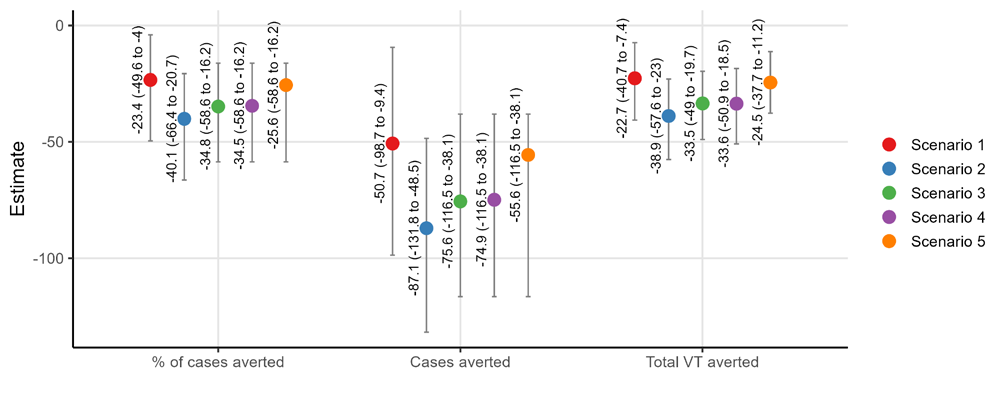
1009. PrEP Adherence and Acceptability of Urine Tenofovir Testing in Pregnant and Postpartum Women
Poster Abstracts
Page: 319
Dvora L. Joseph Davey1, Kalisha Bheemraj2, Rufaro Mvududu2, Nafisa Wara1, Sumaya Dadan2, Kathryn L. Dovel1, Monica Gandhi3, Landon Myer2
Background
Oral PrEP is effective at preventing HIV in pregnant and postpartum women (PPW). Measuring urine tenofovir (TFV) in people taking PrEP is a new, objective method to evaluate recent PrEP use. We report on rapid urine TFV test acceptability, usability, and results in PPW in a randomized control trial (RCT) in Cape Town, South Africa where urine TFV was used objectively measure adherence in women on PrEP.
Methods
SCOPE-PP (Stepped care to optimized PrEP effectiveness in PPW) is an ongoing RCT among PPW on oral PrEP aimed to improve PrEP adherence. Women across arms reporting taking PrEP in the last 7-days received a urine TFV test at baseline and quarterly visits if they report using PrEP in the past 7-days. The intervention arm received biofeedback counseling on the urine test with results to be presented later. This analysis evaluated predictors of recent urine TFV result at 3-months follow-up across arms using logistic regression adjusted for age and gestational age (GA), with the acceptability of urine TFV testing.
Results
In n=750 pregnant women, median age was 26 (IQR:22-32); median GA at baseline was 29 weeks (IQR:22-35); 42% were primigravid, 48% had completed secondary or tertiary education, 34% were lowest socio-economic status. At 3-months, n=588 women attended the study visit (78%), 84% reported taking PrEP in the last 30-days (87% in pregnancy, 75% postpartum, p<0.01) and 47% in the last 7-days (n=51% in pregnancy; 39% postpartum, p<0.01). Overall 550 women met criteria and completed a urine TFV test: 49% of women had positive urine TFV results (n=272; 59% in pregnancy vs 42% postpartum; p<0.01). (Table 1).Correlation between reported adherence and urine TFV+ was 0.60. Younger age (<24 vs >24: aOR=1.47;95%CI=1.04-2.06), education (secondary vs primary: aOR=1.47;95%CI=1.04-2.05), earlier GA at enrollment (3rd trimester vs. 2nd trimester aOR=1.85;95%CI=1.32-2.62) and taking PrEP at baseline (vs. not; aOR=1.83;95%CI=1.27-2.64) were associated with urine TFV+ results at 3m follow-up. 11% (40/374) reported taking PrEP in last week with urine TFV- results. Acceptability was high: 99% reported they understood the result, 92% said the result was as expected, 92% expressed satisfaction with the test, 63% reported that the result influenced their adherence.
Conclusions
Urine TFV measurement is an acceptable, objective measure of recent PrEP adherence in PPW and can be used to measure recent PrEP use. Postpartum women continue to need additional support for optimal adherence.
Table 1.
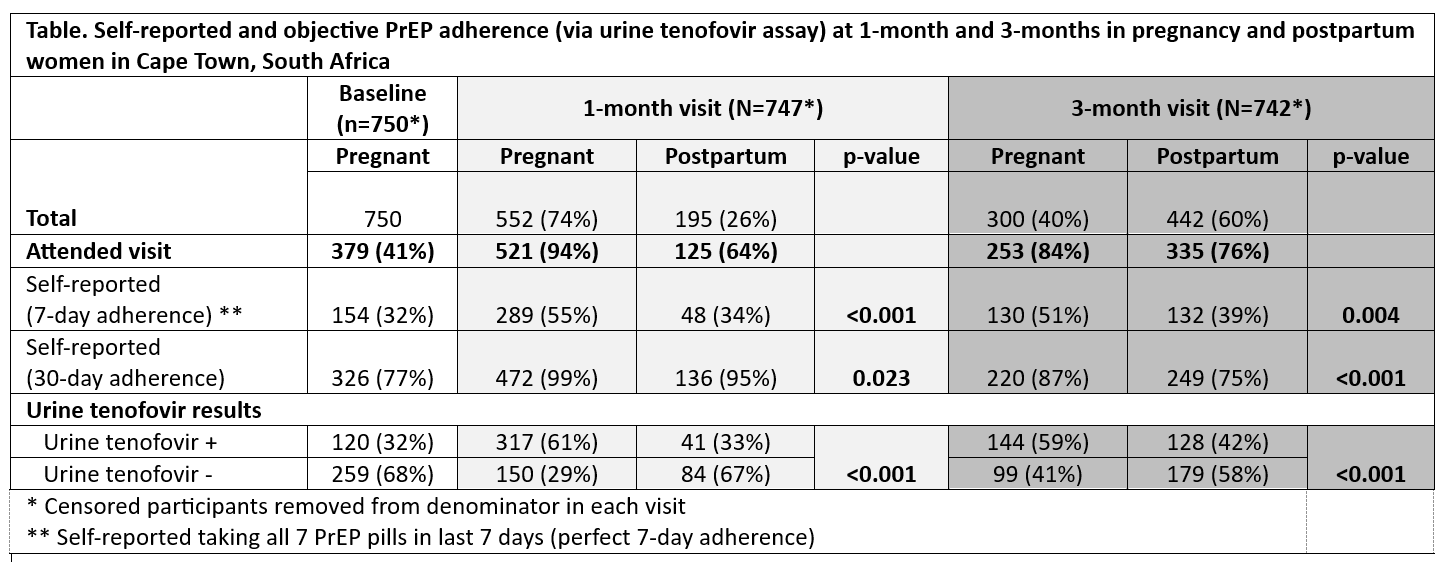
1010. TFV-DP Concentrations in PBMCs and Safety of Daily Directly Observed F/ TDF PrEP During Pregnancy
Poster Abstracts
Pages: 319-320
Linxuan Wu1, Peter Anderson2, Nelly Mugo3, Matilda Saina4, Clare E. Brown1, Torin Schaafsma1, Katherine K. Thomas1, Deborah J. Donnell5, Elena A. Rechkina1, Bhavna H. Chohan1, Kenneth Ngure3, Sarah Mbugua4, Elex Hill Bachelors1, Lane Bushman2, Kenneth K. Mugwanya1, the Women Benchmark Study Team
Background
Intracellular tenofovir diphosphate (TFV-DP) concentrations from F/TDF PrEP in dried blood spots are ~30-50% lower during pregnancy, but data on TFV-DP levels achieved in peripheral blood mononuclear cells (PBMCs), the clinically relevant site for HIV prevention, are limited. We evaluated the effect of pregnancy on TFV-DP levels in PBMCs and birth and infant growth outcomes in cisgender women using F/TDF.
Methods
Directly observed daily F/TDF PrEP was administered to healthy 18 pregnant and 18 non-pregnant Kenyan women for 8 weeks (clinicaltrials.gov: NCT05057858). TFV-DP was quantified in PBMCs collected at week 2, 4, 6, and 8 using validated LC-MS/MS assays at the University of Colorado. Log transformed TFV-DP concentrations were compared between pregnant and non-pregnant groups using linear mixed models adjusted for age and week. Pregnancy outcomes and infant growth in the pregnant group were assessed at 1, 6, and 12 months postpartum and compared to historical controls from the placebo arm (no F/TDF PrEP exposure) of the Partners PrEP Study (NCT00557245).
Results
Median (IQR) baseline age and creatinine clearance estimated by cockroft-gault equation was 23 (IQR: 20-27) and 178 (152-198) mL/Min for pregnant and 23 (20-25) and 131 (113-146) mL/Min for non-pregnant women, respectively. For pregnant women, median gestational age was 16 (15-20) weeks. Overall, 137 steady state PBMC samples were analyzed: 68 in pregnant vs 67 in non-pregnant group. Observed geometric mean PBMC TFV-DP levels were 47.8 fmol/106 for pregnant vs 55.6 fmol/106 in non-pregnant women (Figure 1). Similarly, the fitted mean (95%CI) PBMC TFV-DP concentrations was 47.9 (40.7, 56.2) fmol/106 in pregnant vs 55.0 (47.9, 64.6) fmol/106 in non-pregnant women (p=0.17). No preterm birth or birth defects occurred in the PrEP exposed group. Mean Z-scores for length were comparable at 1 (-1.418 vs -0.789, p=0.2), 6 (-0.345 vs -0.754, p=0.3), and 12 (-0.604 vs -1.058, p=0.3) months after birth between groups. Mean Z-scores for weight and head circumference were also comparable between PrEP exposed and non-exposed populations up to one year of birth.
Conclusions
Steady state TFV-DP concentrations in PBMCs from directly observed therapy of daily oral F/TDF PrEP were reassuringly comparable in pregnant and non-pregnant African women. Consistent with previous studies, birth and infant growth outcomes up to one year were also comparable between PrEP-exposed and unexposed pregnancies.
Figure 1.
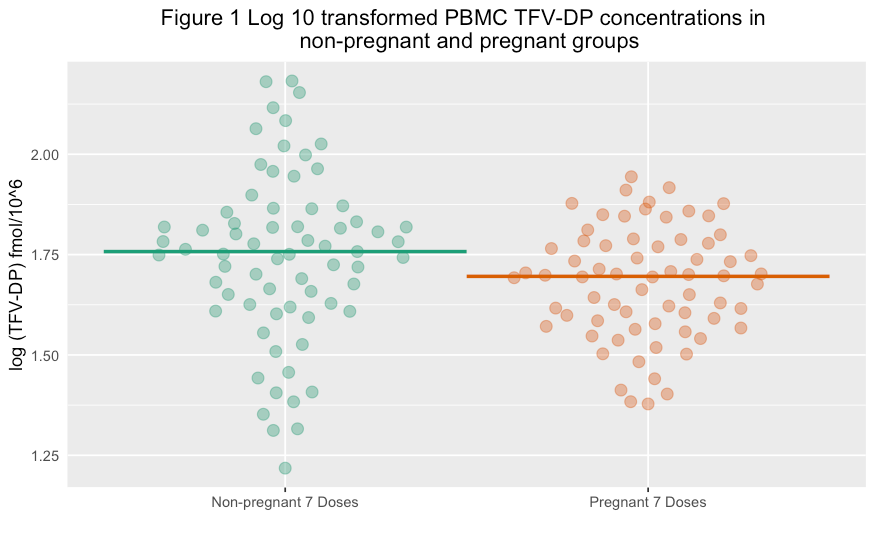
1011. Vertical HIV Transmission: Substantial Reductions but Not Elimination With Universal ART
Poster Abstracts
Page: 320
Nisha Jacob1, Emma Kalk1, Alexa Heekes1, Florence Phelanyane1, Kim Anderson1, Mary-Ann Davies1, Brian Rice2, Andrew Boulle1
Background
Despite universal test and treat for HIV, vertical transmission continues to occur. We evaluated the temporal effectiveness of vertical transmission prevention (VTP) over three maternal antiretroviral treatment (ART) policy periods (1. three-drug ART accessible to those with CD4 counts <200 cells/µl; 2. <350 cells/µl; 3. universal ART) in Western Cape, South Africa using routine provincial public sector individuated data.
Methods
We conducted a retrospective cohort study with child HIV acquisition as the primary outcome. Pregnancies between 2010 and 2020 were enumerated using the Provincial Health Data Centre Maternity Cascade which links electronic records of patients with administrative or laboratory evidence indicative of pregnancy. A child was deemed HIV exposed if their mother had electronic records indicative of HIV antenatally or ≤2 years from delivery. HIV and ART status were determined using indicators from laboratory, pharmacy and administrative information systems. Multivariable logistic regression was used to explore associations with vertical transmission.
Results
The proportion of mothers initiating ART prior to pregnancy increased from 20.9% in 2010 to 71.1% in 2020. Of the 842 641 pregnancies included, 17.1% were HIV exposed and 16.3% had a recorded child HIV outcome. Of children with maternal HIV exposure, 2.1% (95% CI 2.1 – 2.2) were diagnosed with HIV. The proportion of exposed children with unknown HIV status decreased (66.9% in 2010 to 12.8% in 2020) whilst those testing HIV negative increased (30.4% in 2010 to 85.5% in 2020). Overall, 22.9% of the 3966 children with HIV had apparent negative or unknown maternal exposure. Median time from birth to HIV diagnosis was 181 days (IQR 33 – 603). Children born in maternal ART policy period 3 were less likely to be diagnosed with HIV than children born in policy period 2 (aOR 0.66; 95% CI 0.60 – 0.72), mediated through expanded ART access. Young maternal age, no antenatal ART, previous TB diagnosis and no evidence of antenatal care attendance prior to delivery were associated with vertical transmission of HIV.
Conclusions
Our study demonstrates the positive impact of maternal ART policy change on VTP. The higher risk of vertical transmission amongst young women and those without antenatal care, highlights the need for targeted interventions for high-risk groups. The number of infections in children without established exposure emphasizes the importance of repeat antenatal and postnatal testing.
1012. The Role of Maternal Broadly Neutralizing Antibody Activity in Perinatal Transmission of HIV-1
Poster Abstracts
Page: 320
Krithika Karthigeyan1, Dieter Mielke2, Christian R. Binuya1, Ria Goswami1, Olusola Omonije1, Elena Giorgi3, Justin Pollara4, John Isaac1, Joshua Eudailey1, Megan Connors1, Carolyn Weinbaum1, Sallie Permar1
Background
Despite increased availability to antiretroviral therapy, up to 5% of people living with HIV (PLH) still transmit HIV-1 to the infant. Broadly neutralizing antibodies (bNAbs) are the immunologic goal of HIV-1 vaccine candidates; however, in postnatal cohorts, we have reported the presence of bNAbs targeting a single epitope, which contributes to viral escape. We hypothesize that PLH with bNAbs against single epitopes of the HIV envelope are at higher risk of perinatal transmission due to viral escape.
Methods
Plasma was acquired around delivery from 21 perinatal transmitters and 70 non-transmitters with HIV matched 1:3, from the Mother-Infant Cohort Study and the NISDI Perinatal study. Plasma was screened for neutralization breadth against a 10-virus HIV-1 panel. For participants with breadth (neutralizing ≥ 5 viruses with ID50 ≥ 40), plasma was screened against viruses with epitope mutations in the CD4 binding site, V2, V3 Glycan, and the membrane proximal external region of HIV-1 Env. Antibody dependent cellular cytotoxicity (ADCC) was assessed against cells infected with a transmitted/ founder subtype B virus (WITO).
Results
Transmitters had higher neutralization breadth (p = 0.0005) and potency (p = 0.0008) compared to non-transmitters (two-sided Fisher’s test). bNAb activity in 6 out of 7 transmitters (87%) were mappable, with 5 out of 7 mapping to the CD4 binding site (71%) and one transmitter mapping to both CD4bs and V3 Glycan. In comparison, 4 out of 14 non-transmitters mapped to a single epitope (29%), while the majority remain unmapped. Overall, a higher proportion of transmitters had epitope-mappable plasma-bNAb activity (p = 0.02, two-sided Fisher’s test). Additionally, regression analysis on pooled data suggests that when adjusted for cohort, transmitters have significantly higher ADCC against subtype B WITO compared to non-transmitters (p = 0.02, ANOVA).
Conclusions
Our findings suggest the existence of increased bNAb activity in transmitters that is primarily specific to a single epitope, which could lead to emergence of bNAb-resistant viral variants that can be transmitted perinatally. While ADCC has been implicated in protection against transmission, our analyses indicates that transmitters have higher ADCC against a subtype B virus, though ADCC breadth analysis could reveal additional details. In conclusion, bNAb-based pediatric HIV prevention and treatments that are synergistic with ART will likely need to be multi-specific to effectively eliminate pediatric HIV.
1013. ART Reverses Negative Natural Selection of HIV Disease-Linked HLA-I in KwaZulu-Natal, South Africa
Poster Abstracts
Pages: 320-321
Nicholas G. Herbert1, Gabriela Z. L. Cromhout2, Nomonde Bengu2, Thilona Arumagam3, Veron Ramsuran3, Thumbi Ndung'u2, Sunetra Gupta1, Christian Brander4, Mary Carrington5, Bridget Penman6, Philip Goulder1
Background
HLA is the most polymorphic region in the human genome, as the differential HLA-dependent impact of certain infections, inflammatory conditions, autoimmune diseases and cancers drive its evolution. However, clear examples of infection-driven evolution are rare. Here, we investigated antenatal cohorts in KwaZulu-Natal (KZN), South Africa, the region most severely affected by the global HIV pandemic, to evaluate the influence of HIV-1 infection on population-level HLA-I frequencies, and the impact of antiretroviral therapy (ART) in reversing this process.
Methods
In a historical cohort of antenatal mothers living with HIV (LWH) in KZN, South Africa, in the pre-ART era between 2002-2005, we compared frequencies of ‘protective’ HLA-B alleles (HLA-B*57/B*58:01/B*81:01) associated with low viral setpoints and slow disease progression, and ‘disease-susceptible’ HLA-B alleles (HLA-B*18/B*45:01/B*58:02) associated with high viral setpoints and rapid disease progression, among non-transmitting mothers (n=559) and transmitting mother-child pairs (n=112) . Next, we compared these HLA-B frequencies to those in a contemporary antenatal cohort of mothers LWH in KZN enrolled in the ART era between 2015-2023 (n=233). Lastly, we constructed an epidemiological model from 1990 to 2035 simulating the HIV-1 epidemic in KZN to describe observed HLA-B frequencies, and a counterfactual scenario where ART was never rolled out.
Results
In the pre-ART era, ‘disease-susceptible’ HLA-B alleles were significantly associated with an increased risk of vertical transmission (OR 2, p=0.018), whilst ‘protective' HLA-B alleles lead to a decreased risk of vertical transmission (OR 0.51, p=0.004). Disease-susceptible HLA-B alleles were significantly enriched in transmitting mother-child pairs (p=0.006) and ‘protective’ HLA-B alleles enriched in non-transmitting mothers (p=ns). In the ART era, this process has been reversed. The model that was constructed, simulating the differential impact of HLA-B alleles on disease progression and vertical transmission, indicated that, in the absence of ART, the HIV epidemic would have reduced KZN population frequencies of ‘disease-susceptible’ HLA-B allele by 50% and increased those of ‘protective’ HLA-B alleles two-fold by 2035.
Conclusions
We demonstrate that, in the pre-ART era, the HIV-1 epidemic drives reduction in the population-level frequency of HLA-I alleles mediating rapid HIV disease progression. This process of negative natural selection has been reversed by the impact of ART.
1014. LA-ART for Breastfeeding Women With HIV in Zimbabwe: Clinical Impact and Cost-Effectiveness
Poster Abstracts
Page: 321
Sujata Tewari1, Risa Hoffman2, Shahin Lockman3, Clare Flanagan1, Karen Webb4, Stephanie Horsfall1, Anesu Chimwaza5, Caitlin Dugdale1, Judith Currier2, Efison Dhodho4, Angela Mushavi5, Florence Ebem1, Kudakwashe Takarinda4, Sophie Desmonde6, Andrea L. Ciaranello1
Background
Long-acting injectable ART (LA-ART) may reduce barriers to medication adherence for postpartum women with HIV (PPWH) and thus reduce vertical transmission (VT) and improve health outcomes. With CEPAC, a validated computer model of mother-child pairs, we estimated the clinical outcomes and cost-effectiveness of LA-ART for breastfeeding PPWH with adherence challenges to oral ART in Zimbabwe.
Methods
At time of delivery, we simulated 2 cohorts of women who had been engaged in antenatal care, had adherence challenges while prescribed oral tenofovir/lamivudine/dolutegravir (TLD) in pregnancy, and had no prior NNRTI exposure, along with their infants: 1) women not virally suppressed at the time of delivery (NVS) and 2) women with viral suppression at delivery (VS). We modeled 2 ART approaches immediately after delivery: standard of care (SOC: continuation of TLD) and LA-ART (switching from TLD to cabotegravir/rilpivirine [LA-CAB/RPV]). Key inputs included: 6-month postpartum suppression (RNA <50c/ml) for CAB/RPV (NVS: 85%, VS: 90%) and TLD (NVS: 63%, VS: 78%); monthly ART costs (LA-CAB/RPV: $12, TLD: $3.60); 24-month postpartum engagement in care (NVS: 70%, VS: 79%); 18-month breastfeeding duration; and vertical transmission (VT) risk (0.06%-0.89%/month of breastfeeding, range by maternal RNA). Primary outcomes included VT; pediatric life expectancy (pLE); total costs, defined as maternal drug costs in breastfeeding and pediatric HIV-related lifetime care costs; and incremental cost-effectiveness ratios (ICERs: $/life-years saved (LYS), defining cost-effective as ICER <$840/ YLS (0.5xGDP).
Results
LA-ART reduced projected VT compared to SOC: from 8.07% to 6.59% (NVS) and from 4.18% to 3.81% (VS), averting ~200 infections/year in Zimbabwe (Table). For NVS, LA-ART improved pLE (SOC: 65.93y, LA-ART: 66.37y) while saving money (SOC: $770/child, LA-ART: $760/child); LA-ART would not be cost-effective if CAB/RPV cost >$23/month or 6-month suppression was <68%. For VS, LA-ART led to higher projected pLE and costs (67.51y, $550/child) than SOC (67.39y, $450/child), with ICER $2,500/LYS; LA-ART would become cost-effective if CAB/RPV cost <$7/month.
Conclusions
LA-ART for breastfeeding women with adherence challenges to oral TLD could reduce infant infections. If efficacy is confirmed in postpartum women, LA-ART for women without viral suppression at delivery would improve outcomes and save money; for women with viral suppression, it would be cost-effective in Zimbabwe if costs were ≤$7/month.
Table 1.
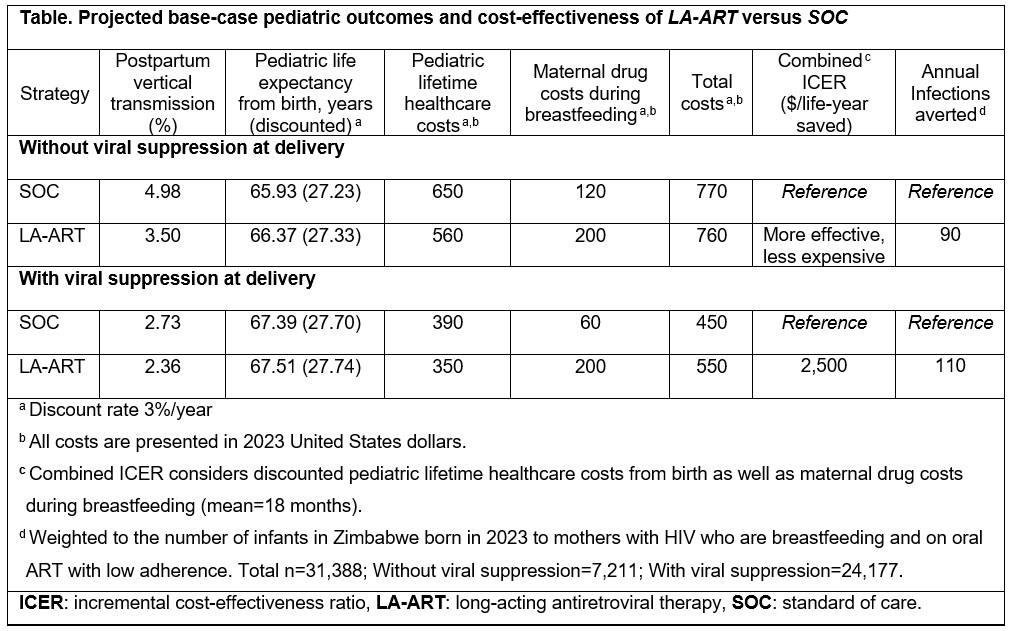
1015. Long-Acting Cabotegravir/Rilpivirine in Pregnancy
Poster Abstracts
Page: 321
William R. Short1, Matty Zimmerman2, Mariam Aziz3, Jillian Baron1, Philip Bolduc4, Eric Farmer5, Naima Joseph6, Stephan Kohlhoff7, Florence Momplaisir1, Alexander Nelson8, Natalie Nielsen9, Dimple Patel10, Stephen Pagkalinawan4, Mireya Wessolossky11, Rachel Scott
Background
Long-acting cabotegravir and rilpivirine (LA-CAB/RPV) is a novel injectable antiretroviral therapy approved for virologically suppressed individuals with HIV-1. Data on the safety, efficacy, and outcomes for individuals receiving LA-CAB/RPV during pregnancy are limited. We evaluated HIV viral suppression, perinatal, and neonatal outcomes in pregnant persons with HIV-1 receiving LA-CAB/RPV. This is the first case series to evaluate these outcomes, offering new insight into the use of LA-CAB/RPV during pregnancy.
Methods
We performed a multi-center retrospective chart review of pregnant persons prescribed LA-CAB/RPV between January 2021 and October 2024. Patient demographics, HIV RNA throughout pregnancy, and key perinatal and neonatal outcomes, including birth weight, gestational age, and rates of viral suppression at delivery were collected.
Results
Twenty-two pregnant persons receiving LA-CAB/RPV were included. Baseline demographics are presented in Table 1. Sixteen (73%) initiated LA-CAB/RPV prior to pregnancy and 6 (27%) switched to LA-CAB/RPV during pregnancy. Among those who remained on LA-CAB/RPV for the remainder of pregnancy, 90% maintained HIV RNA <200 copies/mL. The majority had vaginal deliveries; caesarean deliveries were performed for obstetric indications only. Most neonates were born at term, with a median birth weight of 2,390 grams (interquartile range: 2,144, 2,816). Additionally, 81% (n=17) of the newborns received zidovudine only post-delivery. There were no cases of vertical transmission. Three cases of congenital anomalies occurred (ventriculomegaly, fetal pyelectasis, and Trisomy 21) which were not attributed to LA-CAB/RPV by an independent Maternal Fetal Medicine consultant.
Conclusions
The results of this multi-center retrospective cohort suggest that LA-CAB/RPV is associated with high percentage of viral suppression in pregnant persons with HIV-1. Given the small sample size, it was not possible to conduct a meaningful analysis of any associations between perinatal outcomes and the use of LA-CAB/RPV during pregnancy. Our findings support the consideration of LA-CAB/RPV as a viable treatment option during pregnancy, though further research with larger cohorts is needed to validate these findings and ensure long-term safety.
Table 1.
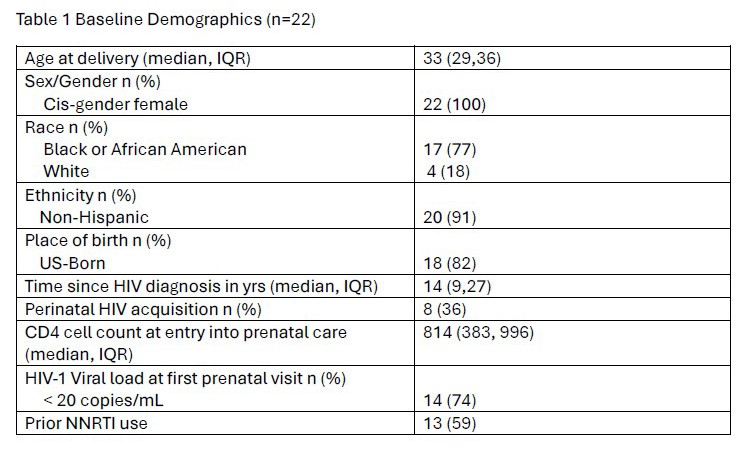
1016. Modeling Tail-Phase PK From Early Pregnancy to Postpartum and Fetal Exposure to Long-Acting CAB-RPV
Poster Abstracts
Page: 322
Shakir Atoyebi, Catriona Waitt, Adeniyi Olagunju
Background
Long-acting cabotegravir and rilpivirine combination (CAB-RPV LA) is approved for HIV treatment in adults. However, individuals who become pregnant might prefer to discontinue it due to lack of definitive data on safety. The aim of this study was to estimate fetal exposure to CAB-RPV LA and time to subtherapeutic plasma level if discontinued early in pregnancy.
Methods
Adult and pregnancy physiologically based pharmacokinetic (PBPK) models were used which had been previously validated for the disposition of LA CAB and LA RPV including tail-phase PK data from published studies. Approved monthly adult dosing of LA CAB-RPV was initiated in a virtual population of non-pregnant women until steady state. We simulated discontinuation at steady state after only one injection during pregnancy. Fetal exposure to both drugs in the second and third trimesters was estimated. Tail-phase PK of CAB and RPV from LA injections was characterised during gestation and until 6 months postpartum.
Results
A total of 8 scenarios were simulated (n = 100 each) in virtual populations of non-pregnant, pregnant and postpartum women. Mean (SD) age was 27 (5) yrs and body weight was 58 (13) kg. PK tail was driven by residual drug in muscle depot and was predicted to stabilise at steady state. Predicted median (IQR) maternal plasma concentration was 478 (436-512) ng/ml for LA CAB and 13.1 (12.2-13.9) ng/ml for LA RPV at delivery, and below their respective 4x protein adjusted IC90 (PA-IC90) in 100% of simulated cases (Table 1). This was above the PA-IC90 in 100% of women at delivery for CAB LA and 79% for RPV LA. Fetal exposure based on predicted median (IQR) cord plasma level was highest during week 22 for LA CAB at 1864 (1678-1987) ng/ml and during week 28 for LA RPV at 14.6 (13.8-15.4) ng/ml. CAB and RPV were predicted to remain detectable in maternal plasma 6 months postpartum at 142 (127-159) ng/ml and 9.23 (8.24-10.1) ng/ml, respectively. Also, 17.5 and 3.5% of the women were predicted to have CAB and RPV plasma concentrations above their corresponding PA-IC90, respectively, at 6 months postpartum.
Conclusions
The PK tails of CAB-RPV LA extend to several months postpartum, with levels falling below established minimum effective concentration in most women after gestation week 33. Potential strategies to minimise potential risks associated with CAB-RPV LA discontinuation in this population are needed. Breastfed infant exposure was not investigated in this study.
Table 1.
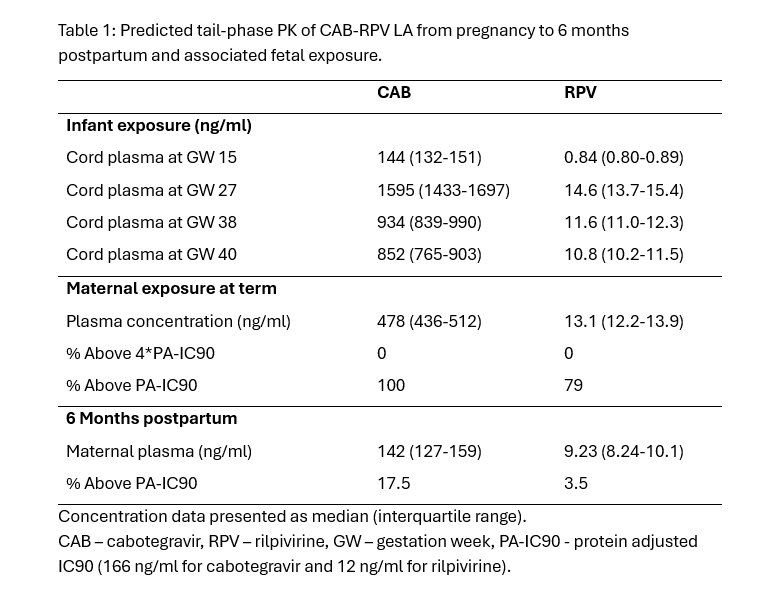
1017. A Long-Acting Dolutegravir Formulation Improves Drug Safety Profile During Pregnancy
Poster Abstracts
Page: 322
Emma G. Foster, Brady Sillman, Micah Summerlin, Christine A. Adalikwu, Baojin Yao, Yutong Liu, Benson Edagwa, Howard Gendelman, Aditya N. Bade
Background
Dolutegravir (DTG) is a preferred antiretroviral drug (ARV) as a part of first-line regimen for treatment of people living with human immunodeficiency virus type one (HIV-1). This includes pregnant women or those of reproductive age. Recommended DTG usage, worldwide, is linked to the drug’s potency, high genetic barrier to resistance, limited drug-drug interactions, and cost-effectiveness. Despite such benefits, there are potential risks of DTG-associated fetal developmental toxicities. Thus, novel formulation strategies with translational potential are timely to maximize DTG’s therapeutic abilities while limiting adverse events recorded during pregnancy. Herein, we posit that long-acting (LA) injectable nanoformulated DTG (NDTG) can improve drug safety during pregnancy. This is expected by reducing drug exposures to placenta compared to orally administered drug.
Methods
Pregnant C3H/HeJ mice (dams) were treated with daily oral DTG at a human equivalent dosage (5 mg/kg; mouse weight) from gestation day (GD) 0.5 to GD 16.5. This oral treatment was compared against pregnant mice injected with single intramuscular (IM) NDTG given at 45 mg/kg (mouse weight) at GD 0.5. Vehicle-treated group served as controls. DTG levels were measured in plasma of dams and in placenta tissues at GD 17.5 by mass spectrometry. As matrix metalloproteinases (MMPs) influence placental vascular restructuring and placenta morphogenesis, MMPs activities were determined in placentas at GD 17.5 by fluorometric assay to compare safety.
Results
Both daily oral DTG administration and single IM injection of NDTG achieved equivalent therapeutic plasma drug levels (5300-6400 ng/mL) in pregnant dams. However, comparatively, two-fold lower DTG levels were quantified in placentas following NDTG injections. Specifically, an average of 1546 ng/g and 693 ng/g of DTG concentrations were measured in placenta tissues of mice treated with daily oral DTG and injectable NDTG, respectively. Higher drug levels paralleled significantly higher MMPs activities in placentas of daily oral DTG-treated mice compared to vehicle-treated (control) mice. Notably, comparative MMPs activities were recorded between control and NDTG-treated mice, suggesting the prevention of DTG-induced alterations in MMPs functions in placenta when delivered as LA injectable formulation.
Conclusions
The data suggest that long-acting drug delivery can prevent DTG-linked developmental deficits during pregnancy by limiting placenta-fetal drug exposures.
The figure, table, or graphic for this abstract has been removed.
1018. Population PK and CYP3A Inhibition Capacity of Ritonavir in Pregnancy: A Model-Based Meta-Analysis
Poster Abstracts
Pages: 322-323
Jeremiah Momper1, Marlon Liyanage1, Mark Mirochnick2, Brookie Best1, Emily Barr3, Alice Stek4, Kristina Brooks5, Sandra Burchett6, Kathleen Powis7, Tim Cressey8, Edmund Capparelli1, Safa Algharbi1
Background
Ritonavir (RTV), a strong CYP3A inhibitor, is widely used as a pharmacokinetic (PK) enhancer to increase exposure to HIV-1 protease inhibitors (PIs) and more recently the SARS CoV-2 PI nirmatrelvir. Pregnancy-related changes in RTV disposition and boosting capacity have not been systematically assessed which may inform RTV dosing in pregnancy for future emerging infectious diseases. We performed a model-based meta-analysis for the population PK (popPK) of RTV using historical data from 11 separate arms of IMPAACT P1026s, a phase IV study evaluating the PK of selected antiretroviral drugs in pregnant and postpartum women with HIV.
Methods
Pregnant participants receiving RTV as a PK enhancer for either lopinavir, darunavir, or atazanavir±TDF and who were ≥20 weeks gestational age were included in the analysis. Intensive PK samples were collected pre-dose and through 24 hours post-dose in the 2nd and 3rd trimesters of pregnancy and 2-12 weeks postpartum. A popPK model was developed using non-linear mixed effects modeling (NONMEM v7.5).
Results
A total of 279 participants contributing 3798 RTV plasma concentrations (565 2nd trimester, 1632 3rd trimester, and 1601 postpartum) were included. RTV concentrations were well fit with a one-compartment structural model. Pregnancy was an independent predictor of both apparent clearance (CL/F) and apparent volume of distribution (Vd/F). No other covariates significantly impacted RTV disposition. Fixed allometric scaling significantly improved the model. The following equations described the final popPK model:
CL/F (L/h) = 12.0 × 1.84 (if Pregnant) × (WT/66.4)0.75
V/F (L) = 21.1×2.27 (if Pregnant) ×(WT/66.4)
Monte Carlo simulations of 1000 virtual subjects receiving a 100 mg daily dose predicted a median AUC0-24, ss of 3.85 and 7.09 μg*hr/mL during pregnancy and postpartum, respectively (Figure 1). Based on established in vivo concentration-effect relationships of CYP3A inhibition by RTV1, at a RTV dose of 100 mg daily, CYP3A metabolic clearance is expected to be reduced to 13% of baseline in non-pregnant adults compared to 24% of baseline during pregnancy.
Conclusions
RTV PK was well described by a one compartment model with first-order elimination and pregnancy significantly increased RTV CL/F and V/F. Decreased RTV exposures during pregnancy are predicted to lead to a 1.8-fold reduction in RTV-mediated CYP3A inhibition. Dosing requirements of RTV and/ or boosted CYP3A substrates may be altered during pregnancy.
Figure 1.
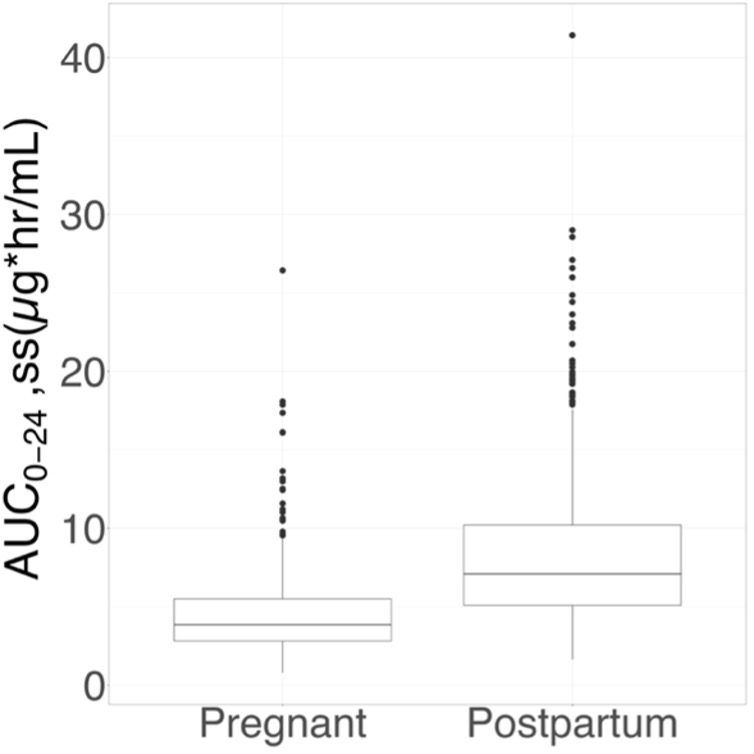
1019. Neurodevelopmental Disorders in French HIV-/ARV-Exposed Uninfected Children: A National Cohort Study
Poster Abstracts
Page: 323
Pierre Frange1, Laurent Chouchana2, Mathis Collier2, Jeanne Sibiude3, Arnold Munnich4, Jean-Marc Treluyer2, Stéphane Blanche1
Background
The health of uninfected children exposed to HIV requires long-term assessment, in particular, in terms of neurological and cognitive development. Numerous confounding factors have hampered such assessment, and the data are contradictory.
Methods
Using data from the French National Health Data System from 2012 to 2022, we conducted a population-based matched cohort study on all live-single born children including children born to HIV-infected mothers, all prenatally exposed to antiretrovirals (ARV). The primary outcome was the diagnosis of neurodevelopmental disorders according to the 2010 International Classification of Diseases. The recourse to specialized consultations likely to indirectly reflect neurodevelopmental symptoms was also evaluated. Incidence was assessed using the Cox survival model.
Results
Of 6,667 363 live-born singletons, 9,035 were born to mothers living with HIV, all exposed to ARV during pregnancy. Children were followed up to 11 years, for an average of 5.5 yrs. Overall, the incidence of neurodevelopmental disorders among exposed children was higher than in the general population, even after matching for five sociodemographic criteria (zip code, social vulnerability indicator, salary, maternal age, year of birth) and gestational age, HR [95%CI]: 1.24 [1.04 - 1.47]. It was not possible to dissect the respective role of maternal infection from that of maternal treatment, as all children were co-exposed to HIV and ARV. However, among those exposed to tenofovir-emtricitabine, the r-darunavir-based combination was significantly associated with a higher combined incidence of neurodevelopmental disorders and related specialized consultations than other protease inhibitors (log rank, p<0.001).
Conclusions
Children exposed in utero to ARV and HIV are at higher risk of neurodevelopmental disorders of multifactorial origin.
1020. Prenatal PrEP Exposure and Language Development Among Children at 5 Years
Poster Abstracts
Page: 323
Lauren A. Gomez1, John Kinuthia2, Felix Abuna2, Sarah Benki1, Mary Marwa2, Salphine Watoyi2, Bilhah Aomo2, Nancy Ngumbau2, Ben Ochieng2, Anna Larsen1, Joshua Stern1, Barbra Richardson1, Grace John-Stewart1, Jillian Pintye1, the UW-KNH PrEP in Pregnancy Studies Team
Background
Data on child development following in utero antiretroviral (ARV) exposure suggest increased risk of delay in language skills, although most studies to date are among women living with HIV and their infants who have exposure to both ARVs and HIV. We assessed the relationship between prenatal PrEP exposure and language development at 60 months among mother-child pairs without HIV.
Methods
Data from mother-child pairs enrolled in a cluster RCT (NCT03070600) evaluating PrEP delivery strategies at 20 antenatal clinics in Western Kenya were analyzed. HIV-negative women were enrolled and offered oral tenofovir disoproxil fumarate-based PrEP during pregnancy and followed through 9 months postpartum regardless of PrEP status. A subset were enrolled into an extension cohort at 4 sites to be followed until their children reached 5 years. Language development was assessed by trained nurses using the validated Malawi Developmental Assessment Tool. The association between prenatal PrEP exposure and language development scores at 60 months was evaluated using linear regression models adjusted for gestational age at birth, maternal age and education, infant sex, and partner HIV status. We also evaluated the association between language development scores and timing of PrEP initiation (<14 weeks, 14-27 weeks, and >=27 weeks gestation) and duration on PrEP during pregnancy (<4 weeks, 4-12 weeks, and >12 weeks).
Results
As of January 2025, 768 children had reached 60 months and were included in the analysis; 139 (18%) had any in-utero PrEP exposure with a median duration of 2.4 months (IQR: 1.4-3.5) during pregnancy. Compared to mothers who did not take PrEP, mothers who took PrEP in pregnancy were more likely to only have primary school education (69% vs. 55% p=0.004) and to have a partner known to be living with HIV or of unknown status (68% vs 38% p<0.001). Mean language development scores at 60 months were 36.8 (SD: 1.6) among exposed and 37.1 (SD: 1.6) among unexposed. There was no difference in mean language scores at 60 months (adjusted mean differences: language -0.12, 95% CI: -0.45, 0.20, p=0.47). Language development scores were similar when analyzed separately by timing of PrEP initiation and weeks of duration on PrEP in pregnancy (all p>0.05).
Conclusions
Our results add to the limited data on language development in ARV-exposed children who are not exposed to HIV and suggest that exposure to ARVs without HIV exposure is not associated with adverse language development outcomes.
1021. Growth Faltering Is Partially Ameliorated by Infant Gut Bifidobacterium in Children Exposed to HIV
Poster Abstracts
Pages: 323-324
Nicole Tobin1, Christine J. McGrath2, Fan Li1, Charles Mutinda3, Priscah Lihanda3, Mame M. Diakhate2, Grace John-Stewart2, Benson O. Singa4, Grace Aldrovandi1
Background
Children with HIV exposure (CHEU) who do not experience HIV infection are at increased risk of growth faltering compared to children unexposed to HIV (CHU). Decreased abundance of Bifidobacterium has been associated with growth faltering in CHEU. We examined the gut microbiota of CHEU versus CHU to determine if specific microbes may influence growth outcomes.
Methods
16S rRNA sequencing of the V4 region was performed on rectal swabs collected at 3 months of age as part of a prospective clinical study in Migori, Kenya. WHO Z-scores (weight-for-age [WAZ] and length-for-age [LAZ]) were calculated using weight and length measurements within 7 days of birth, at 3 and 6 weeks, and months 3, 6, 9, 12, 18 and 24. Linear mixed effects models were used to identify differentially abundant bacterial taxa between CHEU and CHU, and an interaction term was added to test whether associations between growth outcomes and bacterial abundances differed between the two groups.
Results
Rectal swabs from 319 children (164 CHEU and 155 CHU) passed all filtering and quality control steps and were used for analysis. Most children were born full term (91%) and 87% were exclusively breastfed at 3 months. All CHEU began ARV prophylaxis from birth and 98% received prophylactic cotrimoxazole from 6 weeks of age. LAZ and WAZ were lower in CHEU vs CHU (t=-1.69, p=0.09 for length; t=-2.56, p=0.01 for weight) over the first two years. HIV exposure contributed minimally to overall variation in microbiome composition (0.39%, p=0.08) at 3 months of age, and no significant differences in alpha diversity or genus-level relative abundances were observed between CHEU and CHU. In an interaction model, the association between Bifidobacterium abundance and WAZ at 3 months of age was stronger among CHEU as opposed to CHU (t=1.87, p=0.06).
Conclusions
Although growth trajectories differed between CHEU and CHU, there were no significant differences in the gut microbiome of CHEU versus CHU at three months. Bifidobacterium abundance was associated with growth outcomes in CHEU. Establishment and maintenance of infant gut Bifidobacterium populations may be of particular importance in influencing growth among CHEU.
The figure, table, or graphic for this abstract has been removed.
1022. Insulin-Like Growth Factors and Stunting in African Infants Exposed to HIV and Uninfected
Poster Abstracts
Page: 324
Brenda C. Kakayi1, Patricia DeMarrais2, Kristin Baltrusaitis2, Lynda Stranix-Chibanda3, Clemensia Nakabiito1, Vivian Rexroad4, Maxensia Owor1, Sufia Dadabhai4, Dhayendre Moodley5, Friday Saidi6, Avy Violari7, Gerhard Theron8, Mary G. Fowler9, Takara L. Stanley10, the IMPAACT P1084s Protocol Team
Background
The biological mechanisms related to increased risk of stunting in infants/children who are HIV-exposed and uninfected (CHEU) are not fully clear. We assessed whether insulin-like growth factors (IGFs), which are associated with infant growth, are determinants for stunting observed among CHEU.
Methods
A random sample of 213 out of 268 infants from the antepartum part of the IMPAACT P1084s substudy with at least one serum sample collected at the birth visit, week 26 or week 74 visits in Uganda, South Africa and Malawi was selected. Stored serum was analysed for IGF-1, IGF Binding Protein (IGFBP)-1 and IGFBP-3 by Quest Diagnostics using in-house assays validated in accordance with CLIA regulations. IGF-1 was measured using liquid chromatography/ mass spectrometry, IGFBP-1 using radioimmunoassay and IGFBP-3 using immunoassay. Risk ratios (RRs) for stunting (length-for-age z (LAZ) -score<-2 standard deviations (SDs)) at birth, weeks 26 and 74 were estimated using log-binomial regression models with log-transformed growth factors at birth as predictors. Cross-sectional associations between LAZ-scores and log-transformed growth factors at birth, weeks 26 and 74 were evaluated using adjusted linear regression models.
Results
213 infant participants (47% male) were included. The median (Q1, Q3) weight within 5 days of birth was 2.9 kg (2.6, 3.2) and length was 48 cm (46, 50), representing a median LAZ-score of -1 SDs (-2, 0). Although higher IGF-1 at birth was significantly associated with reduced risk of stunting at week 26 (RR: 0.4 per log10 increase; 95% confidence interval (CI): 0.19, 0.86), IGFBP-1 or IGFBP-3 at birth were not associated with future stunting (Table 1, Analysis 1). Table 1, Analysis 2 shows that, at 74 weeks, LAZ-scores increased per log10 increase in IGF-1 (1.60; 95% CI: 1.15, 2.04), decreased per log10 increase in IGFBP-1 (-0.62; 95% CI: -1.21, -0.02), and increased per log10 increase in IGFBP-3 (2.08; 95% CI: 1.26, 2.91). Similar observations were made at week 26.
Conclusions
Growth factor levels were significantly associated with LAZ-scores at 26 weeks and 74 weeks of age. However, only modest associations between growth factor levels at birth and future stunting were shown in this population. Therefore, variations in IGF levels may not be the main determinant for stunting in CHEU. Other mechanisms independent of the growth hormone/ IGF axis should be explored.
Table 1.
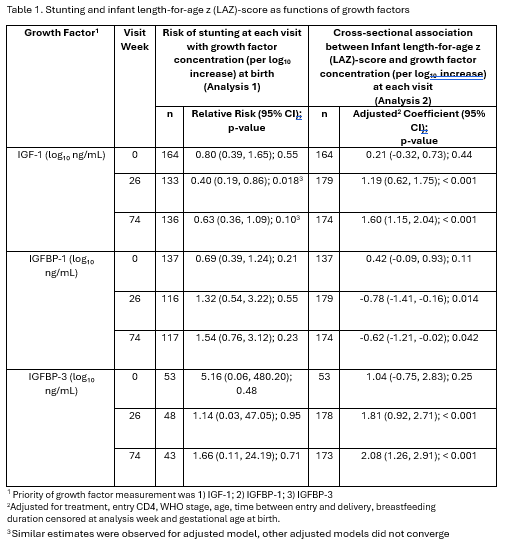
1023. Cardiometabolic Outcomes in HEU vs HU Children in a SA Birth Cohort: Influence of Maternal Lipids
Poster Abstracts
Page: 324
Calli Dogon1, Jennifer Pellowski1, Heather Zar2, Angela Bengtson3, Tiffany Burd2, Maresa Botha2, Lesley Workman2
Background
HIV-Exposed Uninfected (HEU) children have worse cardiometabolic health outcomes, compared to HIV-Unexposed uninfected (HU) children, but the effect of maternal cardiometabolic health in pregnancy on child outcomes is not clear. Our study investigated the impact of maternal gestational lipid biomarkers on child cardiometabolic health indicators in a birth cohort of South African HEU and HU children, the Drakenstein Child Health Study (DCHS).
Methods
The DCHS is a longitudinal birth cohort in a peri-urban area of South Africa (N=1143 live born infants). Our study randomly sampled 260 mother-child pairs from DCHS (N= 100 HEU & N= 160 HU). We used multivariable linear regression to assess associations between maternal lipid biomarkers from 2nd trimester of pregnancy (20-28 weeks’ gestation) with child cardiometabolic indicators at 5-8 years of age and explored potential effect modification by HEU status in stratified analyses. Child cardiometabolic indicators included lipid and glucose metabolism, blood pressure, and body composition.
Results
Associations were found between maternal total cholesterol (TC) and child TC and low-density lipoprotein (LDL) [TC; mean difference [MD] 0.19, 95% CI 0.09, 0.30] & [LDL; MD 0.21, 95% CI 0.12, 0.31]. When stratified by HIV exposure status, the relationship between maternal TC and child TC was stronger in HEU children than in HU children [HEU; MD 0.29, 95% CI 0.13, 0.45 vs HU; MD 0.13, 95% CI -0.01, 0.27]. The relationship between maternal TC and child LDL was also observed to be stronger in the HEU child [HEU; MD 0.26, 95% CI 0.13, 0.40 vs HU MD 0.18, 95% CI 0.05, 0.30]. Maternal LDL had similar associations with child TC and LDL (table 1). Maternal high-density lipoprotein (HDL) influenced the child HDL levels [MD 0.13, 95% CI 0.03, 0.23]; when stratified, this association was only demonstrated in the HU child [HU; MD 0.21, 95% CI 0.08, 0.34 vs HEU; MD 0.02, 95% CI -0.15, 0.19]. No significant associations were found between maternal lipids and child HbA1c, insulin resistance, systolic or diastolic blood pressure or body composition.
Conclusions
In a birth cohort of South African HEU and HU children, maternal gestational lipid profiles influenced child lipid metabolism, and this relationship may differ based on in-utero HIV exposure status. These findings suggest optimizing maternal lipid profiles during pregnancy may improve child cardiometabolic indicators, particularly in the context of HIV exposure and should be evaluated in larger cohorts.
Table 1.
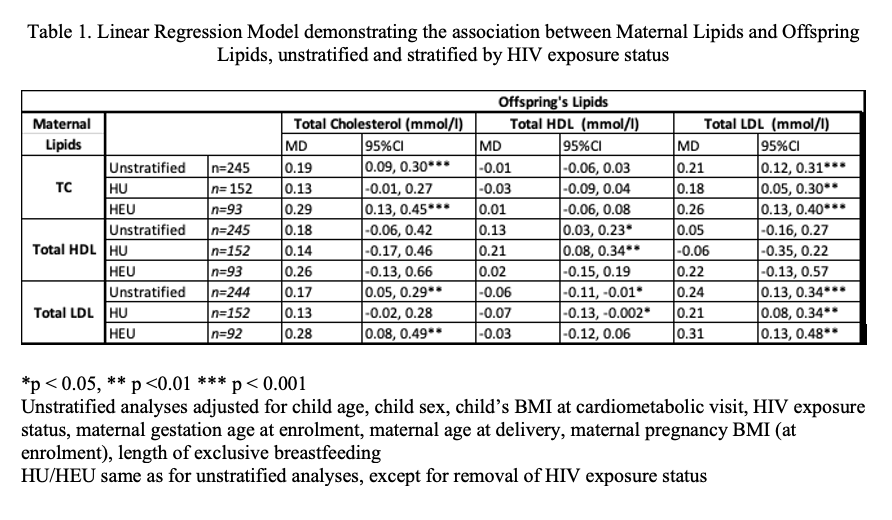
1024. Obesity and Metabolic Comorbidities in Young Adults With Perinatal HIV Exposure Without Infection
Poster Abstracts
Pages: 324-325
Nikhita Chahal, Allison K. Arpante, Julia E. Johnson, Camille A. Dash, Mollie W. Ockene, Isabel Zheng, Autumn Boutin, Hang Lee, Kathleen Corey, Takara L. Stanley, Steven Grinspoon, Lindsay T. Fourman
Background
The global scale-up of prenatal antiretroviral therapy (ART) has reduced the vertical transmission of HIV to <1%. In this context, a growing population of individuals with perinatal HIV exposure without infection (PHEU) has emerged, which now exceeds 20 million people worldwide. While growing evidence indicates that infants and children with PHEU are at increased risk of metabolic abnormalities, the long-term sequelae of in utero HIV/ART exposure into adulthood are largely unknown.
Methods
In this prospective observational study, we evaluated 41 young adults with PHEU and 41 young adults without HIV exposure or infection (24±5 y, 46% male per group). Young adults were matched 1:1 on ≥4 of the following: age, sex, race/ethnicity, maternal education, maternal substance use disorder, and breastfeeding. The primary outcome was BMI. Secondary outcomes were impaired glucose tolerance (HbA1c ≥5.7%, fasting glucose ≥100 mg/dL, and/ or 2-hour glucose ≥140 mg/dL on oral glucose tolerance test), hypertension (clinical diagnosis, systolic blood pressure ≥140 mmHg, and/or diastolic blood pressure ≥90 mmHg), and hepatic steatosis (controlled attenuation parameter ≥263 dB/m on transient elastography). A composite metabolic comorbidity score was devised with 1 point given for each of the latter 3 outcomes. Linear mixed effect models and chi-square tests were used to estimate differences in metabolic endpoints by PHEU status.
Results
Young adults with PHEU had higher BMI (effect: 5.1 kg/m2; 95% CI, 1.7, 8.5 kg/m2) and prevalence of class 2-3 obesity (41% vs. 5%, P<0.0001) versus matched controls. Individuals with PHEU also had higher rates of impaired glucose tolerance (21% vs. 3%, P=0.01), hypertension (20% vs. 0%, P=0.003), and hepatic steatosis (44% vs. 15%, P=0.006), corresponding to a higher metabolic comorbidity score (effect: 0.66; 95% CI, 0.35, 0.98). PHEU remained independently associated with BMI and comorbidity score upon adjusting for young adult (e.g., adverse childhood experiences) and maternal (e.g., BMI) factors. PHEU also conferred a higher rate of at least 1 comorbidity in young adults with obesity (89% vs. 42%, P=0.004) and without obesity (31% vs. 4%, P=0.01).
Conclusions
In the oldest cohort studied to date, young adults with PHEU had a higher burden of severe obesity and metabolic comorbidities versus matched unexposed peers. Though targeting BMI may partially mitigate metabolic disease risk, adverse metabolic outcomes were more common in people with PHEU irrespective of obesity.
The figure, table, or graphic for this abstract has been removed.
1025. WITHDRAWN
Poster Abstracts
Page: 325
1026. Comparing Telomere Length Between Children Who Were and Were Not Exposed to HIV in Kenya
Poster Abstracts
Page: 325
Jillian Neary1, Irene Njuguna1, Tiffany Pan1, Daniel Matemo2, Fiona McBride1, Alvin Onyango3, Maureen King'e3, Prestone O. Owiti3, Celestine Adogo2, Dalton Wamalwa3, Dan T. A. Eisenberg1, Grace John-Stewart1
Background
Children who were HIV exposed and uninfected (CHEU) may experience higher levels of oxidative stress and inflammation compared to children who are HIV unexposed (CHU). Telomere length (TL) is an important biomarker of aging. Telomere shortening results from cellular division, inflammation, and oxidative stress and is associated with age-related diseases. We compared TL between CHEU and CHU.
Methods
CHEU and CHU attending 7 public maternal and child health clinics were enrolled at their 6-week visit in the HOPE cohort from 2021-2022 in Kenya. Mothers of CHEU were on optimized antiretroviral therapy (ART). TL was measured from dried blood spots at 6 weeks of age using a modified version of the monochrome multiplex qPCR assay. We used linear mixed effects models with clinic as a random effect. Adjustment variables included infant age at DBS collection, infant sex, maternal age, paternal age, and maternal education. The statistical analysis plan was pre-registered prior to availability of TL data.
Results
Between 250 CHEU and 250 CHU, there were no significant differences (p=0.05) in child sex (51% female), median age at sample collection (median: 6.6 weeks), or preterm birth (2.8%). CHEU had older mothers (median: 31 vs 26 years), older fathers (median: 37 vs 31 years), and mothers with fewer years of education (median: 8 vs 12 years) compared to CHU. The majority (88%) of mothers of CHEU started ART before pregnancy and 47% of those mothers were on dolutegravir-based regimens before pregnancy. Mean TL z-score was -0.04 (standard deviation [SD]: 0.99) among CHEU and 0.04 (SD: 1.01) among CHU. HIV exposure was not significantly associated with TL in the unadjusted (-0.08, 95% confidence intervals [CI]: -0.26, 0.09, p=0.375) or adjusted models (-0.05, 95%CI: -0.26, 0.15, p=0.604).
Conclusions
In this relatively large cohort of CHEU and CHU, there was no significant difference in 6-week TL between CHEU and CHU. Future analyses will include longitudinal comparisons of the rate of TL decline between CHEU and CHU and analyses among CHEU to determine whether maternal ART regimen or viral load influence child TL.
1027. HIV Exposure Affects Gut Virome Richness but Not Diversity Among Kenyan Infants
Poster Abstracts
Pages: 325-326
Emily R. Begnel1, Rabia Maqsood2, LaRinda A. Holland2, Ednah Ojee3, Prestone O. Owiti3, Judith Adhiambo3, Eliza Mabele3, Soren Gantt4, Bhavna H. Chohan1, John Kinuthia5, Dalton Wamalwa3, Efrem S. Lim2, Dara A. Lehman6, Jennifer Slyker1
Background
The gut virome is seeded at birth, rapidly develops in the first years of life, and is influenced by numerous behavioral and environmental factors including exposure to the maternal virome. Thus, maternal HIV infection could alter virome development and may contribute to the increased morbidity and mortality seen in children exposed to HIV. However, no study has characterized the gut virome of children who are HIV-exposed, uninfected (CHEU). To address this gap, we described and compared the gut virome of Kenyan CHEU and children who are HIV-unexposed, uninfected (CHUU) from birth-21 months.
Methods
We performed metagenomic sequencing of the DNA virome on stool samples collected between January 2019-December 2020 from a birth cohort of healthy infants in Nairobi, Kenya. Data from 37 CHUU and 32 CHEU whose mothers initiated ART prior to (n=29) or in early pregnancy (n=2) were included. To compare gut virome composition by HIV exposure and breastfeeding practices, we used generalized estimating equations models adjusted for maternal age, breastfeeding, and socioeconomic status for virome richness and Shannon (alpha) diversity, principal coordinates analysis and PERMANOVA for Bray-Curtis distances (beta diversity), and MaAsLin2 to identify discriminating viral taxa.
Results
Virome richness was lower among CHEU than CHUU (b= -130, 95% CI: -250 – -9.7, p=0.03), but there were no differences in Shannon diversity (beta= -0.3, 95% CI: -0.5–0.05, p=0.1) or Bray-Curtis distances (p=0.8) by HIV exposure. Relative abundances of 28 unique viral contigs were associated with CHEU status, of which 17 (61%) were of the family Anelloviridae. Consistent with previous studies of CHUU, older age (months; beta= 24.1, 95% CI: 4.2-43.9, p=0.02) and introduction of foods other than breast milk (beta= 343, 95% CI: 112-573, p=0.004) were also associated with higher virome richness among all infants.
Conclusions
Age, feeding practices, and HIV exposure altered gut virome richness, but not Shannon or beta diversity, suggesting the presence and/ or absence of specific viruses within groups did not substantially shift overall community structure. Similarities between CHEU and CHUU suggest that HIV exposure is not a major determinant of the infant virome when mothers receive optimized ART before or in early pregnancy. Further research should assess whether lower abundance of Anelloviridae has a meaningful effect on health among CHEU.
1028. HIV Exposure Does Not Affect Cytomegalovirus Acquisition Risk in a Setting of Optimized Maternal ART
Poster Abstracts
Page: 326
Emily R. Begnel1, Mi-Suk Kang Dufour2, Kerusha Govender2, Jing Hu2, Elisabeth McClymont3, Ednah Ojee4, Prestone O. Owiti4, Judith Adhiambo4, Eliza Mabele4, Bhavna H. Chohan1, Dara A. Lehman5, John Kinuthia6, Dalton Wamalwa4, Soren Gantt2, Jennifer Slyker1
Background
Children who are HIV-exposed, uninfected (CHEU) have had higher incidence and earlier cytomegalovirus (CMV) acquisition than children who are HIV-unexposed, uninfected (CHUU), which may contribute to the higher morbidity and mortality observed among CHEU. To determine whether this difference in CMV acquisition persists in the era of optimized, universal ART, we assessed the probability, timing, and correlates of primary CMV infection within a recent birth cohort of CHEU and CHUU.
Methods
Women without HIV and women living with HIV on ART for ≥6 months were recruited in pregnancy (28-42 weeks gestation) from a maternal-child health clinic in Nairobi, Kenya between December 2018-March 2020; 89% of mothers with HIV initiated ART before pregnancy. Mother-infant pairs were followed for 12 months postpartum with weekly data and sample collection. Quantitative PCR was used to measure log10-CMV DNA levels in infant urine/ saliva and maternal saliva/breast milk. The probability and timing of infant CMV acquisition were determined by Kaplan-Meier survival analysis. Correlates of CMV acquisition were assessed using Cox proportional hazards regression models stratified by exclusive breastfeeding (EBF) status and adjusted for infant sex, HIV exposure, and household crowding.
Results
Fifty-three (74%) of 72 infants (22 CHEU, 31 CHUU) acquired CMV. Median time to infection was 2.4 months (IQR 2.0-4.7) and did not differ by HIV exposure (log-rank p=0.7). HIV exposure did not affect the hazard of CMV acquisition when infants were EBF (adjusted hazard ratio [aHR]= 1.24, 95% CI: 0.69-2.23, p=0.471) or not EBF (aHR=0.52, 95% CI: 0.10-2.68, p=0.438). However, the hazard was two times greater per log10 increase in breastmilk CMV DNA both when infants were EBF (aHR=2.09, 95% CI: 1.48-2.95, p<0.001) and received mixed feeds (aHR=1.98, 95% CI: 1.26-3.10, p=0.003); this finding did not differ by HIV exposure. Women living with HIV had higher CMV DNA levels in breast milk despite initiating ART before (89%) or in early (11%) pregnancy (Figure 1).
Conclusions
Probability of CMV acquisition was similar between CHUU and CHEU whose mothers initiated optimized ART before pregnancy, and 74% of infants acquired CMV in the first 3 months of life. Breast milk remains a primary source of CMV acquisition for all infants. Though mothers with HIV had higher breast milk CMV DNA levels despite receiving optimized ART before or in early pregnancy, this did not translate to higher risk of CMV acquisition among CHEU.
Figure 1.
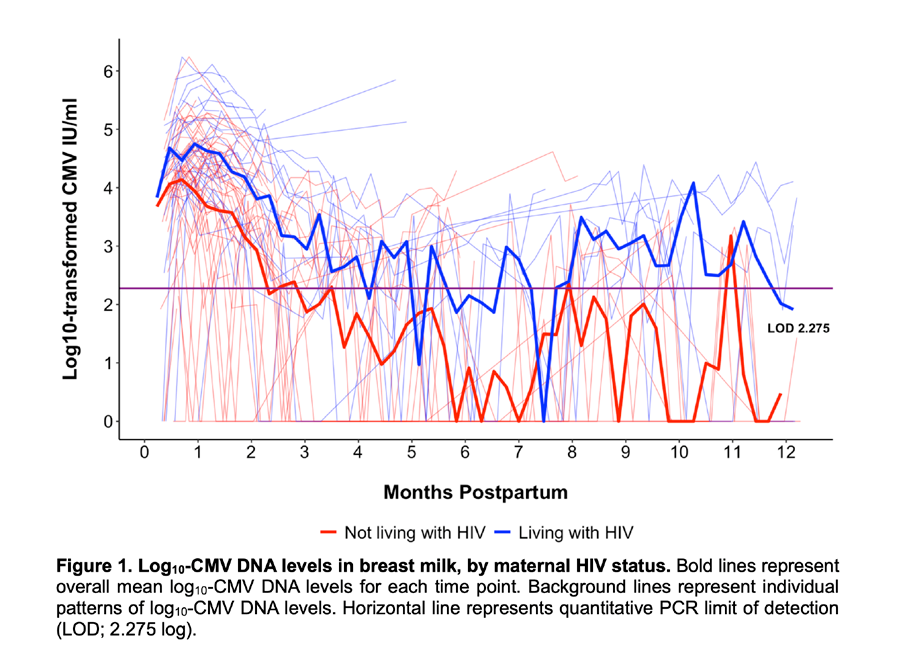
1029. Rapid Waning in Hepatitis B Virus Vaccine Immunity Among Children HIV-Exposed Uninfected in Botswana
Poster Abstracts
Pages: 326-327
Lynette Bhebhe1, Bonolo B. Phinius1, Tsholofelo K. Ratsoma1, Gorata Mpebe1, Chanana Tsayang1, Kabo Baruti1, Basetsana K. S. Phakedi1, Linda D. T. Mpofu-Dobo1, Patience Motshosi1, Justine Legbedze2, Jennifer Jao3, Kathleen Powis4, Sikhulile Moyo1, Motswedi Anderson1, Simani Gaseitsiwe1
Background
The impact of perinatal HIV exposure on children’s immune response to the hepatitis B virus (HBV) vaccine over time has yet to be fully understood. We determined the HBV prevalence in mother-child pairs and HBV vaccine response in children HIV-exposed uninfected (cHEU) and those unexposed uninfected (cHUU) over time in Botswana.
Methods
Mother-child specimens from pregnant women with and without HIV enrolled in the Botswana-based Tshilo Dikotla study (2016–2022) and followed up for three years were utilised. Baseline maternal samples were tested for HBV surface antigen (HBsAg) and HBV core antibodies (anti-HBc) using an enzyme linked immunosorbent assay. Plasma samples from children were screened for HBsAg, anti-HBc and HBV surface antibodies (anti-HBs) using a chemiluminescent assay at 2 and 3 years of age. Anti-HBs levels ≥10 mIU/ mL were considered protective. Wilcoxon Rank-sum test and Chi-square tests were used to compare characteristics and vaccine responses by child HIV status. Paired t-tests were used to compare anti-HBs titers at two timepoints (year 2 and 3).
Results
Women with HIV (WWH) were older, median age 30 years (interquartile range (IQR):25–35) compared to those without (24 years (IQR:21– 29)) (p<0.001). Among 248 maternal plasma samples tested (>24 weeks gestation), HBV prevalence was 2.0% (95% CI:0.74–4.9). WWH had a higher HBV exposure (anti-HBc positivity) 29.0% (95% CI:22.5–36.4) compared to mothers without HIV, 13.9% (95% CI:7.2–24.5, p=0.02). HBV prevalence among 3-year-olds was 0.56% (1/179) (95% CI: 0.03–3.5) with no observed differences by HIV exposure (0.74% cHEU vs 0% in cHUU, p=0.53). None had prior HBV exposure. 18.4% (25/136) of cHEU and 9.3% (4/43) of cHUU had non-protective HBV immunity at the age of 3 (Figure 1). Vaccine response was assessed in 89 paired plasma samples available at 2 and 3 years. A significant decline in anti-HBs titers within a year was observed in both cHEU (coefficient=0.76, p<0.001) and cHUU (coefficient=0.80, p<0.01). Of the 17 (19.1%) non-responders (<10mIU/mL), 14 (83.2%) were cHEU, and a significant decline in immune response was observed among cHEU within 12 months (p<0.05), with no difference in cHUU (p=0.08).
Conclusions
We report rapid waning of HBV vaccine immunity within the first 3 years of life, which was more pronounced in cHEU than those cHUU. This increases the risk of HBV infection hence longer-term studies are needed to determine if HBV vaccine booster doses are required for these children.
Figure 1.
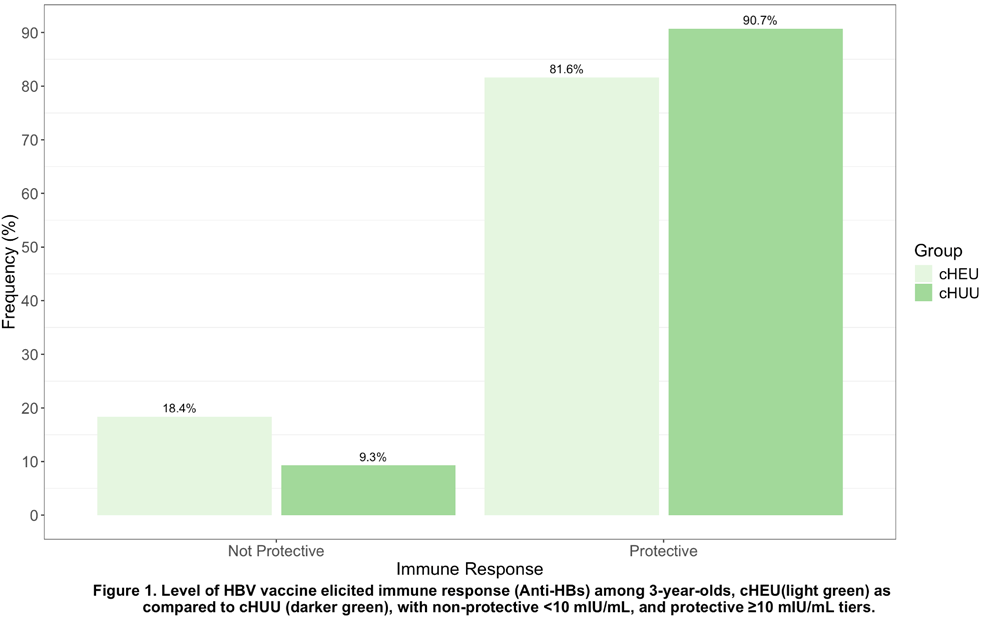
1030. Long-Term HIV Reservoir Dynamics in Early Treated Thai Children
Poster Abstracts
Page: 327
Marta Massanella1, Amélie Pagliuzza2, Caroline Dufour2, Thidarat Jupimai3, Supranee Buranapraditkun3, Rapisa Nantanee3, Julie Mitchell4, Mark S. Souza4, Piyarat Suntarattiwong5, Lydie Trautmann6, Remi Fromentin2, Thanyawee Puthanakit7, Nicolas Chomont8, the HIVNAT209 Study Group
Background
Early antiretroviral therapy (ART) and continuous suppression drastically limit the size of the HIV reservoir in adults; however, long-term follow up data on the size and composition of the reservoir in children who initiated ART during the first weeks of life remain limited. We studied the effect of early ART on the long-term dynamics of HIV reservoir markers in Thai children suppressed on ART for up to 10 years.
Methods
Forty-nine children with perinatal HIV who initiated ART within a median of 10 IQR [5-14] weeks of life were followed annually (up to 9.9 years). All children received continuous ART during the follow-up period. We quantified total and integrated HIV DNA in CD4 T cells by real-time PCR and measured the frequency of CD4 T cells producing multiply spliced RNA (msRNA) after PMA/ ionomycin stimulation by TILDA. Mixed-effects models were used to measure longitudinal decays in each HIV reservoir marker.
Results
Total HIV DNA, integrated HIV DNA and inducible reservoir were detected in all children at high levels before ART initiation (2189 IQR [691-10011], 139 IQR [51-845] and 50 IQR [1-114] infected cells per 106 CD4 T cells, respectively). Longitudinal analysis over a median 4.9 IQR [2.9-7.3] years of ART revealed a biphasic decay of the 3 HIV reservoir markers, with a rapid initial decline followed by a slower decay. During the first-phase decay, similar half-lives of total HIV DNA, integrated HIV DNA and TILDA measures were observed (decay of -1.10, -0.68 and -0.96 log10 infected cells/year, respectively, p<0.001 in all cases). During the second phase, HIV reservoir markers remained stable (-0.04, 0.02 and -0.03 log10 infected cells/year, respectively, decay p=ns). Despite no apparent decrease in the size of inducible reservoir, the proportion of participants with detectable TILDAs decreased with time on ART: TILDA+ cells were detected in all children at baseline (100%, n=14), in 60% after 1 to 3 years on ART (n=62), and in less than 40% of the participants after 4 years of therapy (n=32).
Conclusions
A large pool of HIV-infected cells is rapidly established in vertically infected Thai infants. Early ART initiation (within 3 months of life) is associated with a rapid initial decay of all HIV reservoir markers, followed by a stable second-phase. The proportion of children with detectable inducible reservoir as measured by TILDA continues to decrease after 3 years on ART, suggesting that prolonged therapy may have long-term benefits in this population.
Figure 1.
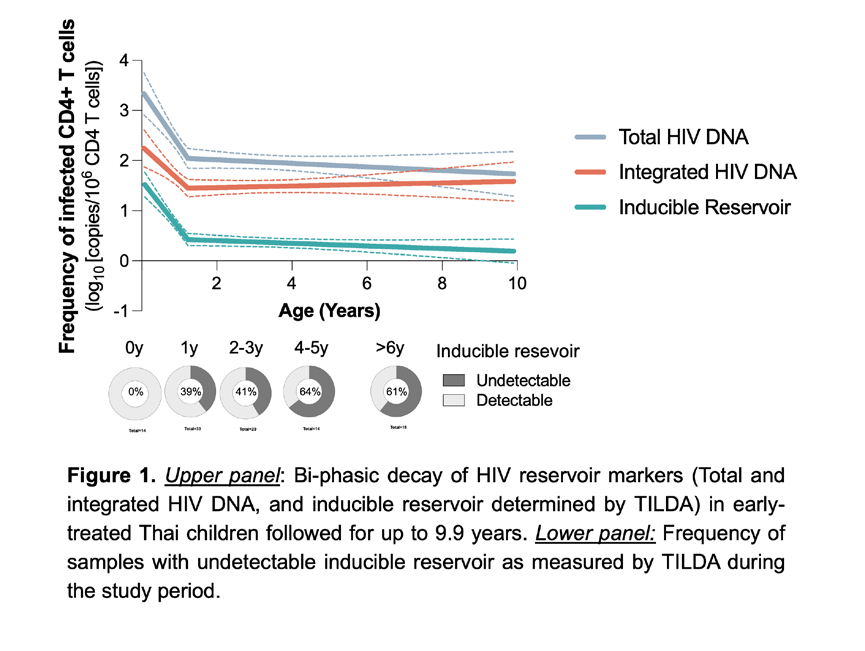
1031. NK Cell KIR Education Is Associated With Low HIV DNA Load in Early ART-Treated Children
Poster Abstracts
Page: 327
Nicholas G. Herbert1, Gabriela Z. L. Cromhout2, Nomonde Bengu2, Maria C. Puertas3, Javier Martinez-Pìcado3, Thumbi Ndung'u2, Dimitra Peppa4, Philip Goulder1
Background
Early ART initiation, low immune activation, and effective anti-HIV NK cell responses have been linked with HIV remission in adults. It has been proposed that these features in combination with early life immunity may favour remission in children living with HIV (LWH). In a cohort of very early ART-treated children in KwaZulu-Natal, South Africa, we here examined the immunogenetic signatures and functional NK cell profile associated with low HIV DNA load and increased HIV cure/remission.
Methods
We evaluated a cohort of >300 early-ART-treated children LWH from KwaZulu-Natal, South Africa followed from birth. The cohort included 5 ‘atypical’ children who maintained ART-free aviraemia following unscheduled ART discontinuation. Total HIV DNA was quantified longitudinally as a proxy for reservoir size. NK cell function was assessed via immunophenotypic analysis and stimulation with IL-12/IL-18, K562 cells and Rituximab-coated Raji cells.
Results
Low HLA-A expression, favouring KIR-educated NK cells, was associated with low total HIV DNA load at birth and at 9m age (p=0.01 and p=0.01). Also, consistent with adult post-treatment controller (PTC) cohorts, children with ‘protective’ HLA-B alleles (HLA-B*57/58:01/81:01) had 0.5 log10 higher total HIV DNA loads at birth and 9m (p=0.02 and p=0.04) than those without. High NKG2D expression on CD56dim NK cells, potentially reflecting heightened inflammation and increased soluble NKG2D ligands such as sMIC-A and sMIC-B, correlated with low HIV DNA (r=-0.51, p=0.005) at 9m age. Following IL-12/IL-18 stimulation, high IFNg production by NKG2A+CD56dim NK cells was associated with low HIV DNA loads (r=-0.6, p=0.01) at 9m, and spontaneous CD107a production by iKIR+NKG2A-CD56dim NK cells negatively correlated with HIV DNA load at 9m and 30m (p=0.01 and p=0.01). Unexpectedly, NK cells in the 5 ‘atypical’ children expressed higher iKIR:NKG2A ratio (p=0.05), suggesting a more differentiated NK cell compartment in ‘atypical’ versus ‘typical’ children.
Conclusions
These data suggest that an HLA-I signature favouring KIR-educated NK cells is associated with low total HIV DNA load in early ART-treated children at birth, implying in utero anti-HIV NK cell activity. This HLA-I signature is consistent with findings from ART-naïve adults, ART-naïve children and adult PTCs. These data also indicate a diverse pattern of CD56dim NK cell functionality mediating reduced HIV DNA load and increased HIV cure/remission potential in children.
1032. Evolving Expression of Co-Inhibitory Receptors and Plasma Cytokines in Children Living With HIV
Poster Abstracts
Pages: 327-328
Hinatea Dieumegard1, Mojahidul Islam2, Hadiya Johnson2, Jade Canape1, Madeleine Aby Diallo1, Fatima Kakkar3, Ari Bitnun4, Jason Brophy5, Stanley Read4, Michael T. Hawkes6, Rafick P. Sekaly2, Ann M. Chahroudi2, Ashish A. Sharma2, Hugo Soudeyns1, the EPIC4 Study Group
Background
HIV disease in children differs from that seen in adults. The objective of this study was to test the association between HIV reservoir size and the development of antiviral immunity between childhood, adolescence and young adulthood in terms of a) expression of co-inhibitory receptors; and b) expression of plasma cytokines.
Methods
Expression of co-inhibitory receptors was measured by flow cytometry. Levels of 33 plasma cytokines and chemokines were assessed using the Meso Scale Discovery platform. Total HIV DNA was measured by qRT-PCR and inducible HIV RNA levels were measured following prostratin stimulation. HIV-specific cell-mediated immune responses were measured using IFN-g ELISPOT.
Results
The study was conducted on 65 participants of the EPIC4 Cohort (47.4% male) who were stratified as children (<10 yrs; n=15), adolescents (10-18 yrs; n=34) or young adults (>18; n=16). Median viral load was <40 RNA copies/ mL plasma (range=<40-8473 copies). Frequencies of CD4+ T cells expressing PD-1 or TIGIT and of CD8+ T cells expressing PD-1, TIGIT or CD160 significantly increased with age. Total HIV DNA and inducible HIV RNA levels were positively correlated with frequencies of PD-1+ (p≤0.033) and TIGIT+ (p≤0.032) CD4+ T cells and of PD-1+ (p<0.001), TIGIT+ (p≤0.080) and CD160+ (p≤0.021) CD8+ T cells (Figure). Children clustered separately from adolescents and young adults in PCA whether reservoir size or HIV-specific cell-mediated immune responses were included. Unbiased PCA showed that global variability in the plasma cytokine profile on the first PC (27.4% variability) was significantly (p<0.05) associated with age at sample collection, while the second PC (15.04% variability) was linked to HIV reservoir size. Plasma levels of TGF-b and TH2 cytokines (e.g., IL-4) were significantly elevated in children <10. A subset of older participants (>10 years) with high TGF-b levels did not exhibit high levels of inducible HIV RNA. Conversely, older participants with reduced levels of TGF-b showed higher levels of IL-17A, IFN-g, total HIV DNA and inducible HIV RNA.
Conclusions
Expression of a set of co-inhibitory receptors (PD-1, TIGIT, CD160) and evolution of cytokine profiles were associated with age and with total and inducible HIV reservoir size in children and adolescents living with vertically-acquired HIV. This study highlights major longitudinal shifts in mobilization of immune pathways that could inform the differential pathology of pediatric HIV disease.
Figure 1.
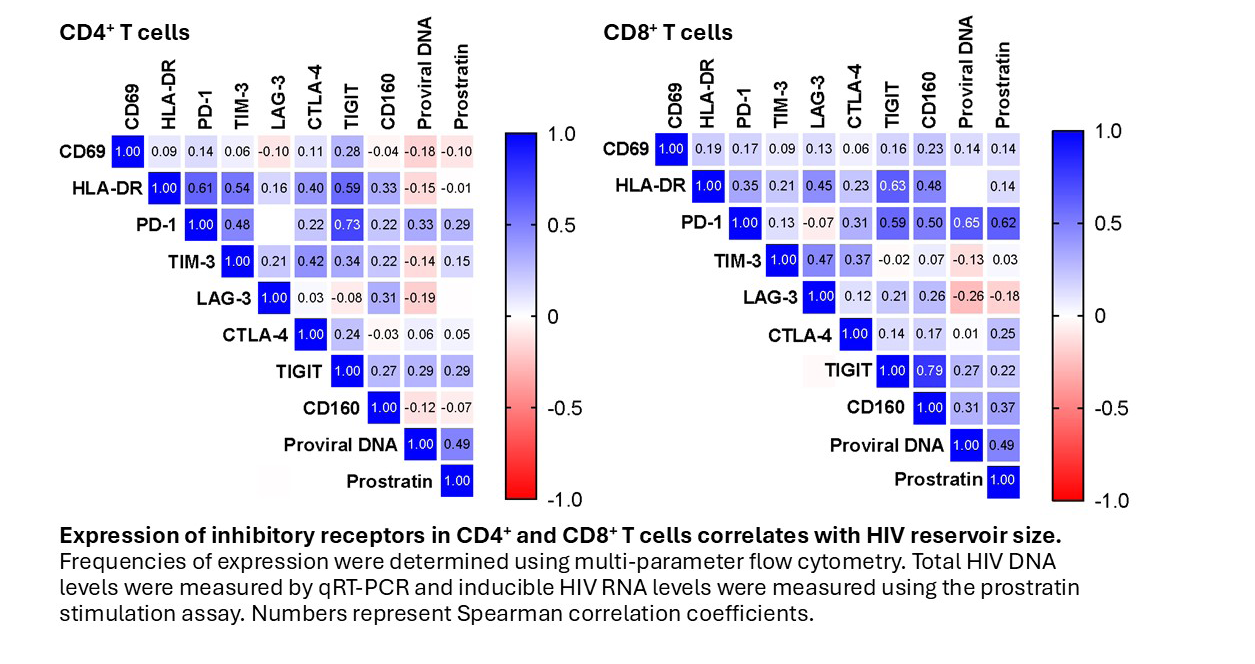
1033. Proviral HIV-1 DNA Below Detection in Early Treated Adolescents After Prior Treatment Interruption
Poster Abstracts
Page: 328
Louise Kuhn1, Kavidha Reddy2, Chantal Molechan3, Kennedy Otwombe4, Ana Barrios1, Shaun Barnabas5, Thanyawee Puthanakit6, Diana Rutebarika7, Tacilta Nhampossa8, Maria G. Lain9, Almoustapha Maiga10, Moira Spyer11, Paolo Palma12, Mathias Lichterfeld13, Mark Cotton5, the CARMA-Global Study Team of the EPIICAL Consortium
Background
Undetectable or low HIV-1 DNA levels have been associated with a greater likelihood of ART-free viral control in adults treated during primary infection. Here we investigate predictors of HIV-1 DNA levels in a cohort of early-treated children and adolescents recruited on characteristics expected to make them good candidates for future remission/cure trials.
Methods
Parents or guardians of children and adolescents with perinatally-acquired HIV starting ART <3 months of age, >7 years prior and with plasma HIV-1 RNA <50 copies/ml on ART were recruited at 8 sites in South Africa, Mozambique, Uganda, Mali and Thailand. Children who had undergone prior planned or unplanned ART interruptions could also enroll if ART had been resumed for >2 years after interruption. HIV-1 DNA was measured in PBMCs using droplet-digital PCR. Associations between DNA levels and preceding factors were investigated with descriptive statistics and chi-square tests.
Results
ART was started at a median of 65 days (IQR 52-85) among 87 participants (49.4% male) enrolled in this study at a median of 13.2 years of age (IQR 9.6-16.7). Overall, the median HIV-1 DNA level was 340 copies/106 cells (IQR: 145- 909) and 10.3% were below the threshold of detection (<1 copy/106 cells). Distributions of HIV-1 DNA did not differ between male and female participants; and, within this truncated range of age of ART start, those starting ART <60 days of age had HIV-1 DNA median 240 copies/106 cells (IQR 83-873; 12.8% undetectable) similar to those starting >60 days: median 396 copies/106 cells (IQR 208-943, 8.3% undetectable). Undetectable HIV-1 DNA was more frequent in those who had undergone a past ART interruption (22.7%) than those who had remained on continuous ART (6.3%) p=0.04. Median age of ART interruption was 1.4 years, two-thirds were planned interruptions as part of the CHER study, and the median duration of interruption was 2.4 months. There were no differences in age of ART start or sex distribution between those with and without a history of interruption.
Conclusions
Around 10% of early-treated children and adolescents well-suppressed on ART for more than a decade had HIV-1 DNA levels below the assay’s detection threshold. Having undergone a prior ART interruption was associated with greater likelihood of undetectable HIV-1 DNA. These results provide intriguing support for the concept of “auto-immunization,” where ART interruption is undertaken to bolster HIV immunity toward ART-free viral control.
The figure, table, or graphic for this abstract has been removed.
Figure 1.

1034. Pediatric ART Interruptions Transiently Raise HIV DNA Without Large Changes to Long-Term Reservoirs
Poster Abstracts
Pages: 328-329
Daniel B. Reeves1, Morgan Litchford1, Carolyn Fish1, Noah Cassidy1, Agnes Langat2, Daisy Chebet2, Helen Moraa2, Jennifer Slyker3, Sarah Benki3, Julie Overbaugh1, Dalton Wamalwa2, Grace John-Stewart3, Joshua T. Schiffer1, Dara A. Lehman1
Background
To inform pediatric HIV persistence inclusive of scenarios where antiretroviral therapy (ART) usage may not be completely suppressive, we sought to elucidate reservoir dynamics with and without occasional HIV RNA viremia.
Methods
In Kenyan children living with HIV who initiated ART between 1-12 months of age (median 3 months), we measured HIV RNA and HIV DNA (3-probe-classified intact vs. defective via our cross-subtype intact proviral DNA assay “CS-IPDA”) for up to 8 years of follow up. HIV RNA was quantified every 3-6 months resulting in median of 19 (range 1-32) HIV RNA observations. DNA was quantified approximately every 6 months during the first two years of ART and then every 2 years afterwards resulting in a median of 5 (range 1-10) HIV DNA measurements per child. We developed mathematical models to integrate HIV RNA and DNA data and estimate reservoir decay rates from 57 children who suppressed viremia as well as in an additional 65 children who did not fully suppress and/or experienced ART interruptions with HIV RNA viremia above 1000 copies/mL.
Results
Our model linked periods of HIV RNA viremia to transient rises in both intact and defective HIV DNA. However, after HIV RNA resuppression, HIV DNA levels and decay rates returned to pre-viremic levels (Fig). Consistent with this, long term intact and defective HIV DNA decay rates were not different in CWH with and without treatment interruptions. Estimates (mean and [95% confidence interval]) for HIV DNA decay from CWH who suppressed HIV RNA below 1000 copies/mL by 6 months of ART were biphasic for year 0-1 and 1-8 of ART – intact HIV DNA: 2.7 [2–4.1] followed by 22 [10.5–∞] month half-life; defective HIV DNA: 8.6 [5.4–20.7] month half-life followed by 101 [54–845] month doubling time. We found that there was a moderate relationship between the number of months in which CWH had observed HIV RNA above 1000 copies/mL during follow-up and the HIV DNA level at study end, 8 years after ART initiation (Spearman rho=0.6, p=0.004 and rho=0.5, p=0.01 for intact and defective HIV DNA, respectively).
Conclusions
Models show viremia correlate with rises in HIV DNA, but rises were transient, suggesting most HIV DNA created during treatment interruptions is short lived. Our results also raise the possibility that in CWH, primary infection more effectively seeds long term reservoirs than treatment interruptions after ART is initiated.
Figure 1.
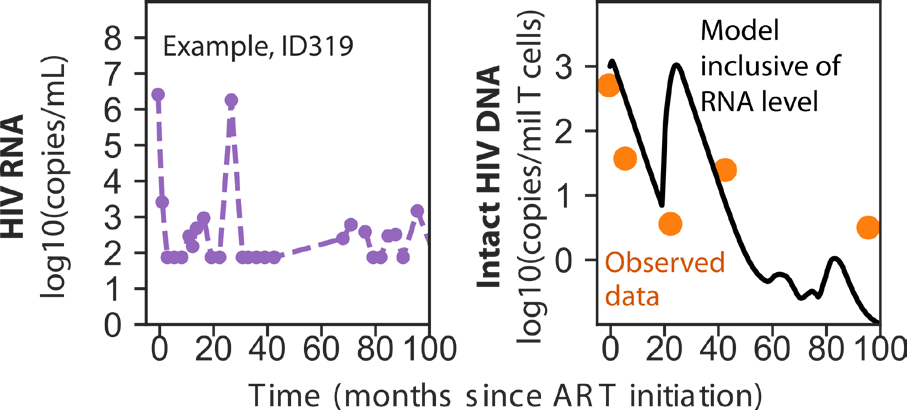
1035. Children With Very Early ART and Favorable Profiles for ART-Free Viral Control Research: Thai Cohort
Poster Abstracts
Page: 329
Rapisa Nantanee1, Suvaporn Anugulruengkitt1, Wipaporn Natalie Songtaweesin1, Supranee Buranapraditkun1, Amélie Pagliuzza2, Marta Massanella3, Jinnaphak Seesuksai1, Monta Tawan1, Thidarat Jupimai1, Siriwat Akapirat4, Sasiwimol Ubolyam5, Julie Mitchell6, Nicolas Chomont7, Lydie Trautmann8, Thanyawee Puthanakit9, the HIVNAT209 Study Group
Background
Data from IMPAACT P1115 showed proof of concept that children who received very early antiretroviral therapy (ART) and displayed restricted HIV viral reservoirs could achieve >48 weeks of virological control upon analytical treatment interruption (ATI). In this study, we characterized Thai children who received very early ART and had favorable profiles for ART-free virological control.
Methods
We performed a follow-up study of 24 neonates who were born between 2015-2018 and received ART within 24 hours of life. Participants who received neonatal prophylaxis and transitioned to treatment dosage were included. The following criteria were used to define “favorable profiles” for enrollment eligibility: (1) sustained viral suppression (HIV RNA <200 copies/mL) (2) negative HIV antibodies by chemiluminescent microparticle immunoassay (3) low integrated HIV DNA < 2 log10 per million CD4+ T cells (4) undetectable inducible HIV virus by tat/rev induced limiting dilution assay (TILDA). We measured HIV antibodies by Western blot and HIV-specific CD4+ and CD8+ T cell responses by multiparameter flow cytometry with activation-induced marker and intracellular cytokine staining after stimulation with Gag, Pol and Env peptides.
Results
Thirteen participants were ineligible because of virological failure/ poor adherence (n=11) or the presence of detectable HIV antibodies (n=2). Between March and April 2024, 5 out of 11 eligible participants were enrolled (Table 1). Current median (IQR) age was 7 (7.0-7.5) years and 80% were male. Three children acquired HIV in-utero. Current ART regimens were DTG-based in 3, EFV-based, and LPV/r-based in 1 each. Integrated HIV DNA ranged from 11-87 copies/106 CD4 T cells, all had undetectable inducible virus by TILDA assay. Two of the 5 participants had HIV antibodies to Gag and Pol and none had antibodies to Env. All children had detectable (IFN-γ+) Env-specific CD4+ T cell responses whereas Env-specific CD8+ T cells responses were detected in 2/5 participants. Gag-specific CD4+ and CD8+ T cell responses were detected in 2 and 1 children respectively. Pol-specific T cell responses were absent.
Conclusions
Some children who received very early ART had low HIV reservoirs and are potential candidates for ATI. However, they had limited HIV-specific CD4+ and CD8+ T cell response. Research strategy for ART-free virological control should consider boosting HIV-specific immunity prior to ATI.
Table 1.
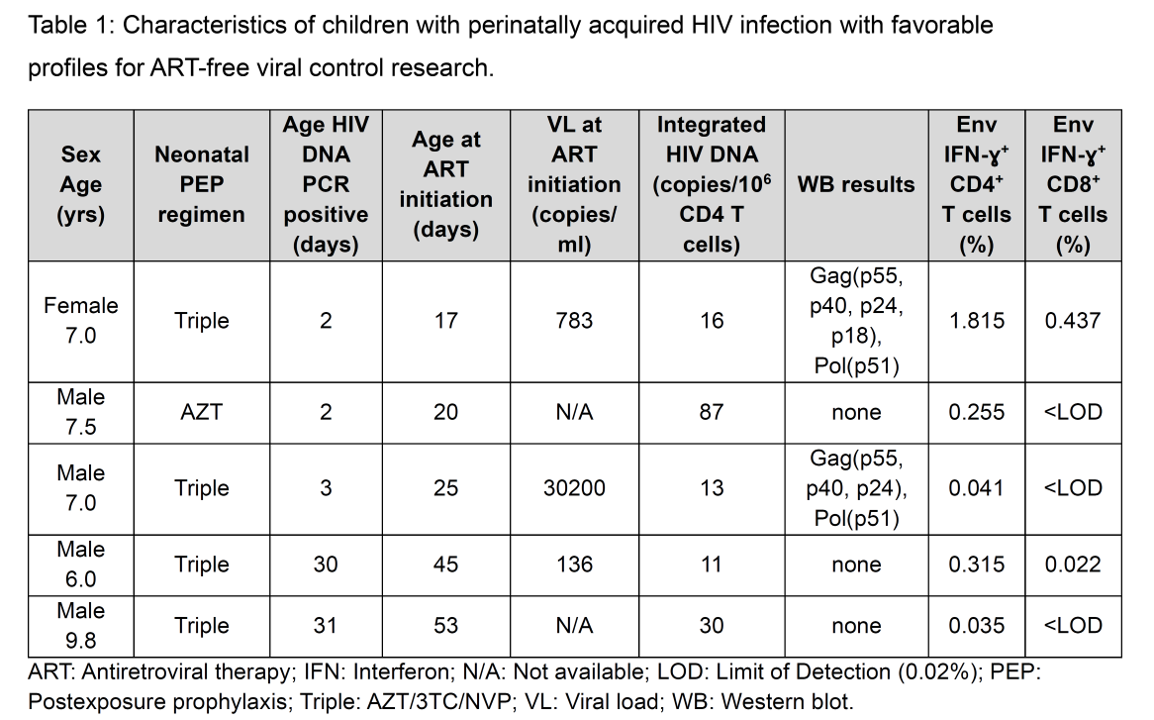
1036. Association Between HIV-Specific Antibodies and HIV Reservoir Markers in Early Treated Children
Poster Abstracts
Pages: 329-330
Rapisa Nantanee1, Suvaporn Anugulruengkitt1, Wipaporn Natalie Songtaweesin1, Siriwat Akapirat2, Supranee Buranapraditkun1, Amélie Pagliuzza3, Marta Massanella4, Jinnaphak Seesuksai1, Monta Tawan1, Thidarat Jupimai1, Sasiwimol Ubolyam5, Julie Mitchell6, Nicolas Chomont7, Lydie Trautmann8, Thanyawee Puthanakit9, the HIVNAT209 Study Group
Background
Children who initiated early antiretroviral therapy (ART) are potential candidates for ART-free virological control. Low antibody responses to Env (gp160, gp41) or Gag (p24) HIV proteins have been reported associated with low HIV reservoir size. This study aimed to characterize HIV protein-specific antibody and HIV reservoir size in children who initiated early ART and had sustained virological suppression.
Methods
Children aged 6-10 years who initiated ART within 6 months of age and sustained virological suppression were enrolled. HIV antibodies were detected by western blot assay (WB) to 10 proteins: Env (gp160, gp120, gp41), Pol (p65, p51, p31), and Gag (p55, p40, p24, p18) and chemiluminescent microparticle immunoassay (CMIA). HIV reservoir size was measured by tat/rev induced limiting dilution assay (TILDA) and integrated HIV DNA.
Results
Between March and April 2024, 23 children were enrolled. ART was initiated at the median (interquartile range, IQR) age of 73 (45-99) days, and 17 (74%) initiated ART within 3 months of age. The median (IQR) age was 8.4 (7.0-9.5) years, CD4+ T cells was 814 (670-1191) cells/mm3, and integrated HIV DNA was 47 (15-87) copies/106 CD4+ T cells. WBs were positive for Env in 3 (13%), Pol in 10 (44%), and Gag in 14 (61%) children. Children who had negative HIV antibody by CMIA (n=14) had no response to Env-gp160 protein (0% vs 33%, p=0.04), low response to Env-gp41 protein (0% vs 11%, p=0.39) and significantly lower response to Gag-p24 (43% vs 89%, p=0.04), as shown in Figure 1A. There was no statistically significant difference in HIV-specific antibody responses between the 11 (61%) children who had undetectable HIV reservoir by TILDA assay and the 7 (39%) children with detectable TILDA (Figure 1B). There was no statistically significant difference in HIV-specific antibody responses among children with integrated HIV DNA > or ≤ 50 copies/106 CD4+ T cells (p>0.05).
Conclusions
Children with early ART had low HIV-specific antibodies to Env. No strong association between HIV-specific antibody response by WB and HIV reservoir by TILDA or integrated HIV DNA levels was found. Identification of potential candidates for ART-free virological control should consider both HIV-specific antibody and reservoir size.
Figure 1.
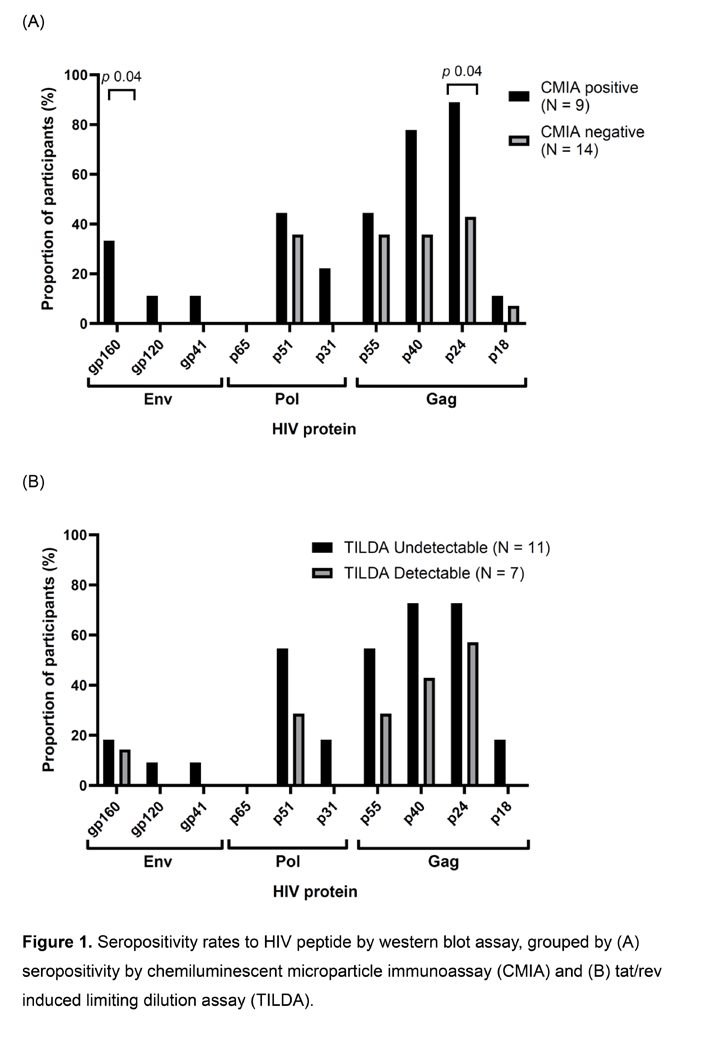
1037. Baseline Viral Load Impacts Premature Aging in Infants With Perinatally Acquired HIV in EARTH Cohort
Poster Abstracts
Page: 330
Maria Raffaella Petrara1, Elena Ruffoni1, Giuseppe Rubens Pascucci2, Elena Morrocchi3, Francesco Carmona1, Nicola Cotugno2, Paolo Rossi2, Silvia Giunco1, Carlo Giaquinto1, Paolo Palma2, Anita De Rossi1, the EPIICAL Consortium
Background
The aim of this study is to assess the impact of baseline viral load on the premature aging process in infants with perinatally acquired HIV (PHIV), enrolled in the Early Anti-Retroviral Treatment in HIV children (EARTH) cohort.
Methods
Thirty-six ART-naïve PHIV infants, with a median age of 1.6 (1.3-2.5) years at enrollment, were stratified in two groups based on plasma viremia at enrollment: group 1 (<25 percentile of Log2 HIV-RNA) and group 2 (>75 percentile of Log2 HIV- RNA). The immune aging profile, including activated, senescent and exhausted T cells, were analyzed by flow cytometry. Relative telomere length and HIV-DNA levels in peripheral blood mononuclear cells (PBMC) were measured by real-time PCR and droplet digital PCR, respectively. Statistical analyses were performed using SigmaPlot software.
Results
Plasma viremia significantly correlated with HIV-DNA in PBMC (r=0.525, p=0.003). Baseline levels of HIV-DNA levels in PBMC were significantly higher in group 2 than in group 1 (1159 [617-4426] vs 89 [9-1607] copies/106 PBMC, p=0.011). Similarly, group 2 had higher percentages of activated (CD38+HLA-DR+), senescent (CD27-CCR7-CD45RA+CD28-CD57+) and exhausted (PD-1+) CD4 and CD8 T cells than group 1 (Relative Telomere lengths were significantly shorter in group 2 than in group 1 (1.82 [1.68-1.90] vs 1.93 [1.78-2.26], p=0.020).
Conclusions
Higher baseline viral load strongly correlated with HIV-DNA levels in PBMC and led to increase immune activation and senescence, thus suggesting that baseline plasma viremia impacts the aging process in PHIV starting from very early age.
Table 1.
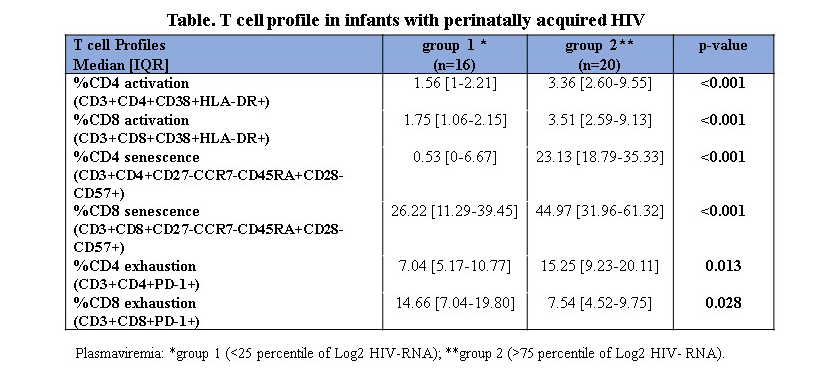
1038. Negative HIV Serology in Children Treated Early Reflects a Unique Immunological Profile
Poster Abstracts
Page: 330
Florence Buseyne1, Caroline Charre2, Josiane Warszawski3, Jerome Le Chenadec4, Thomas Montange1, Ingrid Fert1, Adeline Duretz2, Elise Gardiennet2, Stéphane Blanche5, Catherine Dollfus6, Marie-Dominique Tabone6, Albert Faye7, Pierre Frange5, Véronique Avettand-Fenoël8, the ANRS-MIE-EP59-CLEAC Study Group
Background
Negative HIV serology in children treated early is thought to result from low exposure of the immune system to antigenic stimulation provided by HIV replication. This serological profile might be used to identify pediatric patients eligible for HIV cure strategies. We, thus, aimed to characterize parameters associated with negative HIV serology in children who initiated ART early.
Methods
The present analysis included children (aged 5-12 years) from the French ANRS-EP59-CLEAC study who initiated combined antiretroviral therapy (cART) before six months of age, reached virological success (HIV-RNA < 400 copies/mL in the 24 months after cART initiation), did not subsequently experience viral rebound > 400 copies/mL, and had HIV RNA < 50 copies/ mL at the time of the study. The presence of HIV-1 antibodies was determined using the EIA VIDAS HIV DUO ULTRA test (Biomérieux). Blood lymphocytes were quantified by flow cytometry. PBMCs were stimulated by a TLR7/8 agonist and IL-2 to assess the expansion of B lymphocytes producing HIV-specific antibodies. Fisher and Mann-Whitney tests were used to analyze variables associated with negative HIV serology.
Results
Seventeen children met the selection criteria: four males, median age 9 [Interquartile range: 5.5; 11] years, and CD4 T-cell count 1090 [735; 1388] cells/ µl. Seven participants had negative HIV serology (seronegative, SN, 41%) and 10 had positive HIV serology (seropositive, SP, 59%). SN children tended to be younger at cART initiation than SP children (14 vs 97 days, P = 0.06). At the time of the study, surrogate markers of past HIV exposure did not distinguish SN from SP children (total HIV DNA, 1.9 [1.4; 2.2] vs. 2.2 [1.2; 2.5], log10 copies/106 PBMCs, P = 0.64, plasma HIV-1 p24 detection: 25% vs 38%, P = 0.67). SN children had a higher percentage of circulating follicular CXCR5+CCR4- CD8 TEM lymphocytes than SP children (3.1% [2.0; 3.2] vs 1.3% [0.7; 2.0], P = 0.01). Although rarely detected, HIV-specific B cells were present in both SN and SP children.
Conclusions
Among children over the age of five years with limited exposure to HIV replication, negative HIV serology could not be attributed to B lymphocyte defects. Rather, it was associated with expanded circulating follicular CD8 T lymphocytes, previously reported to have high antiviral activity. Thus, negative HIV serology may be a biomarker of a good potential for HIV immune control in the context of future HIV cure strategies.
1039. Distinct Innate Immune-Driven TNFa Pathway Is Linked With Durable ART-Free Aviremia in Pediatric HIV
Poster Abstracts
Pages: 330-331
Nicholas Lim1, Gabriela Z. L. Cromhout2, Philip Goulder1, Emily Adland1, Alex K. Shalek3, Nomonde Bengu2, Vinicius Vieira1
Background
Mechanisms underlying sustained ART-free HIV cure/remission remain elusive. Very-early ART-treated children LWH after vertical transmission may have a high potential for cure/remission due to the tolerogenicity of early life immunity. We here evaluate a group of children LWH maintaining ART-free undetectable levels of HIV viral RNA and DNA termed “ putative cure” children. Previous publications in our group reveal that these children possess transmitted viruses with low replicative capacity, typically associated with increased type-I IFN resistance.
Methods
In KwaZulu-Natal, South Africa, we have followed from birth a cohort of 316 children LWH after in-utero vertical transmission. These children were categorized into 5 groups: ‘putative cure’ children, who maintained aviremia despite unscheduled ART discontinuation, determined by history and measurement of plasma ART levels by LC-MS/MS; 3 groups of HIV-infected children with 0, 1-2, or > 2 blips/spikes of plasma viraemia detected over the course of follow up of >36m (Groups 1-3, respectively); and healthy, HIV-negative controls. Employing flow cytometry for surface-level immunophenotyping and transcriptomic analysis via scRNA-seq (Seq-well), we characterized defining features of the "putative cure" individuals compared to the other groups.
Results
We show that ‘putative cure’ children closely resemble pediatric slow progressors (PSPs), with decreased CCR5 and CD73 expression on CD4+ T-cell memory subsets, associated with poor viral entry and smaller viral reservoirs. On CD8+ T-cell memory subsets, this similarity with PSPs is recapitulated via early, albeit transient PD-1 expression. Using scRNA-seq, geneset enrichment analysis and weighted gene correlation network analysis, we demonstrate unique TNFα and NFkB-dependent immune activation in conjunction with an absence of type-I IFN immune activation when compared to other children LWH.
Conclusions
These findings indicate that pediatric “putative cure” is linked to a distinct immune combination, leveraging the advantages of TNFα-driven immune activation whilst circumventing type-I IFN specific resistance, plus patient-specific protective features limiting the potential for HIV entry via CCR5 and establishment of latent virus at early time points via CD73. Targeting these potentially optimal immune signatures or augmentation of these distinct inflammatory pathways may ultimately inform future therapeutic developments in achieving HIV cure/remission.
The figure, table, or graphic for this abstract has been removed.
1040. Germline-Targeting SOSIP Trimer Immunizations Reduced Post-Rebound SHIV Loads in Infant Macaques
Poster Abstracts
Page: 331
Aiquan Chang1, Nicole Soo1, Tracy Ordonez2, Olusola Omonije1, Shilpi Pandey2, Genevieve G. Fouda1, Ann Hessell2, Mauricio A. Martins3, Nancy L. Haigwood2, Sallie Permar1, Ria Goswami1
Background
Globally, >1.4 million children are living with HIV. Life-long ART adherence predisposes children to drug-associated complications, necessitating development of adjunctive therapies that can achieve drug-free viral suppression. Our group recently demonstrated development of VRC01-like broadly neutralizing antibody (bNAb) precursor responses in pediatric rhesus macaques (RMs) upon immunization with a germline-targeting native-like HIV SOSIP trimer. In this study, our objective is to determine the impact of germline-targeting SOSIP trimer immunization of SHIV-infected infant RMs on viral rebound post-ART interruption (ATI).
Methods
Infant RMs (n=11) were orally challenged with SHIV SF162P3 and started on ART at 1 week post-infection (wk pi). Of these, 5 RMs were immunized with 4 doses of BG505 GT1.1 SOSIP+3M052-SE, followed by 3 doses of autologous SF162P3 SOSIP+3M052-SE, and 6 RMs did not receive any immunizations (controls). ART was interrupted at 30 wk pi for controls and 47 wk pi for immunized animals. Plasma viral load (PVL), HIV-trimer-specific IgG, and autologous virus-neutralizing antibodies were measured longitudinally. Finally, using a virus that is neutralized by germline-reverted forms of VRC01, the development of CD4bs-specific bNAb precursors in plasma was evaluated.
Results
While there was no difference in the time to viral rebound in control [median(range) wks: 2(1-3) wks] vs. immunized RMs [Median(range) wks: 2(1.5-3) wks], 1 RM did not experience viral rebound and 1 achieved plasma viral control 5 wks post-rebound in the immunized group. Compared to controls, the immunized group had a 22.9 fold lower post-rebound peak PVL (p=0.004) and 43.9 fold lower post-ATI PVL-AUC0-15 wk (p=0.004). Immunized animals had higher magnitude and more durable BG505 GT1.1 SOSIP-specific and SF162 trimer-specific plasma IgG compared to control RMs. The GT1-specific (r=-0.62; p=0.04) and SF162-specific (r=-0.88; p<0.001) IgG levels at ATI inversely correlated to post-ATI PVL-AUC0-15 wk. Importantly, none of the controls and 2/5 immunized animals developed VRC01-class bNAb precursor response, and the RM with the highest level of autologous virus-neutralizing antibody at 2 weeks post-ATI did not experience viral rebound.
Conclusions
Germline-targeting native-like HIV env trimer immunization of SHIV-infected infant RMs, induced potent HIV-specific antibody levels and CD4bs-specific bNAb precursor response resulting in dampened viral replication for 15 weeks post-ATI.
Figure 1.
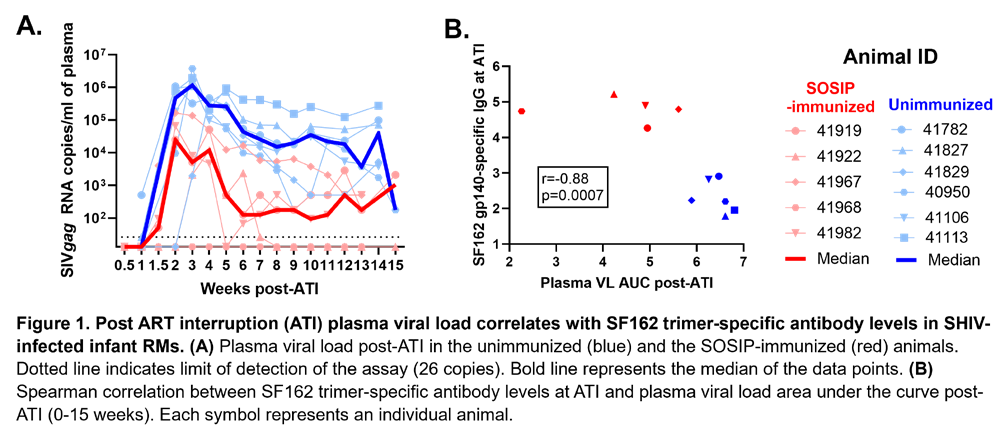
1041. Immune Correlates of Viral Rebound During Broadly-Neutralizing Antibody Treatment in Children
Poster Abstracts
Page: 331
Melanie Lancien1, Aischa Niesar1, Seohyun Hong1, Leah Carrere1, Ajibola Gbolahan2, Terence Mohammed2, Shahin Lockman3, Ce Gao1, Sikhulile Moyo2, Bryan S. Nelson3, Michael Hughes3, Xu G. Yu1, Daniel Kuritzkes4, Roger Shapiro3, Mathias Lichterfeld1
Background
Determining immunologic correlates that may be associated with virologic suppression while on alternate or curative HIV therapy is a priority for children. We longitudinally investigated immune responses among participants in the Tatelo Study with and without virologic failure during 6 months of dual bNAb-treatment after ART interruption.
Methods
Using multiparametric spectral flow cytometry we analyzed innate and adaptive immune cell populations at two time points: 1) the start of bNAb-only treatment and 2) at ART reinitiation after six months or upon viral rebound. We correlated immunological findings with viral reservoir characteristics obtained through FLIP-seq and MIP-seq.
Results
Of 25 participants aged 2-5 years who received VRC01LS plus 10-1074 dual-bNAb treatment, 11 maintained viral suppression (controllers) and 14 rebounded (rebounders). Controllers exhibited a trend toward higher proportion of CD56dimCD16dim NK cells and lower proportion of CD56posCD16- NK cells compared to rebounders, at both time points. The percentage of NK cells expressing the inhibitory receptor KIR2DL1 tended to be higher in rebounders at the start of bNAb-only-treatment (p=0.09) and at ART reinitiation (p=0.04). This was also true for the subset of KIR2DL1+NKG2A-NKp46-NKp30- NK cells at the start of bNAb-only-treatment (p=0.05). Additionally, the proportion of cells expressing KIR2DL1 positively correlated with the frequency of intact proviruses (p= 0.008) and with a shorter time to rebound (p=0.01). The higher expression of KIR2DL1 in rebounders was paired with an enrichment of HLA-C allotypes (p=0.03) that display elevated surface expression and serve as preferred inhibitory ligands for KIR2DL1. The proportions of NKG2A-expressing NK cells at the start of bNAb-only-treatment were positively correlated with time to rebound (p=0.012) and inversely correlated with intact reservoir size at both time points (p=0.014). Frequencies of HIV-1-specific T cells were low at both time points, did not differ between controllers and rebounders, and did not correlate with viral reservoir size.
Conclusions
Specific NK cell responses at the beginning of bNAb-only treatment were associated with viral rebound, the kinetics of rebound, and the intact viral reservoir size. HIV-1 specific T cell responses were low in this group of early-treated children and differences could not be identified between controllers and rebounders.
1042. HIV-Specific T-Cell Dynamics in Acute-Treated, Chronic-Treated, and Elite Controller People With HIV
Poster Abstracts
Pages: 331-332
Alicer K. Andrew1, Xiaoyu Luo1, Jason Neidleman1, Michael Peluso2, Rebecca Hoh2, Steven G. Deeks2, Sulggi Lee2, Steven Yukl2, Nadia R. Roan1
Background
Early initiation of ART can preserve immune function and is associated with increased incidence of post-treatment control of HIV, yet differences in HIV-specific immune responses between people with HIV (PWH) who initiated ART during acute vs. chronic infection are poorly defined. The extent to which immune responses in early- and late-treated PWH differ from those of elite controllers (ECs)–who exhibit ART-free control of HIV–has also not been fully evaluated. We used CyTOF to compare the frequencies, phenotypes, and effector functions of HIV-specific CD8+ T cells in longitudinal blood specimens from PWH who began ART during acute or chronic infection and from ECs.
Methods
PBMC collected prior to ART and up to 4 timepoints after ART initiation were obtained from the UCSF SCOPE cohort (n = 16 acute, n = 10 chronic, n = 10 ECs). Cells were analyzed using a 40-parameter CyTOF panel at baseline and following a 6-hour stimulation with peptides spanning the HIV proteins Gag, Pol, Env, Tat, and Nef. HIV-specific T cells were assessed using a combination of 9 effector cytokines/chemokines and 3 cytolytic/degranulation markers.
Results
In all cohorts, most HIV-specific T cells induced IFNg, TNFa, and the degranulation marker CD107a. Prior to ART, HIV-specific CD8+ T cell frequencies were higher in the chronic-treated and EC cohorts compared to the acute-treated cohort. Pre-ART, expression of CTLA-4, a marker of cellular exhaustion, was elevated on HIV-specific CD8+ T cells from the chronic-treated and EC groups relative to the acute-treated group (p<0.004). However, expression of the follicle-homing receptor CXCR5 was uniquely elevated on HIV-specific CD8+ T cells from ECs compared to the other groups (p<0.0005). After ART, HIV-specific CD8+ T cell frequencies declined in ECs (p<0.005) but remained unchanged in the acute and chronic-treated groups.
Conclusions
Our data suggest that the frequencies of HIV-specific CD8+ T cells are decreased by ART in ECs, but not in acute or chronic-treated PWH. HIV-specific CD8+ cells from ECs, like those from chronic-treated PWH, expressed the exhaustion marker CTLA4, possibly due to chronic antigen stimulation. However, HIV-specific CD8+ T cells from ECs uniquely express high levels of CXCR5, which may help direct these effector cells to lymphoid follicles, a primary site of HIV persistence. Our findings suggest that HIV-specific CD8+ T cells in ECs have distinguishing phenotypic features that may explain their ability to mediate ART-free HIV control.
1043. Transcriptomics of Proviral Latency Reversal in Reservoirs of Youth With Perinatal HIV-1
Poster Abstracts
Page: 332
Kristen Kelly1, Adit Dhummakupt2, Kedi Le1, Weiqiang Zhou1, Hongkai Ji1, Joseph Szewczyk2, Ya Hui Chen2, Elise Ohene-Kyei2, Thuy Anderson2, Allison Agwu2, Deborah Persaud2
Background
Latency reversing agents (LRAs) such as TLR agonists and histone deacetylase (HDAC) inhibitors reactivate HIV-1 from latency in adults. We examined the immune effects of the TLR7 agonist GS-9620, alone and in combination with the HDAC inhibitor SAHA, in ex-vivo studies of adolescents with perinatal HIV-1 (AdLWPH), aiming to inform latency reversal strategies for this population.
Methods
Enriched CD4 T cells from 16 AdLWPH (median age 17.8[IQR, 13.8-20.1] yrs; median virologic suppression of 10.4[6-16.2] yrs; 81.3% female) were stimulated with GS-9620, SAHA, or in combination. PHA/PMA/Ionomycin (PPI) and vehicle control (VC) were studied in parallel. HIV-1 reservoir size was measured by the intact proviral DNA assay. Proviral transcription was assessed by induction of multiply spliced (ms) tat/rev HIV-1 RNA transcripts (msRUPM) with the Tat/Rev Limiting Dilution Assay (TILDA). LRA immune effects were analyzed by flow cytometry for immune activation markers. Transcriptomic effects were examined by bulk RNA-seq in 7 participants (71.4% female) for all treatment groups. Participants were categorized as high or low responders based on fold change of msRUPM (>1.1); differential gene expression analyses were applied.
Results
The median intact HIV-1 DNA load was 15.8[4.7-50.0] copies/106 CD4 T cells. With VC, ms-HIV-1 RNA transcripts were detected in 12/16 participants (range 1-22.3). PPI, GS-9620, and GS-9620+SAHA increased ms-HIV-1 RNA relative to VC by 2.0-,1.4- and 1.6-fold. The proportion of intact proviruses induced was significantly increased relative to VC with PPI and GS-9620. PPI was associated with upregulation of activation markers CD69, CD25, and HLA DR, whereas GS-9620, SAHA or the combination were only associated with CD69 upregulation. Across all treatment conditions, IFNγ response was associated with high msRUPM. Without LRA stimulation, IFNγ and IFNα upregulation was associated with high basal msRUPM. IFNγ response was also associated with high msRUPM across all conditions. High GS-9620 responders had upregulation of IFNα, TNFα and IL-2, while high SAHA responders had upregulated TGF-β. High GS-9620+SAHA responders had upregulated TNFα, interferon and estrogen responses (Table 1).
Conclusions
HIV-1 reservoirs in perinatal infections are susceptible to reactivation with TLR7 agonists and HDAC inhibitors through upregulation of pro-inflammatory pathways mediated by IFNs, TGF- β, TNFα and IL-2, offering insights into proviral reactivation and control for AdLWPH.
The figure, table, or graphic for this abstract has been removed.
1044. Maternal Antiretroviral Formulation Preferences for Neonates
Poster Abstracts
Page: 332
Charlene Purdy1, Lario Viljoen1, Verah N. Luke1, Samantha du Toit1, Maria Groenewald1, Lindee Ganger1, Anneke C. Hesseling1, Anthony Garcia-Prats2, Tim Cressey3, Adrie Bekker1
Background
Oral liquids and syrup formulations of zidovudine (ZDV) and nevirapine (NVP) are the cornerstone of antiretrovirals (ARVs) for neonates born to mothers with HIV for prevention and treatment. These formulations have a short shelf-life, poor palatability, require frequent dosing, and are associated with stock-outs. The World Health Organization recommends switching to solid oral dosage forms soonest, with ARV dispersible tablets preferred over syrups for children. We assessed preferences for ARV formulations among mothers with neonates enrolled in the PETITE-DTG study.
Methods
PETITE-DTG is an ongoing phase I/II, open-label, two-stage study conducted in South Africa (NCT05590325) evaluating the pharmacokinetics, safety and acceptability of 2 solid pediatric dolutegravir (DTG) formulations in neonates. Neonates were randomized to receive either a 5mg DTG dispersible tablet (DTG-DT) or a 5mg novel DTG oral dispersible film (DTG-OF), with ZDV prophylaxis. Interviews were conducted in a sub-set of mothers (n=26) to determine infant ARV formulation preferences. Assessments included relative ranking of formulation preferences of 3 existing (DTG-DT, ZDV, NVP), 1 novel (DTG-OF), and 2 formulations in development (long-acting injectable, transdermal patch). We characterized and compared preferences using rank summaries (1 = most preferred; 6 = least preferred).
Results
Mothers had a strong preference for DTG-OF (score 56), independent of the DTG formulation their infants received (Table 1). Reported advantages included ease of administration, confidence in full dose administration, and perceived discreetness. Next was the long-acting injectable (score 66), reported as familiar, positively compared to routine vaccines, and, despite feared discomfort for babies, described as convenient (monthly vs daily). DTG-DT (score 96) was described as palatable for babies but caregivers were worried about preparation and dosing volume. For existing syrups (ZDV, NVP; score 99, 104) mothers cited concerns with administration frequency and underdosing (spillage, spitting). The transdermal patches ranked the lowest (score 125) with mothers fearing interaction with water, discomfort for infants, and uncertainties regarding effectiveness.
Conclusions
Mothers preferred the use of solid oral ARVs above syrups, with a strong preference for the DTG-OF even if their babies were receiving DTG-DT. Monthly injectables were also preferred, highlighting the importance of usability, ease of administration, and dosing frequency.
Table 1.
Maternal formulation preferences of for ARV administration in neonates
|
|
DTG-DT group (n=14 mothers)
1
; Rank sum (mean rank) |
DTG-OF group (n=13 mothers); Rank sum (mean rank) |
All DTG formulations (n=26 mothers); Rank sum (mean rank) |
| Overall, which formulation did the caregiver prefer to administer? |
| Oral dispersible film (DTG-OF) |
33 (2.36) |
24 (1.85) |
56 (2.16) |
| Long-acting intramuscular injectable antiretroviral treatment |
39 (2.79) |
33 (2.54) |
66 (2.54) |
| Dispersible dolutegravir tablet (DTG-DT) |
43 (3.07) |
56 (4.31) |
96 (3.69) |
| Zidovudine syrup (ZDV) |
54 (3.86) |
50 (3.85) |
99 (3.81) |
| Nevirapine syrup (NVP) |
60 (4.29) |
48 (3.69) |
104 (4.0) |
| Long-acting transdermal patch |
65 (4.64) |
62 (4.77) |
125 (4.81) |
1045. Acceptability of a Dolutegravir Dispersible Tablet and a Novel Oral Film Formulation in Neonates
Poster Abstracts
Page: 333
Lario Viljoen1, Charlene Purdy1, Verah N. Luke1, Samantha du Toit1, Maria Groenewald1, Lindee Ganger1, Anneke C. Hesseling1, Anthony Garcia-Prats2, Tim Cressey3, Adrie Bekker1
Background
Current antiretroviral (ARV) syrups used for HIV prevention and early treatment in neonates are from older, more toxic drug classes. Dolutegravir (DTG) is one of the preferred ARVs for children, but there is no pediatric formulation specifically tailored for use in neonates. We report on the mothers’ acceptability of DTG dispersible tablets (DTG-DT) and a novel oral film (DTG-OF), not yet studied in children, in neonates enrolled in the PETITE-DTG study.
Methods
PETITE-DTG is an ongoing phase I/II, open-label 2-stage study evaluating the pharmacokinetics, safety and acceptability of 2 solid pediatric DTG formulations in term neonates in South Africa. In the multi-dose stage, 40 term neonates born to women receiving DTG are randomized to receive DTG-DT or DTG-OF with zidovudine (ZDV) syrup prophylaxis. The DTG-DT group receive 5 mg DTG-DT in 5mL water, administered with a syringe, followed by 2mL water from the same syringe. The DTG-OF group receive a single 5 mg dissolvable film from a sachet, folded and placed directly on the tongue. In-depth interviews were conducted in a sub-set of mothers at 3 time points and thematic analysis applied to determine acceptability.
Results
20 mother-infant pairs (10 neonates on DTG-DT and 10 on DTG-OF) were included in this analysis. Mothers reported very good acceptability to both DTG formulations. Mothers administering DTG-DT to their infants found that it dissolved easily, and was palatable (fruity smell, sweet) and appealing to babies. Challenges included technical and time-consuming preparation, and the large volume (7mL water) required. Mothers were concerned about spilling medicine and underdosing babies. For the DTG-OF, most mothers reported initial hesitancy and described the film as unfamiliar. Concerns included the inability of neonates to swallow the ‘paper’, but high levels of acceptance were reported after administering 1 to 2 doses, with DTG-OF preferred above ZDV. Convenient packaging (thin sachet), ease of administration (quick and easy to dissolve), and perceived dosing accuracy (no spilling) were reported with the film. Acceptability was further facilitated by reassurance from health workers that the ‘paper’ was indeed ‘medicine’.
Conclusions
Mothers reported acceptance of pediatric DTG formulations for use in neonates. After initial hesitancy, the DTG-OF was found to be highly acceptable by mothers. Targeted peer support and engagement with mothers and health workers will be important to familiarize end-users with the novel DTG-OF.
Table 1.
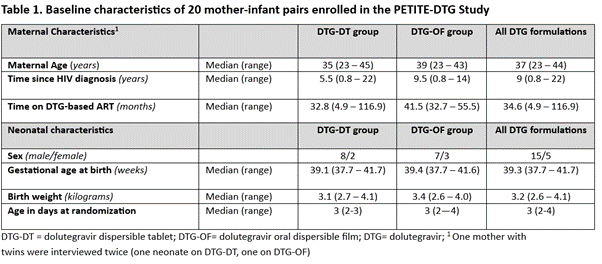
1046. Safety and Pharmacokinetics of Long-Acting Cabotegravir and Rilpivirine in Children 20 to 40 kg
Poster Abstracts
Page: 333
Moherndran Archary1, Jorge Pinto2, Edward P. Acosta3, Amy Cheung4, Thomas Kakuda5, Ellen Townley6, Jack Moye7, Ryan Milligan8, Rachel Scheckter9, Gaerolwe Masheto10, Pradthana Ounchanum11, Linda Aurpibul12, Lee Fairlie13, Edmund Capparelli14, the CRAYON/IMPAACT 2036 Study Team
Background
Long-acting cabotegravir (CAB-LA) plus long-acting rilpivirine (RPV-LA) are approved for maintenance of viral suppression in adults and adolescents >35kg with HIV-1 infection. IMPAACT 2036 (CRAYON) is a Phase I/II, multi-center, open-label, non-comparative study to evaluate safety, tolerability, acceptability and pharmacokinetics (PK) of oral (PO) and intramuscular (IM) CAB-LA+RPV-LA in children 2-<12 years, living with HIV-1. Here we present the first report of CAB-LA+RPV-LA in children from interim Week (W)12 data.
Methods
Virologically suppressed (viral load <50 copies/mL) children living with HIV-1 on stable combination antiretroviral therapy (cART) were enrolled into weight-band (WB) 1 (35-<40kg), 2 (25-34.9kg) or 3 (20-24.9kg). After discontinuing background cART, participants received PO CAB+RPV through W4, followed by IM CAB-LA+RPV-LA injections every 4 weeks (Q4W), per WB dosing table. PK samples were drawn at W2 (to assess PO dosing) and W4, 5, 6, 8, 9 and 12 (to assess LA dosing).
Results
35 participants were enrolled: 8 in WB 1, 16 in WB 2 and 11 in WB 3; one prematurely discontinued study drug due to anxiety associated with painful procedures. The safety analysis set included 20 children who completed treatment through W12 before the safety interim analysis freeze date. Median (Q1, Q3) age and weight were 10 years (8, 10.5) and 26.2 kg (22.2, 29.9); 60% were female; 25% were Asian, 75% were Black or African American. 8 (40%) children had a Grade ≥1 adverse event (AE) through W12, all ≤Grade 3. Frequent AEs included injection site pain (n=3, all Grade 1), headache (n=3), pyrexia (n=2), oropharyngeal pain (n=2) and cough (n=2). One child (5%) had two Grade 3 AEs which resolved. Participants maintained virologic suppression through W12. 34 participants contributed to the PK analysis, with 24 completing W12 before the PK interim analysis freeze date. Median (Q1, Q3) AUCs during oral lead-in (n=34) were 109 000 (86 000, 130 000) ng*h/mL for CAB-PO and 3086 (2351-4440) ng*h/mL for RPV-PO. Median (Q1, Q3) pre-dose concentrations at W12 (n=24) were 2160 (1440, 3430) ng/mL for CAB-LA and 52 (43, 66) ng/mL for RPV-LA (Figure 1). These values met protocol-defined acceptable criteria for both drugs by PO and IM routes.
Conclusions
Administration of PO CAB+RPV followed by Q4W IM CAB-LA+RPV-LA in children 20-<40 kg achieved exposure concentrations comparable to adolescents and adults receiving this regimen. No new or unanticipated safety concerns were identified.
Figure 1.
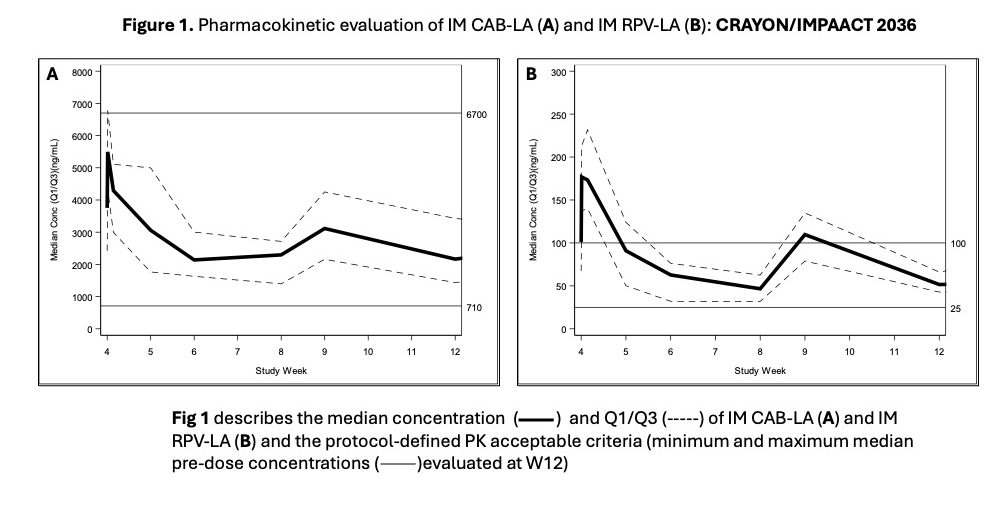
1047. PK and Safety of Chronic Dolutegravir Administration in Neonates Exposed to HIV-1 (IMPAACT 2023)
Poster Abstracts
Pages: 333-334
Jeremiah Momper1, Hardik Chandasana2, Jiajia Wang3, Benjamin Johnston4, Sarah Bradford5, Dwight E. Yin6, Tara Deyampert6, Ann M. Buchanan7, Edward P. Acosta8, Mark Mirochnick9, Kathleen Powis10, Diana F. Clarke11, the IMPAACT 2023 Protocol Team
Background
Dolutegravir (DTG) is approved for treatment of HIV-1 in adults and pediatric patients ≥4 weeks and ≥3 kg. We previously reported the pharmacokinetics (PK) and safety of two single doses of DTG (0.5 mg/kg) given with standard of care antiretrovirals in the first 13 days of life. Here, we describe preliminary PK and safety of 4-6 weeks DTG dosing using a 5-mg dispersible tablet (DT) formulation in neonates exposed to HIV-1.
Methods
IMPAACT 2023 is a PK, safety, and tolerability study of DTG in infants during the first 4-6 weeks of life. In this cohort, DTG 5 mg DT was dosed every other day until day 13 of life, followed by once daily dosing. Intensive PK sampling was performed at 7 days and 4 weeks after DTG initiation. Adverse events (AEs) were graded using the DAIDS grading table. DTG exposures were evaluated according to protocol-defined target geometric mean (GM) exposures: Ctrough > 0.697 µg/mL, AUC0-tau > 37 µg*h/mL, and Cmax <18.35 µg/ mL. Tolerability information was collected using a questionnaire.
Results
Data were available from 8 full-term infants with maternal DTG use (DTG-exposed) and 7 DTG-naïve infants with birthweights between 2.3 – 3.6 kg and postnatal age 0 – 5 days at time of DTG initiation. Participants were enrolled from South Africa (n=8), USA (n=4), and Thailand (n=3). No clinically meaningful differences were observed in DTG exposures between DTG–exposed and DTG-naïve infants and PK results for each group were combined. PK results are displayed in Figure 1. At 7 days post-initial dose, GM (range) Ctrough, AUC0-tau, and Cmax were 1.0 µg/mL (0.05 – 4.1), 121.1 µg*h/mL (42.0 – 321.9), and 4.9 µg/mL (2.1 – 9.1), respectively. A total of 5 of 15 participants had trough concentrations below the target at 7 days post-initial dose. At week 4, GM (range) Ctrough, AUC0-tau, and Cmax were 2.3 µg/mL (0.1 – 5.1), 98.2 µg*h/mL (24.0 – 159.2), and 5.4 µg/mL (1.6 – 9.1), respectively. No neonates experienced ≥ grade 3 AEs related to study drug.
Conclusions
Use of DTG 5-mg DT (every other day for two weeks until day 14 of life, followed by once daily dosing) for 4-6 weeks was well-tolerated with no unexpected AEs in neonates exposed to HIV-1. DTG exposures met GM protocol-defined targets; however, there was considerable variability in exposures. Continued evaluation of this DTG dosing regimen including potential sources of PK variability is ongoing in IMPAACT 2023.
Figure 1.
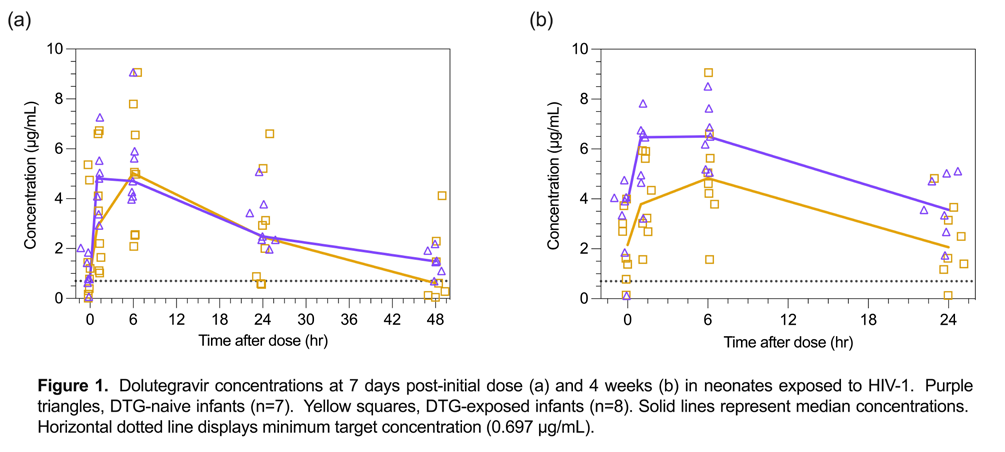
1048. Alternative Dosing of ABC/3TC Dispersible Tablets to Align With Dolutegravir Dosing in Neonates
Poster Abstracts
Page: 334
Navarat Panjasawatwong1, Adrie Bekker2, Helena Rabie3, Samantha du Toit2, Maria Groenewald2, Nicolas Salvadori4, Kanchana Than-in-at4, Edmund Capparelli5, Ratchada Cressey4, Marc Lallemant4, Mark Cotton6, Tim Cressey4, the PETITE Study Team
Background
Rapid maturation of metabolic/elimination pathways during the first month of life complicates using pediatric fixed-dose dispersible formulations in neonates. We previously reported that once daily administration of abacavir/lamivudine dispersible tablets (ABC/3TC-DT) to neonates gave high exposure during the first week of life. Administration of 5 mg dolutegravir (DTG) every 48 hours (q48) for the first 2 weeks of life, followed by 5 mg daily (q24) until Day 28 is under investigation in the PETITE-DTG study. Hence, we performed a pharmacokinetic (PK) modeling/simulation study to determine if less frequent (q48) administration of ABC/3TC-DT during the two weeks of life would align with DTG dosing to simplify treatment delivery in neonates.
Methods
The ‘PETITE’ study was a phase I/II, open-label, single arm, PK and safety trial of ABC/3TC-DT (120:60mg, double-scored) and lopinavir boosted with ritonavir (40:10 mg) granules in HIV-exposed term neonates in Tygerberg hospital, South Africa. Neonates received 30/15 mg of ABC/3TC-DT (¼ tablet) daily and 80/20 mg of LPV/r (2 sachets) twice daily through 28 days of life. PK blood samples were collected at visits during the neonatal period. Using single and multi-dose data, we developed population PK models for ABC and 3TC. Using the final models, we performed Monte Carlo simulation (n=5,600 virtual neonates) to predict plasma ABC and 3TC drug exposures using q48 dosing from birth to Day 14 and q24 from Day 15 to Day 28. Geometric mean (GM) ABC and 3TC target exposures (AUC0-24) were 6.3 to 50.4 and 6.3 to 26.5 mg.hr/L for ABC and 3TC, respectively.
Results
Twenty-four term neonates (14 girls) and 230 plasma ABC and 3TC concentrations were included. Median (range) body weight was 3,125 (2,270-3,995) g and postnatal age 8 (5-13) days of life at the 1st PK visit. ABC and 3TC plasma concentrations were best described by 1-comparments models. Both body weight and postnatal age influenced their oral clearance. Model-based simulations predicted the GM ABC AUC0-24 remaining within target exposures using q48 dosing compared to q24 dosing during the first 2 weeks of life (Figure 1a). For 3TC, the GM AUC0-24 also remained with the target with q48 dosing (Figure 1b).
Conclusions
Giving 30/15 mg of ABC/3TC every 48 hours for the first 14 days of life; then daily was predicted to maintained target drug exposures comparable to young children. This dosing schedule should align with the proposed DTG regimen in term neonates during the first month of life.
Figure 1.
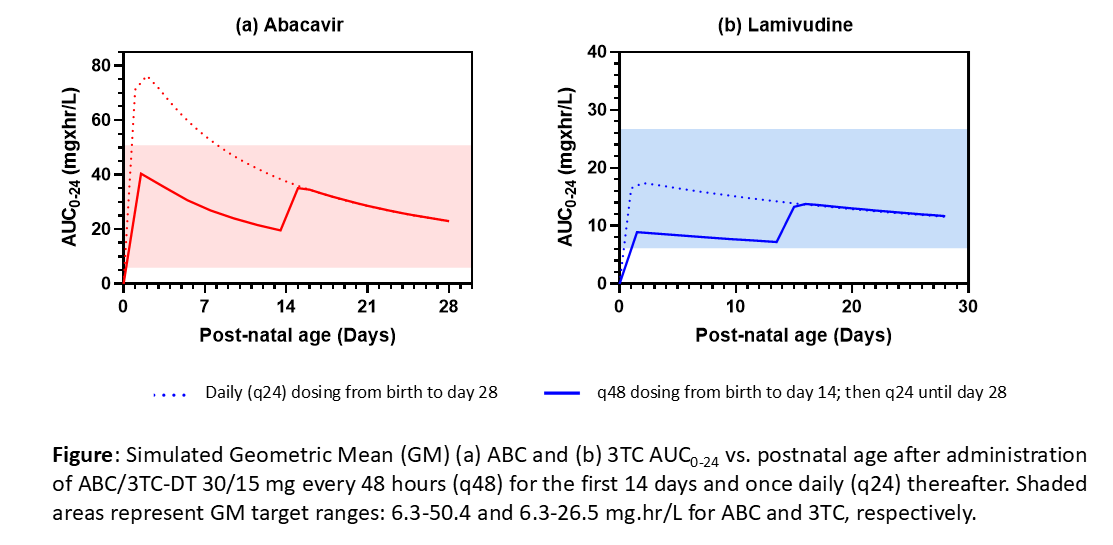
1049. Week 24 Outcomes of F/TAF Plus Cobicistat-Boosted Protease Inhibitors in Children ≥2 y and ≥14 kg
Poster Abstracts
Pages: 334-335
Hilda A. Mujuru1, Renate Strehlau2, Pope Kosalaraksa3, Jaime G. Deville4, Meiling Pan5, Vinicius Adriano Vieira5, Kathryn Kersey5, Natella Rakhmanina6
Background
Nucleoside reverse transcriptase inhibitors (NRTIs) in combination with boosted protease inhibitors (PIs) are a recommended treatment for children with HIV-1 with resistance or intolerability to integrase strand transfer inhibitors. In the US, emtricitabine/tenofovir alafenamide (F/TAF) is approved in combination with boosted PIs for adults and children weighing ≥35 kg. TAF has improved renal and bone safety compared with tenofovir disoproxil fumarate. An ongoing Phase 2/3 open-label trial is evaluating F/TAF in combination with cobicistat-boosted atazanavir (ATV/co) or darunavir (DRV/co) in children with HIV-1 (NCT02016924). We present efficacy and safety outcomes through Week 24 in children aged 2-<12 y and weighing 14-<40 kg.
Methods
Participants aged 6-<12 y, weighing 25-<40 kg, receive 200/25 mg F/TAF + ATV/co or DRV/co (Cohort 2); participants ≥2 y and 14-<25 kg receive 120/15 mg F/TAF + ATV/co or DRV/co (Cohort 3). Key inclusion criteria are CD4 count ≥200 cells/µL, estimated glomerular filtration rate (eGFR) ≥90 mL/min/1.73 m2, and on two NRTIs plus a third agent with no regimen changes within 3 months. Virologic suppression was assessed by FDA Snapshot algorithm; bone mineral density (BMD) was assessed using dual-energy X-ray absorptiometry of spine and total body less head (TBLH).
Results
Twenty-three (Cohort 2) and 26 (Cohort 3) participants enrolled. At baseline, in Cohorts 2 and 3 respectively, 61% and 54% participants were female, 91% and 92% were Black, median age (range) was 10 (8-12) and 6 (3-10) y, median (quartile [Q] 1, Q3) CD4 counts were 876 (671, 1063) and 940 (705, 1259) cells/µL, median (Q1, Q3) CD4 % was 36 (31, 41) and 35 (30, 41), and 96% and 92% had HIV-1 RNA <50 copies/mL. At Week 24, CD4 counts were similar to baseline, and 96% in each cohort had HIV-1 RNA <50 copies/ mL. Two participants in Cohort 3 experienced Grade 3/4 study drug–related treatment-emergent adverse events (TEAEs) of increased bilirubin, considered related to ATV; one was classified as a serious TEAE. No Grade 3/4 or serious study drug–related TEAEs were reported in Cohort 2. Changes in height, weight, and body mass index Z-scores; spine and TBLH BMD; and eGFR were not clinically significant (Table).
Conclusions
In this interim analysis, F/TAF in combination with ATV/co or DRV/ co in children aged 2-<12 y and weighing 14-<40 kg was efficacious, with an acceptable safety profile and no renal, bone, or weight concerns, supporting further evaluation in pediatric populations.
Table 1.
Summary of Clinical Parameters at Baseline and Week 24
|
|
Cohort 2 (6-<12 years; 25-<40 kg), n=23: Baseline
a
|
Cohort 2: Week 24 |
Cohort 3 (≥2 years; 14-<25 kg), n=26: Baseline
a
|
Cohort 3: Week 24 |
| Height Z-score,
b
median (Q1,Q3) |
-1.1 (-1.8,-0.7) |
-1.0 (-1.8,-0.5) |
-0.8 (-1.6,0.2) |
-0.8 (-1.7,0.1) |
| Weight Z-score,
b
median (Q1,Q3) |
-0.8 (-1.2,-0.4) |
-0.6 (-1.1,-0.2) |
-1.0 (-1.7,-0.4) |
-0.7 (-1.5,-0.2) |
| BMI Z-score,
b
median (Q1,Q3) |
-0.3 (-0.9,0.1) |
-0.1 (-0.6,0.6) |
-0.6 (-1.5,0.3) |
-0.5 (-1.2,0.2) |
| Spine BMD, g/cm², median (Q1,Q3) |
n=20; 0.54 (0.50,0.60) |
n=20; 0.57 (0.51,0.62) |
n=18; 0.48 (0.42,0.51) |
n=18; 0.49 (0.44,0.52) |
| TBLH BMD, g/cm², median (Q1,Q3) |
n=21; 0.65 (0.60,0.69) |
n=21; 0.66 (0.64,0.71) |
n=23; 0.49 (0.45,0.55) |
n=23; 0.51 (0.46,0.56) |
| eGFR, mL/min/1.73 m², median (Q1,Q3) |
n=23; 144.0 (122.3,159.1) |
n=23; 143.0 (122.8,157.2) |
n=26; 153.2 (128.4,168.7) |
n=22; 140.9 (132.0,154.0) |
1050. Infants With HIV Starting ART Within 4 Months of Age Can Achieve Sustained Undetectable HIV-1 DNA
Poster Abstracts
Page: 335
Alfredo Tagarro1, Kavidha Reddy2, Sara Dominguez-Rodriguez1, Shaun Barnabas3, Kennedy Otwombe4, Maria G. Lain5, Almoustapha Maiga6, Pablo Rojo7, Louise Kuhn8, Paolo Palma9, Nicola Cotugno9, Eleni Nastuoli10, Carlo Giaquinto11, Thumbi Ndung'u2, Paolo Rossi9, the EPIICAL Consortium
Background
Recent studies have reported on children born with HIV and treated from the first 48 hours of life who achieved undetectable HIV-1 DNA after 2 years of life. In this study, we report five children who started ART within 4 months of age in Sub-Saharan Africa (SSA), who achieved sustained undetectable HIV-1 DNA after 2 years of follow-up.
Methods
We enrolled infants who initiated ART at 3 months or younger in Mozambique, South Africa and Mali (EARTH-EPIICAL Cohort). Children were monitored 2, 6, 12 and 24 weeks after enrolment, followed by biannual check-ups up to 4 years after enrolment. We identified infants with sustained viral load (VL) suppression, immunological control, and sustained undetectable HIV-1 DNA. All participants had 48 months follow-up. Sustained VL suppression was defined as VL below the level of detection for the last 12 months (at least 3 tests, interval 6 to 9 months). Immunological control was defined as no significant immunosuppression (low CD4 counts or CD4%) during the last 12 months according to WHO definition (3 or more tests, separated 6 to 9 months). Sustained undetectable proviral HIV1-DNA was defined as two consecutive measurements below 1 copy/106 PBMC (minimum, 5 million) with an interval of 6 +/-1 months. DNA was measured by droplet digital PCR.
Results
We enrolled 207 participants; 155 (74.9%) had at least 12 months of follow-up. Five participants (3 female and 2 male) (3.2% [5/155]) had two consecutive negative HIV-1 DNA, sustained VL suppression and immunological control. Their median baseline VL was 22 341 copies/mL (IQR, 649 to 5,041,861), baseline CD4 count and % were 1928 (1698 to 3080) and 42% (34% to 48%). They started ART at 27, 32, 32, 59 and 112 days, and 3/5 reached VL undetectable before 1 year of ART. They all received PMTCT and treatment with the standard of care schedule at their country, which was abacavir, lamivudine and lopinavir/ ritonavir. They all remained in WHO Clinical stage I. The adherence (combining self-reported and observed) to ART was recorded as good in 73% to 100% of the visits.
Conclusions
Children with ART started within 4 months of life and immediately after diagnosis as per standard of care in SSA can achieve sustained undetectable HIV-1 DNA, VL and high CD4, similar to children treated in the first 48 hours of life. Children with these features may have a greater likelihood of ART-free viral control and represent ideal candidates for future analytical treatment interruption trials targeting HIV cure.
The figure, table, or graphic for this abstract has been removed.
1051. Hospitalization Incidence Among Young Children Living With HIV in the Western Cape, South Africa
Poster Abstracts
Page: 335
Kim Anderson1, Brian S. Eley1, Helena Rabie2, Rudzani Muloiwa1, James Nuttall1, Lisa J. Frigati2, David M. le Roux1, Thandi Wessels3, Jaco Murray4, Vanessa Mudaly4, Gayathri Sridhar5, Leigh Ragone5, Vani Vannappagari5, Jonathan Euvrard1, Mary-Ann Davies1
Background
Studies of hospitalization among young children with HIV in resource-limited settings, in the context of early infant diagnosis and antiretroviral therapy (ART), are limited.
Methods
We used routinely collected data to describe hospitalization patterns among children diagnosed with HIV (born 2018-2022), in the Western Cape, South Africa. We used logistic regression to examine factors associated with hospitalization pre-ART start, and mixed-effects Poisson models to assess overall hospitalization rates (excluding birth admissions) and hospitalizations post-ART start.
Results
We included 2,219 children: 30% were diagnosed with HIV at birth (≤7 days), an additional 41% before age 1 year, and 29% at age ≥1 year. Median follow-up from birth was 38 months (IQR 24-50). Overall, 67% of children were hospitalized, of whom 50% had >1 hospitalization. Compared to those diagnosed with HIV at birth, overall hospitalization rates (excluding birth admissions) increased by 67% (95%CI:39-101%), 74% (95%CI:45-109%) and 29% (95%CI:9-51%) among those diagnosed at age 1 week to 3 months, >3 to 9 months, and >9 months, respectively. Excluding birth admissions, 35% of children were hospitalized pre-ART start (n=781/2219) and 27% of children who started ART were hospitalized at the time of ART start. Compared to children who started ART before 1 month of age (but not at birth or during a birth admission), those who started at age 1-3, >3 to 6, and >6 to 12 months had increased pre-ART admission odds of 6.5 (95%CI:3.6-11.5), 10.7 (95%CI:6.0-19.0) and 14.7 (95%CI:8.2-26.1), respectively. Among children who received ART (96% protease inhibitor-based regimens), 38% had admissions post-ART start (n=747/1990). At 4 and 12 months after ART start, 49% and 47% of children with available results had unsuppressed viral load (VL≥1,000 copies/ ml), respectively. Hospitalization rates post-ART start were twice as high among children who had unsuppressed VL at 4 or 12 months after ART start.
Conclusions
High hospitalization rates occur among young children with HIV. Earlier HIV diagnosis and ART initiation is associated with lower overall hospitalization rate, particularly pre-ART hospitalizations, whereas unsuppressed viral load is associated with higher post-ART hospitalization rates. Our study provides real-world evidence of the benefits of HIV testing at birth, a practice that has not yet been adopted globally, and highlights that morbidity among young children with HIV is only partially mitigated by early ART initiation.
1052. Inflammatory Cytokines in ART-Naive Kenyan Children Diagnosed With HIV at Hospital Admission
Poster Abstracts
Pages: 335-336
Lasata Shrestha1, Irene Njuguna1, Elizabeth M. Obimbo2, Lisa Marie Cranmer3, Emily R. Begnel1, Daisy Chebet2, Judith Adhiambo2, Kenneth A. Tapia1, Barbra Richardson1, Hellen M. Okinyi2, Cheryl Day3, Grace John-Stewart1, Dalton Wamalwa2, Jennifer Slyker1
Background
A cascade of inflammatory responses begins after HIV infection, prompting cytokine production and leading to a persistent inflammatory state which is associated with an increased risk of adverse outcomes and death. We assessed correlates of baseline serum proinflammatory cytokine levels and their association with hospitalization outcomes in a cohort of severely-ill ART-naïve Kenyan children living with HIV (CLHIV).
Methods
Admission serum samples of 104 CLHIV with median age at enrollment of 2.05 years (IQR=0.99, 6.02) from the PUSH Study (NCT02063880) were used to measure levels of IL-1β, IL-2, IL-6, and TNF-α. A priori study endpoints were death within 6-months of admission, combined endpoint of death or continued hospitalization at 15-days, and mean number of days spent in hospital. Potential correlates were assessed using Poisson and linear regression. Models were used to estimate 6-month hazard ratio of death (Cox regression), relative risk of combined endpoint (Poisson regression), and duration of hospitalization (linear regression); all analyses were adjusted for sex and age at admission.
Results
IL-6 was detected in 103(99.04%) children, IL-1β in 7(6.31%), IL-2 in 26(25%), and TNF-α in 47(45.19%). IL-1β detection was independently associated with higher log10 cytomegalovirus (CMV) DNA-level (p<0.01) and pneumonia diagnosis (p<0.01). Receipt of steroids was associated with lower prevalence of IL-1β detection (p<0.01). Total neutrophil count (p<0.01), hemoglobin level (g/dL) (p<0.01), and CD4% (p<0.01) were independently associated with decreased IL-2 detection. Higher C-reactive protein (p<0.01) and higher CD4% (p<0.01) were associated with higher IL-6 levels. Each doubling of IL-6 levels was associated with a 27% increased hazard of death (aHR=1.27 (95%CI=1.07, 1.50), p<0.01). No correlates of TNF-α were identified. No association between any cytokines and hospitalization duration or the combined outcome were found.
Conclusions
These findings provide novel insights into drivers of inflammation in severely-ill ART-naïve CLHIV and suggest IL-6 is a prognostic marker for increased risk of death in this population.
Table 1.
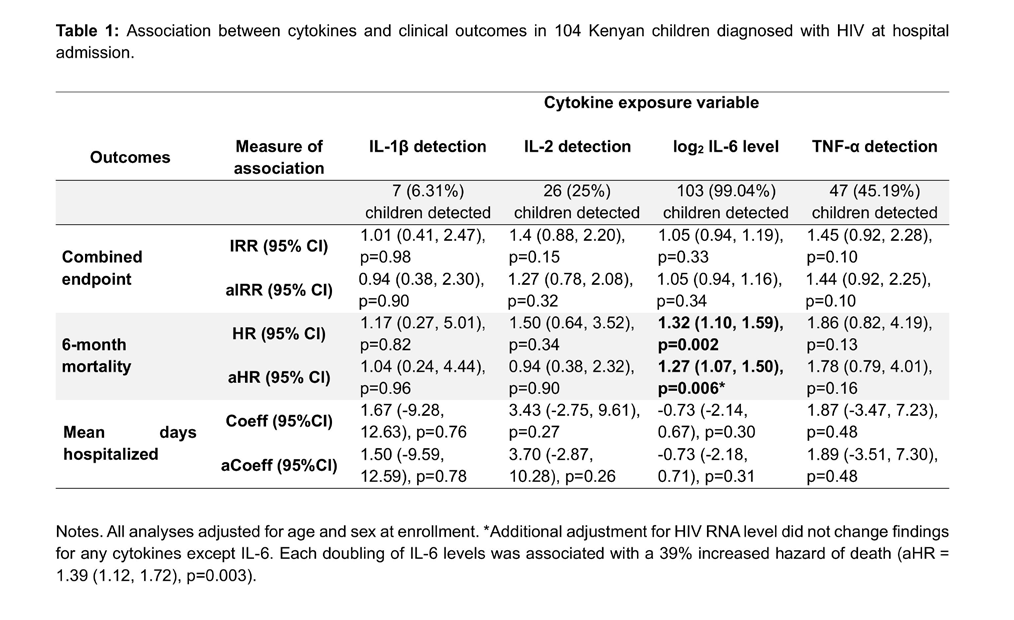
1053. HIV Viral Load Patterns Since Dolutegravir Initiation in Children and Adolescents Living With HIV
Poster Abstracts
Page: 336
Sophie Desmonde1, Joycelyn Dame2, Emile Sodinyessi1, Agatha David3, Sylvie N'Gbeche4, Madeleine Amorissani-Folquet5, Mariam Sylla6, Kouadio Kouacou7, Lehila Bagnan Tossa8, Caroline Yonaba9, Valériane Leroy1, the IeDEA Pediatric West African Database on AIDS (pWADA)
Background
We modelled patterns of virological response to Dolutagravir (DTG)-based ART in a cohort of children and adolescents living with HIV in West Africa.
Methods
All CALHIV aged 0 to 19 years initiating DTG-based ART between 2019-2023 and enrolled in the West African pediatric International epidemiological Database for Evaluating AIDS (IeDEA pWADA) were included and followed up to 24 months since DTG initiation (baseline). Baseline viral load (VL) was the closest measurement within 6 months prior and 2 weeks post DTG initiation. We used group-based trajectory modelling to assign each CALHIV to a group based on their VL accross visits; a logistic trajectory was used to identify groups with similar 24-month longitudinal patterns of VL based on dectable VL at a 1000-copy threshold. Multinomial regression analysis adjusted for age, sex and program was used to identify factors associated with each VL trajectory.
Results
Overall, 2,319 CALHIV (46% female) were included; 1,649 (71%) were aged 10-19 years. Median follow-up time on DTG was 15 months [IQR 5 – 29]; 0.6% died and 6.4% were lost to follow-up (≥7 months since last visit). At baseline, 1,149 (50%) were in viral suppression (VS, VL<200 copies), 100 (4%) had low level viremia (LLV: 200 <VL≤1000 copies) and 450 (19%) were in viral failure (VF: VL>1000 copies); 622 (27%) had no available baseline VL. Four trajectory groups were identified over 24 months (Figure 1): those with sustained VS (79%), decreasing probability for VF over time (5%), increasing probability for VF over time (9%) and high probability for VF (7%). Among those in VF at baseline, 54% reached VS but 46% remain in the high probability group, with sustained VF throughout follow-up. Age and sex were not associated with VL trajectories. However, those in care in Nigeria were least likely to be in either the low probability for VF by 24 months (p<0.001), moderate probability for VF (p<0.001) or high probability for VF (p=0.004) compared to Côte d’Ivoire.
Conclusions
We identified four different patterns among CALHIV initiating DTG. Those in VF at DTG initiation remained at moderate or high probability for VF, unable to achieve VS by 24 months on DTG. While our current model was not able to capture individual factors associated with HIV VL trends, adherence and resistance studies are needed to explain VF at DTG initiation and guide interventions to improve clinical outcomes among CALHIV.
The figure, table, or graphic for this abstract has been removed.
1054. Viral Suppression 12 Months After Switch to Dolutegravir by nRTI Backbone in Children/Adolescents
Poster Abstracts
Pages: 336-337
Renee de Waal1, Andrew Boulle1, Carolyn Bolton-Moore2, Safari Mbewe3, Karl-Gunter Technau4, Cleophas Chimbetete5, Cordelia Kunzekwenyika6, Geoffrey Fatti7, Idiovino Rafael8, Nosisa Sipambo9, Irene Ayakaka10, Mark Cotton11, Mary-Ann Davies1, Lee Fairlie12, the International Epidemiology Databases to Evaluate AIDS (IeDEA) Collaboration - Southern Africa
Background
The World Health Organization recommends dolutegravir (DTG) for treatment-experienced children and adolescents regardless of their viral load (VL). There is evidence to support continuing tenofovir in treatment-experienced adults, even if their current antiretroviral treatment (ART) regimen is failing; evidence for continuing abacavir, recommended for pediatric treatment, is limited. We describe viral suppression at 12 months by nucleoside/ nucleotide reverse transcriptase inhibitor (NRTI) backbone in ART-experienced children and adolescents at 11 treatment programs in South Africa, Zambia, Malawi, Zimbabwe, Mozambique, and Lesotho.
Methods
We included all ART-experienced children (aged <10 years) and adolescents (10-19 years) who started DTG from 01 Jan 2019, with ≥12 months follow up on DTG plus 2 NRTIs, at sites in the International epidemiology Databases to Evaluate AIDS Southern Africa collaboration. We described the proportion with viral suppression (VS), (VL <1,000 copies/mL), at 12 months (8–18 months) on DTG, by age, NRTI, and VL at DTG start (6 months before DTG start until 2 weeks after).
Results
We included 2,631 children and 10,169 adolescents. At DTG start, in children and adolescents respectively, median (interquartile range, IQR) age was 8.0 (6.8–9.1) and 14.7 (12.5–16.9) years; 1,268 (48%) and 4,554 (45%) were male; and median (IQR) ART duration was 5.1 (2.8–7.0) and 7.4 (3.3 to 11.0) years. VL was available at 12 months in 1,900 (72%) children and 7,158 (70%) adolescents. VS at 12 months occurred in 1,727 (91%) children and 6,427 (90%) adolescents overall; and in 126/172 (73%) children and 461/649 (71%) adolescents with VL≥1,000 copies/mL at DTG start. VS proportions were similar regardless of whether NRTI was switched, or abacavir or tenofovir were continued (see Figure), even in those with VL≥1,000 copies/mL at DTG start, where 242/331 (73%), 100/140 (71%), 73/101 (72%) had VL<1,000 respectively. Of those with VL≥1,000 at 12 months, 69/118 (58%) children and 321/521 (62%) adolescents had VL<1,000 at their next VL measurement, at a median (IQR) of 4.6 (3.7–6.0) and 5.5 (3.7–7.8) months later respectively.
Conclusions
In our cohort of ART-experienced children and adolescents who switched to DTG-based ART, 12-month VS rates were high, although below the 95% UNAIDS target; and were similar in those who switched their NRTI or continued abacavir or tenofovir. Further studies are needed to assess long-term outcomes such as DTG resistance and effects of low level viraemia.
Figure 1.
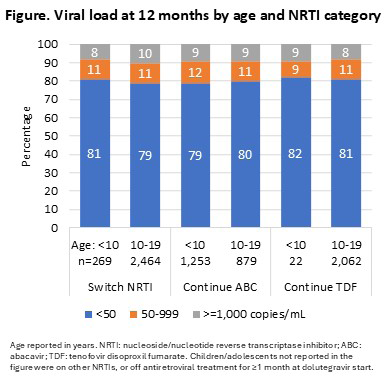
1055. WITHDRAWN
Poster Abstracts
Page: 337
1056. Prevalence and Consequences of Low-Level Viremia Among Adolescents Living With HIV in South Africa
Poster Abstracts
Page: 337
Zea Leon1, Olanrewaju Edun2, Siyanai Zhou1, Gayle Sherman3, Elona Toska1
Background
Low-level viremia (LLV), defined by the World Health Organization as viral load between 51-999 copies/mL, has been shown to be associated with an increased risk of virological non-suppression and failure among adults on antiretroviral therapy (ART). It is unknown if adolescents living with HIV (ALHIV) and on ART, who are more likely to have poor adherence compared to adults, are more likely to have experienced low-level viremia. There is also limited data factors shaping progression to virological failure among ALHIV on ART. We aimed to assess the prevalence of low-level viremia among ALHIV on ART and associations between LLV and progression to virological failure.
Methods
We analysed viral load data from a longitudinal cohort study of ALHIV (aged 10-19 years at baseline in 2014/2015) captured by the National Health Laboratory Services (NHLS) in South Africa. Using routine viral load data between 2015-2022, we calculated the prevalence of LLV at the first viral load test for all adolescents with results (n=737), then testing which socio-demographic factors were associated with LLV at first test. Among ALHIV who had at least three consecutive viral load tests between 2015-2022, we assessed the relationship between LLV (at the first test) and virological failure (defined as two consecutive viral loads ≥1000 copies/mL) controlling for age, sex and mode of HIV acquisition using logistic regression in RStudio.
Results
A total of 737 ALHIV had at least one viral load result between 2015-2022, amongst whom the prevalence of LLV at first available viral load test increased from 12.4% in 2015 to 18.3% in 2022. Among those with at least one result, older adolescents were more likely to have LLV (OR: 1.09; CI: 1.03, 1.25). Both sex (OR: 0.95; CI: 0.60, 1.51) and mode of HIV acquisition (OR: 0.96; CI:0.52, 1.79) were not significant predictors for LLV. Among 628 ALHIV who had at least three consecutive viral load records during the time period analysed, 13.4% had LLV at the first viral load and 18.6% had progressed to virological failure. ALHIV with LLV were two times (OR: 2.98; CI: 1.64, 6.15) as likely to progress to virological failure compared to those with undetectable viral loads (viral load ≤50 copies/mL).
Conclusions
The prevalence of LLV among ALHIV on ART is high and LLV strongly predicts virological failure. Age also serves as a predictor for LLV. This highlights the need for enhanced adherence support among ALHIV with LLV and not just those with viral non-suppression.
Figure 1.
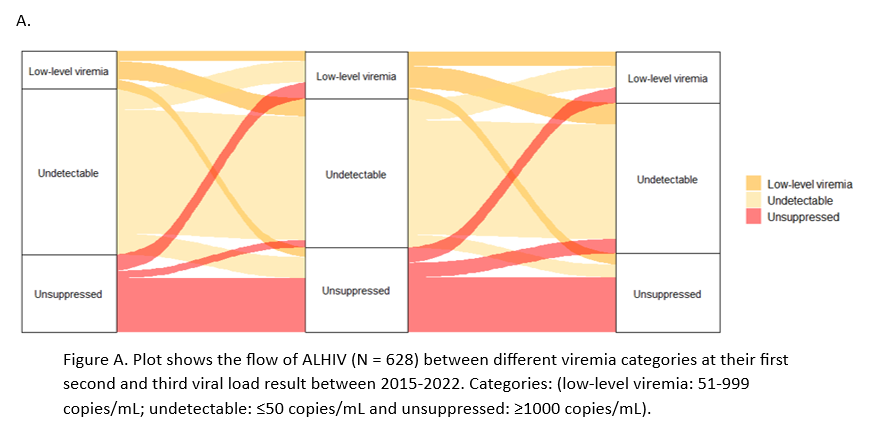
1057. HIV-1 Drug Resistance at Low- and High-Level Viremia in Kenyan Youth on Dolutegravir-Based Therapy
Poster Abstracts
Pages: 337-338
Rami Kantor1, Winstone Nyandiko2, Joel Hague1, Allison DeLong1, Edwin Sang2, Ashley Chory3, Josephine Aluoch2, Eslyne Jepkemboi2, Millicent Orido2, Joseph Hogan1, Rachel Vreeman3, Vlad Novitsky1
Background
Understanding of the extent and patterns of HIV-1 drug resistance in the era of globally widespread dolutegravir therapy is limited, particularly for youth. Data on low-level viremia (LLV; 200-1,000 copies/mL) are sparse, primarily due to technical difficulties with genotyping at low RNA levels, and the evolving global definitions of treatment failure.
Methods
We developed a protocol for LLV genotyping by next generation sequencing (NGS), applied it to specimens from Kenyan children and adolescents longitudinally-followed and failing dolutegravir-based antiretroviral therapy, and compared the extent of NRTI, NNRTI and INSTI resistance between specimens with LLV and those with high-level viremia (HLV), defined as viral load >1000 copies/mL (current WHO viral suppression threshold). Established drug resistance mutations (DRMs) were defined at NGS frequency ≥20%, while minority drug resistance variants were considered at NGS frequency 2-20%. Differences in proportions were estimated using Fisher’s exact test.
Results
In 397 participants (median age 20 years; 49% female; median 14 years on antiretroviral therapy and 4 years on dolutegravir), 77% achieved viral suppression. For established DRMs, of 42 LLV specimens, 37 Reverse Transcriptase (RT) and 38 Integrase (INT) sequences were generated (88%-90% genotyping success), demonstrating overall resistance in 71% (NRTI 38%; NNRTI 68%; major INSTI 0%; accessory INSTI 13%). Of 168 HLV specimens, 157 RT and 159 INT sequences were generated (93%-95% genotyping success), demonstrating overall resistance in 54% (NRTI 26%; NNRTI 49%; major INSTI 0%; accessory INSTI 6%). Minority resistance variants were detected in 53% of LLV specimens (NRTI 11%, NNRTI 46%, major INSTI 8%, accessory INSTI 0%); and 60% of HLV specimens (NRTI 36%, NNRTI 39%, major INSTI 10%, accessory INSTI 6%. NNRTI established DRMs were higher in LLV than HLV (68% vs. 49%; p<0.05), and minority NRTI drug resistance variants were lower in LLV than HLV (OR 0.214, 95% CIs 0.052 to 0.647; p<0.005). Other eight tests were non-significant.
Conclusions
Developing a genotyping protocol for LLV enabled exploration of drug resistance in this challenging and increasingly relevant viral load range. High treatment failure in this vulnerable Kenyan youth population on DTG-based regimens and similar overall resistance prevalence in LLV versus HLV are concerning, enhanced by major INSTI minority resistance variants. Longitudinal follow up to determine the impact is ongoing.
1058. Enhanced Adherence Counselling Among Adolescents With Detectable Viremia in Cameroon
Poster Abstracts
Page: 338
Alex Durand Nka1, Suzie Moyo Tetang2, Yagai Bouba3, Aude Christelle Ka'e1, Lum Forgwei3, Davy-Hyacinte Gouissi3, Rachel Kamgaing3, Anne Esther Njom Nlend4, Paul Koki Ndombo5, Alexis Ndjolo3, Maria Mercedes M. Santoro6, Francesca Ceccherini-Silberstein6, Carlo-Federico Perno7, Joseph Fokam3, the CIPHER-ADOLA Study Group
Background
In low-and middle-income countries (LMIC), mortality among adolescents living with HIV(ADLHIV) is still concerning, driven by poor viral suppression(VS) in the frame of limited adherence monitoring approaches. We herein evaluated the virological outcomes after enhanced adherence counselling (EAC) among ADLHIV with non-VS and low-level viremia (LLV) in the era of tenofovir-lamivudine-dolutegravir (TLD) in Cameroon.
Methods
In the frame of the CIPHER-ADOLA project, we conducted a multicenter facility-based cohort-study among ADLHIV(10-19 years) in Cameroon. Three EAC sessions were provided to ADLHIV with a viral load (VL)≥50 copies/ml for a period of 3-months. VS, low-level viremia (LLV) and virological failure(VF) were defined as VL<1000, 50-999 and ≥1000 copies/ mL, respectively. The outcome after EAC among ADLHIV with LLV and VF was respectively to achieve undetectability and VS.
Results
Of 252 ADLHIV enrolled for VL testing, 70 (27.8%) had a VL≥50 copies/ ml (female:58.6%, median [IQR] age: 15 [13-17]). Pre-TLD backbones included ABC+3TC (50.0%), TDF+3TC (41.4%) and AZT+3TC (8.6%); median TLD-duration was 23.5 [±11.6] months. Before EAC, 72.9% (51/70) had poor ART-adherence; 44.6% and 55.4% had VLs 50-999 and ≥1000, respectively. At the end of follow-up, 60.7% had good adherence; with higher-rates of adherence associated with being female (22/37 [59.4%]) versus male (15/26 [57.7%];p=0.889) and attending all 3 EAC-sessions (57.1% [32/56] vs 42.9%[24/56],p=0.001). Among the 56 ADLHIV with available VLs post-EAC, 58.9%, 19.6% and 21.4% had VLs<50, 50-999 and ≥1000, respectively, indicating an overall 33% reduction in poor VS. Interestingly, among ADLHIV with VL≥1000 at baseline, 70% achieved VS and 30% experienced VF after EAC. In LLV group at baseline, 74% had a VL<50 and 26% remain in LLV. Despite a non-significant decline in median VL (126[52-1871] post-EAC versus 135[95-8519] at baseline,p=0.945), viral non-suppression and LLV significantly declined from 55.4% to 21.4% (p=0.0002) and 44.6% to 19.6% (p=0.0046) respectively after EAC. Overall,73.2% significant decline in VLs (-0.5 log10 RNA) was observed between pre- and post-EAC.
Conclusions
In LMICs transitioning to TLD, an effective EAC would substantially improve ART outcomes among ADLHIV experiencing non-VS. In context, LMICs are encouraged to accompany the transition to pediatric dolutegravir-containing regimens with a robust adherence support strategy for ADLHIV with detectable VL to achieve elimination of pediatric AIDS by 2030.
1059. Differentiated Service Delivery Programme Impact on Clinical Outcomes Among Adolescents With HIV
Poster Abstracts
Page: 338
Lara Lewis1, Jienchi Dorward1, Johan van der Molen1, Jennifer A. Brown1, Nigel Garrett1, Yukteshwar Sookrajh2, Lungile Hobe3, Mlungisi Khanyile1, Thokozani Khubone2, Francesca Little4, Thulani Ngwenya5
Background
In sub-Saharan Africa, clinical outcomes among adolescents with HIV (AWH) on antiretroviral therapy (ART) remain sub-optimal. Differentiated service delivery (DSD) models for ART may facilitate better outcomes, but evidence on their effectiveness among AWH is lacking. We evaluated DSD uptake and outcomes among AWH living in KwaZulu-Natal (KZN), South Africa, following the introduction of DSD for adolescents in mid-2020.
Methods
We analysed routinely collected, de-identified data from 125 primary care clinics. AWH aged 10-18 years, stable-in-care (on ART for >6 months with recent viral load (VL) <50 copies/mL) and on first-line ART in June 2020 were analysed and followed to June 2023. The proportion of AWH enrolling in DSD for external pick-up points (the predominant DSD form in KZN, henceforth referred to as DSD), and the effect of DSD enrolment on time to the composite outcome of viraemia (VL>50 copies/mL) or loss-to-care (>365 days late for a visit) was estimated. The probability of DSD enrolment was modelled using logistic regression with generalized estimating equations and covariates for district, age in 2020, gender, time on ART, regimen, previous exposure to multi-month dispensing, history of viraemia, and a polynomial function for months of follow-up. The hazards of becoming lost or viraemic was modelled using inverse-probability-of-treatment-weighted pooled logistic regression, and risk probabilities were calculated with 95% confidence intervals (CI) estimated using bootstrapping.
Results
In June 2020, 5766 AWH were on first-line ART. Of these, 2142 were missing a recent VL, 1181 had a VL>50copies/mL, 6 did not have baseline ART regimen data, 162 had tuberculosis and 52 were pregnant. Of the 2223 AWH included for analysis, median age was 14 years and 60% were female. During follow-up, 758 (34%) enrolled into DSD, thereafter, collecting ART mostly through DSD (69% of follow-up), returning to clinic-based care intermittently (Figure). In total, 5% (2% versus 6% in exposed versus never exposed to DSD) became lost-to-care and 37% (46% versus 20% in exposed versus never exposed) became viraemic, with a median (interquartile range) VL of 465 (150-3970) copies/mL. The estimated 36-month probability (95% CI) of becoming lost or viraemic was 35.2% (31.7-38.8%) among those referred to DSD and 50.9% (48.7-53.0%) among those not.
Conclusions
DSD enrolment was associated with lower viraemia/lost-to-care rates, but overall clinical outcomes of AWH remain concerning.
Figure 1.
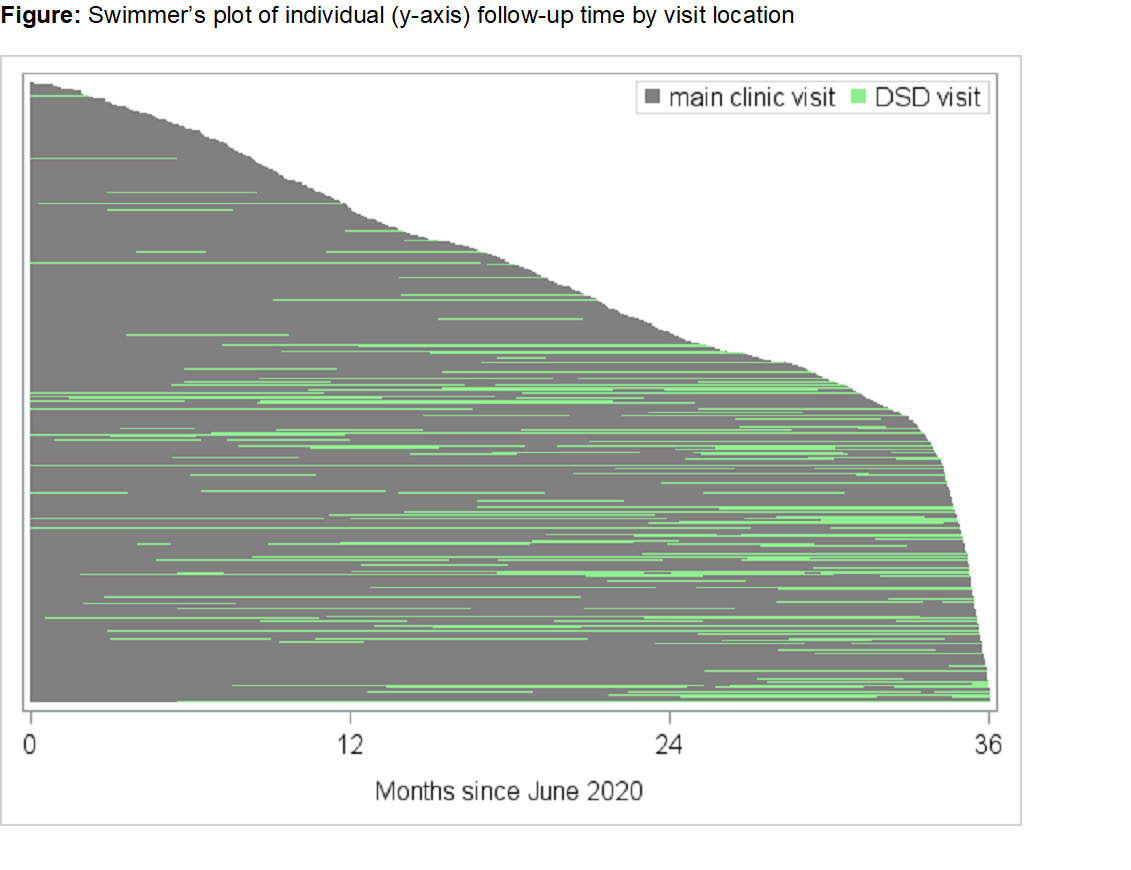
1060. HIV Status Disclosure Among ART-Experienced Adolescents and Young Adults in 4 African Countries
Poster Abstracts
Page: 339
Nicole Dear1, Seth Frndak2, Natalie Burns1, Ajay P. Parikh1, Hannah Kibuuka3, John Owuoth4, Valentine Sing’Oei4, Jonah Maswai5, Emmanuel Bahemana6, Abdulwasiu Tiamiyu7, Zahra Parker8, Trevor Crowell1, Neha Shah2, Julie Ake1, the African Cohort Study (AFRICOS) Study Group
Background
Adolescents and young adults living with HIV (ALHIV) face multifaceted challenges to long-term treatment success. We characterized HIV status disclosure among ALHIV and assessed relationships between status disclosure, antiretroviral therapy (ART) adherence and viral suppression.
Methods
The prospective African Cohort Study enrolls people with and without HIV, ≥15 years, at 12 PEPFAR-supported facilities in Kenya, Nigeria, Tanzania, and Uganda. Socio-behavioral questionnaires are administered at enrollment and six-monthly visits; responses to questions around voluntary status disclosure are self-reported. Participants living with HIV on ART and <25 years old were included. Patterns of status disclosure were described. Robust Poisson regression was used to assess relationships between disclosure to an immediate family member (spouse/partner, parent, sibling, or child) and 1) ART adherence (none vs 1+ missed doses of ART in past 30 days); 2) viral suppression (<1000 vs >1000 copies/mL) using data from participants’ most recent visit. Models were stratified by sex.
Results
Between January 2013 and December 2023, 3381 (81.7%) participants living with HIV were enrolled. At most recent visit, 698 were <25 years, living with HIV and on ART including 625 complete cases. Of these, 244 (35.0%) had ever disclosed their HIV status (Figure). A greater proportion of females vs males had disclosed to a spouse/partner (12.4% vs 6.9%; p=0.09). A greater proportion with vertical vs nonvertical transmission had disclosed to a parent (28.6% vs 17.0%; p=0.02), while a smaller proportion with vertical transmission had disclosed to a spouse/partner (4.5% vs 11.5%; p=0.08). After adjusting for age and program site, females who disclosed to an immediate family member were less likely to have missed ART doses compared to those who had not disclosed (aRR: 0.54; 95% CI: 0.32-0.93); for males, the association was not statistically significant (aRR: 1.32; 95% CI: 0.76-2.31). Although not significant, females who disclosed to an immediate family member were less likely to be virally unsuppressed (aRR: 0.74; 95% CI: 0.37-1.50) after adjusting for age, program site and ART adherence, while males were more likely to be unsuppressed (aRR: 1.73; 95% CI: 0.79-3.81).
Conclusions
HIV status disclosure among ALHIV was low. Sex differences suggest targeted interventions for young men may improve treatment outcomes. Social support, violence and stigma should also be investigated.
Figure 1.
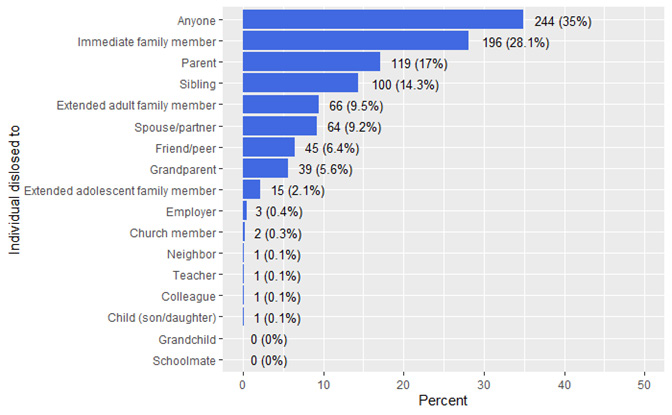
1061. Long-Term Outcomes of Young Adults With Perinatal HIV Infection in the US and Puerto Rico
Poster Abstracts
Page: 339
Leah Kern1, Alicia Jaramillo-Underwood2, Kunjal Patel2, Renee Smith3, Stephen Spector1, the Pediatric HIV/AIDS Cohort Study (PHACS)
Background
More data are needed to understand the rates and associated risk factors of mortality, serious clinical events, elevated viral load, and immunosuppression in the aging population of young adults with perinatally acquired HIV (YAPHIV) in the US.
Methods
Among YAPHIV ≥18 years in the Pediatric HIV/AIDS Cohort Study AMP and AMP Up protocols, we calculated incident mortality and CDC-C/WHO-4 rates and the proportion of person-time with elevated viral loads (≥200 copies/mL) and low CD4 counts (<200 cells/mm3) by age strata 18-21, 22-25, 26-29, and ≥30 years. We used Cox models to identify risk factors at age 18-24 years which best predicted mortality/CDC-C events for YAPHIV at ≥25 years.
Results
617 participants were followed for incident events (median follow-up 6.5 years; 63% were 18-21 years, 61% female, and 63% Black non-Hispanic; median CD4 count 561 cells/mm3 and 66% viral load <200 copies/mL at baseline). Mortality (per 1000 PY) was highest at ≥30 years at 8.1 (95% CI: 3.0,22.0) and lowest at 3.1 participants (95% CI: 1.0,9.9) at ages 22-25. Black non-Hispanic female and male YAPHIV had mortality rates 11.5 (95% CI: 5.8,23.1) and 4.7 (95 CI: 2.0,11.3) times higher than Black non-Hispanic females and males in the US population, and 14.9 (95% CI: 7.4,29.7) and 7.1 (95% CI: 3.0,17.1) times higher than white non-Hispanic females and males in the US population. 44 CDC-C/WHO-4 events were reported over 4034 PY; incidence was highest at 18-21 years at 20.0 (95% CI: 11.5,34.7) events per 1000 PY. The proportion of person-time with viral suppression <200 copies/mL increased as participants aged, but CD4 count <200 cells/mm3 also increased. Among 307 participants in follow-up at age 25 years, those with high viral load, low CD4 count, a prior CDC-C/WHO-4 event, poor medication adherence, current marijuana use, or who were unemployed were more likely to have an incident CDC-C/WHO-4 event or death after age 25 years. In multivariable analyses, the most important independent predictors of incident CDC-C/WHO-4 event or death were high viral load, low CD4 count, and a prior CDC-C/WHO-4 event (C-index: 0.92), conferring a 54.6% risk of CDC-C/WHO-4 event or death by year 3 of follow-up compared to 0.3% risk for participants without these risk factors.
Conclusions
There is increased mortality with age for YAPHIV, particularly for Black non-Hispanic young adults. Providers should identify interventions that lower the risk for high viral load, low CD4 count, and incident CDC-C/WHO-4 events for YAPHIV.
Table 1.
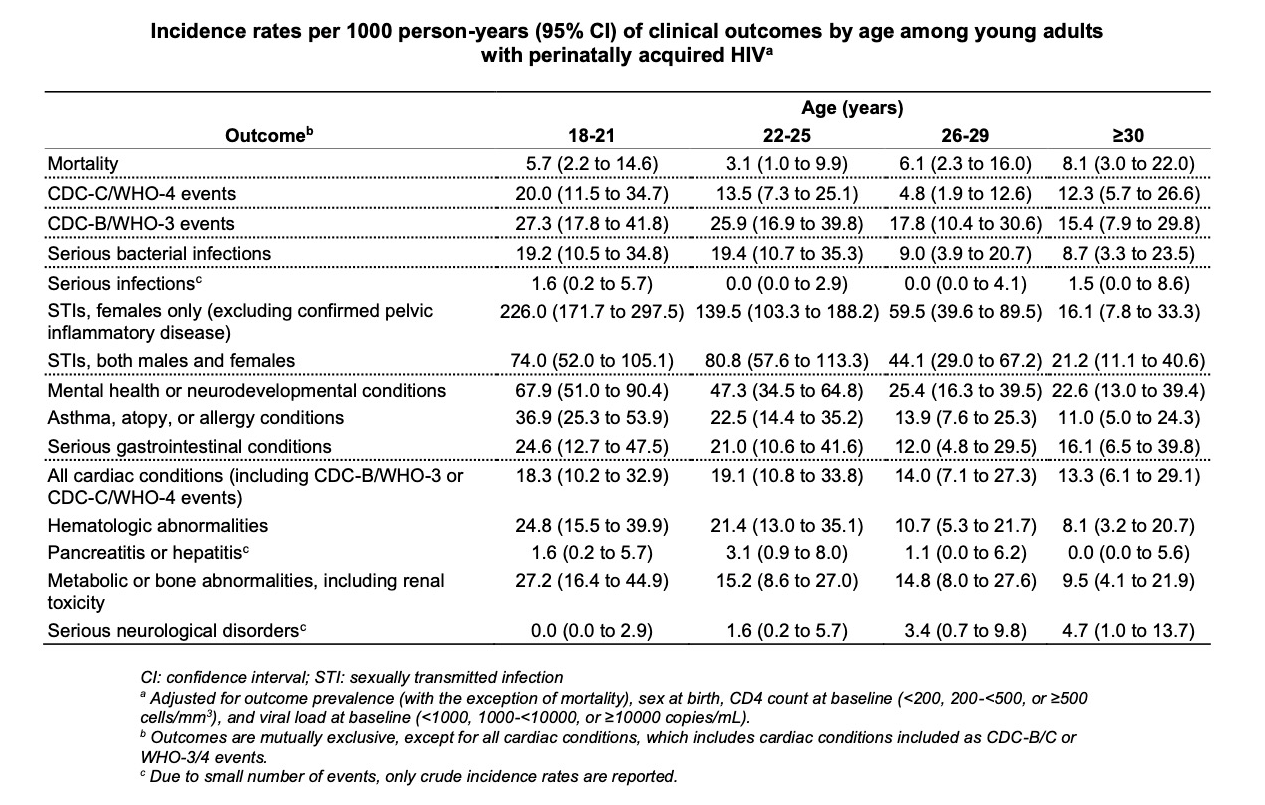
1062. WITHDRAWN
Poster Abstracts
Page: 339
1063. Psychotic Disorders in Young Adults With Perinatally-Acquired HIV: A Multicentre UK Study
Poster Abstracts
Page: 340
Indira Mallik1, Madeline Robertson2, Krupa Ravi3, Jessica Glenn4, Lauren Nicholls1, Sarah Dib5, Graham Frize1, Sally Hawkins2, Sara Ayres1, Sarah Fidler4, Nadia Ahmed6, Elizabeth Hamlyn2, Caroline Foster1
Background
Single cohort UK data suggests an increased lifetime prevalence of psychosis in young people living with perinatally acquired HIV (YPaHIV) compared to age matched peers in the general population (0.5-1.0%), echoed by US data. This is thought to be due to lifelong exposure to a neurotropic virus, neuroinflammation during brain development, and greater experience of adverse life events such as parental death. We examine clinical and psychosocial characteristics associated with psychosis in YPaHIV.
Methods
Retrospective case note review of all YPaHIV ≥18years engaged in care at three London youth HIV clinics (n=377) from first attendance to 01/04/2024. We assessed impact of gender, ethnicity, birthplace, prior CDC-C diagnoses, learning disability, parental death, family history of mental health disorders (FHxMHD), and cannabis use on developing psychosis using a multivariate logistic regression model.
Results
27/377 (7.2%) YPaHIV experienced psychosis (YPaHIVP), median age at first episode psychosis (FEP) 21 (IQR 17 - 25) years: current median age 29 (IQR 25 - 31) years, 48.1% male, 81.5% Black, 61.5% born abroad. Age, gender, ethnicity, and birthplace were comparable to YPaHIV without psychosis (YPaHIVwP). Factors significantly associated with psychosis were prior CDC-C diagnoses (OR 3.51, 95% CI 1.17 – 10.49, P=.03), parental bereavement (OR 6.47, 95% CI 1.97 – 21.20, P=.002), cannabis use (OR 7.13, 95% CI 2.45 – 20.78, P<.001) and FHxMHD (OR 23.46, 95% CI 5.51 – 99.82, P<.001). 68.2% YPaHIVwP had VL<200 copies/mL at FEP, in 21/27 (77.8%) no organic cause was identified. All required admission. Median time from FEP to latest follow up (LFU) was 84 (IQR 36 - 108) months; 20/27 (74.1%) had recurrent psychosis, 66.7% remained on antipsychotics, median length of community mental health follow up was 40 (IQR 27 - 81) months. At LFU 85% of YPaHIVP had VL<200 copies/mL compared to 88.6% of YPaHIVwP (P=.06). 33.3% of YPaHIVP reported self-harm or suicidality compared to 3.7% YPaHIVwP (χ² 22.20, P<.001).
Conclusions
In this multi-centre cohort of YPaHIV, psychosis prevalence was 7 times greater than the general age-matched UK population and was associated with high levels of self-harm and suicidality. Clinicians should be aware of increased susceptibility of psychosis in YPaHIV, particularly those with prior CDC-C diagnoses, cannabis use, parental bereavement and FHxMHD. It is imperative to integrate mental health services into HIV care particularly during the vulnerable period of transition.
1064. Changes in Suicidality, Depression, and Anxiety After Integrative Mental Health Care in Thai Youth
Poster Abstracts
Page: 340
Tavitiya Sudjaritruk1, Assawin Narkpongphun1, Pradthana Ounchanum2, Oramai Mueangmo1, Worawan Wongjak1, Tanachot Chaito1, Pope Kosalaraksa3, the S-BETAH Study Group
Background
This study aimed to assess suicidality, depression, and anxiety following the introduction of integrative mental health care into HIV services for Thai youth living with HIV (YLHIV).
Methods
A multicenter prospective cohort study was conducted among YLHIV (aged 15-24 years) and age and sex-matched HIV-negative youth in Thailand. Participants were assessed for suicidality, depression and anxiety using the Columbia-Suicide Severity Rating Scale, Patient Health Questionnaire-9 (PHQ-9), and Generalized Anxiety Disorder 7-item (GAD-7) at baseline and 6 months. Significant suicidal risk was defined as suicidal ideation with a specific method, intention, or plan (baseline: lifetime and/or within 1 month; 6-month visit: during the past 6 months), with/without suicide attempts (baseline: lifetime and/or within 3 months; 6-month visit: during the past 6 months). Significant depressive and anxiety symptoms were defined as PHQ-9 and GAD-7 scores of ≥10 at both visits. At each visit, participants demonstrating low suicidal risk or mild depressive or anxiety symptoms received brief mental health counseling by HIV clinic staff, while those with significant suicidal risk or depressive or anxiety symptoms were referred to a psychiatrist for management. Comparisons of participants with mental health symptoms were performed by Chi-square or Fisher’s exact test for YLHIV vs. HIV-negative youth, and McNemar’s test for baseline vs. month 6 visits.
Results
Up to 2023, 200 YLHIV (median age 22 years, 59% male, 100% on ART, 86% virally suppressed) and 200 HIV-negative youth (median age 22 years, 59% male) were enrolled. There were no significant differences in mental health outcomes by HIV status at either visit. Compared with their baseline, YLHIV showed a significant decline at 6 months in the proportion of those at significant suicidal risk (4.5 vs. 1.0%; P=0.01), depressive symptoms (12.0 vs. 3.1%; P<0.001), and anxiety symptoms (7.5 vs. 2.1%; P=0.01). Among HIV-negative youth, there was a significant decline in the proportion experiencing significant depressive symptoms (7.5 vs. 2.0%, P=0.01); non-significant declines were observed among those at significant suicidal risk (3.0 vs. 0.5%; P=0.06) or anxiety symptoms (3.5 vs. 0.5%; P=0.13) (Table).
Conclusions
Providing integrated mental health care in the HIV clinic led to significant declines in suicidality, depression, and anxiety among Thai YLHIV. This model shows potential benefits for addressing the mental health care gap in routine HIV services.
Table 1.
Changes in Suicidality, Depression and Anxiety After Integrative Mental Health Care into HIV Services Among Participants From Baseline to Month 6.
| Abnormal mental assessments |
Baseline: Youth living with HIV (n=200) |
Baseline: HIV-negative youth (n=200) |
Baseline: P
a
|
Month 6: Youth living with HIV (n=195) |
Month 6: HIV-negative youth (n=198) |
Month 6: P
a
|
| Significant suicidal risk |
12 (6.0) |
6 (3.0) |
0.23 |
3 (1.5)
*
|
1 (0.5) |
0.37 |
| Significant depressive symptoms |
24 (12.0) |
15 (7.5) |
0.32 |
6 (3.0)
*
|
4 (2.0)
*
|
0.54 |
| Significant anxiety symptoms |
15 (7.5) |
7 (3.5) |
0.21 |
4 (2.0)
*
|
1 (0.5) |
0.21 |
1065. WITHDRAWN
Poster Abstracts
Page: 340
1066. Kidney Dysfunction in Young People Living With HIV on Dolutegravir-Based Regimens in Kampala, Uganda
Poster Abstracts
Page: 341
Esther M. Nasuuna1, Robert Kalyesubula2, Risa Hoffman3, Chido Dziva Chikwari4, Helen A. Weiss5
Background
Young people living with HIV (YPLHIV) are at increased risk of developing kidney abnormalities due to antiretroviral therapy (ART), particularly tenofovir disoproxil fumarate (TDF). Dolutegravir (DTG) is associated with increased creatinine levels. We explored the association of dolutegravir ART regimens with kidney abnormalities among YPLHIV in Kampala, Uganda.
Methods
We performed a cross-sectional study with YPLHIV aged 10-24 years in seven HIV clinics in Kampala. We collected a single urine and blood sample and measured the albumin creatinine ratio (ACR), proteinuria on dipstick, and estimated glomerular filtration rate (eGFR) using CKDEPI2021 equation (for ≥18 years) or bedside Schwartz (<18 years). Chi-square tests were used to compare kidney function parameters of those on TDF/DTG vs DTG combined with either zidovudine or abacavir (other regimens).
Results
A total of 483 participants were enrolled, of whom 58% were female and 69% were aged 10-17 years. The median duration on ART was 9.6 years (IQR 8,12). Among the 357 (78%) participants on both TDF and TDG, the mean BMI was higher than those on other regimens (20.7 vs 18.7; p<0.001) as was mid-upper arm circumference (25.5 vs 22.5;p <0.001) and mean serum creatine (0.67 vs 0.59; p<0.001). The mean cystatin C level was normal and comparable in both groups. The mean eGFR was within normal limits and lower among those on TDF/DTG compared to those on other regimens (132.3ml/min/1.73m2 vs 142.1ml/ min/1.73m2; p<0.001). The eGFR according to cystatin C was comparable in both groups (114.2 ml/min/1.73;m2 vs 116.5ml/min/1.73m2; p=0.15). The proportion of participants with ACR>30mg/g and proteinuria were comparable by treatment regimen (9.6% vs 13.0% p=0.30; 28.3% vs 30.2%, p=0.70).
Conclusions
Abnormal ACR and proteinuria are prevalent among YPLHIV in Kampala, Uganda, and similar by ART regimen. While kidney function was largely within normal limits except creatinine which was higher among those on TDF/DTG, these findings raise concern. Longer-term follow-up is needed to understand whether YPLHIV on ART will develop chronic kidney disease as they age, and to elucidate risk factors for kidney disease progression that may be modifiable.
1067. Long-Term Immune Response to Vaccines in Vertically Infected People Living With HIV
Poster Abstracts
Page: 341
Annachiara Zin1, Elisa Barbieri1, Giulia Brigadoi1, Andrea Berlese1, Lorenzo Chiusaroli1, Daniele Mengato2, Andrea Francavilla1, Carlo Giaquinto1, Daniele Donà1, Osvalda Rampon2
Background
Despite successful antiretroviral therapy (ART), people living with HIV (PLHIV) are at risk of suboptimal vaccine response, exposing this vulnerable population to common vaccine-preventable diseases.
Methods
This cross-sectional observational study evaluated humoral responses to vaccination in a cohort of PLHIV with vertically acquired infection. Seroprotection rates for diphtheria, tetanus, measles, mumps, rubella, varicella, and hepatitis B (HBV) were assessed at predefined intervals following primary immunization and at the most recent follow-up visit up to October 31, 2023, through a review of serological analyses and available medical records. Associations between vaccine responses and predictive factors were examined.
Results
Eighty-five vertically infected PLHIV were included in the study, with a median age of 24 years(IQR 16–31 years). Before starting ART, 38% were at CDC stage 1, 24% at stage 2, and 38% at stage 3. In 2023, these percentages were 36%, 24%, and 40%, respectively. Only 27% began ART within their first year of life, with a median age of 53 months at initiation (IQR 12–118 months). By 2023, all patients were on ART, with 92% achieving undetectable viral loads. Two years after the last vaccine dose, seroprotection rates were 71% for diphtheria, 79% for tetanus and measles, 67% for mumps, 87% for rubella, and 54% for varicella. After five years, 50-70% retained protective antibodies, dropping to 50-58% after ten years, and below 30% after twenty years for most vaccines, except rubella (47%). Protection rates for HBV were the lowest, with only 60%, 37%, 24%, and 7.5% retaining protection after 2, 5, 10, and 20 years (Figure 1). In 2023, considering the most recent serologies available, seroprotection rates among PLHIV were 37% for diphtheria, 61% for tetanus, 46% for measles, and 25% for HBV. On multivariate analysis comparing seroprotected with non-seroprotected PLHIV (considering factors such as starting ART before 12 months of age, current CDC stage 3, CD4 count at the last vaccination dose, years since the last vaccination dose, complete vaccination schedule, and sex), only the years since the last vaccination dose correlated with vaccine response for all vaccinations.
Conclusions
In this cohort of vertically infected PLHIV, seroprotection following vaccinations was lower and less durable compared to the general population. Thus, strict adherence to vaccination schedules and regular serological monitoring are essential for effective management of this population.
Figure 1.
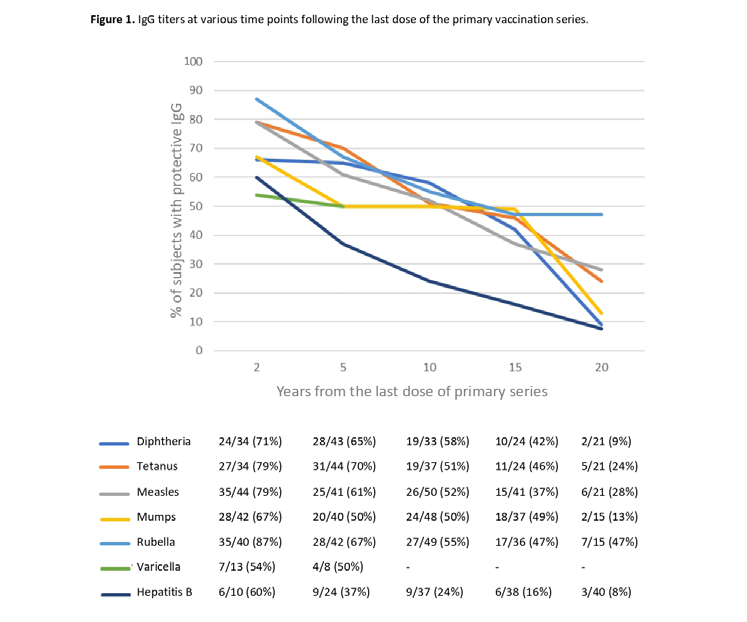
1068. Characterisation of Cardiac Disease in Adolescents With HIV in the Antiretroviral Therapy Era
Poster Abstracts
Page: 342
Edith D. Majonga1, Miriam Lacharie2, Betty Raman2, Hilda A. Mujuru3, Kirti Naik4, Anoop Shah5, Rashida Ferrand5, Masliza Mahmod2
Background
Young people with perinatal HIV (PHIV) have an increased risk of cardiac disease despite effective ART, particularly but not exclusively in those who have had delayed HIV diagnosis and antiretroviral therapy (ART) initiation. The aim of the study is to characterize the myocardial abnormalities in adolescents with PHIV who are established on ART using cardiac magnetic resonance (CMR) imaging and association with biomarkers of inflammation and cardiac stress.
Methods
We examined the myocardium in adolescents with PHIV aged 10-19 years taking ART compared to uninfected controls in Zimbabwe. Participants completed a 3-Tesla CMR assessment of cardiac function and myocardial fibrosis using late gadolinium enhancement (LGE). Circulating biomarkers of inflammation (CRP, TNF-α) fibrosis (Gal-3, TIMP-1) and cardiac stress (ST2, GDF-15) were assessed using multiplex bead assay (Luminex). Multivariate linear regression assessed how biomarker levels related to cardiac abnormalities. A p-value of 0.05 or less was considered significant.
Results
A total of 120 adolescents were enrolled (60 PHIV; 47% female and 60 HIV-uninfected; 42% female). Participants with HIV were older [median (IQR) 18 (16-19) vs 15 (13-17) years; p<0.001] compared to uninfected controls although both groups had a similar body surface area. In the HIV group, median age at HIV diagnosis was 5.5 (IQR) 4-8 years and 18 (82%) were virally suppressed (<19 copies/ml). 96 participants had CMR scans (49 PHIV and 47 uninfected controls). Both groups had similar myocardial function and no LGE. PHIV group had larger left ventricular (LV) mass index (LVMi) [39.4 (5.9) vs 35.9 (6.0) g/m2; p=0.006] . There was reduced LV ejection fraction [55.2% vs 59.9% ; p=0.005] and right ventricular ejection fraction [55.2% vs 59.2% ml/m2; p=0.026] in those who were not virally suppressed compared those suppressed. Plasma levels of TNF-α, TIMP1 and GDF-15 were higher in the PHIV group compared to uninfected control (p<0.001). CRP and ST2 were higher in those not virally suppressed versus unsuppressed. ST2 was significantly associated with higher LVMi (adjusted β, 1.368 ; p=0.040), LV end diastolic and systolic volume index (3.428 ; p=0.006 and 2.030 ; p=0.027).
Conclusions
CMR revealed similar myocardial function between PHIV and controls but mildly increased LVMi in the PHIV group. ST2 biomarker may suggest presence of subclinical myocardial stress. Longitudinal studies to understand the clinical implications of these myocardial alterations are required.
Figure 1.
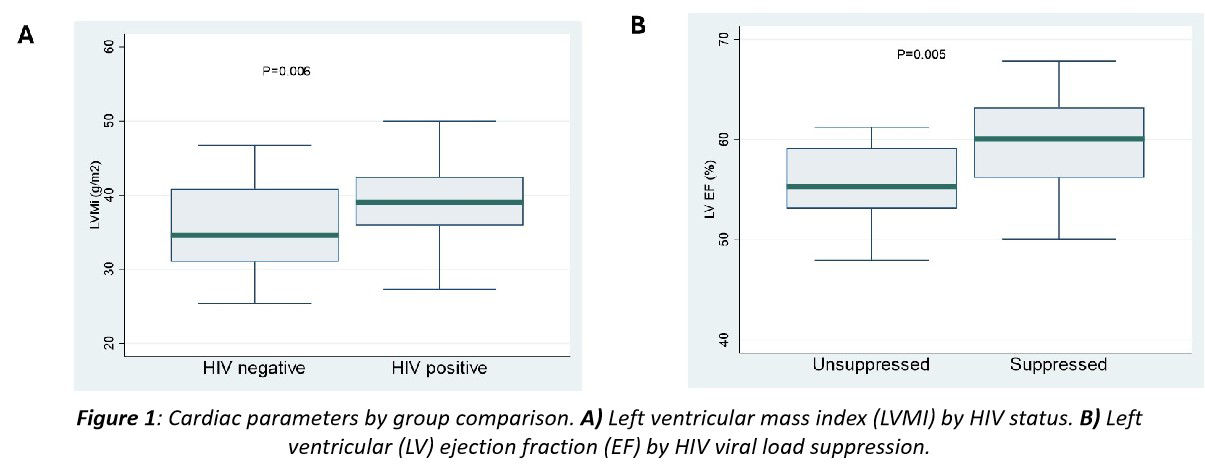
1069. Left Ventricular Mass Adjustment for Body Size in Youth With Perinatal HIV or Perinatal HIV Exposure
Poster Abstracts
Page: 342
George W. Sawyer1, Tzy-Jyun Yao1, Paige Williams1, Denise L. Jacobson1, Elaine M. Urbina2, Steven E. Lipshultz3, Steven D. Colan4, the Pediatric HIV/AIDS Cohort Study (PHACS)
Background
Cardiac-related complications were one of the most common causes of death in youth living with perinatally-acquired HIV (YPHIV) prior to widespread ART. However, diagnosing Left Ventricular Hypertrophy (LVH) typically relies on indices based on allometric exponents estimated from adults, which normalize Left Ventricular Mass (LVM) by body surface area (BSA) or height (HT) raised to a power (BSA: 1.35, HT: 2.70). In pediatric populations and particularly among YPHIV, additional adjustment for lean and adipose body mass (LBM, ABM) may provide more accurate diagnoses.
Methods
We evaluated youth (mean age 12.2, range 7.0-18.7 years, 72% nonwhite, 48% male) from the Adolescent Master Protocol (AMP) conducted by the Pediatric HIV/AIDS Cohort Study network. LVM was normalized by BSA or HT, exponentiated to values estimated from both adults and AMP cohorts (via linear regression), and assessing improvement of normalizations including LBM and/or ABM. Normalizations for LVM were computed for YPHIV and youth perinatally exposed but uninfected (YPHEU). Adjusted R2 (aR2) was used to assess the variation in LVM accounted for by BSA, HT, ABM and/or LBM. Plots of LVM indices by ABM percentage of body mass were used for visual assessments of index suitability.
Results
We included 269 AMP youth (171 YPHIV, 98 YPHEU). For LVM indices with BSA or HT alone, estimated exponents among YPHIV for BSA (1.12 (95% CI: 1.03, 1.21) and HT (2.35 (95% CI: 2.11, 2.59) were lower than those among YPHEU [BSA: 1.21 (95% CI: 1.10, 1.32), HT: 2.54 (95% CI: 2.07, 3.00)], and both were lower than standards for adult populations. In HT-based indices, including LBM made major improvements and including ABM further improved normalizations (aR2 increased 0.11-0.29) for both YPHIV and YPHEU. Mild improvements (aR2 increased 0.01-0.03) were made in BSA-based indices (Table). YPHEU BSA-based and YPHIV indices exhibited no clear patterns. YPHEU HT-based indices without ABM demonstrated a positive linear relationship with ABM%, which disappeared after ABM adjustment.
Conclusions
Better fit LVM indices for YPHEU and YPHIV populations were higher than the index based on adults, indicating that adult standards may be over sensitive for LVH diagnoses for YPHEU and YPHIV populations. Adjusting LVM for lean and adipose body mass, in addition to HT or BSA, may provide more accurate LVH diagnoses for pediatric YPHIV and YPHEU. Allometric normalizations including LBM and ABM may not be robust to proportion of adipose in whole body mass.
Table 1.
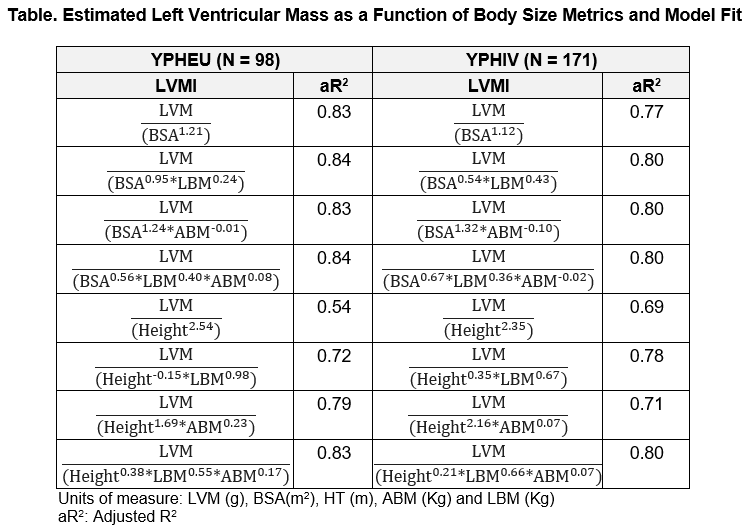
1070. Distinct Metabolic and Inflammation Signatures in Urban vs Rural Ugandan Youth With HIV
Poster Abstracts
Pages: 342-343
Sahera Dirajlal-Fargo1, Shan Sun2, Kate Ailstock3, Rashidah Nazzinda4, Christine Karungi4, Daisy O. Oryem4, Robert Kidega4, Victor Musiime4, Cissy Kityo4, Grace A. McComsey5, Nicholas Funderburg3
Background
In Sub-Saharan Africa (SSA), the majority of the inflammatory and metabolic data are from youth living in urban areas. We examined differences between youth with perinatally acquired HIV (YPHIV) in urban vs rural Uganda.
Methods
YPHIV (n=100) were enrolled from urban and rural Uganda in an observational cohort study along with age- and sex- matched, population-based HIV-seronegative (n=99) comparators. YPHIVs were on ART with HIV-1 RNA level ≤400 copies/mL. We compared fasting lipids, insulin resistance (HOMA-IR), and plasma inflammatory/gut biomarkers between rural and urban sites using Wilcoxon rank-sum tests and chi-square tests. Orthogonal Partial Least Squares Discriminant Analysis (OPLS-DA) was conducted to identify key discriminating factors. General linear regression models were used to assess factors associated with metabolic and inflammatory biomarkers, adjusting for HIV status, socioeconomic factors, and other covariates.
Results
Median age was 16.2 years, there was more females in rural than urban Uganda (55% vs 48% respectively). Median viral load was 112 copies/mL, 52% rural vs 96% urban YPHIV had HIV-RNA <50 copies/mL, 93% of YPHIV were on TDF/3TC/DTG. OPLS-DA shows variables that could discriminate between urban and rural participants (Figure). More rural participants lived in extreme poverty, lacked access to clean water, and had lower dietary diversity compared to urban participants (p<0.001). Overall, compared to HIV-, YPHIV had lower BMI, higher waist-to-hip ratio, less dyslipidemia (p≤0.05), and higher sCD163, IFAB, IL6, hsCRP and sCD14 (p≤0.03). Urban YPHIV were more likely to have higher BMI, HOMA-IR, total cholesterol and low-density lipoprotein than rural YPHIV(p<0.001), however almost all biomarkers were higher in rural vs urban YPHIV including sCD14, sCD163, hsCRP, IL6, TNFRI, and LBP (p≤.015). After adjusting for demographic, socioeconomic, viral load and ART duration, only sCD14 remained elevated in the rural YPHIV (β-580, 95% CI -1015; -145).
Conclusions
Urban and rural participants have distinct socioeconomic, metabolic, and inflammatory signatures. The separation of these factors was not directly attributed to HIV status. The monocyte activation marker sCD14, was associated with HIV status and remained elevated in rural YPHIV even after adjusting for differences in HIV factors. Increasing the inclusion of rural populations in SSA is paramount as we focus on preventing cardiometabolic comorbidities in aging YPHIV.
Figure 1.
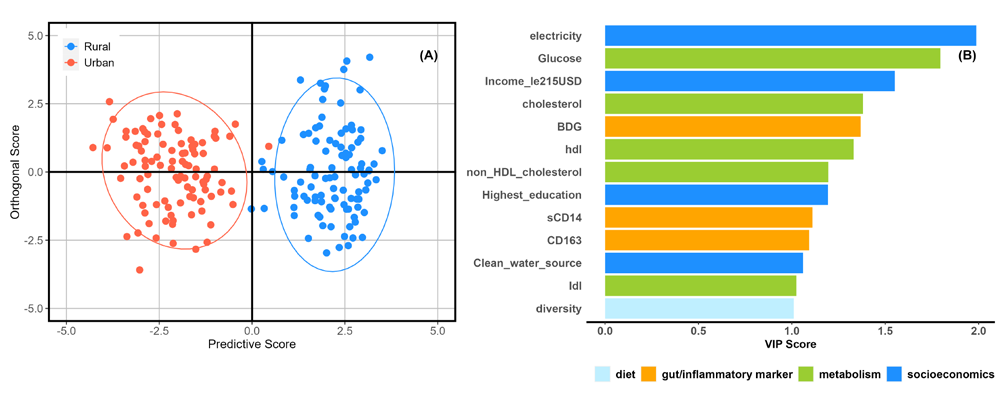
1071. US and Ugandan HIV Youth: Exploring Differences in Inflammatory, Chemokine, and Vascular Signatures
Poster Abstracts
Page: 343
Sahera Dirajlal-Fargo1, Shan Sun2, Jacqueline D. Corry3, Kate Ailstock3, Nate Lucas3, Morgan Cummings3, Rashidah Nazzinda4, Christine Karungi4, Victor Musiime4, Danielle Labbato5, Brian Reinert3, Namal Liyanage3, Jesse Kwiek3, Grace A. McComsey6, Nicholas Funderburg3
Background
Persistent antigen exposure may alter the development of the immune system in early life and inflammatory profiles may vary by geographic location and ethnicity. We have previously highlighted evidence of ongoing immune activation in youths with perinatally acquired HIV (YPHIV). We analyzed differences in inflammatory, chemokine and vascular biomarkers among YPHIV and seronegative (HIV-) youths in US and Uganda.
Methods
We measured plasma inflammatory biomarker levels in YPHIV and HIV- youths in the US (76) and Uganda (98) by ELISA and by the proinflammatory chemokine and vascular inflammation Legendplex panels. Biomarkers were compared using Wilcoxon rank-sum tests. Volcano plots were used to visualize differences in log-transformed fold changes (FC) of medians and their corresponding p-values between the two countries within each HIV status group.
Results
US participants were slightly younger (median age 14 yrs) than Ugandan participants (16 yrs) but were similar by sex (52% female). For YPHIV, median ART duration was 13.5 years, 100% of Ugandan and 87.5% of US YPHIV had HIV-1 RNA<50 c/mL. CMV antibodies were detected in 85% of Ugandans, and in 53% of US youth. Comparing markers by HIV status, we found that in Uganda, only d-dimer, and the chemokines CCL20 and CCL5 were higher in YPHIV compared to HIV-; in the US, however, several chemokines and inflammatory, gut, and vascular markers were higher in YPHIV compared to HIV-. We compared markers by site and found that levels of monocyte activation (sCD14) and vascular inflammation (ICAM, matrix metalloproteinase-9, osteopontin, serum amyloid A) were higher in US compared to Ugandan YPHIV; while markers of coagulation, lipid oxidation, systemic inflammation (d-dimer, IL6, OX LDL, TNFR II) and several chemokines (ENA-78, GROa, MIO_1a and MIP3a) all chemoattractant for neutrophils, monocytes and macrophages, were higher in Ugandan compared to US YPHIV. Several markers in each class were higher in Ugandan compared to US HIV- (see Figure).
Conclusions
There appears to be a significant role of country of residence on inflammatory and vascular biomarkers for youth with and without PHIV. The differences suggest both HIV-related factors (HIV viral clades) and non-HIV factors such as CMV status. Differences may also be due to social determinants of health, including dietary and psychosocial factors. Further studies on the lifelong consequences of HIV and environmental factors on inflammatory profiles are warranted.
The figure, table, or graphic for this abstract has been removed.
1072. HIV Modifies Association of Biomarkers on Cardiac Fibrosis and Inflammation in South African Youth
Poster Abstracts
Page: 343
Jennifer Jao1, Lauren Bonner1, Shan Sun2, Morne Kahts3, Stephen Jermy3, Mothabisi Nyathi3, Nana Asafu-Agyei3, Justine Legbedze2, Emma Carkeek3, Grace A. McComsey4, Matthew J. Feinstein1, Irwin Kurland5, Landon Myer3, Heather Zar3, Ntobeko Ntusi6, the CTAAC-Heart Study
Background
Few data exist on inflammatory markers and their association with myocardial fibrosis and inflammation in youth with HIV (YHIV).
Methods
The Cape Town Adolescent and Antiretroviral Cohort (CTAAC)-Heart study enrolled youth with perinatally acquired HIV (YPHIV), with non-perinatally acquired HIV (YNPHIV) and HIV-seronegative youth (HIV-) and performed cardiovascular magnetic resonance (CMR) to assess cardiac fibrosis [late gadolinium enhancement (LGE) mass and fraction, extracellular volume (ECV)] and inflammation [native T1 and T2 mapping] outcomes. Markers of inflammation [C-reactive protein (CRP), interleukin-6 (IL6), tumor necrosis factor-alpha (TNF-a)] and immune activation [soluble (s)CD14, sCD163], cardiac injury [N-terminal pro-B-type natriuretic peptide (NT-proBNP), soluble ST-2] and fibrosis (galectin), and vascular activation [intercellular adhesion molecule (ICAM1)] were measured via ELISA. Quantile regression models were fit with an interaction term between HIV status and each marker to assess for effect modification by HIV status on CMR outcomes.
Results
273 YPHIV, 74 YNPHIV, and 72 HIV- were included; 56% were female. Median age and BMI were highest among YNPHIV compared to YPHIV and HIV- (20 vs. 18 and 17 years; 26 vs 22 and 22 kg/m2, respectively). Among YHIV, a lower proportion of YPHIV vs. YNPHIV had a CD4 >500 cells/mm3 (57 vs. 62%) or were on integrase inhibitors (33 vs. 87%). Overall sCD14 (1934 vs. 1926 and 1759 ng/mL, p=0.002) and TNF-a (9.5 vs. 8.9 and 9.2 pg/mL, p=0.021) were highest in YPHIV vs. YNPHIV and HIV-; CRP (3001 vs. 1611 and 889 ng/mL, p=0.006) and galectin (6.7 vs. 5.5 and 5.5 ng/mL, p<0.001) were highest in YNPHIV vs. YPHIV and HIV-. HIV status significantly modified the associations of TNF-a with LGE mass (p<0.001) and native T1 (p=0.011) after adjusting for age, female sex, body surface area, prior tuberculosis, and systolic blood pressure. (Figure 1) In addition, HIV status modified the effect of IL6 on native T1 (p<0.001). There was no effect modification by HIV status on associations of all other biomarkers with CMR outcomes.
Conclusions
While markers of inflammation, immune activation, and cardiac fibrosis appear to be higher in YHIV compared to HIV-, relationships of some inflammatory markers on cardiac fibrosis and inflammation are significantly different between YPHIV, YNPHIV, and HIV-. Future studies are warranted to assess markers most predictive of cardiac fibrosis and inflammation in YHIV.
Figure 1.
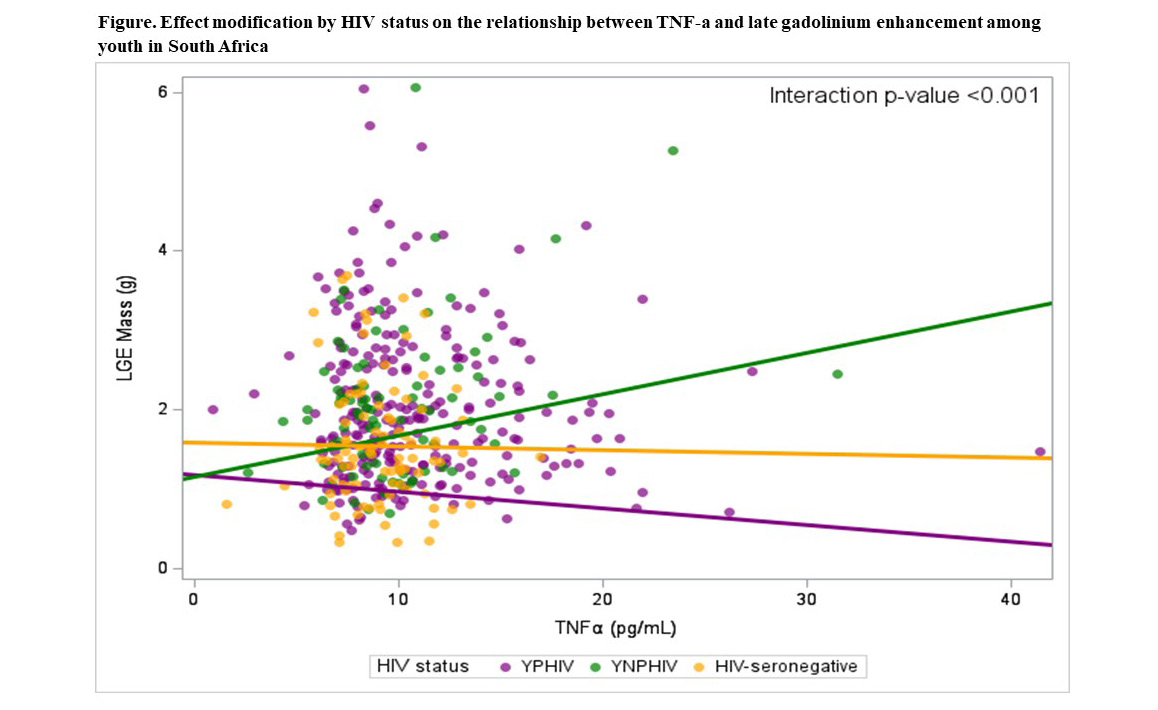
1073. Changes in Inflammatory Biomarkers Among Youth Living With Perinatal HIV Infection and Exposure
Poster Abstracts
Page: 344
Russell B. Van Dyke1, George W. Sawyer2, Paige Williams2, Wendy Yu2, Armando J. Mendez3, Engi F. Attia4, Mariana Gerschenson5, Steven E. Lipshultz6, the Cardiac Toxicity Sub-Study of the Pediatric HIV/AIDS Cohort Study
Background
HIV infection is associated with systemic immune activation. We longitudinally evaluated levels of circulation inflammatory biomarkers in youth with perinatal HIV (PHIV) and those perinatally HIV-exposed but uninfected (PHEU).
Methods
In a longitudinal sub-study of cardiac status among youth in the Pediatric HIV/AIDS Cohort Study, we measured 8 inflammatory biomarkers (Interleukin [IL]-1b, IL-6, IL-8, IL-10, IL-18, tumor necrosis factor-a [TNF-a], soluble TNF receptor 2 [sTNF-R2], and high-sensitive C-reactive protein [hsCRP]) at the start of the sub-study (T1) and ~11 years later (T2) among 99 PHIV and 59 PHEU participants with paired samples. At T1, the median age for PHIV was 13.0 years (64% female) and for PHEU, 11.2 years (56% female). Among PHIV, univariate and multivariate linear regression models were used to evaluate the associations of inflammatory biomarker levels at T2 with specific combination antiretroviral (cART) regimens, CD4 count, and viral load (VL).
Results
Among PHIV: 93% were receiving cART at T1 and 92% at T2; 72% had a viral load (VL) <400 copies/mL at T1 and 81% at T2; and 81% had a CD4 cell count > 500 cells/mm3 at T1 and 64% at T2. At T1, median levels were significantly higher among PHIV than PHEU for interleukin-18 (258 pg/mL, vs. 216 pg/mL, respectively) and TNF-a (8.3 pg/mL vs. 6.0 pg/mL). Among both groups, median levels of most biomarkers decreased between T1 and T2 except for TNF-a (increased in the PHEU group) and hsCRP (increased in both groups, see figure) There was a significantly greater decrease among PHIV than PHEU for IL-6, IL-8, IL-10, and TNF-a. At T2, only median TNF-a levels were significantly higher among PHIV than PHEU (1,880 pg/mL vs. 1,600 pg/mL). At T2: participants with a nadir CD4 <15% had 31% lower IL-8 levels (95% CI -60% to +17%) than those with nadir CD4%>25%; a CD4 count ≤500 was associated with 52% higher IL-18 levels (95% CI 11% to 110%); a VL ≥400 was associated with 91% higher sTNF-R2 levels (95% CI 22% to 200%); and integrase inhibitor use was associated with a 5%/year increase in IL-10 levels (95% CI 0.03% to 9.6%).
Conclusions
PHIV participants receiving cART and PHEU initially had similar levels of inflammatory biomarkers and most decreased over ~11 years in both groups. There was a significantly greater decrease among PHIV than PHEU for IL-6, IL-8, IL-10, and TNF-a. With cART, most levels in PHIV approached those of PHEU. Among PHIV, better control of HIV was associated with decreases in IL-18 and sTNF-R2 levels.
Figure 1.
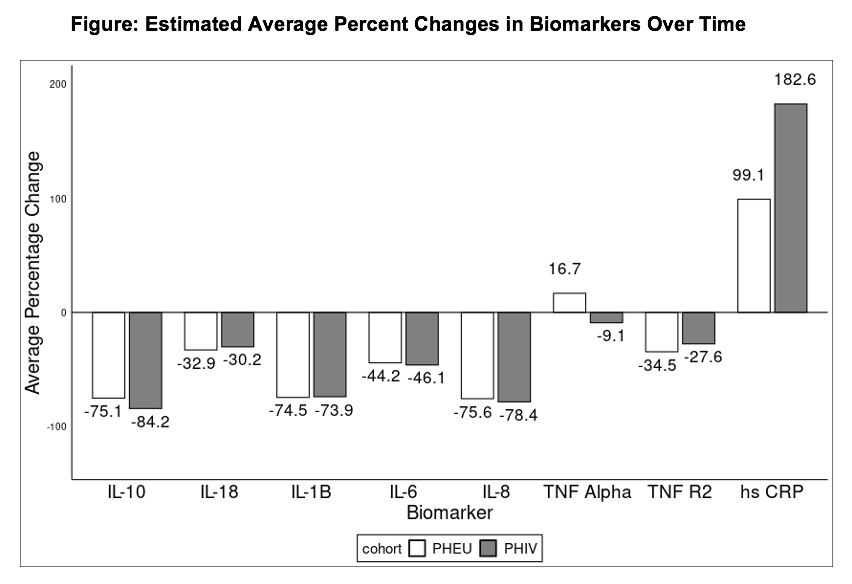
1074. Inflammation Phenotypes in Children With Perinatally Acquired HIV in South Africa
Poster Abstracts
Page: 344
Claire Davies1, Steve Innes1, Patrick Bouic1, Bin Tang2, Kennedy Otwombe3, Mark Cotton4, Sara Browne2, Florin Vaida2
Background
Children with perinatally acquired HIV face increased risk of cardiovascular disease due to chronic inflammation. As these children enter adolescence, it is important to identify who is at the highest risk of premature cardiovascular disease. We hypothesized that these children can be stratified into inflammatory phenotypes, enabling the identification of those requiring more intensive monitoring.
Methods
Participants included 133 children aged 7–13 years, previously part of the CHER and P1060 trials and followed at Tygerberg Hospital, South Africa. 66 children initiated ART <3 months old; 10 between 3 and 6 months, and 57 initiated ART >6 months old. Children were seen 3-monthly for clinical care and had largely sustained viral suppression, preserved CD4+ cell count and minimal clinical HIV disease. We measured 26 inflammatory proteins in blood serum using ELISA and Luminex™ multiplex immunoassays. We conducted unsupervised exploratory analysis consisting of principal components analysis followed by k-means clustering to develop inflammation phenotypes, after adjusting biomarkers for height (as a surrogate for age, puberty onset and growth), gender and ethnicity using a multivariate multiple linear regression model.
Results
Two distinct phenotypes were identified – a high and low inflammation phenotype. High inflammation was characterized by high levels of both myeloid (IL-18, IL-6, TNF-α, MCP1, IL-1α, S100A9, IL-1ra and S100A8) and lymphoid (IL-17, IFNγ, IL-12p70, IL-10) biomarkers of inflammation. This was accompanied by elevated markers associated with premature cardiovascular disease (elevated levels of VEGF, E-selectin, P-selectin, sCD163, VCAM1 and ICAM1). Children living with HIV in the high inflammation phenotype tended to start ART later (p = 0.053) and have a lower BMI z-score (p = 0.08) than those in the low inflammation subgroup. No differences in exposure to tobacco smoke, viral load or CD4 count was found between groups.
Conclusions
A high-risk phenotype has been identified who will require more intensive surveillance and targeted follow-up for premature cardiovascular disease.
Figure 1.
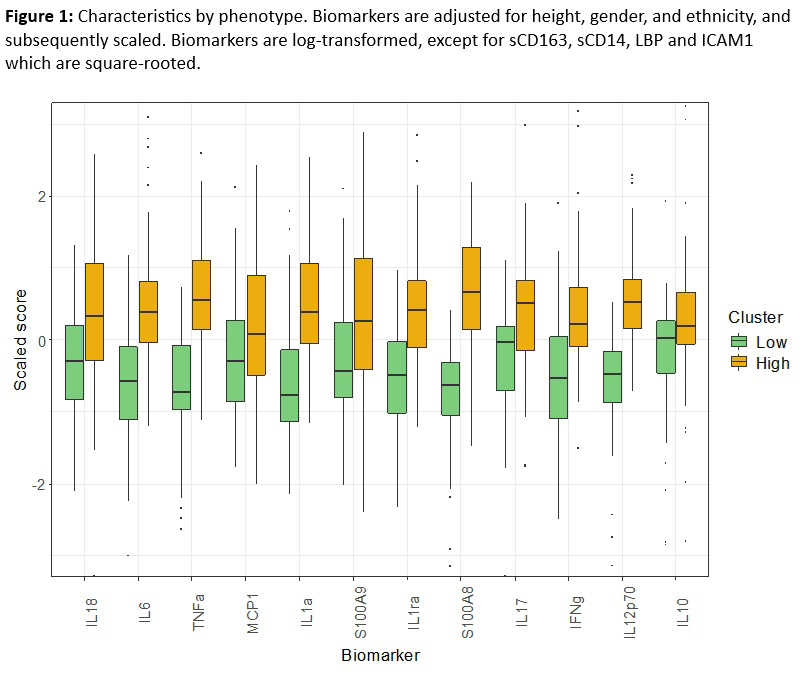
1075. Early Treated Children With Perinatal HIV Show Elevated Monocyte Activation Into Late Childhood
Poster Abstracts
Pages: 344-345
Claire Davies1, Steve Innes1, Florin Vaida2, Bin Tang2, Kennedy Otwombe3, Mark Cotton4, Sara Browne2, Patrick Bouic1
Background
Early ART within 3 months of birth has dramatically improved long-term outcomes in children living with perinatal HIV. However, these children face decades of HIV-associated immune dysregulation and chronic inflammation. Neither the long-term inflammatory profile nor the risk of long-term non-communicable diseases are well understood. We assessed biomarkers associated with inflammation (monocyte and lymphocyte), metabolic and cardiovascular damage and response markers in early-treated children compared to controls unexposed to HIV.
Methods
175 children (66 with HIV, 109 unexposed to HIV) aged 7-12 years and previously part of CHER and P1060 trials were followed at Tygerberg Children’s Hospital, South Africa. Children with HIV initiated ART within 3 months of birth, were seen 3-monthly for clinical care, were virologically suppressed (>90% suppression), had preserved CD4+ cell counts and were asymptomatic. Unexposed children arose from the same communities and socio-economic background. Each child had 1 blood measurement. We measured 26 inflammatory proteins in blood serum using ELISA and Luminex™ multiplex immunoassays, comprising monocyte-derived biomarkers (IL-18, IL-6, TNF-α, MCP1, IL-1a, S100A9, IL1-ra, S100A8), lymphocyte-derived markers (IL-17, IFNγ, IL-12p70, IP-10, IL-10), response markers (CRP, sCD14, E-selectin), metabolic markers (leptin, adiponectin, resistin, LBP, IL-18, FABP4), and cardiovascular markers (VEGF, E-selectin, IP-10, MCP1, P-selectin, sCD163, VCAM1, ICAM1). We used linear regression to compare the effect of HIV group on each biomarker, adjusting for age, sex and ethnicity. Results are Holm adjusted.
Results
Mean age of children with HIV was 8.5 years (unexposed: 9.2 years). After adjusting for age, sex and ethnicity, MCP1, S100A9, IL-6, sCD14, Adiponectin, VEGF and P-selectin levels were significantly higher in early treated children compared to unexposed, whilst IP10 was significantly lower in children with HIV (p<0.05). All other biomarkers showed no significant difference between groups.
Conclusions
Despite early ART and sustained viral suppression, early treated children on ART displayed extensive immune marker elevations, clustered around monocyte activation and markers associated with cardio-metabolic disease. These children remain at risk of premature vascular disease events (heart attacks/ strokes).
Table 1.
Results of regression analysis comparing unexposed controls (n = 109) and early-treated children (n = 66). Only certain biomarkers are shown - others show no significant difference. Cohen’s d and related confidence intervals (Holm-adjusted) are shown.
|
|
Cohen’s d and confidence interval |
P-value (Holm-adjusted) |
| Monocyte inflammatory: |
| MCP1 |
0.99*** (0.44 to 1.53) |
<0.001 |
| S100A9 |
0.59** (0.06 to 1.13) |
0.015 |
| IL-6 |
0.62** (0.09 to 1.16) |
<0.01 |
| IL1ra |
0.5 (-0.03 to 1.02) |
0.079 |
| Lymphocyte inflammatory: |
| IL-12p70 |
-0.16 (-0.62 to 0.3) |
1.000 |
| IP-10 |
-0.58** (-1.11 to -0.05) |
0.018 |
| Response markers: |
| CRP |
0.41 (-0.11 to 0.93) |
0.321 |
| CD14 |
0.92*** (0.37 to 1.46) |
<0.001 |
| E-selectin |
-0.36 (-0.88 to 0.15) |
0.553 |
| Metabolic Markers: |
| Adiponectin |
0.62** (0.09 to 1.16) |
<0.01 |
| LBP |
0.33 (-0.17 to 0.83) |
0.708 |
| FABP4 |
0.28 (-0.21 to 0.78) |
1.000 |
| Cardiovascular markers: |
| VEGF |
0.73** (0.19 to 1.27) |
<0.001 |
| P-selectin |
0.53** (0.004 to 1.06) |
0.046 |
| CD163 |
0.34 (-0.16 to 0.85) |
0.625 |
1076. Low Rates of HIV Preexposure Prophylaxis Prescriptions Among US Youth in a Claims Database
Poster Abstracts
Page: 345
Nicholas Venturelli1, Douglas Krakower2, Laura Garabedian3
Background
Adolescents and young adults (AYA) ages 13-24 in the U.S. have disproportionately high rates of new HIV infections but major underuse of HIV preexposure prophylaxis (PrEP). We measured PrEP prescriptions among commercially-insured AYA in the US at increased risk for HIV during January 2018 to June 2023 and identified demographic, clinical, and geographic factors associated with receipt of PrEP.
Methods
Within the IBM Marketscan® insurance claims database, we identified a cohort of AYA aged 13-21 who had ICD-10 codes for bacterial sexually transmitted infections or high-risk sexual behaviors suggestive of clinical indications for PrEP. Exclusion criteria included HIV diagnosis, prior PrEP use, or use of antiretrovirals not indicated for PrEP. We identified PrEP using claims data for filled PrEP prescriptions. Using logistic regression, we examined associations between clinical and demographic/geographic characteristics PrEP fill. These included age, sex, psychiatric diagnoses, substance use, and year of cohort entry, US region, state confidentiality laws on HIV care, and state laws protecting LGBTQ+ individuals.
Results
Of 101,148 youth in the cohort, 2.2% (n=2209) filled a PrEP prescription, including only 0.8% (197/23,670) of youth under 18. Factors associated with increased odds of PrEP included male sex (adjusted odds ratio [aOR] 16.3; 95% CI=14.3-18.5), older age (adjusted odds ratio [aOR] for 18-19-year-olds = 2.6; 95% CI =2.2-3.1; aOR for 20-21-year-olds = 3.5; 95% CI = 3.0-4.1), male gender (aOR = 18.5; 95% CI=16.2-21.1), mental health diagnosis (aOR 1.7; 95% CI=1.6-1.8). Those with gonorrhea or syphilis were more likely to be prescribed PrEP than those with chlamydia. Substance use and year of cohort entry were not associated with PrEP. Residence in the Northeast (aOR 2.0; 95% CI=1.4-3.0) or West (aOR 1.7; 95% CI=1.1-2.7) were associated with PrEP versus residence in the South. Residence in a state with stronger legal protections for LGBTQ+ individuals was also associated with PrEP (aOR 1.4; 95% CI=1.3-1.5), but not residence in a state with adolescent consent laws for HIV care.
Conclusions
PrEP prescription rates among at-risk youth remain low in the US, especially among those under 18 years old, with greater odds of receiving PrEP among youth who are older, male, have psychiatric diagnoses, or reside in states with legal protections for LGBTQ+ individuals. Efforts to increase PrEP use among youth are needed, including greater adoption of supportive policies.
1077. Oral and Injectable PrEP Use Among US Adolescents and Young Adults, 2019-2023
Poster Abstracts
Page: 345
Laura M. Mann, Weiming Zhu, Ya-Lin A. Huang, Karen W. Hoover
Background
Several oral and injectable PrEP medications are available in the United States, all of which are about 99% effective in preventing sexually acquired HIV when taken as prescribed. Adolescents and young adults are a key population that may benefit from PrEP as they account for approximately 20% of new HIV diagnoses. Each PrEP medication offers different benefits, for example tenofovir alafenamide and emtricitabine (TAF/FTC), approved in October 2019, has shown less impact on bone density compared to tenofovir disoproxil fumarate/FTC (TDF/FTC), available since July 2012. Limited information has been available on the use of different PrEP medications by adolescents and young adults. This information is important to monitor PrEP use in this population. Our objective was to analyze a national pharmacy database to estimate trends in US prescriptions for oral and injectable PrEP medications among adolescents and young adults from 2019 to 2023.
Methods
We analyzed IQVIA Real-World Data — Longitudinal Prescription Database using a validated algorithm to identify persons aged 13–24 years prescribed PrEP. We estimated the number of adolescents (aged 13–19 years) and young adults (aged 20–24 years) prescribed branded or generic FTC/ TDF, branded FTC/TAF, or long-acting injectable cabotegravir (CAB-LA) during 2019–2023.
Results
The annual number of adolescents and young adults prescribed PrEP increased from 14,209 in 2019 to 66,612 in 2023. Branded FTC/TDF was the predominant PrEP medication prescribed for both adolescents and young adults until 2021, when generic FTC/TDF became the predominant medication prescribed (Figure). In 2023, 68,840 (97.7%) adolescents and young adults were prescribed oral PrEP compared to 1,591 (2.3%) prescribed injectable PrEP. The number of persons prescribed injectable PrEP more than doubled between 2022 and 2023 (680 to 1,591). In 2023, generic FTC/TDF was the most prescribed PrEP medication for both adolescents and young adults, representing 6,083 (62.6%) and 35,457 (57.9%) of prescriptions, respectively, followed by branded FTC/TAF (2,910, 29.9%;21,501, 35.1%; respectively).
Conclusions
PrEP use has increased among adolescents and young adults from 2019 to 2023. Injectable PrEP use among adolescents and young adults was low compared with oral medication, though its use has increased slightly since it has become available. Increasing PrEP use among young people who would benefit from it remains important to address the HIV epidemic.
Figure 1.
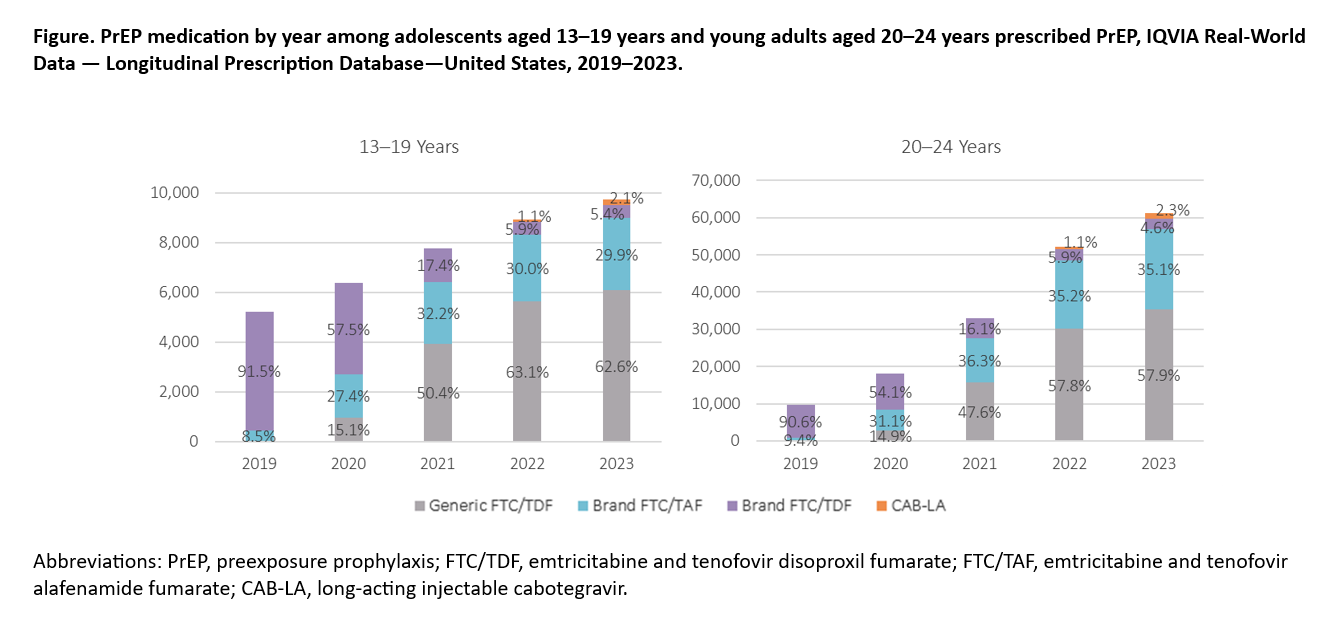
1078. Durable Viral Suppression Using Different Definitions in a Ryan White HIV Program Clinic, 2018-2021
Poster Abstracts
Pages: 345-346
Kathleen A. McManus1, Karen Diepstra2, Theresa Chen1, Andrew Strumpf1, Sarah Ratcliffe1, Daniel Westreich2, Elizabeth T. Rogawski Mcquade3
Background
Durable viral suppression (DVS), a metric that evaluates viral suppression (VS) over time, has many different definitions. The Centers of Disease Control and Prevention and the Ryan White HIV/AIDS Program (RWHAP) define VS for a year as the last viral load (VL) in the year is suppressed and require a person with HIV (PWH) to have at least 1 VL test to be included in the metric. We quantified the annual prevalence of this VS definition and 3 DVS outcomes at one RWHAP clinic to identify how different definitions impact results.
Methods
For 2018-2021, the cohort included PWH who were >18 years and had established care at the University of Virginia RWHAP clinic by 1/1/2018. We excluded PWH who died, relocated, or were incarcerated on or before 12/31/2021. We collected sociodemographic, clinical, and lab data. For each VS/DVS definition (Table 1), we quantified the annual VS/DVS prevalence for those with the required number of VLs and performed a sensitivity analysis that imputed not having VS/DVS if the required number of VLs was not met.
Results
Of the cohort (n=618), median age was 51 (interquartile range 40-57). 71% were male, 6% were uninsured, 28% had Medicaid, and 38% had an income below the Federal Poverty Line. Of the definitions, VS had the highest prevalence (range 94-95%, Table 1). DVS#1 prevalence was lower than VS prevalence for each year (range 87-92%). All DVS metrics that required 2 VLs decreased in prevalence from 2019 to 2020. For each year, DVS#3 had the lowest prevalence (range 83-91%). The prevalence of having no VL result was <5% in each year. The prevalence of having only 1 VL result in a year was lower pre-COVID-19 (2018: 17%, 2019: 12%) than in years impacted by COVID-19 (2020: 32%, 2021: 24%). Analyses assuming PWH without the required number of VLs did not have DVS demonstrate that DVS prevalence may have been as low as 53-73% (DVS#3).
Conclusions
For a study that included the COVID-19 pandemic, VS was high. However, DVS results shed light on gaps in VS, and the sensitivity analyses show worst case scenario results. The more restrictive VS definitions exclude more people, and those excluded may not be a random subset of PWH, which could lead to selection bias. This work has implications for HIV care evaluation. National/state outcomes that rely on 1 VL are likely overestimating the true DVS of PWH in the United States. Federal and state agencies should consider reporting (1) additional annual VS/DVS metrics that require at least 2 VLs and (2) sensitivity analyses.
Table 1.
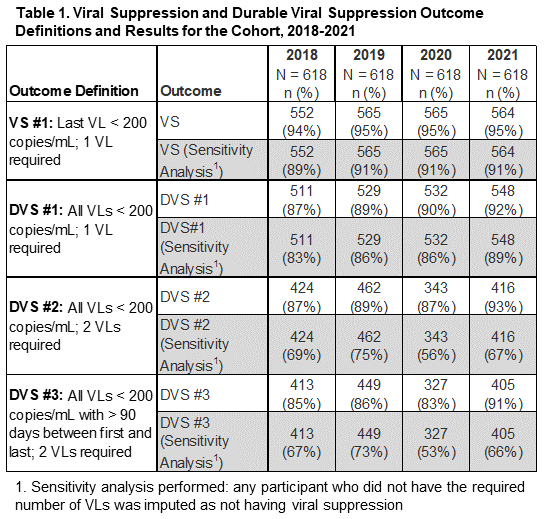
1079. Characteristics of Men Who Have Sex With Men Recruited via Virtual- v In-Person Venue-Based Sampling
Poster Abstracts
Page: 346
Danielle Lonbong Njiometio1, Julie Berg2, Catlainn Sionean3, Amy Baugher3, the NHBS Study Group
Background
Men who have sex with men (MSM), a group with high HIV incidence, may seek sexual partners through virtual (geosocial or dating apps) or in-person (bars or clubs) venues. Both types of venues facilitate partnerships among MSM and increase transmission of sexually transmitted infections and HIV. This analysis assessed if virtual and in-person sampling methods recruit MSM with different demographics and sexual behaviors.
Methods
We used data from seven US urban areas, which simultaneously used virtual and in-person recruitment to reach and interview MSM for CDC’s 2023 National HIV Behavioral Surveillance. We reported weighted percentages and 95% confidence intervals (CI) of MSM’s demographics and HIV sexual behaviors and compared them per recruitment type using Rao-Scott Chi-square tests. We calculated adjusted prevalence ratios (aPR) and 95% CI using multivariable logistic regression models with predicted margins to characterize the associations of recruitment type with MSM demographics and sexual behaviors. Statistical significance was determined by p<0.05.
Results
Among 2822 MSM, 386 (13.7%) were recruited virtually and 1203 (42.6%) had a college degree or higher education. A plurality, 1005 (35.8%) were Hispanic/Latino. Compared to MSM recruited in-person (IPR), those recruited virtually (VR) had the higher prevalence of: a college degree or higher education (62.1% VR, 95%CI [51.2-73.0] vs 40.8% IPR, 95%CI [36.2-45.5]), condomless anal or vaginal sex with a casual partner in the past 12 months (62.5% VR, 95%CI [55.5-69.4] vs 51.2% IPR, 95%CI [46.1-56.3]), and multiple (≥2) partners (90.9% VR, 95%CI [86.3-95.5] vs 74.2% IPR, 95%CI [69.8-78.6]) in the past 12 months (for all behaviors p<0.05). After controlling for region, having condomless sex (aPR=1.19, 95%CI [1.02-1.39]) and multiple partners in the past 12 months (aPR=1.23, 95%CI [1.14-1.32]) were higher among MSM recruited virtually (p<0.05). However, having a college degree or higher education was not significantly different between MSM recruited virtually and in-person (aPR=1.29, 95%CI [1.00-1.67], p>0.05).
Conclusions
MSM who were more likely to engage in behaviors associated with HIV were recruited virtually. Recruiting MSM in virtual and in-person spaces may both be needed to identify diverse HIV-related behaviors.
1080. Identifying Effective Recruitment Strategies to Engage Black Sexual Minority Men Living With HIV
Poster Abstracts
Page: 346
Derek Dangerfield II1, Rodman Turpin2, DeMarc Hickson3
Background
Identifying effective strategies to engage Black sexual minority men living with HIV (SMM LWH), including those with diversity in HIV care outcomes, socio-economic status, and geography, is crucial to obtaining a robust understanding of the HIV epidemiology in this population and developing effective public health programming to end the U.S. HIV epidemic. However, strategies to effectively recruit this group demonstrate inconsistent efficacy and those with suboptimal care outcomes remain elusive. Therefore, we implemented and assessed targeted recruitment strategies for a digital, limited interaction cohort study to identify the most effective ways to engage this population.
Methods
A total of 1,006 Mid-Atlantic Black SMM LWH were recruited between 2023-2024 using targeted active and passive strategies including geosocial networking apps (i.e., Jack’d), community/clinical e-newsletters, private social media groups on Facebook, friends/word of mouth, and participants from previous studies. Bivariate analyses tested for associations between recruitment method and sociodemographic characteristics along with HIV care outcomes. Kruskal-Wallis and Chi-Square tests were conducted for associations with ordinal and binary measures respectively.
Results
Most participants were ages 25-44 (94.6%). Both advertisements were associated with recruitment spikes significantly greater than expected proportions. Jack’d ads yielded the most participants (36.3%) followed by friends/word of mouth (23.5%). Jack’d ads were associated with recruiting Black SMM LWH who were 18-34 years old, had lower education, and annual income of $80,000 or less. Participants recruited through Jack’d ads were more likely to have detectable HIV loads and have missed ART doses in the past month.
Conclusions
Geosocial networking platforms show significant promise to engage Black SMM LWH with sub-optimal HIV care outcomes, particularly younger individuals with lower socioeconomic status. Friends and social networks also show promise to engage this oftentimes referred to subpopulation as “hard-to-reach.” Future research should optimize and expand online advertising strategies and social networks to address care disparities, improve health outcomes, and reduce community viral load to mitigate further HIV transmission.
1081. Refining Clinical Retention Metrics to Reflect the Realities of HIV Care in North America
Poster Abstracts
Page: 347
Amber J. Hackstadt1, Elisa S. Yazdani1, Alicia R. Rector1, Kelly Gebo2, Catherine Lesko3, Michael Horberg4, Lauren Zalla3, Heidi M. Crane5, Jessie K. Edwards6, Joseph J. Eron6, M. John Gill7, Mona Loutfy8, Brenna C. Hogan9, Keri N. Althoff3, Peter F. Rebeiro1, the North American AIDS Cohort Collaboration on Research and Design (NA-ACCORD) of IeDEA
Background
“Retention” in care is a key health monitoring benchmark among people with HIV (PWH). However, not all retention metrics predict important downstream outcomes, particularly with decreasing frequency of clinical monitoring. We therefore assessed the association of multiple retention metrics with mortality in the North American AIDS Cohort Collaboration on Research and Design (NA-ACCORD).
Methods
Adult (age ≥18 years) PWH in care at NA-ACCORD clinical sites from 2010-2021 were followed from first visit during the study until death or administrative censoring. Retention was defined as ≥2 encounters, >90 days apart, in both of the 2 years following study entry. We excluded PWH deceased in that period and defined “encounters” two ways: 1) HIV care visits only, and 2) either HIV care visits or CD4 or HIV-1 RNA viral load measures. We estimated hazard ratios (HRs) and 95% confidence intervals (CI) for mortality by retention status, adjusted for baseline age, birth sex, race/ethnicity, HIV transmission risk, CD4 count (nearest entry, ≤90 days before to ≤60 days after), viral suppression (HIV-1 RNA <200 copies/mL at final encounter in both of the 2 years following entry), enrollment year, and site, with follow-up starting 2 years after study entry. Though viral suppression during follow-up mediates the retention-mortality relationship, baseline adjustment here enabled inferences about retention among PWH with equivalent early suppression status.
Results
Among 95,428 PWH contributing 546,805 person-years, median baseline age was 47 (IQR: 37,55) years; 16% were female, 44% non-Hispanic Black, 35% men who have sex with men, 7% people who inject drugs, and 5-year mortality risk was 11.4%. Early retention was 74% by the visit-or-laboratory metric, and 69% by the visit-only metric. Retained PWH had higher mortality risk than those not retained under both visit-or-laboratory (HR=1.25, CI:1.16-1.36; Figure, Left) and visit-only (HR=1.17, CI:1.09-1.27; Figure, Right) metrics. Without baseline viral suppression adjustment, the retention-mortality association was null.
Conclusions
Despite known benefits of retention in HIV care, frequent interactions with HIV care in the current era may be an indicator of more clinical and non-clinical needs. In order for retention to remain a meaningful target for monitoring quality HIV care, retention metrics should be re-operationalized to better capture patterns of engagement in care that predict key clinical outcomes.
Figure 1.
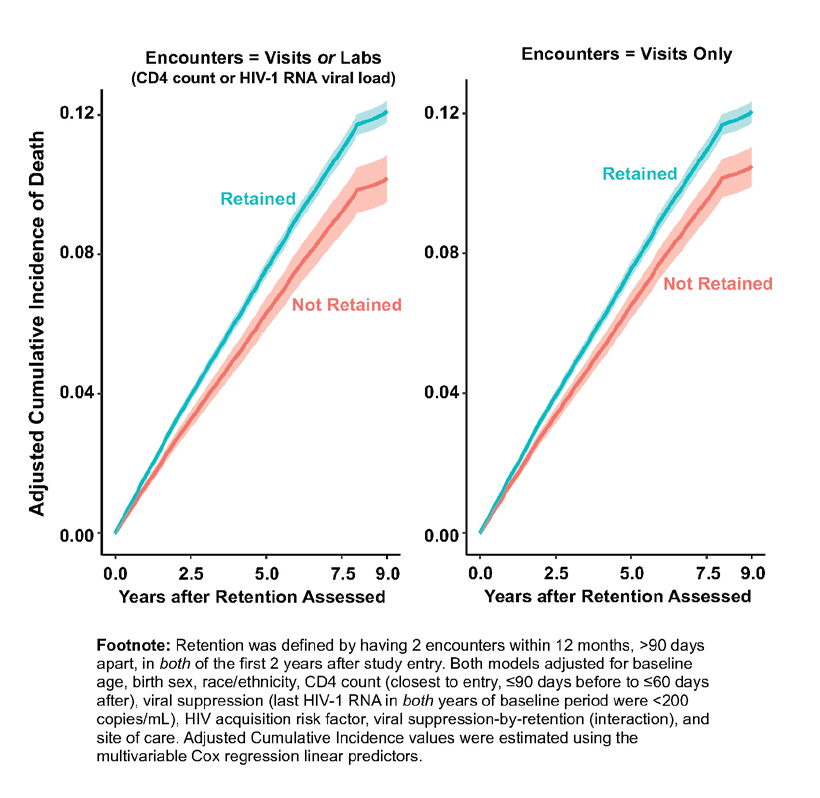
1082. Neighborhood Resources and ARV Adherence Among Partnered US GBMSM: Mediation by Social Determinants
Poster Abstracts
Page: 347
Loren Dobkin, Luis Parra, Alison Walsh, Erin Kahle
Background
Despite advances in the potency of antiretroviral (ARV) medications to treat and prevent transmission of human immunodeficiency virus (HIV), the most common regimens in the United States (U.S.) necessitate daily pill-taking. While there is consensus that social determinants of health (SDoH) hinder adherence, SDoH are typically measured and intervened upon at the individual level. Meanwhile, stark disparities in the geographic distribution of HIV morbidity and incidence suggest neighborhood-level factors may contribute to individual-level SDoH and inform interventions.
Methods
By linking U.S. National Neighborhood Data Archive’s neighborhood disadvantage index (NDI) to participant zip codes from a national cohort of partnered gay, bisexual and other men who have sex with men (GBMSM) living with HIV, we analyzed baseline relationships among neighborhood resources (NDI), SDoH (using a validated 10-point scale of adverse exposures), and low ARV adherence (below 90% by visual analog scale). Participants living in the U.S. were recruited and completed the parent study via remote electronic methods. Using multiple logistic regression, we quantified the independent associations of cumulative SDoH exposure and neighborhood disadvantage to low ARV adherence. Mediation analysis was used to test whether neighborhood disadvantage was associated with ARV adherence through SDoH.
Results
Among the 368 participants, higher NDI was significantly associated with low adherence (OR 19.30, CI 1.34-278.32) and an average 2.57 increase on the SDoH scale (CI 1.06-4.08). After controlling for age, race/ethnicity, problem substance use and other demographic variables, each additional SDoH exposure corresponded to a significant increase in the odds of low adherence (OR 1.46, CI 1.17-1.82), which mediated the relationship between neighborhood disadvantage and lower adherence (Sobel test statistic 3.18, p<0.01).
Conclusions
Consideration of residential neighborhood context together with the minimum adherence level required to achieve viral suppression may help inform clinical ARV regimen selection. Further research on the contribution of neighborhood conditions to SDoH is needed to strategically target interventions to low-resource areas where they may facilitate adherence among exposed residents.
1083. Geographically Diverse National Survey of People With HIV on Grindr Shows High Virologic Suppression
Poster Abstracts
Pages: 347-348
Hannah R. Schmidt1, Megan J. Heise1, Kevin Sassaman1, Alexa D'Angelo2, Tyler Martinson1, Shivani Mahuvakar1, Dustin Duncan3, Keith J. Horvath4, Sabina Hirschfield5, Renessa Williams6, Mallory O. Johnson1, Christian Grov2, Adam Carrico7, Monica Gandhi1, Matthew A. Spinelli1
Background
Viral suppression (VS) is only 65% among U.S. people with HIV (PWH), which could compromise Ending the HIV Epidemic (EHE) goals. PWH using geosocial networking apps (e.g. Grindr, used primarily by sexual minority men) should know their VS status to enhance the impact of Undetectable=Untransmittable among a population with high rates of sexual activity. We sought to determine the proportion of PWH on Grindr who know their VS status and achieved VS (<200 copies/mL).
Methods
U.S. adult PWH were recruited through Grindr to complete a survey from Jan-Sept 2024. We assessed the prevalence and correlates of past-year, self-reported VS using logistic regression adjusted for demographics, substance use, region, and residence in EHE jurisdiction. Those who reported adherence challenges were separately enrolled in a longitudinal cohort where viral loads were drawn, allowing comparison of objective VS to self-report.
Results
The final sample consisted of 2,933 geographically diverse participants (Figure 1); 29% were Black, 24% Latine; 4% transgender women, 10% other gender minorities; 32% age 18-34, 19% age 55+; 36% used stimulants. Overall, 95% knew their VS status in the past 12 months. Participants who were younger (i.e. 18-34 vs 55+; OR=0.47, p=0.02, 95% CI=0.24-0.84), Black (OR=0.57, p=0.01, 95% CI=0.36-0.88), and used stimulants (OR=0.56, p<0.001, 95% CI=0.40-0.79) had lower odds of knowing their VS status. Of those who knew their VS status, 94% reported complete VS for the past 12 months. PWH <age 55 were less likely to be suppressed (age 18-34 OR=0.45, p<0.01, 95% CI=0.25-0.77; age 35-54 OR=0.48, p<0.01, 95% CI=0.27-0.79). The Midwest had lower VS (OR=0.54, p=0.02, 95% CI=0.32-0.91) compared to the West. PWH who use stimulants also had lower VS (OR=0.47, p<0.001, 95% CI=0.34-0.65). Of the longitudinal cohort (n=930), 90% of those who reported being virologically suppressed were suppressed on study labs. Residing in an EHE priority jurisdiction was not associated with VS or knowing VS status.
Conclusions
This remote U.S. national cohort showed high rates of VS among PWH on Grindr, with high concordance with objective VS in a sub-sample. However, rates of stimulant use were higher than prior studies among PWH, with lower VS among this population, which should be addressed through targeted adherence interventions. Disparities in awareness of VS status among younger, Black, and stimulant-using PWH should be ameliorated through targeted care reengagement interventions, potentially via Grindr.
Figure 1.
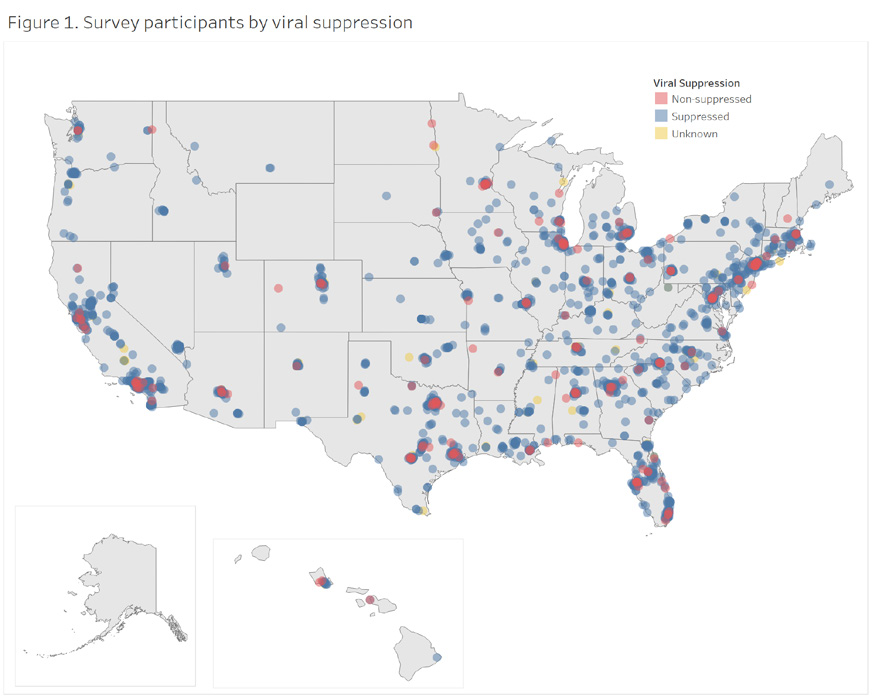
1084. Viral Nonsuppression Among PWH Diagnosed at an Older Age: Implications for Secondary HIV Prevention
Poster Abstracts
Page: 348
Lauren O'Connor1, Anne Monroe1, Rachel Denyer2, Amanda D. Castel1, Manya Magnus1, the DC Cohort Executive Committee
Background
Older adults are at increased risk of HIV acquisition, yet few studies examine correlates of their HIV prevention. It is important that we understand correlates of being diagnosed at an older age, as well as factors associated with viral non-suppression (non-VS) among those diagnosed at an older age for U=U prevention efforts. However, there is no universal cut-off for classifying a person as “older” at the time of their HIV diagnosis. Our objective was to determine a cut-off for older age at HIV diagnosis and use that cut-off to evaluate correlates of non-VS among those diagnosed above that cut-off.
Methods
The DC Cohort is a longitudinal cohort of people with HIV (PWH) in Washington, DC. We evaluated cohort participants enrolled from 2011-2024 who were diagnosed with HIV in the year prior to enrollment. We used logistic regression to determine the direction of the relationship between age and each demographic variable. The direction was used to predict the demographics of participants diagnosed with HIV after age cut-offs from 20-70 years old. Receiver operating characteristic (ROC) curves were used to evaluate the accuracy of predictions. We used generalized estimating equations to evaluate correlates of non-VS, defined as a viral load > 200 copies/mL, among those diagnosed with HIV above the age cut-off with the best predictive accuracy.
Results
We evaluated 1,240 DC Cohort participants who were newly diagnosed with HIV in the year prior to enrollment. Participants were mostly non-Hispanic Black (78%), male (71%), heterosexual (37%), and the mean age was 37 (SD: 13.5). We found that an age 40 cut-off had the best predictions across demographics. Therefore, we evaluated the 487 participants diagnosed with HIV at age ≥ 40. We found that females (OR (95% CI): 1.8 (1.1, 2.8)), those with public insurance (OR: 1.6 (1.0, 2.4)), and heterosexual mode of HIV acquisition (OR: 1.7 (1.1, 2.7)) were more likely to be non-VS. These relationships were not significant in the adjusted model. Transgender participants were less likely to be non-VS in both the unadjusted and adjusted models (aOR: 0.2 (0.1, 0.7)).
Conclusions
An age cut-off for HIV diagnosis of 40 years or older resulted in the most accurate predictions of participant demographics. Among those diagnosed age 40 or older, gender, mode of HIV transmission, and insurance were associated with non-VS in the unadjusted analysis. These results can inform both primary and secondary prevention measures targeted towards those age 40 and older.
Table 1.
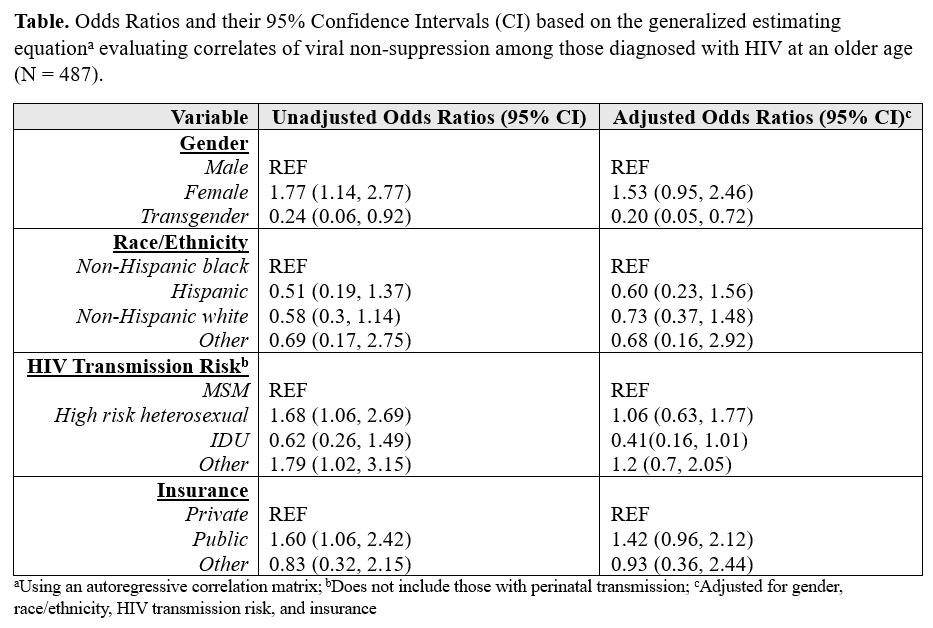
1085. Changes in the HIV Care Cascade and Prevalence From 2013 to 2023 in Rural Kenya and Uganda in SEARCH
Poster Abstracts
Pages: 348-349
Gabriel Chamie1, Colette Aoko2, Helen Sunday3, George Agengo4, Wafula E. Mugoma4, Matt Hickey1, Douglas Black1, John Schrom1, Elijah Kakande3, Jane Kabami3, James Ayieko2, Maya Petersen5, Diane V. Havlir1, Moses Kamya6, Laura Balzer5, the SEARCH Consortium
Background
We sought to understand how the HIV epidemic is evolving over time by evaluating HIV prevalence and changes in status awareness and antiretroviral therapy (ART) use over 10 years in two high-prevalence, rural regions in East Africa.
Methods
In 2013 and 2023 in rural communities (~5,000 adults/community) in western (W) Kenya and southwestern (SW) Uganda, we conducted universal HIV screening of adult (≥15 years) residents at enrollment in two SEARCH population-level cluster randomized trials (NCT01864603; NCT05768763). Using TMLE and accounting for clustering by community, we estimated age- and sex-specific HIV prevalence, status awareness among persons with HIV, and ART use if living with HIV and aware of status.
Results
In 2013, in 22 communities (12 W-Kenya, 10 SW-Uganda), we ascertained HIV status among 90,467/101,200 (89%) residents. In 2023, among 8 different communities from the same regions (4 W-Kenya, 4 SW-Uganda), we ascertained HIV status among 38,360/42,866 (89%) residents. In W-Kenya, HIV prevalence decreased from 18.7% in 2013 to 12.7% in 2023 (p<0.001). From 2013 to 2023, there were large, significant reductions in HIV prevalence among women aged 15-44 and men aged 20-49 years (Figure), but significant increases among women ≥45. Overall, from 2013 to 2023, HIV status awareness increased from 64% to 90% (p<0.001), and ART use from 81% to 94% (p<0.001), with large, significant increases across all age-sex strata, and greatest gains among men and youth. In contrast, in SW-Uganda, HIV prevalence increased from 6.4% in 2013 to 7.3% in 2023 (p=0.007). There were small, significant reductions in prevalence among women aged 15-29, and men 20-39 (Figure), but prevalence increased among women and men ≥40 years. Overall, from 2013 to 2013, HIV status awareness increased from 57% to 68% (p<0.001), and ART use from 82% to 87% (p=0.002); however, these improvements were not uniform by age and sex in SW-Uganda.
Conclusions
Population-level prevalence data are consistent with a substantial decline in HIV incidence in W-Kenya, particularly among young adults, but not SW-Uganda. Persistently low status awareness, well below the 95% target, over the past 10 years in SW-Uganda may explain this disparity and suggests that efforts to improve status awareness are needed to achieve further reductions in HIV incidence.
Figure 1.
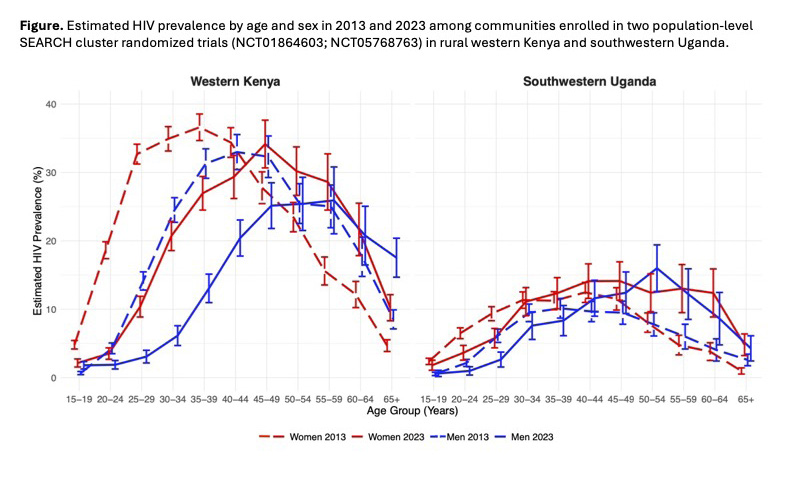
1086. High Burden of Untreated HIV in Malawian Fishermen: Prospective Data From a Cluster Randomized Trial
Poster Abstracts
Page: 349
Augustine T. Choko1, Kathryn L. Dovel2, Sekeleghe Kayuni3, Donaldson Conserve4, Anthony Butterworth1, Amaya Bustinduy5, J. Russell Stothard3, Wala Kamchedzera1, Madalo Mukoka-Thindwa1, James Jafali6, Peter MacPherson7, Katherine Fielding5, Nicola Desmond5, Liz L. Corbett5
Background
Despite ubiquitous progress in ART global scale up and significant reductions in mortality and morbidity some populations, such as fishing communities in Africa, continue to lag behind. We investigated the prevalence of, and factors associated with untreated HIV among fishermen using prospective data from a cluster randomized trial from Mangochi, Malawi.
Methods
This is analysis of cross-sectional data collected using in-person administered questionnaires between March 2022-January 2023 during the “creating demand for Fishermen’s Schistosomiasis and HIV services (FISH)” cluster randomised trial. The data came from 45 lakeside “boat-team” (clusters) in southern Lake Malawi from three trial arms. We defined the main outcome of having untreated HIV as a person living with HIV but currently not on ART using self-reported variables. Our main exposure was self-reported HIV testing history i.e. whether a person reported having ever tested for HIV before in their life. The analysis estimated the prevalence of untreated HIV and Binomial Exact 95% confidence intervals (CI) in the whole sample (N=5206) and among fishermen who tested HIV positive in the study (n=387). Unadjusted odds ratios (OR) and adjusted (aOR) were computed using random effects logistic regression while accounting for clustering.
Results
A total of 5206 fishermen were enrolled from 45 clusters: mean age 33.2 years (sd: 12.3), 3401/5206 (65.3%) were married, only 3032/5206 (58.2%) could read or write, and 4213/5206 (80.9%) had ever tested for HIV before. Prevalence of untreated HIV was 113/5206 (2.2%, 95%CI: 1.8; 2.6%) in the whole sample and 113/387 (29.2%, 95% CI: 24.9; 33.9%) among those who tested HIV positive in the study. Having a previous HIV test was significantly associated with reduced odds of having untreated HIV both in unadjusted OR 0.05 (95%CI: 0.01; 0.16) and aOR 0.07 (95%CI: 0.02; 0.25) when adjusted for age, marital status and HIV knowledge variables (Table 1). There was evidence of clustering with intracluster correlation coefficient value of 0.12.
Conclusions
Not testing for HIV and increasing age were strongly associated with having untreated HIV. The findings encourage sustained investments in interventions to expand coverage of HIV testing in underserved populations.
Table 1.
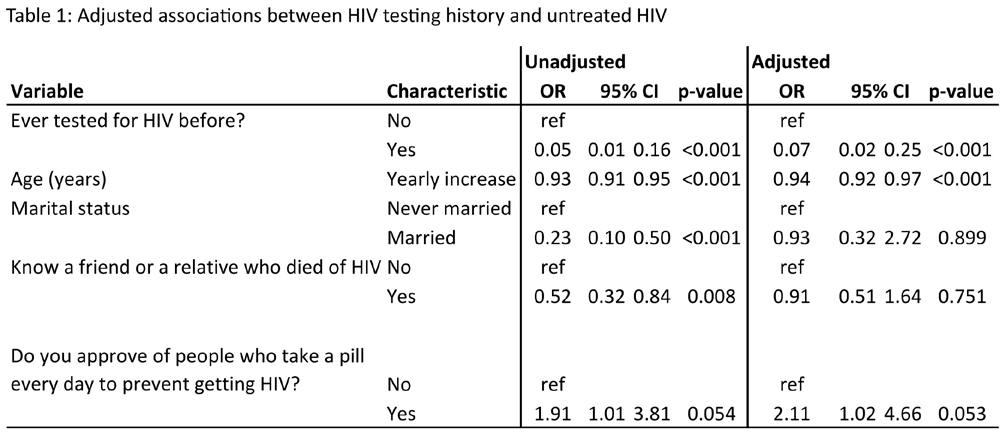
1087. WITHDRAWN
Poster Abstracts
Page: 349
1088. Unique Predictors of Retention and Viral Suppression Among People With HIV in Dominican Republic
Poster Abstracts
Pages: 349-350
Wilfredo R. Matias1, Karol Reyes2, Maria I. Curiel2, Rairis A. Morrison2, Maria L. Garcia2, Carlos Adon2, Louise C. Ivers3
Background
In recent years, the HIV epidemic in the Dominican Republic and surrounding regions in Latin America has disproportionately affected migrants, particularly those from Haiti and Venezuela. Migrants often face unique challenges along the HIV continuum of care that require tailored interventions. We conducted a study to understand the drivers of retention, attrition, and viral suppression in this population to identify intervenable factors, improve outcomes and control HIV in the region.
Methods
We conducted a retrospective analysis of 1,326 patients enrolled in HIV care from 2019 to 2021 at a major HIV clinic in the Dominican Republic. We used multivariable Cox proportional hazards and logistic regression models to assess sociodemographic and clinical factors associated with retention in care (as of May 1st, 2024) and viral suppression (VL < 200 copies/mL). Key variables included age, nationality, legal documentation status, key population status (e.g., MSM), CD4 count, and site of ART delivery (community- vs. health center-based).
Results
Of 1,326 participants, 773 (58.3%) remained in care. Retention was associated with older age (40-49 years: HR 0.67, p=0.002; ≥50 years: HR 0.74, p=0.05), identifying as MSM (HR 0.70, 95%CI 0.54-0.90, p<0.001) and receiving ART in community settings (HR 0.14, 95%CI 0.07–0.30, p<0.001). Attrition was more common among undocumented individuals (HR 2.61, 95%CI 2.09-3.25, p<0.001), people from Haiti (HR 1.95, 95%CI 1.55-2.46, p<0.001), and non-Dominican nationals (HR 2.02, 95%CI 1.31-3.13, p=0.002). Among the 759 patients retained in care who had available viral load data, 674 (88.8%) achieved viral suppression. Factors positively associated with viral suppression included being part of a key population (predominantly MSM: OR 0.38, 95%CI 0.14-0.91, p=0.04) and an initial CD4 count ≥200 cells/mm³ (OR 0.59, 95%CI 0.35-1.03, p=0.06). Detectable viral loads were associated with undocumented status (OR 2.15, 95%CI 1.08 – 4.23, p=0.03) and non-Dominican nationality (OR 2.73, 95%CI 1.43-5.26, p=0.002).
Conclusions
In the Dominican Republic, older age, identifying as MSM, and receiving ART in the community were associated with better retention and outcomes. However, challenges remain for undocumented individuals and migrants, highlighting the need for inclusive strategies that address access to care for this population. By considering these diverse factors, targeted interventions can be developed to improve HIV outcomes and advance epidemic control in the region.
Table 1.
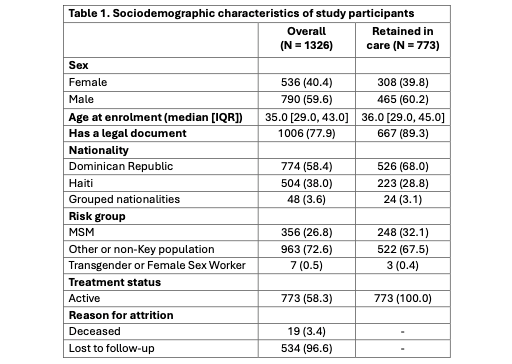
1089. Higher Baseline CD4 and Treatment Initiation Among Contacts of PLHIV: Thailand, 2020-2023
Poster Abstracts
Page: 350
Junya Danyuttapolchai1, Suchada Jiamsiri2, Plearnpit Prommali2, Jennifer Favaloro3, Yutthapoom Srikhamjean2, Usanee Kritsanavarin1, Sumet Ongwandee2, Suthat Chottanapund2, Cheewanan Lertpiriyasuwat2, Somboon Nookhai1, Sanny Northbrook1
Background
In 2020, approximately 50% of newly diagnosed persons living with HIV (PLHIV) had a baseline CD4 <200 cells/µL in Thailand. As a result, the Ministry of Public Health implemented and expanded the national index partner testing (IPT) program to increase early HIV detection (baseline CD4 ≥200 cells/ µL) and rapid antiretroviral (ART) treatment initiation. We analyzed trends in baseline CD4 and ART initiation and investigated factors associated with ART initiation among contacts of PLHIV in 2020-2023.
Methods
IPT services were offered to all PLHIV ≥ 1 years of age at 144 health facilities after providing informed consent for health services. Contacts of PLHIV, including sexual and drug injecting contact within the past year, biological children, or biological parents if child was PLHIV, were elicited and offered HIV testing and linkage to ART. We collected contact’s demographic and clinical data using an online monitoring system. Linkage to ART and analysis of factors associated with ART initiation among contacts of PLHIV was conducted for those testing HIV positive.
Results
Of 6,541 contacts elicited and tested, 1,683 (25.7%) tested HIV-positive. Of these, the median age was 34 years (IQR: 26-43), 1,135 (67.4%) were male, 1,290 (76.6%) were ≥25 years, 529 (31.4%) self-reported as high-risk population (HRP), 1,572 (93.4%) were sexual contacts, 682 (40.5%) were contacts of newly diagnosed PLHIV, 1,487 (88.4% ) initiated ART, and 771 (45.8%) had baseline CD4 information, with 27.8% (214/771) CD4 <200. Baseline median CD4 among contacts was slightly higher in 2023 (351 cells/µL, IQR: 218-479) than in 2020 (318 cells/µL, IQR:182-481) (p=0.23). ART initiation slightly increased from 87.4% (304/348) in 2020 to 88.5% (416/470) in 2023 (p<0.001). Contacts who self-reported as HRP vs. those who did not (Adjusted Odds Ratio [AOR] 2.59; 95% CI: 2.26-2.97), had sex with the index case vs. those who had a biologic relationship (AOR 2.8; 95% CI: 1.18-6.88), had sex and shared needles with the index case vs. those who had a biologic relationship (AOR 2.26; 95% CI: 0.93 – 5.63), and was a contact of index case diagnosed >12 months vs. contact of a newly diagnosed index case (AOR 1.69; 95% CI: 1.52-1.88) were associated with ART initiation.
Conclusions
The slight increase in ART uptake over time may indicate the effectiveness of the IPT services program. Programs may consider integrating HIV self-test or other services to improve case finding among contacts of index cases.
1090. Understanding Mpox and HIV Coinfection: Insights From a Major Cohort Study in Brazil
Poster Abstracts
Page: 350
Mayara Secco Torres da Silva, Thiago Torres, Carolina Coutinho, Eduardo Mesquita Peixoto, Matheus Oliveira Bastos, Pedro Silva Martins, João Paulo Bortot, Amanda Echeverría-Guevara, Maira Braga Mesquita, Ana Paula Lovetro, Edson Elias Silva, Estevão Portela Nunes, Sandra Wagner Cardoso, Valdilea Gonçalves Veloso, Beatriz Grinsztejn
Background
In 2024, mpox was declared a public health emergency of international concern for the second time in two years. Brazil was significantly impacted by the 2022 multinational mpox outbreak and has observed a recrudescence in diagnoses since late 2023, primarily driven by sexual transmission. The implications of mpox and HIV coinfection are still not fully understood. This study aims to characterize individuals diagnosed with mpox in Rio de Janeiro, Brazil, with a focus on their HIV status.
Methods
Prospective cohort of people with laboratory confirmed mpox assessed at INI-Fiocruz, a state-level referral center. Sociodemographic, behavioral, and clinical characteristics were compared according to HIV status (Chi-squared/Fisher’s test or Wilcoxon rank-sum test for categorical or quantitative variables, respectively).
Results
From June/2022 to September/2024, 711 people with confirmed mpox (3 with suspected reinfection) were enrolled, of whom 98.9% (n=703) had a known HIV status. Among these, 51.6% were people with HIV (PWH) and 38.8% (n=132/340) were on PrEP. The median age was 33 years (IQR:28-40), with the majority being cisgender men (91.2%) who reported sex with men (86.7%). Notably, 60% of participants experienced a delay of more than five days from symptom onset to their first assessment at INI-Fiocruz. Most identified as black/ pardo (61.4%) and had post-secondary education (57.7%). PWH were older, more likely to identify as cisgender men and report sex with men. They also exhibited higher rates of fever, genital lesions, proctitis, active syphilis and HCV coinfection, along with a higher positivity rate for MPXV in anorectal swabs (Table). Among PWH and mpox, 85% had HIV-RNA viral load of less than 200 copies/mL and 87% had CD4+ above 350 cells/mm3 (median 645 [IQR:468-907]). Despite a significant hospitalization rate of 10.4%, mpox lethality was low at 0.4%. HIV status did not influence mpox-related hospitalization; however, all participants who died were PWH with CD4+ counts below 350 cells/mm³.
Conclusions
This study highlights the intersection of mpox and HIV in Brazil, revealing a high prevalence of HIV among those affected. Concurrent STIs may worsen clinical outcomes for individuals living with HIV, emphasizing the need for integrated prevention strategies. Strengthening HIV and STI prevention and care services is essential for managing mpox as a global health emergency, ultimately reducing morbidity and mortality associated with both conditions.
Table 1.
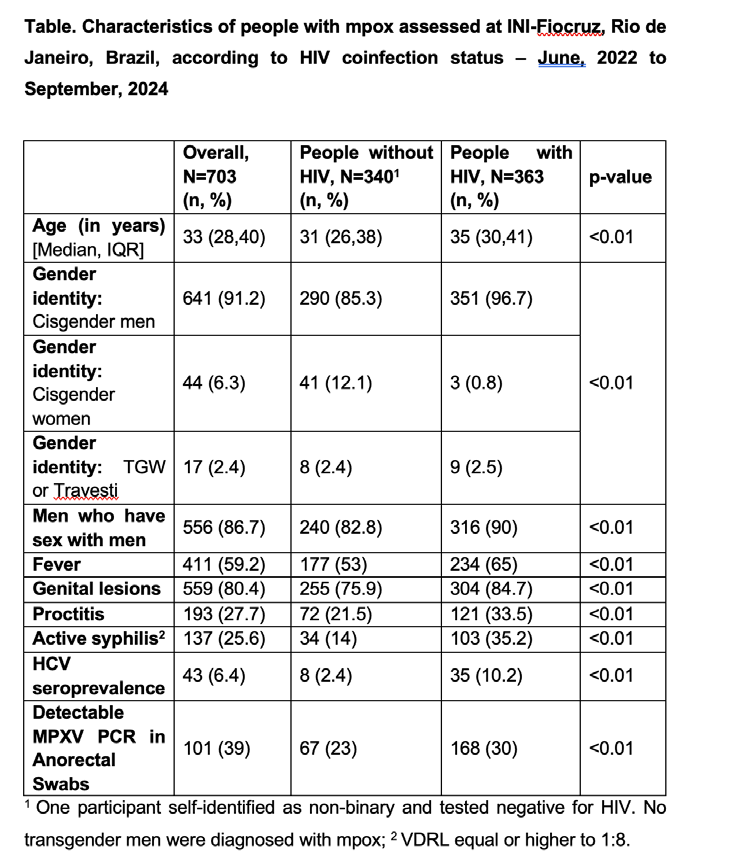
1091. WITHDRAWN
Poster Abstracts
Page: 351
1092. Mpox Reinfections in California, May 2022 to August 2024
Poster Abstracts
Page: 351
Jessica Watson1, Kayla Saadeh1, Alyssa Newman1, Aaron Cook1, Wyatt Hanft1, Kelly A. Johnson2, Sam Schildhauer1, Jill Hacker1, Shiffen Getabecha1, Alex Espinosa1, Kathleen Jacobson1, Robert E. Snyder1, Eric Tang1
Background
At the onset of the 2022 global mpox outbreak, infection from monkeypox virus was believed to offer long-term immunity. However, the first mpox reinfection in California was reported to the California Department Public of Health in April 2023. We sought to identify the frequency of mpox reinfections and associated characteristics to develop clinical and public health guidance to mitigate mpox morbidity.
Methods
We reviewed all mpox cases in California reported via public health surveillance from May 2022 to August 2024 and identified possible mpox reinfection among persons with two positive PCR results separated by >60 days. All possible reinfections underwent medical chart review to verify symptom resolution between test results and were classified as suspect, probable, or confirmed per the Centers for Disease Control and Prevention case definition. Specimens from both episodes of mpox infection were sought to conduct genetic sequencing to confirm reinfection. Epidemiological descriptive analyses were done using R software.
Results
Out of 6476 reported mpox cases, 9 confirmed/probable mpox reinfections were identified (0.14%). Only one case had samples available from both infections and whole genome sequencing confirmed reinfection in this case (Figure 1). All 9 reinfection cases were cis-gender male and gay, bisexual, or other men who have sex with men. These people ranged in age from 26 to 59 years, 6 (66.7%) were Hispanic/Latinx, and 4 (44%) were living with HIV. The time interval from first to second infection was 266 to 608 days (median 425 days). One person had received a single dose of the JYNNEOS vaccine prior to their first infection. Two people had received a single dose and two people had received two doses of JYNNEOS prior to their second infection. The number of sexual partners 21 days prior to infection ranged from one to ten for first infection and one to 15 for second infection. Comparisons of severity data were inconclusive due to missing data and low sample size.
Conclusions
Previous mpox infection does not confer long-term immunity in all individuals. While rare, reinfection with mpox can occur. Our reinfection rates are likely an underestimate due to undertesting and lack of disease recognition. Clinicians should test for mpox in patients with compatible symptoms despite previous infection. More research is needed to understand the risk factors, need for vaccination post-infection, and clinical outcomes among people who are infected with mpox multiple times.
Figure 1.
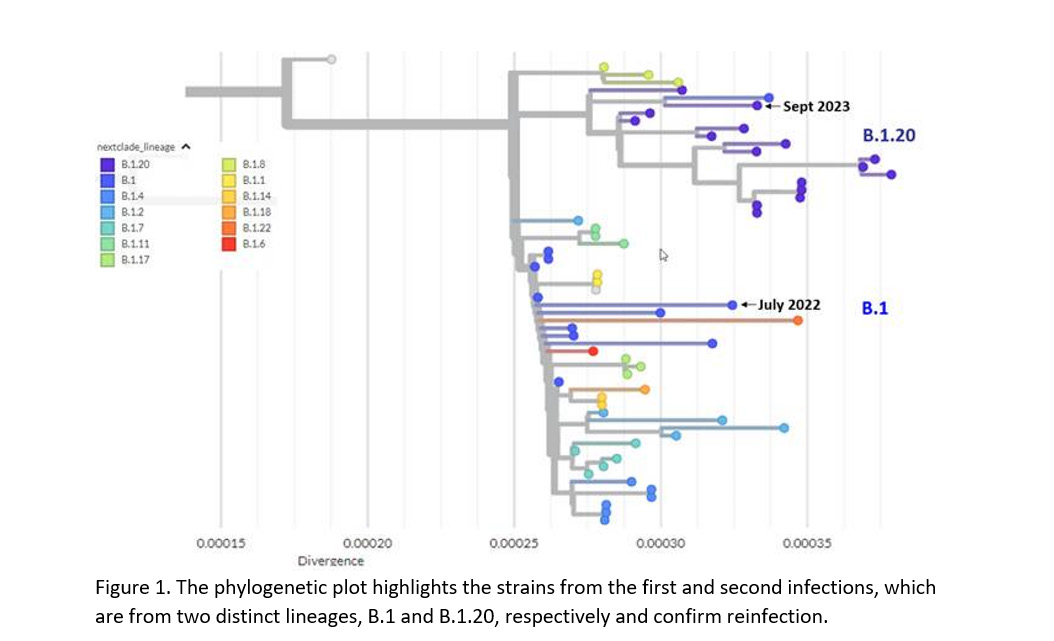
1093. Sexual Behaviors Among GBMSM Infected With Mpox in California (May 2022 - July 2024)
Poster Abstracts
Pages: 351-352
Kayla Saadeh, Sam Schildhauer, Edwin Chojolan, Awa Keinde, Kelsey MacCuish, Jessica Watson, Eric Tang, Kathleen Jacobson, Robert E. Snyder
Background
In August 2022, a state-of-emergency (SOE) was declared in California due to the global mpox outbreak. During the SOE, gay, bisexual, and other men who have sex with men (GBMSM) adopted mpox prevention strategies, which contributed to the reduction in the number of mpox infections from the initial peak in late summer 2022. We used California mpox surveillance data to describe sexual behaviors among people infected with mpox before, during, and after the SOE.
Methods
Information related to STI prevention behaviors were elicited from California residents with mpox who identified as GBMSM during routine public health interviews from May 2022 through July 2024. Time periods were defined as pre-SOE (May 12 – July 31, 2022), during SOE (August 1, 2022 – January 31, 2023) and post-SOE (February 1 – July 31, 2024). Characteristics were compared using Pearson’s chi-squared test; Fisher’s exact test was used if <10 people were in a group. When a specific characteristic was unknown, that individual was excluded from that specific sub-analysis.
Results
There were 6,384 confirmed mpox infections in California May 2022-July 2024; of those, 4,714 (73.8%) were GBMSM. Pre-SOE, significantly more GBMSM with mpox reported group sex (29.5%, p<.0001), two or more sex partners (66.9%, p<.0001), and meeting partners at bars/clubs, social events/ festivals, or sex clubs/parties (39.2%, p<.0001), compared to 12.8%, 52.4%, and 24.1% during SOE, respectively. Compared to during SOE, a higher proportion of GBMSM post-SOE reported group sex (19.2%, p<.0001), two or more sex partners (60.8%, p=0.003), and meeting partners at bars/clubs, social events/ festivals, or sex clubs/parties (32.6%, p<.0001); however, these proportions still remained significantly lower than pre-SOE (p<.0001, p=.043, and p=.016, respectively).
Conclusions
Sexual behaviors among GBMSM with mpox during the SOE differed significantly from behaviors pre- or post-SOE. During the SOE, a lower proportion of GBMSM with mpox engaged in group sex, had two or more partners, and reported meeting partners at bars/clubs, social events/festivals, or sex clubs/parties. Post-SOE, these behaviors, albeit at lower levels, have increased. The ongoing circulation of mpox in California, coupled with use of fewer mpox avoidance strategies, suggest that mpox will pose an ongoing risk to Californians and underscores the need to ensure accessible stigma-free prevention and care in the at-risk population.
Figure 1.
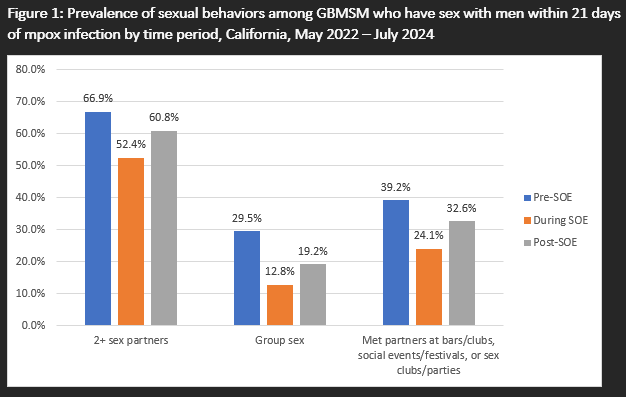
1094. Long-Term Sequelae of Mpox: A Cohort Study in 2 Tertiary Centers
Poster Abstracts
Page: 352
Rene Bulnes1, Stephanie Reyes1, Shivani Sundar1, Tianna Petersen Petersen1, Mamta K. Jain2, Netanya Utay3
Background
The global outbreak of clade IIb Mpox Virus (MPXV) caused significant morbidity, particularly among men who have sex with men and persons living with HIV (PLWH). The medical, mental, and socioeconomic consequences of mpox remain unknown.
Methods
We conducted a retrospective, longitudinal study using chart reviews and telephone questionnaires to evaluate the long-term effects of mpox. People diagnosed with mpox by PCR at our institutions were included, and HIV status was reviewed. Participants were administered questionnaires to assess persistent symptoms, socioeconomic effects, and mental health effects like anxiety, depression, and substance use. Scarring was evaluated using the Dermatology Life Quality Index (DLQI). The primary outcome included a composite of death, scarring, or persistent symptoms. We defined persistent symptoms as manifestations beyond scarring, like pain, sexual dysfunction, or fatigue. Logistic regression was used to analyze the associations between long-term sequelae and baseline characteristics during acute mpox.
Results
A total of 224 individuals were diagnosed with mpox, of whom 98.2% were male at birth, and 81.3% were PLWH. 16.2% required hospitalization, with four deaths attributed to mpox. Prospective analysis was conducted on the 64 individuals who could be reached, with an average follow-up of 19 months post-diagnosis. Among these, 54.7% experienced the primary outcome. Scarring was reported by 40.6%, with 18.8% experiencing severe scarring that impacted their quality of life (DLQI score >10). Among PLWH, low CD4 counts (<200 cells/μL) and detectable VL were significantly associated with severe scarring (OR: 16.3 [95% CI: 3.2-82.9]; OR: 11.0 [95% CI: 2.7-45.4], respectively). Black individuals were more likely to experience the primary outcome (OR: 4.7 [95% CI: 1.6-14.0]), scarring (OR: 6.3 [95% CI: 2.1-19.0]), and severe scarring (OR: 5.2 [95% CI: 1.3-21.6]) compared to non-Black individuals. Socioeconomic challenges were reported by 51.6% and mental health effects by 34.4%, with no significant associations with baseline characteristics.
Conclusions
PLWH with detectable viral loads and low CD4 counts face an increased risk of severe mpox and long-term sequelae, such as severe scarring, which can affect their quality of life. These outcomes are more prevalent among Black individuals, possibly reflecting disparities in healthcare access and usage. A systematic approach to addressing these long-term effects is essential for improving patient outcomes.
Table 1.
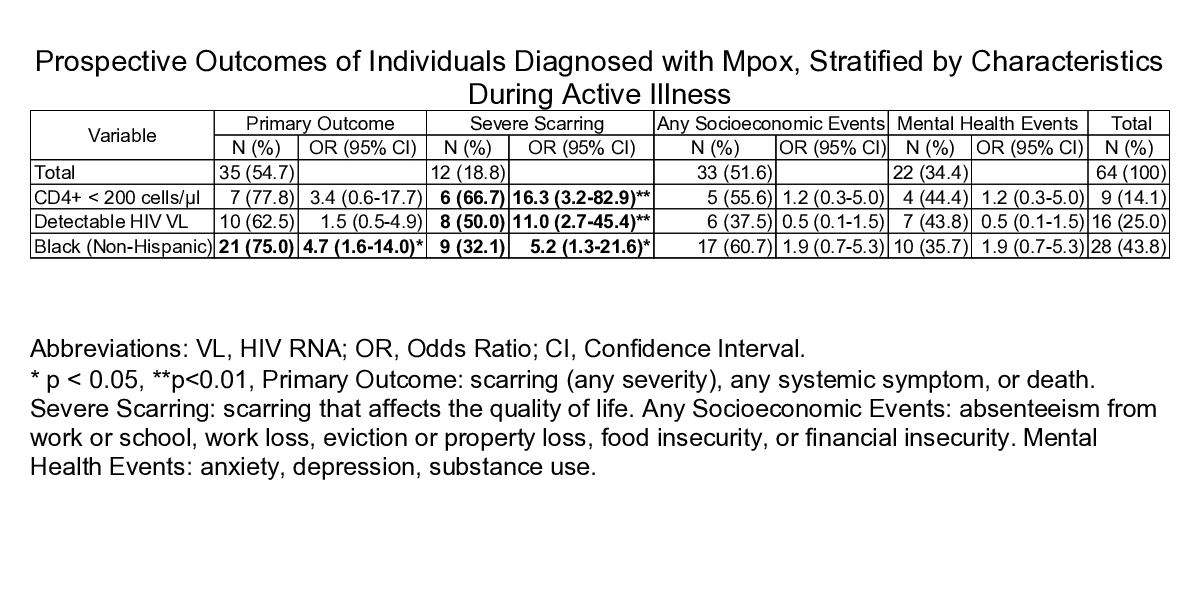
1095. Mpox Viral Load and Illness Severity in MSM Living With and Without HIV by Vaccine Status
Poster Abstracts
Page: 352
Guido Schäfer1, Hauke Walter2, Knud Schewe2, Malte Monin2, Michael Sabranski2, Axel Adam2, Stefan Hansen2, Stefan Fenske2, Katharina Cron2, Christian Hoffmann1
Background
Due to a decline in Mpox cases after 2022 there is limited data on the effect of MVA BN vaccine (modified vaccinia Ankara vaccine, Bavarian Nordic) on Mpox disease severity, especially among people with HIV (PWH). During recent weeks the city of Hamburg (Germany) has faced a second wave of Mpox.
Methods
All cases diagnosed at a single medical center in Hamburg in 2022 (n=121), 2023 (n=6) and 2024 (n=42) were grouped according to vaccine history. Disease severity was assessed by the 7-item Mpox Severity Scoring System (MPOX-SSS). As a surrogate of viral load, we used the cycle threshold (Ct) values of initial MPXV PCR swabs performed at different anatomical sites during the first two weeks after symptom onset.
Results
Of 172 Mpox infections, 93 occurred in men who have sex with men (MSM) living with HIV (median CD4 504 cells/µl, 93% < 50 HIV-RNA copies/ ml) and 79 occurred in MSM without HIV. Mean age was 40 yrs and 93% had a history of other sexually transmitted infections (STI) while 31% had at least one additional STI prevalent at the time of Mpox diagnosis. Hospitalization rate was 3.0% and no death occurred. Vaccinated cases had lower MPOX-SSS scores compared to unvaccinated cases (Figure 1) and less fever (37 vs 63%, p=0.003) and headaches/chills (41 vs 65%, p=0.008). There were no differences between subjects with incomplete or complete vaccine courses. Scores and symptom rates did not differ between PWH and MSM without HIV. Median Ct values were lowest in rectal (22.6) and genital swabs (24.2) and highest in oropharyngeal swabs (31.5). Neither vaccine history, HIV infection, year of diagnosis, higher MPOX-SSS scores nor co-existing STIs were significantly associated with Ct values at different anatomical sites. However, in 3 Mpox re-infections, both MPOX-SSS scores and viral load appeared to be relatively low, compared to cases with first Mpox infection.
Conclusions
Both incomplete and complete vaccine courses appear to reduce Mpox severity but not viral load in specimens. In the absence of severely immunocompromised cases, there were no differences regarding severity scores, symptoms or viral load between PWH and MSM without HIV.
Figure 1.
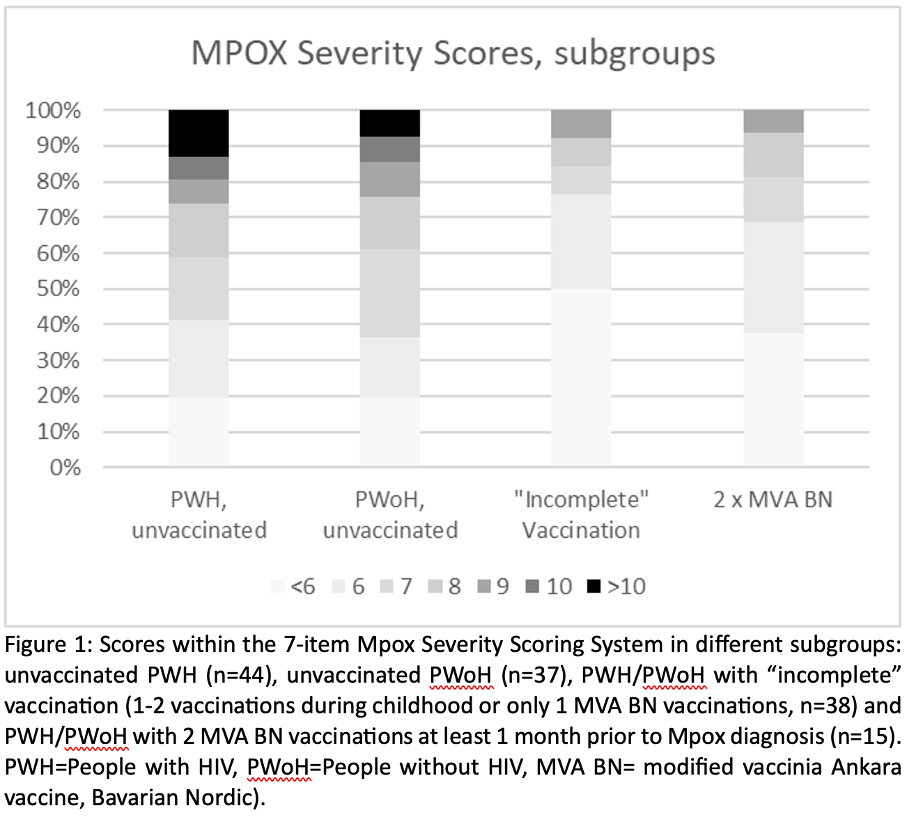
1096. Impact of COVID-19 Healthcare Disruptions on ART Initiation and Viral Suppression: US, 2018-2021
Poster Abstracts
Pages: 352-353
Sarita Shah1, Felicia Hardnett2, Jun Li2, Alexander Ewing2, Brenna C. Hogan3, Vincent C. Marconi4, Jonathan Colasanti4, Catherine Lesko5, Adrienne E. Shapiro6, M. John Gill7, Maile Karris8, Joseph J. Eron9, Peter F. Rebeiro10, Keri N. Althoff5, Kate Buchacz2, the North American AIDS Cohort Collaboration on Research and Design (NA-ACCORD) of IeDEA
Background
Rapidly initiating antiretroviral therapy (ART) and achieving viral suppression (VS) among newly diagnosed people with HIV (PWH) are cornerstones of HIV care. COVID-19 caused far-reaching disruptions in health services, including for HIV treatment and laboratory monitoring. We characterized trends in early ART (eART) and early VS (eVS) among PWH before (2018-2019) vs. during (2020-2021) the COVID-19 pandemic to assess potential impacts of these disruptions.
Methods
We included treatment-naïve adult (≥18 years old) PWH at entry into care in one of 13 cohorts in the North American AIDS Cohort Collaboration on Research and Design (NA-ACCORD) from 2018–2021. We examined subgroup differences in the proportion achieving eART (ART initiation ≤30 days after entry) and eVS (HIV-1 viral load [VL] <200 copies/mL, ≤180 days after ART initiation). We followed PWH until ART initiation, VS, cohort close date, study end (12/31/2021), or death; due to the short observation period, we assumed no loss to follow-up. We examined factors associated with timing of ART and VS using multivariable Cox models, including age, enrollment year, race/ethnicity, sex, HIV risk group, CD4 count, VL, diagnosed alcohol or substance use disorders, and mental illness diagnoses at entry.
Results
Among 2784 PWH included, 79.8% (n=2223) achieved eART. Compared with 2018 (81.4%, n=874/1074), a higher proportion of PWH entering care in 2019 achieved eART (86.1%, n=794/922); this progress slowed significantly in 2020 (60.8%; n=315/518), then rebounded in 2021 (88.9%; n=240/270; p=0.001). Multivariable analysis showed that PWH in the Northeast had shorter time to ART initiation compared to those in the South (HR=1.27, CI: 1.07-1.52). PWH ≥60 years old had longer time to ART (HR=0.80, CI: 0.67-0.95) than younger PWH. Overall, 91% (n=1778/1953) achieved eVS. Compared with 2018 (89.0%), a higher proportion of PWH entering care in 2019 (92.6%) achieved eVS, with slowing progress in 2020 (87.3%) that improved in 2021 (97.4%; p<0.01). PWH with CD4 <200 cells/mm3 at entry had slower time to VS than those with higher CD4 counts (all p <0.05).
Conclusions
Progress towards ending the HIV epidemic in the US slowed during the first year of the COVID-19 pandemic with lower rates of eART and eVS. Both recovered by 2021, yet persistent gaps remain for PWH in the South, older adults, and those with advanced HIV, who should be prioritized for earlier diagnosis, and engagement in care and treatment.
1097. Disparities in COVID-19 Therapeutics Access Among People With and Without HIV: An N3C Analysis
Poster Abstracts
Page: 353
Emmanuel Nazaire Essam Nkodo1, Pooja Maheria2, Eric G. Hurwitz3, Jerrod Anzalone1, Dongmei Li4, Jessica Islam5, Jing Sun6, Zachary Butzin-Dozier7, Sandra Safo8, Tommy Williams2, Shukrih A. Hassan9, Marlene Camacho-Rivera10, Rena C. Patel11, Nada Fadul1, the National COVID Cohort Collaborative (N3C)
Background
Access to COVID-19 therapeutics has been inequitable in the U.S., stemming from well documented health-related, social, and structural vulnerability . This trend is not known among people living with HIV (PWH), who may face additional challenges in accessing COVID-19 therapeutics. We investigated disparities in access to COVID-19 therapeutics among PWH and people without HIV (PWOH) within the U.S. National COVID-19 Cohort Collaborative (N3C), a nationally sampled electronic health records repository.
Methods
We conducted a retrospective evaluation of remdesivir and nirmatrelvir/ritonavir receipt among PWH and PWOH. We used hierarchically nested, additive, and adjusted mixed-effects models with logit link function to assess receipt of either remdesivir or nirmatrelvir/ritonavir, stratifying by HIV status and adjusting for race/ethnicity, age, sex, comorbidities, and area deprivation index (ADI).
Results
Between January 2020 and November 2023, the N3C included more than 7 million individuals with incident COVID-19, with median age of 57 (interquartile range (IQR:45, 67), 13.2% non-Hispanic Blacks and 55.9% females, of whom 0.32% were PWH. In the unadjusted analysis, PWH had higher odds of receiving remdesivir (odds ratio [OR] of 2.36, 95% confidence interval [CI]: 2.31, 2.42), and nirmatrelvir/ritonavir (OR 1.55, 95% CI: 1.50, 1.61) when compared to PWOH (Table 1). However, when subsequently adjusting for various factors (age, sex, comorbidities, race/ethnicity, and ADI), the ORs of remdesivir prescription among PWH shifted quantitatively to 0.47 (95% CI: 0.13, 1.40). For nirmatrelvir/ ritonavir, the ORs became statistically insignificant after adjustments 3.37 (95% CI 0.78, 13.77).
Conclusions
While corroborating the overall burden of HIV and social vulnerability among racialized minorities, PWH receiving care were more likely to receive COVID-19 therapeutics. However, accounting for race/ethnicity and social vulnerability attenuated any associations between HIV and receipt of COVID-19 therapeutics.
Table 1.
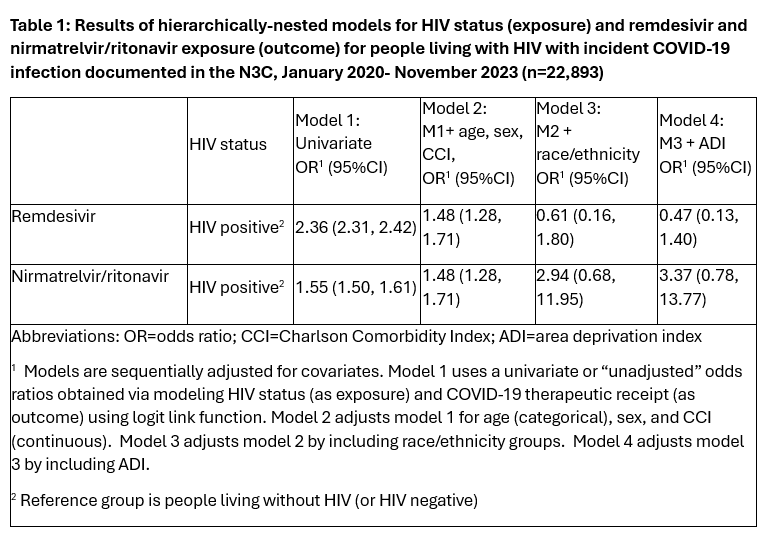
1098. Impact of COVID-19 Pandemic on the Newly Diagnosed PWH: Data From 2 Clinical Centres in Italy
Poster Abstracts
Pages: 353-354
Andrea Carbone1, Francesca Lombardi2, Valentina Iannone1, Pierluigi Francesco Salvo1, Giorgio Tiecco3, Jacopo Logiudice3, Francesco Castelli3, Roberta Gerami3, Antonella Cingolani1, Giancarlo Scoppettuolo4, Carlo Torti2, Simona Di Giambenedetto2, Eugenia Quiros-Roldan5
Background
In Italy, particularly in the North, the COVID-19 pandemic have significantly affected access to healthcare services, including HIV screening and management of people with HIV (PWH). We compared data from two clinical centres, one in the North and one in the Centre of Italy, regarding newly diagnosed people with HIV (ndPWH), before, during and after the pandemic. We examined clinical presentation at diagnosis and time to virological success (VS) at 12 months after starting ART.
Methods
We conducted a retrospective observational study involving PWH diagnosed between 2015 and 2023 at two large referral centres. Participants, who had at least two HIV-RNA measurements within 12 months, 6±2 months apart, were categorized into pre-pandemic (2015-2017 and 2018-2019), pandemic (2020-2021) and post-pandemic (2022-2023) periods. Kaplan-Meier analysis assessed the probability of achieving overall VS at 12 months (HIV-RNA≤50 cps/mL) and Cox-regression identified potential predictors of VS.
Results
We enrolled 1.033 ndPWH, main characteristics are shown in Table 1. NdPWH during pandemic were younger (p=0.050) and had a higher viral zenith (p<0.001) compared to those diagnosed pre-pandemic. The frequency of CDC C peaked during the pandemic (32%) (p=0.031). During the pandemic period, the use of triple therapy declined markedly (p<0.001) while dual therapies as first line regimen increased (p<0.001). The overall probability of experiencing VS was 96.6%, with no significant differences between the periods (p=0.453). This was confirmed by multivariable Cox regression, adjusted for age, sex, time to ART initiation, (p=0.448). A higher viral zenith (aHR 0.68, 95%CI 0.64-0.73, p<0.001), CDC C (aHR 0.81, 95%CI 0.69-0.96, p=0.014), being treated in the northern centre (aHR 0.74, 95%CI 0.65-0.85, p<0.001) were associated with a lower likelihood of VS while higher nadir in CD4 count (aHR 1.04, 95%CI 1.01-1.07, p=0.007) and triple therapy INSTI-based regimens (aHR 1.67, 95%CI 1.43-1.96, p<0.001) were related to a higher probability of achieving VS.
Conclusions
In this two-centre observational study, we found that ndPWH diagnosed during pandemic had worse initial clinical and viro-immunological conditions. However, this did not impact virological response, likely due to the increasing availability of third-generation INSTIs in the recent years. Northern centre's participants had a lower likelihood of VS, possibly reflecting other unexplored confounders in addition to the greater impact of pandemic in that area.
Table 1.
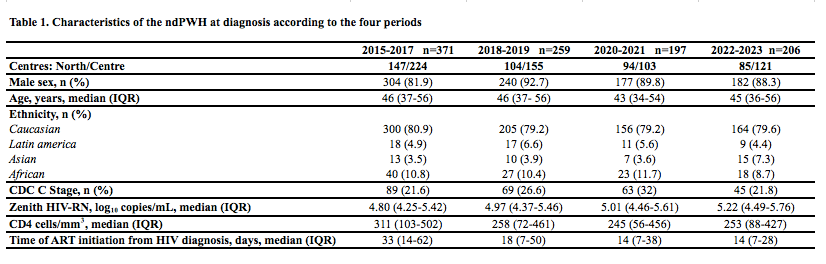
1099. Impact of COVID-19 Pandemic in Deaths of PLWH From ART Program of a Peruvian Hospital
Poster Abstracts
Page: 354
Jorge Tello Arana1, Carlos Gonzales Rayme1, Silvana Maldonado Berrospi1, Alfredo Chiape-Gonzales2, Juan Montenegro-Idrogo3
Background
COVID-19 pandemic decreased accessibility to health services in chronic diseases as HIV, with disruption of the continuum of HIV care. In addition, COVID-19 added more death during first waves before immunization, but in PLWH in ART knowledge about impact in the mortality was poor in studies in follow-up.
Methods
Retrospective study from clinical records of PLWH reported dead from a cohort of national hospital enrolled in ART between 2017-2022 years. Causes of death were classified from death certificate as related with: COVID-19, any severe acute respiratory infection (SARI), advanced HIV, infectious disease no related with HIV (ID no-HIV), CNS infection, neoplastic, cardiovascular, and other chronic diseases. Logistic regression model was made including covariates: MSM, sex-working, gender, death in health center, age at HIV diagnosis, time to start ART, abandonment episodes, current abandonment, baseline cd4, CD4 nadir, last ART scheme, viral suppression, tuberculosis background during HIV, and death year.
Results
Were recovered 211/240 completed records from PLWH reported as death. Since 2020 deaths were increased in comparison to previous years, but deaths related with advance HIV, SARI, and other no opportunistic ID were increased since 2019 (Figure). In each adjusted regression model by deaths related with COVID-19, advanced HIV and SARI, risk were associated with death in health center (PR: 5.32 CI95%: 2.21-12.82; PR: 2.53 CI95%: 1.01-6.37; PR: 35.17 CI95%: 3.87-319.88 respectively). Additionally, there was less risk of death related SARI with MSM. (PR: 0.39 CI95%: 0.16-0.95); viral suppression or abandonment were not related.
Conclusions
COVID-19 pandemic reinforced the trend in deaths due the advanced HIV status, SARI and the same COVID-19 during the first 2 years, period with poor COVID-19 immunization coverage. The health centers probably identified better the death causes and it is the reason of the high risk in the model, but is unexplained the less risk of death due SARI in MSM people, it needs to assess other factors involved.
Figure 1.
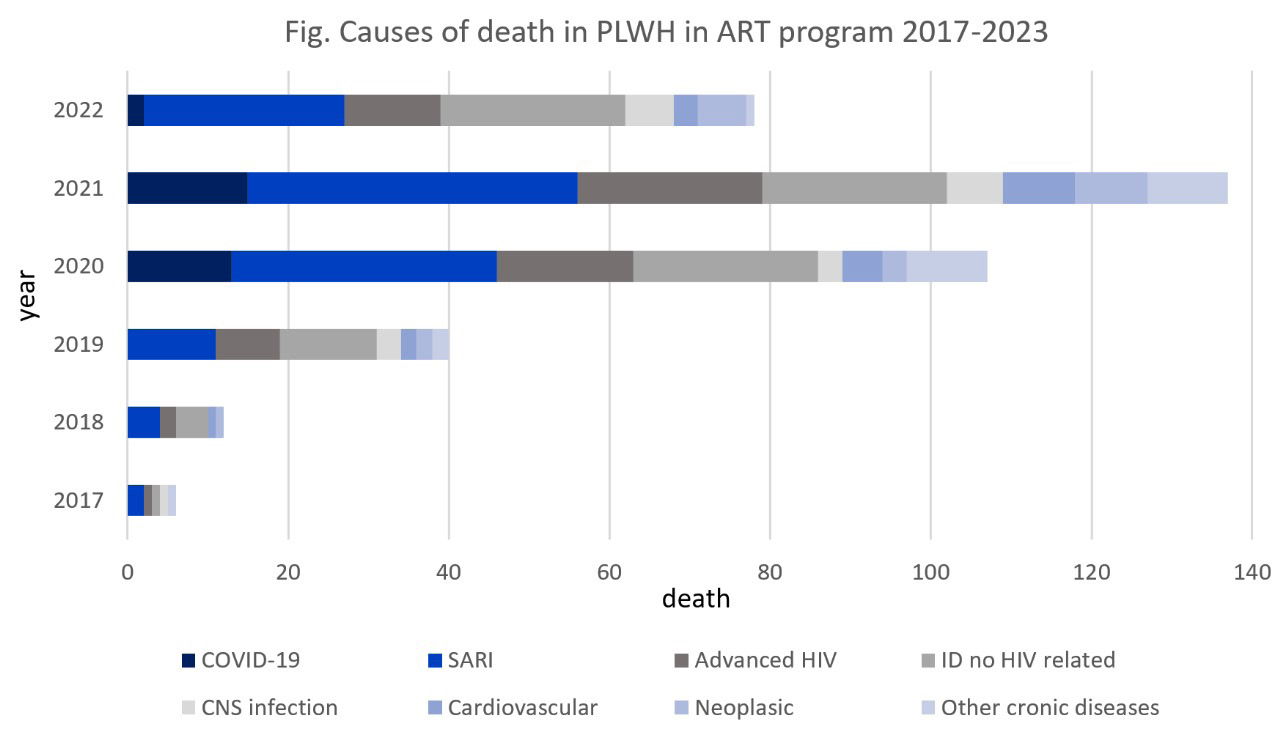
1100. Differential Impact of Social Determinants of Health by Sex in HIV for COVID-19 Hospitalizations
Poster Abstracts
Page: 354
Dimple Vaidya1, Kenneth Wilkins2, Eric G. Hurwitz3, Zachary Butzin-Dozier4, Elaine Hill5, Pooja Maheria6, Jessica Islam7, Jing Sun8, Dongmei Li5, Sandra Safo9, Marlene Camacho-Rivera10, Charisse Madlock-Brown11, Rena C. Patel12, the National COVID Cohort Collaborative (N3C)
Background
Our study investigated sex differences in how individual-level social determinants of health (SDoH) affect COVID-19 related hospitalizations among people with HIV (PWH) and without HIV (PWoH) in the U.S.
Methods
We analyzed the National COVID-19 Cohort Collaborative (N3C) data from January 2020 to November 2023 to assess how SDoH (healthcare access, economic stability, social cohesion) impact COVID-19 hospitalization risk among PWH and PWoH. We conducted hierarchically-nested additive and adjusted mixed-effects logistic regression models stratified by HIV and sex , adjusting for age, race/ethnicity, comorbidities, data source, and mediation by healthcare utilization.
Results
Among our study population of 280,441 individuals from 24 data partner sites, 11.2% were hospitalized due to COVID-19. This hospitalization rate was higher for males (14%) compared to females (9.5%). Overall, females consistently demonstrated higher proportions for issues with access to healthcare (2.1% for females, 1.7% for males), economic stability (11% for females, 9.1% for males), and social cohesion (40.6% for females, 36.4% for males); these proportions were even higher among female PWH. In our initial additive modeling, all three SDoH domains were significantly associated with hospitalizations, with adjusted odds ratios (aOR) ranging from 1.36 to 1.97. Subsequently, our HIV-stratified analyses indicated economic instability was associated with hospitalization among PWH, while all 3 SDoH domains were associated with hospitalization among PWoH (aOR range 1.36 -1.96). Lastly, our fully adjusted, sex-stratified analysis, indicated social cohesion issues were associated with hospitalization across both sex groups (aOR range 1.18 - 2.37) as was HIV positive status (aOR range 1.18- 1.22).
Conclusions
Our results reveal that while males had higher initial COVID-19 hospitalization rates, adjusting for SDoH demonstrated a significant association between female and hospitalization. This study demonstrates the importance of investigating individual-level SDoH variables to unpack the intricate interplay between these factors, HIV status and sex in shaping health outcomes.
Table 1.
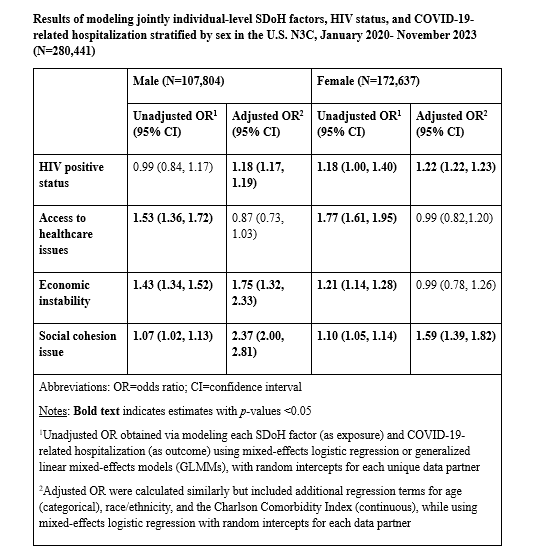
1101. A Syndemic View of Criminal Justice: Jail’s Impact on HIV, Syphilis, and Overdose in Washington 2023
Poster Abstracts
Pages: 354-355
Steven J. Erly, Danika A. Troupe, Silas M. Hyzer, Rachel M. Amiya
Background
The syndemic model of HIV prevention frames HIV transmission as a product of complex biological and social factors that intersect with viral hepatitis, sexually transmitted infections (STIs), substance use, and behavioral health issues. Incarceration may play a role in perpetuating these cycles, while also serving as a key opportunity for healthcare access. The purpose of this analysis is to estimate the baseline incidence of HIV, syphilis, and fatal overdose among individuals experiencing incarceration in jails, describe the acute impact of jail on the incidence of these conditions, and identify key demographic determinants that may be relevant to prevent disease in this population.
Methods
We linked 2023 Washington state HIV, STI, and fatal overdose surveillance data to a 2023 corrections registry built from public jail rosters. We calculated the baseline incidence of each condition (pre-incarceration for syphilis and HIV, and >90 days post-incarceration for fatal overdose) and compared this to published statewide statistics. We then calculated incidence post-incarceration (180 days following release for HIV and syphilis, and 90 days for fatal overdose). We estimated rate differences using a Poisson model and calculated the number of cases attributable to incarceration. Finally, we described the inferred route of transmission, gender, race, and census-tract level socioeconomic characteristics among those experiencing one or more conditions.
Results
Among the 129,661 individuals incarcerated in 2023, there were19 HIV diagnoses, 608 syphilis diagnoses, and 349 fatal overdoses. Baseline incidence rates for these conditions were 2.6 to 10.0 times higher than Washington state as a whole (14.1 vs 5.4 for HIV, 453.1 vs 50.7 for syphilis, and 463.7 vs 44.3 per 100,000 person-years). Rates were significantly higher post-incarceration for syphilis and fatal overdose (Table 1). Across all conditions, 55% of individuals had documentation of substance use, 46% were people of color, and 40% resided in census tracts in the lowest income quartile.
Conclusions
Incarcerated individuals in 2023 experienced disproportionately high rates of HIV, syphilis, and fatal overdose across WA The immediate effect of incarceration was an increased risk for these conditions, which is likely compounded other social and biological determinants. These findings underscore the crucial need for targeted interventions during and after incarceration toward reducing the burden of these syndemic conditions.
Table 1.
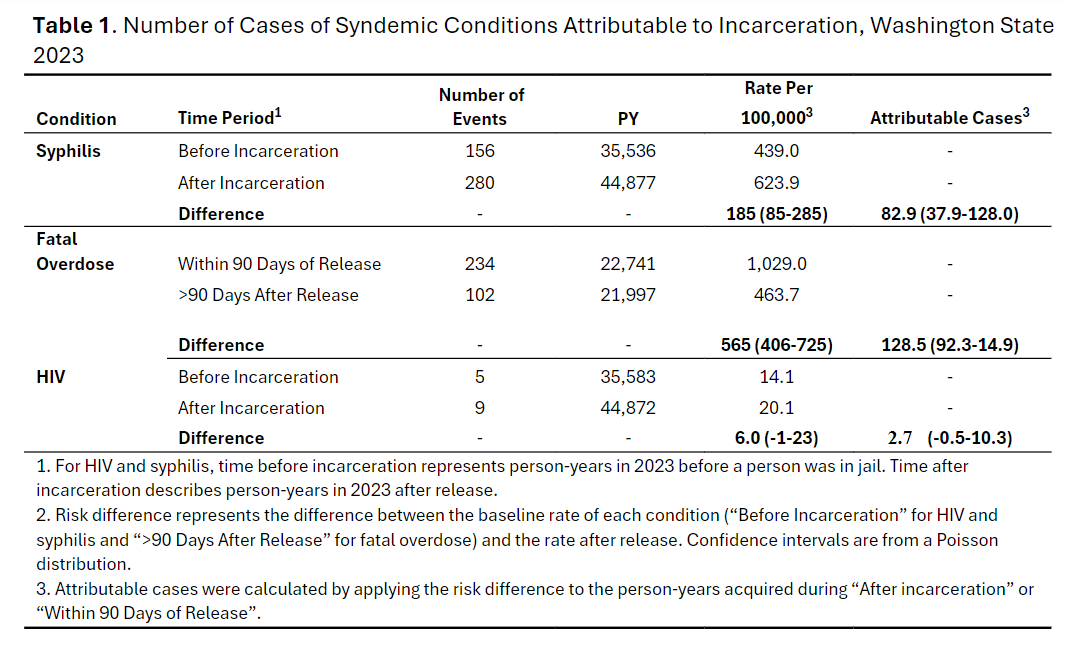
1102. HIV Acquisition After Prison Release in Washington State and Implications for Prevention Efforts
Poster Abstracts
Page: 355
Danika A. Troupe1, Steven J. Erly1, Helen E. Jack2, Courtney G. Bagdon-Cox3, Rachel M. Amiya1
Background
Individuals released from prison face a heightened risk of HIV acquisition. Despite this elevated risk, limited research has quantified HIV acquisition post-release or identified which subpopulations should be prioritized for targeted prevention efforts. Additionally, identifying high-risk groups within correctional settings is challenging, as individuals may be reluctant to disclose risk behaviors like sexual activity and injection drug use, which are often criminalized in these environments. This study aims to estimate the risk of HIV acquisition after prison release using routinely collected administrative data and applies machine learning to identify subpopulations at the highest risk.
Methods
We linked HIV surveillance data to administrative records of all individuals released from Washington State prisons between 1/1/2010 and 12/31/2021, calculating the incidence over the subsequent three years. A decision tree model was used to stratify risk based on demographic factors, reason for incarceration, mental health status, and substance use assessments.
Results
Among 58,026 individuals released from prison, 120 were diagnosed with HIV. In the three years following release, 51 individuals acquired HIV, corresponding to an incidence rate of 32.5 per 100,000 person-years, which is 6.3 times higher than the rate among those not released from prison (5.4 per 100,000 person-years). Certain subpopulations exhibited significantly higher post-release HIV acquisition rates, including males (Rate Ratio 2.1 compared to females) and individuals with mental or behavioral health diagnoses (RR 1.8–3.0 depending on the diagnosis, compared to those without diagnoses). Some specific subgroups had HIV diagnosis rates 24–38 times higher than the general population, with incidence rates reaching as high as 198.8 per 100,000 person-years.
Conclusions
People released from prison represent a population at significantly elevated risk for HIV acquisition. Routinely collected administrative data can serve as a valuable tool for identifying high-risk subpopulations and prioritizing prevention programs within correctional facilities.
Figure 1.
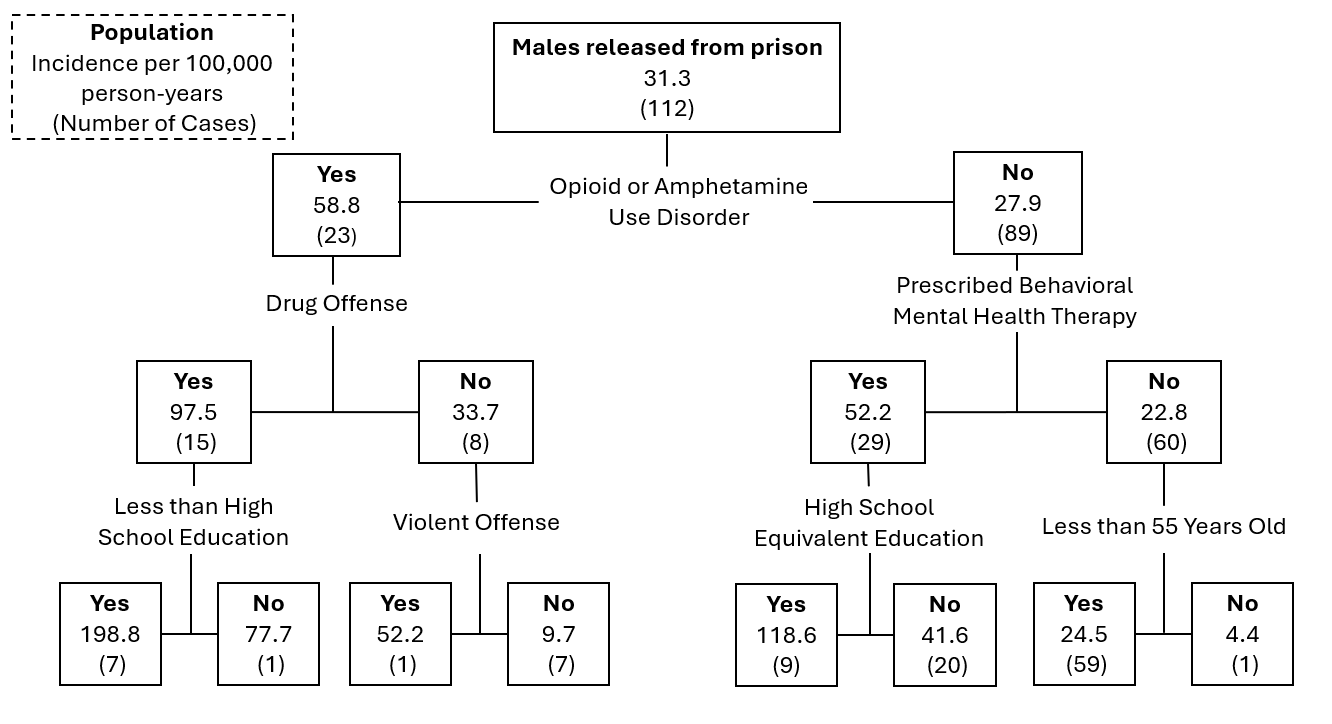
1103. WITHDRAWN
Poster Abstracts
Page: 355
1104. WITHDRAWN
Poster Abstracts
Page: 356
1105. HIV Diagnosis Following Discharge From Psychiatric Hospitalization: A Claims-Based, Real-World Study
Poster Abstracts
Page: 356
Samuel Bunting1, Max Hyman2, Aniruddha Hazra1
Background
People living with mental illnesses (PLMI) and substance use disorders experience disproportionate incidence of HIV. Domestic and international policy agendas emphasize developing methods for expanding access to HIV testing, pre-exposure prophylaxis (PrEP), and linkage to care. The purpose of the present study was to quantify new HIV diagnoses following discharge from psychiatric hospitalization as a possible site of intervention for HIV prevention for PLMI.
Methods
The MarketScan database of medical and pharmaceutical claims for commercially insured people in the US was used to identify enrollees who were hospitalized with diagnosis-related groups corresponding to a primary psychiatric illness. A conservative approach was used to define the cohort. We excluded enrollees with previous claims-based evidence of HIV (1 inpatient or 2 outpatient claims on different dates), and enrollees with antiretroviral prescriptions for agents other than PrEP. Inclusion required at least 1 year of continuous medical and prescription drug coverage prior to date of psychiatric admission (index date). Enrollees were followed for 1 year after discharge or until HIV diagnosis. We did not include re-admissions.
Results
The final cohort included 492,363 individuals who were psychiatrically hospitalized between 2004-2022. There were 277 HIV diagnoses following discharge. New diagnoses were more frequent among males (n=186; 67.2%), in the Western US (n=110; 39.7%). The most common, primary diagnoses at hospitalization were depression (n=101; 36.5%), alcohol use disorder (n=33; 11.9%), bipolar disorder (n=32; 11.6%). Median time to HIV diagnosis was 154 days after discharge (IQR: 61-243). Enrollees who were hospitalized for a primary diagnosis of stimulant use disorder (SUD) had the shortest median time to HIV diagnosis following discharge (40 days; 32-70). (Figure 1)
Conclusions
In this retrospective, claims-based study, we identified many new HIV diagnoses in the 1-year follow-up period after discharge from inpatient psychiatry. The mean time to new diagnosis was less than 6-months for all diagnosis groups and the shortest mean duration was identified for enrollees hospitalized primarily for SUD. Future research is needed to better understand screening for PrEP eligibility among patients receiving inpatient psychiatric care and to develop models of care to integrate PrEP prescription in the settings where people with psychiatric illnesses are already engaged in care.
Figure 1.
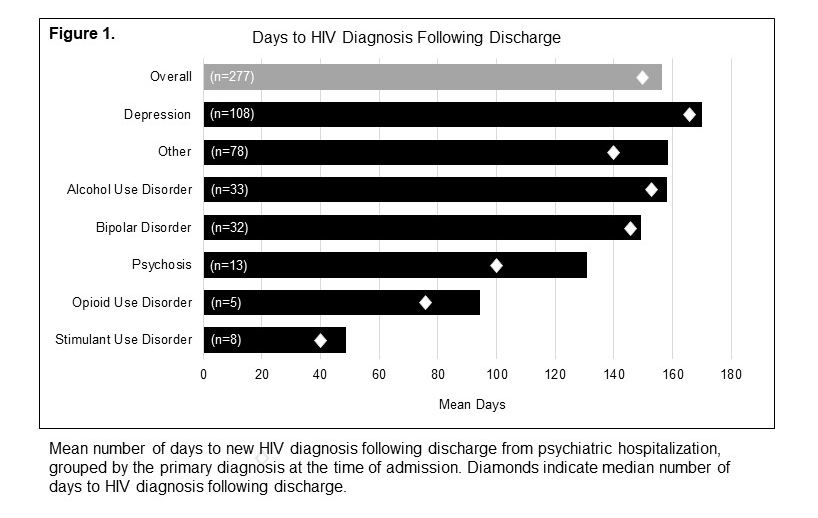
1106. Housing Status and HIV Outcomes Among Reproductive-Age Women Living With HIV in the Southern US
Poster Abstracts
Pages: 356-357
Shreya Ganguly1, Olivia Christman2, Qian Yang1, Cyra C. Mehta1, Tina T. Tisdale1, Ayako W. Fujita1, Deborah Konkle-Parker3, Maria L. Alcaide4, Aadia Rana5, Seble Kassaye6, Elizabeth F. Topper7, Daniel Westreich8, Anandi N. Sheth1
Background
Reproductive-age women are uniquely affected by HIV across their life course. Housing instability has been identified as a modifiable risk factor for worse health outcomes among people living with HIV but is not well examined among reproductive-age women. We evaluated associations between housing status and HIV outcomes among reproductive-age women living with HIV (WLH).
Methods
The Study of Treatment and Reproductive Outcomes (STAR) examines cisgender women aged 18-45 years old with and without HIV in six Southern US sites. We analyzed baseline data for WLH enrolled in March 2021-August 2023. Participants were considered unstably housed if they self-reported living in a rooming/halfway house, shelter/welfare hotel, on the street/beach, jail/other correctional facility, residential drug/alcohol treatment facility, car, assisted living, or other unstable housing location. We evaluated associations between housing status and a) viral non-suppression, and b) missed HIV care visits using logistic regression models, adjusting for age, race, socioeconomic status, depressive symptoms, and illicit drug use.
Results
Among 473 WLH, median age was 37 (IQR 32-42) years. Participants were predominately non-Hispanic Black (80.1%), unmarried/unpartnered (68.7%), unemployed (52.2%), and high school educated (61.7%); 37.2% reported annual household income of $24,000 or less. Overall, 9.2% reported illicit drug use (excluding marijuana only) and 33.5% reported depressive symptoms. Among WLH, 7.0% reported unstable housing, 16.2% had a missed HIV visit in the last year, and 19.5% were virally non-suppressed. Unstably housed WLH were significantly more likely to be virally non-suppressed than stably housed WLH; this association persisted after adjusting for sociodemographic variables, depressive symptoms, and illicit drug use (OR: 2.92, Cl: 1.08-7.87). Unstably housed WLH were additionally more likely to miss at least one HIV visit in the past year, which also persisted after adjusting for these variables (OR: 2.35, Cl: 1.02-5.42; Table).
Conclusions
Housing instability was associated with over two times the odds of adverse HIV outcomes, even after adjusting for sociodemographic and psychosocial risk factors. This emphasizes its role as a key social determinant of health that must be addressed. Further research to assess the potential pathways for this association, such as access to care or comorbid conditions, will inform acceptable and scalable housing interventions to improve outcomes for WLH.
The figure, table, or graphic for this abstract has been removed.
1107. WITHDRAWN
Poster Abstracts
Page: 357
1108. Recent HIV Acquisition Among Transgender Women From Midwest Brazil
Poster Abstracts
Pages: 357-358
Sylvia L. M. Teixeira1, Thiago Silva Torres2, Bruno Vinícius D. Diniz e Silva3, José Henrique S. Pilotto1, Ingebourg Georg2, Carlos S. Jesus1, Paulie Marcelly R. Santos3, Karlla Antonieta A. Caetano3, Regina Maria B. Martins3, Megmar Aparecida S. Carneiro3, Monick L. Guimarães1, Sheila A. Teles3
Background
In Brazil, transgender women (TGW) face a disproportionately high burden of HIV. Research on the patterns of the HIV epidemic in TGW is still lacking in Midwest Brazil. We aimed to evaluate the HIV prevalence and proportion of recent HIV acquisition and to explore factors associated with recent HIV acquisition among TGW from Goiás, Brazil.
Methods
We included TGW aged 16-59 from three cities in Goiás, Brazil: Goiânia, Itumbiara, and Jataí. Participants were recruited between Apr-2018 to Nov-2019 using respondent-driven sampling (RDS). HIV testing followed the Brazilian algorithm and the Maxim HIV-1 Limiting Antigen Avidity EIA (LAg) was used to identify recent HIV acquisition in plasma samples. We compared study participants’ characteristics using Pearson’s chi-square and Fisher’s test for categorical variables and the Wilcoxon test for continuous variables: (1) recent vs. longstanding HIV acquisition and (2) recent vs. HIV-negative. We used logistic regression models to assess factors associated with recent HIV acquisition among participants at risk of HIV infection (excluding those with longstanding HIV acquisition).
Results
We enrolled 440 TGW: 285 in Goiânia, 74 in Itumbiara, and 81 in Jataí; the median age was 25 years (IQR: 21-30), 312 (71.2%) self-identified as Black, 269 (61.1%) completed secondary school; none of the TGW were on PrEP. From 143 TGW who tested positive for HIV (prevalence: 33.2%), 51 reported current ARV use and were excluded from recency analysis; 87/92 participants (94.6%) had available plasma samples for LAg testing, of which 44 (50.6%) had recently acquired HIV. TGW with recent HIV acquisitions were older and more affected by STI (sexually transmitted infections) than those with longstanding HIV (p=0.041 and p=0.024, respectively) (Table). Logistic regression analysis showed a borderline association between older age and greater odds of recent HIV acquisition (OR: 1.03 [95%CI:0.99-1.07], per 1-year increase, p=0.08).
Conclusions
The very high levels of HIV prevalence and recent HIV acquisition among TGW in Midwest Brazil highlight the significant burden of the HIV epidemic and STI in this population, despite the availability of public health prevention strategies. Older TGWs may have a lower perception of risk, leading to behaviors that increase the odds of acquiring HIV. It is crucial to address these gaps to improve targeted interventions and care for TGW, including increasing PrEP access, especially in regions where their vulnerability to HIV is high.
Table 1.
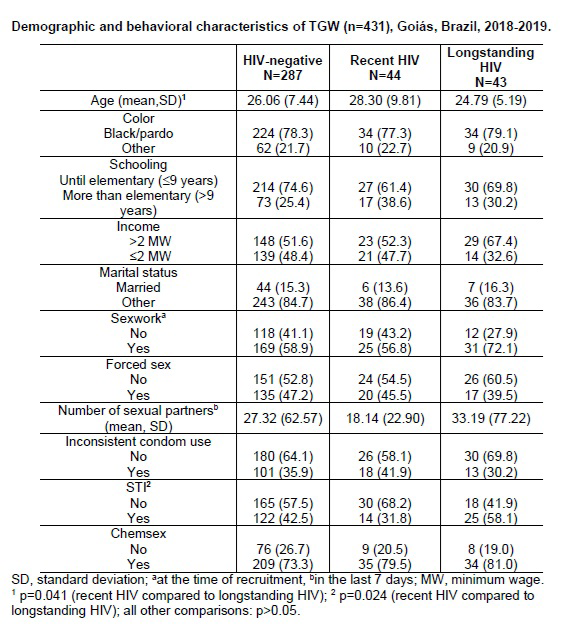
1109. High HIV Burden Among Transgender Women in the State Capital and Rural Towns in Central Brazil
Poster Abstracts
Page: 358
Bruno Vinícius D. Diniz e Silva1, Larissa Silva Magalhães1, Kamila Cardoso dos Santos1, Sylvia L. M. Teixeira2, Ingebourg Georg3, Karlla Antonieta A. Caetano1, Robert L. Cook4, Sheila A. Teles1, Megmar Aparecida S. Carneiro1, the Núcleo de Estudos em Epidemiologia e Cuidados em Doenças Transmissíveis e Agravos à Saúde Humana (NECAIH)
Background
Transgender women (TGW) have an increased risk for HIV due to social exclusion, barriers to access to health care, discrimination, and exposure to higher-risk contexts such as sex work. In fact, there is a lack of studies assessing the dynamics of the HIV epidemic among TGW in rural cities. This is a cross-sectional study that aimed to estimate the prevalence and factors associated with HIV acquisition and compared the characteristics among TGW in the state capital vs. rural towns of Goiás, which are regions far from the HIV epicenter in Brazil.
Methods
From 2018 to 2019 a total of 440 transgender women were recruited, 285 in the capital of Goiás (Goiânia) and 155 in the state's rural towns (Jataí and Itumbiara). All participants were interviewed about sociodemographic characteristics and sexual risk behaviors. The blood samples were tested by rapid test (Bioclin HIV Tri line, Quibasa, BH, Brazil; R DPP® HIV 1/2, Bio-Manguinhos, RJ, Brazil) and retested by ELISA (Genscreen™ ULTRA HIV Ag-Ab, Bio-Rad, Marnes-la-Coquette, France). Samples positive in both tests were considered positive. Prevalence was estimated with a 95% confidence interval. We performed bivariate and multiple Poisson regression analyses with 95% confidence intervals (CI).
Results
TGW from the state capital reported higher monthly income, more sexual partners, more engagement in sex work, more group sex, less insertive anal sex, and more sex with men and women compared to TGW who lived in rural towns. Those in rural towns reported more sex with men only (p< 0.05). HIV prevalence was 32.9% (95% CI: 27.6% – 38.6%) in the capital and 33.8% (95% CI: 26.7-41.6) in the rural towns, some participants were unaware of their serological status. Among the TGW from the capital, STI history (self-reported) was associated with HIV (Adjusted Prevalence Rate [APR] 1.5; 95% CI: 1.04-2.1), while among those from rural towns, STI (self-reported) was associated with HIV (APR: 2.2; 95% CI: 1.3-3.8) as well as group sex (APR: 2.5; 95% CI: 1.1-5.6).
Conclusions
Despite a higher proportion of risk behaviors found among TGW in the capital vs. rural cities, the high burden of HIV among TGW was similar among the two groups. STI history was a common factor associated with HIV in both groups. Therefore, health interventions supported by governmental public policies are urgently needed to mitigate the HIV epidemic in this key population in both large metropolitan and smaller cities in central Brazil.
1110. Time to Antiretroviral Initiation Among Transgender Women Living With HIV in France (1997-2022)
Poster Abstracts
Page: 358
Juliette Hemery1, Pierre Tattevin2, Esaïe Marshall1, Margot Annequin1, Thibault Chiarabini3, Nathalie Dournon4, Anaenza Maresca4, Jade Ghosn5, Valentina Isernia4, Florence Michard4, Segolene Perrineau4, Giovanna Rincon6, Bruno Spire7, Pierre De Truchis4, Sophie Grabar8
Background
Despite a global HIV prevalence of nearly 20% among transgender women (TW), some studies have shown that this population often experiences longer time intervals within the continuum of care. This study aims to describe the evolution of these time intervals and analyze the impact of sociodemographic and clinical factors on the time to antiretroviral therapy (ART) initiation after entering care.
Methods
Treatment-naive TW living with HIV1 enrolled between 1997 and 2022 in France in the ANRS CO4 FHDH cohort were included in the analyses. Factors associated with the time to ART initiation after enrollment were analyzed for 1997-2004, 2005-2012, and 2013-2022 using a generalized linear model adjusted for age, geographic origin, time between diagnosis and enrollment, immuno-virological status, and year of enrollment.
Results
Of 104,348 PWH followed in the cohort between 1997-2022, 876 (0.8%) were TW. Most were from Latin America (67.6%), recruited in the Paris region (70.5%) at a median age of 31 (IQR: 27-37), and followed for a median of 9.1 years. (3.8-15.5). Between 1997-2004, 29.5% of TW accessed to care at an advanced stage (CD4 <200/mm³ or AIDS stage), compared to 21.5% in 2013-2022 (p=0.0023). From 1997-2004 to 2013-2022, the median time between HIV diagnosis and access to care decreased from 1.8 months (IQR: 0.3-24.7) to 0.4 months (0.03-4.6) (p<.0001), the time between access to care and ART initiation decreased from 4.4 months (IQR: 0.03-31) to 0.6 months (0.2-1.5) (p<.0001), and the time from ART initiation to achieving a viral load (VL) <200 cp/mL from 4.7 months (IQR: 2.4-15.5) to 1.7 months (1.1-4.4) (p<.0001). At the most recent follow-up, 98.3% were on treatment, and 89% achieved a VL <200 cp/mL. In multivariable analysis, during 1997-2004, advanced stage at access to care (vs early stage) and a VL ≥100,000 cp/mL at enrollment (vs <100,000) were associated with a shorter time to ART initiation (respectively -32.8 and -10.4 months). In 2013-2022, immuno-virological status was not significantly associated with time to ART initiation, but TW from Africa and Latin America had longer time to ART initiation compared to those born in France (+1.8 and +0.8 months, respectively).
Conclusions
Until 2013, time to ARV initiation of TW was mainly influenced by patient's immuno-virological status at care entry. Since the "treat all" policy, delays have been significantly shortened, but disparities related to geographic origin have persisted beyond 2013, hindering rapid access to treatment.
1111. Temporal Variations of Racial Disparities in HIV Incidence in the United States From 2008 to 2021
Poster Abstracts
Pages: 358-359
Jingwen Zuo, Fanghui Shi, Xiaoming Li, Xueying Yang
Background
Despite ongoing efforts to address racial disparities in HIV incidence, the Black/African American and Hispanic/Latino populations continue to be disproportionately affected by new HIV diagnoses. The current study aimed to explore the temporal trend of racial disparities in HIV incidence at the county level across the United States from 2008 to 2021, and to identify potential social determinants that contribute to these variations.
Methods
We used three measurements to quantify racial disparities in HIV incidence, including rate ratio, disparity index, and population-weighted disparity index. Temporal trends in these indices were analyzed using Joinpoint regression. Linear mixed-effects models were applied to explore the relationship between racial disparities in HIV new diagnosis rates and social vulnerability index (SVI), as well as other social determinants variables.
Results
From 2008 to 2021, the Black-to-White rate ratio displayed an overall decreasing trend (Average Annual Percent Change [AAPC] = -1.41, P<0.05), and two turning points were identified in 2012 and 2015. This ratio declined from 2008 to 2012, increased from 2012 to 2015, and resumed declining after 2015. The Hispanic-to-White rate ratio also showed an overall decreasing trend (AAPC=-1.60, P<0.05), with 2010 being the turning point. However, the weighted Index of Disparity showed a significant upward trend (AAPC=1.32, P<0.05). Regarding social determinants, counties with higher social vulnerability had lower degrees of racial disparities in HIV incidence, indicated by lower values of Black-to-White rate ratio (β=-1.49, P<0.05) and population-weighted disparity index (β=-39.50, P<0.05). Other county-level characteristics, such as per capita income, population aged 25 years and Persons (age 25+) without a high school diploma, and the proportion of the population not proficient in English, were also associated with higher racial disparities in HIV incidence (P values < 0.05).
Conclusions
From 2008 to 2021, racial disparities in HIV diagnosis rates shifted significantly in the U.S. The Black-to-White rate ratio and the Hispanic-to-White ratio decreased overall while the population-weighted disparity index increased. Social factors, particularly the Social Vulnerability Index (SVI), were strongly associated with these disparities, highlighting the need for targeted interventions addressing social determinants to reduce HIV racial disparities.
Figure 1.
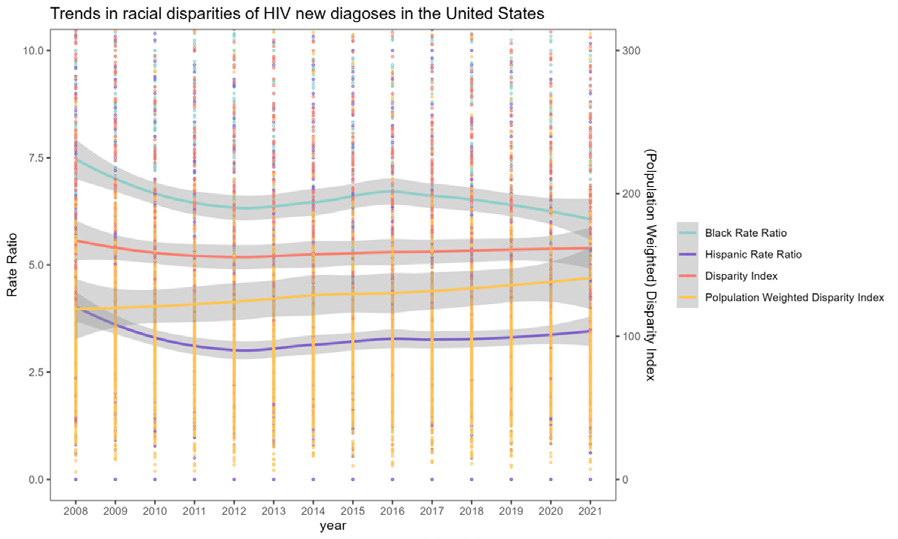
1112. WITHDRAWN
Poster Abstracts
Page: 359
1113. WITHDRAWN
Poster Abstracts
Page: 359
1114. WITHDRAWN
Poster Abstracts
Page: 359
1115. Changes of Racial Disparities in Viral Suppression in People With HIV, 2013-2020
Poster Abstracts
Page: 360
Xueying Yang, Cuihong Huang, Chen Zhang, Fanghui Shi, Jiajia Zhang, Bankole Olatosi, Sharon Weissman, Xiaoming Li
Background
Limited research evaluates the degree and tendency of racial disparities of viral suppression (VS) among people with HIV(PWH) across the Southern US. This study aims to examine the spatiotemporal trend and structural social determinants (e.g., socioeconomic and structural environment factors) of racial disparities in VS.
Methods
A statewide population-based retrospective cohort study was conducted using the South Carolina (SC) HIV registry system from 2013 to 2020. The county-level viral suppression percentage was defined as the percentage of PWH with a viral load < 200 copies/ mL at most recent test per county per year. Racial disparities in the county-level percentage of VS were measured by four indexes: Black to White Ratio (BWR), Index of Disparity (ID), Weighted Index of Disparity (Weighted ID), and Gini coefficient. Linear mixed-effect models were used to assess the association between different contextual factors and these indexes. Linear trend test was further employed to explore the temporal trend of the disparity indexes.
Results
VS rates across the 46 counties in SC increased from 75.01% in 2013 to 82.60% in 2020. However, an increasing trend of the changes of racial disparity in VS was observed, measured by ID and Weighted ID (P<0.01). In contrast, the results of BWR and Gini coefficient showed a decreased trend (P<0.01). When using ID as an outcome, counties with higher institutional health (β=1.2, P<0.05) were at a higher risk of racial disparities in VS. For Weighted ID, counties with worse socioeconomic status (β=-0.64, P<0.05) were at a higher risk of racial disparities in VS. For Gini coefficient, counties with more Ryan White HIV centers (β=-0.004, P<0.05) and higher disability rates (β=-0.005, P<0.05) had lower risk of racial disparities in VS. Comparing to Lowcountry region, counties in PEE DEE region existed lower risk of racial disparities in VS across multiple indices, including ID, Weighted ID, and Gini coefficient (β=-3.12, -0.88, and -0.01, respectively, P<0.05).
Conclusions
The choice of disparity measures may affect the interpretation of changes in health disparities. More comprehensive and standardized indicators are needed to provide a clear picture of racial disparity change. Nevertheless, structural factors such as higher institutional health and worse socioeconomic status may exacerbate the racial disparities, which underscores the importance of addressing these factors that contribute to poor HIV outcomes, particularly among marginalized populations.
Figure 1.
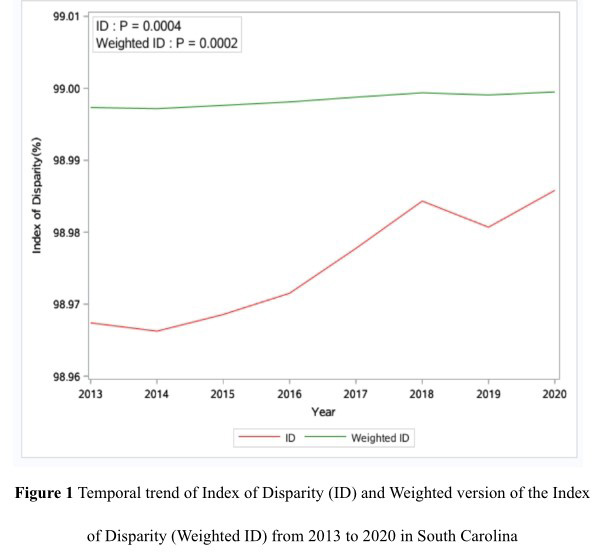
1116. Effect of the Ending the HIV Epidemic (EHE) Initiative on Racial/Ethnic Disparities in HIV Incidence
Poster Abstracts
Page: 360
Lauren Zalla1, Melissa Schnure2, Andrew Zalesak2, Zoe Dansky2, David W. Dowdy2, Maunank Shah2, Catherine Lesko1, Anthony Todd Fojo2
Background
Reducing HIV-related disparities is one of the four goals of the National HIV/AIDS Strategy. The Ending the HIV Epidemic (EHE) initiative, a key component of the Strategy, focuses on scaling up prevention and treatment services in priority jurisdictions. It is unclear what effect the EHE initiative may have on racial and ethnic health disparities related to HIV.
Methods
We used the Johns Hopkins Epidemiological and Economic Model, a dynamic compartmental model of HIV transmission in US cities, to project HIV incidence in 2035 in Baltimore, MD. The model is stratified by age, sex, transmission risk factor, and race/ethnicity: non-Hispanic Black (representing 75.5% of prevalent HIV diagnoses in Baltimore in 2022), Hispanic (5.5%), and other racial/ethnic groups – predominantly non-Hispanic White (12.5%). We calibrated the model to local surveillance data. We estimated the impact of increasing testing, viral suppression, and pre-exposure prophylaxis (PrEP) uptake, starting in 2025, to achieve EHE target levels by 2030: 95% status awareness, 95% viral suppression among those diagnosed with HIV, and 50% PrEP initiation among those eligible for PrEP. The intervention was race-neutral: testing rates were scaled by the same factor in each model stratum, as were the proportion unsuppressed and proportion not on PrEP. We report HIV incidence rates, differences, and ratios comparing Black and Hispanic vs. other racial/ ethnic groups, with 95% credible intervals (CrI) from 100 independent model simulations.
Results
Under current epidemic trends and in the absence of additional intervention, we predicted the overall HIV incidence rate to fall only slightly from 19 incident HIV infections per 100,000 population in 2025 to 18 in 2035. Achieving target levels of testing, viral suppression, and PrEP by 2030 was projected to reduce incidence in 2035 by 22%, to 14 per 100,000 (95% CrI: 9, 64). Racial and ethnic disparities in HIV incidence persisted under the intervention compared to current epidemic trends (Table). Specifically, even with this intervention, HIV incidence remained 5 times as high among Black individuals and 4 times as high among Hispanic individuals compared to other racial/ethnic groups in Baltimore.
Conclusions
The EHE initiative alone is unlikely to significantly reduce existing racial and ethnic disparities in HIV incidence in Baltimore. More targeted interventions are likely needed to ameliorate entrenched HIV-related health disparities in high-burden cities across the United States.
Table 1.
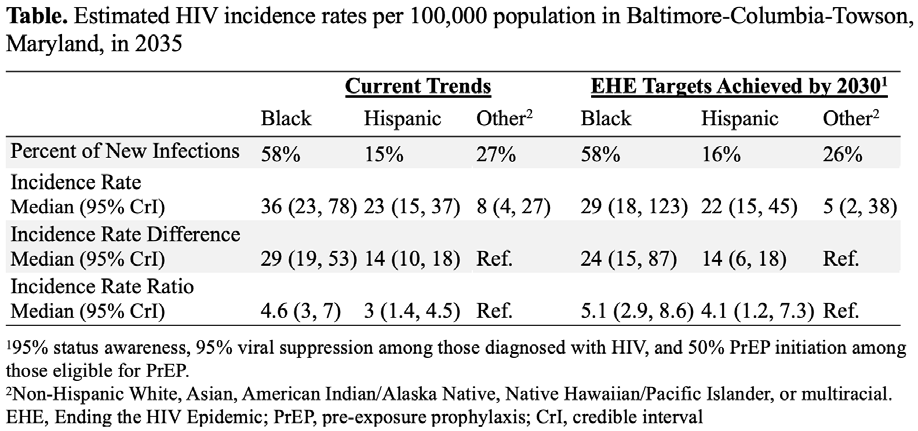
1117. Studying Medication Adherence for Black People Living With HIV: An Intersectional Lens
Poster Abstracts
Pages: 360-361
Anais Mahone1, Ayse Akincigil2
Background
In a US Midwestern state, the Black community living with HIV is subject to disparities. Investigations into laws and public policies that govern society as structural barriers to ending the epidemic are vastly under-researched. As such, this study examined the racial gap in ART adherence outcomes among Midwestern PWH contextualized within structural drivers of disparities, hypothesizing that reported experiences with social determinants of health negatively affect ART adherence PWH in a state with punitive HIV criminalization policies.
Methods
This study utilized local Medical Monitoring Project surveillance data to investigate medication adherence outcomes among a midwestern population of PWH, n=716. The outcome of interest was a binary outcome indicating antiretroviral dose adherence of 90% or more. Multiple nested logistic regression models were estimated. The models included unadjusted racial differences, the impact of discrimination and stigma, health status variables, and structural and individual experiences of social determinants of health.
Results
In the full model, identifying as Black (OR=.63, 95% CI= .44 - .91) and experiencing discrimination in healthcare settings (OR=.52, 95% CI= .36 - .77) were significantly associated with lower odds of ART adherence. When analyzing the social determinants, food insecurity was significantly associated with lower ART adherence (OR=.60, 95% CI= .41 - .88). Overwhelmingly, the results show that individuals who identified as Black had significantly lower odds of optimal ART adherence in all models. These outcomes, when considered with the results from the key variables, align with previous research demonstrating that racism and discriminatory experiences have harmful effects on ART adherence. While the findings related to HIV-related discrimination were robust, those associated with HIV-related stigma were explained away when controlling for age. Models indicated that older age was a protective factor in medication adherence outcomes.
Conclusions
Research identifies racism as the facilitator of social determinants of health, including social and economic disparities, transportation issues, stigma, and discrimination. This study makes an important contribution to the literature by investigating how structural determinants impact adherence in the Midwest, particularly for Black PWH, contextualized in a state that, despite robust HIV resources, exists under HIV criminalization laws that place at increased risk for adverse outcomes.
1118. HIV Testing Barriers in Structurally Vulnerable Communities in St Louis: Best-Worst Scaling Survey
Poster Abstracts
Page: 361
Noelle Le Tourneau1, Emmanuel Tettah1, Mckenzie Swan1, Greg Gross1, Todd Combs1, Tyrell Manning2, Virginia McKay1
Background
Significant gaps remain in ending the HIV epidemic in the US, calling for the need for community tailored evidence-based HIV testing strategies.
Methods
To understand perceptions and underlying beliefs around HIV testing, particularly among Black, queer, and young people, we conducted a Best-Worst Scaling (BWS) survey among adults (16+) in the St. Louis, Missouri region. We recruited at community events, collected data electronically, and provided $25 incentives for survey completion. BWS was used to quantify the relative importance of 13 potential barriers (attributes) to HIV testing (e.g., stigma, structural barriers, perceived HIV risk) selected from the literature and reviewed by community members. BWS scores, calculated from participants' most and least selected relevant barriers among 4 options across 13 choice sets, were rescaled using Hierarchical-Bayes estimation (out of 100). To explore preference heterogeneity among participants, we fit latent class conditional logit models.
Results
Among 152 participants surveyed, 52.7% identified as women, 38.8% as men, and 6.6% as non-binary. 49.3% identified as Black with a median age of 29 years (IQR 23-37). 49.4% identified as gay or lesbian, bisexual, and other non-heterosexual sexual orientations. Across the BWS, the most relevant barrier to HIV testing was that participants did not think they were at risk for HIV (BWS Score: 13.86, 95% CI 12.54-15.19). Black participants selected lacking trust in testing organization and peers not suggesting testing as more relevant barriers compared to White participants (p=0.03, 0.003, respectively). Queer respondents selected stigma associated with HIV positivity, access to testing, and fear of a positive result as more relevant barriers compared to heterosexual participants (p<0.001, 0.023, 0.004). Using latent class models, two underlying groups emerged including 1) “Low-risk perceivers” (67%) for whom the most salient attributes were low perceived risk for HIV (16.74, 15.41-18.07) and that testing had not been recommended by a health care worker (11.94, 10.68-13.21), and 2) “Fearful avoiders” (33%) who were worried they would be stigmatized if HIV positive (17.14, 16.03-18.26) and were afraid of being HIV positive (16.14, 14.46-17.82).
Conclusions
This best–worst scaling study informs our understanding of barriers to HIV testing around St. Louis, identifying that most believe they were not at risk for HIV nor need an HIV test. We should tailor testing strategies to all community members.
The figure, table, or graphic for this abstract has been removed.
1119. WITHDRAWN
Poster Abstracts
Page: 361
1120. Racial/Ethnic and Regional Disparities in HIV Testing Before, During, and After COVID-19 in the US
Poster Abstracts
Pages: 361-362
Haishan Yang1, Jerrod Anzalone2, Eric G. Hurwitz3, Bohdan Nosyk4, Rena C. Patel5, Zang Xiao1
Background
The COVID-19 pandemic has caused major disruptions to healthcare globally, potentially affecting the delivery of HIV care and prevention services. Using data from the National COVID Cohort Collaborative (N3C), this study aimed to provide a comprehensive analysis of HIV testing rates and trends before, during, and after the COVID-19 pandemic, highlighting geographic and racial/ethnic variations.
Methods
We employed an interrupted time series analysis using segmented linear regression models to examine the effects of the COVID-19 pandemic on monthly HIV testing rates using data from 16 million patients across 66 clinical sites obtained from the N3C, 01/2018-12/2022. A three-phase model assessed pre-pandemic (01/2018–02/2020), early pandemic (03/2020–08/2020), and late pandemic HIV testing rates (09/2020–12/2022), calculated as any HIV screening lab per calendar month per individuals with a visit recorded that month, alongside counterfactual projections estimating testing rates. We conducted subgroup analysis by three racial/ethnic groups (White/others, Black/non-Latine, and Latine) and four geographic regions (Northeast, South, West and Midwest).
Results
HIV testing rates were relatively stable during the pre-pandemic, averaging around 45 tests per 10,000 people, with variations marked by racial/ ethnic groups and regions. During the early pandemic, Black/non-Latine individuals in the Northeast experienced the most significant declines in testing, with 43.57 fewer tests per 10,000 people (95% CI: -61.384 to -25.756). In contrast, White/Others individuals in the Midwest saw one of the smallest declines of 7.642 tests/10,000 people (95% CI: -11.205 to -4.080) during the same period (Figure 1). Although most groups and regions showed recovered HIV testing rates in the late pandemic period, Latine individuals in the Northeast continued to decline from around 140 to 105.
Conclusions
Our findings suggest that the COVID-19 pandemic significantly– but differentially–disrupted HIV testing services across the U.S., exacerbating pre-existing racial/ethnic and regional disparities. The results underscore the need for ongoing efforts to mitigate healthcare inequities and improve access to HIV testing, especially in regions and communities that were most affected by the dual epidemics.
Figure 1.
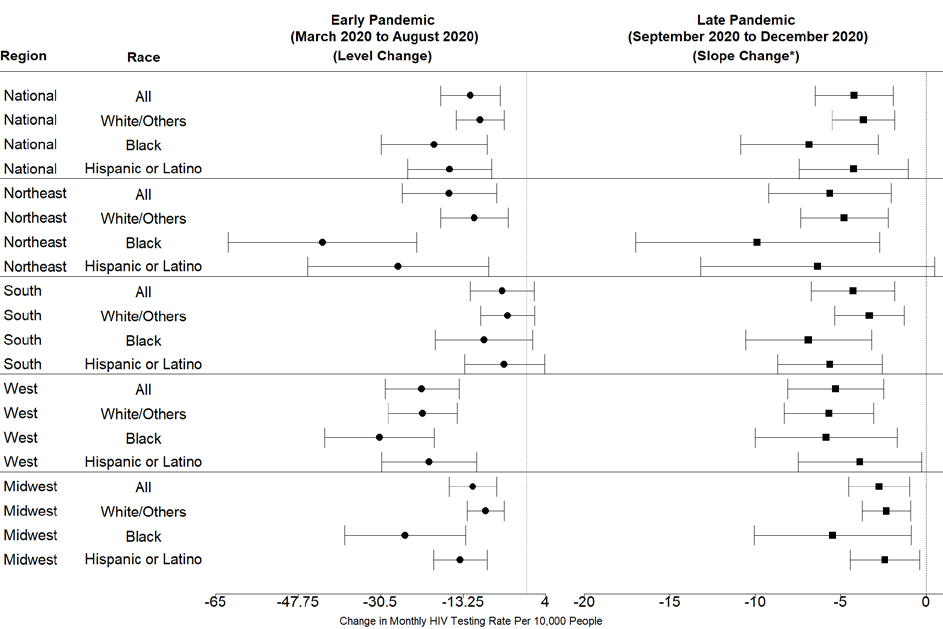
1121. Estimated HIV Incidence in 15-24-year-olds Across 2 Population HIV Impact Assessments (PHIA)
Poster Abstracts
Page: 362
Chloe A. Teasdale1, Rebecca A. Zimba1, Andrea Low2, Harriet Nuwagaba-Biribonwoha2, Felix Ndagije2, Lyson Tenthani2, Owen Mugurungi3, Philip Kreniske1, Elaine Abrams4
Background
Adolescents and young adults (AYA) 15-24 years represented more than a quarter of all new HIV infections globally in 2023. Data from two rounds of Population HIV Impact Assessments (PHIA) from four countries were used to estimate HIV incidence and assess progress in reducing incidence in AYA overall and by sex.
Methods
PHIAs are nationally representative surveys measuring HIV outcomes. We analyzed data from two rounds of PHIAs in Eswatini (2016-17 & 2022), Lesotho (2016-17 & 2020), Malawi (2015-16 & 2020-21), and Zimbabwe (2015-16 & 2020). Participating household members ≥15 years received rapid antibody HIV testing and blood sample collection. Twelve-month HIV incidence was estimated via Limiting Antigen-Avidity (Lag) enzyme immunoassays and an algorithm identifying recent HIV infections (proxy for incidence). We generated national population-level estimates of new HIV infections in AYA with 95% probability bands (PB) using survey weights with jackknife variance and calculated proportions of new infections among AYA out of all new infections in adults ≥15 years. Rao-Scott tests were used to compare estimates from the two survey rounds.
Results
Across the four countries, 21,008 and 21,028 AYA participated in round 1 and 2, respectively. HIV incidence in AYA in round 1 surveys was lowest in Malawi (0.22, 95%PB 0.03-0.40) and highest in Eswatini (1.07, 95%PB 0.48-1.66); there were an estimated 20,900 new infections in AYA across the four countries. In round 2, incidence ranged from 0.25 (95%PB 0.06-0.44) in Malawi to 0.86 (95%PB 0.26-1.45) in Eswatini; with an estimated 25,600 new infections in AYA. No country showed significant change in HIV incidence across the two surveys for all AYA; incidence in females in Lesotho decreased from 1.49 (95%PB 0.58-2.39) to 0.34 (95%PB 0-0.74) (p=0.03). AYA accounted for larger proportions of all new adult infections from round 1 to 2 in Eswatini (39.9% v. 54.2%), Malawi (25.0% v. 46.9%) and Zimbabwe (28.4% v. 41.9%).
Conclusions
Despite progress for young females in Lesotho, data from two rounds of PHIA surveys in four countries shows no change in estimated HIV incidence overall in AYA, and indicate this age group accounts for a substantial proportion of all new adult infections. Larger studies are needed to confirm these results as are more effective prevention efforts for this age group.
Table 1.
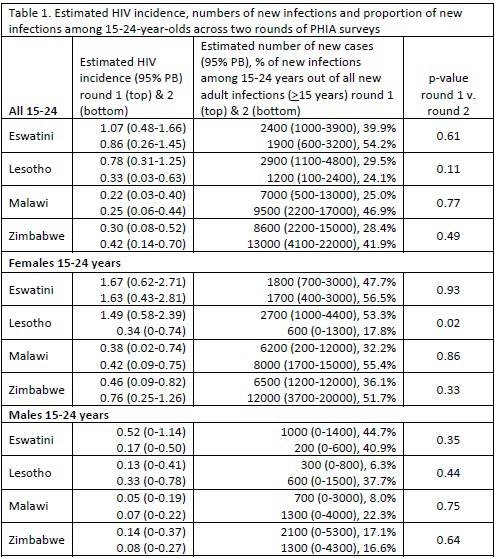
1122. HIV Incidence and Viral Suppression Among Ugandan Males With Female Bar and Sex Worker Partners
Poster Abstracts
Pages: 362-363
Xinyi (Cindy) Feng1, Gertrude Nakigozi2, Caitlin E. Kennedy3, Fred Nalugoda2, Godfrey Kigozi2, Robert Ssekubugu2, Larry W. Chang1, Andrea L. Wirtz3, Arthur Fitzmaurice4, Grace Kigozi2, Ronald Galiwango2, Steven J. Reynolds5, Aaron A. R. Tobian1, Joseph Kagaayi2, M. Kate Grabowski3
Background
Female bar and sex workers (FBSWs) in Eastern Africa experience a high burden of HIV. However, there is limited population-level data on HIV seroprevalence, incidence, and viral suppression among their male partners.
Methods
Men who had sex with FBSWs were identified through longitudinal population-based HIV surveillance in southern Uganda via the Rakai Community Cohort Study between 2013 and 2020. Surveillance was conducted across five surveys in four Lake Victoria fishing communities (HIV seroprevalence ~40%) and 36 inland agricultural and trading communities (~12%). Primary outcomes included laboratory-confirmed HIV seropositivity, incident infection, viral suppression (<200 copies/ml), and population prevalence of HIV viremia. Prevalence and incidence rate ratios (PR, IRR) were estimated using univariable and multivariable Poisson regressions with 95% confidence intervals (95%CIs). The inverse probability of censoring weights was incorporated into IRR estimates for potential selection biases from differential loss to follow-up.
Results
A total of 17,438 male participants contributed 35,273 visits, with 2,408 (13.8%) self-reporting FBSW partners at one or more study visits. Men with FBSW partners tended to be older, have less education and lower income, and never married. Their HIV seroprevalence was significantly higher compared to men without FBSW partners in both inland (21.0% vs 7.5%, PR=2.79, 95%CI=2.41-3.23) and fishing communities (38.6% vs. 23.0%, PR=1.67, 95%CI=1.53-1.84). Moreover, their HIV seroprevalence increased by the number of FBSW partners reported in the past year. Overall, 154 HIV incident events occurred over 27,396 years of participant follow-up. Incidence among men with FBSW partners was 1.93/100 person-years versus 0.44/100 person-years among those without (age-adjusted IRR=4.46, 95%CI=3.09-6.32). Among men with HIV, viral suppression was similar in those with and without FSBW partners. However, the population prevalence of HIV viremia was 1.6 times higher (95%CI=1.41-1.84) among men with FBSW partners due to a higher background burden of HIV infection.
Conclusions
Men in Uganda frequently report sex with FBSW partners, which is associated with a significantly higher risk of HIV acquisition. Tailored HIV prevention strategies, including the promotion and uptake of PrEP, are essential to reduce the HIV burden in this male population.
Table 1.
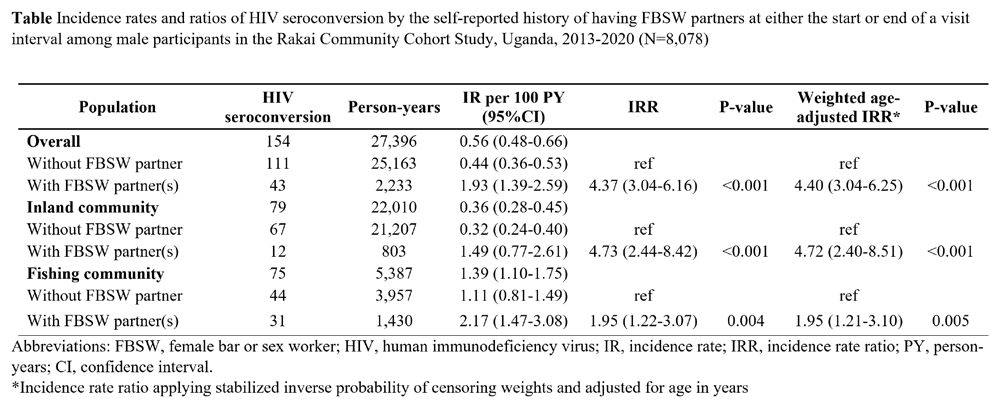
1123. HIV Incidence Among Adults With Multiple Sex Partners in Kisumu County, Western Kenya
Poster Abstracts
Page: 363
John Owuoth1, Chiaka Nwoga2, Valentine Sing’Oei1, Adam Yates2, June Otieno1, Erica Broach3, Qun Li3, Zebiba Hassen3, Michelle Imbach3, Mark Milazzo3, Tsedal Mebrahtu3, Merlin Robb2, Julie Ake2, Christina S. Polyak2, Trevor Crowell2, the RV393 Study Group
Background
The HIV prevalence in Kisumu County, Western Kenya, is more than four times the national average. We estimated HIV incidence in a prospective cohort of adults with multiple sex partners in Kisumu County to identify HIV risk factors and evaluate the feasibility of future HIV vaccine and therapeutic clinical trials.
Methods
We enrolled male and female participants aged 18-35 years who reported sex with at least 2 partners in the preceding 3 months. Visits occurred every 3 months for up to 24 months and included medical history, physical exams, and HIV counseling and testing. Every 6 months, visits included staff-administered questionnaires that collected socio-demographic, general health, and sexual activity information. Demographic and other characteristics ascertained at enrollment were examined for differences between participants who did and did not acquire HIV using Chi-square tests of association. Bivariate Cox proportional hazard models were used to estimate hazard ratios (HRs) and 95% confidence intervals (CIs) for factors potentially associated with HIV acquisition over time.
Results
Between January 2017 and August 2021, 619 participants without HIV were enrolled, followed, and analyzed. Of these, 45% were female, 47% aged 25 years and older, 66% single or widowed, and 46% had some secondary education. A total of 11 incident HIV cases occurred over 1117.9 person-years (PY), yielding an incidence rate (IR) of 9.84/1000PY (95%CI: 5.22-17.03). Eight participants acquired HIV during the first year of follow-up (IR: 13.84/1000PY, 95%CI: 6.53-26.11). Unadjusted analyses identified 4+ sexual partners (HR: 4.39, 95%CI: 1.10-17.55), females (HR: 3.44, 95%CI: 0.91-12.98), and forced participation in sexual activity (HR: 9.15, 95%CI:1.17-71.51) as factors associated with HIV seroconversion.
Conclusions
We observed unexpectedly low HIV incidence among sexually active adults in Kisumu, which could be a result of effective HIV prevention programs or possibly the impact of COVID-related behavioral changes. Marginally higher HIV incidence among women may suggest gaps in access and uptake of risk reduction strategies. Diminished HIV risk during the later follow-up period may suggest a beneficial cohort effect from routine engagement and education. These results may inform future efforts to engage people who are vulnerable to HIV but not actively receiving HIV prevention interventions.
1124. Contact Investigation of Incident HIV in a Population Cohort: Implications for Case Finding and PrEP
Poster Abstracts
Page: 363
Robert Ssekubugu1, Aleya Khalifa2, Griffin J. Bell3, Josephine Mpagazi1, Laura Beres3, Anthony Ndyanabo1, Godfrey Kigozi1, Hadijja Nakawooya1, Gertrude Nakigozi1, Ronald Galiwango1, Caitlin E. Kennedy3, Steven J. Reynolds4, Joseph Kagaayi1, Larry W. Chang5, M. Kate Grabowski3
Background
Representative data on HIV transmission networks and incident infections are rare but essential for targeting HIV prevention services. We conducted a contact tracing investigation of individuals with incident HIV.
Methods
From 2021-24, a matched case-control study was nested within the Rakai Community Cohort Study, a population-based longitudinal HIV surveillance cohort spanning 34 Ugandan communities. Persons with incident HIV were matched to HIV-negative controls based on age, sex, religion, and community. Sexual partner contact details (name, residence) were elicited; for female sex worker (FSW) partners without complete contact details, venue information was collected. Named and potential FSWs partners at venues were enrolled and tested for HIV and viremia (>1,000 copies/ml). Conditional logistic regression compared sexual networks and risk profiles.
Results
We identified 99 women and 87 men with incident HIV and matched them to 186 controls. Male cases elicited 321 partners compared to 188 from male controls. Female cases elicited 183 partners versus 118 from female controls. Male cases lacked complete contact details for most partners (177, 55.1%) in contrast to male controls (60, 31.9%), female cases (60, 32.8%), or female controls (22, 18.6%); most of these 177 partners (62.1%) were venue-based FSWs. We enrolled 437 named partners from cases (n=237) and controls (n=200), respectively (Figure). From 27 venues (4-200 FSW/venue) linked to 35 male cases, we enrolled 227 FSWs, of whom 36% (n=80) were living with HIV. Most venues (73%) were unknown to local outreach services. Compared to controls, cases had significantly higher odds of having >=1 partner with HIV (conditional odds ratio [cOR]=9.63; 95%CI:4.65–19.93) and >=1 partner with viremia (cOR=8.00; 95%CI:2.83–22.62). Male cases had 16.5 times higher odds than controls of reporting ≥1 FSW partner (95%CI:3.96–68.76). PrEP use was rare among HIV-negative partners of persons with viremia (2.9%; 2/70) and FSWs (6.9%, 10/144).
Conclusions
Incident HIV among men was strongly linked to reporting FSW sexual partners. Many men had no partner contact details beyond venue information. Incorporating venue-based partner elicitation into partner notification services could improve HIV case notification and service outreach. Additionally, low PrEP use among HIV-negative partners of viremic individuals including FSWs highlights a significant unmet need for services and an urgency for targeted intervention.
The figure, table, or graphic for this abstract has been removed.
1125. Uncovering Risk for Recent HIV Infections in 9 Provinces: Thailand, 2023-2024
Poster Abstracts
Pages: 363-364
Theerawit Tasaneeyapan1, Benjawan Roudreo2, Suvimon Tanpradech1, Thitipong Yingyong2, Supiya Jantaramanee2, Panupit Thiengtham2, Apiratee Kanphukiew3, Wolfgang Hladik4, Jennifer Favaloro4, Michael Martin4, Chunfu Yang4, Bharat Parekh4, Sanny Northbrook1
Background
The use of rapid tests for recent infection (RTRI) alongside CD4 as part of recent infection testing algorithm (RITA) has enabled identification of individuals who may have acquired HIV in the past 12 months (recent HIV infection). Measuring the risk for recent HIV infection is critical for effective public health interventions. We calculated the risk of recent HIV infection per 10,000 at-risk individuals and examined the distribution of recent HIV risk within specific populations.
Methods
Newly diagnosed persons living with HIV aged ≥15 years who were treatment-naïve or on treatment <30 days were offered recency testing using the Asante HIV-1 Rapid Recency Assay (Sedia Biosciences, Beaverton, OR, USA). Individuals with an Asante-recent result and baseline CD4>200 from case surveillance (CS) data were defined as RITA-CS recent. Routine HIV testing and RITA-CS recent infection data of individuals from 112 clinics in 9 provinces collected from October 2023 to March 2024 was extracted from the national HIV testing registry and the national surveillance of recent HIV infection database. We calculated the proportion of HIV-positives tested with RTRI and adjusted the number of HIV-negatives by the same proportion to calculate the at-risk population per 10,000 individuals (defined as HIV-negative and RITA-CS recent). We examined the variation of risk by age, sex, and population groups and used the Chi-squared test to detect any statistically significant differences (p<0.05).
Results
Of 152,673 individuals tested for HIV, 2,050 (1.3%) were diagnosed with HIV. Of these, 1,022 (49.9%) received an RTRI test and 60 (5.9%) were RITA-CS recent. RTRI testing coverage among newly HIV diagnosed was highest among MSM (86.9%), followed by PWID (80.0%) and 15–24year-olds (67.8%). The risk of recent HIV infection (Table) was highest among MSM (36.8 per 10,000), FSW (20.7 per 10,000), and 15-24 year-olds (14.1 per 10,000) and lowest among women (2.7 per 10,000) and the 50+ year-olds (2.8 per 10,000). Differences in proportion were observed for sex (p<0.01) and age group (p<0.01).
Conclusions
MSM and 15-24 years old had the highest risk of recent HIV infection. Focused prevention strategies for MSM and young men, enhanced surveillance, and further investigation into the behavioral and structural drivers of these disparities may reduce HIV transmission.
Table 1.
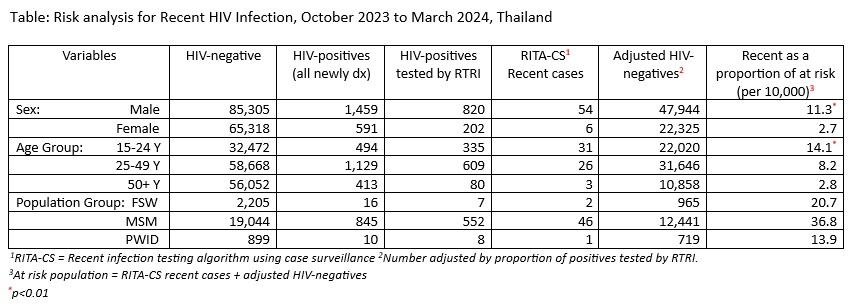
1126. Recent HIV Infection Among Youth in Thailand: Who Is at Risk?
Poster Abstracts
Page: 364
Suvimon Tanpradech1, Benjawan Roudreo2, Theerawit Tasaneeyapan1, Thitipong Yingyong2, Sanny Northbrook1, Jennifer Favaloro3, Supiya Jantaramanee2, Apiratee Kanphukiew4, Panupit Thiengtham2
Background
Youth (defined as 15–24-year-old) are at risk of HIV infection due to their sexual activity and related risk behaviors. In Thailand, there were an estimated 4,247 (46%) new HIV infections among youth in 2023. We describe characteristics of newly diagnosed HIV positive youth with test results suggesting recent HIV infection in 9 provinces in Thailand.
Methods
Newly reported HIV-positive individuals aged ≥15 years living in 9 provinces were enrolled in national recent HIV infection surveillance between September 2022 and March 2024 after providing informed consent. All blood samples were tested with a rapid infection testing algorithm (RITA) using Asante HIV-1 rapid test for recent HIV-1 infection (RTRI) and baseline CD4 to identify individuals who were infected in the past 12 months. We used case surveillance to exclude individuals with prior HIV diagnosis and ART history. RITA-recent was defined as RTRI-recent and CD4>200. Multivariate logistic regression analyses were used to explore the association between RITA-recent infection and potential risk factors such as sex, nationality, marital status, employment, sexual orientation, and geographic region among youth. A separate analysis comparing RTRI-recent (n=709) and RITA-recent (n=708) cases was conducted to identify any discordance between the two approaches.
Results
Of 708 newly diagnosed youth, 64 (9.0%) tested RITA-recent. Of these, 61 (95%) were male, 60 (94%) were Thai, 57 (89%) were single, 29 (45%) were students, 54 (84%) were bisexual or men who have sex with men, and 28 (44%) lived in Bangkok. In multivariate analysis, being single (AOR 2.51; 95% CI 1.03–7.19) compared to married and living in the Northern region (AOR 5.80; 95% CI 1.66–23.7) compared to the Central region were risk factors for testing RITA-recent. A separate analysis comparing RTRI-recent and RITA-recent results revealed the same risk factors: single (AOR 3.08; 95% CI1.28–8.73) and living in the Northern region (AOR 4.26; 95% CI 1.38–14.2).
Conclusions
Our data suggest that single youth living in the Northern region are at a higher risk of HIV acquisition. Our findings underscore the importance of implementing immediate and targeted public health interventions tailored to this particular youth group to effectively reduce HIV incidence.
1127. New HIV-1 Diagnoses Amongst Different Generations of MSM in the Netherlands: Focus on Gen-Z
Poster Abstracts
Page: 364
Daniela Bezemer1, Ard van Sighem1, Newton Otecko2, Danja Sarink3, Laura Koster1, Matthijs Welkers4, Thijs van der Laar5, Jeroen van Kampen6, Annemarie M. J. Wensing7, Marc van der Valk1, the ATHENA Cohort
Background
We explored how different generations of men having sex with men (MSM) contributed to the overall decrease in annual new HIV-1 diagnoses in the Netherlands using demographic data from the national observational ATHENA cohort. In addition, we leveraged genetic data to investigate transmission clusters focusing on the youngest generation (i.e., Gen-Z) of MSM living with HIV-1.
Methods
MSM diagnosed with HIV-1 between 1998 and 2023 were included in this study. Generations of MSM were defined by year of birth according to a timeline of “social generations” in the Western world. The youngest generation, “Gen-Z”, was born between 1997-2012, “Millennials” between 1981-1996, “Gen-X” between 1965-1980, and “Boomers” in 1964 or earlier. For individuals with a partial polymerase sequence available including at least the first 600 nucleotides of the reverse transcriptase gene, HIV-TRACE was used to identify transmission clusters of sequences with ≤1.5% genetic divergence.
Results
Between 1998 and 2023, 13,307 MSM were diagnosed with HIV-1 in the Netherlands. Figure 1 shows these by year of diagnosis and generation. The overall number of annual new HIV-1 diagnoses has decreased since 2008. Initially this overall decrease reflected decreasing diagnoses among both the “Boomers” and “Gen-X”. Diagnoses among “Millennials” increased until 2013, and peaked lower and earlier within their generation timeline compared to “Gen-X”. From 2015, HIV-1 was also observed among “Gen-Z”. In total, 201 “Gen-Z” were diagnosed by 2023, compared to 192 “Millennials” in their first nine years with HIV-1 (1999-2008).A HIV-polymerase sequence was available from 6,744 MSM, including for 92 ”Gen-Z” MSM. Of these, 48 (52%) “Gen-Z” had no phylogenetic link to anyone else in the cohort. The remaining 44 (48%) “Gen-Z” were linked to 32 transmission clusters: 11 clusters were already present before 2015 and included a median of 17 (IQR:12-53) persons per cluster, 21 clusters were first observed after 2015 and included a median of 2 (IQR:2-3) persons per cluster.
Conclusions
There is lacking evidence that “Gen-Z” MSM are less affected by HIV-1 than “Millennials”, and the decline of new diagnoses seen in other generations is not reflected in “Gen-Z”. “Gen-Z” MSM are part of both existing and new transmission clusters. These findings on generational dynamics can guide targeted interventions to prevent HIV-1 transmission in different generations.
Figure 1.
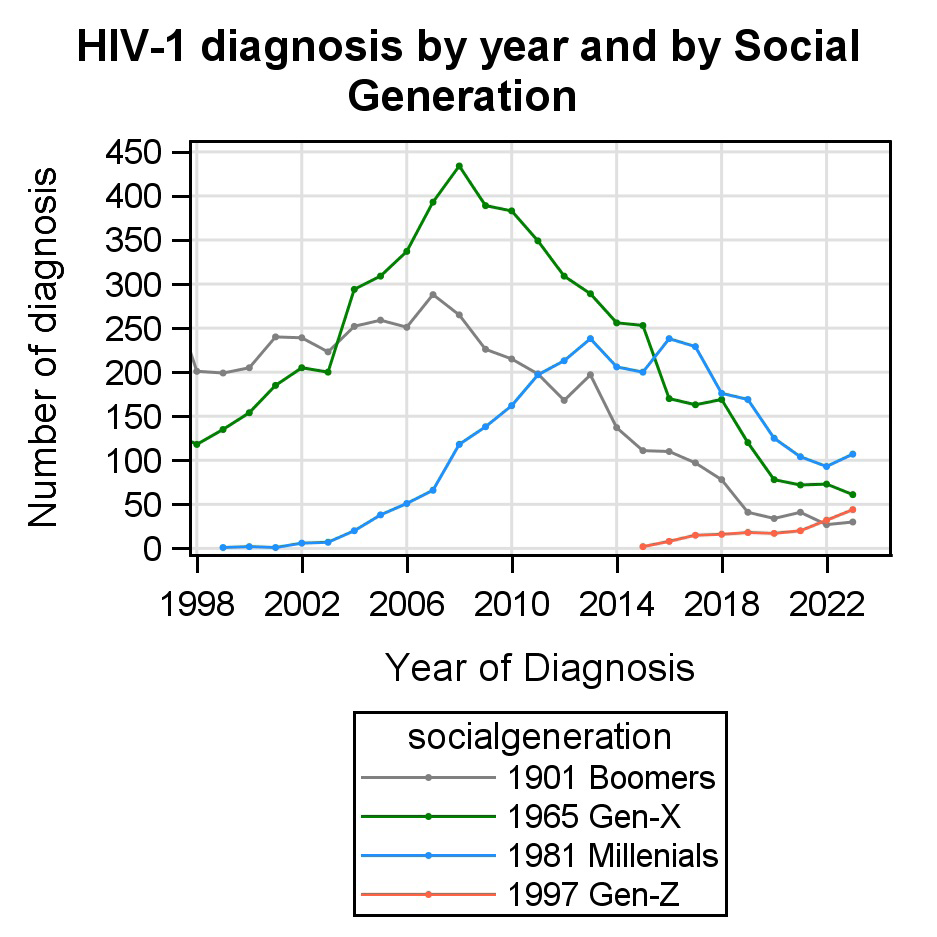
1128. Development of an HIV Risk Prediction Model Using Electronic Health Record Data in Spain
Poster Abstracts
Pages: 364-365
Maria L. Alamillo1, Miguel García-Deltoro2, Juan González del Castillo, MD, PhD3, Yesika Díaz1, Maria Sainz4, Domingo Mérida4, Carolina Terrisse4, Antonio Castro4, Arkaitz Imaz5, José L. Enríquez1, Miguel León1, Inma Jarrin6
Background
In Spain, 7.5% of people living with HIV (PWH) are unaware of their infection, and 48.6% of those diagnosed with HIV in 2022 had a late diagnosis. Our aim was to develop a tool based on electronic health records (EHR) and HIV compatible indicators that could help identify people to test and bring to light undiagnosed HIV and reduce late diagnosis.
Methods
A retrospective analysis was performed using EHR from Telotron (European Medicines Agency registered database with 2.2 million individuals anonymized data from the Spanish national healthcare system since 2012 until present). Two distinct cohorts were randomly selected in October 2023.
The primary cohort consisted of 327,362 individuals as overall population, encompassing 1,524 confirmed HIV+ cases. The primary cohort was partitioned, with 70% allocated for model training and 30% for internal validation. A secondary cohort of 111,913 individuals served as an external validation set. An elastic net-regularized logistic regression model augmented with synthetic minority oversampling technique (SMOTE) was developed. The variables considered for model inclusion were specific age group (20-59 years old), sex and the presence of 59 HIV-associated conditions within the preceding five years as predictor variables.
Results
The model obtained identified 10 clinical conditions with the highest predictive risk value (hepatitis A & C, gonococcus, syphilis, proctitis, urethritis, sexual contact, drug intoxication, candidiasis and condyloma acuminatum), 6 different age groups and sex. Demonstrated a training sensitivity and specificity of 82.96% and 64.54%, respectively. Validation across two populations (30% of first cohort and external validation) yielded sensitivity of 77.50% and 71.74%, with specificities of 64.05% and 65.51%. The HIV prevalence observed in all cohorts exceeded 2.6%. The number needed to test (NNT) to have one positive HIV diagnosis was between 12-48 individuals, depending on the different probability ranges identified (Table 1).
Conclusions
The model identified over 70% of HIV cases using an EHR database, screening less than 4% of a health department size population and achieved a prevalence rate above 2.6%. This tool might represent a transformative solution for hidden HIV detection and help achieving the UNAIDS 95-95-95 target. Its ease of implementation and targeted approach appears to be promising to drastically reduce missed and late diagnoses, thereby significantly impacting the trajectory of the HIV epidemic.
Table 1.
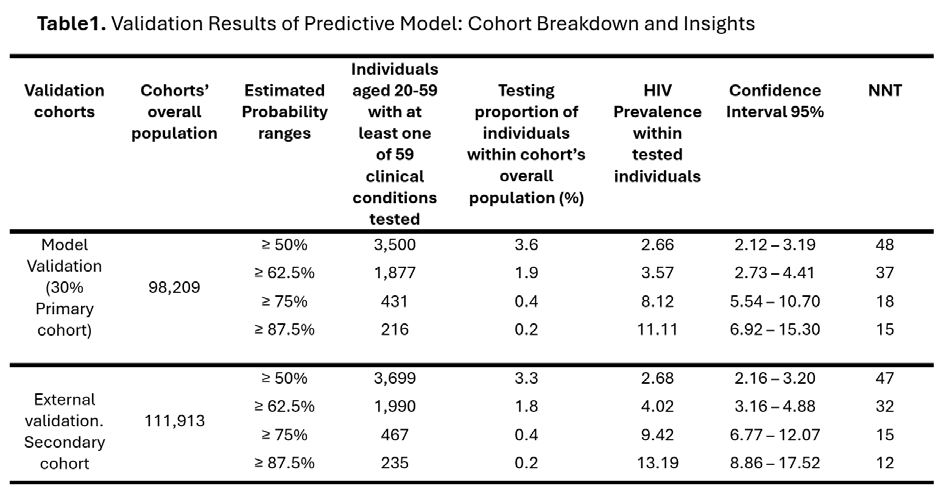
1129. WITHDRAWN
Poster Abstracts
Page: 365
1130. Examining PopART Intervention Impact on HIV in the General Populations of Zambia and South Africa
Poster Abstracts
Page: 365
Bonnie Shook-Sa1, Paul N. Zivich III1, Stephen R. Cole1, Nora E. Rosenberg1, Deborah J. Donnell2, Sizulu Moyo3, Khangelani Zuma3, Joseph J. Eron1, Richard Hayes4, Jessie K. Edwards1
Background
PopART was a cluster randomized trial (CRT) designed to evaluate universal testing and treatment (UTT) strategies for HIV prevention. While CRTs are the gold standard for evaluating population-level effects, they can be subject to selection bias when those enrolled differ from the population of interest. PopART included two intervention arms: (A) combination prevention with universal antiretroviral therapy (ART) for individuals with HIV, (B) combination prevention with ART based on local guidelines. Both included universal HIV testing and were compared to the third arm, standard of care (SOC). Interventions were conducted in entire randomized communities; their impact was measured on a sampled population cohort (PC). Unexpectedly, arm A did not have significantly lower HIV incidence. This may be due to differences between PC participants and the population of interest. For example, men were 46% of the population of interest but only 32% of the PC.
Methods
We generalize PopART findings to a population of interest, 4.5 million adults aged 18-44 in 5 PopART provinces represented by 2 probability-based surveys: the 2016 Zambia Population-based HIV Impact Assessment and the 2017 South African National HIV Prevalence, Incidence, Behaviour and Communication Survey (ZAMPHIA/SABSSM). PC participants were weighted to estimate risk of HIV infection in trial arms in the population of interest over 3 years; risk in intervention arms was compared to SOC. Weighting accounted for key demographic and HIV risk factors, including sex, male circumcision, and age. Weighted estimates were compared to unweighted estimates.
Results
With weighting, risk of HIV infection in the population of interest is lower in all arms (Figure). Arm A risk between 1-3 years is slightly higher than SOC in the unweighted analysis (Risk Difference [RD]: 0.10%; 95% CI: -1.15%, 1.25%), but lower than SOC with weighting (RD: -0.34%; 95% CI: -2.04% to 0.96%). The effect of arm B relative to SOC is in the same direction for both approaches, but weighting nearly doubled the estimated effect size (unweighted RD: -0.66%, 95% CI: -1.88% to 0.46%; weighted RD: -1.18%, 95% CI: -2.85% to 0.15%). Differences in estimates are likely due to effect heterogeneity between subgroups that were disproportionately included in the PC sample.
Conclusions
Interventions were more protective in the population of interest than in the PC sample. Appropriate representation of subgroups is essential for guiding decisions from community-based trials.
Figure 1.
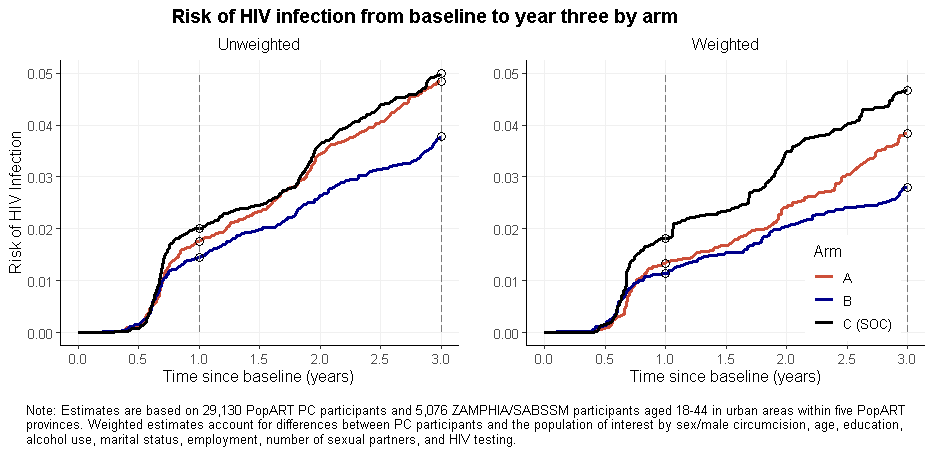
1131. Addressing Advanced HIV Disease: Insights on CD4 Testing and AHD Prevalence at PEPFAR Sites
Poster Abstracts
Pages: 365-366
Gabriel Saemisch1, Karishma Srikanth1, Thomas Minior1, Jessica Stephens1, Deidra Parrish1, Nelly Maina2, Samantha Serrano1
Background
Advanced HIV Disease (AHD) in individuals aged 5 and older is defined by a CD4 count below 200 cells/mm³ or World Health Organization (WHO) stage 3 or 4 conditions. Despite the global shift to a test-and-treat approach for people living with HIV, many in low- and middle-income countries still present with AHD at diagnosis, increasing their risk of opportunistic infections and mortality. CD4 testing is crucial for identifying AHD and ensuring proper management, and the WHO recommends routine CD4 testing for all starting or restarting antiretroviral therapy (ART). This study evaluated CD4 testing coverage and AHD prevalence at U.S. Agency for International Development (USAID) sites supported by the U.S. President’s Emergency Plan for AIDS Relief (PEPFAR).
Methods
The PEPFAR Monitoring, Evaluation, and Reporting (MER) framework introduced CD4 count disaggregation (<200, ≥200, Unknown) in October 2023. This study analyzed MER data from October 1, 2023, to June 30, 2024 from USAID implementing sites in 42 PEPFAR supported countries. High-risk clients were classified into two groups: those newly initiating ART (TX_NEW) and those reinitiating ART after a treatment interruption of ≥6 months (RTT-IIT). Descriptive statistics were used to assess CD4 testing rates and AHD prevalence based on HIV diagnosis, ART initiation, CD4 testing, and sex assigned at birth.
Results
The analysis included 645,342 high-risk clients, comprising 471,563 (73%) TX_NEW and 173,779 (27%) RTT-IIT. CD4 testing was reported for 267,948 (42%) high-risk clients, with a higher prevalence of CD4 counts <200 among TX_NEW (27%) compared to RTT-IIT (23%). AHD prevalence was higher among cisgender males (33% TX_NEW, 28% RTT-IIT) compared to females (23% TX_NEW, 20% RTT-IIT). Countries with CD4 testing coverage exceeding 50% had lower AHD prevalence (26% TX_NEW, 22% RTT-IIT) than those with coverage below 50% (28% TX_NEW, 31% RTT-IIT).
Conclusions
AHD continues to be a challenge for clients starting or reinitiating ART, particularly among men. Critical gaps in CD4 testing coverage for high-risk individuals exacerbate this issue. Even in countries with high CD4 testing rates, AHD prevalence remains elevated, highlighting the urgent need to enhance efforts toward earlier HIV diagnosis and rapid treatment initiation. Strengthening these efforts is crucial to improving clinical outcomes and achieving the goal of ending AIDS as a public health threat by 2030.
Figure 1.
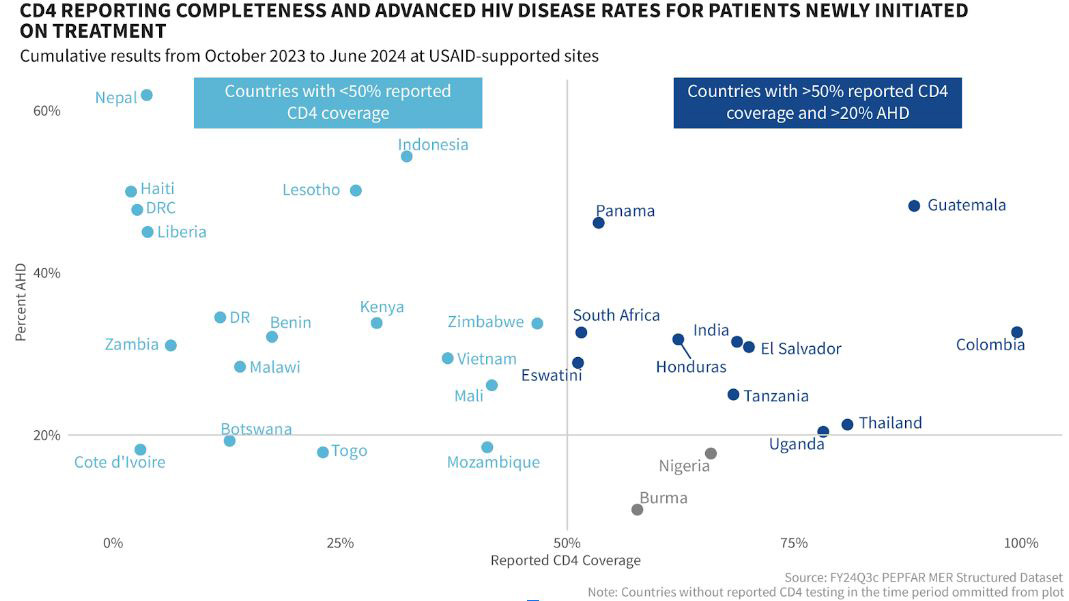
1132. Trends in Advanced HIV Disease Prevalence in 5 African Countries: An Analysis of Household Surveys
Poster Abstracts
Page: 366
Dominik Stelzle1, Ajay Rangaraj1, Joseph N. Jarvis2, George Perrin3, Nomthandazo Lukhele4, Sirak Hailu Bantiewalu5, Mugagga Kaggwa6, Mkhokheli Ngwenya7, Daniel Low-Beer1, Meg Doherty1, Nathan Ford1, Shona Dalal1
Background
Advanced HIV disease (AHD) among adults is defined as a CD4 count <200 cells/mm³ or a World Health Organization HIV clinical stage 3 or 4. Data regarding trends in AHD prevalence in sub-Saharan Africa are limited.
Methods
We analysed population-based HIV impact assessment (PHIA) household surveys from Eswatini, Lesotho, Malawi, Uganda and Zimbabwe, each of which had two surveys available between 2015 and 2021. The period between both rounds of PHIA in each country was around five years. We assessed changes in the proportion of adults living with HIV with a CD4 count <200 cells/mm³ (i.e. AHD prevalence), stratified by demographic factors and the HIV treatment cascade.
Results
A total of 13,476 people living with HIV (PLHIV) were included in PHIA round 1 and 15,813 in PHIA round 2 across the five countries. During this period, the proportion of people who did not know their status decreased from 31 to 17%, and the proportion of people with suppressed viral load increased from 60 to 77%. Pooled across the five countries, 10.4% (95% CI [CI] 9.8–11.0%) of PLHIV had a CD4 cell count <200cells/mm3 in PHIA round 1 and 6.8% (CI 6.2–7.4%) in PHIA round 2. Stratified by the HIV treatment cascade, AHD prevalence remained similar among people who did not know their status (16.1%, CI 14.4–18.0%, to 12.7%, CI 10.5–15.2%), increased among people who knew their status but were not on ART (20.8%, CI 17.7–24.3% to 26.7%, CI 20.1–34%), but decreased across all other categories of the treatment cascade. Among people on ART who were not virally suppressed, AHD prevalence decreased from 36.7% (CI 34.0–41.4%) to 29.8% (CI 25.0–35.0%) and among people with viral suppression it almost halved from 6.4% (CI 5.7–7.1%) to 3.3% (CI: 2.8–3.8%, Figure). These effects were consistent across the five countries, were similar for men and women, and were more pronounced in urban than rural areas and among older ages. Among youth aged 15–24 years, AHD prevalence increased from 5.0% (CI 3.9–6.3%) to 6.1% (CI 4.3–8.2%).
Conclusions
The prevalence of AHD decreased across five countries, primarily due to advances in testing, knowledge of status and treatment. However, AHD persists among people with new HIV diagnosis, and among young people, which requires attention. Although household surveys underestimate AHD by excluding potential survey participants who are hospitalized, the need for continued CD4 count testing and the delivery of the package of care for people with AHD is clear.
Figure 1.
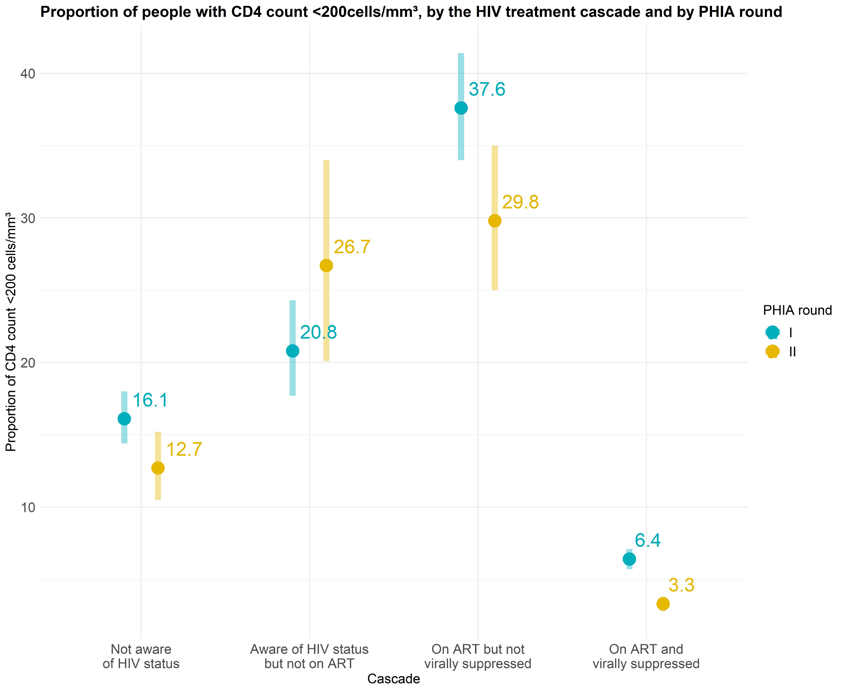
1133. Advanced HIV Disease in Individuals Already in Care: Incidence and Comparison With Late Presentation
Poster Abstracts
Pages: 366-367
Andrea Antinori1, Ashley Roen2, Alessandro Cozzi-Lepri2, Andrea Giacomelli3, Annalisa Saracino4, Antonio Di Biagio5, Carlo Torti6, Davide Checchi7, Massimo Puoti8, Eugenia Quiros-Roldan9, Silvia Nozza10, Sergio Lo Caputo11, Enrico Girardi12, Annalisa Mondi12, the Icona Foundation Study Group
Background
Despite the rising burden of advanced HIV disease (AHD) among persons with HIV (PWH) engaged in care in low-income countries, the dimension, features, and prognosis of this reclassified “neglected disease” in resource-rich settings have not been thoroughly evaluated.
Methods
PWH enrolled in the Icona Foundation Study cohort with a first diagnosis of AHD (CD4<200cells/mm3 or AIDS-defining event [ADE]) between January 1,2004 and December 31, 2023 were included. Participants were classified as having either a prevalent AHD (pAHD: AHD diagnosed at the time of starting ART) or an incident AHD (iAHD: AHD diagnosed >3 monthsafter starting ART) -the main exposure of interest. We also used an alternative 4-way exposure group to disentangle the effect of ADE. Temporal trends and demographic/clinical characteristics were described at the time of AHD definition. The cumulative risk of all-cause mortality from the time of AHD definition was compared by exposure groups by Kaplan-Meier curves and Cox regression models after controlling for confounding.
Results
Overall, 5,436 PWH with a median age of 45 years, a first diagnosis of AHD contributing to 31,788 PYFU were included: 4,671 newly HIV-diagnosed (pAHD) and 765 already in care (iAHD), where 34% and 32% respectively fulfilled the definition of AHD due to an ADE diagnosis. Compared to pAHD, iAHD were more likely to be female (29% vs. 23%, p=0.001) Italian (84% vs. 72%, p<0.001) and injection drug users (IDU) (23% vs. 8%, p<0.001) . The overall incidence (95%CI) of iAHD was 20.4 (16.8,24.8) per 1,000 PYFU which sharply declined below 12% of total AHD in the last decade (Figure A). Univariable survival analysis showed a significantly increased risk of death in iAHD vs. pAHD (by 10 years: 17.0% (13.8,20.7) vs. 10.7% (9.6,11.9), p<0.001). After adjusting for confounding, the risk of death associated with being iAHD was attenuated but remained 31% higher than that of pAHD, mainly determined by ADE, especially in the iAHD group (Figure B).
Conclusions
Although the incidence of AHD among PWH on ART has significantly reduced over time, the current magnitude of the estimate is of concern. iAHD, compared to pAHD, were of Italian nationality with a more frequent history of IDU and also showed worse clinical outcomes for a given set of risk factors for death. Reasons for the difference in risk, possibly linked to behaviour and style of life, need to be further investigated to prevent AHD after charging in care and to identify AHD before progression to AIDS.
The figure, table, or graphic for this abstract has been removed.
1134. The Effect of Treat-All on People With Advanced HIV Disease in Lesotho
Poster Abstracts
Page: 367
Shanyah L. Mitchell1, Craig J. Heck1, Daniela Quigee1, Sara Wallach1, Jason Zucker1, Shannon Farley2, Andrea Howard2, Magdalena E. Sobieszczyk1, Felix Ndagije2, Jessica E. Justman2, Wafaa El-Sadr2, Delivette Castor1
Background
Lesotho ranks second highest in national HIV prevalence globally. In April 2016, Lesotho was the first African country to adopt the World Health Organization (WHO) recommendation that all people with HIV (PWH) receive antiretroviral therapy (ART), regardless of clinical stage or CD4 cell count (CD4). Although CD4 is no longer used to guide treatment initiation, people with advanced HIV disease (AHD), defined as CD4 <200 cells/mm3, have a higher risk of mortality and may contribute to HIV transmission due to uncontrolled viremia. We describe population-level changes in AHD prevalence and examine changes in correlates of AHD since implementing the “treat-all” guidance.
Methods
Using data from Lesotho Population-Based HIV Impact Assessments (LePHIA) conducted in 2016-17 and 2019-20, we estimated the prevalence of AHD and examined sociodemographic, clinical, and treatment correlates of AHD. We fit multivariable logistic regression models of all covariates with an unadjusted p-value < 0.05. All analyses were performed with weighted data using SAS (version 9.4).
Results
Among 6,391 PWH (2016-17: n=3,159, 2019-20: n=3,232), the prevalence of AHD was 11.45% (95% CI:10.19,12.73) and 6.68% (95%CI:5.71,7.64) (X2 p value<0.0001), median CD4 count for all PWH/AHD was 477 (IQR:300-664)/ 132 (IQR:90-165) and 572 (IQR:382-783)/ 147 (IQR:105-175) (Wilcoxon rank sum p-value<0.0001/ p-value = 0.03) in 2016-17 and 2019-20, respectively. After statistical adjustment, covariates associated with AHD in both surveys (Figure) were male sex (aOR 2.07, 95% CI 1.68,2.55), older age (25-59 vs. 15-24 y, aOR 2.23, 95% CI 1.47,3.38), and viral non-suppression (viral load > 1000 copies/ml, aOR 11.00, 95% CI 8.21,14.74). In 2016-17 but not 2019-20, individuals reporting not currently being on ART had higher odds of AHD (aOR: 3.30, 95% CI:1.37,8.00) compared to those currently on ART.
Conclusions
Since implementing the treat-all policy in Lesotho, median CD4+ count increased among all PWH, and reported ART use was no longer associated with AHD. Correlates of AHD we report coincide with previous studies. The percent of PWH with AHD decreased by 40%, with unsuppressed viral load remaining associated with AHD. Last mile efforts should focus on reaching PWH who are men, older age, and experience viral non-suppression. The CD4 dynamics observed, highlight the need for continued CD4 monitoring to track remaining gaps in evidence on AHD and the HIV response.
Figure 1.
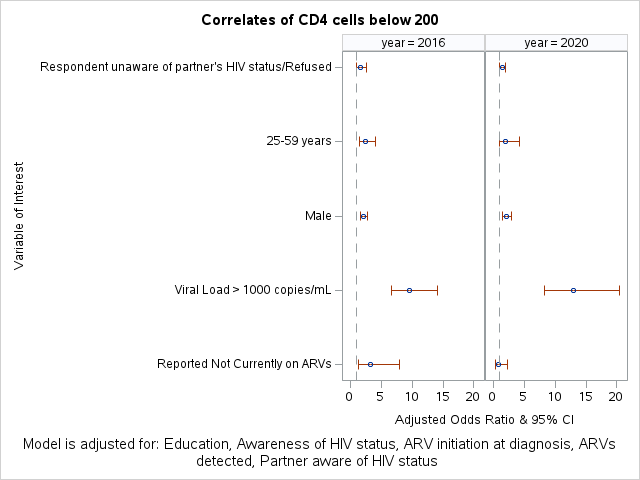
1135. Burden of AIDS-Defining Conditions Among Adults With Perinatal HIV in North America, 2000-2022
Poster Abstracts
Pages: 367-368
Nel Jason Haw1, Catherine Lesko1, Derek Ng1, M. John Gill2, Maile Karris3, Michael Horberg4, Heidi M. Crane5, Mona Loutfy6, Kathleen McGinnis7, Richard Moore1, Allison Agwu8, Keri N. Althoff1, the North American AIDS Cohort Collaboration on Research and Design (NA-ACCORD) of IeDEA
Background
People living with perinatally acquired HIV (PPHIV) have unique circumstances: lifelong HIV and its associated inflammation, exposure to multiple suboptimal antiretroviral therapy regimens, HIV acquisition affecting early immune system development, and challenges in transitioning from pediatric to adult HIV care. They have higher rates of non-AIDS defining conditions and may potentially be at higher risk of AIDS-defining conditions (ADCs) than people living with non-perinatal HIV (PnPHIV). As PPHIV progress through adulthood in North America, we described the burden of ADCs for PPHIV compared to those with PnPHIV.
Methods
Using data from the North American AIDS Cohort Collaboration on Research and Design (NA-ACCORD) from 2000-2022, we estimated mean cumulative counts (MCC) of ADCs comparing PPHIV and PnPHIV aged 18-40 engaged in adult HIV care. ADCs were defined as having a clinical diagnosis of any ADC as reported in the health record, and were allowed to recur more than once during study follow-up. PnPHIV were categorized into three HIV risk groups: male-to-male sexual contact, injection drug use and heterosexual contact. Other HIV risk groups were excluded due to small sample sizes. MCCs of each PnPHIV group were weighted using a propensity score model adjusting for sex at birth, self-identified race, age and calendar year of study entry, and 95% confidence intervals (CI) were calculated using bootstrapping.
Results
Overall, there were 5,715 ADCs among 22,950 people with HIV. There were 109 ADCs among 455 PPHIV. More than half (55%) of PPHIV were female, and 58% were Black. The three most common ADCs among PPHIV were: HIV-associated wasting syndrome (n = 21), esophageal candidiasis (n = 19), and P. jiroveci pneumonia (n = 15). Among PPHIV, the MCC of ADCs by three years in adult HIV care was 27 per 100 persons (95% CI: 14, 42) in 2000-2011 and 18 per 100 persons (95% CI: 9, 28) in 2012-2022. The MCCs of PPHIV were similar to PnPHIV groups during both calendar periods. The MCCs of ADCs decreased between 2000-2011 and 2012-2019 for each HIV risk group. Sensitivity analyses stratified by sex at birth yielded similar results.
Conclusions
PPHIV who have successfully transitioned to adult HIV care have similar experience of ADC burden than their peers with non-perinatal HIV, and do not need any additional ADC prevention or management beyond what all people with HIV should receive. We also emphasize the importance of retention in HIV care as it provides opportunities for ADC prevention.
Figure 1.
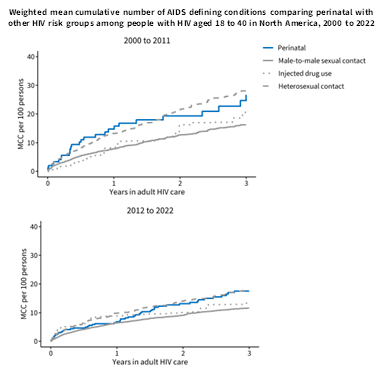
1136. C-Reactive Protein as a Predictor of Hospitalization and Mortality in Advanced HIV Disease in Uganda
Poster Abstracts
Page: 368
Elizabeth L. Schwartz1, Ann M. Fieberg1, Biyue Dai1, Caleb Skipper1, David R. Boulware1, David B. Meya2, Elizabeth K. Nalintya3, Radha Rajasingham1, the ENCORE Team
Background
People with advanced HIV disease (AHD) remain at high risk for opportunistic infections, hospitalization, and death, despite improved access to antiretroviral therapy (ART). We aimed to evaluate the predictive value of serum C-reactive protein (CRP) for the detection of future hospitalization or death among outpatients with AHD in Uganda.
Methods
Serum CRP values were collected prospectively from 759 participants enrolled in the ENCORE trial (NCT05085171), a community-based cluster randomized trial in adults with AHD (baseline CD4 <200 cells/µL). Participants were recruited from May 5, 2022 to February 8, 2024 at outpatient clinics in the Kampala and Wakiso districts of Uganda. We examined baseline CRP as both a continuous predictor and as a dichotomized predictor at a threshold of 10mg/L. We used logistic regression and Cox regression models to assess CRP as a risk factor for hospitalization or death. We calculated the area under the receiver operating characteristic curve (AUC) to evaluate CRP as an independent predictor for 30-day hospitalization-free survival.
Results
A CRP threshold of 10 mg/L was identified as a strong predictor of 30-day hospitalization or death. In our cohort, 41% had an elevated CRP value (>10mg/L). Participants with elevated CRP were significantly more likely to be hospitalized (Relative Risk=3.18, p=0.002) or die (Relative Risk=8.60, p<0.001) within 30 days of enrollment. When controlling for potential confounding variables of sex, age, weight, CD4 count, and ART status in a multivariate Cox proportional hazards model, the hazard of hospitalization or death within 30 days increased by 32% (HR=1.32, p<0.001) for each doubling of CRP (Table 1). When examining the composite outcome of 30-day mortality or hospitalization, CRP has an AUC of 0.76 as a univariate continuous predictor, and the multivariate model performed significantly better when CRP was included (AUC=0.80), compared to when CRP was excluded from the model (AUC=0.73).
Conclusions
High CRP values are associated with increased risk of hospitalization and/or death within 30 days among outpatients with AHD. Prospective evaluation of point-of-care CRP testing and whether real-time measurements can be used to risk stratify populations for interventions to reduce deaths is needed.
Table 1.
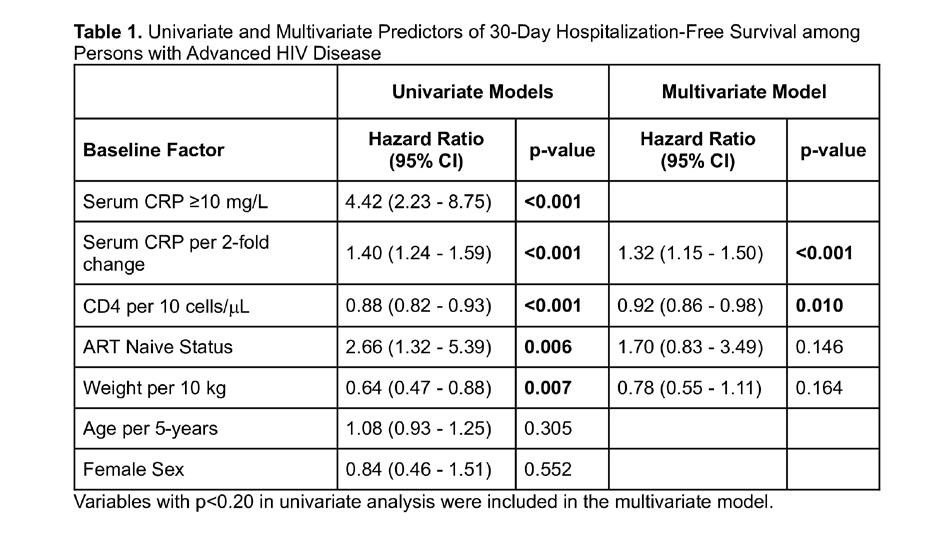
1137. Vaginal and Anal Intercourse With Women Reported by Men Who Have Sex With Men, 2015-2019
Poster Abstracts
Page: 368
Katrina M. Byrd, Weiming Zhu, Wei Wei, Ya-Lin A. Huang, Karen W. Hoover
Background
In 2022, 18% of new HIV diagnoses were in heterosexual women in the United States. Most women (83%) acquired HIV from heterosexual contact. In contrast, male-to-male sexual contact was the most common mode of HIV transmission in men (89%). HIV preexposure prophylaxis (PrEP) reduces the risk of sexual HIV transmission by ~99% but only 8% of PrEP users were female compared to males (92%). Our objective was to estimate proportions of men who have sex with men (MSM) who reported anal or vaginal sex with a woman in the last 12 months.
Methods
We analyzed data from the 2015-2017 and 2017-2019 National Survey of Family Growth (NSFG) to estimate the number of sexually active US men aged 15-49 years. We categorized sexually active men as “MSM” if they reported ever having oral or anal sex with a man and as “heterosexual” if they did not report sex with a man. Men were considered sexually active if they had oral, vaginal, or anal sexual intercourse with same or opposite sex partners within the last 12 months. All estimates were weighted to be nationally representative. The Chi-square test was used to determine statistical significance.
Results
Between 2015-2019, 4.1 million of 59.8 million sexually active males were classified as MSM. Of which, 2.1 million MSM reported sexual intercourse with a female partner in the last 12 months. Vaginal sex was the most frequent sexual behavior with women reported by both MSM (98.4%) and heterosexual men (95.3%). Conversely, anal sex was the least frequent sexual behavior type with women reported by MSM (34.4%) and heterosexual men (21.4%). A significantly higher proportion of MSM reported anal sex with women in the last 12 months compared to heterosexual men (p < 0.001). About 15.0% of MSM had both male and female partners, and 5.0% of MSM had anal sex with both male and female partners in the past 12 months.
Conclusions
Half of men who engaged in male-to-male sexual contact had vaginal and/or anal intercourse with a woman in the last 12 months. MSM reported a higher proportion of anal sex with female partners compared with heterosexual men. These findings stress the importance of asking women about their partners' male-to-male sexual contact history and their behaviors associated with HIV transmission such as anal intercourse. Given low PrEP uptake in women, this information can prompt providers to offer PrEP and other HIV prevention strategies to women who might otherwise be at low risk for HIV acquisition.
Figure 1.
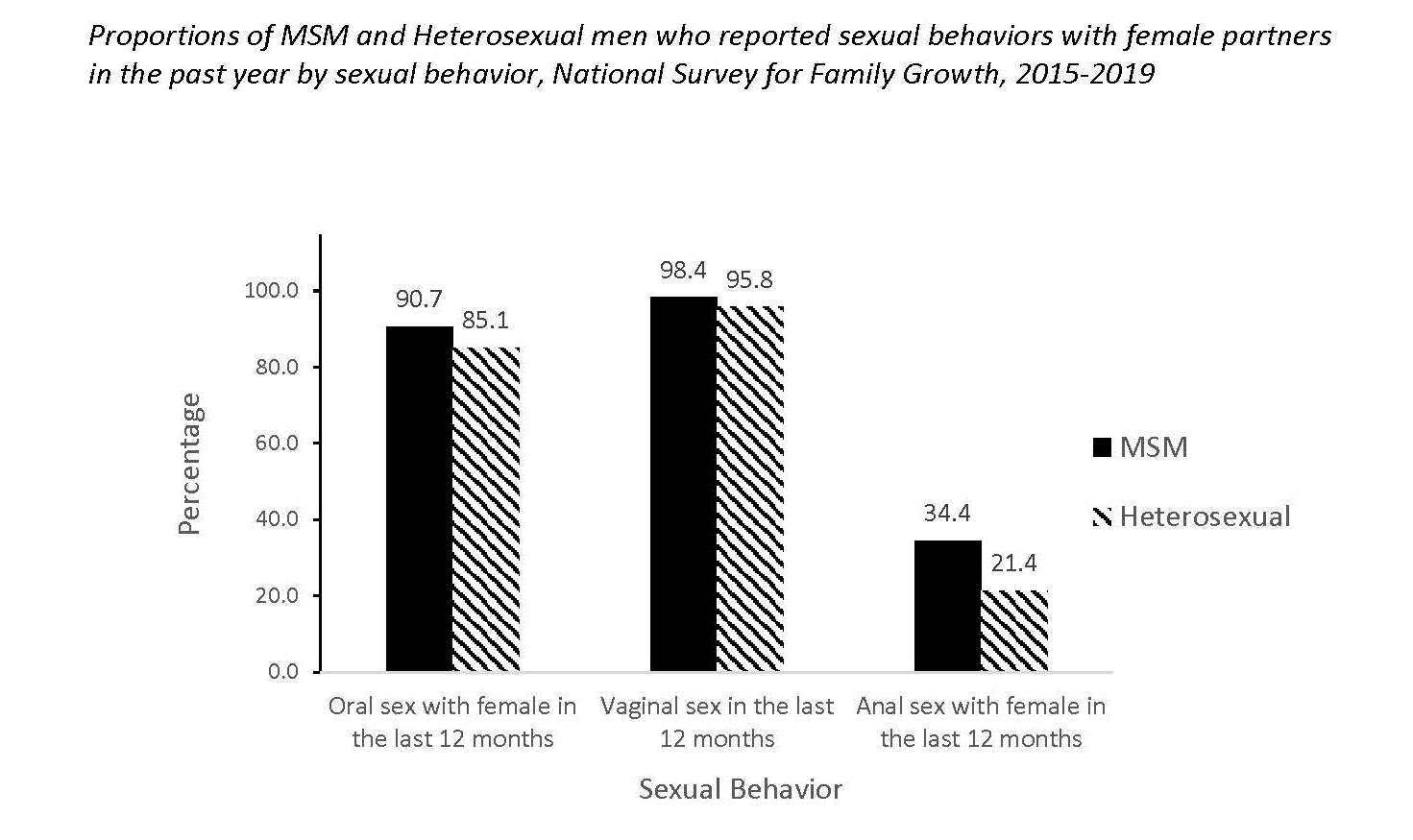
1138. WITHDRAWN
Poster Abstracts
Page: 368
1139. Geospatial Heterogeneity in Potential HIV Transmission Locations Among MSM in Bhopal, India
Poster Abstracts
Page: 369
Griffin J. Bell1, Steven J. Clipman2, Allison M. McFall1, Talia A. Loeb1, Jiban J. Baishya2, Ashwini Kedar3, Archit Sinha3, A. K. Srikrishnan3, Boobalan Jayaseelan3, Gregory M. Lucas2, Sunil S. Solomon2, Shruti H. Mehta1
Background
HIV incidence remains disproportionately high among men who have sex with men (MSM) globally and is increasing among MSM in India. To evaluate the feasibility of spatially tailored interventions to interrupt HIV transmission among Indian MSM, we explored the geospatial distribution of locations where MSM meet male sexual partners in Bhopal, India.
Methods
We enrolled 752 MSM (aged 18+ with ≥1 male sex partner in the last year) through respondent-driven sampling (RDS) in Bhopal between December 2023-April 2024 and conducted HIV rapid antibody and viral load testing. Participants completed a behavioral survey and identified their residence and up to four additional locations where they met sexual partners most often in the past year. We categorized meeting spaces and used kernel density estimation to identify areas where MSM with HIV viremia disproportionately met sexual partners. All analyses were weighted to account for RDS.
Results
Most enrolled MSM completed secondary school (99.5%) and were employed (98.0%). On average, MSM named 3.6 meeting locations, corresponding to 190 neighborhoods, 62 transportation-related locations, 30 commercial locations, 28 parks, and 18 other locations. The overall prevalence of HIV and HIV viremia was 11.6% and 4.4%, respectively. MSM meeting at transportation-related locations had the highest prevalence of HIV (14.9%) and HIV viremia (6.5%). MSM meeting at commercial locations had the lowest prevalence of HIV (6.8%) and HIV viremia (3.3%). We identified a 3.88 km2 area, west of the main railway station and south of the original 1984 Bhopal Gas Tragedy site, where 45.8% of all MSM with detectable viremia met partners. MSM who met within 1 km of the 1984 site had 14.1% (95% CI: 4.3%, 27.1%) higher HIV prevalence on the absolute scale, 4.3% (-0.6%,14.7%) higher HIV viremia prevalence, more sexual partners (median [IQR]: 15 [5, 28] vs 7 [3, 22]), and 5.3% (-4.8%, 9.2%) higher inconsistent condom use with casual partners, compared to MSM who did not meet within 2 km of the 1984 site.
Conclusions
MSM with HIV and HIV viremia disproportionately met in transportation-related locations and specific geographic areas, suggesting that spatially tailored interventions would be efficient in preventing HIV transmission among MSM in this urban Indian setting. Structural disparities, including poverty and stigma, may drive where MSM with HIV choose to meet partners for sex and may be associated with limited access to treatment and prevention services.
1140. Age-Stratified Sexual Partner Profiles to Characterize HIV Risk Across Lifespan: Botswana and Zambia
Poster Abstracts
Page: 369
Kristen A. Stafford1, Divya Hosangadi1, Hope Sabao2, Kesalefa Elliam3, Billy Tsima3, Wilbroad Mutale2, Lloyd Mulenga4, Bonaparte Nkomo5, Chola Nakazwe6, Susan Matroos7, Ndwapi Ndwapi8, Lillian Okui8, Magen Mutepfa3, Stella Keipeile9, Meagan Fitzpatrick1, the EPI-PLAN-HIV Study Group
Background
Accurately predicting the age and sex distribution of HIV over time is critical for precision interventions and resource planning. Progress towards epidemic control and changes in sexual partnership patterns over time impact this distribution. Characterizing age-specific sexual partner matrices may improve prediction accuracy and better inform programming for epidemic control.
Methods
We used data from PHIA surveys in Zambia and Botswana to create partner matrices. For respondents with viral nonsuppression (NVLS=copies >1000/mL) we extracted the mean number of partners in the last 12 months, stratified by age, sex, and partner HIV status. Partner matrices in Zambia from 2021 against those from 2016 (prior NVLS data unavailable for Botswana) were compared. Intergenerational partnerships (IP), defined as sexual partner +/-10 years of age, by HIV status, age, and sex, and condomless sex (CS) among PWH with NVLS were estimated. Estimates and 95% confidence intervals (95% CI) are weighted.
Results
In Zambia mean number of serodifferent female partners increased among NVLS males in younger age groups and decreased in older males where seroconcordant female partners increased (Figure 1). Mean serodifferent same sex partners decreased among males aged 40-44 and seroconcordant increased among NVLS males 45-49. In Zambia, prevalence of IP increased 23% among males and 28% among females. Prevalence of CS with last partner among NVLS males decreased in Zambia from 48% (43-54) to 14% (11-18) and from 44% (40-47) to 15% (6-25) among NVLS females. CS among males and females with NVLS who were aware of their HIV status was similar over time, 70% (57-81) in 2016 vs 79% (62-96) in 2021 and 73% (66-80) in 2016 vs 67% (19-100) in 2021. In Botswana in 2021, prevalence of IP was 17% among males and 20% among females, similar age pattern as Zambia. Prevalence of CS within NVLS males and females was 10%. Among males and females aware of their status with NVLS CS was 9% (0-19) and 30% (12-49). Prevalence of IP among PWH was higher than among HIV-negative people in both countries regardless of sex.
Conclusions
Sexual partner profiles change within and across age/sex specific groups over time which can influence patterns of HIV acquisition risk. Differences in progress towards epidemic control in Zambia and Botswana appear to be reflected in the prevalence of IP and CS among people with a viral load high enough to transmit to their partners. Reaching status aware NVLS PWH is important for epidemic control.
Figure 1.
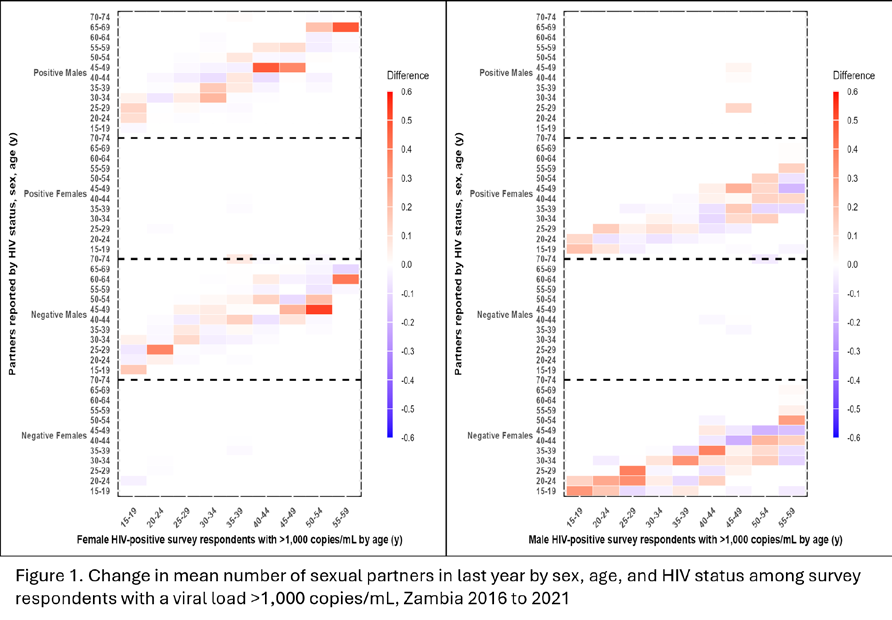
1141. Couples-Based Homophily in HIV Testing and Treatment Engagement: A Multicountry Analysis
Poster Abstracts
Page: 370
Kathryn Risher1, Patrick Janulis2, Augustine T. Choko3, Stéphane Helleringer4, Michelle Birkett2
Background
Household couples represent a population wherein there is a clear unit to intervene for HIV testing and treatment, and numerous couples-driven interventions exist (e.g. couples HIV testing and counseling, partner-provided HIV self-tests). However, it is unknown the extent to which there is homophily (like partnered with like) among household couples by HIV testing and treatment engagement.
Methods
We analyzed data from 18 Population-based HIV Impact Assessment surveys (PHIAs) conducted in Cameroon, Cote D’Ivoire, Ethiopia, Mozambique, Kenya, Lesotho, Malawi, Namibia, Rwanda, eSwatini, Tanzania, Uganda, Zambia, and Zimbabwe between 2015-2021. Heterosexual household couples with self-reported HIV testing history and biological data on HIV status, presence of ART, and viral load suppression (VS) were analyzed. Each survey was given equal weight and survey design was accounted for in analysis. Among serostatus groups, homophily was assessed by comparing couples’ observed mixing patterns to that expected under random mixing, with bootstrapped confidence intervals.
Results
There were 62,639 couples, representing 123,856 individuals, with 86.4% seroconcordant negative, 7.0% seroconcordant positive, 3.5% serodiscordant with a female partner living with HIV (LHIV), and 3.1% serodiscordant with a male partner LHIV. Among seroconcordant couples LHIV, more couples than expected (Figure) were both positive but unaware of their status (4.30 times greater than under random mixing, 95% CI=4.01-4.63), aware of status but not on ART (3.26, 95% CI=2.66-3.93), or on ART but not virally suppressed (VS) (2.34, 95% CI=1.55-3.10). Among seroconcordant HIV-negative couples, never tested individuals were over twice as likely to be coupled together than expected by random chance (2.54, 95% CI=2.52-2.64). Similarly, among serodiscordant couples, more couples between individuals LHIV but unaware of status with HIV-negative and never tested were observed than expected by random chance (1.76, 95% CI=1.55-1.96 when female partner LHIV; 1.95, 95% CI=1.67-2.33 when male partner LHIV).
Conclusions
We find evidence of homophily in HIV testing behaviors and treatment engagement in household couples in sub-Saharan Africa, supporting couples-based interventions when reaching individuals that have been previously unengaged. Furthermore, HIV testing and treatment interventions that target household couples as a unit may be efficient in increasing reach.
The figure, table, or graphic for this abstract has been removed.
1142. HIV Prevalence in Intersecting Subgroups of Southern African Women: Insights From PHIA
Poster Abstracts
Page: 370
Craig J. Heck1, Daniela Quigee1, Sara Wallach1, Jason Zucker1, Kavitha Ganesan2, Shanyah L. Mitchell1, Sarah Wiant1, Shannon Farley3, Magdalena E. Sobieszczyk1, Andrea Howard3, Jessica E. Justman3, Wafaa El-Sadr3, Delivette Castor1
Background
In southern Africa, women are disproportionately affected by HIV. Age, pregnancy, migrancy, and sex work typically increase women’s HIV risk. While studies often examine these factors independently, few have examined how their intersection impacts HIV burden. Among southern African women, we describe HIV prevalence by individual and overlapping risks.
Methods
Using data from Population-based HIV Impact Assessment (PHIA) surveys collected after 2019 in Eswatini (ES), Lesotho (LS), Malawi (MW), Mozambique (MZ), and Zimbabwe (ZW), we classified known risk groups and estimated the pooled HIV prevalence of women (15-49 years) who self-reported ever having sex. Risk subgroups included adolescent girls and young women (AGYW, aged 15-24 years); currently pregnant/breastfeeding women (PBFW); recent (<2 years) internal/external migrants (RM); Lesbian, Gay, or Bisexual (LGB, >1 same-sex partner); and engaged in sex work (SW, purchased/sold sex). HIV status was assessed via PHIA testing. UpSet plots were used to visualize data and calculate unweighted descriptive statistics.
Results
Among 33,882 women, the HIV prevalence was 22% (ES: 37%, LS: 31%, ZW: 19%, MZ: 18%, MW: 14%), and 48%, 33%, and 19% respectively belonged to zero, one, and multiple (2+) subgroups. HIV prevalence varied among women classified into no (29%, N=6189) and one subgroup: 63% in SW (N=27), 33% in RM (N=2452), 30% in LGB (N=87), 18% in PBFW (N=3963), and 8% in AGYW (N=4645). In women belonging to two subgroups, HIV prevalence was 62% in RM + SW, 33% in AGYW + SW and PBFW + SW, 22% in PBFW + RM, 12% in AGYW + LGB and RM + LGB, 10% in AGYW + RM, and 6% in AGYW + PBFW (Fig. 1). The HIV prevalence of women in three subgroups was 67% in AGYW + PBFW + SW, 14% in AGYW + PBFW + LGB, and 6% in AGYW + PBFW + RM (Fig. 1). For those within four subgroups, HIV prevalence was 50% in AGYW + PBFW + RM + SW and 33% in AGYW + PBFW + RM + LGB (Fig. 1).
Conclusions
HIV was prevalent in all subgroups. Compared with those in no or one subgroup, women in multiple subgroups often had higher HIV prevalence, but most of these high-prevalence multi-groupings were relatively small, particularly those including SM. AGYW were commonly classified with other subgroups, and HIV prevalence was greater in AGYW and PBFW characterized by multiple subgroups rather than one. Although representing fewer women, RM + SW and AGYW + PBFW + SW had exceptionally high HIV prevalence, highlighting the need for tailored interventions.
Figure 1.
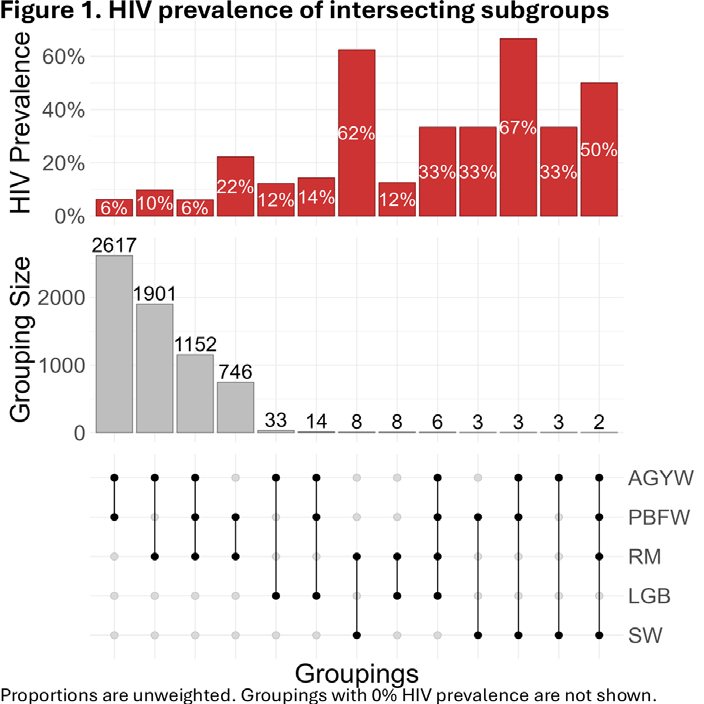
1143. Utilization of Assisted Partner Notification Services and Outcomes: A Population-Based Study
Poster Abstracts
Pages: 370-371
Nakawooya Hadijja1, Victor Ssempijja1, Robert Ssekubugu1, Fredrick E. Makumbi2, Tom Lutalo1, Larry W. Chang3, David Serwadda1, Steven J. Reynolds4, Gertrude Nakigozi1, M. Kate Grabowski5, Godfrey Kigozi1
Background
Assisted Partner notification (APN) services provide HIV testing, prevention, and treatment services to sex partners of persons living with HIV. However, coverage of APN services at a population level is poorly understood.
Methods
We analyzed cross-sectional data from the Rakai Community Cohort Study (RCCS) survey conducted between December 2020 to March 2023, to evaluate reach of APN services, PrEP uptake among participants without HIV and HIV treatment among participants with HIV. RCCS includes 34 agrarian, semi-urban and Lake Victoria fishing communities in South Central Uganda. All RCCS participants were asked to self-report if they had ever been contacted by APN services for HIV testing, whether they tested because of APN, and about history of and current use of PrEP or ART use. We used modified Poisson regression methods to identify factors that characterized participants contacted by APN services.
Results
A total of 495 (2.98%) among the 16,591 RCCS interviewed participants, reported to have ever been contacted by partner notification services. 383 (77.4%) reported having HIV tested because of APN. 217(43.8%) were living with HIV of whom 198 (91.2%) were virally suppressed (<1000 copies/ml). Among the 278(56.16%) that were HIV negative, only 36(16.9%) reported ever using PrEP. Of those with a history of PrEP use, 18(50.0%) reported current use of PrEP.
Conclusions
PrEP use among HIV-negative partners contacted by APN is extremely limited while HIV treatment coverage was high. Targeting PrEP services to this important group of individuals may improve HIV epidemic control.
Table 1.
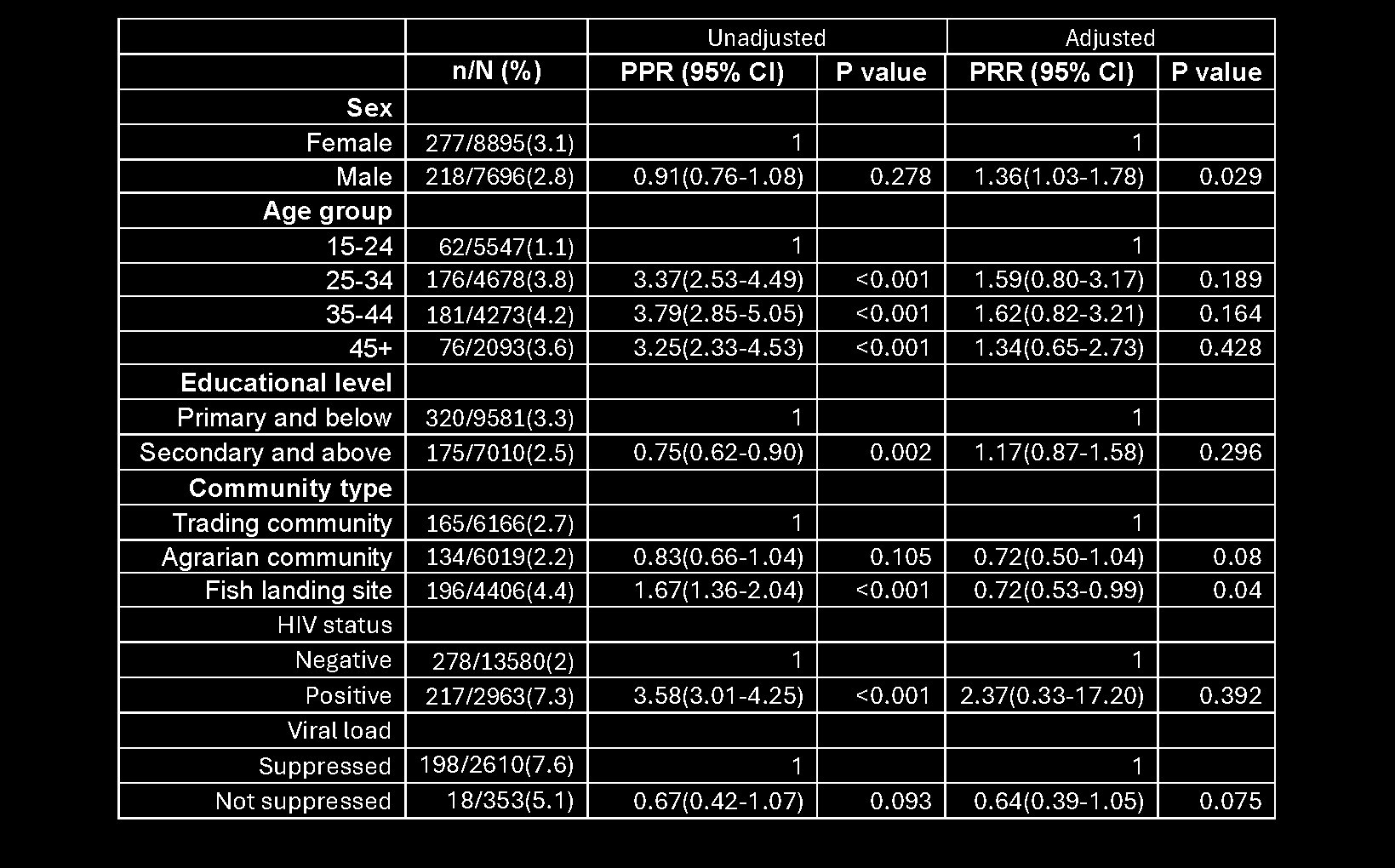
1144. Increasing Methamphetamine Use and Group Sex Observed in MSM With Acute HIV Infection in Bangkok
Poster Abstracts
Page: 371
Phillip Chan1, Carlo Sacdalan2, Suteeraporn Pinyakorn3, Eugène Kroon2, Pathariya Promsena2, Luxe-Naree Poonpitak2, Somchai Sriplienchan2, Nitiya Chomchey2, Nittaya Phanuphak4, Sandhya Vasan5, Adam Carrico6, Robert Paul7, Lydie Trautmann5, Serena Spudich1, Donn Colby3, the RV254/SEARCH 010 Study Team
Background
Clinical data from acute HIV infection (AHI) can provide valuable perspectives on factors associated with ongoing HIV transmission. This analysis examines participant characteristics in the RV254 AHI cohort in Bangkok, Thailand.
Methods
From 2009 to 2023, 539,616 blood samples from HIV test seekers were screened for AHI using a combined immunoassay and nucleic acid test approach. Of the 955 AHI events (0.18%) identified, 726 individuals (76%) were enrolled. They were grouped into three 5-year intervals based on year of enrollment: Group 1 (2009–13), Group 2 (2014–18), and Group 3 (2019–23). Demographic, clinical, mood, and behavioral measures were compared using Chi-square test and non-parametric tests accordingly, with Group 1 as the reference. A subgroup analysis was conducted on 234 Groups 2 and 3 participants who completed a standardized questionnaire on risk behaviors introduced in Sep 2017.
Results
Of the 726 RV254 participants, 708 (98%) were male, 674 (93%) were men who have sex with men (MSM), with a median age of 26 (interquartile range (IQR) 23,31) years, and 420 (58%) had a bachelor's degree or higher. Age and education level at AHI did not differ between the 3 groups, with consistent predominance of male participants (>90%). Table 1 compares mood and behavioural measures and co-infections across the groups. While depressive scores measured by the Patient Health Questionnaire (PHQ-9) did not statistically differ between groups, Groups 2 and 3 exhibited lower psychological stress scores on the Distress Thermometer than Group 1 (p<0.01). They also showed higher rates of past and recent syphilis (p<0.01). Group 3 also had higher frequencies of hepatitis C infection (p=0.021) and any pre-exposure prophylaxis (PrEP) use (p<0.001), as PrEP was introduced at the Thai Red Cross in 2015 and in community-led services in 2016. In the risky behaviour subgroup analysis, over a fifth in Groups 2 and 3 reported methamphetamine (meth) use and group sex prior to AHI. Compared to non-users, meth users had higher frequencies of group sex (51% vs. 17%, p<0.001), past syphilis (38% vs. 23%, p=0.035) and any PrEP usage (17% vs. 6%, p=0.022).
Conclusions
In the last 15 years, young, highly educated MSM predominated new AHI cases detected in Bangkok, Thailand. There was increasing detection of concurrent syphilis and hepatitis C, particularly among meth users, half of whom reported group sex, highlighting the need for integrated service for substance use, HIV and sexually transmitted infections.
Table 1.
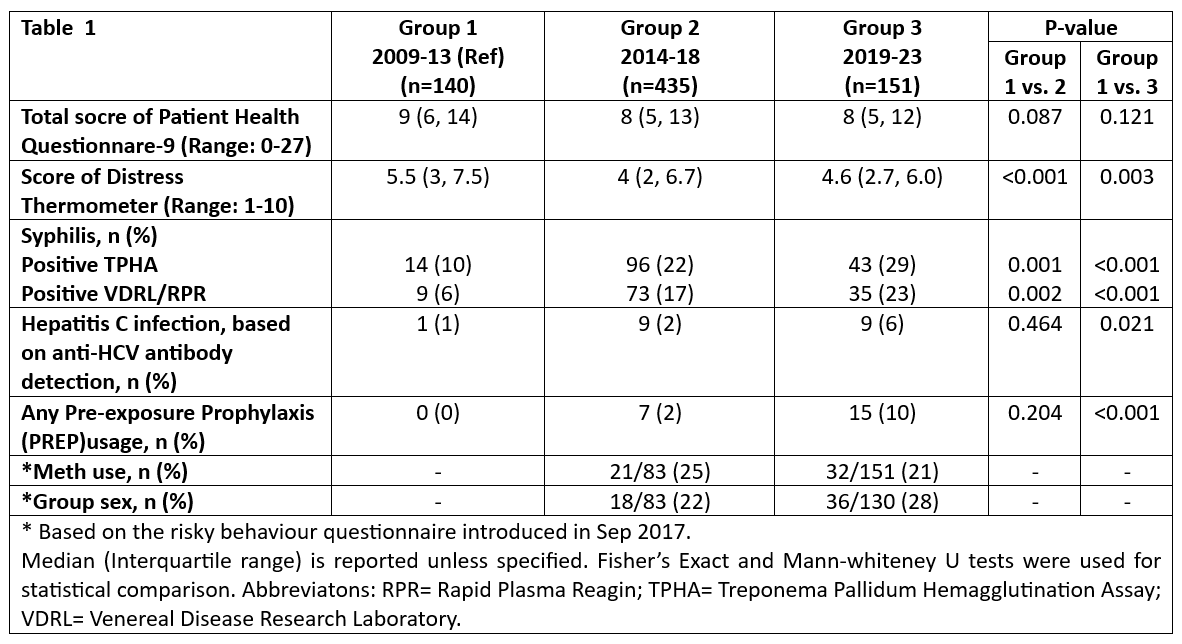
1145. Unstable Housing, Methamphetamine Use, and HIV Incidence Among Racial and Ethnic Minority Men
Poster Abstracts
Page: 371
Marjan Javanbakht, Allison D. Rosen, Steve Shoptaw, Pamina M. Gorbach
Background
Unstable housing has been linked to substance use (SU) and other health outcomes and evidence that SU especially methamphetamine (meth) drives HIV acquisition, has been well described. Yet the interaction between unstable housing and meth use on HIV acquisition is unclear, especially critical for EHE priority jurisdictions such as Los Angeles, which has the second largest population of people experiencing unstable housing in the US. The objective of this study was to examine the synergistic impact of housing instability and meth use on the incidence of HIV infection.
Methods
Data for this analysis are from a cohort study of gay, bisexual, and other men who have sex with men in Los Angeles, CA. Participants were eligible if they were 18-45 years of age, male sex at birth, reported condomless anal intercourse with a male partner in the past 12 months, and tested negative for HIV at baseline. Data from those enrolled from 2014 with at least one follow-up visit through August 2024 were included (n=274; median follow-up 4.6 years). Semiannual visits assessed housing status, SU, and sexual behaviors and collection and testing of biospecimen for STIs/HIV. Kaplan-Meier survival analysis and Cox regression accounting for time varying covariates was used to assess HIV incidence rate and factors associated with HIV seroconversion.
Results
At baseline median age was 28 years, 47% identified as Black and 38% Hispanic/Latine. Past 6-month self-reported meth use was 32% (n=88), unstable housing 34% (n=94), PrEP use 36% (n=99), with 18% (n=50) testing positive for chlamydia, gonorrhea, or infectious syphilis. Twenty participants tested positive for HIV at follow-up (HIV incidence rate=1.6 per 100 person-years (PY) (95% CI: 1.0-2.4)); highest among those who reported both unstable housing and daily meth use (8.0 per 100 PY; 95% CI 3.3-19.2), compared to those who reported daily meth use without unstable housing (2.7 per 100 PY; 95% CI 0.4-19.4) or unstable housing without daily meth use (2.3 per 100 PY; 95% CI 1.0-5.1). Based on cox regression analyses daily meth use and unstable housing were both associated with HIV seroconversion (HR=5.0; 95% CI 1.8-13.7 and HR=3.0; 95% CI 1.3-7.4, respectively (Table).
Conclusions
These findings underscore the powerful interaction between housing instability and daily methamphetamine use, showing there is a multiplicative effect of these factors on HIV risk. Intervening on both housing support and substance use together is essential for reducing HIV transmission.
Table 1.
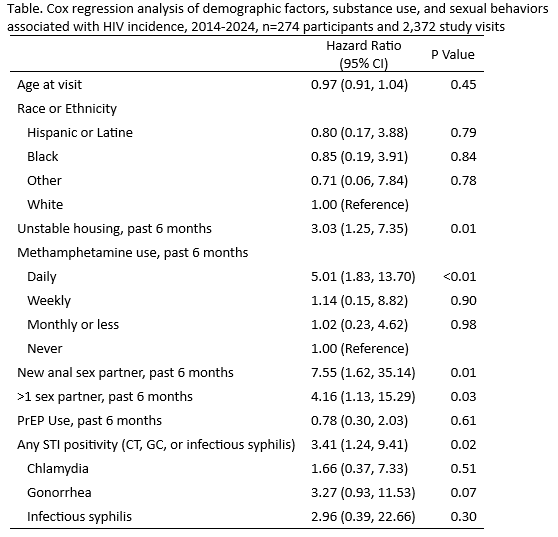
1146. Substance Use Is Associated With Higher HIV Viral Load and Reduced Viral Suppression in 6 US Cohorts
Poster Abstracts
Page: 372
Robin M. Nance1, Ryan P. Kyle1, Richard Moore2, Pamina M. Gorbach3, Brian Mustanski4, Shruti H. Mehta2, Marianna Baum5, Kenneth Mayer6, Peter W. Hunt7, Oluwaseun Falade-Nwulia8, Edward Cachay9, Raul N. Mandler10, Geetanjali Chander1, Heidi M. Crane1, Lydia N. Drumright1
Background
HIV viral suppression is key to ending the HIV epidemic and maintaining the health of people with HIV (PWH). While prior research links substance use (SU) to lower antiretroviral therapy (ART) adherence, and higher HIV viral loads (VL) in PWH, newer ART regimes may be more resilient to intermittent adherence. We examined associations between active SU and VL suppression in the current ART era across 6 cohorts.
Methods
Cohorts included: ALIVE, CNICS, JHHCC, MASH, mSTUDY, and RADAR. PWH with at least one VL from 2010 onward were included, and SU reported at the time of or up to 6 months prior to measurement of VL was included. Prevalence ratios (PR) for viral suppression, dichotomized VL at 200 copies/mL (except for ALIVE, where a 400 copies/mL cutoff was used per study protocol) were obtained using a generalized linear model, adjusting for age, gender, race/ethnicity, and visit year. Each cohort was analyzed independently, with summary estimates obtained through meta-analysis.
Results
Of 10,406 PWH, the mean age was 51 years; 2% were gender diverse, and 35% reported White, 46% Black, 14% Latine race/ethnicity, respectively. Adjusted models estimated higher probability of detectable VL among PWH reporting recent SU: cocaine/crack PR=1.7 (95% CI 1.4-2.0), opioids 1.6 (95% CI 1.2-2.1) and cannabis 1.3 (95% CI 1.1-1.5). PWH who used methamphetamine were 2.2 times more likely to have unsuppressed VL compared to non-users (95% CI 1.5-3.4). Associations between SU and viral suppression were broadly comparable across study populations. While the prevalence of SU varied across subgroups, SU was consistently associated with viral nonsuppression in each of the studies.
Conclusions
Our results demonstrate that SU is strongly associated with a lack of viral suppression across key demographic subgroups and substances used in the US, even in the current ART era. Methamphetamine use had the greatest impact on these negative outcomes. While there was no observed association with alcohol use in this analysis, the mean AUDIT-C score of 2 suggests that these results apply primarily to light drinkers (median 1, SD 2; IQR: 0, 3).
Table 1.
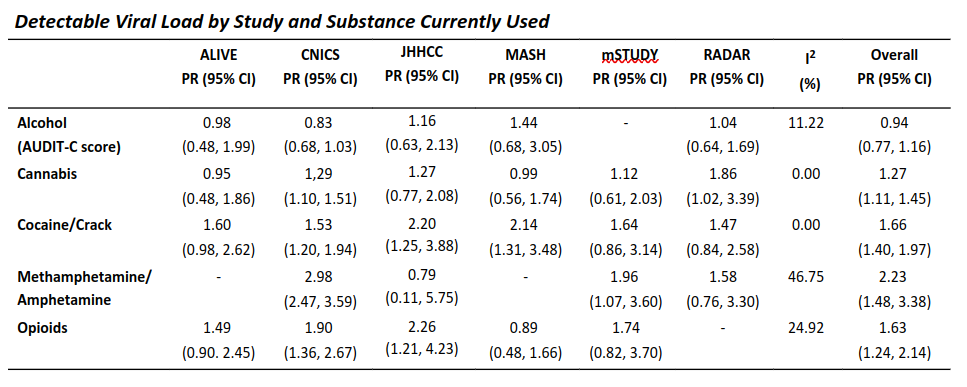
1147. Missed Opportunities for Drug Use Screening and Discussions Among People With HIV
Poster Abstracts
Page: 372
Sydney Bornstein, Blair Altman, Hannah Yellin, Madhu Balachandran, Irene Kuo, Manya Magnus, MPH, PhD
Background
Drug use is more prevalent among people with HIV and can worsen HIV-related outcomes. Screening and discussions about drug use with a healthcare provider (HCP) have been found to be associated with higher perceived need and receipt of drug treatment. We explored differences in past-year drug use, screening, and discussion with a HCP among younger and older adults with and without HIV.
Methods
We used nationally representative data from the 2021-2022 National Survey on Drug Use and Health among the civilian, non-institutionalized population in the US. Past-year drug use (marijuana, cocaine, crack, heroin, inhalants, hallucinogens, and methamphetamine), screening (HCP asked about drug use), and discussion about drug use with a HCP among younger adults (18-49) and older adults (50+) with and without HIV were estimated using weighted frequencies and percentages and compared using Rao-Scott chi-squared tests.
Results
Among younger adults with HIV (n=440,990) versus without HIV (n=35,510,625), the prevalence of past-year marijuana (53% vs 31%, p=0.001), cocaine (8% vs 3%, p=0.008), heroin (3% vs 1%, p=0.028), inhalant (14% vs 1%, p<0.001), and methamphetamine (14% vs 2%, p<0.001) use was significantly higher. Among older adults with HIV (n=492,809) versus without HIV (n=72,272,744), the prevalence of past-year marijuana (54% vs 11%, p<0.001), crack (3% vs 0.4%, p=0.020), heroin (3% vs 0.3%, p=0.008), inhalant (8% vs 0.1%, p<0.001), hallucinogen (4% vs 0.4%, p=0.001), and methamphetamine (15% vs 1%, p<0.001) use was significantly higher. In both age groups, past-year drug use screening was not significantly different among adults with HIV versus without HIV who reported past-year drug use (18-49: 72% vs 73%, p=0.949; 50+: 70% vs 56%, p=0.224). Similarly, discussion with a HCP about drug use among those with and without HIV was not significantly different across age (18-49: 33% vs 29%, p=0.630; 50+: 26% vs 22%, p=0.716).
Conclusions
Although past-year drug use was significantly higher in both younger and older adults with HIV compared to those without HIV, there was no difference in the prevalence of drug use screening or discussion with a HCP, suggesting room for improvement for HCP engagement about drug use with patients with HIV. Efforts to maximize opportunities for screening and discussion are needed to decrease drug use and prevent related negative health outcomes among people with HIV.
1148. Impact of Residing or Injecting in Testing Center Catchments on HIV Testing in Churachandpur, India
Poster Abstracts
Pages: 372-373
Talia A. Loeb1, Allison M. McFall1, Mihili Gunaratne1, Jiban J. Baishya2, Ashwini Kedar3, Archit Sinha3, A. K. Srikrishnan3, Sunil S. Solomon2, Gregory M. Lucas2, Shruti H. Mehta1
Background
While India has made significant progress towards UNAIDS 95-95-95 targets, there are still gaps in HIV testing, particularly among people who inject drugs (PWID). HIV testing in India is provided free-of-charge through government-supported integrated care and testing centers (ICTCs). Additionally, beginning in 2013, our team established PWID-focused integrated care centers (ICC) in several cities across India that provide free HIV testing alongside other services (e.g., medication for opioid use disorder). We evaluate whether proximity to one of these services was associated with recent HIV testing.
Methods
752 PWID in Churachandpur, India, were recruited via respondent-driven sampling November 2022–February 2023. Participants were ≥18 years and reported injection drug use in the past 2 years. Via interviewer-administered surveys, participants provided locations for their primary residence and up to 4 places in which they injected drugs in the past year, HIV testing history and other related behaviors, and completed onsite HIV testing. Catchment areas within a 30-minute walking radius from ICTCs (N=10) and the ICC (N=1) were calculated using service area network analysis. Among those that self-reported living without HIV, logistic regression was used to assess the association between being within an ICC or ICTC catchment area and testing for HIV in the past year or past 6 months, with age, daily injection, and undiagnosed HIV as potential covariates.
Results
Among 538 PWID who did not self-report living with HIV, the median age was 27, 84% reported daily injection in the past 6 months and 6% were living with undiagnosed HIV. 66% reported living or regularly injecting within a catchment area for the ICCs, while 70% were within the catchment for ICTCs. After adjustment, those within a catchment for the ICC had 2.02 (95% CI 1.17-3.48) times the odds of testing for HIV in the past year and 1.97 (95% CI 1.03-3.76) times the odds of testing in the past 6 months compared to those not within a catchment area. Those within the ICTC catchment had higher odds of testing in the past year and in the past 6 months, though this was not statistically significant (Table).
Conclusions
Proximity to a community-based testing location (ICC) appeared important for regular HIV testing. Despite the presence of multiple government ICTCs, proximity to ICTCs did not impact recent testing, potentially reflecting additional barriers. Centers specifically oriented toward PWID populations may facilitate HIV testing.
Table 1.
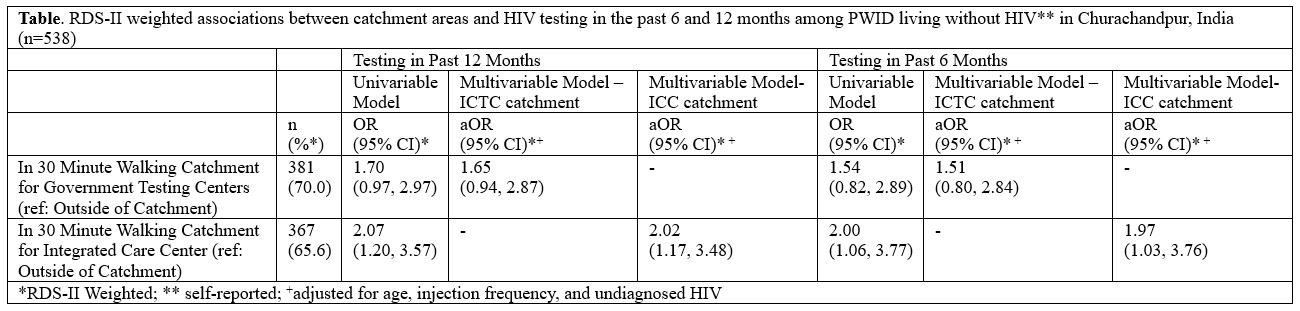
1149. HIV Outcomes Among People With HIV Who Inject Drugs in West Virginia
Poster Abstracts
Page: 373
Rebecca Reece, Nicole Bryan, Sally L. Hodder
Background
Historically West Virginia has had one of the lowest HIV prevalence rates in the United States. However, newly diagnosed HIV cases began to increase in 2018. Today, there are multiple HIV outbreaks in West Virginia, most of which are among people who inject drugs (PWID). This study examines HIV outcomes among PWID hospitalized with infectious complications related to injection drug use (IDU).
Methods
This retrospective study assessed electronic medical records of PWID admitted to Ruby Hospital, the flagship hospital for WVU Medicine, from 2018 to 2022. Among those diagnosed with HIV, we assessed connection to care and virologic suppression, among other outcomes, over the 12 months following hospital admission.
Results
A total of 810 PWID hospitalized with IDU-related infectious complications were identified during the four-year period, of whom 15 (mean age 31 years, 93% White, 40% women) were HIV infected (2 were newly diagnosed during hospital admission). Eight of 15 persons (53%) presented with CD4 count <200 cells/mm3. Seven of the 13 persons with known HIV were receiving antiretroviral therapy upon admission, and only 2 of those were virologically suppressed. One person died during the hospital stay. Other outcomes are shown (Figure 1). Importantly, only 3 persons (20%) were virologically suppressed one-year after hospitalization, 4 persons were not virologically suppressed, and 7 persons were lost to follow-up.
Conclusions
These data suggest that concentrated focus is needed to improve the HIV outcomes among PWID in West Virginia.
Figure 1.
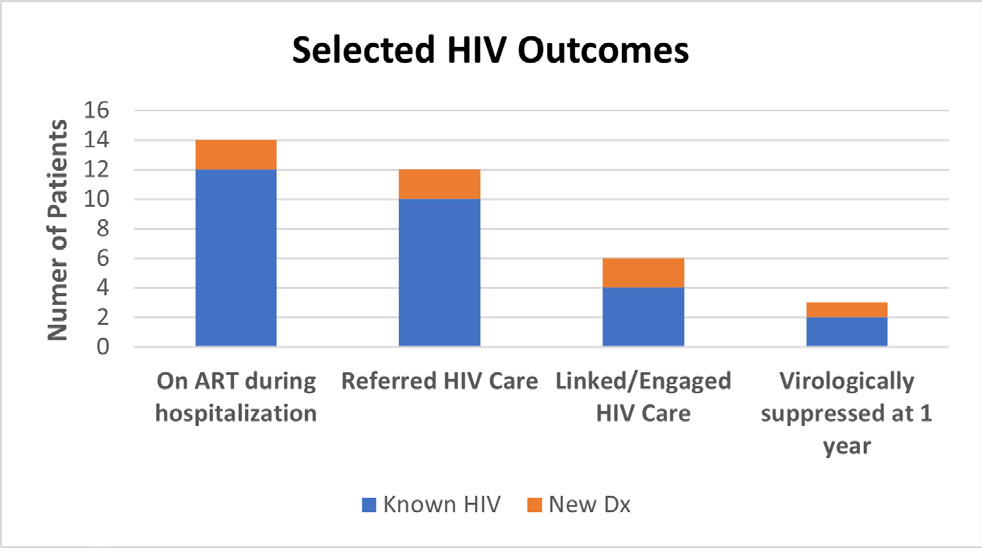
1150. Scope of the Overdose Crisis: Fatal Overdoses Among People With HIV Experiencing a Nonfatal Overdose
Poster Abstracts
Page: 373
Megan E. Marziali1, Katherine Kooij2, Wendy Zhang2, Michael Budu2, Silvia S. Martins1, Julio S. G. Montaner2, Robert S. Hogg3
Background
Drug overdoses continue to devastate communities in Canada. British Columbia (BC), Canada’s westernmost province, has one of the highest drug-related mortality rates in the nation, with a fatal overdose rate double the national average (47.0 opioid deaths per 100,000 in BC; 21.1/100,000 in Canada). To better understand the breadth of the overdose crisis, this study evaluates the proportion of fatal overdoses among people with HIV who previously experienced a nonfatal overdose, overall and by sex.
Methods
We used data from the Comparative Outcomes And Service Utilization Trends (COAST) study (April 1, 2012–March 31, 2020). COAST is a linkage of administrative health datasets and includes information on all known people with HIV in BC (N=11,050). We identified nonfatal overdoses via hospitalization records, emergency department visits, and physician visits using ICD-9 and ICD-10 codes related to drug poisoning. We identified fatal overdoses in the Vital Statistics database using ICD-10 codes.
Results
Within the sample of 11,050 people with HIV, 1,304 (11.8%) had a nonfatal overdose between 2012-2020. Among people who experienced a nonfatal overdose, 6.4% (n=84) died of a fatal overdose. The number of nonfatal overdoses per person ranged from 0-42 (Figure 1A). Of people who had at least one nonfatal overdose, most had one (55.5%); 2.4% had ≥10 nonfatal overdoses throughout the study period, highlighting the healthcare burden of nonfatal overdoses. The highest proportion of fatal overdoses was among people who experienced two nonfatal overdoses (Figure 1B). Among males with HIV, 10.2% (n=922) had at least one nonfatal overdose throughout the study period, compared to 18.9% (n=381) of females with HIV (p<0.0001). Among males with HIV who had a nonfatal overdose, 5.9% (n=54) died of a fatal overdose; 7.9% (n=30) of females with HIV who had a nonfatal overdose died of a fatal overdose (not statistically significant).
Conclusions
Our results emphasize that the breadth of the overdose crisis stretch far beyond those who die of an overdose. Potential complications following a nonfatal overdose underscore the impact of this crisis, signaling crucial opportunities for harm reduction and drug use disorder treatment to abate harm from severe nonfatal overdoses and overdose deaths. Findings emphasize a need to link people with HIV who experience a nonfatal overdose with appropriate services.
The figure, table, or graphic for this abstract has been removed.
1151. Progress Towards UNAIDS 95-95-95 Targets Among PWID Living With HIV Over 10 Years in Punjab, India
Poster Abstracts
Pages: 373-374
Ashwini Kedar1, Allison M. McFall2, Griffin J. Bell2, Talia A. Loeb2, Mihili Gunaratne2, Jiban J. Baishya3, Archit Sinha1, A. K. Srikrishnan1, Sunil S. Solomon3, Gregory M. Lucas3, Shruti H. Mehta2
Background
UNAIDS targets are for 95-95-95% for testing, treatment and viral suppression for people living with HIV (PWH) by 2030. People who inject drugs (PWID) face persistent barriers to engaging in consistent care for HIV. We explored temporal trends in UNAIDS indicators over 10 years in two Indian cities in Punjab, which has an unabating drug use epidemic.
Methods
5315 PWID were recruited from 2 Indian cities (Amritsar-2622,Ludhiana-2693) across 3 cross-sectional surveys (2013,2016,2023) using respondent driven sampling (RDS). PWID ≥18 years and who injected drugs in past 2 years were eligible. Participants completed behavioral surveys and laboratory testing (onsite HIV antibody;HIV RNA on stored sample). Among PWH, we estimated in each survey RDS-II weighted HIV prevalence and UNAIDS treatment indicators:1) awareness of HIV status 2) ART use among those aware and 3) viral suppression among those on ART.
Results
Over the decade, HIV prevalence increased in both cities;from 21% to 20% to 35% in Amritsar and from 18% to 22% to 43% in Ludhiana. Median age for PWH across surveys was 30 years and 28 years in Amritsar and Ludhiana, respectively. Almost all were male. Proportion of daily injectors increased from 32% to 87% in Amritsar;13% to 27% in Ludhiana. In Amritsar, needle-syringe sharing decreased from 33%(2013) to 14% (2016) but increased to 48% in 2023;while sharing increased from 10% to 20% to 42% in Ludhiana. Proportion reporting heroin injection more than doubled in both cities (5% to 97% in Ludhiana;32% to 99% in Amritsar) while buprenorphine injection declined (90% to 3% at Amritsar;77% to 8% in Ludhiana). As seen in the Figure, awareness of HIV status was stable or increasing between 2013-2016 but declined by >50% in both cities by 2023. Among those aware, percentage on ART increased and remained stable in Amritsar;in Ludhiana ART use increased initially (2013-2016) but then decreased. Among those on ART, viral suppression increased between 2013-2016 but decreased by 2023.
Conclusions
Despite initial gains in these two Indian cities that are experiencing a shift in the epidemiology of drug use, from prescription opioid injection to near universal heroin injection and an increase in high risk injecting practices; levels of awareness of HIV status and viral suppression were lower among PWID in 2023 than they were a decade ago and HIV prevalence is increasing. Novel approaches will be required to engage this vulnerable group in prevention and treatment services that address changing needs.
Figure 1.
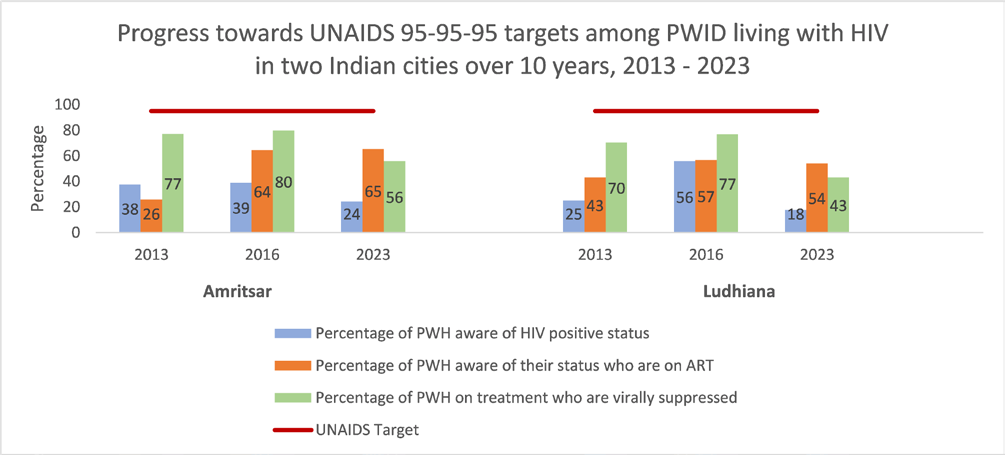
1152. The Impact of Semaglutide on Alcohol Use Among People With HIV in Routine Clinical Care in the US
Poster Abstracts
Page: 374
Heidi M. Crane1, Robin M. Nance1, L. Sarah Mixson1, Stephanie A. Ruderman1, Bridget M. Whitney1, Andrew W. Hahn1, Mari Kitahata1, Amanda Willig2, Lara Haidar3, Kaitlin A. Zinsli1, George Yendewa4, Allison Webel1, Edward Cachay5, Joseph A. Delaney1, Geetanjali Chander1, the Centers for AIDS Research Network of Integrated Clinical Systems (CNICS)
Background
Glucagon-like peptide-1 receptor agonists (GLP-1 RA) such as semaglutide are used to lower serum glucose levels and reduce weight. In animal studies, GLP-1 RA reduce alcohol use, though non-trial human data is limited particularly among people with HIV (PWH).
Methods
We examined change in alcohol use among PWH who reported alcohol use and received semaglutide for weight or glucose control in routine clinical care at 8 sites across the U.S. between 4/2018-3/2024 in the CFAR Network of Integrated Clinical Systems (CNICS) cohort. Change in alcohol use was assessed with linear mixed models of AUDIT-C scores prior to and after initiating semaglutide adjusted for age, sex, race/ethnicity, and time. We stratified models by PWH with at-risk alcohol use, defined as AUDIT-C scores of >3 for women and >4 for men and low alcohol use, defined as scores of 1-2 and 1-3 among women and men, respectively.
Results
334 PWH reporting alcohol use received semaglutide. Median number of alcohol assessments after semaglutide was 2 [interquartile range: IQR 1,3] with last follow-up alcohol assessment a median of 422 [IQR 184,682] days after starting semaglutide. The mean age was 54 years, 24% were female, 42% were White, 31% Black, and 22% Hispanic/Latine. Among 98 PWH with at-risk alcohol use at baseline, median AUDIT-C score was 5 (IQR 4,6), vs. 2 (IQR 1,2) among 236 PWH reporting low alcohol use. Median baseline BMI was 33 (IQR 30,38) among those with at-risk alcohol use and 34 (IQR 31,38) among those with low alcohol use. In adjusted analyses, among PWH with baseline at-risk alcohol use, mean AUDIT-C scores decreased by 1.2 points (95% CI: -1.7, -0.7) after initiating semaglutide while there was no change in AUDIT-C score among those with lower baseline alcohol use (see Table).
Conclusions
PWH with at-risk alcohol use receiving semaglutide for weight or glucose management in routine clinical care report decreases in alcohol use as measured by AUDIT-C score providing support for testing semaglutide in future studies of PWH with alcohol use disorder.
Table 1.
Change in alcohol use measured by change in AUDIT-C score among PWH who drink alcohol by baseline alcohol status (at-risk alcohol use vs. low alcohol use) in adjusted linear mixed models
| Participants: PWH who report drinking alcohol at baseline by alcohol risk status |
N |
Outcome: Change in AUDIT-C score |
p-value |
| PWH with at-risk alcohol use defined as AUDIT-C scores of ≥3 and ≥4 among women and men respectively prior to starting semaglutide |
98 |
-1.2 (-1.7,-0.7) |
<0.001 |
| PWH with low alcohol use that is defined as AUDIT-C scores of 1-2 and 1-3 among women and men respectively prior to starting semaglutide |
236 |
0.1 (-0.1,0.3) |
0.3 |
1153. Introduction and Acquisition of HIV-1 Related to Recent Migration to Quebec (2016-2023)
Poster Abstracts
Page: 374
Bluma Brenner1, Réjean Thomas2, Jean-Pierre Routy3
Background
There has been a marked rise in new diagnoses in Montreal from 140 cases in 2021 to 310 in 2022. Population-level viral phylogenetics can provide a unique molecular framework to better ascertain the impact of migration on the introduction and crossover of subtype B and non-B subtype epidemics among Men having Sex with Men (MSM) and heterosexual (HET) groups risk populations. This study combined viral phylogenetics with epidemiological data from two clinical sites to characterize evolving trends shaping epidemic growth between 2016 and 2023.
Methods
Viral sequences and test requisition data from newly diagnosed persons were accrued from the Quebec drug resistance testing program. Viral clustering at strict (1.0%) and relaxed (2.5%) genetic distance thresholds (2.5%), mapped transmission networks shaping subtype B epidemics among MSM (male only singletons and clusters) and HET (female singletons mixed gender clusters) groups. Non-nominative clinical data (age, sex, gender, sexual orientation, country of birth and date of arrival) was obtained with consent from diagnosed persons seen at Clinique l’Actuel (n= 190, 2016—2020) and the McGill University Health Centre (n= 49, 2021—2023).
Results
Improved treatment-as-prevention paradigms have led to 53% declines in the incident infections in 2014—2020 (n=590) vs. 2007—2013 (n=1171). However, epidemic control was thwarted by the episodic development of large cluster outbreaks. Between 2014 and 2020, 36 clusters added median 11 (9-22 IQR) members, contributing to 665 incident infections. Of concern, 26% of recent migrant MSM acquired their infection in the province, segregating with 14 large clusters. In addition, ten non-B clusters arose among MSM (24% of cases) between 2017—2023), with median 9 [8-12.5 IQR} members per cluster, leading to 80 incident infections. In contrast, large non-B subtype HET clusters rarely occurred (4.1% of cases).
Conclusions
These findings emphasize the need to target treatment and prevention measures, including preexposure prophylaxis, for high at-risk newcomers to Quebec and increasingly younger populations.
The figure, table, or graphic for this abstract has been removed.
1154. HIV Molecular Clusters Attributed to Sexual Transmission in the United States, 2015-2023
Poster Abstracts
Pages: 374-375
Kathryn G. Curran, Nivedha Panneer, Karen Schlanger, Anne Marie France, Alexa M. Oster
Background
Effectively identifying and responding to HIV molecular clusters, which indicate rapid HIV transmission, is an essential part of Ending the HIV Epidemic in the United States. We described the composition and growth of such HIV molecular clusters attributed to sexual transmission. Our aim was to identify characteristics of clusters with continued rapid growth to help communities prioritize those which may require the most robust and rapid response.
Methods
Using National HIV Surveillance System data reported through December 2023, we characterized molecular clusters first detected during December 2015–December 2022. We detected clusters quarterly, using transmission network analysis of HIV-1 pol sequences for all diagnoses in the past 3 years, using a pairwise threshold of 0.005 substitutions/site. Clusters of rapid transmission had ≥ 5 diagnoses during the past 12 months. Sexual transmission clusters are those with >50% of cluster members with transmission category of heterosexual or male-to-male sexual contact (MMSC). We compared characteristics of people in clusters with little/no growth to those in clusters with continued rapid growth (average annual growth <3 vs ≥3 diagnoses/year).
Results
Of 432 HIV molecular clusters, 386 (89%) were attributed to sexual transmission. Of 3,515 people in these clusters, most were men (92%), aged 20–29 years (54%), and resided in the South (53%). Transmission categories included MMSC (81%), other or no identified risk (7%), heterosexual transmission (6%), MMSC and injection drug use (IDU) (5%), and IDU (1%). Clusters varied in size at detection (median=8; interquartile range [IQR]: 6–11), annual growth (median=2; IQR: 1–5), and total growth (median=8; IQR: 3–18; range: 0–102). Clusters with continued rapid growth (n=159; 41%) had similar size at detection (median=9; IQR: 7–12) as clusters with little/no growth (n=227; median=8; IQR: 6–11), yet had higher annual growth (median=5; IQR: 4–8 vs. median=1; IQR: 1–2) and grew to include 10–110 persons. Age, transmission category, region, and early infection were similar across clusters (Table).
Conclusions
Sexual transmission clusters are common and vary in growth after detection; over one third had continued rapid growth. Our analysis did not identify predictors of cluster growth. Exploration of other factors (e.g., the level of response, HIV testing and its impact on cluster growth, and social determinants of health) might reveal important differences to further guide prioritization and response.
Table 1.
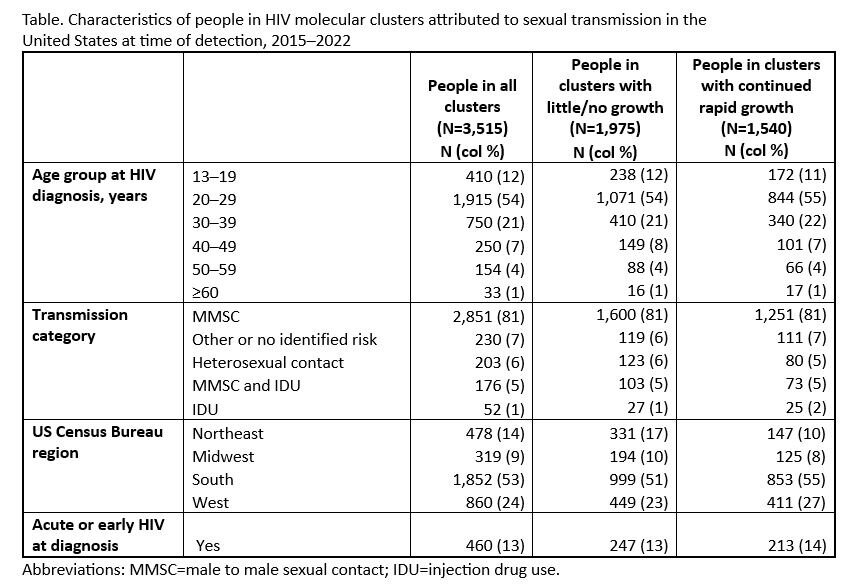
1155. Changing Clustering Rates in the Rhode Island HIV-1 Epidemic
Poster Abstracts
Page: 375
Vlad Novitsky1, Jon Steingrimsson1, August Guang1, Casey Dunn2, Fizza Gillani1, Joel Hague1, John Fulton1, Thomas Bertrand3, Lila Bhattarai3, Meghan MacAskill3, Utpala Bandy3, Joseph Hogan1, Rami Kantor1
Background
Tracking changes over time in proportions and characteristics of persons living with HIV who are part of molecular clusters (clustering rates), has potential to provide valuable insights into HIV transmission dynamics and help guide targeted public health interventions for prevention.
Methods
We monitored clustering rates patterns and changes over time among key populations in the statewide HIV-1 epidemic in Rhode Island from 1991 to 2023. Partial HIV-1 pol sequences were grouped by year of HIV diagnosis, and molecular clusters were identified in cumulative annual phylogenies. Mann-Kendall statistics were used to estimate trends in clustering rates over time in newly-diagnosed and prevalent HIV infections, and among key populations defined by selected socio-demographic characteristics and transmission risk factors.
Results
By the end of 2023, 2,630 persons with sequences represented the statewide Rhode Island HIV-1 epidemic. Overall, clustering rates increased from 7% in 1991 to 46% in 2023, correlating with cumulative sequence increase. Specifically, clustering rates increased significantly over time more among newly-diagnosed persons compared to prevalent infections mostly since 1998 (Figure), males versus others since 2009, people >40 years at HIV diagnosis versus others since 2005, MSM versus non-MSM since 2009, Whites versus others since 2005, persons with mental illness versus those without it since 2013, persons with HIV-1 subtype B versus non-B since 2013, and US-born versus foreign-born persons since 2007. Crossovers and divergence patterns in clustering rates identified over time among some groups further characterized clustering trend dynamics.
Conclusions
Monitoring HIV molecular clustering rates over three decades in a statewide epidemic revealed evolving trends and diverse patterns among key populations over time, suggesting a gradual shift toward a more localized HIV-1 epidemic in Rhode Island. Findings emphasize the importance of tracking clustering rates to guide targeted interventions and prevent new transmissions.
Figure 1.
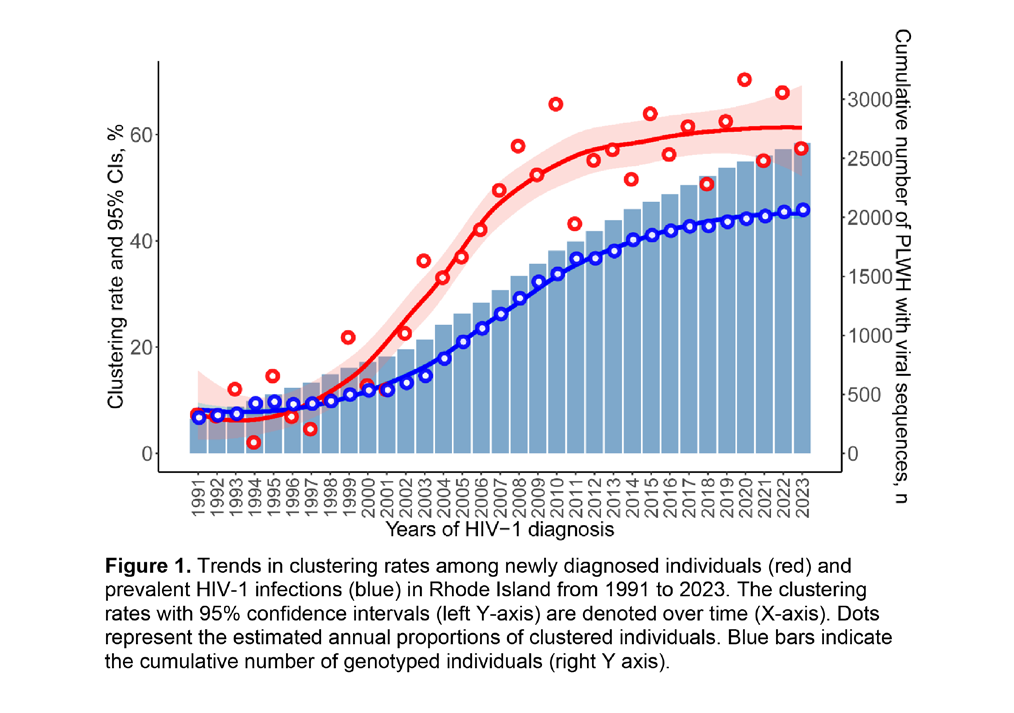
1156. Evolution of HIV-1 A6 Clusters in Poland Following Full-Scale Armed Conflict in Ukraine
Poster Abstracts
Pages: 375-376
Karol Serwin1, Kaja Mielczak1, Anna Urbańska1, Bogusz Aksak-Wąs1, Piotr Ząbek2, Ewa Siwak2, Iwona Cielniak2, Paweł Jakubowski3, Monika Bociąga-Jasik4, Bartosz Szetela5, Malwina Karasińska-Cieślak1, Magdalena Witak-Jędra1, Milosz Parczewski1
Background
One of the fastest-growing HIV-1 epidemics is the A6 sub-subtype, which has dominated countries of the Former Soviet Union. In Poland, the HIV-1 A6 prevalence has been increasing for over a decade, boosted after 2022 by the extensive influx of individuals from Ukraine. Our goal was to assess the changes in phylogenetic clustering patterns and cluster growth of HIV A6 in Poland between 2020 and 2024.
Methods
We created a dataset of 14,007 unique HIV-1 pol gene fragments of sub-subtype A6 from publicly available sequence databases and included 2,089 sequences from Poland sampled between 1996 and 2024. The dataset was divided into three data points: up to 2020, 2022, and 2024. We defined a cluster as a sample introduced into Poland, representing a local transmission chain with a distinct entry point. Time-calibration of the maximum-likelihood phylogenetic trees and discrete phylogeographic inference were performed to evaluate distinct clusters
Results
The number of A6 Polish clusters has increased from 74 in 2020 to 105 in 2022 and 191 in 2024. Median cluster sizes were 2 (2–306, n=628), 2 (2–457, n=939), and 2 (2–655, n=1499), respectively. These clusters comprised nearly all sequences from individuals born in Poland, with the proportion growing from 88.1% in 2020 to 90.5% in 2024. The fraction of females in clusters increased notably from 9.0% (n=28) in the 2020-2022 period to 19.6% (n=110; p<0.001) in the two following years, driven mainly by foreign-born women. The number of non-clustered (singleton) sequences increased significantly from 21.9% (n=87) to 35.5% (n=307; p<0.001), and the proportion of singletons surged from 70.5% in 2020 to 75.8% in 2024. The share of migrants among non-clustered sequences increased from 80.5% (n=70) in the first two years of the study to 90.2% (n=279; p<0.01) in the most recent two years. We noted a substantial rise in virus introductions into the country, with 120 cases in the period of two years before 2022 and 399 importations in the following two years
Conclusions
The number and size of A6 clusters in Poland have increased, including those involving female sequences. Several of the large male-dominated clusters continue to drive the spread of domestic infections and national A6 epidemic is propelled by infections from war related migration. Containing the growth and number of clusters presents a healthcare challenge, especially as resources are constrained by the need to support the large influx of individuals from abroad
Figure 1.
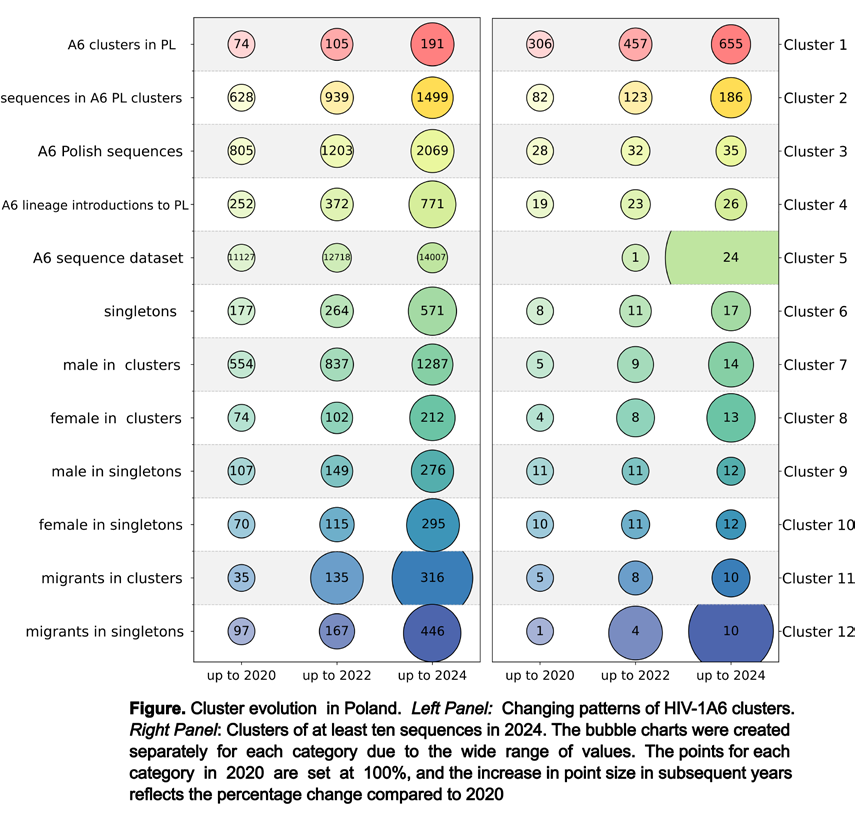
1157. People Living With HIV Diagnosed Late Provide Source of HIV Infection to Others With Recent Diagnosis
Poster Abstracts
Page: 376
Evangelia G. Kostaki1, Georgios Adamis2, Maria Chini3, Simeon Metallidis4, Vasileios Papastamopoulos5, Dimitrios Chatzidimitriou4, Antonios Papadopoulos1, Mina Psichogiou1, Dimitra Paraskeva6, Sofia Kourkounti7, Helen Sambatakou1, Angelos Hatzakis1, Gkikas Magiorkinis1, Lemonia Skoura4, Dimitrios Paraskevis1
Background
Late presentation remains an important hurdle in the management and prevention of HIV infection. Our aim was to investigate the potential source of infection among people living with HIV (PLHIV) with different stages of diagnosis, using in addition to the traditional definition for late diagnosis, the time interval between HIV acquisition and diagnosis dates.
Methods
The study sample consisted of 3,093 HIV-1 subtype A1 and B sequences from a period with dense sampling in Greece. Analysis was performed on 2,385 sequences with pairwise genetic distances <0.015 substitutions/site. 2,194 PLHIV were categorized according to CD4 count at diagnosis (advanced disease: CD4<200 cells/μl or clinical AIDS, late: 200≤CD4≤350 cells/μl, non-late: CD4>350 cells/μl). Treatment-naïve PLHIV were categorized according to the time from HIV infection to diagnosis (recent: 0.07-1.20, intermediate: 1.21-2.55, late: 2.56-11.71 years). HIV infection was estimated by molecular clock analysis. HIV transmissions among PLHIV with different diagnosis status were estimated by a modified statistical phylogeography method.
Results
For subtype A1, analysis using the estimated infection dates revealed that among PLHIV with recent diagnosis, the mean number of infections originated from PLHIV with late and intermediate diagnosis were 35.7 (11%) and 32.8 (10%), respectively. For those diagnosed late, only 21.3 (6.7%) and 18.5 (5.8%) of infections were from PLHIV with intermediate and early diagnosis. Similarly for subtype B, a proportion of infections among PLHIV with recent (13%) and intermediate (17.5%) diagnoses originated from PLHIV with late status. Statistical phylogeography confirmed that late presenters were a significant source of HIV transmission to PLHIV from other groups. Analysis using CD4 counts showed consistent results for both subtypes. Late and advanced disease groups provided a significant source of infections to other groups. Non-late presenters were not a significant source of HIV transmission to those with late presentation and advanced disease.
Conclusions
Using two different definitions for late diagnosis, we showed that PLHIV diagnosed at a late stage provide a source of infection to those diagnosed earlier, in Greece. Our study highlights that early diagnosis, besides the beneficial effect for the disease prognosis, would significantly mitigate onward HIV transmission. This underscores the need to enhance HIV testing strategies in Greece to ensure earlier diagnosis and timely treatment initiation.
Figure 1.
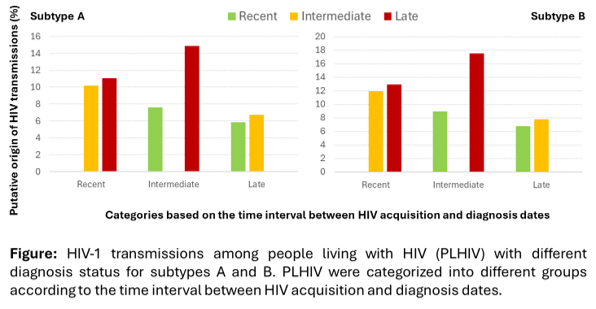
1158. Distribution of HIV-1 Variants in Population-Based National Surveys in Sub-Saharan Africa, 2015-2022
Poster Abstracts
Page: 376
Peter D. Ghys1, Jessica E. Justman2, Andrew C Voetsch, PhD3, Alash'le Abimiku4, Sani Aliyu5, Hetal Patel3, Joshua DeVos3, Kristin Brown3, Faith Ussery3, Bharat Parekh3, Chéri van der Walt6, Vibha Kana6, Sizulu Moyo7, Mary Mahy8, Joris Hemelaar9
Background
The distribution of HIV-1 genetic variants among people living with HIV (PLHIV) is important for the design of vaccines and broadly neutralising antibodies (bNAbs) as well as for the accuracy of tests for diagnosis and viral load. This study aimed to compare the distribution of HIV-1 variants from population-based national surveys in sub-Saharan countries.
Methods
Population-based national HIV survey data were available for 15 countries in sub-Saharan Africa during 2015-2022, including Population-based HIV Impact Assessments (PHIAs) in several countries, Nigeria’s HIV/ AIDS Indicator and Impact Survey (NAIIS) and two South African National HIV Prevalence, Incidence and Behaviour Surveys (SABSSM). The Ethiopia survey was conducted in only urban areas. Genotyping was performed on the samples selected for resistance testing and in which amplification of HIV RNA/proviral DNA was successful. In most countries, samples from those with a recent HIV infection within the prior 12 months (applying an algorithm that included the Limiting-Antigen Avidity EIA, viral load, and the absence of antiretrovirals), all children younger than 18 months (except for Rwanda), and a country-specific selection of people living with HIV (PLHIV) with a long-standing infection (beyond 12 months) with VL>1,000 RNA copies/ml were analysed. In the two SABSSMs, the sampling included PLHIV with >1,000 RNA copies/ml. HIV-1 variants were identified using the REGA HIV-1 & 2 Automated Subtyping Tool. The unweighted percentage distribution of HIV-1 variants was determined for each survey and compared to other surveys.
Results
Sample sizes varied between 42 and 1,440 PLHIV by survey (Figure). Comparing country distributions of HIV-1 variants showed important variation among countries and regions: the dominant variant was the recombinant CRF02 AG in Cameroon, Côte d’Ivoire and Nigeria; subtype A in Kenya, Rwanda and Uganda; subtype C (40%) and subtype A (38%) in Tanzania and subtype C (>90%) in Ethiopia, Eswatini, Lesotho, Malawi, Namibia, South Africa (both surveys), Zambia and Zimbabwe.
Conclusions
HIV-1 variant distributions for countries in West Africa, East Africa, Ethiopia, and Southern Africa in population-based national surveys showed heterogeneity across these regions, with specific subtypes dominating in each region. HIV-1 diversity in sub-Saharan Africa may need to be accounted for during the development of HIV diagnostic and viral load tests, vaccines, and bNAbs.
Figure 1.
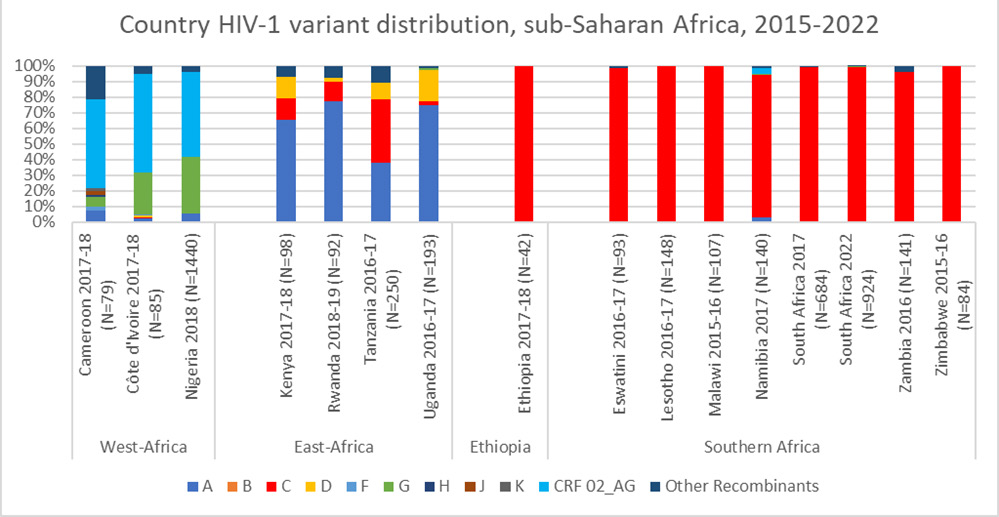
1159. Life Expectancy Among Virally Suppressed Women and Men With HIV in the Bronx, New York, 1997-2021
Poster Abstracts
Page: 377
Brandilyn A. Peters1, Melissa Fazzari1, Uriel R. Felsen1, Heidi E. Jones2, Mindy S. Ginsberg1, David B. Hanna1, Kathryn Anastos1
Background
Life expectancy for people with HIV (PWH) has increased dramatically, but disparities may remain across sub-populations. We aimed to characterize life expectancy over 2 decades by sex and race/ethnicity for virally suppressed PWH in the Bronx, New York – a low income area with a largely Black and Hispanic population and high proportion of women with HIV.
Methods
PWH receiving care in the Montefiore Health System in the Bronx with at least 2 viral load measurements obtained at least 30 days apart were included. Viral suppression was defined retrospectively as the earliest date (1997-2021) in a one-year window where at least 80% of all viral load measurements were suppressed (<1000 copies/mL). Follow-up ended at death (via National Death Index), loss to follow-up, or the end of the analysis window (end of 2022). A Poisson regression model with offset for years of follow-up was used to estimate mortality rate ratios and 95% confidence intervals according to time period and age at earliest viral suppression, sex at birth, and race/ethnicity. Based on the Poisson model, expected remaining years of life were estimated for a 30-year-old via Chiang’s method with bootstrapped 95% confidence intervals.
Results
PWH (n=10,308; 42% women, 43% non-Hispanic Black, 40% Hispanic, 5% non-Hispanic White) were followed for an average of 10 years (interquartile range 4-15), during which 2,813 (27%) died. As expected, risk of mortality declined over time, corresponding to a ~10 year increase in life expectancy since the late 1990s. Women had 28% (22-34) lower mortality risk than men. Compared to Black PWH, Hispanic PWH had 20% (12-28) lower mortality risk, while White PWH or those with other/unknown race/ethnicity had higher mortality risk (White: 18% [-1,40]; other/unknown: 51% [32,72]). Adjustment for CD4+ T-cell count and health insurance did not materially alter these results. Hispanic women had the highest estimated life expectancy, and men of other/ unknown race/ethnicity had the lowest (50 and 35 years for 30-year-old with earliest viral suppression within 2017-2021, respectively) (Figure).
Conclusions
Virally suppressed women and Hispanic PWH in the Bronx have longer lifespans than comparable men and other race/ethnic groups, respectively, consistent with sex and race/ethnic disparities in lifespan in the U.S. among people without HIV. Yet, lifespan for non-Hispanic PWH in the Bronx remains lower than the general U.S. population.
Figure 1.
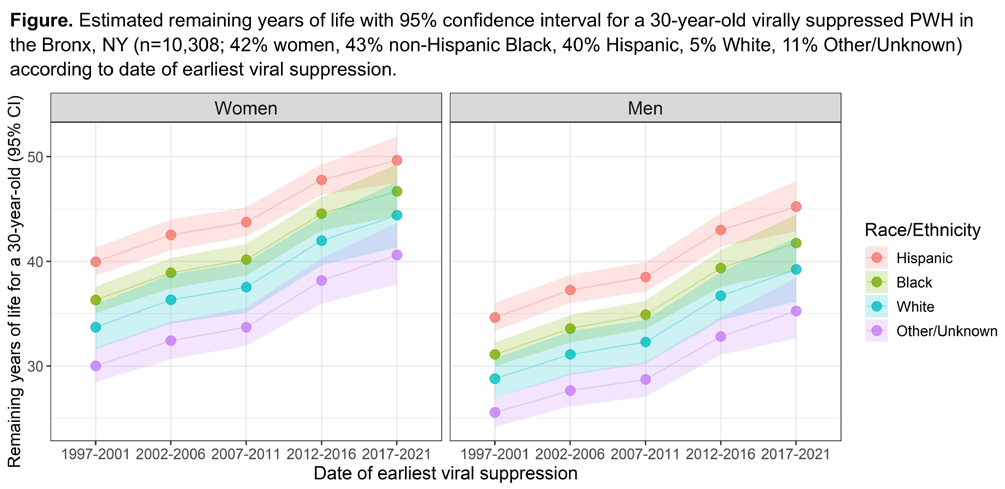
1160. Mortality Trends Among Persons With Perinatal HIV in United States and Territories, 1978-2022
Poster Abstracts
Page: 377
Preetam Cholli, Xueyuan Dong, Margaret A. Lampe, Yang Liu, Jessica Fridge, Athena Kourtis, Alexandra Balaji, Kate Buchacz
Background
Recent trends in mortality among people aging with perinatally-acquired HIV (PPHIV, “lifetime survivors”) remain poorly characterized. We used National HIV Surveillance System (NHSS) data to analyze survival trends and all-cause mortality among PPHIV since the first cases were identified in the U.S. and describe characteristics of decedent PPHIV between 2020-2022.
Methods
PPHIV born between 1978 and 2022, as reported to CDC by December 2023, were identified and categorized into birth cohorts as follows: no ART (1978-1986; cases identified through AIDS case reporting); early-ART (1-2 drug regimens) (1987-1995; identified through AIDS and/or HIV case reporting); and highly active combination ART (cART) era (1996-2022; identified through universal name-based HIV case reporting), subdivided into four-year periods until the end of observation [1996-1999, 2000-2003, etc.]). We used Kaplan-Meier to estimate each birth cohort’s survival probability over the duration of the observation period (through 2022). For each treatment era, population-level demographic characteristics and all-cause mortality rates (MR; deaths per 1000 person-years) were also assessed.
Results
There were 19,146 PPHIV born and 6,765 PPHIV deaths (35%) between 1978-2022. Ten-, twenty- and thirty-year (where applicable) survival probabilities among pre-ART, early-ART, and early cART birth cohorts (1978-1986: n=2187; 1987-1995: n=10176; 1996-1999: n=2194) were: 60%, 41%, and 33%; 68%, 64%, and 36%; and 94% and 92%, respectively (Figure 1). In contrast, survival for all later birth cohorts remained >96% through 2022. Between 2020-2022, there were 323 deaths among 12,704 PPHIV. Among these, 311 (96%) occurred in PPHIV aged >18 years. Mortality was highest among PPHIV aged >25 years (MR 7.21), followed by those aged 19-24 years (MR 1.09) and 13-18 years (MR 0.13). The median age of death was 29 years, while the median age of PPHIV still alive at the end of 2022 was 28. Deaths occurred most commonly among males (55%), Black/African American persons (55%), and PPHIV born in the South (44%) and Northeast (38%).
Conclusions
There have been marked improvements in childhood and adolescent survival among PPHIV since the cART era. However, PPHIV born earlier still face a relatively high burden of mortality despite advances in treatment. As lifetime survivors age into adulthood, understanding their care needs, comorbidities, quality of life, and causes of death will be essential to improving their well-being and survival.
Figure 1.
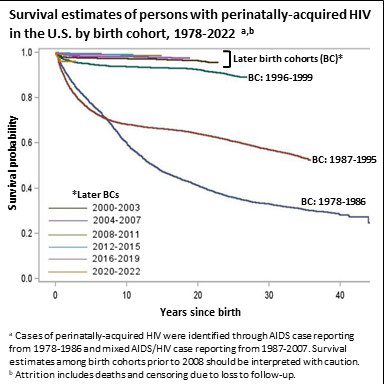
1161. Mortality in the HIV Outpatient Study (HOPS), Trends and Risks: 2007-2022
Poster Abstracts
Pages: 377-378
Kimberly Carlson1, Qingjiang Hou1, Alexander Ewing2, Kate Buchacz2, Jonathan Mahnken1, Frank Palella3, Kalliope Chagaris1, Rick Novack4, Ellen Tedaldi5, Jun Li2
Background
While persons with HIV (PWH) can live into old age on ART, tailoring interventions to optimize health and lifespan requires ongoing study of determinants of survival.
Methods
We studied HOPS participants with >2 visits between 1/1/2007 and 12/31/2022 who received ART continuously for >6 months and for at least 75% of time under observation. PWH were followed from baseline (1/1/2007, or date of first HOPS visit thereafter) until death, last contact date plus 6 months, or 12/31/2022. Deaths included occurred within 6 months of last contact. Univariate Poisson regression generated overall and non-AIDS-related mortality rates by demographic and select risk factors. For longitudinal trends, we used univariate and multivariable Poisson regression with generalized estimating equations (GEE) for crude and adjusted mortality rates and rate ratios (RR). GEE models updated age in years and other death risks annually.
Results
Of 4,859 participants, median age (Interquartile range (IQR) at baseline was 43 years (yrs) (33, 49), 20% were women; 396 died, most (n=307) from non-AIDS causes during a median of 7.0 yrs of observation (interquartile range: 3.4–12.0). Median age (-IQR) at death was 56 yrs (49,63). Mortality rates (95% CI) were 1.3 (0.9,1.9) and 1.1 (0.7,1.8) per 100 person-years in 2007 and 2022, respectively. In multivariable models, having public insurance versus all other types of insurance (excluding private), was associated with greater all-cause mortality RR = 1.55 (95% CI: 1.13, 2.13) (P<0.01). Non-Hispanic Black people, compared to White people, had higher non-AIDS-related mortality rates (P<0.05), but not all-cause mortality. Other factors positively associated with overall mortality (P<0.05) were a history of injection drug use, and any of cardiovascular disease, renal disease, hypertension, smoking or cancer. However, the magnitude of association with mortality was greatest for HIV-related clinical factors (Figure) i.e., low CD4 cell count, and included HIV non-suppression. Sex and obesity were not associated with death rates in adjusted analyses.
Conclusions
HOPS mortality rates remained low among ART-treated PWH. Non-AIDS causes of death predominated but the greatest risks for death remained HIV-related factors i.e. lower CD4; even low-level viremia remained a significant factor. Interventions to further optimize lifespan among aging PWH will require improvement in prevention and management of comorbidities and tight maintenance of viral control and immune health.
Figure 1.
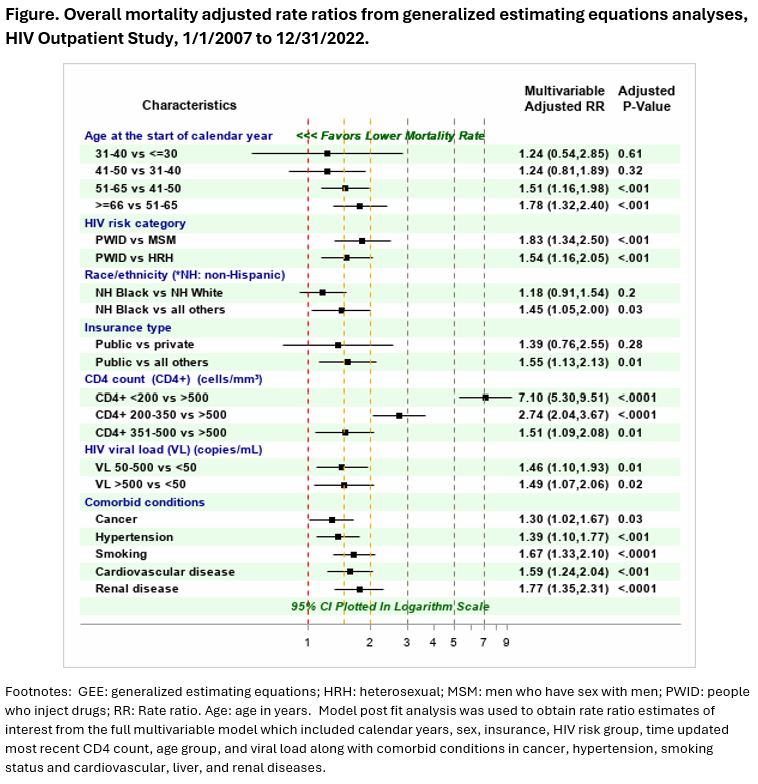
1162. Reducing HIV Diagnoses and Mortality Rate Further Increases Aging Resource Needs for PWH Into 2040
Poster Abstracts
Page: 378
Siobhan M. O'Connor, Ruiguang Song, Alex Viguerie, Kate Buchacz, Paul Farnham, Cynthia M. Lyles, Scott Grytdal, Angela B. Hutchinson, John T. Brooks
Background
Increased survival has changed the age distribution of people with HIV in the United States (U.S.). Over 2010-2022, the fraction of people with diagnosed HIV (PWDH) aged > 50 years increased to 54%. Forecasts of future age distributions are needed to inform resource planning.
Methods
We used a life table model with age-specific mortality to predict future age distributions of PWDH in the U.S. by age from 2021-2030 and 2021-2040 under multiple scenarios by varying annual percentage changes (APC) in HIV diagnoses (Dx) and PWDH mortality rates (MR). National HIV Surveillance System data provided the number of PWDH aged ≥ 13 years at year-end 2020, HIV Dx in 2021, and PWDH deaths in 2021; and 2021 U.S. Life Tables provided population-based mortality estimates. We report estimated age distributions of PWDH (overall and by race/ethnicity) from 2021 (n = 1,053,300) to 2030 for two scenarios: A) held APC in Dx at -3% (proximate pre-COVID trend) with stable MR (0% change); and B) set APC in Dx to -22.3% to reach the Ending the HIV Epidemic (EHE) goal of 90% decrease in Dx by 2030 (from 2017 EHE baseline), and reduced MR linearly each year to reach the general population MR in 2030. For 2021-2040, we used the same values for Scenario A. For Scenario B we set APC in Dx at -11.2% to reach the 90% decrease in Dx by 2040, and linearly decreased MR to reach the general population MR by 2040.
Results
By 2030, Scenario A estimates there will be 1,116,600 PWDH; 57% (n = 640,100) aged > 50 years and 27% aged > 65 years. Under Scenario B, there will be 1,016,800 PWDH in 2030; 64% aged > 50 years and 31% aged > 65 years. By 2040, Scenario A estimates there will be 1,057,500 PWDH; 64% aged > 50 years and 33% aged > 65 years. Under Scenario B, there will be 929,800 PWDH in 2040; 75% aged > 50 years and 42% aged > 65 years (Fig 1). Scenario B also predicts 354,300 Black/African American (38%), 250,600 Hispanic/Latino (27%), and 245,500 White (26%) PWDH in the U.S. by 2040, with 70%, 73% and 82% of each group, respectively, aged ≥ 50 years.
Conclusions
If rates of decline in Dx and PWDH MR remain stable, by 2030 the absolute number of PWDH in the U.S. will increase, with 57% aged ≥ 50 years. Greater decreases in Dx with reduced MR decreases the absolute number of PWDH by 2040, but the fraction aged ≥ 50 years could increase to > 70%. Demand for aging-related resources will be especially needed to care for more and older PWDH in coming years, including Black/African American and Hispanic/Latino PWDH.
Figure 1.
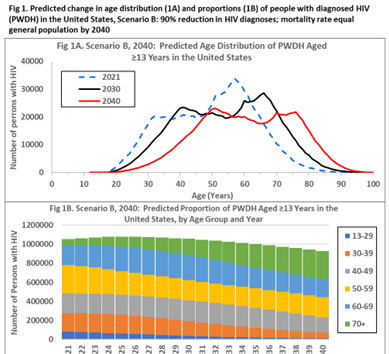
1163. WITHDRAWN
Poster Abstracts
Page: 378
1164. Projecting Demographics and Causes of Death Among People With HIV in Western Europe to 2050
Poster Abstracts
Page: 379
Julie Ambia1, Ard van Sighem2, Nikos Pantazis3, M. John Gill4, Sophie Abgrall5, Antonella d'Arminio Monforte6, Robert Zangerle7, Andreu Bruguera8, Janne Vehreschild9, Matthias Cavassini10, Inma Jarrin11, Fabrice Bonnet12, Jonathan A. C. Sterne1, Suzanne M. Ingle1, Adam Trickey1
Background
Antiretroviral therapy (ART) scale-up in Western Europe has reduced the incidence of AIDS, increased life expectancies, and led to an aging population of people with HIV (PWH). We aimed to predict cause-specific mortality patterns in Western Europe in the context of changes in demographics and ART use.
Methods
A deterministic, compartmental model was parameterised and calibrated using epidemiological data for 2010-2022 on Western Europe from the European Centre for Disease Prevention and Control and UNAIDS, including population sizes, new HIV cases, ART coverage, demographics, and migrants with HIV. Data on 147,698 PWH on ART in 8 European countries were taken from the Antiretroviral Therapy Cohort Collaboration, including cause-specific mortality rates by demographics and CD4 cell counts. The model accounted for age, sex at birth/mode of HIV acquisition, ART status, CD4 counts, and hepatitis C virus. We compared the status quo to a scenario where, from 2025, the ART start rate is 1.5x higher, the rate of stopping ART is halved, and HIV infections decrease by 1,000 each year from 2025 until reaching zero.
Results
By 2050, 1.1 million PWH are predicted to be living in Western Europe, up from 950,000 in 2025. Assuming current intervention coverage, 88% of PWH would be on ART in 2050. The percentage of PWH aged ≥76 years is predicted to rise from 10% in 2025 to 29% in 2050. The all-cause mortality rate is estimated to increase from 1.09 (95% Credibility Interval: 1.04-1.15) in 2025 to 1.53 (1.51-1.57) per 100 person-years in 2050. The estimated decline in the AIDS mortality rate between 2010 and 2025 is 80%. From 2025-2050, projected AIDS mortality rates remain at 0.27 per 100 person-years (Figure). Meanwhile, cardiovascular-related and non-AIDS defining cancer mortality rates would increase from 0.17 (0.16-0.18) to 0.33 (0.31-0.35), and 0.23 (0.22-0.24) to 0.37 (0.36-0.39) per 100 person-years, respectively, to be the two leading causes of death among PWH by 2050. In 2050, 42% of deaths among PWH would occur among PWH aged ≥76 years. Over the next 25 years, if there is an increase in ART coverage (reaching 91% in 2030) and a steady decrease in HIV incidence, there would be 32,387 (29,757-35,569) fewer deaths.
Conclusions
We estimate that by 2025 the UNAIDS target of reducing AIDS deaths by 75% from 2010 levels will be met in Western Europe. However, subsequently, non-AIDS-related deaths would increase over time due to the ageing population of PWH offsetting the AIDS mortality reduction.
Figure 1.
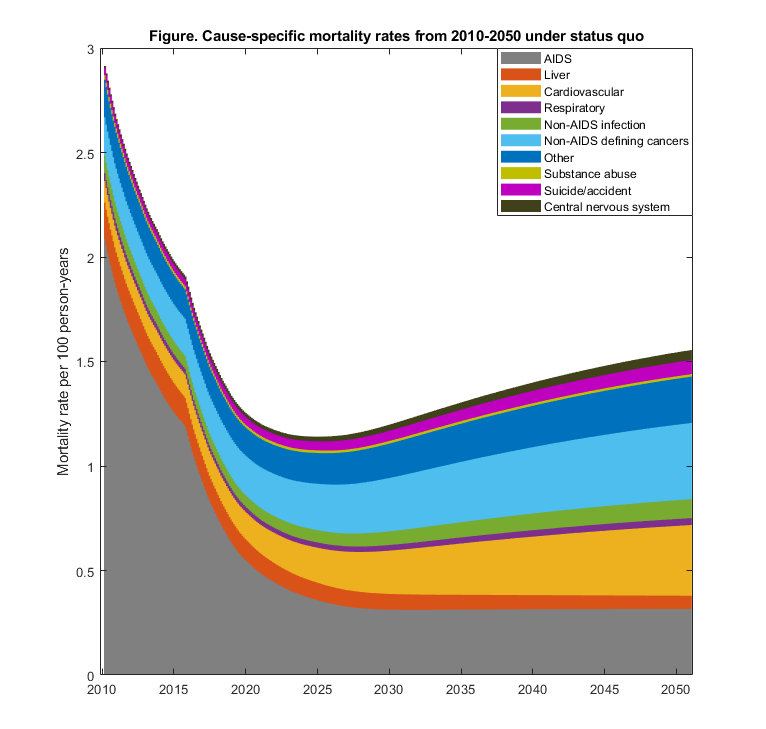
1165. Causes of Mortality Among Persons Living With HIV in Thailand, 2007-2022
Poster Abstracts
Page: 379
Wiphawee Kiatchanon1, Niramon Punsuwan2, Sanny Northbrook3, Suchunya Aungkulanon4, Apiratee Kanphukiew1, Jennifer Favaloro5, Poonchana Wareechai6, Cheewanan Lertpiriyasuwat2
Background
Over 1,200 government and private healthcare facilities provide free HIV services under Universal Health Coverage (UHC) for >90% of persons living with HIV (PLHIV) in Thailand. The National AIDS Program (NAP) extracted death information from the National Death Registration System for all PLHIV since 2005. We analyzed mortality trends and causes among reported PLHIV from 2007 to 2022.
Methods
We conducted a retrospective analysis of PLHIV ≥15 years registered in NAP as of January 31, 2023. Causes of death were categorized using an algorithm designed by clinicians, following Thai HIV case surveillance definitions and WHO HIV clinical staging guidelines. A text clustering model was used to automatically classify causes of death from 2007 to 2022. We applied a Cox proportional hazards regression model to calculated cause-specific mortality rate ratios (MRR) across two-year intervals adjusting for the last reported CD4 category, age group at death, and time-period.
Results
Among 673,635 registered PLHIV ≥15 years, 162,051 (24%) died from various causes. The median age at HIV diagnosis was 35 years (IQR: 28-42 years), while it was slightly higher at 38 years (IQR: 31-46 years) for those who died. Mortality rates varied, from 9.5% (15,390) in 2007-2008 to 14% (22,736) in 2021-2022. Half of the deceased had a baseline CD4 count < 100 cells/µL and 30% (49,157) died before initiating treatment. The most common causes of death were AIDS (59,573 deaths; 36%), unspecified AIDS-related causes (44,369 deaths; 27%), and non-AIDS infections (11,918 deaths; 7%). The proportion of AIDS-related deaths increased slightly from 32% (4,870) in 2007-2008 to 35% (7,962) in 2021-2022. Using a Cox model, we found that AIDS-related mortality (adjusted MRR [aMRR]: 1.03, 95% CI: 1.02-1.04), unspecified AIDS-related mortality (aMRR: 1.05, 95% CI: 1.04-1.07) and deaths from suicide or accidents (aMRR: 1.07, 95% CI: 1.04-1.10) were associated with higher mortality risk compared to death from non-AIDS infections, after adjusting for factors such as CD4 count and age. Conversely, deaths from non-AIDS non-hepatitis malignancies (aMRR: 0.97, 95% CI: 0.95-0.99) and CNS-related causes (aMRR: 0.90, 95% CI: 0.86-0.94) were associated with a lower mortality risk.
Conclusions
AIDS-related causes accounted for the majority of deaths among PLHIV >15 years. Targeted interventions to strengthen early case detection and improve treatment initiation could help reduce AIDS-related deaths.
1166. Text Clustering Model for Defining Cause of Death Among PLHIV in Thailand (2020-2022)
Poster Abstracts
Pages: 379-380
Apiratee Kanphukiew1, Wiphawee Kiatchanon1, Niramon Punsuwan2, Khunkansasi Pimpakhan2, Suchunya Aungkulanon3, Cheewanan Lertpiriyasuwat2, Poonchana Wareechai4, Natdanai Khosanam2, Anunthawip Chaimao2, Sanny Northbrook5
Background
In Thailand, cause of death is stored in free text format on death certificates and classified manually based on clinical expertise, Thai HIV surveillance definitions, and WHO clinical staging guidelines. Limitations, particularly in extracting and categorizing causes of death from text-based records in the Ministry of Interior's death registry, are significant obstacles in monitoring HIV-related mortality. We developed a text clustering model to automatically classify cause of death and differentiate between AIDS-related and other causes of death among HIV-positive individuals who died between 2002 and 2022.
Methods
We developed and applied a text clustering model to automatically categorize cause of death into 3 main groups: AIDS-related causes (e.g., opportunistic infections), non-AIDS related causes (including non-communicable and non-natural causes), and ill-defined causes. Clustering was based on similarity ratios, keywords, and >85% fuzzy string-matching score in Python. Additionally, we created a confusion matrix to measure the text clustering model’s overall performance by analyzing its precision (true positive/ (true positive + false positive)), recall (true positive/(true positive + false negative)), and F-1 score ((2*precision*recall)/(precision +recall)).
Results
Of 165,541 deaths recorded in NAP, 163,251 (99%) had specific information on cause of death. A total of 96,350 deaths (58%) were AIDS-related, 59,871 (36%) were non-AIDS-related, and 9,320 (6%) were classified as ill-defined. After deduplication, 26,913 unique causes of death and 31 major disease groups were identified. The text clustering model achieved 95% precision, 95% recall, and 95% f-1 score. Precision scores revealed low accuracy for AIDS-related causes from immune deficiency or Lost to Follow-up (79%), hematologic diseases (77%), and assault (52%). Recall scores were low for hematologic disease (24%) and poison (53%). F-1 scores were for low for hematologic disease (37%) and assault (66%). Tuberculosis and cancer had the highest precision (100%), recall (100%), and f1-score (100%) in the model.
Conclusions
The text clustering model showed high performance overall, but certain categories had low precision, recall, and F1-scores, possibly due to incomplete information on death certificates. Future improvements to utilize AI to enhance text clustering capabilities may increase system effectiveness.
1167. Changes Over Calendar Time in Discrimination of Prognostic Models for People With HIV Starting ART
Poster Abstracts
Page: 380
Martina Cusinato1, Suzanne M. Ingle1, Adam Trickey1, Linda Wittkop2, Ard van Sighem3, Robert Zangerle4, Enrico Girardi5, Matthias Cavassini6, Bernadino Roca7, Amy Justice8, Sophie Grabar9, Niels Obel10, Inma Jarrin11, Andreu Bruguera12, Jonathan A. C. Sterne1, the Antiretroviral Therapy Cohort Collaboration (ART-CC)
Background
Accurately predicting survival of persons with HIV (PWH) is important to guide clinical decision-making and lifestyle choices. The Antiretroviral Therapy Cohort Collaboration (ART-CC) developed prognostic models estimating three- and five-year mortality risk among PWH starting ART between 1995-2003. Using more recent data to re-fit these models, we investigated changes in discrimination to predicting mortality for more recent time periods.
Methods
Data were combined from 18 cohort studies in 9 countries in Western Europe and North America. Eligible PWH were ART-naïve adults (≥16 years) starting treatment with ≥3 antiretroviral drugs from 1996-2019. PWH were followed from ART start date until death (outcome variable) or censoring. Three-and five-year follow-up periods were investigated. Model covariates were sex, age, HIV acquisition group, HIV-1 RNA, CD4 count, and AIDS/no AIDS before ART start. C-statistics for discrimination were derived from adjusted Weibull models for ART start year periods 1996-2001, 2002-2006, 2007-2009, 2010-2013 and 2014-2019.
Results
Among 159,257 PWH starting ART, 6755 died within five years (683,000 person-years) and 4,987 within three years (319,000 person-years). The proportion of women was stable overtime, while the proportion of participants starting ART aged ≥50 years and with higher CD4 counts increased. Median follow-up was five years except for PWH starting ART between 2014-2019 (4.3 years). Three-year adjusted mortality hazard ratios (aHRs) were similar to those for five years shown in the table. The aHRs for prior AIDS (versus no AIDS) increased from 2.59 (95% confidence interval: 2.32-2.88) for ART start year 1996-2001 to 3.80 (3.27-4.41) for 2014-2019. The aHRs for IDU (versus MSM) also increased over time, from 2.92 (2.57-3.33) to 4.09 (3.30-5.07). The aHRs for all age groups (versus 16-29) increased, whilst the aHRs for CD4 categories 0-99 and 100-199 (versus 200-349) decreased. C-statistics for the 5-year models increased from 0.769 to 0.834 between 1996-2001 and 2014-2019, whilst 3-year model C-statistics increased from 0.781 to 0.845.
Conclusions
Discrimination of prognostic models based on standard markers for mortality among PWH starting ART has improved since combination ART became widely available in western Europe and North America. Risk profiles of PWH starting ART changed markedly due to earlier diagnosis and treatment. Future work will assess the impact on discrimination of additional predictors.
Table 1.
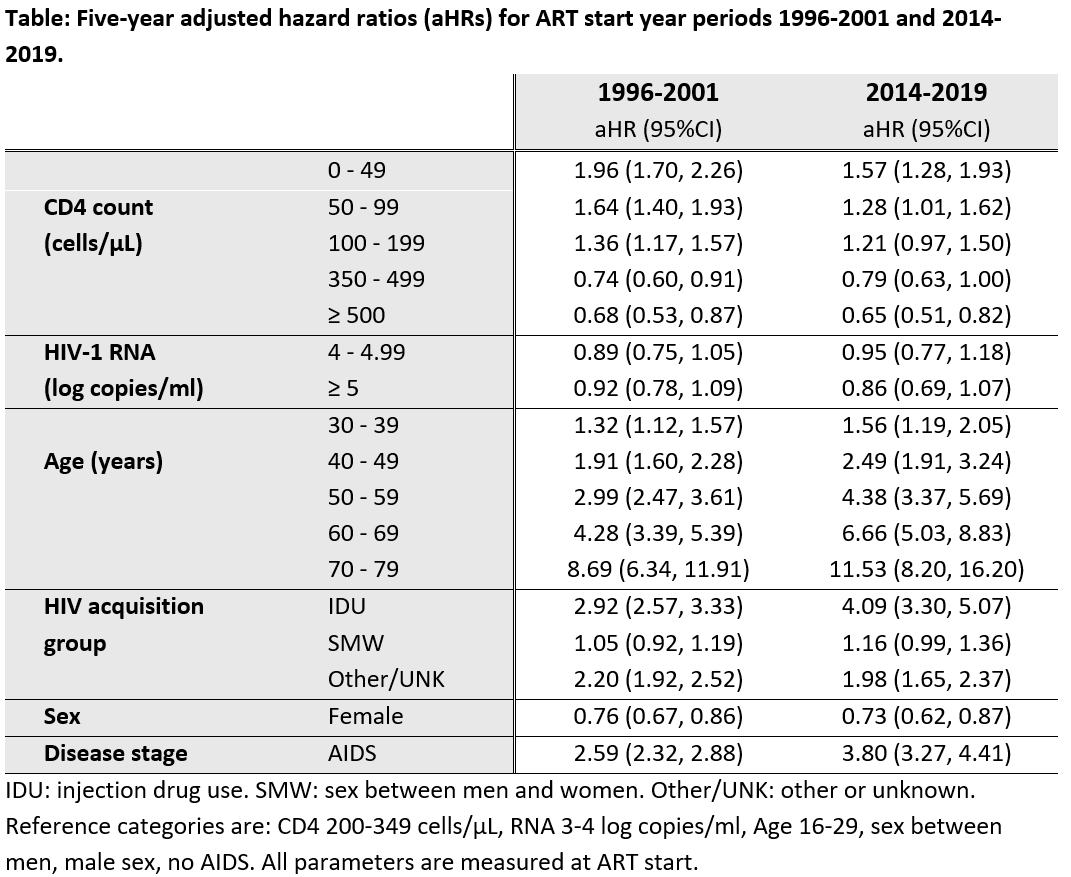
1168. Clinical Outcomes in Lung Transplantation in People Living With HIV: A Competing Risk Analysis
Poster Abstracts
Page: 380
German Contreras, George Golovko
Background
Little is known about post-transplant outcomes in people living with HIV (PLWH). Traditional survival analysis typically assumes the presence of a single outcome, but in real-world scenarios, multiple competing events can influence survival and other key metrics. This study aims to assess clinical outcomes in PLWH post-lung transplantation (LTx) using a competing risk analysis to better understand the true incidence of complications and death.
Methods
We conducted a retrospective cohort study of PLWH and non-PLWH, aged 18 and older, who underwent LTx between 2022 and 2024. Data were collected from 64 healthcare organizations within the TriNetX U.S. Network. We applied the Aalen-Johansen method to estimate the cumulative incidence function (CIF) for three post-transplant outcomes: non-infection complications (surgical complications), infection complications (CMV, bacterial pneumonia, bacteremia, mycosis, CDI, RSV), and death. The analysis spanned one year after transplantation, stratifying by HIV status.
Results
A total of 63 PLWH and 3,874 non-PLWH were included in the study. The median age at the time of transplantation was 56 years for both groups, with a higher proportion of males (66.1% vs. 59%) and non-Hispanics (71% vs. 67.1%) in each respective cohort. Non-infection complications were the most common outcome in both groups, with similar CIFs (35.3% vs. 32.5%) Table. PLWH had a higher CIF for infection-related complications (25.3% vs. 18.7%) yet a lower mortality CIF (3.8% vs. 6.9%) than non-PLWH Table. CMV infection was the most frequent infection complication in both groups, with PLWH experiencing a higher incidence within the first year (18.1% vs. 13.6%) Table. Notably, the risk of mycosis was higher in PLWH (5.5% vs. 2.6%), while RSV cumulative incidence was significantly higher in the non-PLWH group Table.
Conclusions
PLWH undergoing LTx experience a distinct post-transplant complication profile, particularly regarding infection risks. Despite a higher incidence of infection complications, PLWH had lower mortality within the first year post-LTx, suggesting that further investigation into tailored infection prevention strategies and post-transplant management is warranted. These findings underscore the importance of using competing risk analysis to capture the full spectrum of outcomes in this unique patient population.
Table 1.
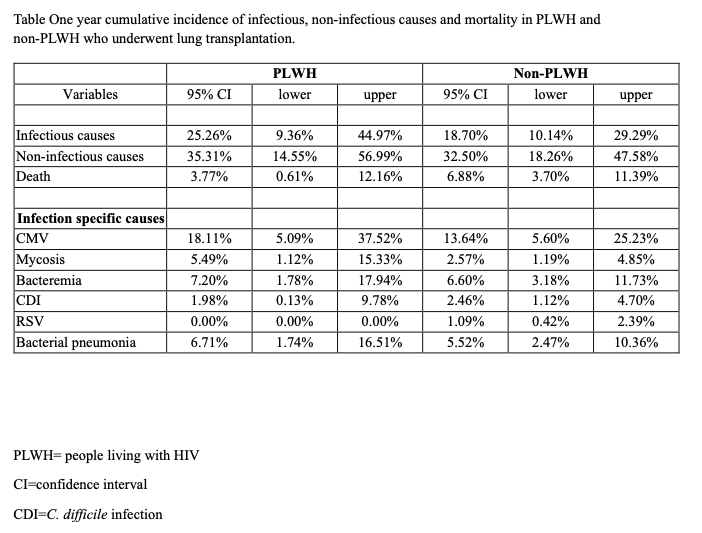
1169. Epigenetic Age Acceleration and Mortality Among Persons Who Inject Drugs With Poorly Controlled HIV
Poster Abstracts
Page: 381
Jing Sun1, David W. Sosnowski1, April Shu2, Hsing-Yu Hsu1, Jill A. Rabinowitz3, Shruti H. Mehta1, Damani A. Piggott1, Brion S. Maher1, Gregory Kirk4, the AIDS Linked to the Intravenous Experience (ALIVE) Study Group
Background
HIV infection and substance use have been associated with accelerated epigenetic aging. However, limited data exist on the long-term implications associated with age acceleration and HIV among persons who inject drugs (PWID).
Methods
We included participants from the AIDS Linked to the Intravenous Experience (ALIVE) study, a community-based cohort of PWID. DNA was isolated from buffy coat samples and treated with bisulfite before being analyzed using the Illumina MethylationEPIC BeadChip. Four measures of epigenetic age were generated: PhenoAge, Horvath age, Hannum age, and GrimAge. All participants were linked annually to the National Death Index-Plus to determine time and vital status since 1988. We used linear mixed effect regressions to compare the trajectories of epigenetic age acceleration and Cox regression to determine the hazard of all-cause mortality by epigenetic age and HIV status. All models controlled for demographics, current injection drug use, and current smoking.
Results
Of 396 participants (127 people with HIV [PWH]) with 792 person-years of follow-up, the median age at baseline was 48.5 years. Of these, the majority were Black (89%) and male (69%). Compared to people without HIV (PWoH), PWH exhibited age acceleration based on multiple epigenetic clocks. This acceleration was further exacerbated by poorly controlled HIV viral load. People with HIV had 2 years (b = 1.79, 95% CI = 0.74, 2.84) and 4 years (b = 4.00, 95% CI = 2.30, 5.69) of age acceleration in GrimAge and PhenoAge, respectively, compared to PWoH. Those with a detectable viral load had faster age acceleration, with 3 years (b = 3.14, 95% CI = 2.13, 4.15) and ~7 years (b = 6.65, 95% CI = 5.01, 8.28) of GrimAge and PhenoAge acceleration, respectively. No differences were observed using Horvath’s clock. Both HIV and epigenetic age acceleration were independently associated with all-cause mortality. Compared to PWoH demonstrating PhenoAge deceleration, PhenoAge acceleration with or without HIV was associated with a 3.28 (95% CI: 2.06, 5.02) and 2.12 (95% CI: 1.32, 3.41) times higher hazard of all-cause mortality, respectively.
Conclusions
HIV infection and detectable viral load are associated with epigenetic age acceleration. Age acceleration and HIV infection independently and jointly increase mortality risk among persons who inject drugs. These findings highlight the importance of addressing molecular aging to reduce mortality burden among PWID.
Figure 1.
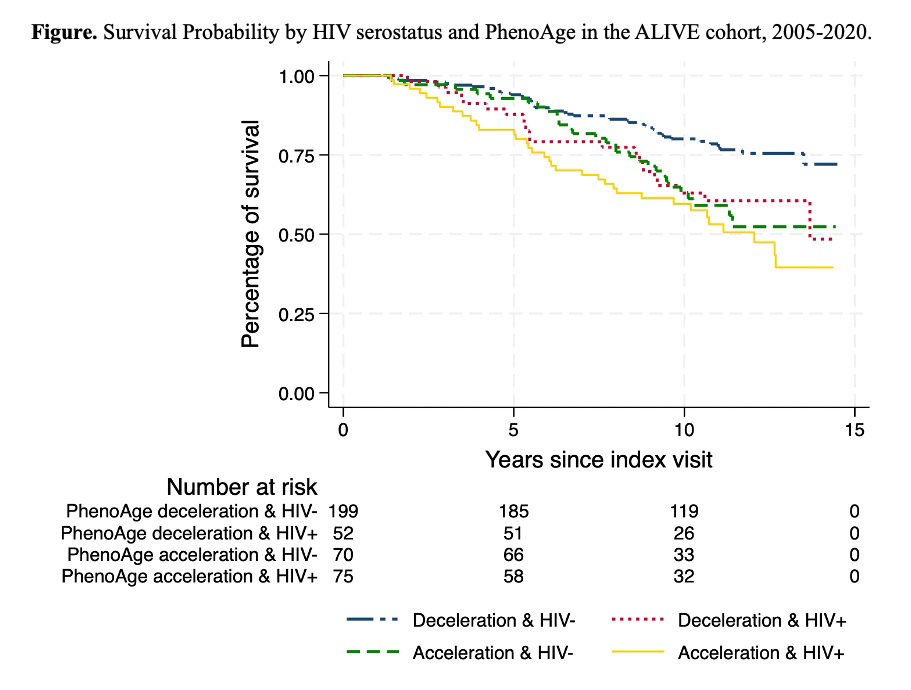
1170. The HIV Epidemic Is Growing Faster in Countries Excluded From Gilead Voluntary Licenses
Poster Abstracts
Page: 381
Samuel Cross1, Toby Pepperrell2, Cassandra Fairhead3, Andrew Hill4
Background
There were 1.3 million new HIV acquisitions worldwide in 2023, far over UNAIDS target of <370,000 by 2025. Novel injectable pre-exposure prophylaxis (PrEP), lenacapavir (LEN), has superior efficacy to oral TDF/FTC. Gilead are drafting a voluntary license (VL) for LEN. We analysed the rate of HIV epidemic growth for countries inside and outside of the existing Gilead VL for tenofovir alafenamide (TAF). This VL excludes middle-income countries (MICs) in North Africa, the Middle East, South America, and Asia. Countries excluded from VLs pay higher prices for drugs, restricting access. LEN is priced at $40,000 per person per year (pppy) in the US, versus predicted costs of production of $40-$100 per person-year.
Methods
Epidemiological data were collected from the UNAIDS AIDSinfo 2023 database, which analyses country-level data using the Spectrum model. We extracted epidemic size, HIV acquisitions, change in acquisition rate, incidence in key risk populations including men who have sex with men (MSM) and people who inject drugs (PWID) and MTCT, for countries inside and outside the Gilead VL for TAF. Results were supplemented by PUBMED/EMBASE searches and national reports with most recent estimates for Russia and China (2021).
Results
The TAF VL covered 29,615,800 people living with HIV (PLHIV) and 808,900 new HIV acquisitions in 2023. Excluded MICs constitute 4,497,600 PLHIV and 288,189 new HIV acquisitions. Change in new acquisitions from 2010 to 2023 was +55.3% in excluded MICs vs -17.0% included. Excluded high incidence nations include Mexico, Peru, Brazil, Egypt, Bulgaria, Iran, Russia, and China. Annual HIV epidemic growth (incidence: prevalence ratio) was +6.7% for excluded countries vs +4.6% for included countries. High incidence rates are concentrated in key risk populations including MSM (incidence 9.2-16.5% in Mexico, Peru, Brazil, and China) and PWID (3.5-8.1% in Mexico, Bulgaria, Iran, Russia, and China). Average cost of TAF containing products in excluded countries was $7206 pppy versus $189 included.
Conclusions
The HIV epidemic is growing faster in countries excluded from the Gilead VL for TAF (+6.7%/year) versus those included (+4.6%/year). Rate of HIV acquisition has risen 55.3% in countries excluded since 2010, while falling 17% for included countries. If the imminent LEN VL includes all LMICs, this would cover 85% of the world’s population, where 95% of new HIV acquisitions are diagnosed, facilitating affordable pricing of LEN as seen in LMICs included in the TAF VL.
Table 1.
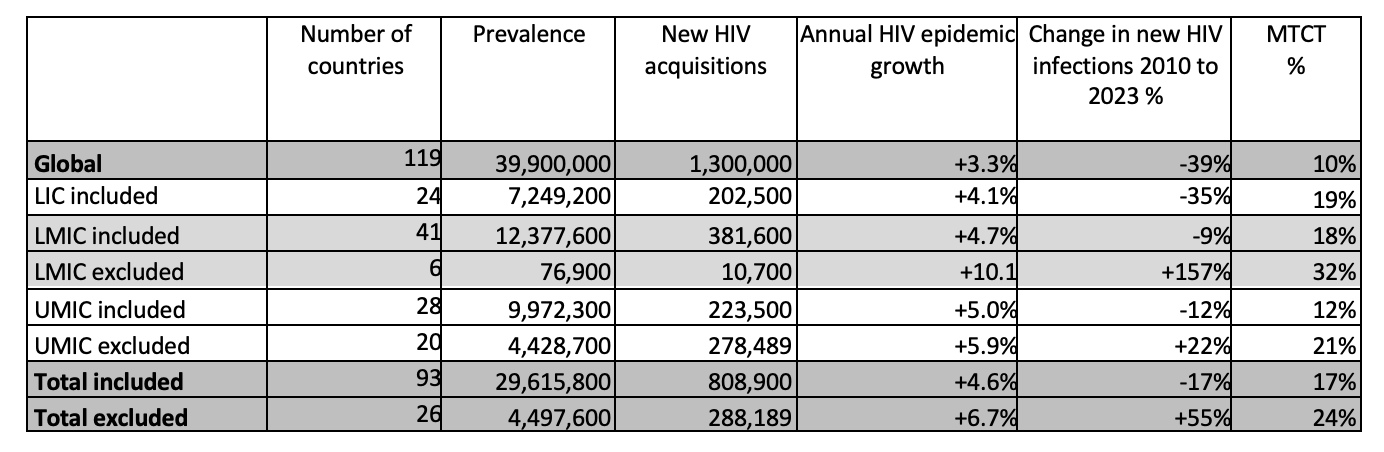
1171. Characteristics and Needs of Adult Lifetime Survivors With HIV in the United States, 2015-2022
Poster Abstracts
Pages: 381-382
Margaret A. Lampe1, John Weiser1, Xin A. Yuan2, Sahithi Kalari1, Kate Buchacz1, Alexis Henderson2, Athena Kourtis1, Jason Craw1, Joseph Prejean1, Alexandra Balaji1, Linda Beer1
Background
Advances in HIV care and treatment have substantially extended survival of people with HIV. There is limited knowledge of the current health of the approximately 12,500 persons living with perinatally acquired HIV, i.e., Lifetime Survivors (LS), in the United States.
Methods
We used data from the Medical Monitoring Project (MMP), a nationally representative sample of US adults with diagnosed HIV, to examine demographic and clinical characteristics of adult LS. MMP collects annual, cross-sectional data through medical record abstraction (MRA) and interviews. We analyzed data from the 2015-2022 MMP data cycles on persons who reported they were born with HIV or had an HIV diagnosis within 12 months of birth (N=292). We report weighted percentages for key sociodemographic, behavioral, clinical, and HIV care continuum characteristics to elucidate the experiences and needs of this population.
Results
Among LS, 62% were female and 39% were male; 68% were > 25 years, and 34% were >30 years at the time of interview. In all, 90% were born in the US or Puerto Rico; 58% identified as Black, non-Hispanic and 26% as Hispanic or Latino; 38% obtained a high school or equivalent education, and 48% had more than a high school education. About 58% were currently employed, 18% were unemployed and 16% were unable to work. A majority (62%) had only public health insurance coverage, 31% had any private coverage and 7% had only Ryan White/AIDS Drug Assistance Program coverage. Household income was <100% of the federal poverty level for 50% of LS, 19% experienced hunger/food insecurity and 21% experienced unstable housing or homelessness. Most were very satisfied (83%) or somewhat satisfied (11%) with their healthcare. Overall, in the past 12 months: 93% of LS received any HIV care, 43% had sustained viral suppression; 22% had a nadir CD4 count of less than 200 cells/mm³ and 40% took all antiretroviral (ARV) doses in the past 30 days (Table).
Conclusions
Although most LS received HIV care, fewer than half reported full ARV dose adherence, and a majority were not virally suppressed. Many were living in poverty. While a sizeable minority reported challenges meeting basic needs, most reported satisfaction with healthcare and being in good to excellent health. Assuring LS receive appropriate services to meet basic needs such as safe housing, food, and ARV adherence should be a public health priority. Additional research into the needs, health, and quality of life of LS is needed.
Table 1.
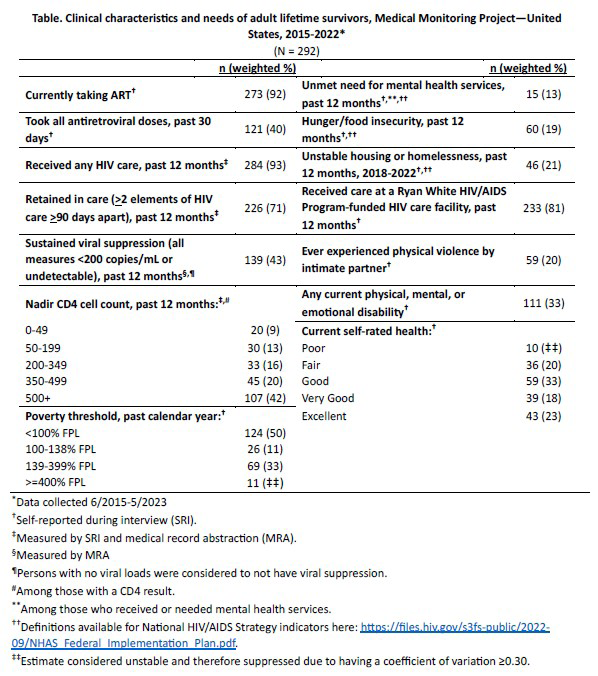
1172. Clinical and Programmatic Factors Associated With Low-Level Viremia in West Africa
Poster Abstracts
Page: 382
Ebiere C. Herbertson1, Thierry Tiendrebeogo2, Karen Malateste3, Henri Chanal4, Eugène Messou5, Abert Minga5, Armel Poda6, Ephrem Mensah7, Oliver Ezechi1, Antoine Jaquet2, Ighovwerha Ofotokun8, Cecile D. Lahiri8, the International Epidemiology Databases to Evaluate AIDS (IeDEA) Collaboration - West Africa
Background
Low-level viremia (LLV) is linked with poor outcomes in persons with HIV. Poor adherence to antiretroviral therapy (ART) is associated with LLV, but other factors may also contribute to LLV. This study aims to identify clinical and programmatic characteristics associated with LLV at the first viral load result post-ART initiation in West Africa.
Methods
We conducted a retrospective cohort analysis of ART initiators (2016-2021) from the International Epidemiology Databases to Evaluate AIDS (IeDEA) West Africa collaboration. First values of viral load (12(±6) months post-ART initiation) were considered in the present analysis to define LLV. The response variable for multinomial regression analysis was viral load categories; primary outcome was LLV, defined as plasma HIV RNA 51- 999 copies/ml. Independent variables included WHO clinical stage at ART initiation, natal sex, initiated on dolutegravir (DTG), and country.
Results
Viral load (VL) results were available for 6367 (51.3%) of 12,398 participants. The cohort (n=6367) was from 7 Programs in 5 West African countries. Most participants were from Ivory Coast (35%) and Benin (34%). Their mean age was 39(SD±11) years, and were predominantly female (60%). At enrollment, 5.4% were at WHO clinical stage 4, one-third were initiated on DTG-based ART. Rates for viral suppression and LLV were 78.7% and 11.3%, respectively. Factors found to be significantly associated with LLV at univariate analysis were male sex (p<.0001), WHO clinical stage (p<.0001), and country (p=0.001). There was a trend toward association for DTG-initiation (p=0.067). Participants at WHO stage 4 compared to WHO stage 1, had 2.044 (1.193, 3.505 p=0.0093) times odds of LLV at first VL result, post ART initiation, when adjusted for DTG initiation, sex, and country.
Conclusions
WHO clinical stage four, male sex and country were found to have statistically significant association with LLV at first VL result. These findings provide critical information for targeted interventions to identify persons at risk of LLV in West Africa and mitigate adverse clinical consequences.
1173. WITHDRAWN
Poster Abstracts
Page: 382
1174. WITHDRAWN
Poster Abstracts
Page: 383
1175. Prevalence and Risk Factors of HIV Viral Blips in the NA-ACCORD, 2010-2020
Poster Abstracts
Page: 383
Raynell Lang1, Morris Chan2, Jintong Yan3, Michael Horberg3, Jennifer O. Lam4, Vincent C. Marconi5, Keri N. Althoff6, Joseph J. Eron7, Kelly Gebo8, M. John Gill1, Maile Karris9, Mona Loutfy10, Haidong Lu11, Richard Moore6, Viviane D. Lima2, the North American AIDS Cohort Collaboration on Research and Design (NA-ACCORD) of IeDEA
Background
HIV viral blips defined as a viral load between 51-999 copies/ mL (preceded and followed by <50 cp/mL at least 1 to 12 months apart) occur among people with HIV (PWH) despite effective antiretroviral therapy (ART). Within the North American AIDS Cohort Collaboration on Research and Design (NA-ACCORD), we aimed to describe the prevalence and risk factors associated with experiencing at least one viral blip.
Methods
US and Canadian PWH 18 years or older in the NA-ACCORD were followed from the first suppressed viral load (<50 cp/mL) measured >12 months after ART initiation or 1/1/2010 until the earliest of viral blip (event), the last visit prior to a gap of >2 years without a CD4 or viral load (loss to follow-up), death or 12/31/2020. Logistic regression models estimated crude and adjusted odds ratios (aOR) and 95% confidence intervals to identify factors associated with experiencing a viral blip (see Figure for co-variates included in models).
Results
Among 77,670 PWH, 18,327 (24%) experienced a viral blip during the study period. Older age was associated with increased odds of viral blip (per 10-year increase in age: aOR=1.05 [1.03, 1.07]). The odds of a viral blip were higher among non-Hispanic Black (aOR=1.12 [1.07, 1.17]) and Hispanic (aOR=1.14 [1.07, 1.21]) PWH compared with non-Hispanic white PWH. PWH reporting injection drug use (aOR=1.13 [1.04, 1.23]) or men who have sex with men (aOR=1.15 [1.07, 1.23]) had higher odds of viral blips than PWH reporting heterosexual HIV risks. The odds of a viral blip were higher among PWH with BMI >24.9 kg/m2: aOR=1.12 [1.07, 1.17] and lower among PWH with BMI <19 kg/m2; aOR=0.60 [0.54, 0.67] compared with PWH with a BMI between 19-24.9 kg/m2 measured at study completion. PWH with lower CD4 cell counts and higher HIV viral loads at the time of ART initiation had greater odds of a viral blip (figure). At study completion compared to PWH on non-nucleoside reverse transcriptase inhibitors (NNRTIs), those on integrase strand transfer inhibitors (INSTIs) had a reduced odds of blip, and those on protease inhibitors (PIs) had an increased odds of blip.
Conclusions
Nearly 25% of PWH experienced a viral blip over the study period. Factors associated with viral blips included older age, race/ethnicity, BMI, HIV acquisition risk, CD4 count and ART regimen. Further studies are needed to identify if blips are associated with subsequent HIV virologic failure.
Figure 1.
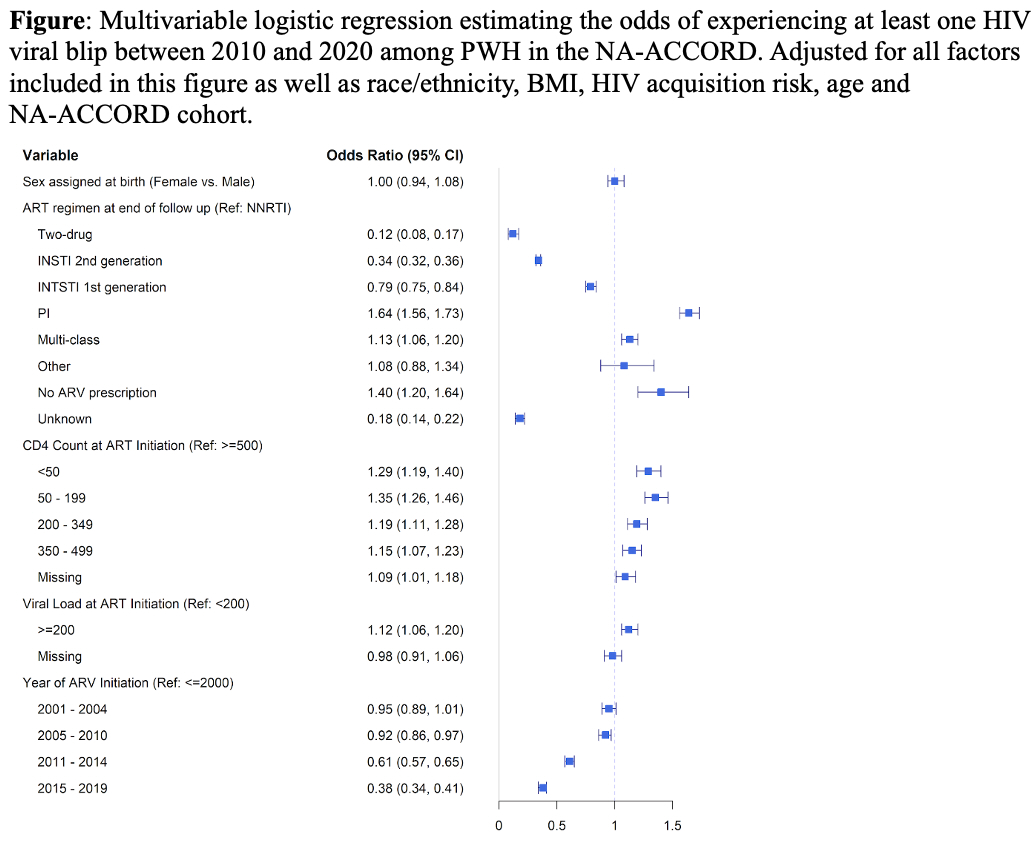
1176. Time From HIV Infection to Diagnosis Using CD4 Depletion Model: Thailand, 2014-2021
Poster Abstracts
Pages: 383-384
Suchunya Aungkulanon1, Wolfgang Hladik2, Cheewanan Lertpiriyasuwat3, Anne Peruski2, Rommel Bain2, Ruiguang Song2, Poonchana Wareechai4, Sanny Northbrook5
Background
Timely diagnosis of HIV is crucial for effective treatment and prevention of transmission. In Thailand, despite advancements in HIV prevention and treatment, delays in diagnosis remain a significant challenge. We estimated delays in diagnosis (time from infection to diagnosis) and identified factors associated with the delay.
Methods
Data on newly reported treatment-naïve people living with HIV (PLHIV) ≥13 years diagnosed at 1,084 health units during 2014–2021 were obtained from Thailand’s National AIDS Program. We used CD4 depletion model to estimate the infection date using model parameters originally derived from the Concerted Action of Seroconversion to AIDS and Death in Europe Study (CASCADE) adjusted using published parameters from Asian population samples to account for differences in the rate of CD4 decline across HIV subtypes. We estimated time from infection to diagnosis by calculating the time difference between infection and diagnosis. We abstracted data on demographics, self-reported risk behaviors, dates of HIV testing, and dates and results of CD4 testing from HIV records. Multivariable linear regression analysis was used to identify factors influencing time from infection to diagnosis.
Results
Of 242,338 PLHIV, 201,752 (83.3%) had a baseline CD4 test within 6 months after diagnosis. Among those with baseline CD4 data, the median baseline CD4 count was 187 cells per µL (IQR 51–383). We estimate that among PLHIV diagnosed in 2021, the average time from infection to diagnosis was 5.7 years, 27% of them being diagnosed within a year of infection. The average delay in diagnosis in 2021 varied by age and population group with longer delays seen among 25–34-year-olds (6.2 years), 35-44-year-olds (6.7 years), men who inject drugs (9.4 years), and heterosexual men (6.6 years). The average time from infection to diagnosis and the percentage of those whose infection was diagnosed within 1 year remained stable over the analysis period. In multivariable analyses, factors associated with longer diagnosis delays were male sex, age 35-44 years, self-reported injection drug use, and being covered under universal health coverage (p<0.001).
Conclusions
Diagnosis delay varied by age and population group and showed no improvement from 2014 to 2021. Addressing the time from infection to diagnosis and the disparities across population groups may enhance overall public health outcomes and help end HIV as a public health threat.
1177. Expanding HIV Self-Test Reach: Comparative Outcomes Across Facility, Community, and Online Channels
Poster Abstracts
Page: 384
Thi Thi Win1, Moe Kyaw Kyaw1, Yin Min Thaung1, Linn Htet1, Kyaw Phyo Naing1, Sai Lone Tip2
Background
HIV self-testing (HIVST) has emerged as a critical strategy for expanding HIV testing, especially among populations that may not use traditional services. However, optimizing distribution channels to maximize access and uptake remains a challenge. This study evaluates implementation and effectiveness of HIVST across three distinct models: facility-based, community-based, and online platform, aiming to identify the most effective approach for reaching key populations (KP).
Methods
HIVST kits were distributed through three channels under HIV/ TB Agency, Information and Services (AIS) project in Myanmar: facility-based distribution at four healthcare centers, five community-based outreach services, and online platform in collaboration with pharmacies, aiming to reach KPs such as men who have sex with men (MSM), sex workers (SW), and people who inject drugs (PWID). Data were collected from May 2022 to September 2024, using pre-defined variables across all channels via Sate Cha online platform. Descriptive and statistical analyses were conducted to assess key variables. Data on barriers to previous testing were also gathered from participants.
Results
A total of 5,882 HIVST were distributed: 57% through facility-based, 35% via community outreach, and 8% through online platform. MSM accounted for 64% of users, followed by SW (20%) and PWID (14%). The median age was 26 years, with 80% male and 20% female users, though only 7% of online users were female. First-time testers comprised 54%, with 56% of them testing via community outreach. Result reporting was highest in facilities (100%), with lower rates online (81%). Reactive rate was 6% among 4,468 results reported, with 81% of 247 reactive cases confirmed positive. Barriers to HIV testing included confidentiality (35%), accessibility (43%), and fear of testing (22%).
Conclusions
This study demonstrates overall effectiveness of facility-based, community-based, and online distribution channels in promoting HIVST among KPs. Each channel contributed uniquely to reaching diverse groups: facility-based services excelled in result reporting, community-based approaches engaged a higher proportion of first-time testers, and online platforms provided discreet access to testing. However, challenges remain in optimizing online engagement and result reporting, particularly among female users. Future strategies should focus on enhancing the strengths of each channel, improving online reporting mechanisms, and strengthening linkages to confirmatory testing.
1178. National HIV Self-Test Distribution Program: HIV Testing, Diagnosis, and Treatment, 3/2023 - 5/2024
Poster Abstracts
Page: 384
Allison Lale1, Robin J. MacGowan1, Avery Bourbeau1, Patrick S. Sullivan2, Revae S. Downey1, Kevin Delaney1
Background
Approximately 13% of people with HIV are unaware of their HIV status. Distribution of HIV self-tests (HIVSTs) to populations most affected by HIV increases awareness of infection, and may facilitate initiation of treatment. Previous work has described HIVST distribution programs, but not confirmation of diagnosis or engagement in antiretroviral therapy (ART).
Methods
A national CDC-funded HIVST distribution program was launched in 3/2023. People ≥ 17 years old who reside in the US or Puerto Rico ordered 1 or 2 HIVSTs online. Program participants were asked to complete a short post-order survey. Participants who consented to future communications were emailed survey links 10 and 60 days after the HIVSTs were mailed. Data included demographic information, prior HIV testing and diagnosis, HIVST results, subsequent provider testing and ART initiation. Surveys were not compensated.
Results
From March 2023 through May 2024, 250,083 people placed their first order for one (15%) or two (85%) HIVSTs; 78% responded to the post-order survey. Survey response rates were: 3.5% on the 10-day and 1.9% on the 60-day, with 0.6% answering both. Among the 12,037 who answered 10- or 60-day survey questions, most responded within 2 days, 294 (2.4%) reported a prior HIV diagnosis in the post-order survey, of whom 154 later used the HIVST. Among the remaining 11,743, 201 (1.7%) reported a positive HIVST; most of whom were male (65%) and <35 years of age (54%). Among 138 people with a new positive HISVT on the 10-day survey, 68 sought testing from a medical provider, of whom 44 reported the test result; 40 (91%) were confirmed positive, and 33 of 40 (83%) initiated ART (Fig 1a). On the 60-day survey, there were 87 respondents reporting a new positive HIVST, including 24 who also completed a 10-day survey. Sixty-one were tested by a provider ≤30 days of using the HIVST, 52 reported the result, of whom 41 (79%) were confirmed positive, and 36 of those 41 (88%) initiated ART (Fig 1b). Integrating data from both timepoints, among the 201 people with a new positive HIVST, 121 were tested by a provider, 75 were confirmed to have HIV, and 63 initiated ART.
Conclusions
HIVST programs increase awareness of HIV infection. This limited program evaluation illustrates that many participants with positive HIVSTs followed up with provider testing. Strengthening messaging on the need for laboratory testing may be required. Among people with a confirmatory diagnosis, most initiated ART, preventing further HIV transmission.
Table 1.
| New Positive HIVST |
Provider testing |
Confirmation |
ART initiation |
| 1a. 10-Day Survey Results (N=8,704) |
|
|
n=136 |
n=53 |
n=40 |
| 138 Yes |
68 Yes |
40 Positive |
33 Yes |
|
|
68 No |
4 Negative |
7 No |
|
|
|
9 Unknown |
|
| 1b. 60-Day Survey Results (N=4,791) |
| New Positive HIVST
*
|
n=84 |
n=55 |
n=41 |
| 87 Yes |
61 Yes |
41 Positive |
36 Yes |
|
|
23 No |
11 Negative |
5 No |
|
|
|
3 Unknown |
|
1179. Estimating Need for Annual HIV Testing Met by a Nationwide Mailed HIV Self-Testing Program
Poster Abstracts
Page: 385
Jessica M. Keralis1, Kevin Delaney1, Travis Sanchez2, Patrick S. Sullivan2
Background
The Together TakeMeHome program (TTMH) provides free HIV self-test kits (HIVSTs) by mail, allowing people at least 17 years old who may experience barriers to accessing other HIV testing services to test privately on their own time. Users can order one or two HIVSTs. Our goal was to use nationally representative survey data to estimate the need for annual HIV testing in each state and what percentage of that need is being met by TTMH.
Methods
TTMH order data from March 2023 to July 2024 were used to calculate the number of orders and test kits mailed to each state. Among US adults who self-reported behaviors that increase the chances of getting or transmitting HIV and, we estimated the proportion that have (1) never tested for HIV and (2) not been tested in the past year (including never testers) with 2016-2022 data from the Behavioral Risk Factor Surveillance System, a nationally representative telephone survey of adults in the US. An estimated range of met need percentage for the two estimates was generated, assuming that the tests were used by people with behaviors similar to those reported in BRFSS. The lower bound was calculated by dividing the number of orders by the estimates for each state, assuming the individual used both test kits. The upper bound, calculated by dividing the number of test kits by each state estimate, assumes that all ordered tests were used and by different individuals, allowing for possible diffusion of kits to others in the user’s social network.
Results
As of July 2024, TTMH distributed 586,099 HIVSTs through 315,710 orders across all 50 states, the District of Columbia, and Puerto Rico. Overall, 5.4% of US adults engaged in behaviors with elevated HIV risk in the past year. Among those, 50.0% had never been tested for HIV (range: 26.6% in DC to 61.8% in UT), and 67.8% had not tested in the past year or ever (range: 43.4% in DC to 77.9% in SD). For those who have never been tested for HIV, likely met need estimates ranged from a low of 2.2%-4.0% (WY) to a high of 21.0%-39.6% (DC). For those who have not been tested in the past year, met need estimates ranged from a low of 1.2%-2.1% (WY) to a high of 7.1%-13.8% (PR).
Conclusions
Many in the US who could benefit from annual HIV testing are not being served by existing services. TTMH is meeting some of this need, with percentage of met need varying widely by state.
1180. Engaging Male Partners of HIV-Negative Pregnant Women in HIV Testing Using Oral HIV Self-Test
Poster Abstracts
Page: 385
Maganizo B. Chagomerana1, Annie Thom1, Nora E. Rosenberg2, William C. Miller2, Irving F. Hoffman2, Agatha Bula1, Mitch M. Matoga1, Mina Hosseinipour1
Background
Women are at risk of acquiring HIV throughout the perinatal period. HIV testing uptake among the male partners remains low thus the couple are often unaware of the male partner’s HIV status. The antenatal setting, with nearly universal uptake of HIV testing for women, can also serve as a way of reaching male partners. However, the optimal way to engage the male partners is unknown. We sought to evaluate the effect of providing partner notification (PN) + oral HIV self-test (HIVST) kits to pregnant women for their male partner.
Methods
We conducted a two-arm un-blinded randomized trial of HIV negative pregnant women who were attending antenatal care for the first time at Bwaila Hospital in Lilongwe, Malawi from October 2019 to August 2021. Women were randomized 1:1 to receive PN only inviting their partners for HIV testing (standard of care [SOC]) or PN + 1 HIVST kit for partner testing at home (intervention). Due to changes in the national HIV guidelines, from April 2021, women in the SOC arm received PN + 1 HIVST kit and women in the intervention received PN + 2 HIVST kits for couple testing at home. Two-sample test of proportions was used to compare differences in proportions of male partners who reported to clinic within 30 days post randomization. We used log-rank test and Log-binomial regression to compare time to return to clinic and assess factors associated with male partners’ return to clinic, respectively.
Results
We enrolled 200 pregnant women (100 each arm); 191 (96%) were married. All 70 male partners who reported to clinic tested negative at home. The proportions of males who reported to clinic were similar between intervention and SOC arms; 1) overall: 32% vs 38% (probability difference [pd] = -0.06; 95% CI:-0.07–0.19), 2) pre-guidelines change: 45% [10/21] vs 48% [9/20], pd=-0.03; 95% CI: -0.28–0.33), and post-guideline change: 28% [22/79] vs 36% [29/80], pd=-0.08; 95% CI:-0.23–0.06). Time to return to clinic did not differ between the two arms (Figure 1). Male partners for women with at least secondary education were more likely to report to clinic (adjusted risk ratio=2.25; 95% CI:1.09–4.64) than those for women with no formal or primary education only.
Conclusions
The inclusion of HIVST kit as part of passive partner notification did not improve clinic-based HIV testing among male partners of pregnant women. To ensure that men know their HIV status, innovative approaches are needed to reach and engage them in HIV testing.
Figure 1.
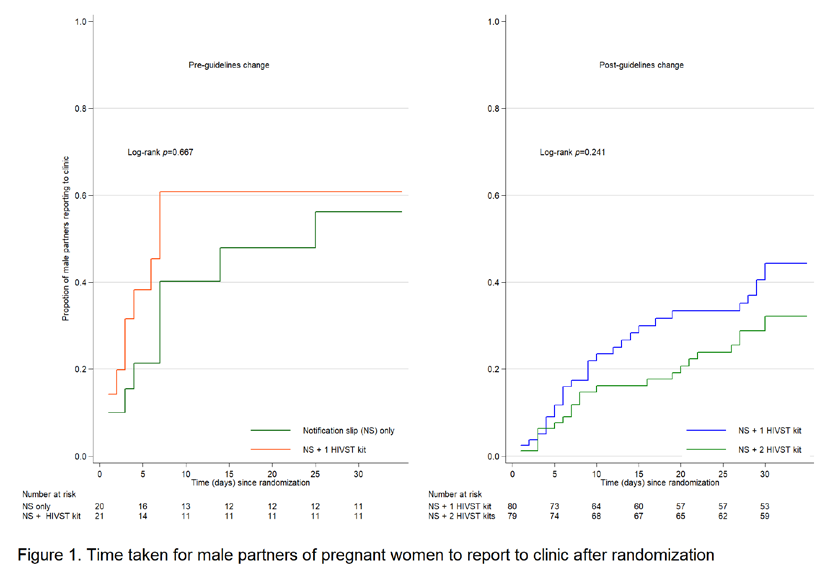
1181. Moderators of a Home-Based Couple Intervention on Couple HIV Testing and Counselling Uptake in Kenya
Poster Abstracts
Page: 385
Zachary A. Kwena1, Kevin Owuor2, Lynae Darbes3, Anna Helova2, Evelyne Owengah1, Elizabeth A. Bukusi4, Abigail Hatcher5, Moses Okombo6, Janet M. Turan2
Background
Identifying individuals who require particular strategies or possess characteristics for which the interventions are most effective is critical for achieving personalized care and optimal impact. We sought to identify and assess moderators of a home-based couples intervention on uptake of couple HIV testing and counselling (CHTC) in southwestern Kenya.
Methods
In a randomized control trial, we enrolled 800 stable couples (2/3 of the women living with HIV, WLWH) between 2019-2023. Consenting couples were randomized to a home-based couples intervention (HV, n=267), HIV self-test kits for couples (HIVST, n=266), or standard care (SC, n=267). In the HV arm, pairs of lay health workers (one female, one male) conducted two home visits during pregnancy and up to 3 visits postpartum, providing health education, couple communication skills building, and offering CHTC. Surveys with both partners occurred at baseline, 3- and 12-months postpartum, and brief phone assessments at 6- and 18-months postpartum, collecting data on socio-demographics, healthcare utilization, couple dynamics, and HIV testing outcomes. A log-binomial generalized estimating equation model was used to assess the potential moderating effect of baseline measures; including previous couple testing, education, wealth, couple age disparity, stigma perceptions, couple communication, relationship satisfaction, woman’s HIV status, parity, and length of the relationship; on the effect of the intervention on CHTC uptake. Marginal probabilities and effects with plots were reported.
Results
Significant moderators of the intervention effect on CHTC were the HIV status of a woman at baseline (interaction p-value=0.041) and parity (p-values=0.018). The overall probability of CHTC was higher among HIV-negative women compared to WLWH, with marginal effects of 11% in HIVST, 27% in HV, and 12% in the SC arm (Figure 1). Results also showed a significantly lower CHTC probability among women with numerous prior live births, as compared to those with few live births (Figure 2).
Conclusions
The home-based intervention appeared to have a more beneficial impact on CHTC uptake in couples where the woman was HIV-negative at baseline, compared to couples where the woman was HIV-positive. In addition, the intervention had more impact on CHTC uptake in couples with lower parity. Future intervention roll-out aiming for higher CHTC might target HIV-negative women with lower parity.
The figure, table, or graphic for this abstract has been removed.
1182. Evaluating the Effectiveness and Population Impact of Status-Neutral HIV Screening in AZ
Poster Abstracts
Page: 386
Lazaro Ruiz, Sheila Soto
Background
In Arizona, the Hispanic population faces significant barriers to accessing HIV testing services due to stigma, cultural insensitivity, and limited healthcare access. These challenges have led to low testing rates in Hispanic communities. To address this, we implemented a status-neutral HIV screening service integrated into routine health screenings offered by Mobile Health Units (MHUs) operating across Arizona. This study aims to evaluate the effectiveness and population impact of this intervention on HIV testing uptake and to model its potential for scalability and long-term sustainability.
Methods
We designed a status-neutral health screening service that includes cardiovascular, diabetes, and HIV testing. The model we applied helps to reduce stigma and improve HIV testing rates for Hispanic and other hard-to-reach populations in Arizona. We analyzed the data collected from our intake forms through October 2022 to March 2022 using both MHUs. The intake forms captured demographic information, HIV risk factors, and testing results. Additionally, population impact was modeled using data on first-time testers, uptake among high-risk populations, and improvement in linkage to Comprehensive Preventive Services (CPS).
Results
During the study period, 2,050 HIV tests were administered, with 84% of participants being first-time testers and 78% identifying as Hispanic. After adopting a status-neutral testing service, HIV testing rates increased from 16% to 77% for the Phoenix team and from 17% to 73% in the Tucson team. With the ability to be mobile and applying a status-neutral screening service it allows us to provide services to 13 different counties across Arizona, improving HIV testing rate, HIV awareness, and access/knowledge of CPS.
Conclusions
Our findings suggest that integrating HIV testing into routine health screenings via MHUs is an effective strategy for increasing testing rates and reducing HIV transmission in underserved populations. The status-neutral approach not only reduces stigma but also proves to be effective and scalable. These results support the expansion of similar programs in other regions with high HIV prevalence and low testing rates, particularly among marginalized populations.
1183. Effectiveness of Clinical Decision Support in Improving HIV Screening in Pediatric Primary Care
Poster Abstracts
Page: 386
Sarah Wood1, Gabrielle Difiore2, Mary Kate Kelly2, Stephanie Mayne2, Gregory Lawton2, Anthony Luberti2, Angela Raposseli2, Haley Richardson2, Robert Gross3, Alexander Fiks2, Brian Jenssen2
Background
Clinical decision support (CDS) systems are a promising strategy to improve HIV screening in pediatric settings. We assessed effectiveness of a CDS system to improve HIV screening at well-adolescent visits.
Methods
In this quasi-experimental pragmatic study, we developed and launched an electronic health record (EHR)-based CDS system across a 31-clinic, northeastern U.S, pediatric primary care network. The system included three components at annual well visits: 1) order sets with non-defaulted HIV test orders and universal HIV screening recommendations for patients 13+ years, 2) the Adolescent Health Questionnaire (AHQ), an electronic screener assessing sexual activity completed by patients on arrival, and 3) an automated EHR alert in the visit note for sexually active youth reminding clinicians to screen for HIV. Interrupted time series (ITS) analyses assessed differences in HIV screening rates pre- and post-CDS (12/2022-6/2023 vs 6/2023-12/2023) at well visits. Logistic regression included binary indicators for HIV test completion (primary outcome) and intervention period (pre vs post CDS), a fixed effect accounting for non-independence of intra-clinic observations, time in months, and a time x period interaction term. To a priori explore subgroup differences in effectiveness, separate ITS models included interaction terms for patient race (Black vs. non-Black), ethnicity, sex assigned at birth, gender identity, sexual orientation, and insurance.
Results
Of 60,592 adolescents aged 13-19 years-old (n=26,267 pre- and n=34,325 post-CDS), 24.7% were Black, 8.7% Latine, 49.5% female sex, 9.0% identified as LGBTQ, median age was 15 (IQR 14-16) and 15.1% reported sexual activity. Among all patients and sexually active patients, 2.2% and 11.1% received HIV screening, respectively. In ITS analyses, there were no differences in HIV screening rates between the pre- and post-CDS periods for all adolescents (OR 1.03, 95% CI: 0.87, 1.09). Similarly, there were no differences in HIV screening rates for sexually active youth (OR 1.11, 95% CI: 0.79, 1.03; Figure 1). In our subgroup analyses, there were no significant differences in HIV test completion within any patient subgroups.
Conclusions
In a large regional pediatric healthcare system, we found no significant effect of a CDS system on HIV screening. Our findings suggest that CDS primarily targeting knowledge and situational awareness may be insufficient to improve screening. Future CDS interventions should target additional systemic barriers.
Figure 1.
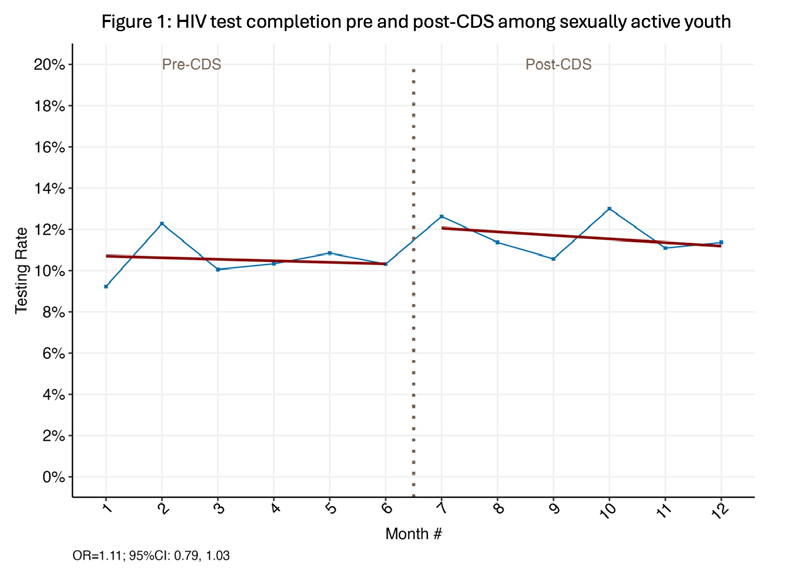
1184. Impact of a New Opt-In Targeted Strategy for HIV Testing in Emergency Departments
Poster Abstracts
Page: 386
Jose Guardiola1, Miriam Carbo2, Emilia Miro3, Juan Carlos Hurtado2, Agustin Avila2, Neus Robert4, Gemma Fernandez Ribas4, Jordi Llaneras3, Ariadna Rando3, Elisenda Miro1, Laia Sentis2, Juan González del Castillo, MD, PhD5, Oscar Miro2, the Urgencias VIHgila Project
Background
To analyze the time trends of HIV testing in Barcelona (Spain) and investigate if emergency departments (EDs) have changed HIV screening patterns and if the implementation of an opt-in targeted strategy for HIV testing in these EDs impacted these trends.
Methods
Between 2017-2023 (7 years), monthly HIV tests performed in 4 hospitals covering a population of 1.6-million inhabitants in Barcelona were recorded. Tests were classified as ordered by ED, other hospital departments (HD) or community healthcare centers (CHCC). Monthly ED attendances were also compiled, along with new HIV diagnosed performed in ED. Temporal trends were assessed by linear models. Between 2021 and 2022, the 4 EDs implemented an opt-in strategy to test every patient with targeted conditions on top of other classical reasons for HIV testing. Post-implementation HIV screening and new diagnoses in EDs were compared with the pre-implementation period.
Results
769,134 HIV tests were performed in 7 years (2,296/month-center): 430,582 (56.0%) by HD, 324,469 (42.2%) by CHCC and 14,083 (1.8%) by EDs. HIV tests steadily increased by 29 per month (R2=0.13, p<0.001), with HD-, CHCC and ED-ordered tests increasing by 11 (R2=0.14, p<0.001), 17 (R2=0.09; p<0.001) and 1 (R2=0.50, p<0.001), respectively. The rhythm of increment in ED testing was higher than in HD (p<0.001) and CHCC (p=0.04). There were 4.3 million ED visits (12,849/month-ED) and 0.33% were screened for HIV, with a significant 0.05% monthly increase of tested patients over time (p<0.001). There were 302 new HIV diagnoses performed in EDs (0.9/month-ED), resulting in a 2.1% of positive tests among the 14,083 screened patients, which decreased by -0.36% per year; R2=0.06, p<0.001. The opt-in targeted strategy was associated with higher increases in monthly HIV testing in EDs (p<0.001) and percentage of HIV tests ordered coming from EDs (from 1.62% to 2.08%, p<0.001); however, the percentage of ED comers screened, HIV new diagnoses and HIV tests resulting in new diagnoses did not vary (p=0.68, p=0.48 and p=0.78, respectively).
Conclusions
HIV screening in Barcelona increased from 2017 to 2023, and EDs incremented HIV screening more than HDs and CHCCs. Implementation of an opt-in targeted strategy for HIV screening in EDs increased the number of tests and the role of EDs in HIV testing, but not the proportion of patients tested or new HIV diagnoses made in EDs, probably due to the progressive decline of undiagnosed HIV people during the studied period.
1185. Validation of a National HIV Testing Eligibility Screening Tool in Tanzania
Poster Abstracts
Page: 387
Galal N. King'ori1, Robert Nelson2, Steve J. Gutreuter2, Amy Medley2, Catherine J. Nnko3, Frank Msangi4, Joyce Thomas5, James J. McOllogi6, Moses Bateganya7, Zeye M. Nkomela6, Upendo Kategile7, George S. Mgomella1, Neema Mlole8, Oscar E. Rwabiyago1
Background
In 2020, Tanzania introduced a 16-question screening tool to determine adult eligibility for HIV testing services (HTS). This validation study compares the characteristics of the current tool to a) an optimized tool and b) HIV self-testing (HIVST).
Methods
From March to June 2024, adults aged ≥15 years with unknown HIV status seeking care were enrolled at 32 health facilities in Tanzania. The current national screening tool was administered, and all participants were tested for HIV regardless of eligibility screening outcome. Demographic information, screening responses, and HIV test results were collected. Eligibility for HTS was defined as ≥1 positive response among 16 screening questions. An optimized screening tool was developed using regularized logistic regression to identify the most predictive of the 16 screening questions and optimal weighting (1 to 3 points), with a total score ≥2 as the threshold for HTS eligibility. Sensitivity, specificity, positive and negative predictive values (PPV, NPV), and 95% confidence intervals were generated for both screening tools. PPV and NPV were calculated based on manufacturer’s reported sensitivity and specificity for HIVST.
Results
We enrolled 23,444 participants; median age was 32 years (interquartile range: 24-43 years), and 13,715 (58.5%) were women. HIV was diagnosed in 356 (1.5%) participants, with higher prevalence among women (1.7%) compared to men (1.2%) and persons aged ≥35 years (2.0%) compared to persons aged <35 years (1.1%). Of participants, 22,228 (94.8%) screened eligible for HTS using the national tool (97.8% sensitivity, 5.2% specificity). Slightly fewer (22,097; 94.3%) screened eligible for HTS using the optimized tool, which had similar characteristics to the national screening tool (97.8% sensitivity, specificity 5.9%). Using HIVST for screening yielded 402 (1.7%) participants eligible for HTS, including all in whom HIV was diagnosed.
Conclusions
The national and optimized tools had high sensitivity but low specificity resulting in almost all participants screening eligible for HTS. Both tools misclassified some persons as ineligible for HTS who were later diagnosed with HIV. HIVST was more efficient than the two screening tools, resulting in fewer individuals screening eligible for HTS but identifying all persons in whom HIV was diagnosed. Further econometric and qualitative analyses are needed to determine the implications of these results on HTS eligibility screening policy.
Table 1.
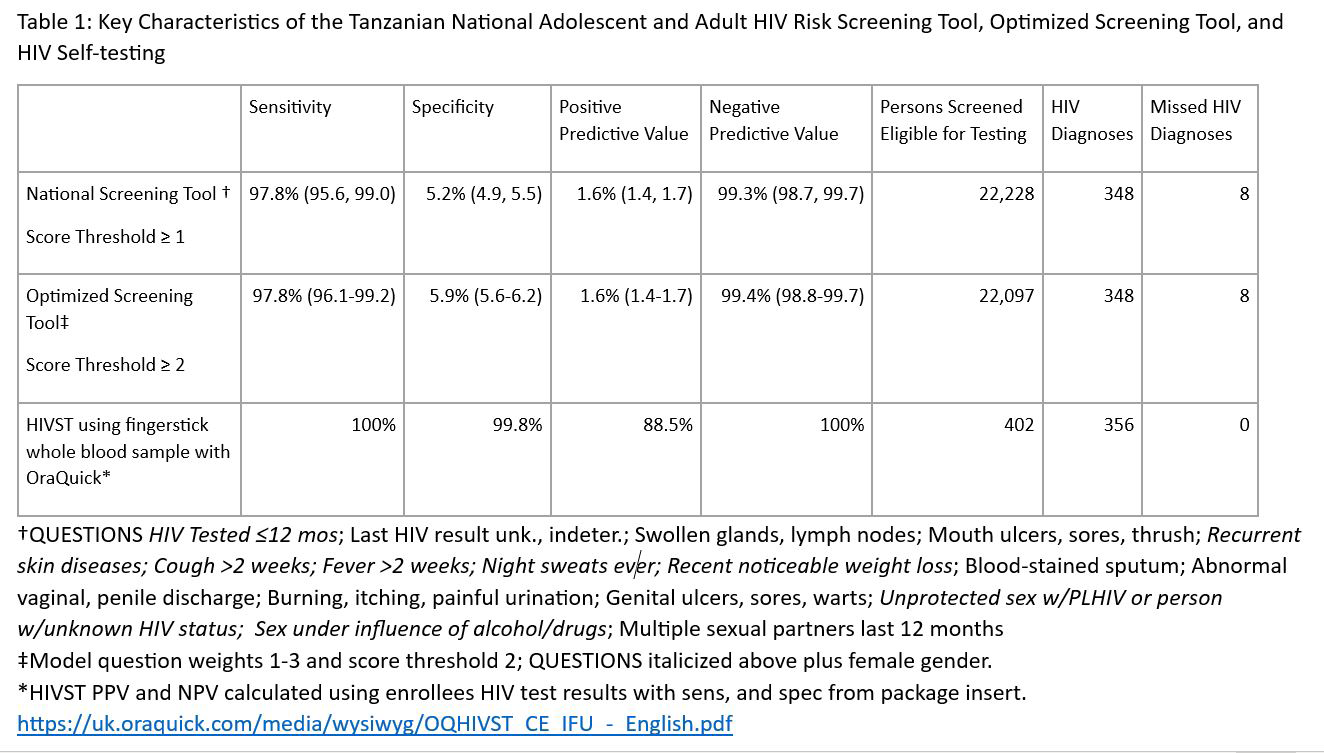
1186. Transfusion Risk of HIV, HBV, and HCV in Low- and Middle-Income Countries Without Nucleic Acid Testing
Poster Abstracts
Page: 387
Jodie L. White1, Dorothy Kyeyune-Byabazaire2, Ezra Musisi2, Paula Saa3, Jamel Groves3, Jeffrey M. Linnen4, Ronnie Kasirye5, Irene Lubega5, Thomas C. Quinn6, Heather A. Hume7, Evan M. Bloch1, Susan L. Stramer8, Mary G. Fowler1, Philippa Musoke5, Aaron A. R. Tobian1
Background
Nucleic acid testing (NAT) is a highly sensitive detection method routinely used to screen donated blood for human immunodeficiency virus (HIV), hepatitis B virus (HBV), and hepatitis C virus (HCV) in high-income countries. Despite this technology being available for decades, few low- and middle-income countries (LMIC) in sub-Saharan Africa (SSA) have implemented NAT. We aimed to quantify the risk to transfusion recipients this disparity in access to screening technology causes using data from Uganda, which implemented NAT in July 2022.
Methods
Units collected by the Uganda Blood Transfusion Service from October 2019 to June 2022 were tested for HIV, HBV and HCV on the Abbott ARCHITECT platform as part of routine serologic screening in Uganda. The units were retested by the American Red Cross in 2023 using a combination of individual unit NAT (Grifols’ Procleix UltrioPlex E Assay [UPE], detecting HIV-1,-2, HBV, and HCV simultaneously) and serology (Abbott Alinity s). Standard confirmatory methods were used for samples discordant between UPE/Alinity s. Pathogen-specific results were compared between ARCHITECT and UPE/ Alinity s. Samples testing nonreactive by ARCHITECT but reactive by UPE/Alinity s were summarized by type of reactivity: seropositive only, NAT-positive only and seropositive and NAT-positive. The number of potentially infectious units (i.e., NAT-positive only or seropositive and NAT-positive) per 100,000 that were nonreactive by the ARCHITECT were estimated.
Results
Data from both the ARCHITECT platform and the UPE/Alinity s platforms were avilable for 4,123 units. Among 9 units that were HIV nonreactive on the ARCHITECT but reactive on UPE/Alinity s, 8 were potentially infectious, equating for 195.5/100,000 units. Among 29 units that were HBV nonreactive on the ARCHITECT but reactive on UPE/Alinity s, 27 were potentially infectious, equating to 666.0/100,000 units. Among 16 units that were HCV nonreactive on the ARCHITECT but reactive on UPE/Alinity s, 2 were potentially infectious, equating to 49.0/100,000 units.
Conclusions
The implementation of NAT for donor screening in Uganda, which issues >300,000 units to healthcare facilities a year, has likely prevented thousands of infectious units from entering the blood supply. However, Uganda is one of only a small number of LMIC in SSA that has been able to enact this change. Policies that ensure equitable access and distribution of donor screening tools should be enacted to support safe blood transfusions globally.
Table 1.
Comparison of serology screening on the Abbott ARCHITECT in Uganda against combination NAT (Grifols’ UltrioPlex E) and serology (Abbott Alinity s) screening in the United States for donated whole blood units collected in Uganda.
| Grifols’ UltrioPlex E / Abbott Alinity s |
Abbott ARCHITECT: Nonreactive |
Abbott ARCHITECT: Reactive |
| Human immunodeficiency virus |
| Seronegative and NAT-negative |
4084 |
9 |
| Seropositive or NAT-positive |
9 |
17 |
| Hepatitis B virus |
| Seronegative and NAT-negative |
4025 |
9 |
| Seropositive or NAT-positive |
29 |
54 |
| Hepatitis C virus |
| Seronegative and NAT-negative |
4063 |
31 |
| Seropositive or NAT-positive |
16 |
9 |
1187. Clinical Features Are Poor Identifiers of Advanced HIV Disease in the Absence of CD4 Quantification
Poster Abstracts
Pages: 387-388
Phoebe Allebone-Salt1, Thomas S. Harrison1, Nelesh P. Govender2, Joseph N. Jarvis3, Rachel Wake4
Background
Advanced HIV disease (AHD) is defined by WHO as CD4 count <200 cells/ µL or WHO stage 3-4, triggering a series of interventions to identify and treat opportunistic infections (OIs) and rapidly initiate ART. Access to CD4 count testing is declining as a ‘test and treat’ approach to HIV is adopted, and clinical features increasingly relied on to guide OI screening. We hypothesise that clinical features alone cannot accurately identify patients with CD4 count <200 cells/ µL, resulting in underdiagnosis of AHD.
Methods
We collected data from a prospective cohort study of adults attending a clinic in Soweto, Johannesburg following a positive HIV test. A logistic regression model was used to determine clinical features associated with low CD4 count (<200 cells/µL). A clinical scoring system was devised using model coefficients as weights and the Youden index to calculate optimal cut off.
Results
Data were available for 733 participants: age range 17-73 years, 60% female (442/733), median CD4 count 231 cells/µL, 44% (325/733) had CD4 counts <200 cells/µL. 12/14 assessed variables were crudely associated with CD4 <200/µL, though following adjustment, only cough, weight loss, male sex and age remained significant (Table 1). Weight loss and cough interacted; presence of cough without weight loss did not increase odds of CD4 <200 cells/µL (OR 0.91, 95%CI 0.45-1.89, p=0.80), whereas cough with weight loss increased odds significantly (OR 2.03, 95%CI 1.24-3.32, p=0.005). The final adjusted model included age, sex, weight, cough, diarrhoea, fever and weight loss, but was a poor fit: pseudo R2=0.08. Including self-reported WHO stage 3-4 OIs(7/733) to create a predictive model, the optimal score identified had specificity of 82% but poor sensitivity of 48%. Of those identified by this model, 156/230 (68%) had CD4 count <200 cells/µL; 169/325 (52%) with CD4 <200 cells/µL were not identified by the score. At one month follow up, all deaths occurred in those with CD4 counts <200 cells/µL (5/318, 1.6%; 7 lost to follow up).
Conclusions
Clinical features are associated with CD4 count <200 cells/µL in patients newly diagnosed with HIV, but cannot reliably identify AHD, even when combined with WHO staging. A clinical scoring system without CD4 count would result in underdiagnosis of AHD in around a half of patients with low CD4 counts, and inappropriate diagnosis in around a fifth of patients with CD4 counts of >200 cells/µL.
Table 1.
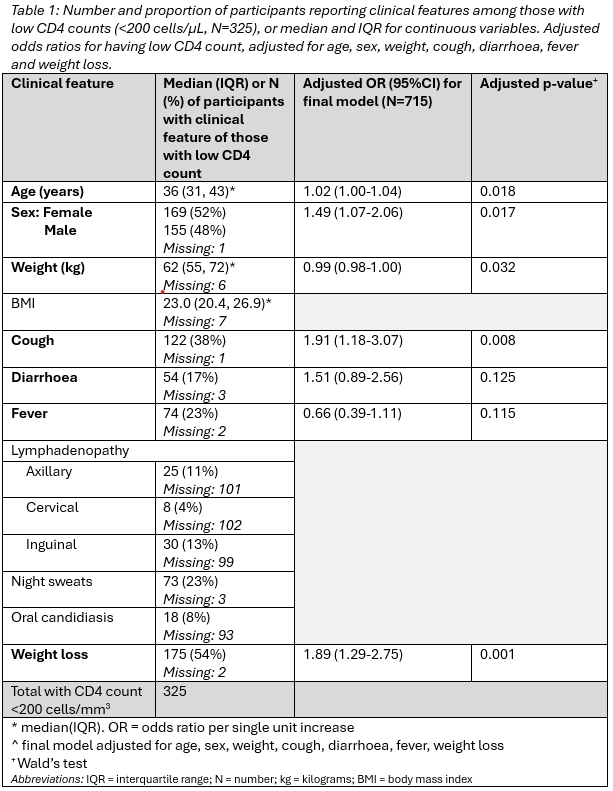
1188. HIV Recent Infection Surveillance Adds 17 Minutes to HIV Testing Services per Patient With HIV
Poster Abstracts
Page: 388
Kiely Flynn1, Suzue Saito1, Eugenie Poirot1, Jean Claude Irabona1, Collins Kamanzi1, Vusumuzi Maliwa1, Cebisile Ngcamphalala1, Samkelo Simelane1, Tom Oluoch2, Pasipamire Munyaradzi3, Monita Patel4, Gallican N. Rwibasira5, Lenhle Dube6, Harriet Nuwagaba-Biribonwoha1
Background
Cost and implementation complexity of using HIV-1 Asanté rapid recency assays (ARRA) in routine HIV Testing Services (HTS) are previously cited concerns in scaling and sustaining HIV-1 recent infection surveillance (HRIS) in settings where workload of health care workers (HCW) remains high. We measured the additional time spent on facility-based and laboratory-based HRIS by HCW per new HIV-positive patient in Rwanda and Eswatini.
Methods
Trained data collectors used time-motion methodology to observe HCW workflows with new HIV-positive patients and recorded HCW’s time spent on HRIS-specific activities that are not conducted in parallel with routine activities at selected facilities and laboratories over 3 months. In Rwanda, HRIS is implemented as part of HIV case surveillance that takes place in HTS. For those who are diagnosed with HIV and provide consent and completes a case report form, an additional blood draw is done for ARRA at the facility or the laboratory. Results are returned to patients after viral load (VL) testing of ARRA recent samples. In Eswatini, HRIS is implemented using an opt-out approach during pre-test counseling and ARRA is run in parallel with the confirmatory HIV diagnostic test and a HRIS-specific questionnaire at the facility level. ARRA recent samples are sent to laboratories for VL testing. Results are not returned to patients. Time spent on routine HTS in Eswatini and on case surveillance activities in Rwanda for HIV-positive patients not undergoing ARRA served as controls. Data were summarized and stratified by ARRA results (recent (R) vs long-term (LT)), and implementation model (facility-based vs laboratory-based).
Results
Data were collected from 84 and 76 new HIV-positive people in Rwanda (10 R, 70 LT, and 4 controls) and Eswatini (5 R, 68 LT, and 3 controls), respectively. Overall, HRIS added an average of 17 minutes to HCW duties per patient (Figure 1). In Rwanda, the average added time ranged from 13 minutes (LT) to 20 minutes (R) at facilities and from 18 minutes (LT) to 21 minutes (R) at laboratories. In Eswatini, the average added time for HRIS ranged from 10 minutes (LT) to 16 minutes (R). Return of results in Rwanda (up to 16 minutes) and HRIS-specific questionnaire (~10 minutes) in Eswatini added the most time; ARRA added no time in Eswatini and ~1 min in Rwanda.
Conclusions
ARRA is well integrated into HTS. Fully integrating HRIS into HIV case surveillance and dropping HRIS-specific questionnaires may further reduce added time.
Figure 1.
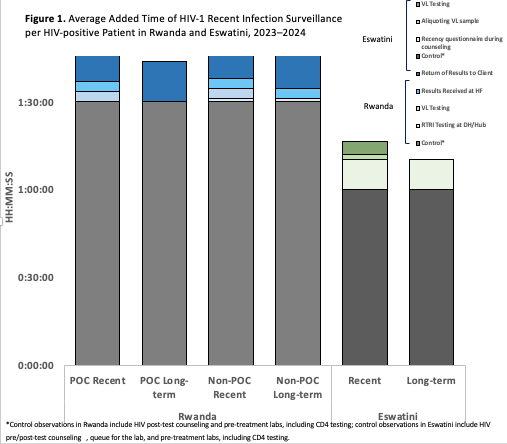
1189. Missed Opportunities: HIV Screening Deficits in Japanese Syphilis Patients
Poster Abstracts
Pages: 388-389
Toshibumi Taniguchi, Kazutaka Yamagishi, Misuzu Yahaba, Hiroshi Yoshikawa, Hidetoshi Igari
Background
The rising incidence of STIs and HIV in Japan necessitates comprehensive testing strategies. This study analyzed syphilis testing, subsequent HIV screening, and HIV diagnosis patterns across age groups using a sampling dataset from the National Database of Health Insurance Claims (NDB), which represents 1% of all outpatient Japanese health insurance claims, and AIDS Surveillance Committee data.
Methods
NDB sampling data (2011-2020) was used for syphilis and HIV testing analysis, focusing on patients who received antibiotic treatment for syphilis. AIDS Surveillance Committee data (2012-2020) provided HIV diagnosis and AIDS case information, stratified by age.
Results
Of 295,853 patients tested for syphilis, only 13,353 (4.5%) underwent HIV screening. Among 251,692 syphilis-tested patients, HIV screening rates varied by age: Under 20 (8.25%), 20-29 (7.44%), 30-39 (7.08%), decreasing to Over 70 (4.68%) (Fig.1). The Over 70 group had the highest number of syphilis tests (102,580) but the lowest HIV screening rate. Of the 16,270 patients who received antibiotic treatment for syphilis, only 1,012 (6.22%) received HIV screening. Age-specific HIV screening rates among treated patients were: Under 20 (9.01%, 62/688), 20-29 (9.34%, 97/1,038), 30-39 (6.75%, 97/1,438), 40-49 (6.09%, 118/1,939), 50-59 (6.30%, 120/1,906), 60-69 (5.44%, 173/3,181), and Over 70 (5.67%, 345/6,080). HIV diagnosis data showed the highest number of cases in the 30-39 age group. The Advanced HIV Disease Ratio increased with age: Under 20 (10.0%), 20-29 (13.0%), 30-39 (25.4%), rising to Over 70 (56.9%) (Fig.2).
Conclusions
This study reveals alarmingly low HIV screening rates among syphilis-tested and treated patients across all age groups in Japan, with particularly concerning trends in older populations. The high rate of advanced HIV disease at diagnosis in older groups, coupled with their low HIV screening rates, underscores a critical public health issue. These findings emphasize the urgent need to significantly increase HIV testing rates for all patients undergoing syphilis testing and treatment, regardless of age.
The figure, table, or graphic for this abstract has been removed.
1190. Machine Learning Risk Stratification Compared With a Counselor-Guided Screening Tool
Poster Abstracts
Page: 389
Daniel G. Wandina1, Emmanuel K. Maingi2, Sharon M. Minyatta3, Denice O. Juma2, Judah M. Musau2, Robert Osoti Osoti4, Moses K. Kitheka2, Edmod O. Obat5
Background
Kenya has one of the largest HIV epidemics globally, with women constituting 62% of the 1.4 million people (15+ years) living with HIV. In 2023, Kenya has achieved 97% in 1st 95 recording 17 681 new HIV infections. Identifying the last 3% of individuals is becoming increasingly difficult. There’s a need to adopt targeted testing approaches hence growing interest in machine-aided artificial intelligence (AI). Studies have demonstrated that 4% of males and 11% of females are at high risk of infection using machine learning.
Methods
A cross-sectional data review was done on outcomes of machine-aided HIV risk stratification in 95 health facilities supported by USAID Tujenge Jamii project across 4 counties in Kenya. The program trained healthcare workers on the use of machine-aided HIV risk screening in health facilities using electronic medical records at the HIV testing points in the general population. This was done alongside counselors' HIV screening, routinely comparing machine-lead outcomes and manual screening outcomes.
Results
Between April 2023 and June 2024 out of 100,000 clients tested for HIV 57,450 were screened using machine Learning where 2,374(4%) were classified as very high risk 10,683(19%) as high risk,26,455(46%) as moderate risk and 17,938(31%) low risk. From the very high risk, 217 (9%) tested HIV pos, 315 (3%) from the high risk,388 (1%) of the medium risk and 141(1%) from the low risk. The 9% and 3% positivity among the Very high risk and very risk categories were significantly higher compared to 14% client screened eligible with 530,431 clients tested by following a counselor manual guided screening tool where 5,649 (1.1% ) tested HIV positive.
Conclusions
Machine-aided HIV risk classification scaleup provides an opportunity to improve HIV identification and efficiency, There is a need to scale up the use of ML in HIV testing.
The figure, table, or graphic for this abstract has been removed.
1191. HIV Serologic Reactivity in Persons With HIV Who Started ART During Acute/Early Stages of Infection
Poster Abstracts
Page: 389
Vivian I. Avelino-Silva1, Mars Stone1, Clara Di Germanio1, Eduard Grebe1, Brian Custer1, Steve Kleinman2, Xutao Deng1, Sandhya Vasan3, Nittaya Phanuphak4, Carlo Sacdalan5, Siriwat Akapirat6, Mark S. Souza7, Michael P. Busch1, Philip J. Norris1, the NHLBI Recipient Epidemiology and Donor Evaluation Study-IV-Pediatric (REDS-IV-P)
Background
Persons with HIV (PWH) who receive antiretroviral treatment (ART) beginning in acute/early stages of infection may fail to develop antibody reactivity or revert to nonreactive levels on serological assays. Seroreactivity after prolonged viral suppression in PWH treated in acute/early stages of infection has not been previously characterized.
Methods
RV254 cohort study identified PWH with recent HIV acquisition in Bangkok using an antigen (Ag)/antibody (Ab) combo-assay, with subsequent testing of nonreactive samples using a nucleic acid test (NAT) and testing of reactive samples with a less sensitive Ab-only assay. Participants with reactive results in the Ag/Ab assay and nonreactive results in the Ab-only assay, and those with nonreactive results in the Ag/Ab assay and reactive results in the NAT were included, categorized according to Fiebig stage, and offered immediate ART with longitudinal follow-up. We obtained plasma samples collected at the latest available timepoint after ART initiation to investigate seroreactivity using the Ortho VITROS HIV Ag/Ab Combo assay, according to Fiebig stage at ART initiation.
Results
345 participants with samples collected between 96 and 480 weeks after ART initiation were included; most samples (64%) were collected at 336 weeks (6.5 years) after ART initiation. At ART onset, 48, 92, 148, and 57 participants were categorized at Fiebig stages 1, 2, 3, and 4, respectively. Overall, 24 participants (7%) had nonreactive results; percentages with nonreactive serology were 38%, 2%, 1%, and 4% with ART initiated at Fiebig stages 1, 2, 3, and 4, respectively (p<0.001). Serology test results are shown in Figure 1. We found progressively lower signal-to-cutoff readouts for participants starting ART at earlier Fiebig stages, with statistical significance comparing Fiebig 1 vs. Fiebig 4 (p<0.001), and Fiebig 2 vs. Fiebig 4 (p=0.001).
Conclusions
ART initiation at acute/early stages after HIV acquisition can suppress antibody reactivity, limiting HIV detectability by licensed diagnostic serologic assays for years following infection. This phenomenon is particularly relevant but not limited to PWH who initiate ART in Fiebig stages 1 and 2, before the emergence of Ab responses. Implications include false negative diagnostic testing in clinical settings, including blood donation screening.
1192. Laboratory-Based HIV-1/2 Ag/Ab Immunoassay Performance in the United States, 2019-2023
Poster Abstracts
Pages: 389-390
Patricia Bessler, Weiming Zhu, Allison Lale, Kevin Delaney, Ya-Lin A. Huang, Karen W. Hoover
Background
The Centers for Disease Control and Prevention (CDC) recommends routine HIV screening of persons aged 13-64 years and additional testing for those with exposure risk or symptoms. All positive HIV antigen/ antibody (Ag/Ab) immunoassay results should be confirmed with HIV antibody differentiation and HIV RNA testing to resolve conflicting results. Understanding the performance and efficiency of HIV Ag/Ab testing in real-world settings is essential for guiding public health strategies and improving protocols for HIV diagnosis. We evaluated the performance of HIV Ag/Ab testing using data from a major commercial lab in the United States.
Methods
We analyzed HIV testing data from individuals ≥ 13 years tested by Quest Diagnostics between 2019 to 2023 with complete CDC-recommended algorithm testing for a positive Ag/Ab test. We calculated the testing volume and the positive predictive values (PPV) by age group and sex. PPV were calculated as the proportion of HIV Ag/Ab tests with a positive result confirmed by the CDC recommended HIV algorithm among all Ag/Ab tests with an initial positive result.
Results
We identified a total of 23,944,766 HIV Ag/Ab tests. Of these, 36.5% were performed on men and 63.5% on women, with the majority (80.0%) among individuals aged 20-54 years. Overall, the PPV of the HIV Ag/Ab test was 78.6%. The PPV was higher in men (87.5%) than in women (58.4%). For men, PPV was lowest among those aged 13−14 years (27.8%) and peaked at 89.2% for those aged 25−34 years. PPV was > 80% for men aged 20−74 years and 70.6% for men 75+. PPV was 49.7% for women of reproductive age (15-44) and increased to 74.2% for women aged 55−64 years. Except for persons aged 13−14 years, PPV was consistently lower for women compared with men.
Conclusions
This analysis found relatively higher PPV among groups most likely to be tested by providers based on clinical or risk-based needs: men, persons reporting HIV exposure risk, persons initiating or continuing PrEP, and symptomatic individuals. Lower PPVs were observed among women of reproductive age, likely due to near-universal screening among pregnant women who have a low overall prevalence of HIV. The reported PPV of the Ag/ Ab test highlights the need to conduct the entire recommended HIV diagnostic algorithm to confirm an HIV diagnosis. Understanding the performance of HIV Ag/Ab test results for specific populations may also facilitate test interpretation and recommendations for future HIV testing.
Figure 1.
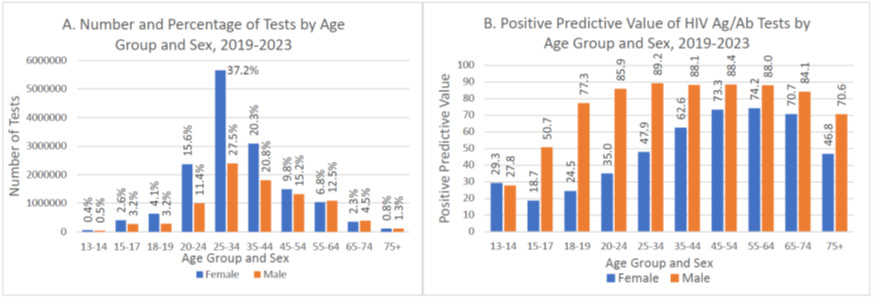
1193. Use of DNA Profiling to Resolve Discrepant HIV Tests in the Setting of Injectable Cabotegravir PrEP
Poster Abstracts
Page: 390
Jessica M. Fogel1, M. Ali Salih2, Kathy Haddaway3, Mark A. Marzinke1, Christi Marshall3, Zhe Wang4, Vanessa Cummings1, Estelle Piwowar-Manning1, James F. Rooney5, Marybeth McCauley6, Beatriz Grinsztejn7, Raphael J. Landovitz8, Susan H. Eshleman1, the HPTN 083 Study Team
Background
In clinical trials, discordant test results can complicate participant management and study endpoint determination. HIV diagnosis can be challenging when long-acting cabotegravir (CAB-LA) is used for HIV pre-exposure prophylaxis (PrEP) since HIV antigen, antibody, and RNA levels are often low. HIV assays can also revert from reactive/positive to non-reactive/ negative in this setting. We evaluated a case where discrepant HIV test results were obtained for a participant receiving CAB-LA in the HIV Prevention Trials Network (HPTN) 083 trial.
Methods
The study site performed HIV rapid testing and antigen/antibody (Ag/Ab) testing; infections were confirmed with antibody and RNA tests. Retrospective testing was performed at the HPTN Laboratory Center using an Ag/Ab test, a discriminatory test, and an HIV RNA test. Plasma cabotegravir (CAB) was quantified via liquid chromatography-tandem mass spectrometry. Serologic ABO and Lewis testing was performed at the Johns Hopkins Hospital Transfusion Medicine Laboratory. Short tandem repeat DNA profiling was performed at the DNA Reference Laboratory using the Promega PowerPlex Fusion System and Promega PowerPlex Y23 System.
Results
The participant had 19 CAB-LA injections and then received 16 months of tenofovir disoproxil fumarate/emtricitabine (TDF/FTC) PrEP before enrolling in the open label extension of HPTN 083 (OLE). The participant received one CAB-LA injection in the OLE and then restarted TDF/FTC PrEP after an injection site reaction. All HIV test results, including an HIV RNA test, were negative/non-reactive at the first OLE visit; 26 days later, the HIV rapid test was non-reactive, the Ag/Ab test was reactive, the discriminatory test was positive, and the viral load was 2,588 copies/mL. All results at later visits were non-reactive/negative. Retrospective test results were consistent with the results from the study site. CAB concentrations were as expected based on the timing of injections. ABO groups, anti-A and anti-B titers, and Lewis phenotypes were the same for all samples tested. DNA profiling revealed that plasma from the visit with positive HIV test results was contaminated with DNA from an unrelated individual.
Conclusions
Detailed laboratory investigations may be required to explain unexpected or discrepant test results. In this case, DNA profiling explained the discrepant HIV test results, which helped guide clinical management of the study participant and excluded the case as a primary study endpoint.
1194. Can HIV Testing Data and Recent HIV Infection Surveillance Identify Similar Signals of Transmission?
Poster Abstracts
Page: 390
Misheck Luhanga1, Joe Theu2, Melissa Arons3, Reno Stephens3, Davie Chalira2, James L. Tobias4, Alinune Kabaghe1, Danielle Payne3, Khumbo Namachapa5, Evelyn Kim3, Nellie Wadonda1
Background
Although there has been much progress controlling the HIV epidemic in Malawi, identifying, and understanding ongoing HIV acquisition is needed for targeted HIV control efforts. We analyzed facility-based HIV recent infection surveillance data and HIV testing services (HTS) data to identify potential signals of ongoing HIV acquisition.
Methods
In Malawi, recent infection surveillance uses a recent infection testing algorithm (RITA), combining a rapid test for recent infection and viral load testing. RITA results for clients ≥15 years old from October 2022 to June 2023 from 287 facilities were analyzed using a proxy ‘at-risk’ populations estimated as those testing HIV-negative plus those classified as RITA recent. In addition, for the same facilities and period, routine HTS data of HIV testing yield (the proportion of new positives among those who had a HIV test) were analyzed. Both analyses were adjusted by sex and utilized a Poisson probability model to identify one or more facilities with a significantly higher (p<0.01) observed rate of recent infection than the expected with a maximum cluster radius of 10km using SaTScan software. A side-by-side comparison of the geographic distribution of both sets of signals of facilities was done using ArcGIS Software.
Results
Among 20,093 persons newly diagnosed with HIV, 534 (2.0%) tested RITA recent; of these, 76% were female and 24% male. In the same period, 1,065,601 persons were tested for HIV; HIV testing yield was 2.5%. Using HTS data, 60% of the newly diagnosed persons were female and 40% were male. SaTScan identified two areas of elevated rates of recent infection while, 29 areas of elevated rates of HIV testing yield were identified. Results showed that one of the two signals of elevated HIV acquisition identified using RITA results overlaps with a signal identified using HTS yield data.
Conclusions
HTS yield data identified more potential signals of elevated HIV transmission than recent infections likely due to repeat testing or late diagnoses. Additional triangulation of surveillance and program data and use of unique identifiers in the program may be explored to improve use of surveillance data to identify areas with ongoing HIV acquisition.
1195. Preferences for HIV Testing Technologies in Seattle, Washington: A Mixed-Methods Study
Poster Abstracts
Pages: 390-391
Lauren R. Violette1, Lisa A. Niemann2, Maggie Murphy2, Andy Cornelius-Hudson2, Carl Capili2, Joanne Stekler2
Background
Understanding preferences for HIV testing technologies could increase uptake. We conducted a mixed-methods study to explore testing preferences among participants in the GAIN Study.
Methods
Between June 2023-May 2024, we enrolled a convenience sample of persons seeking HIV testing, post-exposure prophylaxis, or pre-exposure prophylaxis (PrEP) care at a community testing site or HIV clinic in Seattle, WA. We used convergent parallel mixed-methods design with a discrete choice experiment (DCE) (N=142) and in-depth interviews (N=20). Participants were randomized to one of three blocks of 12 DCE questions. For each question, participants selected their most and least preferred option from three hypothetical tests with four attributes (specimen type, window period, time to results, and likelihood of false positive results) having three or four levels. Preference weights (PW) and relative importance were calculated using multinomial logistic regression. Greater PWs indicate stronger preference. Semi-structured interviews were analyzed using a Rapid Assessment Process.
Results
Most survey participants were cisgender men (70%) and white (57%). Reasons for HIV testing included regular testing (49%), new partner (33%), PrEP initiation (10%), and HIV/STI symptoms or exposure (8%). One-third were on PrEP. A 0.1% false positive rate (PW=1.06), 2-week window period (PW=0.58) and fingerstick specimen (PW=0.18) were the most preferred test characteristics (Figure). Faster tests were preferred with no difference between 20-minute and 1-hour tests (PW=0.13 and 0.14). Likelihood of false positives had highest relative importance (54%), and specimen type was the least important attribute (8%) to decision-making. Qualitative data was consistent with DCE findings. Test accuracy was the most important attribute although there was conflation of specificity and sensitivity and confusion about the window period. Participants preferred faster tests to reduce anxiety while waiting for results, especially when concerned about recent exposures. There was higher degree of trust in blood-based tests which were preferred over oral fluid tests.
Conclusions
Participants preferred fast, accurate blood-based tests with shorter window periods, but qualitative data identified misconceptions about HIV test properties. HIV testing should be paired with education to ensure persons understand results, and device development should focus on specificity and window period sensitivity while keeping time to results under one hour.
Figure 1.
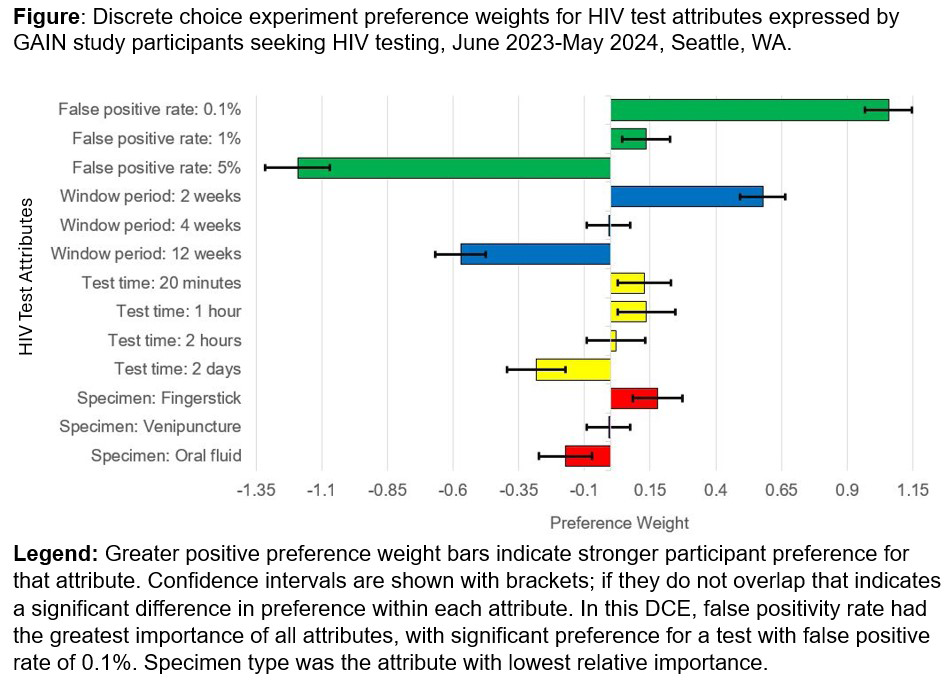
1196. Clinical Validation of iMune qPCR as a Novel Solution to CD4 Counting Off Dried Blood Spots
Poster Abstracts
Page: 391
Tracy M. Sungu1, Riffat Munir1, Denise Lawrie2, Wendy S. Stevens3, Lesley E. Scott1
Background
Quantification of CD4 T helper cells is important for tracking disease progression and monitoring opportunistic infections in people living with HIV (PLHIV). Discontinuation of two point of care (POC) CD4 tests, the PIMA CD4 (Abbott, IL, USA) and FACSPresto (Becton Dickinson Biosciences, San Jose CA), has created an unmet need for remote CD4 enumeration. We investigated CD4 counting off dried blood spot (DBS) specimens using novel epigenetic qPCR to potentially fill gaps in global health needs.
Methods
Residual K3EDTA specimens from PLHIV (n=150) received for routine immunophenotyping, by PanLeucogating (PLG) technology performed on an AQUIOS flow cytometer (Beckman Coulter, Brea, CA), at the National Health Laboratory Service in Johannesburg, South Africa, were spotted (~70µl) onto Whatman 903 Protein Saver Cards (Merck, Darmstadt, Germany) and cobas® Plasma Separation Cards (140µl) (PSC, Roche Molecular, Pleasonton, CA). DBS and PSC (6mm punched) spots were manually extracted for DNA using the i.Mune CD4 Prep. This was followed by novel epigenetic quantification of CD4+ T-cells using the i.Mune CD4 Amp that included a GAPDH internal control (Epimune Diagnostics, Berlin, Germany). Real-time PCR was conducted on a QuantStudio 7 (Thermo Fisher Scientific, USA) and Cycle threshold (Ct) values converted into absolute CD4 counts using a data analysis tool.
Results
The median PLG CD4 count of the specimens was 176 cells/µl (5-1361cells/µl), and the concordance correlation with the i.Mune CD4 qPCR absolute count off a DBS showed a moderate strength of agreement Pc=0.91 (95% confidence interval [CI] 0.88 to 0.94). The mean bias was -28.40 cells/ µl with a broad scatter (standard deviation [SD] of the bias =120.62cells/ µl), and overall agreement of 102% percentage similarity. A 5.9% (3/51) misclassification rate was observed at CD4<100 cells/µl and 12.5% (10/80) at CD4<200 cells/µl. A qPCR invalid rate was reported as 4.7% (7/150). The overall performance of the cobas® PSC i.Mune CD4 qPCR showed greater variance (Pc=0.16 [95% CI 0.054 to 0.26]) and requires a modified extraction protocol.
Conclusions
In the absence of CD4 POCT and PLG CD4 immunophenotyping requiring testing within 5 days post venesection, the i.Mune CD4 could provide an alternative option off DBS collected from remote settings. qPCR also has the advantage of being performed on existing laboratory platforms and infrastructure.
1197. Screening of MPXV, VZV, HSV-1, and HSV-2 Causing Mucocutaneous Vesicular Rashes by Multiplex HRM-PCR
Poster Abstracts
Page: 391
Raphael Lumembe-Numbi1, Prince Akil-Bandali2, Fiston Cikaya-Kankolongo1, Chloé Musuamba-Kayembe1, Kinganda-Lusamaki Eddy3, Placide Mbala-Kingebeni1, Franscisca Muyembe-Mawete1, Martine Peeters4, Angélique Rousseau5, Nans Picout5, Faustine Durand5, Nadege Nziza Trouchaud5, Steven Henry6, Vincent Foulogne6, Joany Guy5
Background
Since May 2022, over 27,000 cases of monkeypox (MPOX) have been reported in Europe where the disease is not endemic. In the Democratic Republic of Congo (DRC), this disease has become a public health emergency, with 19,667 suspected cases and 575 deaths reported in 2024. Monkeypox virus (MPXV) represents a diagnostic challenge due to the diversity of clinical presentations. These symptoms often share similarities with infection caused by herpes simplex virus (HSV) types 1 and 2 and varicella-zoster virus (VZV). AFYIA Diagnostics has developed a qualitative screening test that allows the simultaneous identification of these viruses.
Methods
The DIRASH kit is a multiplex HRM assay, based on the simultaneous detection of 4 viruses. The associated DISoft™ software is used to automatically analyze and interpret the HRM profiles obtained. Three studies were carried out to monitor cases of cutaneous-mucosal febrile vesicular eruptions: 1 conducted by CHU Montpellier from January 2021 to December 2022 during the clade II epidemic, and 2 conducted by INRB in Kinshasa from December 2022 to June 2024 with clade Ia and Ib . Each patient was screened by commercial or in-house PCRs. These samples were then retrospectively tested with the DIRASH.
Results
850 samples were retrospectively tested with the DIRASH kit to compare its clinical sensitivity with that of partner laboratory kits. In Montpellier, sensitivity was 100% for MPXV, 94% for VZV, and 98% for HSV-1 and HSV-2. INRB reported 98% for MPXV and 93% for VZV, showing the DIRASH kit ability to detect clades Ia, Ib, and II. This kit detected several undiagnosed co-infections (MPXV/HSV-1, MPXV/HSV2 and MPXV/VZV), with a consistent specificity of 100%. These results show that the clinical sensitivity of the PCRs from CHU and INRB is comparable to that of the DIRASH kit, with additional co-infections detected by the DIRASH kit, that would have been missed with the other PCRs, highlighting the benefit of syndromic diagnosis for febrile rashes.
Conclusions
The DIRASH kit is rapid, reliable, transportable at room temperature, low-cost-multiplex test with automated result interpretation. Its ability to simultaneously detect viruses causing mucocutaneous vesicular eruptions meets the needs for differential diagnosis of MPXV, particularly in the DRC, where the epidemic is the largest in Africa, but also non-endemic countries. The kit is well-suited to strengthening diagnostic capabilities in the DRC, supporting patient management and epidemic control.
1198. Impact of Point-of-Care HIV-1 RNA Testing on Time to HIV Confirmation and ART Start in Buenos Aires
Poster Abstracts
Pages: 391-392
Carina Cesar1, Guillermo Viloria2, Agustin Nava1, Ana Gun1, Luciano Maldonado1, Jonathan Garcia1, Victoria Viera1, Diego Salusso1, Felipe Bilbao1, Carla Petriglieri1, Julian Garcia1, Daniela Converso1, Mariana Kundro2, Maria I. Figueroa1, Pedro Cahn1
Background
In Argentina, HIV diagnosis is confirmed through RNA-HIV (VL), usually performed in specialized referral laboratories. People need a second appointment to receive HIV confirmation (HIV-C), which is required to initiate antiretroviral therapy (ART). Time to HIV-C depends on laboratory and administrative factors. Shortening the diagnostic process is the first step towards implementing test and treat strategies. We hypothesized that point-of-care (POC) technologies would reduce the time to results, the proportion of undelivered results, and the time to ART initiation compared with standard of care (SOC) in a middle-income country setting.
Methods
We conducted a pilot study at 2 HIV testing centers in Buenos Aires: an NGO and a public hospital. People with a preliminary HIV diagnosis (HIV-PD) after a reactive HIV rapid test were enrolled. Phase 1 mimics SOC: blood samples for VL were sent to the laboratory for RT-PCR and HIV-C delivered in a second appointment. In phase2, POC, VL were locally processed with m-PIMA™ HIV-1/2 VL and HIV-C delivered subsequently. We evaluated time from HIV-PD to HIV-C and ART initiation as a continuous variable with Wilcoxon sum rank test. Categorical variables were tested with Chi-squared test or Fisher’s exact test. Linear regression models were fitted with an interaction term between center and strategy to evaluate whether the effect on time to HIV-C or ART initiation differs for each strategy between centers.
Results
Between May 2023 and July 2024, 44 people with HIV-PD were enrolled in SOC and 47 in POC: median age 30 years (IQR: 26-36), 84% cisgender men, 9% transgender women, and 7% cisgender women. One person did not receive HIV-C in SOC vs none in POC. Median time to HIV-C was 16 days (14-23) in SOC vs 4 hours (3-34) in POC (p<0.001) (Fig. 1). ART was initiated in 80% (64-90) in SOC vs. 87% (74-95) in POC (p=0.5). ART initiation within the first 30 days was 66% (48-80) in SOC vs 85% (70-94) in POC (p=0.045). The interaction between strategy and center was not significant (p=0.0681) suggesting that time differences between SOC and POC do not differ between centers.
Conclusions
In this pilot study, POC implementation was feasible and adequate to reduce time to HIV-C and ART initiation. However, site-specific practices should be considered when implementing POC technologies in clinical settings. Healthcare systems need to adapt to facilitate the rapid ART initiation strategy.
This study was supported by Abbott Rapid Diagnostics Argentina S.A.
Figure 1.
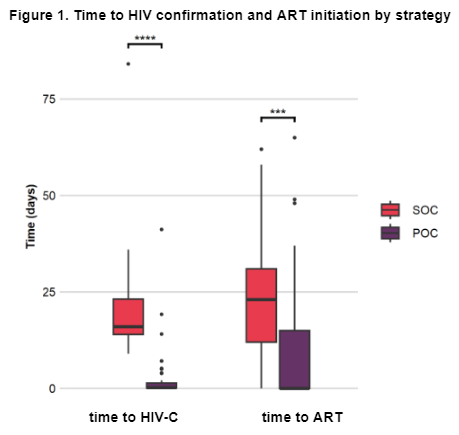
1199. Characteristics of First-Time HIV Self-Testers Using the Online HIV Service ‘Stand By You’
Poster Abstracts
Page: 392
Kantarida Sripanidkulchai1, Supattra Rungmaitree1, Theppharit Thiamprasert1, Yuitiang Durier1, Alan Maleesatharn1, Suthat Chottanapund2, Thanawong Buason3, Pichapun Pongsakul3, Usanee Kritsanavarin4, Yenjit Somphoh5, Pornvilai Urujchutchairut1, Benjawan Khumcha1, Kulkanya Chokephaibulkit1
Background
First-time testers are often overlooked by conventional HIV services, yet they play a critical role in achieving the goal of ensuring all at-risk individuals know their status. Online platforms—such as TikTok and LINE— offer accessible, anonymous, and engaging options to reach these groups, especially at-risk adolescents and young adults. By leveraging digital channels, innovative HIV self-testing (HIVST) initiatives can connect with those reluctant to HIV testing.
Methods
The ‘Stand by You’ initiative integrated free HIVST, online text-based counseling, and educational support on HIV prevention, covering pre- and post-exposure prophylaxis (PrEP, PEP), facilitating linkage to care. TikTok ads targeted at-risk adolescents and young adults. After completing a self-administered risk assessment questionnaire, eligible individuals received HIVST kits by mail and were encouraged to voluntarily report their HIVST results without incentives. Instant text-based chatroom counseling (from 10:00–22:00) provided guidance and support on HIV and STI-related issues. Data from August 25, 2022, to December 31, 2024, were analyzed to describe the characteristics of first-time testers and identify factors associated with a positive HIVST result.
Results
Among 8,234 participants, 4,677 (56.8%) were first-time testers. Compared with repeat testers, first-time testers were younger (under 25 years old 54.3% vs. 39.4%, P<0.001), less likely to identify as LGBTQIA+ (51.6% vs. 74.4%, P<0.001), and less likely to use HIV chemoprophylaxis (PrEP 0.6% vs. 12.2%; PEP 1.0% vs. 13.6%, P<0.001). They also reported lower condom use, had a slightly lower average number of sexual partners in the past month (2.6 vs. 2.8, P=0.04), and exhibited a higher HIV positivity rate (4.0% vs. 2.5%, P<0.001). In multivariable analysis, factors significantly associated with a positive HIVST result among first-time testers included identifying as LGBTQIA+ (adjusted odds ratio [aOR] 7.41, 95% CI: 4.82–11.39, P<0.001), having a history of sexually transmitted infections (aOR 1.86, 95% CI: 1.37–2.53, P<0.001), and being older (aOR 1.03 per year increase, 95% CI: 1.01–1.05, P=0.004).
Conclusions
First-time testers showed a higher risk of HIV infection, emphasizing the importance of digital outreach in closing HIV testing gaps. By offering convenient and stigma-free avenues, online platforms can expand HIVST uptake among at-risk groups—particularly those with no prior testing history—facilitating earlier detection and treatment.
Table 1.
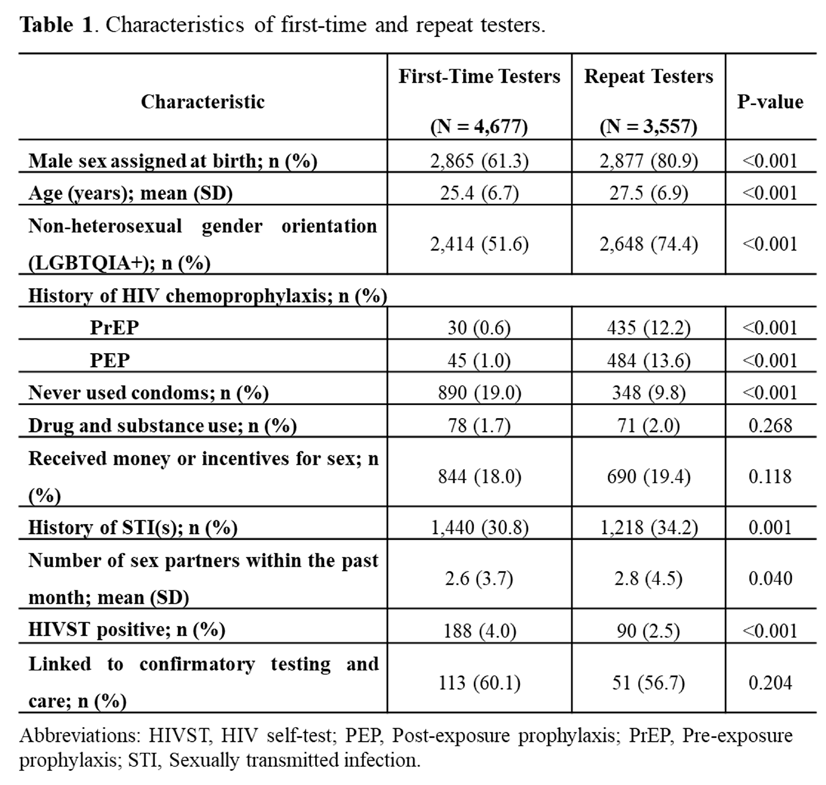
1200. Persistence of Oral PrEP Use in the United States, 2017-2023
Poster Abstracts
Pages: 392-393
Ya-Lin A. Huang, Weiming Zhu, Laura M. Mann, Karen W. Hoover
Background
Consistent use of daily oral preexposure prophylaxis (PrEP) during periods of HIV risk is essential for optimal HIV protection. This study estimated and compared persistence of oral PrEP among early and more recent cohorts of PrEP users using a national pharmacy database.
Methods
We analyzed data from the IQVIA Real-World Data—Longitudinal Prescription Database (2017−2023) to identify persons aged ≥16 years newly prescribed oral PrEP for >30 days. Two cohorts were constructed based on PrEP initiation periods: 2017−2018 and 2021−2022, each followed for 12 to 36 months post-initiation. Data from 2020 were excluded due to the COVID-19 pandemic that resulted in decreased PrEP use. Persistence was defined as the duration of continuous PrEP prescription fills until a >30 days gap. Non-persistence was the date when the prescribed supply would be depleted if taken daily. Individuals could restart PrEP after discontinuation and have multiple episodes. We reported median persistence duration by initiation cohort and used Kaplan-Meier survival curves to estimate time to non-persistence. We used Cox proportional hazards models to examine the associations between patient demographic characteristics and non-persistence.
Results
We identified 183,584 new PrEP users in 2017−2018 and 321,224 in 2021−2022. The median duration of initial PrEP use was 4.0 months (interquartile range [IQR] 1.0−12.0) for the 2017−2018 cohort and 3.0 months (IQR 2.0−10.0) for the 2021−2022 cohort. Only 42.4% of the early cohort and 37.9% of the recent cohort persisted for 6 months (Figure). About 35.6% restarted PrEP at least once, with a median second episode duration of 3.0 months across cohorts. Factors associated with non-persistence across cohorts included being female (adjusted Hazard Ratio [aHR] 1.62, 95% CI 1.61−1.64), younger age (16-24 years: aHR 1.65, 95% CI 1.62−1.68) compared to those aged 55-64, Black race (aHR 1.18, 95% CI 1.16−1.20) compared to White, having public health insurance (aHR 1.35, 95% CI 1.33−1.36) or paying cash (aHR 1.63, 95% CI 1.59−1.67) compared to using commercial insurance.
Conclusions
Less than half of new oral PrEP users persisted beyond 6 months, and persistence declined over time. This trend might reflect increased use of on-demand PrEP and transitions to injectable PrEP. Better understanding of on-demand PrEP uptake and adherence is needed to address persistence trends. Future studies can benefit from assessing the impact of switching between PrEP formulations on persistence.
Figure 1.
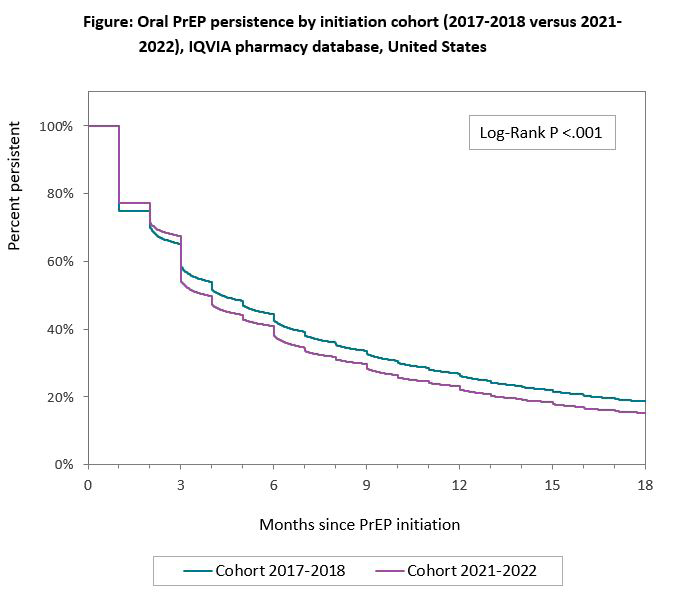
1201. WITHDRAWN
Poster Abstracts
Page: 393
1202. Evaluating Pharmacy-Based PrEP Delivery for Sex Workers in Zimbabwe: Pilot Quasi-Experimental Study
Poster Abstracts
Page: 393
Oppah Kuguyo1, Marisa Fujimoto2, Constance Watadzaushe1, Albert Takaruza1, Laura Packel3, Primrose Matambanadzo1, Getrude Ncube4, Owen Mugurungi5, Frances Cowan6, Sandra I. McCoy2, Euphemia L. Sibanda1
Background
Sex workers (SW) experience high HIV incidence, yet the potential benefit of daily oral pre-exposure prophylaxis (PrEP) is limited by poor continuation. Enabling pharmacy-based PrEP collection has potential to improve continuation among SW allowing anonymity, convenient location, long operating hours and shorter waiting times. We piloted pharmacy-based PrEP prescription refills to improve continuation; the Together Optimizing PrEP Access in Zimbabwe (TOPAZ) intervention.
Methods
TOPAZ was co-developed with SW and pharmacists and is embedded within Zimbabwe’s nationally scaled Key Populations (KP) program, which provides free HIV and sexual & reproductive health services to sex workers. Four randomly selected residential suburbs in Harare with at least 3 eligible pharmacies were allocated to TOPAZ and compared to one large KP program clinic (standard-of-care (SOC)). In the SOC site, SW ≥16 years initiating PrEP were advised to collect PrEP refills from any KP program clinic as usual. In TOPAZ suburbs, SW initiating PrEP had the option to collect refills from pharmacies or KP program clinics. To enhance habit formation, SW collecting refills at pharmacies were offered gift vouchers redeemable at the pharmacy, escalating in value, (US$5, US$6 and US$7 at months 1, 3 and 6, respectively). We present PrEP continuation at 1 and 3 months, defined as collecting prescription refills within a 14-day window at months 1 and 3. PrEP refill data were compared between TOPAZ and SOC arms over the same time period. We compared the proportion of participants continuing PrEP and risk difference (RD) computed using logistic regression models.
Results
Between March-May 2024, we recruited 100 and 96 female SW with mean ages 29.3 (SD=7.2) and 27.7 (SD=6.1) years in TOPAZ and the SOC clinic, respectively. In the TOPAZ arm, all refills were made through pharmacies. At month 1, 78/100 (78.0%) participants collected PrEP refills in TOPAZ arm vs. 35/96 (36%) in the SOC clinic, RD 0.42 (95% confidence interval (CI): 0.31-0.52); p<0.01). At month 3, 67/100 (67.0%) in TOPAZ arm completed refills, cv 18/96 (19%) in SOC clinic, RD 0.48; 95% CI:0.4, 0.57; p<0.01), Figure 1.
Conclusions
Pharmacy-based PrEP was acceptable to SW in Zimbabwe and was associated with improved PrEP continuation at 3 months, demonstrating the potential of pharmacy-based PrEP delivery. Further research is needed to differentiate the effect of pharmacy collection from escalating incentives and confirm adherence with biomarkers.
Figure 1.
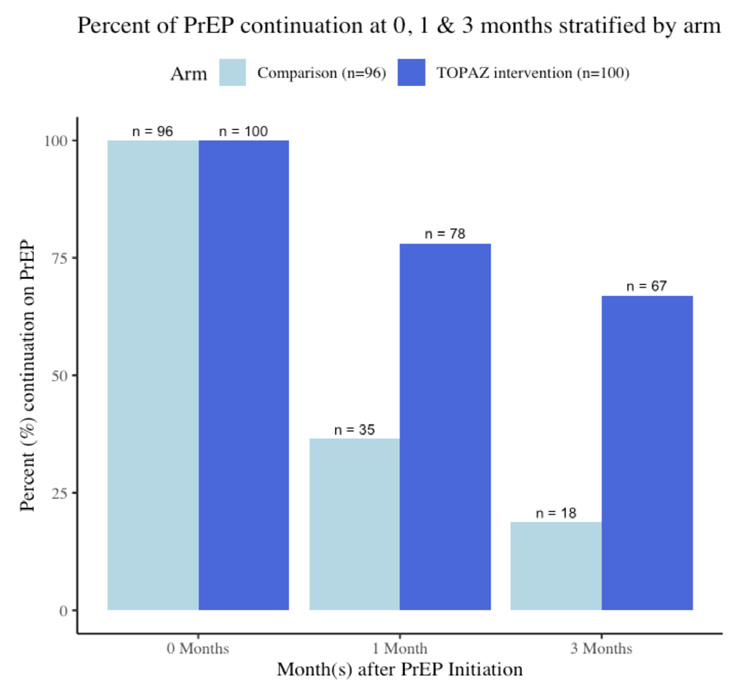
1203. Patterns of Choice, Switching, and Discontinuation of Oral and Injectable PrEP Among Adolescents
Poster Abstracts
Pages: 393-394
Laio Magno Santos de Sousa1, Beo O. Leite1, Fabiane Soares1, Lorenza Dezanet1, Mateus Westin2, Diana R. Zeballos Rivas1, Dirceu Greco2, Paula Massa3, Alexandre Grangeiro3, Ines Dourado1, the PrEP1519 Study Group
Background
Long-acting injectable PrEP (LAI-PrEP) offers a promising alternative for adolescents from sexual and gender minorities (ASGM), as adherence to oral PrEP is a challenge for this population. This study examines patterns of choice and switching between oral and LAI-PrEP among ASGM in Brazil.
Methods
PrEP15-19 Choices is an implementation study offering oral and LAI-PrEP (CAB) among cisgender men who have sex with men (MSM), transgender, and non-binary signed males at birth, aged 15 to 19, in three Brazilian cities. Data were collected through forms and PrEP prescription records. The outcomes analyzed included: i) initial PrEP choice after LAI-PrEP became available in the sites (April 2024); ii) switching, defined as the first change in modality after the initial choice; and iii) discontinuation, defined as 60 days without an injection for LAI-PrEP or 90 days without picking up oral PrEP from the scheduled return date. Descriptive and bivariate analyses were assessed using Pearson’s chi-square or Fisher’s exact test.
Results
A total of 261 participants were enrolled, with 179 (69%) initiating oral PrEP and 82 (31%) choosing LAI-PrEP. Most were MSM (74%), Black (73%), and aged 18-19 (71%). The main reasons for choosing LAI-PrEP were: i) avoiding the need to take daily pills (80%), ii) preferring it over daily medication (78%), iii) not having to carry medication (52%). LAI-PrEP was more commonly chosen as a first option by those aged 15-17 (39% vs. 29%, p=0.110), by Black participants compared to White participants (35% vs. 20%, p=0.02), and by individuals with elementary or high school education compared to those with higher education (35% vs. 19%, p=0.02). No significant differences were observed based on gender identity, income, or prior experience with oral PrEP. By September 12, 2024, 25/179 (14%) had switched from oral PrEP to LAI-PrEP, while 2/82 (2%) had switched from LAI-PrEP to oral PrEP. The median time to switch was 43 days (IQR=52). Discontinuation rates were 5% (5/105) in the oral PrEP group and 3% (5/156) in the LAI-PrEP group.
Conclusions
Although oral PrEP was the initial preferred option among Brazilian adolescents from ASGM, the proportion of participants switching to LAI-PrEP highlights the importance of offering diverse PrEP choices. Future efforts should focus on increasing the uptake of LAI-PrEP by addressing concerns about injectable formulations and raising awareness of their advantages. This could improve adherence and HIV prevention outcomes in ASGM populations.
Figure 1.
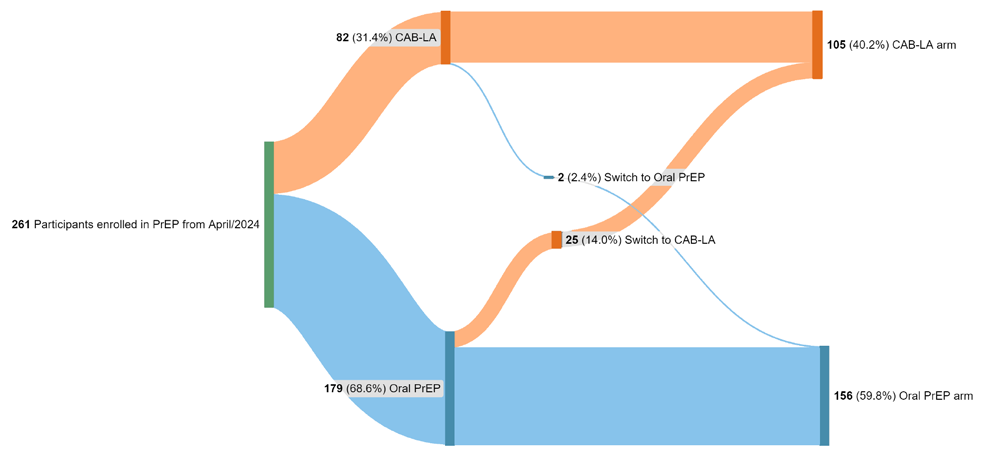
1204. Support for Over-the-Counter PrEP Among Transgender Women and Transfeminine Nonbinary People
Poster Abstracts
Page: 394
Lauren R. Violette1, Samuel Jenness2, Vanessa M. McMahan3, Iaah L. Lucas4, Mariah Valentine-Graves4, Joanna A. Caldwell4, Travis Sanchez4, Stefan Baral5, Douglas Krakower3, Julia Marcus3
Background
The population-level impact of HIV PrEP in the US has been limited by structural barriers to access, particularly in historically marginalized populations. Making PrEP available over the counter (OTC) on pharmacy shelves or online, without the need for a prescription, may address some of those barriers. However, it is unknown if populations likely to benefit from PrEP would support OTC availability.
Methods
We analyzed cross-sectional data from the Transgender Women’s Internet Survey and Testing study from December 2023-May 2024. Respondents were US transgender women and transfeminine non-binary people assigned male at birth who were aged ≥15 and reported ever having sex. Respondents were asked whether or not they would support making daily oral PrEP available OTC if research showed it was safe and effective. We used modified Poisson regression to compute unadjusted prevalence ratios (PR) to identify correlates of support for OTC PrEP.
Results
Among 1,918 respondents, median age was 24 years, 75% were white, and 11% PrEP-experienced. Overall, 87% supported OTC PrEP; 7% did not support it and 6% were unsure. Support for OTC PrEP did not differ by age, race, or ethnicity but was higher among respondents with >1 sex partner in the prior year compared with those with 0-1 partner(s) (PR=1.04, 95% CI=1.02-1.07) and among respondents with a recent bacterial STI (PR=1.08, CI=1.06-1.09). There was greater OTC PrEP support among respondents who had ever worried that a healthcare provider would treat them differently due to the respondent’s gender identity (PR=1.04, CI=1.01-1.07) or sexual partnerships (PR=1.03, CI=1.01-1.06). Among PrEP-naïve respondents, there was greater support for OTC PrEP among those who reported they had never taken PrEP because they were worried a doctor would treat them poorly if they asked about PrEP (PR=1.05, CI=1.01-1.09), people would think they were very sexually active (PR=1.07, CI=1.04-1.10), or about privacy while insured by a parent’s health plan (PR=1.06, CI=1.03-1.09). Support for OTC PrEP was also higher among those who had never taken PrEP because they did not know enough about it (PR=1.04, CI=1.00-1.07) or which doctor to see to access it (PR=1.06, CI=1.03-1.09).
Conclusions
Support for OTC PrEP was high among transgender women and transfeminine non-binary people, especially those who anticipated stigma in healthcare settings. Future research should explore how OTC PrEP might address barriers to PrEP use experienced by historically marginalized populations.
1205. Male Circumcision, HIV, and Hepatitis B: Results From the Tanzania HIV Impact Survey
Poster Abstracts
Page: 394
Alexander Kailembo1, Sarah Porter1, Daimon Simbeye1, Oscar E. Rwabiyago1, Samwel Sumba2, Ahmed Khatib3, Mohamed Hassan4, Tepa Nkumbula5, Jonathan Grund1, George S. Mgomella1, Mahesh Swaminathan1
Background
Voluntary medical male circumcision (VMMC) has been widely recognized for its role in HIV prevention and protection against other sexually transmitted infections. We analyzed data from the Tanzania HIV Impact Survey (THIS) 2022-2023, a nationally representative, cross-sectional survey of adults aged ≥15 years, to determine associations between male circumcision status and HIV and hepatitis B virus (HBV) infections among sexually active men.
Methods
Consenting male participants reported sociodemographic data, circumcision status, sexual history, and knowledge of HIV in a questionnaire. They were offered testing for HIV in accordance with the national testing algorithm and testing for HBV using an algorithm of antibody to hepatitis B core antigen and hepatitis B surface antigen tests. Analysis was restricted to males reporting ever having sexual intercourse with reported circumcision status. We used modified Poisson regressions to assess association of circumcision status with HIV and HBV infection separately, adjusted for age, residence, marital status, education, wealth quintile, and HIV knowledge. We reported population proportions and adjusted prevalence ratios (aPR) with 95% confidence intervals (CI). Analyses were weighted and accounted for survey design.
Results
The analysis had 12,406 men, of whom 13.6% (95%CI: 12.4-15.0) were uncircumcised. HIV prevalence was 7.0% (95%CI: 5.7-8.6) and 2.9% (95%CI: 2.5-3.3) among uncircumcised and circumcised men, respectively. HBV infection prevalence was 6.0% (95%CI: 4.8-7.5) and 4.9% (95%CI: 4.3-5.4) among uncircumcised and circumcised men, respectively. In the adjusted HIV multivariable model, uncircumcised men had twice (aPR: 2.1; 95%CI: 1.7-2.8) the HIV prevalence compared to circumcised men. In the adjusted HBV multivariable model, there was no statistical difference (aPR: 1.2; 95%CI: 0.9-1.6) in HBV infection prevalence between uncircumcised and circumcised men.
Conclusions
In Tanzania, circumcision was associated with HIV prevalence but not HBV infection prevalence in sexually active men. The VMMC program is a key prevention strategy; delivering VMMC services to all men could decrease the spread of HIV. Efforts to improve access to HBV services, including vaccination and education programs, may help mitigate the disease's impact alongside ongoing HIV prevention programs.
Table 1.
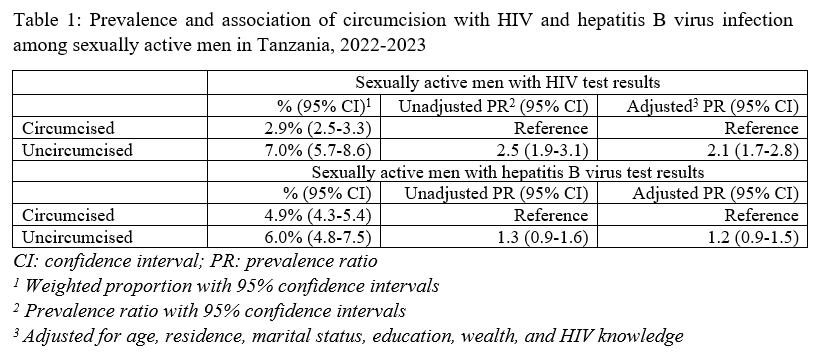
1206. Online and Less Frequent Monitoring of Oral HIV PrEP Use Are Noninferior to Standard of Care
Poster Abstracts
Pages: 394-395
Marije L. Groot Bruinderink1, Anders Boyd2, Lotte Werner1, Vita W. Jongen1, Laura Blitz3, Colette van Bokhoven4, Joey Woudstra1, Sophie Boers5, Hannelore M. Götz5, Allard R. Feddes6, Frenk van Harreveld6, Maria Prins1, Elske Hoornenborg1, Udi Davidovich1, Maarten Schim van der Loeff1
Background
Oral HIV pre-exposure prophylaxis (PrEP) is highly effective to prevent HIV in men who have sex with men (MSM). PrEP use is usually monitored in-clinic every 3 months (mo). However, this set-up is burdensome for some PrEP users. Reducing the number of in-clinic visits by online-mediated or 6-monthly monitoring may reduce barriers, but could affect PrEP adherence. The primary objective of the study was to establish the noninferiority in terms of PrEP adherence of online-mediated PrEP monitoring (vs. in-clinic) and of 6-monthly monitoring (vs. 3-monthly).
Methods
EZI-PrEP was an 18-month, 2×2 factorial, open-label, multi-center, randomized, controlled, noninferiority trial conducted at 4 sexual health centers in the Netherlands. Participants were randomized 1:1:1:1 to one of 4 study arms: (1) in-clinic monitoring every 3 mo, (2) in-clinic monitoring every 6 mo, (3) online-mediated monitoring every 3 mo, and (4) online-mediated monitoring every 6 mo. Eligible individuals were MSM and transgender and gender diverse people aged ≥18 years, currently using oral PrEP or initiating this at study enrollment. The primary outcome is the incidence rate (IR) of unprotected acts (UA), defined as a condomless anal sex act with a casual partner not fully covered with PrEP (ie, proxy for HIV acquisition risk). Data were obtained through daily digital diary entries. We calculated the IR ratio (IRR) of UAs between online-mediated and in-clinic monitoring arms, and between 6- and 3-monthly monitoring arms. Noninferiority was concluded if the upper limit of the 97.5%CI of the IRR was <1.8.
Results
Between September 2021 and August 2022 we included 469 participants, who were randomized as follows: arm 1, n=117; arm 2, n=114; arm 3, n=119; and arm 4, n=119. During 605 person years (py) of follow-up, 816 UAs were reported; overall IR of UA was 1.3/py [95%CI:1.2-1.4]. The IR of UA was lower in the online-mediated arms than in the in-clinic arms (IRR=0.83, 95%CI:0.72-0.95). The IR of UA in the 6-month arms was similar to that in the 3-month arms (IRR=0.96, 95%CI:0.84-1.11). The results showed noninferiority with the upper limit of the 97.5%CI of both IRRs <1.8 (Figure).
Conclusions
Online-mediated and 6-monthly PrEP monitoring are non-inferior to in-clinic and to 3-monthly monitoring, respectively, regarding PrEP adherence. These findings suggest that, in terms of HIV acquisition risk, online-mediated and 6-monthly PrEP monitoring can be safely implemented as part of routine PrEP care for MSM.
Figure 1.
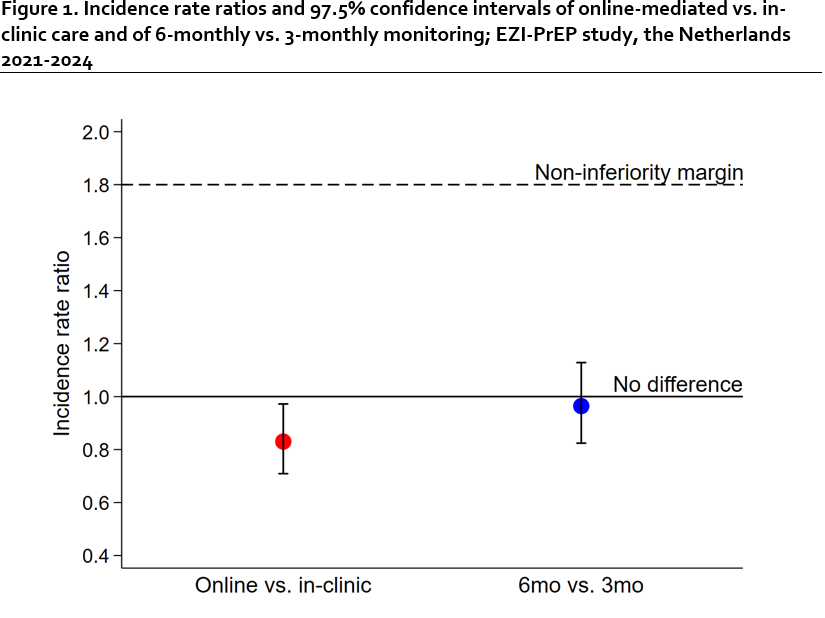
1207. Spillover Infections Drive Transmission in HIV Prevention Trials: BCPP/Ya Tsie Study
Poster Abstracts
Page: 395
Lerato Magosi1, Eric Tchetgen Tchetgen2, Vlad Novitsky1, Molly Pretorius Holme1, Janet Moore3, Pam Bachanas3, Christophe Fraser4, Sikhulile Moyo5, Kathleen Hurwitz6, Tendani Gaolathe5, Joseph Makhema5, Shahin Lockman7, Max Essex1, Victor De Gruttola1, Marc Lipsitch1, the Botswana Combination Prevention Project (BCPP / Ya Tsie Trial)
Background
A longstanding puzzle in efforts to control the spread of HIV, is why HIV treatment-as-prevention efforts in sub-Saharan Africa showed modest reductions in the occurrence of new infections despite achieving substantial gains in viral suppression.
Methods
Using data from a community-randomized trial of HIV prevention in sub-Saharan Africa we offer for the first time an evidence-based explanation of this longstanding puzzle. More specifically, we deep-sequenced whole genome HIV viral sequences from 5,114 trial participants in the 30-community BCPP (Botswana Combination Prevention Project) trial in Botswana to track the directional spread of HIV infections between communities. After, we combined the deep-sequenced HIV viral genome data with population census data to quantify the relative contribution of transmissions to intervention communities from individuals with HIV in the same community, other intervention communities, control communities, and (the vast majority of the country) non-study communities.
Results
We found that individuals with HIV in non-study communities accounted for most of the transmissions to trial communities 90% [81 – 93], and that the impact of the BCPP intervention in reducing transmissions to trial communities could have been considerably larger if the intervention had been applied nationwide 59% [3 – 87] compared to the observed 30% reduction.
Conclusions
This work transforms our thinking about the effectiveness of TasP for HIV prevention in general populations to a highly effective intervention when applied nationwide to maximize the capture of sources of transmission.
We recommend that studies of infectious disease prevention consider the impact of sources of transmission beyond the reach of the intervention when designing and evaluating interventions to inform public health programs.
1208. Cost-Effectiveness of Vaccination Strategies to Control Future Mpox Outbreaks in England
Poster Abstracts
Page: 395
Xu-Sheng Zhang1, Siwaporn Niyomsri2, Sema Mandal1, Hamish Mohammed1, Miranda Mindlin1, Gayatri Amirthalingam1, Andre Charlett1, Claire Dewsnap3, Bennet Dugbazah1, David Phillips4, Mary E. Ramsay1, Josephine G. Walker2, Peter Vickerman2
Background
In 2022, a global outbreak of mpox occurred among gay and bisexual men who have sex with men (GBMSM). In England, the outbreak was controlled through reductions in sexual risk behaviour and vaccination of high-risk GBMSM. However, mpox continues to circulate, including an expanding outbreak in Africa, and so there is a risk of future outbreaks in the UK and other noon-endemic countries. We evaluated the most cost-effective vaccination strategy to minimise the risk of future mpox outbreaks among GBMSM in England.
Methods
A mathematical model of mpox transmission among GBMSM was developed to estimate the costs per quality-adjusted-life-year (QALY) gained for different vaccination strategies starting in 2024 (20-year time-horizon; 3.5% discount rate; willingness-to-pay threshold £20,000/QALY). The model was calibrated using English surveillance data from the 2022 outbreak and two community surveys. Reactive vaccination (only during outbreaks) and pre-emptive vaccination (continuous routine) strategies targeting GBMSM at high-risk for mpox were compared to no vaccination. Baseline projections incorporated importation of new mpox cases, and a vaccine effectiveness of 78%/89% for 5/10 years with 1/2 doses at £160/dose. Based on the 2022 outbreak, costs were estimated for case management, vaccination and public health responses (PHR) during futures outbreaks.
Results
All vaccination strategies reduced future outbreaks, gained QALYs and reduced costs compared to no vaccination. Continuous pre-emptive vaccination (daily rate 41 doses) was most cost-effective, saving £38.4 million and gaining 546.3 QALYs over 20-years. Threshold analyses suggested vaccination of GBMSM at high-risk for mpox is cost-effective if the vaccine costs less than £636 per dose. Pre-emptive vaccination remains the optimal strategy across numerous sensitivity analyses, including for importation of more severe and transmissible clades, but the optimal vaccination rate can vary. Reactive vaccination only becomes more cost-effective when public health response costs are not included.
Conclusions
Pre-emptive vaccination of high-risk GBMSM is a crucial cost-saving strategy to prevent future mpox outbreaks. Similar vaccination strategies should be considered for GBMSM in other countries to minimise the risk of future outbreaks.
1209. Estimating Population Immunity and Impact of COVID-19 Vaccination in Washington and Oregon
Poster Abstracts
Pages: 395-396
Mia Moore1, Larissa Anderson1, Chloe Bracis2, David Swan1, Ian Painter3, Erik Everson4, Holly Janes1, Joshua T. Schiffer1, Laura Matrajt1, Dobromir Dimitrov1
Background
The highly efficacious mRNA-based COVID-19 vaccines had good uptake in Washington State and Oregon with at least 75% of the population in each state receiving at least one dose. Estimating the impact of COVID-19 vaccination campaigns has been challenging given 1) the concurrent buildup of population-level immunity from infection, primary vaccination, and booster doses, 2) the spread of variants during 2021 and 2022 which evaded population immunity, and 3) the changing backdrop of non-pharmaceutical interventions as the epidemic waned. Model-based counterfactuals, which simulate the epidemic without any vaccination, can account for these factors.
Methods
To create vaccine-free counterfactual scenarios, we used a compartmental, age-structured epidemic model, with time-varying rates of transmission and vaccination. Our model incorporated 1) protections against SARS-CoV-2 infection and COVID-19 hospitalization due to vaccination and prior infections and 2) waning of those protections due to loss of immune memory and novel SARS-CoV-2 variants. We formulated and parameterized our model using a prior meta-analysis on the durability of immunity. We then reconstructed time-varying rates of transmission using the number weekly hospitalizations and infections by age and region in Washington State from January 1st, 2020 to December 31st, 2022 and Oregon from January 1st, 2020 to August 31st, 2022.
Results
We estimate that 74.3% (95% credible interval 68.5 – 78.3) of hospitalizations were averted due to COVID-19 vaccination in Washington and Oregon through the end of 2022 (see figure for regional breakdown). During the Alpha and Delta waves vaccination averted 90.4% (87.8 – 92.6) and 87.0% (81.9 – 89.8), respectively. Booster doses averted 24.0% (11.8 – 34.0) of Omicron hospitalizations starting December 2021. To isolate the impact of vaccinating individual age groups, we calculated the number of hospitalizations averted by observed vaccination program relative to a program that excluded a given age group. Vaccinating individuals ages 18-49, 50-64 or 65+ averted 167K (116 – 215), 40K (28 – 49), or 46K (40 – 53) hospitalizations, respectively.
Conclusions
The COVID-19 vaccination campaign was highly effective, particularly during the Alpha and Delta waves. Despite limited uptake, booster doses also averted a significant number of hospitalizations during the Omicron Wave. Due to indirect effects, vaccinating adults ages 18-49 proved to be just as important at vaccinating individuals 50 years or older.
Figure 1.
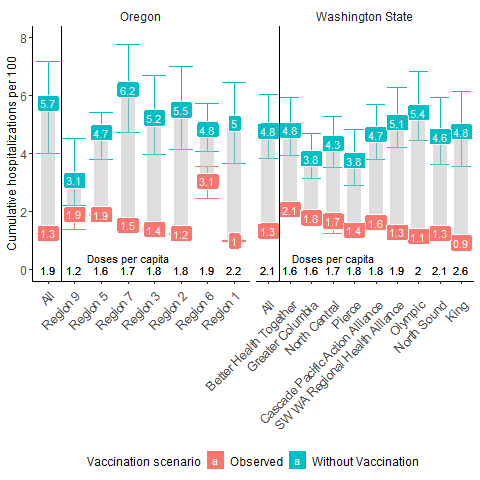
1210. Epidemiology and Predictors of COVID-19 Vaccine Uptake Among People With HIV in the US, 2020-23
Poster Abstracts
Page: 396
Adrienne E. Shapiro1, Rachel A. Bender Ignacio1, Bridget M. Whitney1, Robin M. Nance1, Bryan Lau2, April C. Pettit3, Michael Saag4, Katerina Christopoulos5, Jeffrey M. Jacobson6, Laura Bamford7, Sonia Napravnik8, Richard Moore2, Kenneth Mayer9, Heidi M. Crane1, Mari Kitahata1, the Centers for AIDS Research Network of Integrated Clinical Systems (CNICS)
Background
People with HIV (PWH) have higher risk of severe outcomes from COVID-19 and were prioritized when COVID-19 vaccines first became available in the US. Many factors influenced access, willingness to receive COVID-19 vaccines, and receipt of subsequent vaccination doses.
Methods
We examined trends in uptake of COVID-19 vaccination among PWH at 9 sites in the CNICS cohort, 2020-23. At 7 sites with patient-reported outcome (PRO) data available including substance use and housing, we evaluated predictors of initial vaccination and subsequent doses. Relative risks were estimated using Poisson regression, adjusted for age, gender, race/ethnicity, and geographic region.
Results
17,626 (72%) PWH received ≥1 COVID-19 vaccine and 15,492 (64%) received ≥2 vaccines between 2020-23; 93% received a first vaccine before Jan 2022 (Figure). Among 17,667 PWH in care at 7 sites contributing PRO data (20% female, 45% Non-Hispanic [NH] Black, mean age 50 [SD 13]), 13,082 (74%) received ≥1 COVID-19 vaccine by 12/31/22. Vaccination (≥1) was associated with older age (aRR 1.06 [95%CI 1.05,1.0] per decade), gender (aRR 0.96 [0.92-1.005] female vs. male), and region (highest in Northeast (aRR 1.13 [1.05-1.20]), similar in the South and Midwest/Mid-Atlantic (aRRs 0.99-1.07, [0.95-1.15] vs. West).
72% of NH Black PWH were vaccinated, the lowest proportion of any racial/ ethnic group (unadjusted RR 0.96 vs NH White; [0.93-1.00]). PWH with HIV viral load (VL) ≥50 copies (aRR 0.86 [0.82-0.91]), off ART (aRR 0.66 [0.62,0.71]), or unstably housed (aRR 0.89 [0.81-0.98]) were less likely to receive any vaccine, while those with higher CD4 were more likely to be vaccinated (aRR 1.02 per 100 cells/mm3, [1.01-1.02]). Concurrent use of meth, cocaine, opioids, and/or heavy alcohol) were not associated with vaccination. 62% of PWH completing the initial vaccine series before 2022 received ≥1 additional COVID-19 vaccine after 2022, which was associated with older age and ethnicity: Hispanic vs. NH White were more likely to receive ≥1 additional dose (aRR 1.20 [1.10-1.30]).
Conclusions
Although initial uptake of COVID-19 vaccination in US PWH was very high, subsequent vaccination dropped dramatically. PWH at highest risk of poor outcomes of COVID-19 including those with decreased HIV care engagement (off ART, detectable VL) and Black race were less likely to receive vaccination. Clinical vigilance is required during and after periods of care disruption to ensure the most vulnerable PWH access recommended vaccines.
Figure 1.
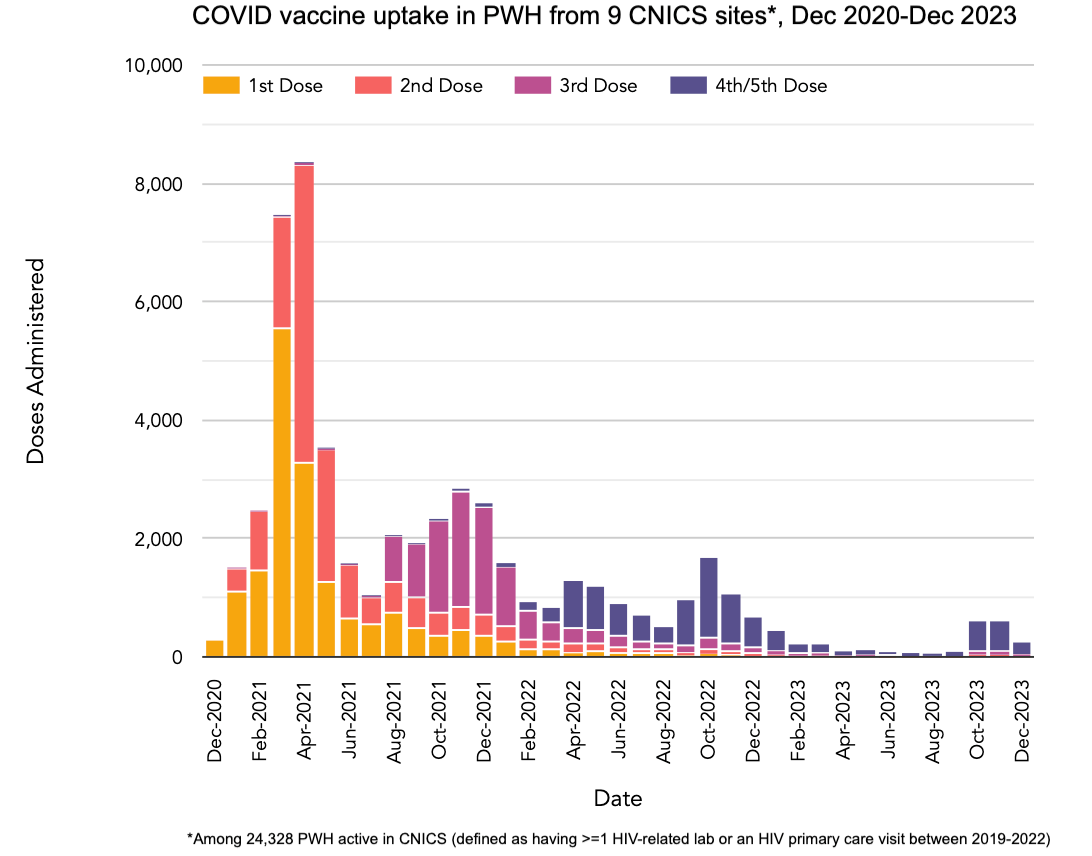
1211. Self-Reported PrEP Use Is Associated With Short- and Long-Term Pharmacologic Metrics in Kenyan Women
Poster Abstracts
Pages: 396-397
Jennifer Velloza1, Deepalika Chakravarty1, David Glidden1, Gakuo Maina2, Charlene Biwott2, Catherine Kiptinness2, Matthew A. Spinelli1, Hideaki Okochi1, Purba Chatterjee1, Erica Sedlander1, Nelly Mugo2, Kenneth Ngure2, Monica Gandhi1
Background
Self-reported adherence to PrEP may be inaccurate due to social desirability and recall biases. Although biomarkers can provide more reliable information on pill-taking, the knowledge of biomarker collection can itself increase the accuracy of self-report.
Methods
We explored correlations between self-reported PrEP adherence and biomarker data in the PUMA trial in Kenya. HIV-uninfected women ≥18 years using oral tenofovir (TFV)-based PrEP for three months were enrolled (N=100) from 2021–2022 and randomized 1:1 to a urine point-of-care assay with drug-level feedback or standard-of-care. Adherence was measured at enrollment, 3-, 6-, 9- and 12-months via urine and hair assays and self-report. Short-term PrEP adherence was defined as a positive urine assay result (TFV>1500 ng/mL). Long-term PrEP adherence was defined as detectable TFV in hair (>0.002 ng/ mg). Self-reported adherence was calculated as the mean score (range: 0-100) on a 2-item modified Wilson scale assessing percentage of doses taken in the prior month and adherence rating. We used t-tests to explore differences in mean score by biomarkers at Month 12. Generalized estimating equations estimated longitudinal associations between the self-reported adherence score and the biomarkers – a positive urine assay or detectable TFV in hair – adjusting for study arm.
Results
At enrollment, 68% had a positive urine assay, 72% had detectable TFV in hair, and the mean self-reported adherence score was 90 (standard deviation [SD]=18). At Month 12, 86 were retained, of whom 59% had a positive urine assay, 69% had detectable TFV in hair, with a mean adherence score of 79 (SD=28); mean adherence score was higher in the groups with a positive urine assay (mean score of 91 vs. 62 for those with a negative assay; p<0.01) and detectable TFV in hair (mean score of 87 vs. 62 for those with undetectable TFV; p<0.01). In longitudinal models, higher adherence score was associated with a greater likelihood of a positive urine assay (adjusted relative risk [aRR]: 1.12; 95% confidence interval [CI]: 1.08-1.17; p<0.01) and detectable TFV in hair (aRR: 1.02; 95% CI: 1.00-1.04; p=0.02).
Conclusions
Associations between self-reported and biomarker-verified PrEP adherence indicate that women in this cohort were able to accurately report pill-taking. Self-reported adherence using validated items may be able to more accurately identify PrEP use patterns in contexts where women know their adherence is being monitored periodically with biomarkers.
1212. Point-of-Care Urine Tenofovir Feedback Counseling Improves PrEP Adherence for US MSM in Pilot RCT
Poster Abstracts
Page: 397
Matthew A. Spinelli1, Leah Davis Ewart2, Emily Ross2, Megan J. Heise1, Renata Buccheri3, Shivani Mahuvakar1, David Glidden1, K. Rivet Amico4, Emily Arnold1, Guohong Wang5, Hideaki Okochi1, Jennifer Manuel1, Susan Buchbinder6, Adam Carrico2, Monica Gandhi1
Background
Young men who have sex with men (YMSM) have high HIV incidence and challenges with PrEP adherence. Point-of-care (POC) urine tenofovir (TFV) testing permits real-time objective adherence monitoring at a low cost. A prior study with PrEP-using women in Kenya demonstrated improved long-term adherence when women had motivational interviewing (MI)-informed drug-level feedback using the POC test in the clinic. We adapted and pilot tested a 2-session, MI-informed intervention with POC self-testing and remote counseling.
Methods
Participants (age<30; n=49) who reported daily oral PrEP (F/TDF or F/TAF) use were recruited remotely from the Grindr application and randomized 2:1 to a 2 session MI-informed POC drug-level feedback counseling intervention delivered remotely by psychologists versus standard of care over a 3-month period. Urine POC tests were mailed to participants and self-administered before each session, informing the counseling. Self-collected hair samples were analyzed for TFV at baseline and 3 months using liquid chromatography/tandem mass spectrometry. GEE models analyzed the change in hair TFV levels over time comparing the intervention and control groups.
Results
Overall, the participants (n=49; 31 intervention/18 control) had a median age of 26 (IQR: 23-29) years; 30% were Hispanic, 26% were Black; and 46% used F/TAF. Of 31 intervention participants, 100% successfully self-administered the urine test and 100% reported the intervention was somewhat/very acceptable. Over the 3 months of the intervention, there was a 0.01 ng/mg increase in hair TFV levels in the intervention group when compared to the control group (95% CI: 0.00-0.18; p=0.04). This degree of change in hair TFV levels in the intervention group translates to ~1-2 more PrEP tablets per week. Among those with <4 doses/week adherence at baseline, 6 of 8 of the intervention participants increased above 4 doses/week compared to 0 of 4 participants in the control group.
Conclusions
In a diverse sample of YMSM using daily oral F/TDF or F/TAF PrEP, a pilot RCT of a telehealth MI-informed POC urine TFV testing intervention demonstrated preliminary efficacy for biologically verified increases in long-term adherence, assessed via hair TFV levels. Given the low-cost of the POC test, the remote nature of the intervention, and increasing use of telehealth to provide PrEP care, this approach could be scaled nationally and implemented outside of in-person clinic settings if more definitive RCTs provide evidence of efficacy.
1213. Oral Fluid Concentrations of Tenofovir and Emtricitabine for Antiretroviral Adherence Monitoring
Poster Abstracts
Page: 397
Xin Niu1, Eric Edwards2, Jeannette Dienhart2, Richard Haaland2, Oraphan Siriprakaisil3, Pra-Ornsuda Sukrakanchana4, Tim Cressey4, Paul Drain1
Background
Adherence monitoring using drug concentrations for oral Pre-exposure Prophylaxis (PrEP) can identify people who need additional adherence support interventions or a transition to long-acting injectable regimens. Oral fluids are widely accepted as a convenient and confidential specimen type for HIV self-testing. This study evaluated the feasibility of detecting emtricitabine (FTC) and tenofovir (TFV) in oral fluids to monitor daily oral PrEP adherence.
Methods
We collected oral fluids from HIV-negative adults randomized to 2 or 4 or 7 doses/week with FTC/Tenofovir Disoproxil Fumarate for directly observed oral PrEP. Drug concentrations were measured using liquid chromatography tandem mass spectrometry. Drug levels below the limit of detection (LOD: 5 ng/mL) were considered as undetectable (0 ng/mL). Readouts below the limit of quantification (LOQ: 10 ng/mL) but above the LOD were imputed as half of the LOQ. Generalized Estimating Equations were used to examine associations between FTC/TFV detectability and the three dimensions of PrEP adherence: dosing recency (hours since last dose taken), cumulative dosing time (weeks since first dose), and dosing frequency (number of doses per week). We also assessed the diagnostic accuracy of FTC levels in oral fluids for predicting daily oral PrEP non-adherence(defined as having a time since last dose >24 hours).
Results
241 oral fluid specimens from 22 participants (41% female) were included. Among 165 oral fluid specimens with a time since last dose within 48 hours, 15 (9.0%) had detectable TFV, and 88 (53.3%) had detectable FTC. Median (interquartile range) FTC concentrations were 15 (0-141) ng/mL for 115 oral fluid specimens with time since the last dose ≤24 hours, and 0 (0-11) ng/ mL for 50 oral fluid specimens with time since the last dose between 24 and 48 hours. Oral specimens collected between 24 and 48 hours since the last oral PrEP dose had significantly lower odds of having detectable FTC (odds ratio: 0.21, 95% CI: 0.11-0.38), as compared to specimens collected within 24 hours since the last oral PrEP dose. An FTC threshold of <7.5 ng/mL achieved a sensitivity of 90% (95% CI: 84%-94%) and a specificity of 65% (95% CI: 57%-74%) to identify recent PrEP non-adherence with one daily dose missed.
Conclusions
FTC can be detected in oral fluids and its absence may provide a reliable pharmacologic marker identifying non-adherence to daily PrEP dosing. TFV concentrations in oral fluids were low making it unsuitable for PrEP adherence monitoring.
The figure, table, or graphic for this abstract has been removed.
1214. Are Sex-Specific Cutoffs Needed With a Next-Gen Urine Tenofovir Assay for Adherence Monitoring?
Poster Abstracts
Pages: 397-398
Xin Niu1, Derin Sevenler2, Sandy Dossantos2, Mehmet Toner2, Rebecca Sandlin2, Oraphan Siriprakaisil3, Pra-Ornsuda Sukrakanchana4, Tim Cressey4, Paul Drain1
Background
Females may require higher oral Pre-exposure Prophylaxis (PrEP) adherence to achieve equivalent therapeutic drug concentrations compared to males, suggesting the need for sex-specific cutoffs for rapid urine tenofovir (TFV) assays. We developed a next-gen urine TFV Lateral Flow Assay (LFA) without a predefined threshold to (1) determine if the quantified LFA readouts differ between females and males with the same adherence levels, and (2) to evaluate its diagnostic performance for detecting non-adherence across sexes.
Methods
Using a next-gen urine TFV LFA, we tested urine samples from HIV-negative adults randomized to 2 or 4 or 7 doses/week of Emtricitabine/ Tenofovir Disoproxil Fumarate for directly-observed oral PrEP. We obtained the averaged visual scores of the LFA test line from two operators using a graded color intensity reference card. Optical readings of the test and control line were objectively measured by an LFA reader. We assessed the effect of sex on LFA readouts among adherent samples with a dose taken in the prior day using Generalized Estimating Equations. We calculated the overall and sex-specific sensitivities/specificities for recent non-adherence defined as no dosing in the prior day.
Results
A total of 586 urine specimens were evaluated from 28 participants. Among 139 urine samples with a dose taken in the prior day, males had 33% lower (p <0.01) optical readings, and a 1.82 unit lower (p <0.01) averaged visual score of the LFA test line, when compared to females. With the same cutoffs (>705) for the test line optical reading, we found similar sensitivities (86% vs 86%) and specificity (100% vs 95%) among males versus females. With similar specificities (97% vs 92%), the sensitivity among females (82%, 95% confidence interval (CI): 77-88%) was slightly higher than that among males (76%, 95% CI: 71-81%) when using the same cutoff (>1.25) for the averaged visual score. The ratio of the LFA test/control line optical readings (>0.095) was highly sensitive (93%, 95% CI: 91-95%) for detecting non-adherence as early as missing one dose, while maintaining a high specificity (96%, 95% CI: 93-99%) in the total population.
Conclusions
While females showed higher LFA readouts (indicating lower urine TFV levels) than males, sex-specific cutoffs for a next-gen TFV LFA may not be necessary to measure antiretroviral adherence. The next-gen LFA demonstrated enhanced diagnostic accuracy in identifying early non-adherence.
Table 1.
Diagnostic Performance of a Next-Gen Tenofovir Lateral Flow Assay (LFA) for Non-Adherence Detection
*
| Non-Adherence + |
Average Visual Score >1.25 |
Test Line Optical Reading >705 |
Test/Control Optical Reading Ratio >0.095 |
| No dosing in the prior day + (Total: N=586) |
| Sensitivity |
79% (75%-82%) |
86% (83%-89%) |
93% (91%-95%) |
| Specificity |
95% (91%-95%) |
98% (95%-100%) |
96% (93%-99%) |
| No dosing in the prior day + (Males: N=341) |
| Sensitivity |
76% (71%-81%) |
86% (82%-91%) |
93% (90%-96%) |
| Specificity |
97% (93%-100%) |
100% (100%-100%) |
99% (96%-100%) |
| No dosing in the prior day + (Females: N=245) |
| Sensitivity |
82% (77%-88%) |
86% (81%-91%) |
93% (89%-96%) |
| Specificity |
92% (86%-98%) |
95% (89%-100%) |
94% (88%-98%) |
1215. Technology-Based Oral Daily Pre-Exposure Prophylaxis Intervention for Online Population in India
Poster Abstracts
Page: 398
Jalpa Thakker1, Sunil S. Solomon1, Dinesh Kumar2, Jade Bell1, Allison M. McFall3, Rifa T. Khan2, Subash Gosh2, Viswanathan Arumugam2, Jagadish Patil2, Latika Karve2, Kanchan Pawar1, Conjeevaram K. Vasudevan2, Anthony Reddy1, Deepak Naren2, Sukhvinder Kaur4
Background
Rise of web-based dating platforms have created a "virtual vulnerable population" who do not visit traditional HIV sites, with an HIV burden 20 times higher than the national average (0.2%) highlighting the need to adapt virtual service delivery of interventions such as PrEP . Given the penetration of mobile technology in India with resource limited settings, PrEP delivery via a virtual platform could close this gap.
Methods
Since 2020, the Safe Zindagi (SZ) website has provided comprehensive HIV and sexual health services such as HIV testing (self-testing), PrEP and treatment services through a virtual network of doctors, pharmacies, and counselors by reaching diverse populations across India via social media and dating applications. For PrEP, virtual counselors (VCs) assist clients to book subsidized baseline lab tests and tele-consultation with a doctor on SZ. If eligible, subsidized medications are couriered or picked-up by clients through pre-selected pharmacies. VCs, doctors, and automated messages support adherence and retention via tele-counseling, periodic HIV testing and refill reminders. We describe the PrEP uptake and retention over a 4-year period
Results
3486 clients across 90 Indian districts (June 2020-August 2024) were interested in PrEP, of whom 3329 were eligible and 3063 (92%) initiated PrEP. Median age at initiation was 26 years; 59% were cisgender men, 18% ciswomen, and 23% transgender persons. Of the 3063 clients who initiated PrEP, 39% were still on PrEP as of August 31, 2024. The median time on PrEP per client was 156 days; 71% of clients were retained at least for 12 months. Over 4 year period, retention was higher in cisgender men and women compared to TG and was lowest (35%) in clients aged 15-29 years and highest (58%) in 40-55 year old clients. Among clients that discontinued PrEP, 18% were sero-discordant couples, 43% reported reduced HIV risk (e.g. change in sexual behaviors) and other issues like affordability, migration, and lost to follow up.There have been 3 documented sero-conversions among PrEP clients – all clients had a PrEP interruption prior to seroconversion.
Conclusions
Data highlight the feasibility of a web-based platform in delivering PrEP services virtually to vulnerable virtual populations in low- and middle- income settings with retention comparable to other physical PrEP programs. Such a platform lends itself to expansion for other services (e.g., PEP, DoxyPEP, etc.) to ensure individually tailored services at scale.
Figure 1.
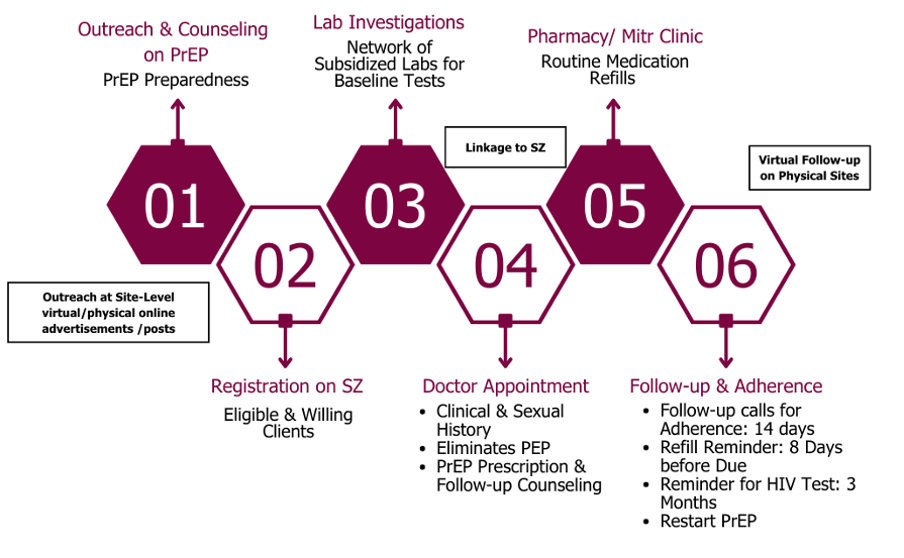
1216. Suboptimal Laboratory Testing of PrEP Users: United States, 2022-2023
Poster Abstracts
Page: 398
Karen W. Hoover1, Weiming Zhu1, Ya-Lin A. Huang1, Laura M. Mann1, Rupa Patel2, Athena Kourtis1
Background
To ensure the safety of PrEP use, CDC recommends testing all PrEP users for HIV and sexually transmitted infections (STIs) at PrEP initiation and regular intervals during use. CDC also recommends testing oral PrEP users for hepatitis B virus (HBV) at initiation, and creatinine at initiation and during use. Testing users of tenofovir alafenamide and emtricitabine (TAF/FTC) for lipids is recommended at initiation and annually during use.
Methods
We analyzed the MarketScan commercial insurance database and identified persons who initiated oral or CAB-LA PrEP during 2022-2023. We analyzed testing records for HIV antigen/antibody (Ag/Ab), HIV RNA, HBV, STIs, creatinine, and lipids stratified by PrEP type. For each test, we estimated proportions of persons tested at PrEP initiation (±14 days from first prescription), and at follow-up within 90 days after the inferred end of PrEP use. To ensure sufficient time for follow-up, we used denominators based on the recommended interval for each test: HIV Ag/Ab testing was assessed among persons prescribed PrEP ≥3 months; STI testing for those prescribed ≥6 months; creatinine testing for those either aged ≥50 years and prescribed ≥6 months or all users prescribed ≥12 months; and lipid testing for those prescribed TAF/FTC ≥12 months. We calculated the median time and interquartile range (IQR) from PrEP initiation to the first follow-up test.
Results
Among 35,132 oral PrEP users, only 38% had an HIV Ag/Ab test at initiation and 56% had a follow-up test while using PrEP (Table). At initiation of oral PrEP, testing rates were 21% for HBV, 35% for syphilis, 35% for chlamydia, 34% for gonorrhea, 34% for creatinine, and 15% for lipids. Among 453 CAB-LA PrEP users, only 55% had an HIV Ag/Ab test and 31% had an HIV RNA test at initiation. At follow-up, 82% of CAB-LA PrEP users had an HIV Ag/Ab test and 53% an HIV RNA test. At initiation of CAB-LA PrEP, 39% had a syphilis test, 37% had a chlamydia test, and 37% had a gonorrhea test.
Conclusions
Lab testing of PrEP users, including HIV testing, was suboptimal and not in accordance with CDC recommendations. PrEP users might have been tested for HIV using only a point-of-care (POC) test to facilitate rapid PrEP initiation despite a recommendation to confirm a negative POC test result with lab-based HIV testing. Implementation of clinical decision supports with automated lab order sets tailored to each type of PrEP medication could increase adherence to recommended PrEP lab testing.
Table 1.
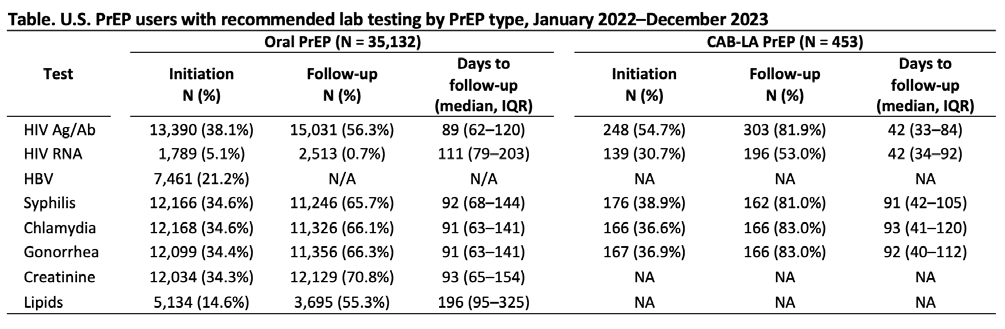
1217. Factors Associated With PrEP Uptake, Persistence, and Adherence Among Incarcerated People in Zambia
Poster Abstracts
Page: 399
Brianna R. Lindsay-Renninger1, Cassidy W. Claassen1, Muyunda Siyambango2, Linah K. Mwango3, Caitlin Baumhart1, Nasho Nyirongo3, Morley Mujansi3, Clement Moonga2, Godfrey Muchanga4, Chiti Bwalya5, Monica Gandhi6, Maurice Musheke2, Michael E. Herce7
Background
For justice-involved people, the times during and immediately after incarceration can be high-risk periods for HIV acquisition since these periods afford limited access/adherence to effective HIV prevention. We report results from one of the first longitudinal studies to characterize PrEP use among justice-involved people in sub-Saharan Africa.
Methods
From August 2023—March 2024, we enrolled a cohort of PrEP users and non-users across four correctional facilities in Lusaka, Zambia. HIV-negative incarcerated persons were offered oral tenofovir (TFV)-based PrEP by the health system, and then approached by study staff for participation. Consenting participants were followed from incarceration through community release for HIV seroconversion and PrEP outcomes, including uptake, persistence, and adherence. Follow-up visits were scheduled at 1, 3, 6, 9 and 12 months after enrollment and a randomly selected sub-cohort of participants on PrEP underwent urine TFV screening for objective adherence monitoring. We used logistic regression to examine factors associated with PrEP outcomes.
Results
A total of 706 participants enrolled, with an average age of 28.6 years, majority (672; 95%) male and less than a third (200; 28%) with secondary education. Of 531 (75%) eligible to start PrEP, 326 (61%) initiated PrEP at enrollment. Participants were significantly more likely to initiate PrEP at enrollment if they were sentenced (OR: 1.8, 95% CI:1.3-2.5) vs awaiting trial, had heard of PrEP (OR: 2.3, 95% CI:1.6-3.3) or had greater worry about acquiring HIV in prison (OR 1.1, 95% CI:1.0-1.3). Of 101 persons initiating PrEP at enrollment with a 6-month follow-up visit, 54 (54%) were on PrEP. A total of 59 (29%) of 202 urine TFV screening tests at follow-up indicated adequate adherence. Self-reported PrEP adherence had a positive predictive value of 0.71 (95% CI:0.59-0.80) and negative predictive value of 0.97 (95% CI:0.92-0.99) compared to urine TFV. Two participants seroconverted (0.3%)—one in a PrEP user who had discontinued—and were linked to treatment. Women were 15.7 (95% CI:2.5-304) times as likely than men to persist on PrEP at 6 months.
Conclusions
Initial results suggest high PrEP uptake among incarcerated people in Zambia, particularly among those who had heard of PrEP before. PrEP adherence adjudicated objectively was low (29%) as was persistence, which was higher among women. Our preliminary findings point to the need for differentiated prevention services in this group, especially for men.
The figure, table, or graphic for this abstract has been removed.
1218. Trends in 2016 CDC-Recommended PEP Regimens and Bictegravir for HIV PEP: United States, 2015-2023
Poster Abstracts
Page: 399
John Le, Weiming Zhu, Ya-Lin A. Huang, Jesse O'Shea, Laura M. Mann, Karen W. Hoover, Athena Kourtis, Mary Tanner
Background
Postexposure prophylaxis (PEP) is critical for HIV prevention because it is the only intervention that can prevent HIV acquisition following an exposure. 2016 CDC PEP guidelines recommend specific regimens for PEP. A recent report found increasing off-label use of bictegravir for PEP. Bictegravir is a second-generation integrase inhibitor approved for HIV treatment in 2018 that is not one of the CDC PEP guidelines recommended regimens. Our objective was to analyze national trends in the use of 2016 CDC recommended regimens and bictegravir for PEP and to describe PEP user characteristics.
Methods
We analyzed data from the IQVIA Real World Data—Longitudinal Prescriptions database and updated a validated algorithm to identify persons aged ≥16 years prescribed PEP from 2015−2023. Among those prescribed an antiretroviral (ARV) medication, we used the validated algorithm to exclude persons with prescriptions for PrEP or hepatitis B treatment. We also excluded persons with a prior or concurrent HIV diagnosis from 2015–2023, an ARV prescription with >30 days of supply, or any prior ARV prescription record. Two clinicians independently reviewed the regimens and determined probable PEP cases. We reported the annual number of PEP users, stratified by regimen type, days of supply, and PEP user demographic characteristics.
Results
During 2015−2023, the annual number of persons prescribed PEP ranged from 38,059−49,525. In 2023, 88.1% of PEP prescriptions were a full course for 28−30 days and 12.0% for shorter durations. The number of persons prescribed bictegravir for PEP increased from 3,525 (7.3%) in 2018 to 15,048 (30.4%) in 2023. While CDC-recommended PEP regimens were prescribed equally for men and for women, bictegravir was prescribed predominantly for men (72.9%). Nearly half of individuals prescribed bictegravir for PEP were from the South (48.5%).
Conclusions
The increasing use of bictegravir for PEP reflects a shift in prescribing behavior, likely because of its dosed once daily, tolerability, and efficacy in PEP. Our finding of increased bictegravir use can inform future recommendations for PEP medications. Not all PEP users were prescribed a full course of PEP. It is important to ensure that persons prescribed PEP starter-packs be supported to follow-up for a full course.
Figure 1.
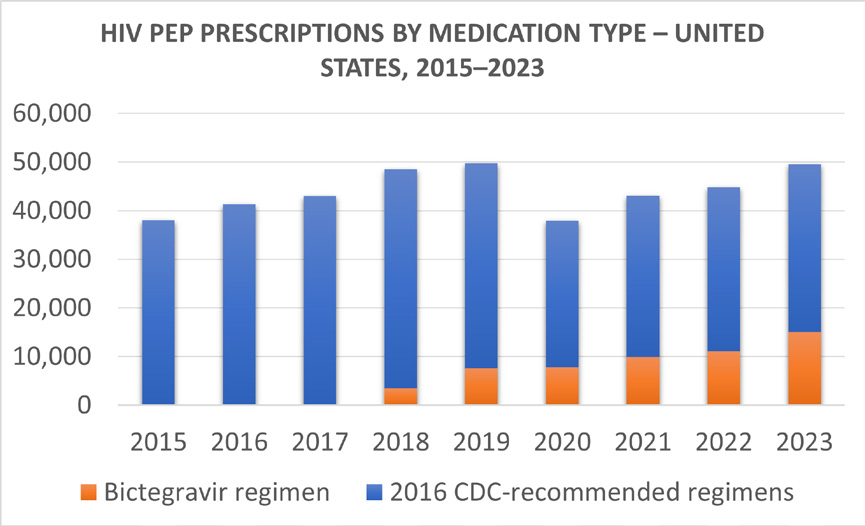
1219. Impact of Initiation Delay, Duration, and Prior PrEP Usage on FTC/ TDF-Containing PEP Efficacy
Poster Abstracts
Pages: 399-400
Max von Kleist1, Lanxin Zhang1, Julie Fox2, Simon Collins3
Background
Pre- and post-exposure prophylaxis (PrEP and PEP) are key strategies to prevent HIV infection. While the efficacy of PrEP has been elucidated in many randomized clinical trials, corresponding data for PEP is challenging to obtain in a controlled setting. Consequently, it is almost impossible to study the impact of PEP initiation delay and PEP duration on HIV risk reduction clinically to inform PEP recommendations.
Methods
We employed pharmacokinetics, pharmacodynamics, and viral dynamics models, incorporating individual factors such as self-start PEP and PEP adherence to investigate the impact of initiation delay and PEP duration on HIV risk reduction. We evaluated PEP using two- and three-drug regimens with an FTC/TDF backbone. Moreover, we study PEP efficacy in the context of PrEP-to-PEP transitions.
Results
Our simulations indicate that early initiation of PEP is critical for reducing HIV transmission risk. We found that 2-drug (FTC/TDF) PEP may offer insufficient protection when initiated >1hour post-exposure. When adding dolutegravir (DTG) as a third drug, early initiation was still a critical factor, however, ≈90% efficacy could be achieved when PEP was initiated within 48 hours post-exposure and taken for at least 28 days. If 2-drug (FTC/TDF) PEP was initiated within 24hours post-exposure, DTG may be added several days later to still achieve >90% protection. When investigating PrEP-to-PEP transitions, we observed that preceding PrEP can (i) contribute directly to prophylactic efficacy, and (ii) boost subsequent PEP efficacy by delaying initial viral dynamics and building-up drug concentrations, overall facilitating self-managed transitioning between PrEP and PEP.
Conclusions
Our study confirms the critical role of early (<48hours) PEP initiation, preferably with three drugs taken for 28 days. Self-starting with TDF/FTC and later addition of a third drug is better than not self-starting. Furthermore, our study highlights the synergy between recent PrEP intake and PEP, where we find that two drug PEP may be possible in situations where PrEP had recently been taken by the exposed individual.
Table 1.
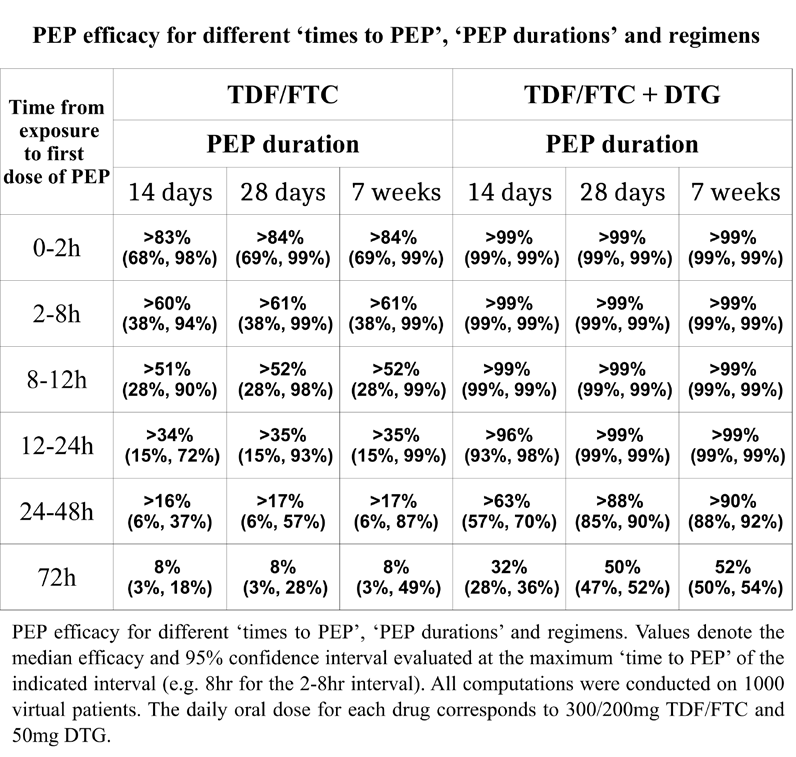
1220. WITHDRAWN
Poster Abstracts
Page: 400
1221. Cost-Effectiveness of Different Risk-Group Targeting Across 3 Types of PrEP in Zimbabwe
Poster Abstracts
Page: 400
Mellesia Jeetoo1, Yao-Rui Yeo1, Dyanna Charles1, Jasmine Su1, Owen Mugurungi2, Tsitsi Apollo3, Getrude Ncube3, Ngwarai Sithole3, Karen Webb4, Kudakwashe Takarinda4, Emily Gwavava5, Bekezela Bobbie Khabo5, R. Scott Braithwaite1
Background
Oral pre-exposure prophylaxis (oral PrEP) has long been part of the HIV prevention portfolio in Zimbabwe. The introduction of long-acting, injectable PrEP (LA PrEP) in 2022 and the dapivirine vaginal ring (ring PrEP) in 2023 have the potential to increase PrEP uptake and further reduce HIV incidence in Zimbabwe. However, the impact and optimal implementation strategy of ring PrEP and LA PrEP are unclear. We aim to identify the cost-effectiveness of different implementation strategies using the three types of PrEP in Zimbabwe.
Methods
Using a validated HIV compartmental transmission model in Zimbabwe, we compared 3,136 permutations of PrEP implementation strategies. We compared three types of PrEP (oral, LA, ring) across various coverage levels (10%, 50%, 70%) and targeted different groups, including adolescent girls and young women ages 15-24 (AGYW), adolescent boys and young men ages 15-24, men aged 25 to 34, and high-risk groups such as female sex workers (FSW), men who have sex with men (MSM), people with alcohol use disorder, and people with major depressive disorder. Cost, effectiveness, retention, and coverage inputs were based on the literature, expert opinion, and national surveillance results. Outcomes were infections averted, quality-adjusted life-years (QALYs) gained, cost per infection averted, and cost per QALY gained.
Results
LA PrEP is more cost-effective than oral and ring PrEP. Implementing LA PrEP for FSW at 70% coverage level is the most cost-effective strategy, averting 10895 additional infections and adding 6711 additional QALYs through 2030. This strategy costs $11.8 million per year and has an incremental cost-effectiveness ratio (ICER) of $1081/infection averted or $1545/QALY, when compared to the baseline implementation of oral PrEP at 10% coverage. Targeting FSW for LA PrEP at various coverage levels has similar ICERs and is more cost-effective than other common HIV prevention programs, such as additionally scaling-up index tracing, differentiated care, voluntary medical male circumcision, HIV self-testing, and defaulter tracing. However, when LA PrEP is targeted to other risk groups beyond FSW, LA PrEP becomes less cost-effective than other prevention programs.
Conclusions
Targeting high-risk populations like FSW with LA PrEP is the most cost-effective PrEP implementation strategy and contributes to Zimbabwe’s Ending the HIV Epidemic 2030 goal.
1222. Leveraging Community to Provide PrEP to Key Population in China: Results From a PrEP Clinical Trial
Poster Abstracts
Pages: 400-401
Weiming Tang1, Yifan Dai2, Chengxin Fan2, Chunyan Li3, Songjie Wu4, Quanmin Li5, Joseph D. Tucker1, Jonathan Lio6, Haojie Huang7, Ke Liang4, Linghua Li5, Aniruddha Hazra8, Renslow Sherer6, Zhuoheng Yin2
Background
Data on PrEP usage is limited in China. This study aimed to provide information on PrEP uptake, persistence, discontinuation, adverse events, and HIV incidence among Chinese at-risk PrEP users.
Methods
We conducted a 12-month PrEP demonstration project in Wuhan and Guangzhou, China, using a community and clinic hybrid delivery model. Healthcare providers implemented prescribing, medical consultation, and PrEP dispensing through clinic visits or courier delivery with CBOs' assistance. PrEP refill was monthly for the first quarter and trimonthly thereafter. PrEP continuation and adherence information (defined as self-reported taking more than 6 pills in 7 days for daily and strictly adherence to 2+1+1 for events-driven) was surveyed quarterly. Enrollment, PrEP persistence, adherence, discontinuation, and adverse events were descriptively summarized.
Results
From September 2021 to September 2024, a total of 3649 GBMSM were screened, and 1200 were enrolled. Of those, 1138 participants started oral PrEP, with a median age of 29.1(SD=5.9). Most participants identified as gay or bisexual (93.7%, 1066/1138), and 99.6% were cis-gender men(1134/1138). After initiation, PrEP persistence rates at 3, 6, 9, and 12 months were 82.9% (943/1138), 75.9% (864/1138), 70.1% (793/1131), and 65.4% (720/1101) respectively (ongoing). The self-reported adherence rate was 64.4%(733/1138), 59.3%(675/1138), 53.0% (599/1131), and 49.4% (544/1101) at months 3, 6, 9 and 12. In the first-time survey, 42.6% (412/943) and 57.5% (531/ 943) chose the daily and on-demand regimen. Among them, 40.3% (166/412) of daily users and 18.8% (100/531) of on-demand users had changed their regimens, thereafter. 381 participants (33.5%, 381/1138) discontinued PrEP use during the study. Twenty-three types of adverse effects were identified, with nausea (n=16), dizziness (n=12), and diarrhea (n=9) being the three most frequently reported.
Seven participants were seroconverted, resulting in an HIV incidence rate of 0.67 per 100 person-years.
Conclusions
The hybrid CBO and clinic-based model proved feasible for reaching and dispensing PrEP among Chinese at-risk populations. On-demand use drugs were popular alternatives and one-half of participants engaged in sex using alcohol and nitrates. Long-term PrEP persistence and optimal adherence continuously decreased among Chinese users during the 12-month period.
The figure, table, or graphic for this abstract has been removed.
1223. Longer Distances Traveled by Rural vs Urban PrEP Users for PrEP Care: United States, 2023
Poster Abstracts
Page: 401
Weiming Zhu1, Laura M. Mann1, Rupa Patel2, Ya-Lin A. Huang1, Karen W. Hoover1
Background
Preexposure prophylaxis (PrEP) is an effective intervention for the prevention of HIV acquisition associated with both sexual and injection drug use behaviors. Many rural communities are considered medically underserved areas with limited access to healthcare services. Our objective was to assess the distance traveled for PrEP services by persons who live in urban and rural communities.
Methods
We analyzed the 2023 IQVIA Real-World Data—Longitudinal Prescription Database to determine the number of providers who prescribed PrEP and the number of persons prescribed PrEP stratified by urban and rural location, PrEP user sex, and provider type (physician or midlevel provider that included nurse practitioners and physician assistants). We identified antiretroviral prescriptions for PrEP using a validated algorithm. For urban and rural PrEP users, we estimated the distance traveled for PrEP services and interquartile range (IQR) using the 5-digit zip code of the PrEP provider’s location and, as a proxy for the PrEP user’s location of residence, the 5-digit zip code of the dispensing pharmacy location. We used the 2023 Centers for Medicare & Medicaid Services Provider Locality file to categorize provider and pharmacy locations as urban or rural. We excluded PrEP prescriptions dispensed by mail order pharmacy outlets when estimating service distance.
Results
In 2023, 472,782 urban PrEP users were prescribed PrEP by 86,712 providers; 28,205 rural PrEP users were prescribed PrEP by 16,421 providers. Among urban PrEP users, 92.1% were men; among rural PrEP users 89.9% were men. Among urban PrEP users 58.8% received care from a physician; among rural PrEP users 56.3% received care from a nurse practitioner or physician assistant. Urban PrEP users traveled a median distance of 6.2 miles (IQR 1.8, 32.0) for PrEP care. Rural PrEP users traveled a median distance of 39.0 miles (IQR 7.9, 203.7) to an urban provider and 36.0 miles (IQR 0.0, 211.6) to a rural provider.
Conclusions
Rural PrEP users traveled longer distance for their PrEP care compared with urban users. Lack of convenient access to a PrEP provider might be a barrier to PrEP use by persons who reside in rural communities. Understanding PrEP services in rural areas is important to guide the development of interventions to ensure equitable access to effective HIV prevention interventions. PrEP delivery models that use telehealth and local pharmacies can help to increase access to PrEP in rural areas.
Table 1.
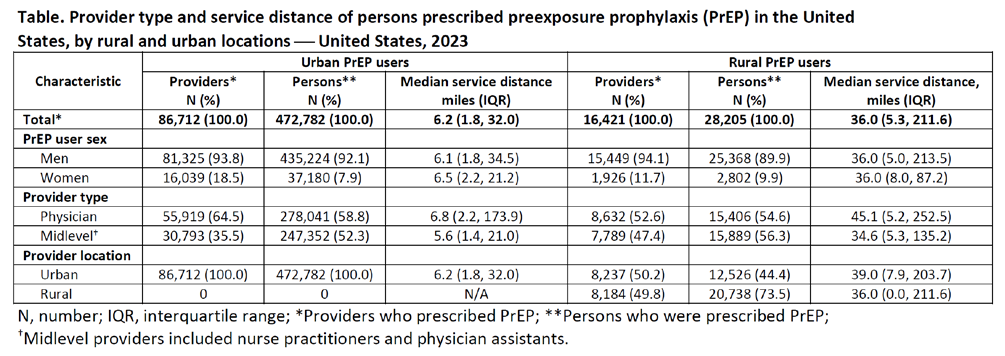
1224. Preexposure Prophylaxis Uptake in High Female-to-Male HIV Prevalence Regions in the US
Poster Abstracts
Page: 401
Ashvini Vaidya1, Lauren F. Collins1, Anandi N. Sheth1, Jessica M. Sales1, Daniel Westreich2
Background
Despite high efficacy of pre-exposure prophylaxis (PrEP) for HIV prevention, uptake is low among cisgender women in the US, especially in the South where >50% of new HIV diagnoses occur. The Ending the HIV Epidemic (EHE) initiative prioritizes 57 jurisdictions for targeted HIV prevention and treatment interventions. To identify opportunities for optimizing HIV prevention in women, we (i) evaluated whether designated EHE jurisdictions geographically overlap with counties of highest female-to-male HIV prevalence and (ii) assessed opportunity for PrEP uptake in these areas.
Methods
We used AIDSVu 2021 data to estimate female-to-male HIV prevalence ratios (PR) at the county level and in all EHE jurisdictions. For HIV prevalence, we included counties if the population was >500 persons and HIV prevalence >12 cases, and excluded if the county contained any correctional facilities. For PrEP data, we included counties if population was >100 persons and number of PrEP users was >3. For entire states specified as an EHE jurisdiction, every county in that state that met criteria for analysis was categorized as EHE-designated. Counties were ranked by female-to-male HIV PR, categorized by decile, and then we tested for discrepancies in EHE designation status and availability of PrEP utilization data between top vs bottom decile counties using a chi-square test.
Results
A total of 870 US counties (including Puerto Rico) met inclusion criteria (Figure). Of the top decile counties, female-to-male HIV PR ranged from 0.58-1.36, and 80% were located in the South. Of the bottom decile counties, female-to-male HIV PR ranged from 0.07-0.19, and 25% were located in the South. Comparing top vs bottom decile counties, 23 (26%) vs 22 (26%) were EHE-designated (p=0.89), however, nine (9%) vs 67 (79%) had available PrEP utilization data (p<0.0001). PrEP data availability were primarily limited by low or nonexistent PrEP users.
Conclusions
Using AIDSVu data, in 2021, 80% of U.S. counties with the highest ratio of female-to-male HIV prevalence were located in the US South. While EHE jurisdiction status at the county level did not significantly differ between top vs bottom decile counties, there were limited PrEP data available in regions of highest female-to-male HIV prevalence, primarily due to low PrEP uptake in these areas. As the biomedical toolkit for PrEP options expands, it is critical to optimize HIV prevention reach, use, and outcomes using geographically- and sex and gender-tailored approaches.
The figure, table, or graphic for this abstract has been removed.
1225. Self-Reported Frequent vs Infrequent HIV Risk and Actual Diagnoses in MSM: Implications for PrEP
Poster Abstracts
Pages: 401-402
Nicolas Salvadori1, Suwalai Chalermpantmetagul1, Sirintip Piyarad1, Sawitree Chairahaeng1, Sumet Ongwandee2, Jullapong Achalapong3, Surachet Arunothong4, Pra-Ornsuda Sukrakanchana1, Woottichai Khamduang1, Nicole Ngo-Giang-Huong5, Jean Yves Mary6, Sakorn Pornprasert1, Gonzague Jourdain1
Background
In Thailand, pre-exposure prophylaxis (PrEP) is primarily offered as a daily regimen and focuses on men who have sex with men (MSM) who report frequently engaging in condomless sex. However, MSM reporting less frequent HIV risk exposure may also benefit from PrEP. This retrospective study investigates HIV incidence based on self-reported risk frequency.
Methods
As part of the Napneung project (NCT02752152), which aimed to improve access to screening for HIV, syphilis, hepatitis B and C and other sexually transmitted infections, anonymous testing was offered to consenting individuals aged ≥18 years at four facilities in two large cities in northern Thailand (Oct 19, 2015 to Oct 19, 2020). Outreach activities encouraged participation of at-risk individuals. Before knowing their test results, participants confidentially self-reported their behavioral characteristics on tablet computers and were categorized based on the number of condomless sex acts in the past 3 months: frequent risk (>6 acts), infrequent risk (1-6 acts), or no risk (0 acts). In case of positive HIV test, confirmation tests, CD4 enumeration and HIV RNA load measurement were performed in a quality-controlled laboratory. The duration since HIV acquisition was estimated using Western blot (HIV-1 BLOT 2.2, MP Biomedicals, Singapore), and HIV incidence using an HIV-1 limited antigen avidity enzyme immunoassay (Sedia Biosciences, Portland, OR). MSM previously diagnosed with HIV (N=32) or on PrEP (N=13, none testing positive for HIV) were excluded from this analysis.
Results
Of 894 MSM (median age 23 years), 69 (8%) reported frequent risk, 412 (46%) infrequent risk and 413 (46%) no risk in the past 3 months. Sixty-four (7%) had a confirmed HIV diagnosis, with prevalence rates of 7% (5/69) in the Frequent Risk group, 10% (40/412) in the Infrequent Risk group, and 5% (19/413) in the No Risk group. The estimated HIV incidence was 4/100 person-years (PY) (95% CI: 0-13) in the Frequent Risk group, 11/100 PY (5-17) in the Infrequent Risk group, and 4/100 PY (0-7) in the No Risk group. Data at the time of HIV diagnosis are provided in the Table.
Conclusions
HIV prevalence and incidence were high among MSM reporting infrequent or no risk, two categories with substantial numbers of individuals. Regardless of the accuracy of self-reporting, this suggests that MSM reporting infrequent or no risk of HIV should be prioritized for event-driven PrEP, which offers greater flexibility and may better accommodate individual needs.
Table 1.
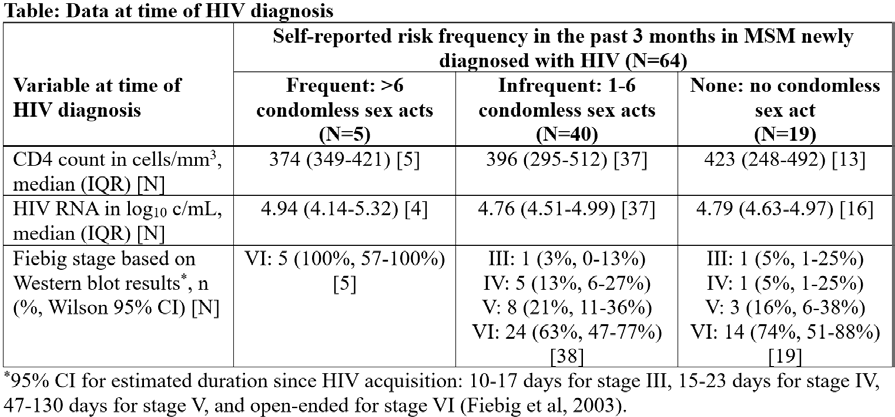
1226. The Influence of Racialized Economic Segregation on Unmet HIV Prevention Needs in the Real World
Poster Abstracts
Page: 402
Li Tao, Juan Yang, Chris Nguyen, Joshua Gruber, Kristin Baker, Woodie Zachry
Background
Racialized economic segregation significantly affects health outcomes by exacerbating disparities in disease prevalence and access to healthcare among marginalized communities. However, the impact of socioeconomic segregation on access to HIV pre-exposure prophylaxis (PrEP) across various socioeconomic groups remains unexplored in the US.
Methods
The Index of Concentration at the Extremes (ICE) quantifies segregation by measuring the concentration of individuals at opposite ends of the socioeconomic spectrum. Four ICE scores were calculated for >32,000 US Zip Code Tabulation Areas (ZCTAs) using American Community Survey data: race (White vs Black), income (high vs low), combined race/income (White/ high-income vs Black/low-income), and education (high vs low). ZCTAs were categorized into quintiles, ranging from the most deprived (Q1) to the most privileged (Q5). PrEP prescription data and new HIV-1 diagnoses (2019–2023) were obtained from the IQVIA pharmacy claims database. Unmet PrEP needs were evaluated using the PrEP-to-Need Ratio (ratio of PrEP users to new HIV diagnoses from the previous year). Logistic regression was used to compare the odds of PrEP claims being dispensed in deprived versus privileged communities.
Results
Over 500,000 new PrEP prescriptions were linked with ICE indices. From 2019 to 2023, PrEP uptake increased steadily, but showed slower growth in deprived communities (predominantly Black and/or low-income, low-education neighborhoods). Unmet PrEP needs were greatest in the most deprived communities and lowest in the most privileged. Despite overall improvements, disparities driven by social segregation persisted, with the gap between Q1 and Q5 widening over time (Figure). In 2019, predominantly Black/low-income communities had 2.7 times greater unmet needs versus predominantly White/high-income communities; this ratio increased to 3.2 in 2023. Individuals in socioeconomically deprived communities were less likely to have PrEP claims dispensed versus those in privileged communities (odds ratios [95% CI] for combined race/income Q1 vs Q5 = 0.78 [0.77–0.79]; Q4 vs Q5 = 0.95 [0.94–0.96]).
Conclusions
This study highlights the significant association between racialized economic segregation and PrEP uptake, and the widening disparities in unmet needs for HIV prevention in the US. It is essential that efforts are targeted to reduce disproportionate unmet needs in marginalized communities and ensure equitable PrEP access across diverse populations in real-world settings.
Figure 1.
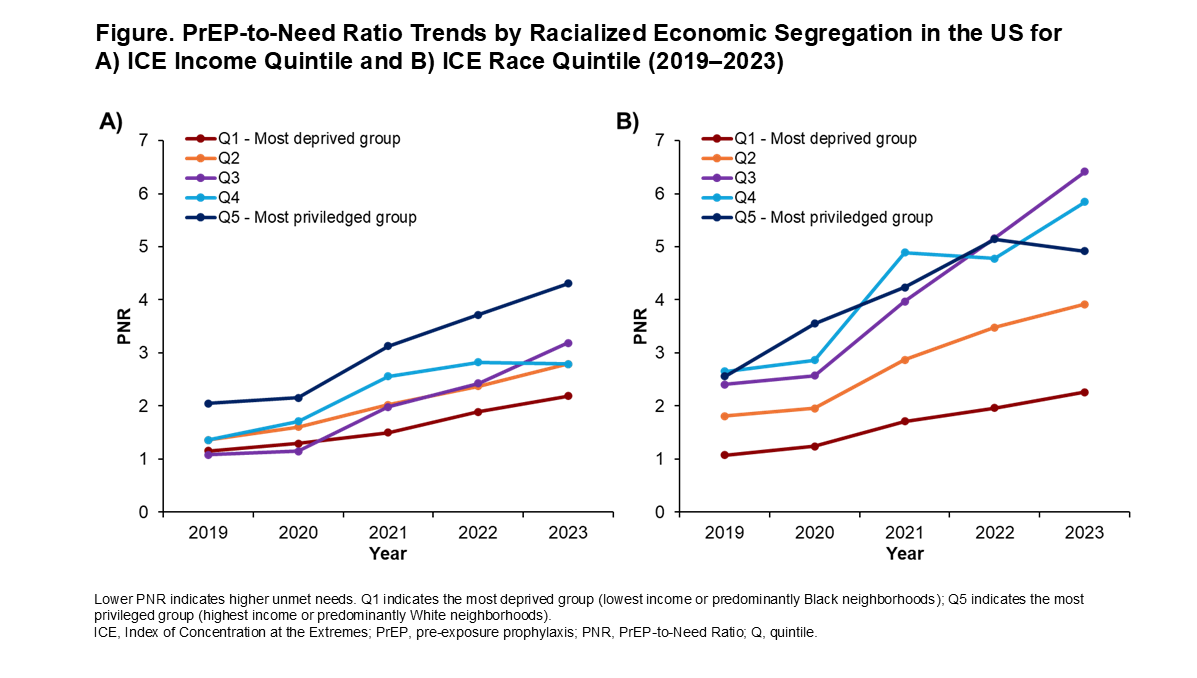
1227. The County-Level Analysis of PrEP-to-Need Ratio With HIV Diagnosis in the US, 2012-2021
Poster Abstracts
Page: 402
Guohan Xia, Xueying Yang, Fanghui Shi, Xiaoming Li
Background
The scale up of Pre-exposure Prophylaxis (PrEP) has been associated with reduced community HIV transmission. The population-level impact of PrEP coverage, particularly the extent to which PrEP needs were met, on HIV incidence, is still not well understood. This study aims to explore the longitudinal associations between PrEP-to-Need Ratio (PNR) and changes of HIV incidence rates across all the counties in the United States.
Methods
Several publicly available data sources were linked by county level Federal Information Processing Standards (FIPS) code and used for analysis. The PNR, which was retrieved from AIDSVu, was calculated as the ratio of PrEP prescriptions (numerator) to new HIV diagnoses (denominator) in each county per year between 2012 and 2021. Our outcome of interest was change in HIV incidence between two consecutive years. Correlation analyses were performed to assess the relationship of percent change of PNR with change of HIV incidence overall and HIV incidence racial disparities between 2012 and 2021. Linear mixed effects (LMM) models were performed to use PNR value in one calendar year to predict the HIV incidence change in the subsequent year in both “Ending the HIV epidemic initiative” (EHE) areas and across the US, adjusting social determinants of health.
Results
The correlation analysis from the 48 EHE counties revealed that percent change of PNR between 2012 and 2021 was negatively associated with the overall HIV incidence change (β=-0.34, P=0.0165) and positively associated with the change of racial disparities of HIV incidence between Hispanic and White populations (β=0.31, P=0.0304), but not associated with the change of racial disparities of HIV incidence between White and Black populations (β=0.23, P=0.1124). LMM models showed that PNR has a significant negative impact on changes in HIV incidence rates in all areas implementing the EHE initiative (β=-0.1297, P=0.0018) and across the entire United States (β=-0.0876, P<0.0001).
Conclusions
The results of this study highlighted the protective effect of PrEP use in reducing HIV incidence but also alarmed us about the wider HIV incidence disparity between Hispanic and White populations. To further promote the widespread use of PrEP and achieve health equity, future research should focus on developing and implementing more targeted intervention strategies.
Table 1.
Linear mixed-effect model of the association between PNR and change of HIV incidence
| Region |
Variable |
OR |
95%CI |
Pr>|t| |
| EHE |
PrEP-to-Need Ratio |
-0.1297 |
(-0.2110,-0.0484) |
0.0018 |
| EHE |
Population density |
3.999E-6 |
(-0.00004,0.000046) |
0.8558 |
| EHE |
Urbanization index |
0.2758 |
(0.0230,0.5286) |
0.0329 |
| EHE |
Male ratio |
0.7126 |
(0.3892,1.0360) |
<.0001 |
| USA |
PrEP-to-Need Ratio |
-0.0876 |
(-0.1214,-0.0539) |
<.0001 |
| USA |
Population density |
-0.00005 |
(-0.000081,-0.000019) |
0.0015 |
| USA |
Urbanization index |
-0.00982 |
(-0.1413,0.1217) |
0.8837 |
| USA |
Male ratio |
0.1252 |
(0.0198,0.2306) |
0.0200 |
1228. Diagnosis, Resistance, and ART Outcomes After HIV Acquisition on CAB-LA PrEP in Routine Care in US
Poster Abstracts
Page: 403
Catherine A. Koss1, Monica Gandhi1, Elias Konstantine Halvas2, Hideaki Okochi1, Lisa Georgetti Gomez1, Amy Heaps2, Amit (Mickey) Dhir3, Aniruddha Hazra4, Jessica A. Altamirano5, Prerak Shukla5, Hussein Safa6, Christopher Bositis1, Carolyn Chu1, John W. Mellors2, Urvi M. Parikh2, the SeroPrEP Study Team
Background
Reports of HIV acquisition among persons on cabotegravir (CAB) PrEP are rare thus far in routine clinical care but have occurred. We report the largest analysis to date of diagnostics, pharmacokinetics, resistance, provider-selected ART and treatment outcomes following HIV acquisition on CAB PrEP in routine care.
Methods
The SeroPrEP study examines HIV acquisition on PrEP in routine care in the U.S. Clinical test results (including HIV RNA) were obtained from medical records. HIV RNA was also quantified by automated single-copy assay. Resistance-associated mutations (RAMs) in plasma HIV RNA were identified by single-genome sequencing (SGS) of full-length integrase. Plasma CAB concentrations were quantified by LC/MS/MS.
Results
Among 7 participants (ppts; 6 cisgender male, 1 nonbinary) diagnosed with HIV after CAB PrEP use, median age was 38 years (range 23-67), median BMI 27 kg/m2 (range 18-36). HIV was first detected in 6 ppts after median 7 (range 2-13) on-time injections and in 1 ppt 9 mos. after last injection. At first HIV detection, HIV RNA was <500 c/ml in 3/7 (43%) ppts; median HIV RNA 4410 c/ml (range 100-2,400,000); Ag/Ab (lab-based or POC) was reactive in 3/7 (43%). Plasma CAB levels measured median 49 days (range 14-102) after last injection were median 0.99 mcg/ml (range 0.24-3.4). One ppt had major INSTI RAMs (E138EK/Q148QK/N155NH) on population sequencing. Among 4/6 other ppts, SGS identified low-frequency major INSTI RAMs: N=1 ppt with Q148R (2/24 sequences [seq]); N=1 with E138K (1/56 seq)/G140R (1/41 seq); N=1 with Q148R (12/40 seq)/R263K (1/40 seq)/G118R (2/15 seq); N=1 with S147G (1/45 seq). All 7 ppts started DRV-based ART; among 6 on ART >6 wks, all had HIV RNA <50 c/ml through median 28 wks (range 7-74). Three ppts with low-frequency INSTI RAMs later switched to provider-selected INSTI-based ART due to ARV intolerance/interactions or pt preference, with subsequent HIV RNA <50 c/ml at 31 wks (BIC/F/TAF), 20 wks (BIC/F/TAF to CAB/RPV), and 13 wks (CAB/RPV).
Conclusions
Among 7 persons in the U.S. who acquired HIV despite CAB PrEP use, over half required RNA for initial HIV detection and had low-frequency INSTI RAMs detected by a sensitive assay. All started DRV-based ART (3 later switched to INSTI-based ART) and all achieved viral suppression to date. Longer-term follow-up is needed to assess the clinical significance of low-frequency INSTI RAMs detected by sensitive assays, and the durability of viral suppression on INSTI-based ART after HIV infection on CAB PrEP.
1229. The Cost-Effectiveness and Optimal Price Level of Injectable PrEP With Lenacapavir in South Africa
Poster Abstracts
Page: 403
Lise Jamieson1, Leigh F. Johnson2, Linda-Gail Bekker3, Hasina Subedar4, Gesine Meyer-Rath1
Background
Injectable lenacapavir (LEN) has been shown to be 100% effective in protecting African women from HIV infection, but its acceptable price and cost-effectiveness is unknown. We estimated the impact of LEN compared to daily oral tenofovir disoproxil fumarate and emtricitabine (TDF/ FTC) and injectable cabotegravir (CAB) for HIV prevention in South Africa, and the threshold price at which LEN or CAB would be as cost-effective as further TDF/FTC scale up.
Methods
We used Thembisa, a deterministic HIV transmission model, to evaluate the impact and cost-effectiveness of PrEP provision to women (incl. female sex workers), heterosexual men, gay men and other men who have sex with men over current TDF/FTC use over 20 years (2024-2045) of a) LEN; b) CAB; and c) TDF/FTC scale up. We estimated the average cost of provision in 2024 USD using ingredients-based costing and current South African market prices for TDF/FTC and CAB drugs. For LEN we assumed a price of $40 or $100 per injection. We estimated the threshold price of LEN and CAB, with a credible interval informed by probabilistic sensitivity analysis sampling 50 parameter combinations (incl. PrEP effectiveness, duration on TDF/FTC, tail protection for LEN/CAB, and condom use reduction on PrEP). We assumed higher uptake and longer effective use duration of LEN or CAB compared to TDF/FTC throughout, with two scenarios each defined by average duration of use across populations (LEN: 6-12 or 12-24 months, CAB: 4-8 or 8-16 months).
Results
Despite similar effectiveness, LEN leads to higher impact throughout compared to CAB, due to higher uptake and longer effective use. LEN could avert 27-41% of new HIV infections and 4-6% of deaths, and CAB 21-35% and 3-5%, resp., compared to 8% and 1% averted by TDF/FTC scale-up, resp. (see Table). Under high uptake, LEN could reduce incidence to below 0.1% by 2032 instead of 2042, thus helping to eliminate HIV in South Africa 10 years earlier. Because of this higher impact, LEN can be accepted at a higher price than CAB, with a threshold price of $32-59/injection (range $19-115) or $117-225 per person year, pppy (range $74-469) for LEN, compared to $14-22/injection (range $9-30), and $88-$144pppy (range $45-343) for CAB.
Conclusions
Injectable lenacapavir could be more cost-effective than scaling up oral PrEP, and much more cost-effective than injectable cabotegravir, even at a drug price of $100 per injection. However, CAB should be rolled out now to cover the time to large-scale LEN manufacture (3-4 years).
Table 1.
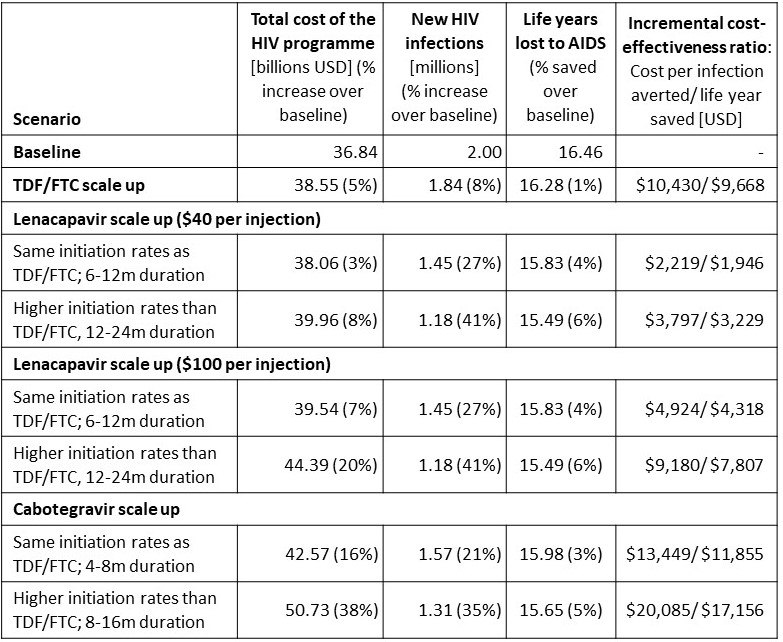
1230. PURPOSE 1: Preference for Twice-Yearly Injection vs Daily Oral Pills for HIV PrEP in Cisgender Women
Poster Abstracts
Pages: 403-404
Leila E. Mansoor1, Joanne Batting2, Noah Kiwanuka3, Elizabeth Spooner4, Dylan Mezzio5, Pamela Wong5, Alexander Kintu5, Christoph Carter5, Thesla Palanee-Phillips6
Background
Although oral pre-exposure prophylaxis (PrEP) is effective for HIV prevention, its routine use in cisgender women remains low. Effectiveness is contingent on high adherence and persistence post initiation, which many cite as a barrier for daily oral pills. In the Phase 3 PURPOSE 1 trial, twice-yearly subcutaneous (SC) lenacapavir (LEN) was safe and 100% efficacious in preventing HIV infection in cisgender women in South Africa and Uganda. We examined the PrEP administration preferences of PURPOSE 1 participants.
Methods
In PURPOSE 1 (NCT04994509), cisgender women aged 16-25 years were randomized 2:2:1 in a blinded fashion to receive SC LEN every 26 weeks, daily oral emtricitabine–tenofovir alafenamide (F/TAF), or daily oral emtricitabine–tenofovir disoproxil fumarate (F/TDF). Participants also received the alternate SC/oral placebo. During injection visits, participants completed an electronic questionnaire on their PrEP administration preference (twice-yearly injection or daily pills) and the potential impact of administration type on their feelings about HIV risk and PrEP adherence. These data were collected at baseline (prior to injection), Week (W) 26, and W52. Categorical responses were analyzed descriptively.
Results
Of 5368 randomized participants, 5218 completed the questionnaire at baseline. At the time of this interim analysis, 2561 participants had completed the W52 questionnaire. Approximately two-thirds of participants preferred twice-yearly injections over daily pills, few had no preference, and less than one-third preferred daily pills (Fig). Among those with a preference for either injection or pills, slightly more than half reported their preference as “strong”.
More than half of participants reported they would feel more protected from HIV with twice-yearly PrEP injections vs daily pills (baseline: 59%; W26: 58%; W52: 61%). Most participants reported they would feel more confident about not missing a PrEP dose with twice-yearly injections vs daily pills (baseline: 60%; W26: 59%; W52: 61%).
Conclusions
Many participants reported a strong preference for twice-yearly injectable PrEP, whereas some indicated a preference for daily pills, highlighting the importance of choice. Importantly, many also felt that they were more likely to be protected from HIV, and remain adherent, on Q6M injections vs daily pills. Participant preference and clinical data strongly suggest twice-yearly LEN could increase the uptake of, adherence to, and persistence on PrEP among cisgender women.
Figure 1.
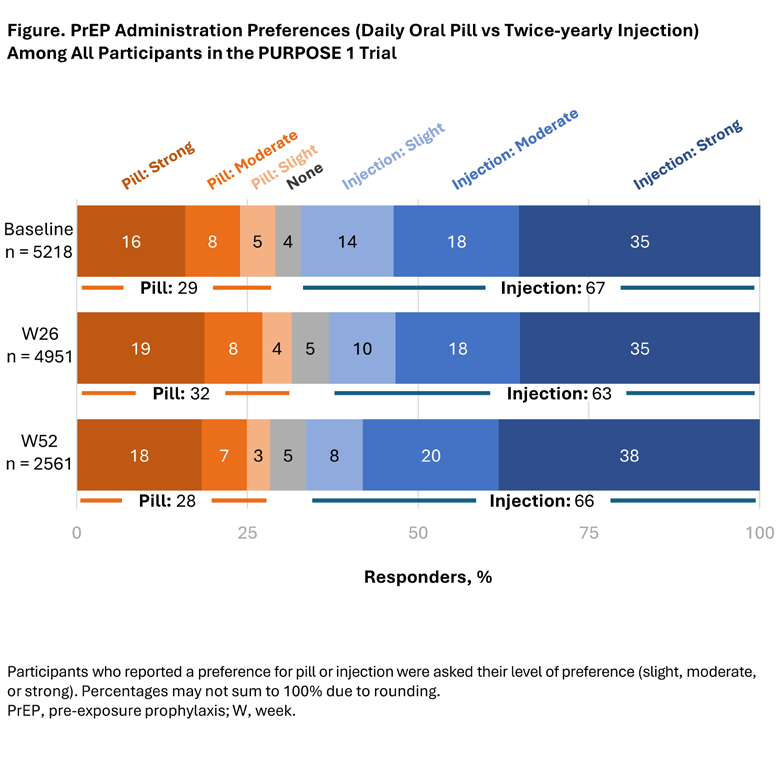
1231. Characteristics of Persons Diagnosed With HIV in a Population-Based PrEP Program in British Columbia
Poster Abstracts
Page: 404
K. Junine Toy1, Raquel M. Espinoza1, Jason Trigg1, Wendy Zhang1, Erin Ready2, Paul Sereda1, David Moore1, Rolando Barrios1, Julio S. G. Montaner1
Background
Publicly-funded oral HIV PrEP has been available to key populations in British Columbia (BC) through the BC Centre for Excellence in HIV/ AIDS since 2018. We examined differences in characteristics of PrEP enrollees with and without subsequent HIV diagnoses.
Methods
We included clients with ≥1 PrEP prescription dispensed between 1-Jan-2018 and 31-Dec-2023 (follow-up to 30-Jun-2024). Baseline demographic, clinical, and PrEP prescription characteristics were reported (totals, and by HIV status at end of follow-up) using descriptive statistics. Wilcoxon rank sum and Fisher’s exact tests were used to compare variables between groups.
Results
Overall, 12,389 clients were included, with median (Q1-Q3) age 32 (27-41) years, 95.8% were cis-men, 1.7% trans-women, 0.9% cis-women, 0.6% trans-men, and 0.5% non-binary. 12,152 (98.1%) identified as gay, bisexual or other men who have sex with men (MSM), and median HIV incidence risk index (HIRI-MSM) score was 18 (14-22). Clients had a median (Q1-Q3) of 6 (3-12) PrEP prescriptions over a median follow-up of 31 (15-58) months. Over the study period, 12,316 clients (99.4%) remained HIV negative and 73 (0.6%) were subsequently diagnosed with HIV at median (Q1-Q3) 32 (13-50) months after enrollment, median 10 (5-19) months after their previous negative HIV test, and median 13 (6-28) months after anticipated PrEP medication run out (based on dispensing records and once-daily dosing). Only 5 clients appeared to have PrEP medication supply at the time of diagnosis. Median (Q1-Q3) age was 31 (25-37) years; 71 were cis-men. Median (Q1-Q3) time to ART initiation after diagnosis was 7 (4-17) days. There were differences in age, proportion with HIRI-MSM score ≥25, known substance use and incident syphilis between clients with and without HIV diagnoses. Long terminal lapses in PrEP medication (max 67 months) and HIV testing (max 61 months) were also observed among seroconverters (Table). The new HIV diagnosis rate in the overall cohort was 0.19 per 100 PY (95% CI: 0.15-0.23) over 37,434 PY of follow-up. The rate was 0.12 per 100 PY (95% CI: 0.08-0.15) when follow-up was censored after 18 months.
Conclusions
Few new HIV diagnoses occurred in enrollees engaged with PrEP medication. Incident syphilis, and lapses in HIV testing and PrEP dispensing may serve to alert providers to re-engage with clients. Strategies to support long-term engagement in PrEP care are needed, in particular for younger persons, those with high HIRI-MSM score, and known substance use.
Table 1.
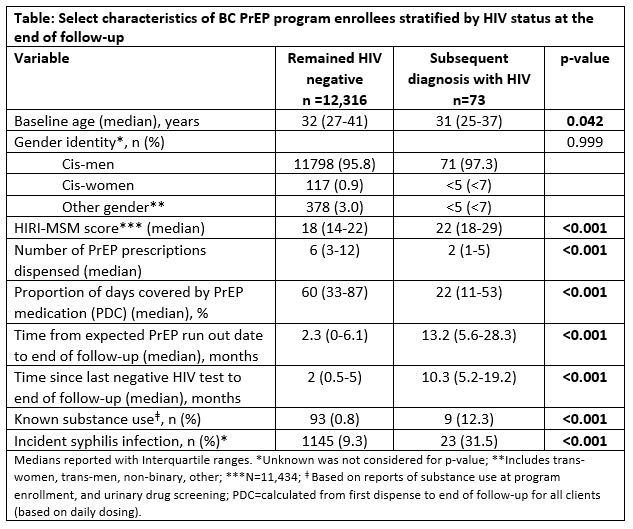
1232. MK-8527 PK/PD Threshold and Phase II Dose Selection for Monthly Oral HIV-1 Preexposure Prophylaxis
Poster Abstracts
Page: 404
Yash Kapoor, Barbara Evans, Russ P. Carstens, Tracy Diamond, Anjana Grandhi, Gillian Gillespie, Peggy May Tan Hwang, Ryan Vargo, Randolph Matthews, Jesse C. Nussbaum, Rebeca M. Plank
Background
MK-8527 is a novel nucleoside reverse transcriptase translocation inhibitor (NRTTI) under clinical development as an oral monthly antiretroviral agent for prevention of HIV‑1 infection. MK‑8527 is phosphorylated intracellularly to the pharmacologically active triphosphate form, MK-8527-TP. Clinical and nonhuman primate data were incorporated into an assessment of the pharmacokinetic/pharmacodynamic (PK/PD) relationship for MK-8527-TP to inform Phase 2 dose selection.
Methods
A rhesus macaque preexposure prophylaxis (PrEP) model evaluating weekly oral doses of MK-8527 (ranging from 0.1 to 6.0 mg/kg) followed by weekly simian/human immunodeficiency virus (SHIV) intrarectal challenge was used to define a PK/PD threshold. In two Phase 1b studies, treatment naive participants with HIV-1 received a single oral dose of MK-8527 (0.25, 0.5, 1, 3, or 10 mg). Reduction in viral load (measured as log10 plasma HIV-1 RNA copies/ mL) and PK of MK-8527-TP in peripheral blood mononuclear cells (PBMCs) were used to establish an exposure-response relationship. A preliminary population PK model was used to simulate exposures across the Phase 1 studies to support dose selection in Phase 2.
Results
Doses of MK-8527 ≥0.1 mg/kg provided protection against intrarectal acquisition of SHIV in rhesus macaques. In Phase 1b studies, the mean decrease in HIV-1 RNA at Day 7 post-dose was ≥1.0 log10 copies/mL following single doses of MK-8527 ≥0.5 mg. The totality of data from the rhesus macaque study and Phase 1b trials suggests that efficacy for HIV‑1 prevention is achieved with an approximate inhibitory quotient ranging from 1 to 3. A PrEP PK/PD threshold for MK-8527-TP was set at 0.03 pmol/million PBMCs for HIV-1 prevention which is ~3‑fold above the in vitro half-maximal inhibitory concentration (0.00972 pmol/million PBMCs) of MK-8527-TP against wild type HIV-1. Based on this PK/ PD threshold, and a preliminary population PK model, a ≥6-mg once-monthly oral dose of MK‑8527 would maintain MK-8527-TP levels above the PK/PD threshold in >90% of the population. Three oral dose levels of MK-8527 (3, 6, and 12 mg, administered monthly) were selected for the Phase 2 study.
Conclusions
PK/PD results incorporating clinical and nonclinical data support efficacy and further development of MK-8527 doses up to 12 mg for monthly oral PrEP.
1233. A Biodegradable Implant Releasing Low-Dose Islatravir Protects Macaques From Rectal SHIV Infection
Poster Abstracts
Page: 405
Jiyoung S. Kim1, Daniela Cruz2, Daniel Kim3, Archana Krovi2, Chasity Norton2, James Mitchell1, Rachel Wier1, Jeannette Dienhart1, Mackenzie Cottrell4, Seidu Inusah1, Gregory Gatto2, Walid Heneine1, Gerardo Garcia-Lerma1, Charles Dobard1, Leah Johnson2
Background
Islatravir (ISL) is a potent nucleoside reverse transcriptase translocation inhibitor that was associated with lymphopenia in a dose-dependent manner in clinical studies. We recently showed that treatment with high ISL doses in macaques also resulted in lymphopenia. Here, we evaluated preclinically a poly (ε-caprolactone) (PCL) implant designed to release low levels of ISL that are not predicted to cause lymphopenia. We investigated the safety and PK of ISL releasing implants and efficacy of low-dose ISL in protecting macaques against rectal SHIV infection.
Methods
Biodegradable PCL implants (25mm length,300 µm wall-thickness) were loaded with approximately 42 mg of ISL and the in vitro release-rate (IVRR) was determined under sink conditions. A single ISL implant was placed in the arm of each rhesus macaque (n=6) using a trocar. ISL-TP levels in PBMCs were measured weekly by LC-MS/MS. Implant site reactions were graded using a modified Draize scale (range: 0-5). Macaques underwent a 7-week conditioning phase to achieve steady-state ISL-TP in PBMCs prior to rectal exposure to SHIV162p3 twice-weekly during weeks 7-10 (up to 8 SHIV challenges). Macaques were monitored for SHIV infection during the challenge and follow-up period by RT-PCR. Infection outcomes were compared to 7 untreated animals.
Results
The estimated IVRR of ISL was 135 µg/d. The median [range] ISL-TP levels in PBMCs during the conditioning phase was 136 fmol/106 cells [118-164]. During SHIV challenges, the ISL-TP level was 109 fmol/106 cells [76-141] or about 1 log10 lower than those seen in humans treated with 0.25 mg of once-daily oral ISL (1,140 fmol/106 cells)(Fig 1A). ISL implants remained intact during the 5-month study period with no evidence of migration or implant-site reactions. The untreated controls were infected after a median of 1 SHIV challenge [range = 1-3]. In contrast, all ISL-treated macaques remained protected following repeated rectal SHIV challenges, resulting in an estimated efficacy of 100% (Fig 1B).
Conclusions
ISL implants maintained structural integrity, provided sustained release of low-dose ISL, and showed no sign of local toxicities after 5 months. The ISL-TP levels in PBMCs remained below the clinical toxicity threshold and provided complete protection to macaques against rectal SHIV infection. Our study supports the development of a PCL implant that can deliver safe and effective ISL concentrations for ultra-long-acting HIV prevention.
Figure 1.
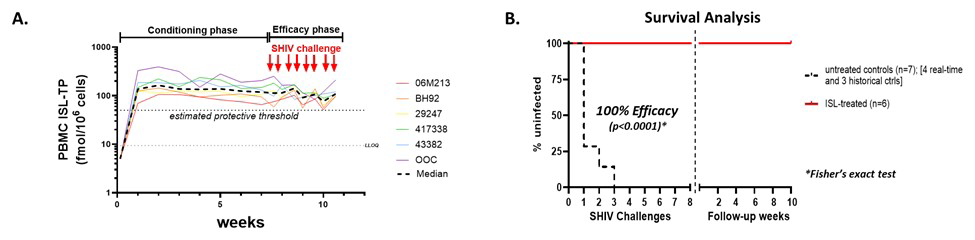
1234. Qualitative Assessment of Acceptability and Preferences for Injectable and Oral PrEP in PURPOSE 1
Poster Abstracts
Page: 405
Elizabeth (Liz) Montgomery1, Katherine Gill2, Timothy S. Hardwick3, Imogen Hawley4, Heeran Makkan5, Tara McClure2, Cecilia Milford6, Nzwakie Mosery4, Amukelani Nyathi7, Siyanda Tenza3, Alinda M. Nyamaizi8, Alexander Kintu8, Christoph Carter8, Moupali Das7, Thesla Palanee-Phillips, the PURPOSE 1 Qualitative Study Team
Background
PURPOSE 1 demonstrated 100% efficacy of twice-yearly injectable lenacapavir (LEN) for HIV pre-exposure prophylaxis (PrEP) in cisgender adolescent girls and young women. We conducted a nested qualitative sub-study exploring acceptability, preferences, and experiences with LEN and daily oral emtricitabine plus tenofovir alafenamide (F/TAF) or tenofovir disoproxil fumarate (F/TDF) for PrEP during the randomized blinded phase.
Methods
In-depth interviews (IDIs) were conducted at 5 geographically diverse South African trial sites, with: a) a randomly selected subset of participants aged 18–25 years at Weeks 13 and 52; b) purposively selected participants aged 16–17 years at Weeks 26 and 52; and c) participants aged 16–25 years who discontinued PrEP, were pregnant or breastfeeding (P/BF), or acquired HIV. IDIs were administered in English and/or local languages. Data were coded in Dedoose™, analyzed thematically, and summarized. Analyses were restricted to IDIs captured before PURPOSE 1 interim results.
Results
Data from 108 participants (including: n=25 aged 16–17 years; n=16 discontinued; n=13 P/BF; n=8 acquired HIV) are described. LEN injections and both oral regimens were widely perceived as helpful and protective. Participants appreciated injections for their “once-off” 6-month activity and the potential implication of a worry-free HIV protection period, without taking daily tablets, barriers of concealing medication, or being judged for their use. Some participants reported injection-related concerns about “lumps” or pain that generally resolved within 1–2 days and was mitigated by analgesics. However, participants often felt that the benefits of duration of protection outweighed the often short-lived discomfort of injection receipt. Daily pill use was frequently reported to be difficult, “boring,” forgettable, and incompatible with lifestyles. Participants, particularly those aged 16–17 years, noted that injections suited their lifestyles, as they are “multitasking” and “juggling” along with “going out” and having “nice times,” making pill use inconvenient. Participants appreciated the smaller F/TAF (vs F/TDF) tablets and comparative ease in swallowing.
Conclusions
PURPOSE 1 participants valued sustained protection from HIV, often preferred the lifestyle fit of a twice-yearly injectable vs daily oral PrEP, and accepted pain and injection-site reactions. These data suggest acceptability and preference for twice-yearly injections and/or F/TAF, reinforcing the value of product choice.
1235. Cost-Effectiveness of Community Pharmacy-Based HIV PrEP for Men Who Have Sex With Men in Atlanta
Poster Abstracts
Pages: 405-406
Marita Zimmermann1, Anu Mishra1, Ryan Hansen2, Jacinda Tran2
Background
The ongoing US HIV epidemic highlights the need for innovative strategies to promote pre-exposure prophylaxis (PrEP) uptake and reduce HIV incidence. Community pharmacy-based PrEP provides opportunity to expand access to this highly effective preventative therapy. Our study evaluated the potential health impacts, economic costs, and cost-effectiveness of community pharmacy-based PrEP for men who have sex with men (MSM) in the Atlanta metropolitan area, which has one of the highest burdens of HIV in the US.
Methods
We adapted a calibrated and validated dynamic transmission compartmental model to simulate a hypothetical policy change permitting community pharmacists to initiate PrEP for eligible MSM in Atlanta. We compared the addition of community pharmacy-based PrEP to the status quo (traditional clinic-based), assuming 50% increase in PrEP uptake over 2 years. We conducted scenario analyses with varying assumptions related to PrEP adherence, persistence, and telehealth delivery based on early studies of pharmacy-based PrEP and other related, established pharmacy-based services. Using a healthcare sector perspective we projected the costs (2023 US dollars) and outcomes of (HIV cases averted, quality-adjusted life-years [QALY]) over a 50-year time horizon. One-way and probabilistic sensitivity analyses with 2,000 parameter sets were used to characterize model uncertainty.
Results
We projected 34,670 new HIV cases and 89.5 million QALYs, at a cost of $423.8 billion, in the Atlanta metropolitan area under our status quo scenario. The addition of community pharmacy-based PrEP has the potential to reduce HIV incidence by 13.5%, increase QALYs by 0.2%, and decrease costs by 0.02% over the 50-year time horizon. Our scenario analyses consistently found pharmacy-based PrEP to result in improved health outcomes and either cost-saving or cost-effective compared to the status quo.
Conclusions
A policy permitting community pharmacies to provide PrEP services could lead to substantial clinical benefits and cost savings in Atlanta. However, additional research is needed to address challenges in scale-up, ensure financial sustainability, and realize the full potential of pharmacy-based PrEP interventions. Our study offers valuable insights for policymakers to improve access to HIV PrEP and work towards ending the HIV epidemic in the US.
Table 1.
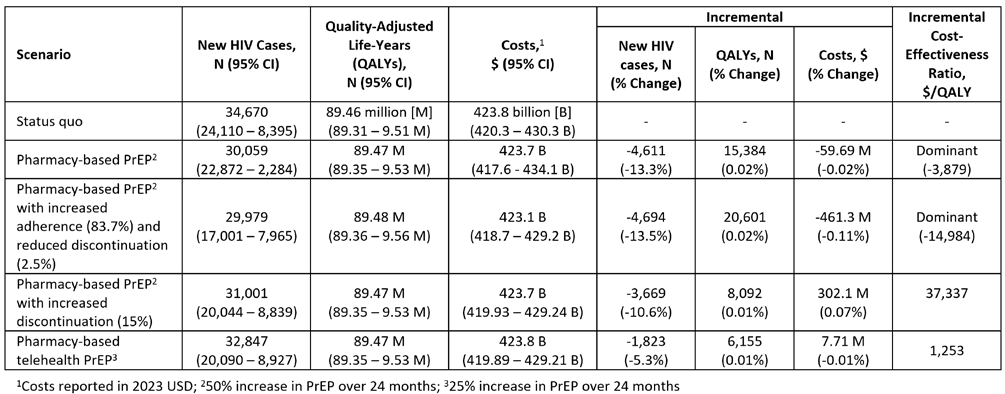
1236. Long-Acting Injectable CAB/MPA MPT Implant for Prevention of HIV and Unintended Pregnancy
Poster Abstracts
Page: 406
Jasmine King1, Isabella Young2, Mackenzie Cottrell2, Craig Sykes2, Angela Kashuba2, Rahima Benhabbour2
Background
Currently, there are 20.2 million girls and women living with HIV and nearly half of pregnancies are unintended. This leads to a global economic and health burden for women and as such, technologies that can prevent HIV infections and unintended pregnancies are warranted. We evaluated a long-acting (LA), injectable in-situ forming implant (ISFI) as a multi-purpose prevention technology (MPT) to co-formulate cabotegravir (CAB) and medroxyprogesterone acetate (MPA) with the incorporation of a contrast agent for in vivo visualization and ease of retrievability. Here, we investigated time-to-completion (TTC) PK, long-term safety, implant visualization, and PK tail in BALB/c mice.
Methods
BALB/c mice were administered a single 50 µL injection subcutaneously (SC) of ISFIs containing CAB (500 mg/mL; 1251 mg/kg), MPA (36 mg/mL; 90 mg/kg) and 10% Barium sulfate (BaSO4). CAB and MPA plasma concentrations were measured until TTC. ISFIs were surgically removed at day 90 and 180 (n=6) to assess CAB and MPA PK tail. Subcutaneous tissue was harvested (n=5/timepoint) and the injection site was scored for local inflammation and plasma was collected to assess systemic inflammatory response. Implant visualization and migration was assessed by X-ray imaging.
Results
Overall, the MPT ISFI was well tolerated in mice. The median (range) plasma CAB and MPA concentrations during the first 6 months were 18750 (3940-34800) and 1.70 (1.44-1.86) ng/mL, respectively (Fig 1A). CAB levels maintained above the 4X PA-IC90 for 210 days with median (range) plasma levels at 17050 (870-30100) ng/mL (Fig 1A). In contrast MPA concentration was below limit of quantification by day 210 (< 0.5 ng/mL) (Fig 1A). Following removal of ISFIs at day 90 and 180, all animals elicited undetectable plasma CAB within 2-3 weeks. Plasma MPA was undetectable at day 1 following implant removal for all animals. X-ray imaging demonstrated the ability to visualize the implants for at least 180 days with no signs of implant migration (Fig 1B; showing n=2 animals).
Conclusions
We demonstrated long-term safety and PK of a first-in-line LA MPT ISFI releasing CAB and MPA. Our findings showed the ability to visualize the implants with no evidence of implant migration. CAB and MPA elicited undetectable plasma concentration after implant removal highlighting the potential for a discrete and reversible MPT option for adolescent girls and women.
The figure, table, or graphic for this abstract has been removed.
1237. WITHDRAWN
Poster Abstracts
Page: 406
1238. Dose-Ranging Pharmacokinetics and Efficacy of a 90-Day Multipurpose IVR Delivering Islatravir
Poster Abstracts
Pages: 406-407
Priya Srinivasan1, Jasmine King2, Jining Zhang1, Isabella Young3, Dawn Little4, Mackenzie Cottrell3, Craig Sykes3, James Mitchell1, Angela Kashuba3, Gerardo Garcia-Lerma1, Rahima Benhabbour3, James Smith1
Background
Multipurpose prevention technologies (MPTs) are important to protect women from unintended pregnancy and sexually transmitted infections. Uniquely designed, geometrically complex 3D printed intravaginal rings (IVRs) represent an attractive long-acting delivery platform that can provide superior control of drug release and product user characteristics. To optimize the delivery of Islatravir (ISL) within our MPT IVR delivering ISL in combination with ethinyl estradiol and etonogestrel, IVRs containing 15, 30, and 60 mg of ISL were evaluated for their pharmacokinetics (PK) in pigtailed macaques. We further investigated the efficacy of a 60 mg, 90-day ISL IVR against vaginal SHIV infection in macaques.
Methods
IVRs containing 15, 30, and 60 mg ISL were inserted for 28 days into pigtailed macaques (n=8) in a crossover design. The 15 and 60 mg ISL IVRs were subsequently investigated for 90-day PK studies (n=3 macaques each). Plasma, PBMC, and mucosal fluid were collected for drug quantitation by AB Sciex API-5000 triple quadruple mass spectrometer. Based on the total amount of ISL released over the 90-day period, we initiated a vaginal SHIV challenge study in sexually mature, normal cycling pigtailed macaques (n=8). Six ISL (60 mg) IVR-treated macaques received weekly SHIV162p3 inoculations starting 3 days after IVR insertion. Two untreated controls received the same weekly challenges. Infection was monitored by RT-PCR.
Results
Systemic ISL concentrations were within the levels seen with the safe 0.25 mg once-daily oral human dose (Table). It was determined that the 15 mg rings released 94% of ISL over 90 days while the 60 mg had released 56%. The 60 mg IVR maintained ISL triphosphate (ISL-TP) at or above established ISL-TP benchmark concentration needed for protection (50 fmol/106 cells) for over 90 days and was investigated for its efficacy against vaginal SHIV infection. All ISL IVR-treated macaques remain SHIV RNA negative after 8 weekly SHIV challenges while the two controls became infected at 2 and 3 exposures.
Conclusions
We demonstrate that a 60 mg 3D-printed ISL IVR provides sustained vaginal release of ISL over 90 days and results in systemic ISL dosing. Systemic ISL concentration remained below the clinical toxicity threshold and prevented SHIV acquisition in macaques. These results warrant further development of the 3D printed IVR as a three-month MPT for prevention of HIV and unintended pregnancy using an already optimized hormones dose.
Table 1.
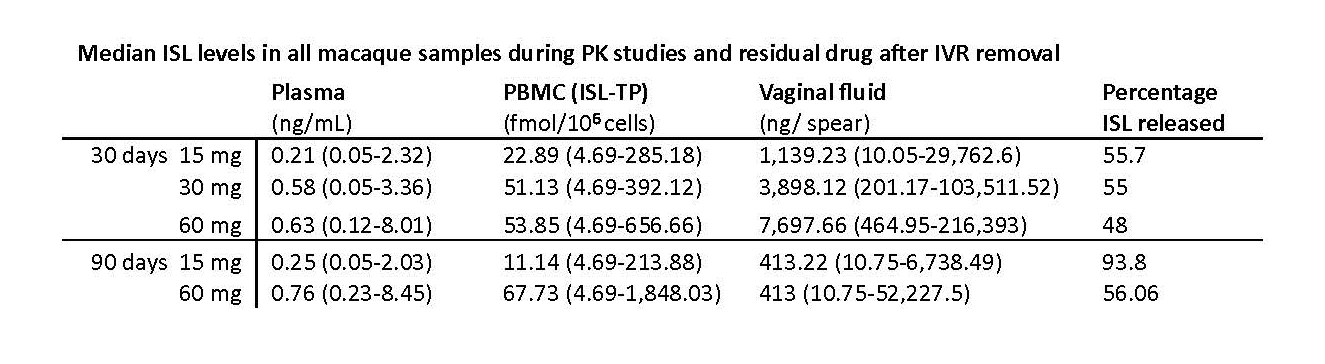
1239. Syphilis Screening in Hospitalized People With HIV: A Key Strategy to Tackle HIV and STI Epidemics
Poster Abstracts
Page: 407
Mayara Secco Torres da Silva, Isabel C. Ferreira Tavares, Carolina Coutinho, Thiago Torres, Eduardo Mesquita Peixoto, Brenda Hoagland, Ingebourg Georg, Leonardo Rosadas, Estevão Portela Nunes, Emilia Moreira Jalil, Rodrigo O. Silva Escada, André M. Japiassu, Sandra Wagner Cardoso, Valdilea Gonçalves Veloso, Beatriz Grinsztejn
Background
Active sexually transmitted infections (STI) elevate the risk of HIV acquisition, highlighting the need for timely diagnosis and treatment to address the intertwined HIV/STI epidemics. Latin America bears a disproportionate burden of STIs, with sexual and gender minorities most affected. In recent years, Brazil has experienced a concerning rise in acquired/congenital syphilis cases, particularly among people with HIV (PWH), evolving into a major public health challenge. This study aims to evaluate the prevalence of active syphilis and its associated factors among hospitalized PWH within the framework of a universal syphilis screening strategy.
Methods
A retrospective analysis was conducted on all PWH hospitalized at INI-Fiocruz, an infectious diseases’ referral center in Rio de Janeiro, Brazil from October 2021 to April 2024. Participants hospitalized for neurosyphilis were excluded. All participants were screened for syphilis, with active syphilis defined as a VDRL titer ≥1/8. Sociodemographic and clinical characteristics were compared based on syphilis diagnosis (yes vs no), using Chi-squared/Fisher’s exact tests (categorical variables) and the Wilcoxon test (continuous variables) to assess group differences.
Results
A total of 1,881 PWH were admitted, with an overall syphilis prevalence of 13.8%. Participants with active syphilis were younger and more frequently cisgender men, with no significant differences observed in race/color or educational level (Table). Those diagnosed with syphilis were more likely to have HIV-RNA viral loads (VL) >1,000 cps/mL (38.1% vs 32.8%) and CD4+ cell counts ≤200 cells/mm³ (61.3% vs 55.7%). Opportunistic diseases were diagnosed in 61.4% of participants with active syphilis. Coinfections with mpox, hepatitis B, and hepatitis C were diagnosed in 3.5%, 3.1%, and 5.4% of cases, respectively. Hepatitis C seroprevalence was higher among participants with active syphilis (5.4% vs 1.8%).
Conclusions
Routine syphilis screening for hospitalized PWH is crucial for tackling the growing syphilis epidemic in Brazil, particularly for those who are disengaged from regular HIV care. Likewise, it mitigates the heightened risk of HIV transmission associated with active STIs in individuals with elevated viral loads. Integrating syphilis screening into standard care is essential for managing the interconnected HIV and STI epidemics, particularly in high-burden settings.
Table 1.
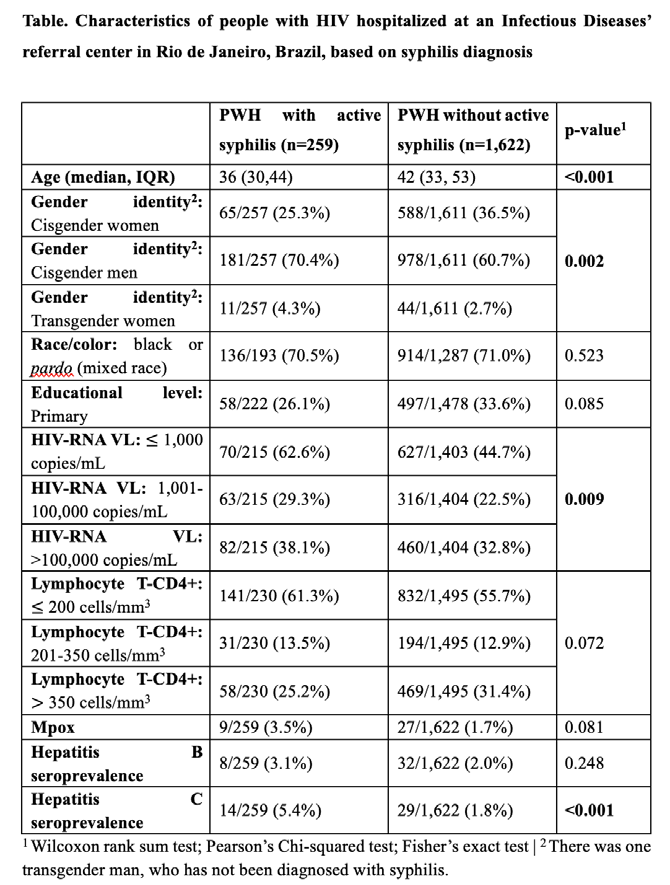
1240. Differences in Presentation and Outcome of Subsequent Episodes of Syphilis in People Living With HIV
Poster Abstracts
Page: 407
Leticia Espinosa1, Jorge Peris1, Ana Moreno2, Isidro Hernandez1, María Ezquerra Marigómez3, Ana Abad2, Jose L. Casado4
Background
The impact of a first episode of syphilis on the course of subsequent episodes in people living with HIV (PLH) is somehow controversial and of clinical interest.
Methods
Prospective cohort study of 348 episodes of syphilis observed in 175 PLH with regular follow up (12.5 person-years) in a HIV Unit in a tertiary hospital. Syphilis testing was routinely performed every 6-12 months in all the cases, and unscheduled visits were included in case of suspicion of syphilis or other sexually transmitted diseases.
Results
At the first diagnosis, median age was 48 years, predominantly were male (99%), nadir CD4+ count was 303 cells/μL, and 99% were receiving suppressive antiretroviral therapy. Of note, a fall in CD4+ count (-10 cells/μL) and CD4/CD8 ratio (-0.04) was observed at the diagnosis of syphilis. During median follow up of 35 months (3.6 person-years), nearly half of included PLH had more than 1 syphilis episode (two, 91, 26%; three or more, 82 PLH, 24% of episodes of syphilis). The form of presentation changes according to number of episodes (primary syphilis from 17 to 9%; secondary syphilis from 17% at the first, to 8% at those with a third episode). However, the proportion of individuals whose 1st episode was early latent stage was similar, probably related to the close follow up. Also, serological presentation was similar according to successive episodes (median RPR 1/32 from the 1st to 3rd episode, but with a trend to higher RPR titer subsequently), as well as the decrease in the CD4+ count (-9 vs -11 cells/μ in 1st and 2nd), CD4/CD8 ratio, time to initial serological response (5.5 vs 5.9 months), or time to negativization of RPR titer (with a trend to decrease, 19 vs 16 vs 12 months; p=0.12). Of note, the rate of serofast status was similar in subsequent episodes (37% vs 46% vs 50%) whereas the time of persistence in the serofast status was significantly shorter in the third or successive episodes (p=0.012, log-rank).
Conclusions
A previous episode of syphilis could change the clinical picture of successive episodes, but importantly it does not alter the serological presentation and outcome of subsequent infections with T. pallidum. A shorter time of persistence of serofast status reinforce the role of immunity in this outcome.
1241. Unravelling the Pathogenesis and Outcome of Serofast Status in People Living With HIV
Poster Abstracts
Page: 408
Leticia Espinosa1, Ana Moreno2, María Ezquerra Marigómez3, Cristina Fernández-Chica4, Javier Guzman3, Ana Abad2, Pedro Esteve1, Jose L. Casado4
Background
The pathogenesis of the syphilis serofast status has not well established in people living with HIV (PLH). We conducted a study to evaluate possible predictors and outcome of serofast status.
Methods
Prospective cohort study of 348 episodes of syphilis in 175 PLH. Serofast status was defined as persistence of positive non-treponemal RPR titer after serological response to therapy (at least a 4-fold decline in the titer of RPR 12 months after treatment). Demographic and HIV-related data, RPR titer at diagnosis, time of response and outcome of serofast-diagnosed PLH were analyzed.
Results
At the first episode of syphilis, median age was 47 years, 99 were males and 95% had MSM as risk practice. Median time of HIV infection was 101 months and nadir CD4+ count of 303 cells/mcL. At diagnosis, late latent or unknown duration stage was observed in 51%, and median RPR titer was 1/32. By only considering those PLH with serological response at 12 months (132, 75%), 63 of them (51%) were identified as persistence of serofast status according to our definition. As it could be expected, serofast status was observed in the case of higher initial RPR titers (p=0.005), lower rate of serological response at the first determination (56% vs 35%; p=0.082), longer time of HIV infection (132 vs 84 months; p=0.013), and lower CD4/CD8 ratio at diagnosis (0.88 vs 1.52, p=0.07). Of note, time to indetectable and resolution of serofast state was shorter in subsequent syphilis episodes (p=0.02). In a Cox multivariate analysis, a shorter time of serological response at the first determination (Hazard ratio, HR, 0.89; p=0.034), a higher nadir CD4/CD8 ratio (HR 4.86; p=0.044), and a lower CD4/CD8 ratio at the time of diagnosis (HR 0.24; p=0.04) were associated with shorter time of serofast status. Indeed, 22 out of 63 serofast became indetectable during a median follow up of 35 months (3.6 person-years), decreasing to median RPR titer of 1/2 at the last determination, and without later increases of treponemal test in absence of reinfection.
Conclusions
This prospective study clarifies the factors associated with serofast status after a syphilis diagnosis. Importantly, serofast status was related to the intersection of serological presentation and immunological factors, with a trend to decrease progressively. Thus, this study ruled out the need of additional studies and interventions in this population.
1242. No CSF Study in Neuro Asymptomatic Syphilis in People With HIV: Clinical and Serologic Outcomes
Poster Abstracts
Page: 408
María L. Otth1, Catalina Novoa2, Sandra Gonzalez1, Camila Jorquera1, Rebeca Northland2, Marcelo Wolff2
Background
Syphilis is common in people living with HIV, and central nervous system involvement is more frequent, although mostly asymptomatic, in which case it seems to be mostly a benign condition, which has led to a growing trend not to perform a lumbar punction (LP). During the COVID-19 pandemic restrictions, LPs were not performed in neuro asymptomatic patients with low CD4+ cell count and high VDRL titers, as previously done at this HIV care center, and participants received benzathine penicillin, as in no neurologic involvement, generating an opportunity to evaluate outcomes after this noninvasive practice.
Methods
Longitudinal, retrospective, observational study. Local records kept from 03/2020 to 08/2022 were reviewed. Eligibility criteria were VDRL ≥1:32, no neurological symptoms and no cerebrospinal fluid (CSF) study at diagnosis. Data was analyzed with Stata 15.1.
Results
203/869 syphilis cases (23.4%) met eligibility criteria, 98.5% were men, median age was 34 years; 79.2% had latent syphilis. Median CD4 count was 533 cells/mL (IQR 400-734, and 21,7% had <350 cells/mL). Median baseline VDRL was 1/32; median follow-up was 20 months. Of 30 patients with VDRL test done at 2 months, 83.3% had VDRL titer drop >2 folds, later that level of titer drop occurred in 56/59 (95%), 82/98 (83.6%) and 50/53 (94.3%) patients at 6, 12 and 24 months, respectively; 21% reached a non-reactive VDRL in a median of 13 months. Six persons required CSF study due to persistent high VDRL titers; none had neurosyphilis. No person presented neurological symptoms during follow up. No statistically significant association was observed between CD4+ cell count, viral load, syphilis stage, and baseline VDRL with its serologic evolution. Limitations of this study include its non-comparative design, and lack of a more comprehensive neurologic follow up instead of the simpler clinical evaluation used.
Conclusions
This work found that people living with HIV with neuro asymptomatic syphilis -VDRL titers that previously were indicative of CSF study-who were treated without LP as if no neurologic involvement, had an adequate serological response and none developed clinical neurosyphilis during follow up. These findings reinforce the present trend not to perform CSF study by lumbar punction in this setting.
1243. Describing the Cascade of Care for Neurosyphilis in People Living With HIV: Finding the Gaps
Poster Abstracts
Page: 408
Shaul A. Navarro-Lara, Hector O. Rivera-Villegas, Nancy Sierra-Barajas, Angelina Silva-Casarrubias, Yanink Caro Vega, Alvaro López-Iñiguez, Brenda E. Crabtree Ramírez
Background
Incidence of syphilis has increased over the last 20 years. This increase might be followed by a rise in neurosyphilis (NS), especially in the HIV population. Surveillance for NS is heterogeneous and thus the real incidence is not well known. These factors highlight the need for a standardized evaluation process. Therefore, we aim to describe a Cascade of Care of NS to evaluate the missed opportunities of screening and diagnosis, and the time between steps.
Methods
We retrospectively evaluated all active adults living with HIV (defined as those with at least one clinic visit/year) from 2021 to 2023 in a tertiary care Hospital in Mexico. At our center, people with a VDRL title ≥1:32 should undergo Lumbar Puncture (LP) and/or ophthalmologic evaluation (OE) in the absence of neurological symptoms (Martínez et al., 2022). We assessed the first event registered per patient. To describe the Cascade of Care, the following steps were reviewed: 1) active patients eligible to be screened with VDRL, 2) the ones screened, 3) asymptomatic patients with VDRL ≥1:32,-of which, 4) those who went through OE and/or LP, and 5) if there was an indication for treatment. Serologic follow-up (defined as any VDRL between 6 and 12 months) was evaluated. Time between each step of the cascade is described.
Results
During the study period, a total of 1,267 active people with HIV were registered and from those, 791 (62.4%) were screened for syphilis. 183 (14.4%) had VDRL title ≥1:32 and 123 (66.8%) went through OE and/or LP. 47 had ocular syphilis and/or NS confirmed by fundoscopy and a positive VDRL test in CSF, respectively (representing a 38.2% of positivity). All of them received treatment as inpatients. Median time from a positive VDRL ≥1:32 and OE/LP was 15 days (IQR 7 – 41 days), and from positive evaluation to treatment was 6.5 days (IQR 0 - 11days). (Figure 1). The proportion of those treated with a serological follow-up was 89.3%.
Conclusions
In this study, the Syphilis Cascade of Care, we found important gaps and missed opportunities of diagnosis with almost 40% of people not screened. Of those screened, two thirds had potential NS or ocular syphilis, with 38.2% of them having a positive result. Our findings support the need for implementing strategies to increase screening and improve the time to diagnosis and treatment.
Figure 1.
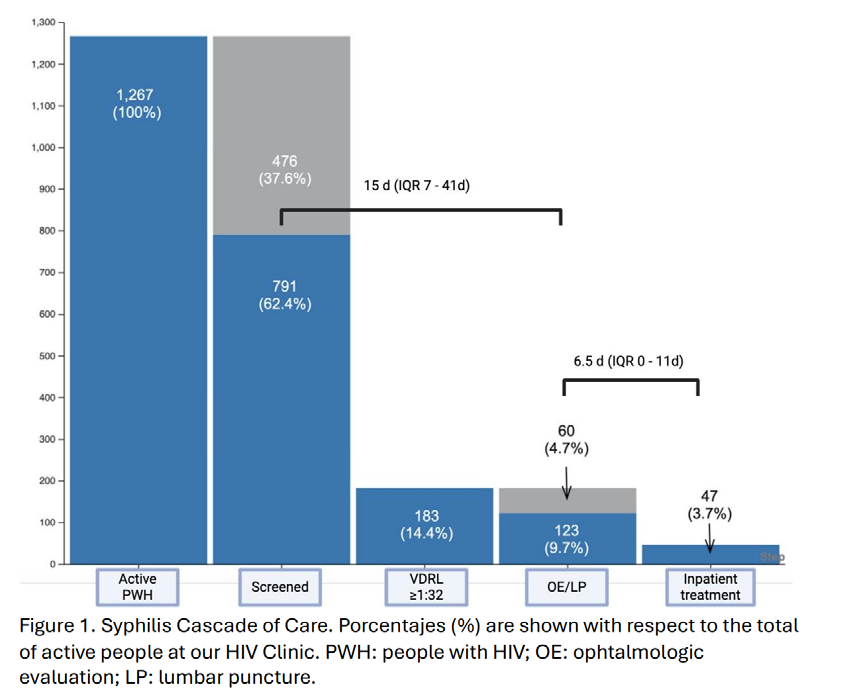
1244. Syphilis Among Women of Reproductive Age With or Without HIV in the Southern US
Poster Abstracts
Page: 409
Maria L. Alcaide1, Erin R. Carr1, Candice A. Sternberg1, Nicholas F. Fonseca Nogueira2, Laura Beauchamps1, Patricia Racchamarich2, Jonell E. Potter1, Daniel Westreich3, Seble Kassaye4, Elizabeth F. Topper5, Aadia Rana6, Deborah Konkle-Parker7, Deborah L. Jones2, Anandi N. Sheth8, Madison S. Meyer2
Background
Syphilis is associated with increased risk of HIV acquisition and poor pregnancy outcomes, including congenital syphilis. Syphilis remains a threat to public health despite accessible screening and treatment. This study examines the prevalence of syphilis among reproductive-age (18-45 years) women with or without HIV enrolled between 2021 and 2023 in the Study of Treatment and Reproductive Outcomes (STAR), an observational cohort across six Southern U.S cities.
Methods
Demographic, medical (prior diagnosis of syphilis, presence of a rash or genital ulcerations) and obstetric data are collected as well as syphilis screening using a nontreponemal test (RPR) with treponemal test for confirmation, or the reverse sequence algorithm. Women with two different reactive tests (two treponemal or one treponemal plus one non treponemal) were categorized based on self-reported history of syphilis and RPR titer as possible: (1) recent infection (no history of syphilis, and RPR ≥1:8), (2) recent reinfection/reactivation (history of syphilis with RPR ≥1:8), (3) late latent syphilis (no history of syphilis and RPR <1:8), or (4) serofast status (history of syphilis with RPR <1:8). Cross-sectional data was examined and associations between pregnancy, HIV status, and syphilis were evaluated.
Results
A total of 785 women underwent syphilis testing. Median age was 35 years (IQR 29-40); 580 (74.2%) were non-Hispanic Black, 87 (11.1%) Hispanic, and 80 (10.2%) non-Hispanic White. Observed syphilis cases were 9 (1.5%): 2 (0.3%) recent infection, 2 (0.3%) reinfection/reactivation, and 5 (0.6%) late latent. Among 88 pregnant women, there were 2 (2.3%) syphilis cases with reinfection/reactivation. Among 461 women with HIV there were 6 syphilis cases: 2 (0.4%) had reinfection/reactivation and 4 (0.9%) late latent syphilis. There were no differences in syphilis prevalence by pregnancy (p=0.263) or HIV status (p=0.742). Overall, 14 (1.8%) women had serofast status, of those 2 were pregnant and 6 living with HIV.
Conclusions
The well-established link between syphilis and HIV underscores the importance of equitable, integrated screening and treatment programs for high-risk women of reproductive age in the Southern U.S. Despite no associations with HIV status or pregnancy, this study highlights the continuous high prevalence of syphilis, emphasizing an urgent need to address these interconnected public health challenges among reproductive age women.
1245. Epidemic of Treponema pallidum Strains in Japan and Biomarkers for Molecular Epidemiology
Poster Abstracts
Page: 409
Eisuke Adachi, Wakana Sato, Ayako Sedohara, Hiroshi Yotsuyanagi, Yasutoshi Kido
Background
The difficulty in culturing Treponema pallidum (T. pallidum) has limited molecular-biological analyses. This study aims to establish a molecular epidemiological analysis using the multi-locus sequence typing (MLST) scheme with whole blood specimens and to explore the relationship between T. pallidum bacteremia and its associated pathophysiology.
Methods
We used whole blood specimens from participants serologically diagnosed with syphilis in Tokyo, Japan, between February 2019 and June 2022, about 97% of whom were men who have sex with men (MSM). Sequences for three loci (TP0136, TP0548, and TP0705) required for MLST were obtained, and we analyzed the relationship between PCR positivity and associated markers (e.g., C-reactive protein (CRP), rapid plasma regain (RPR), T. pallidum latex agglutination (TPLA))
Results
Of the 71 whole blood samples, 26 (36.6%) were PCR-positive for TP0136, and sequences for the three loci required for MLST were obtained from 22 samples (31.0%). The most frequently detected sequence type (ST) was ST3 (n=9), followed by ST6 (n=6). Phylogenetic analysis showed that 12 samples belonged to the SS14-like genetic group (12/20, 60%), while 8 samples were classified within the Nichols-like group (8/20, 40%). A new allele was identified in TP0136. Notably, Treponema pallidum subsp. endemicum, the causative agent of bejel, was detected in three samples (12%, 3/26). The Cochran-Armitage test for trend also failed to reveal an increase in TP0136 detection as TPLA levels increased (p = 0.056, Table 3). Similarly, the TP0136 detection rate did not exhibit a significant association with the RPR cut-offs of 10 RU (p = 0.40) or 100 RU (p = 0.21). The trend test did not show an increase in TP0136 detected as the RPR increased (p = 0.12). In contrast, positive CRP levels were significantly associated with TP0136 detection at cut-offs of 0.1 mg/dL (p = 0.0007) or 0.5 mg/dL (p < 0.0001). For CRP ≥ 0.5 mg/dL, 77.0% were positive for TP0136. A trend test further revealed that TP0136 detection significantly increased as CRP levels increased (p < 0.0001)
Conclusions
Both SS14-like and Nichols-like strains were circulating concurrently, and Treponema pallidum subsp. endemicum (TEN) may have been sexually transmitted among Japanese MSM. CRP serves as an indicator of test efficiency and could be linked to the presence of pathogens in the bloodstream.
1246. Temporal Changes in Syphilis Prevalence and Population Characteristics Among MSM in India
Poster Abstracts
Page: 409
Mihili Gunaratne1, Allison M. McFall1, Matthew Hamill2, Talia A. Loeb1, Griffin J. Bell1, Jiban J. Baishya2, Ashwini Kedar3, Archit Sinha3, A. K. Srikrishnan3, Sunil S. Solomon2, Shruti H. Mehta1, Gregory M. Lucas2
Background
Men who have sex with men (MSM) are at higher risk of syphilis infection compared to heterosexual men. Since 2018, syphilis prevalence has been increasing in high income countries, with limited data from low- and middle-income countries. We previously observed a 3-fold increase in syphilis prevalence between 2012 and 2017 among MSM in India. We aimed to assess further changes in syphilis prevalence and population characteristics between 2017 and 2024.
Methods
Respondent driven sampling (RDS) was used to accrue cisgender MSM in Bhopal, Delhi, and Hyderabad, India, for cross-sectional surveys in 2016-2017 and 2023-2024. Participants were tested for syphilis using the rapid plasma reagin (RPR) test and RPR+ samples were tested using treponema pallidum hemagglutination assay (TPHA). Syphilis infection is defined as both RPR+ and TPHA+. We examined trends of syphilis prevalence, demographics, and sexual risk behaviors by survey cycle and city. To assess whether changes in the 2023-2024 population vs 2016-2017 could explain changes in syphilis prevalence, we used propensity scores (generated from correlates of syphilis infection - age, sexual orientation, HIV prevalence, unprotected anal intercourse (UAI), recent sex work, and number of male/transgender partners) to indirectly standardize the 2023- 2024 population and re-estimate syphilis prevalence. Analyses incorporated RDS-II weights.
Results
3001 MSM and 2249 MSM from the 2016-2017 and 2023-2024 surveys, respectively, were included. Median age was 27 and 28 in the 2016-2017 and 2023-2024 surveys, respectively. Having a high school education or above increased from 45% to 72%. Syphilis prevalence increased nearly 2.5-fold from 7% to 16%, with increases across all sites (Figure). HIV prevalence increased from 15% to 20%, but prevalence of detectable HIV viremia decreased from 37% to 25%, recent UAI increased from 39% to 47%, and recent history of sex work decreased from 12% to 7%. The indirect standardized syphilis prevalence in the 2023-2024 cycle using propensity scores was 14%.
Conclusions
In these 3 Indian cities, we observed substantial recent increases in syphilis prevalence among MSM. Syphilis prevalence remained high after accounting for changes in population characteristics, including risk behaviors such as UAI. Regardless, these data highlight the urgent need for interventions (e.g., DoxyPEP) to address the rising burden of syphilis and potentially other STIs in low- and middle-income countries.
Figure 1.
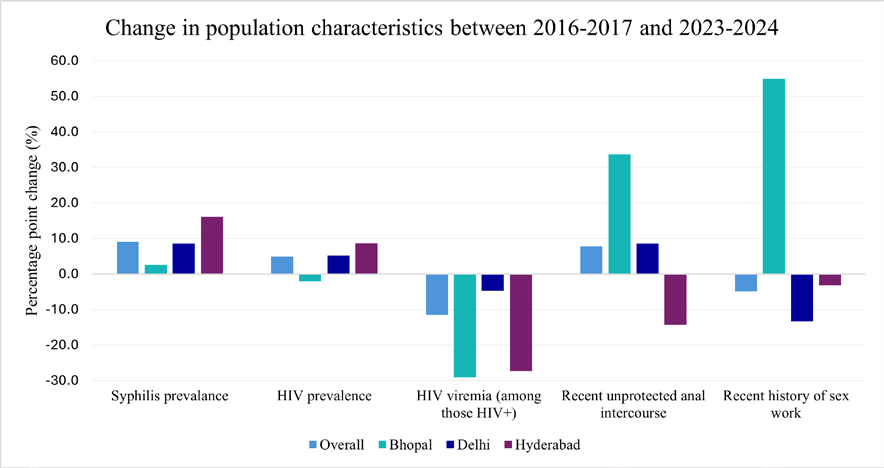
1247. Has Rapid Scale-Up of Dual HIV/Syphilis Testing in Antenatal Care Improved Syphilis Testing Coverage?
Poster Abstracts
Page: 410
Aliza Monroe-Wise1, David Maman2, Olanrewaju Edun3, Andrew Storey4, Morkor N. Owiredu1, Magdalena Barr-Dichiara1, Agnes Chetty5, Van Thi Thuy Nguyen6, Maeve Brito De Mello1, Cheryl C. Johnson1
Background
In 2022 there were approximately 130,000 child HIV infections and 700,000 cases of congenital syphilis globally. Through concerted effort substantial progress has been made in both HIV and syphilis testing coverage to identify infections in pregnancy and to offer treatment. However, gaps remain, including the gap between HIV and syphilis testing. Dual HIV/syphilis rapid tests can help close this testing gap and are recommended by WHO as the first test in antenatal care (ANC). We hypothesized that global dual test procurement is increasing rapidly, and that countries with dual testing policies for ANC also report higher syphilis testing coverage.
Methods
We collected and analyzed procurement data from the Global Fund (GF) to understand recent trends in dual test procurement. We also analyzed country-reported data on HIV and syphilis policy uptake and testing coverage from the Global AIDS Monitoring (GAM) platform to test the association between dual HIV/syphilis test policy uptake and reported syphilis testing coverage in countries consistently reporting between 2021-2023 using a mixed effects logistic regression with a random effect for country to account for repeated measurement.
Results
Data from 38 countries were included in the procurement analysis and 52 in the comparison of coverage by policy uptake status. Dual HIV/syphilis test procurement by the GF increased by 192% from 7.5 million tests in 2021 to a forecast 21.9 million in 2024, constituting over 30% of GF’s direct HIV test procurement in 2024 (Figure 1a). In 2023, of the 52 countries that reported to GAM the average HIV testing coverage was 92% and syphilis testing coverage 80% (Figure 1b); countries that reported adoption of dual HIV/syphilis testing in ANC had higher syphilis testing coverage than countries that did not report adoption. Pregnant women in countries that reported dual test uptake from 2021-23 were 28% more likely (odds ratio: 1.28; 1.27-1.29) to be tested for syphilis compared with pregnant women in countries that did not use the dual test (p-value <0.05).
Conclusions
Procurement of dual HIV/syphilis rapid tests is accelerating. While gaps between HIV and syphilis testing coverage persist, policy adoption of dual HIV/syphilis testing in ANC is associated with higher reported syphilis testing coverage. Limitations in the data include limited procurement data sources and weak syphilis reporting systems.
The figure, table, or graphic for this abstract has been removed.
1248. Monitoring the Success of Public Health Efforts to Reduce Congenital Syphilis, King County, WA
Poster Abstracts
Page: 410
Tim W. Menza1, Anna Berzkalns2, Roxanne P. Kerani1, Katie Heidere2, Jennifer E. Balkus2, Chase Cannon1, Julie Dombrowski1, Matthew Golden1
Background
Syphilis in pregnancy and congenital syphilis (CS) are increasing rapidly in the United States. We propose the percentage of potential CS cases averted (%PCA) as a metric to monitor the success of public health efforts to reduce the burden of CS.
Methods
We reviewed King County, WA syphilis surveillance data from January 1, 2022 through September 20, 2024. Among people with a known pregnancy outcome, we calculated the %PCA, defined as number of infants without CS/number of pregnant people with syphilis x 100%, overall and by key factors. We excluded people who were currently pregnant, who elected a therapeutic abortion, who had a miscarriage unrelated to syphilis, were lost to follow-up, or who had a missing pregnancy outcome.
Results
Of the 107 pregnant people with syphilis, 76 had a known pregnancy outcome. Forty-two infants did not have CS (%PCA=55%). Of the 34 infants with CS, 7 (21%) were stillborn or had a fetal demise. The %PCA declined from 66% in 2022 to 46% in 2023 and 50% in 2024 (P=0.156). Compared to pregnant people with late/unknown duration syphilis, pregnant people with early syphilis had a lower %PCA (60% v 39%, P=0.092). Native American/Alaska Native and Native Hawaiian/Pacific Islander pregnant people with syphilis had the lowest %PCA (33% and 13%, respectively) while Black pregnant people had the highest %PCA (69%). Thirty-nine percent of potential CS cases were averted among unhoused pregnant people compared to 62% among stably housed people (P=0.054). Pregnant people interviewed for partner services had a greater %PCA than those not interviewed (68% v 31%, P=0.001). Pregnant people with ≥1 treated partner had a %PCA of 88% compared to 57% among those with no treated partners (P=0.026). Among interviewed pregnant people who reported substance use, the %PCA was similar to those who did not report substance use (75% and 66%, respectively; P=0.414). The %PCA was 50% among pregnant people who reported corrections involvement and 85% among those who did not report corrections involvement (P=0.219).
Conclusions
The %PCA is a useful public health metric for monitoring the success of clinical and public health efforts to prevent CS and can identify populations that are disproportionately impacted by CS, particularly Native American/Alaska Native and Native Hawaiian/Pacific Islander people and unhoused people.
The figure, table, or graphic for this abstract has been removed.
1249. Risk Factors for Incomplete Treatment for Syphilis in Pregnant Oral PrEP Users in South Africa
Poster Abstracts
Page: 410
Kalisha Bheemraj1, Dvora L. Joseph Davey2, Rufaro Mvududu1, Sumaya Dadan1, Nafisa Wara2, Landon Myer1, Alex de Voux1, the SCOPE-PP Study Team
Background
Understanding the prevalence, risk factors, and barriers to treatment of syphilis in pregnant women is essential to inform the prevention of vertical transmission.
Methods
Within a clinical trial of PrEP promotion interventions, we enrolled 750 HIV-negative pregnant women aged >16 years and used medical records to examine syphilis testing and treatment. We report the prevalence of prior syphilis (TPHA+/RPR-) and active syphilis (TPHA+/RPR+), along with the proportion of those who received complete treatment (3 doses of benzathine penicillin per local guidance). We used logistic regression to identify factors associated with active syphilis and incomplete treatment.
Results
In 750 participants (median age 26y, median gestational age 29w, IQR 23–35), 57% (n=424) were already on PrEP and 43% (n=326) initiated PrEP. The overall prevalence of syphilis was 11% (n=84), with 6% (n=45) prior syphilis infections and 5% (n=39) active syphilis of which 56% of women had RPR titres ≥ 1:8. Women who were <25 years had 2.6 times the odds of active syphilis compared to older women (OR = 2.59, 95% CI: 1.33–5.29). Alcohol use in pregnancy was associated with a doubling in the odds of active syphilis (aOR=2.00, 1.04–3.88) compared to women who did not report alcohol use. 55% (n=16) of women with active syphilis did not receive complete treatment, while a total of 35% (n=29) of women with prior and active syphilis underwent complete treatment. For each additional year of maternal age, the odds of incomplete treatment increased by 10% (OR=1.10, 1.03–1.19). Women who were unmarried/not co-habiting had 3.9 times the odds of incomplete treatment (aOR=3.86, 1.10–15.8) compared to. Sexual activity during pregnancy was associated with incomplete treatment (aOR=4.78, 1.14–25.3). The mean gestational age of participants’ first positive syphilis test result during pregnancy was at 22 weeks (IQR 16–28); 6% (n=5) of syphilis was detected ≤4 weeks prior to delivery and 3 infants were diagnosed with congenital syphilis.
Conclusions
Syphilis is prevalent among pregnant women using oral PrEP. Identifying risk factors for incomplete syphilis treatment during pregnancy is essential for targeted interventions for timely syphilis detection and treatment, ultimately reducing the risk of adverse pregnancy outcomes.
Table 1.
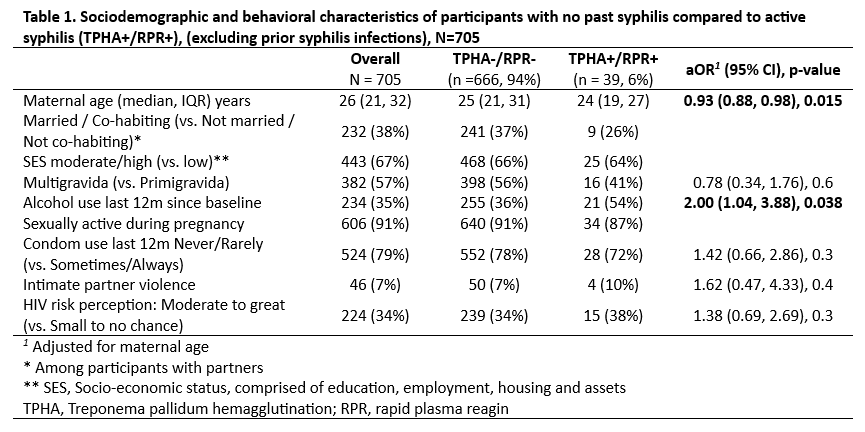
1250. HIV Status and Other Factors Associated With Infection Complicating Abortion in Botswana
Poster Abstracts
Page: 411
Bogadi Loabile1, Warren B. Bilker2, Khumo Khunou3, Ngwao Ngwako4, Billy Tsima3, Merrian Brooks2, Thabo Moloi3, Chelsea Morroni5, Robert Gross1
Background
People with HIV (PWH) are equally likely to have aborted pregnancies as people without HIV (PWoH) but may be at risk of worse outcomes. Abortion-related infections are a significant cause of morbidity and mortality in regions with restricted access to elective abortion. We aimed to determine if HIV increased the risk of an abortion-related infection.
Methods
We conducted a retrospective chart review of women of all ages, <28 weeks’ gestation, admitted to the gynecology unit at a referral hospital in Gaborone, Botswana, for post-abortion care in 2019. Induced and spontaneous abortions were included. Self-reported HIV status was abstracted from a standardized admission form. The admitting diagnosis, including the presence of an abortion-related infection, was captured from the admitting physician's assessment. Bivariate and multivariate models were used to determine factors associated with an abortion-related infection.
Results
We reviewed 847 medical charts. Participants aged between 16 and 45 years. Table 1 describes demographics and medical exposures by the outcome of interest, abortion-related infection. Nine percent (74/847) of women were diagnosed with an abortion-related infection. Thirty-six (17%) PWH were diagnosed with an abortion-related infection compared to 29 (6%) women without HIV and 9 (7%) with unknown HIV status. Mechanical injury on vaginal exam was more common in PWH, with 21(10%) PWH compared to 21 (4%) PWoH (P-value: 0.012) found to have evidence of vaginal trauma. PWH were also more likely to report a history of sexually transmitted infection (STI), with 116 (55%) of PWH compared to 232 (46%) of PWoH reporting a prior diagnosis (P-value: 0.001). In adjusted analysis (adjusted odds ratio [confidence interval]), PWH were 3.91 [2.00-7.76] more likely to be diagnosed with septic abortion than PWoH. Other independent risk factors included vaginal mechanical injury (60.58 [27.98-131.17]), non-infectious chronic co-morbidities (i.e., diabetes, hypertension, seizure disorder) (4.39 [1.91-10.10]), and being a decade younger (2.20 [1.19-4.09]).
Conclusions
PWH were at higher risk of an abortion-related infection relative to PWoH. Whether this complication is due to immunocompromise or behavioral characteristics in PWH requires additional investigation. The high rate of infection in those with mechanical injury underscores the importance of reducing unsafe abortion practices in settings with extensive abortion restrictions.
Table 1.
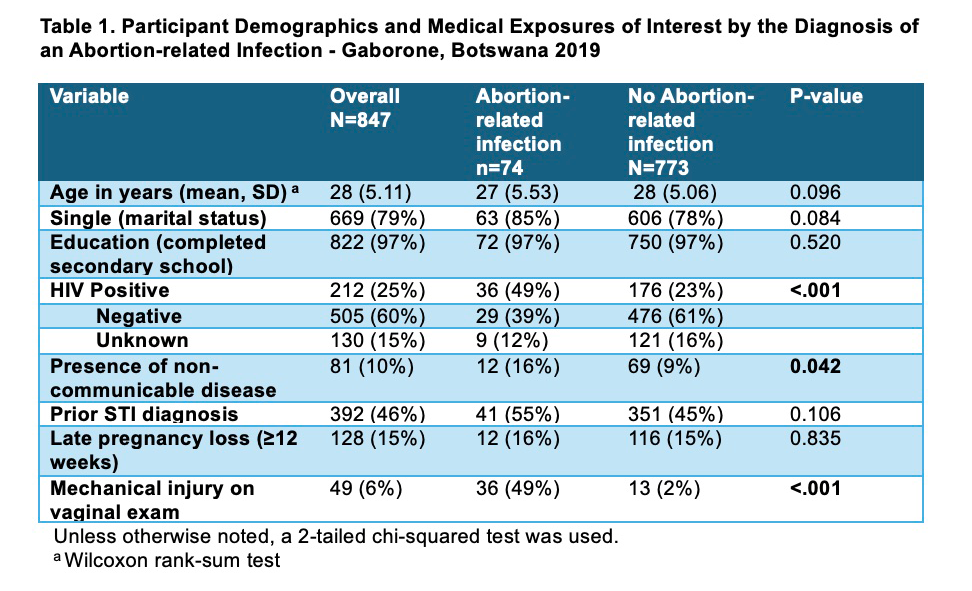
1251. Irregular Menstruation Among Women Is Associated With COVID-19 Infection, but Not Vaccination
Poster Abstracts
Page: 411
Emily M. Cherenack1, Suresh Pallikkuth1, Patricia Racchamarich1, Nicholas F. Fonseca Nogueira1, Daniel Westreich2, Elizabeth F. Topper3, Deborah Konkle-Parker4, Aadia Rana5, Seble Kassaye6, Anandi N. Sheth7, Deborah L. Jones1, Maria L. Alcaide8
Background
Women reported increased incidence of irregular menstruation (IM) during the COVID-19 (COVID) pandemic. No research has evaluated IM among women living with HIV (WWH) during the COVID pandemic, which is key to understanding reproductive health during co-infections.
Methods
From 2021-2023, cross-sectional data were collected from the Study of Treatment and Reproductive Outcomes (STAR) cohort of WWH and women without HIV (WWoH) ages 18-45 years in the southern US. Women completed surveys on history of COVID testing (we defined “self-reported COVID” as any self-report of a positive COVID test), COVID vaccination, IM in the past year (spotting, missed periods, early/late periods), and the Perceived Stress Scale. For the current analysis (n = 188), women were excluded for conditions or medications known to interfere with menses. Women in Atlanta and Miami had plasma tested for COVID antibodies (n = 86); in this sub-sample, we defined “COVID infection” as having detectable antibodies to nucleocapsid or self-report of a positive COVID test in any setting. We defined “vaccination” as self-reported vaccination or having detectable antibodies to receptor binding domain (RBD) not explained by COVID infection. We examined IM by vaccination and COVID infection groups stratified by HIV status.
Results
Among 188 women, 61% were WWH, 49% had IM, 34% self-reported COVID, and 58% reported vaccination. When assessed via a combination of self-report and antibody tests (n = 86), 69% had COVID infection, and 62% were vaccinated. IM, COVID infection, and vaccination did not differ by HIV status. Among WWoH (n = 73), IM was associated with lower age (32 vs. 35, p = 0.04), higher stress (17 vs. 13, p = 0.04), and self-reported COVID (70% of WWoH with self-reported COVID had IM compared to 43% without, p = 0.03), but not with self-reported vaccination, BMI, race, or ethnicity. Among WWoH with antibody testing (n = 42), 61% with COVID infection (per self-report and antibody testing) had IM compared to 27% without COVID. IM was reported by a similarly low percent of WWoH with neither COVID infection nor vaccination (33%) and only vaccination (25%). Among WWH, neither vaccination nor COVID were associated with IM.
Conclusions
IM occurred in half of women during the COVID pandemic regardless of HIV status, with higher rates among WWoH with COVID infection; no association was found between IM and COVID vaccination. Further research is needed to understand mechanisms underlying IM, including stress and infection.
1252. Incidence of Intended & Unintended Pregnancies Among Women With HIV on ART: 5-Year Cohort in Abidjan
Poster Abstracts
Pages: 411-412
Prescilia Visi Vumba1, Abert Minga2, Delphine Gabillard1, Thierry Tiendrebeogo1, Shino Arikawa1, Valerie Journot1, Angele Yao3, Eugène Messou2, Renaud Becquet1
Background
The advent of antiretroviral treatment (ART) has led to an increase in the number of women living with HIV (HIV+) expressing interest in becoming pregnant. However, the availability of sexual and reproductive health services to support these women in their maternity plans is constrained in sub-Saharan Africa. This study examined intended and unintended pregnancies among adult HIV+ women of childbearing age followed in a 5-year cohort study in Abidjan, Cote d’Ivoire.
Methods
We implemented at 2 HIV-care facilities in Abidjan an interventional non-comparative prospective cohort of adult HIV+ women of childbearing age and on ART for less than 24 months. Participants were followed from 2016 to 2021 and were offered sexual and reproductive health services including a various range of contraceptive methods and systematic 3-monthly pregnancy screening. The incidence of pregnancy was estimated, and following states were identified: not pregnant, intended pregnancy, and unintended pregnancy. The trajectory of each woman who became pregnant at least once was then tracked, and the distribution of these women at a given time was analyzed. A non-homogeneous multi-state model identified factors influencing transitions from not pregnant to intended or unintended pregnancy.
Results
The median age of the 524 participants at baseline was 35 years. A total of 208 pregnancies were recorded overall, 36% were intended and 64% were unintended. The incidence of pregnancy was 12.5 per 100 person-years. We observed a decrease in the proportion of pregnancies over time, and a significant decrease in the proportion of unintended versus intended pregnancies. Figure 1 shows that economic well-being (poor: HR = 3.57; CI95% = [1.95 - 6.56], medium: HR = 1.96; CI95% = [1.29 - 2.99] vs wealthy), parity over 3 (HR = 3.16; CI95% = [1.34 - 7.46] vs 0), number of induced abortion (1: HR = 1.90, CI95% = [1.11 - 3.27]; ≥2: HR = 1.94, CI95% = [1.09 - 3.45] vs 0), live with partner (HR = 1.59; CI95% = [1.05 - 2.40]) and ART delay at baseline over 12 month ( HR = 0.60; CI95% = [0.39 - 0.92] vs < 6 months) influenced transition from being not pregnant to an unintended pregnancy.
Conclusions
Reliable pregnancy incidence estimates were obtained thanks to systematic and regular pregnancy tests. However, pregnancy incidence was much higher than anticipated and we are facing challenges with unintended pregnancies despite the provision of reproductive care services.
Figure 1.
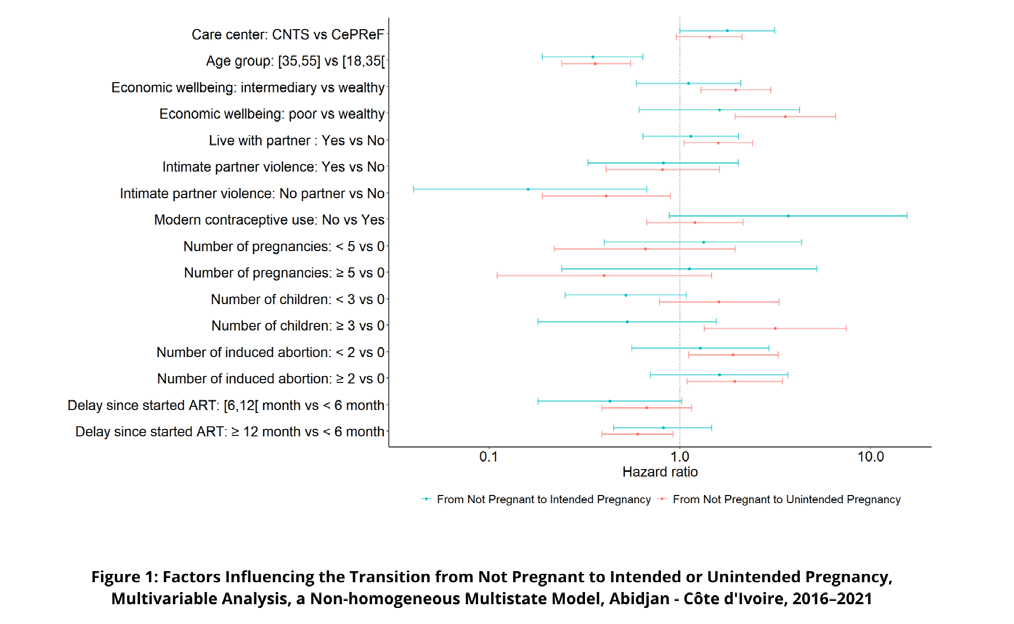
1253. Unmet Need for Family Planning Underestimated Among Women Living With HIV in Kenya
Poster Abstracts
Page: 412
Alison Drake1, Erica Wetzler1, Aparna Seth1, Agnes K. Karingo2, Nancy Mwongeli2, Celestine Atieno2, June Moraa2, Jenna Udren3, Jennifer A. Unger4, John Kinuthia2
Background
Unmet need for family planning (FP) is used to measure gaps in FP access and use, and for women living with HIV (WLWH), risk of vertical HIV transmission. Criterion to assess need for FP are used in FP/HIV integrated services to direct FP service delivery, yet applying the World Health Organization (WHO) definition of need for FP may underestimate the proportion of WLWH whose FP needs are not met.
Methods
We used baseline data from WLWH receiving HIV care and enrolled in an ongoing cluster randomized clinical trial evaluating a digital reproductive health intervention (vs. standard of care) in Kenya. Women were enrolled at 10 facilities and completed surveys assessing demographics, reproductive history, fertility and FP use. Need for FP was defined as having no desire for pregnancy for ≥2 years, being sexually active and married/partnered. Unmet need for FP by the WHO definition was calculated as the number of women not using a modern FP method and with a need for FP divided by the number with a need for FP. We compared the WHO definition of unmet need with definitions that used alternate criteria for preferences for birth spacing/limiting, current partners, and sexual activity, and made statistical comparisons using χ2 tests.
Results
Among 3296 WLWH enrolled, median was age 33 years (interquartile range 28-38), 72% had regular partners, 74% were sexually active, and 41% had a desire for future pregnancy. Only 9% of WLWH were planning a pregnancy in ≤2 years. Among WLWH who were not currently sexually active and did not have a regular partner, 36% reported last sex was ≤2 months ago. Overall, 7.8% of WLWH were classified as having unmet need using the WHO definition. Unmet need was 4.0% higher (RR 1.51, 95% CI 1.21-1.88, p<0.001) by including women who did not want to become pregnant now and 3.3% higher (RR 1.42, 95% CI 1.37-1.77, p=0.002) by removing current sexual activity criteria, and 1.2% higher (RR 1.15, 95% CI 0.92-1.45, p=0. 2) by including women without regular partners who were sexually active (Figure). Reducing the desired time to pregnancy to ≤1 year only captured an additional 0.3% of women who would be classified as having unmet need (p>.05).
Conclusions
The WHO definition of unmet need may misclassify 1-4% of WLWH as not having a need for FP, which translates to a 15-50% increase in estimates of unmet need for FP and suggests there are missed opportunities to provide FP counseling and services to WLWH who do not present as having a need for FP.
Figure 1.
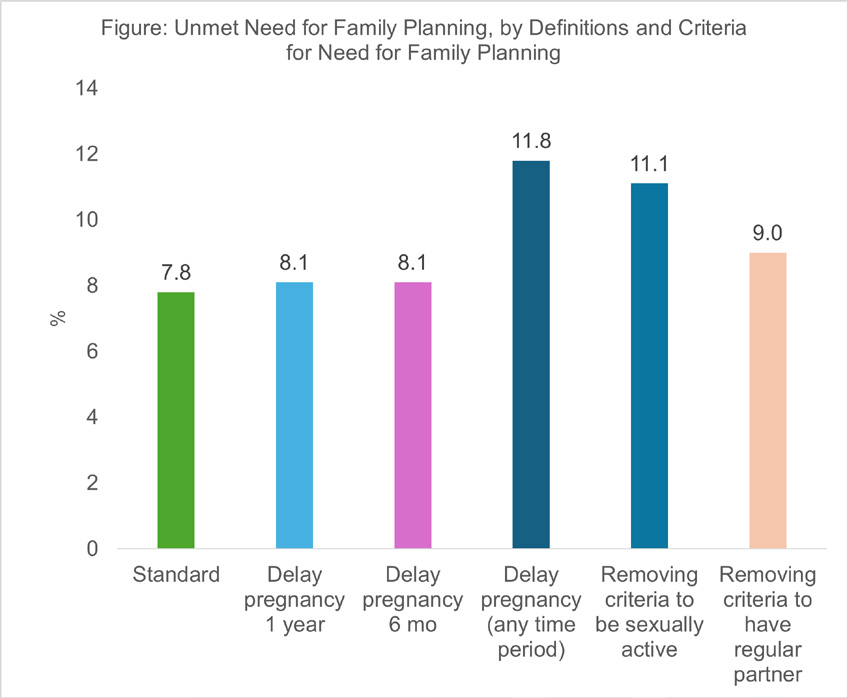
1254. Effect of Antiretroviral Regimen on Contraceptive Failure Among Women Using Injectable Contraception
Poster Abstracts
Page: 412
Karen Diepstra1, Daniel Westreich1, Agatha Bula2, Clara Lemani2, John Chapola1, Katie Mollan1, Jill Hagey3, Sam Phiri4, Jane Chiwoko4, Lameck Chinula2, Mina Hosseinipour2, Mackenzie Cottrell1, Audrey Pettifor1, Mollie E. Wood1, Jennifer H. Tang1
Background
Drug-drug interactions (DDIs) between antiretroviral therapy (ART) and hormonal contraceptives deserve attention, as effective contraception is essential for women living with HIV (WLWH) who do not desire pregnancy. One hormonal contraceptive commonly used among WLWH in sub-Saharan Africa is the 3-monthly, injectable depot medroxyprogesterone acetate (DMPA). Evidence is mixed regarding DDIs between MPA and ART medications, particularly efavirenz. Here, we estimated the effect of ART regimen type on pregnancy incidence among Malawian WLWH who were using DMPA contraception and ART as prescribed.
Methods
Using longitudinal data from the Family Planning and Antiretroviral Therapy (FP-ART) prospective cohort study, we identified participants who initiated DMPA at enrollment and followed participants until DMPA discontinuation, discontinuation of ART, study dropout, pregnancy, or administrative censoring. We examined the time-varying exposure ART regimen type (either efavirenz or dolutegravir in combination with tenofovir disoproxil fumarate and lamivudine). The outcome was conception (with dating typically done by ultrasound). We used inverse probability weights to estimate the effect of always using efavirenz-based ART versus always using dolutegravir-based ART if, counter to fact, everyone were taking ART and DMPA as prescribed, and if there were no study dropout. Specifically, we used inverse probability weights to fit marginal structural Poisson regression models to estimate incidence rate ratios (IRRs) and robust 95% confidence intervals (CIs).
Results
There were 689 participants who initiated DMPA at enrollment. Forty-one conception events were captured during 826 person-years of follow-up (crude incidence rate: 5.0 conceptions per 100 person-years). Restricted to person-time where DMPA was taken as prescribed, the crude incidence rate was 4.1 per 100 person-years. The weighted IRR associated with always using efavirenz-based ART (versus dolutegravir-based ART) and everyone taking DMPA as prescribed was 2.04 (95% CI: 0.77, 5.41).
Conclusions
In a population of WLWH who were taking DMPA as prescribed, we found a higher-than-expected pregnancy rate and potentially an elevated pregnancy rate with continuous efavirenz-based ART versus dolutegravir-based ART use. Further understanding of the causes of contraceptive failure among WLWH who use DMPA and ART is essential.
1255. PrEP Eligible but Missed: Preliminary Evidence Unlocking the Potential of Family Planning Services
Poster Abstracts
Pages: 412-413
Brenice Duroseau1, Shemeka Thorpe2, Ashleigh Lovette3, Jason E. Farley1
Background
Black women in the U.S. are disproportionately impacted by STIs/HIV, largely due to political, social, and structural determinants of health.
Despite these glaring disparities, sexual reproductive health (SRH) services continue to be fragmented and challenging to access. This study examines the relationship between family planning service (FPS) use and engagement in STI/HIV testing among cisgender Black women in Maryland, an Ending the HIV Epidemic (EHE) priority jurisdiction.
Methods
The SHINE Black Women Study used a concurrent mixed methods approach, collecting data from Black cisgender women through an online survey. FPS use was measured by asking participants, “Have you accessed or used any family planning services (including birth control, abortion, fertility services) in the last three years?” PrEP eligibility was determined using CDC criteria, including condomless sex, partners, recent STI history, and substance use during sex. We ran crude and adjusted models to assess the associations between FPS use and the odds of receiving an HIV or STI test, while adjusting for other confounders.
Results
Among 158 participants, 140(88.6%) of the sample met PrEP eligibility criteria, indicating HIV risk. Notably, 80(50.6%) reported sex under alcohol influence and 45(28.5%) under drug influence. Most, 103(65.2%) accessed FPS and they were more likely to have been screened for STIs(77.7% vs. 60.0%, p = 0.019) and HIV(67.9% vs. 50.9%, p = 0.035). Bivariate analysis showed a significant association between FPS use and STI screening(OR = 2.32, 95% CI: 1.14, 4.72, p=0.020) and HIV testing(OR = 2.05, 95% CI: 1.05, 4.00, p=0.037). Factors significantly associated with increased STI screening were having private insurance coverage(OR = 4.45, 95% CI: 1.60, 12.34, p=0.004) & HIV risk score(OR = 1.06, 95% CI: 1.02, 1.11, p= 0.003). Factors significantly associated with HIV screening were having a college degree(OR = 0.39, 95% CI: 0.16, 0.95, p= 0.039) & HIV risk score(OR = 1.04, 95% CI: 1.00, 1.08, p= 0.030).
Conclusions
Black women who use FPS are more likely to utilize STI and HIV testing, highlighting a potential intervention point for PrEP and STI/HIV prevention. While FPS are vital touchpoints, broader structural factors play a significant role in HIV/STI screening, understanding underlying factors that strengthen or weaken this relationship is vital. Integrating STI/HIV testing into FPS could reduce SRH disparities, support EHE goals, and ensure that Black women are not excluded from EHE efforts.
The figure, table, or graphic for this abstract has been removed.
1256. Multipurpose Vaginal Rings: Preferences From a National Discrete Choice Survey With US Women
Poster Abstracts
Page: 413
Ann Gottert1, Sanyukta Mathur1, Timothy Abuya2, Irene Bruce1, Shakti Shetty3, Michelle Nguyen3, Jessica M. Sales3, Lisa B. Haddad1, Barbara A. Friedland1
Background
Women worldwide need and want multipurpose prevention technologies (MPTs) to meet their varied sexual-reproductive health needs. Most MPTs in development are vaginal rings. We assessed US women’s preferences re: specific ring attributes, to optimize a nonhormonal MPT ring in development to prevent pregnancy, HIV, other sexually transmitted infections (STIs), and bacterial vaginosis (BV).
Methods
We conducted a cross-sectional online survey with sexually active US women ages 18-49 years currently/interested in using contraception, recruited via Prime Panels. The survey included a discrete choice experiment (DCE) comprising 7 attributes with varying levels, identified via qualitative research. We analyzed data using mixed multinomial logit models.
Results
2,105 women were surveyed Dec 2023-Jan 2024 (mean age 31 years) in all 50 states. 53% were married/cohabiting; 57% had ≥1 child; 43% ever had an unintended pregnancy; 9% were diagnosed with an STI in the last year; 49% ever had BV. Women strongly preferred an MPT ring with higher effectiveness to prevent pregnancy (Coefficient: 0.020), HIV (0.011), and STIs (0.006) (all p<0.001; stronger among women ages 18-29). BV prevention was also preferred (p<0.001). A nonhormonal ring was important to the 61% of women averse to hormonal contraception (including due to previous side effects), and an on-demand use option (vs. must use continuously) was important to the 26% with multiple sexual partners. There was a negative preference for a ring causing heavier/unpredictable periods (vs. no effect) (p<0.001). Women were willing to make tradeoffs in effectiveness for each indication, for other desired attributes, e.g., for a 10% increase in HIV and STI prevention effectiveness, they would give up 6% and 3% in pregnancy prevention effectiveness, respectively (both p<0.001). After the DCE, when asked to consider a nonhormonal MPT ring at moderate levels of protection (80% for pregnancy, 50% for HIV/STIs), 74% of women were interested/very interested in using it (69% within one year).
Conclusions
US women reported strong interest in an MPT ring. When evaluating MPT ring attributes, effectiveness for pregnancy and HIV prevention– the focus of most MPT research– were most important, but STI and BV prevention were also valued. Preferences were heterogeneous, and nonhormonal and on-demand options were only preferred among subsets of women. Continued end-user research regarding varied preferences and tradeoffs is needed to optimize future MPT products.
1257. WITHDRAWN
Poster Abstracts
Page: 413
1258. STAR: A Prospective Cohort of Women of Reproductive Age With and Without HIV in the Southern US
Poster Abstracts
Pages: 413-414
Elizabeth F. Topper1, Danielle Johnson2, Jinbing Zhang3, Seble Kassaye4, Deborah L. Jones5, Deborah Konkle-Parker6, Aadia Rana7, Daniel Westreich8, Maria L. Alcaide9, Anandi N. Sheth2
Background
Nearly 25% of people living with HIV in the US are women, most of whom are racial/ethnic minorities living in the south. In 2022, people assigned female sex at birth accounted for 18% of the almost 38,000 incident HIV diagnoses. Of those, Black/African Americans age >=13 accounted for 50%, and 20% were Hispanic/Latina. Minority women and women with HIV (WWH) commonly face unplanned pregnancies, adverse pregnancy and long-term clinical outcomes, poor retention in care and ART adherence, and higher mortality compared with men, white women, and older women. Understanding the effects of HIV among minority women of reproductive age is vital.
Methods
The Study of Treatment and Reproductive outcomes (STAR) is a cohort of women ages 18-45 living with and without HIV in Miami FL, Atlanta GA, Birmingham AL/Jackson MS, Chapel Hill NC and Washington DC. Structured interviews are conducted in person at baseline, six, 12, and 18 months, and by phone semiannually thereafter with additional visits for pregnancy and postpartum. Major aims include assessments of mental and oral health on HIV and overall health outcomes, particularly during pregnancy and postpartum.
Results
Among 891 women enrolled between March 1, 2021 and April 30, 2024, 526 were WWH (of whom 65 (12%) were pregnant) and 365 were women without HIV (WWoH; 32 (9%) were pregnant). Median age was lowest among pregnant WWH (30 years) and highest among non-pregnant WWH (38 years). Most STAR participants are Black/African American (76%), non-Latina (89%), attended or completed college (56%), never married (54%), have monthly household income <=$1,000 (30%), and had >=3 sex partners in the past year (59%). The majority (98%) of WWH were using ART at baseline. Only 5% of WWoH had used PrEP in the past year. The majority of pregnant women reported alcohol use in the past year (66%), though fewer compared to non-pregnant women (77%). Non-pregnant WWH had highest prevalence of depressive symptoms as assessed via CES-D; (39%) scored >=16 and 28% scored >=21. Almost half (48%) of the cohort had not seen a dentist in the past year and over half (52%) rated the condition of their mouth and teeth as fair or poor.
Conclusions
Barriers to healthcare access, such as mental health challenges and substance use, continue to contribute to higher HIV prevalence among women in the southern US. STAR provides critical insights into the intersection of HIV, reproductive health, and social determinants of health among women of reproductive age in the Southern U.S.
1259. Substance Use and Treatment Among Reproductive-Age Women With/ Without HIV in the Southern US
Poster Abstracts
Page: 414
Qian Yang1, Ayako W. Fujita1, Cyra C. Mehta1, Tina T. Tisdale1, Maria L. Alcaide2, Aadia Rana3, Deborah Konkle-Parker4, Daniel Westreich5, Seble Kassaye6, Elizabeth F. Topper7, Anandi N. Sheth1, the Study of Treatment And Reproductive Outcomes (STAR) Team
Background
Women with HIV (WWH) who engage in substance use (SU) have poor HIV-related outcomes. Additionally, mortality associated with overdose has recently increased among pregnant and postpartum persons. We characterized SU and treatment among cisgender, reproductive age WWH and women without HIV (WWoH) enrolled in the Study of Treatment And Reproductive Outcomes (STAR).
Methods
Baseline data from participants enrolled in STAR 2021-2023 were analyzed to determine current SU (illicit drug use in past year) and accidental overdose in the past year. Tobacco, hazardous alcohol use (Alcohol Use Disorders Identification Test score ≥8), and marijuana use were assessed separately. SU treatment utilization was self-reported use of any drug treatment program in the past year among those with current SU. We assessed the proportion of SU and treatment stratified by pregnancy status, and compared treatment by HIV status using Fisher’s exact test. Postpartum was defined as having had a pregnancy outcome in the past year.
Results
Among 759 women (473 WWH, 286 WWoH), median age was 36 years, 75% identified as non-Hispanic Black, 11% were currently pregnant, 6% postpartum, and 62% ≥1 year postpartum. Overall, 84 (11%) reported current SU (9% WWH, 15% WWoH). Current SU was 14% among women who had never been pregnant, 9% among pregnant women, 4% among postpartum women, and 11% among women ≥1 year postpartum. Among women who reported SU, 62% reported crack/cocaine use, 30% benzodiazepines/barbiturates, 13% methamphetamines, 7% opioids, and 8% reported injecting drugs; 70% smoked cigarettes, 41% had hazardous alcohol use, and 61% used marijuana in the past year. Among 667 women without current SU, 25% smoked cigarettes, 10% had hazardous alcohol use, and 43% had used marijuana in the past year. Of the 61 reporting current SU who answered overdose questions, 8 (13%) reported accidental overdose in the past year. Among women with current SU, 18 (21%) utilized treatment (26% WWH, 17% WWoH; p=0.34), including 2/21 who were nulliparous, 2/9 who were pregnant/postpartum, and 14/53 who were ≥1 year postpartum (p=0.28).
Conclusions
In this cohort of reproductive age women in the Southern US, SU was common overall but fluctuated across reproductive life stages. One in five utilized SU treatment, irrespective of HIV status, lower than previously reported from demographically similar women >50 years. SU treatment strategies and overdose prevention targeted towards women in their reproductive years are needed.
1260. Physical, Psychosocial, and Sexual Health in Adults Aged 50+ With and Without HIV in Denmark
Poster Abstracts
Page: 414
Ditte Scofield1, Morten Frisch2, Mikael Andersson2, Merete Storgaard3, Gitte Pedersen4, Isik S. Johansen5, Terese L. Katzenstein6, Christian Graugaard4, Lars H. H. Omland6, Nina Weis1, Ellen Frøsig Moseholm1
Background
With age, people with HIV (PWH) may face higher rates of physical comorbidities, psychosocial challenges and sexual health problems, all of which can impact quality of life and ART adherence. However, research on health among ageing PWH remains limited. This study aimed to examine self-reported physical, psychosocial and sexual health outcomes among people aged ≥50 years with and without HIV in Denmark.
Methods
We used data from a nationwide cross-sectional study examining different aspects of health among PWH in Denmark. Participants included cisgendered PWH aged ≥50 years recruited across Denmark, and a comparison group of people without HIV from a nationally representative cohort study. Data were collected from 2021 to 2022 via an electronic survey including several validated patient-reported outcome measures. Sex-stratified logistic regression models examined associations between HIV and physical, psychosocial and sexual health outcomes, adjusted for sociodemographic and other confounding factors.
Results
A total of 322 men and 67 women with HIV were included and compared to 15,548 men and 13,926 women without HIV. Key sociodemographic differences included fewer PWH in relationships and more PWH with non-Danish parentage. Physical health analyses showed that HIV was associated with increased odds of liver diseases (men: aOR 2.43 [95% CI: 1.08-5.46]; women: aOR 5.23 [95% CI: 1.51-18.09]), cardiovascular disease in men (aOR 1.52 [95% CI: 1.06-2.17]), and hypertension (aOR 2.14 [95% CI: 1.02-4.49]) and osteoporosis (aOR 5.56 [95% CI: 1.63-19.04]) in women. Among men, HIV was significantly associated with depressive symptoms (aOR 1.63 [95% CI: 1.07-2.49]) and anxiety (aOR 1.42 [95% CI: 1.00-2.04]). For women with HIV, suicidal tendencies (aOR 1.92 [95% CI: 1.03-3.59]), loneliness (aOR 2.02 [95% CI: 1.15-3.55]) and domestic abuse experiences (aOR 2.38 [95% CI: 1.28-4.42]) were more common. Sexual health analysis showed that men with HIV were more likely to report orgasmic dysfunction (aOR 2.71 [95% CI: 1.51-4.87]) and erectile dysfunction (aOR 2.09 [95% CI: 1.28-3.40]), while lubrication dysfunction (aOR 3.56 [95% CI: 1.25-10.17]) and genital pain dysfunction (aOR 3.98 [95% CI: 1.39-11.37]) were more common among women with HIV.
Conclusions
PWH aged ≥50 years in Denmark face significantly more physical, psychosocial and sexual health challenges compared to peers without HIV. Clinical attention to these disparities is crucial for improving the overall health of ageing PWH.
1261. Probability of Anal Human Papillomavirus Infection Following Acute HIV Acquisition in Thailand
Poster Abstracts
Pages: 414-415
Supanat Thitipatarakorn, Sujittra Suriwong, Siriporn Nonenoy, Aphakan Klinsukontakul, Sumitr Tongmuang, Piranun Hongchookiat, Napasawan Chinlaertworasiri, Pravit Mingkwanrungruang, Reshmie Ramautarsing, Nipat Teeratakulpisarn, Nittaya Phanuphak
Background
Anal cancer is largely contributed by anal high-risk human papillomavirus (HRHPV) infection, especially human papillomavirus (HPV) 16. This study described HPV progression among individuals with acute HIV acquisition.
Methods
From May 2017 to June 2020, participants who initiated antiretroviral therapy during acute HIV acquisition (Fiebig stages 1–5) and consented to anal HPV genotyping and high-resolution anoscopy were enrolled at a sexual health clinic in Bangkok, Thailand. At the time of acute HIV diagnosis, demographic data, sexual history, and baseline laboratory tests were collected. Anal HPV genotyping tests were performed at baseline and every 6 months.
Two-state continuous-time Markov models were created separately for HPV 16, HPV 18 and/or 45 (18/45), and any HRHPV combined. Probabilities with 95% confidence intervals (CIs) and duration of HPV infection were estimated using the best-fitted models.
Results
The analyses included 87 cisgender men and 4 transgender women, median age 26 years. At baseline, anal HPV 16, HPV 18/45, and any HRHPV were found in 12 (13.2%), 13 (14.3%), and 59 (64.8%) participants, respectively. Two years after HIV acquisition, estimated prevalence rates were 18.4% (95% CI 13.4%–25.5%) for HPV 16, 12.1% (95% CI 8.1%–17.1%) HPV 18/45, and 58.9% (53.1%–64.5%) for any HRHPV. The probabilities of acquiring HPV within two years of HIV acquisition were 40.3% (95% CI 28.7%–53.8%) for HPV 16, 34.6% (95% CI 22.9%–50.7%) for HPV 18/45, and 97.9% (95% CI 93.3%–99.6%) for any HRHPV. The probabilities of HPV clearance within two years of HIV acquisition were 94.3% (95% CI 49.6%–100.0%) for HPV 16, 97.4% (95% CI 90.9%–99.7%) for HPV 18/45, and 92.7% (95% CI 85.2%–97.2%) for any HRHPV. The estimated duration of one episode of infection was 0.70 (95% CI 0.17–2.85) years for HPV 16, 0.55 (95% CI 0.36–0.84) years for HPV 18/45, and 0.77 (95% CI 0.55–1.07) years for any HRHPV.
Conclusions
In a cohort with antiretroviral therapy initiation during acute HIV acquisition, the majority of type-specific anal HRHPV infections are likely to spontaneously resolve. However, the probability of acquiring HPV after two years is exceptionally high. This suggests ongoing exposures to HPV among this population. Sexual health consultation, HPV immunization, and anal cancer screening should continue to be recommended for people living with HIV, even years after early antiretroviral therapy initiation.
Figure 1.
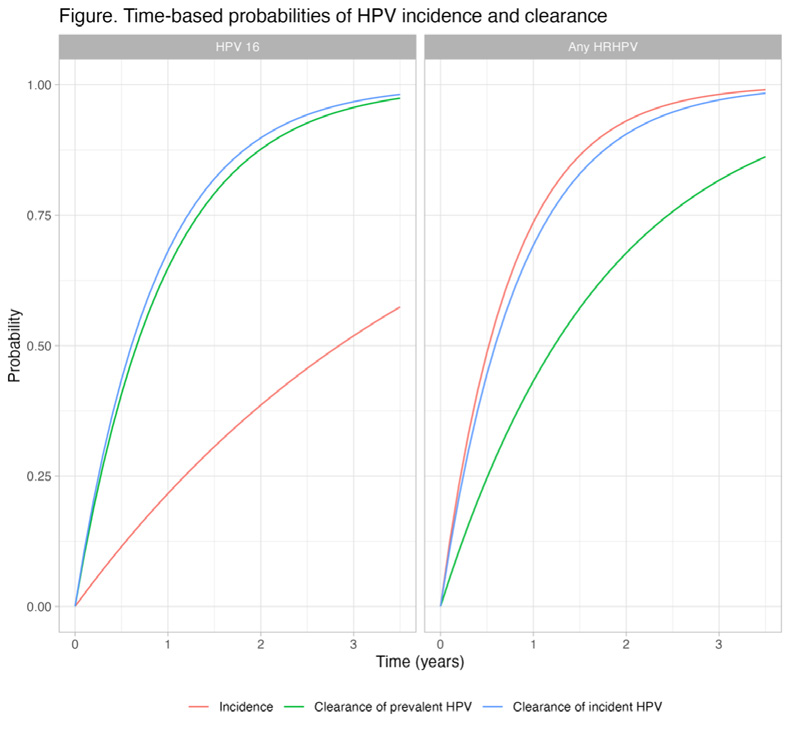
1262. Incidence and Clearance of Anal Human Papillomavirus Infection in an Acute HIV Cohort in Thailand
Poster Abstracts
Page: 415
Supanat Thitipatarakorn, Sujittra Suriwong, Siriporn Nonenoy, Aphakan Klinsukontakul, Jirat Makphol, Piranun Hongchookiat, Thanyapat Chaya-Ananchot, Napasawan Chinlaertworasiri, Pravit Mingkwanrungruang, Reshmie Ramautarsing, Nipat Teeratakulpisarn, Nittaya Phanuphak
Background
Anal high-risk human papillomavirus (HRHPV) infection, especially human papillomavirus (HPV) 16, is the leading cause of anal cancer. This study explored factors associated with HRHPV incidence and clearance among individuals with acute HIV acquisition.
Methods
Participants who initiated antiretroviral therapy during acute HIV acquisition, defined as Fiebig stages 1–5, and agreed to undergo anal HPV genotyping and high-resolution anoscopy were enrolled at a sexual health clinic in Bangkok, Thailand, from May 2017 to June 2020. Demographic data, sexual history, and baseline laboratory tests were obtained at the time of acute HIV diagnosis. Anal HPV genotyping tests were performed at baseline and 6-monthly visits. Two-state continuous-time Markov models were created separately for HPV 16, HPV 18 and/or 45 (18/45), and HRHPV other than 16/18/45 (other HRHPV). Multivariate analyses were performed by adjusting for age and baseline CD4 level.
Results
A total of 87 cisgender men and 4 transgender women, median age 26 years, were included in the analyses. Over 226.6 person-years (PY), the incidence rates of anal HPV 16, 18/45, and other HRHPV were 18.6, 13.7, and 40.3 per 100 PY, respectively. The clearance rates of anal HPV 16, 18/45, and other HRHPV were 77.3, 94.0, and 90.1 per 100 PY, respectively. Factors associated with HPV-related outcomes were having six or more lifetime sex partners, compared to fewer partners, for incidence of HPV 16 (aHR 4.79, 95% CI 1.08–21.35), and being diagnosed with HIV during Fiebig stage 4, compared to stages 1–3, for clearance of HPV 18/45 (aHR 0.14, 95% CI 0.02–0.90) and incidence of other HRHPV (aHR 0.27, 95% CI 0.07–0.96), after adjusting for age and baseline CD4 level.
Conclusions
Individuals who acquired HIV and initiated antiretroviral therapy continued to engage in sexual activity, leading to the high rate of HRHPV acquisition over time. The number of lifetime sexual partners was identified as a key predictor of HRHPV acquisition. Even after early antiretroviral therapy initiation regular sexual health consultations, HPV immunization, and anal cancer screening should be strongly encouraged for people living with HIV.
Table 1.
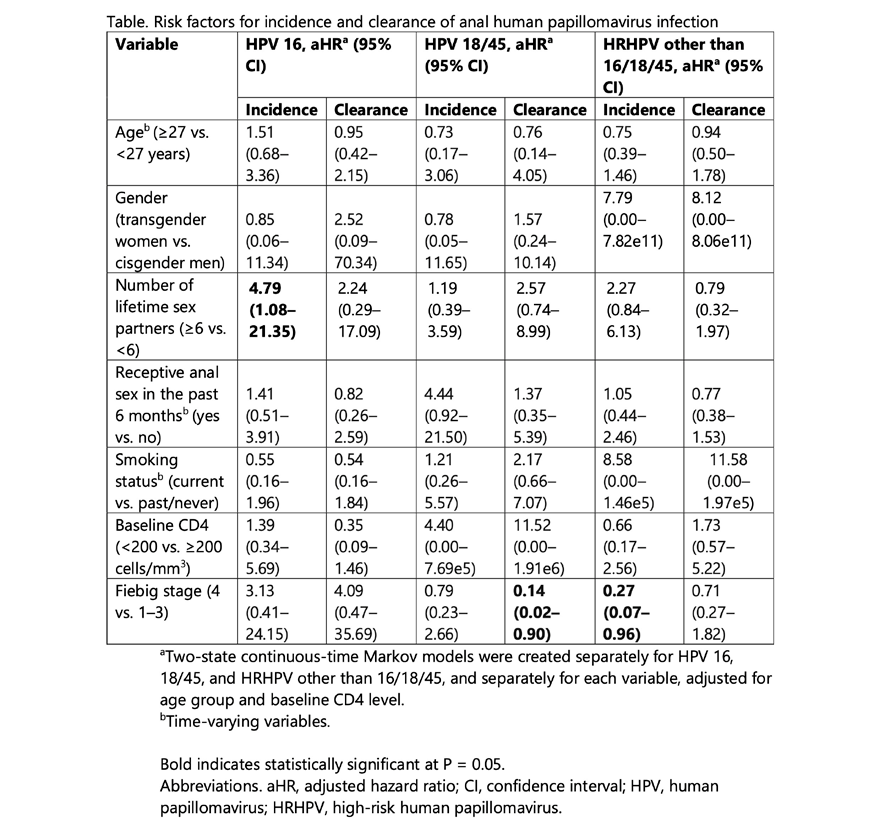
1263. HPV Clearance After Immunization: Investigating Risk Factors Associated With Clearance at Anal Site
Poster Abstracts
Pages: 415-416
Elena Bruzzesi1, Federica Gandini1, Sara Diotallevi2, Riccardo Lolatto2, Angelo Roberto Raccagni1, Caterina Candela1, Girolamo Piromalli2, Flavia Passini1, Massimo Cernuschi2, Silvia Aliverti2, Paola Striglia2, Andrea M. Tamburini2, Roberto Burioni1, Antonella Castagna2, Silvia Nozza1
Background
9-valent HPV vaccine is effective as a prevention tool, rather than therapeutic at cervical site. Insights on viral clearance at anal site is still unknown, especially in the high-risk population of MSM with HIV. Aim of the study is to determine factors associated with the clearance of at least one genotype included in the 9-valent vaccine.
Methods
Retrospective cohort analysis in MSM with HIV in care for HIV at the Infectious Diseases Unit of San Raffaele Hospital, Milan, Italy, with ≥2 HPV tests on anal swabs collected 1 before and 1 after immunization with 9-valent HPV vaccine, from 2014 and December 2023 (data lock). Characteristics were determined within 180 days from the date of HPV testing. HPV genotypes are detected by multiplex real-time PCR (CFX96™, Seegene). Multivariable logistic regression is used to estimate risk factors associated with clearance of ≥1 HPV genotype included in the 9-valent vaccine.
Results
Among 393 MSM with HIV with at least one HPV test pre-immunization, 96 (24.4%) have a subsequent one post-vaccine. At their last HPV test, those who cleared at least one HPV genotype included in 9-valent vaccine were 48 (50%), with a median (IQR) age of 35.1 (31.1-42.5) years, as compared to those who did not [39.9 (34.9-44.1)]. Immuno-virological characteristics were similar among the two groups: overall median CD4 nadir was 410 (285-558) cells/uL with 14.7% with CD4 ≤200 cells/ uL, CD4+ count 787 (614-938.5) cells/uL, CD4/CD8 ratio 1.00 (0.8-1.2), on ART since 7.6 (5.4-10.2) years. Sexually transmitted infections (STI), including syphilis, gonorrhea, mpox, chlamydia, were frequent in both groups: overall, 52 (54.7%) and 19 (20%) had a history or a concomitant STI, respectively. Median time between the two HPV test considered was 1470 (1125-1736) days. Among those with prior positive results, HPV-16 and -18 were cleared in 9/25 and 4/12 MSM with HIV. On the other hand, 11 and 6 had a positivization for HPV-16 and -18.
At multivariate regression (table 1), the risk of clearance of ≥1 HPV genotype included in the 9-valent vaccine was lower in younger (<35 years) people.
Conclusions
These results emphasize the importance of age in virus clearance among immunized individuals. We endorse consensus guidelines recommending anal cancer screening start at age 35 for MSM with HIV, as viral persistence is more likely in this group.
Table 1.
| Variable |
Category |
Adjusted Odds Ratio |
95%CI |
P-Value |
| Age |
≥35 vs <35 |
0.34 |
(0.13,0.81) |
0.02 |
| Concomitant STI |
Yes vs No |
2.08 |
(0.71,6.46) |
0.19 |
| Previous STI |
Yes vs No |
1.99 |
(0.83,4.85) |
0.12 |
| CD4 nadir |
Per 1 cells/µL higher |
1.00 |
(0.99,1.00) |
0.62 |
| CD4 count |
Per 1 cells/µL higher |
0.99 |
(0.97,1.00) |
0.35 |
1264. Sustained HIV Viral Suppression as a Predictor of High-Risk Human Papillomavirus Infection
Poster Abstracts
Page: 416
Douglas Gaitho, Silvia Kadima, Isaac Kirui, Daniel Kiptum, Sylvester Kimaiyo
Background
HIV infection is associated with an increased risk of human papillomavirus (HPV) acquisition, decreased clearance of HPV, and increased risk of precancerous lesions and cervical cancer. Despite the availability of antiretroviral therapy (ART), there is paucity of data describing the association between sustained HIV viral suppression and HPV infection. Achieving durable HIV viral suppression could be a potential strategy for mitigating adverse outcomes associated with high-risk HPV infections.
Methods
We conducted retrospective data analysis and included all WLHV who had received cervical cancer screening using HPV typing as part of a pilot between June and September 2024 within an extensive HIV program in Western Kenya. Deidentified data were abstracted from electronic medical records, including age, nadir CD4 count and ART duration, identified a priori as potential confounders. Sustained viral suppression, defined as an undetectable viral load of fewer than 50 copies per millimetre from ART initiation, was our exposure of interest. Our outcome was defined as the presence of high-risk HPV serotypes from self-collected cervical samples. Log binomial regression was used to estimate the odds of high-risk HPV infection by sustained viral suppression.
Results
Overall, we included 795 WLHIV, of whom 323 (40.6%) had sustained viral suppression, whereas 472 (59.4%) had periods of non-suppression from the time of ART initiation. The age and duration of ART did not differ based on viral suppression, with a median of 41 years (IQR 36-46) and 9.1 years (IQR 4.8-14.8), respectively. WLHV with a nadir CD4 count of less than 200 cells per millimetre was 36 (11.1%) among those with sustained HIV viral suppression and 40 (8.5%) among those with periods of being unsuppressed. The prevalence of high-risk HPV infection was 40.7% and 42.3% when comparing those with sustained HIV viral suppression versus those who did not, respectively. WLHIV who did not have sustained HIV viral suppression had 1.5 times higher odds of having high-risk HPV infection (aOR=1.5, 95% CI, 1.3-1.6, p-value < 0.001).
Conclusions
The odds of high-risk HPV infection were higher among WLHV who had periods of HIV non-suppression after adjusting for nadir CD4, duration on ART and age.
1265. Diagnostic Screening and Treatment of Curable STIs in Pregnancy and Impact on Pregnancy Outcomes
Poster Abstracts
Page: 416
Dorothy C. Nyemba1, Alex de Voux2, Rufaro Mvududu2, Remco Peters3, Sinead Delany-Moretlwe1, Leigh F. Johnson2, Thomas Coates4, Landon Myer2, Dvora L. Joseph Davey4
Background
Sexually transmitted infections (STIs) during pregnancy are associated with adverse pregnancy outcomes. We evaluated the impact of diagnosing and treating curable STIs (Chlamydia [CT]/Gonorrhoea [NG]) during pregnancy on adverse pregnancy outcomes among women in a HIV pre-exposure prophylaxis (PrEP) cohort study in Cape Town, South Africa.
Methods
Eligible women >16 years, attending antenatal care, without HIV, received HIV prevention counselling, diagnostic testing with Gene-Xpert (point-of-care (POC)) (Aug 2019-Nov 2020) or laboratory (Dec 2020-Oct 2021) and treatment for CT/NG and were offered oral PrEP at enrolment and follow-up visits. We compared pregnancy loss (miscarriage [<20 weeks] or stillbirth [>20 weeks]) and birth outcomes (low birthweight (LBW) [<2500grams], preterm delivery (PTD) [<37weeks], small for gestational age (SGA) [<10th percentile] and neonatal death [<7days]) among women diagnosed with or without CT/ NG at study enrolment. Logistic regression models assessed the association between STI diagnosis, time to treatment and adverse pregnancy outcomes adjusting for maternal age, relationship status, gravidity and gestational age.
Results
Among 1261 pregnant women, 28% had CT/NG at enrolment (24% for CT and 8% for NG). Of those with CT/NG (n=353), 54% received immediate treatment, 34% delayed treatment (median time to treatment 28 days; IQR: 15-57 days) and 12% were not treated during pregnancy. Of 1244 women with singleton pregnancies, outcomes were: 42 (3%) miscarriage, 31 (2%) stillbirth and 1171 (93%) live births (including 72 (6%) preterm and 50 (5%) low birthweight). Proportions of miscarriage and stillbirth were highest in women with untreated CT/NG (12% and 9%), lower in women with CT/NG and delayed treatment (4% and 3%), and lowest among women with CT/NG and immediate treatment (1% and 2%). In women with CT/NG, untreated STI was associated with increased odds of pregnancy loss (aOR=3.89, 95% CI: 1.51-9.97) compared to STI with immediate treatment. In all women, untreated CT/NG was associated with increased odds of pregnancy loss (aOR=4.27, 95% CI: 1.95-9.34) compared to no STI.
Conclusions
Pregnant women without HIV in a PrEP cohort study diagnosed with CT/NG (POC or laboratory) and remained untreated during pregnancy had higher odds of miscarriage or stillbirth compared to those without STI or who received immediate treatment. Our results suggest important benefits of POC screening and immediate treatment of curable STIs in pregnancy in improving outcomes.
The figure, table, or graphic for this abstract has been removed.
1266. High Incidence of Curable Sexually Transmitted Infections in HPTN 084: A Tertiary Analysis
Poster Abstracts
Pages: 416-417
Harriet Nuwagaba-Biribonwoha1, Brett S. Hanscom2, Daniel Haines2, Yaw O. Agyei3, Joseph Makhema4, Juliet Mpendo5, Nyaradzo Mgodi6, Victor Mudhune7, Jennifer Farrior8, Lydia Soto-Torres9, James F. Rooney10, Alex Rinehart11, Mina Hosseinipour12, Sinead Delany-Moretlwe13, the HPTN 084 Study Team
Background
Sexually transmitted infections (STIs) can signal ongoing risk of HIV acquisition and have adverse reproductive health sequalae. We assessed STI disease burden among women participating in the HPTN 084 trial during the blinded and unblinded period.
Methods
HIV uninfected women ages 18-45 years (y) in the HPTN 084 study were tested and treated for syphilis, Chlamydia trachomatis (CT), Neisseria gonorrhoea (NG) and Trichomonas vaginalis (TV) at baseline and every 6 months. We assessed baseline STI prevalence, post-baseline STI incidence rates; STI recurrence (≥2 episodes of CT, NG or TV >5 months apart), and concurrent STIs (≥2 STIs diagnosed within 7 days). Correlates of incident STIs were estimated using multiple regression. Cabotegravir (CAB) PrEP efficacy in the blinded study period was compared for people with and without STIs using Cox regression.
Results
Of 3224 women enrolled (median age 25y), 30.1% (95% CI 28.6%, 31.7%) had an STI at baseline. Among 2983(92.5%) women with follow-up data, 3111 incident STIs occurred over 7124 person years (PY), incidence rate (IR) 43.7 events/100PY [95% CI 42.2, 45.2]); most commonly CT (Table 1). STI IRs ranged from 18.5/100PY in Kenya to 49.4/100PY in Eswatini. Concurrent STIs were observed among 6.1% (95% CI 5.30%, 7.06%) of women at baseline and 14.4% (95% CI 13.1%, 15.7%) during follow-up; CT and NG were the most common concurrent infections. Of the 2983 women with follow-up data, 841(27.3%) had STI recurrence. In multivariable analyses, STIs incidence was significantly higher among women18-24y vs women ≥25y (Relative Risk [RR] 1.52, 95% CI 1.40, 1.66); among single women (RR 1.79 95% CI 1.55, 2.08), women not living with partners (RR 1.66 95% CI 1.44, 1.92) vs women married/living as married; and women with no/primary education (RR 1.47 95% CI 1.22, 1.78) and secondary education (RR 1.22 95% CI 1.05, 1.42) vs those with higher education. There was no difference in CAB efficacy between women who had STIs (hazard ratio, HR, 0.08 95% CI 0.02-0.34) vs those who did not (HR 0.15 95% CI 0.03-0.64, p=0.58).
Conclusions
Curable STI prevalence, incidence and recurrence was high in this cohort of women accessing PrEP, highlighting the urgent need to prioritize investments in novel, multipurpose, and scalable interventions to prevent STIs and HIV among these women and their partners.
Table 1.
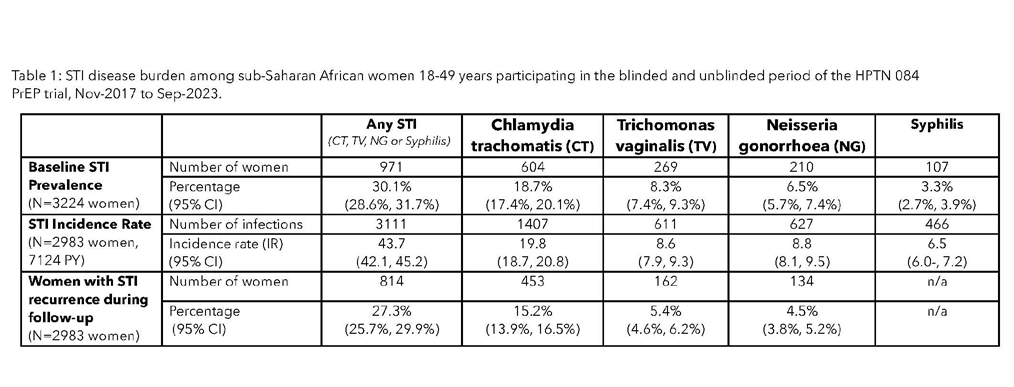
1267. Geospatial Trends of Sexually Transmitted Infections in South Carolina (SC), 2008-2020
Poster Abstracts
Page: 417
Syeda Shehirbano Akhtar, Bankole Olatosi, Buwei He, Shujie Chen, Jiajia Zhang
Background
The US is experiencing an STI epidemic, with more than one-half of Americans at risk of an STI infection in their lifetime. An all-time high number of STIs was reported in 2021, with the combined number of cases for gonorrhea, syphilis, and chlamydia soaring to 2.54 million. To understand STI incidence among persons with HIV (PWH), we analyzed the incidence rates of chlamydia, gonorrhea, and syphilis by residence, age, race, sex, and associated risk factors from 2008 to 2020.
Methods
The study used the South Carolina electronic HIV/AIDS reporting system (eHARS) of all PWH diagnosed with HIV over 12 years. Demographics and clinical data were obtained from the clinical and morbidity datasets. Yearly incidence rates (IR) of each STI (chlamydia, gonorrhea, and syphilis) were calculated as the number of new STI cases per calendar year divided by the total person-time at risk. We defined a new STI diagnosis after the occurrence of HIV in the incidence calculation. For person-time at risk, only PWH diagnosed with HIV on or before each calendar year and alive at the start of that calendar year were included.
Results
Incidence rates (IRs) for all STIs showed a significantly upward trend but differed between STIs and subgroups. From 2008 to 2020, the IRs of all STIs increased significantly, with chlamydia representing the highest rates (IR2008 = 0.42, IR2020 = 2.59), followed by gonorrhea (IR2008 = 0.66, IR2020 = 2.65). Syphilis showed inconsistent trends. Younger individuals (18-30) experienced about a 10-fold increase in chlamydia (IR2008 = 1.72, IR2020 = 11.00) and gonorrhea (IR2008 = 2.52, IR2020 = 11.53). Syphilis incidence was highest among those aged 30-40 (IR2008 = 0.86, IR2020 = 3.61). Males (IR2008= 0.76, IR2020= 3.40) consistently had more than double gonorrhea rates than females (IR2008=0.46, IR2020= 0.68). Blacks experienced disproportionately high rates across all three STIs. Men who have sex with men (MSM) recorded the highest STI incidence rate, while Urban residents experienced a significant increase in chlamydia, gonorrhea, and syphilis. Figure 1 shows a map of IRs by county in SC.
Conclusions
From 2008 to 2020, the increase in incidence rates of chlamydia, gonorrhea, and syphilis was striking among PWH. These STIs particularly impact young people, Black individuals, MSM, and those in urban areas, highlighting the need for focused and strategic prevention/treatment efforts in these groups.
The figure, table, or graphic for this abstract has been removed.
1268. Depressive Symptoms on the Incidence of Sexually Transmitted Infections Among Reproductive-Age Women
Poster Abstracts
Page: 417
Paul N. Zivich III1, Andrew Edmonds1, Michelle Floris-Moore1, Catalina Ramirez1, Brian W. Pence1, Maria L. Alcaide2, Deborah L. Jones3, Seble Kassaye4, Deborah Konkle-Parker5, Anandi N. Sheth6, Elizabeth F. Topper7, Aadia Rana8, Daniel Westreich1
Background
Prior research has suggested that depressive symptoms may be related to incidence of sexually transmitted infections (STIs) among women, but the patterns have not been consistent and the types of comparisons that have been made are limited. Here, we address this knowledge gap by estimating the dose-response relationship between depressive symptoms and the 6-month incidence of STIs among reproductive-age women with HIV (WWH) and women without HIV (WWoH) but at increased vulnerability to HIV. We project how shifts in the distribution of depressive symptoms might impact STI incidence.
Methods
Data for this analysis come from the Study of Treatment and Reproductive Outcomes (STAR) cohort in the United States. Depressive symptoms were measured using the 20-item Center for Epidemiologic Studies-Depression (CES-D) scale. Women who reported a new diagnosis of gonorrhea, syphilis, chlamydia, herpes simplex, or trichomoniasis in the six months following baseline were considered to have an incident STI. We used g-estimation to examine the dose-response between depressive symptoms and STI incidence with inverse probability weights to account for missing STI information. We used g-computation to estimate STI incidence under interventions on the distribution of depressive symptoms. Our statistical analyses adjusted for demographic (e.g., age, education, race, marital status) and behavioral (e.g., history of STIs, condom use, number of sexual partners) variables.
Results
Of 851 women enrolled, 308 (36%) had a CES-D score ≥16 at baseline. Among 569 (67%) women with a follow-up visit at six months, 48 (8.4%) reported an STI since their baseline visit. For the dose-response relationship, as depressive symptoms increased, the chance of STI also increased among WWH (Figure). While a CES-D score >30 appeared to increase STI risk relative to a score of zero among WWH, among WWoH greater depressive symptoms did not appear to substantially increase STI risk. A hypothetical intervention that would reduce all women’s CES-D scores by two points was estimated to reduce the incident proportion at six months with STIs by -0.4% (95% confidence interval (CI): -1.2%, 0.4%) relative to the observed incidence. A stronger intervention that reduced CES-D scores by six points would have further reduced the STI incidence (-1.1%; 95% CI: -3.4%, 1.2%).
Conclusions
Reducing depressive symptoms among reproductive-age women provides a number of beneficial health effects, one of which may be the reducing the incidence of STIs.
Figure 1.
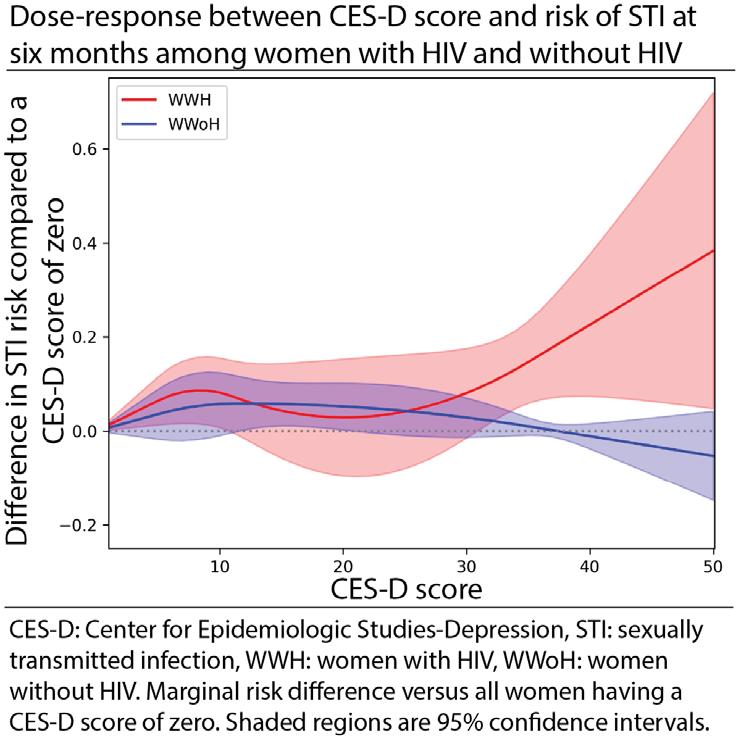
1269. High STI Prevalence and Low Past PrEP Use Among Women Who Engage in Sex Work in Southwestern Uganda
Poster Abstracts
Page: 418
Jane Kabami1, Cecilia Akatukwasa1, Jennifer Velloza2, Laura Balzer3, Hellen N. Atuhaire1, Alan Asiimwe1, Stella Kabageni1, Michael Ayebare1, Shem Ankwantiriire1, Blian Beinmatsiko1, Lisa Georgetti Gomez2, Richard Aruho1, James F. Rooney4, Moses Kamya5, Catherine A. Koss2, the P4P Study Team
Background
Women who engage in sex work (WESW) and their partners have an elevated risk of exposure to sexually transmitted infections (STI) and account for an increasing proportion of new HIV infections globally. In Uganda, HIV prevalence among WESW is over 30%. Oral pre-exposure prophylaxis (PrEP) could substantially reduce HIV incidence among WESW and is available through public health facilities in Uganda, but stigma and lack of flexible services at health facilities are barriers to PrEP use. Moreover, data are limited on STI prevalence among WESW in Uganda given that syndromic management is routinely used for diagnosis and treatment. We aimed to quantify PrEP use and STI prevalence among WESW in southwestern Uganda.
Methods
We assessed demographic characteristics and prior PrEP use at enrollment into the Peers for PrEP (P4P) study (NCT06353295), which is testing a peer-led PrEP delivery strategy for cisgender WESW in two communities in southwestern Uganda. We tested urine samples for Neisseria gonorrhea (GC) and Chlamydia trachomatis (CT) via GeneXpert (Cepheid). We used descriptive statistics to summarize self-reported use of oral PrEP (TDF/XTC) in the last 0-3 and 4-6 months prior to enrollment as well as STI prevalence.
Results
Among 140 participants, the median age was 23 years (range 15-42; IQR 20-27); 138 (99%) reported exchanging sex for goods or money in last 3 months; 91 (65%) reported commercial sex work; 69 (49%) reported alcohol use >=4 times per week. 37/140 (26%) reported using oral PrEP in the 3 months before study enrollment; 13 (9%) reported using PrEP in the 4-6 months before enrollment. Among a subset of 78 participants with STI testing completed, 31 (40%) had at least one STI detected: 22/78 (28%) CT and 17/78 (22%) GC. Among the 31 participants with CT or GC detected, 7 (23%) reported PrEP use in the 3 months prior to enrollment, whereas 17/47 (36%) of participants with no STI detected had recently used PrEP.
Conclusions
In this HIV prevention study for WESW in southwestern Uganda, 40% of women had prevalent gonorrhea or chlamydia – double the rates of STIs in prior surveys in the region. Despite high STI prevalence and all participants having a PrEP indication, only one-quarter of women reported using PrEP in the last 3 months, while less than 10% had used PrEP 4-6 months prior to enrollment. Innovative strategies are needed to expand access to integrated STI and biomedical HIV prevention services to reduce the burden of HIV and STIs among women who engage in sex work.
1270. Sexually Transmitted Infection Prevalence Among Adolescents and Adults in Western Kenya
Poster Abstracts
Page: 418
Julius L. Tonzel1, Britt Gayle1, Natalie Burns1, Glenna Schluck1, Paul Adjei1, Josphat Kosgei2, Deborah Langat2, Rael Bor2, Christine Akoth2, Frederick Sawe2, Margaret Yacovone3, Trevor Crowell1, the Multinational Observational Cohort of HIV and other Infections (MOCHI) Study Group
Background
Kenyan guidelines recommend syndromic management for sexually transmitted infections (STIs) among people living with HIV at urogenital anatomical sites. However, STIs like Chlamydia trachomatis (CT) and Neisseria gonorrhoeae (NG) can cause morbidity and can be transmitted even without symptoms at multiple anatomical sites. We assessed the prevalence of CT and NG using universal nucleic acid amplification test (NAAT)-based testing among adults in Western Kenya.
Methods
From December 2021 to May 2023, we enrolled participants living without HIV in Kericho and Homa Bay, Kenya, who were aged 14-55 years and reported a recent history of an STI, transactional sex, condomless sex, and/ or injection drug use. Participants provided urine, oropharyngeal swabs, and anorectal swabs for NAAT for NG and CT (GeneXpert®, Cepheid). Multivariable robust Poisson regression models were used to estimate prevalence ratios (PRs) and 95% confidence intervals (CIs) for factors potentially associated with the prevalence of both STIs combined.
Results
Upon enrollment, STI tests were performed on 405 participants, including 323 (79.8%) assigned female sex at birth and 324 (80.0%) aged 24 years or younger. A total 43 (10.6%) had a history of any STI diagnosed in the 24 weeks prior to enrollment. Inconsistent condom use was reported by 309 (76.3%) participants and 201 (49.6%) had ≥10 new sexual partners in the previous 12 weeks. NAAT identified an STI in 143 (35.3%) participants, with 111 (27.4%) CT and 76 (18.8%) NG diagnoses. CT/NG diagnoses were reported at a single anatomical site in 37 (9.1%) participants and multiple anatomical sites in 104 (25.7%) participants. Among 117 participants with an anorectal STI, 16 (13.7%) reported receptive anal sex and 3 (18.8%) participants did not report a urogenital STI. Females had higher prevalences of urogenital (33.7% vs. 18.3%, p=0.01) and anorectal STIs (31.9% vs. 17.1%, p=0.01). Prevalent STIs were reported in 19 (13.3%) participants at oropharyngeal and/or anorectal sites that were not detected at urogenital sites. In multivariable analyses, there were no statistically significant associations between sociodemographic variables and STI prevalence.
Conclusions
A high prevalence of urogenital and anorectal STIs were identified in a Western Kenyan community, particularly among females. Implementing universal NAAT-based anorectal STI screening of sexually active adolescents and young adults could reduce STI burden in this population.
The figure, table, or graphic for this abstract has been removed.
1271. Asymptomatic Sexually Transmitted Infections in a Population of High-Risk Men Who Have Sex With Men
Poster Abstracts
Pages: 418-419
Pierluigi Francesco Salvo, Antonietta Vella, Valentina Iannone, Giuseppe Cucinotta, Rebecca Jo Steiner, Andrea Carbone, Francesca Lombardi, Simona Di Giambenedetto, Carlo Torti, Gianmaria Baldin
Background
Sexually transmitted infections (STIs) represent a major public health challenge, particularly as many cases are asymptomatic, complicating early detection, treatment, and partner notification, and contributing to ongoing transmission. This study aims to examine the role of asymptomatic STIs in a high-risk population of men who have sex with men (MSM), who regularly undergo STI screening.
Methods
This retrospective observational study evaluated STI diagnoses between 2020 and 2023, in a cohort of at-risk individuals, specifically MSM on PrEP (MSM-PrEP) and MSM with HIV (MSMWH), with the aim of determining the rate of symptomatic and asymptomatic infections and comparing the 2 groups. Participants underwent regular screenings every 3 to 6 months, including serological tests for syphilis and molecular assays for gonorrhea and chlamydia on urethral, pharyngeal, and rectal swabs. Proportions were compared using the chi-squared test.
Results
A total of 573 participants were enrolled (458 MSMWH and 115 MSM-PrEP), resulting 1110 observed STI events (823 in MSMWH and 287 in MSM-PrEP). The frequencies of asymptomatic events in the two groups are detailed in Table 1. MSM-PrEP were more likely to have multiple STI diagnoses per person during the follow-up period compared to MSMWH (p < 0.001). Among the STIs observed, syphilis was the most frequent, with 986 cases (819 in MSMWH and 167 in MSM-PrEP), resulting in an overall asymptomatic rate of 71.8% (708/986). Among PLWH, 543/819 cases (66.3%) were asymptomatic, compared to 165/167 cases (98.8%) in the MSM-PrEP, with a statistically significant difference (p <0.001). We identified 75 cases of gonorrhea (12 in MSMWH and 63 in MSM-PrEP), with an overall asymptomatic rate of 49.3% (37/75). For chlamydia, there were 50 cases (10 in MSMWH and 40 in MSM-PrEP), with 44.0% asymptomatic (22/50). There were no statistically significant differences in the clinical presentation of these two STIs between the two groups.
Conclusions
Asymptomatic STIs are notably common in this population, with a significant frequence of syphilis observed. A significant difference in the rate of asymptomatic cases was found specifically for syphilis between the two groups. MSM-PrEP had a higher frequency of multiple STI diagnoses per person during the follow-up period compared to MSMWH. These findings emphasize the need for effective prevention strategies to manage STIs in these populations and highlight the importance of regular screening to ensure timely detection and treatment.
Table 1.
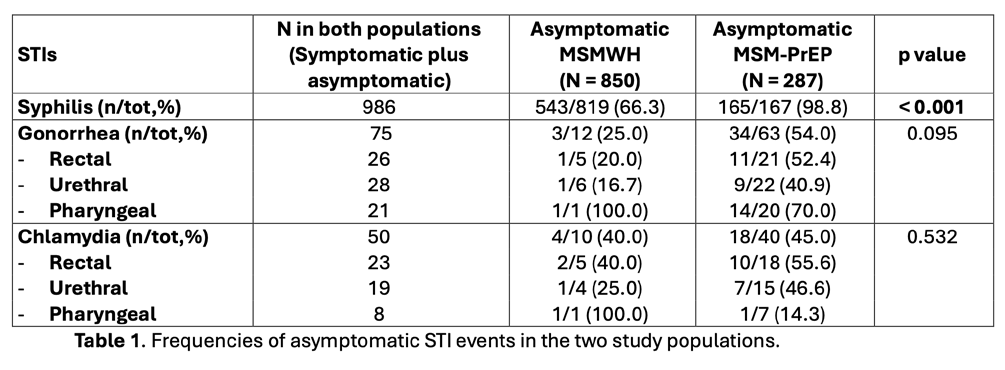
1272. Epidemiology of Bacterial STIs in MSM With or At Risk of HIV in the Region of Madrid (2021-2023)
Poster Abstracts
Page: 419
Luis Ramos1, Juan Berenguer2, Pablo Ryan3, Mar Vera4, Leire Pérez-Latorre2, Ignacio de los Santos5, María de Lagarde6, Santos del Campo Terrón7, Eva Orviz8, Beatriz Alvarez9, José Sanz10, Beatriz Brazal11, José M. Bellón2, Luz Martín-Carbonero1, Juan González-García1
Background
We analyzed the epidemiology of bacterial STIs among MSM with HIV (MSM-WH) and those at risk of HIV (MSM-RH) in Madrid, evaluating associated risk factors.
Methods
This prospective study (2021–2023) included MSM-WH from the Spanish Network of AIDS Research Cohort (CoRIS) and those treated for HCV with DAAs in the Madrid Coinfection Registry (Madrid-CoRE). MSM-RH were recruited from PrEP users at a public STI clinic. Participants were assessed at baseline and follow-up (6 and 12 months). Sexual and substance use behaviors were evaluated at baseline, with STI screening (PCR for gonorrhea and chlamydia in pharyngeal, urethral, and rectal swabs, and syphilis serology) at each visit or when indicated. Baseline prevalence and follow-up incidence were stratified by HIV status, excluding prevalent cases from incidence analysis. Poisson regression was used to identify associations between sociodemographic and behavioral factors and STI counts during the study period (baseline and follow-up). Independent variables included age, country of origin, condomless anal sex (CLAX), chemsex, prior STI, and prior HCV, adjusted for cohort effects and observation time. Sensitivity analyses used logistic and Poisson regressions, separating prevalent and incident STIs.
Results
A total of 1,372 MSM participated (733 MSM-WH, 639 MSM-RH). MSM-WH were older (41 vs. 37 years), and 60% were native Spaniards. In total, 725 STIs were detected in 535 participants. Baseline prevalence and incidence rates are provided in the table. The STI prevalence ratio for MSM-WH versus MSM-RH was 0.85 (95% CI: 0.68-1.07), and the STI incidence rate ratio (IRR) was 0.79 (95% CI: 0.66-0.95). Significant risk factors for STIs included chemsex (adjusted IRR [95% CI] 1.392 [1.174–1.651]), CLAX (aIRR 1.372 [1.047–1.796]), prior syphilis (aIRR 1.318 [1.062–1.636]), and prior chlamydia (aIRR 1.306 [1.076–1.586]). Older age (aIRR 0.988 [0.979–0.996]) and being a native Spaniard (aIRR 0.787 [0.678–0.913]) were associated with lower STI risk. Sensitivity analyses confirmed these associations.
Conclusions
Both MSM-WH and MSM-RH exhibited high bacterial STI prevalence and incidence. Chemsex, CLAX, previous syphilis, and previous chlamydia infection were significant risk factors. STI screening and prevention strategies should prioritize these factors to reduce STI rates in MSM.
Table 1.
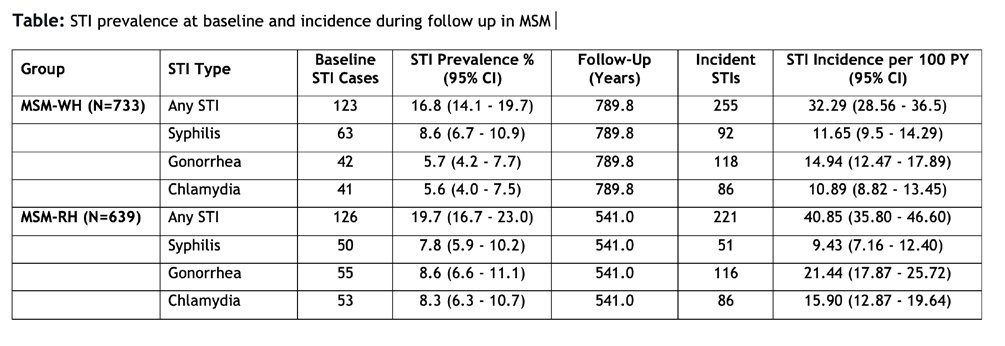
1273. Identification of Clinical Phenotypes in MSM With HIV From a Prospective Study on Acute HCV and STIs
Poster Abstracts
Page: 419
Pablo Ryan1, Juan Berenguer2, Luis Ramos3, Leire Pérez-Latorre2, Ignacio de los Santos4, Laura Bermejo Plaza5, Santos del Campo Terrón6, Eva Orviz7, Pilar Ruiz-Seco8, Rafael Torres8, Juan C. López2, Beatriz Brazal9, José M. Bellón2, Luz Martín-Carbonero3, Juan González-García3
Background
This study aimed to identify clinical phenotypes (CPs) among MSM with HIV enrolled in a prospective study on acute/recent HCV infections (ARHCV) and bacterial STIs and to assess their correlation with different risk profiles.
Methods
Between 2021 and 2023, MSM with HIV were recruited from 12 centers across the Madrid region. Participants were assessed at baseline, 6 months, and 12 months. At each visit (or when indicated), screening for HCV and STIs was conducted alongside questionnaires on sexual behavior, substance use, and mental health (using HADS and adult ADHD scales). A total of 38 variables spanning four domains—sociodemographic/clinical, mental health, sexual behavior, and substance use—were analyzed. Principal component analysis (PCA) was used for dimensionality reduction, followed by participant clustering via Hierarchical Clustering (HC) as the primary method and K-means clustering (KMC) for sensitivity analysis. The adequacy of the PCA model was evaluated using the Kaiser-Meyer-Olkin (KMO) measure and Bartlett’s test. Statistical analyses were performed in R version 4.4.1 (packages: Tidyverse, Cluster, Factoextra, NbClust, tidyr).
Results
529 MSM were enrolled (median age 41 years, 88% Caucasian, 62% native Spaniards). During follow-up, 332 STIs (114 syphilis, 121 gonorrhea, 97 chlamydia) were diagnosed in 212 participants, and ARHCV was detected in 24 participants. PCA revealed 6 factors explaining 59% of the observed variability (KMO score: 0.794) and HC identified 3 optimal CPs (Figure): CP1: 328 participants (62.0%) with a lower frequency of high-risk sexual practice (receptive condomless anal sex) and minimal drug use. CP2: 133 participants (25.1%) engaging in frequent high-risk sexual practices and moderate drug use. CP3: 68 participants (12.9%) with a history of very high-risk sexual practices (e.g., fisting) and significant drug use, including injection and intrarectal administration. ARHCV was identified in 4 participants (1.2%) in CP1, 4 (3.0%) in CP2, and 16 (23.5%) in CP3 (P < 0.001). One or more STIs were diagnosed in 114 participants (34.8%) in CP1, 61 (45.9%) in CP2, and 37 (54.4%) in CP3 (P = 0.003). Sensitivity analysis using KMC confirmed these findings.
Conclusions
MSM with HIV can be categorized into distinct CPs with varying risk levels for ARHCV and STIs. These findings can inform more targeted prevention, screening, and intervention strategies for HCV and STIs in this population.
Figure 1.
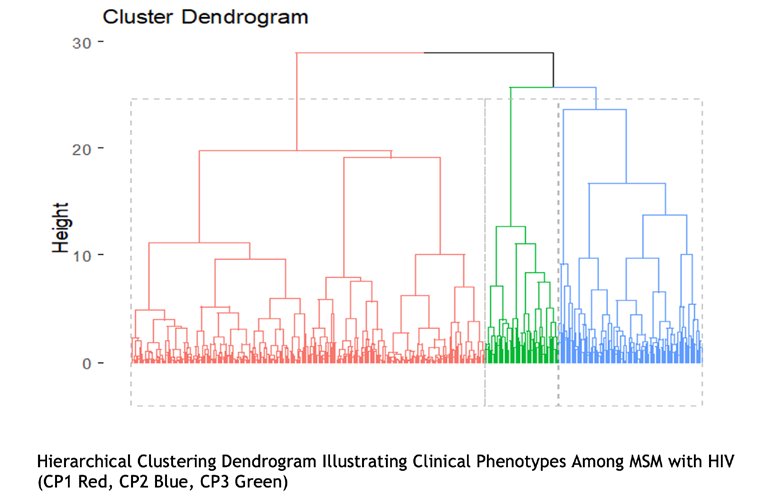
1274. Prevalence and Incidence of HIV/STIs Among MSM and Men Who Have Sex With Women in the SAMURAI Study
Poster Abstracts
Pages: 419-420
Thesla Palanee-Phillips1, Elizabeth (Liz) Montgomery2, Ellen Luecke1, Nkosiphile Ndlovu1, Sihle K. Zulu1, Krishnaveni Reddy1, Nompumelelo Sigcu1, Lindsay Kew1, Reolebogile Kgoa2, Chayla Hart3, Millicent Atujuna3, Katherine Gill3, Pippa Macdonald2, Alexandra Minnis2, the SAMURAI Study Team
Background
Syndromic management of STIs often limits their detection and targeted treatment. MSW typically display low health-seeking behavior and this, paired with exposure to asymptomatic STIs from partners, exacerbates risks of transmission. MSM, perceiving marginalization within health services, typically limit STI symptom-reporting essential for initiation of treatment algorithms. Diagnostic STI testing and management are therefore critical to an effective STI prevention response, which in turn is essential for preventing HIV/ STI acquisition and re-infection.
Methods
We conducted a 12-month, randomized crossover study (July 2022-June 2024) where MSW and MSM in Cape Town and Johannesburg, South Africa were administered three bimonthly gluteal placebo injections and at crossover, a six-month placebo subdermal implant each, as proxies for long-acting PrEP delivery modalities. At screening, Months 6, 12, and when indicated, clinical assessments included collection of urine and blood samples for HIV (Ag/ Ab rapids); syphilis (RPR/TPHA); Chlamydia trachomatis (CT) and Neisseria gonorrhea (GC) testing (GeneXpert). Men testing HIV-positive were referred for ART services and those with GC/CT/syphilis were treated on-site. Partner notification cards for accessing treatment were offered.
Results
We screened 251 potential participants, of whom 184 were enrolled (median age 22, IQR 22-27). Men had a median of three sex partners in the past six months (IQR 2-5). Baseline testing identified 22 prevalent HIV infections (8.8%), 24 syphilis, 33 CT and 4 GC infections (22.7% prevalence of bacterial STIs [26.9%MSM, 17.9%MSW]). Over 12-months of follow-up, diagnostic testing detected a further six incident HIV infections among MSM, 26 syphilis infections in 15 men (12 MSM, 3 MSW); 24 CT infections in 19 men (6 MSM, 13 MSW), and 9 GC infections among 8 men (2 MSM, 6 MSW). Forty-one enrolled participants experienced at least one lab-diagnosed bacterial STI (22.2% incidence).
Conclusions
We found high incidence of HIV and bacterial STIs among both groups of men, with higher incidence of HIV and syphilis among MSM and CT/ GC among MSW. Coinfection and recurring infections, combined with STIs preceding HIV acquisition, reinforce urgency around identifying a more effective STI response for men in South Africa. Innovative diagnostic and treatment strategies including use of testing paired with expedited partner therapy need further exploration.
1275. Postexposure Prophylaxis With Doxycycline (Doxy PEP) in a Cohort of High-Risk MSM: The PRIDOX Study
Poster Abstracts
Page: 420
Cristina Gómez-Ayerbe, Jesús Santos, Maria Lopez Jodar, Salvador Martín-Cortés, Isabel Pérez-Hernández, Andrés González, Rosario Palacios
Background
Clinical trials have shown high efficacy of doxycycline as STI preventive strategy, but real-world data are limited. We aimed to assess the impact of DoxyPEP on Chlamydia trachomatis (CT), Neisseria gonorrhoeae (NG) and syphilis (SPL) incidence in a high-risk MSM cohort in a real-world setting.
Methods
PrEP users at our clinic, meeting high STI risk criteria similar to DOXYVAC and DoxyPEP trials, were offered DoxyPEP. This analysis includes PrEP users who initiated DoxyPEP between March/23 and August/24. The pre-DoxyPEP period was from PrEP initiation to DoxyPEP beginning, and the post-DoxyPEP period from DoxyPEP start to 30/August/24, or discontinuation. Participants were tested for CT/NG at baseline, every follow up visit and when symptomatic by PCR from pharynx, rectum, and urine, and serology test for SPL. NG cultures were also conducted. Multidrug-resistant bacteria (MRB) cultures from nasal and rectal samples were performed at DoxyPEP initiation and at week 48. The incidence of the first CT, NG, and SPL episode was compared between periods using Cox proportional hazard models. Statistical analysis: SPSS v25.
Results
Among 876 active PrEP users, 197 (22.4%) initiated DoxyPEP; all were MSM with a mean age of 38.9±8.5 years. Median follow-up was 18.2±12.3 and 14.0±4.9 months for pre- and post-DoxyPEP periods. Incidence rates per 100 PY for the first STI episode in the pre- and post-DoxyPEP periods were: 31.4 and 7.81 (p=0.0001) for CT, 41.5 and 28.9 (p=0.1) for NG, and 21.5 and 3.20 (p=0.0001) for SPL. NG culture was positive in 14 (29.7%) of 47 NG infections detected by PCR in the post-DoxyPEP period. All isolates were sensitive to ceftriaxone, and 6 (42%) to tetracyclines similar as those not on DoxyPEP (42 vs 46,2%, p=0.23). DoxyPEP was discontinued in 9 (4.5%) participants (4 due to adverse events, 2 due to reduced STI risk, 1 lost to follow-up, 1 for medical reasons, 1 patient decision). Microbiologic cultures for MRB were available in 158 (80.2%) participants at baseline, with 17 (10.8%) positive (15 E. coli ESBL, 2 MRSA), and in 120 (60.9%) participants at week 48, with 10 (8.3%) showing MRB (4 E. coli ESBL, 2 MRSA).
Conclusions
DoxyPEP was well accepted within routine PrEP care, significantly reducing STI incidence with good tolerance. Our data show its efficacy and safety in real-world settings. The emergence of MRB or resistant NG was not observed. However, its impact on bacterial resistance and microbiota requires further evaluation.
1276. Doxycycline Post-Exposure Prophylaxis Continuum of Care Among MSM in Philadelphia, 2023
Poster Abstracts
Page: 420
Tanner Nassau, Kathleen Brady
Background
Doxycycline post-exposure prophylaxis (Doxy-PEP) is an effective tool for reducing bacterial sexually transmitted infection (STI) incidence among men who have sex with men (MSM). We sought to understand current rates of bacterial STIs (gonorrhea, chlamydia, syphilis) among MSM and generate Philadelphia’s first doxy-PEP continuum among MSM.
Methods
We used 2023 National HIV Behavioral Surveillance data collected through venue-based sampling among MSM in Philadelphia, with Philadelphia-specific local questions around the doxy-PEP continuum. We used Chi-square and Fisher’s exact tests to compare differences in demographics at each step of the doxy-PEP continuum. We also describe reported reasons for not wanting to take doxy-PEP.
Results
Of the 452 eligible respondents, 326 (72.1%) answered questions on doxy-PEP and were included in analyses. One in four (25.8%) MSM reported being diagnosed with a bacterial STI in the previous 12 months. Slightly more than one-third (n=119; 36.5%) of all MSM had heard of doxy-PEP, 12.6% had discussed doxy-PEP with a provider, and 5.5% had used doxy-PEP in the previous 12 months. Knowledge of doxy-PEP was significantly greater among those with more than a high school education and a recent gonorrhea or chlamydia diagnosis, compared to those with a high school education or less and those without a recent gonorrhea or chlamydia diagnosis, respectively. Discussing doxy-PEP with a provider was associated with having been recently tested for STIs (p=0.027), recently diagnosed with gonorrhea or chlamydia (p<0.001 for both), and being on HIV PrEP (p=0.047). Interest in doxy-PEP was significantly greater among non-Hispanic White MSM (81.5%) (compared to both non-Hispanic Black (63.5%) and Hispanic/Latino (52.4%) MSM), as well as those with a recent gonorrhea or chlamydia diagnosis. Among those uninterested in doxy-PEP, the most frequently reported reasons were not feeling like they need doxy-PEP (45.2%), needing more information (30.1%), and concern about side effects or feeling sick (11.8%).
Conclusions
Doxy-PEP awareness among MSM is low and few providers are discussing doxy-PEP as an option with their patients with recent bacterial STIs. Given the high level of interest in doxy-PEP among MSM, developing and distributing clear, culturally competent doxy-PEP guidance for providers has the potential for significantly increasing doxy-PEP awareness and uptake among MSM.
Figure 1.
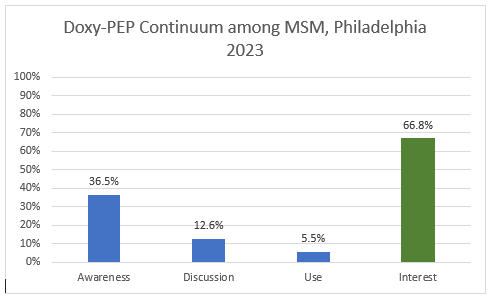
1277. Characteristics of Breakthrough Chlamydia Cases Among Cisgender Women Assigned to Doxycycline PEP
Poster Abstracts
Pages: 420-421
Jenell Stewart1, Lauren R. Violette2, Felix Ong'era Mogaka3, Victor Omollo3, Deborah J. Donnell4, Josephine Odoyo5, Elizabeth A. Bukusi5, Jared M. Baeten6, the dPEP Kenya Study Team
Background
Doxycycline postexposure prophylaxis (PEP), taken within 72 hours of condomless sexual exposure, did not reduce incident bacterial STIs among cisgender women in the only trial conducted to date; use of doxycycline PEP in that trial was low.
Methods
We describe 35 breakthrough cases of incident Chlamydia trachomatis among 32 participants assigned to doxycycline PEP (n=224) within an open-label randomized trial among 449 cisgender women aged 18-30 years in Kisumu, Kenya. Participants returned quarterly over one year for STI testing and behavioral surveys for a total of 854 visits when participants were assigned to take doxycycline PEP and 753 visits when not on a medication hold. Covariates potentially associated with incident C. trachomatis detection were assessed using Poisson regression using generalized estimation equation methods.
Results
Breakthrough cases of C. trachomatis occurred throughout the study period, 6/35 (17.1%) at Month 3, 13/35 (37.1%) at Month 6, 12/35 (34.3%) at Month 9, and 4/35 (11.4%) at Month 12. Participant age <24 years was associated with incident C. trachomatis, RR 2.50, 95% CI 1.26-4.94, p = 0.008 (Table). The number of sexual partners in the prior 3 months did not differ by C. trachomatis detection (Table). There was no difference in report of recent transactional sex by breakthrough C. trachomatis case detection. The majority (24/34,70.6%) reported having vaginal sex two or more times per week in the prior 3 months with no difference in median number of times in prior 3 months, RR 0.99, 95% CI 0.99-1.00, p=0.138 (Table). Forced sex occurred with 4 reported events in prior 3 months among 854 study visits. Doxycycline PEP was inconsistently taken during the 30 days prior to visits with breakthrough cases of C. trachomatis with 11/35 (31.4%) reports of one or more missed doses with condomless sex and 6/35 (17.1%) reports of not taking any doxycycline. Among participants actively assigned to doxycycline PEP, incident C. trachomatis was associated with reporting a missed dose of doxycycline PEP (11/33, 33.3%) in the prior 30 days versus when no C. trachomatis was detected (108/720, 15.0%), RR 2.66, 95% CI, 1.31-5.43, p = 0.007 (Table).
Conclusions
Detection of incident C. trachomatis among participants assigned to take doxycycline PEP occurred in the setting of a range of experiences with sexual exposures and self-reported doxycycline PEP use. Age less than 24 years and missed doses of doxycycline PEP were associated with incident C. trachomatis in women.
Table 1.
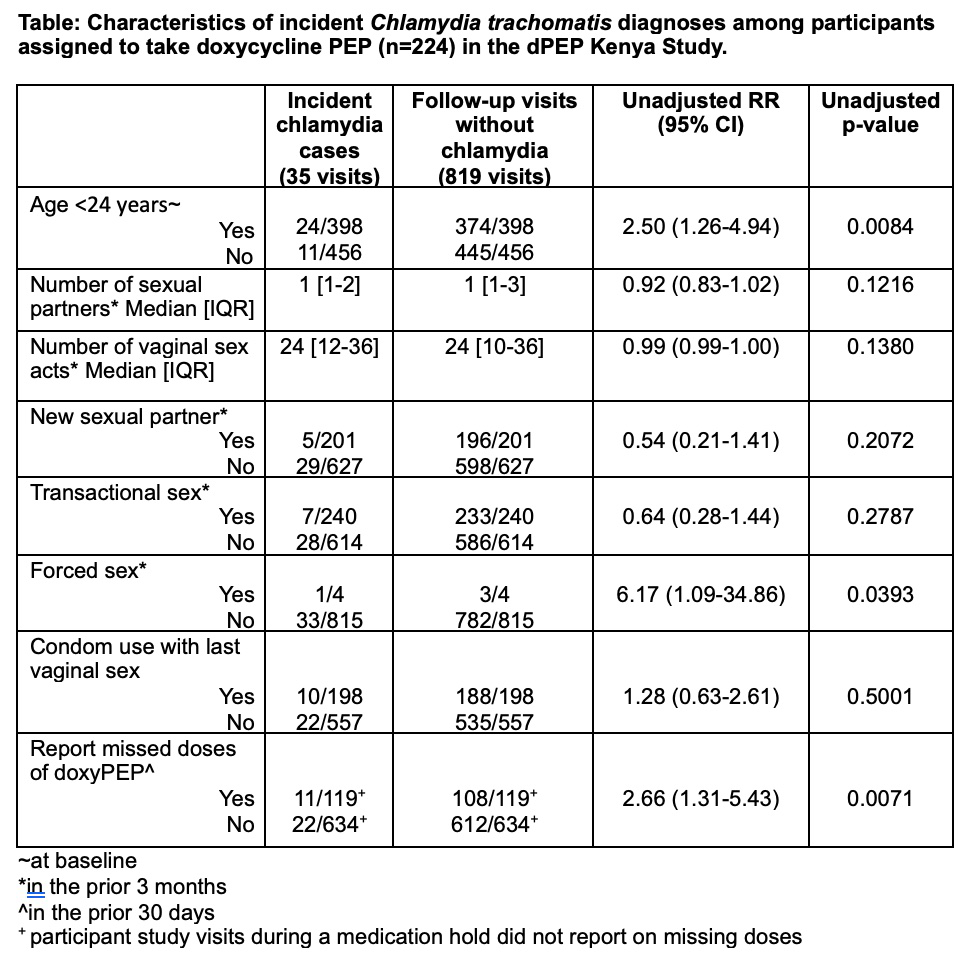
1278. Acceptability of Doxycycline as Post-Exposure Prophylaxis in Southeastern Louisiana
Poster Abstracts
Page: 421
Shafay Shams1, Jared Barrilleaux1, Blane Edwards1, Clare Kelsey1, Hope Oddo Moise1, Leandro Mena1, Patricia Kissinger2, Rebecca Lillis1, Meredith Clement1
Background
Louisiana ranks first in the nation for chlamydia incidence and third for gonorrhea, necessitating effective prevention strategies for sexually transmitted infections (STIs). Doxycycline post-exposure prophylaxis (doxy PEP) has emerged as a promising prevention strategy, but its success relies on acceptability among healthcare providers and clients. In particular, it is important to understand acceptability of doxy PEP among persons assigned female at birth (AFAB), who stand to gain substantial benefit but for whom doxy PEP has not yet demonstrated clinical efficacy.
Methods
A survey was administered to healthcare providers across various specialties and clients AFAB in Southeastern Louisiana. Clients had multiple partners or an STI diagnosed in the past 2 years. The provider survey assessed familiarity with doxy PEP guidelines, prescribing habits, and desire for education. The client survey assessed sexual behaviors and awareness and acceptability of doxy PEP.
Results
There were 156 respondents (136 providers, 20 clients). Demographic information is in Table 1. Among providers, 25.0% (34/146) were trained in Infectious Diseases (ID). More than half (52.2%, 71/136) were familiar with doxy PEP guidelines. Only 25.0% (34/136) had prescribed doxy PEP, and 67.6% (23/34) had prescribed it <5 times in the past 6 months. ID providers were more likely to have prescribed doxy PEP than other providers (41.2% vs 19.6%, p=0.01). Six (4.4%) providers had prescribed doxy PEP to individuals AFAB. Of those who had not prescribed doxy PEP, 81.4% (83/102) believed there was enough evidence to prescribe it going forward and 72.8% reported they would like training. Among clients AFAB, 9 (45.0%) identified as LGBTQ+, 3 (15.0%) reported >/=5 partners in the past 6 months, 9 (45.0%) reported having sex more than once per week, and 7 (35.0%) had prior knowledge of doxy PEP. Responses on likelihood of using doxycycline to prevent STIs (“if available and suggested by your provider”) were 50.0% (10/20) “very likely,” 35.0% (7/20) “likely,” and only 15.0% (3/20) “unlikely.”
Conclusions
Doxy PEP prescribing is not widespread in Southeastern Louisiana, although there is willingness to prescribe among providers; educational initiatives are needed. Additionally, clients AFAB have some awareness and strong acceptability of doxy PEP. Although our client sample is small, these are the first data to our knowledge on doxy PEP acceptability in persons AFAB in the US and are encouraging for feasibility of future trials.
Table 1.
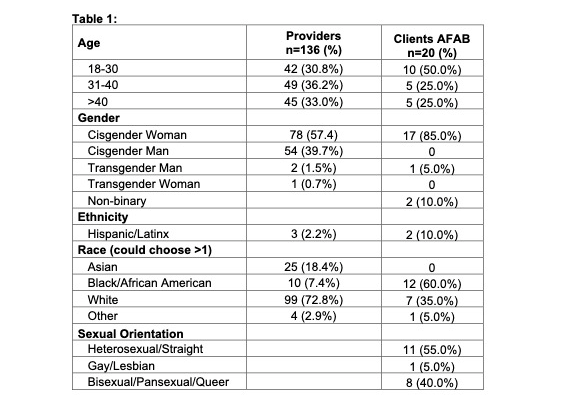
1279. Factors Influencing Doxy-PEP Awareness Among Sexual/Gender Minorities: A Web-Based Survey in Brazil
Poster Abstracts
Pages: 421-422
Mayara Secco Torres da Silva1, Thiago Torres1, Carolina Coutinho1, Brenda Hoagland1, Emilia Moreira Jalil1, Marcos Benedetti2, Cristina Pimenta2, Sandra Wagner Cardoso1, Paula Luz2, Valdilea Gonçalves Veloso1, Beatriz Grinsztejn1
Background
Sexual and gender minorities (SGM) face a disproportionate burden of sexually transmitted infections (STIs) worldwide, particularly in Latin America. While doxycycline post-exposure prophylaxis (doxy-PEP) is recommended in some countries to prevent bacterial STIs, no official guidelines or implementation studies have been conducted in any country of the Global South. This study aims to identify factors associated with awareness of doxy-PEP among SGM in Brazil.
Methods
A cross-sectional online survey was conducted among adults (18+ years) living in Brazil, recruited via advertisements on dating apps (Scruff and Grindr) and social media (Instagram and Facebook) from August-September 2024. Doxy-PEP awareness was defined as having ever heard of it, and logistical regression analysis was used to identify factors associated with this awareness.
Results
We enrolled 5,007 respondents, with median age 39 years (IQR:33.47), predominantly cisgender men (94.7%) residing in capital cities (78.8%), self-identified as white (55.6%) and having post-secondary education (75.8%). Although there was significant interest in STI prophylaxis (n=4434; 88.6%), only 34.1% (n=1707) reported prior doxy-PEP awareness. Doxy-PEP awareness was positively associated with having higher education, higher HIV knowledge, more sex partners, engagement in condomless anal sex, chemsex, and having an STI diagnosis in the past 6 months. Conversely, doxy-PEP awareness was negatively associated to unknown HIV status and higher internalized LGBTQIAPN+. Among those reporting HIV negative/unknown status, doxy-PEP awareness was higher among those who ever used PrEP vs. never (59.3% vs. 40.7%; p<0.001). Only 5.6% (n=279) reported previous doxy-PEP use, with the majority (64.2%) having received it through a healthcare professional.
Conclusions
Doxy-PEP awareness among SGM in Brazil remains limited, reflecting the absence of implementation studies and official guidelines in the country. Tailored efforts are crucial to raise awareness, especially among populations with lower education levels, limited HIV knowledge, and those less engaged with existing prevention services. Strengthening awareness campaigns and integrating doxy-PEP into broader sexual health programs will be key to ensuring equitable access, reducing bacterial STI incidence and addressing the underlying social determinants of health.
Table 1.
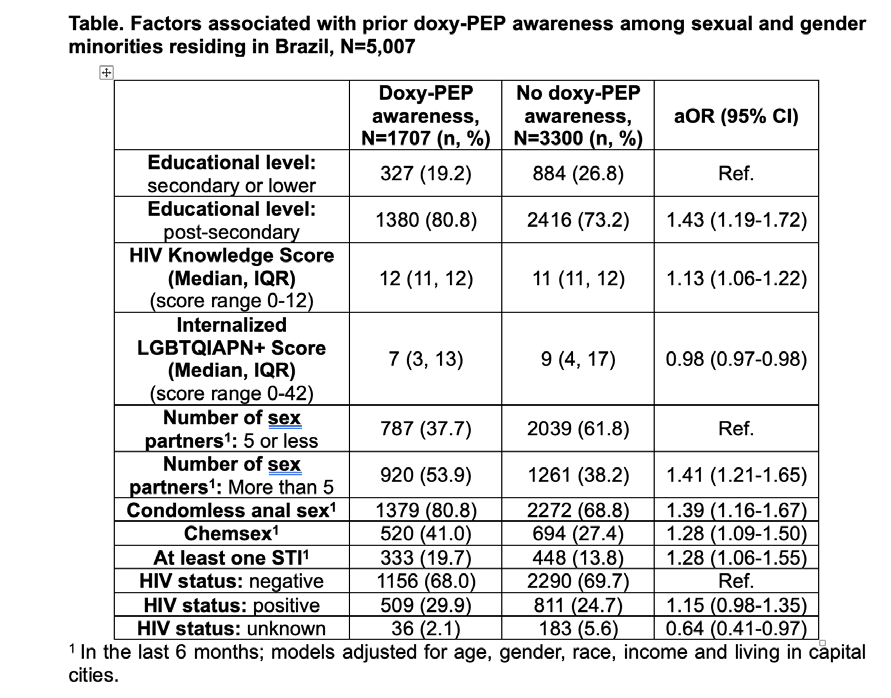
1280. Young Black Sexually Minoritized Men Living With HIV, Substance Use, and Syphilis Want Doxy-PEP
Poster Abstracts
Page: 422
Jade Pagkas-Bather1, Ella Wiger1, Ellen Almirol2, Justin Knox3, Yen-Tyng Chen4, Dustin Duncan3, John Schneider1
Background
Doxycycline post-exposure prophylaxis (doxy-PEP) offers a cheap and effective method for pharmacologic syphilis and chlamydia prevention among men who have sex with men but is underutilized by populations most in need. While syphilis can be easily treated and prevented, young Black sexually minoritized men (YBSMM) in the United States continue to bear the brunt of new infections. This study examined factors associated with syphilis acquisition and doxy-PEP interest among an HIV status-neutral cohort of YBSMM.
Methods
The N2 (Networks and Neighborhoods) Phase 2 cohort included YBSMM aged 16-34 years, identifying as Black, assigned male at birth, who reported at least 1 sexual encounter with a cisgender man or transgender woman in the past 12 months. Our primary outcome was defined as active syphilis with a titer of 1:8 or greater. Generalized linear models were fit to calculate the unadjusted and adjusted relative risks between participants with and without active syphilis based on demographics, health factors, substance use, and doxy-PEP interest.
Results
468 participants were included in the analysis and 25.6% had active syphilis. Participants with active syphilis were older (28.7 years, SD 3.6 vs. 27.6 years, SD 3.8, p<0.01) and had an increased HIV prevalence (81.7% vs. 46.0%, p<0.01). A higher proportion of those with active syphilis were interested in doxy-PEP to prevent syphilis (75.5% vs. 54.7%, p<0.01) and reported methamphetamine use in the past year (26.7% vs. 8.9%, p<0.01) compared to those without active syphilis. In the adjusted models, the risk of having active syphilis among those living with HIV was 2.88 times higher (95% CI: 1.83, 4.53, p<0.01), and methamphetamine use was associated with a 95% increased risk of active syphilis among YBSMM (RR 1.95, 95% CI: 1.43, 2.66, p<0.01) compared to those who did not report methamphetamine use. Interest in doxy-PEP was also positively associated with active syphilis (RR 1.55, 95% CI 1.04, 2.32, p=0.03).
Conclusions
YBSMM who are living with HIV and/or syphilis, and those that use methamphetamine and are interested in utilization of doxy-PEP represent an important demographic for scale-up of doxy-PEP. Given the relative cost of treating syphilis and other STIs to the prevention of syphilis, it would be prudent for public health departments across the United States to share in the prioritization of syphilis prevention among YBSMM, especially those who are interested in it.
1281. Increased Knowledge and Use of Doxycycline Postexposure Prophylaxis in King County, Washington
Poster Abstracts
Page: 422
Jennifer E. Balkus1, Courtney Moreno1, Francis Slaughter2, Karen Chung1, Chase Cannon2, Tim W. Menza2, Matthew Golden2, Sara Glick2
Background
Following evidence of doxycycline postexposure prophylaxis (doxyPEP) efficacy to prevent chlamydia, gonorrhea and syphilis among men and transgender women who have sex with men, Public Health – Seattle & King County (PHSKC) released provider guidance in June 2023. We utilized data from PHSKC’s annual Pride Survey to assess changes in knowledge and self-reported doxyPEP use among sexually active respondents from King County in the year after release of local guidelines.
Methods
The Pride Survey is an annual, cross-sectional, online, anonymous, sexual health survey open to Washington residents who identify as LGTBQ+. The survey is advertised at Pride events and through social media, local LGBTQ+ news sources, and posters at LGBTQ+ venues in the greater Seattle area throughout the summer. Among the subset of respondents from King County, we used descriptive statistics to compare doxyPEP knowledge, interest, and use in 2023 versus 2024 among transgender women and gay, bisexual, and other men who have sex with men (GBMSM) who reported sex with a male-identifying partner in the past year. Given the historic and ongoing impacts of structural racism on healthcare access and engagement, we also assessed doxyPEP knowledge and use by self-reported race and ethnicity among 2024 survey respondents.
Results
A total of 232 respondents in 2023 and 287 in 2024 were included in this analysis. Respondent characteristics were similar between years; when aggregated across years: 91% were HIV-negative, 45% were currently using PrEP and 14% reported an STI in the past year. Knowledge of doxyPEP, self-reported use and interest in use among those who had not reported doxyPEP in the last 12 months are presented by year in the Table. DoxyPEP knowledge and use increased, especially among GBMSM using PrEP; knowledge of doxyPEP was lower among trans women compared to GBMSM. DoxyPEP knowledge, use and interest was qualitatively similar by self-reported race and ethnicity. Nearly all (90%) respondents reported getting doxyPEP from their healthcare provider.
Conclusions
Among King County Pride Survey respondents, knowledge and use of doxyPEP use increased among GBMSM from 2023 to 2024, with the highest knowledge and use among GBMSM using PrEP. Knowledge of doxyPEP was lower among 2024 respondents who identified as transgender women, representing an important opportunity for both community and provider education to improve knowledge of and access to doxyPEP in this priority population.
Table 1.
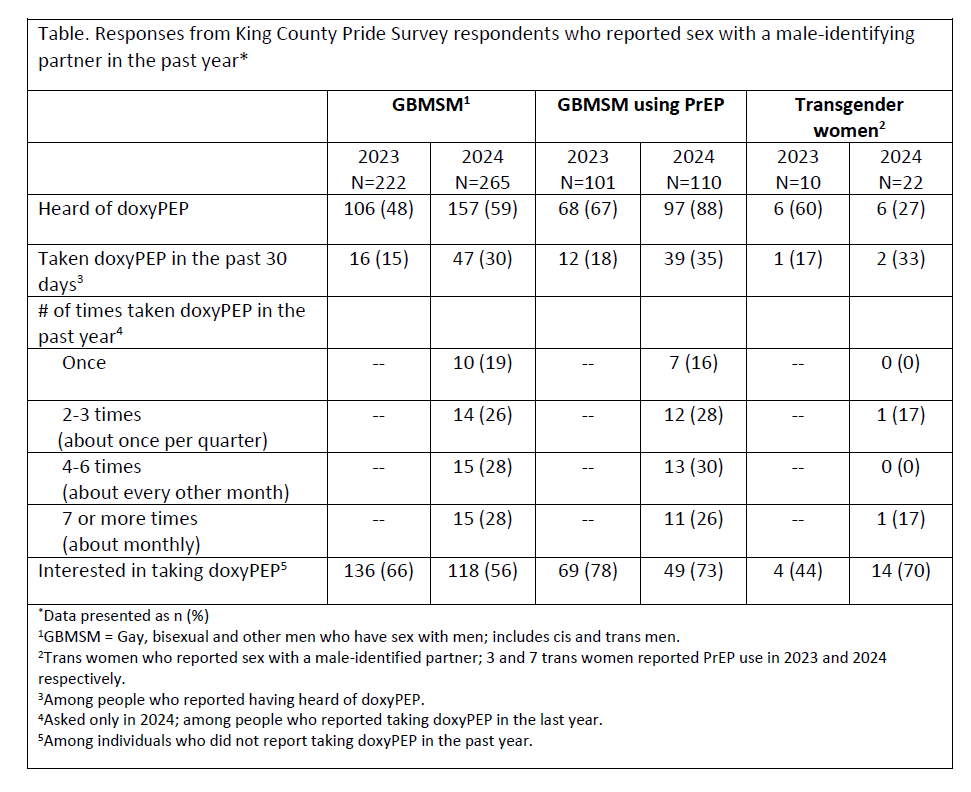
1282. The Actual Need for DoxyPEP Might Not Be as Large as Expected
Poster Abstracts
Page: 423
Roberto Rossotti1, Daniele Calzavara2, Enrico Caruso2, Anna De Bona3, Davide Moschese4, Camilla Muccini5, Daniele Tesoro3, Pietro Vinti2, Massimo Cernuschi5, Alessandro Tavelli6, Antonella d'Arminio Monforte6, Giuseppe Lapadula7
Background
DoxyPEP proved to be effective in preventing bacterial sexually transmitted infections (STIs) and the Centers for Diseases Control and Prevention (CDC) recommended it in men who have sex with men (MSM) and transgender women (TGW) who have had at least one infection in the previous 12 months. However, the risk of antibiotic overuse and the potential spread of antimicrobial resistance led many scientific societies to issue more cautious and restrictive position statements. Aim of this study is to evaluate if CDC recommendations would be appropriate in a cohort of PrEP users assessing factors that describe individuals who might benefit most from doxyPEP.
Methods
Milano Checkpoint is a community-based, peer-led service that provides medical assistance to one of the largest PrEP cohorts in Italy. Individuals who had at least one STI from July 2022 to June 2023 were selected. Demographic and behavioral features were collected. The diagnoses of syphilis, Chlamydia, and gonorrhea in the following 12 months were evaluated: potential antibiotic overuse was defined if no STIs were recorded during the follow up. Descriptive statistics were used to depict study population. Adjusted Poisson regression was used to describe variables associated to appropriate doxyPEP prescribing conditions (i.e., no antibiotic overuse).
Results
The analysis included 251 individuals who had at least one STI in the previous year (90 Chlamydia, 83 gonorrhea, 26 syphilis, 52 had two or more infections). The majority was represented by men (97.6%), born in Italy (78.9%), white (85.6%), with a university degree (66.5%) (Table 1). During the follow up 129 STIs were registered (55 Chlamydia, 43 gonorrhea, 31 syphilis); 28 individuals (11.2%) had two or more infections. If doxyPEP had been taken, 85 (95%CI 70-98) infections would have been avoided. Nevertheless, 162 individuals (64.5%) had no further infections and would have had antibiotic overuse if they had taken doxyPEP. Adjusted Poisson regression found that the number of condomless intercourses was the only variable associated to an appropriate doxyPEP prescription (IRR 1.16 per 10 contacts, 95%CI 1.06-1.28, p=0.002).
Conclusions
Our data suggest that CDC recommendations for doxyPEP prescription could be exceedingly broad leading to a considerable antibiotic overuse. Adding the evaluation of further behavioral variables could refine the selection of individuals who might benefit most from doxyPEP.
Table 1.
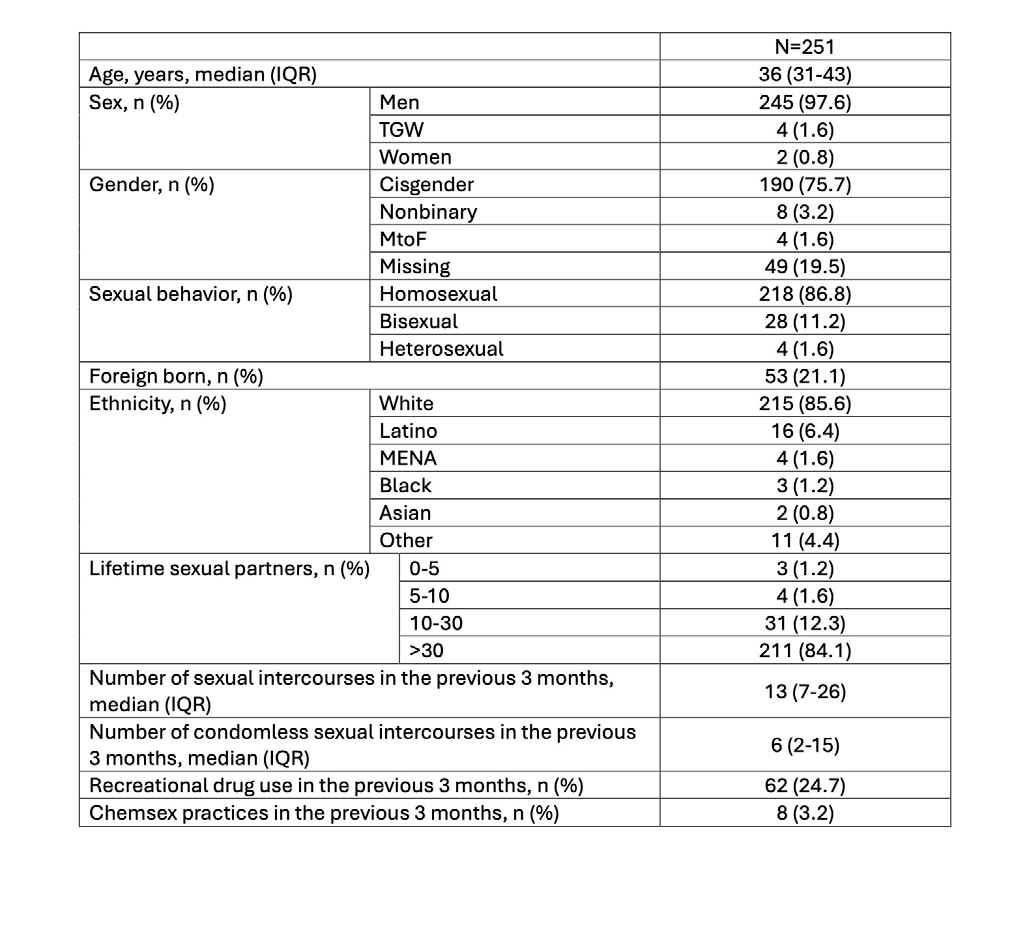
1283. Topical Doxycycline Inserts Show High Efficacy Against Vaginal Chlamydia Acquisition in Macaques
Poster Abstracts
Page: 423
David A. Garber1, M. Melissa Peet2, Hongwei Jia1, J. Harrison Priode1, James Mitchell1, Chuong Dinh1, Eric Edwards1, Richard Haaland1, Vivek Agrahari2, Meredith R. Clark2, S. Ajay Vishwanathan1, Janet McNicholl1, Gustavo F. Doncel2, Walid Heneine1, the CDC Division of HIV Prevention CLIA Laboratory
Background
Bacterial STIs are on the rise globally. Fast-dissolving dual-compartment (vaginal/rectal) inserts containing doxycycline (DOX) provide an alternate approach to STI prevention that can maximize local DOX concentrations while minimizing systemic distribution. Here, we performed preclinical studies to evaluate the pharmacokinetics (PK) and protective efficacy following vaginal administration of CONRAD-developed inserts containing DOX against vaginal C. trachomatis (CT) infection in pigtail macaques.
Methods
Inserts were manufactured using a simple, easy-to-scale direct-compression process containing 10 or 50mg DOX. DOX PK was determined via HPLC-tandem mass spectrometry analysis of vaginal swabs and plasma samples collected from macaques following vaginal administration of a 50mg or 10mg DOX insert. A physiologically-relevant challenge dose of 104 inclusion forming units (IFU) was identified for CT (serovar E) following a vaginal dose titration (106-500 IFU). For efficacy studies, macaques were administered either a single vaginal insert containing DOX (50mg or 10mg), or no insert (Controls), at 4 hours (h) following vaginal challenge with 104 IFU CT. Animals were followed weekly, for 9 weeks, to monitor CT infection by testing vaginal swabs for the presence of CT rRNA via the Aptima Combo 2 target amplification assay. Macaques were considered to have an established CT infection if they exhibited Aptima positivity for 4 or more weeks following CT challenge.
Results
Among macaques administered 10mg DOX inserts, DOX concentrations in vaginal secretions were high at 24h (279μg/ml) and persisted for at least 7 days at levels above DOX’s MIC90 for CT (0.064μg/ml), whereas DOX was undetectable in plasma. All CT-challenged macaques that received inserts containing 50mg (N=4) or 10mg (N=4) DOX were protected, whereas 83% (5/6) controls became infected (P=0.048, each DOX group vs Controls).
Conclusions
Vaginal delivery of DOX by inserts containing 10mg or 50mg DOX protected macaques against CT infection when administered 4h after CT challenge. Data provide the first evidence of a novel topical DOX modality for CT prevention. PK data demonstrated lack of systemic DOX distribution and highlight the role of sustained vaginal DOX in protection against CT. Findings inform the clinical development of DOX inserts for on-demand CT prevention and support DOX coformulation into tenofovir alafenamide and elvitegravir-containing inserts, which are currently in clinical development for HIV prevention.
1284. Antimicrobial Consumption Among Users of Doxycycline Postexposure Prophylaxis in Milan, Italy
Poster Abstracts
Pages: 423-424
Angelo Roberto Raccagni1, Sara Diotallevi2, Riccardo Lolatto2, Elena Bruzzesi1, Flavia Badalucco Ciotta1, Giacomo Ponta1, Flavia Passini1, Caterina Candela1, Camilla Muccini2, Antonella Castagna2, Silvia Nozza1
Background
Aim is to evaluate the changes in antimicrobial consumption of ceftriaxone, benzylpenicillin and doxycycline for the treatment of bacterial sexually transmitted infections (bSTIs), after the prescription of doxycycline post-exposure prophylaxis (DoxyPEP) among men who have sex with men (MSM).
Methods
Retrospective study of MSM in care for HIV or HIV pre-exposure prophylaxis (PrEP) at the Infectious Diseases Unit of San Raffaele Hospital, Milan, Italy, who received DoxyPEP counselling and prescription from August 2022 (first DoxyPEP prescription, baseline) to July 2024 (data lock). DoxyPEP was offered to people with ≥1 STI or reporting condomless sex with ≥1 partner. DoxyPEP with doxycycline 200mg within 72h of potential exposure was suggested for intensive sexual activity (>5 partners). All individuals with ≥1 follow-up visit after baseline and ≥1 before were included. DoxyPEP use was self-reported during routine visits. Individuals were tested for bSTIs (syphilis, Tp; chlamydia, Ct; gonorrhea, Ng) every 3-6 months according to local practice. Adjusted %change (and 95% confidence interval, CI) in incidence rate (IR) of STIs before and after DoxyPEP prescription were estimated using a pre-post within-person analysis by Poisson mixed-effects model. Use of DoxyPEP and ceftriaxone, benzylpenicillin, doxycycline for bSTIs treatment was quantified as days of therapy (DOT) per 1000 person-days (1000-PD). The observed DOTs after DoxyPEP prescription were increased with %changes derived from regressions to obtain the expected DOTs in absence of DoxyPEP.
Results
Overall, 754 MSM were prescribed DoxyPEP; during follow-up 222 (29.4%) reported using DoxyPEP. Median follow-up among DoxyPEP users were 15.8 months (IQR=12.1-19.2) and 10.8 (6.88-13.1) before and after prescription, respectively. Individuals' characteristics in Table. Among DoxyPEP users, 401 bSTIs (Tp 70, Ct 139, Ng 192) were detected before DoxyPEP prescription and 146 (Tp 26, Ct 32, Ng 88) after. Overall, DOT per 1000-PD was 1.26 for ceftriaxone, 0.37 for penicillin and 3.21 for doxycycline after DoxyPEP prescription; DoxyPEP DOT per 1000-PD was 7.00. Expected DOT per 1000-PD in the absence of DoxyPEP was 4.85 (95%CI=3.82-6.41) for ceftriaxone, 1.86 (95%CI=1.17-2.87) for penicillin, and 24.71 (95%CI=17.18-37.36) for doxycycline.
Conclusions
A significant reduction in all considered antibiotics used for the treatment of bSTIs was achieved among DoxyPEP users.
Table 1.
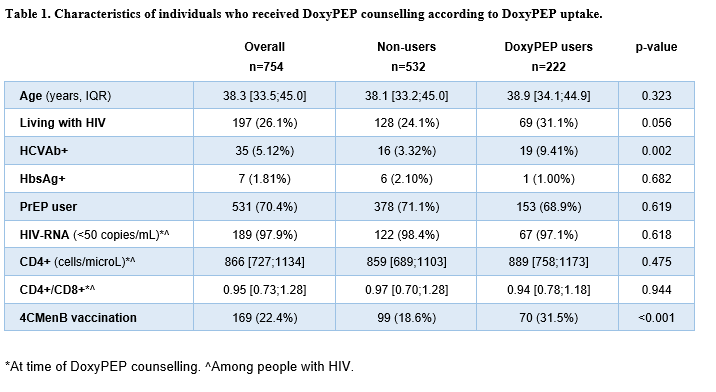
1285. Antimicrobial Resistance of N. gonorrhoeae at a Community-Based Clinic, 2023-2024
Poster Abstracts
Page: 424
Jun Tao1, Hannah Parent1, Walther Pfiefer2, Kristen Azevedo3, Sean Sierra Patev3, Glen Gallagher3, Thomas Bertrand3, Suzanne Bornschein3, Richard Huard3, Erick Costa2, Yelena Malyuta4, Max Erbe4, Alexi Almonte1, Amy Nunn1, Philip A. Chan1
Background
Gonorrhea, caused by N. gonorrhoeae, has developed resistance to most antimicrobial treatments over time, including ciprofloxacin, tetracycline, penicillin, and cephalosporins. Importantly, baseline tetracycline resistance may impact the use of doxycycline as post-exposure prophylaxis (DoxyPEP) to prevent bacterial STIs. We evaluated baseline N. gonorrhoeae resistance in patients presenting to a community-based STI clinic.
Methods
We reviewed demographic and behavioral data of patients presenting for HIV/STI testing at a community-based STI clinic in Providence, Rhode Island, between February 2023, and May 2024. N. gonorrhoeae was detected using nucleic acid amplification tests (NAAT). Bivariate and multivariate analyses were conducted to examine the factors that were associated with having at least one positive gonorrhea test.
Results
A total of N=802 unique patients presented for HIV/STI testing. The median age was 31 years. The majority of patients were assigned male at birth (72%) and self-identified as non-heterosexual (75%). The majority of patients reported a prior history of STIs (52%), including chlamydia (45%), syphilis (20%), and gonorrhea (37%). Twelve out of 802 patients (1.5%) were HIV positive and 25% were actively using HIV PrEP. Additionally, 18% of patients reported the use of DoxyPEP. Sixteen percent (N=127) had at least one positive gonorrhea test during the study period. No statistically significant differences were observed across different racial and ethnic groups. People taking HIV PrEP were significantly more likely to test positive for gonorrhea (aOR: 3.00, 95% CI: 2.53-6.34) compared to those not on PrEP. Having a history of STIs, a moderate or high number of sexual partners, and engaging in sex with anonymous partners were all associated with significantly elevated odds of testing positive for gonorrhea. Among the 127 patients with at least one positive gonorrhea test, 116 had swab samples available for culture testing. Of these, 30 patients had positive culture results. All N. gonorrhoeae isolates were sensitive to Ceftriaxone, but only 10% were pan-sensitive. Sixty-percent (N=18) demonstrated some resistance to ciprofloxacin, 33% (N=10) to tetracyclines, and 0.03% (N=1) to cefixime.
Conclusions
Antimicrobial resistance to N. gonorrhoeae is common and may limit effectiveness of HIV/STI prevention approaches such as DoxyPEP. New approaches to address antimicrobial resistance among N. gonorrhoeae and continued surveillance are needed.
1286. Effectiveness of Ceftriaxone Monotherapy for Gonorrhea Treatment
Poster Abstracts
Page: 424
Chiara Fusetti, Federica Salari, Francesco Petri, Alberto Rizzo, Andrea Giacomelli, Andrea Cavallo, Francesco Caruso, Loriana Morelli, Cristina Gervasoni, Davide Mileto, Maria Vittoria Cossu, Alessandra Lombardi, Agostino Riva, Andrea Gori, Davide Moschese
Background
Guidelines differ on first-line treatment of Gonorrhea (NGI). European and Australian guidelines recommend ceftriaxone (CRO) + azithromycin (AZM) to target resistant strains and minimize resistance emergence, while the CDC and UK favor CRO monotherapy due to increasing AZM resistance and concerns about cross-resistance in other pathogens. Follow-up also differ: the CDC advises a test-of-cure (TOC) only for pharyngeal infection, while others suggest it universally, especially when using alternative therapies. Although Italy is highly-burdened by antimicrobial resistance, our national and local ecology present a CRO decreased-susceptibility NG as low as 8%. In this context, the study compares the effectiveness of CRO 1g IM monotherapy versus combination in eradicating NGIs.
Methods
All NGIs diagnosed at our clinic between January 2022 and August 2024, with a TOC performed at 28 days ±7, were retrospectively analyzed. Diagnoses were made using NAATs on pharyngeal, anal, vaginal swabs, and urine sample. Data collected included HIV status, PrEP use, symptoms of infection, antibiotic treatment, NAAT TOC results. Descriptive statistics were reported as counts and percentages, statistical analysis was performed using Pearson χ² or Fischer exact tests.
Results
A total of 202 infections were identified: 41% anal, 40.5% pharyngeal, 18% urethral, and 0.5% vaginal. Of these, 61% involved PrEP-users, 27% PWH, and 12% people without HIV not in PrEP. 79% of infections (119/150) were asymptomatic, predominantly in pharyngeal (48%) and anal sites (47%). Urethral site were more likely to be symptomatic (n 16/31, 52%) than the others (p <0.001). CRO monotherapy was used in 54% of cases, while CRO+AZM in 39% of cases. Gentamicin±AZM was given in 5 cases due to allergy. Combination therapy was mainly found to be used in symptomatic cases (58% vs 19%; p <0.001), since treatment was usually given before microbiological results. TOC was negative in 99% of cases, with only 3 infections testing positive after CRO treatment. In the first case CRO was repeated resulting in a negative TOC. The second was a reinfection and in the last one a TOC was repeated one week later with a negative result.
Conclusions
In a low-prevalence resistance setting CRO monotherapy is as effective as combination with AZM for treating NGIs, suggesting that CRO alone may be preferred to limit antibiotic use. For the same reason, the high treatment success rate may suggest that TOC may be unnecessary to reduce hospital visits and over-medication.
Figure 1.
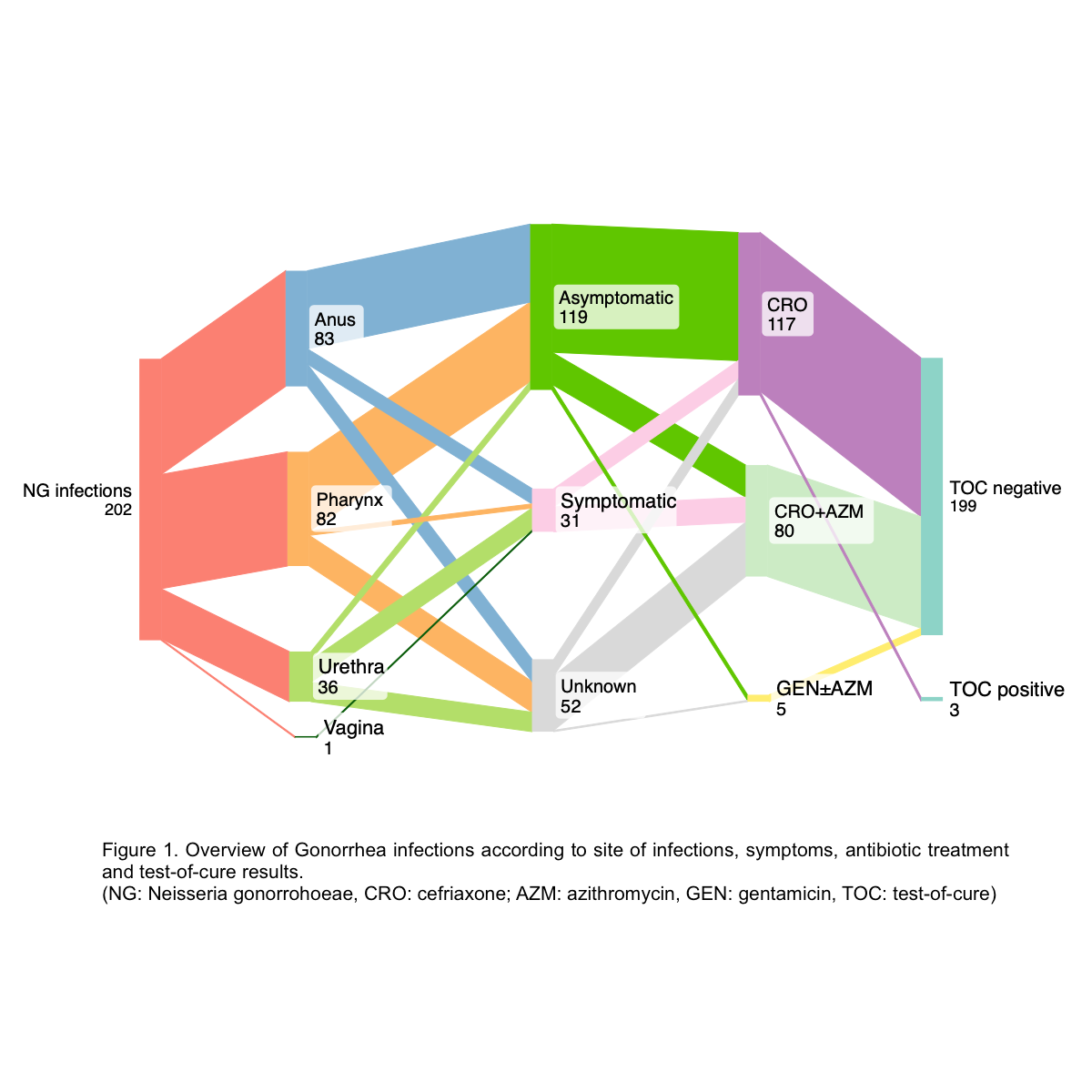
1287. Prevalence of Tetracycline-Resistant Gonorrhea in British Columbia’s HIV Treatment and PrEP Program
Poster Abstracts
Page: 425
Raquel M. Espinoza1, Paul Sereda1, K. Junine Toy1, Peter Phillips1, Victor Leung2, Rolando Barrios1, Julio S. G. Montaner1
Background
British Columbia’s (BC) publicly-funded HIV treatment (HIV Tx) has been available since 1992, and HIV Pre-Exposure Prophylaxis (PrEP) for key populations since 2018. On 1-Dec-2023, a doxycycline for bacterial sexually transmitted infection (b-STI) initiative (Doxy-P) was launched among HIV Tx and PrEP clients, enrolling >3000 clients in 9 months. In light of increasing use of Doxy-P and treatment and its potential impact on antimicrobial resistance (AMR), we examined the prevalence of tetracycline resistance in gonorrhea (GC) cultures in HIV Tx and PrEP clients during various periods of interest.
Methods
We included all PrEP clients, and known or presumed gay, bisexual and other men who have sex with men (gbMSM) and transwomen in HIV Tx, who had ≥1 program prescription dispensed between 1-Jan-2018 and 30-Jun-2024, and ≥1 GC culture and sensitivity ordered between 1-Jan-2017 and 31-Aug-2024. Client tests within 30 days (all specimens, any site) were considered one testing episode (TE). TE’s positive for GC, and tetracycline minimum inhibitory concentrations (MIC) available for GC cultures were described annually and for 5 periods of interest from 1-Jan-2017 through 31-Aug-2024 (Pre-publicly-funded PrEP to Doxy-P scale-up).
Results
Overall, 2,629 clients [98% cismen, 0.8% transwomen, 0.5% ciswomen, 0.3% transmen; with median age 36 (Q1-Q3, 31-43) years] were included. 1998 were PrEP, 605 in HIV Tx, and 26 in PrEP who transitioned to HIV Tx. There were 4143 GC TE’s (range 133-1077 per year), of which 686 (17%) were positive and 528 (77%) had tetracycline MIC values reported (range 9-116 per year). The mean (range) GC tetracycline MIC (mg/L) increased from 2.25 (0.25-16) pre-public PrEP (n=9) to 3.99 (0.06-64) during PrEP scale up (n=206) (See Figure). It then decreased during COVID-19 (n=135) to 1.05 (0.13-32), and remained low during the early Doxy-P period (n=100) at 1.42 (0.06-16). During the first 9 months of Doxy-P scale-up (n=78), the mean GC tetracycline MIC increased to 3.96 (0.13-32), similar to that seen during PrEP scale up.
Conclusions
In this preliminary analysis, a COVID-19 pandemic-related decline in tetracycline resistance rates and levels was observed in GC cultures amongst PrEP and HIV Tx clients, with rates and levels appearing to return to pre-pandemic levels with the introduction of Doxy-P. Close monitoring is warranted, including more routine culture and sensitivity testing for breakthrough cases of GC while on Doxy-P, and on the AMR impacts on off-target organisms.
Figure 1.
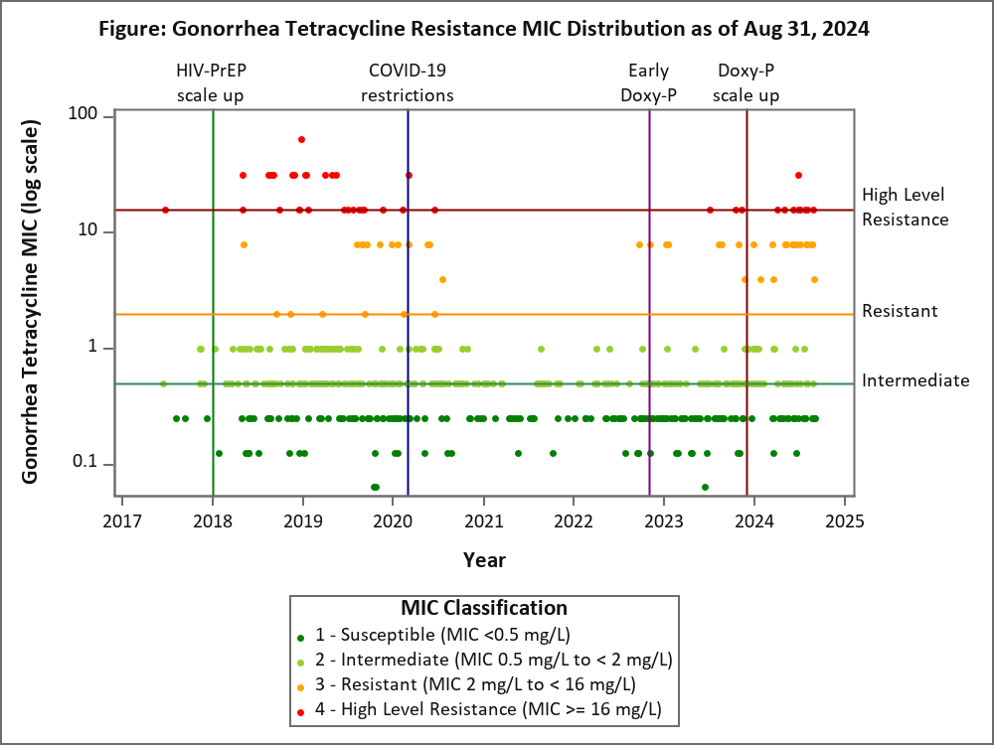
1288. DoxyPrEP Impact on the Microbiome of Men Who Have Sex With Men and Transgender Women on HIV PrEP
Poster Abstracts
Page: 425
Adam D. Burgener1, Troy Grennan2, Samantha Knodel1, Marlon de Leon1, Alana Lamont3, Joshua Edward2, Saira Mohammed2, Tessa Tattersall2, Jason Wong2, Mark Hull4, Amit Gupta5
Background
Doxycycline pre-exposure prophylaxis (doxyPrEP) has shown potential in preventing bacterial sexually transmitted infections (STIs) in gay, bisexual and other men who have sex with men (GBM). However, its impact on the microbiome is unknown. This study assessed rectal microbiome changes over 48 weeks in participants on HIV PrEP enrolled in a doxyPrEP trial.
Methods
The Dual Daily HIV and STI PrEP (DuDHS) study is an open-label, randomized pilot trial comparing immediate versus deferred doxycline (doxy) (100 mg daily) in HIV-negative GBM and transgender women on tenofovir disoproxil fumarate/emtricitabine (TDF/FTC) for HIV PrEP. Fifty-two participants with a syphilis diagnosis within the past three years were recruited in Vancouver, Canada. All participants received 48 weeks of TDF/FTC for HIV PrEP, and were randomized 1:1 to the immediate (imm.) doxy arm (100 mg PO daily started immediately and continued to week 48) or the deferred (def.) arm (100 mg PO daily starting at week 24, continued to week 48). Rectal swabs for microbiome analysis were collected at baseline (BL), week 24, and week 48 and analyzed by 16S rRNA sequencing. Microbiome changes were evaluated using Wilcoxon signed rank and Mann-Whitney U tests, with p-values adjusted for multiple comparisons (FDR=5%).
Results
Among 311 operational taxonomic units (OTUs), the most prevalent were Finegoldia, Prevotella, Corynebacterium, and Streptococcus. At baseline, alpha diversity (Shannon’s H mean: imm: 2.58, def: 2.60, p=0.91), beta diversity (Bray-Curtis), and taxa composition were similar (p>0.05). No significant changes in alpha or beta diversity at the genus and family levels were observed between baseline, week 24, and week 48 (p>0.05). However, a slight decrease in alpha diversity at the order, class, and phylum levels was noted at week 48 in the immediate arm (mean: 0.84 vs. 0.66 at Phylum, p<0.05), but not in the deferred arm. Fusobacterium abundance showed a minor decrease at weeks 24 and 48 in both arms (mean difference from BL: 0.017 and 0.019 for imm. arm, 0.003 and 0.00005 for def arm, p<0.05), although this finding did not pass multiple hypothesis testing. Beta diversity remained similar between groups at weeks 24 and 48 (p>0.05)
Conclusions
This study is the first to assess microbiome changes due to doxyPrEP, showing minimal impact over 12 months. Further research is needed to explore the impact of doxycycline for STI prevention on microbiome function and antimicrobial resistance.
1289. Testing Healthcare System Resilience Using Microsimulation Modeling Under Various Shocking Scenarios
Poster Abstracts
Pages: 425-426
Viviane D. Lima, Jielin Zhu, K. Junine Toy, Jason Trigg, Morris Chan, Paul Sereda, Rolando Barrios, Julio S. G. Montaner
Background
People living with HIV (PLWH) and health systems caring for them were hit hard by the COVID-19 epidemic and illicit drug toxicity crisis. These challenges have been further compounded by voluntary and involuntary migration and displacement due to war, political violence, and, for PLWH, stigma and discrimination. These crises have tested the resilience of healthcare systems (i.e., the capacity to predict, absorb, recover from, and adapt to shocks). We developed a micro-simulation model to assess the resilience of a healthcare system under different shocking scenarios.
Methods
We used individual-based longitudinal data (2014-2023) from the HIV Drug Treatment Program (DTP) in British Columbia (BC), which provides free ART and care to all PLWH. Three scenarios were modeled: the COVID-19 pandemic, the illicit drug toxicity crisis, and migration into BC. The microsimulation included 8583 PLWH, representing DTP participants alive by December 2014, with age and sex randomly sampled from the DTP. The model simulated monthly status transitions from 2015 to 2033, classifying each individual as actively on ART, experiencing short- or long-term (i.e., >18 months) ART discontinuation, migrating to BC, or deceased (from overdose or other causes). New DTP participants were dynamically added over time. Transition probabilities were based on age, sex, and current state. Population projections were made for 2024-2033.
Results
Among the modeled scenarios, the COVID-19 pandemic had the least impact on the size and composition of the DTP population. In contrast, overdose mortality disproportionately affected females and individuals aged 50+. The DTP population is aging rapidly, with the proportion of those aged 70+ increasing eightfold between 2014 and 2033. This demographic shift is contributing to a rise in non-AIDS-related mortality, reshaping the DTP population. Migration (>100 PLWH per quarter) had the largest and most uncertain impact on population projections. Sustained migration for >2 years is projected to increase the DTP population by 10-22% over the next decade, especially among PLWH aged 30-50, a group prone to treatment churn (on-off ART).
Conclusions
While HIV services remain resilient in supporting the aging DTP population, there is a significant disconnect between HIV care and other critical services, particularly for aging and migrant populations. These service gaps may pose long-term challenges to the sustainability of the broader healthcare system and require urgent attention.
The figure, table, or graphic for this abstract has been removed.
Figure 1.

1290. Estimated Benefits of Providing On-Demand PrEP Options for Women in Cape Town: A Modeling Study
Poster Abstracts
Page: 426
Sarah Stansfield1, Mia Moore1, Marie-Claude Boily2, Jim Hughes3, Deborah J. Donnell1, Linda-Gail Bekker4, Dobromir Dimitrov1
Background
Daily and on-demand oral pre-exposure prophylaxis (PrEP) have been shown to be effective at preventing HIV acquisition among cisgender men and transgender women, but only daily PrEP is recommended for cisgender women. On-demand PrEP may be a valuable option to improve PrEP uptake, effective use, and persistence in cisgender women. We use data from HPTN 067 study to estimate effectiveness achieved by different non-daily PrEP options and investigate which sub-groups of women may benefit most from using them.
Methods
We created a synthetic cohort of PrEP users using data on the frequency of sex acts, condom use, and PrEP pill taking from the Cape Town site of the HPTN 067 study. We simulated PrEP use and HIV incidence with hypothetical use of the three PrEP regimens tested in HPTN 067: daily, time-based (2 pills/week +1 pill after sex), and event-based (1 pill before +1 pill after sex) PrEP, as well as 2-1-1 (2 pills before +1 pill each of the following two days after sex) PrEP for six months each. We estimated PrEP effectiveness based on the number of pills taken around sex acts. Adherence to 2-1-1 PrEP, which was not tested in the HPTN 067, was informed by observed adherence to event-based PrEP. Assignment to 2-1-1 PrEP based on daily PrEP adherence, sex act frequency, and hypothetical “optimal” criteria combining better effectiveness and/or lower pill burden were also analyzed.
Results
We estimated effectiveness of 81% for daily, 46% for time-based, 42% for event-based, and 59% for 2-1-1 PrEP for HPTN 067 participants in Cape Town (see Figure). PrEP users with low adherence to daily PrEP (less than 2.8 pills per week) benefited most from non-daily PrEP. In this subgroup, comprising 8% of the cohort, PrEP effectiveness increased from 39% to 43% when switching from daily to 2-1-1 PrEP while pill taking decreased from 2 to 1.5 pills per week. We found no advantage in assigning 2-1-1 PrEP by sex act frequency. The effectiveness of hypothetical “optimal” assignment was comparable to assignment based on low PrEP adherence.
Conclusions
On-demand PrEP could benefit women with low daily PrEP adherence by decreasing the number of days on which pills need to be taken and increasing effectiveness compared to a daily regimen. This would be a valuable and easy-to-implement additional option in places where daily oral PrEP is already available.
Figure 1.
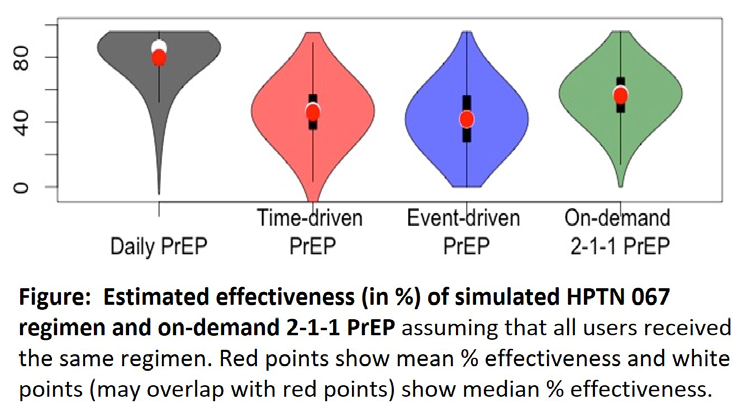
1291. Model-Projected Costs Associated With Increasing Numbers of Medicare Beneficiaries With HIV Aged 65+
Poster Abstracts
Page: 426
Emily Hyle1, Parastu Kasaie2, Luke Ang1, Elizabeth Humes2, Jessica Phelan3, Lucas Gerace2, Ciara Duggan3, Florence Ebem1, John Orav4, Ankur Pandya3, Tim Horn5, Jose Figueroa3, Keri N. Althoff2, Kenneth A. Freedberg1
Background
As people with HIV (PWH) in the US continue to age, costs to Medicare are expected to rise substantially. We projected the number of 65y+ Medicare beneficiaries with HIV in the US from 2023 to 2033 and the potential budget impact on Medicare.
Methods
We used the CEPAC microsimulation model of HIV disease and treatment with CDC population estimates and simulated Medicare beneficiaries with HIV aged 65y+ and on ART from 2023-2033. We accounted for PWH already in care turning 65y and new HIV diagnoses in people 65y+. Annual, age-stratified costs were derived from 2014-2018 Traditional Medicare (TM) claims data for people filling ART prescriptions for ≥10 months per year: ART ($31,000-34,400), direct HIV-related care ($2,200-2,800), and other clinical care costs ($19,300-20,100). For people dying during the simulation period, we incorporated age-stratified TM claims in the 12m prior to death: ART ($29,400-31,600), direct HIV-related care ($9,900-17,200), and other care costs ($51,100-66,400). We performed sensitivity analyses on key parameters and assumptions, including a 40-90% reduction in ART prices given the possibility of generic ART regimens or price negotiation under the Inflation Reduction Act. Model outcomes included numbers of PWH aged 65y+ in Medicare and undiscounted dollars spent by Medicare from 2023-2033.
Results
We projected that 130,750 PWH would meet age-eligibility criteria for Medicare in 2023 (65-69y: 66,110; 70-74y: 39,320; 75-79y: 17,490; 80y+: 7,830) (Figure, Panel A). By 2033, this number would nearly double to 252,350 (65-69y: 99,950; 70-74y: 80,560; 75-79y: 44,320; 80y+: 27,520). Costs to Medicare for PWH 65y+ would rise substantially, from $7.9 billion in 2023 to $15.2 billion in 2033, with over 50% contributed by ART costs (Figure, Panel B). If ART prices are reduced by 50%, Medicare would save $33.7 billion over the 10y period, lowering ART costs to 33% of overall expenditures.
Conclusions
The number of 65y+ Medicare beneficiaries with HIV is likely to double over the next decade, reaching $15.2 billion in annual costs to Medicare by 2033; these projected costs do not include additional costs of Medicare-eligible PWH under age 65 or variation in costs among PWH on Medicare Advantage instead of TM. Reductions in ART prices could lead to substantial decreases in overall Medicare spending for older beneficiaries with HIV.
The figure, table, or graphic for this abstract has been removed.
1292. Modeling the Impact of Increased PrEP Use on Sexually Acquired HIV Incidence in the United States
Poster Abstracts
Pages: 426-427
Benjamin La Brot1, Jason Baron1, Tamar Tchelidze1, Nicole Robinson2, Aniruddha Hazra3, Kenneth Mayer4
Background
In 2015, the CDC estimated that 1.2 million Americans could benefit from PrEP; however, this may now be outdated, particularly given ambitious CDC HIV elimination goals.
Methods
Using responses to the most recent suitable NHANES survey (2015/16), including respondent age and sex, number and sex of sexual partners, number of times having sex, condom use frequency, prior anal sex and partners 5+ years older/younger, we stochastically imputed survey respondents’ detailed sexual practices over the prior year. This included the age and state of each sexual partner and the sexual acts (counts, activities, condom use) with each partner. Using CDC-disseminated estimates of HIV risk per sexual act, we calculated each respondent’s total HIV acquisition risk (prior year), conditioned on their partners’ HIV/STI statuses. We generated a probabilistic distribution for each HIV/STI status for each partner using CDC prevalence/ incidence data, partner age, sex, and state, and a calibration parameter reflecting national HIV incidence. By aggregating respondents’ conditional HIV acquisition risks over the partner HIV/STI status probabilities, we estimated each respondent’s overall sexually-acquired HIV risk. We translated HIV risk into expected incidence and scaled to the US population 18-59, incorporating survey weights. Finally, assuming 100% PrEP efficacy, we estimated the population impact of PrEP under two PrEP distribution scenarios: “optimal,” where PrEP is perfectly distributed to those at highest risk, and “suboptimal,” where only 50% of highest-risk individuals get PrEP (i.e., N PrEP prescriptions spread across the 2*N highest risk people).
Results
The model predicted PrEP use by 1 million and 10-million individuals, respectively, would prevent 4,400 and ~16,000 sexually-acquired HIV cases [number needed to treat (NNT) = 230 and 620] with optimal distribution (Figure) and 3,400 and 10,400 transmissions (NNT=290 and 960) with suboptimal distribution. A secondary analysis assuming correlation between respondents’ sexual practices and partners’ HIV risk (optimal distribution) estimated PrEP use by 1- and 10-million would avoid ~12,000 and ~26,100 transmissions.
Conclusions
Our model provides a framework to estimate the population impact of PrEP and its implications for public health policy. While model results vary depending on assumptions, findings strongly suggest that increases in PrEP uptake, substantially beyond prior CDC targets, may be required to achieve HIV elimination goals.
Figure 1.
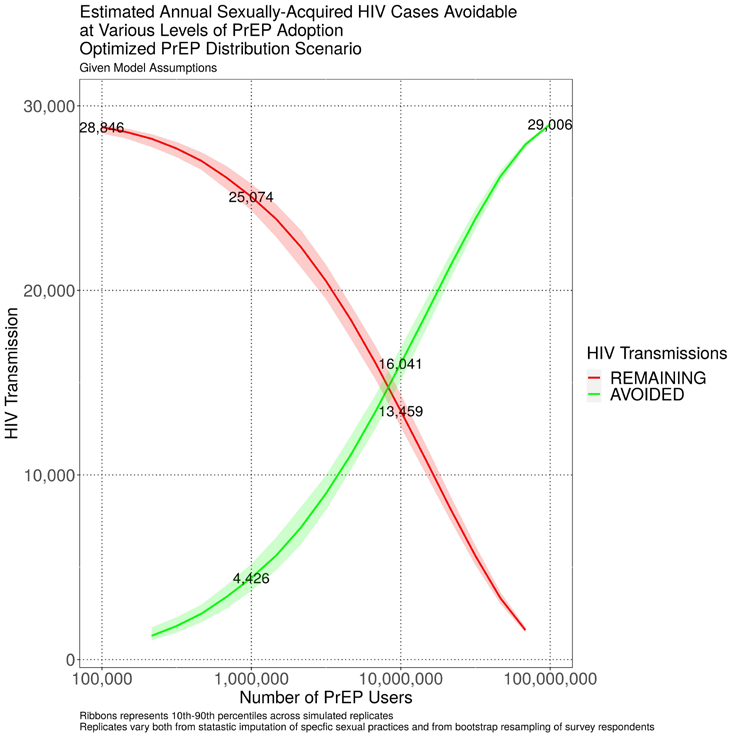
1293. Dynamic Choice HIV Prevention With Cabotegravir (CAB-LA): A Model-Based Cost-Effectiveness Analysis
Poster Abstracts
Page: 427
Andrew N. Phillips1, Matt Hickey2, Starley Shade2, Jane Kabami3, James Ayieko4, Elijah Kakande3, Laura Balzer5, Nicole Sutter2, Loveleen Bansi-Matharu1, Jennifer Smith1, John Schrom2, Gabriel Chamie2, Diane V. Havlir2, Moses Kamya6, Maya Petersen5
Background
The SEARCH dynamic choice HIV prevention (DCP) intervention, including structured choice of biomedical prevention modality (oral PrEP, PEP, Cab-LA) with option to switch over time, increased time covered by biomedical prevention and reduced HIV incidence among men and women in randomized trials in Kenya and Uganda. We use HIV Synthesis, an existing individual-based HIV simulation model, to project long-term impact and cost-effectiveness of this approach in Africa.
Methods
By sampling parameter values at the start of each model run we created 500 "setting-scenarios" reflecting uncertainty in assumptions and a range of characteristics representing those observed across east and southern Africa. For each setting-scenario, 3 policies over 10 and 50 years beginning 2024 were considered: (i) status quo, (ii) DCP with oral PrEP, PEP and condoms; (iii) DCP also including Cab-LA. We used empirical data from the DCP trials to inform the intervention’s impact on PrEP/PEP initiation and persistence, and hence HIV incidence, as well as costs. Cost-effectiveness analysis was from a healthcare perspective (using cost-effectiveness threshold US$500 per DALY averted). We calculated net DALYs averted for DCP with and without Cab-LA, relative to status quo, to reflect predicted policy impact on overall population burden of disease, and incremental cost effectiveness ratio (ICER).
Results
The DCP interventions are predicted to increase the proportion of people with a current PrEP/PEP indication who take PrEP/PEP and hence reduce HIV incidence relative to status quo over 10 years; median (90% range) across setting-scenarios HIV incidence rate ratios of 0.90 (0.64 – 1.19) and 0.66 (0.42 – 0.96) for DCP without and with Cab-LA, respectively. In the context of 10 million adults, both DCP policies lead to DALYs being averted (mean -12,500 and -35,000 for DCP without and with Cab-LA, respectively) but also to greater costs (+$8.4m and +$13.6m for DCP without and with Cab-LA, respectively). Over 50 years, DCP without Cab-LA is not predicted to be cost-effective (+4200 mean net DALYs; ICER if Cab-LA inclusion is not an option = $672/DALY averted. DCP with Cab-LA incurs the lowest mean net DALYs (-7700 per year over 50 years; ICER compared with status quo = $389), and is the cost-effective policy.
Conclusions
Offering structured PrEP/PEP choice, including Cab-LA, could reduce HIV incidence by one-third over 10 years and is likely cost-effective across settings in east and southern Africa.
Table 1.
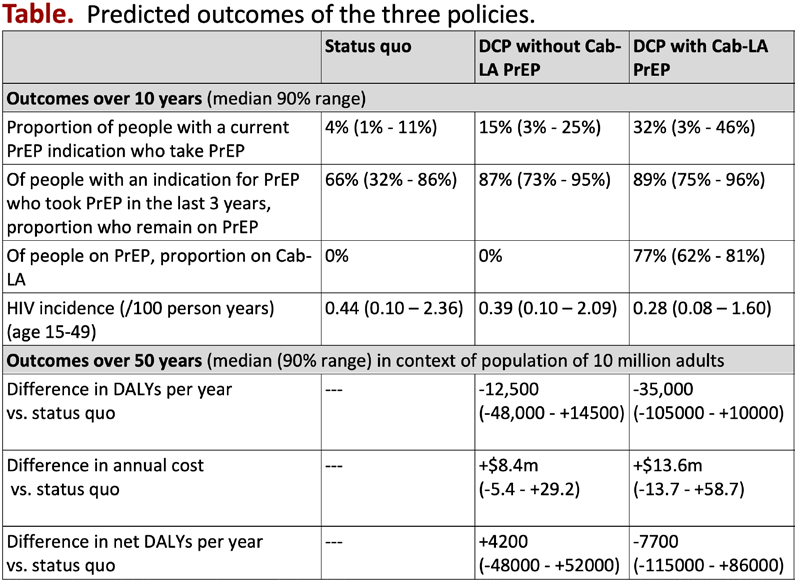
1294. Cost-Effectiveness of PrEP and Medications for Opioid Use Disorder in People Who Inject Drugs
Poster Abstracts
Page: 427
John Chiosi, John Giardina, Sarah E. Wakeman, Anne M. Neilan, Andrea L. Ciaranello
Background
People who inject drugs (PWID) in the US have high HIV incidence and fatal overdose rates, yet uptake is low for pre-exposure prophylaxis (PrEP; 1%) and medications for opioid use disorder (MOUD; 18%). Long-acting PrEP and MOUD formulations may improve uptake and adherence.
Methods
Using the validated MYRIAD multimorbidity microsimulation model (accounting for impact of overdose and injection-related risk of HIV, hepatitis C, and bacterial infections), we simulated strategies for PWID with OUD at risk for HIV in the US (n = 1,582,233): oral PrEP (TDF/FTC [TDF]: annual drug and program costs $1,224, HIV incidence reduction 49%), long-acting injectable PrEP (cabotegravir [CAB]: $24,682, 66%; lenacapavir [LEN]: $39,490, 100%), and MOUD (HIV incidence reduction 54%) via opioid treatment program (methadone [MET]: $6,552) and office-based treatment (sublingual buprenorphine [BSL]: $1,433; extended-release injectable buprenorphine [BXR]: $26,013). We compared no PrEP/MOUD to strategies of only PrEP, only MOUD, and combinations of PrEP with MOUD. We projected 10-year outcomes for new HIV infections, deaths (from overdose, HIV, hepatitis C, and bacterial infections), life-years (LYs), costs, and incremental cost-effectiveness ratios (ICERs: difference in costs/difference in health benefits).
Results
With no PrEP/MOUD, we project 13,402 new HIV infections, 385,085 deaths, 12.18 million LYs and costs of $291 billion over 10 years. Five strategies would be cost-saving versus no PrEP/MOUD (Figure, strategies within the grey boxes): MET (saving $74 billion), MET+TDF ($72 billion), MET+CAB ($7 billion), BSL ($60 billion), BSL+TDF ($57 billion). Two strategies fall on the cost-effectiveness frontier when comparing LYs (Panel A): MET (12.62 million LYs, $217 billion) and MET+TDF (ICER $361,577/LY versus MET, exceeding a common cost-effectiveness threshold of $100,000/LY). Three strategies fall on the cost-effectiveness frontier when comparing averted HIV infections (Panel B): MET (2,497 infections averted versus no PrEP/no MOUD), MET+TDF (ICER $2,168,406/ additional averted infection), and MET+LEN ($86,963,411/additional averted infection).
Conclusions
Among PWID with OUD at risk for HIV, methadone, methadone with TDF/FTC or cabotegravir, and sublingual buprenorphine with or without TDF/FTC would gain life-years, avert HIV infections, and save money. Additional long-acting injectable formulations can avert additional HIV infections but may not be cost-effective at current drug costs.
The figure, table, or graphic for this abstract has been removed.
1295. Ending the HIV Epidemic Among Men Who Have Sex With Men in the United States: A Modeling Analysis
Poster Abstracts
Page: 428
Justine A. Scott1, Hailey Spaeth1, Kyu-young (Kevin) Chi1, Pamela Pen-Erh Pei1, Nattanicha Wattananimitgul1, David P. Holland2, Emily Hyle1, Kenneth A. Freedberg1
Background
The Ending the HIV Epidemic (EHE) program was launched in 2019 with the goal of reducing HIV transmission in the US by 75% by 2025 and 90% by 2030. Men who have sex with men (MSM) are a priority population in this effort. Our objective was to model the impact of improvements across the HIV prevention and care continuum on HIV transmissions and to quantify the improvements needed to reach EHE goals among MSM.
Methods
We used the CEPAC model of HIV disease to assess the scale of prevention, diagnosis, linkage, retention, and virologic suppression needed to meet EHE goals for MSM in the US. We projected HIV transmissions over time given the current HIV care continuum (Status quo) and for 11 individual and combination intervention strategies with improvements in HIV testing frequency, 30-day linkage, virologic suppression, retention in care, and/or PrEP coverage. MSM were stratified into higher (HR MSM) and lower (LR MSM) HIV transmission risk groups using published data. Status quo inputs included HIV testing frequency (mean every 6.8y), 30-day HIV care linkage (77%), ART virologic suppression (81%, first-line), 2y retention in care (78%), and PrEP coverage (57% for HR MSM and 7.5% for LR MSM). Outcomes included annual HIV transmissions through 2030 and % reduction in transmissions compared to 2017. In sensitivity analysis, we examined the % of population achieving virologic suppression and % PrEP coverage for HR MSM.
Results
We estimated 24,278 transmissions to have occurred in 2017, matching CDC estimates. In Status quo, transmissions would be reduced 33% by 2030 (n=16,285). Improving retention in care to 98% at 2 years had the largest individual impact on transmissions, with 63% reduction by 2030. Combined testing and treatment interventions at very high levels (HIV testing every 6 months, 30-day linkage of 98%, retention in care at 2y of 98%, and ART effectiveness of 98%) would decrease transmissions 85% by 2030 (n=3,763). Adding expanded PrEP for HR MSM (PrEP coverage 90%/effectiveness 96%), would decrease transmissions 90% by 2030 (n=2,530, Figure). In sensitivity analysis, increasing the % of all MSM with virologic suppression had a greater impact on transmissions than increasing PrEP coverage in HR MSM.
Conclusions
With substantial and rapid improvements across the HIV testing, treatment, and prevention continuum, meeting EHE goals for MSM in the US would be possible. Improving retention in care is especially important for reducing transmissions and moving towards EHE goals.
Figure 1.
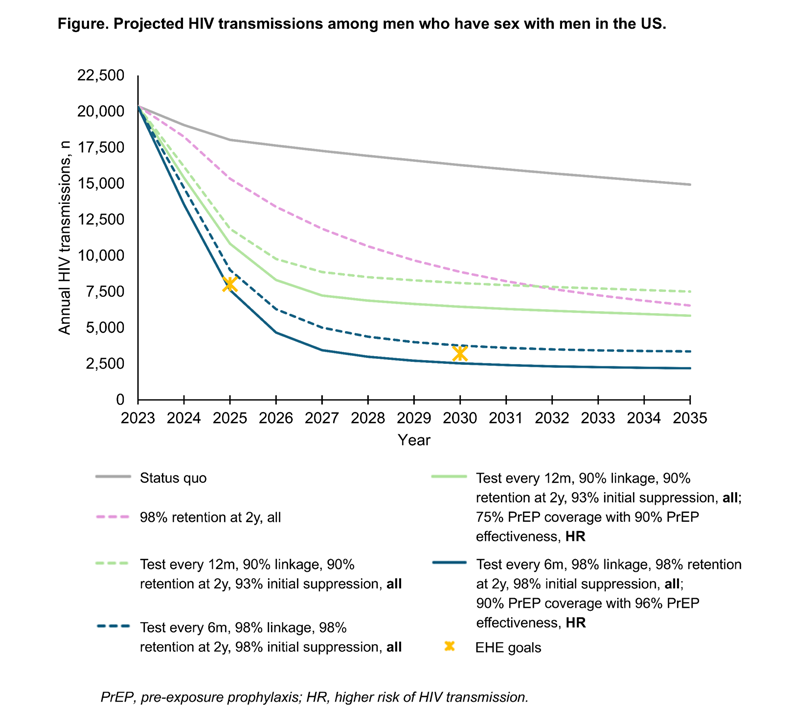
1296. Optimizing Investment in HIV Testing Services, ART, and PrEP to Reduce HIV Incidence in South Africa
Poster Abstracts
Page: 428
Caitlin Dugdale1, Anneke L. Claypool1, Linda-Gail Bekker2, Munashe Machoko1, Daniel Otero-Leon1, Catherine Orrell3, Pamela Pen-Erh Pei1, Katherine Gill2, Xinwen Xu1, Anne M. Neilan1, Prakriti Shrestha1, Justine A. Scott1, Robin Wood2, Mohammad S. Jalali1, Kenneth A. Freedberg1
Background
Despite scale-up of HIV testing, ART, and pre-exposure prophylaxis (PrEP), there continue to be over 140,000 new HIV infections in South Africa each year. Our objective was to estimate the optimal distribution of resources to HIV testing, ART, and PrEP to reduce HIV transmission in South Africa.
Methods
We developed an optimization model to determine what combination of testing, ART, and PrEP would lead to the minimum number of HIV transmissions over 5y in South Africa, parameterized with budget constraints ($9.1 billion/5y), intervention costs, and projected HIV transmissions from the CEPAC microsimulation model. We projected HIV transmissions in CEPAC based on varying uptake of 3 domains: HIV testing, ART coverage, and oral PrEP coverage. We modeled 3 sub-cohorts: high-incidence adolescent girls and young women (HI-AGYW), high-incidence men who have sex with men (HI-MSM), and the remaining general population >15y (GEN). HI sub-cohorts were defined as having HIV incidence of 3%/year and were offered PrEP (effectiveness: 41% AGYW, 50% MSM). Current HIV transmissions and domain levels were calibrated to UNAIDS/Thembisa projections: testing every 14m, 14m, and 29m for HI-AGYW, HI-MSM, and GEN; and coverage for ART (76%), and PrEP (HI-AGYW: 7%, HI-MSM 24%). Costs were $10/HIV test, $285/person-year (py) for ART, and $72/py for PrEP with scale-up costs for ART ($204/py) and PrEP ($50/py). We varied budget constraints, PrEP effectiveness, and ART scale-up costs in sensitivity analyses.
Results
With current levels of HIV testing, ART, and PrEP, we projected 705,400 incident HIV infections over 5y (Table 1). Optimizing allocation of the current HIV budget in South Africa could avert 126,500 infections. This allocation included substantially decreasing testing frequency in GEN (to every 10y) and using those resources to increase testing frequency among HI-AGYW and HI-MSM (to every 3m), increase ART coverage (to 84%), and increase PrEP coverage (to 50%) among HI-MSM. These conclusions were sensitive to budget constraints, PrEP effectiveness, and ART scale-up costs.
Conclusions
Prioritizing HIV testing and PrEP coverage among high-incidence groups and increasing ART coverage while decreasing HIV testing in the general population could avert over 125,000 HIV infections in South Africa over the next 5y without increased investment. As global HIV funding faces mounting pressure, policymakers and program planners should optimize existing resources to continue working towards ending the HIV epidemic.
Table 1.
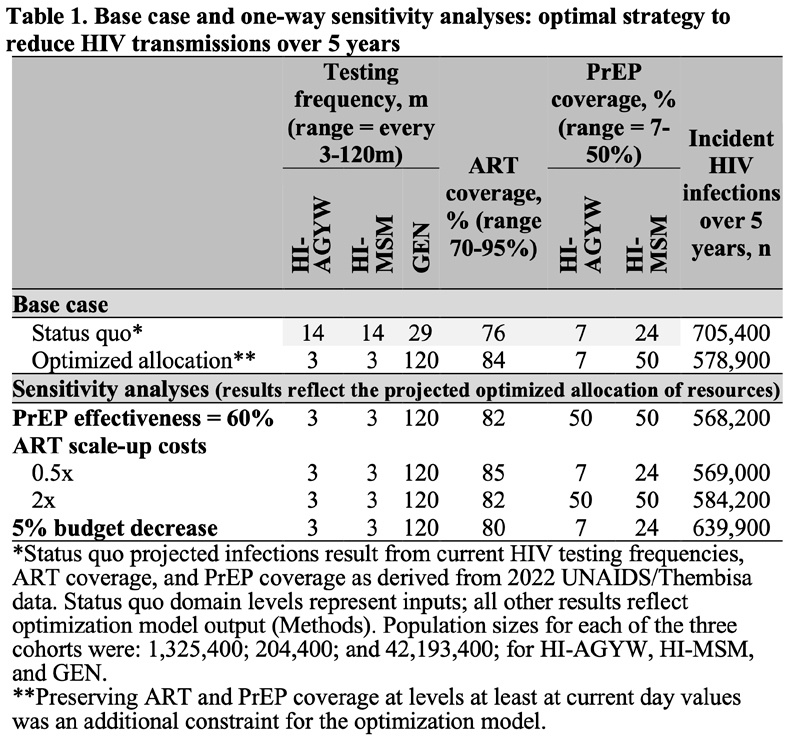
1297. Impact of Rapid Long-Acting PrEP Scale-Up Among MSM: Closing the Unmet Needs and Towards Ending HIV
Poster Abstracts
Pages: 428-429
Haoyi Wang1, David Van de Vijver2, Jon Tosh3, Melanie Schroeder3, Kai J. Jonas1
Background
Long-acting injectable cabotegravir (CAB-LA) is superior to oral pre-exposure prophylaxis (PrEP) regimens. The slow scale-up of oral PrEP has left significant gaps in HIV prevention among men who have sex with men (MSM), and global HIV prevention targets have been missed. The introduction of CAB-LA could facilitate broader prevention choices and help reach these targets. We modeled the potential impact of expanding PrEP coverage to reduce unmet PrEP needs by offering CAB-LA among MSM and studied the impact of rapid and delayed CAB-LA scale-up in the Netherlands.
Methods
The National PrEP Program (NPP) in the Netherlands has reached its maximum capacity of 8500 slots. However, data from the PROTECT survey suggested around 75% of HIV-negative Dutch MSM intend to use PrEP, indicating substantial unmet PrEP needs that CAB-LA can mitigate. We calibrated our model to Dutch HIV epidemic data among MSM. We modelled alternative scenarios of introducing CAB-LA in 2025 to alleviate the estimated unmet PrEP needs. We considered covering 75% of HIV-negative MSM by offering CAB-LA within two years by 2027 as a rapid scale-up, by 2030 as a medium and by 2032 as a delayed scale-up. We assumed that current oral PrEP users with a CAB-LA preference would switch to CAB-LA, informed by data from a Dutch PrEP cohort that suggested around 50% of the current oral PrEP users preferred CAB-LA. We additionally assessed the impact of terminating NPP by 2025. Oral PrEP effectiveness was set at 86%, and CAB-LA efficacy was assumed to be 91% following results from the HPTN083 trial.
Results
Closing unmet PrEP needs by offering CAB-LA was shown to further reduce the HIV epidemic in the Netherlands, with the potential to avert 14% (delayed scale-up) up to 21% (rapid scale-up) new infections within ten years of its introduction, and can reach zero new infections within 10 years. However, a delayed CAB-LA scale-up would delay reaching zero by three years compared with a rapid scale-up. While terminating the current NPP would result in more HIV infections (Figure a). The additional number needed to treat (NNT) on CAB-LA to prevent one HIV infection was estimated over 1000+ in all CAB-LA scale-up scenarios between 2025-2035. A rapid CAB-LA scale-up would be 12% more efficient than a delayed scale-up (Figure b).
Conclusions
Continuing the NPP is crucial. A swift introduction of CAB-LA could significantly reduce the PrEP unmet needs, paving the way toward ending the HIV epidemic in the Netherlands.
The figure, table, or graphic for this abstract has been removed.
1298. Trajectories of Weight Changes After GLP-1 Receptor Agonists Initiation Among Patients With HIV
Poster Abstracts
Page: 429
Jing Sun1, Pooja Maheria2, Carolyn Bramante3, Hsing-Yu Hsu1, Eric G. Hurwitz4, Zachary Butzin-Dozier5, Jerrod Anzalone6, Todd Brown7, Rena C. Patel8, the National COVID Cohort Collaborative (N3C)
Background
Glucagon-like peptide-1 (GLP-1) receptor agonists (RA) have been shown to have marked efficacy in improving blood glucose and reducing weight among individuals in randomized trials. However, real-world data on weight changes after GLP-1 RA initiation among people with HIV remain limited.
Methods
Using patient-level data from 82 sites in the U.S. National COVID Cohort Collaborative (N3C), a nationally-sampled electronic health records repository, we conducted a retrospective analysis with all patients with HIV receiving GLP-1 RA (i.e., tirzepatide or semaglutide injection), sodium-glucose cotransporter-2 (SGLT-2, e.g.,empagliflozin), or metformin between January 1, 2018 and November 2, 2023, regardless of indication, with the metformin only group as the reference. Changes in weight per month were modeled since baseline weight at drug initiation (+/- 3 months) up to 12 months after treatment. We used mixed effect linear regression, stratified by sex. Models controlled for age, race/ethnicity, baseline weight, height, diabetes status (pre-diabetes, type I, type II diabetes, or none), and Charlson Comorbidity Index.
Results
Of 456,558 patients who received GLP-1 RA, metformin, or SGLT-2, 3,955 were people with HIV (PWH). At baseline, the median age of PWH was 59 years (IQR 52–65), with 59% male, 38% white, 42% Black, and 15% Latinx. Among women with HIV, those who received tirzepatide or semaglutide experienced faster weight loss compared to those who only received metformin, with an average of 1.12 kg/month (95% CI: -0.76, -1.49) and 0.87 kg/month (95% CI: -0.54, -1.19), respectively (Figure). No significant difference in weight loss was observed among men with HIV when comparing metformin to GLP-1 RA during the first 12 months. However, men receiving semaglutide had a slightly faster weight loss rate of 0.07 kg/month, though this was not statistically significant.
Conclusions
This real-world data suggests that among women with HIV, use of semaglutide or tirzepatide is associated with greater weight loss than use of metformin in the first 12 months. Differences in weight change is less pronounced among men with HIV. Additional work needs to address the sex differences and underlying mechanisms of weight changes after using weight loss drugs among PWH.
Figure 1.
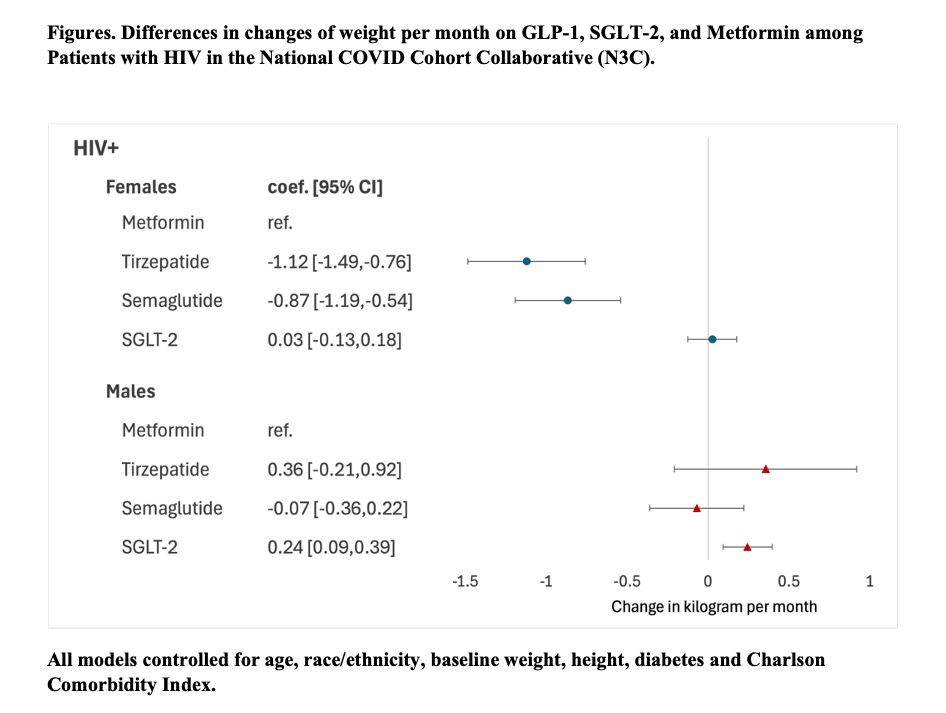
1299. Cardiometabolic Risks and the Transition to InSTIs in Aging PLWH in South Africa
Poster Abstracts
Pages: 429-430
Julia K. Rohr1, F. Xavier Gómez-Olivé2, Jacques Du Toit2, Kathleen Kahn2, Shafika Abrahams-Gessel1, Brendan Maughan-Brown3, Carla Roberts-Toler4, Thomas A. Gaziano5, Stephen Tollman2, Till W. Bärnighausen6, Jennifer Manne-Goehler5
Background
The transition to integrase inhibitors has been associated with weight gain and increases in cardiometabolic risk factors, but evidence for the impact of this transition over longer time horizons in populations with HIV-negative comparators is limited. We evaluated the impact of the switch from efavirenz to dolutegravir (DTG) on weight and a suite of cardiometabolic risk factors among middle-aged and older adults in South Africa.
Methods
We analyzed data from a longitudinal population-based cohort of adults ≥40 years in a rural sub-district of Mpumalanga Province (HAALSA-HAALSI: Health and Ageing in Africa: Longitudinal Studies in South Africa Indepth). Wave 2 data were collected in Oct 2018 - Oct 2019 (before DTG rollout in South Africa) and Wave 3 in Jul 2021 - Mar 2022 (after DTG rollout). Household surveys collected data on health, socioeconomic status, anthropometrics (height, weight, hip and waist circumference), and blood pressure. Dried blood spots were tested for HIV Ag/Ab and the following antiretrovirals to define a participant’s regimen: DTG, EFV, LPV, 3TC, FTC. We assessed changes over three years between surveys in (1) BMI, (2) waist circumference, (3) waist-to-hip ratio, and (4) blood pressure. These were analyzed across four groups of people: (1) HIV+ on ART in both waves with switch to DTG [HIV+/ART/DTG]; (2) HIV+ on ART in both waves with no switch to DTG [HIV+/ART/no DTG]; (3) HIV+ not on ART [HIV+/no ART]; and (4) HIV-. Linear regression models controlled for age, sex, education and wealth.
Results
2,071 participants provided data in both waves and were categorized in the following groups: 10% HIV+/ART/DTG, 7% HIV+/ART/no DTG, 1% HIV+/ no ART, and 74% HIV-. The median age was 64 years (IQR: 55-72) and 59% were female. People who switched to DTG (HIV+/ART/DTG group) had greater increases in BMI, waist circumference, and systolic blood pressure over three years compared to the HIV+/ART/no DTG and HIV- groups (Table). The impact of switching to DTG on diastolic blood pressure was greater among females: a relative increase of 2.49 mmHg (95% CI: 0.33-4.64) compared to HIV-individuals. As expected, people in the HIV+/no ART group had relatively large decreases in weight.
Conclusions
This study provides real-world evidence that switching to DTG among adults aging with HIV is associated with a risk of weight gain and increased blood pressure, especially for females. Investments in care to offset cardiometabolic health risks in people with treated HIV are urgently needed.
Table 1.
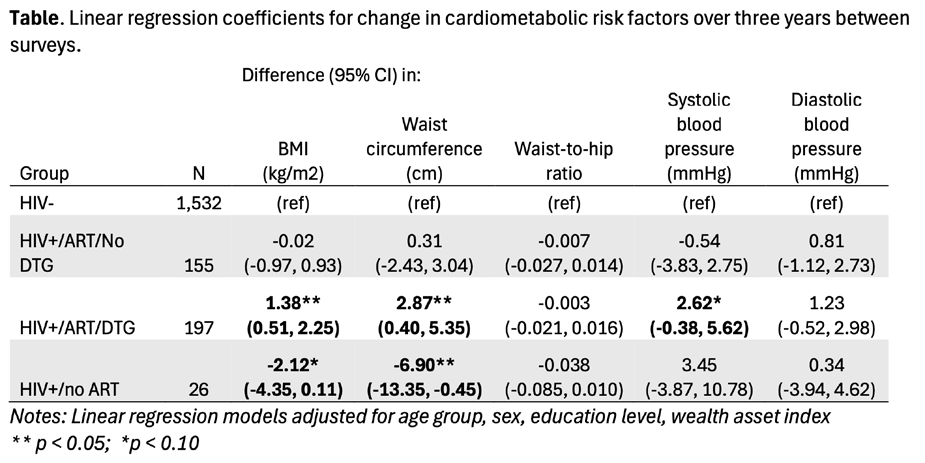
1300. Addressing Alcohol Use and Depression as a Strategy to Reduce HIV in KwaZulu-Natal, South Africa
Poster Abstracts
Page: 430
Mellesia Jeetoo1, Dyanna Charles1, Yao-Rui Yeo1, Jasmine Su1, John K. Mbaya2, Sheela Shenoi3, Neo Morojele4, Tony Moll5, R. Scott Braithwaite1
Background
KwaZulu-Natal (KZN) has the highest burden of HIV infections in South Africa, with continually high rates across the province. Conditions of Alcohol, Substance, and Mood disorders (CASM) substantially increase HIV risk behaviors, especially for high-risk groups. We identified the impact and cost-effectiveness of screening and treatment for alcohol use disorder (AUD) and major depressive disorder (MDD), as a potential strategy to reduce HIV burden in KZN.
Methods
We used an HIV compartmental transmission model to simulate the impact of CASM screening and treatment interventions on HIV diagnosis, treatment, and viral load suppression. We compared prevention as usual (PAU) with a scale-up of screening and treatment for AUD and MDD, using AUDIT-C and PHQ-9 for screening. Treatment included culturally tailored interventions such as motivational interviewing and problem-solving therapy for AUD, and cognitive-behavioral therapy for MDD. High-priority risk groups, identified with public health stakeholders, included adolescent girls and young women ages 15-24 (AGYW), adolescent boys and young men ages 15-24 (ABYM), female sex workers (FSW), men who have sex with men (MSM), and men ages 25-34. Outcomes were infections averted through 2030, quality-adjusted life-years (QALYs) gained, cost/infection averted, and cost/QALY gained. Analyses were based on causal components of HIV-risk associations, using a modified societal perspective with a 3% discount rate and 2022 $US costs.
Results
AUD accounts for 28.3%, MDD accounts for 11.8%, and combined they account for 33.6% of new HIV infections in KZN. Screening and treatment for AUD can reduce new infections by 14.3% at $2000/infection averted and $2900/QALY. Screening and treatment for MDD can reduce new infections by 5.8% at $1900/infection averted and $2600/QALY. Combined, AUD and MDD interventions can reduce new infections by 25.8% at $1600/infection averted and $2250/QALY. The most efficient way to scale up both AUD and MDD interventions is to first target AGYW at $950/infection averted and $1,300/QALY, followed by FSW at $1,000/infection averted and $1,350/QALY, MSM at $1,050/ infection averted and $1,450/QALY, men ages 25-34 at $1,650/infection averted and $2,300/QALY, and last, ABYM at $2,250/infection averted and $3,100/QALY.
Conclusions
Scale-up of integrated AUD and MDD screening and treatment on targeted risk groups has the potential to substantially reduce the number of HIV infections in KZN with very favorable cost effectiveness.
1301. Impact of SEARCH Person-Centered Care/Prevention on Clinical Outcomes by Alcohol Use in East Africa
Poster Abstracts
Page: 430
Gabriel Chamie1, Matt Hickey1, Joshua Schwab2, Florence Mwangwa3, Janice Litunya4, Sabina Ogachi4, Judith A. Hahn1, Jennifer Temple1, Elijah Kakande3, Jane Kabami3, Laura Balzer2, Maya Petersen2, Diane V. Havlir1, Moses Kamya5, James Ayieko6, the SEARCH Consortium
Background
Person-centered HIV care and prevention that provide low-barrier access and non-judgmental interactions may address poor outcomes among persons with alcohol use. Alcohol use is a risk factor for: a) non-retention in care and viremia among PWH, and b) non-retention in biomedical prevention and HIV acquisition among persons without HIV. We sought to determine if person-centered care/prevention can mitigate these risks.
Methods
Within the intervention arm of the ongoing SEARCH trial (NCT05768763), we evaluated associations between alcohol use and HIV care/ prevention outcomes at baseline and after 1 year. In 8 rural communities (~6000 adults each) in Kenya and Uganda in 2023, we conducted population-level HIV screening and asked about past 3-month alcohol use. PWH with/ at-risk of viremia (defined as pregnant/breastfeeding, 15-24 years, not on ART, or viremic (≥200 c/mL)/no VL in past year) were referred to “life events assessment” person-centered care (LEAP): LEAP was designed to assess for issues that may impact ART use and included brief alcohol counseling for PWH with unhealthy alcohol use. Persons without HIV and reporting risk were referred to dynamic choice HIV prevention (DCP), which offered flexibility and choice of PrEP/PEP, clinic/off-site visits, and clinic/self-HIV testing.
Results
Of 47,844 adults screened, 8380 (18%) reported recent alcohol use. Of 4716 (10%) PWH, 661 (14%) enrolled in LEAP: 149/661 (23%) reported alcohol use and 256/628 (41%) had VL≥200. At LEAP baseline, alcohol use was associated with increased risk of untreated HIV (RR:1.6 [95%CI:1.1-2.3]) and viremia (RR of VL<200: 0.6[0.5-0.9)). One year into LEAP, 431 (66%) participants were retained and 210/234 (90%) with VL results were suppressed: there were no significant associations between alcohol use and retention (RR:1.0[0.8-1.2]), or alcohol use and viremia (RR of VL<200: 0.8[0.5-1.2]). Of 43,128 adults without HIV at baseline, 11% reported HIV risk: alcohol use was associated with HIV risk (RR:1.5[1.3-1.6]). Of 2,260 DCP participants, 1076 (48%) were retained at 1-year: there was no significant association between alcohol use and reported risk (RR:1.0[0.8-1.2]) or retention in DCP (RR:1.0[0.9-1.1]) at 1-year.
Conclusions
One year into SEARCH person-centered care/prevention interventions, baseline associations between alcohol use and poor outcomes were no longer observed. These results suggest that the SEARCH interventions may mitigate risks of alcohol use among PWH and adults reporting risk of HIV.
1302. Depression and Suicide Risk Among Sexual and Gender Minorities: Insights From the ImPrEP CAB Brasil
Poster Abstracts
Pages: 430-431
David Richer Araujo Coelho1, Carolina Coutinho2, Brenda Hoagland2, Alessandro S. Farias3, Jose Valdez Madruga4, Josué Lima5, Maria Paula Mourão6, Cristina Pimenta7, Cristina Moreira Jalil2, Marcos Benedetti7, Monica Derrico2, Thiago Silva Torres2, Valdilea Gonçalves Veloso2, Beatriz Grinsztejn2, the ImPrEP CAB Brasil Study Group
Background
Mental health plays an important role in the effectiveness of HIV prevention strategies, as poor mental health can lead to decreased adherence and increased vulnerability to HIV infection. Long-acting PrEP modalities can help overcome barriers related to PrEP persistence and adherence, and should be considered for those with mental health challenges. We explored the association between sociodemographic factors, depression and suicide risk among young sexual and gender minorities (SGMs) participating in the ImPrEP CAB study. This is the first study to evaluate CAB-LA PrEP implementation in Latin America, a region where scaling up PrEP is urgently needed.
Methods
ImPrEP CAB Brasil is an implementation study to assess PrEP choice, feasibility, acceptability, and effectiveness of CAB-LA for SGMs (18-30 years) in public health PrEP services in 6 Brazilian cities. Depression and suicide risk were assessed at baseline, prior to the first CAB-LA injection, using the PHQ-9 (no/mild [0-9] vs. moderate/severe [10-27]) and C-SSRS (no risk vs. suicide risk), respectively, with ongoing monitoring during the study. Participants with positive screenings were referred for on-site psychiatric evaluation. Sociodemographic factors were analyzed using Chi-square or Fisher’s exact tests, with Bonferroni adjustments for multiple comparisons.
Results
Between Oct 2023 and Sep 2024, 1200 participants were enrolled and received the first CAB-LA injection. Most were cisgender men who have sex with men (MSM) (91%), aged 25-30 (62%), non-White (61%), and had >12 years of education (72%). Overall, 11% had moderate/severe depression and 9.6% suicide risk. Transgender women/travestis had higher rates of depression (24.2%) and suicide risk (16.7%) compared to cisgender MSM (9.9%; 8.9%, respectively). Transgender men had the highest rates of both outcomes (30.8%), while non-binary/queer participants had 13.3% for each. Depression and suicide risk were greater in those with ≤12 years of education (16.1% and 12.5%, respectively) compared to >12 years (9% and 8.4%, respectively). Suicide risk was highest among ages 18-20 (21.8%), compared to 21-24 (10.5%) and 25-30 (7.5%) (Table).
Conclusions
Our findings reveal high rates of moderate to severe depression and suicide risk among young SGMs enrolled in ImPrEP CAB-LA, especially among transgender persons, younger participants, and those with lower education levels. These results underscore the critical need to integrate mental health interventions into PrEP programs.
Table 1.
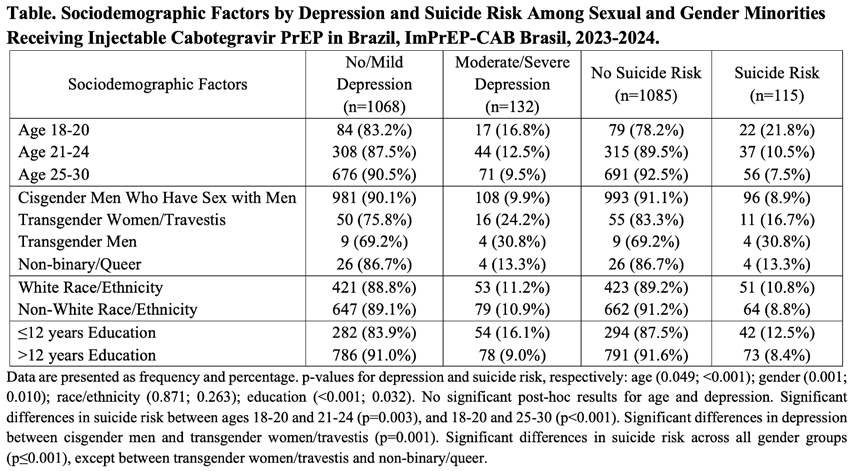
1303. Effects of a Cash Transfer Intervention on Internalized HIV Stigma Among ART Initiates in Tanzania
Poster Abstracts
Page: 431
Emmanuel Katabaro1, Matilda Mlowe1, Janeth Msasa1, Kassim Hassan1, Babuu Joseph1, Hamza Maila1, Agatha Mnyippembe1, Solis Winters2, Lila Sheila3, Amon Sabasaba1, Prosper Njau4, Anthony Kapesa5, Evelyne Konje5, Laura Packel3, Sandra I. McCoy2
Background
Retention in care remains a significant challenge for People Living with HIV (PLHIV) in Tanzania, possibly worsened by internalized HIV stigma and other factors leading to lower clinic attendance and treatment failure despite existing interventions. Financial incentives have emerged as a promising intervention for addressing social determinants of health potentially mitigating internalized HIV stigma by increasing autonomy and enhancing health promoting behaviors; drivers to conforming to social norms including health care and social support seeking behaviors which contribute to averting internalized HIV stigma.
Methods
We conducted a secondary analysis of a cluster randomized controlled from May 2021 to March 2023 across 32 Care and Treatment Centers (CTCs) with new ART initiates randomized 1:1 to receive 22,500 Tsh (~10 USD) conditional on clinic attendance for up to six months in addition to standard of care services or to the standard of care group. Using Chi square and Generalized Linear Model, we examined the effect of an intervention on stigma and change of stigma with time in the two groups using the validated HIV/AIDS Stigma Instrument for People Living with HIV/AIDS (HASI-P) at six and twelve months since ART initiation.
Results
Overall, 1795 study participants were balanced in the two study arms with the intervention arm having 983 (54.76%) participants, median [IQR] age of 35 [27-43] and more than half 1081 (60.22%) being females. Internalized HIV stigma prevalence varied within the two arms each achieving a more than 10% stigma decrease at 12 months. Chi square values of 32.79 with a P-value <0.001 and 51.81 with a P-value <0.001 in the control and intervention groups respectively, indicate significant change in stigma at 6 and 12 months and the intervention arm being superior with a significant adjusted coefficient (ACOEF) of -0.44 (95% CI: -0.64 - -0.23, < 0.001) (GLM) confirming a significant impact in the intervention arm at 12 months.
Conclusions
Internalized HIV stigma is still prevalent even in the presence of an intervention but decreasing with time calling for a multidimensional approach to address internalized HIV stigma including other forms of stigma e.g. external stigma. Cash transfer interventions for internalized HIV stigma should be used with intention to effect long term internalized HIV stigma reduction, a call for further studies evaluating the impact beyond the 12 months mark.
Keywords: Internalized HIV stigma, cash transfers, care outcomes
1304. Low-Barrier HIV Care Outcomes in the Context of Homelessness, Substance Use, and Mental Illness
Poster Abstracts
Page: 431
Julie Dombrowski, Fredericka Albertina T. Sesay, Chase Cannon, Meena Ramchandani, Raaka Kumbhakar, Jimmy Ma, Maria Corcorran, Elaine Thomas, Tim W. Menza, Brian Flaherty
Background
Low-barrier care (LBC) improves viral suppression (VS) among persons with HIV (PWH) who have complex needs. We extend prior analyses of LBC effectiveness and identify patient characteristics associated with greater benefit.
Methods
This retrospective cohort analysis included PWH enrolled in the Max Clinic in Seattle, WA from Dec 2014–Dec 2023 who had ≥6 months of observation time pre-and post-enrollment. Patient characteristics were drawn from electronic health records and viral load (VL) results from HIV surveillance. Observation periods were divided into 6-month intervals from the earliest analysis date or, if later, HIV diagnosis date. VS (<200 copies/mL) in each interval was defined by the last VL in the interval. Intervals missing VLs carried forward VS status from the prior window once, if suppressed, or until the next result if unsuppressed. Max enrollment in each interval was either pre- or post- (one way entry), with the first post- interval having ≥3 months of enrollment. Due to data clustering, generalized estimating equations were used to estimate VS probabilities. Predictors included Max enrollment, gender, and 3 dichotomous risk factors: homelessness/unstable housing (HUH), substance use (SU; methamphetamine, opioids, or cocaine), and severe mental illness (SMI; psychotic, bipolar, or personality disorder) at enrollment. Interactions among variables and sensitivity analyses were run to identify a properly specified predictive model. Predicted probabilities of VS across risk combinations illustrate Max effects.
Results
398 persons with 6928 6-month intervals were included; 76% cisgender men, 21% cisgender women, and 4% transgender women. 309 (78%) had HUH, 292 (73%) SU, and 112 (28%) SMI; 58 (15%) had none of these. Max Clinic enrollment was associated with an increase in VS [RR 1.78 (95% CI: 1.61-1.96; p<0.001)], with overall VS probabilities of 36% pre- and 60% post-enrollment. In bivariate analysis, VS was more likely among patients with HUH (RR 1.13, p=0.05), SMI (RR 1.13, p=0.04), and older age, but not SU (RR 1.14, p=0.09). A 5-way interaction of Max enrollment, HUH, SU, SMI, and gender was needed to fit the data, yielding risk profile and gender specific Max enrollment effects (Figure). Median VS in PWH with all 3 risks (pooled across gender) increased from 30% pre- to 70% post-enrollment vs. 38% to 52% among those with no risk factors.
Conclusions
VS increased with LBC enrollment across risk categories; PWH with multiple risk factors had the most improvement.
Figure 1.
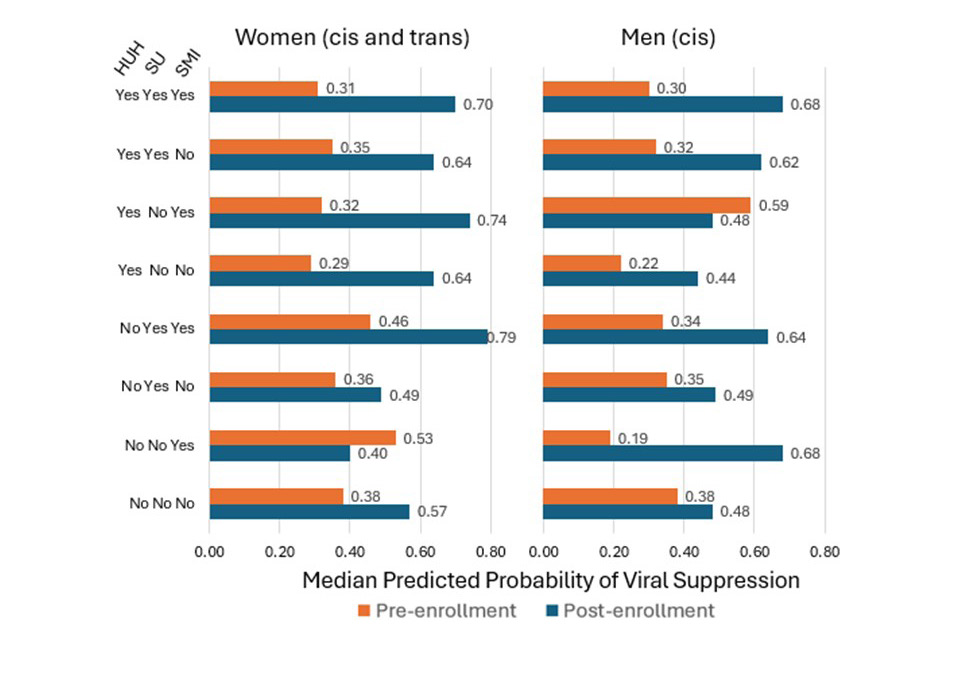
1305. Comparing 2 mHealth Technologies to Support PrEP Use Among MSM and Transgender People in the US
Poster Abstracts
Page: 432
Albert Y. Liu1, David Glidden2, Juwann Moss3, Cat-Dancing Alleyne1, Janie Vinson1, Janet Myers2, Kimberly Koester2, Stefani Butts4, Rikki Montoya5, Tommy Sanchez6, Jorge Roman5, Maria Rybicki-Newman6, Susanne Doblecki-Lewis7, Hyman Scott1, Susan Buchbinder1
Background
PrEP adherence and persistence are suboptimal in real-world settings, with half to two thirds of PrEP users discontinuing within 6 months. We describe results of a comparative effectiveness trial of two mobile health technologies to support PrEP use among MSM and transgender people in the US.
Methods
HIV-uninfected MSM and trans people were enrolled across 3 real-world PrEP delivery sites (a sexual health clinic in San Francisco, a municipal STD clinic in Miami, and an LGBT health center in Washington DC). Participants were randomized 1:1 to receive PrEPmate, a bidirectional texting platform using personalized communication through weekly check-in messages or DOT Diary, a mobile app promoting self-management of PrEP use through a pill-taking/ sexual diary with feedback on PrEP protection levels (Figure). PrEP persistence was measured as having sufficient PrEP medication prescribed through 6 months, and PrEP adherence was measured by self-report at 6 months and having protective tenofovir diphosphate (TFV-DP) levels ≥700 fmol/punch in dried blood spots collected at 6 and 12 months (preliminary results available in a subset (n=61)). Effects of treatment assignment on PrEP outcomes were assessed using mixed effects logistic models.
Results
From 7/2021-1/2024, we enrolled 296 participants. Mean age was 30.5 (IQR 26-37), 55% were Hispanic/Latinx, 16% African American; 91% were cisgender male, 9% identified as trans/non-binary; 31% were un-insured, 34% reported limited/marginal health literacy, and 39% were newly starting PrEP. The median number of sex partners in the past 3 months was 5; 55% reported recreational drug use; and 34% reported heavy alcohol use. PrEP persistence at 6 months was 77% in the PrEPmate vs. 78% in the DOT Diary arms (OR 0.92 95% CI 0.53-1.59, p=0.77). Median self-reported adherence was 90% in both arms (p=0.44). Protective TFV-DP was observed in 56% vs. 76% of samples in the PrEPmate vs. DOT Diary arms (p=0.17) (all on daily oral TDF/FTC). Acceptability of both tools was high, with >70% reporting they would use PrEPmate or DOT Diary in the future, and >75% would recommend them to friend.
Conclusions
In this diverse, sexually active cohort, over three-quarters of participants were persistent on PrEP at 6 months, with similar rates across arms. Self-reported adherence was high in both groups, with a preliminary trend towards higher protective TFV-DP in the DOT Diary arm. These data provide evidence for these tools to support PrEP use in real-world settings.
The figure, table, or graphic for this abstract has been removed.
Figure 1.

1306. Characteristics of Dapivirine Ring Users in the SEARCH Dynamic Choice HIV Prevention Studies
Poster Abstracts
Page: 432
Elijah Kakande1, Nicole Sutter2, Laura Balzer3, Douglas Black2, Jane Kabami1, James Ayieko4, Gabriel Chamie2, Helen Sunday1, Marilyn Nyabuti5, Colette Aoko4, Catherine A. Koss2, Maggie Czarnogorski6, Maya Petersen3, Moses Kamya7, Diane V. Havlir2, the SEARCH Collaboration
Background
The Dapivirine ring (DVR) is effective for HIV prevention among women at risk for HIV, and an alternative when other biomedical options may not be preferred or feasible. In the SEARCH Dynamic Choice Prevention (DCP) studies, participants at risk for HIV could choose between oral PrEP, PEP, CAB-LA, and the DVR. We describe characteristics of ring users, reasons for choosing the DVR, and adherence patterns in the first 3 months of ring use.
Methods
The SEARCH DCP intervention offers choice of biomedical prevention options with flexibility to switch between options over time guided by changing HIV risk and preference. The DVR was added as an option in 2 ongoing studies in rural Uganda and Kenya1) oral PrEP, PEP, CAB LA, DVR (NCT 05549726) and 2) oral PrEP, PEP, DVR (NCT 04810650). Participants were seen in the clinic at DVR initiation and every 12 weeks during follow-up, with HIV testing, and monthly reminder phone calls. Participants had the option to return to the clinic monthly for ring insertion until comfortable with self-care.
Results
Of 1560 women in the intervention arms of the two studies, 34 (2%) chose and used the Dapivirine ring during follow-up. 21(62%) were from Uganda, and 7 (21%) were aged 15-24. Prior to selecting the ring, 18 (53%) had ever used PrEP, 2 (6%) had ever used PEP, 6 (18%) had ever used CAB-LA, and 15 (44%) had never used any biomedical prevention option. At initiation, 21 (62%) chose the DVR due to experienced or anticipated pill burden, 8 (23%) initiated the ring because it is discrete, 4 (12%) preferred CAB-LA but were ineligible, and 1(3%) chose the ring because they would forget to take pills. Following the baseline visit, 30/34(88%) women self-inserted the ring at week 4. The remaining 5 (14%) had the ring inserted by a health care provider. Of 25 who reached at least 3 months since ring initiation, 21 (84%) changed their rings on schedule, 4 discontinued rings due to menorrhagia (1), change in risk (1), or travel outside the community (2).
Conclusions
Among women offered prevention options in a Dynamic Choice model that included oral PrEP, PEP, and CAB LA, adding the Dapivirine Ring as an option was feasible and a preferred option in 2% of women to date. The Ring provided an alternative to some women who had not chosen any of the other biomedical prevention options previously offered.
1307. Machine Learning to Predict Persons With HIV at Risk of Falling Out of Care
Poster Abstracts
Pages: 432-433
Ravi Goyal, Gordon Honerkamp-Smith, Alan Wells, Susan J. Little, Thomas Martin
Background
Effective antiretroviral therapy to maintain durable viral suppression is key to ending the HIV epidemic in the United States. We evaluated the ability of machine learning (ML) algorithms to predict people with HIV (PWH) who are at risk of falling out of care.
Methods
This was a retrospective study among all PWH in San Diego County. The study used mandatorily reported de-identified public health HIV data between 2017 and 2022. The data was partitioned temporally into two training (training and refinement datasets) and one validation dataset to accurately predict performance for predicting future observations. The outcome of interest was developing unsuppressed viral load (>200 copies/ml) during a year-long prediction window. Variables included socio-demographic data, baseline HIV infection information including stage and transmission risk, and longitudinal HIV viral load and CD4 data. HIV viral load testing patterns and trends were incorporated into the analysis. A random forest model was used to generate outcome predictions for the overall population and was stratified by race. Mediation analyses were undertaken to assess underlying causality.
Results
A total of 18,919 PWH were included in the analysis from which 13.1%, 13.0% and 12.1% had unsuppressed viral load during the observation window in the training, refinement and validation datasets respectively. The model had an area under the receiver operating characteristic (AUROC) curve of 82.2 (95%CI 79.3-85.0), a sensitivity of 33.8% (95%CI 28.6-39.0), and specificity of 96.9% (95%CI 95.7-97.2) corresponding to a positive predictive value of 55.7% (95%CI 48.7-62.8) and negative predictive value of 91.7% (95%CI 90.6-92.8). The AUROC was similar across race/ethnicities. Prior viral load testing pattern/trends such as linear trend, proportion of unsuppressed viral loads, and slope of viral load were identified as the most important variables by the model; however, they partially acted as mediators of underlying demographic (e.g., race) and HIV infection risk (e.g., injection drug use). Relative importance of variables and outcome prediction by race are shown in Figure 1.
Conclusions
ML algorithms using mandatory reported public health HIV data can predict which PWH will have future unsuppressed viral load and would be easily generalizable to other U.S. jurisdictions. Future work will assess its applicability in other settings and its clinical utility compared to existing data-to-care initiatives.
The figure, table, or graphic for this abstract has been removed.
1308. An AI-Powered Preventive Intervention for Stigma and Suicidal Ideation in HIV Self-Management
Poster Abstracts
Page: 433
Diego S. Villanueva Guzman1, Yuanchao Ma1, Sofiane Achiche2, Kim Engler1, David Lessard1, Bertrand Lebouche1
Background
Self-harm and suicidal ideation are significant health concerns among people with or vulnerable to HIV (PWH), who frequently experience stigma and related mental health challenges such as stress, anxiety, and depression. The AI-powered MARVIN chatbot provides HIV self-management-related knowledge and assists with medication adherence (antiretroviral therapy and pre-exposure prophylaxis). It also provides a safe space for PWH to ask sensitive questions which is amenable to mental health support. To enable MARVIN to manage high-risk messaging linked to stigma and mental health issues, we developed a preventive intervention module to address extreme user intentions.
Methods
Following the CO-STAR framework, ChatGPT was prompt-tuned to identify 3 types of message intent: self-harm, insult, and non-extreme (i.e., any other intent). To test its performance, we compiled three public hate speech databases from an online catalog (hatespeechdata.com) and combined them with MARVIN-user conversations and a synthetic dataset (N=1000 for each class). We computed precision, recall, and F1 Score for each class, as well as overall accuracy. After integrating ChatGPT into MARVIN, three PWH, two engineers, and a doctor, participated in a two-hour test by performing 14 conversational scenarios and completing a two-item questionnaire on conversation clarity and user satisfaction.
Results
With one-shot prompting, ChatGPT attained 97.00% and 94.90% for recall on self-harm and insult intent, respectively. The overall accuracy reached 95.57%, with the remaining metrics shown in Figure 1. The ChatGPT-MARVIN hybrid model then successfully generated appropriate responses containing 1) emergency contact information for self-harm intents; 2) messages guiding users to use stigma-free expressions for insult messages; and 3) a response reviewed by a medical expert for a non-extreme intent. All six testers found MARVIN’s responses to be clear and concise and were satisfied with the overall experience. However, one patient participant suggested including links to additional resources.
Conclusions
Testing this anti-stigma preventive module integrated into MARVIN underscored its strong capacity to correctly identify extreme intents and generate concise, satisfying responses. Our findings suggest that AI-driven chatbots, viewed as safe spaces, could play a pivotal role in promoting self-management strategies while mitigating stigma and providing users with non-judgmental mental health support.
Figure 1.
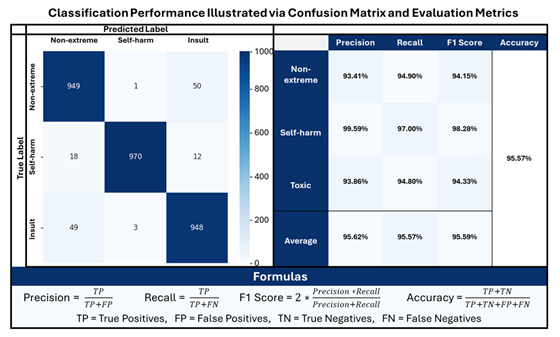
1309. Developing Machine Learning Algorithms to Predict Treatment Interruptions in HIV Care in Uganda
Poster Abstracts
Page: 433
Alex Mirugwe1, Solomon Ssevvume1, Edward Bichetero1, Alice Namale1, Evelyn Akello1, Paul Katongole1, Rose Baryamutuma1, Paul Mbaka2, Enos Sande3, Arthur Fitzmaurice4, Kenneth Musenge3
Background
Achieving consistent retention of people living with HIV (PLHIV) in care remains a challenge in Uganda, despite substantial progress towards UNAIDS 95-95-95 targets. This study used advanced machine learning and deep learning techniques applied to deidentified longitudinal treatment and demographic data routinely collected in HIV clinics to predict clients at greatest risk of missing treatment appointments.
Methods
This retrospective study used a longitudinal dataset of 66,206 PLHIV who initiated HIV care during 2000-2023, with 1,479,121 clinical visits from 86 health facilities in Uganda, extracted from the central case-based surveillance database. We trained and compared the performance of traditional machine learning models (Decision Tree, Random Forest, AdaBoost, and XGBoost) and the Bidirectional Encoder Representations from Transformers (BERT), model, which is more suitable for analyzing sequential data (e.g., medical records). Feature importance was analyzed using the shapely additive explanations method to identify the most influential predictors. We also investigated the impact of various sampling techniques, including undersampling, oversampling, and synthetic minority oversampling to address class imbalance and improve model performance. Model performance was evaluated using accuracy, precision, recall, F1-score, and AUC-ROC metrics.
Results
The dataset comprised 43,132 (65.1%) females with a median age of 36.0 years and 23,074 (34.9%) males with a median age of 41.0 years. Each client had an average of 22.34 clinical visits, with 10.7% of appointments missed and 74.9% missing at least one appointment. The BERT model demonstrated superior performance, achieving an AUC score of 0.96, 94.8% accuracy, 97.1% precision, 100% recall, and an F1-score of 94.2%. In comparison, the XGBoost model with undersampling achieved an AUC score of 0.90, 80.7% accuracy, 97.1% precision, 80.8% recall, and an F1-score of 88.2%. Feature importance analysis showed that historical treatment adherence, visit frequency, treatment duration, and visits on the current regimen are the most influential predictors of appointment interruption.
Conclusions
This study highlights the efficacy of transformer-based models like BERT in handling sequential clinical data and improving patient retention predictions. Integrating these predictive models into electronic medical systems could facilitate proactive treatment strategies, enabling the identification of clients at risk of missing their appointments.
Figure 1.
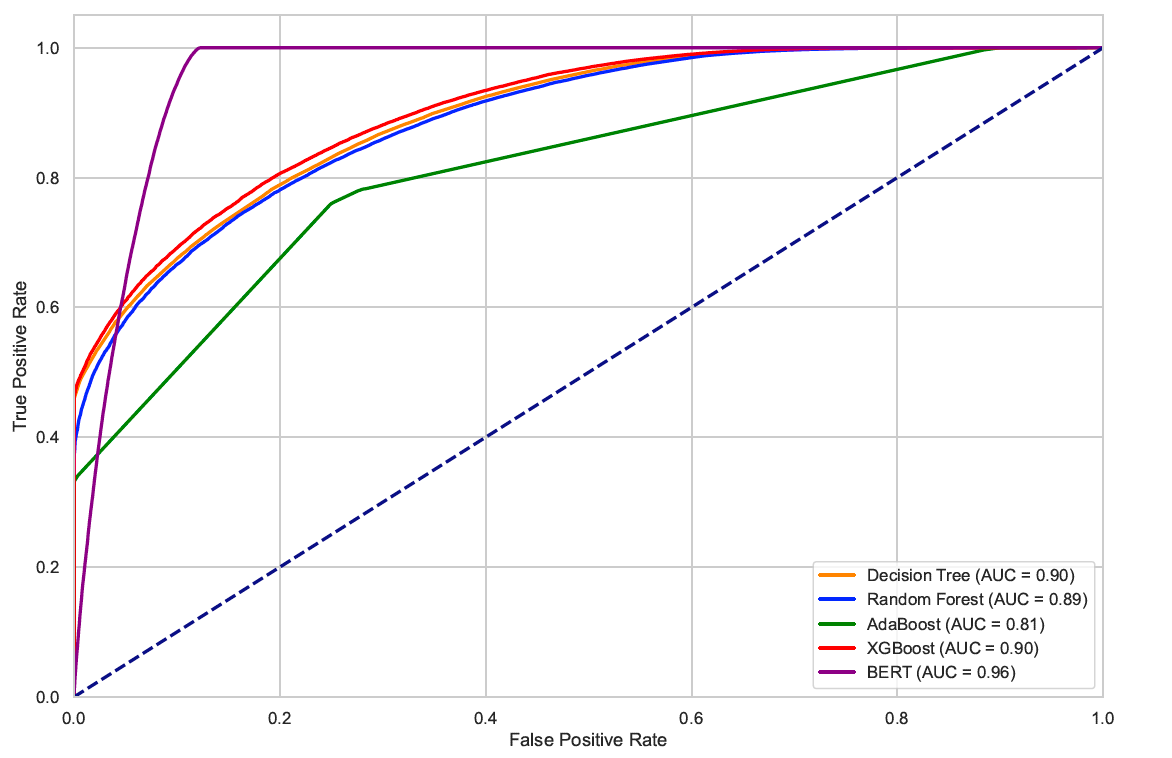
1310. Exposure and Engagement Drive Impact: Results From a Digital Health Trial With Rwandan Adolescents
Poster Abstracts
Pages: 433-434
Rebecca Hemono1, Lauren Hunter1, Emmyson Gatare2, Laetitia Kayitesi2, Therese Bagwaneza2, Raissa Umutoni2, Natacha Mugeni2, Stefano Bertozzi1, Rebecca Hope3, Sandra I. McCoy1
Background
Digital health interventions are a promising approach for increasing access to health information and services, but low or non-sustained engagement can limit effectiveness. We examined how exposure to and engagement with a digital family planning and reproductive health (FP/ RH) intervention (“CyberRwanda”) influenced the intervention’s impact for Rwandan adolescents.
Methods
A 3-arm, cluster randomized, hybrid effectiveness-implementation trial was conducted with 6,078 students in 60 secondary schools from 2021-2023. Schools were randomized 1:1:1 to CyberRwanda self-service (self-guided access to digital platform), CyberRwanda facilitated (self-guided and group access plus in-person activities), or comparison (no access). Dose-response, treatment on the treated, and complier average causal effects (CACE) were estimated to determine the intervention’s impact among participants with varying levels of school exposure (any, <12 vs. ≥12 months) and platform engagement (high vs. low frequency use, high-frequency plus ≥12 months exposure). The primary outcomes were childbearing, contraceptive use, and HIV testing. Secondary outcomes included FP/RH knowledge, attitudes, self-efficacy, and behavior. Generalized linear mixed models and instrumental variable models were used to estimate prevalence differences (PD) comparing all CyberRwanda participants to the comparison.
Results
Overall, 91.5% of CyberRwanda participants were exposed to the intervention at school. Of these, 62.1% had ≥12 months of exposure; 31.7% were high-frequency users. Exposure time and engagement were found to be the primary drivers of impact. No effects were detected among participants exposed for <12 months; however, the ≥12-month exposure subgroup had significant improvements on several secondary outcomes, including condom use among sexually active participants (56.6% CyberRwanda vs. 44.2% comparison, PD: 0.13, 95% confidence interval: 0.06, 0.21). CACE analyses revealed that, if sexually active participants had ≥12 months exposure and were high-frequency users, condom use could increase by 37 percentage points relative to the comparison arm. There were no effects on the primary outcomes for any of the exposure groups.
Conclusions
When provided with access for a year or more, CyberRwanda has the potential to increase condom use and reduce risk of critical FP/RH outcomes including HIV and unintended pregnancy. These results underscore the need for sustained access to and engagement with digital platforms to achieve impact.
1311. Digital Strategy to Improve PrEP Adherence Among MSM: A Stepped-Wedge Randomized Trial in China
Poster Abstracts
Page: 434
Chunyan Li1, Zhuoheng Yin2, Quanmin Li3, Linghua Li3, Songjie Wu4, Ke Liang4, Gifty Marley2, Chengxin Fan2, Yifan Dai2, Haojie Huang5, Aniruddha Hazra6, Jonathan Lio7, Joseph D. Tucker8, Renslow Sherer7, Weiming Tang8
Background
Digital Health intervention is promising for encouraging behavior change. We conducted a stepped-wedge trial (SWT) to evaluate the efficacy of co-created digital PrEP adherence intervention to facilitate adherence among Chinese MSM PrEP users.
Methods
This trial is nested in a PrEP demonstration trial in Guangzhou and Wuhan, China (NCT04754139). Participants were provided TDF/FTC for 12 months and followed up quarterly (M3, M6, M9, M12). MSM were randomly allocated to four sequential groups receiving weekly WeChat-based (a popular Chinese chat media) digital messages in a quarterly staggered order. Intervention messages were co-created through open calls and three co-creation rounds with 19 PrEP users in the trial, including short videos, images, and infographics. Per-protocol analysis and generalized linear mixed-effects models were used to assess primary outcomes, including self-reported optimal PrEP adherence in past 30 days (daily users: 6-7 pills/week, on-demand users: full compliance with the 2-1-1 dosing scheme per sex event) and study retention (i.e. whether loss to follow-up).
Results
From July 2021 to September 2024, 1087 MSM (mean age=28.0, IQR=24.0-31.4) enrolled. About one quarter of participants were college students, and three quarters had 2 or more sex partners in the past 3 months. About half of the participants reported using on-demand regimen (2:1:1) throughout the study. Participants enrolled in each SWT cluster at baseline were 251, 281, 276, and 279, respectively. About 33.8% (n=368) of the participants dropped out or lost to follow-up before M12, with no significant difference across SWT clusters. From M3 to M12, over 75% of the participants reported optimal adherence to PrEP, with a non-significant secular trend of declining adherence over time. The digital intervention marginally improved adherence levels (aOR=1.18, 95%C.I.: 0.85-1.60), but not statistically significant. On-demand PrEP users versus daily PrEP users were less likely to report optimal adherence (aOR=0.06, 95%C.I.: 0.04-0.09). MSM with higher income or having less sex partners are more likely to report optimal adherence.
Conclusions
Digital PrEP adherence intervention messages with Chinese MSM has the potential to improve self-reported adherence. Our findings of varied adherence performance among individuals highlight the need for future research into differentiated PrEP interventions.
1312. Impact Analysis and Machine Learning Forecasts of HIV Viral Load Suppression in 21 African Countries
Poster Abstracts
Page: 434
Amobi A. Onovo1, Melaku Dessie2, Gonza Omoro3, Sara Herbst4
Background
Viral load suppression (VLS) is crucial for controlling HIV transmission and improving health outcomes in people living with HIV. While PEPFAR-supported programs have made substantial progress in improving VLS, innovative approaches are needed to sustain and enhance VLS in resource-limited settings. This analysis integrates machine learning and the difference-in-difference (DiD) method to forecast future VLS and assess the impact of programmatic efforts across 21 PEPFAR-supported countries in sub-Saharan Africa.
Methods
Historical aggregate PEPFAR program data from 2017 to 2024 were analyzed to identify key factors associated with VLS improvement. A program indicator matrix, aligned with PEPFAR's Monitoring, Evaluation, and Reporting (MER) guidance, was computed for key HIV metrics. This matrix was integrated with socio-demographic, socioeconomic, and health indicators from the World Bank's World Development Indicators to create a comprehensive analytical dataset. A DiD analysis was conducted to compare changes in VLS between 2017 and 2024. An XGBoost machine learning algorithm was used to develop a time-series model forecasting VLS from 2025 to 2030, tuned and validated using five-fold cross-validation with root mean square error (RMSE) as the primary performance metric.
Results
The XGBoost model exhibited strong predictive accuracy when validated against actual data from 2017-2024, achieving an RMSE of 1.61 on the training set and 2.30 on the testing set. This small difference indicates minimal overfitting and reliable generalization to unseen data. The model identified key predictors of VLS, including viral load coverage, new enrollments in PrEP, and age demographics. Notably, the 15-64 age group had a more significant impact on VLS outcomes compared to the pediatric population (ages 0-14). The DiD analysis revealed a statistically significant increase in VLS from 2017 (82.93%) to 2024 (95.59%) across all 21 countries, with an overall estimated 15.27% increase (p=0.0016). The forecast suggests a continued upward trend in VLS through 2030, contingent on sustained programmatic interventions identified.
Conclusions
This analysis demonstrates the potential of machine learning to identify targeted HIV interventions that can be modified to improve program performance. It underscores the need for innovative, data-driven strategies to enhance viral load testing, PrEP enrollment, and ART uptake for sustained VLS in sub-Saharan Africa.
Figure 1.
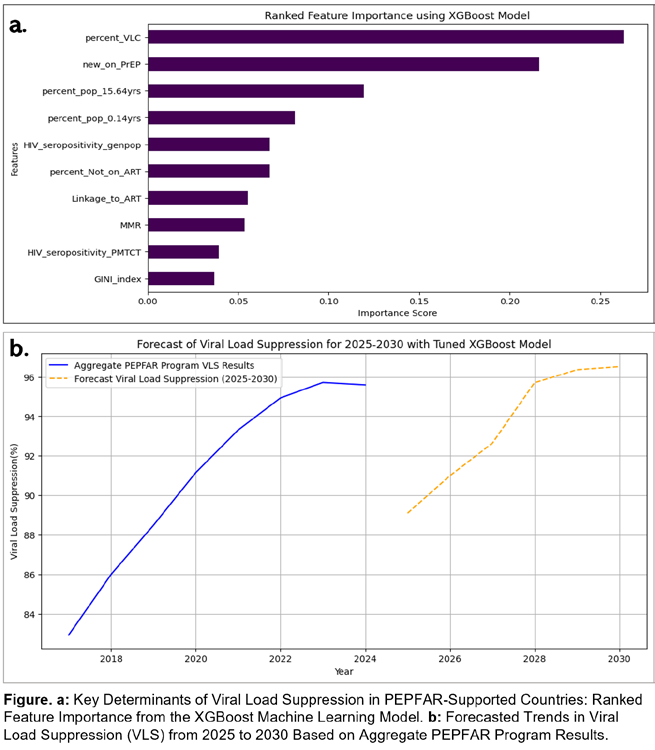
1313. Enhanced Language Models for Predicting and Understanding HIV Care Disengagement
Poster Abstracts
Page: 435
Junzhe Shao1, Waverly Wei2, Qiuran Lyu1, Rebecca Hemono1, Xinwei Ma3, Joseph Giorgio1, Zeyu Zheng1, Emmanuel Katabaro4, Matilda Mlowe4, Amon Sabasaba4, Caroline Lister5, Siraji Shabani6, Prosper Njau7, Sandra I. McCoy1, Jingshen Wang1
Background
Despite significant progress in HIV treatment, maintaining patient engagement in care remains a critical challenge. While UNAIDS aims to achieve the "95-95-95" targets by 2030, many people living with HIV (PLHIV), particularly in sub-Saharan Africa, tend to discontinue care within two years. Current one-size-fits-all interventions often lack efficient targeting, and resources could be better allocated to those at the highest risk. The increasing availability of electronic medical records (EMRs) in sub-Saharan Africa, combined with advancements in AI and ML techniques, offers promising solutions for predicting which PLHIV may require additional support.
Methods
We developed a novel AI model by enhancing a pre-trained LLM (LLaMA 3.1, an open-source pre-trained LLM from Meta) using routinely collected EMRs from Tanzania's National HIV Care and Treatment Program from January 1, 2018, to June 30, 2023 (4,809,765 records for 261,192 people) to identify people at risk of disengaging from HIV care or developing adverse outcomes. Outcomes included risk of ART non-adherence, non-suppressed viral load, and loss to follow-up. Models were evaluated both internally (Kagera region) and externally (Geita region), with performance compared against state-of-the-art ML models and zero-shot LLMs. Additionally, a team of HIV physicians in Tanzania assessed the LLM's predictions, and LLM provided justifications for a subset of patient records to evaluate their clinical relevance and reasoning.
Results
The enhanced LLMs achieved higher AUC than the supervised ML model and zero-shot LLMs in internal and external validation. When focusing on the 25% of PLHIV predicted as most likely to LTFU, the model correctly identified 78% (2,515 of 3,224) of PLHIV genuinely at risk in internal validation and 73% (7,105 of 9,733) in external validation [Figure 1]. Attention score analysis indicated that the enhanced LLM focused on keywords such as gaps in follow-up care and ART adherence. The human expert evaluation showed alignment between clinician assessments and the LLM's predictions in 65% of cases, with experts finding the model's justifications reasonable and clinically relevant in 92.3% of aligned cases.
Conclusions
The results underscore the potential of LLMs in providing actionable public health insights that can guide targeted interventions to enhance patient retention. This study represents the first application of fine-tuned LLMs in predicting disengagement from HIV care using large-scale EMR data.
Figure 1.
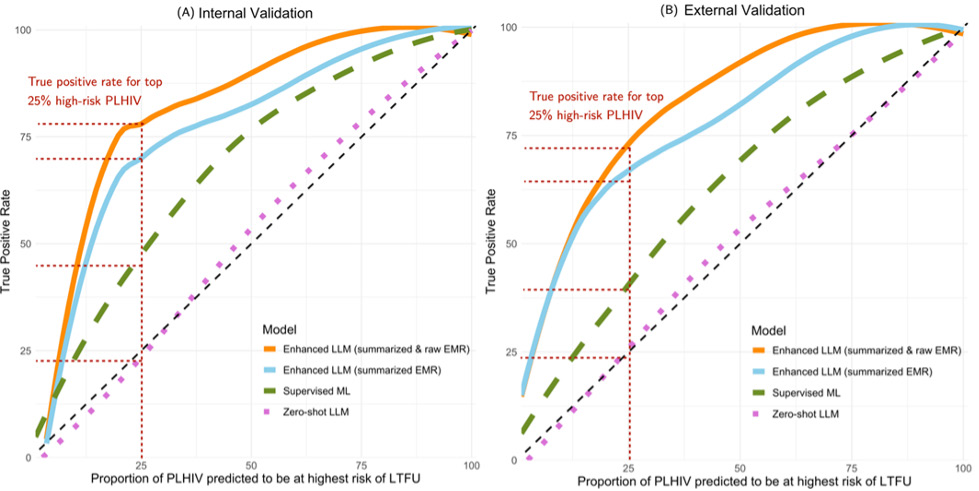
1314. Hair Salons as a Promising Space to Offer HIV Prevention Services for Young Women in Lesotho
Poster Abstracts
Page: 435
Alain Amstutz1, Malena Chiaborelli1, Pontšo Sekhesa2, Madeleine Sehrt3, Tsepang Mohloanyane4, Meri Hyöky2, Donaldson Conserve5, Karen Hampanda3, Mamaswatsi Kopeka5, the Hair SALON Collaborative
Background
Adolescent girls and young women in southern Africa are disproportionately affected by HIV and sexual reproductive health (SRH) challenges. There is a need for more accessible and de-medicalized community spaces to offer person-centred HIV/SRH services for this key population. We aimed to assess the acceptability and feasibility of offering HIV/SRH services at hair salons in Lesotho.
Methods
We used an innovative citizen scientist approach, whereby hair stylists were recruited through social media (https://hairsalonproject.com/), completed their questionnaires, and subsequently recruited their clients aged 15-35 years as respondents. All questionnaires were co-developed with stylists/ clients and a stepwise verification process using GPS, pictures and a local mobile payment system ensured data quality. In addition, we conducted individual in-depth interviews among 14 stylists/clients, following the rapid thematic analysis framework, supported by natural language processing. The protocol is registered (osf.io/VP8WZ).
Results
During 4 months (Apr - Jul 2024), we recruited 157 hair stylists (median age 29; [interquartile range 25-33]; 157 salons across all ten districts) and 307 female clients (median age 26 [22-30]). Among stylists, 93.6% were comfortable offering oral HIV self-testing (HIVST), 92.4% pre-exposure prophylaxis (PrEP), and 91.7% post-exposure prophylaxis (PEP). Among clients, the corresponding proportions were 93.5%, 88.3%, 86.4%, respectively. However, immediate demand was 30.8% for HIVST, 22.1% for PrEP and 14.9% for PEP. Acceptability and demand were higher for family planning methods and menstrual health products (Figure 1). Only 10.8% of stylists thought that offering HIV/SRH services would negatively impact their business; 81.5% have a toilet on-site, 21.0% an additional confidential space. The majority of clients visit their salon 1-2 times monthly. Hair salons were more accessible than the nearest healthcare centre in terms of cost and time. The qualitative analysis confirmed the high acceptability of the hair salon as a low-threshold access space and less judgemental than clinics, but raised concerns regarding confidentiality.
Conclusions
These findings suggest high acceptability and feasibility of HIV/SRH services at hair salons in Lesotho, providing the basis for a pilot intervention. Further research needs to examine the discrepancy between the hypothetical acceptability and immediate demand, the role of stylists, and individual components of the service package.
Figure 1.
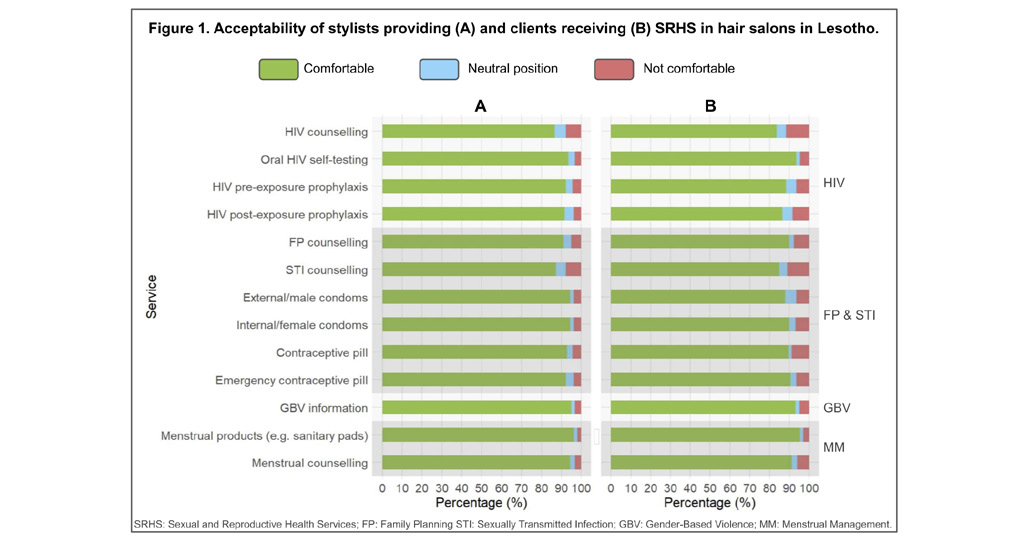
1315. Capacity for PrEP Implementation at Pharmacies in Baltimore and San Diego: A Mixed-Methods Study
Poster Abstracts
Pages: 435-436
Lipin Lukose1, Iheanyichukwu Samuel Onwubiko1, Shanaya Sidhu2, Terence Hendrix2, Amanda Rosecrans3, Gabriel A. Wagner2, Sheree Schwartz1, Christopher Kemp1
Background
HIV pre-exposure prophylaxis (PrEP) uptake remains disproportionately low among communities with the highest HIV incidence in the US due to stigma, structural inequities, limited access, and long wait times. Pharmacy-initiated PrEP could dramatically expand access, but pharmacy capacity for PrEP delivery has been understudied. Current legislation allows pharmacy-initiated PrEP in 10 states (including California) but has not yet been legalized in Maryland. Our objective was to assess the capacity of pharmacies in Baltimore and San Diego for initiating clients on PrEP.
Methods
We conducted a census of all licensed pharmacies in Baltimore, Maryland and San Diego, California, and administered brief surveys via phone, assessing capacity for PrEP initiation and the status of any pharmacy-initiated PrEP programs in place. We then conducted semi-structured interviews with a subset of pharmacists to explore perceptions of pharmacy-initiated PrEP and contextual determinants of implementation success. Survey data were analyzed descriptively; interview data were analyzed using qualitative content analysis and the Consolidated Framework for Implementation Research (CFIR).
Results
We contacted 418 pharmacies; 256 (61%) completed the survey. Chain pharmacies were the most predominant in Baltimore (41%) and San Diego (63.5%), followed by independent community pharmacies (33.5%; 19.3%). Most pharmacies could offer HIV-related counselling services (81%), with around 58% having a private space available for counselling. Ten pharmacies (5.5%) reported offering pharmacy-initiated PrEP in San Diego, with an average of 4 clients initiated per pharmacy. Limited ability to conduct point-of care testing for HIV, STIs, and liver function was observed. Interviews revealed substantial enthusiasm among pharmacists, with respondents feeling the program would reduce stigma and foster closer patient relations. However, barriers such as lack of awareness, prescribing status, staffing shortages, and insufficient financial compensation were highlighted. Pharmacists identified adequate training, advertisement to clients, and systems integration as essential for offering PrEP initiation. They also emphasized the need for proper workflow and protocols, reimbursement channels, and leadership support.
Conclusions
Adoption of pharmacy-initiated PrEP by pharmacies may improve PrEP accessibility, though additional implementation supports will be critical to expand the number and size of pharmacy-based PrEP programs.
1316. Evaluating Spatially Targeted HIV and Harm Reduction Strategies Among People Who Inject Drugs
Poster Abstracts
Page: 436
Jasmine Wang1, Steven J. Clipman2, Shruti H. Mehta1, A. K. Srikrishnan3, Shobha L. Mohapatra3, Muniratnam S. Kumar3, Gregory M. Lucas2, Carl A. Latkin1, Sunil S. Solomon2, Amy Wesolowski1
Background
People who inject drugs (PWID) continue to experience high HIV incidence in a number of settings, including India; however, HIV is not homogeneously distributed in PWID and varies across social (injection partners) and spatial (injection venues) networks. To maximize impact of evidence-based interventions for PWID, it is critical to identify novel delivery points, including injection venues, to deliver HIV (testing & treatment) and harm-reduction services (medication for opioid use disorder (MOUD) and syringe service programs (SSP).
Methods
2512 PWID (10 index and 2502 recruits) were enrolled between 2017-19 in Delhi, India using a sociometric design (named injection partners). Based on network and behavior data, we constructed an individual-based transmission model of the dynamic injection network and injection venue attendance of the cohort with an exponential random graph model (ERGM) from 2017 to 2023. HIV incidence (baseline = 7.3 per 100 person-years) was simulated for each spatial targeting strategy and with increased service coverage corresponding to 50%, 75% or 100% of their respective UNAIDS/UNODC goals to quantify the impact of spatially targeted strategies on HIV epidemic control.
Results
110 injection venues with >10 visitors were identified at baseline, forming 3 spatial clusters of highly aggregated venues visited by PWID roughly based on their residence. In models targeting the same number of venues (between 1 to 12), prioritizing the most visited venues stratified by spatial clusters covered more individuals vs. prioritizing the overall most visited venues until the total targeted venues surpassed 9 (Figure). Simulation results showed that HIV incidence decreased with increasing service and venue coverage. With all services reaching 50% of their respective coverage goals, HIV incidence decreased to between 4.8 per 100PY [4.7, 4.9, 95%CI] (1 venue) and 3.7 per 100PY [3.6, 3.9] (when targeting 1 and 12 venues, respectively). Impact was greater (reduced to 3.0 per 100PY for 1 venue [2.9, 3.1] and 1.8 per 100PY for 12 venues [1.7, 1.9]) when all service goals were completely reached.
Conclusions
In settings with limited resources, these findings suggest that targeting venues that are spatially distinct with minimal overlap of PWID has a larger impact on reducing HIV incidence than targeting the most highly populated venues which may cluster together limiting reach of PWID in a community. However, as coverage across venues expands the two approaches tend to overlap.
The figure, table, or graphic for this abstract has been removed.
1317. Traditional Healers: A Nontraditional Gateway to Engagement in HIV Care in Rural Uganda
Poster Abstracts
Page: 436
Radhika Sundararajan1, Suzanne McCluskey2, Denis Nansera3, Winnie Muyindike3, Juliet Mwanga-Amumpaire3, Misha Hooda1
Background
Only 23% of people living with HIV (PLWH) in rural Uganda are virally suppressed, which falls far short of the 95% suppression target set by UNAIDS. This illustrates the need for tailored strategies to engage PLWH in rural settings and retain them in care. Traditional healers (TH) are often the first point of contact for healthcare in rural communities, including for PLWH. In our cluster-randomized clinical trial (NCT 05943548), we trained Ugandan TH to identify PLWH receiving care at their practices who were not engaged in HIV care.
Methods
In August 2023, we trained TH in Mbarara, Uganda, to screen for adult PLWH at their practices through 1) facilitation of HIV self-testing for people who had not been tested for HIV in the past 12 months and did not have a known prior HIV diagnosis and 2) evaluation of adherence among known PLWH using the CASE Adherence Index Questionnaire (CAIQ). TH clients with a reactive HIV self-test or CAIQ score <10 underwent further screening involving measurement of HIV-1 viral load (VL). All virally unsuppressed PLWH (VL >200 copies/mL) were referred to a local HIV clinic to (re-)initiate care.
Results
Between September 2023 and September 2024, 200 PLWH were identified at participating TH practices. 106 PLWH were newly diagnosed via self-testing at the TH location; for 57% (n=60) of these PLWH, the TH-facilitated test was the first lifetime HIV test that they received. Among participants who underwent HIV self-testing, prevalence of HIV was 2% (n=96/4732). TH identified 94 known PLWH who met the criteria for ART non-adherence; among these, 56% (n=53/94) had unsuppressed HIV VL.
Conclusions
Our data highlights the untapped potential of TH in reaching rural Ugandan people living with HIV who are not engaged in HIV care. Over half of newly diagnosed individuals received their first HIV test at a TH practice, suggesting that TH can complement formal health services and play a crucial role in advancing progress toward the UNAIDS 95% testing target. We also identified many PLWH with high VL who are at high risk of HIV-related complications and contributing to onward transmission. Future research should explore how some PLWH maintain viral suppression despite disengagement, assess the long-term impact of TH interventions, and identify effective ways to support TH in delivering HIV care.
Table 1.
| Participant Demographics |
Median [IQR] or n (%) |
| Gender |
| Male |
96 (48%) |
| Female |
104 (52%) |
| Age (years) |
35 [28-42] |
| Highest Education Level |
| No Education |
28 (14%) |
| Primary School |
140 (70%) |
| Secondary School |
25 (12.5%) |
| Tertiary/Vocational |
7 (3.5%) |
| Manner of Enrollment |
| Newly Diagnosed by TH |
106 (53%) |
| Defaulted from HIV Care |
94 (47%) |
| Viral Load Status |
| Supressed (VL <200 copies mL) |
60 (30%) |
| Low Level Viremia (VL 201-1000 copies/mL) |
8 (4%) |
| Unsuppressed (VL >200 copies/mL) |
140 (70%) |
| Viral Load of Unsuppressed PLWH (copies/mL) |
125,400 [29,631-317,494] |
1318. Home CAB/RPV Provides Novel Approach to Achieve Viral Suppression in PWH With Adherence Challenges
Poster Abstracts
Page: 437
Megan E. Dieterich, Rupa Patel, Monica E. Gouzoulis, Keyerra Richardson, Erin E. Kelley, Robert E. Bangert, David A. Fessler, Sarah Henn, Stephen E. Abbott, Namrata P. Shah, Rachel E. McLaughlin, Meghan Davies, H. Jonathon E. Rendina
Background
Cabotegravir/Rilpivirine (CAB/RPV) demonstrated superiority to oral ART in persons living with HIV (PWH) with adherence challenges. We evaluate an innovative support services program, including home administration of injections, to support CAB/RPV adherence in PWH.
Methods
In 2016, Whitman-Walker Health initiated the Mobile Outreach Retention and Engagement Program (MORE) to support adult PWH with adherence challenges (viremia and/or no medical visits in 6 months). The MORE program offers mobile care navigators, transportation and Physician Assistant-led home medical/phlebotomy visits. In 2023, MORE integrated home administration of maintenance CAB/RPV injections. To evaluate this strategy, we are conducting an effectiveness-implementation hybrid type-2 study comparing the MORE group to a 2:1 matched comparison group of PWH receiving CAB/RPV without MORE support. The primary outcome is viral suppression at 4 months with a secondary outcome of 4-month injection adherence (+/-7 day window). Data was collected from EHR extraction and medical chart review.
Results
To date, 44 PWH have initiated CAB/RPV through MORE and 33/44 have >4 months since initiation. Median age is 44 years, 39% female, and 93% Black. The comparison group (n=88) was matched for age, race and sex other factors and has similar rates of public insurance (76% control vs. 82% MORE), but significantly fewer PWH with baseline viremia (≥200 c/mL) than MORE (6% vs. 27%), χ 2 (1, n=17) = 12.1, p14d late), due to insurance lapse with restart. The comparison group had 4 late injections, 3 missed injections with restart, and 4 missed injections with discontinuation. At 4 months, 100% (33/33) of PWH in MORE and 98% (65/66) of PWH in the comparison group had maintained or achieved viral suppression.
Conclusions
Among a population of PWH with adherence challenges, we demonstrate that an enhanced care navigation program offering home CAB/ RPV administration can achieve acceptability, high adherence and 100% viral suppression, during early the early phases of this study. Implementation strategies including at-home ART injections can help achieve national goals to end the HIV epidemic.
Figure 1.
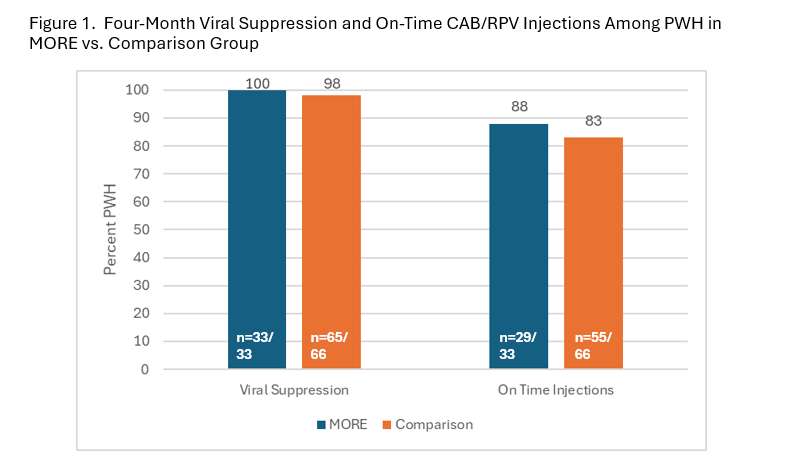
1319. Uptake of Online HIV PrEP and PEP in Kenya After Removal of Subsidies: A Pilot Extension Study
Poster Abstracts
Page: 437
Daniel K. Were1, Albert Tele1, Linda U. Nzabamwita2, Rouella Mendonca3, Geoffrey Odhyambo1, Salima Saidi4, Samira Abdulrashid4, Elizabeth Irungu1, Kelly Curran5, Kaitlyn Atkins2
Background
Kenya is experiencing rapid growth of e-pharmacy and telemedicine, which could be leveraged for delivery of HIV pre- and post-exposure prophylaxis (PrEP and PEP) to groups not reached through traditional models. We conducted a pilot study in partnership with MYDAWA, a Kenyan online pharmacy, to evaluate a modified online PrEP & PEP delivery model in which HIV tests are not subsidized and includes a service fee, in Nairobi and Mombasa Counties.
Methods
Interested clients completed a teleconsultation to assess for eligibility based on Kenya national guidelines for PrEP/PEP; those eligible ordered an HIV self-test (HIVST) at $9.2/ $11 or a provider-administered rapid diagnostic test (RDT) for $6. Those testing HIV-negative received a 30-day supply of free-of-charge government donated PrEP/PEP. HIVST and PrEP/PEP were delivered to the client’s preferred location for $1.1. Clients who refilled PrEP at Month-1 received a 90-day supply. We conducted a descriptive analysis of PrEP/PEP service delivery data and fitted Cox proportional hazards models to estimate hazard ratios (HRs) and 95% confidence intervals (CIs) for the association between user characteristics and PrEP outcomes.
Results
From January-September 2024, we screened 1,621 clients of whom 75 and 1140 were eligible for PrEP and PEP, respectively. Among these, 55 (73%) initiated PrEP and 835 (73%) initiated PEP. Most PrEP and PEP clients (n=890) were male (65.7%), ≥25 years (77.7%), unmarried (88.2%), PrEP (98.9%) and PEP (97%) naïve. Most clients (79%) opted for provider-administered RDT, while 21% purchased an HIVST. PrEP continuation was 31/48 (64.6%) at one month, 5/38 (13.2%) at 3 months, and 7/17 (41.2%) at 6 months. A total of 14.6% of clients who initiated PrEP discontinued and restarted, while 2.28% transitioned from PEP to PrEP. Male users were less likely to continue PrEP (HR 0.01, 95% CI 0.0002-0.70) while those with >1 partner were more likely to continue (HR 19.04, 95% CI 1.51-239.76). Having multiple partners was also associated with PEP to PrEP transition (p=0.0250).
Conclusions
Our findings suggest that online delivery can expand access to PrEP/PEP for clients not previously engaged with biomedical prevention, and that these clients are willing to pay for HIV testing and delivery. Persistent PrEP use among men remains a challenge, but high demand for online PEP and low transitions from PEP to PrEP suggest opportunities to expand access to PEP, which has been underutilized in HIV prevention efforts.
1320. Community-Based Versus Facility-Based Services to Improve HIV Care in the Gold Mining Zones of Mali
Poster Abstracts
Pages: 437-438
Marion Fiorentino1, François M. Cavaro1, Moussa Guindo2, Aliou Kamissoko2, Fodé Traore2, Gwenaëlle Maradan3, Michel Bourrelly1, Marion Mora1, Fodié Diallo2, Zoumana Diarra2, Mamadou Cisse2, Bintou Dembele Keita2, Bruno Spire1, Luis Sagaon Teyssier1
Background
In Mali, the HIV cascade is 59-53-unknown. People in artisanal small-scale gold mining zones (ASGMZ) are highly exposed to HIV and represent a potential “bridge” for infectious diseases including HIV. We aimed to assess the effects of proximity community-based HIV services on access, retention in care and health.
Methods
The ANRS-12392/Sanu Gundo non-randomized interventional trial was conducted in 2021-2022 in the Malian ASGMZ of Diassa (control) and Kofoulatiè (intervention). Community-based HIV testing was offered in both sites. People newly diagnosed in the intervention site received proximity community-based services including ART; whereas those in the control site were referred to conventional public hospitals. Individual and clinical characteristics including viral load (VL) were collected at different time points (J0, M1, M3, M6, M9 and M12). Outcomes were: time to linkage-to-care (i.e. time to ART initiation); retention in care at M12 (i.e. time to last visit); availability of VL assessment (yes/no); VL evolution at M12; and perceived health status (good/ excellent vs. bad). Cox’s model was used for linkage-to-care and retention in care. VL assessment and perceived health status were analyzed using random-effects model to control for repeated measures. Sampling bias between arms was corrected using inverse propensity score weighting. All analyses compared arms (control/intervention) and were adjusted for individual characteristics.
Results
9786 HIV tests were carried out (control site: 56.7% and intervention site: 43.2%). The control group included 81 HIV+ participants, and 89 were in the intervention group. HIV prevalence of 1.5% 95%CI[1.2-1.9] and 2.2% 95%CI[1.8-2.6] were estimated for the control an intervention sites, respectively (0.8%[0.7-1.1] at national level). Linkage-to-care was faster in the intervention group (aHR:1.8; 95%CI:1.03-3.2). Retention in care at M12 was shorter in the intervention group (aHR:2.1; 95%CI:1.3-3.5). No difference was found between arms concerning VL assessment (p=0.4), nor the evolution of VL (p=0.5). Participants in the intervention group were less likely to perceive good/excellent health status (aOR:0.41; 95%CI:0.23-0.73).
Conclusions
Community-based services improved HIV testing and linkage-to-care in ASGMZ. Retention and availability of viral load assessment did not differ between groups. Coordination of community-based and conventional public services would ensure the continuum care and contribute to the improvement of the HIV cascade.
1321. Community FSW Peer Model or HIV Prevention to Reach Epidemic Control and Sustainability: Tanzania
Poster Abstracts
Page: 438
Neema Makyao1, Amos Nyirenda1, Mary P. Ngowa1, Magreth Kagashe2
Background
FSW like other KVP have limited access to health services due to stigma and discrimination, increasing their vulnerability for HIV and other infections. There is evidence for community interventions to improve access to HIV services and linkage to care. Amref through Global Fund Support implemented a community peer model intervention among FSWs in nine regions of Tanzania from January 2021 to December 2023.
Methods
We identified 254 FSW peers, and trained and enrolled them in the program. Peer selection was based on diverse characteristics such as of age, geographical disparities, hotspots, and nearby health facilities. Interventions provided were community mobilization for HIV testing, linkage to care and treatment, and preventive interventions such as condom distribution and PrEP. Economic empowerment through income generation activities (IGA), social behavior communication, and strengthening FSW -led community-based organizations and networks were also integrated.
Results
Between the period of January 2021 to December 2023, we reached a total of 37,173 FSW who completed SBC training sessions (12 sessions for 3 visits) as part of a comprehensive package of HIV prevention services; we tested for HIV a total of 31,951 (103% of our target) and identified 2092 living with HIV which is 7% positivity rate, 94% were linked to ART services and 99% initiated ART. A total of 171 psychosocial groups were formed under peer supervision for HIV prevention messages and support, and 108 groups received funds with 887 FSWs benefiting for income -generating activities as part of HIV prevention strategies.
Conclusions
A broad package of community interventions including a combination of behavioral, peer support and structural activities designed with specific strategies to reach FSWs is effective and sustainable for epidemic control. It should be taken to scale to reach more FSW in the country.
1322. Trial of Enhanced Peer Referral With HIV Self-Testing on PrEP Initiation Among Young Kenyan Women
Poster Abstracts
Page: 438
Katrina Ortblad1, Njeri Wairimu2, Carlos Culquichicon3, Irene Njeru2, Rachel C. Malen1, Adriana M. Reedy1, Maureen McGowan4, Margaret Mwangi2, Agata Muthoni2, Dorcas Kiboi2, Fei Gao1, Jared M. Baeten3, Kenneth Ngure5, the Peer PrEP Study Team
Background
In Africa, adolescent girls and young women (AGYW) have high risk of HIV acquisition and low engagement in prevention programs. Knowledge of HIV-negative status, paired with peer support, might motivate AGYW—who have tight social connectivity and are influenced by peers—to initiate HIV prevention services, including pre-exposure prophylaxis (PrEP).
Methods
We conducted a cluster-randomized controlled trial (CT.gov: NCT04982250) in Central Kenya where AGYW (≥16-24 years) who had used PrEP in the past 12 months (“index peers”) were randomized 1:1 to: 1) enhanced peer referral, including an in-person group training on PrEP referral strategies and HIV self-testing (HIVST); or 2) standard peer referral, including informal PrEP referral strategies ongoing among AGYW. All index peers were encouraged to identify and refer 4 peers (“referred peers”) who could benefit from PrEP and give them cards with information on clinics delivering free services; those assigned to enhanced referral were issued 8 HIVST kits for peer delivery. Index peers were followed up 3 months later and reported outcomes for referred peers: PrEP initiation (primary), PrEP continuation (any refilling), and HIV testing (following referral).
Results
From May 2023-June 2024, we screened 318 index peers and enrolled 82, who reported outcomes for 136 referred peers in the enhanced and 105 in the standard referral groups. The median age of index peers was 22 years (IQR 20-23) and of referred peers was 22 years (IQR 21-24); roughly half of referred peers had casual sexual partners (55%, 58/241). At follow up, there were no statistically significant differences in PrEP initiation among referred peers in the enhanced (29%, 40/136) and standard (40%, 42/105) referral groups (RD 11%, 95% CI -30%, 9%); nor any differences in PrEP continuation between the groups (enhanced: 13%, 17/136; standard: 11%, 11/105; RD 2%, 95% -10%, 14%). Recent HIV testing at follow up, however, was significantly higher among referred peers in the enhanced (91%, 124/136) versus standard (52%, 55/105) referral group (RD 39%, 95% CI 23%, 55%); 3 referred peers tested HIV-positive.
Conclusions
Enhancing peer referral to PrEP services with training and HIVST did not increase PrEP initiation among Kenyan AGYW. The intervention did, however, increase HIV testing, presenting an opportunity to layer other interventions with peer-delivered HIVST to potentially increase AGYW’s engagement in HIV prevention services.
1323. nPEP When You Need It: A 24/7 Post-Exposure Prophylaxis Hotline in the District of Columbia
Poster Abstracts
Page: 438
Rachel Harold1, Jason Beverley1, Adam Visconti2, Matthew Copeland2, Princy Kumar3, Leah Lujan1, Ashleigh Dunworth1, Camilla Stanley1, Ronald Beaulieu2, Elizabeth Selden2, Rebecca N. Kumar2, Amanda Spence3, Mariam Ayub2, Kate Drezner1, Christiana Williams1
Background
Nonoccupational post-exposure prophylaxis (nPEP) is a powerful biomedical intervention used to lower the risk of HIV transmission following potential exposure. It is underutilized due to barriers patients face accessing the medication within 72 hours after exposure and without prohibitive cost.
Methods
In April 2021, the District of Columbia Department of Health (DC Health), in partnership with MedStar Georgetown University Hospital, launched a hotline where callers possibly exposed to HIV can consult with a clinician 24 hours a day. If nPEP is indicated, the caller can receive a 5-day supply of nPEP from a partnering pharmacy and then seen at a clinic operated by DC Health within the next 5 days to receive lab testing, the remainder of the medications, and follow-up care after completing nPEP, including transition to pre-exposure prophylaxis (PrEP) if desired. All services are free of charge.
Results
In the first 30 months, the DC PEP Hotline received 838 calls and 632 (75.4%) callers initiated nPEP and attended an initial nPEP appointment at the clinic. 391 (61.8%) of callers who attended their initial nPEP appointment came for a post-nPEP appointment within 45 days. 14.1% of callers used PEP Hotline services more than once. Participants’ self-identified race was 35.3% Black, 39.7% White, 8.7% Asian, 12.7% other, 0.3% unknown; ethnically, 17.1% identified as Latino. 78.6% of the nPEP users identified as cisgender men, 18.7% as cisgender women, 1.4% as transgender women, 0.3% as transgender men and 1.0% as genderqueer. 272 (43.0%) of those who initiated nPEP (69.6% of those who completed nPEP) transitioned to PrEP. Cisgender men and transgender patients transitioned to PrEP at higher rates (76.2% and 100%) compared to cisgender women (34.3%) (p<0.01). Heterosexual patients were less likely to transition to PrEP (38.7%) compared to those who identified as lesbian, gay or homosexual (84.1%) or bisexual (78.8%) (p<0.01). 9% of the participants in the first 18 months of the program were diagnosed with a bacterial STI (gonorrhea, chlamydia, or syphilis) at their intake or follow-up visit. No HIV seroconversions were identified apart from one participant who acquired HIV four months after completion of nPEP.
Conclusions
Expanding access to nPEP beyond emergency departments and traditional medical settings can improve timely and equitable HIV prevention. A 24-hour PEP hotline can also serve as an effective tool for transitioning people at risk of HIV to PrEP and identifying STIs.
1324. HIV Health Care Transition: Five-Year Rates of Retention and Viral Suppression
Poster Abstracts
Pages: 438-439
Camille Knable1, Patrick Ryscavage2, Vicki Tepper2, Matthew Grant2
Background
Health care transition (HCT) from pediatric/adolescent (P/A) to adult HIV care is a period of care continuum vulnerability. Outcomes of HIV HCT in the U.S. have only been studied up to 24 months post-transition and have not included the COVID pandemic. The University of Maryland STEP Program is a multi-disciplinary HCT program staffed by pediatric and adult providers and staff. It includes early engagement with an adult HIV provider in the P/A clinic and a comprehensive retention model pre- and post-transition. We sought to examine HCT outcomes among patients in the STEP Program 5 years post-transition and through the COVID pandemic.
Methods
This was a retrospective cohort study of patients enrolled in the STEP program. The primary end point was retention in adult care, defined as ≥2 visits within 12 months, separated by ≥ 90 days. Secondary end points included missed visits in adult care, completed first time HCT visits, viral suppression, and care engagement during COVID. We used descriptive statistics to characterize the study population.
Results
102 patients enrolled in STEP during the study period. 84 transitioned from P/A to adult care. The cohort was 58% male, 97% African American, and 53% acquired HIV perinatally. The median age at transition was 29 and 49% carried a mental health diagnosis. 75 transitioned to the UMB THRIVE Program and 10 transitioned elsewhere. Retention in care was 89.3% (N=75) at 12 months, 75.8% at 24 months (N= 58), 85.4% at 36 months (N= 41), 72.7% at 48 months (N=33) and 68% at 60 months (N= 25). HIV viral suppression was 62.3% pre-transition. Post-transition it increased to 68.2% at 12 months, 71.7% at 24, 77.8% at 36, 78.6% at 48, and 84.2% at 60. In 2020, 76.6% (N=30) of patients met retention criteria. Mean new HIV HCTs from 2017-2019 were 1.15 per month. From 3/2020 to 1/2021 there were none. From 1/2021-6/2023, mean new HCTs increased to 1.07 per month.
Conclusions
Retention in adult care was highest in the first 12 months post-transition with a 23% decrease by 60 months. Rates of viral suppression increased with highest rates of suppression at 60 months. New HIV HCTs ceased for the first 9 months of COVID, however rates of transition soon returned to pre-pandemic levels. Retention in care and viral suppression did not significantly change before and during COVID time-period. Overall, these results support the durability of a multi-disciplinary, pediatric/adult-integrated comprehensive retention service-based health care transition program.
Figure 1.
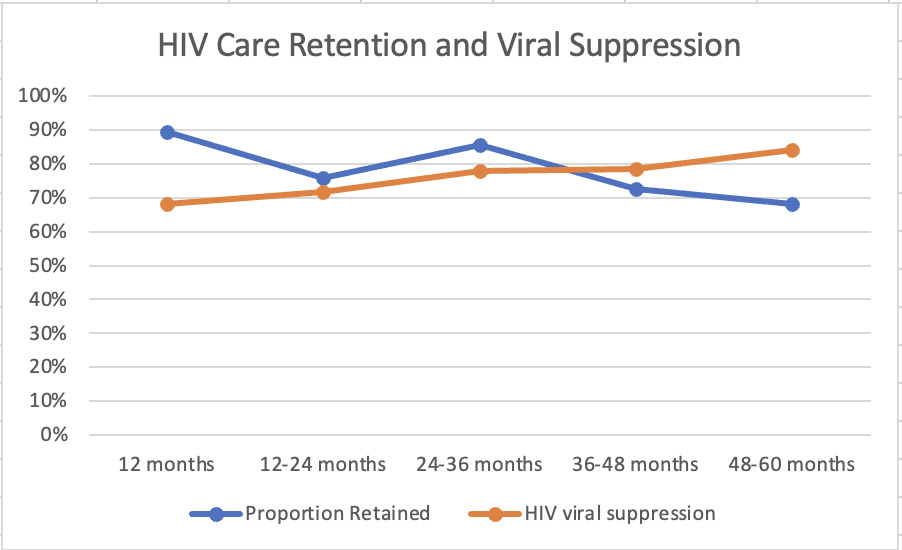
1325. Impact of Differentiated HIV Service Delivery Models on Quality of Life in Uganda
Poster Abstracts
Page: 439
Benson Nasasira1, Grace Banturaki1, Nelson Kalema1, Joseph Musaazi1, Aidah Nanvuma1, Joanita Kigozi1, Nancy Kiarie2, Joash Ntenga Moitui2, Joseph Kabanda3, Arthur Fitzmaurice3, Noela C. Owarwo1, Damazo Kadengye2, Jonathan Izudi2, Barbara Castelnuovo1
Background
Differentiated service delivery (DSD) models have reduced strain on health services and improved client experience, retention and viral suppression, but little is known about the impact of HIV DSD models on quality of life (QoL), which is essential for optimizing person-centered care. This study assessed the impact of DSD models on QoL, loss to follow-up (LTFU), and mortality among persons living with HIV (PLHIV) on ART over time at a large urban HIV clinic in Uganda.
Methods
We retrospectively reviewed records of all the 1,000 PLHIV enrolled in a conveniently sampled 10-year cohort at the PEPFAR-funded Infectious Diseases Institute (IDI) clinic in Kampala, Uganda. Participants were on ART for 10 years at enrollment in 2014 or 2015. We scored QoL with an adapted Medical Outcomes Study (MOS-HIV) tool. We determined and compared QoL scores (summed scores from 10 questions expressed as a percentage), sustained annual viral suppression (<200 copies/mL), all-cause mortality and LTFU (missing clinic visits for ≥3 months) for PLHIV in any of three DSD models for ≥6 consecutive months—fast-track drug refill (FTDR), facility-based groups (FBG), and composite model combining these two—versus facility-based individual management (FBIM), the standard of care (SOC). Using inverse probability treatment weighting mixed effects models, we estimated QoL scores as weighted mean ratios and checked robustness of results using G-computation analysis. Sustained viral suppression was compared using odds ratios; all-cause mortality and LTFU were compared using hazard ratios from the Cox proportional hazard regression model.
Results
Of 1,000 PLHIV, 980 had ≥1 follow-up and were included in the analysis. Median age was 45 years (IQR: 40-51), 62% were female, and 95% had a suppressed viral load at baseline. Baseline QoL was 90.1% in any DSD vs 89.2% in SOC. After eight years of follow-up, weighted mean QoL was higher in participants enrolled in DSD models than the SOC (90.4% vs 89.1%; weighted mean ratio 3.66, 95% CI 2.10-6.37, p-value <0.001); there were no statistical differences across DSD models. Participants in DSD models were more likely to have sustained viral suppression (weighted odds ratio 1.69, 95% CI 1.24-2.31), lower mortality (weighted hazard ratio 0.08, 95% CI 0.03-0.20) and lower LTFU rates (weighted hazard ratio 0.08, 95% CI 0.02-0.31).
Conclusions
These findings support the broader adoption of DSD models in HIV care programs to enhance the QoL, well-being, and clinical outcomes of PLHIV.
1326. Trends in HIV Viral Nonsuppression and Drug Resistance Among PWID on Dolutegravir ART in Kenya
Poster Abstracts
Page: 439
Loice W. Mbogo1, Ceejay L. Boyce2, Stephen E. Hawes2, Betsy C. Sambai3, Brandon L. Guthrie2, William Sinkele4, David K. Njenga5, Bhavna H. Chohan2, Aliza Monroe-Wise6, Esther Gitau4, Sarah Masyuko2, Geoffrey S. Gottlieb2, Paul Drain2, Lisa M. Frenkel7, Carey Farquhar2, the DREAM Kenya Programme
Background
Data are limited on effectiveness of dolutegravir (DTG)-based regimens among people living with HIV who inject drugs (PWID) in sub-Saharan Africa. We longitudinally studied PWID in Kenya taking DTG and assessed viral non-suppression and drug resistance.
Methods
Kenyan PWID on DTG for >6 months were enrolled, and plasma HIV RNA viral load (VL) was measured every 6 months for 2 years (May 2021-September 2023). Non-parametric survival estimations of interval-censored data assessed covariates associated with time to non-suppression (VL>200 cp/ml) considering left and right-censored observations. Viremic plasma RNA was genotyped for resistance, including minority variants, using a lab-developed PacBio sequencing assay and was assessed using the Stanford HIV Database.
Results
Among 250 enrolled participants, 125 were on methadone, 70% were male and median age was 39. Four follow-up visits were completed by 194 (77%) participants over 2 years. Of those with complete follow-up, 118 (61%) were virally suppressed at all visits, 71 (37%) experienced intermittent suppression, including 32 who were left censored (non-virally suppressed at enrollment), and 5 (3%) were always not suppressed. The odds of non-suppression for those on methadone versus not on methadone were 0.53 (p<0.05), for those living in improvised shelter/in the open versus those living at home/with a relative were 2.72 (p <0.01) and were reduced by 6% (p <0.001) per year of increased age. Genotyping of viremic samples was successful for 93/94 (99%). Resistance to NNRTIs was common (~30-45% at each visit), but major resistance to drugs in their DTG-based regimens was relatively infrequent, with resistance to tenofovir in 4/93 (4%), lamivudine in 7/93 (8%) and major DTG resistance in 2/93 (2%) participants only observed as minority variants - S153F and Q148K detected at 1% each. DTG-mutations classified as “accessory resistance mutations” were observed at higher frequency in 34/93 (37%), including T97A (n=7), E138K (n=7), and L74M (n=6).
Conclusions
This longitudinal study among PWID living with HIV in Kenya shows that more than 1 in 3 participants on DTG-containing regimens had viral non-suppression at least intermittently. Still, resistance to DTG-containing therapy was rare across two years of follow-up. Identifying ways to mitigate barriers that may hinder viral suppression among the marginalized population will help ensure adherence to HIV care and treatment.
1327. Heterogeneity of Disengagement From Antiretroviral Care Matters for Treatment Success
Poster Abstracts
Page: 440
Claire M. Keene1, Jonathan Euvrard2, Aaloke Mody3, Scott Colwell4, Tali Cassidy2, Jacob McKnight1, Mike English1, Ingrid Katz5, Catherine Orrell2
Background
Disengagement from antiretroviral treatment undermines HIV programme success. Current approaches targeting interventions at specific demographic groups miss most people out of care. Classifying patterns of engagement could use precision public health principles to identify unique care needs, and inform service development targeted at patients with similar experiences.
Methods
Using routine health data from the Western Cape Provincial Health Data Centre, South Africa, we analysed individuals ≥15 years old who initiated treatment after 01-Sep-2016, sought care in low-resource, high-HIV burden settings, and had ≥5 years follow-up before database closure (30-Sep-2022). Group-based trajectory-modelling identified subgroups with distinct longitudinal engagement patterns from initiation (disengagement defined using pharmacy refill data as a treatment interruption >90 days). We assessed subgroup associations with viral suppression ≤1000 copies/mL with logistic regression.
Results
This cohort included 26422 individuals: 71% female with median of age 31 years (IQR 26-38) at initiation. The best-fitting model identified five subgroups (figure): 1) Optimal engagement (38%); 2) Early disengagement (25%); 3) Delayed disengagement after two years (15%); 4) Disengagement with early return by two years (12%); and 5) Disengagement with delayed return by five years (10%). No variables were strongly predictive of subgroup membership, and subgroups were similar in age, sex, comorbidities, baseline CD4 count, regimen, and duration on treatment. All suboptimal patterns were strongly associated with lower odds of suppression at five years than the optimally engaged subgroup (adjusted odds ratios [95% confidence interval]: 0.05 [0.04-0.06], 0.15 [0.13-0.17], 0.64 [0.56-0.73], and 0.33 [0.29-0.39] for subgroups 2, 3, 4, and 5 respectively), with stronger associations compared to demographic and clinical variables.
Conclusions
Disengagement was common, and most interrupted treatment (>90 days) within five years from initiation. However, engagement was not binary: people disengaged in various ways. Patterns of disengagement behaviour were more predictive of viral suppression than demographic or clinical factors, and could prove useful to target resources. It was difficult to predict subgroup membership with routine data, so further exploration of lived experiences behind each pattern could help identify what each subgroup needs to support sustained engagement, and facilitate more person-centred service delivery.
Figure 1.
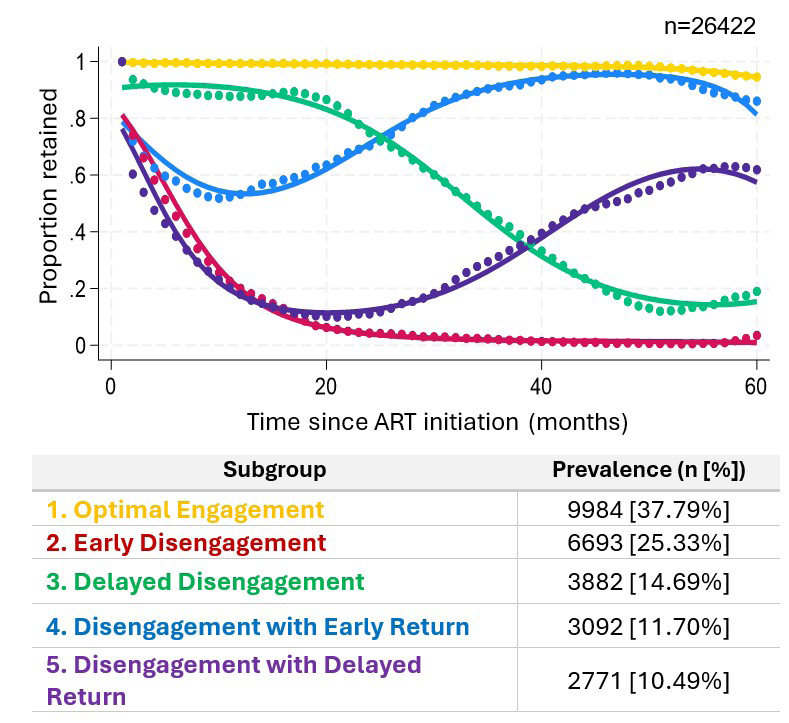
1328. Patterns of Engagement After Restarting Antiretroviral Treatment in South Africa
Poster Abstracts
Page: 440
Claire M. Keene1, Jonathan Euvrard2, Aaloke Mody3, Scott Colwell4, Tali Cassidy2, Mike English1, Jacob McKnight1, Ingrid Katz5, Catherine Orrell2
Background
As cycling in and out of HIV care over time becomes the norm for people with HIV, most commencing antiretroviral therapy are now restarting rather than initiating treatment for the first time. Understanding patterns of engagement after a substantial treatment interruption could help to direct service implementation and choice of interventions for this crucial population, and help make progress in controlling the epidemic.
Methods
Using routine health data from the Western Cape Provincial Health Data Centre, South Africa, we analysed individuals ≥15 years old who initiated treatment after 01-Sep-2016, sought care in low-resource, high-HIV burden settings, and had ≥5 yearsfollow-up before database closure (30-Sep-2022). Group-based trajectory modelling identified subgroups with distinct longitudinal engagement patterns from the time of restarting therapy after a treatment interruption (disengagement defined using pharmacy refill data as a treatment interruption >90 days). Logistic regression assessed subgroup associations with viral suppression ≤1000 copies/mL.
Results
The cohort (n=2150) was 71% female with median of age 30 years (IQR 25-36) at initiation. The best-fitting model identified five subgroups of engagement over five years after restart (figure): 1) Optimal engagement (30%); 2) Rapid disengagement (25%); 3) Early disengagement (16%); 4) Delayed disengagement (12%); and 5) Disengagement with return (17%). Nearly half (47%) disengaged again within the first year, but most (70%) disengaged again within five years of return. Subgroups were similar in age, sex, comorbidities, baseline CD4 count, and duration on treatment, with no variables strongly predictive of subgroup membership. Subgroups were strongly associated with lower odds of viral suppression at 5 years compared to the optimally engaged subgroup (adjusted odds ratio [95% confidence interval]: 0.09 [0.04-0.09], 0.11 [0.05-0.22], 0.16 [0.10-0.29] and 0.61 [0.39-0.97] for subgroups 2, 3, 4, and 5 respectively).
Conclusions
Most people returning to care after a substantial treatment interruption disengaged again within five years from restart, with high rates of early drop out. However, disengagement followed a range of patterns with differing associations with viral suppression. These patterns may be useful to help target interventions to subgroups with similar engagement behaviours, but require further exploration to operationalise the patterns in the data and use these findings to inform decisions on service delivery.
Figure 1.
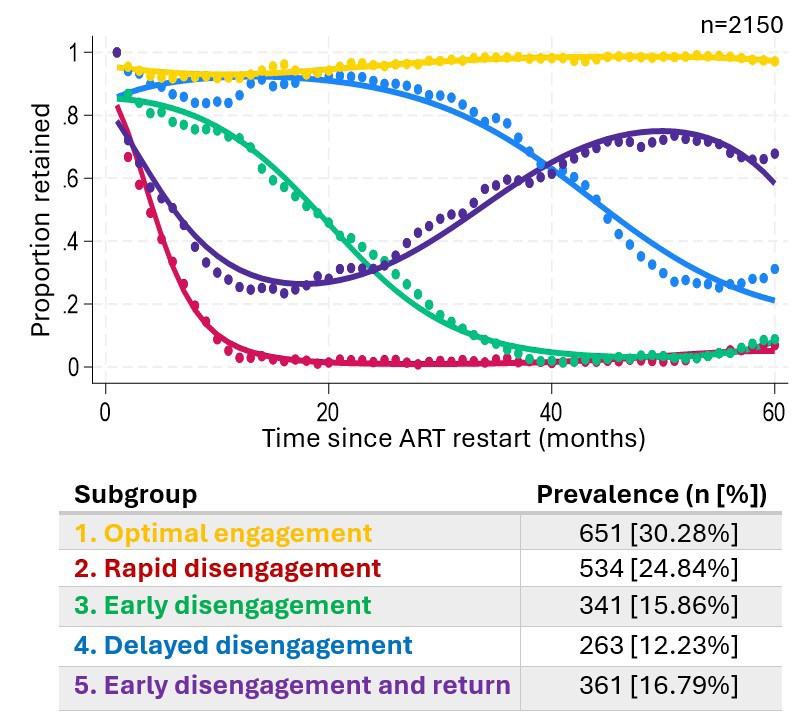
1329. Reasons for Discontinuation of Cabotegravir Long-Acting (CAB-LA) Among Clients in Zambia
Poster Abstracts
Pages: 440-441
Damian J. Phiri1, Mutinta Nyumbu1, Adamson P. Ndhlovu1, Lackeby Kawanga1, Jemmy Musangulule1, Musonda Musonda2, Sarah Hatchard1
Background
On 9th February, 2024, Zambia launched the use of Cabotegravir Long-Acting (CAB-LA) for HIV prevention, as an additional layer to oral PrEP The aim was to expand HIV prevention options for high-risk individuals and address challenges with oral PrEP such as inconsistent use due to pill burden, privacy issues and stigma. However, within 6 months of implementation discontinuation on CAB LA have also been experienced. Understanding discontinuation patterns and reasons is critical for optimizing adherence and improving program outcomes. This study aimed to review discontinuation patterns among clients initiated on CAB-LA.
Methods
A cross sectional analysis was conducted on individuals initiated on CAB-LA between February and July 2024 in Kitwe and Chibombo districts. Discontinuation data, including the number and reasons for stopping CAB LA, were collected. Discontinuation reasons were categorized into nine groups:
positive Hepatitis B surface antigen (HBsAg) status, missed HIV infection, severe pain, other side effects, pregnancy, relocation, parental influence, late beyond forgiveness window, and no longer at risk of HIV
Results
Out of 1,121 clients initiated on CAB LA, 164 (15%) discontinued CAB-LA (101 female and 63 male). The primary reasons for discontinuation included severe pain (55), positive HBsAg status (25), and other side effects (22). Additional reasons included missed HIV infections (4), pregnancy (6), relocation (24), parental influence (6), Late beyond forgiveness window (16), and no longer at risk of HIV (6, ). The remaining 957 clients have continued on CAB-LA giving a continuation rate of 85%.
Conclusions
The majority of CAB-LA discontinuations were due to manageable factors such as pain and relocation suggesting opportunities for specific interventions to improve retention. Positive HBsAg status also emerged as a significant reason for discontinuation, highlighting the need for comprehensive screening before CAB-LA initiation. Addressing these barriers can help increase retention and optimize the long-term success of CAB-LA for HIV prevention.
Figure 1.
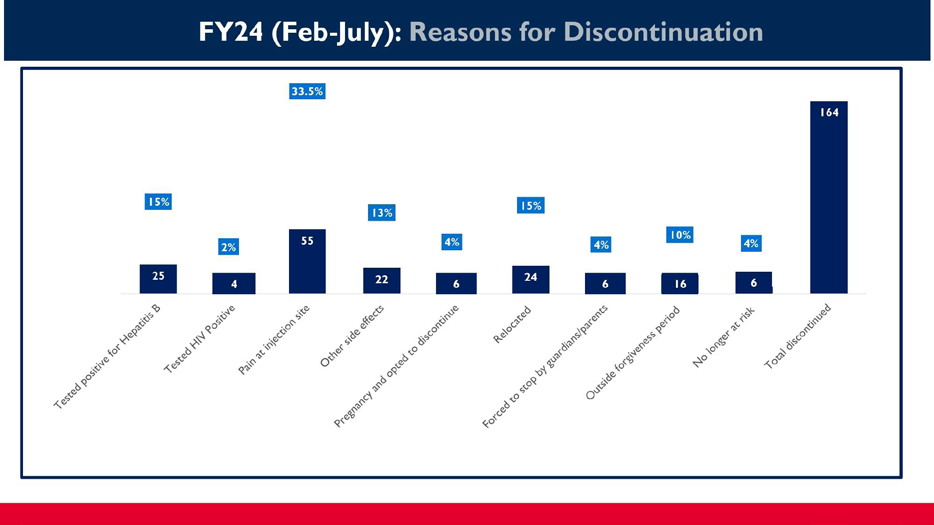
1330. Detection and Linkage of PLWH Who Are Out of Care in 94 Emergency Departments Across the US
Poster Abstracts
Page: 441
Jamie L. Mignano1, Hilary Armstrong1, Angelique Griffin1, Monique Rucker1, Carol Vincent1, Starr West2, Derek Spencer1
Background
Emergency Departments (EDs) are a major source of medical care for people living with HIV (PLWH) in the United States. PLWH who are out of care (OOC) experience poorer health outcomes and contribute to more than 40% of HIV transmissions. Gilead Sciences’ FOCUS program is a public health initiative that supports healthcare institutions to implement routine blood-borne virus (HIV, HCV, HBV) screening, diagnosis, and linkage to a first appointment in accordance with CDC guidelines. We examined data collected from US FOCUS ED-based HIV screening programs to determine the proportion of PLWH who were previously diagnosed and OOC and describe the geographic and demographic distribution of these patients.
Methods
From 2021 – 2023, data from 94 ED-based HIV screening programs were reviewed for HIV testing volume, HIV test results, previous HIV test result, and linkage status.Previously diagnosed persons were identified through routine screening or alternative mechanisms, including electronic medical record (EMR) flags. Previously diagnosed persons who were OOC were defined as those with a previous positive HIV test result not reported as in care through EMR abstraction, surveillance records or patient interview. Outcomes include the proportion of persons identified with HIV infection who were previously diagnosed and OOC, distribution across U.S. regions and demographic characteristics of those identified and linked to care.
Results
ED programs conducted 1,561,517 HIV tests. Of persons identified with HIV infection, 22% were newly diagnosed, 69% were previously diagnosed, and 9% had an unknown previous HIV status. Of those who were previously diagnosed or had an unknown previous HIV status, 50% were OOC. Two-thirds (67%) of all previously diagnosed OOC persons were identified in the South. Of all previously diagnosed persons who were OOC, 71% were male, 38% were 50 years or older, 57% were Black/African American, and 76% were non-Hispanic. Overall, 71% of persons previously diagnosed and OOC were linked to care. Linkage to care rates were highest among males (72%), persons aged 20 -29 (73%) and 50 years or older (73%), White persons (74%) and Hispanic persons (77%).
Conclusions
EDs play a critical role in identifying and linking PLWH who are OOC. Given that EDs face resource constraints and must consider impact to patient throughput, more research is needed on efficient strategies for identifying and linking PLWH who are OOC while they are accessing care in the ED.
Figure 1.
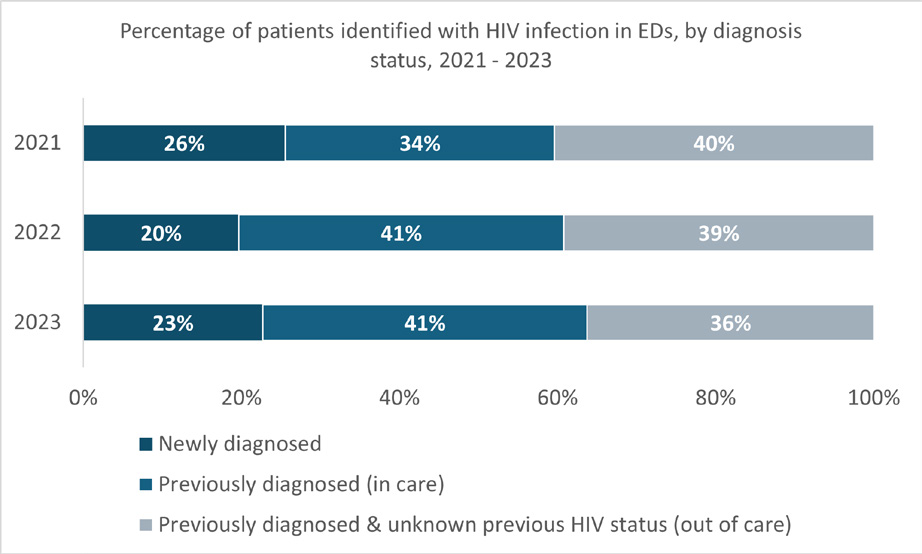
1331. HIV Treatment Interruptions: A Lorenz Curve Analysis of Countries Achieving the 95-95-95 Targets
Poster Abstracts
Page: 441
Michael J. A. Reid1, Matias Grande1, Ingrid Katz2, Jasmine Buttolph1, Emily K. Dokubo1, Kiran Rodrigues1, Hilary Wolf1, Rituparna Pati1, the PEPFAR GHSD Research Collaboration
Background
Despite reaching the UNAIDS 95-95-95 targets, many countries continue to face significant challenges with Interruption in Treatment (IIT). This analysis examines IIT rates from Fiscal years (FY) 2021 to 2024 across nine PEPFAR-supported countries—Botswana, Eswatini, Kenya, Lesotho, Malawi, Namibia, Rwanda, Zambia, and Zimbabwe—that have achieved or are nearing these targets. We explore IIT trends in the context of high treatment coverage (Tx_CURR) and viral load suppression (VLS) to identify persistent disparities and inform targeted interventions.
Methods
We conducted a longitudinal analysis of quarterly PEPFAR Monitoring, Evaluation, and Reporting (MER) data from FY2021 Q1 to FY2024 Q3 for nine aforementioned countries. We calculated percent IIT (defined as the proportion of the treatment cohort with no clinical contact or antiretroviral therapy pick-up > 28 days since the last expected encounter), Tx_CURR and VLS percentages for each quarter, stratified by sex. To assess disparities, we generated Lorenz curves to visualize the distribution of IIT across subnational regions within each country and collectively across all nine countries over time. Additionally, Gini coefficients were calculated to quantify the level of inequality in IIT distribution.
Results
The treatment cohort across nine countries increased from 5,252,596 individuals (64.2% female) in FY2021 Q2 to 5,932,928 (64.9% female) in FY2024 Q3, with VLS proportion remaining stable at 95.7%. During the study period, overall IIT decreased from 1.9% in FY2021 Q2 to 1.6% in FY2024 Q3. Throughout the duration analyzed, IIT was greater among men than women (2.02% vs. 1.72%, p<0.001). Lorenz curves indicated that IIT distribution was unequal but Gini coefficient decreased from 0.22 in Q2 FY2022 to 0.08 in Q3 FY2024 (Z score 5.04, p<0.001) (Figure), reflecting a substantial reduction in inequality.
Conclusions
While the overall volume of IIT and its distribution disparities decreased during the evaluated period, IIT remains a significant challenge in these nine countries. Our analysis using Lorenz curves and Gini coefficients underscores the importance of targeted interventions to maintain high continuity of treatment and prevent IIT. Specifically, tailored strategies are crucial in countries with significant inequalities in treatment continuity and among sub-populations with high IIT, such as men.
Figure 1.
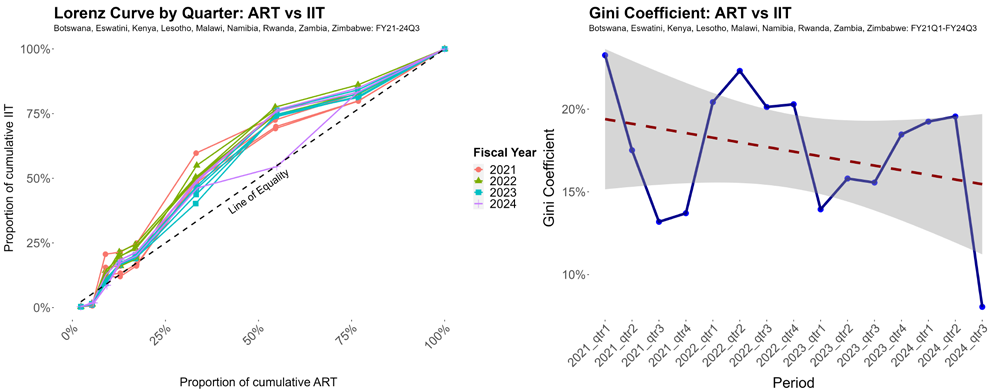
1332. Point-of-Care Urine Self-Testing Feasibility to Measure TFV Adherence and Predict Viral Suppression
Poster Abstracts
Page: 442
Renata Buccheri1, Megan J. Heise2, Kevin Sassaman2, Tyler Martinson2, Hannah R. Schmidt2, Alexa D'Angelo3, Dustin Duncan4, Keith J. Horvath5, Sabina Hirschfield6, Renessa Williams7, Mallory O. Johnson2, Christian Grov3, Adam Carrico8, Monica Gandhi2, Matthew A. Spinelli2
Background
Only 68% of U.S. men-who-have-sex-with-men (MSM) living with HIV have achieved virologic suppression (VS), sufficiently low to compromise Ending the HIV Epidemic goals. Objective monitoring of antiretroviral therapy (ART) adherence via drug-level testing can inform interventions. A rapid, low-cost urine point-of-care (POC) tenofovir (TFV) assay has been developed by our group as an objective adherence metric. However, self-administration of the urine TFV assay among people with HIV (PWH) outside of the clinical setting has not been previously studied.
Methods
We assessed the association between a self-administered POC urine TFV rapid assay and VS in MSM with HIV on TFV-based ART, all of whom reported adherence challenges or virologic non-suppression. Participants, oversampled for stimulant users, were recruited using the Grindr app, received mailed urine tests, and provided plasma at a certified laboratory for viral load testing. Logistic regression examined the effect of TFV detection in urine on the likelihood of achieving VS. The sensitivity, specificity, positive predictive value (PPV), and negative predictive value (NPV) of the urine assay compared to VS were calculated.
Results
Of 727 MSM living with HIV, 88% completed and uploaded a photo of the urine test to the study. Among the analytic sample (n=596), the average age was 42.7 years (SD ± 11.02). 50% identified as White, 27% Black, 17% multiracial/other, 3% Asian, 2% Native American; 22% Hispanic. Nearly all (99%) were on ART with TFV alafenamide (TAF), and 61% reported stimulant use in the past 3 months. Of the 86% of participants that achieved VS, 10% of those had low adherence measured via the urine test. TFV detection was significantly associated with VS (OR=9.39, 95% CI5.62-15.84, p< .001). Among participants with no detectable TFV in urine, 13% of those without VS and 61% with VS reported adherence >80% in the past month.
Conclusions
These results are the first to show the feasibility of self-monitoring of adherence using a POC urine test. TFV presence in urine strongly predicted VS with a PPV of 92%, opening the potential for self-testing as an adherence check in-between viral load testing in the clinic. Non-suppression despite TFV detection suggests suboptimal adherence or drug resistance, and low TFV with VS may herald future treatment failure; both situations should prompt further monitoring. POC TFV testing offers a real-time strategy to identify adherence challenges and timely interventions on TFV-based ART.
Table 1.
Comparison of Viral Suppression and Adherence on the POC Urine Tenofovir Test
| POC Urine Result |
Viral Load: Suppressed (<200 copies/mL) |
Viral Load: Unsuppressed (≥200 copies/mL) |
|
| TFV Detected |
460 |
39 |
PPV = 92% (95% CI: 89.5-94.4) |
| TFV Not Detected |
54 |
43 |
NPV = 44% (95% CI: 34.2-54.8) |
|
|
Sensitivity = 89% (95% CI: 86.5-92) |
Specificity = 52% (95% CI: 41.1-63.6) |
Accuracy = 84% (95% CI: 81.2-87.2) |
1333. Effect of COVID-19 Pandemic on ART Access and Timely Initiation in Adults With HIV in 31 Countries
Poster Abstracts
Page: 442
Ben Farhat Jihane1, Safari Mbewe2, Helen Byakwaga3, Denis Nash4, Eugène Messou5, Valdilea Gonçalves Veloso6, Sarita Shah7, Rohidas Borse8, Metsekae Madimabe9, Denna Michael Mkwashapi10, Gad Murenzi11, Oliver Ezechi12, Diana Barger13, Antoine Jaquet14
Background
The COVID-19 pandemic threatened global efforts to ensure that people with HIV were diagnosed early, linked to care, and treated with antiretroviral therapy (ART). We aimed to evaluate whether the COVID-19 pandemic “period” affected (i) the number of ART initiations, (ii) the proportion of timely ART initiations in people with HIV (PWH) aged 18 years and older.
Methods
Within the International epidemiology Databases to Evaluate AIDS (IeDEA) collaboration, we analyzed routinely collected data from PWH enrolled in 361 clinics across 31 countries (n) in the Asia-Pacific (n=9), Central Africa (4), Latin America (3), East Africa (2), Southern Africa (6), West Africa (5) and North America (2). The onset of the pandemic period was defined for each country by the peak Oxford Coronavirus Government Response Tracker Stringency Index (composite measure of 9 response metrics from 0-100 [most severe]) occurring between January and June 2020. We defined ART start within 7 days of enrolment as “timely”. We estimated changes in the average number of ART initiations per week and the proportion of timely initiations (expressed in points p and percentage points pp respectively) using regression discontinuity design during the study period, from 104 weeks before to 52 weeks after the pandemic onset for each country.
Results
A total of 197,668 PWH initiated ART during the study period. The number of initiations per period and country ranged from 44 to 48,497 and the proportions of timely initiations from 7.0% to 99.3%. Numbers of ART initiations remained stable in 25 countries and decreased significantly in 6 countries during the pandemic period (Figure): India (-5.0p, 95%CI: -9.2 to -0.7), Rwanda (-10.0p, -18.6 to -1.4), Malawi (-33.4p, -54.1 to -12.3), South Africa (-139.8p, -198.9 to -80.6), Zimbabwe (-12.9p, -20.0 to -5.8), Togo (-19.6p, -39.1 to -0.1). The proportion of timely initiations was stable in 29 countries and increased significantly in Kenya (+4.2pp, 95%CI: +0.3 to +8.1) and Mozambique (+2.7pp, +0.5 to +4.9) during the pandemic period.
Conclusions
In most countries, we found no difference in ART initiations or timeliness after the onset of the pandemic. This suggests that contributing clinics maintained a “test and treat” approach despite strict pandemic measures. Research should examine the pandemic’s impact on case finding (first 95) and viral suppression (third 95), especially in countries with observed disruptions.
Figure 1.
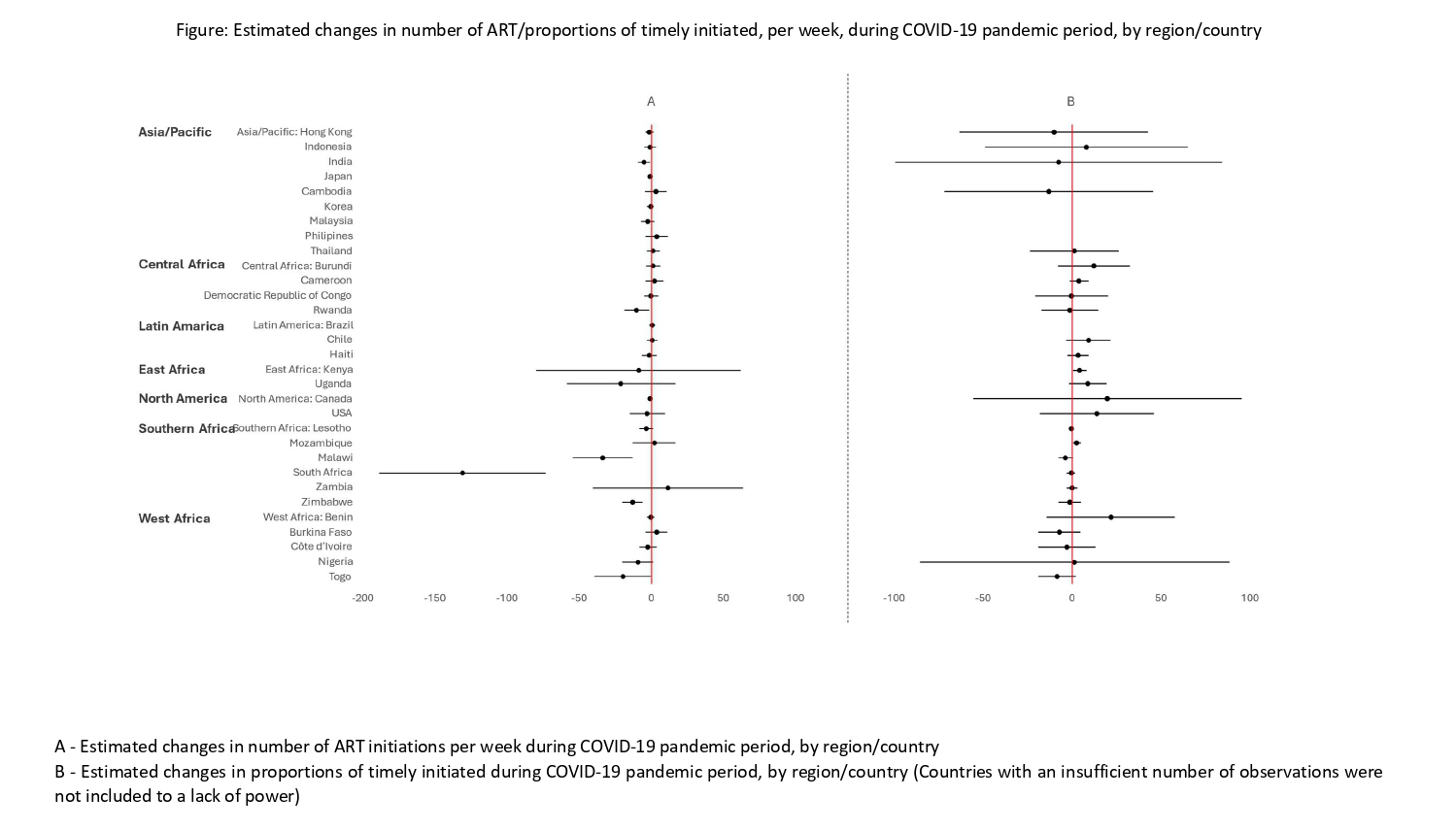
1334. HIV Treatment Continuity in Haiti: Lorenz Curve Analysis of IIT, 2022-2024
Poster Abstracts
Pages: 442-443
Michael J. A. Reid, Tiana Jaramillo, Lorin Letcher, Hamfrey Sanhokwe, Linda Mattocks
Background
In recent years, Haiti has faced escalating civil unrest characterized by a complex mix of political crises and internal conflicts. This instability has significantly disrupted healthcare services, including HIV treatment programs, reducing the overall capacity of the healthcare system to respond effectively and exacerbating the vulnerability of already marginalized groups. Interruption in Treatment (IIT) poses a severe risk to people living with HIV (PLHIV), increasing the potential for higher HIV-related morbidity, mortality, and transmission. This analysis aimed to describe IIT trends within PEPFAR-supported HIV programs from 2022 to 2024, focusing on subnational variability, including regions heavily impacted by socio-political crises.
Methods
We utilized aggregated program data from reported quarterly to PEPFAR’s Panorama platform to examine IIT trends across seven quarters, from Fiscal Year (FY) 2022 Q1 to FY 2024 Q3, stratified by Subnational Units (SNUs). IIT was defined as no clinical contact or antiretroviral therapy (ART) pick-up for more than 28 days since the last expected encounter. We calculated the percentage of IIT for each quarter, stratified by Subnational Units (SNUs). Lorenz curves were used to assess inequalities in distribution of IIT relative to the cumulative number of PLHIV on ART; Gini coefficients were calculated to quantify disparities.
Results
During the study period, Haiti’s HIV treatment cohort expanded from 115,895 to 123,639 individuals. Across all SNUs, the average quarterly IIT was 2.1%, with the greatest absolute IIT occurring in FY 2024 Q2. IIT rates across SNUs varied between 0.1% and 10.9%; Lorenz curves demonstrated variability in IIT distribution, with significantly less inequality across SNUs at the end of the study period compared to the start (FY 2024 Q3 Gini coefficient = 0.18 vs. FY 2022 Q1 Gini coefficient = 0.40; Z-score 4.5, p-value <0.0001).
Conclusions
This analysis highlights disruptions in treatment continuity across SNUs in Haiti during a period of socio-political instability, with larger SNU treatment cohorts disproportionately affected by IIT. Decreasing inequality over time may suggest strategies to mitigate IIT have been successful. However, the inability to account for ‘silent migration’ between SNUs is a limitation, and further analyses are warranted. Nonetheless, these findings underscore the need to strengthen IIT preventive efforts and support for vulnerable populations.
Figure 1.
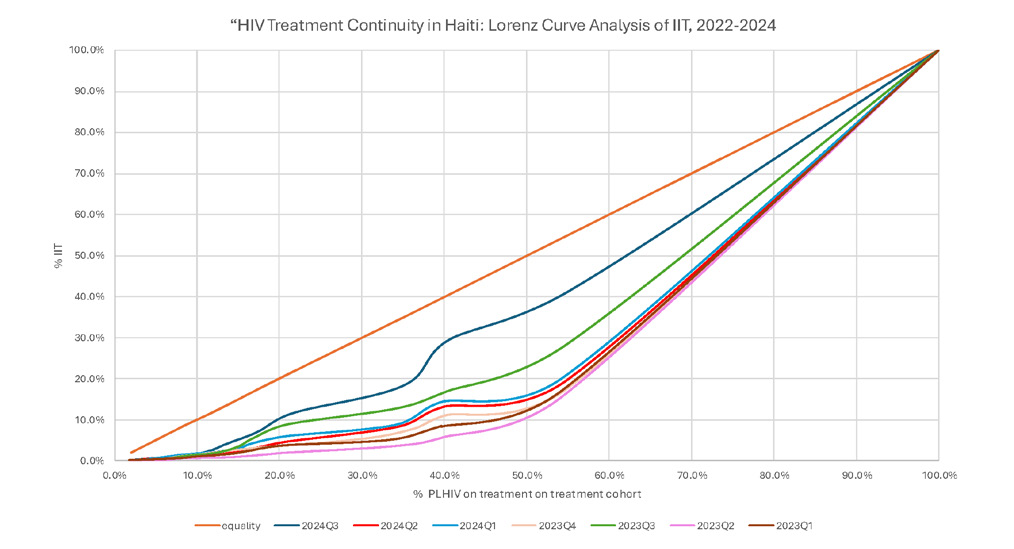
1335. Clinical and HIV Surveillance Data to Determine Care Status for People With HIV in Washington, DC
Poster Abstracts
Page: 443
Shannon Hammerlund1, Lauren O'Connor2, Lisa Mele2, Maria Jaurretche2, DeMarc Hickson3, Rachel Denyer4, Alan Greenberg2, Amanda D. Castel1, Anne Monroe1, the DC Cohort Executive Committee
Background
Poor retention in HIV care has been associated with adverse clinical outcomes. We sought to understand barriers to care and factors related to being out of care (OOC) in the DC Cohort, a longitudinal cohort of PWH in Washington, DC, using data from clinical care sites and linked data from the DC Department of Health (DC Health).
Methods
We evaluated the status of DC Cohort participants from 1/1/11 to 12/31/23. Participants were considered OOC if they did not have an HIV care encounter or lab in the 18 months prior. We used DC Health HIV Surveillance lab data and manual clinical chart review to determine whether participants initially deemed OOC had died, transferred to another site, had evidence of care elsewhere in DC, or were truly OOC. Logistic regression models were used to describe the OOC population and evaluate associations between participant characteristics and being OOC.
Results
We evaluated 12,563 DC Cohort participants. Overall, 1,418 (11%) died, 41 (0.3%) withdrew, 1,893 (15%) transferred care, 517 (4.1%) statuses could not be determined, and 2,101 (24%) were considered OOC. Linked DC Health data showed 1,353 (64%) of the OOC participants had evidence of care elsewhere at least 6 months after their last Cohort contact. Of those with known labs, 82% were virally suppressed and 63% had CD4 ³ 500 cells/mL. This left 748 participants OOC and 6,557 participants in care. Among those OOC, 64% were non-Hispanic Black, 79% male, and the mean age was 52. OOC participants were more likely to be non-Hispanic White, (aOR (95% CI): 1.7 (1.4, 2.2)), 10 years older (aOR: 1.2 (1.1, 1.3)), not virally suppressed (aOR: 3.5 (2.8, 4.5)), not have AIDS (aOR: 1.7 (1.4, 2.1)), be unemployed (aOR: 1.6 (1.2, 2.1)), and receive care at a Ryan White clinic (aOR: 1.5 (1.2, 1.9)). Being female (aOR: 0.7 (0.5, 0.8)), perinatally infected (aOR: 0.3 (0.1, 0.6)), having a CD4 ³ 500 cells/mL (aOR: 0.5 (0.4, 0.8)), public insurance (aOR: 0.4 (0.4, 0.6)), hypertension (aOR: 0.6 (0.5, 0.7)), and hyperlipidemia (aOR: 0.4 (0.3, 0.4)) were associated with a lower likelihood of being OOC.
Conclusions
By linking clinical and surveillance data we were able to more accurately assess PWH’s care status in the Cohort. While 24% of participants were thought to be OOC, 64% of those were found to have transferred and most had evidence of VS after transfer. Individual and structural level factors were associated with being OOC and interventions aimed at addressing these factors may help improve sustained engagement in care.
Table 1.
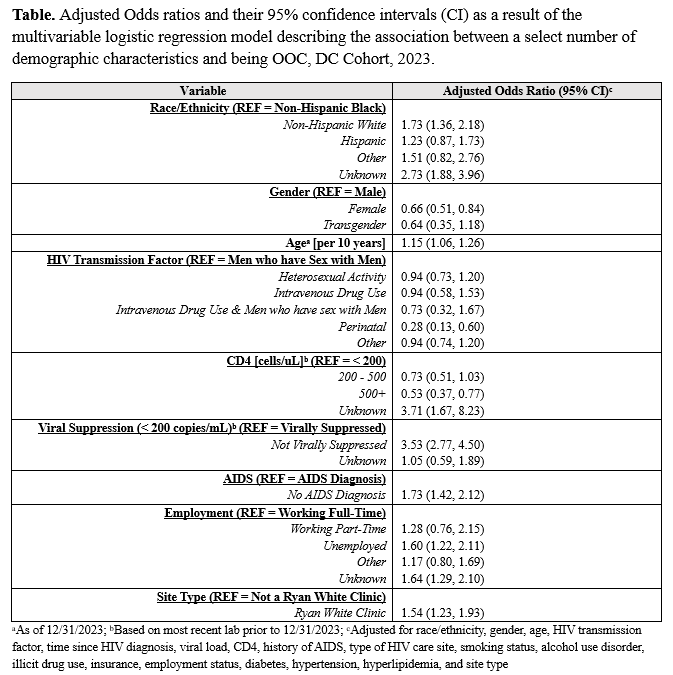
1336. Does Retention in Care Still Correlate With HIV Viral Suppression: Do We Need Different Strategies?
Poster Abstracts
Page: 443
Joshua Craft1, Olivia Benda2, Elton Tang2, Shannon Galvin1
Background
“Ending the HIV Epidemic in the US Initiative” strategies include supporting retention and re-engagement in care for people with HIV (PWH) (CDC EHE pillars). As part of a multidisciplinary initiative to enhance retention in care among PWH at our clinic, we hypothesized that we could identify demographic differences between patients who are and are not retained in care to inform targeted outreach efforts.
Methods
This is a single-center, retrospective, observational study using data collected during routine clinic visits between November 2021 and October 2023. We collected demographic, healthcare utilization, and viral load data for all PWH seen at least once in our clinic during the study period. Based on CMS Quality ID #340, retention in care was defined as seen at least two times between November 2022 and October 2023 and one additional time between November 2021 and October 2022. Viral suppression was defined as most recent viral load less than two hundred copies per milliliter. We compared characteristics of PWH retained or not using chi-squared tests.
Results
We found that compared to PWH not retained (n=406), those who are retained (n=977) were more likely to be over 55 years old, the median age of the study population, (61% vs 51%, p<0.001) and to live within 8 miles of clinic, the median distance of the study population, (68% vs 56%, p<0.001), but were not more likely to be virally suppressed (94% vs 92%, p=0.058). Among those not retained, we found no differences in demographics between those virally suppressed (n=372) or not (n=34). Among those retained, we found that compared to those who are virally suppressed (n=922), those who are not (n=55) are more likely to identify as Black or African American (AA) (55% vs 37%, p=0.011) or to live in an under-resourced ZIP (56% vs 42%, p=0.042).
Conclusions
Our results show different demographic factors are associated with retention in care and with viral suppression among PWH seen in our clinic. We also found retention was not associated with viral suppression, suggesting that in an era of well tolerated ART, some PWH likely achieve virologic success without semiannual medical encounters. Furthermore, our results suggest historically marginalized populations may not achieve optimal health outcomes with traditional healthcare delivery targets and may be better served with alternative strategies.
The figure, table, or graphic for this abstract has been removed.
1337. Uptake of Injectable Cabotegravir/Rilpivirine for Treatment of HIV Infection in US, 2021-2023
Poster Abstracts
Page: 444
Jesse O'Shea, James P. Henson, Abigail Derton, Athena Kourtis, Kate Buchacz
Background
Cabotegravir/rilpivirine (CAB/RPV), the first complete long-acting injectable (LAI) antiretroviral therapy (ART) regimen, was approved by the FDA in January 2021 and offers a convenient monthly to bimonthly alternative to daily oral ART with the potential to improve adherence and viral suppression. To understand the degree of uptake of CAB/RPV, we assessed trends of and characteristics associated with prescriptions for injectable CAB/ RPV, compared with oral ART.
Methods
Using HealthVerity Marketplace™, a national administrative dataset consisting of medical and pharmacy open/closed claims from public and private entities, inpatient and outpatient billing data, and laboratory test results from all US states and major payer types, we estimated the number of persons with HIV (PWH) prescribed oral ART regimens and CAB/RPV with closed claims, by month from January 2021 to August 2023. Among PWH prescribed ART, we assessed demographic characteristics stratified by prescription for oral ART or CAB/RPV. Patient- and prescription-level characteristics were compared across the two treatment groups using chi-squared and two-proportion Z-tests.
Results
During the study period, 208,196 PWH were prescribed only oral ART for a total of 3,469,191 prescriptions, while 4,087 unique PWH were prescribed CAB/RPV for a total of 21,698 prescriptions. The number of prescriptions for CAB/RPV increased from 1,410 in 2021 (January to December 2021) to 11,051 in 2022 (January to December 2022). From January 2023 to August 2023, there were 9,237 prescriptions for CAB/RPV. Older age groups (55+) were less frequently prescribed CAB/RPV compared with oral ART (16.0% vs 21.6%; p <0.001). Substance use disorder diagnoses were more common among persons prescribed CAB/RPV than oral ART (47.7% vs. 40.1%; p <0.001). Southern regions (40.4% vs. 33.3%) and commercial payers (32.1% vs. 13.8%) were more common among oral ART prescriptions than CAB/RPV (p <0.001). However, Medicaid payers were more common among prescriptions for CAB/RPV (76.2% v. 53.8%; p <0.001).
Conclusions
Relatively few PWH were prescribed CAB/RPV since its recent approval, however the proportion is increasing. Better understanding is needed of reasons for modest CAB/RPV uptake overall, including possibly cost and operational barriers to its implementation. Studying the factors associated with CAB-RPV use among specific regions in the US, such as the South, and in persons aging with HIV or those with adherence challenges, can inform implementation efforts.
Figure 1.
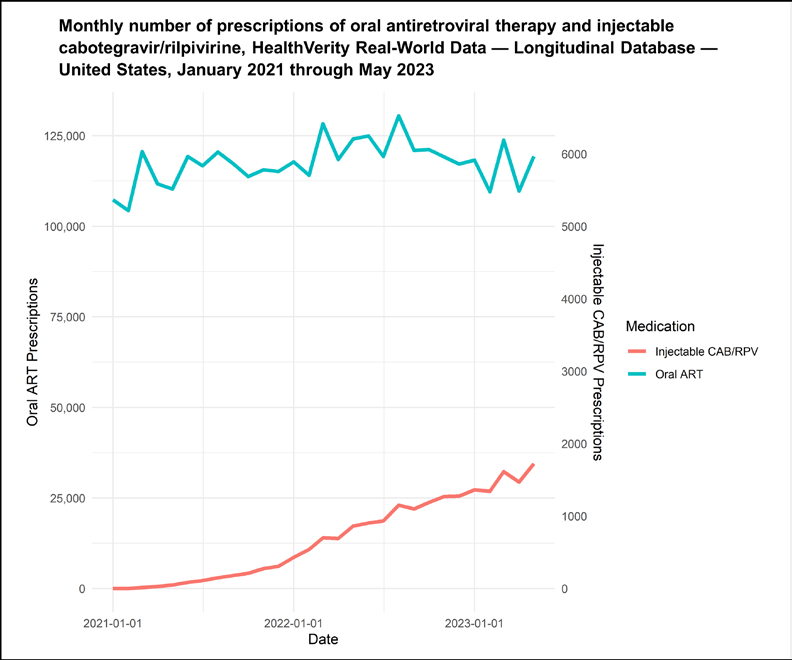
1338. Comparative Yield of Data Sources for Health Department Data to Care Services
Poster Abstracts
Page: 444
Julie Dombrowski1, Richard Lechtenberg2, Jennifer E. Balkus2
Background
The public health impact of data to care (D2C) programs has been limited by difficulty identifying and reaching out-of-care persons with HIV (PWH) using HIV surveillance data alone but may be improved by incorporating other data sources.
Methods
We compared the following sources used for D2C in King County, WA during 9/2023-9/2024: the enhanced HIV/AIDS Reporting System (eHARS, CDC surveillance database), jail booking records matched with surveillance data, hospital alerts (emergency department visits or inpatient admissions) matched with surveillance data, and pharmacy records of late medication pick-up from one HIV specialty pharmacy. Criteria for D2C investigation varied by source but included persons with no evidence of recent care [no CD4 or viral load (VL) result reported in the past 12-15 months], persistent viremia, or late antiretroviral medication refills (35-65 days). Health department staff investigated cases using public health databases and medical records, attempted to directly contact PWH to help with re-engagement in HIV care and treatment, and recorded investigation dispositions and contact outcomes in standardized fields in an electronic database. PWH could be identified more than once or through multiple sources; investigations were the unit of analysis. We defined the number of records from each source for which the investigation confirmed or suggested the PWH was truly out-of-care, viremic or off medications and living in King County (“candidates for support”) and, separately, the number that led to a successful health department contact with identified persons.
Results
A total of 2,812 records were identified for investigation (Table). Compared to eHARS data alone, all other sources yielded a higher percentage of candidates for support (4% vs. 38-54%). Hospital alerts generated the most records, but only 6% led to successful contact, largely because many persons identified through that source were already enrolled in low-barrier HIV care. Pharmacy records yielded the highest number of persons successfully contacted.
Conclusions
Using surveillance data alone for D2C is an inefficient way of identifying out-of-care PWH, but in combination with other data sources, D2C programs can reach more people who may benefit from support relinking to care. Since jail booking records are publicly available, incorporating jail records into D2C programs is likely to be broadly feasible.
Table 1.
| Data Source |
Records identified for investigation, N |
Candidate for support after investigation, N (%) |
Contacted, N (% of all investigations) |
| HIV surveillance (eHARS) |
530 |
22 (4%) |
10 (2%) |
| Hospital Alert |
1707 |
647 (38%) |
99 (6%) |
| Jail Booking |
257 |
119 (46%) |
73 (28%) |
| Pharmacy |
315 |
170 (54%) |
108 (34%) |
1339. Developing Analytic Strategies to Investigate Long-Acting Injectable Antiretroviral Effectiveness
Poster Abstracts
Pages: 444-445
Thibaut Davy-Mendez, Valerie Lucas, Joseph J. Eron, Claire Farel, Barbera Jean Turner, Angela Perhac, Sonia Napravnik, Sarah E. Rutstein
Background
Monitoring implementation, effectiveness, and longer term outcomes of long-acting injectable antiretroviral therapy (LAI ART) in health systems and diverse populations will be enhanced if critical data, including initiation, injection times, and discontinuation, can be reliably ascertained from electronic health records (EHR).
Methods
Among persons receiving HIV care at a large clinic in the southeastern US from 1/2021-5/2024, we identified those initiating LAI cabotegravir/rilpivirine, their first injection date, and LAI discontinuation from clinic records. We used EHR procedure (HCPCS code J0741), lab, and encounter data to characterize the frequency of injections, viral suppression (<50 cp/mL), and clinic visits after LAI initiation. We also validated use of EHR data to identify LAI initiators, first injection date, and discontinuation against clinic records.
Results
Among 1951 patients, 138 initiated LAI ART per clinic records. LAI ART initiators were 75.4% cisgender men, 64.5% non-Hispanic Black, and a median of 42 years old. At initiation, 84.8% were virally suppressed (VS) and median viral load (VL) of patients virally not-suppressed (VNS) was 16,474 cp/mL (IQR 78, 50,465). Median time from LAI prescription to injection was 26 days (IQR 16, 47). Procedure codes were 100% sensitive and 99.9% specific to identify LAI ART initiators, and 84.1% sensitive and 100% specific to correctly classify a first injection date (+/- 7 days). Outpatient prescription data alone were 92.8% sensitive and 98.1% specific to identify LAI ART initiators. In the 6 months after first injection (N=111 with sufficient follow-up), patients had a median of 4 clinic visits (IQR 3, 5). Of these 111, 96.8% of those VS at initiation remained VS, and 76.5% of those VNS at initiation became VS. Per clinic records, LAI ART was discontinued in 30 (21.7%) of all 138 initiators. A 90-day gap in injection procedure codes was 70.0% sensitive and 91.4% specific to identify persons who discontinued. Among persons with >90-days between injection procedure codes, 6.9% were VNS (median VL 2192 cp/mL) at next available assessment.
Conclusions
Most patients remained on LAI ART with favorable clinical outcomes, regardless of suppression at initiation. EHR data identified LAI ART initiators with high accuracy; lower accuracy in identifying initiation date could affect analyses of LAI ART exposure, presumed clinical effectiveness, and implementation outcomes, and should be considered in future studies.
1340. Prevalence of Unsuppressed Viral Load: Comparison of 2016-17 and 2022-23 Tanzania HIV Impact Surveys
Poster Abstracts
Page: 445
Abbas Ismail1, Damian Damian1, Prosper Njau2, Tepa Nkumbula3, Emilian Karugendo4, Fahima Issa5, Rebecca Laws6, Malewo Optatus1, George S. Mgomella1, Mahesh Swaminathan1, Alexander Kailembo1, Nicolas Schaad1, Sarah Porter1
Background
Antiretroviral therapy (ART) improves clinical outcomes of people living with HIV (PLHIV) and achieving viral suppression through ART can prevent HIV transmission. We compared prevalence and correlates of unsuppressed viral load among PLHIV from two Tanzania HIV Impact Surveys (THISs). The first (survey 1 [S1]) was conducted from October 2016-August 2017; the second (survey 2 [S2]) was conducted from November 2022-March 2023.
Methods
THISs were independent, cross-sectional household surveys with a stratified cluster design. Consenting participants aged ≥15 years were administered a questionnaire and tested for HIV in the household. HIV-positive specimens were tested for viral load (VL). We used chi-square tests and pooled sampling weights to assess the change in prevalence of unsuppressed VL (VL ≥1000 copies/mL) among PLHIV between surveys. Logistic regression models were used to assess factors associated with unsuppressed VL for each survey. We report results as prevalence (%) or adjusted odds ratio (aOR) with 95% confidence intervals (CI); analyses are weighted and account for complex survey design.
Results
We analyzed data from 1,830 (S1) and 1,849 (S2) participants aged ≥15 years living with HIV. The proportion of PLHIV with unsuppressed VL decreased significantly from 48.1% (95%CI: 44.9-51.4%) in S1 to 22.0% (95%CI: 19.6-24.6%) in S2. Prevalence of unsuppressed VL decreased in all age and sex groups; the decrease was greatest in males aged 15-24 years (77.8% [52.9-91.6%] in S1 to 28.5% [13.0-51.4%] in S2) and smallest in females aged 15-24 years (52.9% [43.1-62.4%] in S1 to 45.5% [33.4-58.0%] in S2) (Figure). In both surveys, male sex (S1 aOR 2.1 [1.6-2.7]; S2 aOR 1.8 [1.3-2.5]) and younger age (15-24 years S1 aOR 3.2 [1.9-5.1]; S2 aOR 4.1 [2.1-8.1]) were significantly associated with increased odds of unsuppressed VL, compared to females and those aged ≥50 years, respectively. Alcohol use was associated with unsuppressed VL in S1 only (aOR 1.4 [1.1-1.9]). Education and wealth were not significantly associated with unsuppressed VL in either survey.
Conclusions
Prevalence of unsuppressed VL among PLHIV decreased by over half in the 6-year period between THIS surveys, demonstrating progress towards the UNAIDS global target of 95% of PLHIV on ART are virally suppressed. Targeted approaches to address unsuppressed VL among young females (aged 15-24 years) and males (aged ≥25 years) may help achieve the third UNAIDS 95 target among all age and sex groups in Tanzania.
Figure 1.
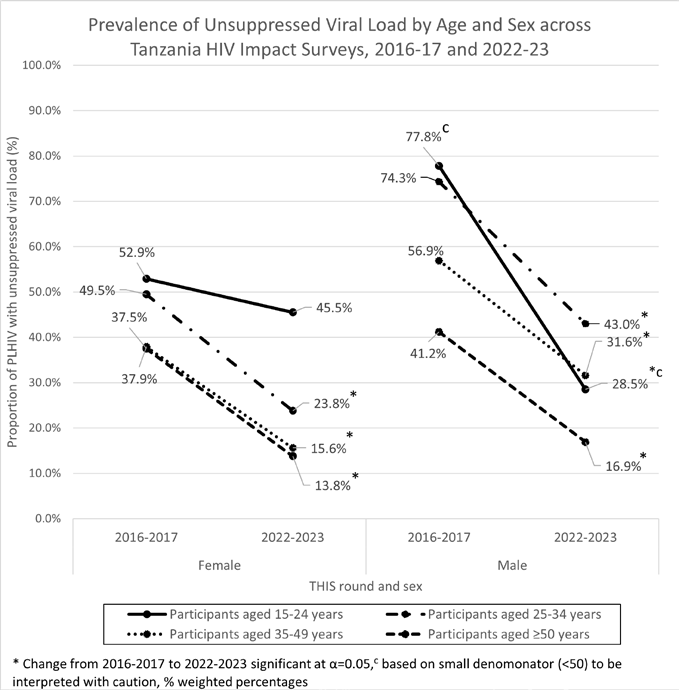
1341. A Comparative Analysis of Access and Retention of Oral PrEP and CAB-LA at 1 Month in Zambia
Poster Abstracts
Page: 445
Damian J. Phiri, Mwaka Musonda, Mutinta Nyumbu, Adamson P. Ndhlovu, Lackeby Kawanga, Jemmy Musangulule, Martha Mulenza
Background
Pre-exposure prophylaxis (PrEP) is pivotal in HIV prevention. The recent introduction of long-acting injectable PrEP, alongside oral PrEP. The USAID DISCOVER-Health project, implemented by JSI, has layered injectable PrEP onto its existing oral PrEP service delivery platform. This study examines how layering injectable PrEP onto existing oral PrEP services affects initiation and retention at one month, comparing data from periods before and after its implementation.
Methods
A retrospective cohort analysis was conducted using routine data from four health facilities offering both oral and injectable PrEP in Kitwe and Chibombo district. Data from six months prior to the introduction of injectable PrEP, August 2023 to January 2024 (pre-implementation period) was compared with data from six months post-implementation, February to July 2024 (implementation period) for the same facilities. Average monthly PrEP initiation were calculated to assess changes in access, and retention at one month, measured as the proportion of individuals returning for follow-up after initiation. Independent T-tests were used to statistically compare differences in initiation and retention between the two periods.
Results
During the implementation period, 2,752 individuals started PrEP (oral 1,639 and injectable 1,113), with a one-month retention rate of 86.0% (oral 81% and injectable 96%). In contrast, during the pre-implementation period, 2,191 individuals started oral PrEP, with a one-month retention rate of 65.4%. During the implementation period, monthly PrEP initiations (mean=458.7, SD=448.6) were higher compared to the pre-implementation period (mean=365.2, SD=161.1), though this difference was not statistically significant (t=0.48, p=0.64). Retention at one month was also higher in the implementation period (mean=0.818, SD=0.078) than in the pre-implementation period (mean=0.691, SD=0.182), the difference was statistically significant (t=2.57, p<0.05).
Conclusions
Layering injectable PrEP significantly improved one-month retention rates compared to oral PrEP alone, with retention being highest among those on injectable PrEP. While the number of PrEP initiations increased during the implementation period, this difference was not statistically significant but a very important change in PrEP scale up. These findings suggest that injectable PrEP can enhance adherence and retention, especially in the early stages of use.
1342. Patterns of PrEP Use Among Rural South Africa Youth Given Choice: Process Data From the LAPIS Trial
Poster Abstracts
Pages: 445-446
Maryam Shahmanesh1, Jacob Busang2, Thembelihle Zuma2, Carina Herbst2, Nonhlanhla Okesola2, Natsayi Chimbindi2, Nqobile Ngoma2, Jaco Dreyer2, Theresa Smith2, Lucky Mtolo2, Willem Hanekom2, Limakatso Lebina2, Janet Seeley3, Andrew Copas1, Kathy Baisley2, the LAPIS Study Group
Background
In southern Africa the provision of pre-exposure prophylaxis (PrEP) has not translated into population-level impact due to the challenges of taking a daily oral pill. Injectable PrEP provides an opportunity to overcome this barrier. Using clinical process data from the Long-Acting PrEP Integrated with Sexual and Reproductive Health (LAPIS) trial, we explore changes in patterns of PrEP use amongst adolescents and young adults (AYA) following introduction of choice in a high HIV burden setting in rural KwaZulu-Natal (KZN), South Africa.
Methods
We nested LAPIS (NCT066250504) a cluster randomized controlled trial of offering a choice of oral PrEP, two monthly (long-acting) injectable cabotegravir, dapivirine vaginal ring or packs of 28 days of post-exposure prophylaxis (PEP) within a larger trial testing the population impact of community-based delivery of PrEP through sexual reproductive health (SRH) services in rural KZN (NCT05405582). PrEP is offered alongside SRH and testing for sexually transmitted infections, including GeneXpert testing on self-taken samples for gonorrhoea and chlamydia to AYA aged 15-30 years. Here we describe the pattern of PrEP use before and after the introduction of PrEP/PEP choice. Uptake is defined as proportion of participants eligible and offered who initiate PrEP/PEP.
Results
Prior to the introduction of choice (June 2022-May 2024), 3150 AYA attended the mobile SRH clinics. Among 1586 eligible/offered oral PrEP, 1015 (64.0%) initiated PrEP (503 [49.6%] women). Following the introduction of choice (June-September 2024), amongst 375 eligible/offered PrEP, 359 (95.7%) initiated PrEP/PEP (259 [72.1%] women). N=276/359 (76.9%) chose injectable cabotegravir (186 women), 55/359 (15.3%) chose oral PrEP (29 women), and 28/359 (7.8%) chose PEP (14 women). None chose the dapivarine ring. At enrolment, 88/315 (27.9%) had an STI (gonorrhoea or chlamydia). STI prevalence was highest amongst those who chose injectable cabotegravir (32.5%; 82/252) vs 13.3% (6/45) and 0/18 amongst those who chose oral PrEP and PEP, respectively.
Conclusions
Providing a choice of PrEP/PEP modalities resulted in more of those who were offered chosing to take PrEP. The majority, especially women and those who had an STI, chose injectable PrEP. However, one in four chose an oral option. Providing choice that meets adolescents and youth’s preferences may improve effective PrEP use.
1343. Peer Mobilisation Into Sexual Health Clinics Creates PrEP Demand Among High-Risk Rural Youth in SA
Poster Abstracts
Page: 446
Maryam Shahmanesh1, Rohey A. Bangura1, Jacob Busang2, Thembelihle Zuma2, Carina Herbst2, Nonhlanhla Okesola2, Natsayi Chimbindi2, Nqobile Ngoma2, Jaco Dreyer2, Lucky Mtolo2, Theresa Smith2, Limakatso Lebina2, Janet Seeley3, Andrew Copas1, Kathy Baisley2, the Thetha Nami ngithethe nawe (Let's Talk) Research Group
Background
Providing oral pre-exposure prophylaxis (PrEP) has not achieved population-level impact in southern Africa due to challenges reaching those with the highest risk of HIV-acquisition. We hypothesise that peer-led mobilisation into mobile sexual reproductive health (SRH) clinics will promote oral PrEP use amongst adolescents and young adults (AYA) at higher risk of HIV acquisition in rural KwaZulu-Natal, South Africa.
Methods
We analysed data from a clinical cohort of 2515 AYA aged 15-30 years within the first period of “Thetha Nami ngithethe nawe” stepped wedge trial (NCT05405582), in 20 communities randomised to early rollout of the intervention. In intervention communities, trained peer-navigators conduct needs assessments with AYA and tailor referrals to mobile SRH clinics that visit monthly. HIV high-risk was defined as reporting ≥1 of following: condom-less sex with >1 partner or partner of unknown HIV status; buying or selling sex; sex under the influence of alcohol/drugs. PrEP uptake and retention were defined as initiating oral PrEP within 1 month of attending the clinic, and returning for at least 2 PrEP refills, respectively. GEE logistic regression was used to estimate odds ratios (OR) and 95% confidence intervals (CI) for the association between HIV high-risk and PrEP uptake and retention.
Results
June 2022-April 2024, peer navigators reached 11,921 AYA and 3046 [25.6%; 1143 (45.4%) men] attended the SRH clinics. N=240 were living with HIV and were started/continued on antiretroviral therapy. 1950 (77.5%) of 2515 AYA who agreed to point of care HIV testing and tested negative were at HIV high-risk. 863/2515 (34.3%) AYA initiated oral PrEP (805 HIV high-risk) and 151/863 (17.5%) continued PrEP (142 HIV high-risk). PrEP uptake was higher among high-risk than low-risk AYA (adjusted (a)OR 5.38, 95%CI=3.61-8.02, p<0.001). Women and AYA in urban/peri-urban areas had lower odds of PrEP uptake (aOR 0.76, 95%CI=0.61–0.95, p=0.015; aOR 0.84, 95%CI=0.72-0.98, p=0.027, respectively). PrEP retention did not differ between high-risk and low-risk AYA (aOR 1.45, 95%CI=0.62-3.38).
Conclusions
Peer-led mobilisation into mobile SRH services promoted PrEP uptake amongst AYA at highest HIV risk. However, initiation and continuation of daily oral PrEP remains suboptimal. Long-acting injectable PrEP may overcome barriers to oral PrEP.
1344. Injectable Cabotegravir PrEP Discontinuations at a Peer Specialist-Led Program in Washington, DC
Poster Abstracts
Page: 446
Megan E. Dieterich, Rupa Patel, Juan Carlos Loubriel, Monica E. Gouzoulis, Erin E. Kelley, David A. Fessler, Meghan Davies, Rachel E. McLaughlin, Sarah Henn, H. Jonathon E. Rendina
Background
Little is known about cabotegravir (CAB) HIV pre-exposure prophylaxis (PrEP) care disparities. We characterized injectable CAB PrEP discontinuations at a safety-net, primary care center.
Methods
We extracted data from electronic health records and a dashboard (Relevant®) at Whitman-Walker Health’s peer PrEP Specialist program (Washington, D.C.) from March 2022 to March 2024. The primary outcome was the number of discontinuations defined as injections stopped before 9 months of care (verified by medical chart review by 2 providers). The secondary outcome was 9-month adherence among CAB PrEP users defined as receipt of 6 consecutive, on-time injections (+/- 14 day window). A multivariate logistic regression analysis was conducted to determine independent risk factors for discontinuation.
Results
There were 130 CAB PrEP users with 677 injections (median 3; range 1-12). Users were 52% White, 32% Black, 18% Latino, median age was 34 years (range 21- 62), 2% women, 80% men who have sex with men (MSM), 23% had public insurance, and 95% had switched to CAB from oral PrEP. There were no HIV seroconversions and there was one false positive HIV Ag/Ab test during a follow up care visit. Of the 130 CAB PrEP users, 87 (67%) were adherent to the +/-14d window, 41 (32%) were adherent to the +/-7d window, 13 (10%) received all their injections but had at least one out of the +/- 14d window, and 30 (23%) discontinued CAB. Discontinuations were higher among White (30%, 20/67) CAB users compared to Black (12%, 5/41) and Latino (21%, 5/24) CAB users. Of those who discontinued CAB and remained at risk for HIV, 93% (27/29) were transitioned to oral 2-1-1 or daily PrEP, while 7% (2/29) were lost to follow up after 5 attempts to contact them. When adjusting for race, ethnicity, age, sex, MSM, and insurance, Black CAB users had 76% lower odds of discontinuation compared to White CAB users (aOR: 0.24, 95% CI: 0.69 – 0.83). Side effects (43%, 13/30) and insurance coverage gaps (23%, 7/30) were the most common causes of discontinuations.
Conclusions
We defined 9-month discontinuation among Black, Latino, and White CAB users receiving PrEP through a peer specialist-led program. Peer specialists fostered continued PrEP use among those who discontinued CAB and potentially reduced discontinuations in populations which have a higher risk for HIV. Insurance coverage gaps continue to undermine CAB implementation efforts.
Table 1.
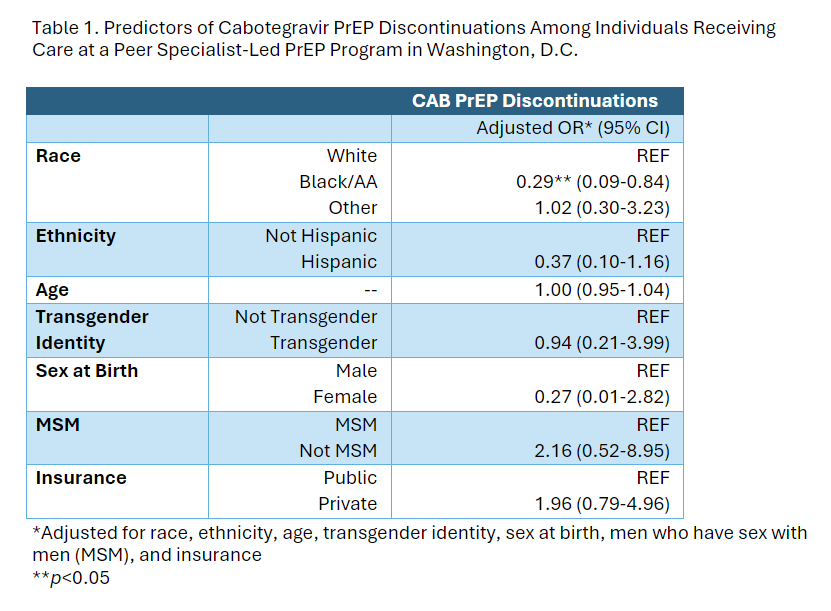
1345. Outcomes From a Multilevel Trial With Clinics and Young Women for PrEP in South Africa
Poster Abstracts
Pages: 446-447
Courtney P. Bonner1, Alexandra Minnis2, Felicia A. Browne1, Ilene S. Speizer3, Laura Nyblade1, Jacqueline Ndirangu1, Tracy Kline4, Ayanna Smith1, Khatija Ahmed5, Wendee M. Wechsberg1
Background
HIV prevalence among South African AGYW increases by 10% as young women reach ages 20 to 24, highlighting the need to intervene during adolescence and emerging adulthood. PrEP for HIV prevention promises to reduce HIV incidence. However, its impact may be tempered by structural barriers and individual-level barriers. Few evaluations of multilevel interventions to support AGYW to initiate and use PrEP exist. To this end, we adapted The Health Policy Project Health Facility HIV Stigma and Discrimination Reduction Training curriculum to address stigma and discrimination (S&D) toward AGYW in public clinics. We also adapted an evidence-based, young woman–focused (YW) HIV prevention intervention to support AGYW to initiate and persist on PrEP.
Methods
We conducted a cluster-randomized trial across 12 clinics to assess the impact of S&D reduction training and the YW intervention. There were four study conditions: PrEP/SRH only (Control); S&D + PrEP/SRH; PrEP/SRH + YW; and S&D + PrEP/SRH + YW. 802 AGYW were recruited, provided consent or assent, and completed a questionnaire in English or Setswana. At follow-up, those who reported initiating PrEP provided blood samples (finger prick) for dried blood spots (DBS) to assess PrEP adherence and persistence. PrEP readiness was measured via self-report and PrEP uptake was assessed via medical record data.
Results
A repeated-measures mixed model indicated a significant effect of treatment-by-time interaction on PrEP readiness, χ²(3, 9) = 30.08, p = 0.004. Logistic regressions, accounting for clustering, revealed that there was not a statistically significant effect of the treatment on PrEP uptake – although those in the S&D + PrEP/SRH (OR = 2.50; CI = 1.47, 4.25) and S&D + PrEP/SRH + YW (OR = 2.94; CI 1.75, 4.95) arms were more likely to initiate PrEP than those in the control arm. AGYW in the PrEP/SRH + YW arm (OR = 2.74, CI = 1.26, 5.94) were more likely than those in the control arm to be adherent. AGYW in the S&D + PrEP/SRH (OR = 1.89, CI = 1.09, 3.22), PrEP/SRH + YW (OR = 2.32, CI = 1.99, 2.71) and the S&D + PrEP/SRH + YW (OR = 1.82, CI = 1.31, 2.52) arms were more likely to persist on PrEP than those in the control arm.
Conclusions
Our study and its findings offers some important evidence of the impact of a stigma reduction training and woman-focused intervention that can improve PrEP uptake, adherence, and persistence among AGYW.
Table 1.
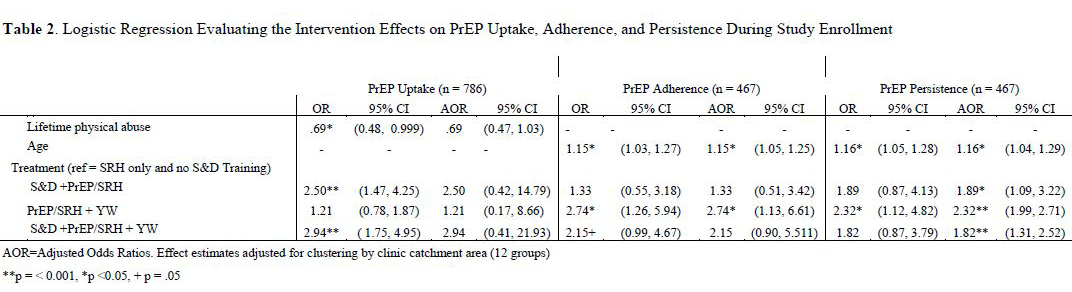
1346. Impact of CAB-LA Versus Oral PrEP in Reducing HIV Incidence Among MSM in Thailand: A Modelling Study
Poster Abstracts
Page: 447
David Van de Vijver1, Artit Wongsa2, Jeroen van Kampen1, Haoyi Wang3, Kai J. Jonas3, Rena Janamnuaysook2, Stephanie Popping4, Nittaya Phanuphak2
Background
Long acting preexposure prophylaxis (PrEP) can address periods of partial adherence among individuals using oral PrEP. Using PrEP dispensing records, we determined the proportion of partially adherent men-who-have-sex-with-men (MSM) in Thailand who return within ten weeks and could benefit from cabotegravir as long-acting PrEP (CAB-LA). We then used a mathematical HIV transmission model to study the epidemiological impact of CAB-LA in Thai MSM.
Methods
PrEP dispensing records were analyzed from 12 key population-led clinics in Thailand (2019-2022). We included individuals whose first visit was at least one year before the last recorded visit in 2022. For those who received three or more PrEP prescriptions, we calculated the ratio of days covered by PrEP (assuming daily use) to the total days between prescriptions. A ratio >75% indicated high adherence to oral PrEP (effectiveness of 93%), and a ratio <75% was classified as partial adherence (effectiveness 60%, Jourdain Lancet Public Health 2022). Individuals who returned within 10 weeks were assumed protected by CAB-LA (34% higher effectiveness). Based on literature, we modeled the tail phase of CAB-LA, estimating reduced effectiveness of 0-26%, 49-76%, and 82-95% during the first, second, and third 12-week periods following the last CAB-LA injection. An HIV transmission model was calibrated to the Thai MSM HIV epidemic, including a discrete choice experiment showing that 14% prefer CAB-LA. As the number of PrEP users is unknown, we estimated this population to range between 10,000 and 100,000 in 2024-2034.
Results
A number of 34,843 PrEP prescriptions were dispensed to 7,257 MSM, with common discontinuations (45% did not return within six months after start). Among individuals filling at least 3 prescriptions, 52.6% had periods of partial adherence to oral PrEP that could not be covered by CAB-LA, 14.0% had periods of partial adherence to oral PrEP that could be covered by CAB-LA, and 33.0% were consistently protected by both PrEP modalities. Compared to a scenario when only oral PrEP is available, adding CAB-LA will avert between 323 (0.7%, 10,000 users in 2024-2034) and 1316 (4.4%, 100,000) new infections in the next decade. The incidence of HIV in 2034 is expected to decrease in the next decade by 1.3% and 9.1% for 10,000 and 100,000 PrEP users, respectively.
Conclusions
Although discontinuation of PrEP is a challenge, offering both CAB-LA and oral PrEP as HIV prevention options can further reduce HIV incidence.
1347. PrEP Use Trajectories and HIV Incidence Among PrEP Users in Brazil: Findings From the ImPrEP Study
Poster Abstracts
Page: 447
Carolina Coutinho1, Beatriz Grinsztejn1, Brenda Hoagland1, Marcelo Cunha1, Iuri Leite1, Ronaldo Ismério1, Mayara Secco Torres da Silva1, Maria Cristina Abbade2, Alessandro S. Farias3, Jose Valdez Madruga4, Marcos Benedetti5, Cristina Pimenta5, Thiago Torres1, Valdilea Gonçalves Veloso1, the ImPrEP CAB Brasil Study Group
Background
New HIV cases continue to rise in Latin America, especially among young men who have sex with men (MSM) and transgender women (TGW). Understanding long-term oral PrEP use is crucial for improving adherence and retention to services. This study explored PrEP use patterns over time in Brazil, identifying distinct trajectories and associated factors.
Methods
ImPrEP was a prospective, single-arm, multicenter oral PrEP study conducted in Brazil, Mexico, and Peru . Eligible MSM/TGW (aged ≥18, HIV-negative, risk behaviors in past 6 months). For this analysis, we included Brazilian participants followed from Feb 2018 to Jul 2024. Group-based trajectory models identified adherence patterns using MPR ≥ 0.6 (possessing at least 4 PrEP pills/week) as reference for adequate adherence. A multinomial model assessed factors associated to belonging to each group. Discontinuation was defined as not receiving PrEP for at least six months and not returning until the end of follow-up.
Results
Of 3,928 enrolled, 3,780 returned for at least one follow-up visit and were included in this analysis. Median follow-up duration was 2.97 years (IQR:1.30–5.13years); 11,797.56 person-years. We identified 3 distinct trajectories: G1 (60%) with consistent probability of having adequate adherence during follow-up, G2 (36%) with gradual decline in adequate adherence, while G3 (4%) with rapid decline (Figure). Higher odds of being in G2 and G3 compared to G1 were younger age (G2: aOR=1.50, 95%CI:1.26–1.79; G3: aOR=1.83, 95%CI:1.18–2.85), transactional sex (G2: aOR=1.44, 95%CI:1.10–1.88; G3: aOR=1.82, 95%CI:0.96–3.44), and stimulant use (G2: aOR=1.24, 95%CI:1.04– 1.48). Overall, 66% discontinued PrEP during follow-up, and HIV incidence was higher among them compared to those on PrEP (1.67 [95%CI:1.34-2.06] vs. 0.26 [95% CI:0.18-0.36]). HIV incidence rate was 4.22 times (95%CI;1.66-14.09; p=0.002) higher in G3 than in G1 (G1: 0.18 [95%CI:0.11-0.33]; G2: 0.29 [95%CI:0.17-0.48]; G3: 0.97 [95%CI: 0.40-2.32]).
Conclusions
We identified 3 distinct oral PrEP adherence trajectories in Brazil, with those with rapid adherence decline being of younger age, engaging in transactional sex, and using stimulant drugs. Higher HIV incidence among those who discontinued PrEP underlines the importance of retention in PrEP services. Long-acting PrEP technologies may help address the unique challenges faced by these subgroups, enhancing PrEP retention and overall effectiveness.
Figure 1.
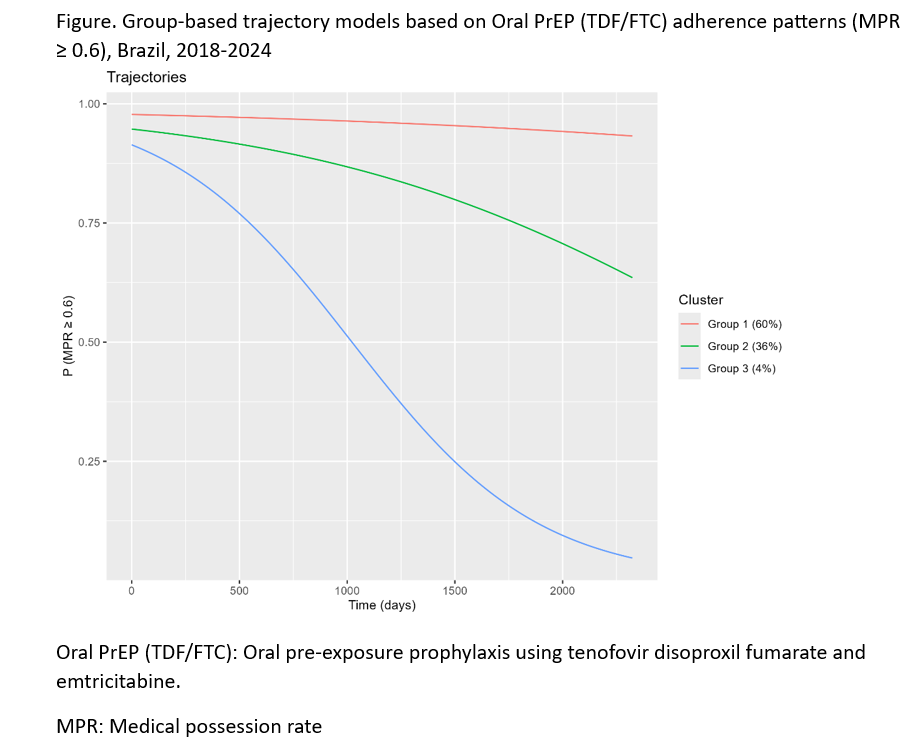
1348. US Socioeconomic Disparities and Geographic Variations in HIV Preexposure Prophylaxis Providers
Poster Abstracts
Page: 448
Li Tao, Juan Yang, Chris Nguyen, Joshua Gruber, Kristin Baker, Julia Green, Dona Khoshabafard, Gina Brown, Woodie Zachry
Background
Despite increasing pre-exposure prophylaxis (PrEP) utilization, access to providers offering PrEP services remains limited and unevenly distributed across the US. This study leveraged a novel linkage of commercial and public datasets to examine socioeconomic and geographic disparities in PrEP provider availability.
Methods
Providers who prescribed ≥1 PrEP regimen from 2021 to 2023 were identified using the IQVIA LAAD claims database. This dataset was linked with (1) Zip Code Tabulation Area-level demographic data from the Census 2020 and the American Community Survey 2018–2023 estimates, and (2) county-level primary care provider data from the County Health Rankings & Roadmaps. At multiple US geographic levels, we evaluated the ratio of PrEP providers to (1) PrEP users and (2) all primary care providers, as well as (3) the mean proportion of PrEP claims dispensed.
Results
The number of PrEP providers increased from 64,790 in 2021 to 75,371 in 2022 and 83,708 in 2023. Most providers were nurse practitioners/physician assistants (36.5%) or family medicine physicians (30.1%). Most providers practiced in predominantly White neighborhoods (65.1%), with only 4.7% in predominantly Black and 7.7% in predominantly Hispanic neighborhoods; 12.5% practiced in low-income neighborhoods. Although the ratio of PrEP providers to primary care providers increased over time (0.27 in 2021 to 0.34 in 2023), the ratio of PrEP providers to PrEP users remained steady (0.23 in 2021 to 0.22 in 2023), and substantial geographic variation persisted. ‘Ending the HIV Epidemic’ (EHE) regions had a lower ratio of PrEP providers to users (0.16) versus non-EHE jurisdictions (0.31) in 2023. Rates of dispensed PrEP claims were higher for providers in the Northeast (83%) than in other regions (77–79%). Southern states, where HIV prevalence is high, had low PrEP provider availability; in particular, Alabama had a very low ratio of PrEP providers to primary care providers, and Florida and Texas had very low ratios of PrEP providers to PrEP users (Figure).
Conclusions
This is the first study to illustrate socioeconomic and geographic disparities in PrEP provider availability in the US. The disproportionate growth of PrEP users relative to providers and low ratios of providers in high HIV incidence regions underscore the urgent need to improve access to HIV prevention services. Ensuring equitable PrEP access for key populations across geographies is critical for addressing these disparities and combating the HIV epidemic.
Figure 1.
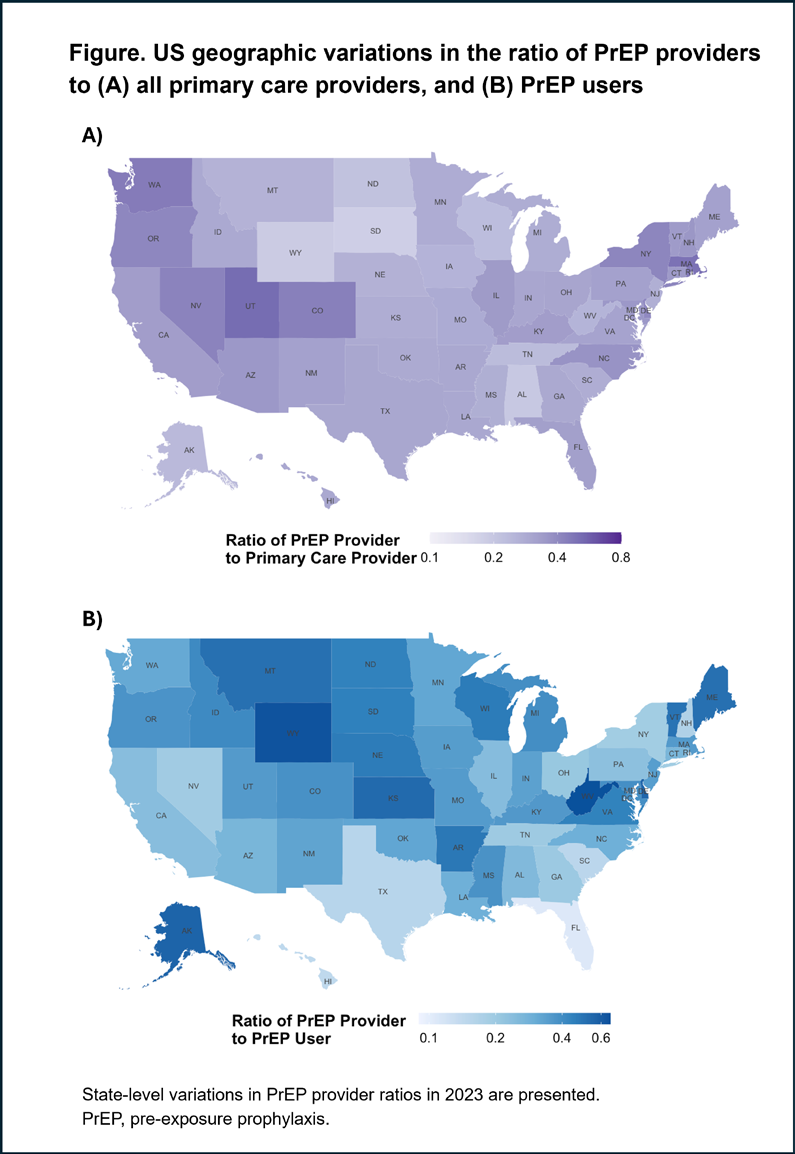
1349. Social Networks Influence PrEP Use and Preference for Long-Acting PrEP Among MSM in Baltimore
Poster Abstracts
Page: 448
Steven J. Clipman1, Amit (Mickey) Dhir2, Rose P. Kaptchuk3, Miles Landry1, Katie J. C. Zook1, Allison M. McFall3, Shruti H. Mehta3, Sunil S. Solomon1
Background
With advances in HIV prevention, understanding factors that promote uptake of novel PrEP agents, including social networks, could be critical to increasing coverage and interrupting HIV transmission in vulnerable populations, such as men who have sex with men (MSM).
Methods
We conducted a network-based online survey among MSM and transgender women (TGW) in Baltimore, MD that included PrEP use and preferences. Participants provided data on recent sexual partners and close MSM/TGW friends, who were referred to complete the survey, allowing us to map sexual and social networks using a sociometric design. We constructed networks integrating reported ties and referral patterns, applying fuzzy matching to identify cross-linkages. Logistic regression assessed network associations between the proportion of ties ever taking PrEP and individual PrEP use, as well as the influence of network members’ preferences on personal preference for long-acting injectable PrEP (LA PrEP) — nodes with unknown PrEP status or HIV-positivity, were excluded.
Results
The network (Figure) comprised 149 survey participants recruited Apr–Aug 2024; 93% were cisgender men, 3% TGW, and 4% non-binary; median age was 34; 51% were Black, and 20% reported Hispanic/Latino ethnicity; 55% ever took PrEP. They reported 406 additional contacts and 594 ties (65% social, 35% sexual). Adjusting for sociodemographics, each five-percentage-point increase in the proportion of ties on PrEP raised an individual’s odds of ever taking PrEP by 10% (AOR: 1.10; 95% CI: 1.05 – 1.16), equating to 5.3 times greater odds when one’s entire network is on PrEP. When ties were stratified by relationship, a significant association was only observed in the proportion of close friends on PrEP and not sexual partners. In univariable models of LA PrEP preference, network member preference was one of the strongest correlates, with an individual’s odds of preferring LA PrEP increasing by almost three times when all their ties preferred LA PrEP (OR: 2.75; 95% CI: 1.24 – 6.13). This association was attenuated and no longer statistically significant after adjusting for education or PrEP knowledge.
Conclusions
Social networks, specifically close friends more than sexual partners, may play a key role in an individual’s PrEP use. With LA PrEP, education and knowledge play a critical role in shaping PrEP choice. Interventions to enhance PrEP uptake should consider prioritizing PrEP literacy alongside peer-based approaches to empower informed choices about PrEP.
Figure 1.
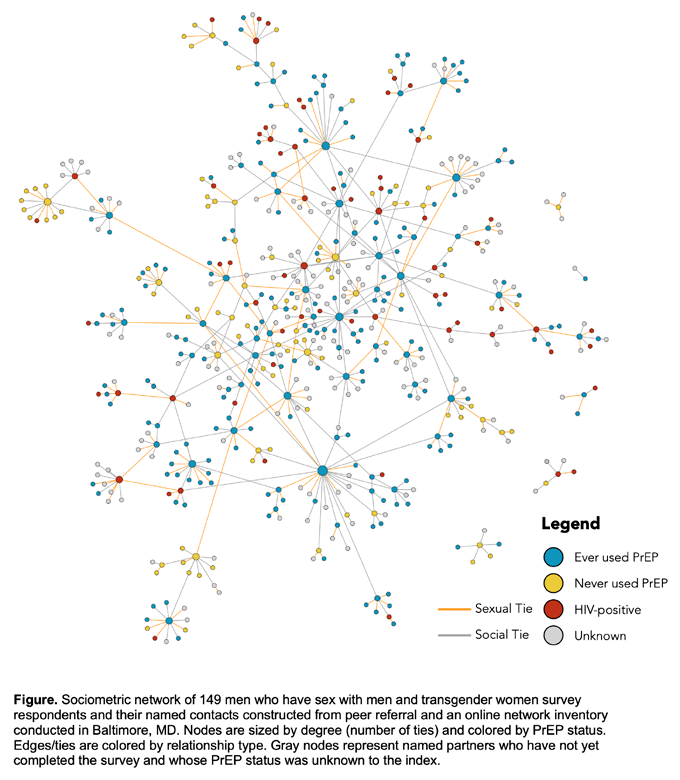
1350. Disparities in PrEP Use Among Latinx and Black Transgender Women in Los Angeles County, 2019 vs 2023
Poster Abstracts
Pages: 448-449
Yingbo Ma, Kwa Sey
Background
Latinx and Black transgender women (TGW) often face unique social, economic, and healthcare barriers that may limit their access to HIV prevention tools like PrEP. Research on racial disparities in PrEP use in these groups is limited. This study examined trends in PrEP uptake among Latinx and Black TGW in Los Angeles County (LAC) from 2019 to 2023 and investigated correlates of PrEP use.
Methods
We analyzed data from the National HIV Behavioral Surveillance system. The analysis was limited to HIV-negative Latinx and Black TGW residing in LAC who participated in surveys conducted in 2019 (n=295) and 2023 (n=351). To assess the changes in past-year PrEP use between 2019 and 2023, a log-linked Poisson regression model was applied, adjusting for demographic and healthcare-related covariates including age, insurance, recent medical visits, hormone therapy use, and substance use history.
Results
Between 2019 and 2023, significant differences in PrEP use were observed in Latinx compared with Black TGW. In 2019, PrEP use was similar (28% for Latinx TGW, n=231, and 27% for Black TGW, n=64), but by 2023, PrEP use had increased by 61% to 45% among Latinx TGW(n=240) and decreased by 11% to 24% among Black TGW (n=111). After accounting for influential covariates, Latinx TGW remained significantly more likely to show a greater increase in PrEP use from 2019 to 2023 compared with Black TGW (adjusted Prevalence Ratio[aPR]= 1.9, 95% CI [1.1, 3.4]. Hormone therapy use within the past 12 months was positively correlated with PrEP use in both Black and Latinx TGW (aPR=1.6, 95% CI [1.2-2.0]). Further analysis showed having insurance was positively correlated with hormone therapy use for both Black and Latinx TGW (p <0.01).
Conclusions
This study revealed disparity in changes in PrEP use from 2019 to 2023 between Latinx and Black TGW. The significant increase in PrEP uptake among Latinx TGW suggested that HIV prevention campaigns targeting Latinx communities had been effective. However, the lack of progress among Black TGW pointed to the urgent need for more racially and culturally tailored interventions addressing the unique social determinants of health within the Black TGW community. The positive correlation between use of hormone therapy and PrEP suggested that integrating gender-affirming care into HIV prevention strategies would be beneficial. Mobilizing the Black TGW community to increase access to PrEP should be a priority to achieve the goals of the Ending the HIV Epidemic initiative.
Figure 1.
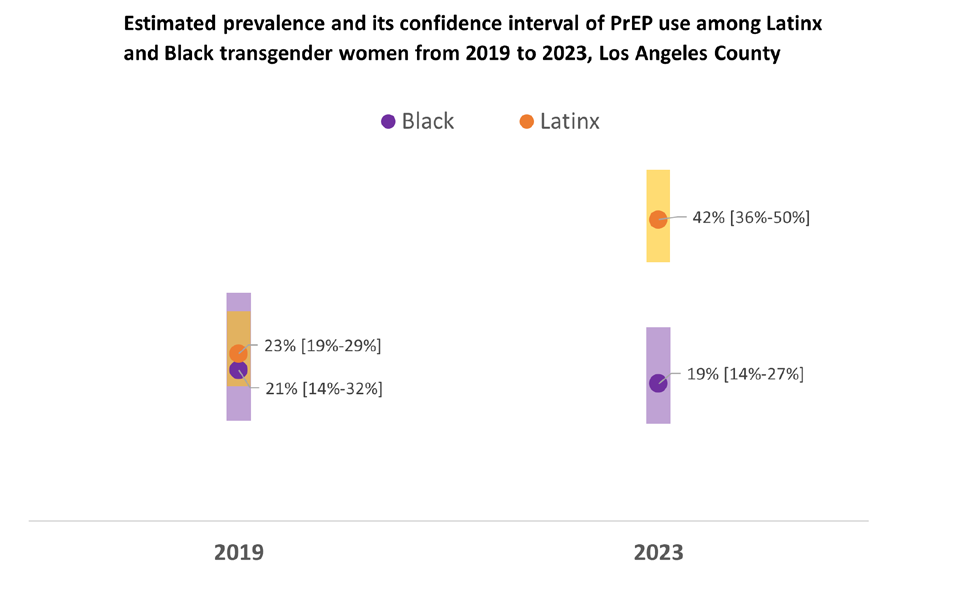
1351. Early PEPFAR Implementation of Cabotegravir-LA and Implications for Long-Acting HIV Prevention
Poster Abstracts
Page: 449
Carly E. LoVullo, Ashley Vij, Natasha Thaweesee, Nuha Naqvi, Trista Bingham, Emily K. Dokubo
Background
Despite the availability of oral HIV pre-exposure prophylaxis (PrEP), gaps remain in reaching the UNAIDS target of 21.2 million people on PrEP by the end of 2025 and reducing HIV incidence. The U.S. President’s Emergency plan for AIDS Relief (PEPFAR) is leading the rollout of long-acting PrEP in high-burden settings, which provides an opportunity to increase PrEP uptake and curb new HIV infections globally. In 2024, PEPFAR-supported injectable cabotegravir (CAB-LA) was introduced to expand HIV prevention options in five initial countries.
Methods
CAB-LA was introduced in 105 facilities in 45 districts across Zambia, Malawi, Zimbabwe, Eswatini, and Ukraine in the first three quarters of 2024. We assessed fiscal year (FY) 2024 Monitoring, Evaluation, and Reporting (MER) data on PrEP_NEW (number of PrEP naive individuals initiated on PrEP) and PrEP_CT (number of individuals who returned for PrEP at least once that quarter, or who switched from oral PrEP to CAB-LA), disaggregated by PrEP type (injectable) from February to September 2024. Qualitative data on facilitating factors and challenges with CAB-LA implementation was collected through a monthly PEPFAR CAB-LA collaborative with country teams.
Results
Across the five countries, 3,772 PrEP-naïve clients initiated CAB-LA (Figure 1). By the end of September 2024, a total of 4,932 clients were on CAB-LA. Initial populations for early CAB-LA access varied by country and included key populations, adolescents and young adults, and men at higher risk. Country teams reported that clients were generally satisfied with the product and found it acceptable. Teams also indicated that government and political leadership, supportive policies, and capacity building facilitated implementation of CAB-LA. Training for clinical teams on options-based counseling, addressing client concerns, and providing clients with appointment reminders was also critical. A key limitation of this analysis is the reliance on aggregate data, which limits the ability to assess individual-level factors influencing CAB-LA uptake and persistence on treatment over time.
Conclusions
Long-acting PrEP presents an opportunity to accelerate towards ending the HIV pandemic as a public health threat by 2030. Lessons learned from early CAB-LA introduction will inform continued scale-up of CAB-LA in additional PEPFAR-supported countries in 2025, with plans to reach 100,000 clients by the end of the year. This platform will also support future HIV prevention products including Lenacapavir.
Figure 1.
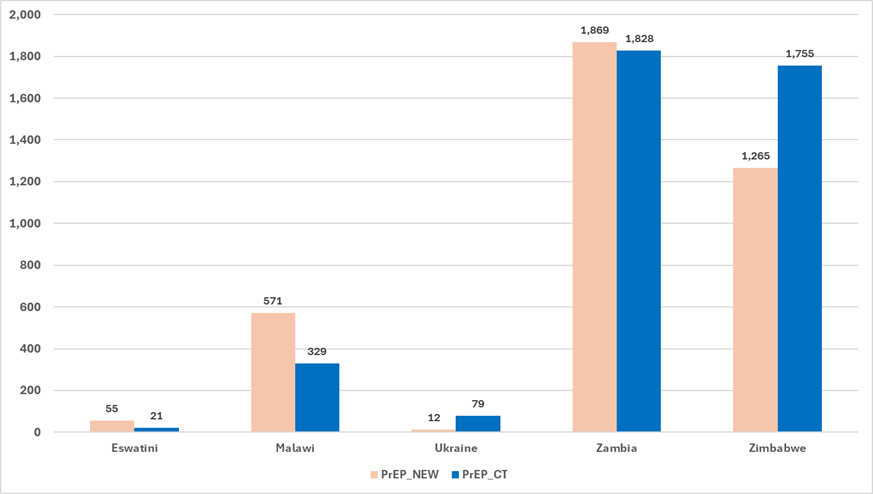
1352. “I Like It but I Can’t Be the First”: Sex Workers’ Preferences for LAI PrEP Delivery in South Africa
Poster Abstracts
Pages: 449-450
Katherine Rucinski1, Venessa Chen1, Chitra Singh2, Nosipho Dladla2, Nombuso Matenjwa2, Emma McNeilly1, Joel Steingo2, Mfezi Mcingana2, Carly Comins1, Joseph G. Rosen3, Amrita Rao1, Stefan Baral4, Harry Hausler2, Sheree Schwartz1
Background
Long-acting injectable PrEP (LAI-PrEP) represents an efficacious HIV prevention strategy, but rollout in 2024 has been limited, constraining our understanding of LAI-PrEP implementation within real-world HIV programs. We explored preferences and potential barriers to uptake and continuation of LAI-PrEP among female sex workers (FSW) accessing routine community-based HIV prevention services in South Africa.
Methods
In May-June, 2024, we conducted two focus group discussions (FGD) and 24 in-depth interviews (IDI) with FSW in Ehlanzeni (rural) and eThekwini (urban) municipalities. Using the Consolidated Framework for Implementation Research (CFIR), FGDs explored preferences in PrEP modalities and service delivery features; and IDIs assessed knowledge of LAI-PrEP, coupled with perceived barriers to uptake and continuation. Using rapid thematic analysis, we deductively identified salient concepts and emerging themes across FSW.
Results
Among 44 FSW (median age: 30 [IQR 26-38]) most reported past oral PrEP use, with determinants of LAI-PrEP use and implementation identified across three domains of the CFIR: innovation characteristics, implementation process, and the inner setting (Figure 1). FSW demonstrated autonomy in PrEP modality choice, believing in their own capability and decision-making power to start LAI-PrEP when ready. However, insufficient knowledge around how long LAI-PrEP remains in the body, coupled with concerns around potential side effects, made participants eager for additional education and counseling. FSW also expressed hesitancy in being the first of their peers to initiate LAI-PrEP and concerns surrounding potential interactions with other medications, including injectable contraceptives. Decentralized delivery via mobile van was generally preferred over drop-in-centers and clinics to support adherence to LAI-PrEP; however, FSW in eThekwini remained concerned about potential missed injections given frequent travel home, including away from South Africa
Conclusions
Nearly two years after Cabotegravir received regulatory approval in South Africa, FSW remain largely unable to access LAI-PrEP, despite established efficacy and community interest. As LAI-PrEP products become increasingly available, strategies supporting counseling, education, and diversity in PrEP delivery sites for FSW can optimize implementation and equitable LAI-PrEP uptake and continuation.
Figure 1.
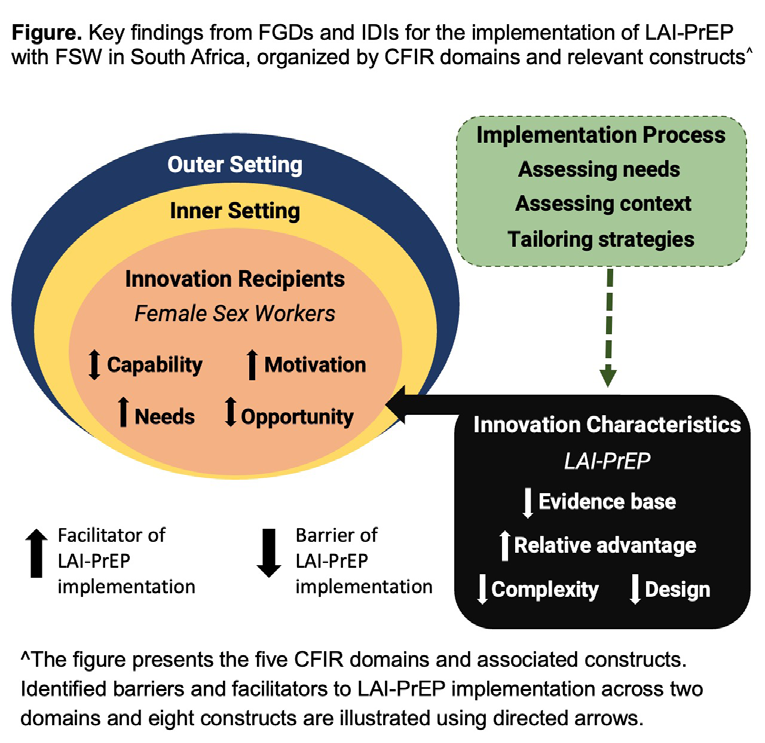
1353. HIV PrEP Method Preferences Among Transgender and Gender-Diverse Adults in the United States
Poster Abstracts
Page: 450
Dovie L. Watson, Louis Listerud, Ryan A. Drab, Willey Y. Lin, Florence Momplaisir, Jose Bauermeister
Background
The anticipated approval of lenacapavir for HIV pre-exposure prophylaxis (PrEP) may present an opportunity to better address inequitable PrEP implementation among priority populations in the United States (US). We examined potential preferences for long-acting PrEP methods among transgender and gender-diverse (TGD) adults in the US.
Methods
From April to June 2022, we conducted an online survey with 304 HIV-negative TGD adults in the US. After presenting a brief description of five PrEP methods, participants were asked to rank their most preferred PrEP methods. Logistic regression was used to examine participant characteristics associated with preferring injectable PrEP every 6 months over the other four methods. Results are presented as adjusted odds ratios (aOR) with 95% confidence intervals.
Results
Overall, 295 (97%) participants ranked method preferences: median age was 24 years [interquartile range 21—29]; 221 (75%) were assigned female sex at birth; 69 (24%) were assigned male sex at birth; 159 (54%) transmasculine, 96 (33%) nonbinary, 40 (14%) transfeminine; 169 (57%) non-Latine White, 44 (15%) Latine, 33 (11%) non-Latine Black, 49 (17%) non-Latine another race; and 63 (21%) reported current or prior PrEP use. Participants’ preferred PrEP methods were monthly oral pill (33%), annual implant (28%), injection every six months (22%), daily oral pill (13%), and injection every two months (4%). The primary outcome, ranking injectable PrEP every 6 months as the most preferred PrEP method, was significantly associated with non-Latine Black race/ethnicity (adjusted odds ratio, aOR: 2.77 [95% CI 1.10, 6.98]) and Latine ethnicity (aOR: 2.39 [95% CI 1.10, 5.18]; both p-values < 0.05. Age, sex assigned at birth, current gender identity, PrEP status, condomless sex, known HIV-positive sexual partner, and sexual partner with unknown HIV status in the past six months were not significantly associated with the primary outcome.
Conclusions
PrEP injection every two months was rarely selected as the most preferred method; and non-Latine Black and Latine individuals had higher odds of reporting that an injectable PrEP method administered every six months was their most preferred PrEP method. Future research should prioritize the development of implementation strategies that bolster comprehensive low-barrier PrEP services for non-Latine Black and Latine TGD adults, particularly TGD individuals for whom daily oral PrEP and injectable cabotegravir every two months are not desirable.
Table 1.
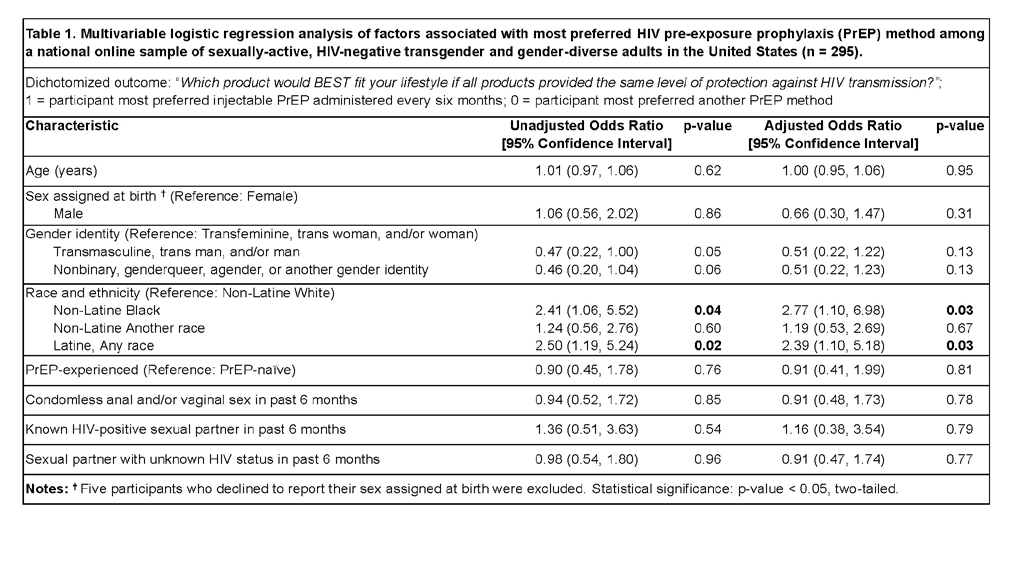
1354. Expanding the PrEP Market: Early Insights Offering Oral, Ring, and CAB PrEP in Sub-Saharan Africa
Poster Abstracts
Page: 450
Nicolette Naidoo1, Mark Conlon2, Mu-Tien Lee2, Carolyn Akello2, Margaret Eichleay2, Elizabeth Irungu3, Emily Gwavava4, Kevin Kórimba5, Patriciah Jeckonia5, Imelda Mahaka4, Rose Wilcher2, Saiqa Mullick1, Virginia Fonner2, Ashley Mayo2, Kristine Torjensen2, the CATALYST Study
Background
Adapting PrEP service delivery to a multi-method market requires real world data on uptake and use patterns. We evaluated method uptake and associated factors, switching and continuation among women offered oral PrEP, the dapivirine ring (PrEP ring), or injectable cabotegravir (CAB PrEP) in the CATALYST study.
Methods
The CATALYST implementation study offered women a choice of three PrEP methods in sites across Lesotho, South Africa, Uganda, and Zimbabwe. We describe PrEP uptake among participants offered choice of all 3 methods enrolled between April and September 2024. Logistic regression assessed factors associated with CAB PrEP uptake. Month-1 PrEP continuation was defined as refill/re-injection within 60 days of starting/restarting a method.
Results
Of 1574 participants enrolled, 1,326 were eligible for all three methods. Twenty-two percent were 18-24 years; 33% were sex workers. Among participants offered only oral PrEP or PrEP ring prior to April 2024 (n=808), 62% switched to CAB PrEP; among new enrollees (n=518), 86% chose CAB PrEP. Overall, the majority chose CAB PrEP (71%), followed by oral PrEP (20%), PrEP ring (7%), and 2% choosing no method (Figure 1). Those reporting prior PrEP ring or oral PrEP use had lower odds of choosing CAB PrEP than PrEP naive participants [aOR=0.51, 95% CI: 0.32-0.80, p=0.003; aOR=0.45, 95% CI: 0.31-0.67, p<0.001]. Being a sex worker or ≤24 years were not significantly associated with CAB PrEP uptake. Month-1 continuation was 83% for CAB PrEP (n=467), 42% for oral PrEP (n=24), and 31% for PrEP ring (n=13) among enrolees.
Conclusions
There is high demand for CAB PrEP, both among existing and new PrEP clients. There are also dedicated PrEP ring and oral PrEP users, even in the context of CAB PrEP. CAB PrEP is popular among both AGYW and sex workers, suggesting broad appeal among priority populations. Initial rates for refill/ reinjection are promising but longer-term follow-up is needed.
Figure 1.
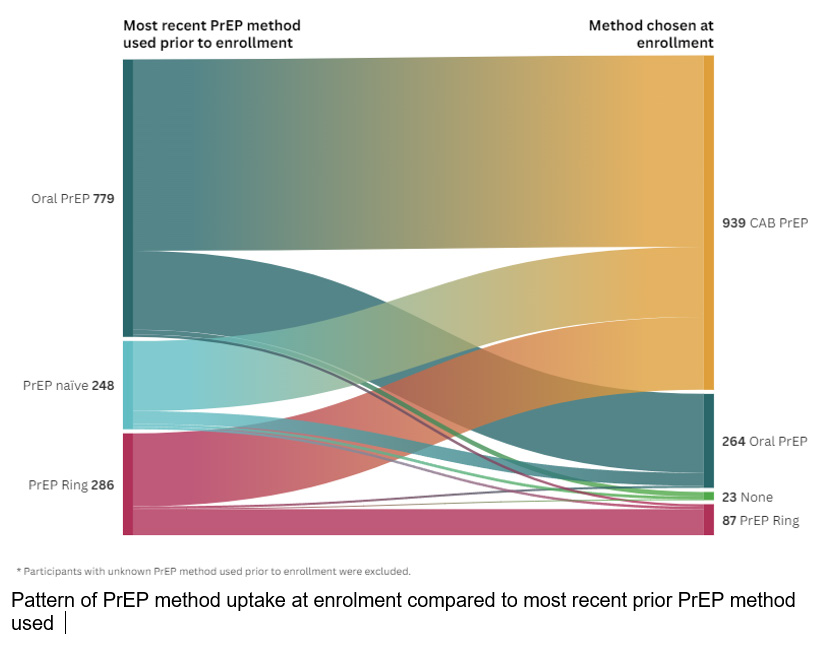
1355. Long-Acting PrEP Preference Among Brazilian Sexual and Gender Minorities: Key Influencing Factors
Poster Abstracts
Page: 451
Thiago Torres1, Mayara Secco Torres da Silva1, Carolina Coutinho1, Brenda Hoagland1, Emilia M. Jalil2, Sandra W. Cardoso2, Marcos Benedetti2, Cristina Pimenta2, Paula Luz2, Valdilea Gonçalves Veloso1, Beatriz Grinsztejn1
Background
Oral PrEP uptake remains limited in Latin America, even as new HIV diagnoses continue to rise, especially among sexual and gender minorities (SGM). Previous research has highlighted a preference for long-acting PrEP in the region. With the approval of long-acting injectable cabotegravir and recent results of lenacapravir for PrEP, understanding PrEP preferences is vital for integrating these technologies into national PrEP programs. This study aims to describe PrEP preferences and identify factors associated with a 6-month long-acting PrEP preference among Brazilian SGM.
Methods
National cross-sectional online survey among Brazilian SGM aged 18+ years, self-reporting HIV negative/unknown, recruited through advertisements on dating apps (Scruff and Grindr) and social media (Instagram and Facebook). Main outcome was assessed with the question: “Assuming all of the PrEP modalities below are equally effective, which one would be your favorite”, with possible answers: daily oral (d-PrEP), event-driven oral (ED-PrEP), injectable in gluteus at each 2 months (2-month-PrEP), injectable subcutaneous at each 6 months (6-month-PrEP), would not use PrEP. We used logistic regression models to evaluate factors associated with preferring 6-month-PrEP (yes/no).
Results
From August-September 2024, 3,665 completed the questionnaire. Median age was 38 (IQR:31-46) years; 94.3% cis-men, 2.9% non-binary persons, 0.8% trans-woman, 0.4% trans-men; 23.1% had secondary education or lower, 44.1% non-white, 21.3% low income (<500USD/month); 69.1% reported condomless anal sex, 29.6% chemsex and 12.6% STI, all in the past 6 months; 6% never tested for HIV; 32.4% ever used PrEP. Mean HIV knowledge score was high (11; SD1.3) and mean internalized LGBTQIAPN+phobia was low (10.6; SD8.9). Most (50.8%) preferred 6-month-PrEP, followed by 2-month-PrEP (16.5%), d-PrEP (16.5%), ED-PrEP (13.8%), and 2.6% would never use PrEP. Factors associated with preferring 6-month-PrEP included higher HIV knowledge, lower internalized LGBTQIAPN+phobia, ever used PrEP and reporting chemsex (Table).
Conclusions
Our results reveal a strong preference for long-acting PrEP among Brazilian SGM, highlighting the demand for prolonged protection. Urgent efforts are needed to increase awareness of HIV prevention and combat LGBTQIAPN+phobia. Priority should be given to implementation studies on the acceptability and uptake of lenacapravir in Brazil, especially among populations at increased vulnerability to HIV, such as those engaging in chemsex.
Table 1.
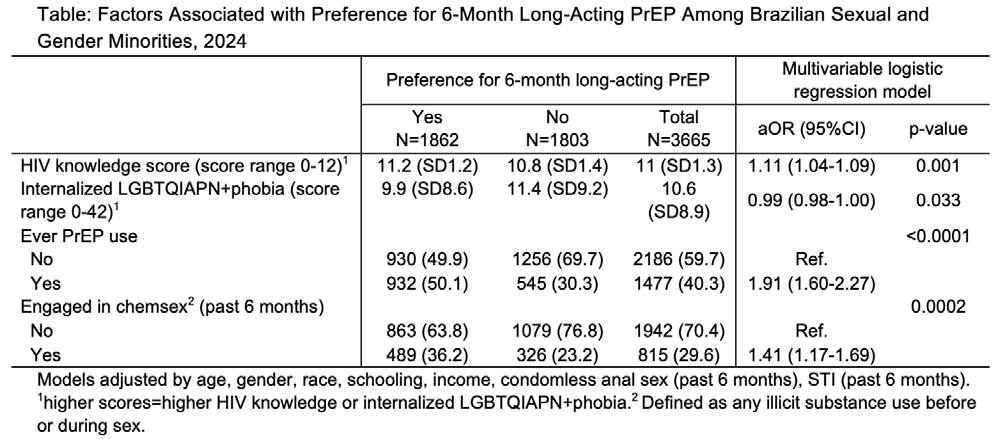
1356. PrEP Choices Among Sexual and Gender Minorities in Brazil: The ImPrEP CAB-LA Study
Poster Abstracts
Page: 451
Carolina Coutinho1, Beatriz Grinsztejn1, Brenda Hoagland1, Alessandro S. Farias2, Jose Valdez Madruga3, Josué Lima4, Maria Paula Mourão5, Ronaldo Zonta6, Marcos Benedetti7, Cristina Pimenta7, Pedro Leite1, Gabrielle O'Malley8, Thiago Torres1, Valdilea Gonçalves Veloso1, the ImPrEP CAB Brasil Study Group
Background
Oral pre-exposure prophylaxis (PrEP) with emtricitabine/ tenofovir (F/TDF) is highly effective in preventing HIV-1 acquisition, but uptake and adherence remain suboptimal. Long-acting injectable cabotegravir (CAB-LA) has shown high efficacy in trials, though real-world effectiveness data remain limited. We evaluated initial PrEP choices, reasons for selection, and associated factors in ImPrEP CAB Brasil, the first study to evaluate CAB-LA PrEP implementation in Latin America.
Methods
ImPrEP CAB Brasil is an implementation study evaluating PrEP choice, feasibility, acceptability, and effectiveness of CAB-LA in sexual and gender minorities (ages 18-30) in public health PrEP services in 6 Brazilian cities. HIV-negative, PrEP-naive individuals chose between CAB-LA or F/TDF and received either a combination of mHealth education with a decision support tool plus standard of care (SOC) counseling, or SOC counseling alone to assist with PrEP choice. We compared characteristics by initial product choice and applied logistic regression to identify factors influencing CAB-LA choice. Decision-making was assessed using the Decisional Conflict Scale (DCS).
Results
A total of 1,447 participants were enrolled from October 2023-August 2024, with 1,200 (83%) choosing CAB-LA and 247 (17%) oral F/TDF. Most participants were cisgender MSM(91%), 42% aged 18-24, predominantly non-White(60%). Participants receiving the mHealth intervention were more likely to choose CAB-LA. Among those selecting oral PrEP, 46 % cited fear of injections, while 78% preferred CAB-LA due to difficulties with daily medication compliance. Most participants showed strong decision confidence (DCS mean: 1.9, SD: 4.8 ), with 82% believing they would continue their chosen method (Table). Among mHealth users, 65% found the intervention helpful, and 85% reported high satisfaction. Logistic regression indicated that mHealth exposure (OR=2.54; 95%CI:1.89-3.44; p < 0.0001) and CAS report (OR=1.32; 95%CI:0.98-1.77; p= 0.067) were associated with choosing CAB-LA. Younger participants (ages 18-20) and those with higher decision conflict were more likely to opt for oral PrEP (OR=0.94; 95%CI: 0.91-0.97; p< 0.0001).
Conclusions
In this pioneering PrEP choice implementation study in Latin America, the majority of participants chose CAB-LA. Personalized HIV prevention approaches are critical to empower individuals to select a PrEP method aligned with their values and lifestyles, enhancing the likelihood of long-term adherence and effectiveness.
Table 1.
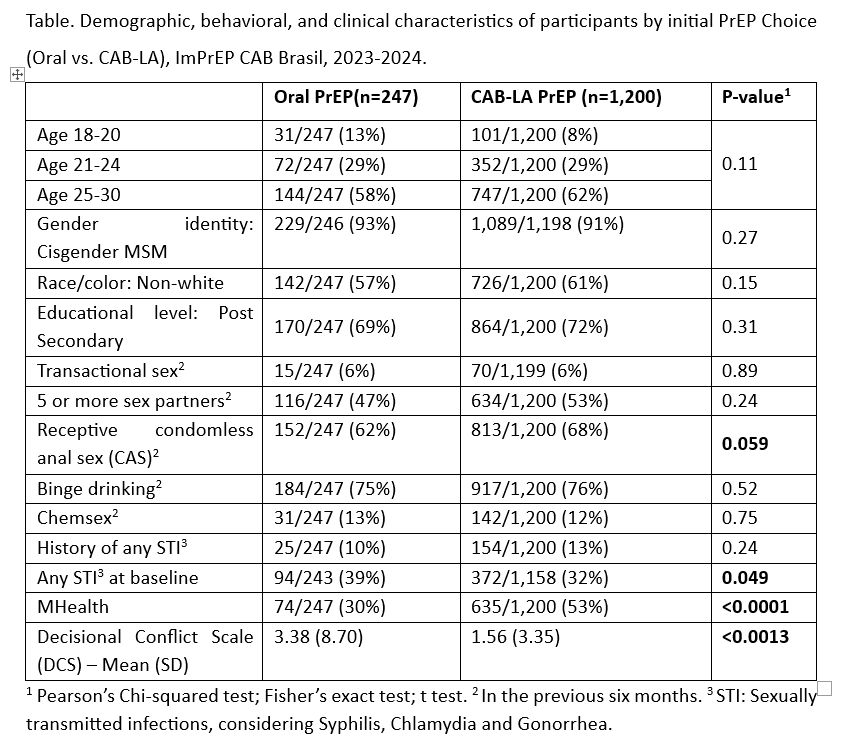
1357. Acceptability of Long-Acting Cabotegravir Among Pregnant and Lactating People in South Africa
Poster Abstracts
Pages: 451-452
Nafisa Wara1, Carey Pike2, Elzette Rousseau2, Pippa Macdonald2, Pakama Mapukata2, Bryan Leonard2, Keitumetse Lebelo2, Risa Hoffman1, Catherine Orrell3, Linda-Gail Bekker2, Dvora L. Joseph Davey1
Background
Providing pregnant and lactating people (PLP) with choice in PrEP methods, including long-acting injectable cabotegravir (CAB-LA), may mitigate barriers to PrEP continuation. We evaluated PrEP preferences and acceptability of their chosen method among PLP offered CAB-LA versus oral PrEP in South Africa.
Methods
The PrEPared to Choose study in Cape Town, South Africa, enrolled young people ages 15-29 at one clinic and one community-based mobile van offering sexual health services. Using informed choice counseling, participants were offered oral tenofovir disoproxil fumarate/emtricitabine or CAB-LA, with the option to switch modalities at follow-up visits over 18 months. We report baseline PrEP choices among PLP enrolled in the study, acceptability of their initial choice within 3 months of enrollment, and theoretical preferences regarding the dapivirine vaginal ring (expected to be approved for use by PLP pending safety review). We used Fisher’s Exact to compare responses by pregnancy status.
Results
From February to August 2024, we enrolled 58 PLP (n=30 pregnant, n=28 breastfeeding). Mean age was 22.5 years (SD=4.0). 23 pregnant participants (77%) initiated CAB-LA and 7 (23%) oral PrEP, while among breastfeeding participants, 25 (89%) initiated CAB-LA and 3 (11%) oral PrEP (Table). Reasons for CAB-LA selection included convenience and perceived side effects of oral PrEP (e.g., nausea and vomiting). Of enrolled PLP, 36 (n=14 pregnant, n=22 breastfeeding) completed the acceptability survey. Of these, 83% (n=12/14 pregnant, n=19/22 breastfeeding) chose and received CAB-LA, and the remaining (n=5) chose and received oral PrEP. PLP who received CAB-LA liked its ease of use (65%; n=20/31) and long-acting protection (45%; n=14/31). More breastfeeding CAB-LA users disliked side effects (e.g., injection site pain) than pregnant women (68% vs 17%, p=0.009), although 39% of PLP (n=12/30) described no CAB-LA dislikes. Almost all (97%; n=29/30) PLP currently using CAB-LA were interested in continuing CAB-LA, and all PLP using oral PrEP reported interest in trying CAB-LA in the future. 86% of all surveyed PLP (n=31/36) did not want to try the dapivirine vaginal ring.
Conclusions
Our population of PLP had a strong preference for CAB-LA over oral PrEP, and CAB-LA was found to be highly acceptable among PLP. Further study is needed to evaluate the effect of offering choice of PrEP methods, including CAB-LA, on PrEP continuation among pregnant and lactating people.
Table 1.
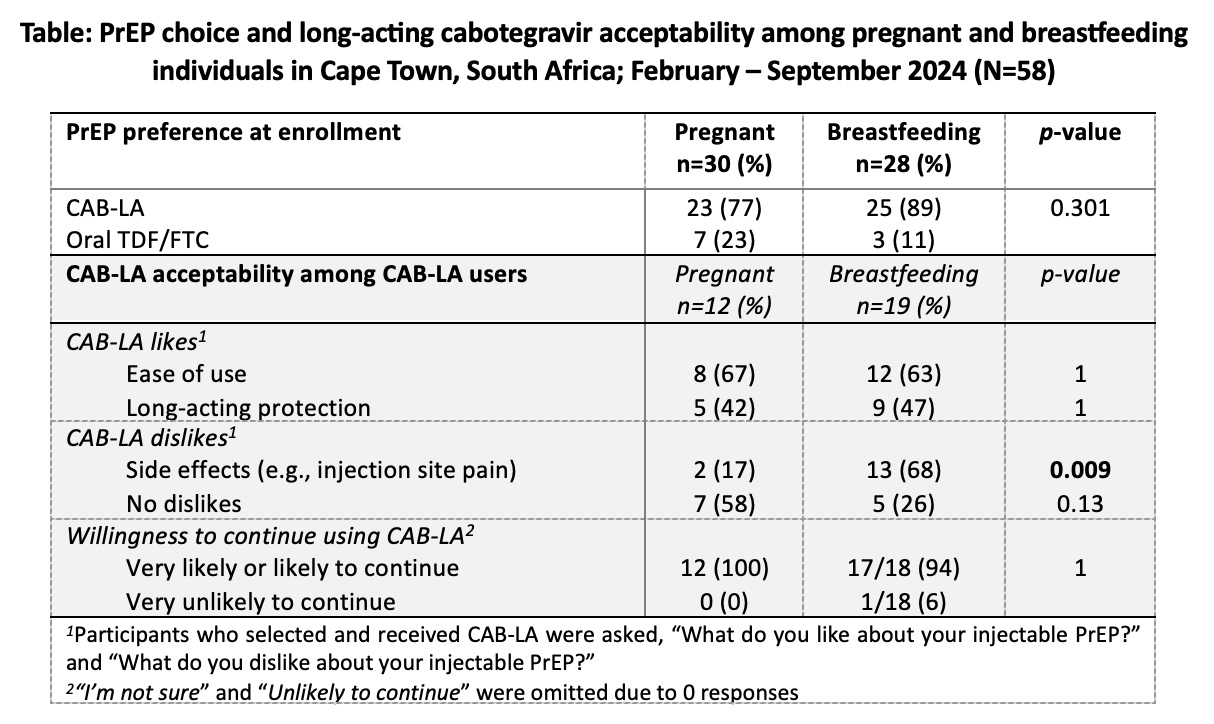
1358. Regional Disparities in DoxyPEP Uptake Despite High Awareness Among MSM With HIV in the US
Poster Abstracts
Page: 452
Tyler Martinson1, Megan J. Heise1, Kevin Sassaman1, Hannah R. Schmidt1, Alexa D'Angelo2, Shivani Mahuvakar1, Dustin Duncan3, Keith J. Horvath4, Sabina Hirschfield5, Renessa Williams6, Mallory O. Johnson1, Christian Grov2, Adam Carrico7, Monica Gandhi1, Matthew A. Spinelli1
Background
The CDC recently issued guidelines recommending doxycycline post-exposure prophylaxis (doxyPEP) for men who have sex with men (MSM) who have had a bacterial sexually transmitted infection (bSTI) in the past year. However, this strategy remains underutilized among some groups. The primary objective of this study was to explore doxyPEP use, prescription within participants’ primary HIV clinics, and the association of doxyPEP use with HIV care continuum outcomes among MSM with HIV in the U.S.
Methods
From 11/2023-8/2024, we recruited 936 cisgender MSM with HIV from 46 U.S. states, Washington D.C., and Puerto Rico via Grindr (Fig. 1). Viral suppression (VS) was confirmed via HIV viral load testing and ART adherence was objectively assessed by point-of-care urine tenofovir rapid assay (UTRA). Associations between ART adherence, HIV VS, and engagement in HIV care and the independent variable of doxyPEP awareness and use were explored by logistic regression adjusted for age and race/ethnicity.
Results
Overall, 56% of participants were aware of doxyPEP and 12% were prescribed it. Awareness of doxyPEP was associated with increased HIV care engagement (OR=1.7, 95% CI=1.2-2.7) and VS (OR=2.27, 95% CI=1.30-3.70). There were no significant differences in ART adherence rates by UTRA, VS, or attending an appointment with their HIV care provider in the last six months by doxyPEP use. There was more doxyPEP use among those reporting a bSTI in the past year (aOR=2.6, 95% CI=1.63-4.14) and lower uptake of doxyPEP in the Midwest (aOR=0.81, 95% CI=0.69-0.95) and South (aOR=0.86, 95% CI=0.75-0.98) vs. the Northeast and Pacific regions. No sociodemographic characteristics were associated with doxyPEP awareness. Of 353 respondents eligible for doxyPEP per CDC guidelines, only 20% were currently prescribed doxyPEP and 31% remained unaware of doxyPEP. Of the 413 respondents unaware of doxyPEP, 83% were interested in doxyPEP and 80% of those not on doxyPEP stated they would start if offered at their HIV care clinic.
Conclusions
DoxyPEP awareness was associated with VS and HIV care engagement in the U.S. and high interest in doxyPEP highlights the potential importance of comprehensive integrated HIV/sexual health care. Although knowledge of doxyPEP was similar among MSM across the U.S., there were regional disparities in uptake. Continued research on doxyPEP and HIV outcomes is necessary to ensure doxyPEP implementation and rollout among MSM with HIV appropriately targets groups most impacted by the STI epidemic.
Figure 1.
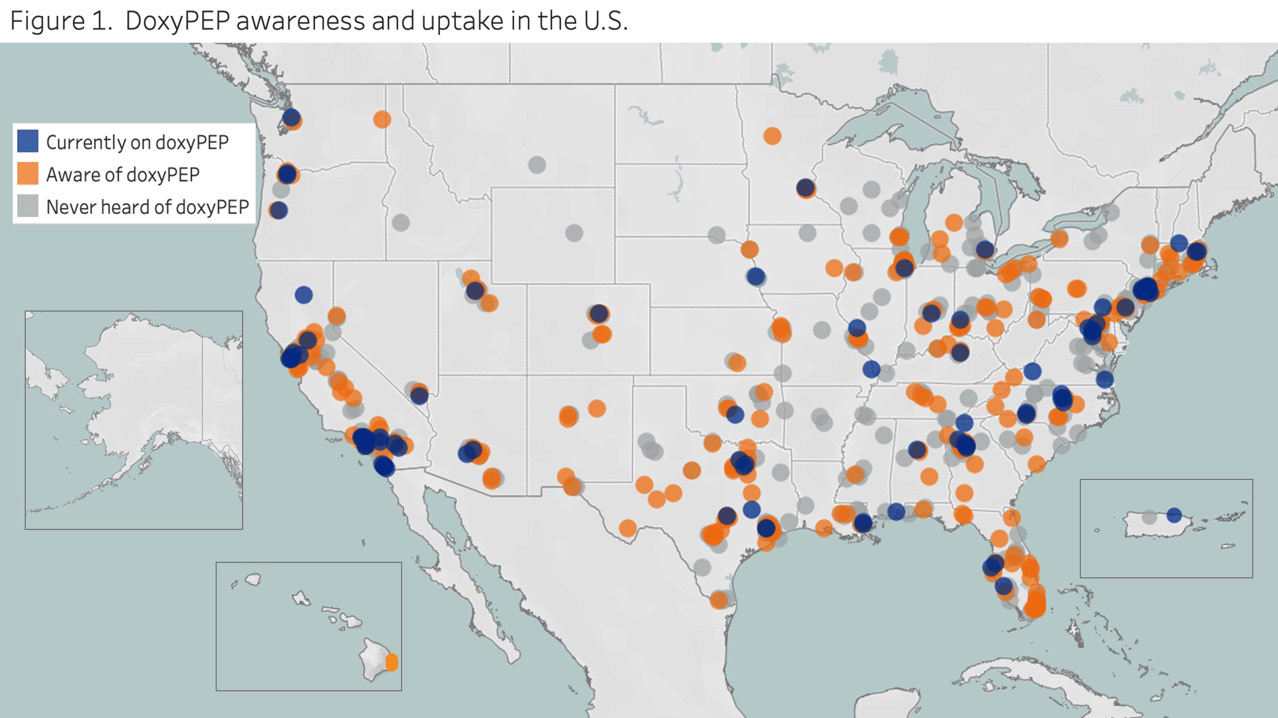
1359. Characteristics of People With HIV Prescribed Long-Acting Cabotegravir/ Rilpivirine in a US Cohort
Poster Abstracts
Pages: 452-453
Sita Lujintanon1, Catherine Lesko1, Matt Hickey2, Lauren Zalla1, Lucas Hill3, Edward Cachay4, Heidi M. Crane5, Kenneth Mayer6, Sarah E. Rutstein7, Greer Burkholder8, George Yendewa9, April C. Pettit10, Allan Rodriguez11, Mallory O. Johnson2, Katerina Christopoulos2
Background
Long-acting cabotegravir/rilpivirine (LA-CAB/RPV) has the potential to reduce medication burden for people with HIV (PWH) and improve outcomes in PWH who struggle to achieve or maintain viral suppression, reflected in recent guideline changes regarding use in PWH with adherence challenges. Equity in early implementation of LA-CAB/RPV is a priority.
Methods
We used electronic medical record data from 8 clinics of the Center for AIDS Research Network of Integrated Clinical Systems (CNICS), a cohort of ~15,000 PWH active in care across the US, to describe the characteristics of PWH prescribed LA-CAB/RPV from January 2021 to September 2023. We reported results stratified by viral load (VL) at time of prescription (12 months prior to 30 days after prescription data): virally suppressed (VS; VL <50 copies/mL) and virally non-suppressed (VNS).
Results
718 PWH were prescribed LA-CAB/RPV. The first prescription was in April 2021. Six clinics prescribed LA-CAB/RPV in 2021, and by 2022, all 8 clinics were prescribing LA-CAB/RPV. New prescriptions per clinic-month increased from 4 (range of new prescriptions per clinic-month: 0-13) in 2021 to 5 (range: 0-32) in 2022. Two clinics in California contributed the majority of PWH (n=325 & 248); clinics in Alabama, Maryland, Massachusetts, North Carolina, Ohio, and Washington each contributed between 10-49 PWH to the analysis. Overall median (Q1-Q3) age was 44 (35-54) years; 13% were cis women, 2% were transwomen, 28% were non-Hispanic Black, 26% were Hispanic, 56% acquired HIV via male-to-male sexual contact, and 12% acquired HIV via injection drug use (IDU; Table). The majority (71%) were VS while 24% were VNS (8% with VL 50-200 copies/mL and 15% with VL>200 copies/mL), and 6% had missing initial VL. Socio-demographics between VS and VNS PWH were similar, except that PWH who acquired HIV via IDU made up 21% of those prescribed LA-CAB/RPV with VNS compared to 9% of those with VS.
Conclusions
While each academic HIV clinic has been prescribing LA-CAB/ RPV to underserved populations, including people with VNS and people who inject drugs, the rollout across clinics is uneven. Future scale-up efforts need to address access issues at the state/health system level to ensure that the diverse PWH populations that each clinic serves can benefit from LA-CAB/RPV.
Table 1.
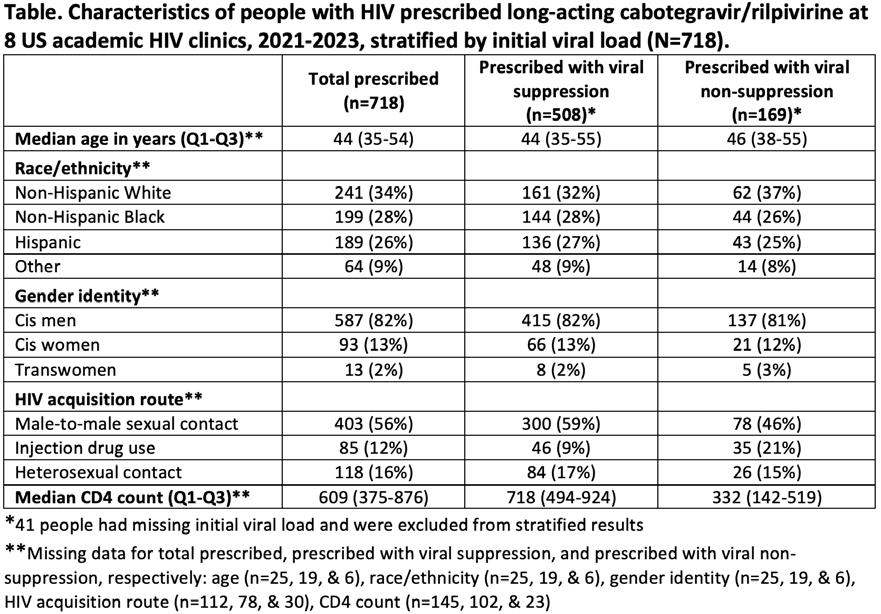
1360. Clinical Consequences of Delaying Implementation of LA-ART for PWH With Persistent Viremia in the US
Poster Abstracts
Page: 453
Ruitian Hu1, Michelle Jones1, Pamela Pen-Erh Pei1, Wanyi Chen1, Paul Sax2, Ankur Pandya3, Krishna Reddy1, Emily Hyle1, Kenneth A. Freedberg1
Background
Long-acting (LA-) injectable cabotegravir-rilpivirine (CAB/RPV) can achieve viral suppression (VS) in PWH with poor adherence to daily ART and persistent viremia. While current DHHS guidelines recommend this indication for CAB/RPV on a case-by-case basis, the FDA is requiring a randomized trial for approval. Our objective was to project the clinical impact of delaying CAB/ RPV implementation in the US for PWH with persistent viremia while awaiting further trial data.
Methods
Using the CEPAC microsimulation model, we considered 2 treatment strategies in a prevalent cohort of PWH with persistent viremia and no prior NNRTI or INSTI resistance: 1) standard daily INSTI-based oral ART, and 2) bi-monthly CAB/RPV injections. Both are coupled with social service supports to improve engagement in care. We evaluated different scenarios of CAB/ RPV uptake: 1) current practice with 99% on oral ART, 1% on CAB/RPV; 2) 100% uptake of CAB/RPV after 0 to 5y of delay; 3) 2 trial types: a single-arm 1y demonstration project with 5%/y uptake thereafter, and a 3y RCT, with 20%/y uptake thereafter; and 4) immediate 3%/y uptake of CAB/RPV for 5y. We modeled a prevalent cohort of 50,000 PWH with persistent viremia in the US and added 1,500 new people yearly. Model outcomes were person-years (PY) with VS, PY viremic, and deaths, all reported at 5y. Model inputs from published studies included: mean age 46y, mean initial CD4 count 150/µL, 6m VS of 23% for oral ART and 65% for CAB/RPV. We varied key parameters in sensitivity analysis.
Results
Current practice leads to 67,730 PY with VS (of 322,500 total PY) and 29,800 deaths (of 57,500 PWH) at 5y (Table). 100% uptake of CAB/RPV with no delay increases PY with VS by 49,800 and averts 6,800 deaths (23% of deaths). Each year of delay to 100% uptake leads to ~9,960 fewer PY with VS and ~1,350 more deaths. Compared to current practice, a single-arm demonstration project yields 2,490 more PY with VS and 330 fewer deaths, while an RCT produces 2,460 more PY with VS and 200 fewer deaths. With immediate uptake of CAB/RPV, similar gains (~2,400 PY with VS) would be achieved at only 3%/y uptake. In sensitivity analysis, disengagement from care is the most influential parameter affecting survival.
Conclusions
LA-CAB/RPV for PWH with persistent viremia in the US would increase VS and life expectancy. Each year of delayed uptake would substantially increase years of viremia and mortality. Rapid implementation of CAB/RPV should be undertaken, even while awaiting RCT results.
Table 1.
Model-projected impact of different implementation scenarios of CAB/RPV on time spent with virologic suppression, time spent with viremia, and mortality over 5y among 57,500 PWH experiencing adherence challenges
| Pre-trial scenarios |
|
|
PY with virologic suppression |
PY with viremia |
Deaths |
| Current practice
a
|
67,730 |
143,800 |
29,800 |
| Immediate 100% uptake
b
|
117,530 |
123,110 |
23,050 |
| 100% uptake scenario - impact of years delayed |
|
|
Compared to 100% uptake
|
|
|
Decrease in PY with virologic suppression
*
|
Increase in PY with viremia
*
|
Increase in deaths
*
|
| Each year of delay in 100% uptake |
9,960 |
3,400 |
1,350 |
| Trial scenarios |
|
|
Compared to current practice
|
|
|
Increase in PY with virologic suppression |
Decrease in PY with viremia |
Decrease in deaths |
| Demonstration project
c
|
2,490 |
1,710 |
330 |
| RCT
d
|
2,460 |
2,030 |
200 |
| Immediate incomplete uptake scenario |
|
|
Compared to current practice
|
|
|
Increase in PY with virologic suppression |
Decrease in PY with viremia |
Decrease in deaths |
| 3% uptake |
2,390 |
1,490 |
340 |
1361. Longitudinal Renal Safety of a Population-Level TDF-Based HIV PrEP Program in British Columbia
Poster Abstracts
Page: 453
Raquel M. Espinoza1, K. Junine Toy1, Rosie B. Murphy1, Shannon Bytelaar1, Jason Trigg1, Erin Ding1, Erin Ready2, Paul Sereda1, David Moore1, Rolando Barrios1, Julio S. G. Montaner1
Background
Since 1-Jan-2018, publicly-funded oral HIV Pre-Exposure Prophylaxis (PrEP) with generic emtricitabine-tenofovir disoproxil fumarate (FTC-TDF) has been available to key HIV populations in British Columbia (BC). We examined the renal safety of over 10,000 clients on FTC-TDF in BC’s population-level PrEP program.
Methods
Using data from BC’s PrEP program, we included clients with ≥1 FTC-TDF PrEP prescription dispensed between 1-Jan-2018 and 31-Dec-2023 and with ≥ 1 follow up eGFR at least 7 days after first PrEP dispense (study follow-up to 30-Jun-2024). Clients with follow-up eGFR <60mL/min at least twice, 30 days apart, and clients with ≥1 severely increased urine albumin/creatinine ratio value (uACR >30mg/mmol) subsequent to first PrEP dispense, were determined.
Results
A total of 10,267 clients were included [median age 32 (Q1-Q3, 27-40) years; 97% cis-men, 1.5% trans-women (TGW); 0.7% cis-women; 0.4% trans-men; 0.4% nonbinary]. 98% were men who have sex with men [MSM] or TGW with median HIRI-MSM score 18 (Q1-Q3, 15-22), and 12% reported PrEP use prior to program enrolment. Median baseline eGFR was 104 (Q1-Q3, 90-116) mL/min, with 33 (0.3%) clients with baseline eGFR <60mL/min at program enrolment, including 4 clients with eGFR <50mL/min. Median follow-up time was 22 (Q1-Q3, 9-47) months, and the median eGFR testing rate was 3.4 (Q1-Q3, 2.1-4.5) tests per person year. There was a median of 5 (Q1-Q3, 2-10) PrEP dispenses per client with an estimated median 81% (Q1-Q3, 49-97) proportion of days covered by PrEP medication during client follow-up. Overall, 151 (1.5%) of clients had incident eGFR <60mL/min at least twice consecutively, at median 24 (range 4-68) months (See Figure). For these clients, 97% were cis-men, median age was 56 (range 27-81) years, and baseline eGFR was median 68 (range 42-121) mL/min. Of the 2470 (24%) clients with ≥1 uACR result available, 31 (1.2%) had a value >30mg/mmol reported.
Conclusions
Over 6 years of BC’s population-level HIV PrEP program, we found that incident decreased renal function was infrequent amongst clients, with most cases occurring >6 months after PrEP initiation. Due to the overall safety of FTC-TDF, the quarterly frequency of renal monitoring may be re-evaluated in young PrEP users with normal baseline renal function. For individuals experiencing renal adverse effects, novel PrEP agents may offer an alternative.
Figure 1.
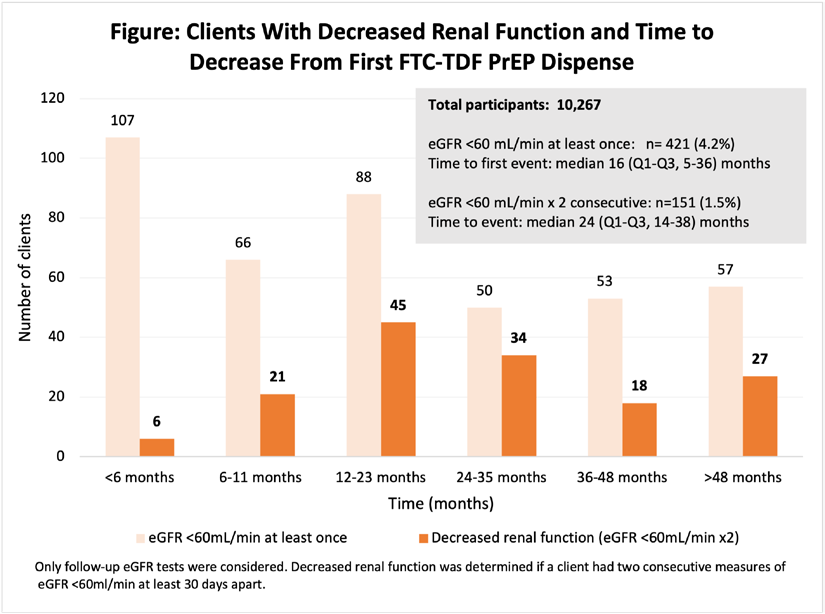
1362. Disposition of Referrals for Long-Acting Antiretrovirals at the Ward 86 HIV Clinic in San Francisco
Poster Abstracts
Page: 454
Chesa Cox1, Francis Mayorga-Munoz1, Anthonia Chimezie1, Janet Grochowski1, Diana Gleyzer2, Matt Hickey1, Katerina Christopoulos1, Mary Shiels1, Jon Oskarsson1, Monica Gandhi1
Background
Ward 86, a safety-net HIV clinic in San Francisco for ~2,600 publicly insured patients, has been using long-acting antiretroviral therapy (LA ART) for people living with HIV (PWH) with adherence challenges to oral ART. Since the approval of cabotegravir/rilpivirine (CAB/RPV) in 2021 and lenacapavir (LEN) in 2022, PWH have been referred to the Special Program on Long-Acting Antiretrovirals to Stop HIV (SPLASH) through a centralized, pharmacist-led process, regardless of viral suppression status. This retrospective study evaluates the disposition of referrals to Ward 86’s LA ART program over its first 3.5 years to guide future implementations.
Methods
Disposition (started, did not start, discontinued, etc.) and demographic data for PWH referred to the SPLASH program from January 2021 to August 2024 were extracted from electronic medical records and verified by clinician review.
Results
Of 699 PWH referred, 390 started LA ART (55.8%). The median referral age was 45; 81.6% identified as cisgender male, 69.0% non-Hispanic, 38.2% White, 34.2% unstably housed, and 41.9% reporting substance use. Among those that started LA ART, 74.1% (289/390) remained in the SPLASH program while 6.2% (24/390) continued LA ART after transferring clinics. Most participants are on CAB/RPV (89.6%), with smaller proportions on LEN+CAB (5.2%), LEN+CAB/RPV (4.8%), and LEN alone (0.3%). Seventy-seven (77/390, 19.7%) PWH stopped LA ART due to death (20), loss to follow-up (16), and switching to oral ART (41), with 4.9% (19/390) experiencing adverse effects on LA ART. Of the 308 (44.1%) PWH who did not start LA ART, 13 were found ineligible, and 7 were lost to follow-up or deceased, while 288 are awaiting clinical review (68), have yet to complete initial injection appointment (83), or are on hold due to various barriers, such as difficulty with patient engagement, lack of access, or fear of side effects (137) (Figure).
Conclusions
Approximately 25% of PWH at Ward 86 have been referred to the SPLASH program, indicating increasing acceptance of LA ART among PWH and their providers. Despite this, a significant portion of referrals (290/699, 41.5%) remain on hold due to various system and patient -level factors. In a clinic of publicly insured PWH with several barriers to oral ART adherence, comfort with LA ART is increasing among patients and clinicians, further demonstrating that LA ART is effective among a diverse population of PWH struggling with daily adherence.
Figure 1.
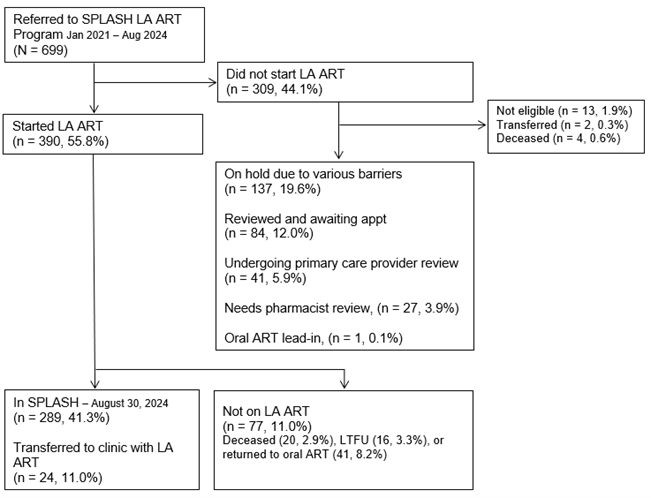
1363. Impact of 6-Monthly ART Dispensing on Retention in Malawi: A Target Trial Emulation Study
Poster Abstracts
Page: 454
Khumbo Shumba1, Idah Mokhele1, Elizabeth Kachingwe1, Lise Jamieson2, Matthew P. Fox3, Sydney Rosen3, Timothy Tchereni4, Wyness Phiri4, Stanley Ngoma5, Rose Nyirenda5, Sophie J. S. Pascoe1, Amy Huber1
Background
Malawi implemented 6-multi-month dispensing (6MMD) of antiretroviral therapy (ART) for clinically stable clients on HIV treatment during 2019 and scaled-up implementation in 2020. We compared retention for clients who received 6MMD to those who did not receive 6MMD and assessed predictors of retention.
Methods
We applied a target trial emulation (TTE) approach using routine clinical data from Malawi's Electronic Medical Record (EMR) system to identify ART clients eligible for 6MMD in 27 districts from 01/2020-12/2021. Eligible participants were non-pregnant adults ≥18 and on ART for ≥6 months with no prior 6MMD exposure. We created four six-month trials, defining eligibility at the start of each period and classifying participants as either receiving 6MMD or non-6MMD (dispensing duration of 1-3 months). We defined the follow-up start date as the 6MMD enrollment date for the 6MMD arm and the first visit in the trial enrollment period for the non-6MMD arm. Retention at 12 and 24 months were defined as having a clinic visit within 12-24 (Trial 1-4) and 24-36 (Trial 1-2) months. Using an intention-to-treat approach, we estimated risk differences (RD) with 95% confidence intervals (CI) using a Poisson regression model with an identity link function and robust standard errors. Pooled RD were estimated by accounting for within-subject variation in a Poisson regression model using data from all trials.
Results
Of the 287,933 unique individuals eligible for this study (57% female, median age 41), 73% (212,722) were enrolled in 6MMD. Retention at 12 months (Trials 1-4) and 24 months (Trials 1-2) were consistently higher in the 6MMD group than in the non-6MMD group. The pooled risk difference (RD) for retention between the 6MMD and non-6MMD groups was 4.6% (95% CI: 4.4-4.8) at 12 months (Figure 1) and 4.7% (95% CI: 4.4-5.0) at 24 months. Across all trials, retention was higher for females; those aged 25years and older; those with mild HIV disease (WHO Stage 1/2 at ART initiation), those receiving care at primary health care clinics, and those on ART longer at trial start.
Conclusions
We observed slightly higher retention in care rates in Malawi at 12 and 24 months among clients on 6MMD compared to those receiving shorter medication dispensing intervals. Future work to assess the impact of 6MMD on visit burden and resource use would offer a comprehensive view of the benefits to both ART clients and the health system.
The figure, table, or graphic for this abstract has been removed.