Introduction
Hepatotropic viral infections are a substantial source of preventable mortality and morbidity globally. Risk factors vary by the specific form of hepatitis but include many related to social determinants of health, including access to clean water; presence of stable housing; and the ability to avoid exploitation, commercial sex work, and injection drug use (IDU). Vulnerable, at-risk populations are also at a higher risk of other comorbidities such as HIV, coinfection with numerous forms of viral hepatitis, and alcohol and other substance use disorders, all of which can increase the risk of accelerated liver fibrosis and hepatocellular carcinoma (HCC). Many of these infections remain underdiagnosed, and treatment has historically been deferred to specialists, reducing the number of people who successfully accessed lifesaving medication.
Although hepatitis A, B, and C testing has long been recommended for people with HIV (PWH), recent guideline updates from the US Centers for Disease Control and Prevention (CDC) recommend hepatitis B and C screening for all adults regardless of risk factors. At the same time, treatment of hepatitis B and C evolved from toxic, marginally effective injected medications to well-tolerated, highly effective oral regimens. These improvements have streamlined the care of patients with chronic viral hepatitis such that many can now be treated by informed primary care clinicians, improving access to care that may not otherwise be afforded to many individuals at risk.
Prevention should not be overlooked as another key component of reducing the burden of viral hepatitis. Health care practitioners must recognize the risk factors driving transmission and create systems that will test, vaccinate, and treat at-risk populations to interrupt these cycles. Each of the 5 known types of viral hepatitis infections is reviewed, specifically emphasizing how primary care clinicians can be a crucial part of managing and preventing these highly impactful viral infections.
Hepatitis A
Epidemiology
Hepatitis A virus (HAV) is an RNA virus and is the leading cause of acute infectious hepatitis worldwide, with about 100 million infections estimated per year,1 predominantly but not exclusively in lower- to middle-income countries with poorer public sanitation. The virus is transmitted fecal-orally and is most commonly spread via direct contact with an infected individual or ingestion of contaminated food or water. In the US, hepatitis A outbreaks have also been seen in nursing and group homes. Other risk factors for hepatitis A include homelessness, IDU, sexual contact between men who have sex with men (MSM), specifically through digital- or oral-anal intercourse, international travel without documented immunity, and occupation-related risks (Figure 1).
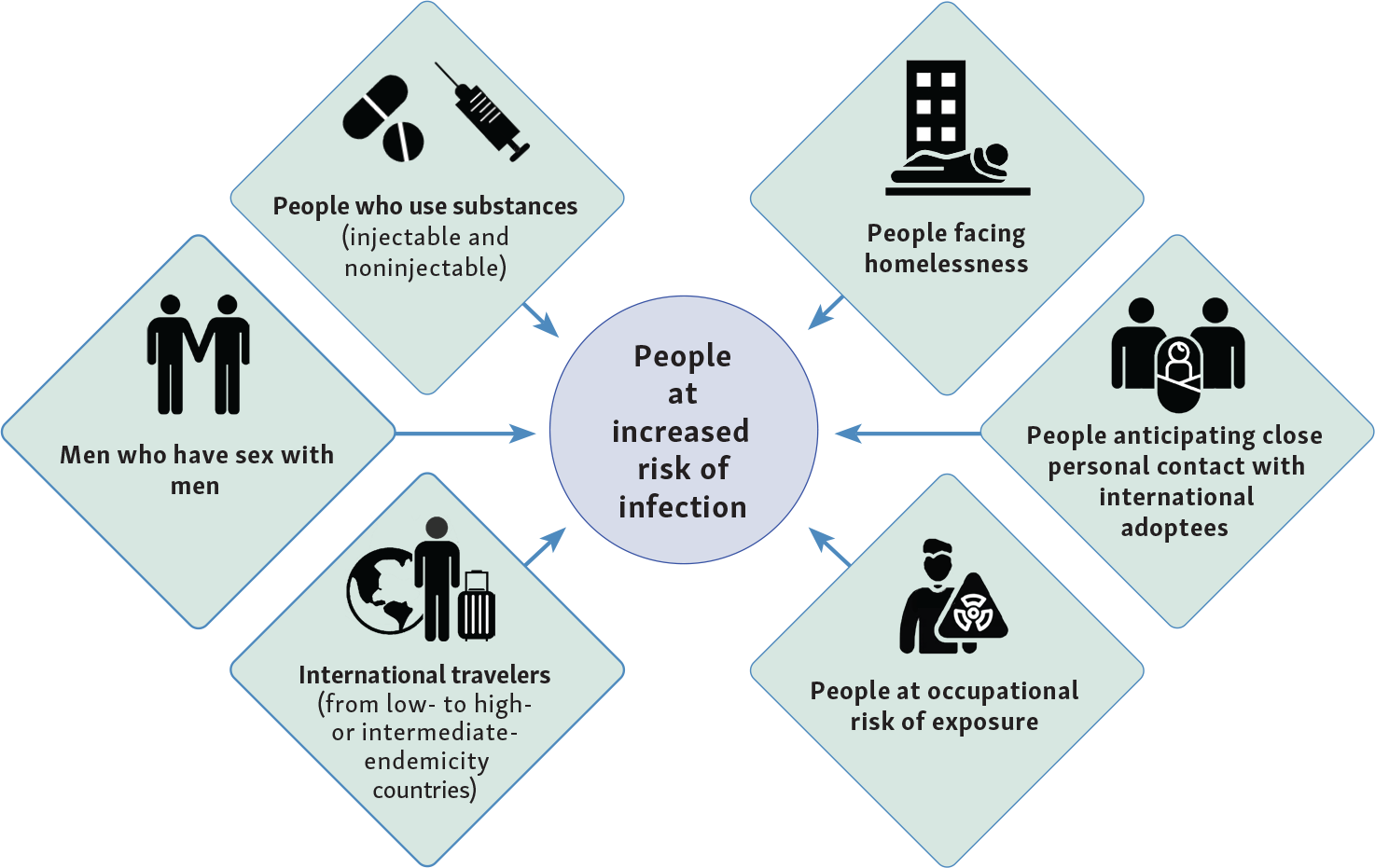
In the US, there has been an overall increase in cases of acute hepatitis A. In 2016, numerous hepatitis A outbreaks occurred in groups of people experiencing homelessness and persons who inject drugs (PWID) due to a lack of hygienic conditions. In 2021, there were an estimated 11,500 cases of hepatitis A and 5728 new cases, representing a 4-fold increase from case numbers in 2015.2
Natural History/Clinical Manifestations
Although hepatitis A is often asymptomatic in younger children, approximately 70% of adults will experience acute illness. After approximately 4 weeks of incubation, patients may experience nonspecific flu-like symptoms, followed by an icteric phase, which consists of elevated serum aminotransferase levels and jaundice. Although hepatitis A typically fully resolves within 4 to 7 weeks and does not lead to chronic active hepatitis, relapsing infection occurs in 3% to 20% of patients, more commonly with immunosuppression or advanced age. Serologically, anti-HAV immunoglobulin M (IgM) antibodies are detectable from 5 to 10 days before symptom onset up to 6 months after exposure. Anti-HAV immunoglobulin G (IgG) is typically detectable 8 to 12 weeks after exposure, chronically persists in serum, and is protective against repeat infection.1
Acute liver failure from hepatitis A is unusual and occurs in less than 1% of patients, most often in the setting of other comorbid liver diseases or with preexisting cirrhosis. PWH are at high risk of severe disease, likely due to immune system hyperactivity and hepatic oxidative stress present in PWH.3
Diagnosis/Treatment/Prevention
The workup of acute transami nitis and jaundice, particularly in an at-risk unvaccinated individual, should include ananti-HAV IgM level. An anti-HAV IgG level is more useful for assessing immunity through past exposure or vaccination. Some laboratories do not offer an HAV IgG test by itself, instead offering only total and IgM HAV antibody tests. In patients without current or recent clinical symptoms of acute hepatitis A, a positive total HAV antibody result can be assumed to be due to the presence of HAV IgG and thus immunity against infection.
Given that there is no available antiviral drug for hepatitis A, supportive care is the cornerstone of treatment, and prevention of infection through proper sanitation practices and vaccination is key. The CDC Advisory Committee on Immunization Practices (ACIP) recommends that children between 12 and 23 months (or, if previously unvaccinated, between 2 and 18 years) should be vaccinated.4 Additionally, unvaccinated adults at high risk of acquiring hepatitis A, or who would be at risk of severe infection, should be vaccinated. High-risk groups include international travelers headed to endemic countries; MSM; PWID; persons experiencing homelessness; persons with occupational exposure; persons with cirrhosis; persons with HIV, hepatitis B virus (HBV), or hepatitis C virus (HCV) infection; pregnant persons at risk for hepatitis A; persons living in congregate settings; and those with recent (<2 weeks) HAV exposure who are unvaccinated.
Three hepatitis A vaccine options are approved in the US: Havrix (GlaxoSmithKline Biologicals), Vaqta (Merck Sharp & Dohme LLC), and Twinrix (GlaxoSmithKline Biologicals) (the latter is a combination hepatitis A/hepatitis B vaccine). Havrix and Vaqta are given as 2 doses 6 months apart, whereas Twinrix is given at time 0, at 1 month, and at 6 months. All are aluminum-adjuvanted inactivated vaccines.4
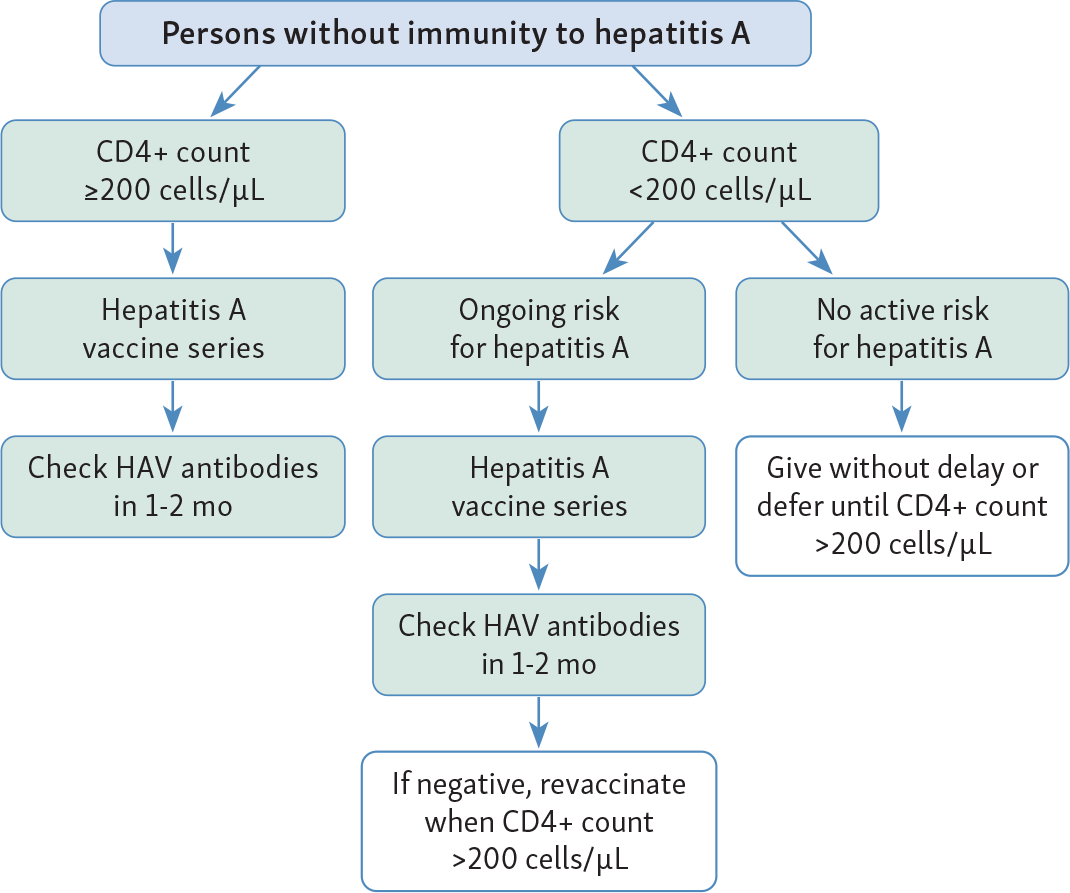
PWH with low CD4+ counts (<200 cells/µL) may not achieve a proper immunogenic response to HAV vaccination, especially if they are not receiving antiretroviral therapy (ART).5 It may be reasonable to defer HAV vaccination until immune reconstitution is achieved, although this decision should be weighed carefully against a person's degree of imminent risk (Figure 2). If immediate vaccination is performed, repeating vaccination following immune reconstitution is reasonable if the HAV IgG test is negative 1 to 2 months after completing the first vaccine series.
Hepatitis B
Epidemiology
Hepatitis B causes tremendous suffering and death despite being entirely preventable and treatable. It is the leading cause of chronic liver disease and HCC around the world, with the World Health Organization (WHO) estimating that in 2022, there were 254 million people with chronic hepatitis B, led by China, India, Indonesia, Nigeria, and Ethiopia.7 Among 1.3 million deaths attributed to viral hepatitis worldwide in 2022, a total of 1.1 million were caused by hepatitis B.8 That same year saw an estimated 1.2 million new diagnoses, a decrease from 1.5 million in 2020; however, the global mortality rate attributed to hepatitis B increased from 820,000 (10/100,000) to 1.1 million (14/100,000) deaths.8 This may be related to disruptions in accessing care related to the COVID-19 pandemic, as well as the effect of aging in a population with chronic hepatitis B.
In the US in 2022, a total of 13,800 cases of acute and 16,729 cases of chronic hepatitis B were diagnosed.9 New cases of chronic hepatitis B were most common among Asians and Pacific Islanders (20.1%), and acute infection rates were highest in persons between 40 and 49 years of age (52%). Total hepatitis B prevalence in the US has been difficult to quantify, with estimates ranging from 850,000 to more than 2 million. It is important to understand the effects of global migration, as 70% of diagnoses of chronic hepatitis B in the US occur in immigrants from endemic regions such as East Asia, the Caribbean, and sub-Saharan Africa.10 Although there is a comparatively greater burden of hepatitis B globally than in the US, it remains paramount for US clinicians to understand the natural history, screening recommendations, and treatment principles for hepatitis B, which, if diagnosed late or not addressed, can cause otherwise preventable liver inflammation, cirrhosis, and death.
Unlike the global trend, mortality attributed to hepatitis B in the US has not markedly changed between the mid-2010s and 2022, with 1797 deaths reported in 2022.9 However, data from the Chronic HBV Cohort Study indicate that these deaths may be underestimated; of participants in this study who died with liver disease, hepatitis B was listed on only 40% of death certificates.11 A goal identified in the CDC 2024 national progress report on HBV is to reduce hepatitis B-related mortality by at least 20% by 2025.12
Unfortunately, despite this compelling burden of disease and suffering, hepatitis B remains substantially undertaught in undergraduate and graduate medical education. A survey of trainee and attending physicians (primarily internists) in a US-based tertiary-care center with a high population of Asian and Pacific Islander patients assessed knowledge regarding hepatitis B and confidence in applying that knowledge to clinical practice.13 When adjusted for control measures, the survey respondents had poor knowledge of key parameters, such as which tests to order for chronic hepatitis B screening (24%) or appropriate guideline-based liver cancer screening (34%). Although this study was conducted in 2009, it highlights a gap in knowledge for a condition that was disproportionately overrepresented in one of the core ethnic demographics of the survey respondents.
Natural History
HBV is a virus with covalently closed circular DNA (cccDNA) transcribed in the hepatocyte nucleus. The majority are not incorporated into the host DNA as part of the replication cycle. Some HBV DNA is inserted randomly into host DNA and plays a role in HBV-related oncogenesis. HBV is transmitted by percutaneous or mucous membrane exposure to infected blood or other body fluids. In countries with a higher prevalence of HBV, perinatal transmission is the most common method of transmission, whereas in lower-prevalence countries, IDU and having numerous sexual partners are the main risk factors for new infections.
After infection, the initial viral incubation lasts 30 to 160 days, after which only 30% of adolescent or adult patients will experience an acute, icteric illness. Ninety-five percent of infected adults will experience complete recovery with lifelong immunity, but the remaining 5% will persist with chronic hepatitis B, defined as a positive hepatitis B surface antigen (HBsAg) for longer than 6 months. Chronic infection rates are higher in immunosuppressed individuals. Conversely, up to 90% of infected infants and 30% of children 1 to 5 years of age are unable to control HBV and will progress to chronic hepatitis B.14
Chronic hepatitis B progresses through different phases characterized by various serologic markers (Table 1). HBsAg is an envelope protein typically detectable within 4 weeks of infection and is a marker of chronic infection, as is the presence of HBV DNA. Of note, HBsAg can be falsely positive for 2 to 3 weeks after HBV vaccination, as the vaccine consists of HBsAg. Hepatitis B surface antibody (HBsAb) indicates immunity from hepatitis B or as a response to vaccination. The HBV core protein is part of the viral nucleocapsid, which encloses viral DNA and the DNA polymerase enzyme. A hepatitis B core antigen (HBcAg) is formed when an intact HBV virion degrades, and the hepatitis B core antibody IgM (HBcIgM) is the first antibody detectable in serum 4 to 8 weeks after infection or during reactivation of a previously latent chronic infection. The hepatitis B core IgG (HBcIgG), more often referred to as HBcAb, signals prior exposure to HBV and is present in chronically infected persons (who also have HBsAg) and those without chronic infection (those who are HBsAg negative).15
Table 1.
Significance of Hepatitis B Serologic Markers
| Test | Label | Significance |
|---|---|---|
| Surface antigen | sAg | Current infection. Can also be transiently positive 2-3 wk after hepatitis B vaccination (false positive) |
| Surface antibody | sAb | Immunity, via vaccination or resolved infection |
| Anti-core IgM | cIgM | Recent (acute) infection or reactivation of chronic infection |
| Anti-core IgG | cIgG | (Or cAb) = remote infection, or could be false positive if an isolated finding in a no-risk patient |
| e antigen | eAg | Active viral replication (high infectivity) |
Finally, the hepatitis B e antigen (HBeAg) is a protein that the virus produces while actively replicating; it is not part of the virion itself but is secreted by the hepatocyte and is thought to block T-helper cell activity against HBV. Thus, it is associated with greater viremia and infectivity. Correspondingly, the development of hepatitis B e antibody (HBeAb), called seroconversion, is an indicator of a favorable immune response that controls active HBV replication. Its emergence signals the next phase of chronic infection, known as the inactive carrier or immune control phase.15
It is crucial to realize that as a DNA virus, HBV achieves long-lasting latency through its highly stable cccDNA even without active replication and the detectable presence of HBV DNA or HBsAg. Thus, any individual with a positive core antibody has been exposed to HBV, has HBV cccDNA in their hepatocytes, and is at risk of HBV reactivation (sometimes quite severe) if they become immunosuppressed iatrogenically or by chronic, untreated HIV infection. The 4 phases of chronic hepatitis B are shown in Figure 3 and described below.
Figure 3.
Phases of hepatitis B and corresponding levels of HBV DNA, ALT, and hepatitis B HBeAg status. Adapted from Machlachlan and Cowie.16
Abbreviations: ALT, alanine aminotransferase; HBeAb, hepatitis B e antibody; HBeAg, hepatitis B e antigen; HBsAg, hepatitis B surface antigen; HBV, hepatitis B virus; HCC, hepatocellular carcinoma; LFT, liver function test.
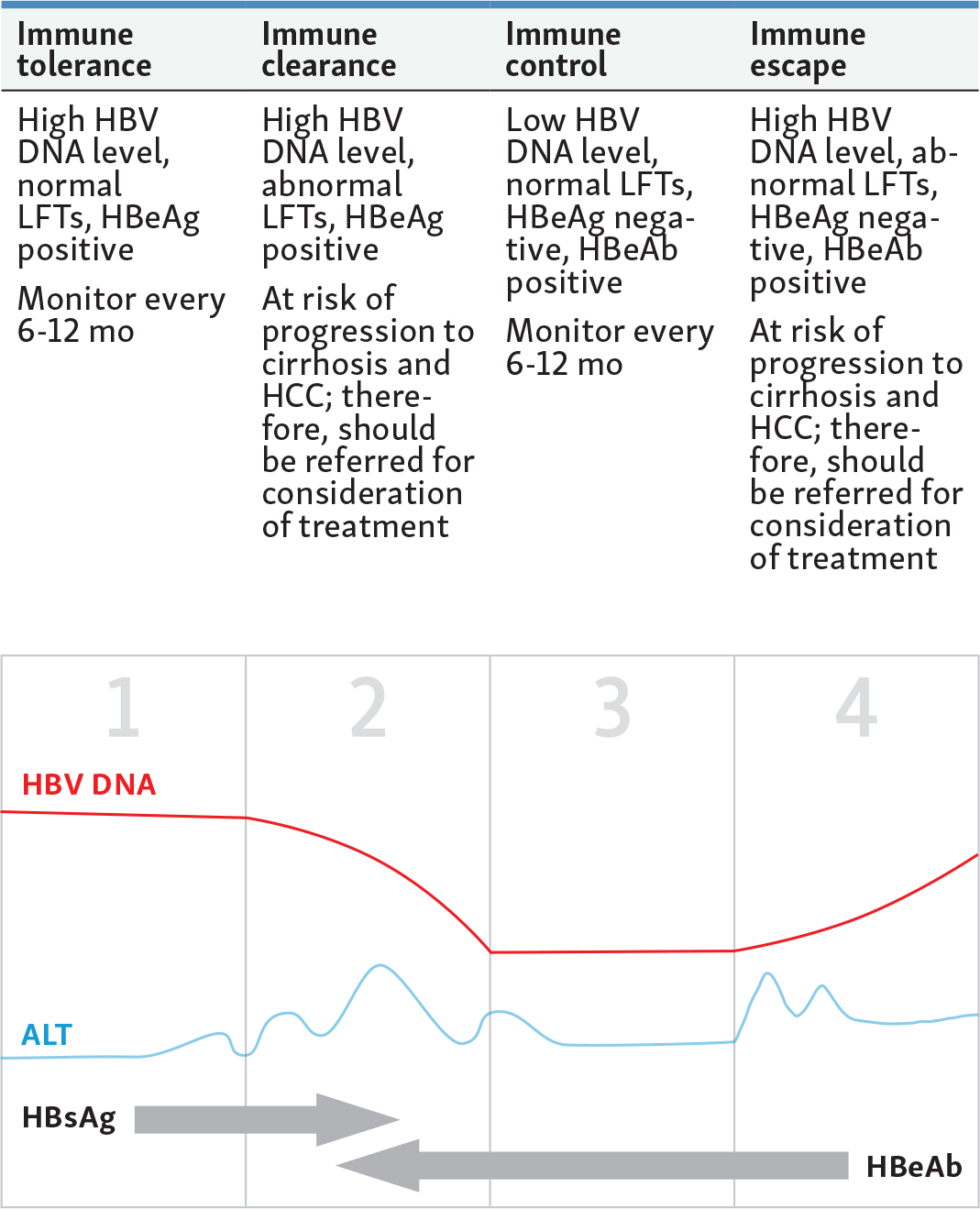
Immune-tolerant phase. Common after perinatal infection, this phase is characterized by a positive HBeAg and negative HBeAb, very high HBV DNA level (typically >1 million IU/mL), and normal aspartate aminotransferase (AST) and alanine aminotransferase (ALT) levels given the lack of an inflammatory response against the virus. There could be ground-glass hepatocytes, but typically the histology is normal. This phase typically lasts 20 to 30 years, but sometimes up to 40 years. Individuals who are infected in adolescence or older generally do not enter this phase.
Immune-clearance phase. As an evolution from the immune-tolerant phase, the HBeAg remains positive; however, there is a greater immune response in this phase, leading to inflammation, hepatocyte cell death, and fibrosis. DNA levels remain elevated but are lower than in the immune-tolerant phase, typically 10 to 100,000 IU/mL rather than more than 100,000 IU/mL. During acute infection of adolescents and adults, immune clearance is highly effective and lasts for only 3 to 4 weeks, causing transaminitis and symptoms such as nausea, vomiting, right upper-quadrant abdominal pain, and jaundice. However, when immune clearance occurs during chronic hepatitis B, inflammation is milder, prolonged, and most often asymptomatic. This phase may last for months to years, with 12% of people transitioning to the immune-control phase per year. However, some individuals may never seroconvert from HBeAb to HBeAg, remaining stuck in a chronic state of damaging hepatocellular inflammation and fibrosis.
Immune-control phase. Also referred to as an “inactive carrier” phase, this phase is characterized by seroconversion to a positive HBeAb with a negative HBeAg. The DNA level decreases to less than 100,000 IU/mL (most often to <2000 IU/mL), and transaminitis resolves. In this phase, histologic liver damage ceases. People will often remain in this phase for many years, with better prognosis than individuals who remain in immune clearance.
Reactivation phase. Mutations in the HBV genome can allow the virus to escape immune control. Most individuals remain HBeAb positive/HBeAg negative, but some may revert to HBeAg positive/HBeAb negative. Regardless, the person's immune system is no longer effective in controlling infection, and ALT and HBV DNA levels increase. One-third of individuals in the immune-control phase will have reactivation over time at a rate of 1% to 2% per year. Although these individuals can progress to cirrhosis and HCC, the rate of progression is often slower than for those who remain in the immune-clearance phase. However, the stage of histologic liver fibrosis tends to be more advanced in those in the reactivation phase, because these individuals tend to be older and have had chronic hepatitis B for a longer period (Table 2).
Table 2.
Interpretation of Hepatitis B Serologic Patterns
| Scenario | sAg | sAb | cIgM | cIgG | eAg | eAb | ALT | VL, IU/mL |
|---|---|---|---|---|---|---|---|---|
| Acute infection | + | - | + | - | + | - | ↑ | + |
| Previous infection with immunity | - | +/- | - | + | - | + | normal | - |
| Vaccination with immunity | - | + | - | - | - | - | normal | - |
| Immune tolerance phase | + | - | - | + | + | - | normal | >200,000 |
| Immune active/clearance phase | + | - | - | + | + | - | ↑ | >20,000 |
| Immune control/inactive phase | + | - | - | + | - | + | normal | <2000 |
| Reactivation phase | + | - | - | + | +/- | +/- | ↑ | >2000 |
Complete resolution of chronic hepatitis B, involving the loss of HBsAg and development of HBsAb, is rare without treatment and quite uncommon even with treatment. It is also important to note that HIV coinfection negatively impacts outcomes in people with chronic hepatitis B. Approximately 8% of PWH have comorbid chronic hepatitis B.17 Such persons typically have higher baseline HBV DNA levels, lower rates of HBeAg to HBeAb seroconversion, and higher rates of progression to cirrhosis. Most importantly, individuals with HIV coinfection have increased all-cause and liver-related mortality.3 The same is true for people with chronic hepatitis B who are coinfected with HCV or hepatitis D virus (HDV).
Diagnosis
Recommendations for HBV screening have evolved substantially over the past several decades. The most recent CDC HBV screening update in 2023 expanded recommendations to a universal testing approach, similar to HIV:18
At least once for all persons aged 18 years and older
All pregnant persons, ideally in the first trimester
Periodic repeat screening for persons at increased risk for hepatitis B
Anybody requesting HBV testing
This expanded on the previous CDC screening recommendations in 2008 by recommending universal testing for all adults. Simplifying guidelines and avoiding solely risk-based screening increases early detection and has been found to be a cost-effective measure. Compared with prior screening guidelines, universal screening averts an additional 7.4 cases of compensated cirrhosis, 3.3 cases of decompensated cirrhosis, 5.5 cases of HCC, 1.9 liver transplants, and 10.3 HBV-related deaths at a savings of $263,000 per 100,000 adults screened.19 Additionally, the new update clarifies risk factors for HBV acquisition to include persons with a history of incarceration, a history of a sexually transmitted infection or numerous sex partners, and those with hepatitis C. These are in addition to previously stated risk factors including perinatal exposure, HIV infection, history of needle sharing, nonimmune sexual partners of persons with chronic hepatitis B, persons born in regions with a hepatitis B prevalence of at least 2%, and US-born children of parents born in hepatitis B-endemic countries with a prevalence of at least 8%.
Screening recommendations now also include using a triple-serology process incorporating HBsAg, HBsAb, and HBcAb.18 This allows differentiation among those who are immune, nonimmune, and with remote/inactive infections who may be at risk for reactivation if immunosuppressed. Immunity is defined as having an HBsAb titer of at least 10 mIU/mL.
Treatment
Similarly to the expansion of screening recommendations, measures have been taken to simplify guidelines for and broaden access to hepatitis B treatment. The American Association for the Study of Liver Disease (AASLD) and European Association for the Study of the Liver (EASL) guidelines are based on a patient's phase of infection as determined by the presence of HBeAg vs HBeAb, and their HBV DNA and ALT levels, with certain thresholds required to initiate treatment.20 These requirements and thresholds were somewhat complex and not easy to incorporate into primary care practice, and many patients identified with hepatitis B were thus referred to specialists for treatment. The delays in care associated with specialty referral often created an obstacle for at-risk persons to access treatment, increasing the risk of liver disease progression and comorbidities.
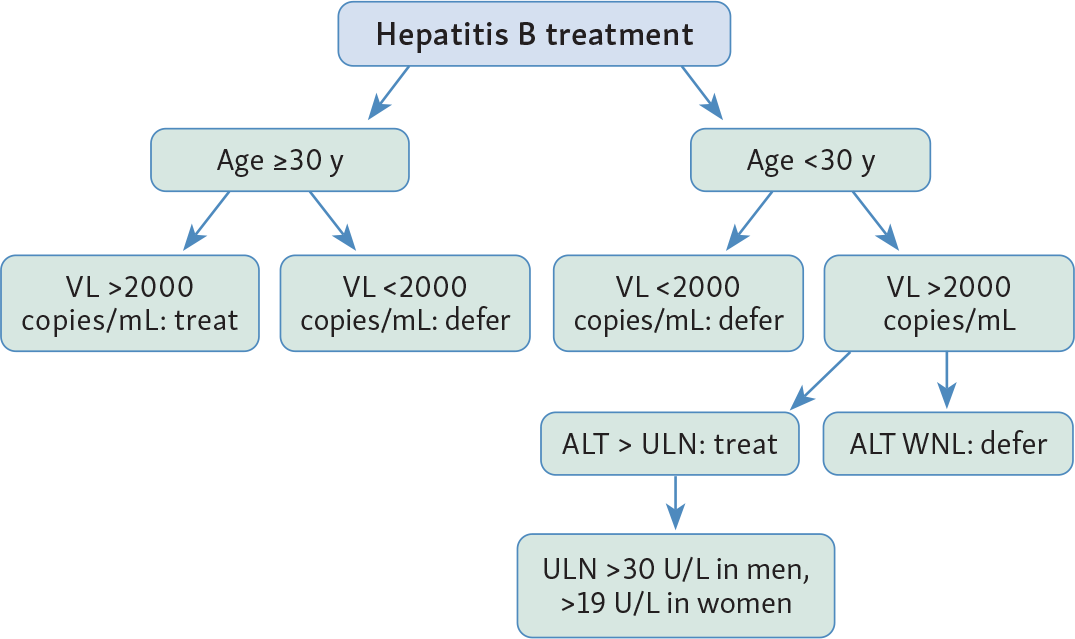
In January 2021, an expert panel convened to discuss a simplified algorithm for hepatitis B management (Figure 4).21 The impetus for this meeting was the high number of patients with chronic hepatitis B who did not meet guideline-directed treatment recommendations, creating a population of patients with chronic hepatitis B intended to undergo regular monitoring for eventual treatment eligibility but who often were not well engaged in care. Although this position has not been formally adopted by any professional societies, there are compelling reasons to follow these simplified guidelines. They expand the number of people eligible for hepatitis B treatment, reducing the risk of disease progression, cirrhosis, and HCC compared with more conservative treatment recommendations. Simplifying hepatitis B treatment and monitoring criteria is also intended to increase the comfort of nonspecialists to prescribe treatment. This will increase access to hepatitis B care, as many people at higher risk for hepatitis B may not have rapid access to specialists. The panel recommends treatment for:
Figure 4.
Simplified algorithm for hepatitis B treatment eligibility. Adapted from Dieterich et al.21
Abbreviations: ALT, alanine aminotransferase; ULN, upper limit of normal (defined as 19 in females and 30 in males); VL, viral load; WNL, within normal limits.
-
Patients identified with chronic hepatitis B, detectable HBV DNA level, and cirrhosis
-
Patients aged 30 years or older with an HBV DNA level more than 2000 IU/mL
-
Patients younger than 30 years of age with an HBV DNA level more than 2000 IU/mL and an ALT level more than 30 U/L if male or more than 19 U/L if female
Another factor favoring treatment expansion is the movement away from toxic and difficult pegylated interferon-based therapies to safer, well-tolerated oral medications, specifically tenofovir disoproxil fumarate (TDF), tenofovir alafenamide (TAF), or entecavir (ETV). These nucleoside and nucleotide analogue reverse transcriptase inhibitors cause transcription chain termination by preventing the addition of further nucleosides/nucleotides by HBV DNA polymerase, thus preventing viral replication. Deciding between TDF and TAF, the clinician should consider whether the patient has baseline renal insufficiency or decreased bone mineral density, as studies have shown higher rates of nephrotoxicity and bone loss in persons with and without HIV exposed to TDF. However, it should be noted that these differences have not manifested in adverse outcomes in postmarketing studies.22 Although TAF requires fewer dose adjustments for renal insufficiency than does TDF, the latter is now available as a generic product and thus some insurance plans require prior authorization to cover the more expensive TAF.
TDF and TAF are common parts of HIV ART and are ideal options for PWH with hepatitis B coinfection. ETV is a good option for patients with renal insufficiency, as, in contrast to TDF and TAF, it can be administered with dose adjustment at any glomerular filtration rate (GFR), including in individuals receiving hemodialysis. However, ETV has weak activity against HIV and can induce the HIV resistance mutation M184V, so it must be used as an adjunct to fully suppressive HIV ART if prescribed to patients with HIV/HBV coinfection.17 It should also be noted that emtricitabine and lamivudine, common components of HIV ART, have activity against HBV but should not be used in HIV/HBV-coinfected persons without concomitant tenofovir or ETV due to a high risk of HBV resistance to these agents over time, even with excellent adherence. Furthermore, HBV resistance to ETV can emerge if a patient has been exposed to lamivudine or emtricitabine in the past, so eliciting this part of the medication history is important if considering ETV. In comparison, no HBV resistance to tenofovir in either form has been identified.
It is important to follow HBV DNA and aminotransferase levels in patients with hepatitis B, whether or not they are receiving treatment, in order to monitor for disease progression (Table 3). If starting treatment, checking ALT and HBV DNA levels every 3 to 4 months is suggested until viral suppression is achieved. Subsequently, every 6 months is reasonable in conjunction with visits to assess medication adherence and tolerance. If deferring treatment, checking these parameters every 6 months for 2 years is reasonable, as is extending to yearly monitoring if there are no changes.
Table 3.
Recommendations for HBV Laboratory Monitoring for Patients Receiving HBV Treatment and for Patients Deferring Treatment
| Treatment monitoring | Monitoring when deferring | ||
|---|---|---|---|
| Antiviral therapy | HBV | ||
| Cirrhosis screening | Cirrhosis screening | ||
| HCC surveillance | HCC surveillance | ||
[i] Adapted from Dieterich et al.21
In treating patients who are in the immune clearance phase (ie, HBeAg positive), HBeAb should be checked once yearly. If the patient converts to HBeAg negative/HBeAb positive and has a normal ALT level and no history of advanced fibrosis or HIV coinfection, treatment discon tinuation may be considered 1 year after seroconversion is detected, with close laboratory follow-up to ensure there is no hepatitis B rebound warranting resumption of treatment. Conversely, treatment is lifelong for patients with cirrhosis.17 For those without advanced fibrosis, cirrhosis, or other forms of liver disease, treatment discontinuation can also be considered if complete serologic response (ie, undetectable HBsAg) is achieved and ALT and HBV DNA levels remain normal/undetectable for an additional year of treatment after loss of HBsAg. Because these scenarios are uncommon, counseling before starting treatment should stress that it may be lifelong, or until there are therapeutic advances to cure hepatitis B, and that unplanned discontinuation may result in acute hepatitis flares. In PWH with HBV coinfection, clinicians must ensure that any ART regimen switch includes a fully active HBV antiviral, whether that be TDF, TAF, or ETV. In any individual with newly diagnosed HIV, or persons starting HIV preexposure prophylaxis (PrEP), triple-serology HBV screening is important to avoid unwitting treatment and then nontreatment of chronic hepatitis B. If these individuals are found to be nonimmune to HBV, they should be appropriately immunized before transitioning to ART or PrEP regimens that do not contain TDF or TAF.
Immunization
The CDC recommends hepatitis B vaccination for all adults aged 19 to 59 years, including persons who are pregnant, as well as for adults 60 years or older with risk factors (but those without risk factors may also choose to receive a vaccine).24 Eligible vaccines for administration include Recombivax (Merck Sharp & Dohme LLC), Engerix-B (GlaxoSmithKline Biologicals), Heplisav-B (HepB-CpG; Dynavax Technologies Corporation), and Twinrix.
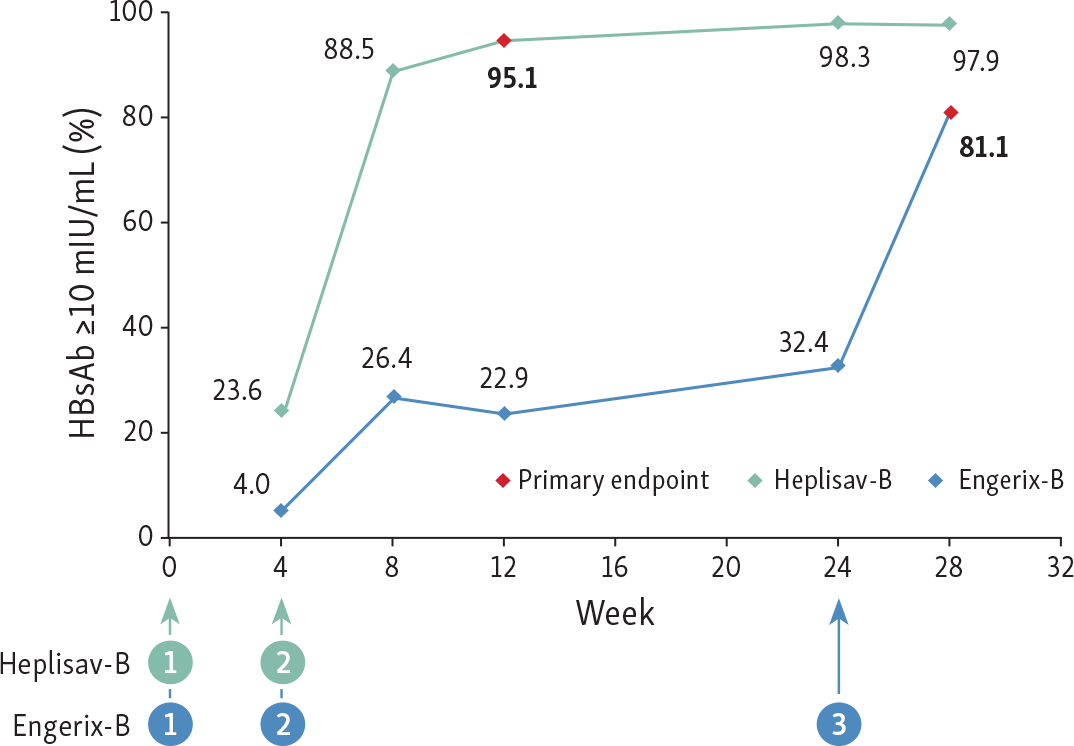
Older versions of the hepatitis B vaccine are singleantigen (HBsAg), aluminum-adjuvant immunizations. Brand names of these included Recombivax and Engerix-B, which are 3-dose series. The newer HepB-CpG (Heplisav-B) was approved by the US Food and Drug Administration in November 2017 (and again in September 2024 for pregnant persons). It is also a single-antigen immunization targeting HBsAg, but is complexed with a protein (CpG1018) adjuvant. This is a toll-like receptor 9 (TLR-9) agonist, which is shown to induce a more robust, lasting immunity response than the aluminum-adjuvant vaccinations (Figure 5).
Figure 5.
Comparing rates of hepatitis B immunity between Engerix-B and Heplisav-B vaccines in healthy adults aged 18 to 55 years. Adapted from Halperin et al.23
Abbreviation: HBsAb, hepatitis B surface antibody.
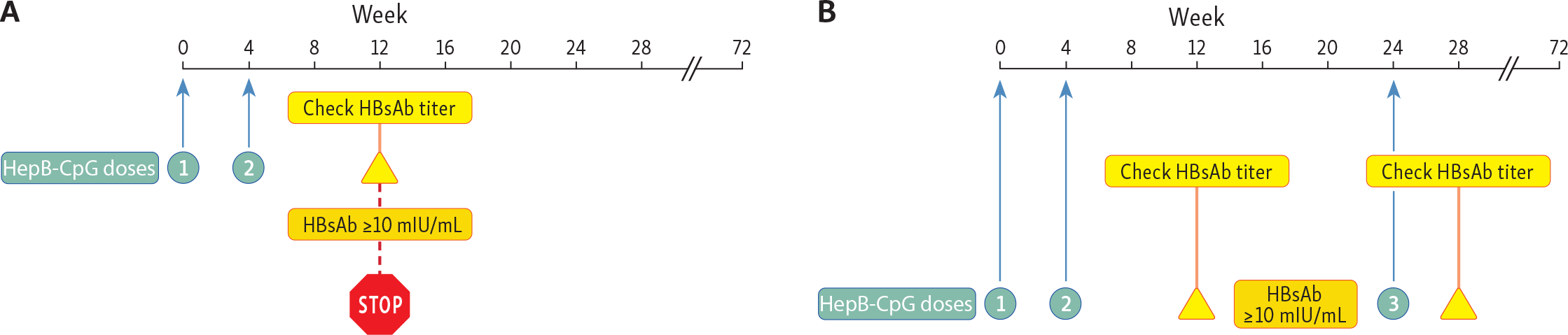
PWH have a higher risk of nonresponse to aluminum-adjuvant vaccines, with a wide 3-dose vaccine series response rate of 34% to 93%. The BEe-HIVe (B-Enhancement of HBV Vaccination in Persons with HIV) study was an open-label randomized clinical trial assessing HepB-CpG vaccination response in PWH who had not responded to previous hepatitis B immunization.25 A standard 2-dose series and a 3-dose series of HepB-CpG vaccination resulted in higher immune responses than a 3-dose series of aluminum-adjuvant vaccines. Based on these results, the Department of Health and Human Services (DHHS) HIV Opportunistic Infection guidelines recommend HepB-CpG as the preferred immunization in vaccination-naive PWH and prior nonresponders.26 After completing the standard 2-dose series at time 0 and at 1 month, it is recommended to check an HBsAb titer 4 to 8 weeks after vaccination, and if immunity has not been achieved, a third dose is recommended (Figure 6).
Figure 6.
Assessing hepatitis B virus immunity in people with HIV with nonresponse to older hepatitis B vaccines. (A) Option 1. (B) Option 2.6
Abbreviation: HBsAb, hepatitis B surface antibody.
An Isolated HBcAb
An isolated positive HBcAb, with negative HBsAg and negative HBsAb, can result from several factors. Most often, this is due to a prior controlled infection with loss of the surface antibody, although quiescent viral cccDNA remains in hepatocytes even in individuals who are HBsAg negative.26 Other scenarios include passive transfer of HBcAb via breast milk from a parent who is HBsAg positive, or a false-positive HBcAb, which might be suspected in an individual with no identified risk factors. One other cause of an isolated HBcAb is a very low-level chronic infection without detectable HBsAg or viremia.
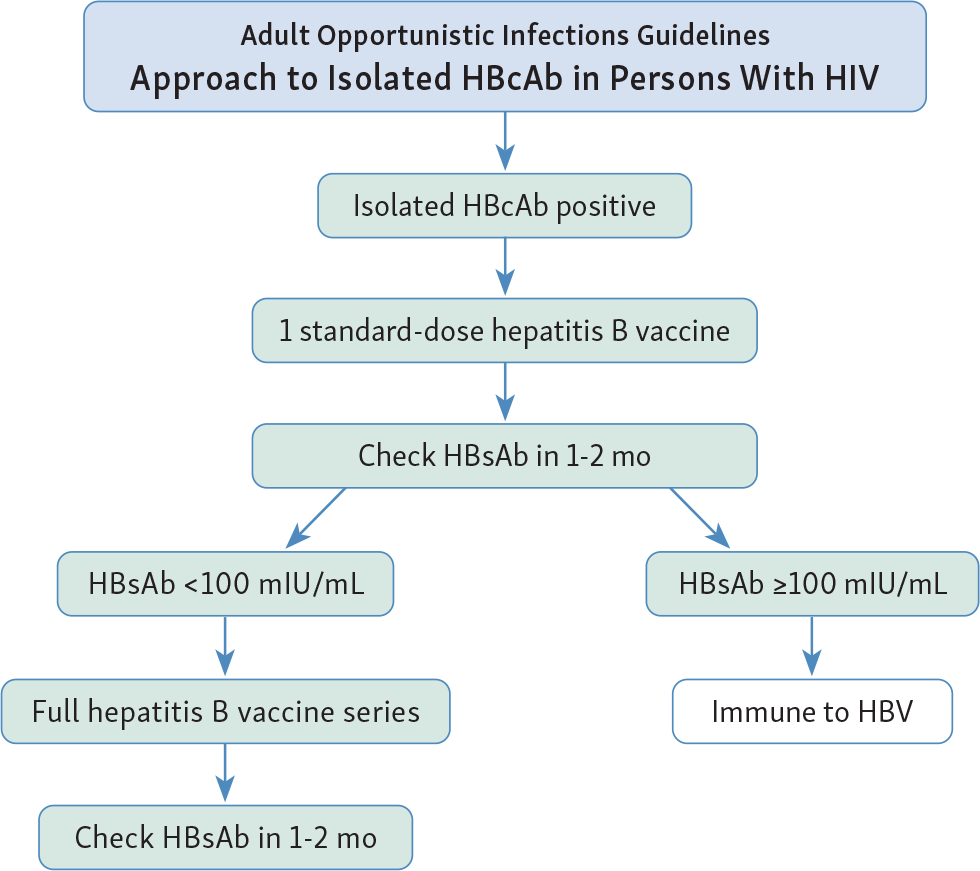
About 7% to 19% of PWH have findings of an isolated HBcAb, and detectable HBV DNA level is present in 1% to 10% of these patients.27 The significance of this is unclear, but DHHS guidelines no longer recommend checking an HBV DNA level in PWH with isolated positive HBcAb results.26 Instead, in this setting, recommendations are to provide 1 dose of a hepatitis B vaccine and to check a subsequent HBsAb titer for immunity, with a higher threshold for immunity defined as at least 100 mIU/mL, which has been shown to correspond with a longer duration of immunologic response (Figure 7).
Fibrosis Assessment
Assessment of liver fibrosis in patients with chronic hepatitis B is recommended yearly if on treatment and every 2 years otherwise. This can be done with serum-based tests such as the fibrosis-4 (FIB-4) or AST to platelet ratio index (APRI) score, which merely require a platelet count and aminotransferase level, or specialized imaging such as transient elastography. For streamlining of clinical practice, the clinician can consider transient elastography for patients with intermediate fibrosis risk on serum-based testing (F2-F3), but not for patients in whom serum-based testing more reliably indicates a low risk for fibrosis (F0-F1) or high probability of advanced fibrosis (F4 or cirrhosis).
Cirrhosis and HCC Screening
Hepatitis B accounts for a substantial proportion of mortality related to cirrhosis and to HCC worldwide. Management is similar to that of cirrhosis of any other cause: mainly, monitoring for signs of and managing portal hypertension with nonselective beta blockers, yearly endoscopies for esophageal variceal screening, managing fluid balance with combination diuretics or paracentesis, evaluating for signs of encephalopathy or spontaneous bacterial peritonitis, setting goals for care planning, and referring for transplant evaluation, if desired. Patients with cirrhosis must also be screened for comorbidities such as alcohol use or other hepatitis viruses. Patients with decompensated cirrhosis should be referred to a hepatologist.
HCC screening is an important consideration for patients with chronic hepatitis B, with and without cirrhosis. Unlike HCV, an RNA virus with no known direct role in oncogenesis, HBV viremia is directly correlated with HCC risk even in patients without cirrhosis.17 HCC screening consists of every-6-month hepatic ultra-sounds and serum alpha-fetoprotein (AFP) levels. The AASLD 2023 HCC guidance recommends hepatitis B-related HCC screening in men older than 40 years from endemic countries, women older than 50 years from endemic countries, persons from Africa as early as age 30 years, persons with a first-degree family member with HCC, and anyone with a PAGE-B score higher than 10.28,29
Hepatitis C
Epidemiology
The most recent WHO data from 2022 reported that hepatitis C has a global prevalence of 50 million people, including 1 million new diagnoses per year.8 The number of new cases worldwide reflected a decrease from 1.575 million new diagnoses in 2020 despite an increase in the percentage of PWID between 2020 and 2022 from 8% to 9%.8 In WHO-based analyses, approximately 80% of worldwide hepatitis C diagnoses related to IDU occur in 10 countries, with the US accounting for the highest number of infections in this category.
A total of 93,805 new cases of chronic hepatitis C were diagnosed in the US in 2022, along with 67,400 new cases of acute hepatitis C, contributing to an estimated total of 2.4 million people with hepatitis C in the US.9 Although the rate of acute hepatitis C (defined as cases per 100,000 population) decreased by 6.3% between 2021 and 2022, it increased by 7.4% in non-Hispanic American Indian/Alaska Native persons, which is 1.9 times the rate among non-Hispanic White persons. In 2022, there were 12,717 hepatitis C-related deaths reported. Although the highest number of absolute deaths was in White persons, non-Hispanic Black and American Indian/Alaska Native persons had 1.7-times and 3.3-times higher death rates, respectively.9
HCV is a bloodborne virus most commonly acquired through sharing drug injection equipment, having long outpaced receipt of infected blood products or organs as the most common route of HCV transmission after universal screening practices for clotting factor concentrates (in 1987) and other blood products (in 1992) were adopted. It is estimated that 20% to 30% of PWID acquire HCV in their first 2 years of injecting. Sharing noninjection, preparation-related tools like cookers and filters or snorting implements can contribute to transmission of HCV, as can the sharing of tattoo needles. Anal receptive intercourse is also an important transmission mode. Although infection by receipt of a blood transfusion or factor concentrate was devastatingly common before 1992, it is now rare to find patients with this route of transmission. However, patients may still be infected by receiving an HCV-positive solid-organ transplant, which is now acceptable given the overall scarcity of organs, the supply of organ donors who are HCV positive, and the ease of curing hepatitis C, but these incidents make up a very small number of cases each year. Perinatal transmission occurs in approximately 5% of cases of HCV-exposed newborns, but breastfeeding is not known to be a source of infection.
About 6% to 30% of US-based adult PWH have HCV coinfection, with wide variation based on specific risk factors, most notably IDU. Additionally, receptive anal sex (due to rectal microtrauma/bleeding) confers increased risks of HCV transmission. Recent data examining new cases of hepatitis C among PWH show that between the years 1995 and 2023, hepatitis C incidence doubled in identified MSM who did not inject drugs, whereas rates were persistently high yet stable among PWID and MSM who inject drugs.30 This highlights that although IDU remains the most common risk factor for acquiring hepatitis C, it is not a disease limited to this population. Health systems must create processes to help clinicians follow CDC recommendations to test all adults at least once, and prompt them to ask the questions to discern who needs more frequent testing based on their risk level.
Natural History
After exposure to HCV, only an estimated 20% of infected persons will experience clinically apparent acute hepatitis, with symptoms including abdominal pain, nausea, vomiting, and jaundice. Within 8 to 10 weeks, ALT levels increase and serum HCV RNA level increases and may fluctuate. About 15% to 25% of patients with acute hepatitis C will achieve spontaneous resolution with persistently undetectable HCV RNA levels, but the majority go on to have chronic hepatitis C. About 20% to 30% of patients with chronic hepatitis C will experience progression to cirrhosis within 25 to 30 years. The stage of liver fibrosis informs the future risk of cirrhosis and HCC, highlighting the importance of monitoring for fibrosis in these individuals. Additional factors that can increase the risk of fibrosis and liver-related death include age, male sex assigned at birth, presence of obesity or metabolic-associated steatotic liver disease, and use of alcohol. Coinfection with HIV accelerates liver fibrosis via enhanced immune activation and increased oxidative stress in hepatocytes.3 Similarly, chronic HBV coinfection can also hasten development of liver fibrosis. Assessing these often co-occurring risk factors is important for optimizing the health of patients with hepatitis C.
Diagnosis
In 2020, the CDC updated hepatitis C screening recommendations to encompass 1-time screening for all adults 18 years and older and during pregnancy in settings where HCV RNA positivity is 0.1% or higher.31 This update substantially broadened previous screening guidelines recommending 1-time or periodic testing for patients with specific risk factors, including HIV or hepatitis B, history of or current participation in IDU or shared drug-preparation equipment, identifying as an MSM (especially if participating in receptive anal sex), and participation in “chemsex” (defined as utilizing nonprescribed drugs to enhance sexual encounters), among others. This screening change created the opportunity to capture previously undiagnosed people for whom possible risks of transmission are not readily identified or disclosed. Recommendations were updated in 2023 when the CDC recommended testing perinatally exposed infants at 2 to 6 months of age with an RNA nucleic acid test, ie, instead of with an HCV antibody testat 18 months of age, to facilitate earlier diagnoses.32
Screening typically consists of an assessment of HCV antibody level with a qualitative enzyme immunoassay, which is positive in more than 97% of people 6 months after infection. The most up-to-date version of these tests has a sensitivity of 98% and a specificity of more than 99%.33 If available, it is preferred to order an HCV antibody test with reflex to RNA polymerase chain reaction (PCR) test if positive, and then to order a genotype test if HCV viremia is detected. This reduces the need for return laboratory draws and the potential for patients falling out of care. Of note, immunosuppressed individuals (including PWH with a CD4+ count of <200 cells/µL) may have false-negative HCV antibody test results and should have testing repeated when their immune systems are reconstituted; they can also be screened with an HCV RNA test if a more immediate result is needed. RNA levels are typically detectable in patients within 1 to 2 weeks of infection. Of note, the HCV antibody test will not differentiate between prior self-resolved or treated infection and a current or new infection, so once a patient is known to be HCV-antibody positive, an HCV RNA PCR test is needed to diagnose recurrent infection.
Treatment
By 2022, despite the existence of highly effective, well-tolerated, short-course oral treatments, slightly more than one-third (36.4%) of people globally with hepatitis C were diagnosed, and only 20% of those with a diagnosis were treated.8 An undetectable HCV RNA level 12 weeks after treatment completion is denoted as a sustained virologic response (SVR), which is more than 99% durable and is thus considered a cure, or eradication, of infection. Roughly 95% of persons treated with the new direct-acting antiviral agents (DAAs) have an SVR, which is associated with varying degrees of fibrosis regression and lower risks of cirrhosis and HCC.3 Older treatment regimens based on pegylated interferons and ribavirin were much longer, lasting up to a year, had substantial toxic effects, and were associated with low SVR rates, ranging from as low as 1 in 3 among PWH to 1 in 2 in people without HIV for the more difficult to treat but most common genotypes 1 and 4.
Fortunately, the latest hepatitis C treatments are far more potent and less toxic, and much safer and easier to prescribe. The MINMON (A Single-Arm Study to Evaluate the Feasibility and Efficacy of a Minimal Monitoring Strategy to Deliver Pangenotypic Ribavirin-Free HCV Therapy to Populations Living With HCV Who Are HCV Treatment Naive With Evidence of Active HCV Infection) trial in 2022 described excellent results with forgoing of frequent visits and laboratory tests, employing only intake and SVR blood tests and full-course 1-time pharmacy dispensing, and limiting remote contact during treatment.34 Subsequently, simplified approaches to treatment for a large majority of patients have been promoted by the AASLD and the Infectious Diseases Society of America (IDSA), and are readily available.35 These guidelines streamline laboratory testing and clinician visit requirements, lowering barriers to care and completion of treatment.
Simplification of treatment recommendations should empower not only hepatologists and infectious disease physicians but also primary care clinicians to treat and cure patients. Following the principle of treatment as prevention in HIV, treating hepatitis C not only benefits the individual but is highly impactful in reducing viral transmission within communities. Contraindications to simplified treatment exist in a minority of patients and include past treatment experience, concurrent hepatitis B, pregnancy, history of liver transplantation, and known or suspected HCC.35 In these cases, consultation with an experienced hepatitis C clinician is advised.
Treatment guidelines recommend the use of pangenotypic DAAs, namely glecaprevir/pibrentasvir (3 pills daily for 8 weeks, which inhibits viral proteins NS3/4A and NS5A), or sofosbuvir/velpatasvir (1 pill daily for 12 weeks, which inhibits the NS5B RNA polymerase and NS5A viral protein). These regimens are highly effective against HCV genotypes 1 to 6 and are very well tolerated. Although the most common adverse effects are nausea and mild headache, most patients reported no adverse effects. An SVR is achieved in more than 95% of patients treated with these regimens.36,37 Before treatment, clinicians should evaluate for fibrosis (see Fibrosis Assessment below), assess for medication interactions using resources such as the Liverpool Hepatitis C Interaction Checker,38 check liver and kidney function test results, and screen for coinfection with HIV and HBV and for pregnancy, if applicable.
Patients with HCV and HIV coinfection may be treated simultaneously for both, with attention paid to possible medication interactions. Due to the risk of HBV reactivation with the initiation of hepatitis C DAAs, treatment of hepatitis B before treatment of hepatitis C in HBV/HCV-coinfected persons should be considered in consultation with a clinician with hepatitis B treatment expertise. Similarly, if a person with HCV/HIV coinfection is also found to have had prior hepatitis B exposure (ie, is HBcAb positive) or chronic hepatitis B (ie, is HBsAg positive), HIV ART with activity against hepatitis B should be initiated before starting hepatitis C treatment.39
Treatment-naive patients with compensated cirrhosis, defined as Child-Pugh class A, will also often qualify for the simplified treatment protocol, although a patient with genotype 3 HCV with compensated cirrhosis seeking to use sofosbuvir/velpatasvir requires the addition of baseline NS5A resistance-associated substitution (RAS) testing.40 In treating hepatitis C, it is important to counsel patients that although achieving an SVR is a cure, it does not confer immunity, and that reinfection is possible. To that end, an interdisciplinary approach to hepatitis C, mental health, and substance use disorder treatment will reduce the risk of reinfection and further prevent community transmission. This includes measures such as promoting harm reduction, offering counseling and medication-assisted treatment for opioid use disorder, and continuing to recommend yearly RNA-based screening for individuals at high risk, such as PWID or MSM who continue to engage in risk-related behaviors.
Fibrosis Assessment
In patients with chronic hepatitis C, the assessment of liver fibrosis is recommended at the time of diagnosis and before treatment.35 This can most often be done with serum-based testing such as the fibrosis-4 index (FIB-4) or APRI scores or specialized transient elastography imaging in patients with inconclusive, intermediate fibrosis risks on serum-based testing (ie, F2 or F3). This is not required for patients in whom serum-based testing reliably predicts a low risk for fibrosis (ie, F0 or F1) or high risk (ie, F4 or cirrhosis).
All patients should be assessed for other factors that may contribute to liver fibrosis, including most commonly metabolic-associated liver disease and alcohol use, but also coinfection with HBV or HIV, which can accelerate hepatitis C-related fibrosis progression. All persons with chronic hepatitis C should be tested for hepatitis A and hepatitis B, and those found to be nonimmune should be vaccinated. When a patient achieves an SVR, eliminating hepatitis C, any other potential hepatic threats such as alcohol use disorder must likewise be addressed to prevent further progression of fibrosis.
Cirrhosis and HCC Screening
Management of cirrhosis consists of monitoring for signs of portal hypertension and management thereof, with regular endoscopies for variceal screening and nonselective beta-blocker therapy such as propranolol or nadolol; assessment for fluid retention leading to dependent edema, ascites, or hydrothorax, or for spontaneous bacterial peritonitis, and treatment with furosemide, spironolactone, fluid and salt restriction, and antibiotics when needed; awareness and management of hepatic encephalopathy and advanced goals of care planning before capacity is lost; and referral for transplant evaluation and listing. Patients with decompensated cirrhosis (Child-Turcotte-Pugh score B or C) should be referred to a hepatologist, whereas patients with compensated cirrhosis do not necessarily require referral to a specialist and are typically still candidates for simplified hepatitis C treatment.
Lifelong HCC screening in people with chronic hepatitis C is recommended for those with advanced fibrosis or cirrhosis. The latter includes those with a FIB-4 score higher than 3.25, FibroScan stiffness more than 12 kPa, liver nodularity or splenomegaly on imaging, platelet level less than 150,000/µL, or other history or examination findings consistent with cirrhosis. HCC screening consists of every-6-month hepatic ultrasounds and serum AFP levels.35
Hepatitis D
Introduction and Epidemiology
HDV is an RNA virus that requires the presence of hepatitis B envelope proteins, including HBsAg, in order to replicate and infect hepatocytes.41 Therefore, a person must have chronic hepatitis B to be infected with HDV. This can occur as a concurrent infection with both viruses or as a superinfection of HDV in someone with preexisting hepatitis B. Risk factors for HDV acquisition are similar to those for HBV, ie, primarily through blood or sexual exposure.
In a large meta-analysis of persons with a positive HBsAg, estimated hepatitis D prevalence was 4.5%, with the highest rates in Mongolia, Gabon, Mauritania, and Togo in Central/West Africa and the Republic of Moldova in Eastern Europe.42
Natural History and Clinical Manifestations
Coinfection with HBV and HDV can lead to a range of manifestations and carries a higher risk of severe hepatitis than HBV monoinfection.41 These risks include higher rates of cirrhosis, faster progression to end-stage liver disease, and HCC. Ten percent to 15% of cases progress to cirrhosis in less than 3 years.
Diagnosis
The AASLD recommends screening for HDV using anti-HDV antibody in people who are positive for HBsAg and at high risk, such as those who are living in or coming from an endemic area, who inject drugs, or who have numerous sex partners; those who are coinfected with HIV or HCV; or those who have transaminitis with an uncharacteristically low HBV DNA level. However, the AASLD also acknowledges a need to screen if there is any “uncertainty” regarding the presence of risk factors and to consider annual testing for those with ongoing risk for infection. The European Association for the Study of the Liver (EASL) recommends universal HDV screening for patients with a positive HBsAg.41
Treatment
Patients who are coinfected with HBV and HDV should be treated for hepatitis B. In patients with persistent transaminitis despite hepatitis B treatment, an HDV DNA PCR test should be performed, with additional hepatitis D-specific treatment recommended for HDV viremic patients. Treatment options include pegylated interferon alfa-2a, which is available in most countries, but its use is related to substantial toxic effects. It is typically prescribed by a hepatologist or infectious diseases specialist. A newer agent available in Europe, but not yet in the US, is oral bulevirtide, a specific HDV entry inhibitor that acts on sodium taurocholate cotransporter protein (NCTP), a receptor shared by HBV and HDV.43 A recent open-label trial showed higher efficacy of bulevirtide and pegylated interferon alfa-2a dual therapy over bulevirtide monotherapy, with a greater percentage of undetectable HDV viral loads (46%) at 24 weeks post treatment.44
Hepatitis E
Epidemiology
The final known hepatotropic virus, hepatitis E virus (HEV) is a single-stranded RNA virus most common in low- and middle-income countries and endemic in South and East Asia.45 HEV is transmitted via the fecal-oral route. Most cases of HEV infection are of genotypes 1 or 2 HEV and occur in the setting of poor sanitation and hygiene. Genotypes 3 and 4 are more common in animals, and human cases may be related to the consumption of undercooked meat. Acute hepatitis E presents similarly to other acute viral hepatitides, ie, with nausea, vomiting, and jaundice. Chronic hepatitis E is uncommon but may occur in highly immunosuppressed persons, such as transplant recipients. Rarely, acute hepatitis E can present as a fulminant hepatitis, which carries elevated mortality, especially among pregnant women in the second or third trimester. Pregnant women with acute hepatitis E in the third trimester have a mortality rate of 15% to 25%, requiring identification and close monitoring of such patients.46 There are no specific medications for the treatment of hepatitis E. Preventive measures, such as maintaining a clean water supply, are crucial in preventing community transmission of HEV.
Summary
There have been several innovative, practice-changing developments improving the prevention, identification, and treatment of viral hepatitis infections in recent years. However, many people remain at risk for, or are living with, chronic hepatitis infections that are still not diagnosed or treated. Those interested in further study of hepatitis B and C are encouraged to consult the University of Washington's websites, https://www.hepatitisb.uw.edu/ and https://www.hepatitisc.uw.edu/, as well as webinars and conferences offered by the IAS-USA, IDSA, and the regional AIDS Education and Training centers.
Notes
This article was based on the presentation, Prevention and Treatment of Viral Hepatitis in People With HIV: A Case-Based Approach, presented by Dr David Spach and Dr Philip Bolduc at the Ryan White HIV/AIDS CLINICAL CONFERENCE in November 2024.
The IAS-USA has identified and mitigated ahead of time any possible conflicts of interest that may influence CME activities with regard to exposition or conclusion. All financial relationships with ineligible companies for the authors andplanners/reviewers are below.
Financial affiliations in the past 24 months: Dr Min reported no relevant financial relationships with ineligible companies. (Updated November 26, 2025) Dr Bolduc reported no relevant financial relationships with ineligible companies. (Updated November 26, 2025)
References
M Migueres, S Lhomme, J Izopet. Hepatitis A: epidemiology, high-risk groups, prevention and research on antiviral treatment. Viruses. 2021;13(10): 1900. doi: 10.3390/v13101900
Centers for Disease Control and Prevention. Hepatitis A surveillance 2021. January 1, 2021. Accessed April 2, 2025. https://www.cdc.gov/hepatitis/statistics/2021surveillance/hepatitis-a.htm
Centers for Disease Control and Prevention. Hepatitis A vaccine administration. January 31, 2025. Accessed April 2, 2025. https://www.cdc.gov/hepatitis-a/hcp/vaccine-administration/index.html
Clinical Info HIV. Preventing vaccine-preventable diseases in children and adolescents with HIV infection. October 25, 2019. Accessed April 2, 2025. https://clinicalinfo.hiv.gov/en/guidelines/hiv-clinical-guidelines-pediatric-opportunistic-infections/immunizations-for-preventable-diseases
World Health Organization. Hepatitis B. April 9, 2024. Accessed May 1, 2025. https://www.who.int/news-room/fact-sheets/detail/hepatitis-b
World Health Organization. Global hepatitis report 2024: action for access in low- and middle-income countries. April 9, 2024. Accessed May 22, 2025. https://www.who.int/publications/i/item/9789240091672
Centers for Disease Control and Prevention. 2022 Viral Hepatitis Surveillance Report. September 30, 2024. Accessed May 22, 2025. https://www.cdc.gov/hepatitis-surveillance-2022/about/index.html
KV Kowdley, CC Wang, S Welch, H Roberts, CL Brosgart. Prevalence of chronic hepatitis B among foreign-born persons living in the United States by country of origin. Hepatology. 2012;56(2): 422–433. doi: 10.1002/hep.24804
D Bixler, Y Zhong, KN Ly, . Mortality among patients with chronic hepatitis B infection: the chronic hepatitis cohort study (CHeCS). Clin Infect Dis. 2019;68(6): 956–963. doi: 10.1093/cid/ciy598
Centers for Disease Control and Prevention. Hepatitis B virus — reduce deaths. October 9, 2024. Accessed May 22, 2025. https://www.cdc.gov/hepatitis/php/npr-2024/hep-b-reduce-deaths.html
SD Chao, BM Wang, ET Chang, L Ma, SK So. Medical training fails to prepare providers to care for patients with chronic hepatitis B infection. World J Gastroenterol. 2015;21(22): 6914–6923. doi: 10.3748/wjg.v21.i22.6914
AB Sperry, A Bennett, J Wen. Hepatitis B and C in Children. Clin Liver Dis. 2022;26(3): 403–420. doi: 10.1016/j.cld.2022.03.005
TJ Liang. Hepatitis B: the virus and disease. Hepatology. 2009;49(5 Suppl): S13–S21. doi: 10.1002/hep.22881
HIV Clinical Info. Hepatitis B virus. December 16, 2024. Accessed November 1, 2025. https://clinicalinfo.hiv.gov/en/guidelines/hiv-clinical-guidelines-adult-and-adolescent-opportunistic-infections/hepatitis-b-virus
EE Conners, L Panagiotakopoulos, MG Hofmeister, . Screening and testing for hepatitis B virus infection: CDC recommendations — United States, 2023. MMWR Recomm Rep. 2023;72(1): 1–25. doi: 10.15585/mmwr.rr7201a1
M Toy, D Hutton, AM Harris, N Nelson, JA Salomon, S So. Cost-effectiveness of 1-time universal screening for chronic hepatitis B infection in adults in the United States. Clin Infect Dis. 2022;74(2): 210–217. doi: 10.1093/cid/ciab405
SH Han, TT Tran. Management of chronic hepatitis B: an overview of practice guidelines for primary care providers. J Am Board Fam Med. 2015;28(6): 822–837. doi: 10.3122/jabfm.2015.06.140331
D Dieterich, C Graham, S Wang, . It is time for a simplified approach to hepatitis B elimination. Gastro Hep Adv. 2023;2(2): 209–218. doi: 10.1016/j.gastha.2022.10.004
SA Halperin, B Ward, C Cooper, . Comparison of safety and immunogenicity of two doses of investigational hepatitis B virus surface antigen co-administered with an immunostimulatory phosphorothioate oligodeoxyribonucleotide and three doses of a licensed hepatitis B vaccine in healthy adults 18-55 years of age. Vaccine. 2012;30(15): 2556–2563. doi: 10.1016/j.vaccine.2012.01.087
AL Sandul, K Rapposelli, M Nyendak, M Kim. Updated recommendation for universal hepatitis B vaccination in adults aged 19-59 years — United States, 2024. MMWR Morb Mortal Wkly Rep. 2024;73(48): 1106. doi: 10.15585/mmwr.mm7348a3
KM Marks, M Kang, T Umbleja, . HepB-CpG vs HepB-Alum vaccine in people with HIV and prior vaccine nonresponse. The BEe-HIVe randomized clinical trial. Published December 1, 2024. Accessed April 25, 2025. https://jamanetwork.com/journals/jama/article-abstract/2827546
HIV Clinical Info. Guidelines for the prevention and treatment of opportunistic infections in adults and adolescents with HIV. Updated December 16, 2024. Accessed May 22, 2025. https://clinicalinfo.hiv.gov/en/guidelines/hiv-clinical-guidelines-adult-and-adolescent-opportunistic-infections/hepatitis-b-virus
R Palacios, R Mata, A Hidalgo, . Very low prevalence and no clinical significance of occult hepatitis B in a cohort of HIV-infected patients with isolated anti-HBc seropositivity: the BHOI study. HIV Clin Trials. 2008;9(5): 337–340. doi: 10.1310/hct0905-337
AG Singal, JM Llovet, M Yarchoan, . AASLD practice guidance on prevention, diagnosis, and treatment of hepatocellular carcinoma. Hepatology. 2023;78(6): 1922–1965. doi: 10.1097/HEP.0000000000000466
Medical Data Analytics Center. PAGE-B calculator. Accessed September 1, 2025. https://mdac.cuhk.edu.hk/calculators/page-b/
National AIDS Treatment Advocacy Project. Trends in incident HCV infection among PWH engaged in care in the US-1995-2023. Published March 9, 2025. Accessed May 22, 2025. https://natap.org/2025/CROI/croi_64.htm
S Schillie, C Wester, M Osborne, L Wesolowski, AB Ryerson. CDC recommendations for hepatitis C screening among adults — United States, 2020. MMWR Recomm Rep. 2020;69(2): 1–17. doi: 10.15585/mmwr.rr6902a1
L Panagiotakopoulos, AL Sandul, EE Conners, MA Foster, NP Nelson, C Wester. CDC recommendations for hepatitis C testing among perinatally exposed infants and children — United States, 2023. MMWR Recomm Rep. 2023;72(4): 1–21. doi: 10.15585/mmwr.rr7204a1
C Colin, D Lanoir, S Touzet, L Meyaud-Kraemer, F Bailly, C Trepo. Sensitivity and specificity of third-generation hepatitis C virus antibody detection assays: an analysis of the literature. J Viral Hepat. 2001;8(2): 87–95. doi: 10.1046/j.1365-2893.2001.00280.x
SS Solomon, S Wagner-Cardoso, L Smeaton, . A minimal monitoring approach for the treatment of hepatitis C virus infection (ACTG A5360 [MINMON]): a phase 4, open-label, single-arm trial. Lancet Gastroenterol Hepatol. 2022;7(4): 307–317. doi: 10.1016/S2468-1253(21)00397-6
AASLD/IDSA/IAS-USA. HCV guidance: recommendations for testing, managing, and treating hepatitis C. Accessed September 1, 2025. http://hcvguidelines.org/
S Zeuzem, GR Foster, S Wang, . Glecaprevir-pibrentasvir for 8 or 12 weeks in HCV genotype 1 or 3 infection. N Engl J Med. 2018;378(4): 354–369. doi: 10.1056/NEJMoa1702417
J Feld, I Jacobson, C Hézode, . Sofosbuvir and velpatasvir for HCV genotype 1, 2, 4, 5, and 6 infection. N Engl J Med. 2015;373(27): 2599–2607. doi: 10.1056/NEJ-Moa1512610
University of Liverpool. Hepatitis C interaction checker. Accessed September 1, 2025. https://www.hep-druginteractions.org/
HIV Clinical Info. Considerations for antiretroviral use in patients with coinfections: HIV/HCV coinfection. Department of Health and Human Services. Accessed September 1, 2025. https://clinicalinfo.hiv.gov/en/guidelines/hiv-clinical-guidelines-adult-and-adolescent-arv/coinfections-hepatitis-c-virus-hcv
R Esteban, JA Pineda, JL Calleja, . Efficacy of sofosbuvir and velpatasvir, with and without ribavirin, in patients with hepatitis C virus genotype 3 infection and cirrhosis. Gastroenterology. 2018;155(4): 1120–1127.e4. doi: 10.1053/j.gastro.2018.06.042
Liver EAftSot. EASL clinical practice guidelines on hepatitis delta virus. J Hepatol. 2023;79(2): 433–460. doi: 10.1016/j.jhep.2023.05.001
AJ Stockdale, B Kreuels, MYR Henrion, . The global prevalence of hepatitis D virus infection: systematic review and meta-analysis. J Hepatol. 2020;73(3): 523–532. doi: 10.1016/j.jhep.2020.04.008
H Wedemeyer, S Aleman, M Brunetto, . Bulevirtide monotherapy in patients with chronic HDV: efficacy and safety results through week 96 from a phase III randomized trial. J Hepatol. 2024;81(4): 621–629. doi: 10.1016/j.jhep.2024.05.001
T Asselah, V Chulanov, P Lampertico, . Bulevirtide combined with pegylated interferon for chronic hepatitis D. N Engl J Med. 2024;391(2): 133–143. doi: 10.1056/NEJMoa2314134
World Health Organization. Hepatitis E. April 10, 2025. Accessed September 1, 2025. https://www.who.int/news-room/fact-sheets/detail/hepatitis-e
National HIV Curriculum. Immunization in adults: hepatitis A virus (HAV) vaccination. Accessed November 12, 2025. https://www.hiv.uw.edu/go/basic-primary-care/immunizations/core-concept/all#hepatitis-virus-havvaccination