Introduction
Obesity is a mong the most prevalent chronic diseases worldwide and is a central contributor to preventable morbidity and mortality. It is not merely an accumulation of excess body fat, but a pathologic state of adipose dysfunction that produces metabolic, mechanical, and inflammatory complications across nearly every organ system. Adipose tissue, once regarded as an inert energy reservoir, is now recognized as a highly active endocrine and immune organ, with a secretory and inflammatory profile that exerts wide-ranging effects on systemic physiology. When its regulatory balance is disrupted, the resulting state of adiposopathy contributes to insulin resistance, endothelial dysfunction, atherogenesis, hepatic steatosis, and carcinogenesis.1
The World Health Organization and numerous professional societies classify obesity as a chronic, relapsing disease, emphasizing that its persistence reflects biologic vulnerability and environmental exposure rather than a deficit of willpower or discipline.2 The concept of “energy homeostasis” illustrates this well: body weight is regulated by an intricate network of neural, hormonal, and metabolic feedback loops that are designed to defend energy stores. These systems can be disrupted by genetic predisposition, environmental exposures, or chronic stress, at which point weight gain becomes biologically reinforced. As a result, long-term weight loss is difficult to sustain because weight loss triggers counterregulatory physiologic responses such as reduced metabolic rate and increased appetite that act to restore lost weight.1
Globally, the prevalence of obesity has surged in recent decades. In 2022, an estimated 2.5 billion adults were overweight and 890 million had obesity, reflecting a more than 2-fold increase in the prevalence of obesity since 1990.2 These trends have profound implications for population health, as obesity now contributes to more years of life lost than undernutrition in most regions. This burden reflects its strong association with premature mortality and disability from cardiovascular disease, type 2 diabetes, chronic kidney disease, and several cancers.3
Within this global landscape, the intersection of obesity and HIV has emerged as a substantial public health challenge. As antiretroviral therapy (ART) has extended the life expectancy of people with HIV (PWH) and reduced the number of opportunistic infections due to its efficacy, the burden of disease has shifted from opportunistic infections and wasting to chronic noncommunicable conditions such as type 2 diabetes, dyslipidemia, and cardiovascular disease.4 This shift reflects not only weight gain following ART initiation attributed to “return to health,” but also the direct metabolic effects of some ART agents, increased longevity, persistent inflammation, and traditional cardiometabolic risk factors. Although obesity prevalence in PWH is similar to that of the general population (more than 40% of adults with HIV in the US meet criteria for overweight or obese), emerging data suggest that PWH bear a disproportionately higher metabolic disease burden.5 As a result, metabolic disorders are common among PWH, affecting roughly one-quarter globally and even higher proportions in the Americas. PWH have greater odds of metabolic syndrome, abdominal obesity, dyslipidemia, and diabetes than individuals without HIV, with some abnormalities such as central adiposity and nonalcoholic fatty liver disease (NAFLD) occurring at lower body mass index (BMI) levels. ART exposure adds to this risk, with disturbances in glucose metabolism and HIV-associated dyslipidemia continuing to drive cardiovascular disease. Liver steatosis affects about one-third of PWH, and body composition changes, including visceral fat accumulation, persist despite modern ART.5 Together, these metabolic complications reduce comorbidity-free life expectancy, underscoring the need to be proactive in diagnosing and treating metabolic conditions in PWH.
In the context of HIV, lipodystrophy represents another way body composition patterns have evolved alongside therapeutic advances. This syndrome of abnormal fat loss and accumulation caused by certain ART regimens results in body fat redistribution, insulin resistance, and metabolic complications, posing a substantial challenge in the management of PWH.4
This epidemiologic shift reflects the combined influence of biologic and environmental forces. Modern ART restores health and appetite, but certain agents promote adipose expansion and disrupt energy regulation. Chronic inflammation and immune activation persist even with viral suppression, further altering insulin signaling and lipid metabolism.6,7 At the same time, PWH are exposed to the same obesogenic environment, including energy-dense diets, sedentary lifestyles, psychosocial stress, and socioeconomic inequity, that drives rising obesity globally. Understanding these intersecting mechanisms is essential for the long-term management of HIV in the 21st century.
Pathophysiology of Obesity
Energy Homeostasis and Neuroendocrine Regulation
Energy homeostasis is the biologic system that maintains balance between energy intake and expenditure by coordinating appetite, metabolic rate, and nutrient use. This regulation depends on communication between the hypothalamus and peripheral organs through hormonal, neural, and metabolic signals that help prevent excess weight gain and unintended weight loss. Neuroendocrine regulation describes how the brain senses and responds to signals such as leptin, insulin, thyroid hormones, and nutrients. Within the hypothalamus, key neuronal populations in the arcuate nucleus interpret these signals and adjust food intake and energy expenditure accordingly.8
Obesity arises when this homeostatic system is disrupted. Chronic caloric excess and inflammation lead to hypothalamic gliosis and microglial activation, impairing neuronal sensitivity to leptin and insulin. This central resistance causes persistent hunger, decreased satiety, and reduced metabolic rate. The hypothalamus also communicates with peripheral tissues via sympathetic and parasympathetic pathways that modulate adipose lipolysis and brown-fat thermogenesis.8
Peripheral endocrine systems reinforce this dysregulation. In obesity, insulin resistance develops in skeletal muscle and liver, driving hyperinsulinemia that further promotes fat storage. Elevated cortisol from chronic stress and circadian misalignment favors visceral fat deposition.1 Estrogen deficiency from menopause or ART-related changes alters lipid metabolism and increases central adiposity, particularly in women.8
Adipose Tissue Dysfunction and Systemic Inflammation
Healthy adipose tissue grows in a controlled way by enlarging existing fat cells and creating new ones. In obesity, this process of hypertrophy becomes pathologic and leads to local hypoxia, oxidative stress, and recruitment of macrophages that form “crown-like” structures around dying adipocytes. These macrophages adopt an M1-like proinflammatory phenotype and secrete tumor necrosis factor α and interleukin 6, which interfere with insulin receptor signaling. Over time, adipose depots develop fibrosis, reduced vascularization, and impaired lipolytic response.8
Inflammatory cytokines released from adipose tissue act systemically, contributing to hepatic gluconeogenesis, endothelial dysfunction, and atherogenesis. Adiponectin, an antiinflammatory adipokine that enhances insulin sensitivity, is suppressed and leptin and resist in levels increase, promoting sympathetic activation and inflammation. The cumulative effect is a chronic, low-grade inflammatory state termed “metaflammation” that underlies many obesity-related comorbidities.9
Mitochondrial dysfunction is another hallmark of obesity. Impaired oxidative capacity reduces fatty-acid oxidation, increasing intracellular lipid intermediates that disrupt insulin signaling. These abnormalities also generate reactive oxygen species, perpetuating inflammation and cellular stress. Together, these molecular events make obesity a biologically self-reinforcing disease.10
Table 1.
Factors in Weight Gain in People With HIV
[i] Adapted from Sax et al.6
Genetic, Microbiome, and Environmental Modifiers
Genetic factors influence susceptibility to obesity through effects on appetite, energy expenditure, and adipocyte biology. Variants within the leptin-melanocortin pathway and the fat mass and obesity gene (FTO) are among the best characterized in both monogenic and polygenic obesity. The polygenic basis of obesity reflects the additive effects of many common genetic variants, with heritability estimates of 40% to 70%, but environmental factors remain crucial in determining whether genetic susceptibility is expressed.11 Ultra-processed foods that are rich in sugar and saturated fat, inadequate sleep, psychosocial stress, and reduced physical activity all interact with these biologic pathways. The result is a convergence of genetic vulnerability and environmental exposure that sustains positive energy balance and progressive adipose expansion.1
Intersecting Mechanisms in HIV
Table 1 illustrates several interconnected factors that contribute to weight gain: disease-related contributors, such as lower CD4+ cell count, higher viral load, and demographic patterns (including higher risk among Black women and individuals without a history of injection drug use); ART-related mechanisms, such as return-to-health physiology, adipose dysfunction, and fibrosis; and the same genetic, behavioral, and environmental forces that promote obesity in the general population.
Chronic Immune Activation and Adipose Remodeling
HIV infection is characterized by persistent immune activation and cytokine release, even in the setting of sustained virologic suppression. Monocyte and T-cell activation lead to elevated levels of interleukin 6, D-dimer, and C-reactive protein.12 This inflammatory milieu affects adipose tissue directly, driving macrophage recruitment and altering adipokine profiles. Studies of subcutaneous and visceral adipose tissue in PWH demonstrate increased inflammatory cell infiltration, mitochondrial depletion, and impaired lipid handling, increasing the risk of cardiovascular diseases.5,6
Viral proteins such as trans-activator of transcription (Tat) and viral protein R (Vpr) exacerbate these effects. Tat inhibits PPARγ, reducing adipocyte differentiation, and Vpr enhances glucocorticoid signaling and promotes visceral fat accumulation. The net result is a metabolic phenotype combining elements of classic obesity and lipodystrophy: increased central adiposity, insulin resistance, and dyslipidemia.13
ART and Weight Gzain
In the US and Canada, cohort studies show that nearly half of adults with HIV are overweight or obese, with substantial weight gain following ART initiation. Those starting integrase strand transfer inhibitor (InSTl)- or tenofovir alafenamide (TAF)-containing regimens gain significantly more weight than individuals on older regimens, with disproportionately greater increases observed among Black women.6 Similar patterns are emerging in Europe and sub-Saharan Africa as ART access expands.14,15
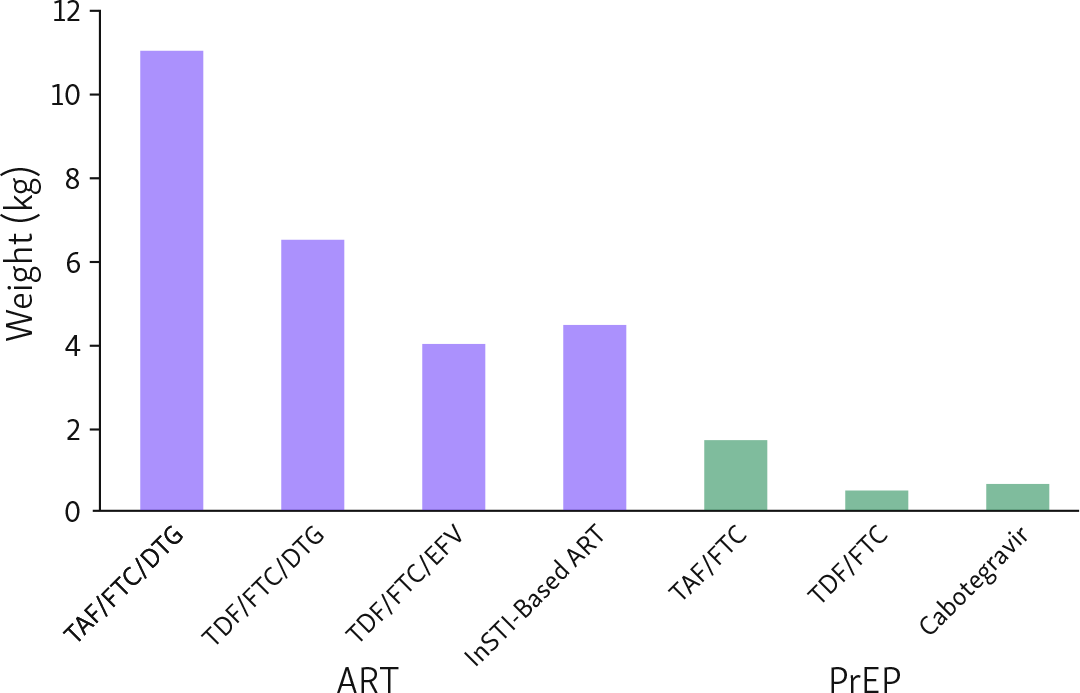
Figure 1 illustrates that across numerous studies, ART and preexposure prophylaxis (PrEP) regimens are associated with varying degrees of weight gain, with the largest increases generally seen in regimens containing InSTIs and TAF. Older agents such as tenofovir disoproxil fumarate (TDF) and some nonnucleoside analogue reverse transcriptase inhibitors (NNRTIs) tend to be associated with more modest changes. Protease inhibitors (PIs; eg, atazanavir, darunavir) and some other NNRTIs (eg, rilpivirine)—show intermediate effects, with smaller average weight changes (1-3 kg) and variable metabolic profiles. Concomitant weight-promoting medications can further compound metabolic risk.6,14,15
Mechanistically, InSTIs may alter hypothalamic melanocortin signaling, influence central melanocortin pathways involved in appetite regulation, and reduce mitochondrial oxidative phosphorylation, thereby lowering energy expenditure. TAF, which does not have the mild mitochondrial toxicity of TDF, allows greater adipocyte proliferation and fat storage. Conversely, older agents such as efavirenz and TDF were associated with either modest weight loss or stabilization, albeit with higher lipid or renal toxicity risk.6,14,15
Figure 1.
Estimated weight gain (kg) based on midpoints of reported ranges across 96 to 144 weeks of follow-up for common antiretroviral therapy (ART; in purple) and preexposure prophylaxis (PrEP; in green) regimens. Data for tenofovir alafenamide (TAF)/emtricitabine (FTC)/dolutegravir (DTG), tenofovir disoproxil fumarate (TDF)/FTC/DTG, and TDF/FTC/efavirenz (EFV) are adapted from the ADVANCE trial; integrase strand transfer inhibitor (InSTl)-associated weight gain are from pooled clinical trial and cohort analyses; and PrEP-related weight changes (TDF/FTC, TAF/FTC, cabotegravir) are summarized from contemporary guideline and review sources.7,14–18 Cabotegravir is available as a long-acting injectable formulation. Adapted from Sax et al.6
Recent studies have provided more-nuanced insights into reversibility. The 2024 DEFINE (A Prospective, Randomized, Phase IV Trial to Assess a Protease Inhibitor-Based Regimen Switch Strategy to Manage Integrase Inhibitor-Related Weight Gain) trial evaluated adults with weight gain of 10% or more on InSTI plus TAF regimens and found that switching to a boosted PI or doravirine-based therapy resulted in modest (about 1-2 kg) weight reductions over 48 weeks but did not fully reverse the metabolic impact.16 Real-world data suggest that weight gain plateaus after 12 to 24 months, indicating a new steady state rather than continuous progression.12
Figure 1 compares the extent of weight gain in PWH on ART with individuals who are HIV negative and using PrEP. Emerging data in individuals who are HIV negative and using PrEP support a drug-specific rather than HIV-specific effect. TAF-based PrEP options lead to slightly more weight gain than TDF-based regimens. Injectable cabotegravir produces small weight increases overtime, and switching from TDF to TAF consistently results in incremental weight gain. The DISCOVER (Emtricitabine and Tenofovir Alafenamide vs Emtricitabine and Tenofovir Disoproxil Fumarate for HIV Preexposure Prophylaxis) trial and follow-up analyses found that TAF/emtricitabine (FTC) PrEP was associated with about 1 to 2 kg weight gain over 48 weeks, and TDF/FTC users gained less than 1 kg.17 The smaller magnitude of weight gain in individuals who were HIV negative underscores the additive contribution of immune recovery and chronic inflammation in PWH.18
Collectively, these findings reinforce that weight gain in those on HIV medications is multifactorial, reflecting drug-specific metabolic effects and host-level and social factors, such as sex, ancestry, baseline BMI, and the physiologic “return-to-health” that accompanies viral suppression.6 The goal moving forward is to identify metabolically neutral but virologically potent ART regimens, informed by ongoing pharmacogenomic and longitudinal studies.
Psychologic and Social Considerations
Weight carries psychosocial implications in PWH, shaped by historical experiences of wasting and lipodystrophy. Body image concerns and weight stigma influence treatment adherence, mood, and clinical and social engagement. Beyond ART itself, social and structural determinants further shape weight outcomes in PWH. Depression, anxiety, trauma history, substance use, and disordered eating can all contribute to weight challenges, and structural factors such as food insecurity, unstable housing, and limited access to safe spaces for physical activity further compound risk. Food insecurity, unemployment, and reduced access to affordable healthy foods often increase reliance on inexpensive, calorie-dense diets.12 Depression and stigma contribute to emotional eating and physical inactivity.1 The intersection of biologic and social determinants drives a unique form of “syndemic obesity” within HIV populations, in which medical, social, and behavioral forces converge.
Clinicians should approach discussions about weight using neutral medical language and emphasize that obesity is a treatable chronic disease rather than a behavioral failure.1 Evidence shows that the quality of clinician-patient communication strongly influences weight-loss outcomes. Patients who view their clinicians as supportive and who do not perceive judgment during weight-loss discussions are significantly more likely to attempt and achieve meaningful weight reduction. In a large cohort, 98% of patients who discussed weight loss without perceiving negative judgment attempted weight loss, and 20% achieved clinically significant reductions, whereas perceived judgment was linked to fewer attempts and poorer outcomes. These findings underscore the importance of supportive, nonstigmatizing counseling when discussing weight management with patients.19
Health care clinicians can initiate weight-related conversations using sensitive, patient-centered language. Examples include the following:
Management of Obesity in PWH
The assessment and management of obesity in PWH are largely similar to those in adults without HIV, with some key distinctions, such as ART-associated weight gain, higher baseline cardiometabolic risk, and the need to integrate decisions with HIV care. These issues are highlighted where applicable in the sections below.
Assessment of Adiposity and Risk
BMI, calculated as weight (kg) divided by height (m2), is the most widely used population measure for classifying excess adiposity. According to the World Health Organization, overweight is defined as a BMI of 25 kg/m2 to 29.9 kg/m2, with class I, II, and III obesity defined as 30 kg/m2 to 34.9 kg/m2, 35 kg/m2 to 39.9 kg/m2, and 40 kg/m2 and higher, respectively. In Asian populations, obesity-related cardiometabolic risk appears at lower BMI levels, and several expert groups therefore recommend lower BMI cutoffs (eg, ≥25 kg/m2 or 27.5 kg/m2) to define obesity. In patients with a BMI of 25 kg/m2 to 34.9 kg/m2, measures such as waist circumference and waist-to-hip ratio, which estimate visceral fat, are often more predictive of metabolic complications, but they can be stigmatizing and challenging to perform in routine clinical settings. Imaging modalities such as dual-energy x-ray absorptiometry and bioelectric impedance analysis can quantify visceral versus subcutaneous fat and distinguish obesity from lipodystrophy, but are not readily available.1 Although PWH have a higher prevalence of cardiovascular risk factors than people without HIV, there are no data to support lower BMI cutoffs or alternative thresholds specific to this population.
The Edmonton Obesity Staging System (EOSS) provides a multidimensional framework, grading disease severity according to medical, functional, and psychologic impairment.1 Applying the EOSS in PWH can help identify patients at high metabolic risk despite modest BMI.
Screening for secondary causes of obesity should be guided by a thorough history and physical examination. In PWH, identifying ART-related weight gain is an important step in diagnosing secondary obesity. Additional causes to consider include hormonal disorders (eg, hypothyroidism, hypercortisolism), psychiatric conditions (eg, binge eating disorder), weight-promoting medications, and, less commonly, mono-genetic syndromes such as proopiomelanocortin deficiency. Several routinely prescribed medications are known to contribute to weight gain, including antihistamines, β-and α-blockers, corticosteroids, selective serotonin reuptake inhibitors (eg, paroxetine), tricyclic antidepressants (eg, amitriptyline, mirtazapine, and nortriptyline), atypical anti-psychotics, injectable contraceptives, antiepileptic drugs (eg, gabapentin, pregabalin, valproic acid, and carbamazepine), and glucose-lowering agents (eg, insulin, sulfonylureas, meglitinides, and thiazolidinediones). Laboratory evaluation should include fasting glucose, hemoglobin A1c (HbA1c), lipid profile, and hepatic enzymes, with screening for nonalcoholic fatty liver disease using ultrasound or elastography and sleep study for obstructive sleep apnea when available. Assessment with atherosclerotic cardiovascular disease risk calculators is recommended, although these may underestimate risk in PWH due to chronic inflammation.6
Comprehensive Weight Management for PWH
The Infectious Diseases Society of America recommends that all patients on ART be routinely counseled on lifestyle modifications, including alcohol reduction or cessation, increased physical activity, healthier diet, and increased dietary fiber. The 2024 International Antiviral Society-USA (IAS-USA) antiretroviral drug guidelines recommend adherence to a healthy lifestyle as an essential first step for cardiovascular disease prevention among PWH.20
Table 2 outlines the key components of comprehensive weight management for PWH, adapted from recommendations for adults without HIV. It is recommended to offer a combination of these weight-management strategies, tailored to individual factors, weight-loss goals, and accessibility, with the goal to reduce cardiovascular risk factors. More importantly, relying too heavily on any single component, such as dietary changes or physical activity alone, has limited effectiveness in achieving meaningful weight loss. As discussed earlier, the combined effects of energy homeostasis, neuroendocrine hormones, and ART-related increases in appetite mean that focusing on a single strategy and urging patients to “try harder” is rarely effective. This approach often fails to produce meaningful results and instead leads to frustration for both patients and clinicians. A comprehensive, multimodal approach is therefore essential.
Table 2.
Components of Comprehensive Weight Management for Persons With HIV
| Approach | Eligibility | Description | Mean percent weight loss at 12-24 months | Other considerations |
|---|---|---|---|---|
| Multicomponent intensive behavioral lifestyle |
|
1%-9% | ||
| Nutrition intervention |
|
3%-10% | ||
| Physical activity | All adults regardless of BMI | 1%-3% | ||
| Pharmacotherapy | See Table 3 for comprehensive review of commonly prescribed obesity medications | 5%-21% |
|
|
| Metabolic and bariatric surgery | 25%-35% |
[i] Adapted from Wharton et al.1
Multicomponent intensive behavioral interventions.
Multicomponent intensive behavioral interventions are recommended for individuals with a BMI of 30 kg/m2 and higher (or 25 kg/m2 and higher with comorbidities) and combine structured counseling, goal setting, self-monitoring, and regular high-intensity sessions, yielding approximately 1% to 9% weight loss at 12 to 24 months with improvements in glycemia, blood pressure, and lipid levels.1 However, these recommendations are primarily based on general cardiometabolic and mental health benefits; direct evidence for reducing weight with these interventions in PWH is limited. A 12-week randomized clinical trial showed that an internet-based behavioral weight-loss program led to significantly greater weight loss in PWH than an education-only control (4.4 kg and 1.0 kg, respectively). The magnitude of weight loss, about 4.5% of baseline weight, is comparable to outcomes seen in adults without HIV, suggesting that structured behavioral interventions can be effective for PWH, at least in the short term.21
Nutrition interventions.
Nutrition intervention using individualized calorie deficits and emphasizing dietary quality typically result in 3% to 10% weight loss, with adherence being the strongest predictor of success in adults without HIV. Over the years, recommendations for calorie deficit have often been absent from lifestyle programs for PWH, which is likely a holdover from pre-ART concerns about wasting. Long-standing guidance from the World Health Organization and National Institutes of Health advises that asymptomatic PWH consume about 10% more calories than adults who are HIV negative. Given that contemporary studies on intentional calorie restriction in PWH are limited, reevaluating these legacy recommendations is crucial to ensure that weight-management strategies for PWH reflect current evidence and clinical realities.21
Physical activity.
Physical activity is recommended for all adults regardless of BMI. Although it contributes to modest weight loss (1%-3%), exercise is essential for long-term weight maintenance. Structured exercise combining aerobic and resistance training preserves lean muscle mass and bone density, losses of which are associated with HIV and aging.22
Pharmacotherapy.
Antiobesity medications (AOMs) are indicated for individuals with BMIs of 30 kg/m2 and higher, or 27 kg/m2 and higher with obesity-related comorbidities. AOMs can produce 5% to 21% weight loss when combined with lifestyle interventions, with outcomes varying by medication type and patient characteristics. Importantly, AOMs are intended to be adjuncts to comprehensive obesity care, not last-resort options after lifestyle interventions “fail.” AOMs can support patients in maintaining a lower-calorie eating pattern, especially when ART regimens drive appetite, thereby improving the likelihood of achieving clinically meaningful weight loss when combined with diet, physical activity, and behavioral strategies. However, weight regain is common after discontinuation. Table 3 outlines commonly prescribed AOMs, including US Food and Drug Administration-approved long-term agents, short-term medications, and off-label options often used due to access barriers.23 With the exception of glucagon-like peptide-1 receptor agonists (GLP-1 RAs), no AOM has been systematically studied in PWH, leaving substantial evidence gaps.
The Infectious Diseases Society of America recommends that GLP-1 RAs for obesity should be reserved for select situations while awaiting results of ongoing trials among PWH. GLP-1 RAs have no clinically meaningful pharmacokinetic interactions with ART drugs and can be safely coadministered. Real-world and trial data demonstrate that GLP-1 RAs are effective in PWH, with efficacy comparable to that in the general population.24,25 In a US observational cohort of 222 PWH initiating semaglutide, treatment was associated with mean weight loss of 6.47 kg at 1 year. A Greek prospective study showed median weight loss of 14.6 kg at 24 months in PWH with a baseline BMI of more than 35 kg/m2 and improvements in inflammatory markers including high-sensitivity C-reactive protein (hsCRP) and soluble cluster of differentiation 14 (CD14).26
Most notably, a randomized, double-blind, placebo-controlled trial of once-weekly semaglutide 1.0 mg in people with HIV-associated lipohypertrophy demonstrated significant reductions in abdominal visceral and subcutaneous adipose tissue and overall body fat.27 This study also showed improvements in glucose metabolism, insulin resistance, and lipid profiles. The unique finding of a significant increase in CD4+/CD8+ cell ratio (from 0.54 to 0.83 at 24 months) in the Greek cohort suggests potential immunologic benefits, although this requires further investigation. Ongoing studies will further define long-term efficacy and safety in this population.
There may also be a role for off-label medications such as bupropion, topiramate, or metformin to mitigate ART-associated weight gain, as evidence from antipsychotic studies suggests that these agents can reduce medication-related weight increases.24 However, this approach requires dedicated study in PWH.
Metabolic and bariatric surgery (MBS).
MBS, which is offered to individuals with BMI of 35 kg/m2 and higher, or in those with BMI of 30 kg/m2 and higher with comorbidities, provides the greatest and most durable weight loss (25%-35%), although long-term nutritional monitoring is required. MBS is considered safe and effective for PWH, with outcomes comparable to those in patients who are HIV negative, provided ART is carefully managed.
Numerous large cohort studies and reviews demonstrate that MBS does not increase mortality or major morbidity in PWH, nor does it adversely affect HIV disease progression or virologic suppression when ART is appropriately monitored and adjusted as needed. Weight loss and metabolic improvements are similar to those seen in controls who are HIV negative, although some studies note less improvement in dyslipidemia among PWH.
Table 3.
Commonly Prescribed Antiobesity Medications
| Medication, year availablea | Mechanism of action | Mean weight loss from baselineb | Dose availability and escalation schedulec | Selected adverse effects | Contraindications, warnings, and precautionsd |
|---|---|---|---|---|---|
| FDA-approved for long-term use | |||||
| Liraglutide, 2010 | GLP-1 receptor agonist: simulates metabolic effects of enteropancreatic hormones via the gut-brain axis, reduces appetite and delays gastric emptying | 8.4 kg (8%) at 56 weeks | Nausea, diarrhea, constipation, dyspepsia, vomiting | ||
| Phentermine-topiramate ER, 2012 | Phentermine increases norepinephrine and topiramate augments GABA receptors in CNS and reduces appetite | 8.2-10.2 kg (10.9%) at 12 months | Paresthesia, dry mouth, constipation, headache, insomnia, dizziness, altered sense oftaste | ||
| Naltrexone-bupropion ER, 2014 | Opioid receptor antagonist, dopamine and norepinephrine reuptake inhibitor: reduces appetite | 4.7 kg (6.1%) at 12 months |
|
Nausea, constipation, headache, vomiting, dizziness, insomnia, and xerostomia | |
| Semaglutide, 2017 | GLP-1 receptor agonist: simulates metabolic effects of enteropancreatic hormones via the gut-brain axis, reduces appetite and delays gastric emptying | 15.6 kg (14.9%) at 68 weeks | Nausea, diarrhea, constipation, dyspepsia, vomiting | ||
| Tirzepatide, 2022 | GIP/GLP-1 dual-receptor agonist: augments the central-acting effect on appetite suppression | 23.6 kg (20.9%) at 74 weeks | Nausea, diarrhea, vomiting, constipation, alopecia, abdominal pain | ||
| FDA-approved for short-term use | |||||
| Phentermine, 1959 | Increases norepinephrine in CNS and reduces appetite | 5.9 kg (6.1%) at 28 weeks | Dry mouth, constipation, headache, insomnia, dizziness | ||
| Commonly used off-label | |||||
| Bupropion, 1985 | Inhibits dopamine and norepinephrine reuptake, which stimulates proopiomelanocortin neurons in hypothalamus, suppresses appetite and food cravings | 3.4-4.8 kg (4.9%-12.9%) at 24 weeks | Dry mouth, headache, nausea, insomnia, dizziness, agitation | Contraindications: uncontrolled hypertension, seizure disorder, bulimia or anorexia nervosa, concurrent use with MAOIs or within 14 days of MAOI discontinuation | |
| Metformin, 1995 | Increases insulin and leptin sensitivity, decreases hunger | 2-9 kg in 6-12 months (6.2% at 15 years) |
Gastrointestinal, including diarrhea, nausea/vomiting, flatulence, indigestion, abdominal discomfort, and headache | ||
| Topiramate, 1996 | Modulates GABA receptors in CNS | 3.5 kg (6.4%) at 28 weeks | Paresthesia, fatigue, dizziness, somnolence, nervousness, psychomotor slowing, difficulty with memory, difficulty with concentration/attention, cognitive problems, confusion, mood problems | ||
Adapted from Gudzune and Kushner.23
Abbreviations: CNS, central nervous system; eGFR, estimated glomerular filtration rate; ER, extended release; FDA, US Food and Drug Administration; GABA, gamma-aminobutyric acid; GIP, gastric inhibitory polypeptide; GLP-1, glucagon-like peptide-1; MAOI, monoamine oxidase inhibitors; MEN, multiple endocrine neoplasia; SC, subcutaneous; SR, sustained release.
b Data reported from various clinical trials with participants with different comorbid conditions and indications.
ART pharmacokinetics may be altered after bariatric procedures due to changes in gastrointestinal anatomy, pH, and absorption. Most patients maintain virologic suppression postoperatively, but some may require ART regimen adjustments, especially with drugs that are sensitive to gastric pH or those requiring specific absorption conditions. Close collaboration between HIV and surgical teams is recommended to ensure optimal ART selection and monitoring, with attention to potential drug-nutrient interactions and absorption issues. Complications include micronutrient deficiencies (eg, vitamin B12, iron, calcium, vitamin D), dumping syndrome, and anastomotic ulcers; careful supplementation and monitoring are essential.28
ART Optimization
When obesity appears temporally linked to ART initiation, switching to less-weight-promoting regimens may prevent further gain. Transition from InSTI-based to non-InSTI-based regimens or from TAF to TDF can attenuate weight trajectory, although the reversal of established obesity is uncommon.
Figure 2.
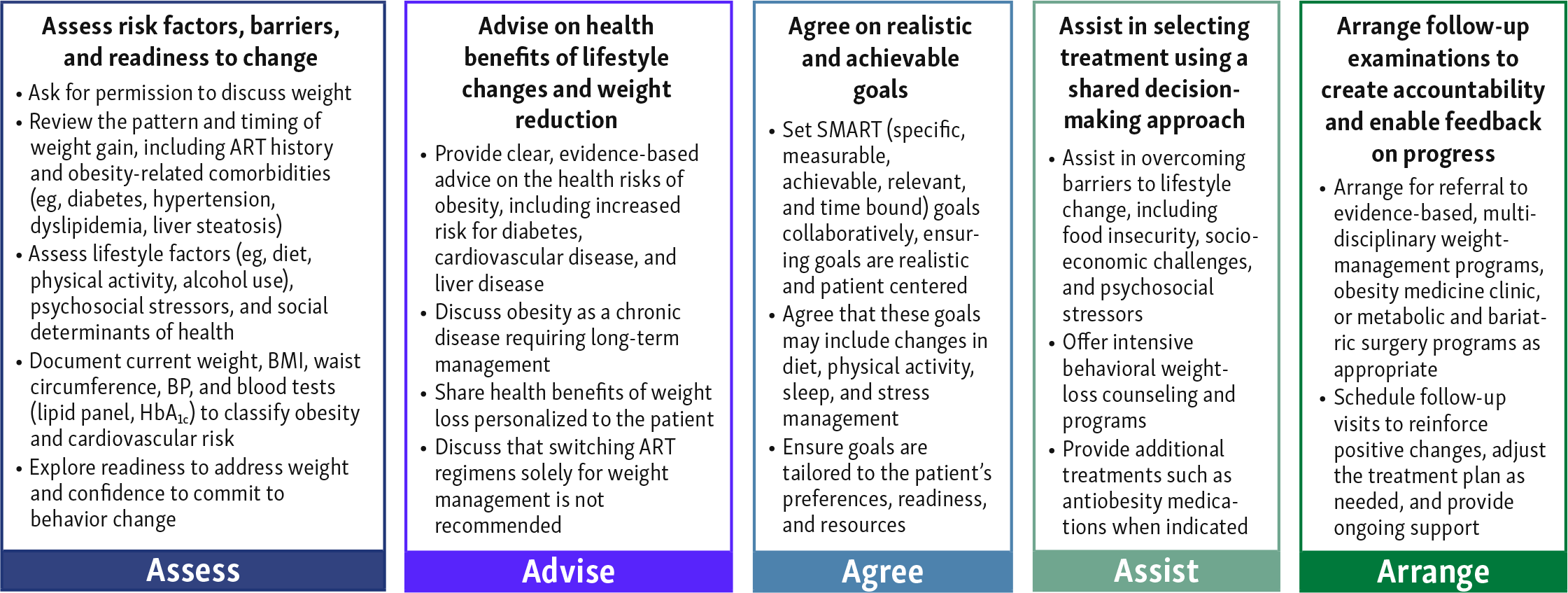
The 5As framework for obesity management in people with HIV outlines how the 5As (Assess, Advise, Agree, Assist, Arrange) apply to obesity care in people with HIV and presents an integrated model of care that can be incorporated into routine clinical practice to guide weight-management implementation. It emphasizes a patient-centered, practical approach, understanding contributors to weight gain, giving clear evidence-based guidance, setting realistic goals, choosing treatment collaboratively (including medications when appropriate), and building in structured follow-up to support long-term success. Adapted from Wharton et al.1
Abbreviations: ART, antiretroviral therapy; BMI, body mass index; BP, blood pressure; HbA1c, hemoglobin A1c.
Long-acting injectable ART formulations (eg, cabotegravir + rilpivirine) offer an alternative for virologically suppressed patients who prefer less frequent dosing. Current data suggest that weight changes with injectables are generally comparable to those with oral InSTI-based therapy, with no clear evidence of additional weight gain or loss.29 Their main role is in adherence support rather than weight management, and ART modification should always prioritize virologic suppression, resistance profile, and comorbid conditions. Weight should never be managed at the expense of virologic control.29
Integrated Models of Care
Figure 2 illustrates the 5As framework—Assess, Advise, Agree, Assist, and Arrange—as a structured approach to guide obesity management in PWH in a clinical setting. The process begins with Assess, which involves exploring risk factors, barriers, and readiness to change by reviewing the pattern of weight gain, ART history, lifestyle factors, psychosocial stressors, and key clinical measures such as BMI, waist circumference, and metabolic laboratory results. In the Advise step, clinicians provide clear, evidence-based guidance on the health benefits of weight reduction and discuss obesity as a chronic disease requiring long-term management. The Agree phase focuses on collaboratively setting realistic, patient-centered, specific, measurable, achievable, relevant, and time-bound (SMART) goals tailored to the individual's preferences, readiness, and resources. Assist involves helping patients overcome barriers through counseling, addressing social determinants of health, and selecting appropriate treatment options, including lifestyle interventions and anti-obesity medications, using a shared decision-making approach. Finally, Arrange emphasizes establishing structured follow-up, referrals to multidisciplinary programs, and ongoing support to reinforce progress and adjust the treatment plan as needed.1 The 5As framework can provide a patient-centered roadmap for effective and sustainable obesity care in PWH. Embedding obesity management within HIV programs promotes continuity and reduces stigma. Multi-disciplinary teams that include clinicians, dietitians, exercise physiologists, and mental health professionals can deliver coordinated care. Incorporating routine weight screening, access to antiobesity medications, and counseling within ART clinics ensures timely intervention.
Implementation of structured care pathways, electronic alerts for rapid weight gain after ART initiation, and standardized referral protocols could enhance outcomes. Integrating obesity treatment into HIV quality metrics would further institutionalize comprehensive care.
Future Directions
Further research is needed to elucidate molecular pathways through which ART regimens influence hypothalamic signaling and adipose biology. Understanding these mechanisms may enable the development of metabolically neutral ART regimens and targeted interventions. Randomized trials of antiobesity medications in PWH are needed to establish their efficacy and safety, and effects on inflammation and cardiovascular risk.
Implementation science should evaluate integrated care models, particularly in resource-limited settings where obesity and undernutrition coexist. Advances in medicine, including pharmacogenomics and microbiome profiling, may eventually permit individualized metabolic management. Policy initiatives expanding access to pharmacotherapy, reimbursing nutrition counseling, and incorporating obesity metrics into HIV quality measures are crucial next steps.
Conclusion
Obesity has become a defining comorbidity in the modern HIV era. Its multifactorial pathogenesis—which encompasses chronic inflammation, ART exposure, and environmental risk—demands comprehensive, multidisciplinary management. Complications such as insulin resistance, dyslipidemia, cardiovascular disease, and fatty liver disease now shape long-term outcomes for PWH.
Integrating obesity medicine principles into HIV care through accurate phenotyping, individualized pharmacotherapy, and coordinated lifestyle support offers a pathway to improved health and survival. The benchmark of success in HIV treatment must now encompass not only viral suppression but also prevention of metabolic disease and preservation of quality of life for all PWH.
Notes
This article was based in part on Comprehensive Review of Weight Management, presented by Dr Zoobia Chaudhry at the 2024 Ryan White HIV/AIDS Program CLINICAL CONFERENCE in Louisville, Kentucky.
The IAS-USA has identified and mitigated ahead of time any possible conflicts of interest that may influence CME activities with regard to exposition or conclusion. All financial relationships with ineligible companies for the authors and planners/reviewers are below.
Financial affiliations in the past 24 months: Dr Kashlan reported serving as an advisor for Lina Health Ltd. (Updated June 9, 2026) Dr Chaudhry reported serving as a consultant for Novo Nordisk. (Updated June 9, 2026)
Planner/Reviewer 1 reported no relevant financial relationships with ineligible companies. (Updated May 15, 2026) Reviewer 2 reported no relevant financial relationships with ineligible companies. (Updated June 8, 2026) Planner/Reviewer 3 reported no relevant financial relationships with ineligible companies. (Updated June 19, 2026)
References
S Wharton, DCW Lau, M Vallis, . Obesity in adults: a clinical practice guideline. CMAJ. 2020;192(31): E875–E891. doi: 10.1503/cmaj.191707
World Health Organization. Obesity and overweight. May 7, 2025. Accessed December 5, 2025. https://www.who.int/news-room/fact-sheets/detail/obesity-and-overweight
F Xie, F Xiong, B Yang, . Global, regional, and national burden of mortality and DALYs attributable to high body mass index from 1990 to 2021 with projections 2036. BMC Public Health. 2025;25(1): 2053. doi: 10.1186/s12889-025-23237-7.
JE Lake, TL Stanley, CM Apovian, . Practical review of recognition and management of obesity and lipohypertrophy in human immunodeficiency virus infection. Clin Infect Dis. 2017;64(10): 1422–1429. doi: 10.1093/cid/cix178
D Trachunthong, M Tipayamongkholgul, S Chumseng, W Darasawang, K Bundhamcharoen. Burden of metabolic syndrome in the global adult HIV-infected population: a systematic review and meta-analysis. BMC Public Health. 2024;24(1): 2657. doi: 10.1186/s12889-024-20118-3
PE Sax, KM Erlandson, JE Lake, . Weight gain following initiation of antiretroviral therapy: risk factors in randomized comparative clinical trials. Clin Infect Dis. 2020;71(6): 1379–1389. doi: 10.1093/cid/ciz999
K Markakis, O Tsachouridou, E Georgianou, D Pilalas, S Nanoudis, S Metallidis. Weight gain in HIV adults receiving antiretroviral treatment: current knowledge and future perspectives. Life (Basel). 2024;14(11). doi: 10.3390/life14111367
K Timper, JC Bruning. Hypothalamic circuits regulating appetite and energy homeostasis: pathways to obesity. Dis Model Mech. 2017;10(6): 679–689. doi: 10.1242/dmm.026609
H Bays, N Abate, M Chandalia. Adiposopathy: sick fat causes high blood sugar, high blood pressure and dyslipidemia. Future Cardiol. 2005;1(1): 39–59. doi: 10.1517/14796678.1.1.39
MW Schleh, HL Caslin, JN Garcia, . Metaflammation in obesity and its therapeutic targeting. Sci Transl Med. 2023;15(723): eadf9382. doi: 10.1126/scitranslmed.adf9382
SB Heymsfield, TA Wadden. Mechanisms, pathophysiology, and management of obesity. N Engl J Med. 2017; 376(3): 254–266. doi: 10.1056/NEJMra1514009
YS Patel, CD Malvestutto. Beyond the numbers: weight gain risk factors, implications, and interventions among individuals with HIV. J AIDS HIV Treat. 2024;6(1). doi: 10.33696/AIDS.6.047
JR Koethe, CA Jenkins, B Lau, . Rising obesity prevalence and weight gain among adults starting antiretroviral therapy in the United States and Canada. AIDS Res Hum Retroviruses. 2016;32(1): 50–58. doi: 10.1089/aid.2015.0147
WDF Venter, S Sokhela, B Simmons, . Dolutegravir with emtricitabine and tenofovir alafenamide or tenofovir disoproxil fumarate versus efavirenz, emtricitabine, and tenofovir disoproxil fuma rate for initial treatment of HIV-1 infection (ADVANCE): week 96 results from a randomised, phase 3, non-inferiority trial. Lancet HIV. 2020;7(10): e666–e676. doi: 10.1016/S2352-3018(20)30241-1
J Gorwood, C Bourgeois, V Pourcher, . The integrase inhibitors dolutegravir and raltegravir exert proadipogenic and profibrotic effects and induce insulin resistance in human/simian adipose tissue and human adipocytes. Clin Infect Dis. 2020;71(10): e549–e560. doi: 10.1093/cid/ciaa259
D Anderson, M Ramgopal, DP Hagins, . DEFINE: a prospective, randomized, phase 4 trial to assess a protease inhibitor-based regimen switch strategy to manage integrase inhibitor-related weight gain. Clin Infect Dis. 2025;80(3): 602–612. doi: 10.1093/cid/ciae449
KM Erlandson, CC Carter, K Melbourne, . Weight change following antiretroviral therapy switch in people with viral suppression: pooled data from randomized clinical trials. Clin Infect Dis. 2021;73(8): 1440–1451. doi: 10.1093/cid/ciab444
KH Mayer, JM Molina, MA Thompson, . Emtricitabine and tenofovir alafenamide vs emtricitabine and tenofovir disoproxil fumarate for HIV pre-exposure prophylaxis (DISCOVER): primary results from a randomised, double-blind, multicentre, active-controlled, phase 3, non-inferiority trial. Lancet. 2020;396(10246): 239–254. doi: 10.1016/S0140-6736(20)31065-5
KA Gudzune, WL Bennett, LA Cooper, SN Bleich. Perceived judgment about weight can negatively influence weight loss: a cross-sectional study of overweight and obese patients. Prev Med. 2014;62: 103–107. doi: 10.1016/j.ypmed.2014.02.001
RT Gandhi, RJ Landovitz, PE Sax, . Antiretroviral drugs for treatment and prevention of HIV in adults:2024 recommendations of the International Antiviral Society-USA Panel. JAMA. 2025;333(7): 609–628. doi: 10.1001/jama.2024.24543
E Panza, EJ Wing, R Wing. Behavioral weight loss: a promising treatment for obesity in adults with HIV. AIDS Behav. 2020;24(4): 1085–1091. doi: 10.1007/s10461-019-02645-y
JD Perazzo, AR Webel, SMK Alam, A Sattar, GA McComsey. Relationships between physical activity and bone density in people living with HIV: results from the SATURN-HIV study. J Assoc Nurses AIDS Care. 2018;29(4): 528–537. doi: 10.1016/j.jana.2018.03.004
KA Gudzune, RF Kushner. Medications for obesity: a review. JAMA. 2024;332(7): 571–584. doi: 10.1001/jama.2024.10816
Q Nguyen, D Wooten, D Lee, . GLP-1 receptor agonists promote weight loss among people with HIV. Clin Infect Dis. 2024;79(4): 978–982. doi: 10.1093/cid/ciae151
M Horberg, M Thompson, A Agwu, . Primary care guidance for providers of care for persons with human immunodeficiency virus:2024 update by the HIV Medicine Association of the Infectious Diseases Society of America. Clin Infect Dis. 2024: ciae479. doi: 10.1093/cid/ciae479
AR Eckard, Q Wu, A Sattar, . Once-weekly semaglutide in people with HIV-associated lipohypertrophy: a randomised, double-blind, placebo-controlled phase 2b single-centre clinical trial. Lancet Diabetes Endocrinol. 2024;12(8): 523–534. doi: 10.1016/S2213-8587(24)00150-5
AM Alamri, MY Alasmari, HH Alwadai, . Bariatric surgery in the management of morbid obesity in individuals with HIV infection: a scoping review. Saudi J Obes. 2025;9(1): 1–8. doi: 10.4103/sjo.sjo_4_23
DHS Tan, A Antinori, B Eu, . Weight and metabolic changes with long-acting cabotegravir and rilpivirine or bictegravir/emtricitabine/tenofovir alafenamide. J Acquir Immune Defic Syndr. 2025;98(4): 401–409. doi: 10.1097/QA1.0000000000003584